AB 1149: Public health emergencies: funding.
- Session Year: 2015-2016
- House: Assembly
- Latest Version Date: 2015-07-14
Existing law establishes procedures and requirements to govern the allocation to, and expenditure by, local health jurisdictions, hospitals, long-term health care facilities, clinics, emergency medical systems, and poison control centers of federal funding received for the prevention of, and response to, public health emergencies. Existing law provides that these procedures apply only when the specified entities are designated by a federal or state agency to manage the funds for public health preparedness and response to public health emergencies, pursuant to a specified federally approved plan.
This bill would expand these provisions to apply to public health emergency preparedness and response by trade associations of those entities or facilities.
This bill would declare that it is to take effect immediately as an urgency statute.
(a)Federal funding received by the State Department of Public Health for bioterrorism preparedness and emergency response is subject to appropriation in the annual Budget Act or other statute, commencing with the 200304 fiscal year.
(b)This article governs those instances when federal funding is allocated and expended for public health preparedness and response by local health jurisdictions, hospitals, long-term health care facilities, clinics, emergency medical systems, and poison control centers, or their trade associations, for the prevention of, and response to, bioterrorist attacks and other public health emergencies pursuant to the federally approved collaborative state-local plan.
(c)A local health jurisdiction shall be ineligible to receive funding from appropriations made for purposes of this article when that local health jurisdiction receives directly or through another local jurisdiction federal funding for the same purposes. Moneys appropriated for purposes of this article that would have been allocated to a local health jurisdiction that is ineligible, pursuant to this subdivision, to receive funding shall be allocated, as provided in Section 101317, among the remaining local health jurisdictions that are eligible.
(d)Funds appropriated for the purposes of this article shall not be used to supplant funding for existing levels of service and shall only be used for purposes specified in Section 101317.
(e)This article shall apply only when local health jurisdictions, hospitals, long-term health care facilities, clinics, emergency medical systems, and poison control centers, or their trade associations are designated by a federal or state agency to manage the funds for public health preparedness and response to bioterrorist attacks and other public health emergencies, pursuant to the federally approved collaborative state-local plan.
SEC. 2.This act is an urgency statute necessary for the immediate preservation of the public peace, health, or safety within the meaning of Article IV of the Constitution and shall go into immediate effect. The facts constituting the necessity are:
In order to ensure an adequate and timely response to public health threats by preventing the lapse of provisions relating to the allocation and expenditure of federal funds for public health emergency preparedness programs, it is necessary for this act to take effect immediately.
(a)Federal funding received by the State Department of Public Health for bioterrorism preparedness and emergency response is subject to appropriation in the annual Budget Act or other statute, commencing with the 200304 fiscal year.
(b)This article shall govern governs those instances when federal funding is allocated and expended for public health preparedness and response by local health jurisdictions, hospitals, long-term health care facilities, clinics, emergency medical systems, and poison control centers centers, or their trade associations, for the prevention of, and response to, bioterrorist attacks and other public health emergencies pursuant to the federally approved collaborative state-local plan.
(c)A local health jurisdiction shall be ineligible to receive funding from appropriations made for purposes of this article when that local health jurisdiction receives directly or through another local jurisdiction federal funding for the same purposes. Moneys appropriated for purposes of this article that would have been allocated to a local health jurisdiction that is ineligible, pursuant to this subdivision, to receive funding shall be allocated, as provided in Section 101317, among the remaining local health jurisdictions that are eligible.
(d)Funds appropriated for the purposes of this article shall not be used to supplant funding for existing levels of service and shall only be used for purposes specified in Section 101317.
(e)This article shall apply only when local health jurisdictions, hospitals, long-term health care facilities, clinics, emergency medical systems, and poison control centers centers, or their trade associations are designated by a federal or state agency to manage the funds for public health preparedness and response to bioterrorist attacks and other public health emergencies, pursuant to the federally approved collaborative state-local plan.
SEC. 2.This act is an urgency statute necessary for the immediate preservation of the public peace, health, or safety within the meaning of Article IV of the Constitution and shall go into immediate effect. The facts constituting the necessity are:
In order to ensure an adequate and timely response to public health threats by preventing the lapse of provisions relating to the allocation and expenditure of federal funds for public health emergency preparedness programs, it is necessary for this act to take effect immediately.
|
Date
|
Status
|
|---|---|
| May 14, 2015 | Read third time. Urgency clause adopted. Passed. Ordered to the Senate. (Ayes 78. Noes 0. Page 1450.). |
| Jul 14, 2015 | Chaptered by Secretary of State - Chapter 93, Statutes of 2015. |
| Jul 14, 2015 | Approved by the Governor. |
| Jul 2, 2015 | Enrolled and presented to the Governor at 1 p.m. |
| Jun 25, 2015 | Read third time. Urgency clause adopted. Passed. Ordered to the Assembly. (Ayes 38. Noes 0. Page 1616.). |
| Jun 25, 2015 | In Assembly. Ordered to Engrossing and Enrolling. |
| Jun 23, 2015 | Read second time. Ordered to third reading. |
| Jun 22, 2015 | From committee: Do pass. (Ayes 6. Noes 0.) (June 22). |
| Jun 11, 2015 | From committee: Do pass and re-refer to Com. on APPR. with recommendation: To Consent Calendar. (Ayes 9. Noes 0.) (June 10). Re-referred to Com. on APPR. |
| May 28, 2015 | Referred to Com. on HEALTH. |
| Feb 27, 2015 | Introduced. To print. |
| May 14, 2015 | Read third time. Urgency clause adopted. Passed. Ordered to the Senate. |
| May 14, 2015 | In Senate. Read first time. To Com. on RLS. for assignment. |
| May 7, 2015 | Read second time. Ordered to Consent Calendar. |
| May 6, 2015 | From committee: Do pass. To Consent Calendar. (Ayes 17. Noes 0.) (May 6). |
| Apr 27, 2015 | From committee: Do pass and re-refer to Com. on APPR. with recommendation: To Consent Calendar. (Ayes 18. Noes 0.) (April 21). Re-referred to Com. on APPR. |
| Mar 19, 2015 | Referred to Com. on HEALTH. |
| Mar 2, 2015 | Read first time. |
| Mar 1, 2015 | From printer. May be heard in committee March 31. |
|
Date
|
Description
|
Location
|
Votes
|
|
|---|---|---|---|---|
| Jun 25, 2015 | Assembly 3rd Reading AB1149 Wood By Hernandez Urgency Clause | Senate Floor |
Passed |
|
| Jun 22, 2015 | Do pass | Senate Standing Committee on Appropriations |
Passed |
|
| Jun 10, 2015 | Do pass, but first be re-referred to the Committee on [Appropriations] with the recommendation: To Consent Calendar | Senate Standing Committee on Health |
Passed |
|
| May 14, 2015 | AB 1149 WOOD Consent Calendar Second Day Regular Session | Assembly Floor |
Passed |
|
| May 6, 2015 | Do pass. To Consent Calendar. | Assembly Standing Committee on Appropriations |
Passed |
|
| Apr 21, 2015 | Do pass and be re-referred to the Committee on [Appropriations] with recommendation: To Consent Calendar | Assembly Standing Committee on Health |
Passed |
This list shows positions taken on this bill by organizations on the date displayed, which is linked to the original source.
Positions by individuals are not included.
|
Organization
|
Position
|
Date
|
|---|---|---|
| California Association Of Health Facilities | ** Support | Jun 25, 2015 |
| California Hospital Association | ** Support | Jun 25, 2015 |
| California Primary Care Association | ** Support | Jun 25, 2015 |
AB 1149
Page 6
|
Office of Senate Floor Analyses (916) 651-1520 Fax: (916) 327-4478 |
THIRD READING
Bill No: AB 1149
Introduced: 2/27/15
SENATE HEALTH COMMITTEE: 9-0, 6/10/15
AYES: Hernandez, Nguyen, Hall, Mitchell, Monning, Nielsen, Pan, Roth, Wolk
SENATE APPROPRIATIONS COMMITTEE: 6-0, 6/22/15
AYES: Lara, Bates, Beall, Hill, Leyva, Mendoza
NO VOTE RECORDED: Nielsen
ASSEMBLY FLOOR: 78-0, 5/14/15 (Consent) - See last page for vote
SUBJECT: Public health emergencies: funding
SOURCE: California Association of Health Facilities
DIGEST: This bill adds trade associations to the list of entities that are eligible to receive federal funding, that has been allocated to the Department of Public Health for public health preparedness and response.
Existing law:
Establishes provisions of law to govern those instances when federal funding is allocated and expended for public health preparedness and response by local health jurisdictions, hospitals, long-term health care facilities, clinics, emergency medical systems, and poison control centers for the prevention of, and response to, bioterrorist attacks and other public health emergencies.
Requires federal funding received by the Department of Public Health (DPH) for bioterrorism preparedness and emergency response to be subject to appropriation in the annual Budget Act or other statute.
Exempts federal grant funds appropriated by the Budget Act for public health preparedness and response from being subject to provisions of law governing contracting by state agencies.
This bill:
Adds trade associations to the list of entities that are eligible to receive federal funding, that has been allocated to DPH for public health preparedness and response.
Contains an urgency clause that will make this bill effective upon enactment.
Comments
Author’s statement. According to the author, historically, trade associations have played a major role in the Hospital Preparedness Program (HPP) and have proven to be valuable assets. The infrastructure and communication channels within associations make them particularly well suited to tackle the education and outreach challenges inherent to the HPP. In 2014, the Emergency Preparedness Office of DPH rendered a new interpretation of existing law and determined that, because associations are not specifically identified in the statute, they are not eligible to receive funds and help administer the program. Fiscal year 2013/2014 marked the first year associations were not eligible since the program originated in 1996. This bill allows associations to once again become a valuable resource for the HPP. The familiarity and credibility trade associations bring to the table, when dealing with their membership, creates a training and teaching environment that is uniquely suited to deliver a high quality program. Finally, by allowing the trade associations to play their role, the DPH would save valuable resources that otherwise would be expended searching for other entities to execute the program.
Federal grant programs for emergency preparedness. According to DPH, it receives funding from two separate federal grant programs for public health emergency preparedness and response: the Public Health Emergency Preparedness (PHEP) program, under the Centers for Disease Control and Prevention (CDC), and HPP, administered by the U.S. Department of Health and Human Services’ Assistant Secretary for Preparedness and Response (ASPR). In the most recent fiscal year (2014-15), the Budget Act appropriated $74,405,196 from these two federal grant programs.
DPH states that PHEP funds are restricted to state and local health departments. DPH allocates 70% of the PHEP funds to local health departments pursuant to a formula in statute and supports its own preparedness functions with the remaining 30% of the allocation.
DPH states that HPP funds are intended for health care facility and emergency medical services preparedness. DPH allocates 63% of the funds directly to, or on behalf of, the local level. DPH states that the California Hospital Association, the California Association of Health Facilities, and the California Primary Care Association receive HPP funds to strengthen health care facility preparedness. HPP funds are allocated to county HPP entities to build health care coalitions. Coalitions include hospitals, clinics, emergency medical services/systems and long-term care facilities. DPH states that each county determines the priority for use of HPP funds by health care facilities and emergency medical services.
History of providing HPP funds to trade associations. According to DPH, both the CDC and the ASPR allow states to allocate HPP funds to trade associations, which is a standard practice for many states across the nation. DPH states that while it has not received any complaints regarding allocating emergency preparedness and response funds to trade associations, it is anticipated that if clarification is not provided, health care leaders across the state will raise concerns that emergency preparedness funds are not supporting health care facilities in California.
DPH states that historically, it was able to use the existing Health and Safety Code language to allocate funds directly to trade associations, related to the specific itemized list of facilities and response partners, to provide technical assistance and to develop templates, checklists and planning tools that are specific to their members’ preparedness and planning needs. DPH states that this early interpretation of the statute was based on the premise that sufficient funds were not available, nor was it feasible to allocate emergency preparedness funds to over 3,000 health care facilities individually across California. Diluting the funds will not help individual facilities, but funding trade associations to develop planning tools and provide education for their members has advanced and will continue to enhance preparedness for hospitals, clinics, and long-term care facilities.
In 2012, it was recognized by DPH’s Office of Legal Affairs that the existing language did not include long-term care facilities; and the California Association of Healthcare Facilities moved to amend the statute with AB 1793 (Yamada, Chapter 166, Statutes of 2012). The Governor signed the legislation that provided an amendment to include long-term care facilities with the intent that this amendment would allow DPH to contract directly with the California Association of Health Facilities to provide tools and training to long-term care facilities across California to strengthen their emergency preparedness and response capacity. Since that time, DPH’s Office of Legal Services has concluded that the existing law is specific and only governs those contracts with local health jurisdictions, hospitals, long-term health care facilities, clinics, emergency medical systems, and poison control centers and not trade associations as was the original interpretation.
Prior Legislation
AB 1793 (Yamada, Chapter 166, Statutes of 2012) eliminated the September 1, 2012, sunset date on provisions of law governing how federal funding for emergency preparedness is allocated, and added long-term health facilities to the list of entities that can be designated to receive federal funds for emergency preparedness.
SB 769 (Alquist, Chapter 506, Statutes of 2010) requires federal funding received, pursuant to the Supplemental Appropriations Act of 2009 (HR 2346), for pandemic flu, for purposes of state and local public health and emergency response infrastructure, to be subject to appropriation by the Legislature commencing with the 2009-10 fiscal year.
SB 1103 (Committee on Budget and Fiscal Review, Chapter 228, Statutes of 2004) contained statutory changes that enables the Department of Health Services (now DPH) to allocate federal funds to local health jurisdictions, clinics, hospitals, emergency medical systems, and poison control centers in an expeditious manner and exempts these expenditures from Public Contract Code requirements.
SB 406 (Ortiz, Chapter 393, Statutes of 2002) established the procedures by which federal funding may be allocated to, and expended by, local health jurisdictions for the prevention of, and response to, bioterrorism attacks and other public health emergencies, pursuant to the federally approved collaborative state-local plan.
FISCAL EFFECT: Appropriation: No Fiscal Com.: Yes Local: No
According to the Senate Appropriations Committee, minor cost pressures to provide funding to trade associations, rather than to facilities directly (federal funds). By authorizing trade associations to receive federal funding (via DPH), individual health facilities may not receive funding directly. However, given the very large number of health facilities in the state, it is not practical for DPH to grant enough funds to individual facilities to have a practical benefit. Using trade associations can be a cost-effective way to disseminate information and best practices to individual facilities.
California
Association of Health Facilities (source)
California Hospital
Association
California Primary Care Association
OPPOSITION: (Verified 6/24/15)
None received
ARGUMENTS IN SUPPORT: This bill is sponsored by the California Association of Health Facilities (CAHF), which states that, the infrastructure and communication channels within trade associations make them particularly well suited to tackle the education and outreach challenges inherent in the HPP. CAHF states that through almost eight years of funding, CAHF has developed a nationally recognized, award-winning Disaster Preparedness Program for Long Term Care through the HPP, and were one of the first long term care associations in the country to be funded through the HPP grant program. Recently, however, DPH has stated that existing law does not explicitly provide authorization for state associations. CAHF states that this bill will ensure HPP funding continues to be directed at the associations that are suited to provide appropriate training and education to health facilities in California. The California Hospital Association (CHA) states in support that hospitals have many requirements to be prepared for all hazards that pose a threat to their communities. CHA states that through the HPP, it has developed checklists, guidance documents and other planning tools that have assisted hospitals and others. According to CHA, this bill will allow the associations representing hospitals, long term care providers and community health clinics the ability to directly contract with DPH and maintain their established programs that have proven to be effective. The California Primary Care Association states in support that associations have the expertise, and state and local authorities have called on associations for years to assist them in identifying and addressing the issues in disaster preparedness and response.
ASSEMBLY FLOOR: 78-0, 5/14/15
AYES: Achadjian, Alejo, Travis Allen, Baker, Bigelow, Bloom, Bonilla, Bonta, Brough, Brown, Burke, Calderon, Campos, Chang, Chau, Chávez, Chiu, Chu, Cooley, Cooper, Dababneh, Dahle, Daly, Dodd, Eggman, Frazier, Beth Gaines, Gallagher, Cristina Garcia, Eduardo Garcia, Gatto, Gipson, Gomez, Gonzalez, Gordon, Gray, Grove, Hadley, Harper, Roger Hernández, Holden, Irwin, Jones, Jones-Sawyer, Kim, Lackey, Levine, Lopez, Low, Maienschein, Mathis, Mayes, McCarty, Melendez, Mullin, Nazarian, Obernolte, O'Donnell, Olsen, Patterson, Perea, Quirk, Rendon, Ridley-Thomas, Rodriguez, Salas, Santiago, Steinorth, Mark Stone, Thurmond, Ting, Wagner, Waldron, Weber, Wilk, Williams, Wood, Atkins
NO VOTE RECORDED: Linder, Medina
Prepared by: Vince Marchand / HEALTH /
6/24/15 15:30:02
**** END ****
AB 1149 (Wood) Page 2 of 2
SENATE COMMITTEE ON APPROPRIATIONS
Senator Ricardo Lara, Chair
2015 - 2016 Regular Session
AB 1149 (Wood) - Public health emergencies: funding
|
|
Version: February 27, 2015 |
Policy Vote: HEALTH 9 - 0 |
Urgency: Yes |
Mandate: No |
Hearing Date: June 22, 2015 |
Consultant: Brendan McCarthy |
This bill does not meet the criteria for referral to the Suspense File.
Bill Summary:
AB 1149 would add trade associations to the eligible recipients of federal funding for bioterrorism preparedness and emergency response.
Fiscal Impact:
Minor cost pressures to provide funding to trade associations, rather than to facilities directly (federal funds). By authorizing trade associations to receive federal funding (via the Department of Public Health), individual health facilities may not receive funding directly. However, given the very large number of health facilities in the state, it is not practical for the Department to grant enough funds to individual facilities to have a practical benefit. Using trade associations can be a cost-effective way to disseminate information and best practices to individual facilities.
Background:
Under current law, the Department of Public Health receives federal funding for bioterrorism preparedness and emergency response. Those funds are allocated to local governments and to hospitals, long-term care facilities, clinics, emergency medical systems, and poison control centers. The Department of Public Health had previously provided funding to trade associations (particularly for the trade association representing long-term care facilities) because it was not practical to provide funding to each of the very large number of facilities in the state. A recent legal opinion by Department staff indicates that providing funds to trade associations is not authorized in law.
Proposed Law:
AB 1149 would add trade associations to the eligible recipients of federal funding for bioterrorism preparedness and emergency response.
This bill is an urgency measure.
Related Legislation:
AB 1793 (Yamada, Statutes of 2012) eliminated the former sunset date on this program and added long-term health care facilities to the eligible recipients (such facilities had previously been provided funding, until a Department legal opinion indicated they were not specifically eligible).
Staff Comments:
In the current fiscal year, $74 million in federal funds has been appropriated for this program.
-- END --
AB 1149 (Wood) Page 4 of 4
SENATE COMMITTEE ON HEALTH
Senator Ed Hernandez, O.D., Chair
BILL NO: AB 1149
AUTHOR: |
Wood |
||
VERSION: |
February 27, 2015 |
||
HEARING DATE: |
June 10, 2015 |
|
|
CONSULTANT: |
Vince Marchand |
||
SUBJECT: Public health emergencies: funding.
SUMMARY:
Adds trade associations to the list of entities that are eligible to receive federal funding, that has been allocated to the Department of Public Health for public health preparedness and response.
Existing law:
Establishes provisions of law to govern those instances when federal funding is allocated and expended for public health preparedness and response by local health jurisdictions, hospitals, long-term health care facilities, clinics, emergency medical systems, and poison control centers for the prevention of, and response to, bioterrorist attacks and other public health emergencies.
Requires federal funding received by the Department of Public Health (DPH) for bioterrorism preparedness and emergency response to be subject to appropriation in the annual Budget Act or other statute.
Exempts federal grant funds appropriated by the Budget Act for public health preparedness and response from being subject to provisions of law governing contracting by state agencies.
This bill:
Adds trade associations to the list of entities that are eligible to receive federal funding, that has been allocated to the Department of Public Health for public health preparedness and response.
Contains an urgency clause that will make this bill effective upon enactment.
FISCAL EFFECT:
According to the Assembly Appropriations Committee, this bill has negligible state fiscal effect. This bill clarifies eligibility for an existing federal grant.
PRIOR VOTES:
Assembly Floor: |
78 - 0 |
Assembly Appropriations Committee: |
17 - 0 |
Assembly Health Committee: |
18 - 0 |
COMMENTS:
Author’s statement. According to the author, historically, trade associations have played a major role in the Hospital Preparedness Program (HPP) and have proven to be valuable assets. The infrastructure and communication channels within associations make them particularly well suited to tackle the education and outreach challenges inherent to the HPP. In 2014, CDPH-EPO rendered a new interpretation of current law and determined that, because associations are not specifically identified within the code, they are not eligible to receive funds and help administer the program. Fiscal Year 2013/2014 marked the first year associations were not eligible since the program originated in 1996. This bill would allow associations to once again become a valuable resource for the HPP. The familiarity and credibility trade associations bring to the table, when dealing with their membership, creates a training and teaching environment that is uniquely suited to deliver a high quality program. Finally, by allowing the trade associations to play their role, the CDPH would save valuable resources that otherwise would be expended searching for other entities to execute the program.
Background on federal grant programs for emergency preparedness. According to DPH, it receives funding from two separate federal grant programs for public health emergency preparedness and response: The Public Health Emergency Preparedness (PHEP) program, under the Centers for Disease Control and Prevention (CDC), and HPP, administered by the U.S. Department of Health and Human Services’ Assistant Secretary for Preparedness and Response (ASPR). In the most recent fiscal year (2014-15), the Budget Act appropriated $74,405,196 from these two federal grant programs.
DPH states that PHEP funds are restricted to state and local health departments. DPH allocates 70 percent of the PHEP funds to local health departments pursuant to a formula in statute and supports its own preparedness functions with the remaining 30 percent of the allocation.
DPH states that HPP funds are intended for health care facility and emergency medical services preparedness. DPH allocates 63 percent of the funds directly to, or on behalf of, the local level. DPH states that the California Hospital Association, the California Association of Health Facilities, and the California Primary Care Association receive HPP funds to strengthen health care facility preparedness. HPP funds are allocated to county HPP entities to build health care coalitions. Coalitions include hospitals, clinics, emergency medical services/systems and long-term care facilities. DPH states that each county determines the priority for use of HPP funds by health care facilities and emergency medical services.
History of providing HPP funds to trade associations. According to DPH, both the CDC and the ASPR allow states to allocate HPP funds to trade associations, which is a standard practice for many states across the nation. DPH states that while it has not received any complaints regarding allocating emergency preparedness and response funds to trade associations, it is anticipated that if clarification is not provided, health care leaders across the state will raise concerns that emergency preparedness funds are not supporting health care facilities in California.
DPH states that historically, it was able to use the existing Health and Safety Code language to allocate funds directly to trade associations, related to the specific itemized list of facilities and response partners, to provide technical assistance and to develop templates, checklists and planning tools that are specific to their members’ preparedness and planning needs. DPH states that this early interpretation of the statute was based on the premise that sufficient funds were not available, nor was it feasible to allocate emergency preparedness funds to over 3,000 health care facilities individually across California. Diluting the funds will not help individual facilities, but funding trade associations to develop planning tools and provide education for their members has advanced and will continue to enhance preparedness for hospitals, clinics, and long-term care facilities.
In 2012, it was recognized by DPH’s Office of Legal Affairs that the existing language did not include long-term care facilities; and the California Association of Healthcare Facilities moved to amend the statute with AB 1793 (Yamada, Chapter 166, Statutes of 2012). The Governor signed the legislation that provided an amendment to include long-term care facilities with the intent that this amendment would allow DPH to contract directly with the California Association of Health Facilities to provide tools and training to long-term care facilities across California to strengthen their emergency preparedness and response capacity. Since that time, DPH’s Office of Legal Services has concluded that the current law is specific and only governs those contracts with local health jurisdictions, hospitals, long-term health care facilities, clinics, emergency medical systems, and poison control centers and not trade associations as was the original interpretation.
Prior legislation. AB 1793 (Yamada, Chapter 166, Statutes of 2012) eliminated the September 1, 2012, sunset date on provisions of law governing how federal funding for emergency preparedness is allocated, and added long-term health facilities to the list of entities that can be designated to receive federal funds for emergency preparedness.
SB 769 (Alquist, Chapter 506, Statutes of 2010), requires federal funding received, pursuant to the Supplemental Appropriations Act of 2009 (HR 2346), for pandemic flu, for purposes of state and local public health and emergency response infrastructure, to be subject to appropriation by the Legislature commencing with the 2009-10 fiscal year.
SB 1103 (Committee on Budget and Fiscal Review, Chapter 228, Statutes of 2004), contained statutory changes that enables the Department of Health Services (now DPH) to allocate federal funds to local health jurisdictions, clinics, hospitals, emergency medical systems, and poison control centers in an expeditious manner and exempts these expenditures from Public Contract Code requirements.
SB 406 (Ortiz, Chapter 393, Statutes of 2002), established the procedures by which federal funding may be allocated to, and expended by, local health jurisdictions for the prevention of, and response to, bioterrorism attacks and other public health emergencies, pursuant to the federally approved collaborative state-local plan.
Support. This bill is sponsored by the California Association of Health Facilities (CAHF), which states that, the infrastructure and communication channels within trade associations make them particularly well suited to tackle the education and outreach challenges inherent in the HPP. CAHF states that through almost eight years of funding, CAHF has developed a nationally recognized, award-winning Disaster Preparedness Program for Long Term Care through the HPP, and were one of the first long term care associations in the country to be funded through the HPP grant program. Recently, however, DPH has stated that current law does not explicitly provide authorization for state associations. CAHF states that this bill will ensure HPP funding continues to be directed at the associations that are suited to provide appropriate training and education to health facilities in California. The California Hospital Association (CHA) states in support that hospitals have many requirements to be prepared for all hazards that pose a threat to their communities. CHA states that through the HPP, it has developed checklists, guidance documents and other planning tools that have assisted hospitals and others. According to CHA, this bill will allow the associations representing hospitals, long term care providers and community health clinics the ability to directly contract with DPH and maintain their established programs that have proven to be effective. The California Primary Care Association states in support that associations have the expertise, and state and local authorities have called on associations for years to assist them in identifying and addressing the issues in disaster preparedness and response.
SUPPORT AND OPPOSITION:
Support: California
Association of Health Facilities (sponsor)
California Hospital
Association
California Primary Care Association
Oppose: None received
-- END --
AB 1149
Page 1
Date of Hearing: May 6, 2015
ASSEMBLY COMMITTEE ON APPROPRIATIONS
Jimmy Gomez, Chair
AB 1149
(Wood) – As Introduced February 27, 2015
Policy Committee: |
Health |
Vote: |
18 - 0 |
|
|
|
|
|
|
|
|
Urgency: Yes State Mandated Local Program: No Reimbursable: No
SUMMARY:
This bill allows trade associations that represent specific local health entities to receive federal emergency preparedness and response funding allocated by the California Department of Public Health (CDPH).
This bill contains an urgency clause to allow funding to be allocated to the affected entities, upon enactment.
FISCAL EFFECT:
Negligible state fiscal effect. This bill clarifies eligibility for an existing federal grant.
COMMENTS:
Purpose. According to the author, due to a recent change in CDPH's interpretation of current law, trade associations that represent specific health facilities are no longer able to receive Hospital Preparedness Program (HPP) grant funding administered by the Emergency Preparedness Office at CDPH. This federally funded program supports programs that strengthen preparedness for public health emergencies such as natural disasters, terror attacks, and epidemic illnesses. Since the program began in 1996, trade associations have played a major role in the HPP. The author notes the infrastructure and communication channels within associations make them particularly well suited to tackle the education and outreach challenges inherent to the HPP. This bill will clarify they are eligible recipients of available funding.
Analysis Prepared by: Lisa Murawski / APPR. / (916) 319-2081
AB 1149
Page 3
Date of Hearing: April 21, 2015
ASSEMBLY COMMITTEE ON HEALTH
Rob Bonta, Chair
AB 1149
(Wood) – As Introduced February 27, 2015
SUBJECT: Public health emergencies: funding.
SUMMARY: Allows trade associations that represent specific local health entities to receive federal funding allocated by the Department of Public Health (DPH) for the prevention of, and response to, public health emergencies. Contains an urgency clause to ensure that the provisions of this bill go into immediate effect upon enactment.
EXISTING LAW:
Establishes procedures and requirements to govern the allocation to, and expenditure by, local health jurisdictions, hospitals, clinics, emergency medical systems, and poison control centers, of federal funding received for the prevention of, and response to, public health emergencies.
Provides that the procedures in 1) above apply only when the specified entities are designated by a federal or state agency to manage the funds for public health preparedness and response to public health emergencies pursuant to a specified federally-approved plan.
Requires funds to be allocated to these entities through the use of agreements that are exempt from provisions that establish public contracting requirements.
FISCAL EFFECT: This bill has not been analyzed by a fiscal committee.
COMMENTS:
PURPOSE OF THIS BILL. According to the author, due to a recent change in DPH's interpretation of current law, trade associations that represent specific health facilities are no longer able to receive Hospital Preparedness Program (HPP) grant funding administered by the Emergency Preparedness Office at DPH. This federally funded program is designated to support programs that strengthen preparedness for public health emergencies such as natural disasters, terror attacks, and epidemic illnesses. Since the program began in 1996, trade associations have played a major role in the HPP and have proven to be valuable assets. The infrastructure and communication channels within associations make them particularly well suited to tackle the education and outreach challenges inherent to the HPP.
The author states that this bill will allow associations to remain a
valuable resource for the HPP. The familiarity and credibility trade
associations bring to the table, when dealing with their membership,
creates a training and teaching environment that is uniquely suited
to deliver a high quality program. Finally, by allowing the trade
associations to play their role, DPH would save valuable resources
that otherwise would be expended searching for other entities to
execute the program.
BACKGROUND. In 2003, the federal government established the HPP. Funding was designated to support programs that strengthen public health emergency preparedness through enhanced planning, increased integration or improved infrastructure. Due to the timing of allocation and expenditure of federal funds, these funds are distributed through a noncompetitive grant process administered by DPH. Historically, trade associations have played a major role in the HPP and have proven to be valuable assets in achieving the goals of the HPP.
Recently, DPH has stated that current law does not explicitly provide
authorization for state associations that work with specific health
facilities to implement emergency preparedness training and education
in the state. Under current law, the specific health facilities are
exempt from the public contracting code for the purposes of HPP
management. Without this exemption, the trade associations would
have to participate in the competitive bid process.
SUPPORT. According to the California Association of Health Facilities, sponsor of this bill, this bill will assure HPP funding continues to be directed at the associations that are suited to provide appropriate training and education to health facilities in California. associations have channels and an infrastructure that already exists which allows for communication, outreach, and education to thousands of healthcare providers. Associations have the expertise, and state and local authorities have called on us for years to assist them in identifying and addressing the issues in disaster preparedness and response. This has been a highly effective arrangement to date, and the newly interpreted path by DPH would hamper the process if this bill is not passed in a timely manner.
PREVIOUS LEGISLATION.
AB 1793 (Yamada), Chapter 166, Statutes of 2012, eliminates the September 1, 2012 sunset date on provisions of law governing how federal funding for emergency preparedness is allocated, and adds long-term health facilities to the list of entities that can be designated to receive federal funds for emergency preparedness.
SB 1103 (Committee on Budget and Fiscal Review), Chapter 228, Statutes of 2004, contains statutory changes that enables DPH to allocate federal funds to local health jurisdictions, clinics, hospitals, emergency medical systems, and poison control centers in an expeditious manner and exempts these expenditures from public contract code requirements.
SB 406 (Ortiz), Chapter 393, Statutes of 2002, establishes the procedures by which federal funding may be allocated to, and expended by, local health jurisdictions for the prevention of, and response to, bioterrorism attacks and other public health emergencies, pursuant to the federally approved collaborative state-local plan.
REGISTERED
SUPPORT / OPPOSITION:
Support
California
Association of Health Facilities (sponsor)
California Hospital
Association
California Primary Care Association
Opposition
None on file.
Analysis Prepared
by: Dharia McGrew / HEALTH / (916) 319-2097
Discussed in Hearing
View Older Hearings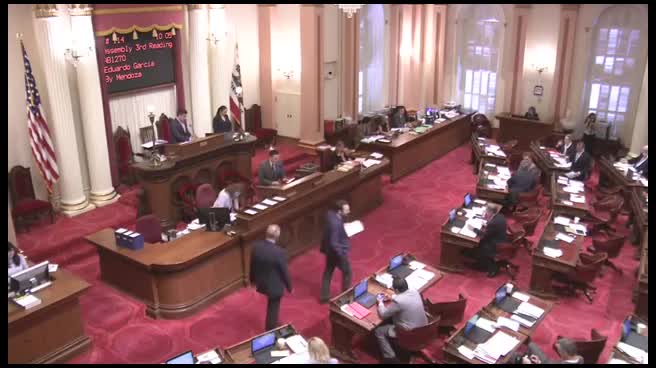
Bill Author

Bill Co-Author(s):