AB 1175: Bureau of Electronic and Appliance Repair, Home Furnishings, and Thermal Insulation.
- Session Year: 2015-2016
- House: Assembly
- Latest Version Date: 2015-08-12
Existing law, the Electronic Appliance Repair Dealer Registration Law and the Home Furnishings and Thermal Insulation Act, provides for the licensure and regulation of, among others, electronic appliance and repair dealers, upholstered furniture and bedding retailers, and upholstered furniture and bedding wholesalers by the Bureau of Electronic and Appliance Repair, Home Furnishings, and Thermal Insulation and makes a failure to comply with its provisions a crime. Existing law establishes the bureau under the supervision and control of the Director of Consumer Affairs. Existing law requires the director to administer and enforce those provisions relating to the licensure and regulation of electronic and appliance repair service dealers and persons engaged in various businesses associated with home furnishings. Existing law also requires the director to set certain fees by regulation.
Existing law establishes the maximum amount for the initial registration fee for each place of business in the state of an electronic repair industry service dealer, an appliance repair industry service dealer, a service contractor, a person who is engaged in business as both an electronic repair industry service dealer and appliance repair industry service dealer, a service contractor who is engaged in business as either an electronic repair industry service dealer or an appliance industry service dealer, and a service contractor who engages in both the electronic repair industry and the appliance repair industry as a service dealer. Existing law requires a service dealer or service contractor who does not operate a place of business in the state, but engages in at least some of these activities in the state to pay these fees as if he or she had a place of business in the state.
This bill would increase the maximum amounts of the initial registration fees for each of the above described persons, as specified, but would prohibit the director from adopting regulations to increase these fees before January 1, 2017.
Existing law also establishes, among other things, the maximum amount for the annual registration renewal fee for each place of business for an electronic repair industry service dealer, an appliance repair industry dealer, a service contractor, and a service dealer who is engaged in business as both an electronic repair industry service dealer and an appliance repair industry service dealer.
This bill would increase the maximum amount for each of these annual registration renewal fees, as specified, but would prohibit the director from adopting regulations to increase these fees before January 1, 2017.
Existing law also requires the chief of the bureau, with the approval of the director, to set, within specified maximum and minimum amounts, the license issuance and biennial renewal fees for an importer, furniture and bedding manufacturer, wholesale furniture and bedding dealer, supply dealer, custom upholsterer, sanitizer, retail furniture and bedding dealer, retail furniture dealer, and retail bedding dealer.
This bill would increase the maximum amount for each of these issuance and biennial renewal fees, as specified.
Existing law, the Electronic Appliance Repair Dealer Registration Law, Law and the Home Furnishings and Thermal Insulation Act, provides for the licensure and regulation of of, among others, electronic appliance and repair dealers dealers, upholstered furniture and bedding retailers, and upholstered furniture and bedding wholesalers by the Bureau of Electronic and Appliance Repair, Home Furnishings, and Thermal Insulation and makes a failure to comply with its provisions a crime. Existing law establishes the bureau under the supervision and control of the Director of Consumer Affairs. Existing law requires the director to administer and enforce those provisions relating to the licensure and regulation of electronic and appliance repair service dealers and persons engaged in various businesses associated with home furnishings. Existing law also requires the director to set certain fees by regulation.
Existing law establishes the maximum amount for the initial registration fee for each place of business in the state of an electronic repair industry service dealer, an appliance repair industry service dealer, a service contractor, a person who is engaged in business as both an electronic repair industry service dealer and appliance repair industry service dealer, a service contractor who is engaged in business as either an electronic repair industry service dealer or an appliance industry service dealer, and a service contractor who engages in both the electronic repair industry and the appliance repair industry as a service dealer. Existing law requires a service dealer or service contractor who does not operate a place of business in the state, but engages in at least some of these activities in the state to pay these fees as if he or she had a place of business in the state.
This bill would increase the maximum amounts of the initial registration fees for each of the above described persons, as specified. specified, but would prohibit the director from adopting regulations to increase these fees before January 1, 2017.
Existing law also establishes, among other things, the maximum amount for the annual registration renewal fee for each place of business for an electronic repair industry service dealer, an appliance repair industry dealer, a service contractor, and a service dealer who is engaged in business as both an electronic repair industry service dealer and an appliance repair industry service dealer.
This bill would increase the maximum amount for each of these annual registration renewal fees, as specified. specified, but would prohibit the director from adopting regulations to increase these fees before January 1, 2017.
Existing law also requires the chief of the bureau, with the approval of the director, to set, within specified maximum and minimum amounts, the license issuance and biennial renewal fees for an importer, furniture and bedding manufacturer, wholesale furniture and bedding dealer, supply dealer, custom upholsterer, sanitizer, retail furniture and bedding dealer, retail furniture dealer, and retail bedding dealer.
This bill would increase the maximum amount for each of these issuance and biennial renewal fees, as specified.
Existing law, the Electronic Appliance Repair Dealer Registration Law, provides for the licensure and regulation of electronic appliance and repair dealers by the Bureau of Electronic and Appliance Repair, Home Furnishings, and Thermal Insulation and makes a failure to comply with its provisions a crime. Existing law establishes the bureau under the supervision and control of the Director of Consumer Affairs. Existing law requires the director to administer and enforce those provisions relating to the licensure and regulation of electronic and appliance repair service dealers and persons engaged in various businesses associated with home furnishings.
Existing law establishes the maximum amount for the initial registration fee for each place of business in the state of an electronic repair industry service dealer, an appliance repair industry service dealer, a service contractor, a person who is engaged in business as both an electronic repair industry service dealer and appliance repair industry service dealer, a service contractor who is engaged in business as either an electronic repair industry service dealer or an appliance industry service dealer, and a service contractor who engages in both the electronic repair industry and the appliance repair industry as a service dealer. Existing law requires a service dealer or service contractor who does not operate a place of business in the state, but engages in at least some of these activities in the state to pay these fees as if he or she had a place of business in the state.
This bill would increase the maximum amounts of the initial registration fees for each of the above described persons, as specified.
Existing law also establishes, among other things, the maximum amount for the annual registration renewal fee for each place of business for an electronic repair industry service dealer, an appliance repair industry dealer, a service contractor, and a service dealer who is engaged in business as both an electronic repair industry service dealer and an appliance repair industry service dealer.
This bill would increase the maximum amount for each of these annual registration renewal fees, as specified.
The fees prescribed by this chapter shall be set by the director by regulation, according to the following schedule:
(a)(1)The initial registration fee for an electronic repair industry service dealer or for an appliance repair industry service dealer is not more than two hundred five dollars ($205) for each place of business in this state. The initial registration fee for a service contractor is not more than ninety-five dollars ($95) for each place of business in this state.
(2)The initial registration fee for a person who engages in business as both an electronic repair industry service dealer and an appliance repair industry service dealer is not more than four hundred five dollars ($405) for each place of business in this state. The initial registration fee for a person who is a service contractor and engages in business as either an electronic repair industry service dealer or an appliance repair industry service dealer is not more than three hundred dollars ($300) for each place of business in this state.
(3)The initial registration fee for a person who engages in both the electronic repair industry and the appliance repair industry as a service dealer and is a service contractor is not more than five hundred dollars ($500) for each place of business in this state.
(4)A service dealer or service contractor who does not operate a place of business in this state, but engages in the electronic repair industry, the appliance repair industry, or sells, issues, or administers service contracts in this state shall pay the registration fee specified herein as if he or she had a place of business in this state.
(b)(1)The annual registration renewal fee for an electronic repair industry service dealer or for an appliance repair industry service dealer is not more than two hundred five dollars ($205) for each place of business in this state, if renewed prior to its expiration date. The annual registration renewal fee for a service contractor is ninety-five dollars ($95) for each place of business in this state, if renewed prior to its expiration date.
(2)The annual renewal fee for a service dealer who engages in the business as both an electronic repair industry service dealer and an appliance repair industry service dealer is not more than four hundred dollars ($400) for each place of business in this state.
(3)The annual renewal fee for a service dealer who engages in the electronic repair industry and the appliance repair industry and is a service contractor is not more than four hundred seventy-five dollars ($475) for each place of business in this state.
(4)A service dealer or service contractor who does not operate a place of business in this state, but who engages in the electronic repair industry, the appliance repair industry, or sells or issues service contracts in this state shall pay the registration fee specified herein as if he or she had a place of business in this state.
(c)The delinquency fee is an amount equal to 50 percent of the renewal fee for a license in effect on the date of renewal of the license, except as otherwise provided in Section 163.5.
(d)This section shall remain in effect only until January 1, 2019, and as of that date is repealed, unless a later enacted statute, which is enacted before January 1, 2019, deletes or extends that date.
(e)Notwithstanding any other law, the director shall not adopt any regulation to increase any fee provided for in this section before January 1, 2017.
SEC. 2.Section 9873 of the Business and Professions Code, as amended by Section 20 of Chapter 428 of the Statutes of 2014, is amended to read:9873.The fees prescribed by this chapter shall be set by the director by regulation, according to the following schedule:
(a)The initial registration fee for an electronic repair industry service dealer or for an appliance repair industry service dealer is not more than two hundred five dollars ($205) for each place of business in this state. The initial registration fee for a person who engages in business as both an electronic repair industry service dealer and an appliance repair industry service dealer is not more than four hundred five dollars ($405).
(b)The annual registration renewal fee for an electronic repair industry service dealer or for an appliance repair industry service dealer is not more than two hundred five dollars ($205) for each place of business in this state, if renewed prior to its expiration date. The annual renewal fee for a service dealer who engages in the business as both an electronic repair industry service dealer and an appliance repair industry service dealer is not more than four hundred dollars ($400).
(c)The delinquency fee is an amount equal to 50 percent of the renewal fee for a license in effect on the date of renewal of the license, except as otherwise provided in Section 163.5.
(d)This section shall become operative on January 1, 2019.
SEC. 3.Section 19170 of the Business and Professions Code is amended to read:19170.(a)The fee imposed for the issuance and for the biennial renewal of each license granted under this chapter shall be set by the chief, with the approval of the director, at a sum not more nor less than that shown in the following table:
Maximum | Minimum | |
Importers license | $940 | $120 |
Furniture and bedding manufacturers license | 940 | 120 |
Wholesale furniture and bedding dealers license | 675 | 120 |
Supply dealers license | 675 | 120 |
Custom upholsterers license | 450 | 80 |
Sanitizers license | 450 | 80 |
Retail furniture and bedding dealers license | 300 | 40 |
Retail furniture dealers license | 150 | 20 |
Retail bedding dealers license | 150 | 20 |
(b)Individuals who, in their own homes and without the employment of any other person, make, sell, advertise, or contract to make pillows, quilts, quilted pads, or comforters are exempt from the fee requirements imposed by subdivision (a). However, these individuals shall comply with all other provisions of this chapter.
(c)Retailers who only sell used and antique furniture as defined in Sections 19008.1 and 19008.2 are exempt from the fee requirements imposed by subdivision (a). Those retailers are also exempt from the other provisions of this chapter.
(d)A person who makes, sells, or advertises upholstered furniture and bedding as defined in Sections 19006 and 19007, and who also makes, sells, or advertises furniture used exclusively for the purpose of physical fitness and exercise, shall comply with the fee requirements imposed by subdivision (a).
(e)A person who has paid the required fee and who is licensed either as an upholstered furniture and bedding manufacturer or a custom upholsterer under this chapter shall not be required to additionally pay the fee for a sanitizers license.
The fees prescribed by this chapter shall be set by the director by regulation, according to the following schedule:
(a)(1)The initial registration fee for an electronic repair industry service dealer or for an appliance repair industry service dealer is not more than two hundred five dollars ($205) for each place of business in this state. The initial registration fee for a service contractor is not more than ninety-five dollars ($95) for each place of business in this state.
(2)The initial registration fee for a person who engages in business as both an electronic repair industry service dealer and an appliance repair industry service dealer is not more than four hundred five dollars ($405) for each place of business in this state. The initial registration fee for a person who is a service contractor and engages in business as either an electronic repair industry service dealer or an appliance repair industry service dealer is not more than three hundred dollars ($300) for each place of business in this state.
(3)The initial registration fee for a person who engages in both the electronic repair industry and the appliance repair industry as a service dealer and is a service contractor is not more than five hundred dollars ($500) for each place of business in this state.
(4)A service dealer or service contractor who does not operate a place of business in this state, but engages in the electronic repair industry, the appliance repair industry, or sells, issues, or administers service contracts in this state shall pay the registration fee specified herein as if he or she had a place of business in this state.
(b)(1)The annual registration renewal fee for an electronic repair industry service dealer or for an appliance repair industry service dealer is not more than two hundred five dollars ($200) ($205) for each place of business in this state, if renewed prior to its expiration date. The annual registration renewal fee for a service contractor is ninety-five dollars ($95) for each place of business in this state, if renewed prior to its expiration date.
(2)The annual renewal fee for a service dealer who engages in the business as both an electronic repair industry service dealer and an appliance repair industry service dealer is not more than four hundred dollars ($400) for each place of business in this state.
(3)The annual renewal fee for a service dealer who engages in the electronic repair industry and the appliance repair industry and is a service contractor is not more than four hundred seventy-five dollars ($475) for each place of business in this state.
(4)A service dealer or service contractor who does not operate a place of business in this state, but who engages in the electronic repair industry, the appliance repair industry, or sells or issues service contracts in this state shall pay the registration fee specified herein as if he or she had a place of business in this state.
(c)The delinquency fee is an amount equal to 50 percent of the renewal fee for a license in effect on the date of renewal of the license, except as otherwise provided in Section 163.5.
(d)This section shall remain in effect only until January 1, 2019, and as of that date is repealed, unless a later enacted statute, which is enacted before January 1, 2019, deletes or extends that date.
(e)Notwithstanding any other law, the director shall not adopt any regulation to increase any fee provided for in this section before January 1, 2017.
SEC. 2.Section 9873 of the Business and Professions Code, as amended by Section 20 of Chapter 428 of the Statutes of 2014, is amended to read:9873.The fees prescribed by this chapter shall be set by the director by regulation, according to the following schedule:
(a)The initial registration fee for an electronic repair industry service dealer or for an appliance repair industry service dealer is not more than two hundred five dollars ($205) for each place of business in this state. The initial registration fee for a person who engages in business as both an electronic repair industry service dealer and an appliance repair industry service dealer is not more than four hundred five dollars ($405).
(b)The annual registration renewal fee for an electronic repair industry service dealer or for an appliance repair industry service dealer is not more than two hundred five dollars ($200) ($205) for each place of business in this state, if renewed prior to its expiration date. The annual renewal fee for a service dealer who engages in the business as both an electronic repair industry service dealer and an appliance repair industry service dealer is not more than four hundred dollars ($400).
(c)The delinquency fee is an amount equal to 50 percent of the renewal fee for a license in effect on the date of renewal of the license, except as otherwise provided in Section 163.5.
(d)This section shall become operative on January 1, 2019.
SEC. 3.Section 19170 of the Business and Professions Code is amended to read:19170.(a)The fee imposed for the issuance and for the biennial renewal of each license granted under this chapter shall be set by the chief, with the approval of the director, at a sum not more nor less than that shown in the following table:
Maximum | Minimum | |
Importers license | $750 $940 | $120 |
Furniture and bedding manufacturers license | 750 940 | 120 |
Wholesale furniture and bedding dealers license | 540 675 | 120 |
Supply dealers license | 540 675 | 120 |
Custom upholsterers license | 360 450 | 80 |
Sanitizers license | 360 450 | 80 |
Retail furniture and bedding dealers license | 240 300 | 40 |
Retail furniture dealers license | 120 150 | 20 |
Retail bedding dealers license | 120 150 | 20 |
(b)Individuals who, in their own homes and without the employment of any other person, make, sell, advertise, or contract to make pillows, quilts, quilted pads, or comforters are exempt from the fee requirements imposed by subdivision (a). However, these individuals shall comply with all other provisions of this chapter.
(c)Retailers who only sell used and antique furniture as defined in Sections 19008.1 and 19008.2 are exempt from the fee requirements imposed by subdivision (a). Those retailers are also exempt from the other provisions of this chapter.
(d)A person who makes, sells, or advertises upholstered furniture and bedding as defined in Sections 19006 and 19007, and who also makes, sells, or advertises furniture used exclusively for the purpose of physical fitness and exercise, shall comply with the fee requirements imposed by subdivision (a).
(e)A person who has paid the required fee and who is licensed either as an upholstered furniture and bedding manufacturer or a custom upholsterer under this chapter shall not be required to additionally pay the fee for a sanitizers license.
The fees prescribed by this chapter shall be set by the director by regulation, according to the following schedule:
(a)(1)The initial registration fee for an electronic repair industry service dealer or for an appliance repair industry service dealer is not more than one hundred sixty-five two hundred five dollars ($165) ($205) for each place of business in this state. The initial registration fee for a service contractor is not more than seventy-five ninety-five dollars ($75) ($95) for each place of business in this state.
(2)The initial registration fee for a person who engages in business as both an electronic repair industry service dealer and an appliance repair industry service dealer is not more than three hundred twenty-five four hundred five dollars ($325) ($405) for each place of business in this state. The initial registration fee for a person who is a service contractor and engages in business as either an electronic repair industry service dealer or an appliance repair industry service dealer is not more than two hundred forty three hundred dollars ($240) ($300) for each place of business in this state.
(3)The initial registration fee for a person who engages in both the electronic repair industry and the appliance repair industry as a service dealer and is a service contractor is not more than four five hundred dollars ($400) ($500) for each place of business in this state.
(4)A service dealer or service contractor who does not operate a place of business in this state, but engages in the electronic repair industry, the appliance repair industry, or sells, issues, or administers service contracts in this state shall pay the registration fee specified herein as if he or she had a place of business in this state.
(b)(1)The annual registration renewal fee for an electronic repair industry service dealer or for an appliance repair industry service dealer is not more than one hundred sixty-five two hundred dollars ($165) ($200) for each place of business in this state, if renewed prior to its expiration date. The annual registration renewal fee for a service contractor is seventy-five ninety-five dollars ($75) ($95) for each place of business in this state, if renewed prior to its expiration date.
(2)The annual renewal fee for a service dealer who engages in the business as both an electronic repair industry service dealer and an appliance repair industry service dealer is not more than three four hundred dollars ($300) ($400) for each place of business in this state.
(3)The annual renewal fee for a service dealer who engages in the electronic repair industry and the appliance repair industry and is a service contractor is not more than three four hundred seventy-five dollars ($375) ($475) for each place of business in this state.
(4)A service dealer or service contractor who does not operate a place of business in this state, but who engages in the electronic repair industry, the appliance repair industry, or sells or issues service contracts in this state shall pay the registration fee specified herein as if he or she had a place of business in this state.
(c)The delinquency fee is an amount equal to 50 percent of the renewal fee for a license in effect on the date of renewal of the license, except as otherwise provided in Section 163.5.
(d)This section shall remain in effect only until January 1, 2019, and as of that date is repealed, unless a later enacted statute, which is enacted before January 1, 2019, deletes or extends that date.
SEC. 2.Section 9873 of the Business and Professions Code, as amended by Section 20 of Chapter 428 of the Statutes of 2014, is amended to read:9873.The fees prescribed by this chapter shall be set by the director by regulation, according to the following schedule:
(a)The initial registration fee for an electronic repair industry service dealer or for an appliance repair industry service dealer is not more than one hundred sixty-five two hundred five dollars ($165) ($205) for each place of business in this state. The initial registration fee for a person who engages in business as both an electronic repair industry service dealer and an appliance repair industry service dealer is not more than three hundred twenty-five four hundred five dollars ($325) ($405).
(b)The annual registration renewal fee for an electronic repair industry service dealer or for an appliance repair industry service dealer is not more than one hundred sixty-five two hundred dollars ($165) ($200) for each place of business in this state, if renewed prior to its expiration date. The annual renewal fee for a service dealer who engages in the business as both an electronic repair industry service dealer and an appliance repair industry service dealer is not more than three four hundred dollars ($300) ($400).
(c)The delinquency fee is an amount equal to 50 percent of the renewal fee for a license in effect on the date of renewal of the license, except as otherwise provided in Section 163.5.
(d)This section shall become operative on January 1, 2019.
|
Date
|
Status
|
|---|---|
| May 11, 2015 | Read third time. Passed. Ordered to the Senate. (Ayes 51. Noes 26. Page 1387.) |
| Aug 12, 2015 | Chaptered by Secretary of State - Chapter 187, Statutes of 2015. |
| Aug 12, 2015 | Approved by the Governor. |
| Aug 3, 2015 | Enrolled and presented to the Governor at 3 p.m. |
| Jul 9, 2015 | Read third time. Passed. Ordered to the Assembly. (Ayes 25. Noes 12. Page 1876.). |
| Jul 9, 2015 | Read third time. Passed. Ordered to the Assembly. |
| Jul 9, 2015 | In Assembly. Ordered to Engrossing and Enrolling. |
| Jun 23, 2015 | Read second time. Ordered to third reading. |
| Jun 22, 2015 | From committee: Do pass. (Ayes 5. Noes 0.) (June 22). |
| Jun 8, 2015 | From committee: Do pass and re-refer to Com. on APPR. (Ayes 6. Noes 0.) (June 8). Re-referred to Com. on APPR. |
| May 21, 2015 | Referred to Com. on B., P. & E.D. |
| Feb 27, 2015 | Introduced. To print. |
| May 11, 2015 | Read third time. Passed. Ordered to the Senate. |
| May 11, 2015 | In Senate. Read first time. To Com. on RLS. for assignment. |
| May 7, 2015 | Read second time. Ordered to third reading. |
| May 6, 2015 | From committee: Do pass. (Ayes 12. Noes 5.) (May 6). |
| Apr 21, 2015 | From committee: Do pass and re-refer to Com. on APPR. (Ayes 11. Noes 2.) (April 21). Re-referred to Com. on APPR. |
| Apr 15, 2015 | Re-referred to Com. on B. & P. |
| Apr 14, 2015 | From committee chair, with author's amendments: Amend, and re-refer to Com. on B. & P. Read second time and amended. |
| Mar 23, 2015 | Referred to Com. on B. & P. |
| Mar 2, 2015 | Read first time. |
| Mar 1, 2015 | From printer. May be heard in committee March 31. |
|
Date
|
Description
|
Location
|
Votes
|
|
|---|---|---|---|---|
| Jul 9, 2015 | Assembly 3rd Reading AB1175 Ridley-Thomas By Hill | Senate Floor |
Passed |
|
| Jun 22, 2015 | Do pass | Senate Standing Committee on Appropriations |
Passed |
|
| Jun 8, 2015 | Do pass, but first be re-referred to the Committee on [Appropriations] | Senate Standing Committee on Business, Professions and Economic Development |
Passed |
|
| May 11, 2015 | AB 1175 RIDLEY-THOMAS Assembly Third Reading | Assembly Floor |
Passed |
|
| May 6, 2015 | Do pass. | Assembly Standing Committee on Appropriations |
Passed |
|
| Apr 21, 2015 | Do pass and be re-referred to the Committee on [Appropriations] | Assembly Standing Committee on Business and Professions |
Passed |
This list shows positions taken on this bill by organizations on the date displayed, which is linked to the original source.
Positions by individuals are not included.
|
Organization
|
Position
|
Date
|
|---|---|---|
| American Home Furnishings Alliance | ** Support | Jun 8, 2015 |
| Bureau of Electronic Appliance Repair, Home Furnishings, and Thermal Insulation | * Support | Jun 15, 2015 |
| Business and Institutional Furniture Manufacturers Association | ** Support | Jun 8, 2015 |
| California Professional Firefighters | ** Support | Jul 9, 2015 |
| Center For Environmental Health | ** Support | Jul 9, 2015 |
| Natural Resources Defense Council | ** Support | Jul 9, 2015 |
AB 1175
Page 5
|
Office of Senate Floor Analyses (916) 651-1520 Fax: (916) 327-4478 |
THIRD READING
Bill No: AB 1175
Amended: 4/14/15 in Assembly
SENATE BUS, PROF. & ECON. DEV. COMMITTEE: 6-0, 6/8/15
AYES: Hill, Block, Hernandez, Jackson, Mendoza, Wieckowski
NO VOTE RECORDED: Bates, Berryhill, Galgiani
SENATE APPROPRIATIONS COMMITTEE: 5-0, 6/22/15
AYES: Lara, Beall, Hill, Leyva, Mendoza
NO VOTE RECORDED: Bates, Nielsen
ASSEMBLY FLOOR: 51-26, 5/11/15 - See last page for vote
SUBJECT: Bureau of Electronic and Appliance Repair, Home Furnishings, and Thermal Insulation
DIGEST: This bill increases the statutory fee cap by approximately 25% for each license type under the Bureau of Electronic and Appliance Repair, Home Furnishings, and Thermal Insulation, except as specified.
Existing law:
Establishes the Electronic and Appliance Repair Dealer Registration Law, and provides for the licensure and regulation of electronic and appliance repair dealers and service contract sellers and administrators. (Business and Professions Code (BPC) § 9800 et seq.)
Establishes the Bureau of Electronic and Appliance Repair, Home Furnishings, and Thermal Insulation (Bureau) within the Department of Consumer Affairs (DCA), and places the Bureau under the supervision and control of the DCA Director. (BPC § 9810)
Establishes the Home Furnishings and Thermal Insulation Act, and provides for the licensure and regulation of manufacturers, sellers, importers, upholsterers, and sanitizers of home furnishings, including upholstered furniture and bedding and thermal insulation. (BPC § 19000 et seq.)
Establishes the following licensure categories, including initial and renewal licensure fees for each of those license types: appliance service dealers; electronic and appliance service dealers; service contract sellers; service contract administrators; joint service contractors and electronic and appliance service dealers, as specified; custom upholsters; bedding retailers; furniture retailers; bedding and furniture retailers; importers; furniture and bedding manufacturers; furniture and bedding wholesalers; furniture and bedding supply dealers; sanitizers; supply dealers; and thermal insulation manufacturers. (BPC §§ 9873, 19170)
This bill:
Increases by approximately 25%, licensure fees for the following license types: appliance service dealers; electronic and appliance service dealers; service contract sellers; service contract administrators; joint service contractors and electronic and appliance service dealers, as specified; custom upholsters; bedding retailers; furniture retailers; bedding and furniture retailers; importers; furniture and bedding manufacturers; furniture and bedding wholesalers; furniture and bedding supply dealers; sanitizers; and supply dealers.
Prohibits the Director of the DCA from adopting any regulation to increase any fees for electronic and appliance service dealers and service contractors licensing categories before January 1, 2017.
Makes conforming changes.
Background
Fund condition. As a Special Fund agency, the Bureau receives no General Fund support, relying solely on fees set by statute and collected from licensing and renewal fees. The Electronic and Appliance Repair (EAR) program and the Home Furnishings and Thermal Insulation (HFTI) program each operate with their own budgets and their own funds. There is no mandated reserve level for the Bureau, however, the DCA Budget Office has historically recommended that smaller programs maintain a contingency fund slightly above the standard three to six months of reserve. Maintaining an adequate reserve of at least six months provides for a reasonable contingency fund so that the Bureau has the fiscal resources to absorb any unforeseen costs, such as costly enforcement actions or other unexpected client service costs.
The Bureau expects the EAR Fund to have 6.8 months in reserve in fiscal year (FY) 2015/16, 4.9 months in reserve in FY 16/17, 2.9 months in reserve in FY 2017/18, dropping below the recommended three month reserve, 0.7 months in reserve in FY 2018/19, and a deficit of $446,000 in FY 19/20. The Bureau expects the HFTI Fund to have 3.6 months in reserve in FY 15/16, 1.4 months in reserve in FY 2016/17, dropping below the recommended three month reserve, and a deficit of $403,000 in FY 2017/18, which would grow to a deficit of $1.521 million dollars in FY 2018/19 and to a deficit of $2.745 million dollars in FY 2019/20.
Without a fee increase, the Bureau will face a deficit in FY 2017/18 for the HFTI Fund and in FY 2019/20 for the EAR Fund. According to the Bureau, a deficit will result in curtailed services, which will delay the handling of consumer complaints, limit the number of disciplinary actions that could be adjudicated, and delay the timeframes for licensure and renewal, which will impact companies trying to legally continue their business operations.
Increased costs to the Bureau. According to the Bureau, the increase in expenditures over time is attributable to a general increase in costs, for example, for retirement and medical benefits and overhead expenses. In addition, in the past several legislative sessions, the Bureau has been charged with new responsibilities. One of these changes was SB 1019 (Leno, Chapter 862, Statutes of 2014), which required the Bureau to partner with the Department of Toxic Substances Control (DTSC) to establish a program for the testing of chemical flame retardants in upholstered furniture to determine whether they comply with a new labeling requirement. This testing is costly, and in addition to the Bureau’s responsibility to reimburse the DTSC for these tests, the Bureau is required under existing law to pay the full wholesale cost of any tested upholstered product if the product is in compliance with labeling and other requirements. As SB 1019 was being developed, stakeholders were informed that the Bureau’s current fund condition could not support the establishment of such a robust testing regime. The increase in fees provided for in this bill, however, will allow the Bureau to successfully implement such a testing program, which will enable the Bureau to carry out its statutory mandate of consumer protection.
FISCAL EFFECT: Appropriation: No Fiscal Com.: Yes Local: No
According to the Senate Appropriations Committee:
Minor and absorbable costs to the Bureau to update regulations to increase specified fees (EAR Fund and HFTI Fund).
Increased revenues of up to $622,000 annually, beginning in 2017-18, to the EAR Fund, and up to $1.03 million annually, beginning in 2016-17, to the HFTI Fund, if the fees are increased to the proposed statutory maximums.
California Professional Firefighters
Center for Environmental Health
Natural Resources Defense Council
OPPOSITION: (Verified 6/23/15)
None received
ARGUMENTS IN SUPPORT: According to the Natural Resources Defense Council, “Fee increases are needed in order to ensure that [Bureau] has the resources to continue ensuring compliance with regulations, conducting testing and investigations, and educating businesses, all of which are critical to consumer protection….[Bureau] has a history of working effectively with stakeholders and we expect that it will continue to do so to ensure that the fee increases meet resource needs with minimum negative impact on businesses.”
ASSEMBLY FLOOR: 51-26, 5/11/15
AYES: Alejo, Baker, Bloom, Bonilla, Bonta, Brown, Burke, Calderon, Campos, Chau, Chiu, Chu, Cooley, Cooper, Dababneh, Daly, Dodd, Eggman, Frazier, Cristina Garcia, Eduardo Garcia, Gatto, Gipson, Gomez, Gonzalez, Gordon, Gray, Roger Hernández, Holden, Jones-Sawyer, Levine, Lopez, Low, McCarty, Medina, Mullin, Nazarian, O’Donnell, Perea, Quirk, Rendon, Ridley-Thomas, Rodriguez, Santiago, Steinorth, Mark Stone, Thurmond, Ting, Weber, Williams, Wood
NOES: Achadjian, Travis Allen, Bigelow, Brough, Chang, Chávez, Dahle, Beth Gaines, Gallagher, Grove, Harper, Irwin, Jones, Kim, Lackey, Maienschein, Mathis, Mayes, Melendez, Obernolte, Olsen, Patterson, Salas, Wagner, Waldron, Wilk
NO VOTE RECORDED: Hadley, Linder, Atkins
Prepared by: Mark Mendoza / B., P. & E.D. / (916) 651-1868
6/24/15 15:26:12
**** END ****
AB 1175 (Ridley-Thomas) Page 3 of 3
SENATE COMMITTEE ON APPROPRIATIONS
Senator Ricardo Lara, Chair
2015 - 2016 Regular Session
AB 1175 (Ridley-Thomas) - Bureau of Electronic and Appliance Repair, Home Furnishings, and Thermal Insulation.
|
|
Version: April 14, 2015 |
Policy Vote: B., P. & E.D. 6 - 0 |
Urgency: No |
Mandate: No |
Hearing Date: June 22, 2015 |
Consultant: Mark McKenzie |
This bill does not meet the criteria for referral to the Suspense File.
Bill Summary:
SB 1175 would increase the statutory cap on specified licensing and registration fees imposed by the Bureau of Electronic and Appliance Repair, Home Furnishings, and Thermal Insulation (Bureau).
Fiscal Impact:
Minor and absorbable costs to the Bureau to update regulations to increase specified fees (Electronic and Appliance Repair (EAR) Fund and Home Furnishings and Thermal Insulation (HFTI) Fund).
Increased revenues of up to $622,000 annually, beginning in 2017-18, to the EAR Fund, and up to $1.03 million annually, beginning in 2016-17, to the HFTI Fund, if the fees are increased to the proposed statutory maximums.
Background:
The Bureau, which is housed in the Department of Consumer Affairs (DCA), licenses and regulates over 40,000 businesses, including those that engage in the repair of electronics and appliances, the sale and administration of service contracts, and the manufacture, sale, and repair of home furnishings, bedding, and thermal insulation. The Bureau also does the following: 1) inspects businesses and conducts investigations; 2) researches, develops standards for, and conducts testing on home furnishings and thermal insulation products; 3) handles consumer complaints; and 4) initiates disciplinary action against businesses that violate statutory or regulatory requirements.
Existing law establishes licensing and registration fees and requirements, including initial and renewals, for the following license types administered by the Bureau: electronic service dealers, appliance service dealers; combination electronic and appliance service dealers; service contract sellers; service contract administrators; joint service contractors and electronic and appliance service dealers, as specified; custom upholsters; bedding retailers; furniture retailers; bedding and furniture retailers; importers; furniture and bedding manufacturers; furniture and bedding wholesalers; furniture and bedding supply dealers; sanitizers; supply dealers; and thermal insulation manufacturers.
The statutory caps for licensing and registration fees were last raised in 1978 for the electronics and appliance industries, and in 1998 for the home furnishings and thermal insulation industries.
Proposed Law:
SB 1175 would raise the statutory caps on the following licensing, registration, and renewal fees:
Under the Electronic and Appliance Repair Dealer Law: electronic service dealers, appliance service dealers, combination electronic and appliance service dealers, service contract sellers, service contract administrators, joint service contractors and electronic and appliance service dealers, as specified.
Under the Home Furnishings and Thermal Insulation Act: importers, furniture and bedding manufacturers, wholesale furniture and bedding dealers, supply dealers, custom upholsterers, sanitizers, retail furniture dealers, retail bedding dealers, and retail furniture and bedding dealers.
The bill also prohibits the Bureau from adopting any regulation to increase any of the fees under the Electronic and Appliance Repair Dealer Law before January 1, 2017.
Related Legislation:
SB 763 (Leno), pending in the Assembly, would require labeling of juvenile products indicating whether they have added flame retardant chemicals, and require the Bureau to ensure compliance with labeling and other requirements. The bill also requires the Bureau to submit samples of products to the Department of Toxic Substances Control (DTSC) for testing. The Bureau reimburses DTSC for testing costs.
AB 2740 (Bonilla), Chap 428/2014, subjects the powers and duties of the Bureau to review by the appropriate policy committees of the Legislature, as if it was scheduled for sunset on January 1, 2019.
Staff Comments:
This bill is intended to provide for increased licensing fees to address pending structural deficits in the special funds administered by the Bureau. The fees are currently at the statutory maximums for the majority of licensing categories. The exception is the thermal insulation manufacturer fees, which are excluded from this bill.
The Bureau indicates that its operational costs have increased in all areas since the fees were last increased in 1998 and 1978, respectively, most notably in the areas of testing associated with flame retardant chemicals used in upholstered furniture. Absent the proposed increases to the statutory fee caps, the HFTI Fund is projected to be in deficit in 2017-18, and the EAR Fund is projected to be in deficit in 2019-20. If the fees are raised to the proposed maximum levels, and assuming no new workload is imposed on the Bureau, the FHTI Fund would have a projected three-month reserve at the end of the 2019-20 fiscal year, and the EAR Fund would have a projected reserve of approximately 5.4 months at the end of the 2019-20 fiscal year.
The Bureau also notes that the fee increases are not being sought to cover costs associated with the implementation of DCA’s BreEZe system.
-- END --
AB 1175 (Ridley-Thomas) Page 5 of 5
SENATE COMMITTEE ON
BUSINESS, PROFESSIONS AND ECONOMIC DEVELOPMENT
Senator Jerry Hill, Chair
2015 - 2016 Regular
Bill No: AB 1175 Hearing Date: June 8, 2015
Author: |
Ridley-Thomas |
||
Version: |
April 14, 2015 |
||
Urgency: |
No |
Fiscal: |
Yes |
Consultant: |
Mark Mendoza |
||
Subject: Bureau of Electronic and Appliance Repair, Home Furnishings, and Thermal Insulation.
SUMMARY:
Increases the statutory fee cap by approximately 25 percent for each license type under the Bureau of Electronic and Appliance Repair, Home Furnishings, and Thermal Insulation, except as specified.
Existing law:
Establishes the Electronic and Appliance Repair Dealer Registration Law, and provides for the licensure and regulation of electronic and appliance repair dealers and service contract sellers and administrators. (Business and Professions Code (BPC) § 9800 et seq.)
Establishes the Bureau of Electronic and Appliance Repair, Home Furnishings, and Thermal Insulation (Bureau) within the Department of Consumer Affairs (DCA), and places the Bureau under the supervision and control of the DCA Director.
(BPC § 9810)
Establishes the Home Furnishings and Thermal Insulation Act, and provides for the licensure and regulation of manufacturers, sellers, importers, upholsterers, and sanitizers of home furnishings, including upholstered furniture and bedding and thermal insulation. (BPC § 19000 et seq.)
Establishes the following licensure categories, including initial and renewal licensure fees for each of those license types: appliance service dealers; electronic and appliance service dealers; service contract sellers; service contract administrators; joint service contractors and electronic and appliance service dealers, as specified; custom upholsters; bedding retailers; furniture retailers; bedding and furniture retailers; importers; furniture and bedding manufacturers; furniture and bedding wholesalers; furniture and bedding supply dealers; sanitizers; supply dealers; and thermal insulation manufacturers. (BPC § 9873, 19170)
This
bill:
Increases by approximately 25 percent, licensure fees for the following license types: appliance service dealers; electronic and appliance service dealers; service contract sellers; service contract administrators; joint service contractors and electronic and appliance service dealers, as specified; custom upholsters; bedding retailers; furniture retailers; bedding and furniture retailers; importers; furniture and bedding manufacturers; furniture and bedding wholesalers; furniture and bedding supply dealers; sanitizers; and supply dealers.
Prohibits the Director of the DCA from adopting any regulation to increase any fees for electronic and appliance service dealers and service contractors licensing categories before January 1, 2017.
Makes conforming changes.
FISCAL EFFECT:
This measure has been keyed “fiscal” by Legislative Counsel. According to the Assembly Appropriations Committee analysis, dated May 4, 2015:
If fees are raised to the statutory maximum proposed in this bill, the Bureau of Electronic and Appliance Repair (BEAR) fund and Home Furnishings, and Thermal Insulation (HFTI) fund (both special funds) would receive a combined increase in revenues of $1 million in 2016-17, and $1.65 million on-going.
Without a fee increase, the BEAR fund is projected to go insolvent in Fiscal Year (FY) 2019-2020, and the HFTI fund is projected to go insolvent in FY 2017-18. The Bureau receives no General Fund support, relying solely on fees set by statute and collected from licensing and renewal fees. The fees are currently at the statutory cap for the majority of licenses, except those excluded from this bill.
One-time minor and absorbable IT costs of approximately $5,000.
One-time minor and absorbable costs to DCA to adopt regulations and increase fees.
COMMENTS:
Purpose. The Author is the sponsor of the bill. According to the Author, "The last time the Bureau’s licensing fees were raised in statute was 1978 for the electronics and appliance industries and 1998 for the home furnishings and thermal insulation industries. The Bureau’s operational costs have continually increased with its expenditures, and it is projected the Bureau will be in deficit in Fiscal Year (FY) 2017-18, if revenues are not increased. The Bureau has worked diligently at minimizing operational costs and streamlining its processes for optimum cost savings, but continued resource and overhead costs have reached a level where increased revenues are necessary to sustain the Bureau."
Bureau of Electronic and Appliance Repair, Home Furnishings, and Thermal Insulation. The Bureau, which is housed within the DCA, licenses and regulates over 40,000 related businesses, including businesses that engage in the repair of electronics and appliances; the sale and administration of service contracts; and the manufacture, sale, and repair of home furnishings and thermal insulation. The Bureau also inspects businesses and conducts investigations; researches and develops standards for, and tests, home furnishings and thermal insulation products; handles consumer complaints; and initiates disciplinary action against businesses that violate statutory or regulatory requirements.
Initial and Renewal Licensure Fees. The Bureau’s fees are currently at the ceiling for the majority of licenses, except for thermal insulation manufacturer fees which are below the statutory fee cap, which are excluded from the bill. In addition, fees have been at their statutory caps and have not been raised in over a decade. According to the Author, statutory fee caps have not been raised since 1978 for the electronics and appliance industries and 1998 for the home furnishings and thermal insulation industries. Since the last fee increase, operational costs have increased in all areas and the Bureau’s budget is facing challenges.
If fees were increased annually with the rate of inflation, based on the U.S. Consumer Price Index (CPI) to be slightly less than three percent a year, fees would be nearly 50% higher than they are right now. According to the Author, these fees are used to support the Bureau's staff of 43 employees, in addition to operational expenses, for licensing and registering businesses; inspecting businesses; ensuring compliance with laws and regulations; handling consumer complaints; conducting investigations; testing products to ascertain if they meet the required standards; conducting research and developing standards; educating applicants and licensees; and initiating disciplinary action against companies who commit egregious violations.
One particular area that has recently received widespread attention under the Bureau’s jurisdiction is the changes to the regulation of flame resistance performance tests for furniture. Existing law requires all upholstered furniture that is sold to California consumers to be fire retardant. California is the only state with a residential upholstered furniture flammability standard. The Bureau recently updated this standard in 2013 (Technical Bulletin 117-2013) and Senator Leno recently passed legislation (SB 1019, Chapter 862, Statutes of 2014) that the Bureau is currently implementing in regard to chemical content disclosures to consumers.
Fund Condition. As a Special Fund agency, the Bureau receives no General Fund support, relying solely on fees set by statute and collected from licensing and renewal fees. The Electronic and Appliance Repair program and the Home Furnishings and Thermal Insulation program each operate with their own budgets and their own funds. There is no mandated reserve level for the Bureau, however, the DCA Budget Office has historically recommended that smaller programs maintain a contingency fund slightly above the standard three to six months of reserve. Maintaining an adequate reserve of at least six months provides for a reasonable contingency fund so that the Bureau has the fiscal resources to absorb any unforeseen costs, such as costly enforcement actions or other unexpected client service costs.
The
Bureau expects the Electronic and Appliance Repair (EAR) Fund to have
6.8 months in reserve in Fiscal Year (FY) 2015/16, 4.9 months in
reserve in FY 16/17, 2.9 months in reserve in FY 2017/18, dropping
below the recommended three month reserve, 0.7 months in reserve in
FY 2018/19, and a deficit of $446,000 in
FY 19/20. The Bureau
expects the Home Furnishings and Thermal Insulation (HFTI) Fund to
have 3.6 months in reserve in FY 15/16, 1.4 months in reserve in FY
2016/17, dropping below the recommended three month reserve, and a
deficit of $403,000 in FY 2017/18, which would grow to a deficit of
$1.521 million dollars in FY 2018/19 and to a deficit of $2.745
million dollars in FY 2019/20.
Without a fee increase, the Bureau will face a deficit in FY 2017/18 for the HFTI Fund and in FY 2019/20 for the EAR Fund. According to the Bureau, a deficit will result in curtailed services, which will delay the handling of consumer complaints, limit the number of disciplinary actions that could be adjudicated, and delay the timeframes for licensure and renewal, which will impact companies trying to legally continue their business operations.
Increased Costs to the Bureau. According to the Bureau, the increase in expenditures over time is attributable to a general increase in costs, for example, for retirement and medical benefits and overhead expenses. In addition, in the past several legislative sessions, the Bureau has been charged with new responsibilities. One of these changes was SB 1019 (Leno), Chapter 862, Statutes of 2014, which required the Bureau to partner with the Department of Toxic Substances Control (DTSC) to establish a program for the testing of chemical flame retardants in upholstered furniture to determine whether they comply with a new labeling requirement. This testing is costly, and in addition to the Bureau's responsibility to reimburse the DTSC for these tests, the Bureau is required under existing law to pay the full wholesale cost of any tested upholstered product if the product is in compliance with labeling and other requirements. As this legislation was being developed, stakeholders were informed that the Bureau’s current fund condition could not support the establishment of such a robust testing regime. The increase in fees provided for in this bill, however, will allow the Bureau to successfully implement such a testing program, which will enable the Bureau to carry out its statutory mandate of consumer protection.
Prior Legislation. AB 2740 (Bonilla, Chapter 428, Statutes of 2014), subjected the powers and duties of the Bureau of Electronic and Appliance Repair, Home Furnishings, and Thermal Insulation (Bureau) to review by the appropriate policy committees of the Legislature as if these provisions were scheduled to be repealed on January 1, 2019, and requested the Bureau to report back to the committees on specified issues by July 1, 2015.
Arguments in Support. According to the Natural Resources Defense Council, "Fee increases are needed in order to ensure that [Bureau] has the resources to continue ensuring compliance with regulations, conducting testing and investigations, and educating businesses, all of which are critical to consumer protection….[Bureau] has a history of working effectively with stakeholders and we expect that it will continue to do so to ensure that the fee increases meet resource needs with minimum negative impact on businesses."
SUPPORT AND OPPOSITION:
Support:
American Home Furnishings Alliance (AHFA)
Business and Institutional Furniture Manufacturers Association (BIFMA)
Center for Environmental Health (CEH)
Natural Resources Defense Council
Opposition:
None on file as of June 2, 2015.
-- END --
AB 1175
Page 3
ASSEMBLY THIRD READING
AB 1175
(Ridley-Thomas)
As Amended April 14, 2015
Majority vote
Committee |
Votes |
Ayes |
Noes |
Business & Professions |
11-2 |
Bonilla, Baker, Bloom, Campos, Dodd, Eggman, Gatto, Holden, Mullin, Ting, Wood |
Jones, Wilk |
Appropriations |
12-5 |
Gomez, Bloom, Bonta, Calderon, Daly, Eggman, Eduardo Garcia, Holden, Quirk, Rendon, Weber, Wood |
Bigelow, Chang, Gallagher, Jones, Wagner |
SUMMARY: Increases the statutory fee cap by approximately 25% for each license type under the Bureau of Electronic and Appliance Repair (Bureau), Home Furnishings, and Thermal Insulation (HFTI), except as specified. Specifically, this bill,
Increases by approximately 25%, licensure fees for the following license types: appliance service dealers; electronic and appliance service dealers; service contract sellers; service contract administrators; joint service contractors and electronic and appliance service dealers, as specified; custom upholsters; bedding retailers; furniture retailers; bedding and furniture retailers; importers; furniture and bedding manufacturers; furniture and bedding wholesalers; furniture and bedding supply dealers; sanitizers; and supply dealers.
Prohibits the Director of the Department of Consumer Affairs (DCA) from adopting any regulation to increase any fees for electronic and appliance service dealers and service contractors licensing categories before January 1, 2017.
Makes conforming changes.
FISCAL EFFECT: According to the Assembly Appropriations Committee:
If fees are raised to the statutory maximum proposed in this bill, the Bureau fund and HFTI fund (both special funds) would receive a combined increase in revenues of $1 million in 2016-17, and $1.65 million on-going.
Without a fee increase, the BEAR fund is projected to go insolvent in Fiscal Year (FY) 2019-2020, and the HFTI fund is projected to go insolvent in FY 2017-18. The Bureau receives no General Fund support, relying solely on fees set by statute and collected from licensing and renewal fees. The fees are currently at the statutory cap for the majority of licenses, except those excluded from this bill.
One-time minor and absorbable IT costs of approximately $5,000.
One-time minor and absorbable costs to DCA to adopt regulations and increase fees.
COMMENTS:
Purpose. This is an author-sponsored bill. According to the author, "The last time the Bureau's licensing fees were raised in statute was 1978 for the electronics and appliance industries and 1998 for the home furnishings and thermal insulation industries. The Bureau's operational costs have continually increased with its expenditures, and it is projected the Bureau will be in deficit in Fiscal Year (FY) 2017-18, if revenues are not increased. The Bureau has worked diligently at minimizing operational costs and streamlining its processes for optimum cost savings, but continued resource and overhead costs have reached a level where increased revenues are necessary to sustain the Bureau."
Background. The Bureau, which is housed within the DCA, licenses and regulates over 40,000 businesses, including businesses that engage in the repair of electronics and appliances; the sale and administration of service contracts; and the manufacture, sale, and repair of home furnishings and thermal insulation. The Bureau also inspects businesses and conducts investigations; researches and develops standards for, and tests, home furnishings and thermal insulation products; handles consumer complaints; and initiates disciplinary action against businesses that violate statutory or regulatory requirements.
Initial and Renewal Licensure Fees. The Bureau's fees are currently at the ceiling for the majority of licenses, except for thermal insulation manufacturer fees which are below the statutory fee cap, which are excluded from this bill. In addition, fees have been at their statutory caps and have not been raised in over a decade. According to the author, statutory fee caps have not been raised since 1978 for the electronics and appliance industries and 1998 for the home furnishings and thermal insulation industries. Since the last fee increase, operational costs have increased in all areas and the Bureau's budget is facing challenges.
If fees were increased annually with the rate of inflation, based on the United States Consumer Price Index (CPI) to be slightly less than 3% a year, fees would be nearly 50% higher than they are right now. According to the author, these fees are used to support the Bureau's staff of 43 employees, in addition to operational expenses, for licensing and registering businesses; inspecting businesses; ensuring compliance with laws and regulations; handling consumer complaints, conducting investigations; testing products to ascertain if they meet the required standards; conducting research and developing standards; educating applicants and licensees; and initiating disciplinary action against companies who commit egregious violations.
One particular area that has recently received widespread attention under the Bureau's jurisdiction is the changes to the regulation of flame resistance performance tests for furniture. Existing law requires all upholstered furniture that is sold to California consumers to be fire retardant. California is the only state with a residential upholstered furniture flammability standard. The Bureau recently updated this standard in 2013 (Technical Bulletin 117-2013) and Senator Leno recently passed legislation (SB 1019 (Leno), Chapter 862, Statutes of 2014) that the Bureau is currently implementing in regard to chemical content disclosures to consumers.
Fund Condition. As a Special Fund agency, the Bureau receives no General Fund support, relying solely on fees set by statute and collected from licensing and renewal fees. The Electronic and Appliance Repair program and the HFTI program each operate with their own budgets and their own funds. There is no mandated reserve level for the Bureau; however, the DCA Budget Office has historically recommended that smaller programs maintain a contingency fund slightly above the standard three to six months of reserve. Maintaining an adequate reserve of at least six months provides for a reasonable contingency fund so that the Bureau has the fiscal resources to absorb any unforeseen costs, such as costly enforcement actions or other unexpected client service costs.
The Bureau expects the Electronic and Appliance Repair (EAR) Fund to have 6.8 months in reserve in FY 2015-16, 4.9 months in reserve in FY 16-17, 2.9 months in reserve in FY 2017-18, dropping below the recommended three month reserve, 0.7 months in reserve in FY 2018-19, and a deficit of $446,000 in FY 19-20. The Bureau expects the HFTI Fund to have 3.6 months in reserve in FY 2015-16, 1.4 months in reserve in FY 2016-17, dropping below the recommended three month reserve, and a deficit of $403,000 in FY 2017-18, which would grow to a deficit of $1.521 million dollars in FY 2018-19 and to a deficit of $2.745 million dollars in FY 2019-20.
Without a fee increase, the Bureau will face a deficit in FY 2017-18 for the HFTI Fund and in FY 2019-20 for the Electronic and Appliance Repair Fund. According to the Bureau, a deficit will result in curtailed services, which will delay the handling of consumer complaints, limit the number of disciplinary actions that could be adjudicated, and delay the timeframes for licensure and renewal, which will impact companies trying to legally continue their business operations.
Increased Costs to the Bureau. According to the Bureau, the increase in expenditures over time is attributable to a general increase in costs, for example, for retirement and medical benefits and overhead expenses. In addition, in the past several legislative sessions, the Bureau has been charged with new responsibilities. One of these changes was SB 1019, which required the Bureau to partner with the Department of Toxic Substances Control to establish a program for the testing of chemical flame retardants in upholstered furniture to determine whether they comply with a new labeling requirement. This testing is costly, and in addition to the Bureau's responsibility to reimburse the Department of Toxic Substances Control for these tests, the Bureau is required under existing law to pay the full wholesale cost of any tested upholstered product if the product is in compliance with labeling and other requirements. As this legislation was being developed, stakeholders were informed that the Bureau's current fund condition could not support the establishment of such a robust testing regime. The increase in fees provided for in this bill, however, will allow the Bureau to successfully implement such a testing program, which will enable the Bureau to carry out its statutory mandate of consumer protection.
Analysis Prepared by: Eunie Linden / B. & P. / (916) 319-3301 FN: 0000349
AB 1175
Page 2
Date of Hearing: May 6, 2015
ASSEMBLY COMMITTEE ON APPROPRIATIONS
Jimmy Gomez, Chair
AB 1175
(Ridley-Thomas) – As Amended April 14, 2015
Policy Committee: |
Business and Professions |
Vote: |
11 - 2 |
|
|
|
|
|
|
|
|
Urgency: No State Mandated Local Program: No Reimbursable: No
SUMMARY: This bill increases the statutory fee cap by approximately 25 percent for each license type under the Bureau of Electronic and Appliance Repair, Home Furnishings, and Thermal Insulation (Bureau), except as specified. Specifically, this bill:
Increases by approximately 25 percent, licensure fees for the following license types: appliance service dealers; electronic and appliance service dealers; service contract sellers; service contract administrators; joint service contractors and electronic and appliance service dealers, as specified; custom upholsters; bedding retailers; furniture retailers; bedding and furniture retailers; importers; furniture and bedding manufacturers; furniture and bedding wholesalers; furniture and bedding supply dealers; sanitizers; and supply dealers.
Prohibits the Director of the Department of Consumer Affairs (DCA) from adopting any regulation to increase any fees for electronic and appliance service dealers and service contractors licensing categories before January 1, 2017.
FISCAL EFFECT:
If fees are raised to the statutory maximum proposed in this bill, the Bureau of Electronic and Appliance Repair (BEAR) fund and Home Furnishings, and Thermal Insulation (HFTI) fund (both special funds) would receive a combined increase in revenues of $1.0 million in 2016-17, and $1.65 million on-going.
Without a fee increase, the BEAR fund is projected to go insolvent in fiscal year 2019-2020, and the HFTI fund is projected to go insolvent in fiscal year 2017-18. The Bureau receives no General Fund support, relying solely on fees set by statute and collected from licensing and renewal fees. The fees are currently at the statutory cap for the majority of licenses, except those excluded from this bill.
One-time minor and absorbable IT costs of approximately $5,000.
One-time minor and absorbable costs to DCA to adopt regulations and increase fees.
COMMENTS:
Purpose. According to the author, "The last time the Bureau’s licensing fees were raised in statute was 1978 for the electronics and appliance industries, and 1998 for the home furnishings and thermal insulation industries. The Bureau’s operational costs have continually increased with its expenditures, and it is projected the Bureau will be in deficit in Fiscal Year (FY) 2017-18, if revenues are not increased. The Bureau has worked diligently at minimizing operational costs and streamlining its processes for optimum cost savings, but continued resource and overhead costs have reached a level where increased revenues are necessary to sustain the Bureau."
Background. The Bureau, housed within the DCA, licenses and regulates over 40,000 businesses, including businesses that engage in the repair of electronics and appliances; the sale and administration of service contracts; and the manufacture, sale, and repair of home furnishings and thermal insulation. The Bureau also inspects businesses and conducts investigations; researches and develops standards for, and tests, home furnishings and thermal insulation products; handles consumer complaints; and initiates disciplinary action against businesses that violate statutory or regulatory requirements.
Related Prior Legislation. AB 2740 (Bonilla), Chapter 428, Statutes of 2014, subjected the powers and duties of the Bureau to (sunset) review by the appropriate policy committees of the Legislature as if these provisions were scheduled to be repealed on January 1, 2019, and requested the Bureau to report back to the committees on specified issues by July 1, 2015.
Analysis Prepared by: Jennifer Swenson / APPR. / (916) 319-2081
AB 1175
Page 4
Date of Hearing: April 21, 2015
ASSEMBLY COMMITTEE ON BUSINESS AND PROFESSIONS
Susan Bonilla, Chair
AB 1175
Ridley-Thomas – As Amended April 14, 2015
SUBJECT: Bureau of Electronic and Appliance Repair, Home Furnishings, and Thermal Insulation.
SUMMARY: Increases the statutory fee cap by approximately 25 percent for each license type under the Bureau of Electronic and Appliance Repair, Home Furnishings, and Thermal Insulation, except as specified.
EXISTING LAW:
Establishes the Bureau of Electronic and Appliance Repair, Home Furnishings, and Thermal Insulation within the Department of Consumer Affairs (DCA), and places the Bureau under the supervision and control of the DCA Director. (Business and Professions Code (BPC) Section 9810)
Establishes the Electronic and Appliance Repair Dealer Registration Law, and provides for the licensure and regulation of electronic and appliance repair dealers and service contract sellers and administrators. (BPC) Section 9800 et seq.)
Establishes the Home Furnishings and Thermal Insulation Act, and provides for the licensure and regulation of manufacturers, sellers, importers, upholsterers, and sanitizers of home furnishings, including upholstered furniture and bedding and thermal insulation. (BPC Section 19000 et seq.)
Establishes the following licensure categories, including initial and renewal licensure fees for each of those license types: appliance service dealers; electronic and appliance service dealers; service contract sellers; service contract administrators; joint service contractors and electronic and appliance service dealers, as specified; custom upholsters; bedding retailers; furniture retailers; bedding and furniture retailers; importers; furniture and bedding manufacturers; furniture and bedding wholesalers; furniture and bedding supply dealers; sanitizers; supply dealers; and thermal insulation manufacturers. (BPC Section 9873, 19170)
THIS BILL:
Increases by approximately 25 percent, licensure fees for the following license types: appliance service dealers; electronic and appliance service dealers; service contract sellers; service contract administrators; joint service contractors and electronic and appliance service dealers, as specified; custom upholsters; bedding retailers; furniture retailers; bedding and furniture retailers; importers; furniture and bedding manufacturers; furniture and bedding wholesalers; furniture and bedding supply dealers; sanitizers; and supply dealers.
Prohibits the Director of the DCA from adopting any regulation to increase any fees for electronic and appliance service dealers and service contractors licensing categories before January 1, 2017.
Makes conforming changes.
FISCAL EFFECT: Unknown. This bill is keyed fiscal by the Legislative Counsel.
COMMENTS:
Purpose. This is an author-sponsored bill. According to the author, "The last time the Bureau’s licensing fees were raised in statute was 1978 for the electronics and appliance industries and 1998 for the home furnishings and thermal insulation industries. The Bureau’s operational costs have continually increased with its expenditures, and it is projected the Bureau will be in deficit in Fiscal Year (FY) 2017-18, if revenues are not increased. The Bureau has worked diligently at minimizing operational costs and streamlining its processes for optimum cost savings, but continued resource and overhead costs have reached a level where increased revenues are necessary to sustain the Bureau."
Background. The Bureau, which is housed within the DCA, licenses and regulates over 40,000 businesses, including businesses that engage in the repair of electronics and appliances; the sale and administration of service contracts; and the manufacture, sale, and repair of home furnishings and thermal insulation. The Bureau also inspects businesses and conducts investigations; researches and develops standards for, and tests, home furnishings and thermal insulation products; handles consumer complaints; and initiates disciplinary action against businesses that violate statutory or regulatory requirements.
Initial and Renewal Licensure Fees. The Bureau’s fees are currently at the ceiling for the majority of licenses, except for thermal insulation manufacturer fees which are below the statutory fee cap, which are excluded from the bill. In addition, fees have been at their statutory caps and have not been raised in over a decade. According to the author, statutory fee caps have not been raised since 1978 for the electronics and appliance industries and 1998 for the home furnishings and thermal insulation industries. Since the last fee increase, operational costs have increased in all areas and the Bureau’s budget is facing challenges.
If fees were increased annually with the rate of inflation, based on the U.S. Consumer Price Index (CPI) to be slightly less than three percent a year, fees would be nearly 50% higher than they are right now. According to the author, these fees are used to support the Bureau's staff of 43 employees, in addition to operational expenses, for licensing and registering businesses; inspecting businesses; ensuring compliance with laws and regulations; handling consumer complaints, conducting investigations; testing products to ascertain if they meet the required standards; conducting research and developing standards; educating applicants and licensees; and initiating disciplinary action against companies who commit egregious violations.
One particular area that has recently received widespread attention under the Bureau’s jurisdiction is the changes to the regulation of flame resistance performance tests for furniture. Existing law requires all upholstered furniture that is sold to California consumers to be fire retardant. California is the only state with a residential upholstered furniture flammability standard. The Bureau recently updated this standard in 2013 (Technical Bulletin 117-2013) and Senator Leno recently passed legislation (SB 1019, Chapter 862, Statutes of 2014) that the Bureau is currently implementing in regard to chemical content disclosures to consumers.
Fund Condition. As a Special Fund agency, the Bureau receives no General Fund support, relying solely on fees set by statute and collected from licensing and renewal fees. The Electronic and Appliance Repair program and the Home Furnishings and Thermal Insulation program each operate with their own budgets and their own funds. There is no mandated reserve level for the Bureau; however, the DCA Budget Office has historically recommended that smaller programs maintain a contingency fund slightly above the standard three to six months of reserve. Maintaining an adequate reserve of at least six months provides for a reasonable contingency fund so that the Bureau has the fiscal resources to absorb any unforeseen costs, such as costly enforcement actions or other unexpected client service costs.
The Bureau expects the Electronic and Appliance Repair (EAR) Fund to have 6.8 months in reserve in Fiscal Year (FY) 2015/16, 4.9 months in reserve in FY 16/17, 2.9 months in reserve in FY 2017/18, dropping below the recommended three month reserve, 0.7 months in reserve in FY 2018/19, and a deficit of $446,000 in FY 19/20. The Bureau expects the Home Furnishings and Thermal Insulation (HFTI) Fund to have 3.6 months in reserve in FY 15/16, 1.4 months in reserve in FY 2016/17, dropping below the recommended three month reserve, and a deficit of $403,000 in FY 2017/18, which would grow to a deficit of $1.521 million dollars in FY 2018/19 and to a deficit of $2.745 million dollars in FY 2019/20.
Without a fee increase, the Bureau will face a deficit in FY 2017/18 for the HFTI Fund and in FY 2019/20 for the EAR Fund. According to the Bureau, a deficit will result in curtailed services, which will delay the handling of consumer complaints, limit the number of disciplinary actions that could be adjudicated, and delay the timeframes for licensure and renewal, which will impact companies trying to legally continue their business operations.
Increased Costs to the Bureau. According to the Bureau, the increase in expenditures over time is attributable to a general increase in costs, for example, for retirement and medical benefits and overhead expenses. In addition, in the past several legislative sessions, the Bureau has been charged with new responsibilities. One of these changes was SB 1019 (Leno), Chapter 862, Statutes of 2014, which required the Bureau to partner with the Department of Toxic Substances Control (DTSC) to establish a program for the testing of chemical flame retardants in upholstered furniture to determine whether they comply with a new labeling requirement. This testing is costly, and in addition to the Bureau's responsibility to reimburse the DTSC for these tests, the Bureau is required under existing law to pay the full wholesale cost of any tested upholstered product if the product is in compliance with labeling and other requirements. As this legislation was being developed, stakeholders were informed that the Bureau’s current fund condition could not support the establishment of such a robust testing regime. The increase in fees provided for in this bill, however, will allow the Bureau to successfully implement such a testing program, which will enable the Bureau to carry out its statutory mandate of consumer protection.
Related Prior Legislation. AB 2740 (Bonilla), Chapter 428, Statutes of 2014, subjected the powers and duties of the Bureau of Electronic and Appliance Repair, Home Furnishings, and Thermal Insulation (Bureau) to review by the appropriate policy committees of the Legislature as if these provisions were scheduled to be repealed on January 1, 2019, and requested the Bureau to report back to the committees on specified issues by July 1, 2015.
ARGUMENTS IN SUPPORT:
According to the Natural Resources Defense Council, "Fee increases are need in order to ensure that [Bureau] has the resources to continue ensuring compliance with regulations, conducting testing and investigations, and educating businesses, all of which are critical to consumer protection….[Bureau] has a history of working effectively with stakeholders and we expect that it will continue to do so to ensure that the fee increases meet resource needs with minimum negative impact on businesses."
ARGUMENTS IN OPPOSITION:
None on file.
REGISTERED SUPPORT:
Natural Resources Defense Council
REGISTERED OPPOSITION:
None on file.
Analysis Prepared by: Eunie Linden / B. & P. / (916) 319-3301
Discussed in Hearing
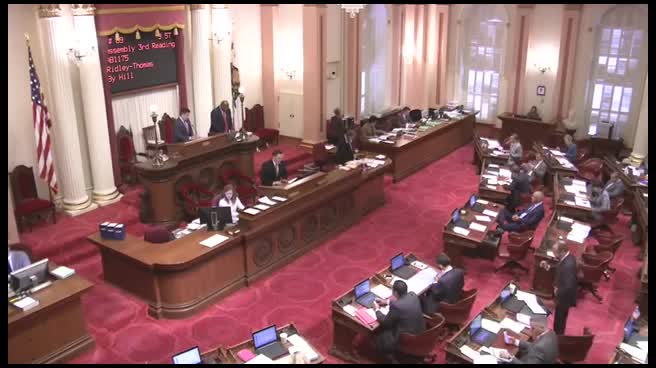 2MIN
Senate Floor
 2MIN
Senate Standing Committee on Appropriations
 3MIN
Senate Standing Committee on Business, Professions and Economic Development
 3MIN
Senate Standing Committee on Business, Professions and Economic Development
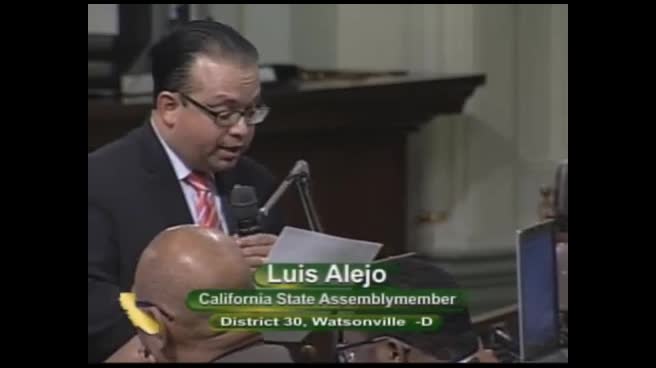 1MIN
Assembly Floor
 1MIN
Assembly Standing Committee on Appropriations
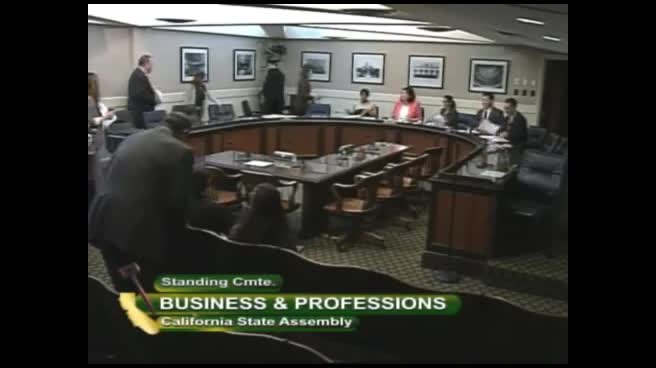 2MIN
Assembly Standing Committee on Business and Professions
Bill Author

Bill Co-Author(s):