AB 1178: Vehicles: manufacturers and distributors.
- Session Year: 2015-2016
- House: Assembly
- Latest Version Date: 2015-10-06
Existing law establishes the New Motor Vehicle Board in the Department of Motor Vehicles, and requires the board to hear and decide certain protests presented by a motor vehicle franchisee in regard to a dispute with the vehicle manufacturer.
This bill would, until January 1, 2019, authorize the board to hear protests by an association challenging the legality of an export or sale-for-resale prohibition policy of a manufacturer, manufacturer branch, distributor, or distributor branch, and would establish procedures for hearing those protests, as specified.
Existing law generally requires a manufacturer, distributor, transporter, or dealer of vehicles to be licensed by the Department of Motor Vehicles. Under existing law, it is unlawful for a manufacturer, manufacturer branch, distributor, or distributor branch to engage in specified practices, including taking or threatening to take any adverse action against a dealer pursuant to an export or sale-for-resale prohibition because the dealer sold or leased a vehicle to a customer who either exported the vehicle to a foreign country or resold the vehicle in violation of the prohibition, unless the export or sale-for-resale prohibition policy was provided to the dealer in writing prior to the sale or lease, and the dealer knew or reasonably should have known of the customers intent to export or resell the vehicle in violation of the prohibition at the time of sale or lease. Existing law further provides that if the dealer causes the vehicle to be registered in this or any other state, and collects or causes to be collected any applicable sales or use tax due to this state, a rebuttable presumption is established that the dealer did not have reason to know of the customers intent to export or resell the vehicle. A violation of these provisions is a crime.
This bill would recast the provisions relating to export and sale-for-resale prohibitions described above to provide that it would be unlawful to take or threaten to take any adverse action against a dealer pursuant to an export or sale-for-resale prohibition because the dealer sold or leased a vehicle to a customer who either exported the vehicle to a foreign country or resold the vehicle in violation of the prohibition unless the export or sale-for-resale prohibition policy was provided to the dealer in writing at least 48 hours before the sale or lease of the vehicle and the dealer knew or reasonably should have known of the customers intent to export or resell the vehicle in violation of the prohibition. The bill would provide that a rebuttable presumption is established that the dealer did not have reason to know of the customers intent to export or resell the vehicle if the dealer causes the vehicle to be registered in this or any other state, and collects or causes to be collected any applicable sales or use tax due to this state. By expanding the scope of an existing crime, this bill would impose a state-mandated local program. The bill would, in any proceeding in which a challenge to an adverse action is at issue, require the burden of proof to be on the manufacturer, manufacturer branch, distributor, or distributor branch. This bill would make additional technical, nonsubstantive changes to those provisions and make related findings and declarations.
This bill would incorporate additional changes to Sections 3050.7 and 11713.3 of the Vehicle Code made by this bill and AB 759 to take effect if both bills are chaptered and this bill is chaptered last.
The California Constitution requires the state to reimburse local agencies and school districts for certain costs mandated by the state. Statutory provisions establish procedures for making that reimbursement.
This bill would provide that no reimbursement is required by this act for a specified reason.
Existing law establishes the New Motor Vehicle Board in the Department of Motor Vehicles, and requires the board to hear and decide certain protests presented by a motor vehicle franchisee in regard to a dispute with the vehicle manufacturer.
This bill would would, until January 1, 2019, authorize the board to hear protests by an association challenging the legality of an export or sale-for-resale prohibition policy of a manufacturer, manufacturer branch, distributor, or distributor branch, and would establish procedures for hearing those protests, as specified.
Existing law generally requires a manufacturer, distributor, transporter, or dealer of vehicles to be licensed by the Department of Motor Vehicles. Under existing law, it is unlawful for a manufacturer, manufacturer branch, distributor, or distributor branch to engage in specified practices, including taking or threatening to take any adverse action against a dealer pursuant to an export or sale-for-resale prohibition because the dealer sold or leased a vehicle to a customer who either exported the vehicle to a foreign country or resold the vehicle in violation of the prohibition, unless the export or sale-for-resale prohibition policy was provided to the dealer in writing prior to the sale or lease, and the dealer knew or reasonably should have known of the customers intent to export or resell the vehicle in violation of the prohibition at the time of sale or lease. Existing law further provides that if the dealer causes the vehicle to be registered in this or any other state, and collects or causes to be collected any applicable sales or use tax due to this state, a rebuttable presumption is established that the dealer did not have reason to know of the customers intent to export or resell the vehicle. A violation of these provisions is a crime.
This bill would recast the provisions relating to export and sale-for-resale prohibitions described above to provide that it would be unlawful to take or threaten to take any adverse action against a dealer pursuant to an export or sale-for-resale prohibition because the dealer sold or leased a vehicle to a customer who either exported the vehicle to a foreign country or resold the vehicle in violation of the prohibition unless the export or sale-for-resale prohibition policy was provided to the dealer in writing at least 48 hours before the sale or lease of the vehicle and the dealer knew or reasonably should have known of the customers intent to export or resell the vehicle in violation of the prohibition. The bill would provide that a rebuttable presumption is established that the dealer did not have reason to know of the customers intent to export or resell the vehicle if the dealer causes the vehicle to be registered in this or any other state, and collects or causes to be collected any applicable sales or use tax due to this state. By expanding the scope of an existing crime, this bill would impose a state-mandated local program. The bill would, in any proceeding in which a challenge to an adverse action is at issue, require the burden of proof to be on the manufacturer, manufacturer branch, distributor, or distributor branch. This bill would make additional technical, nonsubstantive changes to those provisions and make related findings and declarations.
This bill would incorporate additional changes to Sections 3050.7 and 11713.3 of the Vehicle Code made by this bill and AB 759 to take effect if both bills are chaptered and this bill is chaptered last.
The California Constitution requires the state to reimburse local agencies and school districts for certain costs mandated by the state. Statutory provisions establish procedures for making that reimbursement.
This bill would provide that no reimbursement is required by this act for a specified reason.
Existing law establishes the New Motor Vehicle Board in the Department of Motor Vehicles, and requires the board to hear and decide certain protests presented by a motor vehicle franchisee in regard to a dispute with the vehicle manufacturer.
This bill would authorize the board to hear protests by an association challenging the legality of an export or sale-for-resale prohibition policy of a manufacturer, manufacturer branch, distributor, or distributor branch, and would establish procedures for hearing those protests, as specified.
Existing law generally requires a manufacturer, distributor, transporter, or dealer of vehicles to be licensed by the Department of Motor Vehicles. Under existing law, it is unlawful for a manufacturer, manufacturer branch, distributor, or distributor branch to engage in specified practices, including taking or threatening to take any adverse action against a dealer pursuant to an export or sale-for-resale prohibition because the dealer sold or leased a vehicle to a customer who either exported the vehicle to a foreign country or resold the vehicle in violation of the prohibition, unless the export or sale-for-resale prohibition policy was provided to the dealer in writing prior to the sale or lease, and the dealer knew or reasonably should have known of the customers intent to export or resell the vehicle in violation of the prohibition at the time of sale or lease. Existing law further provides that if the dealer causes the vehicle to be registered in this or any other state, and collects or causes to be collected any applicable sales or use tax due to this state, a rebuttable presumption is established that the dealer did not have reason to know of the customers intent to export or resell the vehicle. A violation of these provisions is a crime.
This bill would recast the provisions relating to export and sale-for-resale prohibitions described above to provide that it would be unlawful to take or threaten to take any adverse action against a dealer pursuant to an export or sale-for-resale prohibition because the dealer sold or leased a vehicle to a customer who either exported the vehicle to a foreign country or resold the vehicle in violation of the prohibition unless the export or sale-for-resale prohibition policy was provided to the dealer in writing at least 48 hours before the sale or lease of the vehicle and the dealer knew or reasonably should have known of the customers intent to export or resell the vehicle in violation of the prohibition. The bill would provide that a rebuttable presumption is established that the dealer did not have reason to know of the customers intent to export or resell the vehicle if the dealer causes the vehicle to be registered in this or any other state, and collects or causes to be collected any applicable sales or use tax due to this state. By expanding the scope of an existing crime, this bill would impose a state-mandated local program. The bill would also provide that a manufacturer, manufacturer branch, distributor, or distributor branch may take an adverse action against a dealer only when a vehicle is either exported to a foreign county or resold in violation of an export or sale-for-resale prohibition policy if the manufacturer, manufacturer branch, distributor, or distributor branch provided the policy and a known exporter list in writing to the dealer at least 48 hours before the sale or lease of the vehicle and the dealer sold or leased the vehicle to a person listed as a known exporter or the dealer had actual knowledge of the customers intent to export the vehicle to a foreign country at the time of the sale or lease, and would, in any proceeding in which a challenge to an adverse action is at issue, require the burden of proof to be on the manufacturer, manufacturer branch, distributor, or distributor branch. This bill would make additional technical, nonsubstantive changes to those provisions and make related findings and declarations.
The California Constitution requires the state to reimburse local agencies and school districts for certain costs mandated by the state. Statutory provisions establish procedures for making that reimbursement.
This bill would provide that no reimbursement is required by this act for a specified reason.
Existing law generally requires a manufacturer, distributor, transporter, or dealer of vehicles to be licensed by the Department of Motor Vehicles. Under existing law, it is unlawful for a manufacturer, manufacturer branch, distributor, or distributor branch to engage in specified practices, including taking or threatening to take any adverse action against a dealer pursuant to an export or sale-for-resale prohibition because the dealer sold or leased a vehicle to a customer who either exported the vehicle to a foreign country or resold the vehicle in violation of the prohibition, unless the export or sale-for-resale prohibition policy was provided to the dealer in writing prior to the sale or lease, and the dealer knew or reasonably should have known of the customers intent to export or resell the vehicle in violation of the prohibition at the time of sale or lease. Existing law further provides that if the dealer causes the vehicle to be registered in this or any other state, and collects or causes to be collected any applicable sales or use tax due to this state, a rebuttable presumption is established that the dealer did not have reason to know of the customers intent to export or resell the vehicle. A violation of these provisions is a crime.
This bill would recast the provisions relating to export and sale-for-resale prohibitions described above to provide that it would be unlawful to take or threaten to take any adverse action against a dealer pursuant to an export or sale-for-resale prohibition because the dealer sold or leased a vehicle to a customer who either exported the vehicle to a foreign country or resold the vehicle in violation of the prohibition if the dealer causes the vehicle to be registered in this or any other state, and collects or causes to be collected any applicable sales or use tax due to this state. By expanding the scope of an existing crime, this bill would impose a state-mandated local program. The bill would also provide that a manufacturer, manufacturer branch, distributor, or distributor branch may take an adverse action against a dealer only when a vehicle is either exported to a foreign county or resold in violation of an export or sale-for-resale prohibition policy if the manufacturer, manufacturer branch, distributor, or distributor branch provided the policy and a known exporter list in writing to the dealer at least 48 hours before the sale or lease of the vehicle and the dealer sold or leased the vehicle to a person listed as a known exporter. exporter or the dealer had actual knowledge of the customers intent to export the vehicle to a foreign country at the time of the sale or lease, and would, in any proceeding in which a challenge to an adverse action is at issue, require the burden of proof to be on the manufacturer, manufacturer branch, distributor, or distributor branch. This bill would make additional technical, nonsubstantive changes to those provisions and make related findings and declarations.
The California Constitution requires the state to reimburse local agencies and school districts for certain costs mandated by the state. Statutory provisions establish procedures for making that reimbursement.
This bill would provide that no reimbursement is required by this act for a specified reason.
Existing law generally requires a manufacturer, distributor, transporter, or dealer of vehicles to be licensed by the Department of Motor Vehicles. Under existing law, it is unlawful for a manufacturer, manufacturer branch, distributor, or distributor branch to engage in specified practices, including taking or threatening to take any adverse action against a dealer pursuant to an export or sale-for-resale prohibition because the dealer sold or leased a vehicle to a customer who either exported the vehicle to a foreign country or resold the vehicle in violation of the prohibition, unless the export or sale-for-resale prohibition policy was provided to the dealer in writing prior to the sale or lease, and the dealer knew or reasonably should have known of the customers intent to export or resell the vehicle in violation of the prohibition at the time of sale or lease. Existing law further provides that if the dealer causes the vehicle to be registered in this or any other state, and collects or causes to be collected any applicable sales or use tax due to this state, a rebuttable presumption is established that the dealer did not have reason to know of the customers intent to export or resell the vehicle. A violation of these provisions is a crime.
This bill would recast the provisions relating to export and sale-for-resale prohibitions described above to provide that it would be unlawful to take or threaten to take any adverse action against a dealer pursuant to an export or sale-for-resale prohibition because the dealer sold or leased a vehicle to a customer who either exported the vehicle to a foreign country or resold the vehicle in violation of the prohibition if the dealer causes the vehicle to be registered in this or any other state, and collects or causes to be collected any applicable sales or use tax due to this state. By expanding the scope of an existing crime, this bill would impose a state-mandated local program. The bill would also provide that a manufacturer, manufacturer branch, distributor, or distributor branch may take an adverse action against a dealer only when a vehicle is either exported to a foreign county or resold in violation of an export or sale-for-resale prohibition policy if the manufacturer, manufacturer branch, distributor, or distributor branch provided the policy and a known exporter list in writing to the dealer at least 5 business days 48 hours before the sale or lease of the vehicle and the dealer sold or leased the vehicle to a person listed as a known exporter. This bill would make additional technical, nonsubstantive changes to those provisions. provisions and make related findings and declarations.
The California Constitution requires the state to reimburse local agencies and school districts for certain costs mandated by the state. Statutory provisions establish procedures for making that reimbursement.
This bill would provide that no reimbursement is required by this act for a specified reason.
Existing law generally requires a manufacturer, distributor, transporter, or dealer of vehicles to be licensed by the Department of Motor Vehicles. Under existing law, it is unlawful for a manufacturer, manufacturer branch, distributor, or distributor branch to engage in specified practices, including taking or threatening to take any adverse action against a dealer pursuant to an export or sale-for-resale prohibition because the dealer sold or leased a vehicle to a customer who either exported the vehicle to a foreign country or resold the vehicle in violation of the prohibition, unless the export or sale-for-resale prohibition policy was provided to the dealer in writing prior to the sale or lease, and the dealer knew or reasonably should have known of the customers intent to export or resell the vehicle in violation of the prohibition at the time of sale or lease. Existing law further provides that if the dealer causes the vehicle to be registered in this or any other state, and collects or causes to be collected any applicable sales or use tax due to this state, a rebuttable presumption is established that the dealer did not have reason to know of the customers intent to export or resell the vehicle. A violation of these provisions is a crime.
This bill would recast the provisions relating to export and sale-for-resale prohibitions described above to provide that it would be unlawful to take or threaten to take any adverse action against a dealer pursuant to an export or sale-for-resale prohibition because the dealer sold or leased a vehicle to a customer who either exported the vehicle to a foreign country or resold the vehicle in violation of the prohibition if the dealer causes the vehicle to be registered in this or any other state, and collects or causes to be collected any applicable sales or use tax due to this state. By expanding the scope of these provisions, the violation of which is a an existing crime, this bill would impose a state-mandated local program. The bill would also provide that a manufacturer, manufacturer branch, distributor, or distributor branch may take an adverse action against a dealer only when a vehicle is either exported to a foreign county or resold in violation of an export or sale-for-resale prohibition policy if the manufacturer, manufacturer branch, distributor, or distributor branch provided the policy and a known exporter list in writing to the dealer at least 5 business days before the sale or lease of the vehicle and the dealer sold or leased the vehicle to a person listed as a known exporter. This bill would make additional technical, nonsubstantive changes to those provisions.
The California Constitution requires the state to reimburse local agencies and school districts for certain costs mandated by the state. Statutory provisions establish procedures for making that reimbursement.
This bill would provide that no reimbursement is required by this act for a specified reason.
Existing law generally requires a manufacturerer manufacturer, distributor, transporter, or dealer of vehicles to be licensed by the Department of Motor Vehicles. Under existing law, it is unlawful for a manufacturer, manufacturer branch, distributor, or distributor branch to engage in specified practices, including unfairly discriminating in favor of a dealership owned or controlled by a manufacturer or distributor, as specified. taking or threatening to take any adverse action against a dealer pursuant to an export or sale-for-resale prohibition because the dealer sold or leased a vehicle to a customer who either exported the vehicle to a foreign country or resold the vehicle in violation of the prohibition, unless the export or sale-for-resale prohibition policy was provided to the dealer in writing prior to the sale or lease, and the dealer knew or reasonably should have known of the customers intent to export or resell the vehicle in violation of the prohibition at the time of sale or lease. Existing law further provides that if the dealer causes the vehicle to be registered in this or any other state, and collects or causes to be collected any applicable sales or use tax due to this state, a rebuttable presumption is established that the dealer did not have reason to know of the customers intent to export or resell the vehicle. A violation of these provisions is a crime.
This bill would recast the provisions relating to export and sale-for-resale prohibitions described above to provide that it would be unlawful to take or threaten to take any adverse action against a dealer pursuant to an export or sale-for-resale prohibition because the dealer sold or leased a vehicle to a customer who either exported the vehicle to a foreign country or resold the vehicle in violation of the prohibition if the dealer causes the vehicle to be registered in this or any other state, and collects or causes to be collected any applicable sales or use tax due to this state. By expanding the scope of these provisions, the violation of which is a crime, this bill would impose a state-mandated local program. This bill would make additional technical, nonsubstantive changes to that provision those provisions.
The California Constitution requires the state to reimburse local agencies and school districts for certain costs mandated by the state. Statutory provisions establish procedures for making that reimbursement.
This bill would provide that no reimbursement is required by this act for a specified reason.
Existing law generally requires a manufacturerer, distributor, transporter, or dealer of vehicles to be licensed by the Department of Motor Vehicles. Under existing law, it is unlawful for a manufacturer, manufacturer branch, distributor, or distributor branch to engage in specified practices, including unfairly discriminating in favor of a dealership owned or controlled by a manufacturer or distributor, as specified.
This bill would make technical, nonsubstantive changes to that provision.
The Legislature finds and declares all of the following:
(a)The distribution, sale, and service of new motor vehicles in the State of California vitally affects the general economy of this state and the public welfare.
(b)The new motor vehicle franchise system, which operates within a strictly defined and highly regulated statutory scheme, assures the consuming public of a well-organized distribution system for the availability and sale of new motor vehicles throughout the state, provides a network of quality warranty, recall, and repair facilities to maintain those vehicles, and creates a cost-effective method for the state to police those systems through the licensing and regulation of private sector franchisors and franchisees.
(c)Franchisors sometimes establish strict export policies when a paid sales incentive is subject to being charged back or new vehicle allocation is reduced when a vehicle is exported or resold, even when the dealership did not know, or in the exercise of reasonable diligence should not have known, of the intended exportation or resale. In response, California franchise laws were recently updated to prohibit chargebacks and other adverse actions in circumstances in which the dealer did not have knowledge of, or reason to know of, the intended exportation or resale.
(d)Despite Californias franchise law acknowledging that the dealer did not have knowledge or reason to know that a vehicle would be exported or resold, at least one manufacturer is disregarding this franchise law by imposing a strict liability export and sale-for-resale policy against dealers. These actions impose severe sanctions on dealers regardless of the fact that dealers are collecting sales tax and registering these vehicles in California and have no reasonable knowledge of the future fate of those vehicles.
(e)It is the intent of this act to ensure that new motor vehicle dealers are treated fairly by their franchisors, to prohibit franchisors from avoiding state franchise laws, and to ensure that dealers are not subject to adverse action when the dealer did not know or have reason to know vehicles are exported or resold.
SEC. 2.Section 3050 of the Vehicle Code is amended to read:3050.The board shall do all of the following:
(a)Adopt rules and regulations in accordance with Chapter 3.5 (commencing with Section 11340) of Part 1 of Division 3 of Title 2 of the Government Code governing those matters that are specifically committed to its jurisdiction.
(b)Hear and determine, within the limitations and in accordance with the procedure provided, an appeal presented by an applicant for, or holder of, a license as a new motor vehicle dealer, manufacturer, manufacturer branch, distributor, distributor branch, or representative when the applicant or licensee submits an appeal provided for in this chapter from a decision arising out of the department.
(c)Consider any matter concerning the activities or practices of any person applying for or holding a license as a new motor vehicle dealer, manufacturer, manufacturer branch, distributor, distributor branch, or representative pursuant to Chapter 4 (commencing with Section 11700) of Division 5 submitted by any person. A member of the board who is a new motor vehicle dealer may not participate in, hear, comment, advise other members upon, or decide, any matter considered by the board pursuant to this subdivision that involves a dispute between a franchisee and franchisor. After that consideration, the board may do any one or any combination of the following:
(1)Direct the department to conduct investigation of matters that the board deems reasonable, and make a written report on the results of the investigation to the board within the time specified by the board.
(2)Undertake to mediate, arbitrate, or otherwise resolve any honest difference of opinion or viewpoint existing between any member of the public and any new motor vehicle dealer, manufacturer, manufacturer branch, distributor, distributor branch, or representative.
(3)Order the department to exercise any and all authority or power that the department may have with respect to the issuance, renewal, refusal to renew, suspension, or revocation of the license of any new motor vehicle dealer, manufacturer, manufacturer branch, distributor, distributor branch, or representative as that license is required under Chapter 4 (commencing with Section 11700) of Division 5.
(d)Hear and decide, within the limitations and in accordance with the procedure provided, a protest presented by a franchisee pursuant to Section 3060, 3062, 3064, 3065, 3065.1, 3070, 3072, 3074, 3075, or 3076. A member of the board who is a new motor vehicle dealer may not participate in, hear, comment, advise other members upon, or decide, any matter involving a protest filed pursuant to Article 4 (commencing with Section 3060), unless all parties to the protest stipulate otherwise.
(e)Hear and decide, within the limitations and in accordance with the procedure provided, a protest presented by an association challenging a policy of a manufacturer, manufacturer branch, distributor or distributor branch pursuant to Section 3085. A member of the board who is a new motor vehicle dealer may not participate in, hear, comment, advise other members upon, or decide, any matter involving a protest filed pursuant to Article 6 (commencing with Section 3085), unless all participants to the protest stipulate otherwise.
(f)Notwithstanding subdivisions (c), (d), and (e), the courts have jurisdiction over all common law and statutory claims originally cognizable in the courts. For those claims, a party may initiate an action directly in any court of competent jurisdiction.
(g)This section shall remain in effect only until January 1, 2019, and as of that date is repealed, unless a later enacted statute, that is enacted before January 1, 2019, deletes or extends that date.
SEC. 3.Section 3050 is added to the Vehicle Code, to read:3050.The board shall do all of the following:
(a)Adopt rules and regulations in accordance with Chapter 3.5 (commencing with Section 11340) of Part 1 of Division 3 of Title 2 of the Government Code governing those matters that are specifically committed to its jurisdiction.
(b)Hear and determine, within the limitations and in accordance with the procedure provided, an appeal presented by an applicant for, or holder of, a license as a new motor vehicle dealer, manufacturer, manufacturer branch, distributor, distributor branch, or representative when the applicant or licensee submits an appeal provided for in this chapter from a decision arising out of the department.
(c)Consider any matter concerning the activities or practices of any person applying for or holding a license as a new motor vehicle dealer, manufacturer, manufacturer branch, distributor, distributor branch, or representative pursuant to Chapter 4 (commencing with Section 11700) of Division 5 submitted by any person. A member of the board who is a new motor vehicle dealer may not participate in, hear, comment, advise other members upon, or decide any matter considered by the board pursuant to this subdivision that involves a dispute between a franchisee and franchisor. After that consideration, the board may do any one or any combination of the following:
(1)Direct the department to conduct investigation of matters that the board deems reasonable, and make a written report on the results of the investigation to the board within the time specified by the board.
(2)Undertake to mediate, arbitrate, or otherwise resolve any honest difference of opinion or viewpoint existing between any member of the public and any new motor vehicle dealer, manufacturer, manufacturer branch, distributor, distributor branch, or representative.
(3)Order the department to exercise any and all authority or power that the department may have with respect to the issuance, renewal, refusal to renew, suspension, or revocation of the license of any new motor vehicle dealer, manufacturer, manufacturer branch, distributor, distributor branch, or representative as that license is required under Chapter 4 (commencing with Section 11700) of Division 5.
(d)Hear and decide, within the limitations and in accordance with the procedure provided, a protest presented by a franchisee pursuant to Section 3060, 3062, 3064, 3065, 3065.1, 3070, 3072, 3074, 3075, or 3076. A member of the board who is a new motor vehicle dealer may not participate in, hear, comment, advise other members upon, or decide, any matter involving a protest filed pursuant to Article 4 (commencing with Section 3060), unless all parties to the protest stipulate otherwise.
(e)Notwithstanding subdivisions (c) and (d), the courts have jurisdiction over all common law and statutory claims originally cognizable in the courts. For those claims, a party may initiate an action directly in any court of competent jurisdiction.
(f)This section shall become operative on January 1, 2019.
SEC. 4.Section 3050.1 of the Vehicle Code is amended to read:3050.1.(a)In a proceeding, hearing, or in the discharge of duties imposed under this chapter, the board, its executive director, or an administrative law judge designated by the board may administer oaths, take depositions, certify to official acts, and issue subpoenas to compel attendance of witnesses and the production of books, records, papers, and other documents in any part of the state.
(b)For purposes of discovery, the board or its executive director may, if deemed appropriate and proper under the circumstances, authorize the parties to engage in the civil action discovery procedures in Title 4 (commencing with Section 2016.010) of Part 4 of the Code of Civil Procedure, excepting the provisions of Chapter 13 (commencing with Section 2030.010) of that title. Discovery shall be completed no later than 15 days prior to the commencement of the proceeding or hearing before the board. This subdivision shall apply only to those proceedings or hearings involving a petition filed pursuant to subdivision (c), or protest filed pursuant to subdivision (d) or (e) of Section 3050. The board, its executive director, or an administrative law judge designated by the board may issue subpoenas to compel attendance at depositions of persons having knowledge of the acts, omissions, or events that are the basis for the proceedings, as well as the production of books, records, papers, and other documents.
(c)This section shall remain in effect only until January 1, 2019, and as of that date is repealed, unless a later enacted statute, that is enacted before January 1, 2019, deletes or extends that date.
SEC. 5.Section 3050.1 is added to the Vehicle Code, to read:3050.1.(a)In a proceeding, hearing, or in the discharge of duties imposed under this chapter, the board, its executive director, or an administrative law judge designated by the board may administer oaths, take depositions, certify to official acts, and issue subpoenas to compel attendance of witnesses and the production of books, records, papers, and other documents in any part of the state.
(b)For purposes of discovery, the board or its executive director may, if deemed appropriate and proper under the circumstances, authorize the parties to engage in the civil action discovery procedures in Title 4 (commencing with Section 2016.010) of Part 4 of the Code of Civil Procedure, excepting the provisions of Chapter 13 (commencing with Section 2030.010) of that title. Discovery shall be completed no later than 15 days prior to the commencement of the proceeding or hearing before the board. This subdivision shall apply only to those proceedings or hearings involving a petition or protest filed pursuant to subdivision (c) or (d) of Section 3050. The board, its executive director, or an administrative law judge designated by the board may issue subpoenas to compel attendance at depositions of persons having knowledge of the acts, omissions, or events that are the basis for the proceedings, as well as the production of books, records, papers, and other documents.
(c)This section shall become operative on January 1, 2019.
SEC. 6.Section 3050.7 of the Vehicle Code is amended to read:3050.7.(a)The board may adopt stipulated decisions and orders, without a hearing pursuant to Section 3066 or 3085.2, to resolve one or more issues raised by a protest or petition filed with the board. Whenever the parties to a protest or petition submit a proposed stipulated decision and order of the board, a copy of the proposed stipulated decision and order shall be transmitted by the executive director of the board to each member of the board. The proposed stipulated decision and order shall be deemed to be adopted by the board unless a member of the board notifies the executive director of the board of an objection thereto within 10 days after that board member has received a copy of the proposed stipulated decision and order.
(b)If the board adopts a stipulated decision and order to resolve a protest filed pursuant to Section 3060 or 3070 in which the parties stipulate that good cause exists for the termination of the franchise of the protestant, and the order provides for a conditional or unconditional termination of the franchise of the protestant, paragraph (2) of subdivision (a) of Section 3060 and paragraph (2) of subdivision (a) of Section 3070, which require a hearing to determine whether good cause exists for termination of the franchise, is inapplicable to the proceedings. If the stipulated decision and order provides for an unconditional termination of the franchise, the franchise may be terminated without further proceedings by the board. If the stipulated decision and order provides for the termination of the franchise, conditioned upon the failure of a party to comply with specified conditions, the franchise may be terminated upon a determination, according to the terms of the stipulated decision and order, that the conditions have not been met. If the stipulated decision and order provides for the termination of the franchise conditioned upon the occurrence of specified conditions, the franchise may be terminated upon a determination, according to the terms of the stipulated decision and order, that the stipulated conditions have occurred.
(c)This section shall remain in effect only until January 1, 2019, and as of that date is repealed, unless a later enacted statute, that is enacted before January 1, 2019, deletes or extends that date.
SEC. 6.1.Section 3050.7 of the Vehicle Code is amended to read:3050.7.(a)The board may adopt stipulated decisions and orders, without a hearing pursuant to Section 3066, 3080, or 3085.2, to resolve one or more issues raised by a protest or petition filed with the board. Whenever the parties to a protest or petition submit a proposed stipulated decision and order of the board, a copy of the proposed stipulated decision and order shall be transmitted by the executive director of the board to each member of the board. The proposed stipulated decision and order shall be deemed to be adopted by the board unless a member of the board notifies the executive director of the board of an objection thereto within 10 days after that board member has received a copy of the proposed stipulated decision and order.
(b)If the board adopts a stipulated decision and order to resolve a protest filed pursuant to Section 3060 or 3070 in which the parties stipulate that good cause exists for the termination of the franchise of the protestant, and the order provides for a conditional or unconditional termination of the franchise of the protestant, paragraph (2) of subdivision (a) of Section 3060 and paragraph (2) of subdivision (a) of Section 3070, which require a hearing to determine whether good cause exists for termination of the franchise, is inapplicable to the proceedings. If the stipulated decision and order provides for an unconditional termination of the franchise, the franchise may be terminated without further proceedings by the board. If the stipulated decision and order provides for the termination of the franchise, conditioned upon the failure of a party to comply with specified conditions, the franchise may be terminated upon a determination, according to the terms of the stipulated decision and order, that the conditions have not been met. If the stipulated decision and order provides for the termination of the franchise conditioned upon the occurrence of specified conditions, the franchise may be terminated upon a determination, according to the terms of the stipulated decision and order, that the stipulated conditions have occurred.
(c)This section shall remain in effect only until January 1, 2019, and as of that date is repealed, unless a later enacted statute, that is enacted before January 1, 2019, deletes or extends that date.
SEC. 7.Section 3050.7 is added to the Vehicle Code, to read:3050.7.(a)The board may adopt stipulated decisions and orders, without a hearing pursuant to Section 3066, to resolve one or more issues raised by a protest or petition filed with the board. Whenever the parties to a protest or petition submit a proposed stipulated decision and order of the board, a copy of the proposed stipulated decision and order shall be transmitted by the executive director of the board to each member of the board. The proposed stipulated decision and order shall be deemed to be adopted by the board unless a member of the board notifies the executive director of the board of an objection thereto within 10 days after that board member has received a copy of the proposed stipulated decision and order.
(b)If the board adopts a stipulated decision and order to resolve a protest filed pursuant to Section 3060 or 3070 in which the parties stipulate that good cause exists for the termination of the franchise of the protestant, and the order provides for a conditional or unconditional termination of the franchise of the protestant, paragraph (2) of subdivision (a) of Section 3060 and paragraph (2) of subdivision (a) of Section 3070, which require a hearing to determine whether good cause exists for termination of the franchise, is inapplicable to the proceedings. If the stipulated decision and order provides for an unconditional termination of the franchise, the franchise may be terminated without further proceedings by the board. If the stipulated decision and order provides for the termination of the franchise, conditioned upon the failure of a party to comply with specified conditions, the franchise may be terminated upon a determination, according to the terms of the stipulated decision and order, that the conditions have not been met. If the stipulated decision and order provides for the termination of the franchise conditioned upon the occurrence of specified conditions, the franchise may be terminated upon a determination, according to the terms of the stipulated decision and order, that the stipulated conditions have occurred.
(c)This section shall become operative on January 1, 2019.
SEC. 7.1.Section 3050.7 is added to the Vehicle Code, to read:3050.7.(a)The board may adopt stipulated decisions and orders, without a hearing pursuant to Section 3066 or 3080, to resolve one or more issues raised by a protest or petition filed with the board. Whenever the parties to a protest or petition submit a proposed stipulated decision and order of the board, a copy of the proposed stipulated decision and order shall be transmitted by the executive director of the board to each member of the board. The proposed stipulated decision and order shall be deemed to be adopted by the board unless a member of the board notifies the executive director of the board of an objection thereto within 10 days after that board member has received a copy of the proposed stipulated decision and order.
(b)If the board adopts a stipulated decision and order to resolve a protest filed pursuant to Section 3060 or 3070 in which the parties stipulate that good cause exists for the termination of the franchise of the protestant, and the order provides for a conditional or unconditional termination of the franchise of the protestant, paragraph (2) of subdivision (a) of Section 3060 and paragraph (2) of subdivision (a) of Section 3070, which require a hearing to determine whether good cause exists for termination of the franchise, is inapplicable to the proceedings. If the stipulated decision and order provides for an unconditional termination of the franchise, the franchise may be terminated without further proceedings by the board. If the stipulated decision and order provides for the termination of the franchise, conditioned upon the failure of a party to comply with specified conditions, the franchise may be terminated upon a determination, according to the terms of the stipulated decision and order, that the conditions have not been met. If the stipulated decision and order provides for the termination of the franchise conditioned upon the occurrence of specified conditions, the franchise may be terminated upon a determination, according to the terms of the stipulated decision and order, that the stipulated conditions have occurred.
(c)This section shall become operative on January 1, 2019.
SEC. 8.Article 6 (commencing with Section 3085) is added to Chapter 6 of Division 2 of the Vehicle Code, to read:6.Export and Sale-for-Resale Prohibition Hearings3085.(a)An association may bring a protest challenging the legality of an export or sale-for-resale prohibition policy of a manufacturer, manufacturer branch, distributor, or distributor branch at any time on behalf of two or more dealers subject to the challenged policy pursuant to subdivision (y) of Section 11713.3.
(b)For the purpose of this article, an association is an organization primarily owned by, or comprised of, new motor vehicle dealers and that primarily represents the interests of dealers.
(c)Relief for a protest pursuant to this section is limited to a declaration that an export or sale-for-resale prohibition policy of a manufacturer, manufacturer branch, distributor, or distributor branch violates the prohibitions of subdivision (y) of Section 11713.3. No monetary relief may be sought on behalf of the association or any dealers represented by the association.
(d)In a protest pursuant to this section, the association shall have the burden of proof to show that the challenged export or sale-for-resale prohibition policy violates subdivision (y) of Section 11713.3.
3085.2.(a)Upon receiving a protest pursuant to Section 3085, the board shall fix a time and place of hearing within 60 days, and shall send by certified mail a copy of the order to the manufacturer, manufacturer branch, distributor, distributor branch, the protesting association, and all individuals and groups that have requested notification by the board of protests and decisions of the board. The board or an administrative law judge designated by the board shall hear and consider the oral and documented evidence introduced by the parties and other interested individuals and groups, and the board shall make its decision solely on the record so made. Chapter 4.5 (commencing with Section 11400) of Part 1 of Division 3 of Title 2 of the Government Code and Sections 11507.3, 11507.6, 11507.7, 11511, 11511.5, 11513, 11514, 11515, and 11517 of the Government Code apply to these proceedings.
(b)In a hearing on a protest filed pursuant to Section 3085, the association shall have the burden of proof to establish a violation of the applicable section by the subject manufacturer, manufacturer branch, distributor, or distributor branch.
(c)A member of the board who is a new motor vehicle dealer may not participate in, hear, comment, or advise other members upon, or decide, a matter involving a protest filed pursuant to this article unless all parties to the protest stipulate otherwise.
3085.4.(a)The decision of the board shall be in writing and shall contain findings of fact and a determination of the issues presented. The decision shall sustain, conditionally sustain, overrule, or conditionally overrule the protest. Conditions imposed by the board shall be for the purpose of assuring performance of binding contractual agreements between franchisees and franchisors or otherwise serving the purposes of this article. The board shall act within 30 days after the hearing, within 30 days after the board receives a proposed decision when the case is heard before an administrative law judge alone, or within a period necessitated by Section 11517 of the Government Code, or as may be mutually agreed upon by the parties. Copies of the boards decision shall be delivered to the parties personally or sent to them by certified mail, as well as to all individuals and groups that have requested notification by the board of protests and decisions by the board. The boards decision shall be final upon its delivery or mailing and a reconsideration or rehearing is not permitted.
(b)Notwithstanding subdivision (c) of Section 11517 of the Government Code, if a protest is heard by an administrative law judge alone, 10 days after receipt by the board of the administrative law judges proposed decision, a copy of the proposed decision shall be filed by the board as a public record and a copy shall be served by the board on each party and his or her attorney.
3085.6.Either party may seek judicial review of final decisions of the board. An appeal shall be filed within 45 days from the date on which the final order of the board is made public and is delivered to the parties personally or is sent to them by certified mail.
3085.8.The provisions of this article shall be applicable to any association which is primarily owned by or comprised of new motor vehicle dealers and acts on behalf of its new motor vehicle franchisees.
3085.10.This article shall remain in effect only until January 1, 2019, and as of that date is repealed, unless a later enacted statute, that is enacted before January 1, 2019, deletes or extends that date.
SEC. 9.Section 11713.3 of the Vehicle Code is amended to read:11713.3.It is unlawful and a violation of this code for a manufacturer, manufacturer branch, distributor, or distributor branch licensed pursuant to this code to do, directly or indirectly through an affiliate, any of the following:
(a)To refuse or fail to deliver in reasonable quantities and within a reasonable time after receipt of an order from a dealer having a franchise for the retail sale of a new vehicle sold or distributed by the manufacturer or distributor, a new vehicle or parts or accessories to new vehicles as are covered by the franchise, if the vehicle, parts, or accessories are publicly advertised as being available for delivery or actually being delivered. This subdivision is not violated, however, if the failure is caused by acts or causes beyond the control of the manufacturer, manufacturer branch, distributor, or distributor branch.
(b)To prevent or require, or attempt to prevent or require, by contract or otherwise, a change in the capital structure of a dealership or the means by or through which the dealer finances the operation of the dealership, if the dealer at all times meets reasonable capital standards agreed to by the dealer and the manufacturer or distributor, and if a change in capital structure does not cause a change in the principal management or have the effect of a sale of the franchise without the consent of the manufacturer or distributor.
(c)To prevent or require, or attempt to prevent or require, a dealer to change the executive management of a dealership, other than the principal dealership operator or operators, if the franchise was granted to the dealer in reliance upon the personal qualifications of that person.
(d)(1)Except as provided in subdivision (t), to prevent or require, or attempt to prevent or require, by contract or otherwise, a dealer, or an officer, partner, or stockholder of a dealership, the sale or transfer of a part of the interest of any of them to another person. A dealer, officer, partner, or stockholder shall not, however, have the right to sell, transfer, or assign the franchise, or a right thereunder, without the consent of the manufacturer or distributor except that the consent shall not be unreasonably withheld.
(2)(A)For the transferring franchisee to fail, prior to the sale, transfer, or assignment of a franchisee or the sale, assignment, or transfer of all, or substantially all, of the assets of the franchised business or a controlling interest in the franchised business to another person, to notify the manufacturer or distributor of the franchisees decision to sell, transfer, or assign the franchise. The notice shall be in writing and shall include all of the following:
(i)The proposed transferees name and address.
(ii)A copy of all of the agreements relating to the sale, assignment, or transfer of the franchised business or its assets.
(iii)The proposed transferees application for approval to become the successor franchisee. The application shall include forms and related information generally utilized by the manufacturer or distributor in reviewing prospective franchisees, if those forms are readily made available to existing franchisees. As soon as practicable after receipt of the proposed transferees application, the manufacturer or distributor shall notify the franchisee and the proposed transferee of information needed to make the application complete.
(B)For the manufacturer or distributor, to fail, on or before 60 days after the receipt of all of the information required pursuant to subparagraph (A), or as extended by a written agreement between the manufacturer or distributor and the franchisee, to notify the franchisee of the approval or the disapproval of the sale, transfer, or assignment of the franchise. The notice shall be in writing and shall be personally served or sent by certified mail, return receipt requested, or by guaranteed overnight delivery service that provides verification of delivery and shall be directed to the franchisee. A proposed sale, assignment, or transfer shall be deemed approved, unless disapproved by the franchisor in the manner provided by this subdivision. If the proposed sale, assignment, or transfer is disapproved, the franchisor shall include in the notice of disapproval a statement setting forth the reasons for the disapproval.
(3)In an action in which the manufacturers or distributors withholding of consent under this subdivision or subdivision (e) is an issue, whether the withholding of consent was unreasonable is a question of fact requiring consideration of all the existing circumstances.
(e)To prevent, or attempt to prevent, a dealer from receiving fair and reasonable compensation for the value of the franchised business. There shall not be a transfer or assignment of the dealers franchise without the consent of the manufacturer or distributor. The manufacturer or distributor shall not unreasonably withhold consent or condition consent upon the release, assignment, novation, waiver, estoppel, or modification of a claim or defense by the dealer.
(f)To obtain money, goods, services, or another benefit from a person with whom the dealer does business, on account of, or in relation to, the transaction between the dealer and that other person, other than for compensation for services rendered, unless the benefit is promptly accounted for, and transmitted to, the dealer.
(g)(1)Except as provided in paragraph (3), to obtain from a dealer or enforce against a dealer an agreement, provision, release, assignment, novation, waiver, or estoppel that does any of the following:
(A)Modifies or disclaims a duty or obligation of a manufacturer, manufacturer branch, distributor, distributor branch, or representative, or a right or privilege of a dealer, pursuant to Chapter 4 (commencing with Section 11700) of Division 5 or Chapter 6 (commencing with Section 3000) of Division 2.
(B)Limits or constrains the right of a dealer to file, pursue, or submit evidence in connection with a protest before the board.
(C)Requires a dealer to terminate a franchise.
(D)Requires a controversy between a manufacturer, manufacturer branch, distributor, distributor branch, or representative and a dealer to be referred to a person for a binding determination. However, this subparagraph does not prohibit arbitration before an independent arbitrator, provided that whenever a motor vehicle franchise contract provides for the use of arbitration to resolve a controversy arising out of, or relating to, that contract, arbitration may be used to settle the controversy only if, after the controversy arises, all parties to the controversy consent in writing to use arbitration to settle the controversy. For the purpose of this subparagraph, the terms motor vehicle and motor vehicle franchise contract shall have the same meaning as defined in Section 1226 of Title 15 of the United States Code. If arbitration is elected to settle a dispute under a motor vehicle franchise contract, the arbitrator shall provide the parties to the arbitration with a written explanation of the factual and legal basis for the award.
(2)An agreement, provision, release, assignment, novation, waiver, or estoppel prohibited by this subdivision shall be unenforceable and void.
(3)This subdivision does not do any of the following:
(A)Limit or restrict the terms upon which parties to a protest before the board, civil action, or other proceeding can settle or resolve, or stipulate to evidentiary or procedural matters during the course of, a protest, civil action, or other proceeding.
(B)Affect the enforceability of any stipulated order or other order entered by the board.
(C)Affect the enforceability of any provision in a contract if the provision is not prohibited under this subdivision or any other law.
(D)Affect the enforceability of a provision in any contract entered into on or before December 31, 2011.
(E)Prohibit a dealer from waiving its right to file a protest pursuant to Section 3065.1 if the waiver agreement is entered into after a franchisor incentive program claim has been disapproved by the franchisor and the waiver is voluntarily given as part of an agreement to settle that claim.
(F)Prohibit a voluntary agreement supported by valuable consideration, other than granting or renewing a franchise, that does both of the following:
(i)Provides that a dealer establish or maintain exclusive facilities, personnel, or display space or provides that a dealer make a material alteration, expansion, or addition to a dealership facility.
(ii)Contains no waiver or other provision prohibited by subparagraph (A), (B), (C), or (D) of paragraph (1).
(G)Prohibit an agreement separate from the franchise agreement that implements a dealers election to terminate the franchise if the agreement is conditioned only on a specified time for termination or payment of consideration to the dealer.
(H)(i)Prohibit a voluntary waiver agreement, supported by valuable consideration, other than the consideration of renewing a franchise, to waive the right of a dealer to file a protest under Section 3062 for the proposed establishment or relocation of a specific proposed dealership, if the waiver agreement provides all of the following:
(I)The approximate address at which the proposed dealership will be located.
(II)The planning potential used to establish the proposed dealerships facility, personnel, and capital requirements.
(III)An approximation of projected vehicle and parts sales, and number of vehicles to be serviced at the proposed dealership.
(IV)Whether the franchisor or affiliate will hold an ownership interest in the proposed dealership or real property of the proposed dealership, and the approximate percentage of any franchisor or affiliate ownership interest in the proposed dealership.
(V)The line-makes to be operated at the proposed dealership.
(VI)If known at the time the waiver agreement is executed, the identity of the dealer who will operate the proposed dealership.
(VII)The date the waiver agreement is to expire, which may not be more than 30 months after the date of execution of the waiver agreement.
(ii)Notwithstanding the provisions of a waiver agreement entered into pursuant to the provisions of this subparagraph, a dealer may file a protest under Section 3062 if any of the information provided pursuant to clause (i) has become materially inaccurate since the waiver agreement was executed. Any determination of the enforceability of a waiver agreement shall be determined by the board and the franchisor shall have the burden of proof.
(h)To increase prices of motor vehicles that the dealer had ordered for private retail consumers prior to the dealers receipt of the written official price increase notification. A sales contract signed by a private retail consumer is evidence of the order. In the event of manufacturer price reductions, the amount of the reduction received by a dealer shall be passed on to the private retail consumer by the dealer if the retail price was negotiated on the basis of the previous higher price to the dealer. Price reductions apply to all vehicles in the dealers inventory that were subject to the price reduction. Price differences applicable to new model or series motor vehicles at the time of the introduction of new models or series shall not be considered a price increase or price decrease. This subdivision does not apply to price changes caused by either of the following:
(1)The addition to a motor vehicle of required or optional equipment pursuant to state or federal law.
(2)Revaluation of the United States dollar in the case of a foreign-make vehicle.
(i)To fail to pay to a dealer, within a reasonable time following receipt of a valid claim by a dealer thereof, a payment agreed to be made by the manufacturer or distributor to the dealer by reason of the fact that a new vehicle of a prior year model is in the dealers inventory at the time of introduction of new model vehicles.
(j)To deny the widow, widower, or heirs designated by a deceased owner of a dealership the opportunity to participate in the ownership of the dealership or successor dealership under a valid franchise for a reasonable time after the death of the owner.
(k)To offer refunds or other types of inducements to a person for the purchase of new motor vehicles of a certain line-make to be sold to the state or a political subdivision of the state without making the same offer to all other dealers in the same line-make within the relevant market area.
(l)To modify, replace, enter into, relocate, terminate, or refuse to renew a franchise in violation of Article 4 (commencing with Section 3060) of Chapter 6 of Division 2.
(m)To employ a person as a representative who has not been licensed pursuant to Article 3 (commencing with Section 11900) of Chapter 4 of Division 5.
(n)To deny a dealer the right of free association with another dealer for a lawful purpose.
(o)(1)To compete with a dealer in the same line-make operating under an agreement or franchise from a manufacturer or distributor in the relevant market area.
(2)A manufacturer, branch, or distributor, or an entity that controls or is controlled by a manufacturer, branch, or distributor, shall not, however, be deemed to be competing in the following limited circumstances:
(A)Owning or operating a dealership for a temporary period, not to exceed one year at the location of a former dealership of the same line-make that has been out of operation for less than six months. However, after a showing of good cause by a manufacturer, branch, or distributor that it needs additional time to operate a dealership in preparation for sale to a successor independent franchisee, the board may extend the time period.
(B)Owning an interest in a dealer as part of a bona fide dealer development program that satisfies all of the following requirements:
(i)The sole purpose of the program is to make franchises available to persons lacking capital, training, business experience, or other qualities ordinarily required of prospective franchisees and the dealer development candidate is an individual who is unable to acquire the franchise without assistance of the program.
(ii)The dealer development candidate has made a significant investment subject to loss in the franchised business of the dealer.
(iii)The program requires the dealer development candidate to manage the day-to-day operations and business affairs of the dealer and to acquire, within a reasonable time and on reasonable terms and conditions, beneficial ownership and control of a majority interest in the dealer and disassociation of any direct or indirect ownership or control by the manufacturer, branch, or distributor.
(C)Owning a wholly owned subsidiary corporation of a distributor that sells motor vehicles at retail, if, for at least three years prior to January 1, 1973, the subsidiary corporation has been a wholly owned subsidiary of the distributor and engaged in the sale of vehicles at retail.
(3)(A)A manufacturer, branch, and distributor that owns or operates a dealership in the manner described in subparagraph (A) of paragraph (2) shall give written notice to the board, within 10 days, each time it commences or terminates operation of a dealership and each time it acquires, changes, or divests itself of an ownership interest.
(B)A manufacturer, branch, and distributor that owns an interest in a dealer in the manner described in subparagraph (B) of paragraph (2) shall give written notice to the board, annually, of the name and location of each dealer in which it has an ownership interest, the name of the bona fide dealer development owner or owners, and the ownership interests of each owner expressed as a percentage.
(p)To unfairly discriminate among its franchisees with respect to warranty reimbursement or authority granted to its franchisees to make warranty adjustments with retail customers.
(q)To sell vehicles to a person not licensed pursuant to this chapter for resale.
(r)To fail to affix an identification number to a park trailer, as described in Section 18009.3 of the Health and Safety Code, that is manufactured on or after January 1, 1987, and that does not clearly identify the unit as a park trailer to the department. The configuration of the identification number shall be approved by the department.
(s)To dishonor a warranty, rebate, or other incentive offered to the public or a dealer in connection with the retail sale of a new motor vehicle, based solely upon the fact that an autobroker arranged or negotiated the sale. This subdivision shall not prohibit the disallowance of that rebate or incentive if the purchaser or dealer is ineligible to receive the rebate or incentive pursuant to any other term or condition of a rebate or incentive program.
(t)To exercise a right of first refusal or other right requiring a franchisee or an owner of the franchise to sell, transfer, or assign to the franchisor, or to a nominee of the franchisor, all or a material part of the franchised business or of the assets of the franchised business unless all of the following requirements are met:
(1)The franchise authorizes the franchisor to exercise a right of first refusal to acquire the franchised business or assets of the franchised business in the event of a proposed sale, transfer, or assignment.
(2)The franchisor gives written notice of its exercise of the right of first refusal no later than 45 days after the franchisor receives all of the information required pursuant to subparagraph (A) of paragraph (2) of subdivision (d).
(3)The sale, transfer, or assignment being proposed relates to not less than all or substantially all of the assets of the franchised business or to a controlling interest in the franchised business.
(4)The proposed transferee is neither a family member of an owner of the franchised business, nor a managerial employee of the franchisee owning 15 percent or more of the franchised business, nor a corporation, partnership, or other legal entity owned by the existing owners of the franchised business. For purposes of this paragraph, a family member means the spouse of an owner of the franchised business, the child, grandchild, brother, sister, or parent of an owner, or a spouse of one of those family members. This paragraph does not limit the rights of the franchisor to disapprove a proposed transferee as provided in subdivision (d).
(5)Upon the franchisors exercise of the right of first refusal, the consideration paid by the franchisor to the franchisee and owners of the franchised business shall equal or exceed all consideration that each of them were to have received under the terms of, or in connection with, the proposed sale, assignment, or transfer, and the franchisor shall comply with all the terms and conditions of the agreement or agreements to sell, transfer, or assign the franchised business.
(6)The franchisor shall reimburse the proposed transferee for expenses paid or incurred by the proposed transferee in evaluating, investigating, and negotiating the proposed transfer to the extent those expenses do not exceed the usual, customary, and reasonable fees charged for similar work done in the area in which the franchised business is located. These expenses include, but are not limited to, legal and accounting expenses, and expenses incurred for title reports and environmental or other investigations of real property on which the franchisees operations are conducted. The proposed transferee shall provide the franchisor a written itemization of those expenses, and a copy of all nonprivileged reports and studies for which expenses were incurred, if any, within 30 days of the proposed transferees receipt of a written request from the franchisor for that accounting. The franchisor shall make payment within 30 days of exercising the right of first refusal.
(u)(1)To unfairly discriminate in favor of a dealership owned or controlled, in whole or in part, by a manufacturer or distributor or an entity that controls or is controlled by the manufacturer or distributor. Unfair discrimination includes, but is not limited to, the following:
(A)The furnishing to a franchisee or dealer that is owned or controlled, in whole or in part, by a manufacturer, branch, or distributor of any of the following:
(i)A vehicle that is not made available to each franchisee pursuant to a reasonable allocation formula that is applied uniformly, and a part or accessory that is not made available to all franchisees on an equal basis when there is no reasonable allocation formula that is applied uniformly.
(ii)A vehicle, part, or accessory that is not made available to each franchisee on comparable delivery terms, including the time of delivery after the placement of an order. Differences in delivery terms due to geographic distances or other factors beyond the control of the manufacturer, branch, or distributor shall not constitute unfair competition.
(iii)Information obtained from a franchisee by the manufacturer, branch, or distributor concerning the business affairs or operations of a franchisee in which the manufacturer, branch, or distributor does not have an ownership interest. The information includes, but is not limited to, information contained in financial statements and operating reports, the name, address, or other personal information or buying, leasing, or service behavior of a dealer customer, and other information that, if provided to a franchisee or dealer owned or controlled by a manufacturer or distributor, would give that franchisee or dealer a competitive advantage. This clause does not apply if the information is provided pursuant to a subpoena or court order, or to aggregated information made available to all franchisees.
(iv)Sales or service incentives, discounts, or promotional programs that are not made available to all California franchises of the same line-make on an equal basis.
(B)Referring a prospective purchaser or lessee to a dealer in which a manufacturer, branch, or distributor has an ownership interest, unless the prospective purchaser or lessee resides in the area of responsibility assigned to that dealer or the prospective purchaser or lessee requests to be referred to that dealer.
(2)This subdivision does not prohibit a franchisor from granting a franchise to prospective franchisees or assisting those franchisees during the course of the franchise relationship as part of a program or programs to make franchises available to persons lacking capital, training, business experience, or other qualifications ordinarily required of prospective franchisees.
(v)(1)To access, modify, or extract information from a confidential dealer computer record, as defined in Section 11713.25, without obtaining the prior written consent of the dealer and without maintaining administrative, technical, and physical safeguards to protect the security, confidentiality, and integrity of the information.
(2)Paragraph (1) does not limit a duty that a dealer may have to safeguard the security and privacy of records maintained by the dealer.
(w)(1)To use electronic, contractual, or other means to prevent or interfere with any of the following:
(A)The lawful efforts of a dealer to comply with federal and state data security and privacy laws.
(B)The ability of a dealer to do either of the following:
(i)Ensure that specific data accessed from the dealers computer system is within the scope of consent specified in subdivision (v).
(ii)Monitor specific data accessed from or written to the dealers computer system.
(2)Paragraph (1) does not limit a duty that a dealer may have to safeguard the security and privacy of records maintained by the dealer.
(x)(1)To unfairly discriminate against a franchisee selling a service contract, debt cancellation agreement, maintenance agreement, or similar product not approved, endorsed, sponsored, or offered by the manufacturer, manufacturer branch, distributor, or distributor branch or affiliate. For purposes of this subdivision, unfair discrimination includes, but is not limited to, any of the following:
(A)Express or implied statements that the dealer is under an obligation to exclusively sell or offer to sell service contracts, debt cancellation agreements, or similar products approved, endorsed, sponsored, or offered by the manufacturer, manufacturer branch, distributor, or distributor branch or affiliate.
(B)Express or implied statements that selling or offering to sell service contracts, debt cancellation agreements, maintenance agreements, or similar products not approved, endorsed, sponsored, or offered by the manufacturer, manufacturer branch, distributor, or distributor branch or affiliate, or the failure to sell or offer to sell service contracts, debt cancellation agreements, maintenance agreements, or similar products approved, endorsed, sponsored, or offered by the manufacturer, manufacturer branch, distributor, or distributor branch or affiliate will have any negative consequences for the dealer.
(C)Measuring a dealers performance under a franchise agreement based upon the sale of service contracts, debt cancellation agreements, or similar products approved, endorsed, sponsored, or offered by the manufacturer, manufacturer branch, distributor, or distributor branch or affiliate.
(D)Requiring a dealer to actively promote the sale of service contracts, debt cancellation agreements, or similar products approved, endorsed, sponsored, or offered by the manufacturer, manufacturer branch, distributor, or distributor branch or affiliate.
(E)Conditioning access to vehicles or parts, or vehicle sales or service incentives upon the sale of service contracts, debt cancellation agreements, or similar products approved, endorsed, sponsored, or offered by the manufacturer, manufacturer branch, distributor, or distributor branch or affiliate.
(2)Unfair discrimination does not include, and nothing shall prohibit a manufacturer from, offering an incentive program to vehicle dealers who voluntarily sell or offer to sell service contracts, debt cancellation agreements, or similar products approved, endorsed, sponsored, or offered by the manufacturer, manufacturer branch, distributor, or distributor branch or affiliate, if the program does not provide vehicle sales or service incentives.
(3)This subdivision does not prohibit a manufacturer, manufacturer branch, distributor, or distributor branch from requiring a franchisee that sells a used vehicle as certified under a certified used vehicle program established by the manufacturer, manufacturer branch, distributor, or distributor branch to provide a service contract approved, endorsed, sponsored, or offered by the manufacturer, manufacturer branch, distributor, or distributor branch.
(4)Unfair discrimination does not include, and nothing shall prohibit a franchisor from requiring a franchisee to provide, the following notice prior to the sale of the service contract if the service contract is not provided or
backed by the franchisor and the vehicle is of the franchised line-make:
Service Contract Disclosure
The service contract you are purchasing is not provided or backed by the manufacturer of the vehicle you are purchasing. The manufacturer of the vehicle is not responsible for claims or repairs under this service contract.
_____________________
Signature of Purchaser
(y)(1)To take or threaten to take any adverse action against a dealer pursuant to an export or sale-for-resale prohibition because the dealer sold or leased a vehicle to a customer who either exported the vehicle to a foreign country or resold the vehicle in violation of the prohibition, unless the export or sale-for-resale prohibition policy was provided to the dealer in writing at least 48 hours before the sale or lease of the vehicle, and the dealer knew or reasonably should have known of the customers intent to export or resell the vehicle in violation of the prohibition. If the dealer causes the vehicle to be registered in this or any other state, and collects or causes to be collected any applicable sales or use tax due to this state, a rebuttable presumption is established that the dealer did not have reason to know of the customers intent to export or resell the vehicle. In a proceeding in which a challenge to an adverse action is at issue, the manufacturer, manufacturer branch, distributor, or distributor branch shall have the burden of proof by a preponderance of the evidence to show that the vehicle was exported or resold in violation of an export or sale-for-resale prohibition policy, that the prohibition policy was provided to the dealer in writing at least 48 hours prior to the sale or lease, and that the dealer knew or reasonably should have known of the customers intent to export the vehicle to a foreign country at the time of the sale or lease.
(2)An export or sale-for-resale prohibition policy shall not include a provision that expressly or implicitly requires a dealer to make further inquiries into a customers intent, identity, or financial ability to purchase or lease a vehicle based on any of the customers characteristics listed or defined in Section 51 of the Civil Code. A policy that is in violation of this paragraph is void and unenforceable.
(3)An export or sale-for-resale prohibition policy shall expressly include a provision stating the dealers rebuttable presumption if the dealer causes the vehicle to be registered in this or any other state and collects or causes to be collected any applicable sales or use tax. A policy that is in violation of this paragraph is void and unenforceable.
(z)As used in this section, area of responsibility means a geographic area specified in a franchise that is used by the franchisor for the purpose of evaluating the franchisees performance of its sales and service obligations.
SEC. 9.1.Section 11713.3 of the Vehicle Code is amended to read:11713.3.It is unlawful and a violation of this code for a manufacturer, manufacturer branch, distributor, or distributor branch licensed pursuant to this code to do, directly or indirectly through an affiliate, any of the following:
(a)To refuse or fail to deliver in reasonable quantities and within a reasonable time after receipt of an order from a dealer having a franchise for the retail sale of a new vehicle sold or distributed by the manufacturer or distributor, a new vehicle or parts or accessories to new vehicles as are covered by the franchise, if the vehicle, parts, or accessories are publicly advertised as being available for delivery or actually being delivered. This subdivision is not violated, however, if the failure is caused by acts or causes beyond the control of the manufacturer, manufacturer branch, distributor, or distributor branch.
(b)To prevent or require, or attempt to prevent or require, by contract or otherwise, a change in the capital structure of a dealership or the means by or through which the dealer finances the operation of the dealership, if the dealer at all times meets reasonable capital standards agreed to by the dealer and the manufacturer or distributor, and if a change in capital structure does not cause a change in the principal management or have the effect of a sale of the franchise without the consent of the manufacturer or distributor.
(c)To prevent or require, or attempt to prevent or require, a dealer to change the executive management of a dealership, other than the principal dealership operator or operators, if the franchise was granted to the dealer in reliance upon the personal qualifications of that person.
(d)(1)Except as provided in subdivision (t), to prevent or require, or attempt to prevent or require, by contract or otherwise, a dealer, or an officer, partner, or stockholder of a dealership, the sale or transfer of a part of the interest of any of them to another person. A dealer, officer, partner, or stockholder shall not, however, have the right to sell, transfer, or assign the franchise, or a right thereunder, without the consent of the manufacturer or distributor except that the consent shall not be unreasonably withheld.
(2)(A)For the transferring franchisee to fail, prior to the sale, transfer, or assignment of a franchisee or the sale, assignment, or transfer of all, or substantially all, of the assets of the franchised business or a controlling interest in the franchised business to another person, to notify the manufacturer or distributor of the franchisees decision to sell, transfer, or assign the franchise. The notice shall be in writing and shall include all of the following:
(i)The proposed transferees name and address.
(ii)A copy of all of the agreements relating to the sale, assignment, or transfer of the franchised business or its assets.
(iii)The proposed transferees application for approval to become the successor franchisee. The application shall include forms and related information generally utilized by the manufacturer or distributor in reviewing prospective franchisees, if those forms are readily made available to existing franchisees. As soon as practicable after receipt of the proposed transferees application, the manufacturer or distributor shall notify the franchisee and the proposed transferee of information needed to make the application complete.
(B)For the manufacturer or distributor, to fail, on or before 60 days after the receipt of all of the information required pursuant to subparagraph (A), or as extended by a written agreement between the manufacturer or distributor and the franchisee, to notify the franchisee of the approval or the disapproval of the sale, transfer, or assignment of the franchise. The notice shall be in writing and shall be personally served or sent by certified mail, return receipt requested, or by guaranteed overnight delivery service that provides verification of delivery and shall be directed to the franchisee. A proposed sale, assignment, or transfer shall be deemed approved, unless disapproved by the franchisor in the manner provided by this subdivision. If the proposed sale, assignment, or transfer is disapproved, the franchisor shall include in the notice of disapproval a statement setting forth the reasons for the disapproval.
(3)In an action in which the manufacturers or distributors withholding of consent under this subdivision or subdivision (e) is an issue, whether the withholding of consent was unreasonable is a question of fact requiring consideration of all the existing circumstances.
(e)To prevent, or attempt to prevent, a dealer from receiving fair and reasonable compensation for the value of the franchised business. There shall not be a transfer or assignment of the dealers franchise without the consent of the manufacturer or distributor. The manufacturer or distributor shall not unreasonably withhold consent or condition consent upon the release, assignment, novation, waiver, estoppel, or modification of a claim or defense by the dealer.
(f)To obtain money, goods, services, or another benefit from a person with whom the dealer does business, on account of, or in relation to, the transaction between the dealer and that other person, other than for compensation for services rendered, unless the benefit is promptly accounted for, and transmitted to, the dealer.
(g)(1)Except as provided in paragraph (3), to obtain from a dealer or enforce against a dealer an agreement, provision, release, assignment, novation, waiver, or estoppel that does any of the following:
(A)Modifies or disclaims a duty or obligation of a manufacturer, manufacturer branch, distributor, distributor branch, or representative, or a right or privilege of a dealer, pursuant to Chapter 4 (commencing with Section 11700) of Division 5 or Chapter 6 (commencing with Section 3000) of Division 2.
(B)Limits or constrains the right of a dealer to file, pursue, or submit evidence in connection with a protest before the board.
(C)Requires a dealer to terminate a franchise.
(D)Requires a controversy between a manufacturer, manufacturer branch, distributor, distributor branch, or representative and a dealer to be referred to a person for a binding determination. However, this subparagraph does not prohibit arbitration before an independent arbitrator, provided that whenever a motor vehicle franchise contract provides for the use of arbitration to resolve a controversy arising out of, or relating to, that contract, arbitration may be used to settle the controversy only if, after the controversy arises, all parties to the controversy consent in writing to use arbitration to settle the controversy. For the purpose of this subparagraph, the terms motor vehicle and motor vehicle franchise contract shall have the same meaning as defined in Section 1226 of Title 15 of the United States Code. If arbitration is elected to settle a dispute under a motor vehicle franchise contract, the arbitrator shall provide the parties to the arbitration with a written explanation of the factual and legal basis for the award.
(2)An agreement, provision, release, assignment, novation, waiver, or estoppel prohibited by this subdivision shall be unenforceable and void.
(3)This subdivision does not do any of the following:
(A)Limit or restrict the terms upon which parties to a protest before the board, civil action, or other proceeding can settle or resolve, or stipulate to evidentiary or procedural matters during the course of, a protest, civil action, or other proceeding.
(B)Affect the enforceability of any stipulated order or other order entered by the board.
(C)Affect the enforceability of any provision in a contract if the provision is not prohibited under this subdivision or any other law.
(D)Affect the enforceability of a provision in any contract entered into on or before December 31, 2011.
(E)Prohibit a dealer from waiving its right to file a protest pursuant to Section 3065.1 if the waiver agreement is entered into after a franchisor incentive program claim has been disapproved by the franchisor and the waiver is voluntarily given as part of an agreement to settle that claim.
(F)Prohibit a voluntary agreement supported by valuable consideration, other than granting or renewing a franchise, that does both of the following:
(i)Provides that a dealer establish or maintain exclusive facilities, personnel, or display space or provides that a dealer make a material alteration, expansion, or addition to a dealership facility.
(ii)Contains no waiver or other provision prohibited by subparagraph (A), (B), (C), or (D) of paragraph (1).
(G)Prohibit an agreement separate from the franchise agreement that implements a dealers election to terminate the franchise if the agreement is conditioned only on a specified time for termination or payment of consideration to the dealer.
(H)(i)Prohibit a voluntary waiver agreement, supported by valuable consideration, other than the consideration of renewing a franchise, to waive the right of a dealer to file a protest under Section 3062 for the proposed establishment or relocation of a specific proposed dealership, if the waiver agreement provides all of the following:
(I)The approximate address at which the proposed dealership will be located.
(II)The planning potential used to establish the proposed dealerships facility, personnel, and capital requirements.
(III)An approximation of projected vehicle and parts sales, and number of vehicles to be serviced at the proposed dealership.
(IV)Whether the franchisor or affiliate will hold an ownership interest in the proposed dealership or real property of the proposed dealership, and the approximate percentage of any franchisor or affiliate ownership interest in the proposed dealership.
(V)The line-makes to be operated at the proposed dealership.
(VI)If known at the time the waiver agreement is executed, the identity of the dealer who will operate the proposed dealership.
(VII)The date the waiver agreement is to expire, which may not be more than 30 months after the date of execution of the waiver agreement.
(ii)Notwithstanding the provisions of a waiver agreement entered into pursuant to the provisions of this subparagraph, a dealer may file a protest under Section 3062 if any of the information provided pursuant to clause (i) has become materially inaccurate since the waiver agreement was executed. Any determination of the enforceability of a waiver agreement shall be determined by the board and the franchisor shall have the burden of proof.
(h)To increase prices of motor vehicles that the dealer had ordered for private retail consumers prior to the dealers receipt of the written official price increase notification. A sales contract signed by a private retail consumer is evidence of the order. In the event of manufacturer price reductions, the amount of the reduction received by a dealer shall be passed on to the private retail consumer by the dealer if the retail price was negotiated on the basis of the previous higher price to the dealer. Price reductions apply to all vehicles in the dealers inventory that were subject to the price reduction. Price differences applicable to new model or series motor vehicles at the time of the introduction of new models or series shall not be considered a price increase or price decrease. This subdivision does not apply to price changes caused by either of the following:
(1)The addition to a motor vehicle of required or optional equipment pursuant to state or federal law.
(2)Revaluation of the United States dollar in the case of a foreign-make vehicle.
(i)To fail to pay to a dealer, within a reasonable time following receipt of a valid claim by a dealer thereof, a payment agreed to be made by the manufacturer or distributor to the dealer by reason of the fact that a new vehicle of a prior year model is in the dealers inventory at the time of introduction of new model vehicles.
(j)To deny the widow, widower, or heirs designated by a deceased owner of a dealership the opportunity to participate in the ownership of the dealership or successor dealership under a valid franchise for a reasonable time after the death of the owner.
(k)To offer refunds or other types of inducements to a person for the purchase of new motor vehicles of a certain line-make to be sold to the state or a political subdivision of the state without making the same offer to all other dealers in the same line-make within the relevant market area.
(l)To modify, replace, enter into, relocate, terminate, or refuse to renew a franchise in violation of Article 4 (commencing with Section 3060) or Article 5 (commencing with Section 3070) of Chapter 6 of Division 2.
(m)To employ a person as a representative who has not been licensed pursuant to Article 3 (commencing with Section 11900) of Chapter 4 of Division 5.
(n)To deny a dealer the right of free association with another dealer for a lawful purpose.
(o)(1)To compete with a dealer in the same line-make operating under an agreement or franchise from a manufacturer or distributor in the relevant market area.
(2)A manufacturer, branch, or distributor, or an entity that controls or is controlled by a manufacturer, branch, or distributor, shall not, however, be deemed to be competing in the following limited circumstances:
(A)Owning or operating a dealership for a temporary period, not to exceed one year at the location of a former dealership of the same line-make that has been out of operation for less than six months. However, after a showing of good cause by a manufacturer, branch, or distributor that it needs additional time to operate a dealership in preparation for sale to a successor independent franchisee, the board may extend the time period.
(B)Owning an interest in a dealer as part of a bona fide dealer development program that satisfies all of the following requirements:
(i)The sole purpose of the program is to make franchises available to persons lacking capital, training, business experience, or other qualities ordinarily required of prospective franchisees and the dealer development candidate is an individual who is unable to acquire the franchise without assistance of the program.
(ii)The dealer development candidate has made a significant investment subject to loss in the franchised business of the dealer.
(iii)The program requires the dealer development candidate to manage the day-to-day operations and business affairs of the dealer and to acquire, within a reasonable time and on reasonable terms and conditions, beneficial ownership and control of a majority interest in the dealer and disassociation of any direct or indirect ownership or control by the manufacturer, branch, or distributor.
(C)Owning a wholly owned subsidiary corporation of a distributor that sells motor vehicles at retail, if, for at least three years prior to January 1, 1973, the subsidiary corporation has been a wholly owned subsidiary of the distributor and engaged in the sale of vehicles at retail.
(3)(A)A manufacturer, branch, and distributor that owns or operates a dealership in the manner described in subparagraph (A) of paragraph (2) shall give written notice to the board, within 10 days, each time it commences or terminates operation of a dealership and each time it acquires, changes, or divests itself of an ownership interest.
(B)A manufacturer, branch, and distributor that owns an interest in a dealer in the manner described in subparagraph (B) of paragraph (2) shall give written notice to the board, annually, of the name and location of each dealer in which it has an ownership interest, the name of the bona fide dealer development owner or owners, and the ownership interests of each owner expressed as a percentage.
(p)To unfairly discriminate among its franchisees with respect to warranty reimbursement or authority granted to its franchisees to make warranty adjustments with retail customers.
(q)To sell vehicles to a person not licensed pursuant to this chapter for resale.
(r)To fail to affix an identification number to a park trailer, as described in Section 18009.3 of the Health and Safety Code, that is manufactured on or after January 1, 1987, and that does not clearly identify the unit as a park trailer to the department. The configuration of the identification number shall be approved by the department.
(s)To dishonor a warranty, rebate, or other incentive offered to the public or a dealer in connection with the retail sale of a new motor vehicle, based solely upon the fact that an autobroker arranged or negotiated the sale. This subdivision shall not prohibit the disallowance of that rebate or incentive if the purchaser or dealer is ineligible to receive the rebate or incentive pursuant to any other term or condition of a rebate or incentive program.
(t)To exercise a right of first refusal or other right requiring a franchisee or an owner of the franchise to sell, transfer, or assign to the franchisor, or to a nominee of the franchisor, all or a material part of the franchised business or of the assets of the franchised business unless all of the following requirements are met:
(1)The franchise authorizes the franchisor to exercise a right of first refusal to acquire the franchised business or assets of the franchised business in the event of a proposed sale, transfer, or assignment.
(2)The franchisor gives written notice of its exercise of the right of first refusal no later than 45 days after the franchisor receives all of the information required pursuant to subparagraph (A) of paragraph (2) of subdivision (d).
(3)The sale, transfer, or assignment being proposed relates to not less than all or substantially all of the assets of the franchised business or to a controlling interest in the franchised business.
(4)The proposed transferee is neither a family member of an owner of the franchised business, nor a managerial employee of the franchisee owning 15 percent or more of the franchised business, nor a corporation, partnership, or other legal entity owned by the existing owners of the franchised business. For purposes of this paragraph, a family member means the spouse of an owner of the franchised business, the child, grandchild, brother, sister, or parent of an owner, or a spouse of one of those family members. This paragraph does not limit the rights of the franchisor to disapprove a proposed transferee as provided in subdivision (d).
(5)Upon the franchisors exercise of the right of first refusal, the consideration paid by the franchisor to the franchisee and owners of the franchised business shall equal or exceed all consideration that each of them were to have received under the terms of, or in connection with, the proposed sale, assignment, or transfer, and the franchisor shall comply with all the terms and conditions of the agreement or agreements to sell, transfer, or assign the franchised business.
(6)The franchisor shall reimburse the proposed transferee for expenses paid or incurred by the proposed transferee in evaluating, investigating, and negotiating the proposed transfer to the extent those expenses do not exceed the usual, customary, and reasonable fees charged for similar work done in the area in which the franchised business is located. These expenses include, but are not limited to, legal and accounting expenses, and expenses incurred for title reports and environmental or other investigations of real property on which the franchisees operations are conducted. The proposed transferee shall provide the franchisor a written itemization of those expenses, and a copy of all nonprivileged reports and studies for which expenses were incurred, if any, within 30 days of the proposed transferees receipt of a written request from the franchisor for that accounting. The franchisor shall make payment within 30 days of exercising the right of first refusal.
(u)(1)To unfairly discriminate in favor of a dealership owned or controlled, in whole or in part, by a manufacturer or distributor or an entity that controls or is controlled by the manufacturer or distributor. Unfair discrimination includes, but is not limited to, the following:
(A)The furnishing to a franchisee or dealer that is owned or controlled, in whole or in part, by a manufacturer, branch, or distributor of any of the following:
(i)A vehicle that is not made available to each franchisee pursuant to a reasonable allocation formula that is applied uniformly, and a part or accessory that is not made available to all franchisees on an equal basis when there is no reasonable allocation formula that is applied uniformly.
(ii)A vehicle, part, or accessory that is not made available to each franchisee on comparable delivery terms, including the time of delivery after the placement of an order. Differences in delivery terms due to geographic distances or other factors beyond the control of the manufacturer, branch, or distributor shall not constitute unfair competition.
(iii)Information obtained from a franchisee by the manufacturer, branch, or distributor concerning the business affairs or operations of a franchisee in which the manufacturer, branch, or distributor does not have an ownership interest. The information includes, but is not limited to, information contained in financial statements and operating reports, the name, address, or other personal information or buying, leasing, or service behavior of a dealer customer, and other information that, if provided to a franchisee or dealer owned or controlled by a manufacturer or distributor, would give that franchisee or dealer a competitive advantage. This clause does not apply if the information is provided pursuant to a subpoena or court order, or to aggregated information made available to all franchisees.
(iv)Sales or service incentives, discounts, or promotional programs that are not made available to all California franchises of the same line-make on an equal basis.
(B)Referring a prospective purchaser or lessee to a dealer in which a manufacturer, branch, or distributor has an ownership interest, unless the prospective purchaser or lessee resides in the area of responsibility assigned to that dealer or the prospective purchaser or lessee requests to be referred to that dealer.
(2)This subdivision does not prohibit a franchisor from granting a franchise to prospective franchisees or assisting those franchisees during the course of the franchise relationship as part of a program or programs to make franchises available to persons lacking capital, training, business experience, or other qualifications ordinarily required of prospective franchisees.
(v)(1)To access, modify, or extract information from a confidential dealer computer record, as defined in Section 11713.25, without obtaining the prior written consent of the dealer and without maintaining administrative, technical, and physical safeguards to protect the security, confidentiality, and integrity of the information.
(2)Paragraph (1) does not limit a duty that a dealer may have to safeguard the security and privacy of records maintained by the dealer.
(w)(1)To use electronic, contractual, or other means to prevent or interfere with any of the following:
(A)The lawful efforts of a dealer to comply with federal and state data security and privacy laws.
(B)The ability of a dealer to do either of the following:
(i)Ensure that specific data accessed from the dealers computer system is within the scope of consent specified in subdivision (v).
(ii)Monitor specific data accessed from or written to the dealers computer system.
(2)Paragraph (1) does not limit a duty that a dealer may have to safeguard the security and privacy of records maintained by the dealer.
(x)(1)To unfairly discriminate against a franchisee selling a service contract, debt cancellation agreement, maintenance agreement, or similar product not approved, endorsed, sponsored, or offered by the manufacturer, manufacturer branch, distributor, or distributor branch or affiliate. For purposes of this subdivision, unfair discrimination includes, but is not limited to, any of the following:
(A)Express or implied statements that the dealer is under an obligation to exclusively sell or offer to sell service contracts, debt cancellation agreements, or similar products approved, endorsed, sponsored, or offered by the manufacturer, manufacturer branch, distributor, or distributor branch or affiliate.
(B)Express or implied statements that selling or offering to sell service contracts, debt cancellation agreements, maintenance agreements, or similar products not approved, endorsed, sponsored, or offered by the manufacturer, manufacturer branch, distributor, or distributor branch or affiliate, or the failure to sell or offer to sell service contracts, debt cancellation agreements, maintenance agreements, or similar products approved, endorsed, sponsored, or offered by the manufacturer, manufacturer branch, distributor, or distributor branch or affiliate will have any negative consequences for the dealer.
(C)Measuring a dealers performance under a franchise agreement based upon the sale of service contracts, debt cancellation agreements, or similar products approved, endorsed, sponsored, or offered by the manufacturer, manufacturer branch, distributor, or distributor branch or affiliate.
(D)Requiring a dealer to actively promote the sale of service contracts, debt cancellation agreements, or similar products approved, endorsed, sponsored, or offered by the manufacturer, manufacturer branch, distributor, or distributor branch or affiliate.
(E)Conditioning access to vehicles or parts, or vehicle sales or service incentives upon the sale of service contracts, debt cancellation agreements, or similar products approved, endorsed, sponsored, or offered by the manufacturer, manufacturer branch, distributor, or distributor branch or affiliate.
(2)Unfair discrimination does not include, and nothing shall prohibit a manufacturer from, offering an incentive program to vehicle dealers who voluntarily sell or offer to sell service contracts, debt cancellation agreements, or similar products approved, endorsed, sponsored, or offered by the manufacturer, manufacturer branch, distributor, or distributor branch or affiliate, if the program does not provide vehicle sales or service incentives.
(3)This subdivision does not prohibit a manufacturer, manufacturer branch, distributor, or distributor branch from requiring a franchisee that sells a used vehicle as certified under a certified used vehicle program established by the manufacturer, manufacturer branch, distributor, or distributor branch to provide a service contract approved, endorsed, sponsored, or offered by the manufacturer, manufacturer branch, distributor, or distributor branch.
(4)Unfair discrimination does not include, and nothing shall prohibit a franchisor from requiring a franchisee to provide, the following notice prior to the sale of the service contract if the service contract is not provided or backed by the franchisor and the vehicle is of the franchised line-make:
Service Contract Disclosure
The service contract you are purchasing is not provided or backed by the manufacturer of the vehicle you are purchasing. The manufacturer of the vehicle is not responsible for claims or repairs under this service contract.
_____________________
Signature of Purchaser
(y)(1)To take or threaten to take any adverse action against a dealer pursuant to an export or sale-for-resale prohibition because the dealer sold or leased a vehicle to a customer who either exported the vehicle to a foreign country or resold the vehicle in violation of the prohibition, unless the export or sale-for-resale prohibition policy was provided to the dealer in writing at least 48 hours before the sale or lease of the vehicle, and the dealer knew or reasonably should have known of the customers intent to export or resell the vehicle in violation of the prohibition. If the dealer causes the vehicle to be registered in this or any other state, and collects or causes to be collected any applicable sales or use tax due to this state, a rebuttable presumption is established that the dealer did not have reason to know of the customers intent to export or resell the vehicle. In a proceeding in which a challenge to an adverse action is at issue, the manufacturer, manufacturer branch, distributor, or distributor branch shall have the burden of proof by a preponderance of the evidence to show that the vehicle was exported or resold in violation of an export or sale-for-resale prohibition policy, that the prohibition policy was provided to the dealer in writing at least 48 hours prior to the sale or lease, and that the dealer knew or reasonably should have known of the customers intent to export the vehicle to a foreign country at the time of the sale or lease.
(2)An export or sale-for-resale prohibition policy shall not include a provision that expressly or implicitly requires a dealer to make further inquiries into a customers intent, identity, or financial ability to purchase or lease a vehicle based on any of the customers characteristics listed or defined in Section 51 of the Civil Code. A policy that is in violation of this paragraph is void and unenforceable.
(3)An export or sale-for-resale prohibition policy shall expressly include a provision stating the dealers rebuttable presumption if the dealer causes the vehicle to be registered in this or any other state and collects or causes to be collected any applicable sales or use tax. A policy that is in violation of this paragraph is void and unenforceable.
(z)As used in this section, area of responsibility means a geographic area specified in a franchise that is used by the franchisor for the purpose of evaluating the franchisees performance of its sales and service obligations.
SEC. 10.(a)Sections 6.1 and 7.1 of this bill incorporates changes to Section 3050.7 of the Vehicle Code proposed by both this bill and Assembly Bill 759. These sections shall only become operative if (1) both bills are enacted and become effective on or before January 1, 2016, (2) each bill amends or adds Section 3050.7 of the Vehicle Code, and (3) this bill is enacted after Assembly Bill 759, in which case Sections 6 and 7 of this bill shall not become operative.
(b)Section 9.1 of this bill incorporates amendments to Section 11713.3 of the Vehicle Code proposed by both this bill and Assembly Bill 759. It shall only become operative if (1) both bills are enacted and become effective on or before January 1, 2016, (2) each bill amends Section 11713.3 of the Vehicle Code, and (3) this bill is enacted after Assembly Bill 759, in which case Section 9 of this bill shall not become operative.
SEC. 11.No reimbursement is required by this act pursuant to Section 6 of Article XIIIB of the California Constitution because the only costs that may be incurred by a local agency or school district will be incurred because this act creates a new crime or infraction, eliminates a crime or infraction, or changes the penalty for a crime or infraction, within the meaning of Section 17556 of the Government Code, or changes the definition of a crime within the meaning of Section 6 of Article XIIIB of the California Constitution.
The Legislature finds and declares all of the following:
(a)The distribution, sale, and service of new motor vehicles in the State of California vitally affects the general economy of this state and the public welfare.
(b)The new motor vehicle franchise system, which operates within a strictly defined and highly regulated statutory scheme, assures the consuming public of a well-organized distribution system for the availability and sale of new motor vehicles throughout the state, provides a network of quality warranty, recall, and repair facilities to maintain those vehicles, and creates a cost-effective method for the state to police those systems through the licensing and regulation of private sector franchisors and franchisees.
(c)Franchisors sometimes establish strict export policies when a paid sales incentive is subject to being charged back or new vehicle allocation is reduced when a vehicle is exported or resold, even when the dealership did not know, or in the exercise of reasonable diligence should not have known, of the intended exportation or resale. In response, California franchise laws were recently updated to prohibit chargebacks and other adverse actions in circumstances in which the dealer did not have knowledge of, or reason to know of, the intended exportation or resale.
(d)Despite Californias franchise law acknowledging that the dealer did not have knowledge or reason to know that a vehicle would be exported or resold, at least one manufacturer is disregarding this franchise law by imposing a strict liability export and sale-for-resale policy against dealers. These actions impose severe sanctions on dealers regardless of the fact that dealers are collecting sales tax and registering these vehicles in California and have no reasonable knowledge of the future fate of those vehicles.
(e)It is the intent of this act to ensure that new motor vehicle dealers are treated fairly by their franchisors, to prohibit franchisors from avoiding state franchise laws, and to ensure that dealers are not subject to adverse action when the dealer did not know or have reason to know vehicles are exported or resold.
SEC. 2.Section 3050 of the Vehicle Code is amended to read:3050.The board shall do all of the following:
(a)Adopt rules and regulations in accordance with Chapter 3.5 (commencing with Section 11340) of Part 1 of Division 3 of Title 2 of the Government Code governing those matters that are specifically committed to its jurisdiction.
(b)Hear and determine, within the limitations and in accordance with the procedure provided, an appeal presented by an applicant for, or holder of, a license as a new motor vehicle dealer, manufacturer, manufacturer branch, distributor, distributor branch, or representative when the applicant or licensee submits an appeal provided for in this chapter from a decision arising out of the department.
(c)Consider any matter concerning the activities or practices of any person applying for or holding a license as a new motor vehicle dealer, manufacturer, manufacturer branch, distributor, distributor branch, or representative pursuant to Chapter 4 (commencing with Section 11700) of Division 5 submitted by any person. A member of the board who is a new motor vehicle dealer may not participate in, hear, comment, advise other members upon, or decide decide, any matter considered by the board pursuant to this subdivision that involves a dispute between a franchisee and franchisor. After that consideration, the board may do any one or any combination of the following:
(1)Direct the department to conduct investigation of matters that the board deems reasonable, and make a written report on the results of the investigation to the board within the time specified by the board.
(2)Undertake to mediate, arbitrate, or otherwise resolve any honest difference of opinion or viewpoint existing between any member of the public and any new motor vehicle dealer, manufacturer, manufacturer branch, distributor, distributor branch, or representative.
(3)Order the department to exercise any and all authority or power that the department may have with respect to the issuance, renewal, refusal to renew, suspension, or revocation of the license of any new motor vehicle dealer, manufacturer, manufacturer branch, distributor, distributor branch, or representative as that license is required under Chapter 4 (commencing with Section 11700) of Division 5.
(d)Hear and decide, within the limitations and in accordance with the procedure provided, a protest presented by a franchisee pursuant to Section 3060, 3062, 3064, 3065, 3065.1, 3070, 3072, 3074, 3075, or 3076. A member of the board who is a new motor vehicle dealer may not participate in, hear, comment, advise other members upon, or decide, any matter involving a protest filed pursuant to Article 4 (commencing with Section 3060), unless all parties to the protest stipulate otherwise.
(e)Hear and decide, within the limitations and in accordance with the procedure provided, a protest presented by an association challenging a policy of a manufacturer, manufacturer branch, distributor or distributor branch pursuant to Section 3085. A member of the board who is a new motor vehicle dealer may not participate in, hear, comment, advise other members upon, or decide, any matter involving a protest filed pursuant to Article 6 (commencing with Section 3085), unless all participants to the protest stipulate otherwise.
(f)Notwithstanding subdivisions (c), (d), and (e), the courts have jurisdiction over all common law and statutory claims originally cognizable in the courts. For those claims, a party may initiate an action directly in any court of competent jurisdiction.
(g)This section shall remain in effect only until January 1, 2019, and as of that date is repealed, unless a later enacted statute, that is enacted before January 1, 2019, deletes or extends that date.
SEC. 3.Section 3050 is added to the Vehicle Code, to read:3050.The board shall do all of the following:
(a)Adopt rules and regulations in accordance with Chapter 3.5 (commencing with Section 11340) of Part 1 of Division 3 of Title 2 of the Government Code governing those matters that are specifically committed to its jurisdiction.
(b)Hear and determine, within the limitations and in accordance with the procedure provided, an appeal presented by an applicant for, or holder of, a license as a new motor vehicle dealer, manufacturer, manufacturer branch, distributor, distributor branch, or representative when the applicant or licensee submits an appeal provided for in this chapter from a decision arising out of the department.
(c)Consider any matter concerning the activities or practices of any person applying for or holding a license as a new motor vehicle dealer, manufacturer, manufacturer branch, distributor, distributor branch, or representative pursuant to Chapter 4 (commencing with Section 11700) of Division 5 submitted by any person. A member of the board who is a new motor vehicle dealer may not participate in, hear, comment, advise other members upon, or decide any matter considered by the board pursuant to this subdivision that involves a dispute between a franchisee and franchisor. After that consideration, the board may do any one or any combination of the following:
(1)Direct the department to conduct investigation of matters that the board deems reasonable, and make a written report on the results of the investigation to the board within the time specified by the board.
(2)Undertake to mediate, arbitrate, or otherwise resolve any honest difference of opinion or viewpoint existing between any member of the public and any new motor vehicle dealer, manufacturer, manufacturer branch, distributor, distributor branch, or representative.
(3)Order the department to exercise any and all authority or power that the department may have with respect to the issuance, renewal, refusal to renew, suspension, or revocation of the license of any new motor vehicle dealer, manufacturer, manufacturer branch, distributor, distributor branch, or representative as that license is required under Chapter 4 (commencing with Section 11700) of Division 5.
(d)Hear and decide, within the limitations and in accordance with the procedure provided, a protest presented by a franchisee pursuant to Section 3060, 3062, 3064, 3065, 3065.1, 3070, 3072, 3074, 3075, or 3076. A member of the board who is a new motor vehicle dealer may not participate in, hear, comment, advise other members upon, or decide, any matter involving a protest filed pursuant to Article 4 (commencing with Section 3060), unless all parties to the protest stipulate otherwise.
(e)Notwithstanding subdivisions (c) and (d), the courts have jurisdiction over all common law and statutory claims originally cognizable in the courts. For those claims, a party may initiate an action directly in any court of competent jurisdiction.
(f)This section shall become operative on January 1, 2019.
SEC. 3.SEC. 4.Section 3050.1 of the Vehicle Code is amended to read:3050.1.(a)In a proceeding, hearing, or in the discharge of duties imposed under this chapter, the board, its executive director, or an administrative law judge designated by the board may administer oaths, take depositions, certify to official acts, and issue subpoenas to compel attendance of witnesses and the production of books, records, papers, and other documents in any part of the state.
(b)For purposes of discovery, the board or its executive director may, if deemed appropriate and proper under the circumstances, authorize the parties to engage in the civil action discovery procedures in Title 4 (commencing with Section 2016.010) of Part 4 of the Code of Civil Procedure, excepting the provisions of Chapter 13 (commencing with Section 2030.010) of that title. Discovery shall be completed no later than 15 days prior to the commencement of the proceeding or hearing before the board. This subdivision shall apply only to those proceedings or hearings involving a petition filed pursuant to subdivision (c), or protest filed pursuant to subdivision (d) or (e) of Section 3050. The board, its executive director, or an administrative law judge designated by the board may issue subpoenas to compel attendance at depositions of persons having knowledge of the acts, omissions, or events that are the basis for the proceedings, as well as the production of books, records, papers, and other documents.
(c)This section shall remain in effect only until January 1, 2019, and as of that date is repealed, unless a later enacted statute, that is enacted before January 1, 2019, deletes or extends that date.
SEC. 5.Section 3050.1 is added to the Vehicle Code, to read:3050.1.(a)In a proceeding, hearing, or in the discharge of duties imposed under this chapter, the board, its executive director, or an administrative law judge designated by the board may administer oaths, take depositions, certify to official acts, and issue subpoenas to compel attendance of witnesses and the production of books, records, papers, and other documents in any part of the state.
(b)For purposes of discovery, the board or its executive director may, if deemed appropriate and proper under the circumstances, authorize the parties to engage in the civil action discovery procedures in Title 4 (commencing with Section 2016.010) of Part 4 of the Code of Civil Procedure, excepting the provisions of Chapter 13 (commencing with Section 2030.010) of that title. Discovery shall be completed no later than 15 days prior to the commencement of the proceeding or hearing before the board. This subdivision shall apply only to those proceedings or hearings involving a petition or protest filed pursuant to subdivision (c) or (d) of Section 3050. The board, its executive director, or an administrative law judge designated by the board may issue subpoenas to compel attendance at depositions of persons having knowledge of the acts, omissions, or events that are the basis for the proceedings, as well as the production of books, records, papers, and other documents.
(c)This section shall become operative on January 1, 2019.
SEC. 4.SEC. 6.Section 3050.7 of the Vehicle Code is amended to read:3050.7.(a)The board may adopt stipulated decisions and orders, without a hearing pursuant to Section 3066 or 3085.2, to resolve one or more issues raised by a protest or petition filed with the board. Whenever the parties to a protest or petition submit a proposed stipulated decision and order of the board, a copy of the proposed stipulated decision and order shall be transmitted by the executive director of the board to each member of the board. The proposed stipulated decision and order shall be deemed to be adopted by the board unless a member of the board notifies the executive director of the board of an objection thereto within 10 days after that board member has received a copy of the proposed stipulated decision and order.
(b)If the board adopts a stipulated decision and order to resolve a protest filed pursuant to Section 3060 or 3070 in which the parties stipulate that good cause exists for the termination of the franchise of the protestant, and the order provides for a conditional or unconditional termination of the franchise of the protestant, paragraph (2) of subdivision (a) of Section 3060 and paragraph (2) of subdivision (a) of Section 3070, which require a hearing to determine whether good cause exists for termination of the franchise, is inapplicable to the proceedings. If the stipulated decision and order provides for an unconditional termination of the franchise, the franchise may be terminated without further proceedings by the board. If the stipulated decision and order provides for the termination of the franchise, conditioned upon the failure of a party to comply with specified conditions, the franchise may be terminated upon a determination, according to the terms of the stipulated decision and order, that the conditions have not been met. If the stipulated decision and order provides for the termination of the franchise conditioned upon the occurrence of specified conditions, the franchise may be terminated upon a determination, according to the terms of the stipulated decision and order, that the stipulated conditions have occurred.
(c)This section shall remain in effect only until January 1, 2019, and as of that date is repealed, unless a later enacted statute, that is enacted before January 1, 2019, deletes or extends that date.
SEC. 6.1.Section 3050.7 of the Vehicle Code is amended to read:3050.7.(a)The board may adopt stipulated decisions and orders, without a hearing pursuant to Section 3066, 3080, or 3085.2, to resolve one or more issues raised by a protest or petition filed with the board. Whenever the parties to a protest or petition submit a proposed stipulated decision and order of the board, a copy of the proposed stipulated decision and order shall be transmitted by the executive director of the board to each member of the board. The proposed stipulated decision and order shall be deemed to be adopted by the board unless a member of the board notifies the executive director of the board of an objection thereto within 10 days after that board member has received a copy of the proposed stipulated decision and order.
(b)If the board adopts a stipulated decision and order to resolve a protest filed pursuant to Section 3060 or 3070 in which the parties stipulate that good cause exists for the termination of the franchise of the protestant, and the order provides for a conditional or unconditional termination of the franchise of the protestant, paragraph (2) of subdivision (a) of Section 3060 and paragraph (2) of subdivision (a) of Section 3070, which require a hearing to determine whether good cause exists for termination of the franchise, is inapplicable to the proceedings. If the stipulated decision and order provides for an unconditional termination of the franchise, the franchise may be terminated without further proceedings by the board. If the stipulated decision and order provides for the termination of the franchise, conditioned upon the failure of a party to comply with specified conditions, the franchise may be terminated upon a determination, according to the terms of the stipulated decision and order, that the conditions have not been met. If the stipulated decision and order provides for the termination of the franchise conditioned upon the occurrence of specified conditions, the franchise may be terminated upon a determination, according to the terms of the stipulated decision and order, that the stipulated conditions have occurred.
(c)This section shall remain in effect only until January 1, 2019, and as of that date is repealed, unless a later enacted statute, that is enacted before January 1, 2019, deletes or extends that date.
SEC. 7.Section 3050.7 is added to the Vehicle Code, to read:3050.7.(a)The board may adopt stipulated decisions and orders, without a hearing pursuant to Section 3066, to resolve one or more issues raised by a protest or petition filed with the board. Whenever the parties to a protest or petition submit a proposed stipulated decision and order of the board, a copy of the proposed stipulated decision and order shall be transmitted by the executive director of the board to each member of the board. The proposed stipulated decision and order shall be deemed to be adopted by the board unless a member of the board notifies the executive director of the board of an objection thereto within 10 days after that board member has received a copy of the proposed stipulated decision and order.
(b)If the board adopts a stipulated decision and order to resolve a protest filed pursuant to Section 3060 or 3070 in which the parties stipulate that good cause exists for the termination of the franchise of the protestant, and the order provides for a conditional or unconditional termination of the franchise of the protestant, paragraph (2) of subdivision (a) of Section 3060 and paragraph (2) of subdivision (a) of Section 3070, which require a hearing to determine whether good cause exists for termination of the franchise, is inapplicable to the proceedings. If the stipulated decision and order provides for an unconditional termination of the franchise, the franchise may be terminated without further proceedings by the board. If the stipulated decision and order provides for the termination of the franchise, conditioned upon the failure of a party to comply with specified conditions, the franchise may be terminated upon a determination, according to the terms of the stipulated decision and order, that the conditions have not been met. If the stipulated decision and order provides for the termination of the franchise conditioned upon the occurrence of specified conditions, the franchise may be terminated upon a determination, according to the terms of the stipulated decision and order, that the stipulated conditions have occurred.
(c)This section shall become operative on January 1, 2019.
SEC. 7.1.Section 3050.7 is added to the Vehicle Code, to read:3050.7.(a)The board may adopt stipulated decisions and orders, without a hearing pursuant to Section 3066 or 3080, to resolve one or more issues raised by a protest or petition filed with the board. Whenever the parties to a protest or petition submit a proposed stipulated decision and order of the board, a copy of the proposed stipulated decision and order shall be transmitted by the executive director of the board to each member of the board. The proposed stipulated decision and order shall be deemed to be adopted by the board unless a member of the board notifies the executive director of the board of an objection thereto within 10 days after that board member has received a copy of the proposed stipulated decision and order.
(b)If the board adopts a stipulated decision and order to resolve a protest filed pursuant to Section 3060 or 3070 in which the parties stipulate that good cause exists for the termination of the franchise of the protestant, and the order provides for a conditional or unconditional termination of the franchise of the protestant, paragraph (2) of subdivision (a) of Section 3060 and paragraph (2) of subdivision (a) of Section 3070, which require a hearing to determine whether good cause exists for termination of the franchise, is inapplicable to the proceedings. If the stipulated decision and order provides for an unconditional termination of the franchise, the franchise may be terminated without further proceedings by the board. If the stipulated decision and order provides for the termination of the franchise, conditioned upon the failure of a party to comply with specified conditions, the franchise may be terminated upon a determination, according to the terms of the stipulated decision and order, that the conditions have not been met. If the stipulated decision and order provides for the termination of the franchise conditioned upon the occurrence of specified conditions, the franchise may be terminated upon a determination, according to the terms of the stipulated decision and order, that the stipulated conditions have occurred.
(c)This section shall become operative on January 1, 2019.
SEC. 5.SEC. 8.Article 6 (commencing with Section 3085) is added to Chapter 6 of Division 2 of the Vehicle Code, to read:6.Export and Sale-for-Resale Prohibition Hearings3085.(a)An association may bring a protest challenging the legality of an export or sale-for-resale prohibition policy of a manufacturer, manufacturer branch, distributor, or distributor branch at any time on behalf of two or more dealers subject to the challenged policy pursuant to subdivision (y) of Section 11713.3.
(b)For the purpose of this article, an association is an organization primarily owned by, or comprised of, new motor vehicle dealers and that primarily represents the interests of dealers.
(c)Relief for a protest pursuant to this section is limited to a declaration that an export or sale-for-resale prohibition policy of a manufacturer, manufacturer branch, distributor, or distributor branch violates the prohibitions of subdivision (y) of Section 11713.3. No monetary relief may be sought on behalf of the association or any dealers represented by the association.
(d)In a protest pursuant to this section, the association shall have the burden of proof to show that the challenged export or sale-for-resale prohibition policy violates subdivision (y) of Section 11713.3.
3085.2.(a)Upon receiving a protest pursuant to Section 3085, the board shall fix a time and place of hearing within 60 days, and shall send by certified mail a copy of the order to the manufacturer, manufacturer branch, distributor, distributor branch, the protesting association, and all individuals and groups that have requested notification by the board of protests and decisions of the board. The board or an administrative law judge designated by the board shall hear and consider the oral and documented evidence introduced by the parties and other interested individuals and groups, and the board shall make its decision solely on the record so made. Chapter 4.5 (commencing with Section 11400) of Part 1 of Division 3 of Title 2 of the Government Code and Sections 11507.3, 11507.6, 11507.7, 11511, 11511.5, 11513, 11514, 11515, and 11517 of the Government Code apply to these proceedings.
(b)In a hearing on a protest filed pursuant to Section 3085, the association shall have the burden of proof to establish a violation of the applicable section by the subject manufacturer, manufacturer branch, distributor, or distributor branch.
(c)A member of the board who is a new motor vehicle dealer may not participate in, hear, comment, or advise other members upon, or decide, a matter involving a protest filed pursuant to this article unless all parties to the protest stipulate otherwise.
3085.4.(a)The decision of the board shall be in writing and shall contain findings of fact and a determination of the issues presented. The decision shall sustain, conditionally sustain, overrule, or conditionally overrule the protest. Conditions imposed by the board shall be for the purpose of assuring performance of binding contractual agreements between franchisees and franchisors or otherwise serving the purposes of this article. The board shall act within 30 days after the hearing, within 30 days after the board receives a proposed decision when the case is heard before an administrative law judge alone, or within a period necessitated by Section 11517 of the Government Code, or as may be mutually agreed upon by the parties. Copies of the boards decision shall be delivered to the parties personally or sent to them by certified mail, as well as to all individuals and groups that have requested notification by the board of protests and decisions by the board. The boards decision shall be final upon its delivery or mailing and a reconsideration or rehearing is not permitted.
(b)Notwithstanding subdivision (c) of Section 11517 of the Government Code, if a protest is heard by an administrative law judge alone, 10 days after receipt by the board of the administrative law judges proposed decision, a copy of the proposed decision shall be filed by the board as a public record and a copy shall be served by the board on each party and his or her attorney.
3085.6.Either party may seek judicial review of final decisions of the board. An appeal shall be filed within 45 days from the date on which the final order of the board is made public and is delivered to the parties personally or is sent to them by certified mail.
3085.8.The provisions of this article shall be applicable to any association which is primarily owned by or comprised of new motor vehicle dealers and acts on behalf of its new motor vehicle franchisees.
3085.10.This article shall remain in effect only until January 1, 2019, and as of that date is repealed, unless a later enacted statute, that is enacted before January 1, 2019, deletes or extends that date.
SEC. 6.SEC. 9.Section 11713.3 of the Vehicle Code is amended to read:11713.3.It is unlawful and a violation of this code for a manufacturer, manufacturer branch, distributor, or distributor branch licensed pursuant to this code to do, directly or indirectly through an affiliate, any of the following:
(a)To refuse or fail to deliver in reasonable quantities and within a reasonable time after receipt of an order from a dealer having a franchise for the retail sale of a new vehicle sold or distributed by the manufacturer or distributor, a new vehicle or parts or accessories to new vehicles as are covered by the franchise, if the vehicle, parts, or accessories are publicly advertised as being available for delivery or actually being delivered. This subdivision is not violated, however, if the failure is caused by acts or causes beyond the control of the manufacturer, manufacturer branch, distributor, or distributor branch.
(b)To prevent or require, or attempt to prevent or require, by contract or otherwise, a change in the capital structure of a dealership or the means by or through which the dealer finances the operation of the dealership, if the dealer at all times meets reasonable capital standards agreed to by the dealer and the manufacturer or distributor, and if a change in capital structure does not cause a change in the principal management or have the effect of a sale of the franchise without the consent of the manufacturer or distributor.
(c)To prevent or require, or attempt to prevent or require, a dealer to change the executive management of a dealership, other than the principal dealership operator or operators, if the franchise was granted to the dealer in reliance upon the personal qualifications of that person.
(d)(1)Except as provided in subdivision (t), to prevent or require, or attempt to prevent or require, by contract or otherwise, a dealer, or an officer, partner, or stockholder of a dealership, the sale or transfer of a part of the interest of any of them to another person. A dealer, officer, partner, or stockholder shall not, however, have the right to sell, transfer, or assign the franchise, or a right thereunder, without the consent of the manufacturer or distributor except that the consent shall not be unreasonably withheld.
(2)(A)For the transferring franchisee to fail, prior to the sale, transfer, or assignment of a franchisee or the sale, assignment, or transfer of all, or substantially all, of the assets of the franchised business or a controlling interest in the franchised business to another person, to notify the manufacturer or distributor of the franchisees decision to sell, transfer, or assign the franchise. The notice shall be in writing and shall include all of the following:
(i)The proposed transferees name and address.
(ii)A copy of all of the agreements relating to the sale, assignment, or transfer of the franchised business or its assets.
(iii)The proposed transferees application for approval to become the successor franchisee. The application shall include forms and related information generally utilized by the manufacturer or distributor in reviewing prospective franchisees, if those forms are readily made available to existing franchisees. As soon as practicable after receipt of the proposed transferees application, the manufacturer or distributor shall notify the franchisee and the proposed transferee of information needed to make the application complete.
(B)For the manufacturer or distributor, to fail, on or before 60 days after the receipt of all of the information required pursuant to subparagraph (A), or as extended by a written agreement between the manufacturer or distributor and the franchisee, to notify the franchisee of the approval or the disapproval of the sale, transfer, or assignment of the franchise. The notice shall be in writing and shall be personally served or sent by certified mail, return receipt requested, or by guaranteed overnight delivery service that provides verification of delivery and shall be directed to the franchisee. A proposed sale, assignment, or transfer shall be deemed approved, unless disapproved by the franchisor in the manner provided by this subdivision. If the proposed sale, assignment, or transfer is disapproved, the franchisor shall include in the notice of disapproval a statement setting forth the reasons for the disapproval.
(3)In an action in which the manufacturers or distributors withholding of consent under this subdivision or subdivision (e) is an issue, whether the withholding of consent was unreasonable is a question of fact requiring consideration of all the existing circumstances.
(e)To prevent, or attempt to prevent, a dealer from receiving fair and reasonable compensation for the value of the franchised business. There shall not be a transfer or assignment of the dealers franchise without the consent of the manufacturer or distributor. The manufacturer or distributor shall not unreasonably withhold consent or condition consent upon the release, assignment, novation, waiver, estoppel, or modification of a claim or defense by the dealer.
(f)To obtain money, goods, services, or another benefit from a person with whom the dealer does business, on account of, or in relation to, the transaction between the dealer and that other person, other than for compensation for services rendered, unless the benefit is promptly accounted for, and transmitted to, the dealer.
(g)(1)Except as provided in paragraph (3), to obtain from a dealer or enforce against a dealer an agreement, provision, release, assignment, novation, waiver, or estoppel that does any of the following:
(A)Modifies or disclaims a duty or obligation of a manufacturer, manufacturer branch, distributor, distributor branch, or representative, or a right or privilege of a dealer, pursuant to Chapter 4 (commencing with Section 11700) of Division 5 or Chapter 6 (commencing with Section 3000) of Division 2.
(B)Limits or constrains the right of a dealer to file, pursue, or submit evidence in connection with a protest before the board.
(C)Requires a dealer to terminate a franchise.
(D)Requires a controversy between a manufacturer, manufacturer branch, distributor, distributor branch, or representative and a dealer to be referred to a person for a binding determination. However, this subparagraph does not prohibit arbitration before an independent arbitrator, provided that whenever a motor vehicle franchise contract provides for the use of arbitration to resolve a controversy arising out of, or relating to, that contract, arbitration may be used to settle the controversy only if, after the controversy arises, all parties to the controversy consent in writing to use arbitration to settle the controversy. For the purpose of this subparagraph, the terms motor vehicle and motor vehicle franchise contract shall have the same meaning as defined in Section 1226 of Title 15 of the United States Code. If arbitration is elected to settle a dispute under a motor vehicle franchise contract, the arbitrator shall provide the parties to the arbitration with a written explanation of the factual and legal basis for the award.
(2)An agreement, provision, release, assignment, novation, waiver, or estoppel prohibited by this subdivision shall be unenforceable and void.
(3)This subdivision does not do any of the following:
(A)Limit or restrict the terms upon which parties to a protest before the board, civil action, or other proceeding can settle or resolve, or stipulate to evidentiary or procedural matters during the course of, a protest, civil action, or other proceeding.
(B)Affect the enforceability of any stipulated order or other order entered by the board.
(C)Affect the enforceability of any provision in a contract if the provision is not prohibited under this subdivision or any other law.
(D)Affect the enforceability of a provision in any contract entered into on or before December 31, 2011.
(E)Prohibit a dealer from waiving its right to file a protest pursuant to Section 3065.1 if the waiver agreement is entered into after a franchisor incentive program claim has been disapproved by the franchisor and the waiver is voluntarily given as part of an agreement to settle that claim.
(F)Prohibit a voluntary agreement supported by valuable consideration, other than granting or renewing a franchise, that does both of the following:
(i)Provides that a dealer establish or maintain exclusive facilities, personnel, or display space or provides that a dealer make a material alteration, expansion, or addition to a dealership facility.
(ii)Contains no waiver or other provision prohibited by subparagraph (A), (B), (C), or (D) of paragraph (1).
(G)Prohibit an agreement separate from the franchise agreement that implements a dealers election to terminate the franchise if the agreement is conditioned only on a specified time for termination or payment of consideration to the dealer.
(H)(i)Prohibit a voluntary waiver agreement, supported by valuable consideration, other than the consideration of renewing a franchise, to waive the right of a dealer to file a protest under Section 3062 for the proposed establishment or relocation of a specific proposed dealership, if the waiver agreement provides all of the following:
(I)The approximate address at which the proposed dealership will be located.
(II)The planning potential used to establish the proposed dealerships facility, personnel, and capital requirements.
(III)An approximation of projected vehicle and parts sales, and number of vehicles to be serviced at the proposed dealership.
(IV)Whether the franchisor or affiliate will hold an ownership interest in the proposed dealership or real property of the proposed dealership, and the approximate percentage of any franchisor or affiliate ownership interest in the proposed dealership.
(V)The line-makes to be operated at the proposed dealership.
(VI)If known at the time the waiver agreement is executed, the identity of the dealer who will operate the proposed dealership.
(VII)The date the waiver agreement is to expire, which may not be more than 30 months after the date of execution of the waiver agreement.
(ii)Notwithstanding the provisions of a waiver agreement entered into pursuant to the provisions of this subparagraph, a dealer may file a protest under Section 3062 if any of the information provided pursuant to clause (i) has become materially inaccurate since the waiver agreement was executed. Any determination of the enforceability of a waiver agreement shall be determined by the board and the franchisor shall have the burden of proof.
(h)To increase prices of motor vehicles that the dealer had ordered for private retail consumers prior to the dealers receipt of the written official price increase notification. A sales contract signed by a private retail consumer is evidence of the order. In the event of manufacturer price reductions, the amount of the reduction received by a dealer shall be passed on to the private retail consumer by the dealer if the retail price was negotiated on the basis of the previous higher price to the dealer. Price reductions apply to all vehicles in the dealers inventory that were subject to the price reduction. Price differences applicable to new model or series motor vehicles at the time of the introduction of new models or series shall not be considered a price increase or price decrease. This subdivision does not apply to price changes caused by either of the following:
(1)The addition to a motor vehicle of required or optional equipment pursuant to state or federal law.
(2)Revaluation of the United States dollar in the case of a foreign-make vehicle.
(i)To fail to pay to a dealer, within a reasonable time following receipt of a valid claim by a dealer thereof, a payment agreed to be made by the manufacturer or distributor to the dealer by reason of the fact that a new vehicle of a prior year model is in the dealers inventory at the time of introduction of new model vehicles.
(j)To deny the widow, widower, or heirs designated by a deceased owner of a dealership the opportunity to participate in the ownership of the dealership or successor dealership under a valid franchise for a reasonable time after the death of the owner.
(k)To offer refunds or other types of inducements to a person for the purchase of new motor vehicles of a certain line-make to be sold to the state or a political subdivision of the state without making the same offer to all other dealers in the same line-make within the relevant market area.
(l)To modify, replace, enter into, relocate, terminate, or refuse to renew a franchise in violation of Article 4 (commencing with Section 3060) of Chapter 6 of Division 2.
(m)To employ a person as a representative who has not been licensed pursuant to Article 3 (commencing with Section 11900) of Chapter 4 of Division 5.
(n)To deny a dealer the right of free association with another dealer for a lawful purpose.
(o)(1)To compete with a dealer in the same line-make operating under an agreement or franchise from a manufacturer or distributor in the relevant market area.
(2)A manufacturer, branch, or distributor, or an entity that controls or is controlled by a manufacturer, branch, or distributor, shall not, however, be deemed to be competing in the following limited circumstances:
(A)Owning or operating a dealership for a temporary period, not to exceed one year at the location of a former dealership of the same line-make that has been out of operation for less than six months. However, after a showing of good cause by a manufacturer, branch, or distributor that it needs additional time to operate a dealership in preparation for sale to a successor independent franchisee, the board may extend the time period.
(B)Owning an interest in a dealer as part of a bona fide dealer development program that satisfies all of the following requirements:
(i)The sole purpose of the program is to make franchises available to persons lacking capital, training, business experience, or other qualities ordinarily required of prospective franchisees and the dealer development candidate is an individual who is unable to acquire the franchise without assistance of the program.
(ii)The dealer development candidate has made a significant investment subject to loss in the franchised business of the dealer.
(iii)The program requires the dealer development candidate to manage the day-to-day operations and business affairs of the dealer and to acquire, within a reasonable time and on reasonable terms and conditions, beneficial ownership and control of a majority interest in the dealer and disassociation of any direct or indirect ownership or control by the manufacturer, branch, or distributor.
(C)Owning a wholly owned subsidiary corporation of a distributor that sells motor vehicles at retail, if, for at least three years prior to January 1, 1973, the subsidiary corporation has been a wholly owned subsidiary of the distributor and engaged in the sale of vehicles at retail.
(3)(A)A manufacturer, branch, and distributor that owns or operates a dealership in the manner described in subparagraph (A) of paragraph (2) shall give written notice to the board, within 10 days, each time it commences or terminates operation of a dealership and each time it acquires, changes, or divests itself of an ownership interest.
(B)A manufacturer, branch, and distributor that owns an interest in a dealer in the manner described in subparagraph (B) of paragraph (2) shall give written notice to the board, annually, of the name and location of each dealer in which it has an ownership interest, the name of the bona fide dealer development owner or owners, and the ownership interests of each owner expressed as a percentage.
(p)To unfairly discriminate among its franchisees with respect to warranty reimbursement or authority granted to its franchisees to make warranty adjustments with retail customers.
(q)To sell vehicles to a person not licensed pursuant to this chapter for resale.
(r)To fail to affix an identification number to a park trailer, as described in Section 18009.3 of the Health and Safety Code, that is manufactured on or after January 1, 1987, and that does not clearly identify the unit as a park trailer to the department. The configuration of the identification number shall be approved by the department.
(s)To dishonor a warranty, rebate, or other incentive offered to the public or a dealer in connection with the retail sale of a new motor vehicle, based solely upon the fact that an autobroker arranged or negotiated the sale. This subdivision shall not prohibit the disallowance of that rebate or incentive if the purchaser or dealer is ineligible to receive the rebate or incentive pursuant to any other term or condition of a rebate or incentive program.
(t)To exercise a right of first refusal or other right requiring a franchisee or an owner of the franchise to sell, transfer, or assign to the franchisor, or to a nominee of the franchisor, all or a material part of the franchised business or of the assets of the franchised business unless all of the following requirements are met:
(1)The franchise authorizes the franchisor to exercise a right of first refusal to acquire the franchised business or assets of the franchised business in the event of a proposed sale, transfer, or assignment.
(2)The franchisor gives written notice of its exercise of the right of first refusal no later than 45 days after the franchisor receives all of the information required pursuant to subparagraph (A) of paragraph (2) of subdivision (d).
(3)The sale, transfer, or assignment being proposed relates to not less than all or substantially all of the assets of the franchised business or to a controlling interest in the franchised business.
(4)The proposed transferee is neither a family member of an owner of the franchised business, nor a managerial employee of the franchisee owning 15 percent or more of the franchised business, nor a corporation, partnership, or other legal entity owned by the existing owners of the franchised business. For purposes of this paragraph, a family member means the spouse of an owner of the franchised business, the child, grandchild, brother, sister, or parent of an owner, or a spouse of one of those family members. This paragraph does not limit the rights of the franchisor to disapprove a proposed transferee as provided in subdivision (d).
(5)Upon the franchisors exercise of the right of first refusal, the consideration paid by the franchisor to the franchisee and owners of the franchised business shall equal or exceed all consideration that each of them were to have received under the terms of, or in connection with, the proposed sale, assignment, or transfer, and the franchisor shall comply with all the terms and conditions of the agreement or agreements to sell, transfer, or assign the franchised business.
(6)The franchisor shall reimburse the proposed transferee for expenses paid or incurred by the proposed transferee in evaluating, investigating, and negotiating the proposed transfer to the extent those expenses do not exceed the usual, customary, and reasonable fees charged for similar work done in the area in which the franchised business is located. These expenses include, but are not limited to, legal and accounting expenses, and expenses incurred for title reports and environmental or other investigations of real property on which the franchisees operations are conducted. The proposed transferee shall provide the franchisor a written itemization of those expenses, and a copy of all nonprivileged reports and studies for which expenses were incurred, if any, within 30 days of the proposed transferees receipt of a written request from the franchisor for that accounting. The franchisor shall make payment within 30 days of exercising the right of first refusal.
(u)(1)To unfairly discriminate in favor of a dealership owned or controlled, in whole or in part, by a manufacturer or distributor or an entity that controls or is controlled by the manufacturer or distributor. Unfair discrimination includes, but is not limited to, the following:
(A)The furnishing to a franchisee or dealer that is owned or controlled, in whole or in part, by a manufacturer, branch, or distributor of any of the following:
(i)A vehicle that is not made available to each franchisee pursuant to a reasonable allocation formula that is applied uniformly, and a part or accessory that is not made available to all franchisees on an equal basis when there is no reasonable allocation formula that is applied uniformly.
(ii)A vehicle, part, or accessory that is not made available to each franchisee on comparable delivery terms, including the time of delivery after the placement of an order. Differences in delivery terms due to geographic distances or other factors beyond the control of the manufacturer, branch, or distributor shall not constitute unfair competition.
(iii)Information obtained from a franchisee by the manufacturer, branch, or distributor concerning the business affairs or operations of a franchisee in which the manufacturer, branch, or distributor does not have an ownership interest. The information includes, but is not limited to, information contained in financial statements and operating reports, the name, address, or other personal information or buying, leasing, or service behavior of a dealer customer, and other information that, if provided to a franchisee or dealer owned or controlled by a manufacturer or distributor, would give that franchisee or dealer a competitive advantage. This clause does not apply if the information is provided pursuant to a subpoena or court order, or to aggregated information made available to all franchisees.
(iv)Sales or service incentives, discounts, or promotional programs that are not made available to all California franchises of the same line-make on an equal basis.
(B)Referring a prospective purchaser or lessee to a dealer in which a manufacturer, branch, or distributor has an ownership interest, unless the prospective purchaser or lessee resides in the area of responsibility assigned to that dealer or the prospective purchaser or lessee requests to be referred to that dealer.
(2)This subdivision does not prohibit a franchisor from granting a franchise to prospective franchisees or assisting those franchisees during the course of the franchise relationship as part of a program or programs to make franchises available to persons lacking capital, training, business experience, or other qualifications ordinarily required of prospective franchisees.
(v)(1)To access, modify, or extract information from a confidential dealer computer record, as defined in Section 11713.25, without obtaining the prior written consent of the dealer and without maintaining administrative, technical, and physical safeguards to protect the security, confidentiality, and integrity of the information.
(2)Paragraph (1) does not limit a duty that a dealer may have to safeguard the security and privacy of records maintained by the dealer.
(w)(1)To use electronic, contractual, or other means to prevent or interfere with any of the following:
(A)The lawful efforts of a dealer to comply with federal and state data security and privacy laws.
(B)The ability of a dealer to do either of the following:
(i)Ensure that specific data accessed from the dealers computer system is within the scope of consent specified in subdivision (v).
(ii)Monitor specific data accessed from or written to the dealers computer system.
(2)Paragraph (1) does not limit a duty that a dealer may have to safeguard the security and privacy of records maintained by the dealer.
(x)(1)To unfairly discriminate against a franchisee selling a service contract, debt cancellation agreement, maintenance agreement, or similar product not approved, endorsed, sponsored, or offered by the manufacturer, manufacturer branch, distributor, or distributor branch or affiliate. For purposes of this subdivision, unfair discrimination includes, but is not limited to, any of the following:
(A)Express or implied statements that the dealer is under an obligation to exclusively sell or offer to sell service contracts, debt cancellation agreements, or similar products approved, endorsed, sponsored, or offered by the manufacturer, manufacturer branch, distributor, or distributor branch or affiliate.
(B)Express or implied statements that selling or offering to sell service contracts, debt cancellation agreements, maintenance agreements, or similar products not approved, endorsed, sponsored, or offered by the manufacturer, manufacturer branch, distributor, or distributor branch or affiliate, or the failure to sell or offer to sell service contracts, debt cancellation agreements, maintenance agreements, or similar products approved, endorsed, sponsored, or offered by the manufacturer, manufacturer branch, distributor, or distributor branch or affiliate will have any negative consequences for the dealer.
(C)Measuring a dealers performance under a franchise agreement based upon the sale of service contracts, debt cancellation agreements, or similar products approved, endorsed, sponsored, or offered by the manufacturer, manufacturer branch, distributor, or distributor branch or affiliate.
(D)Requiring a dealer to actively promote the sale of service contracts, debt cancellation agreements, or similar products approved, endorsed, sponsored, or offered by the manufacturer, manufacturer branch, distributor, or distributor branch or affiliate.
(E)Conditioning access to vehicles or parts, or vehicle sales or service incentives upon the sale of service contracts, debt cancellation agreements, or similar products approved, endorsed, sponsored, or offered by the manufacturer, manufacturer branch, distributor, or distributor branch or affiliate.
(2)Unfair discrimination does not include, and nothing shall prohibit a manufacturer from, offering an incentive program to vehicle dealers who voluntarily sell or offer to sell service contracts, debt cancellation agreements, or similar products approved, endorsed, sponsored, or offered by the manufacturer, manufacturer branch, distributor, or distributor branch or affiliate, if the program does not provide vehicle sales or service incentives.
(3)This subdivision does not prohibit a manufacturer, manufacturer branch, distributor, or distributor branch from requiring a franchisee that sells a used vehicle as certified under a certified used vehicle program established by the manufacturer, manufacturer branch, distributor, or distributor branch to provide a service contract approved, endorsed, sponsored, or offered by the manufacturer, manufacturer branch, distributor, or distributor branch.
(4)Unfair discrimination does not include, and nothing shall prohibit a franchisor from requiring a franchisee to provide, the following notice prior to the sale of the service contract if the service contract is not provided or
backed by the franchisor and the vehicle is of the franchised line-make:
Service Contract Disclosure
The service contract you are purchasing is not provided or backed by the manufacturer of the vehicle you are purchasing. The manufacturer of the vehicle is not responsible for claims or repairs under this service contract.
_____________________
Signature of Purchaser
(y)(1)To take or threaten to take any adverse action against a dealer pursuant to an export or sale-for-resale prohibition because the dealer sold or leased a vehicle to a customer who either exported the vehicle to a foreign country or resold the vehicle in violation of the prohibition, unless the export or sale-for-resale prohibition policy was provided to the dealer in writing at least 48 hours before the sale or lease of the vehicle, and the dealer knew or reasonably should have known of the customers intent to export or resell the vehicle in violation of the prohibition. If the dealer causes the vehicle to be registered in this or any other state, and collects or causes to be collected any applicable sales or use tax due to this state, a rebuttable presumption is established that the dealer did not have reason to know of the customers intent to export or resell the vehicle. In a proceeding in which a challenge to an adverse action is at issue, the manufacturer, manufacturer branch, distributor, or distributor branch shall have the burden of proof by clear and convincing a preponderance of the evidence to show that the vehicle was exported or resold in violation of an export or sale-for-resale prohibition policy, that the prohibition policy was provided to the dealer in writing at least 48 hours prior to the sale or lease, and that the dealer knew or reasonably should have known of the customers intent to export the vehicle to a foreign country at the time of the sale or lease.
(2)An export or sale-for-resale prohibition policy shall not include a provision that expressly or implicitly requires a dealer to make further inquiries into a customers intent, identity, or financial ability to purchase or lease a vehicle based on any of the customers characteristics listed or defined in Section 51 of the Civil Code. A policy that is in violation of this paragraph is void and unenforceable.
(3)An export or sale-for-resale prohibition policy shall expressly include a provision stating the dealers rebuttable presumption if the dealer causes the vehicle to be registered in this or any other state and collects or causes to be collected any applicable sales or use tax. A policy that is in violation of this paragraph is void and unenforceable.
(z)As used in this section, area of responsibility means a geographic area specified in a franchise that is used by the franchisor for the purpose of evaluating the franchisees performance of its sales and service obligations.
SEC. 9.1.Section 11713.3 of the Vehicle Code is amended to read:11713.3.It is unlawful and a violation of this code for a manufacturer, manufacturer branch, distributor, or distributor branch licensed pursuant to this code to do, directly or indirectly through an affiliate, any of the following:
(a)To refuse or fail to deliver in reasonable quantities and within a reasonable time after receipt of an order from a dealer having a franchise for the retail sale of a new vehicle sold or distributed by the manufacturer or distributor, a new vehicle or parts or accessories to new vehicles as are covered by the franchise, if the vehicle, parts, or accessories are publicly advertised as being available for delivery or actually being delivered. This subdivision is not violated, however, if the failure is caused by acts or causes beyond the control of the manufacturer, manufacturer branch, distributor, or distributor branch.
(b)To prevent or require, or attempt to prevent or require, by contract or otherwise, a change in the capital structure of a dealership or the means by or through which the dealer finances the operation of the dealership, if the dealer at all times meets reasonable capital standards agreed to by the dealer and the manufacturer or distributor, and if a change in capital structure does not cause a change in the principal management or have the effect of a sale of the franchise without the consent of the manufacturer or distributor.
(c)To prevent or require, or attempt to prevent or require, a dealer to change the executive management of a dealership, other than the principal dealership operator or operators, if the franchise was granted to the dealer in reliance upon the personal qualifications of that person.
(d)(1)Except as provided in subdivision (t), to prevent or require, or attempt to prevent or require, by contract or otherwise, a dealer, or an officer, partner, or stockholder of a dealership, the sale or transfer of a part of the interest of any of them to another person. A dealer, officer, partner, or stockholder shall not, however, have the right to sell, transfer, or assign the franchise, or a right thereunder, without the consent of the manufacturer or distributor except that the consent shall not be unreasonably withheld.
(2)(A)For the transferring franchisee to fail, prior to the sale, transfer, or assignment of a franchisee or the sale, assignment, or transfer of all, or substantially all, of the assets of the franchised business or a controlling interest in the franchised business to another person, to notify the manufacturer or distributor of the franchisees decision to sell, transfer, or assign the franchise. The notice shall be in writing and shall include all of the following:
(i)The proposed transferees name and address.
(ii)A copy of all of the agreements relating to the sale, assignment, or transfer of the franchised business or its assets.
(iii)The proposed transferees application for approval to become the successor franchisee. The application shall include forms and related information generally utilized by the manufacturer or distributor in reviewing prospective franchisees, if those forms are readily made available to existing franchisees. As soon as practicable after receipt of the proposed transferees application, the manufacturer or distributor shall notify the franchisee and the proposed transferee of information needed to make the application complete.
(B)For the manufacturer or distributor, to fail, on or before 60 days after the receipt of all of the information required pursuant to subparagraph (A), or as extended by a written agreement between the manufacturer or distributor and the franchisee, to notify the franchisee of the approval or the disapproval of the sale, transfer, or assignment of the franchise. The notice shall be in writing and shall be personally served or sent by certified mail, return receipt requested, or by guaranteed overnight delivery service that provides verification of delivery and shall be directed to the franchisee. A proposed sale, assignment, or transfer shall be deemed approved, unless disapproved by the franchisor in the manner provided by this subdivision. If the proposed sale, assignment, or transfer is disapproved, the franchisor shall include in the notice of disapproval a statement setting forth the reasons for the disapproval.
(3)In an action in which the manufacturers or distributors withholding of consent under this subdivision or subdivision (e) is an issue, whether the withholding of consent was unreasonable is a question of fact requiring consideration of all the existing circumstances.
(e)To prevent, or attempt to prevent, a dealer from receiving fair and reasonable compensation for the value of the franchised business. There shall not be a transfer or assignment of the dealers franchise without the consent of the manufacturer or distributor, which consent distributor. The manufacturer or distributor shall not be unreasonably withheld or conditioned withhold consent or condition consent upon the release, assignment, novation, waiver, estoppel, or modification of a claim or defense by the dealer.
(f)To obtain money, goods, services, or another benefit from a person with whom the dealer does business, on account of, or in relation to, the transaction between the dealer and that other person, other than for compensation for services rendered, unless the benefit is promptly accounted for, and transmitted to, the dealer.
(g)(1)Except as provided in paragraph (3), to obtain from a dealer or enforce against a dealer an agreement, provision, release, assignment, novation, waiver, or estoppel that does any of the following:
(A)Modifies or disclaims a duty or obligation of a manufacturer, manufacturer branch, distributor, distributor branch, or representative, or a right or privilege of a dealer, pursuant to Chapter 4 (commencing with Section 11700) of Division 5 or Chapter 6 (commencing with Section 3000) of Division 2.
(B)Limits or constrains the right of a dealer to file, pursue, or submit evidence in connection with a protest before the board.
(C)Requires a dealer to terminate a franchise.
(D)Requires a controversy between a manufacturer, manufacturer branch, distributor, distributor branch, or representative and a dealer to be referred to a person for a binding determination. However, this subparagraph does not prohibit arbitration before an independent arbitrator, provided that whenever a motor vehicle franchise contract provides for the use of arbitration to resolve a controversy arising out of, or relating to, that contract, arbitration may be used to settle the controversy only if, after the controversy arises, all parties to the controversy consent in writing to use arbitration to settle the controversy. For the purpose of this subparagraph, the terms motor vehicle and motor vehicle franchise contract shall have the same meaning as defined in Section 1226 of Title 15 of the United States Code. If arbitration is elected to settle a dispute under a motor vehicle franchise contract, the arbitrator shall provide the parties to the arbitration with a written explanation of the factual and legal basis for the award.
(2)An agreement, provision, release, assignment, novation, waiver, or estoppel prohibited by this subdivision shall be unenforceable and void.
(3)This subdivision does not do any of the following:
(A)Limit or restrict the terms upon which parties to a protest before the board, civil action, or other proceeding can settle or resolve, or stipulate to evidentiary or procedural matters during the course of, a protest, civil action, or other proceeding.
(B)Affect the enforceability of any stipulated order or other order entered by the board.
(C)Affect the enforceability of any provision in a contract if the provision is not prohibited under this subdivision or any other law.
(D)Affect the enforceability of a provision in any contract entered into on or before December 31, 2011.
(E)Prohibit a dealer from waiving its right to file a protest pursuant to Section 3065.1 if the waiver agreement is entered into after a franchisor incentive program claim has been disapproved by the franchisor and the waiver is voluntarily given as part of an agreement to settle that claim.
(F)Prohibit a voluntary agreement supported by valuable consideration, other than granting or renewing a franchise, that does both of the following:
(i)Provides that a dealer establish or maintain exclusive facilities, personnel, or display space or provides that a dealer make a material alteration, expansion, or addition to a dealership facility.
(ii)Contains no waiver or other provision prohibited by subparagraph (A), (B), (C), or (D) of paragraph (1).
(G)Prohibit an agreement separate from the franchise agreement that implements a dealers election to terminate the franchise if the agreement is conditioned only on a specified time for termination or payment of consideration to the dealer.
(H)(i)Prohibit a voluntary waiver agreement, supported by valuable consideration, other than the consideration of renewing a franchise, to waive the right of a dealer to file a protest under Section 3062 for the proposed establishment or relocation of a specific proposed dealership, if the waiver agreement provides all of the following:
(I)The approximate address at which the proposed dealership will be located.
(II)The planning potential used to establish the proposed dealerships facility, personnel, and capital requirements.
(III)An approximation of projected vehicle and parts sales, and number of vehicles to be serviced at the proposed dealership.
(IV)Whether the franchisor or affiliate will hold an ownership interest in the proposed dealership or real property of the proposed dealership, and the approximate percentage of any franchisor or affiliate ownership interest in the proposed dealership.
(V)The line-makes to be operated at the proposed dealership.
(VI)If known at the time the waiver agreement is executed, the identity of the dealer who will operate the proposed dealership.
(VII)The date the waiver agreement is to expire, which may not be more than 30 months after the date of execution of the waiver agreement.
(ii)Notwithstanding the provisions of a waiver agreement entered into pursuant to the provisions of this subparagraph, a dealer may file a protest under Section 3062 if any of the information provided pursuant to clause (i) has become materially inaccurate since the waiver agreement was executed. Any determination of the enforceability of a waiver agreement shall be determined by the board and the franchisor shall have the burden of proof.
(h)To increase prices of motor vehicles that the dealer had ordered for private retail consumers prior to the dealers receipt of the written official price increase notification. A sales contract signed by a private retail consumer is evidence of the order. In the event of manufacturer price reductions, the amount of the reduction received by a dealer shall be passed on to the private retail consumer by the dealer if the retail price was negotiated on the basis of the previous higher price to the dealer. Price reductions apply to all vehicles in the dealers inventory that were subject to the price reduction. Price differences applicable to new model or series motor vehicles at the time of the introduction of new models or series shall not be considered a price increase or price decrease. This subdivision does not apply to price changes caused by either of the following:
(1)The addition to a motor vehicle of required or optional equipment pursuant to state or federal law.
(2)Revaluation of the United States dollar in the case of a foreign-make vehicle.
(i)To fail to pay to a dealer, within a reasonable time following receipt of a valid claim by a dealer thereof, a payment agreed to be made by the manufacturer or distributor to the dealer by reason of the fact that a new vehicle of a prior year model is in the dealers inventory at the time of introduction of new model vehicles.
(j)To deny the widow, widower, or heirs designated by a deceased owner of a dealership the opportunity to participate in the ownership of the dealership or successor dealership under a valid franchise for a reasonable time after the death of the owner.
(k)To offer refunds or other types of inducements to a person for the purchase of new motor vehicles of a certain line-make to be sold to the state or a political subdivision of the state without making the same offer to all other dealers in the same line-make within the relevant market area.
(l)To modify, replace, enter into, relocate, terminate, or refuse to renew a franchise in violation of Article 4 (commencing with Section 3060) or Article 5 (commencing with Section 3070) of Chapter 6 of Division 2.
(m)To employ a person as a representative who has not been licensed pursuant to Article 3 (commencing with Section 11900) of Chapter 4 of Division 5.
(n)To deny a dealer the right of free association with another dealer for a lawful purpose.
(o)(1)To compete with a dealer in the same line-make operating under an agreement or franchise from a manufacturer or distributor in the relevant market area.
(2)A manufacturer, branch, or distributor distributor, or an entity that controls or is controlled by, by a manufacturer, branch, or distributor, shall not, however, be deemed to be competing in the following limited circumstances:
(A)Owning or operating a dealership for a temporary period, not to exceed one year at the location of a former dealership of the same line-make that has been out of operation for less than six months. However, after a showing of good cause by a manufacturer, branch, or distributor that it needs additional time to operate a dealership in preparation for sale to a successor independent franchisee, the board may extend the time period.
(B)Owning an interest in a dealer as part of a bona fide dealer development program that satisfies all of the following requirements:
(i)The sole purpose of the program is to make franchises available to persons lacking capital, training, business experience, or other qualities ordinarily required of prospective franchisees and the dealer development candidate is an individual who is unable to acquire the franchise without assistance of the program.
(ii)The dealer development candidate has made a significant investment subject to loss in the franchised business of the dealer.
(iii)The program requires the dealer development candidate to manage the day-to-day operations and business affairs of the dealer and to acquire, within a reasonable time and on reasonable terms and conditions, beneficial ownership and control of a majority interest in the dealer and disassociation of any direct or indirect ownership or control by the manufacturer, branch, or distributor.
(C)Owning a wholly owned subsidiary corporation of a distributor that sells motor vehicles at retail, if, for at least three years prior to January 1, 1973, the subsidiary corporation has been a wholly owned subsidiary of the distributor and engaged in the sale of vehicles at retail.
(3)(A)A manufacturer, branch, and distributor that owns or operates a dealership in the manner described in subparagraph (A) of paragraph (2) shall give written notice to the board, within 10 days, each time it commences or terminates operation of a dealership and each time it acquires, changes, or divests itself of an ownership interest.
(B)A manufacturer, branch, and distributor that owns an interest in a dealer in the manner described in subparagraph (B) of paragraph (2) shall give written notice to the board, annually, of the name and location of each dealer in which it has an ownership interest, the name of the bona fide dealer development owner or owners, and the ownership interests of each owner expressed as a percentage.
(p)To unfairly discriminate among its franchisees with respect to warranty reimbursement or authority granted to its franchisees to make warranty adjustments with retail customers.
(q)To sell vehicles to a person not licensed pursuant to this chapter for resale.
(r)To fail to affix an identification number to a park trailer, as described in Section 18009.3 of the Health and Safety Code, that is manufactured on or after January 1, 1987, and that does not clearly identify the unit as a park trailer to the department. The configuration of the identification number shall be approved by the department.
(s)To dishonor a warranty, rebate, or other incentive offered to the public or a dealer in connection with the retail sale of a new motor vehicle, based solely upon the fact that an autobroker arranged or negotiated the sale. This subdivision shall not prohibit the disallowance of that rebate or incentive if the purchaser or dealer is ineligible to receive the rebate or incentive pursuant to any other term or condition of a rebate or incentive program.
(t)To exercise a right of first refusal or other right requiring a franchisee or an owner of the franchise to sell, transfer, or assign to the franchisor, or to a nominee of the franchisor, all or a material part of the franchised business or of the assets of the franchised business unless all of the following requirements are met:
(1)The franchise authorizes the franchisor to exercise a right of first refusal to acquire the franchised business or assets of the franchised business in the event of a proposed sale, transfer, or assignment.
(2)The franchisor gives written notice of its exercise of the right of first refusal no later than 45 days after the franchisor receives all of the information required pursuant to subparagraph (A) of paragraph (2) of subdivision (d).
(3)The sale, transfer, or assignment being proposed relates to not less than all or substantially all of the assets of the franchised business or to a controlling interest in the franchised business.
(4)The proposed transferee is neither a family member of an owner of the franchised business, nor a managerial employee of the franchisee owning 15 percent or more of the franchised business, nor a corporation, partnership, or other legal entity owned by the existing owners of the franchised business. For purposes of this paragraph, a family member means the spouse of an owner of the franchised business, the child, grandchild, brother, sister, or parent of an owner, or a spouse of one of those family members. This paragraph does not limit the rights of the franchisor to disapprove a proposed transferee as provided in subdivision (d).
(5)Upon the franchisors exercise of the right of first refusal, the consideration paid by the franchisor to the franchisee and owners of the franchised business shall equal or exceed all consideration that each of them were to have received under the terms of, or in connection with, the proposed sale, assignment, or transfer, and the franchisor shall comply with all the terms and conditions of the agreement or agreements to sell, transfer, or assign the franchised business.
(6)The franchisor shall reimburse the proposed transferee for expenses paid or incurred by the proposed transferee in evaluating, investigating, and negotiating the proposed transfer to the extent those expenses do not exceed the usual, customary, and reasonable fees charged for similar work done in the area in which the franchised business is located. These expenses include, but are not limited to, legal and accounting expenses, and expenses incurred for title reports and environmental or other investigations of real property on which the franchisees operations are conducted. The proposed transferee shall provide the franchisor a written itemization of those expenses, and a copy of all nonprivileged reports and studies for which expenses were incurred, if any, within 30 days of the proposed transferees receipt of a written request from the franchisor for that accounting. The franchisor shall make payment within 30 days of exercising the right of first refusal.
(u)(1)To unfairly discriminate in favor of a dealership owned or controlled, in whole or in part, by a manufacturer or distributor or an entity that controls or is controlled by the manufacturer or distributor. Unfair discrimination includes, but is not limited to, the following:
(A)The furnishing to a franchisee or dealer that is owned or controlled, in whole or in part, by a manufacturer, branch, or distributor of any of the following:
(i)A vehicle that is not made available to each franchisee pursuant to a reasonable allocation formula that is applied uniformly, and a part or accessory that is not made available to all franchisees on an equal basis when there is no reasonable allocation formula that is applied uniformly.
(ii)A vehicle, part, or accessory that is not made available to each franchisee on comparable delivery terms, including the time of delivery after the placement of an order. Differences in delivery terms due to geographic distances or other factors beyond the control of the manufacturer, branch, or distributor shall not constitute unfair competition.
(iii)Information obtained from a franchisee by the manufacturer, branch, or distributor concerning the business affairs or operations of a franchisee in which the manufacturer, branch, or distributor does not have an ownership interest. The information includes, but is not limited to, information contained in financial statements and operating reports, the name, address, or other personal information or buying, leasing, or service behavior of a dealer customer, and other information that, if provided to a franchisee or dealer owned or controlled by a manufacturer or distributor, would give that franchisee or dealer a competitive advantage. This clause does not apply if the information is provided pursuant to a subpoena or court order, or to aggregated information made available to all franchisees.
(iv)Sales or service incentives, discounts, or promotional programs that are not made available to all California franchises of the same line-make on an equal basis.
(B)Referring a prospective purchaser or lessee to a dealer in which a manufacturer, branch, or distributor has an ownership interest, unless the prospective purchaser or lessee resides in the area of responsibility assigned to that dealer or the prospective purchaser or lessee requests to be referred to that dealer.
(2)This subdivision does not prohibit a franchisor from granting a franchise to prospective franchisees or assisting those franchisees during the course of the franchise relationship as part of a program or programs to make franchises available to persons lacking capital, training, business experience, or other qualifications ordinarily required of prospective franchisees.
(v)(1)To access, modify, or extract information from a confidential dealer computer record, as defined in Section 11713.25, without obtaining the prior written consent of the dealer and without maintaining administrative, technical, and physical safeguards to protect the security, confidentiality, and integrity of the information.
(2)Paragraph (1) does not limit a duty that a dealer may have to safeguard the security and privacy of records maintained by the dealer.
(w)(1)To use electronic, contractual, or other means to prevent or interfere with any of the following:
(A)The lawful efforts of a dealer to comply with federal and state data security and privacy laws.
(B)The ability of a dealer to do either of the following:
(i)Ensure that specific data accessed from the dealers computer system is within the scope of consent specified in subdivision (v).
(ii)Monitor specific data accessed from or written to the dealers computer system.
(2)Paragraph (1) does not limit a duty that a dealer may have to safeguard the security and privacy of records maintained by the dealer.
(x)(1)To unfairly discriminate against a franchisee selling a service contract, debt cancellation agreement, maintenance agreement, or similar product not approved, endorsed, sponsored, or offered by the manufacturer, manufacturer branch, distributor, or distributor branch or affiliate. For purposes of this subdivision, unfair discrimination includes, but is not limited to, any of the following:
(A)Express or implied statements that the dealer is under an obligation to exclusively sell or offer to sell service contracts, debt cancellation agreements, or similar products approved, endorsed, sponsored, or offered by the manufacturer, manufacturer branch, distributor, or distributor branch or affiliate.
(B)Express or implied statements that selling or offering to sell service contracts, debt cancellation agreements, maintenance agreements, or similar products not approved, endorsed, sponsored, or offered by the manufacturer, manufacturer branch, distributor, or distributor branch or affiliate, or the failure to sell or offer to sell service contracts, debt cancellation agreements, maintenance agreements, or similar products approved, endorsed, sponsored, or offered by the manufacturer, manufacturer branch, distributor, or distributor branch or affiliate will have any negative consequences for the dealer.
(C)Measuring a dealers performance under a franchise agreement based upon the sale of service contracts, debt cancellation agreements, or similar products approved, endorsed, sponsored, or offered by the manufacturer, manufacturer branch, distributor, or distributor branch or affiliate.
(D)Requiring a dealer to actively promote the sale of service contracts, debt cancellation agreements, or similar products approved, endorsed, sponsored, or offered by the manufacturer, manufacturer branch, distributor, or distributor branch or affiliate.
(E)Conditioning access to vehicles or parts, or vehicle sales or service incentives upon the sale of service contracts, debt cancellation agreements, or similar products approved, endorsed, sponsored, or offered by the manufacturer, manufacturer branch, distributor, or distributor branch or affiliate.
(2)Unfair discrimination does not include, and nothing shall prohibit a manufacturer from, offering an incentive program to vehicle dealers who voluntarily sell or offer to sell service contracts, debt cancellation agreements, or similar products approved, endorsed, sponsored, or offered by the manufacturer, manufacturer branch, distributor, or distributor branch or affiliate, if the program does not provide vehicle sales or service incentives.
(3)This subdivision does not prohibit a manufacturer, manufacturer branch, distributor, or distributor branch from requiring a franchisee that sells a used vehicle as certified under a certified used vehicle program established by the manufacturer, manufacturer branch, distributor, or distributor branch to provide a service contract approved, endorsed, sponsored, or offered by the manufacturer, manufacturer branch, distributor, or distributor branch.
(4)Unfair discrimination does not include, and nothing shall prohibit a franchisor from requiring a franchisee to provide, the following notice prior to the sale of the service contract if the service contract is not provided or backed by the franchisor and the vehicle is of the franchised line-make:
Service Contract Disclosure
The service contract you are purchasing is not provided or backed by the manufacturer of the vehicle you are purchasing. The manufacturer of the vehicle is not responsible for claims or repairs under this service contract.
_____________________
Signature of Purchaser
(y)(1)To take or threaten to take any adverse action against a dealer pursuant to an export or sale-for-resale prohibition because the dealer sold or leased a vehicle to a customer who either exported the vehicle to a foreign country or resold the vehicle in violation of the prohibition, unless the export or sale-for-resale prohibition policy was provided to the dealer in writing prior to at least 48 hours before the sale or lease, lease of the vehicle, and the dealer knew or reasonably should have known of the customers intent to export or resell the vehicle in violation of the prohibition at the time of sale or lease. prohibition. If the dealer causes the vehicle to be registered in this or any other state, and collects or causes to be collected any applicable sales or use tax due to this state, a rebuttable presumption is established that the dealer did not have reason to know of the customers intent to export or resell the vehicle. In a proceeding in which a challenge to an adverse action is at issue, the manufacturer, manufacturer branch, distributor, or distributor branch shall have the burden of proof by a preponderance of the evidence to show that the vehicle was exported or resold in violation of an export or sale-for-resale prohibition policy, that the prohibition policy was provided to the dealer in writing at least 48 hours prior to the sale or lease, and that the dealer knew or reasonably should have known of the customers intent to export the vehicle to a foreign country at the time of the sale or lease.
(2)An export or sale-for-resale prohibition policy shall not include a provision that expressly or implicitly requires a dealer to make further inquiries into a customers intent, identity, or financial ability to purchase or lease a vehicle based on any of the customers characteristics listed or defined in Section 51 of the Civil Code. A policy that is in violation of this paragraph is void and unenforceable.
(3)An export or sale-for-resale prohibition policy shall expressly include a provision stating the dealers rebuttable presumption if the dealer causes the vehicle to be registered in this or any other state and collects or causes to be collected any applicable sales or use tax. A policy that is in violation of this paragraph is void and unenforceable.
(z)As used in this section, area of responsibility is means a geographic area specified in a franchise that is used by the franchisor for the purpose of evaluating the franchisees performance of its sales and service obligations.
SEC. 10.(a)Sections 6.1 and 7.1 of this bill incorporates changes to Section 3050.7 of the Vehicle Code proposed by both this bill and Assembly Bill 759. These sections shall only become operative if (1) both bills are enacted and become effective on or before January 1, 2016, (2) each bill amends or adds Section 3050.7 of the Vehicle Code, and (3) this bill is enacted after Assembly Bill 759, in which case Sections 6 and 7 of this bill shall not become operative.
(b)Section 9.1 of this bill incorporates amendments to Section 11713.3 of the Vehicle Code proposed by both this bill and Assembly Bill 759. It shall only become operative if (1) both bills are enacted and become effective on or before January 1, 2016, (2) each bill amends Section 11713.3 of the Vehicle Code, and (3) this bill is enacted after Assembly Bill 759, in which case Section 9 of this bill shall not become operative.
SEC. 7.SEC. 11.No reimbursement is required by this act pursuant to Section 6 of Article XIIIB of the California Constitution because the only costs that may be incurred by a local agency or school district will be incurred because this act creates a new crime or infraction, eliminates a crime or infraction, or changes the penalty for a crime or infraction, within the meaning of Section 17556 of the Government Code, or changes the definition of a crime within the meaning of Section 6 of Article XIIIB of the California Constitution.
The Legislature finds and declares all of the following:
(a)The distribution, sale, and service of new motor vehicles in the State of California vitally affects the general economy of this state and the public welfare.
(b)The new motor vehicle franchise system, which operates within a strictly defined and highly regulated statutory scheme, assures the consuming public of a well-organized distribution system for the availability and sale of new motor vehicles throughout the state, provides a network of quality warranty, recall, and repair facilities to maintain those vehicles, and creates a cost-effective method for the state to police those systems through the licensing and regulation of private sector franchisors and franchisees.
(c)Franchisors sometimes establish strict export policies when a paid sales incentive is subject to being charged back or new vehicle allocation is reduced when a vehicle is exported or resold, even when the dealership did not know, or in the exercise of reasonable diligence should not have known, of the intended exportation or resale. In response, California franchise laws were recently updated to prohibit chargebacks and other adverse actions in circumstances in which the dealer did not have knowledge of, or reason to know of, the intended exportation or resale.
(d)Despite Californias franchise law acknowledging that the dealer did not have knowledge or reason to know that a vehicle would be exported or resold, at least one manufacturer is disregarding this franchise law by imposing a strict liability export and sale-for-resale policy against dealers. These actions impose severe sanctions on dealers regardless of the fact that dealers are collecting sales tax and registering these vehicles in California and have no reasonable knowledge of the future fate of those vehicles.
(e)It is the intent of this act to ensure that new motor vehicle dealers are treated fairly by their franchisors, to prohibit franchisors from avoiding state franchise laws, and to ensure that dealers are not subject to adverse action when the dealer did not know or have reason to know vehicles are exported or resold.
SEC. 2.Section 3050 of the Vehicle Code is amended to read:3050.The board shall do all of the following:
(a)Adopt rules and regulations in accordance with Chapter 3.5 (commencing with Section 11340) of Part 1 of Division 3 of Title 2 of the Government Code governing those matters that are specifically committed to its jurisdiction.
(b)Hear and determine, within the limitations and in accordance with the procedure provided, an appeal presented by an applicant for, or holder of, a license as a new motor vehicle dealer, manufacturer, manufacturer branch, distributor, distributor branch, or representative when the applicant or licensee submits an appeal provided for in this chapter from a decision arising out of the department.
(c)Consider any matter concerning the activities or practices of any person applying for or holding a license as a new motor vehicle dealer, manufacturer, manufacturer branch, distributor, distributor branch, or representative pursuant to Chapter 4 (commencing with Section 11700) of Division 5 submitted by any person. A member of the board who is a new motor vehicle dealer may not participate in, hear, comment, advise other members upon, or decide any matter considered by the board pursuant to this subdivision that involves a dispute between a franchisee and franchisor. After that consideration, the board may do any one or any combination of the following:
(1)Direct the department to conduct investigation of matters that the board deems reasonable, and make a written report on the results of the investigation to the board within the time specified by the board.
(2)Undertake to mediate, arbitrate, or otherwise resolve any honest difference of opinion or viewpoint existing between any member of the public and any new motor vehicle dealer, manufacturer, manufacturer branch, distributor, distributor branch, or representative.
(3)Order the department to exercise any and all authority or power that the department may have with respect to the issuance, renewal, refusal to renew, suspension, or revocation of the license of any new motor vehicle dealer, manufacturer, manufacturer branch, distributor, distributor branch, or representative as that license is required under Chapter 4 (commencing with Section 11700) of Division 5.
(d)Hear and decide, within the limitations and in accordance with the procedure provided, a protest presented by a franchisee pursuant to Section 3060, 3062, 3064, 3065, 3065.1, 3070, 3072, 3074, 3075, or 3076. A member of the board who is a new motor vehicle dealer may not participate in, hear, comment, advise other members upon, or decide, any matter involving a protest filed pursuant to Article 4 (commencing with Section 3060), unless all parties to the protest stipulate otherwise.
(e)Hear and decide, within the limitations and in accordance with the procedure provided, a protest presented by an association challenging a policy of a manufacturer, manufacturer branch, distributor or distributor branch pursuant to Section 3085. A member of the board who is a new motor vehicle dealer may not participate in, hear, comment, advise other members upon, or decide, any matter involving a protest filed pursuant to Article 6 (commencing with Section 3085), unless all participants to the protest stipulate otherwise.
(e)
(f)Notwithstanding subdivisions (c) and (c), (d), and (e), the courts have jurisdiction over all common law and statutory claims originally cognizable in the courts. For those claims, a party may initiate an action directly in any court of competent jurisdiction.
SEC. 3.Section 3050.1 of the Vehicle Code is amended to read:3050.1.(a)In a proceeding, hearing, or in the discharge of duties imposed under this chapter, the board, its executive director, or an administrative law judge designated by the board may administer oaths, take depositions, certify to official acts, and issue subpoenas to compel attendance of witnesses and the production of books, records, papers, and other documents in any part of the state.
(b)For purposes of discovery, the board or its executive director may, if deemed appropriate and proper under the circumstances, authorize the parties to engage in the civil action discovery procedures in Title 4 (commencing with Section 2016.010) of Part 4 of the Code of Civil Procedure, excepting the provisions of Chapter 13 (commencing with Section 2030.010) of that title. Discovery shall be completed no later than 15 days prior to the commencement of the proceeding or hearing before the board. This subdivision shall apply only to those proceedings or hearings involving a petition filed pursuant to subdivision (c), or protest filed pursuant to subdivision (c) or (d) (d) or (e) of Section 3050. The board, its executive director, or an administrative law judge designated by the board may issue subpoenas to compel attendance at depositions of persons having knowledge of the acts, omissions, or events that are the basis for the proceedings, as well as the production of books, records, papers, and other documents.
SEC. 4.Section 3050.7 of the Vehicle Code is amended to read:3050.7.(a)The board may adopt stipulated decisions and orders, without a hearing pursuant to Section 3066, 3066 or 3085.2, to resolve one or more issues raised by a protest or petition filed with the board. Whenever the parties to a protest or petition submit a proposed stipulated decision and order of the board, a copy of the proposed stipulated decision and order shall be transmitted by the executive director of the board to each member of the board. The proposed stipulated decision and order shall be deemed to be adopted by the board unless a member of the board notifies the executive director of the board of an objection thereto within 10 days after that board member has received a copy of the proposed stipulated decision and order.
(b)If the board adopts a stipulated decision and order to resolve a protest filed pursuant to Section 3060 or 3070 in which the parties stipulate that good cause exists for the termination of the franchise of the protestant, and the order provides for a conditional or unconditional termination of the franchise of the protestant, paragraph (2) of subdivision (a) of Section 3060 and paragraph (2) of subdivision (a) of Section 3070, which require a hearing to determine whether good cause exists for termination of the franchise, is inapplicable to the proceedings. If the stipulated decision and order provides for an unconditional termination of the franchise, the franchise may be terminated without further proceedings by the board. If the stipulated decision and order provides for the termination of the franchise, conditioned upon the failure of a party to comply with specified conditions, the franchise may be terminated upon a determination, according to the terms of the stipulated decision and order, that the conditions have not been met. If the stipulated decision and order provides for the termination of the franchise conditioned upon the occurrence of specified conditions, the franchise may be terminated upon a determination, according to the terms of the stipulated decision and order, that the stipulated conditions have occurred.
SEC. 5.Article 6 (commencing with Section 3085) is added to Chapter 6 of Division 2 of the Vehicle Code, to read:6.Export and Sale-for-Resale Prohibition Hearings3085.(a)An association may bring a protest challenging the legality of an export or sale-for-resale prohibition policy of a manufacturer, manufacturer branch, distributor, or distributor branch at any time on behalf of two or more dealers subject to the challenged policy pursuant to subdivision (y) of Section 11713.3.
(b)For the purpose of this article, an association is an organization primarily owned by, or comprised of, new motor vehicle dealers and that primarily represents the interests of dealers.
(c)Relief for a protest pursuant to this section is limited to a declaration that an export or sale-for-resale prohibition policy of a manufacturer, manufacturer branch, distributor, or distributor branch violates the prohibitions of subdivision (y) of Section 11713.3. No monetary relief may be sought on behalf of the association or any dealers represented by the association.
(d)In a protest pursuant to this section, the association shall have the burden of proof to show that the challenged export or sale-for-resale prohibition policy violates subdivision (y) of Section 11713.3.
3085.2.(a)Upon receiving a protest pursuant to Section 3085, the board shall fix a time and place of hearing within 60 days, and shall send by certified mail a copy of the order to the manufacturer, manufacturer branch, distributor, distributor branch, the protesting association, and all individuals and groups that have requested notification by the board of protests and decisions of the board. The board or an administrative law judge designated by the board shall hear and consider the oral and documented evidence introduced by the parties and other interested individuals and groups, and the board shall make its decision solely on the record so made. Chapter 4.5 (commencing with Section 11400) of Part 1 of Division 3 of Title 2 of the Government Code and Sections 11507.3, 11507.6, 11507.7, 11511, 11511.5, 11513, 11514, 11515, and 11517 of the Government Code apply to these proceedings.
(b)In a hearing on a protest filed pursuant to Section 3085, the association shall have the burden of proof to establish a violation of the applicable section by the subject manufacturer, manufacturer branch, distributor, or distributor branch.
(c)A member of the board who is a new motor vehicle dealer may not participate in, hear, comment, or advise other members upon, or decide, a matter involving a protest filed pursuant to this article unless all parties to the protest stipulate otherwise.
3085.4.(a)The decision of the board shall be in writing and shall contain findings of fact and a determination of the issues presented. The decision shall sustain, conditionally sustain, overrule, or conditionally overrule the protest. Conditions imposed by the board shall be for the purpose of assuring performance of binding contractual agreements between franchisees and franchisors or otherwise serving the purposes of this article. The board shall act within 30 days after the hearing, within 30 days after the board receives a proposed decision when the case is heard before an administrative law judge alone, or within a period necessitated by Section 11517 of the Government Code, or as may be mutually agreed upon by the parties. Copies of the boards decision shall be delivered to the parties personally or sent to them by certified mail, as well as to all individuals and groups that have requested notification by the board of protests and decisions by the board. The boards decision shall be final upon its delivery or mailing and a reconsideration or rehearing is not permitted.
(b)Notwithstanding subdivision (c) of Section 11517 of the Government Code, if a protest is heard by an administrative law judge alone, 10 days after receipt by the board of the administrative law judge's proposed decision, a copy of the proposed decision shall be filed by the board as a public record and a copy shall be served by the board on each party and his or her attorney.
3085.6.Either party may seek judicial review of final decisions of the board. An appeal shall be filed within 45 days from the date on which the final order of the board is made public and is delivered to the parties personally or is sent them by certified mail.
3085.8.The provisions of this article shall be applicable to any association which is primarily owned by or comprised of new motor vehicle dealers and acts on behalf of its new motor vehicle franchisees.
SEC. 2.SEC. 6.Section 11713.3 of the Vehicle Code is amended to read:11713.3.It is unlawful and a violation of this code for a manufacturer, manufacturer branch, distributor, or distributor branch licensed pursuant to this code to do, directly or indirectly through an affiliate, any of the following:
(a)To refuse or fail to deliver in reasonable quantities and within a reasonable time after receipt of an order from a dealer having a franchise for the retail sale of a new vehicle sold or distributed by the manufacturer or distributor, a new vehicle or parts or accessories to new vehicles as are covered by the franchise, if the vehicle, parts, or accessories are publicly advertised as being available for delivery or actually being delivered. This subdivision is not violated, however, if the failure is caused by acts or causes beyond the control of the manufacturer, manufacturer branch, distributor, or distributor branch.
(b)To prevent or require, or attempt to prevent or require, by contract or otherwise, a change in the capital structure of a dealership or the means by or through which the dealer finances the operation of the dealership, if the dealer at all times meets reasonable capital standards agreed to by the dealer and the manufacturer or distributor, and if a change in capital structure does not cause a change in the principal management or have the effect of a sale of the franchise without the consent of the manufacturer or distributor.
(c)To prevent or require, or attempt to prevent or require, a dealer to change the executive management of a dealership, other than the principal dealership operator or operators, if the franchise was granted to the dealer in reliance upon the personal qualifications of that person.
(d)(1)Except as provided in subdivision (t), to prevent or require, or attempt to prevent or require, by contract or otherwise, a dealer, or an officer, partner, or stockholder of a dealership, the sale or transfer of a part of the interest of any of them to another person. A dealer, officer, partner, or stockholder shall not, however, have the right to sell, transfer, or assign the franchise, or a right thereunder, without the consent of the manufacturer or distributor except that the consent shall not be unreasonably withheld.
(2)(A)For the transferring franchisee to fail, prior to the sale, transfer, or assignment of a franchisee or the sale, assignment, or transfer of all, or substantially all, of the assets of the franchised business or a controlling interest in the franchised business to another person, to notify the manufacturer or distributor of the franchisees decision to sell, transfer, or assign the franchise. The notice shall be in writing and shall include all of the following:
(i)The proposed transferees name and address.
(ii)A copy of all of the agreements relating to the sale, assignment, or transfer of the franchised business or its assets.
(iii)The proposed transferees application for approval to become the successor franchisee. The application shall include forms and related information generally utilized by the manufacturer or distributor in reviewing prospective franchisees, if those forms are readily made available to existing franchisees. As soon as practicable after receipt of the proposed transferees application, the manufacturer or distributor shall notify the franchisee and the proposed transferee of information needed to make the application complete.
(B)For the manufacturer or distributor, to fail, on or before 60 days after the receipt of all of the information required pursuant to subparagraph (A), or as extended by a written agreement between the manufacturer or distributor and the franchisee, to notify the franchisee of the approval or the disapproval of the sale, transfer, or assignment of the franchise. The notice shall be in writing and shall be personally served or sent by certified mail, return receipt requested, or by guaranteed overnight delivery service that provides verification of delivery and shall be directed to the franchisee. A proposed sale, assignment, or transfer shall be deemed approved, unless disapproved by the franchisor in the manner provided by this subdivision. If the proposed sale, assignment, or transfer is disapproved, the franchisor shall include in the notice of disapproval a statement setting forth the reasons for the disapproval.
(3)In an action in which the manufacturers or distributors withholding of consent under this subdivision or subdivision (e) is an issue, whether the withholding of consent was unreasonable is a question of fact requiring consideration of all the existing circumstances.
(e)To prevent, or attempt to prevent, a dealer from receiving fair and reasonable compensation for the value of the franchised business. There shall not be a transfer or assignment of the dealers franchise without the consent of the manufacturer or distributor. The manufacturer or distributor shall not unreasonably withhold consent or condition consent upon the release, assignment, novation, waiver, estoppel, or modification of a claim or defense by the dealer.
(f)To obtain money, goods, services, or another benefit from a person with whom the dealer does business, on account of, or in relation to, the transaction between the dealer and that other person, other than for compensation for services rendered, unless the benefit is promptly accounted for, and transmitted to, the dealer.
(g)(1)Except as provided in paragraph (3), to obtain from a dealer or enforce against a dealer an agreement, provision, release, assignment, novation, waiver, or estoppel that does any of the following:
(A)Modifies or disclaims a duty or obligation of a manufacturer, manufacturer branch, distributor, distributor branch, or representative, or a right or privilege of a dealer, pursuant to Chapter 4 (commencing with Section 11700) of Division 5 or Chapter 6 (commencing with Section 3000) of Division 2.
(B)Limits or constrains the right of a dealer to file, pursue, or submit evidence in connection with a protest before the board.
(C)Requires a dealer to terminate a franchise.
(D)Requires a controversy between a manufacturer, manufacturer branch, distributor, distributor branch, or representative and a dealer to be referred to a person for a binding determination. However, this subparagraph does not prohibit arbitration before an independent arbitrator, provided that whenever a motor vehicle franchise contract provides for the use of arbitration to resolve a controversy arising out of, or relating to, that contract, arbitration may be used to settle the controversy only if, after the controversy arises, all parties to the controversy consent in writing to use arbitration to settle the controversy. For the purpose of this subparagraph, the terms motor vehicle and motor vehicle franchise contract shall have the same meaning as defined in Section 1226 of Title 15 of the United States Code. If arbitration is elected to settle a dispute under a motor vehicle franchise contract, the arbitrator shall provide the parties to the arbitration with a written explanation of the factual and legal basis for the award.
(2)An agreement, provision, release, assignment, novation, waiver, or estoppel prohibited by this subdivision shall be unenforceable and void.
(3)This subdivision does not do any of the following:
(A)Limit or restrict the terms upon which parties to a protest before the board, civil action, or other proceeding can settle or resolve, or stipulate to evidentiary or procedural matters during the course of, a protest, civil action, or other proceeding.
(B)Affect the enforceability of any stipulated order or other order entered by the board.
(C)Affect the enforceability of any provision in a contract if the provision is not prohibited under this subdivision or any other law.
(D)Affect the enforceability of a provision in any contract entered into on or before December 31, 2011.
(E)Prohibit a dealer from waiving its right to file a protest pursuant to Section 3065.1 if the waiver agreement is entered into after a franchisor incentive program claim has been disapproved by the franchisor and the waiver is voluntarily given as part of an agreement to settle that claim.
(F)Prohibit a voluntary agreement supported by valuable consideration, other than granting or renewing a franchise, that does both of the following:
(i)Provides that a dealer establish or maintain exclusive facilities, personnel, or display space or provides that a dealer make a material alteration, expansion, or addition to a dealership facility.
(ii)Contains no waiver or other provision prohibited by subparagraph (A), (B), (C), or (D) of paragraph (1).
(G)Prohibit an agreement separate from the franchise agreement that implements a dealers election to terminate the franchise if the agreement is conditioned only on a specified time for termination or payment of consideration to the dealer.
(H)(i)Prohibit a voluntary waiver agreement, supported by valuable consideration, other than the consideration of renewing a franchise, to waive the right of a dealer to file a protest under Section 3062 for the proposed establishment or relocation of a specific proposed dealership, if the waiver agreement provides all of the following:
(I)The approximate address at which the proposed dealership will be located.
(II)The planning potential used to establish the proposed dealerships facility, personnel, and capital requirements.
(III)An approximation of projected vehicle and parts sales, and number of vehicles to be serviced at the proposed dealership.
(IV)Whether the franchisor or affiliate will hold an ownership interest in the proposed dealership or real property of the proposed dealership, and the approximate percentage of any franchisor or affiliate ownership interest in the proposed dealership.
(V)The line-makes to be operated at the proposed dealership.
(VI)If known at the time the waiver agreement is executed, the identity of the dealer who will operate the proposed dealership.
(VII)The date the waiver agreement is to expire, which may not be more than 30 months after the date of execution of the waiver agreement.
(ii)Notwithstanding the provisions of a waiver agreement entered into pursuant to the provisions of this subparagraph, a dealer may file a protest under Section 3062 if any of the information provided pursuant to clause (i) has become materially inaccurate since the waiver agreement was executed. Any determination of the enforceability of a waiver agreement shall be determined by the board and the franchisor shall have the burden of proof.
(h)To increase prices of motor vehicles that the dealer had ordered for private retail consumers prior to the dealers receipt of the written official price increase notification. A sales contract signed by a private retail consumer is evidence of the order. In the event of manufacturer price reductions, the amount of the reduction received by a dealer shall be passed on to the private retail consumer by the dealer if the retail price was negotiated on the basis of the previous higher price to the dealer. Price reductions apply to all vehicles in the dealers inventory that were subject to the price reduction. Price differences applicable to new model or series motor vehicles at the time of the introduction of new models or series shall not be considered a price increase or price decrease. This subdivision does not apply to price changes caused by either of the following:
(1)The addition to a motor vehicle of required or optional equipment pursuant to state or federal law.
(2)Revaluation of the United States dollar in the case of a foreign-make vehicle.
(i)To fail to pay to a dealer, within a reasonable time following receipt of a valid claim by a dealer thereof, a payment agreed to be made by the manufacturer or distributor to the dealer by reason of the fact that a new vehicle of a prior year model is in the dealers inventory at the time of introduction of new model vehicles.
(j)To deny the widow, widower, or heirs designated by a deceased owner of a dealership the opportunity to participate in the ownership of the dealership or successor dealership under a valid franchise for a reasonable time after the death of the owner.
(k)To offer refunds or other types of inducements to a person for the purchase of new motor vehicles of a certain line-make to be sold to the state or a political subdivision of the state without making the same offer to all other dealers in the same line-make within the relevant market area.
(l)To modify, replace, enter into, relocate, terminate, or refuse to renew a franchise in violation of Article 4 (commencing with Section 3060) of Chapter 6 of Division 2.
(m)To employ a person as a representative who has not been licensed pursuant to Article 3 (commencing with Section 11900) of Chapter 4 of Division 5.
(n)To deny a dealer the right of free association with another dealer for a lawful purpose.
(o)(1)To compete with a dealer in the same line-make operating under an agreement or franchise from a manufacturer or distributor in the relevant market area.
(2)A manufacturer, branch, or distributor, or an entity that controls or is controlled by a manufacturer, branch, or distributor, shall not, however, be deemed to be competing in the following limited circumstances:
(A)Owning or operating a dealership for a temporary period, not to exceed one year at the location of a former dealership of the same line-make that has been out of operation for less than six months. However, after a showing of good cause by a manufacturer, branch, or distributor that it needs additional time to operate a dealership in preparation for sale to a successor independent franchisee, the board may extend the time period.
(B)Owning an interest in a dealer as part of a bona fide dealer development program that satisfies all of the following requirements:
(i)The sole purpose of the program is to make franchises available to persons lacking capital, training, business experience, or other qualities ordinarily required of prospective franchisees and the dealer development candidate is an individual who is unable to acquire the franchise without assistance of the program.
(ii)The dealer development candidate has made a significant investment subject to loss in the franchised business of the dealer.
(iii)The program requires the dealer development candidate to manage the day-to-day operations and business affairs of the dealer and to acquire, within a reasonable time and on reasonable terms and conditions, beneficial ownership and control of a majority interest in the dealer and disassociation of any direct or indirect ownership or control by the manufacturer, branch, or distributor.
(C)Owning a wholly owned subsidiary corporation of a distributor that sells motor vehicles at retail, if, for at least three years prior to January 1, 1973, the subsidiary corporation has been a wholly owned subsidiary of the distributor and engaged in the sale of vehicles at retail.
(3)(A)A manufacturer, branch, and distributor that owns or operates a dealership in the manner described in subparagraph (A) of paragraph (2) shall give written notice to the board, within 10 days, each time it commences or terminates operation of a dealership and each time it acquires, changes, or divests itself of an ownership interest.
(B)A manufacturer, branch, and distributor that owns an interest in a dealer in the manner described in subparagraph (B) of paragraph (2) shall give written notice to the board, annually, of the name and location of each dealer in which it has an ownership interest, the name of the bona fide dealer development owner or owners, and the ownership interests of each owner expressed as a percentage.
(p)To unfairly discriminate among its franchisees with respect to warranty reimbursement or authority granted to its franchisees to make warranty adjustments with retail customers.
(q)To sell vehicles to a person not licensed pursuant to this chapter for resale.
(r)To fail to affix an identification number to a park trailer, as described in Section 18009.3 of the Health and Safety Code, that is manufactured on or after January 1, 1987, and that does not clearly identify the unit as a park trailer to the department. The configuration of the identification number shall be approved by the department.
(s)To dishonor a warranty, rebate, or other incentive offered to the public or a dealer in connection with the retail sale of a new motor vehicle, based solely upon the fact that an autobroker arranged or negotiated the sale. This subdivision shall not prohibit the disallowance of that rebate or incentive if the purchaser or dealer is ineligible to receive the rebate or incentive pursuant to any other term or condition of a rebate or incentive program.
(t)To exercise a right of first refusal or other right requiring a franchisee or an owner of the franchise to sell, transfer, or assign to the franchisor, or to a nominee of the franchisor, all or a material part of the franchised business or of the assets of the franchised business unless all of the following requirements are met:
(1)The franchise authorizes the franchisor to exercise a right of first refusal to acquire the franchised business or assets of the franchised business in the event of a proposed sale, transfer, or assignment.
(2)The franchisor gives written notice of its exercise of the right of first refusal no later than 45 days after the franchisor receives all of the information required pursuant to subparagraph (A) of paragraph (2) of subdivision (d).
(3)The sale, transfer, or assignment being proposed relates to not less than all or substantially all of the assets of the franchised business or to a controlling interest in the franchised business.
(4)The proposed transferee is neither a family member of an owner of the franchised business, nor a managerial employee of the franchisee owning 15 percent or more of the franchised business, nor a corporation, partnership, or other legal entity owned by the existing owners of the franchised business. For purposes of this paragraph, a family member means the spouse of an owner of the franchised business, the child, grandchild, brother, sister, or parent of an owner, or a spouse of one of those family members. This paragraph does not limit the rights of the franchisor to disapprove a proposed transferee as provided in subdivision (d).
(5)Upon the franchisors exercise of the right of first refusal, the consideration paid by the franchisor to the franchisee and owners of the franchised business shall equal or exceed all consideration that each of them were to have received under the terms of, or in connection with, the proposed sale, assignment, or transfer, and the franchisor shall comply with all the terms and conditions of the agreement or agreements to sell, transfer, or assign the franchised business.
(6)The franchisor shall reimburse the proposed transferee for expenses paid or incurred by the proposed transferee in evaluating, investigating, and negotiating the proposed transfer to the extent those expenses do not exceed the usual, customary, and reasonable fees charged for similar work done in the area in which the franchised business is located. These expenses include, but are not limited to, legal and accounting expenses, and expenses incurred for title reports and environmental or other investigations of real property on which the franchisees operations are conducted. The proposed transferee shall provide the franchisor a written itemization of those expenses, and a copy of all nonprivileged reports and studies for which expenses were incurred, if any, within 30 days of the proposed transferees receipt of a written request from the franchisor for that accounting. The franchisor shall make payment within 30 days of exercising the right of first refusal.
(u)(1)To unfairly discriminate in favor of a dealership owned or controlled, in whole or in part, by a manufacturer or distributor or an entity that controls or is controlled by the manufacturer or distributor. Unfair discrimination includes, but is not limited to, the following:
(A)The furnishing to a franchisee or dealer that is owned or controlled, in whole or in part, by a manufacturer, branch, or distributor of any of the following:
(i)A vehicle that is not made available to each franchisee pursuant to a reasonable allocation formula that is applied uniformly, and a part or accessory that is not made available to all franchisees on an equal basis when there is no reasonable allocation formula that is applied uniformly.
(ii)A vehicle, part, or accessory that is not made available to each franchisee on comparable delivery terms, including the time of delivery after the placement of an order. Differences in delivery terms due to geographic distances or other factors beyond the control of the manufacturer, branch, or distributor shall not constitute unfair competition.
(iii)Information obtained from a franchisee by the manufacturer, branch, or distributor concerning the business affairs or operations of a franchisee in which the manufacturer, branch, or distributor does not have an ownership interest. The information includes, but is not limited to, information contained in financial statements and operating reports, the name, address, or other personal information or buying, leasing, or service behavior of a dealer customer, and other information that, if provided to a franchisee or dealer owned or controlled by a manufacturer or distributor, would give that franchisee or dealer a competitive advantage. This clause does not apply if the information is provided pursuant to a subpoena or court order, or to aggregated information made available to all franchisees.
(iv)Sales or service incentives, discounts, or promotional programs that are not made available to all California franchises of the same line-make on an equal basis.
(B)Referring a prospective purchaser or lessee to a dealer in which a manufacturer, branch, or distributor has an ownership interest, unless the prospective purchaser or lessee resides in the area of responsibility assigned to that dealer or the prospective purchaser or lessee requests to be referred to that dealer.
(2)This subdivision does not prohibit a franchisor from granting a franchise to prospective franchisees or assisting those franchisees during the course of the franchise relationship as part of a program or programs to make franchises available to persons lacking capital, training, business experience, or other qualifications ordinarily required of prospective franchisees.
(v)(1)To access, modify, or extract information from a confidential dealer computer record, as defined in Section 11713.25, without obtaining the prior written consent of the dealer and without maintaining administrative, technical, and physical safeguards to protect the security, confidentiality, and integrity of the information.
(2)Paragraph (1) does not limit a duty that a dealer may have to safeguard the security and privacy of records maintained by the dealer.
(w)(1)To use electronic, contractual, or other means to prevent or interfere with any of the following:
(A)The lawful efforts of a dealer to comply with federal and state data security and privacy laws.
(B)The ability of a dealer to do either of the following:
(i)Ensure that specific data accessed from the dealers computer system is within the scope of consent specified in subdivision (v).
(ii)Monitor specific data accessed from or written to the dealers computer system.
(2)Paragraph (1) does not limit a duty that a dealer may have to safeguard the security and privacy of records maintained by the dealer.
(x)(1)To unfairly discriminate against a franchisee selling a service contract, debt cancellation agreement, maintenance agreement, or similar product not approved, endorsed, sponsored, or offered by the manufacturer, manufacturer branch, distributor, or distributor branch or affiliate. For purposes of this subdivision, unfair discrimination includes, but is not limited to, any of the following:
(A)Express or implied statements that the dealer is under an obligation to exclusively sell or offer to sell service contracts, debt cancellation agreements, or similar products approved, endorsed, sponsored, or offered by the manufacturer, manufacturer branch, distributor, or distributor branch or affiliate.
(B)Express or implied statements that selling or offering to sell service contracts, debt cancellation agreements, maintenance agreements, or similar products not approved, endorsed, sponsored, or offered by the manufacturer, manufacturer branch, distributor, or distributor branch or affiliate, or the failure to sell or offer to sell service contracts, debt cancellation agreements, maintenance agreements, or similar products approved, endorsed, sponsored, or offered by the manufacturer, manufacturer branch, distributor, or distributor branch or affiliate will have any negative consequences for the dealer.
(C)Measuring a dealers performance under a franchise agreement based upon the sale of service contracts, debt cancellation agreements, or similar products approved, endorsed, sponsored, or offered by the manufacturer, manufacturer branch, distributor, or distributor branch or affiliate.
(D)Requiring a dealer to actively promote the sale of service contracts, debt cancellation agreements, or similar products approved, endorsed, sponsored, or offered by the manufacturer, manufacturer branch, distributor, or distributor branch or affiliate.
(E)Conditioning access to vehicles or parts, or vehicle sales or service incentives upon the sale of service contracts, debt cancellation agreements, or similar products approved, endorsed, sponsored, or offered by the manufacturer, manufacturer branch, distributor, or distributor branch or affiliate.
(2)Unfair discrimination does not include, and nothing shall prohibit a manufacturer from, offering an incentive program to vehicle dealers who voluntarily sell or offer to sell service contracts, debt cancellation agreements, or similar products approved, endorsed, sponsored, or offered by the manufacturer, manufacturer branch, distributor, or distributor branch or affiliate, if the program does not provide vehicle sales or service incentives.
(3)This subdivision does not prohibit a manufacturer, manufacturer branch, distributor, or distributor branch from requiring a franchisee that sells a used vehicle as certified under a certified used vehicle program established by the manufacturer, manufacturer branch, distributor, or distributor branch to provide a service contract approved, endorsed, sponsored, or offered by the manufacturer, manufacturer branch, distributor, or distributor branch.
(4)Unfair discrimination does not include, and nothing shall prohibit a franchisor from requiring a franchisee to provide, the following notice prior to the sale of the service contract if the service contract is not provided or backed by the franchisor and the vehicle is of the franchised line-make:
Service Contract Disclosure
The service contract you are purchasing is not provided or backed by the manufacturer of the vehicle you are purchasing. The manufacturer of the vehicle is not responsible for claims or repairs under this service contract.
_____________________
Signature of Purchaser
(y)(1)To take or threaten to take any adverse action against a dealer pursuant to an export or sale-for-resale prohibition because the dealer sold or leased a vehicle to a customer who either exported the vehicle to a foreign country or resold the vehicle in violation of the prohibition, if unless the export or sale-for-resale prohibition policy was provided to the dealer in writing at least 48 hours before the sale or lease of the vehicle, and the dealer knew or reasonably should have known of the customers intent to export or resell the vehicle in violation of the prohibition. If the dealer causes the vehicle to be registered in this or any other state, and collects or causes to be collected any applicable sales or use tax due to this state. state, a rebuttable presumption is established that the dealer did not have reason to know of the customers intent to export or resell the vehicle. In a proceeding in which a challenge to an adverse action is at issue, the manufacturer, manufacturer branch, distributor, or distributor branch shall have the burden of proof by clear and convincing evidence to show that the vehicle was exported or resold in violation of an export or sale-for-resale prohibition policy, that the prohibition policy was provided to the dealer in writing at least 48 hours prior to the sale or lease, and that the dealer knew or reasonably should have known of the customers intent to export the vehicle to a foreign country at the time of the sale or lease.
(2)An export or sale-for-resale prohibition policy shall not include a provision that expressly or implicitly requires a dealer to make further inquiries into a customers intent, identity, or financial ability to purchase or lease a vehicle based on any of the customers characteristics listed or defined in Section 51 of the Civil Code. A policy that is in violation of this paragraph is void and unenforceable.
(3)An export or sale-for-resale prohibition policy shall expressly include a provision stating the dealers rebuttable presumption if the dealer causes the vehicle to be registered in this or any other state and collects or causes to be collected any applicable sales or use tax. A policy that is in violation of this paragraph is void and unenforceable.
(2)Notwithstanding paragraph (1), the manufacturer, manufacturer branch, distributor, or distributor branch may take an adverse action against a dealer only when a vehicle is either exported to a foreign county or resold in violation of an export or sale-for-resale prohibition policy if the manufacturer, manufacturer branch, distributor, or distributor branch provided the policy and a known exporter list in writing to the dealer at least 48 hours before the sale or lease of the vehicle and the dealer sold or leased the vehicle to a person listed as a known exporter or the dealer had actual knowledge of the customers intent to export the vehicle to a foreign country at the time of the sale or lease. In any proceeding in which a challenge to an adverse action is at issue, the manufacturer, manufacturer branch, distributor, or distributor branch shall have the burden of proof to show that the vehicle was either exported or resold in violation of an export or sale-for-resale prohibition policy and that the customers name appeared on the list of known exporters provided to the dealer at least 48 hours prior to the sale or lease, or the dealer had actual knowledge of the customers intent to export the vehicle to a foreign country at the time of the sale or lease.
(z)As used in this section, area of responsibility means a geographic area specified in a franchise that is used by the franchisor for the purpose of evaluating the franchisees performance of its sales and service obligations.
SEC. 3.SEC. 7.No reimbursement is required by this act pursuant to Section 6 of Article XIIIB of the California Constitution because the only costs that may be incurred by a local agency or school district will be incurred because this act creates a new crime or infraction, eliminates a crime or infraction, or changes the penalty for a crime or infraction, within the meaning of Section 17556 of the Government Code, or changes the definition of a crime within the meaning of Section 6 of Article XIIIB of the California Constitution.
The Legislature finds and declares all of the following:
(a)The distribution, sale, and service of new motor vehicles in the State of California vitally affects the general economy of this state and the public welfare.
(b)The new motor vehicle franchise system, which operates within a strictly defined and highly regulated statutory scheme, assures the consuming public of a well-organized distribution system for the availability and sale of new motor vehicles throughout the state, provides a network of quality warranty, recall, and repair facilities to maintain those vehicles, and creates a cost-effective method for the state to police those systems through the licensing and regulation of private sector franchisors and franchisees.
(c)Franchisors sometimes establish strict export policies when a paid sales incentive is subject to being charged back or new vehicle allocation is reduced when a vehicle is exported or resold, even when the dealership did not know, or in the exercise of reasonable diligence should not have known, of the intended exportation or resale. In response, California franchise laws were recently updated to prohibit chargebacks and other adverse actions in circumstances in which the dealer did not have knowledge of, or reason to know of, the intended exportation or resale.
(d)Despite Californias franchise law acknowledging that the dealer did not have knowledge or reason to know that a vehicle would be exported or resold, at least one manufacturer is disregarding this franchise law by imposing a strict liability export and sale-for-resale policy against dealers. These actions impose severe sanctions on dealers regardless of the fact that dealers are collecting sales tax and registering these vehicles in California and have no reasonable knowledge of the future fate of those vehicles.
(e)It is the intent of this act to ensure that new motor vehicle dealers are treated fairly by their franchisors, to prohibit franchisors from avoiding state franchise laws, and to ensure that dealers are not subject to adverse action when the dealer did not know or have reason to know vehicles are exported or resold.
SEC. 2.Section 11713.3 of the Vehicle Code is amended to read:11713.3.It is unlawful and a violation of this code for a manufacturer, manufacturer branch, distributor, or distributor branch licensed pursuant to this code to do, directly or indirectly through an affiliate, any of the following:
(a)To refuse or fail to deliver in reasonable quantities and within a reasonable time after receipt of an order from a dealer having a franchise for the retail sale of a new vehicle sold or distributed by the manufacturer or distributor, a new vehicle or parts or accessories to new vehicles as are covered by the franchise, if the vehicle, parts, or accessories are publicly advertised as being available for delivery or actually being delivered. This subdivision is not violated, however, if the failure is caused by acts or causes beyond the control of the manufacturer, manufacturer branch, distributor, or distributor branch.
(b)To prevent or require, or attempt to prevent or require, by contract or otherwise, a change in the capital structure of a dealership or the means by or through which the dealer finances the operation of the dealership, if the dealer at all times meets reasonable capital standards agreed to by the dealer and the manufacturer or distributor, and if a change in capital structure does not cause a change in the principal management or have the effect of a sale of the franchise without the consent of the manufacturer or distributor.
(c)To prevent or require, or attempt to prevent or require, a dealer to change the executive management of a dealership, other than the principal dealership operator or operators, if the franchise was granted to the dealer in reliance upon the personal qualifications of that person.
(d)(1)Except as provided in subdivision (t), to prevent or require, or attempt to prevent or require, by contract or otherwise, a dealer, or an officer, partner, or stockholder of a dealership, the sale or transfer of a part of the interest of any of them to another person. A dealer, officer, partner, or stockholder shall not, however, have the right to sell, transfer, or assign the franchise, or a right thereunder, without the consent of the manufacturer or distributor except that the consent shall not be unreasonably withheld.
(2)(A)For the transferring franchisee to fail, prior to the sale, transfer, or assignment of a franchisee or the sale, assignment, or transfer of all, or substantially all, of the assets of the franchised business or a controlling interest in the franchised business to another person, to notify the manufacturer or distributor of the franchisees decision to sell, transfer, or assign the franchise. The notice shall be in writing and shall include all of the following:
(i)The proposed transferees name and address.
(ii)A copy of all of the agreements relating to the sale, assignment, or transfer of the franchised business or its assets.
(iii)The proposed transferees application for approval to become the successor franchisee. The application shall include forms and related information generally utilized by the manufacturer or distributor in reviewing prospective franchisees, if those forms are readily made available to existing franchisees. As soon as practicable after receipt of the proposed transferees application, the manufacturer or distributor shall notify the franchisee and the proposed transferee of information needed to make the application complete.
(B)For the manufacturer or distributor, to fail, on or before 60 days after the receipt of all of the information required pursuant to subparagraph (A), or as extended by a written agreement between the manufacturer or distributor and the franchisee, to notify the franchisee of the approval or the disapproval of the sale, transfer, or assignment of the franchise. The notice shall be in writing and shall be personally served or sent by certified mail, return receipt requested, or by guaranteed overnight delivery service that provides verification of delivery and shall be directed to the franchisee. A proposed sale, assignment, or transfer shall be deemed approved, unless disapproved by the franchisor in the manner provided by this subdivision. If the proposed sale, assignment, or transfer is disapproved, the franchisor shall include in the notice of disapproval a statement setting forth the reasons for the disapproval.
(3)In an action in which the manufacturers or distributors withholding of consent under this subdivision or subdivision (e) is an issue, whether the withholding of consent was unreasonable is a question of fact requiring consideration of all the existing circumstances.
(e)To prevent, or attempt to prevent, a dealer from receiving fair and reasonable compensation for the value of the franchised business. There shall not be a transfer or assignment of the dealers franchise without the consent of the manufacturer or distributor. The manufacturer or distributor shall not unreasonably withhold consent or condition consent upon the release, assignment, novation, waiver, estoppel, or modification of a claim or defense by the dealer.
(f)To obtain money, goods, services, or another benefit from a person with whom the dealer does business, on account of, or in relation to, the transaction between the dealer and that other person, other than for compensation for services rendered, unless the benefit is promptly accounted for, and transmitted to, the dealer.
(g)(1)Except as provided in paragraph (3), to obtain from a dealer or enforce against a dealer an agreement, provision, release, assignment, novation, waiver, or estoppel that does any of the following:
(A)Modifies or disclaims a duty or obligation of a manufacturer, manufacturer branch, distributor, distributor branch, or representative, or a right or privilege of a dealer, pursuant to Chapter 4 (commencing with Section 11700) of Division 5 or Chapter 6 (commencing with Section 3000) of Division 2.
(B)Limits or constrains the right of a dealer to file, pursue, or submit evidence in connection with a protest before the board.
(C)Requires a dealer to terminate a franchise.
(D)Requires a controversy between a manufacturer, manufacturer branch, distributor, distributor branch, or representative and a dealer to be referred to a person for a binding determination. However, this subparagraph does not prohibit arbitration before an independent arbitrator, provided that whenever a motor vehicle franchise contract provides for the use of arbitration to resolve a controversy arising out of, or relating to, that contract, arbitration may be used to settle the controversy only if, after the controversy arises, all parties to the controversy consent in writing to use arbitration to settle the controversy. For the purpose of this subparagraph, the terms motor vehicle and motor vehicle franchise contract shall have the same meaning as defined in Section 1226 of Title 15 of the United States Code. If arbitration is elected to settle a dispute under a motor vehicle franchise contract, the arbitrator shall provide the parties to the arbitration with a written explanation of the factual and legal basis for the award.
(2)An agreement, provision, release, assignment, novation, waiver, or estoppel prohibited by this subdivision shall be unenforceable and void.
(3)This subdivision does not do any of the following:
(A)Limit or restrict the terms upon which parties to a protest before the board, civil action, or other proceeding can settle or resolve, or stipulate to evidentiary or procedural matters during the course of, a protest, civil action, or other proceeding.
(B)Affect the enforceability of any stipulated order or other order entered by the board.
(C)Affect the enforceability of any provision in a contract if the provision is not prohibited under this subdivision or any other law.
(D)Affect the enforceability of a provision in any contract entered into on or before December 31, 2011.
(E)Prohibit a dealer from waiving its right to file a protest pursuant to Section 3065.1 if the waiver agreement is entered into after a franchisor incentive program claim has been disapproved by the franchisor and the waiver is voluntarily given as part of an agreement to settle that claim.
(F)Prohibit a voluntary agreement supported by valuable consideration, other than granting or renewing a franchise, that does both of the following:
(i)Provides that a dealer establish or maintain exclusive facilities, personnel, or display space or provides that a dealer make a material alteration, expansion, or addition to a dealership facility.
(ii)Contains no waiver or other provision prohibited by subparagraph (A), (B), (C), or (D) of paragraph (1).
(G)Prohibit an agreement separate from the franchise agreement that implements a dealers election to terminate the franchise if the agreement is conditioned only on a specified time for termination or payment of consideration to the dealer.
(H)(i)Prohibit a voluntary waiver agreement, supported by valuable consideration, other than the consideration of renewing a franchise, to waive the right of a dealer to file a protest under Section 3062 for the proposed establishment or relocation of a specific proposed dealership, if the waiver agreement provides all of the following:
(I)The approximate address at which the proposed dealership will be located.
(II)The planning potential used to establish the proposed dealerships facility, personnel, and capital requirements.
(III)An approximation of projected vehicle and parts sales, and number of vehicles to be serviced at the proposed dealership.
(IV)Whether the franchisor or affiliate will hold an ownership interest in the proposed dealership or real property of the proposed dealership, and the approximate percentage of any franchisor or affiliate ownership interest in the proposed dealership.
(V)The line-makes to be operated at the proposed dealership.
(VI)If known at the time the waiver agreement is executed, the identity of the dealer who will operate the proposed dealership.
(VII)The date the waiver agreement is to expire, which may not be more than 30 months after the date of execution of the waiver agreement.
(ii)Notwithstanding the provisions of a waiver agreement entered into pursuant to the provisions of this subparagraph, a dealer may file a protest under Section 3062 if any of the information provided pursuant to clause (i) has become materially inaccurate since the waiver agreement was executed. Any determination of the enforceability of a waiver agreement shall be determined by the board and the franchisor shall have the burden of proof.
(h)To increase prices of motor vehicles that the dealer had ordered for private retail consumers prior to the dealers receipt of the written official price increase notification. A sales contract signed by a private retail consumer is evidence of the order. In the event of manufacturer price reductions, the amount of the reduction received by a dealer shall be passed on to the private retail consumer by the dealer if the retail price was negotiated on the basis of the previous higher price to the dealer. Price reductions apply to all vehicles in the dealers inventory that were subject to the price reduction. Price differences applicable to new model or series motor vehicles at the time of the introduction of new models or series shall not be considered a price increase or price decrease. This subdivision does not apply to price changes caused by either of the following:
(1)The addition to a motor vehicle of required or optional equipment pursuant to state or federal law.
(2)Revaluation of the United States dollar in the case of a foreign-make vehicle.
(i)To fail to pay to a dealer, within a reasonable time following receipt of a valid claim by a dealer thereof, a payment agreed to be made by the manufacturer or distributor to the dealer by reason of the fact that a new vehicle of a prior year model is in the dealers inventory at the time of introduction of new model vehicles.
(j)To deny the widow, widower, or heirs designated by a deceased owner of a dealership the opportunity to participate in the ownership of the dealership or successor dealership under a valid franchise for a reasonable time after the death of the owner.
(k)To offer refunds or other types of inducements to a person for the purchase of new motor vehicles of a certain line-make to be sold to the state or a political subdivision of the state without making the same offer to all other dealers in the same line-make within the relevant market area.
(l)To modify, replace, enter into, relocate, terminate, or refuse to renew a franchise in violation of Article 4 (commencing with Section 3060) of Chapter 6 of Division 2.
(m)To employ a person as a representative who has not been licensed pursuant to Article 3 (commencing with Section 11900) of Chapter 4 of Division 5.
(n)To deny a dealer the right of free association with another dealer for a lawful purpose.
(o)(1)To compete with a dealer in the same line-make operating under an agreement or franchise from a manufacturer or distributor in the relevant market area.
(2)A manufacturer, branch, or distributor, or an entity that controls or is controlled by a manufacturer, branch, or distributor, shall not, however, be deemed to be competing in the following limited circumstances:
(A)Owning or operating a dealership for a temporary period, not to exceed one year at the location of a former dealership of the same line-make that has been out of operation for less than six months. However, after a showing of good cause by a manufacturer, branch, or distributor that it needs additional time to operate a dealership in preparation for sale to a successor independent franchisee, the board may extend the time period.
(B)Owning an interest in a dealer as part of a bona fide dealer development program that satisfies all of the following requirements:
(i)The sole purpose of the program is to make franchises available to persons lacking capital, training, business experience, or other qualities ordinarily required of prospective franchisees and the dealer development candidate is an individual who is unable to acquire the franchise without assistance of the program.
(ii)The dealer development candidate has made a significant investment subject to loss in the franchised business of the dealer.
(iii)The program requires the dealer development candidate to manage the day-to-day operations and business affairs of the dealer and to acquire, within a reasonable time and on reasonable terms and conditions, beneficial ownership and control of a majority interest in the dealer and disassociation of any direct or indirect ownership or control by the manufacturer, branch, or distributor.
(C)Owning a wholly owned subsidiary corporation of a distributor that sells motor vehicles at retail, if, for at least three years prior to January 1, 1973, the subsidiary corporation has been a wholly owned subsidiary of the distributor and engaged in the sale of vehicles at retail.
(3)(A)A manufacturer, branch, and distributor that owns or operates a dealership in the manner described in subparagraph (A) of paragraph (2) shall give written notice to the board, within 10 days, each time it commences or terminates operation of a dealership and each time it acquires, changes, or divests itself of an ownership interest.
(B)A manufacturer, branch, and distributor that owns an interest in a dealer in the manner described in subparagraph (B) of paragraph (2) shall give written notice to the board, annually, of the name and location of each dealer in which it has an ownership interest, the name of the bona fide dealer development owner or owners, and the ownership interests of each owner expressed as a percentage.
(p)To unfairly discriminate among its franchisees with respect to warranty reimbursement or authority granted to its franchisees to make warranty adjustments with retail customers.
(q)To sell vehicles to a person not licensed pursuant to this chapter for resale.
(r)To fail to affix an identification number to a park trailer, as described in Section 18009.3 of the Health and Safety Code, that is manufactured on or after January 1, 1987, and that does not clearly identify the unit as a park trailer to the department. The configuration of the identification number shall be approved by the department.
(s)To dishonor a warranty, rebate, or other incentive offered to the public or a dealer in connection with the retail sale of a new motor vehicle, based solely upon the fact that an autobroker arranged or negotiated the sale. This subdivision shall not prohibit the disallowance of that rebate or incentive if the purchaser or dealer is ineligible to receive the rebate or incentive pursuant to any other term or condition of a rebate or incentive program.
(t)To exercise a right of first refusal or other right requiring a franchisee or an owner of the franchise to sell, transfer, or assign to the franchisor, or to a nominee of the franchisor, all or a material part of the franchised business or of the assets of the franchised business unless all of the following requirements are met:
(1)The franchise authorizes the franchisor to exercise a right of first refusal to acquire the franchised business or assets of the franchised business in the event of a proposed sale, transfer, or assignment.
(2)The franchisor gives written notice of its exercise of the right of first refusal no later than 45 days after the franchisor receives all of the information required pursuant to subparagraph (A) of paragraph (2) of subdivision (d).
(3)The sale, transfer, or assignment being proposed relates to not less than all or substantially all of the assets of the franchised business or to a controlling interest in the franchised business.
(4)The proposed transferee is neither a family member of an owner of the franchised business, nor a managerial employee of the franchisee owning 15 percent or more of the franchised business, nor a corporation, partnership, or other legal entity owned by the existing owners of the franchised business. For purposes of this paragraph, a family member means the spouse of an owner of the franchised business, the child, grandchild, brother, sister, or parent of an owner, or a spouse of one of those family members. This paragraph does not limit the rights of the franchisor to disapprove a proposed transferee as provided in subdivision (d).
(5)Upon the franchisors exercise of the right of first refusal, the consideration paid by the franchisor to the franchisee and owners of the franchised business shall equal or exceed all consideration that each of them were to have received under the terms of, or in connection with, the proposed sale, assignment, or transfer, and the franchisor shall comply with all the terms and conditions of the agreement or agreements to sell, transfer, or assign the franchised business.
(6)The franchisor shall reimburse the proposed transferee for expenses paid or incurred by the proposed transferee in evaluating, investigating, and negotiating the proposed transfer to the extent those expenses do not exceed the usual, customary, and reasonable fees charged for similar work done in the area in which the franchised business is located. These expenses include, but are not limited to, legal and accounting expenses, and expenses incurred for title reports and environmental or other investigations of real property on which the franchisees operations are conducted. The proposed transferee shall provide the franchisor a written itemization of those expenses, and a copy of all nonprivileged reports and studies for which expenses were incurred, if any, within 30 days of the proposed transferees receipt of a written request from the franchisor for that accounting. The franchisor shall make payment within 30 days of exercising the right of first refusal.
(u)(1)To unfairly discriminate in favor of a dealership owned or controlled, in whole or in part, by a manufacturer or distributor or an entity that controls or is controlled by the manufacturer or distributor. Unfair discrimination includes, but is not limited to, the following:
(A)The furnishing to a franchisee or dealer that is owned or controlled, in whole or in part, by a manufacturer, branch, or distributor of any of the following:
(i)A vehicle that is not made available to each franchisee pursuant to a reasonable allocation formula that is applied uniformly, and a part or accessory that is not made available to all franchisees on an equal basis when there is no reasonable allocation formula that is applied uniformly.
(ii)A vehicle, part, or accessory that is not made available to each franchisee on comparable delivery terms, including the time of delivery after the placement of an order. Differences in delivery terms due to geographic distances or other factors beyond the control of the manufacturer, branch, or distributor shall not constitute unfair competition.
(iii)Information obtained from a franchisee by the manufacturer, branch, or distributor concerning the business affairs or operations of a franchisee in which the manufacturer, branch, or distributor does not have an ownership interest. The information includes, but is not limited to, information contained in financial statements and operating reports, the name, address, or other personal information or buying, leasing, or service behavior of a dealer customer, and other information that, if provided to a franchisee or dealer owned or controlled by a manufacturer or distributor, would give that franchisee or dealer a competitive advantage. This clause does not apply if the information is provided pursuant to a subpoena or court order, or to aggregated information made available to all franchisees.
(iv)Sales or service incentives, discounts, or promotional programs that are not made available to all California franchises of the same line-make on an equal basis.
(B)Referring a prospective purchaser or lessee to a dealer in which a manufacturer, branch, or distributor has an ownership interest, unless the prospective purchaser or lessee resides in the area of responsibility assigned to that dealer or the prospective purchaser or lessee requests to be referred to that dealer.
(2)This subdivision does not prohibit a franchisor from granting a franchise to prospective franchisees or assisting those franchisees during the course of the franchise relationship as part of a program or programs to make franchises available to persons lacking capital, training, business experience, or other qualifications ordinarily required of prospective franchisees.
(v)(1)To access, modify, or extract information from a confidential dealer computer record, as defined in Section 11713.25, without obtaining the prior written consent of the dealer and without maintaining administrative, technical, and physical safeguards to protect the security, confidentiality, and integrity of the information.
(2)Paragraph (1) does not limit a duty that a dealer may have to safeguard the security and privacy of records maintained by the dealer.
(w)(1)To use electronic, contractual, or other means to prevent or interfere with any of the following:
(A)The lawful efforts of a dealer to comply with federal and state data security and privacy laws.
(B)The ability of a dealer to do either of the following:
(i)Ensure that specific data accessed from the dealers computer system is within the scope of consent specified in subdivision (v).
(ii)Monitor specific data accessed from or written to the dealers computer system.
(2)Paragraph (1) does not limit a duty that a dealer may have to safeguard the security and privacy of records maintained by the dealer.
(x)(1)To unfairly discriminate against a franchisee selling a service contract, debt cancellation agreement, maintenance agreement, or similar product not approved, endorsed, sponsored, or offered by the manufacturer, manufacturer branch, distributor, or distributor branch or affiliate. For purposes of this subdivision, unfair discrimination includes, but is not limited to, any of the following:
(A)Express or implied statements that the dealer is under an obligation to exclusively sell or offer to sell service contracts, debt cancellation agreements, or similar products approved, endorsed, sponsored, or offered by the manufacturer, manufacturer branch, distributor, or distributor branch or affiliate.
(B)Express or implied statements that selling or offering to sell service contracts, debt cancellation agreements, maintenance agreements, or similar products not approved, endorsed, sponsored, or offered by the manufacturer, manufacturer branch, distributor, or distributor branch or affiliate, or the failure to sell or offer to sell service contracts, debt cancellation agreements, maintenance agreements, or similar products approved, endorsed, sponsored, or offered by the manufacturer, manufacturer branch, distributor, or distributor branch or affiliate will have any negative consequences for the dealer.
(C)Measuring a dealers performance under a franchise agreement based upon the sale of service contracts, debt cancellation agreements, or similar products approved, endorsed, sponsored, or offered by the manufacturer, manufacturer branch, distributor, or distributor branch or affiliate.
(D)Requiring a dealer to actively promote the sale of service contracts, debt cancellation agreements, or similar products approved, endorsed, sponsored, or offered by the manufacturer, manufacturer branch, distributor, or distributor branch or affiliate.
(E)Conditioning access to vehicles or parts, or vehicle sales or service incentives upon the sale of service contracts, debt cancellation agreements, or similar products approved, endorsed, sponsored, or offered by the manufacturer, manufacturer branch, distributor, or distributor branch or affiliate.
(2)Unfair discrimination does not include, and nothing shall prohibit a manufacturer from, offering an incentive program to vehicle dealers who voluntarily sell or offer to sell service contracts, debt cancellation agreements, or similar products approved, endorsed, sponsored, or offered by the manufacturer, manufacturer branch, distributor, or distributor branch or affiliate, if the program does not provide vehicle sales or service incentives.
(3)This subdivision does not prohibit a manufacturer, manufacturer branch, distributor, or distributor branch from requiring a franchisee that sells a used vehicle as certified under a certified used vehicle program established by the manufacturer, manufacturer branch, distributor, or distributor branch to provide a service contract approved, endorsed, sponsored, or offered by the manufacturer, manufacturer branch, distributor, or distributor branch.
(4)Unfair discrimination does not include, and nothing shall prohibit a franchisor from requiring a franchisee to provide, the following notice prior to the sale of the service contract if the service contract is not provided or backed by the franchisor and the vehicle is of the franchised line-make:
Service Contract Disclosure
The service contract you are purchasing is not provided or backed by the manufacturer of the vehicle you are purchasing. The manufacturer of the vehicle is not responsible for claims or repairs under this service contract.
_____________________
Signature of Purchaser
(y)(1)To take or threaten to take any adverse action against a dealer pursuant to an export or sale-for-resale prohibition because the dealer sold or leased a vehicle to a customer who either exported the vehicle to a foreign country or resold the vehicle in violation of the prohibition, if the dealer causes the vehicle to be registered in this or any other state, and collects or causes to be collected any applicable sales or use tax due to this state.
(2)Notwithstanding paragraph (1), the manufacturer, manufacturer branch, distributor, or distributor branch may take an adverse action against a dealer only when a vehicle is either exported to a foreign county or resold in violation of an export or sale-for-resale prohibition policy if the manufacturer, manufacturer branch, distributor, or distributor branch provided the policy and a known exporter list in writing to the dealer at least 48 hours before the sale or lease of the vehicle and the dealer sold or leased the vehicle to a person listed as a known exporter. exporter or the dealer had actual knowledge of the customers intent to export the vehicle to a foreign country at the time of the sale or lease. In any proceeding in which a challenge to an adverse action is at issue, the manufacturer, manufacturer branch, distributor, or distributor branch shall have the burden of proof to show that the vehicle was either exported or resold in violation of an export or sale-for-resale prohibition policy and that the customers name appeared on the list of known exporters provided to the dealer at least 48 hours prior to the sale or lease, or the dealer had actual knowledge of the customers intent to export the vehicle to a foreign country at the time of the sale or lease.
(z)As used in this section, area of responsibility means a geographic area specified in a franchise that is used by the franchisor for the purpose of evaluating the franchisees performance of its sales and service obligations.
SEC. 3.No reimbursement is required by this act pursuant to Section 6 of Article XIIIB of the California Constitution because the only costs that may be incurred by a local agency or school district will be incurred because this act creates a new crime or infraction, eliminates a crime or infraction, or changes the penalty for a crime or infraction, within the meaning of Section 17556 of the Government Code, or changes the definition of a crime within the meaning of Section 6 of Article XIIIB of the California Constitution.
The Legislature finds and declares all of the following:
(a)The distribution, sale, and service of new motor vehicles in the State of California vitally affects the general economy of this state and the public welfare.
(b)The new motor vehicle franchise system, which operates within a strictly defined and highly regulated statutory scheme, assures the consuming public of a well-organized distribution system for the availability and sale of new motor vehicles throughout the state, provides a network of quality warranty, recall, and repair facilities to maintain those vehicles, and creates a cost-effective method for the state to police those systems through the licensing and regulation of private sector franchisors and franchisees.
(c)Franchisors sometimes establish strict export policies when a paid sales incentive is subject to being charged back or new vehicle allocation is reduced when a vehicle is exported or resold, even when the dealership did not know, or in the exercise of reasonable diligence should not have known, of the intended exportation or resale. In response, California franchise laws were recently updated to prohibit chargebacks and other adverse actions in circumstances in which the dealer did not have knowledge of, or reason to know of, the intended exportation or resale.
(d)Despite Californias franchise law acknowledging that the dealer did not have knowledge or reason to know that a vehicle would be exported or resold, at least one manufacturer is disregarding this franchise law by imposing a strict liability export and sale-for-resale policy against dealers. These actions impose severe sanctions on dealers regardless of the fact that dealers are collecting sales tax and registering these vehicles in California and have no reasonable knowledge of the future fate of those vehicles.
(e)It is the intent of this act to ensure that new motor vehicle dealers are treated fairly by their franchisors, to prohibit franchisors from avoiding state franchise laws, and to ensure that dealers are not subject to adverse action when the dealer did not know or have reason to know vehicles are exported or resold.
SECTION 1.SEC. 2.Section 11713.3 of the Vehicle Code is amended to read:11713.3.It is unlawful and a violation of this code for a manufacturer, manufacturer branch, distributor, or distributor branch licensed pursuant to this code to do, directly or indirectly through an affiliate, any of the following:
(a)To refuse or fail to deliver in reasonable quantities and within a reasonable time after receipt of an order from a dealer having a franchise for the retail sale of a new vehicle sold or distributed by the manufacturer or distributor, a new vehicle or parts or accessories to new vehicles as are covered by the franchise, if the vehicle, parts, or accessories are publicly advertised as being available for delivery or actually being delivered. This subdivision is not violated, however, if the failure is caused by acts or causes beyond the control of the manufacturer, manufacturer branch, distributor, or distributor branch.
(b)To prevent or require, or attempt to prevent or require, by contract or otherwise, a change in the capital structure of a dealership or the means by or through which the dealer finances the operation of the dealership, if the dealer at all times meets reasonable capital standards agreed to by the dealer and the manufacturer or distributor, and if a change in capital structure does not cause a change in the principal management or have the effect of a sale of the franchise without the consent of the manufacturer or distributor.
(c)To prevent or require, or attempt to prevent or require, a dealer to change the executive management of a dealership, other than the principal dealership operator or operators, if the franchise was granted to the dealer in reliance upon the personal qualifications of that person.
(d)(1)Except as provided in subdivision (t), to prevent or require, or attempt to prevent or require, by contract or otherwise, a dealer, or an officer, partner, or stockholder of a dealership, the sale or transfer of a part of the interest of any of them to another person. A dealer, officer, partner, or stockholder shall not, however, have the right to sell, transfer, or assign the franchise, or a right thereunder, without the consent of the manufacturer or distributor except that the consent shall not be unreasonably withheld.
(2)(A)For the transferring franchisee to fail, prior to the sale, transfer, or assignment of a franchisee or the sale, assignment, or transfer of all, or substantially all, of the assets of the franchised business or a controlling interest in the franchised business to another person, to notify the manufacturer or distributor of the franchisees decision to sell, transfer, or assign the franchise. The notice shall be in writing and shall include all of the following:
(i)The proposed transferees name and address.
(ii)A copy of all of the agreements relating to the sale, assignment, or transfer of the franchised business or its assets.
(iii)The proposed transferees application for approval to become the successor franchisee. The application shall include forms and related information generally utilized by the manufacturer or distributor in reviewing prospective franchisees, if those forms are readily made available to existing franchisees. As soon as practicable after receipt of the proposed transferees application, the manufacturer or distributor shall notify the franchisee and the proposed transferee of information needed to make the application complete.
(B)For the manufacturer or distributor, to fail, on or before 60 days after the receipt of all of the information required pursuant to subparagraph (A), or as extended by a written agreement between the manufacturer or distributor and the franchisee, to notify the franchisee of the approval or the disapproval of the sale, transfer, or assignment of the franchise. The notice shall be in writing and shall be personally served or sent by certified mail, return receipt requested, or by guaranteed overnight delivery service that provides verification of delivery and shall be directed to the franchisee. A proposed sale, assignment, or transfer shall be deemed approved, unless disapproved by the franchisor in the manner provided by this subdivision. If the proposed sale, assignment, or transfer is disapproved, the franchisor shall include in the notice of disapproval a statement setting forth the reasons for the disapproval.
(3)In an action in which the manufacturers or distributors withholding of consent under this subdivision or subdivision (e) is an issue, whether the withholding of consent was unreasonable is a question of fact requiring consideration of all the existing circumstances.
(e)To prevent, or attempt to prevent, a dealer from receiving fair and reasonable compensation for the value of the franchised business. There shall not be a transfer or assignment of the dealers franchise without the consent of the manufacturer or distributor. The manufacturer or distributor shall not unreasonably withhold consent or condition consent upon the release, assignment, novation, waiver, estoppel, or modification of a claim or defense by the dealer.
(f)To obtain money, goods, services, or another benefit from a person with whom the dealer does business, on account of, or in relation to, the transaction between the dealer and that other person, other than for compensation for services rendered, unless the benefit is promptly accounted for, and transmitted to, the dealer.
(g)(1)Except as provided in paragraph (3), to obtain from a dealer or enforce against a dealer an agreement, provision, release, assignment, novation, waiver, or estoppel that does any of the following:
(A)Modifies or disclaims a duty or obligation of a manufacturer, manufacturer branch, distributor, distributor branch, or representative, or a right or privilege of a dealer, pursuant to Chapter 4 (commencing with Section 11700) of Division 5 or Chapter 6 (commencing with Section 3000) of Division 2.
(B)Limits or constrains the right of a dealer to file, pursue, or submit evidence in connection with a protest before the board.
(C)Requires a dealer to terminate a franchise.
(D)Requires a controversy between a manufacturer, manufacturer branch, distributor, distributor branch, or representative and a dealer to be referred to a person for a binding determination. However, this subparagraph does not prohibit arbitration before an independent arbitrator, provided that whenever a motor vehicle franchise contract provides for the use of arbitration to resolve a controversy arising out of, or relating to, that contract, arbitration may be used to settle the controversy only if, after the controversy arises, all parties to the controversy consent in writing to use arbitration to settle the controversy. For the purpose of this subparagraph, the terms motor vehicle and motor vehicle franchise contract shall have the same meaning as defined in Section 1226 of Title 15 of the United States Code. If arbitration is elected to settle a dispute under a motor vehicle franchise contract, the arbitrator shall provide the parties to the arbitration with a written explanation of the factual and legal basis for the award.
(2)An agreement, provision, release, assignment, novation, waiver, or estoppel prohibited by this subdivision shall be unenforceable and void.
(3)This subdivision does not do any of the following:
(A)Limit or restrict the terms upon which parties to a protest before the board, civil action, or other proceeding can settle or resolve, or stipulate to evidentiary or procedural matters during the course of, a protest, civil action, or other proceeding.
(B)Affect the enforceability of any stipulated order or other order entered by the board.
(C)Affect the enforceability of any provision in a contract if the provision is not prohibited under this subdivision or any other law.
(D)Affect the enforceability of a provision in any contract entered into on or before December 31, 2011.
(E)Prohibit a dealer from waiving its right to file a protest pursuant to Section 3065.1 if the waiver agreement is entered into after a franchisor incentive program claim has been disapproved by the franchisor and the waiver is voluntarily given as part of an agreement to settle that claim.
(F)Prohibit a voluntary agreement supported by valuable consideration, other than granting or renewing a franchise, that does both of the following:
(i)Provides that a dealer establish or maintain exclusive facilities, personnel, or display space or provides that a dealer make a material alteration, expansion, or addition to a dealership facility.
(ii)Contains no waiver or other provision prohibited by subparagraph (A), (B), (C), or (D) of paragraph (1).
(G)Prohibit an agreement separate from the franchise agreement that implements a dealers election to terminate the franchise if the agreement is conditioned only on a specified time for termination or payment of consideration to the dealer.
(H)(i)Prohibit a voluntary waiver agreement, supported by valuable consideration, other than the consideration of renewing a franchise, to waive the right of a dealer to file a protest under Section 3062 for the proposed establishment or relocation of a specific proposed dealership, if the waiver agreement provides all of the following:
(I)The approximate address at which the proposed dealership will be located.
(II)The planning potential used to establish the proposed dealerships facility, personnel, and capital requirements.
(III)An approximation of projected vehicle and parts sales, and number of vehicles to be serviced at the proposed dealership.
(IV)Whether the franchisor or affiliate will hold an ownership interest in the proposed dealership or real property of the proposed dealership, and the approximate percentage of any franchisor or affiliate ownership interest in the proposed dealership.
(V)The line-makes to be operated at the proposed dealership.
(VI)If known at the time the waiver agreement is executed, the identity of the dealer who will operate the proposed dealership.
(VII)The date the waiver agreement is to expire, which may not be more than 30 months after the date of execution of the waiver agreement.
(ii)Notwithstanding the provisions of a waiver agreement entered into pursuant to the provisions of this subparagraph, a dealer may file a protest under Section 3062 if any of the information provided pursuant to clause (i) has become materially inaccurate since the waiver agreement was executed. Any determination of the enforceability of a waiver agreement shall be determined by the board and the franchisor shall have the burden of proof.
(h)To increase prices of motor vehicles that the dealer had ordered for private retail consumers prior to the dealers receipt of the written official price increase notification. A sales contract signed by a private retail consumer is evidence of the order. In the event of manufacturer price reductions, the amount of the reduction received by a dealer shall be passed on to the private retail consumer by the dealer if the retail price was negotiated on the basis of the previous higher price to the dealer. Price reductions apply to all vehicles in the dealers inventory that were subject to the price reduction. Price differences applicable to new model or series motor vehicles at the time of the introduction of new models or series shall not be considered a price increase or price decrease. This subdivision does not apply to price changes caused by either of the following:
(1)The addition to a motor vehicle of required or optional equipment pursuant to state or federal law.
(2)Revaluation of the United States dollar in the case of a foreign-make vehicle.
(i)To fail to pay to a dealer, within a reasonable time following receipt of a valid claim by a dealer thereof, a payment agreed to be made by the manufacturer or distributor to the dealer by reason of the fact that a new vehicle of a prior year model is in the dealers inventory at the time of introduction of new model vehicles.
(j)To deny the widow, widower, or heirs designated by a deceased owner of a dealership the opportunity to participate in the ownership of the dealership or successor dealership under a valid franchise for a reasonable time after the death of the owner.
(k)To offer refunds or other types of inducements to a person for the purchase of new motor vehicles of a certain line-make to be sold to the state or a political subdivision of the state without making the same offer to all other dealers in the same line-make within the relevant market area.
(l)To modify, replace, enter into, relocate, terminate, or refuse to renew a franchise in violation of Article 4 (commencing with Section 3060) of Chapter 6 of Division 2.
(m)To employ a person as a representative who has not been licensed pursuant to Article 3 (commencing with Section 11900) of Chapter 4 of Division 5.
(n)To deny a dealer the right of free association with another dealer for a lawful purpose.
(o)(1)To compete with a dealer in the same line-make operating under an agreement or franchise from a manufacturer or distributor in the relevant market area.
(2)A manufacturer, branch, or distributor, or an entity that controls or is controlled by a manufacturer, branch, or distributor, shall not, however, be deemed to be competing in the following limited circumstances:
(A)Owning or operating a dealership for a temporary period, not to exceed one year at the location of a former dealership of the same line-make that has been out of operation for less than six months. However, after a showing of good cause by a manufacturer, branch, or distributor that it needs additional time to operate a dealership in preparation for sale to a successor independent franchisee, the board may extend the time period.
(B)Owning an interest in a dealer as part of a bona fide dealer development program that satisfies all of the following requirements:
(i)The sole purpose of the program is to make franchises available to persons lacking capital, training, business experience, or other qualities ordinarily required of prospective franchisees and the dealer development candidate is an individual who is unable to acquire the franchise without assistance of the program.
(ii)The dealer development candidate has made a significant investment subject to loss in the franchised business of the dealer.
(iii)The program requires the dealer development candidate to manage the day-to-day operations and business affairs of the dealer and to acquire, within a reasonable time and on reasonable terms and conditions, beneficial ownership and control of a majority interest in the dealer and disassociation of any direct or indirect ownership or control by the manufacturer, branch, or distributor.
(C)Owning a wholly owned subsidiary corporation of a distributor that sells motor vehicles at retail, if, for at least three years prior to January 1, 1973, the subsidiary corporation has been a wholly owned subsidiary of the distributor and engaged in the sale of vehicles at retail.
(3)(A)A manufacturer, branch, and distributor that owns or operates a dealership in the manner described in subparagraph (A) of paragraph (2) shall give written notice to the board, within 10 days, each time it commences or terminates operation of a dealership and each time it acquires, changes, or divests itself of an ownership interest.
(B)A manufacturer, branch, and distributor that owns an interest in a dealer in the manner described in subparagraph (B) of paragraph (2) shall give written notice to the board, annually, of the name and location of each dealer in which it has an ownership interest, the name of the bona fide dealer development owner or owners, and the ownership interests of each owner expressed as a percentage.
(p)To unfairly discriminate among its franchisees with respect to warranty reimbursement or authority granted to its franchisees to make warranty adjustments with retail customers.
(q)To sell vehicles to a person not licensed pursuant to this chapter for resale.
(r)To fail to affix an identification number to a park trailer, as described in Section 18009.3 of the Health and Safety Code, that is manufactured on or after January 1, 1987, and that does not clearly identify the unit as a park trailer to the department. The configuration of the identification number shall be approved by the department.
(s)To dishonor a warranty, rebate, or other incentive offered to the public or a dealer in connection with the retail sale of a new motor vehicle, based solely upon the fact that an autobroker arranged or negotiated the sale. This subdivision shall not prohibit the disallowance of that rebate or incentive if the purchaser or dealer is ineligible to receive the rebate or incentive pursuant to any other term or condition of a rebate or incentive program.
(t)To exercise a right of first refusal or other right requiring a franchisee or an owner of the franchise to sell, transfer, or assign to the franchisor, or to a nominee of the franchisor, all or a material part of the franchised business or of the assets of the franchised business unless all of the following requirements are met:
(1)The franchise authorizes the franchisor to exercise a right of first refusal to acquire the franchised business or assets of the franchised business in the event of a proposed sale, transfer, or assignment.
(2)The franchisor gives written notice of its exercise of the right of first refusal no later than 45 days after the franchisor receives all of the information required pursuant to subparagraph (A) of paragraph (2) of subdivision (d).
(3)The sale, transfer, or assignment being proposed relates to not less than all or substantially all of the assets of the franchised business or to a controlling interest in the franchised business.
(4)The proposed transferee is neither a family member of an owner of the franchised business, nor a managerial employee of the franchisee owning 15 percent or more of the franchised business, nor a corporation, partnership, or other legal entity owned by the existing owners of the franchised business. For purposes of this paragraph, a family member means the spouse of an owner of the franchised business, the child, grandchild, brother, sister, or parent of an owner, or a spouse of one of those family members. This paragraph does not limit the rights of the franchisor to disapprove a proposed transferee as provided in subdivision (d).
(5)Upon the franchisors exercise of the right of first refusal, the consideration paid by the franchisor to the franchisee and owners of the franchised business shall equal or exceed all consideration that each of them were to have received under the terms of, or in connection with, the proposed sale, assignment, or transfer, and the franchisor shall comply with all the terms and conditions of the agreement or agreements to sell, transfer, or assign the franchised business.
(6)The franchisor shall reimburse the proposed transferee for expenses paid or incurred by the proposed transferee in evaluating, investigating, and negotiating the proposed transfer to the extent those expenses do not exceed the usual, customary, and reasonable fees charged for similar work done in the area in which the franchised business is located. These expenses include, but are not limited to, legal and accounting expenses, and expenses incurred for title reports and environmental or other investigations of real property on which the franchisees operations are conducted. The proposed transferee shall provide the franchisor a written itemization of those expenses, and a copy of all nonprivileged reports and studies for which expenses were incurred, if any, within 30 days of the proposed transferees receipt of a written request from the franchisor for that accounting. The franchisor shall make payment within 30 days of exercising the right of first refusal.
(u)(1)To unfairly discriminate in favor of a dealership owned or controlled, in whole or in part, by a manufacturer or distributor or an entity that controls or is controlled by the manufacturer or distributor. Unfair discrimination includes, but is not limited to, the following:
(A)The furnishing to a franchisee or dealer that is owned or controlled, in whole or in part, by a manufacturer, branch, or distributor of any of the following:
(i)A vehicle that is not made available to each franchisee pursuant to a reasonable allocation formula that is applied uniformly, and a part or accessory that is not made available to all franchisees on an equal basis when there is no reasonable allocation formula that is applied uniformly.
(ii)A vehicle, part, or accessory that is not made available to each franchisee on comparable delivery terms, including the time of delivery after the placement of an order. Differences in delivery terms due to geographic distances or other factors beyond the control of the manufacturer, branch, or distributor shall not constitute unfair competition.
(iii)Information obtained from a franchisee by the manufacturer, branch, or distributor concerning the business affairs or operations of a franchisee in which the manufacturer, branch, or distributor does not have an ownership interest. The information includes, but is not limited to, information contained in financial statements and operating reports, the name, address, or other personal information or buying, leasing, or service behavior of a dealer customer, and other information that, if provided to a franchisee or dealer owned or controlled by a manufacturer or distributor, would give that franchisee or dealer a competitive advantage. This clause does not apply if the information is provided pursuant to a subpoena or court order, or to aggregated information made available to all franchisees.
(iv)Sales or service incentives, discounts, or promotional programs that are not made available to all California franchises of the same line-make on an equal basis.
(B)Referring a prospective purchaser or lessee to a dealer in which a manufacturer, branch, or distributor has an ownership interest, unless the prospective purchaser or lessee resides in the area of responsibility assigned to that dealer or the prospective purchaser or lessee requests to be referred to that dealer. For purposes of this subparagraph, the term area of responsibility means a geographic area specified in a franchise that is used by the franchisor for the purpose of evaluating the franchisees performance of its sales and service obligations.
(2)This subdivision does not prohibit a franchisor from granting a franchise to prospective franchisees or assisting those franchisees during the course of the franchise relationship as part of a program or programs to make franchises available to persons lacking capital, training, business experience, or other qualifications ordinarily required of prospective franchisees.
(v)(1)To access, modify, or extract information from a confidential dealer computer record, as defined in Section 11713.25, without obtaining the prior written consent of the dealer and without maintaining administrative, technical, and physical safeguards to protect the security, confidentiality, and integrity of the information.
(2)Paragraph (1) does not limit a duty that a dealer may have to safeguard the security and privacy of records maintained by the dealer.
(w)(1)To use electronic, contractual, or other means to prevent or interfere with any of the following:
(A)The lawful efforts of a dealer to comply with federal and state data security and privacy laws.
(B)The ability of a dealer to do either of the following:
(i)Ensure that specific data accessed from the dealers computer system is within the scope of consent specified in subdivision (v).
(ii)Monitor specific data accessed from or written to the dealers computer system.
(2)Paragraph (1) does not limit a duty that a dealer may have to safeguard the security and privacy of records maintained by the dealer.
(x)(1)To unfairly discriminate against a franchisee selling a service contract, debt cancellation agreement, maintenance agreement, or similar product not approved, endorsed, sponsored, or offered by the manufacturer, manufacturer branch, distributor, or distributor branch or affiliate. For purposes of this subdivision, unfair discrimination includes, but is not limited to, any of the following:
(A)Express or implied statements that the dealer is under an obligation to exclusively sell or offer to sell service contracts, debt cancellation agreements, or similar products approved, endorsed, sponsored, or offered by the manufacturer, manufacturer branch, distributor, or distributor branch or affiliate.
(B)Express or implied statements that selling or offering to sell service contracts, debt cancellation agreements, maintenance agreements, or similar products not approved, endorsed, sponsored, or offered by the manufacturer, manufacturer branch, distributor, or distributor branch or affiliate, or the failure to sell or offer to sell service contracts, debt cancellation agreements, maintenance agreements, or similar products approved, endorsed, sponsored, or offered by the manufacturer, manufacturer branch, distributor, or distributor branch or affiliate will have any negative consequences for the dealer.
(C)Measuring a dealers performance under a franchise agreement based upon the sale of service contracts, debt cancellation agreements, or similar products approved, endorsed, sponsored, or offered by the manufacturer, manufacturer branch, distributor, or distributor branch or affiliate.
(D)Requiring a dealer to actively promote the sale of service contracts, debt cancellation agreements, or similar products approved, endorsed, sponsored, or offered by the manufacturer, manufacturer branch, distributor, or distributor branch or affiliate.
(E)Conditioning access to vehicles or parts, or vehicle sales or service incentives upon the sale of service contracts, debt cancellation agreements, or similar products approved, endorsed, sponsored, or offered by the manufacturer, manufacturer branch, distributor, or distributor branch or affiliate.
(2)Unfair discrimination does not include, and nothing shall prohibit a manufacturer from, offering an incentive program to vehicle dealers who voluntarily sell or offer to sell service contracts, debt cancellation agreements, or similar products approved, endorsed, sponsored, or offered by the manufacturer, manufacturer branch, distributor, or distributor branch or affiliate, if the program does not provide vehicle sales or service incentives.
(3)This subdivision does not prohibit a manufacturer, manufacturer branch, distributor, or distributor branch from requiring a franchisee that sells a used vehicle as certified under a certified used vehicle program established by the manufacturer, manufacturer branch, distributor, or distributor branch to provide a service contract approved, endorsed, sponsored, or offered by the manufacturer, manufacturer branch, distributor, or distributor branch.
(4)Unfair discrimination does not include, and nothing shall prohibit a franchisor from requiring a franchisee to provide, the following notice prior to the sale of the service contract if the service contract is not provided or backed by the franchisor and the vehicle is of the franchised line-make:
Service Contract Disclosure
The service contract you are purchasing is not provided or backed by the manufacturer of the vehicle you are purchasing. The manufacturer of the vehicle is not responsible for claims or repairs under this service contract.
_____________________
Signature of Purchaser
(y)(1)To take or threaten to take any adverse action against a dealer pursuant to an export or sale-for-resale prohibition because the dealer sold or leased a vehicle to a customer who either exported the vehicle to a foreign country or resold the vehicle in violation of the prohibition, if the dealer causes the vehicle to be registered in this or any other state, and collects or causes to be collected any applicable sales or use tax due to this state.
(2)Notwithstanding paragraph (1), the manufacturer, manufacturer branch, distributor, or distributor branch may take an adverse action against a dealer only when a vehicle is either exported to a foreign county or resold in violation of an export or sale-for-resale prohibition policy if the manufacturer, manufacturer branch, distributor, or distributor branch provided the policy and a known exporter list in writing to the dealer at least five business days 48 hours before the sale or lease of the vehicle and the dealer sold or leased the vehicle to a person listed as a known exporter.
(z)As used in this section, area of responsibility means a geographic area specified in a franchise that is used by the franchisor for the purpose of evaluating the franchisees performance of its sales and service obligations.
SEC. 2.SEC. 3.No reimbursement is required by this act pursuant to Section 6 of Article XIIIB of the California Constitution because the only costs that may be incurred by a local agency or school district will be incurred because this act creates a new crime or infraction, eliminates a crime or infraction, or changes the penalty for a crime or infraction, within the meaning of Section 17556 of the Government Code, or changes the definition of a crime within the meaning of Section 6 of Article XIIIB of the California Constitution.
It is unlawful and a violation of this code for a manufacturer, manufacturer branch, distributor, or distributor branch licensed pursuant to this code to do, directly or indirectly through an affiliate, any of the following:
(a)To refuse or fail to deliver in reasonable quantities and within a reasonable time after receipt of an order from a dealer having a franchise for the retail sale of a new vehicle sold or distributed by the manufacturer or distributor, a new vehicle or parts or accessories to new vehicles as are covered by the franchise, if the vehicle, parts, or accessories are publicly advertised as being available for delivery or actually being delivered. This subdivision is not violated, however, if the failure is caused by acts or causes beyond the control of the manufacturer, manufacturer branch, distributor, or distributor branch.
(b)To prevent or require, or attempt to prevent or require, by contract or otherwise, a change in the capital structure of a dealership or the means by or through which the dealer finances the operation of the dealership, if the dealer at all times meets reasonable capital standards agreed to by the dealer and the manufacturer or distributor, and if a change in capital structure does not cause a change in the principal management or have the effect of a sale of the franchise without the consent of the manufacturer or distributor.
(c)To prevent or require, or attempt to prevent or require, a dealer to change the executive management of a dealership, other than the principal dealership operator or operators, if the franchise was granted to the dealer in reliance upon the personal qualifications of that person.
(d)(1)Except as provided in subdivision (t), to prevent or require, or attempt to prevent or require, by contract or otherwise, a dealer, or an officer, partner, or stockholder of a dealership, the sale or transfer of a part of the interest of any of them to another person. A dealer, officer, partner, or stockholder shall not, however, have the right to sell, transfer, or assign the franchise, or a right thereunder, without the consent of the manufacturer or distributor except that the consent shall not be unreasonably withheld.
(2)(A)For the transferring franchisee to fail, prior to the sale, transfer, or assignment of a franchisee or the sale, assignment, or transfer of all, or substantially all, of the assets of the franchised business or a controlling interest in the franchised business to another person, to notify the manufacturer or distributor of the franchisees decision to sell, transfer, or assign the franchise. The notice shall be in writing and shall include all of the following:
(i)The proposed transferees name and address.
(ii)A copy of all of the agreements relating to the sale, assignment, or transfer of the franchised business or its assets.
(iii)The proposed transferees application for approval to become the successor franchisee. The application shall include forms and related information generally utilized by the manufacturer or distributor in reviewing prospective franchisees, if those forms are readily made available to existing franchisees. As soon as practicable after receipt of the proposed transferees application, the manufacturer or distributor shall notify the franchisee and the proposed transferee of information needed to make the application complete.
(B)For the manufacturer or distributor, to fail, on or before 60 days after the receipt of all of the information required pursuant to subparagraph (A), or as extended by a written agreement between the manufacturer or distributor and the franchisee, to notify the franchisee of the approval or the disapproval of the sale, transfer, or assignment of the franchise. The notice shall be in writing and shall be personally served or sent by certified mail, return receipt requested, or by guaranteed overnight delivery service that provides verification of delivery and shall be directed to the franchisee. A proposed sale, assignment, or transfer shall be deemed approved, unless disapproved by the franchisor in the manner provided by this subdivision. If the proposed sale, assignment, or transfer is disapproved, the franchisor shall include in the notice of disapproval a statement setting forth the reasons for the disapproval.
(3)In an action in which the manufacturers or distributors withholding of consent under this subdivision or subdivision (e) is an issue, whether the withholding of consent was unreasonable is a question of fact requiring consideration of all the existing circumstances.
(e)To prevent, or attempt to prevent, a dealer from receiving fair and reasonable compensation for the value of the franchised business. There shall not be a transfer or assignment of the dealers franchise without the consent of the manufacturer or distributor. The manufacturer or distributor shall not unreasonably withhold consent or condition consent upon the release, assignment, novation, waiver, estoppel, or modification of a claim or defense by the dealer.
(f)To obtain money, goods, services, or another benefit from a person with whom the dealer does business, on account of, or in relation to, the transaction between the dealer and that other person, other than for compensation for services rendered, unless the benefit is promptly accounted for, and transmitted to, the dealer.
(g)(1)Except as provided in paragraph (3), to obtain from a dealer or enforce against a dealer an agreement, provision, release, assignment, novation, waiver, or estoppel that does any of the following:
(A)Modifies or disclaims a duty or obligation of a manufacturer, manufacturer branch, distributor, distributor branch, or representative, or a right or privilege of a dealer, pursuant to Chapter 4 (commencing with Section 11700) of Division 5 or Chapter 6 (commencing with Section 3000) of Division 2.
(B)Limits or constrains the right of a dealer to file, pursue, or submit evidence in connection with a protest before the board.
(C)Requires a dealer to terminate a franchise.
(D)Requires a controversy between a manufacturer, manufacturer branch, distributor, distributor branch, or representative and a dealer to be referred to a person for a binding determination. However, this subparagraph does not prohibit arbitration before an independent arbitrator, provided that whenever a motor vehicle franchise contract provides for the use of arbitration to resolve a controversy arising out of, or relating to, that contract, arbitration may be used to settle the controversy only if, after the controversy arises, all parties to the controversy consent in writing to use arbitration to settle the controversy. For the purpose of this subparagraph, the terms motor vehicle and motor vehicle franchise contract shall have the same meaning as defined in Section 1226 of Title 15 of the United States Code. If arbitration is elected to settle a dispute under a motor vehicle franchise contract, the arbitrator shall provide the parties to the arbitration with a written explanation of the factual and legal basis for the award.
(2)An agreement, provision, release, assignment, novation, waiver, or estoppel prohibited by this subdivision shall be unenforceable and void.
(3)This subdivision does not do any of the following:
(A)Limit or restrict the terms upon which parties to a protest before the board, civil action, or other proceeding can settle or resolve, or stipulate to evidentiary or procedural matters during the course of, a protest, civil action, or other proceeding.
(B)Affect the enforceability of any stipulated order or other order entered by the board.
(C)Affect the enforceability of any provision in a contract if the provision is not prohibited under this subdivision or any other law.
(D)Affect the enforceability of a provision in any contract entered into on or before December 31, 2011.
(E)Prohibit a dealer from waiving its right to file a protest pursuant to Section 3065.1 if the waiver agreement is entered into after a franchisor incentive program claim has been disapproved by the franchisor and the waiver is voluntarily given as part of an agreement to settle that claim.
(F)Prohibit a voluntary agreement supported by valuable consideration, other than granting or renewing a franchise, that does both of the following:
(i)Provides that a dealer establish or maintain exclusive facilities, personnel, or display space or provides that a dealer make a material alteration, expansion, or addition to a dealership facility.
(ii)Contains no waiver or other provision prohibited by subparagraph (A), (B), (C), or (D) of paragraph (1).
(G)Prohibit an agreement separate from the franchise agreement that implements a dealers election to terminate the franchise if the agreement is conditioned only on a specified time for termination or payment of consideration to the dealer.
(H)(i)Prohibit a voluntary waiver agreement, supported by valuable consideration, other than the consideration of renewing a franchise, to waive the right of a dealer to file a protest under Section 3062 for the proposed establishment or relocation of a specific proposed dealership, if the waiver agreement provides all of the following:
(I)The approximate address at which the proposed dealership will be located.
(II)The planning potential used to establish the proposed dealerships facility, personnel, and capital requirements.
(III)An approximation of projected vehicle and parts sales, and number of vehicles to be serviced at the proposed dealership.
(IV)Whether the franchisor or affiliate will hold an ownership interest in the proposed dealership or real property of the proposed dealership, and the approximate percentage of any franchisor or affiliate ownership interest in the proposed dealership.
(V)The line-makes to be operated at the proposed dealership.
(VI)If known at the time the waiver agreement is executed, the identity of the dealer who will operate the proposed dealership.
(VII)The date the waiver agreement is to expire, which may not be more than 30 months after the date of execution of the waiver agreement.
(ii)Notwithstanding the provisions of a waiver agreement entered into pursuant to the provisions of this subparagraph, a dealer may file a protest under Section 3062 if any of the information provided pursuant to clause (i) has become materially inaccurate since the waiver agreement was executed. Any determination of the enforceability of a waiver agreement shall be determined by the board and the franchisor shall have the burden of proof.
(h)To increase prices of motor vehicles that the dealer had ordered for private retail consumers prior to the dealers receipt of the written official price increase notification. A sales contract signed by a private retail consumer is evidence of the order. In the event of manufacturer price reductions, the amount of the reduction received by a dealer shall be passed on to the private retail consumer by the dealer if the retail price was negotiated on the basis of the previous higher price to the dealer. Price reductions apply to all vehicles in the dealers inventory that were subject to the price reduction. Price differences applicable to new model or series motor vehicles at the time of the introduction of new models or series shall not be considered a price increase or price decrease. This subdivision does not apply to price changes caused by either of the following:
(1)The addition to a motor vehicle of required or optional equipment pursuant to state or federal law.
(2)Revaluation of the United States dollar in the case of a foreign-make vehicle.
(i)To fail to pay to a dealer, within a reasonable time following receipt of a valid claim by a dealer thereof, a payment agreed to be made by the manufacturer or distributor to the dealer by reason of the fact that a new vehicle of a prior year model is in the dealers inventory at the time of introduction of new model vehicles.
(j)To deny the widow, widower, or heirs designated by a deceased owner of a dealership the opportunity to participate in the ownership of the dealership or successor dealership under a valid franchise for a reasonable time after the death of the owner.
(k)To offer refunds or other types of inducements to a person for the purchase of new motor vehicles of a certain line-make to be sold to the state or a political subdivision of the state without making the same offer to all other dealers in the same line-make within the relevant market area.
(l)To modify, replace, enter into, relocate, terminate, or refuse to renew a franchise in violation of Article 4 (commencing with Section 3060) of Chapter 6 of Division 2.
(m)To employ a person as a representative who has not been licensed pursuant to Article 3 (commencing with Section 11900) of Chapter 4 of Division 5.
(n)To deny a dealer the right of free association with another dealer for a lawful purpose.
(o)(1)To compete with a dealer in the same line-make operating under an agreement or franchise from a manufacturer or distributor in the relevant market area.
(2)A manufacturer, branch, or distributor, or an entity that controls or is controlled by, by a manufacturer, branch, or distributor, shall not, however, be deemed to be competing in the following limited circumstances:
(A)Owning or operating a dealership for a temporary period, not to exceed one year at the location of a former dealership of the same line-make that has been out of operation for less than six months. However, after a showing of good cause by a manufacturer, branch, or distributor that it needs additional time to operate a dealership in preparation for sale to a successor independent franchisee, the board may extend the time period.
(B)Owning an interest in a dealer as part of a bona fide dealer development program that satisfies all of the following requirements:
(i)The sole purpose of the program is to make franchises available to persons lacking capital, training, business experience, or other qualities ordinarily required of prospective franchisees and the dealer development candidate is an individual who is unable to acquire the franchise without assistance of the program.
(ii)The dealer development candidate has made a significant investment subject to loss in the franchised business of the dealer.
(iii)The program requires the dealer development candidate to manage the day-to-day operations and business affairs of the dealer and to acquire, within a reasonable time and on reasonable terms and conditions, beneficial ownership and control of a majority interest in the dealer and disassociation of any direct or indirect ownership or control by the manufacturer, branch, or distributor.
(C)Owning a wholly owned subsidiary corporation of a distributor that sells motor vehicles at retail, if, for at least three years prior to January 1, 1973, the subsidiary corporation has been a wholly owned subsidiary of the distributor and engaged in the sale of vehicles at retail.
(3)(A)A manufacturer, branch, and distributor that owns or operates a dealership in the manner described in subparagraph (A) of paragraph (2) shall give written notice to the board, within 10 days, each time it commences or terminates operation of a dealership and each time it acquires, changes, or divests itself of an ownership interest.
(B)A manufacturer, branch, and distributor that owns an interest in a dealer in the manner described in subparagraph (B) of paragraph (2) shall give written notice to the board, annually, of the name and location of each dealer in which it has an ownership interest, the name of the bona fide dealer development owner or owners, and the ownership interests of each owner expressed as a percentage.
(p)To unfairly discriminate among its franchisees with respect to warranty reimbursement or authority granted to its franchisees to make warranty adjustments with retail customers.
(q)To sell vehicles to a person not licensed pursuant to this chapter for resale.
(r)To fail to affix an identification number to a park trailer, as described in Section 18009.3 of the Health and Safety Code, that is manufactured on or after January 1, 1987, and that does not clearly identify the unit as a park trailer to the department. The configuration of the identification number shall be approved by the department.
(s)To dishonor a warranty, rebate, or other incentive offered to the public or a dealer in connection with the retail sale of a new motor vehicle, based solely upon the fact that an autobroker arranged or negotiated the sale. This subdivision shall not prohibit the disallowance of that rebate or incentive if the purchaser or dealer is ineligible to receive the rebate or incentive pursuant to any other term or condition of a rebate or incentive program.
(t)To exercise a right of first refusal or other right requiring a franchisee or an owner of the franchise to sell, transfer, or assign to the franchisor, or to a nominee of the franchisor, all or a material part of the franchised business or of the assets of the franchised business unless all of the following requirements are met:
(1)The franchise authorizes the franchisor to exercise a right of first refusal to acquire the franchised business or assets of the franchised business in the event of a proposed sale, transfer, or assignment.
(2)The franchisor gives written notice of its exercise of the right of first refusal no later than 45 days after the franchisor receives all of the information required pursuant to subparagraph (A) of paragraph (2) of subdivision (d).
(3)The sale, transfer, or assignment being proposed relates to not less than all or substantially all of the assets of the franchised business or to a controlling interest in the franchised business.
(4)The proposed transferee is neither a family member of an owner of the franchised business, nor a managerial employee of the franchisee owning 15 percent or more of the franchised business, nor a corporation, partnership, or other legal entity owned by the existing owners of the franchised business. For purposes of this paragraph, a family member means the spouse of an owner of the franchised business, the child, grandchild, brother, sister, or parent of an owner, or a spouse of one of those family members. This paragraph does not limit the rights of the franchisor to disapprove a proposed transferee as provided in subdivision (d).
(5)Upon the franchisors exercise of the right of first refusal, the consideration paid by the franchisor to the franchisee and owners of the franchised business shall equal or exceed all consideration that each of them were to have received under the terms of, or in connection with, the proposed sale, assignment, or transfer, and the franchisor shall comply with all the terms and conditions of the agreement or agreements to sell, transfer, or assign the franchised business.
(6)The franchisor shall reimburse the proposed transferee for expenses paid or incurred by the proposed transferee in evaluating, investigating, and negotiating the proposed transfer to the extent those expenses do not exceed the usual, customary, and reasonable fees charged for similar work done in the area in which the franchised business is located. These expenses include, but are not limited to, legal and accounting expenses, and expenses incurred for title reports and environmental or other investigations of real property on which the franchisees operations are conducted. The proposed transferee shall provide the franchisor a written itemization of those expenses, and a copy of all nonprivileged reports and studies for which expenses were incurred, if any, within 30 days of the proposed transferees receipt of a written request from the franchisor for that accounting. The franchisor shall make payment within 30 days of exercising the right of first refusal.
(u)(1)To unfairly discriminate in favor of a dealership owned or controlled, in whole or in part, by a manufacturer or distributor or an entity that controls or is controlled by the manufacturer or distributor. Unfair discrimination includes, but is not limited to, the following:
(A)The furnishing to a franchisee or dealer that is owned or controlled, in whole or in part, by a manufacturer, branch, or distributor of any of the following:
(i)A vehicle that is not made available to each franchisee pursuant to a reasonable allocation formula that is applied uniformly, and a part or accessory that is not made available to all franchisees on an equal basis when there is no reasonable allocation formula that is applied uniformly.
(ii)A vehicle, part, or accessory that is not made available to each franchisee on comparable delivery terms, including the time of delivery after the placement of an order. Differences in delivery terms due to geographic distances or other factors beyond the control of the manufacturer, branch, or distributor shall not constitute unfair competition.
(iii)Information obtained from a franchisee by the manufacturer, branch, or distributor concerning the business affairs or operations of a franchisee in which the manufacturer, branch, or distributor does not have an ownership interest. The information includes, but is not limited to, information contained in financial statements and operating reports, the name, address, or other personal information or buying, leasing, or service behavior of a dealer customer, and other information that, if provided to a franchisee or dealer owned or controlled by a manufacturer or distributor, would give that franchisee or dealer a competitive advantage. This clause does not apply if the information is provided pursuant to a subpoena or court order, or to aggregated information made available to all franchisees.
(iv)Sales or service incentives, discounts, or promotional programs that are not made available to all California franchises of the same line-make on an equal basis.
(B)Referring a prospective purchaser or lessee to a dealer in which a manufacturer, branch, or distributor has an ownership interest, unless the prospective purchaser or lessee resides in the area of responsibility assigned to that dealer or the prospective purchaser or lessee requests to be referred to that dealer. For purposes of this subparagraph, the term area of responsibility means a geographic area specified in a franchise that is used by the franchisor for the purpose of evaluating the franchisees performance of its sales and service obligations.
(2)This subdivision does not prohibit a franchisor from granting a franchise to prospective franchisees or assisting those franchisees during the course of the franchise relationship as part of a program or programs to make franchises available to persons lacking capital, training, business experience, or other qualifications ordinarily required of prospective franchisees.
(v)(1)To access, modify, or extract information from a confidential dealer computer record, as defined in Section 11713.25, without obtaining the prior written consent of the dealer and without maintaining administrative, technical, and physical safeguards to protect the security, confidentiality, and integrity of the information.
(2)Paragraph (1) does not limit a duty that a dealer may have to safeguard the security and privacy of records maintained by the dealer.
(w)(1)To use electronic, contractual, or other means to prevent or interfere with any of the following:
(A)The lawful efforts of a dealer to comply with federal and state data security and privacy laws.
(B)The ability of a dealer to do either of the following:
(i)Ensure that specific data accessed from the dealers computer system is within the scope of consent specified in subdivision (v).
(ii)Monitor specific data accessed from or written to the dealers computer system.
(2)Paragraph (1) does not limit a duty that a dealer may have to safeguard the security and privacy of records maintained by the dealer.
(x)(1)To unfairly discriminate against a franchisee selling a service contract, debt cancellation agreement, maintenance agreement, or similar product not approved, endorsed, sponsored, or offered by the manufacturer, manufacturer branch, distributor, or distributor branch or affiliate. For purposes of this subdivision, unfair discrimination includes, but is not limited to, any of the following:
(A)Express or implied statements that the dealer is under an obligation to exclusively sell or offer to sell service contracts, debt cancellation agreements, or similar products approved, endorsed, sponsored, or offered by the manufacturer, manufacturer branch, distributor, or distributor branch or affiliate.
(B)Express or implied statements that selling or offering to sell service contracts, debt cancellation agreements, maintenance agreements, or similar products not approved, endorsed, sponsored, or offered by the manufacturer, manufacturer branch, distributor, or distributor branch or affiliate, or the failure to sell or offer to sell service contracts, debt cancellation agreements, maintenance agreements, or similar products approved, endorsed, sponsored, or offered by the manufacturer, manufacturer branch, distributor, or distributor branch or affiliate will have any negative consequences for the dealer.
(C)Measuring a dealers performance under a franchise agreement based upon the sale of service contracts, debt cancellation agreements, or similar products approved, endorsed, sponsored, or offered by the manufacturer, manufacturer branch, distributor, or distributor branch or affiliate.
(D)Requiring a dealer to actively promote the sale of service contracts, debt cancellation agreements, or similar products approved, endorsed, sponsored, or offered by the manufacturer, manufacturer branch, distributor, or distributor branch or affiliate.
(E)Conditioning access to vehicles or parts, or vehicle sales or service incentives upon the sale of service contracts, debt cancellation agreements, or similar products approved, endorsed, sponsored, or offered by the manufacturer, manufacturer branch, distributor, or distributor branch or affiliate.
(2)Unfair discrimination does not include, and nothing shall prohibit a manufacturer from, offering an incentive program to vehicle dealers who voluntarily sell or offer to sell service contracts, debt cancellation agreements, or similar products approved, endorsed, sponsored, or offered by the manufacturer, manufacturer branch, distributor, or distributor branch or affiliate, if the program does not provide vehicle sales or service incentives.
(3)This subdivision does not prohibit a manufacturer, manufacturer branch, distributor, or distributor branch from requiring a franchisee that sells a used vehicle as certified under a certified used vehicle program established by the manufacturer, manufacturer branch, distributor, or distributor branch to provide a service contract approved, endorsed, sponsored, or offered by the manufacturer, manufacturer branch, distributor, or distributor branch.
(4)Unfair discrimination does not include, and nothing shall prohibit a franchisor from requiring a franchisee to provide, the following notice prior to the sale of the service contract if the service contract is not provided or backed by the franchisor and the vehicle is of the franchised line-make:
Service
Contract Disclosure
The service contract you are purchasing is not provided or backed by the manufacturer of the vehicle you are purchasing. The manufacturer of the vehicle is not responsible for claims or repairs under this service contract.
_____________________
Signature of Purchaser
(y)(1)To take or threaten to take any adverse action against a dealer pursuant to an export or sale-for-resale prohibition because the dealer sold or leased a vehicle to a customer who either exported the vehicle to a foreign country or resold the vehicle in violation of the prohibition, if the dealer causes the vehicle to be registered in this or any other state, and collects or causes to be collected any applicable sales or use tax due to this state.
(2)Notwithstanding paragraph (1), the manufacturer, manufacturer branch, distributor, or distributor branch may take an adverse action against a dealer only when a vehicle is either exported to a foreign county or resold in violation of an export or sale-for-resale prohibition policy if the manufacturer, manufacturer branch, distributor, or distributor branch provided the policy and a known exporter list in writing to the dealer at least five business days before the sale or lease of the vehicle and the dealer sold or leased the vehicle to a person listed as a known exporter.
SEC. 2.No reimbursement is required by this act pursuant to Section 6 of Article XIIIB of the California Constitution because the only costs that may be incurred by a local agency or school district will be incurred because this act creates a new crime or infraction, eliminates a crime or infraction, or changes the penalty for a crime or infraction, within the meaning of Section 17556 of the Government Code, or changes the definition of a crime within the meaning of Section 6 of Article XIIIB of the California Constitution.
It is unlawful and a violation of this code for a manufacturer, manufacturer branch, distributor, or distributor branch licensed pursuant to this code to do, directly or indirectly through an affiliate, any of the following:
(a)To refuse or fail to deliver in reasonable quantities and within a reasonable time after receipt of an order from a dealer having a franchise for the retail sale of a new vehicle sold or distributed by the manufacturer or distributor, a new vehicle or parts or accessories to new vehicles as are covered by the franchise, if the vehicle, parts, or accessories are publicly advertised as being available for delivery or actually being delivered. This subdivision is not violated, however, if the failure is caused by acts or causes beyond the control of the manufacturer, manufacturer branch, distributor, or distributor branch.
(b)To prevent or require, or attempt to prevent or require, by contract or otherwise, a change in the capital structure of a dealership or the means by or through which the dealer finances the operation of the dealership, if the dealer at all times meets reasonable capital standards agreed to by the dealer and the manufacturer or distributor, and if a change in capital structure does not cause a change in the principal management or have the effect of a sale of the franchise without the consent of the manufacturer or distributor.
(c)To prevent or require, or attempt to prevent or require, a dealer to change the executive management of a dealership, other than the principal dealership operator or operators, if the franchise was granted to the dealer in reliance upon the personal qualifications of that person.
(d)(1)Except as provided in subdivision (t), to prevent or require, or attempt to prevent or require, by contract or otherwise, a dealer, or an officer, partner, or stockholder of a dealership, the sale or transfer of a part of the interest of any of them to another person. A dealer, officer, partner, or stockholder shall not, however, have the right to sell, transfer, or assign the franchise, or a right thereunder, without the consent of the manufacturer or distributor except that the consent shall not be unreasonably withheld.
(2)(A)For the transferring franchisee to fail, prior to the sale, transfer, or assignment of a franchisee or the sale, assignment, or transfer of all, or substantially all, of the assets of the franchised business or a controlling interest in the franchised business to another person, to notify the manufacturer or distributor of the franchisees decision to sell, transfer, or assign the franchise. The notice shall be in writing and shall include all of the following:
(i)The proposed transferees name and address.
(ii)A copy of all of the agreements relating to the sale, assignment, or transfer of the franchised business or its assets.
(iii)The proposed transferees application for approval to become the successor franchisee. The application shall include forms and related information generally utilized by the manufacturer or distributor in reviewing prospective franchisees, if those forms are readily made available to existing franchisees. As soon as practicable after receipt of the proposed transferees application, the manufacturer or distributor shall notify the franchisee and the proposed transferee of information needed to make the application complete.
(B)For the manufacturer or distributor, to fail, on or before 60 days after the receipt of all of the information required pursuant to subparagraph (A), or as extended by a written agreement between the manufacturer or distributor and the franchisee, to notify the franchisee of the approval or the disapproval of the sale, transfer, or assignment of the franchise. The notice shall be in writing and shall be personally served or sent by certified mail, return receipt requested, or by guaranteed overnight delivery service that provides verification of delivery and shall be directed to the franchisee. A proposed sale, assignment, or transfer shall be deemed approved, unless disapproved by the franchisor in the manner provided by this subdivision. If the proposed sale, assignment, or transfer is disapproved, the franchisor shall include in the notice of disapproval a statement setting forth the reasons for the disapproval.
(3)In an action in which the manufacturers or distributors withholding of consent under this subdivision or subdivision (e) is an issue, whether the withholding of consent was unreasonable is a question of fact requiring consideration of all the existing circumstances.
(e)To prevent, or attempt to prevent, a dealer from receiving fair and reasonable compensation for the value of the franchised business. There shall not be a transfer or assignment of the dealers franchise without the consent of the manufacturer or distributor. The manufacturer or distributor shall not unreasonably withhold consent or condition consent upon the release, assignment, novation, waiver, estoppel, or modification of a claim or defense by the dealer.
(f)To obtain money, goods, services, or another benefit from a person with whom the dealer does business, on account of, or in relation to, the transaction between the dealer and that other person, other than for compensation for services rendered, unless the benefit is promptly accounted for, and transmitted to, the dealer.
(g)(1)Except as provided in paragraph (3), to obtain from a dealer or enforce against a dealer an agreement, provision, release, assignment, novation, waiver, or estoppel that does any of the following:
(A)Modifies or disclaims a duty or obligation of a manufacturer, manufacturer branch, distributor, distributor branch, or representative, or a right or privilege of a dealer, pursuant to Chapter 4 (commencing with Section 11700) of Division 5 or Chapter 6 (commencing with Section 3000) of Division 2.
(B)Limits or constrains the right of a dealer to file, pursue, or submit evidence in connection with a protest before the board.
(C)Requires a dealer to terminate a franchise.
(D)Requires a controversy between a manufacturer, manufacturer branch, distributor, distributor branch, or representative and a dealer to be referred to a person for a binding determination. However, this subparagraph does not prohibit arbitration before an independent arbitrator, provided that whenever a motor vehicle franchise contract provides for the use of arbitration to resolve a controversy arising out of, or relating to, that contract, arbitration may be used to settle the controversy only if, after the controversy arises, all parties to the controversy consent in writing to use arbitration to settle the controversy. For the purpose of this subparagraph, the terms motor vehicle and motor vehicle franchise contract shall have the same meaning as defined in Section 1226 of Title 15 of the United States Code. If arbitration is elected to settle a dispute under a motor vehicle franchise contract, the arbitrator shall provide the parties to the arbitration with a written explanation of the factual and legal basis for the award.
(2)An agreement, provision, release, assignment, novation, waiver, or estoppel prohibited by this subdivision shall be unenforceable and void.
(3)This subdivision does not do any of the following:
(A)Limit or restrict the terms upon which parties to a protest before the board, civil action, or other proceeding can settle or resolve, or stipulate to evidentiary or procedural matters during the course of, a protest, civil action, or other proceeding.
(B)Affect the enforceability of any stipulated order or other order entered by the board.
(C)Affect the enforceability of any provision in a contract if the provision is not prohibited under this subdivision or any other law.
(D)Affect the enforceability of a provision in any contract entered into on or before December 31, 2011.
(E)Prohibit a dealer from waiving its right to file a protest pursuant to Section 3065.1 if the waiver agreement is entered into after a franchisor incentive program claim has been disapproved by the franchisor and the waiver is voluntarily given as part of an agreement to settle that claim.
(F)Prohibit a voluntary agreement supported by valuable consideration, other than granting or renewing a franchise, that does both of the following:
(i)Provides that a dealer establish or maintain exclusive facilities, personnel, or display space or provides that a dealer make a material alteration, expansion, or addition to a dealership facility.
(ii)Contains no waiver or other provision prohibited by subparagraph (A), (B), (C), or (D) of paragraph (1).
(G)Prohibit an agreement separate from the franchise agreement that implements a dealers election to terminate the franchise if the agreement is conditioned only on a specified time for termination or payment of consideration to the dealer.
(H)(i)Prohibit a voluntary waiver agreement, supported by valuable consideration, other than the consideration of renewing a franchise, to waive the right of a dealer to file a protest under Section 3062 for the proposed establishment or relocation of a specific proposed dealership, if the waiver agreement provides all of the following:
(I)The approximate address at which the proposed dealership will be located.
(II)The planning potential used to establish the proposed dealerships facility, personnel, and capital requirements.
(III)An approximation of projected vehicle and parts sales, and number of vehicles to be serviced at the proposed dealership.
(IV)Whether the franchisor or affiliate will hold an ownership interest in the proposed dealership or real property of the proposed dealership, and the approximate percentage of any franchisor or affiliate ownership interest in the proposed dealership.
(V)The line-makes to be operated at the proposed dealership.
(VI)If known at the time the waiver agreement is executed, the identity of the dealer who will operate the proposed dealership.
(VII)The date the waiver agreement is to expire, which may not be more than 30 months after the date of execution of the waiver agreement.
(ii)Notwithstanding the provisions of a waiver agreement entered into pursuant to the provisions of this subparagraph, a dealer may file a protest under Section 3062 if any of the information provided pursuant to clause (i) has become materially inaccurate since the waiver agreement was executed. Any determination of the enforceability of a waiver agreement shall be determined by the board and the franchisor shall have the burden of proof.
(h)To increase prices of motor vehicles that the dealer had ordered for private retail consumers prior to the dealers receipt of the written official price increase notification. A sales contract signed by a private retail consumer is evidence of the order. In the event of manufacturer price reductions, the amount of the reduction received by a dealer shall be passed on to the private retail consumer by the dealer if the retail price was negotiated on the basis of the previous higher price to the dealer. Price reductions apply to all vehicles in the dealers inventory that were subject to the price reduction. Price differences applicable to new model or series motor vehicles at the time of the introduction of new models or series shall not be considered a price increase or price decrease. This subdivision does not apply to price changes caused by either of the following:
(1)The addition to a motor vehicle of required or optional equipment pursuant to state or federal law.
(2)Revaluation of the United States dollar in the case of a foreign-make vehicle.
(i)To fail to pay to a dealer, within a reasonable time following receipt of a valid claim by a dealer thereof, a payment agreed to be made by the manufacturer or distributor to the dealer by reason of the fact that a new vehicle of a prior year model is in the dealers inventory at the time of introduction of new model vehicles.
(j)To deny the widow, widower, or heirs designated by a deceased owner of a dealership the opportunity to participate in the ownership of the dealership or successor dealership under a valid franchise for a reasonable time after the death of the owner.
(k)To offer refunds or other types of inducements to a person for the purchase of new motor vehicles of a certain line-make to be sold to the state or a political subdivision of the state without making the same offer to all other dealers in the same line-make within the relevant market area.
(l)To modify, replace, enter into, relocate, terminate, or refuse to renew a franchise in violation of Article 4 (commencing with Section 3060) of Chapter 6 of Division 2.
(m)To employ a person as a representative who has not been licensed pursuant to Article 3 (commencing with Section 11900) of Chapter 4 of Division 5.
(n)To deny a dealer the right of free association with another dealer for a lawful purpose.
(o)(1)To compete with a dealer in the same line-make operating under an agreement or franchise from a manufacturer or distributor in the relevant market area.
(2)A manufacturer, branch, or distributor or an entity that controls or is controlled by, a manufacturer, branch, or distributor, shall not, however, be deemed to be competing in the following limited circumstances:
(A)Owning or operating a dealership for a temporary period, not to exceed one year at the location of a former dealership of the same line-make that has been out of operation for less than six months. However, after a showing of good cause by a manufacturer, branch, or distributor that it needs additional time to operate a dealership in preparation for sale to a successor independent franchisee, the board may extend the time period.
(B)Owning an interest in a dealer as part of a bona fide dealer development program that satisfies all of the following requirements:
(i)The sole purpose of the program is to make franchises available to persons lacking capital, training, business experience, or other qualities ordinarily required of prospective franchisees and the dealer development candidate is an individual who is unable to acquire the franchise without assistance of the program.
(ii)The dealer development candidate has made a significant investment subject to loss in the franchised business of the dealer.
(iii)The program requires the dealer development candidate to manage the day-to-day operations and business affairs of the dealer and to acquire, within a reasonable time and on reasonable terms and conditions, beneficial ownership and control of a majority interest in the dealer and disassociation of any direct or indirect ownership or control by the manufacturer, branch, or distributor.
(C)Owning a wholly owned subsidiary corporation of a distributor that sells motor vehicles at retail, if, for at least three years prior to January 1, 1973, the subsidiary corporation has been a wholly owned subsidiary of the distributor and engaged in the sale of vehicles at retail.
(3)(A)A manufacturer, branch, and distributor that owns or operates a dealership in the manner described in subparagraph (A) of paragraph (2) shall give written notice to the board, within 10 days, each time it commences or terminates operation of a dealership and each time it acquires, changes, or divests itself of an ownership interest.
(B)A manufacturer, branch, and distributor that owns an interest in a dealer in the manner described in subparagraph (B) of paragraph (2) shall give written notice to the board, annually, of the name and location of each dealer in which it has an ownership interest, the name of the bona fide dealer development owner or owners, and the ownership interests of each owner expressed as a percentage.
(p)To unfairly discriminate among its franchisees with respect to warranty reimbursement or authority granted to its franchisees to make warranty adjustments with retail customers.
(q)To sell vehicles to a person not licensed pursuant to this chapter for resale.
(r)To fail to affix an identification number to a park trailer, as described in Section 18009.3 of the Health and Safety Code, that is manufactured on or after January 1, 1987, and that does not clearly identify the unit as a park trailer to the department. The configuration of the identification number shall be approved by the department.
(s)To dishonor a warranty, rebate, or other incentive offered to the public or a dealer in connection with the retail sale of a new motor vehicle, based solely upon the fact that an autobroker arranged or negotiated the sale. This subdivision shall not prohibit the disallowance of that rebate or incentive if the purchaser or dealer is ineligible to receive the rebate or incentive pursuant to any other term or condition of a rebate or incentive program.
(t)To exercise a right of first refusal or other right requiring a franchisee or an owner of the franchise to sell, transfer, or assign to the franchisor, or to a nominee of the franchisor, all or a material part of the franchised business or of the assets of the franchised business unless all of the following requirements are met:
(1)The franchise authorizes the franchisor to exercise a right of first refusal to acquire the franchised business or assets of the franchised business in the event of a proposed sale, transfer, or assignment.
(2)The franchisor gives written notice of its exercise of the right of first refusal no later than 45 days after the franchisor receives all of the information required pursuant to subparagraph (A) of paragraph (2) of subdivision (d).
(3)The sale, transfer, or assignment being proposed relates to not less than all or substantially all of the assets of the franchised business or to a controlling interest in the franchised business.
(4)The proposed transferee is neither a family member of an owner of the franchised business, nor a managerial employee of the franchisee owning 15 percent or more of the franchised business, nor a corporation, partnership, or other legal entity owned by the existing owners of the franchised business. For purposes of this paragraph, a family member means the spouse of an owner of the franchised business, the child, grandchild, brother, sister, or parent of an owner, or a spouse of one of those family members. This paragraph does not limit the rights of the franchisor to disapprove a proposed transferee as provided in subdivision (d).
(5)Upon the franchisors exercise of the right of first refusal, the consideration paid by the franchisor to the franchisee and owners of the franchised business shall equal or exceed all consideration that each of them were to have received under the terms of, or in connection with, the proposed sale, assignment, or transfer, and the franchisor shall comply with all the terms and conditions of the agreement or agreements to sell, transfer, or assign the franchised business.
(6)The franchisor shall reimburse the proposed transferee for expenses paid or incurred by the proposed transferee in evaluating, investigating, and negotiating the proposed transfer to the extent those expenses do not exceed the usual, customary, and reasonable fees charged for similar work done in the area in which the franchised business is located. These expenses include, but are not limited to, legal and accounting expenses, and expenses incurred for title reports and environmental or other investigations of real property on which the franchisees operations are conducted. The proposed transferee shall provide the franchisor a written itemization of those expenses, and a copy of all nonprivileged reports and studies for which expenses were incurred, if any, within 30 days of the proposed transferees receipt of a written request from the franchisor for that accounting. The franchisor shall make payment within 30 days of exercising the right of first refusal.
(u)(1)To unfairly discriminate in favor of a dealership owned or controlled, in whole or in part, by a manufacturer or distributor or an entity that controls or is controlled by the manufacturer or distributor. Unfair discrimination includes, but is not limited to, the following:
(A)The furnishing to a franchisee or dealer that is owned or controlled, in whole or in part, by a manufacturer, branch, or distributor of any of the following:
(i)A vehicle that is not made available to each franchisee pursuant to a reasonable allocation formula that is applied uniformly, and a part or accessory that is not made available to all franchisees on an equal basis when there is no reasonable allocation formula that is applied uniformly.
(ii)A vehicle, part, or accessory that is not made available to each franchisee on comparable delivery terms, including the time of delivery after the placement of an order. Differences in delivery terms due to geographic distances or other factors beyond the control of the manufacturer, branch, or distributor shall not constitute unfair competition.
(iii)Information obtained from a franchisee by the manufacturer, branch, or distributor concerning the business affairs or operations of a franchisee in which the manufacturer, branch, or distributor does not have an ownership interest. The information includes, but is not limited to, information contained in financial statements and operating reports, the name, address, or other personal information or buying, leasing, or service behavior of a dealer customer, and other information that, if provided to a franchisee or dealer owned or controlled by a manufacturer or distributor, would give that franchisee or dealer a competitive advantage. This clause does not apply if the information is provided pursuant to a subpoena or court order, or to aggregated information made available to all franchisees.
(iv)Sales or service incentives, discounts, or promotional programs that are not made available to all California franchises of the same line-make on an equal basis.
(B)Referring a prospective purchaser or lessee to a dealer in which a manufacturer, branch, or distributor has an ownership interest, unless the prospective purchaser or lessee resides in the area of responsibility assigned to that dealer or the prospective purchaser or lessee requests to be referred to that dealer. For purposes of this subparagraph, the term area of responsibility means a geographic area specified in a franchise that is used by the franchisor for the purpose of evaluating the franchisees performance of its sales and service obligations.
(2)This subdivision does not prohibit a franchisor from granting a franchise to prospective franchisees or assisting those franchisees during the course of the franchise relationship as part of a program or programs to make franchises available to persons lacking capital, training, business experience, or other qualifications ordinarily required of prospective franchisees.
(v)(1)To access, modify, or extract information from a confidential dealer computer record, as defined in Section 11713.25, without obtaining the prior written consent of the dealer and without maintaining administrative, technical, and physical safeguards to protect the security, confidentiality, and integrity of the information.
(2)Paragraph (1) does not limit a duty that a dealer may have to safeguard the security and privacy of records maintained by the dealer.
(w)(1)To use electronic, contractual, or other means to prevent or interfere with any of the following:
(A)The lawful efforts of a dealer to comply with federal and state data security and privacy laws.
(B)The ability of a dealer to do either of the following:
(i)Ensure that specific data accessed from the dealers computer system is within the scope of consent specified in subdivision (v).
(ii)Monitor specific data accessed from or written to the dealers computer system.
(2)Paragraph (1) does not limit a duty that a dealer may have to safeguard the security and privacy of records maintained by the dealer.
(x)(1)To unfairly discriminate against a franchisee selling a service contract, debt cancellation agreement, maintenance agreement, or similar product not approved, endorsed, sponsored, or offered by the manufacturer, manufacturer branch, distributor, or distributor branch or affiliate. For purposes of this subdivision, unfair discrimination includes, but is not limited to, any of the following:
(A)Express or implied statements that the dealer is under an obligation to exclusively sell or offer to sell service contracts, debt cancellation agreements, or similar products approved, endorsed, sponsored, or offered by the manufacturer, manufacturer branch, distributor, or distributor branch or affiliate.
(B)Express or implied statements that selling or offering to sell service contracts, debt cancellation agreements, maintenance agreements, or similar products not approved, endorsed, sponsored, or offered by the manufacturer, manufacturer branch, distributor, or distributor branch or affiliate, or the failure to sell or offer to sell service contracts, debt cancellation agreements, maintenance agreements, or similar products approved, endorsed, sponsored, or offered by the manufacturer, manufacturer branch, distributor, or distributor branch or affiliate will have any negative consequences for the dealer.
(C)Measuring a dealers performance under a franchise agreement based upon the sale of service contracts, debt cancellation agreements, or similar products approved, endorsed, sponsored, or offered by the manufacturer, manufacturer branch, distributor, or distributor branch or affiliate.
(D)Requiring a dealer to actively promote the sale of service contracts, debt cancellation agreements, or similar products approved, endorsed, sponsored, or offered by the manufacturer, manufacturer branch, distributor, or distributor branch or affiliate.
(E)Conditioning access to vehicles or parts, or vehicle sales or service incentives upon the sale of service contracts, debt cancellation agreements, or similar products approved, endorsed, sponsored, or offered by the manufacturer, manufacturer branch, distributor, or distributor branch or affiliate.
(2)Unfair discrimination does not include, and nothing shall prohibit a manufacturer from, offering an incentive program to vehicle dealers who voluntarily sell or offer to sell service contracts, debt cancellation agreements, or similar products approved, endorsed, sponsored, or offered by the manufacturer, manufacturer branch, distributor, or distributor branch or affiliate, if the program does not provide vehicle sales or service incentives.
(3)This subdivision does not prohibit a manufacturer, manufacturer branch, distributor, or distributor branch from requiring a franchisee that sells a used vehicle as certified under a certified used vehicle program established by the manufacturer, manufacturer branch, distributor, or distributor branch to provide a service contract approved, endorsed, sponsored, or offered by the manufacturer, manufacturer branch, distributor, or distributor branch.
(4)Unfair discrimination does not include, and nothing shall prohibit a franchisor from requiring a franchisee to provide, the following notice prior to the sale of the service contract if the service contract is not provided or backed by the franchisor and the vehicle is of the franchised line-make:
Service Contract Disclosure
The service contract you are purchasing is not provided or backed by the manufacturer of the vehicle you are
purchasing. The manufacturer of the vehicle is not responsible for claims or repairs under this service contract.
_____________________
Signature of Purchaser
(y)To take or threaten to take any adverse action against a dealer pursuant to an export or sale-for-resale prohibition because the dealer sold or leased a vehicle to a customer who either exported the vehicle to a foreign country or resold the vehicle in violation of the prohibition, unless the export or sale-for-resale prohibition policy was provided to the dealer in writing prior to the sale or lease, and the dealer knew or reasonably should have known of the customers intent to export or resell the vehicle in violation of the prohibition at the time of sale or lease. If if the dealer causes the vehicle to be registered in this or any other state, and collects or causes to be collected any applicable sales or use tax due to this state, a rebuttable presumption is established that the dealer did not have reason to know of the customers intent to export or resell the vehicle. state.
SEC. 2.No reimbursement is required by this act pursuant to Section 6 of Article XIIIB of the California Constitution because the only costs that may be incurred by a local agency or school district will be incurred because this act creates a new crime or infraction, eliminates a crime or infraction, or changes the penalty for a crime or infraction, within the meaning of Section 17556 of the Government Code, or changes the definition of a crime within the meaning of Section 6 of Article XIIIB of the California Constitution.
It is unlawful and a violation of this code for a manufacturer, manufacturer branch, distributor, or distributor branch licensed pursuant to this code to do, directly or indirectly through an affiliate, any of the following:
(a)To refuse or fail to deliver in reasonable quantities and within a reasonable time after receipt of an order from a dealer having a franchise for the retail sale of a new vehicle sold or distributed by the manufacturer or distributor, a new vehicle or parts or accessories to new vehicles as are covered by the franchise, if the vehicle, parts, or accessories are publicly advertised as being available for delivery or actually being delivered. This subdivision is not violated, however, if the failure is caused by acts or causes beyond the control of the manufacturer, manufacturer branch, distributor, or distributor branch.
(b)To prevent or require, or attempt to prevent or require, by contract or otherwise, a change in the capital structure of a dealership or the means by or through which the dealer finances the operation of the dealership, if the dealer at all times meets reasonable capital standards agreed to by the dealer and the manufacturer or distributor, and if a change in capital structure does not cause a change in the principal management or have the effect of a sale of the franchise without the consent of the manufacturer or distributor.
(c)To prevent or require, or attempt to prevent or require, a dealer to change the executive management of a dealership, other than the principal dealership operator or operators, if the franchise was granted to the dealer in reliance upon the personal qualifications of that person.
(d)(1)Except as provided in subdivision (t), to prevent or require, or attempt to prevent or require, by contract or otherwise, a dealer, or an officer, partner, or stockholder of a dealership, the sale or transfer of a part of the interest of any of them to another person. A dealer, officer, partner, or stockholder shall not, however, have the right to sell, transfer, or assign the franchise, or a right thereunder, without the consent of the manufacturer or distributor except that the consent shall not be unreasonably withheld.
(2)(A)For the transferring franchisee to fail, prior to the sale, transfer, or assignment of a franchisee or the sale, assignment, or transfer of all, or substantially all, of the assets of the franchised business or a controlling interest in the franchised business to another person, to notify the manufacturer or distributor of the franchisees decision to sell, transfer, or assign the franchise. The notice shall be in writing and shall include all of the following:
(i)The proposed transferees name and address.
(ii)A copy of all of the agreements relating to the sale, assignment, or transfer of the franchised business or its assets.
(iii)The proposed transferees application for approval to become the successor franchisee. The application shall include forms and related information generally utilized by the manufacturer or distributor in reviewing prospective franchisees, if those forms are readily made available to existing franchisees. As soon as practicable after receipt of the proposed transferees application, the manufacturer or distributor shall notify the franchisee and the proposed transferee of information needed to make the application complete.
(B)For the manufacturer or distributor, to fail, on or before 60 days after the receipt of all of the information required pursuant to subparagraph (A), or as extended by a written agreement between the manufacturer or distributor and the franchisee, to notify the franchisee of the approval or the disapproval of the sale, transfer, or assignment of the franchise. The notice shall be in writing and shall be personally served or sent by certified mail, return receipt requested, or by guaranteed overnight delivery service that provides verification of delivery and shall be directed to the franchisee. A proposed sale, assignment, or transfer shall be deemed approved, unless disapproved by the franchisor in the manner provided by this subdivision. If the proposed sale, assignment, or transfer is disapproved, the franchisor shall include in the notice of disapproval a statement setting forth the reasons for the disapproval.
(3)In an action in which the manufacturers or distributors withholding of consent under this subdivision or subdivision (e) is an issue, whether the withholding of consent was unreasonable is a question of fact requiring consideration of all the existing circumstances.
(e)To prevent, or attempt to prevent, a dealer from receiving fair and reasonable compensation for the value of the franchised business. There shall not be a transfer or assignment of the dealers franchise without the consent of the manufacturer or distributor, which consent shall not be unreasonably withheld or conditioned distributor. The manufacturer or distributor shall not unreasonably withhold consent or condition consent upon the release, assignment, novation, waiver, estoppel, or modification of a claim or defense by the dealer.
(f)To obtain money, goods, services, or another benefit from a person with whom the dealer does business, on account of, or in relation to, the transaction between the dealer and that other person, other than for compensation for services rendered, unless the benefit is promptly accounted for, and transmitted to, the dealer.
(g)(1)Except as provided in paragraph (3), to obtain from a dealer or enforce against a dealer an agreement, provision, release, assignment, novation, waiver, or estoppel that does any of the following:
(A)Modifies or disclaims a duty or obligation of a manufacturer, manufacturer branch, distributor, distributor branch, or representative, or a right or privilege of a dealer, pursuant to Chapter 4 (commencing with Section 11700) of Division 5 or Chapter 6 (commencing with Section 3000) of Division 2.
(B)Limits or constrains the right of a dealer to file, pursue, or submit evidence in connection with a protest before the board.
(C)Requires a dealer to terminate a franchise.
(D)Requires a controversy between a manufacturer, manufacturer branch, distributor, distributor branch, or representative and a dealer to be referred to a person for a binding determination. However, this subparagraph does not prohibit arbitration before an independent arbitrator, provided that whenever a motor vehicle franchise contract provides for the use of arbitration to resolve a controversy arising out of, or relating to, that contract, arbitration may be used to settle the controversy only if, after the controversy arises, all parties to the controversy consent in writing to use arbitration to settle the controversy. For the purpose of this subparagraph, the terms motor vehicle and motor vehicle franchise contract shall have the same meaning as defined in Section 1226 of Title 15 of the United States Code. If arbitration is elected to settle a dispute under a motor vehicle franchise contract, the arbitrator shall provide the parties to the arbitration with a written explanation of the factual and legal basis for the award.
(2)An agreement, provision, release, assignment, novation, waiver, or estoppel prohibited by this subdivision shall be unenforceable and void.
(3)This subdivision does not do any of the following:
(A)Limit or restrict the terms upon which parties to a protest before the board, civil action, or other proceeding can settle or resolve, or stipulate to evidentiary or procedural matters during the course of, a protest, civil action, or other proceeding.
(B)Affect the enforceability of any stipulated order or other order entered by the board.
(C)Affect the enforceability of any provision in a contract if the provision is not prohibited under this subdivision or any other law.
(D)Affect the enforceability of a provision in any contract entered into on or before December 31, 2011.
(E)Prohibit a dealer from waiving its right to file a protest pursuant to Section 3065.1 if the waiver agreement is entered into after a franchisor incentive program claim has been disapproved by the franchisor and the waiver is voluntarily given as part of an agreement to settle that claim.
(F)Prohibit a voluntary agreement supported by valuable consideration, other than granting or renewing a franchise, that does both of the following:
(i)Provides that a dealer establish or maintain exclusive facilities, personnel, or display space or provides that a dealer make a material alteration, expansion, or addition to a dealership facility.
(ii)Contains no waiver or other provision prohibited by subparagraph (A), (B), (C), or (D) of paragraph (1).
(G)Prohibit an agreement separate from the franchise agreement that implements a dealers election to terminate the franchise if the agreement is conditioned only on a specified time for termination or payment of consideration to the dealer.
(H)(i)Prohibit a voluntary waiver agreement, supported by valuable consideration, other than the consideration of renewing a franchise, to waive the right of a dealer to file a protest under Section 3062 for the proposed establishment or relocation of a specific proposed dealership, if the waiver agreement provides all of the following:
(I)The approximate address at which the proposed dealership will be located.
(II)The planning potential used to establish the proposed dealerships facility, personnel, and capital requirements.
(III)An approximation of projected vehicle and parts sales, and number of vehicles to be serviced at the proposed dealership.
(IV)Whether the franchisor or affiliate will hold an ownership interest in the proposed dealership or real property of the proposed dealership, and the approximate percentage of any franchisor or affiliate ownership interest in the proposed dealership.
(V)The line-makes to be operated at the proposed dealership.
(VI)If known at the time the waiver agreement is executed, the identity of the dealer who will operate the proposed dealership.
(VII)The date the waiver agreement is to expire, which may not be more than 30 months after the date of execution of the waiver agreement.
(ii)Notwithstanding the provisions of a waiver agreement entered into pursuant to the provisions of this subparagraph, a dealer may file a protest under Section 3062 if any of the information provided pursuant to clause (i) has become materially inaccurate since the waiver agreement was executed. Any determination of the enforceability of a waiver agreement shall be determined by the board and the franchisor shall have the burden of proof.
(h)To increase prices of motor vehicles that the dealer had ordered for private retail consumers prior to the dealers receipt of the written official price increase notification. A sales contract signed by a private retail consumer is evidence of the order. In the event of manufacturer price reductions, the amount of the reduction received by a dealer shall be passed on to the private retail consumer by the dealer if the retail price was negotiated on the basis of the previous higher price to the dealer. Price reductions apply to all vehicles in the dealers inventory that were subject to the price reduction. Price differences applicable to new model or series motor vehicles at the time of the introduction of new models or series shall not be considered a price increase or price decrease. This subdivision does not apply to price changes caused by either of the following:
(1)The addition to a motor vehicle of required or optional equipment pursuant to state or federal law.
(2)Revaluation of the United States dollar in the case of a foreign-make vehicle.
(i)To fail to pay to a dealer, within a reasonable time following receipt of a valid claim by a dealer thereof, a payment agreed to be made by the manufacturer or distributor to the dealer by reason of the fact that a new vehicle of a prior year model is in the dealers inventory at the time of introduction of new model vehicles.
(j)To deny the widow, widower, or heirs designated by a deceased owner of a dealership the opportunity to participate in the ownership of the dealership or successor dealership under a valid franchise for a reasonable time after the death of the owner.
(k)To offer refunds or other types of inducements to a person for the purchase of new motor vehicles of a certain line-make to be sold to the state or a political subdivision of the state without making the same offer to all other dealers in the same line-make within the relevant market area.
(l)To modify, replace, enter into, relocate, terminate, or refuse to renew a franchise in violation of Article 4 (commencing with Section 3060) of Chapter 6 of Division 2.
(m)To employ a person as a representative who has not been licensed pursuant to Article 3 (commencing with Section 11900) of Chapter 4 of Division 5.
(n)To deny a dealer the right of free association with another dealer for a lawful purpose.
(o)(1)To compete with a dealer in the same line-make operating under an agreement or franchise from a manufacturer or distributor in the relevant market area.
(2)A manufacturer, branch, or distributor or an entity that controls or is controlled by, a manufacturer, branch, or distributor, shall not, however, be deemed to be competing in the following limited circumstances:
(A)Owning or operating a dealership for a temporary period, not to exceed one year at the location of a former dealership of the same line-make that has been out of operation for less than six months. However, after a showing of good cause by a manufacturer, branch, or distributor that it needs additional time to operate a dealership in preparation for sale to a successor independent franchisee, the board may extend the time period.
(B)Owning an interest in a dealer as part of a bona fide dealer development program that satisfies all of the following requirements:
(i)The sole purpose of the program is to make franchises available to persons lacking capital, training, business experience, or other qualities ordinarily required of prospective franchisees and the dealer development candidate is an individual who is unable to acquire the franchise without assistance of the program.
(ii)The dealer development candidate has made a significant investment subject to loss in the franchised business of the dealer.
(iii)The program requires the dealer development candidate to manage the day-to-day operations and business affairs of the dealer and to acquire, within a reasonable time and on reasonable terms and conditions, beneficial ownership and control of a majority interest in the dealer and disassociation of any direct or indirect ownership or control by the manufacturer, branch, or distributor.
(C)Owning a wholly owned subsidiary corporation of a distributor that sells motor vehicles at retail, if, for at least three years prior to January 1, 1973, the subsidiary corporation has been a wholly owned subsidiary of the distributor and engaged in the sale of vehicles at retail.
(3)(A)A manufacturer, branch, and distributor that owns or operates a dealership in the manner described in subparagraph (A) of paragraph (2) shall give written notice to the board, within 10 days, each time it commences or terminates operation of a dealership and each time it acquires, changes, or divests itself of an ownership interest.
(B)A manufacturer, branch, and distributor that owns an interest in a dealer in the manner described in subparagraph (B) of paragraph (2) shall give written notice to the board, annually, of the name and location of each dealer in which it has an ownership interest, the name of the bona fide dealer development owner or owners, and the ownership interests of each owner expressed as a percentage.
(p)To unfairly discriminate among its franchisees with respect to warranty reimbursement or authority granted to its franchisees to make warranty adjustments with retail customers.
(q)To sell vehicles to a person not licensed pursuant to this chapter for resale.
(r)To fail to affix an identification number to a park trailer, as described in Section 18009.3 of the Health and Safety Code, that is manufactured on or after January 1, 1987, and that does not clearly identify the unit as a park trailer to the department. The configuration of the identification number shall be approved by the department.
(s)To dishonor a warranty, rebate, or other incentive offered to the public or a dealer in connection with the retail sale of a new motor vehicle, based solely upon the fact that an autobroker arranged or negotiated the sale. This subdivision shall not prohibit the disallowance of that rebate or incentive if the purchaser or dealer is ineligible to receive the rebate or incentive pursuant to any other term or condition of a rebate or incentive program.
(t)To exercise a right of first refusal or other right requiring a franchisee or an owner of the franchise to sell, transfer, or assign to the franchisor, or to a nominee of the franchisor, all or a material part of the franchised business or of the assets of the franchised business unless all of the following requirements are met:
(1)The franchise authorizes the franchisor to exercise a right of first refusal to acquire the franchised business or assets of the franchised business in the event of a proposed sale, transfer, or assignment.
(2)The franchisor gives written notice of its exercise of the right of first refusal no later than 45 days after the franchisor receives all of the information required pursuant to subparagraph (A) of paragraph (2) of subdivision (d).
(3)The sale, transfer, or assignment being proposed relates to not less than all or substantially all of the assets of the franchised business or to a controlling interest in the franchised business.
(4)The proposed transferee is neither a family member of an owner of the franchised business, nor a managerial employee of the franchisee owning 15 percent or more of the franchised business, nor a corporation, partnership, or other legal entity owned by the existing owners of the franchised business. For purposes of this paragraph, a family member means the spouse of an owner of the franchised business, the child, grandchild, brother, sister, or parent of an owner, or a spouse of one of those family members. This paragraph does not limit the rights of the franchisor to disapprove a proposed transferee as provided in subdivision (d).
(5)Upon the franchisors exercise of the right of first refusal, the consideration paid by the franchisor to the franchisee and owners of the franchised business shall equal or exceed all consideration that each of them were to have received under the terms of, or in connection with, the proposed sale, assignment, or transfer, and the franchisor shall comply with all the terms and conditions of the agreement or agreements to sell, transfer, or assign the franchised business.
(6)The franchisor shall reimburse the proposed transferee for expenses paid or incurred by the proposed transferee in evaluating, investigating, and negotiating the proposed transfer to the extent those expenses do not exceed the usual, customary, and reasonable fees charged for similar work done in the area in which the franchised business is located. These expenses include, but are not limited to, legal and accounting expenses, and expenses incurred for title reports and environmental or other investigations of real property on which the franchisees operations are conducted. The proposed transferee shall provide the franchisor a written itemization of those expenses, and a copy of all nonprivileged reports and studies for which expenses were incurred, if any, within 30 days of the proposed transferees receipt of a written request from the franchisor for that accounting. The franchisor shall make payment within 30 days of exercising the right of first refusal.
(u)(1)To unfairly discriminate in favor of a dealership owned or controlled, in whole or in part, by a manufacturer or distributor or an entity that controls or is controlled by the manufacturer or distributor. Unfair discrimination includes, but is not limited to, the following:
(A)The furnishing to a franchisee or dealer that is owned or controlled, in whole or in part, by a manufacturer, branch, or distributor of any of the following:
(i)A vehicle that is not made available to each franchisee pursuant to a reasonable allocation formula that is applied uniformly, and a part or accessory that is not made available to all franchisees on an equal basis when there is no reasonable allocation formula that is applied uniformly.
(ii)A vehicle, part, or accessory that is not made available to each franchisee on comparable delivery terms, including the time of delivery after the placement of an order. Differences in delivery terms due to geographic distances or other factors beyond the control of the manufacturer, branch, or distributor shall not constitute unfair competition.
(iii)Information obtained from a franchisee by the manufacturer, branch, or distributor concerning the business affairs or operations of a franchisee in which the manufacturer, branch, or distributor does not have an ownership interest. The information includes, but is not limited to, information contained in financial statements and operating reports, the name, address, or other personal information or buying, leasing, or service behavior of a dealer customer, and other information that, if provided to a franchisee or dealer owned or controlled by a manufacturer or distributor, would give that franchisee or dealer a competitive advantage. This clause does not apply if the information is provided pursuant to a subpoena or court order, or to aggregated information made available to all franchisees.
(iv)Sales or service incentives, discounts, or promotional programs that are not made available to all California franchises of the same line-make on an equal basis.
(B)Referring a prospective purchaser or lessee to a dealer in which a manufacturer, branch, or distributor has an ownership interest, unless the prospective purchaser or lessee resides in the area of responsibility assigned to that dealer or the prospective purchaser or lessee requests to be referred to that dealer. For purposes of this subparagraph, the term area of responsibility means a geographic area specified in a franchise that is used by the franchisor for the purpose of evaluating the franchisees performance of its sales and service obligations.
(2)This subdivision does not prohibit a franchisor from granting a franchise to prospective franchisees or assisting those franchisees during the course of the franchise relationship as part of a program or programs to make franchises available to persons lacking capital, training, business experience, or other qualifications ordinarily required of prospective franchisees.
(v)(1)To access, modify, or extract information from a confidential dealer computer record, as defined in Section 11713.25, without obtaining the prior written consent of the dealer and without maintaining administrative, technical, and physical safeguards to protect the security, confidentiality, and integrity of the information.
(2)Paragraph (1) does not limit a duty that a dealer may have to safeguard the security and privacy of records maintained by the dealer.
(w)(1)To use electronic, contractual, or other means to prevent or interfere with any of the following:
(A)The lawful efforts of a dealer to comply with federal and state data security and privacy laws.
(B)The ability of a dealer to do either of the following:
(i)Ensure that specific data accessed from the dealers computer system is within the scope of consent specified in subdivision (v).
(ii)Monitor specific data accessed from or written to the dealers computer system.
(2)Paragraph (1) does not limit a duty that a dealer may have to safeguard the security and privacy of records maintained by the dealer.
(x)(1)To unfairly discriminate against a franchisee selling a service contract, debt cancellation agreement, maintenance agreement, or similar product not approved, endorsed, sponsored, or offered by the manufacturer, manufacturer branch, distributor, or distributor branch or affiliate. For purposes of this subdivision, unfair discrimination includes, but is not limited to, any of the following:
(A)Express or implied statements that the dealer is under an obligation to exclusively sell or offer to sell service contracts, debt cancellation agreements, or similar products approved, endorsed, sponsored, or offered by the manufacturer, manufacturer branch, distributor, or distributor branch or affiliate.
(B)Express or implied statements that selling or offering to sell service contracts, debt cancellation agreements, maintenance agreements, or similar products not approved, endorsed, sponsored, or offered by the manufacturer, manufacturer branch, distributor, or distributor branch or affiliate, or the failure to sell or offer to sell service contracts, debt cancellation agreements, maintenance agreements, or similar products approved, endorsed, sponsored, or offered by the manufacturer, manufacturer branch, distributor, or distributor branch or affiliate will have any negative consequences for the dealer.
(C)Measuring a dealers performance under a franchise agreement based upon the sale of service contracts, debt cancellation agreements, or similar products approved, endorsed, sponsored, or offered by the manufacturer, manufacturer branch, distributor, or distributor branch or affiliate.
(D)Requiring a dealer to actively promote the sale of service contracts, debt cancellation agreements, or similar products approved, endorsed, sponsored, or offered by the manufacturer, manufacturer branch, distributor, or distributor branch or affiliate.
(E)Conditioning access to vehicles or parts, or vehicle sales or service incentives upon the sale of service contracts, debt cancellation agreements, or similar products approved, endorsed, sponsored, or offered by the manufacturer, manufacturer branch, distributor, or distributor branch or affiliate.
(2)Unfair discrimination does not include, and nothing shall prohibit a manufacturer from, offering an incentive program to vehicle dealers who voluntarily sell or offer to sell service contracts, debt cancellation agreements, or similar products approved, endorsed, sponsored, or offered by the manufacturer, manufacturer branch, distributor, or distributor branch or affiliate, if the program does not provide vehicle sales or service incentives.
(3)This subdivision does not prohibit a manufacturer, manufacturer branch, distributor, or distributor branch from requiring a franchisee that sells a used vehicle as certified under a certified used vehicle program established by the manufacturer, manufacturer branch, distributor, or distributor branch to provide a service contract approved, endorsed, sponsored, or offered by the manufacturer, manufacturer branch, distributor, or distributor branch.
(4)Unfair discrimination does not include, and nothing shall prohibit a franchisor from requiring a franchisee to provide, the following notice prior to the sale of the service contract if the service contract is not provided or backed by the franchisor and the vehicle is of the franchised line-make:
Service Contract Disclosure
The service contract you are purchasing is not provided or backed by the manufacturer of the vehicle you are purchasing. The manufacturer of the vehicle is not responsible for claims or repairs under this service
contract.
_____________________
Signature of Purchaser
(y)To take or threaten to take any adverse action against a dealer pursuant to an export or sale-for-resale prohibition because the dealer sold or leased a vehicle to a customer who either exported the vehicle to a foreign country or resold the vehicle in violation of the prohibition, unless the export or sale-for-resale prohibition policy was provided to the dealer in writing prior to the sale or lease, and the dealer knew or reasonably should have known of the customers intent to export or resell the vehicle in violation of the prohibition at the time of sale or lease. If the dealer causes the vehicle to be registered in this or any other state, and collects or causes to be collected any applicable sales or use tax due to this state, a rebuttable presumption is established that the dealer did not have reason to know of the customers intent to export or resell the vehicle.
(z)As used in this section, area of responsibility is a geographic area specified in a franchise that is used by the franchisor for the purpose of evaluating the franchisees performance of its sales and service obligations.
|
Date
|
Status
|
|---|---|
| Sep 9, 2015 | In Assembly. Concurrence in Senate amendments pending. |
| Jul 8, 2015 | From committee: Do pass and re-refer to Com. on JUD. (Ayes 11. Noes 0.) (July 7). Re-referred to Com. on JUD. |
| Jul 15, 2015 | From committee: Amend, and do pass as amended and re-refer to Com. on APPR. (Ayes 7. Noes 0.) (July 14). |
| Jul 16, 2015 | Read second time and amended. Re-referred to Com. on APPR. |
| Aug 17, 2015 | From committee chair, with author's amendments: Amend, and re-refer to committee. Read second time, amended, and re-referred to Com. on APPR. |
| Aug 17, 2015 | From committee: Be placed on second reading file pursuant to Senate Rule 28.8. |
| Aug 18, 2015 | Read second time. Ordered to third reading. |
| Sep 4, 2015 | Read third time and amended. Ordered to second reading. |
| Sep 8, 2015 | Read second time. Ordered to third reading. |
| Jun 30, 2015 | In committee: Set, first hearing. Hearing canceled at the request of author. |
| Sep 9, 2015 | Read third time. Passed. Ordered to the Assembly. |
| Sep 9, 2015 | Read third time. Passed. Ordered to the Assembly. (Ayes 40. Noes 0. Page 2642.). |
| Sep 10, 2015 | Senate amendments concurred in. To Engrossing and Enrolling. |
| Sep 10, 2015 | Senate amendments concurred in. To Engrossing and Enrolling. (Ayes 80. Noes 0. Page 3068.). |
| Sep 10, 2015 | Senate amendments concurred in. To Engrossing and Enrolling. (Ayes 80. Noes 0.). |
| Sep 18, 2015 | Enrolled and presented to the Governor at 4 p.m. |
| Oct 6, 2015 | Approved by the Governor. |
| Oct 6, 2015 | Chaptered by Secretary of State - Chapter 526, Statutes of 2015. |
| May 11, 2015 | From Consent Calendar. |
| Mar 1, 2015 | From printer. May be heard in committee March 31. |
| Mar 2, 2015 | Read first time. |
| Mar 26, 2015 | From committee chair, with author's amendments: Amend, and re-refer to Com. on TRANS. Read second time and amended. |
| Mar 26, 2015 | Referred to Com. on TRANS. |
| Apr 6, 2015 | Re-referred to Com. on TRANS. |
| Apr 28, 2015 | From committee: Do pass and re-refer to Com. on APPR. (Ayes 16. Noes 0.) (April 27). Re-referred to Com. on APPR. |
| May 6, 2015 | From committee: Do pass. To Consent Calendar. (Ayes 17. Noes 0.) (May 6). |
| May 7, 2015 | Read second time. Ordered to Consent Calendar. |
| Feb 27, 2015 | Introduced. To print. |
| May 11, 2015 | Ordered to third reading. |
| Jun 2, 2015 | Read third time and amended. Ordered to third reading. |
| Jun 2, 2015 | Read third time and amended. Ordered to third reading. (Page 1760.) |
| Jun 4, 2015 | In Senate. Read first time. To Com. on RLS. for assignment. |
| Jun 4, 2015 | Read third time. Passed. Ordered to the Senate. |
| Jun 4, 2015 | Read third time. Passed. Ordered to the Senate. (Ayes 80. Noes 0. Page 1907.) |
| Jun 18, 2015 | Referred to Coms. on T. & H. and JUD. |
| Jun 23, 2015 | From committee chair, with author's amendments: Amend, and re-refer to committee. Read second time, amended, and re-referred to Com. on T. & H. |
|
Date
|
Description
|
Location
|
Votes
|
|
|---|---|---|---|---|
| Sep 10, 2015 | AB 1178 ACHADJIAN Concurrence in Senate Amendments | Assembly Floor |
Passed |
|
| Sep 9, 2015 | Assembly 3rd Reading AB1178 Achadjian By Wieckowski | Senate Floor |
Passed |
|
| Jul 14, 2015 | Do pass as amended, but first amend, and re-refer to the Committee on [Appropriations] | Senate Standing Committee on Judiciary |
Passed |
|
| Jul 7, 2015 | Do pass, but first be re-referred to the Committee on [Judiciary] | Senate Standing Committee on Transportation and Housing |
Passed |
|
| Jun 4, 2015 | AB 1178 ACHADJIAN Assembly Third Reading | Assembly Floor |
Passed |
|
| May 6, 2015 | Do pass. To Consent Calendar. | Assembly Standing Committee on Appropriations |
Passed |
|
| Apr 27, 2015 | Do pass and be re-referred to the Committee on [Appropriations] | Assembly Standing Committee on Transportation |
Passed |
This list shows positions taken on this bill by organizations on the date displayed, which is linked to the original source.
Positions by individuals are not included.
|
Organization
|
Position
|
Date
|
|---|---|---|
| Alliance Of Automobile Manufacturers Inc. | ** Against | Sep 9, 2015 |
| Association of Global Automakers | ** Against | Sep 9, 2015 |
| California Motorcycle Dealers Association | ** Support | Sep 9, 2015 |
| California New Car Dealers Association | ** Support | Sep 9, 2015 |
| Capitol Advocacy, LLC | * Against Unless Amend | Jul 7, 2015 |
| Enterprise | * Indeterminate | Jul 14, 2015 |
| Global Automakers | ** Against | Sep 9, 2015 |
| Greater Bay Area 7-11 Franchisee Owner's Association | * Indeterminate | Jul 14, 2015 |
| Honda North America Inc. | ** Against | Sep 9, 2015 |
AB 1178
Page 2
CONCURRENCE IN SENATE AMENDMENTS
AB 1178
(Achadjian)
As Amended September 4, 2015
Majority vote
ASSEMBLY: |
80-0 |
(June 4, 2015) |
SENATE: |
40-0 |
(September 9, 2015) |
Original Committee Reference: TRANS.
SUMMARY: Provides that a vehicle manufacturer, manufacturer branch, distributor, or distributor branch cannot take any adverse action against a dealer relative to an export or sale-for-resale prohibition if the dealer causes the vehicle to be registered in a state and collects or causes to be collected any applicable sale or use tax due to the state, as specified.
The Senate amendments:
Make declarations and findings related to motor vehicle franchisor and franchisee relationships.
Provide that a manufacturer, as specified, is prohibited from taking adverse action against a dealer if the manufacturer fails to provide a dealer with their export or sale-for-resale prohibition policy in writing at least 48 hours prior to the vehicle being sold.
Change the required notification period that a manufacturer, as specified, must provide a dealer with an exporter list from five days to 48 hours.
Establish procedures for the New Motor Vehicle Board (Board) to hear export and sale-for-resale prohibition hearings presented by an association, as specified. Provides a sunset of January 1, 2019 for the Board's authority to hear protests presented by an association.
Provide that in any proceeding where adverse action is being challenged, the manufacturer, as specified, is required to have the burden of proof that a dealer was in violation of an export or sale-for-resale prohibition policy, as specified.
Specify that a manufacturer's export or sale-for-resale policy is prohibited from including provisions that require a dealer from asking a customer questions pertaining to the customer's intent, identity, or financial ability to purchase the vehicle, as specified. Further specifies that the policy is required to include a provision stating the dealer's rebuttable presumption if the dealer submits the proper documentation to register the vehicle and collects applicable taxes, as specified.
Double-joins this bill with AB 759 (Linder) of the current legislative session to avoid chaptering out conflicts.
Make technical, nonsubstantive conforming changes.
EXISTING LAW:
Charges the Department of Motor Vehicles (DMV) with licensing and regulating dealers, manufacturers, and distributors of motor vehicles who conduct business in California.
Makes it unlawful for a vehicle manufacturer or distributor to take specified actions against a vehicle dealer or franchisee.
FISCAL EFFECT: According to the Senate Appropriations Committee, pursuant to Senate Rule 28.8, negligible state costs.
COMMENTS: SB 155 (Padilla), Chapter 512, Statutes of 2013, made a number of changes to the statutory framework regulating the relationship between vehicle manufacturers and dealers including changes to their claims and appeals process, performance standards, and vehicle export polices. Specifically, SB 155 added provisions that prohibited a vehicle manufacturer or distributor from taking or threatening to take any adverse action against a dealer who sold a vehicle to a buyer who then either exported the vehicle to another country or resold the vehicle unless the manufacturer's export or sale-for-resale prohibition policy was provided to the dealer in writing prior to the sale or lease and the dealer knew or reasonably should have known of the customer’s intent to export or resell the vehicle. SB 155 further specified that the dealer processing a vehicle's registration or collecting taxes on the sold vehicle creates a rebuttable presumption that the dealer did not have reason to know of the consumer’s intent.
According to the sponsor, last year a specific manufacturer adopted several export-dealer policies and sent updated notifications to franchise dealers of those policy changes. Both policies established strict liability provisions for dealers who sold these particular types of vehicles that were ultimately exported. Additionally these policies excluded the rebuttable presumption provisions established under SB 155. Thus, these franchise dealers could be subject to penalties if a vehicle was exported even if the franchise dealer processed the vehicle's registration and collected relevant taxes.
This bill is the latest attempt to address issues between vehicle manufacturers and franchise dealers related to vehicle export and resale policies by clarifying that a vehicle manufacturer is prohibited from taking any adverse action against a dealer once the vehicle's registration and relevant taxes are processed unless certain conditions are met. The author notes that this bill will "strengthen California's law by prohibiting manufacturers from taking negative actions against a dealer when a vehicle is exported or resold if the dealer collects sales tax and registers the vehicle in California."
Analysis Prepared by: Manny Leon / TRANS. / (916) 319-2093 FN: 0002293
AB 1178
Page 4
|
Office of Senate Floor Analyses (916) 651-1520 Fax: (916) 327-4478 |
THIRD READING
Bill No: AB 1178
Amended: 9/4/15 in Senate
SENATE TRANS. & HOUSING COMMITTEE: 11-0, 7/7/15
AYES: Beall, Cannella, Allen, Bates, Gaines, Galgiani, Leyva, McGuire, Mendoza, Roth, Wieckowski
SENATE JUDICIARY COMMITTEE: 7-0, 7/14/15
AYES: Jackson, Moorlach, Anderson, Hertzberg, Leno, Monning, Wieckowski
SENATE APPROPRIATIONS COMMITTEE: Rule 28.8, 8/17/15
ASSEMBLY FLOOR: 80-0, 6/4/15 - See last page for vote
SUBJECT: Vehicles: manufacturers and distributors
SOURCE: California New Car Dealers Association
DIGEST: This bill 1) authorizes the New Motor Vehicle Board (NMVB) to hear protests by an association challenging the legality of an export policy of a manufacturer, sunsetting this authorization on January 1, 2019, and 2) provides that an automobile manufacturer may take an adverse action against a dealer pursuant to export prohibitions only if the manufacturer has provided the dealer with the export policy in writing at least 48 hours before the vehicle is sold, and the dealer knew or should have known of the customer’s intent to export.
Senate Floor Amendments of 9/4/15 sunset the authority of the NMVB to hear protests by an association on January 1, 2019, and resolve chapering out issues with AB 759 (Linder).
ANALYSIS: Existing law restricts an automobile manufacturer from taking any adverse action against a dealer pursuant to export prohibitions unless the export prohibition policy was provided to the dealer in writing prior to the sale, and the dealer knew or reasonably should have known of the customer’s intent to export the vehicle in violation of the prohibition. If the dealer causes the vehicle to be registered in California or any other state and causes to be collected any applicable sales or use tax, a rebuttable presumption is established that the dealer did not have reason to know of the customer’s intent to export or resell the vehicle.
This bill:
Adds the additional requirement that the manufacturer must have provided its export prohibition policy to the dealer in writing at least 48 hours prior to the sale.
Gives associations the standing to challenge the legality of a manufacturer’s export prohibition policy to the NMVB until January 1, 2019. Under current law, only dealers have the standing to make such a challenge.
Comments
Purpose of bill. According to the author, this bill is necessary because an automobile manufacturer is ignoring a recently passed law dealing with automobile exports. That law established a rebuttable presumption that a dealer did not know or should not have known that an automobile was being exported if the dealer caused the vehicle to be registered and sales taxes were paid. Effective November 2014, the policy of this manufacturer is to punish a dealer if a specified number of its sales are exported, a clear violation of California’s law, according to the author. This bill strengthens and clarifies California law.
Good for the dealer, good for California. The state has a clear interest in increasing in-state vehicle sales, as this generates sales tax revenue and profits for California dealers. This may conflict with the interests of automobile manufacturers who have an interest in segmenting their markets and maximizing profits in each.
Trying, and failing, to crack down. Buying luxury cars in the United States and exporting them to countries like China can be lucrative, as automobile manufacturers price their cars much more expensively overseas, according to two recent articles in Autoweek, “Exporting New Luxury Cars Is Lucrative, Legally Questionable,” July 22, 2014, and the Financial Times, “Carmakers Face Fresh China Import Threat,” January 18, 2015. Some manufacturers have responded by charging auto dealers and threatening future vehicle allocations, according to the articles. The federal government has also been investigating whether such exports may be illegal, but in its first case against an alleged illegal exporter, a judge in Ohio ruled that the federal government had failed to make its case. [“U.S. Ordered to Return Assets Held in Crackdown of Luxury Cars Exported to China,” New York Times, April 3, 2014.] A more recent report notes that at least a dozen other similar cases have been dropped by federal authorities. [“Prosecutors Ease Crackdown on Buyers of China-Bound Luxury Cars,” New York Times, April 1, 2015.]
Opposition. This bill’s source, the California New Car Dealers Association, notes that this version of the bill addresses the opponents’ concerns but is not sufficient for them to remove their opposition.
FISCAL EFFECT: Appropriation: No Fiscal Com.: Yes Local: Yes
California New Car Dealers Association (source)
California Motorcycle Dealers Association
Alliance of Automobile Manufacturers
Association of Global Automakers
Honda North America, Inc.
ASSEMBLY FLOOR: 80-0, 6/4/15
AYES: Achadjian, Alejo, Travis Allen, Baker, Bigelow, Bloom, Bonilla, Bonta, Brough, Brown, Burke, Calderon, Campos, Chang, Chau, Chávez, Chiu, Chu, Cooley, Cooper, Dababneh, Dahle, Daly, Dodd, Eggman, Frazier, Beth Gaines, Gallagher, Cristina Garcia, Eduardo Garcia, Gatto, Gipson, Gomez, Gonzalez, Gordon, Gray, Grove, Hadley, Harper, Roger Hernández, Holden, Irwin, Jones, Jones-Sawyer, Kim, Lackey, Levine, Linder, Lopez, Low, Maienschein, Mathis, Mayes, McCarty, Medina, Melendez, Mullin, Nazarian, Obernolte, O'Donnell, Olsen, Patterson, Perea, Quirk, Rendon, Ridley-Thomas, Rodriguez, Salas, Santiago, Steinorth, Mark Stone, Thurmond, Ting, Wagner, Waldron, Weber, Wilk, Williams, Wood, Atkins
Prepared by: Randy Chinn / T. & H. / (916) 651-4121
9/8/15 14:55:29
**** END ****
AB 1178
Page 3
|
Office of Senate Floor Analyses (916) 651-1520 Fax: (916) 327-4478 |
THIRD READING
Bill No: AB 1178
Amended: 8/17/15 in Senate
SENATE TRANS. & HOUSING COMMITTEE: 11-0, 7/7/15
AYES: Beall, Cannella, Allen, Bates, Gaines, Galgiani, Leyva, McGuire, Mendoza, Roth, Wieckowski
SENATE JUDICIARY COMMITTEE: 7-0, 7/14/15
AYES: Jackson, Moorlach, Anderson, Hertzberg, Leno, Monning, Wieckowski
SENATE APPROPRIATIONS COMMITTEE: Senate Rule 28.8
ASSEMBLY FLOOR: 80-0, 6/4/15 - See last page for vote
SUBJECT: Vehicles: manufacturers and distributors
DIGEST: This bill 1) authorizes the New Motor Vehicle Board (NMVB) to hear protests by an association challenging the legality of an export policy of a manufacturer, and 2) provides that an automobile manufacturer may take an adverse action against a dealer pursuant to export prohibitions only if the manufacturer has provided the dealer with the export policy in writing at least 48 hours before the vehicle is sold, and the dealer knew or should have known of the customer’s intent to export.
ANALYSIS: Existing law restricts an automobile manufacturer from taking any adverse action against a dealer pursuant to export prohibitions unless the export prohibition policy was provided to the dealer in writing prior to the sale, and the dealer knew or reasonably should have known of the customer’s intent to export the vehicle in violation of the prohibition. If the dealer causes the vehicle to be registered in California or any other state and causes to be collected any applicable sales or use tax, a rebuttable presumption is established that the dealer did not have reason to know of the customer’s intent to export or resell the vehicle.
This bill:
Adds the additional requirement that the manufacturer must have provided its export prohibition policy to the dealer in writing at least 48 hours prior to the sale.
Gives associations the standing to challenge the legality of a manufacturer’s export prohibition policy to the NMVB. Under current law, only dealers have the standing to make such a challenge.
Comments
Purpose of bill. According to the author, this bill is necessary because an automobile manufacturer is ignoring a recently passed law dealing with automobile exports. That law established a rebuttable presumption that a dealer did not know or should not have known that an automobile was being exported if the dealer caused the vehicle to be registered and sales taxes were paid. Effective November 2014, the policy of this manufacturer is to punish a dealer if a specified number of its sales are exported, a clear violation of California’s law, according to the author. This bill strengthens and clarifies California law.
Good for the dealer, good for California. The state has a clear interest in increasing in-state vehicle sales, as this generates sales tax revenue and profits for California dealers. This may conflict with the interests of automobile manufacturers who have an interest in segmenting their markets and maximizing profits in each.
Trying, and failing, to crack down. Buying luxury cars in the United States and exporting them to countries like China can be lucrative, as automobile manufacturers price their cars much more expensively overseas, according to two recent articles in Autoweek “Exporting New Luxury Cars Is Lucrative, Legally Questionable,” July 22, 2014, and the Financial Times “Carmakers Face Fresh China Import Threat,” January 18, 2015. Some manufacturers have responded by charging auto dealers and threatening future vehicle allocations, according to the articles. The federal government has also been investigating whether such exports may be illegal, but in its first case against an alleged illegal exporter, a judge in Ohio ruled that the federal government had failed to make its case. [“U.S. Ordered to Return Assets Held in Crackdown of Luxury Cars Exported to China,” New York Times, April 3, 2014.] A more recent report notes that at least a dozen other similar cases have been dropped by federal authorities. [“Prosecutors Ease Crackdown on Buyers of China-Bound Luxury Cars,” New York Times, April 1, 2015.]
Still no consensus. This bill still does not represent a consensus between automobile dealers and manufacturers. The manufacturers remain concerned with giving standing to the new car dealer association to bring export complaints to the NMVB.
FISCAL EFFECT: Appropriation: No Fiscal Com.: Yes Local: Yes
California New Car Dealers Association
OPPOSITION: (Verified 8/18/15)
Global Automakers
Honda North America, Inc.
ASSEMBLY FLOOR: 80-0, 6/4/15
AYES: Achadjian, Alejo, Travis Allen, Baker, Bigelow, Bloom, Bonilla, Bonta, Brough, Brown, Burke, Calderon, Campos, Chang, Chau, Chávez, Chiu, Chu, Cooley, Cooper, Dababneh, Dahle, Daly, Dodd, Eggman, Frazier, Beth Gaines, Gallagher, Cristina Garcia, Eduardo Garcia, Gatto, Gipson, Gomez, Gonzalez, Gordon, Gray, Grove, Hadley, Harper, Roger Hernández, Holden, Irwin, Jones, Jones-Sawyer, Kim, Lackey, Levine, Linder, Lopez, Low, Maienschein, Mathis, Mayes, McCarty, Medina, Melendez, Mullin, Nazarian, Obernolte, O'Donnell, Olsen, Patterson, Perea, Quirk, Rendon, Ridley-Thomas, Rodriguez, Salas, Santiago, Steinorth, Mark Stone, Thurmond, Ting, Wagner, Waldron, Weber, Wilk, Williams, Wood, Atkins
Prepared by: Randy Chinn / T. & H. / (916) 651-4121
8/19/15 20:34:33
**** END ****
AB 1178 (Achadjian)
Page 8 of 8
Senator Hannah-Beth Jackson, Chair
2015-2016 Regular Session
AB 1178 (Achadjian)
Version: June 23, 2015
Hearing Date: July 14, 2015
Fiscal: Yes
Urgency: No
TH
SUBJECT
Vehicles: Manufacturers and Distributors
DESCRIPTION
Existing law prohibits a vehicle manufacturer or distributor from taking or threatening to take an adverse action against a dealer pursuant to an export or sale-for-resale prohibition because the dealer sold or leased a vehicle to a customer who either exported the vehicle to a foreign country or resold the vehicle, unless the export or sale-for-resale prohibition policy was provided to the dealer in writing prior to the sale or lease, and the dealer knew or reasonably should have known of the customer’s intent to export or resell the vehicle in violation of the prohibition. Existing law creates a rebuttable presumption that a dealer did not have reason to know of a customer’s intent to export or resell a vehicle when the dealer causes the vehicle to be registered in this or any other state, and collects the applicable sales or use tax.
This bill would instead make it unlawful to take or threaten to take any adverse action against a dealer pursuant to an export or sale-for-resale prohibition because the dealer sold or leased a vehicle to a customer who either exported the vehicle to a foreign country or resold the vehicle in violation of the prohibition if the dealer causes the vehicle to be registered in this or any other state, and collects the applicable sales or use tax. Notwithstanding the foregoing, this bill would provide that a manufacturer or distributor may take an adverse action against a dealer only when a vehicle is either exported to a foreign county or resold in violation of the prohibition policy and the dealer sold or leased the vehicle to a person listed as a known exporter on a known exporter list provided by the manufacturer or distributor at least 48 hours before the sale or lease.
BACKGROUND
Sustained decades of economic growth in China have resulted in significant demand for imported American and European vehicles. Responding to that demand, several global automakers have modified their distribution networks to sell their line make vehicles directly in the Chinese market. Due to regional pricing differences, the average cost of a particular imported vehicle can cost almost three times more on the Chinese market than in the United States. This price differential has prompted individuals and companies not affiliated with automakers to purchase their vehicles in the United States for export and re-sale in overseas markets. According to one recent news article:
One thing is certain: Exporting cars to China can be extremely lucrative, even considering the cost of obtaining and shipping them. That’s because many automakers set their Chinese sticker prices at double or triple what U.S. buyers pay. A BMW X6, for example, starts at $61,900 at U.S. dealerships but 1.06 million yuan, or $171,000, in China. (Nick Bunkley, Selling Vehicles for Export Angers Automakers, But is it Illegal? <http://www.autonews.com/article/20140721/LEGALFILE/ 307219975/selling-vehicles-for-export-angers-automakers-but-is-it-illegal?> [as of Jul. 11, 2015].)
Since manufacturers cannot directly prevent individuals from exporting the vehicles they purchase overseas, they combat the purchasing of vehicles for export outside of their intended market through restrictions in the franchise agreements they have with car dealers in their dealer networks.
For dealers, exporting represents a mixed bag. Sales to exporters are often easy, fast transactions at sticker price. But those who knowingly sell to exporters -- or don’t do enough to screen them out, even at the risk of missing their end-of-month target -- can face severe consequences from the factory. These include monetary penalties known as chargebacks, the loss of future inventory or even termination of their franchise.
BMW, Land Rover, Mercedes-Benz and Porsche -- four of exporters’ most-favored brands -- penalized their U.S. dealers with chargebacks totaling $30.4 million from 2008 through 2013 . . . The automakers estimated their losses to be about five times the penalties they have levied.
. . .
Automakers maintain lists of known exporters and bar their dealerships from doing business with them. But beyond checking that list, many dealers say they have few ways to separate straw buyers from legitimate customers whom they don’t want to turn down. (Id.)
California law protects vehicle dealers from being penalized for violating an export or sale-for-resale prohibition in a franchise agreement by prohibiting manufacturers and distributors from threatening adverse action unless a dealer “knew or reasonably should have known of [a] customer’s intent to export or resell the vehicle in violation of the prohibition at the time of sale or lease.” (Veh. Code Sec. 11713.3(y).) Despite this prohibition, some manufacturers have “sent lengthy letters to their U.S. dealers in recent months outlining more stringent penalties for selling to exporters,” stating that “dealerships linked to exported vehicles could forfeit bonuses and future vehicle allocations if they can’t demonstrate adequate due diligence,” and that “[e]ven the first violation could be grounds for franchise termination if the circumstances are particularly egregious.” (Nick Bunkley, Selling Vehicles for Export Angers Automakers, But is it Illegal?)
This bill would alter the existing prohibition restricting manufacturers or distributors from threatening adverse action for violating an export or sale-for-resale prohibition by making it unlawful to take such adverse action if the dealer both registers and collects the applicable sales or use tax on a vehicle that is later exported or resold. However, this bill would allow adverse action to be taken if a dealer sells a vehicle that is later exported to an individual listed on a known exporter list provided to the dealer at least 48 hours before the sale.
CHANGES TO EXISTING LAW
Existing law charges the Department of Motor Vehicles (DMV) with licensing and regulating dealers, manufacturers, and distributors of motor vehicles who conduct business in California. (Veh. Code Sec. 3000 et seq.)
Existing law prohibits a licensed dealer, manufacturer, or distributor of motor vehicles from taking or refraining from taking specified acts. (Veh. Code Sec. 11700 et seq.)
Existing law prohibits a licensed manufacturer, manufacturer branch, distributor, or distributor branch from, directly or indirectly through an affiliate, taking or threatening to take any adverse action against a dealer pursuant to an export or sale-for-resale prohibition because the dealer sold or leased a vehicle to a customer who either exported the vehicle to a foreign country or resold the vehicle in violation of the prohibition, unless the export or sale-for-resale prohibition policy was provided to the dealer in writing prior to the sale or lease, and the dealer knew or reasonably should have known of the customer’s intent to export or resell the vehicle in violation of the prohibition at the time of sale or lease. (Veh. Code Sec. 11713.3(y).)
Existing law states that if a dealer causes a vehicle to be registered in this or any other state, and collects or causes to be collected any applicable sales or use tax due to this state, a rebuttable presumption is established that the dealer did not have reason to know of the customer’s intent to export or resell the vehicle. (Veh. Code Sec. 11713.3(y).)
This bill would, instead, prohibit a licensed manufacturer, manufacturer branch, distributor, or distributor branch from, directly or indirectly through an affiliate, taking or threatening to take any adverse action against a dealer pursuant to an export or sale-for-resale prohibition because the dealer sold or leased a vehicle to a customer who either exported the vehicle to a foreign country or resold the vehicle in violation of the prohibition, if the dealer causes the vehicle to be registered in this or any other state, and collects or causes to be collected any applicable sales or use tax due to this state.
This bill would provide, notwithstanding the above, that a manufacturer, manufacturer branch, distributor, or distributor branch may take an adverse action against a dealer only when a vehicle is either exported to a foreign county or resold in violation of an export or sale-for-resale prohibition policy if the manufacturer, manufacturer branch, distributor, or distributor branch provided the policy and a known exporter list in writing to the dealer at least 48 hours before the sale or lease of the vehicle and the dealer sold or leased the vehicle to a person listed as a known exporter.
This bill would make related findings and declarations, as well as other technical and conforming changes.
COMMENT
Stated need for the bill
The author writes:
The sale and service of motor vehicles is important to California’s economy. California motor vehicle franchises employ over 110,000 people and in 2014, motor vehicle sales and services result[ed] in over $105 billion in economic activity. To protect such an important industry, California, like every other state, has enacted motor vehicle franchise laws. In addition to preserving a well organized and cost-effective distribution system of motor vehicles, franchise laws seek to address the disparity in bargaining power between multi-national auto manufacturers and California’s motor vehicle franchises that are primary owned and operated as family businesses.
Just two years ago, the California Legislature overwhelmingly passed and the Governor signed SB 155 (Padilla [Ch. 512, Stats. 2013]), which prohibited certain automobile manufacturer activities, including threatening dealers with unreasonable manufacturer export policies. At the request of many manufacturers, SB 155 established a rebuttable presumption that a dealer did not have actual knowledge of the intent to export so long as the vehicle is registered in California and sales tax is collected . . . [S]ome manufacturers are choosing to ignore California’s law by imposing a strict liability export policy. Such policies provide that, any time a vehicle is exported or resold (even without dealer knowledge and even though sales taxes are paid and the vehicle is registered here) the dealer will face severe sanctions. [California] . . . did not anticipate that certain auto manufacturers would simply ignore the . . . recently enacted franchise protection law . . . on export and resale policies. The punitive practices include reducing vehicle allocation, withholding or charging back incentive monies and threats of terminating the franchise agreement.
AB 1178 strengthens California’s law by prohibiting manufacturers from taking negative actions against a dealer when a vehicle is exported or resold if the dealer collects sales tax and registers the vehicle in California. AB 1178 does create an exception where the manufacturer can take negative actions against a dealer if the dealer sells a vehicle to a person identified on the manufacturer-provided “known exporter list” and the manufacturer provides their export policy in writing.
Protecting Franchise Dealers
This bill would provide additional protection to motor vehicle dealers threatened with adverse action by manufacturers or distributors for selling vehicles to customers that later resell or export them in violation of an export or sale-for-resale prohibition. Regarding the need for additional protection, the California Motorcycle Dealer’s Association states that “[s]ome manufacturers, including motorcycle manufacturers, continue to ignore the provisions of [existing law] . . . and sanction dealers, whose customers export newly purchased vehicles.” Similarly, the California New Car Dealers Association states:
Given vehicle allocation limits to high-demand countries like China and Korea, a large number of “straw purchaser” rings acquire new vehicles from California dealers for export. All manufacturers have policies prohibiting dealers from selling vehicles for export—most on a “strict liability” basis where dealer knowledge of the planned exportation is irrelevant. Punishment under these policies includes reduced allocation, incentive program chargebacks, or even termination.
. . .
Despite the [current] . . . “rebuttable presumption” export policy framework adopted in 2013, some manufacturers are choosing to ignore California’s law by imposing a strict liability export policy. Such policies provide that, any time a vehicle is exported or resold – even without dealer knowledge and even though taxes are paid and the vehicle is registered in California – the dealer will face severe financial and vehicle allocation sanctions.
This bill seeks to protect dealers from suffering adverse consequences under such export restriction policies by prohibiting manufacturers and distributors from taking adverse action against dealers who sell vehicles that are later exported or resold, so long as the dealer registers the vehicle, ensures the appropriate sales or use taxes are paid, and does not sell to a known exporter identified on a list provided by the dealer’s franchise manufacturer or distributor.
Opposition Concerns
Honda North America (Honda), in opposition, states:
[In 2013,] the State of California enacted [Vehicle Code Section 11713.3(y),] which placed significant restrictions on a motor vehicle distributor’s ability to prevent dealers from selling vehicles to exporters or re-sellers instead of the consuming public . . . The export provision that took effect last year significantly restricts a distributor’s ability to control its distribution network. However, it at least provides some remedy where a distributor can show that the dealer has either intentionally directed vehicles to exporters or resellers or failed to take reasonable steps to prevent sales to exporters or resellers in violation of a policy prohibiting such sales. The revisions to Section 11713.3(y) proposed in Assembly Bill 1178 would strip this limited remedy away. Instead, if enacted, Assembly Bill 1178 would prohibit a distributor from taking any adverse [action] against a dealer who sells vehicles to an exporter or re-seller, so long as the dealer causes the vehicle to be registered and collects sales or use tax on the sale. Under this provision, the distributor could not take any action against the dealer for these sales, even if the dealer knew the buyer intended to export or resell the vehicle or willfully ignored any signs that the buyer was an exporter or reseller.
Honda also raises concerns that the restrictions in this bill would cause significant harm to distributors and their ability to allocate vehicles where they are needed to serve the consuming public. This disruption of a manufacturer’s distribution network could also harm “consumers in the state because vehicles that are in high demand will be unavailable in certain markets where the dealer has exported the vehicles or sold them to a re-seller,” and may “drive up prices on vehicles.”
The Association of Global Automakers (Global), also in opposition, raises similar concerns. Global “seeks to amend the bill to provide an opportunity for manufacturers to address a dealer’s obligation to exercise due diligence, rather than simply escape any responsibility to prevent exports by mandating that in a situation where an exporter list and policy is provided, the vehicle is registered in any state, and applicable tax is collected, the automaker can never take any action against even a serial exporter of vehicles.”
Responding to these concerns, the author offers amendments that would additionally render a dealer liable for adverse actions when selling a vehicle to a purchaser whom the dealer knew intended to export the vehicle to a foreign country. These amendments would also specify that a manufacturer or distributor bears the burden of proof to show that a purchaser’s name appeared on a list of known exporters provided to a dealer prior to a sale or lease, or that a dealer had actual knowledge of a purchaser’s intent to export a vehicle to a foreign country at the time of sale or lease.
Author’s Amendments:
On page 16, line 11, strike “exporter.” and insert: exporter or the dealer had actual knowledge of the customer’s intent to export the vehicle to a foreign country at the time of sale or lease. In any proceeding in which a challenge to an adverse action is at issue, the manufacturer, manufacturer branch, distributor, or distributor branch shall have the burden of proof to show that the vehicle(s) were either exported or resold in violation of an export or sale-for-resale prohibition policy and that the customer(s) name appeared on a list of known exporters given to the dealer at least 48 hours prior to the sale or lease, or the dealer had actual knowledge of the customer’s intent to export the vehicle to a foreign country at the time of sale or lease.
Support: California Motorcycle Dealers Association
Opposition: Association of Global Automakers; Honda North America
HISTORY
Source: California New Car Dealer Association
Related Pending Legislation: None Known
Prior Legislation:
SB 155 (Padilla, Ch. 512, Stats. 2013) modified the relationship between motor vehicle dealers and manufacturers by, among other things, making changes regarding the use of flat-rate time schedules for warranty reimbursement, warranty and incentive claims, audits, protest rights, export policies, performance standards, and facility improvements.
SB 642 (Padilla, Ch. 342, Stats. 2011) modified and expanded the existing statutory framework regulating the relationship between vehicle manufacturers and their franchised dealers.
SB 424 (Padilla, Ch. 12, Stats. 2009) regulates actions that vehicle manufacturers may take with regard to their franchised dealers, and allows franchisees that have contracts terminated because of a manufacturer’s or distributor’s bankruptcy to continue to sell new cars in their inventory for up to six months.
Prior Vote:
Senate Transportation and Housing Committee (Ayes 11, Noes 0)
Assembly Floor (Ayes 80, Noes 0)
Assembly Appropriations Committee (Ayes 17, Noes 0)
Assembly Transportation Committee (Ayes 16, Noes 0)
**************
AB 1178 (Achadjian) Page 4 of 4
SENATE COMMITTEE ON TRANSPORTATION AND HOUSING
Senator Jim Beall, Chair
2015 - 2016 Regular
Bill No: AB 1178 Hearing Date: 7/7/2015
Author: |
Achadjian |
||
Version: |
6/23/2015 |
||
Urgency: |
No |
Fiscal: |
Yes |
Consultant: |
Randy Chinn |
||
SUBJECT: Vehicles: manufacturers and distributors
DIGEST: This bill provides that an automobile manufacturer may take an adverse action against a dealer pursuant to export prohibitions only if the manufacturer has provided the dealer with the export policy and a known exporter list in writing at least 48 hours before the vehicle is sold to a known exporter.
ANALYSIS:
Many aspects of the relationship between automobile manufacturers and dealers are regulated in state law. In 2013, the Legislature passed SB 155 (Padilla, Chapter 512) which revised many aspects of those regulations, including provisions dealing with export prohibitions by dealers.
Existing law restricts an automobile manufacturer from taking any adverse action against a dealer pursuant to export prohibitions unless the export prohibition policy was provided to the dealer in writing prior to the sale, and the dealer knew or reasonably should have known of the customer’s intent to export the vehicle in violation of the prohibition. If the dealer causes the vehicle to be registered in California or any other state and causes to be collected any applicable sales or use tax, a rebuttable presumption is established that the dealer did not have reason to know of the customer’s intent to export or resell the vehicle.
This bill replaces the known or should-have-known construct with a more specific standard:
The manufacturer may not take an adverse action against a deal if the dealer causes the vehicle to be registered in any state and collects any applicable sales tax.
Notwithstanding the above, a manufacturer may take an adverse action if the dealer sells the car to a known exporter, and the manufacturer had provided to the dealer in writing its export prohibition policies and a list of known exporters at least five days prior to the sale.
COMMENTS:
Purpose of bill. According to the author, this bill is necessary because an automobile manufacturer is ignoring a recently passed law dealing with automobile exports. That law established a rebuttable presumption that a dealer did not know or should not have known that an automobile was being exported if the dealer caused the vehicle to be registered and sales taxes were paid. Effective November 2014, the policy of this manufacturer is to punish a dealer if a specified number of its sales are exported, a clear violation of California’s law according to the author. This bill strengthens and clarifies California law.
Opponents’ arguments. Opponents argue that this bill upends a recent agreement which establishes a rebuttable presumption that the sale was legitimate provided the car was registered and the taxes paid. Only if the dealer knew or should have known that the purchaser was planning to sell the vehicle overseas would there be an effect on the dealer. While one automobile manufacturer has allegedly established a new policy which is contrary to California law, that policy has not been implemented and is nevertheless not a reason to change a finely balanced law which the Legislature so recently enacted.
It’s still not legal. If an automobile dealer believes that a manufacturer is violating California’s automobile export law, as California dealers believe one manufacturer is doing, the New Motor Vehicle Board is the venue for sorting that out. Creating a new, more stringent law may punish all manufacturers for the (alleged) sins of one, and may simply create just another law for the manufacturer to ignore.
Good for the dealer, good for California. The state has a clear interest in increasing in-state vehicle sales, as this generates sales tax revenue and profits for California dealers. This may conflict with the interests of automobile manufacturers who have an interest in segmenting their markets and maximizing profits in each.
Trying, and failing, to crack down. Buying luxury cars in the United States and exporting them to countries like China can be lucrative, as automobile manufacturers price their cars much more expensively overseas, according to two recent articles in Autoweek1 and the Financial Times2. Some manufacturers have responded by charging auto dealers and threatening future vehicle allocations, according to the articles. The federal government has also been investigating whether such exports may be illegal, but in its first case against an alleged illegal exporter, a judge in Ohio ruled that the federal government had failed to make its case.3 A more recent report notes that at least a dozen other similar cases have been dropped by federal authorities.4
Double referred. This bill has also been referred to the Senate Judiciary Committee.
Related Legislation:
SB 155 (Padilla, Chapter 512, Statutes of 2013) — this bill revised many aspects of the legal framework governing the relationship between automobile manufacturers and dealers, including export policies.
Assembly Votes:
Floor: 80-0
Appr: 17-0
Trans: 16-0
FISCAL EFFECT: Appropriation: No Fiscal Com.: Yes Local: Yes
POSITIONS: (Communicated to the committee before noon on Wednesday,
July 1, 2015.)
SUPPORT:
California Motorcycle Dealers Association
California New Car Dealers Association
OPPOSITION:
Global Automakers
Honda North America, Inc.
-- END --
1“Exporting New Luxury Cars Is Lucrative, Legally Questionable,” Autoweek; July 22, 2014.
2 “Carmakers Face Fresh China Import Threat,” Financial Times; January 18, 2015.
3 “U.S. Ordered to Return Assets Held in Crackdown of Luxury Cars Exported to China,” New York Times, April 3, 2014.
4 “Prosecutors Ease Crackdown on Buyers of China-Bound Luxury Cars,” New York Times, April 1, 2015.
AB 1178 (Achadjian) Page 4 of 4
SENATE COMMITTEE ON TRANSPORTATION AND HOUSING
Senator Jim Beall, Chair
2015 - 2016 Regular
Bill No: AB 1178 Hearing Date: 6/30/2015
Author: |
Achadjian |
||
Version: |
6/23/2015 |
||
Urgency: |
No |
Fiscal: |
Yes |
Consultant: |
Randy Chinn |
||
SUBJECT: Vehicles: manufacturers and distributors
DIGEST: This bill provides that an automobile manufacturer may take an adverse action against a dealer pursuant to export prohibitions only if the manufacturer has provided the dealer with the export policy and a known exporter list in writing at least 48 hours before the vehicle is sold to a known exporter.
ANALYSIS:
Many aspects of the relationship between automobile manufacturers and dealers are regulated in state law. In 2013, the Legislature passed SB 155 (Padilla, Chapter 512) which revised many aspects of those regulations, including provisions dealing with export prohibitions by dealers.
Existing law restricts an automobile manufacturer from taking any adverse action against a dealer pursuant to export prohibitions unless the export prohibition policy was provided to the dealer in writing prior to the sale, and the dealer knew or reasonably should have known of the customer’s intent to export the vehicle in violation of the prohibition. If the dealer causes the vehicle to be registered in California or any other state and causes to be collected any applicable sales or use tax, a rebuttable presumption is established that the dealer did not have reason to know of the customer’s intent to export or resell the vehicle.
This bill replaces the known or should-have-known construct with a more specific standard:
The manufacturer may not take an adverse action against a deal if the dealer causes the vehicle to be registered in any state and collects any applicable sales tax.
Notwithstanding the above, a manufacturer may take an adverse action if the dealer sells the car to a known exporter, and the manufacturer had provided to the dealer in writing its export prohibition policies and a list of known exporters at least five days prior to the sale.
COMMENTS:
Purpose of bill. According to the author, this bill is necessary because an automobile manufacturer is ignoring a recently passed law dealing with automobile exports. That law established a rebuttable presumption that a dealer did not know or should not have known that an automobile was being exported if the dealer caused the vehicle to be registered and sales taxes were paid. Effective November 2014, the policy of this manufacturer is to punish a dealer if a specified number of its sales are exported, a clear violation of California’s law according to the author. This bill strengthens and clarifies California law.
Opponents’ arguments. Opponents argue that this bill upends a recent agreement which establishes a rebuttable presumption that the sale was legitimate provided the car was registered and the taxes paid. Only if the dealer knew or should have known that the purchaser was planning to sell the vehicle overseas would there be an effect on the dealer. While one automobile manufacturer has allegedly established a new policy which is contrary to California law, that policy has not been implemented and is nevertheless not a reason to change a finely balanced law which the Legislature so recently enacted.
It’s still not legal. If an automobile dealer believes that a manufacturer is violating California’s automobile export law, as California dealers believe one manufacturer is doing, the New Motor Vehicle Board is the venue for sorting that out. Creating a new, more stringent law may punish all manufacturers for the (alleged) sins of one, and may simply create just another law for the manufacturer to ignore.
Good for the dealer, good for California. The state has a clear interest in increasing in-state vehicle sales, as this generates sales tax revenue and profits for California dealers. This may conflict with the interests of automobile manufacturers who have an interest in segmenting their markets and maximizing profits in each.
Trying, and failing, to crack down. Buying luxury cars in the United States and exporting them to countries like China can be lucrative, as automobile manufacturers price their cars much more expensively overseas, according to two recent articles in Autoweek1 and the Financial Times2. Some manufacturers have responded by charging auto dealers and threatening future vehicle allocations, according to the articles. The federal government has also been investigating whether such exports may be illegal, but in its first case against an alleged illegal exporter, a judge in Ohio ruled that the federal government had failed to make its case.3 A more recent report notes that at least a dozen other similar cases have been dropped by federal authorities.4
Double-referral. This bill has also been referred to the Senate Judiciary Committee.
Related Legislation:
SB 155 (Padilla, Chapter 512, Statutes of 2013) — this bill revised many aspects of the legal framework governing the relationship between automobile manufacturers and dealers, including export policies.
Assembly Votes:
Floor: 80-0
Appr: 17-0
Trans: 16-0
FISCAL EFFECT: Appropriation: No Fiscal Com.: Yes Local: Yes
POSITIONS: (Communicated to the committee before noon on Wednesday,
June 24, 2015.)
SUPPORT:
California New Car Dealers Association
OPPOSITION:
Global Automakers
Honda North America, Inc.
-- END --
1“Exporting New Luxury Cars Is Lucrative, Legally Questionable,” Autoweek; July 22, 2014.
2 “Carmakers Face Fresh China Import Threat,” Financial Times; January 18, 2015.
3 “U.S. Ordered to Return Assets Held in Crackdown of Luxury Cars Exported to China,” New York Times, April 3, 2014.
4 “Prosecutors Ease Crackdown on Buyers of China-Bound Luxury Cars,” New York Times, April 1, 2015.
AB 1178
Page 2
ASSEMBLY THIRD READING
AB 1178
(Achadjian)
As Amended June 2, 2015
Majority vote
Committee |
Votes |
Ayes |
Noes |
Transportation |
16-0 |
Frazier, Achadjian, Baker, Bloom, Chu, Daly, Dodd, Eduardo Garcia, Gomez, Kim, Linder, Medina, Melendez, Nazarian, O'Donnell, Santiago |
|
Appropriations |
17-0 |
Gomez, Bigelow, Bloom, Bonta, Calderon, Chang, Daly, Eggman, Gallagher, Eduardo Garcia, Holden, Jones, Quirk, Rendon, Wagner, Weber, Wood |
|
SUMMARY: Provides that a vehicle manufacturer, manufacturer branch, distributor, or distributor branch cannot take any adverse action against a dealer relative to an export or sale-for-resale prohibition if the dealer causes the vehicle to be registered in a state and collects or causes to be collected any applicable sale or use tax due to the state, as specified.
EXISTING LAW:
Charges the Department of Motor Vehicles (DMV) with licensing and regulating dealers, manufacturers, and distributors of motor vehicles who conduct business in California.
Makes it unlawful for a vehicle manufacturer or distributor to take specified actions against a vehicle dealer or franchisee.
FISCAL EFFECT: According to the Assembly Appropriations Committee, any costs to the New Motor Vehicle Board (NMVB) would be absorbable with the board's normal operations. (NMVB is a program within DMV which operates in a quasi-judicial capacity to resolve disputes between franchise vehicle dealers and manufacturers/distributors of new motor vehicles and specified motorsports vehicles.)
COMMENTS: SB 155 (Padilla), Chapter 512, Statutes of 2013, made a number of changes to the statutory framework regulating the relationship between vehicle manufacturers and dealers including changes to their claims and appeals process, performance standards, and vehicle export polices. Specifically, SB 155 added provisions that prohibited a vehicle manufacturer or distributor from taking or threatening to take any adverse action against a dealer who sold a vehicle to a buyer who then either exported the vehicle to another country or resold the vehicle unless the manufacturer's export or sale-for-resale prohibition policy was provided to the dealer in writing prior to the sale or lease and the dealer knew or reasonably should have known of the customer’s intent to export or resell the vehicle. SB 155 further specified that the dealer processing a vehicle's registration or collecting taxes on the sold vehicle creates a rebuttable presumption that the dealer did not have reason to know of the consumer’s intent.
According to the sponsor, last year a specific manufacturer adopted several export-dealer policies and sent updated notifications to franchise dealers of those policy changes. Both policies established strict liability provisions for dealers who sold these particular types of vehicles that were ultimately exported. Additionally these policies excluded the rebuttable presumption provisions established under SB 155. Thus, these franchise dealers could be subject to penalties if a vehicle was exported even if the franchise dealer processed the vehicle's registration and collected relevant taxes.
This bill is the latest attempt to address issues between vehicle manufacturers and franchise dealers related to vehicle export and resale policies by clarifying that a vehicle manufacturer is prohibited from taking any adverse action against a dealer once the vehicle's registration and relevant taxes are processed unless certain conditions are met. The author notes that this bill will "strengthen California's law by prohibiting manufacturers from taking negative actions against a dealer when a vehicle is exported or resold if the dealer collects sales tax and registers the vehicle in California."
Analysis Prepared by: Manny Leon / TRANS. / (916) 319-2093 FN: 0000872
AB 1178
Page 2
ASSEMBLY THIRD READING
AB 1178
(Achadjian)
As Amended March 26, 2015
Majority vote
Committee |
Votes |
Ayes |
Noes |
Transportation |
16-0 |
Frazier, Achadjian, Baker, Bloom, Chu, Daly, Dodd, Eduardo Garcia, Gomez, Kim, Linder, Medina, Melendez, Nazarian, O'Donnell, Santiago |
|
Appropriations |
17-0 |
Gomez, Bigelow, Bloom, Bonta, Calderon, Chang, Daly, Eggman, Gallagher, Eduardo Garcia, Holden, Jones, Quirk, Rendon, Wagner, Weber, Wood |
|
SUMMARY: Provides that a vehicle manufacturer, manufacturer branch, distributor, or distributor branch cannot take any adverse action against a dealer relative to an export or sale-for-resale prohibition if the dealer causes the vehicle to be registered in a state and collects or causes to be collected any applicable sale or use tax due to the state, as specified.
EXISTING LAW:
Charges the Department of Motor Vehicles (DMV) with licensing and regulating dealers, manufacturers, and distributors of motor vehicles who conduct business in California.
Makes it unlawful for a vehicle manufacturer or distributor to take specified actions against a vehicle dealer or franchisee.
FISCAL EFFECT: According to the Assembly Appropriations Committee, any costs to the New Motor Vehicle Board (NMVB) would be absorbable with the board's normal operations. (NMVB is a program within DMV which operates in a quasi-judicial capacity to resolve disputes between franchise vehicle dealers and manufacturers/distributors of new motor vehicles and specified motorsports vehicles.)
COMMENTS: SB 155 (Padilla), Chapter 512, Statutes of 2013, made a number of changes to the statutory framework regulating the relationship between vehicle manufacturers and dealers including changes to their claims and appeals process, performance standards, and vehicle export polices. Specifically, SB 155 added provisions that prohibited a vehicle manufacturer or distributor from taking or threatening to take any adverse action against a dealer who sold a vehicle to a buyer who then either exported the vehicle to another country or resold the vehicle unless the manufacturer's export or sale-for-resale prohibition policy was provided to the dealer in writing prior to the sale or lease and the dealer knew or reasonably should have known of the customer’s intent to export or resell the vehicle. SB 155 further specified that the dealer processing a vehicle's registration or collecting taxes on the sold vehicle creates a rebuttable presumption that the dealer did not have reason to know of the consumer’s intent.
According to the sponsor, last year a specific manufacturer adopted several export-dealer policies and sent updated notifications to franchise dealers of those policy changes. Both policies established strict liability provisions for dealers who sold these particular types of vehicles that were ultimately exported. Additionally these policies excluded the rebuttable presumption provisions established under SB 155. Thus, these franchise dealers could be subject to penalties if a vehicle was exported even if the franchise dealer processed the vehicle's registration and collected relevant taxes.
This bill is the latest attempt to address issues between vehicle manufacturers and franchise dealers related to vehicle export and resale policies by clarifying that a vehicle manufacturer is prohibited from taking any adverse action against a dealer once the vehicle's registration and relevant taxes are processed. The author notes that this bill will "strengthen California's law by prohibiting manufacturers from taking negative actions against a dealer when a vehicle is exported or resold if the dealer collects sales tax and registers the vehicle in California."
Analysis Prepared by: Manny Leon / TRANS. / (916) 319-2093 FN: 0000368
AB 1178
Page 1
Date of Hearing: May 6, 2015
ASSEMBLY COMMITTEE ON APPROPRIATIONS
Jimmy Gomez, Chair
AB 1178
(Achadjian) – As Amended March 26, 2015
Policy Committee: |
Transportation |
Vote: |
16 - 0 |
|
|
|
|
|
|
|
|
Urgency: No State Mandated Local Program: Yes Reimbursable: No
SUMMARY:
This bill provides that a vehicle manufacturer, manufacturer branch, distributor, or distributor branch cannot take any adverse action against a dealer, relative to an export or sale-for-resale prohibition, if the dealer causes the vehicle to be registered in a state and collects any applicable sale or use tax due to the state.
FISCAL EFFECT:
Any costs to the New Motor Vehicle Board (NMVB) would be absorbable with the board’s normal operations. (NMVB is a program within DMV which operates in a quasi-judicial capacity to resolve disputes between franchise vehicle dealers and manufacturers/distributors of new motor vehicles and specified motorsports vehicles.)
COMMENTS:
Background and Purpose. SB 155 (Padilla), Chapter 512, Statutes of 2013, made a number of changes to the statutory framework regulating the relationship between vehicle manufacturers and dealers, including changes to their claims and appeals process, performance standards, and vehicle export polices.
According to the sponsor, last year a specific manufacturer adopted several export-dealer policies and sent updated notifications to franchise dealers of those policy changes. Both policies established strict liability provisions for dealers who sold these particular types of vehicles that were ultimately exported. These franchise dealers could be subject to penalties if a vehicle was exported even if the franchise dealer processed the vehicle's registration and collected relevant taxes.
AB 1178 is the latest attempt to address issues between vehicle manufacturers and franchise dealers related to vehicle export and resale policies by clarifying that a vehicle manufacturer is prohibited from taking any adverse action against a dealer once the vehicle's registration and relevant taxes are processed.
Analysis Prepared by: Chuck Nicol / APPR. / (916) 319-2081
AB 1178
Page 2
Date of Hearing: April 27, 2015
ASSEMBLY COMMITTEE ON TRANSPORTATION
Jim Frazier, Chair
AB 1178
(Achadjian) – As Amended March 26, 2015
SUBJECT: Vehicles: manufacturers and distributors
SUMMARY: Provides that a vehicle manufacturer, manufacturer branch, distributor, or distributor branch cannot take any adverse action against a dealer relative to an export or sale-for-resale prohibition if the dealer causes the vehicle to be registered in a state and collects or causes to be collected any applicable sale or use tax due to the state, as specified.
EXISTING LAW:
Charges the Department of Motor Vehicles (DMV) with licensing and regulating dealers, manufacturers, and distributors of motor vehicles who conduct business in California.
Makes it unlawful for a vehicle manufacturer or distributor to take specified actions against a vehicle dealer or franchisee.
FISCAL EFFECT: Unknown
COMMENTS: SB 155 (Padilla), Chapter 512, Statutes of 2013, made a number of changes to the statutory framework regulating the relationship between vehicle manufacturers and dealers including changes to their claims and appeals process, performance standards, and vehicle export polices. Specifically, SB 155 added provisions that prohibited a vehicle manufacturer or distributor from taking or threatening to take any adverse action against a dealer who sold a vehicle to a buyer who then either exported the vehicle to another country or resold the vehicle unless the manufacturer's export or sale-for-resale prohibition policy was provided to the dealer in writing prior to the sale or lease and the dealer knew or reasonably should have known of the customer’s intent to export or resell the vehicle. SB 155 further specified that the dealer processing a vehicle's registration or collecting taxes on the sold vehicle creates a rebuttable presumption that the dealer did not have reason to know of the consumer’s intent.
According to the sponsor, last year a specific manufacturer adopted several export-dealer policies and sent updated notifications to franchise dealers of those policy changes. Both policies established strict liability provisions for dealers who sold these particular types of vehicles that were ultimately exported. Additionally these policies excluded the rebuttable presumption provisions established under SB 155. Thus, these franchise dealers could be subject to penalties if a vehicle was exported even if the franchise dealer processed the vehicle's registration and collected relevant taxes.
AB 1178 is the latest attempt to address issues between vehicle manufacturers and franchise dealers related to vehicle export and resale policies by clarifying that a vehicle manufacturer is prohibited from taking any adverse action against a dealer once the vehicle's registration and relevant taxes are processed. The author notes that AB 1178 will "strengthen California's law by prohibiting manufacturers from taking negative actions against a dealer when a vehicle is exported or resold if the dealer collects sales tax and registers the vehicle in California." Thus, AB 1178 appears to be a reasonable attempt to provide clarity to existing export and resale policies as they relate to vehicle manufacturers and franchise dealers.
Previous legislation: SB 155 (Padilla), Chapter 512, Statutes of 2013, modified the relationship between motor vehicle dealers and manufacturers by, among other things, making changes regarding the use of flat-rate time schedules for warranty reimbursement, warranty and incentive claims, audits, protest rights, export policies, performance standards, and facility improvements.
REGISTERED SUPPORT / OPPOSITION:
Support
California New Car Dealers Association (Sponsor)
Opposition
The Association of Global Automakers
Analysis Prepared by: Manny Leon / TRANS. / (916) 319-2093
Discussed in Hearing
 43SEC
Assembly Floor
 2MIN
Senate Floor
 19MIN
Senate Standing Committee on Judiciary
 17MIN
Senate Standing Committee on Transportation and Housing
 49SEC
Assembly Floor
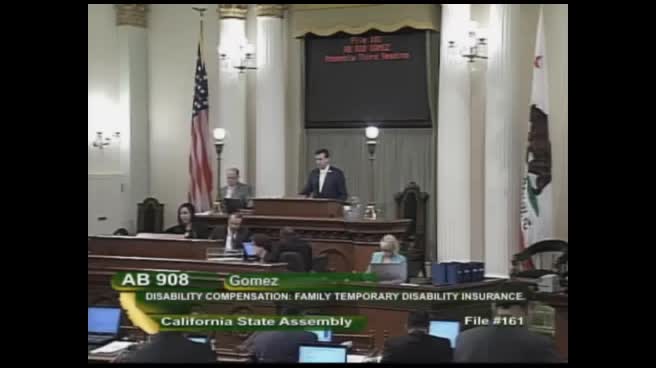 50SEC
Assembly Floor
 4MIN
Assembly Standing Committee on Transportation
Bill Author
Bill Co-Author(s):