AB 1197: Deposition notices.
- Session Year: 2015-2016
- House: Assembly
- Latest Version Date: 2015-09-28
Existing law prescribes the procedure for taking oral depositions inside the state. Existing law requires that, unless the parties agree or the court orders otherwise, the testimony, as well as any stated objections, be taken stenographically. Existing law requires a party desiring to take the oral deposition of a person to give a notice in writing that provides specified information, including the address and date of the deposition.
This bill would require the deposition notice governed by this section to include a statement disclosing the existence of a contractual relationship, if any is known to the noticing party, between the deposition officer or entity providing the services of the deposition officer and the party noticing the deposition or a third party who is financing all or part of the action, as specified. The bill would also require the deposition notice to contain a statement disclosing that the party noticing the deposition, or a third party financing all or part of the action, directed his or her attorney to use a particular officer or entity to provide services for the deposition, if applicable.
Existing law prescribes the procedure for taking oral depositions inside the state. Existing law requires that, unless the parties agree or the court orders otherwise, the testimony, as well as any stated objections, be taken stenographically. Existing law requires a party desiring to take the oral deposition of a person to give a notice in writing that provides specified information, including the address and date of the deposition.
This bill would require the deposition notice governed by this section to include a statement disclosing the existence of a contractual relationship, if any, between the deposition officer or entity providing the services of the deposition officer and the party noticing the deposition or a third party who is financing all or part of the action, as specified. This The bill would also require the deposition notice to contain a statement disclosing that the party noticing the deposition, or a third party financing all or part of the action, directed his or her attorney to use a particular officer or entity to provide services for the deposition, if applicable. This bill would permit any other party to object to the use of an officer or entity if the party noticing the deposition makes such a disclosure.
Existing law prescribes the procedure for taking oral depositions inside the state. Existing law requires that, unless the parties agree or the court orders otherwise, the testimony, as well as any stated objections, be taken stenographically. Existing law requires a party desiring to take the oral deposition of a person to give a notice in writing that provides specified information, including the address and date of the deposition.
This bill would require the deposition notice governed by this section to include a statement disclosing the existence of a contractual relationship, if any, between the deposition officer or entity providing the services of the deposition officer and the party noticing the deposition or a third party who is financing all or part of the action, as specified. This bill would also require the deposition notice to contain a statement disclosing that the party noticing the deposition, or a third party financing all or part of the action, directed his or her attorney to use a particular officer or entity to provide services for the deposition, if applicable. This bill would permit any other party to object to the use of an officer or entity if the party noticing the deposition makes such a disclosure.
Existing law prescribes the procedure for taking oral depositions inside the state. Existing law requires that, unless the parties agree or the court orders otherwise, the testimony, as well as any stated objections, be taken stenographically. Existing law requires a party desiring to take the oral deposition of a person to give a notice in writing that provides specified information, including the address and date of the deposition.
This bill would require the deposition notice governed by this section to include a statement disclosing the existence of a contractual relationship, if any, between the deposition officer or entity providing the services of the deposition officer and the party noticing the deposition or a third party who is financing all or part of the action, as specified. This bill would also require the deposition notice to contain a statement disclosing that the party noticing the deposition directed his or her attorney to use a particular officer or entity to provide services for the deposition, if applicable. This bill would permit any other party to object to the use of an officer or entity if the party noticing the deposition makes such a disclosure.
Existing law requires that a deposition be conducted under the supervision of an officer who is authorized to administer an oath and subjects the deposition officer or entity providing the services of the deposition officer to certain restrictions. Existing law also permits a party or partys attorney attending a deposition to request a statement regarding all services and products made available to any other party, partys attorney, or 3rd party financing all or part of the action by the deposition officer or by the entity providing deposition services.
Upon this request, this bill would also require the disclosure of any contractual relationship between that party and the deposition officer or entity providing the services of the deposition officer. If a contractual relationship is disclosed, this bill would permit any other party to object to the use of that deposition officer or entity.
(a)A party desiring to take the oral deposition of any person shall give notice in writing. The deposition notice shall state all of the following:
(1)The address where the deposition will be taken.
(2)The date of the deposition, selected under Section 2025.270, and the time it will commence.
(3)The name of each deponent, and the address and telephone number, if known, of any deponent who is not a party to the action. If the name of the deponent is not known, the deposition notice shall set forth instead a general description sufficient to identify the person or particular class to which the person belongs.
(4)The specification with reasonable particularity of any materials or category of materials, including any electronically stored information, to be produced by the deponent.
(5)Any intention by the party noticing the deposition to record the testimony by audio or video technology, in addition to recording the testimony by the stenographic method as required by Section 2025.330 and any intention to record the testimony by stenographic method through the instant visual display of the testimony. If the deposition will be conducted using instant visual display, a copy of the deposition notice shall also be given to the deposition officer. Any offer to provide the instant visual display of the testimony or to provide rough draft transcripts to any party which is accepted prior to, or offered at, the deposition shall also be made by the deposition officer at the deposition to all parties in attendance. Any party or attorney requesting the provision of the instant visual display of the testimony, or rough draft transcripts, shall pay the reasonable cost of those services, which may be no greater than the costs charged to any other party or attorney.
(6)Any intention to reserve the right to use at trial a video recording of the deposition testimony of a treating or consulting physician or of any expert witness under subdivision (d) of Section 2025.620. In this event, the operator of the video camera shall be a person who is authorized to administer an oath, and shall not be financially interested in the action or be a relative or employee of any attorney of any of the parties.
(7)The form in which any electronically stored information is to be produced, if a particular form is desired.
(8)(A)A statement disclosing the existence of a contract, if any is known to the noticing party, between the noticing party or a third party who is financing all or part of the action and either of the following for any service beyond the noticed deposition:
(i)The deposition officer.
(ii)The entity providing the services of the deposition officer.
(B)A statement disclosing that the party noticing the deposition, or a third party financing all or part of the action, directed his or her attorney to use a particular officer or entity to provide services for the deposition, if applicable.
(b)Notwithstanding subdivision (a), where under Article 4 (commencing with Section 2020.410) only the production by a nonparty of business records for copying is desired, a copy of the deposition subpoena shall serve as the notice of deposition.
(a)A party desiring to take the oral deposition of any person shall give notice in writing. The deposition notice shall state all of the following:
(1)The address where the deposition will be taken.
(2)The date of the deposition, selected under Section 2025.270, and the time it will commence.
(3)The name of each deponent, and the address and telephone number, if known, of any deponent who is not a party to the action. If the name of the deponent is not known, the deposition notice shall set forth instead a general description sufficient to identify the person or particular class to which the person belongs.
(4)The specification with reasonable particularity of any materials or category of materials, including any electronically stored information, to be produced by the deponent.
(5)Any intention by the party noticing the deposition to record the testimony by audio or video technology, in addition to recording the testimony by the stenographic method as required by Section 2025.330 and any intention to record the testimony by stenographic method through the instant visual display of the testimony. If the deposition will be conducted using instant visual display, a copy of the deposition notice shall also be given to the deposition officer. Any offer to provide the instant visual display of the testimony or to provide rough draft transcripts to any party which is accepted prior to, or offered at, the deposition shall also be made by the deposition officer at the deposition to all parties in attendance. Any party or attorney requesting the provision of the instant visual display of the testimony, or rough draft transcripts, shall pay the reasonable cost of those services, which may be no greater than the costs charged to any other party or attorney.
(6)Any intention to reserve the right to use at trial a video recording of the deposition testimony of a treating or consulting physician or of any expert witness under subdivision (d) of Section 2025.620. In this event, the operator of the video camera shall be a person who is authorized to administer an oath, and shall not be financially interested in the action or be a relative or employee of any attorney of any of the parties.
(7)The form in which any electronically stored information is to be produced, if a particular form is desired.
(8)(A)A statement disclosing the existence of a contract, if any, between the noticing party or a third party who is financing all or part of the action and either of the following for any service beyond the noticed deposition:
(i)The deposition officer.
(ii)The entity providing the services of the deposition officer.
(B)A statement disclosing that the party noticing the deposition, or a third party financing all or part of the action, directed his or her attorney to use a particular officer or entity to provide services for the deposition, if applicable.
(C)(i)If a party discloses a contractual relationship or directive pursuant to this paragraph, any other party may object in writing at least three calendar days before the deposition date to the use of that officer or entity.
(ii)A party shall personally serve an objection made pursuant to this paragraph in accordance with Section 1011.
(b)Notwithstanding subdivision (a), where under Article 4 (commencing with Section 2020.410) only the production by a nonparty of business records for copying is desired, a copy of the deposition subpoena shall serve as the notice of deposition.
(a)A party desiring to take the oral deposition of any person shall give notice in writing. The deposition notice shall state all of the following:
(1)The address where the deposition will be taken.
(2)The date of the deposition, selected under Section 2025.270, and the time it will commence.
(3)The name of each deponent, and the address and telephone number, if known, of any deponent who is not a party to the action. If the name of the deponent is not known, the deposition notice shall set forth instead a general description sufficient to identify the person or particular class to which the person belongs.
(4)The specification with reasonable particularity of any materials or category of materials, including any electronically stored information, to be produced by the deponent.
(5)Any intention by the party noticing the deposition to record the testimony by audio or video technology, in addition to recording the testimony by the stenographic method as required by Section 2025.330 and any intention to record the testimony by stenographic method through the instant visual display of the testimony. If the deposition will be conducted using instant visual display, a copy of the deposition notice shall also be given to the deposition officer. Any offer to provide the instant visual display of the testimony or to provide rough draft transcripts to any party which is accepted prior to, or offered at, the deposition shall also be made by the deposition officer at the deposition to all parties in attendance. Any party or attorney requesting the provision of the instant visual display of the testimony, or rough draft transcripts, shall pay the reasonable cost of those services, which may be no greater than the costs charged to any other party or attorney.
(6)Any intention to reserve the right to use at trial a video recording of the deposition testimony of a treating or consulting physician or of any expert witness under subdivision (d) of Section 2025.620. In this event, the operator of the video camera shall be a person who is authorized to administer an oath, and shall not be financially interested in the action or be a relative or employee of any attorney of any of the parties.
(7)The form in which any electronically stored information is to be produced, if a particular form is desired.
(8)(A)A statement disclosing the existence of a contract, if any, between the deposition officer or entity providing the services of the deposition officer and the noticing party or a third party who is financing all or part of the action requiring that party to use the officer or entity and either of the following for any service beyond the noticed deposition. deposition:
(i)The deposition officer.
(ii)The entity providing the services of the deposition officer.
(B)A statement disclosing that the party noticing the deposition, or a third party financing all or part of the action, directed his or her attorney to use a particular officer or entity to provide services for the deposition, if applicable.
(C)(i)If a party discloses a contractual relationship or directive pursuant to this paragraph, any other party may object in writing at least three calendar days before the deposition date to the use of that officer or entity.
(ii)A party shall personally serve an objection made pursuant to this paragraph in accordance with Section 1011.
(b)Notwithstanding subdivision (a), where under Article 4 (commencing with Section 2020.410) only the production by a nonparty of business records for copying is desired, a copy of the deposition subpoena shall serve as the notice of deposition.
(a)A party desiring to take the oral deposition of any person shall give notice in writing. The deposition notice shall state all of the following:
(1)The address where the deposition will be taken.
(2)The date of the deposition, selected under Section 2025.270, and the time it will commence.
(3)The name of each deponent, and the address and telephone number, if known, of any deponent who is not a party to the action. If the name of the deponent is not known, the deposition notice shall set forth instead a general description sufficient to identify the person or particular class to which the person belongs.
(4)The specification with reasonable particularity of any materials or category of materials, including any electronically stored information, to be produced by the deponent.
(5)Any intention by the party noticing the deposition to record the testimony by audio or video technology, in addition to recording the testimony by the stenographic method as required by Section 2025.330 and any intention to record the testimony by stenographic method through the instant visual display of the testimony. If the deposition will be conducted using instant visual display, a copy of the deposition notice shall also be given to the deposition officer. Any offer to provide the instant visual display of the testimony or to provide rough draft transcripts to any party which is accepted prior to, or offered at, the deposition shall also be made by the deposition officer at the deposition to all parties in attendance. Any party or attorney requesting the provision of the instant visual display of the testimony, or rough draft transcripts, shall pay the reasonable cost of those services, which may be no greater than the costs charged to any other party or attorney.
(6)Any intention to reserve the right to use at trial a video recording of the deposition testimony of a treating or consulting physician or of any expert witness under subdivision (d) of Section 2025.620. In this event, the operator of the video camera shall be a person who is authorized to administer an oath, and shall not be financially interested in the action or be a relative or employee of any attorney of any of the parties.
(7)The form in which any electronically stored information is to be produced, if a particular form is desired.
(8)(A)A statement disclosing the existence of a contract, if any, between the deposition officer or entity providing the services of the deposition officer and the noticing party or a third party who is financing all or part of the action requiring that party to use the officer or entity for any service beyond the noticed deposition.
(B)A statement disclosing that the party noticing the deposition directed his or her attorney to use a particular officer or entity to provide services for the deposition, if applicable.
(C)(i)If a party discloses a contractual relationship or directive pursuant to this paragraph, any other party may object in writing at least three calendar days before the deposition date to the use of that officer or entity.
(ii)A party shall personally serve an objection made pursuant to this paragraph in accordance with Section 1011.
(b)Notwithstanding subdivision (a), where under Article 4 (commencing with Section 2020.410) only the production by a nonparty of business records for copying is desired, a copy of the deposition subpoena shall serve as the notice of deposition.
SECTION 1.Section 2025.320 of the Code of Civil Procedure is amended to read:2025.320.Except as provided in Section 2020.420, the deposition shall be conducted under the supervision of an officer who is authorized to administer an oath and is subject to all of the following requirements:
(a)The officer shall not be financially interested in the action and shall not be a relative or employee of any attorney of the parties, or of any of the parties.
(b)Services and products offered or provided by the deposition officer or the entity providing the services of the deposition officer to any party or to any partys attorney or third party who is financing all or part of the action shall be offered to all parties or their attorneys attending the deposition. No service or product may be offered or provided by the deposition officer or by the entity providing the services of the deposition officer to any party or any partys attorney or third party who is financing all or part of the action unless the service or product is offered or provided to all parties or their attorneys attending the deposition. All services and products offered or provided shall be made available at the same time to all parties or their attorneys.
(c)The deposition officer or the entity providing the services of the deposition officer shall not provide to any party or any partys attorney or third party who is financing all or part of the action any service or product consisting of the deposition officers notations or comments regarding the demeanor of any witness, attorney, or party present at the deposition. The deposition officer or entity providing the services of the deposition officer shall not collect any personal identifying information about the witness as a service or product to be provided to any party or third party who is financing all or part of the action.
(d)(1)Upon the request of any party or any partys attorney attending a deposition, any party or any partys attorney attending the deposition shall enter in the record of the deposition both of the following:
(A)A list of all services and products, if any, made available to that party or partys attorney or third party who is financing all or part of the action by the deposition officer or by the entity providing the services of the deposition officer.
(B)A statement disclosing the existence of a contractual relationship between the deposition officer or the entity providing the services of the deposition officer and that party, if any.
(2)A party in the action who is not represented by an attorney shall be informed by the noticing party or the partys attorney that the unrepresented party may request this information be entered in the record.
(3)If a party discloses a contractual relationship pursuant to subparagraph (B) of paragraph (1), any other party may object to the use of that deposition officer or entity.
(e)Any objection to the qualifications of the deposition officer is waived unless made before the deposition begins or as soon thereafter as the ground for that objection becomes known or could be discovered by reasonable diligence.
(f)Violation of this section by any person may result in a civil penalty of up to five thousand dollars ($5,000) imposed by a court of competent jurisdiction.
Except as provided in Section 2020.420, the deposition shall be conducted under the supervision of an officer who is authorized to administer an oath and is subject to all of the following requirements:
(a)The officer shall not be financially interested in the action and shall not be a relative or employee of any attorney of the parties, or of any of the parties.
(b)Services and products offered or provided by the deposition officer or the entity providing the services of the deposition officer to any party or to any partys attorney or third party who is financing all or part of the action shall be offered to all parties or their attorneys attending the deposition. No service or product may be offered or provided by the deposition officer or by the entity providing the services of the deposition officer to any party or any partys attorney or third party who is financing all or part of the action unless the service or product is offered or provided to all parties or their attorneys attending the deposition. All services and products offered or provided shall be made available at the same time to all parties or their attorneys.
(c)The deposition officer or the entity providing the services of the deposition officer shall not provide to any party or any partys attorney or third party who is financing all or part of the action any service or product consisting of the deposition officers notations or comments regarding the demeanor of any witness, attorney, or party present at the deposition. The deposition officer or entity providing the services of the deposition officer shall not collect any personal identifying information about the witness as a service or product to be provided to any party or third party who is financing all or part of the action.
(d)(1)Upon the request of any party or any partys attorney attending a deposition, any party or any partys attorney attending the deposition shall enter in the record of the deposition all both of the following:
(A)A list of all services and products, if any, made available to that party or partys attorney or third party who is financing all or part of the action by the deposition officer or by the entity providing the services of the deposition officer. A
(B)A statement disclosing the existence of a contractual relationship between the deposition officer or the entity providing the services of the deposition officer and that party, if any.
(2)A party in the action who is not represented by an attorney shall be informed by the noticing party or the partys attorney that the unrepresented party may request this statement information be entered in the record.
(3)If a party discloses a contractual relationship pursuant to subparagraph (B) of paragraph (1), any other party may object to the use of that deposition officer or entity.
(e)Any objection to the qualifications of the deposition officer is waived unless made before the deposition begins or as soon thereafter as the ground for that objection becomes known or could be discovered by reasonable diligence.
(f)Violation of this section by any person may result in a civil penalty of up to five thousand dollars ($5,000) imposed by a court of competent jurisdiction.
|
Date
|
Status
|
|---|---|
| May 7, 2015 | Referred to Com. on JUD. |
| Sep 28, 2015 | Chaptered by Secretary of State - Chapter 346, Statutes of 2015. |
| Sep 28, 2015 | Approved by the Governor. |
| Sep 3, 2015 | Enrolled and presented to the Governor at 4 p.m. |
| Aug 27, 2015 | Senate amendments concurred in. To Engrossing and Enrolling. (Ayes 78. Noes 0. Page 2624.). |
| Aug 27, 2015 | Senate amendments concurred in. To Engrossing and Enrolling. |
| Aug 25, 2015 | In Assembly. Concurrence in Senate amendments pending. May be considered on or after August 27 pursuant to Assembly Rule 77. |
| Aug 24, 2015 | Read third time. Passed. Ordered to the Assembly. (Ayes 39. Noes 0. Page 2156.). |
| Aug 24, 2015 | Read third time. Passed. Ordered to the Assembly. |
| Jul 15, 2015 | Read second time and amended. Ordered to third reading. |
| Jul 14, 2015 | From committee: Amend, and do pass as amended. (Ayes 5. Noes 0.) (July 7). |
| Jun 23, 2015 | From committee chair, with author's amendments: Amend, and re-refer to committee. Read second time, amended, and re-referred to Com. on JUD. |
| Feb 27, 2015 | Introduced. To print. |
| Apr 23, 2015 | Read third time. Passed. Ordered to the Senate. (Ayes 78. Noes 0.) |
| Apr 23, 2015 | Read third time. Passed. Ordered to the Senate. (Ayes 78. Noes 0. Page 1102.) |
| Apr 23, 2015 | In Senate. Read first time. To Com. on RLS. for assignment. |
| Apr 20, 2015 | Read second time. Ordered to third reading. |
| Apr 16, 2015 | Read second time and amended. Ordered returned to second reading. |
| Apr 15, 2015 | From committee: Amend, and do pass as amended. (Ayes 10. Noes 0.) (April 14). |
| Apr 7, 2015 | Re-referred to Com. on JUD. |
| Apr 6, 2015 | From committee chair, with author's amendments: Amend, and re-refer to Com. on JUD. Read second time and amended. |
| Mar 23, 2015 | Referred to Com. on JUD. |
| Mar 2, 2015 | Read first time. |
| Mar 1, 2015 | From printer. May be heard in committee March 31. |
|
Date
|
Description
|
Location
|
Votes
|
|
|---|---|---|---|---|
| Aug 27, 2015 | AB 1197 BONILLA Concurrence in Senate Amendments | Assembly Floor |
Passed |
|
| Aug 24, 2015 | Assembly 3rd Reading AB1197 Bonilla By Jackson | Senate Floor |
Passed |
|
| Jul 7, 2015 | Do pass as amended | Senate Standing Committee on Judiciary |
Passed |
|
| Apr 23, 2015 | AB 1197 BONILLA Assembly Third Reading | Assembly Floor |
Passed |
|
| Apr 14, 2015 | Do pass as amended. | Assembly Standing Committee on Judiciary |
Passed |
This list shows positions taken on this bill by organizations on the date displayed, which is linked to the original source.
Positions by individuals are not included.
|
Organization
|
Position
|
Date
|
|---|---|---|
| California Official Court Reporters Association | ** Support | Aug 24, 2015 |
| Consumer Attorneys Of California | ** Support | Aug 24, 2015 |
| Consumer Watchdog | ** Support | Aug 24, 2015 |
| Deposition Reporters Association Of California | ** Support | Aug 24, 2015 |
| Esquire Deposition Services, LLC | ** Against | Aug 24, 2015 |
| Magna Legal Services | ** Against | Aug 24, 2015 |
| U.S. Legal Support, Inc. | ** Against | Aug 24, 2015 |
| Veritext Corp | ** Against | Aug 24, 2015 |
AB 1197
Page 3
CONCURRENCE IN SENATE AMENDMENTS
AB 1197
(Bonilla)
As Amended July 15, 2015
Majority vote
ASSEMBLY: |
78-0 |
(April 23, 2015) |
SENATE: |
39-0 |
(August 24, 2015) |
Original Committee Reference: JUD.
SUMMARY: Requires that certain contractual relationships between the parties to a deposition be disclosed to all parties in the deposition notice. Specifically, this bill:
Requires a statement disclosing the existence of a contract, if known by the noticing party, between the deposition officer or entity providing the services of the deposition officer and the noticing party, or a third party who is financing all or part of the action requiring that party to use the officer or entity for any service beyond the noticed deposition, be included.
Requires a statement disclosing that the party noticing the deposition, or a third party who is financing all or part of the action, has directed his or her attorney to use a particular officer or entity to provide services for the deposition, if applicable.
The Senate amendments:
Clarify that the party noticing the deposition must disclose the existence of a contract between the deposition service company or the deposition officer and the noticing party for services beyond the noticed deposition, if the noticing party has knowledge of the existence of such a contract; and
Remove the right of a party to serve an objection to the use of a deposition officer or entity, at least three calendar days prior to the deposition, when it has been disclosed that a contract for services beyond the noticed deposition exists between the noticing party and the deposition officer or entity.
EXISTING LAW: A party desiring to take the oral deposition of any person must give notice in writing. The notice must contain all of the following:
The address where the deposition will be taken.
The date of the deposition, and the time it will commence.
The name of each deponent, and the address and telephone number, if known, of any deponent who is not a party to the action.
Specific information regarding any materials, including materials that are electronically stored, that the deponent is to bring or produce at the deposition.
Any intention that the party noticing the deposition has to record the testimony by audio or video technology, in addition to recording the testimony by a stenographic method, including through instant visual display.
Any intention to reserve the right to use at trial a video recording of deposition testimony of a treating or consulting physician, or other expert witness testimony.
The form in which any electronically stored information is to be produced, if a particular form is desired.
FISCAL EFFECT: None
COMMENTS: Under existing law, a deposition must be noticed to all parties and relevant non-parties, prior to the actual deposition. Requiring notice in advance allows all parties to attend the deposition and to prepare for the deposition hearing. This bill uses the existing process of noticing a deposition to facilitate disclosure to all parties of any existing contractual relationships that may have an impact on the pending litigation. It places the burden on the party noticing the deposition to include several disclosures, when applicable. The required disclosures include: 1) a statement of the existence of a contract, if any between the party noticing the deposition and or a third party who is financing any part of the action and either: the deposition officer (court reporter) or the entity providing the services of the deposition officer for any service beyond the noticed deposition; and 2) a statement that the noticing party directed his or her attorney to use a particular officer or entity to provide services for the deposition, if applicable. Any objection to the use of a particular deposition officer or service may be made in accordance with existing law.
Exclusive contracts are creating a damaging effect on litigation. In recent years, the field of court reporting has expanded into a larger, more corporate-driven business industry. A disturbing trend has developed, threatening what was once a unique economic opportunity for women. According to an article published on the Consumer Watchdog Web site, an increasing number of large companies, such as those in the business of insurance and construction, have entered the court reporting arena. These larger companies are effectively running the smaller, women-owned court reporting companies out of the industry by establishing long-term contractual agreements with court reporting agencies. After forming these contractual alliances, these larger companies then require their counsels to use specific agencies for all or most of the depositions noticed on behalf of the corporation. In return for the guaranteed business to these dedicated court reporting agencies, the large company receives reduced fees and special services from the court reporting agencies. Two of these special services, which among others that have been targeted as being problematic, are deposition databases and free deposition summaries.
The impact of reduced fees and free special services in exchange for volume business. Reduced fees are exactly what they sound like, requiring one party in a lawsuit to pay more for the same deposition services offered to the other side for less because of an existing contractual relationship. Deposition databases are proprietary databases that may contain thousands of records, including expert witnesses, expert witnesses' prior testimonies, various transcripts, depositions, records of parties' and experts' disciplinary actions, and other information that can be compiled and customized into any number of desired reports that are pertinent to the specifics of individual cases. Deposition summaries are summaries of the deposition testimony transcript and they simplify the work normally involved in reviewing a deposition transcript because a party who receives the summary does not have to sift through the entire deposition transcript in order to gather the most relevant facts. In larger cases with huge volumes of testimony, the opposing party is again at a huge disadvantage when they lack such a valuable tool to which the other side has. In many instances, the opposing party is never given the opportunity to purchase these litigation tools.
Other complaints regarding these special services are that attorneys representing these large companies receive their copies of deposition transcripts much faster than the opposing party. This allows extra time for that attorney to look over the deposition transcript before a hearing, or to include portions of the deposition transcript into their legal briefs. Even in situations where the opposing party has the opportunity to get a copy of the transcript in an expedited manner, the costs can be prohibitive. In the legal world, these litigation support services are viewed as unfair because they grant huge advantages to one party and huge disadvantages to another. Plaintiffs' lawyers are calling foul, arguing that these "contract or agreements" amount to basically free litigation support at their expense.
By requiring a disclosure of these existing contractual relationships, opposing parties have the opportunity to object as allowed by existing law.
Reliability of court reporters, deposition transcripts and the appearance of partiality. The complaints go even further regarding these contractual relationships, with many wondering whether the actual court reporters can remain neutral when they are involved in these types of contractual relationships. If one side is providing continued, and in some cases, exclusive use of the same reporting service, is that side getting more than just great services? Is it possible that they may be getting a better deposition in the content, or in the manner in which the transcript is being transcribed? Court reporters have always been considered neutral and impartial court officers in legal matters. However, more frequently the question is being raised by plaintiffs' attorneys nationwide, whether the court reporter and or the transcript that is being produced by court reporting companies in these relationships may still be granted the assumption of being reliable? Persons and entities that were at one time considered the "only impartial person in the room" are now being viewed with suspicion and rising valid concerns regarding the "appearance of partiality."
By requiring that these relationships be disclosed to parties who may be affected by them, this bill allows the opposing party to perform any necessary due diligence in order to determine if an objection is needed in order to ensure a fair discovery process.
Analysis Prepared by: Khadijah Hargett / JUD. / (916) 319-2334 FN: 0001272
AB 1197
Page 8
|
Office of Senate Floor Analyses (916) 651-1520 Fax: (916) 327-4478 |
THIRD READING
Bill No: AB 1197
Amended: 7/15/15 in Senate
SENATE JUDICIARY COMMITTEE: 5-0, 7/7/15
AYES: Jackson, Hertzberg, Leno, Monning, Wieckowski
NO VOTE RECORDED: Moorlach, Anderson
ASSEMBLY FLOOR: 78-0, 4/23/15 - See last page for vote
SOURCE: Deposition Reporters Association of California
DIGEST: This bill requires that a deposing party include in its deposition notice to the person it seeks to depose: (1) a statement disclosing the existence of a contract, if any is known to the noticing party, for any service beyond the noticed deposition, between the noticing party or a third party who is financing all or part of the action and either the deposition officer or the entity providing the services of the deposition officer; and (2) a statement disclosing that the party noticing the deposition, or a third party financing all or part of the action, directed his or her attorney to use a particular officer or entity to provide services for the deposition, if applicable.
Existing law:
Requires, generally, that a deposition be conducted under the supervision of an officer who is authorized to administer an oath and is subject to all of the following requirements, among others:
The officer must not be financially interested in the action and shall not be a relative or employee of any attorney of the parties, or of any of the parties;
Services and products offered or provided by the deposition officer or the entity providing the services of the deposition officer to any party or to any party’s attorney or third party who is financing all or part of the action must be offered to all parties or their attorneys attending the deposition, at the same time; and
The deposition officer or the entity providing the services of the deposition officer must not do either of the following: (1) provide to any party or any party’s attorney or third party who is financing all or part of the action any service or product consisting of the deposition officer’s notations or comments regarding the demeanor of any witness, attorney, or party present at the deposition; or (2) collect any personal identifying information about the witness as a service or product to be provided to any party or third party who is financing all or part of the action.
Provides that any objection to the qualifications of the deposition officer is waived unless made before the deposition begins or as soon thereafter as the ground for that objection becomes known or could be discovered by reasonable diligence.
Provides that violation of the above provisions by any person may result in a civil penalty of up to $5,000 imposed by a court of competent jurisdiction.
Requires that a party desiring to take the oral deposition of any person give notice in writing to that person, stating certain information, such as:
The address where the deposition will be taken;
The date of the deposition, selected pursuant to specified law, and the time it will commence;
The name of each deponent, and the address and telephone number, if known, of any deponent who is not a party to the action or, if the name of the deponent is not known, a general description sufficient to identify the person or particular class to which the person belongs;
The specification with reasonable particularity of any materials or category of materials, including any electronically stored information, to be produced by the deponent; and
Any intention by the party noticing the deposition to record the testimony by audio or video technology, in addition to recording the testimony by the stenographic method as required under existing law, and any intention to record the testimony by stenographic method through the instant visual display of the testimony.
Provides that any party served with a deposition notice that does not comply with specified deposition notice requirements waives any error or irregularity unless that party promptly serves a written objection specifying that error or irregularity at least three calendar days prior to the date for which the deposition is scheduled, on the party seeking to take the deposition and any other attorney or party on whom the deposition notice was served. Existing law provides that if an objection is made three calendar days before the deposition date, the objecting party must make personal service of that objection, pursuant to specified law, on the party who gave notice of the deposition.
Provides that any deposition taken after the service of a written objection shall not be used against the objecting party under specified law, if the party did not attend the deposition and if the court determines that the objection was a valid one.
Provides, in addition to serving this written objection, a party must also move for an order staying the taking of the deposition and quashing the deposition notice. This motion must be accompanied by a meet and confer declaration, under specified law, and the taking of the deposition is stayed pending the determination of this motion.
Requires the court to impose a monetary sanction, under specified law, against any party, person, or attorney who unsuccessfully makes or opposes a motion to quash a deposition notice, unless it finds that the one subject to the sanction acted with substantial justification or that other circumstances make the imposition of the sanction unjust.
This bill requires that the following also be included in the deposition notice:
A statement disclosing the existence of a contract, if any is known to the noticing party, between the noticing party or a third party who is financing all or part of the action and either of the following for any service beyond the noticed deposition: (a) the deposition officer; or (b) the entity providing the services of the deposition officer.
A statement disclosing that the party noticing the deposition, or a third party financing all or part of the action, directed his or her attorney to use a particular officer or entity to provide services for the deposition, if applicable.
Background
Court reporters, also known as “shorthand reporters,” not only transcribe courtroom proceedings, but also serve as judicial officers overseeing a deposition. (See Civ. Code Sec. 2025.320.) Because they serve to provide true and accurate records of trial proceedings (such as witness testimony, or court orders), as well as depositions conducted by parties in the pursuit or defense of their cases, the impartiality of these officers of the court must be maintained, irrespective of whether they are providing these services inside, or outside, of the courtroom. Of particular importance for this bill, is the issue of impartiality of deposition reporters. In this regard, California law prohibits a deposition officer from being financially interested in the action and or serving as a deposition officer if he or she is a relative or employee of any attorney of the parties, or of any of the parties. California law further requires that, if the deposition officer or the entity providing the services of the deposition officer offers or provides any services and products to any party or to any party’s attorney or third party who is financing all or part of the action, the deposition officer or entity also must offer the same to all parties or their attorneys attending the deposition, at the same time. Violations of these laws by any person can result in a civil penalty of up to $5,000. (Id.)
More generally, California regulations also require that every person under the jurisdiction of the Court Reporters Board who holds a license or certificate, or business that renders professional services, namely shorthand reporting services, within the meaning of the Moscone-Knox Professional Corporation Act, complies with certain professional standards of practice. These include, for example: (1) not entering into, arranging, or participating in a relationship that compromises the impartiality of the certified shorthand reporter, including, but not limited to, a relationship in which compensation for reporting services is based upon the outcome of the proceeding; and (2) neither directly nor indirectly giving or receiving any gift, incentive, reward, or anything of value to or from any person or entity associated with a proceeding being reported, other than the receipt of compensation for reporting services, except where the items that do not exceed $100 (in the aggregate for any combination of items given and/or received) per calendar year or where the certified shorthand reporter reasonably expects to be reimbursed from the Transcript Reimbursement Fund for services provided free of charge or otherwise provided the services for an “indigent person” as specified. (16 C.C.R. Sec. 2475(b)(6)-(8).)
This bill seeks to now require additional disclosures in a deposing party’s notice of deposition to a person it seeks to depose, based upon concerns relating to ongoing financial relationships, beyond a particular deposition, between the deposing party and the person or entity providing deposition reporting services in that particular deposition. Currently, a deposing party must disclose certain information relating to the deposition to the person that it seeks to depose in a notice of deposition. This information, for example, includes the time and place of the deposition, as well as what, if any, materials the deponent needs to bring or produce at the deposition. If the party fails to make the required disclosures, the person being deposed may object to the sufficiency of that notice pursuant to the procedures provided in the Code of Civil Procedure, which requires that the objecting party promptly serve any written objections on the party seeking to take the deposition and any other attorney or party on whom the deposition notice was served, specifying the error or irregularity, at least three calendar days prior to the date for which the deposition is scheduled, as specified.
Under these provisions, any party, person, or attorney who unsuccessfully makes or opposes a motion to quash a deposition notice faces the imposition of specified monetary sanctions, unless the court finds that the individual subject to the sanction acted with substantial justification or that other circumstances make the imposition of the sanction unjust. (See Code Civ. Proc. Secs. 2025.220, 2025.410.)
This bill requires a deposing party to also provide in its deposition notice to the deponent: (1) a statement disclosing the existence of a contract, if any is known to the noticing party, for any service beyond the noticed deposition, between the noticing party or a third party who is financing all or part of the action and either the deposition officer or the entity providing the services of the deposition officer; and (2) a statement disclosing that the party noticing the deposition, or a third party financing all or part of the action, directed his or her attorney to use a particular officer or entity to provide services for the deposition, if applicable.
Comments
As stated by the author:
There are numerous potential problems that arise under the existence of ongoing contracts for deposition services. First, is the potential for (or the perception of) court reporter impartiality that occurs when ongoing contracts effectively make the court reporting firm the “in-house” provider of services for certain companies. Second, ongoing contracts increase the possibility of cost shifting onto the cost of deposition copies. Long-term contracts are often associated with cheap rates for service. Unfortunately, one tactic used to recoup the money lost under the contracts is to increase the cost of copies of the deposition notice, a practice known as cost shifting. Opposing counsel has no choice but to use the contracted firm to order copies while at the same time unaware of the ongoing contract which could lead to cost shifting. AB 1197 would correct this issue by making all parties aware of the contract and thus more sensitive to price discrepancies over time.
[Specifically,] AB 1197 requires a disclosure statement to be included on the deposition notice that increases the awareness of all parties to a deposition of the existence of ongoing contracts for services. AB 1197 requires the disclosure of ongoing contracts (both oral and written) to be included in the notice of deposition that exist between the noticing party or a third party financing the deposition and either of the following: 1) the deposition officer or 2) the entity providing the services of the deposition officer. However, in certain cases lawyers may be unaware of the existence of an ongoing contract. Still, these lawyers would be directed by the noticing party or a third party financing the deposition to use a particular deposition officer or entity to provide deposition services. In these cases, a disclosure statement must also be included in the deposition notice that the lawyer was directed to use a particular officer or entity providing deposition services.
FISCAL EFFECT: Appropriation: No Fiscal Com.: No Local: No
Deposition Reporters Association of California (source)
California Official Court Reporters Association
Consumer Attorneys of California
Consumer Watchdog
Court Reporters Board of California
OPPOSITION: (Verified 7/15/15)
Esquire Deposition Services, LLC
Magna Legal Services
U.S. Legal Support, Inc.
Veritext Corp
ARGUMENTS IN SUPPORT: In support of the bill, Consumer Watchdog writes that “[t]he integrity of the judicial system depends on the public’s perception that the process is fair. Court reporters are supposed to be impartial officers of the court, but some non licensee-owned court reporting corporations are entering into ongoing, one-sided financial relationships with parties to litigation who have no ethical obligations. These corporations are also often aiding one side in litigation by providing litigation support services in the very same proceeding in which they are supposedly providing impartial court reporting services. Worse, the other parties to the litigation are often charged more for transcript copies to make up the difference for the discount that the contracting party is given on transcript costs. [ . . . ] AB 1197 will simply require that the attorney preparing the notice of deposition include in the notice one additional line disclosing: (1) whether there exists a contract between his or her party-client and the reporting firm being hired to transcribe the deposition; or (2) if that is unknown, whether the lawyer’s party-client has instructed the lawyer to use a particular reporting firm. Upon disclosure, the bill affords the other parties the opportunity to inquire and/or to object, invoking current law’s rules and process for objections to depositions.”
Also in support, the Court Reporters Board of California writes, “the passage of this bill would shine a bright light on contracts that may exist behind the scenes, helping to keep bias out of the deposition room. Given the stakes, consumers of court reporting services deserve to know the details of contracting parties to make better, informed decisions on case management. This bill does not restrain trade; it does, however, help guard against actual bias and the appearance thereof.”
ARGUMENTS IN OPPOSITION: A coalition of deposition services firms (Esquire Deposition Services, LLC; Magna Legal Services; U.S. Legal Support, Inc.; and Veritext Corp.) writes in opposition to this bill, questioning both the need for the legislation and the practical issues the coalition believes are raised by the legislation. Specifically, coalition notes that their companies “retain the most qualified licensed court reporters to transcribe depositions, and there has been no credible suggestion that any partiality has resulted in inaccurate transcripts. To the contrary, court reporters enjoy a sterling reputation for impartiality and accuracy, truly one of the most admired participants in the litigation environment[.]”
ASSEMBLY FLOOR: 78-0, 4/23/15
AYES: Achadjian, Alejo, Travis Allen, Baker, Bigelow, Bloom, Bonilla, Bonta, Brough, Brown, Burke, Calderon, Chang, Chau, Chávez, Chiu, Chu, Cooley, Cooper, Dababneh, Dahle, Daly, Dodd, Eggman, Frazier, Beth Gaines, Gallagher, Cristina Garcia, Eduardo Garcia, Gatto, Gipson, Gomez, Gonzalez, Gordon, Gray, Grove, Hadley, Harper, Roger Hernández, Holden, Irwin, Jones, Jones-Sawyer, Kim, Lackey, Levine, Linder, Lopez, Low, Maienschein, Mathis, Mayes, McCarty, Medina, Melendez, Mullin, Nazarian, Obernolte, O'Donnell, Olsen, Patterson, Perea, Quirk, Rendon, Ridley-Thomas, Rodriguez, Santiago, Steinorth, Mark Stone, Thurmond, Ting, Wagner, Waldron, Weber, Wilk, Williams, Wood, Atkins
NO VOTE RECORDED: Campos, Salas
Prepared by: Ronak Daylami / JUD. / (916) 651-4113
7/15/15 16:39:01
AB 1197 (Bonilla)
Page 10 of 10
Senator Hannah-Beth Jackson, Chair
2015-2016 Regular Session
AB 1197 (Bonilla)
Version: June 23, 2015
Hearing Date: July 7, 2015
Fiscal: No
Urgency: No
RD
SUBJECT
Deposition notices
DESCRIPTION
This bill would require that a deposing party include in its deposition notice to the person it seeks to depose:
a statement disclosing the existence of a contract, if any, for any service beyond the noticed deposition, between the noticing party or a third party who is financing all or part of the action and either the deposition officer or the entity providing the services of the deposition officer; and
a statement disclosing that the party noticing the deposition, or a third party financing all or part of the action, directed his or her attorney to use a particular officer or entity to provide services for the deposition, if applicable.
BACKGROUND
Court reporters, also known as “shorthand reporters,” not only transcribe courtroom proceedings, but also serve as judicial officers overseeing a deposition. (See Civ. Code Sec. 2025.320.) Because they serve to provide true and accurate records of trial proceedings (such as witness testimony, or court orders), as well as depositions conducted by parties in the pursuit or defense of their cases, the impartiality of these officers of the court must be maintained, irrespective of whether they are providing these services inside, or outside, of the courtroom. Of particular importance for this bill, is the issue of impartiality of deposition reporters. In this regard, California law prohibits a deposition officer from being financially interested in the action and or serving as a deposition officer if he or she is a relative or employee of any attorney of the parties, or of any of the parties. California law further requires that, if the deposition officer or the entity providing the services of the deposition officer offers or provides any services and products to any party or to any party’s attorney or third party who is financing all or part of the action, the deposition officer or entity also must offer the same to all parties or their attorneys attending the deposition, at the same time. Violations of these laws by any person can result in a civil penalty of up to $5,000. (Id.)
More generally, California regulations also require that every person under the jurisdiction of the Court Reporters Board who holds a license or certificate, or business that renders professional services, namely shorthand reporting services, within the meaning of the Moscone-Knox Professional Corporation Act, complies with certain professional standards of practice. These include, for example: (1) not entering into, arranging, or participating in a relationship that compromises the impartiality of the certified shorthand reporter, including, but not limited to, a relationship in which compensation for reporting services is based upon the outcome of the proceeding; and (2) neither directly nor indirectly giving or receiving any gift, incentive, reward, or anything of value to or from any person or entity associated with a proceeding being reported, other than the receipt of compensation for reporting services, except where the items that do not exceed $100 (in the aggregate for any combination of items given and/or received) per calendar year or where the certified shorthand reporter reasonably expects to be reimbursed from the Transcript Reimbursement Fund for services provided free of charge or otherwise provided the services for an “indigent person” as specified. (16 C.C.R. Sec. 2475(b)(6)-(8).)
This bill seeks to now require additional disclosures in a deposing party’s notice of deposition to a person it seeks to depose, based upon concerns relating to ongoing financial relationships, beyond a particular deposition, between the deposing party and the person or entity providing deposition reporting services in that particular deposition. Currently, a deposing party must disclose certain information relating to the deposition to the person that it seeks to depose in a notice of deposition. This information, for example, includes the time and place of the deposition, as well as what, if any, materials the deponent needs to bring or produce at the deposition. If the party fails to make the required disclosures, the person being deposed may object to the sufficiency of that notice pursuant to the procedures provided in the Code of Civil Procedure, which requires that the objecting party promptly serve any written objections on the party seeking to take the deposition and any other attorney or party on whom the deposition notice was served, specifying the error or irregularity, at least three calendar days prior to the date for which the deposition is scheduled, as specified.
Under these provisions, any party, person, or attorney who unsuccessfully makes or opposes a motion to quash a deposition notice faces the imposition of specified monetary sanctions, unless the court finds that the individual subject to the sanction acted with substantial justification or that other circumstances make the imposition of the sanction unjust. (See Code Civ. Proc. Secs. 2025.220, 2025.410.)
This bill would require a deposing party to also provide in its deposition notice to the deponent: (1) a statement disclosing the existence of a contract for any service beyond the noticed deposition, between the noticing party or a third party who is financing all or part of the action and either the deposition officer or the entity providing the services of the deposition officer; and (2) a statement disclosing that the party noticing the deposition, or a third party financing all or part of the action, directed his or her attorney to use a particular officer or entity to provide services for the deposition, if applicable.
CHANGES TO EXISTING LAW
Existing law generally requires that a deposition be conducted under the supervision of an officer who is authorized to administer an oath and is subject to all of the following requirements, among others:
the officer must not be financially interested in the action and shall not be a relative or employee of any attorney of the parties, or of any of the parties;
services and products offered or provided by the deposition officer or the entity providing the services of the deposition officer to any party or to any party’s attorney or third party who is financing all or part of the action must be offered to all parties or their attorneys attending the deposition, at the same time; and
the deposition officer or the entity providing the services of the deposition officer must not do either of the following: (1) provide to any party or any party’s attorney or third party who is financing all or part of the action any service or product consisting of the deposition officer’s notations or comments regarding the demeanor of any witness, attorney, or party present at the deposition; or (2) collect any personal identifying information about the witness as a service or product to be provided to any party or third party who is financing all or part of the action. (Code Civ. Proc. Sec. 2025.320.)
Existing law further provides that any objection to the qualifications of the deposition officer is waived unless made before the deposition begins or as soon thereafter as the ground for that objection becomes known or could be discovered by reasonable diligence. (Code Civ. Proc. Sec. 2025.320(e).)
Existing law provides that violation of the above provisions by any person may result in a civil penalty of up to $5,000 imposed by a court of competent jurisdiction. (Code Civ. Proc. Sec. 2025.320(f).)
Existing law requires that a party desiring to take the oral deposition of any person give notice in writing to that person, stating certain information, such as:
the address where the deposition will be taken;
the date of the deposition, selected pursuant to specified law, and the time it will commence;
the name of each deponent, and the address and telephone number, if known, of any deponent who is not a party to the action or, if the name of the deponent is not known, a general description sufficient to identify the person or particular class to which the person belongs;
the specification with reasonable particularity of any materials or category of materials, including any electronically stored information, to be produced by the deponent; and
any intention by the party noticing the deposition to record the testimony by audio or video technology, in addition to recording the testimony by the stenographic method as required under existing law, and any intention to record the testimony by stenographic method through the instant visual display of the testimony. (Code Civ. Proc. Sec. 2025.220(a).)
Existing law provides that any party served with a deposition notice that does not comply with specified deposition notice requirements waives any error or irregularity unless that party promptly serves a written objection specifying that error or irregularity at least three calendar days prior to the date for which the deposition is scheduled, on the party seeking to take the deposition and any other attorney or party on whom the deposition notice was served. Existing law provides that if an objection is made three calendar days before the deposition date, the objecting party must make personal service of that objection, pursuant to specified law, on the party who gave notice of the deposition. (Code Civ. Proc. Sec. 2025.410(a), (b).)
Existing law further provides that any deposition taken after the service of a written objection shall not be used against the objecting party under specified law, if the party did not attend the deposition and if the court determines that the objection was a valid one. (Code Civ. Proc. Sec. 2025.410(b).)
Existing law provides, in addition to serving this written objection, a party must also move for an order staying the taking of the deposition and quashing the deposition notice. This motion must be accompanied by a meet and confer declaration, under specified law, and the taking of the deposition is stayed pending the determination of this motion. (Code Civ. Proc. Sec. 2025.410(c).)
Existing law requires the court to impose a monetary sanction, under specified law, against any party, person, or attorney who unsuccessfully makes or opposes a motion to quash a deposition notice, unless it finds that the one subject to the sanction acted with substantial justification or that other circumstances make the imposition of the sanction unjust. (Code Civ. Proc. Sec. 2025.410(d).)
This bill would require that the following also be included in the deposition notice:
A statement disclosing the existence of a contract, if any, between the noticing party or a third party who is financing all or part of the action and either of the following for any service beyond the noticed deposition:
the deposition officer; or
the entity providing the services of the deposition officer.
A statement disclosing that the party noticing the deposition, or a third party financing all or part of the action, directed his or her attorney to use a particular officer or entity to provide services for the deposition, if applicable.
COMMENT
1. Stated need for the bill
According to the author:
There are numerous potential problems that arise under the existence of ongoing contracts for deposition services. First, is the potential for (or the perception of) court reporter impartiality that occurs when ongoing contracts effectively make the court reporting firm the “in-house” provider of services for certain companies. Second, ongoing contracts increase the possibility of cost shifting onto the cost of deposition copies. Long-term contracts are often associated with cheap rates for service. Unfortunately, one tactic used to recoup the money lost under the contracts is to increase the cost of copies of the deposition notice, a practice known as cost shifting. Opposing counsel has no choice but to use the contracted firm to order copies while at the same time unaware of the ongoing contract which could lead to cost shifting. AB 1197 would correct this issue by making all parties aware of the contract and thus more sensitive to price discrepancies over time.
[Specifically,] AB 1197 requires a disclosure statement to be included on the deposition notice that increases the awareness of all parties to a deposition of the existence of ongoing contracts for services. AB 1197 requires the disclosure of ongoing contracts (both oral and written) to be included in the notice of deposition that exist between the noticing party or a third party financing the deposition and either of the following: 1) the deposition officer or 2) the entity providing the services of the deposition officer. However, in certain cases lawyers may be unaware of the existence of an ongoing contract. Still, these lawyers would be directed by the noticing party or a third party financing the deposition to use a particular deposition officer or entity to provide deposition services. In these cases, a disclosure statement must also be included in the deposition notice that the lawyer was directed to use a particular officer or entity providing deposition services.
In support of the bill, Consumer Watchdog writes that “[t]he integrity of the judicial system depends on the public’s perception that the process is fair. Court reporters are supposed to be impartial officers of the court, but some non licensee-owned court reporting corporations are entering into ongoing, one-sided financial relationships with parties to litigation who have no ethical obligations. These corporations are also often aiding one side in litigation by providing litigation support services in the very same proceeding in which they are supposedly providing impartial court reporting services. Worse, the other parties to the litigation are often charged more for transcript copies to make up the difference for the discount that the contracting party is given on transcript costs. [ . . . ] AB 1197 will simply require that the attorney preparing the notice of deposition include in the notice one additional line disclosing: (1) whether there exists a contract between his or her party-client and the reporting firm being hired to transcribe the deposition; or (2) if that is unknown, whether the lawyer’s party-client has instructed the lawyer to use a particular reporting firm. Upon disclosure, the bill affords the other parties the opportunity to inquire and/or to object, invoking current law’s rules and process for objections to depositions.”
2. Bill seeks to enhance awareness of ongoing relationships between depositing attorneys and deposition officers
This bill seeks to address concerns relating to the impartiality of a deposition officer who has an ongoing contractual relationship with a particular attorney or law firm by requiring that the deposing party disclose any such relationship to the other party it seeks to depose. Under existing law, a deposing party must already make certain disclosures in a notice to the person it seeks to depose, such as the time and location of the deposition. This bill would now require that the deposing party also disclose in its deposition notice if it (the deposing party noticing the deposition), or a third party who is financing all or part of the action, has a contract with either the deposition officer or the entity providing the services of the deposition officer, for any service beyond the noticed deposition; as well as whether the depositing party noticing the deposition or a third party financing all or part of the action has directed his or her attorney to use a particular deposition officer or entity to provide services for the deposition, if applicable. In the absence of a contractual relationship or a direction to use a particular deposition reporter, no additional disclosure would be required.
As a matter of public policy, the importance of the transcription function performed by court reporters (also known as shorthand reporters), including deposition reporters, in relation to the administration of justice, cannot be overstated. Under California law, the report of the official reporter, or the official reporter pro tempore, of any court, duly appointed and sworn, when transcribed and certified as being a correct transcript of the testimony and proceedings in the case, serves as prima facie evidence of the testimony and proceedings. (Code Civ. Proc. Sec. 273(a).) Moreover, transcripts serve to not only provide the record for appeal, but are also vital for the administration of justice in many other respects. For example, they serve to impeach a witness (by demonstrating prior inconsistent statements under oath, such as statements made in a deposition); are necessary to prosecute a person for perjury who is alleged to have lied while providing testimony under oath; and help ensure that court orders accurately reflect what the judge actually ruled in court with respect to any range of important issues such as visitation rights, or division of property. Given the crucial role that these ministerial officers of the court to the American justice system, impartiality of these individuals is arguably critical to the willingness of parties and the courts to accept their transcripts as true and accurate records of proceedings.
At the heart of this bill appears to be a concern regarding the commercialization of the court reporting industry, whereby a corporation providing deposition reporting services through a licensed California court reporter, then proceeds to provide kickbacks or gifts to law firms or employees of law firms, as an incentive to use their company, or provides other additional services to aid the party in litigation, such as the preparation of exhibits while simultaneously arranging for a deposition reporter to take the transcription in the underlying matter. The concern is that these ongoing contractual relationships can create a perception of bias, if not actual bias, on the part of the deposition reporter who is supposed to be an impartial ministerial officer of the court.
The sponsor of this bill, the Deposition Reporters Association of California (DRA), asserts that this bill is needed for several reasons. First, DRA argues that non licensee-owned corporate providers of the services of judicial officers (i.e. deposition reporters) are circumventing law firms and lawyers’ ethical duties and entering into exclusive and secret contracts with actual parties to litigation, shifting costs to those who have no choice but to pay. DRA writes that “[n]on licensee-owned corporate providers of the services of a judicial officer are aggressively soliciting through commissioned sales people exclusive contracts with companies that are frequently involved in litigation, in essence seeking to become the ‘in house’ reporting firm for parties in litigation. This practice has long been recognized as troubling and has, anecdotally, been expanding.” DRA further explains that the problem is not just about the risk posed by such “ongoing financial entanglements” to the impartiality of deposition reporters, but also the unfairness posed to other parties when non licensee-owned reporting firms shift their costs from their clients to the other parties in litigation. These firms, DRA writes, “offer cut-rate deals to their clients for the original transcript plus one copy [ . . . ], but then they make up for their loss leader pricing by increasing the charges on the copies ordered by the other parties, both co-defendants and plaintiff.” The other party has no choice but to pay their prices, because only that reporting firm has those copies.
Relatedly, DRA argues, when non licensee-owned corporate provider salespeople are offering kickbacks and gifts to secretaries and paralegals, this distorts the market for court reporting services away from rewarding quality and price. Lastly, DRA raises concerns with how non licensee-owned corporate providers of court reporting services offer to provide the services of an impartial judicial officer while simultaneously selling services that aid the party in the same litigation. The proponents of this bill seek not to prohibit these activities, but rather, to disclose the nature of these relationships to the party being deposed, so as to raise awareness among parties and lawyers about this issue, and potentially to help uncover scenarios where an ongoing relationship may actually rise to the level of financial interest that is otherwise prohibited under the law. DRA argues that providing disclosures as to the existence of these relationships is consistent with how questions of impartiality of judicial officers are generally handled, citing examples such as the California Code of Judicial Ethics for judges, which requires that a judge “disclose information that is reasonably relevant to the question of disqualification,” under specified law, “even if the judge believes there is no actual basis for disqualification;” as well as the Code of Civil Procedure, which requires the disclosure of campaign contributions made to the judge by parties or counsel in a matter that is before the court.
In support, the Court Reporters Board of California writes, “the passage of this bill would shine a bright light on contracts that may exist behind the scenes, helping to keep bias out of the deposition room. Given the stakes, consumers of court reporting services deserve to know the details of contracting parties to make better, informed decisions on case management. This bill does not restrain trade; it does, however, help guard against actual bias and the appearance thereof.” Staff notes that any remedies, such as the ability to object as to the sufficiency of the notice, or object to the use of a particular deposition officer due to concerns of the officer’s financial interests would be based upon existing law.
2. Opposition
A coalition of deposition services firms (Esquire Deposition Services, LLC; Magna Legal Services; U.S. Legal Support, Inc.; and Veritext Corp.) writes in opposition to the bill, questioning both the need for the legislation and the practical issues the coalition believes are raised by the legislation. Specifically, coalition notes that their companies “retain the most qualified licensed court reporters to transcribe depositions, and there has been no credible suggestion that any partiality has resulted in inaccurate transcripts. To the contrary, court reporters enjoy a sterling reputation for impartiality and accuracy, truly one of the most admired participants in the litigation environment[.]” The opposition writes that the practical questions raised by the bill:
includ[e] the ability of the party noticing the deposition (almost always a lawyer involved in the case) to disclose the existence of a contract about which he or she has no information; the extent to which “contracts” might be formed through informal verbal communications where a court reporter agrees to handle several near-term depositions; a further question about whether the disclosure is required when the reporter agrees to handle future depositions, or when the deposition services firm is performing other functions in the instant case; and a question whether the bill confers some right to further disclosure about the nature and details of contractual relationships.
The author has agreed to the following amendment to address the concern regarding the ability of the party noticing the deposition to disclose the existence of a contraction that he or she has no information regarding.
Author’s amendment:
On page 3, line 14, after “any” insert “is known to the noticing party”
Support: California Official Court Reporters Association; Consumer Attorneys of California; Consumer Watchdog; Court Reporters Board of California
Opposition: Esquire Deposition Services, LLC; Magna Legal Services; U.S. Legal Support, Inc.; Veritext Corp.
HISTORY
Source: Deposition Reporters Association of California
Related Pending Legislation: None Known
Prior Legislation: AB 1158 (Soto, 1999), similar to this bill, sought to discourage the use of long-term arrangements between parties and deposition reporting firms or networks which provide services on a preferential basis, due to concerns that such arrangements cause harm to the other party as well as to the appearance of impartiality of deposition reporters. That bill, as introduced, originally sought to ban these contracts altogether, but ultimately was amended to instead require the party noticing the deposition to make certain disclosures in the deposition notice if that party or his or her attorney has an established relationship with the reporter, having used the services of the deposition officer or the deposition officer’s employer one or more times within the preceding 12 months. AB 1158, however, unlike this bill, would have provided for additional remedies for violations of these requirements, such as the imposition of civil penalties.
Prior Vote:
Assembly Floor (Ayes 78, Noes 0)
Assembly Judiciary Committee (Ayes 10, Noes 0)
**************
AB 1197
Page 3
ASSEMBLY THIRD READING
AB 1197
(Bonilla)
As Amended April 16, 2015
Majority vote
Committee |
Votes |
Ayes |
Noes |
Judiciary |
10-0 |
Mark Stone, Wagner, Alejo, Chau, Chiu, Gallagher, Cristina Garcia, Holden, Maienschein, O'Donnell |
|
SUMMARY: Requires that certain contractual relationships between the parties to a deposition be disclosed to all parties in the deposition notice. Specifically, this bill:
Requires a statement disclosing the existence of a contract, if any, between the deposition officer or entity providing the services of the deposition officer and the noticing party, or a third party who is financing all or part of the action requiring that party to use the officer or entity for any service beyond the noticed deposition, be included.
Requires a statement disclosing that the party noticing the deposition, or a third party who is financing all or part of the action, has directed his or her attorney to use a particular officer or entity to provide services for the deposition, if applicable.
Requires that if a party discloses a contractual relationship or directive pursuant to this section, any other party may object in writing at least three calendar days before the deposition date to the use of that officer or entity.
Requires that a party shall personally serve an objection made pursuant to this section in accordance with Code of Civil Procedure Section 1011.
EXISTING LAW: A party desiring to take the oral deposition of any person must give notice in writing. The notice must contain all of the following:
The address where the deposition will be taken.
The date of the deposition, and the time it will commence.
The name of each deponent, and the address and telephone number, if known, of any deponent who is not a party to the action.
Specific information regarding any materials, including materials that are electronically stored, that the deponent is to bring or produce at the deposition.
Any intention that the party noticing the deposition has to record the testimony by audio or video technology, in addition to recording the testimony by a stenographic method, including through instant visual display.
Any intention to reserve the right to use at trial a video recording of deposition testimony of a treating or consulting physician, or other expert witness testimony.
The form in which any electronically stored information is to be produced, if a particular form is desired.
FISCAL EFFECT: None
COMMENTS: Under existing law, a deposition must be noticed to all parties and relevant non-parties, prior to the actual deposition. Requiring notice in advance allows all parties to attend the deposition and to prepare for the deposition hearing. This bill uses the existing process of noticing a deposition to facilitate disclosure to all parties of any existing contractual relationships that may have an impact on the pending litigation. It places the burden on the party noticing the deposition to include several disclosures, when applicable. The required disclosures include: 1) a statement of the existence of a contract, if any between the party noticing the deposition and or a third party who is financing any part of the action and either: the deposition officer (court reporter) or the entity providing the services of the deposition officer for any service beyond the noticed deposition; and 2) a statement that the noticing party directed his or her attorney to use a particular officer or entity to provide services for the deposition, if applicable. If a contractual relationship or directive is disclosed, any party may object in writing to the use of that officer or entity at least three calendar days prior to the deposition date. The objection must be personally served in accordance with existing law.
Exclusive contracts are creating a damaging effect on litigation. In recent years, the field of court reporting has expanded into a larger, more corporate-driven business industry. A disturbing trend has developed, threatening what was once a unique economic opportunity for women. According to an article published on the Consumer Watchdog Web site, an increasing number of large companies, such as those in the business of insurance and construction, have entered the court reporting arena. These larger companies are effectively running the smaller, women-owned court reporting companies out of the industry by establishing long-term contractual agreements with court reporting agencies. After forming these contractual alliances, these larger companies then require their counsels to use specific agencies for all or most of the depositions noticed on behalf of the corporation. In return for the guaranteed business to these dedicated court reporting agencies, the large company receives reduced fees and special services from the court reporting agencies. Two of these special services, which among others that have been targeted as being problematic, are deposition databases and free deposition summaries.
The impact of reduced fees and free special services in exchange for volume business. Reduced fees are exactly what they sound like, requiring one party in a lawsuit to pay more for the same deposition services offered to the other side for less because of an existing contractual relationship. Deposition databases are proprietary databases that may contain thousands of records, including expert witnesses, expert witnesses’ prior testimonies, various transcripts, depositions, records of parties’ and experts' disciplinary actions, and other information that can be compiled and customized into any number of desired reports that are pertinent to the specifics of individual cases. Deposition summaries are summaries of the deposition testimony transcript and they simplify the work normally involved in reviewing a deposition transcript because a party who receives the summary does not have to sift through the entire deposition transcript in order to gather the most relevant facts. In larger cases with huge volumes of testimony, the opposing party is again at a huge disadvantage when they lack such a valuable tool to which the other side has. In many instances, the opposing party is never given the opportunity to purchase these litigation tools.
Other complaints regarding these special services are that attorneys representing these large companies receive their copies of deposition transcripts much faster than the opposing party. This allows extra time for that attorney to look over the deposition transcript before a hearing, or to include portions of the deposition transcript into their legal briefs. Even in situations where the opposing party has the opportunity to get a copy of the transcript in an expedited manner, the costs can be prohibitive. In the legal world, these litigation support services are viewed as unfair because they grant huge advantages to one party and huge disadvantages to another. Plaintiffs' lawyers are calling foul, arguing that these "contract or agreements" amount to basically free litigation support at their expense.
By requiring a disclosure of these existing contractual relationships prior to the deposition hearing, opposing parties have the opportunity to object and elect to have another agency transcribe the deposition.
Reliability of court reporters, deposition transcripts and the appearance of partiality. The complaints go even further regarding these contractual relationships, with many wondering whether the actual court reporters can remain neutral when they are involved in these types of contractual relationships. If one side is providing continued, and in some cases, exclusive use of the same reporting service, is that side getting more than just great services? Is it possible that they may be getting a better deposition in the content, or in the manner in which the transcript is being transcribed? Court reporters have always been considered neutral and impartial court officers in legal matters. However, more frequently the question is being raised by plaintiffs’ attorneys nationwide, whether the court reporter and or the transcript that is being produced by court reporting companies in these relationships may still be granted the assumption of being reliable? Persons and entities that were at one time considered the "only impartial person in the room" are now being viewed with suspicion and rising valid concerns regarding the "appearance of partiality."
By requiring that these relationships be disclosed to parties who may be affected by them, this bill allows the opposing party the chance to perform any necessary due diligence in order to determine if an objection is needed in order to ensure a fair discovery process.
Analysis Prepared by: Khadijah Hargett / JUD. / (916) 319-2334 FN: 0000174
AB 1197
Page 6
Date of Hearing: April 14, 2015
ASSEMBLY COMMITTEE ON JUDICIARY
Mark Stone, Chair
AB 1197
(Bonilla) – As Amended April 6, 2015
As Proposed to be Amended
SUBJECT: Depositions: notice disclosure requirements
KEY ISSUE: Should deposition notices be required to include disclosures of certain contractual relationships between parties involved in the deposition?
SYNOPSIS
Existing law requires that certain information be provided to all parties and some non-parties who will be involved in a deposition. The required information encompasses the logistics of the deposition, namely when it is scheduled, where it will be held, who is to be deposed, any items that are supposed to be produced at the deposition, and the means in which deposition testimony will be taken by the court reporter (i.e. by transcription, video, or another electronic means). The law sets out the timeframe and manner in which the parties must receive the deposition notice. This bill seeks to address an unsavory practice in contractual relationships between defense attorneys and court reporting companies. Insurance companies have moved into the legal arena by establishing long-term contractual relationships with court reporting companies. Insurance companies require their attorneys to utilize only the contracted court reporting company for depositions, while the court reporting company provides special services and discounted rates to the insurer. The problem is that these special services and discounted rates are being supplied to one party for free, and are either costing the opposing party significantly higher fees, or are not being offered to the other party at all. Also, the services that are provided constitute litigation support services, such as informational databases, deposition databases, deposition summaries, digital data-all services that are very expensive for the opposing party to obtain in the marketplace. As a result, the defense obtains basically free litigation support services, placing the opposing party at a huge disadvantage. This bill seeks to level the playing field by requiring the disclosure of these types of contractual relationships in the deposition notice. This disclosure will allow the party receiving the notice to object in advance of the deposition to the use of specific court reporters and reporting companies. There is no known opposition to this bill.
SUMMARY: Requires that certain contractual relationships between the parties to a deposition be disclosed to all parties in the deposition notice. Specifically, this bill:
Requires a statement disclosing the existence of a contract, if any, between the deposition officer or entity providing the services of the deposition officer and the noticing party, or a third party who is financing all or part of the action requiring that party to use the officer or entity for any service beyond the noticed deposition, be included.
Requires a statement disclosing that the party noticing the deposition, has directed his or her attorney to use a particular officer or entity to provide services for the deposition, if applicable.
Requires that if a party discloses a contractual relationship or directive pursuant to this section, any other party may object in writing at least three calendar days before the deposition date to the use of that officer or entity.
Requires that a party shall personally serve an objection made pursuant to this section in accordance with Code of Civil Procedure Section 1011.
EXISTING LAW: A party desiring to take the oral deposition of any person must give notice in writing. The notice must contain all of the following:
The address where the deposition will be taken.
The date of the deposition, and the time it will commence.
The name of each deponent, and the address and telephone number, if known, of any deponent who is not a party to the action.
Specific information regarding any materials, including materials that are electronically stored, that the deponent is to bring or produce at the deposition.
Any intention that the party noticing the deposition has to record the testimony by audio or video technology, in addition to recording the testimony by a stenographic method, including through instant visual display.
Any intention to reserve the right to use at trial a video recording of deposition testimony of a treating or consulting physician, or other expert witness testimony.
The form in which any electronically stored information is to be produced, if a particular form is desired. (Code of Civil Procedure Section 2025.200(a)(1)-(7).),
FISCAL EFFECT: As currently in print this bill is keyed non-fiscal.
COMMENTS: Under existing law, a deposition must be noticed to all parties and relevant non-parties, prior to the actual deposition. Requiring notice in advance allows all parties to attend the deposition and to prepare for the deposition hearing. AB 1197 uses the existing process of noticing a deposition to facilitate disclosure to all parties of any existing contractual relationships that may have an impact on the pending litigation. It places the burden on the party noticing the deposition to include several disclosures, when applicable. The required disclosures include: 1) a statement of the existence of a contract, if any between the party noticing the deposition and or a third party who is financing any part of the action and either: the deposition officer (court reporter) or the entity providing the services of the deposition officer for any service beyond the noticed deposition; and 2) a statement that the noticing party directed his or her attorney to use a particular officer or entity to provide services for the deposition, if applicable. If a contractual relationship or directive is disclosed, any party may object in writing to the use of that officer or entity at least three calendar days prior to the deposition date. The objection must be personally served in accordance with existing law.
According to the author:
Unlike all other impartial judicial officers, court reporters in depositions are independent contractors who must ensure the integrity and accuracy of the record while working in a private commercial setting. They are hired by one of the parties in the deposition in what is frequently hotly contested litigation.
Often companies that provide deposition reporting services enter into exclusive contracts with clients that are regularly involved in litigation, in essence becoming the “in house” reporting firm. Due to these exclusive contracts, the court reporter and/or the company’s impartiality can be called into question.
Also as a result of these contractual relationships, companies that provide deposition services often offer cut-rate pricing for deposition services to maintain their customer base. However, in order to make up for this pricing scheme, these same companies drastically increase the price per page when non-clients request copies of the deposition. Non-clients have no choice but to pay these inflated prices in order to obtain the copies.
AB 1197 will shed light upon these exclusive contracts by requiring a statement disclosing the exclusive contract in the notice of deposition and allowing any party to object to the use of that deposition officer. Therefore all parties to a deposition are aware of the potential issue with deposition officer impartiality and price-gouging that may result from the exclusive contract.
Background on the court reporters and their respective duties. The court reporting industry has been one of the best industries for women, because it has created “a long cherished, upwardly mobile career path for women to enter [a] well-paying professional world” where little less than 95 percent of the licensees are women. Also known as deposition officers, there are generally two types of licensed professional court reporters that provide an invaluable service to the legal community. “Official” court reporters are those who are full-time employees that work in courtrooms reporting and transcribing official proceedings. The other types of court reporters are known as “freelancers” and are typically hired by attorneys to report depositions and other out-of-court proceedings. The duties that they perform are heavily relied upon by both the courts and legal parties. They have become such an important part of the legal process that they have been referred to in California case law as “ministerial officers of the court.” With a clearly defined role in legal matters, court reporters have no power to judge the job that they perform, and their primary responsibility is to impartially perform their duties. Court reporters, who are considered officers of the court, take an oath to remain impartial, which is intended to ensure that they carry out a fair and credible administration of justice. (Serrano v. Stefan Merli Plastering Co. (2008) 52 Cal.4th 1018, 1021.)
Exclusive contracts are creating a damaging effect on litigation. In recent years the field of court reporting has expanded into a larger, more corporate-driven business industry. A disturbing trend has developed, threatening what was once a unique economic opportunity for women. According to an article published on the Consumer Watchdog web site, an increasing number of large companies, such as those in the business of insurance and construction, have entered the court reporting arena. These larger companies are effectively running the smaller, women-owned court reporting companies out of the industry by establishing long-term contractual agreements with court reporting agencies. After forming these contractual alliances, these larger companies then require their counsels to use specific agencies for all or most of the depositions noticed on behalf of the corporation. In return for the guaranteed business to these dedicated court reporting agencies, the large company receives reduced fee and special services from the court reporting agencies. Two of these special services, which among others that have been targeted as being problematic, are deposition databases and free deposition summaries. (Eric Berkman, Court Reporters Make Special Deals with Insurers, Consumer Watchdog, 10/18/1999.)
The impact of reduced fees and free special services in exchange for volume business. Reduced fees are exactly what they sound like, requiring one party in a lawsuit to pay more for the same deposition services offered to the other side for less because of an existing contractual relationship. Deposition databases are proprietary databases that may contain thousands of records, including expert witnesses, expert witnesses’ prior testimonies, various transcripts, depositions, records of parties’ and experts’ disciplinary actions, and other information that can be compiled and customized into any number of desired reports that are pertinent to the specifics of individual cases. These databases are readily available for purchase, but they can be very expensive. In the case of these contractual relationships, one side of the legal action is getting this information for free in exchange for guaranteed business. These databases are considered problematic. Because of the very nature of their composition and the data that they can readily produce, they give a huge advantage to the party with access to the data. They create a huge disadvantage to the non-receiving party because that party lacks a tremendous resource which their opponent has at their fingertips.
Deposition summaries are summaries of the deposition testimony transcript and they simplify the work normally involved in reviewing a deposition transcript because a party who receives the summary does not have to sift through the entire deposition transcript in order to gather the most relevant facts. In larger cases with huge volumes of testimony, the opposing party is again at a huge disadvantage when they lack such a valuable tool to which the other side has. In many instances, the opposing party is never given the opportunity to purchase these litigation tools.
Other complaints regarding these special services are that attorneys representing these large companies receive their copies of deposition transcripts much faster than the opposing party. This allows extra time for that attorney to look over the deposition transcript before a hearing, or to include portions of the deposition transcript into their legal briefs. Even in situations where the opposing party has the opportunity to get a copy of the transcript in an expedited manner, the costs can be prohibitive. In the legal world, these litigation support services are viewed as unfair because they grant huge advantages to one party and huge disadvantages to another. Plaintiffs’ lawyers are calling foul, arguing that these “contract or agreements” amount to basically free litigation support at their expense.
By requiring a disclosure of these existing contractual relationships prior to the deposition hearing, opposing parties have the opportunity to object and elect to have another agency transcribe the deposition.
Reliability of court reporters, deposition transcripts and the appearance of partiality. The complaints go even further regarding these contractual relationships, with many wondering whether the actual court reporters can remain neutral when they are involved in these types of contractual relationships. If one side is providing continued, and in some cases, exclusive use of the same reporting service, is that side getting more than just great services? Is it possible that they may be getting a better deposition in the content, or in the manner in which the transcript is being transcribed? Court reporters have always been considered neutral and impartial court officers in legal matters. However, more frequently the question is being raised by plaintiffs’ attorneys nationwide, whether the court reporter and/or the transcript that is being produced by court reporting companies in these relationships may still be granted the assumption of being reliable? Persons and entities that were at one time considered the “only impartial person in the room” are now being viewed with suspicion and rising valid concerns regarding the “appearance of partiality.”
By requiring that these relationships be disclosed to parties who may be affected by them, AB 1197 allows the opposing party the chance to perform any necessary due diligence in order to determine if an objection is needed in order to ensure a fair discovery process.
Some states have banned or restricted preferential agreements between parties and court reporters. Due to the widespread use of these exclusive contracts and the subsequent problems these relationship present to the legal profession, many states have stepped in to regulate these practices. Currently, 17 states have prohibited or limited these relationships. This is a sign that the concerns raised by legal professionals are being taken into consideration in other states and show that this is a widespread problem for attorneys and consumers.
This bill is a positive effort to protect consumers who ultimately pay a cost for the existence of these practices. There is a good chance that a statutory ban or restriction on these contractual relationship agreements may eventually become necessary. However, this bill takes a modest and reasonable step in regulating these contractual relationships by requiring disclosure of contractual relationships between parties involved in the deposition, and allowing any party to object in situations where this type of relationship may cause an unfair disadvantage to the opposing party’s case.
Author’s Clarifying Amendment. In order to clarify the identity of the parties and relationships between the parties that are at issue for disclosure in the deposition notice, the author has agreed to the following clarifying amendments:
On page 2, at line 20, delete lines 20-28 and insert the following:
(8) (A) A statement disclosing the existence of a contract, if any, between the noticing party or a third party who is financing all or part of the action and either:
(i) the deposition officer; or
(ii) the entity providing the services of the deposition officer,
for any service beyond the noticed deposition.
(B) A statement disclosing that the party noticing the deposition, or a third party who is financing all or part of the action, directed his or her attorney to use a particular officer or entity to provide services for the deposition, if applicable.
ARGUMENTS IN SUPPORT: According to the sponsor, the Deposition Reporters Association of California, Inc., “AB 1197 is a simple approach consistent with current law and practice. The bill’s approach to disclosure and opportunity to object is consistent with how questions of impartiality of judicial officers are generally handled. [The] bill addresses important issues regarding unfairness and cost-shifting in this important profession and it does so in an easy-to-implement manner consistent with current practice.”
REGISTERED SUPPORT / OPPOSITION:
Support
Deposition Reporters Association of California, Inc. (sponsor)
California Official Court Reporters Association (COCRA)
Consumer Watchdog
Opposition
None on file
Analysis Prepared by: Khadijah Hargett / JUD. / (916) 319-2334
Discussed in Hearing
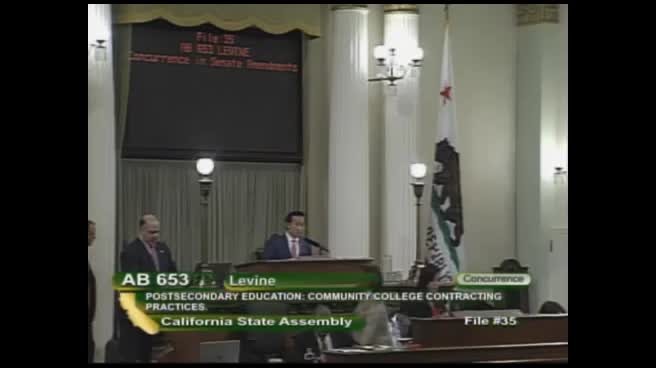 48SEC
Assembly Floor
 4MIN
Senate Floor
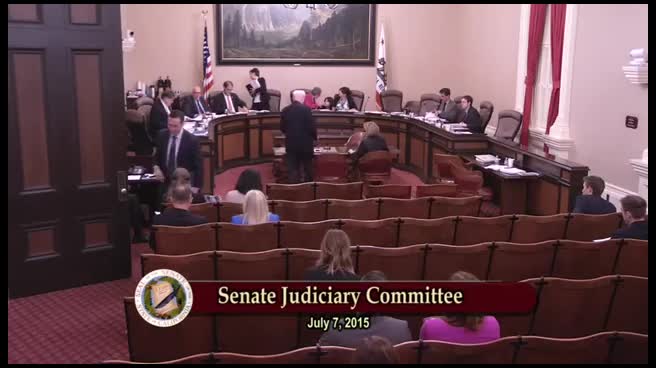 10MIN
Senate Standing Committee on Judiciary
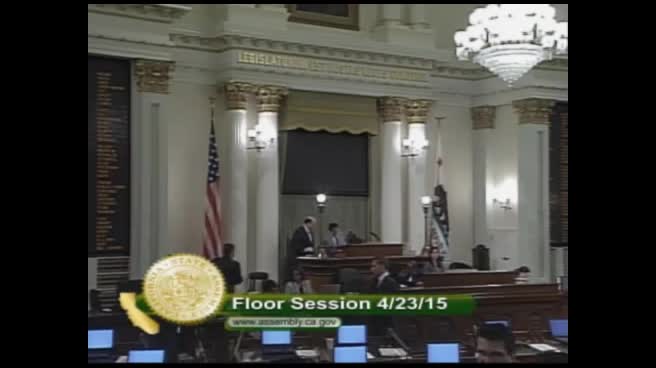 1MIN
Assembly Floor
Bill Author

Bill Co-Author(s):