AB 1223: Emergency medical services: ambulance transportation.
- Session Year: 2015-2016
- House: Assembly
- Latest Version Date: 2015-09-30
Existing law establishes the Emergency Medical Services Authority, and requires it to adopt regulations that further the purpose of establishing a statewide system for emergency medical services. Existing law, the Emergency Medical Services System and the Prehospital Emergency Medical Care Personnel Act, authorizes each county to develop an emergency medical services program. The act further authorizes a local emergency medical services (EMS) agency to develop and submit a plan to the Emergency Medical Services Authority for an emergency medical services system, and requires the local EMS agency, using state minimum standards, to establish policies and procedures to assure medical control of the emergency medical services system that may require basic life support emergency medical transportation services to meet any medical control requirements, including dispatch, patient destination policies, patient care guidelines, and quality assurance requirements.
This bill would authorize a local EMS agency to adopt policies and procedures relating to ambulance patient offload time, as defined. The bill would require the authority to develop a statewide standard methodology for the calculation and reporting by a local EMS agency of ambulance patient offload time.
Existing law establishes the Emergency Medical Services Authority, and requires it to adopt regulations that further the purpose of establishing a statewide system for emergency medical services. Existing law, the Emergency Medical Services System and the Prehospital Emergency Medical Care Personnel Act, authorizes each county to develop an emergency medical services program. The act further authorizes a local emergency medical services (EMS) agency to develop and submit a plan to the Emergency Medical Services Authority for an emergency medical services system, and requires the local EMS agency, using state minimum standards, to establish policies and procedures to assure medical control of the emergency medical services system that may require basic life support emergency medical transportation services to meet any medical control requirements, including dispatch, patient destination policies, patient care guidelines, and quality assurance requirements.
This bill would authorize a local EMS agency to adopt policies and procedures relating to ambulance patient offload time, as defined. The bill would require the authority to develop a statewide standard methodology for the calculation and reporting by a local EMS agency of ambulance patient offload time.
Existing law establishes the Emergency Medical Services Authority, and requires it to adopt regulations that further the purpose of establishing a statewide system for emergency medical services. Existing law, the Emergency Medical Services System and the Prehospital Emergency Medical Care Personnel Act, authorizes each county to develop an emergency medical services program. The act further authorizes a local emergency medical services (EMS) agency to develop and submit a plan to the Emergency Medical Services Authority for an emergency medical services system, and requires the local EMS agency, using state minimum standards, to establish policies and procedures to assure medical control of the emergency medical services system that may require basic life support emergency medical transportation services to meet any medical control requirements, including dispatch, patient destination policies, patient care guidelines, and quality assurance requirements.
This bill would authorize a local EMS agency to adopt policies and procedures relating to ambulance patient offload time, as defined. The bill would require the authority to develop a statewide standard methodology for the calculation and reporting by a local EMS agency of ambulance patient offload time.
Existing law establishes the Emergency Medical Services Authority, and requires it to adopt regulations that further the purpose of establishing a statewide system for emergency medical services. Existing law, the Emergency Medical Services System and the Prehospital Emergency Medical Care Personnel Act, authorizes each county to develop an emergency medical services program. The act further authorizes a local emergency medical services (EMS) agency to develop and submit a plan to the Emergency Medical Services Authority for an emergency medical services system, and requires the local EMS agency, using state minimum standards, to establish policies and procedures to assure medical control of the emergency medical services system that may require basic life support emergency medical transportation services to meet any medical control requirements, including dispatch, patient destination policies, patient care guidelines, and quality assurance requirements.
This bill would authorize a local EMS agency to adopt policies and procedures relating to ambulance patient offload time, as defined. The bill would require the authority to develop a statewide standard methodology for the calculation and reporting by a local EMS agency of ambulance patient offload time.
Existing law establishes the Maddy Emergency Medical Services (EMS) Fund, and authorizes each county to establish an emergency medical services fund for reimbursement of costs related to emergency medical services. Existing law limits payments made from the fund to claims for care rendered by physicians to patients who are initially medically screened, evaluated, treated, or stabilized in specified facilities, including a site that was approved by a county prior to January 1, 1990, as a paramedic receiving station for the treatment of emergency patients.
This bill would expand those specified facilities to include any licensed clinic or mental health facility, and any site approved by a county as a paramedic receiving station for the treatment of emergency patients. This bill would make conforming changes.
Existing law establishes the Emergency Medical Services Authority, and requires it to adopt regulations that further the purpose of establishing a statewide system for emergency medical services. Existing law, the Emergency Medical Services System and the Prehospital Emergency Medical Care Personnel Act, authorizes each county to develop an emergency medical services program. The act further authorizes a local emergency medical services (EMS) agency to develop and submit a plan to the Emergency Medical Services Authority for an emergency medical services system, and requires the local EMS agency, using state minimum standards, to establish policies and procedures to assure medical control of the emergency medical services system that may require basic life support emergency medical transportation services to meet any medical control requirements, including dispatch, patient destination policies, patient care guidelines, and quality assurance requirements.
This bill would require authorize a local EMS agency to include in those adopt policies and procedures specified policies, including the establishment and enforcement of criteria relating to ambulance patient offload time, as defined, and for the transport of a patient to an alternate emergency department or facility under specified circumstances. defined. The bill would require the authority to develop a statewide standard methodology for the calculation and reporting by a local EMS agency of ambulance patient offload time.
Existing law establishes the Maddy Emergency Medical Services (EMS) Fund, and authorizes each county to establish an emergency medical services fund for reimbursement of costs related to emergency medical services. Existing law limits payments made from the fund to claims for care rendered by physicians to patients who are initially medically screened, evaluated, treated, or stabilized in specified facilities, including a site that was approved by a county prior to January 1, 1990, as a paramedic receiving station for the treatment of emergency patients.
This bill would expand those specified facilities to include any licensed clinic or mental health facility, and any site approved by a county as a paramedic receiving station for the treatment of emergency patients. This bill would make conforming changes.
Existing law, the Emergency Medical Services System and the Prehospital Emergency Medical Care Personnel Act, authorizes each county to develop an emergency medical services program. The act further authorizes a local emergency medical services (EMS) agency to develop and submit a plan to the Emergency Medical Services Authority for an emergency medical services system, and requires the local EMS agency, using state minimum standards, to establish policies and procedures to assure medical control of the emergency medical services system that may require basic life support emergency medical transportation services to meet any medical control requirements requirements, including dispatch, patient destination policies, patient care guidelines, and quality assurance requirements.
This bill would authorize the policies and procedures to allow for the transportation of a noncritical case that cannot be immediately admitted to a hospital emergency room to another appropriate medical treatment facility, including, but not limited to, a clinic, as defined, or a doctors office. require a local EMS agency to include in those policies and procedures specified policies, including the establishment and enforcement of criteria relating to ambulance patient offload time, as defined, and for the transport of a patient to an alternate emergency department or facility under specified circumstances. The bill would require the authority to develop a statewide standard methodology for the calculation and reporting by a local EMS agency of ambulance patient offload time.
Existing law, the Emergency Medical Services System and the Prehospital Emergency Medical Care Personnel Act, authorizes each county to develop an emergency medical services program. The act further authorizes a local emergency medical services (EMS) agency to develop and submit a plan to the Emergency Medical Services Authority for an emergency medical services system, and requires the local EMS agency, using state minimum standards, to establish policies and procedures that may require basic life support emergency medical transportation services to meet any medical control requirements including dispatch, patient destination policies, patient care guidelines, and quality assurance requirements.
This bill would authorize the policies and procedures to allow for the transportation of a noncritical case that cannot be immediately admitted to a hospital emergency room to another appropriate medical treatment facility, including, but not limited to, a clinic, as defined, or a doctors office.
(a)The authority shall develop, using input from stakeholders, including, but not limited to, hospitals, local EMS agencies, and public and private EMS providers, and, after approval by the commission pursuant to Section 1799.50, adopt a statewide standard methodology for the calculation and reporting by a local EMS agency of ambulance patient offload time.
(b)For the purposes of this section, ambulance patient offload time is defined as the interval between the arrival of an ambulance patient at an emergency department and the time that the patient is transferred to an emergency department gurney, bed, chair, or other acceptable location and the emergency department assumes responsibility for care of the patient.
SEC. 2.Section 1797.225 is added to the Health and Safety Code, to read:1797.225.(a)A local EMS agency may adopt policies and procedures for calculating and reporting ambulance patient offload time, as defined in subdivision (b) of Section 1797.120.
(b)A local EMS agency that adopts policies and procedures for calculating and reporting ambulance patient offload time pursuant to subdivision (a) shall do all of the following:
(1)Use the statewide standard methodology for calculating and reporting ambulance patient offload time developed by the authority pursuant to Section 1797.120.
(2)Establish criteria for the reporting of, and quality assurance followup for, a nonstandard patient offload time, as defined in subdivision (c).
(c)(1)For the purposes of this section, a nonstandard patient offload time means that the ambulance patient offload time for a patient exceeds a period of time designated in the criteria established by the local EMS agency pursuant to paragraph (2) of subdivision (b).
(2)Nonstandard patient offload time does not include instances in which the ambulance patient offload time exceeds the period set by the local EMS agency due to acts of God, natural disasters, or manmade disasters.
(a)The authority shall develop, using input from stakeholders, including, but not limited to, hospitals, local EMS agencies, and public and private EMS providers, and, after approval by the commission pursuant to Section 1799.50, adopt a statewide standard methodology for the calculation and reporting by a local EMS agency of ambulance patient offload time.
(b)For the purposes of this section, ambulance patient offload time is defined as the interval between the arrival of an ambulance patient at an emergency department and the time that the patient is transferred to an emergency department gurney, bed, chair, or other acceptable location and the emergency department assumes responsibility for care of the patient.
SEC. 2.Section 1797.225 is added to the Health and Safety Code, to read:1797.225.(a)A local EMS agency may adopt policies and procedures for calculating and reporting ambulance patient offload time, as defined in subdivision (b) of Section 1797.120.
(b)A local EMS agency that adopts policies and procedures for calculating and reporting ambulance patient offload time pursuant to subdivision (a) shall do all of the following:
(1)Use the statewide standard methodology for calculating and reporting ambulance patient offload time developed by the authority pursuant to Section 1797.120.
(2)Establish criteria for the reporting of, and quality assurance followup for, a nonstandard patient offload time, as defined in subdivision (c).
(c)(1)For the purposes of this section, a nonstandard patient offload time means that the ambulance patient offload time for a patient exceeds a period of time designated in the criteria established by the local EMS agency pursuant to paragraph (2) of subdivision (b).
(2)Nonstandard patient offload time does not include instances in which the ambulance patient offload time exceeds the period set by the local EMS agency due to acts of God, natural disasters, or manmade disasters.
(a)The authority shall develop, using input from stakeholders, including, but not limited to, hospitals, local EMS agencies, and public and private EMS providers, and, after approval by the commission pursuant to Section 1799.50, adopt a statewide standard methodology for the calculation and reporting by a local EMS agency of ambulance patient offload time.
(b)For the purposes of this section, ambulance patient offload time is defined as the interval between the arrival of an ambulance patient transported by a local EMS agency at an emergency department and the time that the emergency department assumes responsibility for care of the patient following the transfer of the patient to a stretcher utilized by the emergency department. patient is transferred to an emergency department gurney, bed, chair, or other acceptable location and the emergency department assumes responsibility for care of the patient.
SEC. 2.Section 1797.225 is added to the Health and Safety Code, to read:1797.225.(a)A local EMS agency may adopt policies and procedures for calculating and reporting ambulance patient offload time, as defined in subdivision (b) of Section 1797.120.
(b)A local EMS agency that adopts policies and procedures for calculating and reporting ambulance patient offload time pursuant to subdivision (a) shall do all of the following:
(1)Use the statewide standard methodology for calculating and reporting ambulance patient offload time developed by the authority pursuant to Section 1797.120.
(2)Establish criteria for the reporting of, and quality assurance followup for, a never event, nonstandard patient offload time, as defined in subdivision (c).
(c)(1)For the purposes of this section, a never event occurs when nonstandard patient offload time means that the ambulance patient offload time for a patient exceeds a period of time designated in the criteria established by the local EMS agency pursuant to paragraph (2) of subdivision (b).
(2)Nonstandard patient offload time does not include instances in which the ambulance patient offload time exceeds the period set by the local EMS agency due to acts of God, natural disasters, or manmade disasters.
(a)The authority shall develop, using input from stakeholders, including, but not limited to, hospitals, local EMS agencies, and public and private EMS service providers, and, after approval by the commission pursuant to Section 1799.50, adopt a statewide standard methodology for the calculation and reporting by a local EMS agency of ambulance patient offload time.
(b)For the purposes of this section, ambulance patient offload time is defined as the interval between the arrival of an ambulance patient transported by a local EMS agency at an emergency department and the time that the emergency department assumes responsibility for care of the patient following the transfer of the patient to a stretcher utilized by the emergency department.
SEC. 2.Section 1797.225 is added to the Health and Safety Code, to read:1797.225.(a)A local EMS agency may adopt policies and procedures for calculating and reporting ambulance patient offload time, as defined in subdivision (b) of Section 1797.120.
(b)A local EMS agency that adopts policies and procedures for calculating and reporting ambulance patient offload time pursuant to subdivision (a) shall do all of the following:
(1)Use the statewide standard methodology for calculating and reporting ambulance patient offload time developed by the authority pursuant to Section 1797.120.
(2)Establish criteria for the reporting of, and quality assurance followup for, a never event, as defined in subdivision (c).
(c)For the purposes of this section, a never event occurs when the ambulance patient offload time for a patient exceeds a period of time designated in the criteria established by the local EMS agency pursuant to paragraph (2) of subdivision (b).
(a)The fund provided for in this chapter shall be known as the Maddy Emergency Medical Services (EMS) Fund.
(b)(1)Each county may establish an emergency medical services fund, upon the adoption of a resolution by the board of supervisors. The moneys in the fund shall be available for the reimbursements required by this chapter. The fund shall be administered by each county, except that a county electing to have the state administer its medically indigent services program may also elect to have its emergency medical services fund administered by the state.
(2)Costs of administering the fund shall be reimbursed by the fund in an amount that does not exceed the actual administrative costs or 10 percent of the amount of the fund, whichever amount is lower.
(3)All interest earned on moneys in the fund shall be deposited in the fund for disbursement as specified in this section.
(4)Each administering agency may maintain a reserve of up to 15 percent of the amount in the portions of the fund reimbursable to physicians and surgeons, pursuant to subparagraph (A) of, and to hospitals, pursuant to subparagraph (B) of, paragraph (5). Each administering agency may maintain a reserve of any amount in the portion of the fund that is distributed for other emergency medical services purposes as determined by each county, pursuant to subparagraph (C) of paragraph (5).
(5)The amount in the fund, reduced by the amount for administration and the reserve, shall be utilized to reimburse physicians and surgeons and hospitals for patients who do not make payment for emergency medical services and for other emergency medical services purposes as determined by each county according to the following schedule:
(A)Fifty-eight percent of the balance of the fund shall be distributed to physicians and surgeons for emergency services provided by all physicians and surgeons, except those physicians and surgeons employed by county hospitals, in general acute care hospitals that provide basic, comprehensive, or standby emergency services pursuant to paragraph (4) or (6) of subdivision (f) of Section 1797.98e up to the time the patient is stabilized.
(B)Twenty-five percent of the fund shall be distributed only to hospitals providing disproportionate trauma and emergency medical care services.
(C)Seventeen percent of the fund shall be distributed for other emergency medical services purposes as determined by each county, including, but not limited to, the funding of regional poison control centers. Funding may be used for purchasing equipment and for capital projects only to the extent that these expenditures support the provision of emergency services and are consistent with the intent of this chapter.
(c)The source of the moneys in the fund shall be the penalty assessment made for this purpose, as provided in Section 76000 of the Government Code.
(d)Any physician and surgeon may be reimbursed for up to 50 percent of the amount claimed pursuant to subdivision (a) of Section 1797.98c for the initial cycle of reimbursements made by the administering agency in a given year, pursuant to Section 1797.98e. All funds remaining at the end of the fiscal year in excess of any reserve held and rolled over to the next year pursuant to paragraph (4) of subdivision (b) shall be distributed proportionally, based on the dollar amount of claims submitted and paid to all physicians and surgeons who submitted qualifying claims during that year.
(e)Of the money deposited into the fund pursuant to Section 76000.5 of the Government Code, 15 percent shall be utilized to provide funding for all pediatric trauma centers throughout the county, both publicly and privately owned and operated. The expenditure of money shall be limited to reimbursement to physicians and surgeons, and to hospitals for patients who do not make payment for emergency care services in hospitals up to the point of stabilization, or to hospitals for expanding the services provided to pediatric trauma patients at trauma centers and other hospitals providing care to pediatric trauma patients, or at pediatric trauma centers, including the purchase of equipment. Local emergency medical services (EMS) agencies may conduct a needs assessment of pediatric trauma services in the county to allocate these expenditures. Counties that do not maintain a pediatric trauma center shall utilize the money deposited into the fund pursuant to Section 76000.5 of the Government Code to improve access to, and coordination of, pediatric trauma and emergency services in the county, with preference for funding given to hospitals that specialize in services to children, and physicians and surgeons who provide emergency care for children. Funds spent for the purposes of this section, shall be known as Richies Fund. This subdivision shall remain in effect until January 1, 2017, and shall have no force or effect on or after that date, unless a later enacted statute, that is chaptered before January 1, 2017, deletes or extends that date.
(f)Costs of administering money deposited into the fund pursuant to Section 76000.5 of the Government Code shall be reimbursed from the money collected in an amount that does not exceed the actual administrative costs or 10 percent of the money collected, whichever amount is lower. This subdivision shall remain in effect until January 1, 2017, and shall have no force or effect on or after that date, unless a later enacted statute, that is chaptered before January 1, 2017, deletes or extends that date.
SEC. 2.Section 1797.98e of the Health and Safety Code is amended to read:1797.98e.(a)It is the intent of the Legislature that a simplified, cost-efficient system of administration of this chapter be developed so that the maximum amount of funds may be utilized to reimburse physicians and surgeons and for other emergency medical services purposes. The administering agency shall select an administering officer and shall establish procedures and time schedules for the submission and processing of proposed reimbursement requests submitted by physicians and surgeons. The schedule shall provide for disbursements of moneys in the Emergency Medical Services Fund on at least a quarterly basis to applicants who have submitted accurate and complete data for payment. When the administering agency determines that claims for payment for physician and surgeon services are of sufficient numbers and amounts that, if paid, the claims would exceed the total amount of funds available for payment, the administering agency shall fairly prorate, without preference, payments to each claimant at a level less than the maximum payment level. Each administering agency may encumber sufficient funds during one fiscal year to reimburse claimants for losses incurred during that fiscal year for which claims will not be received until after the fiscal year. The administering agency may, as necessary, request records and documentation to support the amounts of reimbursement requested by physicians and surgeons and the administering agency may review and audit the records for accuracy. Reimbursements requested and reimbursements made that are not supported by records may be denied to, and recouped from, physicians and surgeons. Physicians and surgeons found to submit requests for reimbursement that are inaccurate or unsupported by records may be excluded from submitting future requests for reimbursement. The administering officer shall not give preferential treatment to any facility, physician and surgeon, or category of physician and surgeon and shall not engage in practices that constitute a conflict of interest by favoring a facility or physician and surgeon with which the administering officer has an operational or financial relationship. A hospital administrator of a hospital owned or operated by a county of a population of 250,000 or more as of January 1, 1991, or a person under the direct supervision of that person, shall not be the administering officer. The board of supervisors of a county or any other county agency may serve as the administering officer. The administering officer shall solicit input from physicians and surgeons and hospitals to review payment distribution methodologies to ensure fair and timely payments. This requirement may be fulfilled through the establishment of an advisory committee with representatives comprised of local physicians and surgeons and hospital administrators. In order to reduce the countys administrative burden, the administering officer may instead request an existing board, commission, or local medical society, or physicians and surgeons and hospital administrators, representative of the local community, to provide input and make recommendations on payment distribution methodologies.
(b)Each provider of health services that receives payment under this chapter shall keep and maintain records of the services rendered, the person to whom rendered, the date, and any additional information the administering agency may, by regulation, require, for a period of three years from the date the service was provided. The administering agency shall not require any additional information from a physician and surgeon providing emergency medical services that is not available in the patient record maintained by the entity listed in subdivision (f) where the emergency medical services are provided, nor shall the administering agency require a physician and surgeon to make eligibility determinations.
(c)During normal working hours, the administering agency may make any inspection and examination of a hospitals or physician and surgeons books and records needed to carry out this chapter. A provider who has knowingly submitted a false request for reimbursement shall be guilty of civil fraud.
(d)Nothing in this chapter shall prevent a physician and surgeon from utilizing an agent who furnishes billing and collection services to the physician and surgeon to submit claims or receive payment for claims.
(e)All payments from the fund pursuant to Section 1797.98c to physicians and surgeons shall be limited to physicians and surgeons who, in person, provide onsite services in a clinical setting, including, but not limited to, radiology and pathology settings.
(f)All payments from the fund shall be limited to claims for care rendered by physicians and surgeons to patients who are initially medically screened, evaluated, treated, or stabilized in any of the following:
(1)A basic or comprehensive emergency department of a licensed general acute care hospital.
(2)A licensed clinic or mental health facility.
(3)A site that is approved by a county as a paramedic receiving station for the treatment of emergency patients.
(4)A standby emergency department that was in existence on January 1, 1989, in a hospital specified in Section 124840.
(5)For the 199192 fiscal year and each fiscal year thereafter, a facility which contracted prior to January 1, 1990, with the National Park Service to provide emergency medical services.
(6)A standby emergency room in existence on January 1, 2007, in a hospital located in Los Angeles County that meets all of the following requirements:
(A)The requirements of subdivision (m) of Section 70413 and Sections 70415 and 70417 of Title 22 of the California Code of Regulations.
(B)Reported at least 18,000 emergency department patient encounters to the Office of Statewide Health Planning and Development in 2007 and continues to report at least 18,000 emergency department patient encounters to the Office of Statewide Health Planning and Development in each year thereafter.
(C)A hospital with a standby emergency department meeting the requirements of this paragraph shall do both of the following:
(i)Annually provide the State Department of Public Health and the local emergency medical services agency with certification that it meets the requirements of subparagraph (A). The department shall confirm the hospitals compliance with subparagraph (A).
(ii)Annually provide to the State Department of Public Health and the local emergency medical services agency the emergency department patient encounters it reports to the Office of Statewide Health Planning and Development to establish that it meets the requirement of subparagraph (B).
(g)Payments shall be made only for emergency medical services provided on the calendar day on which emergency medical services are first provided and on the immediately following two calendar days.
(h)Notwithstanding subdivision (g), if it is necessary to transfer the patient to a second facility providing a higher level of care for the treatment of the emergency condition, reimbursement shall be available for services provided at the facility to which the patient was transferred on the calendar day of transfer and on the immediately following two calendar days.
(i)Payment shall be made for medical screening examinations required by law to determine whether an emergency condition exists, notwithstanding the determination after the examination that a medical emergency does not exist. Payment shall not be denied solely because a patient was not admitted to an acute care facility. Payment shall be made for services to an inpatient only when the inpatient has been admitted to a hospital from an entity specified in subdivision (f).
(j)The administering agency shall compile a quarterly and yearend summary of reimbursements paid to facilities and physicians and surgeons. The summary shall include, but shall not be limited to, the total number of claims submitted by physicians and surgeons in aggregate from each facility and the amount paid to each physician and surgeon. The administering agency shall provide copies of the summary and forms and instructions relating to making claims for reimbursement to the public, and may charge a fee not to exceed the reasonable costs of duplication.
(k)Each county shall establish an equitable and efficient mechanism for resolving disputes relating to claims for reimbursements from the fund. The mechanism shall include a requirement that disputes be submitted either to binding arbitration conducted pursuant to arbitration procedures set forth in Chapter 3 (commencing with Section 1282) and Chapter 4 (commencing with Section 1285) of Part 3 of Title 9 of the Code of Civil Procedure, or to a local medical society for resolution by neutral parties.
(l)Physicians and surgeons shall be eligible to receive payment for patient care services provided by, or in conjunction with, a properly credentialed nurse practitioner or physicians assistant for care rendered under the direct supervision of a physician and surgeon who is present in the facility where the patient is being treated and who is available for immediate consultation. Payment shall be limited to those claims that are substantiated by a medical record and that have been reviewed and countersigned by the supervising physician and surgeon in accordance with regulations established for the supervision of nurse practitioners and physician assistants in California.
SEC. 3.SECTION 1.Section 1797.120 is added to the Health and Safety Code, to read:1797.120.(a)The authority shall develop develop, using input from stakeholders, including, but not limited to, hospitals, local EMS agencies, and public and private EMS service providers, a statewide standard methodology for the calculation and reporting by a local EMS agency of ambulance patient offload time.
(b)For the purposes of this section, ambulance patient offload time is defined as the interval between the arrival of an ambulance patient transported by a local EMS agency at an emergency department and the time that the emergency department assumes responsibility for care of the patient following the transfer of the patient to a stretcher utilized by the emergency department.
SEC. 4.Section 1797.220 of the Health and Safety Code is amended to read:1797.220.(a)The local EMS agency, using state minimum standards, shall establish policies and procedures approved by the medical director of the local EMS agency to assure medical control of the EMS system. The policies and procedures approved by the medical director may require basic life support emergency medical transportation services to meet any medical control requirements, including dispatch, patient destination policies, patient care guidelines, and quality assurance requirements.
(b)The policies and procedures adopted pursuant to subdivision (a) shall include the following:
(1)A policy that uses the authoritys standard methodology for calculating ambulance patient offload time to establish and enforce compliance with criteria for the offloading of a patient transported by ambulance.
(2)Criteria for the reporting of and quality assurance followup for a never event, as defined in subdivision (c).
(3)A policy that allows a patient the right to request transport to another emergency department if the patient is subject to extended ambulance patient offload time.
(4)A policy that allows a patient with a minor medical injury or illness to be transported, as approved by a licensed physician under direct medical control of the patient, to a county-approved or state-approved receiving facility, including a clinic, stand-alone emergency department, mental health facility, or sobering center.
(c)For the purposes of this section, a never event occurs when the ambulance patient offload time for a patient exceeds one hour.
(d)For the purposes of this section, ambulance patient offload time is defined as the interval between the arrival of an ambulance patient transported by the local EMS agency at an emergency department and the time that the emergency department assumes responsibility for care of the patient following the transfer of the patient to a stretcher utilized by the emergency department.
SEC. 2.Section 1797.225 is added to the Health and Safety Code, to read:1797.225.(a)A local EMS agency may adopt policies and procedures for calculating and reporting ambulance patient offload time, as defined in subdivision (b) of Section 1797.120.
(b)A local EMS agency that adopts policies and procedures for calculating and reporting ambulance patient offload time pursuant to subdivision (a) shall do all of the following:
(1)Use the statewide standard methodology for calculating and reporting ambulance patient offload time developed by the authority pursuant to Section 1797.120.
(2)Establish criteria for the reporting of, and quality assurance followup for, a never event, as defined in subdivision (c).
(c)For the purposes of this section, a never event occurs when the ambulance patient offload time for a patient exceeds a period of time designated in the criteria established by the local EMS agency pursuant to paragraph (2) of subdivision (b).
(a)The fund provided for in this chapter shall be known as the Maddy Emergency Medical Services (EMS) Fund.
(b)(1)Each county may establish an emergency medical services fund, upon the adoption of a resolution by the board of supervisors. The moneys in the fund shall be available for the reimbursements required by this chapter. The fund shall be administered by each county, except that a county electing to have the state administer its medically indigent services program may also elect to have its emergency medical services fund administered by the state.
(2)Costs of administering the fund shall be reimbursed by the fund in an amount that does not exceed the actual administrative costs or 10 percent of the amount of the fund, whichever amount is lower.
(3)All interest earned on moneys in the fund shall be deposited in the fund for disbursement as specified in this section.
(4)Each administering agency may maintain a reserve of up to 15 percent of the amount in the portions of the fund reimbursable to physicians and surgeons, pursuant to subparagraph (A) of, and to hospitals, pursuant to subparagraph (B) of, paragraph (5). Each administering agency may maintain a reserve of any amount in the portion of the fund that is distributed for other emergency medical services purposes as determined by each county, pursuant to subparagraph (C) of paragraph (5).
(5)The amount in the fund, reduced by the amount for administration and the reserve, shall be utilized to reimburse physicians and surgeons and hospitals for patients who do not make payment for emergency medical services and for other emergency medical services purposes as determined by each county according to the following schedule:
(A)Fifty-eight percent of the balance of the fund shall be distributed to physicians and surgeons for emergency services provided by all physicians and surgeons, except those physicians and surgeons employed by county hospitals, in general acute care hospitals that provide basic, comprehensive, or standby emergency services pursuant to paragraph (3) (4) or (5) (6) of subdivision (f) of Section 1797.98e up to the time the patient is stabilized.
(B)Twenty-five percent of the fund shall be distributed only to hospitals providing disproportionate trauma and emergency medical care services.
(C)Seventeen percent of the fund shall be distributed for other emergency medical services purposes as determined by each county, including, but not limited to, the funding of regional poison control centers. Funding may be used for purchasing equipment and for capital projects only to the extent that these expenditures support the provision of emergency services and are consistent with the intent of this chapter.
(c)The source of the moneys in the fund shall be the penalty assessment made for this purpose, as provided in Section 76000 of the Government Code.
(d)Any physician and surgeon may be reimbursed for up to 50 percent of the amount claimed pursuant to subdivision (a) of Section 1797.98c for the initial cycle of reimbursements made by the administering agency in a given year, pursuant to Section 1797.98e. All funds remaining at the end of the fiscal year in excess of any reserve held and rolled over to the next year pursuant to paragraph (4) of subdivision (b) shall be distributed proportionally, based on the dollar amount of claims submitted and paid to all physicians and surgeons who submitted qualifying claims during that year.
(e)Of the money deposited into the fund pursuant to Section 76000.5 of the Government Code, 15 percent shall be utilized to provide funding for all pediatric trauma centers throughout the county, both publicly and privately owned and operated. The expenditure of money shall be limited to reimbursement to physicians and surgeons, and to hospitals for patients who do not make payment for emergency care services in hospitals up to the point of stabilization, or to hospitals for expanding the services provided to pediatric trauma patients at trauma centers and other hospitals providing care to pediatric trauma patients, or at pediatric trauma centers, including the purchase of equipment. Local emergency medical services (EMS) agencies may conduct a needs assessment of pediatric trauma services in the county to allocate these expenditures. Counties that do not maintain a pediatric trauma center shall utilize the money deposited into the fund pursuant to Section 76000.5 of the Government Code to improve access to, and coordination of, pediatric trauma and emergency services in the county, with preference for funding given to hospitals that specialize in services to children, and physicians and surgeons who provide emergency care for children. Funds spent for the purposes of this section, shall be known as Richies Fund. This subdivision shall remain in effect until January 1, 2017, and shall have no force or effect on or after that date, unless a later enacted statute, that is chaptered before January 1, 2017, deletes or extends that date.
(f)Costs of administering money deposited into the fund pursuant to Section 76000.5 of the Government Code shall be reimbursed from the money collected in an amount that does not exceed the actual administrative costs or 10 percent of the money collected, whichever amount is lower. This subdivision shall remain in effect until January 1, 2017, and shall have no force or effect on or after that date, unless a later enacted statute, that is chaptered before January 1, 2017, deletes or extends that date.
SEC. 2.Section 1797.98e of the Health and Safety Code is amended to read:1797.98e.(a)It is the intent of the Legislature that a simplified, cost-efficient system of administration of this chapter be developed so that the maximum amount of funds may be utilized to reimburse physicians and surgeons and for other emergency medical services purposes. The administering agency shall select an administering officer and shall establish procedures and time schedules for the submission and processing of proposed reimbursement requests submitted by physicians and surgeons. The schedule shall provide for disbursements of moneys in the Emergency Medical Services Fund on at least a quarterly basis to applicants who have submitted accurate and complete data for payment. When the administering agency determines that claims for payment for physician and surgeon services are of sufficient numbers and amounts that, if paid, the claims would exceed the total amount of funds available for payment, the administering agency shall fairly prorate, without preference, payments to each claimant at a level less than the maximum payment level. Each administering agency may encumber sufficient funds during one fiscal year to reimburse claimants for losses incurred during that fiscal year for which claims will not be received until after the fiscal year. The administering agency may, as necessary, request records and documentation to support the amounts of reimbursement requested by physicians and surgeons and the administering agency may review and audit the records for accuracy. Reimbursements requested and reimbursements made that are not supported by records may be denied to, and recouped from, physicians and surgeons. Physicians and surgeons found to submit requests for reimbursement that are inaccurate or unsupported by records may be excluded from submitting future requests for reimbursement. The administering officer shall not give preferential treatment to any facility, physician and surgeon, or category of physician and surgeon and shall not engage in practices that constitute a conflict of interest by favoring a facility or physician and surgeon with which the administering officer has an operational or financial relationship. A hospital administrator of a hospital owned or operated by a county of a population of 250,000 or more as of January 1, 1991, or a person under the direct supervision of that person, shall not be the administering officer. The board of supervisors of a county or any other county agency may serve as the administering officer. The administering officer shall solicit input from physicians and surgeons and hospitals to review payment distribution methodologies to ensure fair and timely payments. This requirement may be fulfilled through the establishment of an advisory committee with representatives comprised of local physicians and surgeons and hospital administrators. In order to reduce the countys administrative burden, the administering officer may instead request an existing board, commission, or local medical society, or physicians and surgeons and hospital administrators, representative of the local community, to provide input and make recommendations on payment distribution methodologies.
(b)Each provider of health services that receives payment under this chapter shall keep and maintain records of the services rendered, the person to whom rendered, the date, and any additional information the administering agency may, by regulation, require, for a period of three years from the date the service was provided. The administering agency shall not require any additional information from a physician and surgeon providing emergency medical services that is not available in the patient record maintained by the entity listed in subdivision (f) where the emergency medical services are provided, nor shall the administering agency require a physician and surgeon to make eligibility determinations.
(c)During normal working hours, the administering agency may make any inspection and examination of a hospitals or physician and surgeons books and records needed to carry out this chapter. A provider who has knowingly submitted a false request for reimbursement shall be guilty of civil fraud.
(d)Nothing in this chapter shall prevent a physician and surgeon from utilizing an agent who furnishes billing and collection services to the physician and surgeon to submit claims or receive payment for claims.
(e)All payments from the fund pursuant to Section 1797.98c to physicians and surgeons shall be limited to physicians and surgeons who, in person, provide onsite services in a clinical setting, including, but not limited to, radiology and pathology settings.
(f)All payments from the fund shall be limited to claims for care rendered by physicians and surgeons to patients who are initially medically screened, evaluated, treated, or stabilized in any of the following:
(1)A basic or comprehensive emergency department of a licensed general acute care hospital.
(2)A licensed clinic or mental health facility.
(2)
(3)A site that was is approved by a county prior to January 1, 1990, as a paramedic receiving station for the treatment of emergency patients.
(3)
(4)A standby emergency department that was in existence on January 1, 1989, in a hospital specified in Section 124840.
(4)
(5)For the 199192 fiscal year and each fiscal year thereafter, a facility which contracted prior to January 1, 1990, with the National Park Service to provide emergency medical services.
(5)
(6)A standby emergency room in existence on January 1, 2007, in a hospital located in Los Angeles County that meets all of the following requirements:
(A)The requirements of subdivision (m) of Section 70413 and Sections 70415 and 70417 of Title 22 of the California Code of Regulations.
(B)Reported at least 18,000 emergency department patient encounters to the Office of Statewide Health Planning and Development in 2007 and continues to report at least 18,000 emergency department patient encounters to the Office of Statewide Health Planning and Development in each year thereafter.
(C)A hospital with a standby emergency department meeting the requirements of this paragraph shall do both of the following:
(i)Annually provide the State Department of Public Health and the local emergency medical services agency with certification that it meets the requirements of subparagraph (A). The department shall confirm the hospitals compliance with subparagraph (A).
(ii)Annually provide to the State Department of Public Health and the local emergency medical services agency the emergency department patient encounters it reports to the Office of Statewide Health Planning and Development to establish that it meets the requirement of subparagraph (B).
(g)Payments shall be made only for emergency medical services provided on the calendar day on which emergency medical services are first provided and on the immediately following two calendar days.
(h)Notwithstanding subdivision (g), if it is necessary to transfer the patient to a second facility providing a higher level of care for the treatment of the emergency condition, reimbursement shall be available for services provided at the facility to which the patient was transferred on the calendar day of transfer and on the immediately following two calendar days.
(i)Payment shall be made for medical screening examinations required by law to determine whether an emergency condition exists, notwithstanding the determination after the examination that a medical emergency does not exist. Payment shall not be denied solely because a patient was not admitted to an acute care facility. Payment shall be made for services to an inpatient only when the inpatient has been admitted to a hospital from an entity specified in subdivision (f).
(j)The administering agency shall compile a quarterly and yearend summary of reimbursements paid to facilities and physicians and surgeons. The summary shall include, but shall not be limited to, the total number of claims submitted by physicians and surgeons in aggregate from each facility and the amount paid to each physician and surgeon. The administering agency shall provide copies of the summary and forms and instructions relating to making claims for reimbursement to the public, and may charge a fee not to exceed the reasonable costs of duplication.
(k)Each county shall establish an equitable and efficient mechanism for resolving disputes relating to claims for reimbursements from the fund. The mechanism shall include a requirement that disputes be submitted either to binding arbitration conducted pursuant to arbitration procedures set forth in Chapter 3 (commencing with Section 1282) and Chapter 4 (commencing with Section 1285) of Part 3 of Title 9 of the Code of Civil Procedure, or to a local medical society for resolution by neutral parties.
(l)Physicians and surgeons shall be eligible to receive payment for patient care services provided by, or in conjunction with, a properly credentialed nurse practitioner or physicians assistant for care rendered under the direct supervision of a physician and surgeon who is present in the facility where the patient is being treated and who is available for immediate consultation. Payment shall be limited to those claims that are substantiated by a medical record and that have been reviewed and countersigned by the supervising physician and surgeon in accordance with regulations established for the supervision of nurse practitioners and physician assistants in California.
SEC. 3.Section 1797.120 is added to the Health and Safety Code, to read:1797.120.The authority shall develop a statewide standard methodology for the calculation and reporting by a local EMS agency of ambulance patient offload time.
SECTION 1. SEC. 4.Section 1797.220 of the Health and Safety Code is amended to read:1797.220.(a)The local EMS agency, using state minimum standards, shall establish policies and procedures approved by the medical director of the local EMS agency to assure medical control of the EMS system. The policies and procedures approved by the medical director may require basic life support emergency medical transportation services to meet any medical control requirements requirements, including dispatch, patient destination policies, patient care guidelines, and quality assurance requirements.
(b)The policies and procedures adopted pursuant to subdivision (a) may allow for the transportation of a noncritical case that cannot be immediately admitted to a hospital emergency room to another appropriate medical treatment facility, including, but not limited to, a clinic as defined in Section 1200 or an establishment owned or leased and operated as a clinic or office by one or more licensed health care practitioners and used as an office for the practice of their profession. shall include the following:
(1)A policy that uses the authoritys standard methodology for calculating ambulance patient offload time to establish and enforce compliance with criteria for the offloading of a patient transported by ambulance.
(2)Criteria for the reporting of and quality assurance followup for a never event, as defined in subdivision (c).
(3)A policy that allows a patient the right to request transport to another emergency department if the patient is subject to extended ambulance patient offload time.
(4)A policy that allows a patient with a minor medical injury or illness to be transported, as approved by a licensed physician under direct medical control of the patient, to a county-approved or state-approved receiving facility, including a clinic, stand-alone emergency department, mental health facility, or sobering center.
(c)For the purposes of this section, a never event occurs when the ambulance patient offload time for a patient exceeds one hour.
(d)For the purposes of this section, ambulance patient offload time is defined as the interval between the arrival of an ambulance patient transported by the local EMS agency at an emergency department and the time that the emergency department assumes responsibility for care of the patient following the transfer of the patient to a stretcher utilized by the emergency department.
(a)The local EMS agency, using state minimum standards, shall establish policies and procedures approved by the medical director of the local EMS agency to assure medical control of the EMS system. The policies and procedures approved by the medical director may require basic life support emergency medical transportation services to meet any medical control requirements including dispatch, patient destination policies, patient care guidelines, and quality assurance requirements.
(b)The policies and procedures adopted pursuant to subdivision (a) may allow for the transportation of a noncritical case that cannot be immediately admitted to a hospital emergency room to another appropriate medical treatment facility, including, but not limited to, a clinic as defined in Section 1200 or an establishment owned or leased and operated as a clinic or office by one or more licensed health care practitioners and used as an office for the practice of their profession.
|
Date
|
Status
|
|---|---|
| Aug 31, 2015 | Read third time. Passed. Ordered to the Assembly. (Ayes 38. Noes 0. Page 2293.). |
| May 26, 2015 | Read third time. Passed. Ordered to the Senate. (Ayes 76. Noes 0. Page 1595.) |
| Jun 4, 2015 | Referred to Com. on HEALTH. |
| Jun 30, 2015 | From committee chair, with author's amendments: Amend, and re-refer to committee. Read second time, amended, and re-referred to Com. on HEALTH. |
| Jul 9, 2015 | From committee: Do pass and re-refer to Com. on APPR. (Ayes 6. Noes 0.) (July 8). Re-referred to Com. on APPR. |
| Aug 17, 2015 | From committee: Be placed on second reading file pursuant to Senate Rule 28.8. |
| Aug 18, 2015 | Read second time. Ordered to third reading. |
| Aug 31, 2015 | In Assembly. Concurrence in Senate amendments pending. May be considered on or after September 2 pursuant to Assembly Rule 77. |
| Aug 31, 2015 | Read third time. Passed. Ordered to the Assembly. |
| May 26, 2015 | Read third time. Passed. Ordered to the Senate. |
| Sep 1, 2015 | Assembly Rule 77 suspended. |
| Sep 1, 2015 | Assembly Rule 77 suspended. (Page 2729.) |
| Sep 2, 2015 | Senate amendments concurred in. To Engrossing and Enrolling. (Ayes 80. Noes 0. Page 2774.). |
| Sep 2, 2015 | Senate amendments concurred in. To Engrossing and Enrolling. (Ayes 80. Noes 0.). |
| Sep 16, 2015 | Enrolled and presented to the Governor at 4 p.m. |
| Sep 30, 2015 | Approved by the Governor. |
| Sep 30, 2015 | Chaptered by Secretary of State - Chapter 379, Statutes of 2015. |
| Feb 27, 2015 | Introduced. To print. |
| May 26, 2015 | In Senate. Read first time. To Com. on RLS. for assignment. |
| May 21, 2015 | Read second time. Ordered to Consent Calendar. |
| May 20, 2015 | From committee: Do pass. To Consent Calendar. (Ayes 15. Noes 0.) (May 20). |
| May 18, 2015 | Re-referred to Com. on APPR. |
| May 14, 2015 | From committee chair, with author's amendments: Amend, and re-refer to Com. on APPR. Read second time and amended. |
| May 13, 2015 | From committee: Do pass and re-refer to Com. on APPR. (Ayes 19. Noes 0.) (May 12). Re-referred to Com. on APPR. |
| May 6, 2015 | Re-referred to Com. on HEALTH. |
| May 5, 2015 | In committee: Set, first hearing. Hearing canceled at the request of author. |
| May 5, 2015 | From committee chair, with author's amendments: Amend, and re-refer to Com. on HEALTH. Read second time and amended. |
| Apr 28, 2015 | In committee: Hearing postponed by committee. |
| Apr 15, 2015 | Re-referred to Com. on HEALTH. |
| Apr 14, 2015 | From committee chair, with author's amendments: Amend, and re-refer to Com. on HEALTH. Read second time and amended. |
| Mar 23, 2015 | Referred to Com. on HEALTH. |
| Mar 2, 2015 | Read first time. |
| Mar 1, 2015 | From printer. May be heard in committee March 31. |
|
Date
|
Description
|
Location
|
Votes
|
|
|---|---|---|---|---|
| Sep 2, 2015 | AB 1223 O'DONNELL Concurrence in Senate Amendments | Assembly Floor |
Passed |
|
| Aug 31, 2015 | Assembly 3rd Reading AB1223 O'Donnell By Pan | Senate Floor |
Passed |
|
| Jul 8, 2015 | Do pass, but first be re-referred to the Committee on [Appropriations] | Senate Standing Committee on Health |
Passed |
|
| May 26, 2015 | AB 1223 O'DONNELL Consent Calendar Second Day Regular Session | Assembly Floor |
Passed |
|
| May 20, 2015 | Do pass. To Consent Calendar. | Assembly Standing Committee on Appropriations |
Passed |
|
| May 12, 2015 | Do pass and be re-referred to the Committee on [Appropriations] | Assembly Standing Committee on Health |
Passed |
This list shows positions taken on this bill by organizations on the date displayed, which is linked to the original source.
Positions by individuals are not included.
|
Organization
|
Position
|
Date
|
|---|---|---|
| California Ambulance Association | ** Support | Aug 31, 2015 |
| California Chapter American College Of Emergency Physicians | * Neutral | May 12, 2015 |
| California Fire Chiefs Association | ** Support | Aug 31, 2015 |
| California Hospital Association | ** Against | Aug 31, 2015 |
| California Medical Association, Inc. | ** Against | May 12, 2015 |
| California Professional Firefighters | ** Support | Aug 31, 2015 |
| California State Firefighters' Association | ** Support | Aug 31, 2015 |
| City of Culver City | ** Support | Aug 31, 2015 |
| Consumnes Fire Department | * Support | Jul 8, 2015 |
| Corona Regional Medical Center | ** Against | Aug 31, 2015 |
| County of San Diego Board of Supervisors | ** Against | May 12, 2015 |
| Fire Chiefs Association | * Support | Jul 8, 2015 |
| League Of California Cities | ** Support | Aug 31, 2015 |
| Long Beach Firefighters Association, Local 372 | ** Support | Aug 31, 2015 |
| Nevada Fire Protection District | * Support | Jul 8, 2015 |
| Novato Fire Protection District | * Support | May 12, 2015 |
| Paramedics Plus | ** Support | Aug 31, 2015 |
| Parkview Community Hospital Medical Center | ** Against | Aug 31, 2015 |
| Riverside County Regional Medical Center | ** Against | May 12, 2015 |
| Sacramento Fire Department | * Support | Jul 8, 2015 |
| Sacramento Metro Fire Department | * Support | Jul 8, 2015 |
| San Antonio Regional Hospital | * Against | Jul 8, 2015 |
| United Firefighters of Los Angeles City, Local 112 | ** Support | Aug 31, 2015 |
| Urban Counties Caucus | * Neutral | May 12, 2015 |
| Urban Counties Caucus | * Against | May 12, 2015 |
AB 1223
Page 2
CONCURRENCE IN SENATE AMENDMENTS
AB 1223
(O'Donnell)
As Amended June 30, 2015
Majority vote
ASSEMBLY: |
76-0 |
(May 26, 2015) |
SENATE: |
38-0 |
(August 31, 2015) |
Original Committee Reference: HEALTH
SUMMARY: Requires the Emergency Medical Services Authority (EMSA) to develop, using input from stakeholders, a statewide standard methodology for the calculation and reporting of patient offload time by local emergency medical services (EMS) agencies. Defines "ambulance patient offload time" as the interval between the arrival of a patient transported by ambulance at an emergency department (ED) and the time that the ED assumes responsibility for care of the patient. Allows a local EMS agency to adopt policies and procedures for calculating and reporting ambulance patient offload time, as specified. Requires, if a local EMS agency adopts a policy for calculating and reporting ambulance patient offload time, to establish criteria for the reporting of, and quality assurance follow-up for, a "nonstandard patient offload time."
The Senate amendments define "nonstandard patient offload time" as an offload time that exceeds a period of time designated in the criteria established by the local EMS agency, but excludes from this definition instances in which the offload times exceed the designated period of time due to acts of God, natural disasters, or manmade disasters.
FISCAL EFFECT: According to the Senate Appropriations Committee, pursuant to Senate Rule 28.8, negligible state costs.
COMMENTS: According to the author this bill provides a definition for the term "ambulance patient offload time" and requires EMSA to create a methodology that local EMS agencies may use to create a policy for the measurement and reporting of ambulance patient offload time appropriate for their region. The author states this methodology will be devised using stakeholder input and flexible enough to meet the unique needs of each of the state's 33 local EMS agencies. The author argues that delays in patient offload time are becoming more of a problem than currently exists. A crucial first step in dealing with this issue is to properly identify and define what the issue is. The author concludes, this bill creates a common definition and a standard way of measuring the problem across the state, while allowing for the collection of the data needed address it.
The California Fire Chiefs Association (CFCA), sponsor of this bill, writes in support that current law requires EMS providers when responding to 9-1-1 calls to deliver their patients to licensed EDs. CFCA states that patients suffering from serious medical conditions and those with only minor issues go through the same process and are delivered to the same type of facility; at the same time EDs are busier than ever, this means that EMS responders are spending more time waiting to offload patients at EDs and this bill seeks to help alleviate this problem by requiring the adoption of a methodology to keep track of wait times. CFCA indicates that it is vital that as EDs and EMS providers take on a larger role in our healthcare system that state statutory and regulatory frameworks are updated to reflect reality. The California Professional Firefighters (CPF) also write in support that this bill will establish an important first step in defining "wall time" within the context of reducing or altogether eliminating wall time in our EMS system. CPF further writes that while a patient waits to be admitted to the hospital, EMS personnel responsible for his or her care cannot respond to other emergency calls while waiting to transfer the patient. According to CPF, not only does this prevent a patient from receiving appropriate and immediate care, it poses a public safety risk by having fewer qualified EMS personnel available to respond to other emergencies.
The Riverside County Regional Medical Center and the Urban Counties Caucus both write in opposition to the prior version of this bill, that although reducing ambulance waiting times is an important issue, local EMS agencies are currently working on a project to try and address one facet of this issue and suggest a local solution over a statewide construct, which may not work in all counties.
Analysis Prepared by: Patty Rodgers / HEALTH / (916) 319-2097 FN: 0001370
AB 1223
Page 6
|
Office of Senate Floor Analyses (916) 651-1520 Fax: (916) 327-4478 |
THIRD READING
Bill No: AB 1223
Amended: 6/30/15 in Senate
SENATE HEALTH COMMITTEE: 6-0, 7/8/15
AYES: Hernandez, Hall, Monning, Pan, Roth, Wolk
NO VOTE RECORDED: Nguyen, Mitchell, Nielsen
SENATE APPROPRIATIONS COMMITTEE: Senate Rule 28.8
ASSEMBLY FLOOR: 76-0, 5/26/15 (Consent) - See last page for vote
SUBJECT: Emergency medical services: ambulance transportation
SOURCE: California Fire Chiefs Association
DIGEST: This bill requires the Emergency Medical Services Authority (EMSA) to adopt a statewide standard methodology for the calculation and reporting by a Local Emergency Medical Services Agency (LEMSA) of ambulance patient offload time, and permits a LEMSA to adopt policies and procedures for calculating and reporting ambulance patient offload time using the statewide methodology adopted by EMSA. This bill requires, if a LEMSA adopts a policy for calculating and reporting ambulance patient offload time, to establish criteria for the reporting of, and quality assurance follow-up for, a “nonstandard patient offload time.”
Existing law:
Establishes EMSA, which is responsible for the coordination and integration of all state activities concerning emergency medical services (EMS), including the establishment of minimum standards, policies, and procedures.
Requires EMSA, utilizing regional and local information, to assess each EMS area or the system’s service area for the purpose of determining the need for additional emergency services, and the coordination and effectiveness of EMS.
Requires EMSA to develop planning and implementation guidelines for EMS systems which address specified components, including communications, system organization and management, and data collection and evaluation.
Authorizes counties to develop an EMS program and designate a LEMSA responsible for planning and implementing an EMS system, which includes day-to-day EMS system operations.
This bill:
Requires EMSA to develop, and after approval by the Commission on EMS, adopt a statewide standard methodology for the calculation and reporting by a LEMSA of ambulance patient offload time, using input from stakeholders, including, but not limited to, hospitals, LEMSAs, and public and private EMS providers.
Defines “ambulance patient offload time” as the interval between the arrival of an ambulance patient at an emergency department, and the time that the patient is transferred to an emergency department gurney, bed, chair, or other acceptable location and the emergency departments assumes responsibility for care of the patient.
Permits a LEMSA to adopt policies and procedures for calculating and reporting ambulance patient offload time, and requires a LEMSA that adopts these policies and procedures to do all of the following:
Use the statewide standard methodology for calculating and reporting patient offload time developed by EMSA pursuant to this bill; and,
Establish criteria for the reporting of, and quality assurance follow-up for, a “nonstandard patient offload time,” as defined in this bill.
Defines “nonstandard patient offload time” as an offload time that exceeds a period of time designated in the criteria established by the LEMSA, but excludes from this definition instances in which the offload times exceeds the designated period of time due to acts of God, natural disasters, or manmade disasters.
Comments
Author’s statement. According to the author, when someone is picked up by an ambulance, they are taken to a hospital emergency department. Once the patient is in the ambulance the EMS crew becomes responsible for their care until they are signed over to hospital staff. Patients who are suffering from a serious medical condition are quickly admitted into the hospital, but that is often not the case with patients with minor issues, who have to wait for a hospital bed to become available. A national study found that patient offload times had more than doubled since 2006, from 25 minutes to 45 minutes. Offload times in some parts of California can be much longer. EMSA reports that 13 of the states’ 33 LEMSAs identified the problem of ambulance patient offload times as an issue. These 13 agencies serve 70% of the state’s population. While some individual counties and hospitals have taken actions to alleviate the issue there has been no uniform, statewide, or comprehensive attempts to solve the problem of patient offload times or even define it. Without a common vocabulary when discussing this issue the state can’t begin to identify the problem let alone devise remedies.
Background and creation of toolkit to address offload delays. In 2013, the California Hospital Association and EMSA created the Ambulance Patient Offload Delay Collaborative to analyze and develop solutions for the offload delays that were increasing pressure on both hospitals and ambulance providers. The goals of this collaborative were to: a) develop standardized language, definitions, metrics and reporting opportunities for ambulance patient throughput; b) identify ways to reduce delays and improve transfer times; and, c) assist local jurisdictions in developing processes and sustainable goals to reduce the incidence of ambulance patient offload delays. In a national study involving 200 cities, including some in California, the national average wait time for handing off ambulance patients has doubled from 20 minutes in 2006 to more than 45 minutes. Through survey research, the collaborative learned that the offload delay problem in California is not uniform or consistently reported. Of the 124 hospitals that responded to the survey, 74 (or 60%) said that offload delays were “neutral” or “not significant,” which was consistent with what 19 out of 33 LEMSAs (58%) reported as well. In contrast, 45 hospitals and 13 LEMSAs reported that offload delays were “extremely significant,” “very significant,” or “somewhat significant.” However, those 13 LEMSAs reporting a problem represent regions that include 70% of California’s population.
As a result of this collaborative effort, in August of 2014 the Toolkit to Reduce Ambulance Patient Offload Delays in the Emergency Department (Toolkit) was published by the California Hospital Association. The Toolkit includes definitions, process guidelines and strategies to be considered to evaluate current practices and develop specific process improvements at the local level. The theme of the Toolkit was that local EMS systems and hospitals are unique, and that collaborative problem solving should be used to identify and solve problems locally. However, the Toolkit did identify three key factors for success, starting with improving the emergency department intake process, followed by continuous quality improvement measures, and hospital and LEMSA collaboration.
FISCAL EFFECT: Appropriation: No Fiscal Com.: Yes Local: No
California Fire Chiefs Association (source)
California Ambulance Association
California Professional Firefighters
California State Firefighters’ Association
City of Culver City
League of California Cities
Long Beach Firefighters Association, Local 372
Paramedics Plus
United Firefighters of Los Angeles City, Local 112
OPPOSITION: (Verified 8/18/15)
California Hospital Association
Corona Regional Medical Center
Parkview Community Hospital Medical Center
ARGUMENTS IN SUPPORT: According to the author, this bill is sponsored by the California Fire Chiefs Association (CFCA), which states in support that hospital emergency departments are more crowded and busier than ever, which means that EMS responders are spending more of their time waiting to offload patients at emergency departments than fulfilling their primary duty of responding to emergency calls. CFCA states that this bill seeks to help alleviate these issues by requiring EMSA to develop a methodology for determining an acceptable amount of time for EMS crews to offload their patients at emergency departments. The California Ambulance Association (CAA) states that it supports this bill because it believes that it will ultimately result in cost savings to the EMS system. According to CAA, patient offload time has been a significant problem for ambulance providers. CAA agrees that a crucial first step in dealing with this issue is to properly identify and define metrics to measure the issue. The California Professional Firefighters states in support that this bill represents a good first step toward the development of standards to expedite the transfer of care between ambulance personnel and the emergency department staff of a general acute care hospital and mitigate delays in returning ambulances and pre-hospital care personnel to the EMS system. Paramedics Plus states in support that a five minute wait time reduction in Alameda County equates to one 24 hour ambulance deployment per day back into the 911 EMS system.
ARGUMENTS IN OPPOSITION: The California Hospital Association (CHA) states in opposition that numerous issues contribute to ambulance patient offload delays and emergency department crowding, and that hospitals are not the main problem. According to CHA, excess demand for emergency services, for the most part, is beyond both hospitals and EMS providers to exclusively solve. CHA states that standardization of ambulance patient offload delay methodology is a laudable goal, however, it does not address the individual local needs of each LEMSA and neighboring hospitals to solve problems with their existing resources. Finally, CHA states that the Ambulance Patient Offload Delay initiative has been operating for more than two years with many regional collaboratives already working collectively and cooperatively to solve this issue, and that legislation is unnecessary. According to CHA, one local area has discovered that offload delays are a product of their counties’ massive population growth with increased Medi-Cal patients seeking care in the area emergency departments, while another area showed that delays were attributable to the EMS crews restocking and completing their paperwork. CHA states that legislation that requires measurements that will be used in a retaliatory manner against hospitals is unfair and unnecessary.
ASSEMBLY FLOOR: 76-0, 5/26/15
AYES: Achadjian, Alejo, Travis Allen, Baker, Bigelow, Bonilla, Bonta, Brough, Brown, Burke, Calderon, Campos, Chang, Chau, Chiu, Chu, Cooley, Cooper, Dababneh, Dahle, Daly, Dodd, Eggman, Frazier, Beth Gaines, Gallagher, Cristina Garcia, Eduardo Garcia, Gatto, Gipson, Gomez, Gonzalez, Gordon, Gray, Grove, Hadley, Roger Hernández, Holden, Irwin, Jones, Jones-Sawyer, Kim, Lackey, Levine, Linder, Lopez, Low, Maienschein, Mayes, McCarty, Medina, Melendez, Mullin, Nazarian, Obernolte, O'Donnell, Olsen, Patterson, Perea, Quirk, Rendon, Ridley-Thomas, Rodriguez, Salas, Santiago, Steinorth, Mark Stone, Thurmond, Ting, Wagner, Waldron, Weber, Wilk, Williams, Wood, Atkins
NO VOTE RECORDED: Bloom, Chávez, Harper, Mathis
Prepared by: Vince Marchand / HEALTH /
8/19/15 20:42:59
**** END ****
AB 1223 (O'Donnell) Page 5 of 5
SENATE COMMITTEE ON HEALTH
Senator Ed Hernandez, O.D., Chair
BILL NO: AB 1223
AUTHOR: |
O'Donnell |
||
VERSION: |
June 30, 2015 |
||
HEARING DATE: |
July 8, 2015 |
|
|
CONSULTANT: |
Vince Marchand |
||
SUBJECT: Emergency medical services: ambulance transportation.
SUMMARY:
Requires the Emergency Medical Services Authority (EMSA) to adopt a statewide standard methodology for the calculation and reporting by a Local Emergency Medical Services Agency (LEMSA) of ambulance patient offload time, and permits a LEMSA to adopt policies and procedures for calculating and reporting ambulance patient offload time using the statewide methodology adopted by EMSA. Requires, if a LEMSA adopts a policy for calculating and reporting ambulance patient offload time, to establish criteria for the reporting of, and quality assurance follow-up for, a “nonstandard patient offload time.”
Existing law:
Establishes EMSA, which is responsible for the coordination and integration of all state activities concerning EMS, including the establishment of minimum standards, policies, and procedures.
Requires EMSA, utilizing regional and local information, to assess each EMS area or the system’s service area for the purpose of determining the need for additional emergency services, and the coordination and effectiveness of EMS.
Requires EMSA to develop planning and implementation guidelines for EMS systems which address specified components, including communications, system organization and management, and data collection and evaluation.
Authorizes counties to develop an EMS program and designate a LEMSA responsible for planning and implementing an EMS system, which includes day-to-day EMS system operations.
Establishes an 18-member Commission on EMS, within the California Health and Human Services Agency (HHSA). Defines the duties of the Commission to include reviewing regulations, standards, and guidelines developed by EMSA; advising EMSA on a data collection system; advise on emergency facilities and services, emergency communications, medical equipment, personnel training, and various aspects of the EMS system; and, to make recommendations for further development of the EMS system.
This bill:
Requires EMSA to develop, and after approval by the Commission on EMS, adopt a statewide standard methodology for the calculation and reporting by a LEMSA of ambulance patient offload time, using input from stakeholders, including, but not limited to, hospitals, LEMSAs, and public and private EMS providers.
Defines “ambulance patient offload time” as the interval between the arrival of an ambulance patient at an emergency department, and the time that the patient is transferred to an emergency department gurney, bed, chair, or other acceptable location and the emergency departments assumes responsibility for care of the patient.
Permits a LEMSA to adopt policies and procedures for calculating and reporting ambulance patient offload time, and requires a LEMSA that adopts these policies and procedures to do all of the following:
Use the statewide standard methodology for calculating and reporting patient offload time developed by EMSA pursuant to this bill; and,
Establish criteria for the reporting of, and quality assurance follow-up for, a “nonstandard patient offload time,” as defined in this bill.
Defines “nonstandard patient offload time” as an offload time that exceeds a period of time designated in the criteria established by the LEMSA, but excludes from this definition instances in which the offload times exceeds the designated period of time due to acts of God, natural disasters, or manmade disasters.
FISCAL EFFECT:
According to the Assembly Appropriations Committee, this bill will result in minor and absorbable costs to EMSA (General Fund or federal grant funds).
PRIOR VOTES:
Assembly Floor: |
76 - 0 |
Assembly Appropriations Committee: |
15 - 0 |
Assembly Health Committee: |
19 - 0 |
COMMENTS:
Author’s statement. According to the author, when someone is picked up by an ambulance, they are taken to a hospital emergency department. Once the patient is in the ambulance the EMS crew becomes responsible for their care until they are signed over to hospital staff.
Patients who are suffering from a serious medical condition are quickly admitted into the hospital, but that is often not the case with patients with minor issues, who have to wait for a hospital bed to become available. A national study found that patient offload times had more than doubled since 2006, from 25 minutes to 45 minutes. Offload times in some parts of California can be much longer. EMSA reports that 13 of the states’ 33 LEMSAs identified the problem of ambulance patient offload times as an issue. These 13 agencies serve 70 percent of the state’s population. While some individual counties and hospitals have taken actions to alleviate the issue there has been no uniform, statewide, or comprehensive attempts to solve the problem of patient offload times or even define it. Without a common vocabulary when discussing this issue the state can’t begin to identify the problem let alone devise remedies.
Background and creation of toolkit to address offload delays. In 2013, the California Hospital Association and EMSA created the Ambulance Patient Offload Delay Collaborative to analyze and develop solutions for the offload delays that were increasing pressure on both hospitals and ambulance providers. The goals of this collaborative were to: 1) develop standardized language, definitions, metrics and reporting opportunities for ambulance patient throughput; 2) identify ways to reduce delays and improve transfer times; and, 3) assist local jurisdictions in developing processes and sustainable goals to reduce the incidence of ambulance patient offload delays. In a national study involving 200 cities, including some in California, the national average wait time for handing off ambulance patients has doubled from 20 minutes in 2006 to more than 45 minutes. Through survey research, the collaborative learned that the offload delay problem in California is not uniform or consistently reported. Of the 124 hospitals that responded to the survey, 74 (or 60%) said that offload delays were “neutral” or “not significant,” which was consistent with what 19 out of 33 LEMSAs (58%) reported as well. In contrast, 45 hospitals and 13 LEMSAs reported that offload delays were “extremely significant,” “very significant,” or “somewhat significant.” However, those 13 LEMSAs reporting a problem represent regions that include 70% of California’s population.
As a result of this collaborative effort, in August of 2014 the Toolkit to Reduce Ambulance Patient Offload Delays in the Emergency Department (Toolkit) was published by the California Hospital Association. The Toolkit includes definitions, process guidelines and strategies to be considered to evaluate current practices and develop specific process improvements at the local level. The theme of the Toolkit was that local EMS systems and hospitals are unique, and that collaborative problem solving should be used to identify and solve problems locally. However, the Toolkit did identify three key factors for success, starting with improving the emergency department intake process, followed by continuous quality improvement measures, and hospital and LEMSA collaboration.
Related legislation. AB 503 (Rodriguez), would permit a hospital to release patient-identifiable medical information to an emergency medical services provider, to a LEMSA, or to EMSA, for quality assessment and improvement purposes. AB 503 passed the Senate Health Committee by a vote of 8-0 on July 1, 2015.
AB 1129 (Burke), requires an emergency medical care provider, when submitting data to a LEMSA, to use an electronic health record system that is compatible with specified standards, and that includes those data elements that are required by the LEMSA. Prohibits a LEMSA from mandating that a provider use a specific electronic health record system. AB 1129 passed the Senate Health Committee by a vote of 8-0 on July 1, 2015.
Prior legislation. AB 1621 (Lowenthal, 2014), would have required EMSA to adopt a single statewide standard for the collection of information regarding pre-hospital care for CEMSIS, required EMSA to develop standards for electronic patient care records systems used by LEMSAs and local pre-hospital EMS providers to ensure compatibility with CEMSIS, and required LEMSAs to submit patient information to EMSA utilizing the single statewide standard in a timely manner. AB 1621 was held on the Senate Appropriations Committee suspense file.
AB 1975 (R. Hernández, 2014) would have required LEMSAs to contract with the American College of Surgeons every five years to conduct a comprehensive assessment of their regional trauma system. AB 1975 was held on the Assembly Appropriations Committee suspense file.
SB 535 (Nielsen, 2013), would have increased the membership of the EMS Commission from 18 to 20 members, and required the additional members to be an air ambulance representative appointed by the Senate Committee on Rules, and representative appointed by the Speaker of the Assembly from a public agency that provides air rescue and transport. SB 535 was vetoed by the Governor.
Support. According to the author, this bill is sponsored by the California Fire Chiefs Association (CFCA), which states in support that hospital emergency departments are more crowded and busier than ever, which means that EMS responders are spending more of their time waiting to offload patients at emergency departments than fulfilling their primary duty of responding to emergency calls. CFCA states that this bill seeks to help alleviate these issues by requiring EMSA to develop a methodology for determining an acceptable amount of time for EMS crews to offload their patients at emergency departments. The California Ambulance Association (CAA) states that it supports this bill because it believes that it will ultimately result in cost savings to the EMS system. According to CAA, patient offload time has been a significant problem for ambulance providers. CAA agrees that a crucial first step in dealing with this issue is to properly identify and define metrics to measure the issue. The California Professional Firefighters states in support that this bill represents a good first step toward the development of standards to expedite the transfer of care between ambulance personnel and the emergency department staff of a general acute care hospital and mitigate delays in returning ambulances and pre-hospital care personnel to the EMS system. Paramedics Plus states in support that a five minute wait time reduction in Alameda County equates to one 24 hour ambulance deployment per day back into the 911 EMS system.
Opposition. The California Hospital Association (CHA) states in opposition that numerous issues contribute to ambulance patient offload delays and emergency department crowding, and that hospitals are not the main problem. According to CHA, excess demand for emergency services, for the most part, is beyond both hospitals and EMS providers to exclusively solve. CHA states that standardization of ambulance patient offload delay methodology is a laudable goal, however, it does not address the individual local needs of each LEMSA and neighboring hospitals to solve problems with their existing resources. Finally, CHA states that the Ambulance Patient Offload Delay initiative has been operating for more than two years with many regional collaboratives already working collectively and cooperatively to solve this issue, and that legislation is unnecessary. According to CHA, one local area has discovered that offload delays are a product of their counties’ massive population growth with increased Medi-Cal patients seeking care in the area emergency departments, while another area showed that delays were attributable to the EMS crews restocking and completing their paperwork. CHA states that legislation that requires measurements that will be used in a retaliatory manner against hospitals is unfair and unnecessary.
SUPPORT AND OPPOSITION:
Support: California Fire Chiefs Association (sponsor)
California Ambulance Association
California Professional Firefighters
California State Firefighters’ Association
League of California Cities
Paramedics Plus
Oppose: California Hospital Association
-- END --
AB 1223
Page 1
Date of Hearing: May 20, 2015
ASSEMBLY COMMITTEE ON APPROPRIATIONS
Jimmy Gomez, Chair
AB 1223
(O'Donnell) – As Amended May 14, 2015
Policy Committee: |
Health |
Vote: |
19 - 0 |
|
|
|
|
|
|
|
|
Urgency: No State Mandated Local Program: No Reimbursable: No
SUMMARY:
This bill requires the Emergency Medical Services Authority (EMSA) to adopt a statewide standard methodology for the calculation and reporting by a local EMS agency of ambulance patient offload time, as defined. It also authorizes a local EMS agency to adopt policies and procedures for calculating and reporting ambulance patient offload time, and requires the LEMSA to use the standard definition if it chooses to adopt such policies and procedures.
FISCAL EFFECT:
Minor and absorbable costs to EMSA (GF or federal grant funds).
COMMENTS:
Purpose. The author cites significant delays for first responders delivering patients to emergency departments. Collecting standardized data is an important step to quantifying and addressing the program.
Support. The California Fire Chiefs Association (CFCA), sponsor of this bill writes in support that current law requires EMS providers, when responding to 9-1-1 calls, to deliver their patients to licensed EDs. CFCA states that patients suffering from serious medical conditions and those with only minor issues go through the same process and are delivered to the same type of facility; at the same time EDs are busier than ever, this means that EMS responders are spending more time waiting to offload patients at EDs and this bill seeks to help alleviate this problem by requiring the adoption of a methodology to keep track of wait times.
Opposition. There was significant opposition to a prior version of this bill, but entities opposed have almost entirely removed their opposition with the latest set of amendments. No opposition is verified at this time, based on recent amendments.
Analysis Prepared by: Lisa Murawski / APPR. / (916) 319-2081
AB 1223
Page 8
Date of Hearing: May 12, 2015
ASSEMBLY COMMITTEE ON HEALTH
Rob Bonta, Chair
AB 1223 (
O'Donnell) – As Amended May 5, 2015
SUBJECT: Emergency medical services: ambulance transportation.
SUMMARY: Requires the Emergency Medical Services Authority (EMSA) to develop, using input from stakeholders, a statewide standard methodology for the calculation and reporting of patient offload time by local emergency medical services (EMS) agencies. Defines “ambulance patient offload time” as the interval between the arrival of a patient transported by ambulance at an emergency department (ED) and the time that the ED assumes responsibility for care of the patient. Allows a local EMS agency to adopt policies and procedures for calculating and reporting ambulance patient offload time, as specified.
EXISTING LAW:
Establishes EMSA, which is responsible for the coordination and integration of all state activities concerning emergency medical services (EMS), including the establishment of minimum standards, policies, and procedures.
Authorizes counties to develop an EMS program and designate a local EMS agency responsible for planning and implementing an EMS system, which includes day-to-day EMS system operations.
Requires a local EMS agency that elects to implement a trauma care system to develop and submit a plan to the EMSA according to the regulations established prior to the implementation.
Requires EMSA to draft regulations specifying minimum standards for the implementation of a trauma care system including, among other things, data collection regarding system operation and patient outcome, and periodic performance evaluation of the trauma system and its components.
Establishes the Joint Commission on Accreditation of Healthcare Organizations (Joint Commission) that accredits more than 20,000 health care organizations and programs, including hospitals, hospital EDs, doctors’ offices, nursing homes, office-based surgery centers, behavioral health treatment facilities, and providers of home care services.
FISCAL EFFECT: This bill has not been analyzed by a fiscal committee.
COMMENTS:
PURPOSE OF THIS BILL. According to the author this bill provides a definition for the term “ambulance patient offload time” and requires EMSA to create a methodology that local EMS agencies may use to create a policy for the measurement and reporting of ambulance patient offload time appropriate for their region. The author states this methodology will be devised using stakeholder input and flexible enough to meet the unique needs of each of the state’s 33 local EMS agencies. The author argues that delays in patient offload time are becoming more of a problem than currently exists. A crucial first step in dealing with this issue is to properly identify and define what the issue is. The author concludes, this bill creates a common definition and a standard way of measuring the problem across the state, while allowing for the collection of the data needed address it.
BACKGROUND.
California’s EMS System. California operates on a two-tiered EMS system. EMSA is the lead agency and centralized resource to oversee emergency and disaster medical services. EMSA is charged with providing leadership in developing and implementing local EMS systems throughout California, and in setting standards for the training and scope of practice of various levels of EMS personnel. California has 33 local EMS systems that provide EMS for California's 58 counties. (Seven regional EMS systems comprised of 33 counties and 25 single-county agencies provide the services.) Regional systems are usually comprised of small, rural, less-populated counties, and single-county systems generally exist in the larger and more urban counties.
Local EMS agencies. Local EMS agencies are responsible for planning, implementing, and managing local trauma care systems, including assessing needs, developing the system design, designating trauma care centers, collecting trauma care data, and providing quality assurance.
Trauma planning. EMSA provides statewide coordination and leadership for the planning, development, and implementation of local trauma care systems. EMSA's responsibilities include the development of statewide standards for trauma care systems and trauma centers, the provision of technical assistance to local agencies developing, implementing or evaluating components of a trauma care system, and the review and approval of local trauma care system plans to ensure compliance with the minimum standards set by EMSA.
Emergency Departments. EDs are found in approximately two out every three California hospitals. They are licensed to provide 24-hour outpatient emergency medical services and are a critical point of entry to inpatient hospital care. EDs are licensed at a Standby, Basic, or Comprehensive level depending upon the level of emergency care provided.
The California Emergency Medical Services Authority (EMSA) defines basic, standby, and comprehensive emergency services as follows:
Basic service level provides emergency medical care in a specifically designated part of the hospital that is staffed and equipped at all times to provide prompt care for any patient presenting urgent medical problems.
Standby service level provides emergency medical care in a specially designated part of the hospital that is equipped and maintained at all times to receive patients with urgent medical problems and is capable of providing physician service within a reasonable time.
Comprehensive service level provides diagnostic and therapeutic services for unforeseen physical and mental disorders that, if not properly treated, would lead to marked suffering, disability, or even death. The scope of services is comprehensive with in-house capability for managing all medical situations on a definitive and continuing basis.
EMSA Wall Time Collaborative (Collaborative). In 2012, EMSA and the California Hospital Association, along with other stakeholders including public and private EMS providers, joined together to collaborate on the problem of delayed ambulance offload times (also called wall times, patient parking, ambulance wait times, capture of emergency medical services, patient handover delays, and patient offload delays) and find solutions. There have been many recent studies examining ways that can cut down the time EMS personnel are waiting with a patient in the ED until the hospital officially assumes responsibility of the patient and EMS providers are released. The result of the Collaborative is the “Toolkit to Reduce Ambulance Patient Offload Delays in the Emergency Department.” The Collaborative Toolkit features process improvement models and strategies to mitigate offload delays and suggests that hospitals and EMS providers:
Develop metrics and measure uniformly;
Develop best practices to address the problem;
Dialogue with hospitals and medical systems;
Encourage habitual offenders to improve; and,
Observe the impact of new Joint Commission metrics on hospital throughput.
The Collaborative adopted the
National Association of EMS Physicians position statement that wall
time is the interval between arrival of an ambulance patient at the
ED until the EMS and ED personnel transfer the patient to an ED
stretcher and the ED staff assume the responsibility for care for the
patient. Some of the solutions agreed upon by the Collaborative are
rapid triage; have a physician in triage; get patients off
gurneys, if they are not needed; institute observation areas and
additional waiting areas—treatment, lab, discharge; find solutions
to decrease traffic to the ED, including Mobile Integrated Healthcare
(Community Paramedicine) and interventions to decompress ED EMS
traffic, including: 9-1-1 triage; guidelines to evaluate and refer
without transport when it is not needed; establish alternate
destinations; and, assist in post-discharge patient integration and
follow-up.
The
Collaborative cites a study involving 200 cities (including
California cities) which found that the national average wall time is
over 45 minutes, double the average time in 2006. The study found
the results are a loss of nearly five million hours of EMS system
productivity. One unnamed hospital in the study had 17,408 hours of
wall time in 2012, costing $2.6 million in lost production time for
crews. On average the hospital had a wall time average of two to
three hours and four ambulances waiting. According to the
Collaborative, fewer ambulances in the community may result in longer
response times; the inability for EMS providers to meet contractual
response obligations; costs shifting from hospital to EMS systems;
and, readiness cost of paramedics and advanced life support units
absorbed by EMS system.
The Collaborative found the
problem of ED overcrowding and delayed ambulance offload times have
increased nationally and in other countries. The problem is complex
and multifactorial with causes that span the entire health care
delivery system, such as use of EDs by walk-ins, higher patient
volumes, and increased rates in the elderly populations.
The
Collaborative compared available data for several local EMS agencies,
looked at what other states are doing or have done – including what
legislation has been implemented, and what other countries are doing.
The British National Health Service (NHS) Confederation in 2012
released the publication, Zero Tolerance: Making Ambulance
Handover Delays a thing of the past. Patient handover means the
time when clinical handover has been completed and the patient has
been physically transferred onto a hospital trolley bed, chair, or
waiting area, and the ambulance equipment has been returned to crew
enabling them to leave. Handover is captured at this point in the
process and the expectation is that from arrival to handover occur
within 15 minutes. Delays are jointly owned and considered a whole
system issue, although EMS systems charge hospitals for any delays
over 15 minutes and stipulates a zero tolerance for delays more than
one hour. The NHS Confederation also established the term “never
event” as an unacceptable delay in patient handover and specified
such an event is a “serious, largely preventable patient safety
incident that should not occur if the available preventative measures
have been implemented by healthcare providers.” Also defined are
ambulance arrival, clinical handover, and patient handover.
Ambulance arrival means when the ambulance parks to offload the
patient; clinical handover means the time at which essential clinical
information about the patient has been passed from the ambulance crew
to a clinician within the ED.
Joint Commission. Joint Commission accreditation can be earned by many types of health care organizations, including hospitals, doctors’ offices, nursing homes, office-based surgery centers, behavioral health treatment facilities, and providers of home care services. The Joint Commission is designated by the Centers for Medicare and Medicaid Services (CMS) as an accreditor for Medicare initial certification, and can provide accreditation and Medicare certification simultaneously. In order to earn Joint Commission accreditation or certification, an organization must first meet their state licensure requirements. The Joint Commission sets higher standards than the CMS Conditions of Participation (CoP). CMS provides a baseline, but Joint Commission accreditation goes beyond the CoP in addressing the delivery of safe, quality patient care. The consultative nature of the Joint Commission survey helps organizations and programs improve patient care. The Joint Commission sets specific quality standards and requirements for certification and accreditation, but also provides recommendations, guidelines, and planning assistance.
The Joint Commission accreditation standards for Emergency Department Patient Flow, effective January 1, 2014, state that boarding is the practice of holding patients in the ED or another temporary location after the decision to admit or transfer has been made. The hospital should set its goals with attention to patient acuity and best practice; it is recommended that boarding time frames not exceed four hours in the interest of patient safety and quality of care. The Joint Commission recognizes that specific ambulance offloading time frames will vary from one organization to the next; for this reason, they have established a four-hour time frame to serve as a guideline to help hospitals set a reasonable goal for offloading. The four-hour time frame is not a requirement for accreditation because the Joint Commission recognizes that meeting such a time frame is not, in some cases, within the control of the accredited organization.
The Centers for Medicare and Medicaid Services. CMS regulations recognize wall time or “parking” patients in hospitals and refusing to release EMS equipment or personnel jeopardizes patient health and impacts the ability of EMS personnel to provide emergency services to the rest of the community. CMS also states that delaying ambulance ED offload may result in a violation of the Emergency Medical Treatment and Labor Act (EMTALA); and, raises serious concerns for patient care and the provision of emergency services in a community. However, CMS clarifies these regulations do not mean that “a hospital will not necessarily have violated EMTALA if it does not, in every instance, immediately assume from the EMS provider all responsibility for the individual, regardless of any other circumstances in the ED…. In some circumstances it could be reasonable for the hospital to ask the EMS provider to stay with the individual until such time as there were ED staff available to provide care to that individual. If the provider cannot perform an immediate Medical Screening Exam, it must still triage the patient’s condition immediately to ensure immediate intervention is not required.”
Community Paramedicine (CP). CP is a new and evolving model of community-based health care in which paramedics function outside their customary emergency response and transport roles in ways that facilitate more appropriate use of emergency care resources and/or enhance access to primary care for medically underserved populations. The aim of CP includes improving wall time waits, preventing overuse of the 9-1-1 system for social or psychological problems which don’t require transport to or triage in an ED; and, lessening the need for repeat ED visits or readmissions. Interest in the CP model has substantially grown in recent years based on the belief that it may improve access to and quality of care while also reducing costs.
Paramedics are presently trained to provide advanced life support services in an emergency setting or during inter-facility transfers. Current law limits paramedic scope of practice to emergency care in the prehospital environment and patients under the care of a paramedic are required to be delivered to an ED. The paramedic scope of practice in California is somewhat unique as compared to other licensed health professionals in that it refers to both a set of authorized skills/activities that EMS personnel are allowed to perform and the places and circumstances in which those skills/activities are allowed to be performed.
Several other countries and states around the U.S., including North Carolina, Colorado, Minnesota, Maine, and Texas, have implemented variations of Community Paramedicine or a comparable Advanced Practice Paramedic program. A full Community Paramedic training curriculum approximately 200 hours in length has been developed by Community Healthcare Emergency Cooperative (a multistate and multinational collaborative) and the North Central EMS Institute in Minnesota. These programs have demonstrated that paramedics can be trained to safely and effectively perform an expanded role.California CP Pilot Project. EMSA received approval from the Office of Statewide Health Planning and Development (OSHPD) to pilot Community Paramedicine in 12 sites across California. Beginning in January 2015, county medical director selected Paramedics began receiving specialized training that builds upon the training and skill sets of experienced paramedics to include patient assessment, clinical skills, and familiarity with the other healthcare providers and social services available in a local community. CPs will work under physician direction and approved patient care protocols to ensure patient safety while providing the right level of care for each patient. OSHPD and EMSA have convened a Statewide Advisory Committee to provide oversight of the pilot program to ensure patient safety. Pilot sites are scheduled to begin providing CP services in June 2015, the pilot sites include:
-
Lead Agency
Local EMS agency
Pilot Concepts
UCLA Center for Pre Hospital Care
Los Angeles
Alternate Destination
UCLA Center for Pre Hospital Care
Los Angeles
Post Hospital Discharge Follow Up
Orange County Fire Chief’s Assoc
Orange County
Alternate Destination
Butte County EMS
Sierra-Sacramento Valley EMS
Post Hospital Discharge Follow Up
Ventura County EMS Agency
Ventura
Directly Observed Treatment of TB
Ventura County EMS Agency
Ventura & Santa Barbara
Hospice Support
Alameda County EMS Agency
Alameda County
Post Hospital Discharge & Frequent
9-1-1 Callers
San Bernardino County Fire Dept
San Bernardino County
Post Hospital Discharge Follow Up
Carlsbad Fire Dept
San Diego
Alternate Destination
City of San Diego
San Diego
Frequent 9-1-1 Callers
Mountain Valley EMS
Stanislaus County
Alternate Destination Mental Health
Medic Ambulance
Solano County
Post Hospital Discharge Follow Up
SUPPORT. The California Fire Chiefs Association (CFCA), sponsor of this bill, writes in support that current law requires EMS providers when responding to 9-1-1 calls to deliver their patients to licensed EDs. CFCA states that patients suffering from serious medical conditions and those with only minor issues go through the same process and are delivered to the same type of facility; at the same time EDs are busier than ever, this means that EMS responders are spending more time waiting to offload patients at EDs and this bill seeks to help alleviate this problem by requiring the adoption of a methodology to keep track of wait times. CFCA indicates that it is vital that as EDs and EMS providers take on a larger role in our healthcare system that state statutory and regulatory frameworks are updated to reflect reality. The California Professional Firefighters (CPF) also write in support that this bill will establish an important first step in defining “wall time” within the context of reducing or altogether eliminating wall time in our EMS system. CPF further writes that while a patient waits to be admitted to the hospital, EMS personnel responsible for his or her care cannot respond to other emergency calls while waiting to transfer the patient. According to CPF, not only does this prevent a patient from receiving appropriate and immediate care, it poses a public safety risk by having fewer qualified EMS personnel available to respond to other emergencies.
OPPOSITION. The Riverside County Regional Medical Center and the Urban Counties Caucus both write in opposition to the prior version of this bill, that although reducing ambulance waiting times is an important issue, local EMS agencies are currently working on a project to try and address one facet of this issue and suggest a local solution over a statewide construct, which may not work in all counties.
RELATED LEGISLATION.
AB 70 (Waldron) requires EMSA to report to the Legislature information on the effectiveness of the statewide EMS systems every five years instead of annually. AB 70 is pending in the Assembly Health Committee.
AB 430 (Roger Hernández) requires local EMS agencies to commission an independent nonprofit organization or governmental entity to conduct a comprehensive assessment of their regional trauma system at least once every five years and submit the results to EMSA. Requires EMSA to develop a statewide trauma plan to address all aspects of a trauma care system and report to the Legislature the status of the development or implementation of the statewide trauma plan. AB 430 is currently on the Assembly Appropriations Suspense File.
AB 1129 (Burke) requires an EMS provider, when collecting and submitting data with a local EMS agency, to use a system compatible with statewide and national standards, as specified, and include those data elements that are required by the local EMS agency. Prohibits a local EMS agency from mandating that an EMS provider use a specific system to collect and share this data. AB 1129 is pending on Assembly Third Reading.
PREVIOUS LEGISLATION.
AB 1621 (Lowenthal and Rodriguez) would have required EMSA to develop a single, statewide standard for reporting prehospital emergency care in order to assess each EMS area or local EMS agency service area to determine the need for additional EMS services, coordination of EMS services, and the effectiveness of EMS. AB 1621 was held on the Senate Appropriations Suspense File.
AB 1975 (Roger Hernández) would have required local EMS agencies to contract with the American College of Surgeons every five years to conduct a comprehensive assessment of the county trauma system. AB 1975 was held on the Assembly Appropriations Suspense File.
AB 2702 (Nuñez), Chapter 288, Statutes of 2008, allows physicians providing services in a standby ED that was in existence January 1, 2007, in a hospital in Los Angeles County to receive reimbursement from Proposition 99 (Tobacco Tax and Health Protection Act of 1988) and Maddy EMS funds, as specified.
REGISTERED SUPPORT / OPPOSITION:
Support
California Fire Chiefs Association (sponsor)
California
Professional Firefighters
Paramedics Plus
Opposition
California Medical Association (previous version)
County of San Diego Board of Supervisors (previous version)
Riverside County Regional Medical Center (previous version)
Urban Counties Caucus (previous version)
Analysis Prepared by: Patty Rodgers / HEALTH / (916) 319-2097
Discussed in Hearing
 57SEC
Assembly Floor
 2MIN
Senate Floor
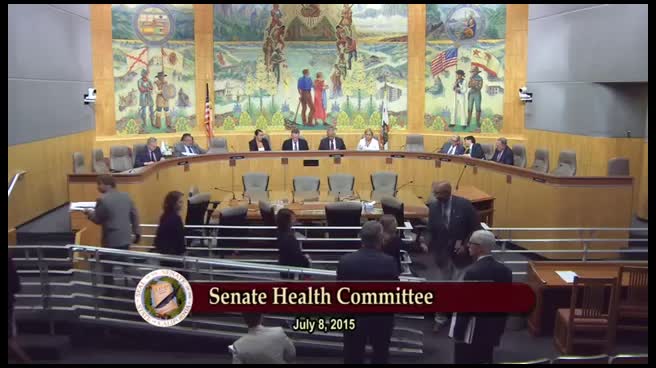 23MIN
Senate Standing Committee on Health
 10MIN
Assembly Standing Committee on Health
Bill Author

Bill Co-Author(s):