AB 1259: Bees: apiculture: state-owned lands.
- Session Year: 2015-2016
- House: Assembly
- Latest Version Date: 2015-09-30
Existing law requires the Department of Fish and Wildlife to consider permitting apiculture on department-managed wildlife areas, and requires the department to determine, when developing or amending its land management plans, the appropriate use or permit fee to be assessed for conducting apiculture on department-managed wildlife areas.
This bill would instead require the department to consider authorizing, rather than permitting, apiculture on department-managed wildlife areas. The bill would require the department to determine the appropriate fee and lease rent to be assessed for conducting apiculture on department-managed wildlife areas, would specify that the fee determined by the department for those purposes shall be sufficient to recover the administrative and implementation costs of the department, and would require the lease rent to take into account if the lease is a nonexclusive use of the land.The bill would authorize the department to authorize the temporary placement of beehives on department-managed wildlife areas through simple lease or permit agreements specifying appropriate conditions and would provide that these agreements are not subject to competitive bidding requirements.The bill would authorize the department to continue any authorization for apiculture on department-managed lands that it granted before January 1, 2015, without taking further action.
Existing law generally authorizes the Director of General Services, with the consent of the agency concerned, to let any real or personal state property in accordance with specified requirements.
This bill would authorize the director to let state land for apiary purposes, and would authorize the director to lease state land for those purposes for less than fair market rent if the lease for apiary purposes does not require exclusive use of the land.
This bill would declare that it is to take effect immediately as an urgency statute.
Existing law requires the Department of Fish and Wildlife to consider permitting apiculture on department-managed wildlife areas. areas, and requires the department to determine, when developing or amending its land management plans, the appropriate use or permit fee to be assessed for conducting apiculture on department-managed wildlife areas.
This bill would instead require the department to consider authorizing authorizing, rather than permitting, apiculture on department-managed wildlife areas. The bill would require the department to determine the appropriate fee and lease rent to be assessed for conducting apiculture on department-managed wildlife areas, would specify that the fee determined by the department for those purposes shall be sufficient to recover the administrative and implementation costs of the department, and would require the lease rent to take into account if the lease is a nonexclusive use of the land.
The bill would authorize the department to authorize the temporary placement of beehives on department-managed wildlife areas through simple lease or permit agreements specifying appropriate conditions. The bill would provide conditions and would provide that these agreements are not subject to competitive bidding requirements.
The bill would authorize the department to continue any authorization for apiculture on department-managed lands that it granted before January 1, 2015, without taking further action.
Existing law generally authorizes the Director of General Services, with the consent of the agency concerned, to let any real or personal state property in accordance with specified requirements.
This bill would authorize the director to let state land for commercial apiary purposes, and would authorize the director to lease state land for those purposes for less than fair market value. rent if the lease for apiary purposes does not require exclusive use of the land.
This bill would declare that it is to take effect immediately as an urgency statute.
Existing law requires the Department of Fish and Wildlife to consider permitting apiculture on department-managed wildlife areas.
This bill would instead require the department to consider authorizing apiculture on department-managed wildlife areas.
The bill would authorize the department to authorize the temporary placement of bee hives beehives on department-managed wildlife areas through simple lease or permit agreements specifying appropriate conditions. The bill would provide that these agreements are not contracts or leases for purposes of subject to competitive bidding provisions and other provisions relating to public contracts in the Public Contract Code and the Government Code. requirements.
The bill would authorize the department to continue any authorization for apiculture on department-managed lands that it granted before January 1, 2015, without taking further action.
Existing law generally authorizes the Director of General Services, with the consent of the agency concerned, to let any real or personal state property in accordance with specified requirements.
This bill would authorize the director to let state land for commercial apiary purposes, and would authorize the director to lease state land for those purposes for less than fair market value.
This bill would declare that it is to take effect immediately as an urgency statute.
Existing law requires the Department of Fish and Wildlife to consider permitting apiculture on department-managed wildlife areas. Existing law requires the department, when developing or amending its land management plans, to make certain determinations relating to the use of the department-managed wildlife areas for apiculture.
This bill would instead require the department to consider authorizing apiculture on department-managed wildlife areas.
The bill would authorize the department to authorize the temporary placement of bee hives on department-managed wildlife areas through simple agreements specifying appropriate conditions. The bill would provide that these agreements are not contracts or leases for purposes of competitive bidding provisions and other provisions relating to public contracts in the Public Contract Code and the Government Code.
The bill would authorize the department to continue any authorization for apiculture on department-managed lands that it granted before January 1, 2015, without taking further action.
Existing law generally regulates pesticide use, and requires the Director of Pesticide Regulation to endeavor to eliminate from use any pesticide that endangers the agricultural or nonagricultural environment. Existing law requires pesticides to be registered by the Department of Pesticide Regulation. Existing law requires that a pesticide be thoroughly evaluated prior to registration, provides for the continued evaluation of registered pesticides, and requires the department, by July 1, 2018, to issue a determination with respect to its reevaluation of neonicotinoids. Existing law requires the department, within 2 years after making this determination, to adopt any control measures necessary to protect pollinator health.
This bill would prohibit plants or seeds that have been treated with a neonicotinoid pesticide from being planted on state-owned or state-managed lands, as described. This bill would also prohibit plants on state-owned or state-managed lands from being treated with a neonicotinoid pesticide.
The Legislature finds and declares as follows:
(a)Bees and other pollinators are critical to agricultural production and native ecosystems. Bees pollinate billions of dollars of agricultural crops in the United States, including many of Californias most important agricultural crops.
(b)Bees are at significant risk of harm due to a condition known as Colony Collapse Disorder (CCD). In the United States alone, more than 25 percent of the managed bee population has disappeared since 1990 and the number of hives is at its lowest number in 50 years. CCD and the loss of bees is a significant threat to our state and national food supply and economic security.
(c)A viable and productive honeybee industry is dependent on access to private and public lands to secure nectar and pollen resources for nutritional foraging opportunities.
(d)There is a need for a streamlined and efficient method to provide access to public lands for California beekeepers to ensure that they have adequate foraging grounds for their bees.
(e)The Legislatures intended purpose in enacting Section 1745.2 of the Fish and Game Code was to consider the appropriate use of the states wildlife areas for apiculture bee foraging opportunities.
(f)Due to the unique regional and seasonal nature of apiculture, the public interest will be best served by authorizing such nonexclusive uses on department-managed lands without competitive bidding.
SEC. 2.Section 1745.2 of the Fish and Game Code is amended to read:1745.2.(a)The department shall do both of the following:
(1)Consider authorizing apiculture on department-managed wildlife areas, where deemed appropriate by the department.
(2)Determine, when developing or amending its land management plans, the following:
(A)If the department-managed wildlife areas, or any portion of the those areas, are suitable for apiculture and whether apiculture is consistent with the management goals and objectives for those areas on a temporary, seasonal, or long-term basis.
(B)If the administration of apiculture on department-managed wildlife areas, where deemed appropriate by the department, is meeting the management goals and objectives for those areas.
(C)The appropriate fee and lease rent to be assessed for conducting apiculture on department-managed wildlife areas. The amount of the fee shall be sufficient to recover, but not exceed, all reasonable administrative and implementation costs of the department. The lease rent shall take into account whether the lease is a nonexclusive use of the land.
(b)The department, in implementing this section, may consult with apiculture experts, including, but not limited to, the Department of Food and Agriculture, the University of California, other academic or professional experts, and interested stakeholders, when considering authorizing apiculture on department-managed wildlife areas consistent with the respective management goals and objectives for those areas.
(c)Moneys collected for conducting apiculture on department-managed wildlife areas pursuant to subparagraph (C) of paragraph (2) of subdivision (a) shall be deposited by the department into the Wildlife Restoration Fund and, upon appropriation by the Legislature, be used to support the management, maintenance, restoration, and operation of department-managed wildlife areas.
(d)The department may authorize the temporary placement of beehives on department-managed wildlife areas through simple lease or permit agreements specifying appropriate conditions. These agreements are not subject to competitive bidding requirements.
(e)The department may continue any authorization for apiculture on department-managed areas that it granted before January 1, 2015, without taking further action.
SEC. 3.Section 14670.14 is added to the Government Code, to read:14670.14.(a)Pursuant to Section 14670, the Director of General Services, with the consent of the agency concerned, may let for a period not to exceed five years state land for apiary purposes.
(b)The director may lease state land pursuant to this section for less than fair market rent if the lease for apiary purposes does not require exclusive use of the land.
SEC. 4.This act is an urgency statute necessary for the immediate preservation of the public peace, health, or safety within the meaning of Article IV of the Constitution and shall go into immediate effect. The facts constituting the necessity are:
In order for beekeepers, who relied on and are dependent on prior approval from the Department of Fish and Wildlife, to place their beehives on department-managed lands for seasonal foraging purposes, it is necessary for this act to take effect immediately.
The Legislature finds and declares as follows:
(a)Bees and other pollinators are critical to agricultural production and native ecosystems. Bees pollinate billions of dollars of agricultural crops in the United States, including many of Californias most important agricultural crops.
(b)Bees are at significant risk of harm due to a condition known as Colony Collapse Disorder (CCD). In the United States alone, more than 25 percent of the managed bee population has disappeared since 1990 and the number of hives is at its lowest number in 50 years. CCD and the loss of bees is a significant threat to our state and national food supply and economic security.
(c)A viable and productive honeybee industry is dependent on access to private and public lands to secure nectar and pollen resources for nutritional foraging opportunities.
(d)There is a need for a streamlined and efficient method to provide access to public lands for California beekeepers to ensure that they have adequate foraging grounds for their bees.
(e)The Legislatures intended purpose in enacting Section 1745.2 of the Fish and Game Code was to increase consider the appropriate use of the states wildlife areas for apiculture bee foraging opportunities on state lands managed by the Department of Fish and Wildlife, and not to affect existing apiary sites on department-managed lands previously approved for apiculture use. opportunities.
(f)Due to the unique regional and seasonal nature of apiculture, the public interest will be best served by authorizing such nonexclusive uses on department-managed lands without competitive bidding.
SEC. 2.Section 1745.2 of the Fish and Game Code is amended to read:1745.2.(a)The department shall do both of the following:
(1)Consider authorizing apiculture on department-managed wildlife areas, where deemed appropriate by the department.
(2)Determine, when developing or amending its land management plans, the following:
(A)If the department-managed wildlife areas, or any portion of the those areas, are suitable for apiculture and whether apiculture is consistent with the management goals and objectives for those areas on a temporary, seasonal, or long-term basis.
(B)If the administration of apiculture on department-managed wildlife areas, where deemed appropriate by the department, is meeting the management goals and objectives for those areas.
(C)The appropriate fee and lease rent to be assessed for conducting apiculture on department-managed wildlife areas. The amount of the fee shall be sufficient to recover, but not exceed, all reasonable administrative and implementation costs of the department. The lease rent shall take into account whether the lease is a nonexclusive use of the land.
(b)The department, in implementing this section, may consult with apiculture experts, including, but not limited to, the Department of Food and Agriculture, the University of California, other academic or professional experts, and interested stakeholders, when considering authorizing apiculture on department-managed wildlife areas consistent with the respective management goals and objectives for those areas.
(c)Moneys collected for conducting apiculture on department-managed wildlife areas pursuant to subparagraph (C) of paragraph (2) of subdivision (a) shall be deposited by the department into the Wildlife Restoration Fund and, upon appropriation by the Legislature, be used to support the management, maintenance, restoration, and operation of department-managed wildlife areas.
(d)The department may authorize the temporary placement of beehives on department-managed wildlife areas through simple lease or permit agreements specifying appropriate conditions. These agreements are not subject to competitive bidding requirements.
(e)The department may continue any authorization for apiculture on department-managed areas that it granted before January 1, 2015, without taking further action.
SEC. 3.Section 14670.14 is added to the Government Code, to read:14670.14.(a)Notwithstanding Pursuant to Section 14670, the Director of General Services, with the consent of the agency concerned, may let for a period not to exceed five years state land for commercial apiary purposes.
(b)The director may lease state land pursuant to this section for less than fair market value. rent if the lease for apiary purposes does not require exclusive use of the land.
SEC. 4.This act is an urgency statute necessary for the immediate preservation of the public peace, health, or safety within the meaning of Article IV of the Constitution and shall go into immediate effect. The facts constituting the necessity are:
In order for beekeepers, who relied on and are dependent on prior approval from the Department of Fish and Wildlife, to place their beehives on department-managed lands for seasonal foraging purposes, it is necessary for this act to take effect immediately.
The Legislature finds and declares as follows:
(a)Bees and other pollinators are critical to agricultural production and native ecosystems. Bees pollinate billions of dollars of agricultural crops in the United States, including many of Californias most important agricultural crops.
(b)Bees are at significant risk of harm due to a condition known as Colony Collapse Disorder (CCD). In the United States alone, more than 25 percent of the managed bee population has disappeared since 1990 and the number of hives is at its lowest number in 50 years. CCD and the loss of bees is a significant threat to our state and national food supply and economic security.
(c)A viable and productive honeybee industry is dependent on access to private and public lands to secure nectar and pollen resources for nutritional foraging opportunities.
(d)There is a need for a streamlined and efficient method to provide access to public lands for California beekeepers to ensure that they have adequate foraging grounds for their bees.
(e)The Legislatures intended purpose in enacting Section 1745.2 of the Fish and Game Code was to increase apiculture bee foraging opportunities on state lands managed by the Department of Fish and Wildlife, and not to affect existing apiary sites on department-managed lands previously approved for apiculture use.
(f)Due to the unique regional and seasonal nature of apiculture, the public interest will be best served by authorizing such uses on department-managed lands without competitive bidding.
SEC. 2.Section 1745.2 of the Fish and Game Code is amended to read:1745.2.(a)The department shall do both of the following:
(1)Consider authorizing apiculture on department-managed wildlife areas, where deemed appropriate by the department.
(2)Determine, when developing or amending its land management plans, the following:
(A)If the department-managed wildlife areas, or any portion of the those areas, are suitable for apiculture and whether apiculture is consistent with the management goals and objectives for those areas on a temporary, seasonal, or long-term basis.
(B)If the administration of apiculture on department-managed wildlife areas, where deemed appropriate by the department, is meeting the management goals and objectives for those areas.
(C)The appropriate fee to be assessed for conducting apiculture on department-managed wildlife areas.
(b)The department, in implementing this section, may consult with apiculture experts, including, but not limited to, the Department of Food and Agriculture, the University of California, other academic or professional experts, and interested stakeholders, when considering authorizing apiculture on department-managed wildlife areas consistent with the respective management goals and objectives for those areas.
(c)Moneys collected for conducting apiculture on department-managed wildlife areas pursuant to subparagraph (C) of paragraph (2) of subdivision (a) shall be deposited by the department into the Wildlife Restoration Fund and, upon appropriation by the Legislature, be used to support the management, maintenance, restoration, and operation of department-managed wildlife areas.
(d)The department may authorize the temporary placement of bee hives beehives on department-managed wildlife areas through simple lease or permit agreements specifying appropriate conditions. These agreements are not contracts or leases for purposes of subject to competitive bidding provisions and other provisions relating to public contracts in the Public Contract Code and Government Code. requirements.
(e)The department may continue any authorization for apiculture on department-managed areas that it granted before January 1, 2015, without taking further action.
SEC. 3.Section 14670.14 is added to the Government Code, to read:14670.14.(a)Notwithstanding Section 14670, the Director of General Services, with the consent of the agency concerned, may let for a period not to exceed five years state land for commercial apiary purposes.
(b)The director may lease state land pursuant to this section for less than fair market value.
SEC. 3.SEC. 4.This act is an urgency statute necessary for the immediate preservation of the public peace, health, or safety within the meaning of Article IV of the Constitution and shall go into immediate effect. The facts constituting the necessity are:
In order for beekeepers, who relied on and are dependent on prior approval from the Department of Fish and Wildlife, to place their bee hives beehives on department-managed lands for seasonal foraging purposes, it is necessary for this act to take effect immediately.
The Legislature finds and declares as follows:
(a)Bees and other pollinators are critical to agricultural production and native ecosystems. Bees pollinate billions of dollars of agricultural crops in the United States, including many of Californias most important agricultural crops.
(b)Bees are at significant risk of harm due to a condition known as Colony Collapse Disorder (CCD). In the United States alone, more than 25 percent of the managed bee population has disappeared since 1990 and the number of hives is at its lowest number in 50 years. CCD and the loss of bees is a significant threat to our state and national food supply and economic security.
(c)A viable and productive honeybee industry is dependent on access to private and public lands to secure nectar and pollen resources for nutritional foraging opportunities.
(d)There is a need for a streamlined and efficient method to provide access to public lands for California beekeepers to ensure that they have adequate foraging grounds for their bees.
(e)The Legislatures intended purpose in enacting Section 1745.2 of the Fish and Game Code is was to increase apiculture bee foraging opportunities on state lands managed by the Department of Fish and Wildlife, and not to affect existing apiary sites on department-managed lands previously approved for apiculture use.
(f)Due to the unique regional and seasonal nature of apiculture, the public interest will be best served by authorizing such uses on department-managed lands without competitive bidding.
SEC. 2.Section 1745.2 of the Fish and Game Code is amended to read:1745.2.(a)The department shall do both of the following:
(1)Consider authorizing apiculture on department-managed wildlife areas, where deemed appropriate by the department.
(2)Determine, when developing or amending its land management plans, the following:
(A)If the department-managed wildlife areas, or any portion of the those areas, are suitable for apiculture and whether apiculture is consistent with the management goals and objectives for those areas on a temporary, seasonal, or long-term basis.
(B)If the administration of apiculture on department-managed wildlife areas, where deemed appropriate by the department, is meeting the management goals and objectives for those areas.
(C)The appropriate fee to be assessed for conducting apiculture on department-managed wildlife areas.
(b)The department, in implementing this section, may consult with apiculture experts, including, but not limited to, the Department of Food and Agriculture, the University of California, other academic or professional experts, and interested stakeholders, when considering authorizing apiculture on department-managed wildlife areas consistent with the respective management goals and objectives for those areas.
(c)Moneys collected for conducting apiculture on department-managed wildlife areas pursuant to subparagraph (C) of paragraph (2) of subdivision (a) shall be deposited by the department into the Wildlife Restoration Fund and, upon appropriation by the Legislature, be used to support the management, maintenance, restoration, and operation of department-managed wildlife areas.
(d)The department may authorize the temporary placement of bee hives on department-managed wildlife areas through simple agreements specifying appropriate conditions. These agreements are not contracts or leases for purposes of competitive bidding provisions and other provisions relating to public contracts in the Public Contract Code and Government Code.
(e)The department may continue any authorization for apiculture on department-managed areas that it granted before January 1, 2015 2015, without taking further action.
SEC. 3.This act is an urgency statute necessary for the immediate preservation of the public peace, health, or safety within the meaning of Article IV of the Constitution and shall go into immediate effect. The facts constituting the necessity are:
In order for beekeepers, who relied on and are dependent on prior approval from the Department of Fish and Wildlife, to place their bee hives on department-managed lands for seasonal foraging purposes, it is necessary for this act to take effect immediately.
The Legislature finds and declares as follows:
(a)Bees and other pollinators are critical to agricultural production and native ecosystems. Bees pollinate billions of dollars of agricultural crops in the United States, including many of Californias most important agricultural crops.
(b)Bees are at significant risk of harm due to a condition known as Colony Collapse Disorder (CCD). In the United States alone, more than 25 percent of the managed bee population has disappeared since 1990 and the number of hives is at its lowest number in 50 years. CCD and the loss of bees is a significant threat to our state and national food supply and economic security.
(c)While there is no single cause of CCD, a substantial and growing body of evidence points to neonicotinoid pesticides as a likely factor in bee colony collapse. Neonicotinoid pesticides are absorbed into plant tissue, do not discriminate between target and nontarget inspect species, and are harmful to bees, butterflies, and other beneficial insects.
(d)The state has recognized the importance of protecting bees by encouraging placement of bee hives on state lands such as wildlife areas managed by the Department of Fish and Wildlife.
(e)Monarch butterflies, another important native pollinator, are also severely threatened by loss of native milkweed upon which they depend, loss of wintering habitat in California, pesticides, and other factors. Monarch populations are in rapid decline. According to the annual census taken at the monarchs wintering grounds in Mexico in 2013, the monarch population dropped by 59 percent compared to the prior years census, bringing the monarchs numbers to the smallest registered population in almost two decades.
(f)Vegetation maintained on lands managed by the state, such as along roadways and utility rights-of-way, could help provide beneficial habitat for bees, monarch butterflies, and other pollinators if properly managed.
(g)The state should exercise caution when exposing bees and other pollinators to plants that may harm them, especially on state lands that may be utilized by bees.
(c)A viable and productive honeybee industry is dependent on access to private and public lands to secure nectar and pollen resources for nutritional foraging opportunities.
(d)There is a need for a streamlined and efficient method to provide access to public lands for California beekeepers to ensure that they have adequate foraging grounds for their bees.
(e)The Legislatures intended purpose in enacting Section 1745.2 of the Fish and Game Code is to increase apiculture bee foraging opportunities on state lands managed by the Department of Fish and Wildlife, and not to affect existing apiary sites on department-managed lands previously approved for apiculture use.
(f)Due to the unique regional and seasonal nature of apiculture, the public interest will be best served by authorizing such uses on department-managed lands without competitive bidding.
SEC. 2.Section 1745.2 of the Fish and Game Code is amended to read:1745.2.(a)The department shall do both of the following:
(1)Consider permitting authorizing apiculture on department-managed wildlife areas, where deemed appropriate by the department.
(2)Determine, when developing or amending its land management plans, the following:
(A)If the department-managed wildlife areas, or any portion of the those areas, are suitable for apiculture and whether apiculture is consistent with the management goals and objectives for those areas on a temporary, seasonal, or long-term basis.
(B)If the administration of apiculture on department-managed wildlife areas, where deemed appropriate by the department, is meeting the management goals and objectives for those areas.
(C)The appropriate use or permit fee to be assessed for conducting apiculture on department-managed wildlife areas.
(b)The department, in implementing this section, may consult with apiculture experts, including, but not limited to, the Department of Food and Agriculture, the University of California, other academic or professional experts, and interested stakeholders, for permitting when considering authorizing apiculture on department-managed wildlife areas consistent with the respective management goals and objectives for those areas.
(c)Moneys collected for conducting apiculture on department-managed wildlife areas pursuant to subparagraph (C) of paragraph (2) of subdivision (a) shall be deposited by the department into the Wildlife Restoration Fund and, upon appropriation by the Legislature, be used to support the management, maintenance, restoration, and operation of department-managed wildlife areas.
(d)The department may authorize the temporary placement of bee hives on department-managed wildlife areas through simple agreements specifying appropriate conditions. These agreements are not contracts or leases for purposes of competitive bidding provisions and other provisions relating to public contracts in the Public Contract Code and Government Code.
(e)The department may continue any authorization for apiculture on department-managed areas that it granted before January 1, 2015 without taking further action.
SEC. 2.Chapter 4.5 (commencing with Section 8305) is added to Division 1 of Title 2 of the Government Code, to read:4.5.Planting on State-Owned or State-Managed Lands8305.For the purposes of this chapter:
(a)State-owned or state-managed lands include, but are not limited to, roadside lands owned and maintained by the Department of Transportation, wildlife areas managed by the Department of Fish and Wildlife, parklands managed by the Department of Parks and Recreation, and wildlife habitat lands owned or managed by a state conservancy.
(b)Treated includes foliar and granular treatments, in addition to seed coatings.
8306.(a)Plants or seeds that have been treated with a neonicotinoid pesticide shall not be planted on state-owned or state-managed lands.
(b)Plants on state-owned or state-managed lands shall not be treated with a neonicotinoid pesticide.
The Legislature finds and declares as follows:
(a)Bees and other pollinators are critical to agricultural production and native ecosystems. Bees pollinate billions of dollars of agricultural crops in the United States, including many of Californias most important agricultural crops.
(b)Bees are at significant risk of harm due to a condition known as Colony Collapse Disorder (CCD). In the United States alone, more than 25 percent of the managed bee population has disappeared since 1990 and the number of hives is at its lowest number in 50 years. CCD and the loss of bees is a significant threat to our state and national food supply and economic security.
(c)While there is no single cause of CCD, a substantial and growing body of evidence points to neonicotinoid pesticides as a likely factor in bee colony collapse. Neonicotinoid pesticides are absorbed into plant tissue, do not discriminate between target and nontarget inspect species, and are harmful to bees, butterflies, and other beneficial insects.
(d)The state has recognized the importance of protecting bees by encouraging placement of bee hives on state lands such as wildlife areas managed by the Department of Fish and Wildlife.
(e)Monarch butterflies, another important native pollinator, are also severely threatened by loss of native milkweed upon which they depend, loss of wintering habitat in California, pesticides, and other factors. Monarch populations are in rapid decline. According to the annual census taken at the monarchs wintering grounds in Mexico in 2013, the monarch population dropped by 59 percent compared to the prior years census, bringing the monarchs numbers to the smallest registered population in almost two decades.
(f)Vegetation maintained on lands managed by the state, such as along roadways and utility rights-of-way, could help provide beneficial habitat for bees, monarch butterflies, and other pollinators if properly managed.
(g)The state should exercise caution when exposing bees and other pollinators to plants that may harm them, especially on state lands that may be utilized by bees.
SEC. 2.Chapter 4.5 (commencing with Section 8305) is added to Division 1 of Title 2 of the Government Code, to read:4.5.Planting on State-Owned or State-Managed Lands8305.For the purposes of this chapter:
(a)State-owned or state-managed lands include, but are not limited to, roadside lands owned and maintained by the Department of Transportation, wildlife areas managed by the Department of Fish and Wildlife, parklands managed by the Department of Parks and Recreation, and wildlife habitat lands owned or managed by a state conservancy.
(b)Treated includes foliar and granular treatments, in addition to seed coatings.
8306.(a)Plants or seeds that have been treated with a neonicotinoid pesticide shall not be planted on state-owned or state-managed lands.
(b)Plants on state-owned or state-managed lands shall not be treated with a neonicotinoid pesticide.
|
Date
|
Status
|
|---|---|
| Jun 30, 2015 | From committee: Do pass and re-refer to Com. on APPR. (Ayes 3. Noes 0.) (June 30). Re-referred to Com. on APPR. |
| Sep 30, 2015 | Chaptered by Secretary of State - Chapter 380, Statutes of 2015. |
| Sep 30, 2015 | Approved by the Governor. |
| Sep 16, 2015 | Enrolled and presented to the Governor at 4 p.m. |
| Sep 4, 2015 | Senate amendments concurred in. To Engrossing and Enrolling. (Ayes 79. Noes 0.). |
| Sep 4, 2015 | Senate amendments concurred in. To Engrossing and Enrolling. (Ayes 79. Noes 0. Page 2920.). |
| Sep 4, 2015 | Senate amendments concurred in. To Engrossing and Enrolling. |
| Sep 4, 2015 | Assembly Rule 77 suspended. (Page 2915.) |
| Sep 4, 2015 | Assembly Rule 77 suspended. |
| Sep 3, 2015 | Read third time. Urgency clause adopted. Passed. Ordered to the Assembly. (Ayes 40. Noes 0. Page 2482.). |
| Sep 3, 2015 | Read third time. Urgency clause adopted. Passed. Ordered to the Assembly. |
| Sep 3, 2015 | In Assembly. Concurrence in Senate amendments pending. May be considered on or after September 5 pursuant to Assembly Rule 77. |
| Sep 1, 2015 | Read second time and amended. Ordered to third reading. |
| Aug 31, 2015 | From committee: Amend, and do pass as amended. (Ayes 7. Noes 0.) (August 27). |
| Jul 13, 2015 | In committee: Referred to suspense file. |
| Feb 27, 2015 | Introduced. To print. |
| Jun 24, 2015 | From committee chair, with author's amendments: Amend, and re-refer to committee. Read second time, amended, and re-referred to Com. on AGRI. |
| May 28, 2015 | Referred to Com. on AGRI. |
| May 14, 2015 | Read third time. Urgency clause adopted. Passed. Ordered to the Senate. (Ayes 78. Noes 0. Page 1450.). |
| May 14, 2015 | In Senate. Read first time. To Com. on RLS. for assignment. |
| May 7, 2015 | Read second time. Ordered to Consent Calendar. |
| May 6, 2015 | From committee: Do pass. To Consent Calendar. (Ayes 17. Noes 0.) (May 6). |
| Apr 30, 2015 | Re-referred to Com. on APPR. |
| Apr 29, 2015 | Read second time and amended. |
| Apr 28, 2015 | From committee: Amend, and do pass as amended and re-refer to Com. on APPR. with recommendation: To Consent Calendar. (Ayes 15. Noes 0.) (April 28). |
| Apr 6, 2015 | Re-referred to Com. on W., P., & W. |
| Mar 26, 2015 | Referred to Com. on W., P., & W. |
| Mar 26, 2015 | From committee chair, with author's amendments: Amend, and re-refer to Com. on W., P., & W. Read second time and amended. |
| Mar 2, 2015 | Read first time. |
| Mar 1, 2015 | From printer. May be heard in committee March 31. |
|
Date
|
Description
|
Location
|
Votes
|
|
|---|---|---|---|---|
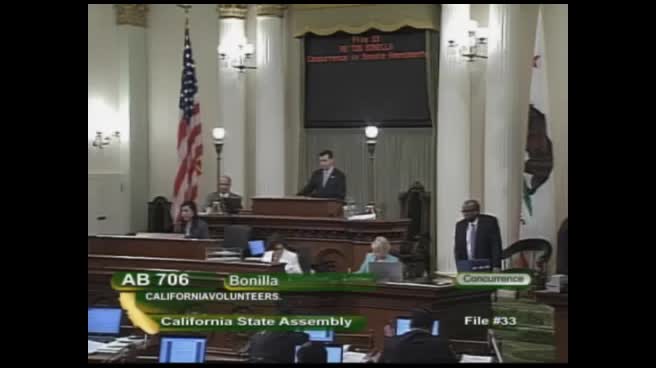
| Sep 4, 2015 | AB 1259 LEVINE Concurrence in Senate Amendments | Assembly Floor |
Passed |
|
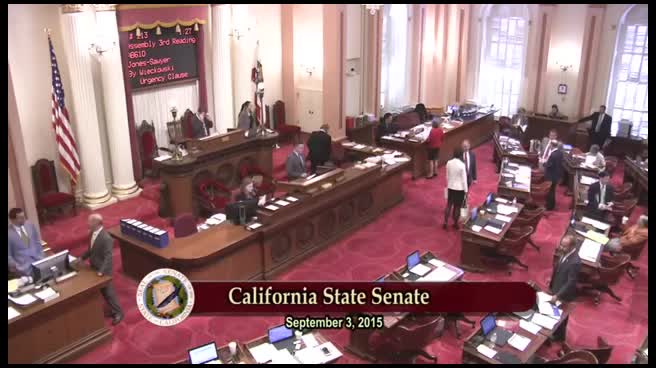
| Sep 3, 2015 | Assembly 3rd Reading AB1259 Levine By Vidak Urgency Clause | Senate Floor |
Passed |
|
| Aug 27, 2015 | Do pass as amended | Senate Standing Committee on Appropriations |
Passed |
|
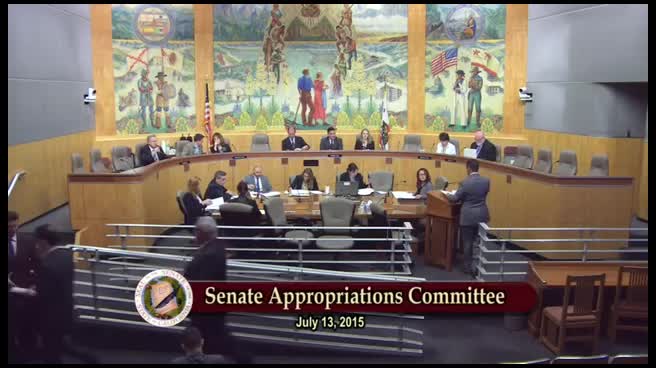
| Jul 13, 2015 | Placed on suspense file | Senate Standing Committee on Appropriations |
Passed |
|
| Jun 30, 2015 | Do pass, but first be re-referred to the Committee on [Appropriations] | Senate Standing Committee on Agriculture |
Passed |
|
| May 14, 2015 | AB 1259 LEVINE Consent Calendar Second Day Regular Session | Assembly Floor |
Passed |
|
| May 6, 2015 | Do pass. To Consent Calendar. | Assembly Standing Committee on Appropriations |
Passed |
|
| Apr 28, 2015 | Do pass as amended, and be re-referred to the Committee on [Appropriations] with recommendation: To Consent Calendar | Assembly Standing Committee on Water, Parks, and Wildlife |
Passed |
This list shows positions taken on this bill by organizations on the date displayed, which is linked to the original source.
Positions by individuals are not included.
|
Organization
|
Position
|
Date
|
|---|---|---|
| California State Beekeepers Association | ** Support | Sep 3, 2015 |
| San Diego County Board of Supervisors | ** Support | Sep 3, 2015 |
| State Bee Keepers Association | ** Support | Jul 13, 2015 |
AB 1259
Page 2
CONCURRENCE IN SENATE AMENDMENTS
AB 1259
(Levine)
As Amended September 1, 2015
2/3 vote. Urgency
ASSEMBLY: |
78-0 |
(May 14, 2015) |
SENATE: |
40-0 |
(September 3, 2015) |
Original Committee Reference: W., P., & W.
SUMMARY: Authorizes the Department of Fish and Wildlife (DFW) to allow the temporary placement of beehives on department-managed wildlife areas, through simple lease or permit agreements specifying appropriate conditions, and authorizes the Department of General Services (DGS) to let public lands for apiary purposes for less than fair market rental if the lease for apiary purposes does not require exclusive use of the land.
The Senate amendments:
Authorize DGS, with consent of the agency concerned, to let for a period not to exceed five years state land for apiary purposes, and to let the property for these purposes for less than fair market rental if the lease for apiary purposes does not require exclusive use of the land.
Authorize DFW to determine the appropriate fee and lease rental to be assessed for conducting apiculture on department-managed wildlife areas. Specify that the fee shall recover, but not exceed, all reasonable administrative and implementation costs of DFW, and that the lease rental shall take into account if the lease is a nonexclusive use of the land.
Modify the legislative findings and declarations in the bill, and make other technical changes.
EXISTING LAW:
Requires DFW to consider permitting bee hives to be placed on department managed wild land areas, where deemed appropriate by DFW.
Requires DFW when updating its land management plans to determine where lands suitable for apiculture are located, consistent with the state's management goals and objectives for those lands. Authorizes DFW to charge appropriate fees and to consult with apiculture experts.
FISCAL EFFECT: According to the Senate Appropriations Committee:
Unknown administrative cost impacts, but potential minor savings, to the Wildlife Restoration Fund (special) to allow DFW-managed lands to be issued without competitive bidding.
Unknown revenues losses, potentially in the tens to hundreds of thousands of dollars, to the General Fund and the Wildlife Restoration Fund (special) for leases made below fair market value.
Increased costs for increased state liability (General Fund and various special funds) for apiary activities on state lands
COMMENTS: This bill builds upon and furthers policy approved by the Legislature last year to facilitate foraging opportunities for bees on state lands, and makes clarifications to address issues that have arisen in the implementation of that policy. According to the author, this bill seeks to benefit bees and bee keepers by increasing apiculture bee foraging opportunities on state lands managed by the DFW. This bill also clarifies DFW's existing authority to authorize temporary placement of bee hives on department-managed lands, and to continue authorizations for placement of bee hives on state lands previously granted by DFW prior to January 1, 2015. This bill also makes legislative findings and declarations regarding the importance of bees to agricultural production and native ecosystems, and the risks of Colony Collapse Disorder.
The Senate amendments clarify the process for approval of lease agreements. Due to the critical need for foraging lands for bees, and the unique regional and seasonal nature of apiculture, this bill allows for agreements to place beehives on DFW lands without having to go through competitive bidding, and for less than the fair market rental value if the lease does not require exclusive use of the land.
Analysis Prepared by: Diane Colborn / W., P., & W. / (916) 319-2096 FN: 0001901
AB 1259
Page 6
|
Office of Senate Floor Analyses (916) 651-1520 Fax: (916) 327-4478 |
THIRD READING
Bill No: AB 1259
Amended: 9/1/15 in Senate
SENATE AGRICULTURE COMMITTEE: 3-0, 6/30/15
AYES: Galgiani, Cannella, Pan
NO VOTE RECORDED: Berryhill, Wolk
SENATE APPROPRIATIONS COMMITTEE: 7-0, 8/27/15
AYES: Lara, Bates, Beall, Hill, Leyva, Mendoza, Nielsen
ASSEMBLY FLOOR: 78-0, 5/14/15 (Consent) - See last page for vote
SUBJECT: Bees: apiculture: state-owned lands
DIGEST: This bill requires the Department of Fish and Wildlife (DFW) to consider authorizing, rather than permitting, apiculture on department-managed wildlife areas; allows the department to temporarily authorize the placement of bee hives on these lands through simple lease or permit agreements that are not subject to competitive bidding; and makes findings and declarations. This bill contains an urgency clause.
Existing law:
Authorizes the California Department of Food and Agriculture (CDFA) to protect pollinator health and promote apiculture in California (Food and Agricultural Code §29000 et seq.).
Authorizes county agricultural commissioners to enforce apiary laws and regulations at the local level.
Prohibits any person from maintaining an apiary on public land without the expressed oral or written approval of the entity that is responsible for the land (Food and Agricultural Code §29046).
Authorizes DFW to lease department-managed lands for agricultural activities, such as grazing, where such activities are consistent with the purpose of the acquired land and compatible with the approved management plan for the area (Fish and Game Code §1745 – 1745.1).
Authorizes DFW to consider permitting apiculture on department-managed wildlife areas, where deemed appropriate.
Authorizes DFW to collect fees and issue permits for specific uses of department-managed lands. Fees shall be appropriated for the management and operation of such lands.
Authorizes the Department of General Services (DGS), with consent of the affected agency, to lease state land below the fair market rate for specified purposes (Government Code § 14670 et seq.).
This bill:
Makes findings and declarations in regards to honeybee health and foraging.
Repeals the use of permits for apiculture on department-managed wildlife areas.
Authorizes the DFW to allow temporary placement of bee hives on department-managed wildlife areas through simple lease or permit agreements. These agreements are not subject to competitive bidding requirements.
Authorizes DFW to continue any authorization for apiculture on department-managed areas that it granted before January 1, 2015, without taking further action.
Authorizes DGS, with consent of the affected agency, to lease state land to apiaries for up to five years at less than fair market rent if the lease does not require exclusive use of the land.
Includes an urgency clause.
Background
The U.S. honey bee industry is critical for the pollination of agricultural crops across the nation. In California, honey bees are necessary to pollinate fruit and nut trees as well as a variety of row crops and native plants. These bees also produce honey; in 2013, California producers marketed 11 million pounds of honey worth $23 million (United States Department of Agriculture, National Agricultural Statistics Service).
In 2006, honey bee colony collapse disorder (CCD) was identified as a new threat to the health and welfare of honey bees and their hives when over 30% of bee hives nationwide died off over the winter. CCD is characterized by a sudden abandonment and/or disappearance of adult honey bees from their hives for reasons not fully understood. In response to this problem, the CCD Steering Committee and Working Team was created to help coordinate efforts to better understand CCD and determine what measures could be taken to improve bee health and prevent CCD. Led by the United States Department of Agriculture (USDA), participants include government, industry, and academic experts who collaborate to conduct research, develop beekeeping best management practices, and identify the cause(s) of CCD and declining bee health in general.
In May 2013, the USDA and the United States Environmental Protection Agency (EPA) issued a report on honey bee health as a result of an October 2012 conference organized by individuals on the CCD Steering Committee. Per the conference report, “Consensus is building that a complex set of stressors and pathogens is associated with CCD, and researchers are increasingly using multi-factorial approaches to studying causes of colony losses.” (http://www.usda.gov/documents/ReportHoneyBeeHealth.pdf).
On May 19, 2015, President Obama’s Pollinator Health Task Force, co-chaired by USDA and EPA, released the National Strategy to Promote the Health of Honey Bees and Other Pollinators (National Strategy). The National Strategy outlines a comprehensive approach aimed at reducing the impact of multiple stressors, including pests and pathogens, reduced habit, lack of forage, and exposure to pesticides. The National Strategy’s goals include reducing honey bee colony losses over winter to no more than 15% within 10 years, increasing the Eastern population of monarch butterflies, and restoring or enhancing 7 million acres of land for pollinators over the next five years though federal actions and public/private partnerships.
Comments
AB 2185. Last year, AB 2185 (Eggman, Chapter 338, Statutes of 2014) was signed into law and requires DFW to consider permitting apiculture on department-managed lands. During implementation of this new authorization, it was discovered that additional changes to current law were necessary to fully achieve the goals of AB 2185. The greatest concern was that beekeepers would be required to partake in a competitive bidding process that would not be timely considering the seasonal nature of apiculture and the immediate need for available foraging land. The current bill clarifies DFW’s authority and streamlines the process for beekeepers to access DFW land.
Interim hearing. The Assembly Committee on Agriculture and the Assembly Committee on Environmental Safety & Toxic Materials held a joint informational hearing on October 16, 2013 on the issue of bee health and colony collapse disorder. Expert witnesses testified that a variety of stressors are responsible for the decline in honey bee health, such as nutrition, parasitic mites, pesticides, viruses, and bee management practices. This hearing recognized that identifying local forage opportunities for bees is a necessary part of the solution, and that potentially favorable sites include habitat strips along public highways and natural vegetation areas on state and federal public lands.
Nutrition. Several factors contributing to CCD and poor bee health have been identified by experts, as previously stated. It can be argued from a physiological standpoint that by addressing nutritional requirements, bees will have the fundamental tools needed to support a healthy immune system to fight parasites and pathogens as well as a variety of other environmental stressors. Meeting these nutritional requirements has been challenging, where in some instances bees are not provided adequate and diverse foraging.
Bees and agriculture. There may be concern as to the impact of this bill on certain agricultural crops, specifically seedless citrus varieties. In 2007, the Seedless Mandarin and Honeybee Coexistence Working Group was created to address concerns of cross-pollination of seedless mandarins that could lead to seeds forming within these fruits, causing them to no longer be seedless and, thus, losing value in the marketplace. Similar concerns may exist with this bill should honey bees be placed on state lands adjacent to sensitive agricultural crops (Food and Agricultural Code §29810-12).
FISCAL EFFECT: Appropriation: No Fiscal Com.: Yes Local: No
According to the Senate Appropriations Committee, this bill has unknown administrative cost impacts, but potential minor savings, to the Wildlife Restoration Fund (special) to allow DFW-managed lands to be issued without competitive bidding; unknown revenues losses, potentially in the tens of thousands of dollars, to the General Fund and the Wildlife Restoration Fund (special) for leases made below fair market value; and increased costs for increased state liability (General Fund and various special funds) for apiary activities on state lands.
California State Beekeepers Association
San Diego County Board of Supervisors
OPPOSITION: (Verified 8/28/15)
None received
ARGUMENTS IN SUPPORT: According to the author, “AB 1259 benefits bees and beekeepers by increasing apiculture bee foraging opportunities on state lands managed by the Department of Fish and Wildlife. This bill clarifies DFW's existing authority to authorize temporary placement of bee hives on department-managed wildlife areas, and to continue authorizations for placement of bee hives on state lands previously granted by DFW before January 1, 2015. AB 1259 also clarifies the Legislature's intent in passing AB 2185 (Eggman) in 2014 was to increase apiculture opportunities on state lands, and not to create new barriers. AB 1259 acknowledges the importance of bees and the need for a streamlined and efficient method for providing access to appropriate public lands for bee foraging.”
ASSEMBLY FLOOR: 78-0, 5/14/15
AYES: Achadjian, Alejo, Travis Allen, Baker, Bigelow, Bloom, Bonilla, Bonta, Brough, Brown, Burke, Calderon, Campos, Chang, Chau, Chávez, Chiu, Chu, Cooley, Cooper, Dababneh, Dahle, Daly, Dodd, Eggman, Frazier, Beth Gaines, Gallagher, Cristina Garcia, Eduardo Garcia, Gatto, Gipson, Gomez, Gonzalez, Gordon, Gray, Grove, Hadley, Harper, Roger Hernández, Holden, Irwin, Jones, Jones-Sawyer, Kim, Lackey, Levine, Lopez, Low, Maienschein, Mathis, Mayes, McCarty, Melendez, Mullin, Nazarian, Obernolte, O'Donnell, Olsen, Patterson, Perea, Quirk, Rendon, Ridley-Thomas, Rodriguez, Salas, Santiago, Steinorth, Mark Stone, Thurmond, Ting, Wagner, Waldron, Weber, Wilk, Williams, Wood, Atkins
NO VOTE RECORDED: Linder, Medina
Prepared by: Anne Megaro / AGRI. / (916) 651-1508
9/1/15 20:41:47
**** END ****
AB 1259 (Levine) Page 0 of 1
SENATE COMMITTEE ON APPROPRIATIONS
Senator Ricardo Lara, Chair
2015 - 2016 Regular Session
AB 1259 (Levine) - Bees: apiculture: state-owned lands.
|
|
Version: June 24, 2015 |
Policy Vote: AGRI. 3 - 0 |
Urgency: Yes |
Mandate: No |
Hearing Date: August 27, 2015 |
Consultant: Marie Liu |
*********** ANALYSIS ADDENDUM – SUSPENSE FILE ***********
The following information is revised to reflect amendments
adopted by the committee on August 27, 2015
Bill Summary:
This bill would allow the Department of Fish and Wildlife (DFW) to authorize the temporary placement of beehives on wildlife areas through simple lease or permit agreements that are not subject to competitive bidding requirements. This bill would also authorize the Department of General Services (DGS) to lease state lands for commercial apiary purposes at less than fair market rental if the lease does not require exclusive use of the land.
Fiscal Impact:
Unknown administrative cost impacts, but potential minor savings, to the Wildlife Restoration Fund (special) to allow DFW-managed lands to be issued without competitive bidding.
Unknown revenues losses, potentially in the tens of thousands of dollars, to the General Fund and the Wildlife Restoration Fund (special) for leases made below fair market value.
Increased costs for increased state liability (General Fund and various special funds) for apiary activities on state lands
Author Amendments:
Clarification amendments.
Committee Amendments:
Specify that the fee assessed by DFW must recover all reasonable administrative and implementation costs and that lease rates may be below fair market value if the apiary purposes do not require the exclusive use of the land.
-- END --
AB 1259 (Levine) Page 3 of 3
SENATE COMMITTEE ON APPROPRIATIONS
Senator Ricardo Lara, Chair
2015 - 2016 Regular Session
AB 1259 (Levine) - Bees: apiculture: state-owned lands
|
|
Version: June 24, 2015 |
Policy Vote: AGRI. 3 - 0 |
Urgency: Yes |
Mandate: No |
Hearing Date: July 13, 2015 |
Consultant: Marie Liu |
This bill meets the criteria for referral to the Suspense File.
Bill Summary:
This bill would allow the Department of Fish and Wildlife (DFW) to authorize the temporary placement of beehives on wildlife areas through simple lease or permit agreements that are not subject to competitive bidding requirements. This bill would also authorize the Department of General Services (DGS) to lease state lands for commercial apiary purposes at less than fair market value with the consent of the agency concerned.
Fiscal Impact:
Unknown administrative cost impacts, but potential minor savings, to the Wildlife Restoration Fund (special) to allow DFW-managed lands to be issued without competitive bidding.
Unknown revenues losses, potentially in the tens to hundreds of thousands of dollars, to the General Fund and the Wildlife Restoration Fund (special) for leases made below fair market value.
Increased costs for increased state liability (General Fund and various special funds) for apiary activities on state lands
Background:
Commercial beekeepers are currently allowed to use some federal lands, including National Forests lands, for temporary foraging. Additionally, DFW has allowed bee keeping on its lands in some limited cases in the past, though DFW did not have an actual policy on allowing beekeeping, commercial or otherwise, on their lands until the passage of AB 2185 (Eggman) Chapter 338, Statutes of 2014. AB 2185 required DFW to consider permitting apiculture on department-managed wildlife areas, where it deemed appropriate. Additionally, AB 2185 required DFW to make several considerations regarding the use of wildlife areas for apiary purposes when developing or amending its land management plans. Since the passage of AB 2185, there have been questions raised to whether the permitting of apiculture on DFW lands requires a competitive bidding process and whether existing agreements to allow bee keeping were valid.
DGS is authorized under §14670 of the Government Code to lease state property for periods not to exceed five years, if the lease is in the best interest of the state. The lease may be below fair market rental to a nonprofit for use as a self-help community vegetable garden so long as the lease is less than five acres and is allowable under local zoning ordinances. Revenues from such garden leases are deposited into a special fund. This statute also includes a Legislative finding and declaration that any lease for a community vegetable garden that is let at less than fair market rental is of broad public benefit.
Proposed Law:
This bill would allow DFW to authorize, rather than permit, the use of wildlife areas for the temporary use for apiary purposes without competitive bidding and would allow DFW to continue to any authorization for apiculture on wildlife areas that were granted before January 1, 2015 without taking further action.
This bill would also authorize the DGS to lease state property, with the consent of the agency concerned, for up to five years for commercial apiary purposes, notwithstanding Government Code §14670. These leases may be less than fair market value
Related Legislation:
AB 2185 (Eggman) Chapter 338, Statutes of 2014 required DFW to consider permitting apiculture on department-managed wildlife areas.
AB 2777 (LaMalfa, 2008) would have required the Resources Agency to establish a statewide policy on the use of public lands for honeybee keeping. AB 2777 was held under submission by the Senate Appropriations Committee.
AB 1912 (Evans) Chapter 585, Statutes of 2010 created the California Apiary Research Commission to conduct research and education programs regarding the health and welfare of honey bees and the beekeeping industry.
Staff Comments:
There has been limited used of DFW or other state lands for apiary purposes. However, the purpose of this bill, AB 2185, and previous legislative efforts, is generally to increase the potential for state lands to be used for apiary purposes. Therefore, past use of state lands for apiary purposes is not necessarily a reflection of potential future use. As all the costs associated with this bill are dependent on the extent that state lands are used for apiary purposes, the uncertainty on future use translates to uncertainty on potential future costs.
This bill would allow DGS to issue leases below fair market value, thereby resulting in losses of potential state revenue. While bees play an essential role to billions of dollars of agricultural crops in California, staff notes that this bill essentially is allowing the use lands owned by the people of California for commercial purposes at below-market rates. Furthermore, by notwithstanding GOV §14670, the bill is removing these leases from the requirement that the lease be in best interest of the state. Presumably the bill has this provision to allow the issuance of a below-market value lease because usually the best interests of the state are protected by charging fair market value for leases, though there have been specific cases where the legislature has found that the interest of the state was maintained in below-market leases through other conditions and requirements.
By allowing DFW to authorize, rather than permit, apiculture on department-managed wildlife areas outside of competitive bidding requirements, there may be some administrative cost savings to DFW for future apiary agreements. However, this bill also implies that DGS would handle leasing responsibilities on behalf the concerned agency, which may include DFW. Staff recommends that the bill be clarified as to the responsibilities of DGS and DFW when state wildlife areas are involved. If DGS is to handle leasing responsibilities on behalf of DFW under this bill, it is unclear whether this will change administrative costs. Staff notes that the lack of a competitive bid process does not automatically imply that the lease will take minimal workload to execute. DGS notes that in its experience, leases offered below market value often lead to protracted and contentious negotiations as prospective lessees interpret legislative authorization for below-market value to mean nominal value.
To the extent that state lands used for apiary purposes are open to the public or nearby to public areas, there may be increased liability exposure to the state for any increased hazards that the apiary activities may cause.
-- END --
AB 1259 (Levine) Page 5 of 5
SENATE COMMITTEE ON AGRICULTURE
Senator Cathleen Galgiani, Chair
2015 - 2016 Regular
Bill No: AB 1259 Hearing Date: 6/30/15
Author: |
Levine |
||
Version: |
6/24/15 Amended |
||
Urgency: |
Yes |
Fiscal: |
Yes |
Consultant: |
Anne Megaro |
||
Subject: Bees: apiculture: state-owned lands.
SUMMARY
:
This bill would require the Department of Fish and Wildlife to consider authorizing, rather than permitting, apiculture on department-managed wildlife areas; would allow the department to temporarily authorize the placement of bee hives on these lands through simple lease or permit agreements that are not subject to competitive bidding; and makes findings and declarations. This bill contains an urgency clause.
BACKGROUND AND EXISTING LAW
:
The U.S. honey bee industry is critical for the pollination of agricultural crops across the nation. In California, honey bees are necessary to pollinate fruit and nut trees as well as a variety of row crops and native plants. These bees also produce honey; in 2013, California producers marketed 11 million pounds of honey worth $23 million (United States Department of Agriculture, National Agricultural Statistics Service).
In 2006, honey bee colony collapse disorder (CCD) was identified as a new threat to the health and welfare of honey bees and their hives when over 30% of bee hives nationwide died off over the winter. CCD is characterized by a sudden abandonment and/or disappearance of adult honey bees from their hives for reasons not fully understood. In response to this problem, the CCD Steering Committee and Working Team was created to help coordinate efforts to better understand CCD and determine what measures could be taken to improve bee health and prevent CCD. Led by the United States Department of Agriculture (USDA), participants include government, industry, and academic experts who collaborate to conduct research, develop beekeeping best management practices, and identify the cause(s) of CCD and declining bee health in general.
In May 2013, the USDA and the United States Environmental Protection Agency (EPA) issued a report on honey bee health as a result of an October 2012 conference organized by individuals on the CCD Steering Committee. Per the conference report, “Consensus is building that a complex set of stressors and pathogens is associated with CCD, and researchers are increasingly using multi-factorial approaches to studying causes of colony losses.” (http://www.usda.gov/documents/ReportHoneyBeeHealth.pdf).
On May 19, 2015, President Obama’s Pollinator Health Task Force, co-chaired by USDA and EPA, released the National Strategy to Promote the Health of Honey Bees and Other Pollinators (National Strategy). The National Strategy outlines a comprehensive approach aimed at reducing the impact of multiple stressors, including pests and pathogens, reduced habit, lack of forage, and exposure to pesticides. The National Strategy’s goals include reducing honey bee colony losses over winter to no more than 15% within 10 years, increasing the Eastern population of monarch butterflies, and restoring or enhancing 7 million acres of land for pollinators over the next five years though federal actions and public/private partnerships.
Existing law:
Authorizes the California Department of Food and Agriculture (CDFA) to protect pollinator health and promote apiculture in California (Food and Agricultural Code §29000 et seq.).
Authorizes county agricultural commissioners to enforce apiary laws and regulations at the local level.
Prohibits any person from maintaining an apiary on public land without the expressed oral or written approval of the entity that is responsible for the land (Food and Agricultural Code §29046).
Authorizes the Department of Fish and Wildlife (DFW) to lease department-managed lands for agricultural activities, such as grazing, where such activities are consistent with the purpose of the acquired land and compatible with the approved management plan for the area (Fish and Game Code §1745 – 1745.1).
Authorizes DFW to consider permitting apiculture on department-managed wildlife areas, where deemed appropriate.
Authorizes DFW to collect fees and issue permits for specific uses of department-managed lands. Fees shall be appropriated for the management and operation of such lands.
Authorizes the Department of General Services (DGS), with consent of the affected agency, to lease state land below the fair market rate for specified purposes (Government Code § 14670 et seq.).
PROPOSED LAW
:
This bill:
Makes findings and declarations in regards to honeybee health and foraging.
Repeals the use of permits for apiculture on department-managed wildlife areas.
Authorizes the DFW to allow temporary placement of bee hives on department-managed wildlife areas through simple lease or permit agreements. These agreements are not subject to competitive bidding requirements.
Authorizes DFW to continue any authorization for apiculture on department-managed areas that it granted before January 1, 2015, without taking further action.
Authorizes DGS, with consent of the affected agency, to lease state land to commercial apiaries for up to five years at less than fair market value.
Includes an urgency clause.
ARGUMENTS IN SUPPORT:
According to the author, “AB 1259 benefits bees and beekeepers by increasing apiculture bee foraging opportunities on state lands managed by the Department of Fish and Wildlife. This bill clarifies DFW's existing authority to authorize temporary placement of bee hives on department-managed wildlife areas, and to continue authorizations for placement of bee hives on state lands previously granted by DFW before January 1, 2015. AB 1259 also clarifies the Legislature's intent in passing AB 2185 (Eggman) in 2014 was to increase apiculture opportunities on state lands, and not to create new barriers. AB 1259 acknowledges the importance of bees and the need for a streamlined and efficient method for providing access to appropriate public lands for bee foraging.”
COMMENTS
:
AB 2185. Last year, AB 2185 (Eggman) was signed into law and requires DFW to consider permitting apiculture on department-managed lands. During implementation of this new authorization, it was discovered that additional changes to current law were necessary to fully achieve the goals of AB 2185. The greatest concern was that beekeepers would be required to partake in a competitive bidding process that would not be timely considering the seasonal nature of apiculture and the immediate need for available foraging land. The current bill clarifies DFW’s authority and streamlines the process for beekeepers to access DFW land.
Interim hearing. The Assembly Committee on Agriculture and the Assembly Committee on Environmental Safety & Toxic Materials held a joint informational hearing on October 16, 2013 on the issue of bee health and colony collapse disorder. Expert witnesses testified that a variety of stressors are responsible for the decline in honey bee health, such as nutrition, parasitic mites, pesticides, viruses, and bee management practices. This hearing recognized that identifying local forage opportunities for bees is a necessary part of the solution, and that potentially favorable sites include habitat strips along public highways and natural vegetation areas on state and federal public lands.
Nutrition. Several factors contributing to CCD and poor bee health have been identified by experts, as previously stated. It can be argued from a physiological standpoint that by addressing nutritional requirements bees will have the fundamental tools needed to support a healthy immune system to fight parasites and pathogens as well as a variety of other environmental stressors. Meeting these nutritional requirements has been challenging, where in some instances bees are not provided adequate and diverse foraging.
Bees and agriculture. There may be concern as to the impact of this bill on certain agricultural crops, specifically seedless citrus varieties. In 2007, the Seedless Mandarin and Honeybee Coexistence Working Group was created to address concerns of cross-pollination of seedless mandarins that could lead to seeds forming within these fruits, causing them to no longer be seedless and, thus, losing value in the marketplace. Similar concerns may exist with this bill should honey bees be placed on state lands adjacent to sensitive agricultural crops (Food and Agricultural Code §29810-12).
RELATED LEGISLATION
:
AB 2185 (Eggman), Chapter 338, Statutes of 2014. Requires the Department of Fish and Wildlife to consider permitting apiculture on department-managed lands.
AB 1912 (Evans), Chapter 585, Statutes of 2010. Creates the California Apiary Research Commission in state government to conduct research and education programs regarding the health and welfare of honey bees and the beekeeping industry.
PRIOR ACTIONS
:
Assembly Floor: |
78 - 0 |
Assembly Appropriations Committee: |
17 - 0 |
Assembly Water, Parks and Wildlife Committee: |
15 - 0 |
SUPPORT
:
California State Beekeepers Association
San Diego County Board of Supervisors
OPPOSITION
:
None received
-- END --
AB 1259
Page 2
Date of Hearing: May 6, 2015
ASSEMBLY COMMITTEE ON APPROPRIATIONS
Jimmy Gomez, Chair
AB 1259
(Levine) – As Amended April 29, 2015
Policy Committee: |
Water, Parks and Wildlife |
Vote: |
15 - 0 |
|
|
|
|
|
|
|
|
Urgency: Yes State Mandated Local Program: No Reimbursable: No
SUMMARY:
This urgency bill authorizes the Department of Fish and Wildlife (DFW) to allow the temporary placement of bee hives on department-managed wildlife areas through agreements. Specifically, this bill:
Allows DFW to authorize the temporary placement of bee hives on department-managed wildlife areas through simple agreements specifying appropriate conditions. Provides that these agreements are not contracts or leases for purposes of competitive bidding or other provisions relating to public contracts.
Allows DFW to continue any authorization for apiculture (the keeping of bees) on department-managed areas that it granted before January 1, 2015 without taking further action.
FISCAL EFFECT:
Minor, absorbable costs.
COMMENTS:
Purpose. According to the author, this bill builds upon and furthers policy approved by the Legislature last year to facilitate foraging opportunities for bees on state lands. This bill provides clarifications on issues that have arisen in the implementation of that policy
Background. Last year, AB 2185 (Eggman, Chapter 338) was enacted to encourage DFW to increase opportunities for bee hives to be placed on state wild lands. AB 2185 required DFW to consider permitting bee hives on department-managed wildlife areas as deemed appropriate by the department. DFW is required to determine where lands suitable for apiculture are located when developing or updating its land management plans. AB 2185 authorized DFW to consult with apiculture experts and charge appropriate fees.
DFW's interprets AB 2185 to require all requests to be competitively bid and approved by the Department of General Services. Such a process could take months and may not be completed in time to meet the seasonal needs of bee keepers for foraging lands.
This bill clarifies issues so past and future agreements may go forward.
The Value of Bees. Bees pollinate billions of dollars of agricultural crops in the United States, and are essential for pollination of many of California's most important agricultural foods. Bees are also at significant threat due to a condition called Colony Collapse Disorder (CCD). More than 25% of the managed bee population has disappeared in the last 25 years, and the number of hives in commercial production is at its lowest in 50 years. CCD and the loss of bees pose significant threats to our state and national food supply and economic security.
Analysis Prepared by: Jennifer Galehouse / APPR. / (916) 319-2081
Discussed in Hearing
 52SEC
Assembly Floor
 3MIN
Senate Floor
 14SEC
Senate Standing Committee on Appropriations
Bill Author

Bill Co-Author(s):