AB 1266: Electrical and gas corporations: excess compensation.
- Session Year: 2015-2016
- House: Assembly
- Latest Version Date: 2015-10-08
Under existing law, the Public Utilities Commission has regulatory authority over public utilities, including electrical corporations and gas corporations. Existing law authorizes the commission to fix the rates and charges for every public utility, and requires that those rates and charges be just and reasonable. Existing law requires that any expense resulting from a bonus paid to an executive officer, as defined, of a public utility that has ceased to pay its debts in the ordinary course of business, be borne by the shareholders of the public utility and prohibits any expense from being recovered in rates.
This bill would prohibit an electrical corporation or gas corporation from recovering from ratepayers expenses for excess compensation, as defined, paid to an officer of the utility for a period of 5 years following a triggering event, as defined, unless the utility obtains the approval of the commission. The bill would provide that anytime within a 5-year period following a triggering event, and prior to paying or seeking recovery of excess compensation, the electrical corporation or gas corporation would be required to file an application with the commission containing specified information. The bill would require the commission, following a duly noticed public hearing in the proceeding to consider the application, to issue a written decision determining whether any expenses for excess compensation proposed to be paid by the corporation should be recovered in rates, or if previously authorized to be recovered in rates, should be refunded to ratepayers.
Under existing law, a violation of the Public Utilities Act or any order, decision, rule, direction, demand, or requirement of the commission is a crime.
Because the provisions of this bill would be a part of the act and because a violation of an order or decision of the commission implementing its requirements would be a crime, the bill would impose a state-mandated local program by creating a new crime.
The California Constitution requires the state to reimburse local agencies and school districts for certain costs mandated by the state. Statutory provisions establish procedures for making that reimbursement.
This bill would provide that no reimbursement is required by this act for a specified reason.
Under existing law, the Public Utilities Commission has regulatory authority over public utilities, including electrical corporations and gas corporations. Existing law authorizes the commission to fix the rates and charges for every public utility, and requires that those rates and charges be just and reasonable. Existing law requires that any expense resulting from a bonus paid to an executive officer, as defined, of a public utility that has ceased to pay its debts in the ordinary course of business, be borne by the shareholders of the public utility and prohibits any expense from being recovered in rates.
This bill would prohibit an electrical corporation or gas corporation from recovering from ratepayers expenses for excess compensation, as defined, paid to an officer of the utility for a period of 5 years following a triggering event, as defined, unless the utility obtains the approval of the commission. Following The bill would provide that anytime within a 5-year period following a triggering event event, and prior to paying or seeking recovery of excess compensation, the electrical corporation or gas corporation would be required to file a Tier 3 advice letter an application with the commission containing specified information. If the electrical corporation or gas corporation sought or received authorization prior to the triggering event to recover excess compensation in rates, the commission would be required to open a proceeding or expand the scope of an existing proceeding to evaluate the advice letter and, The bill would require the commission, following a duly notice noticed public hearing in the proceeding, to proceeding to consider the application, to issue a written decision determining whether any expenses for excess compensation that the corporation was authorized to recover in rates proposed to be paid by the corporation should be recovered in rates, or if previously authorized to be recovered in rates, should be refunded to ratepayers.
Under existing law, a violation of the Public Utilities Act or any order, decision, rule, direction, demand, or requirement of the commission is a crime.
Because the provisions of this bill would be a part of the act and because a violation of an order or decision of the commission implementing its requirements would be a crime, the bill would impose a state-mandated local program by creating a new crime.
The California Constitution requires the state to reimburse local agencies and school districts for certain costs mandated by the state. Statutory provisions establish procedures for making that reimbursement.
This bill would provide that no reimbursement is required by this act for a specified reason.
Under existing law, the Public Utilities Commission has regulatory authority over public utilities, including electrical corporations and gas corporations. Existing law authorizes the commission to fix the rates and charges for every public utility, and requires that those rates and charges be just and reasonable. Existing law requires that any expense resulting from a bonus paid to an executive officer, as defined, of a public utility that has ceased to pay its debts in the ordinary course of business, be borne by the shareholders of the public utility and prohibits any expense from being recovered in rates.
This bill would prohibit an electrical corporation or gas corporation from recovering from ratepayers expenses for excess compensation, as defined, paid to an officer of the utility following a triggering event, as defined, unless the utility obtains the approval of the commission. Following a triggering event and prior to paying or seeking recovery of excess compensation, the electrical corporation or gas corporation would be required to file a Tier 3 advice letter with the commission containing specified information and information. If the electrical corporation or gas corporation sought or received authorization prior to the triggering event to recover excess compensation in rates, the commission would be required to open a proceeding or expand the scope of an existing proceeding to evaluate the advice letter and, following a duly notice public hearing in the proceeding, to issue a written decision determining whether, and if so, how much, of each officers compensation shall be recoverable from whether any expenses for excess compensation that the corporation was authorized to recover in rates should be refunded to ratepayers.
Under existing law, a violation of the Public Utilities Act or any order, decision, rule, direction, demand, or requirement of the commission is a crime.
Because the provisions of this bill would be a part of the act and because a violation of an order or decision of the commission implementing its requirements would be a crime, the bill would impose a state-mandated local program by creating a new crime.
The California Constitution requires the state to reimburse local agencies and school districts for certain costs mandated by the state. Statutory provisions establish procedures for making that reimbursement.
This bill would provide that no reimbursement is required by this act for a specified reason.
Under existing law, the Public Utilities Commission has regulatory authority over public utilities, including electrical corporations and gas corporations. Existing law authorizes the commission to fix the rates and charges for every public utility, and requires that those rates and charges be just and reasonable. Existing law requires that any expense resulting from a bonus paid to an executive officer, as defined, of a public utility that has ceased to pay its debts in the ordinary course of business, be borne by the shareholders of the public utility and prohibits any expense from being recovered in rates.
This bill would prohibit an electrical corporation or gas corporation from recovering from ratepayers expenses for excess compensation, as defined, paid to an officer of the utility following a triggering event, as defined, unless the utility obtains the approval of the commission. Following a triggering event and prior to paying or seeking recovery of excess compensation, the electrical corporation or gas corporation would be required to file a Tier 3 advice letter with the commission containing specified information and the commission would be required to open a proceeding or expand the scope of an existing proceeding to evaluate the advice letter and, following a duly notice public hearing in the proceeding, to issue a written decision determining whether, and if so, how much, of each officers compensation shall be recoverable from ratepayers.
Under existing law, a violation of the Public Utilities Act or any order, decision, rule, direction, demand, or requirement of the commission is a crime.
Because the provisions of this bill would be a part of the act and because a violation of an order or decision of the commission implementing its requirements would be a crime, the bill would impose a state-mandated local program by creating a new crime.
The California Constitution requires the state to reimburse local agencies and school districts for certain costs mandated by the state. Statutory provisions establish procedures for making that reimbursement.
This bill would provide that no reimbursement is required by this act for a specified reason.
(a)For purposes of this section, the following terms have the following meanings:
(1)Excess compensation means any annual salary, bonus, benefits, or other consideration of any value, paid to an officer of an electrical corporation or gas corporation that is in excess of one million dollars ($1,000,000).
(2)A triggering event occurs if, after January 1, 2013, an electrical corporation or gas corporation violates a federal or state safety regulation with respect to the plant and facility of the utility and, as a proximate cause of that violation, ratepayers incur a financial responsibility in excess of five million dollars ($5,000,000).
(b)For a five-year period following a triggering event, no electrical corporation or gas corporation shall recover expenses for excess compensation from ratepayers unless the utility complies with the requirements of this section and obtains the approval of the commission pursuant to this section.
(c)Any time within a five-year period following a triggering event and prior to paying or seeking recovery of excess compensation, an electrical corporation or gas corporation shall file an application with the commission that, with respect to any officer to whom it seeks to pay excess compensation, includes all of the following:
(1)The compensation history for the officer.
(2)The proposed compensation to be paid to the officer, including the compensation recovered from ratepayers and that paid solely by shareholders of the utility.
(3)Whether any of the compensation paid to an officer was previously included or proposed to be included in rates and any justification for the proposed compensation.
(4)Any additional information required by the commission.
(d)As part of the proceeding to consider the application, the commission shall consider the costs to ratepayers of the triggering event. The commission shall hold not less than one duly noticed public hearing in the proceeding. The commission shall issue a written decision determining whether any expenses for excess compensation proposed to be paid by the electrical corporation or gas corporation should be recovered in rates, or if previously authorized to be recovered in rates, should be refunded to ratepayers.
(e)A person or corporation owning or operating a qualifying facility pursuant to federal law or a facility that is an exempt wholesale generator is not an electrical corporation due to the ownership or operation of that facility. This subdivision is declaratory of existing law.
(f)In every decision on a general rate case, the commission shall require all authorized executive compensation to be placed in a balancing account, memorandum account, or other appropriate mechanism so that this section can be implemented without violating any prohibition on retroactive ratemaking.
SEC. 2.No reimbursement is required by this act pursuant to Section 6 of Article XIIIB of the California Constitution because the only costs that may be incurred by a local agency or school district will be incurred because this act creates a new crime or infraction, eliminates a crime or infraction, or changes the penalty for a crime or infraction, within the meaning of Section 17556 of the Government Code, or changes the definition of a crime within the meaning of Section 6 of Article XIIIB of the California Constitution.
(a)For purposes of this section, the following terms have the following meanings:
(1)Excess compensation means any annual salary, bonus, benefits, or other consideration of any value, paid to an officer of an electrical corporation or gas corporation that is in excess of 10 times the average compensation paid by the utility to the utilitys journeyman linemen. one million dollars ($1,000,000).
(2)A triggering event occurs if, after January 1, 2013, an electrical corporation or gas corporation violates a federal or state safety regulation with respect to the plant and facility of the utility and, as a proximate cause of that violation, ratepayers incur a financial responsibility in excess of five million dollars ($5,000,000).
(b)No For a five-year period following a triggering event, no electrical corporation or gas corporation shall recover expenses for excess compensation from ratepayers following a triggering event unless the utility complies with the requirements of this section and obtains the approval of the commission pursuant to this section.
(c)Following Any time within a five-year period following a triggering event and prior to paying or seeking recovery of excess compensation, an electrical corporation or gas corporation shall file a Tier 3 advice letter an application with the commission that, with respect to any officer paid to whom it seeks to pay excess compensation, includes all of the following:
(1)The compensation history for the officer.
(2)The proposed compensation to be paid to the officer, including the compensation recovered from ratepayers and that paid solely by shareholders of the utility.
(3)Whether any of the compensation paid to an officer was previously included or proposed to be included in rates and any justification for the proposed compensation.
(4)Any additional information required by the commission.
(d)If the electrical corporation or gas corporation sought or received authorization prior to a triggering event to recover excess compensation in rates, the commission shall open a hearing, or expand the scope of an existing proceeding, to evaluate the advice letter. As part of the proceeding, proceeding to consider the application, the commission shall consider the costs to ratepayers of the triggering event. The commission shall hold not less than one duly noticed public hearing in the proceeding. The commission shall issue a written decision determining whether any expenses for excess compensation that proposed to be paid by the electrical corporation or gas corporation was authorized to recover in rates should be recovered in rates, or if previously authorized to be recovered in rates, should be refunded to ratepayers.
(e)A person or corporation owning or operating a qualifying facility pursuant to federal law or a facility that is an exempt wholesale generator is not an electrical corporation due to the ownership or operation of that facility. This subdivision is declaratory of existing law.
SEC. 2.No reimbursement is required by this act pursuant to Section 6 of Article XIIIB of the California Constitution because the only costs that may be incurred by a local agency or school district will be incurred because this act creates a new crime or infraction, eliminates a crime or infraction, or changes the penalty for a crime or infraction, within the meaning of Section 17556 of the Government Code, or changes the definition of a crime within the meaning of Section 6 of Article XIIIB of the California Constitution.
(a)For purposes of this section, the following terms have the following meanings:
(1)Excess compensation means any salary, bonus, benefits, stock options, or other consideration of any value, paid to an officer of an electrical corporation or gas corporation that is in excess of 10 times the average compensation paid by the utility to the utilitys journeyman linemen.
(2)A triggering event occurs if, after January 1, 2013, an electrical corporation or gas corporation violates a federal or state safety regulation with respect to the plant and facility of the utility and, as a proximate cause of that violation, ratepayers incur a financial responsibility in excess of five million dollars ($5,000,000).
(b)No electrical corporation or gas corporation shall recover expenses for excess compensation from ratepayers following a triggering event unless the utility complies with the requirements of this section and obtains the approval of the commission pursuant to this section.
(c)Following a triggering event and prior to paying or seeking recovery of excess compensation, an electrical corporation or gas corporation shall file a Tier 3 advice letter with the commission that, with respect to any officer paid excess compensation, includes all of the following:
(1)The compensation history for the officer.
(2)The proposed compensation to be paid to the officer, including the compensation recovered from ratepayers and that paid solely by shareholders of the utility.
(3)Any Whether any of the compensation paid to an officer was previously included or proposed to be included in rates and any justification for the proposed compensation.
(4)Any additional information required by the commission.
(d)The If the electrical corporation or gas corporation sought or received authorization prior to a triggering event to recover excess compensation in rates, the commission shall open a hearing, or expand the scope of an existing proceeding, to evaluate the advice letter. As part of the proceeding, the commission shall consider the costs to ratepayers of the triggering event. The commission shall hold not less than one duly noticed public hearing in the proceeding. The commission shall issue a written decision determining whether, and if so, how much, of each officers compensation shall be recoverable from whether any expenses for excess compensation that the electrical corporation or gas corporation was authorized to recover in rates should be refunded to ratepayers.
(e)A person or corporation owning or operating a qualifying facility pursuant to federal law or a facility that is an exempt wholesale generator is not an electrical corporation due to the ownership or operation of that facility. This subdivision is declaratory of existing law.
SEC. 2.No reimbursement is required by this act pursuant to Section 6 of Article XIIIB of the California Constitution because the only costs that may be incurred by a local agency or school district will be incurred because this act creates a new crime or infraction, eliminates a crime or infraction, or changes the penalty for a crime or infraction, within the meaning of Section 17556 of the Government Code, or changes the definition of a crime within the meaning of Section 6 of Article XIIIB of the California Constitution.
(a)For purposes of this section, the following terms have the following meanings:
(1)Excess compensation means any salary, bonus, benefits, stock options, or other consideration of any value, paid to an officer of an electrical corporation or gas corporation that is in excess of 10 times the average compensation paid by the utility to the utilitys journeyman linemen.
(2)A triggering event occurs if, after January 1, 2013, an electrical corporation or gas corporation violates a federal or state safety regulation with respect to the plant and facility of the utility and, as a proximate cause of that violation, ratepayers incur a financial responsibility in excess of five million dollars ($5,000,000).
(b)No electrical corporation or gas corporation shall recover expenses for excess compensation from ratepayers following a triggering event unless the utility complies with the requirements of this section and obtains the approval of the commission pursuant to this section.
(c)Following a triggering event and prior to paying or seeking recovery of excess compensation, an electrical corporation or gas corporation shall file a Tier 3 advice letter with the commission that, with respect to any officer paid excess compensation, includes all of the following:
(1)The compensation history for the officer.
(2)The proposed compensation to be paid to the officer, including the compensation recovered from ratepayers and that paid solely by shareholders of the utility.
(3)Any justification for the proposed compensation.
(4)Any additional information required by the commission.
(d)The commission shall open a hearing, or expand the scope of an existing proceeding, to evaluate the advice letter. As part of the proceeding, the commission shall consider the costs to ratepayers of the triggering event. The commission shall hold not less than one duly noticed public hearing in the proceeding. The commission shall issue a written decision determining whether, and if so, how much, of each officers compensation shall be recoverable from ratepayers.
SEC. 2.No reimbursement is required by this act pursuant to Section 6 of Article XIIIB of the California Constitution because the only costs that may be incurred by a local agency or school district will be incurred because this act creates a new crime or infraction, eliminates a crime or infraction, or changes the penalty for a crime or infraction, within the meaning of Section 17556 of the Government Code, or changes the definition of a crime within the meaning of Section 6 of Article XIIIB of the California Constitution.
|
Date
|
Status
|
|---|---|
| Jun 29, 2015 | In committee: Hearing postponed by committee. |
| Oct 8, 2015 | Chaptered by Secretary of State - Chapter 599, Statutes of 2015. |
| Oct 8, 2015 | Approved by the Governor. |
| Sep 25, 2015 | Enrolled and presented to the Governor at 2 p.m. |
| Sep 11, 2015 | Senate amendments concurred in. To Engrossing and Enrolling. (Ayes 48. Noes 30.). |
| Sep 11, 2015 | Senate amendments concurred in. To Engrossing and Enrolling. (Ayes 48. Noes 30. Page 3150.). |
| Sep 11, 2015 | Senate amendments concurred in. To Engrossing and Enrolling. |
| Sep 10, 2015 | Read third time. Passed. Ordered to the Assembly. (Ayes 24. Noes 14. Page 2704.). |
| Sep 10, 2015 | Read third time. Passed. Ordered to the Assembly. |
| Sep 10, 2015 | In Assembly. Concurrence in Senate amendments pending. |
| Sep 8, 2015 | Read second time. Ordered to third reading. |
| Sep 4, 2015 | Read third time and amended. Ordered to second reading. |
| Aug 31, 2015 | Read second time and amended. Ordered to third reading. |
| Aug 27, 2015 | From committee: Amend, and do pass as amended. (Ayes 5. Noes 2.) (August 27). |
| Aug 17, 2015 | In committee: Referred to APPR. suspense file. |
| Jul 14, 2015 | From committee: Do pass and re-refer to Com. on APPR. (Ayes 7. Noes 3.) (July 13). Re-referred to Com. on APPR. |
| Feb 27, 2015 | Introduced. To print. |
| Jun 18, 2015 | Referred to Com. on E., U., & C. |
| Jun 3, 2015 | Read third time. Passed. Ordered to the Senate. (Ayes 48. Noes 28. Page 1858.) |
| Jun 3, 2015 | Read third time. Passed. Ordered to the Senate. |
| Jun 3, 2015 | In Senate. Read first time. To Com. on RLS. for assignment. |
| Jun 1, 2015 | Read second time. Ordered to third reading. |
| May 28, 2015 | Joint Rule 62(a), file notice suspended. (Page 1613.) |
| May 28, 2015 | Joint Rule 62(a), file notice suspended. |
| May 28, 2015 | From committee: Do pass. (Ayes 12. Noes 5.) (May 28). |
| May 27, 2015 | In committee: Set, first hearing. Referred to APPR. suspense file. |
| May 5, 2015 | Re-referred to Com. on APPR. |
| May 4, 2015 | Read second time and amended. |
| Apr 30, 2015 | From committee: Amend, and do pass as amended and re-refer to Com. on APPR. (Ayes 10. Noes 5.) (April 27). |
| Mar 23, 2015 | Referred to Com. on U. & C. |
| Mar 2, 2015 | Read first time. |
| Mar 1, 2015 | From printer. May be heard in committee March 31. |
|
Date
|
Description
|
Location
|
Votes
|
|
|---|---|---|---|---|
| Sep 11, 2015 | AB 1266 GONZALEZ Concurrence in Senate Amendments | Assembly Floor |
Passed |
|
| Sep 10, 2015 | Assembly 3rd Reading AB1266 Gonzalez By Hueso | Senate Floor |
Passed |
|
| Aug 27, 2015 | Do pass as amended | Senate Standing Committee on Appropriations |
Passed |
|
| Aug 17, 2015 | Placed on suspense file | Senate Standing Committee on Appropriations |
Passed |
|
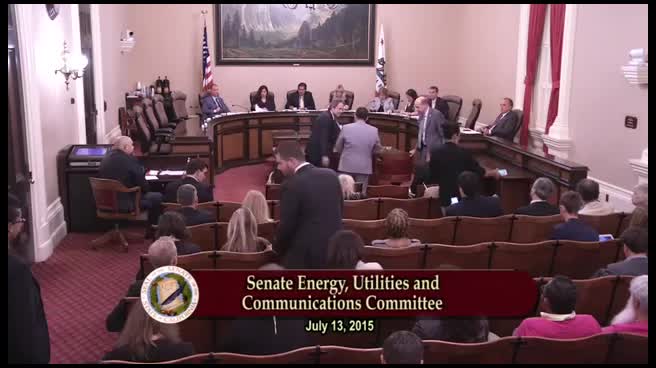
| Jul 13, 2015 | Do pass, but first be re-referred to the Committee on [Appropriations] | Senate Standing Committee on Energy, Utilities and Communications |
Passed |
|
| Jun 3, 2015 | AB 1266 GONZALEZ Assembly Third Reading | Assembly Floor |
Passed |
|
| May 28, 2015 | Do pass. | Assembly Standing Committee on Appropriations |
Passed |
|
| Apr 27, 2015 | Do pass as amended and be re-referred to the Committee on [Appropriations] | Assembly Standing Committee on Utilities and Commerce |
Passed |
This list shows positions taken on this bill by organizations on the date displayed, which is linked to the original source.
Positions by individuals are not included.
|
Organization
|
Position
|
Date
|
|---|---|---|
| California Business Properties Association | ** Against | Sep 10, 2015 |
| California Chamber Of Commerce | ** Against | Sep 10, 2015 |
| California State Association Of Electrical Workers | ** Support | Sep 10, 2015 |
| Coalition of California Utility Employees | ** Support | Sep 10, 2015 |
| IBEW Local 47 | * Support | Jul 13, 2015 |
| Office of Ratepayer Advocates | ** Support | Sep 10, 2015 |
| Southern California Edison | ** Against | Sep 10, 2015 |
| Southwest California Legislative Council | ** Against | Sep 10, 2015 |
| State Building & Construction Trades Council Of California | * Support | Jul 13, 2015 |
| The Utility Reform Network | ** Support | Sep 10, 2015 |
AB 1266
Page 2
CONCURRENCE IN SENATE AMENDMENTS
AB 1266
(Gonzalez)
As Amended September 4, 2015
Majority vote
ASSEMBLY: |
48-28 |
(June 3, 2015) |
SENATE: |
24-14 |
(September 10, 2015) |
Original Committee Reference: U. & C.
SUMMARY: Prohibits an electrical or gas corporation from recovering from ratepayers' expenses for excess compensation paid to an officer of the utility for five years following a triggering event, unless approved by the California Public Utilities Commission (CPUC), as specified.
The Senate amendments redefine excess compensation as over $1 million, clarify that restriction on excess compensation applies to five years after a triggering event, and make other technical changes.
EXISTING LAW:
Gives the CPUC regulatory authority over public utilities, including electrical corporations and gas corporations, as defined. (Public Utilities Code Sections 218 and 222)
Requires the shareholders of a public utility to bear any expenses resulting from a bonus paid to an executive officer of a public utility that has ceased to pay its debts in the ordinary course of business, and prohibits any expense from being recovered in rates. (Public Utilities Code Section 451.5)
FISCAL EFFECT: According to the Senate Appropriations Committee, this bill would have unknown ongoing costs, potentially $200,000 annually, to the Public Utilities Reimbursement Account for proceedings and review of excess compensation.
COMMENTS:
Author’s Statement: "Neither shareholders nor ratepayers played any role in the management missteps that led to the multi-billion dollar disaster that the SONGS shutdown has become. To reward top executives for successfully passing the buck to everyday ratepayers and stockholders who are trying to build a secure retirement is inexplicable to me, and should face public scrutiny."
Background: The CPUC requires regulated utilities to go through a General Rate Case to request funding for distribution and generation costs. The General Rate Case examines the utility’s revenues and expenses, including executive compensation, and provides a detailed forecast of how they will structure their operations and make investments for the next three years. Furthermore, CPUC General Order No. 77-M requires the utility to file a statement showing the names, titles, and duties of all employees with a base salary of at least $125,000 annually.
Closure of San Onofre Nuclear Plant: In 2012, Southern California Edison (SCE) announced that it was closing the San Onofre Nuclear Generating Station (SONGS) after a leak was discovered in a steam generator tube installed in 2010 that transported radioactive water from one of the reactors. In 2014, SCE reached a settlement with the CPUC to allow it to collect $3.3 billion from ratepayers and $1.4 billion from shareholders to fund the cost of closing SONGS. The settlement also gave ratepayers a share of the money recovered from litigation against Mitsubishi, the manufacturer of the faulty steam generator, as well as an equal share of any legal settlement with Mitsubishi.
This bill prohibits an electrical or gas corporation from recovering expenses for excess compensation from ratepayers for five years following a triggering event unless the utility obtains approval from the CPUC, as specified.
Analysis Prepared by: Edmond Cheung / U. & C. / (916) 319-2083 FN: 0002268
AB 1266
Page 5
|
Office of Senate Floor Analyses (916) 651-1520 Fax: (916) 327-4478 |
THIRD READING
Bill No: AB 1266
Amended: 9/4/15 in Senate
SENATE ENERGY, U. & C. COMMITTEE: 7-3, 7/13/15
AYES: Hueso, Hill, Lara, Leyva, McGuire, Pavley, Wolk
NOES: Fuller, Cannella, Morrell
NO VOTE RECORDED: Hertzberg
SENATE APPROPRIATIONS COMMITTEE: 5-2, 8/27/15
AYES: Lara, Beall, Hill, Leyva, Mendoza
NOES: Bates, Nielsen
ASSEMBLY FLOOR: 48-28, 6/3/15 - See last page for vote
SUBJECT: Electrical and gas corporations: excess compensation
SOURCE: Coalition of California Utility Employees
DIGEST: This bill prohibits an electrical or gas corporation from recovering from ratepayers expenses for excess compensation paid to an executive officer of the utility for a five-year period following a triggering event, unless the utility obtains approval from the California Public Utilities Commission (CPUC).
Senate Floor Amendments of 9/4/15 require investor-owned electrical and gas utilities to place all authorized executive compensation in a separate fund account in order to allow the CPUC an available mechanism to refund to ratepayers excess compensation that was previously authorized in a utility’s general rate case should a triggering event occur.
Existing law:
Establishes the CPUC and empowers it to regulate privately-owned public utilities in California. Specifies that the Legislature may prescribe that additional classes of private corporations or other persons are public utilities. (Article XII of the California Constitution; Public Utilities Code §301 et seq.)
Provides the CPUC regulatory authority over public utilities, including electrical corporations and gas corporations, as defined. (Public Utilities Code §§218 and 222)
Requires the shareholder of a public utility to bear any expenses resulting from a bonus paid to an executive officer of a public utility that has ceased to pay its debts in the ordinary course of business, and prohibits any expense from being recovered in rates. (Public Utilities Code §451.5)
This bill:
Prohibits an electrical or gas corporation from recovering from ratepayers expenses for excess compensation paid to an officer of the utility for a five-year period following a triggering event, as specified, unless the utility gets prior approval from the CPUC.
Requires an electrical and gas corporation to file an application with the CPUC prior to paying or seeking recovery of excess compensation for a five-year period following a triggering event.
Requires CPUC to open a proceeding to evaluate the application.
Requires CPUC to issue a written determination whether any expenses for excess compensation proposed to be paid by the electrical corporation or gas corporation should be recovered in rates, or if previously authorized to be recovered in rates should be refunded to ratepayers.
Specifies that a triggering event occurs, after January 1, 2013, if an electrical or gas corporation violates a federal or state safety violation resulting in ratepayers incurring financial responsibility in excess of $5 million.
Defines excess compensation as any annual salary, bonus, benefits or other consideration of any value paid to an officer of an officer of an electrical corporation that is an excess of $1 million.
Requires the CPUC to require investor-owned electrical and gas corporations to place all authorized executive compensation in a special fund account so that this bill can be implemented without violating any prohibition on retroactive ratemaking.
Background
General Rate Case (GRC). All utilities that are regulated by the CPUC are required to undergo a GRC to request funding for distribution and generation costs associated with their service. GRCs are major regulatory proceedings and provide the CPUC an opportunity to perform an exhaustive examination of a utility’s operations and costs. Usually performed every three years, the GRC allows the CPUC to conduct a broad and detailed review of a utility’s revenues, expenses, and investments in plant and equipment to establish an approved revenue requirement. Through the GRC, a utility forecasts how they will structure their operations and make investments for the next three years. Within the GRC, the CPUC reviews executive compensation as part of the total compensation provided to the utility.
San Onofre Nuclear Generating Station (SONGS). In 2012, Southern California Edison (SCE) reported that SONGS would be temporarily shut down after a steam generator failed and leaked radioactive gas. In 2013, SCE announced it could not afford to keep the plant open and would permanently retire the plant. In November 2014, the CPUC approved a settlement agreement between utilities and ratepayer advocates that split the costs of retiring the facility and the associated replacement power with ratepayers responsible for $3.3 billion of the $4.7 billion total costs.
Need for this bill. The author argues that the SONGS case exemplifies the need to make the executive compensation process for officers and executives of California regulated utilities more transparent and responsive to the ratepayers. The author notes that executive compensations were high even in the backdrop of the SONGS closure and the billions of dollars that ratepayers would have to shoulder to retire the facility. Specifically, the author notes SCE’s chairman received $11 million in total compensation in 2013 and that less than three weeks following the SONGS settlement, SCE President cashed out nearly $9 million in company stock.
Time machine of sorts. The CPUC in a GRC proceeding authorizes forecasted operations and investments of a utility for the coming three years. However, a triggering event that results in $5 million or more in ratepayer costs can occur after the approval of a GRC. As such, the author’s Senate Floor amendments require regulated investor-owned electric and gas utilities to place all authorized executive compensation into a fund account. The fund account is intended to provide the CPUC a flexible mechanism to refund to ratepayers previously approved executive compensation should a triggering event occur after the initial approval.
FISCAL EFFECT: Appropriation: No Fiscal Com.: Yes Local: Yes
According to the Senate Appropriations Committee, unknown ongoing costs, potentially $200,000 annually, to the Public Utilities Reimbursement Account for proceedings and review of excess compensation.
Coalition of California Utility Employees (source)
California Labor Federation
California State Association of Electrical Workers
Office of Ratepayer Advocates
The Utility Reform Network
California Business Properties Association
California Chamber of Commerce
Southern California Edison
Southwest California Legislative Council
ARGUMENTS IN SUPPORT: The author states that the CPUC “has never conducted a proceeding to determine if the compensation for any individual is appropriate or justified and the CPUC never considers whether the utility's performance warrants any change in ratepayer-paid executive compensation. Not after the San Bruno disaster or the SONGS disaster, not even after SCE was fined $200 million for falsifying performance records and customer satisfaction surveys.”
ARGUMENTS IN OPPOSITION: SCE argues: “This bill is not necessary… executive compensation for electrical and gas corporations is already under regulatory oversight with multiple opportunities for stakeholder involvement to ensure fair and just compensation for utility officers…despite being a necessary cost of providing safe and reliable utility service, the CPUC routinely denies recovery in customer rates of a significant portion of executive compensation.”
ASSEMBLY FLOOR: 48-28, 6/3/15
AYES: Alejo, Bloom, Bonilla, Bonta, Brown, Burke, Calderon, Campos, Chau, Chiu, Chu, Cooper, Dababneh, Dodd, Eggman, Cristina Garcia, Eduardo Garcia, Gatto, Gipson, Gomez, Gonzalez, Gordon, Gray, Roger Hernández, Holden, Irwin, Jones-Sawyer, Levine, Lopez, Low, McCarty, Medina, Mullin, Nazarian, O'Donnell, Perea, Quirk, Rendon, Rodriguez, Salas, Santiago, Mark Stone, Thurmond, Ting, Weber, Williams, Wood, Atkins
NOES: Achadjian, Travis Allen, Baker, Bigelow, Brough, Chang, Chávez, Dahle, Frazier, Beth Gaines, Gallagher, Grove, Hadley, Harper, Jones, Kim, Lackey, Linder, Mathis, Mayes, Melendez, Obernolte, Olsen, Patterson, Steinorth, Wagner, Waldron, Wilk
NO VOTE RECORDED: Cooley, Daly, Maienschein, Ridley-Thomas
Prepared by: Nidia Bautista / E., U., & C. / (916) 651-4107
9/8/15 21:01:58
**** END ****
AB 1266
Page 4
|
Office of Senate Floor Analyses (916) 651-1520 Fax: (916) 327-4478 |
THIRD READING
Bill No: AB 1266
Amended: 8/31/15 in Senate
SENATE ENERGY, U. & C. COMMITTEE: 7-3, 7/13/15
AYES: Hueso, Hill, Lara, Leyva, McGuire, Pavley, Wolk
NOES: Fuller, Cannella, Morrell
NO VOTE RECORDED: Hertzberg
SENATE APPROPRIATIONS COMMITTEE: 5-2, 8/27/15
AYES: Lara, Beall, Hill, Leyva, Mendoza
NOES: Bates, Nielsen
ASSEMBLY FLOOR: 48-28, 6/3/15 - See last page for vote
SUBJECT: Electrical and gas corporations: excess compensation
SOURCE: Coalition of California Utility Employees
DIGEST: This bill prohibits an electrical or gas corporation from recovering from ratepayers expenses for excess compensation paid to an executive officer of the utility for a five-year period following a triggering event, unless the utility obtains approval from the California Public Utilities Commission (CPUC).
Existing law:
Establishes the CPUC and empowers it to regulate privately-owned public utilities in California. Specifies that the Legislature may prescribe that additional classes of private corporations or other persons are public utilities. (Article XII of the California Constitution; Public Utilities Code §301 et seq.)
Provides the CPUC regulatory authority over public utilities, including electrical corporations and gas corporations, as defined. (Public Utilities Code §§218 and 222)
Requires the shareholder of a public utility to bear any expenses resulting from a bonus paid to an executive officer of a public utility that has ceased to pay its debts in the ordinary course of business, and prohibits any expense from being recovered in rates. (Public Utilities Code §451.5)
This bill:
Prohibits an electrical or gas corporation from recovering from ratepayers expenses for excess compensation paid to an officer of the utility for a five-year period following a triggering event, as specified, unless the utility gets prior approval from the CPUC.
Requires an electrical and gas corporation to file an application with the CPUC prior to paying or seeking recovery of excess compensation for a five-year period following a triggering event.
Requires CPUC to open a proceeding to evaluate the application.
Requires CPUC to issue a written determination whether any expenses for excess compensation proposed to be paid by the electrical corporation or gas corporation should be recovered in rates, or if previously authorized to be recovered in rates should be refunded to ratepayers.
Specifies that a triggering event occurs, after January 1, 2013, if an electrical or gas corporation violates a federal or state safety violation resulting in ratepayers incurring financial responsibility in excess of $5 million.
Defines excess compensation as any annual salary, bonus, benefits or other consideration of any value paid to an officer of an officer of an electrical corporation that is an excess of $1 million.
Background
General Rate Case (GRC). All utilities that are regulated by the CPUC are required to undergo a GRC to request funding for distribution and generation costs associated with their service. GRCs are major regulatory proceedings and provide the CPUC an opportunity to perform an exhaustive examination of a utility’s operations and costs. Usually performed every three years, the GRC allows the CPUC to conduct a broad and detailed review of a utility’s revenues, expenses, and investments in plant and equipment to establish an approved revenue requirement. Through the GRC, a utility forecasts how they will structure their operations and make investments for the next three years. Within the GRC, the CPUC reviews executive compensation as part of the total compensation provided to the utility.
San Onofre Nuclear Generating Station (SONGS). In 2012, Southern California Edison (SCE) reported that SONGS would be temporarily shut down after a steam generator failed and leaked radioactive gas. In 2013, SCE announced it could not afford to keep the plant open and would permanently retire the plant. In November 2014, the CPUC approved a settlement agreement between utilities and ratepayer advocates that split the costs of retiring the facility and the associated replacement power with ratepayers responsible for $3.3 billion of the $4.7 billion total costs.
Need for this bill. The author argues that the SONGS case exemplifies the need to make the executive compensation process for officers and executives of California regulated utilities more transparent and responsive to the ratepayers. The author notes that executive compensations were high even in the backdrop of the SONGS closure and the billions of dollars that ratepayers would have to shoulder to retire the facility. Specifically, the author notes SCE’s chairman received $11 million in total compensation in 2013 and that less than three weeks following the SONGS settlement, SCE President cashed out nearly $9 million in stock.
FISCAL EFFECT: Appropriation: No Fiscal Com.: Yes Local: Yes
According to the Senate Appropriations Committee, unknown ongoing costs, potentially $200,000 annually, to the Public Utilities Reimbursement Account for proceedings and review of excess compensation.
Coalition of California Utility Employees (source)
California Labor Federation
California State Association of Electrical Workers
Office of Ratepayer Advocates
The Utility Reform Network
OPPOSITION: (Verified 8/28/15)
California Business Properties Association
California Chamber of Commerce
Southern California Edison
Southwest California Legislative Council
ARGUMENTS IN SUPPORT: The author states that the CPUC “has never conducted a proceeding to determine if the compensation for any individual is appropriate or justified and the CPUC never considers whether the utility's performance warrants any change in ratepayer-paid executive compensation. Not after the San Bruno disaster or the SONGS disaster, not even after SCE was fined $200 million for falsifying performance records and customer satisfaction surveys.”
ARGUMENTS IN OPPOSITION: SCE argues: “This bill is not necessary… executive compensation for electrical and gas corporations is already under regulatory oversight with multiple opportunities for stakeholder involvement to ensure fair and just compensation for utility officers…despite being a necessary cost of providing safe and reliable utility service, the CPUC routinely denies recovery in customer rates of a significant portion of executive compensation.”
ASSEMBLY FLOOR: 48-28, 6/3/15
AYES: Alejo, Bloom, Bonilla, Bonta, Brown, Burke, Calderon, Campos, Chau, Chiu, Chu, Cooper, Dababneh, Dodd, Eggman, Cristina Garcia, Eduardo Garcia, Gatto, Gipson, Gomez, Gonzalez, Gordon, Gray, Roger Hernández, Holden, Irwin, Jones-Sawyer, Levine, Lopez, Low, McCarty, Medina, Mullin, Nazarian, O'Donnell, Perea, Quirk, Rendon, Rodriguez, Salas, Santiago, Mark Stone, Thurmond, Ting, Weber, Williams, Wood, Atkins
NOES: Achadjian, Travis Allen, Baker, Bigelow, Brough, Chang, Chávez, Dahle, Frazier, Beth Gaines, Gallagher, Grove, Hadley, Harper, Jones, Kim, Lackey, Linder, Mathis, Mayes, Melendez, Obernolte, Olsen, Patterson, Steinorth, Wagner, Waldron, Wilk
NO VOTE RECORDED: Cooley, Daly, Maienschein, Ridley-Thomas
Prepared by: Nidia Bautista / E., U., & C. / (916) 651-4107
8/30/15 19:27:45
**** END ****
AB 1266 (Gonzalez) Page 0 of 1
SENATE COMMITTEE ON APPROPRIATIONS
Senator Ricardo Lara, Chair
2015 - 2016 Regular Session
AB 1266 (Gonzalez) - Electrical and gas corporations: excess compensation.
|
|
Version: May 4, 2015 |
Policy Vote: E., U., & C. 7 - 3 |
Urgency: No |
Mandate: Yes |
Hearing Date: August 27, 2015 |
Consultant: Marie Liu |
*********** ANALYSIS ADDENDUM – SUSPENSE FILE ***********
The following information is revised to reflect amendments
adopted by the committee on August 27, 2015
Bill Summary:
AB 1266 would prohibit an electrical or gas corporation from recovering expenses for excess compensation, as defined, from ratepayers if there have been safety violations that result in over $5,000,000 in ratepayer costs.
Fiscal Impact:
Unknown ongoing costs, potentially $200,000 annually, to the Public Utilities Reimbursement Account (special) for proceedings and review of excess compensation.
Author Amendments:
Redefine excess compensation as over $1,000,000; clarify that restrictions on excess compensation applies to five years after a triggering event; and clarifying amendments.
-- END --
AB 1266 (Gonzalez) Page 2 of 2
SENATE COMMITTEE ON APPROPRIATIONS
Senator Ricardo Lara, Chair
2015 - 2016 Regular Session
AB 1266 (Gonzalez) - Electrical and gas corporations: excess compensation.
|
|
Version: May 4, 2015 |
Policy Vote: E., U., & C. 7 - 3 |
Urgency: No |
Mandate: Yes (see staff comment) |
Hearing Date: August 17, 2015 |
Consultant: Marie Liu |
This bill meets the criteria for referral to the Suspense File.
Bill Summary:
AB 1266 would prohibit an electrical or gas corporation from recovering expenses for excess compensation, as defined, from ratepayers if there have been safety violations that result in over $5,000,000 in ratepayer costs.
Fiscal Impact:
Unknown ongoing costs, potentially $200,000 annually, to the Public Utilities Reimbursement Account (special) for proceedings and review of excess compensation.
Background:
All CPUC regulated utilities are required to have their rates approved by the CPUC through a General Rate Case (GRC). These cases usually are performed every three years and allow the CPUC to examine the utility’s revenues, expenses, and infrastructure investments, including executive compensation. A utility can request changes to rates outside of the GRC through an advice letter, which are procedurally less formal than the GRC or other proceeding. Advice letters are classified into three tiers based on when and how they become effective. Tier 3 advice letters require commissioners to hear the item and take a vote at a publically noticed meeting.
In 2012, Southern California Edison (SCE) temporarily shut down the San Onofre Nuclear Generation Station (SONGS) after a steam generator failed and leaked radioactive gas. In 2013, SCE announced that it could not afford to keep the plant open and that SONGS would be permanently retired. Under a CPUC approved settlement, ratepayers will be responsible for paying for $3.3 billion of the $4.7 billion total costs necessary to retire the facility and supply replacement power. In 2013, SCE’s chairman received $11 million in total compensation in 2013, and less than three weeks following the SONGS settlement, the president of SCE cashed out nearly $9 million in stocks.
Proposed Law:
This bill would prohibit an electrical or gas corporation from recovering expenses for an officer’s excess compensation from ratepayers following a “triggering event” unless the utility files a Tier 3 advice letter with the following information:
The officer’s compensation history.
The officer’s proposed excess compensation, delineating between the compensation requested to be paid by ratepayers and compensation paid by the shareholders.
Whether the excess compensation was previously included or proposed prior to the triggering event.
If the excess compensation was previously requested prior to a triggering event, the CPUC would be require to open a proceeding, or expand an existing hearing, to consider the ratepayer costs of the triggering event and whether any previously-approved expenses for excess compensation should be refunded to ratepayers.
This bill would define “excess compensation” as any salary, bonus, or benefits paid to an officer of a utility that is more than 10 times the average compensation paid to the utility’s journeyman linemen.
A “triggering event” would be defined a violation of federal or state plant and facility safety regulations after January 1, 2013 that result in the ratepayers incurring a financial responsibility of over $5 million.
Staff Comments:
Costs to the CPUC associated with this bill are largely unknown because it is unknown how often triggering events will occur and the bill does not specify how long the limitations on excess compensation would be imposed. As an example, assuming that the bill’s limitation on excess compensation be limited to the existing GRC cycle and California’s three largest IOUs all have a triggering event after receiving authorization to recover excess compensation in rates, the CPUC would likely need $200,000 annually ongoing in proceeding costs to consider whether ratepayers should be refunded costs associated with excess compensations.
Staff notes that the bill defines excess compensation for an officer of an IOU as any salary, bonus, benefits, or other consideration of any value, paid to an officer that is more than 10 times the average “compensation” paid by the utility to the utility’s journeyman linemen; however “compensation” for the linemen is not defined. The Senate Energy and Utilities analysis on this bill reported that the average annual salary of linemen is approximately $80,000. However, SCE reported to this committee that the average annual compensation of its linemen was $201,626 based on the average lineman’s base salary plus overtime ($162,602) and 24% for benefits. As the definition of “compensation” would affect when the review required by this bill would be triggered, staff recommends that compensation be defined and be specified in annual amounts or, alternatively, the author may wish to consider setting excess compensation at a set amount, say $2 million, which would be adjusted annually for inflation.
This bill constitutes a state mandate as it creates a new crime. However, under the California Constitution, costs associated with this mandate are not reimbursable.
-- END --
AB 1266 (Gonzalez) Page 4 of 4
SENATE COMMITTEE ON ENERGY, UTILITIES AND COMMUNICATIONS
Senator Ben Hueso, Chair
2015 - 2016 Regular
Bill No: AB 1266 Hearing Date: 7/13/2015
Author: |
Gonzalez |
||
Version: |
5/4/2015 As Amended |
||
Urgency: |
No |
Fiscal: |
Yes |
Consultant: |
Nidia Bautista |
||
SUBJECT: Electrical and gas corporations: excess compensation.
DIGEST: This bill prohibits an electrical or gas corporation from recovering from ratepayers’ expenses for excess compensation paid to an executive officer of the utility following a triggering event, unless approved by the California Public Utilities Commission (CPUC).
ANALYSIS:
Existing law:
Establishes the CPUC and empowers it to regulate privately-owned public utilities in California. Specifies that the Legislature may prescribe that additional classes of private corporations or other persons are public utilities. (Article XII of the California Constitution; Public Utilities Code §301 et seq.)
Provides the CPUC regulatory authority over public utilities, including electrical corporations and gas corporations, as defined. (Public Utilities Code §§218 and 222)
Requires the shareholder of a public utility to bear any expenses resulting from a bonus paid to an executive officer of a public utility that has ceased to pay its debts in the ordinary course of business, and prohibits any expense from being recovered in rates. (Public Utilities Code §451.5)
This bill:
Prohibits an electrical or gas corporation from recovering from ratepayers expenses for excess compensation paid to an officer of the utility following a triggering event, as specified, unless the utility gets approval from the CPUC.
Requires an electrical and gas corporation to file a Tier 3 advice letter with the CPUC prior to paying or seeking recovery of excess compensation following a triggering event.
Requires CPUC to open a proceeding or expand the scope of an existing proceeding to evaluate the advice letter.
Requires CPUC to issue a written determination regarding the ability to recover officers' compensation from ratepayers.
Specifies that a triggering event occurs, after January 1, 2013, if an electrical or gas corporation violates a federal or state safety violation resulting in ratepayers incurring financial responsibility in excess of $5 million.
Defines excess compensation as any salary, bonus, benefits or other consideration of any value in excess of 10 times the average salary of utility journeyman lineman.
Background
General Rate Case (GRC). All utilities that are regulated by the CPUC are required to undergo a GRC to request funding for distribution and generation costs associated with their service. GRCs are major regulatory proceedings and provide the CPUC an opportunity to perform an exhaustive examination of a utility’s operations and costs. Usually performed every three years, the GRC allows the CPUC to conduct a broad and detailed review of a utility’s revenues, expenses, and investments in plant and equipment to establish an approved revenue requirement. Through the GRC, a utility forecasts how they will structure their operations and make investments for the next three years. Within the GRC, the CPUC reviews executive compensation, as part of the total compensation provided to the utility.
CPUC advice letter. An advice letter is a request by a utility for CPUC approval, authorization, or other relief, including an informal request for approval to furnish service under rates, charges, terms or conditions other than those contained in the utility's approved rates and terms and conditions. Advice letters are procedurally less formal than other proceedings at the CPUC, which require more judicial-type elements of an evidentiary hearing. Advice letters are classified into three tiers, ranging from Tier 1 to Tier 3. Tier 1 advice letters generally become effective upon filing of the letter. However, Tier 3 advice letters require commissioners to hear the item and take a vote at a publicly noticed meeting.
San Onofre Nuclear Generating Station (SONGS). In 2012, Southern California Edison (SCE) reported that SONGS would be temporarily shut down after a steam generator failed and leaked radioactive gas. In 2013, SCE announced it could not afford to keep the plant open and would permanently retire the plant. In November 2014, the CPUC approved a settlement agreement between utilities and ratepayer advocates that split the costs of retiring the facility and the associated replacement power, with ratepayers responsible for $3.3 billion of the $4.7 billion total costs.
The author argues that the SONGS case presents justification for why this bill is needed. The author notes that executive compensations were high even in the backdrop of the SONGS closure and the billions of dollars that ratepayers would have to shoulder to retire the facility. Specifically, the author notes SCE’s chairman received $11 million in total compensation in 2013 and that less than three weeks following the SONGS settlement, SCE President cashed out nearly $9 million in stock. Contrast these compensation packages to the roughly $80,000 annual salary of a utility journeyman lineman.
Prior/Related Legislation
None.
FISCAL EFFECT: Appropriation: No Fiscal Com.: Yes Local: Yes
ASSEMBLY VOTES:
Assembly Floor (48-28)
Assembly Appropriations Committee (12-5)
Assembly Utilities and Commerce Committee (10-5)
SUPPORT:
Coalition of California Utility Employees (source)
California Labor Federation
California State Association of Electrical Workers
Office of Ratepayer Advocates
The Utility Reform Network
OPPOSITION:
California Business Properties Association
California Chamber of Commerce
Southern California Edison
Southwest California Legislative Council
ARGUMENTS IN SUPPORT: The author states that the CPUC “has never conducted a proceeding to determine if the compensation for any individual is appropriate or justified and the CPUC never considers whether the utility's performance warrants any change in ratepayer-paid executive compensation. Not after the San Bruno disaster or the SONGS disaster, not even after SCE was fined $200 million for falsifying performance records and customer satisfaction surveys.”
ARGUMENTS IN OPPOSITION: SCE argues: “This bill is not necessary… executive compensation for electrical and gas corporations is already under regulatory oversight with multiple opportunities for stakeholder involvement to ensure fair and just compensation for utility officers…despite being a necessary cost of providing safe and reliable utility service, the CPUC routinely denies recovery in customer rates of a significant portion of executive compensation.”
-- END --
AB 1266
Page 2
ASSEMBLY THIRD READING
AB 1266
(Gonzalez)
As Amended May 4, 2015
Majority vote
Committee |
Votes |
Ayes |
Noes |
Utilities |
10-5 |
Rendon, Bonilla, Burke, Eggman, Cristina Garcia, Roger Hernández, Quirk, Santiago, Ting, Williams |
Patterson, Achadjian, Dahle, Hadley, Obernolte |
Appropriations |
12-5 |
Gomez, Bonta, Calderon, Daly, Eggman, Eduardo Garcia, Gordon, Holden, Quirk, Rendon, Weber, Wood |
Bigelow, Chang, Gallagher, Jones, Wagner |
SUMMARY: Prohibits an electrical or gas corporation from recovering from ratepayers' expenses for excess compensation paid to an officer of the utility following a triggering event, unless approved by the California Public Utilities Commission (CPUC), as specified. Specifically, this bill:
Prohibits an electrical or gas corporation from recovering expenses for excess compensation from ratepayers following a triggering event, unless the utility complies with specific requirements and obtains the approval of the CPUC, as specified.
Defines "excess compensation" to mean any salary, bonus, benefits, stock options, or other consideration of any value paid to an officer of an electrical or gas corporation that is in excess of ten times the average compensation paid by the utility to the utility’s journeyman linemen.
Specifies that a "triggering event" occurs if, after January 1, 2013, an electrical corporation or gas corporation violates a federal or state safety regulation with respect to the plant and facility of the utility and, as a proximate cause of that violation, ratepayers incur a financial responsibility in excess of $5 million.
Requires an electrical or gas corporation, prior to paying or seeking recovery of excess compensation following a triggering event, to file a Tier 3 advice letter with the CPUC that includes all of the following:
The compensation history for the officer,
The proposed compensation to be paid to the officer, including the compensation recovered from ratepayers and that paid solely by shareholders of the utility,
Any justification for the proposed compensation, and
Any additional information required by the CPUC.
Requires the CPUC to open a proceeding, or expand the scope of an existing proceeding to evaluate the advice letter, and consider the costs to ratepayers of the triggering event, and hold at least one duly noticed public hearing for the proceeding.
Requires the CPUC to issue a written decision determining whether and, if so, how much of each officers’ compensation shall be recoverable from ratepayers.
FISCAL EFFECT: According to the Assembly Appropriations Committee, there would be increased CPUC costs of approximately $150,000 over an 18-month period to conduct one proceeding. In addition, there would be ongoing annual CPUC costs of approximately $50,000.
COMMENTS:
Author’s Statement: "Neither shareholders nor ratepayers played any role in the management missteps that led to the multi-billion dollar disaster that the SONGS shutdown has become. To reward top executives for successfully passing the buck to everyday ratepayers and stockholders who are trying to build a secure retirement is inexplicable to me, and should face public scrutiny. "
Background: In 2012, Southern California Edison (SCE) announced that it was closing the San Onofre Nuclear Generating Station (SONGS) in San Clemente following the discovery of a radioactive leak caused by a faulty steam generator. In 2014, SCE reached a settlement with the CPUC to allow it to collect $3.3 billion from ratepayers and $1.4 billion from shareholders to fund the cost of the closing SONGS. The settlement also gave ratepayers a share of the money recovered from litigation against Mitsubishi, the manufacturer of the faulty steam generator, as well as an equal share of any legal settlement with Mitsubishi.
Executive Compensation: According to the author, "executive compensation is never the subject of a standalone proceeding where the public can engage … [In addition,] the [CPUC] has never conducted a proceeding to determine if the compensation for any individual is appropriate or justified, and never considers whether the utility’s performance warrants any change in executive compensation. Not after the San Bruno disaster or the SONGS disaster, not even after SCE was fined $200 million for falsifying performance records and customer satisfaction surveys."
This bill prohibits an electrical or gas corporation from recovering expenses for excess compensation from ratepayers following a triggering event, unless the utility submits to the CPUC a Tier 3 advice letter, as specified, and the CPUC opens or expands the scope of a hearing to consider the costs to ratepayers of the triggering event. The CPUC would have to hold at least one publically noticed hearing to consider the cost to ratepayers of the trigger event, and issue a decision on whether and, if so, how much of each officers' compensation shall be recoverable from ratepayers.
Analysis Prepared by: Edmond Cheung / U. & C. / (916) 319-2083 FN: 0000622
AB 1266
Page 2
Date of Hearing: May 27, 2015
ASSEMBLY COMMITTEE ON APPROPRIATIONS
Jimmy Gomez, Chair
AB 1266
(Gonzalez) – As Amended May 4, 2015
Policy Committee: |
Utilities and Commerce |
Vote: |
10 - 5 |
|
|
|
|
|
|
|
|
Urgency: No State Mandated Local Program: Yes Reimbursable: No
SUMMARY:
This bill prohibits an electrical or gas corporation from recovering excess compensation expenses from ratepayers following a triggering event, unless approved by the Public Utilities Commission. Specifically, this bill:
Requires an electrical or gas corporation to file a TIER 3 advice letter prior to paying or seeking recovery of excess compensation as specified. Requires PUC to open a proceeding or expand the scope of an existing proceeding to evaluate the advice letter.
Requires PUC to issue a written determination regarding the ability to recover officers' compensation from ratepayers.
Specifies that a triggering event occurs, after January 1, 2013, if an electrical or gas corporation violates a federal or state safety violation resulting in ratepayers incurring financial responsibility in excess of $5 million.
Defines excess compensation as any salary, bonus, benefits or other consideration of any value in excess of 10 times the average salary of utility journeyman lineman.
FISCAL EFFECT:
Increased PUC costs of approximately $150,000 over an 18-month period to conduct one proceeding.
Ongoing annual PUC costs of approximately $50,000.
COMMENTS:
Rationale. In 2012, Southern California Edison announced it would close the San Onofre Nuclear Generating Station (SONGS) in San Clemente following the discovery of a radioactive leak caused by a faulty steam generator. In 2014, SCE reached a settlement with the PUC to allow SCE to collect $3.3 billion from ratepayers and $1.4 billion from shareholders to fund the closure.
The settlement gave ratepayers a share of the money recovered from litigation against Mitsubishi, the manufacturer of the faulty steam generator, as well as an equal share of any legal settlement with Mitsubishi.
According to the author, neither shareholders nor ratepayers played any role in the activities led to the multi-billion dollar SONGS shutdown. This bill prevents investor-owned utilities from providing its executives with excess compensation after specific safety violations resulting in costs to ratepayers.
Analysis Prepared by: Jennifer Galehouse / APPR. / (916) 319-2081
AB 1266
Page 4
Date of Hearing: April 27, 2015
ASSEMBLY COMMITTEE ON UTILITIES AND COMMERCE
Anthony Rendon, Chair
AB 1266
(Gonzalez) – As Introduced February 27, 2015
SUBJECT: Electrical and gas corporations: excess compensation
SUMMARY: This bill prohibits an electrical or gas corporation from recovering from ratepayers’ expenses for excess compensation paid to an officer of the utility following a triggering event, unless approved by the California Public Utilities Commission (CPUC), as specified. Specifically, this bill:
Prohibits an electrical or gas corporation from recovering expenses for excess compensation from ratepayers following a triggering event unless the utility complies with specific requirements and obtains the approval of the CPUC, as specified.
Defines “excess compensation” to mean any salary, bonus, benefits, stock options, or other consideration of any value paid to an officer of an electrical or gas corporation that is in excess of 10 times the average compensation paid by the utility to the utility’s journeyman linemen.
Specifies that a “triggering event” occurs if, after January 1, 2013, an electrical corporation or gas corporation violates a federal or state safety regulation with respect to the plant and facility of the utility and, as a proximate cause of that violation, ratepayers incur a financial responsibility in excess of five million dollars.
Requires an electrical or gas corporation, prior to paying or seeking recovery of excess compensation following a triggering event, to file a Tier 3 advice letter with the CPUC that includes all of the following:
The compensation history for the officer,
The proposed compensation to be paid to the officer, including the compensation recovered from ratepayers and that paid solely by shareholders of the utility,
Any justification for the proposed compensation, and
Any additional information required by the CPUC.
Requires the CPUC to open a proceeding, or expand the scope of an existing proceeding to evaluate the advice letter and consider the costs to ratepayers of the triggering event, and hold at least one duly noticed public hearing for the proceeding.
Requires the CPUC to issue a written decision determining whether and, if so, how much of each officers’ compensation shall be recoverable from ratepayers.
EXISTING LAW:
Gives the CPUC regulatory authority over public utilities, including electrical corporations and gas corporations, as defined. (Public Utilities Code Sections 218 and 222)
Requires the shareholder of a public utility to bear any expenses resulting from a bonus paid to an executive officer of a public utility that has ceased to pay its debts in the ordinary course of business, and prohibits any expense from being recovered in rates. (Public Utilities Code Section 451.5)
FISCAL EFFECT: Unknown.
COMMENTS:
Author’s Statement: “Neither shareholders nor ratepayers played any role in the management missteps that led to the multi-billion dollar disaster that the SONGS shutdown has become. To reward top executives for successfully passing the buck to everyday ratepayers and stockholders who are trying to build a secure retirement is inexplicable to me, and should face public scrutiny.”
Background: The CPUC requires regulated utilities to go through a General Rate Case to request funding for distribution and generation costs. A General Rate Case is a state-mandated process in which utilities are required to provide a detailed forecast of how they will structure their operations and make investments for the next three years. The General Rate Case allows the CPUC to conduct a broad and detailed review of a utility’s revenues, expenses, and investments in plant and equipment to establish an approved revenue requirement. Within the General Rate Case under the “executive compensation” category, as part of the “total compensation” forecast of all utility employees or a separate line item, the CPUC reviews executive compensation. Furthermore, CPUC General Order No. 77-M requires the utility to file a statement showing the names, titles, and duties of all employees with a base salary of at least $125,000 annually.
Closure of San Onofre Nuclear Plant: In 2012, SCE announced that it was closing the San Onofre Nuclear Generating Station (SONGS) in San Clemente. The move comes after Southern California Edison (SCE) announced it could not afford to keep the plant open after a leak was discovered in a steam generator tube installed in 2010 that transported radioactive water from one of the reactors. In 2014, SCE reached a settlement with the CPUC to allow it to collect $3.3 billion from ratepayers and $1.4 billion from shareholders to fund the cost of the closing SONGS. The settlement also gave ratepayers a share of the money recovered from litigation against Mitsubishi, the manufacturer of the faulty steam generator, as well as an equal share of any legal settlement with Mitsubishi.
Executive Compensation: According to the author, “executive compensation [in the General Rate Case] is never the subject of a standalone proceeding where the public can engage… [In addition,] the [CPUC] has never conducted a proceeding to determine if the compensation for any individual is appropriate or justified, and never considers whether the utility’s performance warrants any change in executive compensation. Not after the San Bruno disaster or the SONGS disaster, not even after SCE was fined $200 million for falsifying performance records and customer satisfaction surveys.”
This bill prohibits an electrical or gas corporation from recovering expenses for excess compensation from ratepayers following a triggering event unless the utility submits to the CPUC a Tier 3 advice letter, as specified, and the CPUC opens or expands the scope of a hearing to consider the costs to ratepayers of the triggering event. The CPUC would have to hold at least one publically noticed hearing to consider the cost to ratepayers of the trigger event and issue a decision on whether and, if so, how much of each officers’ compensation shall be recoverable from ratepayers.
The author may wish to clarify that it intends to apply this bill only to electric or gas public utilities and not all electrical corporations and gas corporations.
The author may also wish to specify that the compensation is limited to compensation which has been approved in rates.
Suggested Amendments:
706.(a) For purposes of this section, the following terms have the following meanings:
(1) “Excess compensation” means any salary, bonus, benefits,
stock options, or other consideration of any value,
paid to an officer of an electrical corporation or gas
corporation electric or gas public utility that is in
excess of 10 times the average compensation paid by the utility to
the utility’s journeyman linemen.
(2) A “triggering event” occurs if, after January 1, 2013,
an electrical corporation or gas corporation
electric or gas public utility violates a federal or state
safety regulation with respect to the plant and facility of the
utility and, as a proximate cause of that violation, ratepayers incur
a financial responsibility in excess of five million dollars
($5,000,000).
(b) No electrical corporation or gas corporation
electric or gas public utility shall recover expenses for
excess compensation from ratepayers following a triggering event
unless the utility complies with the requirements of this section and
obtains the approval of the commission pursuant to this section.
(c) Following a triggering event and prior to paying or seeking
recovery of excess compensation, an electrical corporation or
gas corporation electric or gas public utility shall
file a Tier 3 advice letter with the commission that, with respect to
any officer paid excess compensation, includes all of the following:
(1) The compensation history for the officer.
(2) The proposed compensation to be paid to the officer, including the compensation recovered from ratepayers and that paid solely by shareholders of the utility.
(3) Whether any of
the compensation paid to officers was previously included or proposed
to be included in rates and aAny
justification for the proposed compensation.
(4) Any additional information required by the commission.
(d) If the utility
has previously been authorized recovery or has sought recovery of
such costs in its rates, then tThe
commission shall open a hearing, or expand the scope of an existing
proceeding, to evaluate the advice letter. As part of the proceeding,
the commission shall consider the costs to ratepayers of the
triggering event. The commission shall hold not less than one duly
noticed public hearing in the proceeding. The commission shall issue
a written decision determining whether any of the
previously authorized costs should be refunded to,
and if so, how much,
of each officers’ compensation shall be recoverable from
ratepayers.
Arguments in Support: According to the Coalition of California Utility Employees, the sponsor of the bill, “there has been a flurry of revelations of late concerning excess compensation for public utility executives. They have come at a time when some utilities have shut down resources and asked the ratepayers to absorb much of the cost. The appropriate filing of an advice letter with the California Public Utilities Commission will provide transparency for the ratepayer and the oversight of the Investor Owned Utilities. Excess compensation, in any form, to officers of a public utility that has violated federal or state safety regulations is unconscionable.”
REGISTERED SUPPORT / OPPOSITION:
Support
Coalition of California Utility Employees (Sponsor)
California State Association of Electrical Workers
The Utility Reform Network (TURN)
Opposition
None on file.
Analysis Prepared by: Edmond Cheung / U. & C. / (916) 319-2083

Bill Author

Bill Co-Author(s):