AB 1276: Child witnesses: human trafficking.
- Session Year: 2015-2016
- House: Assembly
- Latest Version Date: 2016-09-26
Existing law authorizes a court in a criminal proceeding, upon written notice by the prosecutor made at least 3 days prior to the date of the preliminary hearing or trial date on which the testimony of the minor is scheduled or during the course of the proceeding on the courts own motion, to order that the testimony of a minor 13 years of age or younger at the time of the motion be taken by contemporaneous examination and cross-examination in another place and out of the presence of the judge, jury, defendant or defendants, and attorneys, and communicated to the courtroom by means of closed-circuit television, if the court makes specified findings. One of the findings required by existing law requires is that the minors testimony will involve a recitation of the facts of specified crimes, including an alleged violent felony of which the minor is a victim.
This bill would authorize, under specified conditions, a minor 15 years of age or younger to testify by contemporaneous examination and cross-examination in another place and out of the presence of the judge, jury, defendant or defendants, and attorneys if the testimony will involve the recitation of the facts of an alleged offense of human trafficking.
Existing law authorizes a court in a criminal proceeding, upon written notice by the prosecutor made at least 3 days prior to the date of the preliminary hearing or trial date on which the testimony of the minor is scheduled or during the course of the proceeding on the courts own motion, to order that the testimony of a minor 13 years of age or younger at the time of the motion be taken by contemporaneous examination and cross-examination in another place and out of the presence of the judge, jury, defendant or defendants, and attorneys, and communicated to the courtroom by means of closed-circuit television, if the court makes specified findings. One of the findings required by existing law requires is that the minors testimony will involve a recitation of the facts of specified crimes, including an alleged violent felony of which the minor is a victim.
This bill would authorize, under specified conditions, a minor 17 15 years of age or younger to testify by contemporaneous examination and cross-examination in another place and out of the presence of the judge, jury, defendant or defendants, and attorneys if the testimony will involve the recitation of the facts of an alleged offense of human trafficking.
Existing law authorizes a court in a criminal proceeding, upon written notice by the prosecutor made at least 3 days prior to the date of the preliminary hearing or trial date on which the testimony of the minor is scheduled or during the course of the proceeding on the courts own motion, to order that the testimony of a minor 13 years of age or younger at the time of the motion be taken by contemporaneous examination and cross-examination in another place and out of the presence of the judge, jury, defendant or defendants, and attorneys, and communicated to the courtroom by means of closed-circuit television, if the court makes specified findings. One of the findings required by existing law requires is that the minors testimony will involve a recitation of the facts of specified crimes, including an alleged violent felony of which the minor is a victim.
This bill would authorize authorize, under specified conditions, a minor 17 years of age or younger to testify by contemporaneous examination and cross-examination in another place and out of the presence of the judge, jury, defendant or defendants, and attorneys if the testimony will involve the recitation of the facts of an alleged offense of human trafficking.
Existing law authorizes a court in a criminal proceeding, upon written notice by the prosecutor made at least 3 days prior to the date of the preliminary hearing or trial date on which the testimony of the minor is scheduled or during the course of the proceeding on the courts own motion, to order that the testimony of a minor 13 years of age or younger at the time of the motion be taken by contemporaneous examination and cross-examination in another place and out of the presence of the judge, jury, defendant or defendants, and attorneys, and communicated to the courtroom by means of closed-circuit television, if the court makes specified findings. One of the findings required by existing law requires is that the minors testimony will involve a recitation of the facts of specified crimes, including an alleged violent felony of which the minor is a victim.
This bill would authorize a minor 17 years of age or younger to testify by contemporaneous examination and cross-examination if the testimony will involve the recitation of the facts of an alleged offense of human trafficking.
Existing law establishes various sexual assault offenses, including the offense of rape. Under existing law, rape is defined as an act of sexual intercourse accomplished with a person who is not the spouse of the perpetrator, under certain circumstances, including where the act is accomplished against a persons will by means of force, violence, duress, menace, or fear of immediate and unlawful bodily injury on the person or another.
This bill would make technical, nonsubstantive changes to the these provisions.
(a)In any criminal proceeding in which a defendant is charged with a violation of Section 236.1, upon written notice by the prosecutor made at least three days prior to the date of the preliminary hearing or trial date on which the testimony of the minor is scheduled, or during the course of the proceeding on the courts own motion, may order that the testimony of a minor 15 years of age or younger at the time of the motion be taken by contemporaneous examination and cross-examination in another place and out of the presence of the judge, jury, defendant or defendants, and attorneys, and communicated to the courtroom by means of closed-circuit television, if the court makes all of the following findings:
(1)The minors testimony will involve a recitation of the facts of an alleged offense of human trafficking, as defined in Section 236.1.
(2)(A)The impact on the minor of one or more of the factors enumerated in clauses (i) to (v), inclusive, is shown by clear and convincing evidence to be so substantial as to make the minor unavailable as a witness unless closed-circuit testimony is used.
(i)Testimony by the minor in the presence of the defendant would result in the minor suffering serious emotional distress so that the minor would be unavailable as a witness.
(ii)The defendant used a deadly weapon in the commission of the offense.
(iii)The defendant threatened serious bodily injury to the minor or the minors family, threatened incarceration or deportation of the minor or a member of the minors family, threatened removal of the minor from the minors family, or threatened the dissolution of the minors family in order to prevent or dissuade the minor from attending or giving testimony at any trial or court proceeding, or to prevent the minor from reporting the alleged sexual offense, or from assisting in criminal prosecution.
(iv)The defendant inflicted great bodily injury upon the minor in the commission of the offense.
(v)The defendant or his or her counsel behaved during the hearing or trial in a way that caused the minor to be unable to continue his or her testimony.
(B)In making the determination required by this paragraph, the court shall consider the age of the minor, the relationship between the minor and the defendant or defendants, any handicap or disability of the minor, and the nature of the acts charged. The minors refusal to testify shall not alone constitute sufficient evidence that the special procedure described in this section is necessary to obtain the minors testimony.
(3)The equipment available for use of closed-circuit television would accurately communicate the image and demeanor of the minor to the judge, jury, defendant or defendants, and attorneys.
(b)If the court orders the use of closed-circuit television, two-way closed-circuit television shall be used, except that if the impact on the minor of one or more of the factors enumerated in clauses (i) to (v), inclusive, of subparagraph (A) of paragraph (2) of subdivision (a), is shown by clear and convincing evidence to be so substantial as to make the minor unavailable as a witness even if two-way closed-circuit television is used, one-way closed-circuit television may be used. The prosecution shall give the defendant or defendants at least 30 days written notice of the prosecutions intent to seek the use of one-way closed-circuit television, unless the prosecution shows good cause to the court why this 30-day notice requirement should not apply.
(c)(1)The hearing on a motion brought pursuant to this section shall be conducted out of the presence of the jury.
(2)Notwithstanding Section 804 of the Evidence Code or any other law, the court, in determining the merits of the motion, shall not compel the minor to testify at the hearing, nor shall the court deny the motion on the ground that the minor has not testified.
(3)In determining whether the impact on an individual minor of one or more of the five factors enumerated in clauses (i) to (v), inclusive, of subparagraph (A) of paragraph (2) of subdivision (a) is so substantial that the minor is unavailable as a witness unless two-way or one-way closed-circuit television is used, the court may question the minor in chambers, or at some other comfortable place other than the courtroom, on the record for a reasonable period of time with the support person, the prosecutor, and defense counsel present. The defendant or defendants shall not be present. The court shall conduct the questioning of the minor and shall not permit the prosecutor or defense counsel to examine the minor. The prosecutor and defense counsel shall be permitted to submit proposed questions to the court prior to the session in chambers. Defense counsel shall be afforded a reasonable opportunity to consult with the defendant or defendants prior to the conclusion of the session in chambers.
(d)When the court orders the testimony of a minor to be taken in another place outside of the courtroom, the court shall do all of the following:
(1)Make a brief statement on the record, outside of the presence of the jury, of the reasons in support of its order. While the statement need not include traditional findings of fact, the reasons shall be set forth with sufficient specificity to permit meaningful review and to demonstrate that discretion was exercised in a careful, reasonable, and equitable manner.
(2)Instruct the members of the jury that they are to draw no inferences from the use of closed-circuit television as a means of facilitating the testimony of the minor.
(3)Instruct respective counsel, outside of the presence of the jury, that they are to make no comment during the course of the trial on the use of closed-circuit television procedures.
(4)Instruct the support witness, outside of the presence of the jury, that he or she is not to coach, cue, or in any way influence or attempt to influence the testimony of the minor.
(5)Order that a complete record of the examination of the minor, including the images and voices of all persons who in any way participate in the examination, be made and preserved as a video recording in addition to being stenographically recorded. The video recording shall be transmitted to the clerk of the court in which the action is pending and shall be made available for viewing to the prosecuting attorney, the defendant or defendants, and his or her attorney during ordinary business hours. The video recording shall be destroyed after five years have elapsed from the date of entry of judgment. If an appeal is filed, the video recording shall not be destroyed until a final judgment on appeal has been ordered. A video recording that is taken pursuant to this section is subject to a protective order of the court for the purpose of protecting the privacy of the witness. This subdivision does not affect the provisions of subdivision (b) of Section 868.7.
(e)When the court orders the testimony of a minor to be taken in another place outside the courtroom, only the minor, a support person designated pursuant to Section 868.5, a nonuniformed bailiff, any technicians necessary to operate the closed-circuit equipment, and, after consultation with the prosecution and the defense, a representative appointed by the court, shall be physically present for the testimony. A video recording device shall record the image of the minor and his or her testimony, and a separate video recording device shall record the image of the support person.
(f)When the court orders the testimony of a minor to be taken in another place outside the courtroom, the minor shall be brought into the judges chambers prior to the taking of his or her testimony to meet for a reasonable period of time with the judge, the prosecutor, and defense counsel. A support person for the minor shall also be present. This meeting shall be for the purpose of explaining the court process to the minor and to allow the attorneys an opportunity to establish rapport with the minor to facilitate later questioning by closed-circuit television. A participant shall not discuss the defendant or defendants or any of the facts of the case with the minor during this meeting.
(g)When the court orders the testimony of a minor to be taken in another place outside the courtroom, this section does not prohibit the court from ordering the minor to be brought into the courtroom for a limited purpose, including the identification of the defendant or defendants as the court deems necessary.
(h)The examination shall be under oath, and the defendant or defendants shall be able to see and hear the minor witness, and if two-way closed-circuit television is used, the defendants image shall be transmitted live to the witness.
(i)This section does not affect the disqualification of witnesses pursuant to Section 701 of the Evidence Code.
(j)The cost of examination by contemporaneous closed-circuit television ordered pursuant to this section shall be borne by the court out of its existing budget.
(k)This section shall not be construed to prohibit a defendant from being represented by counsel during any closed-circuit testimony.
(a)In any criminal proceeding in which a defendant is charged with a violation of Section 236.1, upon written notice by the prosecutor made at least three days prior to the date of the preliminary hearing or trial date on which the testimony of the minor is scheduled, or during the course of the proceeding on the courts own motion, may order that the testimony of a minor 17 15 years of age or younger at the time of the motion be taken by contemporaneous examination and cross-examination in another place and out of the presence of the judge, jury, defendant or defendants, and attorneys, and communicated to the courtroom by means of closed-circuit television, if the court makes all of the following findings:
(1)The minors testimony will involve a recitation of the facts of an alleged offense of human trafficking, as defined in Section 236.1.
(2)(A)The impact on the minor of one or more of the factors enumerated in subparagraphs (A) to (E), clauses (i) to (v), inclusive, is shown by clear and convincing evidence to be so substantial as to make the minor unavailable as a witness unless closed-circuit testimony is used.
(A)
(i)Testimony by the minor in the presence of the defendant would result in the minor suffering serious emotional distress so that the minor would be unavailable as a witness.
(B)
(ii)The defendant used a deadly weapon in the commission of the offense.
(C)
(iii)The defendant threatened serious bodily injury to the minor or the minors family, threatened incarceration or deportation of the minor or a member of the minors family, threatened removal of the minor from the minors family, or threatened the dissolution of the minors family in order to prevent or dissuade the minor from attending or giving testimony at any trial or court proceeding, or to prevent the minor from reporting the alleged sexual offense, or from assisting in criminal prosecution.
(D)
(iv)The defendant inflicted great bodily injury upon the minor in the commission of the offense.
(E)
(v)The defendant or his or her counsel behaved during the hearing or trial in a way that caused the minor to be unable to continue his or her testimony.
In
(B)In making the determination required by this section, paragraph, the court shall consider the age of the minor, the relationship between the minor and the defendant or defendants, any handicap or disability of the minor, and the nature of the acts charged. The minors refusal to testify shall not alone constitute sufficient evidence that the special procedure described in this section is necessary to obtain the minors testimony.
(3)The equipment available for use of closed-circuit television would accurately communicate the image and demeanor of the minor to the judge, jury, defendant or defendants, and attorneys.
(b)If the court orders the use of closed-circuit television, two-way closed-circuit television shall be used, except that if the impact on the minor of one or more of the factors enumerated in subparagraphs (A) to (E), inclusive, clauses (i) to (v), inclusive, of subparagraph (A) of paragraph (2) of subdivision (a), is shown by clear and convincing evidence to be so substantial as to make the minor unavailable as a witness even if two-way closed-circuit television is used, one-way closed-circuit television may be used. The prosecution shall give the defendant or defendants at least 30 days written notice of the prosecutions intent to seek the use of one-way closed-circuit television, unless good cause is shown the prosecution shows good cause to the court why this 30-day notice requirement should not apply.
(c)(1)The hearing on a motion brought pursuant to this section shall be conducted out of the presence of the jury.
(2)Notwithstanding Section 804 of the Evidence Code or any other law, the court, in determining the merits of the motion, shall not compel the minor to testify at the hearing, nor shall the court deny the motion on the ground that the minor has not testified.
(3)In determining whether the impact on an individual minor of one or more of the five factors enumerated in subparagraph (A) to (E) inclusive, clauses (i) to (v), inclusive, of subparagraph (A) of paragraph (2) of subdivision (a) is so substantial that the minor is unavailable as a witness unless two-way or one-way closed-circuit television is used, the court may question the minor in chambers, or at some other comfortable place other than the courtroom, on the record for a reasonable period of time with the support person, the prosecutor, and defense counsel present. The defendant or defendants shall not be present. The court shall conduct the questioning of the minor and shall not permit the prosecutor or defense counsel to examine the minor. The prosecutor and defense counsel shall be permitted to submit proposed questions to the court prior to the session in chambers. Defense counsel shall be afforded a reasonable opportunity to consult with the defendant or defendants prior to the conclusion of the session in chambers.
(d)When the court orders the testimony of a minor to be taken in another place outside of the courtroom, the court shall do all of the following:
(1)Make a brief statement on the record, outside of the presence of the jury, of the reasons in support of its order. While the statement need not include traditional findings of fact, the reasons shall be set forth with sufficient specificity to permit meaningful review and to demonstrate that discretion was exercised in a careful, reasonable, and equitable manner.
(2)Instruct the members of the jury that they are to draw no inferences from the use of closed-circuit television as a means of facilitating the testimony of the minor.
(3)Instruct respective counsel, outside of the presence of the jury, that they are to make no comment during the course of the trial on the use of closed-circuit television procedures.
(4)Instruct the support witness, outside of the presence of the jury, that he or she is not to coach, cue, or in any way influence or attempt to influence the testimony of the minor.
(5)Order that a complete record of the examination of the minor, including the images and voices of all persons who in any way participate in the examination, be made and preserved as a video recording in addition to being stenographically recorded. The video recording shall be transmitted to the clerk of the court in which the action is pending and shall be made available for viewing to the prosecuting attorney, the defendant or defendants, and his or her attorney during ordinary business hours. The video recording shall be destroyed after five years have elapsed from the date of entry of judgment. If an appeal is filed, the video recording shall not be destroyed until a final judgment on appeal has been ordered. A video recording that is taken pursuant to this section is subject to a protective order of the court for the purpose of protecting the privacy of the witness. This subdivision does not affect the provisions of subdivision (b) of Section 868.7.
(e)When the court orders the testimony of a minor to be taken in another place outside the courtroom, only the minor, a support person designated pursuant to Section 868.5, a nonuniformed bailiff, any technicians necessary to operate the closed-circuit equipment, and, after consultation with the prosecution and the defense, a representative appointed by the court, shall be physically present for the testimony. A video recording device shall record the image of the minor and his or her testimony, and a separate video recording device shall record the image of the support person.
(f)When the court orders the testimony of a minor to be taken in another place outside the courtroom, the minor shall be brought into the judges chambers prior to the taking of his or her testimony to meet for a reasonable period of time with the judge, the prosecutor, and defense counsel. A support person for the minor shall also be present. This meeting shall be for the purpose of explaining the court process to the minor and to allow the attorneys an opportunity to establish rapport with the minor to facilitate later questioning by closed-circuit television. No participant shall A participant shall not discuss the defendant or defendants or any of the facts of the case with the minor during this meeting.
(g)When the court orders the testimony of a minor to be taken in another place outside the courtroom, nothing in this section prohibits this section does not prohibit the court from ordering the minor to be brought into the courtroom for a limited purpose, including the identification of the defendant or defendants as the court deems necessary.
(h)The examination shall be under oath, and the defendant or defendants shall be able to see and hear the minor witness, and if two-way closed-circuit television is used, the defendants image shall be transmitted live to the witness.
(i)Nothing in this section affects This section does not affect the disqualification of witnesses pursuant to Section 701 of the Evidence Code.
(j)The cost of examination by contemporaneous closed-circuit television ordered pursuant to this section shall be borne by the court out of its existing budget.
(k)Nothing in this section shall This section shall not be construed to prohibit a defendant from being represented by counsel during any closed-circuit testimony.
(a)In any criminal proceeding in which a defendant is charged with a violation of Section 236.1, upon written notice by the prosecutor made at least three days prior to the date of the preliminary hearing or trial date on which the testimony of the minor is scheduled, or during the course of the proceeding on the courts own motion, may order that the testimony of a minor 17 years of age or younger at the time of the motion be taken by contemporaneous examination and cross-examination in another place and out of the presence of the judge, jury, defendant or defendants, and attorneys, and communicated to the courtroom by means of closed-circuit television, if the court makes all of the following findings:
(1)The minors testimony will involve a recitation of the facts of an alleged offense of human trafficking, as defined in Section 236.1.
(2)The impact on the minor of one or more of the factors enumerated in subparagraphs (A) to (E), inclusive, is shown by clear and convincing evidence to be so substantial as to make the minor unavailable as a witness unless closed-circuit testimony is used.
(A)Testimony by the minor in the presence of the defendant would result in the minor suffering serious emotional distress so that the minor would be unavailable as a witness.
(B)The defendant used a deadly weapon in the commission of the offense.
(C)The defendant threatened serious bodily injury to the minor or the minors family, threatened incarceration or deportation of the minor or a member of the minors family, threatened removal of the minor from the minors family, or threatened the dissolution of the minors family in order to prevent or dissuade the minor from attending or giving testimony at any trial or court proceeding, or to prevent the minor from reporting the alleged sexual offense, or from assisting in criminal prosecution.
(D)The defendant inflicted great bodily injury upon the minor in the commission of the offense.
(E)The defendant or his or her counsel behaved during the hearing or trial in a way that caused the minor to be unable to continue his or her testimony.
In making the determination required by this section, the court shall consider the age of the minor, the relationship between the minor and the defendant or defendants, any handicap or disability of the minor, and the nature of the acts charged. The minors refusal to testify shall not alone constitute sufficient evidence that the special procedure described in this section is necessary to obtain the minors testimony.
(3)The equipment available for use of closed-circuit television would accurately communicate the image and demeanor of the minor to the judge, jury, defendant or defendants, and attorneys.
(b)If the court orders the use of closed-circuit television, two-way closed-circuit television shall be used, except that if the impact on the minor of one or more of the factors enumerated in subparagraphs (A) to (E), inclusive, of paragraph (2) of subdivision (a), is shown by clear and convincing evidence to be so substantial as to make the minor unavailable as a witness even if two-way closed-circuit television is used, one-way closed-circuit television may be used. The prosecution shall give the defendant or defendants at least 30 days written notice of the prosecutions intent to seek the use of one-way closed-circuit television, unless good cause is shown to the court why this 30-day notice requirement should not apply.
(c)(1)The hearing on a motion brought pursuant to this section shall be conducted out of the presence of the jury.
(2)Notwithstanding Section 804 of the Evidence Code or any other law, the court, in determining the merits of the motion, shall not compel the minor to testify at the hearing, nor shall the court deny the motion on the ground that the minor has not testified.
(3)In determining whether the impact on an individual minor of one or more of the five factors enumerated in subparagraph (A) to (E) inclusive, of paragraph (2) of subdivision (a) is so substantial that the minor is unavailable as a witness unless two-way or one-way closed-circuit television is used, the court may question the minor in chambers, or at some other comfortable place other than the courtroom, on the record for a reasonable period of time with the support person, the prosecutor, and defense counsel present. The defendant or defendants shall not be present. The court shall conduct the questioning of the minor and shall not permit the prosecutor or defense counsel to examine the minor. The prosecutor and defense counsel shall be permitted to submit proposed questions to the court prior to the session in chambers. Defense counsel shall be afforded a reasonable opportunity to consult with the defendant or defendants prior to the conclusion of the session in chambers.
(d)When the court orders the testimony of a minor to be taken in another place outside of the courtroom, the court shall do all of the following:
(1)Make a brief statement on the record, outside of the presence of the jury, of the reasons in support of its order. While the statement need not include traditional findings of fact, the reasons shall be set forth with sufficient specificity to permit meaningful review and to demonstrate that discretion was exercised in a careful, reasonable, and equitable manner.
(2)Instruct the members of the jury that they are to draw no inferences from the use of closed-circuit television as a means of facilitating the testimony of the minor.
(3)Instruct respective counsel, outside of the presence of the jury, that they are to make no comment during the course of the trial on the use of closed-circuit television procedures.
(4)Instruct the support witness, outside of the presence of the jury, that he or she is not to coach, cue, or in any way influence or attempt to influence the testimony of the minor.
(5)Order that a complete record of the examination of the minor, including the images and voices of all persons who in any way participate in the examination, be made and preserved as a video recording in addition to being stenographically recorded. The video recording shall be transmitted to the clerk of the court in which the action is pending and shall be made available for viewing to the prosecuting attorney, the defendant or defendants, and his or her attorney during ordinary business hours. The video recording shall be destroyed after five years have elapsed from the date of entry of judgment. If an appeal is filed, the video recording shall not be destroyed until a final judgment on appeal has been ordered. A video recording that is taken pursuant to this section is subject to a protective order of the court for the purpose of protecting the privacy of the witness. This subdivision does not affect the provisions of subdivision (b) of Section 868.7.
(e)When the court orders the testimony of a minor to be taken in another place outside the courtroom, only the minor, a support person designated pursuant to Section 868.5, a nonuniformed bailiff, any technicians necessary to operate the closed-circuit equipment, and, after consultation with the prosecution and the defense, a representative appointed by the court, shall be physically present for the testimony. A video recording device shall record the image of the minor and his or her testimony, and a separate video recording device shall record the image of the support person.
(f)When the court orders the testimony of a minor to be taken in another place outside the courtroom, the minor shall be brought into the judges chambers prior to the taking of his or her testimony to meet for a reasonable period of time with the judge, the prosecutor, and defense counsel. A support person for the minor shall also be present. This meeting shall be for the purpose of explaining the court process to the minor and to allow the attorneys an opportunity to establish rapport with the minor to facilitate later questioning by closed-circuit television. No participant shall discuss the defendant or defendants or any of the facts of the case with the minor during this meeting.
(g)When the court orders the testimony of a minor to be taken in another place outside the courtroom, nothing in this section prohibits the court from ordering the minor to be brought into the courtroom for a limited purpose, including the identification of the defendant or defendants as the court deems necessary.
(h)The examination shall be under oath, and the defendant or defendants shall be able to see and hear the minor witness, and if two-way closed-circuit television is used, the defendants image shall be transmitted live to the witness.
(i)Nothing in this section affects the disqualification of witnesses pursuant to Section 701 of the Evidence Code.
(j)The cost of examination by contemporaneous closed-circuit television ordered pursuant to this section shall be borne by the court out of its existing budget.
(k)Nothing in this section shall be construed to prohibit a defendant from being represented by counsel during any closed-circuit testimony.
SECTION 1.Section 1347 of the Penal Code is amended to read:1347.(a)It is the intent of the Legislature in enacting this section to provide the court with discretion to employ alternative court procedures to protect the rights of a child witness, the rights of the defendant, and the integrity of the judicial process. In exercising its discretion, the court necessarily will be required to balance the rights of the defendant or defendants against the need to protect a child witness and to preserve the integrity of the courts truthfinding function. This discretion is intended to be used selectively when the facts and circumstances in the individual case present compelling evidence of the need to use these alternative procedures.
(b)Notwithstanding any other law, the court in any criminal proceeding, upon written notice by the prosecutor made at least three days prior to the date of the preliminary hearing or trial date on which the testimony of the minor is scheduled, or during the course of the proceeding on the courts own motion, may order that the testimony of a minor 17 years of age or younger at the time of the motion be taken by contemporaneous examination and cross-examination in another place and out of the presence of the judge, jury, defendant or defendants, and attorneys, and communicated to the courtroom by means of closed-circuit television, if the court makes all of the following findings:
(1)The minors testimony will involve a recitation of the facts of any of the following:
(A)An alleged sexual offense committed on or with the minor.
(B)An alleged violent felony, as defined in subdivision (c) of Section 667.5, of which the minor is a victim.
(C)An alleged felony offense specified in Section 273a or 273d of which the minor is a victim.
(D)An alleged offense of human trafficking, as defined in Section 236.1.
(2)The impact on the minor of one or more of the factors enumerated in subparagraphs (A) to (E), inclusive, is shown by clear and convincing evidence to be so substantial as to make the minor unavailable as a witness unless closed-circuit testimony is used.
(A)Testimony by the minor in the presence of the defendant would result in the child suffering serious emotional distress so that the child would be unavailable as a witness.
(B)The defendant used a deadly weapon in the commission of the offense.
(C)The defendant threatened serious bodily injury to the child or the childs family, threatened incarceration or deportation of the child or a member of the childs family, threatened removal of the child from the childs family, or threatened the dissolution of the childs family in order to prevent or dissuade the minor from attending or giving testimony at any trial or court proceeding, or to prevent the minor from reporting the alleged sexual offense, or from assisting in criminal prosecution.
(D)The defendant inflicted great bodily injury upon the child in the commission of the offense.
(E)The defendant or his or her counsel behaved during the hearing or trial in a way that caused the minor to be unable to continue his or her testimony.
In making the determination required by this section, the court shall consider the age of the minor, the relationship between the minor and the defendant or defendants, any handicap or disability of the minor, and the nature of the acts charged. The minors refusal to testify shall not alone constitute sufficient evidence that the special procedure described in this section is necessary to obtain the minors testimony.
(3)The equipment available for use of closed-circuit television would accurately communicate the image and demeanor of the minor to the judge, jury, defendant or defendants, and attorneys.
(c)If the court orders the use of closed-circuit television, two-way closed-circuit television shall be used, except that if the impact on the minor of one or more of the factors enumerated in subparagraphs (A) to (E), inclusive, of paragraph (2) of subdivision (b), is shown by clear and convincing evidence to be so substantial as to make the minor unavailable as a witness even if two-way closed-circuit television is used, one-way closed-circuit television may be used. The prosecution shall give the defendant or defendants at least 30 days written notice of the prosecutions intent to seek the use of one-way closed-circuit television, unless good cause is shown to the court why this 30-day notice requirement should not apply.
(d)(1)The hearing on a motion brought pursuant to this section shall be conducted out of the presence of the jury.
(2)Notwithstanding Section 804 of the Evidence Code or any other law, the court, in determining the merits of the motion, shall not compel the minor to testify at the hearing, nor shall the court deny the motion on the ground that the minor has not testified.
(3)In determining whether the impact on an individual child of one or more of the five factors enumerated in paragraph (2) of subdivision (b) is so substantial that the minor is unavailable as a witness unless two-way or one-way closed-circuit television is used, the court may question the minor in chambers, or at some other comfortable place other than the courtroom, on the record for a reasonable period of time with the support person, the prosecutor, and defense counsel present. The defendant or defendants shall not be present. The court shall conduct the questioning of the minor and shall not permit the prosecutor or defense counsel to examine the minor. The prosecutor and defense counsel shall be permitted to submit proposed questions to the court prior to the session in chambers. Defense counsel shall be afforded a reasonable opportunity to consult with the defendant or defendants prior to the conclusion of the session in chambers.
(e)When the court orders the testimony of a minor to be taken in another place outside of the courtroom, the court shall do all of the following:
(1)Make a brief statement on the record, outside of the presence of the jury, of the reasons in support of its order. While the statement need not include traditional findings of fact, the reasons shall be set forth with sufficient specificity to permit meaningful review and to demonstrate that discretion was exercised in a careful, reasonable, and equitable manner.
(2)Instruct the members of the jury that they are to draw no inferences from the use of closed-circuit television as a means of facilitating the testimony of the minor.
(3)Instruct respective counsel, outside of the presence of the jury, that they are to make no comment during the course of the trial on the use of closed-circuit television procedures.
(4)Instruct the support witness, outside of the presence of the jury, that he or she is not to coach, cue, or in any way influence or attempt to influence the testimony of the minor.
(5)Order that a complete record of the examination of the minor, including the images and voices of all persons who in any way participate in the examination, be made and preserved as a video recording in addition to being stenographically recorded. The video recording shall be transmitted to the clerk of the court in which the action is pending and shall be made available for viewing to the prosecuting attorney, the defendant or defendants, and his or her attorney during ordinary business hours. The video recording shall be destroyed after five years have elapsed from the date of entry of judgment. If an appeal is filed, the video recording shall not be destroyed until a final judgment on appeal has been ordered. A video recording that is taken pursuant to this section is subject to a protective order of the court for the purpose of protecting the privacy of the witness. This subdivision does not affect the provisions of subdivision (b) of Section 868.7.
(f)When the court orders the testimony of a minor to be taken in another place outside the courtroom, only the minor, a support person designated pursuant to Section 868.5, a nonuniformed bailiff, any technicians necessary to operate the closed-circuit equipment, and, after consultation with the prosecution and the defense, a representative appointed by the court, shall be physically present for the testimony. A video recording device shall record the image of the minor and his or her testimony, and a separate video recording device shall record the image of the support person.
(g)When the court orders the testimony of a minor to be taken in another place outside the courtroom, the minor shall be brought into the judges chambers prior to the taking of his or her testimony to meet for a reasonable period of time with the judge, the prosecutor, and defense counsel. A support person for the minor shall also be present. This meeting shall be for the purpose of explaining the court process to the child and to allow the attorneys an opportunity to establish rapport with the child to facilitate later questioning by closed-circuit television. No participant shall discuss the defendant or defendants or any of the facts of the case with the minor during this meeting.
(h)When the court orders the testimony of a minor to be taken in another place outside the courtroom, nothing in this section prohibits the court from ordering the minor to be brought into the courtroom for a limited purpose, including the identification of the defendant or defendants as the court deems necessary.
(i)The examination shall be under oath, and the defendant or defendants shall be able to see and hear the minor witness, and if two-way closed-circuit television is used, the defendants image shall be transmitted live to the witness.
(j)Nothing in this section affects the disqualification of witnesses pursuant to Section 701 of the Evidence Code.
(k)The cost of examination by contemporaneous closed-circuit television ordered pursuant to this section shall be borne by the court out of its existing budget.
(l)Nothing in this section shall be construed to prohibit a defendant from being represented by counsel during any closed-circuit testimony.
(a)It is the intent of the Legislature in enacting this section to provide the court with discretion to employ alternative court procedures to protect the rights of a child witness, the rights of the defendant, and the integrity of the judicial process. In exercising its discretion, the court necessarily will be required to balance the rights of the defendant or defendants against the need to protect a child witness and to preserve the integrity of the courts truthfinding function. This discretion is intended to be used selectively when the facts and circumstances in the individual case present compelling evidence of the need to use these alternative procedures.
(b)Notwithstanding any other law, the court in any criminal proceeding, upon written notice by the prosecutor made at least three days prior to the date of the preliminary hearing or trial date on which the testimony of the minor is scheduled, or during the course of the proceeding on the courts own motion, may order that the testimony of a minor 13 17 years of age or younger at the time of the motion be taken by contemporaneous examination and cross-examination in another place and out of the presence of the judge, jury, defendant or defendants, and attorneys, and communicated to the courtroom by means of closed-circuit television, if the court makes all of the following findings:
(1)The minors testimony will involve a recitation of the facts of any of the following:
(A)An alleged sexual offense committed on or with the minor.
(B)An alleged violent felony, as defined in subdivision (c) of Section 667.5, of which the minor is a victim.
(C)An alleged felony offense specified in Section 273a or 273d of which the minor is a victim.
(D)An alleged offense of human trafficking, as defined in Section 236.1.
(2)The impact on the minor of one or more of the factors enumerated in subparagraphs (A) to (E), inclusive, is shown by clear and convincing evidence to be so substantial as to make the minor unavailable as a witness unless closed-circuit testimony is used.
(A)Testimony by the minor in the presence of the defendant would result in the child suffering serious emotional distress so that the child would be unavailable as a witness.
(B)The defendant used a deadly weapon in the commission of the offense.
(C)The defendant threatened serious bodily injury to the child or the childs family, threatened incarceration or deportation of the child or a member of the childs family, threatened removal of the child from the childs family, or threatened the dissolution of the childs family in order to prevent or dissuade the minor from attending or giving testimony at any trial or court proceeding, or to prevent the minor from reporting the alleged sexual offense, or from assisting in criminal prosecution.
(D)The defendant inflicted great bodily injury upon the child in the commission of the offense.
(E)The defendant or his or her counsel behaved during the hearing or trial in a way that caused the minor to be unable to continue his or her testimony.
In making the determination required by this section, the court shall consider the age of the minor, the relationship between the minor and the defendant or defendants, any handicap or disability of the minor, and the nature of the acts charged. The minors refusal to testify shall not alone constitute sufficient evidence that the special procedure described in this section is necessary to obtain the minors testimony.
(3)The equipment available for use of closed-circuit television would accurately communicate the image and demeanor of the minor to the judge, jury, defendant or defendants, and attorneys.
(c)If the court orders the use of closed-circuit television, two-way closed-circuit television shall be used, except that if the impact on the minor of one or more of the factors enumerated in subparagraphs (A) to (E), inclusive, of paragraph (2) of subdivision (b), is shown by clear and convincing evidence to be so substantial as to make the minor unavailable as a witness even if two-way closed-circuit television is used, one-way closed-circuit television may be used. The prosecution shall give the defendant or defendants at least 30 days written notice of the prosecutions intent to seek the use of one-way closed-circuit television, unless good cause is shown to the court why this 30-day notice requirement should not apply.
(d)(1)The hearing on a motion brought pursuant to this section shall be conducted out of the presence of the jury.
(2)Notwithstanding Section 804 of the Evidence Code or any other law, the court, in determining the merits of the motion, shall not compel the minor to testify at the hearing, nor shall the court deny the motion on the ground that the minor has not testified.
(3)In determining whether the impact on an individual child of one or more of the five factors enumerated in paragraph (2) of subdivision (b) is so substantial that the minor is unavailable as a witness unless two-way or one-way closed-circuit television is used, the court may question the minor in chambers, or at some other comfortable place other than the courtroom, on the record for a reasonable period of time with the support person, the prosecutor, and defense counsel present. The defendant or defendants shall not be present. The court shall conduct the questioning of the minor and shall not permit the prosecutor or defense counsel to examine the minor. The prosecutor and defense counsel shall be permitted to submit proposed questions to the court prior to the session in chambers. Defense counsel shall be afforded a reasonable opportunity to consult with the defendant or defendants prior to the conclusion of the session in chambers.
(e)When the court orders the testimony of a minor to be taken in another place outside of the courtroom, the court shall do all of the following:
(1)Make a brief statement on the record, outside of the presence of the jury, of the reasons in support of its order. While the statement need not include traditional findings of fact, the reasons shall be set forth with sufficient specificity to permit meaningful review and to demonstrate that discretion was exercised in a careful, reasonable, and equitable manner.
(2)Instruct the members of the jury that they are to draw no inferences from the use of closed-circuit television as a means of facilitating the testimony of the minor.
(3)Instruct respective counsel, outside of the presence of the jury, that they are to make no comment during the course of the trial on the use of closed-circuit television procedures.
(4)Instruct the support witness, outside of the presence of the jury, that he or she is not to coach, cue, or in any way influence or attempt to influence the testimony of the minor.
(5)Order that a complete record of the examination of the minor, including the images and voices of all persons who in any way participate in the examination, be made and preserved as a video recording in addition to being stenographically recorded. The video recording shall be transmitted to the clerk of the court in which the action is pending and shall be made available for viewing to the prosecuting attorney, the defendant or defendants, and his or her attorney during ordinary business hours. The video recording shall be destroyed after five years have elapsed from the date of entry of judgment. If an appeal is filed, the video recording shall not be destroyed until a final judgment on appeal has been ordered. A video recording that is taken pursuant to this section is subject to a protective order of the court for the purpose of protecting the privacy of the witness. This subdivision does not affect the provisions of subdivision (b) of Section 868.7.
(f)When the court orders the testimony of a minor to be taken in another place outside the courtroom, only the minor, a support person designated pursuant to Section 868.5, a nonuniformed bailiff, any technicians necessary to operate the closed-circuit equipment, and, after consultation with the prosecution and the defense, a representative appointed by the court, shall be physically present for the testimony. A video recording device shall record the image of the minor and his or her testimony, and a separate video recording device shall record the image of the support person.
(g)When the court orders the testimony of a minor to be taken in another place outside the courtroom, the minor shall be brought into the judges chambers prior to the taking of his or her testimony to meet for a reasonable period of time with the judge, the prosecutor, and defense counsel. A support person for the minor shall also be present. This meeting shall be for the purpose of explaining the court process to the child and to allow the attorneys an opportunity to establish rapport with the child to facilitate later questioning by closed-circuit television. No participant shall discuss the defendant or defendants or any of the facts of the case with the minor during this meeting.
(h)When the court orders the testimony of a minor to be taken in another place outside the courtroom, nothing in this section prohibits the court from ordering the minor to be brought into the courtroom for a limited purpose, including the identification of the defendant or defendants as the court deems necessary.
(i)The examination shall be under oath, and the defendant or defendants shall be able to see and hear the minor witness, and if two-way closed-circuit television is used, the defendants image shall be transmitted live to the witness.
(j)Nothing in this section affects the disqualification of witnesses pursuant to Section 701 of the Evidence Code.
(k)The cost of examination by contemporaneous closed-circuit television ordered pursuant to this section shall be borne by the court out of its existing budget.
(l)Nothing in this section shall be construed to prohibit a defendant from being represented by counsel during any closed-circuit testimony.
SECTION 1.Section 261 of the Penal Code is amended to read:261.(a)Rape is an act of sexual intercourse accomplished with a person who is not the spouse of the perpetrator, under any of the following circumstances:
(1)Where a person is incapable, because of a mental disorder or developmental or physical disability, of giving legal consent, and this is known or reasonably should be known to the person committing the act. Notwithstanding the existence of a conservatorship pursuant to the provisions of the Lanterman-Petris-Short Act (Part 1 (commencing with Section 5000) of Division 5 of the Welfare and Institutions Code), the prosecuting attorney shall prove, as an element of the crime, that a mental disorder or developmental or physical disability rendered the alleged victim incapable of giving consent.
(2)Where it is accomplished against a persons will by means of force, violence, duress, menace, or fear of immediate and unlawful bodily injury on the person or another.
(3)Where a person is prevented from resisting by any intoxicating or anesthetic substance, or any controlled substance, and this condition was known, or reasonably should have been known by the accused.
(4)Where a person is at the time unconscious of the nature of the act, and this is known to the accused. As used in this paragraph, unconscious of the nature of the act means incapable of resisting because the victim meets any one of the following conditions:
(A)Was unconscious or asleep.
(B)Was not aware, knowing, perceiving, or cognizant that the act occurred.
(C)Was not aware, knowing, perceiving, or cognizant of the essential characteristics of the act due to the perpetrators fraud in fact.
(D)Was not aware, knowing, perceiving, or cognizant of the essential characteristics of the act due to the perpetrators fraudulent representation that the sexual penetration served a professional purpose when it served no professional purpose.
(5)Where a person submits under the belief that the person committing the act is someone known to the victim other than the accused, and this belief is induced by any artifice, pretense, or concealment practiced by the accused, with intent to induce the belief.
(6)Where the act is accomplished against the victims will by threatening to retaliate in the future against the victim or any other person, and there is a reasonable possibility that the perpetrator will execute the threat. As used in this paragraph, threatening to retaliate means a threat to kidnap, falsely imprison, or inflict extreme pain, serious bodily injury, or death.
(7)Where the act is accomplished against the victims will by threatening to use the authority of a public official to incarcerate, arrest, or deport the victim or another, and the victim has a reasonable belief that the perpetrator is a public official. As used in this paragraph, public official means a person employed by a governmental agency who has the authority, as part of that position, to incarcerate, arrest, or deport another. The perpetrator does not actually have to be a public official.
(b)As used in this section, duress means a direct or implied threat of force, violence, danger, or retribution sufficient to coerce a reasonable person of ordinary susceptibilities to perform an act that otherwise would not have been performed, or acquiesce in an act to which one otherwise would not have submitted. The total circumstances, including the age of the victim, and his or her relationship to the defendant, are factors to consider in appraising the existence of duress.
(c)As used in this section, menace means any threat, declaration, or act which shows an intention to inflict an injury upon another.
(a)Rape is an act of sexual intercourse accomplished with a person who is not the spouse of the perpetrator, under any of the following circumstances:
(1)Where a person is incapable, because of a mental disorder or developmental or physical disability, of giving legal consent, and this is known or reasonably should be known to the person committing the act. Notwithstanding the existence of a conservatorship pursuant to the provisions of the Lanterman-Petris-Short Act (Part 1 (commencing with Section 5000) of Division 5 of the Welfare and Institutions Code), the prosecuting attorney shall prove, as an element of the crime, that a mental disorder or developmental or physical disability rendered the alleged victim incapable of giving consent.
(2)Where it is accomplished against a persons will by means of force, violence, duress, menace, or fear of immediate and unlawful bodily injury on the person or another.
(3)Where a person is prevented from resisting by any intoxicating or anesthetic substance, or any controlled substance, and this condition was known, or reasonably should have been known by the accused.
(4)Where a person is at the time unconscious of the nature of the act, and this is known to the accused. As used in this paragraph, unconscious of the nature of the act means incapable of resisting because the victim meets any one of the following conditions:
(A)Was unconscious or asleep.
(B)Was not aware, knowing, perceiving, or cognizant that the act occurred.
(C)Was not aware, knowing, perceiving, or cognizant of the essential characteristics of the act due to the perpetrators fraud in fact.
(D)Was not aware, knowing, perceiving, or cognizant of the essential characteristics of the act due to the perpetrators fraudulent representation that the sexual penetration served a professional purpose when it served no professional purpose.
(5)Where a person submits under the belief that the person committing the act is someone known to the victim other than the accused, and this belief is induced by any artifice, pretense, or concealment practiced by the accused, with intent to induce the belief.
(6)Where the act is accomplished against the victims will by threatening to retaliate in the future against the victim or any other person, and there is a reasonable possibility that the perpetrator will execute the threat. As used in this paragraph, threatening to retaliate means a threat to kidnap or kidnap, falsely imprison, or to inflict extreme pain, serious bodily injury, or death.
(7)Where the act is accomplished against the victims will by threatening to use the authority of a public official to incarcerate, arrest, or deport the victim or another, and the victim has a reasonable belief that the perpetrator is a public official. As used in this paragraph, public official means a person employed by a governmental agency who has the authority, as part of that position, to incarcerate, arrest, or deport another. The perpetrator does not actually have to be a public official.
(b)As used in this section, duress means a direct or implied threat of force, violence, danger, or retribution sufficient to coerce a reasonable person of ordinary susceptibilities to perform an act which that otherwise would not have been performed, or acquiesce in an act to which one otherwise would not have submitted. The total circumstances, including the age of the victim, and his or her relationship to the defendant, are factors to consider in appraising the existence of duress.
(c)As used in this section, menace means any threat, declaration, or act which shows an intention to inflict an injury upon another.
|
Date
|
Status
|
|---|---|
| Jan 19, 2016 | In Senate. Read first time. To Com. on RLS. for assignment. |
| Aug 24, 2016 | Enrolled and presented to the Governor at 11:45 a.m. |
| Aug 18, 2016 | Senate amendments concurred in. To Engrossing and Enrolling. (Ayes 79. Noes 0. Page 5869.). |
| Aug 18, 2016 | Senate amendments concurred in. To Engrossing and Enrolling. |
| Aug 11, 2016 | Read third time. Passed. Ordered to the Assembly. (Ayes 37. Noes 0. Page 4877.). |
| Aug 11, 2016 | Read third time. Passed. Ordered to the Assembly. |
| Aug 11, 2016 | In Assembly. Concurrence in Senate amendments pending. May be considered on or after August 14 pursuant to Assembly Rule 77. |
| Aug 3, 2016 | Ordered to special consent calendar. |
| Aug 2, 2016 | Read second time and amended. Ordered to third reading. |
| Aug 1, 2016 | From committee: Amend, and do pass as amended. (Ayes 7. Noes 0.) (June 28). |
| Jun 14, 2016 | In committee: Set, first hearing. Hearing canceled at the request of author. |
| Jan 28, 2016 | Referred to Com. on PUB. S. |
| Jan 19, 2016 | Read third time. Passed. Ordered to the Senate. (Ayes 77. Noes 0. Page 3438.) |
| Feb 27, 2015 | Introduced. To print. |
| Jan 13, 2016 | Read second time. Ordered to third reading. |
| Jan 12, 2016 | From committee: Do pass. (Ayes 6. Noes 0.) (January 12). |
| Jan 4, 2016 | Re-referred to Com. on PUB. S. |
| Jan 4, 2016 | From committee chair, with author's amendments: Amend, and re-refer to Com. on PUB. S. Read second time and amended. |
| May 5, 2015 | In committee: Hearing postponed by committee. |
| Apr 28, 2015 | In committee: Set, first hearing. Hearing canceled at the request of author. |
| Apr 6, 2015 | Re-referred to Com. on PUB. S. |
| Mar 26, 2015 | Referred to Com. on PUB. S. |
| Mar 26, 2015 | From committee chair, with author's amendments: Amend, and re-refer to Com. on PUB. S. Read second time and amended. |
| Mar 2, 2015 | Read first time. |
| Mar 1, 2015 | From printer. May be heard in committee March 31. |
|
Date
|
Description
|
Location
|
Votes
|
|
|---|---|---|---|---|
| Aug 18, 2016 | AB 1276 SANTIAGO Concurrence in Senate Amendments | Assembly Floor |
Passed |
|
| Aug 11, 2016 | Special Consent AB1276 Santiago By Block | Senate Floor |
Passed |
|
| Jun 28, 2016 | Do pass as amended | Senate Standing Committee on Public Safety |
Passed |
|
| Jan 19, 2016 | AB 1276 SANTIAGO Assembly Third Reading | Assembly Floor |
Passed |
|
| Jan 12, 2016 | Do pass. | Assembly Standing Committee on Public Safety |
Passed |
This list shows positions taken on this bill by organizations on the date displayed, which is linked to the original source.
Positions by individuals are not included.
|
Organization
|
Position
|
Date
|
|---|---|---|
| Alameda County District Attorney | ** Support | Aug 18, 2016 |
| American Civil Liberties Union Foundation Of Southern California | * Against Unless Amend | Jun 28, 2016 |
| California Attorneys For Criminal Justice | ** Against | Aug 18, 2016 |
| California Catholic Conference | ** Support | Aug 18, 2016 |
| California Coalition For Youth | ** Support | Aug 18, 2016 |
| California District Attorneys Association | ** Support | Aug 18, 2016 |
| California Public Defenders Association | ** Against | Aug 18, 2016 |
| California State Lodge | ** Support | Aug 18, 2016 |
| CASA of Los Angeles | ** Support | Aug 18, 2016 |
| Children'S Law Center Of California | ** Support | Aug 18, 2016 |
| City Of Oakland | ** Support | Aug 18, 2016 |
| Coalition to Abolish Slavery and Trafficking | ** Support | Aug 18, 2016 |
| Consumer Attorneys Of California | ** Support | Aug 18, 2016 |
| Fraternal Order of Police | ** Support | Aug 18, 2016 |
| Judicial Council of California | ** Support | Aug 18, 2016 |
| Junior Leagues of California State Public Affairs Committee | ** Support | Aug 18, 2016 |
| League Of California Cities | ** Support | Aug 18, 2016 |
| Legal Services for Prisoners with Children | ** Against | Aug 18, 2016 |
| Long Beach Police Officers Association | ** Support | Aug 18, 2016 |
| Los Angeles County Professional Peace Officers Association | ** Support | Aug 18, 2016 |
| Mary Magdalene Project | ** Support | Jan 19, 2016 |
| National Council of Jewish Women California | ** Support | Aug 18, 2016 |
| One individual | ** Support | Aug 18, 2016 |
| One private individual | ** Support | Jan 19, 2016 |
| Peace Officers Research Association Of California | ** Support | Aug 18, 2016 |
| PUB. S. | ** Against | Jan 19, 2016 |
| Sacramento County Deputy Sheriffs' Association | ** Support | Aug 18, 2016 |
| Sacramento County Sheriff's Department | ** Support | Aug 18, 2016 |
| San Diego County District Attorney | ** Support | Aug 18, 2016 |
| Santa Ana Police Officers Association | ** Support | Aug 18, 2016 |
CONCURRENCE IN SENATE AMENDMENTS
CSA1 Bill Id:AB 1276
Author:(Santiago)
As Amended Ver:August 2, 2016
Majority vote
ASSEMBLY: | 77-0 | (January 19, 2016) | SENATE: | 37-0 | (August 11, 2016) |
Original Committee Reference: PUB. S.
SUMMARY: Authorizes a minor, 15 years of age or younger, to testify at trial out of the presence of the defendant and jury by way of closed-circuit television in human trafficking cases. Applies the same procedures as currently permitted for allowing a minor, 13 years of age or younger, to testify by means of closed-circuit television in specified cases provided the court makes certain findings.
The Senate amendments apply the provisions of this bill to minors 15 years of age or younger.
EXISTING LAW:
- States that it is the intent of the Legislature to provide the court with discretion to employ alternative court procedures to protect the rights of a child witness, the rights of the defendant, and the integrity of the judicial process. In exercising its discretion, the court necessarily will be required to balance the rights of the defendant or defendants against the need to protect a child witness and to preserve the integrity of the court's truthfinding function. This discretion is intended to be used selectively when the facts and circumstances in an individual case present compelling evidence of the need to use these alternative procedures.
- Authorizes a court in a criminal proceeding, upon written notice by the prosecutor made at least three days prior to the date of the preliminary hearing or trial date on which the testimony of the minor is scheduled, or during the course of the proceeding on the court's own motion, may order that the testimony of a minor 13 years of age or younger at the time of the motion be taken by contemporaneous examination and cross-examination in another place and out of the presence of the judge, jury, defendant or defendants, and attorneys, and communicated to the courtroom by means of closed-circuit television, if the court makes all of the following findings:
- The minor's testimony will involve a recitation of the facts of any of the following:
- An alleged sexual offense committed on or with the minor;
- An alleged violent felony, as defined; or
- An alleged felony offense of willful harm or injury to a child or corporal punishment of a child of which the minor is a victim.
- The impact on the minor of one or more of the factors enumerated in the following paragraphs, inclusive, is shown by clear and convincing evidence to be so substantial as to make the minor unavailable as a witness unless closed-circuit testimony is used:
- Testimony by the minor in the presence of the defendant would result in the child suffering serious emotional distress so that the child would be unavailable as a witness.
- The defendant used a deadly weapon in the commission of the offense.
- The defendant threatened serious bodily injury to the child or the child's family, threatened incarceration or deportation of the child or a member of the child's family, threatened removal of the child from the child's family, or threatened the dissolution of the child's family in order to prevent or dissuade the minor from attending or giving testimony at any trial or court proceeding, or to prevent the minor from reporting the alleged sexual offense, or from assisting in criminal prosecution.
- The defendant inflicted great bodily injury upon the child in the commission of the offense.
- The defendant or his or her counsel behaved during the hearing or trial in a way that caused the minor to be unable to continue his or her testimony.
- The equipment available for use of closed-circuit television would accurately communicate the image and demeanor of the minor to the judge, jury, defendant or defendants, and attorneys.
- The minor's testimony will involve a recitation of the facts of any of the following:
- Directs the court, in making the determination required by this section, to consider the age of the minor, the relationship between the minor and the defendant or defendants, any handicap or disability of the minor, and the nature of the acts charged. The minor's refusal to testify shall not alone constitute sufficient evidence that the special procedure described in this section is necessary to obtain the minor's testimony.
- Allows the court to question the minor in chambers, or at some other comfortable place other than the courtroom, on the record for a reasonable period of time with the support person, the prosecutor, and defense counsel present. The defendant or defendants shall not be present. The court shall conduct the questioning of the minor and shall not permit the prosecutor or defense counsel to examine the minor. The prosecutor and defense counsel shall be permitted to submit proposed questions to the court prior to the session in chambers. Defense counsel shall be afforded a reasonable opportunity to consult with the defendant or defendants prior to the conclusion of the session in chambers.
- Provides that when a court orders the testimony of a minor to be taken in another place outside the courtroom, nothing in this section prohibits the court from ordering the minor to be brought into the courtroom for a limited purpose, including the identification of the defendant or defendants as the court deems necessary.
- Provides that any person who deprives or violates the personal liberty of any other with the intent to obtain forced labor or services is guilty of human trafficking and shall be punished in state prison for five, eight, or 12 years and a fine of not more than $500,000.
- States that any person who deprives or violates the personal liberty of any other with the intent to effect or maintain a violation of specified offenses related to sexual conduct, obscene matter or extortion is guilty of human trafficking and shall be punished by imprisonment in the state prison for eight, 14 or 20 years and a fine of not more than $500,000.
- Specifies the following penalties for any person who causes, induces, or persuades, or attempts to cause, induce, persuade, a person who is minor at the time of commission of the offense to engage in a commercial sex act, as provided:
- Five, eight, or 12 years and a fine of not more than $500,000; or,
- Fifteen-years-to-life and a fine of not more than $500,000 when the offense involves force, fear, fraud, deceit, coercion, violence, duress, menace, or threat of unlawful injury to the victim or to another person.
FISCAL EFFECT: None. This bill is keyed non-fiscal by the Legislative Counsel.
COMMENTS: According to the author, "Testifying in court can be traumatic for victims of human trafficking who are minors. Facing the perpetrator in court and being asked to recall horrifying details of the crime can cause severe emotional distress. When personally facing the perpetrator makes effective communication in court difficult or leads a minor fearing retaliation to refuse to testify, the result is often ineffective prosecution. AB 1276 will ensure that minors 17 years and younger who are victims of human trafficking are protected from experiencing additional trauma by allowing them to testify in court via closed-circuit television, while preserving the integrity of the court's truthfinding function."
Please see the policy committee analysis for a full discussion of this bill.
Analysis Prepared by: Stella Choe / PUB. S. / (916) 319-3744 FN: 0003755
Office of Senate Floor Analyses (916) 651-1520 Fax: (916) 327-4478 | AB |
THIRD READING
Bill No: AB 1276
:
SENATE PUBLIC SAFETY COMMITTEE: 7-0, 6/28/16
AYES: Hancock, Anderson, Glazer, Leno, Liu, Monning, Stone
ASSEMBLY FLOOR: 77-0, 1/19/16 - See last page for vote
DIGEST: This bill authorizes a minor, 15 years of age or younger, to testify at trial out of the presence of the defendant and jury by way of closed-circuit television in human trafficking cases.
Existing law:
- Provides that any person who deprives or violates the personal liberty of any other with the intent to obtain forced labor or services is guilty of human trafficking and shall be punished in state prison for 5, 8, or 12 years and a fine of not more than $500,000. (Penal Code § 236.1 (a).)
- States that any person who deprives or violates the personal liberty of any other with the intent to effect or maintain a violation of specified offenses related to sexual conduct, obscene matter or extortion is guilty of human trafficking and shall be punished by imprisonment in the state prison for 8, 14 or 20 years and a fine of not more than $500,000. (Penal Code § 236.1 (b).)
- Specifies that the following penalties for any person who causes, induces, or persuades, or attempts to cause, induce, persuade, a person who is minor at the time of commission of the offense to engage in a commercial sex act, as either 5, 8, or 12 years and a fine of not more than $500,000; or, 15-years-to-life and a fine of not more than $500,000 when the offense involves force, fear, fraud, deceit, coercion, violence, duress, menace, or threat of unlawful injury to the victim or to another person. (Penal Code § 236.1 (c).)
- States that it is the intent of the Legislature to provide the court with discretion to employ alternative court procedures to protect the rights of a child witness, the rights of the defendant, and the integrity of the judicial process. In exercising its discretion, the court necessarily will be required to balance the rights of the defendant or defendants against the need to protect a child witness and to preserve the integrity of the court’s truthfinding function. This discretion is intended to be used selectively when the facts and circumstances in an individual case present compelling evidence of the need to use these alternative procedures. (Penal Code § 1347 (a).)
- Authorizes a court in a criminal proceeding, upon written notice by the prosecutor made at least three days prior to the date of the preliminary hearing or trial date on which the testimony of the minor is scheduled, or during the course of the proceeding on the court’s own motion, may order that the testimony of a minor 13 years of age or younger at the time of the motion be taken by contemporaneous examination and cross-examination in another place and out of the presence of the judge, jury, defendant or defendants, and attorneys, and communicated to the courtroom by means of closed-circuit television, if the court makes all of the following findings:
- The minor’s testimony will involve a recitation of the facts of any of the following:
- An alleged sexual offense committed on or with the minor;
- An alleged violent felony, as defined; or,
- An alleged felony offense of willful harm or injury to a child or corporal punishment of a child of which the minor is a victim.
- The impact on the minor of one or more of the factors enumerated in the following paragraphs, inclusive, is shown by clear and convincing evidence to be so substantial as to make the minor unavailable as a witness unless closed-circuit testimony is used:
- Testimony by the minor in the presence of the defendant would result in the child suffering serious emotional distress so that the child would be unavailable as a witness.
- The defendant used a deadly weapon in the commission of the offense.
- The defendant threatened serious bodily injury to the child or the child’s family, threatened incarceration or deportation of the child or a member of the child’s family, threatened removal of the child from the child’s family, or threatened the dissolution of the child’s family in order to prevent or dissuade the minor from attending or giving testimony at any trial or court proceeding, or to prevent the minor from reporting the alleged sexual offense, or from assisting in criminal prosecution.
- The defendant inflicted great bodily injury upon the child in the commission of the offense.
- The defendant or his or her counsel behaved during the hearing or trial in a way that caused the minor to be unable to continue his or her testimony.
- The equipment available for use of closed-circuit television would accurately communicate the image and demeanor of the minor to the judge, jury, defendant or defendants, and attorneys. (Penal Code § 1347 (b).)
- Directs the court, in making the determination required by this section, to consider the age of the minor, the relationship between the minor and the defendant or defendants, any handicap or disability of the minor, and the nature of the acts charged. The minor’s refusal to testify shall not alone constitute sufficient evidence that the special procedure described in this section is necessary to obtain the minor’s testimony. (Penal Code § 1347 (b)(2)(E).)
- Allows the court to question the minor in chambers, or at some other comfortable place other than the courtroom, on the record for a reasonable period of time with the support person, the prosecutor, and defense counsel present. The defendant or defendants shall not be present. The court shall conduct the questioning of the minor and shall not permit the prosecutor or defense counsel to examine the minor. The prosecutor and defense counsel shall be permitted to submit proposed questions to the court prior to the session in chambers. Defense counsel shall be afforded a reasonable opportunity to consult with the defendant or defendants prior to the conclusion of the session in chambers. (Penal Code § 1347 (d)(3).)
- Provides that when a court orders the testimony of a minor to be taken in another place outside the courtroom, nothing in this section prohibits the court from ordering the minor to be brought into the courtroom for a limited purpose, including the identification of the defendant or defendants as the court deems necessary. (Penal Code § 1347 (h).)
- States that it is the intent of the Legislature in enacting this section to provide the court with discretion to employ alternative court procedures to protect the rights of a child witness, the rights of the defendant, and the integrity of the judicial process. In exercising its discretion, the court necessarily will be required to balance the rights of the defendant or defendants against the need to protect a child witness and to preserve the integrity of the court’s truthfinding function. This discretion is intended to be used selectively when the facts and circumstances in the individual case present compelling evidence of the need to use these alternative procedures. (Penal Code, § 1347 (a).)
This bill authorizes a minor 15 years of age or younger to testify at trial out of the presence of the defendant and the jury by way of closed circuit television in a human trafficking case.
Background
- Sixth Amendment Right to Confrontation
The Sixth Amendment of the U.S. Constitution provides, that "in all criminal prosecutions, the accused shall enjoy the right . . . to be confronted with the witnesses against him." (U.S. Const., amend. VI.) The constitutional right of the accused to confront witnesses against him or her is a fundamental right essential to a fair trial. (Pointer v. Texas (1965) 380 U.S. 400.) Fundamental rights are the most important rights guaranteed in the Constitution, and the protection of the right to confrontation is as important as the freedom of speech and the freedom of religion. The right guaranteed under the confrontation clause includes the right to face the person's accuser, requiring the witness to make his or her statements under oath, thus impressing upon the witness the seriousness of the matter and guarding against the lie by the possibility of a penalty for perjury; forcing the witness to submit to cross-examination; and permitting the jury to observe the demeanor of the witness in making his or her statement, thus aiding the jury in assessing the witness's credibility. (Maryland v. Craig (1990) 497 U.S. 836, 845-846.) The Sixth Amendment right to confrontation guarantees the defendant a face-to-face meeting with witnesses against him. (Maryland v. Craig, supra, 497 U.S. at p. 855, citing Coy v. Iowa (1988) 487 U.S. 1012, 1016.) The purpose of this guarantee originates from the desire to prevent conviction by anonymous accusers and absentee witnesses. (Ibid.) "[F]ace-to-face confrontation enhances the accuracy of factfinding by reducing the risk that a witness will wrongfully implicate an innocent person. . . . ('It is always more difficult to tell a lie about a person "to his face" than "behind his back." . . . That face-to-face presence may, unfortunately, upset the truthful rape victim or abused child; but by the same token it may confound and undo the false accuser, or reveal the child coached by a malevolent adult.')." (Maryland v. Craig (1990) 497 U.S. at pp. 846-847, citing Ohio v. Roberts (1980) 448 U.S. 56, 63.)
The right to confront witnesses face-to-face, however, is not an indispensable element of the confrontation clause. (Maryland v. Craig, supra, 497 U.S. 836.) The Maryland v. Craig, supra, case involved sexual abuse of a six-year-old child. The prosecutor relied on a state statutory procedure permitting a judge to receive, by one-way closed circuit television, the testimony of an alleged child abuse victim upon determining that the child's courtroom testimony would result in the child suffering serious emotional distress, such that he or she could not reasonably communicate. The Supreme Court held that "the state interest in protecting child witnesses from the trauma of testifying in a child abuse case is sufficiently important to justify the use of a special procedure that permits a child witness in such cases to testify at trial against a defendant in the absence of face-to-face confrontation with the defendant." (Maryland v. Craig, supra, 497 U.S. at p. 855.)
The Supreme Court cautioned, however, that their ruling "[t]hat the face-to-face confrontation requirement is not absolute does not, of course, mean that it may easily be dispensed with. As we suggested in Coy, our precedents confirm that a defendant's right to confront accusatory witnesses may be satisfied absent a physical, face-to-face confrontation at trial only where denial of such confrontation is necessary to further an important public policy and only where the reliability of the testimony is otherwise assured.” (Maryland v. Craig, supra, 497 U.S. at p. 850.) Four Justices dissented in the majority opinion. Justice Scalia, writing for the dissent, stated "[t]he purpose of enshrining this protection in the Constitution was to assure that none of the many policy interests from time to time pursued by statutory law could overcome a defendant's right to face his or her accusers in court." (Maryland v. Craig, supra, 497 U.S. at p. 861.)
In fact, "[i]n recent years, the Supreme Court of the United States’ understanding of the meaning of this Clause may well be the single part of constitutional law – certainly of criminal procedure – that has undergone the most radical change.”
"Two Supreme Court judgments [in recent years] have introduced this change and have greatly expanded the right of the accused in criminal prosecutions to confront the witnesses against them." (See Fenner, Today's Confrontation Clause (After Crawford and MelendezDiaz), (Nov. 2009) 43 Creighton L.Rev. 35, p. 101, (as of May 1, 2015).)
- Closed Circuit Television in Human Trafficking Cases
Existing law allows for contemporaneous testimony by closed circuit television in a case where a child under the age of 14 is a victim of a sex or violent offense when specified conditions are met. This bill takes that existing framework and applied it to victims of human trafficking who are under the age of 15.
Unlike the trend noted in the discussion of the case law above, this bill appears to further erode a defendant's right to confront his or her accuser. In addition, the human trafficking statute authorizes severe punishments, including substantial terms of imprisonment in state prison. If the crime involves a minor, a defendant may face up to 20 years in state prison, and in some instances imprisonment for 15-years-to-life. (Penal Code, § 236.1.)
FISCAL EFFECT: Appropriation: Fiscal Com.: Local:
Alameda County District Attorney
California Catholic Conference
California Coalition for Youth
California District Attorneys Association
California Peace Officers’ Association
California State Lodge
CASA of Los Angeles
Children’s Law Center of California
City of Oakland
Coalition to Abolish Slavery and Trafficking
Consumer Attorneys of California
Fraternal Order of Police
Judicial Council of California
Junior Leagues of California State Public Affairs Committee
League of California Cities
Long Beach Police Officers Association
Los Angeles County Professional Peace Officers Association
Los Angeles County Sheriffs’ Department
Mary Magdalene Project, Inc.
National Council of Jewish Women California
Peace Officers Research Association of California
Sacramento County Deputy Sheriffs’ Association
Sacramento County Sheriff’s Department
San Diego County District Attorney
Santa Ana Police Officers Association
Santa Clara University’s Katherine and George Alexander Community Law Center
One individual
American Civil Liberties Union
California Attorneys for Criminal Justice
California Public Defenders Association
Legal Services for Prisoners with Children
ARGUMENTS IN SUPPORT: The San Diego County District Attorney supports this bill stating:
Testifying in court can be particularly traumatic for minors who are victims of human trafficking. Facing the perpetrator in court and recalling the horrifying and personal details of the abuse forces the victims to relive the crime mentally and emotionally, leading them to feel as though the abuse is recurring and re-experiencing a lack of control and terror. Furthermore, the minor victims’ inability to communicate effectively in court or refusal to testify against their trafficker can lead to ineffective prosecution of the case.
It is important that California protects minors who are victims of human trafficking from additional trauma during criminal proceedings. By allowing victims of human trafficking who are 17 years of age or younger to testify out of the presence of the judge, jury , defendant(s), and attorneys by means of closed-circuit television, AB 1276 will protect minors from suffering additional trauma.
ARGUMENTS IN OPPOSITION: The American Civil Liberties Union opposes this bill stating:
By expanding the use of closed circuit television to teenage witnesses, AB 1276 strays too far from the circumstances in which this procedure has been approved by the U.S. Supreme Court. AB 1276 is thus likely to lead to violations of the right to confront witnesses, as protected by the Sixth Amendment Confrontation Clause.
ASSEMBLY FLOOR: 77-0, 1/19/16
AYES: Achadjian, Alejo, Travis Allen, Baker, Bigelow, Bloom, Bonilla, Bonta, Brough, Brown, Burke, Calderon, Campos, Chang, Chau, Chávez, Chiu, Chu, Cooley, Cooper, Dahle, Daly, Dodd, Eggman, Frazier, Beth Gaines, Gallagher, Cristina Garcia, Eduardo Garcia, Gatto, Gipson, Gomez, Gonzalez, Gordon, Gray, Grove, Hadley, Harper, Roger Hernández, Holden, Irwin, Jones, Jones-Sawyer, Kim, Lackey, Levine, Linder, Lopez, Low, Maienschein, Mathis, Mayes, McCarty, Medina, Melendez, Mullin, Nazarian, Obernolte, O'Donnell, Patterson, Quirk, Rendon, Ridley-Thomas, Rodriguez, Salas, Santiago, Steinorth, Mark Stone, Thurmond, Ting, Wagner, Waldron, Weber, Wilk, Williams, Wood, Atkins
NO VOTE RECORDED: Dababneh, Olsen
8/3/16 19:20:43
**** END ****
SENATE COMMITTEE ON PUBLIC SAFETY
Senator Loni Hancock, Chair
2015 - 2016 Regular
Bill No: AB 1276 Hearing Date: June 28, 2016
Author: | Santiago | ||
Version: | January 4, 2016 | ||
Urgency: | No | Fiscal: | No |
Consultant: | MK | ||
Subject: Child Witnesses: Human Trafficking
HISTORY
Source: Author
Prior Legislation: SB 138 (Maldonado) – Chapter 480, Stats. 2005
AB 2143 (Maldonado) – 2004 failed
Assembly Committee on Public Safety
SB 1559 (Figueroa) – Chapter 96, Stats. 2002
SB 1715 (Ortiz) – Chapter 207, Stats. 2000
AB 1692 (Bowen) – Chapter 670, Stats. 1998
AB 1077 (Cardoza) – Chapter 669, Stats. 1998
Support: Alameda County District Attorney; California Catholic Conference; California District Attorneys Association; California Peace Officers’ Association; California State Lodge, California Coalition for Youth; Fraternal Order of Police; CASA of Los Angeles; Children’s Law Center of California; City of Oakland; Coalition to Abolish Slavery and Trafficking; Consumer Attorneys of California; Judicial Council of California; Junior Leagues of California State Public Affairs Committee; League of California Cities; Long Beach Police Officers Association; Los Angeles County Professional Peace Officers Association; Los Angeles County Sheriffs’ Department; Mary Magdalene Project, Inc.; National Council of Jewish Women California; Peace Officers Research Association of California; San Diego County District Attorney; Santa Clara University’s Katherine and George Alexander Community Law Center; Sacramento County Deputy Sheriffs’ Association; Sacramento County Sheriff’s Department; Santa Ana Police Officers Association; 1 individual
Opposition: American Civil Liberties Union; California Attorneys for Criminal Justice; California Public Defenders Association; Legal Services for Prisoners with Children
Assembly Floor Vote: 77 - 0
ANALYSIS REFLECTS AUTHORS AMENDMENTS TO BE OFFERED IN COMMITTEE
PURPOSE
The purpose of this bill is to authorize a minor, 15 years of age or younger, to testify at trial out of the presence of the defendant and jury by way of closed-circuit television in human trafficking cases.
Existing law provides that any person who deprives or violates the personal liberty of any other with the intent to obtain forced labor or services is guilty of human trafficking and shall be punished in state prison for 5, 8, or 12 years and a fine of not more than $500,000. (Penal Code § 236.1 (a).)
Existing law states that any person who deprives or violates the personal liberty of any other with the intent to effect or maintain a violation of specified offenses related to sexual conduct, obscene matter or extortion is guilty of human trafficking and shall be punished by imprisonment in the state prison for 8, 14 or 20 years and a fine of not more than $500,000. (Penal Code § 236.1 (b).)
Existing law specifies that the following penalties for any person who causes, induces, or persuades, or attempts to cause, induce, persuade, a person who is minor at the time of commission of the offense to engage in a commercial sex act, as either 5, 8, or 12 years and a fine of not more than $500,000; or, 15-years-to-life and a fine of not more than $500,000 when the offense involves force, fear, fraud, deceit, coercion, violence, duress, menace, or threat of unlawful injury to the victim or to another person. (Penal Code § 236.1 (c).)
Existing law states that it is the intent of the Legislature to provide the court with discretion to employ alternative court procedures to protect the rights of a child witness, the rights of the defendant, and the integrity of the judicial process. In exercising its discretion, the court necessarily will be required to balance the rights of the defendant or defendants against the need to protect a child witness and to preserve the integrity of the court’s truthfinding function. This discretion is intended to be used selectively when the facts and circumstances in an individual case present compelling evidence of the need to use these alternative procedures. (Penal Code § 1347 (a).)
Existing law authorizes a court in a criminal proceeding, upon written notice by the prosecutor made at least three days prior to the date of the preliminary hearing or trial date on which the testimony of the minor is scheduled, or during the course of the proceeding on the court’s own motion, may order that the testimony of a minor 13 years of age or younger at the time of the motion be taken by contemporaneous examination and cross-examination in another place and out of the presence of the judge, jury, defendant or defendants, and attorneys, and communicated to the courtroom by means of closed-circuit television, if the court makes all of the following findings:
- The minor’s testimony will involve a recitation of the facts of any of the following:
- An alleged sexual offense committed on or with the minor;
- An alleged violent felony, as defined; or,
- An alleged felony offense of willful harm or injury to a child or corporal punishment of a child of which the minor is a victim;
- The impact on the minor of one or more of the factors enumerated in the following paragraphs, inclusive, is shown by clear and convincing evidence to be so substantial as to make the minor unavailable as a witness unless closed-circuit testimony is used:
- Testimony by the minor in the presence of the defendant would result in the child suffering serious emotional distress so that the child would be unavailable as a witness;
- The defendant used a deadly weapon in the commission of the offense;
- The defendant threatened serious bodily injury to the child or the child’s family, threatened incarceration or deportation of the child or a member of the child’s family, threatened removal of the child from the child’s family, or threatened the dissolution of the child’s family in order to prevent or dissuade the minor from attending or giving testimony at any trial or court proceeding, or to prevent the minor from reporting the alleged sexual offense, or from assisting in criminal prosecution;
- The defendant inflicted great bodily injury upon the child in the commission of the offense;
- The defendant or his or her counsel behaved during the hearing or trial in a way that caused the minor to be unable to continue his or her testimony.
- The equipment available for use of closed-circuit television would accurately communicate the image and demeanor of the minor to the judge, jury, defendant or defendants, and attorneys. (Penal Code § 1347 (b).)
Existing law directs the court, in making the determination required by this section, to consider the age of the minor, the relationship between the minor and the defendant or defendants, any handicap or disability of the minor, and the nature of the acts charged. The minor’s refusal to testify shall not alone constitute sufficient evidence that the special procedure described in this section is necessary to obtain the minor’s testimony. (Penal Code § 1347 (b)(2)(E).)
Existing law allows the court to question the minor in chambers, or at some other comfortable place other than the courtroom, on the record for a reasonable period of time with the support person, the prosecutor, and defense counsel present. The defendant or defendants shall not be present. The court shall conduct the questioning of the minor and shall not permit the prosecutor or defense counsel to examine the minor. The prosecutor and defense counsel shall be permitted to submit proposed questions to the court prior to the session in chambers. Defense counsel shall be afforded a reasonable opportunity to consult with the defendant or defendants prior to the conclusion of the session in chambers. (Penal Code § 1347 (d)(3).)
Existing law provides that when a court orders the testimony of a minor to be taken in another place outside the courtroom, nothing in this section prohibits the court from ordering the minor to be brought into the courtroom for a limited purpose, including the identification of the defendant or defendants as the court deems necessary. (Penal Code § 1347 (h).)
Existing law states that it is the intent of the Legislature in enacting this section to provide the court with discretion to employ alternative court procedures to protect the rights of a child witness, the rights of the defendant, and the integrity of the judicial process. In exercising its discretion, the court necessarily will be required to balance the rights of the defendant or defendants against the need to protect a child witness and to preserve the integrity of the court’s truthfinding function. This discretion is intended to be used selectively when the facts and circumstances in the individual case present compelling evidence of the need to use these alternative procedures. (Penal Code, § 1347 (a).)
This bill as proposed to be amended, would authorize a minor 15 years of age or younger to testify at trial out of the presence of the defendant and the jury by way of closed circuit television in a human trafficking case.
RECEIVERSHIP/OVERCROWDING CRISIS AGGRAVATION
For the past several years this Committee has scrutinized legislation referred to its jurisdiction for any potential impact on prison overcrowding. Mindful of the United States Supreme Court ruling and federal court orders relating to the state’s ability to provide a constitutional level of health care to its inmate population and the related issue of prison overcrowding, this Committee has applied its “ROCA” policy as a content-neutral, provisional measure necessary to ensure that the Legislature does not erode progress in reducing prison overcrowding.
On February 10, 2014, the federal court ordered California to reduce its in-state adult institution population to 137.5% of design capacity by February 28, 2016, as follows:
- 143% of design bed capacity by June 30, 2014;
- 141.5% of design bed capacity by February 28, 2015; and,
- 137.5% of design bed capacity by February 28, 2016.
In December of 2015 the administration reported that as “of December 9, 2015, 112,510 inmates were housed in the State’s 34 adult institutions, which amounts to 136.0% of design bed capacity, and 5,264 inmates were housed in out-of-state facilities. The current population is 1,212 inmates below the final court-ordered population benchmark of 137.5% of design bed capacity, and has been under that benchmark since February 2015.” (Defendants’ December 2015 Status Report in Response to February 10, 2014 Order, 2:90-cv-00520 KJM DAD PC, 3-Judge Court, Coleman v. Brown, Plata v. Brown (fn. omitted).) One year ago, 115,826 inmates were housed in the State’s 34 adult institutions, which amounted to 140.0% of design bed capacity, and 8,864 inmates were housed in out-of-state facilities. (Defendants’ December 2014 Status Report in Response to February 10, 2014 Order, 2:90-cv-00520 KJM DAD PC, 3-Judge Court, Coleman v. Brown, Plata v. Brown (fn. omitted).)
While significant gains have been made in reducing the prison population, the state must stabilize these advances and demonstrate to the federal court that California has in place the “durable solution” to prison overcrowding “consistently demanded” by the court. (Opinion Re: Order Granting in Part and Denying in Part Defendants’ Request For Extension of December 31, 2013 Deadline, NO. 2:90-cv-0520 LKK DAD (PC), 3-Judge Court, Coleman v. Brown, Plata v. Brown (2-10-14). The Committee’s consideration of bills that may impact the prison population therefore will be informed by the following questions:
- Whether a proposal erodes a measure which has contributed to reducing the prison population;
- Whether a proposal addresses a major area of public safety or criminal activity for which there is no other reasonable, appropriate remedy;
- Whether a proposal addresses a crime which is directly dangerous to the physical safety of others for which there is no other reasonably appropriate sanction;
- Whether a proposal corrects a constitutional problem or legislative drafting error; and
- Whether a proposal proposes penalties which are proportionate, and cannot be achieved through any other reasonably appropriate remedy.
COMMENTS
- Need for This Bill
According to the author:
Current law allows minors who are victims of specified crimes, such as sexual assault offense, violent felony, corporal punishment, etc., to testify in court by means of closed-circuit television. However, the crime of human trafficking is not among the listed specified crimes. This leaves many minor victims of human trafficking without the option of testifying by means of closed-circuit television.
Furthermore, current age restrictions exclude victims who are between the age of 14 and 17 and have also suffered severe trauma. Although maturity levels are different from a 13 to a 17 year old, a victim of a crime can suffer extreme trauma regardless if they are 13, 14, 15, 16, or 17 years of age. In various instances, a minor is defined as a person who is 18 years of age or younger in the California penal code. Moreover, both California and the federal government define a “minor” victim of human trafficking as a person who is 18 years of age or younger (Penal Code 236.1). AB 1276 seeks to protect all minors who are victims of human trafficking, both sex and labor, from additional trauma and secondary victimization by including an alleged offense of human trafficking and by increasing the age of a minor from 13 to 17 years of age or younger.
2. Sixth Amendment Right to Confrontation
The Sixth Amendment of the U.S. Constitution provides, that "in all criminal prosecutions, the accused shall enjoy the right . . . to be confronted with the witnesses against him." (U.S. Const., amend. VI.) The constitutional right of the accused to confront witnesses against him or her is a fundamental right essential to a fair trial. (Pointer v. Texas (1965) 380 U.S. 400.) Fundamental rights are the most important rights guaranteed in the Constitution, and the protection of the right to confrontation is as important as the freedom of speech and the freedom of religion. The right guaranteed under the confrontation clause includes the right to face the person's accuser, requiring the witness to make his or her statements under oath, thus impressing upon the witness the seriousness of the matter and guarding against the lie by the possibility of a penalty for perjury; forcing the witness to submit to cross-examination; and permitting the jury to observe the demeanor of the witness in making his or her statement, thus aiding the jury in assessing the witness's credibility. (Maryland v. Craig (1990) 497 U.S. 836, 845-846.) The Sixth Amendment right to confrontation guarantees the defendant a face-to-face meeting with witnesses against him. (Maryland v. Craig, supra, 497 U.S. at p. 855, citing Coy v. Iowa (1988) 487 U.S. 1012, 1016.) The purpose of this guarantee originates from the desire to prevent conviction by anonymous accusers and absentee witnesses. (Ibid.) "[F]ace-to-face confrontation enhances the accuracy of factfinding by reducing the risk that a witness will wrongfully implicate an innocent person. . . . ('It is always more difficult to tell a lie about a person "to his face" than "behind his back." . . . That face-to-face presence may, unfortunately, upset the truthful rape victim or abused child; but by the same token it may confound and undo the false accuser, or reveal the child coached by a malevolent adult.')." (Maryland v. Craig (1990) 497 U.S. at pp. 846-847, citing Ohio v. Roberts (1980) 448 U.S. 56, 63.)
The right to confront witnesses face-to-face, however, is not an indispensable element of the confrontation clause. (Maryland v. Craig, supra, 497 U.S. 836.) The Maryland v. Craig, supra, case involved sexual abuse of a 6-year-old child. The prosecutor relied on a state statutory procedure permitting a judge to receive, by one-way closed circuit television, the testimony of an alleged child abuse victim upon determining that the child's courtroom testimony would result in the child suffering serious emotional distress, such that he or she could not reasonably communicate. The Supreme Court held that "the state interest in protecting child witnesses from the trauma of testifying in a child abuse case is sufficiently important to justify the use of a special procedure that permits a child witness in such cases to testify at trial against a defendant in the absence of face-to-face confrontation with the defendant." (Maryland v. Craig, supra, 497 U.S. at p. 855.)
The Supreme Court cautioned, however, that their ruling "[t]hat the face-to-face confrontation requirement is not absolute does not, of course, mean that it may easily be dispensed with. As we suggested in Coy, our precedents confirm that a defendant's right to confront accusatory witnesses may be satisfied absent a physical, face-to-face confrontation at trial only where denial of such confrontation is necessary to further an important public policy and only where the reliability of the testimony is otherwise assured. (Maryland v. Craig, supra, 497 U.S. at p. 850.) Four Justices dissented in the majority opinion. Justice Scalia, writing for the dissent, stated "[t]he purpose of enshrining this protection in the Constitution was to assure that none of the many policy interests from time to time pursued by statutory law could overcome a defendant's right to face his or her accusers in court." (Maryland v. Craig, supra, 497 U.S. at p. 861.)
In fact, "[i]n recent years, the Supreme Court of the United States’ understanding of the meaning of this Clause may well be the single part of constitutional law – certainly of criminal procedure – that has undergone the most radical change.
"Two Supreme Court judgments [in recent years] have introduced this change and have greatly expanded the right of the accused in criminal prosecutions to confront the witnesses against them." (See Fenner, Today's Confrontation Clause (After Crawford and MelendezDiaz), (Nov. 2009) 43 Creighton L.Rev. 35, p. 101, (as of May 1, 2015).)
3. Closed Circuit Television in Human Trafficking Cases
Existing law allows for contemporaneous testimony by closed circuit television in a case where a child under the age of 14 is a victim of a sex or violent offense when specified conditions are met. This bill takes that existing framework and applied it to victims of human trafficking who are under the age of 15.
Unlike the trend noted in the discussion of the case law above, this bill appears to further erode a defendant's right to confront his or her accuser. In addition, the human trafficking statute authorizes severe punishments, including substantial terms of imprisonment in state prison. If the crime involves a minor, a defendant may face up to 20 years in state prison, and in some instances imprisonment for 15-years-to-life. (Penal Code, § 236.1.)
Considering how serious the existing punishments are for human trafficking, does an expansion of the circumstances that would allow witnesses to avoid face-to face confrontation with the defendant infringe on the Constitutional right to confrontation?
4. Contemporaneous Testimony for Child Witnesses: Legislative History
Existing law provides courts with discretion to authorize a child victim under 14 to testify by means of closed-circuit television in specified felony cases. The court must make a finding by clear and convincing evidence that the impact on the minor is so substantial as to make the minor unavailable and one or more of the enumerated factors exist. The court may hear testimony from witnesses such as a social worker or therapist to establish the impact on the minor. A child's refusal to testify does constitute sufficient evidence that the contemporaneous testimony is necessary. (Penal Code § 1347.)
Prior to 1998, this statute applied to child victims 10 years of age or younger. This statute was amended by AB 1692 (Bowen), Chapter 670, Statutes of 1998, to apply the procedure to child victims who were 13 years of age or younger. AB 1692, as amended April 27, 1998, applied these provisions to child witnesses 15 years of age or younger. "Responding to the suggestion that section 1347 should be consistent with the law that punishes more severely lewd acts upon a child 'under the age of 14' (Assem. Com. on Public Safety, Analysis of AB 1692 (1997–1998 Reg. Sess.) as amended Apr. 27, 1998, p. 3; see Sen. Com. on Public Safety, Analysis of AB 1692 (1997–1998 Reg. Sess.) as amended June 23, 1998), the Legislature revised the statute to authorize courts to order the testimony of a minor '13 years of age or younger' to be taken by closed-circuit television." (People v. Cornett (2012) 53 Cal. 4th 1261, 1269.)
5. Enhanced Protections for Children Under 14 Years Old
While a person under the age of 18 is a minor under the law, the statute authorizing contemporaneous testimony is more narrowly tailored to protect young children under the age of 14, not all minors, from the trauma of facing his or her abuser in court. (Penal Code § 1347.) Limiting this enhanced protection to children under 14 years old reflects the state's interest in protecting young children from harm, while still balancing the rights of the defendant and protecting the integrity of the judicial process. (Penal Code § 1347 (a).) The state's deliberate protection of children under 14 is evidenced by the existence of current statutes that punish more harshly an act committed against a child under the age of 14 compared to acts committed against children 14 and over. (Penal Code §§ 264 (c)(1); 264.1 (b)(1); 271; 286 (c)(2)(B), 288 (a); 288a (c)(2)(B); 288.5; 289 (a)(1)(B); 667.61 (j)(2); 667.8; 667.85; and 667.9.) Furthermore, the state's juvenile court system also demonstrates this enhanced protection for minors who are under the age of 14 and charged with committing a crime. The statutory framework that authorizes minors to be tried in adult court rather than juvenile court for the commission of serious offenses applies to minors 14 years of age and older. (Welf. & Inst. Code § 707 (b).) Because Penal Code Section 1347 interferes with a defendant's constitutional right to confrontation, the statute must be narrowly tailored to serve a compelling state interest (Globe Newspaper Co. v. Superior Court (1982) 457 U.S. 596, 607.) The compelling state interest is the desire to provide children under 14 with more protections than older children.
By allowing a witness under the age of 15 to testify through the use of closed-circuit television in human trafficking cases, is this bill narrowly tailored to meet a compelling state interest as required to pass constitutional muster?
6. Support
The San Diego County District Attorney supports this bill stating:
Testifying in court can be particularly traumatic for minors who are victims of human trafficking. Facing the perpetrator in court and recalling the horrifying and personal details of the abuse forces the victims to relive the crime mentally and emotionally, leading them to feel as though the abuse is recurring and re-experiencing a lack of control and terror. Furthermore, the minor victims’ inability to communicate effectively in court or refusal to testify against their trafficker can lead to ineffective prosecution of the case.
It is important that California protects minors who are victims of human trafficking from additional trauma during criminal proceedings. By allowing victims of human trafficking who are 17 years of age or younger to testify out of the presence of the judge, jury , defendant(s), and attorneys by means of closed-circuit television, AB 1276 will protect minors from suffering additional trauma.
7. Opposition
The American Civil Liberties Union opposes this bill stating:
By expanding the use of closed circuit television to teenage witnesses, AB 1276 strays too far from the circumstances in which this procedure has been approved by the U.S. Supreme Court. AB 1276 is thus likely to lead to violations of the right to confront witnesses, as protected by the Sixth Amendment Confrontation Clause.
-- END –
SENATE COMMITTEE ON PUBLIC SAFETY
Senator Loni Hancock, Chair
2015 - 2016 Regular
Bill No: AB 1276 Hearing Date: June 14, 2016
Author: | Santiago | ||
Version: | January 4, 2016 | ||
Urgency: | No | Fiscal: | No |
Consultant: | MK | ||
Subject: Child Witnesses: Human Trafficking
HISTORY
Source: Author
Prior Legislation: SB 138 (Maldonado) – Chapter 480, Stats. 2005
AB 2143 (Maldonado) – 2004 failed
Assembly Committee on Public Safety
SB 1559 (Figueroa) – Chapter 96, Stats. 2002
SB 1715 (Ortiz) – Chapter 207, Stats. 2000
AB 1692 (Bowen) – Chapter 670, Stats. 1998
AB 1077 (Cardoza) – Chapter 669, Stats. 1998
Support: Alameda County District Attorney; California Catholic Conference; California District Attorneys Association; California Peace Officers’ Association; California State Lodge, California Coalition for Youth; Fraternal Order of Police; CASA of Los Angeles; Children’s Law Center of California; City of Oakland; Coalition to Abolish Slavery and Trafficking; Consumer Attorneys of California; Judicial Council; Junior Leagues of California State Public Affairs Committee; League of California Cities; Long Beach Police Officers Association; Los Angeles County Professional Peace Officers Association; Los Angeles County Sheriffs’ Department; Mary Magdalene Project, Inc.; National Council of Jewish Women California; Peace Officers Research Association of California; San Diego County District Attorney; Santa Clara University’s Katherine and George Alexander Community Law Center; Sacramento County Deputy Sheriffs’ Association; Sacramento County Sheriff’s Department; Santa Ana Police Officers Association; 1 individual
Opposition: American Civil Liberties Union; California Attorneys for Criminal Justice; California Public Defenders Association; Legal Services for Prisoners with Children
Assembly Floor Vote: 77 - 0
PURPOSE
The purpose of this bill is to authorizes a minor, 17 years of age or younger, to testify at trial out of the presence of the defendant and jury by way of closed-circuit television in human trafficking cases.
Existing law provides that any person who deprives or violates the personal liberty of any other with the intent to obtain forced labor or services is guilty of human trafficking and shall be punished in state prison for 5, 8, or 12 years and a fine of not more than $500,000. (Penal Code § 236.1 (a).)
Existing law states that any person who deprives or violates the personal liberty of any other with the intent to effect or maintain a violation of specified offenses related to sexual conduct, obscene matter or extortion is guilty of human trafficking and shall be punished by imprisonment in the state prison for 8, 14 or 20 years and a fine of not more than $500,000. (Penal Code § 236.1 (b).)
Existing law specifies that the following penalties for any person who causes, induces, or persuades, or attempts to cause, induce, persuade, a person who is minor at the time of commission of the offense to engage in a commercial sex act, as either 5, 8, or 12 years and a fine of not more than $500,000; or, 15-years-to-life and a fine of not more than $500,000 when the offense involves force, fear, fraud, deceit, coercion, violence, duress, menace, or threat of unlawful injury to the victim or to another person. (Penal Code § 236.1 (c).)
Existing law states that it is the intent of the Legislature to provide the court with discretion to employ alternative court procedures to protect the rights of a child witness, the rights of the defendant, and the integrity of the judicial process. In exercising its discretion, the court necessarily will be required to balance the rights of the defendant or defendants against the need to protect a child witness and to preserve the integrity of the court’s truthfinding function. This discretion is intended to be used selectively when the facts and circumstances in an individual case present compelling evidence of the need to use these alternative procedures. (Penal Code § 1347 (a).)
Existing law authorizes a court in a criminal proceeding, upon written notice by the prosecutor made at least three days prior to the date of the preliminary hearing or trial date on which the testimony of the minor is scheduled, or during the course of the proceeding on the court’s own motion, may order that the testimony of a minor 13 years of age or younger at the time of the motion be taken by contemporaneous examination and cross-examination in another place and out of the presence of the judge, jury, defendant or defendants, and attorneys, and communicated to the courtroom by means of closed-circuit television, if the court makes all of the following findings:
- The minor’s testimony will involve a recitation of the facts of any of the following:
- An alleged sexual offense committed on or with the minor;
- An alleged violent felony, as defined; or,
- An alleged felony offense of willful harm or injury to a child or corporal punishment of a child of which the minor is a victim;
- The impact on the minor of one or more of the factors enumerated in the following paragraphs, inclusive, is shown by clear and convincing evidence to be so substantial as to make the minor unavailable as a witness unless closed-circuit testimony is used:
- Testimony by the minor in the presence of the defendant would result in the child suffering serious emotional distress so that the child would be unavailable as a witness;
- The defendant used a deadly weapon in the commission of the offense;
- The defendant threatened serious bodily injury to the child or the child’s family, threatened incarceration or deportation of the child or a member of the child’s family, threatened removal of the child from the child’s family, or threatened the dissolution of the child’s family in order to prevent or dissuade the minor from attending or giving testimony at any trial or court proceeding, or to prevent the minor from reporting the alleged sexual offense, or from assisting in criminal prosecution;
- The defendant inflicted great bodily injury upon the child in the commission of the offense;
- The defendant or his or her counsel behaved during the hearing or trial in a way that caused the minor to be unable to continue his or her testimony.
- The equipment available for use of closed-circuit television would accurately communicate the image and demeanor of the minor to the judge, jury, defendant or defendants, and attorneys. (Penal Code § 1347 (b).)
Existing law directs the court, in making the determination required by this section, to consider the age of the minor, the relationship between the minor and the defendant or defendants, any handicap or disability of the minor, and the nature of the acts charged. The minor’s refusal to testify shall not alone constitute sufficient evidence that the special procedure described in this section is necessary to obtain the minor’s testimony. (Penal Code § 1347 (b)(2)(E).)
Existing law allows the court to question the minor in chambers, or at some other comfortable place other than the courtroom, on the record for a reasonable period of time with the support person, the prosecutor, and defense counsel present. The defendant or defendants shall not be present. The court shall conduct the questioning of the minor and shall not permit the prosecutor or defense counsel to examine the minor. The prosecutor and defense counsel shall be permitted to submit proposed questions to the court prior to the session in chambers. Defense counsel shall be afforded a reasonable opportunity to consult with the defendant or defendants prior to the conclusion of the session in chambers. (Penal Code § 1347 (d)(3).)
Existing law provides that when a court orders the testimony of a minor to be taken in another place outside the courtroom, nothing in this section prohibits the court from ordering the minor to be brought into the courtroom for a limited purpose, including the identification of the defendant or defendants as the court deems necessary. (Penal Code § 1347 (h).)
Existing law states that it is the intent of the Legislature in enacting this section to provide the court with discretion to employ alternative court procedures to protect the rights of a child witness, the rights of the defendant, and the integrity of the judicial process. In exercising its discretion, the court necessarily will be required to balance the rights of the defendant or defendants against the need to protect a child witness and to preserve the integrity of the court’s truthfinding function. This discretion is intended to be used selectively when the facts and circumstances in the individual case present compelling evidence of the need to use these alternative procedures. (Penal Code, § 1347 (a).)
RECEIVERSHIP/OVERCROWDING CRISIS AGGRAVATION
For the past several years this Committee has scrutinized legislation referred to its jurisdiction for any potential impact on prison overcrowding. Mindful of the United States Supreme Court ruling and federal court orders relating to the state’s ability to provide a constitutional level of health care to its inmate population and the related issue of prison overcrowding, this Committee has applied its “ROCA” policy as a content-neutral, provisional measure necessary to ensure that the Legislature does not erode progress in reducing prison overcrowding.
On February 10, 2014, the federal court ordered California to reduce its in-state adult institution population to 137.5% of design capacity by February 28, 2016, as follows:
- 143% of design bed capacity by June 30, 2014;
- 141.5% of design bed capacity by February 28, 2015; and,
- 137.5% of design bed capacity by February 28, 2016.
In December of 2015 the administration reported that as “of December 9, 2015, 112,510 inmates were housed in the State’s 34 adult institutions, which amounts to 136.0% of design bed capacity, and 5,264 inmates were housed in out-of-state facilities. The current population is 1,212 inmates below the final court-ordered population benchmark of 137.5% of design bed capacity, and has been under that benchmark since February 2015.” (Defendants’ December 2015 Status Report in Response to February 10, 2014 Order, 2:90-cv-00520 KJM DAD PC, 3-Judge Court, Coleman v. Brown, Plata v. Brown (fn. omitted).) One year ago, 115,826 inmates were housed in the State’s 34 adult institutions, which amounted to 140.0% of design bed capacity, and 8,864 inmates were housed in out-of-state facilities. (Defendants’ December 2014 Status Report in Response to February 10, 2014 Order, 2:90-cv-00520 KJM DAD PC, 3-Judge Court, Coleman v. Brown, Plata v. Brown (fn. omitted).)
While significant gains have been made in reducing the prison population, the state must stabilize these advances and demonstrate to the federal court that California has in place the “durable solution” to prison overcrowding “consistently demanded” by the court. (Opinion Re: Order Granting in Part and Denying in Part Defendants’ Request For Extension of December 31, 2013 Deadline, NO. 2:90-cv-0520 LKK DAD (PC), 3-Judge Court, Coleman v. Brown, Plata v. Brown (2-10-14). The Committee’s consideration of bills that may impact the prison population therefore will be informed by the following questions:
- Whether a proposal erodes a measure which has contributed to reducing the prison population;
- Whether a proposal addresses a major area of public safety or criminal activity for which there is no other reasonable, appropriate remedy;
- Whether a proposal addresses a crime which is directly dangerous to the physical safety of others for which there is no other reasonably appropriate sanction;
- Whether a proposal corrects a constitutional problem or legislative drafting error; and
- Whether a proposal proposes penalties which are proportionate, and cannot be achieved through any other reasonably appropriate remedy.
COMMENTS
- Need for This Bill
According to the author:
Current law allows minors who are victims of specified crimes, such as sexual assault offense, violent felony, corporal punishment, etc., to testify in court by means of closed-circuit television. However, the crime of human trafficking is not among the listed specified crimes. This leaves many minor victims of human trafficking without the option of testifying by means of closed-circuit television.
Furthermore, current age restrictions exclude victims who are between the age of 14 and 17 and have also suffered severe trauma. Although maturity levels are different from a 13 to a 17 year old, a victim of a crime can suffer extreme trauma regardless if they are 13, 14, 15, 16, or 17 years of age. In various instances, a minor is defined as a person who is 18 years of age or younger in the California penal code. Moreover, both California and the federal government define a “minor” victim of human trafficking as a person who is 18 years of age or younger (Penal Code 236.1). AB 1276 seeks to protect all minors who are victims of human trafficking, both sex and labor, from additional trauma and secondary victimization by including an alleged offense of human trafficking and by increasing the age of a minor from 13 to 17 years of age or younger.
2. Sixth Amendment Right to Confrontation
The Sixth Amendment of the U.S. Constitution provides, that "in all criminal prosecutions, the accused shall enjoy the right . . . to be confronted with the witnesses against him." (U.S. Const., amend. VI.) The constitutional right of the accused to confront witnesses against him or her is a fundamental right essential to a fair trial. (Pointer v. Texas (1965) 380 U.S. 400.) Fundamental rights are the most important rights guaranteed in the Constitution, and the protection of the right to confrontation is as important as the freedom of speech and the freedom of religion. The right guaranteed under the confrontation clause includes the right to face the person's accuser, requiring the witness to make his or her statements under oath, thus impressing upon the witness the seriousness of the matter and guarding against the lie by the possibility of a penalty for perjury; forcing the witness to submit to cross-examination; and permitting the jury to observe the demeanor of the witness in making his or her statement, thus aiding the jury in assessing the witness's credibility. (Maryland v. Craig (1990) 497 U.S. 836, 845-846.) The Sixth Amendment right to confrontation guarantees the defendant a face-to-face meeting with witnesses against him. (Maryland v. Craig, supra, 497 U.S. at p. 855, citing Coy v. Iowa (1988) 487 U.S. 1012, 1016.) The purpose of this guarantee originates from the desire to prevent conviction by anonymous accusers and absentee witnesses. (Ibid.) "[F]ace-to-face confrontation enhances the accuracy of factfinding by reducing the risk that a witness will wrongfully implicate an innocent person. . . . ('It is always more difficult to tell a lie about a person "to his face" than "behind his back." . . . That face-to-face presence may, unfortunately, upset the truthful rape victim or abused child; but by the same token it may confound and undo the false accuser, or reveal the child coached by a malevolent adult.')." (Maryland v. Craig (1990) 497 U.S. at pp. 846-847, citing Ohio v. Roberts (1980) 448 U.S. 56, 63.)
The right to confront witnesses face-to-face, however, is not an indispensable element of the confrontation clause. (Maryland v. Craig, supra, 497 U.S. 836.) The Maryland v. Craig, supra, case involved sexual abuse of a 6-year-old child. The prosecutor relied on a state statutory procedure permitting a judge to receive, by one-way closed circuit television, the testimony of an alleged child abuse victim upon determining that the child's courtroom testimony would result in the child suffering serious emotional distress, such that he or she could not reasonably communicate. The Supreme Court held that "the state interest in protecting child witnesses from the trauma of testifying in a child abuse case is sufficiently important to justify the use of a special procedure that permits a child witness in such cases to testify at trial against a defendant in the absence of face-to-face confrontation with the defendant." (Maryland v. Craig, supra, 497 U.S. at p. 855.)
The Supreme Court cautioned, however, that their ruling "[t]hat the face-to-face confrontation requirement is not absolute does not, of course, mean that it may easily be dispensed with. As we suggested in Coy, our precedents confirm that a defendant's right to confront accusatory witnesses may be satisfied absent a physical, face-to-face confrontation at trial only where denial of such confrontation is necessary to further an important public policy and only where the reliability of the testimony is otherwise assured. (Maryland v. Craig, supra, 497 U.S. at p. 850.) Four Justices dissented in the majority opinion. Justice Scalia, writing for the dissent, stated "[t]he purpose of enshrining this protection in the Constitution was to assure that none of the many policy interests from time to time pursued by statutory law could overcome a defendant's right to face his or her accusers in court." (Maryland v. Craig, supra, 497 U.S. at p. 861.)
In fact, "[i]n recent years, the Supreme Court of the United States's understanding of the meaning of this Clause may well be the single part of constitutional law – certainly of criminal procedure – that has undergone the most radical change.
"Two Supreme Court judgments [in recent years] have introduced this change and have greatly expanded the right of the accused in criminal prosecutions to confront the witnesses against them." (See Fenner, Today's Confrontation Clause (After Crawford and MelendezDiaz), (Nov. 2009) 43 Creighton L.Rev. 35, p. 101, (as of May 1, 2015).)
3. Closed Circuit Television in Human Trafficking Cases
Existing law allows for contemporaneous testimony by closed circuit television in a case where a child under the age of 14 is a victim of a sex or violent offense when specified conditions are met. This bill takes that existing framework and applied it to victims of human trafficking who are under the age of 18.
Unlike the trend noted in the discussion of the case law above, this bill appears to further erode a defendant's right to confront his or her accuser. In addition, the human trafficking statute authorizes severe punishments, including substantial terms of imprisonment in state prison. If the crime involves a minor, a defendant may face up to 20 years in state prison, and in some instances imprisonment for 15-years-to-life. (Penal Code, § 236.1.)
Considering how serious the existing punishments are for human trafficking, does an expansion of the circumstances that would allow witnesses to avoid face-to face confrontation with the defendant infringe on the Constitutional right to confrontation?
4. Contemporaneous Testimony for Child Witnesses: Legislative History
Existing law provides courts with discretion to authorize a child victim under 14 to testify by means of closed-circuit television in specified felony cases. The court must make a finding by clear and convincing evidence that the impact on the minor is so substantial as to make the minor unavailable and one or more of the enumerated factors exist. The court may hear testimony from witnesses such as a social worker or therapist to establish the impact on the minor. A child's refusal to testify does constitute sufficient evidence that the contemporaneous testimony is necessary. (Penal Code § 1347.)
Prior to 1998, this statute applied to child victims 10 years of age or younger. This statute was amended by AB 1692 (Bowen), Chapter 670, Statutes of 1998, to apply the procedure to child victims who were 13 years of age or younger. AB 1692, as amended April 27, 1998, applied these provisions to child witnesses 15 years of age or younger. "Responding to the suggestion that section 1347 should be consistent with the law that punishes more severely lewd acts upon a child 'under the age of 14' (Assem. Com. on Public Safety, Analysis of AB 1692 (1997–1998 Reg. Sess.) as amended Apr. 27, 1998, p. 3; see Sen. Com. on Public Safety, Analysis of AB 1692 (1997–1998 Reg. Sess.) as amended June 23, 1998), the Legislature revised the statute to authorize courts to order the testimony of a minor '13 years of age or younger' to be taken by closed-circuit television." (People v. Cornett (2012) 53 Cal. 4th 1261, 1269.)
5. Enhanced Protections for Children Under 14 Years Old
While a person under the age of 18 is a minor under the law, the statute authorizing contemporaneous testimony is more narrowly tailored to protect young children under the age of 14, not all minors, from the trauma of facing his or her abuser in court. (Penal Code § 1347.) Limiting this enhanced protection to children under 14 years old reflects the state's interest in protecting young children from harm, while still balancing the rights of the defendant and protecting the integrity of the judicial process. (Penal Code § 1347 (a).) The state's deliberate protection of children under 14 is evidenced by the existence of current statutes that punish more harshly an act committed against a child under the age of 14 compared to acts committed against children 14 and over. (Penal Code §§ 264 (c)(1); 264.1 (b)(1); 271; 286 (c)(2)(B), 288 (a); 288a (c)(2)(B); 288.5; 289 (a)(1)(B); 667.61 (j)(2); 667.8; 667.85; and 667.9.) Furthermore, the state's juvenile court system also demonstrates this enhanced protection for minors who are under the age of 14 and charged with committing a crime. The statutory framework that authorizes minors to be tried in adult court rather than juvenile court for the commission of serious offenses applies to minors 14 years of age and older. (Welf. & Inst. Code § 707 (b).) Because Penal Code Section 1347 interferes with a defendant's constitutional right to confrontation, the statute must be narrowly tailored to serve a compelling state interest (Globe Newspaper Co. v. Superior Court (1982) 457 U.S. 596, 607.) The compelling state interest is the desire to provide children under 14 with more protections than older children.
By allowing a witness under the age of 18 to testify through the use of closed-circuit television in human trafficking cases, is this bill narrowly tailored to meet a compelling state interest as required to pass constitutional muster?
6. Support
The San Diego County District Attorney supports this bill stating:
Testifying in court can be particularly traumatic for minors who are victims of human trafficking. Facing the perpetrator in court and recalling the horrifying and personal details of the abuse forces the victims to relive the crime mentally and emotionally, leading them to feel as though the abuse is recurring and re-experiencing a lack of control and terror. Furthermore, the minor victims’ inability to communicate effectively in court or refusal to testify against their trafficker can lead to ineffective prosecution of the case.
It is important that California protects minors who are victims of human trafficking from additional trauma during criminal proceedings. By allowing victims of human trafficking who are 17 years of age or younger to testify out of the presence of the judge, jury , defendant(s), and attorneys by means of closed-circuit television, AB 1276 will protect minors from suffering additional trauma.
7. Opposition
The American Civil Liberties Union opposes this bill stating:
By expanding the use of closed circuit television to teenage witnesses, AB 1276 strays too far from the circumstances in which this procedure has been approved by the U.S. Supreme Court. AB 1276 is thus likely to lead to violations of the right to confront witnesses, as protected by the Sixth Amendment Confrontation Clause.
-- END –
ASSEMBLY THIRD READING
ATR Bill Id:AB 1276
Author:(Santiago)
As Amended Ver:January 4, 2016
Majority vote
Committee | Votes | Ayes | Noes |
Public Safety | 6-0 | Quirk, Melendez, Jones-Sawyer, Lackey, Low, Santiago |
SUMMARY: Authorizes a minor, 17 years of age or younger, to testify at trial out of the presence of the defendant and jury by way of closed-circuit television in human trafficking cases. Applies the same procedures as currently permitted for allowing a minor, 13 years of age or younger, to testify by means of closed-circuit television in specified cases provided the court makes certain findings.
EXISTING LAW:
- States that it is the intent of the Legislature to provide the court with discretion to employ alternative court procedures to protect the rights of a child witness, the rights of the defendant, and the integrity of the judicial process. In exercising its discretion, the court necessarily will be required to balance the rights of the defendant or defendants against the need to protect a child witness and to preserve the integrity of the court's truthfinding function. This discretion is intended to be used selectively when the facts and circumstances in an individual case present compelling evidence of the need to use these alternative procedures.
- Authorizes a court in a criminal proceeding, upon written notice by the prosecutor made at least three days prior to the date of the preliminary hearing or trial date on which the testimony of the minor is scheduled, or during the course of the proceeding on the court's own motion, may order that the testimony of a minor 13 years of age or younger at the time of the motion be taken by contemporaneous examination and cross-examination in another place and out of the presence of the judge, jury, defendant or defendants, and attorneys, and communicated to the courtroom by means of closed-circuit television, if the court makes all of the following findings:
- The minor's testimony will involve a recitation of the facts of any of the following:
- An alleged sexual offense committed on or with the minor;
- An alleged violent felony, as defined; or
- An alleged felony offense of willful harm or injury to a child or corporal punishment of a child of which the minor is a victim.
- The impact on the minor of one or more of the factors enumerated in the following paragraphs, inclusive, is shown by clear and convincing evidence to be so substantial as to make the minor unavailable as a witness unless closed-circuit testimony is used:
- Testimony by the minor in the presence of the defendant would result in the child suffering serious emotional distress so that the child would be unavailable as a witness.
- The defendant used a deadly weapon in the commission of the offense.
- The defendant threatened serious bodily injury to the child or the child's family, threatened incarceration or deportation of the child or a member of the child's family, threatened removal of the child from the child's family, or threatened the dissolution of the child's family in order to prevent or dissuade the minor from attending or giving testimony at any trial or court proceeding, or to prevent the minor from reporting the alleged sexual offense, or from assisting in criminal prosecution.
- The defendant inflicted great bodily injury upon the child in the commission of the offense.
- The defendant or his or her counsel behaved during the hearing or trial in a way that caused the minor to be unable to continue his or her testimony.
- The equipment available for use of closed-circuit television would accurately communicate the image and demeanor of the minor to the judge, jury, defendant or defendants, and attorneys.
- The minor's testimony will involve a recitation of the facts of any of the following:
- Directs the court, in making the determination required by this section, to consider the age of the minor, the relationship between the minor and the defendant or defendants, any handicap or disability of the minor, and the nature of the acts charged. The minor's refusal to testify shall not alone constitute sufficient evidence that the special procedure described in this section is necessary to obtain the minor's testimony.
- Allows the court to question the minor in chambers, or at some other comfortable place other than the courtroom, on the record for a reasonable period of time with the support person, the prosecutor, and defense counsel present. The defendant or defendants shall not be present. The court shall conduct the questioning of the minor and shall not permit the prosecutor or defense counsel to examine the minor. The prosecutor and defense counsel shall be permitted to submit proposed questions to the court prior to the session in chambers. Defense counsel shall be afforded a reasonable opportunity to consult with the defendant or defendants prior to the conclusion of the session in chambers.
- Provides that when a court orders the testimony of a minor to be taken in another place outside the courtroom, nothing in this section prohibits the court from ordering the minor to be brought into the courtroom for a limited purpose, including the identification of the defendant or defendants as the court deems necessary.
- Provides that any person who deprives or violates the personal liberty of any other with the intent to obtain forced labor or services is guilty of human trafficking and shall be punished in state prison for five, eight, or 12 years and a fine of not more than $500,000.
- States that any person who deprives or violates the personal liberty of any other with the intent to effect or maintain a violation of specified offenses related to sexual conduct, obscene matter or extortion is guilty of human trafficking and shall be punished by imprisonment in the state prison for eight, 14 or 20 years and a fine of not more than $500,000.
- Specifies the following penalties for any person who causes, induces, or persuades, or attempts to cause, induce, persuade, a person who is minor at the time of commission of the offense to engage in a commercial sex act, as provided:
- Five, eight, or 12 years and a fine of not more than $500,000; or,
- Fifteen-years-to-life and a fine of not more than $500,000 when the offense involves force, fear, fraud, deceit, coercion, violence, duress, menace, or threat of unlawful injury to the victim or to another person.
FISCAL EFFECT:
Unknown. This bill is keyed non-fiscal by the Legislative Counsel.
COMMENTS:
According to the author, "Testifying in court can be traumatic for victims of human trafficking who are minors. Facing the perpetrator in court and being asked to recall horrifying details of the crime can cause severe emotional distress. When personally facing the perpetrator makes effective communication in court difficult or leads a minor fearing retaliation to refuse to testify, the result is often ineffective prosecution. AB 1276 will ensure that minors 17 years and younger who are victims of human trafficking are protected from experiencing additional trauma by allowing them to testify in court via closed-circuit television, while preserving the integrity of the court's truthfinding function."
Analysis Prepared by: Stella Choe / PUB. S. / (916) 319-3744 FN: 0002545
Date of Hearing: January 12, 2016
Counsel: Stella Choe
ASSEMBLY COMMITTEE ON
, Chair
ABPCA Bill Id:
Author:() – As Ver:
SUMMARY:
Authorizes a minor, 17 years of age or younger, to testify at trial out of the presence of the defendant and jury by way of closed-circuit television in human trafficking cases. Applies the same procedures as currently permitted for allowing a minor, 13 years of age or younger, to testify by means of closed-circuit television in specified cases provided the court makes certain findings.
EXISTING LAW:
- States that it is the intent of the Legislature to provide the court with discretion to employ alternative court procedures to protect the rights of a child witness, the rights of the defendant, and the integrity of the judicial process. In exercising its discretion, the court necessarily will be required to balance the rights of the defendant or defendants against the need to protect a child witness and to preserve the integrity of the court’s truthfinding function. This discretion is intended to be used selectively when the facts and circumstances in an individual case present compelling evidence of the need to use these alternative procedures. (Pen. Code, § 1347, subd. (a).)
- Authorizes a court in a criminal proceeding, upon written notice by the prosecutor made at least three days prior to the date of the preliminary hearing or trial date on which the testimony of the minor is scheduled, or during the course of the proceeding on the court’s own motion, may order that the testimony of a minor 13 years of age or younger at the time of the motion be taken by contemporaneous examination and cross-examination in another place and out of the presence of the judge, jury, defendant or defendants, and attorneys, and communicated to the courtroom by means of closed-circuit television, if the court makes all of the following findings:
- The minor’s testimony will involve a recitation of the facts of any of the following:
- An alleged sexual offense committed on or with the minor;
- An alleged violent felony, as defined; or
- An alleged felony offense of willful harm or injury to a child or corporal punishment of a child of which the minor is a victim;
- An alleged sexual offense committed on or with the minor;
- The impact on the minor of one or more of the factors enumerated in the following paragraphs, inclusive, is shown by clear and convincing evidence to be so substantial as to make the minor unavailable as a witness unless closed-circuit testimony is used:
- Testimony by the minor in the presence of the defendant would result in the child suffering serious emotional distress so that the child would be unavailable as a witness.
- The defendant used a deadly weapon in the commission of the offense.
- The defendant threatened serious bodily injury to the child or the child’s family, threatened incarceration or deportation of the child or a member of the child’s family, threatened removal of the child from the child’s family, or threatened the dissolution of the child’s family in order to prevent or dissuade the minor from attending or giving testimony at any trial or court proceeding, or to prevent the minor from reporting the alleged sexual offense, or from assisting in criminal prosecution.
- The defendant inflicted great bodily injury upon the child in the commission of the offense.
- The defendant or his or her counsel behaved during the hearing or trial in a way that caused the minor to be unable to continue his or her testimony.
- The equipment available for use of closed-circuit television would accurately communicate the image and demeanor of the minor to the judge, jury, defendant or defendants, and attorneys. (Pen. Code, § 1347, subd. (b).)
- The minor’s testimony will involve a recitation of the facts of any of the following:
- Directs the court, in making the determination required by this section, to consider the age of the minor, the relationship between the minor and the defendant or defendants, any handicap or disability of the minor, and the nature of the acts charged. The minor’s refusal to testify shall not alone constitute sufficient evidence that the special procedure described in this section is necessary to obtain the minor’s testimony. (Pen. Code, § 1347, subd. (b)(2)(E).)
- Allows the court to question the minor in chambers, or at some other comfortable place other than the courtroom, on the record for a reasonable period of time with the support person, the prosecutor, and defense counsel present. The defendant or defendants shall not be present. The court shall conduct the questioning of the minor and shall not permit the prosecutor or defense counsel to examine the minor. The prosecutor and defense counsel shall be permitted to submit proposed questions to the court prior to the session in chambers. Defense counsel shall be afforded a reasonable opportunity to consult with the defendant or defendants prior to the conclusion of the session in chambers. (Pen. Code, § 1347, subd. (d)(3).)
- Provides that when a court orders the testimony of a minor to be taken in another place outside the courtroom, nothing in this section prohibits the court from ordering the minor to be brought into the courtroom for a limited purpose, including the identification of the defendant or defendants as the court deems necessary. (Pen. Code, § 1347, subd. (h).)
- States that it is the intent of the Legislature in enacting this section to provide the court with discretion to employ alternative court procedures to protect the rights of a child witness, the rights of the defendant, and the integrity of the judicial process. In exercising its discretion, the court necessarily will be required to balance the rights of the defendant or defendants against the need to protect a child witness and to preserve the integrity of the court’s truthfinding function. This discretion is intended to be used selectively when the facts and circumstances in the individual case present compelling evidence of the need to use these alternative procedures. (Pen. Code, § 1347, subd. (a).)
- Provides that any person who deprives or violates the personal liberty of any other with the intent to obtain forced labor or services is guilty of human trafficking and shall be punished in state prison for 5, 8, or 12 years and a fine of not more than $500,000. (Pen. Code, § 236.1, subd. (a).)
- States that any person who deprives or violates the personal liberty of any other with the intent to effect or maintain a violation of specified offenses related to sexual conduct, obscene matter or extortion is guilty of human trafficking and shall be punished by imprisonment in the state prison for 8, 14 or 20 years and a fine of not more than $500,000. (Pen. Code, § 236.1, subd. (b).)
- Specifies the following penalties for any person who causes, induces, or persuades, or attempts to cause, induce, persuade, a person who is minor at the time of commission of the offense to engage in a commercial sex act, as provided:
- 5, 8, or 12 years and a fine of not more than $500,000; or,
- 15-years-to-life and a fine of not more than $500,000 when the offense involves force, fear, fraud, deceit, coercion, violence, duress, menace, or threat of unlawful injury to the victim or to another person. (Pen. Code, § 236.1, subd. (c).)
- 5, 8, or 12 years and a fine of not more than $500,000; or,
FISCAL EFFECT:
Unknown
COMMENTS:
- Author's Statement: According to the author, "Testifying in court can be traumatic for victims of human trafficking who are minors. Facing the perpetrator in court and being asked to recall horrifying details of the crime can cause severe emotional distress. When personally facing the perpetrator makes effective communication in court difficult or leads a minor fearing retaliation to refuse to testify, the result is often ineffective prosecution. AB 1276 will ensure that minors 17 years and younger who are victims of human trafficking are protected from experiencing additional trauma by allowing them to testify in court via closed-circuit television, while preserving the integrity of the court’s truthfinding function."
- Sixth Amendment Right to Confrontation: The Sixth Amendment of the U.S. Constitution provides, that "in all criminal prosecutions, the accused shall enjoy the right . . . to be confronted with the witnesses against him." (U.S. Const., amend. VI.) The constitutional right of the accused to confront witnesses against him or her is a fundamental right essential to a fair trial. (Pointer v. Texas (1965) 380 U.S. 400.) Fundamental rights are the most important rights guaranteed in the Constitution, and the protection of the right to confrontation is as important as the freedom of speech and the freedom of religion. The right guaranteed under the confrontation clause includes the right to face the person's accuser, requiring the witness to make his or her statements under oath, thus impressing upon the witness the seriousness of the matter and guarding against the lie by the possibility of a penalty for perjury; forcing the witness to submit to cross-examination; and permitting the jury to observe the demeanor of the witness in making his or her statement, thus aiding the jury in assessing the witness's credibility. (Maryland v. Craig (1990) 497 U.S. 836, 845-846.)
The Sixth Amendment right to confrontation guarantees the defendant a face-to-face meeting with witnesses against him. (Maryland v. Craig, supra, 497 U.S. at p. 855, citing Coy v. Iowa (1988) 487 U.S. 1012, 1016.) The purpose of this guarantee originates from the desire to prevent conviction by anonymous accusers and absentee witnesses. (Ibid.) "[F]ace-to-face confrontation enhances the accuracy of factfinding by reducing the risk that a witness will wrongfully implicate an innocent person. . . . ('It is always more difficult to tell a lie about a person "to his face" than "behind his back." . . . That face-to-face presence may, unfortunately, upset the truthful rape victim or abused child; but by the same token it may confound and undo the false accuser, or reveal the child coached by a malevolent adult.')." (Maryland v. Craig (1990) 497 U.S. at pp. 846-847, citing Ohio v. Roberts (1980) 448 U.S. 56, 63.)
The right to confront witnesses face-to-face, however, is not an indispensable element of the confrontation clause. (Maryland v. Craig, supra, 497 U.S. 836.) The Maryland v. Craig, supra, case involved sexual abuse of a 6-year-old child. The prosecutor relied on a state statutory procedure permitting a judge to receive, by one-way closed circuit television, the testimony of an alleged child abuse victim upon determining that the child's courtroom testimony would result in the child suffering serious emotional distress, such that he or she could not reasonably communicate. The Supreme Court held that "the state interest in protecting child witnesses from the trauma of testifying in a child abuse case is sufficiently important to justify the use of a special procedure that permits a child witness in such cases to testify at trial against a defendant in the absence of face-to-face confrontation with the defendant." (Maryland v. Craig, supra, 497 U.S. at p. 855.)
The Supreme Court cautioned, however, that their ruling "[t]hat the face-to-face confrontation requirement is not absolute does not, of course, mean that it may easily be dispensed with. As we suggested in Coy, our precedents confirm that a defendant's right to confront accusatory witnesses may be satisfied absent a physical, face-to-face confrontation at trial only where denial of such confrontation is necessary to further an important public policy and only where the reliability of the testimony is otherwise assured. (Maryland v. Craig, supra, 497 U.S. at p. 850.) Four Justices dissented in the majority opinion. Justice Scalia, writing for the dissent, stated "[t]he purpose of enshrining this protection in the Constitution was to assure that none of the many policy interests from time to time pursued by statutory law could overcome a defendant's right to face his or her accusers in court." (Maryland v. Craig, supra, 497 U.S. at p. 861.)
In fact, "[i]n recent years, the Supreme Court of the United States's understanding of the meaning of this Clause may well be the single part of constitutional law – certainly of criminal procedure – that has undergone the most radical change.
"Two Supreme Court judgments [in recent years] have introduced this change and have greatly expanded the right of the accused in criminal prosecutions to confront the witnesses against them." (See Fenner, Today's Confrontation Clause (After Crawford and Melendez-Diaz), (Nov. 2009) 43 Creighton L.Rev. 35, p. 101, <http://papers.ssrn.com/sol3/papers.cfm?abstract_id=1507257> (as of May 1, 2015).) This bill goes against the trend by eroding a defendant's right to confront his or her accuser.
Moreover, the human trafficking statute authorizes severe punishments, including substantial terms of imprisonment in state prison. If the crime involves a minor, a defendant may face up to 20 years in state prison, and in some instances imprisonment for 15-years-to-life. (Pen. Code, § 236.1.) Considering how serious the existing punishments are for human trafficking, should the Legislature expand the circumstances that would allow witnesses to avoid face-to-face confrontation with the defendant, when the purpose of this confrontation is to ensure a fair trial?
- Contemporaneous Testimony for Child Witnesses: Legislative History: Existing law provides courts with discretion to authorize a child victim under 14 to testify by means of closed-circuit television in specified felony cases. The court must make a finding by clear and convincing evidence that the impact on the minor is so substantial as to make the minor unavailable and one or more of the enumerated factors exist. The court may hear testimony from witnesses such as a social worker or therapist to establish the impact on the minor. A child's refusal to testify does constitute sufficient evidence that the contemporaneous testimony is necessary. (Pen. Code, § 1347.)
Prior to 1998, this statute applied to child victims 10 years of age or younger. This statute was amended by AB 1692 (Bowen), Chapter 670, Statutes of 1998, to apply the procedure to child victims who were 13 years of age or younger. AB 1692, as amended April 27, 1998, applied these provisions to child witnesses 15 years of age or younger. "Responding to the suggestion that section 1347 should be consistent with the law that punishes more severely lewd acts upon a child 'under the age of 14' (Assem. Com. on Public Safety, Analysis of Assem. Bill No. 1692 (1997–1998 Reg. Sess.) as amended Apr. 27, 1998, p. 3; see Sen. Com. on Public Safety, Analysis of Assem. Bill No. 1692 (1997–1998 Reg. Sess.) as amended June 23, 1998), the Legislature revised the statute to authorize courts to order the testimony of a minor '13 years of age or younger' to be taken by closed-circuit television." (People v. Cornett (2012) 53 Cal. 4th 1261, 1269.)
- Enhanced Protections for Children Under 14 Years Old: While a person under the age of 18 is a minor under the law, the statute authorizing contemporaneous testimony is more narrowly tailored to protect young children under the age of 14, not all minors, from the trauma of facing his or her abuser in court. (Pen. Code, § 1347.) Limiting this enhanced protection to children under 14 years old reflects the state's interest in protecting young children from harm, while still balancing the rights of the defendant and protecting the integrity of the judicial process. (Pen. Code, § 1347, subd. (a).)
The state's deliberate protection of children under 14 is evidenced by the existence of current statutes that punish more harshly an act committed against a child under the age of 14 compared to acts committed against children 14 and over. (Pen. Code, §§ 264, subd. (c)(1); 264.1, subd. (b)(1); 271; 286, subd. (c)(2)(B), 288, subd. (a); 288a, subd. (c)(2)(B); 288.5; 289, subd. (a)(1)(B); 667.61, subd. (j)(2); 667.8; 667.85; and 667.9.) Furthermore, the state's juvenile court system also demonstrates this enhanced protection for minors who are under the age of 14 and charged with committing a crime. The statutory framework that authorizes minors to be tried in adult court rather than juvenile court for the commission of serious offenses applies to minors 14 years of age and older. (Welf. & Inst. Code, § 707, subd. (b).)
Because Penal Code Section 1347 interferes with a defendant's constitutional right to confrontation, the statute must be narrowly tailored to serve a compelling state interest. (Globe Newspaper Co. v. Superior Court (1982) 457 U.S. 596, 607.) The compelling state interest is the desire to provide children under 14 with more protections than older children.
This bill would create a new statute authorizing a witness under the age of 18 to testify through the use of closed-circuit television in human trafficking cases. Allowing this procedure to be used for all minors in human trafficking cases, rather than those under 14 years of age, may mean that the procedure is not narrowly tailored to meet a compelling state interest as required to pass constitutional muster.
- Argument in Support: According to Coalition Against Slavery and Trafficking, "Minors who are victims of human trafficking are among the most vulnerable and exploited people in the world. In California, startling numbers of children are forced into sex and/or labor trafficking each year. Rape, abuse, isolation, confinement, and emotional, physical, and psychological trauma are just some conditions these young victims face.
"Minors who are victims of human trafficking often experience Post Traumatic Stress Disorder (PTSD), depression, substance abuse, suicidal thoughts or behavior, in addition to physical trauma. Testifying in court can be particularly traumatic for minors who are victims of human trafficking. Facing the perpetrator in court and recalling horrifying and personal details of the abuse forces the victims to relive the crime mentally and emotionally, leading them to feel as though the abuse is recurring and re-experiencing a lack of control and terror. Furthermore, the minor victims’ inability to communicate effectively in court or refusal to testify against their trafficker can lead to ineffective prosecution of the case." - Argument in Opposition: According to the American Civil Liberties Union of California, "The Sixth Amendment to the United States Constitution guarantees that “[i]n all criminal prosecutions, the accused shall enjoy the right…to be confronted with the witness against him.” (U.S. Const. Amend. VI.) The right of confrontation has long been considered “one of the fundamental guarantees of life and liberty.” (Kirby v. United States (1899) 174 U.S. 47, 55; see also Giles v. California (2008) 554 U.S. 353.) Cross-examination is a core component of the truth-seeking process in our adversarial system. The U.S. Supreme Court has noted that, “face-to-face confrontation enhances the accuracy of factfinding by reducing the risk that a witness will wrongfully implicate an innocent person.” (Maryland v. Craig (1990) 497 U.S. 836, 846.) The court has acknowledged the burden this places on some witnesses:
It is always more difficult to tell a lie about a person ‘to his face’ than ‘behind his back.’ ... That face-to-face presence may, unfortunately, upset the truthful rape victim or abused child; but by the same token it may confound and undo the false accuser, or reveal the child coached by a malevolent adult.
(Coy v. Iowa (1988) 487 U.S. 1012, 1019-20.)
"Historically, California has been very cautious about enacting legislation that could undermine the criminal factfinding process or inadvertently lead to wrongful convictions. Given these important considerations, the state’s existing closed circuit television testimony statute explicitly limits the use of the procedure only to children 13 years of age and younger, and even then only in specified circumstances. When faced with a previous proposal to expand the statute and increase the age to 15, the Legislature specifically rejected the proposal and instead drew the line at 13, determining that age to be the appropriate age at which to limit the statute. Notably, this line appears in over 25 other state statutes, the state having chosen time and again to treat children 13 years of age and younger differently from older individuals. (Footnotes omitted.)
"By expanding the use of closed circuit television to teenage witnesses up to age 17, AB 1276 strays too far from the limited circumstances in which the procedure has previously been applied, and threatens to undermine our criminal process."
- Related Legislation: SB 176 (Mitchell), Chapter 155, Statutes of 2015, codifies existing case law that allows a minor 13 years of age or younger to testify by way of closed circuit television if the testimony would involve the recitation of facts of an alleged violent felony, whether or not the minor was a victim.
- Prior Legislation:
- SB 138 (Maldonado), Chapter 480, Statutes of 2005, added specified child abuse and child endangerment cases to the list of instances when closed-circuit testimony is permissible for child witnesses.
- SB 1559 (Figueroa), Chapter 96, Statutes of 2002, deleted the sunset date of January 1, 2003, in provisions of law which allow a minor 13 years of age or younger to testify by way of closed-circuit television under specified circumstances.
- AB 1692 (Bowen), Chapter 670, Statutes of 1998, increased the age from 10 years old and younger to 13 years old or younger for child witnesses who may be permitted to testify at trial or a preliminary hearing by way of closed-circuit television where the court finds by clear and convincing evidence that the victim would otherwise be unavailable.
- AB 1077 (Cardoza), Chapter 669, Statutes of 1998, authorized the testimony of a child 10 years of age or under who is the victim of a violent crime to be transmitted to the courtroom by way of closed-circuit television.
- SB 138 (Maldonado), Chapter 480, Statutes of 2005, added specified child abuse and child endangerment cases to the list of instances when closed-circuit testimony is permissible for child witnesses.
REGISTERED SUPPORT / OPPOSITION:
Support
Alameda County District Attorney's Office
California Catholic Conference
California District Attorneys Association
California Peace Officers' Association
California State Lodge, Fraternal Order of Police
Children’s Law Center of California
Coalition to Abolish Slavery and Trafficking
Consumer Attorneys of California
Court Appointed Special Advocates for Children of Los Angeles
Katherine & George Alexander Community Law Center, Santa Clara University
League of California Cities
Long Beach Police Officers Association
Los Angeles County Professional Peace Officers Association
Mary Magdalene Project
National Council of Jewish Women California
Sacramento County Deputy Sheriffs' Association
Santa Ana Police Officers Association
One private individual
Opposition
American Civil Liberties Union of California
California Attorneys for Criminal Justice
California Public Defenders
Analysis Prepared by:
AB 1276
Page 9
Date of Hearing: May 5, 2015
Counsel:
Stella Choe
ASSEMBLY COMMITTEE ON PUBLIC SAFETY
Bill Quirk, Chair
AB 1276
(Santiago) – As Amended March 26, 2015
SUMMARY:
Adds human trafficking to the list of offenses which permits a child witness to testify at trial out of the presence of the defendant and jury by way of closed-circuit television and increases the permissible age of the child witness from 13 years old and under to 17 years old and under.
EXISTING LAW:
Authorizes a court in any criminal proceeding, upon written notice by the prosecutor made at least three days prior to the date of the preliminary hearing or trial date on which the testimony of the minor is scheduled, or during the course of the proceeding on the court’s own motion, may order that the testimony of a minor 13 years of age or younger at the time of the motion be taken by contemporaneous examination and cross-examination in another place and out of the presence of the judge, jury, defendant or defendants, and attorneys, and communicated to the courtroom by means of closed-circuit television, if the court makes all of the following findings:
The minor’s testimony will involve a recitation of the facts of any of the following:
An alleged sexual offense committed on or with the minor;
An alleged violent felony, as defined, of which the minor is a victim; or
An alleged felony offense of willful harm or injury to a child or corporal punishment of a child of which the minor is a victim;
The impact on the minor of one or more of the factors enumerated in the following paragraphs, inclusive, is shown by clear and convincing evidence to be so substantial as to make the minor unavailable as a witness unless closed-circuit testimony is used:
Testimony by the minor in the presence of the defendant would result in the child suffering serious emotional distress so that the child would be unavailable as a witness.
The defendant used a deadly weapon in the commission of the offense.
The defendant threatened serious bodily injury to the child or the child’s family, threatened incarceration or deportation of the child or a member of the child’s family, threatened removal of the child from the child’s family, or threatened the dissolution of the child’s family in order to prevent or dissuade the minor from attending or giving testimony at any trial or court proceeding, or to prevent the minor from reporting the alleged sexual offense, or from assisting in criminal prosecution.
The defendant inflicted great bodily injury upon the child in the commission of the offense.
The defendant or his or her counsel behaved during the hearing or trial in a way that caused the minor to be unable to continue his or her testimony.
The equipment available for use of closed-circuit television would accurately communicate the image and demeanor of the minor to the judge, jury, defendant or defendants, and attorneys. (Pen. Code, § 1347, subd. (b).)
Directs the court, in making the determination required by this section, to consider the age of the minor, the relationship between the minor and the defendant or defendants, any handicap or disability of the minor, and the nature of the acts charged. The minor’s refusal to testify shall not alone constitute sufficient evidence that the special procedure described in this section is necessary to obtain the minor’s testimony. (Pen. Code, § 1347, subd. (b)(2)(E).)
Allows the court to question the minor in chambers, or at some other comfortable place other than the courtroom, on the record for a reasonable period of time with the support person, the prosecutor, and defense counsel present. The defendant or defendants shall not be present. The court shall conduct the questioning of the minor and shall not permit the prosecutor or defense counsel to examine the minor. The prosecutor and defense counsel shall be permitted to submit proposed questions to the court prior to the session in chambers. Defense counsel shall be afforded a reasonable opportunity to consult with the defendant or defendants prior to the conclusion of the session in chambers. (Pen. Code, § 1347, subd. (d)(3).)
Provides that when a court orders the testimony of a minor to be taken in another place outside the courtroom, nothing in this section prohibits the court from ordering the minor to be brought into the courtroom for a limited purpose, including the identification of the defendant or defendants as the court deems necessary. (Pen. Code, § 1347, subd. (h).)
States that it is the intent of the Legislature in enacting this section to provide the court with discretion to employ alternative court procedures to protect the rights of a child witness, the rights of the defendant, and the integrity of the judicial process. In exercising its discretion, the court necessarily will be required to balance the rights of the defendant or defendants against the need to protect a child witness and to preserve the integrity of the court’s truthfinding function. This discretion is intended to be used selectively when the facts and circumstances in the individual case present compelling evidence of the need to use these alternative procedures. (Pen. Code, § 1347, subd. (a).)
Provides that any person who deprives or violates the personal liberty of any other with the intent to obtain forced labor or services is guilty of human trafficking and shall be punished in state prison for 5, 8, or 12 years and a fine of not more than $500,000. (Pen. Code, § 236.1, subd. (a).)
States that any person who deprives or violates the personal liberty of any other with the intent to effect or maintain a violation of specified offenses related to sexual conduct, obscene matter or extortion is guilty of human trafficking and shall be punished by imprisonment in the state prison for 8, 14 or 20 years and a fine of not more than $500,000. (Pen. Code, § 236.1, subd. (b).)
Specifies the following penalties for any person who causes, induces, or persuades, or attempts to cause, induce, persuade, a person who is minor at the time of commission of the offense to engage in a commercial sex act, as provided:
Five, 8, or 12 years and a fine of not more than $500,000; or,
Fifteen years to life and a fine of not more than $500,000 when the offense involves force, fear, fraud, deceit, coercion, violence, duress, menace, or threat of unlawful injury to the victim or to another person. (Pen. Code, § 236.1, subd. (c).)
FISCAL EFFECT:
Unknown
COMMENTS:
Author's Statement: According to the author, "Testifying in court can be particularly traumatic for minor victims of human trafficking. Facing or confronting the perpetrator in court and being asked to recall horrifying and personal details of the crime can cause severe emotional trauma. The inability of minors who are victims of human trafficking to communicate effectively in court or who refuse to testify against their trafficker can lead to ineffective prosecution of the case. AB 1276 will ensure minors who are victims of human trafficking are protected from additional trauma by allowing them to testify in court by means of closed-circuit television."
Sixth Amendment Right to Confrontation: The Sixth Amendment of the U.S. Constitution provides, that "in all criminal prosecutions, the accused shall enjoy the right . . . to be confronted with the witnesses against him." (U.S. Const., amend. VI.) The constitutional right of the accused to confront witnesses against him or her is a fundamental right essential to a fair trial. (Pointer v. Texas (1965) 380 U.S. 400.) Fundamental rights are the most important rights guaranteed in the Constitution, and the protection of the right to confrontation is as important as the freedom of speech and the freedom of religion. The right guaranteed under the confrontation clause includes the right to face the person's accuser, requiring the witness to make his or her statements under oath, thus impressing upon the witness the seriousness of the matter and guarding against the lie by the possibility of a penalty for perjury; forcing the witness to submit to cross-examination; and permitting the jury to observe the demeanor of the witness in making his or her statement, thus aiding the jury in assessing the witness's credibility. (Maryland v. Craig (1990) 497 U.S. 836, 845-846.)
The Sixth Amendment right to confrontation guarantees the defendant a face-to-face meeting with witnesses against him. (Maryland v. Craig, supra, 497 U.S. at p. 855, citing Coy v. Iowa (1988) 487 U.S. 1012, 1016.) The purpose of this guarantee originates from the desire to prevent conviction by anonymous accusers and absentee witnesses. (Ibid.) "[F]ace-to-face confrontation enhances the accuracy of factfinding by reducing the risk that a witness will wrongfully implicate an innocent person. . . . ('It is always more difficult to tell a lie about a person "to his face" than "behind his back." . . . That face-to-face presence may, unfortunately, upset the truthful rape victim or abused child; but by the same token it may confound and undo the false accuser, or reveal the child coached by a malevolent adult.')." (Maryland v. Craig (1990) 497 U.S. at pp. 846-847, citing Ohio v. Roberts (1980) 448 U.S. 56, 63.)
The right to confront witnesses face-to-face, however, is not an indispensable element of the confrontation clause. (Maryland v. Craig, supra, 497 U.S. 836.) The Maryland v. Craig, supra, case involved sexual abuse of a 6-year-old child. The prosecutor relied on a state statutory procedure permitting a judge to receive, by one-way closed circuit television, the testimony of an alleged child abuse victim upon determining that the child's courtroom testimony would result in the child suffering serious emotional distress, such that he or she could not reasonably communicate. The Supreme Court held that "the state interest in protecting child witnesses from the trauma of testifying in a child abuse case is sufficiently important to justify the use of a special procedure that permits a child witness in such cases to testify at trial against a defendant in the absence of face-to-face confrontation with the defendant." (Maryland v. Craig, supra, 497 U.S. at p. 855.)
The Supreme Court cautioned, however, that their ruling "[t]hat the face-to-face confrontation requirement is not absolute does not, of course, mean that it may easily be dispensed with. As we suggested in Coy, our precedents confirm that a defendant's right to confront accusatory witnesses may be satisfied absent a physical, face-to-face confrontation at trial only where denial of such confrontation is necessary to further an important public policy and only where the reliability of the testimony is otherwise assured. (Maryland v. Craig, supra, 497 U.S. at p. 850.) Four Justices dissented in the majority opinion. Justice Scalia, writing for the dissent, stated "[t]he purpose of enshrining this protection in the Constitution was to assure that none of the many policy interests from time to time pursued by statutory law could overcome a defendant's right to face his or her accusers in court." (Maryland v. Craig, supra, 497 U.S. at p. 861.)
In fact, "[i]n recent years, the Supreme Court of the United States's understanding of the meaning of this Clause may well be the single part of constitutional law – certainly of criminal procedure – that has undergone the most radical change.
"Two Supreme Court judgments [in recent years] have
introduced this change and have greatly expanded the right of the
accused in criminal prosecutions to confront the witnesses against
them." (See Fenner, Today's Confrontation Clause (After
Crawford and Melendez-Diaz), (Nov. 2009) 43 Creighton L.Rev. 35,
p. 101, <http://papers.ssrn.com/sol3/papers.cfm?abstract_id=1507257>
(as of May 1, 2015).) This bill goes against the trend by limiting a
defendant's right to confront his or her accuser.
Moreover, the human trafficking statute authorizes severe
punishments, including substantial terms of imprisonment in state
prison. If the crime involves a minor, a defendant may face up to 20
years in state prison, and in some instances imprisonment for
15-years-to-life. (Pen. Code, § 236.1.) Considering how serious the
existing punishments are for human trafficking, should the
Legislature expand the circumstances that would allow witnesses to
avoid a face-to-face confrontation with the defendant, when the
purpose of this confrontation is to ensure a fair trial?
Contemporaneous Testimony for Child Witnesses: Legislative History: Existing law provides courts with discretion to authorize a child victim under 14 to testify by means of closed-circuit television in specified felony cases. The court must make a finding by clear and convincing evidence that the impact on the minor is so substantial as to make the minor unavailable and one or more of the enumerated factors exist. The court may hear testimony from witnesses such as a social worker or therapist to establish the impact on the minor. A child's refusal to testify does constitute sufficient evidence that the contemporaneous testimony is necessary. (Pen. Code, § 1347.)
Prior to 1998, this statute applied to child victims 10
years of age or younger. This statute was amended by AB 1692 (Bowen),
Chapter 670, Statutes of 1998, to apply the procedure to child
victims who were 13 years of age or younger. AB 1692, as amended
April 27, 1998, applied these provisions to child witnesses 15 years
of age or younger. "Responding to the suggestion that section
1347 should be consistent with the law that punishes more severely
lewd acts upon a child 'under the age of 14' (Assem. Com. on Public
Safety, Analysis of Assem. Bill No. 1692 (1997–1998 Reg. Sess.) as
amended Apr. 27, 1998, p. 3; see Sen. Com. on Public Safety, Analysis
of Assem. Bill No. 1692 (1997–1998 Reg. Sess.) as amended June 23,
1998), the Legislature revised the statute to authorize courts to
order the testimony of a minor '13 years of age or younger' to be
taken by closed-circuit television." (People v. Cornett
(2012) 53 Cal. 4th 1261, 1269.)
Notably, the Uniform Law
Commission, which is tasked with providing states with non-partisan,
well-conceived and well-drafted legislation that brings uniformity to
state statutory law, also recommends placing the age limit at 13 for
contemporaneous testimony by a child witness. (Uniform Child
Witness Testimony by Alternative Methods Act, National Conference
on Commissioners on Uniform State Laws, (Aug. 2002) p. 2.)
Enhanced Protections for Children Under 14 Years Old: While a person under the age of 18 is a minor under the law, the statute authorizing contemporaneous testimony is more narrowly tailored to protect young children under the age of 14, not all minors, from the trauma of facing his or her abuser in court. Limiting this enhanced protection to children under 14 years old reflects the state's interest in protecting young children from harm. The state's specific protection of children under 14 is evidenced by the existence of current statutes that punish more harshly an act committed against a child under the age of 14 compared to acts committed against children 14 and over. (Pen. Code, §§ 264, subd. (c)(1); 264.1, subd. (b)(1); 271; 286, subd. (c)(2)(B), 288, subd. (a); 288a, subd. (c)(2)(B); 288.5; 289, subd. (a)(1)(B); 667.61, subd. (j)(2); 667.8; 667.85; and 667.9.)
Furthermore, the state's juvenile court system also demonstrates this
enhanced protection for minors who are under the age of 14 and
charged with committing a crime. The statutory framework that
authorizes minors to be tried in adult court rather than juvenile
court for the commission of serious offenses applies to minors 14
years of age and older. (Welf. & Inst. Code, § 707, subd. (b).)
The current statute authorizing contemporaneous testimony
through closed circuit television also reflects the existing enhanced
protections that are in place for children under the age of 14.
Because the statute interferes with a defendant's constitutional
right to confrontation, the statute must be narrowly tailored to
serve a compelling state interest. (Globe Newspaper Co. v.
Superior Court (1982) 457 U.S. 596, 607.) The compelling state
interest is the desire to provide children under 14 with more
protections than older children. This bill would increase the age of
child witnesses who may testify through the use of closed-circuit
television from 13 years old and under to 17 years old and under.
Allowing the procedure to be used for all minors may mean that the
statute is no longer narrowly tailored to meet a compelling state
interest as required to maintain the statute's constitutionality.
Support Persons for Victims When Testifying in Court: Under existing law, a victim of human trafficking crimes and other specified sex crimes, violent crimes, child abuse or elder abuse crimes may choose up to two support persons, one of whom may accompany the witness to the witness stand. The other may remain in the courtroom. (Pen. Code, § 868.5.) This provision has been found not to violate the Confrontation Clause of the Constitution because the witness would still have to testify in front of the jury and having the support witness sit next to the witness was similar to having a parent or other family member sitting in the audience in support of the witness. (See People v. Johns (1997) 56 Cal.App. 4th 550, 555-556.)
While the statute that authorizes contemporaneous testimony through closed-circuit television is limited to child witnesses 13 years of age or under, the statute that provides support persons for witnesses of specified crimes, including human trafficking, does not limit the age of the victim or witness. This provides the victim with support in order to minimize the trauma of testifying in court but also preserves a defendant's right to meet his or her accuser face-to-face.
Practical Considerations: According to a law review article discussing a 2005 amendment to Penal Code Section 1347 authorizing the procedure's use in specified child abuse cases, the procedure is not preferred by prosecutors because it results in a loss of emotional impact and therefore less effective on juries.
"In a 2001 study specifically designed to test closed-circuit child testimony, researchers found that jurors were no better at accurately spotting false accusers in face-to-face testimony than they were via closed-circuit testimony. Further, the study found that the use of closed-circuit television actually resulted in a pro-defense bias; that is, jurors were more inclined to discredit and disbelieve a child testifying via television than a child sitting in front of them, even when the child was telling the truth. It was concluded that the use of closed-circuit television resulted in 'a loss of emotional impact and immediacy,' meaning the jurors were less likely to feel empathy for the child's story.
"Indeed, many prosecutors prefer in-court testimony to
closed-circuit for those very reasons. A survey of members of the
National District Attorneys Association showed that only about
seventeen percent of the attorneys surveyed had ever used
closed-circuit testimony for a child witness." (Rowlands, Cole's
Law Confronts Constitutional Issues: Expanding the Availability of
Closed-Circuit Child Testimony in the Face of the Confrontation
Clause (2005) 37 McGeorge L. Rev. 294.)
Suggested Amendment: The Committee staff has suggested that the author delete the provision in this bill that increases the age of victims who may testify through the use of closed-circuit television.
Argument in Support: According to the Coalition Against Slavery and Trafficking, "Minors who are victims of human trafficking are among the most vulnerable and exploited people in the world. In California, startling numbers of children are forced into sex and/or labor trafficking each year. Rape, abuse, isolation, confinement, and emotional, physical, and psychological trauma are just some conditions these young victims face.
"Minors who are victims of human trafficking often experience Post Traumatic Stress Disorder (PTSD), depression, substance abuse, suicidal thoughts or behavior, in addition to physical trauma. Testifying in court can be particularly traumatic for minors who are victims of human trafficking. Facing the perpetrator in court and recalling horrifying and personal details of the abuse forces the victims to relive the crime mentally and emotionally, leading them to feel as though the abuse is recurring and re-experiencing a lack of control and terror. Furthermore, the minor victims’ inability to communicate effectively in court or refusal to testify against their trafficker can lead to ineffective prosecution of the case."
Argument in Opposition: According to the American Civil Liberties Union of California, "In Maryland v. Craig, the U.S. Supreme Court upheld a statute permitting a child witness alleged to be a victim of abuse to testify by closed circuit television. The case involved a child who was six at the time of the abuse and seven at the time of trial. The court held the 'preferred right of physical presence, or "face-to-face" confrontation, may be dispensed with only where denial of such confrontation is necessary to further an important public policy and only where the reliability of the testimony is otherwise assured.' (Craig, 497 U.S. at 849-50 [emphasis added].) The court held that the state's interest in protecting child-abuse victims could—in specific cases—outweigh the defendant's right to confront his or her accusers in person in the courtroom. (Craig, 497 U.S. at 853.)
"In Craig, the court emphasized several times the state’s special interest in protecting the victims of child abuse outweighed the infringement on the accused person’s constitutionally protected right to confront the witnesses. Notably, the court had previously held that allowing teenage victims of alleged sexual abuse to testify from behind a screen violated the Confrontation Clause. (Coy v. Iowa (1988) 487 US 1012, 1017.) While the court in Craig did not establish a specific age limit for the use of closed circuit television, the Coy decision demonstrates that the court does not view teenage witnesses through the same lens as younger children.
"By expanding the use of closed circuit television to teenage
witnesses, AB 1276 strays too far from the limited circumstances in
which this procedure has been approved by the U.S. Supreme Court. AB
1276 is thus likely to lead to violations of the Sixth Amendment
Confrontation Clause."
Related Legislation: SB 176 (Mitchell) would codify existing case law that allows a minor 13 years of age or younger to testify by way of closed circuit television if the testimony would involve the recitation of facts of an alleged violent felony, whether or not the minor was a victim. SB 176 is pending referral from the Assembly Rules Committee.
Prior Legislation:
SB 138 (Maldonado), Chapter 480, Statutes of 2005, added specified child abuse and child endangerment cases to the list of instances when closed-circuit testimony is permissible for child witnesses.
SB 1559 (Figueroa), Chapter , Statutes of 2002, deleted the sunset date of January 1, 2003, in provisions of law which allow a minor 13 years of age or younger to testify by way of closed-circuit television under specified circumstances.
AB 1692 (Bowen), Chapter 670, Statutes of 1998, allows a minor 13 years of age or younger to testify at trial or a preliminary hearing by way of closed-circuit television where the court finds by clear and convincing evidence that the victim would otherwise be unavailable.
AB 1077 (Cardoza), Chapter 669, Statutes of 1998, authorized the testimony of a child 10 years of age or under who is the victim of a violent crime to be transmitted to the courtroom by way of closed-circuit television.
REGISTERED SUPPORT / OPPOSITION:
Support
Alameda
County District Attorney's Office
California
Catholic Conference
California District Attorneys Association
California State Lodge, Fraternal Order of Police
Children’s
Law Center of California
Coalition to Abolish Slavery and
Trafficking
Consumer
Attorneys of California
Court Appointed Special Advocates for
Children of Los Angeles
Katherine & George Alexander
Community Law Center, Santa Clara University
League of
California Cities
Long Beach Police Officers Association
Los
Angeles County Professional Peace Officers Association
Mary
Magdalene Project
National
Council of Jewish Women California
Sacramento County Deputy
Sheriffs' Association
Santa Ana Police Officers Association
One private individual
Opposition
American
Civil Liberties Union of California
California Attorneys for
Criminal Justice
California Public Defenders Association
Analysis Prepared by:
Stella Choe / PUB. S. / (916) 319-3744
Discussed in Hearing
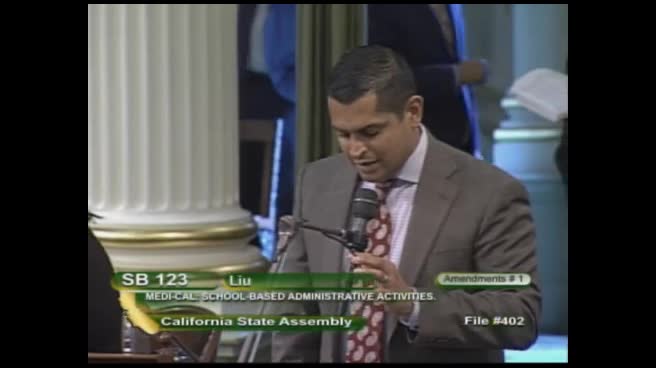 1MIN
Assembly Floor
 4MIN
Senate Standing Committee on Public Safety
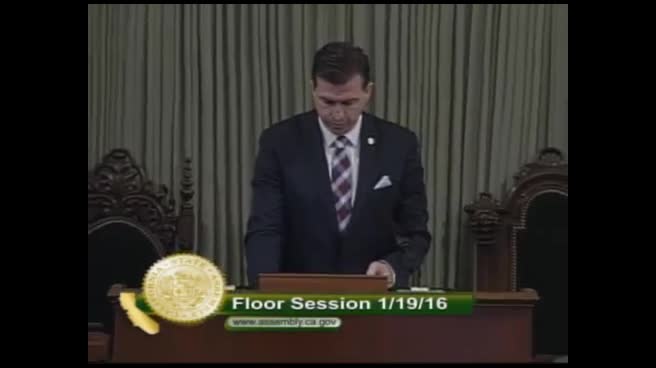 58SEC
Assembly Floor
Bill Author

Bill Co-Author(s):