AB 1290: Health care districts: public contracts: design-build.
- Session Year: 2015-2016
- House: Assembly
- Latest Version Date: 2015-06-30
The Local Health Care District Law provides for local health care districts which govern certain health care facilities. Each health care district has specific duties and powers respecting the creation, administration, and maintenance of the districts, including to purchase, receive, take, hold, lease, use, and enjoy property of every kind and description within and without the limits of the district.
The Local Agency Public Construction Act establishes bidding procedures for the award of construction contracts by local agencies.
The act authorizes counties, with the approval of the board of supervisors, to use a design-build procedure for building contracts in excess of $1,000,000.
This bill would authorize the Mayers Memorial Hospital District to use this design-build process when contracting for the construction of a building and improvements directly related to a hospital or health facility building at Mayers Memorial Hospital.
This bill would make legislative findings and declarations as to the necessity of a special statute for the Mayers Memorial Hospital District.
This bill would declare that it is to take effect immediately as an urgency statute.
The Local Health Care District Law provides for local health care districts which govern certain health care facilities. Each health care district has specific duties and powers respecting the creation, administration, and maintenance of the districts, including to purchase, receive, take, hold, lease, use, and enjoy property of every kind and description within and without the limits of the district.
The Local Agency Public Construction Act establishes bidding procedures for the award of construction contracts by local agencies.
The act authorizes counties, with the approval of the board of supervisors, to use a design-build procedure for building contracts in excess of $1,000,000.
This bill would authorize the Mayers Memorial Hospital District to use this design-build process when contracting for the construction of a building and improvements directly related to a hospital or health facility building at Mayers Memorial Hospital.
This bill would make legislative findings and declarations as to the necessity of a special statute for the Mayers Memorial Hospital District.
Existing law dissolved redevelopment agencies and community development agencies, as of February 1, 2012, and designates successor agencies, as defined. Existing law requires successor agencies to wind down the affairs of the dissolved redevelopment agencies. Existing law requires a successor agency to, among other things, continue to make payments due for enforceable obligations, remit unencumbered balances to the county auditor-controller for distribution, and dispose of assets, as directed.
This bill would make technical, nonsubstantive changes to these provisions.
(a)The Legislature finds and declares both of the following:
(1)Utilizing a design-build contract requires a clear understanding of the roles and responsibilities of each participant in the process.
(2)Cost benefits for health care districts are achieved by shifting the liability and risk for cost containment and project completion to the design-build entity.
(b)It is the intent of the Legislature that the design-build process be used by health care districts solely for buildings associated with hospitals and health care and not for other infrastructure, including, but not limited to, streets, highways, public rail transit, roads, bridges, water resources facilities, and related infrastructure.
SEC. 2.Section 32132.8 is added to the Health and Safety Code, to read:32132.8.(a)Notwithstanding Section 32132 or any other law, upon approval by the board of directors of the Mayers Memorial Hospital District, the design-build procedure described in Chapter 4 (commencing with Section 22160) of Part 3 of Division 2 of the Public Contract Code may be used to assign contracts for the construction of a building or improvements directly related to construction of a hospital or health facility building at the Mayers Memorial Hospital District.
(b)For purposes of this section, all references in Chapter 4 (commencing with Section 22160) of Part 3 of Division 2 of the Public Contract Code to local agency shall mean the Mayers Memorial Hospital District and its board of directors.
(c)A hospital building project utilizing the design-build process authorized by subdivision (a) shall be reviewed and inspected in accordance with the standards and requirements of the Alfred E. Alquist Hospital Facilities Seismic Safety Act of 1983 (Chapter 1 (commencing with Section 129675) of Part 7 of Division 107).
SEC. 3.The Legislature finds and declares that a special law is necessary and that a general law cannot be made applicable within the meaning of Section 16 of Article IV of the California Constitution because of the unique circumstances of the Mayers Memorial Hospital District.
SEC. 4.This act is an urgency statute necessary for the immediate preservation of the public peace, health, or safety within the meaning of Article IV of the Constitution and shall go into immediate effect. The facts constituting the necessity are:
In order to comply with health regulations, seismic requirements, and meet increasing demand for health care services at the earliest possible time, it is necessary that this act take effect immediately.
(a)The Legislature finds and declares both of the following:
(1)Utilizing a design-build contract requires a clear understanding of the roles and responsibilities of each participant in the process.
(2)Cost benefits for health care districts are achieved by shifting the liability and risk for cost containment and project completion to the design-build entity.
(b)It is the intent of the Legislature that the design-build process be used by health care districts solely for buildings associated with hospitals and health care and not for other infrastructure, including, but not limited to, streets, highways, public rail transit, roads, bridges, water resources facilities, and related infrastructure.
SEC. 2.Section 32132.8 is added to the Health and Safety Code, to read:32132.8.(a)Notwithstanding Section 32132 or any other law, upon approval by the board of directors of the Mayers Memorial Hospital District, the design-build procedure described in Chapter 4 (commencing with Section 22160) of Part 3 of Division 2 of the Public Contract Code may be used to assign contracts for the construction of a building or improvements directly related to construction of a hospital or health facility building at the Mayers Memorial Hospital District.
(b)For purposes of this section, all references in Chapter 4 (commencing with Section 22160) of Part 3 of Division 2 of the Public Contract Code to local agency shall mean the Mayers Memorial Hospital District and its board of directors.
(c)A hospital building project utilizing the design-build process authorized by subdivision (a) shall be reviewed and inspected in accordance with the standards and requirements of the Alfred E. Alquist Hospital Facilities Seismic Safety Act of 1983 (Chapter 1 (commencing with Section 129675) of Part 7 of Division 107).
SEC. 3.The Legislature finds and declares that a special law is necessary and that a general law cannot be made applicable within the meaning of Section 16 of Article IV of the California Constitution because of the unique circumstances of the Mayers Memorial Hospital District.
SECTION 1.Section 34161 of the Health and Safety Code is amended to read:34161.Notwithstanding Part 1 (commencing with Section 33000), Part 1.5 (commencing with Section 34000), Part 1.6 (commencing with Section 34050), and Part 1.7 (commencing with Section 34100), or any other law, commencing on the effective date of this part, an agency shall not incur new or expand existing monetary or legal obligations except as provided in this part. All of the provisions of this part shall take effect and be operative on the effective date of the act adding this part.
Notwithstanding Part 1 (commencing with Section 33000), Part 1.5 (commencing with Section 34000), Part 1.6 (commencing with Section 34050), and Part 1.7 (commencing with Section 34100), or any other law, commencing on the effective date of this part, no agency an agency shall not incur new or expand existing monetary or legal obligations except as provided in this part. All of the provisions of this part shall take effect and be operative on the effective date of the act adding this part.
|
Date
|
Status
|
|---|---|
| May 22, 2015 | Read third time. Urgency clause adopted. Passed. Ordered to the Senate. |
| Jun 30, 2015 | Chaptered by Secretary of State - Chapter 34, Statutes of 2015. |
| Jun 30, 2015 | Approved by the Governor. |
| Jun 26, 2015 | Enrolled and presented to the Governor at 11 a.m. |
| Jun 23, 2015 | In Assembly. Ordered to Engrossing and Enrolling. |
| Jun 22, 2015 | Read third time. Urgency clause adopted. Passed. Ordered to the Assembly. (Ayes 37. Noes 0. Page 1546.). |
| Jun 22, 2015 | Read third time. Urgency clause adopted. Passed. Ordered to the Assembly. |
| Jun 19, 2015 | Read second time. Ordered to third reading. |
| Jun 18, 2015 | From committee: Do pass. (Ayes 7. Noes 0.) (June 10). |
| Jun 4, 2015 | Referred to Com. on GOV. & F. |
| May 22, 2015 | Read third time. Urgency clause adopted. Passed. Ordered to the Senate. (Ayes 75. Noes 0. Page 1554.). |
| Feb 27, 2015 | Introduced. To print. |
| May 22, 2015 | In Senate. Read first time. To Com. on RLS. for assignment. |
| May 19, 2015 | Read second time. Ordered to third reading. |
| May 18, 2015 | Read second time and amended. Ordered returned to second reading. |
| May 14, 2015 | From committee: Amend, and do pass as amended. (Ayes 9. Noes 0.) (May 13). |
| Apr 6, 2015 | Re-referred to Com. on L. GOV. |
| Mar 26, 2015 | Referred to Com. on L. GOV. |
| Mar 26, 2015 | From committee chair, with author's amendments: Amend, and re-refer to Com. on L. GOV. Read second time and amended. |
| Mar 2, 2015 | Read first time. |
| Mar 1, 2015 | From printer. May be heard in committee March 31. |
|
Date
|
Description
|
Location
|
Votes
|
|
|---|---|---|---|---|
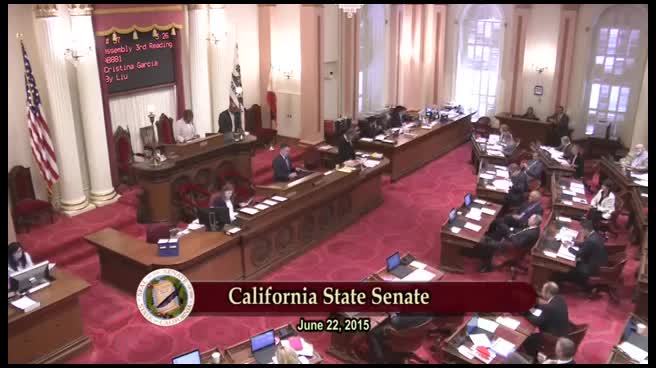
| Jun 22, 2015 | Assembly 3rd Reading AB1290 Dahle By Gaines Urgency Clause | Senate Floor |
Passed |
|
| Jun 10, 2015 | Do pass | Senate Standing Committee on Governance and Finance |
Passed |
|
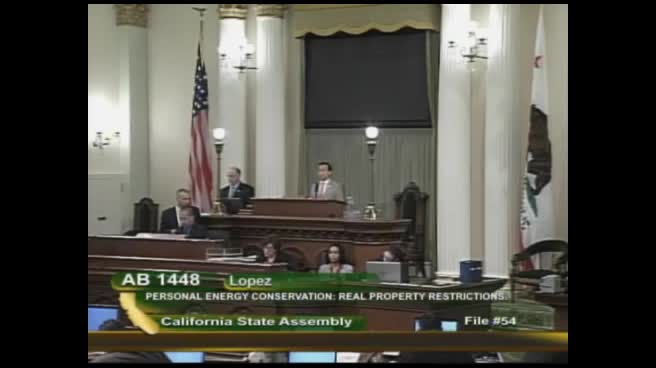
| May 22, 2015 | AB 1290 DAHLE Third Reading Urgency | Assembly Floor |
Passed |
|
| May 13, 2015 | Do pass as amended. | Assembly Standing Committee on Local Government |
Passed |
This list shows positions taken on this bill by organizations on the date displayed, which is linked to the original source.
Positions by individuals are not included.
|
Organization
|
Position
|
Date
|
|---|---|---|
| Association of California Healthcare Districts | ** Support | Jun 22, 2015 |
| Association Of California Healthcare Districts (Achd) | * Support | Jun 10, 2015 |
| Mayers Memorial Hospital District | ** Support | Jun 22, 2015 |
| Mayers Memorial Hospital District [SPONSOR] | ** Support | May 13, 2015 |
| Shasta County Board of Supervisors | ** Support | Jun 22, 2015 |
AB 1290
Page 4
|
Office of Senate Floor Analyses (916) 651-1520 Fax: (916) 327-4478 |
THIRD READING
Bill No: AB 1290
Amended: 5/18/15 in Assembly
SENATE GOVERNANCE & FIN. COMMITTEE: 7-0, 6/10/15
AYES: Hertzberg, Nguyen, Beall, Hernandez, Lara, Moorlach, Pavley
ASSEMBLY FLOOR: 75-0, 5/22/15 - See last page for vote
SUBJECT: Health care districts: public contracts: design-build
DIGEST: This bill allows the Mayers Memorial Hospital District (MMHD) to use design-build contracting.
Existing law:
Allows, until January 1, 2025, all counties and cities to use the design-build method to construct buildings and related improvements and other specified types of public works that cost more than $1 million (SB 785, Wolk, Chapter 931, Statutes of 2014).
Allows some special districts to construct projects using the design-build method, including three local health care districts:
The Sonoma Valley Healthcare District can use the design-build process when contracting for the construction of a building and improvements directly related to a hospital or health facility building at the Sonoma Valley Hospital (SB 1699, Wiggins, Chapter 415, Statutes of 2008). Following SB 1699’s enactment, the Sonoma Valley Health Care District’s voters approved a $35 million bond to finance earthquake safety improvements to bring the hospital’s emergency room into compliance with the state’s seismic safety standards for hospitals. The District’s upgraded facility, which was constructed using design-build contracts, opened in 2013.
The Last Frontier Healthcare District can use the design-build process when contracting for the construction of a building and improvements directly related to a hospital or health facility building at the Modoc Medical Center (SB 268, Gaines, Chapter 18, Statutes of 2014).
In addition to extending design-build contracting authority for cities and counties through 2024, last year’s Wolk bill also authorized the Marin Healthcare District to use the design-build process when contracting for the construction of a building and improvements directly related to a hospital or health facility building at the Marin General Hospital.
This bill:
Allows the MMHD’s board of directors, notwithstanding any other law, to use the design-build procedure to construct a building or improvements directly related to the construction of a hospital or health facility building at the MMHD.
Specifies that the MMHD must use the design-build procedure that current law establishes for local agencies and provides that statutory references to a “local agency” means the MMHD and its board of directors.
Requires that a hospital building project using the design-build process authorized by this bill must be reviewed and inspected in accordance with the standards and requirements of the Alfred E. Alquist Hospital Facilities Seismic Safety Act of 1983.
Finds and declares the Legislature’s intent that health care districts use the design-build process solely for buildings associated with hospitals and health care and not for other infrastructure, including, streets, highways, public rail transit, roads, bridges, and water resources facilities.
Background
The Local Agency Public Construction Act requires local officials to invite bids for construction projects and then award contracts to the lowest responsible bidder. This design-bid-build method is the traditional, and most widely-used, approach to public works construction. This approach splits construction projects into two distinct phases: design and construction. During the design phase, the local agency prepares detailed project plans and specifications using its own employees or by hiring outside architects and engineers. Once project designs are complete, local officials invite bids from the construction community and award the contract to the lowest responsible bidder.
State law also allows some state and local officials to use the design-build method to procure both design and construction services from a single company before the development of complete plans and specifications. Under design-build, a public agency contracts with a single entity - which can be a single firm, a consortium, or a joint venture - to design and construct a project. Before inviting bids, the agency prepares documents that describe the basic concept of the project, as opposed to a complete set of drawings and specifications of what will be constructed. In the bidding phase, the agency typically evaluates bids on a best-value basis, incorporating technical factors, such as qualifications and design quality, in addition to price.
MMHD serves a rural northern California area that includes portions of four counties: Lassen, Modoc, Shasta and Siskiyou. MMHD’s hospital, located in Fall River Mills (Shasta County), is more than 50 years old and does not meet state seismic safety standards for hospital buildings. To continue to provide hospital services to the surrounding communities, MMHD must construct a new facility by January 2020. To speed the construction process and reduce costs, MMHD officials want the Legislature to grant them the same design-build contracting authority that state law grants to the Sonoma, Marin, and Last Frontier healthcare districts.
Comments
Purpose of the bill. When it comes to public works projects, taxpayers want local officials to hold down costs, but they also want to be sure that their tax dollars are spent wisely. While the traditional contracting process minimizes opportunities for public officials to award construction contracts based on subjective factors, it also can be more time consuming and more expensive than the design-build method. Faced with a seismic retrofit deadline, the MMHD wants to use design-build contracting to gain more control over the bidding process and the final outcomes of its anticipated hospital construction project. The MMHD anticipates that the design-build method will shorten the construction process and reduce the project’s overall costs, thereby benefitting taxpayers and helping to ensure that the MMHD will meet its retrofit deadline.
Not so simple. Legislators have been cautious about allowing local governments, and special districts in particular, to use the design-build contracting method. A 2005 Legislative Analyst's Office (LAO) report questioned whether design-build is the best construction delivery process for specialized buildings like hospitals. LAO suggested that design-build is best suited for “straightforward” design and construction projects, but not for complex projects that require builders to accommodate more unique design preferences. A 2014 LAO report on how counties have used design-build contracting finds that some counties prefer using design-build for simple projects, while others indicate that design-build is useful for specialty projects and large, complex projects. Sonoma Valley Health Care District is the only local government to have used the design-build method for hospital construction. Because hospitals are highly specialized structures that must meet complex construction and seismic standards, it remains unclear whether the design-build contracting method is appropriate for constructing hospital buildings.
FISCAL EFFECT: Appropriation: No Fiscal Com.: No Local: No
Association of California Healthcare Districts
Mayers Memorial Hospital District
Shasta County Board of Supervisors
OPPOSITION: (Verified 6/19/15)
None received
ASSEMBLY FLOOR: 75-0, 5/22/15
AYES: Achadjian, Travis Allen, Baker, Bigelow, Bloom, Bonilla, Bonta, Brough, Brown, Burke, Calderon, Campos, Chang, Chau, Chávez, Chiu, Chu, Cooley, Cooper, Dababneh, Dahle, Daly, Dodd, Eggman, Frazier, Beth Gaines, Gallagher, Cristina Garcia, Eduardo Garcia, Gatto, Gipson, Gomez, Gonzalez, Gordon, Gray, Grove, Hadley, Harper, Roger Hernández, Holden, Irwin, Jones, Jones-Sawyer, Kim, Lackey, Levine, Linder, Lopez, Low, Maienschein, Mathis, Mayes, McCarty, Medina, Melendez, Mullin, Nazarian, Obernolte, Patterson, Perea, Quirk, Rendon, Ridley-Thomas, Rodriguez, Salas, Santiago, Steinorth, Mark Stone, Thurmond, Ting, Wagner, Wilk, Williams, Wood, Atkins
NO VOTE RECORDED: Alejo, O'Donnell, Olsen, Waldron, Weber
Prepared by: Brian Weinberger / GOV. & F. / (916) 651-4119
6/19/15 14:31:32
**** END ****
AB 1290 (Dahle) 5/18/15 Page 4 of 4
SENATE COMMITTEE ON GOVERNANCE AND FINANCE
Senator Robert Hertzberg, Chair
2015 - 2016 Regular
Bill No: |
AB 1290 |
Hearing Date: |
6/10/15 |
Author: |
Dahle |
Tax Levy: |
No |
Version: |
5/18/15 |
Fiscal: |
No |
Consultant: |
Weinberger |
||
DESIGN-BUILD CONTRACTING FOR THE MAYERS MEMORIAL HOSPITAL DISTRICT (URGENCY)
Allows the Mayers Memorial Hospital District to use design-build contracting.
Background and Existing Law
The Local Agency Public Construction Act requires local officials to invite bids for construction projects and then award contracts to the lowest responsible bidder. This design-bid-build method is the traditional, and most widely-used, approach to public works construction. This approach splits construction projects into two distinct phases: design and construction. During the design phase, the local agency prepares detailed project plans and specifications using its own employees or by hiring outside architects and engineers. Once project designs are complete, local officials invite bids from the construction community and award the contract to the lowest responsible bidder.
State law also allows some state and local officials to use the design-build method to procure both design and construction services from a single company before the development of complete plans and specifications. Under design-build, a public agency contracts with a single entity - which can be a single firm, a consortium, or a joint venture - to design and construct a project. Before inviting bids, the agency prepares documents that describe the basic concept of the project, as opposed to a complete set of drawings and specifications of what will be constructed. In the bidding phase, the agency typically evaluates bids on a best-value basis, incorporating technical factors, such as qualifications and design quality, in addition to price.
Until January 1, 2025, all counties and cities can use the design-build method to construct buildings and related improvements and other specified types of public works that cost more than $1 million (SB 785, Wolk, Chapter 931, Statutes of 2014). The Legislature also has authorized some special districts to construct projects using the design-build method, including three local health care districts:
The Sonoma Valley Healthcare District can use the design-build process when contracting for the construction of a building and improvements directly related to a hospital or health facility building at the Sonoma Valley Hospital (SB 1699, Wiggins, 2008). Following SB 1699’s enactment, the Sonoma Valley Health Care District’s voters approved a $35 million bond to finance earthquake safety improvements to bring the hospital’s emergency room into compliance with the state’s seismic safety standards for hospitals. The District’s upgraded facility, which was constructed using design-build contracts, opened in 2013.
The Last Frontier Healthcare District can use the design-build process when contracting for the construction of a building and improvements directly related to a hospital or health facility building at the Modoc Medical Center (SB 268, Gaines, Chapter 18, Statutes of 2014).
In addition to extending design-build contracting authority for cities and counties through 2024, last year’s Wolk bill also authorized the Marin Healthcare District to use the design-build process when contracting for the construction of a building and improvements directly related to a hospital or health facility building at the Marin General Hospital.
The Mayers Memorial Hospital District (MMHD) serves a rural northern California area that includes portions of four counties: Lassen, Modoc, Shasta and Siskiyou. MMHD’s hospital, located in Fall River Mills (Shasta County), is more than 50 years old and does not meet state seismic safety standards for hospital buildings. To continue to provide hospital services to the surrounding communities, MMHD must construct a new facility by January, 2020. To speed the construction process and reduce costs, MMHD officials want the Legislature to grant them the same design-build contracting authority that state law grants to the Sonoma, Marin, and Last Frontier healthcare districts.
Proposed Law
Assembly Bill 1290 allows the Mayers Memorial Hospital District’s board of directors, notwithstanding any other law, to use the design-build procedure to construct a building or improvements directly related to the construction of a hospital or health facility building at the Mayers Memorial Hospital District. AB 1290 specifies that the District must use the design-build procedure that current law establishes for local agencies and provides that statutory references to a “local agency” means the Mayers Memorial Hospital District and its board of directors.
AB 1290 requires that a hospital building project using the design-build process authorized by the bill must be reviewed and inspected in accordance with the standards and requirements of the Alfred E. Alquist Hospital Facilities Seismic Safety Act of 1983.
The bill finds and declares the Legislature’s intent that health care districts use the design-build process solely for buildings associated with hospitals and health care and not for other infrastructure, including, streets, highways, public rail transit, roads, bridges, and water resources facilities.
State Revenue Impact
No estimate.
Comments
1. Purpose of the bill. When it comes to public works projects, taxpayers want local officials to hold down costs, but they also want to be sure that their tax dollars are spent wisely. While the traditional contracting process minimizes opportunities for public officials to award construction contracts based on subjective factors, it also can be more time consuming and more expensive than the design-build method. Faced with a seismic retrofit deadline, the Mayers Memorial Hospital District wants to use design-build contracting to gain more control over the bidding process and the final outcomes of its anticipated hospital construction project. The District anticipates that the design-build method will shorten the construction process and reduce the project’s overall costs, thereby benefitting taxpayers and helping to ensure that the District will meet its retrofit deadline.
2. Not so simple. Legislators have been cautious about allowing local governments, and special districts in particular, to use the design-build contracting method. A 2005 Legislative Analyst's Office (LAO) report questioned whether design-build is the best construction delivery process for specialized buildings like hospitals. LAO suggested that design-build is best suited for “straightforward” design and construction projects, but not for complex projects that require builders to accommodate more unique design preferences. A 2014 LAO report on how counties have used design-build contracting finds that some counties prefer using design-build for simple projects, while others indicate that design-build is useful for specialty projects and large, complex projects. Sonoma Valley Healthcare District is the only local government to have used the design-build method for hospital construction. Because hospitals are highly specialized structures that must meet complex construction and seismic standards, it remains unclear whether the design-build contracting method is appropriate for constructing hospital buildings.
3. Good for one, good for all? If AB 1290 becomes law, Mayers Memorial Hospital District would be the fourth healthcare district to obtain design-build contracting authority. In light of the fact that many of California’s 80 healthcare districts confront similar fiscal challenges and deadlines to comply with seismic safety standards, it is likely that MMHD will not be the last health care district to seek design-build contracting authority. An early version of SB 1699 (Wiggins, 2008), before it was amended to apply only to Sonoma Valley Healthcare District, would have granted design-build contracting authority to all healthcare districts. Legislators may wish to consider whether it makes sense to grant design-build authority to healthcare districts on a case-by-case basis, or whether legislation granting authority to all healthcare districts may be justified.
4. Special legislation. The California Constitution prohibits special legislation when a general law can apply (Article IV, §16). AB 1290 contains findings and declarations explaining the need for legislation that applies only to the Mayers Memorial Hospital District.
5. Urgency. Regular statutes take effect on January 1 following their enactment; bills passed in 2015 take effect on January 1, 2016. The California Constitution allows bills with urgency clauses to take effect immediately if they're needed for the public peace, health, and safety. AB 1290 contains an urgency clause declaring that it is necessary for its provisions to go into effect immediately to allow the District to comply with health regulations, seismic requirements, and meet increasing demand for health care services at the earliest possible time.
Assembly Actions
Assembly Local Government Committee: 9-0
Assembly Floor: 75-0
Support and Opposition
(6/4/15)
Support: Mayers Memorial Hospital District; Association of California Healthcare Districts; Shasta County Board of Supervisors.
Opposition: Unknown.
-- END --
AB 1290
Page 5
ASSEMBLY THIRD READING
AB 1290
(Dahle)
As Amended May 18, 2015
Majority vote
Committee |
Votes |
Ayes |
Noes |
Local Government |
9-0 |
Maienschein, Gonzalez, Alejo, Chiu, Cooley, Gordon, Holden, Linder, Waldron |
|
SUMMARY: Allows the Mayers Memorial Hospital District (District) to use the design-build contracting method for the construction of a building or improvements directly related to construction of a hospital or health facility building at the District. Specifically, this bill:
Allows the District, upon approval by its Board of Directors (Board), to use the design-build procedure described in existing law governing the use of design-build by local agencies to assign contracts for the construction of a building or improvements directly related to construction of a hospital or health facility building at the District.
Requires a hospital building project utilizing the design-build process authorized by this bill to be reviewed and inspected in accordance with the standards and requirements of the Alfred E. Alquist Hospital Facilities Seismic Safety Act (Hospital Seismic Safety Act) of 1983.
States legislative intent that the design-build process be used by health care districts solely for buildings associated with hospitals and health care and not for other infrastructure, including, but not limited to, streets, highways, public rail transit, roads, bridges, water resources facilities, and related infrastructure.
Finds and declares the following:
Utilizing a design-build contract requires a clear understanding of the roles and responsibilities of each participant in the process;
Cost benefits for health care districts are achieved by shifting the liability and risk for cost containment and project completion to the design-build entity; and,
A special law is necessary and a general law cannot be made applicable within the meaning of California Constitution Article IV, Section 16 because of the unique circumstances of the Mayers Memorial Hospital District.
EXISTING LAW:
Requires, pursuant to the Local Agency Public Construction Act (LAPC Act), local officials to invite bids for construction projects and then award contracts to the lowest responsible bidder under the traditional design-bid-build project delivery system.
Authorizes, until January 1, 2025, cities, counties, and specified special districts and transit agencies to use design-build for their public works contracts in excess of $1 million using either a low bid or best value process.
Provides for local health care districts, which govern certain health care facilities. Each health care district has specific duties and powers respecting the creation, administration, and maintenance of the districts, including the authority to purchase, receive, take, hold, lease, use, and enjoy property of every kind and description of property within and without the limits of the district.
Establishes, pursuant to the Hospital Seismic Safety Act, timelines for hospital compliance with seismic safety standards.
Authorizes the Sonoma Valley Health Care District, the Marin Health Care District or the Last Frontier Health Care District to use the design-build contracting rules specified for local agencies in 2) above, to assign contracts for the construction of a building or improvements directly related to construction of a hospital or health facility building at the Sonoma Valley Hospital, the Marin General Hospital, or the Modoc Medical Center, respectively.
FISCAL EFFECT: None
COMMENTS:
Bill Summary. This bill allows the District to use the design-build contracting method for the construction of a building or improvements directly related to construction of a hospital or health facility building at the District. This bill is sponsored by the District.
Author's Statement. According to the author, "With the increase in new patients under the Affordable Care Act, and, healthcare costs going up while reimbursement rates continue to decline, savings on construction are critical. The Design-Build method of project delivery can provide significant cost savings that will benefit the entire community.
"AB 1290 would authorize the Mayers Memorial Hospital District to use the design-build process for buildings associated with hospitals and healthcare and not for other infrastructure. This would create cost saving benefits by shifting the liability and risk for cost containment and project completion to the design-build entity."
Background. The LAPC Act generally requires local officials to invite bids for construction projects and then award contracts to the lowest responsible bidder. This design-bid-build method is the traditional approach to public works construction.
Under the design-build method, a single contract covers the design and construction of a project with a single company or consortium that acts as both the project designer and builder. The design-build entity arranges all architectural, engineering, and construction services, and is responsible for delivering the project at a guaranteed price and schedule based upon performance criteria set by the public agency. The design-build method can be set by the public agency. The design-build method can be faster and, therefore, cheaper, than the design-bid-build method, but it requires a higher level of management sophistication since design and construction may occur simultaneously.
Advocates for the design-build method of contracting for public works contend that project schedule savings can be realized because only a single request for proposals is needed to select the project's designer and builder. The more traditional design-bid-build project approach requires the separate selection of the design consultant or contractor, completion of design, and then advertising for bids and selection of the construction contractor. Proponents add that design-build allows the overlap of design and construction activities, resulting in additional time savings and lower project costs. By avoiding the delays and change orders that result from the traditional design-bid-build method of contracting, proponents argue that design-build can deliver public works faster and cheaper.
Detractors of design-build contend that it eliminates competitive bidding, allows the private contractor or consortium to inspect and sign off on their own work, and increases project delivery costs.
Design-Build and Healthcare Districts. California currently has 80 health care districts. Health care districts were known as hospital districts prior to 1994. Health care districts are formed to "establish, maintain, and operate health care facilities," including, but not limited to, hospitals. Health care districts are governed by elected boards of directors. Health care districts throughout the state need to retrofit existing buildings or build new facilities in order to comply with the Hospital Seismic Safety Act. These districts are faced with escalating construction costs and are looking for the most cost-effective ways to meet seismic standards and provide well-designed and built state-of-the-art facilities to provide health care to the people of the state. One of these methods is design-build contracting.
Mayers Memorial Hospital District. Mayers Memorial Hospital, located in Fall River Mills, offers a variety of services, including an emergency room physician on duty 24 hours a day, obstetrics, tele-medicine and a 99-bed skilled nursing facility. Mayers Memorial Hospital opened as a 10-bed facility in 1956 to provide healthcare services to the Intermountain community. In the late 1960s, various regulations and the need for increased operational funding led the community to establish Mayers Memorial as a District Hospital, which provided the funding needed to draw new caregivers and specialists to the region. From 1970 through the 1990s, the District constructed various additions to the building and remodeled older sections to make room for growth. In 1993, another facility was built in the growing community of Burney. This facility now houses additional skilled nursing rooms, including a secure Alzheimer's unit.
The Hospital Seismic Safety Act requires acute care hospitals be designed and constructed to withstand a major earthquake and remain operational immediately after a quake. The District must comply with these requirements by 2020. According to the District, "The biggest obstacle to meeting these requirements was, of course, lack of funds. In 2001, Mayers Memorial Hospital District converted to a Critical Access Hospital, which increased the reimbursement amount, and improving operations. The Board has recognized the need for a comprehensive strategic plan to address the mandates and regulations that could threaten the future of the District if nothing is done. The goal of the recently completed Master Facility Plan was to clearly address the pending seismic and retrofit issues and lay the foundation for the District's capital campaign to fund the comprehensive building reconstruction.
"Design-Build will be a more cost effective way for us to build/renovate our facility to be compliant with state seismic mandates. If we use traditional (design-bid-build) it will require more steps and take longer to complete the project. It will also cost more. We have limited funding and limited time. If we are approved for (design-build), once we select a firm, they handle everything and in doing so it will streamline the process, reduce the cost and shorten the time frame."
Previous Legislation. SB 268 (Gaines), Chapter 18, Statutes of 2014, allowed the Last Frontier Health Care District to use the design-build process when contracting for the construction of a building and improvements directly related to a hospital or health facility building at the Modoc Medical Center.
SB 785 (Wolk), Chapter 931, Statutes of 2014, repealed existing law authorizing the Department of General Services (DGS), the Department of Corrections and Rehabilitation (CDCR), and local agencies to use the design-build procurement process, and enacted uniform provisions authorizing DGS, CDCR, and most local agencies to utilize the design-build procurement process for specified public works projects. SB 785 did not allow the use of design-build for health care districts generally, but did include a provision allowing the Marin Healthcare District to use the design-build method established for local agencies under SB 785 and required the Sonoma Valley Health Care District to use the design-build procedure outlined in SB 785, instead of its prior design-build authority.
SB 1005 (Cox) of 2010 would have authorized the Tahoe Forest Health Care District and a health care district authorized by the Office of Statewide Health Planning and Development to use a design-build procedure when assigning contracts for the construction of a hospital or health facility building. SB 1005 was held in the Assembly Appropriations Committee.
SB 1699 (Wiggins), Chapter 415, Statutes of 2008, authorized the use of design-build for the Sonoma Valley Health Care District.
Arguments in Support. The Association of California Healthcare Districts, in support, writes, "Mayers Memorial Hospital District must rebuild its facility before 2020, in compliance with the Alfred E. Alquist Hospital Facilities Seismic Safety Act. As a rural critical access hospital, Mayers Memorial Hospital faces a greater disadvantage than larger, urban hospitals, as financing options are more difficult to obtain in a small rural community. The design-build method provides cost savings that is hard to achieve with the current bid process. Given the uncertain nature of the healthcare industry at this time, access to care in rural areas is extremely vulnerable. Meeting this seismic mandate is critical to the community served by the District."
Arguments in Opposition. None on file.
Urgency Clause. According to the District, "Our original plan has not come to realization because we have not been able to obtain the funding for the project… This has required us to pursue a scaled back version and basically start over, shortening our time frame to required completion. The Urgency Clause is needed because we don’t have the time to wait until January 2016 to begin this process. We are actually waiting on the approval of this legislation to proceed. This is the most viable option for us financially and time wise to build and meet the seismic requirements by January 2020 in order to continue to provide quality healthcare to our community. We cover a geographic area of 8000+ square miles and are the only healthcare option for much of our population. The closest hospital is 70 miles away."
The author has asked to add an urgency clause to this bill for the reasons outlined above.
Analysis Prepared by: Angela Mapp / L. GOV. / (916) 319-3958 FN: 0000443
AB 1290
Page 5
Date of Hearing: May 13, 2015
ASSEMBLY COMMITTEE ON LOCAL GOVERNMENT
Brian Maienschein, Chair
AB 1290 (
Dahle) – As Amended March 26, 2015
SUBJECT: Health care districts: public contracts: design-build.
SUMMARY: Allows the Mayers Memorial Hospital District (District) to use the design-build contracting method for the construction of a building or improvements directly related to construction of a hospital or health facility building at the District. Specifically, this bill:
Allows the District, upon approval by its Board of Directors (Board), to use the design-build procedure described in existing law governing the use of design-build by local agencies to assign contracts for the construction of a building or improvements directly related to construction of a hospital or health facility building at the District.
Requires a hospital building project utilizing the design-build process authorized by this bill to be reviewed and inspected in accordance with the standards and requirements of the Alfred E. Alquist Hospital Facilities Seismic Safety Act (Hospital Seismic Safety Act) of 1983.
States legislative intent that the design-build process be used by health care districts solely for buildings associated with hospitals and health care and not for other infrastructure, including, but not limited to, streets, highways, public rail transit, roads, bridges, water resources facilities, and related infrastructure.
Finds and declares the following:
Utilizing a design-build contract requires a clear understanding of the roles and responsibilities of each participant in the process;
Cost benefits for health care districts are achieved by shifting the liability and risk for cost containment and project completion to the design-build entity; and,
A special law is necessary and a general law cannot be made applicable within the meaning of Section 16 of Article IV of the California Constitution because of the unique circumstances of the Mayers Memorial Hospital District.
EXISTING LAW:
Requires, pursuant to the Local Agency Public Construction Act (LAPC Act), local officials to invite bids for construction projects and then award contracts to the lowest responsible bidder under the traditional design-bid-build project delivery system.
Authorizes, until January 1, 2025, cities, counties, and specified special districts and transit agencies to use design-build for their public works contracts in excess of $1 million using either a low bid or best value process.
Provides for local health care districts, which govern certain health care facilities. Each health care district has specific duties and powers respecting the creation, administration, and maintenance of the districts, including the authority to purchase, receive, take, hold, lease, use, and enjoy property of every kind and description of property within and without the limits of the district.
Establishes, pursuant to the Hospital Seismic Safety Act, timelines for hospital compliance with seismic safety standards.
Authorizes the Sonoma Valley Health Care District, the Marin Health Care District or the Last Frontier Health Care District to use the design-build contracting rules specified for local agencies in 2), above, to assign contracts for the construction of a building or improvements directly related to construction of a hospital or health facility building at the Sonoma Valley Hospital, the Marin General Hospital, or the Modoc Medical Center, respectively.
FISCAL EFFECT: None
COMMENTS:
Bill Summary. This bill allows the District to use the design-build contracting method for the construction of a building or improvements directly related to construction of a hospital or health facility building at the District. This bill is sponsored by the District.
Author's Statement. According to the author, "With the increase in new patients under the Affordable Care Act, and, healthcare costs going up while reimbursement rates continue to decline, savings on construction are critical. The Design-Build method of project delivery can provide significant cost savings that will benefit the entire community.
"AB 1290 would authorize the Mayers Memorial Hospital District to use the design-build process for buildings associated with hospitals and healthcare and not for other infrastructure. This would create cost saving benefits by shifting the liability and risk for cost containment and project completion to the design-build entity."
Background. The LAPC Act generally requires local officials to invite bids for construction projects and then award contracts to the lowest responsible bidder. This design-bid-build method is the traditional approach to public works construction.
Under the design-build method, a single contract covers the design and construction of a project with a single company or consortium that acts as both the project designer and builder. The design-build entity arranges all architectural, engineering, and construction services, and is responsible for delivering the project at a guaranteed price and schedule based upon performance criteria set by the public agency. The design-build method can be set by the public agency. The design-build method can be faster and, therefore, cheaper, than the design-bid-build method, but it requires a higher level of management sophistication since design and construction may occur simultaneously.
Advocates for the design-build method of contracting for public works contend that project schedule savings can be realized because only a single request for proposals is needed to select the project's designer and builder. The more traditional design-bid-build project approach requires the separate selection of the design consultant or contractor, completion of design, and then advertising for bids and selection of the construction contractor. Proponents add that design-build allows the overlap of design and construction activities, resulting in additional time savings and lower project costs. By avoiding the delays and change orders that result from the traditional design-bid-build method of contracting, proponents argue that design-build can deliver public works faster and cheaper.
Detractors of design-build contend that it eliminates competitive bidding, allows the private contractor or consortium to inspect and sign off on their own work, and increases project delivery costs.
Design-Build and Healthcare Districts. California currently has 80 health care districts. Health care districts were known as hospital districts prior to 1994. Health care districts are formed to "establish, maintain, and operate health care facilities," including, but not limited to, hospitals. Health care districts are governed by elected boards of directors. Health care districts throughout the state need to retrofit existing buildings or build new facilities in order to comply with the Hospital Seismic Safety Act. These districts are faced with escalating construction costs and are looking for the most cost-effective ways to meet seismic standards and provide well-designed and built state-of-the-art facilities to provide health care to the people of the state. One of these methods is design-build contracting.
Mayers Memorial Hospital District. Mayers Memorial Hospital (Hospital), located in Fall River Mills, offers a variety of services, including an emergency room physician on duty
24 hours a day, obstetrics, tele-medicine and a 99-bed skilled nursing facility. The Hospital opened as a 10-bed facility in 1956 to provide healthcare services to the Intermountain community. In the late 1960s, various regulations and the need for increased operational funding led the community to establish Mayers Memorial as a District Hospital, which provided the funding needed to draw new caregivers and specialists to the region. From 1970 through the 1990s, the District constructed various additions to the building and remodeled older sections to make room for growth. In 1993, another facility was built in the growing community of Burney. This facility now houses additional skilled nursing rooms, including a secure Alzheimer's unit.
The Hospital Seismic Safety Act requires acute care hospitals be designed and constructed to withstand a major earthquake and remain operational immediately after a quake. The District must comply with these requirements by 2020. According to the District, "The biggest obstacle to meeting these requirements was, of course, lack of funds. In 2001, Mayers Memorial Hospital District converted to a Critical Access Hospital, which increased the reimbursement amount, and improving operations. The Board of Directors has recognized the need for a comprehensive strategic plan to address the mandates and regulations that could threaten the future of the District if nothing is done. The goal of the recently completed Master Facility Plan was to clearly address the pending seismic and retrofit issues and lay the foundation for the District's capital campaign to fund the comprehensive building reconstruction.
"Design-Build will be a more cost effective way for us to build/renovate our facility to be compliant with state seismic mandates. If we use traditional (design-bid-build) it will require more steps and take longer to complete the project. It will also cost more. We have limited funding and limited time. If we are approved for (design-build), once we select a firm, they handle everything and in doing so it will streamline the process, reduce the cost and shorten the time frame."
Previous Legislation. SB 268 (Gaines), Chapter 18, Statutes of 2014, allowed the Last Frontier Health Care District to use the design-build process when contracting for the construction of a building and improvements directly related to a hospital or health facility building at the Modoc Medical Center.
SB 785 (Wolk), Chapter 931, Statutes of 2014, repealed existing law authorizing the Department of General Services (DGS), the Department of Corrections and Rehabilitation (CDCR), and local agencies to use the design-build procurement process, and enacted uniform provisions authorizing DGS, CDCR, and most local agencies to utilize the design-build procurement process for specified public works projects. SB 785 did not allow the use of design-build for health care districts generally, but did include a provision allowing the Marin Healthcare District to use the design-build method established for local agencies under SB 785 and required the Sonoma Valley Health Care District to use the design-build procedure outlined in SB 785, instead of its prior design-build authority.
SB 1005 (Cox) of 2010 would have authorized the Tahoe Forest Health Care District and a health care district authorized by the Office of Statewide Health Planning and Development to use a design-build procedure when assigning contracts for the construction of a hospital or health facility building. SB 1005 was held in the Assembly Appropriations Committee.
SB 1699 (Wiggins), Chapter 415, Statutes of 2008, authorized the use of design-build for the Sonoma Valley Health Care District.
Arguments in Support. The Association of California Healthcare Districts, in support, writes, "Mayers Memorial Hospital District must rebuild its facility before 2020, in compliance with the Alfred E. Alquist Hospital Facilities Seismic Safety Act. As a rural critical access hospital, Mayers Memorial Hospital faces a greater disadvantage than larger, urban hospitals, as financing options are more difficult to obtain in a small rural community. The design-build method provides cost savings that is hard to achieve with the current bid process. Given the uncertain nature of the healthcare industry at this time, access to care in rural areas is extremely vulnerable. Meeting this seismic mandate is critical to the community served by the District."
Arguments in Opposition. None on file.
Urgency Clause. According to the District, "Our original plan has not come to realization because we have not been able to obtain the funding for the project…This has required us to pursue a scaled back version and basically start over, shortening our time frame to required completion. The Urgency Clause is needed because we don’t have the time to wait until January 2016 to begin this process. We are actually waiting on the approval of this legislation to proceed. This is the most viable option for us financially and time wise to build and meet the seismic requirements by January 2020 in order to continue to provide quality healthcare to our community. We cover a geographic area of 8000+ square miles and are the only healthcare option for much of our population. The closest hospital is 70 miles away."
The author has asked to add an urgency clause to this bill for the reasons outlined above.
REGISTERED SUPPORT / OPPOSITION:
Support
Mayers Memorial Hospital District [SPONSOR]
Association of California Healthcare Districts
Shasta County Board of Supervisors
Opposition
None on file
Analysis Prepared by: Angela Mapp / L. GOV. / (916) 319-3958
Discussed in Hearing
 2MIN
Senate Floor
 11MIN
Senate Standing Committee on Governance and Finance
 48SEC
Assembly Floor
 2MIN
Assembly Standing Committee on Local Government
Bill Author

Bill Co-Author(s):