AB 1293: State public employment: labor negotiations.
- Session Year: 2015-2016
- House: Assembly
- Latest Version Date: 2015-09-04
The California Constitution provides that the civil service includes every officer and employee in the state except as otherwise provided in the Constitution. Existing law, the State Civil Service Act, however, permits the use of personal services contracts by state agencies if specified conditions are met. In this regard, a state agency may use a personal service contract to achieve cost savings if, among other conditions, the contract does not cause the displacement, as defined, of civil service employees. Existing law also permits the use of personal services contracts in response to particular conditions, including during emergencies, if the contract is for a new state function and the Legislature has mandated or authorized the performance of work by independent contractors, or to protect against a conflict of interest, among others.
This bill would make the use of personal services contracts in response to particular conditions, as described above, conditional on the contract not causing the displacement, as defined, of civil service employees.
Existing law, the Ralph C. Dills Act, grants to state employees the right to form employee organizations for the purpose of representing their members in negotiating conditions of employment with the state. Existing law provides a statement of legislative purpose in connection with these and other provisions.
This bill would make nonsubstantive changes in this statement of purpose.
The purpose of this article is to establish standards for the use of personal services contracts.
(a)Personal services contracting is permissible to achieve cost savings when all the following conditions are met:
(1)The contracting agency clearly demonstrates that the proposed contract will result in actual overall cost savings to the state, provided that:
(A)In comparing costs, there shall be included the states additional cost of providing the same service as proposed by a contractor. These additional costs shall include the salaries and benefits of additional staff that would be needed and the cost of additional space, equipment, and materials needed to perform the function.
(B)In comparing costs, there shall not be included the states indirect overhead costs unless these costs can be attributed solely to the function in question and would not exist if that function was not performed in state service. Indirect overhead costs shall mean the pro rata share of existing administrative salaries and benefits, rent, equipment costs, utilities, and materials.
(C)In comparing costs, there shall be included in the cost of a contractor providing a service any continuing state costs that would be directly associated with the contracted function. These continuing state costs shall include, but not be limited to, those for inspection, supervision, and monitoring.
(2)Proposals to contract out work shall not be approved solely on the basis that savings will result from lower contractor pay rates or benefits. Proposals to contract out work shall be eligible for approval if the contractors wages are at the industrys level and do not significantly undercut state pay rates.
(3)The contract does not cause the displacement of civil service employees. The term displacement includes layoff, demotion, involuntary transfer to a new class, involuntary transfer to a new location requiring a change of residence, and time base reductions. Displacement does not include changes in shifts or days off, nor does it include reassignment to other positions within the same class and general location.
(4)The contract does not adversely affect the states affirmative action efforts.
(5)The savings shall be large enough to ensure that they will not be eliminated by private sector and state cost fluctuations that could normally be expected during the contracting period.
(6)The amount of savings clearly justify the size and duration of the contracting agreement.
(7)The contract is awarded through a publicized, competitive bidding process.
(8)The contract includes specific provisions pertaining to the qualifications of the staff that will perform the work under the contract, as well as assurance that the contractors hiring practices meet applicable nondiscrimination, affirmative action standards.
(9)The potential for future economic risk to the state from potential contractor rate increases is minimal.
(10)The contract is with a firm. A firm means a corporation, partnership, nonprofit organization, or sole proprietorship.
(11)The potential economic advantage of contracting is not outweighed by the publics interest in having a particular function performed directly by state government.
(b)Except as provided in subdivision (d), personal services contracting also shall be permissible when any of the following conditions can be met:
(1)The functions contracted are exempted from civil service by Section 4 of Article VII of the California Constitution, which describes exempt appointments.
(2)The contract is for a new state function and the Legislature has specifically mandated or authorized the performance of the work by independent contractors.
(3)The services contracted are not available within civil service, cannot be performed satisfactorily by civil service employees, or are of such a highly specialized or technical nature that the necessary expert knowledge, experience, and ability are not available through the civil service system.
(4)The services are incidental to a contract for the purchase or lease of real or personal property. Contracts under this criterion, known as service agreements, shall include, but not be limited to, agreements to service or maintain office equipment or computers that are leased or rented.
(5)The legislative, administrative, or legal goals and purposes cannot be accomplished through the utilization of persons selected pursuant to the regular civil service system. Contracts are permissible under this criterion to protect against a conflict of interest or to insure independent and unbiased findings in cases where there is a clear need for a different, outside perspective. These contracts shall include, but not be limited to, obtaining expert witnesses in litigation.
(6)The nature of the work is such that the Government Code standards for emergency appointments apply. These contracts shall conform with Article 8 (commencing with Section 19888) of Chapter 2.5 of Part 2.6.
(7)State agencies need private counsel because a conflict of interest on the part of the Attorney Generals office prevents it from representing the agency without compromising its position. These contracts shall require the written consent of the Attorney General, pursuant to Section 11040.
(8)The contractor will provide equipment, materials, facilities, or support services that could not feasibly be provided by the state in the location where the services are to be performed.
(9)The contractor will conduct training courses for which appropriately qualified civil service instructors are not available, provided that permanent instructor positions in academies or similar settings shall be filled through civil service appointment.
(10)The services are of such an urgent, temporary, or occasional nature that the delay incumbent in their implementation under civil service would frustrate their very purpose.
(c)All persons who provide services to the state under conditions the board determines constitute an employment relationship shall, unless exempted from civil service by Section 4 of Article VII of the California Constitution, be retained under an appropriate civil service appointment.
(d)A personal services contract otherwise permitted pursuant to subdivision (b) is prohibited if it would cause the displacement of civil service employees. For the purposes of this subdivision, displacement includes layoff, demotion, involuntary transfer to a new class, involuntary transfer to a new location requiring a change of residence, and time base reductions. Displacement does not include changes in shifts or days off, nor does it include reassignment to other positions within the same class and general location.
The purpose of this article is to establish standards for the use of personal services contracts.
(a)Personal services contracting is permissible to achieve cost savings when all the following conditions are met:
(1)The contracting agency clearly demonstrates that the proposed contract will result in actual overall cost savings to the state, provided that:
(A)In comparing costs, there shall be included the states additional cost of providing the same service as proposed by a contractor. These additional costs shall include the salaries and benefits of additional staff that would be needed and the cost of additional space, equipment, and materials needed to perform the function.
(B)In comparing costs, there shall not be included the states indirect overhead costs unless these costs can be attributed solely to the function in question and would not exist if that function was not performed in state service. Indirect overhead costs shall mean the pro rata share of existing administrative salaries and benefits, rent, equipment costs, utilities, and materials.
(C)In comparing costs, there shall be included in the cost of a contractor providing a service any continuing state costs that would be directly associated with the contracted function. These continuing state costs shall include, but not be limited to, those for inspection, supervision, and monitoring.
(2)Proposals to contract out work shall not be approved solely on the basis that savings will result from lower contractor pay rates or benefits. Proposals to contract out work shall be eligible for approval if the contractors wages are at the industrys level and do not significantly undercut state pay rates.
(3)The contract does not cause the displacement of civil service employees. The term displacement includes layoff, demotion, involuntary transfer to a new class, involuntary transfer to a new location requiring a change of residence, and time base reductions. Displacement does not include changes in shifts or days off, nor does it include reassignment to other positions within the same class and general location.
(4)The contract does not adversely affect the states affirmative action efforts.
(5)The savings shall be large enough to ensure that they will not be eliminated by private sector and state cost fluctuations that could normally be expected during the contracting period.
(6)The amount of savings clearly justify the size and duration of the contracting agreement.
(7)The contract is awarded through a publicized, competitive bidding process.
(8)The contract includes specific provisions pertaining to the qualifications of the staff that will perform the work under the contract, as well as assurance that the contractors hiring practices meet applicable nondiscrimination, affirmative action standards.
(9)The potential for future economic risk to the state from potential contractor rate increases is minimal.
(10)The contract is with a firm. A firm means a corporation, partnership, nonprofit organization, or sole proprietorship.
(11)The potential economic advantage of contracting is not outweighed by the publics interest in having a particular function performed directly by state government.
(b)Personal Except as provided in subdivision (d), personal services contracting also shall be permissible when any of the following conditions can be met:
(1)The functions contracted are exempted from civil service by Section 4 of Article VII of the California Constitution, which describes exempt appointments.
(2)The contract is for a new state function and the Legislature has specifically mandated or authorized the performance of the work by independent contractors.
(3)The services contracted are not available within civil service, cannot be performed satisfactorily by civil service employees, or are of such a highly specialized or technical nature that the necessary expert knowledge, experience, and ability are not available through the civil service system.
(4)The services are incidental to a contract for the purchase or lease of real or personal property. Contracts under this criterion, known as service agreements, shall include, but not be limited to, agreements to service or maintain office equipment or computers that are leased or rented.
(5)The legislative, administrative, or legal goals and purposes cannot be accomplished through the utilization of persons selected pursuant to the regular civil service system. Contracts are permissible under this criterion to protect against a conflict of interest or to insure independent and unbiased findings in cases where there is a clear need for a different, outside perspective. These contracts shall include, but not be limited to, obtaining expert witnesses in litigation.
(6)The nature of the work is such that the Government Code standards for emergency appointments apply. These contracts shall conform with Article 8 (commencing with Section 19888) of Chapter 2.5 of Part 2.6.
(7)State agencies need private counsel because a conflict of interest on the part of the Attorney Generals office prevents it from representing the agency without compromising its position. These contracts shall require the written consent of the Attorney General, pursuant to Section 11040.
(8)The contractor will provide equipment, materials, facilities, or support services that could not feasibly be provided by the state in the location where the services are to be performed.
(9)The contractor will conduct training courses for which appropriately qualified civil service instructors are not available, provided that permanent instructor positions in academies or similar settings shall be filled through civil service appointment.
(10)The services are of such an urgent, temporary, or occasional nature that the delay incumbent in their implementation under civil service would frustrate their very purpose.
(c)All persons who provide services to the state under conditions the board determines constitute an employment relationship shall, unless exempted from civil service by Section 4 of Article VII of the California Constitution, be retained under an appropriate civil service appointment.
(d)A personal services contract otherwise permitted pursuant to subdivision (b) is prohibited if it would cause the displacement of civil service employees. For the purposes of this subdivision, displacement includes layoff, demotion, involuntary transfer to a new class, involuntary transfer to a new location requiring a change of residence, and time base reductions. Displacement does not include changes in shifts or days off, nor does it include reassignment to other positions within the same class and general location.
SECTION 1.Section 3512 of the Government Code is amended to read:3512.(a)It is the purpose of this chapter:
(1)To promote full communication between the state and its employees by providing a reasonable method of resolving disputes regarding wages, hours, and other terms and conditions of employment between the state and public employee organizations.
(2)To promote the improvement of personnel management and employer-employee relations within the State of California by providing a uniform basis for recognizing the right of state employees to join organizations of their own choosing and be represented by those organizations in their employment relations with the state.
(3)In order to foster peaceful employer-employee relations, to allow state employees to select one employee organization as the exclusive representative of the employees in an appropriate unit, and to permit the exclusive representative to receive financial support from those employees who receive the benefits of this representation.
(b)This chapter shall not be construed to contravene the spirit or intent of the merit principle in state employment, nor to limit the entitlements of state civil service employees, including those designated as managerial and confidential, provided by Article VII of the California Constitution or by laws or rules enacted pursuant thereto.
(a)It is the purpose of this chapter to chapter:
(1)To promote full communication between the state and its employees by providing a reasonable method of resolving disputes regarding wages, hours, and other terms and conditions of employment between the state and public employee organizations. It is also the purpose of this chapter to
(2)To promote the improvement of personnel management and employer-employee relations within the State of California by providing a uniform basis for recognizing the right of state employees to join organizations of their own choosing and be represented by those organizations in their employment relations with the state. It is further the purpose of this chapter, in
(3)In order to foster peaceful employer-employee relations, to allow state employees to select one employee organization as the exclusive representative of the employees in an appropriate unit, and to permit the exclusive representative to receive financial support from those employees who receive the benefits of this representation.
Nothing in this
(b)This chapter shall not be construed to contravene the spirit or intent of the merit principle in state employment, nor to limit the entitlements of state civil service employees, including those designated as managerial and confidential, provided by Article VII of the California Constitution or by laws or rules enacted pursuant thereto.
|
Date
|
Status
|
|---|---|
| Jun 2, 2015 | Read third time. Passed. Ordered to the Senate. |
| Jan 15, 2016 | Consideration of Governor's veto stricken from file. |
| Oct 11, 2015 | Vetoed by Governor. |
| Sep 16, 2015 | Enrolled and presented to the Governor at 4 p.m. |
| Sep 2, 2015 | Read third time. Passed. Ordered to the Assembly. (Ayes 25. Noes 15. Page 2398.). |
| Sep 2, 2015 | Read third time. Passed. Ordered to the Assembly. |
| Sep 2, 2015 | In Assembly. Ordered to Engrossing and Enrolling. |
| Aug 31, 2015 | Read second time. Ordered to third reading. |
| Aug 27, 2015 | From committee: Do pass. (Ayes 5. Noes 2.) (August 27). |
| Aug 17, 2015 | In committee: Referred to APPR. suspense file. |
| Jul 14, 2015 | From committee: Do pass and re-refer to Com. on APPR. (Ayes 3. Noes 2.) (July 13). Re-referred to Com. on APPR. |
| Jun 11, 2015 | Referred to Com. on P.E. & R. |
| Jun 2, 2015 | Read third time. Passed. Ordered to the Senate. (Ayes 53. Noes 24. Page 1790.) |
| Feb 27, 2015 | Introduced. To print. |
| Jun 2, 2015 | In Senate. Read first time. To Com. on RLS. for assignment. |
| Jun 1, 2015 | Read second time. Ordered to third reading. |
| May 28, 2015 | From committee: Do pass. (Ayes 12. Noes 5.) (May 28). |
| May 20, 2015 | In committee: Set, first hearing. Referred to APPR. suspense file. |
| May 20, 2015 | In committee: Set, first hearing. Referred to suspense file. |
| Apr 22, 2015 | From committee: Do pass and re-refer to Com. on APPR. (Ayes 6. Noes 1.) (April 22). Re-referred to Com. on APPR. |
| Apr 6, 2015 | Re-referred to Com. on P.E., R., & S.S. |
| Mar 26, 2015 | Referred to Com. on P.E., R., & S.S. |
| Mar 26, 2015 | From committee chair, with author's amendments: Amend, and re-refer to Com. on P.E., R., & S.S. Read second time and amended. |
| Mar 2, 2015 | Read first time. |
| Mar 1, 2015 | From printer. May be heard in committee March 31. |
|
Date
|
Description
|
Location
|
Votes
|
|
|---|---|---|---|---|
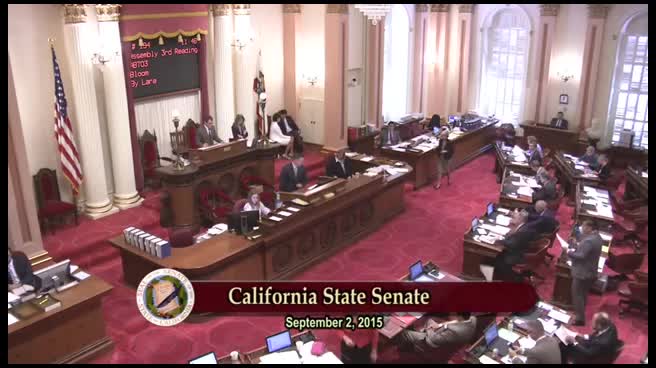
| Sep 2, 2015 | Assembly 3rd Reading AB1293 Holden By Pan | Senate Floor |
Passed |
|
| Aug 27, 2015 | Do pass | Senate Standing Committee on Appropriations |
Passed |
|
| Aug 17, 2015 | Placed on suspense file | Senate Standing Committee on Appropriations |
Passed |
|
| Jul 13, 2015 | Do pass, but first be re-referred to the Committee on [Appropriations] | Senate Standing Committee on Public Employment and Retirement |
Passed |
|
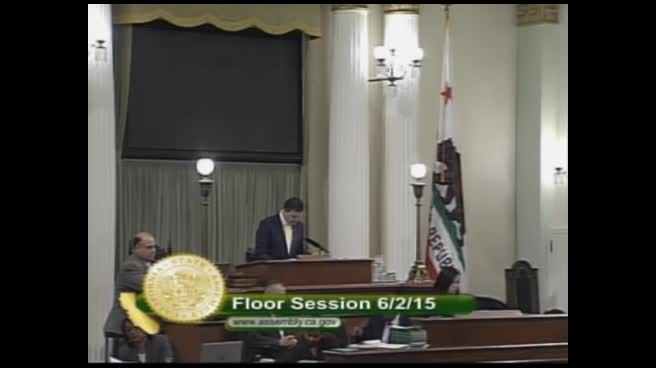
| Jun 2, 2015 | AB 1293 HOLDEN Assembly Third Reading | Assembly Floor |
Passed |
|
| May 28, 2015 | Do pass. | Assembly Standing Committee on Appropriations |
Passed |
|
| Apr 22, 2015 | Do pass and be re-referred to the Committee on [Appropriations] | Assembly Standing Committee on Public Employees, Retirement, and Social Security |
Passed |
This list shows positions taken on this bill by organizations on the date displayed, which is linked to the original source.
Positions by individuals are not included.
|
Organization
|
Position
|
Date
|
|---|---|---|
| American Federation of State, County and Municipal Employees | ** Support | Sep 2, 2015 |
| California Association Of Psychiatric Technicians | ** Support | Jun 2, 2015 |
| California School Employees Association | ** Support | Sep 2, 2015 |
| Service Employees International Union, Local 1000 | ** Support | Sep 2, 2015 |
GOVERNOR'S VETO
AB 1293
(Holden)
As Enrolled September 4, 2015
2/3 vote
Committee |
Votes |
Ayes |
Noes |
Public Employees |
6-1 |
Bonta, Waldron, Cooley, Jones-Sawyer, O'Donnell, Rendon |
Wagner |
Appropriations |
12-5 |
Gomez, Bonta, Calderon, Daly, Eggman, Eduardo Garcia, Gordon, Holden, Quirk, Rendon, Weber, Wood |
Bigelow, Chang, Gallagher, Jones, Wagner |
ASSEMBLY: |
53-24 |
(June 2, 2015) |
SENATE: |
25-15 |
(September 2, 2015) |
SUMMARY: Prohibits the use of personal services contracts for reasons other than achieving cost savings if the contract would displace civil service employees. Specifically, this bill:
Provides that the use of personal services contracts in response to particular conditions is prohibited if it will cause the displacement of civil service employees.
Defines "displacement" to include layoffs, demotions, involuntary transfers to a new class or to a new location requiring a change in residence, and time base reductions.
Specifies that displacement does not include shift changes or reassignment to other positions in the same class and general location.
EXISTING LAW:
Requires, based on provisions in the California Constitution, that services provided by state agencies generally be performed by state civil service employees.
Permits the use of personal services contracts in order to achieve cost savings provided that certain criteria are met.
Requires a state agency proposing to execute a personal services contract to achieve cost saving to notify the State Personnel Board (SPB) of its intention and requires the SPB to immediately contact specified persons or organizations upon receipt of the notice so that they may be given a reasonable opportunity to comment on the proposed contract.
Authorizes an employee organization to request, within 10 days of receiving the above notice, the SPB to review any proposed or executed contract, as specified.
Permits the use of personal services contracts in certain other circumstances, including:
When the "nature of the services" is such that the services cannot be adequately rendered by an existing agency of the public entity.
If the state seeks to contract for private assistance to perform "new functions" not previously undertaken by the state or covered by an existing department.
When the state, under specified conditions contracts with private contractors to achieve cost savings.
When the nature of the work is such that the Government Code standards for emergency appointments apply.
When the services are of such urgent, temporary, or occasional nature that the delay incumbent in their implementation under civil service would frustrate their very purpose.
Prohibits a state agency from executing a personal services contract for non-cost savings reasons, except in specified sudden and unexpected situations, until it has certified that all employee organizations that perform the type of work being contracted out have been notified.
Requires, at a minimum, the notification to include a full copy of the proposed contract. Permits the notifying agency to redact specific confidential or proprietary information from the notice.
Requires the Department of General Services (DGS) to establish the certification of notification process.
FISCAL EFFECT: According to the Assembly Appropriations Committee, unknown, but potentially substantial costs to state agencies, both General and Special Funds, if this bill interferes with current emergency staffing and hiring processes.
COMMENTS: According to information provided to the Committee by the sponsor of this bill, "In August 2014, California Correctional Health Care Services (CCHCS) issued State Restriction of Appointment (SROA) notices (layoff notices) to employees in several medical services classifications. During the period in which the layoff notices were issued, the state actively recruited private vendor staff through existing contracts and Craigslist."
"SROA notices generally imply that there is a layoff due to the fact that there is not enough work. However, for a six month period ending June 2014, the overtime for Registered Nurses and Licensed Vocational Nurses was upwards of 400,000 hours for a six month period. Some staff who received SROA notices were transferred to other positions at other institutions doing the same work. Others have not found work yet and will remain unemployed. Currently, CCHCS is working to address Mandatory overtime by recruiting 785 Limited Term Staff. Recruiting Limited-Term Intermittent staff will be difficult because they are easier to terminate because they have less employee protections. When departments need to save money they can cut intermittent workers’ hours, terminate contract employees, or terminate temporary appointments such as limited-term appointments. Finally, departments should not be allowed to layoff civil service staff when it creates a staffing emergency resulting in the use of contract/registry staff."
According to the author, "AB 1293 gets to the issue by prohibiting state departments from laying off civil service employees thereby artificially creating the illusory need for emergency staffing situations that have to be filled by an alternative or temporary workforce, and circumventing AB 906 (Pan), Chapter 744, Statutes of 2013, by recruiting registry staff during the layoff process from pre-existing contracts."
AB 906 prohibited a state agency from executing a personal services contract, except in specified sudden and unexpected situations, until it has certified that all employee organizations that perform the type of work being contracted out have been notified. According to the author, AB 906 was intended to ensure that state agencies and departments are working in conjunction with the Legislature to build and maintain a strong civil service system, as envisioned in the California Constitution.
This bill would prohibit a personal services contract if it causes layoff, demotion or involuntary transfer to a new classification or location.
Currently, personal service contracts cannot be used in lieu of existing civil service work. Furthermore, before a state agency can enter into a personal services contract, the agency must demonstrate, among other things, that the services cannot be performed by and will not displace civil service employees.
I understand the sponsors have introduced this bill in response to recent action by the federal receiver's office. As such, I am directing the Department of Corrections to investigate that office's practices with respect to Government Code Section 19130.
Analysis Prepared by: Karon Green / P.E.,R., & S.S. / (916) 319-3957 FN: 0002499
AB 1293
Page 5
|
Office of Senate Floor Analyses (916) 651-1520 Fax: (916) 327-4478 |
THIRD READING
Bill No: AB 1293
Amended: 3/26/15 in Assembly
SENATE PUBLIC EMP. & RET. COMMITTEE: 3-2, 7/13/15
AYES: Pan, Beall, Hall
NOES: Morrell, Fuller
SENATE APPROPRIATIONS COMMITTEE: 5-2, 8/27/15
AYES: Lara, Beall, Hill, Leyva, Mendoza
NOES: Bate, Nielsen
ASSEMBLY FLOOR: 53-24, 6/2/15 - See last page for vote
SUBJECT: State public employment: state personal services contracts
SOURCE: Service Employees International Union, Local 1000
DIGEST: This bill prohibits the use of state personal services contracts for reasons other than achieving cost savings if the contract would displace state civil service employees.
ANALYSIS:
Existing law:
Requires, based on provisions in the California Constitution, that services provided by state agencies generally be performed by state civil service employees.
Permits the use of personal services contracts in order to achieve cost savings provided that specified criteria are met.
Requires a state agency proposing to execute a personal services contract to achieve cost saving to notify the State Personnel Board (SPB) of its intention and requires the SPB to immediately contact specified persons or organizations upon receipt of the notice so that they may be given a reasonable opportunity to comment on the proposed contract.
Authorizes an employee organization to request, within 10 days of receiving the above notice, the SPB to review any proposed or executed contract, as specified.
Permits the use of personal services contracts in circumstances other than to achieve cost savings, including:
When the nature of the services is such that the services cannot be adequately rendered by an existing agency of the public entity.
If the state seeks to contract for private assistance to perform "new functions" not previously undertaken by the state or covered by an existing department.
When the nature of the work is such that the Government Code standards for emergency appointments apply.
When the services are of such urgent, temporary, or occasional nature that the delay incumbent in their implementation under civil service would frustrate their very purpose.
Prohibits a state agency from executing a personal services contract for non-cost savings reasons, except in specified sudden and unexpected situations, until it has certified that all employee organizations that perform the type of work being contracted out have been notified.
Requires, at a minimum, the notification to include a full copy of the proposed contract. Permits the notifying agency to redact specific confidential or proprietary information from the notice.
Requires the Department of General Services to establish the certification of notification process.
This bill:
Provides that the use of personal services contracts in response to particular conditions other than to achieve cost savings is prohibited if it will cause the displacement of civil service employees.
Defines "displacement" to include layoffs, demotions, involuntary transfers to a new class or to a new location requiring a change in residence, and time base reductions.
Specifies that displacement does not include changes in shifts or days off or reassignment to other positions in the same class and general location.
Comments
According to the author:
In August 2014, California Correctional Health Care Services (CCHCS) issued State Restriction of Appointment (SROA) notices [i.e., layoff notices] to employees in several medical services classifications. During the period in which the layoff notices were issued, the state actively recruited private vendor staff through existing contracts and Craigslist.
SROA notices generally imply that there is a layoff due to the fact that there is not enough work. However, for a six month period ending June 2014, the overtime for Registered Nurses and Licensed Vocational Nurses was upwards of 400,000 hours for a six month period. Some staff who received SROA notices were transferred to other positions at other institutions doing the same work. Others have not found work yet and will remain unemployed. Currently, CCHCS is working to address mandatory overtime by recruiting 785 Limited Term Staff. Recruiting Limited-Term Intermittent staff will be difficult because they are easier to terminate because they have less employee protections. When departments need to save money they can cut intermittent workers’ hours, terminate contract employees, or terminate temporary appointments such as limited-term appointments. Finally, departments should not be allowed to layoff civil service staff when it creates a staffing emergency resulting in the use of contract/registry staff.
Prior Legislation
AB 906 (Pan, Chapter 744, Statutes of 2013) prohibits a state agency from executing a personal services contract, except in specified sudden and unexpected situations, until it has certified that all employee organizations that perform the type of work being contracted out have been notified.
FISCAL EFFECT: Appropriation: No Fiscal Com.: Yes Local: No
According to the Senate Appropriations Committee this bill will result in unknown costs, potentially over $50,000 (General and/or special funds), to the extent this bill were to impact current emergency staffing and hiring processes.
Service Employees International Union, Local 1000 (source)
American Federation of State, County and Municipal Employees
California School Employees Association
OPPOSITION: (Verified 8/27/15)
None received
ARGUMENTS IN SUPPORT: According to the sponsor:
In June 2014, California Correctional Health Care Services (CCHCS) issued layoff notices to its healthcare staff. According to vacancy data from the State Controller’s Office (SCO), two months before layoff notices were issued, the classes that received notices had a total of 566 vacancies. Following the layoffs, in December 2014, vacancies increased by 278 to 844. Excessive overtime hours, coupled with vacancies prove that there is more work than the department is currently staffed for.
In January 2015, CCHCS issued a memorandum regarding implementation of a Limited-Term Intermittent Nursing Pool. They plan to hire 785.3 CNAs, LVNs and RNs. CCHCS currently has retention and recruitment problems due to incomparable pay and benefits provided by other state departments, county, and private institutions. The issue of staffing was created by CCHCS and now they are replacing the regular workforce with temporary workers and registry staff.
AB 1293 gets to this issue by prohibiting state departments from laying off civil service employees, artificially creating the illusory need for emergency staffing situations that have to be filled by an alternative or temporary workforce. This scenario circumvents AB 906, which requires unions to be notified when new contracts are put out to bid, because CCHCS recruited registry staff during the layoff process from pre-existing contracts.
ASSEMBLY FLOOR: 53-24, 6/2/15
AYES: Alejo, Bloom, Bonilla, Bonta, Brown, Burke, Calderon, Campos, Chau, Chiu, Chu, Cooley, Cooper, Dababneh, Daly, Dodd, Frazier, Cristina Garcia, Eduardo Garcia, Gatto, Gipson, Gomez, Gonzalez, Gordon, Gray, Roger Hernández, Holden, Irwin, Jones-Sawyer, Levine, Linder, Lopez, Low, McCarty, Medina, Mullin, Nazarian, O'Donnell, Perea, Quirk, Rendon, Ridley-Thomas, Rodriguez, Salas, Santiago, Mark Stone, Thurmond, Ting, Waldron, Weber, Williams, Wood, Atkins
NOES: Achadjian, Travis Allen, Baker, Bigelow, Brough, Chang, Dahle, Beth Gaines, Gallagher, Hadley, Harper, Jones, Kim, Lackey, Maienschein, Mathis, Mayes, Melendez, Obernolte, Olsen, Patterson, Steinorth, Wagner, Wilk
NO VOTE RECORDED: Chávez, Eggman, Grove
Prepared by: Pamela Schneider / P.E. & R. / (916) 651-1519
8/31/15 11:43:36
**** END ****
AB 1293 (Holden) Page 2 of 2
SENATE COMMITTEE ON APPROPRIATIONS
Senator Ricardo Lara, Chair
2015 - 2016 Regular Session
AB 1293 (Holden) - State public employment: labor negotiations
|
|
Version: March 26, 2015 |
Policy Vote: P.E. & R. 3 - 2 |
Urgency: No |
Mandate: No |
Hearing Date: August 17, 2015 |
Consultant: Robert Ingenito |
This bill meets the criteria for referral to the Suspense File.
Bill Summary:
AB 1293 would prohibit the use of state personal services contracts for reasons other than achieving cost savings if the contract would displace state civil service employees.
Fiscal Impact:
This bill would result in unknown costs, potentially over $50,000 (General and/or special funds), to the extent this bill were to impact current emergency staffing and hiring processes.
Background:
Current law generally requires that services provided by state agencies generally must be performed by state civil service employees. However, the use of personal services contracts is permitted in certain instances, including the following:
To achieve cost savings provided that specified criteria are met.
For other non cost-saving circumstances, including (1) when the nature of the services is such that they cannot be adequately rendered by an existing agency of the public entity, (2) if the State seeks to contract for private assistance to perform "new functions" not previously undertaken by the State or covered by an existing department, (3) when the nature of the work is such that the Government Code standards for emergency appointments apply, or (4) when the services are of such urgent, temporary, or occasional nature that the delay incumbent in their implementation under civil service would frustrate their very purpose.
Current law generally prohibits a state agency from executing a personal services contract for non-cost savings reasons, except in specified sudden and unexpected situations, until it has certified that all employee organizations that perform the type of work being contracted out have been notified.
Proposed Law:
This bill would (1) provide that the use of personal services contracts in response to particular conditions other than to achieve cost savings is prohibited if it will cause the displacement of civil service employees, (2) define "displacement" to include layoffs, demotions, involuntary transfers to a new class or to a new location requiring a change in residence, and time base reductions, and (3) specify that displacement does not include changes in shifts or days off or reassignment to other positions in the same class and general location.
Related Legislation:
AB 906 (Pan, Chapter 744, Statutes of 2013) prohibited a state agency from executing a personal services contract, except in specified sudden and unexpected situations, until it has certified that all employee organizations that perform the type of work being contracted out have been notified.
Staff Comments:
This bill would prohibit state departments from laying off civil service employees to create a situation where the hiring of personal services contractors is needed.
-- END --
AB 1293 (Holden) Page 4 of 4
SENATE COMMITTEE ON
PUBLIC EMPLOYMENT AND RETIREMENT
Dr. Richard Pan, Chair
2015 - 2016 Regular
Bill No: AB 1293 Hearing Date: 7/13/15
Author: |
Holden |
||
Version: |
3/26/15 As amended |
||
Urgency: |
No |
Fiscal: |
Yes |
Consultant: |
Pamela Schneider |
||
Subject: State public employment: labor negotiations
SOURCE: Service Employees International Union, Local 1000
ASSEMBLY VOTES:
Assembly Floor: |
53 - 24 |
Assembly Appropriations Committee: |
12 - 5 |
Assembly Public Employees, Retirement/Soc Sec Committee: |
6 - 1 |
DIGEST: This bill prohibits the use of state personal services contracts for reasons other than achieving cost savings if the contract would displace state civil service employees.
ANALYSIS:
Existing law:
Requires, based on provisions in the California Constitution, that services provided by state agencies generally be performed by state civil service employees.
Permits the use of personal services contracts in order to achieve cost savings provided that specified criteria are met.
Requires a state agency proposing to execute a personal services contract to achieve cost saving to notify the State Personnel Board (SPB) of its intention and requires the SPB to immediately contact specified persons or organizations upon receipt of the notice so that they may be given a reasonable opportunity to comment on the proposed contract.
Authorizes an employee organization to request, within 10 days of receiving the above notice, the SPB to review any proposed or executed contract, as specified.
Permits the use of personal services contracts in circumstances other than to achieve cost savings, including:
When the nature of the services is such that the services cannot be adequately rendered by an existing agency of the public entity.
If the state seeks to contract for private assistance to perform "new functions" not previously undertaken by the state or covered by an existing department.
When the nature of the work is such that the Government Code standards for emergency appointments apply.
When the services are of such urgent, temporary, or occasional nature that the delay incumbent in their implementation under civil service would frustrate their very purpose.
Prohibits a state agency from executing a personal services contract for non-cost savings reasons, except in specified sudden and unexpected situations, until it has certified that all employee organizations that perform the type of work being contracted out have been notified.
Requires, at a minimum, the notification to include a full copy of the proposed contract. Permits the notifying agency to redact specific confidential or proprietary information from the notice.
Requires the Department of General Services (DGS) to establish the certification of notification process.
This bill:
Provides that the use of personal services contracts in response to particular conditions other than to achieve cost savings is prohibited if it will cause the displacement of civil service employees.
Defines "displacement" to include layoffs, demotions, involuntary transfers to a new class or to a new location requiring a change in residence, and time base reductions.
Specifies that displacement does not include changes in shifts or days off or reassignment to other positions in the same class and general location.
Background
According to the author of the bill:
In August 2014, California Correctional Health Care Services (CCHCS) issued State Restriction of Appointment (SROA) notices (i.e., layoff notices) to employees in several medical services classifications. During the period in which the layoff notices were issued, the state actively recruited private vendor staff through existing contracts and Craigslist.
SROA notices generally imply that there is a layoff due to the fact that there is not enough work. However, for a six month period ending June 2014, the overtime for Registered Nurses and Licensed Vocational Nurses was upwards of 400,000 hours for a six month period. Some staff who received SROA notices were transferred to other positions at other institutions doing the same work. Others have not found work yet and will remain unemployed. Currently, CCHCS is working to address Mandatory overtime by recruiting 785 Limited Term Staff. Recruiting Limited-Term Intermittent staff will be difficult because they are easier to terminate because they have less employee protections. When departments need to save money they can cut intermittent workers’ hours, terminate contract employees, or terminate temporary appointments such as limited-term appointments. Finally, departments should not be allowed to layoff civil service staff when it creates a staffing emergency resulting in the use of contract/registry staff.
Prior/Related Legislation
AB 906 (Pan, Chapter 744, Statutes of 2013) prohibited a state agency from executing a personal services contract, except in specified sudden and unexpected situations, until it has certified that all employee organizations that perform the type of work being contracted out have been notified.
FISCAL EFFECT: Appropriation: No Fiscal Com.: Yes Local: No
According to the Assembly Appropriations Committee, costs are unknown, but potentially substantial costs to state agencies, both General and Special Funds, if this bill interferes with current emergency staffing and hiring processes.
SUPPORT:
Service Employees International Union, Local 1000 (source)
American Federation of State, County and Municipal Employees
California School Employees Association
OPPOSITION:
None received
ARGUMENTS IN SUPPORT:
According to the sponsor:
In June 2014, California Correctional Health Care Services (CCHCS) issued layoff notices to its healthcare staff. According to vacancy data from the State Controller’s Office (SCO), two months before layoff notices were issued, the classes that received notices had a total of 566 vacancies. Following the layoffs, in December 2014, vacancies increased by 278 to 844. Excessive overtime hours, coupled with vacancies prove that there is more work than the department is currently staffed for.
In January 2015, CCHCS issued a memorandum regarding implementation of a Limited-Term Intermittent Nursing Pool. They plan to hire 785.3 CNAs, LVNs and RNs. CCHCS currently has retention and recruitment problems due to incomparable pay and benefits provided by other state departments, county, and private institutions. The issue of staffing was created by CCHCS and now they are replacing the regular workforce with temporary workers and registry staff.
AB 1293 gets to this issue by prohibiting state departments from laying off civil service employees, artificially creating the illusory need for emergency staffing situations that have to be filled by an alternative or temporary workforce. This scenario circumvents AB 906, which requires unions to be notified when new contracts are put out to bid, because CCHCS recruited registry staff during the layoff process from pre-existing contracts.
AB 1293
Page 3
ASSEMBLY THIRD READING
AB 1293
(Holden)
As Amended March 26, 2015
Majority vote
Committee |
Votes |
Ayes |
Noes |
Public Employees |
6-1 |
Bonta, Waldron, Cooley, Jones-Sawyer, O'Donnell, Rendon |
Wagner |
Appropriations |
12-5 |
Gomez, Bonta, Calderon, Daly, Eggman, Eduardo Garcia, Gordon, Holden, Quirk, Rendon, Weber, Wood |
Bigelow, Chang, Gallagher, Jones, Wagner |
SUMMARY: Prohibits the use of personal services contracts for reasons other than achieving cost savings if the contract would displace civil service employees. Specifically, this bill:
Provides that the use of personal services contracts in response to particular conditions is prohibited if it will cause the displacement of civil service employees.
Defines "displacement" to include layoffs, demotions, involuntary transfers to a new class or to a new location requiring a change in residence, and time base reductions.
Specifies that displacement does not include shift changes or reassignment to other positions in the same class and general location.
EXISTING LAW:
Requires, based on provisions in the California Constitution, that services provided by state agencies generally be performed by state civil service employees.
Permits the use of personal services contracts in order to achieve cost savings provided that certain criteria are met.
Requires a state agency proposing to execute a personal services contract to achieve cost saving to notify the State Personnel Board (SPB) of its intention and requires the SPB to immediately contact specified persons or organizations upon receipt of the notice so that they may be given a reasonable opportunity to comment on the proposed contract.
Authorizes an employee organization to request, within 10 days of receiving the above notice, the SPB to review any proposed or executed contract, as specified.
Permits the use of personal services contracts in certain other circumstances, including:
When the "nature of the services" is such that the services cannot be adequately rendered by an existing agency of the public entity.
If the state seeks to contract for private assistance to perform "new functions" not previously undertaken by the state or covered by an existing department.
When the state, under specified conditions contracts with private contractors to achieve cost savings.
When the nature of the work is such that the Government Code standards for emergency appointments apply.
When the services are of such urgent, temporary, or occasional nature that the delay incumbent in their implementation under civil service would frustrate their very purpose.
Prohibits a state agency from executing a personal services contract for non-cost savings reasons, except in specified sudden and unexpected situations, until it has certified that all employee organizations that perform the type of work being contracted out have been notified.
Requires, at a minimum, the notification to include a full copy of the proposed contract. Permits the notifying agency to redact specific confidential or proprietary information from the notice.
Requires the Department of General Services (DGS) to establish the certification of notification process.
FISCAL EFFECT: According to the Assembly Appropriations Committee, unknown, but potentially substantial costs to state agencies, both General and Special Funds, if this bill interferes with current emergency staffing and hiring processes.
COMMENTS: According to information provided to the Committee by the sponsor of this bill, "In August 2014, California Correctional Health Care Services (CCHCS) issued State Restriction of Appointment (SROA) notices (layoff notices) to employees in several medical services classifications. During the period in which the layoff notices were issued, the state actively recruited private vendor staff through existing contracts and Craigslist."
"SROA notices generally imply that there is a layoff due to the fact that there is not enough work. However, for a six month period ending June 2014, the overtime for Registered Nurses and Licensed Vocational Nurses was upwards of 400,000 hours for a six month period. Some staff who received SROA notices were transferred to other positions at other institutions doing the same work. Others have not found work yet and will remain unemployed. Currently, CCHCS is working to address Mandatory overtime by recruiting 785 Limited Term Staff. Recruiting Limited-Term Intermittent staff will be difficult because they are easier to terminate because they have less employee protections. When departments need to save money they can cut intermittent workers’ hours, terminate contract employees, or terminate temporary appointments such as limited-term appointments. Finally, departments should not be allowed to layoff civil service staff when it creates a staffing emergency resulting in the use of contract/registry staff."
According to the author, "AB 1293 gets to the issue by prohibiting state departments from laying off civil service employees thereby artificially creating the illusory need for emergency staffing situations that have to be filled by an alternative or temporary workforce, and circumventing AB 906 (Pan), Chapter 744, Statutes of 2013, by recruiting registry staff during the layoff process from pre-existing contracts."
AB 906 prohibited a state agency from executing a personal services contract, except in specified sudden and unexpected situations, until it has certified that all employee organizations that perform the type of work being contracted out have been notified. According to the author, AB 906 was intended to ensure that state agencies and departments are working in conjunction with the Legislature to build and maintain a strong civil service system, as envisioned in the California Constitution.
Analysis Prepared by: Karon Green / P.E.,R., & S.S. / (916) 319-3957 FN: 0000603
AB 1293
Page 2
Date of Hearing: May 20, 2015
ASSEMBLY COMMITTEE ON APPROPRIATIONS
Jimmy Gomez, Chair
AB 1293
(Holden) – As Amended March 26, 2015
Policy Committee: |
Public Employees, Retirement/Soc Sec |
Vote: |
6 - 1 |
Urgency: No State Mandated Local Program: No Reimbursable: No
SUMMARY:
This bill prohibits state agencies from using personal services contracts if it would result in the layoff, demotion, involuntary transfer, time reduction, or other displacement of civil service employees. The bill clarifies that "displacement" does not include changes in shifts or days off, nor does it include reassignment to other positions within the same class and general location.
FISCAL EFFECT:
Unknown, but potentially substantial costs to state agencies, both General and Special Funds, if this bill interferes with current emergency staffing and hiring processes.
COMMENTS:
1) Purpose. According to the sponsor, Service Employees International Union, Local 1000, Correctional Health Care Services (CHCS) issued State Restriction of Appointment notices (layoff notices) in August 2014 to employees in several medical services classifications. The sponsor claims that during the period in which the layoff notices were issued, the state actively recruited private vendor staff through existing contracts and Craigslist.
The sponsor further contends that while State Restriction of Appointment notices generally imply there is insufficient work for employees, Registered Nurses and Licensed Vocational Nurses recorded substantial overtime hours during the first half of 2014. The union claims CHCS continues to address mandatory overtime by recruiting limited term staff.
According to the author, AB 1293 solves this issue by prohibiting state departments from laying off civil service employees to create an artificial need for emergency staffing and justify hiring personal services contractors.
2) Sudden and Unexpected Occurrences. AB 906 (Pan), statutes of 2013, prohibited state agencies from executing personal service contracts, except in situations "necessary due to a sudden and unexpected occurrence that poses a clear and imminent danger, requiring immediate action to prevent or mitigate the loss or impairment of life, health, property, or essential public services," until the agency has certified that all employee organizations that perform the type of work proposed to be contracted have been notified. The author believes AB 906 was intended to help maintain the strong civil service system envisioned in the Constitution, and this bill will further those aims.
Analysis Prepared by: Joel Tashjian / APPR. / (916) 319-2081
Discussed in Hearing
 5MIN
Senate Floor
 45SEC
Senate Standing Committee on Appropriations
 3MIN
Assembly Floor
Bill Author

Bill Co-Author(s):