AB 1301: Voting rights: preclearance.
- Session Year: 2015-2016
- House: Assembly
- Latest Version Date: 2015-09-09
Existing law, the federal Voting Rights Act of 1965, provides that a change in voting procedures may not take effect in a state or political subdivision that is covered by the preclearance requirements of the federal act until the change is approved by a specified federal authority. A state or political subdivision is covered by the preclearance requirements of the federal act if it maintained a specified test or device as a prerequisite to voting, and had low voter registration or turnout, in the 1960s and early 1970s. The federal act allows a state or political subdivision covered by the act to obtain an exemption from the preclearance requirements if it satisfies specified criteria. The United States Supreme Court has held that the coverage formula of the federal act is unconstitutional and may not be used as a basis for requiring a jurisdiction to subject a proposed change in voting procedures to federal preclearance. Before that holding, the Counties of Kings, Monterey, and Yuba were covered jurisdictions subject to the federal preclearance requirements.
This bill would establish a state preclearance system. Under this system, if a covered political subdivision, as defined, enacts or seeks to administer a voting-related law, regulation, or policy, as specified, that is different from that in force or effect on the date this act is enacted, the governing body of the covered political subdivision would be required to submit the law, regulation, or policy to the Secretary of State for approval. The bill would require the Secretary of State to approve the law, regulation, or policy only if specified conditions are met. The bill would provide that the law, regulation, or policy will not take effect or be administered in the covered political subdivision until the law, regulation, or policy is approved by the Secretary of State, except as specified. The bill would allow the governing body of the covered political subdivision to seek review of the Secretary of States decision by means of an action filed in the Superior Court of Sacramento.
By requiring local governments to seek approval of the Secretary of State for changes to voting procedures, this bill would impose a state-mandated local program.
The California Constitution requires the state to reimburse local agencies and school districts for certain costs mandated by the state. Statutory provisions establish procedures for making that reimbursement.
This bill would provide that, if the Commission on State Mandates determines that the bill contains costs mandated by the state, reimbursement for those costs shall be made pursuant to these statutory provisions.
Existing law, the federal Voting Rights Act of 1965, provides that a change in voting procedures may not take effect in a state or political subdivision that is covered by the preclearance requirements of the federal act until the change is approved by a specified federal authority. A state or political subdivision is covered by the preclearance requirements of the federal act if it maintained a specified test or device as a prerequisite to voting, and had low voter registration or turnout, in the 1960s and early 1970s. The federal act allows a state or political subdivision covered by the act to obtain an exemption from the preclearance requirements if it satisfies specified criteria. The United States Supreme Court has held that the coverage formula of the federal act is unconstitutional and may not be used as a basis for requiring a jurisdiction to subject a proposed change in voting procedures to federal preclearance. Before that holding, the Counties of Kings, Monterey, and Yuba were covered jurisdictions subject to the federal preclearance requirements.
This bill would establish a state preclearance system. Under this system, if a covered political subdivision, as defined, enacts or seeks to administer a voting-related law, regulation, or policy, as specified, that is different from that in force or effect on the date this act is enacted, the governing body of the covered political subdivision would be required to submit the law, regulation, or policy to the Secretary of State for approval. The bill would require the Secretary of State to approve the law, regulation, or policy only if specified conditions are met. The bill would provide that the law, regulation, or policy shall not take effect or be administered in the covered political subdivision until the law, regulation, or policy is approved by the Secretary of State, except as specified. The bill would allow the governing body of the covered political subdivision to seek review of the Secretary of States decision by means of an action filed in the Superior Court of Sacramento.
By requiring local governments to seek approval of the Secretary of State for changes to voting procedures, this bill would impose a state-mandated local program.
The California Constitution requires the state to reimburse local agencies and school districts for certain costs mandated by the state. Statutory provisions establish procedures for making that reimbursement.
This bill would provide that, if the Commission on State Mandates determines that the bill contains costs mandated by the state, reimbursement for those costs shall be made pursuant to these statutory provisions.
Existing law, the federal Voting Rights Act of 1965, provides that a change in voting procedures may not take effect in a state or political subdivision that is covered by the preclearance requirements of the federal act until the change is approved by a specified federal authority. A state or political subdivision is covered by the preclearance requirements of the federal act if it maintained a specified test or device as a prerequisite to voting, and had low voter registration or turnout, in the 1960s and early 1970s. The federal act allows a state or political subdivision covered by the act to obtain an exemption from the preclearance requirements if it satisfies specified criteria. The United States Supreme Court has held that the coverage formula of the federal act is unconstitutional and may not be used as a basis for requiring a jurisdiction to subject a proposed change in voting procedures to federal preclearance. Prior to Before that holding, the Counties of Kings, Monterey, and Yuba were covered jurisdictions subject to the federal preclearance requirements.
This bill would establish a state preclearance system. Under this system, if a covered political subdivision, as defined, enacts or seeks to administer a voting-related law, regulation, or policy, as specified, that is different from that in force or effect on the date this act is enacted, the governing body of the covered political subdivision would be required to submit the law, regulation, or policy to the Secretary of State for approval. The bill would require the Secretary of State to approve the law, regulation, or policy only if specified conditions are met. The bill would provide that the law, regulation, or policy shall not take effect or be administered in the covered political subdivision until the law, regulation, or policy is approved by the Secretary of State, except as specified. The bill would allow the governing body of the covered political subdivision to seek review of the Secretary of States decision by means of an action filed in the Superior Court of Sacramento.
By requiring local governments to seek approval of the Secretary of State for changes to voting procedures, this bill would impose a state-mandated local program.
The California Constitution requires the state to reimburse local agencies and school districts for certain costs mandated by the state. Statutory provisions establish procedures for making that reimbursement.
This bill would provide that, if the Commission on State Mandates determines that the bill contains costs mandated by the state, reimbursement for those costs shall be made pursuant to these statutory provisions.
Existing law, the federal Voting Rights Act of 1965, provides that a change in voting procedures may not take effect in a state or political subdivision that is covered by the preclearance requirements of the federal act until the change is approved by a specified federal authority. A state or political subdivision is covered by the preclearance requirements of the federal act if it maintained a specified test or device as a prerequisite to voting, and had low voter registration or turnout, in the 1960s and early 1970s. The federal act allows a state or political subdivision covered by the act to obtain an exemption from the preclearance requirements if it satisfies specified criteria. The United States Supreme Court has held that the coverage formula of the federal act is unconstitutional and may not be used as a basis for requiring a jurisdiction to subject a proposed change in voting procedures to federal preclearance. Prior to that holding, the Counties of Kings, Monterey, and Yuba were covered jurisdictions subject to the federal preclearance requirements.
This bill would establish a state preclearance system. Under this system, if a political subdivision enacts or seeks to administer a voting-related law, regulation, or policy, as specified, that is different from that in force or effect on the date this act is enacted, the governing body of the political subdivision would be required to submit the law, regulation, or policy to the Secretary of State for approval. The bill would require the Secretary of State to approve the law, regulation, or policy only if specified conditions are met. The bill would provide that the law, regulation, or policy shall not take effect or be administered in the political subdivision until the law, regulation, or policy is approved by the Secretary of State, except as specified. The bill would allow the governing body of the political subdivision to seek review of the Secretary of States decision by means of an action filed in the Superior Court of Sacramento.
By requiring local governments to seek approval of the Secretary of State for changes to voting procedures, this bill would impose a state-mandated local program.
The California Constitution requires the state to reimburse local agencies and school districts for certain costs mandated by the state. Statutory provisions establish procedures for making that reimbursement.
This bill would provide that, if the Commission on State Mandates determines that the bill contains costs mandated by the state, reimbursement for those costs shall be made pursuant to these statutory provisions.
For purposes of this chapter, the following terms have the following meanings:
(a)Citizen means a citizen of the United States.
(b)Citizen voting-age population means the population of citizens who are 18 years of age or older within a political subdivision, as calculated by the United States Census Bureau in the most recent federal decennial census.
(c)Covered political subdivision means a political subdivision with two or more racial or ethnic groups that each represent at least 20 percent of the citizen voting-age population in the political subdivision.
(d)Electoral jurisdiction means a geographic area within which reside the voters who are qualified to vote for an elective office.
(e)Multilingual voting materials means registration or voting notices, forms, instructions, assistance, or other materials or information relating to the electoral process, including ballots, provided in the language of one or more language minority groups.
(f)Political subdivision means a geographic area of representation created for the provision of government services, including, but not limited to, a city, a school district, a community college district, or other district organized pursuant to state law.
(g)Protected class means a class of voters who are members of a race, color, or language minority group, as this class is referenced and defined in the federal Voting Rights Act of 1965 (52 U.S.C. Sec. 10101 et seq.).
(h)Voting locations means places for casting a ballot.
401.To ensure that the right of citizens who reside in California to vote is not denied or abridged on account of race, color, or language minority status through the enforcement of a voting-related law, regulation, or policy that is enacted or administered after the enactment date of this chapter, the following voting-related laws, regulations, and policies shall be subject to this chapter:
(a)A change to an at-large method of election that adds offices elected at-large or converts offices elected by single-member districts to one or more at-large or multimember districts.
(b)A change to the boundaries of an electoral jurisdiction, or a series of changes within a year to the boundaries of an electoral jurisdiction, that reduces the proportion of the citizen voting-age population that are members of a single protected class by 5 or more percent.
(c)A change through redistricting that alters the boundaries of districts within an electoral jurisdiction in which a single protected class has experienced a population increase of at least 25,000 residents or at least 20 percent of the citizen voting-age population of the protected class over the preceding decade, as determined by the five-year estimates of the United States Census American Community Survey.
(d)A change to multilingual voting materials that reduces the voting materials available in languages other than English, or that alters the manner in which the materials are provided or distributed, if no similar reduction or alteration occurred in materials provided in English.
402.(a)If a covered political subdivision enacts or seeks to administer a voting-related law, regulation, or policy described in Section 401 that is different from that in force or effect on the date this chapter is enacted, the governing body of the covered political subdivision shall submit the law, regulation, or policy to the Secretary of State for approval. The law, regulation, or policy shall not take effect or be administered in the covered political subdivision until the law, regulation, or policy is approved by the Secretary of State.
(b)The Secretary of State shall provide a written decision to the governing body of the covered political subdivision within 60 days of a request to enact or administer a voting-related law, regulation, or policy described in Section 401. If the Secretary of State fails to provide a written decision within 60 days, the governing body of the covered political subdivision may implement the law, regulation, or policy. The governing body of the covered political subdivision may make a written request for an expedited review of a law, regulation, or policy if the covered political subdivision has a demonstrated need to implement the proposed change before the end of the 60-day review period. The written request shall describe the basis for the request in light of conditions in the covered political subdivision and shall specify the date by which a decision is needed. The Secretary of State shall attempt to accommodate a reasonable request.
(c)The governing body of the covered political subdivision shall have the burden of establishing, by objective and compelling evidence, that the law, regulation, or policy satisfies both of the following:
(1)Is not likely to result in a discriminatory effect on the participation of voters from a protected class that constitutes at least 20 percent of the covered political subdivisions citizen voting-age population.
(2)Is not motivated in whole or substantially in part by an intent to reduce the participation of voters from a protected class.
(d)If the Secretary of State denies a request to enact or administer a law, regulation, or policy, the governing body of the covered political subdivision may seek review of the decision by means of an action filed in superior court.
(e)The Secretary of State may file suit to enjoin the governing body of a covered political subdivision from implementing a law, regulation, or policy in violation of this section.
(f)Venue for an action filed pursuant to subdivision (d) or (e) shall lie exclusively in the Superior Court for the County of Sacramento.
(g)Notwithstanding any other law, a covered political subdivision may enact or administer a voting-related law, regulation, or policy described in Section 401 that is different from that in force or effect on the date this chapter is enacted if doing so is necessary because of an unexpected circumstance that occurred during the 30 days immediately preceding an election, in which case the covered political subdivision may enact or administer the law, regulation, or policy only for purposes of that election. After the election, the covered political subdivision shall immediately submit the law, regulation, or policy to the Secretary of State for approval pursuant to this section.
403.(a)The Attorney General, or a registered voter who resides in a covered political subdivision where the change to a voting-related law, regulation, or policy occurred, may file an action in superior court to compel the covered political subdivision to satisfy the obligations set forth in this chapter.
(b)In an action brought pursuant to this section, a court shall provide as a remedy that the voting-related law, regulation, or policy be enjoined unless the court determines that the law, regulation, or policy is not subject to this chapter or has been approved by the procedures established in Section 402.
404.For purposes of this chapter, any data provided by the United States Census Bureau, whether based on enumeration or statistical sampling, shall not be subject to challenge or review by any court.
SEC. 2.If the Commission on State Mandates determines that this act contains costs mandated by the state, reimbursement to local agencies and school districts for those costs shall be made pursuant to Part 7 (commencing with Section 17500) of Division 4 of Title 2 of the Government Code.
For purposes of this chapter, the following terms have the following meanings:
(a)Citizen means a citizen of the United States.
(b)Citizen voting-age population means the population of citizens who are 18 years of age or older within a political subdivision, as calculated by the United States Census Bureau in the most recent federal decennial census.
(c)Covered political subdivision means a political subdivision with two or more racial or ethnic groups that each represent at least 20 percent of the citizen voting-age population in the political subdivision.
(d)Electoral jurisdiction means a geographic area within which reside the voters who are qualified to vote for an elective office.
(e)Multilingual voting materials means registration or voting notices, forms, instructions, assistance, or other materials or information relating to the electoral process, including ballots, provided in the language of one or more language minority groups.
(f)Political subdivision means a geographic area of representation created for the provision of government services, including, but not limited to, a city, a school district, a community college district, or other district organized pursuant to state law.
(g)Protected class means a class of voters who are members of a race, color, or language minority group, as this class is referenced and defined in the federal Voting Rights Act of 1965 (52 U.S.C. Sec. 10101 et seq.).
(h)Voting locations means places for casting a ballot.
401.To ensure that the right of citizens who reside in California to vote is not denied or abridged on account of race, color, or language minority status through the enforcement of a voting-related law, regulation, or policy that is enacted or administered after the enactment date of this chapter, the following voting-related laws, regulations, and policies shall be subject to this chapter:
(a)A change to an at-large method of election that adds offices elected at-large or converts offices elected by single-member districts to one or more at-large or multimember districts.
(b)A change to the boundaries of an electoral jurisdiction, or a series of changes within a year to the boundaries of an electoral jurisdiction, that reduces the proportion of the citizen voting-age population that are members of a single protected class by 5 or more percent.
(c)A change through redistricting that alters the boundaries of districts within an electoral jurisdiction in which a single protected class has experienced a population increase of at least 25,000 residents or at least 20 percent of the citizen voting-age population of the protected class over the preceding decade, as determined by the five-year estimates of the United States Census American Community Survey.
(d)A change to voting locations that reduces, consolidates, or relocates one or more voting locations, including an early, absentee, or election day voting location, and results in a net loss, on a per voter basis, of voting locations in the 20 percent of the total number of census tracts in a covered political subdivision with the highest proportion of voters from a single protected class that represents at least 20 percent of the citizen voting-age population in the covered political subdivision, provided that the net loss is greater than the net loss resulting from the changes in the 20 percent of the total number of census tracts in a covered political subdivision with the highest proportion of voters of any other racial or ethnic group that represents at least 20 percent of the citizen voting-age population in the covered political subdivision.
(e)
(d)A change to multilingual voting materials that reduces the voting materials available in languages other than English, or that alters the manner in which the materials are provided or distributed, if no similar reduction or alteration occurred in materials provided in English.
402.(a)If a covered political subdivision enacts or seeks to administer a voting-related law, regulation, or policy described in Section 401 that is different from that in force or effect on the date this chapter is enacted, the governing body of the covered political subdivision shall submit the law, regulation, or policy to the Secretary of State for approval. The law, regulation, or policy shall not take effect or be administered in the covered political subdivision until the law, regulation, or policy is approved by the Secretary of State.
(b)The Secretary of State shall provide a written decision to the governing body of the covered political subdivision within 60 days of a request to enact or administer a voting-related law, regulation, or policy described in Section 401. If the Secretary of State fails to provide a written decision within 60 days, the governing body of the covered political subdivision may implement the law, regulation, or policy. The governing body of the covered political subdivision may make a written request for an expedited review of a law, regulation, or policy if the covered political subdivision has a demonstrated need to implement the proposed change before the end of the 60-day review period. The written request shall describe the basis for the request in light of conditions in the covered political subdivision and shall specify the date by which a decision is needed. The Secretary of State shall attempt to accommodate a reasonable request.
(c)The governing body of the covered political subdivision shall have the burden of establishing, by objective and compelling evidence, that the law, regulation, or policy satisfies both of the following:
(1)Is not likely to result in a discriminatory effect on the participation of voters from a protected class that constitutes at least 20 percent of the covered political subdivisions citizen voting-age population.
(2)Is not motivated in whole or substantially in part by an intent to reduce the participation of voters from a protected class.
(d)If the Secretary of State denies a request to enact or administer a law, regulation, or policy, the governing body of the covered political subdivision may seek review of the decision by means of an action filed in superior court.
(e)The Secretary of State may file suit to enjoin the governing body of a covered political subdivision from implementing a law, regulation, or policy in violation of this section.
(f)Venue for an action filed pursuant to subdivision (d) or (e) shall lie exclusively in the Superior Court for the County of Sacramento.
(g)Notwithstanding any other law, a covered political subdivision may enact or administer a voting-related law, regulation, or policy described in Section 401 that is different from that in force or effect on the date this chapter is enacted if doing so is necessary because of an unexpected circumstance that occurred during the 30 days immediately preceding an election, in which case the covered political subdivision may enact or administer the law, regulation, or policy only for purposes of that election. After the election, the covered political subdivision shall immediately submit the law, regulation, or policy to the Secretary of State for approval pursuant to this section.
403.(a)The Attorney General, or a registered voter who resides in a covered political subdivision where the change to a voting-related law, regulation, or policy occurred, may file an action in superior court to compel the covered political subdivision to satisfy the obligations set forth in this chapter.
(b)In an action brought pursuant to this section, a court shall provide as a remedy that the voting-related law, regulation, or policy be enjoined unless the court determines that the law, regulation, or policy is not subject to this chapter or has been approved by the procedures established in Section 402.
404.For purposes of this chapter, any data provided by the United States Census Bureau, whether based on enumeration or statistical sampling, shall not be subject to challenge or review by any court.
SEC. 2.If the Commission on State Mandates determines that this act contains costs mandated by the state, reimbursement to local agencies and school districts for those costs shall be made pursuant to Part 7 (commencing with Section 17500) of Division 4 of Title 2 of the Government Code.
For purposes of this chapter, the following terms have the following meanings:
(a)Citizen means a citizen of the United States.
(b)Citizen voting-age population means the population of citizens who are 18 years of age or older within a political subdivision, as calculated by the United States Census Bureau in the most recent federal decennial census.
(c)Covered political subdivision means a political subdivision with two or more racial or ethnic groups that each represent at least 20 percent of the citizen voting-age population in the political subdivision.
(c)
(d)Electoral jurisdiction means a geographic area within which reside the voters who are qualified to vote for an elective office.
(d)
(e)Multilingual voting materials means registration or voting notices, forms, instructions, assistance, or other materials or information relating to the electoral process, including ballots, provided in the language of one or more language minority groups.
(e)
(f)Political subdivision means a geographic area of representation created for the provision of government services, including, but not limited to, a city, a school district, a community college district, or other district organized pursuant to state law.
(f)
(g)Protected class means a class of voters who are members of a race, color, or language minority group, as this class is referenced and defined in the federal Voting Rights Act of 1965 (52 U.S.C. Sec. 10101 et seq.).
(g)
(h)Voting locations means places for casting a ballot.
401.To ensure that the right of citizens who reside in California to vote is not denied or abridged on account of race, color, or language minority status through the enforcement of a voting-related law, regulation, or policy that is enacted or administered after the enactment date of this chapter, the following voting-related laws, regulations, and policies shall be subject to this chapter:
(a)A change to an at-large method of election that adds offices elected at-large or converts offices elected by single-member districts to one or more at-large or multimember districts.
(b)A change to the boundaries of an electoral jurisdiction, or a series of changes within a year to the boundaries of an electoral jurisdiction, that reduces the proportion of the citizen voting-age population that are members of a single protected class by 5 or more percent.
(c)A change through redistricting that alters the boundaries of districts within an electoral jurisdiction in which a single protected class has experienced a population increase of at least 25,000 residents or at least 20 percent of the citizen voting-age population of the protected class over the preceding decade, as determined by the five-year estimates of the United States Census American Community Survey.
(d)A change to voting locations that reduces, consolidates, or relocates one or more voting locations, including an early, absentee, or election day voting location, and results in a net loss, on a per voter basis, of voting locations in the 20 percent of the total number of census tracts in a covered political subdivision with the highest proportion of voters from a single protected class that represents at least 20 percent of the citizen voting-age population in the covered political subdivision, provided that the net loss is greater than the net loss resulting from the changes in the 20 percent of the total number of census tracts in a covered political subdivision with the highest proportion of voters of any other racial or ethnic group that represents at least 20 percent of the citizen voting-age population in the covered political subdivision.
(e)A change to multilingual voting materials that reduces the voting materials available in languages other than English, or that alters the manner in which the materials are provided or distributed, if no similar reduction or alteration occurred in materials provided in English.
402.(a)If a covered political subdivision enacts or seeks to administer a voting-related law, regulation, or policy described in Section 401 that is different from that in force or effect on the date this chapter is enacted, the governing body of the covered political subdivision shall submit the law, regulation, or policy to the Secretary of State for approval. The law, regulation, or policy shall not take effect or be administered in the covered political subdivision until the law, regulation, or policy is approved by the Secretary of State.
(b)The Secretary of State shall provide a written decision to the governing body of the covered political subdivision within 60 days of a request to enact or administer a voting-related law, regulation, or policy described in Section 401. If the Secretary of State fails to provide a written decision within 60 days, the governing body of the covered political subdivision may implement the law, regulation, or policy. The governing body of the covered political subdivision may make a written request for an expedited review of a law, regulation, or policy if the covered political subdivision has a demonstrated need to implement the proposed change before the end of the 60-day review period. The written request shall describe the basis for the request in light of conditions in the covered political subdivision and shall specify the date by which a decision is needed. The Secretary of State shall attempt to accommodate a reasonable request.
(c)The governing body of the covered political subdivision shall have the burden of establishing, by objective and compelling evidence, that the law, regulation, or policy satisfies both of the following:
(1)Is not likely to result in a discriminatory effect on the participation of voters from a protected class that constitutes at least 20 percent of the covered political subdivisions citizen voting-age population.
(2)Is not motivated in whole or substantially in part by an intent to reduce the participation of voters from a protected class.
(d)If the Secretary of State denies a request to enact or administer a law, regulation, or policy, the governing body of the covered political subdivision may seek review of the decision by means of an action filed in superior court.
(e)The Secretary of State may file suit to enjoin the governing body of a covered political subdivision from implementing a law, regulation, or policy in violation of this section.
(f)Venue for an action filed pursuant to subdivision (d) or (e) shall lie exclusively in the Superior Court for the County of Sacramento.
(g)Notwithstanding any other law, a covered political subdivision may enact or administer a voting-related law, regulation, or policy described in Section 401 that is different from that in force or effect on the date this chapter is enacted if doing so is necessary because of an unexpected circumstance that occurred during the 30 days immediately preceding an election, in which case the covered political subdivision may enact or administer the law, regulation, or policy only for purposes of that election. After the election, the covered political subdivision shall immediately submit the law, regulation, or policy to the Secretary of State for approval pursuant to this section.
403.A political subdivision with two or more racial or ethnic groups that each represent at least 20 percent of the citizen voting-age population in the political subdivision shall not implement a previously enacted or adopted voting-related law, regulation, or policy described in Section 401 that has not yet been implemented, unless the law, regulation, or policy is approved pursuant to Section 402.
404.403.(a)The Attorney General, or a registered voter who resides in a covered political subdivision where the change to a voting-related law, regulation, or policy occurred, may file an action in superior court to compel the covered political subdivision to satisfy the obligations set forth in this chapter.
(b)In an action brought pursuant to this section, a court shall provide as a remedy that the voting-related law, regulation, or policy be enjoined unless the court determines that the law, regulation, or policy is not subject to this chapter or has been approved by the procedures established in Section 402.
405.404.For purposes of this chapter, any data provided by the United States Census Bureau, whether based on enumeration or statistical sampling, shall not be subject to challenge or review by any court.
SEC. 2.If the Commission on State Mandates determines that this act contains costs mandated by the state, reimbursement to local agencies and school districts for those costs shall be made pursuant to Part 7 (commencing with Section 17500) of Division 4 of Title 2 of the Government Code.
For purposes of this chapter, the following terms have the following meanings:
(a)Citizen means a citizen of the United States.
(b)Citizen voting-age population means the population of citizens who are 18 years of age or older within a political subdivision, as calculated by the United States Census Bureau in the most recent federal decennial census.
(c)Electoral jurisdiction means a geographic area within which reside the voters who are qualified to vote for an elective office.
(d)Multilingual voting materials means registration or voting notices, forms, instructions, assistance, or other materials or information relating to the electoral process, including ballots, provided in the language of one or more language minority groups.
(e)Political subdivision means a geographic area of representation created for the provision of government services, including, but not limited to, a city, a school district, a community college district, or other district organized pursuant to state law.
(f)Protected class means a class of voters who are members of a race, color, or language minority group, as this class is referenced and defined in the federal Voting Rights Act of 1965 (52 U.S.C. Sec. 10101 et seq.).
(g)Voting locations means places for casting a ballot.
401.To ensure that the right of citizens who reside in California to vote is not denied or abridged on account of race, color, or language minority status through the enforcement of a voting-related law, regulation, or policy that is enacted or administered after the enactment date of this chapter, the following voting-related laws, regulations, and policies shall be subject to this chapter:
(a)A change to an at-large method of election that adds offices elected at-large or converts offices elected by single-member districts to one or more at-large or multimember districts.
(b)A change to the boundaries of an electoral jurisdiction, or a series of changes within a year to the boundaries of an electoral jurisdiction, that reduces the proportion of the citizen voting-age population that are members of a single protected class by 5 or more percent.
(c)A change through redistricting that alters the boundaries of districts within an electoral jurisdiction in which a single protected class has experienced a population increase of at least 25,000 residents or at least 20 percent of the citizen voting-age population of the protected class over the preceding decade, as determined by the five-year estimates of the United States Census American Community Survey.
(d)A change to voting locations that reduces, consolidates, or relocates one or more voting locations, including an early, absentee, or election day voting location, and results in a net loss, on a per voter basis, of voting locations in the 20 percent of the total number of census tracts in a political subdivision with the highest proportion of voters from a single protected class that represents at least 20 percent of the citizen voting-age population in the political subdivision, provided that the net loss is greater than the net loss resulting from the changes in the 20 percent of the total number of census tracts in a political subdivision with the highest proportion of voters of any other racial or ethnic group that represents at least 20 percent of the citizen voting-age population in the political subdivision.
(e)A change to multilingual voting materials that reduces the voting materials available in languages other than English, or that alters the manner in which the materials are provided or distributed, if no similar reduction or alteration occurred in materials provided in English.
402.(a)If a political subdivision enacts or seeks to administer a voting-related law, regulation, or policy described in Section 401 that is different from that in force or effect on the date this chapter is enacted, the governing body of the political subdivision shall submit the law, regulation, or policy to the Secretary of State for approval. The law, regulation, or policy shall not take effect or be administered in the political subdivision until the law, regulation, or policy is approved by the Secretary of State.
(b)The Secretary of State shall provide a written decision to the governing body of the political subdivision within 60 days of a request to enact or administer a voting-related law, regulation, or policy described in Section 401. If the Secretary of State fails to provide a written decision within 60 days, the governing body of the political subdivision may implement the law, regulation, or policy. The governing body of the political subdivision may make a written request for an expedited review of a law, regulation, or policy if the political subdivision has a demonstrated need to implement the proposed change before the end of the 60-day review period. The written request shall describe the basis for the request in light of conditions in the political subdivision and shall specify the date by which a decision is needed. The Secretary of State shall attempt to accommodate a reasonable request.
(c)The governing body of the political subdivision shall have the burden of establishing, by objective and compelling evidence, that the law, regulation, or policy satisfies both of the following:
(1)Is not likely to result in a discriminatory effect on the participation of voters from a protected class that constitutes at least 20 percent of the political subdivisions citizen voting-age population.
(2)Is not motivated in whole or substantially in part by an intent to reduce the participation of voters from a protected class.
(d)If the Secretary of State denies a request to enact or administer a law, regulation, or policy, the governing body of the political subdivision may seek review of the decision by means of an action filed in superior court.
(e)The Secretary of State may file suit to enjoin the governing body of a political subdivision from implementing a law, regulation, or policy in violation of this section.
(f)Venue for an action filed pursuant to subdivision (d) or (e) shall lie exclusively in the Superior Court for the County of Sacramento.
(g)Notwithstanding any other law, a political subdivision may enact or administer a voting-related law, regulation, or policy described in Section 401 that is different from that in force or effect on the date this chapter is enacted if doing so is necessary because of an unexpected circumstance that occurred during the 30 days immediately preceding an election, in which case the political subdivision may enact or administer the law, regulation, or policy only for purposes of that election. After the election, the political subdivision shall immediately submit the law, regulation, or policy to the Secretary of State for approval pursuant to this section.
403.A political subdivision with two or more racial or ethnic groups that each represent at least 20 percent of the citizen voting-age population in the political subdivision shall not implement a previously enacted or adopted voting-related law, regulation, or policy described in Section 401 that has not yet been implemented, unless the law, regulation, or policy is approved pursuant to Section 402.
404.(a)The Attorney General, or a registered voter who resides in a political subdivision where the change to a voting-related law, regulation, or policy occurred, may file an action in superior court to compel the political subdivision to satisfy the obligations set forth in this chapter.
(b)In an action brought pursuant to this section, a court shall provide as a remedy that the voting-related law, regulation, or policy be enjoined unless the court determines that the law, regulation, or policy is not subject to this chapter or has been approved by the procedures established in Section 402.
405.For purposes of this chapter, any data provided by the United States Census Bureau, whether based on enumeration or statistical sampling, shall not be subject to challenge or review by any court.
SEC. 2.If the Commission on State Mandates determines that this act contains costs mandated by the state, reimbursement to local agencies and school districts for those costs shall be made pursuant to Part 7 (commencing with Section 17500) of Division 4 of Title 2 of the Government Code.
|
Date
|
Status
|
|---|---|
| Jun 2, 2015 | Read third time. Passed. Ordered to the Senate. |
| Jan 15, 2016 | Consideration of Governor's veto stricken from file. |
| Oct 10, 2015 | Vetoed by Governor. |
| Sep 16, 2015 | Enrolled and presented to the Governor at 4 p.m. |
| Sep 3, 2015 | Read third time. Passed. Ordered to the Assembly. (Ayes 26. Noes 14. Page 2458.). |
| Sep 3, 2015 | Read third time. Passed. Ordered to the Assembly. |
| Sep 3, 2015 | In Assembly. Ordered to Engrossing and Enrolling. |
| Aug 31, 2015 | Read second time. Ordered to third reading. |
| Aug 27, 2015 | From committee: Do pass. (Ayes 5. Noes 2.) (August 27). |
| Aug 17, 2015 | In committee: Referred to APPR. suspense file. |
| Jul 8, 2015 | From committee: Do pass and re-refer to Com. on APPR. (Ayes 4. Noes 0.) (July 7). Re-referred to Com. on APPR. |
| Jun 18, 2015 | In committee: Set, first hearing. Hearing canceled at the request of author. |
| Jun 11, 2015 | Referred to Com. on E. & C.A. |
| Jun 2, 2015 | Read third time. Passed. Ordered to the Senate. (Ayes 51. Noes 26. Page 1790.) |
| Feb 27, 2015 | Introduced. To print. |
| Jun 2, 2015 | In Senate. Read first time. To Com. on RLS. for assignment. |
| Jun 1, 2015 | Read second time. Ordered to third reading. |
| May 28, 2015 | From committee: Do pass. (Ayes 12. Noes 5.) (May 28). |
| May 20, 2015 | In committee: Set, first hearing. Referred to APPR. suspense file. |
| May 20, 2015 | In committee: Set, first hearing. Referred to suspense file. |
| May 13, 2015 | Re-referred to Com. on APPR. |
| May 12, 2015 | From committee chair, with author's amendments: Amend, and re-refer to Com. on APPR. Read second time and amended. |
| May 6, 2015 | Re-referred to Com. on APPR. |
| May 5, 2015 | Read second time and amended. |
| May 4, 2015 | From committee: Amend, and do pass as amended and re-refer to Com. on APPR. (Ayes 4. Noes 2.) (April 29). |
| Mar 23, 2015 | Referred to Com. on E. & R. |
| Mar 2, 2015 | Read first time. |
| Mar 1, 2015 | From printer. May be heard in committee March 31. |
|
Date
|
Description
|
Location
|
Votes
|
|
|---|---|---|---|---|
| Sep 3, 2015 | Assembly 3rd Reading AB1301 Jones-Sawyer By Hall | Senate Floor |
Passed |
|
| Aug 27, 2015 | Do pass | Senate Standing Committee on Appropriations |
Passed |
|
| Aug 17, 2015 | Placed on suspense file | Senate Standing Committee on Appropriations |
Passed |
|
| Jul 7, 2015 | Do pass, but first be re-referred to the Committee on [Appropriations] | Senate Standing Committee on Elections and Constitutional Amendments |
Passed |
|
| Jun 2, 2015 | AB 1301 JONES-SAWYER Assembly Third Reading | Assembly Floor |
Passed |
|
| May 28, 2015 | Do pass. | Assembly Standing Committee on Appropriations |
Passed |
|
| Apr 29, 2015 | Do pass as amended and be re-referred to the Committee on [Appropriations] | Assembly Standing Committee on Elections and Redistricting |
Passed |
This list shows positions taken on this bill by organizations on the date displayed, which is linked to the original source.
Positions by individuals are not included.
|
Organization
|
Position
|
Date
|
|---|---|---|
| American Civil Liberties Union of California | ** Support | Jun 2, 2015 |
| California Immigrant Policy Center | ** Support | Sep 3, 2015 |
| League Of Women Voters Of California | ** Support | Sep 3, 2015 |
| Mexican American Legal Defense and Educational Fund | ** Support | Sep 3, 2015 |
GOVERNOR'S VETO
AB 1301
(Jones-Sawyer and Alejo)
As Enrolled September 9, 2015
2/3 vote
Committee |
Votes |
Ayes |
Noes |
Elections |
4-2 |
Ridley-Thomas, Gordon, Mullin, Perea |
Travis Allen, Gatto |
Appropriations |
12-5 |
Gomez, Bonta, Calderon, Daly, Eggman, Eduardo Garcia, Gordon, Holden, Quirk, Rendon, Weber, Wood |
Bigelow, Chang, Gallagher, Jones, Wagner |
ASSEMBLY: |
51-26 |
(June 2, 2015) |
SENATE: |
26-14 |
(September 3, 2015) |
SUMMARY: Establishes a state "preclearance" system under which certain political subdivisions are required to get approval from the Secretary of State (SOS) before implementing specified policy changes related to elections. Specifically, this bill:
Defines "covered political subdivision" to mean a political subdivision with two or more racial or ethnic groups that each represent at least 20% of its citizen voting-age population.
Provides that to ensure that the right of citizens in California to vote is not denied or abridged on account of race, color, or language minority status through the enforcement of a voting-related law, regulation, or policy that is enacted or administered after the enactment date of this bill, the following voting-related laws, regulations, and policies are subject to preclearance by the SOS:
A change to an at-large method of election that adds offices elected at-large or converts offices elected by single-member districts to one or more at-large or multimember districts.
A change to the boundaries of an electoral jurisdiction, or a series of changes within a year to the boundaries of an electoral jurisdiction, that reduces the proportion of the citizen voting-age population of a protected class by 5 or more percent.
A change through redistricting that alters the boundaries of districts within an electoral jurisdiction in which a protected class has experienced a population increase of at least 25,000 residents or at least 20% of the citizen voting-age population of the protected class over the preceding decade, as determined by the five-year estimates of the United States Census American Community Survey.
A change to multilingual voting materials that reduces the voting materials available in languages other than English, or alters the manner in which the materials are provided or distributed, if no similar reduction or alteration occurred in materials provided in English.
Requires a covered political subdivision that enacts or seeks to administer a voting-related law, regulation, or policy that is subject to preclearance, as described above, to submit the law, regulation, or policy to the SOS for approval before the law, regulation, or policy can take effect. Provides that the political subdivision shall have the burden of establishing, by objective and compelling evidence, that the law, regulation, or policy satisfies both of the following:
Is not likely to result in a discriminatory effect on the participation of voters from a protected class that constitutes at least 20% of the political subdivision's citizen voting-age population; and,
Is not motivated in whole or substantially in part by an intent to reduce the participation of voters from a protected class.
Requires the SOS to provide a written decision to the governing body of the covered political subdivision within 60 days, and permits the political subdivision to implement the law, regulation, or policy if the SOS fails to meet this deadline. Permits the governing body of the political subdivision to make a written request for an expedited review, and requires the SOS to attempt to accommodate a reasonable request for expedited review.
Provides that if the SOS denies a request to enact or administer a law, regulation, or policy, the political subdivision may seek review of the decision by means of an action filed in superior court. Permits the SOS to file suit to enjoin the governing body of a political subdivision from implementing a law, regulation, or policy in violation of this bill. Provides that the venue for such actions shall be the Sacramento County Superior Court.
Permits a political subdivision to enact or administer a voting-related law, regulation, or policy that has not received preclearance from the SOS for an election if doing so is necessary because of an unexpected circumstance that occurred during the 30 days immediately preceding an election. Requires the political subdivision, after the election, to immediately submit the law, regulation, or policy to the SOS for approval pursuant to this bill.
Permits the Attorney General, or a registered voter who resides in a political subdivision where the change to a voting-related law, regulation, or policy occurred, to file an action in superior court to compel the political subdivision to satisfy the requirements of this bill.
Provides that, for the purposes of this bill, any data provided by the United States Census Bureau, whether based on enumeration or statistical sampling, shall not be subject to challenge or review by any court.
FISCAL EFFECT: According to the Assembly Appropriations Committee:
The SOS anticipates that there will be no additional workload associated with 2) a) and 2) d) above, and at most minor annual workload associated with 2) b). Regarding 2) c), the sponsor – the Mexican American Legal Defense and Educational Fund) – estimates that 25 counties, 30 cities, and 332 school districts experienced the requisite population growth between 2000 and 2010. The SOS estimates that around 150 of these jurisdictions will submit redistricting proposals for review following the 2020 census.
For this workload, the SOS will need three attorneys and one analyst position at an annual General Fund (GF) cost of around $600,000. These positions should not be needed until after release of the 2020 census, and following each subsequent census, and will be needed for a few years as local entities submit their redistricting proposals. Given the temporal nature of this workload, limited term or contracted positions would be appropriate. One of the attorney positions would likely be needed for an extended time in the event of any legal challenges to the SOS's decisions. The SOS will also require expertise in statistical analysis at a one-time GF cost of $200,000.
To the extent local entities seek judicial review of SOS decisions regarding redistricting proposals, the Sacramento County Superior Court could require an attorney, clerk, and support staff at an annual cost of $300,000. Again, this workload would commence after 2020 and continue for up to a few years.
COMMENTS: According to the author, "Protecting… voting rights is critical to ensuring a working democracy. Often entire communities across the state are shut out of the important decision-making process that impacts their day-to-day lives. Providing voter protections not only increases civic participation, but ensures that communities have a fair say in representation in all levels of government…
"[T]his bill requires California's [SOS] to approve any changes to at-large elections, jurisdiction boundaries, redistricting,… and/or multilingual voting materials in covered jurisdictions. In doing so, this bill will eliminate the inordinate amount of time and effort needed to pursue costly and repetitive litigation."
The 15th Amendment to the United States Constitution provides, in part, that "[t]he right of citizens of the United States to vote shall not be denied or abridged by the United States or by any state on account of race, color, or previous conditions of servitude." In 1965, Congress determined that state officials were failing to comply with the provisions of the 15th Amendment. As a result, Congress passed and President Johnson signed the federal Voting Rights Act (VRA). Section 4 of the VRA sets the criteria for determining whether a jurisdiction is covered under certain provisions of the VRA, including the requirement for review of changes affecting voting under Section 5. Section 5 of the VRA requires certain states and covered jurisdictions to receive approval for any changes to law and practices affecting voting from the United States Department of Justice (DOJ) or the United States District Court of the District of Colombia to ensure that the changes do not have the purpose or effect of "denying or abridging the right to vote on account of race or color." The requirement to obtain approval under VRA Section 5 is commonly referred to as a "preclearance" requirement.
On June 25, 2013, the United States Supreme Court, in Shelby County v. Holder, held that the coverage formula in Section 4(b) of the VRA is unconstitutional and can no longer be used as a basis for subjecting jurisdictions to preclearance under Section 5 of the VRA. The Court stated that although the formula was rational and necessary at the time of its enactment, it is no longer responsive to current conditions. The Court, however, did not strike down Section 5, which contains the preclearance conditions. Without Section 4(b), however, no jurisdiction will be subject to Section 5 preclearance unless Congress enacts a new coverage formula.
In California, the Counties of Kings, Monterey, and Yuba were covered by the preclearance requirements because of compliance with certain state laws in effect at the time (including English-only ballots). Merced County previously was subject to the preclearance requirement, but it successfully bailed out from Section 5 coverage in 2012 through a court approved consent decree negotiated with the United States DOJ. All four counties had large military populations that were highly transient and otherwise unlikely to register to vote or to vote in elections in the counties where they were stationed. Those military populations lowered the percentage of eligible voters in those counties who were registered or voted for President.
Under the federal VRA, the preclearance requirement was targeted at jurisdictions that had low voter registration or participation rates, and that used a "test or device" for the purpose or with the effect of denying or abridging the right to vote on account of race or color. This targeting was intended to direct the greatest level of scrutiny to laws and policies that were enacted in areas where voting discrimination had been most flagrant and where, absent federal oversight, discriminatory voting laws and policies were likely to persist.
This bill, on the other hand, targets specific voting practices and policies that have been found to be discriminatory in the past, rather than requiring all changes in voting practices and policies in covered jurisdictions to be subject to preclearance. This type of targeting, which is sometimes referred to as "known practices coverage," has been suggested as one way to adjust the preclearance requirements in federal law in response to the Supreme Court's decision in Shelby County. However, not all jurisdictions that attempt to implement policy changes that are "known practices" are required to submit those changes for preclearance under this bill. Furthermore, the formula for determining the jurisdictions that are required to submit voting changes for preclearance with the SOS is based entirely on the racial and ethnic makeup of an area, without any necessity to demonstrate that the political subdivision in question has engaged in discriminatory practices or otherwise has low or unrepresentative voter participation.
Please see the policy committee analysis for a full discussion of this bill.
This bill would establish a state "pre-clearance" system under which certain political subdivisions are required to obtain approval from the Secretary of State before implementing policy changes related to elections.
While I agree that the impairment of key provisions in the federal Voting Rights Act deserves a national remedy, I am unconvinced that a California-only pre-clearance system is needed.
Analysis Prepared by: Ethan Jones / E. & R. / (916) 319-2094 FN: 0002521
AB 1301
Page 9
|
Office of Senate Floor Analyses (916) 651-1520 Fax: (916) 327-4478 |
THIRD READING
Bill No: AB 1301
Author: Jones-Sawyer (D) and Alejo (D)
Amended: 5/12/15 in Assembly
SENATE ELECTIONS & C.A. COMMITTEE: 4-0, 7/7/15
AYES: Allen, Hancock, Hertzberg, Liu
NO VOTE RECORDED: Anderson
SENATE APPROPRIATIONS COMMITTEE: 5-2, 8/27/15
AYES: Lara, Beall, Hill, Leyva, Mendoza
NOES: Bates, Nielsen
ASSEMBLY FLOOR: 51-26, 6/2/15 - See last page for vote
SUBJECT: Voting rights: preclearance
SOURCE: Mexican American Legal Defense and Educational Fund
DIGEST: This bill establishes a state “preclearance” system under which certain political subdivisions are required to get approval from the Secretary of State (SOS) before implementing specified policy changes related to elections.
Existing law:
Provides, pursuant to the federal Voting Rights Act of 1965 (VRA) (52 U.S.C. Sec. 10101 et seq.), that a change in voting procedures may not take effect in a state or political subdivision that is covered by the preclearance requirements of Section 5 of the VRA until the change is approved by a specified federal authority. A state or political subdivision was covered by the preclearance requirements of the VRA if it maintained a specified test or device as a prerequisite to voting, and had low voter registration or turnout in the 1960s and early 1970s. However, the U.S. Supreme Court on June 25, 2013 in Shelby County v. Holder (2013) 133 S.Ct. 2612, held that the coverage formula of the VRA is unconstitutional and may not be used as a basis for requiring a jurisdiction to subject a proposed change in voting procedures to federal preclearance. Prior to that decision, the counties of Kings, Monterey, and Yuba were covered jurisdictions subject to the federal preclearance requirements.
Provides that the SOS is the chief elections officer of the state.
This bill:
Defines “covered political subdivision” to mean a political subdivision with two or more racial or ethnic groups that each represent at least 20% of its citizen voting-age population.
Provides that to ensure that the right of citizens in California to vote is not denied or abridged on account of race, color, or language minority status through the enforcement of a voting-related law, regulation, or policy that is enacted or administered after the enactment date of this bill, the following voting-related laws, regulations, and policies are subject to preclearance by the SOS:
A change to an at-large method of election that adds offices elected at-large or converts offices elected by single-member districts to one or more at-large or multimember districts.
A change to the boundaries of an electoral jurisdiction, or a series of changes within a year to the boundaries of an electoral jurisdiction, that reduces the proportion of the citizen voting-age population of a protected class by five or more percent.
A change through redistricting that alters the boundaries of districts within an electoral jurisdiction in which a protected class has experienced a population increase of at least 25,000 residents or at least 20% of the citizen voting-age population of the protected class over the preceding decade, as determined by the five-year estimates of the United States Census American Community Survey.
A change to multilingual voting materials that reduces the voting materials available in languages other than English, or alters the manner in which the materials are provided or distributed, if no similar reduction or alteration occurred in materials provided in English.
Requires a covered political subdivision that enacts or seeks to administer a voting-related law, regulation, or policy that is subject to preclearance, as described above, to submit the law, regulation, or policy to the SOS for approval before the law, regulation, or policy can take effect. Provides that the political subdivision shall have the burden of establishing, by objective and compelling evidence, that the law, regulation, or policy satisfies both of the following:
Is not likely to result in a discriminatory effect on the participation of voters from a protected class that constitutes at least 20% of the political subdivision’s citizen voting-age population; and,
Is not motivated in whole or substantially in part by an intent to reduce the participation of voters from a protected class.
Requires the SOS to provide a written decision to the governing body of the covered political subdivision within 60 days, and permits the political subdivision to implement the law, regulation, or policy if the SOS fails to meet this deadline. Permits the governing body of the political subdivision to make a written request for an expedited review, and requires the SOS to attempt to accommodate a reasonable request for expedited review.
Provides that if the SOS denies a request to enact or administer a law, regulation, or policy, the political subdivision may seek review of the decision by means of an action filed in superior court. Permits the SOS to file suit to enjoin the governing body of a political subdivision from implementing a law, regulation, or policy in violation of this bill. Provides that the venue for such actions shall be the Sacramento County Superior Court.
Permits a political subdivision to enact or administer a voting-related law, regulation, or policy that has not received preclearance from the SOS for an election if doing so is necessary because of an unexpected circumstance that occurred during the 30 days immediately preceding an election. Requires the political subdivision, after the election, to immediately submit the law, regulation, or policy to the SOS for approval pursuant to this bill.
Permits the Attorney General, or a registered voter who resides in a political subdivision where the change to a voting-related law, regulation, or policy occurred, to file an action in superior court to compel the political subdivision to satisfy the requirements of this bill.
Provides that, for the purposes of this bill, any data provided by the United States Census Bureau, whether based on enumeration or statistical sampling, shall not be subject to challenge or review by any court.
Background
Federal Voting Rights Act of 1965 & Shelby County v. Holder. The 15th Amendment to the U.S. Constitution provides, in part, that “[t]he right of citizens of the United States to vote shall not be denied or abridged by the United States or by any state on account of race, color, or previous conditions of servitude.” Additionally, the 15th Amendment authorizes Congress to enact legislation to enforce its provisions. The 15th Amendment was ratified in February 1870.
In 1965, Congress determined that state officials were failing to comply with the provisions of the 15th Amendment. Congressional hearings found that litigation to eliminate discriminatory practices was largely ineffective because state and local jurisdictions would institute new discriminatory practices to replace any such practices that were struck down in court. As a result, Congress passed and President Johnson signed the VRA. The VRA, among other provisions, prohibits any “voting qualification or prerequisite to voting or standard, practice, or procedure” from being imposed by any “State or political subdivision in a manner which results in a denial or abridgement of the right of any citizen of the United States to vote on account of race or color.”
Section 2 of the VRA is a nationwide prohibition against voting practices and procedures, including redistricting plans and at-large election systems, poll worker hiring, and voting registration procedures, that discriminate on the basis of race, color, or membership in a language minority group. Section 2 allows the U.S. Attorney General, as well as affected private citizens, to bring lawsuits in federal court to challenge practices that may violate the VRA. Section 4 of the VRA sets the criteria for determining whether a jurisdiction is covered under certain provisions of the VRA, including the requirement for review of changes affecting voting under Section 5. Section 5 of the VRA requires certain states and covered jurisdictions to receive approval for any changes to law and practices affecting voting from the U.S. Department of Justice (DOJ) or the U.S. District Court of the District of Columbia to ensure that the changes do not have the purpose or effect of “denying or abridging the right to vote on account of race or color.” The requirement to obtain approval under Section 5 is commonly referred to as a “preclearance” requirement.
While much of the VRA is permanent, certain special provisions of the VRA are temporary, including Section 5. When the VRA was enacted, Section 5 was scheduled to expire in five years. Subsequently, Congress extended those provisions for another five years in 1970, an additional seven years in 1975, and an additional 25 years in 1982, and again for an additional 25 years in 2006. As a result, Section 5 currently is scheduled to expire in 2031.
In April 2010, Shelby County in Alabama filed suit in the U.S. District Court for the District of Columbia challenging the constitutionality of Section 5 of the VRA, and of the coverage formulas contained in Section 4 (b) of the VRA. Because the State of Alabama was covered under the preclearance requirements of Section 5, Shelby County was also covered as a political subdivision of Alabama. In the lawsuit, Shelby County argued that Congress exceeded its authority under the 15th Amendment and thus violated the 10th Amendment and Article IV of the U.S. Constitution when it voted to reauthorize Section 5 without changing or updating the formulas that determined which jurisdictions were covered under Section 5. The District Court rejected Shelby County’s arguments, and upheld the constitutionality of the Section 5 reauthorization and the coverage formulas contained in Section 4 (b). On appeal, the U.S. Court of Appeals for the District of Columbia Circuit affirmed the ruling of the District Court, and Shelby County subsequently appealed to the U.S. Supreme Court.
On June 25, 2013, the U.S. Supreme Court, in Shelby County v. Holder, held that the coverage formula in Section 4 (b) of the VRA is unconstitutional and can no longer be used as a basis for subjecting jurisdictions to preclearance under Section 5 of the VRA. The Court stated that although the formula was rational and necessary at the time of its enactment, it is no longer responsive to current conditions. The Court, however, did not strike down Section 5, which contains the preclearance conditions. Without Section 4 (b), however, no jurisdiction will be subject to Section 5 preclearance unless Congress enacts a new coverage formula.
The effect of the Shelby County decision is that the jurisdictions identified by the coverage formula in Section 4 (b) no longer need to seek preclearance from the U.S. Attorney General or the U.S. District Court for the District of Columbia before implementing new voting changes, unless they are covered by a separate court order entered under Section 3 (c) of the VRA.
All or specific portions of the following states were required to have their voting changes precleared before the U.S. Supreme Court decision in Shelby: Alabama, Alaska, Arizona, Florida, Georgia, Louisiana, Michigan, Mississippi, New Hampshire, New York, North Carolina, South Carolina, South Dakota, Texas, and Virginia. Also included were the California counties of Kings, Monterey, and Yuba. Merced County previously was subject to the preclearance requirement, but it successfully bailed out from Section 5 coverage in 2012 through a court approved consent decree negotiated with the U.S. DOJ. These four California counties were covered by the preclearance requirements because of compliance with certain state laws in effect at the time (including English-only ballots). Additionally, all four counties had large military populations that were highly transient and otherwise unlikely to register to vote or to vote in elections in the counties where they were stationed. Those military populations lowered the percentage of eligible voters in those counties who were registered or voted for President.
According to the U.S. DOJ, the ruling in Shelby County does not affect Section 3 (c) of the VRA. Jurisdictions covered by a preclearance requirement pursuant to court orders under Section 3 (c) remain subject to the terms of those court orders. Additionally, the Supreme Court’s decision states that Section 2 of the VRA, which prohibits discrimination in voting based on race or language minority status, and which applies on a permanent nationwide basis, is unaffected by the decision. Likewise, other provisions of the VRA that prohibit discrimination in voting remain in full force and effect, as do other federal laws that protect voting rights, including the Uniformed and Overseas Citizens Absentee Voting Act, the National Voter Registration Act, and the Help America Vote Act.
Covered political subdivisions. The preclearance requirements created by this bill apply only to those political subdivisions with two or more racial or ethnic groups that each represent at least 20 percent of the citizen voting-age population. According to census data, this bill applies to approximately 25 counties, approximately 240 cities, and approximately 490 school districts.
The American Community Survey (ACS). According to the U.S. Census Bureau, the ACS is an ongoing survey that provides data every year. The ACS asks about age, sex, race, family and relationships, income and benefits, health insurance, education, veteran status, and disabilities.
Comments
According to the author, protecting voting rights is critical to ensuring a working democracy. Often entire communities across the state are shut out of the important decision-making process that impacts their day-to-day lives. Providing voter protections not only increases civic participation, but ensures that communities have a fair say in representation in all levels of government.
When Congress enacted the VRA, it determined that racial discrimination in voting had been more prevalent in certain areas of the country. Section 4 of the VRA established a formula to identify those areas and provided for more stringent remedies where appropriate.
The preclearance provision of the VRA, better known as Section 5, was the result of realizing that attempting to block voter disenfranchisement on a case-by-case basis was ineffective. For nearly 50 years, Section 5 of the VRA served as our democracy’s checkpoint in protecting millions of voters of color from racially discriminatory voting practices.
On June 25, 2013, the U.S. Supreme Court shamefully held that the coverage formula as set forth under Section 4(b) of the VRA is unconstitutional, and can no longer be used as a basis for subjecting jurisdictions to preclearance under Section 5 of the VRA. Shelby County v. Holder, 133 S. Ct. 2612 (2013). Prior to that holding, the Counties of Kings, Monterey, and Yuba were covered jurisdictions subject to the federal preclearance requirements.
In an effort to remedy the abrupt ending of Section 5 coverage and ensure that the right to vote is not abridged or denied in California, this bill requires California’s SOS to approve any changes to at-large elections, jurisdiction boundaries, redistricting, and/or multilingual voting materials in covered jurisdictions. In doing so, this bill will eliminate the inordinate amount of time and effort needed to pursue costly and repetitive litigation.
Formula identifying covered jurisdictions. Under the federal VRA, the preclearance requirement was targeted at jurisdictions that had low voter registration or participation rates, and that used a “test or device” for the purpose or with the effect of denying or abridging the right to vote on account of race or color. This targeting was intended to direct the greatest level of scrutiny to laws and policies that were enacted in areas where voting discrimination had been most flagrant and where, absent federal oversight, discriminatory voting laws and policies were likely to persist.
This bill, on the other hand, targets specific voting practices and policies that have been found to be discriminatory in the past, rather than requiring all changes in voting practices and policies in covered jurisdictions to be subject to preclearance. This type of targeting, which is sometimes referred to as “known practices coverage,” has been suggested as one way to adjust the preclearance requirements in federal law in response to the Supreme Court’s decision in Shelby County.
However, not all jurisdictions that attempt to implement policy
changes that are “known practices” are required to submit those
changes for preclearance under this bill. Furthermore, the formula
for determining the jurisdictions that are required to submit voting
changes for preclearance with the SOS is based entirely on the racial
and ethnic makeup of an area, without any necessity to demonstrate
that the political subdivision in question has engaged in
discriminatory practices or otherwise has low or unrepresentative
voter participation. Jurisdictions with less racial and ethnic
diversity would not be required to have voting changes precleared by
the SOS under this bill even if those jurisdictions adopted
discriminatory policies that harmed voter participation, while
jurisdictions that are more racially and ethnically diverse would be
subject to preclearance regardless of how inclusive their electoral
policies are.
FISCAL EFFECT: Appropriation: No Fiscal Com.: Yes Local: Yes
According to the Senate Appropriations Committee:
The Office of SOS indicates that it would incur first year costs of $630,000, and $597,000 ongoing (General Fund), to implement the provisions of this bill. SOS would also require expertise in statistical analysis related to redistricting at a General Fund cost of $200,000 once per decade.
In addition, this bill could potentially result in state reimbursable mandate costs for county expenses, in the range of $100,000
Mexican American Legal Defense and Educational Fund (source)
California Immigrant Policy Center
League of Women Voters of California
OPPOSITION: (Verified 8/27/15)
City of Indian Wells
ASSEMBLY FLOOR: 51-26, 6/2/15
AYES: Alejo, Bloom, Bonilla, Bonta, Brown, Burke, Calderon, Campos, Chau, Chiu, Chu, Cooley, Cooper, Dababneh, Daly, Dodd, Eggman, Frazier, Cristina Garcia, Eduardo Garcia, Gipson, Gomez, Gonzalez, Gordon, Gray, Roger Hernández, Holden, Irwin, Jones-Sawyer, Levine, Lopez, Low, McCarty, Medina, Mullin, Nazarian, O’Donnell, Perea, Quirk, Rendon, Ridley-Thomas, Rodriguez, Salas, Santiago, Mark Stone, Thurmond, Ting, Weber, Williams, Wood, Atkins
NOES: Achadjian, Travis Allen, Baker, Bigelow, Brough, Chang, Dahle, Beth Gaines, Gallagher, Gatto, Hadley, Harper, Jones, Kim, Lackey, Maienschein, Mathis, Mayes, Melendez, Obernolte, Olsen, Patterson, Steinorth, Wagner, Waldron, Wilk
NO VOTE RECORDED: Chávez, Grove, Linder
Prepared by: Darren Chesin / E. & C.A. / (916) 651-4106
8/30/15 19:27:48
**** END ****
AB 1301 (Jones-Sawyer) Page 3 of 3
SENATE COMMITTEE ON APPROPRIATIONS
Senator Ricardo Lara, Chair
2015 - 2016 Regular Session
AB 1301 (Jones-Sawyer) - Voting rights: preclearance.
|
|
Version: May 12, 2015 |
Policy Vote: E. & C.A. 4 - 0 |
Urgency: No |
Mandate: Yes |
Hearing Date: August 17, 2015 |
Consultant: Robert Ingenito |
This bill meets the criteria for referral to the Suspense File
Bill Summary:
AB 1301 would establish a state "preclearance" system under which certain political subdivisions are required to get approval from the Secretary of State before implementing specified policy changes related to elections.
Fiscal Impact:
The Secretary of State’s Office (SOS) indicates that it would incur first year costs of $630,000, and $597,000 ongoing (General Fund), to implement the provisions of the bill. SOS would also require expertise in statistical analysis related to redistricting at a General Fund cost of $200,000 once per decade.
In addition, the bill could potentially result in state reimbursable mandate costs for county expenses, in the range of $100,000.
Background:
The federal Voting Rights Act (VRA) was enacted in 1965 and, among other provisions, prohibits any voting qualification or pre-requisite to voting or standard, practice, or procedure from being imposed by any state or political subdivision in a manner which results in a denial or abridgement of the right of any citizen of the United States to vote on account of race or color.
Section 2 of the VRA is a nationwide prohibition against voting practices and procedures, including redistricting plans and at-large election systems, poll worker hiring, and voting registration procedures, that discriminate on the basis of race, color, or membership in a language minority group. Section 2 allows the U.S. Attorney General, as well as affected private citizens, to bring lawsuits in federal court to challenge practices that may violate the VRA. Section 4 of the VRA sets the criteria for determining whether a jurisdiction is covered under certain provisions of the VRA, including the requirement for review of changes affecting voting under Section 5.
Section 5 of the VRA requires certain states and covered jurisdictions to receive approval for any changes to law and practices affecting voting from the U.S. Department of Justice (DOJ) or the U.S. District Court of the District of Columbia to ensure that the changes do not have the purpose or effect of "denying or abridging the right to vote on account of race or color." The requirement to obtain approval under Section 5 is commonly referred to as a "preclearance" requirement.
On June 25, 2013, the U.S. Supreme Court, in Shelby County v. Holder, held that the coverage formula in Section 4(b) of the VRA is unconstitutional and can no longer be used as a basis for subjecting jurisdictions to preclearance under Section 5 of the VRA. The Court stated that although the formula was rational and necessary at the time of its enactment, it is no longer responsive to current conditions. The Court, however, did not strike down Section 5, which contains the preclearance conditions. Without Section 4(b), however, no jurisdiction will be subject to Section 5 preclearance unless Congress enacts a new coverage formula.
All or specific portions of the following states were required to have their voting changes pre-cleared before the U.S. Supreme Court decision in Shelby: Alabama, Alaska, Arizona, Florida, Georgia, Louisiana, Michigan, Mississippi, New Hampshire, New York, North Carolina, South Carolina, South Dakota, Texas, and Virginia. Also included were the California counties of Kings, Monterey, and Yuba. These California counties were included because of compliance with certain state laws in effect at the time (including English-only ballots) and less than 50% of eligible voters were registered or voted for President. The counties failed to meet the voter participation thresholds because of large military populations who were treated as eligible to vote in the counties
Proposed Law:
This bill would do, among other things, the following:
Define "covered political subdivision" to mean a political subdivision with two or more racial or ethnic groups that each represent at least 20 percent of its citizen voting-age population.
Provide that to ensure the right of citizens in California to vote is not denied or abridged on account of race, color, or language minority status through the enforcement of a voting-related law, regulation, or policy that is enacted or administered after the enactment date of this bill, the following voting-related laws, regulations, and policies are subject to preclearance by SOS:
A change to an at-large method of election that adds offices elected at-large or converts offices elected by single-member districts to one or more at-large or multimember districts.
A change to the boundaries of an electoral jurisdiction (annexation), or a series of changes within a year to the boundaries of an electoral jurisdiction, that reduces the proportion of the citizen voting-age population of a protected class by 5 percent or more.
A change through redistricting that alters the boundaries of districts within an electoral jurisdiction in which a protected class has experienced a population increase of at least 25,000 residents, or at least 20 percent of the citizen voting-age population of the protected class over the preceding decade, as determined by the five-year estimates of the U.S. Census American Community Survey.
A change to multilingual voting materials that reduces the voting materials available in languages other than English, or an altering of the manner in which the materials are provided or distributed, if no similar reduction or alteration occurred in materials provided in English.
Require that a covered political subdivision seeking to enact or administer a voting-related law, regulation, or policy subject to preclearance, as described above, shall first submit the law, regulation, or policy to the SOS for approval.
Require the SOS to provide a written decision to the governing body of the covered political subdivision within 60 days, and if the SOS fails to meet this deadline, the governing body may implement the law, regulation, or policy.
Provide that if the SOS denies a request per the above, the governing body of the covered political subdivision may seek review of the decision by means of an action filed in superior court, and permits the SOS to file suit to enjoin the governing body of a covered political subdivision from implementing a law, regulation, or policy in violation of this bill. These actions must take place in the Sacramento County Superior Court.
Related Legislation:
This bill is similar to AB 280 (Alejo, 2014). AB 1301 was held under submission on the suspense file of this Committee.
AB 182 (Alejo) would expand the California Voting Rights Act (CVRA) to allow challenges to district-based elections to be brought under the CVRA, as specified. The bill is currently on the Senate Inactive File.
Staff Comments:
SOS indicates that it would need three attorneys and one analyst position to implement the bill at an annual General Fund cost of around $600,000. These positions should not be needed until after the 2020 census, and once per decade thereafter, and would be needed for a limited term as local entities submit their redistricting proposals. One of the attorney positions would likely be needed for an extended time in the event of any legal challenges.
-- END --
AB 1301 (Jones-Sawyer) Page 7 of 7
SENATE COMMITTEE ON
ELECTIONS AND CONSTITUTIONAL AMENDMENTS
Senator Ben Allen, Chair
2015 - 2016 Regular
Bill No: AB 1301 Hearing Date: 7/7/15
Author: |
Jones-Sawyer |
||
Version: |
5/12/15 |
||
Urgency: |
No |
Fiscal: |
Yes |
Consultant: |
Darren Chesin |
||
Subject: Voting rights: preclearance
DIGEST
Establishes a state "preclearance" system under which certain political subdivisions are required to get approval from the Secretary of State (SOS) before implementing specified policy changes related to elections.
ANALYSIS
Existing law:
Provides, pursuant to the federal Voting Rights Act of 1965 (VRA) (52 U.S.C. Sec. 10101 et seq.), that a change in voting procedures may not take effect in a state or political subdivision that is covered by the preclearance requirements of Section 5 of the VRA until the change is approved by a specified federal authority. A state or political subdivision was covered by the preclearance requirements of the VRA if it maintained a specified test or device as a prerequisite to voting, and had low voter registration or turnout in the 1960s and early 1970s. However, the U.S. Supreme Court on June 25, 2013 in Shelby County v. Holder (2013) 133 S.Ct. 2612, held that the coverage formula of the VRA is unconstitutional and may not be used as a basis for requiring a jurisdiction to subject a proposed change in voting procedures to federal preclearance. Prior to that decision, the counties of Kings, Monterey, and Yuba were covered jurisdictions subject to the federal preclearance requirements.
Provides that the SOS is the chief elections officer of the state.
This bill:
Defines "covered political subdivision" to mean a political subdivision with two or more racial or ethnic groups that each represent at least 20% of its citizen voting-age population.
Provides that to ensure that the right of citizens in California to vote is not denied or abridged on account of race, color, or language minority status through the enforcement of a voting-related law, regulation, or policy that is enacted or administered after the enactment date of this bill, the following voting-related laws, regulations, and policies are subject to preclearance by the SOS:
A change to an at-large method of election that adds offices elected at-large or converts offices elected by single-member districts to one or more at-large or multimember districts.
A change to the boundaries of an electoral jurisdiction, or a series of changes within a year to the boundaries of an electoral jurisdiction, that reduces the proportion of the citizen voting-age population of a protected class by 5 or more percent.
A change through redistricting that alters the boundaries of districts within an electoral jurisdiction in which a protected class has experienced a population increase of at least 25,000 residents or at least 20% of the citizen voting-age population of the protected class over the preceding decade, as determined by the five-year estimates of the United States Census American Community Survey.
A change to multilingual voting materials that reduces the voting materials available in languages other than English, or alters the manner in which the materials are provided or distributed, if no similar reduction or alteration occurred in materials provided in English.
Requires a covered political subdivision that enacts or seeks to administer a voting-related law, regulation, or policy that is subject to preclearance, as described above, to submit the law, regulation, or policy to the SOS for approval before the law, regulation, or policy can take effect. Provides that the political subdivision shall have the burden of establishing, by objective and compelling evidence, that the law, regulation, or policy satisfies both of the following:
Is not likely to result in a discriminatory effect on the participation of voters from a protected class that constitutes at least 20% of the political subdivision's citizen voting-age population; and,
Is not motivated in whole or substantially in part by an intent to reduce the participation of voters from a protected class.
Requires the SOS to provide a written decision to the governing body of the covered political subdivision within 60 days, and permits the political subdivision to implement the law, regulation, or policy if the SOS fails to meet this deadline. Permits the governing body of the political subdivision to make a written request for an expedited review, and requires the SOS to attempt to accommodate a reasonable request for expedited review.
Provides that if the SOS denies a request to enact or administer a law, regulation, or policy, the political subdivision may seek review of the decision by means of an action filed in superior court. Permits the SOS to file suit to enjoin the governing body of a political subdivision from implementing a law, regulation, or policy in violation of this bill. Provides that the venue for such actions shall be the Sacramento County Superior Court.
Permits a political subdivision to enact or administer a voting-related law, regulation, or policy that has not received preclearance from the SOS for an election if doing so is necessary because of an unexpected circumstance that occurred during the 30 days immediately preceding an election. Requires the political subdivision, after the election, to immediately submit the law, regulation, or policy to the SOS for approval pursuant to this bill.
Permits the Attorney General, or a registered voter who resides in a political subdivision where the change to a voting-related law, regulation, or policy occurred, to file an action in superior court to compel the political subdivision to satisfy the requirements of this bill.
Provides that, for the purposes of this bill, any data provided by the United States Census Bureau, whether based on enumeration or statistical sampling, shall not be subject to challenge or review by any court.
BACKGROUND
Federal Voting Rights Act of 1965 & Shelby County v. Holder. The 15th Amendment to the U.S. Constitution provides, in part, that "[t]he right of citizens of the United States to vote shall not be denied or abridged by the United States or by any state on account of race, color, or previous conditions of servitude." Additionally, the 15th Amendment authorizes Congress to enact legislation to enforce its provisions. The 15th Amendment was ratified in February 1870.
In 1965, Congress determined that state officials were failing to comply with the provisions of the 15th Amendment. Congressional hearings found that litigation to eliminate discriminatory practices was largely ineffective because state and local jurisdictions would institute new discriminatory practices to replace any such practices that were struck down in court. As a result, Congress passed and President Johnson signed the VRA. The VRA, among other provisions, prohibits any "voting qualification or prerequisite to voting or standard, practice, or procedure" from being imposed by any "State or political subdivision in a manner which results in a denial or abridgement of the right of any citizen of the United States to vote on account of race or color."
Section 2 of the VRA is a nationwide prohibition against voting practices and procedures, including redistricting plans and at-large election systems, poll worker hiring, and voting registration procedures, that discriminate on the basis of race, color, or membership in a language minority group. Section 2 allows the U.S. Attorney General, as well as affected private citizens, to bring lawsuits in federal court to challenge practices that may violate the VRA. Section 4 of the VRA sets the criteria for determining whether a jurisdiction is covered under certain provisions of the VRA, including the requirement for review of changes affecting voting under Section 5. Section 5 of the VRA requires certain states and covered jurisdictions to receive approval for any changes to law and practices affecting voting from the U.S. Department of Justice (DOJ) or the U.S. District Court of the District of Columbia to ensure that the changes do not have the purpose or effect of "denying or abridging the right to vote on account of race or color." The requirement to obtain approval under Section 5 is commonly referred to as a "preclearance" requirement.
While much of the VRA is permanent, certain special provisions of the VRA are temporary, including Section 5. When the VRA was enacted, Section 5 was scheduled to expire in five years. Subsequently, Congress extended those provisions for another five years in 1970, an additional seven years in 1975, and an additional 25 years in 1982, and again for an additional 25 years in 2006. As a result, Section 5 currently is scheduled to expire in 2031.
In April 2010, Shelby County in Alabama filed suit in the U.S. District Court for the District of Columbia challenging the constitutionality of Section 5 of the VRA, and of the coverage formulas contained in Section 4 (b) of the VRA. Because the State of Alabama was covered under the preclearance requirements of Section 5, Shelby County was also covered as a political subdivision of Alabama. In the lawsuit, Shelby County argued that Congress exceeded its authority under the 15th Amendment and thus violated the 10th Amendment and Article IV of the U.S. Constitution when it voted to reauthorize Section 5 without changing or updating the formulas that determined which jurisdictions were covered under Section 5. The District Court rejected Shelby County's arguments, and upheld the constitutionality of the Section 5 reauthorization and the coverage formulas contained in Section 4 (b). On appeal, the U.S. Court of Appeals for the District of Columbia Circuit affirmed the ruling of the District Court, and Shelby County subsequently appealed to the U.S. Supreme Court.
On June 25, 2013, the U.S. Supreme Court, in Shelby County v. Holder, held that the coverage formula in Section 4 (b) of the VRA is unconstitutional and can no longer be used as a basis for subjecting jurisdictions to preclearance under Section 5 of the VRA. The Court stated that although the formula was rational and necessary at the time of its enactment, it is no longer responsive to current conditions. The Court, however, did not strike down Section 5, which contains the preclearance conditions. Without Section 4 (b), however, no jurisdiction will be subject to Section 5 preclearance unless Congress enacts a new coverage formula.
The effect of the Shelby County decision is that the jurisdictions identified by the coverage formula in Section 4 (b) no longer need to seek preclearance from the U.S. Attorney General or the U.S. District Court for the District of Columbia before implementing new voting changes, unless they are covered by a separate court order entered under Section 3 (c) of the VRA.
All or specific portions of the following states were required to have their voting changes precleared before the U.S. Supreme Court decision in Shelby: Alabama, Alaska, Arizona, Florida, Georgia, Louisiana, Michigan, Mississippi, New Hampshire, New York, North Carolina, South Carolina, South Dakota, Texas, and Virginia. Also included were the California counties of Kings, Monterey, and Yuba. Merced County previously was subject to the preclearance requirement, but it successfully bailed out from Section 5 coverage in 2012 through a court approved consent decree negotiated with the U.S. DOJ. These four California counties were covered by the preclearance requirements because of compliance with certain state laws in effect at the time (including English-only ballots). Additionally, all four counties had large military populations that were highly transient and otherwise unlikely to register to vote or to vote in elections in the counties where they were stationed. Those military populations lowered the percentage of eligible voters in those counties who were registered or voted for President.
According to the U.S. DOJ, the ruling in Shelby County does not affect Section 3 (c) of the VRA. Jurisdictions covered by a preclearance requirement pursuant to court orders under Section 3 (c) remain subject to the terms of those court orders. Additionally, the Supreme Court's decision states that Section 2 of the VRA, which prohibits discrimination in voting based on race or language minority status, and which applies on a permanent nationwide basis, is unaffected by the decision. Likewise, other provisions of the VRA that prohibit discrimination in voting remain in full force and effect, as do other federal laws that protect voting rights, including the Uniformed and Overseas Citizens Absentee Voting Act, the National Voter Registration Act, and the Help America Vote Act.
Covered Political Subdivisions. The preclearance requirements created by this bill apply only to those political subdivisions with two or more racial or ethnic groups that each represent at least 20 percent of the citizen voting-age population. According to census data, this bill would apply to approximately 25 counties, approximately 240 cities, and approximately 490 school districts.
The American Community Survey. According to the U.S. Census Bureau, the ACS is an ongoing survey that provides data every year. The ACS asks about age, sex, race, family and relationships, income and benefits, health insurance, education, veteran status, and disabilities.
COMMENTS
According to the author: Protecting voting rights is critical to ensuring a working democracy. Often entire communities across the state are shut out of the important decision-making process that impacts their day-to-day lives. Providing voter protections not only increases civic participation, but ensures that communities have a fair say in representation in all levels of government.
When Congress enacted the VRA, it determined that racial discrimination in voting had been more prevalent in certain areas of the country. Section 4 of the VRA established a formula to identify those areas and provided for more stringent remedies where appropriate.
The preclearance provision of the VRA, better known as Section 5, was the result of realizing that attempting to block voter disenfranchisement on a case-by-case basis was ineffective. For nearly 50 years, Section 5 of the VRA served as our democracy’s checkpoint in protecting millions of voters of color from racially discriminatory voting practices.
On June 25, 2013, the U.S. Supreme Court shamefully held that the coverage formula as set forth under Section 4(b) of the VRA is unconstitutional, and can no longer be used as a basis for subjecting jurisdictions to preclearance under Section 5 of the VRA. Shelby County v. Holder, 133 S. Ct. 2612 (2013). Prior to that holding, the Counties of Kings, Monterey, and Yuba were covered jurisdictions subject to the federal preclearance requirements.
In an effort to remedy the abrupt ending of Section 5 coverage and ensure that the right to vote is not abridged or denied in California, this bill requires California’s Secretary of State to approve any changes to at-large elections, jurisdiction boundaries, redistricting, and/or multilingual voting materials in covered jurisdictions. In doing so, this bill will eliminate the inordinate amount of time and effort needed to pursue costly and repetitive litigation.
Formula Identifying Covered Jurisdictions. Under the federal VRA, the preclearance requirement was targeted at jurisdictions that had low voter registration or participation rates, and that used a "test or device" for the purpose or with the effect of denying or abridging the right to vote on account of race or color. This targeting was intended to direct the greatest level of scrutiny to laws and policies that were enacted in areas where voting discrimination had been most flagrant and where, absent federal oversight, discriminatory voting laws and policies were likely to persist.
This bill, on the other hand, targets specific voting practices and policies that have been found to be discriminatory in the past, rather than requiring all changes in voting practices and policies in covered jurisdictions to be subject to preclearance. This type of targeting, which is sometimes referred to as "known practices coverage," has been suggested as one way to adjust the preclearance requirements in federal law in response to the Supreme Court's decision in Shelby County.
However,
not all jurisdictions that attempt to implement policy changes that
are "known practices" are required to submit those changes
for preclearance under this bill. Furthermore, the formula for
determining the jurisdictions that are required to submit voting
changes for preclearance with the SOS is based entirely on the racial
and ethnic makeup of an area, without any necessity to demonstrate
that the political subdivision in question has engaged in
discriminatory practices or otherwise has low or unrepresentative
voter participation. Jurisdictions with less racial and ethnic
diversity would not be required to have voting changes precleared by
the SOS under this bill even if those jurisdictions adopted
discriminatory policies that harmed voter participation, while
jurisdictions that are more racially and ethnically diverse would be
subject to preclearance regardless of how inclusive their electoral
policies are.
RELATED/PRIOR LEGISLATION
AB 182 (Alejo), which was approved by this committee and is now pending on the Senate floor, expands the California Voting Rights Act (CVRA) to allow challenges to district-based elections to be brought under the CVRA, as specified.
This bill is similar to AB 280 (Alejo of 2014). AB 280 was approved by this committee but was held on the Senate Appropriations Committee’s suspense file.
SB 1365 (Padilla of 2014), would have expanded the CVRA in a manner similar to that proposed by AB 182 of this session (as detailed above). SB 1365 was vetoed by Governor Brown. In his veto message, the Governor stated "[w]hile there is progress to be made, the federal Voting Rights Act and the California Voting Rights Act already provide important safeguards to ensure that the voting strength of minority communities is not diluted."
PRIOR ACTION
Assembly Floor: |
51 - 26 |
Assembly Appropriations Committee: |
12 - 5 |
Assembly Elections and Redistricting Committee: |
4 - 2 |
POSITIONS
Sponsor: Mexican American Legal Defense and Educational Fund
Support: California Immigrant Policy Center
League of Women Voters of California
Oppose: City of Indian Wells
-- END --
AB 1301
Page 4
ASSEMBLY THIRD READING
AB 1301
(Jones-Sawyer and Alejo)
As Amended May 12, 2015
Majority vote
Committee |
Votes |
Ayes |
Noes |
Elections |
4-2 |
Ridley-Thomas, Gordon, Mullin, Perea |
Travis Allen, Gatto |
Appropriations |
12-5 |
Gomez, Bonta, Calderon, Daly, Eggman, Eduardo Garcia, Gordon, Holden, Quirk, Rendon, Weber, Wood |
Bigelow, Chang, Gallagher, Jones, Wagner |
SUMMARY: Establishes a state "preclearance" system under which certain political subdivisions are required to get approval from the Secretary of State (SOS) before implementing specified policy changes related to elections. Specifically, this bill:
Defines "covered political subdivision" to mean a political subdivision with two or more racial or ethnic groups that each represent at least 20% of its citizen voting-age population.
Provides that to ensure that the right of citizens in California to vote is not denied or abridged on account of race, color, or language minority status through the enforcement of a voting-related law, regulation, or policy that is enacted or administered after the enactment date of this bill, the following voting-related laws, regulations, and policies are subject to preclearance by the SOS:
A change to an at-large method of election that adds offices elected at-large or converts offices elected by single-member districts to one or more at-large or multimember districts.
A change to the boundaries of an electoral jurisdiction, or a series of changes within a year to the boundaries of an electoral jurisdiction, that reduces the proportion of the citizen voting-age population of a protected class by 5 or more percent.
A change through redistricting that alters the boundaries of districts within an electoral jurisdiction in which a protected class has experienced a population increase of at least 25,000 residents or at least 20% of the citizen voting-age population of the protected class over the preceding decade, as determined by the five-year estimates of the United States Census American Community Survey.
A change to multilingual voting materials that reduces the voting materials available in languages other than English, or alters the manner in which the materials are provided or distributed, if no similar reduction or alteration occurred in materials provided in English.
Requires a covered political subdivision that enacts or seeks to administer a voting-related law, regulation, or policy that is subject to preclearance, as described above, to submit the law, regulation, or policy to the SOS for approval before the law, regulation, or policy can take effect. Provides that the political subdivision shall have the burden of establishing, by objective and compelling evidence, that the law, regulation, or policy satisfies both of the following:
Is not likely to result in a discriminatory effect on the participation of voters from a protected class that constitutes at least 20% of the political subdivision's citizen voting-age population; and,
Is not motivated in whole or substantially in part by an intent to reduce the participation of voters from a protected class.
Requires the SOS to provide a written decision to the governing body of the covered political subdivision within 60 days, and permits the political subdivision to implement the law, regulation, or policy if the SOS fails to meet this deadline. Permits the governing body of the political subdivision to make a written request for an expedited review, and requires the SOS to attempt to accommodate a reasonable request for expedited review.
Provides that if the SOS denies a request to enact or administer a law, regulation, or policy, the political subdivision may seek review of the decision by means of an action filed in superior court. Permits the SOS to file suit to enjoin the governing body of a political subdivision from implementing a law, regulation, or policy in violation of this bill. Provides that the venue for such actions shall be the Sacramento County Superior Court.
Permits a political subdivision to enact or administer a voting-related law, regulation, or policy that has not received preclearance from the SOS for an election if doing so is necessary because of an unexpected circumstance that occurred during the 30 days immediately preceding an election. Requires the political subdivision, after the election, to immediately submit the law, regulation, or policy to the SOS for approval pursuant to this bill.
Permits the Attorney General, or a registered voter who resides in a political subdivision where the change to a voting-related law, regulation, or policy occurred, to file an action in superior court to compel the political subdivision to satisfy the requirements of this bill.
Provides that, for the purposes of this bill, any data provided by the United States Census Bureau, whether based on enumeration or statistical sampling, shall not be subject to challenge or review by any court.
FISCAL EFFECT: According to the Assembly Appropriations Committee:
The SOS anticipates that there will be no additional workload associated with 2)a) and 2)d) above, and at most minor annual workload associated with 2)b). Regarding 2)c), the sponsor – the Mexican American Legal Defense and Educational Fund) – estimates that 25 counties, 30 cities, and 332 school districts experienced the requisite population growth between 2000 and 2010. The SOS estimates that around 150 of these jurisdictions will submit redistricting proposals for review following the 2020 census.
For this workload, the SOS will need three attorneys and one analyst position at an annual General Fund (GF) cost of around $600,000. These positions should not be needed until after release of the 2020 census, and following each subsequent census, and will be needed for a few years as local entities submit their redistricting proposals. Given the temporal nature of this workload, limited term or contracted positions would be appropriate. One of the attorney positions would likely be needed for an extended time in the event of any legal challenges to the SOS's decisions. The SOS will also require expertise in statistical analysis at a one-time GF cost of $200,000.
To the extent local entities seek judicial review of SOS decisions regarding redistricting proposals, the Sacramento County Superior Court could require an attorney, clerk, and support staff at an annual cost of $300,000. Again, this workload would commence after 2020 and continue for up to a few years.
COMMENTS: According to the author, "Protecting… voting rights is critical to ensuring a working democracy. Often entire communities across the state are shut out of the important decision-making process that impacts their day-to-day lives. Providing voter protections not only increases civic participation, but ensures that communities have a fair say in representation in all levels of government…
"[T]his bill requires California's [SOS] to approve any changes to at-large elections, jurisdiction boundaries, redistricting,…and/or multilingual voting materials in covered jurisdictions. In doing so, this bill will eliminate the inordinate amount of time and effort needed to pursue costly and repetitive litigation."
The 15th Amendment to the United States Constitution provides, in part, that "[t]he right of citizens of the United States to vote shall not be denied or abridged by the United States or by any state on account of race, color, or previous conditions of servitude." In 1965, Congress determined that state officials were failing to comply with the provisions of the 15th Amendment. As a result, Congress passed and President Johnson signed the federal Voting Rights Act (VRA). Section 4 of the VRA sets the criteria for determining whether a jurisdiction is covered under certain provisions of the VRA, including the requirement for review of changes affecting voting under Section 5. Section 5 of the VRA requires certain states and covered jurisdictions to receive approval for any changes to law and practices affecting voting from the United States Department of Justice (DOJ) or the United States District Court of the District of Colombia to ensure that the changes do not have the purpose or effect of "denying or abridging the right to vote on account of race or color." The requirement to obtain approval under VRA Section 5 is commonly referred to as a "preclearance" requirement.
On June 25, 2013, the United States Supreme Court, in Shelby County v. Holder, held that the coverage formula in Section 4(b) of the VRA is unconstitutional and can no longer be used as a basis for subjecting jurisdictions to preclearance under Section 5 of the VRA. The Court stated that although the formula was rational and necessary at the time of its enactment, it is no longer responsive to current conditions. The Court, however, did not strike down Section 5, which contains the preclearance conditions. Without Section 4(b), however, no jurisdiction will be subject to Section 5 preclearance unless Congress enacts a new coverage formula.
In California, the Counties of Kings, Monterey, and Yuba were covered by the preclearance requirements because of compliance with certain state laws in effect at the time (including English-only ballots). Merced County previously was subject to the preclearance requirement, but it successfully bailed out from Section 5 coverage in 2012 through a court approved consent decree negotiated with the United States Department of Justice. All four counties had large military populations that were highly transient and otherwise unlikely to register to vote or to vote in elections in the counties where they were stationed. Those military populations lowered the percentage of eligible voters in those counties who were registered or voted for President.
Under the federal VRA, the preclearance requirement was targeted at jurisdictions that had low voter registration or participation rates, and that used a "test or device" for the purpose or with the effect of denying or abridging the right to vote on account of race or color. This targeting was intended to direct the greatest level of scrutiny to laws and policies that were enacted in areas where voting discrimination had been most flagrant and where, absent federal oversight, discriminatory voting laws and policies were likely to persist.
This bill, on the other hand, targets specific voting practices and policies that have been found to be discriminatory in the past, rather than requiring all changes in voting practices and policies in covered jurisdictions to be subject to preclearance. This type of targeting, which is sometimes referred to as "known practices coverage," has been suggested as one way to adjust the preclearance requirements in federal law in response to the Supreme Court's decision in Shelby County. However, not all jurisdictions that attempt to implement policy changes that are "known practices" are required to submit those changes for preclearance under this bill. Furthermore, the formula for determining the jurisdictions that are required to submit voting changes for preclearance with the SOS is based entirely on the racial and ethnic makeup of an area, without any necessity to demonstrate that the political subdivision in question has engaged in discriminatory practices or otherwise has low or unrepresentative voter participation.
Please see the policy committee analysis for a full discussion of this bill.
Analysis Prepared by: Ethan Jones / E. & R. / (916) 319-2094 FN: 0000671
AB 1301
Page 4
Date of Hearing: May 20, 2015
ASSEMBLY COMMITTEE ON APPROPRIATIONS
Jimmy Gomez, Chair
AB 1301
(Jones-Sawyer) – As Amended May 12, 2015
Policy Committee: |
Elections and Redistricting |
Vote: |
4 - 2 |
|
|
|
|
|
|
|
|
Urgency: No State Mandated Local Program: Yes Reimbursable: Yes
SUMMARY:
This bill establishes a state “preclearance” system under which certain political subdivisions are required to get approval from the Secretary of State (SOS) before implementing specified policy changes related to elections. Specifically, this bill:
Defines "covered political subdivision" to mean a political subdivision with two or more racial or ethnic groups that each represent at least 20% of its citizen voting-age population.
Provides that to ensure the right of citizens in California to vote is not denied or abridged on account of race, color, or language minority status through the enforcement of a voting-related law, regulation, or policy that is enacted or administered after the enactment date of this bill, the following voting-related laws, regulations, and policies are subject to preclearance by the SOS:
A change to an at-large method of election that adds offices elected at-large or converts offices elected by single-member districts to one or more at-large or multimember districts.
A change to the boundaries of an electoral jurisdiction (annexation), or a series of changes within a year to the boundaries of an electoral jurisdiction, that reduces the proportion of the citizen voting-age population of a protected class by 5 percent or more.
A change through redistricting that alters the boundaries of districts within an electoral jurisdiction in which a protected class has experienced a population increase of at least 25,000 residents, or at least 20 percent of the citizen voting-age population of the protected class over the preceding decade, as determined by the five-year estimates of the U.S. Census American Community Survey.
A change to multilingual voting materials that reduces the voting materials available in languages other than English, or an altering of the manner in which the materials are provided or distributed, if no similar reduction or alteration occurred in materials provided in English.
Requires that a covered political subdivision seeking to enact or administer a voting-related law, regulation, or policy subject to preclearance, as described above, shall first submit the law, regulation, or policy to the SOS for approval.
Requires the SOS to provide a written decision to the governing body of the covered political subdivision within 60 days, and if the SOS fails to meet this deadline, the governing body may implement the law, regulation, or policy.
Provides that if the SOS denies a request per the above, the governing body of the covered political subdivision may seek review of the decision by means of an action filed in superior court, and permits the SOS to file suit to enjoin the governing body of a covered political subdivision from implementing a law, regulation, or policy in violation of this bill. These actions must take place in the Sacramento County Superior Court.
Permits the AG, or a registered voter who resides in a political subdivision where the change to a voting-related law, regulation, or policy occurred, to file an action in superior court to compel the political subdivision to satisfy the requirements of this bill.
FISCAL EFFECT:
The SOS anticipates that there will be no additional workload associated with (2)(a) and (2)(d) above, and at most minor annual workload associated with (2)(b). Regarding (2)(c), the sponsor— the Mexican American Legal Defense and Educational Fund (MALDEF)—estimates that 25 counties, 30 cities, and 332 school districts experienced the requisite population growth between 2000 and 2010. The SOS estimates that around 150 of these jurisdictions will submit redistricting proposals for review following the 2020 census.
For this workload, the SOS will need three attorneys and one analyst position at an annual GF cost of around $600,000. These positions should not be needed until after release of the 2020 census, and following each subsequent census, and will be needed for a few years as local entities submit their redistricting proposals. Given the temporal nature of this workload, limited term or contracted positions would be appropriate. One of the attorney positions would likely be needed for an extended time in the event of any legal challenges to the SOS's decisions. The SOS will also require expertise in statistical analysis at a one-time GF cost of $200,000.
To the extent local entities seek judicial review of SOS decisions regarding redistricting proposals, the Sacramento County Superior Court could require an attorney, clerk, and support staff at an annual cost of $300,000. Again, this workload would commence after 2020 and continue for up to a few years.
COMMENTS:
Voting Rights Act (VRA). In 1965, Congress determined that officials in some states were failing to comply with the provisions of the 15th Amendment, which provides, in part, that "[t]he right of citizens of the United States to vote shall not be denied or abridged by the United States or by any state on account of race, color, or previous conditions of servitude." As a result, Congress passed and President Johnson signed the VRA.
Section 2 of the VRA is a nationwide prohibition against voting practices and procedures, including redistricting plans and at-large election systems, poll worker hiring, and voting registration procedures, that discriminate on the basis of race, color, or membership in a language minority group. Section 4 of the VRA sets the criteria for determining whether a jurisdiction is covered under certain provisions of the VRA, including the requirement for review of changes affecting voting under Section 5. Section 5 of the VRA requires certain states and covered jurisdictions to receive approval for any changes to law and practices affecting voting from the U.S. Department of Justice (DOJ) or the U.S. District Court of the District of Colombia to ensure that the changes do not have the purpose or effect of "denying or abridging the right to vote on account of race or color." The requirement to obtain approval under Section 5 is commonly referred to as a "preclearance" requirement.
While much of the VRA is permanent, certain special provisions of the VRA are temporary, including Section 5, which has been extended several times and is currently set to expire in 2031. On June 25, 2013, the U.S. Supreme Court, in Shelby County v. Holder, held that the coverage formula in Section 4 (b) of the VRA is unconstitutional and can no longer be used as a basis for subjecting jurisdictions to preclearance under Section 5 of the VRA. The Court stated that although the formula was rational and necessary at the time of its enactment, it is no longer responsive to current conditions. The Court, however, did not strike down Section 5, which contains the preclearance conditions. Without Section 4 (b), however, no jurisdiction will be subject to Section 5 preclearance unless Congress enacts a new coverage formula.
In California, the counties of Kings, Monterey, and Yuba were covered by the preclearance requirements because of compliance with certain state laws in effect at the time (including English-only ballots). Merced County previously was subject to the preclearance requirement, but it successfully bailed out from Section 5 coverage in 2012 through a court approved consent decree negotiated with the U.S. DOJ. Additionally, all four counties had large military populations that were highly transient and otherwise unlikely to register to vote or to vote in elections in the counties where they were stationed. Those military populations lowered the percentage of eligible voters in those counties who were registered or voted for President.
Purpose. This bill targets specific voting practices and policies that have been found to be discriminatory in the past, rather than requiring all changes in voting practices and policies in covered jurisdictions to be subject to preclearance. This type of targeting, which is sometimes referred to as "known practices coverage," has been suggested as one way to adjust the preclearance requirements in federal law in response to the Supreme Court's decision in Shelby County.
The author intends that the preclearance requirements created by this bill should apply only to those political subdivisions with two or more racial or ethnic groups that each represent at least 20 percent of the citizen voting-age population. According to census data, this bill would apply to approximately 25 counties, 240 cities, and 490 school districts.
In support, MALDEF states, " AB 1301 identifies specific practices that have historically been correlated with deterring the participation of minority voters and the growth of minority voting power, including that of emerging, fast-growing minority communities – the precise communities whose growing political power may cause some incumbent elected officials to take steps to entrench themselves against a nascent political force. By identifying these elections-related changes and subjecting them to a swift and efficient review for potential discrimination, California can avoid the costs of federal VRA litigation by private parties that would otherwise ensue. The bill also would ensure that these potentially problematic changes are reviewed prior to implementation at any election – before any voter’s right to cast a meaningful ballot is infringed."
Related Legislation. AB 182 (Alejo), which is pending in the Assembly, expands the California Voting Rights Act (CVRA) to allow challenges to district-based elections to be brought under the CVRA, as specified.
Analysis Prepared by: Chuck Nicol / APPR. / (916) 319-2081
AB 1301
Page 9
Date of Hearing: April 29, 2015
ASSEMBLY COMMITTEE ON ELECTIONS AND REDISTRICTING
Sebastian Ridley-Thomas, Chair
AB 1301
(Jones-Sawyer) – As Introduced February 27, 2015
SUBJECT: Voting rights: preclearance.
SUMMARY: Establishes a state “preclearance” system under which certain political subdivisions are required to get approval from the Secretary of State (SOS) before implementing specified policy changes related to elections. Specifically, this bill:
Defines the following terms, for the purposes of this bill:
“Citizen voting-age population” to mean the population of citizens who are 18 years of age or older within a political subdivision, as calculated by the United States (U.S.) Census Bureau in the most recent federal decennial census.
“Electoral jurisdiction” to mean a geographic area within which reside the voters who are qualified to vote for an elective office.
“Multilingual voting materials” to mean registration or voting notices, forms, instructions, assistance, or other materials or information relating to the electoral process, including ballots, provided in the language of one or more language minority groups.
“Political subdivision” to mean a geographic area of representation created for the provision of government services, including, but not limited to, a city, a school district, a community college district, or other district organized pursuant to state law.
“Protected class” to mean a class of voters who are members of a race, color, or language minority group, as this class is referenced and defined in the federal Voting Rights Act of 1965 (VRA) (52 U.S.C. Sec. 10101 et seq.).
“Voting locations” to mean places for casting a ballot.
Provides that to ensure that the right of citizens who reside in California to vote is not denied or abridged on account of race, color, or language minority status through the enforcement of a voting-related law, regulation, or policy that is enacted or administered after the enactment date of this bill, the following voting-related laws, regulations, and policies are subject to preclearance by the SOS:
A change to an at-large method of election that adds offices elected at-large or converts offices elected by single-member districts to one or more at-large or multimember districts.
A change to the boundaries of an electoral jurisdiction, or a series of changes within a year to the boundaries of an electoral jurisdiction, that reduces the proportion of the citizen voting-age population of a protected class by 5 or more percent.
A change through redistricting that alters the boundaries of districts within an electoral jurisdiction in which a protected class has experienced a population increase of at least 25,000 residents or at least 20 percent of the citizen voting-age population of the protected class over the preceding decade, as determined by the five-year estimates of the U.S. Census American Community Survey.
A change to voting locations that reduces, consolidates, or relocates one or more voting locations, including an early, absentee, or election-day voting location, and results in a net loss, on a per voter basis, of voting locations in 20 percent of the total number of census tracts in a political subdivision with the highest proportion of voters from a protected class that represents at least 20 percent of the citizen voting-age population in the political subdivision, provided that the net loss is greater than the net loss resulting from the changes in 20 percent of the total number of census tracts in a political subdivision with the highest proportion of voters of any other racial or ethnic group that represents at least 20 percent of the citizen voting-age population in the political subdivision.
A change to multilingual voting materials that reduces the voting materials available in languages other than English, or alters the manner in which the materials are provided or distributed, if no similar reduction or alteration occurred in materials provided in English.
Provides that if a political subdivision enacts or seeks to administer a voting-related law, regulation, or policy that is subject to preclearance, as described above, and that is different from that in force or effect on the date this bill is enacted, the governing body of the political subdivision shall submit the law, regulation, or policy to the SOS for approval. Provides that the law, regulation, or policy shall not take effect or be administered in the political subdivision until the law, regulation, or policy is approved by the SOS.
Requires the SOS to provide a written decision to the governing body of the political subdivision within 60 days of a request to enact or administer a covered voting-related law, regulation, or policy. Provides that if the SOS fails to provide a written decision within 60 days, the governing body of the political subdivision may implement the law, regulation, or policy. Permits the governing body of the political subdivision to make a written request for an expedited review if the political subdivision has a demonstrated need to implement the proposed change before the end of the 60-day review period. Requires the written request to describe the basis for the request in light of conditions in the political subdivision and to specify the date by which a decision is needed. Requires the SOS to attempt to accommodate a reasonable request.
Provides that the governing body of the political subdivision shall have the burden of establishing, by objective and compelling evidence, that the law, regulation, or policy satisfies both of the following:
Is not likely to result in a discriminatory effect on the participation of voters from a protected class that constitutes at least 20 percent of the political subdivision’s citizen voting-age population; and,
Is not motivated in whole or substantially in part by an intent to reduce the participation of voters from a protected class.
Provides that if the SOS denies a request to enact or administer a law, regulation, or policy, the governing body of the political subdivision may seek review of the decision by means of an action filed in superior court. Permits the SOS to file suit to enjoin the governing body of a political subdivision from implementing a law, regulation, or policy in violation of this bill. Provides that the venue for such actions shall be the Sacramento County Superior Court.
Permits a political subdivision, notwithstanding the preclearance requirements outlined above, to enact or administer a voting-related law, regulation, or policy that is different from that in force or effect on the date this bill is enacted if doing so is necessary because of an unexpected circumstance that occurred during the 30 days immediately preceding an election, in which case the political subdivision is permitted to enact or administer the law, regulation, or policy only for purposes of that election. Requires the political subdivision, after the election, to immediately submit the law, regulation, or policy to the SOS for approval pursuant to this bill.
Permits the Attorney General, or a registered voter who resides in a political subdivision where the change to a voting-related law, regulation, or policy occurred, to file an action in superior court to compel the political subdivision to satisfy the requirements of this bill. Provides that in an action brought pursuant to this provision, a court shall provide as a remedy that the voting-related law, regulation, or policy be enjoined unless the court determines that it is not subject to this bill or has been approved by the SOS, as specified.
Provides that, for the purposes of this bill, any data provided by the U.S. Census Bureau, whether based on enumeration or statistical sampling, shall not be subject to challenge or review by any court.
Prohibits a political subdivision with two or more racial or ethnic groups that each represent at least 20 percent of the citizen voting-age population in the political subdivision from implementing a previously enacted or adopted voting-related law, regulation, or policy, as described above that has not yet been implemented unless it is approved by the SOS, as specified.
EXISTING LAW:
Pursuant to the VRA, provides that a change in voting procedures may not take effect in a state or political subdivision that is covered by the preclearance requirements of Section 5 of the VRA until the change is approved by a specified federal authority. A state or political subdivision is covered by the preclearance requirements of the VRA if it maintained a specified test or device as a prerequisite to voting, and had low voter registration or turnout in the 1960s and early 1970s. However, the U.S. Supreme Court on June 25, 2013 in Shelby County v. Holder (2013) 133 S.Ct. 2612, held that the coverage formula of the VRA is unconstitutional and may not be used as a basis for requiring a jurisdiction to subject a proposed change in voting procedures to federal preclearance. Prior to that decision, the counties of Kings, Monterey, and Yuba were covered jurisdictions subject to the federal preclearance requirements.
Provides that the SOS is the chief elections officer of the state.
FISCAL EFFECT: Unknown. State-mandated local program; contains reimbursement direction.
COMMENTS:
Purpose of the Bill: According to the author:
Protecting…voting rights is critical to ensuring a working democracy. Often entire communities across the state are shut out of the important decision-making process that impacts their day-to-day lives. Providing voter protections not only increases civic participation, but ensures that communities have a fair say in representation in all levels of government.
When Congress enacted the [VRA], it determined that racial
discrimination in voting had been more prevalent in certain areas of
the country. Section 4 of the VRA established a formula to identify
those areas and provided for more stringent remedies where
appropriate.
The preclearance provision of the VRA, better known as Section
5, was the result of realizing that attempting to block voter
disenfranchisement on a case-by-case basis was ineffective. For
nearly 50 years, Section 5 of the VRA served as our democracy’s
checkpoint in protecting millions of voters of color from racially
discriminatory voting practices.
On June 25, 2013, the U.S. Supreme Court shamefully held that
the coverage formula as set forth under Section 4(b) of the VRA is
unconstitutional, and can no longer be used as a basis for subjecting
jurisdictions to preclearance under Section 5 of the VRA. Shelby
County v. Holder, 133 S. Ct. 2612 (2013). Prior to that holding,
the Counties of Kings, Monterey, and Yuba were covered jurisdictions
subject to the federal preclearance requirements.
In an effort to remedy the abrupt ending of Section 5 coverage
and ensure that the right to vote is not abridged or denied in
California, this bill requires California’s Secretary of State to
approve any changes to at-large elections, jurisdiction boundaries,
redistricting, voting locations, and/or multilingual voting materials
in covered jurisdictions. In doing so, this bill will eliminate the
inordinate amount of time and effort needed to pursue costly and
repetitive litigation.
Federal Voting Rights Act of 1965 & Shelby County v. Holder: The 15th Amendment to the U.S. Constitution provides, in part, that "[t]he right of citizens of the United States to vote shall not be denied or abridged by the United States or by any state on account of race, color, or previous conditions of servitude." Additionally, the 15th Amendment authorizes Congress to enact legislation to enforce its provisions. The 15th Amendment was ratified in February 1870.
In 1965, Congress determined that state officials were failing to comply with the provisions of the 15th Amendment. Congressional hearings found that litigation to eliminate discriminatory practices was largely ineffective because state and local jurisdictions would institute new discriminatory practices to replace any such practices that were struck down in court. As a result, Congress passed and President Johnson signed the VRA. The VRA, among other provisions, prohibits any "voting qualification or prerequisite to voting or standard, practice, or procedure" from being imposed by any "State or political subdivision in a manner which results in a denial or abridgement of the right of any citizen of the United States to vote on account of race or color."
Section 2 of the VRA is a nationwide prohibition against voting practices and procedures, including redistricting plans and at-large election systems, poll worker hiring, and voting registration procedures, that discriminate on the basis of race, color, or membership in a language minority group. Section 2 allows the U.S. Attorney General, as well as affected private citizens, to bring lawsuits in federal court to challenge practices that may violate the VRA. Section 4 of the VRA sets the criteria for determining whether a jurisdiction is covered under certain provisions of the VRA, including the requirement for review of changes affecting voting under Section 5. Section 5 of the VRA requires certain states and covered jurisdictions to receive approval for any changes to law and practices affecting voting from the U.S. Department of Justice (DOJ) or the U.S. District Court of the District of Colombia to ensure that the changes do not have the purpose or effect of "denying or abridging the right to vote on account of race or color." The requirement to obtain approval under Section 5 is commonly referred to as a "preclearance" requirement.
While much of the VRA is permanent, certain special provisions of the VRA are temporary, including Section 5. When the VRA was enacted, Section 5 was scheduled to expire in five years. Subsequently, Congress extended those provisions for another five years in 1970, an additional seven years in 1975, and an additional 25 years in 1982, and again for an additional 25 years in 2006. As a result, Section 5 currently is scheduled to expire in 2031.
In April 2010, Shelby County in Alabama filed suit in the U.S. District Court for the District of Columbia challenging the constitutionality of Section 5 of the VRA, and of the coverage formulas contained in Section 4 (b) of the VRA. Because the State of Alabama was covered under the preclearance requirements of Section 5, Shelby County was also covered as a political subdivision of Alabama. In the lawsuit, Shelby County argued that Congress exceeded its authority under the 15th Amendment and thus violated the 10th Amendment and Article IV of the U.S. Constitution when it voted to reauthorize Section 5 without changing or updating the formulas that determined which jurisdictions were covered under Section 5. The District Court rejected Shelby County's arguments, and upheld the constitutionality of the Section 5 reauthorization and the coverage formulas contained in Section 4 (b). On appeal, the U.S. Court of Appeals for the District of Columbia Circuit affirmed the ruling of the District Court, and Shelby County subsequently appealed to the U.S. Supreme Court.
On June 25, 2013, the U.S. Supreme Court, in Shelby County v. Holder, held that the coverage formula in Section 4 (b) of the VRA is unconstitutional and can no longer be used as a basis for subjecting jurisdictions to preclearance under Section 5 of the VRA. The Court stated that although the formula was rational and necessary at the time of its enactment, it is no longer responsive to current conditions. The Court, however, did not strike down Section 5, which contains the preclearance conditions. Without Section 4 (b), however, no jurisdiction will be subject to Section 5 preclearance unless Congress enacts a new coverage formula.
The effect of the Shelby County decision is that the jurisdictions identified by the coverage formula in Section 4 (b) no longer need to seek preclearance from the U.S. Attorney General or the U.S. District Court for the District of Columbia before implementing new voting changes, unless they are covered by a separate court order entered under Section 3 (c) of the VRA.
All or specific portions of the following states were required to
have their voting changes precleared before the U.S. Supreme Court
decision in Shelby: Alabama, Alaska, Arizona, Florida, Georgia,
Louisiana, Michigan, Mississippi, New Hampshire, New York, North
Carolina, South Carolina, South Dakota, Texas, and Virginia. Also
included were the California counties of Kings, Monterey, and Yuba.
Merced County previously was subject to the preclearance requirement,
but it successfully bailed out from Section 5 coverage in 2012
through a court approved consent decree negotiated with the U.S. DOJ.
These four California counties were covered by the preclearance
requirements because of compliance with certain state laws in effect
at the time (including English-only ballots). Additionally, all four
counties had large military populations that were highly transient
and otherwise unlikely to register to vote or to vote in elections in
the counties where they were stationed. Those military populations
lowered the percentage of eligible voters in those counties who were
registered or voted for President.
According to the U.S.
DOJ, the ruling in Shelby County does not affect Section 3 (c) of the
VRA. Jurisdictions covered by a preclearance requirement pursuant to
court orders under Section 3 (c) remain subject to the terms of those
court orders. Additionally, the Supreme Court's decision states that
Section 2 of the VRA, which prohibits discrimination in voting based
on race or language minority status, and which applies on a permanent
nationwide basis, is unaffected by the decision. Likewise, other
provisions of the VRA that prohibit discrimination in voting remain
in full force and effect, as do other federal laws that protect
voting rights, including the Uniformed and Overseas Citizens Absentee
Voting Act, the National Voter Registration Act, and the Help America
Vote Act.
Formula Identifying Covered Jurisdictions: Under the federal VRA, the preclearance requirement was targeted at jurisdictions that had low voter registration or participation rates, and that used a "test or device" for the purpose or with the effect of denying or abridging the right to vote on account of race or color. This targeting was intended to direct the greatest level of scrutiny to laws and policies that were enacted in areas where voting discrimination had been most flagrant and where, absent federal oversight, discriminatory voting laws and policies were likely to persist.
This bill, on the other hand, targets specific voting practices and policies that have been found to be discriminatory in the past, rather than requiring all changes in voting practices and policies in covered jurisdictions to be subject to preclearance. This type of targeting, which is sometimes referred to as "known practices coverage," has been suggested as one way to adjust the preclearance requirements in federal law in response to the Supreme Court's decision in Shelby County. However, not all jurisdictions that attempt to implement policy changes that are "known practices" are required to submit those changes for preclearance under this bill. Furthermore, the formula for determining the jurisdictions that are required to submit voting changes for preclearance with the SOS is based entirely on the racial and ethnic makeup of an area, without any necessity to demonstrate that the political subdivision in question has engaged in discriminatory practices or otherwise has low or unrepresentative voter participation. Jurisdictions with less racial and ethnic diversity would not be required to have voting changes precleared by the SOS under this bill even if those jurisdictions adopted discriminatory policies that harmed voter participation, while jurisdictions that are more racially and ethnically diverse would be subject to preclearance regardless of how inclusive their electoral policies are.Covered Political Subdivisions and Suggested Amendment: Although the current version of the bill is somewhat unclear, according to the author and the sponsor, it is their intent that the preclearance requirements created by this bill should apply only to those political subdivisions with two or more racial or ethnic groups that each represent at least 20 percent of the citizen voting-age population. Committee staff recommends that this bill be amended to clarify that intent.
If amended to reflect that intent, according to census data, this bill would apply to approximately 25 counties, approximately 240 cities, and approximately 490 school districts.Arguments in Support: The sponsor of this bill, the Mexican American Legal Defense and Educational Fund, writes in support:
Before the decision in Shelby County v. Holder, the federal VRA required certain jurisdictions with histories of low participation in voting to submit all of their elections changes to the Department of Justice for review and pre-clearance. Three California counties were covered by this pre-clearance requirement, which ensured a quick and efficient process of reviewing the submitted changes for potential discrimination. The process ensured that the entire nation, including California, obtained a clear indication of changes to be avoided because of their discriminatory potential, without plaintiffs and defendants having to go through the extreme time and costs of federal litigation. The loss of this efficient dispute resolution process continues to burden jurisdictions and voters across the country.
AB 1301 identifies specific practices that have historically
been correlated with deterring the participation of minority voters
and the growth of minority voting power, including that of emerging,
fast-growing minority communities – the precise communities whose
growing political power may cause some incumbent elected officials to
take steps to entrench themselves against a nascent political force.
By identifying these elections-related changes and subjecting them to
a swift and efficient review for potential discrimination, California
can avoid the costs of federal VRA litigation by private parties that
would otherwise ensue. The bill also would ensure that these
potentially problematic changes are reviewed prior to implementation
at any election – before any voter’s right to cast a meaningful
ballot is infringed.
Concerns Raised: While they have not taken an official position on this bill, the California State Association of Counties, the Rural County Representatives of California (RCRC), and the Urban Counties Caucus (UCC) all have expressed concerns with this bill. In a joint letter, RCRC and UCC write:
AB 1301 requires state preclearance for a number of elections-related
activities. Most concerning are the provisions regarding the
establishment of voting locations. Elections must be consistently
administered and deadlines are established to ensure that the various
tasks, including the siting of polling stations, result in a fair
election. Polling locations must be established no later than 29 days
prior to an election; however changes and replacement sites are often
needed when unforeseen problems arise with a particular location.
This can happen even days before Election Day. The movement of
polling stations is minimal, yet it does occur and county elections
officials need to make theses change to correspond with the
circumstances.
AB 1301 gives the Secretary of State in an
affected county 60 days to approve a change to polling locations. We
believe this condition dramatically reduces the flexibility that
county elections officials need while at the same time driving up the
costs to conduct the election. We are also concerned about the impact
a delay in approving a change in polling stations (or the inability
to do so) would have on voters when circumstances call for an
immediate change.
RCRC and UCC are equally concerned about
the impact of AB 1301 as it relates county’s role administering the
elections for cities, special districts, and school districts. We
assume that other jurisdictions would be responsible for costs
associated with preclearance activities, however the bill does not
specify what level of legal exposure a county has with respect to
administering these elections or if a county elections official has
the authority to require that other jurisdictions comply with this
[statute]. With AB 1301’s private right of action provisions that
allow individuals to sue and compel a jurisdiction to comply with its
provisions, counties are concerned about incurring the costs of legal
challenges for other entities.
Related Legislation: AB 182 (Alejo), which is also being heard in this committee today, expands the California Voting Rights Act (CVRA) to allow challenges to district-based elections to be brought under the CVRA, as specified.
AJR 13 (Ridley-Thomas), which is pending in this committee, recognizes August 6, 2015, as the 50th Anniversary of the signing of the VRA, and urges the Congress and the President of the United States to continue to secure citizens’ right to vote and remedy any racial discrimination in voting.Previous Legislation: This bill is similar to AB 280 (Alejo) of 2014. The preclearance provisions of AB 280 were added to the bill in the Senate, and were never considered by the Assembly. AB 280 was approved by the Senate Elections & Constitutional Amendments Committee, but was held on the Senate Appropriations Committee’s suspense file.
SB 1365 (Padilla) of 2014 would have expanded the CVRA in a manner similar to that proposed by AB 182 of this session (as detailed above). SB 1365 was vetoed by Governor Brown. In his veto message, the Governor stated "[w]hile there is progress to be made, the federal Voting Rights Act and the California Voting Rights Act already provide important safeguards to ensure that the voting strength of minority communities is not diluted."
REGISTERED SUPPORT / OPPOSITION:
Support
Mexican American Legal Defense and Educational Fund (sponsor)
American Civil Liberties Union of California
California Immigrant Policy Center
Opposition
None on file.
Analysis Prepared by: Ethan Jones / E. & R. / (916) 319-2094
Discussed in Hearing
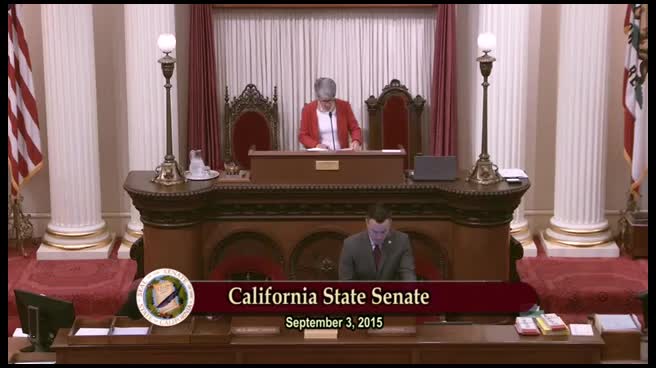 2MIN
Senate Floor
 15SEC
Senate Standing Committee on Appropriations
 9MIN
Assembly Floor


Bill Co-Author(s):