AB 1303: Subdivision Map Act: map expiration dates.
- Session Year: 2015-2016
- House: Assembly
- Latest Version Date: 2015-10-10
(1)The Subdivision Map Act vests the authority to regulate and control the design and improvement of subdivisions in the legislative body of a local agency, and sets forth procedures governing the local agencys processing, approval, conditional approval or disapproval, and filing of tentative, final, and parcel maps, and the modification thereof. The act generally requires a subdivider to file a tentative map or vesting tentative map with the local agency, as specified, and the local agency, in turn, to approve, conditionally approve, or disapprove the map within a specified time period. The act requires an approved tentative map or vesting tentative map to expire 24 months after its approval, or after an additional period of time prescribed by local ordinance, not to exceed 12 months. However, the act extends the expiration date of certain approved tentative maps and vesting tentative maps, as specified.
This bill would extend by 24 months the expiration date of any approved tentative map or vesting tentative map that was approved on or after January 1, 2002, and not later than July 11, 2013, within a county that meets certain criteria, except as specified. The bill would additionally require the extension of an approved or conditionally approved tentative map or vesting tentative map, or parcel map for which a tentative map or vesting tentative map was approved on or before December 31, 2001, upon application by the subdivider at least 90 days prior to the expiration of the map, as specified. By adding to the procedures that local agency officials must follow, this bill would impose a state-mandated local program.
(2)The Permit Streamlining Act prohibits a local agency, after its approval of a tentative map for a subdivision of single- or multiple-family residential units, from requiring conformance with, or the performance of, any conditions that the local agency could have lawfully imposed as a condition to the previously approved tentative or parcel map, as a condition to the issuance of any building permit or equivalent permit upon approval of that subdivision, during a 5-year period following the recordation of the final map or parcel map for that subdivision. The act also prohibits a local agency from refusing to issue a building permit or equivalent permit for a subdividers failure to conform with or perform those conditions. However, the act also provides that this 5-year period is a 3-year period for a tentative map extended pursuant to a specified provision of law, and the local agency is not prohibited from levying a fee, or imposing a condition that requires the payment of a fee upon the issuance of a building permit, with respect to the underlying units.
This bill would provide that a tentative map extended pursuant to its provisions is also subject to the truncated 3-year period described above, and that the local agency is not prohibited from levying a fee, as specified, or imposing a condition that requires the payment of a fee upon the issuance of a building permit, with respect to the underlying units. By adding to the procedures that local agency officials must follow, this bill would impose a state-mandated local program.
(3)The California Constitution requires the state to reimburse local agencies and school districts for certain costs mandated by the state. Statutory provisions establish procedures for making that reimbursement.
This bill would provide that no reimbursement is required by this act for a specified reason.
(4)This bill would declare that it is to take effect immediately as an urgency statute.
(1)The Subdivision Map Act vests the authority to regulate and control the design and improvement of subdivisions in the legislative body of a local agency, and sets forth procedures governing the local agencys processing, approval, conditional approval or disapproval, and filing of tentative, final, and parcel maps, and the modification thereof. The act generally requires a subdivider to file a tentative map or vesting tentative map with the local agency, as specified, and the local agency, in turn, to approve, conditionally approve, or disapprove the map within a specified time period. The act requires an approved tentative map or vesting tentative map to expire 24 months after its approval, or after an additional period of time prescribed by local ordinance, not to exceed 12 months. However, the act extends the expiration date of certain approved tentative maps and vesting tentative maps, as specified.
This bill would extend by 24 months the expiration date of any approved tentative map or vesting tentative map that was approved on or after January 1, 2002, and not later than July 11, 2013, within a county that meets specified criteria. certain criteria, except as specified. The bill would additionally require the extension of an approved or conditionally approved tentative map or vesting tentative map, or parcel map for which a tentative map or vesting tentative map was approved on or before December 31, 2001, upon application by the subdivider at least 90 days prior to the expiration of the map, as specified. By adding to the procedures that local agency officials must follow, this bill would impose a state-mandated local program.
(2)The Permit Streamlining Act prohibits a local agency, after its approval of a tentative map for a subdivision of single- or multiple-family residential units, from requiring conformance with, or the performance of, any conditions that the local agency could have lawfully imposed as a condition to the previously approved tentative or parcel map, as a condition to the issuance of any building permit or equivalent permit upon approval of that subdivision, during a 5-year period following the recordation of the final map or parcel map for that subdivision. The act also prohibits a local agency from refusing to issue a building permit or equivalent permit for a subdividers failure to conform with or perform those conditions. However, the act also provides that this 5-year period is a 3-year period for a tentative map extended pursuant to a specified provision of law, and the local agency is not prohibited from levying a fee, or imposing a condition that requires the payment of a fee upon the issuance of a building permit, with respect to the underlying units.
This bill would provide that a tentative map extended pursuant to its provisions is also subject to the truncated 3-year period described above, and that the local agency is not prohibited from levying a fee, as specified, or imposing a condition that requires the payment of a fee upon the issuance of a building permit, with respect to the underlying units. By adding to the procedures that local agency officials must follow, this bill would impose a state-mandated local program.
(3)The California Constitution requires the state to reimburse local agencies and school districts for certain costs mandated by the state. Statutory provisions establish procedures for making that reimbursement.
This bill would provide that no reimbursement is required by this act for a specified reason.
(4)This bill would declare that it is to take effect immediately as an urgency statute.
(1)The Subdivision Map Act vests the authority to regulate and control the design and improvement of subdivisions in the legislative body of a local agency, and sets forth procedures governing the local agencys processing, approval, conditional approval or disapproval, and filing of tentative, final, and parcel maps, and the modification thereof. The act generally requires a subdivider to file a tentative map or vesting tentative map with the local agency, as specified, and the local agency, in turn, to approve, conditionally approve, or disapprove the map within a specified time period. The act requires an approved tentative map or vesting tentative map to expire 24 months after its approval, or after an additional period of time prescribed by local ordinance, not to exceed 12 months. However, the act extends the expiration date of certain approved tentative maps and vesting tentative maps, as specified.
This bill would extend by 24 months the expiration date of any approved tentative map or vesting tentative map that was approved on or after January 1, 2000, 2002, and not later than July 11, 2013, within a county that meets specified criteria. The bill would additionally require the extension of an approved or conditionally approved tentative map or vesting tentative map, or parcel map for which a tentative map or vesting tentative map was approved on or before December 31, 1999, 2001, upon application by the subdivider at least 90 days prior to the expiration of the map, as specified. By adding to the procedures that local agency officials must follow, this bill would impose a state-mandated local program.
(2)The Permit Streamlining Act prohibits a local agency, after its approval of a tentative map for a subdivision of single- or multiple-family residential units, from requiring conformance with, or the performance of, any conditions that the local agency could have lawfully imposed as a condition to the previously approved tentative or parcel map, as a condition to the issuance of any building permit or equivalent permit upon approval of that subdivision, during a 5-year period following the recordation of the final map or parcel map for that subdivision. The act also prohibits a local agency from refusing to issue a building permit or equivalent permit for a subdividers failure to conform with or perform those conditions. However, the act also provides that this 5-year period is a 3-year period for a tentative map extended pursuant to a specified provision of law, and the local agency is not prohibited from levying a fee, or imposing a condition that requires the payment of a fee upon the issuance of a building permit, with respect to the underlying units.
This bill would provide that a tentative map extended pursuant to its provisions is also subject to the truncated 3-year period described above, and that the local agency is not prohibited from levying a fee, as specified, or imposing a condition that requires the payment of a fee upon the issuance of a building permit, with respect to the underlying units. By adding to the procedures that local agency officials must follow, this bill would impose a state-mandated local program.
(3)The California Constitution requires the state to reimburse local agencies and school districts for certain costs mandated by the state. Statutory provisions establish procedures for making that reimbursement.
This bill would provide that no reimbursement is required by this act for a specified reason.
(4)This bill would declare that it is to take effect immediately as an urgency statute.
(1)The Subdivision Map Act vests the authority to regulate and control the design and improvement of subdivisions in the legislative body of a local agency, and sets forth procedures governing the local agencys processing, approval, conditional approval or disapproval, and filing of tentative, final, and parcel maps, and the modification thereof. The act generally requires a subdivider to file a tentative map or vesting tentative map with the local agency, as specified, and the local agency, in turn, to approve, conditionally approve, or disapprove the map within a specified time period. The act requires an approved tentative map or vesting tentative map to expire 24 months after its approval, or after an additional period of time prescribed by local ordinance, not to exceed 12 months. However, the act extends the expiration date of certain approved tentative maps and vesting tentative maps, as specified.
This bill would extend by 24 months the expiration date of any approved tentative map or vesting tentative map that was approved on or after January 1, 2000, within a county that meets specified criteria. The bill would additionally require the extension of an approved or conditionally approved tentative map or vesting tentative map, or parcel map for which a tentative map or vesting tentative map was approved on or before December 31, 1999, upon application by the subdivider at least 90 days prior to the expiration of the map, as specified. By adding to the procedures that local agency officials must follow, this bill would impose a state-mandated local program.
(2)The Permit Streamlining Act prohibits a local agency, after its approval of a tentative map for a subdivision of single- or multiple-family residential units, from requiring conformance with, or the performance of, any conditions that the local agency could have lawfully imposed as a condition to the previously approved tentative or parcel map, as a condition to the issuance of any building permit or equivalent permit upon approval of that subdivision, during a 5-year period following the recordation of the final map or parcel map for that subdivision. The act also prohibits a local agency from refusing to issue a building permit or equivalent permit for a subdividers failure to conform with or perform those conditions. However, the act also provides that this 5-year period is a 3-year period for a tentative map extended pursuant to a specified provision of law, and the local agency is not prohibited from levying a fee, or imposing a condition that requires the payment of a fee upon the issuance of a building permit, with respect to the underlying units.
This bill would provide that a tentative map extended pursuant to its provisions is also subject to the truncated 3-year period described above, and that the local agency is not prohibited from levying a fee, as specified, or imposing a condition that requires the payment of a fee upon the issuance of a building permit, with respect to the underlying units. By adding to the procedures that local agency officials must follow, this bill would impose a state-mandated local program.
(3)The California Constitution requires the state to reimburse local agencies and school districts for certain costs mandated by the state. Statutory provisions establish procedures for making that reimbursement.
This bill would provide that no reimbursement is required by this act for a specified reason.
(4)This bill would declare that it is to take effect immediately as an urgency statute.
Existing law, the Alcoholic Beverage Control Act, prohibits specified holders of alcoholic beverage licenses from having specified relationships with an on-sale alcoholic beverage licensee, with limited exceptions. Existing law permits a manufacturer, winegrower, rectifier, distiller, distilled spirits wholesaler, or any agent of those licenses, to conduct market research and, in connection with that research, to purchase from licensed off-sale retailers data, regarding purchases and sales of alcoholic beverage products, at the customary rates that those retailers sell similar data for nonalcoholic beverage products, provided that no licensed retailer shall be obligated to purchase or sell the alcoholic beverages of the manufacturer, winegrower, rectifier, or distiller. A violation of the Alcoholic Beverage Control Act is a misdemeanor, unless another penalty or punishment is specified.
This bill would additionally include a distilled spirits wholesaler in the provision prohibiting a licensed retailer from being obligated to purchase or sell the alcoholic beverages of the licensee conducting the market research.
Because the violation of this provision would be punishable as a misdemeanor, the bill would impose a state-mandated local program.
The California Constitution requires the state to reimburse local agencies and school districts for certain costs mandated by the state. Statutory provisions establish procedures for making that reimbursement.
This bill would provide that no reimbursement is required by this act for a specified reason.
Notwithstanding any other provision of law, except as provided in subdivisions (e) and (f), upon approval or conditional approval of a tentative map for a subdivision of single- or multiple-family residential units, or upon recordation of a parcel map for such a subdivision for which no tentative map was required, during the five-year period following recordation of the final map or parcel map for the subdivision, a city, county, or city and county shall not require as a condition to the issuance of any building permit or equivalent permit for such single- or multiple-family residential units, conformance with or the performance of any conditions that the city or county could have lawfully imposed as a condition to the previously approved tentative or parcel map. Nor shall a city, county, or city and county withhold or refuse to issue a building permit or equivalent permit for failure to conform with or perform any conditions that the city, county, or city and county could have lawfully imposed as a condition to the previously approved tentative or parcel map. However, the provisions of this section shall not prohibit a city, county, or city and county from doing any of the following:
(a)Imposing conditions or requirements upon the issuance of a building permit or equivalent permit which could have been lawfully imposed as a condition to the approval of a tentative or parcel map if the local agency finds it necessary to impose the condition or requirement for any of the following reasons:
(1)A failure to do so would place the residents of the subdivision or of the immediate community, or both, in a condition perilous to their health or safety, or both.
(2)The condition is required in order to comply with state or federal law.
(b)Withholding or refusing to issue a building permit or equivalent permit if the local agency finds it is required to do so in order to comply with state or federal law.
(c)Assuring compliance with the applicable zoning ordinance.
(d)This section shall also apply to a city or city and county which incorporates on or after January 1, 1985, and which includes within its boundaries any areas included in the tentative or parcel map described in this section.
When the incorporation includes areas included in the tentative or parcel map described in this section, a condition that the city could have lawfully imposed as a condition to the previously approved tentative or parcel map, as used in this section, refers to conditions the county could have imposed had there been no incorporation.
(e)For purposes only of a tentative subdivision map or parcel map that is extended pursuant to Section 66452.22, 66452.23, 66452.24, or 66452.25, the five-year period described in this section shall be three years.
(f)For purposes only of a tentative subdivision map or parcel map that is extended pursuant to Section 66452.22, 66452.23, 66452.24, or 66452.25, this section does not prohibit a city, county, or city and county from levying a fee or imposing a condition that requires the payment of a fee in the amount in effect upon the issuance of a building permit, including an adopted fee that is not included within an applicable zoning ordinance, upon the issuance of a building permit, including, but not limited to, a fee defined in Section 66000.
SEC. 2.Section 66452.25 is added to the Government Code, to read:66452.25.(a)If the map was approved within a county described in subdivision (c), the expiration date of a tentative map, vesting tentative map, or parcel map for which a tentative map or vesting tentative map, as the case may be, that was approved on or after January 1, 2002, and not later than July 11, 2013, and that has not expired on or before the effective date of the act that added this section, shall be extended by 24 months.
(b)If the map was approved or conditionally approved within a county described in subdivision (c), upon application of the subdivider filed at least 90 days prior to the expiration of the approved or conditionally approved tentative map or vesting tentative map, or parcel map for which the tentative map or vesting tentative map, as the case may be, that was approved on or before December 31, 2001, the time at which the map expires shall be extended by the legislative body or by an advisory agency authorized to approve or conditionally approve tentative maps, for a period of 24 months upon a determination that the map is consistent with the applicable zoning and general plan requirements in effect when the application is filed. If the map is determined not to be consistent with applicable zoning and general plan requirements in effect when the application is filed, the legislative body or advisory agency may deny or conditionally approve an extension for a period of 24 months. Prior to the expiration of an approved or conditionally approved tentative map, upon an application by the subdivider to extend that map, the map shall automatically be extended for 60 days or until the application for the extension is approved, conditionally approved, or denied, whichever occurs last. If the advisory agency denies a subdividers application for an extension, the subdivider may appeal to the legislative body within 15 days after the advisory agency has denied the extension.
(c)This section shall apply within a county when the following conditions within the county are met:
(1)The annual mean household income within the county is less than 80 percent of the statewide annual mean income, as determined by the most recent annual report of the federal American Community Survey 5-year Estimates, based upon the American Community Survey Design and Methodology publication (Version 2.0, January 2014) published by the United States Census Bureau.
(2)The annual nonseasonal unemployment rate is at least 2.75 percent higher than the statewide annual nonseasonal unemployment rate, as defined by the report on Labor Market Review published by the Employment Development Department in January of the year in which the community revitalization plan is prepared.
(3)The population for whom poverty status is determined is at least 4 percent higher than the statewide median poverty rate, as determined by the most recent annual report of the American Community Survey 5-year Estimates, based upon the American Community Survey Design and Methodology publication (Version 2.0, January 2014).
(d)The extension provided by subdivisions (a) and (b) shall be in addition to any extension of the expiration date provided for in Section 66452.6, 66452.11, 66452.13, 66452.21, 66452.22, 66452.23, 66452.24, or 66463.5.
(e)Any legislative, administrative, or other approval by any state agency that pertains to a development project included in a map that is extended pursuant to subdivisions (a) and (b) shall be extended by 24 months if this approval has not expired on or before the effective date of the act that added this section. This extension shall be in addition to any extension provided for in Sections 66452.13, 66452.21, 66452.22, 66452.23, and 66452.24.
(f)The provisions of Section 65961 relating to conditions that may be imposed upon or after a building permit for a subdivision of single- or multiple-family residential units or a parcel map for a subdivision for which no tentative map was required, are modified as set forth in subdivisions (e) and (f) of Section 65961 for tentative maps extended pursuant to this section.
SEC. 3.No reimbursement is required by this act pursuant to Section 6 of Article XIIIB of the California Constitution because a local agency or school district has the authority to levy service charges, fees, or assessments sufficient to pay for the program or level of service mandated by this act, within the meaning of Section 17556 of the Government Code.
SEC. 4.This act is an urgency statute necessary for the immediate preservation of the public peace, health, or safety within the meaning of Article IV of the Constitution and shall go into immediate effect. The facts constituting the necessity are:
In order to permit cities, counties, and cities and counties to preserve development applications that are set to expire and that cannot be processed presently due to prevailing adverse economic conditions in the construction industry, it is necessary that this act take effect immediately.
Notwithstanding any other provision of law, except as provided in subdivisions (e) and (f), upon approval or conditional approval of a tentative map for a subdivision of single- or multiple-family residential units, or upon recordation of a parcel map for such a subdivision for which no tentative map was required, during the five-year period following recordation of the final map or parcel map for the subdivision, a city, county, or city and county shall not require as a condition to the issuance of any building permit or equivalent permit for such single- or multiple-family residential units, conformance with or the performance of any conditions that the city or county could have lawfully imposed as a condition to the previously approved tentative or parcel map. Nor shall a city, county, or city and county withhold or refuse to issue a building permit or equivalent permit for failure to conform with or perform any conditions that the city, county, or city and county could have lawfully imposed as a condition to the previously approved tentative or parcel map. However, the provisions of this section shall not prohibit a city, county, or city and county from doing any of the following:
(a)Imposing conditions or requirements upon the issuance of a building permit or equivalent permit which could have been lawfully imposed as a condition to the approval of a tentative or parcel map if the local agency finds it necessary to impose the condition or requirement for any of the following reasons:
(1)A failure to do so would place the residents of the subdivision or of the immediate community, or both, in a condition perilous to their health or safety, or both.
(2)The condition is required in order to comply with state or federal law.
(b)Withholding or refusing to issue a building permit or equivalent permit if the local agency finds it is required to do so in order to comply with state or federal law.
(c)Assuring compliance with the applicable zoning ordinance.
(d)This section shall also apply to a city or city and county which incorporates on or after January 1, 1985, and which includes within its boundaries any areas included in the tentative or parcel map described in this section.
When the incorporation includes areas included in the tentative or parcel map described in this section, a condition that the city could have lawfully imposed as a condition to the previously approved tentative or parcel map, as used in this section, refers to conditions the county could have imposed had there been no incorporation.
(e)For purposes only of a tentative subdivision map or parcel map that is extended pursuant to Section 66452.22, 66452.23, 66452.24, or 66452.25, the five-year period described in this section shall be three years.
(f)For purposes only of a tentative subdivision map or parcel map that is extended pursuant to Section 66452.22, 66452.23, 66452.24, or 66452.25, this section does not prohibit a city, county, or city and county from levying a fee or imposing a condition that requires the payment of a fee in the amount in effect upon the issuance of a building permit, including an adopted fee that is not included within an applicable zoning ordinance, upon the issuance of a building permit, including, but not limited to, a fee defined in Section 66000.
SEC. 2.Section 66452.25 is added to the Government Code, to read:66452.25.(a)If the map was approved within a county described in subdivision (c), the expiration date of a tentative map, vesting tentative map, or parcel map for which a tentative map or vesting tentative map, as the case may be, that was approved on or after January 1, 2002, and not later than July 11, 2013, and that has not expired on or before the effective date of the act that added this section, shall be extended by 24 months.
(b)If the map was approved or conditionally approved within a county described in subdivision (c), upon application of the subdivider filed at least 90 days prior to the expiration of the approved or conditionally approved tentative map or vesting tentative map, or parcel map for which the tentative map or vesting tentative map, as the case may be, that was approved on or before December 31, 2001, the time at which the map expires shall be extended by the legislative body or by an advisory agency authorized to approve or conditionally approve tentative maps, for a period of 24 months upon a determination that the map is consistent with the applicable zoning and general plan requirements in effect when the application is filed. If the map is determined not to be consistent with applicable zoning and general plan requirements in effect when the application is filed, the legislative body or advisory agency may deny or conditionally approve an extension for a period of 24 months. Prior to the expiration of an approved or conditionally approved tentative map, upon an application by the subdivider to extend that map, the map shall automatically be extended for 60 days or until the application for the extension is approved, conditionally approved, or denied, whichever occurs last. If the advisory agency denies a subdividers application for an extension, the subdivider may appeal to the legislative body within 15 days after the advisory agency has denied the extension.
(c)This section shall apply within a county when the following conditions within the county are met:
(1)The annual mean household income within the county is less than 80 percent of the statewide annual mean income, as determined by the most recent annual report of the federal American Community Survey 5-year Estimates, based upon the American Community Survey Design and Methodology publication (Version 2.0, January 2014) published by the United States Census Bureau.
(2)The annual nonseasonal unemployment rate is at least 3 2.75 percent higher than the statewide annual nonseasonal unemployment rate, as defined by the report on Labor Market Review published by the Employment Development Department in January of the year in which the community revitalization plan is prepared.
(3)The population for whom poverty status is determined is at least 4 percent higher than the statewide median poverty rate, as determined by the most recent annual report of the American Community Survey 5-year Estimates, based upon the American Community Survey Design and Methodology publication (Version 2.0, January 2014).
(d)The extension provided by subdivisions (a) and (b) shall be in addition to any extension of the expiration date provided for in Section 66452.6, 66452.11, 66452.13, 66452.21, 66452.22, 66452.23, 66452.24, or 66463.5.
(e)Any legislative, administrative, or other approval by any state agency that pertains to a development project included in a map that is extended pursuant to subdivisions (a) and (b) shall be extended by 24 months if this approval has not expired on or before the effective date of the act that added this section. This extension shall be in addition to any extension provided for in Sections 66452.13, 66452.21, 66452.22, 66452.23, and 66452.24.
(f)The provisions of Section 65961 relating to conditions that may be imposed upon or after a building permit for a subdivision of single- or multiple-family residential units or a parcel map for a subdivision for which no tentative map was required, are modified as set forth in subdivisions (e) and (f) of Section 65961 for tentative maps extended pursuant to this section.
SEC. 3.No reimbursement is required by this act pursuant to Section 6 of Article XIIIB of the California Constitution because a local agency or school district has the authority to levy service charges, fees, or assessments sufficient to pay for the program or level of service mandated by this act, within the meaning of Section 17556 of the Government Code.
SEC. 4.This act is an urgency statute necessary for the immediate preservation of the public peace, health, or safety within the meaning of Article IV of the Constitution and shall go into immediate effect. The facts constituting the necessity are:
In order to permit cities, counties, and cities and counties to preserve development applications that are set to expire and that cannot be processed presently due to prevailing adverse economic conditions in the construction industry, it is necessary that this act take effect immediately.
Notwithstanding any other provision of law, except as provided in subdivisions (e) and (f), upon approval or conditional approval of a tentative map for a subdivision of single- or multiple-family residential units, or upon recordation of a parcel map for such a subdivision for which no tentative map was required, during the five-year period following recordation of the final map or parcel map for the subdivision, a city, county, or city and county shall not require as a condition to the issuance of any building permit or equivalent permit for such single- or multiple-family residential units, conformance with or the performance of any conditions that the city or county could have lawfully imposed as a condition to the previously approved tentative or parcel map. Nor shall a city, county, or city and county withhold or refuse to issue a building permit or equivalent permit for failure to conform with or perform any conditions that the city, county, or city and county could have lawfully imposed as a condition to the previously approved tentative or parcel map. However, the provisions of this section shall not prohibit a city, county, or city and county from doing any of the following:
(a)Imposing conditions or requirements upon the issuance of a building permit or equivalent permit which could have been lawfully imposed as a condition to the approval of a tentative or parcel map if the local agency finds it necessary to impose the condition or requirement for any of the following reasons:
(1)A failure to do so would place the residents of the subdivision or of the immediate community, or both, in a condition perilous to their health or safety, or both.
(2)The condition is required in order to comply with state or federal law.
(b)Withholding or refusing to issue a building permit or equivalent permit if the local agency finds it is required to do so in order to comply with state or federal law.
(c)Assuring compliance with the applicable zoning ordinance.
(d)This section shall also apply to a city or city and county which incorporates on or after January 1, 1985, and which includes within its boundaries any areas included in the tentative or parcel map described in this section.
When the incorporation includes areas included in the tentative or parcel map described in this section, a condition that the city could have lawfully imposed as a condition to the previously approved tentative or parcel map, as used in this section, refers to conditions the county could have imposed had there been no incorporation.
(e)For purposes only of a tentative subdivision map or parcel map that is extended pursuant to Section 66452.22, 66452.23, 66452.24, or 66452.25, the five-year period described in this section shall be three years.
(f)For purposes only of a tentative subdivision map or parcel map that is extended pursuant to Section 66452.22, 66452.23, 66452.24, or 66452.25, this section does not prohibit a city, county, or city and county from levying a fee or imposing a condition that requires the payment of a fee in the amount in effect upon the issuance of a building permit, including an adopted fee that is not included within an applicable zoning ordinance, upon the issuance of a building permit, including, but not limited to, a fee defined in Section 66000.
SEC. 2.Section 66452.25 is added to the Government Code, to read:66452.25.(a)If the map was approved within a county described in subdivision (c), the expiration date of a tentative map, vesting tentative map, or parcel map for which a tentative map or vesting tentative map, as the case may be, that was approved on or after January 1, 2000, 2002, and not later than July 11, 2013, and that has not expired on or before the effective date of the act that added this section, shall be extended by 24 months.
(b)If the map was approved or conditionally approved within a county described in subdivision (c), upon application of the subdivider filed at least 90 days prior to the expiration of the approved or conditionally approved tentative map or vesting tentative map, or parcel map for which the tentative map or vesting tentative map, as the case may be, that was approved on or before December 31, 1999, 2001, the time at which the map expires shall be extended by the legislative body or by an advisory agency authorized to approve or conditionally approve tentative maps, for a period of 24 months upon a determination that the map is consistent with the applicable zoning and general plan requirements in effect when the application is filed. If the map is determined not to be consistent with applicable zoning and general plan requirements in effect when the application is filed, the legislative body or advisory agency may deny or conditionally approve an extension for a period of 24 months. Prior to the expiration of an approved or conditionally approved tentative map, upon an application by the subdivider to extend that map, the map shall automatically be extended for 60 days or until the application for the extension is approved, conditionally approved, or denied, whichever occurs last. If the advisory agency denies a subdividers application for an extension, the subdivider may appeal to the legislative body within 15 days after the advisory agency has denied the extension.
(c)This section shall apply within a county when the following conditions within the county are met:
(1)The annual mean household income within the county is less than 80 percent of the statewide annual mean income, as determined by the most recent annual report of the federal American Community Survey 5-year Estimates, based upon the American Community Survey Design and Methodology publication (Version 2.0, January 2014) published by the United States Census Bureau.
(2)The annual nonseasonal unemployment rate is at least 3 percent higher than the statewide annual nonseasonal unemployment rate, as defined by the report on Labor Market Review published by the Employment Development Department in January of the year in which the community revitalization plan is prepared.
(3)The population for whom poverty status is determined is at least 4 percent higher than the statewide median poverty rate, as determined by the most recent annual report of the American Community Survey 5-year Estimates, based upon the American Community Survey Design and Methodology publication (Version 2.0, January 2014).
(d)The extension provided by subdivisions (a) and (b) shall be in addition to any extension of the expiration date provided for in Section 66452.6, 66452.11, 66452.13, 66452.21, 66452.22, 66452.23, 66452.24, or 66463.5.
(e)Any legislative, administrative, or other approval by any state agency that pertains to a development project included in a map that is extended pursuant to subdivisions (a) and (b) shall be extended by 24 months if this approval has not expired on or before the effective date of the act that added this section. This extension shall be in addition to any extension provided for in Sections 66452.13, 66452.21, 66452.22, 66452.23, and 66452.24.
(f)The provisions of Section 65961 relating to conditions that may be imposed upon or after a building permit for a subdivision of single- or multiple-family residential units or a parcel map for a subdivision for which no tentative map was required, are modified as set forth in subdivisions (e) and (f) of Section 65961 for tentative maps extended pursuant to this section.
SEC. 3.No reimbursement is required by this act pursuant to Section 6 of Article XIIIB of the California Constitution because a local agency or school district has the authority to levy service charges, fees, or assessments sufficient to pay for the program or level of service mandated by this act, within the meaning of Section 17556 of the Government Code.
SEC. 4.This act is an urgency statute necessary for the immediate preservation of the public peace, health, or safety within the meaning of Article IV of the Constitution and shall go into immediate effect. The facts constituting the necessity are:
In order to permit cities, counties, and cities and counties to preserve development applications that are set to expire and that cannot be processed presently due to prevailing adverse economic conditions in the construction industry, it is necessary that this act take effect immediately.
Notwithstanding any other provision of law, except as provided in subdivisions (e) and (f), upon approval or conditional approval of a tentative map for a subdivision of single- or multiple-family residential units, or upon recordation of a parcel map for such a subdivision for which no tentative map was required, during the five-year period following recordation of the final map or parcel map for the subdivision, a city, county, or city and county shall not require as a condition to the issuance of any building permit or equivalent permit for such single- or multiple-family residential units, conformance with or the performance of any conditions that the city or county could have lawfully imposed as a condition to the previously approved tentative or parcel map. Nor shall a city, county, or city and county withhold or refuse to issue a building permit or equivalent permit for failure to conform with or perform any conditions that the city, county, or city and county could have lawfully imposed as a condition to the previously approved tentative or parcel map. However, the provisions of this section shall not prohibit a city, county, or city and county from doing any of the following:
(a)Imposing conditions or requirements upon the issuance of a building permit or equivalent permit which could have been lawfully imposed as a condition to the approval of a tentative or parcel map if the local agency finds it necessary to impose the condition or requirement for any of the following reasons:
(1)A failure to do so would place the residents of the subdivision or of the immediate community, or both, in a condition perilous to their health or safety, or both.
(2)The condition is required in order to comply with state or federal law.
(b)Withholding or refusing to issue a building permit or equivalent permit if the local agency finds it is required to do so in order to comply with state or federal law.
(c)Assuring compliance with the applicable zoning ordinance.
(d)This section shall also apply to a city or city and county which incorporates on or after January 1, 1985, and which includes within its boundaries any areas included in the tentative or parcel map described in this section.
When the incorporation includes areas included in the tentative or parcel map described in this section, a condition that the city could have lawfully imposed as a condition to the previously approved tentative or parcel map, as used in this section, refers to conditions the county could have imposed had there been no incorporation.
(e)For purposes only of a tentative subdivision map or parcel map that is extended pursuant to Section 66452.22, 66452.23, or 66452.24, or 66452.25, the five-year period described in this section shall be three years.
(f)For purposes only of a tentative subdivision map or parcel map that is extended pursuant to Section 66452.22, 66452.23, or 66452.24, or 66452.25, this section does not prohibit a city, county, or city and county from levying a fee or imposing a condition that requires the payment of a fee in the amount in effect upon the issuance of a building permit, including an adopted fee that is not included within an applicable zoning ordinance, upon the issuance of a building permit, including, but not limited to, a fee defined in Section 66000.
SEC. 2.Section 66452.25 is added to the Government Code, to read:66452.25.(a)If the map was approved within a county described in subdivision (c), the expiration date of a tentative map, vesting tentative map, or parcel map for which a tentative map or vesting tentative map, as the case may be, that was approved on or after January 1, 2000, and that has not expired on or before the effective date of the act that added this section, shall be extended by 24 months.
(b)If the map was approved or conditionally approved within a county described in subdivision (c), upon application of the subdivider filed at least 90 days prior to the expiration of the approved or conditionally approved tentative map or vesting tentative map, or parcel map for which the tentative map or vesting tentative map, as the case may be, that was approved on or before December 31, 1999, the time at which the map expires shall be extended by the legislative body or by an advisory agency authorized to approve or conditionally approve tentative maps, for a period of 24 months upon a determination that the map is consistent with the applicable zoning and general plan requirements in effect when the application is filed. If the map is determined not to be consistent with applicable zoning and general plan requirements in effect when the application is filed, the legislative body or advisory agency may deny or conditionally approve an extension for a period of 24 months. Prior to the expiration of an approved or conditionally approved tentative map, upon an application by the subdivider to extend that map, the map shall automatically be extended for 60 days or until the application for the extension is approved, conditionally approved, or denied, whichever occurs last. If the advisory agency denies a subdividers application for an extension, the subdivider may appeal to the legislative body within 15 days after the advisory agency has denied the extension.
(c)This section shall apply within a county when the following conditions within the county are met:
(1)The annual mean household income within the county is less than 80 percent of the statewide annual mean income, as determined by the most recent annual report of the federal American Community Survey 5-year Estimates, based upon the American Community Survey Design and Methodology publication (Version 2.0, January 2014) published by the United States Census Bureau.
(2)The annual nonseasonal unemployment rate is at least 3 percent higher than the statewide annual nonseasonal unemployment rate, as defined by the report on Labor Market Review published by the Employment Development Department in January of the year in which the community revitalization plan is prepared.
(3)The population for whom poverty status is determined is at least 4 percent higher than the statewide median poverty rate, as determined by the most recent annual report of the American Community Survey 5-year Estimates, based upon the American Community Survey Design and Methodology publication (Version 2.0, January 2014).
(d)The extension provided by subdivisions (a) and (b) shall be in addition to any extension of the expiration date provided for in Section 66452.6, 66452.11, 66452.13, 66452.21, 66452.22, 66452.23, 66452.24, or 66463.5.
(e)Any legislative, administrative, or other approval by any state agency that pertains to a development project included in a map that is extended pursuant to subdivisions (a) and (b) shall be extended by 24 months if this approval has not expired on or before the effective date of the act that added this section. This extension shall be in addition to any extension provided for in Sections 66452.13, 66452.21, 66452.22, 66452.23, and 66452.24.
(f)The provisions of Section 65961 relating to conditions that may be imposed upon or after a building permit for a subdivision of single- or multiple-family residential units or a parcel map for a subdivision for which no tentative map was required, are modified as set forth in subdivisions (e) and (f) of Section 65961 for tentative maps extended pursuant to this section.
SEC. 3.No reimbursement is required by this act pursuant to Section 6 of Article XIIIB of the California Constitution because a local agency or school district has the authority to levy service charges, fees, or assessments sufficient to pay for the program or level of service mandated by this act, within the meaning of Section 17556 of the Government Code.
SEC. 4.This act is an urgency statute necessary for the immediate preservation of the public peace, health, or safety within the meaning of Article IV of the Constitution and shall go into immediate effect. The facts constituting the necessity are:
In order to permit cities, counties, and cities and counties to preserve development applications that are set to expire and that cannot be processed presently due to prevailing adverse economic conditions in the construction industry, it is necessary that this act take effect immediately.
SECTION 1.Section 25503.24 of the Business and Professions Code is amended to read:25503.24.(a)Notwithstanding any other provision of this chapter, any manufacturer, winegrower, rectifier, distiller, distilled spirits wholesaler, or any officer, director, agent, or representative of any of those entities, may conduct market research and, in connection with that research, the entity conducting the market research may purchase from licensed off-sale retailers data regarding purchases and sales of alcoholic beverage products at the customary rates that those retailers sell similar data for nonalcoholic beverage products subject to the following limitations:
(1)No licensed retailer shall be obligated to purchase or sell the alcoholic beverage products of that manufacturer, winegrower, rectifier, distiller, or distilled spirits wholesaler.
(2)No retail premises shall participate in more than one research project conducted by any single manufacturer, winegrower, rectifier, distiller, or distilled spirits wholesaler during a calendar year. A research project may involve multiple onsite surveys.
(3)Nothing in this section shall allow a licensed retailer to require a manufacturer, winegrower, rectifier, distiller, or distilled spirits wholesaler to conduct any market research as a condition for selling alcoholic beverage products to that licensed retailer.
(b)Any holder of a beer manufacturers license or winegrowers license who, through coercion or other illegal means, induces, directly or indirectly, a holder of a beer or wine wholesalers license to fulfill obligations entered into pursuant to subdivision (a) shall be guilty of a misdemeanor and shall be punished by imprisonment in the county jail not exceeding six months, or by a fine in an amount equal to the entire value of the market research or time involved in the project, whichever is greater, plus ten thousand dollars ($10,000), or by both imprisonment and fine. The person shall also be subject to license revocation pursuant to Section 24200.
(c)Any retail licensee who, directly or indirectly, solicits or coerces a holder of a beer or wine wholesalers license to solicit a beer manufacturer, or holder of a winegrowers license to fulfill obligations entered into pursuant to subdivision (a) shall be guilty of a misdemeanor and shall be punished by imprisonment in the county jail not exceeding six months, or by a fine in an amount equal to the entire value of the market research or time involved in the project, whichever is greater, plus ten thousand dollars ($10,000), or by both imprisonment and fine. The person shall also be subject to license revocation pursuant to Section 24200.
(d)For the purposes of this section, beer manufacturer includes any holder of a beer manufacturers license, any holder of an out-of-state beer manufacturers certificate, or any holder of a beer and wine importers general license.
SEC. 2.No reimbursement is required by this act pursuant to Section 6 of Article XIIIB of the California Constitution because the only costs that may be incurred by a local agency or school district will be incurred because this act creates a new crime or infraction, eliminates a crime or infraction, or changes the penalty for a crime or infraction, within the meaning of Section 17556 of the Government Code, or changes the definition of a crime within the meaning of Section 6 of Article XIIIB of the California Constitution.
(a)Notwithstanding any other provision of this chapter, any manufacturer, winegrower, rectifier, distiller, distilled spirits wholesaler, or any officer, director, agent, or representative of any of those entities, may conduct market research and, in connection with that research, the entity conducting the market research may purchase from licensed off-sale retailers data regarding purchases and sales of alcoholic beverage products at the customary rates that those retailers sell similar data for nonalcoholic beverage products subject to the following limitations:
(1)No licensed retailer shall be obligated to purchase or sell the alcoholic beverage products of that manufacturer, winegrower, rectifier, or distiller, or distilled spirits wholesaler.
(2)No retail premises shall participate in more than one research project conducted by any single manufacturer, winegrower, rectifier, distiller, or distilled spirits wholesaler during a calendar year. A research project may involve multiple onsite surveys.
(3)Nothing in this section shall allow a licensed retailer to require a manufacturer, winegrower, rectifier, distiller, or distilled spirits wholesaler to conduct any market research as a condition for selling alcoholic beverage products to that licensed retailer.
(b)Any holder of a beer manufacturers license or winegrowers license who, through coercion or other illegal means, induces, directly or indirectly, a holder of a beer or wine wholesalers license to fulfill obligations entered into pursuant to subdivision (a) shall be guilty of a misdemeanor and shall be punished by imprisonment in the county jail not exceeding six months, or by a fine in an amount equal to the entire value of the market research or time involved in the project, whichever is greater, plus ten thousand dollars ($10,000), or by both imprisonment and fine. The person shall also be subject to license revocation pursuant to Section 24200.
(c)Any retail licensee who, directly or indirectly, solicits or coerces a holder of a beer or wine wholesalers license to solicit a beer manufacturer, or holder of a winegrowers license to fulfill obligations entered into pursuant to subdivision (a) shall be guilty of a misdemeanor and shall be punished by imprisonment in the county jail not exceeding six months, or by a fine in an amount equal to the entire value of the market research or time involved in the project, whichever is greater, plus ten thousand dollars ($10,000), or by both imprisonment and fine. The person shall also be subject to license revocation pursuant to Section 24200.
(d)For the purposes of this section, beer manufacturer includes any holder of a beer manufacturers license, any holder of an out-of-state beer manufacturers certificate, or any holder of a beer and wine importers general license.
SEC. 2.No reimbursement is required by this act pursuant to Section 6 of Article XIIIB of the California Constitution because the only costs that may be incurred by a local agency or school district will be incurred because this act creates a new crime or infraction, eliminates a crime or infraction, or changes the penalty for a crime or infraction, within the meaning of Section 17556 of the Government Code, or changes the definition of a crime within the meaning of Section 6 of Article XIIIB of the California Constitution.
|
Date
|
Status
|
|---|---|
| Jun 29, 2015 | Re-referred to Com. on GOV. & F. |
| Oct 10, 2015 | Chaptered by Secretary of State - Chapter 751, Statutes of 2015. |
| Oct 10, 2015 | Approved by the Governor. |
| Sep 17, 2015 | Enrolled and presented to the Governor at 4 p.m. |
| Sep 9, 2015 | Urgency clause adopted. Senate amendments concurred in. To Engrossing and Enrolling. (Ayes 79. Noes 0.). |
| Sep 9, 2015 | Urgency clause adopted. Senate amendments concurred in. To Engrossing and Enrolling. (Ayes 79. Noes 0. Page 2992.). |
| Sep 9, 2015 | Urgency clause adopted. Senate amendments concurred in. To Engrossing and Enrolling. |
| Sep 8, 2015 | From committee: That the Senate amendments be concurred in. (Ayes 7. Noes 0.) (September 8). |
| Sep 1, 2015 | Re-referred to Com. on L. GOV. pursuant to Assembly Rule 77.2. |
| Aug 31, 2015 | Read third time. Urgency clause adopted. Passed. Ordered to the Assembly. (Ayes 40. Noes 0. Page 2295.). |
| Aug 31, 2015 | Read third time. Urgency clause adopted. Passed. Ordered to the Assembly. |
| Aug 31, 2015 | In Assembly. Concurrence in Senate amendments pending. May be considered on or after September 2 pursuant to Assembly Rule 77. |
| Aug 18, 2015 | Read second time and amended. Ordered to third reading. |
| Aug 17, 2015 | From committee: Be placed on second reading file pursuant to Senate Rule 28.8 and be amended. |
| Jul 16, 2015 | Read second time and amended. Re-referred to Com. on APPR. |
| Jul 15, 2015 | From committee: Amend, and do pass as amended and re-refer to Com. on APPR. (Ayes 5. Noes 0.) (July 15). |
| Feb 27, 2015 | Introduced. To print. |
| Jun 25, 2015 | Withdrawn from committee. |
| Jun 25, 2015 | Re-referred to Com. on RLS. |
| Jun 24, 2015 | From committee chair, with author's amendments: Amend, and re-refer to committee. Read second time, amended, and re-referred to Com. on G.O. |
| Jun 22, 2015 | In committee: Set, first hearing. Hearing canceled at the request of author. |
| May 7, 2015 | Referred to Com. on G.O. |
| Apr 23, 2015 | Read third time. Passed. Ordered to the Senate. (Ayes 78. Noes 0.) |
| Apr 23, 2015 | Read third time. Passed. Ordered to the Senate. (Ayes 78. Noes 0. Page 1109.) |
| Apr 23, 2015 | In Senate. Read first time. To Com. on RLS. for assignment. |
| Apr 16, 2015 | Read second time. Ordered to consent calendar. |
| Apr 15, 2015 | From committee: Do pass. To Consent Calendar. (Ayes 16. Noes 0.) (April 15). |
| Apr 15, 2015 | From committee: Do pass. Ordered to Consent Calendar. (Ayes 16. Noes 0.) (April 15). |
| Apr 9, 2015 | From committee: Do pass and re-refer to Com. on APPR. with recommendation: To Consent Calendar. (Ayes 21. Noes 0.) (April 8). Re-referred to Com. on APPR. |
| Mar 23, 2015 | Referred to Com. on G.O. |
| Mar 2, 2015 | Read first time. |
| Mar 1, 2015 | From printer. May be heard in committee March 31. |
|
Date
|
Description
|
Location
|
Votes
|
|
|---|---|---|---|---|
| Sep 9, 2015 | AB 1303 GRAY Concurrence - Urgency Added | Assembly Floor |
Passed |
|
| Sep 8, 2015 | With recommendation: That Senate amendments be concurred in. | Assembly Standing Committee on Local Government |
Passed |
|
| Aug 31, 2015 | Assembly 3rd Reading AB1303 Gray By Cannella Urgency Clause | Senate Floor |
Passed |
|
| Jul 15, 2015 | Do pass as amended, but first amend, and re-refer to the Committee on [Appropriations] | Senate Standing Committee on Governance and Finance |
Passed |
|
| Apr 23, 2015 | AB 1303 GRAY Consent Calendar Second Day Regular Session | Assembly Floor |
Passed |
|
| Apr 15, 2015 | Do pass. To Consent Calendar. | Assembly Standing Committee on Appropriations |
Passed |
|
| Apr 8, 2015 | Do pass and be re-referred to the Committee on [Appropriations] with recommendation: To Consent Calendar | Assembly Standing Committee on Governmental Organization |
Passed |
This list shows positions taken on this bill by organizations on the date displayed, which is linked to the original source.
Positions by individuals are not included.
|
Organization
|
Position
|
Date
|
|---|---|---|
| Bakersfield Association of Realtors | ** Support | Sep 9, 2015 |
| Building Industry Association of Fresno | ** Support | Sep 9, 2015 |
| Building Industry Association of the Greater Valley | ** Support | Sep 9, 2015 |
| Building Industry Association of Tulare | ** Support | Sep 9, 2015 |
| California Association Of Realtors | ** Support | Sep 9, 2015 |
| California Chamber Of Commerce | ** Support | Sep 9, 2015 |
| DeWalt Corporation | ** Support | Sep 9, 2015 |
| Home Builders Association of Kern County | ** Support | Sep 9, 2015 |
| Kings Counties | ** Support | Sep 9, 2015 |
| Madera Counties | ** Support | Sep 9, 2015 |
AB 1303
Page 4
CONCURRENCE IN SENATE AMENDMENTS
AB 1303
(Gray)
As Amended August 18, 2015
2/3 vote. Urgency
ASSEMBLY: |
78-0 |
(April 23, 2015) |
SENATE: |
40-0 |
(August 31, 2015) |
COMMITTEE VOTE: |
7-0 |
September 8, 2015 |
RECOMMENDATION: |
concur |
(L. GOV.)
Original Committee Reference: G.O.
SUMMARY: Provides an automatic 24-month extension for unexpired subdivision maps approved after January 1, 2000, in jurisdictions that meet specified criteria.
The Senate amendments delete the Assembly version of this bill, and instead:
Extend, by 24 months, the expiration date for any tentative subdivision map, vesting tentative map, or parcel map for which a tentative map or tentative vesting map was approved on or after January 1, 2002, and not later than July 11, 2013, and that has not expired before this bill takes effect, if the map was approved within a county that meets the following conditions:
The annual mean household income within the county is less than 80% of the statewide annual mean incomes, as determined by the most recent annual report of the federal American Community Survey 5-year Estimates, based upon the American Community Survey Design and Methodology publication (Version 2.0, January 2014) published by the United States Census Bureau;
The annual nonseasonal unemployment rate is at least 2.75% higher than the statewide annual nonseasonal unemployment rates, as defined by the report on Labor Market Review published by the Employment Development Department in January of the year in which the community revitalization plan is prepared; and,
The population for whom the poverty status is determined is at least 4% higher than the statewide median poverty rate, as determined by the most recent annual report of the American Community Survey 5-year Estimates, based upon the American Community Survey Design and Methodology publication (Version 2.0, January 2014).
Provide, if the map was approved or conditionally approved within a county that meets the requirements of 1) above, upon application of the subdivider filed at least 90 days prior to the expiration of the approved or conditionally approved tentative map or vesting tentative map, or parcel map for which the tentative map or vesting tentative map, as the case may be, that was approved on or before December 31, 2001, the time at which the map expires shall be extended by the legislative body or by an advisory agency authorized to approve or conditionally approve tentative maps, for a period of 24 months upon a determination that the map is consistent with applicable zoning and general plan requirements in effect when the application is filed.
Specify that if the map is determined not to be consistent with applicable zoning and general plan requirements in effect when the application is filed, the legislative body or advisory agency may deny or conditionally approve an extension for a period of 24 months.
Provide, prior to the expiration of an approved or conditionally approved tentative map, upon application by the subdivider to extend the map, that the map shall automatically be extended for 60 days or until the application for the extension is approved, conditionally approved, or denied, whichever occurs last.
Provide that the subdivider may appeal to the legislative body within 15 days after the advisory agency has denied the extension, if the advisory agency denies the application for an extension.
Provide that the extension is in addition to any extension provided in statute, as specified, and that any legislative, administrative, or other approval by any state agency that pertains to a development project included in a map that is extended pursuant to this bill's provisions shall be extended by 24 months if the approval has not expired, as specified.
Reduce, from five years to three years, the period of time after the approval or conditional approval of a tentative map, or recordation of a parcel map, during which a city or county is prohibited, with exceptions, from imposing specified conditions on a building permit or equivalent permit.
Provide that the local agency is not prohibited from levying a fee, or imposing a condition that requires the payment of a fee upon the issuance of a building permit.
Provide that no reimbursement is necessary because a local agency or school district has the authority to levy service charges, fees, or assessments sufficient to pay for the program or level of service, as specified.
Contain an urgency clause and provide the following as the facts constituting the necessity are:
In order to permit cities, counties, and cities and counties to preserve development applications that are set to expire and that cannot be processed due to prevailing adverse economic conditions in the construction industry, it is necessary that this act take effect immediately.
FISCAL EFFECT: According to the Senate Appropriations Committee, pursuant to Senate Rule 28.8, negligible state costs.
COMMENTS:
Bill Summary. Within counties that meet specified criteria, this bill extends, by 24 months, the expiration date for any tentative map, vesting tentative map, or parcel map for which a tentative map or tentative vesting map was approved on or after January 1, 2002, and not later than July 11, 2013, and which has not expired when this urgency bill takes effect.
This bill's provisions only apply to maps approved within counties that meet the following criteria:
The annual mean household income within the county is less than 80% of the statewide annual mean income, as determined by a specified United States Census Bureau report;
The county's annual nonseasonal unemployment rate is at least 2.75% higher than the statewide annual nonseasonal unemployment rate, as defined by a specified Employment Development Department report; and,
The poverty rate within the county's population is at least 4% higher than the statewide median poverty rate, as determined by a specified United States Census Bureau report.
This bill requires a legislative body to extend the time at which the map expires for a period of 24 months, upon a determination that the map is consistent with the applicable zoning and general plan requirement in effect when the application is filed.
If the map is determined to be inconsistent with applicable zoning and general plan requirements in effect when the application is filed, this bill authorizes the legislative body or advisory agency to deny or conditionally approve an extension for a period of 24 months. Prior to the expiration of an approved or conditionally approved tentative map, upon a subdivider's application to extend that map, this bill automatically extends the map for 60 days or until the application for the extension is approved, conditionally approved, or denied, whichever occurs last. If the advisory agency denies a subdivider's application for an extension, this bill authorizes a subdivider to appeal to the legislative body within 15 days after the advisory agency denied the extension. An extension provided pursuant to this bill is in addition to extensions authorized by eight specified statutes.
For any legislative, administrative, or other approval by a state agency relating to a development project in a subdivision affected by this bill that has not expired when this bill takes effect, this bill extends the expiration date by 24 months. This extension is in addition to five other statutory extensions.
This bill reduces, from five years to three years, the period of time after the approval or conditional approval of a tentative map, or recordation of a parcel map, during which a city or county is prohibited, with exceptions, from imposing specified conditions on a building permit or equivalent permit. This bill also provides that the local agency is not prohibited from levying a fee, or imposing a condition that requires the payment of a fee upon the issuance of a building permit.
Author's Statement. According to the author, "AB 1303 will provide developers a 24-month extension on unexpired tentative tract and parcel maps in counties that have not yet fully recovered from the recession. Qualifying counties must demonstrate economic hardships in the areas of household income, unemployment and poverty. By allowing developers additional time to utilize the maps in which they have already invested significant time and expense, these impoverished communities will create jobs and develop economic supports crucial to their recovery. Without this targeted extension, those investments will atrophy, calling the future of impacted developments into question and potentially exacerbating the persistent economic depression in these communities."
Background. The Subdivision Map Act provides that cities and counties regulate and control the design and improvement of subdivisions within their boundaries. Cities and counties approve tentative maps which specify certain conditions and requirements that must be met. Once subdividers comply with these conditions, local officials make the determination to issue final maps.
In the event a tentative map expires before a final map is issued, the subdivider must start the process over, sacrificing the initial investment and significantly increasing costs and time before development can begin. The Legislature has approved a number of extensions for tentative tract and parcel maps during economic downturns to encourage new development. The latest statewide extension will expire on January 1, 2016.
Arguments in Support. Supporters argue that these maps represent hundreds of construction projects, thousands of construction jobs and millions of dollars directly to state and local coffers, and that protecting these maps, projects, and jobs ensures that all parts of California's housing industry is poised to assist in California's economic revival.
Arguments in Opposition. None on file.
Urgency Clause. This bill contains an urgency clause and requires a two-thirds vote of each house.
Analysis Prepared by: Debbie Michel / L. GOV. / (916) 319-3958 FN: 0002277
AB 1303
Page 4
Date of Hearing: September 8, 2015
ASSEMBLY COMMITTEE ON LOCAL GOVERNMENT
Brian Maienschein, Chair
AB 1303 (
Gray) – As Amended August 18, 2015
SUBJECT: Subdivision Map Act: map expiration dates.
SUMMARY: Provides an automatic 24-month extension for unexpired subdivision maps approved after January 1, 2000, in jurisdictions that meet specified criteria. Specifically, this bill:
Extends, by 24 months, the expiration date for any tentative subdivision map, vesting tentative map, or parcel map for which a tentative map or tentative vesting map was approved on or after January 1, 2002, and not later than July 11, 2013, and that has not expired before the bill takes effect, if the map was approved within a county that meets the following conditions:
The annual mean household income within the county is less than 80% of the statewide annual mean incomes, as determined by the most recent annual report of the federal American Community Survey 5-year Estimates, based upon the American Community Survey Design and Methodology publication (Version 2.0, January 2014) published by the United states Census Bureau;
The annual nonseasonal unemployment rate is at least 2.75% higher than the statewide annual nonseasonal unemployment rates, as defined by the report on Labor Market Review published by the Employment Development Department in January of the year in which the community revitalization plan is prepared; and,
The population for whom the poverty status is determined is at least 4% higher than the statewide median poverty rate, as determined by the most recent annual report of the American Community Survey 5-year Estimates, based upon the American Community Survey Design and Methodology publication (Version 2.0, January 2014).
Provides, if the map was approved or conditionally approved within a county that meets the requirements of 1), above, upon application of the subdivider filed at least 90 days prior to the expiration of the approved or conditionally approved tentative map or vesting tentative map, or parcel map for which the tentative map or vesting tentative map, as the case may be, that was approved on or before December 31, 2001, the time at which the map expires shall be extended by the legislative body or by an advisory agency authorized to approve or conditionally approve tentative maps, for a period of 24 months upon a determination that the map is consistent with applicable zoning and general plan requirements in effect when the application is filed.
Specifies that if the map is determined not to be consistent with applicable zoning and general plan requirements in effect when the application is filed, the legislative body or advisory agency may deny or conditionally approve an extension for a period of 24 months.
Provides, prior to the expiration of an approved or conditionally approved tentative map, upon application by the subdivider to extend the map, that the map shall automatically be extended for 60 days or until the application for the extension is approved, conditionally approved, or denied, whichever occurs last.
Provides that the subdivider may appeal to the legislative body within 15 days after the advisory agency has denied the extension, if the advisory agency denies the application for an extension.
Provides that the extension is in addition to any extension provided in statute, as specified, and that any legislative, administrative, or other approval by any state agency that pertains to a development project included in a map that is extended pursuant to the bill's provisions shall be extended by 24 months if the approval has not expired, as specified.
Reduces, from five years to three years, the period of time after the approval or conditional approval of a tentative map, or recordation of a parcel map, during which a city or county is prohibited, with exceptions, from imposing specified conditions on a building permit or equivalent permit.
Provides that the local agency is not prohibited from levying a fee, or imposing a condition that requires the payment of a fee upon the issuance of a building permit.
Provides that no reimbursement is necessary because a local agency or school district has the authority to levy service charges, fees, or assessments sufficient to pay for the program or level of service, as specified.
Contains an urgency clause and provides the following as the facts constituting the necessity are:
In order to permit cities, counties, and cities and counties to preserve development applications that are set to expire and that cannot be processed due to prevailing adverse economic conditions in the construction industry, it is necessary that this act take effect immediately.
FISCAL EFFECT: According to the Senate Appropriations Committee, pursuant to Senate Rule 28.8, negligible state costs.
COMMENTS:
Bill Summary. Within counties that meet specified criteria, Assembly Bill 1303 extends, by 24 months, the expiration date for any tentative map, vesting tentative map, or parcel map for which a tentative map or tentative vesting map was approved on or after January 1, 2002, and not later than July 11, 2013, and which has not expired when this urgency bill takes effect.
AB 1303’s provisions only apply to maps approved within counties that meet the following criteria:
The annual mean household income within the county is less than 80% of the statewide annual mean income, as determined by a specified U.S. Census Bureau report;
The county’s annual nonseasonal unemployment rate is at least 2.75% higher than the statewide annual nonseasonal unemployment rate, as defined by a specified Employment Development Department report; and,
The poverty rate within the county’s population is at least 4% higher than the statewide median poverty rate, as determined by a specified U.S. Census Bureau report.
AB 1303 requires a legislative body to extend the time at which the map expires for a period of 24 months, upon a determination that the map is consistent with the applicable zoning and general plan requirement in effect when the application is filed.
If the map is determined to be inconsistent with applicable zoning and general plan requirements in effect when the application is filed, AB 1303 authorizes the legislative body or advisory agency to deny or conditionally approve an extension for a period of 24 months. Prior to the expiration of an approved or conditionally approved tentative map, upon a subdivider’s application to extend that map, AB 1303 automatically extends the map for 60 days or until the application for the extension is approved, conditionally approved, or denied, whichever occurs last. If the advisory agency denies a subdivider’s application for an extension, the bill authorizes a subdivider to appeal to the legislative body within 15 days after the advisory agency denied the extension. An extension provided pursuant to AB 1303 is in addition to extensions authorized by eight specified statutes.
For any legislative, administrative, or other approval by a state agency relating to a development project in a subdivision affected by AB 1303 that has not expired when the bill takes effect, AB 1303 extends the expiration date by 24 months. This extension is in addition to five other statutory extensions.
AB 1303 reduces, from five years to three years, the period of time after the approval or conditional approval of a tentative map, or recordation of a parcel map, during which a city or county is prohibited, with exceptions, from imposing specified conditions on a building permit or equivalent permit. The bill also provides that the local agency is not prohibited from levying a fee, or imposing a condition that requires the payment of a fee upon the issuance of a building permit.
Author's Statement. According to the author, "AB 1303 will provide developers a 24-month extension on unexpired tentative tract and parcel maps in counties that have not yet fully recovered from the recession. Qualifying counties must demonstrate economic hardships in the areas of household income, unemployment and poverty. By allowing developers additional time to utilize the maps in which they have already invested significant time and expense, these impoverished communities will create jobs and develop economic supports crucial to their recovery. Without this targeted extension, those investments will atrophy, calling the future of impacted developments into question and potentially exacerbating the persistent economic depression in these communities."
Background. The Subdivision Map Act (Act) provides that cities and counties regulate and control the design and improvement of subdivisions within their boundaries. Cities and counties approve tentative maps which specify certain conditions and requirements that must be met. Once subdividers comply with these conditions, local officials make the determination to issue final maps.
In the event a tentative map expires before a final map is issued, the subdivider must start the process over, sacrificing the initial investment and significantly increasing costs and time before development can begin. The Legislature has approved a number of extensions for tentative tract and parcel maps during economic downturns to encourage new development. The latest statewide extension will expire on January 1, 2016.
Arguments in Support. Supporters argue that these maps represent hundreds of construction projects, thousands of construction jobs and millions of dollars directly to state and local coffers, and that protecting these maps, projects, and jobs ensures that all parts of California's housing industry is poised to assist in California's economic revival.
Arguments in Opposition. None on file.
Urgency Clause. This bill contains an urgency clause and requires a two-thirds vote of each house.
REGISTERED SUPPORT / OPPOSITION:
Support
Bakersfield Association of Realtors
Building Industry Association of Fresno/Madera Counties
Building Industry Association of the Greater Valley
Building Industry Association of Tulare/Kings Counties
California Association of Realtors
California Chamber of Commerce
DeWalt Corporation
Home Builders Association of Kern County
Opposition
None on file
Analysis Prepared by: Debbie Michel / L. GOV. / (916) 319-3958
AB 1303
Page 4
CONCURRENCE IN SENATE AMENDMENTS
AB 1303
(Gray)
As Amended August 18, 2015
2/3 vote. Urgency
ASSEMBLY: |
78-0 |
(April 23, 2015) |
SENATE: |
40-0 |
(August 31, 2015) |
Original Committee Reference: G.O.
SUMMARY: Provides an automatic 24-month extension for unexpired subdivision maps approved after January 1, 2000, in jurisdictions that meet specified criteria.
The Senate amendments delete the Assembly version of this bill, and instead:
Extend, by 24 months, the expiration date for any tentative subdivision map, vesting tentative map, or parcel map for which a tentative map or tentative vesting map was approved on or after January 1, 2002, and not later than July 11, 2013, and that has not expired before this bill takes effect, if the map was approved within a county that meets the following conditions:
The annual mean household income within the county is less than 80% of the statewide annual mean incomes, as determined by the most recent annual report of the federal American Community Survey 5-year Estimates, based upon the American Community Survey Design and Methodology publication (Version 2.0, January 2014) published by the United States Census Bureau;
The annual nonseasonal unemployment rate is at least 2.75% higher than the statewide annual nonseasonal unemployment rates, as defined by the report on Labor Market Review published by the Employment Development Department in January of the year in which the community revitalization plan is prepared; and,
The population for whom the poverty status is determined is at least 4% higher than the statewide median poverty rate, as determined by the most recent annual report of the American Community Survey 5-year Estimates, based upon the American Community Survey Design and Methodology publication (Version 2.0, January 2014).
Provide, if the map was approved or conditionally approved within a county that meets the requirements of 1) above, upon application of the subdivider filed at least 90 days prior to the expiration of the approved or conditionally approved tentative map or vesting tentative map, or parcel map for which the tentative map or vesting tentative map, as the case may be, that was approved on or before December 31, 2001, the time at which the map expires shall be extended by the legislative body or by an advisory agency authorized to approve or conditionally approve tentative maps, for a period of 24 months upon a determination that the map is consistent with applicable zoning and general plan requirements in effect when the application is filed.
Specify that if the map is determined not to be consistent with applicable zoning and general plan requirements in effect when the application is filed, the legislative body or advisory agency may deny or conditionally approve an extension for a period of 24 months.
Provide, prior to the expiration of an approved or conditionally approved tentative map, upon application by the subdivider to extend the map, that the map shall automatically be extended for 60 days or until the application for the extension is approved, conditionally approved, or denied, whichever occurs last.
Provide that the subdivider may appeal to the legislative body within 15 days after the advisory agency has denied the extension, if the advisory agency denies the application for an extension.
Provide that the extension is in addition to any extension provided in statute, as specified, and that any legislative, administrative, or other approval by any state agency that pertains to a development project included in a map that is extended pursuant to this bill's provisions shall be extended by 24 months if the approval has not expired, as specified.
Reduce, from five years to three years, the period of time after the approval or conditional approval of a tentative map, or recordation of a parcel map, during which a city or county is prohibited, with exceptions, from imposing specified conditions on a building permit or equivalent permit.
Provide that the local agency is not prohibited from levying a fee, or imposing a condition that requires the payment of a fee upon the issuance of a building permit.
Provide that no reimbursement is necessary because a local agency or school district has the authority to levy service charges, fees, or assessments sufficient to pay for the program or level of service, as specified.
Contain an urgency clause and provide the following as the facts constituting the necessity are:
In order to permit cities, counties, and cities and counties to preserve development applications that are set to expire and that cannot be processed due to prevailing adverse economic conditions in the construction industry, it is necessary that this act take effect immediately.
FISCAL EFFECT: According to the Senate Appropriations Committee, pursuant to Senate Rule 28.8, negligible state costs.
COMMENTS:
Bill Summary. Within counties that meet specified criteria, this bill extends, by 24 months, the expiration date for any tentative map, vesting tentative map, or parcel map for which a tentative map or tentative vesting map was approved on or after January 1, 2002, and not later than July 11, 2013, and which has not expired when this urgency bill takes effect.
This bill's provisions only apply to maps approved within counties that meet the following criteria:
The annual mean household income within the county is less than 80% of the statewide annual mean income, as determined by a specified United States Census Bureau report;
The county's annual nonseasonal unemployment rate is at least 2.75% higher than the statewide annual nonseasonal unemployment rate, as defined by a specified Employment Development Department report; and,
The poverty rate within the county's population is at least 4% higher than the statewide median poverty rate, as determined by a specified United States Census Bureau report.
This bill requires a legislative body to extend the time at which the map expires for a period of 24 months, upon a determination that the map is consistent with the applicable zoning and general plan requirement in effect when the application is filed.
If the map is determined to be inconsistent with applicable zoning and general plan requirements in effect when the application is filed, this bill authorizes the legislative body or advisory agency to deny or conditionally approve an extension for a period of 24 months. Prior to the expiration of an approved or conditionally approved tentative map, upon a subdivider's application to extend that map, this bill automatically extends the map for 60 days or until the application for the extension is approved, conditionally approved, or denied, whichever occurs last. If the advisory agency denies a subdivider's application for an extension, this bill authorizes a subdivider to appeal to the legislative body within 15 days after the advisory agency denied the extension. An extension provided pursuant to this bill is in addition to extensions authorized by eight specified statutes.
For any legislative, administrative, or other approval by a state agency relating to a development project in a subdivision affected by this bill that has not expired when this bill takes effect, this bill extends the expiration date by 24 months. This extension is in addition to five other statutory extensions.
This bill reduces, from five years to three years, the period of time after the approval or conditional approval of a tentative map, or recordation of a parcel map, during which a city or county is prohibited, with exceptions, from imposing specified conditions on a building permit or equivalent permit. This bill also provides that the local agency is not prohibited from levying a fee, or imposing a condition that requires the payment of a fee upon the issuance of a building permit.
Author's Statement. According to the author, "AB 1303 will provide developers a 24-month extension on unexpired tentative tract and parcel maps in counties that have not yet fully recovered from the recession. Qualifying counties must demonstrate economic hardships in the areas of household income, unemployment and poverty. By allowing developers additional time to utilize the maps in which they have already invested significant time and expense, these impoverished communities will create jobs and develop economic supports crucial to their recovery. Without this targeted extension, those investments will atrophy, calling the future of impacted developments into question and potentially exacerbating the persistent economic depression in these communities."
Background. The Subdivision Map Act provides that cities and counties regulate and control the design and improvement of subdivisions within their boundaries. Cities and counties approve tentative maps which specify certain conditions and requirements that must be met. Once subdividers comply with these conditions, local officials make the determination to issue final maps.
In the event a tentative map expires before a final map is issued, the subdivider must start the process over, sacrificing the initial investment and significantly increasing costs and time before development can begin. The Legislature has approved a number of extensions for tentative tract and parcel maps during economic downturns to encourage new development. The latest statewide extension will expire on January 1, 2016.
Arguments in Support. Supporters argue that these maps represent hundreds of construction projects, thousands of construction jobs and millions of dollars directly to state and local coffers, and that protecting these maps, projects, and jobs ensures that all parts of California's housing industry is poised to assist in California's economic revival.
Arguments in Opposition. None on file.
Urgency Clause. This bill contains an urgency clause and requires a two-thirds vote of each house.
Gut and Amend. The subject matter of this bill has not been heard in any Assembly policy committee this legislative session.
Analysis Prepared by: Debbie Michel / L. GOV. / (916) 319-3958 FN: 0001359
AB 1303
Page 6
|
Office of Senate Floor Analyses (916) 651-1520 Fax: (916) 327-4478 |
THIRD READING
Bill No: AB 1303
Amended: 8/18/15 in Senate
SENATE GOVERNANCE & FIN. COMMITTEE: 5-0, 7/15/15
AYES: Hertzberg, Nguyen, Beall, Moorlach, Pavley
NO VOTE RECORDED: Hernandez, Lara
SENATE APPROPRIATIONS COMMITTEE: Senate Rule 28.8
ASSEMBLY FLOOR: 78-0, 4/23/15 (Consent) - See last page for vote
SUBJECT: Subdivision Map Act: map expiration dates
DIGEST: This bill provides an automatic 24-month extension for unexpired subdivision maps approved on or after January 1, 2002, and before July 12, 2013, in jurisdictions that meet specified criteria.
Existing law:
Establishes, pursuant to the Subdivision Map Act (Map Act), a statewide regulatory framework for controlling the subdividing of land, which generally requires a subdivider to submit, and have approved by the city, county, or city and county in which the land is situated, a tentative map.
Provides for the expiration of tentative subdivision maps after specified periods of time.
Authorizes cities and counties to grant discretionary map extensions as specified.
This bill:
Extends by 24 months, within counties that meet specified criteria, the expiration date for any tentative map, vesting tentative map, or parcel map for which a tentative map or tentative vesting map was approved on or after January 1, 2002 and before July 12, 2013.
Applies only to maps approved within counties that meet the following criteria:
The annual mean household income within the county is less than 80% of the statewide annual mean income, as determined by a specified U.S. Census Bureau report.
The county’s annual nonseasonal unemployment rate is at least 2.75% higher than the statewide annual nonseasonal unemployment rate, as defined by a specified Employment Development Department report.
The poverty rate within the county’s population is at least 4% higher than the statewide median poverty rate, as determined by a specified U.S. Census Bureau report.
Allows, for maps approved before January 1, 2000, a subdivider to file an application for an extension at least 90 days before the expiration of the approved or conditionally approved tentative map, vesting tentative map, or parcel map.
Requires a legislative body to extend the time at which the map expires for a period of 24 months, upon a determination that the map is consistent with the applicable zoning and general plan requirement in effect when the application is filed.
Authorizes, if a map is determined to be inconsistent with applicable zoning and general plan requirements in effect when the application is filed, the legislative body or advisory agency to deny or conditionally approve an extension for a period of 24 months.
Requires, prior to the expiration of an approved or conditionally approved tentative map, upon an application by the subdivider to extend the map, the map to be automatically extended for 60 days or until the application for the extension is approved, conditionally approved, or denied, whichever occurs last.
Allows, if the advisory agency denies a subdivider’s application for an extension, the subdivider to appeal to the legislative body within 15 days after the advisory agency has denied the extension.
Specifies that an extension provided pursuant to this bill is in addition to extensions authorized by eight specified statutes.
Extends the expiration date by 24 months for any legislative, administrative or other approval by a state agency relating to a development project in a subdivision affected by this bill.
Reduces, from five years to three years, the period of time after the approval or conditional approval of a tentative map, or recordation of a parcel map, during which a city or county is prohibited, with exceptions, from imposing specified conditions on a building permit or equivalent permit.
Provides that the local agency is not prohibited from levying a fee, or imposing a condition that requires the payment of a fee upon the issuance of a building permit.
Background
Under the Map Act, cities and counties approve tentative maps that must be consistent with their general plans, attaching scores of conditions. Once subdividers comply with those conditions, local officials must issue final maps. For smaller subdivisions (lot splits) local officials usually use parcel maps, but they can require tentative parcel maps followed by final parcel maps.
In good economic times, an experienced subdivider can comply with a tentative map’s conditions in a few years. Scarce financing, complex settings, and inexperience can drag out the time between a tentative map’s approval and the filing of a final map. If a tentative map expires, the subdivider must start over, complying with any new required conditions.
The Permit Streamlining Act sets forth time limits and procedures for some types of land use decisions, including tentative maps. It also prohibits a local agency, after it approves or conditionally approves a tentative map for a residential unit, from requiring conformance with any condition the local agency could have imposed, as a condition to the issuance of any building permit for five-years, after the recordation of that subdivision’s final map or parcel map. A city or county also can’t refuse to issue a building permit for failing to conform with or perform any conditions that the city, or county could have imposed as a condition to the previously approved tentative or parcel map.
Tentative maps can be valid for up to 16 years:
The initial life of a tentative map is two years. At the option of the city or county, a map’s initial life can be three years.
Local officials can grant extensions for up to six years.
If the subdivider spends substantial funds and files phased final maps, the remaining tentative map is automatically extended by three years, up to a maximum of 10 years.
These deadlines don’t apply during development moratoria (up to five years) or during pending litigation (up to five years).
During periods of economic recession, both in the mid-1990s and in the last seven years, the Legislature has extended the life of unexpired subdivision approvals, without local review or approval. Unexpired subdivision maps that were valid on:
September 13, 1993, gained two more years (SB 428, Thompson, Chapter 407, Statutes of 1993).
May 14, 1996, gained one more year (AB 771, Aguiar, Chapter 46, Statutes of 1996).
July 15, 2008, gained one more year (SB 1185, Lowenthal, Chapter 124, Statutes of 2008).
July 15, 2009, gained two more years (AB 333, Fuentes, Chapter 18, Statutes of 2009).
July 15, 2011, gained two more years (AB 208, Fuentes, Chapter 88, Statutes of 2011).
When the Legislature granted the one-year extension in 2008, it also let local officials grant an additional year, at their discretion (SB 1185, Lowenthal, 2008).
In 2013, the Legislature granted unexpired subdivision maps another two year extension (AB 116, Bocanegra, Chapter 62, Statutes of 2013). Under the provisions of the Bocanegra bill, current law automatically extends, by 24 months, the life of a tentative map that was approved after January 1, 2000, and which was pending on July 11, 2013. For tentative maps initially approved before January 1, 2000, a subdivider must file an application at least 90 days prior to the map expiration. If the local agency determines that the map is consistent with the planning and zoning standards in effect at the time of the extension application, the local agency must grant an extension of 24 months. If the tentative map is not consistent with the new standards, then the agency may deny or conditionally approve the extension for up to twenty four months.
For a tentative map or parcel map that is extended pursuant to state law, a city or county may levy a fee or impose a condition that requires the payment of a fee.
In some California counties, economic conditions have not yet recovered from the recent recession, which has depressed the demand for new housing. Until the demand for new housing resumes, subdividers aren’t likely to complete the required conditions of their tentative maps and qualify for final maps. With statutory time limits looming, some builders risk losing their earlier approvals and having to start over again. Similar to the Legislature’s earlier responses during other market slumps, this bill preserves subdividers’ ability to finalize their maps for two more years in 11 counties that qualify under this bill’s criteria for demonstrating economic hardship (Fresno, Imperial, Kern, Kings, Madera, Merced, Modoc, Siskiyou, Stanislaus, Tulare, and Yuba).
FISCAL EFFECT: Appropriation: No Fiscal Com.: Yes Local: Yes
Building Industry Association of Fresno/Madera Counties
Building Industry Association of the Greater Valley
Building Industry Association of Tulare/Kings Counties
California Association of Realtors
California Chamber of Commerce
Home Builders Association of Kern County
OPPOSITION: (Verified 8/18/15)
None received
AYES: Achadjian, Alejo, Travis Allen, Baker, Bigelow, Bloom, Bonilla, Bonta, Brough, Brown, Burke, Calderon, Chang, Chau, Chávez, Chiu, Chu, Cooley, Cooper, Dababneh, Dahle, Daly, Dodd, Eggman, Frazier, Beth Gaines, Gallagher, Cristina Garcia, Eduardo Garcia, Gatto, Gipson, Gomez, Gonzalez, Gordon, Gray, Grove, Hadley, Harper, Roger Hernández, Holden, Irwin, Jones, Jones-Sawyer, Kim, Lackey, Levine, Linder, Lopez, Low, Maienschein, Mathis, Mayes, McCarty, Medina, Melendez, Mullin, Nazarian, Obernolte, O'Donnell, Olsen, Patterson, Perea, Quirk, Rendon, Ridley-Thomas, Rodriguez, Santiago, Steinorth, Mark Stone, Thurmond, Ting, Wagner, Waldron, Weber, Wilk, Williams, Wood, Atkins
NO VOTE RECORDED: Campos, Salas
Prepared by: Brian Weinberger / GOV. & F. / (916) 651-4119
8/19/15 20:39:14
**** END ****
AB 1303 (Gray) 6/24/15 Page 5 of 5
SENATE COMMITTEE ON GOVERNANCE AND FINANCE
Senator Robert M. Hertzberg, Chair
2015 - 2016 Regular
Bill No: |
AB 1303 |
Hearing Date: |
7/15/15 |
Author: |
Gray |
Tax Levy: |
No |
Version: |
6/24/15 |
Fiscal: |
Yes |
Consultant: |
Weinberger |
||
SUBDIVISION APPROVALS (URGENCY)
Provides an automatic 24-month extension for unexpired subdivision maps approved after January 1, 2000 in jurisdictions that meet specified criteria.
Background and Existing Law
Under the Subdivision Map Act, cities and counties approve tentative maps that must be consistent with their general plans, attaching scores of conditions. Once subdividers comply with those conditions, local officials must issue final maps. For smaller subdivisions (lot splits) local officials usually use parcel maps, but they can require tentative parcel maps followed by final parcel maps.
In good economic times, an experienced subdivider can comply with a tentative map’s conditions in a few years. Scarce financing, complex settings, and inexperience can drag out the time between a tentative map’s approval and the filing of a final map. If a tentative map expires, the subdivider must start over, complying with any new required conditions.
The Permit Streamlining Act sets forth time limits and procedures for some types of land use decisions, including tentative maps. It also prohibits a local agency, after it approves or conditionally approves a tentative map for a residential unit, from requiring conformance with any condition the local agency could have imposed, as a condition to the issuance of any building permit for five-years, after the recordation of that subdivision’s final map or parcel map. A city or county also can’t refuse to issue a building permit for failing to conform with or perform any conditions that the city, or county could have imposed as a condition to the previously approved tentative or parcel map.
Tentative maps can be valid for up to 16 years:
The initial life of a tentative map is two years. At the option of the city or county, a map’s initial life can be three years.
Local officials can grant extensions for up to six years.
If the subdivider spends substantial funds and files phased final maps, the remaining tentative map is automatically extended by three years, up to a maximum of ten years.
These deadlines don’t apply during development moratoria (up to five years) or during pending litigation (up to five years).
During periods of economic recession, both in the mid-1990s and in the last seven years, the Legislature has extended the life of unexpired subdivision approvals, without local review or approval. Unexpired subdivision maps that were valid on:
September 13, 1993, gained two more years (SB 428, Thompson, 1993).
May 14, 1996, gained one more year (AB 771, Aguiar, 1996).
July 15, 2008, gained one more year (SB 1185, Lowenthal, 2008).
July 15, 2009, gained two more years (AB 333, Fuentes, 2009).
July 15, 2011, gained two more years (AB 208, Fuentes, 2011).
When the Legislature granted the one-year extension in 2008, it also let local officials grant an additional year, at their discretion (SB 1185, Lowenthal, 2008).
In 2013, the Legislature granted unexpired subdivision maps another two year extension (AB 116, Bocanegra, 2013). Under the provisions of the Bocanegra bill, current law automatically extends, by 24 months, the life of a tentative map that was approved after January 1, 2000 and which was pending on July 11, 2013. For tentative maps initially approved before January 1, 2000, a subdivider must file an application at least 90 days prior to the map expiration. If the local agency determines that the map is consistent with the planning and zoning standards in effect at the time of the extension application, the local agency must grant an extension of 24 months. If the tentative map is not consistent with the new standards, then the agency may deny or conditionally approve the extension for up to twenty four months.
For a tentative map or parcel map that is extended pursuant to state law, a city or county may levy a fee or impose a condition that requires the payment of a fee.
Because the housing construction market remains poor in some California counties, despite the general economic recovery, some county officials want legislators to extend the life of unexpired tentative maps in counties that have not recovered from the recent recession.
Proposed Law
Within counties that meet specified criteria, Assembly Bill 1303 extends, by 24 months, the expiration date for any tentative map, vesting tentative map, or parcel map for which a tentative map or tentative vesting map was approved on or after January 1, 2000 and which has not expired when this urgency bill takes effect.
AB 1303’s provisions only apply to maps approved within counties that meet the following criteria:
The annual mean household income within the county is less than 80% of the statewide annual mean income, as determined by a specified U.S. Census Bureau report.
The county’s annual nonseasonal unemployment rate is at least 3% higher than the statewide annual nonseasonal unemployment rate, as defined by a specified Employment Development Department report.
The poverty rate within the county’s population is at least 4% higher than the statewide median poverty rate, as determined by a specified U.S. Census Bureau report.
For maps approved before January 1, 2000, AB 1303 allows a subdivider to file an application for an extension at least 90 days before the expiration of the approved or conditionally approved tentative map, vesting tentative map, or parcel map.
AB 1303 requires a legislative body to extend the time at which the map expires for a period of 24 months, upon a determination that the map is consistent with the applicable zoning and general plan requirement in effect when the application is filed.
If the map is determined to be inconsistent with applicable zoning and general plan requirements in effect when the application is filed, AB 1303 authorizes the legislative body or advisory agency to deny or conditionally approve an extension for a period of 24 months. Prior to the expiration of an approved or conditionally approved tentative map, upon a subdivider’s application to extend that map, AB 1303 automatically extends the map for 60 days or until the application for the extension is approved, conditionally approved, or denied, whichever occurs last. If the advisory agency denies a subdivider’s application for an extension, the bill authorizes a subdivider to appeal to the legislative body within 15 days after the advisory agency denied the extension. An extension provided pursuant to AB 1303 is in addition to extensions authorized by eight specified statutes.
For any legislative, administrative, or other approval by a state agency relating to a development project in a subdivision affected by AB 1303 that has not expired when the bill takes effect, AB 1303 extends the expiration date by 24 months. This extension is in addition to five other statutory extensions.
AB 1303 reduces, from five years to three years, the period of time after the approval or conditional approval of a tentative map, or recordation of a parcel map, during which a city or county is prohibited, with exceptions, from imposing specified conditions on a building permit or equivalent permit.
The bill also provides that the local agency is not prohibited from levying a fee, or imposing a condition that requires the payment of a fee upon the issuance of a building permit.
State Revenue Impact
No estimate.
Comments
1. Purpose of the bill. In some California counties, economic conditions have not yet recovered from the recent recession, which has depressed the demand for new housing. Until the demand for new housing resumes, subdividers aren’t likely to complete the required conditions of their tentative maps and qualify for final maps. With statutory time limits looming, some builders risk losing their earlier approvals and having to start over again. Similar to the Legislature’s earlier responses during other market slumps, AB 1303 preserves subdividers’ ability to finalize their maps for two more years in ten counties that qualify under the bill’s criteria for demonstrating economic hardship (Fresno, Imperial, Kings, Madera, Merced, Modoc, Siskiyou, Stanislaus, Tulare, and Yuba). Allowing developers additional time to use maps in which they have invested significant time and expense will help to promote economic activity and jobs in communities that are still struggling to achieve an economic recovery.
2. Timing is everything. Unlike past extension bills, the Bocanegrea bill enacted in 2013 gave city councils and county supervisors’ discretion over whether to extend the life of maps, that were approved before January 1, 2000 and which no longer meet current land use standards. AB 1303 grants maps 2 additional years in which to become final, but doesn’t change the cutoff date
for maps that no longer conform to general plan or zoning requirements. To remain consistent with the approach the Legislature adopted two years ago, the Committee may wish to consider amending AB 1303 to allow local officials to exercise discretion over maps, that were approved before January 1, 2002 and which no longer comply with current standards.
3. Timing is everything, part 2. The first in the most recent series of bills that have automatically extended deadlines for tentative subdivision maps passed in 2008, at which time the entire state was experiencing severe economic recession and turmoil in the real estate market. Developers holding tentative subdivision maps that were about to expire in 2008, clearly needed more time to complete their projects. Even when the most recent extensions bill passed in 2013, some developers could still plausibly argue that they had recently sought approval of tentative maps in the hopes that the economic repercussions in the real estate market would resolve sooner than they actually did. It is less clear why the Legislature should, in 2015, provide automatic extensions for maps that were approved just last year, or even in late 2013. If the Legislature continues to grant automatic extensions even for maps approved well after the worst of the economic downturn has passed, then legislators will need to consider permanently changing the timelines that apply to tentative maps. Instead, the Committee may wish to consider amending AB 1303 to exclude from its automatic extension any maps that were approved after July 11, 2013, which is the date on which the preceding extension legislation took effect.
4. Urgency. Regular statutes take effect on January 1 following their enactment; bills passed in 2015 take effect on January 1, 2016. The California Constitution allows bills with urgency clauses to take effect immediately if they're needed for the public peace, health, and safety. AB 1303 contains an urgency clause declaring that it is necessary for its provisions to go into effect immediately to allow local governments to preserve development applications that are set to expire and that cannot be processed presently due to prevailing adverse economic conditions in the construction industry.
5. Mandate. The California Constitution requires the state to reimburse local governments for the costs of new or expanded state mandated local programs. Because SB 1303 requires local officials to follow additional procedures related to extending some tentative maps, Legislative Counsel says that the bill imposes a new state mandate. SB 1303 disclaims the state's responsibility for providing reimbursement by citing local governments’ authority to charge for the costs of implementing the bill's provisions.
6. New bill, prior votes not relevant. As passed by the Assembly, AB 1303 contained provisions amending the Alcoholic Beverage Control Act’s restrictions on market research involving licensees. The Senate Governance & Finance Committee never heard that version of the bill. The June 24 amendments deleted AB 1303's contents and inserted the current language relating to subdivision maps.
Assembly Actions
Not relevant to the June 24, 2015 version of the bill.
Support and Opposition
(7/9/15)
Support: California Association of Realtors; California Chamber of Commerce; Home Builders Association of Kern County.
Opposition: Unknown.
-- END --
AB 1303
Page 1
Date of Hearing: April 15, 2015
ASSEMBLY COMMITTEE ON APPROPRIATIONS
Jimmy Gomez, Chair
AB 1303
(Gray) – As Introduced February 27, 2015
Policy Committee: |
Governmental Organization |
Vote: |
21 - 0 |
Urgency: No State Mandated Local Program: Yes Reimbursable: >
SUMMARY:
This bill amends the Alcoholic Beverage Control Act to clarify that retailers may not be obligated to purchase or sell products from distilled spirits wholesalers as a condition of a marketing data agreement with those wholesalers.
FISCAL EFFECT:
Minor and absorbable enforcement costs to the Department of Alcoholic Beverage Control.]
COMMENTS:
1) Purpose. Existing law permits certain manufacturers, winegrowers, rectifiers, distillers, and distilled spirit wholesalers to conduct market research and purchase marketing data from off-sale licensed retailers, provided that the retailer is not obligated to purchase or sell alcoholic beverages from the manufacturer, winegrower, rectifier, or distiller. This bill adds distilled spirits wholesalers to the list of licensees which may not condition the purchase of market data on the sale of alcoholic beverages.
2) Tied-House Technicalities. In general, tied-house laws prohibit holders of alcoholic beverage manufacturers, wholesalers, and retailers from having specified relationships with one another, including relationships that involve the provision of something of value from a manufacturer or wholesaler to a retailer, and vice versa. Numerous exceptions to this general rule have been created, including allowing manufacturers and wholesalers to partner with retailers to conduct market research and purchase market data. The law prohibits bundling a market research relationship with an obligation to purchase or sell the manufacturers or wholesalers alcoholic beverages, and this bill closes a gap in that prohibition.
Analysis Prepared by: Joel Tashjian / APPR. / (916) 319-2081
AB 1303
Page 2
Date of Hearing: April 8, 2015
ASSEMBLY COMMITTEE ON GOVERNMENTAL ORGANIZATION
Adam Gray, Chair
AB 1303
(Gray) – As Introduced February 27, 2015
SUBJECT: Alcoholic beverages: tied-house restrictions
SUMMARY: Adds clarity to an existing tied-house exception in the Alcoholic Beverage Control Act (ABC Act) pertaining to market research by certain licensees and the purchase of off-sale retail data by also including a “distilled spirits wholesaler” in the provision prohibiting a licensed retailer from being obligated to purchase or sell the alcoholic beverages of the licensee conducting the market research.
EXISTING LAW:
1) Establishes the Department of Alcoholic Beverage Control (ABC) and grants it exclusive authority to administer the provisions of the ABC Act in accordance with laws enacted by the Legislature. This involves licensing individuals and businesses associated with the manufacture, importation and sale of alcoholic beverages in this state and the collection of license fees or occupation taxes for this purpose.
2) Prohibits specified holders of alcoholic beverage licenses from having specified relationships with an on-sale alcoholic beverage licensee, with limited exceptions.
3) Permits a manufacturer, winegrower, rectifier, distiller, distilled spirits wholesaler, or any agent of those licenses, to conduct market research and, in connection with that research, to purchase from licensed off-sale retailers data, regarding purchases and sales of alcoholic beverage products, at the customary rates that those retailers sell similar data for non-alcoholic beverage products, provided that no licensed retailer shall be obligated to purchase or sell the alcoholic beverages of the manufacturer, winegrower, rectifier, or distiller.
4) Existing law, known as the “Tied-house law," separates the alcoholic beverage industry into three component parts, or tiers, of manufacturer (including breweries, wineries and distilleries), wholesaler, and retailer (both on-sale and off-sale).
FISCAL EFFECT: Unknown
COMMENTS:
Background: Tied house refers to a practice in this country prior to Prohibition and still occurring in England today where a bar or public house, from whence comes the “house” of tied house, is tied to the products of a particular manufacturer, either because the manufacturer owns the house, or the house is contractually obligated to carry only a particular manufacturer’s products.
The original policy rationale for this body of law was to: (a) promote the state’s interest in an orderly market; (b) prohibit the vertical integration and dominance by a single producer in the marketplace; (c) prohibit commercial bribery and protect the public from predatory marketing practices; and, (d) discourage and/or prevent the intemperate use of alcoholic beverages. Generally, other than exceptions granted by the Legislature, the holder of one type of license is not permitted to do business as another type of licensee within the “three-tier” system.
Existing law provides for numerous tied-house exceptions to the general prohibition including one which allows certain licensees to conduct market research and, in connection with that research, to purchase marketing data from off-sale licensed retailers provided that no licensed retailer is obligated to purchase or sell the alcoholic beverages of the purchasing licensee.
Purpose of the bill: As noted above, existing law generally prohibits the giving of something of value from certain licensees to another group of licensees. An exception has been made to the general prohibition to allow certain licensees (manufacturers, winegrowers, rectifiers, distillers, and distilled spirits wholesalers) to conduct market research and, in connection with that research, to purchase marketing data from off-sale licensed retailers provided that no licensed retailer is obligated to purchase or sell the alcoholic beverages of the purchasing licensee. A licensed retailer is also prohibited from requiring the exempted group of licensed purchasers of marketing data to conduct market research as a condition for selling alcoholic beverages to that licensed retailer.
Currently, a distilled spirits wholesaler is one of the licensees exempt from the general prohibition, but is not one of the entities prohibited from obligating the licensed retailer to purchase or sell the alcoholic beverages of the licensee conducting the market research. This bill would correct this oversight by including a “distilled spirits wholesaler” in the provision prohibiting a licensed retailer from being obligated to purchase or sell alcoholic beverages of the licensee conducting the research.
Prior legislation: AB 1429 (Assembly Governmental Organization Committee), Chapter 567, Statutes of 2001. Among other things, authorized various licensed entities to conduct market research and, in connection with that research, to purchase from licensed on-sale retailers data, regarding purchases and sales of alcoholic beverage products, at the customary rates that those retailers sell similar data for nonalcoholic beverage products
REGISTERED SUPPORT / OPPOSITION:
Support
None on file
Opposition
None on file
Analysis Prepared by: Eric Johnson / G.O. / (916) 319-2531
Discussed in Hearing
View Older Hearings
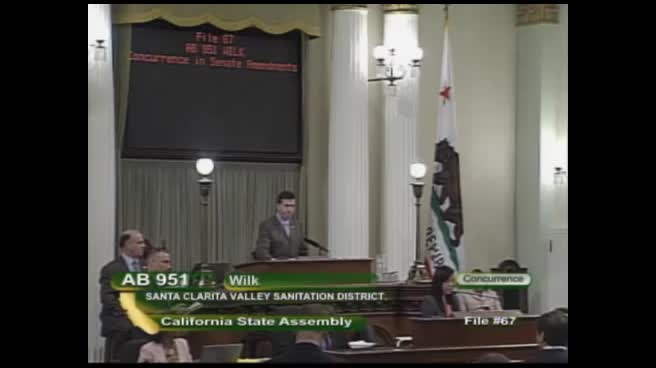
Bill Author

Bill Co-Author(s):