AB 1307: Working Families Student Fee Transparency and Accountability Act.
- Session Year: 2015-2016
- House: Assembly
- Latest Version Date: 2015-10-08
The Donahoe Higher Education Act sets forth the missions and functions of the segments of the higher education system in the state, including the University of California, administered by the Regents of the University of California, and the California State University, administered by the Trustees of the California State University. The provisions of the act apply to the University of California only to the extent that the Regents of the University of California, by appropriate resolution, make them applicable. Under existing law, the regents have all the powers necessary or convenient for the administration of the university, including the power to set mandatory systemwide fees.
Existing law establishes the Working Families Student Fee Transparency and Accountability Act, which suggests policies relating to mandatory systemwide student fees charged and student financial aid for resident students at the University of California and the California State University, including a policy urging the regents and the trustees to ensure that at least 33% of revenues from an increase in fees charged to resident students is set aside for institutional student aid to assist students and families.
This bill would instead urge the regents and trustees to ensure that at least 33% of revenues from an increase in fees charged to undergraduate students is set aside for institutional student aid to assist resident undergraduate students and families, and would make the rest of these policy suggestions requirements, subject to adoption of a resolution by the regents as to the University of California. The bill would change an inaccurate cross-reference in a provision of the Working Families Student Fee Transparency and Accountability Act.
The Donahoe Higher Education Act sets forth the missions and functions of the segments of the higher education system in the state. The public segments include the University of California, administered by the Regents of the University of California, and the California State University, administered by the Trustees of the California State University. The provisions of the act apply to the University of California only to the extent that the Regents of the University of California, by appropriate resolution, make them applicable. Under existing law, the regents have all the powers necessary or convenient for the administration of the university, including the power to set mandatory systemwide fees.
Existing law establishes the Working Families Student Fee Transparency and Accountability Act, which suggests policies relating to mandatory systemwide student fees charged and student financial aid for resident students at the University of California and the California State University. University, including a policy urging the regents and the trustees to ensure that at least 33% of revenues from an increase in fees charged to resident students is set aside for institutional student aid to assist students and families.
This bill would instead urge the regents and trustees to ensure that at least 33% of revenues from an increase in fees charged to undergraduate students is set aside for institutional student aid to assist resident undergraduate students and families, and would make certain the rest of these policy suggestions requirements, subject to adoption of a resolution by the regents as to the University of California. The bill would change an inaccurate cross-reference in a provision of the Working Families Student Fee Transparency and Accountability Act.
The Donahoe Higher Education Act sets forth the missions and functions of the segments of the higher education system in the state. The public segments include the University of California, administered by the Regents of the University of California, and the California State University, administered by the Trustees of the California State University. The provisions of the act apply to the University of California only to the extent that the Regents of the University of California, by appropriate resolution, make them applicable. Under existing law, the regents have all the powers necessary or convenient for the administration of the university, including the power to set mandatory systemwide fees.
Existing law establishes the Working Families Student Fee Transparency and Accountability Act, which suggests policies relating to mandatory systemwide student fees charged and student financial aid for resident students at the University of California and the California State University.
This bill would instead make certain of these policy suggestions requirements, subject to adoption of a resolution by the regents as to the University of California. The bill would change an inaccurate cross-reference in a provision of the Working Families Student Fee Transparency and Accountability Act.
The Donahoe Higher Education Act sets forth the missions and functions of the segments of the higher education system in the state. The public segments include the University of California, administered by the Regents of the University of California, and the California State University, administered by the Trustees of the California State University. The provisions of the act apply to the University of California only to the extent that the Regents of the University of California, by appropriate resolution, make them applicable. Under existing law, the regents have all the powers necessary or convenient for the administration of the university, including the power to set mandatory systemwide fees.
Existing law establishes the Working Families Student Fee Transparency and Accountability Act, which suggests policies relating to mandatory systemwide student fees charged and student financial aid for resident students at the University of California and the California State University.
This bill would instead make these policy suggestions requirements requirements, subject to adoption of a resolution by the regents as to the University of California. The bill would require the regents to comply with the Working Families Student Fee Transparency and Accountability Act as a condition of the receipt of state funding in the annual Budget Act. The bill would change an inaccurate cross-reference in a provision of the Working Families Student Fee Transparency and Accountability Act.
The Donahoe Higher Education Act sets forth the missions and functions of the segments of the higher education system in the state. The public segments include the University of California, administered by the Regents of the University of California, and the California State University, administered by the Trustees of the California State University. The provisions of the act apply to the University of California only to the extent that the Regents of the University of California, by appropriate resolution, make them applicable. Under existing law, the regents have all the powers necessary or convenient for the administration of the university, including the power to set mandatory systemwide fees.
Existing law establishes the Working Families Student Fee Transparency and Accountability Act, which suggests policies relating to mandatory systemwide student fees charged and student financial aid for resident students at the University of California and the California State University.
This bill would instead make these policy suggestions requirements. The bill would prohibit a fee increase for a California resident student from the fees established for the 201415 academic year at the California State University and the University of California if the Legislative Analyst determines that the respective segment has not complied with these requirements. The bill would require the regents to comply with the Working Families Student Fee Transparency and Accountability Act as a condition of the receipt of state funding in the annual Budget Act. The bill would change an inaccurate cross-reference in a provision of the Working Families Student Fee Transparency and Accountability Act.
The Donahoe Higher Education Act sets forth the missions and functions of the segments of the higher education system in the state. The public segments include the University of California, administered by the Regents of the University of California, and the California State University, administered by the Trustees of the California State University. The provisions of the act apply to the University of California only to the extent that the Regents of the University of California, by appropriate resolution, make them applicable. Under existing law, the regents have all the powers necessary or convenient for the administration of the university, including the power to set mandatory systemwide fees.
Existing law establishes the Working Families Student Fee Transparency and Accountability Act, which suggests policies relating to mandatory systemwide student fees charged and student financial aid for resident students at the University of California and the California State University.
This bill would instead make these policy suggestions requirements. The bill would, except as provided, would prohibit a fee increase for a California resident student from the fees established for the 201415 academic year at the California State University and, as a condition of the receipt of state funding in the annual Budget Act, and the University of California if the Legislative Analyst determines that the respective segment has not complied with these requirements. The bill would require the trustees and regents to comply with the Working Families Student Fee Transparency and Accountability Act as a condition of the receipt of state funding for student financial assistance. in the annual Budget Act. The bill would change an inaccurate cross-reference in a provision of the Working Families Student Fee Transparency and Accountability Act.
The Donahoe Higher Education Act sets forth the missions and functions of the segments of the higher education system in the state. The public segments include the University of California, administered by the Regents of the University of California, and the California State University, administered by the Trustees of the California State University. The provisions of the act apply to the University of California only to the extent that the Regents of the University of California, by appropriate resolution, make them applicable. Under existing law, the regents have all the powers necessary or convenient for the administration of the university, including the power to set mandatory systemwide fees.
Existing law establishes the Working Families Student Fee Transparency and Accountability Act, which suggests policies relating to mandatory systemwide student fees charged and student financial aid for resident students at the University of California and the California State University.
This bill would instead make these policy suggestions requirements, subject to a resolution of the regents as to the University of California. requirements. The bill would, except as provided, prohibit a fee increase for a California resident student from the fees established for the 201415 academic year at the California State University and, as a condition of the receipt of state funding in the annual Budget Act, the University of California. The bill would require the trustees and regents to comply with the Working Families Student Fee Transparency and Accountability Act as a condition of the receipt of state funding for student financial assistance. The bill would change an inaccurate cross-reference in a provision of the Working Families Student Fee Transparency and Accountability Act.
The Donahoe Higher Education Act sets forth the missions and functions of the segments of the higher education system in the state. The public segments include the University of California, administered by the Regents of the University of California, and the California State University, administered by the Trustees of the California State University. The provisions of the act apply to the University of California only to the extent that the Regents of the University of California, by appropriate resolution, make them applicable. Under existing law, the regents have all the powers necessary or convenient for the administration of the university, including the power to set mandatory systemwide fees.
Existing law establishes the Working Families Student Fee Transparency and Accountability Act, which suggests policies relating to mandatory systemwide student fees charged and student financial aid for resident students at the University of California and the California State University.
This bill would instead make these policy suggestions requirements, subject to a resolution of the regents as to the University of California. The bill would, except as provided, prohibit a fee increase for a California resident student from the fees established for the 201415 academic year at the California State University and, as a condition of the receipt of state funding in the annual Budget Act, the University of California. The bill would change an inaccurate cross-reference in a provision of the Working Families Student Fee Transparency and Accountability Act.
Existing law declares the policy of the Legislature that all resident applicants to California institutions of public higher education, who are determined to be qualified by law or by admission standards established by the respective governing boards, should be admitted to a district of the California Community Colleges, the California State University, or the University of California.
This bill would make a nonsubstantive change to this provision.
The following requirements apply to student financial aid for resident students, and mandatory systemwide fees charged at the University of California and the California State University:
(a)As any changes in mandatory systemwide fees and financial aid resources are considered, the impact on students shall be explained to students, including, but not limited to, changes to the minimum work or loan burden for all students, if applicable, institutional financial aid awards, and the average student loan debt for undergraduate students.
(b)Students shall be consulted before increases on mandatory systemwide fees are proposed, so that students can provide input and ask questions regarding the need for any increases in mandatory systemwide fees.
(c)Adequate advance notice shall be provided to students regarding any future mandatory systemwide fees, thereby allowing the students and their families greater time to prepare for the mandatory systemwide fees to be assessed.
(d)In order to ensure that access is not precluded for any eligible student, and particularly for financially needy students, all current and prospective students shall be provided with timely information concerning student financial aid, including the processes associated with applying for and obtaining student financial assistance.
(e)In order for the general public to maintain confidence in the states public colleges and universities, the states public colleges and universities shall ensure transparency in the uses of mandatory systemwide fee revenue and the rationale for implementing mandatory systemwide fee increases.
SEC. 2.Section 66028.4 of the Education Code is amended to read:66028.4.(a)On or before April 2, 2013, the regents and the trustees each shall develop a list of factors that shall be taken into consideration when developing recommendations to adjust mandatory systemwide fees consistent with the policies set forth in this article. The factors shall include, at a minimum, the level of state support, total cost of attendance, impact on various categories of students, including historically underrepresented students and low- to middle-income students, as well as efforts to mitigate the impacts.
(b)The factors, and any subsequent amendments to those factors, shall be developed in consultation with the appropriate statewide student body associations and shall be formally adopted by the regents or the trustees in an open and public meeting.
(c)Nothing in this section shall be construed to exempt any increase in mandatory systemwide fees from the requirements of Section 66028.3.
SEC. 3.Section 66028.5 of the Education Code is amended to read:66028.5.(a)The regents and the trustees are urged to maintain their commitment to institutional financial aid program funding by ensuring that at least 33 percent of the revenues of an increase to existing mandatory systemwide fees charged to undergraduate students is set aside by the regents or the trustees, as applicable, for institutional student aid to assist resident undergraduate students, including those undergraduate students exempt from nonresident tuition pursuant to Sections 68075.5 and 68130.5, and families in meeting the total cost of education.
(b)The regents and trustees shall report their compliance with this section in their respective annual reports on institutional financial aid pursuant to Section 66021.1.
The following requirements apply to student financial aid for resident students, and mandatory systemwide fees charged at the University of California and the California State University:
(a)As any changes in mandatory systemwide fees and financial aid resources are considered, the impact on students shall be explained to students, including, but not limited to, changes to the minimum work or loan burden for all students, if applicable, institutional financial aid awards, and the average student loan debt for undergraduate students.
(b)Students shall be consulted before increases on mandatory systemwide fees are proposed, so that students can provide input and ask questions regarding the need for any increases in mandatory systemwide fees.
(c)Adequate advance notice shall be provided to students regarding any future mandatory systemwide fees, thereby allowing the students and their families greater time to prepare for the mandatory systemwide fees to be assessed.
(d)In order to ensure that access is not precluded for any eligible student, and particularly for financially needy students, all current and prospective students shall be provided with timely information concerning student financial aid, including the processes associated with applying for and obtaining student financial assistance.
(e)In order for the general public to maintain confidence in the states public colleges and universities, the states public colleges and universities shall ensure transparency in the uses of mandatory systemwide fee revenue and the rationale for implementing mandatory systemwide fee increases.
SEC. 2.Section 66028.4 of the Education Code is amended to read:66028.4.(a)On or before April 2, 2013, the regents and the trustees each shall develop a list of factors that shall be taken into consideration when developing recommendations to adjust mandatory systemwide fees consistent with the policies set forth in this article. The factors shall include, at a minimum, the level of state support, total cost of attendance, impact on various categories of students, including historically underrepresented students and low- to middle-income students, as well as efforts to mitigate the impacts.
(b)The factors, and any subsequent amendments to those factors, shall be developed in consultation with the appropriate statewide student body associations and shall be formally adopted by the regents or the trustees in an open and public meeting.
(c)Nothing in this section shall be construed to exempt any increase in mandatory systemwide fees from the requirements of Section 66028.3.
SEC. 3.Section 66028.5 of the Education Code is amended to read:66028.5.(a)The regents and the trustees are urged to maintain their commitment to institutional financial aid program funding by ensuring that at least 33 percent of the revenues of an increase to existing mandatory systemwide fees charged to resident undergraduate students is set aside by the regents or the trustees, as applicable, for institutional student aid to assist resident undergraduate students, including those undergraduate students exempt from nonresident tuition pursuant to Sections 68075.5 and 68130.5, and families in meeting the total cost of education.
(b)The regents and trustees shall report their compliance with this section in their respective annual reports on institutional financial aid pursuant to Section 66021.1.
The following requirements apply to student financial aid for resident students, and mandatory systemwide fees charged at the University of California and the California State University:
(a)As any changes in mandatory systemwide fees and financial aid resources are considered, the impact on students shall be explained to students, including, but not limited to, changes to the minimum work or loan burden for all students, if applicable, institutional financial aid awards, and the average student loan debt for undergraduate students.
(b)Students shall be consulted before increases on mandatory systemwide fees are proposed, so that students can provide input and ask questions regarding the need for any increases in mandatory systemwide fees.
(c)Adequate advance notice shall be provided to students regarding any future mandatory systemwide fees, thereby allowing the students and their families greater time to prepare for the mandatory systemwide fees to be assessed.
(d)In order to ensure that access is not precluded for any eligible student, and particularly for financially needy students, all current and prospective students shall be provided with timely information concerning student financial aid, including the processes associated with applying for and obtaining student financial assistance.
(e)In order for the general public to maintain confidence in the states public colleges and universities, the states public colleges and universities shall ensure transparency in the uses of mandatory systemwide fee revenue and the rationale for implementing mandatory systemwide fee increases.
SEC. 2.Section 66028.4 of the Education Code is amended to read:66028.4.(a)On or before April 2, 2013, the regents and the trustees each shall develop a list of factors that shall be taken into consideration when developing recommendations to adjust mandatory systemwide fees consistent with the policies set forth in this article. The factors shall include, at a minimum, the level of state support, total cost of attendance, impact on various categories of students, including historically underrepresented students and low- to middle-income students, as well as efforts to mitigate the impacts.
(b)The factors, and any subsequent amendments to those factors, shall be developed in consultation with the appropriate statewide student body associations and shall be formally adopted by the regents or the trustees in an open and public meeting.
(c)Nothing in this section shall be construed to exempt any increase in mandatory systemwide fees from the requirements of Section 66028.3.
SEC. 3.Section 66028.5 of the Education Code is amended to read:66028.5.(a)The regents and the trustees shall are urged to maintain their commitment to institutional financial aid program funding by ensuring that at least 33 percent of the revenues of an increase to existing mandatory systemwide fees charged to resident students is set aside by the regents or the trustees, as applicable, for institutional student aid to assist resident students, including those students exempt from nonresident tuition pursuant to Sections 68075.5 and 68130.5, and families in meeting the total cost of education.
(b)The regents and trustees shall report their compliance with this section in their respective annual reports on institutional financial aid pursuant to Section 66021.1.
The following requirements apply to student financial aid for resident students, and mandatory systemwide fees charged at the University of California and the California State University:
(a)As any changes in mandatory systemwide fees and financial aid resources are considered, the impact on students shall be explained to students, including, but not limited to, changes to the minimum work or loan burden for all students, if applicable, institutional financial aid awards, and the average student loan debt for undergraduate students.
(b)Students shall be consulted before increases on mandatory systemwide fees are proposed, so that students can provide input and ask questions regarding the need for any increases in mandatory systemwide fees.
(c)Adequate advance notice shall be provided to students regarding any future mandatory systemwide fees, thereby allowing the students and their families greater time to prepare for the mandatory systemwide fees to be assessed.
(d)In order to ensure that access is not precluded for any eligible student, and particularly for financially needy students, all current and prospective students shall be provided with timely information concerning student financial aid, including the processes associated with applying for and obtaining student financial assistance.
(e)In order for the general public to maintain confidence in the states public colleges and universities, the states public colleges and universities shall ensure transparency in the uses of mandatory systemwide fee revenue and the rationale for implementing mandatory systemwide fee increases.
SEC. 2.Section 66028.4 of the Education Code is amended to read:66028.4.(a)On or before April 2, 2013, the regents and the trustees each shall develop a list of factors that shall be taken into consideration when developing recommendations to adjust mandatory systemwide fees consistent with the policies set forth in this article. The factors shall include, at a minimum, the level of state support, total cost of attendance, impact on various categories of students, including historically underrepresented students and low- to middle-income students, as well as efforts to mitigate the impacts.
(b)The factors, and any subsequent amendments to those factors, shall be developed in consultation with the appropriate statewide student body associations and shall be formally adopted by the regents or the trustees in an open and public meeting.
(c)Nothing in this section shall be construed to exempt any increase in mandatory systemwide fees from the requirements of Section 66028.3.
SEC. 3.Section 66028.5 of the Education Code is amended to read:66028.5.(a)The regents and the trustees shall maintain their commitment to institutional financial aid program funding by ensuring that at least 33 percent of the revenues of an increase to existing mandatory systemwide fees charged to resident students is set aside by the regents or the trustees, as applicable, for institutional student aid to assist resident students students, including those students exempt from nonresident tuition pursuant to Sections 68075.5 and 68130.5, and families in meeting the total cost of education.
(b)The regents and trustees shall report their compliance with this section in their respective annual reports on institutional financial aid pursuant to Section 66021.1.
SEC. 4.Section 66028.8 is added to the Education Code, to read:66028.8.Notwithstanding Section 67400, as a condition of the receipt of state funding in the annual Budget Act, the regents shall comply with this article.
The following requirements apply to student financial aid for resident students, and mandatory systemwide fees charged at the University of California and the California State University:
(a)As any changes in mandatory systemwide fees and financial aid resources are considered, the impact on students shall be explained to students, including, but not limited to, changes to the minimum work or loan burden for all students, if applicable, institutional financial aid awards, and the average student loan debt for undergraduate students.
(b)Students shall be consulted before increases on mandatory systemwide fees are proposed, so that students can provide input and ask questions regarding the need for any increases in mandatory systemwide fees.
(c)Adequate advance notice shall be provided to students regarding any future mandatory systemwide fees, thereby allowing the students and their families greater time to prepare for the mandatory systemwide fees to be assessed.
(d)In order to ensure that access is not precluded for any eligible student, and particularly for financially needy students, all current and prospective students shall be provided with timely information concerning student financial aid, including the processes associated with applying for and obtaining student financial assistance.
(e)In order for the general public to maintain confidence in the states public colleges and universities, the states public colleges and universities shall ensure transparency in the uses of mandatory systemwide fee revenue and the rationale for implementing mandatory systemwide fee increases.
SEC. 2.Section 66028.4 of the Education Code is amended to read:66028.4.(a)On or before April 2, 2013, the regents and the trustees each shall develop a list of factors that shall be taken into consideration when developing recommendations to adjust mandatory systemwide fees consistent with the policies set forth in this article. The factors shall include, at a minimum, the level of state support, total cost of attendance, impact on various categories of students, including historically underrepresented students and low- to middle-income students, as well as efforts to mitigate the impacts.
(b)The factors, and any subsequent amendments to those factors, shall be developed in consultation with the appropriate statewide student body associations and shall be formally adopted by the regents or the trustees in an open and public meeting.
(c)Nothing in this section shall be construed to exempt any increase in mandatory systemwide fees from the requirements of Section 66028.3.
SEC. 3.Section 66028.5 of the Education Code is amended to read:66028.5.(a)The regents and the trustees shall maintain their commitment to institutional financial aid program funding by ensuring that at least 33 percent of the revenues of an increase to existing mandatory systemwide fees charged to resident students is set aside by the regents or the trustees, as applicable, for institutional student aid to assist resident students and families in meeting the total cost of education.
(b)The regents and trustees shall report their compliance with this section in their respective annual reports on institutional financial aid pursuant to Section 66021.1.
SEC. 4.Section 66028.7 is added to the Education Code, to read:66028.7.(a)Notwithstanding any other law, the trustees shall not implement an increase in mandatory systemwide tuition and fees to a California resident student of the California State University if the Legislative Analyst determines in its report required in subdivision (b) of Section 66028.6, that the trustees failed to comply with the requirements of this article before approving the increase.
(b)The regents shall not implement an increase in mandatory systemwide tuition and fees to a California resident student of the University of California if the Legislative Analyst determines in its report required in subdivision (b) of Section 66028.6, that the regents failed to comply with the requirements of this article before approving the increase.
(c)An increase in systemwide tuition and fees for California resident students adopted by the trustees or regents pursuant to subdivision (a) or (b), respectively, may be rescinded with the adoption of the annual Budget Act.
SEC. 5.SEC. 4.Section 66028.8 is added to the Education Code, to read:66028.8.Notwithstanding Section 67400, as a condition of the receipt of state funding in the annual Budget Act, the regents shall comply with this article.
The following requirements apply to student financial aid for resident students, and mandatory systemwide fees charged at the University of California and the California State University:
(a)As any changes in mandatory systemwide fees and financial aid resources are considered, the impact on students shall be explained to students, including, but not limited to, changes to the minimum work or loan burden for all students, if applicable, institutional financial aid awards, and the average student loan debt for undergraduate students.
(b)Students shall be consulted before increases on mandatory systemwide fees are proposed, so that students can provide input and ask questions regarding the need for any increases in mandatory systemwide fees.
(c)Adequate advance notice shall be provided to students regarding any future mandatory systemwide fees, thereby allowing the students and their families greater time to prepare for the mandatory systemwide fees to be assessed.
(d)In order to ensure that access is not precluded for any eligible student, and particularly for financially needy students, all current and prospective students shall be provided with timely information concerning student financial aid, including the processes associated with applying for and obtaining student financial assistance.
(e)In order for the general public to maintain confidence in the states public colleges and universities, the states public colleges and universities shall ensure transparency in the uses of mandatory systemwide fee revenue and the rationale for implementing mandatory systemwide fee increases.
SEC. 2.Section 66028.4 of the Education Code is amended to read:66028.4.(a)On or before April 2, 2013, the regents and the trustees each shall develop a list of factors that shall be taken into consideration when developing recommendations to adjust mandatory systemwide fees consistent with the policies set forth in this article. The factors shall include, at a minimum, the level of state support, total cost of attendance, impact on various categories of students, including historically underrepresented students and low- to middle-income students, as well as efforts to mitigate the impacts.
(b)The factors, and any subsequent amendments to those factors, shall be developed in consultation with the appropriate statewide student body associations and shall be formally adopted by the regents or the trustees in an open and public meeting.
(c)Nothing in this section shall be construed to exempt any increase in mandatory systemwide fees from the requirements of Section 66028.3.
SEC. 3.Section 66028.5 of the Education Code is amended to read:66028.5.(a)The regents and the trustees shall maintain their commitment to institutional financial aid program funding by ensuring that at least 33 percent of the revenues of an increase to existing mandatory systemwide fees charged to resident students is set aside by the regents or the trustees, as applicable, for institutional student aid to assist students and families in meeting the total cost of education.
(b)The regents and trustees shall report their compliance with this section in their respective annual reports on institutional financial aid pursuant to Section 66021.1.
SEC. 4.Section 66028.7 is added to the Education Code, to read:66028.7.(a)Notwithstanding any other law, the trustees shall not charge more than five thousand four hundred seventy-two dollars ($5,472) implement an increase in mandatory systemwide tuition and fees, except as authorized in the annual Budget Act, fees to a California resident student of the California State University if the Legislative Analyst determines in its report required in subdivision (b) of Section 66028.6, that the trustees failed to comply with the requirements of this article before approving the increase.
(b)The regents shall not charge more than twelve thousand one hundred ninety-two dollars ($12,192) implement an increase in mandatory systemwide tuition and fees, except as authorized in the annual Budget Act, fees to a California resident student of the University of California if the Legislative Analyst determines in its report required in subdivision (b) of Section 66028.6, that the regents failed to comply with the requirements of this article before approving the increase.
(c)An increase in systemwide tuition and fees for California resident students adopted by the trustees or regents pursuant to subdivision (a) or (b), respectively, may be rescinded with the adoption of the annual Budget Act.
SEC. 5.Section 66028.8 is added to the Education Code, to read:66028.8.(a)Notwithstanding Section 67400, as a condition of the receipt of state funding in the annual Budget Act, the regents shall comply with subdivision (b) of Section 66028.7. this article.
(b)Notwithstanding Section 67400, in order to receive state funds for student financial assistance, the regents and trustees shall comply with this article.
The following requirements apply to student financial aid for resident students, and mandatory systemwide fees charged at the University of California and the California State University:
(a)As any changes in mandatory systemwide fees and financial aid resources are considered, the impact on students shall be explained to students, including, but not limited to, changes to the minimum work or loan burden for all students, if applicable, institutional financial aid awards, and the average student loan debt for undergraduate students.
(b)Students shall be consulted before increases on mandatory systemwide fees are proposed, so that students can provide input and ask questions regarding the need for any increases in mandatory systemwide fees.
(c)Adequate advance notice shall be provided to students regarding any future mandatory systemwide fees, thereby allowing the students and their families greater time to prepare for the mandatory systemwide fees to be assessed.
(d)In order to ensure that access is not precluded for any eligible student, and particularly for financially needy students, all current and prospective students shall be provided with timely information concerning student financial aid, including the processes associated with applying for and obtaining student financial assistance.
(e)In order for the general public to maintain confidence in the states public colleges and universities, the states public colleges and universities shall ensure transparency in the uses of mandatory systemwide fee revenue and the rationale for implementing mandatory systemwide fee increases.
SEC. 2.Section 66028.4 of the Education Code is amended to read:66028.4.(a)On or before April 2, 2013, the regents and the trustees each shall develop a list of factors that shall be taken into consideration when developing recommendations to adjust mandatory systemwide fees consistent with the policies set forth in this article. The factors shall include, at a minimum, the level of state support, total cost of attendance, impact on various categories of students, including historically underrepresented students and low- to middle-income students, as well as efforts to mitigate the impacts.
(b)The factors, and any subsequent amendments to those factors, shall be developed in consultation with the appropriate statewide student body associations and shall be formally adopted by the regents or the trustees in an open and public meeting.
(c)Nothing in this section shall be construed to exempt any increase in mandatory systemwide fees from the requirements of Section 66028.3.
SEC. 3.Section 66028.5 of the Education Code is amended to read:66028.5.(a)The regents and the trustees shall maintain their commitment to institutional financial aid program funding by ensuring that at least 33 percent of the revenues of an increase to existing mandatory systemwide fees charged to resident students is set aside by the regents or the trustees, as applicable, for institutional student aid to assist students and families in meeting the total cost of education.
(b)The regents and trustees shall report their compliance with this section in their respective annual reports on institutional financial aid pursuant to Section 66021.1.
SEC. 4.Section 66028.7 is added to the Education Code, to read:66028.7.(a)Notwithstanding any other law, the trustees shall not charge more than five thousand four hundred seventy-two dollars ($5,472) in mandatory systemwide tuition and fees, except as authorized in the annual Budget Act, to a California resident student of the California State University.
(b)Notwithstanding Section 67400, as a condition of the receipt of state funding in the annual Budget Act, the The regents shall not charge more than twelve thousand one hundred ninety-two dollars ($12,192) in mandatory systemwide tuition and fees, except as authorized in the annual Budget Act, to a California resident student of the University of California.
SEC. 5.Section 66028.8 is added to the Education Code, to read:66028.8.(a)Notwithstanding Section 67400, as a condition of the receipt of state funding in the annual Budget Act, the regents shall comply with subdivision (b) of Section 66028.7.
(b)Notwithstanding Section 67400, in order to receive state funds for student financial assistance, the regents and trustees shall comply with this article.
The following state policies requirements apply to student financial aid for resident students, and mandatory systemwide fees charged at the University of California and the California State University:
(a)As any changes in mandatory systemwide fees and financial aid resources are considered, the impact on students should shall be explained to students, including, but not limited to, changes to the minimum work or loan burden for all students, if applicable, institutional financial aid awards, and the average student loan debt for undergraduate students.
(b)Students should shall be consulted before increases on mandatory systemwide fees are proposed, so that students can provide input and ask questions regarding the need for any increases in mandatory systemwide fees.
(c)Adequate advance notice should shall be provided to students regarding any future mandatory systemwide fees, thereby allowing the students and their families greater time to prepare for the mandatory systemwide fees to be assessed.
(d)In order to ensure that access is not precluded for any eligible student, and particularly for financially needy students, all current and prospective students should shall be provided with timely information concerning student financial aid, including the processes associated with applying for and obtaining student financial assistance.
(e)In order for the general public to maintain confidence in the states public colleges and universities, every effort should be made to the states public colleges and universities shall ensure increased transparency in the uses of mandatory systemwide fee revenue and the rationale for implementing mandatory systemwide fee increases.
SEC. 2.Section 66028.4 of the Education Code is amended to read:66028.4.(a)On or before April 2, 2013, the regents and the trustees each shall develop a list of factors that shall be taken into consideration when developing recommendations to adjust mandatory systemwide fees consistent with the policies set forth in this article. The factors shall include, at a minimum, the level of state support, total cost of attendance, impact on various categories of students, including historically underrepresented students and low- to middle-income students, as well as efforts to mitigate the impacts.
(b)The factors, and any subsequent amendments to those factors, shall be developed in consultation with the appropriate statewide student body associations and shall be formally adopted by the regents or the trustees in an open and public meeting.
(c)Nothing in this section shall be construed to exempt any increase in mandatory systemwide fees from the requirements of Section 66028.4. 66028.3.
SEC. 3.Section 66028.5 of the Education Code is amended to read:66028.5.(a)The regents and the trustees are urged to shall maintain their commitment to institutional financial aid program funding by ensuring that at least 33 percent of the revenues of an increase to existing mandatory systemwide fees charged to resident students is set aside by the regents or the trustees, as applicable, for institutional student aid to assist students and families in meeting the total cost of education.
(b)The regents and trustees shall report their compliance with this section in their respective annual reports on institutional financial aid pursuant to Section 66021.1.
SEC. 4.Section 66028.7 is added to the Education Code, to read:66028.7.(a)Notwithstanding any other law, the trustees shall not charge more than five thousand four hundred seventy-two dollars ($5,472) in systemwide tuition and fees, except as authorized in the annual Budget Act, to a California resident student of the California State University.
(b)Notwithstanding Section 67400, as a condition of the receipt of state funding in the annual Budget Act, the regents shall not charge more than twelve thousand one hundred ninety-two dollars ($12,192) in systemwide tuition and fees, except as authorized in the annual Budget Act, to a California resident student of the University of California.
SECTION 1.Section 66011 of the Education Code is amended to read:66011.(a)It is the policy of the Legislature that all resident applicants to California institutions of public higher education, who are determined to be qualified by law or by admission standards established by the respective governing boards, should be admitted to either (1) a district of the California Community Colleges, in accordance with Section 76000, (2) the California State University, or (3) the University of California.
(b)As used in this part, governing boards means the local boards of trustees and the Board of Governors of the California Community Colleges, the Trustees of the California State University, and the Regents of the University of California.
(a)It is hereby declared to be the policy of the Legislature that all resident applicants to California institutions of public higher education, who are determined to be qualified by law or by admission standards established by the respective governing boards, should be admitted to either (1) a district of the California Community Colleges, in accordance with Section 76000, (2) the California State University, or (3) the University of California.
(b)As used in this part, governing boards means the local boards of trustees and the Board of Governors of the California Community Colleges, the Trustees of the California State University, and the Regents of the University of California.
|
Date
|
Status
|
|---|---|
| Sep 9, 2015 | Assembly Rule 77 suspended. |
| Aug 17, 2015 | From committee: Amend, and do pass as amended and re-refer to Com. on APPR. (Ayes 8. Noes 0.) (July 15). |
| Aug 18, 2015 | Read second time and amended. Re-referred to Com. on APPR. |
| Aug 24, 2015 | From committee: Be placed on second reading file pursuant to Senate Rule 28.8. |
| Aug 25, 2015 | Read second time. Ordered to third reading. |
| Sep 3, 2015 | Read third time and amended. Ordered to second reading. |
| Sep 4, 2015 | Read second time. Ordered to third reading. |
| Sep 8, 2015 | In Assembly. Concurrence in Senate amendments pending. May be considered on or after September 10 pursuant to Assembly Rule 77. |
| Sep 8, 2015 | Read third time. Passed. Ordered to the Assembly. |
| Sep 8, 2015 | Read third time. Passed. Ordered to the Assembly. (Ayes 40. Noes 0. Page 2594.). |
| Jul 7, 2015 | From committee chair, with author's amendments: Amend, and re-refer to committee. Read second time, amended, and re-referred to Com. on ED. |
| Sep 9, 2015 | Assembly Rule 77 suspended. (Ayes 52. Noes 28. Page 2990.) |
| Sep 9, 2015 | Assembly Rule 77 suspended. (Ayes 52. Noes 28.) |
| Sep 9, 2015 | Senate amendments concurred in. To Engrossing and Enrolling. |
| Sep 9, 2015 | Senate amendments concurred in. To Engrossing and Enrolling. (Ayes 69. Noes 9. Page 3007.). |
| Sep 9, 2015 | Senate amendments concurred in. To Engrossing and Enrolling. (Ayes 69. Noes 9.). |
| Sep 18, 2015 | Enrolled and presented to the Governor at 4 p.m. |
| Oct 8, 2015 | Approved by the Governor. |
| Oct 8, 2015 | Chaptered by Secretary of State - Chapter 642, Statutes of 2015. |
| Apr 27, 2015 | Re-referred to Com. on APPR. |
| Mar 1, 2015 | From printer. May be heard in committee March 31. |
| Mar 2, 2015 | Read first time. |
| Mar 26, 2015 | From committee chair, with author's amendments: Amend, and re-refer to Com. on HIGHER ED. Read second time and amended. |
| Mar 26, 2015 | Referred to Com. on HIGHER ED. |
| Apr 6, 2015 | Re-referred to Com. on HIGHER ED. |
| Apr 14, 2015 | From committee chair, with author's amendments: Amend, and re-refer to Com. on HIGHER ED. Read second time and amended. |
| Apr 15, 2015 | Re-referred to Com. on HIGHER ED. |
| Apr 22, 2015 | From committee: Amend, and do pass as amended and re-refer to Com. on APPR. (Ayes 10. Noes 3.) (April 21). |
| Apr 23, 2015 | Read second time and amended. |
| Feb 27, 2015 | Introduced. To print. |
| May 6, 2015 | In committee: Set, first hearing. Referred to APPR. suspense file. |
| May 28, 2015 | From committee: Amend, and do pass as amended. (Ayes 12. Noes 5.) (May 28). |
| Jun 1, 2015 | Read second time and amended. Ordered returned to second reading. |
| Jun 2, 2015 | Read second time. Ordered to third reading. |
| Jun 3, 2015 | In Senate. Read first time. To Com. on RLS. for assignment. |
| Jun 3, 2015 | Read third time. Passed. Ordered to the Senate. |
| Jun 3, 2015 | Read third time. Passed. Ordered to the Senate. (Ayes 52. Noes 25. Page 1878.) |
| Jun 18, 2015 | Referred to Com. on ED. |
|
Date
|
Description
|
Location
|
Votes
|
|
|---|---|---|---|---|
| Sep 9, 2015 | AB 1307 MCCARTY Concurrence in Senate Amendments | Assembly Floor |
Passed |
|
| Sep 8, 2015 | Assembly 3rd Reading AB1307 McCarty By Block | Senate Floor |
Passed |
|
| Jul 15, 2015 | Do pass as amended, but first amend, and re-refer to the Committee on [Appropriations] | Senate Standing Committee on Education |
Passed |
|
| Jun 3, 2015 | AB 1307 MCCARTY Assembly Third Reading | Assembly Floor |
Passed |
|
| May 28, 2015 | Do pass as amended. | Assembly Standing Committee on Appropriations |
Passed |
|
| Apr 21, 2015 | Do pass as amended and be re-referred to the Committee on [Appropriations] | Assembly Standing Committee on Higher Education |
Passed |
This list shows positions taken on this bill by organizations on the date displayed, which is linked to the original source.
Positions by individuals are not included.
|
Organization
|
Position
|
Date
|
|---|---|---|
| American Federation of State, County and Municipal Employees | ** Support | Sep 8, 2015 |
| California Faculty Association | ** Support | Sep 8, 2015 |
| California State Student Association | ** Support | Sep 8, 2015 |
| California State University | ** Against | Jun 3, 2015 |
| u California State University | ** Against | Jul 15, 2015 |
| UAW | * Against Unless Amend | Jul 15, 2015 |
| University of California | ** Against | Sep 8, 2015 |
| University Of California Student Association | ** Support | Sep 8, 2015 |
AB 1307
Page 2
CONCURRENCE IN SENATE AMENDMENTS
AB 1307
(McCarty and Medina)
As Amended September 3, 2015
Majority vote
ASSEMBLY: |
52-25 |
(June 3, 2015) |
SENATE: |
40-0 |
(September 8, 2015) |
Original Committee Reference: HIGHER ED.
SUMMARY: Requires the California State University (CSU) and the University of California (UC) to follow specified student fee consultation and notification provisions. Specifically, this bill:
Mandates CSU and UC compliance with specific provisions of the Working Family Student Fee Transparency and Accountability Act (Student Fee Act), as follows:
Requires, instead of encourages, as changes in mandatory systemwide fees and financial aid are being considered, the impact of changes to be explained to students;
Requires, instead of encourages, students to be consulted before increases on mandatory systemwide fees are proposed;
Requires, instead of encourages, adequate advance notice to be provided to students regarding future mandatory systemwide fees;
Requires, instead of encourages, all current and prospective students to be provided timely information concerning student financial aid;
Requires, rather than encourages, the state's public colleges and universities ensure transparency in the uses of mandatory systemwide fee revenue and the rationale for implementing mandatory systemwide fee increases; and,
Clarifies that CSU and UC are urged to maintain their commitment to institutional financial aid programs by ensuring at least 33% of undergraduate fee increase revenues are set aside for institutional student aid for undergraduate resident students.
The Senate amendments remove language that would have required, rather than urged, CSU and UC to maintain their commitment to institutional financial aid programs by ensuring at least 33% of undergraduate fee increase revenues are set aside for institutional student aid.
EXISTING LAW requires, under the Student Fee Act, UC and CSU follow specific notice, consultation, and timeframe requirements when approving student fee increases. (Education Code Sections 66028 to 66028.6)
FISCAL EFFECT: According to the Senate Appropriations Committee, pursuant to Senate Rule 28.8, negligible state costs.
COMMENTS: Student fee policy. Fees and General Fund (GF) support work interchangeably to fund the core instructional missions of the segments. The state's portion essentially subsidizes the amount paid by students in the form of fees. Because of this link, fees have increased steeply during difficult budget years (generally also years where a down-economy makes families less able to pay for increases) and then declined when state support could be provided to the segments.
Through 1996, fees at California public postsecondary institutions were governed by the Maddy-Dills Act (Act), which required fees to be gradual, moderate and predictable; increases to be limited to 10% a year; and fixed at least 10 months prior to the fall term in which they were to become effective. However, when the state faced serious budget challenges the provisions of the Act were set aside in order to provide the CSU Trustees and the UC Regents flexibility in dealing with the lack of GF support. In 1996, the Act was allowed to sunset.
In 2012, AB 970 (Fong), Chapter 620, Statutes of 2012, established the Student Fee Act to require UC and CSU follow specific notice and consultation requirements when approving student fee increases:
UC and CSU are required to follow prescribed public notice and student consultation procedures before adopting an increase in mandatory systemwide tuition and fees for resident students;
UC and CSU are required to develop a list of factors to consider when recommending a fee increase;
UC and CSU are required to provide the Legislature on annual reports on tuition and fees, financial aid, and total cost of attendance.
The Legislative Analyst's Office (LAO) is required to report on CSU and UC compliance with the Student Fee Act.
UC noncompliance with the Student Fee Act. On March 25, 2015, the LAO released its annual report regarding UC and CSU compliance with the Student Fee Act. LAO found that CSU has not increased resident mandatory systemwide charges in the past year and therefore was not required to follow any consultation or notification procedures required by existing law. UC, on the other hand, was deemed by LAO to be not in compliance with most of the provisions of the law. According to the LAO, UC reported it is not legally obligated to comply with the law because of its constitutional autonomy. LAO noted that of the six statutory requirements regarding public notice and student consultation, UC failed to comply with four requirements.
Analysis Prepared by: Laura Metune / HIGHER ED. / (916) 319-3960 FN: 0002275
AB 1307
Page 6
|
Office of Senate Floor Analyses (916) 651-1520 Fax: (916) 327-4478 |
THIRD READING
Bill No: AB 1307
Author: McCarty (D) and Medina (D)
Amended: 9/3/15 in Senate
SENATE EDUCATION COMMITTEE: 8-0, 7/15/15
AYES: Liu, Runner, Block, Hancock, Leyva, Mendoza, Monning, Pan
NO VOTE RECORDED: Vidak
SENATE APPROPRIATIONS COMMITTEE: Senate Rule 28.8
ASSEMBLY FLOOR: 52-25, 6/3/15 - See last page for vote
SUBJECT: Working Families Student Fee Transparency and Accountability Act
DIGEST: This bill, requires, in lieu of encouraging, the University of California (UC) and the California State University (CSU) to follow specified notification and consultation timeframes for approving and implementing student fee increases, and urges the segments to continue to set aside a portion of fee increase revenues for institutional aid to assist undergraduate resident students thereby excluding undergraduate non-resident students.
Senate Floor Amendments of 9/3/15 clarify that institutional aid generated by a portion of undergraduate fee increase revenues should be used to assist undergraduate resident students thereby narrowing the scope of this section to the undergraduate student population.
Existing law:
Provides that statutes related to UC (and most other aspects of the governance and operation of UC) are applicable only to the extent that the Regents of UC make such provisions applicable. (Education Code § 67400)
Confers upon the Trustees of the CSU the powers, duties, and functions with respect to the management, administration, and control of the CSU system. (EC § 66066)
States that under the Working Families Student Fee Transparency and Accountability Act (Act), UC and CSU follow specific notice, consultation, and timeframe requirements when approving student fee increases. (EC § 66028 - 66028.6)
This bill requires, in lieu of encouraging, the UC and the CSU to follow specified notification and consultation timeframes for approving and implementing student fee increases, and urges the segments to continue to set aside a portion of fee increase revenues for institutional aid. Specifically, this bill:
Requires, instead of encourages, all of the following:
As changes in mandatory systemwide fees and financial aid are being considered, the impact of these changes to be explained to students.
Students be consulted via the appropriate statewide student body associations before increases on mandatory systemwide fees are proposed.
Adequate advance notice to be provided to students regarding future mandatory systemwide fees.
All current and prospective students to be provided timely information related to student financial aid.
The state’s public colleges and universities ensure transparency in the uses of mandatory system wide fee revenue and the rationale for implementing mandatory systemwide fee increases.
Urges the CSU Board of Trustees and the UC Board of Regents to maintain their commitment to institutional financial aid programs by ensuring at least 33% of fee increase revenues charged to resident students are set aside to assist undergraduate resident students and thereby excluding undergraduate non-resident students from receiving that benefit.
Comments
Need for the bill. Under the Act, UC and CSU must follow specific notice, consultation, and timeframe requirements when approving student fee increases. According to the author in November 2014, the UC Board of Regents passed a 5% per year increase for a five-year period beginning with the 2015-16 academic year. The author notes, with the passage of this fee increase, the UC was non-compliant with several statutory provisions regarding public notice and transparency of proposed fee increases established by current law.
This bill seeks to ensure that the UC and CSU adhere to notification and consultation timeframes for increase student fees.
Related Legislative Analyst Office (LAO) report. In March 2015, the LAO found UC to be non-complaint with several provisions under the Act including: (a) most notification and consultation procedures and; (b) developing a tuition and fee policy that includes a list of factors taken into account when considering an increase. UC did comply with the reporting provisions by publishing expenditure information and submitting the required institutional financial aid reports. According to the report, UC believes it is not legally obligated to comply because of its constitutional autonomy. To note, CSU had not increased mandatory systemwide fees; therefore, was not required to follow consultation or notification procedures. The report found CSU also complied with all other provisions.
Fee history. The Maddy-Dills Act previously required fees to be: (a) gradual; moderate and predictable; (b) limited fee increases to not more than 10% a year, and (c) fixed at least 10 months prior to the fall term in which they were to become effective. The policy also required sufficient financial aid to offset fee increases. However, even with this policy, when the state faced serious budgetary challenges the statute was "in-lieued" in order to provide the institutions some flexibility in dealing with the lack of state General Fund support. The Maddy-Dills Act sunset in 1996 and since then, the state has had no long-term policy regarding the way in which mandatory student fees are determined.
Historically, fees have fluctuated in response to the state's fiscal condition and the stated needs of UC and CSU, as negotiated in the budget deliberations. These conditions have triggered mid-year fee increases in the past. This bill seeks to provide students adequate advance notice regarding increases to systemwide fees.
Related budget activity. SB 97 (Committee on Budget and Fiscal Review, Chapter 11, Statutes of 2015) among other things, states legislative findings relative to the UC Regents endorsing the framework for long-term funding agreed to by the Governor and the UC President. The agreement freezes tuition in the 2015-16 and 2016-17 academic years, and specifies that the UC will implement reforms to reduce the cost structure and improve access, quality, and outcomes. The reforms included in the framework endorsed by the Regents are intended to create capacity for all campuses of the university to serve more resident students, including by using funds and existing resources that can be redirected to higher priorities, such as those currently being used to provide financial aid to nonresident students are also available to enable more residents students to enter the university at all campuses.
Consistent with these legislative findings, this bill encourages, the 33% set-aside for institutional student aid must be used to assist “resident students,” in lieu of “students,” and thereby excluding non-resident students from receiving those benefits.
Return-to-aid. For many years, UC and CSU have generally returned 33% of student fee increases to institutional aid programs. At CSU, the grant program is known as the State University Grant (SUG). According to CSU, despite losing one-third of state funding during the recent economic downturn the system maintained its commitment to the SUG program and has done so for more than two decades.
Prior Legislation
SB 1461 (Negrete-Mcleod, 2012), as amended by the Senate Education Committee, would have limited the amount by which the CSU Board of Trustees could increase the mandatory systemwide fees for resident undergraduate students, in a given year, and requested the Regents of the UC adhere to the same limit. SB 1461 passed out of the Senate Education Committee by a vote of 8-0 in April 2012, but was subsequently held under submission in the Senate Appropriations Committee.
SB 969 (Liu, 2010) would have placed an upper limit on mandatory systemwide student fees, not to exceed a fixed percentage of the cost of education as defined, and would have prohibited annual mandatory systemwide fee increases from increasing by more than the implicit price deflator for state and local government for goods and services. This version of SB 969 combined elements of SB 969 (Florez, 2010) and SB 1199 (Liu, 2010). The bill was passed by the Senate Education Committee by a vote of 8-0, but was subsequently held on suspense in the Assembly Appropriations Committee.
SB 969 (Florez, 2010) would have placed an upper limit on mandatory systemwide student fees, not to exceed a fixed percentage of the cost of education, as defined, would have prohibited student fees from ever increasing beyond the amount a student paid at the time of enrollment, and would have prohibited annual mandatory systemwide fee increases for each new cohort of undergraduate students at the UC, CSU, and California Community Colleges from exceeding five percent of the preceding academic year. This bill’s provisions were combined with those of SB 1199. The combined version was subsequently authored by Senator Liu.
SB 1199 (Liu, 2010) would have required the governing boards of the UC and CSU to develop student fee increase methodologies consistent with specified direction, and would have included many of the same concepts found in SB 969. The bill's provisions were combined with those of SB 969 and the hearing was canceled at the request of the author.
SCA 26 (Denham, 2010) would have amended the State Constitution and imposed upon the UC a waiting period of 180 days before mandatory student fees could take effect and limited annual fee increases to no more than a cumulative 10% over the preceding academic year. SCA 26 failed passage in the Senate Education Committee by a vote of 2-2.
FISCAL EFFECT: Appropriation: No Fiscal Com.: Yes Local: No
American Federation of State, County and Municipal Employees
California Faculty Association
California State Student Association
University of California Student Association
University of California
ASSEMBLY FLOOR: 52-25, 6/3/15
AYES: Alejo, Bloom, Bonilla, Bonta, Brown, Burke, Calderon, Campos, Chau, Chiu, Chu, Cooley, Cooper, Dababneh, Daly, Dodd, Eggman, Cristina Garcia, Eduardo Garcia, Gatto, Gipson, Gomez, Gonzalez, Gordon, Gray, Hadley, Roger Hernández, Holden, Irwin, Jones-Sawyer, Levine, Linder, Lopez, Low, McCarty, Medina, Mullin, Nazarian, O'Donnell, Patterson, Perea, Rendon, Ridley-Thomas, Rodriguez, Salas, Santiago, Mark Stone, Ting, Weber, Williams, Wood, Atkins
NOES: Achadjian, Travis Allen, Baker, Bigelow, Brough, Chang, Chávez, Dahle, Beth Gaines, Gallagher, Grove, Harper, Jones, Kim, Lackey, Maienschein, Mathis, Mayes, Melendez, Obernolte, Olsen, Steinorth, Wagner, Waldron, Wilk
NO VOTE RECORDED: Frazier, Quirk, Thurmond
Prepared by: Olgalilia Ramirez / ED. / (916) 651-4105
9/4/15 18:10:09
**** END ****
AB 1307
Page 6
|
Office of Senate Floor Analyses (916) 651-1520 Fax: (916) 327-4478 |
THIRD READING
Bill No: AB 1307
Author: McCarty (D) and Medina (D)
Amended: 8/18/15 in Senate
SENATE EDUCATION COMMITTEE: 8-0, 7/15/15
AYES: Liu, Runner, Block, Hancock, Leyva, Mendoza, Monning, Pan
NO VOTE RECORDED: Vidak
SENATE APPROPRIATIONS COMMITTEE: Senate Rule 28.8
ASSEMBLY FLOOR: 52-25, 6/3/15 - See last page for vote
SUBJECT: Working Families Student Fee Transparency and Accountability Act
DIGEST: This bill, requires, in lieu of encouraging, the University of California (UC) and the California State University (CSU) to follow specified notification and consultation timeframes for approving and implementing student fee increases, and urges the segments to continue to set aside a portion of fee increase revenues for institutional aid to assist resident students thereby excluding non-resident students.
Existing law:
Provides that statutes related to UC (and most other aspects of the governance and operation of UC) are applicable only to the extent that the Regents of UC make such provisions applicable. (Education Code § 67400)
Confers upon the Trustees of the CSU the powers, duties, and functions with respect to the management, administration, and control of the CSU system.
(EC § 66066)
States that under the Working Families Student Fee Transparency and Accountability Act (Act), UC and CSU follow specific notice, consultation, and timeframe requirements when approving student fee increases. (EC § 66028 - 66028.6)
This bill requires, in lieu of encouraging, the UC and the CSU to follow specified notification and consultation timeframes for approving and implementing student fee increases, and urges the segments to continue to set aside a portion of fee increase revenues for institutional aid. Specifically, this bill:
Requires, instead of encourages, all of the following:
As changes in mandatory systemwide fees and financial aid are being considered, the impact of these changes to be explained to students.
Students be consulted via the appropriate statewide student body associations before increases on mandatory systemwide fees are proposed.
Adequate advance notice to be provided to students regarding future mandatory systemwide fees.
All current and prospective students to be provided timely information related to student financial aid.
The state’s public colleges and universities ensure transparency in the uses of mandatory system wide fee revenue and the rationale for implementing mandatory systemwide fee increases.
Urges the CSU Board of Trustees and the UC Board of Regents to maintain their commitment to institutional financial aid programs by ensuring at least 33% of fee increase revenues charged to resident students are set aside to assist resident students and thereby excluding non-resident students from receiving that benefit.
Comments
Need for the bill. Under the Act, UC and CSU must follow specific notice, consultation, and timeframe requirements when approving student fee increases. According to the author in November 2014, the UC Board of Regents passed a 5% per year increase for a five-year period beginning with the 2015-16 academic year. The author notes, with the passage of this fee increase, the UC was non-compliant with several statutory provisions regarding public notice and transparency of proposed fee increases established by existing law.
This bill seeks to ensure that the UC and CSU adhere to notification and consultation timeframes for increase student fees.
Related Legislative Analyst Office (LAO) report. In March 2015, the LAO found UC to be non-complaint with several provisions under the Act including: (a) most notification and consultation procedures and; (b) developing a tuition and fee policy that includes a list of factors taken into account when considering an increase. UC did comply with the reporting provisions by publishing expenditure information and submitting the required institutional financial aid reports. According to the report, UC believes it is not legally obligated to comply because of its constitutional autonomy. To note, CSU had not increased mandatory systemwide fees; therefore, was not required to follow consultation or notification procedures. The report found CSU also complied with all other provisions.
Fee history. The Maddy-Dills Act previously required fees to be: (a) gradual; moderate and predictable; (b) limited fee increases to not more than 10% a year, and (c) fixed at least ten months prior to the fall term in which they were to become effective. The policy also required sufficient financial aid to offset fee increases. However, even with this policy, when the state faced serious budgetary challenges the statute was “in-lieued” in order to provide the institutions some flexibility in dealing with the lack of state General Fund support. The Maddy-Dills Act sunset in 1996 and since then, the state has had no long-term policy regarding the way in which mandatory student fees are determined.
Historically, fees have fluctuated in response to the state’s fiscal condition and the stated needs of UC and CSU, as negotiated in the budget deliberations. These conditions have triggered mid-year fee increases in the past. This bill seeks to provide students adequate advance notice regarding increases to systemwide fees.
Related budget activity. SB 97 (Committee on Budget and Fiscal Review, Chapter 11, Statutes of 2015) among other things, states legislative findings relative to the UC Regents endorsing the framework for long-term funding agreed to by the Governor and the UC President. The agreement freezes tuition in the 2015-16 and 2016-17 academic years, and specifies that the UC will implement reforms to reduce the cost structure and improve access, quality, and outcomes. The reforms included in the framework endorsed by the Regents are intended to create capacity for all campuses of the university to serve more resident students, including by using funds and existing resources that can be redirected to higher priorities, such as those currently being used to provide financial aid to nonresident students are also available to enable more residents students to enter the university at all campuses.
Consistent with these legislative findings, this bill encourages, the 33% set-aside for institutional student aid must be used to assist “resident students,” in lieu of “students,” and thereby excluding non-resident students from receiving those benefits.
Return-to-aid. For many years, UC and CSU have generally returned 33% of student fee increases to institutional aid programs. At CSU, the grant program is known as the State University Grant (SUG). According to CSU, despite losing one-third of state funding during the recent economic downturn the system maintained its commitment to the SUG program and has done so for more than two decades.
Prior Legislation
SB 1461 (Negrete-Mcleod, 2012), as amended by the Senate Education Committee, would have limited the amount by which the CSU Board of Trustees could increase the mandatory systemwide fees for resident undergraduate students, in a given year, and would have requested the Regents of the UC adhere to the same limit. SB 1461 passed out of the Senate Education Committee by a vote of 8-0 in April 2012, but was subsequently held under submission in the Senate Appropriations Committee.
SB 969 (Liu, 2010) would have placed an upper limit on mandatory systemwide student fees, not to exceed a fixed percentage of the cost of education as defined, and would have prohibited annual mandatory systemwide fee increases from increasing by more than the implicit price deflator for state and local government for goods and services. This version of SB 969 combined elements of SB 969 (Florez) and SB 1199 (Liu, 2010). The bill was passed by the Senate Education Committee by a vote of 8-0, but was subsequently held on suspense in the Assembly Appropriations Committee.
SB 969 (Florez, 2010) would have placed an upper limit on mandatory systemwide student fees, not to exceed a fixed percentage of the cost of education, as defined, would have prohibited student fees from ever increasing beyond the amount a student paid at the time of enrollment, and would have prohibited annual mandatory systemwide fee increases for each new cohort of undergraduate students at the UC, CSU, and California Community Colleges from exceeding five percent of the preceding academic year. The bill’s provisions were combined with those of SB 1199. The combined version was subsequently authored by Senator Liu.
SB 1199 (Liu, 2010) would have required the governing boards of the UC and CSU to develop student fee increase methodologies consistent with specified direction, and would have included many of the same concepts found in SB 969. The bill’s provisions were combined with those of SB 969 and the hearing was canceled at the request of the author.
SCA 26 (Denham, 2010) would have amended the State Constitution and would have imposed upon the UC a waiting period of 180 days before mandatory student fees could take effect and would have limited annual fee increases to no more than a cumulative 10% over the preceding academic year. SCA 26 failed passage in the Senate Education Committee by a vote of 2-2.
FISCAL EFFECT: Appropriation: No Fiscal Com.: Yes Local: No
American Federation of State, County and Municipal Employees
California Faculty Association
California State Student Association
University of California Student Association
OPPOSITION: (Verified 8/25/15)
University of California
ASSEMBLY FLOOR: 52-25, 6/3/15
AYES: Alejo, Bloom, Bonilla, Bonta, Brown, Burke, Calderon, Campos, Chau, Chiu, Chu, Cooley, Cooper, Dababneh, Daly, Dodd, Eggman, Cristina Garcia, Eduardo Garcia, Gatto, Gipson, Gomez, Gonzalez, Gordon, Gray, Hadley, Roger Hernández, Holden, Irwin, Jones-Sawyer, Levine, Linder, Lopez, Low, McCarty, Medina, Mullin, Nazarian, O’Donnell, Patterson, Perea, Rendon, Ridley-Thomas, Rodriguez, Salas, Santiago, Mark Stone, Ting, Weber, Williams, Wood, Atkins
NOES: Achadjian, Travis Allen, Baker, Bigelow, Brough, Chang, Chávez, Dahle, Beth Gaines, Gallagher, Grove, Harper, Jones, Kim, Lackey, Maienschein, Mathis, Mayes, Melendez, Obernolte, Olsen, Steinorth, Wagner, Waldron, Wilk
NO VOTE RECORDED: Frazier, Quirk, Thurmond
Prepared by: Olgalilia Ramirez / ED. / (916) 651-4105
8/26/15 16:50:41
**** END ****
AB 1307 (McCarty) Page 4 of 4
SENATE COMMITTEE ON EDUCATION
Senator Carol Liu, Chair
2015 - 2016 Regular
Bill No: AB 1307
Author: |
McCarty |
||
Version: |
July 7, 2015 Hearing Date: July 15, 2015 |
||
Urgency: |
No |
Fiscal: |
Yes |
Consultant: |
Olgalilia Ramirez |
||
Subject: Working Families Student Fee Transparency and Accountability Act
SUMMARY
This bill, requires, in lieu of encouraging, the University of California (UC) and the California State University (CSU) to follow specified notification and consultation timeframes for approving and implementing student fee increases, and requires rather than urges the segments to continue to set aside a portion of fee increase revenues for institutional aid.
BACKGROUND
Existing law:
Further provides that statutes related to UC (and most other aspects of the governance and operation of UC) are applicable only to the extent that the Regents of UC make such provisions applicable. (Education Code § 67400)
Confers upon the Trustees of the CSU the powers, duties, and functions with respect to the management, administration, and control of the CSU system.
(EC § 66066)
Under the Working Families Student Fee Transparency and Accountability Act (Act), UC and CSU follow specific notice, consultation, and timeframe requirements when approving student fee increases. (EC § 66028 - 66028.6)
ANALYSIS
This bill requires, in lieu of encouraging, the UC and the CSU to follow specified notification and consultation timeframes for approving and implementing student fee increases, and requires rather than urges the segments to continue to set aside a portion of fee increase revenues for institutional aid. Specifically this bill:
Requires, instead of encourages, all of the following:
As changes in mandatory systemwide fees and financial aid are being considered, the impact of these changes to be explained to students.
Students be consulted via the appropriate statewide student body associations before increases on mandatory systemwide fees are proposed.
Adequate advance notice to be provided to students regarding future mandatory systemwide fees.
All current and prospective students to be provided timely information related to student financial aid.
The state’s public colleges and universities ensure transparency in the uses of mandatory system wide fee revenue and the rationale for implementing mandatory systemwide fee increases.
Requires, rather than urges, California State University (CSU) and University of California (UC) to maintain their commitment to institutional financial aid programs by ensuring at least 33% of fee increase revenues charged to resident students are set aside for institutional student aid.
Specifies that the institutional student aid described above shall be used to assist “resident students,” in lieu of “students,” thereby excluding non-resident students from receiving those benefits.
STAFF COMMENTS
Need for the bill. Under the Working Families Student Fee Transparency and Accountability Act (Act), UC and CSU must follow specific notice, consultation, and timeframe requirements when approving student fee increases. According to the author in November 2014, the UC Board of Regents passed a 5% per year increase for a 5-year period beginning with the 2015-16 academic year. The author notes, with the passage of this fee increase, the UC was non-compliant with several statutory provisions regarding public notice and transparency of proposed fee increases established by current law.
This bill seeks to ensure that the UC and CSU adhere to notification and consultation timeframes for increase student fees and attempts to codify existing CSU and UC policy which allocates 33% of student fee revenue for institutional aid.
Related Legislative Analyst Office (LAO) Report. In March 2015 the LAO found UC to be non-complaint with several provisions under the Act including: 1) most notification and consultation procedures and; 2) developing a tuition and fee policy that includes a list of factors taken into account when considering an increase. UC did comply with the reporting provisions by publishing expenditure information and submitting the required institutional financial aid reports. According to the report, UC believes it is not legally obligated to comply because of its constitutional autonomy. To note, CSU had not increased mandatory systemwide fees; therefore, was not required to follow consultation or notification procedures. The report found CSU also complied with all other provisions.
Fee History. The Maddy-Dills Act previously required fees to be: (1) gradual; moderate and predictable; (2) limited fee increases to not more than 10% a year, and (3) fixed at least ten months prior to the fall term in which they were to become effective. The policy also required sufficient financial aid to offset fee increases. However, even with this policy, when the state faced serious budgetary challenges the statute was "in-lieued" in order to provide the institutions some flexibility in dealing with the lack of state General Fund support. The Maddy-Dills Act sunset in 1996 and since then, the state has had no long-term policy regarding the way in which mandatory student fees are determined.
Historically, fees have fluctuated in response to the State's fiscal condition and the stated needs of University of California (UC) and California State University (CSU), as negotiated in the budget deliberations. These conditions have triggered mid-year fee increases for currently enrolled students in the past.
Related Budget Activity. SB 97 (Committee on Budget and Fiscal Review, Ch. 11, 2015) among other things, states legislative findings relative to the UC Regents endorsing the framework for long-term funding agreed to by the Governor and the UC President. The agreement freezes tuition in the 2015-16 and 2016-17 academic years, and specifies that the UC will implement reforms to reduce the cost structure and improve access, quality, and outcomes. The reforms included in the framework endorsed by the Regents are intended to create capacity for all campuses of the university to serve more resident students, including by using funds and existing resources that can be redirected to higher priorities, such as those currently being used to provide financial aid to nonresident students are also available to enable more residents students to enter the university at all campuses.
Consistent with these legislative findings, this bill requires, rather than encourages, the 33% set-aside for institutional student aid must be used to assist “resident students,” in lieu of “students,” thereby excluding non-resident students from receiving those benefits.
Return-to-aid. For many years, UC and CSU have generally returned 33% of student fee increases to their institutional aid programs. At CSU, the grant program is known as the State University Grant (SUG). According to CSU, despite losing one-third of state funding during the recent economic downturn the system maintained its commitment to the SUG program and has done so for more than two decades. This bill mandates 33% of resident student fee revenues to be returned to aid. Arguably, requiring these institutions to set aside a portion of fee increases for student aid may limit their ability to address quality and access issues that may arise in the future. Nevertheless, given that the practice of setting aside these dollars is a policy that has been adopted by CSU and UC and given the historical commitment by the respective governing bodies to the aid program, a mandate may be unnecessary. For this reason, staff recommends the bill be amended to urge, rather than require, the institutions to maintain their commitment to the 33% set aside.
Prior Legislation. SB 1461 (Negrete-Mcleod, 2012), as amended by this Committee, limited the amount by which the CSU Board of Trustees could increase the mandatory systemwide fees for resident undergraduate students, in a given year, and requested the Regents of the UC adhere to the same limit. SB 1461 passed out of this Committee by a vote of 8-0 in April 2012, but was subsequently held under submission in the Senate Appropriations Committee.
SB 969 (Liu, 2010) placed an upper limit on mandatory systemwide student fees, not to exceed a fixed percentage of the cost of education as defined, and prohibited annual mandatory systemwide fee increases from increasing by more than the implicit price deflator for state and local government for goods and services. This version of SB 969 combined elements of SB 969 (Florez) and SB 1199 (Liu). The bill was passed by this committee by a vote of 8-0, but was subsequently held on suspense in the Assembly Appropriations Committee.
SB 969 (Florez, 2010) placed an upper limit on mandatory systemwide student fees, not to exceed a fixed percentage of the cost of education, as defined, prohibited student fees from ever increasing beyond the amount a student paid at the time of enrollment, and prohibited annual mandatory systemwide fee increases for each new cohort of undergraduate students at the UC, CSU, and California Community Colleges from exceeding five percent of the preceding academic year.
SB 1199 (Liu, 2010) required the governing boards of the UC and CSU to develop student fee increase methodologies consistent with specified direction, and included many of the same concepts found in SB 969. The bill's provisions were combined with those of SB 969 and the hearing was canceled at the request of the author.
SCA 26 (Denham, 2010) amended the State Constitution and imposed upon the UC a waiting period of 180 days before mandatory student fees could take effect and limited annual fee increases to no more than a cumulative 10% over the preceding academic year. SCA 26 failed passage in this Committee by a vote of 2-2.
SUPPORT
American Federation of State, County and Municipal Employees (AFSCME)
California Faculty Association
OPPOSITION
California State University
-- END --
AB 1307
Page 2
ASSEMBLY THIRD READING
AB 1307
(McCarty and Medina)
As Amended June 1, 2015
Majority vote
Committee |
Votes |
Ayes |
Noes |
Higher Education |
10-3 |
Medina, Bloom, Irwin, Jones-Sawyer, Levine, Linder, Low, Santiago, Weber, Williams |
Baker, Chávez, Harper |
Appropriations |
12-5 |
Gomez, Bonta, Calderon, Daly, Eggman, Eduardo Garcia, Gordon, Holden, Quirk, Rendon, Weber, Wood |
Bigelow, Chang, Gallagher, Jones, Wagner |
SUMMARY: Requires the California State University (CSU) and the University of California (UC) to follow specified student fee consultation and notification provisions. Specifically, this bill:
Mandates CSU, and UC as a condition of receipt of state funds in the annual budget act, compliance with specific provisions of the Working Family Student Fee Transparency and Accountability Act (Student Fee Act), as follows:
Requires, instead of encourages, as changes in mandatory systemwide fees and financial aid are being considered, the impact of changes to be explained to students;
Requires, instead of encourages, students to be consulted before increases on mandatory systemwide fees are proposed;
Requires, instead of encourages, adequate advance notice to be provided to students regarding future mandatory systemwide fees;
Requires, instead of encourages, all current and prospective students to be provided timely information concerning student financial aid;
Requires, rather than encourages, the state's public colleges and universities ensure transparency in the uses of mandatory systemwide fee revenue and the rationale for implementing mandatory systemwide fee increases; and,
Requires, rather than urges, CSU and UC to maintain their commitment to institutional financial aid programs by ensuring at least 33% of fee increase revenues are set aside for institutional student aid.
EXISTING LAW: Requires, under the Student Fee Act, UC and CSU follow specific notice, consultation, and timeframe requirements when approving student fee increases. (Education Code Sections 66028 to 66028.6)
FISCAL EFFECT: According to the Assembly Appropriations Committee, minor absorbable costs to the UC for compliance with the Student Fee Act.
COMMENTS: Student fee policy. Fees and General Fund (GF) support work interchangeably to fund the core instructional missions of the segments. The state's portion essentially subsidizes the amount paid by students in the form of fees. Because of this link, fees have increased steeply during difficult budget years (generally also years where a down-economy makes families less able to pay for increases) and then declined when state support could be provided to the segments.
Through 1996, fees at California public postsecondary institutions were governed by the Maddy-Dills Act (Act), which required fees to be gradual, moderate and predictable; increases to be limited to 10% a year; and fixed at least 10 months prior to the fall term in which they were to become effective. However, when the state faced serious budget challenges the provisions of the Act were set aside in order to provide the CSU Trustees and the UC Regents flexibility in dealing with the lack of GF support. In 1996, the Act was allowed to sunset.
In 2012, AB 970 (Fong), Chapter 620, established the Student Fee Act to require UC and CSU follow specific notice and consultation requirements when approving student fee increases:
UC and CSU are required to follow prescribed public notice and student consultation procedures before adopting an increase in mandatory systemwide tuition and fees for resident students;
UC and CSU are required to develop a list of factors to consider when recommending a fee increase;
UC and CSU are required to provide the Legislature on annual reports on tuition and fees, financial aid, and total cost of attendance.
The Legislative Analyst's Office (LAO) is required to report on CSU and UC compliance with the Student Fee Act.
UC noncompliance with the Student Fee Act. On March 25, 2015, the LAO released its annual report regarding UC and CSU compliance with the Student Fee Act. LAO found that CSU has not increased resident mandatory systemwide charges in the past year and therefore was not required to follow any consultation or notification procedures required by existing law. UC, on the other hand, was deemed by LAO to be not in compliance with most of the provisions of the law. According to the LAO, UC reported it is not legally obligated to comply with the law because of its constitutional autonomy. LAO noted that of the six statutory requirements regarding public notice and student consultation, UC failed to comply with four requirements.
Analysis Prepared by: Laura Metune / HIGHER ED. / (916) 319-3960 FN: 0000909
AB 1307
Page 2
Date of Hearing: May 6, 2015
ASSEMBLY COMMITTEE ON APPROPRIATIONS
Jimmy Gomez, Chair
AB 1307
(McCarty) – As Amended April 23, 2015
Policy Committee: |
Higher Education |
Vote: |
10 - 3 |
|
|
|
|
|
|
|
|
Urgency: No State Mandated Local Program: No Reimbursable: No
SUMMARY:
This bill:
Prohibits the California State University (CSU) Trustees and the University of California (UC) Regents from implementing mandatory tuition increases to California resident students if the Legislative Analyst determines that the Trustees or the Regents, respectively, failed to comply with the notice and consultation requirements of the Working Families Student Fee and Accountability Act.
Authorizes the rescinding in the annual Budget Act of a tuition increase to California resident students adopted by the Trustees or the Regents.
Requires UC, as a condition of receiving state funds, to comply with the Act.
FISCAL EFFECT:
Failure to comply with the Student Fee Act or rescission by the Legislature of an enacted UC or CSU tuition increase will create some combination of significant General Fund cost pressure, to backfill the system's lost tuition revenue with state funds, and requiring UC or CSU to raise other revenues, such as through increases in nonresident fees and/or enrollment, and/or to reduce operating costs, such as through reducing resident enrollment or other cost elements.
COMMENTS:
Background. Student fees and state General Fund support work interchangeably to fund the core instructional missions of the segments. The state's portion essentially subsidizes the amount paid by students in the form of fees. Because of this link, fees have risen steeply during difficult budget years—generally also years where a down-economy makes it more challenging for some students and families that do not receive Cal Grants and thus have to pay for the increases—and then declined when state support could be provided to the segments.
Student Fee Act. AB 970 (Fong)/Chapter 620, Statutes of 2012, established the Student Fee Act to require UC and CSU follow certain requirements when approving student fee increases for resident students, specifically:
Follow prescribed public notice and student consultation procedures before adopting an increase;
Develop a list of factors to consider when recommending a fee increase;
Provide the Legislature annual reports on tuition and fees, financial aid, and total cost of attendance.
The Legislative Analyst's Office (LAO) is required to report on CSU and UC compliance with the Act.
On March 25, 2015, the LAO released its annual report regarding UC and CSU compliance with the Act. LAO found that CSU has not increased resident mandatory systemwide charges in the past year and therefore was not required to follow any consultation or notification procedures required by existing law. UC, on the other hand, was deemed by LAO to be not in compliance with most of the provisions of the law. According to the LAO, UC reported it is not legally obligated to comply with the law because of its constitutional autonomy.
Purpose. This bill requires compliance with the Student Fee Act as a condition to CSU or UC increasing resident tuition, and provides for legislative rescission of a tuition increase through the Budget Act. Given UC's claim of exemption from the Act, the bill conditions their receipt of state funds on compliance with the Act.
Analysis Prepared by: Chuck Nicol / APPR. / (916) 319-2081
AB 1307
Page 4
Date of Hearing: April 21, 2015
ASSEMBLY COMMITTEE ON HIGHER EDUCATION
Jose Medina, Chair
AB 1307
McCarty – As Amended April 14, 2015
SUBJECT: Working Families Student Fee Transparency and Accountability Act
SUMMARY: Prohibits the California State University (CSU) and the University of California (UC) from increasing fees above 2014-15 levels, except as authorized in the annual Budget Act. Specifically, this bill:
Prohibits the CSU Board of Trustees (Trustees) from charging more than $5,472 in systemwide tuition and fees, except as authorized in the annual Budget Act, to a California resident of the CSU.
Prohibits the UC Board of Regents, as a condition of receipt of state funding in the annual Budget Act from charging more than $12,192 in systemwide tuition and fees, except as authorized in the annual Budget Act, to a California resident of the UC.
Mandates CSU, and UC as a condition of receipt of state funds for student financial assistance, compliance with specific provisions of the Working Family Student Fee Transparency and Accountability Act (Student Fee Act), as follows:
Requires, instead of encourages, as changes in mandatory systemwide fees and financial aid are being considered, the impact of changes to be explained to students;
Requires, instead of encourages, students to be consulted before increases on mandatory systemwide fees are proposed;
Requires, instead of encourages, adequate advance notice to be provided to students regarding future mandatory systemwide fees;
Requires, instead of encourages, all current and prospective students to be provided timely information concerning student financial aid;
Requires, rather than encourages, the state's public colleges and universities ensure transparency in the uses of mandatory systemwide fee revenue and the rationale for implementing mandatory systemwide fee increases; and,
Requires, rather than urges, CSU and UC to maintain their commitment to institutional financial aid programs by ensuring at least 33% of fee increase revenues are set aside for institutional student aid.
EXISTING LAW: Requires, under the Student Fee Act, UC and CSU follow specific notice, consultation, and timeframe requirements when approving student fee increases. (Education Code Section 66028 – 66028.6)
FISCAL EFFECT: Unknown
COMMENTS: Student fee policy. Fees and General Fund (GF) support work interchangeably to fund the core instructional missions of the segments. The state's portion essentially subsidizes the amount paid by students in the form of fees. Because of this link, fees have increased steeply during difficult budget years (generally also years where a down-economy makes families less able to pay for increases) and then declined when state support could be provided to the segments.
Through 1996, fees at California public postsecondary institutions were governed by the Maddy-Dills Act, which required fees to be gradual, moderate and predictable; increases to be limited to 10% a year; and fixed at least ten months prior to the fall term in which they were to become effective. However, when the state faced serious budget challenges the provisions of the Act were set aside in order to provide the CSU Trustees and the UC Regents flexibility in dealing with the lack of GF support. In 1996, the Act was allowed to sunset.
In 2012, AB 970 (Fong, Chapter 620) established the Student Fee Act to require UC and CSU follow specific notice and consultation requirements when approving student fee increases:
UC and CSU are required to follow prescribed public notice and student consultation procedures before adopting an increase in mandatory systemwide tuition and fees for resident students;
UC and CSU are required to develop a list of factors to consider when recommending a fee increase;
UC and CSU are required to provide the Legislature on annual reports on tuition and fees, financial aid, and total cost of attendance.
The Legislative Analyst's Office (LAO) is required to report on CSU and UC compliance with the Student Fee Act.
Governor's multi-year plan. Following the passage of Proposition 30 in 2012, the Governor proposed a multi-year funding plan that assumes no tuition fee increases over four years; specifically, the plan called for 5% GF growth for CSU and UC in 2013-14 and 2014-15, and 4% growth in 2015-16 and 2016-17. The Governor has also indicated that UC and CSU should anticipate 4% increases in 2017-18 and 2018-19. Both CSU and UC have indicated that the Governor's proposed 4% increases do not sufficiently ensure access and quality.
CSU budget request. In response to GF support deemed inadequate by CSU, since 2009, CSU indicates it has annually turned away between 10,000 and 30,000 qualified California applicants. At its November 2014 meeting, the CSU Trustees voted to approve a budget that does not increase student fees, but instead calls for the state to provide an additional $97 million in GF support. With this additional funding, CSU would increase enrollment by 3% (10,000 full-time students) and focus on student success and completion initiatives.
UC budget request. UC indicates that despite inadequate GF support in recent years, it has accepted all eligible students; although, not necessarily accepted to the campus or campuses to which they applied. UC contends that it is currently serving 7,000 "unfunded" California students. On November 20, 2014, the UC Board of Regents voted to increase (1) tuition, (2) student services fees, and (3) professional degree supplemental tuition by 5% in each academic year from 2015-16 through 2019-20. The resident undergraduate tuition increase would raise tuition and fees from the current $12,192 to $15,564 by 2019-20. UC indicates that, depending on the level of state funding received, charges may increase by a smaller amount or remain flat over the course of the five-year period.
Governor's January budget proposal. In January of 2015, Governor Brown proposed, consistent with the multi-year plan, a 4% increase in GF support for UC and CSU. The plan specifies that the 4% increase for UC is contingent upon keeping tuition at 2011-12 levels in 2015-16, not increasing nonresident enrollment in 2015-16, and taking action to control costs. Of note, Assembly and Senate leadership have called for increasing funding to UC and CSU above the Governor's proposed increases.
UC response to Administrative and Legislative concerns. On February 18, 2015, UC President Napolitano announced that UC would not implement the proposed tuition increase for the 2015 summer quarter. On March 3, 2015, President Napolitano told the Assembly Budget Subcommittee No. 2 on Education Finance that UC campuses have been instructed to keep enrollment of California students flat, and placing "unfunded students" on waitlists and offering deferred enrollment. President Napolitano also indicated that UCLA and Berkeley would cap nonresident enrollment next year at this year's current levels.
UC noncompliance with the Student Fee Act. On March 25, 2015, the LAO released its annual report regarding UC and CSU compliance with the Student Fee Act. LAO found that CSU has not increased resident mandatory systemwide charges in the past year and therefore was not required to follow any consultation or notification procedures required by existing law. UC, on the other hand, was deemed by LAO to be not in compliance with most of the provisions of the law. According to the LAO, UC reported it is not legally obligated to comply with the law because of its constitutional autonomy. LAO noted that of the six statutory requirements regarding public notice and student consultation, UC failed to comply with four requirements.
Increasing fees, reducing access, controlling costs. As previously noted, student fee levels are tied to GF support. In budget years where GF support is not provided, traditionally UC and CSU have responded through (1) increasing student fees, or (2) reducing California resident enrollment (or both). Arguably, controlling and reducing higher education costs is an alternative; however, it is unclear how this alternative would affect education quality. This bill would prohibit CSU and UC from increasing fees absent approval in the Budget Act. The Committee may wish to consider, if adequate GF support is not provided and the Legislature does not authorize a fee increase, the effect on CSU and UC access and quality.
The author and committee may wish to consider the following amendments:
66028.7.
(a) Notwithstanding
any other law, the trustees shall not implement an increase
charge more than five thousand four hundred
seventy-two dollars ($5,472) in systemwide tuition
and fees, except as authorized in the annual Budget
Act, to a California resident student of the
California State University, if the Legislative Analyst has
determined, in the report required pursuant to section 66028.6(b),
that the trustees failed to comply with the requirements of this
article prior to the approval of the increase.
(b) Notwithstanding
Section 67400, as a condition of the receipt of state funding in the
annual Budget Act, the regents shall not implement an
increase charge more than twelve thousand
one hundred ninety-two dollars ($12,192) in
systemwide tuition and fees, except as authorized in
the annual Budget Act, to a California resident
student of the University of California, if the Legislative
Analyst has determined, in the report required pursuant to section
66028.6(b), that the regents failed to comply with the requirements
of this article prior to the approval of the increase.
(c) An increase in systemwide tuition and fees for California resident students adopted pursuant to subsection (a) or (b) may be rescinded by the Legislature in the annual Budget Act.
Related legislation. AB 42 (Kim), pending in this committee, finds and declares the intent of the Legislature to increase funding to the UC, CSU, and CCC to ensure that increases in mandatory systemwide fees or tuition are not required during the period when the higher tax rates imposed by the Schools and Local Public Safety Protection Act of 2012 will be in effect; and, prohibits, from the 2015-16 fiscal year to the 2018-19 fiscal year, mandatory systemwide fees or tuition charged at CCC, CSU and UC from exceeding the 2014-15 levels.
REGISTERED SUPPORT / OPPOSITION:
Support
None on File
Opposition
California State University
Analysis Prepared by: Laura Metune / HIGHER ED. / (916) 319-3960
Discussed in Hearing
 1MIN
Assembly Floor
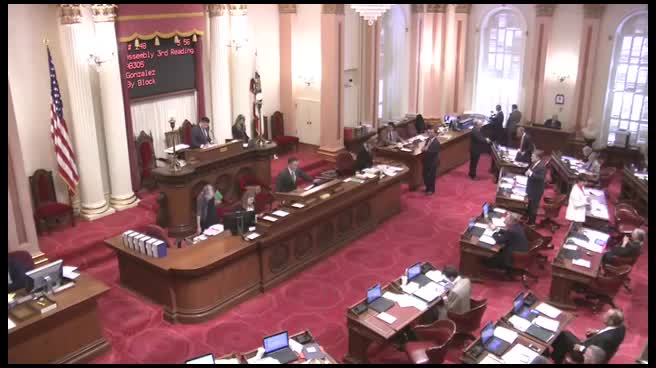 2MIN
Senate Floor
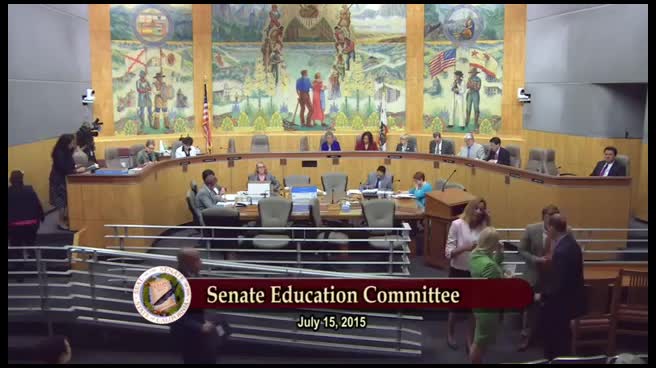 6MIN
Senate Standing Committee on Education
 1MIN
Assembly Floor


Bill Co-Author(s):