AB 1308: Apprenticeship programs: approval.
- Session Year: 2015-2016
- House: Assembly
- Latest Version Date: 2015-07-16
Existing law provides for the establishment of apprenticeship programs in various trades, to be approved by the Chief of the Division of Apprenticeship Standards within the Department of Industrial Relations in any trade in the state or in a city or trade area whenever the apprentice training needs justify the establishment. Under existing law, the apprentice training needs in the building and construction trades are required to be deemed to justify a new apprentice program only if one or more specified conditions are met. Existing law also authorizes the California Apprenticeship Council to approve a new apprenticeship program if special circumstances, as established by regulation, justify the establishment of the program. The California Apprenticeship Council has not established any regulations to approve a new apprenticeship program justified by special circumstances.
This bill would revise conditions for when the apprentice training needs in the building and construction trades justify a new apprentice program. This bill would also remove the authority of the California Apprenticeship Council to approve a new apprenticeship program justified by special circumstances by regulation.
(a)An apprenticeship program may be administered by a joint apprenticeship committee, unilateral management or labor apprenticeship committee, or an individual employer. Programs may be approved by the chief in any trade in the state or in a city or trade area, whenever the apprentice training needs justify the establishment. Where a collective bargaining agreement exists, a program shall be jointly sponsored unless either party to the agreement waives its right to representation in writing. Joint apprenticeship committees shall be composed of an equal number of employer and employee representatives.
(b)For purposes of this section, the apprentice training needs in the building and construction trades shall be deemed to justify the approval of a new apprenticeship program only if any of the following conditions are met:
(1)There is no existing apprenticeship program approved under this chapter serving the same craft or trade and geographic area.
(2)Existing apprenticeship programs approved under this chapter that serve the same craft or trade and geographic area do not have the capacity, or neglect or refuse, to dispatch sufficient apprentices to qualified employers at a public works site who have requested apprentices and are willing to abide by the applicable apprenticeship standards, as shown by a sustained pattern of unfilled requests.
(3)Existing apprenticeship programs approved under this chapter that serve the same trade and geographic area have been identified by the California Apprenticeship Council as deficient in meeting their obligations under this chapter.
(c)For purposes of this section, an existing apprenticeship program serves the same craft or trade as a proposed apprenticeship program when there would be substantial overlap in the work processes covered by the programs or when graduates of the existing program would be qualified to perform a substantial portion of the work that would be performed by graduates of the new program.
(a)An apprenticeship program may be administered by a joint apprenticeship committee, unilateral management or labor apprenticeship committee, or an individual employer. Programs may be approved by the chief in any trade in the state or in a city or trade area, whenever the apprentice training needs justify the establishment. Where a collective bargaining agreement exists, a program shall be jointly sponsored unless either party to the agreement waives its right to representation in writing. Joint apprenticeship committees shall be composed of an equal number of employer and employee representatives.
(b)For purposes of this section, the apprentice training needs in the building and construction trades shall be deemed to justify the approval of a new apprenticeship program only if any of the following conditions are met:
(1)There is no existing apprenticeship program approved under this chapter serving the same craft or trade and geographic area.
(2)Existing apprenticeship programs approved under this chapter that serve the same craft or trade and geographic area do not have the capacity, or neglect or refuse, to dispatch sufficient apprentices to qualified employers at a public works site who have requested apprentices and are willing to abide by the applicable apprenticeship standards, as shown by a sustained pattern of unfilled requests.
(3)Existing apprenticeship programs approved under this chapter that serve the same trade and geographic area have been identified by the California Apprenticeship Council as deficient in meeting their obligations under this chapter.
(c)For purposes of this section, an existing apprenticeship program serves the same craft or trade as a proposed apprenticeship program when there would be a substantial overlap in the work processes covered by the programs or when graduates of the existing program would be qualified to perform a substantial portion of the work that would be performed by graduates of the new program.
(a)An apprenticeship program may be administered by a joint apprenticeship committee, unilateral management or labor apprenticeship committee, or an individual employer. Programs may be approved by the chief in any trade in the state or in a city or trade area, whenever the apprentice training needs justify the establishment. Where a collective bargaining agreement exists, a program shall be jointly sponsored unless either party to the agreement waives its right to representation in writing. Joint apprenticeship committees shall be composed of an equal number of employer and employee representatives.
(b)For purposes of this section, the apprentice training needs in the building and construction trades shall be deemed to justify the approval of a new apprenticeship program only if any of the following conditions are met:
(1)There is no existing apprenticeship program approved under this chapter serving the same craft or trade and geographic area.
(2)Existing apprenticeship programs approved under this chapter that serve the same craft or trade and geographic area do not have the capacity, or neglect or refuse, to dispatch sufficient apprentices to qualified employers at a public works site who have requested apprentices and are willing to abide by the applicable apprenticeship standards, as shown by a sustained pattern of unfilled requests.
(3)Existing apprenticeship programs approved under this chapter that serve the same trade and geographic area have been identified by the California Apprenticeship Council as deficient in meeting their obligations under this chapter.
(c)Notwithstanding subdivision (b), the California Apprenticeship Council may approve a new apprenticeship program if special circumstances, as established by regulation, justify the establishment of the program.
(c)For purposes of this section, an existing apprenticeship program serves the same craft or trade as a proposed apprenticeship program when there would be a substantial overlap in the work processes covered by the programs or when graduates of the existing program would be qualified to perform a substantial portion of the work that would be performed by graduates of the new program.
|
Date
|
Status
|
|---|---|
| Jun 22, 2015 | From committee: Be placed on second reading file pursuant to Senate Rule 28.8. |
| Jul 16, 2015 | Chaptered by Secretary of State - Chapter 126, Statutes of 2015. |
| Jul 16, 2015 | Approved by the Governor. |
| Jul 9, 2015 | Enrolled and presented to the Governor at 2 p.m. |
| Jul 2, 2015 | Senate amendments concurred in. To Engrossing and Enrolling. (Ayes 53. Noes 22. Page 2224.). |
| Jul 2, 2015 | Senate amendments concurred in. To Engrossing and Enrolling. |
| Jun 25, 2015 | Read third time. Passed. Ordered to the Assembly. (Ayes 26. Noes 12. Page 1617.). |
| Jun 25, 2015 | Read third time. Passed. Ordered to the Assembly. |
| Jun 25, 2015 | In Assembly. Concurrence in Senate amendments pending. May be considered on or after June 27 pursuant to Assembly Rule 77. |
| Jun 24, 2015 | Read second time. Ordered to third reading. |
| Jun 23, 2015 | Read third time and amended. Ordered to second reading. |
| Jun 23, 2015 | Read second time. Ordered to third reading. |
| Feb 27, 2015 | Introduced. To print. |
| Jun 10, 2015 | From committee: Do pass and re-refer to Com. on APPR. (Ayes 4. Noes 1.) (June 10). Re-referred to Com. on APPR. |
| May 14, 2015 | Referred to Com. on L. & I.R. |
| May 4, 2015 | Read third time. Passed. Ordered to the Senate. (Ayes 53. Noes 23. Page 1261.) |
| May 4, 2015 | In Senate. Read first time. To Com. on RLS. for assignment. |
| Apr 30, 2015 | Read second time. Ordered to third reading. |
| Apr 29, 2015 | From committee: Do pass. (Ayes 12. Noes 4.) (April 29). |
| Apr 23, 2015 | From committee: Do pass and re-refer to Com. on APPR. (Ayes 5. Noes 2.) (April 22). Re-referred to Com. on APPR. |
| Mar 23, 2015 | Referred to Com. on L. & E. |
| Mar 2, 2015 | Read first time. |
| Mar 1, 2015 | From printer. May be heard in committee March 31. |
|
Date
|
Description
|
Location
|
Votes
|
|
|---|---|---|---|---|
| Jul 2, 2015 | AB 1308 PEREA Concurrence in Senate Amendments | Assembly Floor |
Passed |
|
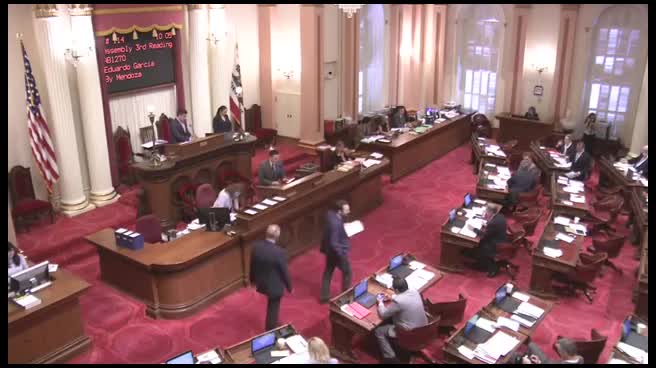
| Jun 25, 2015 | Assembly 3rd Reading AB1308 Perea By Mendoza | Senate Floor |
Passed |
|
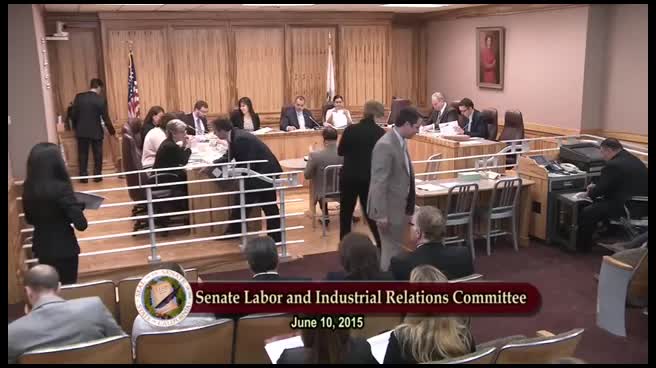
| Jun 10, 2015 | Do pass, but first be re-referred to the Committee on [Appropriations] | Senate Standing Committee on Labor and Industrial Relations |
Passed |
|
| May 4, 2015 | AB 1308 PEREA Assembly Third Reading | Assembly Floor |
Passed |
|
| Apr 29, 2015 | Do pass. | Assembly Standing Committee on Appropriations |
Passed |
|
| Apr 22, 2015 | Do pass and be re-referred to the Committee on [Appropriations] | Assembly Standing Committee on Labor and Employment |
Passed |
This list shows positions taken on this bill by organizations on the date displayed, which is linked to the original source.
Positions by individuals are not included.
|
Organization
|
Position
|
Date
|
|---|---|---|
| Air Conditioning Trade Association | ** Against | Jun 25, 2015 |
| Construction Employers' Association | ** Support | Jun 25, 2015 |
| Plumbing-Heating-Cooling Contractors Association of California | ** Against | Jun 25, 2015 |
| State Building & Construction Trades Council Of California | * Indeterminate | Apr 29, 2015 |
| Western Electrical Contractors Association | ** Against | Jun 25, 2015 |
AB 1308
Page 2
CONCURRENCE IN SENATE AMENDMENTS
AB 1308
(Perea)
As Amended June 23, 2015
Majority vote
ASSEMBLY: |
53-23 |
(May 4, 2015) |
SENATE: |
26-12 |
(June 25, 2015) |
Original Committee Reference: L. & E.
SUMMARY: Revises a specified "needs requirement" under existing law related to the approval of apprenticeship programs. Specifically, this bill:
Requires, in order to establish that apprenticeship training needs justify the approval of a new program, that existing programs do not have the capacity, or neglect or refuse, to dispatch sufficient apprentices to qualified employers who "have requested apprentices", as shown by a "sustained pattern of unfilled requests."
Eliminates a provision of existing law that authorizes the California Apprenticeship Council to approve a new apprenticeship program if special circumstances, as established by regulation, justify the establishment of the program.
Provides that for purposes of this requirement, an existing apprenticeship program serves the "same craft or trade" as a proposed apprenticeship program when there would be a substantial overlap in the work processes covered by the programs or when graduates of the existing program would be qualified to perform a substantial portion of the work that would be performed by graduates of the new program.
The Senate amendments add co-authors.
FISCAL EFFECT: According to the Senate Appropriations Committee, pursuant to Senate Rule 28.8, negligible state costs.
COMMENTS: This bill is sponsored by the State Building and Construction Trades Council. They argue that it provides much needed clarification to Division of Apprenticeship Standards (DAS) for the purpose of determining when an existing program is deficient. Adding "have requested apprentices" to the law clarifies that contractors must actually request apprentices before existing programs may be found to lack the capacity or willingness to dispatch them. The sponsor states that during Governor Schwarzenegger's administration, the DAS sought to rely on Employment Development Department projections of future apprentice needs to justify approval of new programs even though there was no evidence contractors had sought apprentices from existing programs and were unable to receive them.
In addition, current law allows the California Apprenticeship Council (CAC) to promulgate a regulation providing for "special circumstances" that justify approval of new apprenticeship programs even if one is not needed. The sponsor notes that this statutory provision was adopted in 1999, and CAC has never promulgated such a regulation. Therefore, this bill removes this statutory provision.
Finally, the sponsor states that this bill protects existing high performing programs that graduate apprentices by ensuring the DAS approves new programs only when the proposed new program does not substantially overlap with an existing program’s work processes.
Opponents argue that this bill exacerbates the damaging aspects of the needs test by adding ambiguous language and deleting the very modest authority of the CAC to approve a new apprenticeship program "justified by special circumstances by regulation." While it may be suggested that adding a requirement that there be a "sustained pattern of unfilled requests" to justify new apprenticeship opportunities, they argue that this vague requirement of "sustained" will never be satisfactory to those who prefer monopoly over fair and open competition and training opportunities for all.
Analysis Prepared by: Ben Ebbink / L. & E. / (916) 319-2091 FN: 0001084
AB 1308
Page 5
|
Office of Senate Floor Analyses (916) 651-1520 Fax: (916) 327-4478 |
THIRD READING
Bill No: AB 1308
Amended: 6/23/15
SENATE LABOR & IND. REL. COMMITTEE: 4-1, 6/10/15
AYES: Mendoza, Jackson, Leno, Mitchell
NOES: Stone
SENATE APPROPRIATIONS COMMITTEE: Senate Rule 28.8
ASSEMBLY FLOOR: 53-23, 5/4/15 - See last page for vote
SUBJECT: Apprenticeship programs: approval
SOURCE: State Building and Construction Trades Council
DIGEST: This bill strengthens and expands the requirements for approving new apprenticeship programs.
Senate Floor Amendments of 6/23/15 make minor changes and add coauthors.
Existing law:
Provides a framework for promoting and developing apprenticeship training through the California Apprenticeship Council (CAC) and the Division of Apprenticeship Standards (DAS) within the Department of Industrial Relations. DAS enforces apprenticeship standards for, among other things, working conditions, classroom instruction and the specific skills required for state certification as a journeyperson in an apprentice occupation.
Requires that all apprenticeship programs be approved by the Chief of the DAS. Existing law empowers the Chief to approve apprenticeship programs in any trade anywhere in the state, including cities and trade areas, if the apprentice training needs justify the creation of a program. However, in order for the Chief to approve an apprenticeship program in the building and construction trades, any of the following “needs-based” conditions must be met (Labor Code §3075):
There is no existing apprenticeship program serving the same craft or trade and geographic area;
Existing apprenticeship programs that serve the same craft or trade and geographic area do not have the capacity, or neglect or refuse, to dispatch sufficient apprentices to qualified employers at a public works site who are willing to abide by the applicable apprenticeship standards;
Existing apprenticeship programs approved under this chapter that serve the same trade and geographic area have been identified by the CAC as deficient in meeting their obligations.
Requires that, for public works projects in excess of $30,000, the contractor utilize apprentices for apprenticeable crafts or trades. Prior to commencing work, the contractor may apply to any apprenticeship program in the craft or trade that can provide apprentices to the site of the public work. The apprenticeship program(s), upon approving the contractor, must arrange for the dispatch of apprentices to the contractor. (Labor Code §1777.5)
Requires the ratio of work performed by apprentices to journeymen employed in a particular craft or trade on the public work may be no less than the ratio of one hour of apprentice work for five hours of journeyman work, and no higher than the ratio stipulated in the apprenticeship standards under which the apprenticeship program operates. (Labor Code §1777.5)
This bill:
Requires that, in order to establish that apprenticeship training needs justify the approval of a new program, existing programs do not have the capacity, or neglect or refuse, to dispatch sufficient apprentices to qualified employers who “have requested apprentices”, as shown by a “sustained pattern of unfilled requests.”
Eliminates a provision of existing law that authorizes the CAC to approve a new apprenticeship program if special circumstances, as established by regulation, justify the establishment of the program.
Provides that for purposes of this requirement, an existing apprenticeship program serves the “same craft or trade” as a proposed apprenticeship program when there would be a substantial overlap in the work processes covered by the programs or when graduates of the existing program would be qualified to perform a substantial portion of the work that would be performed by graduates of the new program.
Background
California’s apprenticeship programs represent a unique and important feature of the state’s workforce development system. The core idea is that, by combining both high quality classroom instruction and high quality on-the-job training experience, apprenticeship programs train high-quality professionals in a variety of different fields and professions. The building and construction trades make up 79% of all of the apprentices in the State of California.
However, some stakeholders have raised concerns with certain apprenticeship programs that reportedly do not provide high quality instruction and training. Instead, these low-quality programs provide apprentices to meet the requirements of the public works law without actually giving the apprentices the necessary skills to perform the trades. One of the responses to this was the creation of the “needs-based” requirement for approval of new apprenticeship programs in 1999.
In 2002, in response to the needs test, the U.S. Department of Labor (DOL) began the process of “derecognition,” contending that the amended apprenticeship statute did not conform to federal standards. In early 2007, the “derecognition” of California’s apprenticeship programs became official. The DOL decision continues to stand.
According to stakeholders, the practical consequence of the “derecognition” by DOL has been that apprenticeship programs approved by DAS must request separate approval from the DOL. Before “derecognition,” federal approval was essentially automatic. Since that action, apprenticeship programs approved by California reportedly have been approved by the DOL as a matter of course.
Prior Legislation
AB 921 (Keeley, Chapter 903, Statutes of 1999) included, among other things, the “needs-based” conditions for the building and construction trades.
FISCAL EFFECT: Appropriation: No Fiscal Com.: Yes Local: No
State Building and Construction Trades Council (source)
Construction Employers’ Association
OPPOSITION: (Verified 6/10/15)
Air Conditioning Trade Association
Plumbing-Heating-Cooling Contractors Association of California
Western Electrical Contractors Association
ARGUMENTS IN SUPPORT: This bill is sponsored by the State Building and Construction Trades Council. They argue that it provides much needed clarification to DAS for the purpose of determining when an existing program is deficient. Adding “have requested apprentices” to Labor Code Section 3075(b)(2) clarifies that contractors must actually request apprentices before existing programs may be found to lack the capacity or willingness to dispatch them. The sponsor states that during Governor Schwarzenegger’s administration, the DAS sought to rely on Employment Development Department projections of future apprentice needs to justify approval of new programs even though there was no evidence contractors had sought apprentices from existing programs and were unable to receive them.
ARGUMENTS IN OPPOSITION: Opponents write the following in opposition to this bill:
[This bill] perpetuates California’s needs test for apprenticeship. Economics Professor Charles Baird correctly characterizes a needs test as “…a common device by which regulatory bodies restrict competition from disfavored interlopers.” While Baird does not specifically identify who the interlopers are, they are frequently trade associations who see an opportunity to train young men and women for careers in construction.
…Unfortunately, [this bill] exacerbates the damaging aspects of the needs test by adding ambiguous language and deleting the very modest authority of the California Apprenticeship Council to approve a new apprenticeship program “justified by special circumstances by regulation.” While it may be suggested that adding a requirement that there be a “sustained pattern of unfilled requests” to justify new apprenticeship opportunities, we would argue that this vague requirement of ‘sustained’ will never be satisfactory to those who prefer monopoly over fair and open competition and training opportunities for all.
ASSEMBLY FLOOR: 53-23, 5/4/15
AYES: Alejo, Bloom, Bonilla, Bonta, Brown, Burke, Calderon, Chau, Chiu, Chu, Cooley, Cooper, Dababneh, Daly, Dodd, Eggman, Frazier, Cristina Garcia, Eduardo Garcia, Gatto, Gipson, Gomez, Gonzalez, Gordon, Gray, Roger Hernández, Holden, Irwin, Jones-Sawyer, Levine, Linder, Lopez, Low, McCarty, Medina, Mullin, Nazarian, O’Donnell, Perea, Quirk, Rendon, Ridley-Thomas, Rodriguez, Salas, Santiago, Steinorth, Mark Stone, Thurmond, Ting, Weber, Williams, Wood, Atkins
NOES: Achadjian, Travis Allen, Baker, Bigelow, Brough, Chávez, Beth Gaines, Gallagher, Grove, Hadley, Harper, Jones, Kim, Lackey, Maienschein, Mathis, Melendez, Obernolte, Olsen, Patterson, Wagner, Waldron, Wilk
NO VOTE RECORDED: Campos, Chang, Dahle, Mayes
Prepared by: Gideon Baum / L. & I.R. / (916) 651-1556
6/23/15 16:11:47
**** END ****
AB 1308 (Perea) Page 4 of 4
SENATE COMMITTEE ON LABOR AND INDUSTRIAL RELATIONS
Senator Tony Mendoza, Chair
2015 - 2016 Regular
Bill No: AB 1308 Hearing Date: June 10, 2015
Author: |
Perea |
||
Version: |
February 27, 2015 |
||
Urgency: |
No |
Fiscal: |
Yes |
Consultant: |
Gideon Baum |
||
Subject: Apprenticeship programs: approval.
KEY ISSUE
Should the Legislature strengthen and expand the requirements for approving new apprenticeship programs?
ANALYSIS
Existing law provides a framework for promoting and developing apprenticeship training through the California Apprenticeship Council (CAC) and the Division of Apprenticeship Standards (DAS) within the Department of Industrial Relations (DIR). DAS enforces apprenticeship standards for, among other things, working conditions, classroom instruction and the specific skills required for state certification as a journeyperson in an apprentice occupation.
Existing law requires that all apprenticeship programs be approved by the Chief of the Division of Apprenticeship Standards. Existing law empowers the Chief to approve apprenticeship programs in any trade anywhere in the state, including cities and trade areas, if the apprentice training needs justify the creation of a program. However, in order for the Chief to approve an apprenticeship program in the building and construction trades, any of the following “needs-based” conditions must be met:
There is no existing apprenticeship program serving the same craft or trade and geographic area;
Existing apprenticeship programs that serve the same craft or trade and geographic area do not have the capacity, or neglect or refuse, to dispatch sufficient apprentices to qualified employers at a public works site who are willing to abide by the applicable apprenticeship standards;
Existing apprenticeship programs approved under this chapter that serve the same trade and geographic area have been identified by the California Apprenticeship Council as deficient in meeting their obligations.
(Labor Code §3075)
Existing law requires that, for public works projects in excess of $30,000, the contractor utilize apprentices for apprenticeable crafts or trades. Prior to commencing work, the contractor may apply to any apprenticeship program in the craft or trade that can provide apprentices to the site of the public work. The apprenticeship program or programs, upon approving the contractor, must arrange for the dispatch of apprentices to the contractor. (Labor Code §1777.5)
Existing law requires the ratio of work performed by apprentices to journeymen employed in a particular craft or trade on the public work may be no less than the ratio of one hour of apprentice work for five hours of journeyman work, and no higher than the ratio stipulated in the apprenticeship standards under which the apprenticeship program operates.
(Labor Code §1777.5)
This bill would:
Require that, in order to establish that apprenticeship training needs justify the approval of a new program, existing programs do not have the capacity, or neglect or refuse, to dispatch sufficient apprentices to qualified employers who "have requested apprentices", as shown by a "sustained pattern of unfilled requests."
Eliminate a provision of existing law that authorizes the California Apprenticeship Council to approve a new apprenticeship program if special circumstances, as established by regulation, justify the establishment of the program.
Provide that for purposes of this requirement, an existing apprenticeship program serves the "same craft or trade" as a proposed apprenticeship program when there would be a substantial overlap in the work processes covered by the programs or when graduates of the existing program would be qualified to perform a substantial portion of the work that would be performed by graduates of the new program.
COMMENTS
1. Legislative Background:
California’s apprenticeship programs represent a unique and important feature of the state’s workforce development system. The core idea is that, by combining both high quality classroom instruction and high quality on-the-job training experience, apprenticeship programs train high-quality professionals in a variety of different fields and professions. The building and construction trades make up 79% of all of the apprentices in the state of California.
However, some stakeholders have raised concerns with certain apprenticeship programs that reportedly do not provide high quality instruction and training. Instead, these low-quality programs provide apprentices to meet the requirements of the public works law without actually giving the apprentices the necessary skills to perform the trades. One of the responses to this was the creation of the “needs-based” requirement for approval of new apprenticeship programs in 1999.
In 2002, in response to the needs test, the U.S. Department of Labor (DOL) began the process of "derecognition," contending that the amended apprenticeship statute did not conform to federal standards. In early 2007, the “derecognition” of California’s apprenticeship programs became official. The DOL decision continues to stand.
According to stakeholders, the practical consequence of the “derecognition” by DOL has been that apprenticeship programs approved by DAS must request separate approval from the DOL. Before “derecognition,” federal approval was essentially automatic. Since that action, apprenticeship programs approved by California reportedly have been approved by the DOL as a matter of course.
2. Proponent Arguments:
This bill is sponsored by the State Building and Construction Trades Council. They argue that it provides much needed clarification to DAS for the purpose of determining when an existing program is deficient. Adding “have requested apprentices” to Section 3075(b)(2) clarifies that contractors must actually request apprentices before existing programs may be found to lack the capacity or willingness to dispatch them. The sponsor states that during Governor Schwarzenegger’s administration, the DAS sought to rely on EDD projections of future apprentice needs to justify approval of new programs even though there was no evidence contractors had sought apprentices from existing programs and were unable to receive them.
3. Opponent Arguments:
Opponents write the following in opposition to this bill:
“[This bill] perpetuates California’s needs test for apprenticeship. Economics Professor Charles Baird correctly characterizes a needs test as '…a common device by which regulatory bodies restrict competition from disfavored interlopers.' While Baird does not specifically identify who the interlopers are, they are frequently trade associations who see an opportunity to train young men and women for careers in construction.
…Unfortunately, [this bill] exacerbates the damaging aspects of the needs test by adding ambiguous language and deleting the very modest authority of the California Apprenticeship Council to approve a new apprenticeship program 'justified by special circumstances by regulation.' While it may be suggested that adding a requirement that there be a 'sustained pattern of unfilled requests' to justify new apprenticeship opportunities, we would argue that this vague requirement of 'sustained' will never be satisfactory to those who prefer monopoly over fair and open competition and training opportunities for all."
4. Prior Legislation:
AB 921 (Keeley), Chapter 903, Statutes of 1999, included, among other things, the “needs-based” conditions for the building and construction trades.
SUPPORT
State Building and Construction Trades Council (Sponsor)
Construction Employers’ Association
OPPOSITION
Air Conditioning Trade Association
Plumbing-Heating-Cooling Contractors Association of California
Western Electrical Contractors Association
-- END --
AB 1308
Page 2
ASSEMBLY THIRD READING
AB 1308
(Perea)
As Introduced February 27, 2015
Majority vote
Committee |
Votes |
Ayes |
Noes |
Labor |
5-2 |
Roger Hernández, Chu, Low, McCarty, Thurmond |
Harper, Patterson |
Appropriations |
12-4 |
Gomez, Bloom, Bonta, Calderon, Daly, Eggman, Eduardo Garcia, Holden, Quirk, Rendon, Weber, Wood |
Bigelow, Gallagher, Jones, Wagner |
SUMMARY: Revises a specified "needs requirement" under existing law related to the approval of apprenticeship programs. Specifically, this bill:
Requires, in order to establish that apprenticeship training needs justify the approval of a new program, that existing programs do not have the capacity, or neglect or refuse, to dispatch sufficient apprentices to qualified employers who "have requested apprentices", as shown by a "sustained pattern of unfilled requests."
Eliminates a provision of existing law that authorizes the California Apprenticeship Council to approve a new apprenticeship program if special circumstances, as established by regulation, justify the establishment of the program.
Provides that for purposes of this requirement, an existing apprenticeship program serves the "same craft or trade" as a proposed apprenticeship program when there would be a substantial overlap in the work processes covered by the programs or when graduates of the existing program would be qualified to perform a substantial portion of the work that would be performed by graduates of the new program.
FISCAL EFFECT: According to the Assembly Appropriations Committee, this bill would have no state fiscal impact.
COMMENTS: This bill is sponsored by the State Building and Construction Trades Council. They argue that it provides much needed clarification to Division of Apprenticeship Standards (DAS) for the purpose of determining when an existing program is deficient. Adding "have requested apprentices" to the law clarifies that contractors must actually request apprentices before existing programs may be found to lack the capacity or willingness to dispatch them. The sponsor states that during Governor Schwarzenegger’s administration, the DAS sought to rely on Employment Development Department projections of future apprentice needs to justify approval of new programs even though there was no evidence contractors had sought apprentices from existing programs and were unable to receive them.
In addition, current law allows the California Apprenticeship Council (CAC) to promulgate a regulation providing for "special circumstances" that justify approval of new apprenticeship programs even if one is not needed. The sponsor notes that this statutory provision was adopted in 1999, and CAC has never promulgated such a regulation. Therefore, this bill removes this statutory provision.
Finally, the sponsor states that this bill protects existing high performing programs that graduate apprentices by ensuring the DAS approves new programs only when the proposed new program does not substantially overlap with an existing program’s work processes.
Opponents argue that this bill exacerbates the damaging aspects of the needs test by adding ambiguous language and deleting the very modest authority of the CAC to approve a new apprenticeship program "justified by special circumstances by regulation." While it may be suggested that adding a requirement that there be a "sustained pattern of unfilled requests" to justify new apprenticeship opportunities, they argue that this vague requirement of "sustained" will never be satisfactory to those who prefer monopoly over fair and open competition and training opportunities for all.
Analysis Prepared by: Ben Ebbink / L. & E. / (916) 319-2091 FN: 0000213
AB 1308
Page 2
Date of Hearing: April 29, 2015
ASSEMBLY COMMITTEE ON APPROPRIATIONS
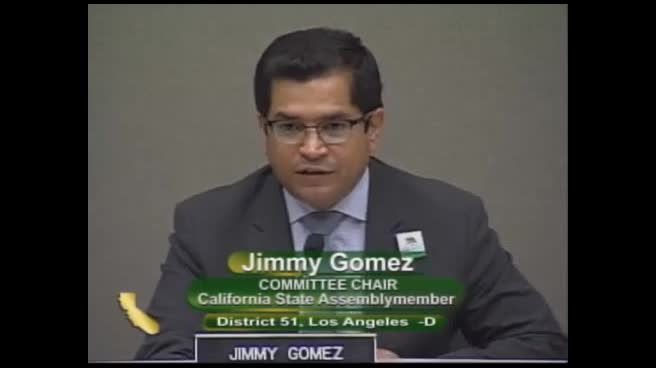
Jimmy Gomez, Chair
AB 1308
(Perea) – As Introduced February 27, 2015
Policy Committee: |
Labor and Employment |
Vote: |
5 - 2 |
|
|
|
|
|
|
|
|
Urgency: No State Mandated Local Program: No Reimbursable: No
SUMMARY:
This bill revises a specified "needs requirement" related to the approval of new apprenticeship programs to specify that a new program can be approved only if it is established that a) the need for apprenticeship training justifies the approval of a new program, or b) existing programs do not have the capacity, or neglect or refuse, to dispatch sufficient apprentices to qualified employers who "have requested apprentices", as shown by a "sustained pattern of unfilled requests." This bill also eliminates a provision that authorizes the California Apprenticeship Council to approve a new apprenticeship program if special circumstances, as established by regulation, justify the establishment of the program.
FISCAL EFFECT:
No state fiscal impact.
COMMENTS:
Background. In California, two state entities administer the apprenticeship system: the California Apprenticeship Council (CAC) and the Division of Apprenticeship Standards (DAS). According to DAS, it received 122 applications for apprenticeship training programs between 2003 and 2005, and approved 121 programs (latest information available).
AB 921 (Keeley), Chapter 903, Statutes of 1999, added the requirement that apprentice programs meet a "needs" standard prior to approval by the Division of Apprenticeship Standards (DAS). This law was enacted to ensure program quality in response to programs that failed to adequately train apprentices in the skills needed to master a trade.
Purpose. According to the sponsor, the State Building and Construction Trades Council, this bill provides clarification to DAS for the purpose of determining when an existing program is deficient. Specifically, adding “have requested apprentices” clarifies that contractors must actually request apprentices before existing programs may be found to lack the capacity or willingness to dispatch them.
In addition, current law allows the California Apprenticeship Council (CAC) to promulgate a regulation providing for “special circumstances” that justify approval of new apprenticeship programs even if one is not needed. The sponsor notes that this statutory provision was adopted in 1999, and CAC has never promulgated such a regulation. Therefore, this bill removes this statutory provision.
Analysis Prepared by: Misty Feusahrens / APPR. / (916) 319-2081
AB 1308
Page 4
Date of Hearing: April 22, 2015
ASSEMBLY COMMITTEE ON LABOR AND EMPLOYMENT
Roger Hernández, Chair
AB 1308
(Perea) – As Introduced February 27, 2015
SUBJECT: Apprenticeship programs: approval
SUMMARY: Revises a specified "needs requirement" under existing law related to the approval of apprenticeship programs. Specifically, this bill:
Requires, in order to establish that apprenticeship training needs justify the approval of a new program, that existing programs do not have the capacity, or neglect or refuse, to dispatch sufficient apprentices to qualified employers who "have requested apprentices", as shown by a "sustained pattern of unfilled requests."
Eliminates a provision of existing law that authorizes the California Apprenticeship Council to approve a new apprenticeship program if special circumstances, as established by regulation, justify the establishment of the program.
Provides that for purposes of this requirement, an existing apprenticeship program serves the "same craft or trade" as a proposed apprenticeship program when there would be a substantial overlap in the work processes covered by the programs or when graduates of the existing program would be qualified to perform a substantial portion of the work that would be performed by graduates of the new program.
EXISTING LAW:
Authorizes the Chief of the Division of Apprenticeship Standards to approve apprenticeship programs "whenever the apprentice training needs justify the establishment" of such a program.
In the building and construction trades, provides that the apprentice training "needs" shall be deemed to justify the approval of a new apprenticeship program only if the following conditions are met:
There is no existing approved apprenticeship program approved serving the same craft or trade and geographic area.
Existing approved apprenticeship programs that serve the same craft or trade and geographic area do not have the capacity, or neglect or refuse, to dispatch sufficient apprentices to qualified employers at a public works site who are willing to abide by the applicable apprenticeship standards.
Existing approved apprenticeship programs in the same trade and geographic area have been identified by the California Apprenticeship Council as deficient in meeting their obligations under existing law.
Authorizes the California Apprenticeship Council to approve a new apprenticeship program if special circumstances, as established by regulation, justify the establishment of the program.
FISCAL EFFECT: Unknown
COMMENTS: The apprenticeship training program is a unique system for developing a skilled workforce, and is a system that is heavily used in the construction industry in California.
In general terms, apprenticeship is a program of instruction that combines a formal course of theoretical in-class instruction with practical "on-the-job" training. Apprenticeship programs are sponsored by either a "joint apprenticeship committee" composed of union and employer representatives or a "unilateral apprenticeship committee" administered by a single employer or an employer association. These types of programs are commonly referred to as "joint" and "unilateral" programs.
The federal Office of Apprenticeship Training, Employment, and Labor Services (OATELS) of the Department of Labor directly oversees apprenticeship programs in 23 states and recognizes State Apprenticeship Councils in the remaining 27 states (including California). In California, two state entities administer the apprenticeship system: the California Apprenticeship Council (CAC) and the Division of Apprenticeship Standards (DAS). According to DAS, it received 122 applications for apprenticeship training programs between 2003 and 2005, and approved 121 programs (latest information available).
AB 921 (Keeley), Chapter # 903, Statutes of 1999, added the provisions to current law related to the "needs" standards concerning the approval of new apprenticeship programs.
Supporters of that legislation argued that over the prior decade there had been a progressive weakening of the standards regulating apprenticeship programs in California. Supporters argued that that situation had resulted in a proliferation of programs that failed to adequately train apprentices in the skills needed to master a trade and, in some cases, only provided employers with a means to cheap labor. AB 921 was intended to crack down on such substandard programs.
Opponents of AB 921 argued that non-union employers had developed and approved craft training programs that met state and federal requirements. Opponents argued that AB 921 was a direct special interest drive by organized labor to control the training of apprentices and eliminate other non-union apprenticeship programs. They further argued that the bill would be an assault on freedom for businesses and workers.
In 2002, in response to the needs test, the U.S. Department of Labor (DOL) began the process of "derecognition," contending that the amended apprenticeship statute did not conform to federal standards. In April 2005, an Administrative Law Judge issued a proposed decision holding that the DOL has the right to "derecognize" California's authority to regulate apprenticeship on federal projects. The decision stated that the "needs test" in the California Labor Code "does not promote competition among programs, does not consider the needs of individuals seeking apprenticeship training, and limits training opportunities for apprentices." The DOL Administrative Review Board affirmed the decision on January 31, 2007.
Some officials and stakeholders disagreed with the DOL’s view of the “needs test”, pointing out that a training needs standard for approving new apprenticeship programs was actually recommended by the federal government itself after adoption of the National Apprenticeship Act of 1937, and that approving new programs without consideration of the training needs leads to exploitation of the workers. They also pointed out that California has the largest and most successful apprenticeship system in the country.
It appears that the practical consequence of the “derecognition” by DOL has been that apprenticeship programs approved by DAS must request separate approval from the DOL. Before “derecognition,” federal approval was essentially automatic. Since that action, apprenticeship programs approved by California reportedly have been approved by the DOL as a matter of course.
ARGUMENTS IN SUPPORT
According to the author:
"The State is seeking to expand apprenticeship programs to non-traditional industries or emerging sectors of the economy. The proposed budget includes $15 million to establish and fund new demonstration apprenticeship projects in non-traditional industries. As such there is a need to protect the currently approved apprenticeship programs. California currently has over 500 state approved apprenticeship programs in many fields. The vast majority of apprentices are enrolled in the Building and Construction Trades apprenticeship programs. Joint-Labor management programs make up 90% of the approved programs followed by “unilateral” programs (contractor only / non-union).
Labor-management programs invest over $100 million annually on training the next generation of skilled workers to meet California’s infrastructure demands. However, since the use of apprentices is required on public works projects, and apprentice pay rates start at only 40% of a journeyperson wage rate, some contractor associations have sought and received approval to operate programs and utilized them to abuse the apprenticeship system in order to underbid competitors while also failing to graduate apprentices. Standards and statutes have been enacted to protect against such unscrupulous behavior. However, more can and should be done to further protect existing high performing programs from labor market manipulation."
This bill is sponsored by the State Building and Construction Trades Council. They argue that it provides much needed clarification to DAS for the purpose of determining when an existing program is deficient. Adding “have requested apprentices” to Section 3075(b)(2) clarifies that contractors must actually request apprentices before existing programs may be found to lack the capacity or willingness to dispatch them. The sponsor states that during Governor Schwarzenegger’s administration, the DAS sought to rely on EDD projections of future apprentice needs to justify approval of new programs even though there was no evidence contractors had sought apprentices from existing programs and were unable to receive them.
In addition, current law allows the California Apprenticeship Council (CAC) to promulgate a regulation providing for “special circumstances” that justify approval of new apprenticeship programs even if one is not needed. The sponsor notes that this statutory provision was adopted in 1999, and CAC has never promulgated such a regulation. Therefore, this bill removes this statutory provision.
Finally, the sponsor states that this bill protects existing high performing programs that graduate apprentices by ensuring the DAS approves new programs only when the proposed new program does not substantially overlap with an existing program’s work processes.
ARGUMENTS IN OPPOSITION
Opponents write the following in opposition to this bill:
[This bill] perpetuates California’s needs test for apprenticeship. Economics Professor Charles Baird correctly characterizes a needs test as '…a common device by which regulatory bodies restrict competition from disfavored interlopers.' While Baird does not specifically identify who the interlopers are, they are frequently trade associations who see an opportunity to train young men and women for careers in construction.
As I am sure you are aware, California’s needs test was established in 1999. The Department of Labor’s Office of Apprenticeship Training, Employment and Labor Services (OATELS) did not approve this provision and the Department of Labor started the process to revoke California’s State Apprenticeship Councils certification in 2002…
…Unfortunately, [this bill] exacerbates the damaging aspects of the needs test by adding ambiguous language and deleting the very modest authority of the California Apprenticeship Council to approve a new apprenticeship program 'justified by special circumstances by regulation.' While it may be suggested that adding a requirement that there be a 'sustained pattern of unfilled requests' to justify new apprenticeship opportunities, we would argue that this vague requirement of 'sustained' will never be satisfactory to those who prefer monopoly over fair and open competition and training opportunities for all."
REGISTERED SUPPORT / OPPOSITION:
Support
Construction Employers' Association
State Building and Construction Trades Council
Opposition
Western Electrical Contractors Association
Plumbing-Heating-Cooling Contractors Association of CA
Air Conditioning Trade Association
Analysis Prepared by: Benjamin Ebbink / L. & E. / (916) 319-2091
Bill Author