AB 1348: State Clearinghouse.
- Session Year: 2015-2016
- House: Assembly
- Latest Version Date: 2016-09-22
Existing law establishes the State Clearinghouse as the office designated by the Governor as the clearinghouse for information from the federal Office of Management and Budget in accordance with federal law.
This bill would establish a federal grant administrator, within the State Clearinghouse, who is designated by the Governor and authorized to serve as a primary point of contact for information on federal grants related to community, economic, and local development, and serve as a coordinator to manage and maximize federal grant opportunities within the state, as provided. The bill would further authorize the federal grant administrator to maintain information on the Office of Planning and Researchs Internet Web site relating to federal grants. The bill would require the federal grant administrator to, on or before January 1, 2018, and annually thereafter, to prepare a summary of federal grant funding to the state that includes, among other performance metrics, the total federal dollars received by the state through federal grants during the report year.
The Economic Revitalization Act establishes the Governors Office of Business and Economic Development, also known as GO-Biz, to serve the Governor as the lead entity for economic strategy and the marketing of California on issues relating to business development, private sector investment, and economic growth. The act authorizes GO-Biz to perform numerous functions in this regard, including, among others, coordinating the development of policies and criteria to ensure that federal grants administered or directly expended by state government advance statewide economic goals and objectives.
Existing law establishes the State Clearinghouse as the office designated by the Governor as the clearinghouse for information from the federal Office of Management and Budget in accordance with federal law.
This bill would additionally authorize the office to establish a federal grant administrator administrator, within the State Clearinghouse, who serves is designated by the Governor and authorized to serve as a single point-of-contact primary point of contact for information on federal grants related to business development, private sector investment, economic growth, and local government, community, economic, and local development, and provides coordinating functions serve as a coordinator to manage and maximize federal grant opportunities within the state, as provided. This The bill would further authorize the office federal grant administrator to maintain information on its the Office of Planning and Researchs Internet Web site relating to federal grants and other grant opportunities. grants. The bill would require the federal grant administrator to, on or before January 1, 2018, and annually thereafter, to prepare a summary of federal grant funding to the state that includes, among other performance metrics, the total federal dollars received by the state through federal grants during the report year.
The Economic Revitalization Act establishes the Governors Office of Business and Economic Development, also known as GO-Biz, to serve the Governor as the lead entity for economic strategy and the marketing of California on issues relating to business development, private sector investment, and economic growth. The act authorizes GO-Biz to perform numerous functions in this regard, including, among others, coordinating the development of policies and criteria to ensure that federal grants administered or directly expended by state government advance statewide economic goals and objectives.
This bill would make a nonsubstantive change to that provision. additionally authorize the office to establish a federal grant administrator who serves as a single point-of-contact for information on federal grants related to business development, private sector investment, economic growth, and local government, and provides coordinating functions to manage and maximize federal grant opportunities within the state, as provided. This bill would further authorize the office to maintain information on its Internet Web site relating to federal grants and other grant opportunities.
The Economic Revitalization Act establishes the Governors Office of Business and Economic Development, also known as GO-Biz, to serve the Governor as the lead entity for economic strategy and the marketing of California on issues relating to business development, private sector investment, and economic growth.
This bill would make a nonsubstantive change to that provision.
(a)There is in state government, within the State Clearinghouse, the federal grant administrator who is an individual designated by the Governor to serve as the states primary point of contact for information on federal grants related to community, economic, and local development.
(b)The federal grant administrator may to do any of the following:
(1)Work with representatives from state and local government, nonprofit organizations, foundations, institutions of higher learning, and other interested parties on applying for and managing federal grants.
(2)Identify employees within state government with expertise in federal grant management.
(3)Support the establishment of a statewide network of individuals who serve as point of contact for federal grant opportunities, including, but not limited to, individuals in local governments, special districts, institutions of higher education, nonprofit organizations, and foundations.
(4)Provide or facilitate the provision of in-person and online training to encourage and improve the ability to pursue and manage federal grants.
(5)Develop and maintain information on the Office of Planning and Researchs Internet Web Site related to new federal grant opportunities, grant management best practices, and other resources to support the ability of state and local governments and nonprofit organizations to apply and manage federal grants.
(c)On or before January 1, 2018, and annually thereafter, the federal grant administrator shall prepare a summary of federal grant funding to the state that includes, but is not limited to, all of the following performance metrics:
(1)Number of federal grants awarded to the state during the three years prior to the establishment of the federal grant administrator and during the report year.
(2)Number of completed federal grant applications submitted by the state during the report year.
(3)Total federal dollars received by the state through federal grants during the report year.
(4)Total federal grant dollars expended by the state during the report year.
(5)Total federal grant dollars received in the state by school districts and local governments during the report year.
(6)Number of training sessions hosted by the federal grant administrator and attendance at those events during the report year.
(7)Other relevant information regarding federal grant activities within the state during the report year, as determined by the federal grant administrator.
SECTION 1.Section 12096.3 of the Government Code is amended to read:12096.3.The office shall serve the Governor as the lead entity for economic strategy and the marketing of California on issues relating to business development, private sector investment, and economic growth. In this capacity, the office may do any of the following:
(a)Recommend to the Governor and the Legislature new state policies, programs, and actions, or amendments to existing programs, advance statewide economic goals and respond to emerging economic problems and opportunities, and ensure that all state policies and programs conform to the adopted state economic and business development goals.
(b)Coordinate the development of policies and criteria to ensure that federal grants administered or directly expended by state government advance statewide economic goals and objectives.
(c)Market the business and investment opportunities available in California by working in partnership with local, regional, federal, and other state public and private institutions to encourage business development and investment in the state.
(d)Provide, including, but not limited to, all of the following:
(1)Economic and demographic data.
(2)Financial information to help link businesses with state and local public and private programs.
(3)Workforce information, including, but not limited to, labor availability, training, and education programs.
(4)Transportation and infrastructure information.
(5)Assistance in obtaining state and local permits.
(6)Information on tax credits and other incentives.
(7)Permitting, siting, and other regulatory information pertinent to business operations in the state.
(e)Establish a well-advertised telephone number, an interactive Internet Web site, and an administrative structure that effectively supports the facilitation of business development and investment in the state.
(f)Encourage collaboration among research institutions, startup companies, local governments, venture capitalists, and economic development agencies to promote innovation.
(g)In cooperation with the federal government, foster relationships with overseas entities to improve the states image as a destination for business investment and expansion.
(h)Conduct research on the states business climate, including, but not limited to, research on how the state can remain on the leading edge of innovation and emerging sectors.
(i)Support small businesses by providing information about accessing capital, complying with regulations, and supporting state initiatives that support small business.
(j)(1)Establish a federal grant administrator who serves as a single point-of-contact for information on federal grants related to business development, private sector investment, economic growth, and local government, and provides coordinating functions to manage and maximize federal grant opportunities. A federal grant administrator may do any of the following:
(A)Establish a statewide network of individuals who serve as a point-of-contact for federal grant opportunities in their respective state agencies and departments, local governments, institutions of higher education, and foundations.
(B)Provide in-person and online training for individuals who serve as a point-of-contact to encourage and improve the pursuit of federal grant opportunities.
(C)Identify employees within state government with expertise in federal grant management and knowledge of state government structure and responsibilities.
(D)On or before January 1, 2017, and annually thereafter, create and post on the offices Internet Web site a report that tracks annual federal grant funding to the state that includes, but is not limited to, all of the following performance metrics:
(i)Number of federal grants awarded to the state.
(ii)Number of completed applications.
(iii)Total dollars received by the state.
(iv)Total dollars received in the state by schools and local governments.
(v)Number of training sessions hosted by the federal grant administrator and attendance at those events.
(vi)The extent to which individuals in the statewide network who serve as a point-of-contact have met and coordinated efforts.
(2)Maintain information on the offices Internet Web site relating to federal grant information, including, but not limited to, relevant information from the federal government, www.grants.gov, or a successor Internet Web site operated by the federal government, subgrants, state grants, local grants, and foundation grants.
The office shall serve the Governor as the lead entity for economic strategy and the marketing of California on issues relating to business development, private sector investment, and economic growth. In this capacity, the office may do any of the following:
(a)Recommend to the Governor and the Legislature new state policies, programs, and actions, or amendments to existing programs, advance statewide economic goals and respond to emerging economic problems and opportunities, and ensure that all state policies and programs conform to the adopted state economic and business development goals.
(b)Coordinate the development of policies and criteria to ensure that federal grants administered or directly expended by state government advance statewide economic goals and objectives.
(c)Market the business and investment opportunities available in California by working in partnership with local, regional, federal, and other state public and private institutions to encourage business development and investment in the state.
(d)Provide, including, but not limited to, all of the following:
(1)Economic and demographic data.
(2)Financial information to help link businesses with state and local public and private programs.
(3)Workforce information, including, but not limited to, labor availability, training, and education programs.
(4)Transportation and infrastructure information.
(5)Assistance in obtaining state and local permits.
(6)Information on tax credits and other incentives.
(7)Permitting, siting, and other regulatory information pertinent to business operations in the state.
(e)Establish a well-advertised telephone number, an interactive Internet Web site, and an administrative structure that effectively supports the facilitation of business development and investment in the state.
(f)Encourage collaboration among research institutions, startup companies, local governments, venture capitalists, and economic development agencies to promote innovation.
(g)In cooperation with the federal government, foster relationships with overseas entities to improve the states image as a destination for business investment and expansion.
(h)Conduct research on the states business climate, including, but not limited to, research on how the state can remain on the leading edge of innovation and emerging sectors.
(i)Support small businesses by providing information about accessing capital, complying with regulations, and supporting state initiatives that support small business.
(j)(1)Establish a federal grant administrator who serves as a single point-of-contact for information on federal grants related to business development, private sector investment, economic growth, and local government, and provides coordinating functions to manage and maximize federal grant opportunities. A federal grant administrator may do any of the following:
(A)Establish a statewide network of individuals who serve as a point-of-contact for federal grant opportunities in their respective state agencies and departments, local governments, institutions of higher education, and foundations.
(B)Provide in-person and online training for individuals who serve as a point-of-contact to encourage and improve the pursuit of federal grant opportunities.
(C)Identify employees within state government with expertise in federal grant management and knowledge of state government structure and responsibilities.
(D)On or before January 1, 2017, and annually thereafter, create and post on the offices Internet Web site a report that tracks annual federal grant funding to the state that includes, but is not limited to, all of the following performance metrics:
(i)Number of federal grants awarded to the state.
(ii)Number of completed applications.
(iii)Total dollars received by the state.
(iv)Total dollars received in the state by schools and local governments.
(v)Number of training sessions hosted by the federal grant administrator and attendance at those events.
(vi)The extent to which individuals in the statewide network who serve as a point-of-contact have met and coordinated efforts.
(2)Maintain information on the offices Internet Web site relating to federal grant information, including, but not limited to, relevant information from the federal government, www.grants.gov, or a successor Internet Web site operated by the federal government, subgrants, state grants, local grants, and foundation grants.
The office shall serve the Governor as the lead entity for economic strategy and the marketing of California on issues relating to business development, private sector investment, and economic growth. In this capacity, the office may do the following:
(a)Recommend to the Governor and the Legislature new state policies, programs, and actions, or amendments to existing programs, advance statewide economic goals and respond to emerging economic problems and opportunities, and ensure that all state policies and programs conform to the adopted state economic and business development goals.
(b)Coordinate the development of policies and criteria to ensure that federal grants administered or directly expended by state government advance statewide economic goals and objectives.
(c)Market the business and investment opportunities available in California by working in partnership with local, regional, federal, and other state public and private institutions to encourage business development and investment in the state.
(d)Provide, including, but not limited to, all of the following:
(1)Economic and demographic data.
(2)Financial information to help link businesses with state and local public and private programs.
(3)Workforce information, including, but not limited to, labor availability, training, and education programs.
(4)Transportation and infrastructure information.
(5)Assistance in obtaining state and local permits.
(6)Information on tax credits and other incentives.
(7)Permitting, siting, and other regulatory information pertinent to business operations in the state.
(e)Establish a well-advertised telephone number, an interactive Internet Web site, and an administrative structure that effectively supports the facilitation of business development and investment in the state.
(f)Encourage collaboration among research institutions, startup companies, local governments, venture capitalists, and economic development agencies to promote innovation.
(g)In cooperation with the federal government, foster relationships with overseas entities to improve the states image as a destination for business investment and expansion.
(h)Conduct research on the states business climate, including, but not limited to, research on how the state can remain on the leading edge of innovation and emerging sectors.
(i)Support small businesses by providing information about accessing capital, complying with regulations, and supporting state initiatives that support small business.
|
Date
|
Status
|
|---|---|
| Jan 21, 2016 | Read second time. Ordered to third reading. |
| Aug 31, 2016 | Enrolled and presented to the Governor at 4 p.m. |
| Aug 24, 2016 | In Assembly. Ordered to Engrossing and Enrolling. |
| Aug 23, 2016 | Read third time. Passed. Ordered to the Assembly. (Ayes 39. Noes 0. Page 5302.). |
| Aug 23, 2016 | Read third time. Passed. Ordered to the Assembly. |
| Aug 15, 2016 | Read second time. Ordered to third reading. |
| Aug 11, 2016 | From committee: Do pass. (Ayes 7. Noes 0.) (August 11). |
| Jun 20, 2016 | In committee: Referred to APPR. suspense file. |
| May 10, 2016 | From committee: Do pass and re-refer to Com. on APPR. (Ayes 11. Noes 0.) (May 10). Re-referred to Com. on APPR. |
| Feb 4, 2016 | Referred to Com. on G.O. |
| Jan 25, 2016 | Read third time. Passed. Ordered to the Senate. (Ayes 76. Noes 0. Page 3477.) |
| Jan 25, 2016 | In Senate. Read first time. To Com. on RLS. for assignment. |
| Feb 27, 2015 | Introduced. To print. |
| Jan 21, 2016 | In committee: Set, first hearing. Referred to APPR. suspense file. |
| Jan 21, 2016 | From committee: Do pass. (Ayes 17. Noes 0.) (January 21). |
| Jan 15, 2016 | Re-referred to Com. on APPR. |
| Jan 14, 2016 | From committee chair, with author's amendments: Amend, and re-refer to Com. on APPR. Read second time and amended. |
| Jan 13, 2016 | From committee: Do pass and re-refer to Com. on APPR. (Ayes 9. Noes 0.) (January 13). Re-referred to Com. on APPR. |
| Apr 8, 2015 | In committee: Set, first hearing. Hearing canceled at the request of author. |
| Apr 6, 2015 | Re-referred to Com. on J., E.D., & E. |
| Mar 26, 2015 | Referred to Com. on J., E.D., & E. |
| Mar 26, 2015 | From committee chair, with author's amendments: Amend, and re-refer to Com. on J., E.D., & E. Read second time and amended. |
| Mar 2, 2015 | Read first time. |
| Mar 1, 2015 | From printer. May be heard in committee March 31. |
|
Date
|
Description
|
Location
|
Votes
|
|
|---|---|---|---|---|
| Aug 23, 2016 | Assembly 3rd Reading AB1348 Irwin By Lara | Senate Floor |
Passed |
|
| Aug 11, 2016 | Do pass | Senate Standing Committee on Appropriations |
Passed |
|
| Jun 20, 2016 | Placed on suspense file | Senate Standing Committee on Appropriations |
Passed |
|
| May 10, 2016 | Do pass, but first be re-referred to the Committee on [Appropriations] | Senate Standing Committee on Governmental Organization |
Passed |
|
| Jan 25, 2016 | AB 1348 IRWIN Assembly Third Reading | Assembly Floor |
Passed |
|
| Jan 21, 2016 | Do pass. | Assembly Standing Committee on Appropriations |
Passed |
|
| Jan 13, 2016 | Do pass and be re-referred to the Committee on [Appropriations] | Assembly Standing Committee on Jobs, Economic Development, and the Economy |
Passed |
This list shows positions taken on this bill by organizations on the date displayed, which is linked to the original source.
Positions by individuals are not included.
|
Organization
|
Position
|
Date
|
|---|---|---|
| League Of California Cities | ** Support | Aug 23, 2016 |
| Southern California Grantmakers | ** Support | Aug 23, 2016 |
Office of Senate Floor Analyses (916) 651-1520 Fax: (916) 327-4478 | AB |
THIRD READING
Bill No: AB 1348
:
SENATE GOVERNMENTAL ORG. COMMITTEE: 11-0, 5/10/16
AYES: Hall, Berryhill, Block, Galgiani, Glazer, Hernandez, Hill, Hueso, Lara, McGuire, Vidak
NO VOTE RECORDED: Bates, Gaines
SENATE APPROPRIATIONS COMMITTEE: 7-0, 8/11/16
AYES: Lara, Bates, Beall, Hill, McGuire, Mendoza, Nielsen
ASSEMBLY FLOOR: 76-0, 1/25/16 - See last page for vote
DIGEST: This bill establishes the position of federal grant administrator within the State Clearinghouse, under the Governor's Office of Planning and Research (OPR), to serve as the state's primary point of contact for information on federal grants related to community, economic and local development. This bill also requires the federal grant administrator to annually prepare a summary of his or her activities, including total federal grants received by the state, local governments and school districts, as specified.
ANALYSIS: Existing law requires the State Clearinghouse, which is located within OPR, to serve as the ‘State Single Point of Contact’ for coordinating state and local review of certain federal community development-related documents, pursuant to Presidential Executive Order 12372. In this capacity, the State Clearinghouse coordinates the review of federal financial assistance applications, federally required state plans, direct federal development activities, and federal environmental documents.
This bill:
- Creates the position of federal grant administrator, within the State Clearinghouse, who is an individual designated by the Governor to serve as the state's primary point of contact for information on federal grants related to community, economic and local development.
- Authorizes the grant administrator to do the following:
- Work with state and local governments, nonprofits, foundations, institutions of higher education, and other interested parties on applying for and managing federal grants.
- Support the establishment of a statewide network of individuals who serve as point-of-contact for federal grant opportunities.
- Provide, or facilitate the provision of, in-person and online training to encourage and improve the ability to pursue and manage federal grants.
- Develop and maintain information on OPR's Internet Web site related to new federal grant opportunities, grant management best practices, and other resources to support the ability of state and local governments and nonprofit entities to apply and manage federal grants.
- Requires the grant administrator, starting on or before January 1, 2018, to annually prepare a summary of federal grant funding that tracks the following performance metrics:
- Number of federal grants awarded to the state in prior and current years, as specified.
- Number of federal grant applications submitted for grant funding.
- Total federal dollars received by the state, school districts and local governments each year.
- Number of training sessions hosted, attendance at those events and any other relevant information regarding federal grant activities within the state.
- Number of federal grants awarded to the state in prior and current years, as specified.
Background
The author’s office notes that grants are becoming an increasing part of the federal government's process for advancing new federal policies. According to the federal Office of Management and Budget, federal outlays for grants to state and local governments increased from $91 billion in 1980 ($224 billion in constant dollars) to approximately $546 billion in the 2013 federal fiscal year. The federal government allocates approximately $550 billion in federal grants to state and local governments annually on the basis of formulas established by law or through a competitive process for project grants. For competitive grants, policymakers choose a list of criteria that guide evaluation and selection of applications. Competitive federal grants for purposes such as research, implementation of education reforms, or transportation projects are a growing share of the national economy. The author’s office contends that California received over $66 billion in 2013 however that sum is still below the national average for states according to the National Conference of State Legislatures.
The author’s office states that this bill provides the coordinating functions necessary to manage and maximize federal grant opportunities for the state and local governments. The author’s office also points out that several states (e.g., Arizona, Maryland, Massachusetts, Nevada, and Rhode Island) have created a Federal Grant Office to maximize their state’s federal grant opportunities. Additionally, the author’s office emphasizes that even small improvements in the cumbersome process of identifying, tracking, applying and competing, and spending federal grant dollars can mean large returns for California.
FISCAL EFFECT: Appropriation: No Fiscal Com.: Yes Local: No
According to the Senate Appropriations Committee, OPR costs in the range of $200,000 to $300,000 annually for two new positions and associated administrative costs (General Fund). Also, unknown, potential increases in federal funds to state and local entities, to the extent the bill results in more competitive federal grant applications.
SUPPORT:
(Verified 8/12/16)
California Hispanic Chambers of Commerce
League of California Cities
Southern California Grantmakers
OPPOSITION: (Verified 8/12/16)
None received
ASSEMBLY FLOOR: 76-0, 1/25/16
AYES: Achadjian, Alejo, Travis Allen, Baker, Bigelow, Bloom, Bonilla, Bonta, Brough, Brown, Burke, Calderon, Campos, Chang, Chau, Chiu, Chu, Cooley, Cooper, Dahle, Daly, Dodd, Eggman, Frazier, Beth Gaines, Gallagher, Cristina Garcia, Gatto, Gipson, Gomez, Gonzalez, Gordon, Gray, Grove, Hadley, Harper, Roger Hernández, Holden, Irwin, Jones, Jones-Sawyer, Kim, Lackey, Levine, Linder, Lopez, Low, Maienschein, Mathis, Mayes, McCarty, Medina, Melendez, Mullin, Nazarian, Obernolte, O'Donnell, Olsen, Patterson, Quirk, Rendon, Ridley-Thomas, Rodriguez, Salas, Santiago, Steinorth, Mark Stone, Thurmond, Ting, Wagner, Waldron, Weber, Wilk, Williams, Wood, Atkins
NO VOTE RECORDED: Chávez, Dababneh, Eduardo Garcia
8/15/16 20:02:02
**** END ****
SENATE COMMITTEE ON APPROPRIATIONS
Senator Ricardo Lara, Chair
2015 - 2016 Regular Session
AB 1348 (Irwin) - State Clearinghouse
Version: January 14, 2016 | Policy Vote: G.O. 11 - 0 |
Urgency: No | Mandate: No |
Hearing Date: June 20, 2016 | Consultant: Mark McKenzie |
This bill meets the criteria for referral to the Suspense File.
Bill Summary:
AB 1348 would establish the position of federal grant administrator within the State Clearinghouse at the Governor’s Office of Planning and Research (OPR) to serve as the state’s primary point of contact for information on federal grants. The bill would also require the federal grant administrator to prepare an annual summary that includes specified information regarding federal grant funding.
Fiscal Impact:
- OPR costs in the range of $200,000 to $300,000 annually for two new positions and associated administrative costs. (General Fund)
- Unknown, potential increases in federal funds to state and local entities, to the extent the bill results in more competitive federal grant applications.
Background:
Existing law requires the State Clearinghouse, which is located within OPR, to serve as the “State Single Point of Contact” for coordinating state and local review of certain federal community development-related documents, pursuant to Presidential Executive Order 12372. In this capacity, the State Clearinghouse coordinates the review of federal financial assistance applications, federally-required state plans, direct federal development activities, and federal environmental documents. OPR is required to coordinate the development of policies and criteria to ensure that federal grants administered or expended by the state advance statewide environmental goals and objectives.
Existing law requires the State Controller and all state agencies receiving federal funds to keep an accurate account of those moneys, and establishes the Federal Trust Fund within the State Treasury for deposit of all federal funds, as specified. The expenditure of moneys within the Federal Trust Fund is under the direction of the related state agency, pursuant to the any conditions prescribed by the Director of Finance.
Proposed Law:
AB 1348 would establish the position of federal grant administrator within the State Clearinghouse at the Governor’s Office of Planning and Research (OPR) to serve as the state’s primary point of contact for information on federal grants related to community, economic, and local development. The bill authorizes the federal grant administrator to do any of the following:
- Work with state and local government officials, nonprofits, foundations, higher education institutions, and other interested parties on applying for and managing federal grants.
- Identify state government employees with expertise in federal grant management.
- Support the establishment of a statewide network of individuals who serve as points-of-contact for federal grant opportunities, as specified.
- Provide or facilitate the provision of in-person and online training to encourage and improve the ability to pursue and manage federal grants.
- Develop and maintain information on OPR's Internet Web site related to new federal grant opportunities, grant management best practices, and other resources to support state, local government, and nonprofit efforts to pursue and manage federal grants.
AB 1348 would also require the federal grant administrator to prepare an annual summary of the state’s federal grant funding, beginning on or before January 1, 2018, that tracks the following during the report year:
- The number of federal grants awarded to the state, including grants awarded during the three years prior to the establishment of the federal grant administrator.
- The number of completed federal grant applications submitted by the state.
- Total federal dollars received by the state through federal grants.
- Total federal grant dollars expended by the state.
- Total federal grand dollars received by school districts and local governments in the state.
- The number of training sessions hosted by the federal grant administrator and attendance at those events.
- Other relevant information regarding federal grant activities within the state, as determined by the federal grant administrator.
Staff Comments:
Currently, the State Clearinghouse tracks the flow of federal resources to ensure compliance with federal requirements. This bill would require more active involvement from dedicated staff to coordinate state and local efforts to pursue and manage federal grant funds. OPR indicates that the bill will require the establishment of a federal grant administrator position and one an additional position, with combined salaries of approximately $165,000, plus an additional $35,000 in resources for training, outreach, and travel expenses. Costs for personnel benefits and operating expenditures and equipment will likely add an additional $60,000 to $80,000 in annual costs. As a result of increased coordination among state and local government officials regarding the pursuit of federal grants and other funding opportunities, this bill is likely to result in some increases in federal funding for the state, the magnitude of which is unknown.
-- END --
SENATE COMMITTEE ON GOVERNMENTAL ORGANIZATION
Senator Isadore Hall, III
Chair
2015 - 2016 Regular
Bill No: AB Hearing Date: 5/10/2016
Author: | Irwin | ||
Version: | Amended | ||
Urgency: | Fiscal: | ||
Consultant: | |||
SUBJECT:
DIGEST: This bill establishes the federal grant administrator within the State Clearinghouse, under the Governor's Office of Planning and Research (OPR), to serve as the state's primary point of contact for information on federal grants related to community, economic and local development. This bill also requires the federal grant administrator to annually prepare a summary of his or her activities, including total federal grants received by the state, local governments and school districts, as specified.
ANALYSIS:
Existing law requires the State Clearinghouse, which is located within OPR, to serve as the ‘State Single Point of Contact’ for coordinating state and local review of certain federal community development-related documents, pursuant to Presidential Executive Order 12372. In this capacity, the State Clearinghouse coordinates the review of federal financial assistance applications, federally required state plans, direct federal development activities, and federal environmental documents.
This bill:
- Creates the federal grant administrator, within the State Clearinghouse, who is an individual designated by the Governor to serve as the state's primary point of contact for information on federal grants related to community, economic and local development.
- Authorizes the grant administrator to do the following:
- Work with state and local governments, nonprofits, foundations, institutions of higher education, and other interested parties on applying for and managing federal grants.
- Support the establishment of a statewide network of individuals who serve as point-of-contact for federal grant opportunities.
- Provide, or facilitate the provision of, in-person and online training to encourage and improve the ability to pursue and manage federal grants.
- Develop and maintain information on OPR's Internet Web site related to new federal grant opportunities, grant management best practices, and other resources to support the ability of state and local governments and nonprofit entities to apply and manage federal grants.
- Requires the grant administrator, starting on or before January 1, 2018, to annually prepare a summary of federal grant funding that tracks the following performance metrics:
- Number of federal grants awarded to the state in prior and current years, as specified.
- Number of federal grant applications submitted for grant funding.
- Total federal dollars received by the state, school districts and local governments each year.
- Number of training sessions hosted, attendance at those events and any other relevant information regarding federal grant activities within the state.
- Number of federal grants awarded to the state in prior and current years, as specified.
Background
The author’s office notes that grants are becoming an increasing part of the federal government's process for advancing new federal policies. According to the federal Office of Management and Budget, federal outlays for grants to state and local governments increased from $91 billion in 1980 ($224 billion in constant dollars) to approximately $546 billion in the 2013 federal fiscal year. The federal government allocates approximately $550 billion in federal grants to state and local governments annually on the basis of formulas established by law or through a competitive process for project grants. For competitive grants, policymakers choose a list of criteria that guide evaluation and selection of applications. Competitive federal grants for purposes such as research, implementation of education reforms, or transportation projects are a growing share of the national economy. The author’s office contends that California received over $66 billion in 2013 however that sum is still below the national average for states according to the National Conference of State Legislatures.
The author’s office states that this bill provides the coordinating functions necessary to manage and maximize federal grant opportunities for the state and local governments. The author’s office also points out that several states (e.g., Arizona, Maryland, Massachusetts, Nevada, and Rhode Island) have created a Federal Grant Office to maximize their state’s federal grant opportunities. Additionally, the author’s office emphasizes that even small improvements in the cumbersome process of identifying, tracking, applying and competing, and spending federal grant dollars can mean large returns for California.
FISCAL EFFECT: Appropriation: No Fiscal Com.: Yes Local: No
SUPPORT:
California Hispanic Chambers of Commerce
League of California Cities
OPPOSITION:
None received
ASSEMBLY THIRD READING
ATR Bill Id:AB 1348
Author:(Irwin)
As Amended Ver:January 14, 2016
Majority vote
Committee | Votes | Ayes | Noes |
Jobs | 9-0 | Eduardo Garcia, Kim, Brough, Brown, Chau, Chu, Gipson, Irwin, Mathis | |
Appropriations | 17-0 | Gomez, Bigelow, Bloom, Bonilla, Bonta, Calderon, Chang, Daly, Eggman, Gallagher, Eduardo Garcia, Holden, Jones, Quirk, Wagner, Weber, Wood |
SUMMARY: Expands the positions and duties of the State Clearinghouse to include a federal grant administrator. Among other duties, the federal grant administrator serves as the state's primary point of contact for information on federal grants related to community, economic, and local development. On or before January 1, 2018, and annually thereafter, the federal grant administrator is required to prepare a summary of his or her activities, including a list of federal grants received by the state and local governments during the report period, as specified.
EXISTING LAW requires the State Clearinghouse, which is located within the Governor's Office of Planning and Research, to serve as the "State Single Point of Contact" for coordinating state and local review of certain federal community development-related documents, pursuant to Presidential Executive Order 12372. In this capacity, the State Clearinghouse coordinates the review of federal financial assistance applications, federally required state plans, direct federal development activities, and federal environmental documents.
FISCAL EFFECT: According to the Assembly Appropriations Committee, implementation of this bill incurs General Fund (GF) administrative costs of approximately $200,000 for fiscal year (FY) 2017-18, and ongoing GF costs of approximately $180,000, to support the federal grant administrator position and associated duties. The higher costs in the first year are attributed to necessary Web site updates.
COMMENTS: Grants are becoming an increasing part of the federal government's process for advancing new federal policies. According to the federal Office of Management and Budget, federal outlays for grants to state and local governments increased from $91 billion in 1980 ($224 billion in constant dollars) to approximately $546 billion in the 2013 federal fiscal year.
While historically, states have utilized their budget and fiscal offices to track and manage federal funds, a growing number of states are examining how to take a more proactive approach to this shift in federal program delivery. One model being considered is the establishment of a Federal Grant Office. In February 2015, the National Conference of State Legislatures (NCSL) testified before the Assembly Jobs, Economic Development, and the Economy Committee (JEDE) on the establishment and use of these offices. In addition to helping the state identify a greater number of federal grant opportunities, the NCSL representative identified a number of other Federal Grant Office advantages, including:
- Providing training opportunities to state and local grant writers and managers;
- Setting a standard for better oversight and management practices;
- Strengthening the state's network of public and private sector grant professionals;
- Reducing the time local governments and nonprofits spend researching new grant opportunities and tracking oversight and reporting requirements;
- Serving as a key constituent referral point for state legislative and United States (U.S.) Congressional offices; and
- Reviewing requests for letters of support from state agencies, other government entities, and the private sector.
State Rankings: On a per capita basis, California ranks in the middle (24th) with $1,719 per capita as compared to the national average of $1,625. Chart 1 displays federal grant spending for selected states.
FY 2014 Per Capita Federal Spending on Selected Grants | ||||||
Rank | State | Amount Per Capita | Rank | State | Amount Per Capita | |
1 | District of Columbia | $4,343 | -- | U.S. Average | $1,625 | |
4 | New York | $2,666 | 35 | Arizona | $1,513 | |
8 | Mississippi | $2,157 | 36 | Texas | $1,509 | |
11 | Maine | $1,852 | 45 | Washington | $1,233 | |
18 | Oregon | $1,790 | 47 | Florida | $1,184 | |
24 | California | $1,719 | 51 | Nevada | $1,069 | |
Source: NCSL and the Federal Funds Information for States (February 28, 2014) | ||||||
According to research presented at the JEDE hearing, the District of Columbia, Arizona, Massachusetts, Maryland, Nevada, and Rhode Island have Federal Grant Offices with a number of other states considering their adoption. For state's wanting to establish centralized grant offices, NCSL recommends that states begin with three core components: a designated point of contact for federal grants; an annual report to track federal fund activities; and a Web site to share critical information. This bill proposes these initial steps toward a more proactive approach to federal grant making.
Analysis Prepared by: Toni Symonds / J., E.D., & E. / (916) 319-2090 FN: 0002573
Date of Hearing: January 21, 2016
ASSEMBLY COMMITTEE ON APPROPRIATIONS
Jimmy Gomez, Chair
ABPCA Bill Id:AB 1348
Author:(Irwin) – As Amended Ver:January 14, 2016
Policy Committee: | Jobs, Economic Development, and the Economy | Vote: | 9 - 0 |
Urgency: No State Mandated Local Program: No Reimbursable: No
SUMMARY:
This bill creates the "federal grant administrator" within the State Clearinghouse, under the Governor's Office of Planning and Research (OPR), to serve as the state's primary point of contact for information on federal grants related to community, economic and local development. Specifically, this bill:
- Authorizes the grant administrator to do the following:
- Work with state and local governments, nonprofits, foundations, institutions of higher education, and other interested parties on applying for and managing federal grants.
- Support the establishment of a statewide network of individuals who serve as point-of-contact for federal grant opportunities.
- Provide, or facilitate the provision of, in-person and online training to encourage and improve their ability to pursue and manage federal grants.
- Develop and maintain information on OPR's Internet Web site related to new federal grant opportunities, grant management best practices, and other resources to support the state and local governments and nonprofit entities to apply and manage federal grants.
- Requires the grant administrator, starting on or before January 1, 2018, to annually prepare a summary of federal grant funding that tracks the following: grants awarded to the state in prior and current years, as specified; the number of applications submitted for grant funding; total federal dollars received by the state, school districts and local governments each year; and training event information.
FISCAL EFFECT:
General Fund (GF) administrative costs of approximately $200,000 for FY 2017-18, and ongoing GF costs of approximately $180,000, to support the federal grant administrator position and associated duties. Higher costs in the first year are attributed to necessary website updates.
COMMENTS:
- Purpose. According to the author, this bill provides the coordinating functions necessary to manage and maximize federal grants opportunities for the state and local governments in California. Several states, such as Arizona, Massachusetts, Maryland, Nevada, and Rhode Island have created a Federal Grant Office to maximize their state's federal grant opportunities. According to the author, even small improvements in the cumbersome process of identifying, tracking, applying and competing, and spending federal grant dollars can mean large returns for Californians.
- Background. The Office of Planning and Research (OPR) assists the Governor and the Administration in planning, research, policy development, and legislative analysis. OPR formulates long-range state goals and policies to address land use, climate change, population growth and distribution, urban expansion, infrastructure development, groundwater sustainability and drought response, and resource protection.
With regard to federal grant funding, OPR serves as the “State Single Point of Contact” for coordinating state and local review of applications for federal grants or loans under select state programs. In this capacity, OPR coordinates reviews of federal financial assistance applications, federally required state plans, direct federal development activities, and federal environmental documents.
Analysis Prepared by: Misty Feusahrens / APPR. / (916) 319-2081
Date of Hearing: January 13, 2016
ASSEMBLY COMMITTEE ON JOBS, ECONOMIC DEVELOPMENT, AND THE ECONOMY
Eduardo Garcia, Chair
ABPCA Bill Id:AB 1348
Author:(Irwin) – As Amended Ver:March 26, 2015
SUBJECT: Governor’s Office of Business and Economic Development
SUMMARY: Expands the authorities of the Governor's Office of Business and Economic Development (GO-Biz) to include the establishment of a federal grant administrator position. More specially, the bill:
- Authorizes GO-Biz to establish the position of a federal grant administrator (Administrator), who will serve as a single point-of-contact for information on federal grants related to business development, private sector investment, economic growth, and local government. The Administrator is directed to coordinate state activities in a manner that maximizes federal grant opportunities within the state.
- Specifies that the Administrator may, among other things:
- Establish a statewide network of individuals who serve as a point-of-contact for federal grant opportunities in their specific state agencies, departments, local governments, institutions of higher education, and foundations.
- Provide in-person and online training for individuals who serve as point-of-contact for the purpose of improving the pursuit of federal grant opportunities;
- Identify employees within state government with expertise in federal grant management and knowledge of state government structure and responsibilities.
- Authorizes the Administrator, beginning January 1, 2017, and annually thereafter, to post on the GO-Biz website a report that tracks federal grant funding to California that includes, at a minimum, all the following performance metrics:
- Number of federal grants awarded to the state;
- Number of completed applications;
- Total dollars received by the state;
- Total dollars received by the state by schools and local governments;
- Number of training sessions hosted by the Administrator and the attendance at those events;
- The extent to which individuals in the statewide network who serve as a point-of-contact have met and coordinated efforts.
- Requires GO-Biz to maintain information on its website relating to federal grant information, including but not limited to, relevant information from the federal governments, www.grants.gov, or a successor internet website operated by the federal government, subgrants, local grants, and foundation grants.
EXISTING LAW:
- Requires the Governor's Office of Planning and Research to:
- Serve as the “State Single Point of Contact” for coordinating state and local review of applications for federal grants or loans under select state programs, pursuant to Presidential Executive Order 12372. In this capacity, the State Clearinghouse coordinates state and local reviews of federal financial assistance applications, federally required state plans, direct federal development activities, and federal environmental documents.
- Requires the Governor's Office of Planning and Research to coordinate the development of policies and criteria to ensure the federal grants-in-aid administered or directly expended by state government advance statewide environmental goals and objectives.
- Requires GO-Biz to serve as the lead entity for economic strategy and the marketing of California on issues related to business development, private sector investment, and economic growth. In this capacity, GO-Biz is authorized to coordinate the development of policies and criteria to ensure that federal grants administered or directly expended by state government advance statewide economic goals and objectives. GO-Biz is also authorized to work in partnership with federal public institutions to further its mission.
- Establishes the Federal Trust Fund within the State Treasury in which all money received by the state from the federal government as to be deposited, as specified. The expenditure of moneys within the Federal Trust Fund are under the direction of the related state agency, pursuant to the any conditions the Director of Finance may prescribe. Moneys in the Federal Trust Fund are appropriated without regard to the fiscal year.
- Requires the State Controller and all state agencies receiving money from the federal government to keep an accurate account of those moneys.
FISCAL EFFECT: Unknown
POLICY ISSUE FRAME:
Federal funding in the area of grants has more than doubled since the 1980s. The challenges in accessing and managing these funds is inspiring some states to take a new look at how they identify, apply, and oversee federal grants. Some states are creating one-stop shops for coordinating state activities and supporting applications from local governments and the private sector. Through the activities of these Federal Grants Offices, the states believe they are able to develop deep intergovernmental relationships, which result in more competitive applications, more responsive program delivery systems, and are better able meet federal governments compliance mandates.
AB 1348 proposes an initial step toward California taking a more proactive approach to federal grants by establishing the position of a Federal Grants Administrator within GO-Biz. The analysis includes background on the Federal grant Offices, California's current tracking of federal funding, and an extended summary of GO-Biz current activities that support the state in obtaining federal grants. Amendments are discussed in Comment #7.
COMMENTS:
- Author's Purpose: According to the author, "AB 1348 would provide the coordinating functions necessary to manage and maximize federal grants opportunities for the state and local governments in California. As the most populous state in the country with the largest economy, it should be a priority to ensure that we are getting our share of the $550 billion in federal grant dollars that are spent every year. The grant dollars California already receives represents roughly one-third of our state budget. Even small improvements in the cumbersome process of identifying, tracking, applying and competing, and spending federal grant dollars can mean large returns for Californians.
By establishing a point-of-contact network for federal grant funding in state agencies and departments, local government, universities, and foundations there will be an increase in applications and awarded grants that benefit California. This model has worked in other states and California’s economy warrants a coordinating entity that allows it to compete strongly for federal tax dollars."
- State Grant Offices: Grants and instituting special intergovernmental relationships are becoming an increasing part of the federal government's process for advancing important new federal policies. According to the federal Office of Management and Budget, federal outlays for grants to state and local governments increased from $91 billion in 1980 ($224 billion in constant dollars) to approximately $546 billion in the 2013 federal fiscal year.
While historically, states have utilized their budget and fiscal offices to track and manage federal funds, a growing number of states are examining how to take a more proactive approach to this shift in federal program delivery. One model being considered is the establishment of a Federal Grant Offices, according to the testimony from the National Conference of State Legislatures (NCSL) before a March 2015 hearing of the Assembly Committee on Jobs, Economic Development, and the Economy (JEDE).
In addition to maximizing the state's federal grant opportunities, these offices are designed to:
- Provide a means to instill better oversight and management practices for state staff;
- Develop a dynamic network of grant professionals within the public and private sectors;
- Leverage government and nonprofits with a one-stop location for finding information on grant opportunities;
- Provide training to state department staff, as well as other government and nonprofit grant professionals;
- Serve as a key constituent referral point for state legislative and U.S. Congressional offices; and
- Review requests for letters of support from state agencies, other government entities, and the private sector;
According to research presented at the JEDE hearing, Arizona, Massachusetts, Maryland, Nevada, and Rhode Island have Federal Grant Offices and a range of other states are considering their adoption. For state's wanting to establish centralized grant offices, it is recommended that they begin by including three core components: a designated federal point of contact for the state; an annual report to track federal funds; and a website to share critical information. AB 1348 has been drafted to help California make these first critical steps.
- California Grant Funding: On a per capita basis, California ranks in the middle (24th) with $1,719 per capita as compared to the national average of $1,625. Chart 1 displays federal grant spending for selected states, including California.
Chart 1 - FY 2014 Per Capita Federal Spending on Selected Grants | ||||||
Rank | State | Amount Per Capita | Rank | State | Amount Per Capita | |
1 | District of Columbia | $4,343 | -- | U.S. Average | $1,625 | |
4 | New York | $2,666 | 35 | Arizona | $1,513 | |
8 | Mississippi | $2,157 | 36 | Texas | $1,509 | |
11 | Maine | $1,852 | 45 | Washington | $1,233 | |
18 | Oregon | $1,790 | 47 | Florida | $1,184 | |
24 | California | $1,719 | 51 | Nevada | $1,069 | |
Source: NCSL and the Federal Funds Information for States (February 28, 2014) | ||||||
- The Governor's Office of Business and Economic Development: In April 2010, the Governor's Office of Economic Development was established to provide a one-stop-shop for serving the needs of businesses and economic developers. While initially established through Executive Order S-01-10, the office was later codified and renamed as GO-Biz. [AB 29 (John A. Pérez), Chapter 475, Statues of 2010] In 2014, GO-Biz assisted over 7,500 companies. This number includes assistance provided by the six GO-Biz service units: California Business Investment Services, Permit Assistance, the Office of the Small Business Advocate, International Affairs and Business Development, the California Competes Tax Credit Program, and the Innovation and Entrepreneurship Program.
Among other programs, GO-Biz provides permit and other business assistance for new and expanding businesses, as well as administering the California Innovation Hub Program and the state international trade investment program. GO-Biz also oversees the Office of the Small Business Advocate, who advocates for and provides key information to small businesses.
The Governor's 2012 reorganization plan (GRP2), further aligned the state's economic development-related administrative structure. Key changes included dismantling of the Business, Transportation and Housing Agency (BTH) and the shifting of a number of programs and services to GO-Biz including:
- The Small Business Loan Guarantee Program;
- The California Travel and Tourism Commission;
- The California Film Commission;
- The Film California First Program; and
- The California Infrastructure and Economic Development Bank (I-Bank).
In 2013, the Governor signed legislation to establish three new programs at GO-Biz and expand existing program authority in two other areas including the Made in California Program, the California Competes Tax Credit, the Small Business Finance Center, the Green Infrastructure Bank and the codification of the Innovation Hub Program. Each of these programs are described under Comment 8.
- GO-Biz' Current Federal Grant Activities: According to GO-Biz, the Office already engages in a range of federal grant activities through several of its organizational units and programs. GO-Biz learns about federal programs through its own research and engagement with key stakeholders including cities, counties, and economic developers.
The Business Investment Services unit the most involved in staying up-to-date on federal incentive and business assistance programs. This information is used by the Business Services Unit in preparing client letters that outline the federal, state, and local resources available to meet the client's individual needs. GO-Biz also issues project support letters for economic development-related grant applications. According to GO-Biz, they do not pick winners and losers when helping federal grant applicants, which means that on occasion, GO-Biz provides support letters to multiple applicants applying for the same grant. While support letters are provided by whichever GO-Biz organizational unit that is most related, the Innovation and Entrepreneurship unit has been especially busy given the scale of new federal investments in innovation and new technology.
Committee staff requested and GO-Biz provided examples of federal competitive grants on which they have previously engaged. A selection of those programs, including a description of GO-Biz' participation, is provided below.
- Federal Aviation Administration - Drone Test Site and Center of Excellence competitions. Role: Held a Drone summit, acted as coalition builders and conveners, drafted support letter for Governor’s signature;
- U.S. Department of Defense/Department of Energy - NNMI (National Network of Manufacturing Innovation Institutes). Role: GO-Biz served as a coalition builder, resource agency convener, and sent letter of support;
- U.S. Department of Energy - i6 Grants. Role: GO-Biz sent letters of support;
- U.S. Department of Commerce - IMCP (Invest in Manufacturing Communities Partnerships). Role: GO-Biz sent letters of support;
- U.S. Department of Defense - Office of Economic Adjustment Grants. Role: GO-Biz served an advisory role, a coalition builder, and sent letter of support;
- NIST (National Institute of Standards and Technology). Role: GO-Biz sent letters of support; and
- Small Business Administration - Federal and State Technology (FAST) Partnership Program. Role: GO-Biz sent letters of support.
In addition to business clients, GO-Biz reports that it serves a range of clients on issues relating to federal programs including service providers and other government jurisdictions. In some cases where the federal grant directly relates to GO-Biz' mission, the Office supports the work of another state agency. As an example, GO-Biz partnered with the California Community College Chancellor's Office on its preparation of the federal State Trade and Export Promotion application. GO-Biz both wrote entire sections and helped to edit the overall application.
As the state's leading economic development entity, GO-Biz also reports that it often engages with federal government program administrators, as well as California recipients of federal funds. Below are highlights provided by GO-Biz on some of these activities. GO-Biz has previously worked with:
- The statewide network of the Small Business Development Centers, which are primarily funded through the federal Small Business Administration;
- Coalitions across California on projects related to the National Network of Manufacturing Innovation Institutes;
- Several communities and businesses trying to identify and take advantage of federally designated Foreign Trade Zones;
- The U.S. Department of Agriculture in obtaining credit enhancements for farm loans offered through the Small Business Center at the I-Bank; and
- Several communities in federally designated Empowerment Zones.
In addition to all the activities discussed above, GO-Biz also has agency-level responsibility for ensuring that $84 million in federal Small Business Jobs Act funds are properly administered though the I-Bank Board.
- California's Current Tracking of Federal Funds: The state currently tracks the receipt and use of federal funds in a number of ways, none of which is particularly transparent to the public. Among other means, federal funds are required (pursuant to the State Administrative Manual) to be deposited in the Federal Trust Fund within the State Treasury, unless the receiving state department has specific statutory authority to hold its federal funds elsewhere. State agencies that anticipate the receipt of federal funds complete a State Controller's Office form in order to establish an account within the Federal Trust Fund. Once established, the federal funds can be tracked through initial receipt to final disbursement.
The State Controller also receives and reports annually on city and county financial transactions, including revenues from federal sources. All this information is available online, however, program descriptions may need to be added in order to make it more user friendly. Chart 2, on the following page, provides a sample of the type of information currently available through the State Controller's website.
Chart 2 - Selected Federal Revenues 2014 | |||||
City | Community Development Block Grant Functional Revenues | Total Functional Revenues Intergovernmental - Federal | City | Community Development Block Grant Functional Revenues | Total Functional Revenues Intergovern-mental - Federal |
Alameda | 0 | $2,170,944 | Bell Gardens | 646,531 | $1,009,954 |
Alhambra | $112,660 | $1,492,073 | Blythe | 314,320 | $706,011 |
Anaheim | $4,118,736 | $87,121,900 | Brawley | 0 | $3230211 |
Bakersfield | $3,213,675 | $56,147,404 | Los Angeles | $41,976,501 | $394,850,757 |
Baldwin Park | $1,350,717 | $6,308,056 | Thousand Oaks | $472,101 | $12,511,262 |
Source: State Controller's Office, Cities Raw Data | |||||
Federal Trust Fund moneys are also reflected in the Governor's Proposed Budget under "Reconciliation with Appropriations" and are displayed within the relevant department's budget. Existing law requires that the Budget Bill provide for the specific appropriation of federal funds received by the state and deposited in the State Treasury. Modification to the Legislature's current budget review and adoption process could be made that would make this information more accessible. One possible method would be to ask state departments to present on federal funds as part of their budget review by the Legislature, including posting information on their website. Alternatively, the Legislative Analyst Office could be asked to annually prepare a chart on federal funds.
As AB 1348 moves through the legislative process, the author may wish to add language that more clearly indicates existing federal grants data sources and replaces the requirement for an annual report to a grants web-portal.
- Changes in Federal Grant Management: The increase in federal grants has come with growing concerns by the federal General Accounting Office (GAO) that more oversight and controls need to added to ensure federal funds are being spent appropriately and result in the intended outcomes. In 2014, the federal government began a process of implementing a series of GAO recommendations including actions that would increase the transparency of grant spending; require deeper collaborations among intergovernmental participants and nonprofits; strengthen internal controls; and improve the single audit process. Implementation of these recommendations will require better training and sharing of best practices among federal grant recipients.
AB 1348 proposes to have the Federal Grants Administrator establish and support the professional development and community out-reach efforts of the statewide network of individuals who serve as a point-of-contact for federal grant opportunities. Given the already high degree of oversight required to oversee federal funds and the potential new reforms, taking a comprehensive approach to upgrading California may necessitate this bill.
- Author's Amendments: Staff understands that the author will be presenting amendments that shift the federal grant center to the Governor's Office of Planning and Research. This is consistent with other duties of OPR, including its role in reviewing and tracking federal grants.
- Related Legislation: In addition the 2012 reorganization, which added a number of new programs (discussed above) and authorities under GO-Biz' administrative oversight, the Governor signed other legislation to expand GO-Biz' activities. Below is a list of related legislation from current and past sessions.
- AB 93 (Assembly Committee on Budget) California Competes Tax Credit and State Sales and Use Tax Exemption*: This bill institutes three new tax programs, including a California Competes tax credit for attracting and retaining major employers; a Sales and Use Tax exemption for manufacturing and bio-tech equipment and similar purchases; and a hiring credit under the Personal Income Tax and Corporation Tax for employment in specified geographic areas. Additionally, the bill results in the phasing-out and ending of certain tax provisions related Enterprise Zones and similar tax incentive areas, and ending the current Small Business New Jobs Credit tax incentive program. The bill also provides for allocating the California Competes tax credit through the Governor's Office of Business and Economic Development to assist in retaining existing and attracting new business activity in the state. Status: Signed by the Governor, Chapter 69, Statutes of 2013.
- AB 250 (Holden and V. Manuel Pérez) Codification of California Innovation Hubs: This bill codifies and expands the California Innovation Hub Program at GO-Biz for the purpose of stimulating economic development and job creation through the regional coordination of federal, state, and local innovation-supporting resources. Status: Signed by the Governor, Chapter 530, Statutes of 2013.
- AB 1247 (Medina and Bocanegra) Small Business Finance Center: This bill establishes the California Small Business Finance Center at the I-Bank, within the Governor’s Office and Economic Development, and transfers the authority to administer the small business loan guarantee program and other related programs to the I-Bank. Status: Signed by the Governor, Chapter 537, Statutes of 2013.
- SB 12 (Corbett) "Made in California" Labeling: This bill establishes the “Made in California Program” within the Governor’s Office of Business and Economic Development for the purpose of encouraging consumer product awareness and to foster the purchases of products manufactured in California. In order to qualify, the product must meet the state standard for being "Made in the U.S." and have at least 61% California components. Status: Signed by the Governor, Chapter 541, Statutes of 2013.
- SB 798 (De León) Green Infrastructure Bank: This bill establishes the California Green Infrastructure Bank as a public corporation. The bill puts the bank under the direction of an executive director to be appointed by the Governor and subject to Senate confirmation. The bill authorizes the bank to issue loans and bonds that facilitate green economic development, and adds the bank to the list of investments eligible for funds from the Greenhouse Gas Reduction Fund. Status: Signed by the Governor, Chapter 367, Statutes of 2014.
REGISTERED SUPPORT / OPPOSITION:
Support
None Received
Opposition
None Received
Analysis Prepared by: Toni Symonds / J., E.D., & E. / (916) 319-2090
Discussed in Hearing
 1MIN
Senate Floor
 8MIN
Senate Standing Committee on Governmental Organization
 1MIN
Assembly Floor
 2MIN
Assembly Standing Committee on Appropriations
7SEC
Assembly Standing Committee on Appropriations
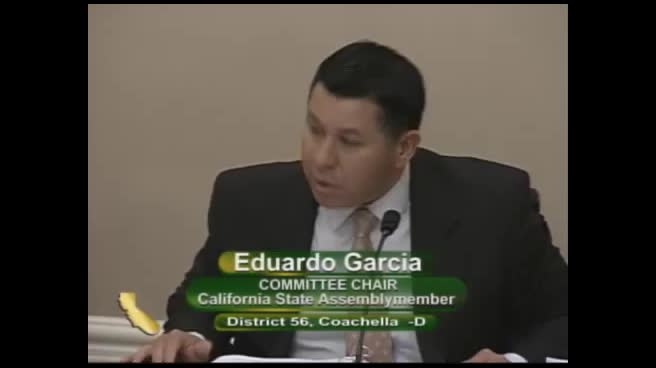 3MIN
Assembly Standing Committee on Jobs, Economic Development, and the Economy
Bill Author

Bill Co-Author(s):