AB 1353: Highway rest areas: vending machines: utility costs.
- Session Year: 2015-2016
- House: Assembly
- Latest Version Date: 2015-08-11
Existing law requires the Department of Transportation to authorize the placement of vending machines in safety roadside rests, except as specified, and requires the department to give preference in the placement of those vending machines to vendors operating under the Business Enterprises Program for the Blind. Existing law requires the department to determine the costs for specified activities, including any maintenance and operation, related to the vending machines and requires that the department be reimbursed for those costs from the revenues derived from the operation of the machines.
This bill would prohibit the department from being reimbursed for utility costs incurred by vendors operating under the Business Enterprises Program for the Blind and would require the department to pay for those utility costs using state funds.
(a)The department shall authorize the placement of vending machines in safety roadside rests, unless prohibited by federal laws, rules, or regulations.
(b)The department, pursuant to provisions contained in paragraph (5) of subsection (a) of Section 2 of the Act of June 20, 1936, commonly known as the Randolph-Sheppard Act, as amended (20 U.S.C. Sec. 107a(a)(5)), shall give preference for the placement of vending machines in safety roadside rest areas along state highways to vendors operating under the Business Enterprises Program for the Blind in accordance with Article 5 (commencing with Section 19625) of Chapter 6 of Part 2 of Division 10 of the Welfare and Institutions Code.
(c)The department may determine which safety roadside rest areas are suitable for inclusion in the vending machine program and the appropriate location within each roadside rest area for the placement of the machines, and the department shall approve the design and construction of any shelter or structure that may be required for the machines.
(d)(1)The department shall determine the costs for any maintenance, operations, design review, or other activities related to the vending machines and, except as provided in paragraph (2), shall be reimbursed for those costs from the revenues derived from the operation of the machines.
(2)(A)The department shall not be reimbursed for utility costs incurred by vendors operating under the Business Enterprises Program for the Blind and shall pay for those utility costs using state funds.
(B)For purposes of this paragraph, utility costs includes fees incurred for providing electricity service, water service, sewage service, or any other similar service.
(e)Any money received by the department for authorizing the placement of, or from the income from, the vending machines shall be transferred to the State Highway Account.
(a)The department shall authorize the placement of vending machines in safety roadside rests, unless prohibited by federal laws, rules, or regulations.
(b)The department, pursuant to provisions contained in paragraph (5) of subsection (a) of Section 2 of the Act of June 20, 1936, commonly known as the Randolph-Sheppard Act, as amended (20 U.S.C. Sec. 107a(a)(5)), shall give preference for the placement of vending machines in safety roadside rest areas along state highways to vendors operating under the Business Enterprises Program for the Blind in accordance with Article 5 (commencing with Section 19625) of Chapter 6 of Part 2 of Division 10 of the Welfare and Institutions Code.
(c)The department may determine which safety roadside rest areas are suitable for inclusion in the vending machine program and the appropriate location within each roadside rest area for the placement of the machines, and the department shall approve the design and construction of any shelter or structure that may be required for the machines.
(d)(1)The department shall determine the costs for any maintenance, operations, design review, or other activities related to the vending machines and and, except as provided in paragraph (2), shall be reimbursed for those costs from the revenues derived from the operation of the machines.
(2)(A)The department shall not be reimbursed for utility costs incurred by vendors operating under the Business Enterprises Program for the Blind and shall pay for those utility costs using state funds.
(B)For purposes of this paragraph, utility costs includes fees incurred for providing electricity service, water service, sewage service, or any other similar service.
(e)Any money received by the department for authorizing the placement of, or from the income from, the vending machines shall be transferred to the State Highway Account.
|
Date
|
Status
|
|---|---|
| Jun 11, 2015 | Referred to Com. on T. & H. |
| Aug 11, 2015 | Chaptered by Secretary of State - Chapter 173, Statutes of 2015. |
| Aug 11, 2015 | Approved by the Governor. |
| Aug 3, 2015 | Enrolled and presented to the Governor at 3 p.m. |
| Jul 16, 2015 | Read third time. Passed. Ordered to the Assembly. (Ayes 38. Noes 0. Page 1987.). |
| Jul 16, 2015 | Read third time. Passed. Ordered to the Assembly. |
| Jul 16, 2015 | In Assembly. Ordered to Engrossing and Enrolling. |
| Jul 13, 2015 | Ordered to special consent calendar. |
| Jul 7, 2015 | Read second time. Ordered to third reading. |
| Jul 6, 2015 | From committee: Do pass. (Ayes 7. Noes 0.) (July 6). |
| Jun 24, 2015 | From committee: Do pass and re-refer to Com. on APPR. with recommendation: To Consent Calendar. (Ayes 11. Noes 0.) (June 23). Re-referred to Com. on APPR. |
| Feb 27, 2015 | Introduced. To print. |
| Jun 1, 2015 | Read third time. Passed. Ordered to the Senate. (Ayes 78. Noes 0. Page 1729.) |
| Jun 1, 2015 | Read third time. Passed. Ordered to the Senate. |
| Jun 1, 2015 | In Senate. Read first time. To Com. on RLS. for assignment. |
| May 28, 2015 | Read second time. Ordered to third reading. |
| May 28, 2015 | From committee: Do pass. (Ayes 17. Noes 0.) (May 28). |
| Apr 22, 2015 | In committee: Set, first hearing. Referred to APPR. suspense file. |
| Apr 7, 2015 | From committee: Do pass and re-refer to Com. on APPR. (Ayes 15. Noes 0.) (April 6). Re-referred to Com. on APPR. |
| Mar 23, 2015 | Referred to Com. on TRANS. |
| Mar 2, 2015 | Read first time. |
| Mar 1, 2015 | From printer. May be heard in committee March 31. |
|
Date
|
Description
|
Location
|
Votes
|
|
|---|---|---|---|---|
| Jul 16, 2015 | Special Consent #5 AB1353 Patterson | Senate Floor |
Passed |
|
| Jul 6, 2015 | Do pass | Senate Standing Committee on Appropriations |
Passed |
|
| Jun 23, 2015 | Do pass, but first be re-referred to the Committee on [Appropriations] with the recommendation: To Consent Calendar | Senate Standing Committee on Transportation and Housing |
Passed |
|
| Jun 1, 2015 | AB 1353 PATTERSON Assembly Third Reading | Assembly Floor |
Passed |
|
| May 28, 2015 | Do pass. | Assembly Standing Committee on Appropriations |
Passed |
|
| Apr 6, 2015 | Do pass and be re-referred to the Committee on [Appropriations] | Assembly Standing Committee on Transportation |
Passed |
This list shows positions taken on this bill by organizations on the date displayed, which is linked to the original source.
Positions by individuals are not included.
|
Organization
|
Position
|
Date
|
|---|---|---|
| Blind Vendor | * Support | Jul 6, 2015 |
| California Council for the Blind | ** Support | Apr 6, 2015 |
| California Council Of The Blind | ** Support | Jul 6, 2015 |
| Hunter Hill Rest Stop | * Support | Apr 22, 2015 |
| Resources for an Independent Central Valley | * Support | Apr 6, 2015 |
| Resources for Independence | ** Support | Apr 6, 2015 |
| Resources for Independence Central Valley | ** Support | Jul 6, 2015 |
| Restorative Vendor | * Support | Jul 6, 2015 |
| Roadside Vendor | * Support | Jul 6, 2015 |
AB 1353
Page 3
|
Office of Senate Floor Analyses (916) 651-1520 Fax: (916) 327-4478 |
THIRD READING
Bill No: AB 1353
Introduced: 2/27/15
SENATE TRANS. & HOUSING COMMITTEE: 11-0, 6/23/15
AYES: Beall, Cannella, Allen, Bates, Gaines, Galgiani, Leyva, McGuire, Mendoza, Roth, Wieckowski
SENATE APPROPRIATIONS COMMITTEE: 7-0, 7/6/15
AYES: Lara, Bates, Beall, Hill, Leyva, Mendoza, Nielsen
ASSEMBLY FLOOR: 78-0, 6/1/15 - See last page for vote
SUBJECT: Highway rest areas: vending machines: utility costs
DIGEST: This bill exempts blind vendors from having to pay utility costs for their vending machines operating in roadside rest areas.
Existing law:
Establishes the Business Enterprises Program for the Blind (BEPB) within the Department of Rehabilitation (DOR) to provide blind persons with employment, economic opportunities, and the means to be self-sufficient.
Requires blind vendors to reimburse the California Department of Transportation (Caltrans) for costs of maintenance, operations including the cost of utilities, and other activities related to operating vending machines in state roadside rest areas.
Requires the hosting agency to pay for the cost of utilities for vending machines operated by blind vendors in state buildings.
This bill exempts blind vendors from having to pay for utility costs (e.g., electricity, water, sewer) incurred by their vending machines operating at roadside rest areas and instead requires Caltrans to pay for those utility costs using state funds.
Comments
Purpose. The author believes that “this bill is needed to bring equity into how the state treats blind vendors that service state buildings and those that service state rest stop areas. Furthermore, the discrepancy is inconsistent with the intent of the BEPB because it threatens the viability and livelihood of many California small business owners who are blind vendors.”
Supporters note that blind vendors already pay the DOR 6% of their sales for maintenance and support. Having these vendors who operate at rest stops also pay for utility service seems inequitable to them and financially hazardous.
FISCAL EFFECT: Appropriation: No Fiscal Com.: Yes Local: No
According to the Senate Appropriations Committee, this bill will incur estimated increased costs of approximately $126,600 annually for Caltrans to pay BEPB vending machine utility costs at all roadside rest areas (State Highway Account).
California Council of the Blind
Resources for Independence Central Valley
15 individuals
None received
ASSEMBLY FLOOR: 78-0, 6/1/15
AYES: Achadjian, Alejo, Travis Allen, Baker, Bigelow, Bloom, Bonilla, Bonta, Brough, Brown, Calderon, Campos, Chang, Chau, Chávez, Chiu, Chu, Cooley, Cooper, Dababneh, Dahle, Daly, Dodd, Eggman, Frazier, Beth Gaines, Gallagher, Cristina Garcia, Eduardo Garcia, Gatto, Gipson, Gomez, Gonzalez, Gray, Grove, Hadley, Harper, Roger Hernández, Holden, Irwin, Jones, Jones-Sawyer, Kim, Lackey, Levine, Linder, Lopez, Low, Maienschein, Mathis, Mayes, McCarty, Medina, Melendez, Mullin, Nazarian, Obernolte, O'Donnell, Olsen, Patterson, Perea, Quirk, Rendon, Ridley-Thomas, Rodriguez, Salas, Santiago, Steinorth, Mark Stone, Thurmond, Ting, Wagner, Waldron, Weber, Wilk, Williams, Wood, Atkins
NO VOTE RECORDED: Burke, Gordon
Prepared by: Randy Chinn / T. & H. / (916) 651-4121
7/8/15 12:03:37
**** END ****
AB 1353 (Patterson) Page 2 of 2
SENATE COMMITTEE ON APPROPRIATIONS
Senator Ricardo Lara, Chair
2015 - 2016 Regular Session
AB 1353 (Patterson) - Highway rest areas: vending machines: utility costs
|
|
Version: February 27, 2015 |
Policy Vote: T. & H. 11 - 0 |
Urgency: No |
Mandate: No |
Hearing Date: July 6, 2015 |
Consultant: Mark McKenzie |
This bill does not meet the criteria for referral to the Suspense File.
Bill Summary:
AB 1353 would require the Department of Transportation (Caltrans) to pay for all utility costs associated with vending machines at roadside rest areas operating under the Business Enterprise Program for the Blind (BEP).
Fiscal Impact:
Estimated increased costs of approximately $126,600 annually for Caltrans to pay BEP vending machine utility costs at all roadside rest areas (State Highway Account).
Background:
Existing law requires Caltrans to authorize the placement of vending machines at roadside rest areas and to give preference for vending facilities to vendors operating under the BEP. Existing law requires vendors to reimburse Caltrans from vending machine revenues for the costs of maintenance, operations, design review, and other activities related to the operation of the machines.
According to a 2014 Department of Rehabilitation (DOR) annual report on the BEP, 17 blind vendors operated vending facilities at 30 locations along interstate highways in California, selling sell items such as refrigerated soft drinks, snacks, ice cream, and hot beverages from these machines. The vending machine receipts at these sights totaled over $1 million in 2014.
Proposed Law:
AB 1353 would prohibit Caltrans from being reimbursed for utility costs incurred by vendors operating under the BEP and instead require Caltrans to pay for those utility costs using state funds. Utility costs include fees incurred for providing electricity, water, sewage, and other similar services.
Related Legislation:
AB 1602 (Patterson) is an identical bill that was held on this Committee’s Suspense File last year.
Staff Comments:
The current interagency agreement between DOR and Caltrans requires vendors to pay for utility costs at roadside rest areas. Monthly utility costs depend primarily on the number and type of vending machine, whether the machines require refrigeration or heating, whether the machines are indoor or outdoor, utility rates at each site, the season, and the climate of the region in which the rest area is located. According to the author, electricity costs can range from about $350 to $900 per month, depending on these factors. Caltrans indicates that utility costs average $550 per month per site.
Caltrans has completed installation of electric meters at 13 of the sites at a cost of about $214,000, and the vendors operating at these locations pay utility costs directly to the electricity provider. At the remaining 17 sites, the current interagency agreement requires vendors to pay $200 per month per vending site for costs incurred by Caltrans for electricity costs. Plans to convert all vending locations to independent meters are in process.
Under this bill, Caltrans would be required to pay utility costs associated with vending machines at all roadside rest areas. These costs are estimated to be about $198,000 annually (average costs of $550 per month at 30 sites). Caltrans is currently paying an average of $350 per month ($550 per month less the $200 reimbursed by vendors) at 17 sites that are not metered, or approximately $71,400 annually. As such, the bill would result in about $126,600 in net increased annual costs to Caltrans. The $214,000 that Caltrans has spent on utility meters at 13 rest areas represent a sunk cost. The bill would result in a substantial increase in profit for vendors, as a percentage of sales, at the expense of the state.
-- END --
AB 1353 (Patterson) Page 3 of 3
SENATE COMMITTEE ON TRANSPORTATION AND HOUSING
Senator Jim Beall, Chair
2015 - 2016 Regular
Bill No: AB 1353 Hearing Date: 6/23/2015
Author: |
Patterson |
||
Version: |
2/27/2015 |
||
Urgency: |
No |
Fiscal: |
Yes |
Consultant: |
Randy Chinn |
||
SUBJECT: Highway rest areas: vending machines: utility costs
DIGEST: This bill exempts blind vendors from having to pay utility costs for their vending machines operating in roadside rest areas.
ANALYSIS:
Existing law:
Establishes the Business Enterprises Program for the Blind (BEPB) within the Department of Rehabilitation (DOR) to provide blind persons with employment, economic opportunities, and the means to be self-sufficient.
Gives priority to blind persons to operate vending businesses on state properties, including roadside rest areas.
Requires blind vendors to reimburse Caltrans for costs of maintenance, operations, design review, and other activities related to operating vending machines in state roadside rest areas.
Requires the hosting agency to pay for the cost of utilities for vending machines operated by blind vendors under the BEPB in state buildings.
This bill exempts blind vendors from having to pay for utility costs (e.g., electricity, water, sewer) incurred by their vending machines operating at roadside rest areas under the BEPB and requires Caltrans to pay for those utility costs using state funds.
COMMENTS:
Purpose. The author believes that “this bill is needed to bring equity into how the state treats blind vendors that service state buildings and those that service state rest stop areas. Furthermore, the discrepancy is inconsistent with the intent of the BEPB because it threatens the viability and livelihood of many California small business owners who are blind vendors.”
Supporters note that blind vendors already pay the DOR 6% of their sales for maintenance and support. Having these vendors which operate at rest stops also pay for utility service seems inequitable to them and financially hazardous.
Background. According to a 2013 annual report of the DOR’s BEPB, 17 blind vendors operated vending facilities at 29 roadside rest areas along interstate highways in California, averaging just over $50,000 in annual income per vendor. Vendors sell items from automated vending machines, including refrigerated soft drinks, snacks, ice cream, and hot beverages. A single vendor conducts business at each rest stop (and for some vendors more than one rest stop), operating between seven and 11 vending machines per site. Monthly utility costs depend on the number and type of vending machine (and the need for refrigeration or heating, in particular) and the climate, season, and placement of machines (indoor vs. outdoor). According to the author, electricity costs range from around $350 per month to $700-$900 per month depending on these factors. Using these figures, a ballpark estimate of the total subsidy provided by this bill is about $200,000 annually.
A current interagency agreement between the DOR and Caltrans requires vendors to pay for utility costs at the roadside rest areas. In the 13 facilities in which meters are installed, vendors pay utility costs directly to the electricity provider. At the remaining sites, the interagency agreement requires vendors to pay $200 per month per vending site and DOR reimburses Caltrans for the balance of electricity costs.
What’s fair? Utility rates are increasing, so naturally utility bills for vending machines are rising. These can be expensive to operate, as many involve refrigeration or heating, which are energy-intensive activities, particularly for machines which are open to the elements 24/7. As Caltrans installs meters at the rest stops, the vendors’ cost of utility service will double or more. It seems likely that these increasing costs jeopardize the self-sufficiency which the BEPB is supposed to facilitate. However, should it be demonstrated that blind vendors under BEPB are operating very profitably, there would be less justification for this public subsidy.
Related Legislation:
AB 1602 (Patterson, 2014) — exempts blind vendors from having to pay for utility costs for their vending machines operating in roadside rest areas. This bill was held in the Senate Appropriations Committee.
Assembly Vote:
Floor: 78-0
Appr: 17-0
Trans: 15-0
FISCAL EFFECT: Appropriation: No Fiscal Com.: Yes Local: No
POSITIONS: (Communicated to the committee before noon on Wednesday,
June 17, 2015.)
SUPPORT:
California Council of the Blind
Resources for Independence Central Valley
15 individuals
OPPOSITION:
None received
-- END --
AB 1353
Page 2
ASSEMBLY THIRD READING
AB 1353
(Patterson)
As Introduced February 27, 2015
Majority vote
Committee |
Votes |
Ayes |
Noes |
Transportation |
15-0 |
Frazier, Achadjian, Baker, Bloom, Campos, Chu, Daly, Dodd, Eduardo Garcia, Kim, Linder, Medina, Melendez, Nazarian, O'Donnell |
|
Appropriations |
17-0 |
Gomez, Bigelow, Bonta, Calderon, Chang, Daly, Eggman, Gallagher, Eduardo Garcia, Gordon, Holden, Jones, Quirk, Rendon, Wagner, Weber, Wood |
|
SUMMARY: Prohibits the California Department of Transportation (Caltrans) from being reimbursed for utility costs of vending facilities operated under the Business Enterprises Program for the Blind at safety roadside rest areas; requires Caltrans to pay utility costs (e.g., fees for electricity, water, and sewage services) associated with these vending activities.
FISCAL EFFECT: According to the Assembly Appropriations Committee analysis, annual special fund costs of about $200,000 for Caltrans to pay vending machine utility costs at the state's 30 roadside rest areas. [State Highway Account]
COMMENTS: The Business Enterprises Program is a food service organization with operations in government facilities as well as in private industry. Blind vendors receive ongoing support from the Department of Rehabilitation as long as they remain in the program. This support may include such benefits as financial assistance for buying new appliances and equipment, various training opportunities, upward mobility support, business counseling services, fiscal oversight, and guidance to assist with their financial responsibilities. Vendors pay up to 6% of their net sales to the Department of Rehabilitation for deposit into a trust fund, which in turn is used to pay for services provided in the program. Vendors are required to secure all necessary business and health permits, obtain required insurance policies, hire and supervise employees, pay business and sales taxes, develop menus, and purchase merchandise for sale.
The current interagency agreement between the Department of Rehabilitation and Caltrans provides for vending machines in 29 safety roadside rest areas. Consistent with state law and regulations, the interagency agreement requires vendors to pay for utility costs at these sites. Ten of the sites have independent electric meters. Plans are in the works to convert all vending locations to independent meters. At these sites, vendors pay utility costs directly to the electricity provider. At the remaining sites, the interagency agreement requires vendors to pay $200 per month per vending site for costs incurred by Caltrans for electricity.
Not all vendors in the Business Enterprises Program are required to pay for utilities. For instance, vending facilities in state buildings within the purview of the Department of General Services do not pay utility costs. On the other hand, Caltrans is not alone in charging for utilities. For example, facilities on county government properties generally pay utility costs and a cursory review of other state laws indicates that charging vendors in safety roadside rest areas for utilities is not uncommon. Furthermore, that practice is not inconsistent with the requirement that vendors cover other operating costs like rent and utilities for use of private property used to support their vending businesses, such as warehouses used to store vending merchandise.
The author introduced this bill to remedy what he believes is an inequity in the Business Enterprises Program with respect to requirements that vendors pay utility costs. The author argues that vendors operating vending machines in state buildings do not to pay utility costs (because state agencies absorb the electricity costs) while vendors that operate vending machines at safety roadside rest areas do. The author introduced this bill to "ensure that all participants in the Business Enterprises Program for the Blind are treated equally."
Supporters of this bill are concerned that Caltrans' plans to install independent electric meters at safety roadside rest areas will put vendors out of business. They argue that this will negatively affect motorists who rely on safety roadside rest area vending facilities for refreshment during a break from driving.
There is no opposition on file.
There are 29 vending locations currently provided for in the interagency agreement between the Department of Rehabilitation and Caltrans, with an average of nine vending machines at each safety roadside rest area. According to the author's office, utility cost estimates for existing vending facilities that have independent electric meters range from a low of $350 a month in winter months to a high of $900 in summer months. Under this bill, Caltrans will be responsible for incurring all utility costs associated with these vending machines.
Please see the policy committee analysis for full discussion of this bill.
Analysis Prepared by: Janet Dawson / TRANS. / (916) 319-2093 FN: 0000633
AB 1353
Page 1
Date of Hearing: April 22, 2015
ASSEMBLY COMMITTEE ON APPROPRIATIONS
Jimmy Gomez, Chair
AB 1353
(Patterson) – As Introduced February 27, 2015
Policy Committee: |
Transportation |
Vote: |
15 - 0 |
|
|
|
|
|
|
|
|
Urgency: No State Mandated Local Program: No Reimbursable: No
SUMMARY:
This bill requires Caltrans, rather than vendors operating under the Business Enterprise Program (BEP), to pay all utility costs associated with vending machines at roadside rest areas.
FISCAL EFFECT:
Annual special fund costs of about $200,000 for Caltrans to pay vending machine utility costs at the state's 30 roadside rest areas. [State Highway Account]
COMMENTS:
Background. The BEP is a food service program operating in government as well as private facilities. Blind vendors in this program receive ongoing support services from the Department of Rehabilitation (DOR), such as financial assistance for buying new appliances and equipment, various training opportunities, upward mobility support, business counseling services, fiscal oversight, and guidance to assist with their financial responsibilities. Vendors pay up to 6% of their net sales to the DOR for deposit into a trust fund, which is used to pay for the above-mentioned services.
The current interagency agreement between the DOR and Caltrans requires vendors to pay for utility costs at the rest sites. Caltrans has completed installation of electric meters at 10 of the sites—at a cost of $580,000—and these vendors pay utility costs directly to the electricity provider. At the remaining sites, the interagency agreement requires vendors to pay $200 per month per vending site and DOR reimburses Caltrans for the balance of electricity costs. (Plans to convert all vending locations to independent meters are in process.)
Purpose. The author and supporters assert that AB 1602 is needed to address an inequity whereby blind vendors are subject to utility costs at roadside rest areas but not, for example at state buildings operated by the Department of General Services.
Prior Legislation. Last year, AB 1602 (Patterson), an identical bill, was held on Suspense in Senate Appropriations.
Analysis Prepared by: Chuck Nicol / APPR. / (916) 319-2081
AB 1353
Page 3
Date of Hearing: April 6, 2015
ASSEMBLY COMMITTEE ON TRANSPORTATION
Jim Frazier, Chair
AB 1353
(Patterson) – As Introduced February 27, 2015
SUBJECT: Highway rest areas: vending machines: utility costs
SUMMARY: Prohibits the California Department of Transportation (Caltrans) from being reimbursed for utility costs of vending facilities operated under the Business Enterprises Program for the Blind at safety roadside rest areas; requires Caltrans to pay utility costs (e.g., fees for electricity, water, and sewage services) associated with these vending activities.
EXISTING LAW:
Establishes the Business Enterprises Program within the Department of Rehabilitation to provide blind persons with remunerative employment, to enlarge economic opportunities for the blind, and to stimulate the blind to strive to make themselves self-supporting.
Gives blind persons priority to vending facilities on any state property including, for example, cafeterias, snack bars, and automatic vending machines.
Prohibits the Department of Rehabilitation from allowing the placement of a blind vendor in a vending facility unless the director first determines that the facility produces or is likely to produce an adequate net income for a blind vendor.
Directs Caltrans to allow the placement of vending facilities in safety roadside rest areas, unless prohibited by federal law; requires Caltrans to give priority for vending facilities to blind vendors operating within the Business Enterprises Program.
Requires blind vendors to reimburse Caltrans for the costs of maintenance, operations, design review, and other activities related to the operation of vending machines in safety roadside rest areas.
As set forth in Department of Rehabilitation regulations, specifically requires blind vendors to be solely responsible for payment of all rent or utility charges in accordance with the terms and conditions of the vendor operating agreement, permit, or contract.
As set forth in federal regulations, permits vending machines in safety roadside rest areas, under certain conditions, including that states must give priority to operate vending machine to blind persons. Federal regulations also specifically provide that costs of installation, operation, and maintenance of all vending machines are not eligible for federal reimbursement.
FISCAL EFFECT: The Assembly Appropriations Committee analysis of last year's AB 1602 (Patterson), an identical bill, estimated annual costs in the range of $200,000 to $250,000 for Caltrans to pay vending machine utility costs at the state's 29 roadside rest areas.
COMMENTS: The Business Enterprises Program is a food service organization with operations in government facilities as well as in private industry. Blind vendors receive ongoing support from the Department of Rehabilitation as long as they remain in the program. This support may include such benefits as financial assistance for buying new appliances and equipment, various training opportunities, upward mobility support, business counseling services, fiscal oversight, and guidance to assist with their financial responsibilities. Vendors pay up to 6% of their net sales to the Department of Rehabilitation for deposit into a trust fund, which in turn is used to pay for services provided in the program. Vendors are required to secure all necessary business and health permits, obtain required insurance policies, hire and supervise employees, pay business and sales taxes, develop menus, and purchase merchandise for sale.
The current interagency agreement between the Department of Rehabilitation and Caltrans provides for vending machines in 29 safety roadside rest areas. Consistent with state law and regulations, the interagency agreement requires vendors to pay for utility costs at these sites. Ten of the sites have independent electric meters. Plans are in the works to convert all vending locations to independent meters. At these sites, vendors pay utility costs directly to the electricity provider. At the remaining sites, the interagency agreement requires vendors to pay $200 per month per vending site for costs incurred by Caltrans for electricity.
Not all vendors in the Business Enterprises Program are required to pay for utilities. For instance, vending facilities in state buildings within the purview of the Department of General Services do not pay utility costs. On the other hand, Caltrans is not alone in charging for utilities. For example, facilities on county government properties generally pay utility costs and a cursory review of other state laws indicates that charging vendors in safety roadside rest areas for utilities is not uncommon. Furthermore, that practice is not inconsistent with the requirement that vendors cover other operating costs like rent and utilities for use of private property used to support their vending businesses, such as warehouses used to store vending merchandise.
The author introduced this bill to remedy what he believes is an inequity in the Business Enterprises Program with respect to requirements that vendors pay utility costs. The author argues that vendors operating vending machines in state buildings do not to pay utility costs (because state agencies absorb the electricity costs) while vendors that operate vending machines at safety roadside rest areas do. The author introduced this bill to "ensure that all participants in the Business Enterprises Program for the Blind are treated equally."
Supporters of this bill are concerned that Caltrans' plans to install independent electric meters at safety roadside rest areas will put vendors out of business. They argue that this will negatively affect motorists who rely on safety roadside rest area vending facilities for refreshment during a break from driving.
There are 29 vending locations currently provided for in the interagency agreement between the Department of Rehabilitation and Caltrans, with an average of 9 vending machines at each safety roadside rest area. According to the author's office, utility cost estimates for existing vending facilities that have independent electric meters range from a low of $350 a month in winter months to a high of $900 in summer months. Under this bill, Caltrans will be responsible for incurring all utility costs associated with these vending machines.
Previous
legislation: The author introduced an identical bill last year,
AB 1602 (Patterson).
AB 1602 passed out of the Assembly with
no "NO" votes but was ultimately held in the Senate
Appropriations Committee on the suspense file.
REGISTERED SUPPORT / OPPOSITION:
Support
California Council for the Blind
Resources for Independence
26 private citizens
Opposition
None on file
Analysis Prepared by: Janet Dawson / TRANS. / (916) 319-2093
Discussed in Hearing
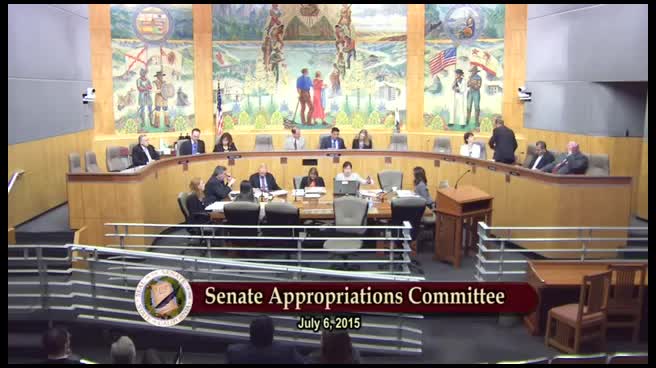 8MIN
Senate Standing Committee on Appropriations
 59SEC
Assembly Floor
 3MIN
Assembly Standing Committee on Appropriations
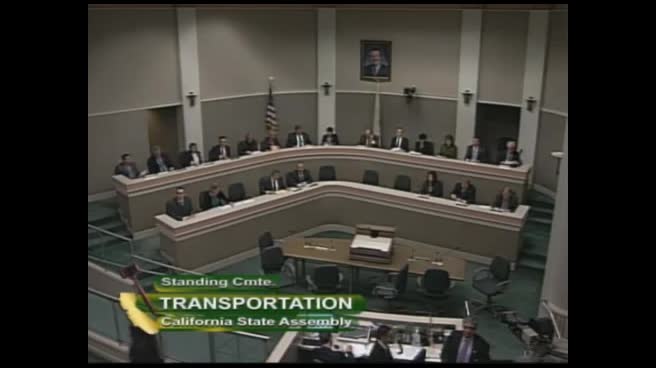 18MIN
Assembly Standing Committee on Transportation
Bill Author

Bill Co-Author(s):