AB 1424: Mental health: community mental health board.
- Session Year: 2015-2016
- House: Assembly
- Latest Version Date: 2015-07-16
Existing law requires each community mental health service to have a mental health board consisting of 10 to 15 members who are appointed by the governing body, and encourages counties to appoint individuals who have experience with and knowledge of the mental health system. Existing law requires 50% of the board membership to be consumers, or the parents, spouses, siblings, or adult children of consumers, who are receiving or have received mental health services. Existing law prohibits a member of the board, or his or her spouse, from being a full-time or part-time county employee of a county mental health service, an employee of the State Department of Health Care Services, or an employee of, or a paid member of the governing body of, a mental health contract agency.
This bill would exempt from this prohibition a consumer of mental health services who obtained employment with an employer described above and who holds a position in which he or she has no interest, influence, or authority over any financial or contractual matter concerning the employer, and would require that member to abstain from voting on any financial or contractual issue concerning his or her employer that may come before the board.
Existing law requires each community mental health service to have a mental health board consisting of 10 to 15 members who are appointed by the governing body, and encourages counties to appoint individuals who have experience with and knowledge of the mental health system. Existing law requires 50% of the board membership to be consumers, or the parents, spouses, siblings, or adult children of consumers, who are receiving or have received mental health services. Existing law prohibits a member of the board, or his or her spouse, from being a full-time or part-time county employee of a county mental health services, service, an employee of the State Department of Health Care Services, or an employee of, or a paid member of the governing body of, a mental health contract agency.
This bill would exempt from this prohibition a consumer of mental health services who obtained employment with an employer described above as a part of his or her recovery and who holds a position in which he or she has no interest, influence, or authority over any financial or contractual matter concerning the employer, and would require that member to abstain from voting on any financial or contractual issue concerning his or her employer that may come before the board.
Existing law requires each community mental health service to have a mental health board consisting of 10 to 15 members who are appointed by the governing body, and encourages counties to appoint individuals who have experience with and knowledge of the mental health system. Existing law requires 50% of the board membership to be consumers, or the parents, spouses, siblings, or adult children of consumers, who are receiving or have received mental health services. Existing law prohibits a member of the board, or his or her spouse, from being a full-time or part-time county employee of a county mental health services, an employee of the State Department of Health Care Services, or an employee of, or a paid member of the governing body of, a mental health contract agency.
This bill would exempt from this prohibition a consumer of mental health services who obtained employment with an employer described above as a part of his or her recovery and holds a position in which he or she has no interest, influence, or authority over any financial or contractual matter concerning the employer, and would require that member to abstain from voting on any financial or contractual issue concerning his or her employer that may come before the board.
Existing law provides for the Medi-Cal program, which is administered by the State Department of Health Care Services, under which qualified low-income individuals receive health care services. The Medi-Cal program is, in part, governed and funded by federal Medicaid Program provisions. Existing law provides for a schedule of benefits provided under the Medi-Cal program, which includes specified outpatient services and inpatient hospital services, subject to utilization controls.
This bill would make technical, nonsubstantive changes to these provisions.
(a)(1)Each community mental health service shall have a mental health board consisting of 10 to 15 members, depending on the preference of the county, appointed by the governing body, except that boards in counties with a population of less than 80,000 may have a minimum of five members. One member of the board shall be a member of the local governing body. Any county with more than five supervisors shall have at least the same number of members as the size of its board of supervisors. Nothing in this section shall be construed to limit the ability of the governing body to increase the number of members above 15. Local mental health boards may recommend appointees to the county supervisors. Counties are encouraged to appoint individuals who have experience with and knowledge of the mental health system. The board membership should reflect the ethnic diversity of the client population in the county.
(2)Fifty percent of the board membership shall be consumers, or the parents, spouses, siblings, or adult children of consumers, who are receiving or have received mental health services. At least 20 percent of the total membership shall be consumers, and at least 20 percent shall be families of consumers.
(3)(A)In counties under 80,000 population, at least one member shall be a consumer, and at least one member shall be a parent, spouse, sibling, or adult child of a consumer, who is receiving, or has received, mental health services.
(B)Notwithstanding subparagraph (A), a board in a county with a population under 80,000 that elects to have the board exceed the five-member minimum permitted under paragraph (1) shall be required to comply with paragraph (2).
(b)The term of each member of the board shall be for three years. The governing body shall equitably stagger the appointments so that approximately one-third of the appointments expire in each year.
(c)If two or more local agencies jointly establish a community mental health service under Article 1 (commencing with Section 6500) of Chapter 5 of Division 7 of Title 1 of the Government Code, the mental health board for the community mental health service shall consist of an additional two members for each additional agency, one of whom shall be a consumer or a parent, spouse, sibling, or adult child of a consumer who has received mental health services.
(d) (1)Except as provided in paragraph (2), no member of the board or his or her spouse shall be a full-time or part-time county employee of a county mental health service, an employee of the State Department of Health Care Services, or an employee of, or a paid member of the governing body of, a mental health contract agency.
(2)A consumer of mental health services who has obtained employment with an employer described in paragraph (1) and who holds a position in which he or she does not have any interest, influence, or authority over any financial or contractual matter concerning the employer may be appointed to the board. The member shall abstain from voting on any financial or contractual issue concerning his or her employer that may come before the board.
(e)Members of the board shall abstain from voting on any issue in which the member has a financial interest as defined in Section 87103 of the Government Code.
(f)If it is not possible to secure membership as specified in this section from among persons who reside in the county, the governing body may substitute representatives of the public interest in mental health who are not full-time or part-time employees of the county mental health service, the State Department of Health Care Services, or on the staff of, or a paid member of the governing body of, a mental health contract agency.
(g)The mental health board may be established as an advisory board or a commission, depending on the preference of the county.
(a)(1)Each community mental health service shall have a mental health board consisting of 10 to 15 members, depending on the preference of the county, appointed by the governing body, except that boards in counties with a population of less than 80,000 may have a minimum of five members. One member of the board shall be a member of the local governing body. Any county with more than five supervisors shall have at least the same number of members as the size of its board of supervisors. Nothing in this section shall be construed to limit the ability of the governing body to increase the number of members above 15. Local mental health boards may recommend appointees to the county supervisors. Counties are encouraged to appoint individuals who have experience with and knowledge of the mental health system. The board membership should reflect the ethnic diversity of the client population in the county.
(2)Fifty percent of the board membership shall be consumers, or the parents, spouses, siblings, or adult children of consumers, who are receiving or have received mental health services. At least 20 percent of the total membership shall be consumers, and at least 20 percent shall be families of consumers.
(3)(A)In counties under 80,000 population, at least one member shall be a consumer, and at least one member shall be a parent, spouse, sibling, or adult child of a consumer, who is receiving, or has received, mental health services.
(B)Notwithstanding subparagraph (A), a board in a county with a population under 80,000 that elects to have the board exceed the five-member minimum permitted under paragraph (1) shall be required to comply with paragraph (2).
(b)The term of each member of the board shall be for three years. The governing body shall equitably stagger the appointments so that approximately one-third of the appointments expire in each year.
(c)If two or more local agencies jointly establish a community mental health service under Article 1 (commencing with Section 6500) of Chapter 5 of Division 7 of Title 1 of the Government Code, the mental health board for the community mental health service shall consist of an additional two members for each additional agency, one of whom shall be a consumer or a parent, spouse, sibling, or adult child of a consumer who has received mental health services.
(d) (1)Except as provided in paragraph (2), no member of the board or his or her spouse shall be a full-time or part-time county employee of a county mental health service, an employee of the State Department of Health Care Services, or an employee of, or a paid member of the governing body of, a mental health contract agency.
(2)A consumer of mental health services who has obtained employment with an employer described in paragraph (1) as part of his or her recovery and who holds a position in which he or she does not have any interest, influence, or authority over any financial or contractual matter concerning the employer may be appointed to the board. The member shall abstain from voting on any financial or contractual issue concerning his or her employer that may come before the board.
(e)Members of the board shall abstain from voting on any issue in which the member has a financial interest as defined in Section 87103 of the Government Code.
(f)If it is not possible to secure membership as specified in this section from among persons who reside in the county, the governing body may substitute representatives of the public interest in mental health who are not full-time or part-time employees of the county mental health service, the State Department of Health Care Services, or on the staff of, or a paid member of the governing body of, a mental health contract agency.
(g)The mental health board may be established as an advisory board or a commission, depending on the preference of the county.
(a)(1)Each community mental health service shall have a mental health board consisting of 10 to 15 members, depending on the preference of the county, appointed by the governing body, except that boards in counties with a population of less than 80,000 may have a minimum of five members. One member of the board shall be a member of the local governing body. Any county with more than five supervisors shall have at least the same number of members as the size of its board of supervisors. Nothing in this section shall be construed to limit the ability of the governing body to increase the number of members above 15. Local mental health boards may recommend appointees to the county supervisors. Counties are encouraged to appoint individuals who have experience with and knowledge of the mental health system. The board membership should reflect the ethnic diversity of the client population in the county.
(2)Fifty percent of the board membership shall be consumers, or the parents, spouses, siblings, or adult children of consumers, who are receiving or have received mental health services. At least 20 percent of the total membership shall be consumers, and at least 20 percent shall be families of consumers.
(3)(A)In counties under 80,000 population, at least one member shall be a consumer, and at least one member shall be a parent, spouse, sibling, or adult child of a consumer, who is receiving, or has received, mental health services.
(B)Notwithstanding subparagraph (A), a board in a county with a population under 80,000 that elects to have the board exceed the five-member minimum permitted under paragraph (1) shall be required to comply with paragraph (2).
(b)The term of each member of the board shall be for three years. The governing body shall equitably stagger the appointments so that approximately one-third of the appointments expire in each year.
(c)If two or more local agencies jointly establish a community mental health service under Article 1 (commencing with Section 6500) of Chapter 5 of Division 7 of Title 1 of the Government Code, the mental health board for the community mental health service shall consist of an additional two members for each additional agency, one of whom shall be a consumer or a parent, spouse, sibling, or adult child of a consumer who has received mental health services.
(d) No (1)Except as provided in paragraph (2), no member of the board or his or her spouse shall be a full-time or part-time county employee of a county mental health service, an employee of the State Department of Health Care Services, or an employee of, or a paid member of the governing body of, a mental health contract agency.
(2)A consumer of mental health services who has obtained employment with an employer described in paragraph (1) as part of his or her recovery and holds a position in which he or she does not have any interest, influence, or authority over any financial or contractual matter concerning the employer may be appointed to the board. The member shall abstain from voting on any financial or contractual issue concerning his or her employer that may come before the board.
(e)Members of the board shall abstain from voting on any issue in which the member has a financial interest as defined in Section 87103 of the Government Code.
(f)If it is not possible to secure membership as specified in this section from among persons who reside in the county, the governing body may substitute representatives of the public interest in mental health who are not full-time or part-time employees of the county mental health service, the State Department of Health Care Services, or on the staff of, or a paid member of the governing body of, a mental health contract agency.
(g)The mental health board may be established as an advisory board or a commission, depending on the preference of the county.
SECTION 1.Section 14132 of the Welfare and Institutions Code is amended to read:14132.The following is the schedule of benefits under this chapter:
(a)Outpatient services are covered as follows:
Physician, hospital or clinic outpatient, surgical center, respiratory care, optometric, chiropractic, psychology, podiatric, occupational therapy, physical therapy, speech therapy, audiology, acupuncture to the extent federal matching funds are provided for acupuncture, and services of persons rendering treatment by prayer or healing by spiritual means in the practice of any church or religious denomination insofar as these can be encompassed by federal participation under an approved plan, subject to utilization controls.
(b)(1)Inpatient hospital services, including, but not limited to, physician and podiatric services, physical therapy, and occupational therapy, are covered subject to utilization controls.
(2)For Medi-Cal fee-for-service beneficiaries, emergency services and care that are necessary for the treatment of an emergency medical condition and medical care directly related to the emergency medical condition. This paragraph shall not be construed to change the obligation of Medi-Cal managed care plans to provide emergency services and care. For the purposes of this paragraph, emergency services and care and emergency medical condition shall have the same meanings as those terms are defined in Section 1317.1 of the Health and Safety Code.
(c)Nursing facility services, subacute care services, and services provided by any category of intermediate care facility for the developmentally disabled, including podiatry, physician, nurse practitioner services, and prescribed drugs, as described in subdivision (d), are covered subject to utilization controls. Respiratory care, physical therapy, occupational therapy, speech therapy, and audiology services for patients in nursing facilities and any category of intermediate care facility for the developmentally disabled are covered subject to utilization controls.
(d)(1)Purchase of prescribed drugs is covered subject to the Medi-Cal List of Contract Drugs and utilization controls.
(2)Purchase of drugs used to treat erectile dysfunction or any off-label uses of those drugs are covered only to the extent that federal financial participation is available.
(3)(A)To the extent required by federal law, the purchase of outpatient prescribed drugs, for which the prescription is executed by a prescriber in written, nonelectronic form on or after April 1, 2008, is covered only when executed on a tamper resistant prescription form. The implementation of this paragraph shall conform to the guidance issued by the federal Centers for Medicare and Medicaid Services but shall not conflict with state statutes on the characteristics of tamper resistant prescriptions for controlled substances, including Section 11162.1 of the Health and Safety Code. The department shall provide providers and beneficiaries with as much flexibility in implementing these rules as allowed by the federal government. The department shall notify and consult with appropriate stakeholders in implementing, interpreting, or making specific this paragraph.
(B)Notwithstanding Chapter 3.5 (commencing with Section 11340) of Part 1 of Division 3 of Title 2 of the Government Code, the department may take the actions specified in subparagraph (A) by means of a provider bulletin or notice, policy letter, or other similar instructions without taking regulatory action.
(4)(A)(i)For the purposes of this paragraph, nonlegend has the same meaning as defined in subdivision (a) of Section 14105.45.
(ii)Nonlegend acetaminophen-containing products, with the exception of childrens acetaminophen-containing products, selected by the department are not covered benefits.
(iii)Nonlegend cough and cold products selected by the department are not covered benefits. This clause shall be implemented on the first day of the first calendar month following 90 days after the effective date of the act that added this clause, or on the first day of the first calendar month following 60 days after the date the department secures all necessary federal approvals to implement this section, whichever is later.
(iv)Beneficiaries under the Early and Periodic Screening, Diagnosis, and Treatment Program shall be exempt from clauses (ii) and (iii).
(B)Notwithstanding Chapter 3.5 (commencing with Section 11340) of Part 1 of Division 3 of Title 2 of the Government Code, the department may take the actions specified in subparagraph (A) by means of a provider bulletin or notice, policy letter, or other similar instruction without taking regulatory action.
(e)Outpatient dialysis services and home hemodialysis services, including physician services, medical supplies, drugs and equipment required for dialysis, are covered, subject to utilization controls.
(f)Anesthesiologist services when provided as part of an outpatient medical procedure, nurse anesthetist services when rendered in an inpatient or outpatient setting under conditions set forth by the director, outpatient laboratory services, and X-ray services are covered, subject to utilization controls. This subdivision shall not be construed to require prior authorization for anesthesiologist services provided as part of an outpatient medical procedure or for portable X-ray services in a nursing facility or any category of intermediate care facility for the developmentally disabled.
(g)Blood and blood derivatives are covered.
(h)(1)Emergency and essential diagnostic and restorative dental services, except for orthodontic, fixed bridgework, and partial dentures that are not necessary for balance of a complete artificial denture, are covered, subject to utilization controls. The utilization controls shall allow emergency and essential diagnostic and restorative dental services and prostheses that are necessary to prevent a significant disability or to replace previously furnished prostheses which are lost or destroyed due to circumstances beyond the beneficiarys control. Notwithstanding the foregoing, the director may, by regulation, provide for certain fixed artificial dentures necessary for obtaining employment or for medical conditions that preclude the use of removable dental prostheses, and for orthodontic services in cleft palate deformities administered by the departments California Children Services Program.
(2)For persons 21 years of age or older, the services specified in paragraph (1) shall be provided subject to the following conditions:
(A)Periodontal treatment is not a benefit.
(B)Endodontic therapy is not a benefit except for vital pulpotomy.
(C)Laboratory processed crowns are not a benefit.
(D)Removable prosthetics shall be a benefit only for patients as a requirement for employment.
(E)The director may, by regulation, provide for the provision of fixed artificial dentures that are necessary for medical conditions that preclude the use of removable dental prostheses.
(F)Notwithstanding the conditions specified in subparagraphs (A) to (E), inclusive, the department may approve services for persons with special medical disorders subject to utilization review.
(3)Paragraph (2) shall become inoperative July 1, 1995.
(i)Medical transportation is covered, subject to utilization controls.
(j)Home health care services are covered, subject to utilization controls.
(k)Prosthetic and orthotic devices and eyeglasses are covered, subject to utilization controls. Utilization controls shall allow replacement of prosthetic and orthotic devices and eyeglasses necessary because of loss or destruction due to circumstances beyond the beneficiarys control. Frame styles for eyeglasses replaced pursuant to this subdivision shall not change more than once every two years, unless the department so directs.
Orthopedic and conventional shoes are covered when provided by a prosthetic and orthotic supplier on the prescription of a physician and when at least one of the shoes will be attached to a prosthesis or brace, subject to utilization controls. Modification of stock conventional or orthopedic shoes when medically indicated, is covered subject to utilization controls. When there is a clearly established medical need that cannot be satisfied by the modification of stock conventional or orthopedic shoes, custom-made orthopedic shoes are covered, subject to utilization controls.
Therapeutic shoes and inserts are covered when provided to beneficiaries with a diagnosis of diabetes, subject to utilization controls, to the extent that federal financial participation is available.
(l)Hearing aids are covered, subject to utilization controls. Utilization controls shall allow replacement of hearing aids necessary because of loss or destruction due to circumstances beyond the beneficiarys control.
(m)Durable medical equipment and medical supplies are covered, subject to utilization controls. The utilization controls shall allow the replacement of durable medical equipment and medical supplies when necessary because of loss or destruction due to circumstances beyond the beneficiarys control. The utilization controls shall allow authorization of durable medical equipment needed to assist a disabled beneficiary in caring for a child for whom the disabled beneficiary is a parent, stepparent, foster parent, or legal guardian, subject to the availability of federal financial participation. The department shall adopt emergency regulations to define and establish criteria for assistive durable medical equipment in accordance with the rulemaking provisions of the Administrative Procedure Act (Chapter 3.5 (commencing with Section 11340) of Part 1 of Division 3 of Title 2 of the Government Code).
(n)Family planning services are covered, subject to utilization controls. However, for Medi-Cal managed care plans, any utilization controls shall be subject to Section 1367.25 of the Health and Safety Code.
(o)Inpatient intensive rehabilitation hospital services, including respiratory rehabilitation services, in a general acute care hospital are covered, subject to utilization controls, when either of the following criteria are met:
(1)A patient with a permanent disability or severe impairment requires an inpatient intensive rehabilitation hospital program as described in Section 14064 to develop function beyond the limited amount that would occur in the normal course of recovery.
(2)A patient with a chronic or progressive disease requires an inpatient intensive rehabilitation hospital program as described in Section 14064 to maintain the patients present functional level as long as possible.
(p)(1)Adult day health care is covered in accordance with Chapter 8.7 (commencing with Section 14520).
(2)Commencing 30 days after the effective date of the act that added this paragraph, and notwithstanding the number of days previously approved through a treatment authorization request, adult day health care is covered for a maximum of three days per week.
(3)As provided in accordance with paragraph (4), adult day health care is covered for a maximum of five days per week.
(4)As of the date that the director makes the declaration described in subdivision (g) of Section 14525.1, paragraph (2) shall become inoperative and paragraph (3) shall become operative.
(q)(1)Application of fluoride, or other appropriate fluoride treatment as defined by the department, and other prophylaxis treatment for children 17 years of age and under are covered.
(2)All dental hygiene services provided by a registered dental hygienist, registered dental hygienist in extended functions, and registered dental hygienist in alternative practice licensed pursuant to Sections 1753, 1917, 1918, and 1922 of the Business and Professions Code may be covered as long as they are within the scope of Denti-Cal benefits and they are necessary services provided by a registered dental hygienist, registered dental hygienist in extended functions, or registered dental hygienist in alternative practice.
(r)(1)Paramedic services performed by a city, county, or special district, or pursuant to a contract with a city, county, or special district, and pursuant to a program established under Article 3 (commencing with Section 1480) of Chapter 2.5 of Division 2 of the Health and Safety Code by a paramedic certified pursuant to that article, and consisting of defibrillation and those services specified in subdivision (3) of Section 1482 of the article.
(2)All providers enrolled under this subdivision shall satisfy all applicable statutory and regulatory requirements for becoming a Medi-Cal provider.
(3)This subdivision shall be implemented only to the extent funding is available under Section 14106.6.
(s)In-home medical care services are covered when medically appropriate and subject to utilization controls, for beneficiaries who would otherwise require care for an extended period of time in an acute care hospital at a cost higher than in-home medical care services. The director shall have the authority under this section to contract with organizations qualified to provide in-home medical care services to those persons. These services may be provided to patients placed in shared or congregate living arrangements, if a home setting is not medically appropriate or available to the beneficiary. As used in this section, in-home medical care service includes utility bills directly attributable to continuous, 24-hour operation of life-sustaining medical equipment, to the extent that federal financial participation is available.
As used in this subdivision, in-home medical care services include, but are not limited to:
(1)Level-of-care and cost-of-care evaluations.
(2)Expenses, directly attributable to home care activities, for materials.
(3)Physician fees for home visits.
(4)Expenses directly attributable to home care activities for shelter and modification to shelter.
(5)Expenses directly attributable to additional costs of special diets, including tube feeding.
(6)Medically related personal services.
(7)Home nursing education.
(8)Emergency maintenance repair.
(9)Home health agency personnel benefits which permit coverage of care during periods when regular personnel are on vacation or using sick leave.
(10)All services needed to maintain antiseptic conditions at stoma or shunt sites on the body.
(11)Emergency and nonemergency medical transportation.
(12)Medical supplies.
(13)Medical equipment, including, but not limited to, scales, gurneys, and equipment racks suitable for paralyzed patients.
(14)Utility use directly attributable to the requirements of home care activities which are in addition to normal utility use.
(15)Special drugs and medications.
(16)Home health agency supervision of visiting staff which is medically necessary, but not included in the home health agency rate.
(17)Therapy services.
(18)Household appliances and household utensil costs directly attributable to home care activities.
(19)Modification of medical equipment for home use.
(20)Training and orientation for use of life-support systems, including, but not limited to, support of respiratory functions.
(21)Respiratory care practitioner services as defined in Sections 3702 and 3703 of the Business and Professions Code, subject to prescription by a physician and surgeon.
Beneficiaries receiving in-home medical care services are entitled to the full range of services within the Medi-Cal scope of benefits as defined by this section, subject to medical necessity and applicable utilization control. Services provided pursuant to this subdivision, which are not otherwise included in the Medi-Cal schedule of benefits, shall be available only to the extent that federal financial participation for these services is available in accordance with a home- and community-based services waiver.
(t)Home- and community-based services approved by the United States Department of Health and Human Services are covered to the extent that federal financial participation is available for those services under the state plan or waivers granted in accordance with Section 1315 or 1396n of Title 42 of the United States Code. The director may seek waivers for any or all home- and community-based services approvable under Section 1315 or 1396n of Title 42 of the United States Code. Coverage for those services shall be limited by the terms, conditions, and duration of the federal waivers.
(u)Comprehensive perinatal services, as provided through an agreement with a health care provider designated in Section 14134.5 and meeting the standards developed by the department pursuant to Section 14134.5, subject to utilization controls.
The department shall seek any federal waivers necessary to implement this subdivision. The provisions for which appropriate federal waivers cannot be obtained shall not be implemented. Provisions for which waivers are obtained or for which waivers are not required shall be implemented notwithstanding any inability to obtain federal waivers for the other provisions. This subdivision shall not be implemented unless matching funds from Subchapter XIX (commencing with Section 1396) of Chapter 7 of Title 42 of the United States Code are available.
(v)Early and periodic screening, diagnosis, and treatment for any individual under 21 years of age is covered, consistent with the requirements of Subchapter XIX (commencing with Section 1396) of Chapter 7 of Title 42 of the United States Code.
(w)Hospice service that is Medicare-certified hospice service is covered, subject to utilization controls. Coverage shall be available only to the extent that no additional net program costs are incurred.
(x)When a claim for treatment provided to a beneficiary includes both services which are authorized and reimbursable under this chapter, and services which are not reimbursable under this chapter, that portion of the claim for the treatment and services authorized and reimbursable under this chapter shall be payable.
(y)Home- and community-based services approved by the United States Department of Health and Human Services for beneficiaries with a diagnosis of AIDS or ARC, who require intermediate care or a higher level of care.
Services provided pursuant to a waiver obtained from the Secretary of the United States Department of Health and Human Services pursuant to this subdivision, and which are not otherwise included in the Medi-Cal schedule of benefits, shall be available only to the extent that federal financial participation for these services is available in accordance with the waiver, and subject to the terms, conditions, and duration of the waiver. These services shall be provided to individual beneficiaries in accordance with the clients needs as identified in the plan of care, and subject to medical necessity and applicable utilization control.
The director may, under this section, contract with organizations qualified to provide, directly or by subcontract, services provided for in this subdivision to eligible beneficiaries. Contracts or agreements entered into pursuant to this division shall not be subject to the Public Contract Code.
(z)Respiratory care when provided in organized health care systems as defined in Section 3701 of the Business and Professions Code, and as an in-home medical service as outlined in subdivision (s).
(aa)(1)There is hereby established in the department, a program to provide comprehensive clinical family planning services to any person who has a family income at or below 200 percent of the federal poverty level, as revised annually, and who is eligible to receive these services pursuant to the waiver identified in paragraph (2). This program shall be known as the Family Planning, Access, Care, and Treatment (Family PACT) Program.
(2)The department shall seek a waiver in accordance with Section 1315 of Title 42 of the United States Code, or a state plan amendment adopted in accordance with Section 1396a(a)(10)(A)(ii)(XXI) of Title 42 of the United States Code, which was added to Section 1396a of Title 42 of the United States Code by Section 2303(a)(2) of the federal Patient Protection and Affordable Care Act (PPACA) (Public Law 111-148), for a program to provide comprehensive clinical family planning services as described in paragraph (8). Under the waiver, the program shall be operated only in accordance with the waiver and the statutes and regulations in paragraph (4) and subject to the terms, conditions, and duration of the waiver. Under the state plan amendment, which shall replace the waiver and shall be known as the Family PACT successor state plan amendment, the program shall be operated only in accordance with this subdivision and the statutes and regulations in paragraph (4). The state shall use the standards and processes imposed by the state on January 1, 2007, including the application of an eligibility discount factor to the extent required by the federal Centers for Medicare and Medicaid Services, for purposes of determining eligibility as permitted under Section 1396a(a)(10)(A)(ii)(XXI) of Title 42 of the United States Code. To the extent that federal financial participation is available, the program shall continue to conduct education, outreach, enrollment, service delivery, and evaluation services as specified under the waiver. The services shall be provided under the program only if the waiver and, when applicable, the successor state plan amendment are approved by the federal Centers for Medicare and Medicaid Services and only to the extent that federal financial participation is available for the services. This section shall not prohibit the department from seeking the Family PACT successor state plan amendment during the operation of the waiver.
(3)Solely for the purposes of the waiver or Family PACT successor state plan amendment and notwithstanding any other law, the collection and use of an individuals social security number shall be necessary only to the extent required by federal law.
(4)Sections 14105.3 to 14105.39, inclusive, 14107.11, 24005, and 24013, and any regulations adopted under these statutes shall apply to the program provided for under this subdivision. No other law under the Medi-Cal program or the State-Only Family Planning Program shall apply to the program provided for under this subdivision.
(5)Notwithstanding Chapter 3.5 (commencing with Section 11340) of Part 1 of Division 3 of Title 2 of the Government Code, the department may implement, without taking regulatory action, the provisions of the waiver after its approval by the federal Health Care Financing Administration and the provisions of this section by means of an all-county letter or similar instruction to providers. Thereafter, the department shall adopt regulations to implement this section and the approved waiver in accordance with the requirements of Chapter 3.5 (commencing with Section 11340) of Part 1 of Division 3 of Title 2 of the Government Code. Beginning six months after the effective date of the act adding this subdivision, the department shall provide a status report to the Legislature on a semiannual basis until regulations have been adopted.
(6)In the event that the Department of Finance determines that the program operated under the authority of the waiver described in paragraph (2) or the Family PACT successor state plan amendment is no longer cost effective, this subdivision shall become inoperative on the first day of the first month following the issuance of a 30-day notification of that determination in writing by the Department of Finance to the chairperson in each house that considers appropriations, the chairpersons of the committees, and the appropriate subcommittees in each house that considers the State Budget, and the Chairperson of the Joint Legislative Budget Committee.
(7)If this subdivision ceases to be operative, all persons who have received or are eligible to receive comprehensive clinical family planning services pursuant to the waiver described in paragraph (2) shall receive family planning services under the Medi-Cal program pursuant to subdivision (n) if they are otherwise eligible for Medi-Cal with no share of cost, or shall receive comprehensive clinical family planning services under the program established in Division 24 (commencing with Section 24000) either if they are eligible for Medi-Cal with a share of cost or if they are otherwise eligible under Section 24003.
(8)For purposes of this subdivision, comprehensive clinical family planning services means the process of establishing objectives for the number and spacing of children, and selecting the means by which those objectives may be achieved. These means include a broad range of acceptable and effective methods and services to limit or enhance fertility, including contraceptive methods, federal Food and Drug Administration approved contraceptive drugs, devices, and supplies, natural family planning, abstinence methods, and basic, limited fertility management. Comprehensive clinical family planning services include, but are not limited to, preconception counseling, maternal and fetal health counseling, general reproductive health care, including diagnosis and treatment of infections and conditions, including cancer, that threaten reproductive capability, medical family planning treatment and procedures, including supplies and followup, and informational, counseling, and educational services. Comprehensive clinical family planning services shall not include abortion, pregnancy testing solely for the purposes of referral for abortion or services ancillary to abortions, or pregnancy care that is not incident to the diagnosis of pregnancy. Comprehensive clinical family planning services shall be subject to utilization control and include all of the following:
(A)Family planning related services and male and female sterilization. Family planning services for men and women shall include emergency services and services for complications directly related to the contraceptive method, federal Food and Drug Administration approved contraceptive drugs, devices, and supplies, and followup, consultation, and referral services, as indicated, which may require treatment authorization requests.
(B)All United States Department of Agriculture, federal Food and Drug Administration approved contraceptive drugs, devices, and supplies that are in keeping with current standards of practice and from which the individual may choose.
(C)Culturally and linguistically appropriate health education and counseling services, including informed consent, that include all of the following:
(i)Psychosocial and medical aspects of contraception.
(ii)Sexuality.
(iii)Fertility.
(iv)Pregnancy.
(v)Parenthood.
(vi)Infertility.
(vii)Reproductive health care.
(viii)Preconception and nutrition counseling.
(ix)Prevention and treatment of sexually transmitted infection.
(x)Use of contraceptive methods, federal Food and Drug Administration approved contraceptive drugs, devices, and supplies.
(xi)Possible contraceptive consequences and followup.
(xii)Interpersonal communication and negotiation of relationships to assist individuals and couples in effective contraceptive method use and planning families.
(D)A comprehensive health history, updated at the next periodic visit (between 11 and 24 months after initial examination) that includes a complete obstetrical history, gynecological history, contraceptive history, personal medical history, health risk factors, and family health history, including genetic or hereditary conditions.
(E)A complete physical examination on initial and subsequent periodic visits.
(F)Services, drugs, devices, and supplies deemed by the federal Centers for Medicare and Medicaid Services to be appropriate for inclusion in the program.
(9)In order to maximize the availability of federal financial participation under this subdivision, the director shall have the discretion to implement the Family PACT successor state plan amendment retroactively to July 1, 2010.
(ab)(1)Purchase of prescribed enteral nutrition products is covered, subject to the Medi-Cal list of enteral nutrition products and utilization controls.
(2)Purchase of enteral nutrition products is limited to those products to be administered through a feeding tube, including, but not limited to, a gastric, nasogastric, or jejunostomy tube. Beneficiaries under the Early and Periodic Screening, Diagnosis, and Treatment Program shall be exempt from this paragraph.
(3)Notwithstanding paragraph (2), the department may deem an enteral nutrition product not administered through a feeding tube, including, but not limited to, a gastric, nasogastric, or jejunostomy tube, a benefit for patients with diagnoses, including, but not limited to, malabsorption and inborn errors of metabolism, if the product has been shown to be neither investigational nor experimental when used as part of a therapeutic regimen to prevent serious disability or death.
(4)Notwithstanding Chapter 3.5 (commencing with Section 11340) of Part 1 of Division 3 of Title 2 of the Government Code, the department may implement the amendments to this subdivision made by the act that added this paragraph by means of all-county letters, provider bulletins, or similar instructions, without taking regulatory action.
(5)The amendments made to this subdivision by the act that added this paragraph shall be implemented June 1, 2011, or on the first day of the first calendar month following 60 days after the date the department secures all necessary federal approvals to implement this section, whichever is later.
(ac)Diabetic testing supplies are covered when provided by a pharmacy, subject to utilization controls.
The following is the schedule of benefits under this chapter:
(a)Outpatient services are covered as follows:
Physician, hospital or clinic outpatient, surgical center, respiratory care, optometric, chiropractic, psychology, podiatric, occupational therapy, physical therapy, speech therapy, audiology, acupuncture to the extent federal matching funds are provided for acupuncture, and services of persons rendering treatment by prayer or healing by spiritual means in the practice of any church or religious denomination insofar as these can be encompassed by federal participation under an approved plan, subject to utilization controls.
(b)(1)Inpatient hospital services, including, but not limited to, physician and podiatric services, physical therapy therapy, and occupational therapy, are covered subject to utilization controls.
(2)For Medi-Cal fee-for-service beneficiaries, emergency services and care that are necessary for the treatment of an emergency medical condition and medical care directly related to the emergency medical condition. This paragraph shall not be construed to change the obligation of Medi-Cal managed care plans to provide emergency services and care. For the purposes of this paragraph, emergency services and care and emergency medical condition shall have the same meanings as those terms are defined in Section 1317.1 of the Health and Safety Code.
(c)Nursing facility services, subacute care services, and services provided by any category of intermediate care facility for the developmentally disabled, including podiatry, physician, nurse practitioner services, and prescribed drugs, as described in subdivision (d), are covered subject to utilization controls. Respiratory care, physical therapy, occupational therapy, speech therapy, and audiology services for patients in nursing facilities and any category of intermediate care facility for the developmentally disabled are covered subject to utilization controls.
(d)(1)Purchase of prescribed drugs is covered subject to the Medi-Cal List of Contract Drugs and utilization controls.
(2)Purchase of drugs used to treat erectile dysfunction or any off-label uses of those drugs are covered only to the extent that federal financial participation is available.
(3)(A)To the extent required by federal law, the purchase of outpatient prescribed drugs, for which the prescription is executed by a prescriber in written, nonelectronic form on or after April 1, 2008, is covered only when executed on a tamper resistant prescription form. The implementation of this paragraph shall conform to the guidance issued by the federal Centers for Medicare and Medicaid Services but shall not conflict with state statutes on the characteristics of tamper resistant prescriptions for controlled substances, including Section 11162.1 of the Health and Safety Code. The department shall provide providers and beneficiaries with as much flexibility in implementing these rules as allowed by the federal government. The department shall notify and consult with appropriate stakeholders in implementing, interpreting, or making specific this paragraph.
(B)Notwithstanding Chapter 3.5 (commencing with Section 11340) of Part 1 of Division 3 of Title 2 of the Government Code, the department may take the actions specified in subparagraph (A) by means of a provider bulletin or notice, policy letter, or other similar instructions without taking regulatory action.
(4)(A)(i)For the purposes of this paragraph, nonlegend has the same meaning as defined in subdivision (a) of Section 14105.45.
(ii)Nonlegend acetaminophen-containing products, with the exception of childrens acetaminophen-containing products, selected by the department are not covered benefits.
(iii)Nonlegend cough and cold products selected by the department are not covered benefits. This clause shall be implemented on the first day of the first calendar month following 90 days after the effective date of the act that added this clause, or on the first day of the first calendar month following 60 days after the date the department secures all necessary federal approvals to implement this section, whichever is later.
(iv)Beneficiaries under the Early and Periodic Screening, Diagnosis, and Treatment Program shall be exempt from clauses (ii) and (iii).
(B)Notwithstanding Chapter 3.5 (commencing with Section 11340) of Part 1 of Division 3 of Title 2 of the Government Code, the department may take the actions specified in subparagraph (A) by means of a provider bulletin or notice, policy letter, or other similar instruction without taking regulatory action.
(e)Outpatient dialysis services and home hemodialysis services, including physician services, medical supplies, drugs and equipment required for dialysis, are covered, subject to utilization controls.
(f)Anesthesiologist services when provided as part of an outpatient medical procedure, nurse anesthetist services when rendered in an inpatient or outpatient setting under conditions set forth by the director, outpatient laboratory services, and X-ray services are covered, subject to utilization controls. Nothing in this This subdivision shall not be construed to require prior authorization for anesthesiologist services provided as part of an outpatient medical procedure or for portable X-ray services in a nursing facility or any category of intermediate care facility for the developmentally disabled.
(g)Blood and blood derivatives are covered.
(h)(1)Emergency and essential diagnostic and restorative dental services, except for orthodontic, fixed bridgework, and partial dentures that are not necessary for balance of a complete artificial denture, are covered, subject to utilization controls. The utilization controls shall allow emergency and essential diagnostic and restorative dental services and prostheses that are necessary to prevent a significant disability or to replace previously furnished prostheses which are lost or destroyed due to circumstances beyond the beneficiarys control. Notwithstanding the foregoing, the director may by regulation may, by regulation, provide for certain fixed artificial dentures necessary for obtaining employment or for medical conditions that preclude the use of removable dental prostheses, and for orthodontic services in cleft palate deformities administered by the departments California Children Services Program.
(2)For persons 21 years of age or older, the services specified in paragraph (1) shall be provided subject to the following conditions:
(A)Periodontal treatment is not a benefit.
(B)Endodontic therapy is not a benefit except for vital pulpotomy.
(C)Laboratory processed crowns are not a benefit.
(D)Removable prosthetics shall be a benefit only for patients as a requirement for employment.
(E)The director may, by regulation, provide for the provision of fixed artificial dentures that are necessary for medical conditions that preclude the use of removable dental prostheses.
(F)Notwithstanding the conditions specified in subparagraphs (A) to (E), inclusive, the department may approve services for persons with special medical disorders subject to utilization review.
(3)Paragraph (2) shall become inoperative July 1, 1995.
(i)Medical transportation is covered, subject to utilization controls.
(j)Home health care services are covered, subject to utilization controls.
(k)Prosthetic and orthotic devices and eyeglasses are covered, subject to utilization controls. Utilization controls shall allow replacement of prosthetic and orthotic devices and eyeglasses necessary because of loss or destruction due to circumstances beyond the beneficiarys control. Frame styles for eyeglasses replaced pursuant to this subdivision shall not change more than once every two years, unless the department so directs.
Orthopedic and conventional shoes are covered when provided by a prosthetic and orthotic supplier on the prescription of a physician and when at least one of the shoes will be attached to a prosthesis or brace, subject to utilization controls. Modification of stock conventional or orthopedic shoes when medically indicated, is covered subject to utilization controls. When there is a clearly established medical need that cannot be satisfied by the modification of stock conventional or orthopedic shoes, custom-made orthopedic shoes are covered, subject to utilization controls.
Therapeutic shoes and inserts are covered when provided to beneficiaries with a diagnosis of diabetes, subject to utilization controls, to the extent that federal financial participation is available.
(l)Hearing aids are covered, subject to utilization controls. Utilization controls shall allow replacement of hearing aids necessary because of loss or destruction due to circumstances beyond the beneficiarys control.
(m)Durable medical equipment and medical supplies are covered, subject to utilization controls. The utilization controls shall allow the replacement of durable medical equipment and medical supplies when necessary because of loss or destruction due to circumstances beyond the beneficiarys control. The utilization controls shall allow authorization of durable medical equipment needed to assist a disabled beneficiary in caring for a child for whom the disabled beneficiary is a parent, stepparent, foster parent, or legal guardian, subject to the availability of federal financial participation. The department shall adopt emergency regulations to define and establish criteria for assistive durable medical equipment in accordance with the rulemaking provisions of the Administrative Procedure Act (Chapter 3.5 (commencing with Section 11340) of Part 1 of Division 3 of Title 2 of the Government Code).
(n)Family planning services are covered, subject to utilization controls. However, for Medi-Cal managed care plans, any utilization controls shall be subject to Section 1367.25 of the Health and Safety Code.
(o)Inpatient intensive rehabilitation hospital services, including respiratory rehabilitation services, in a general acute care hospital are covered, subject to utilization controls, when either of the following criteria are met:
(1)A patient with a permanent disability or severe impairment requires an inpatient intensive rehabilitation hospital program as described in Section 14064 to develop function beyond the limited amount that would occur in the normal course of recovery.
(2)A patient with a chronic or progressive disease requires an inpatient intensive rehabilitation hospital program as described in Section 14064 to maintain the patients present functional level as long as possible.
(p)(1)Adult day health care is covered in accordance with Chapter 8.7 (commencing with Section 14520).
(2)Commencing 30 days after the effective date of the act that added this paragraph, and notwithstanding the number of days previously approved through a treatment authorization request, adult day health care is covered for a maximum of three days per week.
(3)As provided in accordance with paragraph (4), adult day health care is covered for a maximum of five days per week.
(4)As of the date that the director makes the declaration described in subdivision (g) of Section 14525.1, paragraph (2) shall become inoperative and paragraph (3) shall become operative.
(q)(1)Application of fluoride, or other appropriate fluoride treatment as defined by the department, and other prophylaxis treatment for children 17 years of age and under are covered.
(2)All dental hygiene services provided by a registered dental hygienist, registered dental hygienist in extended functions, and registered dental hygienist in alternative practice licensed pursuant to Sections 1753, 1917, 1918, and 1922 of the Business and Professions Code may be covered as long as they are within the scope of Denti-Cal benefits and they are necessary services provided by a registered dental hygienist, registered dental hygienist in extended functions, or registered dental hygienist in alternative practice.
(r)(1)Paramedic services performed by a city, county, or special district, or pursuant to a contract with a city, county, or special district, and pursuant to a program established under Article 3 (commencing with Section 1480) of Chapter 2.5 of Division 2 of the Health and Safety Code by a paramedic certified pursuant to that article, and consisting of defibrillation and those services specified in subdivision (3) of Section 1482 of the article.
(2)All providers enrolled under this subdivision shall satisfy all applicable statutory and regulatory requirements for becoming a Medi-Cal provider.
(3)This subdivision shall be implemented only to the extent funding is available under Section 14106.6.
(s)In-home medical care services are covered when medically appropriate and subject to utilization controls, for beneficiaries who would otherwise require care for an extended period of time in an acute care hospital at a cost higher than in-home medical care services. The director shall have the authority under this section to contract with organizations qualified to provide in-home medical care services to those persons. These services may be provided to patients placed in shared or congregate living arrangements, if a home setting is not medically appropriate or available to the beneficiary. As used in this section, in-home medical care service includes utility bills directly attributable to continuous, 24-hour operation of life-sustaining medical equipment, to the extent that federal financial participation is available.
As used in this subdivision, in-home medical care services include, but are not limited to:
(1)Level-of-care and cost-of-care evaluations.
(2)Expenses, directly attributable to home care activities, for materials.
(3)Physician fees for home visits.
(4)Expenses directly attributable to home care activities for shelter and modification to shelter.
(5)Expenses directly attributable to additional costs of special diets, including tube feeding.
(6)Medically related personal services.
(7)Home nursing education.
(8)Emergency maintenance repair.
(9)Home health agency personnel benefits which permit coverage of care during periods when regular personnel are on vacation or using sick leave.
(10)All services needed to maintain antiseptic conditions at stoma or shunt sites on the body.
(11)Emergency and nonemergency medical transportation.
(12)Medical supplies.
(13)Medical equipment, including, but not limited to, scales, gurneys, and equipment racks suitable for paralyzed patients.
(14)Utility use directly attributable to the requirements of home care activities which are in addition to normal utility use.
(15)Special drugs and medications.
(16)Home health agency supervision of visiting staff which is medically necessary, but not included in the home health agency rate.
(17)Therapy services.
(18)Household appliances and household utensil costs directly attributable to home care activities.
(19)Modification of medical equipment for home use.
(20)Training and orientation for use of life-support systems, including, but not limited to, support of respiratory functions.
(21)Respiratory care practitioner services as defined in Sections 3702 and 3703 of the Business and Professions Code, subject to prescription by a physician and surgeon.
Beneficiaries receiving in-home medical care services are entitled to the full range of services within the Medi-Cal scope of benefits as defined by this section, subject to medical necessity and applicable utilization control. Services provided pursuant to this subdivision, which are not otherwise included in the Medi-Cal schedule of benefits, shall be available only to the extent that federal financial participation for these services is available in accordance with a home- and community-based services waiver.
(t)Home- and community-based services approved by the United States Department of Health and Human Services are covered to the extent that federal financial participation is available for those services under the state plan or waivers granted in accordance with Section 1315 or 1396n of Title 42 of the United States Code. The director may seek waivers for any or all home- and community-based services approvable under Section 1315 or 1396n of Title 42 of the United States Code. Coverage for those services shall be limited by the terms, conditions, and duration of the federal waivers.
(u)Comprehensive perinatal services, as provided through an agreement with a health care provider designated in Section 14134.5 and meeting the standards developed by the department pursuant to Section 14134.5, subject to utilization controls.
The department shall seek any federal waivers necessary to implement the provisions of this subdivision. The provisions for which appropriate federal waivers cannot be obtained shall not be implemented. Provisions for which waivers are obtained or for which waivers are not required shall be implemented notwithstanding any inability to obtain federal waivers for the other provisions. No provision of this This subdivision shall not be implemented unless matching funds from Subchapter XIX (commencing with Section 1396) of Chapter 7 of Title 42 of the United States Code are available.
(v)Early and periodic screening, diagnosis, and treatment for any individual under 21 years of age is covered, consistent with the requirements of Subchapter XIX (commencing with Section 1396) of Chapter 7 of Title 42 of the United States Code.
(w)Hospice service which that is Medicare-certified hospice service is covered, subject to utilization controls. Coverage shall be available only to the extent that no additional net program costs are incurred.
(x)When a claim for treatment provided to a beneficiary includes both services which are authorized and reimbursable under this chapter, and services which are not reimbursable under this chapter, that portion of the claim for the treatment and services authorized and reimbursable under this chapter shall be payable.
(y)Home- and community-based services approved by the United States Department of Health and Human Services for beneficiaries with a diagnosis of AIDS or ARC, who require intermediate care or a higher level of care.
Services provided pursuant to a waiver obtained from the Secretary of the United States Department of Health and Human Services pursuant to this subdivision, and which are not otherwise included in the Medi-Cal schedule of benefits, shall be available only to the extent that federal financial participation for these services is available in accordance with the waiver, and subject to the terms, conditions, and duration of the waiver. These services shall be provided to individual beneficiaries in accordance with the clients needs as identified in the plan of care, and subject to medical necessity and applicable utilization control.
The director may may, under this section section, contract with organizations qualified to provide, directly or by subcontract, services provided for in this subdivision to eligible beneficiaries. Contracts or agreements entered into pursuant to this division shall not be subject to the Public Contract Code.
(z)Respiratory care when provided in organized health care systems as defined in Section 3701 of the Business and Professions Code, and as an in-home medical service as outlined in subdivision (s).
(aa)(1)There is hereby established in the department, a program to provide comprehensive clinical family planning services to any person who has a family income at or below 200 percent of the federal poverty level, as revised annually, and who is eligible to receive these services pursuant to the waiver identified in paragraph (2). This program shall be known as the Family Planning, Access, Care, and Treatment (Family PACT) Program.
(2)The department shall seek a waiver in accordance with Section 1315 of Title 42 of the United States Code, or a state plan amendment adopted in accordance with Section 1396a(a)(10)(A)(ii)(XXI) of Title 42 of the United States Code, which was added to Section 1396a of Title 42 of the United States Code by Section 2303(a)(2) of the federal Patient Protection and Affordable Care Act (PPACA) (Public Law 111-148), for a program to provide comprehensive clinical family planning services as described in paragraph (8). Under the waiver, the program shall be operated only in accordance with the waiver and the statutes and regulations in paragraph (4) and subject to the terms, conditions, and duration of the waiver. Under the state plan amendment, which shall replace the waiver and shall be known as the Family PACT successor state plan amendment, the program shall be operated only in accordance with this subdivision and the statutes and regulations in paragraph (4). The state shall use the standards and processes imposed by the state on January 1, 2007, including the application of an eligibility discount factor to the extent required by the federal Centers for Medicare and Medicaid Services, for purposes of determining eligibility as permitted under Section 1396a(a)(10)(A)(ii)(XXI) of Title 42 of the United States Code. To the extent that federal financial participation is available, the program shall continue to conduct education, outreach, enrollment, service delivery, and evaluation services as specified under the waiver. The services shall be provided under the program only if the waiver and, when applicable, the successor state plan amendment are approved by the federal Centers for Medicare and Medicaid Services and only to the extent that federal financial participation is available for the services. Nothing in this This section shall not prohibit the department from seeking the Family PACT successor state plan amendment during the operation of the waiver.
(3)Solely for the purposes of the waiver or Family PACT successor state plan amendment and notwithstanding any other provision of law, the collection and use of an individuals social security number shall be necessary only to the extent required by federal law.
(4)Sections 14105.3 to 14105.39, inclusive, 14107.11, 24005, and 24013, and any regulations adopted under these statutes shall apply to the program provided for under this subdivision. No other provision of law under the Medi-Cal program or the State-Only Family Planning Program shall apply to the program provided for under this subdivision.
(5)Notwithstanding Chapter 3.5 (commencing with Section 11340) of Part 1 of Division 3 of Title 2 of the Government Code, the department may implement, without taking regulatory action, the provisions of the waiver after its approval by the federal Health Care Financing Administration and the provisions of this section by means of an all-county letter or similar instruction to providers. Thereafter, the department shall adopt regulations to implement this section and the approved waiver in accordance with the requirements of Chapter 3.5 (commencing with Section 11340) of Part 1 of Division 3 of Title 2 of the Government Code. Beginning six months after the effective date of the act adding this subdivision, the department shall provide a status report to the Legislature on a semiannual basis until regulations have been adopted.
(6)In the event that the Department of Finance determines that the program operated under the authority of the waiver described in paragraph (2) or the Family PACT successor state plan amendment is no longer cost effective, this subdivision shall become inoperative on the first day of the first month following the issuance of a 30-day notification of that determination in writing by the Department of Finance to the chairperson in each house that considers appropriations, the chairpersons of the committees, and the appropriate subcommittees in each house that considers the State Budget, and the Chairperson of the Joint Legislative Budget Committee.
(7)If this subdivision ceases to be operative, all persons who have received or are eligible to receive comprehensive clinical family planning services pursuant to the waiver described in paragraph (2) shall receive family planning services under the Medi-Cal program pursuant to subdivision (n) if they are otherwise eligible for Medi-Cal with no share of cost, or shall receive comprehensive clinical family planning services under the program established in Division 24 (commencing with Section 24000) either if they are eligible for Medi-Cal with a share of cost or if they are otherwise eligible under Section 24003.
(8)For purposes of this subdivision, comprehensive clinical family planning services means the process of establishing objectives for the number and spacing of children, and selecting the means by which those objectives may be achieved. These means include a broad range of acceptable and effective methods and services to limit or enhance fertility, including contraceptive methods, federal Food and Drug Administration approved contraceptive drugs, devices, and supplies, natural family planning, abstinence methods, and basic, limited fertility management. Comprehensive clinical family planning services include, but are not limited to, preconception counseling, maternal and fetal health counseling, general reproductive health care, including diagnosis and treatment of infections and conditions, including cancer, that threaten reproductive capability, medical family planning treatment and procedures, including supplies and followup, and informational, counseling, and educational services. Comprehensive clinical family planning services shall not include abortion, pregnancy testing solely for the purposes of referral for abortion or services ancillary to abortions, or pregnancy care that is not incident to the diagnosis of pregnancy. Comprehensive clinical family planning services shall be subject to utilization control and include all of the following:
(A)Family planning related services and male and female sterilization. Family planning services for men and women shall include emergency services and services for complications directly related to the contraceptive method, federal Food and Drug Administration approved contraceptive drugs, devices, and supplies, and followup, consultation, and referral services, as indicated, which may require treatment authorization requests.
(B)All United States Department of Agriculture, federal Food and Drug Administration approved contraceptive drugs, devices, and supplies that are in keeping with current standards of practice and from which the individual may choose.
(C)Culturally and linguistically appropriate health education and counseling services, including informed consent, that include all of the following:
(i)Psychosocial and medical aspects of contraception.
(ii)Sexuality.
(iii)Fertility.
(iv)Pregnancy.
(v)Parenthood.
(vi)Infertility.
(vii)Reproductive health care.
(viii)Preconception and nutrition counseling.
(ix)Prevention and treatment of sexually transmitted infection.
(x)Use of contraceptive methods, federal Food and Drug Administration approved contraceptive drugs, devices, and supplies.
(xi)Possible contraceptive consequences and followup.
(xii)Interpersonal communication and negotiation of relationships to assist individuals and couples in effective contraceptive method use and planning families.
(D)A comprehensive health history, updated at the next periodic visit (between 11 and 24 months after initial examination) that includes a complete obstetrical history, gynecological history, contraceptive history, personal medical history, health risk factors, and family health history, including genetic or hereditary conditions.
(E)A complete physical examination on initial and subsequent periodic visits.
(F)Services, drugs, devices, and supplies deemed by the federal Centers for Medicare and Medicaid Services to be appropriate for inclusion in the program.
(9)In order to maximize the availability of federal financial participation under this subdivision, the director shall have the discretion to implement the Family PACT successor state plan amendment retroactively to July 1, 2010.
(ab)(1)Purchase of prescribed enteral nutrition products is covered, subject to the Medi-Cal list of enteral nutrition products and utilization controls.
(2)Purchase of enteral nutrition products is limited to those products to be administered through a feeding tube, including, but not limited to, a gastric, nasogastric, or jejunostomy tube. Beneficiaries under the Early and Periodic Screening, Diagnosis, and Treatment Program shall be exempt from this paragraph.
(3)Notwithstanding paragraph (2), the department may deem an enteral nutrition product, product not administered through a feeding tube, including, but not limited to, a gastric, nasogastric, or jejunostomy tube, a benefit for patients with diagnoses, including, but not limited to, malabsorption and inborn errors of metabolism, if the product has been shown to be neither investigational nor experimental when used as part of a therapeutic regimen to prevent serious disability or death.
(4)Notwithstanding Chapter 3.5 (commencing with Section 11340) of Part 1 of Division 3 of Title 2 of the Government Code, the department may implement the amendments to this subdivision made by the act that added this paragraph by means of all-county letters, provider bulletins, or similar instructions, without taking regulatory action.
(5)The amendments made to this subdivision by the act that added this paragraph shall be implemented June 1, 2011, or on the first day of the first calendar month following 60 days after the date the department secures all necessary federal approvals to implement this section, whichever is later.
(ac)Diabetic testing supplies are covered when provided by a pharmacy, subject to utilization controls.
|
Date
|
Status
|
|---|---|
| May 14, 2015 | Read third time. Passed. Ordered to the Senate. |
| Jul 16, 2015 | Chaptered by Secretary of State - Chapter 127, Statutes of 2015. |
| Jul 16, 2015 | Approved by the Governor. |
| Jul 9, 2015 | Enrolled and presented to the Governor at 2 p.m. |
| Jun 29, 2015 | Read third time. Passed. Ordered to the Assembly. (Ayes 35. Noes 0. Page 1662.). |
| Jun 29, 2015 | Read third time. Passed. Ordered to the Assembly. |
| Jun 29, 2015 | In Assembly. Ordered to Engrossing and Enrolling. |
| Jun 22, 2015 | Ordered to third reading. |
| Jun 22, 2015 | From Consent Calendar. |
| Jun 19, 2015 | Read second time. Ordered to Consent Calendar. |
| Jun 18, 2015 | From committee: Do pass. To Consent Calendar. (Ayes 9. Noes 0.) (June 17). |
| May 28, 2015 | Referred to Com. on HEALTH. |
| May 14, 2015 | Read third time. Passed. Ordered to the Senate. (Ayes 78. Noes 0. Page 1452.) |
| Feb 27, 2015 | Introduced. To print. |
| May 14, 2015 | In Senate. Read first time. To Com. on RLS. for assignment. |
| May 11, 2015 | Read second time. Ordered to Consent Calendar. |
| May 7, 2015 | Read second time. Ordered to third reading. |
| May 7, 2015 | Read second time and amended. Ordered returned to second reading. |
| May 6, 2015 | From committee: Amend, and do pass as amended. To Consent Calendar. (Ayes 17. Noes 0.) (May 5). |
| Apr 22, 2015 | Re-referred to Com. on HEALTH. |
| Apr 21, 2015 | From committee chair, with author's amendments: Amend, and re-refer to Com. on HEALTH. Read second time and amended. |
| Apr 6, 2015 | Re-referred to Com. on HEALTH. |
| Mar 26, 2015 | Referred to Com. on HEALTH. |
| Mar 26, 2015 | From committee chair, with author's amendments: Amend, and re-refer to Com. on HEALTH. Read second time and amended. |
| Mar 2, 2015 | Read first time. |
| Mar 1, 2015 | From printer. May be heard in committee March 31. |
|
Date
|
Description
|
Location
|
Votes
|
|
|---|---|---|---|---|
| Jun 29, 2015 | Assembly 3rd Reading AB1424 Mullin By Hill | Senate Floor |
Passed |
|
| Jun 17, 2015 | Do pass and be ordered to the Consent Calendar | Senate Standing Committee on Health |
Passed |
|
| May 14, 2015 | AB 1424 MULLIN Consent Calendar Second Day Regular Session | Assembly Floor |
Passed |
|
| May 5, 2015 | Do pass as amended. To Consent Calendar. | Assembly Standing Committee on Health |
Passed |
This list shows positions taken on this bill by organizations on the date displayed, which is linked to the original source.
Positions by individuals are not included.
|
Organization
|
Position
|
Date
|
|---|---|---|
| California Council Of Community Mental Health Agencies | ** Support | Jun 29, 2015 |
| County Behavioral Health Directors Association of California | ** Support | Jun 29, 2015 |
| County of San Mateo Health System | ** Support | Jun 29, 2015 |
| Mental Health America of California | ** Support | Jun 29, 2015 |
| San Mateo County Board of Supervisors | ** Support | Jun 29, 2015 |
| Urban Counties Caucus | ** Support | Jun 29, 2015 |
AB 1424
Page 5
|
Office of Senate Floor Analyses (916) 651-1520 Fax: (916) 327-4478 |
CONSENT
Bill No: AB 1424
Amended: 5/7/15 in Assembly
SENATE HEALTH COMMITTEE: 9-0, 6/17/15
AYES: Hernandez, Nguyen, Hall, Mitchell, Monning, Nielsen, Pan, Roth, Wolk
ASSEMBLY FLOOR: 78-0, 5/14/15 (Consent) - See last page for vote
SUBJECT: Mental health: community mental health board
DIGEST: This bill allows a consumer of mental health (MH) services who has obtained full- or part-time employment with specified government or contracting agencies, as specified, to be appointed to a MH board if certain conditions are met.
Existing law:
Establishes the Bronzan-McCorquodale Act to organize and finance community MH services for those with MH disorders in every county through locally administered and controlled community MH programs.
Requires each community “MH service,” as defined, to have a MH board consisting of 10 to 15 members, depending on the preference of the county, appointed by the governing board, with added requirements for counties depending on the size of its population and the size of its board of supervisors. Requires each MH board member to serve for a term of three years.
Defines “mental health service” as any service directed toward early intervention in, or alleviation or prevention of, mental disorder, including, but not limited to, diagnosis, evaluation, treatment, personal care, day care, respite care, special living arrangements, community skill training, sheltered employment, socialization, case management, transportation, information, referral, consultation, and community services.
Prohibits a MH board member or his or her spouse from being a full- or part-time county employee of a county MH service, an employee of the Department of Health Care Services (DHCS), or an employee of, or a paid member of the governing body of, a MH contract agency.
Requires MH board members to abstain from voting on any issue in which the member has financial interest.
Allows a governing body, when the MH board membership requirements cannot be met from among persons who reside in the county, to substitute representatives of the public interest in MH who are not full- or part-time employees of the county MH service, DHCS, or on the staff of, or a paid member of the governing board of, a MH contract agency.
Allows a county to establish the MH board as an advisory board or a commission.
This bill:
Allows a consumer of MH services who is a full- or part-time employee with a county MH service, DHCS, or an employee of, or a paid member of the governing body of, a MH contract agency to be appointed to a MH board if the position he or she holds does not have any interest, influence, or authority over any financial or contractual matter concerning the employer.
Requires the MH board member to abstain from voting on any financial or contractual issue concerning his or her employer that may come before the MH board.
Background
The prohibition on government or contracting agency personnel being members of the MH board in existing law becomes a challenge in many counties, particularly smaller ones, because existing law has very specific requirements about the makeup of a MH board, such as:
50 % of a MH board must consist of consumers or the parents, spouses, siblings or adult children of consumers who are receiving or have received MH services;
At least 20 % of the total MH board membership must be consumers and at least 20 % must be families of consumers;
A MH board in a county with a population under 80,000 that elects to have a board exceeding the five-member minimum must comply with the requirements in a) and b) above;
Counties with more than five supervisors must have at least the same number of members as the size of its board of supervisors;
In counties with a population under 80,000, at least one member of the MH board must be a consumer and at least one member must be a parent, spouse, sibling, or adult child of a consumer who is receiving or has received MH services;
Counties with a population of less than 80,000 may have a minimum of five members;
A governing body may increase the number of board members above 15.
Counties are encouraged to appoint individuals who have experience and knowledge of the MH system; and
The MH board membership should reflect the ethnic diversity of the client population in the county.
Many consumers who have accessed a MH service at some point in their lives later obtain employment in MH services as they make progress in their recovery. By allowing MH boards to retain MH consumers, they can ensure input from a consumer perspective. As specified in existing law, a county can establish a MH board either as an advisory board or a commission, which serve as an advisory body to the board of supervisors of that county. The MH board has no policy or budget authority.
Comments
Author’s
statement. According to the author, AB 1424 will clarify a
portion of the Welfare and Institutions Code to allow for greater
participation by recipients of MH services who become staff at a MH
agency to serve on local MH boards. AB 1424 recognizes that gainful
employment is part of the recovery process and that lived experience
of staff is one of the best ways to promote wellness and reduce
stigma in the workplace.
FISCAL EFFECT: Appropriation: No Fiscal Com.: No Local: No
SUPPORT: (Verified 6/18/15)
California Council of Community Mental Health Agencies
County of San Mateo Health System
Mental Health America of California
San Mateo County Board of Supervisors
Urban Counties Caucus
OPPOSITION: (Verified 6/18/15)
None received
ARGUMENTS IN SUPPORT: Supporters of this bill, including county organizations and MH advocates, argue that it has been increasingly difficult for counties to recruit and retain consumer members, which is statutorily required of the MH board. Supporters state that by forcing members out after they have gained employment with the county or an affiliate, county residents lose important perspectives of otherwise qualified individuals. Supporters further argue that it is important to recognize that gainful employment is a part of the recovery process.
ASSEMBLY FLOOR: 78-0, 5/14/15
AYES: Achadjian, Alejo, Travis Allen, Baker, Bigelow, Bloom, Bonilla, Bonta, Brough, Brown, Burke, Calderon, Campos, Chang, Chau, Chávez, Chiu, Chu, Cooley, Cooper, Dababneh, Dahle, Daly, Dodd, Eggman, Frazier, Beth Gaines, Gallagher, Cristina Garcia, Eduardo Garcia, Gatto, Gipson, Gomez, Gonzalez, Gordon, Gray, Grove, Hadley, Harper, Roger Hernández, Holden, Irwin, Jones, Jones-Sawyer, Kim, Lackey, Levine, Lopez, Low, Maienschein, Mathis, Mayes, McCarty, Melendez, Mullin, Nazarian, Obernolte, O'Donnell, Olsen, Patterson, Perea, Quirk, Rendon, Ridley-Thomas, Rodriguez, Salas, Santiago, Steinorth, Mark Stone, Thurmond, Ting, Wagner, Waldron, Weber, Wilk, Williams, Wood, Atkins
NO VOTE RECORDED: Linder, Medina
Prepared by: Reyes Diaz / HEALTH /
6/19/15 12:33:59
**** END ****
AB 1424 (Mullin) Page 3 of 3
SENATE COMMITTEE ON HEALTH
Senator Ed Hernandez, O.D., Chair
BILL NO: AB 1424
AUTHOR: |
Mullin |
||
VERSION: |
May 7, 2015 |
||
HEARING DATE: |
June 17, 2015 |
|
|
CONSULTANT: |
Reyes Diaz |
||
SUBJECT: Mental health: community mental health board.
SUMMARY:
Allows a consumer of mental health (MH) services who has obtained full- or part-time employment with specified government or contracting agencies, as specified, to be appointed to a MH board if certain conditions are met.
Existing law:
Establishes the Bronzan-McCorquodale Act to organize and finance community MH services for those with MH disorders in every county through locally administered and controlled community MH programs.
Requires each community “MH service,” as defined, to have a MH board consisting of 10 to 15 members, depending on the preference of the county, appointed by the governing board, with added requirements for counties depending on the size of its population and the size of its board of supervisors. Requires each MH board member to serve for a term of three years.
Defines “mental health service” as any service directed toward early intervention in, or alleviation or prevention of, mental disorder, including, but not limited to, diagnosis, evaluation, treatment, personal care, day care, respite care, special living arrangements, community skill training, sheltered employment, socialization, case management, transportation, information, referral, consultation, and community services.
Prohibits a MH board member or his or her spouse from being a full- or part-time county employee of a county MH service, an employee of the Department of Health Care Services (DHCS), or an employee of, or a paid member of the governing body of, a MH contract agency.
Requires MH board members to abstain from voting on any issue in which the member has financial interest.
Allows a governing body, when the MH board membership requirements cannot be met from among persons who reside in the county, to substitute representatives of the public interest in MH who are not full- or part-time employees of the county MH service, DHCS, or on the staff of, or a paid member of the governing board of, a MH contract agency.
Allows a county to establish the MH board as an advisory board or a commission.
This bill:
Allows a consumer of MH services who is a full- or part-time employee with a county MH service, DHCS, or an employee of, or a paid member of the governing body of, a MH contract agency to be appointed to a MH board if the position he or she holds does not have any interest, influence, or authority over any financial or contractual matter concerning the employer.
Requires the MH board member to abstain from voting on any financial or contractual issue concerning his or her employer that may come before the MH board.
PRIOR VOTES:
Assembly Floor: |
78 - 0 |
Assembly Health Committee: |
17 - 0 |
COMMENTS:
Author’s statement. According to the author, AB 1424 will clarify a portion of the Welfare and Institutions Code to allow for greater participation by recipients of MH services who become staff at a MH agency to serve on local MH boards. AB 1424 recognizes that gainful employment is part of the recovery process and that lived experience of staff is one of the best ways to promote wellness and reduce stigma in the workplace.
Background. The prohibition on government or contracting agency personnel being members of the MH board in existing law becomes a challenge in many counties, particularly smaller ones, because current law has very specific requirements about the makeup of a MH board, such as:
50 percent of a MH board must consist of consumers or the parents, spouses, siblings or adult children of consumers who are receiving or have received MH services;
At least 20 percent of the total MH board membership must be consumers and at least 20 percent must be families of consumers;
A MH board in a county with a population under 80,000 that elects to have a board exceeding the five-member minimum must comply with the requirements in a) and b) above;
Counties with more than five supervisors must have at least the same number of members as the size of its board of supervisors;
In counties with a population under 80,000, at least one member of the MH board must be a consumer and at least one member must be a parent, spouse, sibling, or adult child of a consumer who is receiving or has received MH services;
Counties with a population of less than 80,000 may have a minimum of five members;
A governing body may increase the number of board members above 15.
Counties are encouraged to appoint individuals who have experience and knowledge of the MH system; and,
The MH board membership should reflect the ethnic diversity of the client population in the county.
Many consumers who have accessed a MH service at some point in their lives later obtain employment in MH services as they make progress in their recovery. By allowing MH boards to retain MH consumers, they can ensure input from a consumer perspective. As specified in current law, a county can establish a MH board either as an advisory board or a commission, which serve as an advisory body to the board of supervisors of that county. The MH board has no policy or budget authority.
Support. Supporters of this bill, including county organizations and MH advocates, argue that it has been increasingly difficult for counties to recruit and retain consumer members, which is statutorily required of the MH board. Supporters state that by forcing members out after they have gained employment with the county or an affiliate, county residents lose important perspectives of otherwise qualified individuals. Supporters further argue that it is important to recognize that gainful employment is a part of the recovery process.
SUPPORT AND OPPOSITION:
Support: County Behavioral Health Directors Association of California
San Mateo County Board of Supervisors
Urban Counties Caucus
Oppose: None received.
-- END --
AB 1424
Page 3
Date of Hearing: May 5, 2015
ASSEMBLY COMMITTEE ON HEALTH
Rob Bonta, Chair
AB 1424
(Mullin) – As Amended April 21, 2015
SUBJECT: Mental health: community mental health board.
SUMMARY:
Allows mental health consumers who have obtained employment with a
county mental health service, the Department of Health Care Services
(DHCS), or a mental health contract agency, to be appointed to a
mental health board, as specified. Specifically, this bill:
Allows a mental health consumer who has obtained employment from a county mental health service, DHCS, or a mental health contracting agency, and who holds a position in which he or she does not have any financial or contractual conflicts of interest concerning the employer, to be appointed to a mental health board.
Requires the mental health consumer described in 1) above to abstain from voting on any financial or contractual issue concerning his or her employer that comes before the mental health board.
EXISTING
LAW:
Establishes the Bronzan-McCorquodale Act, to organize and finance community mental health services for persons with mental health disorders in every county through locally administered and locally controlled community mental health programs.
Requires each community mental health service to have a mental health board comprised of members from the community, as specified.
Limits the term of each mental health board member to three years.
Prohibits a member of the mental health board, or his or her spouse, from being an employee of a county mental health service, DHCS, or a paid member of the governing body of a mental health contract agency.
Requires members of the mental health board to recuse themselves from voting under circumstances in which the member has a financial interest in the vote.
Allows the governing body of the mental health board to substitute representatives of the public interest in mental health who are not full-time or part-time employees of the county mental health service, DHCS, or a mental health contract agency, if unable to secure membership among county residents.
Allows counties to establish the mental health board as an advisory board or as a commission, based on the county’s preference.
FISCAL EFFECT: None
COMMENTS:
PURPOSE OF THIS BILL. The author states that existing statutory constraints have forced mental health consumers who are members of county mental health boards or commissions to resign from their seats as a result of obtaining of gainful employment with either the county or contract agencies. The author states many of these members brought valuable experience and insight to the work of these commissions and boards, and it has been difficult for counties to replace them due to restrictions in existing law. The author concludes this bill will create the flexibility needed for counties to fulfill their statutory requirements of appointing mental health consumers as board members, while simultaneously promoting the recovery of mental health consumers by supporting their gainful employment.
BACKGROUND. Mental health boards were created in 1957 as part of a statutory requirement for counties, making them responsible for providing treatment and care for the mentally ill through a community-based and community-operated mental health system. Mental health boards serve, in part, as community overseers of the administration and provision of county mental health services.
All counties that provide public mental health services are required
by law to have a mental health board or commission comprised of
mental health consumers, family members, and members of the general
public. Mental health boards are required to:
Review and evaluate the community’s mental health needs, services, facilities, and special problems;
Review county agreements;
Advise the county board of supervisors or city council, and local mental health director on the local mental health program;
Review and approve protocols used to ensure citizen and professional involvement at all stages;
Submit annual reviews of the county mental health program to the county board of supervisors or city council;
Review and make recommendations on applicants for the appointment of the local director of mental health services; and,
Review and comment on the county’s performance and communicate findings to the California Mental Health Planning Council.
SUPPORT. Supporters of this bill state there is an increased need for mental health consumers to have gainful employment as part of their recovery process, and that experienced staff is one of the best ways to promote wellness and reduce stigma in the workplace. Supporters state existing law is too strict regarding the eligibility requirements for mental health consumers to be appointed to mental health boards, despite the statutory requirement for them to be a component of local commissions. Supporters conclude this bill provides additional flexibility to these obligations, making it easier for counties to meet their statutory requirements for recruiting and retaining consumer members for their commissions.
POLICY COMMENTS. This bill creates an exemption in existing law to allow mental health consumers who have obtained certain types of county or state employment as part of their recovery process, to be appointed to a county mental health board. Supporters of mental health services programs have indicated that obtaining gainful employment can be a critical component of an individual’s recovery. However the bill’s current language is silent for situations in which mental health consumers acquire county employment that is not a part of their recovery. It does not appear that the author’s intent is to exclude these mental health consumers, but rather to highlight that it is an important component of others’ path to recovery. If this is the intent, the author may wish to strike “as part of his or her recovery” from Section 5604(d)(2) of this bill.
REGISTERED SUPPORT / OPPOSITION:
Support
California Council
of Community Mental Health Agencies
San Mateo County Board of
Supervisors
Opposition
None on file.
Analysis Prepared by: An-Chi Tsou / HEALTH / (916) 319-2097
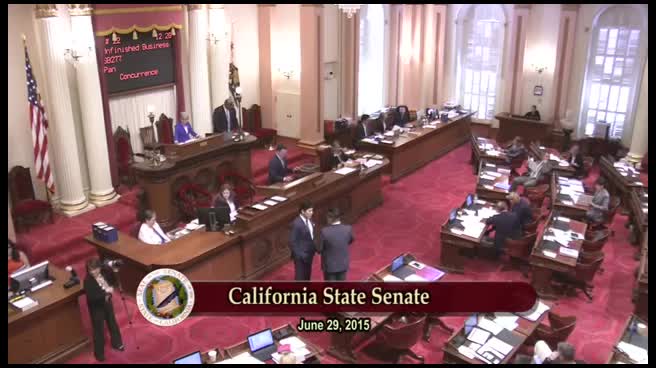


Bill Co-Author(s):