AB 1436: In-home supportive services: authorized representative.
- Session Year: 2015-2016
- House: Assembly
- Latest Version Date: 2015-10-09
Existing law provides for the In-Home Supportive Services (IHSS) program, under which qualified aged, blind, or disabled persons are provided with supportive services in order to permit them to remain in their own homes and avoid institutionalization. Existing law specifies that supportive services include, among other things, domestic services, personal care services, and paramedical services that make it possible for the recipient to establish and maintain an independent living arrangement.
This bill would authorize an applicant for, or recipient of, in-home supportive services to designate an individual to act as his or her authorized representative for purposes of the IHSS program. The bill would define authorized representative to mean an individual who is designated in writing, on a form developed by the State Department of Social Services, by an applicant or recipient to accompany, assist, and represent the applicant or recipient for specified purposes related to the program. The bill would require the form to specify the responsibilities to be performed by the authorized representative and to provide that the designation may be changed or revoked at any time by the applicant or recipient. The bill would also provide that the authorized representative has the responsibility to act in the applicant or recipients best interest. The bill would exclude certain persons from serving as an authorized representative, including a person who is prohibited from being a provider of services following a conviction for, or incarceration following a conviction for, fraud against a government health care or supportive services program. The bill would require the department, in consultation with specified parties, including representatives of applicants for, and recipients of, services, to develop a form for this purpose, as specified. The bill would require a county to retain the original form that designates an authorized representative in the applicant or recipients IHSS case file, and to provide copies of the form to the applicant or recipient and to the authorized representative. By creating additional duties for local officials, the bill would impose a state-mandated local program. The bill would authorize the department to implement and administer these provisions through all-county letters or similar instructions until regulations are adopted, and would require the department to, no later than July 1, 2016, adopt emergency regulations.
The California Constitution requires the state to reimburse local agencies and school districts for certain costs mandated by the state. Statutory provisions establish procedures for making that reimbursement.
This bill would provide that, if the Commission on State Mandates determines that the bill contains costs mandated by the state, reimbursement for those costs shall be made pursuant to these statutory provisions.
Existing law provides for the In-Home Supportive Services (IHSS) program, under which qualified aged, blind, or disabled persons are provided with supportive services in order to permit them to remain in their own homes and avoid institutionalization. Existing law specifies that supportive services include, among other things, domestic services, personal care services, and paramedical services that make it possible for the recipient to establish and maintain an independent living arrangement.
This bill would authorize an applicant for, or recipient of, in-home supportive services to designate an individual to act as his or her authorized representative for purposes of the IHSS program. The bill would define an authorized representative authorized representative to mean an individual who is designated in writing, on a form developed by the State Department of Social Services, by an applicant or recipient to accompany, assist, and represent the applicant or recipient for specified purposes related to the program. The bill would require the form to specify the responsibilities to be performed by the authorized representative and to provide that the designation may be changed or revoked at any time by the applicant or recipient. The bill would also provide that the authorized representative has the responsibility to act in the applicant or recipients best interest. The bill would exclude certain persons from serving as an authorized representative, including a person who is prohibited from being a provider of services following a conviction for, or incarceration following a conviction for, fraud against a government health care or supportive services program. The bill would require the department, in consultation with specified parties, including representatives of applicants for, and recipients of, services, to develop a form for this purpose, as specified. The bill would require a county to retain the original form that designates an authorized representative in the applicant or recipients IHSS case file, and to provide copies of the form to the applicant or recipient and to the authorized representative. By creating additional duties for local officials, the bill would impose a state-mandated local program. The bill would authorize the department to implement and administer these provisions through all-county letters or similar instructions until regulations are adopted, and would require the department to, no later than July 1, 2016, adopt emergency regulations.
The California Constitution requires the state to reimburse local agencies and school districts for certain costs mandated by the state. Statutory provisions establish procedures for making that reimbursement.
This bill would provide that, if the Commission on State Mandates determines that the bill contains costs mandated by the state, reimbursement for those costs shall be made pursuant to these statutory provisions.
Existing law provides for the In-Home Supportive Services (IHSS) program, under which qualified aged, blind, or disabled persons are provided with supportive services in order to permit them to remain in their own homes and avoid institutionalization. Existing law specifies that supportive services include, among other things, domestic services, personal care services, and paramedical services that make it possible for the recipient to establish and maintain an independent living arrangement.
This bill would authorize an applicant for, or recipient of, in-home supportive services to designate an individual to act as his or her authorized representative for purposes of the In-Home Supportive Services IHSS program. The bill would define an authorized representative to mean an individual who is appointed designated in writing, on a form designated developed by the State Department of Social Services, by a competent person who is an applicant for or recipient of in-home supportive services, to act in place or on behalf of the applicant or recipient for purposes related to the program, including, but not limited to, accompanying, assisting, or representing the applicant in the application process, or the recipient in directing the services received, as specified. to accompany, assist, and represent the applicant or recipient for specified purposes related to the program. The bill would require the duties to be provided form to specify the responsibilities to be performed by the authorized representative to be specified by the applicant or recipient and would and to provide that those duties the designation may be changed or revoked at any time by the applicant or recipient. The bill would also provide that the authorized representative has a legal the responsibility to act in the clients applicant or recipients best interest. The bill would exclude certain persons from serving as an authorized representative, including a person who is found to have perpetrated a substantiated report of abuse or neglect against a child or an elder or dependent adult. prohibited from being a provider of services following a conviction for, or incarceration following a conviction for, fraud against a government health care or supportive services program. The bill would require the department, in consultation with specified parties, including representatives of applicants for, and recipients of, services, to develop a form for this purpose, as specified. The bill would require a county to retain the original form that designates an authorized representative in the applicant or recipients IHSS case file, and to provide copies of the form to the applicant or recipient and to the authorized representative. By creating additional duties for local officials, the bill would impose a state-mandated local program. The bill would authorize the department to implement and administer these provisions through all-county letters or similar instructions until regulations are adopted, and would require the department to, no later than July 1, 2016, adopt emergency regulations.
The California Constitution requires the state to reimburse local agencies and school districts for certain costs mandated by the state. Statutory provisions establish procedures for making that reimbursement.
This bill would provide that, if the Commission on State Mandates determines that the bill contains costs mandated by the state, reimbursement for those costs shall be made pursuant to these statutory provisions.
Existing law provides for the In-Home Supportive Services program, under which qualified aged, blind, or disabled persons are provided with supportive services in order to permit them to remain in their own homes and avoid institutionalization. Existing law specifies that supportive services include, among other things, domestic services, personal care services, and paramedical services that make it possible for the recipient to establish and maintain an independent living arrangement.
This bill would authorize an applicant for, or recipient of, in-home supportive services to designate an individual to act as his or her authorized representative for purposes of the In-Home Supportive Services program. The bill would define an authorized representative to mean an individual who is appointed in writing, on a form designated by the State Department of Social Services, by a competent person who is an applicant for or recipient of in-home supportive services, to act in place or on behalf of the applicant or recipient for purposes related to the program, including, but not limited to, accompanying, assisting, or representing the applicant in the application process, or the recipient in directing the services received, as specified. The bill would require the duties to be provided by the authorized representative to be specified by the applicant or recipient and would provide that those duties may be changed or revoked at any time by the applicant or recipient. The bill would also provide that the authorized representative has a legal responsibility to act in the clients best interest. The bill would exclude certain persons from serving as an authorized representative, including a person who is found to have perpetrated a substantiated report of abuse or neglect against a child or an elder or dependent adult. The bill would require the department, in consultation with specified parties, including representatives of applicants for, and recipients of, services, to develop a form for this purpose, as specified.
(a)For purposes of this section, authorized representative means an individual who is designated in writing, on a form developed by the department, by an applicant for or recipient of in-home supportive services pursuant to this article, to accompany, assist, and represent the applicant or recipient for purposes related to the program, including, but not limited to, the application process, direction of services, and redetermination of eligibility.
(b)An applicant or recipient may designate an individual to act as his or her authorized representative for the purposes described in subdivision (a) on a form that does all of the following:
(1)Specifies an effective time period, to be determined by the department.
(2)Specifies the responsibilities to be performed by the authorized representative.
(3)May be revoked or changed by the applicant or recipient at any time.
(c)The authorized representative designation pursuant to this section shall not authorize representation for an administrative hearing conducted by the department. An applicant or recipient shall comply with Section 10950 to designate an authorized representative for the purposes of an administrative hearing.
(d)The authorized representative shall have the responsibility to act in the applicant or recipients best interest, shall not have any other power to act on behalf of the applicant or recipient, except as specified in writing pursuant to this section, and shall not act in lieu of the applicant or recipient.
(e)(1)An applicant or recipient who has a legal representative with the legal authority to act on behalf of the applicant or recipient that includes decisionmaking authority for purposes reasonably believed to be related to the program, as described in subdivision (a), shall not be required to complete an authorized representative form, except for the purpose specified in subdivision (g).
(2)A legal representative may designate an authorized representative for the applicant or recipient in accordance with the requirements of this section.
(3)For purposes of this subdivision, a legal representative shall include both of the following:
(A)A court-appointed guardian or conservator.
(B)For an applicant or recipient who is a minor, a parent or other individual determined by the county human services agency to be the legally authorized decisionmaker for the applicant or recipient.
(f)(1)The following individuals shall not serve as an authorized representative for an applicant or recipient:
(A)An individual who is prevented from being a provider of services pursuant to Section 12305.81.
(B)An individual who is prevented from being a provider of services pursuant to Section 12305.87.
(2)The prohibitions described in paragraph (1) shall not apply to an individual described in subdivision (e).
(g)An authorized representative may sign timesheets or other provider-related documents for in-home supportive services on behalf of the recipient, if specified by the recipient on the authorized representative form. Notwithstanding any other law, an authorized representative who is a provider of services for the recipient may not sign his or her own timesheet on behalf of the recipient unless the authorized representative is an individual specified in subdivision (e). For administrative processing purposes, a legal representative specified in subdivision (e) shall complete an authorized representative form to sign timesheets or other provider-related documents for in-home supportive services on behalf of the recipient.
(h)(1)The department, in consultation with the State Department of Health Care Services, the County Welfare Directors Association of California, representatives of applicants for and recipients of services under this article, and representatives of providers of services under this article, shall develop a standardized statewide form and procedures for effectuating the designation of an authorized representative pursuant to this section.
(2)The standard agreement form shall include a notification regarding the requirements of this subdivision and a statement that by signing the agreement, the individual designated as an authorized representative agrees to abide by those requirements.
(i)When an applicant or recipient designates an authorized representative on the authorized representative form, the county shall retain the original form in the applicant or recipients in-home supportive services case file. The form may be electronically retained. The county shall provide copies of the form to the applicant or recipient and to the individual designated as the authorized representative.
(j)(1)Notwithstanding the rulemaking provisions of the Administrative Procedure Act (Chapter 3.5 (commencing with Section 11340) of Part 1 of Division 3 of Title 2 of the Government Code), the department may implement and administer this section through all-county letters or similar instructions from the department until regulations are adopted. The department shall adopt emergency regulations implementing these provisions no later than July 1, 2016. The department may readopt any emergency regulation authorized by this section that is the same as or substantially equivalent to an emergency regulation previously adopted under this section.
(2)The initial adoption of emergency regulations pursuant to this section and one readoption of emergency regulations shall be deemed an emergency and necessary for the immediate preservation of the public peace, health, safety, or general welfare. Initial emergency regulations and the one readoption of emergency regulations authorized by this section shall be exempt from review by the Office of Administrative Law. The initial emergency regulations and the one readoption of emergency regulations authorized by this section shall be submitted to the Office of Administrative Law for filing with the Secretary of State, and each shall remain in effect for no more than 180 days, by which time final regulations may be adopted.
SEC. 2.If the Commission on State Mandates determines that this act contains costs mandated by the state, reimbursement to local agencies and school districts for those costs shall be made pursuant to Part 7 (commencing with Section 17500) of Division 4 of Title 2 of the Government Code.
(a)For purposes of this section, an authorized representative means an individual who is designated in writing, on a form developed by the department, by an applicant for or recipient of in-home supportive services pursuant to this article, to accompany, assist, and represent the applicant or recipient for purposes related to the program, including, but not limited to, the application process, direction of services, and predeterminations redetermination of eligibility.
(b)An applicant or recipient may designate an individual to act as his or her authorized representative for the purposes described in subdivision (a) on a form that does all of the following:
(1)Specifies an effective time period, to be determined by the department.
(2)Specifies the responsibilities to be performed by the authorized representative.
(3)May be revoked or changed by the applicant or recipient at any time.
(c)The authorized representative designation pursuant to this section shall not authorize representation for an administrative hearing conducted by the department. An applicant or recipient shall comply with Section 10950 to designate an authorized representative for the purposes of an administrative hearing.
(d)The authorized representative shall have the responsibility to act in the applicant or recipients best interest, shall not have any other power to act on behalf of the applicant or recipient, except as specified in writing pursuant to this section, and shall not act in lieu of the applicant or recipient.
(e)(1)An applicant or recipient who has a legal representative with the legal authority to act on behalf of the applicant or recipient that includes decisionmaking authority for purposes reasonably believed to be related to the program, as described in subdivision (a), shall not be required to complete an authorized representative form, except for the purpose specified in subdivision (g).
(2)A legal representative may designate an authorized representative for the applicant or recipient in accordance with the requirements of this section.
(3)For purposes of this subdivision, a legal representative shall include both of the following:
(A)A court-appointed guardian or conservator.
(B)For an applicant or recipient who is a minor, a parent or other individual determined by the county human services agency to be the legally authorized decisionmaker for the applicant or recipient.
(f)(1)The following individuals shall not serve as an authorized representative for an applicant or recipient:
(A)An individual who is prevented from being a provider of services pursuant to Section 12305.81.
(B)An individual who is prevented from being a provider of services pursuant to Section 12305.87.
(2)The prohibitions described in paragraph (1) shall not apply to an individual described in subdivision (e).
(g)An authorized representative may sign timesheets or other provider-related documents for in-home supportive services on behalf of the recipient, if specified by the recipient on the authorized representative form. Notwithstanding any other law, an authorized representative who is a provider of services for the recipient may not sign his or her own timesheet on behalf of the recipient unless the authorized representative is an individual specified in subdivision (e). For administrative processing purposes, a legal representative specified in subdivision (e) shall complete an authorized representative form to sign timesheets or other provider-related documents for in-home supportive services on behalf of the recipient.
(h)(1)The department, in consultation with the State Department of Health Care Services, the County Welfare Directors Association of California, representatives of applicants for and recipients of services under this article, and representatives of providers of services under this article, shall develop a standardized statewide form and procedures for effectuating the designation of an authorized representative pursuant to this section.
(2)The standard agreement form shall include a notification regarding the requirements of this subdivision and a statement that by signing the agreement, the individual designated as an authorized representative agrees to abide by those requirements.
(i)When an applicant or recipient designates an authorized representative on the authorized representative form, the county shall retain the original form in the applicant or recipients in-home supportive services case file. The form may be electronically retained. The county shall provide copies of the form to the applicant or recipient and to the individual designated as the authorized representative.
(j)(1)Notwithstanding the rulemaking provisions of the Administrative Procedure Act (Chapter 3.5 (commencing with Section 11340) of Part 1 of Division 3 of Title 2 of the Government Code), the department may implement and administer this section through all-county letters or similar instructions from the department until regulations are adopted. The department shall adopt emergency regulations implementing these provisions no later than July 1, 2016. The department may readopt any emergency regulation authorized by this section that is the same as or substantially equivalent to an emergency regulation previously adopted under this section.
(2)The initial adoption of emergency regulations pursuant to this section and one readoption of emergency regulations shall be deemed an emergency and necessary for the immediate preservation of the public peace, health, safety, or general welfare. Initial emergency regulations and the one readoption of emergency regulations authorized by this section shall be exempt from review by the Office of Administrative Law. The initial emergency regulations and the one readoption of emergency regulations authorized by this section shall be submitted to the Office of Administrative Law for filing with the Secretary of State, and each shall remain in effect for no more than 180 days, by which time final regulations may be adopted.
SEC. 2.If the Commission on State Mandates determines that this act contains costs mandated by the state, reimbursement to local agencies and school districts for those costs shall be made pursuant to Part 7 (commencing with Section 17500) of Division 4 of Title 2 of the Government Code.
(a)For purposes of this section, an authorized representative means an individual who is designated in writing, on a form developed by the department, by an applicant for or recipient of in-home supportive services pursuant to this article, to accompany, assist, and represent the applicant or recipient for purposes related to the program, including, but not limited to, the application process, direction of services, and predeterminations of eligibility.
(b)An applicant or recipient may designate an individual to act as his or her authorized representative for the purposes described in subdivision (a) on a form that does all of the following:
(1)Specifies an effective time period, to be determined by the department.
(2)Specifies the responsibilities to be performed by the authorized representative.
(3)May be revoked or changed by the applicant or recipient at any time.
(c)The authorized representative designation pursuant to this section shall not authorize representation for an administrative hearing conducted by the department. An applicant or recipient shall comply with Section 10950 to designate an authorized representative for the purposes of an administrative hearing.
(d)The authorized representative shall have the responsibility to act in the applicant or recipients best interest, shall not have any other power to act on behalf of the applicant or recipient, except as specified in writing pursuant to this section, and shall not act in lieu of the applicant or recipient.
(e)(1)An applicant or recipient who has a legal representative with the legal authority to act on behalf of the applicant or recipient that includes decisionmaking authority for purposes reasonably believed to be related to the program, as described in subdivision (a), shall not be required to complete an authorized representative form, except for the purpose specified in subdivision (g).
(2)A legal representative may designate an authorized representative for the applicant or recipient in accordance with the requirements of this section.
(3)For purposes of this subdivision, a legal representative shall include both of the following:
(A)A court-appointed guardian or conservator.
(B)For an applicant or recipient who is a minor, a parent or other individual determined by the county human services agency to be the legally authorized decisionmaker for the applicant or recipient.
(f)(1)The following individuals shall not serve as an authorized representative for an applicant or recipient:
(A)An individual who is prevented from being a provider of services pursuant to Section 12305.81.
(B)An individual who is prevented from being a provider of services pursuant to Section 12305.87.
(2)The prohibitions described in paragraph (1) shall not apply to an individual described in subdivision (e).
(g)An authorized representative may sign timesheets or other provider-related documents for in-home supportive services on behalf of the recipient, if specified by the recipient on the authorized representative form. Notwithstanding any other law, an authorized representative who is a provider of services for the recipient may not sign his or her own timesheet on behalf of the recipient unless the authorized representative is an individual specified in subdivision (e). For administrative processing purposes, a legal representative specified in subdivision (e) shall complete an authorized representative form to sign timesheets or other provider-related documents for in-home supportive services on behalf of the recipient.
(h)(1)The department, in consultation with the State Department of Health Care Services, the County Welfare Directors Association of California, representatives of applicants for and recipients of services under this article, and representatives of providers of services under this article, shall develop a standardized statewide form and procedures for effectuating the designation of an authorized representative pursuant to this section.
(2)The standard agreement form shall include a notification regarding the requirements of this subdivision and a statement that by signing the agreement, the individual designated as an authorized representative agrees to abide by those requirements.
(i)When an applicant or recipient designates an authorized representative on the authorized representative form, the county shall retain the original form in the applicant or recipients in-home supportive services case file. The form may be electronically retained. The county shall provide copies of the form to the applicant or recipient and to the individual designated as the authorized representative.
(j)(1)Notwithstanding the rulemaking provisions of the Administrative Procedure Act (Chapter 3.5 (commencing with Section 11340) of Part 1 of Division 3 of Title 2 of the Government Code), the department may implement and administer this section through all-county letters or similar instructions from the department until regulations are adopted. The department shall adopt emergency regulations implementing these provisions no later than July 1, 2016. The department may readopt any emergency regulation authorized by this section that is the same as or substantially equivalent to an emergency regulation previously adopted under this section.
(2)The initial adoption of emergency regulations pursuant to this section and one readoption of emergency regulations shall be deemed an emergency and necessary for the immediate preservation of the public peace, health, safety, or general welfare. Initial emergency regulations and the one readoption of emergency regulations authorized by this section shall be exempt from review by the Office of Administrative Law. The initial emergency regulations and the one readoption of emergency regulations authorized by this section shall be submitted to the Office of Administrative Law for filing with the Secretary of State, and each shall remain in effect for no more than 180 days, by which time final regulations may be adopted.
SEC. 2.If the Commission on State Mandates determines that this act contains costs mandated by the state, reimbursement to local agencies and school districts for those costs shall be made pursuant to Part 7 (commencing with Section 17500) of Division 4 of Title 2 of the Government Code.
SECTION 1.Section 12300.3 is added to the Welfare and Institutions Code, to read:12300.3.(a)For purposes of this section, an authorized representative means an individual who is appointed in writing, on a form designated by the department, by a competent person who is an applicant for or recipient of in-home supportive services pursuant to this article, to act in place or on behalf of the applicant or recipient for purposes related to the program, including, but not limited to, accompanying, assisting, or representing the applicant in the application process, or the recipient in directing the services received, and in the redetermination of eligibility process.
(b)(1)An applicant for, or recipient of, services pursuant to this article may designate an individual to act as his or her authorized representative for purposes of the in-home supportive services program.
(2)(A)The duties to be provided by the authorized representative shall be specified by the applicant or recipient and may be changed or revoked at any time by the applicant or recipient. The authorized representative shall have a legal responsibility to act in the clients best interest.
(B)Legal documentation of authority to act on behalf of the applicant or recipient under state law, including, but not limited to, a court order establishing legal guardianship or a valid power of attorney to make health care decisions, shall serve in place of a written appointment by the applicant or recipient.
(C)The authorized representative may sign timesheets for services rendered on the recipients behalf, if specified to do so by the recipient. However, an authorized representative who is the provider of services for the recipient may not sign his or her own timesheet unless one of the following applies:
(i)The provider is a parent, guardian, or other person having legal custody of a minor recipient.
(ii)The provider is legally authorized to act on behalf of the applicant or recipient under state law.
(3)For purposes of this section, an individual having legal authority to act on behalf of an applicant or recipient may also specify an individual other than himself or herself to act on behalf of the applicant or recipient if that individual elects to do so.
(4)An individual who is prevented from being a provider of services in the program pursuant to Section 12305.86 shall not serve as an authorized representative for an applicant or recipient.
(5)An individual who has been granted an exemption to serve as a provider of services pursuant to Section 12305.87 and who is not described in clause (i) or (ii) of subparagraph (C) of paragraph (2), shall not serve as an authorized representative for an applicant or recipient.
(6)An individual shall not serve as an authorized representative if he or she is found to have perpetrated a substantiated report of abuse or neglect against a child or an elder or dependent adult.
(c)(1)The department, in consultation with the State Department of Health Care Services, the County Welfare Directors Association of California, representatives of applicants for and recipients of services under this article, and representatives of providers of services under this article, shall develop a standardized statewide form and procedures for effectuating the designation of an authorized representative pursuant to this section.
(2)The standard agreement form shall include a notification regarding the requirements of this subdivision and a statement that by signing the agreement, the individual named as an authorized representative agrees to abide by those requirements.
(a)For purposes of this section, an authorized representative means an individual who is appointed in writing, on a form designated by the department, by a competent person who is an applicant for or recipient of in-home supportive services pursuant to this article, to act in place or on behalf of the applicant or recipient for purposes related to the program, including, but not limited to, accompanying, assisting, or representing the applicant in the application process, or the recipient in directing the services received, and in the redetermination of eligibility process.
(b)(1)An applicant for, or recipient of, services pursuant to this article may designate an individual to act as his or her authorized representative for purposes of the in-home supportive services program.
(1)
(2)(A)The duties to be provided by the authorized representative shall be specified by the applicant or recipient and may be changed or revoked at any time by the applicant or recipient. The authorized representative shall have a legal responsibility to act in the clients best interest.
(B)Legal documentation of authority to act on behalf of the applicant or recipient under state law, including, but not limited to, a court order establishing legal guardianship or a valid power of attorney to make health care decisions, shall serve in place of a written appointment by the applicant or recipient.
(C)The authorized representative may sign timesheets for services rendered on the recipients behalf, if specified to do so by the recipient. However, an authorized representative who is the provider of services for the recipient may not sign his or her own timesheet unless one of the following applies:
(i)The provider is a parent, guardian, or other person having legal custody of a minor recipient.
(ii)The provider is legally authorized to act on behalf of the applicant or recipient under state law.
(2)
(3)For purposes of this section, an individual having legal authority to act on behalf of an applicant or recipient may also designate the authorized representative to specify an individual other than himself or herself to act on behalf of the applicant or recipient if that individual elects to do so.
(3)
(4)An individual who is prevented from being a provider of services in the program pursuant to Section 12305.86 shall not serve as an authorized representative for an applicant or recipient.
(4)
(5)An individual who has been granted an exemption to serve as a provider of services pursuant to Section 12305.87 and who is not described in clause (i) or (ii) of subparagraph (C) of paragraph (1), (2), shall not serve as an authorized representative for an applicant or recipient.
(5)
(6)An individual shall not serve as an authorized representative if he or she is found to have perpetrated a substantiated report of abuse or neglect against a child or an elder or dependent adult.
(c)(1)The department, in consultation with the State Department of Health Care Services, the County Welfare Directors Association of California, representatives of applicants for and recipients of services under this article, and representatives of providers of services under this article, shall develop a standardized statewide form and procedures for effectuating the designation of an authorized representative pursuant to this section.
(2)The standard agreement form shall include a notification regarding the requirements of this subdivision and a statement that by signing the agreement, the individual named as an authorized representative agrees to abide by those requirements.
(a)For purposes of this section, an authorized representative means an individual who is appointed in writing, on a form designated by the department, by a competent person who is an applicant for or recipient of in-home supportive services pursuant to this article, to act in place or on behalf of the applicant or recipient for purposes related to the program, including, but not limited to, accompanying, assisting, or representing the applicant in the application process, or the recipient in directing the services received, and in the redetermination of eligibility process.
(b)An applicant for, or recipient of, services pursuant to this article may designate an individual to act as his or her authorized representative for purposes of the in-home supportive services program.
(1)(A)The duties to be provided by the authorized representative shall be specified by the applicant or recipient and may be changed or revoked at any time by the applicant or recipient. The authorized representative shall have a legal responsibility to act in the clients best interest.
(B)Legal documentation of authority to act on behalf of the applicant or recipient under state law, including, but not limited to, a court order establishing legal guardianship or a valid power of attorney to make health care decisions, shall serve in place of a written appointment by the applicant or recipient.
(C)The authorized representative may sign timesheets for services rendered on the recipients behalf, if specified to do so by the recipient. However, an authorized representative who is the provider of services for the recipient may not sign his or her own timesheet unless one of the following applies:
(i)The provider is a parent, guardian, or other person having legal custody of a minor recipient.
(ii)The provider is legally authorized to act on behalf of the applicant or recipient under state law.
(2)For purposes of this section, an individual having legal authority to act on behalf of an applicant or recipient may also designate the authorized representative to specify an individual other than himself or herself to act on behalf of the applicant or recipient if that individual elects to do so.
(3)An individual who is prevented from being a provider of services in the program pursuant to Section 12305.86 shall not serve as an authorized representative for an applicant or recipient.
(4)An individual who has been granted an exemption to serve as a provider of services pursuant to Section 12305.87 and who is not described in clause (i) or (ii) of subparagraph (C) of paragraph (1), shall not serve as an authorized representative for an applicant or recipient.
(5)An individual shall not serve as an authorized representative if he or she is found to have perpetrated a substantiated report of abuse or neglect against a child or an elder or dependent adult.
(c)(1)The department, in consultation with the State Department of Health Care Services, the County Welfare Directors Association of California, representatives of applicants for and recipients of services under this article, and representatives of providers of services under this article, shall develop a standardized statewide form and procedures for effectuating the designation of an authorized representative pursuant to this section.
(2)The standard agreement form shall include a notification regarding the requirements of this subdivision and a statement that by signing the agreement, the individual named as an authorized representative agrees to abide by those requirements.
|
Date
|
Status
|
|---|---|
| Jul 6, 2015 | In committee: Referred to APPR. suspense file. |
| Oct 9, 2015 | Chaptered by Secretary of State - Chapter 707, Statutes of 2015. |
| Oct 9, 2015 | Approved by the Governor. |
| Sep 23, 2015 | Enrolled and presented to the Governor at 4 p.m. |
| Sep 11, 2015 | Senate amendments concurred in. To Engrossing and Enrolling. (Ayes 78. Noes 0.). |
| Sep 11, 2015 | Senate amendments concurred in. To Engrossing and Enrolling. (Ayes 78. Noes 0. Page 3153.). |
| Sep 11, 2015 | Senate amendments concurred in. To Engrossing and Enrolling. |
| Sep 10, 2015 | Read third time. Passed. Ordered to the Assembly. (Ayes 40. Noes 0. Page 2694.). |
| Sep 10, 2015 | Read third time. Passed. Ordered to the Assembly. |
| Sep 10, 2015 | In Assembly. Concurrence in Senate amendments pending. |
| Sep 8, 2015 | Read second time. Ordered to third reading. |
| Sep 4, 2015 | Read third time and amended. Ordered to second reading. |
| Aug 31, 2015 | Read second time and amended. Ordered to third reading. |
| Aug 27, 2015 | From committee: Amend, and do pass as amended. (Ayes 7. Noes 0.) (August 27). |
| Feb 27, 2015 | Introduced. To print. |
| Jun 23, 2015 | From committee: Do pass and re-refer to Com. on APPR. with recommendation: To Consent Calendar. (Ayes 5. Noes 0.) (June 23). Re-referred to Com. on APPR. |
| Jun 4, 2015 | Referred to Com. on HUMAN S. |
| May 26, 2015 | Read third time. Passed. Ordered to the Senate. (Ayes 76. Noes 0. Page 1596.) |
| May 26, 2015 | Read third time. Passed. Ordered to the Senate. |
| May 26, 2015 | In Senate. Read first time. To Com. on RLS. for assignment. |
| May 21, 2015 | Read second time. Ordered to Consent Calendar. |
| May 20, 2015 | From committee: Do pass. To Consent Calendar. (Ayes 15. Noes 0.) (May 20). |
| May 7, 2015 | Re-referred to Com. on APPR. |
| May 6, 2015 | Read second time and amended. |
| May 5, 2015 | From committee: Amend, and do pass as amended and re-refer to Com. on APPR. with recommendation: To Consent Calendar. (Ayes 7. Noes 0.) (April 28). |
| Mar 26, 2015 | Referred to Com. on HUM. S. |
| Mar 2, 2015 | Read first time. |
| Mar 1, 2015 | From printer. May be heard in committee March 31. |
|
Date
|
Description
|
Location
|
Votes
|
|
|---|---|---|---|---|
| Sep 11, 2015 | AB 1436 BURKE Concurrence in Senate Amendments | Assembly Floor |
Passed |
|
| Sep 10, 2015 | Assembly 3rd Reading AB1436 Burke By McGuire | Senate Floor |
Passed |
|
| Aug 27, 2015 | Do pass as amended | Senate Standing Committee on Appropriations |
Passed |
|
| Jul 6, 2015 | Placed on suspense file | Senate Standing Committee on Appropriations |
Passed |
|
| Jun 23, 2015 | Do pass, but first be re-referred to the Committee on [Appropriations] with the recommendation: To Consent Calendar | Senate Standing Committee on Human Services |
Passed |
|
| May 26, 2015 | AB 1436 BURKE Consent Calendar Second Day Regular Session | Assembly Floor |
Passed |
|
| May 20, 2015 | Do pass. To Consent Calendar. | Assembly Standing Committee on Appropriations |
Passed |
|
| Apr 28, 2015 | Do pass as amended, and be re-referred to the Committee on [Appropriations] with recommendation: To Consent Calendar | Assembly Standing Committee on Human Services |
Passed |
This list shows positions taken on this bill by organizations on the date displayed, which is linked to the original source.
Positions by individuals are not included.
|
Organization
|
Position
|
Date
|
|---|---|---|
| AFSCME Local 3930 | ** Support | Sep 10, 2015 |
| Alameda County Board of Supervisors | ** Support | Sep 10, 2015 |
| Board of Supervisors of Contra Coast County | ** Support | Sep 10, 2015 |
| California Association of Public Authorities | ** Support | Sep 10, 2015 |
| California State Association Of Counties | ** Support | Sep 10, 2015 |
| County of Marin | * Indeterminate | Jul 6, 2015 |
| County of Santa Cruz Board of Supervisors | ** Support | Sep 10, 2015 |
| County Welfare Directors Association of California | ** Support | Sep 10, 2015 |
| Rural Counties Representatives of California | ** Support | Sep 10, 2015 |
| San Francisco Human Services Agency | ** Support | Sep 10, 2015 |
| Santa Cruz County Board of Supervisors | ** Support | Sep 10, 2015 |
| Stanislaus County, Community Services Agency | ** Support | Sep 10, 2015 |
| Tehama County Department of Social Services | ** Support | Sep 10, 2015 |
| Ventura County Board of Supervisors | ** Support | Sep 10, 2015 |
AB 1436
Page 4
CONCURRENCE IN SENATE AMENDMENTS
AB 1436
(Burke)
As Amended September 4, 2015
Majority vote
ASSEMBLY: |
76-0 |
(May 26, 2015) |
SENATE: |
40-0 |
(September 10, 2015) |
Original Committee Reference: HUM. S.
SUMMARY: Allows In-Home Supportive Services applicants and recipients to designate an authorized representative. Specifically, this bill:
Defines "authorized representative" to mean an individual who is appointed by an In-Home Supportive Services (IHSS) applicant or recipient in order to represent that applicant or recipient for purposes related to the IHSS program, as specified.
Allows an IHSS applicant or recipient to designate an authorized representative for specified purposes on a form that, among other things, specifies an effective time period determined by the department.
Requires the county to retain the authorized representative form in the applicant or recipient's case file, as specified.
Specifies that an IHSS applicant or recipient shall determine the duties to be provided by the authorized representative and that these duties may be changed or revoked at any time by the applicant or recipient.
Prohibits the authorized representative designation from authorizing representation at an administrative hearing conducted by the department.
Requires the authorized representative to have a responsibility to act in the client's best interest, and prohibits him or her from having any other power to act on behalf of the applicant or recipient, except as specified, and prohibits the representative from acting in lieu of the applicant or recipient.
Exempts an applicant's or recipient's legal representative with the legal authority to act on behalf of the applicant or recipient, as specified, from the requirement to complete an authorized representative form.
Permits a legal representative to designate an authorized representative for an applicant or recipient, as specified.
Prohibits anyone, except for a legal representative as specified, prevented from being an IHSS provider due to past criminal convictions, as well as individuals granted certain exemptions to serve as a provider despite past criminal convictions, as specified, from serving as an authorized representative.
Permits the authorized representative, if so instructed by the IHSS recipient, to sign timesheets for services rendered on behalf of the recipient, but disallows the authorized representative who is a care provider from signing his or her own timesheet unless the provider has legal authority, as specified.
Directs the Department of Social Services (DSS), in consultation with stakeholders, as specified, to develop a standardized statewide form, as specified, and procedures related to the designation of an authorized representative.
Allows DSS to implement and administer the provisions of authorized representatives through all-county letters or similar instructions until regulations are adopted.
The Senate amendments:
Prohibit the authorized representative designation from authorizing representation at an administrative hearing conducted by the department.
Remove the prohibition on an individual becoming an authorized representative if he or she has been found to have perpetrated a substantiated report of abuse or neglect against of child or an elder or dependent adult.
Make other technical amendments.
EXISTING LAW:
Establishes the IHSS program to provide supportive services, including domestic, protective supervision, personal care, and paramedical services as specified, to individuals who are aged, blind, or living with disabilities, and who are unable to perform the services themselves or remain safely in their homes without receiving these services. (Welfare and Institutions Code (WIC) Section 12300 et seq.)
Specifies requirements regarding IHSS provider timesheets, including that both provider and recipient must sign the timesheet to verify the accuracy of information. (WIC Section 12301.25)
Authorizes counties to contract with a nonprofit consortium or establish a public authority for the provision of IHSS services. Requires nonprofit consortia and public authorities to, among other things, establish a registry to assist recipients in locating IHSS providers, and to investigate the background and qualifications of potential providers, as specified. (WIC Section 12301.6)
Maintains an IHSS recipient’s right to hire, fire, and supervise the work of any IHSS provider, regardless of the employer responsibilities of a public authority or nonprofit consortium, as specified. (WIC Sections 12301.6 and 12302.25)
Requires counties to perform a background check on individuals applying to become IHSS providers, and stipulates circumstances under which individuals shall be excluded from becoming an IHSS provider, as well as circumstances under which such an exclusion might be waived, as specified. (WIC Sections 12305.86 and 12305.87)
FISCAL EFFECT: According to the Senate Appropriations Committee, this bill may result in the following costs:
One-time costs potentially in excess of $50,000 (General Fund) to DSS to develop and adopt regulations. One-time costs to develop the standardized statewide form are estimated to be minor.
Potential increase in IHSS administrative costs (Federal Fund/General Fund) for counties to review agreement forms, verify eligibility of authorized representatives for cases not requiring a written appointment, and potentially issue additional notices similar to the process in the Medi-Cal program.
Potential increase in IHSS program costs (Federal Fund/General Fund) related to more successful enrollment and provision of services from assistance in the application and redetermination process, to the extent representatives are able to better represent and/or communicate the actual needs of applicants and recipients. Increases in IHSS program costs could be offset in whole or in part to the extent individuals would have otherwise not been able to remain in their own homes but would require more costly facility care.
COMMENTS:
In-Home Supportive Services: The IHSS program enables low-income individuals who are at least 65 years old, living with disabilities, or blind to remain in their own homes by paying for care providers to assist with personal care services (such as toileting, bathing, and grooming), domestic and related services (meal preparation, housecleaning, and the like), paramedical services, and protective supervision. Approximately 470,000 Californians receive IHSS, with approximately 99% receiving it as a Medicaid benefit.
When an individual is determined eligible for IHSS services by a county social worker, he or she is authorized for a certain number of hours of care. IHSS recipients are responsible for hiring, firing, directing, and supervising their IHSS workers. These responsibilities include some administrative duties, such as scheduling and signing timesheets; however, the state handles payroll. As of April 2015, there were about 409,000 IHSS providers in the state; approximately 73% were relatives and an estimated 52% were live-in. Providers must complete an enrollment process, including submitting fingerprint images for a criminal background check and participating in a provider orientation prior to receiving payment for services.
Authorized representatives: A number of programs administered by the state allow for, and set forth definitions and designation procedures regarding, authorized representatives in order to facilitate recipients' full participation in programs. These authorized representatives are permitted, within specified limits, to act on behalf of program applicants and participants typically for purposes of applying for services and other required program activities.
For example, WIC Section 14014.5 defines "authorized representative" for purposes of the Medi-Cal program and directs the Department of Health Care Services and the California Health Benefit Exchange to implement policies and prescribe materials to ensure the protection and privacy of applicants and recipients who appoint such a representative. Additionally, DSS Manual of Policies and Procedures Section 63.402-6 outlines rules and processes regarding the appointment of authorized representatives by applicants for and recipients of CalFresh food stamp benefits.
Need for this bill: According to the author, "IHSS program recipients are the employer of their care provider for purposes of hiring/firing, training, supervising, scheduling and signing their timesheet. Similarly, whether to designate an authorized representative and who to designate would be their decision. For consumers who struggle with the maze of programmatic rules and complex paperwork, allowing them to designate an authorized representative to work on their behalf will give them the support they need to continue to direct services in their own homes and remain independent."
Analysis Prepared by: Daphne Hunt / HUM. S. / (916) 319-2089 FN: 0002379
AB 1436
Page 7
|
Office of Senate Floor Analyses (916) 651-1520 Fax: (916) 327-4478 |
THIRD READING
Bill No: AB 1436
Amended: 9/4/15 in Senate
SENATE HUMAN SERVICES COMMITTEE: 5-0, 6/23/15
AYES: McGuire, Berryhill, Hancock, Liu, Nguyen
SENATE APPROPRIATIONS COMMITTEE: 7-0, 8/27/15
AYES: Lara, Bates, Beall, Hill, Leyva, Mendoza, Nielsen
ASSEMBLY FLOOR: 76-0, 5/26/15 (Consent) - See last page for vote
SUBJECT: In-home supportive services: authorized representative
SOURCE: California Association of Public Authorities
County Welfare Directors Association of California
DIGEST: This bill allows In-Home Supportive Services (IHSS) applicants and recipients to designate an authorized representative to accompany, assist or represent an applicant in the application process, or a recipient in the direction of services, and eligibility redetermination process, as specified.
Senate Floor Amendments of 9/4/15 correct a technical error, replacing “predeterminations” with “redetermination.”
Existing law:
Establishes in state law a program of public Medi-Cal benefits to provide health care for people who lack sufficient annual income to meet the costs of health care, and whose other assets are so limited that their application toward the costs of such care would jeopardize the person or family’s future minimum self-maintenance and security. (WIC 14000 et seq.)
Establishes the IHSS program to provide domestic and other supportive services in every county, as specified, for individuals who are unable to perform the services themselves and who cannot safely remain in their homes or abodes of their own choosing unless these services are provided. (WIC 12300 et seq.)
Provides that recipients of IHSS shall retain the right to choose the individuals that provide their care and to recruit, select, train, reject, or change any provider under the contract mode or to hire, fire, train, and supervise any provider under any other mode of service. (WIC 12302.25)
This bill:
Defines “authorized representative” to mean an individual who is designated in writing, on a form developed by the California Department of Social Services (CDSS), by an IHSS applicant or recipient to accompany, assist, or represent the applicant or recipient for purposes related to the program, including, but not limited to, the application process, direction of services, and redetermination of eligibility.
Permits an IHSS applicant or recipient to designate an individual to act as an authorized representative.
Requires the form, to be developed by CDSS, to do all of the following:
Specify an effective time period, to be determined by CDSS.
Specify the responsibilities to be performed by the authorized representative.
May be revoked or changed by the applicant or recipient at any time.
Provides that the authorized representative designation pursuant to this section shall not authorize representation for an administrative hearing conducted by CDSS.
Provides that the authorized representative shall have a legal responsibility to act in the client’s best interest, and shall not have any other power to act on behalf of the applicant or recipient, except as specified.
Provides that an applicant or recipient who has legal representation, as specified, that includes decision-making authority reasonably believed to be related to the program, shall not be required to complete the authorized representative form, except for the purpose of signing timesheets.
Permits the authorized representative, if specified by the IHSS recipient, to sign timesheets or other provider-related documents on behalf of the recipient but disallows the authorized representative who is a care provider from signing his or her own timesheet unless the provider has legal authority to act on behalf of the recipient as described in #6 above.
Prohibits an individual from serving as an authorized representative who is prevented from being an IHSS provider due to specified criminal convictions, including fraud, serious or violent felonies, sex offenses, and other crimes unless that individual is a person with legal authority described in #6 above.
Directs CDSS, in consultation with the California Department of Health Care Services, the County Welfare Directors Association of California (CWDA) and specified representatives to develop a standardized statewide form and procedures for effectuating the designation of an authorized representative.
Requires the county to retain the form in the applicant or recipient’s in-home supportive services case file, as specified.
Permits CDSS to implement and administer the provisions of authorized representatives through all-county letters or similar instructions until regulations are adopted.
Background
According to the author, the authorized representative function is critical in that it provides applicants and recipients with a self-directed pathway to receive needed assistance with complex rules and requirements of these programs. IHSS program applicants and recipients may struggle with increasingly complex and changing program rules; yet, while they may have family members and friends who are able to provide support, there is no formal process to designate these individuals as authorized representatives.
Additionally, the author points out, CDSS has at times issued IHSS forms and All-County letters that reference “authorized representatives,” despite the lack of definition, explanation of duties and limitations, or formal designation process. As a result, counties have often developed ad hoc internal processes for designating authorized representatives for purposes of the IHSS program.
The author states that, “IHSS program recipients are the employer of their care provider for purposes of hiring/firing, training, supervising, scheduling and signing their timesheet. Similarly, whether to designate an authorized representative and who to designate would be their decision. For consumers who struggle with the maze of programmatic rules and complex paperwork, allowing them to designate an authorized representative to work on their behalf will give them the support they need to continue to direct services in their own homes and remain independent.”
According to CWDA, this bill creates “an authorized representative function for IHSS in statute. Whether to designate an authorized representative would be the decision of an individual recipient. Who to designate would also be his or her choice, with a few exceptions that mirror other protections in current law. As the IHSS program continues to grow, it is vital to create a standardized structure for designating an authorized representative to assist an applicant for or recipient of these services.”
IHSS program. The IHSS program is a county-administered, primarily Medi-Cal benefit, which provides low-income individuals who are aged, blind or disabled specified personal care and domestic services that allow them to remain safely in their own homes and to avoid institutionalization.
Allowable IHSS services include tasks like feeding, bathing, bowel and bladder care, meal preparation and clean-up, laundry, and paramedical care. Currently, there are approximately 470,000 recipients of IHSS statewide, and, approximately 409,000 providers. Nearly three-fourths of the providers are family members of care recipients and over half live in the home with the recipient for whom they provide services. The average provider cost is $12.62 per hour FY 15-16.
Eligibility for IHSS services is currently determined by county social workers who conduct a standardized in-home assessment, and periodic reassessments, of an individual’s ability to perform specific activities of daily living. Based on the in-home assessment, recipients may be eligible for up to 283 hours of IHSS per month; however the average assessment is for 99 hours per month.
To apply for the program, recipients must submit a three-page application and, as of 2011, must receive a certification from a licensed health care professional, as defined, declaring that the applicant or recipient is unable to perform some activities of daily living independently without which the applicant or recipient is at risk of placement in out-of-home care. The recipient must also undergo an assessment from the county social worker to determine the needs of the recipient. Once approved, recipients are responsible for hiring, firing, directing and supervising their IHSS provider or providers, and for informing CDSS of provider changes. Additionally, recipients receive frequent notifications from CDSS, some involving detailed information and instructions pertaining to eligibility and program changes. Further, recipients must comply with eligibility rederminations and unannounced home visits from county social workers intending to prevent fraud.
Authorized representatives. Existing law provides for the establishment of an authorized representative within Medi-Cal and the California Health Benefit Exchange in order to facilitate recipients’ full participation in the programs. Additionally, existing law provides for the engagement of an authorized representative for developmentally disabled individuals in accessing services, developing individual program plans and in fair hearing and appeals procedures. These authorized representatives are permitted, within specified limits, to act on behalf of program applicants and participants typically for purposes of applying for services and other required program activities. Additionally, CDSS Manual of Policies and Procedures Section 63.402-6 outlines rules and processes regarding the appointment of authorized representatives by applicants for and recipients of CalFresh food stamp benefits.
Additionally, existing statute (WIC 12300.4, 14186.35, and 12305.87) pertaining to IHSS permits an authorized representative to act as the IHSS employer for the purpose of requesting a public authority or nonprofit consortium to assist an employer in obtaining a criminal background check, to sign a criminal records exclusion waiver request, and to direct the hours of providers in certain circumstances. Numerous All-County Letters released by CDSS have referred to the ability for authorized representatives to act on behalf of recipients in a variety of ways. However, this bill provides greater specification regarding who may serve as an authorized representative and the scope of their involvement in the care of the recipient.
FISCAL EFFECT: Appropriation: No Fiscal Com.: Yes Local: Yes
According the Senate Appropriations Committee, this bill will incur one-time costs potentially in excess of $50,000 (General Fund) to CDSS to develop and adopt regulations. Additionally, one-time costs to develop the standardized statewide form are estimated to be minor. This bill potentially increases administrative costs (Federal Fund/General Fund) for counties to review agreement forms, verify eligibility of authorized representatives for IHSS cases not requiring a written appointment, and potentially issue additional notices similar to the process in the Medi-Cal program.
Further, this bill potentially increases IHSS program costs (Federal Fund/General Fund) related to more successful enrollment and provision of services from assistance in the application and redetermination process, to the extent representatives are able to better represent and/or communicate the actual needs of applicants and recipients. The analysis notes that increases in IHSS program costs could be offset in whole or in part to the extent individuals would have otherwise not been able to remain in their own homes but would require more costly facility care.
California Association of Public Authorities (co-source)
County Welfare Directors Association of California (co-source)
AFSCME
Alameda County Board of Supervisors
Board of Supervisors of Contra Coast County
California State Association of Counties
County of Santa Cruz Board of Supervisors
Rural Counties Representatives of California
San Francisco Human Services Agency
Santa Cruz County Board of Supervisors
Stanislaus County, Community Services Agency
Tehama County Department of Social Services
UWD/AFSCME Local 3930
Ventura County Board of Supervisors
None received
ASSEMBLY FLOOR: 76-0, 5/26/15
AYES: Achadjian, Alejo, Travis Allen, Baker, Bigelow, Bonilla, Bonta, Brough, Brown, Burke, Calderon, Campos, Chang, Chau, Chiu, Chu, Cooley, Cooper, Dababneh, Dahle, Daly, Dodd, Eggman, Frazier, Beth Gaines, Gallagher, Cristina Garcia, Eduardo Garcia, Gatto, Gipson, Gomez, Gonzalez, Gordon, Gray, Grove, Hadley, Roger Hernández, Holden, Irwin, Jones, Jones-Sawyer, Kim, Lackey, Levine, Linder, Lopez, Low, Maienschein, Mayes, McCarty, Medina, Melendez, Mullin, Nazarian, Obernolte, O'Donnell, Olsen, Patterson, Perea, Quirk, Rendon, Ridley-Thomas, Rodriguez, Salas, Santiago, Steinorth, Mark Stone, Thurmond, Ting, Wagner, Waldron, Weber, Wilk, Williams, Wood, Atkins
NO VOTE RECORDED: Bloom, Chávez, Harper, Mathis
Prepared by: Sara Rogers / HUMAN S. / (916) 651-1524
9/8/15 15:27:27
**** END ****
AB 1436
Page 7
|
Office of Senate Floor Analyses (916) 651-1520 Fax: (916) 327-4478 |
THIRD READING
Bill No: AB 1436
Amended: 8/31/15 in Senate
SENATE HUMAN SERVICES COMMITTEE: 5-0, 6/23/15
AYES: McGuire, Berryhill, Hancock, Liu, Nguyen
SENATE APPROPRIATIONS COMMITTEE: 7-0, 8/27/15
AYES: Lara, Bates, Beall, Hill, Leyva, Mendoza, Nielsen
ASSEMBLY FLOOR: 76-0, 5/26/15 (Consent) - See last page for vote
SUBJECT: In-home supportive services: authorized representative
SOURCE: California Association of Public Authorities
County Welfare Directors Association of California
DIGEST: This bill allows In-Home Supportive Services (IHSS) applicants and recipients to designate an authorized representative to accompany, assist or represent an applicant in the application process, or a recipient in the direction of services, and eligibility redetermination process, as specified.
Existing law:
Establishes in state law a program of public Medi-Cal benefits to provide health care for people who lack sufficient annual income to meet the costs of health care, and whose other assets are so limited that their application toward the costs of such care would jeopardize the person or family’s future minimum self-maintenance and security. (WIC 14000 et seq.)
Establishes the IHSS program to provide domestic and other supportive services in every county, as specified, for individuals who are unable to perform the services themselves and who cannot safely remain in their homes or abodes of their own choosing unless these services are provided. (WIC 12300 et seq.)
Provides that recipients of IHSS shall retain the right to choose the individuals that provide their care and to recruit, select, train, reject, or change any provider under the contract mode or to hire, fire, train, and supervise any provider under any other mode of service. (WIC 12302.25)
This bill:
Defines “authorized representative” to mean an individual who is designated in writing, on a form developed by the California Department of Social Services, by an IHSS applicant or recipient to accompany, assist, or represent the applicant or recipient for purposes related to the program, including, but not limited to, the application process, direction of services, and predeterminations of eligibility.
Permits an IHSS applicant or recipient to designate an individual to act as an authorized representative.
Requires the form, to be developed by CDSS, to do all of the following:
Specify an effective time period, to be determined by CDSS.
Specify the responsibilities to be performed by the authorized representative.
May be revoked or changed by the applicant or recipient at any time.
Provides that the authorized representative designation pursuant to this section shall not authorize representation for an administrative hearing conducted by CDSS.
Provides that the authorized representative shall have a legal responsibility to act in the client’s best interest, and shall not have any other power to act on behalf of the applicant or recipient, except as specified.
Provides that an applicant or recipient who has legal representation, as specified, that includes decision-making authority reasonably believed to be related to the program, shall not be required to complete the authorized representative form, except for the purpose of signing timesheets.
Permits the authorized representative, if specified by the IHSS recipient, to sign timesheets or other provider-related documents on behalf of the recipient but disallows the authorized representative who is a care provider from signing his or her own timesheet unless the provider has legal authority to act on behalf of the recipient as described in #6 above.
Prohibits an individual from serving as an authorized representative who is prevented from being an IHSS provider due to specified criminal convictions, including fraud, serious or violent felonies, sex offenses, and other crimes unless that individual is a person with legal authority described in #6 above.
Directs CDSS, in consultation with the California Department of Health Care Services, the County Welfare Directors Association of California (CWDA) and specified representatives to develop a standardized statewide form and procedures for effectuating the designation of an authorized representative.
Requires the county to retain the form in the applicant or recipient’s in-home supportive services case file, as specified.
Permits CDSS to implement and administer the provisions of authorized representatives through all-county letters or similar instructions until regulations are adopted.
Background
According to the author, the authorized representative function is critical in that it provides applicants and recipients with a self-directed pathway to receive needed assistance with complex rules and requirements of these programs. IHSS program applicants and recipients may struggle with increasingly complex and changing program rules; yet, while they may have family members and friends who are able to provide support, there is no formal process to designate these individuals as authorized representatives.
Additionally, the author points out, CDSS has at times issued IHSS forms and All-County letters that reference “authorized representatives,” despite the lack of definition, explanation of duties and limitations, or formal designation process. As a result, counties have often developed ad hoc internal processes for designating authorized representatives for purposes of the IHSS program.
The author states that, “IHSS program recipients are the employer of their care provider for purposes of hiring/firing, training, supervising, scheduling and signing their timesheet. Similarly, whether to designate an authorized representative and who to designate would be their decision. For consumers who struggle with the maze of programmatic rules and complex paperwork, allowing them to designate an authorized representative to work on their behalf will give them the support they need to continue to direct services in their own homes and remain independent.”
According to CWDA, this bill creates “an authorized representative function for IHSS in statute. Whether to designate an authorized representative would be the decision of an individual recipient. Who to designate would also be his or her choice, with a few exceptions that mirror other protections in current law. As the IHSS program continues to grow, it is vital to create a standardized structure for designating an authorized representative to assist an applicant for or recipient of these services.”
IHSS program. The IHSS program is a county-administered, primarily Medi-Cal benefit, which provides low-income individuals who are aged, blind or disabled specified personal care and domestic services that allow them to remain safely in their own homes and to avoid institutionalization.
Allowable IHSS services include tasks like feeding, bathing, bowel and bladder care, meal preparation and clean-up, laundry, and paramedical care. Currently, there are approximately 470,000 recipients of IHSS statewide, and, approximately 409,000 providers. Nearly three-fourths of the providers are family members of care recipients and over half live in the home with the recipient for whom they provide services. The average provider cost is $12.62 per hour FY 15-16.
Eligibility for IHSS services is currently determined by county social workers who conduct a standardized in-home assessment, and periodic reassessments, of an individual’s ability to perform specific activities of daily living. Based on the in-home assessment, recipients may be eligible for up to 283 hours of IHSS per month; however the average assessment is for 99 hours per month.
To apply for the program, recipients must submit a three-page application and, as of 2011, must receive a certification from a licensed health care professional, as defined, declaring that the applicant or recipient is unable to perform some activities of daily living independently without which the applicant or recipient is at risk of placement in out-of-home care. The recipient must also undergo an assessment from the county social worker to determine the needs of the recipient. Once approved, recipients are responsible for hiring, firing, directing and supervising their IHSS provider or providers, and for informing CDSS of provider changes. Additionally, recipients receive frequent notifications from CDSS, some involving detailed information and instructions pertaining to eligibility and program changes. Further, recipients must comply with eligibility rederminations and unannounced home visits from county social workers intending to prevent fraud.
Authorized representatives. Existing law provides for the establishment of an authorized representative within Medi-Cal and the California Health Benefit Exchange in order to facilitate recipients’ full participation in the programs. Additionally, existing law provides for the engagement of an authorized representative for developmentally disabled individuals in accessing services, developing individual program plans and in fair hearing and appeals procedures. These authorized representatives are permitted, within specified limits, to act on behalf of program applicants and participants typically for purposes of applying for services and other required program activities. Additionally, CDSS Manual of Policies and Procedures Section 63.402-6 outlines rules and processes regarding the appointment of authorized representatives by applicants for and recipients of CalFresh food stamp benefits.
Additionally, existing statute (WIC 12300.4, 14186.35, and 12305.87) pertaining to IHSS permits an authorized representative to act as the IHSS employer for the purpose of requesting a public authority or nonprofit consortium to assist an employer in obtaining a criminal background check, to sign a criminal records exclusion waiver request, and to direct the hours of providers in certain circumstances. Numerous All-County Letters released by CDSS have referred to the ability for authorized representatives to act on behalf of recipients in a variety of ways. However, this bill provides greater specification regarding who may serve as an authorized representative and the scope of their involvement in the care of the recipient.
FISCAL EFFECT: Appropriation: No Fiscal Com.: Yes Local: No
According the Senate Appropriations Committee, this bill will incur one-time costs potentially in excess of $50,000 (General Fund) to CDSS to develop and adopt regulations. Additionally, one-time costs to develop the standardized statewide form are estimated to be minor. This bill potentially increases administrative costs (Federal Fund/General Fund) for counties to review agreement forms, verify eligibility of authorized representatives for IHSS cases not requiring a written appointment, and potentially issue additional notices similar to the process in the Medi-Cal program.
Further, this bill potentially increases IHSS program costs (Federal Fund/General Fund) related to more successful enrollment and provision of services from assistance in the application and redetermination process, to the extent representatives are able to better represent and/or communicate the actual needs of applicants and recipients. The analysis notes that increases in IHSS program costs could be offset in whole or in part to the extent individuals would have otherwise not been able to remain in their own homes but would require more costly facility care.
California Association of Public Authorities (co-source)
County Welfare Directors Association of California (co-source)
AFSCME
Alameda County Board of Supervisors
Board of Supervisors of Contra Coast County
California State Association of Counties
County of Santa Cruz Board of Supervisors
Rural Counties Representatives of California
San Francisco Human Services Agency
Santa Cruz County Board of Supervisors
Stanislaus County, Community Services Agency
Tehama County Department of Social Services
UWD/AFSCME Local 3930
Ventura County Board of Supervisors
OPPOSITION: (Verified 8/28/15)
None received
ASSEMBLY FLOOR: 76-0, 5/26/15
AYES: Achadjian, Alejo, Travis Allen, Baker, Bigelow, Bonilla, Bonta, Brough, Brown, Burke, Calderon, Campos, Chang, Chau, Chiu, Chu, Cooley, Cooper, Dababneh, Dahle, Daly, Dodd, Eggman, Frazier, Beth Gaines, Gallagher, Cristina Garcia, Eduardo Garcia, Gatto, Gipson, Gomez, Gonzalez, Gordon, Gray, Grove, Hadley, Roger Hernández, Holden, Irwin, Jones, Jones-Sawyer, Kim, Lackey, Levine, Linder, Lopez, Low, Maienschein, Mayes, McCarty, Medina, Melendez, Mullin, Nazarian, Obernolte, O'Donnell, Olsen, Patterson, Perea, Quirk, Rendon, Ridley-Thomas, Rodriguez, Salas, Santiago, Steinorth, Mark Stone, Thurmond, Ting, Wagner, Waldron, Weber, Wilk, Williams, Wood, Atkins
NO VOTE RECORDED: Bloom, Chávez, Harper, Mathis
Prepared by: Sara Rogers / HUMAN S. / (916) 651-1524
8/30/15 19:27:52
**** END ****
AB 1436 (Burke) Page 0 of 1
SENATE COMMITTEE ON APPROPRIATIONS
Senator Ricardo Lara, Chair
2015 - 2016 Regular Session
AB 1436 (Burke) - In-home supportive services: authorized representative
|
|
Version: May 6, 2015 |
Policy Vote: HUMAN S. 5 - 0 |
Urgency: No |
Mandate: No |
Hearing Date: August 27, 2015 |
Consultant: Jolie Onodera |
*********** ANALYSIS ADDENDUM – SUSPENSE FILE ***********
The following information is revised to reflect amendments
adopted by the committee on August 27, 2015
Bill Summary:
AB 1436 would authorize an applicant for, or recipient of, the In-Home Supportive Services (IHSS) program to designate an individual to act as his or her authorized representative for purposes of the IHSS program, as specified.
Fiscal Impact:
One-time costs potentially in excess of $50,000 (General Fund) to the Department of Social Services (DSS) to develop and adopt regulations. One-time costs to develop the standardized statewide form are estimated to be minor.
Potentially increase in IHSS administrative costs (Federal Fund/General Fund) for counties to review agreement forms, verify eligibility of authorized representatives for cases not requiring a written appointment, and potentially issue additional notices similar to the process in the Medi-Cal program.
Potential increase in IHSS program costs (Federal Fund/General Fund) related to more successful enrollment and provision of services from assistance in the application and redetermination process, to the extent representatives are able to better represent and/or communicate the actual needs of applicants and recipients. Increases in IHSS program costs could be offset in whole or in part to the extent individuals would have otherwise not been able to remain in their own homes but would require more costly facility care.
Author Amendments:
Clarify and streamline the administrative process to be utilized.
-- END --
AB 1436 (Burke) Page 4 of 4
SENATE COMMITTEE ON APPROPRIATIONS
Senator Ricardo Lara, Chair
2015 - 2016 Regular Session
AB 1436 (Burke) - In-home supportive services: authorized representative
|
|
Version: May 6, 2015 |
Policy Vote: HUMAN S. 5 - 0 |
Urgency: No |
Mandate: No |
Hearing Date: July 6, 2015 |
Consultant: Jolie Onodera |
This bill meets the criteria for referral to the Suspense File.
Bill Summary:
AB 1436 would authorize an applicant for, or recipient of, the In-Home Supportive Services (IHSS) program to designate an individual to act as his or her authorized representative for purposes of the IHSS program, as specified.
Fiscal Impact:
One-time costs potentially in excess of $50,000 (General Fund) to the Department of Social Services (DSS) to develop and adopt regulations. One-time costs to develop the standardized statewide form are estimated to be minor.
Potentially significant increase in IHSS administrative costs (Federal Fund/General Fund) for counties to review agreement forms, verify eligibility of authorized representatives for cases not requiring a written appointment, and potentially issue additional notices similar to the process in the Medi-Cal program.
Potential increase in IHSS program costs (Federal Fund/General Fund) related to more successful enrollment and provision of services from assistance in the application and redetermination process, to the extent representatives are able to better represent and/or communicate the actual needs of applicants and recipients. Increases in IHSS program costs could be offset in whole or in part to the extent individuals would have otherwise not been able to remain in their own homes but would require more costly facility care.
Background:
The In-Home Supportive Services (IHSS) program provides in-home custodial care to aged, blind, and disabled individuals who meet specified eligibility criteria. Eligible IHSS recipients receive such services as housecleaning, meal preparation, laundry, grocery shopping, personal care services, accompaniment to medical appointments, and protective supervision.
Eligibility for the IHSS program is determined by county social workers who conduct a standardized in-home assessment and periodic re-assessments of an individual’s ability to perform specific activities of daily living. Under existing law, an authorized representative may be designated in the Medi-Cal program in order to facilitate recipients’ full participation in the program. These authorized representatives are permitted, within specified limits, to act on behalf of the applicant or participant for purposes of applying for services and other program activities. Additionally, DSS regulations outline processes regarding the appointment of authorized representatives in the CalFresh program.
Authorized representatives are currently allowable under specified provisions of the IHSS program. For example, an authorized representative may sign a provider timesheet on behalf of a recipient, however, the recipient cannot assign the provider as the timesheet signatory due to conflict of interest (SOC 839). This bill would provide a statutory definition of “authorized representative” and provide greater specificity regarding the scope of involvement in program activities for a designated authorized representative.
Proposed Law:
This bill would authorize a competent IHSS applicant or recipient to designate an individual as his or her authorized representative for purposes of the IHSS program, as follows:
Defines “authorized representative” as an individual who is appointed in writing, on a form designated by the DSS, by a competent person who is an applicant for or recipient of IHSS, to act in place or on behalf of the applicant or recipient for purposes related to the program, including, but not limited to, accompanying, assisting, or representing the applicant in the application process, or the recipient in directing the services received, and in the redetermination of eligibility process.
Requires the duties to be provided by the authorized representative to be specified by the applicant or recipient and may be changed or revoked at any time by the applicant or recipient.
Provides that the authorized representative shall have a legal responsibility to act in the client’s best interest.
Provides that legal documentation of authority to act on behalf of the applicant or recipient under state law, including, but not limited to, a court order establishing legal guardianship or a valid power of attorney to make health care decisions, shall serve in place of a written appointment by the applicant or recipient.
Authorizes the authorized representative to sign timesheets for services rendered on the recipient’s behalf, if specified to do so by the recipient. However, an authorized representative who is the IHSS provider of services for the recipient may not sign his or her own timesheet unless one of the following applies:
The provider is a parent, guardian, or other person having legal custody of a minor recipient.
The provider is legally authorized to act on behalf of the applicant or recipient under state law.
Provides that an individual having legal authority to act on behalf of an applicant or recipient may also specify an individual other than himself or herself to act on behalf of the applicant or recipient if that individual elects to do so.
Prohibits an individual who is prevented from being an IHSS provider of services due to criminal history from serving as an authorized representative for an applicant or recipient.
Prohibits an individual who has been granted a criminal record exemption to serve as an IHSS provider, as specified, from serving as an authorized representative for an applicant or recipient.
Prohibits an individual from serving as an authorized representative if he or she is found to have perpetrated a substantiated report of abuse or neglect against a child or an elder or dependent adult.
Requires DSS, in consultation with the DHCS, the County Welfare Directors Association of California, representatives of applicants for and recipients of IHSS services, and representatives of IHSS providers, to develop a standardized statewide form and procedures for effectuating the designation of an authorized representative.
Requires the standard agreement form to include a notification regarding the requirements of the provisions of this bill and a statement that by signing the agreement, the individual named as an authorized representative agrees to abide by those requirements.
Related Legislation:
None applicable.
Staff Comments:
To the extent regulations are developed, the DSS could incur one-time costs potentially in excess of $50,000. The one-time cost to develop the standardized statewide form is estimated to be minor.
This bill provides that the duties to be provided by the designated authorized representative are to be specified by the applicant or recipient and may be changed or revoked at any time by the applicant or recipient. It is not clear that the standardized statewide form to be utilized to indicate appointment of an authorized representative would also include the specific responsibilities and duties to be provided by the authorized representative, as specified by the applicant or recipient. To the extent an additional form is required, additional county administrative workload may be required to review and verify this information.
Further, in the absence of an additional/separate form indicating IHSS applicant- or recipient-approved duties, it is unclear how it can be determined and verified that the duties/responsibilities of authorized representatives who do not require a written appointment (those with legal documentation of authority to act on behalf of the applicant/recipient under state law – legal guardians, conservatorships, power of attorney) are consistent with the IHSS applicant’s or recipient’s wishes.
With regard to authorized representatives in the Medi-Cal program, existing law requires all program notices, including, but not limited to, those related to the application, redetermination, or actions taken by the agency, to be sent to the applicant or beneficiary, and to the authorized representative if authorized by the applicant or beneficiary. While not specifically stated in the bill, to the extent the procedures developed for IHSS authorized representatives are similar, IHSS administrative costs could potentially increase.
Under WIC § 14014.5, the implementation of authorized representatives under the Medi-Cal program is subject to the availability of federal financial participation and any necessary federal approvals. It is unclear whether a similar provision would be appropriate and/or necessary under the provisions of this bill.
To the to the extent authorized representatives are able to better represent and/or communicate the actual needs of applicants and recipients, HSS program costs could increase due to more successful enrollment and the provision of additional services from assistance in the application and redetermination process. Increases in IHSS program costs could be offset in whole or in part by cost savings to the extent individuals would have otherwise not been able to remain in their own homes, requiring more costly care.
-- END --
AB 1436 (Burke) Page 5 of 5
SENATE COMMITTEE ON HUMAN SERVICES
Senator McGuire, Chair
2015 - 2016 Regular
Bill No: AB 1436
Author: |
Burke |
||
Version: |
May 6, 2015 |
Hearing Date: |
June 23, 2015 |
Urgency: |
No |
Fiscal: |
Yes |
Consultant: |
Sara Rogers |
||
Subject: In-home supportive services: authorized representative
SUMMARY
Allows In-Home Supportive Services (IHSS) applicants and recipients to designate an authorized representative to accompany, assist or represent an applicant in the application process, or a recipient in the direction of services, and eligibility redetermination process.
ABSTRACT
Existing law:
Establishes in state law a program of public Medi-Cal benefits to provide health care for people who lack sufficient annual income to meet the costs of health care, and whose other assets are so limited that their application toward the costs of such care would jeopardize the person or family’s future minimum self-maintenance and security. (WIC 14000 et seq.)
Establishes the IHSS program to provide domestic and other supportive services in every county, as specified, for individuals who are unable to perform the services themselves and who cannot safely remain in their homes or abodes of their own choosing unless these services are provided. (WIC 12300 et seq.)
Provides that recipients of in-home supportive services shall retain the right to choose the individuals that provide their care and to recruit, select, train, reject, or change any provider under the contract mode or to hire, fire, train, and supervise any provider under any other mode of service. (WIC 12302.25)
Provides that an IHSS applicant or recipient shall meet certain conditions including:
Submit a three page application for social services. (SOC 295)
Obtain a certification from a licensed health care professional, as defined, declaring that the applicant or recipient is unable to perform some activities of daily living independently without which the applicant or recipient is at risk of placement in out-of-home care. (WIC 12309.1)
Have the recipient’s initial and continuing monthly need for services assessed by a county social worker at varying intervals as necessary, but at least once every 12 months. (WIC 12301.1)
Participate in unannounced home visits, from a county social worker, to ensure quality assurance and program integrity, including fraud detection and prevention. (WIC 12305.71)
Hire, train, supervise, schedule and, when necessary, fire a provider. (SOC 295)
Ensure the total hours reported by all providers does not exceed authorized hours each month. (SOC 295)
Refer any individual the recipient would like to hire to the county IHSS office to complete the provider eligibility process. (SOC 295)
Notify the county IHSS office when the recipient hires or fires a provider. (SOC 295)
This bill:
Defines “authorized representative” to mean an individual who is appointed in writing by an IHSS applicant or recipient to act in place or on behalf of the applicant or recipient for the purposes related to the program, including, but not limited to, accompanying, assisting, or representing the applicant in the application process, or the recipient in directing the services received, and in the redetermination process.
Permits an IHSS applicant or recipient to designate an authorized representative.
Provides that an IHSS applicant or recipient shall specify the duties to be provided by the authorized representative and that these duties may be changed or revoked at any time by the applicant or recipient.
Provides that the authorized representative shall have a legal responsibility to act in the client’s best interest.
Provides that a court order establishing legal guardianship or a valid power of attorney to make health care decisions shall serve in place of a written appointment by the applicant or recipient.
Permits the authorized representative, if so specified by the IHSS recipient, to sign timesheets for services rendered on behalf of the recipient, but disallows the authorized representative who is a care provider from signing his or her own timesheet unless the provider has legal custody over a minor recipient, as specified, or the provider is legally authorized to act on the applicant’s or recipient’s behalf under state law.
Permits an individual with legal authority to act on behalf of an IHSS applicant or recipient to designate someone other than him or herself to act on behalf of the applicant or recipient.
Prohibits persons prevented from being an IHSS provider due to past criminal history, as well as providers who have been granted criminal record exemptions from serving as an authorized representative. Additionally prohibits individuals found to have perpetrated a substantiated report of abuse of neglect against a child or elder from serving as an authorized representative.
Directs the California Department of Social Services (CDSS), in consultation with specified stakeholders to develop a standardized statewide form and procedures related to the designation of an authorized representative.
FISCAL IMPACT
According to an Assembly Appropriations analysis, there are minor and absorbable costs to CDSS associated with the development of the required form and minor costs to implement the procedure.
BACKGROUND AND DISCUSSION
Purpose of the bill:
According to the author, the authorized representative function is critical in that it provides applicants and recipients with a self-directed pathway to receive needed assistance with complex rules and requirements of these programs. IHSS program applicants and recipients may struggle with increasingly complex and changing program rules; yet, while they may have family members and friends who are able to provide support, there is no formal process to designate these individuals as authorized representatives.
Additionally, the author points out, CDSS has at times issued IHSS forms and All-County letters that reference “authorized representatives,” despite the lack of definition, explanation of duties and limitations, or formal designation process. As a result, counties have often developed ad hoc internal processes for designating authorized representatives for purposes of the IHSS program.
The author states that, “IHSS program recipients are the employer of their care provider for purposes of hiring/firing, training, supervising, scheduling and signing their timesheet. Similarly, whether to designate an authorized representative and who to designate would be their decision. For consumers who struggle with the maze of programmatic rules and complex paperwork, allowing them to designate an authorized representative to work on their behalf will give them the support they need to continue to direct services in their own homes and remain independent.”
According to the County Welfare Directors Association of California (CWDA), the sponsor of this bill, it creates “an authorized representative function for IHSS in statute. Whether to designate an authorized representative would be the decision of an individual recipient. Who to designate would also be his or her choice, with a few exceptions that mirror other protections in current law. For example, the bill would provide that an individual who could not meet a criminal background check to become a provider of services in IHSS could not be named as an authorized representative unless they were otherwise legally authorized to act on behalf of the recipient (such as the parent of a child recipient or a conservator.) Also, an individual found to have perpetrated abuse or neglect against a child or adult would be barred from serving as an authorized representative. As the IHSS program continues to grow, it is vital to create a standardized structure for designating an authorized representative to assist an applicant for or recipient of these services.”
IHHS Program
The IHSS program is a county-administered, primarily Medi-Cal benefit, which provides low-income individuals who are aged, blind or disabled specified personal care and domestic services that allow them to remain safely in their own homes and to avoid institutionalization.
Allowable IHSS services include tasks like feeding, bathing, bowel and bladder care, meal preparation and clean-up, laundry, and paramedical care. Currently, there are approximately 470,000 recipients of IHSS statewide, and, approximately 409,000 providers. Nearly three-fourths of the providers are family members of care recipients and over half live in the home with the recipient for whom they provide services. The average provider cost is $12.62 per hour FY 15-16.
Eligibility for IHSS services is currently determined by county social workers who conduct a standardized in-home assessment, and periodic reassessments, of an individual’s ability to perform specific activities of daily living. Based on the in-home assessment, recipients may be eligible for up to 283 hours of IHSS per month; however the average assessment is for 99 hours per month.
Authorized representatives:
To apply, recipients must submit a three-page application and, as of 2011, must receive a certification from a licensed health care professional, as defined, declaring that the applicant or recipient is unable to perform some activities of daily living independently without which the applicant or recipient is at risk of placement in out-of-home care. The recipient must also undergo an assessment from the county social worker to determine the needs of the recipient. Once approved, recipients are responsible for hiring, firing, directing and supervising their IHSS provider or providers, and for informing CDSS of provider changes. Additionally, recipients receive frequent notifications from CDSS, some involving detailed information and instructions pertaining to eligibility and program changes. Further, recipients must comply with eligibility rederminations and unannounced home visits from county social workers intending to prevent fraud.
Current law provides for the establishment of an authorized representative within Medi-Cal and the California Benefit exchange in order to facilitate recipients’ full participation in the programs. Additionally, existing law provides for the engagement of an authorized representative for developmentally disabled individuals in accessing services, developing individual program plans and in fair hearing and appeals procedures. These authorized representatives are permitted, within specified limits, to act on behalf of program applicants and participants typically for purposes of applying for services and other required program activities. Additionally, CDSS Manual of Policies and Procedures Section 63.402-6 outlines rules and processes regarding the appointment of authorized representatives by applicants for and recipients of CalFresh food stamp benefits.
COMMENTS
Existing statute (WIC 12300.4, 14186.35, and 12305.87) pertaining to IHSS permits an authorized representative to act as the IHSS employer for the purpose of requesting a public authority or nonprofit consortium to assist an employer in obtaining a criminal background check, to sign a criminal records exclusion waiver request, and to direct the hours of providers in certain circumstances. Numerous All-County Letters released by CDSS have referred to the ability for authorized representatives to act on behalf of recipients in a variety of ways. However, this bill provides greater specification regarding who may serve as an authorized representative and the scope of their involvement in the care of the recipient.
PRIOR VOTES
Assembly Floor: |
76 - 0 |
Assembly Appropriations Committee: |
15 - 0 |
Assembly Human Services Committee: |
7 - 0 |
POSITIONS
Support:
California Association of Public Authorities (Co-Sponsor)
County Welfare Directors Association of California (Co-Sponsor)
AFSCME
California State Association of Counties
Oppose:
None received.
-- END --
AB 1436
Page 1
Date of Hearing: May 20, 2015
ASSEMBLY COMMITTEE ON APPROPRIATIONS
Jimmy Gomez, Chair
AB 1436
(Burke) – As Amended May 6, 2015
Policy Committee: |
Human Services |
Vote: |
7 - 0 |
|
|
|
|
|
|
|
|
Urgency: No State Mandated Local Program: No Reimbursable: No
SUMMARY:
This bill allows In-Home Supportive Services (IHSS) applicants and recipients to designate an authorized representative.
FISCAL EFFECT:
Minor and absorbable costs to DSS to develop the form. Minor costs to counties to implement the procedure.
COMMENTS:
Purpose. According to the author, the authorized representative function is critical in that it provides applicants and recipients with a self-directed pathway to receive needed assistance with complex rules and requirements of these programs. IHSS program applicants and recipients may struggle with increasingly complex and changing program rules; yet, while they may have family members and friends who are able to provide support, there is no formal process to designate these individuals as authorized representatives.
This bill, according to the author, provides flexibility for an IHSS applicant or recipient to determine the duties of the authorized representative, and makes it clear that the authorized representative has a legal responsibility to act in the client’s best interest.
Background. A number of programs administered by the state allow for, and set forth definitions and designation procedures regarding, authorized representatives in order to facilitate recipients’ full participation in programs. These authorized representatives are permitted, within specified limits, to act on behalf of program applicants and participants typically for purposes of applying for services and other required program activities.
Analysis Prepared by: Jennifer Swenson / APPR. / (916) 319-2081
AB 1436
Page 4
Date of Hearing: April 28, 2015
ASSEMBLY COMMITTEE ON HUMAN SERVICES
Kansen Chu, Chair
AB 1436
(Burke) – As Introduced February 27, 2015
SUBJECT: In-home supportive services: authorized representative
SUMMARY: Allows In-Home Supportive Services applicants and recipients to designate an authorized representative.
Specifically, this bill:
Defines “authorized representative” to mean an individual who is appointed by an In-Home Supportive Services (IHSS) applicant or recipient in order to represent that applicant or recipient for purposes related to the IHSS program, as specified.
Allows an IHSS applicant or recipient to designate an authorized representative.
Specifies that an IHSS applicant or recipient shall determine the duties to be provided by the authorized representative and that these duties may be changed or revoked at any time by the applicant or recipient.
Requires the authorized representative to have a legal responsibility to act in the client’s best interest.
States that legal documentation of authority to act on behalf of the applicant or recipient under state law, including but not limited to a court order establishing legal guardianship or a valid power of attorney to make health care decisions, shall serve in place of an IHSS applicant’s or recipient’s written appointment of an authorized representative.
Permits the authorized representative, if so instructed by the IHSS recipient, to sign timesheets for services rendered on behalf of the recipient, but disallows the authorized representative who is a care provider from signing his or her own timesheet unless the provider has legal custody over a minor recipient, as specified, or the provider is legally authorized to act on the applicant’s or recipient’s behalf per state law.
Specifies that an individual with legal authority to act on behalf of an IHSS applicant or recipient may designate someone other than him or herself to act on behalf of the applicant or recipient.
Prohibits anyone prevented from being an IHSS provider due to past criminal convictions, as well as individuals granted certain exemptions to serve as a provider despite past criminal convictions, as specified, from serving as an authorized representative.
Prohibits anyone found to have perpetuated a substantiated report of abuse or neglect against a child, elder, or dependent adult from serving as an authorized representative.
Directs the Department of Social Services, in consultation with stakeholders, as specified, to develop a standardized statewide form, as specified, and procedures related to the designation of an authorized representative.
EXISTING LAW:
Establishes the IHSS program to provide supportive services, including domestic, protective supervision, personal care, and paramedical services as specified, to individuals who are aged, blind, or living with disabilities, and who are unable to perform the services themselves or remain safely in their homes without receiving these services. (WIC 12300 et seq.)
Specifies requirements regarding IHSS provider timesheets, including that both provider and recipient must sign the timesheet to verify the accuracy of information. (WIC 12301.25)
States that counties may choose to contract with a nonprofit consortium or establish a public authority for the provision of IHSS services. Requires nonprofit consortia and public authorities to, among other things, establish a registry to assist recipients in locating IHSS providers, and to investigate the background and qualifications of potential providers, as specified. (WIC 12301.6)
Maintains an IHSS recipient’s right to hire, fire, and supervise the work of any IHSS provider, regardless of the employer responsibilities of a public authority or nonprofit consortium, as specified. (WIC 12301.6 and 12302.25)
Requires counties to perform a background check on individuals applying to become IHSS providers, and stipulates circumstances under which individuals shall be excluded from becoming an IHSS provider, as well as circumstances under which such an exclusion might be waived, as specified. (WIC 12305.86 and 12305.87)
FISCAL EFFECT: Unknown
COMMENTS:
In-Home Supportive Services: The IHSS program enables low-income individuals who are at least 65 years old, living with disabilities, or blind to remain in their own homes by paying for care providers to assist with personal care services (such as toileting, bathing, and grooming), domestic and related services (meal preparation, housecleaning, and the like), paramedical services, and protective supervision. Approximately 470,000 Californians receive IHSS, with approximately 99% receiving it as a Medicaid benefit.
When an individual is determined eligible for IHSS services by a county social worker, he or she is authorized for a certain number of hours of care. IHSS recipients are responsible for hiring, firing, directing, and supervising their IHSS workers. These responsibilities include some administrative duties, such as scheduling and signing timesheets; however, the state handles payroll. There are currently about 409,000 IHSS providers in the state; approximately 73% are relatives and an estimated 52% are live-in. Providers must complete an enrollment process, including submitting fingerprint images for a criminal background check and participating in a provider orientation prior to receiving payment for services.
Authorized representatives: A number of programs administered by the state allow for, and set forth definitions and designation procedures regarding, authorized representatives in order to facilitate recipients’ full participation in programs. These authorized representatives are permitted, within specified limits, to act on behalf of program applicants and participants typically for purposes of applying for services and other required program activities.
For example, Welfare and Institutions Code 14014.5 defines “authorized representative” for purposes of the Medi-Cal program and directs the Department of Health Care Services and the California Health Benefit Exchange to implement policies and prescribe materials to ensure the protection and privacy of applicants and recipients who appoint such a representative. Additionally, DSS Manual of Policies and Procedures Section 63.402-6 outlines rules and processes regarding the appointment of authorized representatives by applicants for and recipients of CalFresh food stamp benefits.
Need for this bill: According to the author, the authorized representative function is critical in that it provides applicants and recipients with a self-directed pathway to receive needed assistance with complex rules and requirements of these programs. IHSS program applicants and recipients may struggle with increasingly complex and changing program rules; yet, while they may have family members and friends who are able to provide support, there is no formal process to designate these individuals as authorized representatives.
Additionally, the author points out, DSS has at times issued IHSS forms and All-County letters that reference “authorized representatives,” despite the lack of definition, explanation of duties and limitations, or formal designation process. As a result, counties have often developed ad hoc internal processes for designating authorized representatives for purposes of the IHSS program.
The author states that, “IHSS program recipients are the employer of their care provider for purposes of hiring/firing, training, supervising, scheduling and signing their timesheet. Similarly, whether to designate an authorized representative and who to designate would be their decision. For consumers who struggle with the maze of programmatic rules and complex paperwork, allowing them to designate an authorized representative to work on their behalf will give them the support they need to continue to direct services in their own homes and remain independent.”
This bill, according to the author, provides flexibility for an IHSS applicant or recipient to determine the duties of the authorized representative, and makes it clear that the authorized representative has a legal responsibility to act in the client’s best interest.
According to the County Welfare Directors Association of California (CWDA), the sponsor of this bill, it creates “an authorized representative function for IHSS in statute. Whether to designate an authorized representative would be the decision of an individual recipient. Who to designate would also be his or her choice, with a few exceptions that mirror other protections in current law. For example, the bill would provide that an individual who could not meet a criminal background check to become a provider of services in IHSS could not be named as an authorized representative unless they were otherwise legally authorized to act on behalf of the recipient (such as the parent of a child recipient or a conservator.) Also, an individual found to have perpetrated abuse or neglect against a child or adult would be barred from serving as an authorized representative. As the IHSS program continues to grow, it is vital to create a standardized structure for designating an authorized representative to assist an applicant for or recipient of these services.”
Recommended amendments: For purposes of clarity, committee staff recommends the following technical amendment to paragraph (b)(2) beginning on page 3 of the bill:
12 (2) For purposes of this section, an individual having legal
13 authority to act on behalf of an applicant or recipient may also
14 designate
the authorized representative to
specify an individual
15 other than himself or herself to act on behalf of the applicant or
16 recipient if that individual elects to do so.
REGISTERED SUPPORT / OPPOSITION:
Support
County Welfare Directors Association of CA (CWDA) –sponsor
California Association of Public Authorities (CAPA) – co-sponsor
American Federation of State, County and Municipal Employees (AFSCME)
California State Association of Counties (CSAC)
Ventura County Board of Supervisors
UDW/AFSCME Local 3930
Opposition
None on file.
Analysis Prepared by: Daphne Hunt / HUM. S. / (916) 319-2089
Discussed in Hearing
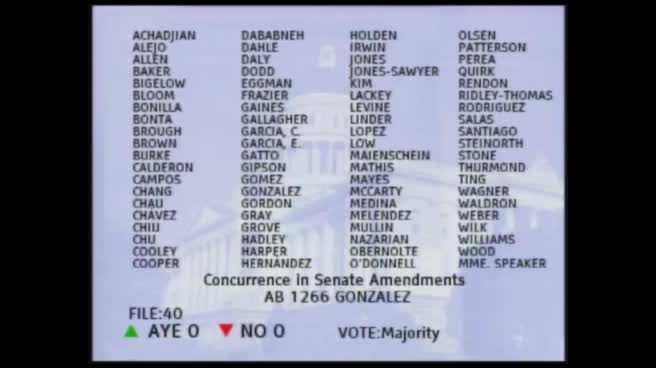 56SEC
Assembly Floor
 1MIN
Senate Floor
 5MIN
Senate Standing Committee on Appropriations
Bill Author

Bill Co-Author(s):