AB 1482: Climate adaptation.
- Session Year: 2015-2016
- House: Assembly
- Latest Version Date: 2015-10-08
Existing law establishes the Natural Resources Agency, comprised of departments, boards, conservancies, and commissions responsible for the restoration, protection, and management of the states natural and cultural resources.
Existing law establishes the Strategic Growth Council in state government and assigns to the council certain duties, including providing, funding, and distributing data and information to local governments and regional agencies that will assist in the development and planning of sustainable communities.
This bill would require the agency, by July 1, 2017, and every 3 years thereafter, to update the states climate adaptation strategy, as provided. The bill would require the agency, by January 1, 2017, and every 3 years thereafter, to release a draft climate adaptation strategy, as provided. The bill would require state agencies to maximize specified objectives, including, among others, promoting the use of the climate adaptation strategy to inform planning decisions and ensure that state investments consider climate change impacts, as well as promote the use of natural systems and natural infrastructure, as defined, when developing physical infrastructure to address adaptation.
This bill also would expand the duties of the council to include identifying and reviewing the activities and funding programs of all state agencies, instead of only the state agencies that are members of the council, to coordinate specified state objectives, including, among others, meeting the goals of the states climate adaptation strategy.
Existing law establishes the Natural Resources Agency, comprised of departments, boards, conservancies, and commissions responsible for the restoration, protection, and management of the states natural and cultural resources.
Existing law establishes the Strategic Growth Council in state government and assigns to the council certain duties, including providing, funding, and distributing data and information to local governments and regional agencies that will assist in the development and planning of sustainable communities.
This bill would require the agency, by July 1, 2017, and every 3 years thereafter, to update the states climate adaptation strategy, as provided. The bill would require the agency, by January 1, 2017, and every 3 years thereafter, to release a draft climate adaptation strategy, as provided. The bill would require the agency, in coordination with the council, to address the impacts of climate change and climate adaptation by reviewing and coordinating existing grants and programs state agencies to maximize specified objectives, including, among others, establishing policy, guidelines, and guidance at the state level promoting the use of the climate adaptation strategy to inform planning decisions and ensuring ensure that state investments consider climate change impacts, as well as promote the use of natural systems and natural infrastructure, whenever feasible as defined, when developing physical infrastructure to address adaptation. The bill would require the Office of Planning and Research, by July 1, 2019, to update the states Five-Year Infrastructure Plan to take current and future climate impacts into account in all infrastructure projects.
This bill also would expand the duties of the council to include aiding the Natural Resources Agency in overseeing and coordinating state agency actions to adapt to climate change and in identifying and pursuing opportunities for state agencies to collaborate with federal or local agencies in their climate adaptation efforts. identifying and reviewing the activities and funding programs of all state agencies, instead of only the state agencies that are members of the council, to coordinate specified state objectives, including, among others, meeting the goals of the states climate adaptation strategy.
Existing law establishes the Natural Resources Agency, comprised of departments, boards, conservancies, and commissions responsible for the restoration, protection, and management of the states natural and cultural resources.
Existing law establishes the Strategic Growth Council in state government and assigns to the council certain duties, including providing, funding, and distributing data and information to local governments and regional agencies that will assist in the development and planning of sustainable communities.
This bill would require the agency, by July 1, 2017, and every 3 years thereafter, to update the states climate adaptation strategy, as provided. The bill would require the agency, in coordination with the council, to address the impacts of climate change and climate adaptation by reviewing and coordinating existing grants and programs to maximize specified objectives, including, among others, establishing policy, guidelines, and guidance at the state level to inform planning decisions and ensuring that state investments consider climate change impacts, as well as promote the use of natural systems and natural infrastructure, whenever feasible, when developing physical infrastructure to address adaptation. The bill would require the Office of Planning and Research, by July 1, 2019, to update the states Five-Year Infrastructure Plan to take current and future climate impacts into account in all infrastructure projects.
This bill also would expand the duties of the council to include aiding the Natural Resources Agency in overseeing and coordinating state agency actions to adapt to climate change and in identifying and pursuing opportunities for state agencies to collaborate with federal or local agencies in their climate adaptation efforts.
Existing law establishes the Natural Resources Agency, comprised of departments, boards, conservancies, and commissions responsible for the restoration, protection, and management of the states natural and cultural resources.
Existing law establishes the Strategic Growth Council in state government and assigns to the council certain duties, including providing, funding, and distributing data and information to local governments and regional agencies that will assist in the development and planning of sustainable communities.
This bill would require the agency, by July 1, 2017, and every 3 years thereafter, to update the states climate adaptation strategy, as provided. The bill would require the agency, in coordination with the council, to address the impacts of climate change and climate adaptation by reviewing and coordinating existing grants and programs to maximize specified objectives, including, among others, establishing policy, guidelines, and guidance at the state level to inform planning decisions and ensuring that state investments consider climate change impacts, as well as promote the use of natural systems, systems and natural infrastructure, whenever feasible, when developing physical infrastructure to address adaptation. The bill would require the Office of Planning and Research, by July 1, 2019, to update the states Five-Year Infrastructure Plan to take current and future climate impacts into account in all infrastructure projects.
This bill also would expand the duties of the council to include aiding the Natural Resources Agency in overseeing and coordinating state agency actions to adapt to climate change and identifying and pursuing opportunities for state agencies to collaborate with federal or local agencies in their climate adaptation efforts.
Existing law establishes the Natural Resources Agency, comprised of departments, boards, conservancies, and commissions responsible for the restoration, protection, and management of the states natural and cultural resources.
Existing law establishes the Strategic Growth Council in state government and assigns to the council certain duties, including providing, funding, and distributing data and information to local governments and regional agencies that will assist in the development and planning of sustainable communities.
This bill would require the agency, in coordination with the council, to address the impacts of climate change and climate adaptation by reviewing and coordinating existing grants and programs to maximize specified objectives, including, among others, establishing policy, guidelines, and guidance at the state level to inform planning decisions and ensuring that state investments consider climate change impacts, as well as promote the use of natural systems, whenever feasible, when developing physical infrastructure to address adaptation.
This bill also would expand the duties of the council to include overseeing and coordinating state agency actions to adapt to climate change and identifying and pursuing opportunities for state agencies to collaborate with federal or local agencies in their climate adaptation efforts.
Existing law establishes the Strategic Growth Council in state government and assigns to the council certain duties, including providing, funding, and distributing data and information to local governments and regional agencies that will assist in the development and planning of sustainable communities.
This bill would expand the duties of the council to include overseeing and coordinating state agency actions to adapt to climate change and identifying and pursuing opportunities for state agencies to collaborate with federal or local agencies in their climate adaptation efforts.
The Legislature finds and declares all of the following:
(a)Californias climate is changing, posing an escalated threat to public health, the environment, the economy, and public and private property in the state. The increasing frequency of extreme weather events, including floods and heat waves, fires, rising sea levels, and changes in hydrology, including diminishing snowpacks and more frequent droughts, among other climate change impacts, will affect every part of residents lives in the next century and beyond. Planning appropriately for these impacts will help us be better prepared for the future.
(b)The impacts of climate change, including longer droughts, extended floods, prolonged fire seasons with larger and more intense fires, heat waves, and sea level rise, are already creating challenges for public health and safety and causing destructive property damage.
(c)Climate change poses a threat not just to the lives and health of residents but also to the states economy and to the financial health of our local governments.
(d)According to the Natural Resources Agencys report, Safeguarding California: Reducing Climate Risk, state-of-the-art modeling shows that a single extreme winter storm in California could cost on the order of $725,000,000,000, including total direct property losses of nearly $400,000,000,000 and devastating impacts to residents, the economy, and natural resources.
(e)Adapting to climate change, in addition to reducing the impacts of climate change on Californias natural resources and infrastructure, is essential to protecting the states environment and economy over time and will require coordination across all state departments and agencies.
(f)Given the potential impacts and the long-term nature of effective planning, California needs to take action now.
SEC. 2.Part 3.7 (commencing with Section 71150) is added to Division 34 of the Public Resources Code, to read:3.7.Climate Change and Climate Adaptation71150.For purposes of this part, the following terms have the following meanings:
(a)Agency means the Natural Resources Agency.
(b)Council means the Strategic Growth Council.
(c)Plan means the Safeguarding California Plan.
71152.It is the intent of the Legislature to prioritize the states response to the impacts resulting from climate change by ensuring all state departments and agencies prepare for and are ready to respond to the impacts of climate change, such as extreme weather events, the urban heat island effect, habitat loss, wildfire, sea-level rise, and drought. It also is the intent of the Legislature that the agency consider developing policies to address the impacts of climate change and climate adaptation with a focus on people, places, and water and that actions taken to address climate adaptation should be consistent with the plan.
71153.(a)By July 1, 2017, and every three years thereafter, the agency shall update the states climate adaptation strategy, known as the plan. As part of the update, the agency shall coordinate with other state agencies to identify a lead agency or group of agencies to lead adaptation efforts in each sector. The updates to the plan shall include all of the following:
(1)Vulnerabilities to climate change by sector, as identified by the lead agency or group of agencies, and regions, including, at a minimum, the following sectors:
(A)Water.
(B)Energy.
(C)Transportation.
(D)Public health.
(E)Agriculture.
(F)Emergency services.
(G)Forestry.
(H)Biodiversity and habitat.
(I)Ocean and coastal resources.
(2)Priority actions needed to reduce risks in those sectors, as identified by the lead agency or group of agencies.
(b)By January 1, 2017, and every three years thereafter, the agency shall release a draft plan. Between the release of the draft plan and the publication of the final update of the plan, the agency shall hold at least three public hearings for the purpose of providing an opportunity for the public to review and provide written and oral comments on the draft plan. The public hearings shall be held in northern California, the central valley of California, and southern California.
(c)The agency shall annually report to the Legislature, consistent with Section 9795 of the Government Code, on actions taken by each applicable agency to implement the plan.
71154.To address the vulnerabilities identified in the plan, state agencies shall work to maximize, where applicable and feasible, the following objectives:
(a)Educating the public about the consequences of climate change, such as sea-level rise, extreme weather events, the urban heat island effect, habitat loss, wildfire, drought, threats to infrastructure and agriculture, worsening air and water quality, and public health impacts.
(b)Ensuring there is a continued repository for scientific data on climate change and climate adaptation in the state in order to facilitate educated state and local policy decisions and to help identify primary risks from climate change to residents, property, communities, and natural systems across the state.
(c)(1)Promoting the use of the plan to inform planning decisions and ensure that state investments consider climate change impacts, as well as promote the use of natural systems and natural infrastructure, when developing physical infrastructure to address adaptation.
(2)When developing infrastructure to address adaptation, where feasible, a project alternative should be developed that utilizes existing natural features and ecosystem processes or the restoration of natural features and ecosystem processes to meet the projects goals.
(3)For purposes of this subdivision, natural infrastructure means the preservation or restoration of ecological systems or the utilization of engineered systems that use ecological processes to increase resiliency to climate change, manage other environmental hazards, or both. This may include, but need not be limited to, flood plain and wetlands restoration or preservation, combining levees with restored natural systems to reduce flood risk, and urban tree planting to mitigate high heat days.
(d)Encouraging regional collaborative planning efforts to address regional climate change impacts and adaptation strategies.
(e)Promoting drought resiliency through an integrated water supply, delivery, and capture system that is coordinated and that can be resilient to a multiyear drought scenario while protecting water quality and the public health. Establishing both drought preparation programs, which will help create sustainable water systems in the future, and immediate drought response programs, which will reduce water demand or increase supply within one to five years of any declared drought.
(f)Building resilient communities by developing urban greening projects that reduce air pollution and heat reflection in urban areas and create livable, sustainable communities in urban cores to promote infill development and reduce greenhouse gas emissions.
(g)Protecting and enhancing habitat, species strongholds, and wildlife corridors that are critical to the preservation of species that are at risk from the consequences of climate change.
(h)Promoting actions to ensure healthy soils and sustainable agriculture; inform reliable transportation planning; improve emergency management response across sectors; ensure sufficient, reliable, and safe energy; improve capacity to reduce and respond to public health threats; address the impacts of climate change on disadvantaged communities; and protect cultural resources from the impacts of climate change.
SEC. 3.Section 75125 of the Public Resources Code is amended to read:75125.The council shall do all of the following:
(a)Identify and review activities and funding programs of state agencies that may be coordinated to improve air and water quality, improve natural resource protection, increase the availability of affordable housing, improve transportation, meet the goals of the California Global Warming Solutions Act of 2006 (Division 25.5 (commencing with Section 38500) of the Health and Safety Code) and the strategies and priorities developed in the states climate adaptation strategy known as the Safeguarding California Plan adopted pursuant to Section 71152, encourage sustainable land use planning, and revitalize urban and community centers in a sustainable manner. At a minimum, the council shall review and comment on the five-year infrastructure plan developed pursuant to Article 2 (commencing with Section 13100) of Chapter 2 of Part 3 of Division 3 of Title 2 of the Government Code and the State Environmental Goals and Policy Report developed pursuant to Section 65041 of the Government Code.
(b)Recommend policies and investment strategies and priorities to the Governor, the Legislature, and to appropriate state agencies to encourage the development of sustainable communities, such as those communities that promote equity, strengthen the economy, protect the environment, and promote public health and safety, consistent with subdivisions (a) and (c) of Section 75065.
(c)Provide, fund, and distribute data and information to local governments and regional agencies that will assist in developing and planning sustainable communities.
(d)Manage and award grants and loans to support the planning and development of sustainable communities, pursuant to Sections 75127, 75128, and 75129. To implement this subdivision, the council may do all of the following:
(1)Develop guidelines for awarding financial assistance, including criteria for eligibility and additional consideration.
(2)Develop criteria for determining the amount of financial assistance to be awarded. The council shall award a revolving loan to an applicant for a planning project, unless the council determines that the applicant lacks the fiscal capacity to carry out the project without a grant. The council may establish criteria that would allow the applicant to illustrate an ongoing commitment of financial resources to ensure the completion of the proposed plan or project.
(3)Provide for payments of interest on loans made pursuant to this article. The rate of interest shall not exceed the rate earned by the Pooled Money Investment Board.
(4)Provide for the time period for repaying a loan made pursuant to this article.
(5)Provide for the recovery of funds from an applicant that fails to complete the project for which financial assistance was awarded. The council shall direct the Controller to recover funds by any available means.
(6)Provide technical assistance for application preparation.
(7)Designate a state agency or department to administer technical and financial assistance programs for the disbursing of grants and loans to support the planning and development of sustainable communities, pursuant to Sections 75127, 75128, and 75129.
(e)Provide an annual report to the Legislature that shall include, but need not be limited to, all of the following:
(1)A list of applicants for financial assistance.
(2)Identification of which applications were approved.
(3)The amounts awarded for each approved application.
(4)The remaining balance of available funds.
(5)A report on the proposed or ongoing management of each funded project.
(6)Any additional minimum requirements and priorities for a project or plan proposed in a grant or loan application developed and adopted by the council pursuant to subdivision (c) of Section 75126.
The Legislature finds and declares all of the following:
(a)Californias climate is changing, posing an escalated threat to public health, the environment, the economy, and public and private property in the state. The increasing frequency of extreme weather events, including floods and heat waves, fires, rising sea levels, and changes in hydrology, including diminishing snowpacks and more frequent droughts, among other climate change impacts, will touch affect every part of residents lives in the next century and beyond. Planning appropriately for these impacts will help us be better prepared for the future.
(b)The impacts of climate change, including longer droughts, extended floods, prolonged fire seasons with larger and more intense fires, heat waves, and sea level rise, are already creating challenges for public health and safety and causing destructive property damage.
(c)Climate change poses a threat not just to the lives and health of residents but also to the states economy and to the financial health of our state and local governments.
(d)According to the Natural Resources Agencys report, Safeguarding California: Reducing Climate Risk, state-of-the-art modeling shows that a single extreme winter storm in California could cost on the order of $725,000,000,000, including total direct property losses of nearly $400,000,000,000 and devastating impacts to residents, the economy, and natural resources.
(e)Adapting to climate change, in addition to reducing the impacts of climate change on Californias natural resources and infrastructure, is essential to protecting the states environment and economy over time and will require coordination across all state departments and agencies.
(f)Given the potential impacts and the long-term nature of effective planning, California needs to take action now.
SEC. 2.Part 3.7 (commencing with Section 71150) is added to Division 34 of the Public Resources Code, to read:3.7.Climate Change and Climate Adaptation71150.For purposes of this part, the following terms have the following meanings:
(a)Agency means the Natural Resources Agency.
(b)Council means the Strategic Growth Council.
(c)Plan means the Safeguarding California Plan.
71152.It is the intent of the Legislature to prioritize the states response to the impacts resulting from climate change by ensuring all state departments and agencies prepare for and are ready to respond to the impacts of climate change, such as extreme weather events, the urban heat island effect, habitat loss, wildfire, sea-level rise, and drought. It also is the intent of the Legislature that the agency consider developing policies to address the impacts of climate change and climate adaptation with a focus on people, places, and water and that actions taken to address climate adaptation should be consistent with the Safeguarding California Plan plan.
71153.(a)By July 1, 2017, and every three years thereafter, the agency shall update the states climate adaptation strategy, known as the Safeguarding California Plan. plan. As part of the update, the agency shall coordinate with other state agencies to identify a lead agency or group of agencies to lead adaptation efforts in each sector. The updates to the Safeguarding California Plan plan shall include all of the following:
(1)Vulnerabilities to climate change by sector, as identified by the lead agency or group of agencies, and regions, including, at a minimum, the following sectors:
(A)Water.
(B)Energy.
(C)Transportation.
(D)Public health.
(E)Agriculture.
(F)Emergency services.
(G)Forestry.
(H)Biodiversity and habitat.
(I)Ocean and coastal resources.
(2)Priority actions needed to reduce risks in those sectors, as identified by the lead agency or group of agencies.
(b)By January 1, 2017, and every three years thereafter, the agency shall release a draft plan. Between the release of the draft plan and the publication of the final update of the plan, the agency shall hold at least three public hearings for the purpose of providing an opportunity for the public to review and provide written and oral comments on the draft plan. The public hearings shall be held in northern California, the central valley of California, and southern California.
(b)
(c)The agency shall annually report to the Legislature, pursuant to consistent with Section 9795 of the Government Code, on actions taken by each applicable agency to implement the Safeguarding California Plan. plan.
(c)By July 1, 2019, the Office of Planning and Research shall update the states Five-Year Infrastructure Plan to take current and future climate change impacts into account in all infrastructure projects.
71154.To address the impacts of climate change and climate adaptation, the agency, in coordination with the council, shall review and coordinate existing grants and programs to maximize the following objectives:
71154.To address the vulnerabilities identified in the plan, state agencies shall work to maximize, where applicable and feasible, the following objectives:
(a)Educating the public about the consequences of climate change, such as sea-level rise, extreme weather events, the urban heat island effect, habitat loss, wildfire, and drought, threats to infrastructure and agriculture, worsening air and water quality, and public health impacts.
(b)Ensuring there is a continued repository for scientific data on climate change and climate adaptation in the state in order to facilitate educated state and local policy decisions and to help identify primary risks from climate change to residents, property, communities, and natural systems across the state.
(c)Establishing policy, guidelines, and guidance at the state level, through the implementation of the Safeguarding California Plan, to inform planning decisions and ensure that state investments consider climate change impacts, as well as promote the use of natural systems and natural infrastructure, whenever feasible, when developing physical infrastructure to address adaptation.
(c)(1)Promoting the use of the plan to inform planning decisions and ensure that state investments consider climate change impacts, as well as promote the use of natural systems and natural infrastructure, when developing physical infrastructure to address adaptation.
(2)When developing infrastructure to address adaptation, where feasible, a project alternative should be developed that utilizes existing natural features and ecosystem processes or the restoration of natural features and ecosystem processes to meet the projects goals.
(3)For purposes of this subdivision, natural infrastructure means the preservation or restoration of ecological systems or the utilization of engineered systems that use ecological processes to increase resiliency to climate change, manage other environmental hazards, or both. This may include, but need not be limited to, flood plain and wetlands restoration or preservation, combining levees with restored natural systems to reduce flood risk, and urban tree planting to mitigate high heat days.
(d)Encouraging regional collaborative planning efforts to address regional climate change impacts and adaptation strategies.
(e)Promoting a drought resiliency through an integrated water supply, delivery, and capture system that is coordinated and that can withstand be resilient to a multiyear drought scenario while protecting water quality and the public health. Establishing both drought preparation programs, which will help create sustainable water systems in the future, and immediate drought response programs, which will reduce water demand or increase supply within one to five years of any declared drought.
(f)Building resilient communities by developing urban greening projects that reduce air pollution and heat reflection in urban areas and create livable, sustainable communities in urban cores to promote infill development and reduce vehicle miles traveled greenhouse gas emissions.
(g)Protecting and enhancing habitat, species strongholds, and wildlife corridors that are critical to the preservation of species that are at risk from the consequences of climate change.
(h)Promoting actions to ensure healthy soils and sustainable agriculture; inform reliable transportation planning; improve emergency management response across sectors; ensure sufficient, reliable, and safe energy; improve capacity to reduce and respond to public health threats; address the impacts of climate change on disadvantaged communities; and protect cultural resources from the impacts of climate change.
71156.For the purposes of implementing the objectives of this part, the agency, to the extent feasible and in coordination with the council, shall identify and coordinate opportunities among its departments in expending moneys from all of the following:
(a)The Greenhouse Gas Reduction Fund, created pursuant to Section 16428.8 of the Government Code.
(b)The Water Quality, Supply, and Infrastructure Improvement Act of 2014, approved by the voters as Proposition 1 at the November 4, 2014, statewide general election.
(c)Other state funds.
71158.The agency shall assess and coordinate across all state departments and agencies to identify opportunities that increase the ability for state and local infrastructure, people, and habitat and wildlife to adapt to the impacts of climate change.
SEC. 3.Section 75125 of the Public Resources Code is amended to read:75125.The council shall do all of the following:
(a)Identify and review activities and funding programs of member state agencies that may be coordinated to improve air and water quality, improve natural resource protection, increase the availability of affordable housing, improve transportation, meet the goals of the California Global Warming Solutions Act of 2006 (Division 25.5 (commencing with Section 38500) of the Health and Safety Code), and the strategies and priorities developed in the states climate adaptation strategy known as the Safeguarding California Plan adopted pursuant to Section 71152, encourage sustainable land use planning, and revitalize urban and community centers in a sustainable manner. At a minimum, the council shall review and comment on the five-year infrastructure plan developed pursuant to Article 2 (commencing with Section 13100) of Chapter 2 of Part 3 of Division 3 of Title 2 of the Government Code and the State Environmental Goals and Policy Report developed pursuant to Section 65041 of the Government Code.
(b)Recommend policies and investment strategies and priorities to the Governor, the Legislature, and to appropriate state agencies to encourage the development of sustainable communities, such as those communities that promote equity, strengthen the economy, protect the environment, and promote public health and safety, consistent with subdivisions (a) and (c) of Section 75065.
(c)Provide, fund, and distribute data and information to local governments and regional agencies that will assist in developing and planning sustainable communities.
(d)Manage and award grants and loans to support the planning and development of sustainable communities, pursuant to Sections 75127, 75128, and 75129. To implement this subdivision, the council may do all of the following:
(1)Develop guidelines for awarding financial assistance, including criteria for eligibility and additional consideration.
(2)Develop criteria for determining the amount of financial assistance to be awarded. The council shall award a revolving loan to an applicant for a planning project, unless the council determines that the applicant lacks the fiscal capacity to carry out the project without a grant. The council may establish criteria that would allow the applicant to illustrate an ongoing commitment of financial resources to ensure the completion of the proposed plan or project.
(3)Provide for payments of interest on loans made pursuant to this article. The rate of interest shall not exceed the rate earned by the Pooled Money Investment Board.
(4)Provide for the time period for repaying a loan made pursuant to this article.
(5)Provide for the recovery of funds from an applicant that fails to complete the project for which financial assistance was awarded. The council shall direct the Controller to recover funds by any available means.
(6)Provide technical assistance for application preparation.
(7)Designate a state agency or department to administer technical and financial assistance programs for the disbursing of grants and loans to support the planning and development of sustainable communities, pursuant to Sections 75127, 75128, and 75129.
(e)Provide an annual report to the Legislature that shall include, but need not be limited to, all of the following:
(1)A list of applicants for financial assistance.
(2)Identification of which applications were approved.
(3)The amounts awarded for each approved application.
(4)The remaining balance of available funds.
(5)A report on the proposed or ongoing management of each funded project.
(6)Any additional minimum requirements and priorities for a project or plan proposed in a grant or loan application developed and adopted by the council pursuant to subdivision (c) of Section 75126.
(f)Aid the Natural Resources Agency in overseeing and coordinating state agency actions to adapt to climate change.
(g)Aid the Natural Resources Agency in identifying and pursuing opportunities for state agencies to collaborate with federal or local agencies in their climate adaptation efforts.
The Legislature finds and declares all of the following:
(a)Californias climate is changing, posing an escalated threat to public health, the environment, the economy, and public and private property in the state. The increasing frequency of extreme weather events, including floods and heat waves, fires, rising sea levels, and changes in hydrology, including diminishing snowpacks and more frequent droughts, among other climate change impacts, will touch every part of residents lives in the next century and beyond. Planning appropriately for these impacts will help us be better prepared for the future.
(b)The impacts of climate change, including longer droughts, extended floods, prolonged fire seasons with larger and more intense fires, heat waves, and sea level rise, are already creating challenges for public health and safety and causing destructive property damage.
(c)Climate change poses a threat not just to the lives and health of residents but also to the states economy and to the financial health of our state and local governments.
(d)According to the Natural Resources Agencys report, Safeguarding California: Reducing Climate Risk, state-of-the-art modeling shows that a single extreme winter storm in California could cost on the order of $725,000,000,000, including total direct property losses of nearly $400,000,000,000 and devastating impacts to residents, the economy, and natural resources.
(e)Adapting to climate change, in addition to reducing the impacts of climate change on Californias natural resources and infrastructure, is essential to protecting the states environment and economy over time and will require coordination across all state departments and agencies.
(f)Given the potential impacts and the long-term nature of effective planning, California needs to take action now.
SEC. 2.Part 3.7 (commencing with Section 71150) is added to Division 34 of the Public Resources Code, to read:3.7.Climate Change and Climate Adaptation71150.For purposes of this part, the following terms have the following meanings:
(a)Agency means the Natural Resources Agency.
(b)Council means the Strategic Growth Council.
71152.It is the intent of the Legislature to prioritize the states response to the impacts resulting from climate change by ensuring all state departments and agencies prepare for and are ready to respond to the impacts of climate change, such as extreme weather events, the urban heat island effect, habitat loss, wildfire, sea-level rise, and drought. It also is the intent of the Legislature that the agency consider developing policies to address the impacts of climate change and climate adaptation with a focus on people, places, and water and that actions taken to address climate adaptation should be consistent with the Safeguarding California Plan.
71153.(a)By July 1, 2017, and every three years thereafter, the agency shall update the states climate adaptation strategy, the Safeguarding California Plan. As part of the update, the agency shall do coordinate with other state agencies to identify a lead agency or group of agencies to lead adaptation efforts in each sector. The updates to the Safeguarding California Plan shall include all of the following:
(1)Identify vulnerabilities Vulnerabilities to climate change by sector sector, as identified by the lead agency or group of agencies, and regions, including, at a minimum, the following sectors:
(A)Water.
(B)Energy.
(C)Transportation.
(D)Public health.
(E)Agriculture.
(F)Emergency services.
(G)Forestry.
(H)Biodiversity and habitat.
(I)Ocean and coastal resources.
(2)Identify priority Priority actions needed to reduce risks in those sectors. sectors, as identified by the lead agency or group of agencies.
(3)Identify a lead agency or group of agencies to lead adaptation efforts in each sector and ensure the provisions of Safeguarding California Plan are implemented.
(4)Report
(b)The agency shall report to the Legislature, pursuant to Section 9795 of the Government Code, on actions taken to implement the Safeguarding California Plan.
(b)
(c)By July 1, 2019, the Office of Planning and Research shall update the states Five-Year Infrastructure Plan to take current and future climate change impacts into account in all infrastructure projects.
71154.To address the impacts of climate change and climate adaptation, the agency, in coordination with the council, shall review and coordinate existing grants and programs to maximize the following objectives:
(a)Educating the public about the consequences of climate change, such as sea-level rise, extreme weather events, the urban heat island effect, habitat loss, wildfire, and drought.
(b)Ensuring there is a continued repository for scientific data on climate change and climate adaptation in the state in order to facilitate educated state and local policy decisions and to help identify primary risks from climate change to residents, property, communities, and natural systems across the state.
(c)Establishing policy, guidelines, and guidance at the state level, through the implementation of the Safeguarding California Plan, to inform planning decisions and ensure that state investments consider climate change impacts, as well as promote the use of natural systems and natural infrastructure, whenever feasible, when developing physical infrastructure to address adaptation.
(d)Encouraging regional collaborative planning efforts to address regional climate change impacts and adaptation strategies.
(e)Promoting a water supply, delivery, and capture system that is coordinated and can withstand a multiyear drought scenario. Establishing both drought preparation programs, which will help create sustainable water systems in the future, and immediate drought response programs, which will reduce water demand or increase supply within one to five years of any declared drought.
(f)Building resilient communities by developing urban greening projects that reduce air pollution and heat reflection in urban areas and create livable, sustainable communities in urban cores to promote infill development and reduce vehicle miles traveled.
(g)Protecting and enhancing habitat, species strongholds, and wildlife corridors that are critical to the preservation of species that are at risk from the consequences of climate change.
71156.For the purposes of implementing the objectives of this part, the agency, to the extent feasible and in coordination with the council, shall identify and coordinate opportunities among its departments in expending moneys from all of the following:
(a)The Greenhouse Gas Reduction Fund, created pursuant to Section 16428.8 of the Government Code.
(b)The Water Quality, Supply, and Infrastructure Improvement Act of 2014, approved by the voters as Proposition 1 at the November 4, 2014, statewide general election.
(c)Other state funds.
71158.The agency shall assess and coordinate across all state departments and agencies to identify opportunities that increase the ability for state and local infrastructure, people, and habitat and wildlife to adapt to the impacts of climate change.
SEC. 3.Section 75125 of the Public Resources Code is amended to read:75125.The council shall do all of the following:
(a)Identify and review activities and funding programs of member state agencies that may be coordinated to improve air and water quality, improve natural resource protection, increase the availability of affordable housing, improve transportation, meet the goals of the California Global Warming Solutions Act of 2006 (Division 25.5 (commencing with Section 38500) of the Health and Safety Code), encourage sustainable land use planning, and revitalize urban and community centers in a sustainable manner. At a minimum, the council shall review and comment on the five-year infrastructure plan developed pursuant to Article 2 (commencing with Section 13100) of Chapter 2 of Part 3 of Division 3 of Title 2 of the Government Code and the State Environmental Goals and Policy Report developed pursuant to Section 65041 of the Government Code.
(b)Recommend policies and investment strategies and priorities to the Governor, the Legislature, and to appropriate state agencies to encourage the development of sustainable communities, such as those communities that promote equity, strengthen the economy, protect the environment, and promote public health and safety, consistent with subdivisions (a) and (c) of Section 75065.
(c)Provide, fund, and distribute data and information to local governments and regional agencies that will assist in developing and planning sustainable communities.
(d)Manage and award grants and loans to support the planning and development of sustainable communities, pursuant to Sections 75127, 75128, and 75129. To implement this subdivision, the council may do all of the following:
(1)Develop guidelines for awarding financial assistance, including criteria for eligibility and additional consideration.
(2)Develop criteria for determining the amount of financial assistance to be awarded. The council shall award a revolving loan to an applicant for a planning project, unless the council determines that the applicant lacks the fiscal capacity to carry out the project without a grant. The council may establish criteria that would allow the applicant to illustrate an ongoing commitment of financial resources to ensure the completion of the proposed plan or project.
(3)Provide for payments of interest on loans made pursuant to this article. The rate of interest shall not exceed the rate earned by the Pooled Money Investment Board.
(4)Provide for the time period for repaying a loan made pursuant to this article.
(5)Provide for the recovery of funds from an applicant that fails to complete the project for which financial assistance was awarded. The council shall direct the Controller to recover funds by any available means.
(6)Provide technical assistance for application preparation.
(7)Designate a state agency or department to administer technical and financial assistance programs for the disbursing of grants and loans to support the planning and development of sustainable communities, pursuant to Sections 75127, 75128, and 75129.
(e)Provide an annual report to the Legislature that shall include, but need not be limited to, all of the following:
(1)A list of applicants for financial assistance.
(2)Identification of which applications were approved.
(3)The amounts awarded for each approved application.
(4)The remaining balance of available funds.
(5)A report on the proposed or ongoing management of each funded project.
(6)Any additional minimum requirements and priorities for a project or plan proposed in a grant or loan application developed and adopted by the council pursuant to subdivision (c) of Section 75126.
(f)Aid the Natural Resources Agency in overseeing and coordinating state agency actions to adapt to climate change.
(g)Aid the Natural Resources Agency in identifying and pursuing opportunities for state agencies to collaborate with federal or local agencies in their climate adaptation efforts.
The Legislature finds and declares all of the following:
(a)Californias climate is changing, posing an escalated threat to public health, the environment, the economy, and public and private property in the state. The increasing frequency of extreme weather events, including floods and heat waves, fires, rising sea levels, and changes in hydrology, including diminishing snowpack, snowpacks and more frequent droughts, among other climate change impacts, will touch every part of residents lives in the next century and beyond. Planning appropriately for these impacts will help us be better prepared for the future.
(b)The impacts of climate change, including longer droughts, extended floods, prolonged fire seasons with larger and more intense fires, heat waves, and sea level rise, are already creating challenges for public health and safety and causing destructive property damage.
(c)Climate changes pose change poses a threat not just to the lives and health of residents but also to the states economy and to the financial health of our state and local governments.
(d)According to the Natural Resources Agencys report, Safeguarding California: Reducing Climate Risk, state-of-the-art modeling shows that a single extreme winter storm in California could cost on the order of $725,000,000,000, including total direct property losses of nearly $400,000,000,000 and devastating impacts to residents, the economy, and natural resources.
(e)Adapting to climate change change, in addition to reducing the impacts of climate change on Californias natural resources and infrastructure infrastructure, is essential to protecting the states environment and economy over time and will require coordination across all state departments and agencies.
(f)Given the potential impacts and the long-term nature of effective planning, California needs to take action now.
SEC. 2.Part 3.7 (commencing with Section 71150) is added to Division 34 of the Public Resources Code, to read:3.7.Climate Change and Climate Adaptation71150.For purposes of this part, the following terms have the following meanings:
(a)Agency means the Natural Resources Agency.
(b)Council means the Strategic Growth Council.
71152.It is the intent of the Legislature to prioritize the states response to the impacts resulting from climate change by ensuring all state departments and agencies prepare for and are ready to respond to the impacts of climate change, such as extreme weather events, the urban heat island effect, habitat loss, wildfire, sea-level rise, and drought. It also is the intent of the Legislature that the agency consider developing policies to address the impacts of climate change and climate adaptation with a focus on people, places, and water and that actions taken to address climate adaptation should be consistent with the Safeguarding California Plan.
71153.(a)By July 1, 2017, and every three years thereafter, the agency shall update the states climate adaptation strategy, the Safeguarding California Plan. As part of the update, the agency shall do all of the following:
(1)Identify vulnerabilities to climate change by sector and regions, including, at a minimum, the following sectors:
(A)Water.
(B)Energy.
(C)Transportation.
(D)Public health.
(E)Agriculture.
(F)Emergency services.
(G)Forestry.
(H)Biodiversity and habitat.
(I)Ocean and coastal resources.
(2)Identify priority actions needed to reduce risks in those sectors.
(3)Identify a lead agency or group of agencies to lead adaptation efforts in each sector and ensure the provisions of Safeguarding California Plan are implemented.
(4)Report to the Legislature, pursuant to Section 9795 of the Government Code, on actions taken to implement the Safeguarding California Plan.
(b)By July 1, 2019, the Office of Planning and Research shall update the states Five-Year Infrastructure Plan to take current and future climate change impacts into account in all infrastructure projects.
71154.To address the impacts of climate change and climate adaptation, the agency, in coordination with the council, shall review and coordinate existing grants and programs to maximize the following objectives:
(a)Educating the public about the consequences of climate change, such as sea-level rise, extreme weather events, the urban heat island effect, habitat loss, wildfire, and drought.
(b)Ensuring there is a continued repository for scientific data on climate change and climate adaptation in the state in order to facilitate educated state and local policy decisions. decisions and to help identify primary risks from climate change to residents, property, communities, and natural systems across the state.
(c)Establishing policy, guidelines, and guidance at the state level level, through implementation of the Safeguarding California Plan, to inform planning decisions and ensure that state investments consider climate change impacts, as well as promote the use of natural systems, systems and natural infrastructure, whenever feasible, when developing physical infrastructure to address adaptation.
(d)Encouraging regional collaborative planning efforts to address regional climate change impacts and adaptation strategies.
(e)Promoting a water supply, delivery, and capture system that is coordinated and can withstand a multiyear drought scenario. Establishing both drought preparation programs, which will help create sustainable water systems in the future, and immediate drought response programs, which will reduce water demand or increase supply within one to five years of any declared drought.
(f)Building resilient communities by developing urban greening projects that reduce air pollution and heat reflection in urban areas and create livable, sustainable communities in urban cores to promote infill development and reduce vehicle miles traveled.
(g)Protecting and enhancing habitat and habitat, species strongholds strongholds, and wildlife corridors that are critical to the preservation of species that are at risk from the consequences of climate change.
71156.For the purposes of implementing the objectives of this part, the agency, to the extent feasible and in coordination with the council, shall identify and coordinate opportunities among its departments in expending moneys from all of the following:
(a)The Greenhouse Gas Reduction Fund, created pursuant to Section 16428.8 of the Government Code.
(b)The Water Quality, Supply, and Infrastructure Improvement Act of 2014, approved by the voters as Proposition 1 at the November 4, 2014, statewide general election.
(c)Other state funds.
71158.The agency, in coordination with the council, agency shall assess and coordinate across all state departments and agencies to identify opportunities that increase the ability for state and local infrastructure, people, and habitat and wildlife to adapt to the impacts of climate change.
SEC. 3.Section 75125 of the Public Resources Code is amended to read:75125.The council shall do all of the following:
(a)Identify and review activities and funding programs of member state agencies that may be coordinated to improve air and water quality, improve natural resource protection, increase the availability of affordable housing, improve transportation, meet the goals of the California Global Warming Solutions Act of 2006 (Division 25.5 (commencing with Section 38500) of the Health and Safety Code), encourage sustainable land use planning, and revitalize urban and community centers in a sustainable manner. At a minimum, the council shall review and comment on the five-year infrastructure plan developed pursuant to Article 2 (commencing with Section 13100) of Chapter 2 of Part 3 of Division 3 of Title 2 of the Government Code and the State Environmental Goals and Policy Report developed pursuant to Section 65041 of the Government Code.
(b)Recommend policies and investment strategies and priorities to the Governor, the Legislature, and to appropriate state agencies to encourage the development of sustainable communities, such as those communities that promote equity, strengthen the economy, protect the environment, and promote public health and safety, consistent with subdivisions (a) and (c) of Section 75065.
(c)Provide, fund, and distribute data and information to local governments and regional agencies that will assist in developing and planning sustainable communities.
(d)Manage and award grants and loans to support the planning and development of sustainable communities, pursuant to Sections 75127, 75128, and 75129. To implement this subdivision, the council may do all of the following:
(1)Develop guidelines for awarding financial assistance, including criteria for eligibility and additional consideration.
(2)Develop criteria for determining the amount of financial assistance to be awarded. The council shall award a revolving loan to an applicant for a planning project, unless the council determines that the applicant lacks the fiscal capacity to carry out the project without a grant. The council may establish criteria that would allow the applicant to illustrate an ongoing commitment of financial resources to ensure the completion of the proposed plan or project.
(3)Provide for payments of interest on loans made pursuant to this article. The rate of interest shall not exceed the rate earned by the Pooled Money Investment Board.
(4)Provide for the time period for repaying a loan made pursuant to this article.
(5)Provide for the recovery of funds from an applicant that fails to complete the project for which financial assistance was awarded. The council shall direct the Controller to recover funds by any available means.
(6)Provide technical assistance for application preparation.
(7)Designate a state agency or department to administer technical and financial assistance programs for the disbursing of grants and loans to support the planning and development of sustainable communities, pursuant to Sections 75127, 75128, and 75129.
(e)Provide an annual report to the Legislature that shall include, but need not be limited to, all of the following:
(1)A list of applicants for financial assistance.
(2)Identification of which applications were approved.
(3)The amounts awarded for each approved application.
(4)The remaining balance of available funds.
(5)A report on the proposed or ongoing management of each funded project.
(6)Any additional minimum requirements and priorities for a project or plan proposed in a grant or loan application developed and adopted by the council pursuant to subdivision (c) of Section 75126.
(f)Oversee and coordinate Aid the Natural Resources Agency in overseeing and coordinating state agency actions to adapt to climate change.
(g)Identify and pursue Aid the Natural Resources Agency in identifying and pursuing opportunities for state agencies to collaborate with federal or local agencies in their climate adaptation efforts.
The Legislature finds and declares all of the following:
(a)Californias climate is changing, posing an escalated threat to public health, the environment, and public and private property in the state. The increasing frequency of extreme weather events, rising sea levels, and changes in hydrology, including diminishing snowpack, among other climate change impacts, will touch every part of residents lives in the next century and beyond. Planning appropriately for these impacts will help us be better prepared for the future.
(b)The impacts of climate change, including longer droughts, extended floods, prolonged fire seasons with larger and more intense fires, heat waves, and sea level rise, are already creating challenges for public health and safety and causing destructive property damage.
(c)Climate changes pose a threat not just to the lives and health of residents but to the financial health of our state and local governments.
(d)According to the Natural Resources Agencys report, Safeguarding California: Reducing Climate Risk, state-of-the-art modeling shows that a single extreme winter storm in California could cost on the order of $725,000,000,000, including total direct property losses of nearly $400,000,000,000 and devastating impacts to residents, the economy, and natural resources.
(e)Adapting to climate change in addition to reducing the impacts of climate change on Californias natural resources and infrastructure is essential to protecting the states environment and economy over time and will require coordination across all state departments and agencies.
(f)Given the potential impacts and the long-term nature of effective planning, California needs to take action now.
SEC. 2.Part 3.7 (commencing with Section 71150) is added to Division 34 of the Public Resources Code, to read:3.7.Climate Change and Climate Adaptation71150.For purposes of this part, the following terms have the following meanings:
(a)Agency means the Natural Resources Agency.
(b)Council means the Strategic Growth Council.
71152.It is the intent of the Legislature to prioritize the states response to the unavoidable impacts resulting from climate change by ensuring all state departments and agencies prepare for and are ready to respond to the impacts of climate change, such as extreme weather events, the urban heat island effect, habitat loss, wildfire, sea-level rise, and drought. It also is the intent of the Legislature that the agency consider developing policies to address the impacts of climate change and climate adaptation with a focus on people, places, and water and that actions taken to address climate adaptation should be consistent with the Safeguarding California Plan.
71154.To address the impacts of climate change and climate adaptation, the agency, in coordination with the council, shall review and coordinate existing grants and programs to maximize the following objectives:
(a)Educating the public about the consequences of climate change, such as sea-level rise, extreme weather events, the urban heat island effect, habitat loss, wildfire, and drought.
(b)Ensuring there is a continued repository for scientific data on climate change and climate adaptation in the state in order to facilitate educated state and local policy decisions.
(c)Establishing policy, guidelines, and guidance at the state level to inform planning decisions and ensure that state investments consider climate change impacts, as well as promote the use of natural systems, whenever feasible, when developing physical infrastructure to address adaptation.
(d)Encouraging regional collaborative planning efforts to address regional climate change impacts and adaptation strategies.
(e)Promoting a water supply, delivery, and capture system that is coordinated and can withstand a multiyear drought scenario. Establishing both drought preparation programs, which will help create sustainable water systems in the future, and immediate drought response programs, which will reduce water demand or increase supply within one to five years of any declared drought.
(f)Building resilient communities by developing urban greening projects that reduce air pollution and heat reflection in urban areas and create livable, sustainable communities in urban cores to promote infill development and reduce vehicle miles traveled.
(g)Protecting and enhancing habitat and species strongholds that are critical to the preservation of species that are at risk from the consequences of climate change.
71156.For the purposes of implementing the objectives of this part, the agency, to the extent feasible and in coordination with the council, shall identify and coordinate opportunities among its departments in expending moneys from all of the following:
(a)The Greenhouse Gas Reduction Fund, created pursuant to Section 16428.8 of the Government Code.
(b)The Water Quality, Supply, and Infrastructure Improvement Act of 2014, approved by the voters as Proposition 1 at the November 4, 2014, statewide general election.
(c)Other state funds.
71158.The agency, in coordination with the council, shall assess and coordinate across all state departments and agencies to ensure that funding programs maximize identify opportunities that increase the ability for state and local infrastructure, people, and habitat and wildlife to cope with the consequences adapt to the impacts of climate change.
SEC. 3.Section 75125 of the Public Resources Code is amended to read:75125.The council shall do all of the following:
(a)Identify and review activities and funding programs of member state agencies that may be coordinated to improve air and water quality, improve natural resource protection, increase the availability of affordable housing, improve transportation, meet the goals of the California Global Warming Solutions Act of 2006 (Division 25.5 (commencing with Section 38500) of the Health and Safety Code), encourage sustainable land use planning, and revitalize urban and community centers in a sustainable manner. At a minimum, the council shall review and comment on the five-year infrastructure plan developed pursuant to Article 2 (commencing with Section 13100) of Chapter 2 of Part 3 of Division 3 of Title 2 of the Government Code and the State Environmental Goals and Policy Report developed pursuant to Section 65041 of the Government Code.
(b)Recommend policies and investment strategies and priorities to the Governor, the Legislature, and to appropriate state agencies to encourage the development of sustainable communities, such as those communities that promote equity, strengthen the economy, protect the environment, and promote public health and safety, consistent with subdivisions (a) and (c) of Section 75065.
(c)Provide, fund, and distribute data and information to local governments and regional agencies that will assist in developing and planning sustainable communities.
(d)Manage and award grants and loans to support the planning and development of sustainable communities, pursuant to Sections 75127, 75128, and 75129. To implement this subdivision, the council may do all of the following:
(1)Develop guidelines for awarding financial assistance, including criteria for eligibility and additional consideration.
(2)Develop criteria for determining the amount of financial assistance to be awarded. The council shall award a revolving loan to an applicant for a planning project, unless the council determines that the applicant lacks the fiscal capacity to carry out the project without a grant. The council may establish criteria that would allow the applicant to illustrate an ongoing commitment of financial resources to ensure the completion of the proposed plan or project.
(3)Provide for payments of interest on loans made pursuant to this article. The rate of interest shall not exceed the rate earned by the Pooled Money Investment Board.
(4)Provide for the time period for repaying a loan made pursuant to this article.
(5)Provide for the recovery of funds from an applicant that fails to complete the project for which financial assistance was awarded. The council shall direct the Controller to recover funds by any available means.
(6)Provide technical assistance for application preparation.
(7)Designate a state agency or department to administer technical and financial assistance programs for the disbursing of grants and loans to support the planning and development of sustainable communities, pursuant to Sections 75127, 75128, and 75129.
(e)Provide an annual report to the Legislature that shall include, but need not be limited to, all of the following:
(1)A list of applicants for financial assistance.
(2)Identification of which applications were approved.
(3)The amounts awarded for each approved application.
(4)The remaining balance of available funds.
(5)A report on the proposed or ongoing management of each funded project.
(6)Any additional minimum requirements and priorities for a project or plan proposed in a grant or loan application developed and adopted by the council pursuant to subdivision (c) of Section 75126.
(f)Oversee and coordinate state agency actions to adapt to climate change.
(g)Identify and pursue opportunities for state agencies to collaborate with federal or local agencies in their climate adaptation efforts.
The Legislature finds and declares all of the following:
(a)Californias climate is changing, posing an escalated threat to public health, the environment, and public and private property in the state. The increasing frequency of extreme weather events, rising sea levels, and changes in hydrology, including diminishing snowpack, among other climate change impacts, will touch every part of residents lives in the next century and beyond. Planning appropriately for these impacts will help us be better prepared for the future.
(b)The impacts of climate change, including longer droughts, extended floods, prolonged fire seasons with larger and more intense fires, heat waves, and sea level rise, are already creating challenges for public health and safety and causing destructive property damage.
(c)Climate changes pose a threat not just to the lives and health of residents but to the financial health of our state and local governments.
(d)According to the Natural Resources Agencys report, Safeguarding California: Reducing Climate Risk, state-of-the-art modeling shows that a single extreme winter storm in California could cost on the order of $725,000,000,000, including total direct property losses of nearly $400,000,000,000 and devastating impacts to residents, the economy, and natural resources.
(e)Adapting to climate change in addition to reducing the impacts of climate change on Californias natural resources and infrastructure is essential to protecting the states environment and economy over time and will require coordination across all state departments and agencies.
(f)Given the potential impacts and the long-term nature of effective planning, California needs to take action now.
SEC. 2.Part 3.7 (commencing with Section 71150) is added to Division 34 of the Public Resources Code, to read:3.7.Climate Change and Climate Adaptation71150.For purposes of this part, the following terms have the following meanings:
(a)Agency means the Natural Resources Agency.
(b)Council means the Strategic Growth Council.
71152.It is the intent of the Legislature to prioritize the states response to the unavoidable impacts resulting from climate change by ensuring all state departments and agencies prepare for and are ready to respond to the impacts of climate change, such as extreme weather events, the urban heat island effect, habitat loss, wildfire, sea-level rise, and drought. It also is the intent of the Legislature that the agency consider developing policies to address the impacts of climate change and climate adaptation with a focus on people, places, and water and that actions taken to address climate adaptation should be consistent with the Safeguarding California Plan.
71154.To address the impacts of climate change and climate adaptation, the agency, in coordination with the council, shall review and coordinate existing grants and programs to maximize the following objectives:
(a)Educating the public about the consequences of climate change, such as sea-level rise, extreme weather events, the urban heat island effect, habitat loss, wildfire, and drought.
(b)Ensuring there is a continued repository for scientific data on climate change and climate adaptation in the state in order to facilitate educated state and local policy decisions.
(c)Establishing policy, guidelines, and guidance at the state level to inform planning decisions and ensure that state investments consider climate change impacts, as well as promote the use of natural systems, whenever feasible, when developing physical infrastructure to address adaptation.
(d)Encouraging regional collaborative planning efforts to address regional climate change impacts and adaptation strategies.
(e)Promoting a water supply, delivery, and capture system that is coordinated and can withstand a multiyear drought scenario. Establishing both drought preparation programs, which will help create sustainable water systems in the future, and immediate drought response programs, which will reduce water demand or increase supply within one to five years of any declared drought.
(f)Building resilient communities by developing urban greening projects that reduce air pollution and heat reflection in urban areas and create livable, sustainable communities in urban cores to promote infill development and reduce vehicle miles traveled.
(g)Protecting and enhancing habitat and species strongholds that are critical to the preservation of species that are at risk from the consequences of climate change.
71156.For the purposes of implementing the objectives of this part, the agency, in coordination with the council, shall identify and coordinate opportunities among its departments in expending moneys from all of the following:
(a)The Greenhouse Gas Reduction Fund, created pursuant to Section 16428.8 of the Government Code.
(b)The Water Quality, Supply, and Infrastructure Improvement Act of 2014, approved by the voters as Proposition 1 at the November 4, 2014, statewide general election.
(c)Other state funds.
71158.The agency, in coordination with the council, shall assess and coordinate across all state departments and agencies to ensure that funding programs maximize the ability for state and local infrastructure, people, and habitat and wildlife to cope with the consequences of climate change.
SECTION 1. SEC. 3.Section 75125 of the Public Resources Code is amended to read:75125.The council shall do all of the following:
(a)Identify and review activities and funding programs of member state agencies that may be coordinated to improve air and water quality, improve natural resource protection, increase the availability of affordable housing, improve transportation, meet the goals of the California Global Warming Solutions Act of 2006 (Division 25.5 (commencing with Section 38500) of the Health and Safety Code), encourage sustainable land use planning, and revitalize urban and community centers in a sustainable manner. At a minimum, the council shall review and comment on the five-year infrastructure plan developed pursuant to Article 2 (commencing with Section 13100) of Chapter 2 of Part 3 of Division 3 of Title 2 of the Government Code and the State Environmental Goals and Policy Report developed pursuant to Section 65041 of the Government Code.
(b)Recommend policies and investment strategies and priorities to the Governor, the Legislature, and to appropriate state agencies to encourage the development of sustainable communities, such as those communities that promote equity, strengthen the economy, protect the environment, and promote public health and safety, consistent with subdivisions (a) and (c) of Section 75065.
(c)Provide, fund, and distribute data and information to local governments and regional agencies that will assist in developing and planning sustainable communities.
(d)Manage and award grants and loans to support the planning and development of sustainable communities, pursuant to Sections 75127, 75128, and 75129. To implement this subdivision, the council may do all of the following:
(1)Develop guidelines for awarding financial assistance, including criteria for eligibility and additional consideration.
(2)Develop criteria for determining the amount of financial assistance to be awarded. The council shall award a revolving loan to an applicant for a planning project, unless the council determines that the applicant lacks the fiscal capacity to carry out the project without a grant. The council may establish criteria that would allow the applicant to illustrate an ongoing commitment of financial resources to ensure the completion of the proposed plan or project.
(3)Provide for payments of interest on loans made pursuant to this article. The rate of interest shall not exceed the rate earned by the Pooled Money Investment Board.
(4)Provide for the time period for repaying a loan made pursuant to this article.
(5)Provide for the recovery of funds from an applicant that fails to complete the project for which financial assistance was awarded. The council shall direct the Controller to recover funds by any available means.
(6)Provide technical assistance for application preparation.
(7)Designate a state agency or department to administer technical and financial assistance programs for the disbursing of grants and loans to support the planning and development of sustainable communities, pursuant to Sections 75127, 75128, and 75129.
(e)Provide an annual report to the Legislature that shall include, but need not be limited to, all of the following:
(1)A list of applicants for financial assistance.
(2)Identification of which applications were approved.
(3)The amounts awarded for each approved application.
(4)The remaining balance of available funds.
(5)A report on the proposed or ongoing management of each funded project.
(6)Any additional minimum requirements and priorities for a project or plan proposed in a grant or loan application developed and adopted by the council pursuant to subdivision (c) of Section 75126.
(f)Oversee and coordinate state agency actions to adapt to climate change.
(g)Identify and pursue opportunities for state agencies to collaborate with federal or local agencies in their climate adaptation efforts.
The council shall do all of the following:
(a)Identify and review activities and funding programs of member state agencies that may be coordinated to improve air and water quality, improve natural resource protection, increase the availability of affordable housing, improve transportation, meet the goals of the California Global Warming Solutions Act of 2006 (Division 25.5 (commencing with Section 38500) of the Health and Safety Code), encourage sustainable land use planning, and revitalize urban and community centers in a sustainable manner. At a minimum, the council shall review and comment on the five-year infrastructure plan developed pursuant to Article 2 (commencing with Section 13100) of Chapter 2 of Part 3 of Division 3 of Title 2 of the Government Code and the State Environmental Goals and Policy Report developed pursuant to Section 65041 of the Government Code.
(b)Recommend policies and investment strategies and priorities to the Governor, the Legislature, and to appropriate state agencies to encourage the development of sustainable communities, such as those communities that promote equity, strengthen the economy, protect the environment, and promote public health and safety, consistent with subdivisions (a) and (c) of Section 75065.
(c)Provide, fund, and distribute data and information to local governments and regional agencies that will assist in developing and planning sustainable communities.
(d)Manage and award grants and loans to support the planning and development of sustainable communities, pursuant to Sections 75127, 75128, and 75129. To implement this subdivision, the council may do all of the following:
(1)Develop guidelines for awarding financial assistance, including criteria for eligibility and additional consideration.
(2)Develop criteria for determining the amount of financial assistance to be awarded. The council shall award a revolving loan to an applicant for a planning project, unless the council determines that the applicant lacks the fiscal capacity to carry out the project without a grant. The council may establish criteria that would allow the applicant to illustrate an ongoing commitment of financial resources to ensure the completion of the proposed plan or project.
(3)Provide for payments of interest on loans made pursuant to this article. The rate of interest shall not exceed the rate earned by the Pooled Money Investment Board.
(4)Provide for the time period for repaying a loan made pursuant to this article.
(5)Provide for the recovery of funds from an applicant that fails to complete the project for which financial assistance was awarded. The council shall direct the Controller to recover funds by any available means.
(6)Provide technical assistance for application preparation.
(7)Designate a state agency or department to administer technical and financial assistance programs for the disbursing of grants and loans to support the planning and development of sustainable communities, pursuant to Sections 75127, 75128, and 75129.
(e)No later than July 1, 2010, and every year thereafter, provide a Provide an annual report to the Legislature that shall include, but is need not be limited to, all of the following:
(1)A list of applicants for financial assistance.
(2)Identification of which applications were approved.
(3)The amounts awarded for each approved application.
(4)The remaining balance of available funds.
(5)A report on the proposed or ongoing management of each funded project.
(6)Any additional minimum requirements and priorities for a project or plan proposed in a grant or loan application developed and adopted by the council pursuant to subdivision (c) of Section 75126.
(f)Oversee and coordinate state agency actions to adapt to climate change.
(g)Identify and pursue opportunities for state agencies to collaborate with federal or local agencies in their climate adaptation efforts.
|
Date
|
Status
|
|---|---|
| Sep 9, 2015 | Assembly Rule 77 suspended. |
| Jul 8, 2015 | From committee: Amend, and do pass as amended and re-refer to Com. on APPR. (Ayes 5. Noes 1.) (July 1). |
| Jul 9, 2015 | Read second time and amended. Re-referred to Com. on APPR. |
| Aug 17, 2015 | In committee: Referred to APPR. suspense file. |
| Aug 31, 2015 | From committee: Amend, and do pass as amended. (Ayes 5. Noes 2.) (August 27). |
| Sep 1, 2015 | Read second time and amended. Ordered to third reading. |
| Sep 8, 2015 | In Assembly. Concurrence in Senate amendments pending. May be considered on or after September 10 pursuant to Assembly Rule 77. |
| Sep 8, 2015 | Read third time. Passed. Ordered to the Assembly. |
| Sep 8, 2015 | Read third time. Passed. Ordered to the Assembly. (Ayes 27. Noes 13. Page 2582.). |
| Jun 24, 2015 | From committee: Do pass and re-refer to Com. on E.Q. (Ayes 7. Noes 2.) (June 23). Re-referred to Com. on E.Q. |
| Sep 9, 2015 | Assembly Rule 77 suspended. (Ayes 52. Noes 28. Page 2990.) |
| Sep 9, 2015 | Assembly Rule 77 suspended. (Ayes 52. Noes 28.) |
| Sep 9, 2015 | Senate amendments concurred in. To Engrossing and Enrolling. |
| Sep 9, 2015 | Senate amendments concurred in. To Engrossing and Enrolling. (Ayes 65. Noes 14. Page 3024.). |
| Sep 9, 2015 | Senate amendments concurred in. To Engrossing and Enrolling. (Ayes 65. Noes 14.). |
| Sep 18, 2015 | Enrolled and presented to the Governor at 4 p.m. |
| Oct 8, 2015 | Approved by the Governor. |
| Oct 8, 2015 | Chaptered by Secretary of State - Chapter 603, Statutes of 2015. |
| May 20, 2015 | In committee: Set, first hearing. Referred to suspense file. |
| Mar 1, 2015 | From printer. May be heard in committee March 31. |
| Mar 2, 2015 | Read first time. |
| Mar 26, 2015 | Referred to Com. on NAT. RES. |
| Apr 20, 2015 | From committee chair, with author's amendments: Amend, and re-refer to Com. on NAT. RES. Read second time and amended. |
| Apr 21, 2015 | Re-referred to Com. on NAT. RES. |
| May 4, 2015 | From committee: Amend, and do pass as amended and re-refer to Com. on APPR. (Ayes 8. Noes 1.) (April 27). |
| May 5, 2015 | Read second time and amended. |
| May 6, 2015 | Re-referred to Com. on APPR. |
| Feb 27, 2015 | Introduced. To print. |
| May 20, 2015 | In committee: Set, first hearing. Referred to APPR. suspense file. |
| May 28, 2015 | From committee: Do pass. (Ayes 12. Noes 4.) (May 28). |
| Jun 1, 2015 | Read second time. Ordered to third reading. |
| Jun 2, 2015 | In Senate. Read first time. To Com. on RLS. for assignment. |
| Jun 2, 2015 | Read third time. Passed. Ordered to the Senate. |
| Jun 2, 2015 | Read third time. Passed. Ordered to the Senate. (Ayes 63. Noes 12. Page 1791.) |
| Jun 11, 2015 | Referred to Coms. on N.R. & W. and E.Q. |
| Jun 16, 2015 | From committee chair, with author's amendments: Amend, and re-refer to committee. Read second time, amended, and re-referred to Com. on N.R. & W. |
|
Date
|
Description
|
Location
|
Votes
|
|
|---|---|---|---|---|
| Sep 9, 2015 | AB 1482 GORDON Concurrence in Senate Amendments | Assembly Floor |
Passed |
|
| Sep 8, 2015 | Assembly 3rd Reading AB1482 Gordon By Wieckowski | Senate Floor |
Passed |
|
| Aug 27, 2015 | Do pass as amended | Senate Standing Committee on Appropriations |
Passed |
|
| Aug 17, 2015 | Placed on suspense file | Senate Standing Committee on Appropriations |
Passed |
|
| Jul 1, 2015 | Do pass as amended, but first amend, and re-refer to the Committee on [Appropriations] | Senate Standing Committee on Environmental Quality |
Passed |
|
| Jun 23, 2015 | Do pass, but first be re-referred to the Committee on [Environmental Quality] | Senate Standing Committee on Natural Resources and Water |
Passed |
|
| Jun 2, 2015 | AB 1482 GORDON Assembly Third Reading | Assembly Floor |
Passed |
|
| May 28, 2015 | Do pass. | Assembly Standing Committee on Appropriations |
Passed |
|
| Apr 27, 2015 | Do pass as amended and be re-referred to the Committee on [Appropriations] | Assembly Standing Committee on Natural Resources |
Passed |
This list shows positions taken on this bill by organizations on the date displayed, which is linked to the original source.
Positions by individuals are not included.
|
Organization
|
Position
|
Date
|
|---|---|---|
| Asian Pacific Environmental Network | ** Support | Sep 8, 2015 |
| Audubon California | ** Support | Sep 8, 2015 |
| California Climate & Agriculture Network | ** Support | Sep 8, 2015 |
| California League Of Conservation Voters | ** Support | Sep 8, 2015 |
| California Releaf | ** Support | Sep 8, 2015 |
| California State Association Of Counties | ** Support | Sep 8, 2015 |
| Center for Climate Change and Health | ** Support | Sep 8, 2015 |
| Climate Resolve | ** Support | Sep 8, 2015 |
| Coastal Environmental Rights Foundation | ** Support | Sep 8, 2015 |
| Defenders Of Wildlife | ** Support | Sep 8, 2015 |
| Land Trust Of Santa Cruz County | * Support | Apr 27, 2015 |
| Little Hoover Commission | ** Support | Sep 8, 2015 |
| Local Government Commission | ** Support | Sep 8, 2015 |
| National Parks Conservation Association | ** Support | Sep 8, 2015 |
| The Nature Conservancy | ** Support | Sep 8, 2015 |
| Tree People | ** Support | Sep 8, 2015 |
| Trust For Public Land, The | ** Support | Sep 8, 2015 |
| Wholly H2O | ** Support | Sep 8, 2015 |
AB 1482
Page 3
CONCURRENCE IN SENATE AMENDMENTS
AB 1482
(Gordon)
As Amended September 1, 2015
Majority vote
ASSEMBLY: |
63-12 |
(June 2, 2015) |
SENATE: |
27-13 |
(September 8, 2015) |
Original Committee Reference: NAT. RES.
SUMMARY: Requires the California Natural Resources Agency (NRA) to update its climate adaptation strategy, the Safeguarding California Plan (Plan), by July 1, 2017, and every three years thereafter by coordinating adaption activities among lead state agencies in each sector. This bill also requires the relevant state agencies to maximize specified objectives across sectors to address vulnerabilities identified in the Plan and requires the Strategic Growth Council (SGC) to identify and review activities and funding programs of state agencies that may be coordinated to meet the goals of the strategies and priorities in the Plan.
The Senate amendments:
Add the requirement that NRA update the Plan, by July 1, 2017, and every three years thereafter and specify which sectors, at a minimum, should be included in the plan.
Rather than requiring that NRA, in coordination with the SGC, review and coordinate existing grants and programs to maximize objectives to address climate impacts, the amendments instead require relevant state agencies to maximize specified objectives across sectors to address vulnerabilities identified in the Plan.
Rather than requiring that SGC oversee and coordinate state agency actions to adapt to climate change, the amendment instead require SGC to identify and review activities and funding programs of state agencies that may be coordinated to meet the goals of the strategies and priorities in the Plan.
EXISTING LAW:
Requires, pursuant to the California Global Warming Solutions Act (AB 32 (Núñez), Chapter 488, Statutes of 2006), the Air Resources Board (ARB) to adopt a statewide greenhouse gas (GHG) emissions limit equivalent to 1990 levels by 2020 and to adopt rules and regulations to achieve maximum technologically feasible and cost-effective GHG emission reductions.
Pursuant to Executive Order S-13-08 (Schwarzenegger), requires NRA, through the Climate Action Team, to coordinate with local, regional, state, federal, and private entities to develop, by 2009, a state Climate Adaptation Strategy. Requires the strategy to summarize the best known science on climate change impacts to California, assess California's vulnerability to the identified impacts, and outline solutions that can be implemented within and across state agencies to promote resiliency.
Pursuant to Executive Order B-30-15 (Brown), in addition to establishing a 40% GHG emission reduction goal by 2030, requires several actions on adaptation including:
Requires NRA to update every three years the state's climate adaptation strategy and ensure that its provisions are fully implemented. Requires the state's climate adaptation strategy to:
Identify vulnerabilities to climate change by sector and regions, including, at a minimum, the following sectors: water, energy, transportation, public health, agriculture, emergency services, forestry, biodiversity and habitat, and ocean and coastal resources;
Outline primary risks to residents, property, communities, and natural systems from these vulnerabilities, and identify priority actions needed to reduce these risks; and,
Identify a lead agency or group of agencies to lead adaptation efforts in each sector.
Requires each sector lead to prepare an implementation plan by September 2015 to outline the actions that will be taken as identified in state's climate adaptation strategy, and report back on those actions to the NRA.
Requires state agencies to take climate change into account in their planning and investment decisions, and employ full life-cycle cost accounting to evaluate and compare infrastructure investments and alternatives.
Requires state agencies' planning and investment to be guided by the principles of climate preparedness, flexibility and adaptive approaches for uncertain climate impacts, protective of vulnerable populations, and prioritization of natural infrastructure solutions.
Requires the state's Five-Year Infrastructure Plan to take current and future climate change impacts into account in all infrastructure projects.
Requires OPR to establish a technical, advisory group to help state agencies incorporate climate change impacts into planning and investment decisions.
Requires the state to continue its rigorous climate change research program focused on understanding the impacts of climate change and how best to prepare and adapt to such impacts.
FISCAL EFFECT: According to the Senate Appropriations Committee:
Unknown ongoing costs in the low millions of dollars to the General Fund for each update of the Plan after 2017.
Unknown cost pressures in the millions of dollars to the General Fund and various special funds to implement the climate adaptation strategy and the Infrastructure Plan.
COMMENTS: According to the United States Environmental Protection Agency, "adaptation is the adjustments that society or ecosystems make to limit negative effects of climate change. It can also include taking advantage of opportunities that a changing climate provides." In 2009, the NRA described adaptation as a relatively new concept in California policy and stated the term means, "efforts that respond to the impacts of climate change – adjustments in natural or human systems to actual or expected climate changes to minimize harm or take advantage of beneficial opportunities."
California's adaptation efforts can be traced back to 2008, when Governor Schwarzenegger ordered the NRA, through the Climate Action Team, to coordinate with local, regional, state, federal, public and private entities to develop, by 2009, the state's Climate Adaptation Strategy. The Governor Schwarzenegger's Executive Order required the strategy to summarize the best known science on climate change impacts for California, assess California's vulnerability to the identified impacts, and outline solutions that can be implemented within and across state agencies to promote resiliency. As a result, NRA drafted The 2009 California Climate Adaptation Strategy. The state's Climate Adaptation Strategy represents the work of seven sector-specific working groups led by 12 state agencies, boards, and commissions, and numerous stakeholders. The state's Climate Adaptation Strategy proposes a comprehensive set of recommendations designed to inform and guide California decision makers as they begin to develop policies that will protect the state, its residents, and its resources from a range of climate change impacts. In July of 2014, NRA released an update to the 2009 California Climate Adaptation Strategy, Safeguarding California: Reducing Climate Risk.
Analysis Prepared by: Michael Jarred / NAT. RES. / (916) 319-2092 FN: 0002296
AB 1482
Page 8
|
Office of Senate Floor Analyses (916) 651-1520 Fax: (916) 327-4478 |
THIRD READING
Bill No: AB 1482
Amended: 9/1/15 in Senate
SENATE NATURAL RES. & WATER COMMITTEE: 7-2, 6/23/15
AYES: Pavley, Allen, Hertzberg, Hueso, Jackson, Monning, Wolk
NOES: Stone, Vidak
SENATE ENVIRONMENTAL QUALITY COMMITTEE: 5-1, 7/1/15
AYES: Wieckowski, Hill, Jackson, Leno, Pavley
NOES: Bates
NO VOTE RECORDED: Gaines
SENATE APPROPRIATIONS COMMITTEE: 5-2, 8/27/15
AYES: Lara, Beall, Hill, Leyva, Mendoza
NOES: Bates, Nielsen
ASSEMBLY FLOOR: 63-12, 6/2/15 - See last page for vote
TreePeople
DIGEST: This bill requires the California Natural Resources Agency (CNRA) to update its climate adaptation strategy, the Safeguarding California Plan (Plan), by July 1, 2017, and every three years thereafter by coordinating adaption activities among lead state agencies in each sector. This bill also requires the relevant state agencies to maximize specified objectives across sectors to address vulnerabilities identified in the Plan and requires the Strategic Growth Council (SGC) to identify and review activities and funding programs of state agencies that may be coordinated to meet the goals of the strategies and priorities in the Plan.
Existing law:
Establishes the Greenhouse Gas Reduction Fund (GGRF) as a special fund in the State Treasury; requires all moneys, except fines and penalties, collected pursuant to a market-based mechanism be deposited in the fund; and requires the Department of Finance, in consultation with the California Air Resources Board and any other relevant state agency, to develop, as specified, a three-year investment plan for the moneys deposited in the GGRF. (Government Code (GOV) §16428.8)
Requires that moneys deposited in the GGRF be used to facilitate the achievement of greenhouse gas (GHG) emissions reductions in the state and, where applicable and to the extent feasible, lessen the impacts and effects of climate change on the state’s communities, economy, and environment, among other potential specified co-benefits. (Health and Safety Code (HSC) §39712)
Establishes the SGC, consisting of the Director of the Governor’s Office of Planning and Research (OPR), the Secretary of the CNRA, the Secretary of the Environmental Protection Agency (CalEPA), the Secretary of Transportation, the Secretary of Health and Human Services (HHS), the Secretary of Business, Consumer Services, and Housing, the Secretary of the California Department of Food and Agriculture (CDFA), and three members of the public. (Public Resources Code (PRC) §75121)
Requires the SGC to identify and review activities and funding programs of member agencies to improve air and water quality, meet the goals of AB 32 (Pavley, Chapter 488, Statutes of 2006), encourage sustainable land use, and revitalize urban and community centers in a sustainable manner, in addition to helping local and regional bodies develop and plan sustainable communities. (PRC §75125)
Establishes the Affordable Housing and Sustainable Communities program to be developed and administered by the SGC to reduce GHG emissions through projects that implement land use, housing, transportation, and agricultural land preservation practices to support infill and compact development and that support related and coordinated policy objectives, as specified. (PRC §75210)
Appropriates, continuously, 20 percent of annual proceeds of the GGRF to the SGC for the Affordable Housing and Sustainable Communities program. (HSC §39719)
This bill:
States legislative findings and declarations regarding numerous impacts of climate change and the need for adaptation planning, prioritization, and policy development by all state departments and agencies consistent with the Plan in order to address the impacts.
Requires the CNRA to:
Update the Plan by July 1, 2017, and every three years thereafter, by coordinating with other state agencies to identify a lead agency or group of agencies to lead state adaptation efforts in each sector, and including:
Vulnerabilities by region and sector, including at minimum, water, energy, transportation, public health, agriculture, emergency services, forestry, biodiversity and habitat, ocean and coastal resources.
Priority actions to reduce sector risks.
Release a draft of the Plan by January 1, 2017, and every three years thereafter; between release of the draft and publication of the final update, hold at least three public hearings in northern, central valley, and southern California.
Report to the Legislature on actions to implement the Plan by applicable agencies.
Requires state agencies to address the vulnerabilities identified in the Plan by working to maximize, where applicable and feasible, the following objectives:
Educating the public about the consequences of climate change, as specified.
Ensuring a continued repository of scientific data on climate change and adaptation in the state.
Promoting the use of the Plan to inform planning decisions, ensure that state investments consider climate change impacts, and promote the use of natural systems and natural infrastructure, as defined.
Encouraging regional collaborative planning efforts.
Promoting a coordinated, drought-resilient water system and establishing drought preparation and response systems.
Building resilient communities by developing urban greening projects.
Protecting and enhancing habitat, species strongholds, and wildlife corridors.
Promoting actions to address impacts across specified sectors and communities.
Requires the SGC to identify and review activities and funding programs of “state agencies,” instead of only “member state agencies,” by striking “member” in Section 75125 subdivision (a), that may be coordinated for the list of specified goals, including meeting the goals of the strategies and priorities developed in the Plan when identifying and reviewing funding programs of state agencies.
Background
Executive Orders Relating to the Climate Change Adaptation. Executive Order S-3-05 established GHG emission reduction targets, created the Climate Action Team (CAT), and directed the Secretary of CalEPA to coordinate efforts to meet the targets with the heads of other state agencies. The order required the Secretary to report back to the Governor and Legislature biannually on progress toward meeting the GHG targets, GHG impacts to California, as well as mitigation and adaptation plans.
Executive Order S-13-08 directed state agencies to plan for climate impacts specifically from sea level rise. It further directed the CNRA, through the CAT, to coordinate the California Climate Adaptation Strategy by June 2009, noting “California must begin now to adapt and build our resiliency to coming climate changes through a thoughtful and sensible approach with local, regional, state and federal government using the best available science.”
Recent Executive Order B-30-15, in addition to setting GHG-related goals, directs the CNRA to update the Plan every three years and include vulnerabilities to climate change by sector and region, as specified, primary risks and priority actions regarding climate change impacts, and identification of lead agencies for each sector, which then report back to the CNRA on their actions taken. The order further directs state agencies to take climate change into account in planning and investment decisions, guided by specified principles, and directs OPR to establish a technical, advisory group to help state agencies in their efforts.
CNRA and the Safeguarding California Implementation Collaborative. The CNRA, along with the OPR, SGC, and CalEPA, has developed the Safeguarding California Implementation Collaborative (SCIC). The SCIC grew out of the steering committee for the Plan, which was an update to the state’s 2009 Climate Adaptation Strategy.
According to the CNRA, the SCIC is convened monthly in order to understand how the Safeguarding principles are being implemented across the state, integrate climate change considerations across state government, and collaborate with internal and external stakeholders to create sustainable strategies to address climate challenges.
The SCIC also coordinates complimentary efforts with the CAT and its subgroups and is currently working to complete a Safeguarding California Implementation Tracking Document with information from 25 bodies listed as participants. The Tracking Document will include grants, documents, and outreach efforts carried out by participants. An Implementation Report was anticipated by August 2015.
SGC and Adaptation Funding Considerations. In their 2014 annual report, the SGC highlighted hundreds of sustainable communities planning and urban greening projects that were completed or underway, as well as $130 million dollars as part of the GGRF-supported programs to reduce GHGs. In the 2015 guidelines for the Affordable Housing and Sustainable Communities Program, the SGC notes as one of the application threshold requirements that “the applicant must demonstrate that where applicable, climate adaptation measures are integrated into their Project.”
Legislative Hearings on Climate Adaptation. This year, the Senate Environmental Quality Committee has conducted two hearings on climate adaptation in California. The first hearing, in February, was focused mainly on state efforts to adapt to climate change impacts with testimony from the Secretaries of CalEPA, CNRA, CDFA, HHS, as well as the Deputy Directors of OPR and the Office of Emergency Services, and testimony from regional and local representatives and the Little Hoover Commission.
Testimony highlighted that there has been a great deal of preliminary thought on climate change impacts and recommended policy, though there remains a lack of statutory direction that clearly articulates the roles at each level of government to ensure coordination and prioritization of adaptation and resiliency throughout the state. Uncertainty also remains as to how adaptation and mitigation are integrated in state policies.
In May, a second hearing was conducted in Oakland which focused on regional adaptation efforts and coordination in the Bay Area. Speakers included a member of the Nobel Prize-winning Intergovernmental Panel on Climate Change, as well as the San Francisco Department of Public Health, and representatives from the Climate Readiness Institute, the Bay Conservation and Development Commission, the Association of Bay Area Governments, the Counties of Marin, Sonoma, and Santa Clara, and the City of Berkeley, as well as the Asian Pacific Environmental Network.
Testimony underscored the current and worsening impacts from climate change and the need for coordinating knowledge, tools, and funding so that adaptation is approached efficiently and holistically across government levels and regions. Local leaders called for more alignment of adaptation efforts across the state and regional agencies, as well as more guidance and engagement from the state with regional and local bodies.
Comments
Purpose of Bill. According to the author, “California has been a leader in taking actions to impact the causes of global climate change. In spite of our efforts, climate change continues to affect our state. It is not enough to try to reverse the course of climate change. We must also become a leader in adapting to climate change. AB 1482 would broaden the state’s focus on climate change to include climate adaptation and ensure, by including in state law, California’s climate adaptation efforts continue into the future. AB 1482 would specifically require the Natural Resources Agency to oversee and coordinate state agency and department actions to adapt to climate change impacts. It is essential to identify a lead state entity in order to ensure that the state’s response to climate change is focused and consistent across agencies to best protect California’s residents, resources, and infrastructure from the effects of climate change.”
Coordination of Adaptation in California. CNRA has successfully brought together information from multiple agencies representing various sectors in the Plan. Given these efforts, along with their investment in the creation and coordination of the SCIC and in working with multi-agency groups such as the CAT and SGC, it seems appropriate for the CNRA to continue its role in coordinating updates to the Safeguarding Plan, as well as the research assessments, by collaborating with leads from numerous sectors.
In considering an organization to lead the state’s overall adaptation policy, there are concerns about the task falling to one agency with a sector-specific focus. In order to be the most effective, adaptation efforts should equally involve sectors and regions across the state. If one sector-specific agency is in charge of the state’s overall adaptation strategy, there is the potential for prioritizing issues related to that agency’s core mandates. Certainly concerns for our state’s natural resources are a critical component of addressing climate change, but so are considerations of public health, agriculture, emergency response, air and water quality, etc.
Recent amendments to this bill expand both the coordination among state agencies in leading sector-specific work for the Plan and the range of objectives across sectors to be maximized by agencies in addressing the vulnerabilities identified in the Plan.
FISCAL EFFECT: Appropriation: No Fiscal Com.: Yes Local: No
According to the Senate Appropriations Committee:
Unknown ongoing costs in the low millions of dollars to the General Fund for each update of the Plan after 2017.
Unknown cost pressures in the millions of dollars to the General Fund and various special funds to implement the climate adaptation strategy and the Infrastructure Plan.
Audubon California (co-source)
Tree People (co-source)
Asian Pacific Environmental Network
California Climate & Agriculture Network
California League of Conservation Voters
California ReLeaf
California State Association of Counties
Center for Climate Change and Health
Climate Resolve
Coastal Environmental Rights Foundation
Defenders of Wildlife
Little Hoover Commission
Local Government Commission
National Parks Conservation Association
The Nature Conservancy
The Trust for Public Land
Wholly H2O
OPPOSITION: (Verified 8/31/15)
None received
ARGUMENTS IN SUPPORT: According to a coalition of supporters, “In 2014, the Natural Resources Agency adopted the Safeguarding California Plan, which begins to lay out a statewide plan for climate adaptation. However, there is no mechanism for enforcing this plan or ensuring that state agency or department actions are consistent with the Safeguarding California Plan.
“AB 1482 would provide statutory authority to the CNRA and the SGC to coordinate the state’s climate adaptation policies and programs.
“AB 1482 will ensure that the state’s response to climate change is focused and consistent across agencies in order to best protect California’s citizens, wildlife, and infrastructure from the effects of climate change.”
ASSEMBLY FLOOR: 63-12, 6/2/15
AYES: Achadjian, Alejo, Baker, Bloom, Bonilla, Bonta, Brown, Burke, Calderon, Campos, Chau, Chiu, Chu, Cooley, Cooper, Dababneh, Dahle, Daly, Dodd, Eggman, Frazier, Cristina Garcia, Eduardo Garcia, Gatto, Gipson, Gomez, Gonzalez, Gordon, Gray, Hadley, Roger Hernández, Holden, Irwin, Jones-Sawyer, Lackey, Levine, Linder, Lopez, Low, Maienschein, Mayes, McCarty, Medina, Mullin, Nazarian, Obernolte, O'Donnell, Olsen, Perea, Quirk, Rendon, Rodriguez, Salas, Santiago, Steinorth, Mark Stone, Thurmond, Ting, Weber, Wilk, Williams, Wood, Atkins
NOES: Travis Allen, Bigelow, Brough, Beth Gaines, Harper, Jones, Kim, Mathis, Melendez, Patterson, Wagner, Waldron
NO VOTE RECORDED: Chang, Chávez, Gallagher, Grove, Ridley-Thomas
Prepared by: Laurie Harris / E.Q. / (916) 651-4108
9/1/15 21:30:26
AB 1482 (Gordon) Page 0 of 1
SENATE COMMITTEE ON APPROPRIATIONS
Senator Ricardo Lara, Chair
2015 - 2016 Regular Session
AB 1482 (Gordon) - Climate adaptation.
|
|
Version: July 9, 2015 |
Policy Vote: N.R. & W. 7 - 2, E.Q. 5 - 1 |
Urgency: No |
Mandate: No |
Hearing Date: August 27, 2015 |
Consultant: Marie Liu |
*********** ANALYSIS ADDENDUM – SUSPENSE FILE ***********
The following information is revised to reflect amendments
adopted by the committee on August 27, 2015
Bill Summary:
AB 1482 would require the Natural Resources Agency (agency) to update its climate adaptation strategy (CAS) by July 1, 2017 and every three years thereafter and to coordinate adaption activities within its agency.
Fiscal Impact:
Unknown ongoing costs in the low millions of dollars to the General Fund for each update of Safeguarding California Plan after 2017.
Unknown cost pressures in the millions of dollars to the General Fund and various special funds to implement the climate adaptation strategy and the Infrastructure Plan.
Author Amendments:
Require the agency to hold at least three public meetings to consider a draft update to the CAS; delete the requirement for OPR to update the Infrastructure Plan to take into account climate change impacts; and clarifying changes.
-- END --
AB 1482 (Gordon) Page 3 of 3
SENATE COMMITTEE ON APPROPRIATIONS
Senator Ricardo Lara, Chair
2015 - 2016 Regular Session
AB 1482 (Gordon) - Climate adaptation
|
|
Version: July 9, 2015 |
Policy Vote: N.R. & W. 7 - 2, E.Q. 5 - 1 |
Urgency: No |
Mandate: No |
Hearing Date: August 17, 2015 |
Consultant: Marie Liu |
This bill meets the criteria for referral to the Suspense File.
Bill Summary:
AB 1482 would require the Natural Resources Agency (agency) to update its climate adaptation strategy (CAS) by July 1, 2017 and every three years thereafter and to coordinate adaption activities within its agency. This bill would also require the Office of Planning and Research (OPR) to update the state’s Five-year Infrastructure Plan to take into account current and future climate change impacts by July 1, 2019.
Fiscal Impact:
Unknown ongoing costs in the low millions of dollars to the General Fund for each update of Safeguarding California Plan after 2017.
Unknowing costs to the General Fund for OPR to update the Infrastructure Plan as specified.
Potential costs up to $175,000 to the Greenhouse Gas Reduction Fund (special) for the ARB to ensure that projects both reduce GHG emissions and improve climate adaptation.
Unknown cost pressures in the millions of dollars to the General Fund and various special funds to implement the climate adaptation strategy and the Infrastructure Plan.
Background:
The California Global Warming Solutions Act of 2006 (referred to as AB 32, HSC §38500 et seq.) requires the California Air Resources Board (ARB) to determine the 1990 statewide greenhouse gas (GHG) emissions level, to approve a statewide GHG emissions limit equivalent to that level that will be achieved by 2020, and to adopt GHG emissions reductions measures by regulation. ARB is authorized to include the use of market-based mechanisms to comply with the regulations. All monies, except for fines and penalties, collected pursuant to a market-based mechanism are deposited in the Greenhouse Gas Reduction Fund (GGRF). Existing law requires that the GGRF only be used to facilitate the achievement of reductions of GHG emissions consistent with AB 32 (HSC §39710 et seq.).
Section 16428.9 of the Government Code establishes requirements of a state agency who is expending GGRF monies appropriated to it by the Legislature including the establishment of a record that consists of information including a description of each expenditure and how each expenditure will achieve and maintain GHG emission reductions. The Air Resources Board (ARB) is responsible for developing guidance on reporting and quantification methods for all state agencies that receive appropriations to ensure that the requirements are met.
In 2014, California voters approved the Water Quality, Supply, and infrastructure Improvement Act of 2014 (Proposition 1) which authorized $7.454 billion in general obligation bonds for state water supply infrastructure projects, ecosystem and watershed protection and restoration, and drinking water protection.
In December 2009, the Resources Agency released the California Climate Adaptation Strategy, pursuant to Executive Order S-13-2008 which directed the Resources Agency to identify how state agencies can respond to rising temperatures, changing precipitation patterns, sea level rise, and extreme natural events. The report noted that climate change is already affecting California with increased average temperatures, more extreme hot days, fewer cold nights, shifts in the water cycle, and the lengthening of the growing season. The report stated that not addressing these changes could cause significant economic damages to the state in the trillions of dollars; thus, the state must address climate change challenges with both climate adaptation and mitigation. The 2014 Safeguarding California Plan is an update to this strategy.
Proposed Law:
This bill would require the agency to update the state’s CAS, known as the Safeguarding California Plan, by July 1, 2017 and every three years thereafter. The agency would be required to coordinate with other state agencies to identify a lead agency or group of agencies to lead adaptation efforts in each sector. The updates would be required to include: (1) vulnerabilities to climate change by various sectors including water, energy, transportation, public health, agriculture, emergency services, forestry, biodiversity and habitat, and ocean and coastal resources and (2) priority actions needed to reduce risks in these sectors. The agency would also be required to report to the Legislature on actions taken to implement the Safeguarding California Plan.
The agency, in coordination with the Strategic Growth Council (SGC), would be required to review and coordinate existing grants and programs to maximize the following objectives:
Educate the public about consequences of climate change
Ensuring there is a continued repository for scientific data on climate change and climate adaptation in the state.
Establish policies, guidelines, and guidance at the state level to inform planning decisions.
Encourage regional collaborative planning efforts to address climate change impacts and adaptation.
Promote water supply, delivery, and capture system that is coordinated and can withstand a multiyear drought scenario.
Build resilient communities.
Protect and enhance habitat, species strongholds, and wildlife corridors.
The agency, in coordination with the SGC, would also be required to identify and coordinate opportunities among its departments for the purposes of climate adaptation when expending state funds, including from the GGRF and Proposition1.
This bill would also require the Office of Planning and Research to update the state’s Five-Year Infrastructure Plan to take into account current and future climate change impacts in all infrastructure projects by July 1, 2019.
Related Legislation:
SB 246 (Wieckowski) would create state report updates on climate adaptation, as well as an advisory committee to OPR for expertise and local and regional perspectives. SB 246 is currently in the Assembly Appropriations Committee.
Staff Comments:
The agency believes that the cost to develop the CAS updates as required by the bill will be minor and absorbable because there the positions within the agency and its departments to perform this work already exist. However, staff notes that the CAS updates are not standalone efforts, but are informed by the agency’s climate change assessments. The cost of the four assessments previously undertaken has ranged from $900,000 to $5 million each based on that assessment’s scope. In its unknown what future assessments will cost depending on the data needs, but staff assumes that the costs for future assessments necessary to support future CAS updates will therefore likely be in the low millions of dollars. Staff notes that the next CAS update is scheduled for 2017. This update is being supported by the fourth assessment, which has already been funded. Therefore, the costs as a result of this bill will begin after 2017.
The ARB notes that it anticipates costs of $175,000 annually from the GGRF to ensure that climate adaptation projects that expend GGRF money achieve both GHG reductions as well as climate adaptation. ARB also estimates costs associated with potentially needing to develop new GHG emission reduction quantification methodologies, and to incorporate any new projects into its guidance and report on GGRF expenditures. Staff notes that these may not be new responsibilities to the ARB as existing law directs GGRF expenditures to take into account, to the extent feasible, the lessening of impacts and effects of climate change on the state’s communities, economy, and environment (HSC §39712).
This bill would require the agency to report to the Legislature on actions taken to implement the CAS. Staff recommends that the author specify with what frequency the agency should report to the Legislature.
-- END --
AB 1482 (Gordon) Page 9 of 9
SENATE COMMITTEE ON ENVIRONMENTAL QUALITY
Senator Wieckowski, Chair
2015 - 2016 Regular
Bill No: AB 1482
Author: |
Gordon |
||
Version: |
6/16/2015 |
Hearing Date: |
7/1/2015 |
Urgency: |
No |
Fiscal: |
Yes |
Consultant: |
Laurie Harris |
||
SUBJECT: Climate adaptation.
ANALYSIS:
Existing law:
Establishes the Greenhouse Gas Reduction Fund (GGRF) as a special fund in the State Treasury; requires that all moneys, except for fines and penalties, collected pursuant to a market-based mechanism be deposited in the fund; and requires the Department of Finance, in consultation with the California Air Resources Board (ARB) and any other relevant state agency, to develop, as specified, a three-year investment plan for the moneys deposited in the GGRF. (Government Code (GOV) §16428.8)
Requires that moneys deposited in the GGRF be used to facilitate the achievement of greenhouse gas (GHG) emissions reductions in the state and, where applicable and to the extent feasible, lessen the impacts and effects of climate change on the state’s communities, economy, and environment, among other potential specified co-benefits. (Health and Safety Code §39712)
Establishes the Office of Planning and Research (OPR) as the comprehensive state planning agency and requires OPR to assist state, regional, and local agencies in a variety of research and planning efforts. (GOV §65040)
Establishes the Strategic Growth Council (SGC), consisting of the Director of OPR, the Secretary of the California Natural Resources Agency (CNRA), the Secretary of the Environmental Protection Agency (CalEPA), the Secretary of Transportation, the Secretary of Health and Human Services (HHS), the Secretary of Business, Consumer Services, and Housing, the Secretary of the California Department of Food and Agriculture (CDFA), and three members of the public. (Public Resources Code §75121)
Requires the SGC to identify and review activities and funding programs of member agencies to improve air and water quality, meet the goals of AB 32, encourage sustainable land use, and revitalize urban and community centers in a sustainable manner, in addition to helping local and regional bodies develop and plan sustainable communities. (PRC §75125)
This bill:
States legislative findings and declarations regarding numerous impacts of climate change and the need for adaptation planning, prioritization, and policy development to address the impacts.
Requires the CNRA to:
Update the Safeguarding California Plan by July 1, 2017 and every 3 years thereafter, including:
Identifying vulnerabilities by region and sector, including water, energy, transportation, public health, agriculture, emergency services, forestry, biodiversity and habitat, ocean and coastal resources.
Identifying priority actions to reduce sector risks.
Identifying a lead agency or group of lead agencies for sector-specific adaptation efforts to ensure Safeguarding provisions are implemented.
Reporting to the Legislature on actions to implement the Plan.
Assess and coordinate across all state departments and agencies to identify opportunities that increase the ability of state and local infrastructure, people, and habitat and wildlife to adapt.
Requires OPR to update the state’s 5-year Infrastructure Plan by July 1, 2019 to take climate change into account for all infrastructure projects.
Requires the CNRA, in coordination with the SGC, to:
Review and coordinate existing grants and programs to maximize specified objectives, including:
Educating the public about the consequences of climate change.
Ensuring a continued repository of scientific data on climate change
and adaptation in the state.
Establishing policy, guidelines, and guidance at the state level through
implementation of the Safeguarding Plan and promote the use of
natural systems and natural infrastructure.
Encouraging regional collaborative planning efforts.
Promoting a coordinated, drought-resilient water system and
establishing drought preparation and response systems.
Building resilient communities by developing urban greening projects.
Protecting and enhancing habitat, species strongholds, and wildlife
corridors.
Identify and coordinate opportunities for the CNRA’s departments to expend moneys from the GGRF, Proposition 1 of 2014, and other state funds for adaptation objectives.
Requires the SGC to aid the CNRA in:
Overseeing and coordinating state agency actions to adapt to climate change.
Identifying and pursuing opportunities for state agencies to collaborate with federal or local agencies in climate adaptation efforts.
Background
Executive Orders Relating to the Climate Change Adaptation.
Executive
Order S-3-05 established
GHG emission reduction targets, created the Climate Action Team
(CAT), and directed the Secretary of CalEPA to coordinate efforts to
meet the targets with the heads of other state agencies. The order
required the Secretary to report back to the Governor and Legislature
biannually on progress toward meeting the GHG targets, GHG impacts to
California, as well as mitigation and adaptation plans.
Executive Order S-13-08 directed state agencies to plan for climate impacts specifically from sea level rise. It further directed the Natural Resources Agency, through the CAT, to coordinate the California Climate Adaptation Strategy by June 2009, noting “California must begin now to adapt and build our resiliency to coming climate changes through a thoughtful and sensible approach with local, regional, state and federal government using the best available science.”
The most recent Executive Order, B-30-15, in addition to setting GHG-related goals, directs the CNRA to update the state’s climate adaptation strategy, Safeguarding California, every three years and include vulnerabilities to climate change by sector and region, as specified, primary risks and priority actions regarding climate change impacts, and identification of lead agencies for each sector, which then report back to the CNRA on their actions taken. The order further directs state agencies to take climate change into account in planning and investment decisions, guided by specified principles, and directs OPR to establish a technical, advisory group to help state agencies in their efforts.
CNRA and the Safeguarding California Implementation Collaborative.
The CNRA, along with the OPR, SGC, and CalEPA, has developed the Safeguarding California Implementation Collaborative (SCIC). The SCIC grew out of the steering committee for the 2014 Safeguarding California Plan, which was an update to the state’s 2009 Climate Adaptation Strategy.
According to the CNRA, the SCIC is convened monthly in order to understand how the Safeguarding principles are being implemented across the state, integrate climate change considerations across state government, and collaborate with internal and external stakeholders to create sustainable strategies to address climate challenges.
The SCIC also coordinates complimentary efforts with the CAT and its subgroups and is currently working to complete a Safeguarding California Implementation Tracking Document with information from 25 bodies listed as participants. The Tracking Document will include grants, documents, and outreach efforts carried out by participants. An Implementation Report is anticipated by August 2015.
SGC and Adaptation Funding Considerations.
In their 2014 annual report, the SGC highlighted hundreds of sustainable communities planning and urban greening projects that were completed or underway, as well as $130 million dollars as part of the GGRF-supported programs to reduce GHGs. In the 2015 guidelines for the Affordable Housing and Sustainable Communities Program, the SGC notes as one of the application threshold requirements that “the applicant must demonstrate that where applicable, climate adaptation measures are integrated into their Project.”
Legislative Hearings on Climate Adaptation.
This year, the Senate Environmental Quality Committee has conducted two hearings on climate adaptation in California.
The first hearing, in February, was focused mainly on state efforts to adapt to climate change impacts with testimony from the Secretaries of CalEPA, CNRA, CDFA, HHS, as well as the Deputy Directors of OPR and the Office of Emergency Services (OES), as well as testimony from regional and local representatives and the Little Hoover Commission.
Testimony highlighted that there has been a great deal of preliminary thought on climate change impacts and recommended policy, though there remains a lack of statutory direction that clearly articulates the roles at each level of government to ensure coordination and prioritization of adaptation and resiliency throughout the state. Uncertainty also remains as to how adaptation and mitigation are integrated in state policies.
In May, a second hearing was conducted in Oakland which focused on regional adaptation efforts and coordination in the Bay Area. Speakers included a member of the Nobel Prize-winning Intergovernmental Panel on Climate Change from Lawrence Livermore National Laboratory, as well as the San Francisco Department of Public Health, and representatives from the Climate Readiness Institute, the Bay Conservation and Development Commission, the Association of Bay Area Governments, the Counties of Marin, Sonoma, and Santa Clara, and the City of Berkeley, as well as the Asian Pacific Environmental Network.
Testimony underscored the current and worsening impacts from climate change and the need for coordinating knowledge, tools, and funding so that adaptation is approached efficiently and holistically across government levels and regions. Local leaders called for more alignment of adaptation efforts across the state and regional agencies, as well as more guidance and engagement from the state with regional and local bodies.
The Committee has two additional regional hearings on adaptation planned for later this year in Los Angeles and the Central Valley.
Comments
Purpose of Bill.
According
to the author, “California has been a leader in taking actions to
impact the causes of global climate change. In spite of our efforts,
climate change continues to affect our state. It is not enough to
try to reverse the course of climate change. We must also become a
leader in adapting to climate change. AB 1482 would broaden the
state’s focus on climate change to include climate adaptation and
ensure, by including in state law, California’s climate adaptation
efforts continue into the future. AB 1482 would specifically require
the Natural Resources Agency to oversee and coordinate state agency
and department actions to adapt to climate change impacts. It is
essential to identify a lead state entity in order to ensure that the
state’s response to climate change is focused and consistent across
agencies to best protect California’s residents, resources, and
infrastructure from the effects of climate change.”
The Definition of Adaptation.
Adaptation can mean different things to different people, potentially leading to inconsistencies in adaptation priorities among entities. To date, there has been a particular focus in California on impacts from sea level rise, as with the Planning for Sea Level Rise Database as well as funding from the Water Quality, Supply, and Infrastructure Improvement Act of 2014 (Proposition 1) for impacts from sea level rise as well as drought or flood.
However, as noted in the multi-sector approach in the Safeguarding California Plan, climate change impacts and the needs to adapt to them span sectors, regions, and levels of government. To ensure coordinated planning and implementation of adaptation efforts, it is important to be clear about what the state means by the word “adaptation.”
Coordination of Adaptation in California.
The Natural Resources Agency has successfully brought together information from multiple agencies representing various sectors in the Safeguarding California Plan. Given these efforts, along with their investment in the creation and coordination of the SCIC and in working with multi-agency groups such as the CAT and SGC, it seems appropriate for the CNRA to continue its role in coordinating updates to the Safeguarding Plan, as well as the research assessments, by collaborating with leads from numerous sectors.
In considering an organization to lead the state’s overall adaptation policy, however, there are concerns about the task falling to one agency with a sector-specific focus.
First, in order to be the most effective, adaptation efforts should equally involve all sectors and regions across the state. If one sector-specific agency is in charge of the state’s overall adaptation strategy, there is the potential for prioritizing issues related to that agency’s core mandates. Certainly concerns for our state’s natural resources are a critical component of addressing climate change, but so are considerations of public health, agriculture, emergency response, air and water quality, etc. Having the CNRA “identify priority actions needed to reduce risks in those sectors [listed in the Safeguarding Plan].” Is it appropriate to have the CNRA prioritizing adaptation actions for other sectors outside of its areas of expertise, such as public health or transportation?
Second, the bill’s current language notes that the CNRA will “ensure the provisions of the Safeguarding California Plan are implemented.” Is it appropriate to have one sector-specific agency responsible for ensuring compliance on implementation from other agencies?
Goals of the Bill.
If the goal of the bill is to “prioritize the state’s response to the impacts resulting from climate change by ensuring all state departments and agencies prepare for and are ready to respond to the impacts of climate change,” as stated in the intent language, and address the many impacts of climate change and adaptation, then the author and Committee may wish to consider whether tasking one sector-specific agency with adaptation will ensure that all agencies are engaged and whether a division of adaptation document preparation and coordination responsibilities would better ensure a timely and comprehensive approach among state, regional, and local entities.
Given the aforementioned concerns, a question arises as to whether the CNRA is the most appropriate agency to coordinate overall adaptation policy and ensure implementation across the state. The author should continue to work with the committee to identify the most appropriate agency to lead overall adaptation efforts in California.
Amendments.
For the Safeguarding Plan update, in order to have agencies identifying vulnerabilities and prioritizing actions within their sectors, the following amendments are needed:
In Section 71153, in subdivision (a), specify that the agency (CNRA) shall coordinate with all other state agencies to identify one or more leads for adaptation efforts in each sector.
Add language to Section 71153 in paragraphs 1 and 2 to state that designated lead agencies will identify vulnerabilities and priority actions within their sectors.
For the Safeguarding Plan update, in order to refrain from tasking the CNRA with oversight of other agencies and ensure that oversight remains with the Legislature, which would address comment 3 above, strike “and ensure the provisions of Safeguarding California Plan are implemented” from page 4, lines 11-12.
Related/Prior Legislation
SB 246 (Wieckowski, 2015) creates state report updates on climate adaptation, as well as an advisory committee to OPR for expertise and local and regional perspectives, as specified. SB 246 is currently in the Assembly Natural Resources Committee.
SB 1217 (Leno, 2014) would have required the Natural Resources Agency and SGC to prepare a climate risk assessment and strategy evaluating California’s vulnerability and risk for climate change impacts and to identify and prioritize climate resiliency projects. SB 1217 died in the Assembly Appropriations Committee.
SB 461 (Leno, 2014) would have created the Coastal Adaptation Fund for state and local agencies to prepare, plan, and implement measures to address and adapt to sea level rise and coastal climate change. SB 461 died in the Assembly Appropriations Committee.
ACR 160 (Gordon, Chapter 146, Statutes of 2014) encourages state agencies to communicate with the public, local, regional, and federal agencies, nonprofits, and businesses regarding sea level risks and the development and implementation of adaptation measures to these and other climate change impacts.
AB 2348 (Stone, 2014) would have established the Natural Resources Climate Improvement Program. AB 2348 died in the Assembly Appropriations Committee.
AB 2516 (Gordon, Chapter 522, Statutes of 2014) created the Planning for Sea Level Rise Database and requires various agencies and private entities to provide to the CNRA biannually information on sea level rise planning and sunsets in 2018.
SOURCE:
Audubon California and TreePeople
SUPPORT:
Asian Pacific Environmental Network
California Climate and Agricultural Network
California League of Conservation Voters
California ReLeaf
Center for Climate Change and Health
Climate Resolve
Coastal Environmental Rights Foundation
Defenders of Wildlife
Little Hoover Commission
Local Government Commission
National Parks Conservation Association
The Nature Conservancy
The Trust for Public Land
Wholly H2O
OPPOSITION:
None received
ARGUMENTS IN SUPPORT:
According to a coalition supporters, “In 2014, the Natural Resources Agency adopted the Safeguarding California Plan, which begins to lay out a statewide plan for climate adaptation. However, there is no mechanism for enforcing this plan or ensuring that state agency or department actions are consistent with the Safeguarding California Plan.
“AB 1482 would provide statutory authority to the CNRA and the SGC to coordinate the state’s climate adaptation policies and programs.
“AB 1482 will ensure that the state’s response to climate change is focused and consistent across agencies in order to best protect California’s citizens, wildlife, and infrastructure from the effects of climate change.”
-- END --
AB 1482 (Gordon) Page 6 of 6
SENATE COMMITTEE ON NATURAL RESOURCES AND WATER
Senator Fran Pavley, Chair
2015 - 2016 Regular
Bill No: AB 1482 Hearing Date: June 23, 2015
Author: |
Gordon |
|
|
Version: |
June 16, 2015 Amended |
||
Urgency: |
No |
Fiscal: |
Yes |
Consultant: |
William Craven |
||
Subject: Climate adaptation.
BACKGROUND AND EXISTING LAW
1)
Pursuant to Executive Order S-13-08 (Schwarzenegger), requires the
California Natural Resources Agency (CNRA), through the Climate
Action Team, to coordinate with local, regional, state, federal, and
private entities to develop, by 2009, a state Climate Adaptation
Strategy. Requires the strategy to summarize the best known science
on climate change impacts to California, assess California's
vulnerability to the identified impacts, and outline solutions that
can be implemented within and across state agencies to promote
resiliency.
2)
Creates the Office of Planning and Research (OPR) to serve the
Governor and his or her Cabinet as staff for long-range planning and
research, and to constitute the comprehensive state planning agency.
3)
Creates the Strategic Growth Council (SGC), which consists of the
Director of OPR, the Secretary of the Natural Resources Agency, the
Secretary of the Environmental Protection Agency (EPA), the Secretary
of Transportation, the Secretary of California Health and Human
Services, the Secretary of Business, Consumer Services, and Housing,
the Secretary of Food and Agriculture, and three members of the
public appointed by the Governor.
4) Requires SGC to develop and administer the Affordable Housing and Sustainable Communities Program to reduce GHG emissions through projects that implement land use, housing, transportation, and agricultural land preservation practices to support infill and compact development and that support other related and coordinated public policy objectives. Continuously appropriates to the SGC 20% of the annual proceeds of the Greenhouse Gas Reduction Fund (GGRF).
5) On April 29, 2015, Governor Brown issued Executive Order B-30-15. That order is perhaps better known for its declaration that established an interim greenhouse gas emission reduction target of 40% below 1990 levels to be achieved by 2030.
However, that order also made several declarations regarding adaptation to climate change. State agencies are directed to do all of the following:
a) Incorporate climate change impacts into the state’s five-year infrastructure plan;
b) Update the Safeguarding California Plan—the state’s climate adaptation strategy—to identify how climate change will affect California infrastructure and industry and what actions the state can take to reduce the risks posed by climate change;
c) Factor climate change into state agency’s planning and investment decisions; and
d) Implement measures under existing agency and departmental authority to reduce greenhouse gas emissions.
6. In addition, the order directed the CNRA to update the Safeguarding California report every three years and ensure that its provisions are fully implemented. That plan is directed to contain the following:
a) Identify vulnerabilities to climate change by sector and regions, including, at a minimum, the following sectors: water, energy, transportation, public health, agriculture, emergency services, forestry, biodiversity and habitat, and ocean and coastal resources;
b) Outline primary risks to residents, property, communities and natural systems from these vulnerabilities and identify priority actions needed to reduce these risks, and
c) Identify a lead agency or group of agencies to lead adaptation efforts in each sector. Each sector lead will be responsible to prepare an implementation plan by September 2015 and report to CNRA and actions taken.
7. The order requires the following additional steps:
a) Each sector lead agency will prepare an implementation plan by 9/2015 and report to the CNRA on actions taken by 6/2016.
b) All state agencies shall take climate change into account in planning and investment decisions, and to employ full life-cycle cost accounting to evaluate and compare infrastructure investments and alternatives.
c) State agencies’ planning and investment will be guided by the following:
1) Priority should be given to actions that both build climate preparedness and reduce greenhouse gas emissions;
2) Where possible, flexible and adaptive approaches should be taken to prepare for uncertain climate impacts;
3) Actions should protect the state’s most vulnerable populations; and
4) Natural infrastructure solutions should be prioritized.
8. The Governor directed that the state’s five year infrastructure plan will take current and future climate change impacts into account in all infrastructure projects.
9. The Governor also directed OPR to establish a technical advisory group to help state agencies incorporate climate change impacts into planning and investment decisions.
10. The order concludes by stating it does create and rights or benefits that are enforceable against the State of California or its agencies, officers, or any other person.
PROPOSED LAW
1) This bill codifies verbatim the adaptation provisions of the Executive Order, adds a reporting requirement, and directs OPR to update the infrastructure plan to take into account future climate change impacts into all infrastructure projects. It additionally proposes the following:
2) Requires that the CNRA, in coordination with the SGC, review and coordinate existing grants programs to maximize these objectives:
a) Educate the public about the consequences of climate change, such as sea level rise, extreme weather events, the urban heat island effect, habitat loss, wildfire, and drought;
b) Ensure that there is a repository for scientific data on climate change and climate adaptation in the state to help identify primary risks from climate change to residents, property, communities, and natural systems across the state;
c) Establish policy, guidelines, and guidance at the state level, through implementation of the Safeguarding California Plan, to inform planning decisions and ensure that state investments consider climate change impacts as well as promote the use of natural systems and natural infrastructure whenever feasible when developing physical infrastructure to address adaptation.
d) Encourage regional collaborative planning to address regional climate change impacts and adaptation strategies;
e) Promote water supply, delivery, and capture system that is coordinated to withstand a multiyear drought scenario. This involves both drought preparation programs and immediate drought response programs.
f) Build resilient communities by developing urban greening projects that reduce air pollution and heat reflection in urban areas and create livable, sustainable communities in urban cores to promote infill development and reduce vehicle mile traveled.
g) protect and enhance habitat strongholds and wildlife corridors that are critical to the preservation of species that are risk from the consequences of climate change.
3) The bill further directs the agency, in coordination with the council, to identify and coordinate opportunities among its departments in expending money from the Greenhouse Gas Reduction Fund ,Proposition 1, and other state funds.
4) The SGC is directed in the bill to aid the CNRA in overseeing and coordinating state agency actions to adapt to climate change and identifying and pursuing opportunities for state agencies to collaborate with federal or local agencies in their climate adaptation efforts.
ARGUMENTS IN SUPPORT
According to the author, current law does not create a comprehensive state climate adaptation policy. There is no single state entity statutorily tasked with ensuring that the state’s response to climate change is focused and consistent across agencies in order to best protect California’s residents, resources, and infrastructure from the effects of climate change. As the state deals with deepening drought, warmer temperatures, increased forest fires, continued loss of habitat and biodiversity, and the threat of sea-level rise along approximately 1,100 miles of California coastline, state investments in infrastructure and greenhouse gas reduction should, where possible, further the goals of climate adaptation.
In addition, as the impacts of climate change continue to be felt in California, local governments will need assistance in risk assessment of public and private infrastructure, as well as planning assistance and prioritization signals from the state on climate adaptation.
In 2014, the Natural Resources Agency adopted the Safeguarding California Plan (an update to the 2009 California Climate Adaptation Strategy), which begins to lay out a statewide plan for climate adaptation. However, there is no mechanism for enforcing this plan or ensuring that state agency or department actions are consistent with the Safeguarding California Plan. Further, while the Strategic Growth Council is tasked with implementing the Sustainable Communities Strategy and other planning programs to combat climate change and reduce greenhouse gases, it does not have the authority to also plan for climate adaptation. These two existing state agencies are ideal to oversee and coordinate California’s climate adaptation efforts.
The author’s statement is endorsed in the letters from the bill’s supporters.
ARGUMENTS IN OPPOSITION
None received.
COMMENTS
1) This bill is still a work in progress especially regarding the issue of which agency should be the designated lead for climate adaptation and enforcement of the bill’s provisions. The Committee may well want to preserve the CNRA role in developing the future Safeguarding California reports including the cross-agency work required to do so. The Committee may also want to preserve the other additions to the Safeguarding California aspects of the executive order which would identify a lead agency for each sector and to direct OPR update future infrastructure plans to include current and future climate change impacts into account in all infrastructure projects.
2) The next question involves the implementation measures contained in the bill that direct CNRA to take various actions. Section 71153 directs the CNRA to “ensure the provisions” of the plan are implemented. Section 71154 directs CNRA to “coordinate existing grants and programs to maximize specified objectives, one of which is “implementation of the Safeguarding California Plan. In Section 71156, CNRA is directed to “assess and coordinate” funding opportunities from specific funds. And in Section 71158, the agency is directed to “assess and coordinate across all state departments and agencies to identify opportunities for state and local infrastructure, people and wildlife to adapt to the impacts of climate change. It is not known whether these objectives and these new roles, especially the role of ensuring implementation of the plan, are acceptable to CNRA or the administration as a whole.
Whether the bill ultimately retains that designation for CNRA, or whether that designation is shifted to the SGC or OPR, or whether the bill more surgically divides the workload among those entities is the most open question still unresolved. The author plans further discussions with the administration and other interested parties.
3) As the bill moves forward, the author should consider adding definitions for terms that are used in the bill but are not currently defined in state law. These include terms such as urban greening and natural infrastructure.
4) Staff notes that the reference to “coordinating” expenditures from auction revenues and Prop 1 could be interpreted to mean that climate adaptation is an eligible use for the entirety of those funding sources, which is not the author’s intent. It instead should make reference to “appropriate” funding for climate adaptation from those sources where such funding makes adaptation eligible and where such funding satisfies other legal requirements for the expenditure of regulatory fees in the case of auction revenues.
Double-Referral. The Rules Committee referred this bill to both the Committee on Natural Resources and Water and to the Committee Environmental Quality. Therefore, if this bill passes this committee, it will be referred to the Committee on Environmental Quality, which will consider the issues within their jurisdiction.
Related legislation: SB 246 (Wieckowski) proposes also to codify the Safeguarding California reports and would also establish an advisory council within OPR to focus on climate adaptation.
SUPPORT
Asian Pacific
Environmental Network
Audubon California (sponsor)
California
Climate & Agriculture Network
California League of
Conservation Voters
California ReLeaf
Center for Climate
Change and Health
Climate Resolve
Coastal Environmental
Rights Foundation
Defenders of Wildlife
Little Hoover
Commission
Local Government Commission
National Parks
Conservation Association
ReLeaf
California
The Nature Conservancy
The Trust for Public
Land
TreePeople
Wholly
H2O
OPPOSITION
None Received
-- END --
AB 1482
Page 2
ASSEMBLY THIRD READING
AB 1482
(Gordon)
As Amended May 5, 2015
Majority vote
Committee |
Votes |
Ayes |
Noes |
Natural Resources |
8-1 |
Williams, Dahle, Cristina Garcia, Hadley, McCarty, Rendon, Mark Stone, Wood |
Harper |
Appropriations |
12-4 |
Gomez, Bonta, Calderon, Daly, Eggman, Eduardo Garcia, Gordon, Holden, Quirk, Rendon, Weber, Wood |
Bigelow, Gallagher, Jones, Wagner |
SUMMARY: Requires the Natural Resource Agency (NRA), in coordination with the Strategic Growth Council (SGC), to assess and coordinate across all state departments and agencies identify opportunities that increase the ability for state and local infrastructure, people, and habitat and wildlife to adapt to the impacts of climate change. Specifically, this bill:
Requires NRA, in coordination with SGC, to review and coordinate existing grants and programs to maximize the following objectives:
Educating the public about the consequences of climate change;
Ensuring there is continued repository for scientific data on climate change and climate adaptation;
Establishing policy, guidelines, and guidance at the state level to inform planning decisions and ensure that state investments consider climate change impacts, as well as promote the use of natural systems;
Encouraging regional collaborative planning efforts to address regional climate impacts;
Promoting a water supply, delivery, and capture system that is coordinated and can withstand a multi-year drought scenario;
Building resilient communities by developing urban greening projects that reduce air pollution and heat reflection in urban areas and create livable, sustainable communities in urban cores to promote infill development and reduce vehicle miles traveled; and,
Protecting and enhancing habitat and species' strongholds that are critical to the preservation of species that are at risk from the consequences of climate change.
Requires NRA, in coordination with SGC and to the extent feasible, to identify and coordinate opportunities among its departments to expend funds from the following sources to implement the objectives above:
Greenhouse Gas Reduction Fund (GGRF),
The Water Quality, Supply, and Infrastructure Improvement Act of 2014 (Proposition 1); and,
Other state funds.
Requires NRA, in coordination with SGC, to assess and coordinate across all state departments and agencies to identify opportunities that increase the ability for state and local infrastructure, people, and habitat and wildlife to adapt to the impacts of climate change.
Requires SGC to oversee and coordinate state agency actions to adapt to climate change.
Requires SGC to identify and pursue opportunities for state agencies to collaborate with federal or local agencies in their climate adaptation efforts.
FISCAL EFFECT: According to the Assembly Appropriations Committee:
Increased cost pressures on GGRF, Proposition 1 Water bond funds, and other unidentified funds, potentially in the tens of millions to hundreds of millions of dollars.
Increased annual costs of $175,000 for Air Resources Board to quantify and report on adaptations projects.
COMMENTS: According to the United States Environmental Protection Agency, "Adaptation is the adjustments that society or ecosystems make to limit negative effects of climate change. It can also include taking advantage of opportunities that a changing climate provides." In 2009, the NRA described adaptation as a relatively new concept in California policy and stated the term means "efforts that respond to the impacts of climate change – adjustments in natural or human systems to actual or expected climate changes to minimize harm or take advantage of beneficial opportunities."
California's adaptation efforts can be traced back to 2008, when Governor Schwarzenegger ordered the NRA, through the Climate Action Team, to coordinate with local, regional, state, and federal public and private entities to develop, by 2009, a state Climate Adaptation Strategy. The Governor's executive order required the strategy to summarize the best known science on climate change impacts for California, assess California's vulnerability to the identified impacts, and outline solutions that can be implemented within and across state agencies to promote resiliency. As a result, NRA drafted The 2009 California Climate Adaptation Strategy. The strategy represents the work of seven sector-specific working groups led by 12 state agencies, boards, and commissions, and numerous stakeholders. The strategy proposes a comprehensive set of recommendations designed to inform and guide California decision makers as they begin to develop policies that will protect the state, its residents and its resources from a range of climate change impacts. In July of 2014, NRA released an update to the 2009 state Climate Adaptation Strategy Safeguarding California: Reducing Climate Risk. Climate risks in California include sea level rise, changes in precipitation that increase the risk of both drought and flooding, and increases in temperatures that can affect air quality and habitat.
Analysis Prepared by: Michael Jarred / NAT. RES. / (916) 319-2092 FN: 0000780
AB 1482
Page 2
Date of Hearing: May 20, 2015
ASSEMBLY COMMITTEE ON APPROPRIATIONS
Jimmy Gomez, Chair
AB 1482
(Gordon) – As Amended May 5, 2015
Policy Committee: |
Natural Resources |
Vote: |
8 - 1 |
|
|
|
|
|
|
|
|
Urgency: No State Mandated Local Program: No Reimbursable: No
SUMMARY:
This bill requires the Natural Resources Agency (NRA), in coordination with the Strategic Growth Council (SGC), to address the impacts of climate change and climate change adaptation by reviewing and coordinating existing grant programs across all state agencies to ensure funding programs maximize prescribed objectives related to climate change adaptation.
This bill requires NRA, in coordination with SGC, to identify and coordinate opportunities to expend funds from AB 32 cap and trade revenues, Proposition 1 of 2014, and other sources to implement a variety of adaptation strategies.
FISCAL EFFECT:
Increased cost pressures on the Greehouse Gas Reduction Fund (GGRF), Prop 1 Water bond funds, and other unidentified funds, potentially in the tens of millions to hundreds of millions of dollars.
Increased annual costs of $175,000 for ARB to quantify and report on adaptations projects to reduce GHG reductions.
COMMENTS:
Rationale. According to the author, current law does not create a comprehensive climate adaptation policy.
In 2014, the NRA adopted the Safeguarding California Plan (an update to the 2009 California Climate Adaptation Strategy), which begins to lay out a statewide plan for climate adaptation. However, there is no mechanism for enforcing this plan or ensuring that state agency or department actions are consistent with the plan.
The Strategic Growth Council (SGC) is tasked with implementing the Sustainable Communities Strategy and other planning programs to combat climate change and reduce greenhouse gases. However SCG does not have the authority to plan for climate adaptation.
According to the author, these two existing state agencies are ideal to oversee and coordinate California’s climate adaptation efforts as required by this bill.
Background. According to the United States Environmental Protection Agency, adaptation is the adjustments that society or ecosystems make to limit negative effects of climate change. It can also include taking advantage of opportunities that a changing climate provides.
In 2009, the NRA described adaptation as a relatively new concept in California policy, and stated the term means efforts that respond to the impacts of climate change – adjustments in natural or human systems to actual or expected climate changes to minimize harm or take advantage of beneficial opportunities. Climate risks in California include sea level rise, changes in precipitation that increase the risk of both drought and flooding, and increases in temperatures that can affect air quality and habitat.
Governor's Executive Order. The Governor's executive order issued on April 29, 2015, requires NRA to update the state's climate adaptation strategy (The Safeguarding California plan) every three years and ensure that its provisions are fully implemented. The Safeguarding California plan will:
Identify vulnerabilities to climate change by sector and regions, including, at a minimum, the following sectors: water, energy, transportation, public health, agriculture, emergency services, forestry, biodiversity and habitat, and ocean and coastal resources,
Outline primary risks to residents, property, communities and natural systems from these vulnerabilities, and identify priority actions needed to reduce these risks.
Identify a lead agency or group of agencies to lead adaptation efforts in each sector.
The executive order further requires each sector to prepare an implementation plan by September 2015 to outline the actions that will be taken as identified in Safeguarding California, and report back to NRA by June 2016 on actions taken. This bill is consistent with this executive order.
Analysis Prepared by: Jennifer Galehouse / APPR. / (916) 319-2081
AB 1482
Page 5
Date of Hearing: April 27, 2015
ASSEMBLY COMMITTEE ON NATURAL RESOURCES
Das Williams, Chair
AB 1482
Gordon – As Amended April 20, 2015
SUBJECT: Strategic Growth Council: duties
SUMMARY: Requires the Natural Resource Agency (NRA), in coordination with the Strategic Growth Council (SGC), to assess and coordinate across all state departments and agencies to ensure that funding programs maximize prescribed objectives related to climate change adaptation.
EXISTING LAW:
Requires, pursuant to the California Global Warming Solutions Act (AB 32), the Air Resources Board (ARB) to adopt a statewide greenhouse gas (GHG) emissions limit equivalent to 1990 levels by 2020 and to adopt rules and regulations to achieve maximum technologically feasible and cost-effective GHG emission reductions.
Pursuant to Executive Order S-13-08 (Schwarzenegger), requires NRA, through the Climate Action Team, to coordinate with local, regional, state, federal, and private entities to develop, by 2009, a state Climate Adaptation Strategy. Requires the strategy to summarize the best known science on climate change impacts to California, assess California's vulnerability to the identified impacts, and outline solutions that can be implemented within and across state agencies to promote resiliency.
Creates the Office of Planning and Research (OPR) to serve the Governor and his or her Cabinet as staff for long-range planning and research, and to constitute the comprehensive state planning agency.
Creates SGC, which consists of the Director of OPR, the Secretary of NRA, the Secretary of the Environmental Protection Agency (EPA), the Secretary of Transportation, the Secretary of California Health and Human Services, the Secretary of Business, Consumer Services, and Housing, the Secretary of Food and Agriculture, and one member of the public to be appointed by the Governor.
Requires SGC to develop and administer the Affordable Housing and Sustainable Communities Program to reduce GHG emissions through projects that implement land use, housing, transportation, and agricultural land preservation practices to support infill and compact development and that support other related and coordinated public policy objectives. Continuously appropriates to the SGC 20% of the annual proceeds of the Greenhouse Gas Reduction Fund (GGRF).
THIS BILL:
Establishes numerous findings on the impacts of climate change, the importance of adaptation, and declares that California needs to take action now.
Declares it is the intent of the Legislature to prioritize the state’s response to the unavoidable impacts from climate change by ensuring all state departments and agencies prepare for and are ready to respond to the impact of climate change and that actions be consistent with the Safeguarding California Plan.
Requires NRA, in coordination with SGC, to review and coordinate existing grants and programs to maximize the following objectives:
Educating the public about the consequences of climate change;
Ensuring there is continued repository for scientific data on climate change and climate adaptation;
Establishing policy, guidelines, and guidance at the state level to inform planning decisions and ensure that state investments consider climate change impacts, as well as promote the use of natural systems;
Encouraging regional collaborative planning efforts to address regional climate impacts;
Promoting a water supply, delivery, and capture system that is coordinated and can withstand a multi-year drought scenario;
Building resilient communities by developing urban greening projects that reduce air pollution and heat reflection in urban areas and create livable, sustainable communities in urban cores to promote infill development and reduce vehicle miles traveled; and,
Protecting and enhancing habitat and species’ strongholds that are critical to the preservation of species that are at risk from the consequences of climate change.
Requires NRA, in coordination with SGC, to identify and coordinate opportunities among its departments to expend funds from the following sources to implement the objectives above:
GGRF,
The Water Quality, Supply, and Infrastructure Improvement Act of 2014 (Proposition 1); and,
Other state funds.
Requires NRA, in coordination with SGC, to assess and coordinate across all state departments and agencies to ensure that funding programs maximize the ability for state and local infrastructure, people, habitat, and wildlife to cope with the consequences of climate change.
Requires SGC to oversee and coordinate state agency actions to adapt to climate change.
Requires SGC to identify and pursue opportunities for state agencies to collaborate with federal or local agencies in their climate adaptation efforts.
FISCAL EFFECT: Unknown
COMMENTS:
Author’s statement.
Current law does not create a comprehensive state climate adaptation policy. There is no single state entity statutorily tasked with ensuring that the state’s response to climate change is focused and consistent across agencies in order to best protect California’s residents, resources, and infrastructure from the effects of climate change. As the state deals with deepening drought, warmer temperatures, increased forest fires, continued loss of habitat and biodiversity, and the threat of sea-level rise along approximately 1,100 miles of California coastline, state investments in infrastructure and greenhouse gas reduction should, where possible, further the goals of climate adaptation.
In addition, as the impacts of climate change continue to be felt in California, local governments will need assistance in risk assessment of public and private infrastructure, as well as planning assistance and prioritization signals from the state on climate adaptation.
In 2014, the Natural Resources Agency adopted the Safeguarding California Plan (an update to the 2009 California Climate Adaptation Strategy), which begins to lay out a statewide plan for climate adaptation. However, there is no mechanism for enforcing this plan or ensuring that state agency or department actions are consistent with the Safeguarding California Plan. Further, while the Strategic Growth Council is tasked with implementing the Sustainable Communities Strategy and other planning programs to combat climate change and reduce greenhouse gases, it does not have the authority to also plan for climate adaptation. These two existing state agencies are ideal to oversee and coordinate California’s climate adaptation efforts.
Adaptation. According to the United States Environmental Protection Agency, “adaptation is the adjustments that society or ecosystems make to limit negative effects of climate change. It can also include taking advantage of opportunities that a changing climate provides.” In 2009, the NRA described adaptation as a relatively new concept in California policy and stated the term means “efforts that respond to the impacts of climate change – adjustments in natural or human systems to actual or expected climate changes to minimize harm or take advantage of beneficial opportunities.”
California’s adaptation efforts can be traced back to 2008, when Governor Schwarzenegger ordered the NRA, through the Climate Action Team, to coordinate with local, regional, state, and federal public and private entities to develop, by 2009, a state Climate Adaptation Strategy. The Governor's executive order required the strategy to summarize the best known science on climate change impacts for California, assess California's vulnerability to the identified impacts, and outline solutions that can be implemented within and across state agencies to promote resiliency. As a result, NRA drafted The 2009 California Climate Adaptation Strategy. The strategy represents the work of seven sector-specific working groups led by 12 state agencies, boards, and commissions, and numerous stakeholders. The strategy proposes a comprehensive set of recommendations designed to inform and guide California decision makers as they begin to develop policies that will protect the state, its residents and its resources from a range of climate change impacts. In July of 2014, NRA released an update to the 2009 state Climate Adaptation Strategy Safeguarding California: Reducing Climate Risk.
Climate risks in California include sea level rise, changes in precipitation that increase the risk of both drought and flooding, and increases in temperatures that can affect air quality and habitat. California is responding to these risks through various efforts including the recently passed Water Quality, Supply, and Infrastructure Improvement Act of 2014 (Proposition 1), which has several pots of funding for responding to drought conditions or flooding brought by climate change and dealing with sea level rise. Of the over $7 billion allocated in the bond, $3.6 billion could be spent on projects that deal in some way with adaptation.
In addition, the Coastal Commission (Commission) has been working with coastal zone local governments to update their local coastal programs to address shoreline hazards and sea level rise. The Commission has also released a Draft Sea-Level Rise Policy Guidance document that provides an overview of best available science on sea-level rise for California and recommended steps for addressing sea-level rise in Commission planning and regulatory actions. This will help coastal local governments to make planning decisions that will take into account sea level rise and identify infrastructure and property that is at risk.
Unavoidable. Some climate change impacts are unavoidable because of GHG emissions that have already been emitted. However, the severity of climate change impacts depends greatly on the level and extent the world cuts its GHG emissions. California is a leader in the world on its efforts to reduce GHG emissions. The Governor and various members of the Legislature have laid out an ambitious agenda of further goals and reductions. When allocating resources, it is important to prioritize avoiding climate change impacts through emission reductions. Funding from GGRF is required to do so. AB 1482 has intent language that states the impacts of climate change are unavoidable. The author and committee may wish to consider an amendment to remove the word “unavoidable” from the findings.
Suggested amendments. AB 1482 requires the NRA to review its own departments to identify opportunities to expend their funding on the climate change adaptation objectives outlined in the bill. However, a department may have funds that are inappropriate for these purposes or it would infeasible to use their resources for the objectives in this bill. The author and committee may wish to consider an amendment to require NRA to implement this provision to the extent feasible. AB 1482 requires NRA to ensure all state departments’ and agencies’ funding maximizes the ability for state and local infrastructure, people, habitat, and wildlife to cope with the consequences of climate change. It would be difficult, and in some cases counterproductive, for NRA to ensure how other agencies and departments outside its agency fund their programs. The author and committee may wish to consider amendments to require NRA to identify opportunities for other state departments and agencies that increase the ability for state and local infrastructure, people, habitat, and wildlife to adapt to the impacts of climate change.
Related legislation.
SB 317 (De Leon) enacts the Safe Neighborhood Parks, Rivers, and Coastal Protection Bond Act of 2016, which among other things would allocate $100 million to the SGC for grants to develop or implement a regional or local greenprint or climate adaptation plan, or update or develop a climate adaptation element for a general plan, and for the protection of agricultural and open-space resources that support adopted sustainable communities strategies. This bill is awaiting hearing in the Senate Natural Resources and Water Committee.
SB 379 (Jackson) requires cities and counties to review and update their general plans’ safety elements to address risks posed by climate change. This bill will be heard in the Senate Environmental Quality Committee on April 29.
SB 246 (Wieckowski) codifies the Climate Action Team, under the direction of the Secretary for Environmental Protection and consists of representatives from specified state agencies. SB 246 requires the team to be responsible for coordinating the state’s climate policy to achieve the state’s climate change. The bill also requires the team to periodically update the Climate Adaptation Strategy, the Safeguarding California Plan, and the Adaptation Planning Guide. This bill will be heard in the Senate Environmental Quality Committee on April 29.
REGISTERED SUPPORT / OPPOSITION:
Support
Asian
Pacific Environmental Network
Audubon California
(sponsor)
California Climate & Agriculture
Network
California League of Conservation Voters
California
ReLeaf
Center for Climate Change and Health
Climate
Resolve
Coastal Environmental Rights Foundation
Defenders
of Wildlife
Little Hoover Commission
Local Government
Commission
National Parks Conservation Association
The
Nature Conservancy
The Trust for Public Land
TreePeople
Wholly
H2O
Opposition
None on file
Analysis Prepared by: Michael Jarred / NAT. RES. / (916) 319-2092
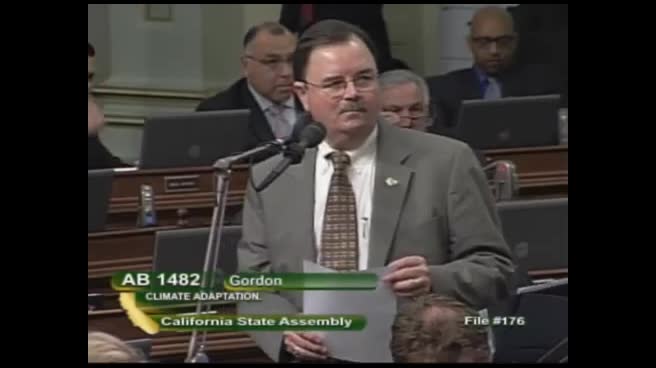
Bill Author