AB 1494: Voting: marked ballots.
- Session Year: 2015-2016
- House: Assembly
- Latest Version Date: 2016-09-29
Existing law prohibits a voter from showing his or her ballot to any person after it is marked in such a way as to reveal its contents. Existing law provides that a person who interferes or attempts to interfere with the secrecy of voting is guilty of a felony, and authorizes the Secretary of State, the Attorney General, or a local elections official to bring an action to impose additional civil penalties for committing those acts.
This bill would create an exception to that prohibition that would permit a voter to voluntarily disclose how he or she voted if that voluntary act does not violate any other law.
Existing law prohibits a voter from showing his or her ballot to any person after it is marked in such a way as to reveal its contents. Existing law provides that a person who interferes or attempts to interfere with the secrecy of voting is guilty of a felony, and authorizes the Secretary of State, the Attorney General, or a local elections official to bring an action to impose additional civil penalties for committing those acts.
This bill would clarify that create an exception to that prohibition that would permit a voter may to voluntarily disclose how he or she voted if that voluntary act does not violate any other law.
Existing law prohibits a voter from showing his or her ballot to any person after it is marked in such a way as to reveal its contents. Existing law provides that a person who interferes or attempts to interfere with the secrecy of voting is guilty of a felony, and authorizes the Secretary of State, the Attorney General, or a local elections official to bring an action to impose additional civil penalties for committing those acts.
This bill would authorize clarify that a voter to may voluntarily disclose how he or she voted or distribute an image of his or her own marked ballot if that voluntary act does not violate any other law.
Existing law prohibits a voter from showing his or her ballot after it is marked in such a way as to reveal its contents. Existing law provides that a person who interferes or attempts to interfere with the secrecy of voting is guilty of a felony, and authorizes the Secretary of State, the Attorney General, or a local elections official to bring an action to impose additional civil penalties for committing those acts.
This bill would authorize a voter to voluntarily disclose how he or she voted or distribute an image of his or her own marked ballot if that voluntary act does not violate any other law.
Existing law prohibits a voter from showing his or her ballot after it is marked in such a way as to reveal its contents. Existing law provides that a person who interferes or attempts to interfere with the secrecy of voting is guilty of a felony, and authorizes the Secretary of State, the Attorney General, or a local elections official to bring an action to impose additional civil penalties for committing those acts.
This bill would authorize a voter to take a photograph or digital image of his or her marked ballot and distribute or share that photograph or digital image using social media or by any other means, unless the voter does so for certain prohibited purposes. The bill would exempt these authorized acts from the criminal and civil penalties described above. The bill would also repeal a duplicative provision. voluntarily disclose how he or she voted or distribute an image of his or her own marked ballot if that voluntary act does not violate any other law.
Under existing law, any person other than an elections official or a member of the precinct board who receives a voted ballot from a voter or who examines or solicits the voter to show his or her voted ballot is guilty of an offense punishable by a fine, imprisonment, or by both fine and imprisonment. Existing law exempts from this crime a person returning a vote by mail ballot or persons assisting a voter.
The bill would also exempt from that crime a person examining or soliciting a voter to show a photograph or digital image of his or her marked ballot that has been distributed or shared using social media or by other means.
Existing law prohibits a voter from showing his or her ballot after it is marked in such a way as to reveal its contents. Existing law provides that a person who interferes or attempts to interfere with the secrecy of voting is guilty of a felony, and authorizes the Secretary of State, the Attorney General, or a local elections official to bring an action to impose additional civil penalties for committing those acts.
This bill would authorize a voter to take a photograph or digital image of his or her marked ballot and distribute or share that photograph or digital image using social media or by any other means, unless the voter does so for certain prohibited purposes. The bill would exempt these authorized acts from the criminal and civil penalties described above. The bill would also repeal a duplicative provision.
Under existing law, any person other than an elections official or a member of the precinct board who receives a voted ballot from a voter or who examines or solicits the voter to show his or her voted ballot is guilty of an offense punishable by a fine, imprisonment, or by both fine and imprisonment. Existing law exempts from this crime a person returning a vote by mail ballot or persons assisting a voter.
The bill would also exempt from that crime a person examining or soliciting a voter to show a photograph or digital image of his or her marked ballot that has been distributed or shared using social media or by other means.
Existing law designates the Secretary of State as the chief elections officer of the state and requires him or her to see that elections are efficiently conducted and that state election laws are enforced. Existing law also authorizes the Secretary of State in certain circumstances to assist the county elections officer in discharging his or her duties.
The Political Reform Act of 1974 provides for the comprehensive regulation of campaign financing, including requiring the filing of reports of contributions and expenditures. Among its provisions, the act requires a committee that makes an independent expenditure, as defined, of $1,000 or more during an election cycle in connection with a candidate for elective state office or a state ballot measure to disclose that expenditure by filing a report online or electronically with the Secretary of State.
This bill would require a committee subject to the independent expenditure disclosure requirement to pay to the Secretary of State, within 5 days of filing an independent expenditure report, an annual reporting fee in an amount based on the amount that the committee declares that it will spend in each 2-year election cycle, as defined. The bill would require those fees to be deposited into a Civic Engagement Fund created by the bill. The bill would, upon appropriation by the Legislature, require the Secretary of State to allocate the funds in the Civic Engagement Fund for the costs of oversight of committees filing the independent expenditure reports, to the Fair Political Practices Commission for the purpose of increasing transparency in political campaigns, and to local elections offices, through a competitive grant program, to increase voter registration and turnout.
Existing law makes a willful violation of the Political Reform Act of 1974 a misdemeanor and subject offenders to criminal penalties.
This bill would impose a state-mandated local program by creating additional crimes.
The California Constitution requires the state to reimburse local agencies and school districts for certain costs mandated by the state. Statutory provisions establish procedures for making that reimbursement.
This bill would provide that no reimbursement is required by this act for a specified reason.
The Political Reform Act of 1974, an initiative measure, provides that the Legislature may amend the act to further the acts purposes upon a 2/3 vote of each house and compliance with specified procedural requirements.
This bill would declare that it furthers the purposes of the act.
Existing law designates the Secretary of State as the chief elections officer of the state and requires him or her to see that elections are efficiently conducted and that state election laws are enforced. Existing law also authorizes the Secretary of State in certain circumstances to assist the county elections officer in discharging his or her duties.
The Political Reform Act of 1974 provides for the comprehensive regulation of campaign financing, including requiring the filing of reports of contributions and expenditures. Among its provisions, the act requires a committee that makes an independent expenditure, as defined, of $1,000 or more during an election cycle in connection with a candidate for elective state office or a state ballot measure to disclose that expenditure by filing a report online or electronically with the Secretary of State.
This bill would require a committee subject to the independent expenditure disclosure requirement to pay a tax at the rate of 10% of the amount of each independent expenditure reported to the Secretary of State within 5 days of filing the report. pay to the Secretary of State, within 5 days of filing an independent expenditure report, an annual reporting fee in an amount based on the amount that the committee declares that it will spend in each 2-year election cycle, as defined. The bill would require the Secretary of State to establish a fund with the tax revenues and allocate those funds those fees to be deposited into a Civic Engagement Fund created by the bill. The bill would, upon appropriation by the Legislature, require the Secretary of State to allocate the funds in the Civic Engagement Fund for the costs of oversight of committees filing the independent expenditure reports, to the Fair Political Practices Commission and for the purpose of increasing transparency in political campaigns, and to local elections offices for the purpose of increasing transparency in political campaigns, civic engagement, and offices, through a competitive grant program, to increase voter registration and turnout.
Existing law makes a willful violation of the Political Reform Act of 1974 a misdemeanor and subject offenders to criminal penalties.
The This bill would impose a state-mandated local program by creating additional crimes.
The California Constitution requires the state to reimburse local agencies and school districts for certain costs mandated by the state. Statutory provisions establish procedures for making that reimbursement.
This bill would provide that no reimbursement is required by this act for a specified reason.
The Political Reform Act of 1974, an initiative measure, provides that the Legislature may amend the act to further the acts purposes upon a 2/3 vote of each house and compliance with specified procedural requirements.
This bill would declare that it furthers the purposes of the act.
Existing law designates the Secretary of State as the chief elections officer of the state and requires him or her to see that elections are efficiently conducted and that state election laws are enforced. Existing law also authorizes the Secretary of State in certain circumstances to assist the county elections officer in discharging his or her duties.
The Political Reform Act of 1974 provides for the comprehensive regulation of campaign financing, including requiring the filing of reports of contributions and expenditures. Among its provisions, the act requires a committee that makes an independent expenditure, as defined, of $1,000 or more during an election cycle in connection with a candidate for elective state office or a state ballot measure to disclose that expenditure by filing a report online or electronically with the Secretary of State.
This bill would require a committee subject to the independent expenditure disclosure requirement to pay a tax at the rate of an undetermined percentage 10% of the amount of each independent expenditure reported to the Secretary of State within 5 days of filing the report. The bill would require the Secretary of State to establish a fund with the tax revenues and allocate those funds to the Fair Political Practices Commission and local elections offices for the purpose of increasing transparency in political campaigns, civic engagement, and voter registration and turnout.
Existing law makes a willful violation of the Political Reform Act of 1974 a misdemeanor and subject offenders to criminal penalties.
The bill would impose a state-mandated local program by creating additional crimes.
The California Constitution requires the state to reimburse local agencies and school districts for certain costs mandated by the state. Statutory provisions establish procedures for making that reimbursement.
This bill would provide that no reimbursement is required by this act for a specified reason.
The Political Reform Act of 1974, an initiative measure, provides that the Legislature may amend the act to further the acts purposes upon a 2/3 vote of each house and compliance with specified procedural requirements.
This bill would declare that it furthers the purposes of the act.
Existing law designates the Secretary of State as the chief elections officer of the state and requires him or her to see that elections are efficiently conducted and that state election laws are enforced. Existing law also authorizes the Secretary of State in certain circumstances to assist the county elections officer in discharging his or her duties.
The Political Reform Act of 1974 provides for the comprehensive regulation of campaign financing, including requiring the filing of reports of contributions and expenditures. Among its provisions, the act requires a committee that makes an independent expenditure, as defined, of $1,000 or more during an election cycle in connection with a candidate for elective state office or a state ballot measure to disclose that expenditure by filing a report online or electronically with the Secretary of State.
This bill would require a committee subject to the independent expenditure disclosure requirement to pay a tax at the rate of an undetermined percentage of the amount of each independent expenditure reported to the Secretary of State within 5 days of filing the report. The bill would require the Secretary of State to establish a fund with the tax revenues and allocate those funds to the Fair Political Practices Commission and local elections offices for the purpose of increasing transparency in political campaigns, civic engagement, and voter registration and turnout.
Existing law makes a willful violation of the Political Reform Act of 1974 a misdemeanor and subject offenders to criminal penalties.
The bill would impose a state-mandated local program by creating additional crimes.
The California Constitution requires the state to reimburse local agencies and school districts for certain costs mandated by the state. Statutory provisions establish procedures for making that reimbursement.
This bill would provide that no reimbursement is required by this act for a specified reason.
The Political Reform Act of 1974, an initiative measure, provides that the Legislature may amend the act to further the acts purposes upon a 2/3 vote of each house and compliance with specified procedural requirements.
This bill would declare that it furthers the purposes of the act.
(a)After the ballot is marked, a voter shall not show it to any person in a manner that reveals its contents, except as provided in subdivision (b).
(b)A voter may voluntarily disclose how he or she voted if that voluntary act does not violate any other law.
(a)After the ballot is marked, a voter shall not show it to any person in a manner that reveals its contents, except as provided in subdivision (b).
(b)A voter may voluntarily disclose how he or she voted if that voluntary act does not violate any other law.
(a)After the ballot is marked, a voter shall not show it to any person in a manner that reveals its contents. contents, except as provided in subdivision (b).
(b)A voter may voluntarily disclose how he or she voted if that voluntary act does not violate any other law.
(a)After the ballot is marked, a voter shall not show it to any person in a manner that reveals its contents, except as provided in subdivision (b). contents.
(b)A voter may voluntarily disclose how he or she voted or distribute an image of his or her own marked ballot if that voluntary act does not violate any other law.
(a)After the ballot is marked, a voter shall not show it to any person in such a way as to reveal in a manner that reveals its contents, except as provided in subdivision (b).
(b)A voter may voluntarily disclose how he or she voted or distribute an image of his or her own marked ballot if that voluntary act does not violate any other law.
(a)After the ballot is marked, a voter shall not show it to any person in such a way as to reveal its contents, except as provided in subdivision (b).
(b)A voter may voluntarily disclose how he or she voted or distribute an image of his or her own marked ballot if that voluntary act does not violate any other law.
(b)A voter may take a photograph or digital image of his or her marked ballot and distribute or share the photograph or digital image using social media or by any other means. A photograph or digital image taken and distributed or shared pursuant to this subdivision shall not be used to coerce or intimidate a voter, impede a voters ability to vote, cause voter delay in a polling place, disrupt a polling place, or result in a monetary or tangible benefit for any purpose.
SEC. 3.Section 18403 of the Elections Code is amended to read:18403.Any person other than an elections official or a member of the precinct board who receives a voted ballot from a voter or who examines or solicits the voter to show his or her voted ballot is punishable by a fine not exceeding ten thousand dollars ($10,000), by imprisonment pursuant to subdivision (h) of Section 1170 of the Penal Code for 16 months or two or three years, or in a county jail not exceeding one year, or by both that fine and imprisonment. This section does not apply to persons returning a vote by mail ballot pursuant to Sections 3017 and 3021, to persons assisting a voter pursuant to Section 14282, or to persons examining or soliciting a voter to show a photograph or digital image of a ballot that has been distributed or shared pursuant to subdivision (b) of Section 14291.
SEC. 4.Section 18564 of the Elections Code is amended to read:18564.Any person is guilty of a felony, punishable by imprisonment pursuant to subdivision (h) of Section 1170 of the Penal Code for two, three, or four years who, before or during an election:
(a)Tampers with, interferes with, or attempts to interfere with, the correct operation of, or willfully damages in order to prevent the use of, a voting machine, voting device, voting system, vote tabulating device, or ballot tally software program source codes.
(b)Interferes or attempts to interfere with the secrecy of voting, except as provided in subdivision (b) of Section 14291, or ballot tally software program source codes.
(c)Knowingly, and without authorization, makes or has in his or her possession a key to a voting machine that has been adopted and will be used in elections in this state.
(d)Willfully substitutes or attempts to substitute forged or counterfeit ballot tally software program source codes.
SEC. 5.Section 18564.5 of the Elections Code is amended to read:18564.5.(a)The Secretary of State, Attorney General, and any local elections official in the county in which the act occurs, may bring a civil action against an individual, business, or other legal entity that commits any of the following acts before, during, or after an election:
(1)Tampers, interferes, or attempts to interfere with the correct operation of, or willfully damages in order to prevent the use of, a voting machine, voting device, voting system, vote tabulating device, or ballot tally software.
(2)Interferes or attempts to interfere with the secrecy of voting, except as provided in subdivision (b) of Section 14291, or interferes or attempts to interfere with ballot tally software program source codes.
(3)Knowingly, and without authorization, gains access to or provides another person or persons with access to a voting machine for the purpose of committing one of the acts specified by this section.
(4)Willfully substitutes or attempts to substitute forged, counterfeit, or malicious ballot tally software program source codes.
(5)Knowingly, and without authorization, inserts or causes the insertion of uncertified hardware, software, or firmware, for whatever purpose, into a voting machine, voting device, voting system, vote tabulating device, or ballot tally software.
(6)Fails to notify the Secretary of State prior to any change in hardware, software, or firmware to a voting machine, voting device, voting system, or vote tabulating device, certified or conditionally certified for use in this state.
(b)A civil action may be brought pursuant to this section for a civil penalty not to exceed fifty thousand dollars ($50,000) for each act and for injunctive relief, if appropriate.
(a)After the ballot is marked, a voter shall not show it to any person in such a way as to reveal its contents, except as provided in subdivision (b).
(b)A voter may take a photograph or digital image of his or her marked ballot and distribute or share the photograph or digital image using social media or by any other means. A photograph or digital image taken and distributed or shared pursuant to this subdivision shall not be used to coerce or intimidate a voter, impede a voters ability to vote, cause voter delay in a polling place, disrupt a polling place, or result in a monetary or tangible benefit for any purpose.
SEC. 3.Section 18403 of the Elections Code is amended to read:18403.Any person other than an elections official or a member of the precinct board who receives a voted ballot from a voter or who examines or solicits the voter to show his or her voted ballot is punishable by a fine not exceeding ten thousand dollars ($10,000), by imprisonment pursuant to subdivision (h) of Section 1170 of the Penal Code for 16 months or two or three years, or in a county jail not exceeding one year, or by both that fine and imprisonment. This section does not apply to persons returning a vote by mail ballot pursuant to Sections 3017 and 3021, to persons assisting a voter pursuant to Section 14282, or to persons examining or soliciting a voter to show a photograph or digital image of a ballot that has been distributed or shared pursuant to subdivision (b) of Section 14291.
SEC. 4.Section 18564 of the Elections Code is amended to read:18564.Any person is guilty of a felony, punishable by imprisonment pursuant to subdivision (h) of Section 1170 of the Penal Code for two, three, or four years who, before or during an election:
(a)Tampers with, interferes with, or attempts to interfere with, the correct operation of, or willfully damages in order to prevent the use of, any a voting machine, voting device, voting system, vote tabulating device, or ballot tally software program source codes.
(b)Interferes or attempts to interfere with the secrecy of voting, except as provided in subdivision (b) of Section 14291, or ballot tally software program source codes.
(c)Knowingly, and without authorization, makes or has in his or her possession a key to a voting machine that has been adopted and will be used in elections in this state.
(d)Willfully substitutes or attempts to substitute forged or counterfeit ballot tally software program source codes.
SEC. 5.Section 18564.5 of the Elections Code is amended to read:18564.5.(a)The Secretary of State, Attorney General, and any local elections official in the county in which the act occurs, may bring a civil action against an individual, business, or other legal entity that commits any of the following acts before, during, or after an election:
(1)Tampers, interferes, or attempts to interfere with the correct operation of, or willfully damages in order to prevent the use of, any a voting machine, voting device, voting system, vote tabulating device, or ballot tally software.
(2)Interferes or attempts to interfere with the secrecy of voting, except as provided in subdivision (b) of Section 14291, or interferes or attempts to interfere with ballot tally software program source codes.
(3)Knowingly, and without authorization, gains access to or provides another person or persons with access to a voting machine for the purpose of committing one of the acts specified by this section.
(4)Willfully substitutes or attempts to substitute forged, counterfeit, or malicious ballot tally software program source codes.
(5)Knowingly, and without authorization, inserts or causes the insertion of uncertified hardware, software, or firmware, for whatever purpose, into any a voting machine, voting device, voting system, vote tabulating device, or ballot tally software.
(6)Fails to notify the Secretary of State prior to any change in hardware, software, or firmware to a voting machine, voting device, voting system, or vote tabulating device, certified or conditionally certified for use in this state.
(b)A civil action may be brought pursuant to this section for a civil penalty not to exceed fifty thousand dollars ($50,000) for each act and for injunctive relief, if appropriate.
After his or her ballot is marked, a voter shall not show it to any person in such a way as to reveal its contents.
SEC. 2.Section 14291 of the Elections Code is amended to read:14291.(a) After the ballot is marked, a voter shall not show it to any person in such a way as to reveal its contents. contents, except as provided in subdivision (b).
(b)A voter may take a photograph or digital image of his or her marked ballot and distribute or share the photograph or digital image using social media or by any other means. A photograph or digital image taken and distributed or shared pursuant to this subdivision shall not be used to coerce or intimidate a voter, impede a voters ability to vote, cause voter delay in a polling place, disrupt a polling place, or result in a monetary or tangible benefit for any purpose.
SEC. 3.Section 18403 of the Elections Code is amended to read:18403.Any person other than an elections official or a member of the precinct board who receives a voted ballot from a voter or who examines or solicits the voter to show his or her voted ballot is punishable by a fine not exceeding ten thousand dollars ($10,000), by imprisonment pursuant to subdivision (h) of Section 1170 of the Penal Code for 16 months or two or three years, or in a county jail not exceeding one year, or by both that fine and imprisonment. This section shall does not apply to persons returning a vote by mail ballot pursuant to Sections 3017 and 3021 or 3021, to persons assisting a voter pursuant to Section 14282. 14282, or to persons examining or soliciting a voter to show a photograph or digital image of a ballot that has been distributed or shared pursuant to subdivision (b) of Section 14291.
SEC. 4.Section 18564 of the Elections Code is amended to read:18564.Any person is guilty of a felony, punishable by imprisonment pursuant to subdivision (h) of Section 1170 of the Penal Code for two, three, or four years who, before or during an election:
(a)Tampers with, interferes with, or attempts to interfere with, the correct operation of, or willfully damages in order to prevent the use of, any voting machine, voting device, voting system, vote tabulating device, or ballot tally software program source codes.
(b)Interferes or attempts to interfere with the secrecy of voting voting, except as provided in subdivision (b) of Section 14291, or ballot tally software program source codes.
(c)Knowingly, and without authorization, makes or has in his or her possession a key to a voting machine that has been adopted and will be used in elections in this state.
(d)Willfully substitutes or attempts to substitute forged or counterfeit ballot tally software program source codes.
SEC. 5.Section 18564.5 of the Elections Code is amended to read:18564.5.(a)The Secretary of State, Attorney General, and any local elections official in the county in which the act occurs, may bring a civil action against an individual, business, or other legal entity that commits any of the following acts before, during, or after an election:
(1)Tampers, interferes, or attempts to interfere with the correct operation of, or willfully damages in order to prevent the use of, any voting machine, voting device, voting system, vote tabulating device, or ballot tally software.
(2)Interferes or attempts to interfere with the secrecy of voting voting, except as provided in subdivision (b) of Section 14291, or interferes or attempts to interfere with ballot tally software program source codes.
(3)Knowingly, and without authorization, gains access to or provides another person or persons with access to a voting machine for the purpose of committing one of the acts specified by this section.
(4)Willfully substitutes or attempts to substitute forged, counterfeit, or malicious ballot tally software program source codes.
(5)Knowingly, and without authorization, inserts or causes the insertion of uncertified hardware, software, or firmware, for whatever purpose, into any voting machine, voting device, voting system, vote tabulating device, or ballot tally software.
(6)Fails to notify the Secretary of State prior to any change in hardware, software, or firmware to a voting machine, voting device, voting system, or vote tabulating device, certified or conditionally certified for use in this state.
(b)A civil action may be brought pursuant to this section for a civil penalty not to exceed fifty thousand dollars ($50,000) for each act and for injunctive relief, if appropriate.
SECTION 1.Section 12179.2 is added to the Government Code, to read:12179.2.(a)There is hereby created in the State Treasury the Civic Engagement Fund. The purpose of the Civic Engagement Fund is to provide oversight of committees filing reports under Section 85500 and to increase transparency in political campaigns, civic engagement, and voter registration and turnout. The Secretary of State shall deposit revenues received pursuant to subdivision (c) of Section 85500 into the Civic Engagement Fund. Upon appropriation by the Legislature, the Secretary of State shall allocate these funds for the costs of oversight of committees filing reports under Section 85500, to the Fair Political Practices Commission for the purpose of increasing transparency in political campaigns, and to local elections offices, through a competitive grant program, to increase voter registration and turnout.
(b)Notwithstanding Section 10231.5, the Secretary of State shall report to the Legislature and to the Department of Finance by March 31 of each year on the allocation and use of fund moneys specified in subdivision (a). The Secretary of State shall also post this information on his or her Internet Web site.
SEC. 2.Section 85500 of the Government Code is amended to read:85500.(a)In addition to any other report required by this title, a committee, including a political party committee, that is required to file reports pursuant to Section 84605 and that makes independent expenditures of one thousand dollars ($1,000) or more during an election cycle in connection with a candidate for elective state office or state ballot measure, shall file online or electronically a report with the Secretary of State disclosing the making of the independent expenditure. This report shall disclose the same information required by subdivision (b) of Section 84204 and shall be filed within 24 hours of the time the independent expenditure is made.
(b)An expenditure shall not be considered independent, and shall be treated as a contribution from the person making the expenditure to the candidate on whose behalf, or for whose benefit, the expenditure is made, if the expenditure is made under any of the following circumstances:
(1)The expenditure is made with the cooperation of, or in consultation with, the candidate on whose behalf, or for whose benefit, the expenditure is made, or any controlled committee or any agent of the candidate.
(2)The expenditure is made in concert with, or at the request or suggestion of, the candidate on whose behalf, or for whose benefit, the expenditure is made, or any controlled committee or any agent of the candidate.
(3)The expenditure is made under any arrangement, coordination, or direction with respect to the candidate or the candidates agent and the person making the expenditure.
(c)(1)A committee subject to this section shall pay an annual reporting fee to the Secretary of State. The fee shall be charged as follows:
(A)One hundred dollars ($100) for a committee filing a report and declaring that it will spend less than one hundred thousand dollars ($100,000) per two-year election cycle.
(B)One thousand dollars ($1,000) for a committee filing a report and declaring that it will spend less than two hundred fifty thousand dollars ($250,000) per two-year election cycle.
(C)Two thousand dollars ($2,000) for a committee filing a report and declaring that it will spend less than five hundred thousand dollars ($500,000) per two-year election cycle.
(D)Ten thousand dollars ($10,000) for a committee filing a report and declaring that it will spend less than one million dollars ($1,000,000) per two-year election cycle.
(E)Fifty thousand dollars ($50,000) for a committee filing a report and declaring that it will spend less than ten million dollars ($10,000,000) per two-year election cycle.
(2)The annual reporting fee shall be paid within 5 days of the filing of the report pursuant to subdivision (a).
(3)If a committee expends more than the declared amount, in the report filed in which the committee discloses that fact, it shall make a new declaration and pay the increased fee less the amount of the fee or fees already paid.
(4)For purposes of this subdivision, two-year election cycle means the period of time between the immediately preceding statewide general election and the next statewide general election.
SEC. 3.No reimbursement is required by this act pursuant to Section 6 of Article XIIIB of the California Constitution because the only costs that may be incurred by a local agency or school district will be incurred because this act creates a new crime or infraction, eliminates a crime or infraction, or changes the penalty for a crime or infraction, within the meaning of Section 17556 of the Government Code, or changes the definition of a crime within the meaning of Section 6 of Article XIIIB of the California Constitution.
SEC. 4.The Legislature finds and declares that this bill furthers the purposes of the Political Reform Act of 1974 within the meaning of subdivision (a) of Section 81012 of the Government Code.
(a)The Secretary of State shall establish a fund for the purpose of increasing transparency in political campaigns, civic engagement, and voter registration and turnout and deposit revenues received pursuant to subdivision (c) of Section 85500 into the fund. There is hereby created in the State Treasury the Civic Engagement Fund. The purpose of the Civic Engagement Fund is to provide oversight of committees filing reports under Section 85500 and to increase transparency in political campaigns, civic engagement, and voter registration and turnout. The Secretary of State shall deposit revenues received pursuant to subdivision (c) of Section 85500 into the Civic Engagement Fund. Upon appropriation by the Legislature, the Secretary of State shall allocate these funds for the costs of oversight of committees filing reports under Section 85500, to the Fair Political Practices Commission for the purpose of increasing transparency in political campaigns, and to local elections offices, through a competitive grant program, to increase voter registration and turnout.
(b)Notwithstanding Section 10231.5, the Secretary of State shall report to the Legislature and to the Department of Finance by March 31 of each year on the allocation and use of fund moneys specified in subdivision (a). The Secretary of State shall also post this information on his or her Internet Web site.
SEC. 2.Section 85500 of the Government Code is amended to read:85500.(a)In addition to any other report required by this title, a committee, including a political party committee, that is required to file reports pursuant to Section 84605 and that makes independent expenditures of one thousand dollars ($1,000) or more during an election cycle in connection with a candidate for elective state office or state ballot measure, shall file online or electronically a report with the Secretary of State disclosing the making of the independent expenditure. This report shall disclose the same information required by subdivision (b) of Section 84204 and shall be filed within 24 hours of the time the independent expenditure is made.
(b)An expenditure shall not be considered independent, and shall be treated as a contribution from the person making the expenditure to the candidate on whose behalf, or for whose benefit, the expenditure is made, if the expenditure is made under any of the following circumstances:
(1)The expenditure is made with the cooperation of, or in consultation with, the candidate on whose behalf, or for whose benefit, the expenditure is made, or any controlled committee or any agent of the candidate.
(2)The expenditure is made in concert with, or at the request or suggestion of, the candidate on whose behalf, or for whose benefit, the expenditure is made, or any controlled committee or any agent of the candidate.
(3)The expenditure is made under any arrangement, coordination, or direction with respect to the candidate or the candidates agent and the person making the expenditure.
(c)(1)A committee subject to this section shall pay a tax at the rate of 10 percent of the amount of each independent expenditure reported pursuant to subdivision (a) to the Secretary of State within 5 days of the filing of the report pursuant to subdivision (a). an annual reporting fee to the Secretary of State. The fee shall be charged as follows:
(A)One hundred dollars ($100) for a committee filing a report and declaring that it will spend less than one hundred thousand dollars ($100,000) per two-year election cycle.
(B)One thousand dollars ($1,000) for a committee filing a report and declaring that it will spend less than two hundred fifty thousand dollars ($250,000) per two-year election cycle.
(C)Two thousand dollars ($2,000) for a committee filing a report and declaring that it will spend less than five hundred thousand dollars ($500,000) per two-year election cycle.
(D)Ten thousand dollars ($10,000) for a committee filing a report and declaring that it will spend less than one million dollars ($1,000,000) per two-year election cycle.
(E)Fifty thousand dollars ($50,000) for a committee filing a report and declaring that it will spend less than ten million dollars ($10,000,000) per two-year election cycle.
(2)The annual reporting fee shall be paid within 5 days of the filing of the report pursuant to subdivision (a).
(3)If a committee expends more than the declared amount, in the report filed in which the committee discloses that fact, it shall make a new declaration and pay the increased fee less the amount of the fee or fees already paid.
(4)For purposes of this subdivision, two-year election cycle means the period of time between the immediately preceding statewide general election and the next statewide general election.
SEC. 3.No reimbursement is required by this act pursuant to Section 6 of Article XIIIB of the California Constitution because the only costs that may be incurred by a local agency or school district will be incurred because this act creates a new crime or infraction, eliminates a crime or infraction, or changes the penalty for a crime or infraction, within the meaning of Section 17556 of the Government Code, or changes the definition of a crime within the meaning of Section 6 of Article XIIIB of the California Constitution.
SEC. 4.The Legislature finds and declares that this bill furthers the purposes of the Political Reform Act of 1974 within the meaning of subdivision (a) of Section 81012 of the Government Code.
(a)The Secretary of State shall establish a fund for the purpose of increasing transparency in political campaigns, civic engagement, and voter registration and turnout and deposit revenues received pursuant to subdivision (c) of Section 85500 into the fund. Upon appropriation by the Legislature, the Secretary of State shall allocate these funds to the Fair Political Practices Commission for the purpose of increasing transparency in political campaigns and to local elections offices, through a competitive grant program, to increase voter registration and turnout.
(b)Notwithstanding Section 10231.5, the Secretary of State shall report to the Legislature and to the Department of Finance by March 31 of each year on the allocation and use of fund moneys specified in subdivision (a). The Secretary of State shall also post this information on his or her Internet Web site.
SEC. 2.Section 85500 of the Government Code is amended to read:85500.(a)In addition to any other report required by this title, a committee, including a political party committee, that is required to file reports pursuant to Section 84605 and that makes independent expenditures of one thousand dollars ($1,000) or more during an election cycle in connection with a candidate for elective state office or state ballot measure, shall file online or electronically a report with the Secretary of State disclosing the making of the independent expenditure. This report shall disclose the same information required by subdivision (b) of Section 84204 and shall be filed within 24 hours of the time the independent expenditure is made.
(b)An expenditure shall not be considered independent, and shall be treated as a contribution from the person making the expenditure to the candidate on whose behalf, or for whose benefit, the expenditure is made, if the expenditure is made under any of the following circumstances:
(1)The expenditure is made with the cooperation of, or in consultation with, the candidate on whose behalf, or for whose benefit, the expenditure is made, or any controlled committee or any agent of the candidate.
(2)The expenditure is made in concert with, or at the request or suggestion of, the candidate on whose behalf, or for whose benefit, the expenditure is made, or any controlled committee or any agent of the candidate.
(3)The expenditure is made under any arrangement, coordination, or direction with respect to the candidate or the candidates agent and the person making the expenditure.
(c)A committee subject to this section shall pay a tax at the rate of ___ percent (__ %) 10 percent of the amount of each independent expenditure reported pursuant to subdivision (a) to the Secretary of State within 5 days of the filing of the report pursuant to subdivision (a).
SEC. 3.No reimbursement is required by this act pursuant to Section 6 of Article XIIIB of the California Constitution because the only costs that may be incurred by a local agency or school district will be incurred because this act creates a new crime or infraction, eliminates a crime or infraction, or changes the penalty for a crime or infraction, within the meaning of Section 17556 of the Government Code, or changes the definition of a crime within the meaning of Section 6 of Article XIIIB of the California Constitution.
SEC. 4.The Legislature finds and declares that this bill furthers the purposes of the Political Reform Act of 1974 within the meaning of subdivision (a) of Section 81012 of the Government Code.
(a)The Secretary of State shall establish a fund for the purpose of increasing transparency in political campaigns, civic engagement, and voter registration and turnout and deposit revenues received pursuant to subdivision (c) of Section 85500 into the fund. Upon appropriation by the Legislature, the Secretary of State shall allocate these funds to the Fair Political Practices Commission for the purpose of increasing transparency in political campaigns and to local elections offices, through a competitive grant program, to increase voter registration and turnout.
(b)Notwithstanding Section 10231.5, the Secretary of State shall report to the Legislature and to the Department of Finance by March 31 of each year on the allocation and use of fund moneys specified in subdivision (a). The Secretary of State shall also post this information on his or her Internet Web site.
SEC. 2.Section 85500 of the Government Code is amended to read:85500.(a)In addition to any other report required by this title, a committee, including a political party committee, that is required to file reports pursuant to Section 84605 and that makes independent expenditures of one thousand dollars ($1,000) or more during an election cycle in connection with a candidate for elective state office or state ballot measure, shall file online or electronically a report with the Secretary of State disclosing the making of the independent expenditure. This report shall disclose the same information required by subdivision (b) of Section 84204 and shall be filed within 24 hours of the time the independent expenditure is made.
(b)An expenditure may shall not be considered independent, and shall be treated as a contribution from the person making the expenditure to the candidate on whose behalf, or for whose benefit, the expenditure is made, if the expenditure is made under any of the following circumstances:
(1)The expenditure is made with the cooperation of, or in consultation with, the candidate on whose behalf, or for whose benefit, the expenditure is made, or any controlled committee or any agent of the candidate.
(2)The expenditure is made in concert with, or at the request or suggestion of, the candidate on whose behalf, or for whose benefit, the expenditure is made, or any controlled committee or any agent of the candidate.
(3)The expenditure is made under any arrangement, coordination, or direction with respect to the candidate or the candidates agent and the person making the expenditure.
(c)A committee subject to this section shall pay a tax at the rate of ___ percent (__ %) of the amount of each independent expenditure reported pursuant to subdivision (a) to the Secretary of State within 5 days of the filing of the report pursuant to subdivision (a).
SEC. 3.No reimbursement is required by this act pursuant to Section 6 of Article XIIIB of the California Constitution because the only costs that may be incurred by a local agency or school district will be incurred because this act creates a new crime or infraction, eliminates a crime or infraction, or changes the penalty for a crime or infraction, within the meaning of Section 17556 of the Government Code, or changes the definition of a crime within the meaning of Section 6 of Article XIIIB of the California Constitution.
SEC. 4.The Legislature finds and declares that this bill furthers the purposes of the Political Reform Act of 1974 within the meaning of subdivision (a) of Section 81012 of the Government Code.
|
Date
|
Status
|
|---|---|
| Aug 8, 2016 | Ordered to third reading. |
| May 26, 2016 | From committee chair, with author's amendments: Amend, and re-refer to committee. Read second time, amended, and re-referred to Com. on E. & C.A. |
| Jun 1, 2016 | From committee chair, with author's amendments: Amend, and re-refer to committee. Read second time, amended, and re-referred to Com. on E. & C.A. |
| Jun 14, 2016 | From committee: Amend, and do pass as amended. (Ayes 5. Noes 0.) (June 8). |
| Jun 15, 2016 | Read second time and amended. Ordered to third reading. |
| Aug 1, 2016 | Read third time. Passed. Ordered to the Assembly. |
| Aug 1, 2016 | Read third time. Passed. Ordered to the Assembly. (Ayes 31. Noes 8. Page 4724.). |
| Aug 2, 2016 | In Assembly. Concurrence in Senate amendments pending. May be considered on or after August 4 pursuant to Assembly Rule 77. |
| Aug 4, 2016 | In Senate. Held at Desk. |
| Aug 4, 2016 | Ordered to the Senate. |
| Aug 8, 2016 | Action rescinded whereby the bill was read third time, passed, and to Assembly. |
| May 19, 2016 | In committee: Hearing postponed by committee. |
| Aug 8, 2016 | Read third time and amended. Ordered to second reading. |
| Aug 9, 2016 | Read second time. Ordered to third reading. |
| Aug 15, 2016 | Read third time. Passed. Ordered to the Assembly. |
| Aug 15, 2016 | Read third time. Passed. Ordered to the Assembly. (Ayes 31. Noes 6. Page 4975.). |
| Aug 15, 2016 | Read third time. Passed. Ordered to the Assembly. (Ayes 31. Noes 6.). |
| Aug 16, 2016 | In Assembly. Concurrence in Senate amendments pending. May be considered on or after August 18 pursuant to Assembly Rule 77. |
| Aug 22, 2016 | Senate amendments concurred in. To Engrossing and Enrolling. |
| Aug 22, 2016 | Senate amendments concurred in. To Engrossing and Enrolling. (Ayes 63. Noes 15. Page 6026.). |
| Aug 26, 2016 | Enrolled and presented to the Governor at 4:30 p.m. |
| Jan 4, 2016 | From committee chair, with author's amendments: Amend, and re-refer to Com. on E. & R. Read second time and amended. |
| Mar 1, 2015 | From printer. May be heard in committee March 31. |
| Mar 2, 2015 | Read first time. |
| Mar 26, 2015 | Referred to Coms. on E. & R. and REV. & TAX. |
| Apr 7, 2015 | From committee chair, with author's amendments: Amend, and re-refer to Com. on E. & R. Read second time and amended. |
| Apr 8, 2015 | Re-referred to Com. on E. & R. |
| Apr 14, 2015 | In committee: Set, first hearing. Hearing canceled at the request of author. |
| Apr 22, 2015 | From committee chair, with author's amendments: Amend, and re-refer to Com. on E. & R. Read second time and amended. |
| Apr 23, 2015 | Re-referred to Com. on E. & R. |
| Apr 29, 2015 | In committee: Set, second hearing. Held without recommendation. |
| Feb 27, 2015 | Introduced. To print. |
| Jan 4, 2016 | Re-referred to Com. on E. & R. |
| Jan 13, 2016 | From committee: Do pass and re-refer to Com. on APPR. (Ayes 4. Noes 3.) (January 13). Re-referred to Com. on APPR. |
| Jan 14, 2016 | From committee chair, with author's amendments: Amend, and re-refer to Com. on APPR. Read second time and amended. |
| Jan 15, 2016 | Re-referred to Com. on APPR. |
| Jan 21, 2016 | From committee: Do pass. (Ayes 14. Noes 3.) (January 21). |
| Jan 25, 2016 | Read second time. Ordered to third reading. |
| Jan 27, 2016 | In Senate. Read first time. To Com. on RLS. for assignment. |
| Jan 27, 2016 | Read third time. Passed. Ordered to the Senate. (Ayes 51. Noes 18. Page 3503.) |
| Feb 4, 2016 | Referred to Com. on E. & C.A. |
|
Date
|
Description
|
Location
|
Votes
|
|
|---|---|---|---|---|
| Aug 22, 2016 | AB 1494 LEVINE Concurrence in Senate Amendments | Assembly Floor |
Passed |
|
| Aug 15, 2016 | Assembly 3rd Reading AB1494 Levine By Anderson | Senate Floor |
Passed |
|
| Aug 1, 2016 | Assembly 3rd Reading AB1494 Levine By Anderson | Senate Floor |
Passed |
|
| Jun 8, 2016 | Do pass as amended | Senate Standing Committee on Elections and Constitutional Amendments |
Passed |
|
| Jan 27, 2016 | AB 1494 LEVINE Assembly Third Reading | Assembly Floor |
Passed |
|
| Jan 21, 2016 | Do pass. | Assembly Standing Committee on Appropriations |
Passed |
|
| Jan 13, 2016 | Do pass and be re-referred to the Committee on [Appropriations] | Assembly Standing Committee on Elections and Redistricting |
Passed |
This list shows positions taken on this bill by organizations on the date displayed, which is linked to the original source.
Positions by individuals are not included.
|
Organization
|
Position
|
Date
|
|---|---|---|
| American Federation Of State, County And Municipal Employees, Afl-Cio | ** Against | Jan 21, 2016 |
| California Civil Liberties Advocacy | ** Support | Aug 15, 2016 |
| California School Employees Association, AFL-CIO | ** Against | Jan 21, 2016 |
| California Taxpayers' Association | ** Against | Jan 21, 2016 |
| Howard Jarvis Taxpayers Association | ** Against | Aug 15, 2016 |
| Secretary of State Alex Padilla | ** Support | Aug 15, 2016 |
| Service Employees International Union, California State Council | ** Against | Jan 21, 2016 |
| Snapchat | ** Support | Aug 15, 2016 |
CONCURRENCE IN SENATE AMENDMENTS
CSA1 Bill Id:AB 1494
Author:(Levine)
As Amended Ver:August 8, 2016
Majority vote
ASSEMBLY: |
| (January 27, 2016) | SENATE: | 31-6 | (August 15, 2016) |
(vote not relevant)
Original Committee Reference: E. & R.
SUMMARY: Clarifies that a voter may voluntarily disclose how he or she voted if that voluntary act does not violate any other law.
The Senate amendments delete the Assembly-version of the bill, and instead specify that a voter may voluntarily disclose how he or she voted if that voluntary act does not violate any other law and make corresponding changes.
EXISTING LAW prohibits a voter from showing his or her ballot to any person, after the ballot has been marked, in such a way as to reveal the ballot's contents.
AS PASSED BY THE ASSEMBLY, this bill authorized voters to take and share photographs of their marked ballots.
FISCAL EFFECT: None. This bill is keyed non-fiscal by the Legislative Counsel.
COMMENTS: According to the author, this bill seeks to uphold the First Amendment right of voters to engage in political speech by expressly allowing voters to voluntarily share their marked ballots.
California Constitution Article II, Section 7 provides, "Voting shall be secret." Notably, while this constitutional provision protects the right of a voter to cast a secret ballot, it also reflects distinct state interests in keeping voting secret. Requiring a secret ballot helps protect the integrity of the voting process by making it impossible to verify the votes cast by any single voter, thereby protecting against vote buying schemes and voter intimidation or coercion.
The California Elections Code contains a number of provisions that are intended to protect the secrecy of voting. Perhaps most relevant for the purposes of this bill, since at least 1891, state law has prohibited a voter from showing his or her ballot to any person in such a way as to reveal the ballot's contents after it has been marked. This provision can protect a voter from being coerced or intimidated into showing his or her marked ballot, thereby safeguarding the voter's right to cast a secret ballot. Furthermore, this provision protects against vote buying schemes by prohibiting a voter from providing proof of his or her vote selections. The Secretary of State's office indicates that they have no records of a voter ever having been prosecuted in the state for showing his or her marked ballot to another person.
Two recent decisions by federal courts have questioned the constitutionality of laws that make it illegal for voters to take and share photographs of their marked ballots. In both cases, states had enacted laws that were specifically designed to prohibit voters from taking photographs or digital images of their ballots and distributing or sharing those images.
In August 2015, the United States District Court for the District of New Hampshire invalidated a New Hampshire law that prohibits a voter from "taking a digital image or photograph of his or her marked ballot and distributing or sharing the image via social media or by any other means." In its decision, the court concluded that New Hampshire's law violated the First Amendment rights of voters by imposing "a content-based restriction on speech that deprives voters of one of their most powerful means of letting the world know how they voted." An appeal of that case is pending in the United States Court of Appeals for the First Circuit.
In October 2015, the United States District Court for the Southern District of Indiana, Indianapolis Division, enjoined the enforcement of an Indiana law that makes it illegal for a voter to take a digital image or photograph of his or her ballot while in a polling place or other voting location, or to distribute or share such an image by social media or other means. Much like in the New Hampshire case, the court noted that Indiana had "failed to demonstrate any current, ongoing or actual problem posed by or related to vote buying, much less a problem shown to be based on the use of digital photography to facilitate vote buying." The court thus concluded that Indiana's law violates the First Amendment of the United States Constitution.
As approved by the Assembly, this bill explicitly authorized voters to take and share photographs of their marked ballots. The Senate amendments deleted those provisions, and instead specify that the existing prohibition against a voter showing his or her ballot to another person after it has been marked does not prohibit a voter from voluntarily disclosing how he or she voted if that voluntary act does not violate any other law. While the Senate amendments take a different approach, both versions of the bill seek to protect the First Amendment rights of voters to engage in political speech by voluntarily sharing how they voted. In light of that fact, this bill, as amended in the Senate, is generally consistent with Assembly actions.
Analysis Prepared by: Ethan Jones / E. & R. / (916) 319-2094 FN: 0003882
Office of Senate Floor Analyses (916) 651-1520 Fax: (916) 327-4478 | AB |
THIRD READING
Bill No: AB 1494
: 8/8/16
SENATE ELECTIONS & C.A. COMMITTEE: 5-0, 6/8/16
AYES: Allen, Anderson, Hancock, Hertzberg, Liu
ASSEMBLY FLOOR: 51-18, 1/27/16 - See last page for vote
DIGEST: This bill allows voters to voluntarily disclose their marked ballots.
Senate Floor Amendments of 8/8/16 correct a drafting error.
Existing law:
- Provides that voting shall be secret.
- Prohibits a voter from showing his or her ballot to any person, after the ballot has been marked, in such a way as to reveal the ballot's contents.
This bill clarifies that a voter may voluntarily disclose how he or she voted if that voluntary act does not violate any other law.
Background
The California Elections Code contains a number of provisions that are intended to protect the secrecy of voting. For example, state law limits the persons who are allowed within the voting area at a polling place and prohibits more than one person from occupying a voting booth at any time, except in situations where a voter needs assistance in casting a ballot, or if the voter is accompanied by a child or children under the age of 18 years, and under the voter’s care. Existing law also prohibits a voter from showing his or her ballot to any person in such a way as to reveal the ballot's contents after it has been marked. This provision can protect a voter from being coerced or intimidated into showing his or her marked ballot, thereby safeguarding the voter's right to cast a secret ballot.
Other states and recent federal case law. Two recent decisions by federal courts question the constitutionality of laws that make it illegal for voters to take and share photographs of their marked ballots. In both cases, those states had enacted laws that were specifically designed to prohibit voters from taking photographs or digital images of their ballots and distributing or sharing those images.
In August 2015, the United States District Court for the District of New Hampshire invalidated a New Hampshire law that prohibits a voter from "taking a digital image or photograph of his or her marked ballot and distributing or sharing the image via social media or by any other means." The New Hampshire law was enacted in 2014 as an amendment to the state's law that prohibits a voter from allowing his or her ballot to be seen by any person with the intention of letting it be known how that person was about to vote. The author of the law indicated that he had introduced the bill "to prevent situations where a voter could be coerced into posting proof that he or she voted a particular way." In its decision, the court concluded that New Hampshire's law violated the First Amendment rights of voters by imposing "a content-based restriction on speech that deprives voters of one of their most powerful means of letting the world know how they voted." In reaching its decision, the court noted that there was no evidence of vote buying or voter coercion in New Hampshire since the late 1800s, and that "[n]either the legislative history of the new law nor the evidentiary record compiled by the parties provide support for the view that voters will be either induced to sell their votes or subjected to coercion if they are permitted to disclose images of their ballots to others." The New Hampshire Secretary of State subsequently appealed the district court's decision. The appeal is pending in the United States Court of Appeals for the First Circuit.
In October 2015, the United States District Court for the Southern District of Indiana, Indianapolis Division, issued a preliminary injunction enjoining the enforcement of an Indiana law that makes it illegal for a voter to take a digital image or photograph of the voter's ballot while the voter is in a polling place or other official location (such as a vote center or the elections official's office) at which the voter may cast a ballot in person, or to distribute or share such an image by social media or other means. Unlike the New Hampshire law, the Indiana law also applied to unmarked ballots. Much like in the New Hampshire case, the court noted that Indiana had "failed to demonstrate any current, ongoing or actual problem posed by or related to vote buying, much less a problem shown to be based on the use of digital photography to facilitate vote buying." The court thus concluded that Indiana's law violates the First Amendment of the United States Constitution. The Indiana Secretary of State has not yet indicated whether it will appeal the district court's decision.
Comments
- According to the author, AB 1494 seeks to uphold the First Amendment right of voters to engage in political speech by expressly allowing voters to voluntarily share their marked ballots.
- Constitutional guarantee of secret voting and related statutes. Article II, Section 7 of the California Constitution provides, "Voting shall be secret." Notably, while this constitutional provision protects the right of a voter to cast a secret ballot, it also reflects distinct state interests in keeping voting secret. Requiring a secret ballot helps protect the integrity of the voting process by making it impossible to verify the votes cast by any single voter, thereby protecting against vote buying schemes and voter intimidation or coercion.
The California Elections Code contains a number of provisions that are intended to protect the secrecy of voting. Perhaps most relevant for the purposes of this bill, state law prohibits a voter from showing his or her ballot to any person in such a way as to reveal the ballot's contents after it has been marked. This provision can protect a voter from being coerced or intimidated into showing his or her marked ballot, thereby safeguarding the voter's right to cast a secret ballot. Furthermore, this provision protects against vote buying schemes by prohibiting a voter from providing proof of his or her vote selections.
And although the state law prohibiting a person from showing his or her marked ballot to any person in such a way as to reveal the ballot's contents has been in effect in various forms since at least 1891, the Secretary of State's Office indicates that they have no records of a voter ever having been prosecuted in the state for showing his or her marked ballot to another person.
While the prior version of this bill explicitly authorized voters to take and share photographs of their marked ballots, recent amendments deleted those provisions, and instead clarify that a voter may voluntarily disclose how he or she voted if that voluntary act does not violate any other law. This language continues to protect the First Amendment rights of voters to engage in political speech by voluntarily sharing how they voted.
FISCAL EFFECT: Appropriation: Fiscal Com.: Local:
Secretary of State Alex Padilla
California Civil Liberties Advocacy
Snapchat
Howard Jarvis Taxpayers Association
ASSEMBLY FLOOR: 51-18, 1/27/16
AYES: Alejo, Bloom, Bonilla, Bonta, Brown, Burke, Calderon, Campos, Chang, Chau, Chiu, Chu, Cooley, Cooper, Dababneh, Eggman, Beth Gaines, Gallagher, Cristina Garcia, Eduardo Garcia, Gipson, Gomez, Gonzalez, Gordon, Roger Hernández, Holden, Irwin, Jones-Sawyer, Kim, Levine, Linder, Lopez, Low, McCarty, Medina, Mullin, Nazarian, Olsen, Quirk, Rendon, Ridley-Thomas, Rodriguez, Salas, Santiago, Mark Stone, Thurmond, Ting, Wilk, Williams, Wood, Atkins
NOES: Travis Allen, Baker, Bigelow, Brough, Gatto, Gray, Grove, Hadley, Harper, Jones, Lackey, Mayes, Melendez, Obernolte, O'Donnell, Patterson, Wagner, Waldron
NO VOTE RECORDED: Achadjian, Chávez, Dahle, Daly, Dodd, Frazier, Maienschein, Mathis, Steinorth, Weber
8/10/16 15:49:13
**** END ****
CONCURRENCE IN SENATE AMENDMENTS
CSA1 Bill Id:AB 1494
Author:(Levine)
As Amended Ver:June 15, 2016
Majority vote
ASSEMBLY: |
| (January 27, 2016) | SENATE: | 31-8 | (August 1, 2016) |
(vote not relevant)
Original Committee Reference: E. & R.
SUMMARY: Clarifies that a voter may voluntarily disclose how he or she voted if that voluntary act does not violate any other law.
The Senate amendments delete the Assembly-version of the bill, and instead specify that a voter may voluntarily disclose how he or she voted if that voluntary act does not violate any other law.
EXISTING LAW prohibits a voter from showing his or her ballot to any person, after the ballot has been marked, in such a way as to reveal the ballot's contents.
AS PASSED BY THE ASSEMBLY, this bill authorized voters to take and share photographs of their marked ballots.
FISCAL EFFECT: None. This bill is keyed non-fiscal by the Legislative Counsel.
COMMENTS: According to the author, this bill seeks to uphold the First Amendment right of voters to engage in political speech by expressly allowing voters to voluntarily share their marked ballots.
California Constitution Article II, Section 7 provides, "Voting shall be secret." Notably, while this constitutional provision protects the right of a voter to cast a secret ballot, it also reflects distinct state interests in keeping voting secret. Requiring a secret ballot helps protect the integrity of the voting process by making it impossible to verify the votes cast by any single voter, thereby protecting against vote buying schemes and voter intimidation or coercion.
The California Elections Code contains a number of provisions that are intended to protect the secrecy of voting. Perhaps most relevant for the purposes of this bill, since at least 1891, state law has prohibited a voter from showing his or her ballot to any person in such a way as to reveal the ballot's contents after it has been marked. This provision can protect a voter from being coerced or intimidated into showing his or her marked ballot, thereby safeguarding the voter's right to cast a secret ballot. Furthermore, this provision protects against vote buying schemes by prohibiting a voter from providing proof of his or her vote selections. The Secretary of State's office indicates that they have no records of a voter ever having been prosecuted in the state for showing his or her marked ballot to another person.
Two recent decisions by federal courts have questioned the constitutionality of laws that make it illegal for voters to take and share photographs of their marked ballots. In both cases, states had enacted laws that were specifically designed to prohibit voters from taking photographs or digital images of their ballots and distributing or sharing those images.
In August 2015, the United States District Court for the District of New Hampshire invalidated a New Hampshire law that prohibits a voter from "taking a digital image or photograph of his or her marked ballot and distributing or sharing the image via social media or by any other means." In its decision, the court concluded that New Hampshire's law violated the First Amendment rights of voters by imposing "a content-based restriction on speech that deprives voters of one of their most powerful means of letting the world know how they voted." An appeal of that case is pending in the United States Court of Appeals for the First Circuit.
In October 2015, the United States District Court for the Southern District of Indiana, Indianapolis Division, enjoined the enforcement of an Indiana law that makes it illegal for a voter to take a digital image or photograph of his or her ballot while in a polling place or other voting location, or to distribute or share such an image by social media or other means. Much like in the New Hampshire case, the court noted that Indiana had "failed to demonstrate any current, ongoing or actual problem posed by or related to vote buying, much less a problem shown to be based on the use of digital photography to facilitate vote buying." The court thus concluded that Indiana's law violates the First Amendment of the United States Constitution.
As approved by the Assembly, this bill explicitly authorized voters to take and share photographs of their marked ballots. The Senate amendments deleted those provisions, and instead clarify that a voter may voluntarily disclose how he or she voted if that voluntary act does not violate any other law. While the Senate amendments take a different approach, both versions of the bill seek to protect the First Amendment rights of voters to engage in political speech by voluntarily sharing how they voted. In light of that fact, this bill, as amended in the Senate, is generally consistent with Assembly actions.
Analysis Prepared by: Ethan Jones / E. & R. / (916) 319-2094 FN: 0003465
Office of Senate Floor Analyses (916) 651-1520 Fax: (916) 327-4478 | AB |
THIRD READING
Bill No: AB 1494
:
SENATE ELECTIONS & C.A. COMMITTEE: 5-0, 6/8/16
AYES: Allen, Anderson, Hancock, Hertzberg, Liu
ASSEMBLY FLOOR: 51-18, 1/27/16 - See last page for vote
DIGEST: This bill allows voters to voluntarily disclose their marked ballots.
Existing law:
- Provides that voting shall be secret.
- Prohibits a voter from showing his or her ballot to any person, after the ballot has been marked, in such a way as to reveal the ballot's contents.
This bill allows a voter to voluntarily disclose how he or she voted if that voluntary act does not violate any other law.
Background
The California Elections Code contains a number of provisions that are intended to protect the secrecy of voting. For example, state law limits the persons who are allowed within the voting area at a polling place and prohibits more than one person from occupying a voting booth at any time, except in situations where a voter needs assistance in casting a ballot, or if the voter is accompanied by a child or children under the age of 18 years, and under the voter’s care. Existing law also prohibits a voter from showing his or her ballot to any person in such a way as to reveal the ballot's contents after it has been marked. This provision can protect a voter from being coerced or intimidated into showing his or her marked ballot, thereby safeguarding the voter's right to cast a secret ballot.
Other states and recent federal case law. Two recent decisions by federal courts question the constitutionality of laws that make it illegal for voters to take and share photographs of their marked ballots. In both cases, those states had enacted laws that were specifically designed to prohibit voters from taking photographs or digital images of their ballots and distributing or sharing those images.
In August 2015, the United States District Court for the District of New Hampshire invalidated a New Hampshire law that prohibits a voter from "taking a digital image or photograph of his or her marked ballot and distributing or sharing the image via social media or by any other means." The New Hampshire law was enacted in 2014 as an amendment to the state's law that prohibits a voter from allowing his or her ballot to be seen by any person with the intention of letting it be known how that person was about to vote. The author of the law indicated that he had introduced the bill "to prevent situations where a voter could be coerced into posting proof that he or she voted a particular way." In its decision, the court concluded that New Hampshire's law violated the First Amendment rights of voters by imposing "a content-based restriction on speech that deprives voters of one of their most powerful means of letting the world know how they voted." In reaching its decision, the court noted that there was no evidence of vote buying or voter coercion in New Hampshire since the late 1800s, and that "[n]either the legislative history of the new law nor the evidentiary record compiled by the parties provide support for the view that voters will be either induced to sell their votes or subjected to coercion if they are permitted to disclose images of their ballots to others." The New Hampshire Secretary of State subsequently appealed the district court's decision. The appeal is pending in the United States Court of Appeals for the First Circuit.
In October 2015, the United States District Court for the Southern District of Indiana, Indianapolis Division, issued a preliminary injunction enjoining the enforcement of an Indiana law that makes it illegal for a voter to take a digital image or photograph of the voter's ballot while the voter is in a polling place or other official location (such as a vote center or the elections official's office) at which the voter may cast a ballot in person, or to distribute or share such an image by social media or other means. Unlike the New Hampshire law, the Indiana law also applied to unmarked ballots. Much like in the New Hampshire case, the court noted that Indiana had "failed to demonstrate any current, ongoing or actual problem posed by or related to vote buying, much less a problem shown to be based on the use of digital photography to facilitate vote buying." The court thus concluded that Indiana's law violates the First Amendment of the United States Constitution. The Indiana Secretary of State has not yet indicated whether it will appeal the district court's decision.
Comments
- According to the author, AB 1494 seeks to uphold the First Amendment right of voters to engage in political speech by expressly allowing voters to voluntarily share their marked ballots.
- Constitutional guarantee of secret voting and related statutes. Article II, Section 7 of the California Constitution provides, "Voting shall be secret." Notably, while this constitutional provision protects the right of a voter to cast a secret ballot, it also reflects distinct state interests in keeping voting secret. Requiring a secret ballot helps protect the integrity of the voting process by making it impossible to verify the votes cast by any single voter, thereby protecting against vote buying schemes and voter intimidation or coercion.
The California Elections Code contains a number of provisions that are intended to protect the secrecy of voting. Perhaps most relevant for the purposes of this bill, state law prohibits a voter from showing his or her ballot to any person in such a way as to reveal the ballot's contents after it has been marked. This provision can protect a voter from being coerced or intimidated into showing his or her marked ballot, thereby safeguarding the voter's right to cast a secret ballot. Furthermore, this provision protects against vote buying schemes by prohibiting a voter from providing proof of his or her vote selections.
The state law prohibiting a person from showing his or her marked ballot to any person in such a way as to reveal the ballot's contents has been in effect in various forms since at least 1891, and does not explicitly address the issue of voters taking photographs of their completed ballots. Nonetheless, the law arguably could apply to a person who takes a photograph of his or her ballot and shows that photograph to another person or posts that photograph on the Internet, through social media or other means. Notwithstanding the potential that state law could be interpreted in such a manner, Senate Elections and Constitutional Amendments Committee staff is unaware of any instance in which a person has been prosecuted in California for taking a photograph of his or her completed ballot and sharing that photograph or posting it on the Internet. In fact, the Secretary of State's Office indicates that they have no records of a voter ever having been prosecuted in the state for showing his or her marked ballot to another person.
FISCAL EFFECT: Appropriation: Fiscal Com.: Local:
Secretary of State Alex Padilla
California Civil Liberties Advocacy
Snapchat
OPPOSITION: (Verified 6/14/16)
Howard Jarvis Taxpayers Association
ASSEMBLY FLOOR: 51-18, 1/27/16
AYES: Alejo, Bloom, Bonilla, Bonta, Brown, Burke, Calderon, Campos, Chang, Chau, Chiu, Chu, Cooley, Cooper, Dababneh, Eggman, Beth Gaines, Gallagher, Cristina Garcia, Eduardo Garcia, Gipson, Gomez, Gonzalez, Gordon, Roger Hernández, Holden, Irwin, Jones-Sawyer, Kim, Levine, Linder, Lopez, Low, McCarty, Medina, Mullin, Nazarian, Olsen, Quirk, Rendon, Ridley-Thomas, Rodriguez, Salas, Santiago, Mark Stone, Thurmond, Ting, Wilk, Williams, Wood, Atkins
NOES: Travis Allen, Baker, Bigelow, Brough, Gatto, Gray, Grove, Hadley, Harper, Jones, Lackey, Mayes, Melendez, Obernolte, O'Donnell, Patterson, Wagner, Waldron
NO VOTE RECORDED: Achadjian, Chávez, Dahle, Daly, Dodd, Frazier, Maienschein, Mathis, Steinorth, Weber
6/15/16 17:24:38
SENATE COMMITTEE ON
ELECTIONS AND CONSTITUTIONAL AMENDMENTS
Senator Ben Allen, Chair
2015 - 2016 Regular
Bill No: AB Hearing Date: 6/8/16
Author: | |||
Version: | 6/1/16 | ||
Urgency: | No | Fiscal: | No |
Consultant: | Frances Tibon Estoista | ||
Subject: Voting: marked ballots.
DIGEST
Allows voters to take and share photographs of their marked ballots.
ANALYSIS
Existing law:
1) Provides that voting shall be secret.
2) Prohibits a voter from showing his or her ballot to any person, after the ballot has been marked, in such a way as to reveal the ballot's contents.
This bill:
Allows a voter to voluntarily disclose how he or she voted or distribute an image of his or her own marked ballot if that voluntary act does not violate any other law.
BACKGROUND
The California Elections Code contains a number of provisions that are intended to protect the secrecy of voting. For example, state law limits the persons who are allowed within the voting area at a polling place and prohibits more than one person from occupying a voting booth at any time, except in situations where a voter needs assistance in casting a ballot, or if the voter is accompanied by a child or children under the age of 18 years, and under the voter’s care. Existing law also prohibits a voter from showing his or her ballot to any person in such a way as to reveal the ballot's contents after it has been marked. This provision can protect a voter from being coerced or intimidated into showing his or her marked ballot, thereby safeguarding the voter's right to cast a secret ballot.
Other States and Recent Federal Case Law: Two recent decisions by federal courts question the constitutionality of laws that make it illegal for voters to take and share photographs of their marked ballots. In both cases, those states had enacted laws that were specifically designed to prohibit voters from taking photographs or digital images of their ballots and distributing or sharing those images.
In August 2015, the United States District Court for the District of New Hampshire invalidated a New Hampshire law that prohibits a voter from "taking a digital image or photograph of his or her marked ballot and distributing or sharing the image via social media or by any other means." The New Hampshire law was enacted in 2014 as an amendment to the state's law that prohibits a voter from allowing his or her ballot to be seen by any person with the intention of letting it be known how that person was about to vote. The author of the law indicated that he had introduced the bill "to prevent situations where a voter could be coerced into posting proof that he or she voted a particular way." In its decision, the court concluded that New Hampshire's law violated the First Amendment rights of voters by imposing "a content-based restriction on speech that deprives voters of one of their most powerful means of letting the world know how they voted." In reaching its decision, the court noted that there was no evidence of vote buying or voter coercion in New Hampshire since the late 1800s, and that "[n]either the legislative history of the new law nor the evidentiary record compiled by the parties provide support for the view that voters will be either induced to sell their votes or subjected to coercion if they are permitted to disclose images of their ballots to others." The New Hampshire Secretary of State subsequently appealed the district court's decision. The appeal is pending in the United States Court of Appeals for the First Circuit.
In October 2015, the United States District Court for the Southern District of Indiana, Indianapolis Division, issued a preliminary injunction enjoining the enforcement of an Indiana law that makes it illegal for a voter to take a digital image or photograph of the voter's ballot while the voter is in a polling place or other official location (such as a vote center or the elections official's office) at which the voter may cast a ballot in person, or to distribute or share such an image by social media or other means. Unlike the New Hampshire law, the Indiana law also applied to unmarked ballots. Much like in the New Hampshire case, the court noted that Indiana had "failed to demonstrate any current, ongoing or actual problem posed by or related to vote buying, much less a problem shown to be based on the use of digital photography to facilitate vote buying." The court thus concluded that Indiana's law violates the First Amendment of the United States Constitution. The Indiana Secretary of State has not yet indicated whether it will appeal the district court's decision.
By contrast to the laws in New Hampshire and Indiana that specifically prohibited voters from taking photographs or digital images of their ballots and distributing or sharing those images, at least two states recently took steps to clarify that "ballot selfies" are permitted in those states. In Utah, House Bill 72 of 2015 made it a misdemeanor for a person to take a photograph of someone else's ballot at a polling place, but also expressly allows an individual to share a photograph of his or her own completed ballot. Arizona's Senate Bill 1287 of 2015 prohibited a person from taking photographs or videos within 75 feet of a polling place, but also expressly allowed a voter to share an electronic image of his or her own ballot.
COMMENTS
- According to the author: AB 1494 allows California voters to take a photo of his or her marked ballot and share the image. Two federal courts in other states have deemed these photos political speech protected by the First Amendment.
California law should encourage voter pride, political speech, and civic engagement through social media. Laws prohibiting this activity were written before sharing digital images over the internet was ubiquitous. AB 1494 updates the law to reflect technology and the world in which we now live. - Constitutional Guarantee of Secret Voting and Related Statutes: Article II, Section 7 of the California Constitution provides, "Voting shall be secret." Notably, while this constitutional provision protects the right of a voter to cast a secret ballot, it also reflects distinct state interests in keeping voting secret. Requiring a secret ballot helps protect the integrity of the voting process by making it impossible to verify the votes cast by any single voter, thereby protecting against vote buying schemes and voter intimidation or coercion.
The California Elections Code contains a number of provisions that are intended to protect the secrecy of voting. Perhaps most relevant for the purposes of this bill, state law prohibits a voter from showing his or her ballot to any person in such a way as to reveal the ballot's contents after it has been marked. This provision can protect a voter from being coerced or intimidated into showing his or her marked ballot, thereby safeguarding the voter's right to cast a secret ballot. Furthermore, this provision protects against vote buying schemes by prohibiting a voter from providing proof of his or her vote selections.
The state law prohibiting a person from showing his or her marked ballot to any person in such a way as to reveal the ballot's contents has been in effect in various forms since at least 1891, and does not explicitly address the issue of voters taking photographs of their completed ballots. Nonetheless, the law arguably could apply to a person who takes a photograph of his or her ballot and shows that photograph to another person or posts that photograph on the Internet, through social media or other means. Notwithstanding the potential that state law could be interpreted in such a manner, committee staff is unaware of any instance in which a person has been prosecuted in California for taking a photograph of his or her completed ballot and sharing that photograph or posting it on the Internet. In fact, the Secretary of State's office indicates that they have no records of a voter ever having been prosecuted in the state for showing his or her marked ballot to another person. - Use of Cameras at Polling Places: At several recent elections (including yesterday’s Presidential Primary), the California Secretary of State's office has sent a memo to county elections officials outlining the office's position that "the use of cameras or video equipment at polling places is prohibited" though the memo notes that elections officials could permit such photography under certain circumstances (such as a media organization filming a candidate voting at a polling place). In supporting this conclusion, the memo references numerous state laws including the constitutional requirement that voting shall be secret and statutory provisions that limit the persons who are permitted in the area of the voting booths while the polls are open, prohibit a voter from showing his or her ballot to any other person after it has been marked, and prohibit a person from photographing or video recording a voter entering or exiting a polling place within 100 feet of the polling place with the intent of dissuading another person from voting. The memo concludes that with these laws, "the Legislature and the Governor have sought to make the voting process private and free from any form of intimidation or coercion."
Because this bill expressly provides that a voter may take a photograph or digital image of his or her marked ballot, it is unclear whether California elections officials would be justified in continuing to take the position that the use of cameras or video equipment at polling places is prohibited. Although this bill prohibits a photograph or digital image taken pursuant to its provisions from being used "to coerce or intimidate a voter," among other provisions, it is unclear whether a more widespread presence and use of cameras at the polling place could nonetheless dissuade certain voters from participating in an election.
PRIOR ACTION
Assembly Floor: | |
Assembly Appropriations Committee: | |
Assembly Elections and Redistricting Committee: |
|
POSITIONS
Sponsor: Author
Support: Secretary of State, Alex Padilla
California Civil Liberties Advocacy
Snapchat
Oppose: Howard Jarvis Taxpayers Association
-- END --
ASSEMBLY THIRD READING
ATR Bill Id:AB 1494
Author:(Levine)
As Amended Ver:January 14, 2016
Majority vote
Committee | Votes | Ayes | Noes |
Elections | 4-3 | Ridley-Thomas, Gordon, Mullin, Nazarian | Harper, Travis Allen, Gatto |
Appropriations | 14-3 | Gomez, Bloom, Bonilla, Bonta, Calderon, Chang, Daly, Eggman, Gallagher, Eduardo Garcia, Holden, Quirk, Weber, Wood | Bigelow, Jones, Wagner |
SUMMARY: Authorizes voters to take and share photographs of their marked ballots. Specifically, this bill:
- Authorizes a voter to take a photograph or digital image of his or her marked ballot and distribute or share the photograph or image using social media or by any other means.
- Provides that a photograph or digital image taken and distributed or shared pursuant to this bill shall not be used to coerce or intimidate a voter, impede a voter's ability to vote, cause voter delay in a polling place, disrupt a polling place, or result in a monetary or tangible benefit for any purpose.
EXISTING LAW prohibits a voter from showing his or her ballot to any person, after the ballot has been marked, in such a way as to reveal the ballot's contents.
FISCAL EFFECT: According to the Assembly Appropriations Committee, negligible fiscal impact.
COMMENTS: According to the author, "AB 1494 allows California voters to take ballot selfies and post them on social media. A ballot selfie is a [digital] image of a person's marked ballot. Social media is a great tool for voters to share their civic participation. California law should encourage voter pride, political speech, and civic engagement through social media. Laws prohibiting photos of one's marked ballot were written before sharing digital images over the internet was ubiquitous. AB 1494 updates the law to reflect technology and the world in which we now live."
California Constitution Article II, Section 7 provides, "Voting shall be secret." Notably, while this constitutional provision protects the right of a voter to cast a secret ballot, it also reflects distinct state interests in keeping voting secret. Requiring a secret ballot helps protect the integrity of the voting process by making it impossible to verify the votes cast by any single voter, thereby protecting against vote buying schemes and voter intimidation or coercion.
The California Elections Code contains a number of provisions that are intended to protect the secrecy of voting. Perhaps most relevant for the purposes of this bill, since at least 1891, state law has prohibited a voter from showing his or her ballot to any person in such a way as to reveal the ballot's contents after it has been marked. This provision can protect a voter from being coerced or intimidated into showing his or her marked ballot, thereby safeguarding the voter's right to cast a secret ballot. Furthermore, this provision protects against vote buying schemes by prohibiting a voter from providing proof of his or her vote selections. The Secretary of State's office indicates that they have no records of a voter ever having been prosecuted in the state for showing his or her marked ballot to another person.
Two recent decisions by federal courts have questioned the constitutionality of laws that make it illegal for voters to take and share photographs of their marked ballots. In both cases, states had enacted laws that were specifically designed to prohibit voters from taking photographs or digital images of their ballots and distributing or sharing those images.
In August 2015, the United States District Court for the District of New Hampshire invalidated a New Hampshire law that prohibits a voter from "taking a digital image or photograph of his or her marked ballot and distributing or sharing the image via social media or by any other means." In its decision, the court concluded that New Hampshire's law violated the First Amendment rights of voters by imposing "a content-based restriction on speech that deprives voters of one of their most powerful means of letting the world know how they voted." An appeal of that case is pending in the United States Court of Appeals for the First Circuit.
In October 2015, the United States District Court for the Southern District of Indiana, Indianapolis Division, enjoined the enforcement of an Indiana law that makes it illegal for a voter to take a digital image or photograph of his or her ballot while in a polling place or other voting location, or to distribute or share such an image by social media or other means. Much like in the New Hampshire case, the court noted that Indiana had "failed to demonstrate any current, ongoing or actual problem posed by or related to vote buying, much less a problem shown to be based on the use of digital photography to facilitate vote buying." The court thus concluded that Indiana's law violates the First Amendment of the United States Constitution.
By contrast to the laws in New Hampshire and Indiana that specifically prohibited voters from taking photographs or digital images of their ballots and distributing or sharing those images, at least two states recently took steps to clarify that "ballot selfies" are permitted. In Utah, House Bill 72 of 2015 made it a misdemeanor for a person to take a photograph of someone else's ballot at a polling place, but also expressly allows an individual to share a photograph of his or her own completed ballot. Arizona's Senate Bill 1287 of 2015 prohibited a person from taking photographs or videos within 75 feet of a polling place, but also expressly allowed a voter to share an electronic image of his or her own ballot.
Please see the policy committee analysis for a full discussion of this bill.
Analysis Prepared by: Ethan Jones / E. & R. / (916) 319-2094 FN: 0002569
Date of Hearing: January 21, 2016
ASSEMBLY COMMITTEE ON APPROPRIATIONS
Jimmy Gomez, Chair
ABPCA Bill Id:AB 1494
Author:(Levine) – As Amended Ver:January 14, 2016
Policy Committee: | Elections and Redistricting | Vote: | 4 - 3 |
|
| ||
|
|
Urgency: No State Mandated Local Program: No Reimbursable: No
SUMMARY:
This bill:
- Provides an exemption to current law, which prohibits a voter from showing his or her completed ballot to another person, by allowing a voter to take a photograph or digital image of his or her marked ballot and distribute or share the photograph or image using social media or by any other means.
- Stipulates that the activity allowed in (1) shall not be used to coerce or intimidate a voter, impede a voter's ability to vote, cause voter delay in a polling place, disrupt a polling place, or result in a monetary or tangible benefit for any purpose.
FISCAL EFFECT:
Negligible fiscal impact.
COMMENTS:
- Background and Purpose. The California Elections Code contains a number of provisions that are intended to protect the secrecy of voting. Perhaps most relevant for the purposes of this bill, state law (first enacted in 1891) prohibits a voter from showing his or her ballot to any person in such a way as to reveal the ballot's contents after it has been marked. This provision can protect a voter from being coerced or intimidated into showing his or her marked ballot, thereby safeguarding the voter's right to cast a secret ballot. This provision also protects against vote buying schemes by prohibiting a voter from providing proof of his or her vote selections. The Secretary of State's office indicates that they have no records of a voter ever having been prosecuted in the state for showing his or her marked ballot to another person.
This bill would expressly provide that the existing law prohibiting a voter from showing his or her completed ballot to another person does not prohibit a person from taking a photograph of his or her completed ballot and sharing that photograph. According to the author, "Social media is a great tool for voters to share their civic participation. California law should encourage voter pride, political speech, and civic engagement through social media."
- Opposition. The Howard Jarvis Taxpayers Association states, "Any process that has the potential to alter the integrity of the ballot should be refrained from. Current law on this subject is unambiguous and there is no compelling reason to diminish that clarity at the potential risk of one’s privacy."
Analysis Prepared by: Chuck Nicol / APPR. / (916) 319-2081
Date of Hearing: January 13, 2016
ASSEMBLY COMMITTEE ON ELECTIONS AND REDISTRICTING
Sebastian Ridley-Thomas, Chair
ABPCA Bill Id:AB 1494 (
Author:Levine) – As Amended Ver:January 4, 2016
SUBJECT: Voting: marked ballots: distributing and sharing photographs and digital images.
SUMMARY: Authorizes voters to take and share photographs of their marked ballots. Specifically, this bill:
- Authorizes a voter to take a photograph or digital image of his or her marked ballot and distribute or share the photograph or image using social media or by any other means.
- Provides that a photograph or digital image taken and distributed or shared pursuant to this bill shall not be used to coerce or intimidate a voter, impede a voter's ability to vote, cause voter delay in a polling place, disrupt a polling place, or result in a monetary or tangible benefit for any purpose.
- Makes corresponding and technical changes.
EXISTING LAW:
- Provides that voting shall be secret.
- Prohibits a voter from showing his or her ballot to any person, after the ballot has been marked, in such a way as to reveal the ballot's contents.
- Prohibits a person other than an elections official or member of a precinct board, except as specified, from receiving a voted ballot from a voter or from examining or soliciting the voter to show his or her voted ballot. Provides that a violation of this prohibition is punishable by imprisonment, a fine, or both, as specified.
- Prohibits a person from interfering or attempting to interfere with the secrecy of voting. Provides that a violation of this prohibition is punishable by imprisonment, as specified.
- Permits the Secretary of State, the Attorney General, and any local elections official in the county in which the act occurs, to bring a civil action against any individual, business, or other legal entity that interferes or attempts to interfere with the secrecy of voting. Provides that a civil action brought pursuant to this provision may result in a civil penalty and injunctive relief, as specified.
FISCAL EFFECT: Unknown
COMMENTS:
- Prior Consideration of This Bill: This bill was previously heard by this committee in April of last year. At the time, this bill would have imposed a fee on specified independent expenditures made in connection with candidates for elective state office or state measures. A motion to pass that version of this bill out of the committee failed to receive a second, and as a result, the bill was held in this committee.
Subsequent to its failure in committee, the prior contents of this bill were deleted and the current contents were added. - Purpose of the Bill: According to the author:
AB 1494 allows California voters to take ballot selfies and post them on social media. A ballot selfie is a [digital] image of a person's marked ballot.
Social media is a great tool for voters to share their civic participation. California law should encourage voter pride, political speech, and civic engagement through social media. Laws prohibiting photos of one's marked ballot were written before sharing digital images over the internet was ubiquitous. AB 1494 updates the law to reflect technology and the world in which we now live.
- Constitutional Guarantee of Secret Voting and Related Statutes: Article II, Section 7 of the California Constitution provides, "Voting shall be secret." Notably, while this constitutional provision protects the right of a voter to cast a secret ballot, it also reflects distinct state interests in keeping voting secret. Requiring a secret ballot helps protect the integrity of the voting process by making it impossible to verify the votes cast by any single voter, thereby protecting against vote buying schemes and voter intimidation or coercion.
The California Elections Code contains a number of provisions that are intended to protect the secrecy of voting. For example, state law limits the persons who are allowed within the voting area at a polling place and prohibits more than one person from occupying a voting booth at any time, except in situations where a voter needs assistance in casting a ballot. Perhaps most relevant for the purposes of this bill, state law prohibits a voter from showing his or her ballot to any person in such a way as to reveal the ballot's contents after it has been marked. This provision can protect a voter from being coerced or intimidated into showing his or her marked ballot, thereby safeguarding the voter's right to cast a secret ballot. Furthermore, this provision protects against vote buying schemes by prohibiting a voter from providing proof of his or her vote selections.
The state law prohibiting a person from showing his or her marked ballot to any person in such a way as to reveal the ballot's contents has been in effect in various forms since at least 1891, and does not explicitly address the issue of voters taking photographs of their completed ballots. Nonetheless, the law arguably could apply to a person who takes a photograph of his or her ballot and shows that photograph to another person or posts that photograph on the Internet, through social media or other means. Notwithstanding the potential that state law could be interpreted in such a manner, committee staff is unaware of any instance in which a person has been prosecuted in California for taking a photograph of his or her completed ballot and sharing that photograph or posting it on the Internet. In fact, the Secretary of State's office indicates that they have no records of a voter ever having been prosecuted in the state for showing his or her marked ballot to another person.
This bill would expressly provide that the existing law prohibiting a voter from showing his or her completed ballot to another person does not prohibit a person from taking a photograph of his or her completed ballot and sharing that photograph. The author argues that authorizing "ballot selfies" will protect the free speech rights of voters and allow voters to promote civic participation through social media.
On the one hand, authorizing these "ballot selfies" arguably could help facilitate vote buying schemes and voter coercion or intimidation because a voter could use a "ballot selfie" to document the way that he or she marked the ballot. On the other hand, it is unclear whether ballot selfies would be an effective way to conduct vote buying schemes or voter coercion or intimidation. For one thing, a photograph of a marked ballot does not necessarily provide proof of the way a person actually voted—rather, it simply reflects the manner in which the ballot was marked at a particular point in time. If a voter subsequently changed his or her vote on that ballot, a photograph would not reflect that fact. Furthermore, with the widespread use of vote by mail (VBM) voting, it is difficult, if not impossible, for elections officials to ensure that VBM voters do not reveal the contents of their completed ballots to other persons. The Secretary of State's office indicates that they have no records of any complaints being made about cell phones or other photographic methods being used in vote buying schemes, or to coerce or intimidate voters. - Use of Cameras at Polling Places: At several recent elections (including, most recently, the November 2014 statewide general election), the California Secretary of State's office has sent a memo to county elections officials outlining the office's position that "the use of cameras or video equipment at polling places is prohibited" though the memo notes that elections officials could permit such photography under certain circumstances (such as a media organization filming a candidate voting at a polling place). In supporting this conclusion, the memo references numerous state laws including the constitutional requirement that voting shall be secret and statutory provisions that limit the persons who are permitted in the area of the voting booths while the polls are open, prohibit a voter from showing his or her ballot to any other person after it has been marked, and prohibit a person from photographing or video recording a voter entering or exiting a polling place within 100 feet of the polling place with the intent of dissuading another person from voting. The memo concludes that with these laws, "the Legislature and the Governor have sought to make the voting process private and free from any form of intimidation or coercion."
Because this bill expressly provides that a voter may take a photograph or digital image of his or her marked ballot, it is unclear whether California elections officials would be justified in continuing to take the position that the use of cameras or video equipment at polling places is prohibited. Although this bill prohibits a photograph or digital image taken pursuant to its provisions from being used "to coerce or intimidate a voter," among other provisions, it is unclear whether a more widespread presence and use of cameras at the polling place could nonetheless dissuade certain voters from participating in an election. - Other States and Recent Federal Case Law: As background in support of this bill, the author points to two recent decisions by federal courts that questioned the constitutionality of laws that make it illegal for voters to take and share photographs of their marked ballots. In both cases, those states had enacted laws that were specifically designed to prohibit voters from taking photographs or digital images of their ballots and distributing or sharing those images.
In August 2015, the United States District Court for the District of New Hampshire invalidated a New Hampshire law that prohibits a voter from "taking a digital image or photograph of his or her marked ballot and distributing or sharing the image via social media or by any other means." The New Hampshire law was enacted in 2014 as an amendment to the state's law that prohibits a voter from allowing his or her ballot to be seen by any person with the intention of letting it be known how that person was about to vote. The author of the law indicated that he had introduced the bill "to prevent situations where a voter could be coerced into posting proof that he or she voted a particular way." In its decision, the court concluded that New Hampshire's law violated the First Amendment rights of voters by imposing "a content-based restriction on speech that deprives voters of one of their most powerful means of letting the world know how they voted." In reaching its decision, the court noted that there was no evidence of vote buying or voter coercion in New Hampshire since the late 1800s, and that "[n]either the legislative history of the new law nor the evidentiary record compiled by the parties provide support for the view that voters will be either induced to sell their votes or subjected to coercion if they are permitted to disclose images of their ballots to others." The New Hampshire Secretary of State subsequently appealed the district court's decision. The appeal is pending in the United States Court of Appeals for the First Circuit.
In October 2015, the United States District Court for the Southern District of Indiana, Indianapolis Division, issued a preliminary injunction enjoining the enforcement of an Indiana law that makes it illegal for a voter to take a digital image or photograph of the voter's ballot while the voter is in a polling place or other official location (such as a vote center or the elections official's office) at which the voter may cast a ballot in person, or to distribute or share such an image by social media or other means. Unlike the New Hampshire law, the Indiana law also applied to unmarked ballots. Much like in the New Hampshire case, the court noted that Indiana had "failed to demonstrate any current, ongoing or actual problem posed by or related to vote buying, much less a problem shown to be based on the use of digital photography to facilitate vote buying." The court thus concluded that Indiana's law violates the First Amendment of the United States Constitution. The Indiana Secretary of State has not yet indicated whether it will appeal the district court's decision.
By contrast to the laws in New Hampshire and Indiana that specifically prohibited voters from taking photographs or digital images of their ballots and distributing or sharing those images, at least two states recently took steps to clarify that "ballot selfies" are permitted in those states. In Utah, House Bill 72 of 2015 made it a misdemeanor for a person to take a photograph of someone else's ballot at a polling place, but also expressly allows an individual to share a photograph of his or her own completed ballot. Arizona's Senate Bill 1287 of 2015 prohibited a person from taking photographs or videos within 75 feet of a polling place, but also expressly allowed a voter to share an electronic image of his or her own ballot. - Arguments in Support: Secretary of State Alex Padilla, who has a "support if amended" position on this bill, writes:
I support the goal of AB 1494 (Levine) to protect the right of citizens to engage in political speech, while also protecting the integrity of our elections and each voter's right to privacy.
AB 1494 highlights the need for ongoing review of election laws, policies, and practices established before the advent of smartphones and other new technologies. Online voter registration and apps to help people find a polling place and access election information on mobile devices are new tools that make it easier to vote. Smartphones also have led to "ballot selfies," which two federal courts in other states have recognized as political speech protected by the First Amendment and one of the most powerful means for voters to tell the world how they voted.
While embracing the potential of new technologies, we must also preserve the integrity of our elections and each voter's right to privacy and a secret ballot. As the court that struck down New Hampshire's ban on "ballot selfies" stated, "few, if any, rights are more vital to a well-functioning democracy than either the right to speak out on political issues or the right to vote free from coercion and improper influence." AB 1494 seeks to protect all of these rights.
I look forward to working with the author on amendments to clarify how this bill would apply to the growing number of citizens who vote by mail and to provide clear direction for both voters and elections officials regarding the use of smartphones and other cameras in polling places.
- Arguments in Opposition: In opposition to this bill, the Howard Jarvis Taxpayers Association writes:
Existing law prohibits a voter from showing their ballot after it is completed. AB 1494 would authorize voters to take and share a photo on social media of their ballot.
Notwithstanding provisions of AB 1494 that appear to prohibit these photos from being used to coerce, manipulate, or otherwise impede a voter’s ability to vote, we still must oppose this bill. It is a constitutional right that “voting be done in secret.” Any process that has the potential to alter the integrity of the ballot should be refrained from. Current law on this subject is unambiguous and there is no compelling reason to diminish that clarity at the potential risk of one’s privacy.
- Double-Referral: At the time this bill was originally referred to policy committee, it was double-referred to the Assembly Revenue & Taxation Committee. Subsequent to that referral, this bill has been gutted-and-amended to deal with a different subject. Based on those amendments, the Assembly Rules Committee has indicated that the bill no longer needs to be double-referred to the Assembly Revenue & Taxation Committee. Instead, this bill should be reported out to the Assembly Appropriations Committee if it is approved by this committee.
- Upcoming Deadlines and Amendments: Due to impending committee deadlines, if this bill is approved in this committee today, it would need to be heard in the Assembly Appropriations Committee next week, absent a waiver of the Joint Rules. However, if this bill is amended in committee today, that may prevent this bill from being heard in the Assembly Appropriations Committee before next week's deadline for committees to hear and report two-year bills. In light of this fact, if it is the committee's desire to approve this bill with amendments, committee staff recommends that this bill be passed out of committee with the author's commitment to take those amendments subsequent to passage by this committee.
REGISTERED SUPPORT / OPPOSITION:
Support
Secretary of State Alex Padilla (if amended)
Opposition
Howard Jarvis Taxpayers Association
Analysis Prepared by: Ethan Jones / E. & R. / (916) 319-2094
AB 1494
Page 6
Date of Hearing: April 29, 2015
ASSEMBLY COMMITTEE ON ELECTIONS AND REDISTRICTING
Sebastian Ridley-Thomas, Chair
AB 1494
(Levine) – As Amended April 22, 2015
SUBJECT: Political Reform Act of 1974: independent expenditure report annual fee.
SUMMARY: Imposes a fee on specified independent expenditures made in connection with candidates for elective state office or state measures. Specifically, this bill:
Requires any committee that is required to file campaign reports online or electronically, and that makes independent expenditures of $1,000 or more in the last 90 days before an election in connection with a candidate for elective state office or a state ballot measure, to pay an annual reporting fee to the Secretary of State (SOS). Requires the fee to be charged as follows:
$100 for a committee filing a report and declaring that it will spend less than $100,000 per two-year election cycle;
$1,000 for a committee filing a report and declaring that it will spend less than $250,000 per two-year election cycle;
$2,000 for a committee filing a report and declaring that it will spend less than $500,000 per two-year election cycle;
$10,000 for a committee filing a report and declaring that it will spend less than $1 million per two-year election cycle; and,
$50,000 for a committee filing a report and declaring that it will spend less than $10 million per two-year election cycle.
Requires the annual reporting fee to be paid within five days of filing the report disclosing the expenditure.
Provides that if a committee expends more than the declared amount, in the report filed in which the committee discloses that fact, it shall make a new declaration and pay the increased fee less the amount of the fee or fees already paid.
Provides that for the purposes of this bill, the term "two-year election cycle" means the period of time between the immediately preceding statewide general election and the next statewide general election.
Creates the Civic Engagement Fund (Fund) in the State Treasury. Provides that the purpose of the Fund is to provide oversight of committees filing the independent expenditure reports detailed above and to increase transparency in political campaigns, civic engagement, and voter registration and turnout. Requires the SOS to deposit the revenues received under this bill into the Fund. Requires the SOS, upon appropriation by the Legislature, to allocate those funds for the costs of oversight of committees filing independent expenditure reports, as specified, to the Fair Political Practices Commission (FPPC) for the purposes of increasing transparency in political campaigns, and to local elections offices, through a competitive grant program, to increase voter registration and turnout. Requires the SOS to report to the Legislature and the Department of Finance by March 31 of every year on the allocation and use of these funds, and requires the SOS to post that information on his or her website.
EXISTING LAW:
Creates the FPPC, and makes it responsible for the impartial, effective administration and implementation of the Political Reform Act (PRA).
Defines the term "committee," for the purposes of the PRA, to include any person or combination of persons who directly or indirectly makes independent expenditures totaling $1,000 or more in a calendar year.
Defines the term "independent expenditure," for the purposes of the PRA, as an expenditure made by any person in connection with a communication which expressly advocates the election or defeat of a clearly identified candidate, or the qualification, passage, or defeat of a clearly identified measure, or taken as a whole and in context, unambiguously urges a particular result in an election, but which is not made to or at the behest of the affected candidate or committee.
Requires all candidates and committees who are required to file campaign reports in connection with a state elective office or state measure to file those reports online or electronically if the cumulative amount of contributions received, expenditures made, loans made, or loans received is $25,000 or more.
Requires general purpose committees, including political party committees and small contributor committees, that cumulatively receive contributions or make expenditures of $25,000 or more to support or oppose candidates for any elective state office or state measures, to file campaign reports online or electronically.
Allows any committee or other person who is required to file a campaign report to file that report online or electronically, even if he or she is not required to do so. Provides that once a person or entity files a campaign report or lobbying disclosure report online or electronically, that person or entity shall file all subsequent reports online or electronically.
FISCAL EFFECT: Unknown. State-mandated local program; contains a crimes and infractions disclaimer.
COMMENTS:
Purpose of the Bill: According to the author:
This bill is intended to create a regulatory fee for independent
expenditure committees for the purpose of regulatory oversight of
these committees and to fund programs that will increase civic
engagement, voter registration, and voter turnout. Fees collected
under this bill will help ensure that adequate enforcement mechanisms
will be provided to public officials and private citizens so that the
Political Reform Act will be vigorously enforced. These fees will
help to fully inform voters and inhibit improper practices.
The
turnout of eligible voters in the 2014 General Election was the
lowest in California’s history. According to the United States
Elections Project, California had the fourth lowest turnout in the
nation. California has 24.4 million eligible voters, yet only 7.5
million Californians cast a ballot. Approximately 7 million eligible
California voters are not even registered.
There are
several reasons for this. One is the dramatic increase in
independent expenditure committee spending. Several reports from
regulatory agencies, academic researchers, and nonprofit watchdogs
have been highly critical of independent expenditure
committees.
According to California Common Sense,
independent expenditure committees spent more than $220 million on
candidate races in California between 2000 and 2012. Additionally,
in just the top 20 2014 legislative races, independent expenditure
committees spent a staggering $44 million.
This has
resulted in a deluge of mail that voters receive from independent
expenditure committees. Additionally, much of the mail is negative
and there is no doubt that independent expenditure committee mailers
often disenfranchise voters. This bill will require that the
committees pay some of the cost of reengaging voters.
Constitutional Issues: This measure could be interpreted as a violation of the United States and California Constitutions' guarantees to free speech. While the right to freedom of speech is not absolute, when a law burdens core political speech, the restrictions on speech generally must be "narrowly tailored to serve an overriding state interest," McIntyre v. Ohio Elections Commission (1995), 514 US 334.
State and federal courts have repeatedly held that the giving and spending of campaign money involves the exercise of free speech. The United States Supreme Court found in Buckley v. Valeo (1976), 424 US 1, that any "restriction on the amount of money a person or group can spend on political communication during a campaign necessarily reduces the quantity of expression by restricting the number of issues discussed, the depth of their exploration, and the size of the audience reached." The Supreme Court in Buckley ruled that expenditure limits during a campaign were unconstitutional for this reason. In the same case, however, the court upheld campaign contribution limits, noting that "[b]y contrast with a limitation on expenditures for political expression, a limitation upon the amount that any one person or group may contribute to a candidate or political committee entails only a marginal restriction upon the contributor's ability to engage in free communication."
One of the restrictions considered by the Buckley court was a provision that prohibited any person from making expenditures exceeding $1,000 relative to a clearly identified candidate in a calendar year. The court noted that the effect of the provision was to "prohibit all individuals, who are neither candidates nor owners of institutional press facilities, and all groups, except political parties and campaign organizations, from voicing their views 'relative to a clearly identified candidate' through means that entail aggregate expenditures of more than $1,000 during a calendar year." The court found that restriction to be unconstitutional, finding that the restriction on independent expenditures "fails to serve any substantial governmental interest in stemming the reality or appearance of corruption in the electoral process," while "heavily burden[ing] core First Amendment expression."
This bill does not prohibit independent expenditures, nor does it limit the amount of money that a person or committee can spend on independent expenditures. Nonetheless, by imposing a fee on certain independent expenditures, this bill burdens First Amendment rights, and thus may be susceptible to a constitutional challenge.Proposition 34 and the Growth of Independent Expenditures: In 2000, the Legislature passed and Governor Davis signed SB 1223 (Burton), Chapter 102, Statutes of 2000, which became Proposition 34 on the November 2000 general election ballot. The proposition, which passed with 60 percent of the vote, made numerous substantive changes to the PRA, including enacting new campaign disclosure requirements and establishing new campaign contribution limits, limiting the amount that individuals could contribute to state campaigns (ranging from $3,000 to $20,000 per election at the time, depending on the office).
A study done by this committee in 2006 and a subsequent report by the FPPC in 2010 found that since campaign contribution limits went into effect in California with the passage of Proposition 34, the amount of campaign spending done through independent expenditures increased by more than 6,000 percent in Legislative elections, and more than 5,500 percent in statewide elections. In hotly contested campaigns for seats in the Legislature, it is not uncommon for spending through independent expenditures to exceed the total amount of spending by all candidates in the race. On the other hand, prior to the enactment of contribution limits as a part of Proposition 34, independent expenditures were relatively rare. In the March 2000 and November 2000 elections, the last two elections that were not subject to the Proposition 34 campaign contribution limits, the total amount of money spent on independent expenditures for all legislative races was less than $500,000. By comparison, more than $47 million was spent on independent expenditures for legislative races in 2014.
Independent Expenditures and Turnout: The author of this bill contends that the increase in independent expenditures in California elections is partially responsible for low voter turnout in recent elections. The degree to which independent expenditures affect voter turnout, however, is unclear. While some academic research has suggested that negative campaign advertising can depress turnout, other research has found that negative advertising has no effect, or even a positive effect, on voter turnout. Furthermore, not all independent expenditures are negative, and some academic research has found that messages designed to mobilize voters can have a positive effect on voter turnout.
Fee Applies to Certain Independent Expenditures Only: The fee imposed by this bill would not apply to all independent expenditures, but instead applies only to independent expenditures that are required to be reported pursuant to a specified provision of law. That disclosure requirement applies only to independent expenditures of $1,000 or more that are made (1) in connection with a candidate for state office or a state ballot measure, (2) in the last 90 days before the election, and (3) by a committee that is required to file campaign reports online or electronically. Independent expenditures of less than $1,000, that are made in connection with local candidates or ballot measures, that are made more than 90 days before the election, or that are made by committee that is not required to file campaign reports online or electronically would not be subject to the fee imposed by this bill.
Technical Issues: There are a number of technical issues with this bill that should be addressed if this bill moves forward. Specifically, committee staff has identified the following technical issues with the current version of this bill:
This bill does not currently specify the amount of the fee to be paid by a committee that declares that it will spend $10 million or more on independent expenditures per two-year election cycle. This bill should be amended to specify the fee that is applicable to committees declaring that they will spend $10 million or more on independent expenditures per two-year election cycle.
The categories that specify the amount of the fee to be imposed are described as applying to committees declaring that they will spend less than a specified amount (for example, spending less than $100,000, or spending less than $250,000). However, if a committee declares that it is spending less than $100,000, then that committee has also effectively declared that it is spending less than $250,000, so the categories are somewhat unclear. For the sake of clarity, committee staff recommends that the categories be described by ranges of amounts that the committee declares that it will spend (e.g., less than $100,000; $100,000 or more, but less than $250,000; $250,000 or more, but less than $500,000; etc.).
The fee imposed by this bill is based on the amount that a committee "declares that it will spend" on an independent expenditure report that is filed pursuant to existing law. Committees do not, however, declare the amount of money that they will spend on those reports—instead, committees report the actual amount of money that they have spent on an independent expenditure when filing those reports. The bill should be amended to clarify this language.
Arguments in Opposition: All opposition received to this bill was to the prior version of the bill, which proposed a tax, rather than a fee, on specified independent expenditures. Nonetheless, the arguments made in opposition to the prior version of the bill appear to be applicable to the current version of the bill as well.
Among the arguments made in opposition to the prior version of this bill, the American Federation of State, County and Municipal Employees (AFSCME), AFL-CIO, wrote:
AFSCME appreciates Assembly Member Levine's endeavor to engage the electorate given the abysmal voter turnout in the past few elections. However, we oppose AB 1494. Though this bill is a creative attempt to engage the electorate, it does not address voter turnout because it limits the resources of those who communicate with voters in marginalized and disadvantaged communities while unintentionally, giving an advantage to the business interests and billionaires who have the resources to pay a tax on the money they spend in independent expenditure campaigns. AB 1494 would establish a regressive tax that will harm the organizations, like organized labor, who advocate for greater participation in low-income and minority communities, and would continue to shift political power away from average working men and women to the business elites.
Political Reform Act of 1974: California voters passed an initiative, Proposition 9, in 1974 that created the FPPC and codified significant restrictions and prohibitions on candidates, officeholders and lobbyists. That initiative is commonly known as the PRA. Amendments to the PRA that are not submitted to the voters, such as those contained in this bill, must further the purposes of the initiative and require a two-thirds vote of both houses of the Legislature.
Double-Referral: At the time this bill was originally referred to policy committee, it was double-referred to the Assembly Revenue & Taxation Committee. Subsequent to that referral, this bill was amended to impose an independent expenditure report fee, instead of an independent expenditure tax. Based on those amendments, the Assembly Rules Committee has indicated that the bill no longer needs to be double-referred to the Revenue & Taxation Committee, but instead should be reported out to the Assembly Appropriations Committee if it is approved by this committee.
REGISTERED SUPPORT / OPPOSITION:
Support
None on file.
Opposition
American Federation of State, County and Municipal Employees, AFL-CIO (prior version)
California Labor Federation (prior version)
California School Employees Association, AFL-CIO (prior version)
California Taxpayers Association (prior version)
Howard Jarvis Taxpayers Association (prior version)
Service Employees International Union, California State Council (prior version)
Analysis Prepared by: Ethan Jones / E. & R. / (916) 319-2094
AB 1494
Page 5
Date of Hearing: April 15, 2015
ASSEMBLY COMMITTEE ON ELECTIONS AND REDISTRICTING
Sebastian Ridley-Thomas, Chair
AB 1494 (
Levine) – As Amended April 7, 2015
SUBJECT: Political Reform Act of 1974: independent expenditure tax.
SUMMARY: Imposes a 10 percent tax on specified independent expenditures made in connection with candidates for elective state office or state measures. Specifically, this bill:
Requires any committee that is required to file campaign reports online or electronically, and that makes independent expenditures of $1,000 or more in the last 90 days before an election in connection with a candidate for elective state office or a state ballot measure, to pay a tax at the rate of 10 percent of the amount of each such independent expenditure. Requires the tax to be paid to the Secretary of State (SOS) within five days of filing the report disclosing the expenditure.
Provides that the funds derived from the independent expenditure tax imposed by this bill shall be deposited in a fund created by the SOS for the purpose of increasing transparency in political campaigns, civic engagement, and voter registration and turnout. Requires the SOS, upon appropriation by the Legislature, to allocate those funds to the Fair Political Practices Commission (FPPC) for the purposes of increasing transparency in political campaigns and to local elections offices, through a competitive grant program, to increase voter registration and turnout. Requires the SOS to report to the Legislature and the Department of Finance by March 31 of every year on the allocation and use of these funds, and requires the SOS to post that information on his or her website.
EXISTING LAW:
Creates the FPPC, and makes it responsible for the impartial, effective administration and implementation of the Political Reform Act (PRA).
Defines the term "committee," for the purposes of the PRA, to include any person or combination of persons who directly or indirectly makes independent expenditures totaling $1,000 or more in a calendar year.
Defines the term "independent expenditure," for the purposes of the PRA, as an expenditure made by any person in connection with a communication which expressly advocates the election or defeat of a clearly identified candidate, or the qualification, passage, or defeat of a clearly identified measure, or taken as a whole and in context, unambiguously urges a particular result in an election, but which is not made to or at the behest of the affected candidate or committee.
Requires all candidates and committees who are required to file campaign reports in connection with a state elective office or state measure to file those reports online or electronically if the cumulative amount of contributions received, expenditures made, loans made, or loans received is $25,000 or more.
Requires general purpose committees, including political party committees and small contributor committees, that cumulatively receive contributions or make expenditures of $25,000 or more to support or oppose candidates for any elective state office or state measures, to file campaign reports online or electronically.
Allows any committee or other person who is required to file a campaign report to file that report online or electronically, even if he or she is not required to do so. Provides that once a person or entity files a campaign report or lobbying disclosure report online or electronically, that person or entity shall file all subsequent reports online or electronically.
FISCAL EFFECT: Unknown. State-mandated local program; contains a crimes and infractions disclaimer.
COMMENTS:
Purpose of the Bill: According to the author:
This bill is intended to create a tax on expenditures by independent expenditure committees for the purpose of funding programs that will increase civic engagement, voter registration, and voter turnout.
The turnout for eligible voters in the 2014 General Election was the lowest in California’s history. According to the United States Elections Project, California had the fourth lowest turnout in the nation. California has 24.4 million eligible voters, yet only 7.5 million Californians cast a ballot. Approximately 7 million eligible California voters are not even registered.
There are several reasons for this. One is the dramatic increase in independent expenditure committee spending. Several reports from regulatory agencies, academic researchers, and nonprofit watchdogs have been highly critical of independent expenditure committees.
According to California Common Sense, independent expenditure committees spent more than $220 million on candidate races in California between 2000 and 2012. Additionally, in just the top 20 2014 legislative races, independent expenditure committees spent a staggering $44 million.
This has resulted in a deluge of mail that voters receive from independent expenditure committees. Additionally, much of the mail is negative and there is no doubt that independent expenditure committee mailers often disenfranchise voters. This bill will require that the committees pay some of the cost of reengaging voters.
Constitutional Issues: This measure could be interpreted as a violation of the United States and California Constitutions' guarantees to free speech. While the right to freedom of speech is not absolute, when a law burdens core political speech, the restrictions on speech generally must be "narrowly tailored to serve an overriding state interest," McIntyre v. Ohio Elections Commission (1995), 514 US 334.
State and federal courts have repeatedly held that the giving and spending of campaign money involves the exercise of free speech. The United States Supreme Court found in Buckley v. Valeo (1976), 424 US 1, that any "restriction on the amount of money a person or group can spend on political communication during a campaign necessarily reduces the quantity of expression by restricting the number of issues discussed, the depth of their exploration, and the size of the audience reached." The Supreme Court in Buckley ruled that expenditure limits during a campaign were unconstitutional for this reason. In the same case, however, the court upheld campaign contribution limits, noting that "[b]y contrast with a limitation on expenditures for political expression, a limitation upon the amount that any one person or group may contribute to a candidate or political committee entails only a marginal restriction upon the contributor's ability to engage in free communication."
One of the restrictions considered by the Buckley court was a provision that prohibited any person from making expenditures exceeding $1,000 relative to a clearly identified candidate in a calendar year. The court noted that the effect of the provision was to "prohibit all individuals, who are neither candidates nor owners of institutional press facilities, and all groups, except political parties and campaign organizations, from voicing their views 'relative to a clearly identified candidate' through means that entail aggregate expenditures of more than $1,000 during a calendar year." The court found that restriction to be unconstitutional, finding that the restriction on independent expenditures "fails to serve any substantial governmental interest in stemming the reality or appearance of corruption in the electoral process," while "heavily burden[ing] core First Amendment expression."
This bill does not prohibit independent expenditures, nor does it limit the amount of money that a person or committee can spend on independent expenditures. Nonetheless, by imposing a tax on independent expenditures, this bill may nonetheless heavily burden First Amendment rights, and thus may be susceptible to a constitutional challenge. While the Supreme Court has held that a "generally nondiscriminatory tax" on activity protected by the First Amendment is permissible (see, for example, Arkansas Writers' Project, Inc. v. Ragland (1987), 481 U.S. 221), it seems unlikely that the tax proposed by this bill would be considered to be nondiscriminatory, since it is applicable only to independent expenditures, and not to all advertising, or even to all campaign spending.Proposition 34 and the Growth of Independent Expenditures: In 2000, the Legislature passed and Governor Davis signed SB 1223 (Burton), Chapter 102, Statutes of 2000, which became Proposition 34 on the November 2000 general election ballot. The proposition, which passed with 60 percent of the vote, made numerous substantive changes to the PRA, including enacting new campaign disclosure requirements and establishing new campaign contribution limits, limiting the amount that individuals could contribute to state campaigns (ranging from $3,000 to $20,000 per election at the time, depending on the office).
A study done by this committee in 2006 and a subsequent report by the FPPC in 2010 found that since campaign contribution limits went into effect in California with the passage of Proposition 34, the amount of campaign spending done through independent expenditures increased by more than 6,000 percent in Legislative elections, and more than 5,500 percent in statewide elections. In hotly contested campaigns for seats in the Legislature, it is not uncommon for spending through independent expenditures to exceed the total amount of spending by all candidates in the race. On the other hand, prior to the enactment of contribution limits as a part of Proposition 34, independent expenditures were relatively rare. In the March 2000 and November 2000 elections, the last two elections that were not subject to the Proposition 34 campaign contribution limits, the total amount of money spent on independent expenditures for all legislative races was less than $500,000. By comparison, more than $47 million was spent on independent expenditures for legislative races in 2014.
Independent Expenditures and Turnout: The author of this bill contends that the increase in independent expenditures in California elections is partially responsible for low voter turnout in recent elections. The degree to which independent expenditures affect voter turnout, however, is unclear. While some academic research has suggested that negative campaign advertising can depress turnout, other research has found that negative advertising has no effect, or even a positive effect, on voter turnout. Furthermore, not all independent expenditures are negative, and some academic research has found that messages designed to mobilize voters can have a small, positive effect on voter turnout.
Tax Applies to Certain Independent Expenditures Only: The independent expenditure tax imposed by this bill would not apply to all independent expenditures, but instead applies only to independent expenditures that are required to be reported pursuant to a specified provision of law. That disclosure requirement applies only to independent expenditures of $1,000 or more that are made (1) in connection with a candidate for state office or a state ballot measure, (2) in the last 90 days before the election, and (3) by a committee that is required to file campaign reports online or electronically. Independent expenditures of less than $1,000, that are made in connection with local candidates or ballot measures, that are made more than 90 days before the election, or that are made by committee that is not required to file campaign reports online or electronically would not be subject to the tax imposed by this bill.
Arguments in Opposition: In opposition to this bill, the American Federation of State, County and Municipal Employees (AFSCME), AFL-CIO, writes:
AFSCME appreciates Assembly Member Levine's endeavor to engage the electorate given the abysmal voter turnout in the past few elections. However, we oppose AB 1494. Though this bill is a creative attempt to engage the electorate, it does not address voter turnout because it limits the resources of those who communicate with voters in marginalized and disadvantaged communities while unintentionally, giving an advantage to the business interests and billionaires who have the resources to pay a tax on the money they spend in independent expenditure campaigns. AB 1494 would establish a regressive tax that will harm the organizations, like organized labor, who advocate for greater participation in low-income and minority communities, and would continue to shift political power away from average working men and women to the business elites.
Political Reform Act of 1974: California voters passed an initiative, Proposition 9, in 1974 that created the FPPC and codified significant restrictions and prohibitions on candidates, officeholders and lobbyists. That initiative is commonly known as the PRA. Amendments to the PRA that are not submitted to the voters, such as those contained in this bill, must further the purposes of the initiative and require a two-thirds vote of both houses of the Legislature.
Double Referral: This bill is double-referred to the Assembly Revenue & Taxation Committee.
REGISTERED SUPPORT / OPPOSITION:
Support
None on file.
Opposition
American Federation of State, County and Municipal Employees, AFL-CIO
California Labor Federation
California School Employees Association, AFL-CIO
California Taxpayers Association
Howard Jarvis Taxpayers Association
Service Employees International Union, California State Council
Analysis Prepared by: Ethan Jones / E. & R. / (916) 319-2094
Discussed in Hearing
 2MIN
Assembly Floor
 2MIN
Senate Floor
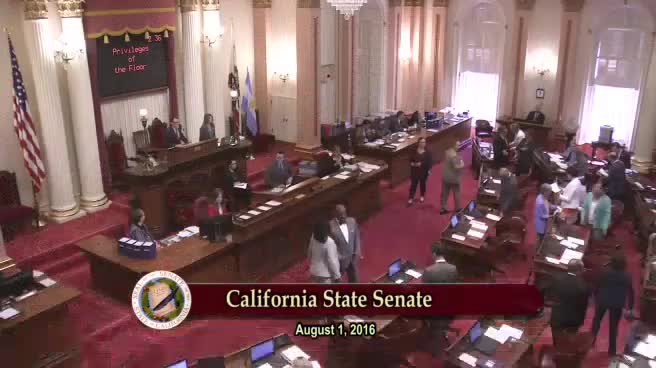 2MIN
Senate Floor
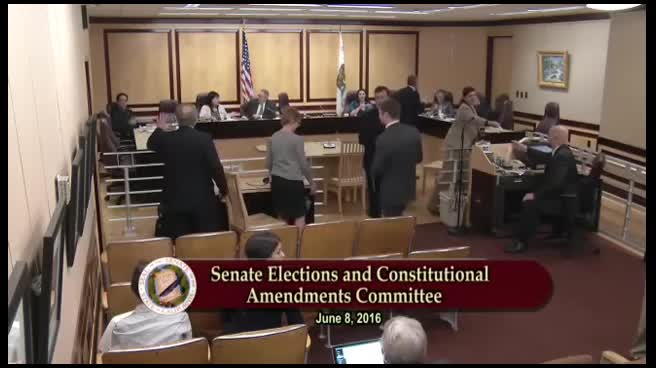 11MIN
Senate Standing Committee on Elections and Constitutional Amendments
 2MIN
Assembly Floor
 1MIN
Assembly Standing Committee on Appropriations
Bill Author

Bill Co-Author(s):