AB 1496: Methane emissions.
- Session Year: 2015-2016
- House: Assembly
- Latest Version Date: 2015-10-08
The California Global Warming Solutions Act of 2006 establishes the State Air Resources Board as the state agency responsible for monitoring and regulating sources emitting greenhouse gases. Existing law requires the state board to complete a comprehensive strategy to reduce emissions of short-lived climate pollutants, as defined, in the state.
This bill would require the state board to take specified actions and conduct specified analyses with respect to methane emissions.
(1)Existing law generally vests the State Air Resources Board with the primary responsibility for the control of vehicular air pollution, and air pollution control and air quality management districts with the primary responsibility for the control of air pollution from all sources other than vehicular sources.
This bill would require the state board, in consultation with the air districts, to adopt a program to measure, monitor, regulate, and reduce emissions of methane.
(2)Existing law makes a violation of any rule, regulation, or order of the state board or an air district a misdemeanor. By expanding the scope of a crime, this bill would impose a state-mandated local program.
The California Constitution requires the state to reimburse local agencies and school districts for certain costs mandated by the state. Statutory provisions establish procedures for making that reimbursement.
This bill would provide that no reimbursement is required by this act for a specified reason.
The Legislature finds and declares all of the following:
(a)Methane is a gas that is emitted from both natural and human sources. Its concentration in the global atmosphere has more than doubled since the beginning of the industrial revolution. Methane is a short-lived climate pollutant with a lifetime of only about 12 years when released into the atmosphere. It is an extremely potent greenhouse gas, with 20 to 30 times the warming power of carbon dioxide over a 100-year period and more than 80 times over a 20-year period.
(b)The life-cycle greenhouse gas emission from the drilling, production, and transportation of natural gas can result in methane leaks, and there is a need for much better information on the life-cycle methane emissions resulting from Californias imports of natural gas.
(c)Recent satellite studies have shown methane hot spots in the San Joaquin Valley and higher levels of emissions than were previously estimated from the principal sources of methane in California. There is an urgent need to improve the monitoring and measurement of methane emissions from the major sources in California.
SEC. 2.Section 39731 is added to the Health and Safety Code, to read:39731.The state board shall do all of the following:
(a)Undertake, in consultation with districts that monitor methane, monitoring and measurements of high-emission methane hot spots in the state using the best available and cost-effective scientific and technical methods.
(b)Consult with federal and state agencies, independent scientific experts, and any other appropriate entities to gather or acquire the necessary information for the purpose of carrying out a life-cycle greenhouse gas emission analysis of natural gas produced and imported into the state using the best available and cost-effective scientific and technical methods.
(c)Update relevant policies and programs to incorporate the information gathered and acquired pursuant to subdivisions (a) and (b).
(d)Review, in consultation with independent scientific experts, the most recent available scientific data and reports on the atmospheric reactivity of methane as a precursor to the formation of photochemical oxidants.
The Legislature finds and declares all of the following:
(a)Methane is a gas that is emitted from both natural and human sources. Its concentration in the global atmosphere has more than doubled since the beginning of the industrial revolution. Methane is a short-lived climate pollutant with a lifetime of only about 12 years when released into the atmosphere. It is an extremely potent greenhouse gas, with 20 to 30 times the warming power of carbon dioxide over a 100-year period and more than 80 times over a 20-year period.
(b)The life-cycle greenhouse gas emission from the drilling, production, and transportation of natural gas can result in methane leaks, and there is a need for much better information on the life-cycle methane emissions resulting from Californias imports of natural gas.
(c)Recent satellite studies have shown methane hot spots in the San Joaquin Valley and higher levels of emissions than were previously estimated from the principal sources of methane in California. There is an urgent need to improve the monitoring and measurement of methane emissions from the major sources in California.
SEC. 2.Section 39731 is added to the Health and Safety Code, to read:39731.The state board shall do all of the following:
(a)Undertake, in consultation with districts that monitor methane, monitoring and measurements of high-emission methane hot spots in the state using the best available and cost-effective scientific and technical methods.
(b)Consult with federal and state agencies, independent scientific experts, and any other appropriate entities to gather or acquire the necessary information for the purpose of carrying out a life-cycle greenhouse gas emission analysis of natural gas produced and imported into the state using the best available and cost-effective scientific and technical methods.
(c)Update relevant policies and programs to incorporate the information gathered and acquired pursuant to subdivisions (a) and (b).
(d)(1)Review, in consultation with independent scientific experts, the most recent available scientific data and reports on the atmospheric reactivity of methane as a precursor to the formation of photochemical oxidants.
(2)Upon completion of the review conducted pursuant to paragraph (1), the state board may evaluate whether methane should be reclassified as a contributor to the formation of air pollution.
The Legislature finds and declares all of the following:
(a)Methane is a gas that is emitted from both natural and human sources. Its concentration in the global atmosphere has more than doubled since the beginning of the industrial revolution. Methane is a short-lived climate pollutant with a lifetime of only about 12 years when released into the atmosphere. It is an extremely potent greenhouse gas, with 20 to 30 times the warming power of carbon dioxide over a 100-year period and more than 80 times over a 20-year period.
(b)The life-cycle greenhouse gas emission from the drilling, production, and transportation of natural gas can result in methane leaks, and there is a need for much better information on the life-cycle methane emissions resulting from Californias imports of natural gas.
(c)Recent satellite studies have shown methane hot spots in the San Joaquin Valley and higher levels of emissions than were previously estimated from the principal sources of methane in California. There is an urgent need to improve the monitoring and measurement of methane emissions from the major sources in California.
SEC. 2.Section 39731 is added to the Health and Safety Code, to read:39731.The state board shall do all of the following:
(a)Undertake, in consultation with districts that monitor methane, monitoring and measurements of high-emission methane hot spots in the state using the best available and cost-effective scientific and technical methods.
(b)Consult with federal and state agencies, independent scientific experts, and any other appropriate entities to gather or acquire the necessary information for the purpose of carrying out a life-cycle greenhouse gas emission analysis of natural gas produced and imported into the state using the best available and cost-effective scientific and technical methods.
(c)Update relevant policies and programs to incorporate the information gathered and acquired pursuant to subdivisions (a) and (b).
(d)(1)Review, in consultation with independent scientific experts, the most recent available scientific data and reports on the atmospheric reactivity of methane as a precursor to the formation of photochemical oxidants and evaluate whether methane should be reclassified as a contributor to the formation of air pollution. oxidants.
(2)Upon completion of the review conducted pursuant to paragraph (1), the state board may evaluate whether methane should be reclassified as a contributor to the formation of air pollution.
The Legislature finds and declares all of the following:
(a)Methane is a gas that is emitted from both natural and human sources. Its concentration in the global atmosphere has more than doubled since the beginning of the industrial revolution. Methane is a short-lived climate pollutant with a lifetime of only about 12 years when released into the atmosphere. It is an extremely potent greenhouse gas, with 20 to 30 times the warming power of carbon dioxide over a 100-year period and more than 80 times over a 20-year period.
(b)The life-cycle greenhouse gas emission from the drilling, production, and transportation of natural gas can result in methane leaks, and there is a need for much better information on the life-cycle methane emissions resulting from Californias imports of natural gas.
(c)Recent satellite studies have shown methane hot spots in the San Joaquin Valley and higher levels of emissions than were previously estimated from the principal sources of methane in California. There is an urgent need to improve the monitoring and measurement of methane emissions from the major sources in California.
SEC. 2.Section 39731 is added to the Health and Safety Code, to read:39731.The state board shall do all of the following:
(a)Undertake, in consultation with districts that monitor methane, monitoring and measurements of high-emission methane hot spots in the state using the best available and cost-effective scientific and technical methods.
(b)Consult with federal and state agencies, independent scientific experts, and any other appropriate entities to gather or acquire the necessary information for the purpose of carrying out a life-cycle greenhouse gas emission analysis of natural gas produced and imported into the state using the best available and cost-effective scientific and technical methods.
(c)Update relevant policies and programs to incorporate the information gathered and acquired pursuant to subdivisions (a) and (b).
(d)Review, in consultation with independent scientific experts, the most recent available scientific data and reports on the atmospheric reactivity of methane as a precursor to the formation of photochemical oxidants and evaluate whether methane should be reclassified as a contributor to the formation of air pollution.
The Legislature finds and declares all of the following:
(a)Methane is a gas that is emitted from both natural and human sources. Its concentration in the global atmosphere has more than doubled since the beginning of the industrial revolution. Methane is a short-lived climate pollutant with a lifetime of only about 12 years when released into the atmosphere. It is an extremely potent greenhouse gas, with 20 to 30 times the warming power of carbon dioxide over a 100-year period and more than 80 times over a 20-year period.
(b)The life-cycle greenhouse gas emission from the drilling, production, and transportation of natural gas can result in methane leaks, and there is a need for much better information on the life-cycle methane emissions resulting from Californias imports of natural gas.
(c)Recent satellite studies have shown methane hot spots in the San Joaquin Valley and higher levels of emissions than were previously estimated from the principal sources of methane in California. There is an urgent need to improve the monitoring and measurement of methane emissions from the major sources in California.
SEC. 2.Section 39731 is added to the Health and Safety Code, to read:39731.The state board shall do all of the following:
(a)Undertake, in consultation with districts that monitor methane, monitoring and measurements of high-emission methane hot spots in the state using the best available scientific and technical methods.
(b)Carry out a life-cycle greenhouse gas emission analysis of natural gas produced and imported into the state using the best available scientific and technical methods.
(c)Update greenhouse gas emission factors for electric generation with natural gas and the use of natural gas as a transportation fuel.
(b)Consult with federal and state agencies, independent scientific experts, and any other appropriate entities to gather or acquire the necessary information for the purpose of carrying out a life-cycle greenhouse gas emission analysis of natural gas produced and imported into the state using the best available scientific and technical methods.
(c)Update relevant policies and programs to incorporate the information gathered and acquired pursuant to subdivisions (a) and (b).
(d)Review, in consultation with independent scientific experts, the most recent available scientific data and reports on the atmospheric reactivity of methane as a precursor to the formation of photochemical oxidants and evaluate whether methane should be reclassified as a contributor to the formation of air pollution.
The Legislature finds and declares all of the following:
(a)Methane is a gas that is emitted from both natural and human sources. Its concentration in the global atmosphere has more than doubled since the beginning of the industrial revolution. Methane is a short-lived climate pollutant with a lifetime of only about 12 years when released into the atmosphere. It is an extremely potent greenhouse gas, with 20 to 30 times the warming power of carbon dioxide over a 100-year period and more than 80 times over a 20-year period.
(b)The life-cycle greenhouse gas emission from the drilling, production, and transportation of natural gas can result in methane leaks, and there is a need for much better information on the life-cycle methane emissions resulting from Californias imports of natural gas.
(c)Recent satellite studies have shown methane hot spots in the San Joaquin Valley and higher levels of emissions than were previously estimated from the principal sources of methane in California. There is an urgent need to improve the monitoring and measurement of methane emissions from the major sources in California.
SEC. 2.Section 39731 is added to the Health and Safety Code, to read:39731.The state board shall do all of the following:
(a)Undertake, in consultation with districts that monitor methane, monitoring and measurements of high-emission methane hot spots in the state using the best available scientific and technical methods.
(b)Carry out a life-cycle greenhouse gas emission analysis of natural gas produced and imported into the state using the best available scientific and technical methods.
(c)Update greenhouse gas emission factors for electric generation with natural gas and the use of natural gas as a transportation fuel.
(d)Review, in consultation with independent scientific experts, the most recent available scientific data and reports on the atmospheric reactivity of methane as a precursor to the formation of photochemical oxidants and evaluate whether methane should be reclassified as a contributor to the formation of air pollution.
SECTION 1.Article 10 (commencing with Section 42100) is added to Chapter 3 of Part 4 of Division 26 of the Health and Safety Code, to read:10.Methane42100.No later than January 1, 2017, the state board, in consultation with the districts, shall adopt a program to measure, monitor, regulate, and reduce emissions of methane in order to protect air quality and public health and reduce global warming.
SEC. 2.No reimbursement is required by this act pursuant to Section 6 of Article XIIIB of the California Constitution because the only costs that may be incurred by a local agency or school district will be incurred because this act creates a new crime or infraction, eliminates a crime or infraction, or changes the penalty for a crime or infraction, within the meaning of Section 17556 of the Government Code, or changes the definition of a crime within the meaning of Section 6 of Article XIIIB of the California Constitution.
No later than January 1, 2017, the state board, in consultation with the districts, shall adopt a program to measure, monitor, regulate, and reduce emissions of methane in order to protect air quality and public health and reduce global warming.
SEC. 2.No reimbursement is required by this act pursuant to Section 6 of Article XIIIB of the California Constitution because the only costs that may be incurred by a local agency or school district will be incurred because this act creates a new crime or infraction, eliminates a crime or infraction, or changes the penalty for a crime or infraction, within the meaning of Section 17556 of the Government Code, or changes the definition of a crime within the meaning of Section 6 of Article XIIIB of the California Constitution.
|
Date
|
Status
|
|---|---|
| Sep 9, 2015 | Read third time. Passed. Ordered to the Assembly. |
| Aug 17, 2015 | In committee: Referred to APPR. suspense file. |
| Aug 31, 2015 | From committee: Amend, and do pass as amended. (Ayes 5. Noes 2.) (August 27). |
| Sep 1, 2015 | Read second time and amended. Ordered to third reading. |
| Sep 2, 2015 | Read third time and amended. Ordered to second reading. |
| Sep 3, 2015 | Read second time. Ordered to third reading. |
| Sep 4, 2015 | Read third time and amended. Ordered to second reading. |
| Sep 8, 2015 | Read second time. Ordered to third reading. |
| Sep 9, 2015 | In Assembly. Concurrence in Senate amendments pending. |
| Jul 7, 2015 | Read second time and amended. Re-referred to Com. on APPR. |
| Sep 9, 2015 | Read third time. Passed. Ordered to the Assembly. (Ayes 25. Noes 14. Page 2643.). |
| Sep 10, 2015 | Senate amendments concurred in. To Engrossing and Enrolling. |
| Sep 10, 2015 | Senate amendments concurred in. To Engrossing and Enrolling. (Ayes 57. Noes 22. Page 3070.). |
| Sep 10, 2015 | Senate amendments concurred in. To Engrossing and Enrolling. (Ayes 57. Noes 22.). |
| Sep 18, 2015 | Enrolled and presented to the Governor at 4 p.m. |
| Oct 8, 2015 | Approved by the Governor. |
| Oct 8, 2015 | Chaptered by Secretary of State - Chapter 604, Statutes of 2015. |
| Feb 27, 2015 | Introduced. To print. |
| Jul 6, 2015 | From committee: Amend, and do pass as amended and re-refer to Com. on APPR. (Ayes 5. Noes 1.) (July 1). |
| Jun 11, 2015 | Referred to Com. on E.Q. |
| Jun 2, 2015 | Read third time. Passed. Ordered to the Senate. (Ayes 57. Noes 18. Page 1792.) |
| Jun 2, 2015 | Read third time. Passed. Ordered to the Senate. |
| Jun 2, 2015 | In Senate. Read first time. To Com. on RLS. for assignment. |
| Jun 1, 2015 | Read second time. Ordered to third reading. |
| May 28, 2015 | From committee: Do pass. (Ayes 12. Noes 4.) (May 28). |
| May 20, 2015 | In committee: Set, first hearing. Referred to APPR. suspense file. |
| May 20, 2015 | In committee: Set, first hearing. Referred to suspense file. |
| May 7, 2015 | Re-referred to Com. on APPR. |
| May 6, 2015 | From committee chair, with author's amendments: Amend, and re-refer to Com. on APPR. Read second time and amended. |
| Apr 28, 2015 | From committee: Do pass and re-refer to Com. on APPR. (Ayes 6. Noes 0.) (April 27). Re-referred to Com. on APPR. |
| Mar 26, 2015 | Referred to Com. on NAT. RES. |
| Mar 2, 2015 | Read first time. |
| Mar 1, 2015 | From printer. May be heard in committee March 31. |
|
Date
|
Description
|
Location
|
Votes
|
|
|---|---|---|---|---|
| Sep 10, 2015 | AB 1496 THURMOND Concurrence in Senate Amendments | Assembly Floor |
Passed |
|
| Sep 9, 2015 | Assembly 3rd Reading AB1496 Thurmond By Wieckowski | Senate Floor |
Passed |
|
| Aug 27, 2015 | Do pass as amended | Senate Standing Committee on Appropriations |
Passed |
|
| Aug 17, 2015 | Placed on suspense file | Senate Standing Committee on Appropriations |
Passed |
|
| Jul 1, 2015 | Do pass as amended, but first amend, and re-refer to the Committee on [Appropriations] | Senate Standing Committee on Environmental Quality |
Passed |
|
| Jun 2, 2015 | AB 1496 THURMOND Assembly Third Reading | Assembly Floor |
Passed |
|
| May 28, 2015 | Do pass. | Assembly Standing Committee on Appropriations |
Passed |
|
| Apr 27, 2015 | Do pass and be re-referred to the Committee on [Appropriations] | Assembly Standing Committee on Natural Resources |
Passed |
This list shows positions taken on this bill by organizations on the date displayed, which is linked to the original source.
Positions by individuals are not included.
|
Organization
|
Position
|
Date
|
|---|---|---|
| Agricultural Council Of California | ** Against | Sep 9, 2015 |
| American Lung Association in California | * Support | Apr 27, 2015 |
| Association Of California Egg Farmers | ** Against | Sep 9, 2015 |
| Azul | ** Support | Sep 9, 2015 |
| California Biodiesel Alliance | * Neutral | Apr 27, 2015 |
| California Cattlemen'S Association | ** Against | Apr 27, 2015 |
| California Chamber Of Commerce | ** Against | Sep 9, 2015 |
| California Dairies | ** Against | Sep 9, 2015 |
| California Farm Bureau Federation | ** Against | Sep 9, 2015 |
| California Grain and Feed Association | ** Against | Sep 9, 2015 |
| California Independent Petroleum Association | ** Against | Sep 9, 2015 |
| California League Of Conservation Voters | ** Support | Sep 9, 2015 |
| California Manufacturers And Technology Association | ** Against | Sep 9, 2015 |
| California Rice Commission | ** Against | Apr 27, 2015 |
| Californians Against Waste | ** Support | Sep 9, 2015 |
| Clean Power Campaign | ** Support | Sep 9, 2015 |
| Clean Water Action | ** Support | Sep 9, 2015 |
| Coalition For Clean Air | ** Support | Sep 9, 2015 |
| electric generation, are responsible for methane emissions. | ** Against | Aug 17, 2015 |
| Environment California | ** Support | Sep 9, 2015 |
| Environmental Defense Fund | * Support | Apr 27, 2015 |
| Environmental Working Group | ** Support | Sep 9, 2015 |
| Independent Energy Producers Association | ** Against | Sep 9, 2015 |
| Milk Producers Council | ** Against | Sep 9, 2015 |
| Natural Resources Defense Council | ** Support | Sep 9, 2015 |
| OPPOSITION: The Independent Energy Producers | ** Against | Aug 17, 2015 |
| Pacific Egg and Poultry Association | ** Against | Sep 9, 2015 |
| Sierra Club California | ** Support | Sep 9, 2015 |
| u ARGUMENTS IN u ARGUMENTS IN | ** Against | Aug 17, 2015 |
| West Marin Environmental Action Committee | ** Support | Sep 9, 2015 |
| Western United Dairymen | ** Against | Sep 9, 2015 |
| which impacts local air quality and community health. | ** Against | Aug 17, 2015 |
AB 1496
Page 2
CONCURRENCE IN SENATE AMENDMENTS
AB 1496
(Thurmond)
As Amended September 4, 2015
Majority vote
ASSEMBLY: |
57-18 |
(June 2, 2015) |
SENATE: |
25-14 |
(September 9, 2015) |
Original Committee Reference: NAT. RES.
SUMMARY: Requires the California Air Resources Board (ARB) to 1) monitor high-emission methane hot-spots in the state, 2) consult with specified entities to gather information for purposes of carrying out life-cycle greenhouse gas (GHG) emissions analyses of natural gas imports, 3) update relevant policies and programs based on those updated life-cycle analyses, and 4) review scientific information on atmospheric reactivity of methane as a precursor to the formation of photochemical oxidants.
The Senate amendments:
Require monitoring and measurements of high-emission methane hot spots in the state by ARB be cost-effective.
Require ARB to consult with federal and state agencies, independent scientific experts, and any other appropriate entities to gather or acquire the necessary information for the purpose of carrying out a life-cycle GHG emission analysis of natural gas produced and imported into the state.
Remove requirement that ARB update GHG emission factors for electric generation with natural gas and the use of natural gas as a transportation fuel.
Remove evaluation of whether methane should be reclassified as a contributor to the formation of air pollution.
EXISTING LAW:
Requires ARB, pursuant to California Global Warming Solutions Act of 2006, AB 32 (Núñez), Chapter 488, Statutes of 2006, to adopt regulations to achieve maximum technologically feasible and cost-effective reductions in emissions of greenhouse gases, including methane.
Requires ARB to complete a comprehensive strategy to reduce emissions of short-lived climate pollutants (SLCPs), including methane, by January 1, 2016.
Designates ARB as the air pollution control agency responsible for the coordination of the activities of air pollution control districts and air quality management districts for the purposes of the federal Clean Air Act.
Requires air districts to adopt and enforce rules and regulations to achieve and maintain the state and federal ambient air quality standards in all areas affected by non-vehicular emission sources under their jurisdiction.
Generally prohibits a person from discharging air contaminants or other material that cause injury, detriment, nuisance, or annoyance or endanger the comfort, repose, health or safety to any considerable number of persons, or to the public, or that cause, or have a tendency to cause injury or damage to a business or property.
FISCAL EFFECT: According to the Senate Appropriations Committee:
Ongoing annual staffing costs of $350,000 and a $700,000 contract with the Jet Propulsion Lab to the Cost of Implementation Account (special) to identify and monitor high-emission methane hot spots.
Ongoing annual staffing costs of $350,000 and a $150,000 contract to the Cost of Implementation Account (special) to conduct a life-cycle GHG emission analysis of natural gas produced in and imported into the state.
COMMENTS: As part of AB 32's direction that ARB adopt a statewide GHG emissions limit equivalent to 1990 levels by 2020 and adopt regulations to achieve maximum technologically feasible and cost-effective GHG emission reductions, AB 32 requires ARB to prepare and approve a scoping plan at five-year intervals.
The first AB 32 scoping plan, adopted by ARB in 2008, described the specific measures ARB and others must take to reduce statewide GHG emissions to 1990 levels by 2020. In May 2014, ARB adopted a scoping plan update. The scoping plan update discusses the objective of achieving an 80% reduction by 2050 and the need for a midterm target, but does not propose or adopt a specific target. According to ARB, the update defines ARB’s climate change priorities for the next five years and sets the groundwork to reach California's long-term climate goals. Among its provisions, the update commits ARB to develop a SLCP strategy by 2015 that will include an inventory of sources and emissions, the identification of additional research needs, and a plan for developing SLCP control measures. SB 605 (Lara), Chapter 523, Statutes of 2014, requires ARB to complete a comprehensive SLCP strategy by January 1, 2016.
Methane is a gas that is emitted from both natural and human sources. Its concentration in the global atmosphere has more than doubled since the beginning of the Industrial Revolution. Methane is a SLCP with a lifetime of only about 12 years when released into the atmosphere. It is an extremely potent GHG, with 20 to 30 times the warming power of carbon dioxide over a 100-year period (and more than 80 times over a 20-year period). Methane also impacts local air quality and community health through its participation in the formation of ozone, as well as water vapor, the most powerful of the common causes of warming.
Analysis Prepared by: Lawrence Lingbloom / NAT. RES. / (916) 319-2092 FN: 0002363
AB 1496
Page 8
|
Office of Senate Floor Analyses (916) 651-1520 Fax: (916) 327-4478 |
THIRD READING
Bill No: AB 1496
Amended: 9/4/15 in Senate
SENATE ENVIRONMENTAL QUALITY COMMITTEE: 5-1, 7/1/15
AYES: Wieckowski, Hill, Jackson, Leno, Pavley
NOES: Bates
NO VOTE RECORDED: Gaines
SENATE APPROPRIATIONS COMMITTEE: 5-2, 8/27/15
AYES: Lara, Beall, Hill, Leyva, Mendoza
NOES: Bates, Nielsen
ASSEMBLY FLOOR: 57-18, 6/2/15 - See last page for vote
DIGEST: This bill requires the California Air Resources Board (ARB) to 1) monitor high-emission methane hot-spots in the state, 2) consult with specified entities to gather information for purposes of carrying out life-cycle GHG emissions analyses of natural gas imports, 3) update relevant policies and programs based on those updated life-cycle analyses, and 4) review scientific information on atmospheric reactivity of methane as a precursor to the formation of photochemical oxidants.
Senate Floor Amendments of 9/4/15 strike the provision authorizing ARB to evaluate whether methane should be reclassified as a contributor to the formation of air pollution.
Senate Floor Amendments of 9/2/15 specify that ARB is authorized to evaluate whether methane should be reclassified as a contributor to the formation of air pollution, upon completion of a review of the most recent available scientific information.
Existing law:
Provides that under the California Global Warming Solutions Act of 2006 (Health and Safety Code (HSC) §38500 et seq.):
Defines methane, carbon dioxide (CO2), and other chemicals as a greenhouse gas (GHG);
Requires the ARB, to determine the 1990 statewide GHG emissions level, and approve a statewide GHG emissions limit that is equivalent to that level, to be achieved by 2020;
Requires the ARB to adopt GHG emissions reductions measures by regulation to achieve the 2020 GHG limit; and
Requires the ARB to adopt regulations to require the reporting and verification of statewide GHGs.
Requires the ARB to complete, by January 1, 2016, a comprehensive strategy to reduce emissions of short-lived climate pollutants (SLCPs) in the state. (HSC §39730)
This bill requires the ARB to do all of the following:
Monitor and measure high-emission methane hot spots in the state using the best available scientific and technical methods, in consultation with local air districts that monitor methane, using the best available and cost-effective scientific and technical methods.
Consult with specified entities to gather or acquire the necessary information for the purpose of carrying out a life-cycle GHG emissions analysis of natural gas produced and imported into the state using the best available and cost-effective scientific and technical methods.
Update relevant policies and programs to incorporate the updated life-cycle GHG emissions analysis of natural gas produced and imported into the state.
Review the most recent available scientific data and reports on atmospheric reactivity of methane as a precursor to the formation of photochemical oxidants.
Background
Methane and short-lived climate pollutants. Methane (or CH4) is the principal component of natural gas and is also produced biologically under anaerobic conditions in ruminant animals, landfills and waste handling. Methane is termed a SLCP, as it has a much shorter lifetime in the atmosphere than CO2, but has a much higher global warming potential. According to the US Environmental Protection Agency (US EPA), methane is 20-30 times more effective than CO2 in trapping heat in the atmosphere over a 100-year period. SLCPs, including methane, are responsible for 30-40% of global warming to date.
Methane sources. Atmospheric methane concentrations have been increasing as a result of human activities related to agriculture, fossil fuel extraction and distribution, and waste generation and processing. According to the ARB’s updated scoping plan, the state’s largest anthropogenic methane-producing sources are enteric fermentation (eructation, or belching by animals), manure management, landfills, natural gas transmission, and wastewater treatment. Methane emissions also come from non-anthropogenic sources such as wetlands, oceans, and forests. Methane gas from oil and gas production and distribution is a growing source of emissions in many countries, including the United States, due to increased exploration and use of natural gas for energy.
Fugitive methane. A growing body of evidence suggests that the US EPA has underestimated methane emissions nationwide, possibly by as much as 50%. Additionally, several recent analyses of atmospheric measurements suggest that actual methane emissions in the state may be 30 to 70% higher than estimated in the ARB’s emission inventory.
SB 605 (Lara, Chapter 523, Statutes of 2014) directs the ARB to develop a comprehensive SLCP strategy by January 1, 2016. In developing the strategy, the ARB is required to complete an inventory of sources and emissions of SLCPs in the state based on available data, identify research needs to address data gaps and existing and potential new control measures to reduce emissions. In May of this year, the ARB released a SLCP concept paper.
According to the concept paper, methane is the second largest component of GHG emissions in California, and methane emissions are on the rise. The paper notes that California “has taken important steps to reduce methane emissions from all of its major sources, but more needs to be done to more fully control methane emissions, especially from organic waste streams going to landfills and at dairies.” The concept paper identifies several steps as necessary to significantly reduce methane emissions in the state, including a) minimizing fugitive methane emissions from all infrastructure and equipment, b) effectively eliminate disposal of organic materials at landfills, c) significantly reduce methane emissions from dairies, and d) maximizing resource recovery from wastewater treatment facilities.
The concept paper also notes that, “coordinated research efforts between ARB and the California Energy Commission to refine emission estimates have led to the development of the only subnational methane monitoring network in the world. In addition, researchers at ARB and at NASA’s Jet Propulsion Laboratory are currently collaborating to identify large ‘hot spot’ methane sources in the San Joaquin Valley.”
AB 32 and methane. The ARB has broad authority to regulate methane as a GHG under AB 32 and create programs and implement measures to reduce GHGs in the state to achieve the statewide 2020 GHG emissions goal.
The ARB has implemented several programs that target methane emissions, or provide incentives for the use of renewably generated methane.
Mandatory GHG reporting. AB 32 requires the ARB to monitor and verify GHG emissions from electricity production and manufacturing throughout the state, as well as suppliers of fuel (including natural gas) and operators of natural gas pipelines, if the amount of fuel combusted in the state is over 10,000 metric tons of CO2 equivalents. Fugitive GHG emissions from landfills and emissions from agriculture are exempt from the reporting requirement.
Methane from landfills. Effective June 17, 2010, the ARB approved a regulatory measure as an AB 32 discrete early action measure that requires owners and operators of certain uncontrolled municipal solid waste landfills to install gas collection and control systems, and requires existing and newly installed gas and control systems to operate in an optimal manner.
Cap-and-trade program. Pursuant to AB 32, the ARB adopted a cap-and-trade program that places a “cap” on aggregate GHG emissions from large GHG emitters, which are responsible for approximately 85% of the state’s GHG emissions. The cap declines over time, eventually reaching the target emission level in 2020. Large emitters must obtain compliance instruments equal to their emissions in that period. Compliance instruments include allowances and offsets, where allowances are generated by the state in an amount equal to the cap, and offsets result from emissions reductions achieved in an uncapped sector and are quantified and verified using an ARB approved compliance offset protocol. Although GHG emissions, including methane, from landfills and agricultural sources are not covered under the cap, the ARB has adopted offset protocols for five project types including dairy digesters to capture fugitive methane emissions, and an offset protocol for capturing would-be fugitive emissions of methane from coal mines.
Low Carbon Fuel Standard (LCFS). Pursuant to their authority under AB 32, the ARB adopted the LCFS in 2009, which requires transportation fuel suppliers in the state to meet certain average annual carbon limitations. The program ultimately requires a 10% reduction in the carbon intensity of a particular fuel by 2020. The carbon intensity measures the net carbon emissions of the entire life-cycle of the fuel, including carbon emitted during production, refining, and transportation, and conversion of the fuel to useable energy. Fuel suppliers can meet the standard by reducing the carbon intensity of their fuels, or by purchasing credits from other suppliers of other fuels that have carbon intensities below state requirements. Methane created from organic feedstock, or biomethane, already meets the 10% reduction requirement in 2020, the fuel qualifies for credits under the program.
Leaks from natural gas system. In an effort to address systemic natural gas leaks from an aging infrastructure as well as address climate impacts due to methane, SB 1371 (Leno, Chapter 525, Statutes of 2014) requires the Public Utilities Commission (PUC), in consultation with the ARB, to open a proceeding to adopt rules and procedures that minimize natural gas leaks from PUC-regulated gas pipeline facilities. SB 1371 also requires the rules and procedures include procedures for the development of metrics to quantify the volume of emissions from leaking gas pipeline facilities, and for evaluating and tracking leaks geographically and over time that may be incorporated into the ARB’s mandatory GHG emission reporting.
Ambient air quality standards, ozone, and methane. Smog is formed from the reaction of oxides of nitrogen (NOx) with volatile organic compounds (VOCs) to produce ground-level ozone, or tropospheric ozone. Ozone has a number of negative health effects including irritated respiratory system, reduced lung function, aggravated asthma and inflammation and damage of the lining of the lung. Active children are the group at highest risk from ozone exposure. In addition to negative public health impacts, ozone itself is a powerful SLCP.
Under the federal Clean Air Act, the US EPA established National Ambient Air Quality Standards that apply for outdoor air throughout the country. These standards exist for several air pollutants due to their negative impact on public health above specified concentrations, including ozone. The ARB has also adopted state ambient air quality standards for various air pollutants that are, in some cases, more stringent than federal standards. Local air districts are required to adopt and enforce rules to achieve and maintain the state and federal ambient air quality standards.
To comply with the standards for ozone, local air districts have regulations limiting emissions of NOx and VOCs for stationary sources located in their jurisdiction. These local air district requirements have cut in half the emissions of VOCs and NOx, and significantly reduced ozone concentrations throughout California. However, the ARB’s SLCP concept paper notes that, “because the regulatory definition of VOCs does not include methane due to its relatively low reactivity and lack of impact on regional ozone production, methane emissions have not fallen at similar rates as VOCs over the past decades.”
The concept paper also states that although methane is not a large contributor to regional ground-level ozone levels, regional methane emissions which are fairly well-mixed in the atmosphere contribute to the global abundance of methane, which in turn contributes to global background levels of ozone.
Comments
Purpose of bill. According to the author, “California is an established leader in cutting edge climate policy. From the renewable portfolio standard to the first-of-its-kind cap-and-trade carbon reduction system, California has pioneered policies to reduce human and industrial impacts on the climate and our environment. However, the state has not yet established comprehensive policies or monitoring systems to regulate methane emissions, a volatile short-lived climate pollutant, the emissions rates of which continue to grow unchecked. Without extra effort to reduce methane and other short-lived climate pollutants, our ambitious goals and measures to curb carbon dioxide emissions may not be sufficient to slow the progress of climate change.”
FISCAL EFFECT: Appropriation: No Fiscal Com.: Yes Local: No
According to the Senate Appropriations Committee:
Ongoing annual staffing costs of $350,000 and a $700,000 contract with the Jet Propulsion Lab to the Cost of Implementation Account (special) to identify and monitor high-emission methane hot spots.
Ongoing annual staffing costs of $350,000 and a $150,000 contract to the Cost of Implementation Account (special) to conduct a life-cycle GHG emission analysis of natural gas produced in and imported into the state.
Clean Power Campaign (source)
Azul
Californians Against Waste
California League of Conservation Voters
Clean Water Action
Coalition for Clean Air
Environment California
Environmental Working Group
Natural Resources Defense Council
Sierra Club California
West Marin Environmental Action Committee
None received
ARGUMENTS IN SUPPORT: Supporters state that methane is a potent GHG with 20 to 30 times the warming power of CO2 over a 100-year period. Supporters argue that despite the fact that ARB has recognized the GHG potential of SLCP and the importance of reducing methane, methane has been overlooked in the state’s GHG reduction policies to date. Supporters also state that methane helps create ozone, which impacts local air quality and community health.
ASSEMBLY FLOOR: 57-18, 6/2/15
AYES: Alejo, Baker, Bloom, Bonilla, Bonta, Brown, Burke, Calderon, Campos, Chau, Chiu, Chu, Cooley, Cooper, Dababneh, Daly, Dodd, Eggman, Frazier, Cristina Garcia, Eduardo Garcia, Gatto, Gipson, Gomez, Gonzalez, Gordon, Gray, Hadley, Roger Hernández, Holden, Irwin, Jones-Sawyer, Lackey, Levine, Lopez, Low, Maienschein, McCarty, Medina, Mullin, Nazarian, Obernolte, O'Donnell, Perea, Quirk, Rendon, Ridley-Thomas, Rodriguez, Salas, Santiago, Mark Stone, Thurmond, Ting, Weber, Williams, Wood, Atkins
NOES: Achadjian, Travis Allen, Bigelow, Brough, Beth Gaines, Gallagher, Harper, Jones, Kim, Linder, Mathis, Melendez, Olsen, Patterson, Steinorth, Wagner, Waldron, Wilk
NO VOTE RECORDED: Chang, Chávez, Dahle, Grove, Mayes
Prepared by: Rebecca Newhouse / E.Q. / (916) 651-4108
9/8/15 21:59:27
**** END ****
AB 1496
Page 8
|
Office of Senate Floor Analyses (916) 651-1520 Fax: (916) 327-4478 |
THIRD READING
Bill No: AB 1496
Amended: 9/2/15 in Senate
SENATE ENVIRONMENTAL QUALITY COMMITTEE: 5-1, 7/1/15
AYES: Wieckowski, Hill, Jackson, Leno, Pavley
NOES: Bates
NO VOTE RECORDED: Gaines
SENATE APPROPRIATIONS COMMITTEE: 5-2, 8/27/15
AYES: Lara, Beall, Hill, Leyva, Mendoza
NOES: Bates, Nielsen
ASSEMBLY FLOOR: 57-18, 6/2/15 - See last page for vote
DIGEST: This bill requires the California Air Resources Board (ARB) to 1) monitor high-emission methane hot-spots in the state, 2) consult with specified entities to gather information for purposes of carrying out life-cycle GHG emissions analyses of natural gas imports, 3) update relevant policies and programs based on those updated life-cycle analyses, and 4) review scientific information on atmospheric reactivity of methane as a precursor to the formation of photochemical oxidants.
Senate Floor Amendments of 9/2/15 specify that ARB is authorized, and not required, to evaluate whether methane should be reclassified as a contributor to the formation of air pollution, upon completion of a review of the most recent available scientific information.
Existing law:
Provides that under the California Global Warming Solutions Act of 2006 (Health and Safety Code (HSC) §38500 et seq.):
Defines methane, carbon dioxide (CO2), and other chemicals as a greenhouse gas (GHG);
Requires the ARB, to determine the 1990 statewide GHG emissions level, and approve a statewide GHG emissions limit that is equivalent to that level, to be achieved by 2020;
Requires the ARB to adopt GHG emissions reductions measures by regulation to achieve the 2020 GHG limit; and
Requires the ARB to adopt regulations to require the reporting and verification of statewide GHGs.
Requires the ARB to complete, by January 1, 2016, a comprehensive strategy to reduce emissions of short-lived climate pollutants (SLCPs) in the state. (HSC §39730)
This bill requires the ARB to do all of the following:
Monitor and measure high-emission methane hot spots in the state using the best available scientific and technical methods, in consultation with local air districts that monitor methane, using the best available and cost-effective scientific and technical methods.
Consult with specified entities to gather or acquire the necessary information for the purpose of carrying out a life-cycle GHG emissions analysis of natural gas produced and imported into the state using the best available and cost-effective scientific and technical methods.
Update relevant policies and programs to incorporate the updated life-cycle GHG emissions analysis of natural gas produced and imported into the state.
Review the most recent available scientific data and reports on atmospheric reactivity of methane as a precursor to the formation of photochemical oxidants and authorizes ARB, upon completion of that review, to evaluate whether methane should be reclassified as a contributor to the formation of air pollution.
Background
Methane and short-lived climate pollutants. Methane (or CH4) is the principal component of natural gas and is also produced biologically under anaerobic conditions in ruminant animals, landfills and waste handling. Methane is termed a SLCP, as it has a much shorter lifetime in the atmosphere than CO2, but has a much higher global warming potential. According to the US Environmental Protection Agency (US EPA), methane is 20-30 times more effective than CO2 in trapping heat in the atmosphere over a 100-year period. SLCPs, including methane, are responsible for 30-40% of global warming to date.
Methane sources. Atmospheric methane concentrations have been increasing as a result of human activities related to agriculture, fossil fuel extraction and distribution, and waste generation and processing. According to the ARB’s updated scoping plan, the state’s largest anthropogenic methane-producing sources are enteric fermentation (eructation, or belching by animals), manure management, landfills, natural gas transmission, and wastewater treatment. Methane emissions also come from non-anthropogenic sources such as wetlands, oceans, and forests. Methane gas from oil and gas production and distribution is a growing source of emissions in many countries, including the United States, due to increased exploration and use of natural gas for energy.
Fugitive methane. A growing body of evidence suggests that the US EPA has underestimated methane emissions nationwide, possibly by as much as 50%. Additionally, several recent analyses of atmospheric measurements suggest that actual methane emissions in the state may be 30 to 70% higher than estimated in the ARB’s emission inventory.
SB 605 (Lara, Chapter 523, Statutes of 2014) directs the ARB to develop a comprehensive SLCP strategy by January 1, 2016. In developing the strategy, the ARB is required to complete an inventory of sources and emissions of SLCPs in the state based on available data, identify research needs to address data gaps and existing and potential new control measures to reduce emissions. In May of this year, the ARB released a SLCP concept paper.
According to the concept paper, methane is the second largest component of GHG emissions in California, and methane emissions are on the rise. The paper notes that California “has taken important steps to reduce methane emissions from all of its major sources, but more needs to be done to more fully control methane emissions, especially from organic waste streams going to landfills and at dairies.” The concept paper identifies several steps as necessary to significantly reduce methane emissions in the state, including a) minimizing fugitive methane emissions from all infrastructure and equipment, b) effectively eliminate disposal of organic materials at landfills, c) significantly reduce methane emissions from dairies, and d) maximizing resource recovery from wastewater treatment facilities.
The concept paper also notes that, “coordinated research efforts between ARB and the California Energy Commission to refine emission estimates have led to the development of the only subnational methane monitoring network in the world. In addition, researchers at ARB and at NASA’s Jet Propulsion Laboratory are currently collaborating to identify large ‘hot spot’ methane sources in the San Joaquin Valley.”
AB 32 and methane. The ARB has broad authority to regulate methane as a GHG under AB 32 and create programs and implement measures to reduce GHGs in the state to achieve the statewide 2020 GHG emissions goal.
The ARB has implemented several programs that target methane emissions, or provide incentives for the use of renewably generated methane.
Mandatory GHG reporting. AB 32 requires the ARB to monitor and verify GHG emissions from electricity production and manufacturing throughout the state, as well as suppliers of fuel (including natural gas) and operators of natural gas pipelines, if the amount of fuel combusted in the state is over 10,000 metric tons of CO2 equivalents. Fugitive GHG emissions from landfills and emissions from agriculture are exempt from the reporting requirement.
Methane from landfills. Effective June 17, 2010, the ARB approved a regulatory measure as an AB 32 discrete early action measure that requires owners and operators of certain uncontrolled municipal solid waste landfills to install gas collection and control systems, and requires existing and newly installed gas and control systems to operate in an optimal manner.
Cap-and-trade program. Pursuant to AB 32, the ARB adopted a cap-and-trade program that places a “cap” on aggregate GHG emissions from large GHG emitters, which are responsible for approximately 85% of the state’s GHG emissions. The cap declines over time, eventually reaching the target emission level in 2020. Large emitters must obtain compliance instruments equal to their emissions in that period. Compliance instruments include allowances and offsets, where allowances are generated by the state in an amount equal to the cap, and offsets result from emissions reductions achieved in an uncapped sector and are quantified and verified using an ARB approved compliance offset protocol. Although GHG emissions, including methane, from landfills and agricultural sources are not covered under the cap, the ARB has adopted offset protocols for five project types including dairy digesters to capture fugitive methane emissions, and an offset protocol for capturing would-be fugitive emissions of methane from coal mines.
Low Carbon Fuel Standard (LCFS). Pursuant to their authority under AB 32, the ARB adopted the LCFS in 2009, which requires transportation fuel suppliers in the state to meet certain average annual carbon limitations. The program ultimately requires a 10% reduction in the carbon intensity of a particular fuel by 2020. The carbon intensity measures the net carbon emissions of the entire life-cycle of the fuel, including carbon emitted during production, refining, and transportation, and conversion of the fuel to useable energy. Fuel suppliers can meet the standard by reducing the carbon intensity of their fuels, or by purchasing credits from other suppliers of other fuels that have carbon intensities below state requirements. Methane created from organic feedstock, or biomethane, already meets the 10% reduction requirement in 2020, the fuel qualifies for credits under the program.
Leaks from natural gas system. In an effort to address systemic natural gas leaks from an aging infrastructure as well as address climate impacts due to methane, SB 1371 (Leno, Chapter 525, Statutes of 2014) requires the Public Utilities Commission (PUC), in consultation with the ARB, to open a proceeding to adopt rules and procedures that minimize natural gas leaks from PUC-regulated gas pipeline facilities. SB 1371 also requires the rules and procedures include procedures for the development of metrics to quantify the volume of emissions from leaking gas pipeline facilities, and for evaluating and tracking leaks geographically and over time that may be incorporated into the ARB’s mandatory GHG emission reporting.
Ambient air quality standards, ozone, and methane. Smog is formed from the reaction of oxides of nitrogen (NOx) with volatile organic compounds (VOCs) to produce ground-level ozone, or tropospheric ozone. Ozone has a number of negative health effects including irritated respiratory system, reduced lung function, aggravated asthma and inflammation and damage of the lining of the lung. Active children are the group at highest risk from ozone exposure. In addition to negative public health impacts, ozone itself is a powerful SLCP.
Under the federal Clean Air Act, the US EPA established National Ambient Air Quality Standards that apply for outdoor air throughout the country. These standards exist for several air pollutants due to their negative impact on public health above specified concentrations, including ozone. The ARB has also adopted state ambient air quality standards for various air pollutants that are, in some cases, more stringent than federal standards. Local air districts are required to adopt and enforce rules to achieve and maintain the state and federal ambient air quality standards.
To comply with the standards for ozone, local air districts have regulations limiting emissions of NOx and VOCs for stationary sources located in their jurisdiction. These local air district requirements have cut in half the emissions of VOCs and NOx, and significantly reduced ozone concentrations throughout California. However, the ARB’s SLCP concept paper notes that, “because the regulatory definition of VOCs does not include methane due to its relatively low reactivity and lack of impact on regional ozone production, methane emissions have not fallen at similar rates as VOCs over the past decades.”
The concept paper also states that although methane is not a large contributor to regional ground-level ozone levels, regional methane emissions which are fairly well-mixed in the atmosphere contribute to the global abundance of methane, which in turn contributes to global background levels of ozone.
Comments
Purpose of bill. According to the author, “California is an established leader in cutting edge climate policy. From the renewable portfolio standard to the first-of-its-kind cap-and-trade carbon reduction system, California has pioneered policies to reduce human and industrial impacts on the climate and our environment. However, the state has not yet established comprehensive policies or monitoring systems to regulate methane emissions, a volatile short-lived climate pollutant, the emissions rates of which continue to grow unchecked. Without extra effort to reduce methane and other short-lived climate pollutants, our ambitious goals and measures to curb carbon dioxide emissions may not be sufficient to slow the progress of climate change.”
FISCAL EFFECT: Appropriation: No Fiscal Com.: Yes Local: No
According to the Senate Appropriations Committee:
Ongoing annual staffing costs of $350,000 and a $700,000 contract with the Jet Propulsion Lab to the Cost of Implementation Account (special) to identify and monitor high-emission methane hot spots.
Ongoing annual staffing costs of $350,000 and a $150,000 contract to the Cost of Implementation Account (special) to conduct a life-cycle GHG emission analysis of natural gas produced in and imported into the state.
Clean Power Campaign (source)
Azul
Californians Against Waste
California League of Conservation Voters
Clean Water Action
Coalition for Clean Air
Environment California
Environmental Working Group
Natural Resources Defense Council
Sierra Club California
West Marin Environmental Action Committee
Agricultural Council of California
Association of California Egg Farmers
California Chamber of Commerce
California Dairies, Inc.
California Farm Bureau Federation
California Grain and Feed Association
California Independent Petroleum Association
California Manufacturers and Technology Association
Independent Energy Producers Association
Milk Producers Council
Pacific Egg and Poultry Association
Western United Dairymen
ARGUMENTS IN SUPPORT: Supporters state that methane is a potent GHG with 20 to 30 times the warming power of CO2 over a 100-year period. Supporters argue that despite the fact that ARB has recognized the GHG potential of SLCP and the importance of reducing methane, methane has been overlooked in the state’s GHG reduction policies to date. Supporters also state that methane helps create ozone, which impacts local air quality and community health.
ARGUMENTS IN OPPOSITION: The California Chamber of Commerce, the California Farm Bureau Federation, the California Manufacturers and Technology Association, and the California Independent Petroleum Association state that they are in opposition because AB 1496 is duplicative, as ARB is already conducting a number of the research efforts identified in this bill, and because AB 1496 presupposes the outcome of a recommended study required by this bill by specifying the conclusion that should be assessed.
ASSEMBLY FLOOR: 57-18, 6/2/15
AYES: Alejo, Baker, Bloom, Bonilla, Bonta, Brown, Burke, Calderon, Campos, Chau, Chiu, Chu, Cooley, Cooper, Dababneh, Daly, Dodd, Eggman, Frazier, Cristina Garcia, Eduardo Garcia, Gatto, Gipson, Gomez, Gonzalez, Gordon, Gray, Hadley, Roger Hernández, Holden, Irwin, Jones-Sawyer, Lackey, Levine, Lopez, Low, Maienschein, McCarty, Medina, Mullin, Nazarian, Obernolte, O'Donnell, Perea, Quirk, Rendon, Ridley-Thomas, Rodriguez, Salas, Santiago, Mark Stone, Thurmond, Ting, Weber, Williams, Wood, Atkins
NOES: Achadjian, Travis Allen, Bigelow, Brough, Beth Gaines, Gallagher, Harper, Jones, Kim, Linder, Mathis, Melendez, Olsen, Patterson, Steinorth, Wagner, Waldron, Wilk
NO VOTE RECORDED: Chang, Chávez, Dahle, Grove, Mayes
Prepared by: Rebecca Newhouse / E.Q. / (916) 651-4108
9/3/15 14:37:41
**** END ****
AB 1496
Page 8
|
Office of Senate Floor Analyses (916) 651-1520 Fax: (916) 327-4478 |
THIRD READING
Bill No: AB 1496
Amended: 9/1/15 in Senate
SENATE ENVIRONMENTAL QUALITY COMMITTEE: 5-1, 7/1/15
AYES: Wieckowski, Hill, Jackson, Leno, Pavley
NOES: Bates
NO VOTE RECORDED: Gaines
SENATE APPROPRIATIONS COMMITTEE: 5-2, 8/27/15
AYES: Lara, Beall, Hill, Leyva, Mendoza
NOES: Bates, Nielsen
ASSEMBLY FLOOR: 57-18, 6/2/15 - See last page for vote
DIGEST: This bill requires the California Air Resources Board (ARB) to 1) monitor high-emission methane hot-spots in the state, 2) consult with specified entities to gather information for purposes of carrying out life-cycle GHG emissions analyses of natural gas imports, 3) update relevant policies and programs based on those updated life-cycle analyses, and 4) evaluate whether methane should be reclassified as a contributor to the formation of air pollution.
Existing law:
Provides that under the California Global Warming Solutions Act of 2006 (Health and Safety Code (HSC) §38500 et seq.):
Defines methane, carbon dioxide (CO2), and other chemicals as a greenhouse gas (GHG);
Requires the ARB, to determine the 1990 statewide GHG emissions level, and approve a statewide GHG emissions limit that is equivalent to that level, to be achieved by 2020;
Requires the ARB to adopt GHG emissions reductions measures by regulation to achieve the 2020 GHG limit;
Requires the ARB to adopt regulations to require the reporting and verification of statewide GHGs.
Requires the ARB to complete, by January 1, 2016, a comprehensive strategy to reduce emissions of short-lived climate pollutants (SLCPs) in the state. (HSC §39730)
Requires the ARB to adopt state ambient air quality standards for California in consideration of public health, safety, and welfare, and requires that the standards relating to health effects shall be based upon the recommendations of the Office of Environmental Health Hazard Assessment (OEHHA). (HSC §39606)
Requires local air districts to adopt and enforce rules to achieve and maintain the state and federal ambient air quality standards in all areas affected by emissions sources under their jurisdiction. (HSC §40001)
This bill requires the ARB to do all of the following:
Monitor and measure high-emission methane hot spots in the state using the best available scientific and technical methods, in consultation with local air districts that monitor methane, using the best available and cost-effective scientific and technical methods.
Consult with specified entities to gather or acquire the necessary information for the purpose of carrying out a life-cycle GHG emissions analysis of natural gas produced and imported into the state using the best available and cost-effective scientific and technical methods.
Update relevant policies and programs to incorporate the updated life-cycle GHG emissions analysis of natural gas produced and imported into the state.
Review the most recent available scientific data and reports on atmospheric reactivity of methane as a precursor to the formation of photochemical oxidants and evaluate whether methane should be reclassified as a contributor to the formation of air pollution.
Background
Methane and short-lived climate pollutants. Methane (or CH4) is the principal component of natural gas and is also produced biologically under anaerobic conditions in ruminant animals, landfills and waste handling. Methane is termed a SLCP, as it has a much shorter lifetime in the atmosphere than CO2, but has a much higher global warming potential. According to the US Environmental Protection Agency (US EPA), methane is 20-30 times more effective than CO2 in trapping heat in the atmosphere over a 100-year period. SLCPs, including methane, are responsible for 30-40% of global warming to date.
Methane sources. Atmospheric methane concentrations have been increasing as a result of human activities related to agriculture, fossil fuel extraction and distribution, and waste generation and processing. According to the ARB’s updated scoping plan, the state’s largest anthropogenic methane-producing sources are enteric fermentation (eructation, or belching by animals), manure management, landfills, natural gas transmission, and wastewater treatment. Methane emissions also come from non-anthropogenic sources such as wetlands, oceans, and forests. Methane gas from oil and gas production and distribution is a growing source of emissions in many countries, including the United States, due to increased exploration and use of natural gas for energy.
Fugitive methane. A growing body of evidence suggests that the US EPA has underestimated methane emissions nationwide, possibly by as much as 50%. Additionally, several recent analyses of atmospheric measurements suggest that actual methane emissions in the state may be 30 to 70% higher than estimated in the ARB’s emission inventory.
SB 605 (Lara, Chapter 523, Statutes of 2014) directs the ARB to develop a comprehensive SLCP strategy by January 1, 2016. In developing the strategy, the ARB is required to complete an inventory of sources and emissions of SLCPs in the state based on available data, identify research needs to address data gaps and existing and potential new control measures to reduce emissions. In May of this year, the ARB released a SLCP concept paper.
According to the concept paper, methane is the second largest component of GHG emissions in California, and methane emissions are on the rise. The paper notes that California “has taken important steps to reduce methane emissions from all of its major sources, but more needs to be done to more fully control methane emissions, especially from organic waste streams going to landfills and at dairies.” The concept paper identifies several steps as necessary to significantly reduce methane emissions in the state, including a) minimizing fugitive methane emissions from all infrastructure and equipment, b) effectively eliminate disposal of organic materials at landfills, c) significantly reduce methane emissions from dairies, and d) maximizing resource recovery from wastewater treatment facilities.
The concept paper also notes that, “coordinated research efforts between ARB and the California Energy Commission to refine emission estimates have led to the development of the only subnational methane monitoring network in the world. In addition, researchers at ARB and at NASA’s Jet Propulsion Laboratory are currently collaborating to identify large ‘hot spot’ methane sources in the San Joaquin Valley.”
AB 32 and methane. The ARB has broad authority to regulate methane as a GHG under AB 32 and create programs and implement measures to reduce GHGs in the state to achieve the statewide 2020 GHG emissions goal.
The ARB has implemented several programs that target methane emissions, or provide incentives for the use of renewably generated methane.
Mandatory GHG reporting. AB 32 requires the ARB to monitor and verify GHG emissions from electricity production and manufacturing throughout the state, as well as suppliers of fuel (including natural gas) and operators of natural gas pipelines, if the amount of fuel combusted in the state is over 10,000 metric tons of CO2 equivalents. Fugitive GHG emissions from landfills and emissions from agriculture are exempt from the reporting requirement.
Methane from landfills. Effective June 17, 2010, the ARB approved a regulatory measure as an AB 32 discrete early action measure that requires owners and operators of certain uncontrolled municipal solid waste landfills to install gas collection and control systems, and requires existing and newly installed gas and control systems to operate in an optimal manner.
Cap-and-trade program. Pursuant to AB 32, the ARB adopted a cap-and-trade program that places a “cap” on aggregate GHG emissions from large GHG emitters, which are responsible for approximately 85% of the state’s GHG emissions. The cap declines over time, eventually reaching the target emission level in 2020. Large emitters must obtain compliance instruments equal to their emissions in that period. Compliance instruments include allowances and offsets, where allowances are generated by the state in an amount equal to the cap, and offsets result from emissions reductions achieved in an uncapped sector and are quantified and verified using an ARB approved compliance offset protocol. Although GHG emissions, including methane, from landfills and agricultural sources are not covered under the cap, the ARB has adopted offset protocols for five project types including dairy digesters to capture fugitive methane emissions, and an offset protocol for capturing would-be fugitive emissions of methane from coal mines.
Low Carbon Fuel Standard (LCFS). Pursuant to their authority under AB 32, the ARB adopted the LCFS in 2009, which requires transportation fuel suppliers in the state to meet certain average annual carbon limitations. The program ultimately requires a 10% reduction in the carbon intensity of a particular fuel by 2020. The carbon intensity measures the net carbon emissions of the entire life-cycle of the fuel, including carbon emitted during production, refining, and transportation, and conversion of the fuel to useable energy. Fuel suppliers can meet the standard by reducing the carbon intensity of their fuels, or by purchasing credits from other suppliers of other fuels that have carbon intensities below state requirements. Methane created from organic feedstock, or biomethane, already meets the 10% reduction requirement in 2020, the fuel qualifies for credits under the program.
Leaks from natural gas system. In an effort to address systemic natural gas leaks from an aging infrastructure as well as address climate impacts due to methane, SB 1371 (Leno, Chapter 525, Statutes of 2014) requires the Public Utilities Commission (PUC), in consultation with the ARB, to open a proceeding to adopt rules and procedures that minimize natural gas leaks from PUC-regulated gas pipeline facilities. SB 1371 also requires the rules and procedures include procedures for the development of metrics to quantify the volume of emissions from leaking gas pipeline facilities, and for evaluating and tracking leaks geographically and over time that may be incorporated into the ARB’s mandatory GHG emission reporting.
Ambient air quality standards, ozone, and methane. Smog is formed from the reaction of oxides of nitrogen (NOx) with volatile organic compounds (VOCs) to produce ground-level ozone, or tropospheric ozone. Ozone has a number of negative health effects including irritated respiratory system, reduced lung function, aggravated asthma and inflammation and damage of the lining of the lung. Active children are the group at highest risk from ozone exposure. In addition to negative public health impacts, ozone itself is a powerful SLCP.
Under the federal Clean Air Act, the US EPA established National Ambient Air Quality Standards that apply for outdoor air throughout the country. These standards exist for several air pollutants due to their negative impact on public health above specified concentrations, including ozone. The ARB has also adopted state ambient air quality standards for various air pollutants that are, in some cases, more stringent than federal standards. Local air districts are required to adopt and enforce rules to achieve and maintain the state and federal ambient air quality standards.
To comply with the standards for ozone, local air districts have regulations limiting emissions of NOx and VOCs for stationary sources located in their jurisdiction. These local air district requirements have cut in half the emissions of VOCs and NOx, and significantly reduced ozone concentrations throughout California. However, the ARB’s SLCP concept paper notes that, “because the regulatory definition of VOCs does not include methane due to its relatively low reactivity and lack of impact on regional ozone production, methane emissions have not fallen at similar rates as VOCs over the past decades.”
The concept paper also states that although methane is not a large contributor to regional ground-level ozone levels, regional methane emissions which are fairly well-mixed in the atmosphere contribute to the global abundance of methane, which in turn contributes to global background levels of ozone.
Comments
Purpose of bill. According to the author, “California is an established leader in cutting edge climate policy. From the renewable portfolio standard to the first-of-its-kind cap-and-trade carbon reduction system, California has pioneered policies to reduce human and industrial impacts on the climate and our environment. However, the state has not yet established comprehensive policies or monitoring systems to regulate methane emissions, a volatile short-lived climate pollutant, the emissions rates of which continue to grow unchecked. Without extra effort to reduce methane and other short-lived climate pollutants, our ambitious goals and measures to curb carbon dioxide emissions may not be sufficient to slow the progress of climate change.”
FISCAL EFFECT: Appropriation: No Fiscal Com.: Yes Local: No
According to the Senate Appropriations Committee:
Ongoing annual staffing costs of $350,000 and a $700,000 contract with the Jet Propulsion Lab to the Cost of Implementation Account (special) to identify and monitor high-emission methane hot spots.
Ongoing annual staffing costs of $350,000 and a $150,000 contract to the Cost of Implementation Account (special) to conduct a life-cycle GHG emission analysis of natural gas produced in and imported into the state.
Clean Power Campaign (source)
Californians Against Waste
California League of Conservation Voters
Coalition for Clean Air
Sierra Club California
West Marin Environmental Action Committee
Agricultural Council of California
Association of California Egg Farmers
California Chamber of Commerce
California Dairies, Inc.
California Farm Bureau Federation
California Grain and Feed Association
California Independent Petroleum Association
California Manufacturers and Technology Association
Independent Energy Producers Association
Milk Producers Council
Pacific Egg and Poultry Association
Western United Dairymen
ARGUMENTS IN SUPPORT: Supporters state that methane is a potent GHG with 20 to 30 times the warming power of carbon dioxide over a 100-year period. Supporters argue that despite the fact that ARB has recognized the GHG potential of SLCP and the importance of reducing methane, methane has been overlooked in the state’s GHG reduction policies to date. Supporters also state that methane helps create ozone, which impacts local air quality and community health.
ARGUMENTS IN OPPOSITION: The California Chamber of Commerce, the California Farm Bureau Federation, the California Manufacturers and Technology Association, and the California Independent Petroleum Association state that they are in opposition because AB 1496 is duplicative, as ARB is already conducting a number of the research efforts identified in this bill, and because AB 1496 presupposes the outcome of a recommended study required by this bill by specifying the conclusion that should be assessed.
ASSEMBLY FLOOR: 57-18, 6/2/15
AYES: Alejo, Baker, Bloom, Bonilla, Bonta, Brown, Burke, Calderon, Campos, Chau, Chiu, Chu, Cooley, Cooper, Dababneh, Daly, Dodd, Eggman, Frazier, Cristina Garcia, Eduardo Garcia, Gatto, Gipson, Gomez, Gonzalez, Gordon, Gray, Hadley, Roger Hernández, Holden, Irwin, Jones-Sawyer, Lackey, Levine, Lopez, Low, Maienschein, McCarty, Medina, Mullin, Nazarian, Obernolte, O'Donnell, Perea, Quirk, Rendon, Ridley-Thomas, Rodriguez, Salas, Santiago, Mark Stone, Thurmond, Ting, Weber, Williams, Wood, Atkins
NOES: Achadjian, Travis Allen, Bigelow, Brough, Beth Gaines, Gallagher, Harper, Jones, Kim, Linder, Mathis, Melendez, Olsen, Patterson, Steinorth, Wagner, Waldron, Wilk
NO VOTE RECORDED: Chang, Chávez, Dahle, Grove, Mayes
Prepared by: Rebecca Newhouse / E.Q. / (916) 651-4108
9/1/15 21:20:02
**** END ****
AB 1496 (Thurmond) Page 0 of 1
SENATE COMMITTEE ON APPROPRIATIONS
Senator Ricardo Lara, Chair
2015 - 2016 Regular Session
AB 1496 (Thurmond) - Methane emissions.
|
|
Version: July 7, 2015 |
Policy Vote: E.Q. 5 - 1 |
Urgency: No |
Mandate: No |
Hearing Date: August 27, 2015 |
Consultant: Marie Liu |
*********** ANALYSIS ADDENDUM – SUSPENSE FILE ***********
The following information is revised to reflect amendments
adopted by the committee on August 27, 2015
Bill Summary:
AB 1496 would require the Air Resources Board (ARB) to monitor, high emission methane hot spots in the state using the best available scientific and technical methods.
Fiscal Impact:
Ongoing annual staffing costs of $350,000 and a $700,000 contract with the Jet Propulsion Lab to the Cost of Implementation Account (special) to identify and monitor high-emission methane hot spots.
Ongoing annual staffing costs of $350,000 and a $150,000 contract to the Cost of Implementation Account (special) to conduct a life-cycle GHG emission analysis of natural gas produced in and imported into the state.
Committee Amendments:
Require that the monitoring and measurements methods also be cost-effective.
-- END --
AB 1496 (Thurmond) Page 3 of 3
SENATE COMMITTEE ON APPROPRIATIONS
Senator Ricardo Lara, Chair
2015 - 2016 Regular Session
AB 1496 (Thurmond) - Methane emissions.
|
|
Version: July 7, 2015 |
Policy Vote: E.Q. 5 - 1 |
Urgency: No |
Mandate: No |
Hearing Date: August 17, 2015 |
Consultant: Marie Liu |
This bill meets the criteria for referral to the Suspense File.
Bill Summary:
AB 1496 would require the Air Resources Board (ARB) to monitor, high emission methane hot spots in the state.
Fiscal Impact:
Ongoing annual staffing costs of $350,000, and a $700,000 contract with the Jet Propulsion Lab to the Cost of Implementation Account (special) to identify and monitor high-emission methane hot spots.
Ongoing annual staffing costs of $350,000 and a $150,000 contract to the Cost of Implementation Account (special) to conduct a life-cycle GHG emission analysis of natural gas produced in and imported into the state.
Background:
The California Global Warming Solutions Act of 2006 (referred to as AB 32, HSC §38500 et seq.) requires the California Air Resources Board (ARB) to determine the 1990 statewide greenhouse gas (GHG) emissions level, to approve a statewide GHG emissions limit equivalent to that level that will be achieved by 2020, and to adopt GHG emissions reductions measures by regulation. GHGs are defined as methane, carbon dioxide, and other chemicals.
Existing law also requires the ARB to develop a comprehensive strategy to reduce emissions of short-lived climate pollutants (SLCPs) in the state. SLCPs are defined in HSC §39730 as an agent that has a relatively short lifetime in the atmosphere, from a few days to a few decades, and a warming influence on the climate that is more potent than carbon dioxide. Examples of SLCPs listed on ARB’s webpage include black carbon, methane, and fluorinated gases.
In developing the comprehensive strategy on short-lived climate pollutants, the ARB is required to complete a statewide inventory of SLCPs based on available data, identify research needs to address data gaps, identify new control measures to reduce emissions, prioritize the development of new measures for SLCPs that offer co-benefits, and to coordinate with other agencies needed for comprehensive strategy.
Methane is the principal component of natural gas and is also biologically produced under anaerobic conditions in ruminant animals, landfills, and waste handling. Atmospheric methane concentrations have been increasing as a result of human activities related to agriculture, fossil fuel extraction and distribution, and waste generation and processing. According to ARB’s updated scoping plan, the state’s largest anthropogenic methane-producing sources are enteric fermentation (eructation by animals), manure management, landfills, natural gas transmission, and wastewater treatment. Methane emissions also come from non-anthropogenic sources such as wetlands, oceans, and forests. Methane gas from oil and gas production and distribution is a growing source of emissions in many countries, including the United States, due to increased exploration and use of natural gas for energy.
Proposed Law:
This bill would require the ARB to monitor and measure high-emission methane hot spots in the state.
The ARB would also be required to consult with other federal and state agencies, for the purpose of carrying out a life-cycle GHG emission analysis of natural gas produced and imported into the state.
The ARB would be generally required to update relevant policies and programs to incorporate information gathered from its monitoring or life-cycle analysis of natural gas.
The ARB would also be charged with evaluating whether methane should be reclassified as a contributor to the formation of air pollution.
Related Legislation:
SB 605 (Lara) Chapter 523, Statutes of 2014 directed ARB to develop a comprehensive SLCP strategy by January 1, 2016.
Staff Comments:
To conduct the monitoring of methane hot-spots, the ARB indicates that it will need to contract with the National Aeronautics and Space Administration’s (NASA’s) Jet Propulsion Laboratory to conduct statewide surveys to identify methane hot spots. According to the ARB, the Jet Propulsion Laboratory is the only entity in the world with the technology and expertise needed to make aerial surveys. An ongoing contract with the lab for this work is estimated to be $700,000 annually. In addition to the contract, ARB anticipates needing two permanent positions at an annual cost of $350,000 for monitoring hot-spots.
To conduct a life-cycle GHG emission analysis gas of natural gas, ARB anticipates needing an additional two permanent positions at $350,000 annually plus a contract with annual costs of $150,000. Staff notes that ARB has already conducted a life-cycle assessment for natural gas as part of its Low Carbon Fuel Standard (LCFS) Program. The LCFS life-cycle analysis uses national average data for approximate information such as pipeline distance and leak rates. However, this bill would require life-cycle analysis of natural gas that is specifically produced in or imported into the state, thus requiring more specific information. The ARB notes that California receives natural gas from multiple states, each of which has its own regulations on natural gas. Since the others states’ regulations are evolving, like our own, the ARB anticipates that the life-cycle analysis will need to be constantly updated. ARB’s costs for developing the California specific life-cycle analysis of natural gas would also include the costs necessary to update relevant policies and programs with the information obtained.
ARB estimates that the costs to consider reclassifying methane as a contributor to the formation of air pollution would be minor and absorbable.
-- END --
AB 1496 (Thurmond) Page 9 of 9
SENATE COMMITTEE ON ENVIRONMENTAL QUALITY
Senator Wieckowski, Chair
2015 - 2016 Regular
Bill No: AB 1496
Author: |
Thurmond |
||
Version: |
5/6/2015 |
Hearing Date: |
7/1/2015 |
Urgency: |
No |
Fiscal: |
Yes |
Consultant: |
Rebecca Newhouse |
||
SUBJECT: Methane emissions.
ANALYSIS:
Existing law:
Under the California Global Warming Solutions Act of 2006 (Health and Safety Code (HSC) §38500 et seq.):
Defines methane, CO2, and other chemicals as a greenhouse gas (GHG);
Requires the California Air Resources Board (ARB), to determine the 1990 statewide GHG emissions level, and approve a statewide GHG emissions limit that is equivalent to that level, to be achieved by 2020;
Requires ARB to adopt GHG emissions reductions measures by regulation to achieve the 2020 GHG limit;
Requires ARB to adopt regulations to require the reporting and verification of statewide GHGs.
Requires ARB to complete, by January 1, 2016, a comprehensive strategy to reduce emissions of short-lived climate pollutants in the state.
Requires ARB to adopt state ambient air quality standards for California in consideration of public health, safety, and welfare, and requires that the standards relating to health effects shall be based upon the recommendations of the Office of Environmental Health Hazard Assessment (OEHHA). (HSC §39606)
Requires local air districts to adopt and enforce rules to achieve and maintain the state and federal ambient air quality standards in all areas affected by emissions sources under their jurisdiction. (HSC §40001)
This bill requires ARB to do all of the following:
Monitor and measure high-emission methane hot spots in the state using the best available scientific and technical methods, in consultation with local air districts that monitor methane.
Perform a life-cycle GHG analysis of natural gas produced and imported into the state using the best available scientific and technical methods.
Update GHG emission factors for electric generation with natural gas and the use of natural gas as a transportation fuel.
Review the most recent available scientific data and reports on atmospheric reactivity of methane as a precursor to the formation of photochemical oxidants and evaluate whether methane should be reclassified as a contributor to the formation of air pollution.
Background
Methane and short-lived climate pollutants. Methane (or CH4) is the principal component of natural gas and is also produced biologically
under anaerobic conditions in ruminant animals, landfills and waste handling. Methane is termed a short-lived climate pollutant (SLCP), as it has a much shorter lifetime in the atmosphere than CO2, but has a much higher global warming potential. According to the US Environmental Protection Agency (US EPA), methane is 20-30 times more effective than CO2 in trapping heat in the atmosphere over a 100-year period. SCLPs, including methane, are responsible for 30-40% of global warming to date.
Methane sources. Atmospheric methane concentrations have been increasing as a result of human activities related to agriculture, fossil fuel extraction and distribution, and waste generation and processing. According to ARB’s updated scoping plan, the state’s largest anthropogenic methane-producing sources are enteric fermentation (eructation, or belching by animals), manure management, landfills, natural gas transmission, and wastewater treatment. Methane emissions also come from non-anthropogenic sources such as wetlands, oceans, and forests. Methane gas from oil and gas production and distribution is a growing source of emissions in many countries, including the United States, due to increased exploration and use of natural gas for energy.
Fugitive methane. A growing body of evidence suggests that the US EPA has underestimated methane emissions nationwide, possibly by as much as 50%. Additionally, several recent analyses of atmospheric measurements suggest that actual methane emissions in the state may be 30 to 70% higher than estimated in ARB’s emission inventory.
SB 605 (Lara, Chapter 523, Statutes of 2014) directs ARB to develop a comprehensive short-lived climate pollutant strategy by January 1, 2016. In developing the strategy, ARB is required to complete an inventory of sources and emissions of SLCPs in the state based on available data, identify research needs to address data gaps and existing and potential new control measures to reduce emissions. In May of this year, ARB released a short-lived climate pollutant concept paper.
According to the concept paper, methane is the second largest component of GHG emissions in California, and methane emissions are on the rise. The paper notes that California “has taken important steps to reduce methane emissions from all of its major sources, but more needs to be done to more fully control methane emissions, especially from organic waste streams going to landfills and at dairies.” The concept paper identifies the following steps as necessary to significantly reduce methane emissions in the state:
Minimize fugitive methane emissions from all infrastructure and equipment;
Effectively eliminate disposal of organic materials at landfills;
Significantly reduce methane emissions from dairies;
Maximize resource recovery from wastewater treatment facilities.
The concept paper also notes that, “coordinated research efforts between ARB and the California Energy Commission to refine emission estimates have led to the development of the only subnational methane monitoring network in the world. In addition, researchers at ARB and at NASA’s Jet Propulsion Laboratory are currently collaborating to identify large ‘hot spot’ methane sources in the San Joaquin Valley.”
AB 32 and methane. ARB has broad authority to regulate methane as a GHG under AB 32 and create programs and implement measures to reduce GHGs in the state to achieve the statewide 2020 GHG emissions goal.
ARB has implemented several programs that target methane emissions, or provide incentives for the use of renewably generated methane.
Mandatory GHG reporting: AB 32 requires ARB to monitor and verify GHG emissions from electricity production and manufacturing throughout the state, as well as suppliers of fuel (including natural gas) and operators of natural gas pipelines, if the amount of fuel combusted in the state is over 10,000 metric tons of CO2 equivalents. Fugitive GHG emissions from landfills and emissions from agriculture are exempt from the reporting requirement.
Methane from landfills: Effective June 17, 2010, ARB approved a regulatory measure as an AB 32 discrete early action measure that requires owners and operators of certain uncontrolled municipal solid waste landfills to install gas collection and control systems, and requires existing and newly installed gas and control systems to operate in an optimal manner.
Cap-and-Trade Program. Pursuant to AB 32, ARB adopted a cap-and-trade program that places a “cap” on aggregate GHG emissions from large GHG emitters, which are responsible for approximately 85% of the state’s GHG emissions. The cap declines over time, eventually reaching the target emission level in 2020. Large emitters must obtain compliance instruments equal to their emissions in that period. Compliance instruments include allowances and offsets, where allowances are generated by the state in an amount equal to the cap, and offsets result from emissions reductions achieved in an uncapped sector and are quantified and verified using an ARB approved compliance offset protocol. Although GHG emissions, including methane, from landfills and agricultural sources are not covered under the cap, ARB has adopted offset protocols for five project types including dairy digesters to capture fugitive methane emissions, and an offset protocol for capturing would-be fugitive emissions of methane from coal mines.
LCFS: Pursuant to their authority under AB 32, ARB adopted the LCFS in 2009, which requires transportation fuel suppliers in the state to meet certain average annual carbon limitations. The program ultimately requires a 10% reduction in the carbon intensity of a particular fuel by 2020. The carbon intensity measures the net carbon emissions of the entire life-cycle of the fuel, including carbon emitted during production, refining, and transportation, and conversion of the fuel to useable energy. Fuel suppliers can meet the standard by reducing the carbon intensity of their fuels, or by purchasing credits from other suppliers of other fuels that have carbon intensities below state requirements. Methane created from organic feedstock, or biomethane, already meets the 10% reduction requirement in 2020, the fuel qualifies for credits under the program.
Leaks from natural gas system. In an effort to address systemic natural gas leaks from an aging infrastructure as well as address climate impacts due to methane, SB 1371 (Leno, Chapter 525, Statutes of 2014) requires the Public Utilities Commission (PUC), in consultation with ARB, to open a proceeding to adopt rules and procedures that minimize natural gas leaks from PUC-regulated gas pipeline facilities. SB 1371 requires the rules and procedures include procedures for the development of metrics to quantify the volume of emissions from leaking gas pipeline facilities, and for evaluating and tracking leaks geographically and over time that may be incorporated into ARB’s mandatory GHG emission reporting. SB 1371 also requires, to the extent feasible, the owner of each commission-regulated gas pipeline facility that is an intrastate transmission or distribution line to calculate and report to the commission and ARB a baseline systemwide leak rate, along with any data and computer models used in making that calculation.
Ambient air quality standards, ozone, and methane. Smog is formed from the reaction of oxides of nitrogen (NOx) with volatile organic compounds (VOCs) to produce ground-level ozone, or tropospheric ozone. Ozone has a number of negative health effects including irritated respiratory system, reduced lung function, aggravated asthma and inflammation and damage of the lining of the lung. Active children are the group at highest risk from ozone exposure. In addition to negative public health impacts, ozone itself is a powerful SCLP.
Under the federal Clean Air Act, the US EPA established National Ambient Air Quality Standards (NAAQS) that apply for outdoor air throughout the country. These standards exist for several air pollutants due to their negative impact on public health above specified concentrations, including ozone. ARB has also adopted state ambient air quality standards for various air pollutants that are, in some cases, more stringent than federal standards. Local air districts are required to adopt and enforce rules to achieve and maintain the state and federal ambient air quality standards.
To comply with the standards for ozone, local air districts have regulations limiting emissions of NOx and VOCs for stationary sources located in their jurisdiction. These local air district requirements have cut in half the emissions of VOCs and NOX, and significantly reduced ozone concentrations throughout California. However, ARB’s short-lived climate pollutant concept paper notes that, “because the regulatory definition of VOCs does not include methane due to its relatively low reactivity and lack of impact on regional ozone production, methane emissions have not fallen at similar rates as VOCs over the past decades.”
The concept paper also states that although methane is not a large contributor to regional ground-level ozone levels, regional methane emissions which are fairly well-mixed in the atmosphere contribute to the global abundance of methane, which in turn contributes to global background levels of ozone. About two-thirds of the rise in global levels of tropospheric background ozone can be attributed to methane emissions.
Comments
Purpose of Bill. According to the author, “California is an established leader in cutting edge climate policy. From the renewable portfolio standard to the first-of-its-kind cap-and-trade carbon reduction system, California has pioneered policies to reduce human and industrial impacts on the climate and our environment. However, the state has not yet established comprehensive policies or monitoring systems to regulate methane emissions, a volatile short-lived climate pollutant, the emissions rates of which continue to grow unchecked. Without extra effort to reduce methane and other short-lived climate pollutants, our ambitious goals and measures to curb carbon dioxide emissions may not be sufficient to slow the progress of climate change.”
In-state versus out-of-state leaks. The bill attempts to address several concerns with methane emissions, including data gaps concerning hot spot sources in the state, and the accounting of GHG emissions from natural gas coming in from out-of-state. The latter concern arises from recent evidence of systemic underestimates of natural gas emissions nationwide due to leaks in natural gas system infrastructure. Since California imports 90% of its natural gas, more accurate life-cycle GHG emission estimates are an important step towards better understanding the climate impacts of these imports. However, these updated analyses of life-cycle emissions may be somewhat limited in the data or information available, as many of these leaks occur outside the state’s jurisdiction.
Additionally, pursuant to AB 1257 (Bocanegra, Chapter 749, Statutes of 2013) the CEC is working on an evaluation of life-cycle GHG emissions from the production, transportation, and use of natural gas as a component of their report on maximizing benefits obtained from natural gas as an energy source.
In order to account for the fact that ARB may need to consult, or work with, various entities to obtain the necessary information, the bill should be amended to require ARB to consult with federal and state agencies, independent scientific experts, and any other appropriate entities, to gather or acquire the necessary information for purpose of carrying out a life-cycle greenhouse gas emission analysis of natural gas produced and imported into the state.
Emission factors? The bill requires ARB to update GHG emission factors for electric generation with natural gas. It is unclear what “emission factors” refers to in regard to electric generation, and which subset of ARB regulations and programs this might impact.
Instead of referencing emission factors, an amendment is needed to require ARB to update relevant policies and programs based on updated life-cycle analysis information for imported natural gas and in-state monitoring of methane hot-spots required by AB 1496.
Methane as a contributor to air pollution. Methane is not regulated by ARB and local air districts as a contributor to regional ozone levels, since they note that methane reacts relatively slowly and is easily dispersed, and is thought to contribute primarily to background levels of ozone, instead of regional ground-level ozone. This bill would require that ARB review, in consultation with independent scientific experts, recent data on the atmospheric reactivity of methane as a precursor to the formation of photochemical oxidants and evaluate whether methane should be reclassified as a contributor to the formation of air pollution.
As ARB has cited studies linking methane emissions to background tropospheric ozone levels in their recent reports, it is likely that the result of a review of current scientific information, as required in this bill, will reaffirm that finding. However, an evaluation of recent data on methane atmospheric reactivity may also provide other insights or a more comprehensive understanding of how methane emissions throughout the state and elsewhere affect ozone levels in California.
Aligning with SB 605. As noted in the background, SB 605 (Lara) requires ARB to complete a short-lived climate pollutant strategy by January 1, 2016. This bill gives ARB added authority to monitor and measure methane hot-spots within the state, thereby providing the state with more accurate information regarding significant methane sources. Better information regarding what sources are acting as hot-spots and information on where those sources are located as a result of this bill may complement efforts put forth in the short-lived climate strategy to prioritize, target and reduce those emissions.
Related/Prior Legislation
SB 605 (Lara and Pavley, Chapter 523, Statutes of 2014) requires ARB to develop a short-lived climate pollutant strategy by January 1, 2016.
SB 1371 (Leno, Chapter 525, Statutes of 2014) requires PUC to open a proceeding to adopt rules and procedures that minimize natural gas leaks from PUC-regulated gas pipeline facilities, with the goal of reducing GHG emissions.
AB 1257 (Bocanegra, Chapter 749, Statutes of 2013) requires CEC, beginning November 2015, to report on strategies to maximize benefits from natural gas as an energy source, and include an evaluation of the benefits and economic cost of proposed strategies, including evaluating the life-cycle greenhouse gas emissions from production, transportation, and use of natural gas, in consultation with ARB.
SOURCE:
Clean Power Campaign
SUPPORT:
Californians Against Waste
California League of Conservation Voters
Coalition for Clean Air
West Marin Environmental Action Committee
OPPOSITION:
Independent Energy Producers Association
ARGUMENTS IN SUPPORT:
Supporters state that methane is a potent
greenhouse gas with 20 to 30 times the warming power of carbon dioxide over a
100-year period. Supporters argue that despite the fact that ARB has recognized
the greenhouse gas potential of short-lived climate pollutants and the importance of
reducing methane, methane has been overlooked in the state’s greenhouse gas
reduction policies to date. Supporters also state that methane helps create ozone,
which impacts local air quality and community health.
ARGUMENTS IN OPPOSITION:
The Independent Energy Producers
Association (IEPA) states that it is unclear what “emission factors” will be updated
as a result of the life-cycle analysis required by the bill, and that IEPA has
concerns with any attempt to create new emission factors or standards by which
natural gas generating facilities will have to comply. IEPA is concerned that AB
1496 presupposes outcomes from natural gas electric generators before the
research has been conducted, and that multiple sectors of the economy, not just
electric generation, are responsible for methane emissions.
-- END --
AB 1496
Page 2
ASSEMBLY THIRD READING
AB 1496
(Thurmond)
As Amended May 6, 2015
Majority vote
Committee |
Votes |
Ayes |
Noes |
Natural Resources |
6-0 |
Williams, Cristina Garcia, McCarty, Rendon, Mark Stone, Wood |
|
Appropriations |
12-4 |
Gomez, Bonta, Calderon, Daly, Eggman, Eduardo Garcia, Gordon, Holden, Quirk, Rendon, Weber, Wood |
Bigelow, Gallagher, Jones, Wagner |
SUMMARY: Requires the Air Resources Board (ARB) to undertake activities and analyses relating to methane gas emissions. Specifically, this bill requires ARB to:
Undertake, in consultation with local air districts, monitoring and measurements of high-emission methane hot spots in the state using the best available scientific and technical methods.
Carry out a life-cycle greenhouse gas (GHG) emission analysis of natural gas produced and imported into the state using the best available scientific and technical methods.
Update GHG emission factors for electric generation with natural gas and the use of natural gas as a transportation fuel.
Review, in consultation with independent scientific experts, the most recent available scientific data and reports on the atmospheric reactivity of methane as a precursor to the formation of photochemical oxidants and evaluate whether methane should be reclassified as a contributor to the formation of air pollution.
EXISTING LAW:
Requires ARB, pursuant to California Global Warming Solutions Act of 2006 (AB 32 (Núñez), Chapter 488, Statues of 2006), to adopt regulations to achieve maximum technologically feasible and cost-effective reductions in GHG emissions, including methane.
Requires ARB to complete a comprehensive strategy to reduce emissions of short-lived climate pollutants (SLCPs), including methane, by January 1, 2016.
Designates ARB as the air pollution control agency responsible for the coordination of the activities of air pollution control districts and air quality management districts for the purposes of the federal Clean Air Act.
Requires air districts to adopt and enforce rules and regulations to achieve and maintain the state and federal ambient air quality standards in all areas affected by non-vehicular emission sources under their jurisdiction.
Generally prohibits a person from discharging air contaminants or other material that cause injury, detriment, nuisance, or annoyance or endanger the comfort, repose, health or safety to any considerable number of persons, or to the public, or that cause, or have a tendency to cause injury or damage to a business or property.
FISCAL EFFECT: According to the Assembly Appropriations Committee,
Increased annual staffing costs of $525,000 and contract costs of $700,000 for ARB to monitor and measure methane hot spots (Cost of Implementation Fund).
Increased annual staffing costs of $350,000 and contract costs of $200,000 for ARB to perform natural gas life cycle GHG emissions analyses and update GHG factors for natural gas transportation fuels (Cost of Implementation Fund).
COMMENTS: As part of AB 32's direction that ARB adopt a statewide GHG emissions limit equivalent to 1990 levels by 2020 and adopt regulations to achieve maximum technologically feasible and cost-effective GHG emission reductions, AB 32 requires ARB to prepare and approve a scoping plan at five-year intervals.
The first AB 32 scoping plan, adopted by ARB in 2008, described the specific measures ARB and others must take to reduce statewide GHG emissions to 1990 levels by 2020. In May 2014, ARB adopted a scoping plan update. The scoping plan update discusses the objective of achieving an 80% reduction by 2050 and the need for a midterm target, but does not propose or adopt a specific target. According to ARB, the update defines ARB’s climate change priorities for the next five years and sets the groundwork to reach California's long-term climate goals. Among its provisions, the update commits ARB to develop a SLCP strategy by 2015 that will include an inventory of sources and emissions, the identification of additional research needs, and a plan for developing SLCP control measures. SB 605 (Lara), Chapter 523, Statutes of 2014, requires ARB to complete a comprehensive SLCP strategy by January 1, 2016.
Methane is a gas that is emitted from both natural and human sources. Its concentration in the global atmosphere has more than doubled since the beginning of the Industrial Revolution. Methane is a SLCP with a lifetime of only about 12 years when released into the atmosphere. It is an extremely potent GHG, with 20 to 30 times the warming power of carbon dioxide over a 100-year period (and more than 80 times over a 20-year period). Methane also impacts local air quality and community health through its participation in the formation of ozone, as well as water vapor, the most powerful of the common causes of warming.
Analysis Prepared by: Lawrence Lingbloom / NAT. RES. / (916) 319-2092 FN: 0000734
AB 1496
Page 2
Date of Hearing: May 20, 2015
ASSEMBLY COMMITTEE ON APPROPRIATIONS
Jimmy Gomez, Chair
AB 1496
(Thurmond) – As Amended May 6, 2015
Policy Committee: |
Natural Resources |
Vote: |
6 - 0 |
|
|
|
|
|
|
|
|
Urgency: No State Mandated Local Program: No Reimbursable: No
SUMMARY:
This bill requires the Air Resources Board (ARB) to undertake activities and analyses relating to methane gas emissions. Specifically, this bill requires ARB to:
In consultation with local air districts that monitor methane, undertake monitoring and measurements of high emission methane "hot spots" as a short-lived climate pollutant using the best available scientific and technical methods.
Carry out life cycle greenhouse gas emissions (GHG) analysis of natural gas produced and imported into California, using the best available scientific and technical methods.
Update GHG factors for natural gas‑fueled electric power generation and the use of natural gas as a transportation fuel.
Review, in consultation with independent scientific experts, the most recent available scientific data and reports on the atmospheric reactivity of methane as a precursor to the formation of photochemical oxidant and evaluate whether methane should be reclassified as a contributor to the formation of air pollution.
FISCAL EFFECT:
Increased annual staffing costs of $525,000 and contract costs of $700,000 for the ARB to monitor and measure methane hot spots (Cost of Implementation Fund).
Increased annual staffing costs of $350,000 and contract costs of $200,000for the ARB to perform natural gas life cycle GHG emissions analyses and update GHG factors for natural gas transportation fuels (Cost of Implementation Fund).
COMMENTS:
Rationale. Methane is a gas that is emitted from both natural and human sources. Its concentration in the global atmosphere has more than doubled since the beginning of the Industrial Revolution. Methane is a short-lived climate pollutant (SLCP) with a lifetime of only about 12 years when released into the atmosphere. It is an extremely potent GHG, with 20-30 times the warming power of carbon dioxide over a 100-year period (and more than 80 times over a 20-year period). Methane also impacts local air quality and community health through its participation in the formation of ozone.
According to the author, it is imperative that methane leakage is studied without delay because of its proven negative impact on both snow pack levels and local air pollution. This bill requires ARB to undertake activities and analyses and determine whether methane should be reclassified as a contributor to the formation of air pollution.
Background. AB 32 required ARB to adopt a statewide GHG emissions limit equivalent to 1990 levels by 2020 and adopt regulations to achieve maximum technologically feasible and cost-effective GHG emission reductions, AB 32 requires ARB to prepare and approve a scoping plan at five-year intervals.
The first AB 32 scoping plan, adopted by ARB in 2008, described the specific measures ARB and others must take to reduce statewide GHG emissions to 1990 levels by 2020.
In May 2014, ARB adopted a scoping plan update. Among its provisions, the update commits ARB to developing a SLCP strategy by 2015 that will include an inventory of sources and emissions, the identification of additional research needs, and a plan for developing control measures.
Additionally, SB 605 (Lara), Chapter 523, Statutes of 2014, requires ARB to complete a comprehensive SLCP strategy by January 1, 2016.
Analysis Prepared by: Jennifer Galehouse / APPR. / (916) 319-2081
AB 1496
Page 2
Date of Hearing: April 27, 2015
ASSEMBLY COMMITTEE ON NATURAL RESOURCES
Das Williams, Chair
AB 1496
(Thurmond) – As Introduced February 27, 2015
SUBJECT: Methane emissions
SUMMARY: Requires the Air Resources Board (ARB), no later than January 1, 2017 and in consultation with local air districts, to adopt a program to measure, monitor, regulate, and reduce emissions of methane in order to protect air quality and public health and reduce global warming.
EXISTING LAW:
Requires ARB, pursuant to California Global Warming Solutions Act of 2006 (AB 32), to adopt regulations to achieve maximum technologically feasible and cost-effective reductions in emissions of greenhouse gases, including methane.
Requires ARB to complete a comprehensive strategy to reduce emissions of short-lived climate pollutants (SLCPs), including methane, by January 1, 2016.
Designates ARB as the air pollution control agency responsible for the coordination of the activities of air pollution control districts and air quality management districts for the purposes of the federal Clean Air Act.
Requires air districts to adopt and enforce rules and regulations to achieve and maintain the state and federal ambient air quality standards in all areas affected by non-vehicular emission sources under their jurisdiction.
Generally prohibits a person from discharging air contaminants or other material that cause injury, detriment, nuisance, or annoyance or endanger the comfort, repose, health or safety to any considerable number of persons, or to the public, or that cause, or have a tendency to cause injury or damage to a business or property.
FISCAL EFFECT: Unknown
COMMENTS:
Background. As part of AB 32's direction that ARB adopt a statewide GHG emissions limit equivalent to 1990 levels by 2020 and adopt regulations to achieve maximum technologically feasible and cost-effective GHG emission reductions, AB 32 requires ARB to prepare and approve a scoping plan at five-year intervals.
The first AB 32 scoping plan, adopted by ARB in 2008, described the specific measures ARB and others must take to reduce statewide GHG emissions to 1990 levels by 2020. In May 2014, ARB adopted a scoping plan update. The scoping plan update discusses the objective of achieving an 80% reduction by 2050 and the need for a midterm target, but does not propose or adopt a specific target. According to ARB, the update defines ARB’s climate change priorities for the next five years and sets the groundwork to reach California's long-term climate goals. Among its provisions, the update commits ARB to develop a SLCP strategy by 2015 that will include an inventory of sources and emissions, the identification of additional research needs, and a plan for developing SLCP control measures. SB 605 (Lara), Chapter 523, Statutes of 2014, requires ARB to complete a comprehensive SLCP strategy by January 1, 2016.
Author's statement:
Methane is a gas that is emitted from both natural and human sources. Its concentration in the global atmosphere has more than doubled since the beginning of the Industrial Revolution. Methane is a SLCP with a lifetime of only about 12 years when released into the atmosphere. It is an extremely potent GHG, with 20-30 times the warming power of carbon dioxide over a 100-year period (and more than 80 times over a 20-year period). Methane also impacts local air quality and community health through its participation in the formation of ozone, as well as water vapor, the most powerful of the common causes of warming.
Although SB 605 required ARB to develop a comprehensive SLCP strategy by January 1, 2016, it is imperative that methane leakage be studied without delay because of its proven negative impact on both snow pack levels and local air pollution. With California experiencing the worst drought in recorded history, we must act now to curtail methane leakage.
REGISTERED SUPPORT / OPPOSITION:
Support
Clean Power Campaign (sponsor)
California League of Conservation Voters
Californians Against Waste
Coalition for Clean Air
Energy Source
Environment California
Environmental Action Committee of West Marin
Sierra Club California
Opposition
California Cattlemen's Association
California Farm Bureau Federation
California Rice Commission
Analysis Prepared by: Lawrence Lingbloom / NAT. RES. / (916) 319-2092
Discussed in Hearing
 45SEC
Assembly Floor
 3MIN
Senate Floor
 1MIN
Senate Standing Committee on Appropriations
 1MIN
Assembly Floor
 2MIN
Assembly Standing Committee on Appropriations
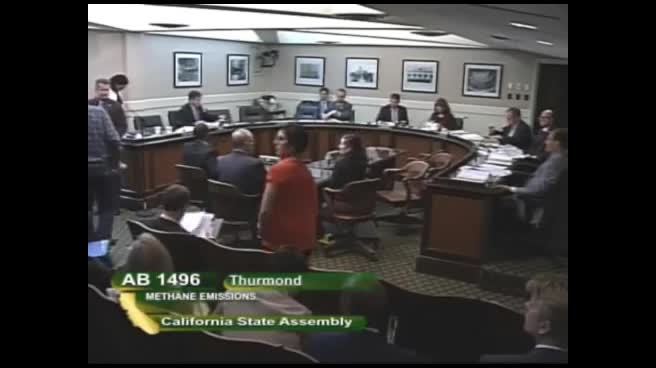 8MIN
Assembly Standing Committee on Natural Resources
Bill Author

Bill Co-Author(s):