AB 1509: Employer liability.
- Session Year: 2015-2016
- House: Assembly
- Latest Version Date: 2015-10-11
(1)Existing law prohibits an employer from discharging an employee or in any manner discriminating, retaliating, or taking any adverse action against any employee or applicant for employment because the employee or applicant has engaged in protected conduct, as specified. Existing law provides that an employee who made a bona fide complaint, and was consequently discharged or otherwise suffered an adverse action, is entitled to reinstatement and reimbursement for lost wages. Existing law makes it a misdemeanor for an employer to willfully refuse to reinstate or otherwise restore an employee who is determined by a specified procedure to be eligible for reinstatement. Existing law subjects a person who violates these provisions to a civil penalty of up to $10,000 per violation.
This bill would extend the protections of these provisions, as specified, to an employee who is a family member of a person who engaged in, or was perceived to engage in, the protected conduct or make a complaint protected by these provisions. This bill would define terms for the purpose of these provisions.
(2)Existing law requires a client employer to share with a labor contractor all civil legal responsibility and civil liability for all workers supplied by that labor contractor for the payment of wages and the failure to obtain valid workers compensation coverage. Existing law also prohibits a client employer from shifting to the labor contractor legal duties or liabilities under workplace safety provisions with respect to workers provided by the labor contractor. Existing law defines terms for these purposes and authorizes the Labor Commissioner to adopt regulations and rules of practice and procedure necessary to administer and enforce these provisions. Existing law excludes certain types of employers from these provisions, including, but not limited to, a client employer that is not a motor carrier of property based solely on the employers use of a third-party motor carrier of property with interstate or intrastate operating authority to ship or receive freight, and a client employer that is a motor carrier of property subcontracting with, or otherwise engaging, another motor carrier of property to provide transportation services using its own employees and commercial motor vehicles.
The Household Goods Carriers Act subjects household goods carriers to the jurisdiction and control of the Public Utilities Commission. The act prohibits a household goods carrier from engaging, or attempting to engage, in the business of the transportation of used household goods and personal effects by motor vehicle over any public highway in the state without a permit issued by the commission authorizing transportation entirely within the state, or a valid operating authority issued by the Federal Motor Carrier Safety Administration for interstate transportation.
This bill would expand the types of employers excluded from those labor contracting provisions to include a client employer that is not a household goods carrier based solely on the employers use of a third-party household goods carrier permitted by the commission to move household goods, and a client employer that is a permitted household goods carrier subcontracting with, or otherwise engaging, another permitted household goods carrier to provide transportation of household goods using its own employees and motor vehicles.
Existing
(1)Existing law prohibits an employer from discharging an employee or in any manner discriminating, retaliating, or taking any adverse action against any employee or applicant for employment because the employee or applicant has engaged in protected conduct, as specified. Existing law provides that an employee who made a bona fide complaint, and was consequently discharged or otherwise suffered an adverse action, is entitled to reinstatement and reimbursement for lost wages. Existing law makes it a misdemeanor for an employer to willfully refuse to reinstate or otherwise restore an employee who is determined by a specified procedure to be eligible for reinstatement. Existing law subjects a person who violates these provisions to a civil penalty of up to $10,000 per violation.
This bill would extend the protections of these provisions, as specified, to an employee who is a family member of a person who engaged in, or was perceived to engage in, the protected conduct or make a complaint protected by these provisions. This bill would define terms for the purpose of these provisions.
(2)Existing law requires a client employer to share with a labor contractor all civil legal responsibility and civil liability for all workers supplied by that labor contractor for the payment of wages and the failure to obtain valid workers compensation coverage. Existing law also prohibits a client employer from shifting to the labor contractor legal duties or liabilities under workplace safety provisions with respect to workers provided by the labor contractor. Existing law defines terms for these purposes and authorizes the Labor Commissioner to adopt regulations and rules of practice and procedure necessary to administer and enforce these provisions. Existing law excludes certain types of employers from these provisions, including, but not limited to, a client employer that is not a motor carrier of property based solely on the employers use of a third-party motor carrier of property with interstate or intrastate operating authority to ship or receive freight, and a client employer that is a motor carrier of property subcontracting with, or otherwise engaging, another motor carrier of property to provide transportation services using its own employees and commercial motor vehicles.
The Household Goods Carriers Act subjects household goods carriers to the jurisdiction and control of the Public Utilities Commission. The act prohibits a household goods carrier from engaging, or attempting to engage, in the business of the transportation of used household goods and personal effects by motor vehicle over any public highway in the state without a permit issued by the commission authorizing transportation entirely within the state or a valid operating authority issued by the Federal Motor Carrier Safety Administration, for interstate transportation.
This bill would expand the types of employers excluded from those labor contracting provisions to include a client employer that is not a household goods carrier based solely on the employers use of a third-party household goods carrier permitted by the commission to move household goods, and a client employer that is a permitted household goods carrier subcontracting with, or otherwise engaging, another permitted household goods carrier to provide transportation of household goods using its own employees and motor vehicles.
Existing law prohibits an employer from discharging an employee or in any manner discriminating, retaliating, or taking any adverse action against any employee or applicant for employment because the employee or applicant has engaged in protected conduct, as specified. Existing law provides that an employee who made a bona fide complaint, and was consequently discharged or otherwise suffered an adverse action, is entitled to reinstatement and reimbursement for lost wages. Existing law makes it a misdemeanor for an employer to willfully refuse to reinstate or otherwise restore an employee who is determined by a specified procedure to be eligible for reinstatement. Existing law subjects a person who violates these provisions to a civil penalty of up to $10,000 per violation.
This bill would extend the protections of these provisions provisions, as specified, to an employee who is a family member of a person who engaged in, or was preceived perceived to engage in, the protected conduct or make a complaint protected by these provisions. This bill would define terms for the purpose of these provisions.
Existing law prohibits an employer from discharging an employee or in any manner discriminating, retaliating, or taking any adverse action against any employee or applicant for employment because the employee or applicant has engaged in protected conduct, as specified. Existing law provides that an employee who made a bona fide complaint, and was consequently discharged or otherwise suffered an adverse action, is entitled to reinstatement and reimbursement for lost wages. Existing law makes it a misdemeanor for an employer to willfully refuse to reinstate or otherwise restore an employee who is determined by a specified procedure to be eligible for reinstatement. Existing law subjects a person who violates these provisions to a civil penalty of up to $10,000 per violation.
This bill would extend the protections of these provisions to an employee who is a family member of a person who engaged in, or was preceived to engage in, the protected conduct or make a complaint protected by these provisions. This bill would define terms for the purpose of these provisions.
Under existing law, it is unlawful to discharge or discriminate against an employee for making a complaint regarding employee safety or health, instituting or testifying in a proceeding under his or her rights, participating in an occupational health and safety committee, or refusing to perform work in violation of any occupational safety or health standard or safety order. Existing law further requires the reinstatement and reimbursement, as specified, of an employee who was discharged or discriminated against in the terms or conditions of his or her employment, in violation of these provisions. Existing law makes it a misdemeanor for an employer to willfully refuse to rehire, promote, or otherwise restore an employee who has been determined to be eligible for rehiring or promotion, as specified.
This bill would make technical, nonsubstantive changes to these provisions.
(a)A person shall not discharge an employee or in any manner discriminate, retaliate, or take any adverse action against any employee or applicant for employment because the employee or applicant engaged in any conduct delineated in this chapter, including the conduct described in subdivision (k) of Section 96, and Chapter 5 (commencing with Section 1101) of Part 3 of Division 2, or because the employee or applicant for employment has filed a bona fide complaint or claim or instituted or caused to be instituted any proceeding under or relating to his or her rights that are under the jurisdiction of the Labor Commissioner, made a written or oral complaint that he or she is owed unpaid wages, or because the employee has initiated any action or notice pursuant to Section 2699, or has testified or is about to testify in a proceeding pursuant to that section, or because of the exercise by the employee or applicant for employment on behalf of himself, herself, or others of any rights afforded him or her.
(b)(1)Any employee who is discharged, threatened with discharge, demoted, suspended, retaliated against, subjected to an adverse action, or in any other manner discriminated against in the terms and conditions of his or her employment because the employee engaged in any conduct delineated in this chapter, including the conduct described in subdivision (k) of Section 96, and Chapter 5 (commencing with Section 1101) of Part 3 of Division 2, or because the employee has made a bona fide complaint or claim to the division pursuant to this part, or because the employee has initiated any action or notice pursuant to Section 2699 shall be entitled to reinstatement and reimbursement for lost wages and work benefits caused by those acts of the employer.
(2)An employer who willfully refuses to hire, promote, or otherwise restore an employee or former employee who has been determined to be eligible for rehiring or promotion by a grievance procedure, arbitration, or hearing authorized by law, is guilty of a misdemeanor.
(3)In addition to other remedies available, an employer who violates this section is liable for a civil penalty not exceeding ten thousand dollars ($10,000) per employee for each violation of this section, to be awarded to the employee or employees who suffered the violation.
(c)(1)Any applicant for employment who is refused employment, who is not selected for a training program leading to employment, or who in any other manner is discriminated against in the terms and conditions of any offer of employment because the applicant engaged in any conduct delineated in this chapter, including the conduct described in subdivision (k) of Section 96, and Chapter 5 (commencing with Section 1101) of Part 3 of Division 2, or because the applicant has made a bona fide complaint or claim to the division pursuant to this part, or because the employee has initiated any action or notice pursuant to Section 2699 shall be entitled to employment and reimbursement for lost wages and work benefits caused by the acts of the prospective employer.
(2)This subdivision shall not be construed to invalidate any collective bargaining agreement that requires an applicant for a position that is subject to the collective bargaining agreement to sign a contract that protects either or both of the following as specified in subparagraphs (A) and (B), nor shall this subdivision be construed to invalidate any employer requirement of an applicant for a position that is not subject to a collective bargaining agreement to sign an employment contract that protects either or both of the following:
(A)An employer against any conduct that is actually in direct conflict with the essential enterprise-related interests of the employer and where breach of that contract would actually constitute a material and substantial disruption of the employers operation.
(B)A firefighter against any disease that is presumed to arise in the course and scope of employment, by limiting his or her consumption of tobacco products on and off the job.
(d)The provisions of this section creating new actions or remedies that are effective on January 1, 2002, to employees or applicants for employment do not apply to any state or local law enforcement agency, any religious association or corporation specified in subdivision (d) of Section 12926 of the Government Code, except as provided in Section 12926.2 of the Government Code, or any person described in Section 1070 of the Evidence Code.
(e)An employer, or a person acting on behalf of the employer, shall not retaliate against an employee because the employee is a family member of a person who has, or is perceived to have, engaged in any conduct delineated in this chapter.
(f)For purposes of this section, employer or a person acting on behalf of the employer includes, but is not limited to, a client employer as defined in paragraph (1) of subdivision (a) of Section 2810.3 and an employer listed in subdivision (b) of Section 6400.
(g)Subdivisions (e) and (f) shall not apply to claims arising under subdivision (k) of Section 96 unless the lawful conduct occurring during nonwork hours away from the employers premises involves the exercise of employee rights otherwise covered under subdivision (a).
SEC. 2.Section 1102.5 of the Labor Code is amended to read:1102.5.(a)An employer, or any person acting on behalf of the employer, shall not make, adopt, or enforce any rule, regulation, or policy preventing an employee from disclosing information to a government or law enforcement agency, to a person with authority over the employee, or to another employee who has authority to investigate, discover, or correct the violation or noncompliance, or from providing information to, or testifying before, any public body conducting an investigation, hearing, or inquiry, if the employee has reasonable cause to believe that the information discloses a violation of state or federal statute, or a violation of or noncompliance with a local, state, or federal rule or regulation, regardless of whether disclosing the information is part of the employees job duties.
(b)An employer, or any person acting on behalf of the employer, shall not retaliate against an employee for disclosing information, or because the employer believes that the employee disclosed or may disclose information, to a government or law enforcement agency, to a person with authority over the employee or another employee who has the authority to investigate, discover, or correct the violation or noncompliance, or for providing information to, or testifying before, any public body conducting an investigation, hearing, or inquiry, if the employee has reasonable cause to believe that the information discloses a violation of state or federal statute, or a violation of or noncompliance with a local, state, or federal rule or regulation, regardless of whether disclosing the information is part of the employees job duties.
(c)An employer, or any person acting on behalf of the employer, shall not retaliate against an employee for refusing to participate in an activity that would result in a violation of state or federal statute, or a violation of or noncompliance with a local, state, or federal rule or regulation.
(d)An employer, or any person acting on behalf of the employer, shall not retaliate against an employee for having exercised his or her rights under subdivision (a), (b), or (c) in any former employment.
(e)A report made by an employee of a government agency to his or her employer is a disclosure of information to a government or law enforcement agency pursuant to subdivisions (a) and (b).
(f)In addition to other penalties, an employer that is a corporation or limited liability company is liable for a civil penalty not exceeding ten thousand dollars ($10,000) for each violation of this section.
(g)This section does not apply to rules, regulations, or policies that implement, or to actions by employers against employees who violate, the confidentiality of the lawyer-client privilege of Article 3 (commencing with Section 950) of, or the physician-patient privilege of Article 6 (commencing with Section 990) of, Chapter 4 of Division 8 of the Evidence Code, or trade secret information.
(h)An employer, or a person acting on behalf of the employer, shall not retaliate against an employee because the employee is a family member of a person who has, or is perceived to have, engaged in any acts protected by this section.
(i)For purposes of this section, employer or a person acting on behalf of the employer includes, but is not limited to, a client employer as defined in paragraph (1) of subdivision (a) of Section 2810.3 and an employer listed in subdivision (b) of Section 6400.
SEC. 3.Section 2810.3 of the Labor Code is amended to read:2810.3.(a)As used in this section:
(1)(A)Client employer means a business entity, regardless of its form, that obtains or is provided workers to perform labor within its usual course of business from a labor contractor.
(B)Client employer does not include any of the following:
(i)A business entity with a workforce of fewer than 25 workers, including those hired directly by the client employer and those obtained from, or provided by, any labor contractor.
(ii)A business entity with five or fewer workers supplied by a labor contractor or labor contractors to the client employer at any given time.
(iii)The state or any political subdivision of the state, including any city, county, city and county, or special district.
(2)Labor has the same meaning provided by Section 200.
(3)Labor contractor means an individual or entity that supplies, either with or without a contract, a client employer with workers to perform labor within the client employers usual course of business. Labor contractor does not include any of the following:
(A)A bona fide nonprofit, community-based organization that provides services to workers.
(B)A bona fide labor organization or apprenticeship program or hiring hall operated pursuant to a collective bargaining agreement.
(C)A motion picture payroll services company as defined in subparagraph (A) of paragraph (4) of subdivision (f) of Section 679 of the Unemployment Insurance Code.
(D)A third party who is a party to an employee leasing arrangement, as defined by Rule 4 of Section V of the California Workers Compensation Experience Rating Plan-1995 (Section 2353.1 of Title 10 of the California Code of Regulations), as it read on January 1, 2014, except those arrangements described in subrule d of Rule 4 of Section V, if the employee leasing arrangement contractually obligates the client employer to assume all civil legal responsibility and civil liability under this act.
(4)Wages has the same meaning provided by Section 200 and all sums payable to an employee or the state based upon any failure to pay wages, as provided by law.
(5)Worker does not include an employee who is exempt from the payment of an overtime rate of compensation for executive, administrative, and professional employees pursuant to wage orders by the Industrial Welfare Commission described in Section 515.
(6)Usual course of business means the regular and customary work of a business, performed within or upon the premises or worksite of the client employer.
(b)A client employer shall share with a labor contractor all civil legal responsibility and civil liability for all workers supplied by that labor contractor for both of the following:
(1)The payment of wages.
(2)Failure to secure valid workers compensation coverage as required by Section 3700.
(c)A client employer shall not shift to the labor contractor any legal duties or liabilities under Division 5 (commencing with Section 6300) with respect to workers supplied by the labor contractor.
(d)At least 30 days prior to filing a civil action against a client employer for violations covered by this section, a worker or his or her representative shall notify the client employer of violations under subdivision (b).
(e)Neither the client employer nor the labor contractor may take any adverse action against any worker for providing notification of violations or filing a claim or civil action.
(f)The provisions of subdivisions (b) and (c) are in addition to, and shall be supplemental of, any other theories of liability or requirement established by statute or common law.
(g)This section does not prohibit a client employer from establishing, exercising, or enforcing by contract any otherwise lawful remedies against a labor contractor for liability created by acts of a labor contractor.
(h)This section does not prohibit a labor contractor from establishing, exercising, or enforcing by contract any otherwise lawful remedies against a client employer for liability created by acts of a client employer.
(i)Upon request by a state enforcement agency or department, a client employer or a labor contractor shall provide to the agency or department any information within its possession, custody, or control required to verify compliance with applicable state laws. Upon request, these records shall be made available promptly for inspection, and the state agency or department shall be permitted to copy them. This subdivision does not require the disclosure of information that is not otherwise required to be disclosed by employers upon request by a state enforcement agency or department.
(j)The Labor Commissioner may adopt regulations and rules of practice and procedure necessary to administer and enforce the provisions of subdivisions (b) and (i) that are under his or her jurisdiction.
(k)The Division of Occupational Safety and Health may adopt regulations and rules of practice and procedure necessary to administer and enforce the provisions of subdivisions (c) and (i) that are under its jurisdiction.
(l)The Employment Development Department may adopt regulations and rules of practice and procedure necessary to administer and enforce the provisions of subdivisions (b) and (i) that are under its jurisdiction.
(m)A waiver of this section is contrary to public policy, and is void and unenforceable.
(n)This section shall not be interpreted to impose individual liability on a homeowner for labor or services received at the home or the owner of a home-based business for labor or services received at the home.
(o)This section shall not be interpreted to impose liability on a client employer for the use of an independent contractor other than a labor contractor or to change the definition of independent contractor.
(p)This section shall not be interpreted to impose liability on the following:
(1)A client employer that is not a motor carrier of property based solely on the employers use of a third-party motor carrier of property with interstate or intrastate operating authority to ship or receive freight.
(2)A client employer that is a motor carrier of property subcontracting with, or otherwise engaging, another motor carrier of property to provide transportation services using its own employees and commercial motor vehicles, as defined in Section 34601 of the Vehicle Code.
(3)A client employer that is not a household goods carrier based solely on the employers use of a third-party household goods carrier permitted by the Public Utilities Commission pursuant to Chapter 7 (commencing with Section 5101) of Division 2 of the Public Utilities Code to move household goods.
(4)A client employer that is a household goods carrier permitted by the Public Utilities Commission pursuant to Chapter 7 (commencing with Section 5101) of Division 2 of the Public Utilities Code subcontracting with, or otherwise engaging, another permitted household goods carrier to provide transportation of household goods using its own employees and motor vehicles, as defined in Section 5108 of the Public Utilities Code.
(5)A client employer that is a cable operator as defined by Section 5830 of the Public Utilities Code, a direct-to-home satellite service provider, or a telephone corporation as defined by Section 234 of the Public Utilities Code, based upon its contracting with a company to build, install, maintain, or perform repair work utilizing the employees and vehicles of the contractor if the name of the contractor is visible on employee uniforms and vehicles.
(6)A motor club holding a certificate of authority issued pursuant to Chapter 2 (commencing with Section 12160) of Part 5 of Division 2 of the Insurance Code when it contracts with third parties to provide motor club services utilizing the employees and vehicles of the third-party contractor if the name of the contractor is visible on the contractors vehicles.
SEC. 4.Section 6310 of the Labor Code is amended to read:6310.(a)No person shall discharge or in any manner discriminate against any employee because the employee has done any of the following:
(1)Made any oral or written complaint to the division, other governmental agencies having statutory responsibility for or assisting the division with reference to employee safety or health, his or her employer, or his or her representative.
(2)Instituted or caused to be instituted any proceeding under or relating to his or her rights or has testified or is about to testify in the proceeding or because of the exercise by the employee on behalf of himself, herself, or others of any rights afforded him or her.
(3)Participated in an occupational health and safety committee established pursuant to Section 6401.7.
(b)Any employee who is discharged, threatened with discharge, demoted, suspended, or in any other manner discriminated against in the terms and conditions of employment by his or her employer because the employee has made a bona fide oral or written complaint to the division, other governmental agencies having statutory responsibility for or assisting the division with reference to employee safety or health, his or her employer, or his or her representative, of unsafe working conditions, or work practices, in his or her employment or place of employment, or has participated in an employer-employee occupational health and safety committee, shall be entitled to reinstatement and reimbursement for lost wages and work benefits caused by the acts of the employer. Any employer who willfully refuses to rehire, promote, or otherwise restore an employee or former employee who has been determined to be eligible for rehiring or promotion by a grievance procedure, arbitration, or hearing authorized by law, is guilty of a misdemeanor.
(c)An employer, or a person acting on behalf of the employer, shall not retaliate against an employee because the employee is a family member of a person who has, or is perceived to have, engaged in any acts protected by this section.
(d)For purposes of this section, employer or a person acting on behalf of the employer includes, but is not limited to, a client employer as defined in paragraph (1) of subdivision (a) of Section 2810.3 and an employer listed in subdivision (b) of Section 6400.
(a)A person shall not discharge an employee or in any manner discriminate, retaliate, or take any adverse action against any employee or applicant for employment because the employee or applicant engaged in any conduct delineated in this chapter, including the conduct described in subdivision (k) of Section 96, and Chapter 5 (commencing with Section 1101) of Part 3 of Division 2, or because the employee or applicant for employment has filed a bona fide complaint or claim or instituted or caused to be instituted any proceeding under or relating to his or her rights that are under the jurisdiction of the Labor Commissioner, made a written or oral complaint that he or she is owed unpaid wages, or because the employee has initiated any action or notice pursuant to Section 2699, or has testified or is about to testify in a proceeding pursuant to that section, or because of the exercise by the employee or applicant for employment on behalf of himself, herself, or others of any rights afforded him or her.
(b)(1)Any employee who is discharged, threatened with discharge, demoted, suspended, retaliated against, subjected to an adverse action, or in any other manner discriminated against in the terms and conditions of his or her employment because the employee engaged in any conduct delineated in this chapter, including the conduct described in subdivision (k) of Section 96, and Chapter 5 (commencing with Section 1101) of Part 3 of Division 2, or because the employee has made a bona fide complaint or claim to the division pursuant to this part, or because the employee has initiated any action or notice pursuant to Section 2699 shall be entitled to reinstatement and reimbursement for lost wages and work benefits caused by those acts of the employer.
(2)An employer who willfully refuses to hire, promote, or otherwise restore an employee or former employee who has been determined to be eligible for rehiring or promotion by a grievance procedure, arbitration, or hearing authorized by law, is guilty of a misdemeanor.
(3)In addition to other remedies available, an employer who violates this section is liable for a civil penalty not exceeding ten thousand dollars ($10,000) per employee for each violation of this section, to be awarded to the employee or employees who suffered the violation.
(c)(1)Any applicant for employment who is refused employment, who is not selected for a training program leading to employment, or who in any other manner is discriminated against in the terms and conditions of any offer of employment because the applicant engaged in any conduct delineated in this chapter, including the conduct described in subdivision (k) of Section 96, and Chapter 5 (commencing with Section 1101) of Part 3 of Division 2, or because the applicant has made a bona fide complaint or claim to the division pursuant to this part, or because the employee has initiated any action or notice pursuant to Section 2699 shall be entitled to employment and reimbursement for lost wages and work benefits caused by the acts of the prospective employer.
(2)This subdivision shall not be construed to invalidate any collective bargaining agreement that requires an applicant for a position that is subject to the collective bargaining agreement to sign a contract that protects either or both of the following as specified in subparagraphs (A) and (B), nor shall this subdivision be construed to invalidate any employer requirement of an applicant for a position that is not subject to a collective bargaining agreement to sign an employment contract that protects either or both of the following:
(A)An employer against any conduct that is actually in direct conflict with the essential enterprise-related interests of the employer and where breach of that contract would actually constitute a material and substantial disruption of the employers operation.
(B)A firefighter against any disease that is presumed to arise in the course and scope of employment, by limiting his or her consumption of tobacco products on and off the job.
(d)The provisions of this section creating new actions or remedies that are effective on January 1, 2002, to employees or applicants for employment do not apply to any state or local law enforcement agency, any religious association or corporation specified in subdivision (d) of Section 12926 of the Government Code, except as provided in Section 12926.2 of the Government Code, or any person described in Section 1070 of the Evidence Code.
(e)An employer, or a person acting on behalf of the employer, shall not retaliate against an employee because the employee is a family member of a person who has, or is perceived to have, engaged in any conduct delineated in this chapter.
(f)For purposes of this section, employer or a person acting on behalf of the employer includes, but is not limited to, a client employer as defined in paragraph (1) of subdivision (a) of Section 2810.3 and an employer listed in subdivision (b) of Section 6400.
(g)Subdivisions (e) and (f) shall not apply to claims arising under subdivision (k) of Section 96 unless the lawful conduct occurring during nonwork hours away from the employers premises involves the exercise of employee rights otherwise covered under subdivision (a).
SEC. 2.Section 1102.5 of the Labor Code is amended to read:1102.5.(a)An employer, or any person acting on behalf of the employer, shall not make, adopt, or enforce any rule, regulation, or policy preventing an employee from disclosing information to a government or law enforcement agency, to a person with authority over the employee, or to another employee who has authority to investigate, discover, or correct the violation or noncompliance, or from providing information to, or testifying before, any public body conducting an investigation, hearing, or inquiry, if the employee has reasonable cause to believe that the information discloses a violation of state or federal statute, or a violation of or noncompliance with a local, state, or federal rule or regulation, regardless of whether disclosing the information is part of the employees job duties.
(b)An employer, or any person acting on behalf of the employer, shall not retaliate against an employee for disclosing information, or because the employer believes that the employee disclosed or may disclose information, to a government or law enforcement agency, to a person with authority over the employee or another employee who has the authority to investigate, discover, or correct the violation or noncompliance, or for providing information to, or testifying before, any public body conducting an investigation, hearing, or inquiry, if the employee has reasonable cause to believe that the information discloses a violation of state or federal statute, or a violation of or noncompliance with a local, state, or federal rule or regulation, regardless of whether disclosing the information is part of the employees job duties.
(c)An employer, or any person acting on behalf of the employer, shall not retaliate against an employee for refusing to participate in an activity that would result in a violation of state or federal statute, or a violation of or noncompliance with a local, state, or federal rule or regulation.
(d)An employer, or any person acting on behalf of the employer, shall not retaliate against an employee for having exercised his or her rights under subdivision (a), (b), or (c) in any former employment.
(e)A report made by an employee of a government agency to his or her employer is a disclosure of information to a government or law enforcement agency pursuant to subdivisions (a) and (b).
(f)In addition to other penalties, an employer that is a corporation or limited liability company is liable for a civil penalty not exceeding ten thousand dollars ($10,000) for each violation of this section.
(g)This section does not apply to rules, regulations, or policies that implement, or to actions by employers against employees who violate, the confidentiality of the lawyer-client privilege of Article 3 (commencing with Section 950) of, or the physician-patient privilege of Article 6 (commencing with Section 990) of, Chapter 4 of Division 8 of the Evidence Code, or trade secret information.
(h)An employer, or a person acting on behalf of the employer, shall not retaliate against an employee because the employee is a family member of a person who has, or is perceived to have, engaged in any acts protected by this section.
(i)For purposes of this section, employer or a person acting on behalf of the employer includes, but is not limited to, a client employer as defined in paragraph (1) of subdivision (a) of Section 2810.3 and an employer listed in subdivision (b) of Section 6400.
SEC. 3.Section 2810.3 of the Labor Code is amended to read:2810.3.(a)As used in this section:
(1)(A)Client employer means a business entity, regardless of its form, that obtains or is provided workers to perform labor within its usual course of business from a labor contractor.
(B)Client employer does not include any of the following:
(i)A business entity with a workforce of less fewer than 25 workers, including those hired directly by the client employer and those obtained from, or provided by, any labor contractor.
(ii)A business entity with five or fewer workers supplied by a labor contractor or labor contractors to the client employer at any given time.
(iii)The state or any political subdivision of the state, including any city, county, city and county, or special district.
(2)Labor has the same meaning provided by Section 200.
(3)Labor contractor means an individual or entity that supplies, either with or without a contract, a client employer with workers to perform labor within the client employers usual course of business. Labor contractor does not include any of the following:
(A)A bona fide nonprofit, community-based organization that provides services to workers.
(B)A bona fide labor organization or apprenticeship program or hiring hall operated pursuant to a collective bargaining agreement.
(C)A motion picture payroll services company as defined in subparagraph (A) of paragraph (4) of subdivision (f) of Section 679 of the Unemployment Insurance Code.
(D)A third party who is a party to an employee leasing arrangement, as defined by Rule 4 of Section V of the California Workers Compensation Experience Rating Plan-1995 (Section 2353.1 of Title 10 of the California Code of Regulations), as it read on January 1, 2014, except those arrangements described in subrule d of Rule 4 of Section V, if the employee leasing arrangement contractually obligates the client employer to assume all civil legal responsibility and civil liability under this act.
(4)Wages has the same meaning provided by Section 200 and all sums payable to an employee or the state based upon any failure to pay wages, as provided by law.
(5)Worker does not include an employee who is exempt from the payment of an overtime rate of compensation for executive, administrative, and professional employees pursuant to wage orders by the Industrial Welfare Commission described in Section 515.
(6)Usual course of business means the regular and customary work of a business, performed within or upon the premises or worksite of the client employer.
(b)A client employer shall share with a labor contractor all civil legal responsibility and civil liability for all workers supplied by that labor contractor for both of the following:
(1)The payment of wages.
(2)Failure to secure valid workers compensation coverage as required by Section 3700.
(c)A client employer shall not shift to the labor contractor any legal duties or liabilities under the provisions of Division 5 (commencing with Section 6300) with respect to workers supplied by the labor contractor.
(d)At least 30 days prior to filing a civil action against a client employer for violations covered by this section, a worker or his or her representative shall notify the client employer of violations under subdivision (b).
(e)Neither the client employer nor the labor contractor may take any adverse action against any worker for providing notification of violations or filing a claim or civil action.
(f)The provisions of subdivisions (b) and (c) are in addition to, and shall be supplemental of, any other theories of liability or requirement established by statute or common law.
(g)This section does not prohibit a client employer from establishing, exercising, or enforcing by contract any otherwise lawful remedies against a labor contractor for liability created by acts of a labor contractor.
(h)This section does not prohibit a labor contractor from establishing, exercising, or enforcing by contract any otherwise lawful remedies against a client employer for liability created by acts of a client employer.
(i)Upon request by a state enforcement agency or department, a client employer or a labor contractor shall provide to the agency or department any information within its possession, custody, or control required to verify compliance with applicable state laws. Upon request, these records shall be made available promptly for inspection, and the state agency or department shall be permitted to copy them. This subdivision does not require the disclosure of information that is not otherwise required to be disclosed by employers upon request by a state enforcement agency or department.
(j)The Labor Commissioner may adopt regulations and rules of practice and procedure necessary to administer and enforce the provisions of subdivisions (b) and (i) that are under his or her jurisdiction.
(k)The Division of Occupational Safety and Health may adopt regulations and rules of practice and procedure necessary to administer and enforce the provisions of subdivisions (c) and (i) that are under its jurisdiction.
(l)The Employment Development Department may adopt regulations and rules of practice and procedure necessary to administer and enforce the provisions of subdivisions (b) and (i) that are under its jurisdiction.
(m)A waiver of this section is contrary to public policy, and is void and unenforceable.
(n)This section shall not be interpreted to impose individual liability on a homeowner for labor or services received at the home or the owner of a home-based business for labor or services received at the home.
(o)This section shall not be interpreted to impose liability on a client employer for the use of an independent contractor other than a labor contractor or to change the definition of independent contractor.
(p)This section shall not be interpreted to impose liability on the following:
(1)A client employer that is not a motor carrier of property based solely on the employers use of a third-party motor carrier of property with interstate or intrastate operating authority to ship or receive freight.
(2)A client employer that is a motor carrier of property subcontracting with, or otherwise engaging, another motor carrier of property to provide transportation services using its own employees and commercial motor vehicles, as defined in Section 34601 of the Vehicle Code.
(3)A client employer that is not a household goods carrier based solely on the employers use of a third-party household goods carrier permitted by the Public Utilities Commission pursuant to Chapter 7 (commencing with Section 5101) of Division 2 of the Public Utilities Code to move household goods.
(3)
(4)A client employer that is a household goods carrier permitted by the Public Utilities Commission pursuant to Chapter 7 (commencing with Section 5101) of Division 2 of the Public Utilities Code subcontracting with, or otherwise engaging, another permitted household goods carrier to provide transportation of household goods using its own employees and motor vehicles, as defined in Section 5108 of the Public Utilities Code.
(5)A client employer that is a cable operator as defined by Section 5830 of the Public Utilities Code, a direct-to-home satellite service provider, or a telephone corporation as defined by Section 234 of the Public Utilities Code, based upon its contracting with a company to build, install, maintain, or perform repair work utilizing the employees and vehicles of the contractor if the name of the contractor is visible on employee uniforms and vehicles.
(4)
(6)A motor club holding a certificate of authority issued pursuant to Chapter 2 (commencing with Section 12160) of Part 5 of Division 2 of the Insurance Code when it contracts with third parties to provide motor club services utilizing the employees and vehicles of the third-party contractor if the name of the contractor is visible on the contractors vehicles.
SEC. 3.SEC. 4.Section 6310 of the Labor Code is amended to read:6310.(a)No person shall discharge or in any manner discriminate against any employee because the employee has done any of the following:
(1)Made any oral or written complaint to the division, other governmental agencies having statutory responsibility for or assisting the division with reference to employee safety or health, his or her employer, or his or her representative.
(2)Instituted or caused to be instituted any proceeding under or relating to his or her rights or has testified or is about to testify in the proceeding or because of the exercise by the employee on behalf of himself, herself, or others of any rights afforded him or her.
(3)Participated in an occupational health and safety committee established pursuant to Section 6401.7.
(b)Any employee who is discharged, threatened with discharge, demoted, suspended, or in any other manner discriminated against in the terms and conditions of employment by his or her employer because the employee has made a bona fide oral or written complaint to the division, other governmental agencies having statutory responsibility for or assisting the division with reference to employee safety or health, his or her employer, or his or her representative, of unsafe working conditions, or work practices, in his or her employment or place of employment, or has participated in an employer-employee occupational health and safety committee, shall be entitled to reinstatement and reimbursement for lost wages and work benefits caused by the acts of the employer. Any employer who willfully refuses to rehire, promote, or otherwise restore an employee or former employee who has been determined to be eligible for rehiring or promotion by a grievance procedure, arbitration, or hearing authorized by law, is guilty of a misdemeanor.
(c)An employer, or a person acting on behalf of the employer, shall not retaliate against an employee because the employee is a family member of a person who has, or is perceived to have, engaged in any acts protected by this section.
(d)For purposes of this section, employer or a person acting on behalf of the employer includes, but is not limited to, a client employer as defined in paragraph (1) of subdivision (a) of Section 2810.3 and an employer listed in subdivision (b) of Section 6400.
(a)A person shall not discharge an employee or in any manner discriminate, retaliate, or take any adverse action against any employee or applicant for employment because the employee or applicant engaged in any conduct delineated in this chapter, including the conduct described in subdivision (k) of Section 96, and Chapter 5 (commencing with Section 1101) of Part 3 of Division 2, or because the employee or applicant for employment has filed a bona fide complaint or claim or instituted or caused to be instituted any proceeding under or relating to his or her rights that are under the jurisdiction of the Labor Commissioner, made a written or oral complaint that he or she is owed unpaid wages, or because the employee has initiated any action or notice pursuant to Section 2699, or has testified or is about to testify in a proceeding pursuant to that section, or because of the exercise by the employee or applicant for employment on behalf of himself, herself, or others of any rights afforded him or her.
(b)(1)Any employee who is discharged, threatened with discharge, demoted, suspended, retaliated against, subjected to an adverse action, or in any other manner discriminated against in the terms and conditions of his or her employment because the employee engaged in any conduct delineated in this chapter, including the conduct described in subdivision (k) of Section 96, and Chapter 5 (commencing with Section 1101) of Part 3 of Division 2, or because the employee has made a bona fide complaint or claim to the division pursuant to this part, or because the employee has initiated any action or notice pursuant to Section 2699 shall be entitled to reinstatement and reimbursement for lost wages and work benefits caused by those acts of the employer.
(2)An employer who willfully refuses to hire, promote, or otherwise restore an employee or former employee who has been determined to be eligible for rehiring or promotion by a grievance procedure, arbitration, or hearing authorized by law, is guilty of a misdemeanor.
(3)In addition to other remedies available, an employer who violates this section is liable for a civil penalty not exceeding ten thousand dollars ($10,000) per employee for each violation of this section, to be awarded to the employee or employees who suffered the violation.
(c)(1)Any applicant for employment who is refused employment, who is not selected for a training program leading to employment, or who in any other manner is discriminated against in the terms and conditions of any offer of employment because the applicant engaged in any conduct delineated in this chapter, including the conduct described in subdivision (k) of Section 96, and Chapter 5 (commencing with Section 1101) of Part 3 of Division 2, or because the applicant has made a bona fide complaint or claim to the division pursuant to this part, or because the employee has initiated any action or notice pursuant to Section 2699 shall be entitled to employment and reimbursement for lost wages and work benefits caused by the acts of the prospective employer.
(2)This subdivision shall not be construed to invalidate any collective bargaining agreement that requires an applicant for a position that is subject to the collective bargaining agreement to sign a contract that protects either or both of the following as specified in subparagraphs (A) and (B), nor shall this subdivision be construed to invalidate any employer requirement of an applicant for a position that is not subject to a collective bargaining agreement to sign an employment contract that protects either or both of the following:
(A)An employer against any conduct that is actually in direct conflict with the essential enterprise-related interests of the employer and where breach of that contract would actually constitute a material and substantial disruption of the employers operation.
(B)A firefighter against any disease that is presumed to arise in the course and scope of employment, by limiting his or her consumption of tobacco products on and off the job.
(d)The provisions of this section creating new actions or remedies that are effective on January 1, 2002, to employees or applicants for employment do not apply to any state or local law enforcement agency, any religious association or corporation specified in subdivision (d) of Section 12926 of the Government Code, except as provided in Section 12926.2 of the Government Code, or any person described in Section 1070 of the Evidence Code.
(e)An employer, or a person acting on behalf of the employer, shall not retaliate against an employee because the employee is a family member of a person who has, or is perceived to have, engaged in any conduct delineated in this chapter.
(f)For purposes of this section, employer or a person acting on behalf of the employer includes, but is not limited to, a client employer as defined in paragraph (1) of subdivision (a) of Section 2810.3 and an employer listed in subdivision (b) of Section 6400.
(g)Subdivisions (e) and (f) shall not apply to claims arising under subdivision (k) of Section 96 unless the lawful conduct occurring during nonwork hours away from the employers premises involves the exercise of employee rights otherwise covered under subdivision (a).
SEC. 2.Section 1102.5 of the Labor Code is amended to read:1102.5.(a)An employer, or any person acting on behalf of the employer, shall not make, adopt, or enforce any rule, regulation, or policy preventing an employee from disclosing information to a government or law enforcement agency, to a person with authority over the employee, or to another employee who has authority to investigate, discover, or correct the violation or noncompliance, or from providing information to, or testifying before, any public body conducting an investigation, hearing, or inquiry, if the employee has reasonable cause to believe that the information discloses a violation of state or federal statute, or a violation of or noncompliance with a local, state, or federal rule or regulation, regardless of whether disclosing the information is part of the employees job duties.
(b)An employer, or any person acting on behalf of the employer, shall not retaliate against an employee for disclosing information, or because the employer believes that the employee disclosed or may disclose information, to a government or law enforcement agency, to a person with authority over the employee or another employee who has the authority to investigate, discover, or correct the violation or noncompliance, or for providing information to, or testifying before, any public body conducting an investigation, hearing, or inquiry, if the employee has reasonable cause to believe that the information discloses a violation of state or federal statute, or a violation of or noncompliance with a local, state, or federal rule or regulation, regardless of whether disclosing the information is part of the employees job duties.
(c)An employer, or any person acting on behalf of the employer, shall not retaliate against an employee for refusing to participate in an activity that would result in a violation of state or federal statute, or a violation of or noncompliance with a local, state, or federal rule or regulation.
(d)An employer, or any person acting on behalf of the employer, shall not retaliate against an employee for having exercised his or her rights under subdivision (a), (b), or (c) in any former employment.
(e)A report made by an employee of a government agency to his or her employer is a disclosure of information to a government or law enforcement agency pursuant to subdivisions (a) and (b).
(f)In addition to other penalties, an employer that is a corporation or limited liability company is liable for a civil penalty not exceeding ten thousand dollars ($10,000) for each violation of this section.
(g)This section does not apply to rules, regulations, or policies that implement, or to actions by employers against employees who violate, the confidentiality of the lawyer-client privilege of Article 3 (commencing with Section 950) of, or the physician-patient privilege of Article 6 (commencing with Section 990) of, Chapter 4 of Division 8 of the Evidence Code, or trade secret information.
(h)An employer, or a person acting on behalf of the employer, shall not retaliate against an employee because the employee is a family member of a person who has, or is perceived to have, engaged in any acts protected by this section.
(i)For purposes of this section, employer or a person acting on behalf of the employer includes, but is not limited to, a client employer as defined in paragraph (1) of subdivision (a) of Section 2810.3 and an employer listed in subdivision (b) of Section 6400.
SEC. 3.Section 6310 of the Labor Code is amended to read:6310.(a)No person shall discharge or in any manner discriminate against any employee because the employee has done any of the following:
(1)Made any oral or written complaint to the division, other governmental agencies having statutory responsibility for or assisting the division with reference to employee safety or health, his or her employer, or his or her representative.
(2)Instituted or caused to be instituted any proceeding under or relating to his or her rights or has testified or is about to testify in the proceeding or because of the exercise by the employee on behalf of himself, herself, or others of any rights afforded him or her.
(3)Participated in an occupational health and safety committee established pursuant to Section 6401.7.
(b)Any employee who is discharged, threatened with discharge, demoted, suspended, or in any other manner discriminated against in the terms and conditions of employment by his or her employer because the employee has made a bona fide oral or written complaint to the division, other governmental agencies having statutory responsibility for or assisting the division with reference to employee safety or health, his or her employer, or his or her representative, of unsafe working conditions, or work practices, in his or her employment or place of employment, or has participated in an employer-employee occupational health and safety committee, shall be entitled to reinstatement and reimbursement for lost wages and work benefits caused by the acts of the employer. Any employer who willfully refuses to rehire, promote, or otherwise restore an employee or former employee who has been determined to be eligible for rehiring or promotion by a grievance procedure, arbitration, or hearing authorized by law, is guilty of a misdemeanor.
(c)An employer, or a person acting on behalf of the employer, shall not retaliate against an employee because the employee is a family member of a person who has, or is perceived to have, engaged in any acts protected by this section.
(d)For purposes of this section, employer or a person acting on behalf of the employer includes, but is not limited to, a client employer as defined in paragraph (1) of subdivision (a) of Section 2810.3 and an employer listed in subdivision (b) of Section 6400.
(a)A person shall not discharge an employee or in any manner discriminate, retaliate, or take any adverse action against any employee or applicant for employment because the employee or applicant engaged in any conduct delineated in this chapter, including the conduct described in subdivision (k) of Section 96, and Chapter 5 (commencing with Section 1101) of Part 3 of Division 2, or because the employee or applicant for employment has filed a bona fide complaint or claim or instituted or caused to be instituted any proceeding under or relating to his or her rights that are under the jurisdiction of the Labor Commissioner, made a written or oral complaint that he or she is owed unpaid wages, or because the employee has initiated any action or notice pursuant to Section 2699, or has testified or is about to testify in a proceeding pursuant to that section, or because of the exercise by the employee or applicant for employment on behalf of himself, herself, or others of any rights afforded him or her.
(b)(1)Any employee who is discharged, threatened with discharge, demoted, suspended, retaliated against, subjected to an adverse action, or in any other manner discriminated against in the terms and conditions of his or her employment because the employee engaged in any conduct delineated in this chapter, including the conduct described in subdivision (k) of Section 96, and Chapter 5 (commencing with Section 1101) of Part 3 of Division 2, or because the employee has made a bona fide complaint or claim to the division pursuant to this part, or because the employee has initiated any action or notice pursuant to Section 2699 shall be entitled to reinstatement and reimbursement for lost wages and work benefits caused by those acts of the employer.
(2)An employer who willfully refuses to hire, promote, or otherwise restore an employee or former employee who has been determined to be eligible for rehiring or promotion by a grievance procedure, arbitration, or hearing authorized by law, is guilty of a misdemeanor.
(3)In addition to other remedies available, an employer who violates this section is liable for a civil penalty not exceeding ten thousand dollars ($10,000) per employee for each violation of this section, to be awarded to the employee or employees who suffered the violation.
(c)(1)Any applicant for employment who is refused employment, who is not selected for a training program leading to employment, or who in any other manner is discriminated against in the terms and conditions of any offer of employment because the applicant engaged in any conduct delineated in this chapter, including the conduct described in subdivision (k) of Section 96, and Chapter 5 (commencing with Section 1101) of Part 3 of Division 2, or because the applicant has made a bona fide complaint or claim to the division pursuant to this part, or because the employee has initiated any action or notice pursuant to Section 2699 shall be entitled to employment and reimbursement for lost wages and work benefits caused by the acts of the prospective employer.
(2)This subdivision shall not be construed to invalidate any collective bargaining agreement that requires an applicant for a position that is subject to the collective bargaining agreement to sign a contract that protects either or both of the following as specified in subparagraphs (A) and (B), nor shall this subdivision be construed to invalidate any employer requirement of an applicant for a position that is not subject to a collective bargaining agreement to sign an employment contract that protects either or both of the following:
(A)An employer against any conduct that is actually in direct conflict with the essential enterprise-related interests of the employer and where breach of that contract would actually constitute a material and substantial disruption of the employers operation.
(B)A firefighter against any disease that is presumed to arise in the course and scope of employment, by limiting his or her consumption of tobacco products on and off the job.
(d)The provisions of this section creating new actions or remedies that are effective on January 1, 2002, to employees or applicants for employment do not apply to any state or local law enforcement agency, any religious association or corporation specified in subdivision (d) of Section 12926 of the Government Code, except as provided in Section 12926.2 of the Government Code, or any person described in Section 1070 of the Evidence Code.
(e)An employer, or a person acting on behalf of the employer, shall not retaliate against an employee because the employee is a family member of a person who has, or is perceived to have, engaged in any conduct delineated in this chapter.
(f)For purposes of this section, employer or a person acting on behalf of the employer includes, but is not limited to, a client employer as defined in paragraph (1) of subdivision (a) of Section 2810.3 and an employer listed in subdivision (b) of Section 6400.
SEC. 2.Section 1102.5 of the Labor Code is amended to read:1102.5.(a)An employer, or any person acting on behalf of the employer, shall not make, adopt, or enforce any rule, regulation, or policy preventing an employee from disclosing information to a government or law enforcement agency, to a person with authority over the employee, or to another employee who has authority to investigate, discover, or correct the violation or noncompliance, or from providing information to, or testifying before, any public body conducting an investigation, hearing, or inquiry, if the employee has reasonable cause to believe that the information discloses a violation of state or federal statute, or a violation of or noncompliance with a local, state, or federal rule or regulation, regardless of whether disclosing the information is part of the employees job duties.
(b)An employer, or any person acting on behalf of the employer, shall not retaliate against an employee for disclosing information, or because the employer believes that the employee disclosed or may disclose information, to a government or law enforcement agency, to a person with authority over the employee or another employee who has the authority to investigate, discover, or correct the violation or noncompliance, or for providing information to, or testifying before, any public body conducting an investigation, hearing, or inquiry, if the employee has reasonable cause to believe that the information discloses a violation of state or federal statute, or a violation of or noncompliance with a local, state, or federal rule or regulation, regardless of whether disclosing the information is part of the employees job duties.
(c)An employer, or any person acting on behalf of the employer, shall not retaliate against an employee for refusing to participate in an activity that would result in a violation of state or federal statute, or a violation of or noncompliance with a local, state, or federal rule or regulation.
(d)An employer, or any person acting on behalf of the employer, shall not retaliate against an employee for having exercised his or her rights under subdivision (a), (b), or (c) in any former employment.
(e)A report made by an employee of a government agency to his or her employer is a disclosure of information to a government or law enforcement agency pursuant to subdivisions (a) and (b).
(f)In addition to other penalties, an employer that is a corporation or limited liability company is liable for a civil penalty not exceeding ten thousand dollars ($10,000) for each violation of this section.
(g)This section does not apply to rules, regulations, or policies that implement, or to actions by employers against employees who violate, the confidentiality of the lawyer-client privilege of Article 3 (commencing with Section 950) of, or the physician-patient privilege of Article 6 (commencing with Section 990) of, Chapter 4 of Division 8 of the Evidence Code, or trade secret information.
(h)An employer, or a person acting on behalf of the employer, shall not retaliate against an employee because the employee is a family member of a person who has, or is perceived to have, engaged in any acts protected by this section.
(i)For purposes of this section, employer or a person acting on behalf of the employer includes, but is not limited to, a client employer as defined in paragraph (1) of subdivision (a) of Section 2810.3 and an employer listed in subdivision (b) of Section 6400.
SEC. 3.Section 6310 of the Labor Code is amended to read:6310.(a)No person shall discharge or in any manner discriminate against any employee because the employee has done any of the following:
(1)Made any oral or written complaint to the division, other governmental agencies having statutory responsibility for or assisting the division with reference to employee safety or health, his or her employer, or his or her representative.
(2)Instituted or caused to be instituted any proceeding under or relating to his or her rights or has testified or is about to testify in the proceeding or because of the exercise by the employee on behalf of himself, herself, or others of any rights afforded him or her.
(3)Participated in an occupational health and safety committee established pursuant to Section 6401.7.
(b)Any employee who is discharged, threatened with discharge, demoted, suspended, or in any other manner discriminated against in the terms and conditions of employment by his or her employer because the employee has made a bona fide oral or written complaint to the division, other governmental agencies having statutory responsibility for or assisting the division with reference to employee safety or health, his or her employer, or his or her representative, of unsafe working conditions, or work practices, in his or her employment or place of employment, or has participated in an employer-employee occupational health and safety committee, shall be entitled to reinstatement and reimbursement for lost wages and work benefits caused by the acts of the employer. Any employer who willfully refuses to rehire, promote, or otherwise restore an employee or former employee who has been determined to be eligible for rehiring or promotion by a grievance procedure, arbitration, or hearing authorized by law, is guilty of a misdemeanor.
(c)An employer, or a person acting on behalf of the employer, shall not retaliate against an employee because the employee is a family member of a person who has, or is perceived to have, engaged in any acts protected by this section.
(d)For purposes of this section, employer or a person acting on behalf of the employer includes, but is not limited to, a client employer as defined in paragraph (1) of subdivision (a) of Section 2810.3 and an employer listed in subdivision (b) of Section 6400.
SECTION 1.Section 6310 of the Labor Code is amended to read:6310.(a)A person shall not discharge or in any manner discriminate against any employee because the employee has done any of the following:
(1)Made an oral or written complaint to the division, other governmental agencies having statutory responsibility for or assisting the division with reference to employee safety or health, his or her employer, or his or her representative.
(2)Instituted or caused to be instituted a proceeding under or relating to his or her rights or has testified or is about to testify in the proceeding or because of the exercise by the employee on behalf of himself, herself, or others of any rights afforded him or her.
(3)Participated in an occupational health and safety committee established pursuant to Section 6401.7.
(b)An employee who is discharged, threatened with discharge, demoted, suspended, or in any other manner discriminated against in the terms and conditions of employment by his or her employer because the employee has made a bona fide oral or written complaint to the division, other governmental agencies having statutory responsibility for or assisting the division with reference to employee safety or health, his or her employer, or his or her representative, of unsafe working conditions, or work practices, in his or her employment or place of employment, or has participated in an employer-employee occupational health and safety committee, shall be entitled to reinstatement and reimbursement for lost wages and work benefits caused by the acts of the employer. An employer who willfully refuses to rehire, promote, or otherwise restore an employee or former employee who has been determined to be eligible for rehiring or promotion by a grievance procedure, arbitration, or hearing authorized by law, is guilty of a misdemeanor.
(a)No A person shall not discharge or in any manner discriminate against any employee because the employee has done any of the following:
(1)Made any an oral or written complaint to the division, other governmental agencies having statutory responsibility for or assisting the division with reference to employee safety or health, his or her employer, or his or her representative.
(2)Instituted or caused to be instituted any a proceeding under or relating to his or her rights or has testified or is about to testify in the proceeding or because of the exercise by the employee on behalf of himself, herself, or others of any rights afforded him or her.
(3)Participated in an occupational health and safety committee established pursuant to Section 6401.7.
(b)Any An employee who is discharged, threatened with discharge, demoted, suspended, or in any other manner discriminated against in the terms and conditions of employment by his or her employer because the employee has made a bona fide oral or written complaint to the division, other governmental agencies having statutory responsibility for or assisting the division with reference to employee safety or health, his or her employer, or his or her representative, of unsafe working conditions, or work practices, in his or her employment or place of employment, or has participated in an employer-employee occupational health and safety committee, shall be entitled to reinstatement and reimbursement for lost wages and work benefits caused by the acts of the employer. Any An employer who willfully refuses to rehire, promote, or otherwise restore an employee or former employee who has been determined to be eligible for rehiring or promotion by a grievance procedure, arbitration, or hearing authorized by law, is guilty of a misdemeanor.
|
Date
|
Status
|
|---|---|
| Jun 24, 2015 | From committee: Do pass and re-refer to Com. on APPR. (Ayes 5. Noes 2.) (June 23). Re-referred to Com. on APPR. |
| Oct 11, 2015 | Chaptered by Secretary of State - Chapter 792, Statutes of 2015. |
| Oct 11, 2015 | Approved by the Governor. |
| Sep 16, 2015 | Enrolled and presented to the Governor at 4 p.m. |
| Sep 4, 2015 | Senate amendments concurred in. To Engrossing and Enrolling. (Ayes 53. Noes 25.). |
| Sep 4, 2015 | Senate amendments concurred in. To Engrossing and Enrolling. (Ayes 53. Noes 25. Page 2906.). |
| Sep 4, 2015 | Senate amendments concurred in. To Engrossing and Enrolling. |
| Sep 2, 2015 | Read third time. Passed. Ordered to the Assembly. (Ayes 27. Noes 13. Page 2411.). |
| Sep 2, 2015 | Read third time. Passed. Ordered to the Assembly. |
| Sep 2, 2015 | In Assembly. Concurrence in Senate amendments pending. May be considered on or after September 4 pursuant to Assembly Rule 77. |
| Sep 1, 2015 | Read second time. Ordered to third reading. |
| Aug 31, 2015 | Read third time and amended. Ordered to second reading. |
| Jul 14, 2015 | Read second time. Ordered to third reading. |
| Jul 13, 2015 | From committee: Do pass. (Ayes 5. Noes 2.) (July 13). |
| Jul 6, 2015 | In committee: Hearing postponed by committee. |
| Mar 4, 2015 | Read first time. To print. |
| Jun 10, 2015 | From committee: Do pass and re-refer to Com. on JUD. (Ayes 3. Noes 1.) (June 10). Re-referred to Com. on JUD. |
| May 28, 2015 | Referred to Coms. on L. & I.R. and JUD. |
| May 14, 2015 | Read third time. Passed. Ordered to the Senate. (Ayes 54. Noes 26. Page 1440.) |
| May 14, 2015 | Read third time. Passed. Ordered to the Senate. |
| May 14, 2015 | In Senate. Read first time. To Com. on RLS. for assignment. |
| May 7, 2015 | Read second time. Ordered to third reading. |
| May 6, 2015 | From committee: Do pass. (Ayes 12. Noes 5.) (May 6). |
| Apr 28, 2015 | Re-referred to Com. on APPR. |
| Apr 27, 2015 | Read second time and amended. |
| Apr 23, 2015 | From committee: Amend, and do pass as amended and re-refer to Com. on APPR. (Ayes 5. Noes 2.) (April 22). |
| Apr 6, 2015 | Re-referred to Com. on L. & E. |
| Mar 26, 2015 | Referred to Com. on L. & E. |
| Mar 26, 2015 | From committee chair, with author's amendments: Amend, and re-refer to Com. on L. & E. Read second time and amended. |
| Mar 5, 2015 | From printer. May be heard in committee April 4. |
|
Date
|
Description
|
Location
|
Votes
|
|
|---|---|---|---|---|
| Sep 4, 2015 | AB 1509 HERNÁNDEZ Concurrence in Senate Amendments | Assembly Floor |
Passed |
|
| Sep 2, 2015 | Assembly 3rd Reading AB1509 Roger Hernández By Mendoza | Senate Floor |
Passed |
|
| Jul 13, 2015 | Do pass | Senate Standing Committee on Appropriations |
Passed |
|
| Jun 23, 2015 | Do pass, but first be re-referred to the Committee on [Appropriations] | Senate Standing Committee on Judiciary |
Passed |
|
| Jun 10, 2015 | Do pass, but first be re-referred to the Committee on [Judiciary] | Senate Standing Committee on Labor and Industrial Relations |
Passed |
|
| May 14, 2015 | AB 1509 HERNÁNDEZ Assembly Third Reading | Assembly Floor |
Passed |
|
| May 6, 2015 | Do pass. | Assembly Standing Committee on Appropriations |
Passed |
|
| Apr 22, 2015 | Do pass as amended and be re-referred to the Committee on [Appropriations] | Assembly Standing Committee on Labor and Employment |
Passed |
This list shows positions taken on this bill by organizations on the date displayed, which is linked to the original source.
Positions by individuals are not included.
|
Organization
|
Position
|
Date
|
|---|---|---|
| American Federation of State, County and Municipal Employees | ** Support | Sep 2, 2015 |
| California Employment Lawyers Association | ** Support | Sep 2, 2015 |
| California Labor Federation, Afl-Cio | ** Support | Sep 2, 2015 |
| California Moving And Storage Association | ** Support | Sep 2, 2015 |
| California Professional Firefighters | ** Support | Sep 2, 2015 |
| California Rural Legal Assistance Foundation, Inc. | ** Support | Sep 2, 2015 |
| Consumer Attorneys Of California | ** Support | Sep 2, 2015 |
| Page I | ** Support | May 14, 2015 |
| SIU Local 1000 | * Indeterminate | Jun 10, 2015 |
AB 1509
Page 1
CONCURRENCE IN SENATE AMENDMENTS
AB 1509
(Roger Hernández)
As Amended August 31, 2015
Majority vote
ASSEMBLY: |
54-26 |
(May 14, 2015) |
SENATE: |
27-13 |
(September 2, 2015) |
Original Committee Reference: L. & E.
SUMMARY: Revises various provisions of law related to employment retaliation.
The Senate amendments add language to provide that legislation enacted last year (AB 1897 (Roger Hernández), Chapter 728, Statutes of 2014) shall not be interpreted to impose liability on a client employer that is a household goods carrier under specified circumstances.
FISCAL EFFECT: According to the Senate Appropriations Committee, the Department of Industrial Relations (DIR) indicates that it would incur administrative costs (special funds) of $120,000 in the first year, and $112,000 ongoing to implement the provisions of the bill.
COMMENTS: According to the author, California law contains a strong public policy to protect employees from retaliation for exercising their rights. This is an acknowledgement of the fact that substantive labor and employment laws are meaningless if workers are reluctant to exercise their rights for fear of employer retaliation.
According to the author, recent cases and examples highlight several major gaps in existing California statutes that prohibit retaliation against employees for engaging in protected activity. This bill will close those gaps in order to protect California workers.
Supporters state that this bill will fill in the gaps in the law of retaliation by clarifying that existing prohibitions against retaliation apply to a "client employer" or a "controlling employer." In addition, it will clarify that an employer cannot retaliate against a worker because that worker is related to another worker who engaged in protected activity.
Senate amendments add language related to AB 1897. Enacted last year, AB 1897 contained a limited exemption for certain subcontracting work performed by "motor carriers," as specified. It was assumed that this exemption also applied to certain "household goods carriers." However, those entities are regulated by a different code section than "motor carriers." Therefore, the amendments to this bill clarify that the same limited exemption applies to certain work performed by "household goods carriers," and cross-references the appropriate statutory citation.
There is no opposition on file.
Analysis Prepared by: Ben Ebbink / L. & E. / (916) 319-2091 FN: 0001757
AB 1509
Page 7
|
Office of Senate Floor Analyses (916) 651-1520 Fax: (916) 327-4478 |
THIRD READING
Bill No: AB 1509
Amended: 8/31/15 in Senate
SENATE LABOR & IND. REL. COMMITTEE: 3-1, 6/10/15
AYES: Mendoza, Leno, Mitchell
NOES: Stone
NO VOTE RECORDED: Jackson
SENATE JUDICIARY COMMITTEE: 5-2, 6/23/15
AYES: Jackson, Hertzberg, Leno, Monning, Wieckowski
NOES: Moorlach, Anderson
SENATE APPROPRIATIONS COMMITTEE: 5-2, 7/13/15
AYES: Lara, Beall, Hill, Leyva, Mendoza
NOES: Bates, Nielsen
ASSEMBLY FLOOR: 54-26, 5/14/15 - See last page for vote
SOURCE: California Labor Federation, AFL-CIO
DIGEST: This bill extends current employment retaliation protections to an employee who is a family member of a person who engaged in, or is perceived to have engaged in, legally protected conduct. This bill also exempts household goods carriers from the client employer and labor contractor liability provisions in law.
Senate Floor Amendments of 8/31/15 add an exemption for household goods carriers from the client employer and labor contractor liability provisions enacted last year.
Existing law:
Contains provisions that define unlawful discrimination and lawful employment practices by employers and employment agencies to protect both current and prospective employees against employment discrimination.
Prohibits an employer from discharging, or in any manner discriminate, retaliate, or take any adverse action against, any employee or applicant for employment because he/she has engaged in prescribed protected conduct relating to the enforcement of the employee’s or applicant’s rights.
States that such protected conduct includes, among others, making an oral or written complaint that he/she is owed unpaid wages or claims regarding the employee’s safety or health.
Provides that any employee that is discharged, threatened with discharge, demoted, suspended, retaliated against, subjected to an adverse action, or in any other manner discriminated against because he/she engaged in any protected conduct – such as making a bona fide complaint or claim to the Division of Labor Standards Enforcement – is entitled to reinstatement and reimbursement for lost wages and benefits.
Provides that any employer, who willfully refuses to hire, promote, or otherwise restore a current or former employee found to be eligible for rehiring or promotion by a grievance procedure, arbitration, or hearing authorized by law, is guilty of a misdemeanor.
Provides that in addition to other remedies available, an employer who violates these provisions is liable for a civil penalty not exceeding $10,000 per employee for each violation, to be awarded to the employee(s) who suffered the violation.
Requires a client employer to share with a labor contractor all civil legal responsibility and civil liability for all workers supplied by that labor contractor for both a) the payment of wages, and b) failure to secure valid workers’ compensation coverage.
Prohibits a client employer from shifting to the labor contractor any legal duties or liabilities, as defined. However, existing law, specifies that these provisions shall not be interpreted to impose liability on (among others) a client employer that is a motor carrier of property subcontracting with, or otherwise engaging, another motor carrier to provide transportation services using its own employees and commercial motor vehicles.
This bill:
Prohibits an employer, or a person acting on behalf of the employer, from retaliating against an employee because he/she is a family member of a person who has, or is perceived to have, engaged in any protected activity under existing law.
Provides that “employer” or “person acting on behalf of the employer” for purposes of these employment retaliation provisions includes a “client employer” or a “controlling employer,” as currently defined in law.
Specifies that these provisions do not apply to claims that are a result of demotion, suspension, or discharge from employment for lawful conduct occurring during nonworking hours away from the employer’s premises, unless the lawful conduct involves the exercise of employee rights otherwise covered in law.
Exempts from liability a client employer that is not a household goods carrier based solely on the employer’s use of a third-party household goods carrier permitted by the Public Utilities Commission, pursuant to specified code sections, to move household goods.
Exempts from liability a client employer that is a household goods carrier permitted by the Public Utilities Commission, pursuant to specified code sections, subcontracting with, or otherwise engaging, another permitted household goods carrier to provide transportation of household goods using its own employees and motor vehicles, as defined.
Background
In 2013, the Labor Commissioner received 3,514 complaints of employer retaliation, a number that is likely understated because it only represents those workers who were courageous enough to come forward and file a claim. Immigrant workers are particularly vulnerable to employer retaliation and abuse. A 2013 report by the National Employment Law Project stated, “Silencing or intimidating a large percentage of workers in any industry means that workers are hobbled in their efforts to protect and improve their jobs. As long as unscrupulous employers can exploit some low-wage workers with impunity, all low-wage workers suffer compromised employment protections and economic security. Law-abiding employers are forced to compete with illegal practices, perpetuating low-wages in a whole host of industries.” (Workers’ Rights on ICE: How Immigration Reform Can Stop Retaliation and Advance Labor Rights)
Recent cases and examples highlight several major gaps in existing California statutes that prohibit retaliation against employees for engaging in protected activity. For example, existing law does not address retaliation protections in cases where multiple family members work for the same employer. According to the author, situations have arisen in which one employee will engage in protected activity, but the employer will retaliate against the employee’s family member (such as terminating the family member in retaliation for the others employee’s protected activity). Existing law is unclear about whether such conduct is unlawful. In at least one recent case (Su v. Siemens) the Court held that existing law did not extend protection in such a situation. In that case, a construction foreman made several safety-related complaints, and the employer terminated the employer’s son, who also happened to be employed by the same employer.
Another gap in existing law exists with respect to the category of employer that may be cited for unlawful retaliation. In the same case cited above (Su v. Siemens), an employee foreman made safety-related claims both to a subcontractor (his direct employer) and the general contractor that had overall responsibility for the worksite. When the employee was terminated, he alleged retaliation against both the subcontractor and the general contractor. However, the Court held that the occupational safety and health retaliation statute applied only to “direct employers” of the complaining employee, and dismissed the claims against the general contractor. This is despite the fact that existing California law already recognizes the general contractor as a “controlling employer” that may be cited for workplace safety violations (AB 1897, Hernandez, Chapter 728, Statutes of 2014).
This bill strengthens current employment retaliation provisions to address both of these gaps in existing law by, 1) providing that an employer shall not retaliate against an employee because the employee is a family member of a person who has engaged in protected activity; and 2) providing that prohibitions against retaliation apply to a “client employer” or a “controlling employer.”
Recent amendments address an issue having to do with the client employer and labor contractor relationship as established by AB 1897. AB 1897 defined a "client employer" to mean a business entity that obtains or is provided workers to perform labor within its usual course of business from a labor contractor. Under these provisions, a client employer is required to share with a labor contractor all civil legal responsibility and civil liability for all workers supplied by that labor contractor for both 1) the payment of wages, and 2) failure to secure valid workers’ compensation coverage. However, existing law exempts certain employers from these provisions including a motor carrier of property subcontracting with, or otherwise engaging, another motor carrier to provide transportation services using its own employees and commercial motor vehicles.
The recent amendments to this bill further exempt from liability household goods carriers. According to the author, these amendments attempt to clarify the provisions enacted last year which had a limited exemption for certain subcontracting work performed by “motor carriers.” The author intended to exempt household goods movers (moving companies) and had assumed the provisions enacted last year covered them; however, they are regulated by the Public Utilities Commission under a different code section so the motor carrier provision did not technically cover them. The author wishes to further clarify in Labor Code that these companies are included under the exemption by replicating the motor carrier exemption but makes the appropriate reference to “household goods carriers.”
Prior/Related Legislation
AB 1897 (Hernandez, Chapter 728, Statutes of 2014) establishes specified liability for client employers that obtain workers from third-party labor contractors.
AB 263 (Hernandez, Chapter 732, Statutes of 2013) prohibits an employer or any other person or entity to engage in, or to direct another to engage in, unfair immigration-related practices against any person for the purpose of, or with the intent of, retaliating against him/her for exercising any lawfully protected right.
AB 666 (Steinberg, Chapter 577, Statutes of 2013) prohibits retaliation against employees and others on the basis of citizenship and immigration status. It also strengthens anti-retaliation laws by protecting an employee who provides information to, or testifies before, any public body conducting an investigation, hearing, or inquiry into improper employer conduct, as specified.
FISCAL EFFECT: Appropriation: No Fiscal Com.: Yes Local: No
According to the Senate Appropriations Committee, the Department of Industrial Relations indicates that it would incur administrative costs (special funds) of $120,000 in the first year, and $112,000 ongoing to implement the provisions of this bill.
California Labor Federation, AFL-CIO (source)
American Federation of State, County and Municipal Employees
California Employment Lawyers Association
California Moving and Storage Association
California Professional Firefighters
California Rural Legal Assistance Foundation
Consumer Attorneys of California
OPPOSITION: (Verified 8/31/15)
None received
ARGUMENTS IN SUPPORT: According to proponents, although California law contains a strong public policy to protect employees from retaliation for exercising their rights, recent cases and examples highlight several major gaps in existing law that prohibit retaliation against employees for engaging in protected activity. In the temporary employment setting, for example, temporary workers by definition have no guarantee of work so a worker can easily be punished for speaking out. Employers use the threat of terminating the contract with the staffing agency or contractor if workers exercise protected labor rights. These types of retaliation are hard to prove and hard to remedy.
In addition, supporters contend that family retaliation is an especially common practice employed against immigrant workers, who frequently find work alongside family members in the fields, warehouses, and hotels. Proponents argue that such retaliation must clearly be prohibited to ensure that workers can speak out about unlawful practices without fear of reprisals against family members. The author and proponents believe that this bill will fill in the gaps in the law of retaliation by clarifying that existing prohibitions against retaliation apply to a “client employer” or a “controlling employer.” In addition, it will clarify that an employer cannot retaliate against a worker because that worker is related to another worker who engaged in protected activity.
Additionally, recent amendments to the bill address a technical correction in provisions enacted last year which the California Moving and Storage Association support. Specifically, they state that the limited exemption for certain subcontracting work in the transportation industry was supposed to include the moving and storage industry; unfortunately, due to an unintended omission, the specific provisions in the Public Utilities Code governing the regulation of the moving and storage industry by the Public Utilities Commission were not included in the language. This technical amendment correctly references this industry and they support this bill.
ASSEMBLY FLOOR: 54-26, 5/14/15
AYES: Alejo, Bloom, Bonilla, Bonta, Brown, Burke, Calderon, Campos, Chau, Chiu, Chu, Cooley, Cooper, Dababneh, Daly, Dodd, Eggman, Frazier, Cristina Garcia, Eduardo Garcia, Gatto, Gipson, Gomez, Gonzalez, Gordon, Gray, Hadley, Roger Hernández, Holden, Irwin, Jones-Sawyer, Lackey, Levine, Lopez, Low, McCarty, Medina, Mullin, Nazarian, O'Donnell, Perea, Quirk, Rendon, Ridley-Thomas, Rodriguez, Salas, Santiago, Mark Stone, Thurmond, Ting, Weber, Williams, Wood, Atkins
NOES: Achadjian, Travis Allen, Baker, Bigelow, Brough, Chang, Chávez, Dahle, Beth Gaines, Gallagher, Grove, Harper, Jones, Kim, Linder, Maienschein, Mathis, Mayes, Melendez, Obernolte, Olsen, Patterson, Steinorth, Wagner, Waldron, Wilk
Prepared by: Alma Perez / L. & I.R. / (916) 651-1556
9/1/15 21:20:05
**** END ****
AB 1509
Page 6
|
Office of Senate Floor Analyses (916) 651-1520 Fax: (916) 327-4478 |
THIRD READING
Bill No: AB 1509
Amended: 4/27/15 in Assembly
SENATE LABOR & IND. REL. COMMITTEE: 3-1, 6/10/15
AYES: Mendoza, Leno, Mitchell
NOES: Stone
NO VOTE RECORDED: Jackson
SENATE JUDICIARY COMMITTEE: 5-2, 6/23/15
AYES: Jackson, Hertzberg, Leno, Monning, Wieckowski
NOES: Moorlach, Anderson
SENATE APPROPRIATIONS COMMITTEE: 5-2, 7/13/15
AYES: Lara, Beall, Hill, Leyva, Mendoza
NOES: Bates, Nielsen
ASSEMBLY FLOOR: 54-26, 5/14/15 - See last page for vote
SUBJECT: Employees: protected disclosures and complaints: retaliation
SOURCE: California Labor Federation, AFL-CIO
DIGEST: This bill extends current employment retaliation protections to an employee who is a family member of a person who engaged in, or is perceived to have engaged in, legally protected conduct.
Existing law:
Contains provisions that define unlawful discrimination and lawful employment practices by employers and employment agencies to protect both current and prospective employees against employment discrimination.
Prohibits an employer from discharging, or in any manner discriminate, retaliate, or take any adverse action against, any employee or applicant for employment because he/she has engaged in prescribed protected conduct relating to the enforcement of the employee’s or applicant’s rights.
States that such protected conduct includes, among others, making an oral or written complaint that he/she is owed unpaid wages or claims regarding the employee’s safety or health.
Provides that any employee that is discharged, threatened with discharge, demoted, suspended, retaliated against, subjected to an adverse action, or in any other manner discriminated against because he/she engaged in any protected conduct – such as making a bona fide complaint or claim to the Division of Labor Standards Enforcement – is entitled to reinstatement and reimbursement for lost wages and benefits.
Provides that any employer, who willfully refuses to hire, promote, or otherwise restore a current or former employee found to be eligible for rehiring or promotion by a grievance procedure, arbitration, or hearing authorized by law, is guilty of a misdemeanor.
Provides that in addition to other remedies available, an employer who violates these provisions is liable for a civil penalty not exceeding $10,000 per employee for each violation, to be awarded to the employee(s) who suffered the violation.
This bill:
Prohibits an employer, or a person acting on behalf of the employer, from retaliating against an employee because he/she is a family member of a person who has, or is perceived to have, engaged in any protected activity under existing law.
Provides that “employer” or “person acting on behalf of the employer” for purposes of these employment retaliation provisions includes a “client employer” or a “controlling employer,” as currently defined in law.
Specifies that these provisions do not apply to claims that are a result of demotion, suspension, or discharge from employment for lawful conduct occurring during nonworking hours away from the employer’s premises, unless the lawful conduct involves the exercise of employee rights otherwise covered in law.
Background
In 2013, the Labor Commissioner received 3,514 complaints of employer retaliation, a number that is likely understated because it only represents those workers who were courageous enough to come forward and file a claim. Immigrant workers are particularly vulnerable to employer retaliation and abuse. A 2013 report by the National Employment Law Project stated, “Silencing or intimidating a large percentage of workers in any industry means that workers are hobbled in their efforts to protect and improve their jobs. As long as unscrupulous employers can exploit some low-wage workers with impunity, all low-wage workers suffer compromised employment protections and economic security. Law-abiding employers are forced to compete with illegal practices, perpetuating low-wages in a whole host of industries.” (Workers’ Rights on ICE: How Immigration Reform Can Stop Retaliation and Advance Labor Rights)
Recent cases and examples highlight several major gaps in existing California statutes that prohibit retaliation against employees for engaging in protected activity. For example, existing law does not address retaliation protections in cases where multiple family members work for the same employer. According to the author, situations have arisen in which one employee will engage in protected activity, but the employer will retaliate against the employee’s family member (such as terminating the family member in retaliation for the others employee’s protected activity). Existing law is unclear about whether such conduct is unlawful. In at least one recent case (Su v. Siemens) the Court held that existing law did not extend protection in such a situation. In that case, a construction foreman made several safety-related complaints, and the employer terminated the employer’s son, who also happened to be employed by the same employer.
Another gap in existing law exists with respect to the category of employer that may be cited for unlawful retaliation. In the same case cited above (Su v. Siemens), an employee foreman made safety-related claims both to a subcontractor (his direct employer) and the general contractor that had overall responsibility for the worksite. When the employee was terminated, he alleged retaliation against both the subcontractor and the general contractor. However, the Court held that the occupational safety and health retaliation statute applied only to “direct employers” of the complaining employee, and dismissed the claims against the general contractor. This is despite the fact that existing California law already recognizes the general contractor as a “controlling employer” that may be cited for workplace safety violations (AB 1897, Hernandez, Chapter 728, Statutes of 2014).
This bill strengthens current employment retaliation provisions to address both of these gaps in existing law by, 1) providing that an employer shall not retaliate against an employee because the employee is a family member of a person who has engaged in protected activity; and 2) providing that prohibitions against retaliation apply to a “client employer” or a “controlling employer.”
Prior/Related Legislation
AB 1897 (Hernandez, Chapter 728, Statutes of 2014) establishes specified liability for client employers that obtain workers from third-party labor contractors.
AB 263 (Hernandez, Chapter 732, Statutes of 2013) prohibits an employer or any other person or entity to engage in, or to direct another to engage in, unfair immigration-related practices against any person for the purpose of, or with the intent of, retaliating against him/her for exercising any lawfully protected right.
AB 666 (Steinberg, Chapter 577, Statutes of 2013) prohibits retaliation against employees and others on the basis of citizenship and immigration status. It also strengthens anti-retaliation laws by protecting an employee who provides information to, or testifies before, any public body conducting an investigation, hearing, or inquiry into improper employer conduct, as specified.
FISCAL EFFECT: Appropriation: No Fiscal Com.: Yes Local: No
According to the Senate Appropriations Committee, the Department of Industrial Relations indicates that it would incur administrative costs (special funds) of $120,000 in the first year, and $112,000 ongoing to implement the provisions of the bill.
California Labor Federation, AFL-CIO (source)
American Federation of State, County and Municipal Employees
California Employment Lawyers Association
California Professional Firefighters
California Rural Legal Assistance Foundation
Consumer Attorneys of California
OPPOSITION: (Verified 7/14/15)
None received
ARGUMENTS IN SUPPORT: According to proponents, although California law contains a strong public policy to protect employees from retaliation for exercising their rights, recent cases and examples highlight several major gaps in existing law that prohibit retaliation against employees for engaging in protected activity. In the temporary employment setting, for example, temporary workers by definition have no guarantee of work so a worker can easily be punished for speaking out. Employers use the threat of terminating the contract with the staffing agency or contractor if workers exercise protected labor rights. These types of retaliation are hard to prove and hard to remedy.
In addition, supporters contend that family retaliation is an especially common practice employed against immigrant workers, who frequently find work alongside family members in the fields, warehouses, and hotels. Proponents argue that such retaliation must clearly be prohibited to ensure that workers can speak out about unlawful practices without fear of reprisals against family members.
The author and proponents believe that this bill will fill in the gaps in the law of retaliation by clarifying that existing prohibitions against retaliation apply to a “client employer” or a “controlling employer.” In addition, it will clarify that an employer cannot retaliate against a worker because that worker is related to another worker who engaged in protected activity.
ASSEMBLY FLOOR: 54-26, 5/14/15
AYES: Alejo, Bloom, Bonilla, Bonta, Brown, Burke, Calderon, Campos, Chau, Chiu, Chu, Cooley, Cooper, Dababneh, Daly, Dodd, Eggman, Frazier, Cristina Garcia, Eduardo Garcia, Gatto, Gipson, Gomez, Gonzalez, Gordon, Gray, Hadley, Roger Hernández, Holden, Irwin, Jones-Sawyer, Lackey, Levine, Lopez, Low, McCarty, Medina, Mullin, Nazarian, O’Donnell, Perea, Quirk, Rendon, Ridley-Thomas, Rodriguez, Salas, Santiago, Mark Stone, Thurmond, Ting, Weber, Williams, Wood, Atkins
NOES: Achadjian, Travis Allen, Baker, Bigelow, Brough, Chang, Chávez, Dahle, Beth Gaines, Gallagher, Grove, Harper, Jones, Kim, Linder, Maienschein, Mathis, Mayes, Melendez, Obernolte, Olsen, Patterson, Steinorth, Wagner, Waldron, Wilk
Prepared by: Alma Perez / L. & I.R. / (916) 651-1556
7/15/15 17:48:03
**** END ****
AB 1509 (Roger Hernández) Page 2 of 2
SENATE COMMITTEE ON APPROPRIATIONS
Senator Ricardo Lara, Chair
2015 - 2016 Regular Session
AB 1509 (Roger Hernández) - Employees: protected disclosures and complaints: retaliation
|
|
Version: April 27, 2015 |
Policy Vote: L. & I.R. 3 - 1, JUD. 5 - 2 |
Urgency: No |
Mandate: No |
Hearing Date: July 13, 2015 |
Consultant: Robert Ingenito |
This bill does not meet the criteria for referral to the Suspense File.
Bill Summary:
AB 1509 would extend current-law employment retaliation protections to an employee who is a family member of a person who engaged in, or is perceived to have engaged in, legally protected conduct.
Fiscal Impact:
The Department of Industrial Relations (DIR) indicates that it would incur administrative costs (special funds) of $120,000 in the first year, and $112,000 ongoing to implement the provisions of the bill.
Background:
Current law prohibits an employer from discharging, retaliating, or taking other adverse employment action against an employee because the employee has engaged in protected conduct, as specified, such as filing a complaint or claim with the Labor Commissioner. Additionally, AB 1897 (Roger Hernández), Chapter 728, Statutes of 2014, established client employer liability for certain violations for workers provided by a labor contractor. AB 1897 defined a "client employer" to mean a business entity that obtains or is provided workers to perform labor within its usual course of business from a labor contractor.
Proposed Law:
This bill would amend current law related to employment retaliation to extend protections to an employee who is a family member of a person who engaged in, or is perceived to have engaged in, protected conduct, as specified. Specifically, the bill would do the following.
Prohibit an employer, or a person acting on behalf of the employer, from retaliating against an employee because he/she is a family member of a person who has, or is perceived to have, engaged in any protected activity under existing law.
Provide that "employer" or “person acting on behalf of the employer” for purposes of these employment retaliation provisions includes a "client employer" or a "controlling employer," as currently specified.
Specify that these provisions do not apply to claims that are a result of demotion, suspension, or discharge from employment for lawful conduct occurring during nonworking hours away from the employer’s premises, unless the lawful conduct involves the exercise of employee rights otherwise covered in law.
Staff Comments:
In 2013, the Labor Commissioner received 3,514 complaints of employer retaliation, a number that is likely understated. Current law does not address retaliation protection in cases where multiple family members work for the same employer. Situations have occurred where one employee engaged in protected activity, but the employer retaliated against the employee's co-worker family member (such as terminating the family member in retaliation for the others employee's protected activity). Current law is unclear about whether such conduct is unlawful. In at least one recent case (Su v. Siemens), current law was deemed not to extend protection in such a situation. In that case, a construction foreman made several safety-related complaints, and the employer terminated the employer's son, who also happened to be employed by the same employer.
DIR anticipates increased administrative costs of $120,000 in the first year, and $112,000 ongoing to process additional complaints resulting from the bill.
-- END --
AB 1509 (Roger Hernández) Page 2 of 2
SENATE COMMITTEE ON APPROPRIATIONS
Senator Ricardo Lara, Chair
2015 - 2016 Regular Session
AB 1509 (Roger Hernández) - Employees: protected disclosures and complaints: retaliation
|
|
Version: April 27, 2015 |
Policy Vote: L. & I.R. 3 - 1, JUD. 5 - 2 |
Urgency: No |
Mandate: No |
Hearing Date: July 6, 2015 |
Consultant: Robert Ingenito |
This bill does not meet the criteria for referral to the Suspense File.
Bill Summary:
AB 1509 would extend current-law employment retaliation protections to an employee who is a family member of a person who engaged in, or is perceived to have engaged in, legally protected conduct.
Fiscal Impact:
The Department of Industrial Relations (DIR) indicates that it would incur administrative costs (special funds) of $120,000 in the first year, and $112,000 ongoing to implement the provisions of the bill.
Background:
Current law prohibits an employer from discharging, retaliating, or taking other adverse employment action against an employee because the employee has engaged in protected conduct, as specified, such as filing a complaint or claim with the Labor Commissioner. Additionally, AB 1897 (Roger Hernández), Chapter 728, Statutes of 2014, established client employer liability for certain violations for workers provided by a labor contractor. AB 1897 defined a "client employer" to mean a business entity that obtains or is provided workers to perform labor within its usual course of business from a labor contractor.
Proposed Law:
This bill would amend current law related to employment retaliation to extend protections to an employee who is a family member of a person who engaged in, or is perceived to have engaged in, protected conduct, as specified. Specifically, the bill would do the following.
Prohibit an employer, or a person acting on behalf of the employer, from retaliating against an employee because he/she is a family member of a person who has, or is perceived to have, engaged in any protected activity under existing law.
Provide that "employer" or “person acting on behalf of the employer” for purposes of these employment retaliation provisions includes a "client employer" or a "controlling employer," as currently specified.
Specify that these provisions do not apply to claims that are a result of demotion, suspension, or discharge from employment for lawful conduct occurring during nonworking hours away from the employer’s premises, unless the lawful conduct involves the exercise of employee rights otherwise covered in law.
Staff Comments:
In 2013, the Labor Commissioner received 3,514 complaints of employer retaliation, a number that is likely understated. Current law does not address retaliation protection in cases where multiple family members work for the same employer. Situations have occurred where one employee engaged in protected activity, but the employer retaliated against the employee's co-worker family member (such as terminating the family member in retaliation for the others employee's protected activity). Current law is unclear about whether such conduct is unlawful. In at least one recent case (Su v. Siemens), current law was deemed not to extend protection in such a situation. In that case, a construction foreman made several safety-related complaints, and the employer terminated the employer's son, who also happened to be employed by the same employer.
DIR anticipates increased administrative costs of $120,000 in the first year, and $112,000 ongoing to process additional complaints resulting from the bill.
-- END --
AB 1509 (Roger Hernández)
Page 8 of 8
Senator Hannah-Beth Jackson, Chair
2015-2016 Regular Session
AB 1509 (Roger Hernández)
Version: April 27, 2015
Hearing Date: June 23, 2015
Fiscal: Yes
Urgency: No
TMW
SUBJECT
Employees: protected disclosures and complaints: retaliation
DESCRIPTION
This bill would prohibit an employer from discharging an employee or in any manner discriminating, retaliating, or taking any adverse action against any employee because the employee is a family member of a person who has, or is perceived to have, filed a claim with or instituted a proceeding before the Labor Commissioner, testified or is going to testify in a proceeding before the Labor Commissioner, disclosed information to a government or law enforcement agency, as specified, participated in an occupational health and safety committee, as specified, or exercised rights afforded to employees by the Labor Code. This bill would also prohibit an employer from making, adopting, or enforcing any rule, regulation, or policy preventing an employee from disclosing information to a government or law enforcement agency, as specified. This bill would also expand these prohibitions to include a person acting on behalf of the employer, including, but not limited to, a client employer, as specified.
BACKGROUND
California’s labor laws are some of the most stringent in the country and afford employees broad protection against wage and hours violations and unlawful discrimination. Current law also prohibits retaliation against employees for exercising their rights under the Labor Code and the Fair Housing and Employment Act. Despite these statutory protections, employees, particularly low-wage workers, may hesitate to pursue claims even where their rights have been violated. This bill seeks to clarify California’s prohibition of retaliation against employees who exercise their labor rights by specifically extending the statutory protections to an employee’s family members and applying the prohibitions to a person acting on behalf of the employer, as specified.
This bill is similar to SB 1244 (Alquist, 2008), which would have prohibited the discharge of an employee or discrimination against any employee or applicant for employment because the employee, applicant, coworker, or immediate family member of the employee who filed a claim with or instituted a proceeding before the Labor Commissioner, testified or was going to testify in a proceeding before the Labor Commissioner, or exercised his or her rights afforded under the Labor Code. SB 1244 was held under submission in the Senate Appropriations Committee.
This bill was heard by the Senate Labor and Industrial Relations Committee on June 10, 2015, and was approved by a vote of 3-1.
CHANGES TO EXISTING LAW
Existing law provides that no person may discharge or in any manner discriminate against any employee or applicant for employment because the employee or applicant engaged in certain protected activities, including:
filing a claim with the Labor Commissioner for loss of wages as the result of demotion, suspension, or discharge from employment for lawful conduct occurring during nonworking hours away from the employer’s premises (Lab. Code Sec. 96(k));
filing a bona fide complaint or claim or instituting or causing to be instituted any proceeding under or relating to his or her rights under the jurisdiction of the Labor Commissioner (Lab. Code Sec. 98.6);
filing a civil action on behalf of himself, herself, or others as an alternative to filing a complaint with the Labor and Workforces Development Agency or any sub-unit of that agency (Lab. Code Sec. 2699);
testifying or preparing to testify in any of the above proceedings. (Lab. Code Sec. 98.6); or
exercising – on behalf of himself, herself, or others rights afforded to him or her. (Lab. Code Sec. 98.6.)
Existing law, commonly known as the Whistleblower Protection Statute (WPS), prohibits an employer, or any person acting on behalf of the employer, from making, adopting, or enforcing any rule, regulation, or policy preventing an employee from disclosing information to a government or law enforcement agency, to a person with authority over the employee, or to another employee who has authority to investigate, discover, or correct the violation or noncompliance, or from providing information to, or testifying before, any public body conducting an investigation, hearing, or inquiry, if the employee has reasonable cause to believe that the information discloses a violation of state or federal statute, or a violation of or noncompliance with a local, state, or federal rule or regulation, regardless of whether disclosing the information is part of the employee’s job duties. (Lab. Code Sec. 1102.5(a).)
Existing law prohibits an employer, or any person acting on behalf of the employer, from preventing an employee from disclosing information, or retaliating against an employee who discloses information, to a government or law enforcement agency where the employee has reasonable cause to believe that the information discloses a violation of state or federal statute, or a violation or noncompliance with a state or federal rule or regulation. (Lab. Code Sec. 1102.5(b).)
Existing law also prohibits retaliation against an employee for refusing to participate in an activity that would result in a violation of state or federal statute, or a violation of or noncompliance with a local, state, or federal rule or regulation, for exercising his or her rights to disclose information, testify, or refuse to participate in an unlawful activity in any former employment, or for making a report to the employee’s government agency. (Lab. Code Sec. 1102.5(c)-(e).)
Existing law prohibits a person from discharging or in any manner discriminating against any employee because the employee has: (1) made any oral or written complaint to the Division of Labor Standards Enforcement (DLSE), other governmental agencies having statutory responsibility for or assisting the DLSE with reference to employee safety or health, his or her employer, or his or her representative; (2) instituted or caused to be instituted any proceeding under or relating to his or her rights or has testified or is about to testify in the proceeding or because of the exercise by the employee on behalf of himself, herself, or others of any rights afforded to him or her; or (3) participated in an occupational health and safety committee, as specified. (Lab. Code Sec. 6310.)
Existing law defines “client employer” to mean a business entity, regardless of its form, that obtains or is provided workers to perform labor within its usual course of business from a labor contractor. (Lab. Code Sec. 2810.3.)
Existing law lists categories of employers that may be issued a citation on multiemployer worksites when the DLSE has evidence that an employee was unlawfully exposed to a hazard as follows: (1) the employer whose employees were exposed to the hazard (the exposing employer); (2) the employer who actually created the hazard (the creating employer); (3) the employer who was responsible, by contract or through actual practice, for safety and health conditions on the worksite, which is the employer who had the authority for ensuring that the hazardous condition is corrected (the controlling employer); and (4) the employer who had the responsibility for actually correcting the hazard (the correcting employer). (Lab. Code Sec. 6400(b).)
This bill would extend the above discrimination and retaliation protections to employees of family members who have taken actions protected under the above provisions.
This bill would include, but not be limited to, in the definition of “employer” or “a person acting on behalf of the employer” a client employer that obtains or is provided workers to perform labor within its usual course of business from a labor contractor, and incorporate the categories of employers that may be cited on multiemployer worksites for unlawfully exposing employees to hazards.
This bill would not apply to claims for loss of wages as the result of demotion, suspension, or discharge from employment for lawful conduct occurring during nonworking hours away from the employer’s premises, unless the lawful conduct occurring during nonwork hours away from the employer’s premises involves the exercise of employee rights otherwise protected, as specified.
COMMENT
1. Stated need for the bill
The author writes: “Recent cases and examples highlight several major gaps in existing California statutes that prohibit retaliation against employees for engaging in protected activity. AB 1509 will close those gaps in order to protect California workers.”
2. Protecting employees from retaliation for employee’s family member’s conduct
This bill would provide discrimination and retaliation protections under the Labor Code for employees when a family member, employed by the same employer, takes various actions, such as filing a complaint with the Labor Commissioner, against the employer. Existing law provides various protections against discrimination and retaliation when an employee takes an action to uphold his or her rights under the Labor Code.
The California Labor Federation, AFL-CIO (CLF), sponsor, points to a recent case in which the court had to determine whether existing California law protected an employee from association retaliation. In Su v. Siemens Industry, Inc. (2014) 2014 U.S. Dist. LEXIS 100240, p. 3, an employee made multiple complaints about safety concerns to the employer, who subsequently fired the employee and his son, who worked for the same employer. The court held that Labor Code Section 6310 only gives a cause of action to any employee who is discriminated against because the employee has engaged in protected activity. (Id. at p. 11.) Accordingly, the son’s association retaliation claim failed because he was not the employee who had engaged in protected activity. (Id.)
CLF argues that “[f]amily retaliation is an especially common practice employed against immigrant workers, who frequently find work alongside family members in the fields, warehouses, and hotels of California. Immigrant workers also make up the majority of workers in the subcontracted economy. Such retaliation must clearly be prohibited to ensure that workers can speak out about unlawful practices without fear of reprisals against family members.” Further, the California Rural Legal Assistance Foundation (CRLAF), in support, states that “[i]n CRLAF’s more than thirty years’ history in representing farm workers and other low-wage workers in rural California, retaliation against family members (and other work associates) is a significant feature of unscrupulous employers’ efforts to chill workers in the exercise of their labor and housing rights. Indeed, in our experience it is very common for workers NOT to pursue claims against their employer because they fear retaliation against family members also employed by that employer.” Accordingly, this bill seeks to address retaliation against employees who are discriminated or retaliated against for the actions taken by their family members in support of their rights under the Labor Code. Arguably, this protection may encourage employees to speak up and report safety and hazard violations, as well as seek redress to protect their employment rights, without worrying about whether their family members employed by the same employer will be retaliated against.
3. Prohibiting conduct by persons acting on behalf of the employer
This bill would provide that the terms “employer” or “a person acting on behalf of the employer” includes, but is not limited to, a client employer, which refers to a business entity, regardless of its form, that obtains or is provided workers to perform labor within its usual course of business from a labor contractor. This bill would also expand the definition of “employer” to include the categories of employers that may be issued a citation on multiemployer worksites when the DLSE has evidence that an employee was unlawfully exposed to a hazard as follows: (1) the employer whose employees were exposed to the hazard (the exposing employer); (2) the employer who actually created the hazard (the creating employer); (3) the employer who was responsible, by contract or through actual practice, for safety and health conditions on the worksite, which is the employer who had the authority for ensuring that the hazardous condition is corrected (the controlling employer); and (4) the employer who had the responsibility for actually correcting the hazard (the correcting employer).
CLF states that:
In recent years, we have seen a dramatic rise in subcontracting through our economy. Rather than hire directly, companies rely on third party labor suppliers to provide temporary and contract workers to do the ongoing work of the business with no strings attached.
Under this employment model, retaliation has become hard to address. Temporary workers, by definition, have no guarantee of work so a worker can easily be punished for speaking out. Employers use the threat of terminating the contract with the staffing agency or contractor if workers exercise protected labor rights. These types of retaliation are hard to prove and hard to remedy.
This is particularly alarming when it comes to retaliation related to worker health and safety. A recent report by ProPublica found that in California, temporary workers face a 50 [percent] greater risk of getting injured on the job than permanent employees. That disparity was even greater for serious accidents. When two recycling workers lost fingers in similar machine accidents in 2009, Soex West Textile Recycling told [the Division of Occupational Safety and Health (Cal/OSHA)] it could not be held responsible as it had no employees. The workers injured on their property by their equipment were employed by another entity, who denied any role in supervision or control. This example underscores the challenge for state agencies in preventing workplace accidents in these subcontracted settings.
CLF also notes that the court in Su v. Siemens Industry, Inc. (2014) 2014 U.S. Dist. LEXIS 65184 is illustrative of the problem. In ruling on the defendant’s motion for summary judgment and the plaintiff’s summary judgment motion, the court held that the complaints made by the father and son employees to the general contractor of a job site could not be considered “complaints” to their “employer” as required under Labor Code Section 6310 because, although Code of Regulations provided a broad scope of the term “employer” to include four categories of employer who may be cited for occupational safety and health violations, which includes “controlling employer” (see 8 Cal. Code Reg. Sec. 336.10(c)), Labor Code Section 6310 applies a more limited scope of the term “employer.” (Id. at pp. 21-23.) The court further held that although the complaints made by the employees to the general contractor were conveyed to the subcontractor employer, “applying an indirect complaint theory of liability to Section 6310 would undermine its requirement that an employee make an ‘oral or written complaint to . . . his or her employer.’ . . . As the statute is written, an ‘indirect’ complaint cannot establish liability under Section 6310.” (Id. at pp. 23-24.)
CLF argues that, although the Su court held that the OSHA retaliation statute applied only to “direct employers” and dismissed the claims against the general contractor, California law recognizes the general contractor as a “controlling employer” that may be cited for workplace safety violations. CLF states that “[d]uring legislative testimony in 2014, a hotel worker from Southern California testified that she was hired by a labor contractor to clean hotel rooms. After she complained to the hotel manager that she was not permitted to take breaks, the hotel manager called the contractor and instructed them not to send her back to their hotel, in retaliation for the complaint she made about unlawful working conditions. After several workers participated in legislative hearings to highlight these injustices, the hotel responded by canceling its contract with the labor contractor, further punishing the workers. These examples highlight a gap in existing law in which the employer who has primary control over the worksite can engage in retaliatory conduct against an employee, but hid behind another entity as a ‘shield’ from liability.” This bill seeks to close the gap of liability between a contracting entity and the employer by applying the existing prohibitions on discrimination and retaliation to controlling employers and the categories of employers who are considered subject to safety violations when employees are exposed to hazards. In this way, this bill would help employees, who attempt to bring safety hazards and other unlawful conduct to the attention of contracting entities, which, arguably, better protects all employees, as well as the interests of the general contractors and subcontractors.
Support: American Federation of State, County and Municipal Employees, AFL-CIO; California Employment Lawyers Association; California Professional Firefighters; California Rural Legal Assistance Foundation; California School Employees Association, AFL-CIO; Consumer Attorneys of California
Opposition: None Known
HISTORY
Source: California Labor Federation, AFL-CIO
Related Pending Legislation: None Known
Prior Legislation:
AB 2751 (Hernández, Chapter 79, Statutes of 2014), among other things, clarified that civil penalties against an employer who discriminates, retaliates, or takes adverse action against any employee or job applicant who has engaged in prescribed protected conduct are awarded to the employee or employees who suffered the violation.
SB 666 (Steinberg, Chapter 577, Statutes of 2013), among other things, made it unlawful for an employer to retaliate or take any adverse action against an employee who makes a written oral complaint that he or she is owed unpaid wages and prohibited any person acting on behalf of the employer from retaliating against an employee for disclosing information to a government or law enforcement agency.
SB 496 (Wright, Chapter 781, Statutes of 2013), among other things, provided that an employer is prohibited from making, adopting, or enforcing any rule, regulation, or policy preventing an employee from disclosing information to a person with authority over the employee or to another employee who has authority to investigate, discover, or correct the violation or noncompliance, regardless of whether disclosing the information is part of the employee’s job duties.
AB 263 (Hernández, Chapter 732, Statutes of 2013), among other things, prohibited an employer or any other person or entity from engaging in unfair immigration-related practices, as defined, for the purpose of retaliation against any person who exercises any rights under the Labor Code. AB 263 also clarified that an employer is prohibited from discriminating, retaliating, or taking adverse action against an employee or job applicant who has engaged in prescribed protected conduct relating to the enforcement of the employee’s or applicant’s rights, provided up to a $10,000 penalty for violations thereof, and specified that an employee is not required to exhaust administrative remedies or procedures to enforce this prohibition.
SB 1244 (Alquist, 2008) See Background.
Prior Vote:
Senate Labor and Industrial Relations Committee (Ayes 3, Noes 1)
Assembly Floor (Ayes 54, Noes 26)
Assembly Appropriations Committee (Ayes 12, Noes 5)
Assembly Labor and Employment Committee (Ayes 5, Noes 2)
**************
AB 1509 (Roger Hernández) Page 4 of 4
SENATE COMMITTEE ON LABOR AND INDUSTRIAL RELATIONS
Senator Tony Mendoza, Chair
2015 - 2016 Regular
Bill No: AB 1509 Hearing Date: June 10, 2015
Author: |
Roger Hernández |
||
Version: |
April 27, 2015 |
||
Urgency: |
No |
Fiscal: |
Yes |
Consultant: |
Alma Perez-Schwab |
||
Subject: Employees: protected disclosures and complaints: retaliation
KEY ISSUES
Should the Legislature extend employment retaliation protections available in current law to an employee who is a family member of a person who engaged in, or is perceived to have engaged in, legally protected conduct?
Should the Legislature specify that existing employment retaliation prohibitions apply not only to direct employers but also to "client employers" or "controlling employers" as defined in law?
ANALYSIS
Existing state and federal law contains provisions that define unlawful discrimination and lawful employment practices by employers and employment agencies to protect both current and prospective employees against employment discrimination.
Existing law, among other things, provides the following:
(Labor Code Sections §98.6, 1102.5, 6310)
Prohibits an employer from discharging, or in any manner discriminate, retaliate, or take any adverse action against, any employee or applicant for employment because he/she has engaged in prescribed protected conduct relating to the enforcement of the employee’s or applicant’s rights.
Such protected conduct includes, among others, making an oral or written complaint that he/she is owed unpaid wages or claims regarding the employee’s safety or health.
Any employee that is discharged, threatened with discharge, demoted, suspended, retaliated against, subjected to an adverse action, or in any other manner discriminated against because he/she engaged in any protected conduct – such as making a bona fide complaint or claim to the Division of Labor Standards Enforcement – is entitled to reinstatement and reimbursement for lost wages and benefits.
Any employer, who willfully refuses to hire, promote, or otherwise restore a current or former employee found to be eligible for rehiring or promotion by a grievance procedure, arbitration, or hearing authorized by law, is guilty of a misdemeanor.
In addition to other remedies available, an employer who violates these provisions is liable for a civil penalty not exceeding ten thousand dollars ($10,000) per employee for each violation, to be awarded to the employee(s) who suffered the violation.
This Bill would revise various provisions of law related to employment retaliation to extend these protections to an employee who is a family member of a person who engaged in, or is perceived to have engaged in, the protected conduct, as specified.
Specifically, this bill would:
Prohibit an employer, or a person acting on behalf of the employer, from retaliating against an employee because he/she is a family member of a person who has, or is perceived to have, engaged in any protected activity under existing law.
Provide that "employer" or “person acting on behalf of the employer” for purposes of these employment retaliation provisions includes a "client employer" or a "controlling employer," as currently defined in law.
Specify that these provisions do not apply to claims that are a result of demotion, suspension, or discharge from employment for lawful conduct occurring during nonworking hours away from the employer’s premises, unless the lawful conduct involves the exercise of employee rights otherwise covered in law.
COMMENTS
1. Need for this bill?
According to proponents and the author, employer retaliation still runs rampant even tough current provisions of law contain anti-retaliation protections for employees. In 2013, the Labor Commissioner received 3,514 complaints of employer retaliation, a number that represents only a fraction of the true picture because it only represents those workers who were courageous enough to come forward and file a claim. Immigrant workers are particularly vulnerable to employer retaliation and abuse. A 2013 report by the National Employment Law Project (NELP) stated, "Silencing or intimidating a large percentage of workers in any industry means that workers are hobbled in their efforts to protect and improve their jobs. As long as unscrupulous employers can exploit some low-wage workers with impunity, all low-wage workers suffer compromised employment protections and economic security. Law-abiding employers are forced to compete with illegal practices, perpetuating low-wages in a whole host of industries." (Workers’ Rights on ICE: How Immigration Reform Can Stop Retaliation and Advance Labor Rights)
Recent cases and examples highlight several major gaps in existing California statutes that prohibit retaliation against employees for engaging in protected activity. For example, current law does not address retaliation protections in cases where multiple family members work for the same employer. According to the author, situations have arisen in which one employee will engage in protected activity, but the employer will retaliate against the employee's family member (such as terminating the family member in retaliation for the others employee's protected activity). Current law is unclear about whether such conduct is unlawful. In at least one recent case (Su v. Siemens) the Court held that current law did not extend protection in such a situation. In that case, a construction foreman made several safety-related complaints, and the employer terminated the employer's son, who also happened to be employed by the same employer.
Another gap in existing law exists with respect to the category of employer that may be cited for unlawful retaliation. In the same case cited above (Su v. Siemens), an employee foreman made safety-related claims both to a subcontractor (his direct employer) and the general contractor that had overall responsibility for the worksite. When the employee was terminated, he alleged retaliation against both the subcontractor and the general contractor. However, the Court held that the occupational safety and health retaliation statute applied only to "direct employers" of the complaining employee, and dismissed the claims against the general contractor. This is despite the fact that existing California law already recognizes the general contractor as a "controlling employer" that may be cited for workplace safety violations (AB 1897 from 2014).
This bill is needed to strengthen current employment retaliation provisions to address both of these gaps in existing law. This bill would, 1) provide that an employer shall not retaliate against an employee because the employee is a family member of a person who has engaged in protected activity; and 2) provide that prohibitions against retaliation apply to a "client employer" or a "controlling employer."
2. Proponent Arguments:
According to proponents, although California law contains a strong public policy to protect employees from retaliation for exercising their rights recent cases and examples highlight several major gaps in existing law that prohibit retaliation against employees for engaging in protected activity. According to proponents, today’s temporary and contract workforce is concentrated in blue-collar jobs and manual labor. Third party labor suppliers are being used to provide low cost “perma-temps” to do strenuous and often dangerous work for years on end. They argue that in light of these trends, retaliation has become harder to address. Temporary workers by definition have no guarantee of work so a worker can easily be punished for speaking out. Employers use the threat of terminating the contract with the staffing agency or contractor if workers exercise protected labor rights. These types of retaliation are hard to prove and hard to remedy. They argue that this highlights a gap in existing law in which the employer who has primary control over the worksite can engage in retaliatory conduct against an employee, but hide behind another entity as a "shield" from liability.
In addition, supporters contend that family retaliation is an especially common practice employed against immigrant workers, who frequently find work alongside family members in the fields, warehouses, and hotels of California. Immigrant workers also make up the majority of workers in the subcontracted economy. Proponents argue that such retaliation must clearly be prohibited to ensure that workers can speak out about unlawful practices without fear of reprisals against family members.
The author and proponents believe that this bill will fill in the gaps in the law of retaliation by clarifying that existing prohibitions against retaliation apply to a "client employer" or a "controlling employer." In addition, it will clarify that an employer cannot retaliate against a worker because that worker is related to another worker who engaged in protected activity.
3. Opponent Arguments:
None received.
4. Double Referral:
This bill has been double referred to this Committee and the Senate Judiciary Committee. Should the bill be approved today, it will be sent to Senate Judiciary for a hearing.
5. Prior Legislation:
AB 1897 (Hernandez) of 2014: Chaptered
AB 1897 establishes specified liability for client employers that obtain workers from third-party labor contractors.
AB 263 (Hernandez) of 2013: Chaptered
AB 263 prohibits an employer or any other person or entity to engage in, or to direct another person or entity to engage in, unfair immigration-related practices against any person for the purpose of, or with the intent of, retaliating against him/her for exercising any right protected under the Labor Code.
AB 666 (Steinberg) of 2013: Chaptered
AB 666 prohibits retaliation against employees and others on the basis of citizenship and immigration status. It also strengthened Labor Code anti-retaliation laws by protecting an employee who provides information to, or testifies before, any public body conducting an investigation, hearing, or inquiry into improper employer conduct, as specified.
SUPPORT
California Labor Federation, AFL-CIO (Sponsor)
American Federation of State, County and Municipal Employees
California Employment Lawyers Association
California Professional Firefighters
California Rural Legal Assistance Foundation
Consumer Attorneys of California
OPPOSITION
None received
-- END --
AB 1509
Page 1
ASSEMBLY THIRD READING
AB 1509
(Roger Hernández)
As Amended April 27, 2015
Majority vote
Committee |
Votes |
Ayes |
Noes |
Labor |
5-2 |
Roger Hernández, Chu, Low, McCarty, Thurmond |
Harper, Patterson |
Appropriations |
12-5 |
Gomez, Bloom, Bonta, Calderon, Daly, Eggman, Eduardo Garcia, Holden, Quirk, Rendon, Weber, Wood |
Bigelow, Chang, Gallagher, Jones, Wagner |
SUMMARY: Revises various provisions of law related to employment retaliation. Specifically, this bill:
Provides that an employer, or a person acting on behalf of an employer, shall not retaliate against an employee because the employee is a family member of a person who has engaged in protected activity under existing law.
Provides that "employer" for purposes of these employment retaliation provisions includes a "client employer" or a "controlling employer," as specified.
Provides that specified provisions of this bill do not apply to claims related to lawful conduct occurring during nonwork hours away from the employer's premises unless the conduct involves the exercise of employee rights otherwise covered under existing law.
FISCAL EFFECT: According to the Assembly Appropriations Committee, this bill will result in administrative costs to the Department of Industrial Relations in the range of $110,000 to $120,000 (special funds) to process complaints.
COMMENTS: According to the author, California law contains a strong public policy to protect employees from retaliation for exercising their rights. This is an acknowledgement of the fact that substantive labor and employment laws are meaningless if workers are reluctant to exercise their rights for fear of employer retaliation.
According to the author, recent cases and examples highlight several major gaps in existing California statutes that prohibit retaliation against employees for engaging in protected activity. This bill will close those gaps in order to protect California workers.
Supporters state that this bill will fill in the gaps in the law of retaliation by clarifying that existing prohibitions against retaliation apply to a "client employer" or a "controlling employer." In addition, it will clarify that an employer cannot retaliate against a worker because that worker is related to another worker who engaged in protected activity.
There is no opposition on file.
Analysis Prepared by: Benjamin Ebbink / L. & E. / (916) 319-2091 FN: 0000269
AB 1509
Page 2
Date of Hearing: May 6, 2015
ASSEMBLY COMMITTEE ON APPROPRIATIONS
Jimmy Gomez, Chair
AB 1509
(Roger Hernández) – As Amended April 27, 2015
Policy Committee: |
Labor and Employment |
Vote: |
5 - 2 |
|
|
|
|
|
|
|
|
Urgency: No State Mandated Local Program: No Reimbursable: No
SUMMARY:
This bill prohibits an employer, or a person acting on behalf of an employer, from retaliating against an employee because the employee is a family member of a person who has engaged in protected activity under existing law. Further, provides for protections related to lawful conduct occurring during nonworking hours. "Employer" for purposes of these employment retaliation provisions includes a "client employer" or a "controlling employer," as specified.
FISCAL EFFECT:
Administrative costs to the Department of Industrial Relations (DIR) in there range of $110,000 to $120,000 (special funds) to process complaints. It is not known how many complaints will be generated by this bill. For context, in 2013 the Labor Commissioner received approximately 3,500 complaints of employer retaliation.
COMMENTS:
Background. Current law prohibits an employer from discharging, retaliating, or taking other adverse employment action against an employee because the employee has engaged in protected conduct, as specified, such as filing a complaint or claim with the Labor Commissioner. Further, AB 1897 (Roger Hernández), Chapter 728, Statutes of 2014, established client employer liability for certain violations for workers provided by a labor contractor. AB 1897 defined a "client employer" to mean a business entity that obtains or is provided workers to perform labor within its usual course of business from a labor contractor.
Purpose. According to the author, existing law does not address retaliation in the situation where an employer employs several individuals who happen to be family members. Situations have arisen in which one employee will engage in protected activity, but the employer will retaliate against the employee's family member (such as terminating the family member in retaliation for the others employee's protected activity). Current law is unclear about whether such conduct is unlawful. This bill provides that an employer shall not retaliate against an employee because the employee is a family member of a person who has engaged in protected activity.
Analysis Prepared by: Misty Feusahrens / APPR. / (916) 319-2081
AB 1509
Page 4
Date of Hearing: April 22, 2015
ASSEMBLY COMMITTEE ON LABOR AND EMPLOYMENT
Roger Hernández, Chair
AB 1509
(Roger Hernández) – As Amended March 26, 2015
SUBJECT: Employees: protected disclosures and complaints: retaliation
SUMMARY: Revises various provisions of law related to employment retaliation. Specifically, this bill:
Provides that an employer, or a person acting on behalf of an employer, shall not retaliate against an employee because the employee is a family member of a person who has engaged in protected activity under existing law.
Provides that "employer" for purposes of these employment retaliation provisions includes a "client employer" or a "controlling employer," as specified.
FISCAL EFFECT: Unknown
COMMENTS: Although certain provisions of law contain their own anti-retaliation provisions, two specific provisions of the California Labor Code provide general protection against retaliation for engaging in certain protected activity.
Existing Labor Code Section 98.6 prohibits an employer from discharging, retaliating, or taking other adverse employment action against an employee because the employee has engaged in protected conduct, as specified, such as filing a complaint or claim with the Labor Commissioner.
The Labor Code also contains a "whistleblower" statute (Labor Code Section 1102.5) which prohibits an employer from retaliating against an employee for disclosing information to a government or law enforcement agency, or to others, or for participating in an investigation or hearing, if the employee has reasonable cause to believe that the information discloses a violation of or noncompliance with existing law.
In addition to these general provisions, California law also has specific anti-retaliation provisions related to occupational safety and health. For example, Labor Code Section 6310 prohibits retaliation against an employee because he or she has made a health and safety complaint or instituted or testified in any proceeding.
In the health and safety context, California law codifies a "controlling employer" concept related to multi-employer worksites. Specifically, Labor Code Section 6400 provides, in relevant part, as follows:
"(b) On multiemployer worksites, both construction and nonconstruction, citations may be issued only to the following categories of employers when the division has evidence that an employee was exposed to a hazard in violation of any requirement enforceable by the division:
(1) The employer whose employees were exposed to the hazard (the exposing employer).
(2) The employer who actually created the hazard (the creating employer).
(3) The employer who was responsible, by contract or through actual practice, for safety and health conditions on the worksite, which is the employer who had the authority for ensuring that the hazardous condition is corrected (the controlling employer).
(4) The employer who had the responsibility for actually correcting the hazard (the correcting employer).
The employers listed in paragraphs (2) to (4), inclusive, of this subdivision may be cited regardless of whether their own employees were exposed to the hazard."
Therefore, under existing law, an employer may be cited for a workplace safety and health violations if they were the employer who was responsible for safety and health conditions, even if they had no employees who were exposed to the hazard.
In addition, AB 1897 (Roger Hernández) from 2014 established client employer liability for certain violations for workers provided by a labor contractor. AB 1897 defined a "client employer" to mean a business entity that obtains or is provided workers to perform labor within its usual course of business from a labor contractor.
STATED NEED FOR THE BILL
According to the author, California law contains a strong public policy to protect employees from retaliation for exercising their rights. This is an acknowledgement of the fact that substantive labor and employment laws are meaningless if workers are reluctant to exercise their rights for fear of employer retaliation.
Despite this strong public policy and several existing statutes that prohibit such retaliation, employer retaliation runs rampant. In 2013, the Labor Commissioner received 3,514 complaints of employer retaliation. According to the author, in reality, this figure represents only a fraction of the true picture because it only represents those brave workers who were courageous enough to come forward a file a claim with the Labor Commissioner.
Immigrant workers are particularly vulnerable to employer retaliation and abuse. A 2013 report1 by the National Employment Law Project (NELP) stated, "Silencing or intimidating a large percentage of workers in any industry means that workers are hobbled in their efforts to protect and improve their jobs. As long as unscrupulous employers can exploit some low-wage workers with impunity, all low-wage workers suffer compromised employment protections and economic security. Law-abiding employers are forced to compete with illegal practices, perpetuating low-wages in a whole host of industries."
According to the author, recent cases and examples highlight several major gaps in existing California statutes that prohibit retaliation against employees for engaging in protected activity. This bill will close those gaps in order to protect California workers.
"Associational" Retaliation Against Family Members
According to the author, one such gap exists in the situation where an employer employs several individuals who happen to be family members. Situations have arisen in which one employee will engage in protected activity, but the employer will retaliate against the employee's family member (such as terminating the family member in retaliation for the others employee's protected activity).
Current law is unclear about whether such conduct is unlawful. In at least one recent case (Su v. Siemens) the Court held that current law did not extend protection in such a situation. In that case, a construction foreman made several safety-related complaints, and the employer terminated the employer's son, who also happened to be employed by the same employer. However, the Court concluded that California law does not give a cause of action on the theory that the employer fired one employee to retaliate against a family member fellow employee's protected activity.
Therefore, this bill will provide that an employer shall not retaliate against an employee because the employee is a family member of a person who has engaged in protected activity.
Retaliation by "Controlling Employers" or "Client Employers"
According to the author, another gap in existing law exists with respect to the category of employer that may be cited for unlawful retaliation.
In the same case cited above (Su v. Siemens), an employee foreman made safety-related claims both to a subcontractor (his direct employer) and the general contractor that had overall responsibility for the worksite. When the employee was terminated, he alleged retaliation against both the subcontractor and the general contractor.
However, the Court held that the OSHA retaliation statute applied only to "direct employers" of the complaining employee, and dismissed the claims against the general contractor. This is despite the fact that existing California law already recognizes the general contractor as a "controlling employer" that may be cited for workplace safety violations.
Another example of this gap in existing retaliation law arose in the context of legislation enacted last year (AB 1897) related to "client employer" liability for workers provided by a labor contractor.
During legislative testimony on that bill, a hotel worker from Southern California testified that she had been hired by a labor contractor to perform work cleaning rooms at a hotel. When she complained to the manager of the hotel that she was not receiving breaks as required under existing law, she alleged that the hotel manager called the labor contractor and instructed them not to send the employee to work at their hotel any longer, in retaliation for the complaint she had made about unlawful working conditions.
According to the author, both of these examples highlight a gap in existing law in which the employer who has primary control over the worksite can engage in retaliatory conduct against an employee, but hide behind another entity to "shield" them self from liability. Current law provides little or no protection to such an employee who suffers the same retaliation that California's laws are designed to prevent.
Therefore, this bill will provide that existing prohibitions against retaliation apply to a "client employer" or a "controlling employer."
ARGUMENTS IN SUPPORT
Supporters state that this bill will fill in the gaps in the law of retaliation by clarifying that existing prohibitions against retaliation apply to a "client employer" or a "controlling employer." In addition, it will clarify that an employer cannot retaliate against a worker because that worker is related to another worker who engaged in protected activity.
They note that today’s temporary and contract workforce is concentrated in blue-collar jobs and manual labor. Third party labor suppliers are being used to provide low cost “perma-temps” to do strenuous and often dangerous work for years on end. In light of these trends, retaliation has become harder to address. Temporary workers by definition have no guarantee of work so a worker can easily be punished for speaking out. Employers use the threat of terminating the contract with the staffing agency or contractor if workers exercise protected labor rights. These types of retaliation are hard to prove and hard to remedy. They argue that this highlights a gap in existing law in which the employer who has primary control over the worksite can engage in retaliatory conduct against an employee, but hide behind another entity as a "shield" from liability.
In addition, supporters contend that family retaliation is an especially common practice employed against immigrant workers, who frequently find work alongside family members in the fields, warehouses, and hotels of California. Immigrant workers also make up the majority of workers in the subcontracted economy. Such retaliation must clearly be prohibited to ensure that workers can speak out about unlawful practices without fear of reprisals against family members.
REGISTERED SUPPORT / OPPOSITION:
Support
California Labor Federation, AFL-CIO (sponsor)
California Employment Lawyers Association
California Rural Legal Assistance Foundation
American Federation of State, County and Municipal Employees
Opposition
None on file.
Analysis Prepared by: Ben Ebbink / L. & E. / (916) 319-2091
1 http://www.nelp.org/page/-/Justice/2013/Workers-Rights-on-ICE-Retaliation-Report-California.pdf?nocdn=1
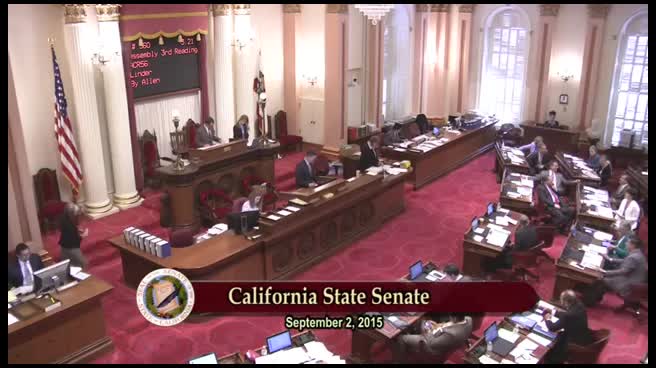
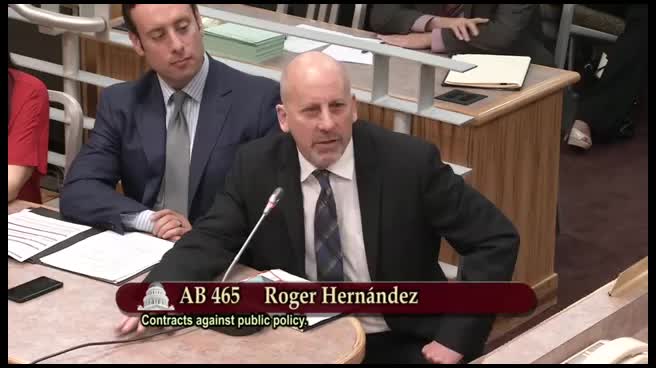
Bill Author

Bill Co-Author(s):