AB 1549: Department of Transportation: state highway rights-of-way: broadband: fiber optic cables.
- Session Year: 2015-2016
- House: Assembly
- Latest Version Date: 2016-09-23
Existing law provides that the Department of Transportation has full possession and control of state highways and associated property. Existing law provides for the department to issue encroachment permits with respect to structures and activities in, under, or over any portion of the right-of-way of a state highway.
This bill would require the department to notify companies and organizations working on broadband deployment on its Internet Web site of specified department-led highway construction projects and would authorize those companies and organizations to collaborate with the department to install a broadband conduit as part of each project. The bill would require the department, in consultation with stakeholders, on or before January 1, 2018, to develop guidelines to facilitate the installation of broadband conduit on state highway rights-of-way.
Existing law provides that the Department of Transportation has full possession and control of state highways and associated property. Existing law provides for the department to issue encroachment permits with respect to structures and activities in, under, or over any portion of the right-of-way of a state highway.
This bill would require the department to maintain an inventory on a centralized database of all broadband conduits that house fiber optic communication cables and are owned by the department, located on state highway rights-of-way, and installed on or after January 1, 2017, and to make that information available, upon request, to companies or organizations working on broadband deployment. The bill would require the department to notify those companies and organizations working on broadband deployment on its Internet Web site of specified department-led highway construction projects and would authorize those companies and organizations to collaborate with the department to install a broadband conduit as part of each project. The bill would require the department, as part of each project, to install broadband conduit capable of supporting fiber optic communication cables if no company or organization working on broadband deployment collaborates with the department and no broadband conduit previously exists in a project area. in consultation with stakeholders, on or before January 1, 2018, to develop guidelines to facilitate the installation of broadband conduit on state highway rights-of-way.
Existing law provides that the Department of Transportation has full possession and control of state highways and associated property. Existing law provides for the department to issue encroachment permits with respect to structures and activities in, under, or over any portion of the right-of-way of a state highway.
This bill would require the department to maintain an inventory on a centralized database of all broadband conduits that house fiber optic communication cables and are owned by the department, located on state highway rights-of-way, and installed on or after January 1, 2017, and to make that information available available, upon request of request, to companies or organizations working on broadband deployment. The bill would require the department to notify those companies and organizations on its Internet Web site of specified department-led highway construction projects and would authorize those companies or and organizations to collaborate with the department to install a broadband conduit as part of each project. The bill would require the department, as part of each project, to install broadband conduit capable of supporting fiber optic communication cables if no company or organization working on broadband deployment collaborates with the department and no broadband conduit previously exists in a project area.
Existing law provides that the Department of Transportation has full possession and control of state highways and associated property. Existing law provides for the department to issue encroachment permits with respect to structures and activities in, under, or over any portion of the right-of-way of a state highway.
This bill would require the department to maintain an inventory on a centralized database of all broadband conduits that house fiber optic communication cables and are owned by the department that house fiber optic communication cables, that are department, located on state highway rights-of-way, and that are installed on or after January 1, 2017, and to make that information available upon request of verified companies or organizations working on broadband deployment. The bill would require the department to notify verified those companies and organizations on its Internet Web site of specified department-led highway construction projects and would authorize verified those companies or organizations to collaborate with the department to install a broadband conduit as part of each project. The bill would require the department, as part of each project, to install broadband conduit capable of supporting fiber optic communication cables if no verified company or organization working on broadband deployment collaborates with the department and no broadband conduit previously exists in a project area.
Existing law provides that the Department of Transportation has full possession and control of state highways and associated property. Existing law provides for the department to issue encroachment permits with respect to structures and activities in, under, or over any portion of the right-of-way of a state highway.
This bill would require the department to maintain an inventory of all broadband conduits owned by the department that house fiber optic communication cables, that are located on state highway rights-of-way, and that were are installed on or after January 1, 2017, and to make that information available upon request of verified companies or organizations working on broadband deployment. The bill would require the department to notify verified companies and organizations of department-led highway construction projects and would authorize verified companies or organizations to collaborate with the department to install a broadband conduit as part of each project. The bill would require the department, as part of each project, to install broadband conduit capable of supporting fiber optic communication cables if no verified company or organization collaborates with the department and no broadband conduit previously exists in a project area.
Existing law provides that the Department of Transportation has full possession and control of state highways and associated property. Existing law provides for the department to issue encroachment permits with respect to structures and activities in, under, or over any portion of the right-of-way of a state highway.
This bill would require the department to maintain an inventory of all conduits owned by the department that house fiber-optic fiber optic communication cables, that are located on state highway rights-of-way, and that were installed on or after January 1, 2017, and to make that information available to the public upon request. upon request of verified companies or organizations working on broadband deployment.
Existing law provides that the Department of Transportation has full possession and control of state highways and associated property. Existing law provides for the department to issue encroachment permits with respect to structures and activities in, under, or over any portion of the right-of-way of a state highway.
This bill would require the department to maintain an inventory of all conduits owned by the department that house fiber-optic communication cables cables, that are located on state highway rights-of-way, rights-of-way, and that were installed on or after January 1, 2017, and to make that information available to the public upon request.
Existing law provides that the Department of Transportation has full possession and control of state highways and associated property. Existing law provides for the department to issue encroachment permits with respect to structures and activities in, under, or over any portion of the right-of-way of a state highway.
This bill would require the department to maintain an inventory of all conduits that house fiber-optic communication cables located on state highway rights-of-way, and to make that information available to the public upon request.
Existing federal and state law regulates the activities of credit unions. The State Board of Equalization administers various taxes and fees, including the Sales and Use Tax Law. Existing law establishes the California Infrastructure and Economic Development Bank in the Governors Office of Business and Economic Development and, among other things, authorizes it to issue revenue bonds, as specified.
This bill would establish the California Cannabis Credit Union within the State Board of Equalization and require the board to promulgate regulations necessary for its implementation. The bill would require these regulations to establish standards allowing businesses and individuals engaged in licensed cannabis activities to have banking services through the California Cannabis Credit Union like those provided by other credit unions. The bill would authorize the California Cannabis Credit Union to provide checking accounts, saving accounts, and other related accounts and services to businesses and individuals engaged in licensed cannabis activities and to provide personal, auto, and home loans to these businesses and individuals.
(a)For purposes of this section, companies or organizations working on broadband deployment includes, but is not limited to, local governments, nonprofit organizations, cable television corporations, as defined in Section 216.4 of the Public Utilities Code, and telephone corporations, as defined in Section 234 of the Public Utilities Code.
(b)(1)During the project planning phase of a department-led highway construction project that was initiated on or after January 1, 2017, is parallel to the highway, and involves construction methods that are suitable for installing broadband conduit, the department shall notify companies and organizations working on broadband deployment of the project on its Internet Web site to encourage collaborative broadband installations.
(2)For the purpose of supporting fiber optic communication cables, after receiving notification from the department, a company or organization working on broadband deployment may collaborate with the department to install a broadband conduit as part of the project.
(3)The department, in consultation with stakeholders, on or before January 1, 2018, shall develop guidelines to facilitate the installation of broadband conduit on state highway rights-of-way. The guidelines shall address access to information on existing assets and collaboration on future projects.
(a)For purposes of this section, companies or organizations working on broadband deployment includes, but is not limited to, local governments, nonprofit organizations, cable television corporations, as defined in Section 216.4 of the Public Utilities Code, and telephone corporations, as defined in Section 234 of the Public Utilities Code.
(b)The department shall maintain an inventory on a centralized database of all broadband conduits that house fiber optic communication cables and are owned by the department, located on state highway rights-of-way, and installed on or after January 1, 2017. The department shall make the information available, upon request, to companies or organizations working on broadband deployment.
(c)
(b)(1)During the design project planning phase of a department-led highway construction project that was initiated on or after January 1, 2017, is parallel to the highway, spans at least two overpasses, and involves construction methods that are suitable for installing broadband conduit, the department shall notify companies and organizations working on broadband deployment of the project on its Internet Web site to encourage collaborative broadband installations.
(2)For the purpose of supporting fiber optic communication cables, after receiving notification from the department, a company or organization working on broadband deployment may collaborate with the department to install a broadband conduit as part of the project.
(3)If no company or organization working on broadband deployment collaborates with the department and no broadband conduit previously exists in the project area, the department, as part of the project, shall install a broadband conduit capable of supporting fiber optic communication cables.
(4)Nothing in paragraphs (1) to (3), inclusive, requires the department to report on cables owned by other entities.
(3)The department, in consultation with stakeholders, on or before January 1, 2018, shall develop guidelines to facilitate the installation of broadband conduit on state highway rights-of-way. The guidelines shall address access to information on existing assets and collaboration on future projects.
(a)For purposes of this section, companies or organizations working on broadband deployment includes, but is not limited to, local governments, nonprofit organizations, cable television corporations, as defined in Section 216.4 of the Public Utilities Code, and telephone corporations, as defined in Section 234 of the Public Utilities Code.
(b)The department shall maintain an inventory on a centralized database of all broadband conduits that house fiber optic communication cables and are owned by the department, located on state highway rights-of-way, and installed on or after January 1, 2017. The department shall make the information available available, upon request of request, to companies or organizations working on broadband deployment.
(c)(1)During the design phase of a department-led highway construction project that is parallel to the highway, spans at least two overpasses, and involves construction methods that are suitable for installing broadband conduit, the department shall notify companies and organizations working on broadband deployment of the project on its Internet Web site to encourage collaborative broadband installations.
(2)For the purpose of supporting fiber optic communication cables, after receiving notification from the department, a company or organization working on broadband deployment may collaborate with the department to install a broadband conduit as part of the project.
(3)If no company or organization working on broadband deployment collaborates with the department and no broadband conduit previously exists in the project area, the department, as part of the project, shall install a broadband conduit capable of supporting fiber optic communication cables.
(4)Nothing in paragraphs (1) to (3), inclusive, requires the department to report on cables owned by other entities.
(a)The For purposes of this section, companies or organizations working on broadband deployment includes, but is not limited to, local governments, nonprofit organizations, and telephone corporations, as defined in Section 234 of the Public Utilities Code.
(b)The department shall maintain an inventory on a centralized database of all broadband conduits that house fiber optic communication cables and are owned by the department that house fiber optic communication cables, that are department, located on state highway rights-of-way, and that are installed on or after January 1, 2017. The department shall make the information available upon request of verified companies or organizations working on broadband deployment.
(b)
(c)(1)During the design phase of a department-led highway construction project, project that is parallel to the highway, spans at least two overpasses, and involves construction methods that are suitable for installing broadband conduit, the department shall notify verified companies and organizations working on broadband deployment of the project on its Internet Web site to encourage collaborative broadband installations.
(2)For the purpose of supporting fiber optic communication cables, after receiving notification from the department, a verified company or organization working on broadband deployment may collaborate with the department to install a broadband conduit as part of the project.
(3)If no verified company or organization working on broadband deployment collaborates with the department and no broadband conduit previously exists in the project area, the department, as part of the project, shall install a broadband conduit capable of supporting fiber optic communication cables.
(4)Nothing in paragraphs (1) to (3), inclusive, requires the department to report on cables owned by other entities.
(a)The department shall maintain an inventory of all broadband conduits owned by the department that house fiber optic communication cables, that are located on state highway rights-of-way, and that were are installed on or after January 1, 2017. The department shall make the information available upon request of verified companies or organizations working on broadband deployment.
(b)(1)During the design phase of a department-led highway construction project, the department shall notify verified companies and organizations of the project to encourage collaborative broadband installations.
(2)For the purpose of supporting fiber optic communication cables, after receiving notification from the department, a verified company or organization may collaborate with the department to install a broadband conduit as part of the project.
(3)If no verified company or organization collaborates with the department and no broadband conduit previously exists in the project area, the department, as part of the project, shall install a broadband conduit capable of supporting fiber optic communication cables.
(4)Nothing in paragraphs (1) to (3), inclusive, requires the department to report on cables owned by other entities.
The department shall maintain an inventory of all conduits owned by the department that house fiber-optic fiber optic communication cables, that are located on state highway rights-of-way, and that were installed on or after January 1, 2017. The department shall make the information available to the public upon request. upon request of verified companies or organizations working on broadband deployment.
The department shall maintain an inventory of all conduits owned by the department that house fiber-optic communication cables cables, that are located on state highway rights-of-way. rights-of-way, and that were installed on or after January 1, 2017. The department shall make the information available to the public upon request.
The department shall maintain an inventory of all conduits that house fiber-optic communication cables located on state highway rights-of-way. The department shall make the information available to the public upon request.
SECTION 1.Division 5.1 (commencing with Section 16910) is added to the Financial Code, to read:5.1.California Cannabis Credit Union16910.The California Cannabis Credit Union is hereby established within the State Board of Equalization. The board shall promulgate necessary regulations to implement this division. Among other things, the regulations shall establish standards that allow businesses and individuals engaged in licensed cannabis activities to have banking services through the California Cannabis Credit Union that are analogous to those provided by Division 5 (commencing with Section 14000).
16911.The California Cannabis Credit Union is authorized to provide checking accounts, saving accounts, and other related accounts and services to qualified businesses and individuals engaged in licensed cannabis activities. The California Cannabis Credit Union is authorized to provide personal, auto, and home loans to businesses and individuals engaged in licensed cannabis activities.
The California Cannabis Credit Union is hereby established within the State Board of Equalization. The board shall promulgate necessary regulations to implement this division. Among other things, the regulations shall establish standards that allow businesses and individuals engaged in licensed cannabis activities to have banking services through the California Cannabis Credit Union that are analogous to those provided by Division 5 (commencing with Section 14000).
16911.The California Cannabis Credit Union is authorized to provide checking accounts, saving accounts, and other related accounts and services to qualified businesses and individuals engaged in licensed cannabis activities. The California Cannabis Credit Union is authorized to provide personal, auto, and home loans to businesses and individuals engaged in licensed cannabis activities.
|
Date
|
Status
|
|---|---|
| Aug 19, 2016 | In Senate. Held at Desk. |
| Jun 30, 2016 | From committee chair, with author's amendments: Amend, and re-refer to committee. Read second time, amended, and re-referred to Com. on APPR. |
| Aug 1, 2016 | In committee: Referred to APPR. suspense file. |
| Aug 11, 2016 | From committee: Do pass. (Ayes 7. Noes 0.) (August 11). |
| Aug 15, 2016 | Read second time. Ordered to third reading. |
| Aug 17, 2016 | In Assembly. Concurrence in Senate amendments pending. May be considered on or after August 19 pursuant to Assembly Rule 77. |
| Aug 17, 2016 | Read third time. Passed. Ordered to the Assembly. |
| Aug 17, 2016 | Read third time. Passed. Ordered to the Assembly. (Ayes 39. Noes 0. Page 5060.). |
| Aug 17, 2016 | Read third time. Passed. Ordered to the Assembly. (Ayes 39. Noes 0.). |
| Aug 18, 2016 | Ordered to the Senate. |
| Aug 19, 2016 | Action rescinded whereby the bill was read third time, passed, and to Assembly. |
| Jun 22, 2016 | Read second time and amended. Re-referred to Com. on APPR. |
| Aug 19, 2016 | Ordered to third reading. |
| Aug 19, 2016 | Read third time and amended. Ordered to second reading. |
| Aug 22, 2016 | Read second time. Ordered to third reading. |
| Aug 23, 2016 | Read third time. Passed. Ordered to the Assembly. |
| Aug 23, 2016 | Read third time. Passed. Ordered to the Assembly. (Ayes 39. Noes 0. Page 5293.). |
| Aug 24, 2016 | In Assembly. Concurrence in Senate amendments pending. May be considered on or after August 26 pursuant to Assembly Rule 77. |
| Aug 29, 2016 | Senate amendments concurred in. To Engrossing and Enrolling. |
| Aug 29, 2016 | Senate amendments concurred in. To Engrossing and Enrolling. (Ayes 80. Noes 0. Page 6337.). |
| Sep 2, 2016 | Enrolled and presented to the Governor at 12 p.m. |
| Jan 14, 2016 | From committee chair, with author's amendments: Amend, and re-refer to Com. on APPR. Read second time and amended. |
| Sep 11, 2015 | Read first time. To print. |
| Sep 12, 2015 | From printer. May be heard in committee October 13. |
| Dec 9, 2015 | Referred to Com. on B. & F. |
| Jan 4, 2016 | From committee chair, with author's amendments: Amend, and re-refer to Com. on B. & F. Read second time and amended. |
| Jan 4, 2016 | Re-referred to Com. on B. & F. |
| Jan 4, 2016 | Re-referred to Com. on RLS. pursuant to Assembly Rule 96. |
| Jan 5, 2016 | From committee: Be re-referred to Com. on TRANS. Re-referred. (Ayes 11. Noes 0.) (January 5). Re-referred to Com. on TRANS. |
| Jan 12, 2016 | From committee: Amend, and do pass as amended and re-refer to Com. on APPR. (Ayes 16. Noes 0.) (January 11). |
| Jan 13, 2016 | Read second time and amended. |
| Sep 11, 2015 | (Introduced pursuant to Joint Rule 54) |
| Jan 14, 2016 | Re-referred to Com. on APPR. |
| Jan 15, 2016 | Re-referred to Com. on APPR. |
| Jan 21, 2016 | From committee: Do pass. To Consent Calendar. (Ayes 17. Noes 0.) (January 21). |
| Jan 21, 2016 | Read second time. Ordered to Consent Calendar. |
| Jan 27, 2016 | In Senate. Read first time. To Com. on RLS. for assignment. |
| Jan 27, 2016 | Read third time. Passed. Ordered to the Senate. (Ayes 78. Noes 0. Page 3510.) |
| Feb 4, 2016 | Referred to Com. on T. & H. |
| May 16, 2016 | From committee chair, with author's amendments: Amend, and re-refer to committee. Read second time, amended, and re-referred to Com. on T. & H. |
| Jun 21, 2016 | From committee: Amend, and do pass as amended and re-refer to Com. on APPR. (Ayes 10. Noes 0.) (June 14). |
|
Date
|
Description
|
Location
|
Votes
|
|
|---|---|---|---|---|
| Aug 29, 2016 | AB 1549 WOOD Concurrence in Senate Amendments | Assembly Floor |
Passed |
|
| Aug 23, 2016 | Assembly 3rd Reading AB1549 Wood By McGuire | Senate Floor |
Passed |
|
| Aug 17, 2016 | Assembly 3rd Reading AB1549 Wood By McGuire | Senate Floor |
Passed |
|
| Aug 11, 2016 | Do pass | Senate Standing Committee on Appropriations |
Passed |
|
| Aug 1, 2016 | Placed on suspense file | Senate Standing Committee on Appropriations |
Passed |
|
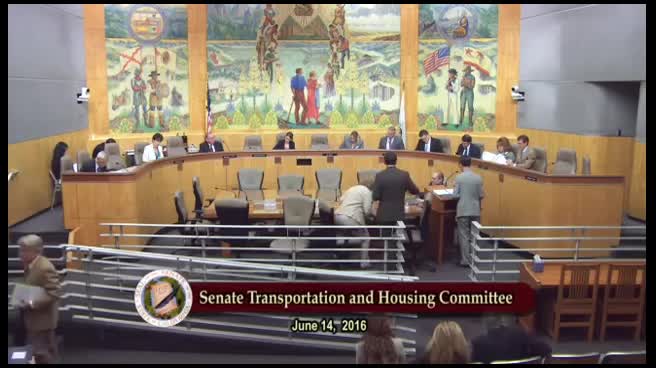
| Jun 14, 2016 | Do pass as amended, but first amend, and re-refer to the Committee on [Appropriations] | Senate Standing Committee on Transportation and Housing |
Passed |
|
| Jan 27, 2016 | AB 1549 WOOD Consent Calendar Second Day Regular Session | Assembly Floor |
Passed |
|
| Jan 21, 2016 | Do pass. To Consent Calendar. | Assembly Standing Committee on Appropriations |
Passed |
|
| Jan 11, 2016 | Do pass as amended and be re-referred to the Committee on [Appropriations] | Assembly Standing Committee on Transportation |
Passed |
|
| Jan 5, 2016 | Be re-referred to the Committee on [Transportation] | Assembly Standing Committee on Rules |
Passed |
This list shows positions taken on this bill by organizations on the date displayed, which is linked to the original source.
Positions by individuals are not included.
|
Organization
|
Position
|
Date
|
|---|---|---|
| California Association of Competitive Telecommunications Companies | ** Support | Aug 23, 2016 |
| California Cable and Telecommunications Association | * Support | Aug 1, 2016 |
| California Center for Rural Policy | ** Support | Aug 23, 2016 |
| California Center for Rural Policy at Humboldt State University | * Support | Jun 14, 2016 |
| CENIC | * Support | Jun 14, 2016 |
| Corporation For Education Network Initiatives In California | ** Support | Aug 23, 2016 |
| Humboldt County Board of Supervisors | ** Support | Aug 23, 2016 |
| Marin County Board of Supervisors | ** Support | Aug 23, 2016 |
| Placer County Board of Supervisors | ** Support | Aug 23, 2016 |
| Plaster County Board of Supervisors | * Support | Aug 1, 2016 |
| Redwood Region Economic Development Commission | ** Support | Aug 23, 2016 |
| Rural County Representatives of California | ** Support | Aug 23, 2016 |
| Tellus Venture Associates | ** Support | Aug 23, 2016 |
CONCURRENCE IN SENATE AMENDMENTS
CSA1 Bill Id:AB 1549
Author:(Wood)
As Amended Ver:August 19, 2016
Majority vote
ASSEMBLY: | 78-0 | (January 27, 2016) | SENATE: | 39-0 | (August 17, 2016) |
Original Committee Reference: TRANS.
SUMMARY: Requires the California Department of Transportation (Caltrans), after January 1, 2017, to take certain steps to facilitate broadband deployment.
The Senate amendments:
- Require Caltrans, under certain conditions, to notify companies or organizations, as defined, of anticipated construction projects for the purpose of encouraging collaborative broadband installations.
- Authorize companies or organizations to collaborate with the department to install broadband conduit as part of a project.
- Require Caltrans, by January 1, 2018, to develop guidelines to facilitate the installation of broadband conduit on state highway rights of way.
FISCAL EFFECT: Unknown
COMMENTS: Long-standing federal and state policies encourage wide-scale deployment of advanced telecommunication capabilities. However, according to a report issued in February 2015 by the Federal Communications Commission (FCC), broadband deployment in the United States – especially in rural areas – is failing to keep pace with today's advanced, high-quality voice, data, graphics, and video offerings. According to the FCC, 17% of all Americans lack access to high-speed telecommunication services. In rural areas, that number grows to 53%.
Strategies for facilitating rapid broadband deployment typically include providing easy, quick access to public rights-of-way, particularly longitudinal rights of way such as streets and roads. However, according to the FCC, the largest cost of deploying broadband is burying fiber optic cables and conduit underground. In fact, the Federal Highway Administration indicates that 90% of the cost of deploying broadband is due to the cost of roadway excavation. As a result, President Obama recently issued an executive order directing his transportation department to facilitate expeditious access to highway rights-of-way at minimal cost to telecommunications providers.
Caltrans, as a part of the California Broadband Initiative developed in response to Governor Schwarzenegger's Executive Order in 2006, instituted a policy to encourage broadband co-location within the state highway rights-of-way. For seven years, the department announced each upcoming highway project and invited telecommunications providers to lay conduit as a part of the project. In the end, not one provider participated in the project, and the effort was disbanded.
Telecommunications providers can still access Caltrans' rights-of-way to install conduit via the department's encroachment permit process, however. Furthermore, on the wireless side of the telecommunications industry, Caltrans has an active program to facilitate the build-out and co-location of public and private wireless telecommunication systems. The department participates in the state's central data base of state-owned, non-highway properties available for use by telecommunications providers, and it has policies and procedures in place to streamline the necessary encroachment permits.
Pending legislation: Federal legislation (HR 3805, Eschoo) is pending that would enact the Broadband Conduit Deployment Act to expand high-speed internet access. HR 3805 would require federal-aid highway projects to include broadband conduit beneath paved surfaces if an evaluation determines that there will be a need to install conduit sometime within the next 15 years. Similar legislation has been introduced twice before but was unsuccessful in securing passage.
Analysis Prepared by: Janet Dawson / TRANS. / (916) 319-2093 FN: 0004807
Office of Senate Floor Analyses (916) 651-1520 Fax: (916) 327-4478 | AB 1549 |
THIRD READING
Bill No: AB 1549
Amended: 8/19/16 in Senate
SENATE TRANS. & HOUSING COMMITTEE: 10-0, 6/14/16
AYES: Beall, Cannella, Allen, Bates, Gaines, Galgiani, Leyva, McGuire, Mendoza, Roth
NO VOTE RECORDED: Wieckowski
SENATE APPROPRIATIONS COMMITTEE: 7-0, 8/11/16
AYES: Lara, Bates, Beall, Hill, McGuire, Mendoza, Nielsen
ASSEMBLY FLOOR: 78-0, 1/27/16 (Consent) - See last page for vote
SUBJECT: Department of Transportation: state highway rights-of-way: broadband: fiber optic cables
DIGEST: This bill requires the Department of Transportation (Caltrans) to encourage collaborative broadband installations by noticing when they are planning projects which are suitable for the installation of broadband conduit and developing guidelines to facilitate the installation of broadband conduit by broadband providers on state highway rights-of-way.
Senate Floor Amendments of 8/19/16 delete the requirement that Caltrans maintain an inventory of broadband conduit; delete the requirement that Caltrans install conduit on specified projects; and require that Caltrans develop guidelines by January 1, 2018, to facilitate the installation of broadband conduit on state highway rights-of-way. These guidelines shall address access to information on existing assets and collaboration on future projects. Guidelines shall address access to information on existing assets and collaboration on future projects.
Existing law:
- Creates the California Broadband Task Force, as set forth in a 2006 Governor’s Executive Order (S-23-06), to facilitate widespread deployment of state-of-the-art telecommunications technology. The Executive Order specifically requires, in part:
- The Business, Transportation, and Housing Agency (BTH) to establish a database of current and prospective projects for deploying broadband. The database is to be available for use by broadband providers, state entities, and municipalities.
- State agencies to place broadband conduit in their infrastructure projects for use by multiple government entities and broadband providers.
- State agencies to expedite permitting for broadband providers’ requests for access to rights-of-way.
- Authorizes, generally, Caltrans to lease to public agencies or private entities the use of areas above or below state highways, subject to any reservations, restrictions, and conditions that the department deems necessary to ensure adequate protection of the safety and the adequacy of highway facilities.
- Establishes the California Broadband Council to promote broadband deployment throughout the state and, to that end, improve coordination among state agencies.
This bill requires Caltrans to:
- Provide notice on its Web site when it is planning highway construction projects which are suitable for broadband conduit installation.
- Develop guidelines by January 1, 2018, to facilitate the installation of broadband conduit on state highway rights-of-way. These guidelines shall address access to information on existing assets and collaboration on future projects.
Comments
- Purpose. The United States compares poorly to other nations in the speed, quality, and cost of broadband service [Federal Communications Commission: International Broadband Data Report, August 13, 2012]. California is no different. That’s largely because public policy is caught in the middle. It has not supported a single regulated broadband provider who would benefit from the economies of scope and scale, as is the case in other countries. And the competition that public policy has encouraged has been too weak to result in high-quality, high-speed service at reasonable rates. This problem is of course worse in rural areas where potential customers are much less densely located than in urban and suburban areas.
- Not for lack of effort. Inadequate and costly broadband service has been a longstanding problem for which California has implemented many potential solutions. One of the most significant efforts resulted from a 2006 Executive Order from Governor Schwarzenegger. That order required the then-BTH to encourage public/private broadband partnerships, required all state agencies to place broadband conduit in their infrastructure projects if there is sufficient demand, and created the California Broadband Task Force.
The Task Force recommended that:
- High-speed broadband infrastructure be built out to all Californians.
- Model permitting standards are developed and collaboration among broadband providers be encouraged.
- Use and adoption of broadband and computer technology be increased.
This bill redoubles the broadband build-out effort. The fundamental assumption in the bill is that landline broadband infrastructure deployment can be done more quickly and inexpensively when done in conjunction with Caltrans construction projects. This may well be true, and was one of the bases for the 2006 Executive Order.
As a result of the 2006 Executive Order, Caltrans created a program to notify telecommunications providers of projects in which they could install their fiber optic facilities during the Caltrans construction process. No provider participated in any projects and consequently Caltrans decided to discontinue the program in 2014. That program was limited to telecommunications companies licensed by the California Public Utilities Commission. Caltrans has an existing program for collaboration with companies that want to use their facilities for wireless broadband purposes. This bill deals with wireline broadband.
- When? This bill calls for Caltrans to notify broadband companies during the planning phase of construction projects that run parallel to the highway. The idea is that freeways provide convenient, and sometimes the only, physical connection between population centers, so as Caltrans is fixing the road between city A and city B, other companies and organizations should be permitted to install their conduit and fiber optic cables in the trench for a fee, thereby sharing costs.
FISCAL EFFECT: Appropriation: No Fiscal Com.: Yes Local: No
According to the Senate Appropriations Committee (as amended on August 19, 2016):
- Minor and absorbable costs for Caltrans to notify broadband companies of specified projects on its website and to establish a stakeholder process for collaborating on broadband conduit installations within Caltrans rights-of-way.
California Association of Competitive Telecommunications Companies
California Center for Rural Policy
Corporation for Education Network Initiatives in California
Humboldt County Board of Supervisors
Marin County Board of Supervisors
Placer County Board of Supervisors
Praxis Associates
Redwood Region Economic Development Commission
Rural County Representatives of California
Tellus Venture Associates
OPPOSITION: (Verified 8/22/16)
None received
ASSEMBLY FLOOR: 78-0, 1/27/16
AYES: Achadjian, Alejo, Travis Allen, Baker, Bigelow, Bloom, Bonilla, Bonta, Brough, Brown, Burke, Calderon, Campos, Chang, Chau, Chávez, Chiu, Chu, Cooley, Cooper, Dababneh, Dahle, Daly, Dodd, Eggman, Frazier, Beth Gaines, Gallagher, Cristina Garcia, Eduardo Garcia, Gatto, Gipson, Gomez, Gonzalez, Gordon, Gray, Grove, Hadley, Harper, Roger Hernández, Holden, Irwin, Jones, Jones-Sawyer, Kim, Lackey, Levine, Linder, Lopez, Low, Maienschein, Mayes, McCarty, Medina, Melendez, Mullin, Nazarian, Obernolte, O'Donnell, Olsen, Patterson, Quirk, Rendon, Ridley-Thomas, Rodriguez, Salas, Santiago, Steinorth, Mark Stone, Thurmond, Ting, Wagner, Waldron, Weber, Wilk, Williams, Wood, Atkins
NO VOTE RECORDED: Mathis
Prepared by: Randy Chinn / T. & H. / (916) 651-4121
8/22/16 22:40:07
**** END ****
CONCURRENCE IN SENATE AMENDMENTS
CSA1 Bill Id:AB 1549
Author:(Wood)
As Amended Ver:June 30, 2016
Majority vote
ASSEMBLY: | 78-0 | (January 27, 2016) | SENATE: | 39-0 | (August 17, 2016) |
Original Committee Reference: TRANS.
SUMMARY: After January 1, 2017, requires the California Department of Transportation (Caltrans) to maintain a centralized inventory of all department-owned broadband conduits within state highway rights-of-way that house fiber-optic cables and to make the information available to the public upon request; under certain conditions, requires Caltrans to take other steps to facilitate broadband deployment.
The Senate amendments:
- Require Caltrans, under certain conditions, to notify companies or organizations, as defined, of anticipated construction projects for the purpose of encouraging collaborative broadband installations.
- Authorize companies or organizations to collaborate with the department to install broadband conduit as part of a project.
- Require Caltrans, if no company or organization collaborates with the department and if no broadband conduit previously exists in the project area, to install broadband conduit capable of supporting fiber optic communication cables as part of the project.
- Specifically provide that Caltrans is not required to report on cables.
FISCAL EFFECT: According to the Senate Appropriations Committee:
- Estimated one-time Caltrans information technology (IT) costs of approximately $915,000 for software, hardware, and staffing to support the database and website components, as well as meeting all Department of Technology requirements for IT project approvals.
- Additional one-time Caltrans IT costs of approximately $310,000 to implement additional security measures to secure and encrypt information regarding fiber-optic facility installations, and $27,500 in ongoing IT maintenance costs. There could be unknown additional staffing impacts for evaluation and monitoring of security measures.
- Unknown, major project cost increases, likely in the millions annually, for Caltrans to install broadband conduits on specified projects where there are no existing conduits in a project area and no broadband deployment companies or organizations offer collaboration.
COMMENTS: Long-standing federal and state policies encourage wide-scale deployment of advanced telecommunication capabilities. However, according to a report issued in February 2015 by the Federal Communications Commission (FCC), broadband deployment in the United States – especially in rural areas – is failing to keep pace with today's advanced, high-quality voice, data, graphics, and video offerings. According to the FCC, 17% of all Americans lack access to high-speed telecommunication services. In rural areas, that number grows to 53%.
Strategies for facilitating rapid broadband deployment typically include providing easy, quick access to public rights-of-way, particularly longitudinal rights of way such as streets and roads. However, according to the FCC, the largest cost of deploying broadband is burying fiber optic cables and conduit underground. In fact, the Federal Highway Administration indicates that 90% of the cost of deploying broadband is due to the cost of roadway excavation. As a result, President Obama recently issued an executive order directing his transportation department to facilitate expeditious access to highway rights-of-way at minimal cost to telecommunications providers.
Caltrans, as a part of the California Broadband Initiative developed in response to Governor Schwarzenegger's Executive Order in 2006, instituted a policy to encourage broadband co-location within the state highway rights-of-way. For seven years, the department announced each upcoming highway project and invited telecommunications providers to lay conduit as a part of the project. In the end, not one provider participated in the project, and the effort was disbanded.
Telecommunications providers can still access Caltrans' rights-of-way to install conduit via the department's encroachment permit process, however. Furthermore, on the wireless side of the telecommunications industry, Caltrans has an active program to facilitate the build-out and co-location of public and private wireless telecommunication systems. The department participates in the state's central data base of state-owned, non-highway properties available for use by telecommunications providers, and it has policies and procedures in place to streamline the necessary encroachment permits.
It is unclear that a lack of access to state highways is a major impediment to wide-scale deployment of high-speed Internet access, particularly in light of Caltrans' experience in the California Broadband Initiative.
Pending legislation: Federal legislation (HR 3805 (Eschoo)) is pending that would enact the Broadband Conduit Deployment Act to expand high-speed Internet access. HR 3805 would require federal-aid highway projects to include broadband conduit beneath paved surfaces if an evaluation determines that there will be a need to install conduit sometime within the next 15 years. Similar legislation has been introduced twice before but was unsuccessful in securing passage.
Analysis Prepared by: Janet Dawson / TRANS. / (916) 319-2093 FN: 0004163
Office of Senate Floor Analyses (916) 651-1520 Fax: (916) 327-4478 | AB |
THIRD READING
Bill No: AB 1549
:
SENATE TRANS. & HOUSING COMMITTEE: 10-0, 6/14/16
AYES: Beall, Cannella, Allen, Bates, Gaines, Galgiani, Leyva, McGuire, Mendoza, Roth
NO VOTE RECORDED: Wieckowski
SENATE APPROPRIATIONS COMMITTEE: 7-0, 8/11/16
AYES: Lara, Bates, Beall, Hill, McGuire, Mendoza, Nielsen
ASSEMBLY FLOOR: 78-0, 1/27/16 (Consent) - See last page for vote
DIGEST: This bill requires the Department of Transportation (Caltrans) to maintain an inventory of broadband conduit that it owns, collaborate with broadband companies during construction projects, and install broadband conduit in its construction projects for potential use by broadband companies.
Existing law:
- Creates the California Broadband Task Force, as set forth in a 2006 Governor’s Executive Order (S-23-06), to facilitate widespread deployment of state-of-the-art telecommunications technology. The Executive Order specifically requires, in part:
- The Business, Transportation, and Housing Agency (BTH) to establish a database of current and prospective projects for deploying broadband. The database is to be available for use by broadband providers, state entities, and municipalities.
- State agencies to place broadband conduit in their infrastructure projects for use by multiple government entities and broadband providers.
- State agencies to expedite permitting for broadband providers’ requests for access to rights-of-way.
- Authorizes, generally, Caltrans to lease to public agencies or private entities the use of areas above or below state highways, subject to any reservations, restrictions, and conditions that the department deems necessary to ensure adequate protection of the safety and the adequacy of highway facilities.
- Establishes the California Broadband Council to promote broadband deployment throughout the state and, to that end, improve coordination among state agencies.
This bill:
- Requires Caltrans to maintain an inventory of all broadband conduit that it owns, is located within the state highway rights-of-way, and is installed on or after January 1, 2017. Such inventory shall be made available upon request to companies or organizations working on broadband deployment.
- Requires Caltrans, when designing construction projects, to notify the companies or organizations of those projects to encourage collaborative broadband installations. If no company or organization chooses to collaborate and no broadband conduit previously exists, Caltrans shall install an empty conduit for potential use by others.
Comments
- Purpose. The United States compares poorly to other nations in the speed, quality, and cost of broadband service. [Federal Communications Commission: International Broadband Data Report, August 13, 2012] California is no different. That’s largely because public policy is caught in the middle. It has not supported a single regulated broadband provider who would benefit from the economies of scope and scale, as is the case in other countries. And the competition that public policy has encouraged has been too weak to result in high-quality, high-speed service at reasonable rates. This problem is of course worse in rural areas where potential customers are much less densely located than in urban and suburban areas.
- Not for lack of effort. Inadequate and costly broadband service has been a longstanding problem for which California has implemented many potential solutions. One of the most significant efforts resulted from a 2006 Executive Order from Governor Schwarzenegger. That order required the then-BTH to encourage public/private broadband partnerships, required all state agencies to place broadband conduit in their infrastructure projects if there is sufficient demand, and created the California Broadband Task Force.
The Task Force recommended that:
- High-speed broadband infrastructure be built out to all Californians.
- Model permitting standards be developed and collaboration among broadband providers be encouraged.
- Use and adoption of broadband and computer technology be increased.
This bill redoubles the broadband build out effort. The fundamental assumption in the bill is that landline broadband infrastructure deployment can be done more quickly and inexpensively when done in conjunction with Caltrans construction projects. This may well be true, and was one of the bases for the 2006 Executive Order.
As a result of the 2006 Executive Order, Caltrans created a program to notify telecommunications providers of projects in which they could install their fiber optic facilities during the Caltrans construction process. No provider participated in any projects and consequently Caltrans decided to discontinue the program in 2014. That program was limited to telecommunications companies licensed by the California Public Utilities Commission. Caltrans has an existing program for collaboration with companies that want to use their facilities for wireless broadband purposes. This bill deals with wireline broadband.
- What’s available? The bill requires Caltrans to maintain an inventory of broadband conduit owned by the department in a centralized database. The purpose of the inventory is to facilitate usage of Caltrans facilities by potential partners.
- When? This bill calls for Caltrans to notify broadband companies during the design phase of construction projects that run parallel to the highway. The idea is that freeways provide convenient, and sometimes the only, physical connection between population centers, so as Caltrans is fixing the road between city A and city B, other companies and organizations should be permitted to install their conduit and fiber optic cables in the trench for a fee, thereby sharing costs. If no company chooses to participate, then Caltrans shall install an empty conduit which would be available to others.
FISCAL EFFECT: Appropriation: Fiscal Com.: Local:
According to the Senate Appropriations Committee:
- Estimated one-time Caltrans information technology (IT) costs of approximately $915,000 for software, hardware, and staffing to support the database and Web site components, as well as meeting all Department of Technology requirements for IT project approvals. (State Highway Account)
- Additional one-time Caltrans IT costs of approximately $310,000 to implement additional security measures to secure and encrypt information regarding fiber-optic facility installations, and $27,500 in ongoing IT maintenance costs. There could be unknown additional staffing impacts for evaluation and monitoring of security measures. (State Highway Account)
- Unknown, major project cost increases, likely in the millions annually, for Caltrans to install broadband conduits on specified projects where there are no existing conduits in a project area and no broadband deployment companies or organizations offer collaboration. (State Highway Account or federal/local/bond funds)
California Association of Competitive Telecommunications Companies
California Center for Rural Policy
Corporation for Education Network Initiatives in California
Humboldt County Board of Supervisors
Marin County Board of Supervisors
Placer County Board of Supervisors
Praxis Associates
Redwood Region Economic Development Commission
Rural County Representatives of California
Tellus Venture Associates
OPPOSITION: (Verified 8/12/16)
None received
ASSEMBLY FLOOR: 78-0, 1/27/16
AYES: Achadjian, Alejo, Travis Allen, Baker, Bigelow, Bloom, Bonilla, Bonta, Brough, Brown, Burke, Calderon, Campos, Chang, Chau, Chávez, Chiu, Chu, Cooley, Cooper, Dababneh, Dahle, Daly, Dodd, Eggman, Frazier, Beth Gaines, Gallagher, Cristina Garcia, Eduardo Garcia, Gatto, Gipson, Gomez, Gonzalez, Gordon, Gray, Grove, Hadley, Harper, Roger Hernández, Holden, Irwin, Jones, Jones-Sawyer, Kim, Lackey, Levine, Linder, Lopez, Low, Maienschein, Mayes, McCarty, Medina, Melendez, Mullin, Nazarian, Obernolte, O'Donnell, Olsen, Patterson, Quirk, Rendon, Ridley-Thomas, Rodriguez, Salas, Santiago, Steinorth, Mark Stone, Thurmond, Ting, Wagner, Waldron, Weber, Wilk, Williams, Wood, Atkins
NO VOTE RECORDED: Mathis
8/15/16 20:17:17
**** END ****
SENATE COMMITTEE ON APPROPRIATIONS
Senator Ricardo Lara, Chair
2015 - 2016 Regular Session
AB 1549 (Wood) - Department of Transportation: state highway rights-of-way: fiber optic cables
Version: June 30, 2016 | Policy Vote: T. & H. 10 - 0 |
Urgency: No | Mandate: No |
Hearing Date: August 1, 2016 | Consultant: Mark McKenzie |
This bill meets the criteria for referral to the Suspense File.
Bill Summary:
AB 1549 would require the Department of Transportation (Caltrans) to maintain a database that contains an inventory of all department-owned broadband conduits installed in state highway rights-of-way after January 1, 2017, and make that information available to companies working on broadband deployment. The bill would also require the installation of broadband conduit on certain highway construction projects, either by the department or through collaboration with other companies.
Fiscal Impact:
- Estimated one-time Caltrans information technology (IT) costs of approximately $915,000 for software, hardware, and staffing to support the database and website components, as well as meeting all Department of Technology requirements for IT project approvals. (State Highway Account)
- Additional one-time Caltrans IT costs of approximately $310,000 to implement additional security measures to secure and encrypt information regarding fiber-optic facility installations, and $27,500 in ongoing IT maintenance costs. There could be unknown additional staffing impacts for evaluation and monitoring of security measures. (State Highway Account)
- Unknown, major project cost increases, likely in the millions annually, for Caltrans to install broadband conduits on specified projects where there are no existing conduits in a project area and no broadband deployment companies or organizations offer collaboration. (State Highway Account or federal/local/bond funds)
Background:
Existing law generally authorizes Caltrans to lease to public agencies or private entities the use of areas above or below state highways, subject to any reservations, restrictions, and conditions that the department deems necessary to ensure adequate protection of the safety and the adequacy of highway facilities. Existing law also establishes the California Broadband Council to promote broadband deployment throughout the state and improve coordination among state agencies for that purpose.
A 2006 Governor’s Executive Order (S-23-06) established the California Broadband Task Force to facilitate widespread deployment of state-of-the-art telecommunications technology. The Executive Order specifically requires, in part:
- The Business, Transportation, and Housing Agency to establish a database of current and prospective projects for deploying broadband. The database is to be available for use by broadband providers, state entities, and municipalities.
- State agencies to place broadband conduit in their infrastructure projects for use by multiple government entities and broadband providers.
- State agencies to expedite permitting for broadband providers’ requests for access to state rights-of-way.
As a result of the 2006 Executive Order, Caltrans created a program to notify telecommunications providers of projects in which they could install their fiber optic facilities during the Caltrans construction process. No provider participated in any projects and consequently Caltrans discontinued the program in 2014. That program was limited to telecommunications companies licensed by the California Public Utilities Commission. Caltrans has an existing program for collaboration with companies that want to use their facilities for wireless broadband purposes.
Proposed Law:
AB 1549 would require Caltrans to maintain an inventory on a centralized database of all department-owned broadband conduits that house fiber optic communications cables that are located on state highway rights-of-way and installed on or after January 1, 2017. The bill requires Caltrans to make that information available to specified companies or organizations working on broadband deployment, upon request.
AB 1549 would also require Caltrans to notify those companies or organizations of department-led highway construction projects that are parallel to the highway, span at least two overpasses, and involve construction methods that are suitable for broadband conduit installations. The notification must come during the design phase of the project by posting information about suitable projects on the Caltrans website.
The bill authorizes those companies or organizations to collaborate with Caltrans to install broadband conduits, and absent that collaboration, requires Caltrans to install broadband conduit if none currently exists in the project area.
Staff Comments:
Caltrans constructs approximately 600 projects each year, but there is no way to accurately predict how many projects would be impacted by the requirements in the bill for Caltrans to install broadband conduits (those meeting the specified design criteria in areas where no broadband conduits currently exist and there is a lack of collaborative interest from other companies or organizations). Depending on project variables, costs to install broadband conduits can range from $185,000 to $290,000 per mile, not including additional staffing costs for design work or to ensure quality assurance oversight of installations during construction. The additional construction component could also extend project completion timelines, the fiscal impact of which is unknown.
-- END --
SENATE COMMITTEE ON TRANSPORTATION AND HOUSING
Senator Jim Beall, Chair
2015 - 2016 Regular
Bill No: Hearing Date: 6/14/2016
Author: | Wood | ||
Version: | 5/16/2016 | ||
Urgency: | No | Fiscal: | Yes |
Consultant: | Randy Chinn | ||
SUBJECT:
DIGEST: This bill requires Caltrans to maintain an inventory of broadband conduit that it owns, collaborate with broadband companies during construction projects, and install broadband conduit in its construction projects for potential use by broadband companies.
ANALYSIS:
Existing law:
- As set forth in a 2006 Governor’s Executive Order (S-23-06), created the California Broadband Task Force to facilitate widespread deployment of state-of-the-art telecommunications technology. The Executive Order specifically requires, in part:
- The Business, Transportation, and Housing Agency (BTH) to establish a database of current and prospective projects for deploying broadband. The database is to be available for use by broadband providers, state entities, and municipalities.
- State agencies to place broadband conduit in their infrastructure projects for use by multiple government entities and broadband providers.
- State agencies to expedite permitting for broadband providers’ requests for access to rights-of-way.
- Generally authorizes Caltrans to lease to public agencies or private entities the use of areas above or below state highways, subject to any reservations, restrictions, and conditions that the department deems necessary to ensure adequate protection of the safety and the adequacy of highway facilities.
- Establishes the California Broadband Council to promote broadband deployment throughout the state and, to that end, improve coordination among state agencies.
This bill:
- Requires Caltrans to maintain an inventory of all broadband conduit that it owns, is located within the state highway rights-of-way, and is installed on or after January 1, 2017. Such inventory shall be made available upon request to verified companies or organizations working on broadband deployment.
- When designing construction projects, Caltrans shall notify the verified companies or organizations of those projects to encourage collaborative broadband installations. If no verified company or organization chooses to collaborate and no broadband conduit previously exists, Caltrans shall install an empty conduit for potential use by others.
COMMENTS:
- Purpose. The United States compares poorly to other nations in the speed, quality, and cost of broadband service[1]. California is no different. That’s largely because public policy is caught in the middle. It has not supported a single regulated broadband provider who would benefit from the economies of scope and scale, as is the case in other countries. And the competition that public policy has encouraged has been too weak to result in high-quality, high-speed service at reasonable rates. This problem is of course worse in rural areas where the demand for broadband service isn’t as concentrated as in urban and suburban areas.
- Not for lack of effort. Inadequate and costly broadband service has been a longstanding problem for which California has implemented many potential solutions. One of the most significant efforts resulted from a 2006 Executive Order from Governor Schwarzenegger. That order required the then-BTH to encourage public/private broadband partnerships, required all state agencies to place broadband conduit in their infrastructure projects if there is sufficient demand, and created the California Broadband Task Force.
The Task Force recommended that:
- high speed broadband infrastructure be built out to all Californians
- model permitting standards be developed and collaboration among broadband providers be encouraged
- use and adoption of broadband and computer technology be increased
This bill redoubles the broadband buildout effort. The fundamental assumption in the bill is that landline broadband infrastructure deployment can be done more quickly and inexpensively when done in conjunction with Caltrans construction projects. This may well be true, and was one of the bases for the 2006 Executive Order.
As a result of the 2006 Executive Order, Caltrans created a program to notify telecommunications providers of projects in which they could install their fiber optic facilities during the Caltrans construction process. No provider participated in any projects and consequently Caltrans decided to discontinue the program in 2014. That program was limited to telecommunications companies licensed by the California Public Utilities Commission. Caltrans has an existing program for collaboration with companies that want to use their facilities for wireless broadband purposes. This bill deals with wireline broadband.
- What inventory? The bill requires Caltrans to maintain an inventory of broadband conduit owned by the department. The purpose of the inventory is to make it convenient for potential partners to utilize Caltrans facilities. In order to further that purpose the author and committee may wish to consider specifying that the inventory shall be on a centralized database.
- Who? The bill uses the term “verified companies or organizations,” which is undefined. The purpose of the bill is to encourage broadband deployment by existing telecommunications providers, local governments, and non-profit consortiums. The author and committee may wish to consider clarifying the definition.
- When? The bill calls for Caltrans to notify broadband companies during the design phase of construction projects. The notion is that freeways provide convenient, and sometimes the only, physical connection between population centers, so as Caltrans is fixing the road between city A and city B, other companies should be permitted to install their conduit and fiber optic cables in the trench for a fee, thereby sharing costs. If no company chooses to participate, then Caltrans shall install an empty conduit which would be available to others. Rather than notifying companies, the author and committee may wish to consider instead requiring Caltrans to post a notice on their website, which will reduce costs. Also, it may not be appropriate to have Caltrans install conduit in all its construction projects. That’s because many, if not most, Caltrans construction projects don’t require trenching, such as road maintenance or repaving. In those cases there would be no place to install the broadband conduit. And some construction projects are inappropriate for conduit (e.g., building an onramp, repairing a culvert).
Instead of requiring Caltrans to notify companies and installing broadband conduit on all construction projects, the author and committee may wish to consider requiring this only for longitudinal projects that span at least two intersections for which a trench suitable for broadband conduit is being dug.
Related Legislation:
S-23-06 Governor’s Executive Order: Twenty-First Century Government: Expanding Broadband Access and Usage in California
Assembly Votes:
Floor: 78-0
Appr: 17-0
Trans: 16-0
FISCAL EFFECT: Appropriation: No Fiscal Com.: Yes Local: No
POSITIONS: (Communicated to the committee before noon on Wednesday,
June 8, 2016.)
SUPPORT:
California Center for Rural Policy
Corporation for Education Network Initiatives in California
Placer County Board of Supervisors
Rural County Representatives of California
Tellus Venture Associates
OPPOSITION:
None recieved
-- END --
Federal Communications Commission: International Broadband Data Report, August 13, 2012 ↑
Date of Hearing: January 21, 2016
ASSEMBLY COMMITTEE ON APPROPRIATIONS
Jimmy Gomez, Chair
ABPCA Bill Id:AB 1549
Author:(Wood) – As Amended Ver:January 13, 2016
Policy Committee: | Transportation | Vote: | 16 - 0 |
|
|
Urgency: No State Mandated Local Program: No Reimbursable: No
SUMMARY:
This bill requires Caltrans to maintain an inventory of its conduits installed after January 1, 2017 that house fiber-optic communications and are located on state highway rights-of-way. The department is to make this information available upon requests from entities working on broadband deployment.
FISCAL EFFECT:
Minor one-time special fund cost (less than $100,000) to establish the database, and minor ongoing cost to update and maintain the database and to respond to requests from entities deploying broadband.
COMMENTS:
Purpose. According to the author's office, the state lacks a central database of publicly and privately owned network assets, such as fiber-optic lines, broadband conduits, or utility poles, which creates unnecessary hurdles for increasing the deployment of high-quality advance communication services. Streets and highways may have to be excavated when broadband company expands coverage by laying down high-speed Internet cables, which can add to closed roads and traffic congestion. The author asserts that a central database of broadband conduits would allow a broadband company to weight the option of using existing resources, such as an existing conduit or joint trenching with another provider, in lieu of excavating the road unnecessarily.
As recently amended, the bill was narrowed to require Caltrans to create the inventory only for conduits housing fiber-optic communication cables installed after January 1, 2017.
Analysis Prepared by: Chuck Nicol / APPR. / (916) 319-2081
Date of Hearing: January 11, 2016
ASSEMBLY COMMITTEE ON TRANSPORTATION
Jim Frazier, Chair
ABPCA Bill Id:AB 1549 (
Author:Wood) – As Amended Ver:January 4, 2016
SUBJECT: Department of Transportation: state highway rights-of-way: fiber-optic cables: inventory
SUMMARY: Requires the California Department of Transportation (Caltrans) to maintain an inventory of all conduits for fiber-optic cables within state highway rights-of-way and to make the information available to the public upon request.
EXISTING LAW:
- Makes legislative findings and declarations setting forth policies related to telecommunications in California that strive for ubiquitous availability to high-quality telecommunications services in California.
- As set forth in a 2006 Governor's Executive Order (S-23-06), created the California Broadband Task Force to facilitate widespread deployment of state-of-the-art telecommunications technology. The Executive Order specifically required, in part:
- The Business, Transportation, and Housing (BTH) Agency to establish a database of current and prospective projects for deploying broadband. The database was to be available for use by broadband providers, state entities, and municipalities;
- State agencies to place broadband conduit in their infrastructure projects for use by multiple government entities and broadband providers; and
- State agencies to expedite permitting for broadband providers' requests for access to rights-of-way.
- Generally authorizes Caltrans to lease to public agencies or private entities the use of areas above or below state highways, subject to any reservations, restrictions, and conditions that the department deems necessary to ensure adequate protection to the safety and the adequacy of highway facilities.
FISCAL EFFECT: Unknown
COMMENTS: Long-standing federal and state policies encourage wide-scale deployment of advanced telecommunication capabilities. However, according to a report issued in February 2015 by the Federal Communications Commission (FCC), broadband deployment in the United States – especially in rural areas – is failing to keep pace with today’s advanced, high-quality voice, data, graphics, and video offerings. According to the FCC, 17% of all Americans lack access to high-speed telecommunication services. In rural areas, that number grows to 53%.
Strategies for facilitating rapid broadband deployment typically include providing easy, quick access to public rights-of-way, particularly longitudinal rights of way such as streets and roads. However, according to the FCC, the largest cost of deploying broadband is burying fiber optic cables and conduit underground. In fact, the Federal Highway Administration indicates that 90% of the cost of deploying broadband is due to the cost of roadway excavation. As a result, President Obama recently issued an executive order directing his transportation department to facilitate expeditious access to highway rights-of-way at minimal cost to telecommunications providers.
Caltrans, as a part of the California Broadband Initiative developed in response to Governor Schwarzenegger's Executive Order in 2006, instituted a policy to encourage broadband co-location within the state highway rights-of-way. For seven years, the department announced each upcoming highway project and invited telecommunications providers to lay conduit as a part of the project. In the end, not one provider participated in the project, and the effort was disbanded.
Telecommunications providers can still access Caltrans' rights-of-way to install conduit via the department's encroachment permit process, however. Furthermore, on the wireless side of the telecommunications industry, Caltrans has an active program to facilitate the build-out and co-location of public and private wireless telecommunication systems. The department participates in the state's central data base of state-owned, non-highway properties available for use by telecommunications providers, and it has policies and procedures in place to streamline the necessary encroachment permits.
Caltrans issues approximately 12,000 encroachment permits annually, about 4,000 to 5,000 of which are telecommunications related and may involve broadband installations. The department does not keep a complete inventory of all existing conduits within its right-of-way, due in part to its inability to adequately secure as-built documents from utilities when they do work within the right-of-way. Furthermore, the department does not update encroachment permit data over time. For instance, it does not track changes in ownership of a particular installation nor does it keep track of whether the installation is still active or has been abandoned.
Committee concerns and author's proposed amendments:
- It is unclear that a lack of access to state highways is a major impediment to wide-scale deployment of high-speed internet access, particularly in light of Caltrans' experience in the California Broadband Initiative.
- Even if Caltrans were to have the inventory required by this bill, there is no assurance that it would be useful, in part because the data would not necessarily be current.
- In at least one case, a provider seeking an encroachment permit asked Caltrans to keep confidential the location of the telecommunication installation for fear of vandalism. Presumably, wide-scale public availability of information related to specific telecommunications facilities in state highway rights-of-way could evoke similar concerns from other providers.
- Overall, it is doubtful that the resources required by Caltrans to keep an inventory current would be commensurate with the benefits in terms of increasing access to telecommunications.
In response to these concerns, the author has indicated his intent to take amendments in committee that would limit the required inventory to conduits owned by Caltrans that are installed after 2016. These amendments will reduce the burden on Caltrans to comply with the requirements of the bill and offer a reasonable chance that the inventory may facilitate co-location of additional broadband installations.
Pending legislation: Federal legislation (HR 3805, Eschoo) is pending that would enact the Broadband Conduit Deployment Act to expand high-speed internet access. The bill would require federal-aid highway projects to include broadband conduit beneath paved surfaces if an evaluation determines that there will be a need to install conduit sometime within the next 15 years. Similar legislation has been introduced twice before but was unsuccessful in securing passage.
REGISTERED SUPPORT / OPPOSITION:
Support
None on file
Opposition
None on file
Analysis Prepared by: Janet Dawson / TRANS. / (916) 319-2093
Bill Author

Bill Co-Author(s):