AB 161: Athletic trainers.
- Session Year: 2015-2016
- House: Assembly
- Latest Version Date: 2015-09-09
Existing law provides for the regulation of various professions and vocations, including those of an athlete agent.
This bill would make it unlawful for any person to hold himself or herself out as an athletic trainer, use the title of, among others, athletic trainer, or to use specified terms to imply or suggest that the person is an athletic trainer, unless he or she is certified by the Board of Certification, Inc., and has either graduated from a college or university, after completing an accredited athletic training education program, as specified, or completed eligibility requirements for certification by the Board of Certification, Inc., as specified. The bill would make it an unfair business practice to use the title athletic trainer, certified athletic trainer, or other specified terms that imply or suggest that the person is an athletic trainer if he or she does not meet the requirements described above.
This bill, notwithstanding these provisions, would authorize a person who has worked as an athletic trainer in California for a period of 20 consecutive years prior to January 1, 2016, and who is not otherwise eligible to use the title athletic trainer, to use that title.
Existing law provides for the regulation of various professions and vocations, including those of an athlete agent.
This bill would make it unlawful for any person to hold himself or herself out as an athletic trainer or a certified athletic trainer, trainer, use the title of, among others, athletic trainer, or to use specified terms to imply or suggest that the person is an athletic trainer, unless he or she is certified by the Board of Certification, Inc., and has either graduated from a college or university, after completing an accredited athletic training education program, as specified, or completed eligibility requirements for certification by the Board of Certification, Inc., prior to January 1, 2004. as specified. The bill would make it an unfair business practice to use the title athletic trainer, certified athletic trainer, or other specified terms that imply or suggest that the person is an athletic trainer if he or she does not meet the requirements described above.
This bill, notwithstanding these provisions, would authorize a person who has worked as an athletic trainer in California for a period of 20 consecutive years prior to January 1, 2016, and who is not otherwise eligible to use the title athletic trainer, to use that title.
Existing law provides for the regulation of various professions and vocations, including those of an athlete agent.
This bill would make it unlawful for any person to hold himself or herself out as an athletic trainer or a certified athletic trainer, or to use specified terms to imply or suggest that the person is an athletic trainer, unless he or she is certified by the Board of Certification, Inc., and has either graduated from a college or university, after completing an accredited athletic training education program, as specified, or completed eligibility requirements for certification by the Board of Certification, Inc., prior to January 1, 2004. The bill would make it an unfair business practice to use the title athletic trainer, certified athletic trainer, or other specified terms that imply or suggest that the person is an athletic trainer if he or she does not meet the requirements described above.
This bill, notwithstanding these provisions, would authorize a person who has worked as an athletic trainer in California for a period of 20 consecutive years prior to January 1, 2015, 2016, and who is not otherwise eligible to use the title athletic trainer, to use that title.
Existing law provides for the regulation of various professions and vocations, including those of an athlete agent.
This bill would make it unlawful for any person to hold himself or herself out as an athletic trainer or a certified athletic trainer, or to use specified terms to imply or suggest that the person is an athletic trainer, unless he or she is certified by the Board of Certification, Inc., and has either graduated from a college or university, after completing an accredited athletic training education program, as specified, or completed eligibility requirements for certification by the Board of Certification, Inc., prior to January 1, 2004. The bill would make it an unfair business practice to use the title athletic trainer, certified athletic trainer, or other specified terms that imply or suggest that the person is an athletic trainer if he or she does not meet the requirements described above.
This bill, notwithstanding these provisions, would authorize a person who has worked as an athletic trainer in California for a period of 20 consecutive years prior to January 1, 2015, and who is not otherwise eligible to use the title athletic trainer, to use that title.
(a)A person shall not hold himself or herself out to be an athletic trainer, use the title athletic trainer, certified athletic trainer, licensed athletic trainer, registered athletic trainer, or any other term such as AT, ATC, LAT, or CAT to imply or suggest that the person is an athletic trainer, unless he or she meets the following requirements:
(1)He or she has done either of the following:
(A)Graduated from a college or university after completing an athletic training education program accredited by the Commission on Accreditation of Athletic Training Education, or its predecessors or successors.
(B)Completed eligibility requirements for certification by the Board of Certification, Inc., or its predecessors or successors.
(2)He or she is certified by the Board of Certification, Inc., or its predecessors or successors.
(b)It is an unfair business practice within the meaning of Chapter 5 (commencing with Section 17200) of Part 2 of Division 7 for a person to use the title athletic trainer, certified athletic trainer, licensed athletic trainer, registered athletic trainer, or any other term such as AT, ATC, LAT, or CAT, that implies or suggests that the person is an athletic trainer, if he or she does not meet the requirements of subdivision (a).
18899.Notwithstanding Section 18898, a person who has worked as an athletic trainer in California for a period of 20 consecutive years prior to January 1, 2016, and who is not otherwise eligible to use the title athletic trainer, may use the title athletic trainer.
(a)A person shall not hold himself or herself out to be an athletic trainer or a certified athletic trainer, or use the term trainer, use the title athletic trainer, certified athletic trainer, licensed athletic trainer, registered athletic trainer, or any other term such as AT, ATC, LAT, or CAT to imply or suggest that the person is an athletic trainer, unless he or she meets the following requirements:
(1)He or she has done either of the following:
(A)Graduated from a college or university after completing an athletic training education program accredited by the Commission on Accreditation of Athletic Training Education, or its predecessors or successors.
(B)Completed eligibility requirements for certification by the Board of Certification, Inc., prior to January 1, 2004. or its predecessors or successors.
(2)He or she is certified by the Board of Certification, Inc. Inc., or its predecessors or successors.
(b)It is an unfair business practice within the meaning of Chapter 5 (commencing with Section 17200) of Part 2 of Division 7 for a person to use the title athletic trainer, certified athletic trainer or any other term, such as certified, licensed, registered, trainer, licensed athletic trainer, registered athletic trainer, or any other term such as AT, ATC, LAT, or CAT, that implies or suggests that the person is an athletic trainer, if he or she does not meet the requirements of subdivision (a).
18899.Notwithstanding Section 18898, a person who has worked as an athletic trainer in California for a period of 20 consecutive years prior to January 1, 2016, and who is not otherwise eligible to use the title athletic trainer, may use the title athletic trainer.
(a)A person shall not hold himself or herself out to be an athletic trainer or a certified athletic trainer, or use the term AT, ATC, or CAT to imply or suggest that the person is an athletic trainer, unless he or she meets the following requirements:
(1)He or she has done either of the following:
(A)Graduated from a college or university after completing an athletic training education program accredited by the Commission on Accreditation of Athletic Training Education, or its predecessors or successors.
(B)Completed eligibility requirements for certification by the Board of Certification, Inc., prior to January 1, 2004.
(2)He or she is certified by the Board of Certification, Inc.
(b)It is an unfair business practice within the meaning of Chapter 5 (commencing with Section 17200) of Part 2 of Division 7 for a person to use the title athletic trainer, certified athletic trainer or any other term, such as certified, licensed, registered, AT, ATC, or CAT, that implies or suggests that the person is an athletic trainer, if he or she does not meet the requirements of subdivision (a).
18899.Notwithstanding Section 18898, a person who has worked as an athletic trainer in California for a period of 20 consecutive years prior to January 1, 2015, 2016, and who is not otherwise eligible to use the title athletic trainer, may use the title athletic trainer.
(a)A person shall not hold himself or herself out to be an athletic trainer or a certified athletic trainer, or use the term AT, ATC, or CAT to imply or suggest that the person is an athletic trainer, unless he or she meets the following requirements:
(1)He or she has done either of the following:
(A)Graduated from a college or university after completing an athletic training education program accredited by the Commission on Accreditation of Athletic Training Education, or its predecessors or successors.
(B)Completed eligibility requirements for certification by the Board of Certification, Inc., prior to January 1, 2004.
(2)He or she is certified by the Board of Certification, Inc.
(b)It is an unfair business practice within the meaning of Chapter 5 (commencing with Section 17200) of Part 2 of Division 7 for a person to use the title athletic trainer, certified athletic trainer or any other term, such as certified, licensed, registered, AT, ATC, or CAT, that implies or suggests that the person is an athletic trainer, if he or she does not meet the requirements of subdivision (a).
18899.Notwithstanding Section 18898, a person who has worked as an athletic trainer in California for a period of 20 consecutive years prior to January 1, 2015, and who is not otherwise eligible to use the title athletic trainer, may use the title athletic trainer.
|
Date
|
Status
|
|---|---|
| Aug 17, 2015 | From inactive file. |
| Jan 15, 2016 | Consideration of Governor's veto stricken from file. |
| Sep 28, 2015 | Vetoed by Governor. |
| Sep 16, 2015 | Enrolled and presented to the Governor at 4 p.m. |
| Sep 4, 2015 | Senate amendments concurred in. To Engrossing and Enrolling. (Ayes 80. Noes 0.). |
| Sep 4, 2015 | Senate amendments concurred in. To Engrossing and Enrolling. (Ayes 80. Noes 0. Page 2915.). |
| Sep 4, 2015 | Senate amendments concurred in. To Engrossing and Enrolling. |
| Sep 4, 2015 | Assembly Rule 77 suspended. (Page 2915.) |
| Sep 4, 2015 | Assembly Rule 77 suspended. |
| Sep 3, 2015 | Read third time. Passed. Ordered to the Assembly. (Ayes 40. Noes 0. Page 2478.). |
| Sep 3, 2015 | Read third time. Passed. Ordered to the Assembly. |
| Sep 3, 2015 | In Assembly. Concurrence in Senate amendments pending. May be considered on or after September 5 pursuant to Assembly Rule 77. |
| Sep 1, 2015 | Read second time. Ordered to third reading. |
| Aug 31, 2015 | Read third time and amended. Ordered to second reading. |
| Aug 18, 2015 | Read second time. Ordered to third reading. |
| Aug 17, 2015 | Ordered to second reading. |
| Jan 21, 2015 | Read first time. To print. |
| Jun 22, 2015 | Ordered to inactive file at the request of Senator Hernandez. |
| Jun 9, 2015 | Read second time. Ordered to third reading. |
| Jun 8, 2015 | From committee: Do pass. (Ayes 9. Noes 0.) (June 8). |
| May 7, 2015 | Referred to Com. on B., P. & E.D. |
| Apr 20, 2015 | Read third time. Passed. Ordered to the Senate. (Ayes 80. Noes 0. Page 1016.) |
| Apr 20, 2015 | In Senate. Read first time. To Com. on RLS. for assignment. |
| Apr 15, 2015 | Read second time. Ordered to consent calendar. |
| Apr 14, 2015 | From committee: Do pass. To Consent Calendar. (Ayes 14. Noes 0.) (April 14). |
| Apr 14, 2015 | From committee: Do pass. Ordered to Consent Calendar. (Ayes 14. Noes 0.) (April 14). |
| Apr 7, 2015 | In committee: Hearing postponed by committee. |
| Mar 18, 2015 | Re-referred to Com. on B. & P. |
| Mar 17, 2015 | From committee chair, with author's amendments: Amend, and re-refer to Com. on B. & P. Read second time and amended. |
| Feb 2, 2015 | Referred to Com. on B. & P. |
| Jan 22, 2015 | From printer. May be heard in committee February 21. |
|
Date
|
Description
|
Location
|
Votes
|
|
|---|---|---|---|---|
| Sep 4, 2015 | AB 161 CHAU Concurrence in Senate Amendments | Assembly Floor |
Passed |
|
| Sep 3, 2015 | Assembly 3rd Reading AB161 Chau By Hernandez | Senate Floor |
Passed |
|
| Jun 8, 2015 | Do pass | Senate Standing Committee on Business, Professions and Economic Development |
Passed |
|
| Apr 20, 2015 | AB 161 CHAU Consent Calendar Second Day Regular Session | Assembly Floor |
Passed |
|
| Apr 14, 2015 | Do pass. To Consent Calendar. | Assembly Standing Committee on Business and Professions |
Passed |
This list shows positions taken on this bill by organizations on the date displayed, which is linked to the original source.
Positions by individuals are not included.
|
Organization
|
Position
|
Date
|
|---|---|---|
| Advocates for Injured Athletes | ** Support | Sep 3, 2015 |
| American Medical Society for Sports Medicine | ** Support | Sep 3, 2015 |
| Association of Independent California Colleges and Universities | ** Support | Jun 8, 2015 |
| Board of Certification, Inc. | ** Support | Jun 8, 2015 |
| California Athletic Trainers Association | ** Support | Sep 3, 2015 |
| California College and University of Police Chiefs | ** Support | Jun 8, 2015 |
| California College and University Police Chiefs | ** Support | Jun 8, 2015 |
| University of California Southern California | ** Support | Jun 8, 2015 |
| University Of Southern California The | ** Support | Jun 8, 2015 |
GOVERNOR'S VETO
AB 161
(Chau)
As Enrolled September 9, 2015
2/3 vote
ASSEMBLY: |
80-0 |
(April 20, 2015) |
SENATE: |
40-0 |
(September 3, 2015) |
ASSEMBLY: |
80-0 |
(September 4, 2015) |
|
|
|
Original Committee Reference: B. & P.
SUMMARY: Establishes title protection for certified athletic trainers (CATs). Specifically, this bill:
Prohibits a person from holding himself or herself out to be an athletic trainer (AT) or a CAT, use the title "athletic trainer," "certified athletic trainer," "licensed athletic trainer," "registered athletic trainer," or any other term such as "AT," "ATC," "LAT," or "CAT," to imply or suggest that the person is an AT unless he or she meets the following requirements:
He or she has done either of the following:
Graduated from a college or university after completing an athletic training education program accredited by the Commission on Accreditation of Athletic Training Education (CAATE) or its predecessors or successors; or
Completed eligibility requirements for certification by the Board of Certification, Inc. (BOC) or its predecessors or successors; and
He or she is certified by the BOC, or its predecessors or successors.
States that it is an unfair business practice, as specified, for a person to use the title "athletic trainer," "certified athletic trainer," "licensed athletic trainer," "registered athletic trainer," or any other term such as "AT," "ATC," "LAT," or "CAT," that implies or suggests that the person is an AT if he or she does not meet the specified requirements.
Provides that a person who has worked as an AT in California for a period of 20 consecutive years, prior to January 1, 2016, and who is not otherwise eligible to use the title "athletic trainer," may use the title "athletic trainer."
The Senate amendments add the terms "licensed athletic trainer" and "registered athletic trainer" to list of prohibited titles, and permit an individual to complete an athletic training program accredited by the CAATE or its predecessors or successors and complete eligibility requirements by the BOC's predecessors or successors, as specified.
EXISTING LAW: Provides for the regulation of various professions and vocations including those of an athlete agent.
FISCAL EFFECT: None. This bill is keyed non-fiscal by the Legislative Counsel.
COMMENTS:
Purpose. This bill is sponsored by the California Athletic Trainers Association. According to the author, "[ATs] specialize in the prevention, diagnosis and intervention of emergency, acute, and chronic medical conditions involving impairment, functional limitations, and disabilities. Their clients include a wide range of people engaged in physical activities from professional and amateur athletes to industrial workers and entertainers. [ATs] are employed by professional sports teams, colleges and universities, high schools, outpatient rehabilitation clinics, hospitals, industry/corporations, performing arts groups, physicians, the military and other institutions. Nearly 40 [percent] of [ATs] in California work with non-athletes in various industries because they can reduce employee injuries and worker's compensation costs.
"Although many high school and college sports teams already employ ATs, and several California State University campuses offer bachelor degrees in athletic training, California is the only state that does not regulate this vital and growing profession. Currently, anyone can label him or herself an [AT] without the proper education, training, or certification. Without state oversight, the public could be harmed by relying on someone who calls themselves an AT without the appropriate background. [This bill] would protect Californians by ensuring that only those people who have the proper education, training, and certification may call themselves an [AT]."
Background. This bill would establish a title protection for ATs who have been certified by the BOC, meaning that individuals who are not certified would be prohibited from holding themselves out as an AT. This bill provides an exemption for those individuals who have been practicing as an AT for 20 consecutive years prior to January 1, 2016.
Athletic Trainers. According to the National Athletic Trainers Association (NATA), ATs are health care professionals who collaborate with physicians to provide preventative services, emergency care, clinical diagnosis, therapeutic intervention and rehabilitation of injuries and medical conditions. ATs work in a variety of settings, including schools, colleges, professional sports, clinics, hospitals, corporations, industry, performing arts venues, municipalities (e.g. fire and police departments) and the military.
Students who want to become CATs must earn a degree from an accredited athletic training curriculum. Accredited programs include formal instruction in areas such as injury and illness prevention, first aid and emergency care, assessment of injury and illness, human anatomy and physiology, therapeutic modalities, and nutrition and include both classroom learning and clinical education experience. More than 70% of certified ATs hold at least a master's degree. California is one of only two states which do not regulate the athletic training profession.
Board of Certification, Inc. The CAATE is the national agency responsible for accrediting education institutions for athletic training. Currently, in California, at least 13 universities provide bachelor degree in athletic training programs certified by CAATE. The BOC provides the certification examination, which is based on the CAATE educational principles, and the BOC is the only entity which provides athletic training certification and would be the sole provider of the certification examination in California. Certification is voluntary and this bill would not require certification in California nor would non-certified individuals be subject to regulatory discipline for practicing the profession.
Title Act vs. Practice Act. There is an important distinction between regulations which require licensure and those which protect a professional title. Statutes regulating professions in California generally fall into two categories: a "practice act" or a "title act." A "practice act" regulates the duties, responsibilities and scope of practice that a licensee can perform upon meeting specific educational, experiential or training requirements. A "title act" simply regulates the use of the title an individual may use in practice. In order to be permitted to use a title, a state may require proof that an individual has a certain level of experience or education relevant to the particular title being regulated. Title protection is generally intended to be a means of market differentiation whereas a "practice act" would literally prohibit individuals from engaging in the practice regardless of how it is described. This bill would allow individuals to continue to practice athletic training in California, but they would not be permitted to call themselves "ATs" or use the title "ATC," "LAT," "AT," or "CAT."
The Role of Title Protection. This bill would provide BOC-certified ATs with title protection, while those non-certified individuals who advertise the use of the name AT would risk legal action–except for those individuals who meet the 20-year exemption.
This bill prohibits a person from using the title of athletic trainer unless they have received a bachelor's degree and are certified by a national certification body. I vetoed a nearly identical measure last year and continue to believe that the conditions set forth in this bill impose unnecessary burdens on athletic trainers without sufficient evidence that changes are needed.
Analysis Prepared by: Elissa Silva / B. & P. / (916) 319-3301 FN: 0002451
AB 161
Page 3
CONCURRENCE IN SENATE AMENDMENTS
AB 161
(Chau)
As Amended August 31, 2015
Majority vote
ASSEMBLY: |
80-0 |
(April 20, 2015) |
SENATE: |
40-0 |
(September 3, 2015) |
Original Committee Reference: B. & P.
SUMMARY: Establishes title protection for certified athletic trainers (CAT). Specifically, this bill:
Prohibits a person from holding himself or herself out to be an athletic trainer (AT) or a CAT, use the title "athletic trainer," "certified athletic trainer," "licensed athletic trainer," "registered athletic trainer," or any other term such as "AT," "ATC," "LAT," or "CAT," to imply or suggest that the person is an AT unless he or she meets the following requirements:
He or she has done either of the following:
Graduated from a college or university after completing and athletic training education program accredited by the Commission on Accreditation of Athletic Training Education (CAATE) or its predecessors or successors; or
Completed eligibility requirements for certification by the Board of Certification, Inc. (BOC) or its predecessors or successors; and
He or she is certified by the BOC, or its predecessors or successors.
States that it is an unfair business practice, as specified, for a person to use the title "athletic trainer," "certified athletic trainer," "licensed athletic trainer," "registered athletic trainer," or any other term such as "AT," "ATC," "LAT," or "CAT," that implies or suggests that the person is an AT if he or she does not meet the specified requirements.
Provides that a person who has worked as an AT in California for a period of 20 consecutive years, prior to January 1, 2016, and who is not otherwise eligible to use the title "athletic trainer," may use the title "athletic trainer."
The Senate amendments add the terms "licensed athletic trainer" and "registered athletic trainer" to list of prohibited titles, and permit an individual to complete an athletic training program accredited by the Commission on Accreditation of Athletic Training Education or its predecessors or successors and complete eligibility requirements by the BOC's predecessors or successors, as specified.
EXISTING LAW: Provides for the regulation of various professions and vocations including those of an athlete agent.
FISCAL EFFECT: None. This bill is keyed non-fiscal by the Legislative Counsel.
COMMENTS: Purpose. This bill is sponsored by the California Athletic Trainers Association. According to the author, "[ATs] specialize in the prevention, diagnosis and intervention of emergency, acute, and chronic medical conditions involving impairment, functional limitations, and disabilities. Their clients include a wide range of people engaged in physical activities from professional and amateur athletes to industrial workers and entertainers. [ATs] are employed by professional sports teams, colleges and universities, high schools, outpatient rehabilitation clinics, hospitals, industry/corporations, performing arts groups, physicians, the military and other institutions. Nearly 40 [percent] of [ATs] in California work with non-athletes in various industries because they can reduce employee injuries and worker's compensation costs.
"Although many high school and college sports teams already employ ATs, and several California State University campuses offer bachelor degrees in athletic training, California is the only state that does not regulate this vital and growing profession. Currently, anyone can label him or herself an [AT] without the proper education, training, or certification. Without state oversight, the public could be harmed by relying on someone who calls themselves an AT without the appropriate background. [This bill] would protect Californians by ensuring that only those people who have the proper education, training, and certification may call themselves an [AT]."
Background. This bill would establish a title protection for ATs who have been certified by the BOC, meaning that individuals who are not certified would be prohibited from holding themselves out as an AT. This bill provides an exemption for those individuals who have been practicing as an AT for 20 consecutive years prior to January 1, 2016.
Athletic Trainers. According to the National Athletic Trainers Association (NATA), ATs are health care professionals who collaborate with physicians to provide preventative services, emergency care, clinical diagnosis, therapeutic intervention and rehabilitation of injuries and medical conditions. ATs work in a variety of settings, including schools, colleges, professional sports, clinics, hospitals, corporations, industry, performing arts venues, municipalities (e.g. fire and police departments) and the military.
Students who want to become CATs must earn a degree from an accredited athletic training curriculum. Accredited programs include formal instruction in areas such as injury and illness prevention, first aid and emergency care, assessment of injury and illness, human anatomy and physiology, therapeutic modalities, and nutrition and include both classroom learning and clinical education experience. More than 70 percent of certified ATs hold at least a master’s degree. California is one of only two states which do not regulate the athletic training profession.
Board of Certification, Inc. The Commission on Accreditation of Athletic Training Education (CAATE) is the national agency responsible for accrediting education institutions for athletic training. Currently, in California, at least 13 universities provide bachelor degree in athletic training programs certified by CAATE. The BOC provides the certification examination, which is based on the CAATE educational principles, and the BOC is the only entity which provides athletic training certification and would be the sole provider of the certification examination in California. Certification is voluntary and this bill would not require certification in California nor would non-certified individuals be subject to regulatory discipline for practicing the profession.
Title Act vs. Practice Act. There is an important distinction between regulations which require licensure and those which protect a professional title. Statutes regulating professions in California generally fall into two categories: a "practice act" or a "title act." A “practice act" regulates the duties, responsibilities and scope of practice that a licensee can perform upon meeting specific educational, experiential or training requirements. A “title act" simply regulates the use of the title an individual may use in practice. In order to be permitted to use a title, a state may require proof that an individual has a certain level of experience or education relevant to the particular title being regulated. Title protection is generally intended to be a means of market differentiation whereas a "practice act" would literally prohibit individuals from engaging in the practice regardless of how it is described. This bill would allow individuals to continue to practice athletic training in California, but they would not be permitted to call themselves "ATs" or use the title "ATC," "LAT," "AT," or "CAT."
The Role of Title Protection. This bill would provide BOC-certified ATs with title protection, while those non-certified individuals who advertise the use of the name AT would risk legal action–except for those individuals who meet the 20-year exemption.
Analysis Prepared by: Elissa Silva / B. & P. / (916) 319-3301 FN: 0002006
AB 161
Page 6
|
Office of Senate Floor Analyses (916) 651-1520 Fax: (916) 327-4478 |
THIRD READING
Bill No: AB 161
Amended: 8/31/15 in Senate
SENATE BUS, PROF. & ECON. DEV. COMMITTEE: 9-0, 6/8/15
AYES: Hill, Bates, Berryhill, Block, Galgiani, Hernandez, Jackson, Mendoza, Wieckowski
ASSEMBLY FLOOR: 80-0, 4/20/15 (Consent) - See last page for vote
SOURCE: California Athletic Trainers’ Association
DIGEST: This bill establishes certification and training requirements for athletic trainers and prohibits individuals from calling themselves athletic trainers unless they meet those requirements.
Senate Floor Amendments of 8/31/15 made technical changes.
ANALYSIS: Existing law establishes the Unfair Practices Act which defines unfair competition as any unlawful, unfair, or fraudulent business act or practice and unfair, deceptive, untrue or misleading advertising. (Business and Professions (BPC) § 17000 et. seq.)
This bill:
Makes it unlawful for any person to hold himself or herself out as an athletic trainer or a certified athletic trainer, use the title “athletic trainer,” “certified athletic trainer,” “licensed athletic trainer,” “registered athletic trainer,” or any other term such as “AT”, “ATC”, “LAT” or “CAT” to imply the person is an athletic trainer unless he or she is certified by the Board of Certification, Inc. (BOC), and has done either of the following:
Graduated from a college or university, after completing an accredited athletic training education program, as specified.
Completed eligibility requirements for certification by BOC, or its predecessors or successors.
Makes it an unfair business practice for a person to use the title “athletic trainer”, “certified athletic trainer” trainer,” “licensed athletic trainer,” “registered athletic trainer,” or any other term such as, “AT”, “ATC”, “LAT” or “CAT” that implies or suggests that the person is an athletic trainer, if the person does not meet the requirements set forth in this bill.
Provides that a person who has worked as an athletic trainer in California for a period of 20 consecutive years prior to January 1, 2016, and who is not otherwise eligible to use the title “athletic trainer”, may use the title “athletic trainer”.
Background
According to the author, this bill ensures that only people with the proper education, training, and certification, may call themselves an athletic trainer. The author notes that “athletic trainers and other individuals are currently practicing athletic training – a health care profession – in an unregulated manner.” According to the author, 49 states and the District of Columbia regulate athletic trainers, but in California anyone can label him or herself an athletic trainer without the proper education, training, or certification. The athletes with whom these unqualified individuals work, and the employers who hire them, have no way of knowing that these individuals are not qualified to be athletic trainers. The public has no way to determine if someone practicing athletic training is qualified. The public has no way to file a complaint, or ask for a practitioner to be investigated and/or sanctioned for incompetence, unethical practice, or other issues which creates a huge regulatory gap in the healthcare system.
Athletic Trainers. In compliance with the sunrise process, the California Athletic Trainers’ Association completed and submitted an extensive “sunrise questionnaire” to the Senate Committee on Business, Professions and Economic Development in December 2011 in support of its proposal for licensure (at the time, a bill proposing licensure was moving through the legislative process). According to information contained in the sunrise questionnaire, athletic trainers are allied healthcare professionals recognized by the American Medical Association, the American Medical Society of Sports Medicine and others. Athletic trainers work in collaboration with a physician and their education is predicated upon a formalized relationship with a physician, working under established guidelines. According to the sunrise questionnaire, athletic trainers evaluate injuries and determine a patient’s disposition, respond to emergencies and make “split second decisions” regarding the management of an injury as well as making decisions regarding the course of rehabilitation. Athletic trainers also make “immediate decisions regarding serious conditions such as concussion, spinal cord injury, heat illness and sudden cardiac arrest without the intervention or advice of other health care professionals” in situations where an incorrect decision could lead to a catastrophic or fatal outcome.
An individual can become an athletic trainer by graduating with a minimum of a bachelor’s degree from an accredited athletic training education program and by passing a national certification examination offered by BOC. According to the sunrise questionnaire, 70 percent of athletic trainers practicing today hold a master’s degree or higher. Athletic trainers, like other health care professionals, take science based courses in anatomy, physiology, chemistry and physics and must understand all systems of the body and their normal and pathological functions, including biochemical functions. Athletic training education also includes didactic instruction and clinical training in risk management and injury prevention, orthopedic clinical assessment and diagnosis, medical conditions and disabilities, acute care of injuries and illness, therapeutic modalities and conditioning and rehabilitative exercise, psychosocial intervention and referral, nutritional aspects of injuries and illness, health care administration and professional development.
Currently, there are approximately 2,500 certified athletic trainers practicing in California. Athletic trainers specialize in the prevention, evaluation, immediate care, treatment and rehabilitation of injuries and activity related conditions in a wide range of people engaged in physical activities from professional and amateur athletes to industrial workers and entertainers. Nearly 40 percent of athletic trainers in California work with non-athletes from a variety of backgrounds because they may reduce employee injuries and subsequent worker's compensation costs. Information provided in the sunset questionnaire highlighted cost savings of around $7 million annually by a large manufacturing firm with over 3,000 employees as a result of the firm hiring five athletic trainers to work in an injury preventive role.
Information provided in the sunrise questionnaire found more than 60 cases of harm as the result of improper care provided by non-certified “athletic trainers.” Of 760 respondents who took part in a survey for the sunrise questionnaire, 400 reported instances of harm as the result of improper care due to certified and non-certified athletic trainers. According to the U.S. Department of Labor Division of Practitioner Data Banks, a voluntary reporting repository for sanctions made by state boards, there were 469 reports of sanctions to athletic trainers – both certified and uncertified – from 2000 to 2010. These sanctions were based upon misconduct including incompetent practice/harm, practicing beyond the scope of practice, and sexual misconduct. BOC reported over 2,700 violations of professional practice standards in five years (2005-10) with nearly 300 violations in California, including three sexual offenses, and in some cases included those practicing without a valid certification or practice by those who had lost their licensure in other states.
Title
Act vs. Practice Act Protection. It is important to note the
distinction between “title act” and certification or registration
regulation versus "practice act” and licensing regulation. A
practice act along with licensure confers the exclusive right to
practice a given profession on practitioners who meet specified
criteria related to education, experience, and examination, and often
is embodied in a statutory licensing act (i.e., those who are not
licensed cannot lawfully practice the profession). A practice act is
the highest and most restrictive form of professional regulation, and
is intended to avert severe harm to the public health,
safety or welfare that could be caused by unlicensed
practitioners.
A title act and a certification or
registration program, on the other hand, reserves the use of a
particular professional (named) designation to practitioners who have
demonstrated specified education, experience or other criteria such
as certification by another organization. A title act typically does
not restrict the practice of a profession or occupation and allows
others to practice within that profession; it merely differentiates
between practitioners who meet the specified criteria, and are
authorized by law to represent themselves accordingly (usually by a
specified title) and those who do not. Some title acts also include
a state certification or registration program, or reliance on a
national certification or registration program, so that those who use
the specified title, and hold themselves out to the public, have been
certified or registered by a state created or national entity as
having met the specified requirements. This entity may also regulate
to some extent the activities of the particular profession by setting
standards for the profession to follow, and to also provide oversight
of the practice of the profession by reporting unfair business
practices or violations of the law and either denying or revoking a
certification or registration if necessary.
AB 161 does
not establish a licensing practice act, but instead provides for a
title act. It restricts the use of the title “athletic trainer”
to only those who have met certain education or certification
requirements. There is no state program created to provide oversight
of this profession; there is, instead, reliance on whether the person
meets the education requirements or if they have been certified by a
specific corporation and provides awareness to the public that the
person has met these qualifications.
FISCAL EFFECT: Appropriation: No Fiscal Com.: No Local: No
California Athletic Trainers’ Association (source)
Advocates for Injured Athletes
American Medical Society for Sports Medicine
Association of Independent California Colleges and Universities
Board of Certification, Inc.
California College and University Police Chiefs Association
University of Southern California
2,500 individuals
None received
ARGUMENTS IN SUPPORT: Supporters note that California is the only state that does not regulate the profession and the unregulated status of the athletic training profession is a major public health concern because currently, uneducated and unqualified individuals, including janitors and shipping/receiving clerks, are posing as athletic trainers and providing healthcare to a vulnerable population without the proper education or training. Supporters also write that certified athletic trainers are able to assess catastrophic injuries and cite the example of San Diego County where there have been two neck fractures in high school athletes that resulted in lives saved thanks to the care from a certified athletic trainer. Supporters note that currently, the California public has no means of ensuring clinical competence in the profession of athletic training and given the complexity of the work involved, it is important that only those individuals who use the Athletic Trainer title demonstrate the educational, training and certification qualifications outlined in AB 161.
ASSEMBLY FLOOR: 80-0, 4/20/15
AYES: Achadjian, Alejo, Travis Allen, Baker, Bigelow, Bloom, Bonilla, Bonta, Brough, Brown, Burke, Calderon, Campos, Chang, Chau, Chávez, Chiu, Chu, Cooley, Cooper, Dababneh, Dahle, Daly, Dodd, Eggman, Frazier, Beth Gaines, Gallagher, Cristina Garcia, Eduardo Garcia, Gatto, Gipson, Gomez, Gonzalez, Gordon, Gray, Grove, Hadley, Harper, Roger Hernández, Holden, Irwin, Jones, Jones-Sawyer, Kim, Lackey, Levine, Linder, Lopez, Low, Maienschein, Mathis, Mayes, McCarty, Medina, Melendez, Mullin, Nazarian, Obernolte, O'Donnell, Olsen, Patterson, Perea, Quirk, Rendon, Ridley-Thomas, Rodriguez, Salas, Santiago, Steinorth, Mark Stone, Thurmond, Ting, Wagner, Waldron, Weber, Wilk, Williams, Wood, Atkins
Prepared by: Sarah Mason / B., P. & E.D. / (916) 651-4104
9/1/15 21:30:49
**** END ****
AB 161
Page 6
|
Office of Senate Floor Analyses (916) 651-1520 Fax: (916) 327-4478 |
THIRD READING
Bill No: AB 161
Amended: 3/17/15 in Assembly
SENATE BUS, PROF. & ECON. DEV. COMMITTEE: 9-0, 6/8/15
AYES: Hill, Bates, Berryhill, Block, Galgiani, Hernandez, Jackson, Mendoza, Wieckowski
ASSEMBLY FLOOR: 80-0, 4/20/15 (Consent) - See last page for vote
SOURCE: California Athletic Trainers Association
DIGEST: This bill establishes certification and training requirements for athletic trainers and prohibits individuals from calling themselves athletic trainers unless they meet those requirements.
ANALYSIS: Existing law establishes the Unfair Practices Act which defines unfair competition as any unlawful, unfair, or fraudulent business act or practice and unfair, deceptive, untrue or misleading advertising. (Business and Professions (BPC) § 17000 et. seq.)
This bill:
Makes it unlawful for any person to hold himself or herself out as an athletic trainer or a certified athletic trainer, or use the term “AT”, “ATC”, or “CAT” to imply the person is an athletic trainer unless he or she is certified by the Board of Certification, Inc. (BOC), and has done either of the following:
Graduated from a college or university, after completing an accredited athletic training education program, as specified.
Completed eligibility requirements for certification by BOC, prior to January 1, 2004.
Makes it an unfair business practice for a person to use the title “athletic trainer”, “certified athletic trainer” or any other term, such as “certified”, “licensed”, “registered”, “AT”, “ATC”, or “CAT” that implies or suggests that the person is an athletic trainer, if the person does not meet the requirements set forth in this bill.
Provides that a person who has worked as an athletic trainer in California for a period of 20 consecutive years prior to January 1, 2016, and who is not otherwise eligible to use the title “athletic trainer”, may use the title “athletic trainer”.
Background
According to the author, this bill ensures that only people with the proper education, training, and certification, may call themselves an athletic trainer. The author notes that “athletic trainers and other individuals are currently practicing athletic training – a health care profession – in an unregulated manner.” According to the author, 49 states and the District of Columbia regulate athletic trainers, but in California anyone can label him or herself an athletic trainer without the proper education, training, or certification. The athletes with whom these unqualified individuals work, and the employers who hire them, have no way of knowing that these individuals are not qualified to be athletic trainers. The public has no way to determine if someone practicing athletic training is qualified. The public has no way to file a complaint, or ask for a practitioner to be investigated and/or sanctioned for incompetence, unethical practice, or other issues which creates a huge regulatory gap in the healthcare system.
Athletic Trainers. In compliance with the sunrise process, the California Athletic Trainers’ Association completed and submitted an extensive “sunrise questionnaire” to the Senate Committee on Business, Professions and Economic Development in December 2011 in support of its proposal for licensure (at the time, a bill proposing licensure was moving through the legislative process). According to information contained in the sunrise questionnaire, athletic trainers are allied healthcare professionals recognized by the American Medical Association, the American Medical Society of Sports Medicine and others. Athletic trainers work in collaboration with a physician and their education is predicated upon a formalized relationship with a physician, working under established guidelines. According to the sunrise questionnaire, athletic trainers evaluate injuries and determine a patient’s disposition, respond to emergencies and make “split second decisions” regarding the management of an injury as well as making decisions regarding the course of rehabilitation. Athletic trainers also make “immediate decisions regarding serious conditions such as concussion, spinal cord injury, heat illness and sudden cardiac arrest without the intervention or advice of other health care professionals” in situations where an incorrect decision could lead to a catastrophic or fatal outcome.
An individual can become an athletic trainer by graduating with a minimum of a bachelor’s degree from an accredited athletic training education program and by passing a national certification examination offered by BOC. According to the sunrise questionnaire, 70 percent of athletic trainers practicing today hold a master’s degree or higher. Athletic trainers, like other health care professionals, take science based courses in anatomy, physiology, chemistry and physics and must understand all systems of the body and their normal and pathological functions, including biochemical functions. Athletic training education also includes didactic instruction and clinical training in risk management and injury prevention, orthopedic clinical assessment and diagnosis, medical conditions and disabilities, acute care of injuries and illness, therapeutic modalities and conditioning and rehabilitative exercise, psychosocial intervention and referral, nutritional aspects of injuries and illness, health care administration and professional development.
Currently, there are approximately 2,500 certified athletic trainers practicing in California. Athletic trainers specialize in the prevention, evaluation, immediate care, treatment and rehabilitation of injuries and activity related conditions in a wide range of people engaged in physical activities from professional and amateur athletes to industrial workers and entertainers. Nearly 40 percent of athletic trainers in California work with non-athletes from a variety of backgrounds because they may reduce employee injuries and subsequent worker’s compensation costs. Information provided in the sunset questionnaire highlighted cost savings of around $7 million annually by a large manufacturing firm with over 3,000 employees as a result of the firm hiring five athletic trainers to work in an injury preventive role.
Information provided in the sunrise questionnaire found more than 60 cases of harm as the result of improper care provided by non-certified “athletic trainers.” Of 760 respondents who took part in a survey for the sunrise questionnaire, 400 reported instances of harm as the result of improper care due to certified and non-certified athletic trainers. According to the U.S. Department of Labor Division of Practitioner Data Banks, a voluntary reporting repository for sanctions made by state boards, there were 469 reports of sanctions to athletic trainers – both certified and uncertified – from 2000 to 2010. These sanctions were based upon misconduct including incompetent practice/harm, practicing beyond the scope of practice, and sexual misconduct. BOC reported over 2,700 violations of professional practice standards in five years (2005-10) with nearly 300 violations in California, including three sexual offenses, and in some cases included those practicing without a valid certification or practice by those who had lost their licensure in other states.
Title
Act vs. Practice Act Protection. It is important to note the
distinction between “title act” and certification or registration
regulation versus “practice act” and licensing regulation. A
practice act along with licensure confers the exclusive right to
practice a given profession on practitioners who meet specified
criteria related to education, experience, and examination, and often
is embodied in a statutory licensing act (i.e., those who are not
licensed cannot lawfully practice the profession). A practice act is
the highest and most restrictive form of professional regulation, and
is intended to avert severe harm to the public health, safety or
welfare that could be caused by unlicensed practitioners.
A
title act and a certification or registration program, on the other
hand, reserves the use of a particular professional (named)
designation to practitioners who have demonstrated specified
education, experience or other criteria such as certification by
another organization. A title act typically does not restrict the
practice of a profession or occupation and allows others to practice
within that profession; it merely differentiates between
practitioners who meet the specified criteria, and are authorized by
law to represent themselves accordingly (usually by a specified
title) and those who do not. Some title acts also include a state
certification or registration program, or reliance on a national
certification or registration program, so that those who use the
specified title, and hold themselves out to the public, have been
certified or registered by a state created or national entity as
having met the specified requirements. This entity may also regulate
to some extent the activities of the particular profession by setting
standards for the profession to follow, and to also provide oversight
of the practice of the profession by reporting unfair business
practices or violations of the law and either denying or revoking a
certification or registration if necessary.
AB 161 does
not establish a licensing practice act, but instead provides for a
title act. It restricts the use of the title “athletic trainer”
to only those who have met certain education or certification
requirements. There is no state program created to provide oversight
of this profession; there is, instead, reliance on whether the person
meets the education requirements or if they have been certified by a
specific corporation and provides awareness to the public that the
person has met these qualifications.
FISCAL EFFECT: Appropriation: No Fiscal Com.: No Local: No
California Athletic Trainers’ Association (source)
Advocates for Injured Athletes
American Medical Society for Sports Medicine
Association of Independent California Colleges and Universities
Board of Certification, Inc.
California College and University Police Chiefs Association
University of Southern California
2,500 individuals
OPPOSITION: (Verified 8/19/15)
None received
ARGUMENTS IN SUPPORT: Supporters note that California is the only state that does not regulate the profession and the unregulated status of the athletic training profession is a major public health concern because currently, uneducated and unqualified individuals, including janitors and shipping/receiving clerks, are posing as athletic trainers and providing healthcare to a vulnerable population without the proper education or training. Supporters also write that certified athletic trainers are able to assess catastrophic injuries and cite the example of San Diego County where there have been two neck fractures in high school athletes that resulted in lives saved thanks to the care from a certified athletic trainer. Supporters note that currently, the California public has no means of ensuring clinical competence in the profession of athletic training and given the complexity of the work involved, it is important that only those individuals who use the Athletic Trainer title demonstrate the educational, training and certification qualifications outlined in AB 161.
ASSEMBLY FLOOR: 80-0, 4/20/15
AYES: Achadjian, Alejo, Travis Allen, Baker, Bigelow, Bloom, Bonilla, Bonta, Brough, Brown, Burke, Calderon, Campos, Chang, Chau, Chávez, Chiu, Chu, Cooley, Cooper, Dababneh, Dahle, Daly, Dodd, Eggman, Frazier, Beth Gaines, Gallagher, Cristina Garcia, Eduardo Garcia, Gatto, Gipson, Gomez, Gonzalez, Gordon, Gray, Grove, Hadley, Harper, Roger Hernández, Holden, Irwin, Jones, Jones-Sawyer, Kim, Lackey, Levine, Linder, Lopez, Low, Maienschein, Mathis, Mayes, McCarty, Medina, Melendez, Mullin, Nazarian, Obernolte, O’Donnell, Olsen, Patterson, Perea, Quirk, Rendon, Ridley-Thomas, Rodriguez, Salas, Santiago, Steinorth, Mark Stone, Thurmond, Ting, Wagner, Waldron, Weber, Wilk, Williams, Wood, Atkins
Prepared by: Sarah Mason / B., P. & E.D. / (916) 651-4104
8/19/15 21:44:04
**** END ****
AB 161
Page 6
|
Office of Senate Floor Analyses (916) 651-1520 Fax: (916) 327-4478 |
THIRD READING
Bill No: AB 161
Amended: 3/17/15 in Assembly
SENATE BUS, PROF. & ECON. DEV. COMMITTEE: 9-0, 6/8/15
AYES: Hill, Bates, Berryhill, Block, Galgiani, Hernandez, Jackson, Mendoza, Wieckowski
ASSEMBLY FLOOR: 80-0, 4/20/15 (Consent) - See last page for vote
SOURCE: California Athletic Trainers Association
DIGEST: This bill establishes certification and training requirements for athletic trainers and prohibits individuals from calling themselves athletic trainers unless they meet those requirements.
ANALYSIS: Existing law establishes the Unfair Practices Act which defines unfair competition as any unlawful, unfair, or fraudulent business act or practice and unfair, deceptive, untrue or misleading advertising. (Business and Professions (BPC) § 17000 et. seq.)
This bill:
Makes it unlawful for any person to hold himself or herself out as an athletic trainer or a certified athletic trainer, or use the term “AT”, “ATC”, or “CAT” to imply the person is an athletic trainer unless he or she is certified by the Board of Certification, Inc. (BOC), and has done either of the following:
Graduated from a college or university, after completing an accredited athletic training education program, as specified.
Completed eligibility requirements for certification by BOC, prior to January 1, 2004.
Makes it an unfair business practice for a person to use the title “athletic trainer”, “certified athletic trainer” or any other term, such as “certified”, “licensed”, “registered”, “AT”, “ATC”, or “CAT” that implies or suggests that the person is an athletic trainer, if the person does not meet the requirements set forth in this bill.
Provides that a person who has worked as an athletic trainer in California for a period of 20 consecutive years prior to January 1, 2016, and who is not otherwise eligible to use the title “athletic trainer”, may use the title “athletic trainer”.
Background
According to the author, this bill ensures that only people with the proper education, training, and certification, may call themselves an athletic trainer. The author notes that “athletic trainers and other individuals are currently practicing athletic training – a health care profession – in an unregulated manner.” According to the author, 49 states and the District of Columbia regulate athletic trainers, but in California anyone can label him or herself an athletic trainer without the proper education, training, or certification. The athletes with whom these unqualified individuals work, and the employers who hire them, have no way of knowing that these individuals are not qualified to be athletic trainers. The public has no way to determine if someone practicing athletic training is qualified. The public has no way to file a complaint, or ask for a practitioner to be investigated and/or sanctioned for incompetence, unethical practice, or other issues which creates a huge regulatory gap in the healthcare system.
Athletic Trainers. In compliance with the sunrise process, the California Athletic Trainers’ Association completed and submitted an extensive “sunrise questionnaire” to the Senate Committee on Business, Professions and Economic Development in December 2011 in support of its proposal for licensure (at the time, a bill proposing licensure was moving through the legislative process). According to information contained in the sunrise questionnaire, athletic trainers are allied healthcare professionals recognized by the American Medical Association, the American Medical Society of Sports Medicine and others. Athletic trainers work in collaboration with a physician and their education is predicated upon a formalized relationship with a physician, working under established guidelines. According to the sunrise questionnaire, athletic trainers evaluate injuries and determine a patient’s disposition, respond to emergencies and make “split second decisions” regarding the management of an injury as well as making decisions regarding the course of rehabilitation. Athletic trainers also make “immediate decisions regarding serious conditions such as concussion, spinal cord injury, heat illness and sudden cardiac arrest without the intervention or advice of other health care professionals” in situations where an incorrect decision could lead to a catastrophic or fatal outcome.
An individual can become an athletic trainer by graduating with a minimum of a bachelor’s degree from an accredited athletic training education program and by passing a national certification examination offered by BOC. According to the sunrise questionnaire, 70 percent of athletic trainers practicing today hold a master’s degree or higher. Athletic trainers, like other health care professionals, take science based courses in anatomy, physiology, chemistry and physics and must understand all systems of the body and their normal and pathological functions, including biochemical functions. Athletic training education also includes didactic instruction and clinical training in risk management and injury prevention, orthopedic clinical assessment and diagnosis, medical conditions and disabilities, acute care of injuries and illness, therapeutic modalities and conditioning and rehabilitative exercise, psychosocial intervention and referral, nutritional aspects of injuries and illness, health care administration and professional development.
Currently, there are approximately 2,500 certified athletic trainers practicing in California. Athletic trainers specialize in the prevention, evaluation, immediate care, treatment and rehabilitation of injuries and activity related conditions in a wide range of people engaged in physical activities from professional and amateur athletes to industrial workers and entertainers. Nearly 40 percent of athletic trainers in California work with non-athletes from a variety of backgrounds because they may reduce employee injuries and subsequent worker’s compensation costs. Information provided in the sunset questionnaire highlighted cost savings of around $7 million annually by a large manufacturing firm with over 3,000 employees as a result of the firm hiring five athletic trainers to work in an injury preventive role.
Information provided in the sunrise questionnaire found more than 60 cases of harm as the result of improper care provided by non-certified “athletic trainers.” Of 760 respondents who took part in a survey for the sunrise questionnaire, 400 reported instances of harm as the result of improper care due to certified and non-certified athletic trainers. According to the U.S. Department of Labor Division of Practitioner Data Banks, a voluntary reporting repository for sanctions made by state boards, there were 469 reports of sanctions to athletic trainers – both certified and uncertified – from 2000 to 2010. These sanctions were based upon misconduct including incompetent practice/harm, practicing beyond the scope of practice, and sexual misconduct. BOC reported over 2,700 violations of professional practice standards in five years (2005-10) with nearly 300 violations in California, including three sexual offenses, and in some cases included those practicing without a valid certification or practice by those who had lost their licensure in other states.
Title
Act vs. Practice Act Protection. It is important to note the
distinction between “title act” and certification or registration
regulation versus “practice act” and licensing regulation. A
practice act along with licensure confers the exclusive right to
practice a given profession on practitioners who meet specified
criteria related to education, experience, and examination, and often
is embodied in a statutory licensing act (i.e., those who are not
licensed cannot lawfully practice the profession). A practice act is
the highest and most restrictive form of professional regulation, and
is intended to avert severe harm to the public health, safety or
welfare that could be caused by unlicensed practitioners.
A
title act and a certification or registration program, on the other
hand, reserves the use of a particular professional (named)
designation to practitioners who have demonstrated specified
education, experience or other criteria such as certification by
another organization. A title act typically does not restrict the
practice of a profession or occupation and allows others to practice
within that profession; it merely differentiates between
practitioners who meet the specified criteria, and are authorized by
law to represent themselves accordingly (usually by a specified
title) and those who do not. Some title acts also include a state
certification or registration program, or reliance on a national
certification or registration program, so that those who use the
specified title, and hold themselves out to the public, have been
certified or registered by a state created or national entity as
having met the specified requirements. This entity may also regulate
to some extent the activities of the particular profession by setting
standards for the profession to follow, and to also provide oversight
of the practice of the profession by reporting unfair business
practices or violations of the law and either denying or revoking a
certification or registration if necessary.
AB 161 does
not establish a licensing practice act, but instead provides for a
title act. It restricts the use of the title “athletic trainer”
to only those who have met certain education or certification
requirements. There is no state program created to provide oversight
of this profession; there is, instead, reliance on whether the person
meets the education requirements or if they have been certified by a
specific corporation and provides awareness to the public that the
person has met these qualifications.
FISCAL EFFECT: Appropriation: No Fiscal Com.: No Local: No
California Athletic Trainers’ Association (source)
Advocates for Injured Athletes
American Medical Society for Sports Medicine
Association of Independent California Colleges and Universities
Board of Certification, Inc.
California College and University Police Chiefs Association
University of Southern California
2,500 individuals
None received
ARGUMENTS IN SUPPORT: Supporters note that California is the only state that does not regulate the profession and the unregulated status of the athletic training profession is a major public health concern because currently, uneducated and unqualified individuals, including janitors and shipping/receiving clerks, are posing as athletic trainers and providing healthcare to a vulnerable population without the proper education or training. Supporters also write that certified athletic trainers are able to assess catastrophic injuries and cite the example of San Diego County where there have been two neck fractures in high school athletes that resulted in lives saved thanks to the care from a certified athletic trainer. Supporters note that currently, the California public has no means of ensuring clinical competence in the profession of athletic training and given the complexity of the work involved, it is important that only those individuals who use the Athletic Trainer title demonstrate the educational, training and certification qualifications outlined in AB 161.
ASSEMBLY FLOOR: 80-0, 4/20/15
AYES: Achadjian, Alejo, Travis Allen, Baker, Bigelow, Bloom, Bonilla, Bonta, Brough, Brown, Burke, Calderon, Campos, Chang, Chau, Chávez, Chiu, Chu, Cooley, Cooper, Dababneh, Dahle, Daly, Dodd, Eggman, Frazier, Beth Gaines, Gallagher, Cristina Garcia, Eduardo Garcia, Gatto, Gipson, Gomez, Gonzalez, Gordon, Gray, Grove, Hadley, Harper, Roger Hernández, Holden, Irwin, Jones, Jones-Sawyer, Kim, Lackey, Levine, Linder, Lopez, Low, Maienschein, Mathis, Mayes, McCarty, Medina, Melendez, Mullin, Nazarian, Obernolte, O’Donnell, Olsen, Patterson, Perea, Quirk, Rendon, Ridley-Thomas, Rodriguez, Salas, Santiago, Steinorth, Mark Stone, Thurmond, Ting, Wagner, Waldron, Weber, Wilk, Williams, Wood, Atkins
Prepared by: Sarah Mason / B., P. & E.D. / (916) 651-4104
6/10/15 9:26:55
**** END ****
AB 161 (Chau) Page 7 of 7
SENATE COMMITTEE ON
BUSINESS, PROFESSIONS AND ECONOMIC DEVELOPMENT
Senator Jerry Hill, Chair
2015 - 2016 Regular
Bill No: AB 161 Hearing Date: June 8, 2015
Author: |
Chau |
||
Version: |
March 17, 2015 |
||
Urgency: |
No |
Fiscal: |
No |
Consultant: |
Sarah Mason |
||
Subject: Athletic trainers.
SUMMARY:
Establishes certification and training requirements for athletic trainers and prohibits individuals from calling themselves athletic trainers unless they meet those requirements.
Existing law: Establishes the Unfair Practices Act which defines unfair competition as any unlawful, unfair, or fraudulent business act or practice and unfair, deceptive, untrue or misleading advertising. (Business and Professions (BPC) § 17000 et. seq.)
This
bill:
Makes it unlawful for any person to hold himself or herself out as an athletic trainer or a certified athletic trainer, or use the term “AT”, “ATC”, or “CAT” to imply the person is an athletic trainer unless he or she is certified by the Board of Certification, Inc., and has done either of the following:
Graduated from a college or university, after completing an accredited athletic training education program, as specified.
Completed eligibility requirements for certification by the Board of Certification, Inc., prior to January 1, 2004.
Makes it an unfair business practice for a person to use the title “athletic trainer”, “certified athletic trainer” or any other term, such as “certified”, “licensed”, “registered”, “AT”, “ATC”, or “CAT” that implies or suggests that the person is an athletic trainer, if the person does not meet the requirements set forth in this bill.
Provides that a person who has worked as an athletic trainer in California for a period of 20 consecutive years prior to January 1, 2016, and who is not otherwise eligible to use the title “athletic trainer”, may use the title “athletic trainer”.
FISCAL EFFECT:
None. This bill is keyed “nonfiscal” by Legislative Counsel.
COMMENTS:
Purpose. The California Athletic Trainers’ Association (CATA) is the Sponsor of this bill. According to the Author, this bill would ensure that only people with the proper education, training, and certification, may call themselves an athletic trainer. The Author notes that “athletic trainers and other individuals are currently practicing athletic training – a health care profession – in an unregulated manner.” According to the Author, 49 states and the District of Columbia regulate athletic trainers, but in California anyone can label him or herself an athletic trainer without the proper education, training, or certification. The Author points out that in some cases, individuals such as janitors, coaches, shipping and receiving clerks and others have been given the title “Athletic Trainer” and the responsibility for evaluating and managing concussions, spinal cord injuries, shoulder dislocations, and knee injuries.
According to the Author, the lack of oversight of athletic trainers is a consumer protection problem. The athletes with whom these unqualified individuals work, and the employers who hire them, have no way of knowing that these individuals are not qualified to be athletic trainers. The public has no way to determine if someone practicing athletic training is qualified. The public has no way to file a complaint, or ask for a practitioner to be investigated and/or sanctioned for incompetence, unethical practice, or other issues which creates a huge regulatory gap in the healthcare system.
The Author states that AB 161 “would protect Californians by ensuring that individuals calling themselves athletic trainers have had the proper education and training and are certified by a nationally accredited athletic training certification agency.”
Athletic Trainers. In compliance with the sunrise process, CATA completed and submitted an extensive “sunrise questionnaire” to this Committee in December 2011 in support of its proposal for licensure (at the time, a bill proposing licensure was moving through the Legislative process). According to information contained in the sunrise questionnaire, athletic trainers are allied healthcare professionals recognized by the American Medical Association, the American Medical Society of Sports Medicine and others. Athletic trainers work in collaboration with a physician and their education is predicated upon a formalized relationship with a physician, working under established guidelines. According to the sunrise questionnaire, athletic trainers evaluate injuries and determine a patient’s disposition, respond to emergencies and make “split second decisions” regarding the management of an injury as well as making decisions regarding the course of rehabilitation. Athletic trainers also make “immediate decisions regarding serious conditions such as concussion, spinal cord injury, heat illness and sudden cardiac arrest without the intervention or advice of other health care professionals” in situations where an incorrect decision could lead to a catastrophic or fatal outcome.
An individual can become an athletic trainer by graduating with a minimum of a bachelor’s degree from an accredited athletic training education program and by passing a national certification examination offered by Board of Certification, Inc. (BOC). According to the sunrise questionnaire, 70 percent of athletic trainers practicing today hold a master’s degree or higher. Athletic trainers, like other health care professionals, take science based courses in anatomy, physiology, chemistry and physics and must understand all systems of the body and their normal and pathological functions, including biochemical functions. Athletic training education also includes didactic instruction and clinical training in risk management and injury prevention, orthopedic clinical assessment and diagnosis, medical conditions and disabilities, acute care of injuries and illness, therapeutic modalities and conditioning and rehabilitative exercise, psychosocial intervention and referral, nutritional aspects of injuries and illness, health care administration and professional development. Although there are currently 16 accredited athletic training programs in California, no person in California is required to obtain a degree or to become certified to work as an athletic trainer.
Currently, there are approximately 2,500 certified athletic trainers practicing in California. Athletic trainers specialize in the prevention, evaluation, immediate care, treatment and rehabilitation of injuries and activity related conditions in a wide range of people engaged in physical activities from professional and amateur athletes to industrial workers and entertainers. Athletic trainers are employed by professional sports teams, colleges and universities, high schools, outpatient rehabilitation clinics, hospitals, industry/corporations, performing arts groups, physicians, the military and other institutions. Nearly 40 percent of athletic trainers in California work with non-athletes from a variety of backgrounds because they may reduce employee injuries and subsequent worker's compensation costs. Information provided in the sunset questionnaire highlighted cost savings of around $7 million annually by a large manufacturing firm with over 3000 employees as a result of the firm hiring five athletic trainers to work in an injury preventive role.
Information provided in the sunrise questionnaire found more than 60 cases of harm as the result of improper care provided by non-certified “athletic trainers.” Of 760 respondents who took part in a CATA survey for the sunrise questionnaire, 400 reported instances of harm as the result of improper care due to certified and non-certified athletic trainers. According to the U.S. Department of Labor Division of Practitioner Data Banks, a voluntary reporting repository for sanctions made by state boards, there were 469 reports of sanctions to athletic trainers – both certified and uncertified – from 2000 to 2010. These sanctions were based upon misconduct including incompetent practice/harm, practicing beyond the scope of practice, and sexual misconduct. BOC reported over 2,700 violations of professional practice standards in five years (2005-10) with nearly 300 violations in California, including three sexual offenses, and in some cases included those practicing without a valid certification or practice by those who had lost their licensure in other states.
CATA asserts that there are “currently no other unregulated professions that are providing services similar to those of athletic trainers.”
Board of Certification, Inc. According to their Website, BOC was incorporated in 1989 to provide a certification program for entry-level athletic trainers. BOC establishes and regularly reviews both the standards for the practice of athletic training and the continuing education requirements for BOC certified athletic trainers. BOC asserts that is has the only accredited certification program for athletic trainers in the U.S. Additionally, BOC cites accreditation by the National Commission for Certifying Agencies (NCCA) and requirements that it undergo review and re-accreditation every five years through the NCCA. NCCA is the accreditation body of Institute for Credentialing Excellence, a non-profit organization that provides educational, networking, and advocacy resources to the credentialing community, and is charged with evaluating certification organization for compliance with the NCCA Standards for the Accreditation of Certification Programs.
BOC’s Website further asserts that they have been responsible for the certification of athletic trainers since 1969. BOC was the certification arm of the professional membership organization of the National Athletic Trainers’ Association until 1989 when BOC became an independent non-profit organization. Athletic trainers currently have the option for certification through BOC. For BOC certification, athletic trainers must have received a minimum of a bachelor’s degree from a National Athletic Training Association (NATA) accredited institution and pass a comprehensive exam. All states currently regulating athletic trainers utilize the BOC examination which is based on the Commission on Accreditation of Athletic Training Education (CAATE). To retain certification, credential holders must continue taking medical-related courses and adhere to the BOC standards of practice.
Title Act vs. Practice Act Protection. It is important to note the distinction between "title act” and certification or registration regulation versus "practice act” and licensing regulation. A practice act along with licensure confers the exclusive right to practice a given profession on practitioners who meet specified criteria related to education, experience, and examination, and often is embodied in a statutory licensing act (i.e., those who are not licensed cannot lawfully practice the profession). A practice act is the highest and most restrictive form of professional regulation, and is intended to avert severe harm to the public health, safety or welfare that could be caused by unlicensed practitioners.
A title act and a certification or registration program, on the other hand, reserves the use of a particular professional (named) designation to practitioners who have demonstrated specified education, experience or other criteria such as certification by another organization. A title act typically does not restrict the practice of a profession or occupation and allows others to practice within that profession; it merely differentiates between practitioners who meet the specified criteria, and are authorized by law to represent themselves accordingly (usually by a specified title) and those who do not. Some title acts also include a state certification or registration program, or reliance on a national certification or registration program, so that those who use the specified title, and hold themselves out to the public, have been certified or registered by a state created or national entity as having met the specified requirements. This entity may also regulate to some extent the activities of the particular profession by setting standards for the profession to follow, and to also provide oversight of the practice of the profession by reporting unfair business practices or violations of the law and either denying or revoking a certification or registration if necessary.
AB 161 does not establish a licensing practice act, but instead provides for a title act. It restricts the use of the title “athletic trainer” to only those who have met certain education or certification requirements. There is no state program created to provide oversight of this profession; there is, instead, reliance on whether the person meets the education requirements or if they have been certified by a specific corporation and provides awareness to the public that the person has met these qualifications.
Related Legislation. AB 1890 (Chau) of 2014 was identical to this bill. (Status: The bill was vetoed by Governor Brown who wrote in his veto message that the conditions set forth in the bill “impose unnecessary burdens on athletic trainers without sufficient evidence that they are really needed.”)
AB 864 (Skinner) of 2013 would have established the licensure and regulation of athletic trainers through the creation of an Athletic Trainer Licensing Committee under the Physical Therapy Board of California. (Status: The bill was held under submission in the Assembly Committee on Appropriations.)
SB 1273 (Lowenthal) of 2012 was very similar to AB 864. (Status: The bill failed passage in this Committee.)
AB 374 (Hayashi) of 2011 would have established the Athletic Trainer Licensing Committee within the Medical Board of California to license and regulate athletic trainers commencing January 1, 2013, with a sunset date of January 1, 2018. The bill was later amended to provide title protection for athletic trainers. (Status: The bill was later amended to become a bill by Assemblymember Hill that dealt with funeral embalmers and signed by the Governor.)
AB 1647 (Hayashi) of 2010 would have established certification and training requirements for athletic trainers and prohibited individuals from calling themselves athletic trainers unless they meet those requirements. (Status: The bill was vetoed by Governor Schwarzenegger.)
SB 284 (Lowenthal) of 2007 would have enacted the Athletic Trainers Registration Act prohibiting a person from representing himself or herself as a “certified athletic trainer,” unless he or she is registered by an athletic training organization. (Status: The bill was vetoed by Governor Schwarzenegger.)
SB 1397 (Lowenthal) of 2006 would have enacted the
Athletic Trainers Certification Act, prohibiting a person from
representing him or herself as an athletic trainer unless he or she
is certified as an athletic trainer by an athletic training
organization, as defined. (Status: The bill was vetoed by
Governor Schwarzenegger.)
AB 614 (Lowenthal) of 2003 would have required the DCA to submit a recommendation to the Legislature as to whether the state should license and regulate athletic trainers by January 1, 2006, if the DCA is provided with an occupational analysis of persons providing athletic trainer services by July 1, 2005. (Status: This bill was held in this Committee to allow JCBCCP to examine whether athletic trainers should be licensed as part of the "sunrise" process.)
AB 2789 (Lowenthal) of 2002 would have required the Department of Consumer Affairs to review the need for licensing of athletic trainers and undertake an occupational analysis. (Status: This bill was held under submission in the Assembly Committee on Appropriations.)
Arguments in Support. The California Athletic Trainers Association (CATA) writes in support of this bill, noting that California is the only state that does not regulate the profession. CATA states that “The unregulated status of the athletic training profession is a major public health concern. Currently, uneducated and unqualified individuals including janitors and shipping/receiving clerks are posing as athletic trainers and providing healthcare to our vulnerable population without the proper education or training. Individuals who have lost their national certification or license in other states are practicing in California and calling themselves athletic trainers with absolute impunity.”
Advocates for Injured Athletes also supports this bill, writing that “certified athletic trainers are able to assess catastrophic injuries. In San Diego County, there have been 2 neck fractures in high school athletes that have resulted in lives saved thanks to the care from a certified athletic trainer.” The organization states that athletic trainers deserve title protection.
The American Medical Society for Sports Medicine writes in support, noting that “in the current environment, literally anyone can call themselves an athletic trainer, allowing many individuals to act as athletic trainers in the state of California who are not properly trained as athletic trainers. Currently, the California public has no means of ensuring clinical competence in the profession of athletic training.”
According to Board of Certification, Inc., “It is unfortunate that California is a safe haven for those who have never gone through the educational and training rigors of athletic training or, perhaps worse, lost their athletic training license in another state or lost their BOC certification.” BOC writes that an athletic trainer may lose their BOC certification and their license to practice in Arizona for example and there is nothing stopping the uncertified, unlicensed individual from moving to California and continuing to practice athletic training – thereby putting patients at risk.
The University of California Southern California also supports this bill, writing that “given the complexity of the work involved, USC believes it’s important that only those individuals who use the Athletic Trainer title demonstrate the educational, training and certification qualifications outlined in AB 161.”
SUPPORT AND OPPOSITION:
Support:
California Athletic Trainers’ Association (CATA) (Sponsor)
Advocates for Injured Athletes
Association of Independent California Colleges and Universities (AICCU)
American Medical Society for Sports Medicine
Board of Certification, Inc. (BOC)
California College and University Police Chiefs
University of California Southern California (USC)
2,500 individuals
Opposition:
None
on file as of June 2, 2015.
-- END --
AB 161
Page 5
Date of Hearing: April 14, 2015
ASSEMBLY COMMITTEE ON BUSINESS AND PROFESSIONS
Susan Bonilla, Chair
AB 161
(Chau) – As Amended March 17, 2015
SUBJECT: MERGEFIELD bill \* MERGEFORMAT Athletic trainers.
SUMMARY: Establishes title protection for certified athletic trainers (CAT).
EXISTING LAW
Provides for the regulation of various professions and vocations including those of an athlete agent. (Business and Professions Code Section 18895)
THIS BILL
Prohibits a person from holding himself or herself out to be an athletic trainer (AT) or a CAT, or from using the term "AT," "ATC," or "CAT," to imply or suggest that the person is an AT unless he or she meets the following requirements:
He or she has done either of the following:
Graduated from a college or university after completing and athletic training education program accredited by the Commission on Accreditation of Athletic Training Education (CAATE) or its predecessors or successors; or
Completed eligibility requirements for certification by the Board of Certification, Inc. (BOC) prior to January 1, 2004; and
He or she is certified by the BOC, prior to January 1, 2004.
States that it is an unfair business practice, as specified, for a person to use the title "athletic trainer," "certified athletic trainer," or any other term such as "certified," "licensed," "registered," "AT," "ATC," or "CAT," that implies or suggests that the person is an AT if he or she does not meet the specified requirements.
Provides that a person who has worked as an AT in California for a period of 20 consecutive years, prior to January 1, 2016, and who is not otherwise eligible to use the title "athletic trainer," may use the title "athletic trainer."
FISCAL EFFECT: None. This bill is keyed non-fiscal by the Legislative Counsel.
COMMENTS
Purpose. This bill is sponsored by the California Athletic Trainers Association. According to the author, "[ATs] specialize in the prevention, diagnosis and intervention of emergency, acute, and chronic medical conditions involving impairment, functional limitations, and disabilities. Their clients include a wide range of people engaged in physical activities from professional and amateur athletes to industrial workers and entertainers. [ATs] are employed by professional sports teams, colleges and universities, high schools, outpatient rehabilitation clinics, hospitals, industry/corporations, performing arts groups, physicians, the military and other institutions. Nearly 40 [percent] of [ATs] in California work with non-athletes in various industries because they can reduce employee injuries and worker's compensation costs.
Although many high school and college sports teams already employ ATs, and several California State University campuses offer bachelor degrees in athletic training, California is the only state that does not regulate this vital and growing profession. Currently, anyone can label him or herself an [AT] without the proper education, training, or certification. Without state oversight, the public could be harmed by relying on someone who calls themselves an AT without the appropriate background. [This bill] would protect Californians by ensuring that only those people who have the proper education, training, and certification may call themselves an [AT]."
Background. This bill would establish a title protection for ATs who have been certified by the BOC, meaning that individuals who are not certified would be prohibited from holding themselves out as an AT. This bill provides an exemption for those individuals who have been practicing as an AT for 20 consecutive years prior to January 1, 2016.
Athletic Trainers. According to the National Athletic Trainers Association (NATA), ATs are health care professionals who collaborate with physicians to provide preventative services, emergency care, clinical diagnosis, therapeutic intervention and rehabilitation of injuries and medical conditions. ATs work in a variety of settings, including schools, colleges, professional sports, clinics, hospitals, corporations, industry, performing arts venues, municipalities (e.g. fire and police departments) and the military.
Students who want to become CATs
must earn a degree from an accredited athletic training curriculum.
Accredited programs include formal instruction in areas such as
injury and illness prevention, first aid and emergency care,
assessment of injury and illness, human anatomy and physiology,
therapeutic modalities, and nutrition and include both classroom
learning and clinical education experience. More than 70 percent of
certified ATs hold at least a master’s degree. California
is one of only two states which do not regulate the athletic training
profession. According to the sponsor, there are 2913 CATs in
California. However, it is unknown how many ATs may be practicing in
California who have not been certified by the BOC.
According
to the author, despite the vital role ATs play in safety, the lack
of regulation in California creates a great risk that people who have
lost or are unable to obtain licensure in other states will come here
to practice, putting the public in danger and degrading the standards
of the profession as a whole. The lack of regulation also allows
individuals with no education at all to practice as an [AT]. This
bill would specifically prohibit individuals who have not met
certification standards or who have not been practicing athletic
training for 20 consecutive years prior to January 1, 2016 from
holding themselves out as an "AT," "CAT," or
"ATC."
Board of Certification, Inc. The Commission on Accreditation of Athletic Training Education (CAATE) is the national agency responsible for accrediting education institutions for athletic training. Currently, in California, at least 13 universities provide bachelor degree athletic training programs certified by CAATE. The BOC provides the certification examination, which is based on the CAATE educational principles, and the BOC is the only entity which provides athletic training certification and would be the sole provider of the certification examination in California. Certification is voluntary and this bill would not require certification in California nor would non-certified individuals be subject to regulatory discipline for practicing the profession.
Title Act vs. Practice Act. There is an important
distinction between regulations which require licensure and those
which protect a professional title. Statutes regulating professions
in California generally fall into two categories: a "practice
act" or a "title act." A “practice act"
regulates the duties, responsibilities and scope of practice that a
licensee can perform upon meeting specific educational, experiential
or training requirements. A “title act" simply regulates the
use of the title an individual may use in practice. In order to be
permitted to use a title, a state may require proof that an
individual has a certain level of experience or education relevant to
the particular title being regulated. Title protection is generally
intended to be a means of market differentiation whereas a "practice
act" would literally prohibit individuals from engaging in the
practice regardless of how it is described. This bill would allow
individuals to continue to practice athletic training in California,
but they would not be permitted to call themselves "ATs" or
use the title "AT" or "CAT."
The Role of Title Protection. This bill would provide BOC-certified ATs with title protection, while those non-certified individuals who advertise the use of the name AT would risk legal action—except for those individuals who meet the 20-year exemption.
Industry Trends. According to the Bureau of Labor
Statistics, employment of athletic
trainers is projected to grow 21 percent from 2012 to 2022, faster
than the average for all occupations. However, because it is a small
occupation, the fast growth will result in only about 4,900 new jobs
over the 10-year period. As people become more aware of
sports-related injuries at a young age, demand for ATs is expected to
increase, most significantly in colleges, universities and youth
leagues.
Current Related Legislation. AB 1279 (Holden) of the current legislative session, establishes title protection for Music Therapists who have completed education and clinical training requirements as specified. STATUS: This bill is pending in the Assembly Committee on Business and Professions.
Prior Related Legislation. AB 1890 (Chau), of 2014 would have established title protection for athletic trainers. NOTE: AB 1890 was vetoed by Governor Brown.
AB 864 (Skinner) of 2013 would have established the Athletic Training Practice Act to license and regulate athletic trainers through the creation of an Athletic Trainer Licensing Committee under the Physical Therapy Board of California. NOTE: AB 864 was held in the Assembly Appropriations Committee.
SB 1273 (Lowenthal) of 2012 was very similar to AB 864 in most respects. NOTE: SB 1273 failed passage in the Senate Business, Professions and Economic Development Committee.
AB 374 (Hayashi) of 2011 in its most recent version would have extended title protection to athletic trainers. NOTE: AB 374 was amended in the Assembly Appropriations Committee to address an unrelated issue.
AB 1647 (Hayashi) of 2010 would have extended title protection to athletic trainers. NOTE: AB 1647 was vetoed by Governor Schwarzenegger.
SB 284 (Lowenthal) of 2007 would have provided for registration of ATs. NOTE: SB 284 was vetoed by Governor Schwarzenegger.
SB 1397 (Lowenthal) of 2006 would have provided for registration of ATs. NOTE: SB 1397 was vetoed by Governor Schwarzenegger.
AB 614 (Lowenthal) of 2003 would have required the Department of Consumer Affairs to review the need for licensing of ATs. NOTE: AB 614 was held in the Senate Business, Professions and Economic Development Committee.
AB 2789 (Lowenthal) of 2002 would have required the Department of Consumer Affairs to review the need for licensing of ATs and undertake an occupational analysis. NOTE: AB 2789 was held on the Assembly Appropriations Committee Suspense file.
POLICY ISSUES FOR CONSIDERATION. Legislation providing title protection or some form of registration has been passed and vetoed four separate times in past legislative sessions. The most recent was AB 1890 (Chau) of 2014. The provisions of AB 1890 were substantially similar to those contained in this bill; however, the Governor ultimately vetoed AB 1890 and cited concerns in his veto message about the necessity of the bill. According to the Governor's veto message "this bill would make it illegal for any person to use the title of "athletic trainer" unless that person goes to college, gets a bachelor degree and meets various other certification requirements. These conditions impose unnecessary burdens on athletic trainers without sufficient evidence that they are really needed." Because this bill is substantially similar to AB 1890, the Committee may wish to inquire of the author what steps have been taken to alleviate the Governor's concerns as presented in his veto message.
ARGUMENTS IN SUPPORT. The California Athletic Trainers' Association writes in support, "California is the only state that does not regulate this vital and growing profession. Currently, anyone can label themselves as an athletic trainer without the proper education, training or certification. Without state oversight, the public could be harmed by relying on someone who calls themselves an athletic trainer but does not have the appropriate education, training or certification. [This bill] would protect Californians by insuring that only those who have the proper education, training and certification may call themselves an athletic trainer."
ARGUMENTS IN OPPOSITION
None on file.
REGISTERED SUPPORT / OPPOSITION:
Support
California Athletic Trainers' Association (sponsor)
American Medical Society for Sports Medicine
Association of Independent California Colleges and Universities
Board of Certification, Inc.
California College and University of Police Chiefs
University of Southern California
1300 individuals (approximate)
Opposition
None on file.
Analysis Prepared by: Elissa Silva / B. & P. / (916) 319-3301
Discussed in Hearing
 2MIN
Assembly Floor
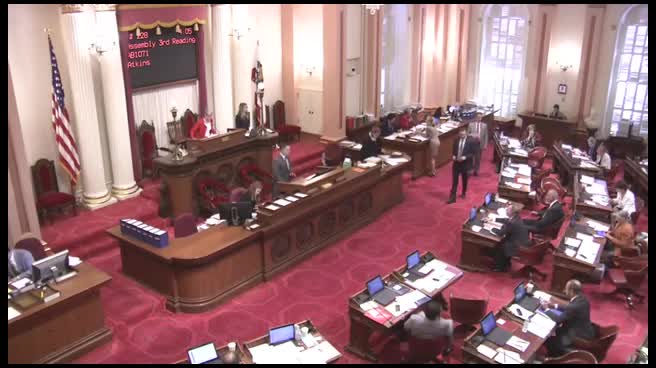 42SEC
Senate Floor
 14MIN
Senate Standing Committee on Business, Professions and Economic Development
 12MIN
Senate Standing Committee on Business, Professions and Economic Development
Bill Author




