AB 1658: Happy Homestead Cemetery District: nonresident burial.
- Session Year: 2015-2016
- House: Assembly
- Latest Version Date: 2016-08-30
The Public Cemetery District Law specifies the procedures for the formation of public cemetery districts, procedures for the selection of the district board of trustees and officers, and the powers and duties of the board. That law limits interments in public cemetery district cemeteries to residents of the district and nonresidents who meet specified criteria. Existing law also permits interments of nonresidents in designated public cemetery districts under certain circumstances.
This bill would authorize the Happy Homestead Cemetery District in the City of South Lake Tahoe in the County of El Dorado to use its cemeteries to inter residents of specified Nevada communities if specified conditions are met.
This bill would make legislative findings and declarations as to the necessity of a special statute for the Happy Homestead Cemetery District.
The Public Cemetery District Law specifies the procedures for the formation of public cemetery districts, procedures for the selection of the district board of trustees and officers, and the powers and duties of the board. That law limits interments in public cemetery district cemeteries to residents of the district and nonresidents who meet specified criteria. Existing law also permits interments of nonresidents in designated public cemetery districts, under certain circumstances.
This bill would authorize the Happy Homestead Cemetery District in the City of South Lake Tahoe in the County of El Dorado to use its cemeteries to inter residents of specified Nevada communities if specified conditions are met.
This bill would make legislative findings and declarations as to the necessity of a special statute for the Happy Homestead Cemetery District.
Notwithstanding Sections 9060 and 9061, the Happy Homestead Cemetery District located in the City of South Lake Tahoe in the County of El Dorado may inter residents of the Nevada communities of Glenbrook, Cave Rock, Skyland, Zephyr Cove, Round Hill, Elk Point, Kingsbury, and Stateline in the cemeteries in the district if all of the following apply:
(a)The Happy Homestead Cemetery District Board of Trustees determines that the districts cemeteries have adequate space for the foreseeable future.
(b)The district has an endowment care fund that requires a contribution for every interment of at least the minimum amount set pursuant to Sections 8738, 9065, and 9068.
(c)The district requires the payment of a nonresident fee set pursuant to Section 9068.
SEC. 2.The Legislature finds and declares that a special law is necessary and that a general law cannot be made applicable within the meaning of Section 16 of Article IV of the California Constitution because of the unique circumstances pertaining to the Happy Homestead Cemetery District.
|
Date
|
Status
|
|---|---|
| Jun 6, 2016 | In committee: Set, first hearing. Hearing canceled at the request of author. |
| Aug 30, 2016 | Chaptered by Secretary of State - Chapter 242, Statutes of 2016. |
| Aug 30, 2016 | Approved by the Governor. |
| Aug 22, 2016 | Enrolled and presented to the Governor at 4 p.m. |
| Aug 16, 2016 | In Assembly. Ordered to Engrossing and Enrolling. |
| Aug 15, 2016 | Read third time. Passed. Ordered to the Assembly. (Ayes 37. Noes 0.). |
| Aug 15, 2016 | Read third time. Passed. Ordered to the Assembly. (Ayes 37. Noes 0. Page 4951.). |
| Aug 15, 2016 | Read third time. Passed. Ordered to the Assembly. |
| Jun 16, 2016 | Read second time. Ordered to third reading. |
| Jun 15, 2016 | From committee: Do pass. (Ayes 7. Noes 0.) (June 15). |
| Jan 13, 2016 | Read first time. To print. |
| May 19, 2016 | Referred to Com. on GOV. & F. |
| May 12, 2016 | Read third time. Passed. Ordered to the Senate. (Ayes 78. Noes 0.) |
| May 12, 2016 | Read third time. Passed. Ordered to the Senate. (Ayes 78. Noes 0. Page 4777.) |
| May 12, 2016 | Read third time. Passed. Ordered to the Senate. |
| May 12, 2016 | In Senate. Read first time. To Com. on RLS. for assignment. |
| May 9, 2016 | Read second time. Ordered to third reading. |
| May 5, 2016 | From committee: Do pass. (Ayes 8. Noes 0.) (May 4). |
| Feb 4, 2016 | Referred to Com. on L. GOV. |
| Jan 14, 2016 | From printer. May be heard in committee February 13. |
|
Date
|
Description
|
Location
|
Votes
|
|
|---|---|---|---|---|
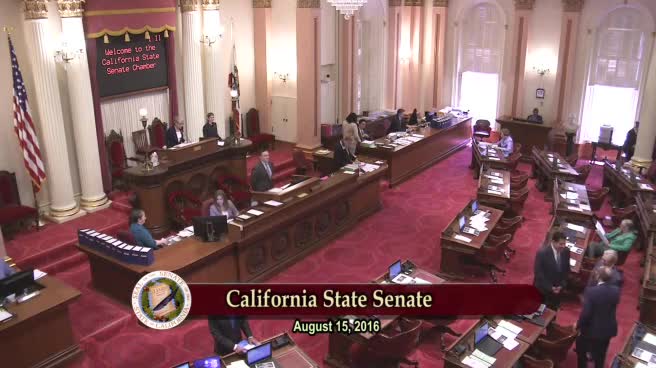
| Aug 15, 2016 | Assembly 3rd Reading AB1658 Bigelow By Gaines | Senate Floor |
Passed |
|
| Jun 15, 2016 | Do pass | Senate Standing Committee on Governance and Finance |
Passed |
|
| May 12, 2016 | AB 1658 BIGELOW Assembly Third Reading | Assembly Floor |
Passed |
|
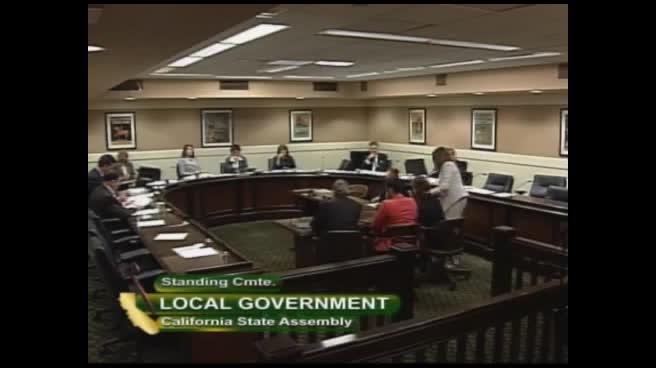
| May 4, 2016 | Do pass. | Assembly Standing Committee on Local Government |
Passed |
This list shows positions taken on this bill by organizations on the date displayed, which is linked to the original source.
Positions by individuals are not included.
|
Organization
|
Position
|
Date
|
|---|---|---|
| California Special Districts Association | ** Support | Aug 15, 2016 |
| Cemetery and Mortuary Association of California | ** Against | Aug 15, 2016 |
| El Dorado County Supervisor Sue Novasel | ** Support | Aug 15, 2016 |
| Happy Homestead Cemetery District | ** Support | Aug 15, 2016 |
| Happy Homestead Cemetery District [SPONSOR] | ** Support | May 4, 2016 |
| Public Cemetery Alliance | ** Support | Aug 15, 2016 |
| Tahoe Chamber of Commerce | ** Support | Aug 15, 2016 |
Office of Senate Floor Analyses (916) 651-1520 Fax: (916) 327-4478 | AB |
THIRD READING
Bill No: AB 1658
:
SENATE GOVERNANCE & FIN. COMMITTEE: 7-0, 6/15/16
AYES: Hertzberg, Nguyen, Beall, Hernandez, Lara, Moorlach, Pavley
ASSEMBLY FLOOR: 78-0, 5/12/16 - See last page for vote
DIGEST: This bill allows the Happy Homestead Cemetery District to inter nonresidents from specified communities in Nevada.
ANALYSIS: Existing law generally allows cemetery districts to bury only residents, former residents, property taxpayers, former taxpayers, certain eligible nonresidents, and their family members.
This bill allows the Happy Homestead Cemetery District to inter nonresidents from specified communities in Nevada. Specifically, this bill allows the District to inter nonresidents of the District who are residents of the Nevada communities of Glenbrook, Cave Rock, Skyland, Zephyr Cove, Round Hill, Elk Point, Kingsbury, and Stateline, if all of the following conditions apply:
- The board of trustees determines that the District's cemetery has adequate space for the foreseeable future;
- The District has an endowment care fund that requires a contribution for every interment of at least the minimum amount set pursuant to existing law; and,
- The District requires the payment of a nonresident fee set pursuant to existing law.
Background
California’s 253 public cemetery districts are separate local governments that operate cemeteries and provide interment services, mostly in rural areas and suburbs that were formerly rural communities. County boards of supervisors appoint the cemetery district’s board of trustees, composed of three to five registered voters from within the districts’ boundaries. Cemetery districts finance their operations with small shares of local property tax revenues, by selling interment rights, and by charging for services.
State law limits who may be buried in a district cemetery. Generally, cemetery districts can bury only residents, former residents, property taxpayers, former taxpayers, certain eligible nonresidents, and their family members.
Responding to an Attorney General's opinion, the Legislature allowed the Oroville Cemetery District (Butte County) to inter up to 100 nonresidents in a former Jewish cemetery which the District had acquired (SB 1906, Johnson, Chapter 1039, Statutes of 1982). When it revised the Public Cemetery District Law, the Legislature retained Oroville's special provision (SB 341, Senate Local Government Committee, Chapter 57, Statutes of 2003). The Legislature allowed the Elsinore Valley Cemetery District (Riverside County) to inter up to 536 nonresidents in a former Jewish cemetery, under specified conditions (AB 1969, Jeffries, Chapter 40, Statutes of 2010). In 2011, to facilitate a group purchase of cemetery plots by members of the Congregation Bet Haverim Synagogue, the Legislature allowed the Davis Cemetery District to inter up to 500 nonresidents under specified conditions (AB 966, Yamada, Chapter 111, Statutes of 2011).
In 2012, to help the Anderson, Cottonwood, and Silveyville cemetery districts overcome the ongoing loss of business to nearby veteran’s cemeteries, the Legislature allowed them an exemption from the state law restricting non-resident burials (SB 1131, La Malfa, Chapter 65, Statutes of 2012). Subsequent legislation added the Kern River Valley Cemetery District (SB 159, Fuller, Chapter 55, Statutes of 2013) and the Halcumb Cemetery District (SB 1291, Nielsen, Chapter 276, Statutes of 2014) to the list of districts that are exempted from the state law restricting non-resident burials. These five districts can use their cemeteries for up to a total of 400 interments each, not to exceed 40 interments each per calendar year, for interment in the ground or a columbarium of any person who is not a resident or a property taxpayer of any cemetery district, and who does not qualify for that interment, if all of the following apply:
- The board of trustees determines that the district's cemetery has adequate space for the foreseeable future;
- The cemetery district has an endowment care fund that requires a contribution for every interment of at least the minimum amount set pursuant to existing law; and,
- The cemetery district requires the payment of a nonresident fee set, pursuant to existing law.
The Happy Homestead Cemetery District was formed in 1952 by the El Dorado County Board of Supervisors. According to the El Dorado County Local Agency Formation Commission, the District serves an approximately 212 square mile area within the South Lake Tahoe region, which was home to an estimated 30,500 resident as of 2007. The District operates an approximately 10 acre cemetery in South Lake Tahoe and is the only known cemetery service provider, public or private, in the El Dorado County portion of the Tahoe Basin. Some officials want the Legislature to grant the District an exemption from the state law restricting non-resident burials that is similar to exemptions that state law grants to several other cemetery districts.
Comments
- Purpose of the bill. The Happy Homestead Cemetery District operates the only cemetery in the South Lake Tahoe Region. However, despite the fact that Nevada communities on the east shore of Lake Tahoe, from Glenbook down to Stateline, are a part of the contiguous social and economic community of South Lake Tahoe, California state law prevents the District from providing cemetery services to individuals who live outside of the District’s boundaries. By allowing the District to inter non-residents who are from specific nearby Nevada communities just across the state border, AB 1658 promotes a cohesive social and economic community in South Lake Tahoe. By requiring the payment of a non-resident premium, this bill will also strengthen the District’s fiscal condition.
- Precedent and limits. The Happy Homestead Cemetery District is only the most recent of numerous public cemetery districts that have asked to be exempted statutory limits on non-resident interments. Changing state law to help the Happy Homestead Cemetery District will likely invite similar proposals from other public cemetery districts. Advocates for private-sector providers of cemetery services worry that continued expansion of state law to allow non-resident interment, as proposed by AB 1658, creates an opportunity and incentive for public agencies to engage in business practices that compete with the private sector. AB 1658 lays the groundwork for incrementally exempting many more public cemetery districts from the statutory restrictions on nonresident interment.
- Rethinking nonresident interment. Many public cemetery districts are struggling financially. The loss of business to veterans’ cemeteries is one of many factors that contribute to these districts’ fiscal plight. Districts have lost property tax revenues both because of decreases in the assessed value of real property and the Educational Revenue Augmentation Fund shifts, which reallocated some districts’ property taxes to benefit schools. Cemetery districts’ revenues also have been reduced by a shift in funeral practices. Cremation, which is less expensive than burial, is becoming more common. In light of the numerous fiscal challenges facing public cemeteries, revenues from nonresident burials could offer significant financial benefits to districts that are struggling to continue providing cemetery services. As an alternative to exempting cemetery districts one at a time legislators may wish to more broadly reconsider the statutory prohibition against public cemeteries’ interring nonresidents.
FISCAL EFFECT: Appropriation: Fiscal Com.: Local:
California Special Districts Association
El Dorado County Supervisor Sue Novasel
Happy Homestead Cemetery District
Public Cemetery Alliance
Tahoe Chamber of Commerce
OPPOSITION: (Verified 6/16/16)
Cemetery and Mortuary Association of California
ARGUMENTS IN SUPPORT: This bill’s supporters argue that, by allowing the District to inter non-residents who are from specific nearby Nevada communities just across the state border, this bill promotes a cohesive social and economic community in South Lake Tahoe. They also argue that, by requiring the payment of a non-resident premium, this bill will also strengthen the District’s fiscal condition.
ARGUMENTS IN OPPOSITION: This bill’s opponent argues that continued expansion of state law to allow non-resident interment creates an opportunity and incentive for public agencies to engage in business practices that compete with the private sector. They worry that this bill lays the groundwork for incrementally exempting many more public cemetery districts from the statutory restrictions on nonresident interment.
ASSEMBLY FLOOR: 78-0, 5/12/16
AYES: Achadjian, Alejo, Travis Allen, Arambula, Atkins, Baker, Bigelow, Bloom, Bonilla, Bonta, Brough, Brown, Calderon, Campos, Chang, Chau, Chávez, Chiu, Chu, Cooley, Cooper, Dababneh, Dahle, Daly, Dodd, Eggman, Frazier, Beth Gaines, Gallagher, Cristina Garcia, Eduardo Garcia, Gatto, Gipson, Gomez, Gonzalez, Gordon, Gray, Grove, Hadley, Harper, Roger Hernández, Holden, Irwin, Jones, Kim, Lackey, Levine, Linder, Lopez, Low, Maienschein, Mathis, Mayes, McCarty, Medina, Melendez, Mullin, Nazarian, Obernolte, O'Donnell, Olsen, Patterson, Quirk, Ridley-Thomas, Rodriguez, Salas, Santiago, Steinorth, Mark Stone, Thurmond, Ting, Wagner, Waldron, Weber, Wilk, Williams, Wood, Rendon
NO VOTE RECORDED: Burke, Jones-Sawyer
6/17/16 15:03:49
**** END ****
SENATE COMMITTEE ON GOVERNANCE AND FINANCE
Senator Robert M. Hertzberg, Chair
2015 - 2016 Regular
Bill No: | AB 1658 | Hearing Date: | 6/15/16 |
Author: | Bigelow | Tax Levy: | No |
Version: | 1/13/16 | Fiscal: | No |
Consultant: | Weinberger | ||
Happy Homestead Cemetery District: nonresident burial
Allows the Happy Homestead Cemetery District to inter nonresidents from specified communities in Nevada.
Background
California’s 253 public cemetery districts are separate local governments that operate cemeteries and provide interment services, mostly in rural areas and suburbs that were formerly rural communities. County boards of supervisors appoint the cemetery district’s board of trustees, composed of three to five registered voters from within the districts’ boundaries. Cemetery districts finance their operations with small shares of local property tax revenues, by selling interment rights, and by charging for services.
State law limits who may be buried in a district cemetery. Generally, cemetery districts can bury only residents, former residents, property taxpayers, former taxpayers, certain eligible nonresidents, and their family members.
Responding to an Attorney General's opinion, the Legislature allowed the Oroville Cemetery District (Butte County) to inter up to 100 nonresidents in a former Jewish cemetery which the District had acquired (SB 1906, Johnson, 1982). When it revised the Public Cemetery District Law, the Legislature retained Oroville's special provision (SB 341, Senate Local Government Committee, 2003). The Legislature allowed the Elsinore Valley Cemetery District (Riverside County) to inter up to 536 nonresidents in a former Jewish cemetery, under specified conditions (AB 1969, Jeffries, 2010). In 2011, to facilitate a group purchase of cemetery plots by members of the Congregation Bet Haverim Synagogue, the Legislature allowed the Davis Cemetery District to inter up to 500 nonresidents under specified conditions (AB 966, Yamada, 2011).
In 2012, to help the Anderson, Cottonwood, and Silveyville cemetery districts overcome the ongoing loss of business to nearby veteran’s cemeteries, the Legislature allowed them an exemption from the state law restricting non-resident burials (SB 1131, La Malfa, 2012). Subsequent legislation added the Kern River Valley Cemetery District (SB 159, Fuller, 2013) and the Halcumb Cemetery District (SB 1291, Nielsen, 2014) to the list of district that are exempted from the state law restricting non-resident burials. These five districts can use their cemeteries for up to a total of 400 interments each, not to exceed 40 interments each per calendar year, for interment in the ground or a columbarium of any person who is not a resident or a property taxpayer of any cemetery district, and who does not qualify for that interment, if all of the following apply:
- The board of trustees determines that the district's cemetery has adequate space for the foreseeable future;
- The cemetery district has an endowment care fund that requires a contribution for every interment of at least the minimum amount set pursuant to existing law; and,
- The cemetery district requires the payment of a nonresident fee set, pursuant to existing law.
The Happy Homestead Cemetery District was formed in 1952 by the El Dorado County Board of Supervisors. According to the El Dorado County Local Agency Formation Commission (LAFCO), the District serves an approximately 212 square mile area within the South Lake Tahoe region, which was home to an estimated 30,500 resident as of 2007. The District operates an approximately 10 acre cemetery in South Lake Tahoe and is the only known cemetery service provider, public or private, in the El Dorado County portion of the Tahoe Basin. Some officials want the Legislature to grant the District an exemption from the state law restricting non-resident burials that is similar to exemptions that state law grants to several other cemetery districts.
Proposed Law
Assembly Bill 1658 allows the Happy Homestead Cemetery District to inter nonresidents from specified communities in Nevada. Specifically, AB 1658 allows the District to inter nonresidents of the District who are residents of the Nevada communities of Glenbrook, Cave Rock, Skyland, Zephyr Cove, Round Hill, Elk Point, Kingsbury, and Stateline, if all of the following conditions apply:
- The board of trustees determines that the District's cemetery has adequate space for the foreseeable future;
- The District has an endowment care fund that requires a contribution for every interment of at least the minimum amount set pursuant to existing law; and,
- The District requires the payment of a nonresident fee set pursuant to existing law.
State Revenue Impact
No estimate.
Comments
1. Purpose of the bill. The Happy Homestead Cemetery District operates the only cemetery in the South Lake Tahoe Region. However, despite the fact that Nevada communities on the east shore of Lake Tahoe, from Glenbook down to Stateline, are a part of the contiguous social and economic community of South Lake Tahoe, California state law prevents the District from providing cemetery services to individuals who live outside of the District’s boundaries. By allowing the District to inter non-residents who are from specific nearby Nevada communities just across the state border, AB 1658 promotes a cohesive social and economic community in South Lake Tahoe. By requiring the payment of a non-resident premium, the bill will also strengthen the District’s fiscal condition.
2. Precedent and limits. The Happy Homestead Cemetery District is only the most recent of numerous public cemetery districts that have asked to be exempted statutory limits on non-resident interments. Changing state law to help the Happy Homestead Cemetery District will likely invite similar proposals from other public cemetery districts. Advocates for private-sector providers of cemetery services worry that continued expansion of state law to allow non-resident interment, as proposed by AB 1658, creates an opportunity and incentive for public agencies to engage in business practices that compete with the private sector. AB 1658 lays the groundwork for incrementally exempting many more public cemetery districts from the statutory restrictions on nonresident interment.
3. Rethinking nonresident interment. Many public cemetery districts are struggling financially. The loss of business to veterans’ cemeteries is one of many factors that contribute to these districts’ fiscal plight. Districts have lost property tax revenues both because of decreases in the assessed value of real property and the Educational Revenue Augmentation Fund (ERAF) shifts, which reallocated some districts’ property taxes to benefit schools. Cemetery districts’ revenues also have been reduced by a shift in funeral practices. Cremation, which is less expensive than burial, is becoming more common. In light of the numerous fiscal challenges facing public cemeteries, revenues from nonresident burials could offer significant financial benefits to districts that are struggling to continue providing cemetery services. As an alternative to exempting cemetery districts one at a time legislators may wish to more broadly reconsider the statutory prohibition against public cemeteries’ interring nonresidents.
4. Special legislation. The California Constitution prohibits special legislation when a general law can apply (Article IV, §16). AB 1658 contains findings and declarations explaining the need for legislation that applies only to the Happy Homestead Cemetery District.
Assembly Actions
Assembly Local Government Committee: 8-0
Assembly Floor: 78-0
Support and Opposition
(6/9/16)
Support: Happy Homestead Cemetery District; El Dorado County Supervisors Sue Novasel; Public Cemetery Alliance; Tahoe Chamber of Commerce.
Opposition: Cemetery and Mortuary Association of California.
-- END --
ASSEMBLY THIRD READING
ATR Bill Id:AB 1658
Author:(Bigelow)
As Introduced Ver:January 13, 2016
Majority vote
Committee | Votes | Ayes | Noes |
Local Government | 8-0 | Eggman, Waldron, Mullin, Bonilla, Chiu, Cooley, Gordon, Linder |
SUMMARY: Authorizes the Happy Homestead Cemetery District (District) to inter nonresidents from specified communities in Nevada. Specifically, this bill:
- Authorizes the District, located in the City of South Lake Tahoe in El Dorado County, to inter nonresidents of the District who are residents of the Nevada communities of Glenbrook, Cave Rock, Skyland, Zephyr Cove, Round Hill, Elk Point, Kingsbury, and Stateline, if all of the following conditions apply:
- The board of trustees determines that the District's cemetery has adequate space for the foreseeable future;
- The District has an endowment care fund that requires a contribution for every interment of at least the minimum amount set, pursuant to existing law; and,
- The District requires the payment of a nonresident fee set, pursuant to existing law.
- Finds and declares that a special law is necessary because of the unique circumstances pertaining to the District.
EXISTING LAW:
- States that a cemetery district shall limit interments to the following:
- Persons who are residents of the cemetery district;
- Persons who are former residents of the cemetery district and who acquired interment rights while they were residents of the district;
- Persons who pay property taxes on property located in the cemetery district;
- Persons who formerly paid property taxes on property located in the cemetery district and who acquired interment rights while they paid those property taxes;
- Eligible nonresidents of the cemetery district, as provided; or,
- Persons who are family members of any person described above.
- Authorizes the Cottonwood, Anderson, Silveyville, Halcumb, and Kern River Valley cemetery districts to use their cemeteries for up to a total of 400 interments each, not to exceed 40 interments each per calendar year, for interment in the ground or a columbarium of any person who is not a resident or a property taxpayer of any cemetery district, and who does not qualify for that interment, pursuant to existing law, if all of the following apply:
- The board of trustees determines that the district's cemetery has adequate space for the foreseeable future;
- The cemetery district has an endowment care fund that requires a contribution for every interment of at least the minimum amount set, pursuant to existing law; and,
- The cemetery district requires the payment of a nonresident fee set, pursuant to existing law.
- Authorizes the Oroville Cemetery District to use its cemetery on Feather River Boulevard, for up to a total of 100 interments, for interment in the ground of any non-residents, the Elsinore Valley Cemetery District to use a portion of its cemetery for up to a total of 536 interments for nonresidents, and the Davis Cemetery District to use its cemetery for up to a total of 500 interments, for interment in the ground of any nonresident, if all of the following in 2) above, apply.
FISCAL EFFECT: None
COMMENTS:
- Public Cemetery Districts. California's 253 public cemetery districts are separate local governments that operate cemeteries and provide interment services, mostly in rural areas and suburbs that were formerly rural communities. County boards of supervisors appoint the cemetery districts' boards of trustees, composed of three to five registered voters from within the districts' boundaries. The districts finance their operations with small shares of local property tax revenues, by selling interment rights and charging for services.
State law limits who may be buried in a district cemetery. Generally, cemetery districts can bury only residents, former residents, property taxpayers, former taxpayers, certain eligible nonresidents, and their family members.
- Bill Summary. This bill authorizes the District to inter nonresidents in its cemetery, pursuant to the conditions established for several other cemetery districts under existing law. This bill only authorizes the interment of non-District residents from the Nevada communities of Glenbrook, Cave Rock, Skyland, Zephyr Cove, Round Hill, Elk Point, Kingsbury, and Stateline. This bill is sponsored by the District.
- Author's Statement. According to the author, "The purpose of public cemetery districts is to provide cost-effective burial services for residents and taxpayers of each district. Public cemetery districts are the successors to Gold Rush community burying grounds and community cemetery associations. Thus, the purpose is to provide interment services for residents of the local community. The Nevada communities on the east shore of Lake Tahoe, from Glenbook down to Stateline, are a part of the contiguous social and economic community of South Lake Tahoe, of which South Lake Tahoe, California is a major part. There is only one cemetery in the region – the Happy Homestead Cemetery in South Lake Tahoe. Yet current California law prevents Nevada residents of the community from being buried in this community cemetery. This bill will permit their interment in the District, with the payment of a non-resident premium. Doing so will serve to further the cohesive social and economic community as well as increase revenues for the District."
- District. The District is located in South Lake Tahoe in El Dorado County and was formed in 1952 by the Board of Supervisors. According to the El Dorado County Local Agency Formation Commission (LAFCO), the area served by the District includes 212 square miles and an estimated population of 30,500 as of 2007. The District is the only known cemetery service provider, public or private, in the El Dorado County portion of the Tahoe Basin.
- Previous Legislation. Responding to an Attorney General's opinion, the Legislature allowed the Oroville Cemetery District (Butte County) to inter up to 100 nonresidents in a former Jewish cemetery which the District had acquired (SB 1906 (Johnson), Chapter 1039, Statutes of 1982). When the Public Cemetery District Law was revised, the Legislature retained Oroville's special provision (SB 341 (Local Government Committee) Chapter 57, Statutes of 2003). The Legislature allowed the Elsinore Valley Cemetery District (Riverside County) to inter up to 536 nonresidents in a former Jewish cemetery, under specified conditions (AB 1969 (Jeffries), Chapter 40, Statutes of 2010). To facilitate a group purchase of cemetery plots by members of the Congregation Bet Haverim Synagogue, the Legislature allowed the Davis cemetery district to inter up to 500 nonresidents, under specified conditions (AB 966 (Yamada), Chapter 111, Statutes of 2011).
SB 1131 (La Malfa), Chapter 65, Statutes of 2012, authorized Anderson, Cottonwood, and Silveyville cemetery districts to inter nonresidents due to financial hardship caused by the openings of nearby state and federal veterans' cemeteries. SB 1131 allowed those three cemetery districts to inter up to 40 nonresidents in each cemetery's district - up to a maximum of 400, provided that a nonresident fee is paid. The District's board of trustees affirms that there is adequate space for the foreseeable future, and the cemetery has an endowment care fund. Most recently, SB 159 (Fuller), Chapter 55, Statutes of 2013, added the Kern River Valley Cemetery District; and, SB 1291 (Nielsen), Chapter 276, Statutes of 2014, added Halcumb Cemetery District to the list of cemetery districts that may inter nonresidents under specified conditions.
AB 1593 (Dahle) of 2014 would have added the Auburn Public Cemetery District to the list of cemetery districts that currently have the authorization to inter nonresidents.
- Related Legislation. SB 1009 (Nielson) of the current legislative session, pending in the Senate, would establish a statewide approach and allow a cemetery district that serves at least one county located in a rural area to inter nonresidents, subject to the conditions established under current law for individual districts. SB 1009 would limit the number of nonresidents a district could inter to a total of 400, not to exceed 40 per calendar year.
- Policy Considerations. The Legislature may wish to consider the policy of exempting cemetery districts one at a time. The Legislature may also wish to consider if a more comprehensive solution involving LAFCOs at the local level should be explored. For example, the Legislature could authorize cemetery districts, using conditions in existing law for individual districts, to petition LAFCO if they would like to inter nonresidents. This approach would allow LAFCOs, who are the Legislature's watchdog over local boundaries, make the decision at the local level and to consider other options like annexing new territory into the cemetery district.
- Arguments in Support. The District argues, "AB 1658 is intended to achieve two ends: First, it is intended to increase the population that Happy Homestead serves, thus increasing potential revenues and permitting continuing cemetery operations without additional tax revenues. Second, and equally important, it will help to preserve the southern Lake Tahoe community, one that is divided by the border between California and Nevada. The residents of the Nevada communities on the east and south shore of the Lake and those in California's South Lake Tahoe compromise a single, economic, social and cultural community. Yet those Nevada residents are largely ineligible for internment in the only cemetery in the region – the Happy Homestead Cemetery – because they are not residents or taxpayers within the boundaries of the District."
- Arguments in Opposition. The Cemetery and Mortuary Association of California argues, "Cemetery districts, as entities of municipal government are intended to serve their residents. The law therefore sets forth specific connections where interments are appropriate. The expansion of the law to include non-residents, as proposed by AB 1658, creates an opportunity and incentive for municipalities to engage in business practices that compete with the private sector."
Analysis Prepared by: Misa Lennox / L. GOV. / (916) 319-3958 FN: 0002894
Date of Hearing: May 4, 2016
ASSEMBLY COMMITTEE ON LOCAL GOVERNMENT
Susan Talamantes Eggman, Chair
ABPCA Bill Id:AB 1658 (
Author:Bigelow) – As Introduced Ver:January 13, 2016
SUBJECT: Happy Homestead Cemetery District: nonresident burial.
SUMMARY: Authorizes the Happy Homestead Cemetery District (District) to inter nonresidents from specified communities in Nevada. Specifically, this bill:
- Authorizes the District, located in the City of South Lake Tahoe in El Dorado County, to inter nonresidents of the District who are residents of the Nevada communities of Glenbrook, Cave Rock, Skyland, Zephyr Cove, Round Hill, Elk Point, Kingsbury, and Stateline, if all of the following conditions apply:
- The board of trustees determines that the District's cemetery has adequate space for the foreseeable future;
- The District has an endowment care fund that requires a contribution for every interment of at least the minimum amount set, pursuant to existing law; and,
- The District requires the payment of a nonresident fee set, pursuant to existing law.
- Finds and declares that a special law is necessary because of the unique circumstances pertaining to the District.
EXISTING LAW:
- States that a cemetery district shall limit interments to the following:
- Persons who are residents of the cemetery district;
- Persons who are former residents of the cemetery district and who acquired interment rights while they were residents of the district;
- Persons who pay property taxes on property located in the cemetery district;
- Persons who formerly paid property taxes on property located in the cemetery district and who acquired interment rights while they paid those property taxes;
- Eligible nonresidents of the cemetery district, as provided; or,
- Persons who are family members of any person described above.
- Persons who are residents of the cemetery district;
- Authorizes the Cottonwood, Anderson, Silveyville, Halcumb, and Kern River Valley cemetery districts to use their cemeteries for up to a total of 400 interments each, not to exceed 40 interments each per calendar year, for interment in the ground or a columbarium
of any person who is not a resident or a property taxpayer of any cemetery district, and who does not qualify for that interment, pursuant to existing law, if all of the following apply:- The board of trustees determines that the district's cemetery has adequate space for the foreseeable future;
- The cemetery district has an endowment care fund that requires a contribution for every interment of at least the minimum amount set, pursuant to existing law; and,
- The cemetery district requires the payment of a nonresident fee set, pursuant to existing law.
- Authorizes the Oroville Cemetery District to use its cemetery on Feather River Boulevard, for up to a total of 100 interments, for interment in the ground of any non-residents, the Elsinore Valley Cemetery District to use a portion of its cemetery for up to a total of 536 interments for nonresidents, and the Davis Cemetery District to use its cemetery for up to a total of 500 interments, for interment in the ground of any nonresident, if all of the following in 2), above, apply.
FISCAL EFFECT: None
COMMENTS:
- Public Cemetery Districts. California’s 253 public cemetery districts are separate local governments that operate cemeteries and provide interment services, mostly in rural areas and suburbs that were formerly rural communities. County boards of supervisors appoint the cemetery districts’ boards of trustees, composed of three to five registered voters from within the districts’ boundaries. The districts finance their operations with small shares of local property tax revenues, by selling interment rights and charging for services.
State law limits who may be buried in a district cemetery. Generally, cemetery districts can bury only residents, former residents, property taxpayers, former taxpayers, certain eligible nonresidents, and their family members.
- Bill Summary. This bill authorizes the District to inter nonresidents in its cemetery, pursuant to the conditions established for several other cemetery districts under existing law. This bill only authorizes the interment of non-District residents from the Nevada communities of Glenbrook, Cave Rock, Skyland, Zephyr Cove, Round Hill, Elk Point, Kingsbury, and Stateline. This bill is sponsored by the District.
- Author's Statement. According to the author, "The purpose of public cemetery districts is to provide cost-effective burial services for residents and taxpayers of each district. Public cemetery districts are the successors to Gold Rush community burying grounds and community cemetery associations. Thus, the purpose is to provide interment services for residents of the local community. The Nevada communities on the east shore of Lake Tahoe, from Glenbook down to Stateline, are a part of the contiguous social and economic community of South Lake Tahoe, of which South Lake Tahoe, California is a major part. There is only one cemetery in the region – the Happy Homestead Cemetery in South Lake Tahoe. Yet current California law prevents Nevada residents of the community from being buried in this community cemetery. This bill will permit their interment in the District, with the payment of a non-resident premium. Doing so will serve to further the cohesive social and economic community as well as increase revenues for the District."
- District. The District is located in South Lake Tahoe in El Dorado County and was formed in 1952 by the Board of Supervisors. According to the El Dorado County Local Agency Formation Commission (LAFCO), the area served by the District includes 212 square miles and an estimated population of 30,500 as of 2007. The District is the only known cemetery service provider, public or private, in the El Dorado County portion of the Tahoe Basin.
- Previous Legislation. Responding to an Attorney General's opinion, the Legislature allowed the Oroville Cemetery District (Butte County) to inter up to 100 nonresidents in a former Jewish cemetery which the District had acquired (SB 1906, Johnson, 1982). When the Public Cemetery District Law was revised, the Legislature retained Oroville's special provision (SB 341, Senate Local Government Committee, 2003). The Legislature allowed the Elsinore Valley Cemetery District (Riverside County) to inter up to 536 nonresidents in a former Jewish cemetery, under specified conditions (AB 1969, Jeffries, 2010). To facilitate a group purchase of cemetery plots by members of the Congregation Bet Haverim Synagogue, the Legislature allowed the Davis cemetery district to inter up to 500 nonresidents, under specified conditions (AB 966, Yamada, 2011).
SB 1131 (La Malfa), Chapter 65, Statutes of 2012, authorizes Anderson, Cottonwood, and Silveyville cemetery districts to inter nonresidents due to financial hardship caused by the openings of nearby state and federal veterans' cemeteries. SB 1131 allows those three cemetery districts to inter up to 40 nonresidents in each cemetery's district - up to a maximum of 400, provided that a nonresident fee is paid. The District's board of trustees affirms that there is adequate space for the foreseeable future, and the cemetery has an endowment care fund. Most recently, SB 159 (Fuller), Chapter 55, Statutes of 2013, added the Kern River Valley Cemetery District, and SB 1291 (Nielsen), Chapter 276, Statutes of 2014, added Halcumb Cemetery District to the list of cemetery districts that may inter nonresidents under specified conditions.
AB 1593 (Dahle) of 2014 would have added the Auburn Public Cemetery District to the list of cemetery districts that currently have the authorization to inter nonresidents. This bill was never heard in the Local Government Committee.
- Related Legislation. SB 1009 (Nielson), pending in the Senate Governance and Finance Committee, has not been set for hearing. SB 1009 would establish a statewide approach and allow a cemetery district that serves at least one county located in a rural area to inter nonresidents, subject to the conditions established under current law for individual districts. SB 1009 would limit the number of nonresidents a district could inter to a total of 400, not to exceed 40 per calendar year.
- Policy Considerations. The Committee may wish to consider the policy of exempting cemetery districts one at a time. The Committee may wish to consider if a more comprehensive solution involving LAFCOs at the local level should be explored. For example, the Legislature could authorize cemetery districts, using conditions in existing law for individual districts, to petition LAFCO if they would like to inter nonresidents. This approach would allow LAFCOs, who are the Legislature's watchdog over local boundaries, make the decision at the local level and to consider other options like annexing new territory into the cemetery district.
- Arguments in Support. The District argues, "AB 1658 is intended to achieve two ends: First, it is intended to increase the population that Happy Homestead serves, thus increasing potential revenues and permitting continuing cemetery operations without additional tax revenues. Second, and equally important, it will help to preserve the southern Lake Tahoe community, one that is divided by the border between California and Nevada. The residents of the Nevada communities on the east and south shore of the Lake and those in California's South Lake Tahoe compromise a single, economic, social and cultural community. Yet those Nevada residents are largely ineligible for internment in the only cemetery in the region – the Happy Homestead Cemetery – because they are not residents or taxpayers within the boundaries of the District."
- Arguments in Opposition. The Cemetery and Mortuary Association of California argues, "Cemetery districts, as entities of municipal government are intended to serve their residents. The law therefore sets forth specific connections where interments are appropriate. The expansion of the law to include non-residents, as proposed by AB 1658, creates an opportunity and incentive for municipalities to engage in business practices that compete with the private sector."
REGISTERED SUPPORT / OPPOSITION:
Support
Happy Homestead Cemetery District [SPONSOR]
Tahoe Chamber of Commerce
Opposition
Cemetery and Mortuary Association of California
Analysis Prepared by: Misa Lennox / L. GOV. / (916) 319-3958
Discussed in Hearing
 1MIN
Senate Floor
 1MIN
Assembly Floor
 1MIN
Assembly Floor
 8MIN
Assembly Standing Committee on Local Government
Bill Author

Bill Co-Author(s):