AB 1662: Unmanned aircraft systems: accident reporting.
- Session Year: 2015-2016
- House: Assembly
- Latest Version Date: 2016-09-02
Existing federal law, the Federal Aviation Administration Modernization and Reform Act of 2012, provides for the integration of unmanned aircraft systems, commonly known as drones, into the national airspace system. Existing federal law requires the operator of an unmanned aircraft system to immediately, and by the most expeditious means available, notify the nearest National Transportation Safety Board office when, among other things, an aircraft accident, as defined, or certain serious incidents occur. Those notifications are required to include, among other things, the name of the owner of the unmanned aircraft system, the name of the operator of the unmanned aircraft system, the date and time of the accident, and the nature of the accident.
Existing state law requires the driver of a vehicle involved in an accident resulting in injury to any person, other than himself or herself, or in the death of any person, to immediately stop the vehicle at the scene of the accident and provide certain information and render assistance, as necessary, to the driver and occupants of the other vehicle and provide the specified information to any traffic or police officer at the scene of the accident. A person who violates this requirement is guilty of a misdemeanor or a felony. Existing law requires the driver of a vehicle involved in an accident resulting only in damage to any property, including vehicles, to immediately stop the vehicle at the nearest location that will not impede traffic or otherwise jeopardize the safety of other motorists and provide certain information to the owner or person in charge of the damaged property or place that information in a conspicuous place on the damaged property. A person who violates this requirement is guilty of a misdemeanor.
This bill would require, except as specified, the operator of any unmanned aircraft system involved in an accident resulting in injury to an individual or damage to property to immediately land the unmanned aircraft at the nearest location that will not jeopardize the safety of others and provide certain information to the injured individual or the owner or person in charge of the damaged property or place that information in a conspicuous place on the damaged property. The bill would make a person who knowingly fails to comply with these provisions guilty of an infraction or a misdemeanor, as specified. By creating a new crime, the bill would impose a state-mandated local program.
The California Constitution requires the state to reimburse local agencies and school districts for certain costs mandated by the state. Statutory provisions establish procedures for making that reimbursement.
This bill would provide that no reimbursement is required by this act for a specified reason.
Existing federal law, the Federal Aviation Administration Modernization and Reform Act of 2012, provides for the integration of unmanned aircraft systems, commonly known as drones, into the national airspace system. Existing federal law requires the operator of an unmanned aircraft system to immediately, and by the most expeditious means available, notify the nearest National Transportation Safety Board office when, among other things, an aircraft accident, as defined, or certain serious incidents occur. Those notifications are required to include, among other things, the name of the owner of the unmanned aircraft system, the name of the operator of the unmanned aircraft system, the date and time of the accident, and the nature of the accident.
Existing state law requires the driver of a vehicle involved in an accident resulting in injury to any person, other than himself or herself, or in the death of any person, to immediately stop the vehicle at the scene of the accident and provide certain information and render assistance, as necessary, to the driver and occupants of the other vehicle and provide the specified information to any traffic or police officer at the scene of the accident. A person who violates this requirement is guilty of a misdemeanor or a felony. Existing law requires the driver of a vehicle involved in an accident resulting only in damage to any property, including vehicles, to immediately stop the vehicle at the nearest location that will not impede traffic or otherwise jeopardize the safety of other motorists and provide certain information to the owner or person in charge of the damaged property or place that information in a conspicuous place on the damaged property. A person who violates this requirement is guilty of a misdemeanor.
This bill would require, except as specified, the operator of any unmanned aircraft system involved in an accident resulting in injury to an individual or damage to property to immediately land the unmanned aircraft at the nearest location that will not jeopardize the safety of others and provide certain information to the injured individual or the owner or person in charge of the damaged property or place that information in a conspicuous place on the damaged property. The bill would make a person who violates knowingly fails to comply with these provisions guilty of an infraction or a misdemeanor, as specified. By creating a new crime, the bill would impose a state-mandated local program.
The California Constitution requires the state to reimburse local agencies and school districts for certain costs mandated by the state. Statutory provisions establish procedures for making that reimbursement.
This bill would provide that no reimbursement is required by this act for a specified reason.
Existing federal law, the Federal Aviation Administration Modernization and Reform Act of 2012, provides for the integration of unmanned aircraft systems, commonly known as drones, into the national airspace system. Existing federal law requires the operator of an unmanned aircraft system to immediately, and by the most expeditious means available, notify the nearest National Transportation Safety Board office when, among other things, an aircraft accident, as defined, or certain serious incidents occur. Those notifications are required to include, among other things, the name of the owner of the unmanned aircraft system, the name of the operator of the unmanned aircraft system, the date and time of the accident, and the nature of the accident.
Existing state law requires the driver of a vehicle involved in an accident resulting in injury to any person, other than himself or herself, or in the death of any person, to immediately stop the vehicle at the scene of the accident and provide certain information and render assistance, as necessary, to the driver and occupants of the other vehicle and provide the specified information to any traffic or police officer at the scene of the accident. A person who violates this requirement is guilty of a misdemeanor or a felony. Existing law requires the driver of a vehicle involved in an accident resulting only in damage to any property, including vehicles, to immediately stop the vehicle at the nearest location that will not impede traffic or otherwise jeopardize the safety of other motorists and provide certain information to the owner or person in charge of the damaged property or place that information in a conspicuous place on the damaged property. A person who violates this requirement is guilty of a misdemeanor.
This bill would require require, except as specified, the operator of any unmanned aircraft system involved in an accident resulting in injury to an individual or damage to property to immediately land the unmanned aircraft at the nearest location that will not jeopardize the safety of others and provide certain information to the injured individual or the owner or person in charge of the damaged property or place that information in a conspicuous place on the damaged property. The bill would make a person who violates these provisions guilty of an infraction or a misdemeanor. misdemeanor, as specified. By creating a new crime, the bill would impose a state-mandated local program.
The California Constitution requires the state to reimburse local agencies and school districts for certain costs mandated by the state. Statutory provisions establish procedures for making that reimbursement.
This bill would provide that no reimbursement is required by this act for a specified reason.
Existing federal law, the Federal Aviation Administration Modernization and Reform Act of 2012, provides for the integration of unmanned aircraft systems, commonly known as drones, into the national airspace system. Existing federal law requires the operator of an unmanned aircraft system to immediately, and by the most expeditious means available, notify the nearest National Transportation Safety Board office when, among other things, an aircraft accident, as defined, or certain serious incidents occur. Those notifications are required to include, among other things, the name of the owner of the unmanned aircraft system, the name of the operator of the unmanned aircraft system, the date and time of the accident, and the nature of the accident.
Existing state law requires the driver of a vehicle involved in an accident resulting in injury to any person, other than himself or herself, or in the death of any person, to immediately stop the vehicle at the scene of the accident and provide certain information and render assistance, as necessary, to the driver and occupants of the other vehicle and provide the specified information to any traffic or police officer at the scene of the accident. A person who violates this requirement is guilty of a misdemeanor or a felony. Existing law requires the driver of a vehicle involved in an accident resulting only in damage to any property, including vehicles, to immediately stop the vehicle at the nearest location that will not impede traffic or otherwise jeopardize the safety of other motorists and provide certain information to the owner or person in charge of the damaged property or place that information in a conspicuous place on the damaged property. A person who violates this requirement is guilty of a misdemeanor.
This bill would require the operator of any unmanned aircraft system involved in an accident resulting in injury to an individual or damage to property to immediately land the unmanned aircraft at the nearest location that will not jeopardize the safety of others and provide certain information to the injured individual or the owner or person in charge of the damaged property or place that information in a conspicuous place on the damaged property. The bill would make a person who violates these provisions guilty of a misdemeanor. By creating a new crime, the bill would impose a state-mandated local program.
The California Constitution requires the state to reimburse local agencies and school districts for certain costs mandated by the state. Statutory provisions establish procedures for making that reimbursement.
This bill would provide that no reimbursement is required by this act for a specified reason.
(a)The operator of any unmanned aircraft system involved in an accident resulting in injury to an individual or damage to property shall immediately land the unmanned aircraft at the nearest location that will not jeopardize the safety of others. Moving the unmanned aircraft in accordance with this subdivision does not affect the question of fault. The operator shall also immediately do one of the following:
(1)Present his or her valid identification, if he or she has that identification, and his or her name and current residence address to the injured individual. For purposes of this section, valid identification includes, but is not limited to, a drivers license, a state-issued identification card, or a passport.
(2)Locate and notify the owner or person in charge of that property of the name and address of the operator of the unmanned aircraft system involved and, upon locating the owner or person in charge of the damaged property and being requested to do so, present his or her valid identification, if he or she has that identification, and his or her name and current residence address to the other property owner or person in charge of the damaged property.
(3)Leave in a conspicuous place on the damaged property a written notice giving the name and address of the operator of the unmanned aircraft system involved and a statement of the circumstances of the accident and, without unnecessary delay, notify the police department of the city where the damage occurred or, if the damage occurred in unincorporated territory, the local headquarters of the sheriffs department of the county where the damage occurred.
(b)The operator shall also provide the name and address of his or her employer or his or her place of business if he or she is the commercial operator of the unmanned aircraft system in the same manner as specified in paragraph (1), (2), or (3) of subdivision (a).
(c)A person who knowingly fails to comply with the requirements of this section is guilty of an infraction punishable by a fine of not more than two hundred fifty dollars ($250), or a misdemeanor, punishable by imprisonment in the county jail not exceeding six months, or by a fine not exceeding one thousand dollars ($1,000), or by both that imprisonment and fine.
(d)(1)A law enforcement officer, or an employee of a police department, fire department, fire protection district, or other law enforcement agency, operating an unmanned aircraft system within the scope of his or her employment shall comply with this section unless landing the aircraft would interfere with the officers or employees duties or would put individuals at risk of further injury or property at risk of further damage.
(2)A person operating an unmanned aircraft system as part of an organized sport, league, or club shall comply with this section only if the accident results in one or more of the following:
(A)Injury to an individual.
(B)Damage to property that was not operated for purposes of the organized sport, league, or club.
(C)Damage to property that was not owned or controlled by a participant or organizer of the sport, league, or club.
(e)This section does not apply to a person operating an unmanned aircraft system pursuant to a current exemption, Certificate of Waiver, or authorization issued pursuant to Section 333 or 334 of the FAA Modernization and Reform Act of 2012 (Public Law 112-95 (Feb. 12, 2014) 126 Stat. 11, 75-76), or other commercial operator authorization granted by, or commercial operator rule of, the Federal Aviation Administration.
(f)For purposes of this section, the following definitions apply:
(1)Unmanned aircraft means an aircraft that is operated without the possibility of direct human intervention from within or on the aircraft.
(2)Unmanned aircraft system means an unmanned aircraft and associated elements, including, but not limited to, communication links and the components that control the unmanned aircraft that are required for the pilot in command to operate safely and efficiently in the national airspace system.
(g)Nothing in this section shall be construed to affect, expand, alter, or limit any requirements, duties, rights, or remedies under other law, including those pertaining to notification of, or liability for, accidents involving an unmanned aircraft system.
SEC. 2.No reimbursement is required by this act pursuant to Section 6 of Article XIIIB of the California Constitution because the only costs that may be incurred by a local agency or school district will be incurred because this act creates a new crime or infraction, eliminates a crime or infraction, or changes the penalty for a crime or infraction, within the meaning of Section 17556 of the Government Code, or changes the definition of a crime within the meaning of Section 6 of Article XIIIB of the California Constitution.
(a)The operator of any unmanned aircraft system involved in an accident resulting in injury to an individual or damage to property shall immediately land the unmanned aircraft at the nearest location that will not jeopardize the safety of others. Moving the unmanned aircraft in accordance with this subdivision does not affect the question of fault. The operator shall also immediately do one of the following:
(1)Present his or her valid identification, if he or she has that identification, and his or her name and current residence address to the injured individual. For purposes of this section, valid identification includes, but is not limited to, a drivers license, a state-issued identification card, or a passport.
(2)Locate and notify the owner or person in charge of that property of the name and address of the operator of the unmanned aircraft system involved and, upon locating the owner or person in charge of the damaged property and being requested to do so, present his or her valid identification, if he or she has that identification, and his or her name and current residence address to the other property owner or person in charge of the damaged property.
(3)Leave in a conspicuous place on the damaged property a written notice giving the name and address of the operator of the unmanned aircraft system involved and a statement of the circumstances of the accident and, without unnecessary delay, notify the police department of the city where the damage occurred or, if the damage occurred in unincorporated territory, the local headquarters of the sheriffs department of the county where the damage occurred.
(b)The operator shall also provide the name and address of his or her employer or his or her place of business if he or she is the commercial operator of the unmanned aircraft system in the same manner as specified in paragraph (1), (2), or (3) of subdivision (a).
(c)A person who knowingly fails to comply with the requirements of this section is guilty of an infraction punishable by a fine of not more than two hundred fifty dollars ($250), or a misdemeanor, punishable by imprisonment in the county jail not exceeding six months, or by a fine not exceeding one thousand dollars ($1,000), or by both that imprisonment and fine.
(d)(1)A law enforcement officer, or an employee of a police department, fire department, fire protection district, or other law enforcement agency, operating an unmanned aircraft system within the scope of his or her employment shall comply with this section unless landing the aircraft would interfere with the officers or employees duties or would put individuals at risk of further injury or property at risk of further damage.
(2)A person operating an unmanned aircraft system as part of an organized sport, league, or club shall comply with this section only if the accident results in one or more of the following:
(A)Injury to an individual.
(B)Damage to property that was not operated for purposes of the organized sport, league, or club.
(C)Damage to property that was not owned or controlled by a participant or organizer of the sport, league, or club.
(3)A person
(e)This section does not apply to a person operating an unmanned aircraft system pursuant to a current exemption, Certificate of Waiver, or authorization issued pursuant to Section 333 or 334 of the FAA Modernization and Reform Act of 2012 (Public Law 112-95 (Feb. 12, 2014) 126 Stat. 11, 75-76.), 75-76), or other commercial operator authorization granted by by, or commercial operator rule of, the Federal Aviation Administration, shall comply with this section, unless the notification prescribed in this section is expressly preempted by federal law or regulation. Administration.
(e)
(f)For purposes of this section, the following definitions apply:
(1)Unmanned aircraft means an aircraft that is operated without the possibility of direct human intervention from within or on the aircraft.
(2)Unmanned aircraft system means an unmanned aircraft and associated elements, including, but not limited to, communication links and the components that control the unmanned aircraft that are required for the pilot in command to operate safely and efficiently in the national airspace system.
(g)Nothing in this section shall be construed to affect, expand, alter, or limit any requirements, duties, rights, or remedies under other law, including those pertaining to notification of, or liability for, accidents involving an unmanned aircraft system.
SEC. 2.No reimbursement is required by this act pursuant to Section 6 of Article XIIIB of the California Constitution because the only costs that may be incurred by a local agency or school district will be incurred because this act creates a new crime or infraction, eliminates a crime or infraction, or changes the penalty for a crime or infraction, within the meaning of Section 17556 of the Government Code, or changes the definition of a crime within the meaning of Section 6 of Article XIIIB of the California Constitution.
(a)The operator of any unmanned aircraft system involved in an accident resulting in injury to an individual or damage to property shall immediately land the unmanned aircraft at the nearest location that will not jeopardize the safety of others. Moving the unmanned aircraft in accordance with this subdivision does not affect the question of fault. The operator shall also immediately do one of the following:
(1)Present his or her valid identification, if he or she has that identification, and his or her name and current residence address to the injured individual. For purposes of this section, valid identification includes, but is not limited to, a drivers license, a state-issued identification card, or a passport.
(2)Locate and notify the owner or person in charge of that property of the name and address of the operator of the unmanned aircraft system involved and, upon locating the owner or person in charge of the damaged property and being requested to do so, present his or her valid identification, if he or she has that identification, and his or her name and current residence address to the other property owner or person in charge of the damaged property.
(3)Leave in a conspicuous place on the damaged property a written notice giving the name and address of the operator of the unmanned aircraft system involved and a statement of the circumstances of the accident and, without unnecessary delay, notify the police department of the city where the damage occurred or, if the damage occurred in unincorporated territory, the local headquarters of the sheriffs department of the county where the damage occurred.
(b)The operator shall also provide the name and address of his or her employer or his or her place of business if he or she is the commercial operator of the unmanned aircraft system in the same manner as specified in paragraph (1), (2), or (3) of subdivision (a).
(b)Except as provided in subdivision (c), a
(c)A person who fails to comply with the requirements of this section is guilty of an infraction punishable by a fine of not more than two hundred fifty dollars ($250), or a misdemeanor, punishable by imprisonment in the county jail not exceeding six months, or by a fine not exceeding one thousand dollars ($1,000), or by both that imprisonment and fine.
(c)This section does not apply to either of the following:
(1) A
(d)(1)A law enforcement officer, or an employee of a police department, fire department, fire protection district, or other law enforcement agency, operating an unmanned aircraft system within the scope of his or her employment. employment shall comply with this section unless landing the aircraft would interfere with the officers or employees duties or would put individuals at risk of further injury or property at risk of further damage.
(2)A person operating an unmanned aircraft system pursuant to the specific authorization of the Federal Aviation Administration if the person operates the unmanned aircraft system in accordance with the terms and conditions of that authorization. as part of an organized sport, league, or club shall comply with this section only if the accident results in one or more of the following:
(A)Injury to an individual.
(B)Damage to property that was not operated for purposes of the organized sport, league, or club.
(C)Damage to property that was not owned or controlled by a participant or organizer of the sport, league, or club.
(d)
(3)A person operating an unmanned aircraft system pursuant to a current exemption, Certificate of Waiver, or authorization issued pursuant to Section 333 or 334 of the FAA Modernization and Reform Act of 2012 (Public Law 112-95 (Feb. 12, 2014) 126 Stat. 11, 75-76.), or other commercial operator authorization granted by the Federal Aviation Administration, shall comply with this section, unless the notification prescribed in this section is expressly preempted by federal law or regulation.
(e)For purposes of this section, the following definitions apply:
(1)Unmanned aircraft means an aircraft that is operated without the possibility of direct human intervention from within or on the aircraft.
(2)Unmanned aircraft system means an unmanned aircraft and associated elements, including, but not limited to, communication links and the components that control the unmanned aircraft that are required for the pilot in command to operate safely and efficiently in the national airspace system.
SEC. 2.No reimbursement is required by this act pursuant to Section 6 of Article XIIIB of the California Constitution because the only costs that may be incurred by a local agency or school district will be incurred because this act creates a new crime or infraction, eliminates a crime or infraction, or changes the penalty for a crime or infraction, within the meaning of Section 17556 of the Government Code, or changes the definition of a crime within the meaning of Section 6 of Article XIIIB of the California Constitution.
(a)The operator of any unmanned aircraft system involved in an accident resulting in injury to an individual or damage to property shall immediately land the unmanned aircraft at the nearest location that will not jeopardize the safety of others. Moving the unmanned aircraft in accordance with this subdivision does not affect the question of fault. The operator shall also immediately do one of the following:
(1)Present his or her valid identification, if he or she has that identification, and his or her name and current residence address to the injured individual. For purposes of this section, valid identification includes, but is not limited to, a drivers license, a state-issued identification card, or a passport.
(2)Locate and notify the owner or person in charge of that property of the name and address of the operator of the unmanned aircraft system involved and, upon locating the owner or person in charge of the damaged property and being requested to do so, present his or her valid identification, if he or she has that identification, and his or her name and current residence address to the other property owner or person in charge of the damaged property.
(3)Leave in a conspicuous place on the damaged property a written notice giving the name and address of the operator of the unmanned aircraft system involved and a statement of the circumstances of the accident and, without unnecessary delay, notify the police department of the city where the damage occurred or, if the damage occurred in unincorporated territory, the local headquarters of the sheriffs department of the county where the damage occurred.
(b)Except as provided in subdivision (c), a person who fails to comply with the requirements of this section is guilty of a misdemeanor, punishable by imprisonment in the county jail not exceeding six months, or by a fine not exceeding one thousand dollars ($1,000), or by both that imprisonment and fine.
(c)This section does not apply to either of the following:
(1)A law enforcement officer, or an employee of a police department department, fire department, fire protection district, or other law enforcement agency, operating an unmanned aircraft system within the scope of his or her employment.
(2)A person operating an unmanned aircraft system pursuant to the specific authorization of the Federal Aviation Administration if the person operates the unmanned aircraft system in accordance with the terms and conditions of that authorization.
(d)For purposes of this section, the following definitions apply:
(1)Unmanned aircraft means an aircraft that is operated without the possibility of direct human intervention from within or on the aircraft.
(2)Unmanned aircraft system means an unmanned aircraft and associated elements, including, but not limited to, communication links and the components that control the unmanned aircraft that are required for the pilot in command to operate safely and efficiently in the national airspace system.
SEC. 2.No reimbursement is required by this act pursuant to Section 6 of Article XIIIB of the California Constitution because the only costs that may be incurred by a local agency or school district will be incurred because this act creates a new crime or infraction, eliminates a crime or infraction, or changes the penalty for a crime or infraction, within the meaning of Section 17556 of the Government Code, or changes the definition of a crime within the meaning of Section 6 of Article XIIIB of the California Constitution.
(a)The operator of any unmanned aircraft system involved in an accident resulting in injury to an individual or damage to property shall immediately land the unmanned aircraft at the nearest location that will not jeopardize the safety of others. Moving the unmanned aircraft in accordance with this subdivision does not affect the question of fault. The operator shall also immediately do one of the following:
(1)Present his or her valid identification, if he or she has that identification, and his or her name and current residence address to the injured individual. For purposes of this section, valid identification includes, but is not limited to, a drivers license, a state-issued identification card, or a passport.
(2)Locate and notify the owner or person in charge of that property of the name and address of the operator of the unmanned aircraft system involved and, upon locating the owner or person in charge of the damaged property and being requested to do so, present his or her valid identification, if he or she has that identification, and his or her name and current residence address to the other property owner or person in charge of the damaged property.
(3)Leave in a conspicuous place on the damaged property a written notice giving the name and address of the operator of the unmanned aircraft system involved and a statement of the circumstances of the accident and, without unnecessary delay, notify the police department of the city where the damage occurred or, if the damage occurred in unincorporated territory, the local headquarters of the sheriffs department of the county where the damage occurred.
(b)Except as provided in subdivision (c), a person who fails to comply with the requirements of this section is guilty of a misdemeanor, punishable by imprisonment in the county jail not exceeding six months, or by a fine not exceeding one thousand dollars ($1,000), or by both that imprisonment and fine.
(c)This section does not apply to either of the following:
(1)A law enforcement officer, or an employee of a police department or other law enforcement agency, operating an unmanned aircraft system within the scope of his or her employment.
(2)A person operating an unmanned aircraft system pursuant to the specific authorization of the Federal Aviation Administration if the person operates the unmanned aircraft system in accordance with the terms and conditions of that authorization.
(d)For purposes of this section, the following definitions apply:
(1)Unmanned aircraft means an aircraft that is operated without the possibility of direct human intervention from within or on the aircraft.
(2)Unmanned aircraft system means an unmanned aircraft and associated elements, including, but not limited to, communication links and the components that control the unmanned aircraft that are required for the pilot in command to operate safely and efficiently in the national airspace system.
SEC. 2.No reimbursement is required by this act pursuant to Section 6 of Article XIIIB of the California Constitution because the only costs that may be incurred by a local agency or school district will be incurred because this act creates a new crime or infraction, eliminates a crime or infraction, or changes the penalty for a crime or infraction, within the meaning of Section 17556 of the Government Code, or changes the definition of a crime within the meaning of Section 6 of Article XIIIB of the California Constitution.
|
Date
|
Status
|
|---|---|
| Jun 21, 2016 | From committee: Do pass and re-refer to Com. on APPR. (Ayes 6. Noes 1.) (June 21). Re-referred to Com. on APPR. |
| Sep 9, 2016 | Enrolled and presented to the Governor at 2:30 p.m. |
| Aug 31, 2016 | Senate amendments concurred in. To Engrossing and Enrolling. |
| Aug 31, 2016 | Read third time. Passed. Ordered to the Assembly. (Ayes 34. Noes 3. Page 5567.). |
| Aug 31, 2016 | Read third time. Passed. Ordered to the Assembly. |
| Aug 31, 2016 | In Assembly. Concurrence in Senate amendments pending. |
| Aug 31, 2016 | Assembly Rule 63 suspended. |
| Aug 30, 2016 | Read second time. Ordered to third reading. |
| Aug 29, 2016 | Read third time and amended. Ordered to second reading. |
| Aug 29, 2016 | Joint Rule 61(b)(16) suspended. (Page 5483.) |
| Aug 29, 2016 | Joint Rule 61 (b) (16) suspended. |
| Aug 22, 2016 | Read second time. Ordered to third reading. |
| Aug 19, 2016 | Read third time and amended. Ordered to second reading. |
| Aug 2, 2016 | Read second time. Ordered to third reading. |
| Aug 1, 2016 | From committee: Be placed on second reading file pursuant to Senate Rule 28.8. |
| Jun 22, 2016 | From committee: Do pass and re-refer to Com. on APPR. (Ayes 6. Noes 1.) (June 21). Re-referred to Com. on APPR. |
| Jan 13, 2016 | Read first time. To print. |
| May 26, 2016 | Referred to Com. on PUB. S. |
| May 19, 2016 | Read third time. Passed. Ordered to the Senate. (Ayes 67. Noes 2.) |
| May 19, 2016 | Read third time. Passed. Ordered to the Senate. (Ayes 67. Noes 2. Page 4864.) |
| May 19, 2016 | Read third time. Passed. Ordered to the Senate. |
| May 19, 2016 | In Senate. Read first time. To Com. on RLS. for assignment. |
| May 12, 2016 | Ordered to third reading. |
| May 12, 2016 | From Consent Calendar. |
| May 5, 2016 | Read second time. Ordered to Consent Calendar. |
| May 4, 2016 | From committee: Do pass. To Consent Calendar. (Ayes 20. Noes 0.) (May 4). |
| Apr 19, 2016 | From committee: Do pass and re-refer to Com. on APPR. (Ayes 15. Noes 0.) (April 18). Re-referred to Com. on APPR. |
| Apr 6, 2016 | From committee: Do pass and re-refer to Com. on TRANS. (Ayes 11. Noes 0.) (April 5). Re-referred to Com. on TRANS. |
| Mar 7, 2016 | Re-referred to Com. on P. & C.P. |
| Mar 3, 2016 | From committee chair, with author's amendments: Amend, and re-refer to Com. on P. & C.P. Read second time and amended. |
| Feb 8, 2016 | Referred to Coms. on P. & C.P. and TRANS. |
| Jan 14, 2016 | From printer. May be heard in committee February 13. |
|
Date
|
Description
|
Location
|
Votes
|
|
|---|---|---|---|---|
| Aug 31, 2016 | AB 1662 CHAU Concurrence in Senate Amendments | Assembly Floor |
Passed |
|
| Aug 31, 2016 | Assembly 3rd Reading AB1662 Chau By Gaines | Senate Floor |
Passed |
|
| Jun 21, 2016 | Do pass, but first be re-referred to the Committee on [Appropriations] | Senate Standing Committee on Public Safety |
Passed |
|
| May 19, 2016 | AB 1662 CHAU Assembly Third Reading | Assembly Floor |
Passed |
|
| May 4, 2016 | Do pass. To Consent Calendar. | Assembly Standing Committee on Appropriations |
Passed |
|
| Apr 18, 2016 | Do pass and be re-referred to the Committee on [Appropriations] | Assembly Standing Committee on Transportation |
Passed |
|
| Apr 5, 2016 | Do pass and be re-referred to the Committee on [Transportation] | Assembly Standing Committee on Privacy and Consumer Protection |
Passed |
This list shows positions taken on this bill by organizations on the date displayed, which is linked to the original source.
Positions by individuals are not included.
|
Organization
|
Position
|
Date
|
|---|---|---|
| Association for Unmanned Vehicle Systems International | ** Against | Aug 31, 2016 |
| Association Of California Water Agencies | ** Support | Aug 31, 2016 |
| California Broadcasters Association | ** Against | Aug 31, 2016 |
| California Chamber Of Commerce | ** Against | Aug 31, 2016 |
| California Fire Chiefs Association | ** Support | Aug 31, 2016 |
| California Police Chiefs Association | ** Support | Aug 31, 2016 |
| CompTIA | ** Against | Aug 31, 2016 |
| DJI | * Support | Apr 18, 2016 |
| DJI Technology San Diego County Regional Airport Authority | ** Support | Apr 5, 2016 |
| Electronic Frontier Foundation | ** Against | Aug 31, 2016 |
| Fire Districts Association Of California | ** Support | Aug 31, 2016 |
| Motion Picture Association Of America | ** Against | Aug 31, 2016 |
| Personal Insurance Federation Of California | ** Against | Aug 31, 2016 |
| San Diego County Regional Airport Authority | ** Support | Apr 18, 2016 |
| San Diego International Airport | ** Support | Aug 31, 2016 |
| Technet | ** Against | Aug 31, 2016 |
GOVERNOR'S VETO
GV Bill Id:AB 1662
Author:(Chau)
As Enrolled Ver:September 9, 2016
2/3 vote
ASSEMBLY: | 67-2 | (May 19, 2016) | SENATE: | 34-3 | (August 31, 2016) |
ASSEMBLY: | 73-2 | (August 31, 2016) |
Original Committee Reference: P. & C.P.
SUMMARY: Protects people from "hit and run" unmanned aircraft system (UAS) accidents by requiring hobbyist UAS operators to provide their name and address along with valid identification to the victim and police at the scene of a UAS accident.
The Senate amendments:
- Reduce the penalty provision from a misdemeanor to either an infraction or a misdemeanor, and require a violation to be committed "knowingly" for the penalty to apply.
- Clarify that the exemption for commercial UAS applies to all commercial UAS operators who operate according to a Federal Aviation Administration (FAA) commercial operator authorization or an FAA commercial operator rule.
- Require commercial operators who are not operating according to an FAA commercial operator authorization or an FAA commercial operator rule to comply with the bill by providing the name and address of the employer or place of business.
- Require law enforcement to comply with the notice requirements in the bill unless doing so would put individuals at risk of further injury or property at risk of further damage.
- Specify that a hobbyist UAS operator who is participating in an organized sport, league or club must comply with the bill if a UAS accident results in personal injury, damage to property (other than UAS involved in the sport), or damage to other property not owned or controlled by a participant or organizer of the sport, league or club.
EXISTING LAW:
- Requires, under the federal FAA Modernization and Reform Act of 2012 (Act), the FAA to integrate safely UAS operation into the national airspace system and to develop and implement certification requirements for the operation of UAS in the national airspace system. (Public Law 112-95)
- Requires, under the Act, commercial operators to obtain a special Certificate of Waiver or Authorization (COA) to fly until the FAA promulgates rules governing commercial UAS flight. UAS COAs typically require reporting to the FAA within 24 hours of UAS accidents involving injury or property damage. (Public Law 112-95, Sections 333 and 334)
- Allows, under the new FAA Small Unmanned Aircraft Rule (Part 107) for commercial UAS operators, as of August 29, 2016, commercial operators to operate UAS over unpopulated areas and requires accidents involving serious injury, loss of consciousness or property damage of $500 to be reported to the FAA within 10 days. (14 Code of Federal Regulations (CFR) Part 107)
- Requires, under FAA rules for hobbyist UAS operators, as of February 19, 2016, federal registration of a UAS before first flight outdoors, for any UAS weighing more than 0.55 pounds (250 grams) and less than 55 pounds (approx. 25 kilos), including payloads such as on-board cameras, and requires UAS owners to be at least 13 years old to register and to provide name, address, and email. Upon registration, UAS owners receive a Certificate of Aircraft Registration/Proof of Ownership along with a unique identification number, which must be marked or affixed to the UAS. (14 CFR Parts 1, 45, 47, 48, 91, and 375)
- Requires the driver of any vehicle involved in an accident resulting in personal injury to stop at the scene of the accident and provide to the injured person and police: a) driver's name and address; b) name and address of any injured passenger; c) registration number of the vehicle; d) name and address of the vehicle owner (if different from the driver); and e) valid identification, if requested. (Vehicle Code (VC) Sections 20001, 20003, 20004)
- Requires the driver of any vehicle involved in an accident resulting only in property damage to stop and: a) locate and notify the owner of the property; b) provide name and address; c) and present identification, if requested. If the property owner cannot be found, then the driver must leave a note on the damaged property with name and address along with a statement of the circumstances of the accident and notify the police. (VC 20002)
FISCAL EFFECT: According to the Senate Rule 28.8, any additional state costs are not significant and do not and will not require the appropriation of additional state funds, and the bill will cause no significant reduction in revenues.
COMMENTS: This bill seeks to protect people who are injured or whose property is damaged in a UAS (or "drone") accident by requiring hobbyist UAS operators to provide – at the scene of the accident – their name and address along with valid identification to the victim and to the police. Similar to California's vehicular "hit and run" law, if the accident involves property damage and the owner cannot be found, the bill requires UAS operators to leave their contact information on the damaged property. This bill is designed to help victims and local law enforcement resolve injury and damage accidents that occur when a hobbyist UAS hits a person or a person's property. The FAA has previously stated that laws traditionally related to state and local police power – including land use, zoning, privacy, trespass, and law enforcement operations – generally are not subject to federal regulation or preemption.
I am returning Assembly Bill 1662 without my signature.
This bill requires hobbyist drone operators to provide, at the scene of an accident caused by their drone, their name and home address along with valid identification.
Rather than creating a new misdemeanor crime, I believe it would be fairer and more effective to explore a more comprehensive approach that takes into account federal regulations on this subject. Piecemeal is not the way to go.
Analysis Prepared by: Jennie Bretschneider / P. & C.P. / (916) 319-2200 FN: 0005123
(Without Reference to File)
CONCURRENCE IN SENATE AMENDMENTS
CSA1 Bill Id:AB 1662
Author:(Chau)
As Amended Ver:August 29, 2016
Majority vote
ASSEMBLY: | 67-2 | (May 19, 2016) | SENATE: | 34-3 | (August 31, 2016) |
Original Committee Reference: P. & C.P.
SUMMARY: Protects people from "hit and run" unmanned aircraft system (UAS) accidents by requiring hobbyist UAS operators to provide their name and address along with valid identification to the victim and police at the scene of a UAS accident.
The Senate amendments:
- Reduce the penalty provision from a misdemeanor to either an infraction or a misdemeanor, and require a violation to be committed "knowingly" for the penalty to apply.
- Clarify that the exemption for commercial UAS applies to all commercial UAS operators who operate according to a Federal Aviation Administration (FAA) commercial operator authorization or an FAA commercial operator rule.
- Require commercial operators who are not operating according to an FAA commercial operator authorization or an FAA commercial operator rule to comply with the bill by providing the name and address of the employer or place of business.
- Require law enforcement to comply with the notice requirements in the bill unless doing so would put individuals at risk of further injury or property at risk of further damage.
- Specify that a hobbyist UAS operator who is participating in an organized sport, league or club must comply with the bill if a UAS accident results in personal injury, damage to property (other than UAS involved in the sport), or damage to other property not owned or controlled by a participant or organizer of the sport, league or club.
EXISTING LAW:
- Requires, under the federal FAA Modernization and Reform Act of 2012 (Act), the FAA to integrate safely UAS operation into the national airspace system and to develop and implement certification requirements for the operation of UAS in the national airspace system. (Public Law 112-95)
- Requires, under the Act, commercial operators to obtain a special Certificate of Waiver or Authorization (COA) to fly until the FAA promulgates rules governing commercial UAS flight. UAS COAs typically require reporting to the FAA within 24 hours of UAS accidents involving injury or property damage. (Public Law 112-95, Sections 333 and 334)
- Allows, under the new FAA Small Unmanned Aircraft Rule (Part 107) for commercial UAS operators, as of August 29, 2016, commercial operators to operate UAS over unpopulated areas and requires accidents involving serious injury, loss of consciousness or property damage of $500 to be reported to the FAA within 10 days. (14 Code of Federal Regulations (CFR) Part 107)
- Requires, under FAA rules for hobbyist UAS operators, as of February 19, 2016, federal registration of a UAS before first flight outdoors, for any UAS weighing more than 0.55 pounds (250 grams) and less than 55 pounds (approx. 25 kilos), including payloads such as on-board cameras, and requires UAS owners to be at least 13 years old to register and to provide name, address, and email. Upon registration, UAS owners receive a Certificate of Aircraft Registration/Proof of Ownership along with a unique identification number, which must be marked or affixed to the UAS. (14 CFR Parts 1, 45, 47, 48, 91, and 375)
- Requires the driver of any vehicle involved in an accident resulting in personal injury to stop at the scene of the accident and provide to the injured person and police: a) driver's name and address; b) name and address of any injured passenger; c) registration number of the vehicle; d) name and address of the vehicle owner (if different from the driver); and e) valid identification, if requested. (Vehicle Code (VC) Sections 20001, 20003, 20004)
- Requires the driver of any vehicle involved in an accident resulting only in property damage to stop and: a) locate and notify the owner of the property; b) provide name and address; c) and present identification, if requested. If the property owner cannot be found, then the driver must leave a note on the damaged property with name and address along with a statement of the circumstances of the accident and notify the police. (VC 20002)
FISCAL EFFECT: According to the Senate Rule 28.8, any additional state costs are not significant and do not and will not require the appropriation of additional state funds, and the bill will cause no significant reduction in revenues.
COMMENTS: This bill seeks to protect people who are injured or whose property is damaged in a UAS (or "drone") accident by requiring hobbyist UAS operators to provide – at the scene of the accident – their name and address along with valid identification to the victim and to the police. Similar to California's vehicular "hit and run" law, if the accident involves property damage and the owner cannot be found, the bill requires UAS operators to leave their contact information on the damaged property.
This bill is designed to help victims and local law enforcement resolve injury and damage accidents that occur when a hobbyist UAS hits a person or a person's property. The FAA has previously stated that laws traditionally related to state and local police power – including land use, zoning, privacy, trespass, and law enforcement operations – generally are not subject to federal regulation or preemption.
Analysis Prepared by: Jennie Bretschneider / P. & C.P. / (916) 319-2200 FN: 0004988
Office of Senate Floor Analyses (916) 651-1520 Fax: (916) 327-4478 | AB |
THIRD READING
Bill No: AB 1662
:
SENATE PUBLIC SAFETY COMMITTEE: 6-1, 6/21/16
AYES: Hancock, Glazer, Leno, Liu, Monning, Stone
NOES: Anderson
SENATE APPROPRIATIONS COMMITTEE: Senate Rule 28.8
ASSEMBLY FLOOR: 67-2, 5/19/16 - See last page for vote
DIGEST: This bill requires the operator of any unmanned aircraft system (UAS) involved in an accident resulting in injury to an individual or damage to property to perform certain duties.
Senate Floor Amendments of 8/29/16 make it clear that the violation must be knowingly; clarify that these provisions do not apply to commercial operators; and clarify that nothing affects, expands, alters or limit requirements, duties, rights etc. regarding notification of or liability for accidents involving a UAS.
Senate Floor Amendments of 8/19/16 (1) require someone operating a drone during the course of their business, who has an accident, to also provide the business name and address; (2) create a wobblet, so a violation can be punishable by an infraction or a misdemeanor instead of only a misdemeanor; (3) remove the blanket exemption for law enforcement and unless complying would interfere with the officer’s or employee’s duties or would put individuals or property at risk of further damage; (4) require drone sport leagues to comply with the bill if they cause injury, damage to property of a participant that wasn’t intended to be damaged, or damage to property of someone not participating in the event; and (5) remove the exemption for people with a Federal Aviation Administration (FAA) authorization to operate the drone.
Existing law:
- Requires, in federal regulations, all drone owners to register their drones with the FAA. Commercial drone operators, but not recreational drone operators, must also obtain FAA authorization, which is granted on a case-by-case basis.
- Establishes a Division of Aeronautics within the California Department of Transportation (Caltrans). (Public Utilities Code §§ 21001 et seq)
- Requires, in federal law, under the Aviation Administration Modernization and Reform Act of 2012, the Secretary of Transportation to develop a comprehensive plan to safely accelerate the integration of civil unmanned aircraft systems into the national airspace system. The plan is required to provide for safe integration of civil UAS into national airspace as soon as practicable, not later than September 30, 2015. (112 P.L. 95, 332.)
- Requires the driver of any vehicle involved in an accident resulting only in property damage to stop the vehicle immediately at the nearest location that will not impede traffic or jeopardize safety and do the following: locate and notify the owner of the property; provide his or her name and address; and present identification, if requested. If the property owner cannot be found, then the driver must leave a note on the damaged property with his or her name and address along with a statement of the circumstances of the accident, and notify the police. A violation of these requirements is a misdemeanor, punishable by up to six months in jail, a $1,000 fine, or both. (Vehicle Code § 20002)
- Requires a person who parks and leaves a vehicle which then becomes a runaway vehicle involved in an accident causing property damage to follow the same provisions that apply to other vehicle accidents causing property damage. (Vehicle Code § 20002(b))
This bill:
- Requires the operator of the UAS involved in an accident resulting in injury to an individual or damage to property to immediately land the aircraft at the nearest location that will not jeopardize the safety of others.
- Requires the operator to present his or her valid identification and his or her name and current residence address to the injured individual.
- Requires the operator to locate and notify the owner or person in charge of the damaged property of the name and address of the operator and, upon being requested to do so, present his or her valid identification and his or her name and current residence address to the other property owner or person in charge of the damaged property.
- Requires the operator to leave a written notice in a conspicuous place on the damaged property giving the name and address of the operator and a statement of the circumstances of the accident and notify the police department or the sheriff’s department of the jurisdiction where the damage occurred.
- Makes a violation of these requirements a misdemeanor, punishable by up to six months in jail, a $1,000 fine, or both.
- Exempts from these requirements law enforcement and a UAS operated under specific authorization from the FAA, in accordance with the terms and conditions of that authorization.
- Defines “unmanned aircraft” and “unmanned aircraft system” consistent with federal law.
Background
This bill requires the operator of a UAS involved in an accident to land the vehicle and provide specified information to other parties involved in the accident, consistent with the current requirements placed on a driver involved in a motor vehicle accident. The requirements and penalties associated with this bill mirror existing statutes relating to hit-and-run accidents, such as the requirement to leave a note with identifying information if the accident results only in property damage.
UASs are widely available to the public, and retail systems outfitted with cameras now range from roughly $300 to $1,500. The FAA estimates that nearly one million UASs were sold during the December 2015 holiday season.
In anticipation of the influx of UAS in the skies, the FAA issued new rules in 2015 requiring any UAS weighing between one-half pound and 55 pounds, including payloads such as on-board cameras, to be registered with the FAA by February 19, 2016. UAS owners must be at least 13 years old to register and must provide their name, home address, and email address. Upon registration under this requirement, UAS owners receive a Certificate of Aircraft Registration/Proof of Ownership along with a unique identification number, which must be marked or affixed to the unmanned aircraft. This unique identifier can then be used to look up the UAS owner in the event of an accident. These registration rules apply only to “model aircraft,” i.e., recreational UASs not used for any commercial purpose. The FAA is currently in the process of adopting rules regulating the use of commercial UASs, which currently may only be authorized by the FAA on a case-by-case. According to FAA Administrator Michael Huerta, the FAA now has more than 400,000 UAS registrants in the model aircraft category, which surpasses the 320,000 piloted airplanes currently registered with the FAA.
While there is little existing law at the state level governing the use of UAS, it is unclear what effect upcoming FAA regulations will have on California’s ability to regulate drones. Once the FAA has finished promulgating regulations, a future court may find that those regulations preempt certain state laws. The FAA recently issued a document on state and local regulation of UASs, and stated that laws traditionally related to state and local police power – including land use, zoning, privacy, trespass, and law enforcement operations – generally are not subject to federal regulation.
This bill appears to fall within the police power, because it establishes safety and accident reporting standards to help law enforcement resolve personal injury and property damage accidents involving drones.
FISCAL EFFECT: Appropriation: Fiscal Com.: Local:
Association of California Water Agencies
California Fire Chiefs Association
California Police Chiefs Association
DJI
Fire Districts Association of California
San Diego International Airport
OPPOSITION: (Verified 8/30/16)
Electronic Frontier Foundation
ARGUMENTS IN SUPPORT: DJI, a manufacturer of consumer and commercial unmanned aircraft, supports this bill stating:
While injuries and property damage involving drones remain quite rare, AB 1662 ensures that the operator of any drone involved in such an incident can be held accountable. Accountability is an important ingredient to safe and responsible operation, and one that DJI fully supports. Moreover, we applaud the author’s approach of modeling existing law regarding similar incidents involving ground-based vehicles, establishing consistent and predictable policy for operators and local law enforcement alike.
ARGUMENTS IN OPPOSITION: The Electronic Frontier Foundation opposes this bill stating:
To begin with, we agree that in most cases having a reporting requirement for accidents involving UAS (commonly known as drones) is in the public interest. However, there are scenarios where such a reporting requirement does not make sense. For example, many Californians participate in recreational drone combat competitions (sometimes referred to as “Game of Drones”). (See, e.g., http://aerialsports.tv/combat/) In these competitions, the goal is to damage the other person’s drone so that it can no longer fly, while ensuring that your own drone stays in the air. These competitions typically take place in controlled indoor or outdoor environments, between individuals who are well aware of the risk of damage to their property (specifically their drones) and for whom doing quick repairs to fix damage is actually part of the fun of the competition.
Therefore, we suggest that AB 1662 be amended so that damage done to property during recreational drone activities does not trigger its reporting requirement. To be clear, such a carve-out should only apply if the damage is done to property—not persons—and only when the damaged property belongs to someone affiliated with or taking part in the recreational activity (i.e. not the property of mere spectators or passersby).
The second flaw in the bill is section 24455(c)(1), which excludes law enforcement officers and first responders from the bill’s reporting requirements (i.e. section 24455(a)(1)-(3)). While we understand that in some situations, it may be necessary for this class of public servants to continue operating their drone without interruption, even after causing damage to people or property, we feel that a total exclusion is unwarranted and unnecessary.
Therefore, we suggest that AB 1662 be amended so that the same reporting requirements apply to law enforcement and first responders as all others, except that they may delay complying with the reporting requirements if doing so immediately would directly lead to additional damage to property or injury to people. In other words, a law enforcement officer could continue flying his drone if he were using it to track an armed suspect, and wait to find the injured party until after the suspect was apprehended. Such a carve out should not hinder law enforcement or first responders in any way, while still preserving their duty to find and exchange information with people injured by their UAS operations.
Finally, the exception for people operating UAS pursuant to specific FAA authorizations should also be removed, as having an authorization from the FAA does not change the fact that the onus to report the accident and provide identifying information should be on the UAS operator, not the person who suffered injury or whose property was damaged.
ASSEMBLY FLOOR: 67-2, 5/19/16
AYES: Achadjian, Alejo, Arambula, Atkins, Baker, Bloom, Bonilla, Bonta, Brough, Brown, Burke, Calderon, Campos, Chau, Chiu, Chu, Cooley, Cooper, Dababneh, Dahle, Daly, Dodd, Eggman, Frazier, Gallagher, Cristina Garcia, Eduardo Garcia, Gatto, Gipson, Gomez, Gonzalez, Gordon, Gray, Grove, Roger Hernández, Holden, Irwin, Jones, Jones-Sawyer, Kim, Lackey, Levine, Linder, Lopez, Low, Maienschein, Medina, Mullin, Nazarian, O'Donnell, Olsen, Patterson, Quirk, Ridley-Thomas, Rodriguez, Salas, Santiago, Steinorth, Mark Stone, Thurmond, Ting, Wagner, Waldron, Weber, Wilk, Wood, Rendon
NOES: Travis Allen, Harper
NO VOTE RECORDED: Bigelow, Chang, Chávez, Beth Gaines, Hadley, Mathis, Mayes, McCarty, Melendez, Obernolte, Williams
Prepared by: Mary Kennedy / PUB. S. /
8/30/16 19:57:05
**** END ****
Office of Senate Floor Analyses (916) 651-1520 Fax: (916) 327-4478 | AB |
THIRD READING
Bill No: AB 1662
:
SENATE PUBLIC SAFETY COMMITTEE: 6-1, 6/21/16
AYES: Hancock, Glazer, Leno, Liu, Monning, Stone
NOES: Anderson
SENATE APPROPRIATIONS COMMITTEE: Senate Rule 28.8
ASSEMBLY FLOOR: 67-2, 5/19/16 - See last page for vote
DIGEST: This bill requires the operator of any unmanned aircraft system (UAS) involved in an accident resulting in injury to an individual or damage to property to perform certain duties.
Senate Floor Amendments of 8/19/16 (1) require someone operating a drone during the course of their business, who has an accident, to also provide the business name and address; (2) create a wobblet, so a violation can be punishable by an infraction or a misdemeanor instead of only a misdemeanor; (3) remove the blanket exemption for law enforcement and unless complying would interfere with the officer’s or employee’s duties or would put individuals or property at risk of further damage; (4) require drone sport leagues to comply with the bill if they cause injury, damage to property of a participant that wasn’t intended to be damaged, or damage to property of someone not participating in the event; and (5) remove the exemption for people with a Federal Aviation Administration (FAA) authorization to operate the drone.
Existing law:
- Requires, in federal regulations, all drone owners to register their drones with the FAA. Commercial drone operators, but not recreational drone operators, must also obtain FAA authorization, which is granted on a case-by-case basis.
- Establishes a Division of Aeronautics within the California Department of Transportation (Caltrans). (Public Utilities Code §§ 21001 et seq)
- Requires, in federal law, under the Aviation Administration Modernization and Reform Act of 2012, the Secretary of Transportation to develop a comprehensive plan to safely accelerate the integration of civil unmanned aircraft systems into the national airspace system. The plan is required to provide for safe integration of civil UAS into national airspace as soon as practicable, not later than September 30, 2015. (112 P.L. 95, 332.)
- Requires the driver of any vehicle involved in an accident resulting only in property damage to stop the vehicle immediately at the nearest location that will not impede traffic or jeopardize safety and do the following: locate and notify the owner of the property; provide his or her name and address; and present identification, if requested. If the property owner cannot be found, then the driver must leave a note on the damaged property with his or her name and address along with a statement of the circumstances of the accident, and notify the police. A violation of these requirements is a misdemeanor, punishable by up to six months in jail, a $1,000 fine, or both. (Vehicle Code § 20002)
- Requires a person who parks and leaves a vehicle which then becomes a runaway vehicle involved in an accident causing property damage to follow the same provisions that apply to other vehicle accidents causing property damage. (Vehicle Code § 20002(b))
This bill:
- Requires the operator of the UAS involved in an accident resulting in injury to an individual or damage to property to immediately land the aircraft at the nearest location that will not jeopardize the safety of others.
- Requires the operator to present his or her valid identification and his or her name and current residence address to the injured individual.
- Requires the operator to locate and notify the owner or person in charge of the damaged property of the name and address of the operator and, upon being requested to do so, present his or her valid identification and his or her name and current residence address to the other property owner or person in charge of the damaged property.
- Requires the operator to leave a written notice in a conspicuous place on the damaged property giving the name and address of the operator and a statement of the circumstances of the accident and notify the police department or the sheriff’s department of the jurisdiction where the damage occurred.
- Makes a violation of these requirements a misdemeanor, punishable by up to six months in jail, a $1,000 fine, or both.
- Exempts from these requirements law enforcement and a UAS operated under specific authorization from the FAA, in accordance with the terms and conditions of that authorization.
- Defines “unmanned aircraft” and “unmanned aircraft system” consistent with federal law.
Background
This bill requires the operator of a UAS involved in an accident to land the vehicle and provide specified information to other parties involved in the accident, consistent with the current requirements placed on a driver involved in a motor vehicle accident. The requirements and penalties associated with this bill mirror existing statutes relating to hit-and-run accidents, such as the requirement to leave a note with identifying information if the accident results only in property damage.
UASs are widely available to the public, and retail systems outfitted with cameras now range from roughly $300 to $1,500. The FAA estimates that nearly one million UASs were sold during the December 2015 holiday season.
In anticipation of the influx of UAS in the skies, the FAA issued new rules in 2015 requiring any UAS weighing between one-half pound and 55 pounds, including payloads such as on-board cameras, to be registered with the FAA by February 19, 2016. UAS owners must be at least 13 years old to register and must provide their name, home address, and email address. Upon registration under this requirement, UAS owners receive a Certificate of Aircraft Registration/Proof of Ownership along with a unique identification number, which must be marked or affixed to the unmanned aircraft. This unique identifier can then be used to look up the UAS owner in the event of an accident. These registration rules apply only to “model aircraft,” i.e., recreational UASs not used for any commercial purpose. The FAA is currently in the process of adopting rules regulating the use of commercial UASs, which currently may only be authorized by the FAA on a case-by-case. According to FAA Administrator Michael Huerta, the FAA now has more than 400,000 UAS registrants in the model aircraft category, which surpasses the 320,000 piloted airplanes currently registered with the FAA.
While there is little existing law at the state level governing the use of UAS, it is unclear what effect upcoming FAA regulations will have on California’s ability to regulate drones. Once the FAA has finished promulgating regulations, a future court may find that those regulations preempt certain state laws. The FAA recently issued a document on state and local regulation of UASs, and stated that laws traditionally related to state and local police power – including land use, zoning, privacy, trespass, and law enforcement operations – generally are not subject to federal regulation.
This bill appears to fall within the police power, because it establishes safety and accident reporting standards to help law enforcement resolve personal injury and property damage accidents involving drones.
FISCAL EFFECT: Appropriation: Fiscal Com.: Local:
Association of California Water Agencies
California Fire Chiefs Association
California Police Chiefs Association
DJI
Fire Districts Association of California
San Diego International Airport
OPPOSITION: (Verified 8/22/16)
Association for Unmanned Vehicle Systems International
California Broadcasters Association
California Chamber of Commerce
CompTIA
Electronic Frontier Foundation
Motion Picture Association of America, Inc.
Personal Insurance Federation of California
TechNet
ARGUMENTS IN SUPPORT: DJI, a manufacturer of consumer and commercial unmanned aircraft, supports this bill stating:
While injuries and property damage involving drones remain quite rare, AB 1662 ensures that the operator of any drone involved in such an incident can be held accountable. Accountability is an important ingredient to safe and responsible operation, and one that DJI fully supports. Moreover, we applaud the author’s approach of modeling existing law regarding similar incidents involving ground-based vehicles, establishing consistent and predictable policy for operators and local law enforcement alike.
ARGUMENTS IN OPPOSITION: The Electronic Frontier Foundation opposes this bill stating:
To begin with, we agree that in most cases having a reporting requirement for accidents involving UAS (commonly known as drones) is in the public interest. However, there are scenarios where such a reporting requirement does not make sense. For example, many Californians participate in recreational drone combat competitions (sometimes referred to as “Game of Drones”). (See, e.g., http://aerialsports.tv/combat/) In these competitions, the goal is to damage the other person’s drone so that it can no longer fly, while ensuring that your own drone stays in the air. These competitions typically take place in controlled indoor or outdoor environments, between individuals who are well aware of the risk of damage to their property (specifically their drones) and for whom doing quick repairs to fix damage is actually part of the fun of the competition.
Therefore, we suggest that AB 1662 be amended so that damage done to property during recreational drone activities does not trigger its reporting requirement. To be clear, such a carve-out should only apply if the damage is done to property—not persons—and only when the damaged property belongs to someone affiliated with or taking part in the recreational activity (i.e. not the property of mere spectators or passersby).
The second flaw in the bill is section 24455(c)(1), which excludes law enforcement officers and first responders from the bill’s reporting requirements (i.e. section 24455(a)(1)-(3)). While we understand that in some situations, it may be necessary for this class of public servants to continue operating their drone without interruption, even after causing damage to people or property, we feel that a total exclusion is unwarranted and unnecessary.
Therefore, we suggest that AB 1662 be amended so that the same reporting requirements apply to law enforcement and first responders as all others, except that they may delay complying with the reporting requirements if doing so immediately would directly lead to additional damage to property or injury to people. In other words, a law enforcement officer could continue flying his drone if he were using it to track an armed suspect, and wait to find the injured party until after the suspect was apprehended. Such a carve out should not hinder law enforcement or first responders in any way, while still preserving their duty to find and exchange information with people injured by their UAS operations.
Finally, the exception for people operating UAS pursuant to specific FAA authorizations should also be removed, as having an authorization from the FAA does not change the fact that the onus to report the accident and provide identifying information should be on the UAS operator, not the person who suffered injury or whose property was damaged.
ASSEMBLY FLOOR: 67-2, 5/19/16
AYES: Achadjian, Alejo, Arambula, Atkins, Baker, Bloom, Bonilla, Bonta, Brough, Brown, Burke, Calderon, Campos, Chau, Chiu, Chu, Cooley, Cooper, Dababneh, Dahle, Daly, Dodd, Eggman, Frazier, Gallagher, Cristina Garcia, Eduardo Garcia, Gatto, Gipson, Gomez, Gonzalez, Gordon, Gray, Grove, Roger Hernández, Holden, Irwin, Jones, Jones-Sawyer, Kim, Lackey, Levine, Linder, Lopez, Low, Maienschein, Medina, Mullin, Nazarian, O'Donnell, Olsen, Patterson, Quirk, Ridley-Thomas, Rodriguez, Salas, Santiago, Steinorth, Mark Stone, Thurmond, Ting, Wagner, Waldron, Weber, Wilk, Wood, Rendon
NOES: Travis Allen, Harper
NO VOTE RECORDED: Bigelow, Chang, Chávez, Beth Gaines, Hadley, Mathis, Mayes, McCarty, Melendez, Obernolte, Williams
8/23/16 10:15:54
**** END ****
Office of Senate Floor Analyses (916) 651-1520 Fax: (916) 327-4478 | AB 1662 |
THIRD READING
Bill No: AB 1662
Amended: 8/19/16 in Senate
SENATE PUBLIC SAFETY COMMITTEE: 6-1, 6/21/16
AYES: Hancock, Glazer, Leno, Liu, Monning, Stone
NOES: Anderson
SENATE APPROPRIATIONS COMMITTEE: Senate Rule 28.8
ASSEMBLY FLOOR: 67-2, 5/19/16 - See last page for vote
SUBJECT: Unmanned aircraft systems: accident reporting
DIGEST: This bill requires the operator of any unmanned aircraft system (UAS) involved in an accident resulting in injury to an individual or damage to property to perform certain duties.
Senate Floor Amendments of 8/19/16 (1) require someone operating a drone during the course of their business, who has an accident, to also provide the business name and address; (2) create a wobblet, so a violation can be punishable by an infraction or a misdemeanor instead of only a misdemeanor; (3) remove the blanket exemption for law enforcement and unless complying would interfere with the officer’s or employee’s duties or would put individuals or property at risk of further damage; (4) require drone sport leagues to comply with the bill if they cause injury, damage to property of a participant that wasn’t intended to be damaged, or damage to property of someone not participating in the event; and (5) remove the exemption for people with a Federal Aviation Administration (FAA) authorization to operate the drone.
Existing law:
- Requires, in federal regulations, all drone owners to register their drones with the FAA. Commercial drone operators, but not recreational drone operators, must also obtain FAA authorization, which is granted on a case-by-case basis.
- Establishes a Division of Aeronautics within the California Department of Transportation (Caltrans). (Public Utilities Code §§ 21001 et seq)
- Requires, in federal law, under the Aviation Administration Modernization and Reform Act of 2012, the Secretary of Transportation to develop a comprehensive plan to safely accelerate the integration of civil unmanned aircraft systems into the national airspace system. The plan is required to provide for safe integration of civil UAS into national airspace as soon as practicable, not later than September 30, 2015. (112 P.L. 95, 332.)
- Requires the driver of any vehicle involved in an accident resulting only in property damage to stop the vehicle immediately at the nearest location that will not impede traffic or jeopardize safety and do the following: locate and notify the owner of the property; provide his or her name and address; and present identification, if requested. If the property owner cannot be found, then the driver must leave a note on the damaged property with his or her name and address along with a statement of the circumstances of the accident, and notify the police. A violation of these requirements is a misdemeanor, punishable by up to six months in jail, a $1,000 fine, or both. (Vehicle Code § 20002)
- Requires a person who parks and leaves a vehicle which then becomes a runaway vehicle involved in an accident causing property damage to follow the same provisions that apply to other vehicle accidents causing property damage. (Vehicle Code § 20002(b))
This bill:
- Requires the operator of the UAS involved in an accident resulting in injury to an individual or damage to property to immediately land the aircraft at the nearest location that will not jeopardize the safety of others.
- Requires the operator to present his or her valid identification and his or her name and current residence address to the injured individual.
- Requires the operator to locate and notify the owner or person in charge of the damaged property of the name and address of the operator and, upon being requested to do so, present his or her valid identification and his or her name and current residence address to the other property owner or person in charge of the damaged property.
- Requires the operator to leave a written notice in a conspicuous place on the damaged property giving the name and address of the operator and a statement of the circumstances of the accident and notify the police department or the sheriff’s department of the jurisdiction where the damage occurred.
- Makes a violation of these requirements a misdemeanor, punishable by up to six months in jail, a $1,000 fine, or both.
- Exempts from these requirements law enforcement and a UAS operated under specific authorization from the FAA, in accordance with the terms and conditions of that authorization.
- Defines “unmanned aircraft” and “unmanned aircraft system” consistent with federal law.
Background
This bill requires the operator of a UAS involved in an accident to land the vehicle and provide specified information to other parties involved in the accident, consistent with the current requirements placed on a driver involved in a motor vehicle accident. The requirements and penalties associated with this bill mirror existing statutes relating to hit-and-run accidents, such as the requirement to leave a note with identifying information if the accident results only in property damage.
UASs are widely available to the public, and retail systems outfitted with cameras now range from roughly $300 to $1,500. The FAA estimates that nearly one million UASs were sold during the December 2015 holiday season.
In anticipation of the influx of UAS in the skies, the FAA issued new rules in 2015 requiring any UAS weighing between one-half pound and 55 pounds, including payloads such as on-board cameras, to be registered with the FAA by February 19, 2016. UAS owners must be at least 13 years old to register and must provide their name, home address, and email address. Upon registration under this requirement, UAS owners receive a Certificate of Aircraft Registration/Proof of Ownership along with a unique identification number, which must be marked or affixed to the unmanned aircraft. This unique identifier can then be used to look up the UAS owner in the event of an accident. These registration rules apply only to “model aircraft,” i.e., recreational UASs not used for any commercial purpose. The FAA is currently in the process of adopting rules regulating the use of commercial UASs, which currently may only be authorized by the FAA on a case-by-case. According to FAA Administrator Michael Huerta, the FAA now has more than 400,000 UAS registrants in the model aircraft category, which surpasses the 320,000 piloted airplanes currently registered with the FAA.
While there is little existing law at the state level governing the use of UAS, it is unclear what effect upcoming FAA regulations will have on California’s ability to regulate drones. Once the FAA has finished promulgating regulations, a future court may find that those regulations preempt certain state laws. The FAA recently issued a document on state and local regulation of UASs, and stated that laws traditionally related to state and local police power – including land use, zoning, privacy, trespass, and law enforcement operations – generally are not subject to federal regulation.
This bill appears to fall within the police power, because it establishes safety and accident reporting standards to help law enforcement resolve personal injury and property damage accidents involving drones.
FISCAL EFFECT: Appropriation: No Fiscal Com.: Yes Local: Yes
Association of California Water Agencies
California Fire Chiefs Association
California Police Chiefs Association
DJI
Fire Districts Association of California
San Diego International Airport
OPPOSITION: (Verified 8/22/16)
Electronic Frontier Foundation
ARGUMENTS IN SUPPORT: DJI, a manufacturer of consumer and commercial unmanned aircraft, supports this bill stating:
While injuries and property damage involving drones remain quite rare, AB 1662 ensures that the operator of any drone involved in such an incident can be held accountable. Accountability is an important ingredient to safe and responsible operation, and one that DJI fully supports. Moreover, we applaud the author’s approach of modeling existing law regarding similar incidents involving ground-based vehicles, establishing consistent and predictable policy for operators and local law enforcement alike.
ARGUMENTS IN OPPOSITION: The Electronic Frontier Foundation opposes this bill stating:
To begin with, we agree that in most cases having a reporting requirement for accidents involving UAS (commonly known as drones) is in the public interest. However, there are scenarios where such a reporting requirement does not make sense. For example, many Californians participate in recreational drone combat competitions (sometimes referred to as “Game of Drones”). (See, e.g., http://aerialsports.tv/combat/) In these competitions, the goal is to damage the other person’s drone so that it can no longer fly, while ensuring that your own drone stays in the air. These competitions typically take place in controlled indoor or outdoor environments, between individuals who are well aware of the risk of damage to their property (specifically their drones) and for whom doing quick repairs to fix damage is actually part of the fun of the competition.
Therefore, we suggest that AB 1662 be amended so that damage done to property during recreational drone activities does not trigger its reporting requirement. To be clear, such a carve-out should only apply if the damage is done to property—not persons—and only when the damaged property belongs to someone affiliated with or taking part in the recreational activity (i.e. not the property of mere spectators or passersby).
The second flaw in the bill is section 24455(c)(1), which excludes law enforcement officers and first responders from the bill’s reporting requirements (i.e. section 24455(a)(1)-(3)). While we understand that in some situations, it may be necessary for this class of public servants to continue operating their drone without interruption, even after causing damage to people or property, we feel that a total exclusion is unwarranted and unnecessary.
Therefore, we suggest that AB 1662 be amended so that the same reporting requirements apply to law enforcement and first responders as all others, except that they may delay complying with the reporting requirements if doing so immediately would directly lead to additional damage to property or injury to people. In other words, a law enforcement officer could continue flying his drone if he were using it to track an armed suspect, and wait to find the injured party until after the suspect was apprehended. Such a carve out should not hinder law enforcement or first responders in any way, while still preserving their duty to find and exchange information with people injured by their UAS operations.
Finally, the exception for people operating UAS pursuant to specific FAA authorizations should also be removed, as having an authorization from the FAA does not change the fact that the onus to report the accident and provide identifying information should be on the UAS operator, not the person who suffered injury or whose property was damaged.
ASSEMBLY FLOOR: 67-2, 5/19/16
AYES: Achadjian, Alejo, Arambula, Atkins, Baker, Bloom, Bonilla, Bonta, Brough, Brown, Burke, Calderon, Campos, Chau, Chiu, Chu, Cooley, Cooper, Dababneh, Dahle, Daly, Dodd, Eggman, Frazier, Gallagher, Cristina Garcia, Eduardo Garcia, Gatto, Gipson, Gomez, Gonzalez, Gordon, Gray, Grove, Roger Hernández, Holden, Irwin, Jones, Jones-Sawyer, Kim, Lackey, Levine, Linder, Lopez, Low, Maienschein, Medina, Mullin, Nazarian, O'Donnell, Olsen, Patterson, Quirk, Ridley-Thomas, Rodriguez, Salas, Santiago, Steinorth, Mark Stone, Thurmond, Ting, Wagner, Waldron, Weber, Wilk, Wood, Rendon
NOES: Travis Allen, Harper
NO VOTE RECORDED: Bigelow, Chang, Chávez, Beth Gaines, Hadley, Mathis, Mayes, McCarty, Melendez, Obernolte, Williams
8/22/16 22:40:38
**** END ****
Office of Senate Floor Analyses (916) 651-1520 Fax: (916) 327-4478 | AB |
THIRD READING
Bill No: AB 1662
:
SENATE PUBLIC SAFETY COMMITTEE: 6-1, 6/21/16
AYES: Hancock, Glazer, Leno, Liu, Monning, Stone
NOES: Anderson
SENATE APPROPRIATIONS COMMITTEE: Senate Rule 28.8
ASSEMBLY FLOOR: 67-2, 5/19/16 - See last page for vote
DIGEST: This bill requires the operator of any unmanned aircraft system (UAS) involved in an accident resulting in injury to an individual or damage to property to perform certain duties.
Existing law:
- Requires, in federal regulations, all drone owners to register their drones with the Federal Aviation Administration (FAA). Commercial drone operators, but not recreational drone operators, must also obtain FAA authorization, which is granted on a case-by-case basis.
- Establishes a Division of Aeronautics within the California Department of Transportation (Caltrans). (Public Utilities Code §§ 21001 et seq)
- Requires, in federal law, under the Aviation Administration Modernization and Reform Act of 2012, the Secretary of Transportation to develop a comprehensive plan to safely accelerate the integration of civil unmanned aircraft systems into the national airspace system. The plan is required to provide for safe integration of civil UAS into national airspace as soon as practicable, not later than September 30, 2015. (112 P.L. 95, 332.)
- Requires the driver of any vehicle involved in an accident resulting only in property damage to stop the vehicle immediately at the nearest location that will not impede traffic or jeopardize safety and do the following: locate and notify the owner of the property; provide his or her name and address; and present identification, if requested. If the property owner cannot be found, then the driver must leave a note on the damaged property with his or her name and address along with a statement of the circumstances of the accident, and notify the police. A violation of these requirements is a misdemeanor, punishable by up to six months in jail, a $1,000 fine, or both. (Vehicle Code § 20002)
- Requires a person who parks and leaves a vehicle which then becomes a runaway vehicle involved in an accident causing property damage to follow the same provisions that apply to other vehicle accidents causing property damage. (Vehicle Code § 20002(b))
This bill:
- Requires the operator of the UAS involved in an accident resulting in injury to an individual or damage to property to immediately land the aircraft at the nearest location that will not jeopardize the safety of others.
- Requires the operator to present his or her valid identification and his or her name and current residence address to the injured individual.
- Requires the operator to locate and notify the owner or person in charge of the damaged property of the name and address of the operator and, upon being requested to do so, present his or her valid identification and his or her name and current residence address to the other property owner or person in charge of the damaged property.
- Requires the operator to leave a written notice in a conspicuous place on the damaged property giving the name and address of the operator and a statement of the circumstances of the accident and notify the police department or the sheriff’s department of the jurisdiction where the damage occurred.
- Makes a violation of these requirements a misdemeanor, punishable by up to six months in jail, a $1,000 fine, or both.
- Exempts from these requirements law enforcement and a UAS operated under specific authorization from the FAA, in accordance with the terms and conditions of that authorization.
- Defines “unmanned aircraft” and “unmanned aircraft system” consistent with federal law.
Background
This bill requires the operator of a UAS involved in an accident to land the vehicle and provide specified information to other parties involved in the accident, consistent with the current requirements placed on a driver involved in a motor vehicle accident. The requirements and penalties associated with this bill mirror existing statutes relating to hit-and-run accidents, such as the requirement to leave a note with identifying information if the accident results only in property damage.
UASs are widely available to the public, and retail systems outfitted with cameras now range from roughly $300 to $1,500. The FAA estimates that nearly one million UASs were sold during the December 2015 holiday season.
In anticipation of the influx of UAS in the skies, the FAA issued new rules in 2015 requiring any UAS weighing between one-half pound and 55 pounds, including payloads such as on-board cameras, to be registered with the FAA by February 19, 2016. UAS owners must be at least 13 years old to register and must provide their name, home address, and email address. Upon registration under this requirement, UAS owners receive a Certificate of Aircraft Registration/Proof of Ownership along with a unique identification number, which must be marked or affixed to the unmanned aircraft. This unique identifier can then be used to look up the UAS owner in the event of an accident. These registration rules apply only to “model aircraft,” i.e., recreational UASs not used for any commercial purpose. The FAA is currently in the process of adopting rules regulating the use of commercial UASs, which currently may only be authorized by the FAA on a case-by-case. According to FAA Administrator Michael Huerta, the FAA now has more than 400,000 UAS registrants in the model aircraft category, which surpasses the 320,000 piloted airplanes currently registered with the FAA.
While there is little existing law at the state level governing the use of UAS, it is unclear what effect upcoming FAA regulations will have on California’s ability to regulate drones. Once the FAA has finished promulgating regulations, a future court may find that those regulations preempt certain state laws. The FAA recently issued a document on state and local regulation of UASs, and stated that laws traditionally related to state and local police power – including land use, zoning, privacy, trespass, and law enforcement operations – generally are not subject to federal regulation.
This bill appears to fall within the police power, because it establishes safety and accident reporting standards to help law enforcement resolve personal injury and property damage accidents involving drones.
FISCAL EFFECT: Appropriation: Fiscal Com.: Local:
Association of California Water Agencies
California Fire Chiefs Association
California Police Chiefs Association
DJI
Fire Districts Association of California
San Diego International Airport
Electronic Frontier Foundation
ARGUMENTS IN SUPPORT: DJI, a manufacturer of consumer and commercial unmanned aircraft, supports this bill stating:
While injuries and property damage involving drones remain quite rare, AB 1662 ensures that the operator of any drone involved in such an incident can be held accountable. Accountability is an important ingredient to safe and responsible operation, and one that DJI fully supports. Moreover, we applaud the author’s approach of modeling existing law regarding similar incidents involving ground-based vehicles, establishing consistent and predictable policy for operators and local law enforcement alike.
ARGUMENTS IN OPPOSITION: The Electronic Frontier Foundation opposes this bill stating:
To begin with, we agree that in most cases having a reporting requirement for accidents involving UAS (commonly known as drones) is in the public interest. However, there are scenarios where such a reporting requirement does not make sense. For example, many Californians participate in recreational drone combat competitions (sometimes referred to as “Game of Drones”). (See, e.g., http://aerialsports.tv/combat/) In these competitions, the goal is to damage the other person’s drone so that it can no longer fly, while ensuring that your own drone stays in the air. These competitions typically take place in controlled indoor or outdoor environments, between individuals who are well aware of the risk of damage to their property (specifically their drones) and for whom doing quick repairs to fix damage is actually part of the fun of the competition.
Therefore, we suggest that AB 1662 be amended so that damage done to property during recreational drone activities does not trigger its reporting requirement. To be clear, such a carve-out should only apply if the damage is done to property—not persons—and only when the damaged property belongs to someone affiliated with or taking part in the recreational activity (i.e. not the property of mere spectators or passersby).
The second flaw in the bill is section 24455(c)(1), which excludes law enforcement officers and first responders from the bill’s reporting requirements (i.e. section 24455(a)(1)-(3)). While we understand that in some situations, it may be necessary for this class of public servants to continue operating their drone without interruption, even after causing damage to people or property, we feel that a total exclusion is unwarranted and unnecessary.
Therefore, we suggest that AB 1662 be amended so that the same reporting requirements apply to law enforcement and first responders as all others, except that they may delay complying with the reporting requirements if doing so immediately would directly lead to additional damage to property or injury to people. In other words, a law enforcement officer could continue flying his drone if he were using it to track an armed suspect, and wait to find the injured party until after the suspect was apprehended. Such a carve out should not hinder law enforcement or first responders in any way, while still preserving their duty to find and exchange information with people injured by their UAS operations.
Finally, the exception for people operating UAS pursuant to specific FAA authorizations should also be removed, as having an authorization from the FAA does not change the fact that the onus to report the accident and provide identifying information should be on the UAS operator, not the person who suffered injury or whose property was damaged.
ASSEMBLY FLOOR: 67-2, 5/19/16
AYES: Achadjian, Alejo, Arambula, Atkins, Baker, Bloom, Bonilla, Bonta, Brough, Brown, Burke, Calderon, Campos, Chau, Chiu, Chu, Cooley, Cooper, Dababneh, Dahle, Daly, Dodd, Eggman, Frazier, Gallagher, Cristina Garcia, Eduardo Garcia, Gatto, Gipson, Gomez, Gonzalez, Gordon, Gray, Grove, Roger Hernández, Holden, Irwin, Jones, Jones-Sawyer, Kim, Lackey, Levine, Linder, Lopez, Low, Maienschein, Medina, Mullin, Nazarian, O'Donnell, Olsen, Patterson, Quirk, Ridley-Thomas, Rodriguez, Salas, Santiago, Steinorth, Mark Stone, Thurmond, Ting, Wagner, Waldron, Weber, Wilk, Wood, Rendon
NOES: Travis Allen, Harper
NO VOTE RECORDED: Bigelow, Chang, Chávez, Beth Gaines, Hadley, Mathis, Mayes, McCarty, Melendez, Obernolte, Williams
8/3/16 18:49:54
SENATE COMMITTEE ON PUBLIC SAFETY
Senator Loni Hancock, Chair
2015 - 2016 Regular
Bill No: AB 1662 Hearing Date: June 21, 2016
Author: | Chau | ||
Version: | March 3, 2016 | ||
Urgency: | No | Fiscal: | Yes |
Consultant: | MK | ||
Subject: Unmanned Aircraft Systems: Accident Reporting
HISTORY
Source: Author
Prior Legislation: SB 167 (Gaines) not heard 2015
SB 170 (Gaines) Vetoed 2015
SB 262 (Galgiani) Failed Senate Judiciary 2015
SB 263 (Gaines) not heard 2015
SB 271 (Gaines) Vetoed 2015
AB 56 (Quirk) inactive Senate Floor
SB 15 (Padilla) failed Assembly Public Safety 2014
AB 1327 (Gorell) Vetoed 2014
Support: Association of California Water Agencies; California Fire Chiefs Association; California Police Chiefs Association; DJI; Fire Districts Association of California; San Diego International Airport
Opposition: Electronic Frontier Foundation
Assembly Floor Vote: 67 - 2
PURPOSE
The purpose of this bill is to require the operator of any unmanned aircraft system (UAS) involved in an accident resulting in injury to an individual or damage to property to perform certain duties.
Existing federal regulations require all drone owners to register their drones with the Federal Aviation Administration (FAA). Commercial drone operators, but not recreational drone operators, must also obtain FAA authorization, which is granted on a case-by-case basis.
Existing law establishes a Division of Aeronautics within the California Department of Transportation (Caltrans). (Public Utilities Code §§ 21001 et seq)
Existing federal law, the Aviation Administration Modernization and Reform Act of 2012, requires the Secretary of Transportation to develop a comprehensive plan to safely accelerate the integration of civil unmanned aircraft systems into the national airspace system. The plan is required to provide for safe integration of civil UAS into national airspace as soon as practicable, not later than September 30, 2015. (112 P.L. 95, 332.)
Existing law requires the driver of any vehicle involved in an accident resulting only in property damage to stop the vehicle immediately at the nearest location that will not impede traffic or jeopardize safety and do the following: locate and notify the owner of the property; provide his or her name and address; and present identification, if requested. If the property owner cannot be found, then the driver must leave a note on the damaged property with his or her name and address along with a statement of the circumstances of the accident, and notify the police. A violation of these requirements is a misdemeanor, punishable by up to 6 months in jail, a $1,000 fine, or both. (Vehicle Code § 20002)
Existing law requires a person who parks and leaves a vehicle which then becomes a runaway vehicle involved in an accident causing property damage to follow the same provisions that apply to other vehicle accidents causing property damage. (Vehicle Code §20002(b))
This bill requires the operator of the UAS involved in an accident resulting in injury to an individual or damage to property shall immediately land the aircraft at the nearest location that will not jeopardize the safety of others.
This bill requires the operator to present his or her valid identification and his or her name and current residence address to the injured individual.
This bill requires the operator to locate and notify the owner or person in charge of the damaged property of the name and address of the operator and, upon being requested to do so, present his or her valid identification and his or her name and current residence address to the other property owner or person in charge of the damaged property.
This bill requires the operator to leave a written notice in a conspicuous place on the damaged property giving the name and address of the operator and a statement of the circumstances of the accident and notify the police department or the sheriff’s department of the jurisdiction where the damage occurred.
This bill makes a violation of these requirements a misdemeanor, punishable by up to 6 months in jail, a $1,000 fine, or both.
This bill exempts from these requirements law enforcement and a UAS operated under specific authorization from the Federal Aviation Administration (FAA), in accordance with the terms and conditions of that authorization.
This bill defines “unmanned aircraft” and “unmanned aircraft system” consistent with federal law.
RECEIVERSHIP/OVERCROWDING CRISIS AGGRAVATION
For the past several years this Committee has scrutinized legislation referred to its jurisdiction for any potential impact on prison overcrowding. Mindful of the United States Supreme Court ruling and federal court orders relating to the state’s ability to provide a constitutional level of health care to its inmate population and the related issue of prison overcrowding, this Committee has applied its “ROCA” policy as a content-neutral, provisional measure necessary to ensure that the Legislature does not erode progress in reducing prison overcrowding.
On February 10, 2014, the federal court ordered California to reduce its in-state adult institution population to 137.5% of design capacity by February 28, 2016, as follows:
- 143% of design bed capacity by June 30, 2014;
- 141.5% of design bed capacity by February 28, 2015; and,
- 137.5% of design bed capacity by February 28, 2016.
In December of 2015 the administration reported that as “of December 9, 2015, 112,510 inmates were housed in the State’s 34 adult institutions, which amounts to 136.0% of design bed capacity, and 5,264 inmates were housed in out-of-state facilities. The current population is 1,212 inmates below the final court-ordered population benchmark of 137.5% of design bed capacity, and has been under that benchmark since February 2015.” (Defendants’ December 2015 Status Report in Response to February 10, 2014 Order, 2:90-cv-00520 KJM DAD PC, 3-Judge Court, Coleman v. Brown, Plata v. Brown (fn. omitted).) One year ago, 115,826 inmates were housed in the State’s 34 adult institutions, which amounted to 140.0% of design bed capacity, and 8,864 inmates were housed in out-of-state facilities. (Defendants’ December 2014 Status Report in Response to February 10, 2014 Order, 2:90-cv-00520 KJM DAD PC, 3-Judge Court, Coleman v. Brown, Plata v. Brown (fn. omitted).)
While significant gains have been made in reducing the prison population, the state must stabilize these advances and demonstrate to the federal court that California has in place the “durable solution” to prison overcrowding “consistently demanded” by the court. (Opinion Re: Order Granting in Part and Denying in Part Defendants’ Request For Extension of December 31, 2013 Deadline, NO. 2:90-cv-0520 LKK DAD (PC), 3-Judge Court, Coleman v. Brown, Plata v. Brown (2-10-14). The Committee’s consideration of bills that may impact the prison population therefore will be informed by the following questions:
- Whether a proposal erodes a measure which has contributed to reducing the prison population;
- Whether a proposal addresses a major area of public safety or criminal activity for which there is no other reasonable, appropriate remedy;
- Whether a proposal addresses a crime which is directly dangerous to the physical safety of others for which there is no other reasonably appropriate sanction;
- Whether a proposal corrects a constitutional problem or legislative drafting error; and
- Whether a proposal proposes penalties which are proportionate, and cannot be achieved through any other reasonably appropriate remedy.
COMMENTS
- Need for This Bill
According to the author:
Drones are widely available to the public. Retail recreational drones can be outfitted with cameras and currently range from roughly $300 to $1,500. The Federal Aviation Administration (FAA) estimates that nearly one million drones (also known as unmanned aircraft systems (UAS)), were sold during the holiday season. In December 2015, in anticipation of an influx of drones in the skies, the FAA issued new rules requiring hobbyists to register their drones.
Useful commercial applications for drones are growing exponentially. Drones give the news media economical and environmentally-friendly access to aerial views of traffic, storms, and other events when compared to the current use of helicopters and other manned aircraft. Drones are being used in the agricultural industry to observe and measure crops while conserving resources and avoiding the use of heavy equipment. They also show great promise for use in commercial delivery and communications.
Despite the myriad practical applications for UAS, there is an undisputed need for clear rules to protect public safety as more drones enter the skies. UAS equipped with cameras, microphones, Internet connections, and remote controls have enormous potential to invade personal space and cause personal injury and property damage if systems fail or operators use them irresponsibly over crowded public areas, such as city streets, parks and public events.
With the increasing usage of drones we are seeing more drone accidents. For, example, a drone crashed into a power line near Sunset Boulevard in West Hollywood which knocked out power to 600-700 homes. In September 2015, an 11-month-old baby was injured in Pasadena, California after she was struck on the head by shrapnel from a hobbyist’s drone that crashed near her stroller. According to news reports, the 24-year-old drone hobbyist, who was using his drone to view a nearby public screening of The Princess Bride, did the right thing by rushing over to the accident scene to help. But such a response was not required by law, and the incident was only one of many drone crashes and near misses reported in recent months. The Democrat & Chronicle, part of the USA Today Network, maintains a public database of drone incidents throughout the United States: http://rochester.nydatabases.com/map/domestic-drone-accidents.
Under current law, motor vehicle drivers are required to stop and provide identification and their contact information if they are involved in a vehicle accident that causes injury or property damage. An involved driver who flees the scene of an accident may also be charged with a misdemeanor if the accident involved property damage or a felony if the accident involved personal injury.
AB 1662 applies the “hit and run” law to drones since they are just as capable as cars are of causing personal injury and property damage when they fall out of the sky or hover too close to people.
2. Federal Law
Existing federal law vests FAA with the authority to regulate airspace in all states. In 2012, FAA was required by Congress to plan for the safe integration of UAS operation into the national airspace system by September 30, 2015, and to develop and implement certification requirements
for the operation of UASs in the national airspace system. A UAS includes both an unmanned aircraft, commonly referred to as a drone, and all of the associated support equipment, control stations, data links, telemetry, and communications and navigation equipment necessary to operate the unmanned aircraft. A UAS can be flown either by a pilot via a ground control system or autonomously through use of an on-board computer.
3. Notification if UAS Causes Injury or Damage
This bill would require the operator of a UAS involved in an accident to land the vehicle and provide specified information to other parties involved in the accident, consistent with the current requirements placed on a driver involved in a motor vehicle accident. The requirements and penalties associated with this bill mirror existing statutes relating to hit-and-run accidents, such as the requirement to leave a note with identifying information if the accident results only in property damage.
Unmanned aircraft systems are widely available to the public, and retail systems outfitted with cameras now range from roughly $300 to $1,500. The FAA estimates that nearly one million UASs were sold during the December 2015 holiday season.
In anticipation of the influx of UAS in the skies, the FAA issued new rules in 2015 requiring any UAS weighing between one half pound and 55 pounds, including payloads such as on-board cameras, to be registered with the FAA by February 19, 2016. UAS owners must be at least 13 years old to register and must provide their name, home address, and email address. Upon registration under this requirement, UAS owners receive a Certificate of Aircraft Registration/Proof of Ownership along with a unique identification number, which must be marked or affixed to the unmanned aircraft. This unique identifier can then be used to look up the UAS owner in the event of an accident. These registration rules apply only to “model aircraft,” i.e., recreational UASs not used for any commercial purpose. The FAA is currently in the process of adopting rules regulating the use of commercial UASs, which currently may only be authorized by the FAA on a case-by-case. According to FAA Administrator Michael Huerta, the FAA now has more than 400,000 UAS registrants in the model aircraft category, which surpasses the 320,000 piloted airplanes currently registered with the FAA.
While there is little existing law at the state level governing the use of UAS, it is unclear what effect upcoming FAA regulations will have on California’s ability to regulate drones. Once the FAA has finished promulgating regulations, a future court may find that those regulations preempt certain state laws. The FAA recently issued a document on state and local regulation of UASs, and stated that laws traditionally related to state and local police power – including land use, zoning, privacy, trespass, and law enforcement operations – generally are not subject to federal regulation.
This bill would appear to fall within the police power, because it establishes safety and accident reporting standards to help law enforcement resolve personal injury and property damage accidents involving drones.
4. Support
DJI, a manufacturer of consumer and commercial unmanned aircraft, supports this bill stating:
While injuries and property damage involving drones remain quite rare, AB 1662 ensures that the operator of any drone involved in such an incident can be held accountable. Accountability is an important ingredient to safe and responsible operation, and one that DJI fully supports. Moreover, we applaud the author’s approach of modeling existing law regarding similar incidents involving ground-based vehicles, establishing consistent and predictable policy for operators and local law enforcement alike.
5. Opposition
The Electronic Frontier Foundation Opposes this bill stating:
To begin with, we agree that in most cases having a reporting requirement for accidents involving UAS (commonly known as drones) is in the public interest. However, there are scenarios where such a reporting requirement does not make sense. For example, many Californians participate in recreational drone combat competitions (sometimes referred to as “Game of Drones”).[1] In these competitions, the goal is to damage the other person’s drone so that it can no longer fly, while ensuring that your own drone stays in the air. These competitions typically take place in controlled indoor or outdoor environments, between individuals who are well aware of the risk of damage to their property (specifically their drones) and for whom doing quick repairs to fix damage is actually part of the fun of the competition.
Therefore, we suggest that AB 1662 be amended so that damage done to property during recreational drone activities does not trigger its reporting requirement. To be clear, such a carve-out should only apply if the damage is done to property—not persons—and only when the damaged property belongs to someone affiliated with or taking part in the recreational activity (i.e. not the property of mere spectators or passersby).
The second flaw in the bill is section 24455(c)(1), which excludes law enforcement officers and first responders from the bill’s reporting requirements (i.e. section 24455(a)(1)-(3)). While we understand that in some situations, it may be necessary for this class of public servants to continue operating their drone without interruption, even after causing damage to people or property, we feel that a total exclusion is unwarranted and unnecessary.
Therefore, we suggest that AB 1662 be amended so that the same reporting requirements apply to law enforcement and first responders as all others, except that they may delay complying with the reporting requirements if doing so immediately would directly lead to additional damage to property or injury to people. In other words, a law enforcement officer could continue flying his drone if he were using it to track an armed suspect, and wait to find the injured party until after the suspect was apprehended. Such a carve out should not hinder law enforcement or first responders in any way, while still preserving their duty to find and exchange information with people injured by their UAS operations.
Finally, the exception for people operating UAS pursuant to specific FAA authorizations should also be removed, as having an authorization from the FAA does not change the fact that the onus to report the accident and provide identifying information should be on the UAS operator, not the person who suffered injury or whose property was damaged.
Should this bill be amended to make it clear that people participating in a drone combat competition does not have to report damage to another drone?
Should this bill be amended to delete the exemption for law enforcement and fire departments in this bill and require them to report damage or injury once the official use of the UAS has been completed?
-- END –
See, e.g., http://aerialsports.tv/combat/ ↑
ASSEMBLY THIRD READING
ATR Bill Id:AB 1662
Author:(Chau)
As Amended Ver:March 3, 2016
Majority vote
Committee | Votes | Ayes | Noes |
Privacy | 11-0 | Chau, Wilk, Baker, Calderon, Chang, Cooper, Dababneh, Gatto, Gordon, Low, Olsen | |
Transportation | 15-0 | Frazier, Linder, Baker, Bloom, Brown, Chu, Daly, Dodd, Gomez, Kim, Mathis, Medina, Melendez, Nazarian, O'Donnell | |
Appropriations | 20-0 | Gonzalez, Bigelow, Bloom, Bonilla, Bonta, Calderon, Chang, Daly, Eggman, Gallagher, Eduardo Garcia, McCarty, Holden, Jones, Obernolte, Quirk, Santiago, Wagner, Weber, Wood |
SUMMARY: Protects people from "hit and run" unmanned aircraft system (UAS) accidents by requiring UAS operators to remain at the scene of an accident and provide their name and address along with valid identification to the victim and the police. Specifically, this bill:
- Requires a UAS operator to stay at the scene of any accident involving the UAS that results in personal injury or damage to property;
- Requires the UAS operator to immediately land the UAS at the nearest location that will not jeopardize the safety of others and specifies that moving the UAS does not affect the question of who is at fault in the accident;
- In addition, requires the UAS operator to do one of the following:
- Show valid identification (e.g., driver's license or passport), if available, as well as name and current address to the injured person;
- Locate and provide the owner of property damaged in the accident the name and address of the UAS operator, and show valid identification if the property owner asks the UAS operator to show identification; or
- Leave a written note on the damaged property that includes the UAS operator's name, address, and a statement of the circumstances of the accident as well as notify the police or sheriff's office.
- Makes violation of the bill subject to a misdemeanor penalty, including up to six months in jail or a $1,000 fine, or both;
- Exempts from the bill a UAS operated under specific authorization from the Federal Aviation Administration (FAA), in accordance with the terms and conditions of that authorization;
- Exempts law enforcement from the bill, including police and fire agencies; and
- Defines "unmanned aircraft" and "unmanned aircraft system" consistent with federal law.
FISCAL EFFECT: According to the Assembly Appropriations Committee:
Potential minor nonreimbursable costs to cities and counties for enforcement, offset to some extent by fine revenues.
COMMENTS:
- Purpose of this bill. This bill seeks to protect people who are injured or whose property is damaged in a UAS (or "drone") accident by requiring UAS operators to remain at the scene of the accident and provide their name and address along with valid identification to the victim and to the police. Similar to California's vehicular "hit and run" law, if the accident involves property damage and the owner cannot be found, the bill requires UAS operators to leave their contact information on the damaged property. This bill is author-sponsored.
- FAA regulation of commercial UAS in development. On February 15, 2015, the FAA proposed a new framework of regulations to allow the use of small UAS in the airspace from the ground up to 500 feet. If enacted, the proposed rules would limit flights to non-recreational, daylight uses and would require a commercial UAS pilot to maintain a visual line of sight with the UAS. Congress is currently considering FAA reauthorization legislation that contains a number of UAS provisions, including a proposed requirement that UAS operators pass an online test, a requirement that UAS contain certain safety features, and a new program to fund interception of UAS that fly to close to airports.
- The federal preemption issue. Once the FAA has finished promulgating regulations governing the commercial use of UAS, a future court may find that those regulations preempt certain state laws – such as this one, if passed – but much remains uncertain. According to a December 17, 2015, FAA white paper "[l]aws traditionally related to state and local police power – including land use, zoning, privacy, trespass, and law enforcement operations – generally are not subject to federal regulation." This bill would appear to fall within the state's police power, because it establishes safety and accident reporting standards to help law enforcement resolve personal injury and property damage accidents that occur when a UAS crashes with people or property on the ground. As such, the risk of federal preemption of this bill in the future is likely minimal.
Analysis Prepared by: Jennie Bretschneider / P. & C.P. / (916) 319-2200 FN: 0002963
Date of Hearing: May 4, 2016
ASSEMBLY COMMITTEE ON APPROPRIATIONS
Lorena Gonzalez, Chair
ABPCA Bill Id:AB 1662
Author:(Chau) – As Amended Ver:March 3, 2016
Policy Committee: | Privacy and Consumer Protection | Vote: | 11 - 0 |
Transportation | 15 - 0 | ||
|
|
Urgency: No State Mandated Local Program: Yes Reimbursable: No
SUMMARY:
This bill:
- Requires the operator of any unmanned aircraft system (UAS) involved in an accident resulting in injury to an individual or damage to property to remain at the scene and provide their name and address along with valid identification to the victim and the police.
- Makes a violation of the above a misdemeanor, punishable by up to six months in jail and/or a $1,000 fine.
FISCAL EFFECT:
Potential minor nonreimbursable costs to cities and counties for enforcement, offset to some extent by fine revenues.
COMMENTS:
- Purpose. According to the author, there is a need for clear rules to protect public safety as the use of drones increases, as they have the potential to cause personal injury and property damage if systems fail or operators use them irresponsibly. The author states that drones are just as capable as cars are of causing personal injury and property damage when they fall out of the sky or hover too close to people.
- Related Legislation. AB 1680 (Rodriguez), pending in the Assembly, makes it a misdemeanor to operate a UAS in a way that interferes with first responders.
AB 2724 (Gatto), pending in Assembly Privacy and Consumer Protection, requires UAS makers to include with the UAS a copy of FAA safety regulations, and if the UAS is required to be registered with the FAA, a notice of the registration requirement.
Analysis Prepared by: Chuck Nicol / APPR. / (916) 319-2081
Date of Hearing: April 18, 2016
ASSEMBLY COMMITTEE ON TRANSPORTATION
Jim Frazier, Chair
ABPCA Bill Id:AB 1662 (
Author:Chau) – As Amended Ver:March 3, 2016
SUBJECT: Unmanned aircraft systems: accident reporting
SUMMARY: Requires the operator of any unmanned aircraft system (UAS) involved in an accident resulting in injury to an individual or damage to property to perform certain duties. Specifically, this bill:
- Requires the operator of the UAS to immediately land the aircraft at the nearest location that will not jeopardize the safety of others.
- Requires the operator to present his or her valid identification and his or her name and current residence address to the injured individual.
- Requires the operator to locate and notify the owner or person in charge of the damaged property of the name and address of the operator and, upon being requested to do so, present his or her valid identification and his or her name and current residence address to the other property owner or person in charge of the damaged property.
- Requires the operator to leave a written notice in a conspicuous place on the damaged property giving the name and address of the operator and a statement of the circumstances of the accident and notify the police department or the sheriff’s department of the jurisdiction where the damage occurred.
- Makes a violation of these requirements a misdemeanor, punishable by up to 6 months in jail, a $1,000 fine, or both.
- Exempts from these requirements law enforcement and a UAS operated under specific authorization from the Federal Aviation Administration (FAA), in accordance with the terms and conditions of that authorization.
- Defines “unmanned aircraft” and “unmanned aircraft system” consistent with federal law.
EXISTING LAW:
- Vests FAA with the authority to regulate airspace use, management and efficiency, air traffic control, safety, navigational facilities, and aircraft noise.
- Requires, under the federal FAA Modernization and Reform Act of 2012, FAA to plan for the safe integration of UAS operation into the national airspace system by September 30, 2015, and to develop and implement certification requirements for the operation of UASs in the national airspace system.
- Requires the driver of any vehicle involved in an accident resulting in personal injury or death to stop the vehicle immediately at the scene of the accident and provide to the injured person and any law enforcement officer at the scene of the accident the following: his or her name and address; the name and address of any injured passenger; the registration number of the vehicle; the name and address of the vehicle owner if different from the driver; and present identification, if requested. Requires the driver to render reasonable assistance to any person injured in the accident. Requires a person who violates these requirements and leaves the scene of an accident causing injury to be punished by imprisonment in jail or prison for up to 1 year, a fine of $1,000 to $10,000, or both. If the injury is permanent and serious or fatal, the penalty is imprisonment in prison for 2 to 4 years, in jail for between 90 days and 1 year, a fine of $1,000 to $10,000, or both imprisonment and the fine.
- Requires the driver of any vehicle involved in an accident resulting only in property damage to stop the vehicle immediately at the nearest location that will not impede traffic or jeopardize safety and do the following: locate and notify the owner of the property; provide his or her name and address; and present identification, if requested. If the property owner cannot be found, then the driver must leave a note on the damaged property with his or her name and address along with a statement of the circumstances of the accident, and notify the police. A violation of these requirements is a misdemeanor, punishable by up to 6 months in jail, a $1,000 fine, or both.
- Requires a person who parks and leaves a vehicle which then becomes a runaway vehicle involved in an accident causing property damage to follow the same provisions that apply to other vehicle accidents causing property damage.
- Requires the driver of any vehicle except a common carrier vehicle involved in an accident resulting in personal injury or death to report the accident to the police within 24 hours.
FISCAL EFFECT: Unknown
COMMENTS: Existing federal law vests FAA with the authority to regulate airspace in all states. In 2012, FAA was required by Congress to plan for the safe integration of UAS operation into the national airspace system by September 30, 2015, and to develop and implement certification requirements for the operation of UASs in the national airspace system.
A UAS includes both an unmanned aircraft, commonly referred to as a drone, and all of the associated support equipment, control stations, data links, telemetry, and communications and navigation equipment necessary to operate the unmanned aircraft. A UAS can be flown either by a pilot via a ground control system or autonomously through use of an on-board computer.
AB 1662 would require the operator of a UAS involved in an accident to land the vehicle and provide specified information to other parties involved in the accident, consistent with the current requirements placed on a driver involved in a motor vehicle accident. The requirements and penalties associated with this bill mirror existing statutes relating to hit-and-run accidents, such as the requirement to leave a note with identifying information if the accident results only in property damage.
According to the author, there is a need for clear rules to protect public safety as more drones enter the skies, as UASs have the potential to cause personal injury and property damage if systems fail or operators use them irresponsibly. The author states that drones are just as capable as cars are of causing personal injury and property damage when they fall out of the sky or hover too close to people.
Unmanned aircraft systems are widely available to the public, and retail systems outfitted with cameras now range from roughly $300 to $1,500. The FAA estimates that nearly one million UASs were sold during the December 2015 holiday season.
In anticipation of the influx of UAS in the skies, the FAA issued new rules in 2015 requiring any UAS weighing between one half pound and 55 pounds, including payloads such as on-board cameras, to be registered with the FAA by February 19, 2016. UAS owners must be at least 13 years old to register and must provide their name, home address, and email address. Upon registration under this requirement, UAS owners receive a Certificate of Aircraft Registration/Proof of Ownership along with a unique identification number, which must be marked or affixed to the unmanned aircraft. This unique identifier can then be used to look up the UAS owner in the event of an accident. These registration rules apply only to “model aircraft,” i.e., recreational UASs not used for any commercial purpose. The FAA is currently in the process of adopting rules regulating the use of commercial UASs, which currently may only be authorized by the FAA on a case-by-case. According to FAA Administrator Michael Huerta, the FAA now has more than 400,000 UAS registrants in the model aircraft category, which surpasses the 320,000 piloted airplanes currently registered with the FAA.
While there is little existing law at the state level governing the use of UAS, it is unclear what effect upcoming FAA regulations will have on California’s ability to regulate drones. Once the FAA has finished promulgating regulations, a future court may find that those regulations preempt certain state laws. The FAA recently issued a document on state and local regulation of UASs, and stated that laws traditionally related to state and local police power – including land use, zoning, privacy, trespass, and law enforcement operations – generally are not subject to federal regulation.
This bill would appear to fall within the police power, because it establishes safety and accident reporting standards to help law enforcement resolve personal injury and property damage accidents involving drones. As such, the likelihood of federal preemption of this bill could be minimal.
Double referral: This bill passed out of the Assembly Privacy and Consumer Protection Committee on April 5, 2016, with an 11-0 vote.
Related legislation: AB 1680 (Rodriguez), makes it a misdemeanor to operate a UAS in a way that interferes with first responders. AB 1680 is currently on Assembly Third Reading.
AB 1724 (Waldron), establishes identification marking requirements for certain unmanned aircraft operated in California. AB 1724 is awaiting a hearing in the Assembly Privacy and Consumer Protection Committee.
AB 2724 (Gatto), requires UAS makers to include with the UAS a copy of FAA safety regulations, and if the UAS is required to be registered with the FAA, a notice of the registration requirement. AB 2724 also requires a UAS with GPS technology to be outfitted with a geo-fencing feature and requires UAS owners to have adequate liability insurance. AB 2724 is awaiting a hearing in the Assembly Privacy and Consumer Protection Committee.
SB 810 (Gaines), increases fines for UAS interference with firefighting activities. SB 810 is awaiting a hearing in the Senate Public Safety Committee.
SB 868 (Jackson), establishes the State Remote Piloted Aircraft Act containing numerous UAS regulations. SB 868 is scheduled to be heard in the Senate Public Safety Committee on April 19, 2016.
Previous legislation: AB 14 (Waldron, 2015), would have established identification marking requirements for certain unmanned aircraft operated in California. AB 14 was returned to the Chief Clerk by this committee pursuant to Joint Rule 56.
REGISTERED SUPPORT / OPPOSITION:
Support
Association of California Water Agencies
California Police Chiefs Association
DJI Technology
San Diego County Regional Airport Authority
Opposition
None on file
Analysis Prepared by: Justin Behrens / TRANS. / (916) 319-2093
Date of Hearing: April 5, 2016
ASSEMBLY COMMITTEE ON PRIVACY AND CONSUMER PROTECTION
Ed Chau, Chair
ABPCA Bill Id:AB 1662 (
Author:Chau) – As Amended Ver:March 3, 2016
SUBJECT: Unmanned aircraft systems: accident reporting
SUMMARY: Protects people from “hit and run” unmanned aircraft system (UAS) accidents by requiring UAS operators to remain at the scene of an accident and provide their name and address along with valid identification to the victim and the police. Specifically, this bill:
- Requires a UAS operator to stay at the scene of any accident involving the UAS that results in personal injury or damage to property;
- Requires the UAS operator to immediately land the UAS at the nearest location that will not jeopardize the safety of others and specifies that moving the UAS does not affect the question of who is at fault in the accident;
- In addition, requires the UAS operator to do one of the following:
- Show valid identification (e.g., driver’s license or passport), if available, as well as name and current address to the injured person;
- Locate and provide the owner of property damaged in the accident the name and address of the UAS operator, and show valid identification if the property owner asks the UAS operator to show identification; or
- Leave a written note on the damaged property that includes the UAS operator’s name, address, and a statement of the circumstances of the accident as well as notify the police or sheriff’s office.
- Makes violation of the bill subject to a misdemeanor penalty, including up to six months in jail or a $1,000 fine, or both;
- Exempts from the bill a UAS operated under specific authorization from the Federal Aviation Administration (FAA), in accordance with the terms and conditions of that authorization;
- Exempts law enforcement from the bill, including police and fire agencies; and
- Defines “unmanned aircraft” and “unmanned aircraft system” consistent with federal law.
EXISTING LAW:
- Vests the FAA with the authority to regulate airspace use, management and efficiency, air traffic control, safety, navigational facilities, and aircraft noise. (49 U.S.C. Sec. 40103, 44502, and 44701-44735)
- Requires, under the FAA Modernization and Reform Act of 2012 (Act), the FAA to integrate safely UAS operation into the national airspace system by September 30, 2015, and to develop and implement certification requirements for the operation of UAS in the national airspace system. (Public Law Number 112-095)
- Requires, under FAA rules, as of February 19, 2016, federal registration of a UAS before first flight outdoors, for any UAS weighing more than 0.55 pounds (250 grams) and less than 55 pounds (approx. 25 kilos), including payloads such as on-board cameras, and requires UAS owners to be at least 13 years old to register and to provide name, home address, and email address. Upon registration, UAS owners receive a Certificate of Aircraft Registration/Proof of Ownership along with a unique identification number, which must be marked or affixed to the UAS. (14 CFR Parts 1, 45, 47, 48, 91, and 375)
- Requires the driver of any vehicle involved in an accident resulting in personal injury to stop the vehicle immediately at the scene of the accident and provide to the injured person and any police at the scene of the accident: a) his or her name and address; b) the name and address of any injured passenger; c) the registration number of the vehicle; d) the name and address of the vehicle owner (if different from the driver); and e) present identification, if requested. (Vehicle Code (VC) Sections 20001, 20003, 20004)
- Requires the driver of any vehicle involved in an accident resulting only in property damage to stop the vehicle immediately at the nearest location that will not impede traffic or jeopardize the safety and: a) locate and notify the owner of the property; b) provide his or her name and address; c) and present identification, if requested. If the property owner cannot be found, then the driver must: a) leave a note on the damaged property with his or her name and address along with a statement of the circumstances of the accident; and b) notify the police. (VC 20002)
- Requires a person who parks and leaves a vehicle which then becomes a runaway vehicle involved in an accident to follow the same “hit and run” provisions that apply to other vehicle accidents. (VC 20002(b))
- Requires the driver of any vehicle involved in an accident resulting in personal injury or death to report the accident to the police within 24 hours, but if the vehicle is a common carrier vehicle (i.e., bus, taxi, etc.) then the accident must be reported on or before the 10th day of the month following the accident. (VC 20008)
FISCAL EFFECT: Unknown
COMMENTS:
- Purpose of this bill. This bill seeks to protect people who are injured or whose property is damaged in a UAS (or "drone") accident by requiring UAS operators to remain at the scene of the accident and provide their name and address along with valid identification to the victim and to the police. Similar to California’s vehicular "hit and run" law, if the accident involves property damage and the owner cannot be found, the bill requires UAS operators to leave their contact information on the damaged property. This bill is author-sponsored.
- Author’s statement. According to the author, “Despite the myriad practical applications for UAS, there is an undisputed need for clear rules to protect privacy and public safety as more drones enter the skies."
“UAS equipped with cameras, microphones, Internet connections, and remote controls have enormous potential to invade personal space and cause personal injury and property damage if systems fail or operators use them irresponsibly over crowded public areas, such as city streets, parks and public events.
“Under current law, motor vehicle drivers are required to stop and provide identification and their contact information if they are involved in a vehicle accident that causes injury or property damage. An involved driver who flees the scene of an accident may also be charged with a misdemeanor if the accident involved property damage or a felony if the accident involved personal injury.”
- What are UAS? The FAA defines a UAS as an unmanned aircraft system and all of the associated support equipment, control stations, data links, telemetry, and communications and navigation equipment necessary to operate the unmanned aircraft. More commonly referred to as drones, a UAS is flown either by a pilot via a ground control system or autonomously through use of an on-board computer.
- Proliferation of recreational UAS and new FAA registration rules. UAS are widely available to the public. Retail UAS devices outfitted with cameras now range from roughly $300 to $1,500. The FAA estimates that nearly one million UAS were sold during the December 2015 holiday season. In anticipation of the influx of UAS in the skies, the FAA issued new rules in 2015 requiring any UAS weighing between half a pound and 55 pounds to be registered with the FAA by February 19, 2016. The new FAA registration rules apply only to “model aircraft,” i.e., recreational UAS.
According to FAA Commissioner Michael Huerta, who led a March 2016 panel on the future of UAS at the SXSW “South by Southwest” event in Austin, Texas, the FAA now has more than 400,000 UAS registrants, which surpasses the 320,000 piloted airplanes currently registered with the FAA. Upon registration, the FAA issues a unique identifier, which must be affixed to the UAS in a “readily accessible and visible manner.” The unique identifier can then be used to look up the UAS owner in the event of an accident, for example.
- Future commercial UAS operation. While mostly still in the experimental stages, the potential commercial applications for UAS are growing exponentially. UAS can give the news media economical and environmentally friendly access to aerial views of traffic, storms, and other events when compared to the current use of helicopters and other manned aircraft. UAS are beginning to be used in the agricultural industry to observe and measure crops while conserving resources and avoiding the use of heavy equipment. UAS also show great promise for use in commercial delivery and communications.
- FAA regulation of commercial UAS in development. In 2012, Congress passed the Act which required the FAA to establish a framework for safely integrating commercial UAS into the national airspace no later than September 30, 2015, and authorized the FAA to establish interim requirements for the commercial operation of UAS. Under the interim rules, UAS operators must meet certain standards and apply for a commercial use exemption and an FAA Certificate of Authorization in order to operate in in “navigable airspace,” which is generally above 500 feet.
On February 15, 2015, the FAA proposed a new framework of regulations to allow the use of small UAS in the airspace from the ground up to 500 feet. If enacted, the proposed rules would limit flights to non-recreational, daylight uses and would require a commercial UAS pilot to maintain a visual line of sight with the UAS. Congress is currently considering FAA reauthorization legislation that contains a number of UAS provisions, including a proposed requirement that UAS operators pass an online test, a requirement that UAS contain certain safety features, and a new program to fund interception of UAS that fly to close to airports.
- The federal preemption issue. Once the FAA has finished promulgating regulations governing the commercial use of UAS, a future court may find that those regulations preempt certain state laws – such as this one, if passed - but much remains uncertain.
For example, in Montalvo v. Spirit Airlines, the Ninth Circuit held in 2007 that federal law preempts state law aviation safety standards in areas in which the FAA has issued “pervasive regulations.” In discussing the Montalvo case, the Ninth Circuit found that the specific FAA regulations relevant in the case were “pervasive” in that they were “specific,” detail[ed],” “complete,” “thorough” and “comprehensive” and that this pervasiveness evidenced Congressional intent to broadly preempt state law. The Montalvo court held that “federal law occupies the entire field of aviation safety. Congress’ intent to displace state law is implicit in the pervasiveness of the federal regulations, the dominance of the federal interest in this area, and the legislative goal of establishing a single, uniform system of control over air safety.” Montalvo v. Spirit Airlines, 508 F.3d 464, 473 (9th Cir. 2007)
Two years later, in Martin ex rel. Heckman v. Midwest Express Holdings, Inc., the Ninth Circuit limited the scope of FAA preemption and held that state law was only preempted if the specific area covered by the plaintiff’s tort claim was the subject of pervasive federal regulations. Martin ex rel. Heckman v. Midwest Express Holdings, Inc. 555 F.3d 806, 811 (9th Cir. 2009)
The FAA itself recently took a more concrete position on the issue of preemption of state UAS regulation. According to a December 17, 2015 FAA white paper entitled, “State and Local Regulation of Unmanned Aircraft Systems (UAS),” the FAA stated that “[l]aws traditionally related to state and local police power – including land use, zoning, privacy, trespass, and law enforcement operations – generally are not subject to federal regulation.” The FAA cited the following as examples:
- Requiring police to obtain a warrant before using UAS for surveillance;
- Specifying that UAS may not be used for voyeurism;
- Prohibiting the use of UAS to hunt or fish or interfere with someone hunting or fishing; and
- Banning the weaponization of UAS.
This bill would appear to fall within the police power, because it establishes safety and accident reporting standards to help law enforcement resolve personal injury and property damage accidents that occur when a UAS crashes with people or property on the ground. As such, the likelihood of federal preemption of this bill would likely be minimal.
- Recent amendments. The author recently amended the bill to provide a specific exemption for fire agencies under the bill’s general exemption for law enforcement agencies.
- Arguments in support. According to UAS maker DJI Technology, "While injuries and property damage involving drones remain quite rare, AB 1662 ensures that the operator of any drone involved in such an incident can be held accountable. Accountability is an important ingredient to safe and responsible operation, and one that DJI fully supports. Moreover, we applaud the author’s approach of modeling existing California law regarding similar incidents involving ground-based vehicles, establishing consistent and predictable policy for operators and local law enforcement alike."
The San Diego County International Airport (SDIA) Board voted to support AB 1662 because the bill “could assist airports by expediting our ability to obtain drone operator/ownership information, and to determine whether or not there may be a threat to SDIA operations, if a drone is involved in an incident at the airport. SDIA notes “several occurrences of drone activity at, and in close proximity to, the airport” and states “it is sometimes difficult to determine the origin of drones and whether they were being operated by recreational users or by individuals with criminal intentions.”
- Related legislation. AB 1680 (Rodriguez) makes it a misdemeanor to operate a UAS in a way that interferes with first responders. AB 1680 passed the Assembly Public Safety Committee on a 7-0 vote and is pending the Assembly Appropriations Committee.
AB 2320 (Calderon/Low) clarifies that using a UAS to enter the airspace within which a person is prohibited from entering under a given protective order is a violation of the protective order. The bill also prohibits a registered sex offender from operating a UAS; prohibits operating a UAS in a way that interferes with emergency response in an emergency; prohibits using a UAS to stalk another person; and prohibits using a UAS to deliver contraband into a prison. AB 2320 is pending before the Assembly Privacy and Consumer Protection Committee.
AB 2724 (Gatto) requires UAS makers to include with the UAS a copy of FAA safety regulations, and if the UAS is required to be registered with the FAA, a notice of the registration requirement. The bill also requires UAS with GPS technology to be outfitted with a geo-fencing feature and requires UAS owners to have adequate liability insurance. AB 2724 is pending before the Assembly Privacy and Consumer Protection Committee.
SB 810 (Gaines) increases fines for UAS interference with firefighting activities. SB 810 is pending before the Senate Public Safety Committee.
SB 868 (Jackson) proposes the State Remote Piloted Aircraft Act containing numerous UAS regulations. SB 868 is pending before the Senate Transportation and Housing Committee (and thereafter the Senate Public Safety Committee).
- Prior legislation. AB 856 (Calderon), Chapter 521, Statutes of 2015, expanded the scope of the cause of action in existing law for physical invasion of privacy by making a person liable for physical invasion of privacy when the person knowingly enters “into the airspace” above the land of another person without permission.
AB 1256 (Author:Bloom), Chapter 852, Statutes of 2014, created a cause of action for the capture of a visual image or sound recording of another person with the use of an enhanced visual or audio device liable for "constructive" invasion of privacy, and made it illegal, and subject to civil liability, to attempt to obstruct, intimidate, or otherwise interfere with a person who is attempting to enter or exit a school, medical facility, or lodging, as defined.
AB 2306 (Chau), Chapter 858, Statutes of 2014, expanded a person’s potential liability for constructive invasion of privacy, by removing the limitation that the person use a visual or auditory enhancing device, and instead made the person liable when using any device to engage in the specified unlawful activity.
SB 15 (Padilla) of 2013 would have imposed a search warrant requirement on law enforcement agency use of a UAS in certain circumstances, would have applied existing civil and criminal law to prohibited activities with devices or instrumentalities affixed to, or contained within a UAS, and would have prohibited equipping a UAS with a weapon, and would have prohibited using a UAS to invade a person's privacy. SB 15 failed passage in the Assembly Public Safety Committee.
- Double-referral. This bill has been double-referred to the Assembly Transportation Committee, where it will be heard if it passes this Committee.
REGISTERED SUPPORT / OPPOSITION:
Support
Association of California Water Agencies
California Police Chiefs Association
DJI Technology
San Diego County Regional Airport Authority
Opposition
None on file
Analysis Prepared by: Jennie Bretschneider / P. & C.P. / (916) 319-2200
Discussed in Hearing
 1MIN
Assembly Floor
 7MIN
Senate Floor
 5MIN
Senate Standing Committee on Public Safety
 3MIN
Assembly Floor
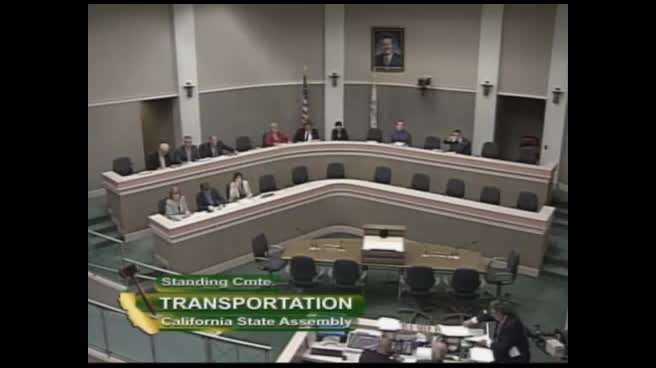 4MIN
Assembly Standing Committee on Transportation
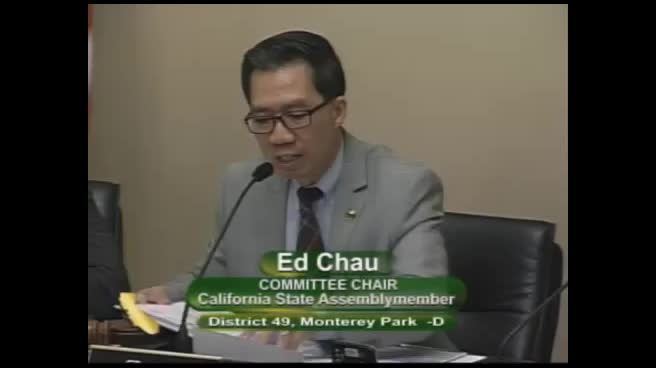 6MIN
Assembly Standing Committee on Privacy and Consumer Protection
Bill Author

Bill Co-Author(s):