AB 168: Mental health: community-based services.
- Session Year: 2015-2016
- House: Assembly
- Latest Version Date: 2016-09-12
Existing law provides for the Medi-Cal program, which is administered by the State Department of Health Care Services and under which qualified low-income persons receive health care benefits. The Medi-Cal program is, in part, governed and funded by federal Medicaid provisions. Existing law provides for a schedule of benefits under the Medi-Cal program and provides for specified services, including various mental health services. Existing federal law, the Protecting Access to Medicare Act of 2014, requires the United States Secretary of Health and Human Services to, among other things, no later than September 1, 2017, select from among those states awarded a planning grant, the states that may participate in a time-limited demonstration program that is designed to improve access to community mental health and substance use treatment services provided by certified community behavioral health clinics. Existing law requires the department to develop a proposal for the United States Secretary of Health and Human Services to be selected as a participating state in this time-limited demonstration program, as specified.
This bill would require the department to provide an update to the Legislature by March 1, 2017, to include specified information if the state is selected as a participating state in this time-limited demonstration program.
Existing law provides for the Medi-Cal program, which is administered by the State Department of Health Care Services and under which qualified low-income persons receive health care benefits. The Medi-Cal program is, in part, governed and funded by federal Medicaid provisions. Existing law provides for a schedule of benefits under the Medi-Cal program and provides for specified services, including various mental health services. Existing federal law, the Protecting Access to Medicare Act of 2014, requires the United States Secretary of Health and Human Services to, among other things, no later than September 1, 2017, select from among those states awarded a planning grant, the states that may participate in a time-limited demonstration program that is designed to improve access to community mental health and substance use treatment services provided by certified community behavioral health clinics. Existing law requires the department to develop a proposal for the United States Secretary of Health and Human Services to be selected as a participating state in this time-limited demonstration program, as specified.
This bill would require the department to submit a report provide an update to the Legislature by March 1, 2017, to include specified information if the state is selected as a participating state in this time-limited demonstration program.
Existing law provides for the Medi-Cal program, which is administered by the State Department of Health Care Services and under which qualified low-income persons receive health care benefits. The Medi-Cal program is, in part, governed and funded by federal Medicaid provisions. Existing law provides for a schedule of benefits under the Medi-Cal program and provides for specified services, including various mental health services. Existing federal law, the Protecting Access to Medicare Act of 2014, requires the United States Secretary of Health and Human Services to, among other things, select, no later than September 1, 2017, select from among those states awarded a planning grant to grant, the states that may participate in a time-limited demonstration program that is designed to improve access to community mental health and substance use treatment services provided by certified community behavioral health clinics. Existing law requires the department to develop a proposal for the United States Secretary of Health and Human Services to be selected as a participating state in this time-limited demonstration program, as specified.
This bill would require the department to develop and submit a proposal to the United States Secretary of Health and Human Services to be selected as a participating state in the time-limited demonstration program described above to receive enhanced federal matching funds for mental health services provided by certified community behavioral health clinics to Medi-Cal beneficiaries. The bill would require the department to work with counties and other stakeholders in developing its proposal for participation in the demonstration program. The bill would also require the department to include in its proposal a requirement that a county shall not be selected to participate in the demonstration program unless the county includes plans to redirect a portion of the funds currently used to match federal funds to provide increased housing opportunities for individuals with severe mental illnesses, as specified.
This bill would require the department to submit a report to the Legislature by March 1, 2017, to include specified information if the state is selected as a participating state in this time-limited demonstration program.
Existing law provides for the Medi-Cal program, which is administered by the State Department of Health Care Services and under which qualified low-income persons receive health care benefits. The Medi-Cal program is, in part, governed and funded by federal Medicaid provisions. Existing law provides for a schedule of benefits under the Medi-Cal program and provides for specified services, including various mental health services. Existing federal law, the Protecting Access to Medicare Act of 2014, requires the United States Secretary of Health and Human Services to, among other things, select, no later than September 1, 2017, among those states awarded a planning grant to participate in a time-limited demonstration program that is designed to improve access to community mental health and substance use treatment services provided by certified community behavioral health clinics.
This bill would require the department to develop and submit a proposal to the United States Secretary of Health and Human Services to be selected as a participating state in the time-limited demonstration program described above to receive enhanced federal matching funds for mental health services provided by certified community behavioral health clinics to Medi-Cal beneficiaries. The bill would require the department to work with counties and other stakeholders in developing its proposal for participation in the demonstration program. The bill would also require the department to include in its proposal a requirement that a county shall not be selected to participate in the demonstration program unless the county includes plans to redirect a portion of the funds currently used to match federal funds to provide increased housing opportunities for individuals with severe mental illnesses, as specified.
Existing law generally requires the county auditor, in each fiscal year, to allocate property tax revenues to local jurisdictions in accordance with specified formulas and procedures, and generally requires that each jurisdiction be allocated an amount equal to the total of the amount of revenue allocated to that jurisdiction in the prior fiscal year, subject to certain modifications, and that jurisdictions portion of the annual tax increment, as defined. Existing property tax law also requires a county auditor to make certain property tax revenue allocations to qualifying cities, as defined, in accordance with a specified Tax Equity Allocation formula, and to make corresponding reductions in the amount of property tax revenue that is allocated to the county. Existing law also requires the county auditor, in the case in which a qualifying city becomes the successor agency to a special district as a result of a merger with that district as described in a specified statute, to additionally allocate to that successor qualifying city that amount of property tax revenue that otherwise would have been allocated to that special district pursuant to general allocation requirements.
This bill would make nonsubstantive changes to the provision pertaining to property tax revenue allocations to a qualifying city that merges with a special district.
The Legislature finds and declares the following:
(a)In 2014 Congress enacted the federal Protecting Access to Medicare Act of 2014.
(b)Under the Protecting Access to Medicare Act, eight states will be selected to have their federal share of costs increased to 65 percent for two years for outpatient behavioral health care for individuals with severe mental illnesses or serious emotional disturbances.
(c)This federal funding would free up substantial funds in participating counties that are currently being used to match federal funds. The money that is currently being used to match federal funds would be available to be used to meet the mental health service and housing needs of those individuals who are not currently receiving the behavioral health care that they need.
(d)In October 2015, the United States Secretary of Health and Human Services awarded California a planning grant pursuant to Section 223 of the federal Protecting Access to Medicare Act of 2014 which partially supported California in, among other things, developing its proposal to participate in the two-year demonstration program.
(e)California is among 24 states competing to be one of the eight states chosen to participate in the two-year demonstration program.
(f)The Mental Health Services Act was approved by voters in 2004 for the primary purpose of addressing unmet mental health needs.
(g)It is an appropriate use of Mental Health Services Act funds to support Californias application to participate in this demonstration program, including by using these funds to prepare actuarial rates and provide technical assistance to counties seeking to become certified community behavioral health centers.
(h)This act is consistent with and furthers the intent of the Mental Health Services Act within the meaning of Section 18 of the Mental Health Services Act.
SEC. 2.Section 14021.2 of the Welfare and Institutions Code is amended to read:14021.2.(a)The department shall develop a proposal for the United States Secretary of Health and Human Services for selection as a participating state in the time-limited demonstration program pursuant to Section 223 of the federal Protecting Access to Medicare Act of 2014 (Public Law 113-93) in order to improve mental health services furnished by certified community behavioral health clinics to Medi-Cal beneficiaries.
(b)The department shall use the funds appropriated in the act that added this section to pay any costs that will support the development of a competitive proposal, including, but not limited to, establishing actuarially sound rates and providing technical assistance to counties.
(c)If the state is selected as a participating state in the time-limited demonstration program described in subdivision (a), the department, by March 1, 2017, shall provide an update to the Legislature that includes, to the extent it is available, the following information:
(1)The names of the participating counties.
(2)The estimated amount of additional funding each county is expected to receive under the demonstration program.
(3)The proposed uses of the additional funds and the county funds no longer required to be used as the federal match.
(4)A description of the improved partnerships between certified community behavioral health clinics and veterans organizations, primary care providers, health plans, educational agencies, and other organizations that the demonstration program includes.
(5)Other identified benefits from the demonstration program funding and planning process, and recommendations on any components of the demonstration program that could be extended to other counties.
The Legislature finds and declares the following:
(a)In 2014 Congress enacted the federal Protecting Access to Medicare Act of 2014.
(b)Under the Protecting Access to Medicare Act, eight states will be selected to have their federal share of costs increased to 65 percent for two years for outpatient behavioral health care for individuals with severe mental illnesses or serious emotional disturbances.
(c)This federal funding would free up substantial funds in participating counties that are currently being used to match federal funds. The money that is currently being used to match federal funds would be available to be used to meet the mental health service and housing needs of those individuals who are not currently receiving the behavioral health care that they need.
(d)In October 2015, the United States Secretary of Health and Human Services awarded California a planning grant pursuant to Section 223 of the federal Protecting Access to Medicare Act of 2014 which partially supported California in, among other things, developing its proposal to participate in the two-year demonstration program.
(e)California is among 24 states competing to be one of the eight states chosen to participate in the two-year demonstration program.
(f)The Mental Health Services Act was approved by voters in 2004 for the primary purpose of addressing unmet mental health needs.
(g)It is an appropriate use of Mental Health Services Act funds to support Californias application to participate in this demonstration program, including by using these funds to prepare actuarial rates and provide technical assistance to counties seeking to become certified community behavioral health centers.
(h)This act is consistent with and furthers the intent of the Mental Health Services Act within the meaning of Section 18 of the Mental Health Services Act.
SEC. 2.Section 14021.2 of the Welfare and Institutions Code is amended to read:14021.2.(a)The department shall develop a proposal for the United States Secretary of Health and Human Services for selection as a participating state in the time-limited demonstration program pursuant to Section 223 of the federal Protecting Access to Medicare Act of 2014 (Public Law 113-93) in order to improve mental health services furnished by certified community behavioral health clinics to Medi-Cal beneficiaries.
(b)The department shall use the funds appropriated in the act that added this section to pay any costs that will support the development of a competitive proposal, including, but not limited to, establishing actuarially sound rates and providing technical assistance to counties.
(c)If the state is selected as a participating state in the time-limited demonstration program described in subdivision (a), the department, by March 1, 2017, shall submit a report provide an update to the Legislature that includes includes, to the extent it is available, the following information:
(1)The names of the participating counties.
(2)The estimated amount of additional funding each county is expected to receive under the demonstration program.
(3)The proposed uses of the additional funds and the county funds no longer required to be used as the federal match.
(4)A description of the improved partnerships with between certified community behavioral health clinics and veterans organizations, primary care providers, health plans, educational agencies, and other organizations that the demonstration program includes.
(5)Other identified benefits from the demonstration program funding and planning process, and recommendations on any components of the demonstration program that could be extended to other counties.
(d)(1)The requirement for submitting a report imposed under subdivision (c) is inoperative on March 1, 2021, pursuant to Section 10231.5 of the Government Code.
(2)A report to be submitted pursuant to subdivision (c) shall be submitted in compliance with Section 9795 of the Government Code.
The Legislature finds and declares the following:
(a)In 2014 Congress enacted the federal Protecting Access to Medicare Act of 2014.
(b)Under the Protecting Access to Medicare Act, eight states will be selected to have their federal share of costs increased to 65 percent for two years for outpatient behavioral health care for individuals with severe mental illnesses or serious emotional disturbances.
(c)This federal funding would free up substantial funds in participating counties that are currently being used to match federal funds. The money that is currently being used to match federal funds would be available to be used to meet the mental health service and housing needs of those individuals who are not currently receiving the behavioral health care that they need.
(c)
(d)In October 2015, the United States Secretary of Health and Human Services awarded California a planning grant pursuant to Section 223 of the federal Protecting Access to Medicare Act of 2014 which partially supported California in, among other things, developing its proposal to participate in the two-year demonstration program.
(e)California is among 24 states competing to be one of the eight states chosen to participate in the two-year demonstration program.
(d)
(f)The Mental Health Services Act was approved by voters in 2004 for the primary purpose of addressing unmet mental health needs.
(e)
(g)It is an appropriate use of Mental Health Services Act funds to support Californias application to participate in this demonstration program, including by using these funds to prepare actuarial rates and provide technical assistance to counties seeking to become certified community behavioral health centers.
(f)
(h)This act is consistent with and furthers the intent of the Mental Health Services Act within the meaning of Section 18 of the Mental Health Services Act.
SEC. 2.Section 14021.2 of the Welfare and Institutions Code is amended to read:14021.2.(a)The department shall develop a proposal for the United States Secretary of Health and Human Services for selection as a participating state in the time-limited demonstration program pursuant to Section 223 of the federal Protecting Access to Medicare Act of 2014 (Public Law 113-93) in order to improve mental health services furnished by certified community behavioral health clinics to Medi-Cal beneficiaries.
(b)The department shall use the funds appropriated in the act that added this section to pay any costs that will support the development of a competitive proposal, including, but not limited to, establishing actuarially sound rates and providing technical assistance to counties.
(c)If the state is selected as a participating state in the time-limited demonstration program described in subdivision (a), the department, by March 1, 2017, shall submit a report to the Legislature that includes the following information:
(1)The names of the participating counties.
(2)The estimated amount of additional funding each county is expected to receive under the demonstration program.
(3)The proposed uses of the additional funds and the county funds no longer required to be used as the federal match.
(4)A description of the improved partnerships with veterans organizations, primary care providers, health plans, educational agencies, and other organizations that the demonstration program includes.
(5)Other identified benefits from the demonstration program funding and planning process, and recommendations on any components of the demonstration program that could be extended to other counties.
(d)(1)The requirement for submitting a report imposed under subdivision (c) is inoperative on March 1, 2021, pursuant to Section 10231.5 of the Government Code.
(2)A report to be submitted pursuant to subdivision (c) shall be submitted in compliance with Section 9795 of the Government Code.
SECTION 1.The Legislature finds and declares the following:
(a)In 2014 Congress enacted the federal Protecting Access to Medicare Act of 2014.
(b)Under the Protecting Access to Medicare Act, eight states will be selected to have their federal share of costs increased to 90 percent for two years for outpatient behavioral health care for individuals with severe mental illnesses or serious emotional disturbances.
(c)If successful, this federal opportunity would enable California to serve the tens of thousands of individuals with those conditions that it now lacks the funding to serve.
(d)A major challenge in serving that population is that many are homeless and in need of housing assistance. Federal funding cannot pay for that housing assistance.
(e)This federal funding would free up nearly $2 billion in county funds now being used to match federal funds. The money that is currently being used to match federal funds will now be available to be used to meet the housing needs of those individuals who are not currently receiving the behavioral health care that they need.
(f)In October 2015, the United States Secretary of Health and Human Services awarded California a planning grant pursuant to Section 223 of the federal Protecting Access to Medicare Act of 2014 to support California in, among other things, developing its proposal to participate in the two-year demonstration program.
SEC. 2.Section 14021.2 is added to the Welfare and Institutions Code, to read:14021.2.(a)The department shall develop and submit a proposal to the United States Secretary of Health and Human Services for selection as a participating state in the time-limited demonstration program pursuant to Section 223 of the federal Protecting Access to Medicare Act of 2014 (Public Law 113-93) in order to improve mental health services furnished by certified community behavioral health clinics to Medi-Cal beneficiaries.
(b)In planning to develop its proposal for the demonstration program, the department shall work with counties and other stakeholders to identify the unmet need for the covered services and to estimate the number of individuals who will need housing assistance.
(c)The proposal shall require that counties shall not be selected to participate in the demonstration program unless they include plans to redirect a portion of the funds that are currently used to match federal funds but will not be needed for that purpose during the demonstration period to provide increased housing opportunities for individuals with severe mental illnesses.
The Legislature finds and declares the following:
(a)In 2014 Congress enacted the federal Protecting Access to Medicare Act of 2014.
(b)Under the Protecting Access to Medicare Act, eight states will be selected to have their federal share of costs increased to 90 percent for two years for outpatient behavioral health care for individuals with severe mental illnesses or serious emotional disturbances.
(c)If successful, this federal opportunity would enable California to serve the tens of thousands of individuals with those conditions that it now lacks the funding to serve.
(d)A major challenge in serving that population is that many are homeless and in need of housing assistance. Federal funding cannot pay for that housing assistance.
(e)This federal funding would free up nearly $2 billion in county funds now being used to match federal funds. The money that is currently being used to match federal funds will now be available to be used to meet the housing needs of those individuals who are not currently receiving the behavioral health care that they need.
(f)In October 2015, the United States Secretary of Health and Human Services awarded California a planning grant pursuant to Section 223 of the federal Protecting Access to Medicare Act of 2014 to support California in, among other things, developing its proposal to participate in the two-year demonstration program.
SEC. 2.Section 14021.2 is added to the Welfare and Institutions Code, to read:14021.2.(a)The department shall develop and submit a proposal to the United States Secretary of Health and Human Services for selection as a participating state in the time-limited demonstration program pursuant to Section 223 of the federal Protecting Access to Medicare Act of 2014 (Public Law 113-93) in order to improve mental health services furnished by certified community behavioral health clinics to Medi-Cal beneficiaries.
(b)In planning to develop its proposal for the demonstration program, the department shall work with counties and other stakeholders to identify the unmet need for the covered services and to estimate the number of individuals who will need housing assistance.
(c)The proposal shall require that counties shall not be selected to participate in the demonstration program unless they include plans to redirect a portion of the funds that are currently used to match federal funds but will not be needed for that purpose during the demonstration period to provide increased housing opportunities for individuals with severe mental illnesses.
SECTION 1.Section 96.15 of the Revenue and Taxation Code is amended to read:96.15.(a)Notwithstanding any other provision of this chapter, if a qualifying city, as defined by subdivision (d) of Section 98 or subdivision (f) of Section 98.02, becomes the successor agency to a special district as a result of a merger described in Section 57087.3 of the Government Code, the auditor shall allocate to that qualifying city, in addition to any other amount of ad valorem property tax revenue required to be allocated to that city pursuant to this chapter, the amount of ad valorem property tax revenue that otherwise would be allocated to that district pursuant to this article.
(b)It is the intent of the Legislature in enacting this section to confirm and clarify a county auditors duty and authority, established by subdivision (d) of Section 57087.3 of the Government Code, to allocate to a qualifying city the ad valorem property tax revenue of a subsidiary district that has been merged with the city.
(a)Notwithstanding any other provision of this chapter, in the event if a qualifying city city, as defined in by subdivision (d) of Section 98 or subdivision (f) of Section 98.02 98.02, becomes the successor agency to a special district as a result of a merger described in Section 57087.3 of the Government Code, the auditor shall allocate to that qualifying city, in addition to any other amount of ad valorem property tax revenue required to be allocated to that city pursuant to this chapter, the amount of ad valorem property tax revenue that otherwise would be allocated to that district pursuant to this article.
(b)It is the intent of the Legislature in enacting this section to confirm and clarify a county auditors duty and authority, established by subdivision (d) of Section 57087.3 of the Government Code, to allocate to a qualifying city the ad valorem property tax revenue of a subsidiary district that has been merged with the city.
|
Date
|
Status
|
|---|---|
| Aug 1, 2016 | From committee: Be placed on second reading file pursuant to Senate Rule 28.8 and ordered to consent calendar. |
| Sep 12, 2016 | Chaptered by Secretary of State - Chapter 283, Statutes of 2016. |
| Sep 12, 2016 | Approved by the Governor. |
| Sep 1, 2016 | Enrolled and presented to the Governor at 4:30 p.m. |
| Aug 25, 2016 | Senate amendments concurred in. To Engrossing and Enrolling. (Ayes 79. Noes 0. Page 6284.). |
| Aug 25, 2016 | Senate amendments concurred in. To Engrossing and Enrolling. |
| Aug 23, 2016 | In Assembly. Concurrence in Senate amendments pending. May be considered on or after August 25 pursuant to Assembly Rule 77. |
| Aug 22, 2016 | Read third time. Passed. Ordered to the Assembly. (Ayes 39. Noes 0. Page 5251.). |
| Aug 22, 2016 | Read third time. Passed. Ordered to the Assembly. |
| Aug 18, 2016 | Read second time. Ordered to third reading. |
| Aug 17, 2016 | Read third time and amended. Ordered to second reading. |
| Aug 11, 2016 | Ordered to third reading. |
| Aug 11, 2016 | From Consent Calendar. |
| Aug 2, 2016 | Read second time. Ordered to Consent Calendar. |
| Jan 22, 2015 | Read first time. To print. |
| Jun 30, 2016 | From committee: Do pass and re-refer to Com. on APPR. with recommendation: To Consent Calendar. (Ayes 8. Noes 0.) (June 29). Re-referred to Com. on APPR. |
| Jun 20, 2016 | From committee chair, with author's amendments: Amend, and re-refer to committee. Read second time, amended, and re-referred to Com. on HEALTH. |
| Feb 4, 2016 | Referred to Com. on HEALTH. |
| Jan 27, 2016 | Read third time. Passed. Ordered to the Senate. (Ayes 78. Noes 0. Page 3508.) |
| Jan 27, 2016 | In Senate. Read first time. To Com. on RLS. for assignment. |
| Jan 21, 2016 | Read second time. Ordered to Consent Calendar. |
| Jan 21, 2016 | From committee: Do pass. To Consent Calendar. (Ayes 17. Noes 0.) (January 21). |
| Jan 13, 2016 | From committee: Do pass and re-refer to Com. on APPR. (Ayes 19. Noes 0.) (January 12). Re-referred to Com. on APPR. |
| Jan 4, 2016 | Re-referred to Com. on HEALTH. |
| Jan 4, 2016 | From committee chair, with author's amendments: Amend, and re-refer to Com. on HEALTH. Read second time and amended. |
| Dec 9, 2015 | Referred to Com. on HEALTH. |
| Jan 23, 2015 | From printer. May be heard in committee February 22. |
|
Date
|
Description
|
Location
|
Votes
|
|
|---|---|---|---|---|
| Aug 25, 2016 | AB 168 MAIENSCHEIN Concurrence in Senate Amendments | Assembly Floor |
Passed |
|
| Aug 22, 2016 | Assembly 3rd Reading AB168 Maienschein By Beall | Senate Floor |
Passed |
|
| Jun 29, 2016 | Do pass, but first be re-referred to the Committee on [Appropriations] with the recommendation: To Consent Calendar | Senate Standing Committee on Health |
Passed |
|
| Jan 27, 2016 | AB 168 MAIENSCHEIN Consent Calendar Second Day Regular Session | Assembly Floor |
Passed |
|
| Jan 21, 2016 | Do pass. To Consent Calendar. | Assembly Standing Committee on Appropriations |
Passed |
|
| Jan 12, 2016 | Do pass and be re-referred to the Committee on [Appropriations] | Assembly Standing Committee on Health |
Passed |
This list shows positions taken on this bill by organizations on the date displayed, which is linked to the original source.
Positions by individuals are not included.
|
Organization
|
Position
|
Date
|
|---|---|---|
| California Chapter of the American College of Emergency Physicians | ** Support | Aug 22, 2016 |
| California Council Of Community Behavioral Health Agencies | ** Support | Aug 22, 2016 |
| Jewish Family Service | ** Support | Aug 22, 2016 |
| Mental Health America in California | ** Support | Aug 22, 2016 |
| Western Center On Law And Poverty Inc. | ** Support | Aug 22, 2016 |
CONCURRENCE IN SENATE AMENDMENTS
CSA1 Bill Id:AB 168
Author:(Maienschein)
As Amended Ver:August 17, 2016
Majority vote
ASSEMBLY: | 78-0 | (January 27, 2016) | SENATE: | 39-0 | (August 22, 2016) |
Original Committee Reference: HEALTH
SUMMARY: Requires the Department of Health Care Services (DHCS) to develop and submit a proposal to participate in a demonstration project authorized under the United States (U.S.) Protecting Access to Medicare Act of 2014 (H.R. 4302) to improve mental health services provided by certified community behavioral health clinics to Medi-Cal beneficiaries, as specified.
The Senate amendments require, if chosen to participate in a federal demonstration project authorized under H.R. 4302, DHCS to provide an update to the Legislature by March 1, 2017, that includes, to the extent that it is available, names of the participating counties, the estimated amount of additional funding each county is expected to receive, identified benefits from the demonstration program funding and planning process, and other information as specified.
EXISTING FEDERAL LAW:
- Authorizes the Patient Protection and Affordable Care Act to increase access to health care through an expansion of Medicaid (Medi-Cal in California) eligibility, subsidizing insurance premiums, and setting aside funds for health promotion and disease prevention, among others.
- Establishes an eight-state demonstration project that creates criteria for "Certified Community Behavioral Health Clinics" (CCBHCs), entities designed to serve individuals with serious mental illnesses and substance use disorders.
- Provides $25 million that will be available to states as planning grants to develop applications to participate in the two-year pilot.
EXISTING STATE LAW:
- Establishes the Medi-Cal program, administered by DHCS, which provides comprehensive health benefits to low-income children, their parents or caretaker relatives, pregnant women, elderly, blind or disabled persons, nursing home residents, and refugees who meet specified eligibility criteria.
- Establishes, under the terms of a federal Medicaid waiver, a managed care program providing Medi-Cal specialty mental health services for eligible low-income persons administered through local county mental health plans under contract with the state.
- Requires DHCS to develop and submit a proposal to participate in a demonstration project authorized under H.R. 4302 to improve mental health services provided by CCBHCs to Medi-Cal beneficiaries.
FISCAL EFFECT: According to the Senate Appropriations Committee, pursuant to Senate Rule 28.8, negligible state costs.
COMMENTS: According to the author, federal law enables successful states to nearly double federal funds to support community mental health and alcohol and drug services with no additional costs to the state or county. These additional funds will significantly help California's counties serve more people who are homeless due to an untreated mental illness and get them off the streets, out of hospitals and jails, and into treatment. The author states that if California is successful in its bid for the additional funding, it would benefit the state to the tune of about $2 billion. The savings to the counties will free up Proposition 63 funds and other county mental health funds that are now expended on hospital care. The author concludes that those savings can then be redirected to supportive housing efforts which will help make the effects of these dollars more permanent.
On March 31, 2014, Congress passed the Protecting Access to Medicare Act (Act), which included $25 million for a two year, eight state demonstration program aimed at increasing Americans' access to community mental health and substance use treatment services while improving Medicaid reimbursement for these services. The Act established criteria for CCBHCs when serving individuals with serious mental illnesses and substance use disorders that provide intensive, person-centered, multidisciplinary, evidence-based screening, assessment, diagnostics, treatment, prevention, and wellness services. The U.S. Health and Human Services Secretary is directed to establish a process for selecting states to participate in this pilot. The Act establishes the match rate for CCBHC services as either the Enhanced Federal Medical Assistance Program (FMAP)/Children's Health Insurance Program rate or, for newly eligible "expansion" Medicaid beneficiaries, the current FMAP for that population – which is 100% now and moves down to 90% by 2020. Participating states must develop a prospective payment system for reimbursing CCBHCs for required services provided by these entities.
The Substance Abuse and Mental Health Services Administration (SAMHSA) is currently in the process of determining what the eligibility criteria will be for the CCBHCs. CCBHCs cannot refuse service to any person based either on ability to pay or residence. This requirement, together with the fact that improving access to and the quality of health care for the Medicaid population may also positively affect the health of others, means that the CCBHC demonstration program may have long-lasting and beneficial effects beyond the realm of Medicaid enrollees.
Authorized under Section 223 of the Protecting Access to Medicare Act of 2014, the planning grants are part of a comprehensive effort to integrate behavioral health with physical health care, utilize evidence-based practices on a more consistent basis, and improve access to high quality care. The planning grants will be used to support states to certify community behavioral health clinics, solicit input from stakeholders, establish prospective payment systems for demonstration reimbursable services, and prepare an application to participate in the demonstration program.
On October 19, 2015, the SAMHSA, in conjunction with the Centers for Medicare and Medicaid Services and the Assistant Secretary of Planning and Evaluation, awarded a total of $22.9 million in planning grants for CCBHCs. Planning grants were awarded to 24 states, including California, to support efforts to improve behavioral health of their citizens by providing community-based mental health and substance use disorder treatment. California received a planning grant that totaled just under $1 million.
Analysis Prepared by: Paula Villescaz / HEALTH / (916) 319-2097 FN: 0004535
Office of Senate Floor Analyses (916) 651-1520 Fax: (916) 327-4478 | AB 168 |
THIRD READING
Bill No: AB 168
Amended: 8/17/16 in Senate
SENATE HEALTH COMMITTEE: 8-0, 6/29/16
AYES: Hernandez, Nguyen, Hall, Mitchell, Monning, Nielsen, Pan, Roth
NO VOTE RECORDED: Wolk
SENATE APPROPRIATIONS COMMITTEE: Senate Rule 28.8
ASSEMBLY FLOOR: 78-0, 1/27/16 (Consent) - See last page for vote
SUBJECT: Mental health: community-based services
DIGEST: This bill requires the Department of Health Care Services, if chosen to participate in a federal demonstration program, as specified, to provide an update to the Legislature, as specified, by March 1, 2017.
Senate Floor Amendments on 8/17/16 delete the requirement for the Department of Health Care Services (DHCS) to submit a report and instead require DHCS to provide an update to the Legislature, to the extent that specified information is available.
Existing federal law:
- Enacts the Patient Protection and Affordable Care Act to increase access to health care through a number of measures, including expanding Medicaid eligibility, subsidizing insurance premiums, and setting aside funds for health promotion and disease prevention.
- Authorizes, in Section 223 of the Protecting Access to Medicare Act (PAMA) of 2014 (P.L. 113-93), a time-limited demonstration program that creates criteria for certified community behavioral health clinics (CCBHCs) and provides planning grants to develop applications to participate in the demonstration program.
Existing state law:
- Establishes the Medi-Cal program, administered by DHCS, under which qualified low-income individuals receive health care benefits. The Medi-Cal program is, in part, governed and funded by federal Medicaid provisions.
- Requires DHCS to develop a proposal for the time-limited demonstration program.
This bill:
- Requires DHCS, if it is chosen to participate in the federal demonstration program, to provide an update to the Legislature by March 1, 2017, that includes, to the extent the information is available:
- Names of the participating counties;
- Estimated amount of additional funding each county is expected to receive;
- Proposed uses of the additional funds and county funds no longer required to be used as the federal match;
- A description of improved partnerships with veterans organizations, primary care providers, health plans, educational agencies, and other organizations that the demonstration program includes; and,
- Other identified benefits from the demonstration program funding and planning process, and recommendations on any components of the demonstration program that could be extended to other counties.
Background
Federal law authorizes PAMA to establish a demonstration program that creates criteria for CCBHCs, which are facilities designed to serve individuals with serious mental illnesses and substance use disorders (SUDs). PAMA provides nearly $25 million that will be available to states as planning grants to develop applications. PAMA also directs the United States Secretary of Health and Human Services (USSHHS) to award planning grants to states for the development of demonstration program proposals that are due by October 31, 2016, and to select states to participate in the demonstration program no later than December 31, 2016. Section 223 of PAMA authorizes the USSHHS to:
- Establish criteria that states will use to certify CCBHCs for a two-year demonstration program;
- Provide guidance on the development of a Prospective Payment System for payment of services provided by CCBHCs;
- Award grants to states for planning purposes to develop proposals to participate in the demonstration program;
- Pay states participating in the demonstration program federal matching funds equivalent to the standard Children’s Health Insurance Program matching rate for services provided to currently enrolled Medicaid beneficiaries; and,
- Evaluate the program and prepare annual reports to Congress.
CCBHCs. The federal Substance Abuse and Mental Health Services Administration (SAMHSA) developed eligibility criteria for states to certify CCBHCs, based on a review of selected state Medicaid Plans, standards for Federally Qualified Health Centers and Medicaid Health Homes, and quality measures currently in use by states. According to SAMHSA’s Web site, the criteria are intended to extend quality and to improve outcomes of the behavioral health care system within the authorities of state regulations, statutes, and state Medicaid Plans; establish a basic level of services at which the CCBHCs should, at a minimum, operate; and allow states the flexibility in determining how to implement the criteria in a manner best addressing the needs of the population being served. The criteria are designed to encourage states and CCBHCs to further develop their abilities to offer behavioral health services that comport with current best practices. Populations to be served are adults with serious mental illness, children with serious emotional disturbance, and those with long-term and serious SUDs, as well as others with mental illness and SUDs.
Comments
Author’s statement. According to the author, under PAMA, eight states will be selected to have their federal share of costs increased to 65% for two years for outpatient behavioral health care for individuals with severe mental illnesses or serious emotional disturbances. This federal funding would free up substantial funds in participating counties that are currently being used to match federal funds. The money that is currently being used to match federal funds would be available to be used to meet the mental health service and housing needs of those individuals who are not currently receiving the behavioral health care that they need. The update required by this bill will keep the Legislature informed and promote transparency in regards to how the additional funds will be used, and how the realized savings could best be utilized to target the vulnerable population this federal grant is intended to help. The information will enable the state to develop better programs to target the needs of these individuals and utilize funding and other resources in the most efficient manner.
Prior Legislation
AB 847 (Mullin, Chapter 6, Statutes of 2016) requires DHCS to develop a proposal to the USSHHS to be selected as a participating state in the time-limited demonstration program for mental health services to be provided by CCBHCs to Medi-Cal beneficiaries. Appropriates $1 million from Mental Health Services Act funds for DHCS to develop the proposal.
AB 861 (Maienschein, 2015), which was substantially similar to this bill, was vetoed by Governor Brown, who stated that the bill was premature because the state had not been awarded any federal grants or approved as one of the participating states for the demonstration program.
FISCAL EFFECT: Appropriation: Fiscal Com.: Local:
SUPPORT: (Verified 8/17/16)
California Chapter of the American College of Emergency Physicians
California Council of Community Behavioral Health Agencies
Jewish Family Service
Mental Health America in California
Western Center on Law and Poverty
OPPOSITION: (Verified 8/17/16)
None received
ARGUMENTS IN SUPPORT: Supporters state that the federal demonstration program represents state-of-the-art approaches to provide better care, as well as improved payment models, performance outcome incentives, care coordination, and additional funding that can support services not otherwise reimbursable. Supporters state that 22 counties have expressed letters of interest to participate in the program, and that the update required in this bill can inform legislators and other about ways to expand the innovative approaches that are developed for the demonstration program.
ASSEMBLY FLOOR: 78-0, 1/27/16
AYES: Achadjian, Alejo, Travis Allen, Baker, Bigelow, Bloom, Bonilla, Bonta, Brough, Brown, Burke, Calderon, Campos, Chang, Chau, Chávez, Chiu, Chu, Cooley, Cooper, Dababneh, Dahle, Daly, Dodd, Eggman, Frazier, Beth Gaines, Gallagher, Cristina Garcia, Eduardo Garcia, Gatto, Gipson, Gomez, Gonzalez, Gordon, Gray, Grove, Hadley, Harper, Roger Hernández, Holden, Irwin, Jones, Jones-Sawyer, Kim, Lackey, Levine, Linder, Lopez, Low, Maienschein, Mayes, McCarty, Medina, Melendez, Mullin, Nazarian, Obernolte, O'Donnell, Olsen, Patterson, Quirk, Rendon, Ridley-Thomas, Rodriguez, Salas, Santiago, Steinorth, Mark Stone, Thurmond, Ting, Wagner, Waldron, Weber, Wilk, Williams, Wood, Atkins
NO VOTE RECORDED: Mathis
Prepared by: Reyes Diaz / HEALTH / (916) 651-4111
8/18/16 16:57:27
**** END ****
Office of Senate Floor Analyses (916) 651-1520 Fax: (916) 327-4478 | AB 168 |
THIRD READING
Bill No: AB 168
Amended: 6/20/16 in Senate
SENATE HEALTH COMMITTEE: 8-0, 6/29/16
AYES: Hernandez, Nguyen, Hall, Mitchell, Monning, Nielsen, Pan, Roth
NO VOTE RECORDED: Wolk
SENATE APPROPRIATIONS COMMITTEE: Senate Rule 28.8
ASSEMBLY FLOOR: 78-0, 1/27/16 (Consent) - See last page for vote
SUBJECT: Mental health: community-based services
DIGEST: This bill requires the Department of Health Care Services, if chosen to participate in a federal demonstration program, as specified, to report specific information to the Legislature by March 1, 2017.
Existing federal law:
- Enacts the Patient Protection and Affordable Care Act to increase access to health care through a number of measures, including expanding Medicaid eligibility, subsidizing insurance premiums, and setting aside funds for health promotion and disease prevention.
- Authorizes, in Section 223 of the Protecting Access to Medicare Act (PAMA) of 2014 (P.L. 113-93), a time-limited demonstration program that creates criteria for certified community behavioral health clinics (CCBHCs) and provides planning grants to develop applications to participate in the demonstration program.
Existing state law:
- Establishes the Medi-Cal program, administered by the Department of Health Care Services (DHCS), under which qualified low-income individuals receive health care benefits. The Medi-Cal program is, in part, governed and funded by federal Medicaid provisions.
- Requires DHCS to develop a proposal for the time-limited demonstration program.
This bill:
- Requires DHCS, if it is chosen to participate in the federal demonstration program, to provide a report to the Legislature by March 1, 2017, that includes:
- Names of the participating counties;
- Estimated amount of additional funding each county is expected to receive;
- Proposed uses of the additional funds and county funds no longer required to be used as the federal match;
- A description of improved partnerships with veterans organizations, primary care providers, health plans, educational agencies, and other organizations that the demonstration program includes; and,
- Other identified benefits from the demonstration program funding and planning process, and recommendations on any components of the demonstration program that could be extended to other counties.
- Makes the reporting requirement inoperative on March 1, 2021.
Background
Federal law authorizes PAMA to establish a demonstration program that creates criteria for CCBHCs, which are facilities designed to serve individuals with serious mental illnesses and substance use disorders (SUDs). PAMA provides nearly $25 million that will be available to states as planning grants to develop applications. PAMA also directs the United States Secretary of Health and Human Services (USSHHS) to award planning grants to states for the development of demonstration program proposals that are due by October 31, 2016, and to select states to participate in the demonstration program no later than December 31, 2016. Section 223 of PAMA authorizes the USSHHS to:
- Establish criteria that states will use to certify CCBHCs for a two-year demonstration program;
- Provide guidance on the development of a Prospective Payment System for payment of services provided by CCBHCs;
- Award grants to states for planning purposes to develop proposals to participate in the demonstration program;
- Pay states participating in the demonstration program federal matching funds equivalent to the standard Children’s Health Insurance Program matching rate for services provided to currently enrolled Medicaid beneficiaries; and,
- Evaluate the program and prepare annual reports to Congress.
CCBHCs. The federal Substance Abuse and Mental Health Services Administration (SAMHSA) developed eligibility criteria for states to certify CCBHCs, based on a review of selected state Medicaid Plans, standards for Federally Qualified Health Centers and Medicaid Health Homes, and quality measures currently in use by states. According to SAMHSA’s Web site, the criteria are intended to extend quality and to improve outcomes of the behavioral health care system within the authorities of state regulations, statutes, and state Medicaid Plans; establish a basic level of services at which the CCBHCs should, at a minimum, operate; and allow states the flexibility in determining how to implement the criteria in a manner best addressing the needs of the population being served. The criteria are designed to encourage states and CCBHCs to further develop their abilities to offer behavioral health services that comport with current best practices. Populations to be served are adults with serious mental illness, children with serious emotional disturbance, and those with long-term and serious SUDs, as well as others with mental illness and SUDs.
Comments
Author’s statement. According to the author, under PAMA, eight states will be selected to have their federal share of costs increased to 65% for two years for outpatient behavioral health care for individuals with severe mental illnesses or serious emotional disturbances. This federal funding would free up substantial funds in participating counties that are currently being used to match federal funds. The money that is currently being used to match federal funds would be available to be used to meet the mental health service and housing needs of those individuals who are not currently receiving the behavioral health care that they need. The report required by this bill will keep the Legislature informed and promote transparency in regards to how the additional funds will be used, and how the realized savings could best be utilized to target the vulnerable population this federal grant is intended to help. The information will enable the state to develop better programs to target the needs of these individuals and utilize funding and other resources in the most efficient manner.
Prior Legislation
AB 847 (Mullin, Chapter 6, Statutes of 2016) requires DHCS to develop a proposal to the USSHHS to be selected as a participating state in the time-limited demonstration program for mental health services to be provided by CCBHCs to Medi-Cal beneficiaries. Appropriates $1 million from Mental Health Services Act funds for DHCS to develop the proposal.
AB 861 (Maienschein, 2015), which was substantially similar to this bill, was vetoed by Governor Brown, who stated that the bill was premature because the state had not been awarded any federal grants or approved as one of the participating states for the demonstration program.
FISCAL EFFECT: Appropriation: No Fiscal Com.: Yes Local: No
SUPPORT: (Verified 8/5/16)
California Chapter of the American College of Emergency Physicians
California Council of Community Behavioral Health Agencies
Jewish Family Service
Mental Health America in California
Western Center on Law and Poverty
OPPOSITION: (Verified 8/5/16)
None received
ARGUMENTS IN SUPPORT: Supporters state that the federal demonstration program represents state-of-the-art approaches to provide better care, as well as improved payment models, performance outcome incentives, care coordination, and additional funding that can support services not otherwise reimbursable. Supporters state that 22 counties have expressed letters of interest to participate in the program, and that the report required in this bill can inform legislators and other about ways to expand the innovative approaches that are developed for the demonstration program.
ASSEMBLY FLOOR: 78-0, 1/27/16
AYES: Achadjian, Alejo, Travis Allen, Baker, Bigelow, Bloom, Bonilla, Bonta, Brough, Brown, Burke, Calderon, Campos, Chang, Chau, Chávez, Chiu, Chu, Cooley, Cooper, Dababneh, Dahle, Daly, Dodd, Eggman, Frazier, Beth Gaines, Gallagher, Cristina Garcia, Eduardo Garcia, Gatto, Gipson, Gomez, Gonzalez, Gordon, Gray, Grove, Hadley, Harper, Roger Hernández, Holden, Irwin, Jones, Jones-Sawyer, Kim, Lackey, Levine, Linder, Lopez, Low, Maienschein, Mayes, McCarty, Medina, Melendez, Mullin, Nazarian, Obernolte, O'Donnell, Olsen, Patterson, Quirk, Rendon, Ridley-Thomas, Rodriguez, Salas, Santiago, Steinorth, Mark Stone, Thurmond, Ting, Wagner, Waldron, Weber, Wilk, Williams, Wood, Atkins
NO VOTE RECORDED: Mathis
Prepared by: Reyes Diaz / HEALTH / (916) 651-4111
8/11/16 14:35:56
**** END ****
Office of Senate Floor Analyses (916) 651-1520 Fax: (916) 327-4478 | AB |
CONSENT
Bill No: AB 168
:
SENATE HEALTH COMMITTEE: 8-0, 6/29/16
AYES: Hernandez, Nguyen, Hall, Mitchell, Monning, Nielsen, Pan, Roth
NO VOTE RECORDED: Wolk
SENATE APPROPRIATIONS COMMITTEE: Senate Rule 28.8
ASSEMBLY FLOOR: 78-0, 1/27/16 (Consent) - See last page for vote
DIGEST: This bill requires the Department of Health Care Services, if chosen to participate in a federal demonstration program, as specified, to report specific information to the Legislature by March 1, 2017.
Existing federal law:
- Enacts the Patient Protection and Affordable Care Act to increase access to health care through a number of measures, including expanding Medicaid eligibility, subsidizing insurance premiums, and setting aside funds for health promotion and disease prevention.
- Authorizes, in Section 223 of the Protecting Access to Medicare Act (PAMA) of 2014 (P.L. 113-93), a time-limited demonstration program that creates criteria for certified community behavioral health clinics (CCBHCs) and provides planning grants to develop applications to participate in the demonstration program.
Existing state law:
- Establishes the Medi-Cal program, administered by the Department of Health Care Services (DHCS), under which qualified low-income individuals receive health care benefits. The Medi-Cal program is, in part, governed and funded by federal Medicaid provisions.
- Requires DHCS to develop a proposal for the time-limited demonstration program.
This bill:
- Requires DHCS, if it is chosen to participate in the federal demonstration program, to provide a report to the Legislature by March 1, 2017, that includes:
- Names of the participating counties;
- Estimated amount of additional funding each county is expected to receive;
- Proposed uses of the additional funds and county funds no longer required to be used as the federal match;
- A description of improved partnerships with veterans organizations, primary care providers, health plans, educational agencies, and other organizations that the demonstration program includes; and,
- Other identified benefits from the demonstration program funding and planning process, and recommendations on any components of the demonstration program that could be extended to other counties.
- Makes the reporting requirement inoperative on March 1, 2021.
Background
Federal law authorizes PAMA to establish a demonstration program that creates criteria for CCBHCs, which are facilities designed to serve individuals with serious mental illnesses and substance use disorders (SUDs). PAMA provides nearly $25 million that will be available to states as planning grants to develop applications. PAMA also directs the United States Secretary of Health and Human Services (USSHHS) to award planning grants to states for the development of demonstration program proposals that are due by October 31, 2016, and to select states to participate in the demonstration program no later than December 31, 2016. Section 223 of PAMA authorizes the USSHHS to:
- Establish criteria that states will use to certify CCBHCs for a two-year demonstration program;
- Provide guidance on the development of a Prospective Payment System for payment of services provided by CCBHCs;
- Award grants to states for planning purposes to develop proposals to participate in the demonstration program;
- Pay states participating in the demonstration program federal matching funds equivalent to the standard Children’s Health Insurance Program matching rate for services provided to currently enrolled Medicaid beneficiaries; and,
- Evaluate the program and prepare annual reports to Congress.
CCBHCs. The federal Substance Abuse and Mental Health Services Administration (SAMHSA) developed eligibility criteria for states to certify CCBHCs, based on a review of selected state Medicaid Plans, standards for Federally Qualified Health Centers and Medicaid Health Homes, and quality measures currently in use by states. According to SAMHSA’s Web site, the criteria are intended to extend quality and to improve outcomes of the behavioral health care system within the authorities of state regulations, statutes, and state Medicaid Plans; establish a basic level of services at which the CCBHCs should, at a minimum, operate; and allow states the flexibility in determining how to implement the criteria in a manner best addressing the needs of the population being served. The criteria are designed to encourage states and CCBHCs to further develop their abilities to offer behavioral health services that comport with current best practices. Populations to be served are adults with serious mental illness, children with serious emotional disturbance, and those with long-term and serious SUDs, as well as others with mental illness and SUDs.
Comments
Author’s statement. According to the author, under PAMA, eight states will be selected to have their federal share of costs increased to 65% for two years for outpatient behavioral health care for individuals with severe mental illnesses or serious emotional disturbances. This federal funding would free up substantial funds in participating counties that are currently being used to match federal funds. The money that is currently being used to match federal funds would be available to be used to meet the mental health service and housing needs of those individuals who are not currently receiving the behavioral health care that they need. The report required by this bill will keep the Legislature informed and promote transparency in regards to how the additional funds will be used, and how the realized savings could best be utilized to target the vulnerable population this federal grant is intended to help. The information will enable the state to develop better programs to target the needs of these individuals and utilize funding and other resources in the most efficient manner.
Prior Legislation
AB 847 (Mullin, Chapter 6, Statutes of 2016) requires DHCS to develop a proposal to the USSHHS to be selected as a participating state in the time-limited demonstration program for mental health services to be provided by CCBHCs to Medi-Cal beneficiaries. Appropriates $1 million from Mental Health Services Act funds for DHCS to develop the proposal.
AB 861 (Maienschein, 2015), which was substantially similar to this bill, was vetoed by Governor Brown, who stated that the bill was premature because the state had not been awarded any federal grants or approved as one of the participating states for the demonstration program.
FISCAL EFFECT: Appropriation: Fiscal Com.: Local:
SUPPORT: (Verified 8/5/16)
California Chapter of the American College of Emergency Physicians
California Council of Community Behavioral Health Agencies
Jewish Family Service
Mental Health America in California
Western Center on Law and Poverty
OPPOSITION: (Verified 8/5/16)
None received
ARGUMENTS IN SUPPORT: Supporters state that the federal demonstration program represents state-of-the-art approaches to provide better care, as well as improved payment models, performance outcome incentives, care coordination, and additional funding that can support services not otherwise reimbursable. Supporters state that 22 counties have expressed letters of interest to participate in the program, and that the report required in this bill can inform legislators and other about ways to expand the innovative approaches that are developed for the demonstration program.
ASSEMBLY FLOOR: 78-0, 1/27/16
AYES: Achadjian, Alejo, Travis Allen, Baker, Bigelow, Bloom, Bonilla, Bonta, Brough, Brown, Burke, Calderon, Campos, Chang, Chau, Chávez, Chiu, Chu, Cooley, Cooper, Dababneh, Dahle, Daly, Dodd, Eggman, Frazier, Beth Gaines, Gallagher, Cristina Garcia, Eduardo Garcia, Gatto, Gipson, Gomez, Gonzalez, Gordon, Gray, Grove, Hadley, Harper, Roger Hernández, Holden, Irwin, Jones, Jones-Sawyer, Kim, Lackey, Levine, Linder, Lopez, Low, Maienschein, Mayes, McCarty, Medina, Melendez, Mullin, Nazarian, Obernolte, O'Donnell, Olsen, Patterson, Quirk, Rendon, Ridley-Thomas, Rodriguez, Salas, Santiago, Steinorth, Mark Stone, Thurmond, Ting, Wagner, Waldron, Weber, Wilk, Williams, Wood, Atkins
NO VOTE RECORDED: Mathis
8/5/16 10:30:48
**** END ****
SENATE COMMITTEE ON HEALTH
Senator Ed Hernandez, O.D., Chair
BILL NO: AB 168
AUTHOR: | Maienschein | ||
VERSION: | June 20, 2016 | ||
HEARING DATE: | June 29, 2016 | ||
CONSULTANT: | Reyes Diaz | ||
SUBJECT: Mental health: community-based services
SUMMARY:
Requires the Department of Health Care Services, if chosen to participate in a federal demonstration program, as specified, to report specific information to the Legislature by March 1, 2017.
Existing law:
Federal law
- Enacts the Patient Protection and Affordable Care Act (ACA) to increase access to health care through a number of measures, including expanding Medicaid eligibility, subsidizing insurance premiums, and setting aside funds for health promotion and disease prevention.
- Authorizes, in Section 223 of the Protecting Access to Medicare Act (PAMA) of 2014 (P.L. 113-93), a time-limited demonstration program that creates criteria for certified community behavioral health clinics (CCBHCs) and provides planning grants to develop applications to participate in the demonstration program.
State law
- Establishes the Medi-Cal program, administered by the Department of Health Care Services (DHCS), under which qualified low-income individuals receive health care benefits. The Medi-Cal program is, in part, governed and funded by federal Medicaid provisions.
This bill:
- Requires DHCS, if it submits a proposal and is chosen to participate in the federal demonstration program, to provide a report to the Legislature by March 1, 2017, that includes:
- Names of the participating counties;
- Estimated amount of additional funding each county is expected to receive;
- Proposed uses of the additional funds and county funds no longer required to be used as the federal match;
- A description of improved partnerships with veterans organizations, primary care providers, health plans, educational agencies, and other organizations that the demonstration program includes; and,
- Other identified benefits from the demonstration program funding and planning process, and recommendations on any components of the demonstration program that could be extended to other counties.
- Makes the reporting requirement inoperative on March 1, 2021.
FISCAL EFFECT:
This bill has not been analyzed by a fiscal committee.
PRIOR VOTES:
Assembly Floor: | Not relevant |
Assembly Appropriations Committee: | Not relevant |
Assembly Health Committee: | Not relevant |
COMMENTS:
- Author’s statement. According to the author, under PAMA, eight states will be selected to have their federal share of costs increased to 65% for two years for outpatient behavioral health care for individuals with severe mental illnesses or serious emotional disturbances. This federal funding would free up substantial funds in participating counties that are currently being used to match federal funds. The money that is currently being used to match federal funds would be available to be used to meet the mental health service and housing needs of those individuals who are not currently receiving the behavioral health care that they need. The report required by this bill will keep the legislature informed and promote transparency in regards to how the additional funds will be used, and how the realized savings could best be utilized to target the vulnerable population this federal grant is intended to help. The information will enable the state to develop better programs to target the needs of these individuals and utilize funding and other resources in the most efficient manner.
- Background. Federal law authorizes PAMA to establish a demonstration program that creates criteria for CCBHCs, which are facilities designed to serve individuals with serious mental illnesses and substance use disorders (SUDs). PAMA provides nearly $25 million that will be available to states as planning grants to develop applications. PAMA also directs the United States Secretary of Health and Human Services (USHHS) to award planning grants to states for the development of demonstration program proposals that are due by October 31, 2016, and to select states to participate in the demonstration program no later than December 31, 2016. Section 223 of PAMA authorizes the USSHHS to:
- Establish criteria that states will use to certify CCBHCs for a two-year demonstration program;
- Provide guidance on the development of a Prospective Payment System for payment of services provided by CCBHCs;
- Award grants to states for planning purposes to develop proposals to participate in the demonstration program;
- Pay states participating in the demonstration program federal matching funds equivalent to the standard Children’s Health Insurance Program matching rate for services provided to currently enrolled Medicaid beneficiaries; and,
- Evaluate the program and prepare annual reports to Congress.
- CCBHCs. The federal Substance Abuse and Mental Health Services Administration (SAMHSA) developed eligibility criteria for states to certify CCBHCs, based on a review of selected state Medicaid Plans, standards for Federally Qualified Health Centers and Medicaid Health Homes, and quality measures currently in use by states. According to SAMHSA’s Web site, the criteria are intended to extend quality and to improve outcomes of the behavioral health care system within the authorities of state regulations, statutes, and state Medicaid Plans; establish a basic level of services at which the CCBHCs should, at a minimum, operate; and allow states the flexibility in determining how to implement the criteria in a manner best addressing the needs of the population being served. The criteria are designed to encourage states and CCBHCs to further develop their abilities to offer behavioral health services that comport with current best practices. Populations to be served are adults with serious mental illness, children with serious emotional disturbance, and those with long-term and serious SUDs, as well as others with mental illness and SUDs.
- Prior legislation. AB 847 (Mullin, Chapter 6, Statutes of 2016), requires DHCS to develop a proposal for the United States Secretary of Health and Human Services to be selected as a participating state in the time-limited demonstration program for mental health services to be provided by CCBHCs to Medi-Cal beneficiaries. Appropriates $1 million from Mental Health Services Act funds for DHCS to develop the proposal.
AB 861 (Maienschein, 2015), was substantially similar to this bill. AB 861 was vetoed by Governor Brown, who stated that the bill was premature because the state had not been awarded any federal grants or approved as one of the participating states for the demonstration program.
- Support. Supporters state that the federal demonstration program represents state-of-the-art approaches to provide better care, as well as improved payment models, performance outcome incentives, care coordination, and additional funding that can support services not otherwise reimbursable. Supporters state that 22 counties have expressed letters of interest to participate in the program, and that the report required in this bill can inform legislators and other about ways to expand the innovative approaches that are developed for the demonstration program.
SUPPORT AND OPPOSITION:
Support: California Chapter of the American College of Emergency Physicians
California Council of Community Behavioral Health Agencies
Jewish Family Service
Mental Health America in California
Oppose: None received
-- END --
Date of Hearing: January 21, 2016
ASSEMBLY COMMITTEE ON APPROPRIATIONS
Jimmy Gomez, Chair
ABPCA Bill Id:AB 168
Author:(Maienschein) – As Amended Ver:January 4, 2016
Policy Committee: | Health | Vote: | 19 - 0 |
Urgency: No State Mandated Local Program: No Reimbursable: No
SUMMARY:
This bill requires the Department of Health Care Services (DHCS) to apply for, and places restrictions on, a federal demonstration program that offers enhanced federal matching funds for Medi-Cal behavioral health services offered through clinics that meet certain standards.
Specifically, the bill specifies counties shall not be selected to participate in the demonstration program, unless they redirect funds freed up by the higher federal matching rate to increase housing opportunities for individuals with severe mental illnesses. It also requires stakeholder engagement to estimate unmet need for services, and makes related findings and declarations.
FISCAL EFFECT:
Negligible state fiscal effect. The state intends to apply to participate in the demonstration project.
If California is selected as a demonstration state, this bill may indirectly affect the amount of local dollars spent to provide housing for mentally ill individuals, though the extent and magnitude of any such impact is unknown. It is unclear if the requirement for counties to redirect a portion of savings to providing housing would affect California's chances for being selected as a demonstration state.
COMMENTS:
- Purpose. The purpose of this bill is to ensure DHCS applies for the specified federal demonstration project, and to ensure that if money is freed up by increased federal funding for Medi-Cal behavioral health services through the project, that a portion of local savings be redirected to housing homeless mentally ill people. The author asserts savings to the counties will free up Proposition 63 funds and other county mental health funds that are now expended on hospital care.
- Background. Federal law authorizes a two-year state demonstration project, whereby up to eight participating states develop processes to designate and reimburse certified community behavioral health clinics (CCBHCs) that meet certain standards. Twenty-four states, including California, were awarded planning grants that allow them to apply for participation in the two-year demonstration, which begins in 2017. California applied for a $2 million planning grant and was awarded less than $1 million. Stakeholders, including counties, advocates, the administration and the Legislature are currently discussing how to ensure California's grant is competitive, despite having fewer federal resources than requested to develop the demonstration project application.
DHCS's application for the planning grant was made in collaboration with the County Behavioral Health Directors Association (CBHDA) of California, who represent the state's key county partners in the delivery of Medi-Cal behavioral health services to seriously mentally ill enrollees. These services are largely delivered and managed by counties, and local funds pay for the Medi-Cal non-federal share of cost. If California is selected as one of the eight participating states, federal matching funds for the specified behavioral health services would be available at a very favorable federal matching rate of at least 88% for two years.
- Related Legislation. AB 847 (Mullin), pending in the Senate Appropriations Committee, is substantially similar to this bill.
- Previous Legislation. AB 861 (Maienschein) of 2015 was similar to this bill, but required DHCS to apply for the related planning grant (which DHCS received in October 2015). AB 861 was vetoed with a message stating, "This bill would require the DHCS to mandate counties, as a condition of participation in a federal behavioral health demonstration program, to redirect a portion of any local savings to increasing housing opportunities for individuals with severe mental illness. The department has not been awarded the federal grant nor approved as one of eight states to participate in the federal demonstration program. As such, this bill is premature." It is unclear whether this bill addresses the veto message in AB 861. On the one hand, the department has still not yet been selected to participate in the demonstration project, and stakeholder discussions and other planning grant activities are currently underway. On the other hand, this is the only appropriate time to consider legislation with an intent to inform the design of the grant application, which will be submitted this year. The selection of the state as a participant in the demonstration project is likely to take place late this year, and the demonstration project would commence in January 2017.
Analysis Prepared by: Lisa Murawski / APPR. / (916) 319-2081
Date of Hearing: January 12, 2016
ASSEMBLY COMMITTEE ON HEALTH
Rob Bonta, Chair
ABPCA Bill Id:AB 168 (
Author:Maienschein) – As Amended Ver:January 4, 2016
SUBJECT: Mental health: community-based services.
SUMMARY: Requires the Department of Health Care Services (DHCS) to develop and submit a proposal to participate in a demonstration project authorized under the U.S. Protecting Access to Medicare Act of 2014 to improve mental health services provided by certified community behavioral health clinics to Medi-Cal beneficiaries. Requires DHCS to work with counties and other stakeholders to identify unmet needs for the covered services and estimate the number of individuals who will need housing services. Requires the grant application to include plans for counties to redirect a portion of the funds that are currently used to match federal funds but will not be needed for that purpose during the grant period to provide increased housing opportunities for individuals with severe mental illnesses.
EXISTING FEDERAL LAW:
- Authorizes the Patient Protection and Affordable Care Act (ACA) to increase access to health care through an expansion of Medicaid (Medi-Cal in California) eligibility, subsidizing insurance premiums, and setting aside funds for health promotion and disease prevention, among others.
- Authorizes the Protecting Access to Medicare Act (H.R. 4302) to establish an eight-state demonstration project that creates criteria for “Certified Community Behavioral Health Clinics” (CCBHCs), entities designed to serve individuals with serious mental illnesses and substance use disorders.
- Provides $25 million that will be available to states as planning grants to develop applications to participate in the two-year pilot.
EXISTING STATE LAW:
- Establishes the Medi-Cal program, administered by DHCS, which provides comprehensive health benefits to low-income children, their parents or caretaker relatives, pregnant women, elderly, blind or disabled persons, nursing home residents, and refugees who meet specified eligibility criteria.
- Establishes, under the terms of a federal Medicaid waiver, a managed care program providing Medi-Cal specialty mental health services for eligible low-income persons administered through local county mental health plans under contract with the state.
FISCAL EFFECT: This bill has not yet been analyzed by a fiscal committee.
- PURPOSE OF THIS BILL. According to the author, federal law enables successful states to nearly double federal funds to support community mental health and alcohol and drug services with no additional costs to the state or county. These additional funds will significantly help California's counties serve more people who are homeless due to an untreated mental illness and get them off the streets, out of hospitals and jails, and into treatment. The author states that if California is successful in its bid for the additional funding, it would benefit the state to the tune of about $2 billion. The savings to the counties will free up Proposition 63 funds and other county mental health funds that are now expended on hospital care. The author concludes that those savings can then be redirected to supportive housing efforts which will help make the effects of these dollars more permanent.
- BACKGROUND.
- Certified Community Behavioral Health Clinics. On March 31, 2014, Congress passed the Protecting Access to Medicare Act, which included $25 million for a two year, eight state demonstration program aimed at increasing Americans’ access to community mental health and substance use treatment services while improving Medicaid reimbursement for these services. The Act established criteria for CCBHCs when serving individuals with serious mental illnesses and substance use disorders that provide intensive, person-centered, multidisciplinary, evidence-based screening, assessment, diagnostics, treatment, prevention, and wellness services. The U.S. Health and Human Services (HHS) Secretary is directed to establish a process for selecting states to participate in this pilot. The Act establishes the match rate for CCBHC services as either the Enhanced Federal Medical Assistance Program (FMAP)/Children's Health Insurance Program rate or, for newly eligible “expansion” Medicaid beneficiaries, the current FMAP for that population – which is 100% now and moves down to 90% by 2020. Participating states must develop a prospective payment system for reimbursing CCBHCs for required services provided by these entities.
The Substance Abuse and Mental Health Services Administration (SAMHSA) is currently in the process of determining what the eligibility criteria will be for the CCBHCs. CCBHCs cannot refuse service to any person based either on ability to pay or residence. This requirement, together with the fact that improving access to and the quality of health care for the Medicaid population may also positively affect the health of others, means that the CCBHC demonstration program may have long-lasting and beneficial effects beyond the realm of Medicaid enrollees.
Authorized under Section 223 of the Protecting Access to Medicare Act of 2014, the planning grants are part of a comprehensive effort to integrate behavioral health with physical health care, utilize evidence-based practices on a more consistent basis, and improve access to high quality care. The planning grants will be used to support states to certify community behavioral health clinics, solicit input from stakeholders, establish prospective payment systems for demonstration reimbursable services, and prepare an application to participate in the demonstration program.
On October 19, 2015, the SAMHSA, in conjunction with the Centers for Medicare and Medicaid Services (CMS) and the Assistant Secretary of Planning and Evaluation (ASPE), awarded a total of $22.9 million in planning grants for CCBHCs. Planning grants were awarded to 24 states, including California, to support efforts to improve behavioral health of their citizens by providing community-based mental health and substance use disorder treatment. California received a planning grant that totaled just under $1 million. - Proposition 63. Proposition 63 was passed by voters in November 2004. The Mental Health Services Act (MHSA) imposes a 1% income tax on personal income in excess of $1 million and creates a 16 member Commission charged with overseeing the implementation of MHSA.
- Commission. MHSA requires each county mental health department to prepare and submit a three-year plan to DHCS that must be updated each year and approved by DHCS after review and comment by the Commission. In their three-year plans, counties are required to include a list of all programs for which MHSA funding is being requested and that identifies how the funds will be spent and which populations will be served. Counties must submit their plans for approval to the Commission before the counties may spend certain categories of funding.
- Funding. The MHSA provides funding for programs within five components:
- Community Services and Supports: Provides direct mental health services to the severely and seriously mentally ill, such as mental health treatment, cost of health care treatment, and housing supports. Regulation requires counties to direct the majority of its Community Services and Supports funds to Full‑Service Partnerships (FSPs). FSPs are county coordinated plans, in collaboration with the client and the family to provide the full spectrum of community services. These services consist of mental health services and supports, such as peer support and crisis intervention services; and non‑mental health services and supports, such as food, clothing, housing, and the cost of medical treatment;
- Prevention and Early Intervention: Provides services to mental health clients in order to help prevent mental illness from becoming severe and disabling;
- Innovation: Provides services and approaches that are creative in an effort to address mental health clients’ persistent issues, such as improving services for underserved or unserved populations within the community;
- Capital Facilities and Technological Needs: Creates additional county infrastructure such as additional clinics and facilities and/or development of a technological infrastructure for the mental health system, such as electronic health records for mental health services; and,
- Workforce Education and Training: Provides training for existing county mental health employees, outreach and recruitment to increase employment in the mental health system, and financial incentives to recruit or retain employees within the public mental health system.
- Community Services and Supports: Provides direct mental health services to the severely and seriously mentally ill, such as mental health treatment, cost of health care treatment, and housing supports. Regulation requires counties to direct the majority of its Community Services and Supports funds to Full‑Service Partnerships (FSPs). FSPs are county coordinated plans, in collaboration with the client and the family to provide the full spectrum of community services. These services consist of mental health services and supports, such as peer support and crisis intervention services; and non‑mental health services and supports, such as food, clothing, housing, and the cost of medical treatment;
- Commission. MHSA requires each county mental health department to prepare and submit a three-year plan to DHCS that must be updated each year and approved by DHCS after review and comment by the Commission. In their three-year plans, counties are required to include a list of all programs for which MHSA funding is being requested and that identifies how the funds will be spent and which populations will be served. Counties must submit their plans for approval to the Commission before the counties may spend certain categories of funding.
- 2016 "No Place Like Home" Initiative. On January 4, 2016 the California State Senate announced a proposed legislative package intended to re-purposes $2 billion of Proposition 63 bond funds and leverage additional dollars from other local, state, and federal funding for purposes of providing housing for chronically homeless persons with mental illness. The initiative includes proposals to construct permanent supportive housing for chronically homeless persons with mental illness, provide $200 million over four years in shorter-term, rent subsidies while the permanent housing is constructed or rehabilitated and support for special housing programs that will assist families that are part of the child welfare system or are enrolled in California Work Opportunity and Responsibility to Kids (CalWORKs) Housing Support Program.
- Certified Community Behavioral Health Clinics. On March 31, 2014, Congress passed the Protecting Access to Medicare Act, which included $25 million for a two year, eight state demonstration program aimed at increasing Americans’ access to community mental health and substance use treatment services while improving Medicaid reimbursement for these services. The Act established criteria for CCBHCs when serving individuals with serious mental illnesses and substance use disorders that provide intensive, person-centered, multidisciplinary, evidence-based screening, assessment, diagnostics, treatment, prevention, and wellness services. The U.S. Health and Human Services (HHS) Secretary is directed to establish a process for selecting states to participate in this pilot. The Act establishes the match rate for CCBHC services as either the Enhanced Federal Medical Assistance Program (FMAP)/Children's Health Insurance Program rate or, for newly eligible “expansion” Medicaid beneficiaries, the current FMAP for that population – which is 100% now and moves down to 90% by 2020. Participating states must develop a prospective payment system for reimbursing CCBHCs for required services provided by these entities.
- RELATED LEGISLATION. AB 847 (Mullin) is substantially similar to this bill and is currently pending in the Senate Appropriations Committee.
- PREVIOUS LEGISLATION.
- AB 2287 (Monning) of 2010 would have required the California Health and Human Services Agency to direct the appropriate state departments within the agency to apply for Community Transformation Grants under the ACA. AB 2287 died in the Senate Appropriations Committee.
- AB 861 (Maienschein) of 2015 would have required the DHCS to apply to the HHS Secretary for the planning grant awarded for the purpose of developing proposals to participate in demonstration programs to improve mental health services furnished by certified community behavioral health clinics to Medi-Cal beneficiaries. AB 861 was vetoed by Governor Brown. The Governor's veto message stated, "This bill would require the Department of Health Care Services to mandate counties, as a condition of participation in a federal behavioral health demonstration program, to redirect a portion of any local savings to increasing housing opportunities for individuals with severe mental illness. The department has not been awarded the federal grant nor approved as one of eight states to participate in the federal demonstration program. As such, this bill is premature."
- Committee Comments. This bill is substantially similar to AB 861 (Maienschein) of 2015, which was vetoed, as noted in the veto message above, as being "premature". California has since applied for and been awarded the initial CCBHC planning grant, however it has not been awarded the eight-state demonstration grant, of which this bill is requiring DHCS to submit a proposal for.
REGISTERED SUPPORT / OPPOSITION:
Support
None on file.
Opposition
None on file.
Analysis Prepared by: Paula Villescaz / HEALTH / (916) 319-2097
Discussed in Hearing
 1MIN
Assembly Floor
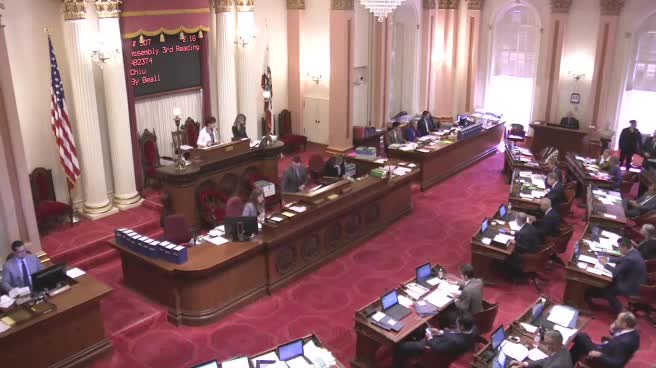 1MIN
Senate Floor
 2MIN
Assembly Standing Committee on Health
Bill Author

Bill Co-Author(s):