AB 1744: Sexual assault forensic medical evidence kit.
- Session Year: 2015-2016
- House: Assembly
- Latest Version Date: 2016-09-30
Existing law requires the Office of Emergency Services to establish a protocol for the examination and treatment of victims of sexual assault and attempted sexual assault, including child molestation, and the collection and preservation of related evidence. Existing law provides failure to comply with this protocol does not constitute grounds to exclude evidence and prohibits a judge from instructing the trier of fact in a case that less weight be given to the evidence based on failure to comply. Existing law also establishes one hospital-based training center to train medical personnel on how to perform medical evidentiary examinations for victims of child abuse or neglect, sexual assault, and other similar crimes.
This bill would require the Department of Justices Bureau of Forensic Services, the California Association of Crime Laboratory Directors, and the California Association of Criminalists to work collaboratively with public crime laboratories, in conjunction with the California Clinical Forensic Medical Training Center, to develop a standardized sexual assault forensic medical evidence kit, as specified, to be used by all California jurisdictions. The bill would encourage those entities to collaborate and establish the basic components for a kit by January 30, 2018, and would require guidelines pertaining to the use of the kits components to be distributed throughout the state by May 30, 2019. The bill would require every local and state agency to be responsible for its own costs in purchasing a kit. The bill would also provide that failure to use a kit does not constitute grounds to exclude evidence and prohibits a judge from instructing the trier of fact in a case that less weight be given to the evidence based on failure to comply.
Existing law requires the Office of Emergency Services to establish a protocol for the examination and treatment of victims of sexual assault and attempted sexual assault, including child molestation, and the collection and preservation of related evidence. Existing law provides failure to comply with this protocol does not constitute grounds to exclude evidence and prohibits a judge from instructing the trier of fact in a case that less weight be given to the evidence based on failure to comply. Existing law also establishes one hospital-based training center to train medical personnel on how to perform medical evidentiary examinations for victims of child abuse or neglect, sexual assault, and other similar crimes.
This bill would require the Department of Justices Bureau of Forensic Services, the California Association of Crime Laboratory Directors, and the California Association of Criminalists to work collaboratively with public crime laboratories, in conjunction with the California Clinical Forensic Medical Training Center, to develop a standardized sexual assault forensic medical evidence kit kit, as specified, to be used by all California jurisdictions. The bill would encourage those entities to collaborate and establish the basic components for a kit by January 30, 2018, and would require guidelines pertaining to the use of the kits components to be distributed throughout the state by May 30, 2019. The bill would require every local and state agency to be responsible for its own costs in purchasing a kit. The bill would also provide that failure to use a kit does not constitute grounds to exclude evidence and prohibits a judge from instructing the trier of fact in a case that less weight be given to the evidence based on failure to comply.
Existing law requires the Office of Emergency Services to establish a protocol for the examination and treatment of victims of sexual assault and attempted sexual assault, including child molestation, and the collection and preservation of related evidence. Existing law also establishes one hospital-based training center to train medical personnel on how to perform medical evidentiary examinations for victims of child abuse or neglect, sexual assault, and other similar crimes.
This bill would require the Department of Justices Bureau of Forensic Services, the California Association of Crime Laboratory Directors, and the California Association of Criminalists to work collaboratively with public crime laboratories, in conjunction with the California Clinical Forensic Medical Training Center, to develop a standardized sexual assault forensic medical evidence kit to be used by all California jurisdictions.
Failure to comply fully with Section 13823.11 or with the protocol or guidelines, or to utilize the form established by the Office of Emergency Services or the standardized sexual assault forensic medical evidence kit described in Section 13823.14, shall not constitute grounds to exclude evidence, nor shall the court instruct or comment to the trier of fact in any case that less weight may be given to the evidence based on the failure to comply.
SEC. 2.Section 13823.14 is added to the Penal Code, to read:13823.14.(a)The Department of Justices Bureau of Forensic Services, the California Association of Crime Laboratory Directors, and the California Association of Criminalists shall provide leadership and work collaboratively with public crime laboratories to develop a standardized sexual assault forensic medical evidence kit for use by all California jurisdictions. The packaging and appearance of the kit may vary, but the kit shall contain a minimum number of basic components and also clearly permit swabs or representative evidence samples to be earmarked for a rapid turnaround DNA program, as defined in subparagraph (E) of paragraph (7) of subdivision (b) of Section 680, when applicable.
(b)The collaboration to establish the basic components for a standardized sexual assault forensic medical evidence kit should be completed by January 30, 2018, and shall be conducted in conjunction with the California Clinical Forensic Medical Training Center, authorized by Section 13823.93, that is responsible for the development of sexual assault forensic medical examination procedures and sexual assault standardized forensic medical report forms and for providing training programs.
(c)On or before May 30, 2019, the California Clinical Forensic Medical Training Center, in coordination with the Department of Justices Bureau of Forensic Services, the California Association of Crime Laboratory Directors, and the California Association of Criminalists, shall issue guidelines pertaining to the use of the standardized sexual assault kit components throughout the state.
(d)Every local and state agency shall remain responsible for its own costs in purchasing a standardized sexual assault forensic medical evidence kit.
Failure to comply fully with Section 13823.11 or with the protocol or guidelines, or to utilize the form established by the Office of Emergency Services, Services or the standardized sexual assault forensic medical evidence kit described in Section 13823.14, shall not constitute grounds to exclude evidence, nor shall the court instruct or comment to the trier of fact in any case that less weight may be given to the evidence based on the failure to comply.
SECTION 1.SEC. 2.Section 13823.14 is added to the Penal Code, to read:13823.14.(a)The Department of Justices Bureau of Forensic Services, the California Association of Crime Laboratory Directors, and the California Association of Criminalists shall provide leadership and work collaboratively with public crime laboratories to develop a standardized sexual assault forensic medical evidence kit to be used for use by all California jurisdictions. The packaging and appearance of the kit may vary, but the elements of the kit shall be comparable with contain a minimum number of similar components. This work shall be completed in conjunction with the California Clinical Forensic Medical Training Center, established by Section 13823.93, which has responsibility for the development of sexual assault forensic medical examination procedures and sexual assault standardized forensic medical report forms, and the statutory directive to train sexual assault and child sexual abuse forensic medical examiners who complete and submit these evidence kits to crime laboratories. basic components and also clearly permit swabs or representative evidence samples to be earmarked for a rapid turnaround DNA program, as defined in subparagraph (E) of paragraph (7) of subdivision (b) of Section 680, when applicable.
(b)The collaboration to establish the basic components for a standardized sexual assault forensic medical evidence kit should be completed by January 30, 2018, and shall be conducted in conjunction with the California Clinical Forensic Medical Training Center, authorized by Section 13823.93, that is responsible for the development of sexual assault forensic medical examination procedures and sexual assault standardized forensic medical report forms and for providing training programs.
(c)On or before May 30, 2019, the California Clinical Forensic Medical Training Center, in coordination with the Department of Justices Bureau of Forensic Services, the California Association of Crime Laboratory Directors, and the California Association of Criminalists, shall issue guidelines pertaining to the use of the standardized sexual assault kit components throughout the state.
(d)Every local and state agency shall remain responsible for its own costs in purchasing a standardized sexual assault forensic medical evidence kit.
The Department of Justices Bureau of Forensic Services, the California Association of Crime Laboratory Directors, and the California Association of Criminalists shall provide leadership and work collaboratively with public crime laboratories to develop a standardized sexual assault forensic medical evidence kit to be used by all California jurisdictions. The packaging and appearance of the kit may vary, but the elements of the kit shall be comparable with a minimum number of similar components. This work shall be completed in conjunction with the California Clinical Forensic Medical Training Center, established by Section 13823.93, which has responsibility for the development of sexual assault forensic medical examination procedures and sexual assault standardized forensic medical report forms, and the statutory directive to train sexual assault and child sexual abuse forensic medical examiners who complete and submit these evidence kits to crime laboratories.
|
Date
|
Status
|
|---|---|
| Jun 21, 2016 | From committee: Do pass and re-refer to Com. on APPR. with recommendation: To Consent Calendar. (Ayes 7. Noes 0.) (June 21). Re-referred to Com. on APPR. |
| Aug 30, 2016 | Enrolled and presented to the Governor at 4 p.m. |
| Aug 23, 2016 | Senate amendments concurred in. To Engrossing and Enrolling. (Ayes 80. Noes 0. Page 6160.). |
| Aug 23, 2016 | Senate amendments concurred in. To Engrossing and Enrolling. |
| Aug 19, 2016 | In Assembly. Concurrence in Senate amendments pending. May be considered on or after August 21 pursuant to Assembly Rule 77. |
| Aug 18, 2016 | Read third time. Passed. Ordered to the Assembly. (Ayes 36. Noes 0.). |
| Aug 18, 2016 | Read third time. Passed. Ordered to the Assembly. (Ayes 36. Noes 0. Page 5135.). |
| Aug 18, 2016 | Read third time. Passed. Ordered to the Assembly. |
| Aug 15, 2016 | Read second time. Ordered to third reading. |
| Aug 11, 2016 | From committee: Do pass. (Ayes 7. Noes 0.) (August 11). |
| Aug 1, 2016 | In committee: Referred to APPR. suspense file. |
| Jun 22, 2016 | From committee: Do pass and re-refer to Com. on APPR. with recommendation: To Consent Calendar. (Ayes 7. Noes 0.) (June 21). Re-referred to Com. on APPR. |
| Feb 1, 2016 | Read first time. To print. |
| May 5, 2016 | From committee chair, with author's amendments: Amend, and re-refer to committee. Read second time, amended, and re-referred to Com. on PUB. S. |
| Apr 28, 2016 | Referred to Com. on PUB. S. |
| Apr 14, 2016 | Read third time. Passed. Ordered to the Senate. (Ayes 76. Noes 0.) |
| Apr 14, 2016 | Read third time. Passed. Ordered to the Senate. (Ayes 76. Noes 0. Page 4360.) |
| Apr 14, 2016 | Read third time. Passed. Ordered to the Senate. |
| Apr 14, 2016 | In Senate. Read first time. To Com. on RLS. for assignment. |
| Apr 7, 2016 | Read second time. Ordered to Consent Calendar. |
| Apr 6, 2016 | From committee: Do pass. To Consent Calendar. (Ayes 18. Noes 0.) (April 6). |
| Mar 15, 2016 | From committee: Do pass and re-refer to Com. on APPR. with recommendation: To Consent Calendar. (Ayes 7. Noes 0.) (March 15). Re-referred to Com. on APPR. |
| Feb 18, 2016 | Referred to Com. on PUB. S. |
| Feb 2, 2016 | From printer. May be heard in committee March 3. |
|
Date
|
Description
|
Location
|
Votes
|
|
|---|---|---|---|---|
| Aug 23, 2016 | AB 1744 COOPER Concurrence in Senate Amendments | Assembly Floor |
Passed |
|
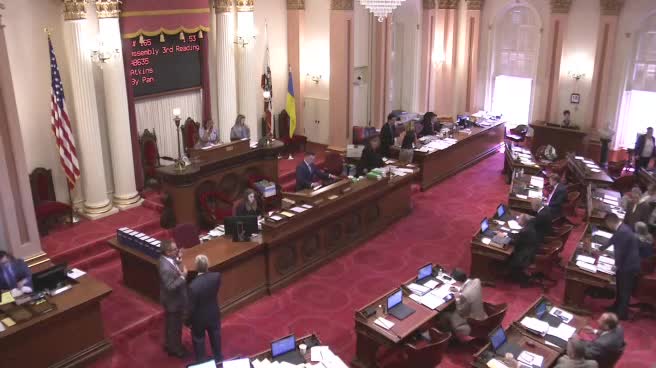
| Aug 18, 2016 | Assembly 3rd Reading AB1744 Cooper By Galgiani | Senate Floor |
Passed |
|
| Aug 11, 2016 | Do pass | Senate Standing Committee on Appropriations |
Passed |
|
| Aug 1, 2016 | Placed on suspense file | Senate Standing Committee on Appropriations |
Passed |
|
| Jun 21, 2016 | Do pass, but first be re-referred to the Committee on [Appropriations] with the recommendation: To Consent Calendar | Senate Standing Committee on Public Safety |
Passed |
|
| Apr 14, 2016 | AB 1744 COOPER Consent Calendar Second Day Regular Session | Assembly Floor |
Passed |
|
| Apr 6, 2016 | Do pass. To Consent Calendar. | Assembly Standing Committee on Appropriations |
Passed |
|
| Mar 15, 2016 | Do pass and be re-referred to the Committee on [Appropriations] with recommendation: To Consent Calendar | Assembly Standing Committee on Public Safety |
Passed |
This list shows positions taken on this bill by organizations on the date displayed, which is linked to the original source.
Positions by individuals are not included.
|
Organization
|
Position
|
Date
|
|---|---|---|
| Alameda County District Attorney | ** Support | Aug 18, 2016 |
| American Academy of Pediatrics | * Support | Jun 20, 2018 |
| Attorney General's Office | ** Support | Aug 18, 2016 |
| california after school advocacy alliance | * Support | Jun 20, 2018 |
| California After School Network | * Support | Jun 20, 2018 |
| California Alliance of Boys and Girls Clubs | * Support | Jun 20, 2018 |
| California Association Of Crime Laboratory Directors | ** Support | Aug 18, 2016 |
| California Attorneys For Criminal Justice | ** Support | Aug 18, 2016 |
| California Black Health Network | * Support | Jun 20, 2018 |
| California Clinical Forensic Medical Training Center | ** Support | Aug 18, 2016 |
| California Coalition Against Sexual Assault | ** Support | Aug 18, 2016 |
| California District Attorneys Association | ** Support | Aug 18, 2016 |
| California Sexual Assault Investigators Association | ** Support | Aug 18, 2016 |
| California State Alliance Of YmcaS | * Support | Jun 20, 2018 |
| City of Moreno Valley | * Support | Jun 20, 2018 |
| Crime Victims United Of California | ** Support | Aug 18, 2016 |
| Fight Crime: Invest in Kids | * Support | Jun 20, 2018 |
| Green Tech Education and Training | * Support | Jun 20, 2018 |
| Los Angeles County Office Of Education | * Support | Jun 20, 2018 |
| San Francisco Unified School District | * Support | Jun 20, 2018 |
| United Ways Of California | * Support | Jun 20, 2018 |
CONCURRENCE IN SENATE AMENDMENTS
CSA1 Bill Id:AB 1744
Author:(Cooper)
As Amended Ver:May 5, 2016
Majority vote
ASSEMBLY: | 76-0 | (April 14, 2016) | SENATE: | 36-0 | (August 18, 2016) |
Original Committee Reference: PUB. S.
SUMMARY: Requires the Department of Justice's Bureau of Forensic Services, the California Association of Crime Laboratory Directors, and the California Association of Criminalists to work collaboratively with public crime laboratories, in conjunction with the California Clinical Forensic Medical Training Center, to develop a standardized sexual assault forensic medical evidence kit, containing minimum basic components, to be used by all California jurisdictions.
The Senate amendments:
- Indicate that the basic components for a standardized sexual assault forensic medical evidence kit should be completed by January 30, 2018.
- State that on or before May 30, 2019, the collaborative group responsible for developing the sexual assault forensic medical kit shall issue guidelines pertaining to the use of kit components throughout the state.
- Require that the standardized sexual assault forensic medical evidence kit permit swabs or representative evidence samples to be earmarked for a rapid turnaround DNA program, as specified.
- Clarify that every local and state agency shall remain responsible for its own costs in purchasing a standardized sexual assault forensic medical evidence kit.
EXISTING LAW:
- Codifies the "Sexual Assault Victims' DNA Bill of Rights."
- Finds and declares the following as part of the Sexual Assault Victims' DNA Bill of Rights:
- Deoxyribonucleic acid (DNA) and forensic identification analysis is a powerful law enforcement tool for identifying and prosecuting sexual assault offenders.
- Existing law requires an adult arrested for or charged with a felony and a juvenile adjudicated for a felony to submit DNA samples as a result of that arrest, charge, or adjudication.
- Victims of sexual assaults have a strong interest in the investigation and prosecution of their cases.
- Law enforcement agencies have an obligation to victims of sexual assaults in the proper handling, retention, and timely DNA testing of rape kit evidence or other crime scene evidence and to be responsive to victims concerning the developments of forensic testing and the investigation of their cases.
- The growth of the Department of Justice's Cal-DNA databank and the national databank through the Combined DNA Index System (CODIS) makes it possible for many sexual assault perpetrators to be identified after their first offense, provided that rape kit evidence is analyzed in a timely manner.
- Timely DNA analysis of rape kit evidence is a core public safety issue affecting men, women, and children in the State of California.
- In order to ensure that sexual assault forensic evidence is analyzed within the two-year timeframe, as specified, and to ensure the longest possible statute of limitations for sex offenses, including sex offenses designated pursuant to those subparagraphs, the following should occur:
- A law enforcement agency whose jurisdiction is specified sex offenses, should do one of the following for any sexual assault forensic evidence received by the law enforcement agency on or after January 1, 2016:
- Submit sexual assault forensic evidence to the crime lab within 20 days after it is booked into evidence.
- Ensure that a rapid turnaround DNA program is in place to submit forensic evidence collected from the victim of a sexual assault directly from the medical facility where the victim is examined to the crime lab within five days after the evidence is obtained from the victim.
- The crime lab should do one of the following for any sexual assault forensic evidence received by the crime lab on or after January 1, 2016:
- Process sexual assault forensic evidence, create DNA profiles when able, and upload qualifying DNA profiles into CODIS as soon as practically possible, but no later than 120 days after initially receiving the evidence.
- Transmit the sexual assault forensic evidence to another crime lab as soon as practically possible, but no later than 30 days after initially receiving the evidence, for processing of the evidence for the presence of DNA. If a DNA profile is created, the transmitting crime lab should upload the profile into CODIS as soon as practically possible, but no longer than 30 days after being notified about the presence of DNA.
- A law enforcement agency whose jurisdiction is specified sex offenses, should do one of the following for any sexual assault forensic evidence received by the law enforcement agency on or after January 1, 2016:
- States that to ensure the delivery of standardized curriculum, essential for consistent examination procedures throughout the state, one hospital-based training center shall be established through a competitive bidding process, to train medical personnel on how to perform medical evidentiary examinations for victims of child abuse or neglect, sexual assault, domestic violence, elder abuse, and abuse or assault perpetrated against persons with disabilities.
- Requires the hospital based training center to provide training for investigative and court personnel involved in dependency and criminal proceedings, on how to interpret the findings of medical evidentiary examinations.
- The training provided by the training center shall be made available to medical personnel, law enforcement, and the courts throughout the state and meet specified criteria.
- Requires the training center to develop and implement a standardized training program for medical personnel that has been reviewed and approved by a multidisciplinary peer review committee.
AS PASSED BY THE ASSEMBLY, this bill:
- Directed the Department of Justice's Bureau of Forensic Services, the California Association of Crime Laboratory Directors, and the California Association of Criminalists to provide leadership and work collaboratively with public crime laboratories to develop a standardized sexual assault forensic medical evidence kit to be used by all California jurisdictions.
- Allowed the packaging and appearance of the rape kits to vary, but requires the elements of the kit shall be comparable with a minimum number of similar components.
- Required the development of the rape kit to be completed in conjunction with the California Clinical Forensic Medical Training Center, as specified.
FISCAL EFFECT: According to the Senate Appropriations Committee:
- Office of Emergency Services (Cal OES): Minor, absorbable administrative costs. Cal OES does not project any changes to current funding (Federal Funds / state funds) of the Medical Forensic Training Center to accommodate the potential revision of informational guidelines or training on the standardized sexual assault medical evidence kits.
- DOJ: Minor, absorbable impact to participate in the development of the kit.
- State/local law enforcement agencies: Unknown; potential future increases or decreases in state (General Fund) and local law enforcement agency costs (Local Funds) for sexual assault medical evidence kits. As the bill requires state and local agencies to retain responsibility for their costs to purchase the kits, the impact to agencies would be dependent on the volume of kits purchased and the price of the standardized kit to be developed, which is unknown. State agencies that may be impacted include the Department of Corrections and Rehabilitation, the California Highway Patrol, and the Department of State Hospitals. Because the bill does not mandate use of the standardized kit by all California jurisdictions nor require any additional activities to be conducted, any costs to local agencies are projected to be non-reimbursable.
COMMENTS: According to the author, "Sexual assault victims and California communities expect effective and competent intervention at from all disciplines in response to sexual assault. Inter-agency cooperation and collaboration within disciplines is essential to deliver optimum care to victims of sexual assault.
"There are approximately 10-12 different sexual assault evidence "rape kits" used in California. Some forensic medical examination teams are required to be familiar with multiple kits which creates the potential for error.
"Currently, crime laboratories create their own kits based on the statutory exam elements and the required standard state form. As a result, there are variations among crime laboratories. Some exam teams serve multiple crime laboratories depending upon which law enforcement jurisdiction the crime occurred and must adapt to variations in crime laboratory evidence kits.
"AB 1744 would require that the California Department of Justice's Bureau of Forensic Services, the California Association of Crime Laboratory Directors, the California Association of Criminalists and the California Clinical Forensic Medical Training Center to collaborate and develop a standardized sexual assault evidence kit."
Please see the policy committee analysis for a full discussion of this bill.
Analysis Prepared by: David Billingsley / PUB. S. / (916) 319-3744 FN: 0004739
Office of Senate Floor Analyses (916) 651-1520 Fax: (916) 327-4478 | AB |
THIRD READING
Bill No: AB 1744
:
SENATE PUBLIC SAFETY COMMITTEE: 7-0, 6/21/16
AYES: Hancock, Anderson, Glazer, Leno, Liu, Monning, Stone
SENATE APPROPRIATIONS COMMITTEE: 7-0, 8/11/16
AYES: Lara, Bates, Beall, Hill, McGuire, Mendoza, Nielsen
ASSEMBLY FLOOR: 76-0, 4/14/16 (Consent) - See last page for vote
SOURCE: California Clinical Forensic Medical Training Center
DIGEST: This bill requires the Department of Justice’s Bureau of Forensic Services, the California Association of Crime Laboratory Directors, and the California Association of Criminalists to work collaboratively with public crime laboratories, in conjunction with the California Clinical Forensic Medical Training Center, to develop a standardized sexual assault forensic medical evidence kit for use by all California jurisdictions.
Existing law:
- Codifies the "Sexual Assault Victims' DNA Bill of Rights." (Penal Code, § 680.)
- States that to ensure the delivery of standardized curriculum, essential for consistent examination procedures throughout the state, one hospital-based training center shall be established through a competitive bidding process, to train medical personnel on how to perform medical evidentiary examinations for victims of child abuse or neglect, sexual assault, domestic violence, elder abuse, and abuse or assault perpetrated against persons with disabilities. (Penal Code, § 13823.99 (b).)
- Requires the hospital based training center to provide training for investigative and court personnel involved in dependency and criminal proceedings, on how to interpret the findings of medical evidentiary examinations. (Penal Code, § 13823.99 (b).)
- Provides the training provided by the training center shall be made available to medical personnel, law enforcement, and the courts throughout the state and meet specified criteria. (Penal Code, § 13823.99 (b) and (c).)
- Requires the training center to develop and implement a standardized training program for medical personnel that has been reviewed and approved by a multidisciplinary peer review committee. (Penal Code, § 13823.99 (d)(1).)
This bill:
- Provides that the Department of Justice’s Bureau of Forensic Services, the California Association of Crime Laboratory Directors, and the California Association of Criminalists shall provide leadership and work collaboratively with public crime laboratories to develop a standardized sexual assault forensic medical evidence for use by all California jurisdictions.
- Provides that the packaging and appearance of the kit may vary, but the kit shall contain a minimum number of basic components and also clearly permit swabs or representative evidence samples to be earmarked for a rapid turnaround DNA program when applicable.
- Provides that the collaboration to establish the basic components for a standardized sexual assault forensic medical evidence kit would be completed by January 30, 2018 and shall be conducted in conjunction with the California Clinical Forensic Medical Training Center that is responsible for the development of sexual assault standardized forensic medical report forms and for providing training programs.
- Provides that on or before May 30, 2019, the California Clinical Forensic Medical Training Center, in coordination with the Department of Justice’s Bureau of Forensic Services, the California Association of Crime Laboratory Directors, and the California Association of Criminalists shall issue guidelines pertaining to the use of the standardized sexual assault kit components throughout the state.
- Provides that every local and state agency shall remain responsible for its own costs in purchasing a standardized sexual assault forensic medical evidence kit.
- Provides that failure to use the standardized sexual assault forensic medical evidence kit created under this bill shall not constitute grounds to exclude evidence.
Background
The U.S. Department of Justice developed a national protocol for sexual assault examinations in 2004. The protocol has continued to be updated. This protocol was developed with the input of national, local, and tribal experts throughout the country, including law enforcement representatives, prosecutors, advocates, medical personnel, forensic scientists, and others. The protocol recommended that sexual assault examine kits meet minimum standards. It also suggested standardization of sexual assault evidence collection kits within a jurisdiction and across a state, although it recognized potential issues with standardization. (A National Protocol for Sexual Assault Medical Forensic Examinations, U.S. DOJ, Office on Violence Against Women, April 2013, p. 71.)
To the extent that evidence kits are standardized, the protocol makes the following recommendations (Id. at p. 72.):
- That a designated agency in the jurisdiction be responsible for oversight of kit development and distribution.
- Ensure that facilities that conduct sexual assault medical forensic exams are involved in kit development and supplied with kits.
- Work with relevant agencies (e.g., crime labs, law enforcement agencies, exam facilities and examiner programs, advocacy programs, and prosecutors’ offices) to keep abreast of related changes in technology, scientific advances, and cutting-edge practice.
- Review periodically (e.g., every 2 to 3 years) kit efficiency and usefulness.
- Make adjustments to the kit as necessary.
- Establish mechanisms to ensure that kits at exam facilities are kept up to date (e.g., if a new evidence collection procedure is added, facilities need to know what additional supplies should be readily available).
The protocol recognized the potential challenges of a standardized sexual assault evidence collection kit. Some challenges could include building consensus across communities regarding best practices, obtaining buy-in from involved agencies, and costs to the state and local communities.
This bill has the Department of Justice’s Bureau of Forensic Services, the California Association of Criminalists and the California Association of Crime Laboratories work together to create a standardized sexual assault forensic medical kit for use in California.
FISCAL EFFECT: Appropriation: Fiscal Com.: Local:
According to the Senate Appropriations Committee:
- Office of Emergency Services (Cal OES): Minor, absorbable administrative costs. Cal OES does not project any changes to current funding (Federal Funds / state funds) of the California Clinical Forensic Medical Training Center to accommodate the potential revision of informational guidelines or training on the standardized sexual assault medical evidence kits.
- DOJ: Minor, absorbable impact to participate in the development of the kit.
- State/local law enforcement agencies: Unknown; potential future increases or decreases in state (General Fund) and local law enforcement agency costs (Local Funds) for sexual assault medical evidence kits. As this bill requires state and local agencies to retain responsibility for their costs to purchase the kits, the impact to agencies would be dependent on the volume of kits purchased and the price of the standardized kit to be developed, which is unknown. State agencies that may be impacted include the Department of Corrections and Rehabilitation, the California Highway Patrol, and the Department of State Hospitals. Because the bill does not mandate use of the standardized kit by all California jurisdictions nor require any additional activities to be conducted, any costs to local agencies are projected to be non-reimbursable.
California Clinical Forensic Medical Training Center (source)
Alameda County District Attorney
Attorney General’s Office
California Association of Crime Laboratory Directors
California Coalition Against Sexual Assault
California District Attorneys Association
California Peace Officers’ Association
California Sexual Assault Investigators Association
Crime Victims United of California
OPPOSITION: (Verified 8/12/16)
None received
ASSEMBLY FLOOR: 76-0, 4/14/16
AYES: Achadjian, Alejo, Travis Allen, Arambula, Atkins, Baker, Bigelow, Bloom, Bonilla, Bonta, Brough, Brown, Burke, Calderon, Campos, Chang, Chau, Chávez, Chiu, Chu, Cooley, Cooper, Dababneh, Dahle, Daly, Dodd, Eggman, Frazier, Beth Gaines, Gallagher, Cristina Garcia, Eduardo Garcia, Gatto, Gipson, Gomez, Gonzalez, Gordon, Gray, Grove, Hadley, Harper, Roger Hernández, Holden, Jones, Jones-Sawyer, Kim, Lackey, Linder, Lopez, Low, Maienschein, Mathis, Mayes, McCarty, Medina, Mullin, Obernolte, O'Donnell, Olsen, Patterson, Quirk, Ridley-Thomas, Rodriguez, Salas, Santiago, Steinorth, Mark Stone, Thurmond, Ting, Wagner, Waldron, Weber, Wilk, Williams, Wood, Rendon
NO VOTE RECORDED: Irwin, Levine, Melendez, Nazarian
Prepared by: Mary Kennedy / PUB. S. /
8/15/16 20:26:54
**** END ****
SENATE COMMITTEE ON APPROPRIATIONS
Senator Ricardo Lara, Chair
2015 - 2016 Regular Session
AB 1744 (Cooper) - Sexual assault forensic medical evidence kit
Version: May 5, 2016 | Policy Vote: PUB. S. 7 - 0 |
Urgency: No | Mandate: No |
Hearing Date: August 1, 2016 | Consultant: Jolie Onodera |
This bill meets the criteria for referral to the Suspense File.
Bill Summary:
AB 1744 would require the Department of Justice (DOJ), the California Association of Crime Laboratory Directors, and the California Association of Criminalists to work collaboratively with public crime laboratories, in conjunction with the California Clinical Forensic Medical Training Center, to develop a standardized sexual assault forensic medical evidence kit for use by all California jurisdictions.
Fiscal Impact:
- Office of Emergency Services (Cal OES): Minor, absorbable administrative costs. Cal OES does not project any changes to current funding (Federal Funds / state funds) of the Medical Forensic Training Center to accommodate the potential revision of informational guidelines or training on the standardized sexual assault medical evidence kits.
- DOJ: Minor, absorbable impact to participate in the development of the kit.
- State/local law enforcement agencies: Unknown; potential future increases or decreases in state (General Fund) and local law enforcement agency costs (Local Funds) for sexual assault medical evidence kits. As the bill requires state and local agencies to retain responsibility for their costs to purchase the kits, the impact to agencies would be dependent on the volume of kits purchased and the price of the standardized kit to be developed, which is unknown. State agencies that may be impacted include the Department of Corrections and Rehabilitation, the California Highway Patrol, and the Department of State Hospitals. Because the bill does not mandate use of the standardized kit by all California jurisdictions nor require any additional activities to be conducted, any costs to local agencies are projected to be non-reimbursable.
Background:
Under existing, law, the Office of Emergency Services (Cal OES), with the assistance of an advisory committee, is required to establish a protocol for the examination and treatment of victims of sexual assault and attempted sexual assault, including child molestation, and the collection and preservation of evidence therefrom. The protocol is required to contain recommended methods for meeting specified standards including specific procedures. (Penal Code (PC) § 13823.5 (a).)
To ensure the delivery of standardized curriculum, essential for consistent examination procedures throughout the state, existing law provides that one hospital-based training center shall be established through a competitive bidding process to train medical personnel on how to perform medical evidentiary examinations for victims of child abuse or neglect, sexual assault, domestic violence, elder abuse, and abuse or assault perpetrated against persons with disabilities. The center also shall provide training for investigative and court personnel involved in dependency and criminal proceedings, on how to interpret the findings of medical evidentiary examinations. The training provided by the training center shall be made available to medical personnel, law enforcement, and the courts throughout the state. (PC § 13823.93 (b).)
In addition to the protocol, the Cal OES is required to develop informational guidelines, containing general reference information on evidence collection and examination of victims of, and psychological and medical treatment for victims of, sexual assault and attempted sexual assault, including child molestation. (PC § 13823.5 (b).)
In developing the protocol and the informational guidelines, the Cal OES and the advisory committee are required to seek the assistance and guidance of organizations assisting victims of sexual assault; qualified health care professionals, criminalists, and administrators who are familiar with emergency room procedures; victims of sexual assault; and law enforcement officials.
Existing law requires the Cal OES, in cooperation with the State Department of Public Health (DPH) and the DOJ, to adopt a standard and a complete form or forms for the recording of medical and physical evidence data disclosed by a victim of sexual assault or attempted sexual assault, including child molestation. (Penal Code (PC) § 13823.5.)
Proposed Law:
This bill would require the DOJ’s Bureau of Forensic Services, the California Association of Crime Laboratory Directors, and the California Association of Criminalists to provide leadership and work collaboratively with public crime laboratories to develop a standardized sexual assault forensic medical evidence kit for use by all California jurisdictions. Specifically, this bill:
- Specifies the packaging and appearance of the kit may vary, but the kit shall contain a minimum number of basic components and also clearly permit swabs or representative evidence samples to be earmarked for a rapid turnaround DNA program, as defined, when applicable.
- Requires the collaboration to establish the basic components for a standardized sexual assault forensic medical evidence kit to be completed by January 30, 2018, and shall be conducted in conjunction with the California Clinical Forensic Medical Training Center, authorized under existing law, that is responsible for the development of sexual assault forensic medical examination procedures and sexual assault standardized forensic medical report forms and for providing training programs.
- Requires, on or before May 30, 2019, the California Clinical Forensic Medical Training Center, in coordination with the DOJ’s Bureau of Forensic Services, the California Association of Crime Laboratory Directors, and the California Association of Criminalists, to issue guidelines pertaining to the use of the standardized sexual assault kit components throughout the state.
- Provides that every local and state agency shall remain responsible for its own costs in purchasing a standardized sexual assault forensic medical evidence kit.
- Provides that failure to use the standardized sexual assault forensic medical evidence kit shall not constitute grounds to exclude evidence.
Related Legislation:
AB 1475 (Cooper) Chapter 210/2015 authorizes each county to establish and implement an interagency sexual assault response team (SART) program for the purpose of, among other things, effectively addressing the problem of sexual assault.
AB 1517 (Skinner) Chapter 874/2014 sets timelines for law enforcement agencies and crime labs to perform and process DNA testing of rape kit evidence.
Staff Comments: Existing law requires the Cal OES, in cooperation with the Department of Public Health (DPH) and the DOJ, to adopt a standard and a complete form or forms for the recording of medical and physical evidence data disclosed by a victim of sexual assault. (Penal Code § 13823.5(c).) Given DPH’s involvement in the existing process for the collection of evidence, it is unclear whether an amendment to include the DPH in the development process may be warranted.
-- END --
SENATE COMMITTEE ON PUBLIC SAFETY
Senator Loni Hancock, Chair
2015 - 2016 Regular
Bill No: AB 1744 Hearing Date: June 21, 2016
Author: | Cooper | ||
Version: | May 5, 2016 | ||
Urgency: | No | Fiscal: | Yes |
Consultant: | MK | ||
Subject: Sexual Assault Forensic Medical Evidence Kit
HISTORY
Source: California Clinical Forensic Medical Training Center
Prior Legislation: AB 1475 (Cooper) – Chapter 210, Stats. 2015
AB 1517 (Skinner) – Chapter 874, Stats. 2014
SB 271 (Wyland) not heard 2012
AB 322 (Portantino) Vetoed 2011
Support: Alameda County District Attorney; Attorney General’s Office; CALCASA; California District Attorneys Association; California Association of Crime Laboratory Directors; California Peace Officers’ Association; California Sexual Assault Investigators Association; Crime Victims United of California
Opposition: None known
Assembly Floor Vote: 76 - 0
PURPOSE
The purpose of this bill is to require the Department of Justice’s Bureau of Forensic Services, the California Association of Crime Laboratory Directors, and the California Association of Criminalists to work collaboratively with public crime laboratories, in conjunction with the California Clinical Forensic Medical Training Center, to develop a standardized sexual assault forensic medical evidence kit for use by all California jurisdictions.
Existing law codifies the "Sexual Assault Victims' DNA Bill of Rights." (Penal Code, § 680.)
Existing law states that to ensure the delivery of standardized curriculum, essential for consistent examination procedures throughout the state, one hospital-based training center shall be established through a competitive bidding process, to train medical personnel on how to perform medical evidentiary examinations for victims of child abuse or neglect, sexual assault, domestic violence, elder abuse, and abuse or assault perpetrated against persons with disabilities. (Penal Code, § 13823.99 (b).)
Existing law requires the hospital based training center to provide training for investigative and court personnel involved in dependency and criminal proceedings, on how to interpret the findings of medical evidentiary examinations. (Penal Code, § 13823.99 (b).)
Existing law provides the training provided by the training center shall be made available to medical personnel, law enforcement, and the courts throughout the state and meet specified criteria. (Penal Code § 13823.99 (b) and (c).)
Existing law requires the training center to develop and implement a standardized training program for medical personnel that has been reviewed and approved by a multidisciplinary peer review committee. (Penal Code, § 13823.99 (d)(1).)
This bill provides that the Department of Justice’s Bureau of Forensic Services, the California Association of Crime Laboratory Directors, and the California Association of Criminalists shall provide leadership and work collaboratively with public crime laboratories to develop a standardized sexual assault forensic medical evidence for use by all California jurisdictions.
This bill provides that the packaging and appearance of the kit may vary, but the kit shall contain a minimum number of basic components and also clearly permit swabs or representative evidence samples to be earmarked for a rapid turnaround DNA program when applicable.
This bill provides that the collaboration to establish the basic components for a standardized sexual assault forensic medical evidence kit would be completed by January 30, 2018 and shall be conducted in conjunction with the California Clinical Forensic Medical Training Center that is responsible for the development of sexual assault standardized forensic medical report forms and for providing training programs.
This bill provides that on or before May 30, 2019, the California Clinical Forensic Medical Training Center, in coordination with the Department of Justice’s Bureau of Forensic Services, the California Association of Crime Laboratory Directors, and the California Association of Criminalists shall issue guidelines pertaining to the use of the standardized sexual assault kit components throughout the state.
This bill provides that every local and state agency shall remain responsible for its own costs in purchasing a standardized sexual assault forensic medical evidence kit.
This bill provides that failure to use the standardized sexual assault forensic medical evidence kit created under this bill shall not constitute grounds to exclude evidence.
RECEIVERSHIP/OVERCROWDING CRISIS AGGRAVATION
For the past several years this Committee has scrutinized legislation referred to its jurisdiction for any potential impact on prison overcrowding. Mindful of the United States Supreme Court ruling and federal court orders relating to the state’s ability to provide a constitutional level of health care to its inmate population and the related issue of prison overcrowding, this Committee has applied its “ROCA” policy as a content-neutral, provisional measure necessary to ensure that the Legislature does not erode progress in reducing prison overcrowding.
On February 10, 2014, the federal court ordered California to reduce its in-state adult institution population to 137.5% of design capacity by February 28, 2016, as follows:
- 143% of design bed capacity by June 30, 2014;
- 141.5% of design bed capacity by February 28, 2015; and,
- 137.5% of design bed capacity by February 28, 2016.
In December of 2015 the administration reported that as “of December 9, 2015, 112,510 inmates were housed in the State’s 34 adult institutions, which amounts to 136.0% of design bed capacity, and 5,264 inmates were housed in out-of-state facilities. The current population is 1,212 inmates below the final court-ordered population benchmark of 137.5% of design bed capacity, and has been under that benchmark since February 2015.” (Defendants’ December 2015 Status Report in Response to February 10, 2014 Order, 2:90-cv-00520 KJM DAD PC, 3-Judge Court, Coleman v. Brown, Plata v. Brown (fn. omitted).) One year ago, 115,826 inmates were housed in the State’s 34 adult institutions, which amounted to 140.0% of design bed capacity, and 8,864 inmates were housed in out-of-state facilities. (Defendants’ December 2014 Status Report in Response to February 10, 2014 Order, 2:90-cv-00520 KJM DAD PC, 3-Judge Court, Coleman v. Brown, Plata v. Brown (fn. omitted).)
While significant gains have been made in reducing the prison population, the state must stabilize these advances and demonstrate to the federal court that California has in place the “durable solution” to prison overcrowding “consistently demanded” by the court. (Opinion Re: Order Granting in Part and Denying in Part Defendants’ Request For Extension of December 31, 2013 Deadline, NO. 2:90-cv-0520 LKK DAD (PC), 3-Judge Court, Coleman v. Brown, Plata v. Brown (2-10-14). The Committee’s consideration of bills that may impact the prison population therefore will be informed by the following questions:
- Whether a proposal erodes a measure which has contributed to reducing the prison population;
- Whether a proposal addresses a major area of public safety or criminal activity for which there is no other reasonable, appropriate remedy;
- Whether a proposal addresses a crime which is directly dangerous to the physical safety of others for which there is no other reasonably appropriate sanction;
- Whether a proposal corrects a constitutional problem or legislative drafting error; and
- Whether a proposal proposes penalties which are proportionate, and cannot be achieved through any other reasonably appropriate remedy.
COMMENTS
1. Need for This Bill
According to the author:
There are variations in sexual assault forensic medical evidence kits in California. The CA Department of Justice Bureau of Forensic Services (BFS) serves 48 counties with one kit. The ten large California counties have separate kits. This causes problems for sexual assault nurse examiners who perform sexual assault forensic medical exams for several jurisdictions. Their job is to collect evidence (including DNA evidence) and properly preserve, package and label it to ensure that chain of custody has been properly followed for all exams.
Sexual assault victims and California communities expect effective and competent intervention at from all disciplines in response to sexual assault. Inter-agency cooperation and collaboration within disciplines is essential to deliver optimum care to victims of sexual assault.
There are approximately 10-12 different sexual assault evidence “rape kits” used in California. Some forensic medical examination teams are required to be familiar with multiple kits which creates the potential for error.
Currently, crime laboratories create their own kits based on the statutory exam elements and the required standard state form. As a result, there are variations among crime laboratories. Some exam teams serve multiple crime laboratories depending upon which law enforcement jurisdiction the crime occurred and must adapt to variations in crime laboratory evidence kits.
AB 1744 would require that the California Department of Justice’s Bureau of Forensic Services, the California Association of Crime Laboratory Directors, the California Association of Criminalists and the California Clinical Forensic Medical Training Center to collaborate and develop a standardized sexual assault evidence kit.
2. Bureau of Forensic Services
The Bureau of Forensic Services (BFS) is the scientific arm of the Attorney General’s Office whose mission is to serve the people of California on behalf of the Attorney General's Office. Forensic scientists collect, analyze, and compare physical evidence from suspected crimes. They provide analysis of evidence in toxicology, including alcohol, controlled substances and clandestine drug labs, biology and DNA, firearms, impression evidence such as shoeprints, tire marks or fingerprints, trace evidence including hair, fibers, and paint, and crime-scene analysis of blood spatter patterns and evidence collection, and they testify in state and federal court cases about their analyses in criminal trials. Descriptions of the forensic services BFS provides as well as the BFS regional service areas can be found on the BFS Laboratory Services page. BFS also offers specialized forensic science training to personnel who are practitioners in the field of forensic science through the California Criminalistics Institute (CCI). (https://oag.ca.gov/bfs) 3)
3. California Clinical Forensic Medical Training Center
The California Clinical Forensic Medical Training Center was established by state law in 1995 to increase access by victims of interpersonal violence to trained nursing and medical professionals. The California legislature determined that access to healthcare professionals knowledgeable about medical evidentiary examinations and psychological trauma caused by violence and abuse was uneven in both rural and urban areas throughout California. As a result, laws were enacted to meet this need and create this public policy direction. The Center is primarily funded by the California Governor’s Office of Emergency Services (Cal OES) with Federal and State funds, and other sources of funding. (www.ccfmtc.org/about-us-2/history-and-mission/)
4. Standardized Sexual Assault Evidence Collection Kits
The U.S. Department of Justice developed a national protocol for sexual assault examinations in 2004. The protocol has continued to be updated. This protocol was developed with the input of national, local, and tribal experts throughout the country, including law enforcement representatives, prosecutors, advocates, medical personnel, forensic scientists, and others. The protocol recommended that sexual assault examine kits meet minimum standards. It also suggested standardization of sexual assault evidence collection kits within a jurisdiction and across a state, although it recognized potential issues with standardization. (A National Protocol for Sexual Assault Medical Forensic Examinations, U.S. DOJ, Office on Violence Against Women, April 2013, p. 71.)
To the extent that evidence kits are standardized, the protocol makes the following recommendations (Id. at p. 72.):
a) That a designated agency in the jurisdiction be responsible for oversight of kit development and distribution.
b) Ensure that facilities that conduct sexual assault medical forensic exams are involved in kit development and supplied with kits.
c) Work with relevant agencies (e.g., crime labs, law enforcement agencies, exam facilities and examiner programs, advocacy programs, and prosecutors’ offices) to keep abreast of related changes in technology, scientific advances, and cutting-edge practice.
d) Review periodically (e.g., every 2 to 3 years) kit efficiency and usefulness.
e) Make adjustments to the kit as necessary.
f) Establish mechanisms to ensure that kits at exam facilities are kept up to date (e.g., if a new evidence collection procedure is added, facilities need to know what additional supplies should be readily available).
The protocol recognized the potential challenges of a standardized sexual assault evidence collection kit. Some challenges could include building consensus across communities regarding best practices, obtaining buy-in from involved agencies, and costs to the state and local communities.
This bill has the Department of Justices Bureau of Forensic Services, the California Association of Criminalists and the California Association of Crime Laboratories work together to create a standardized sexual assault forensic medical kit for use in California.
-- END –
Date of Hearing: April 6, 2016
ASSEMBLY COMMITTEE ON APPROPRIATIONS
Lorena Gonzalez, Chair
ABPCA Bill Id:AB 1744
Author:(Cooper) – As Introduced Ver:February 1, 2016
Policy Committee: | Public Safety | Vote: | 7 - 0 |
|
| ||
|
|
Urgency: No State Mandated Local Program: No Reimbursable: No
SUMMARY:
This bill requires the Department of Justice’s (DOJ)’s, Bureau of Forensic Services the California Association of Crime Laboratory Directors, and the California Association of Criminalists to work collaboratively with public crime laboratories, in conjunction with the California Clinical Forensic Medical Training Center, to develop a standardized sexual assault medical evidence kit to be used by all California Jurisdictions.
FISCAL EFFECT:
Minor absorbable costs to DOJ.
COMMENTS:
- Background and Purpose. According to the author, "Sexual assault victims and California communities expect effective and competent intervention from all disciplines in response to sexual assault. Inter-agency cooperation and collaboration within disciplines is essential to deliver optimum care to victims of sexual assault.”
There are approximately 10-12 different sexual assault evidence “rape kits” used in California. Consequently, some forensic medical examination teams are required to be familiar with multiple kits which creates the potential for error. Also, crime laboratories create their own kits based on the statutory exam elements and the required standard state form. As a result, there are variations among crime laboratories. Some exam teams serve multiple crime laboratories depending upon which law enforcement jurisdiction the crime occurred and must adapt to variations in crime laboratory evidence kits.
AB 1744 requires specific relevant agencies to collaborate and develop a standardized sexual assault evidence kit.”
- Support. According to California Coalition Against Sexual Assault, “California does not have one standardized sexual assault evidence kit, resulting in variation in DNA evidence collection, preservation, packaging, and labeling in multiple jurisdictions. It is time for the state’s crime labs to collaborate and agree upon one evidence kit to minimize confusion and the potential for error.”
Analysis Prepared by: Pedro Reyes / APPR. / (916) 319-2081
Date of Hearing: March 15, 2016
Counsel: David Billingsley
ASSEMBLY COMMITTEE ON
, Sr., Chair
ABPCA Bill Id:
Author:() – As Ver:
SUMMARY:
Requires the Department of Justice’s Bureau of Forensic Services, the California Association of Crime Laboratory Directors, and the California Association of Criminalists to work collaboratively with public crime laboratories, in conjunction with the California Clinical Forensic Medical Training Center, to develop a standardized sexual assault forensic medical evidence kit to be used by all California jurisdictions. Specifically, this bill:
- Directs the Department of Justice’s Bureau of Forensic Services, the California Association of Crime Laboratory Directors, and the California Association of Criminalists to provide leadership and work collaboratively with public crime laboratories to develop a standardized sexual assault forensic medical evidence kit to be used by all California jurisdictions.
- Allows the packaging and appearance of the rape kits to vary, but requires the elements of the kit shall be comparable with a minimum number of similar components.
- Requires the development of the rape kit to be completed in conjunction with the California Clinical Forensic Medical Training Center, as specified.
EXISTING LAW:
- Codifies the "Sexual Assault Victims' DNA Bill of Rights." (Pen. Code, § 680.)
- Finds and declares the following as part of the Sexual Assault Victims’ DNA Bill of Rights:
- Deoxyribonucleic acid (DNA) and forensic identification analysis is a powerful law enforcement tool for identifying and prosecuting sexual assault offenders. (Pen. Code, § 680, subd. (b)(1).)
- Existing law requires an adult arrested for or charged with a felony and a juvenile adjudicated for a felony to submit DNA samples as a result of that arrest, charge, or adjudication. (Pen. Code, § 680, subd. (b)(2).)
- Victims of sexual assaults have a strong interest in the investigation and prosecution of their cases. (Pen. Code, § 680, subd. (b)(3).)
- Law enforcement agencies have an obligation to victims of sexual assaults in the proper handling, retention, and timely DNA testing of rape kit evidence or other crime scene evidence and to be responsive to victims concerning the developments of forensic testing and the investigation of their cases. (Pen. Code, § 680, subd. (b)(4).)
- The growth of the Department of Justice's Cal-DNA databank and the national databank through the Combined DNA Index System (CODIS) makes it possible for many sexual assault perpetrators to be identified after their first offense, provided that rape kit evidence is analyzed in a timely manner. (Pen. Code, § 680, subd. (b)(5).)
- Timely DNA analysis of rape kit evidence is a core public safety issue affecting men, women, and children in the State of California. (Pen. Code, § 680, subd. (b)(6).)
- In order to ensure that sexual assault forensic evidence is analyzed within the two-year timeframe, as specified, and to ensure the longest possible statute of limitations for sex offenses, including sex offenses designated pursuant to those subparagraphs, the following should occur:
- A law enforcement agency whose jurisdiction is specified sex offenses, should do one of the following for any sexual assault forensic evidence received by the law enforcement agency on or after January 1, 2016:
- Submit sexual assault forensic evidence to the crime lab within 20 days after it is booked into evidence. (Pen. Code, § 680, subd. (b)(7)(A)(i).)
- Ensure that a rapid turnaround DNA program is in place to submit forensic evidence collected from the victim of a sexual assault directly from the medical facility where the victim is examined to the crime lab within five days after the evidence is obtained from the victim. (Pen. Code, § 680, subd. (b)(7)(A)(ii).)
- Submit sexual assault forensic evidence to the crime lab within 20 days after it is booked into evidence. (Pen. Code, § 680, subd. (b)(7)(A)(i).)
- The crime lab should do one of the following for any sexual assault forensic evidence received by the crime lab on or after January 1, 2016:
- Process sexual assault forensic evidence, create DNA profiles when able, and upload qualifying DNA profiles into CODIS as soon as practically possible, but no later than 120 days after initially receiving the evidence. (Pen. Code, § 680, subd. (b)(7)(B)(i).)
- Transmit the sexual assault forensic evidence to another crime lab as soon as practically possible, but no later than 30 days after initially receiving the evidence, for processing of the evidence for the presence of DNA. If a DNA profile is created, the transmitting crime lab should upload the profile into CODIS as soon as practically possible, but no longer than 30 days after being notified about the presence of DNA. (Pen. Code, § 680, subd. (b)(7)(B)(ii).)
- Process sexual assault forensic evidence, create DNA profiles when able, and upload qualifying DNA profiles into CODIS as soon as practically possible, but no later than 120 days after initially receiving the evidence. (Pen. Code, § 680, subd. (b)(7)(B)(i).)
- This subdivision does not require a lab to test all items of forensic evidence obtained in a sexual assault forensic evidence examination. A lab is considered to be in compliance with the guidelines of this section when representative samples of the evidence are processed by the lab in an effort to detect the foreign DNA of the perpetrator. (Pen. Code, § 680, subd. (b)(7)(C).)
- This section does not require a DNA profile to be uploaded into CODIS if the DNA profile does not meet federal guidelines regarding the uploading of DNA profiles into CODIS. (Pen. Code, § 680, subd. (b)(7)(D).)
- For purposes of this section, a "rapid turnaround DNA program" is a program for the training of sexual assault team personnel in the selection of representative samples of forensic evidence from the victim to be the best evidence, based on the medical evaluation and patient history, the collection and preservation of that evidence, and the transfer of the evidence directly from the medical facility to the crime lab, which is adopted pursuant to a written agreement between the law enforcement agency, the crime lab, and the medical facility where the sexual assault team is based. (Pen. Code, § 680, subd. (b)(7)(E).)
- A law enforcement agency whose jurisdiction is specified sex offenses, should do one of the following for any sexual assault forensic evidence received by the law enforcement agency on or after January 1, 2016:
- If the law enforcement agency does not analyze DNA evidence within six months prior to the time limits established, the victim of a specified sexual assault offense shall be informed, either orally or in writing, of that fact by the law enforcement agency. (Pen. Code, § 680, subd. (d).)
- If the law enforcement agency intends to destroy or dispose of rape kit evidence or other crime scene evidence from an unsolved sexual assault case prior to the expiration of the statute of limitations, the victim of a specified violation shall be given written notification by the law enforcement agency of that intention. (Pen. Code, § 680, subd. (e).)
- Deoxyribonucleic acid (DNA) and forensic identification analysis is a powerful law enforcement tool for identifying and prosecuting sexual assault offenders. (Pen. Code, § 680, subd. (b)(1).)
- States that to ensure the delivery of standardized curriculum, essential for consistent examination procedures throughout the state, one hospital-based training center shall be established through a competitive bidding process, to train medical personnel on how to perform medical evidentiary examinations for victims of child abuse or neglect, sexual assault, domestic violence, elder abuse, and abuse or assault perpetrated against persons with disabilities. (Pen. Code, § 13823.99, subd. (b).)
- Requires the hospital based training center to provide training for investigative and court personnel involved in dependency and criminal proceedings, on how to interpret the findings of medical evidentiary examinations. (Pen. Code, § 13823.99, subd. (b).)
- The training provided by the training center shall be made available to medical personnel, law enforcement, and the courts throughout the state and meet specified criteria. (Pen. Code, § 13823.99, subd. (b) and (c).)
- Requires the training center to develop and implement a standardized training program for medical personnel that has been reviewed and approved by a multidisciplinary peer review committee. (Pen. Code, § 13823.99, subd. (d)(1).)
FISCAL EFFECT:
Unknown
COMMENTS:
- Author's Statement: According to the author, "Sexual assault victims and California communities expect effective and competent intervention at from all disciplines in response to sexual assault. Inter-agency cooperation and collaboration within disciplines is essential to deliver optimum care to victims of sexual assault.
“There are approximately 10-12 different sexual assault evidence “rape kits” used in California. Some forensic medical examination teams are required to be familiar with multiple kits which creates the potential for error.
“Currently, crime laboratories create their own kits based on the statutory exam elements and the required standard state form. As a result, there are variations among crime laboratories. Some exam teams serve multiple crime laboratories depending upon which law enforcement jurisdiction the crime occurred and must adapt to variations in crime laboratory evidence kits.
“AB 1744 would require that the California Department of Justice’s Bureau of Forensic Services, the California Association of Crime Laboratory Directors, the California Association of Criminalists and the California Clinical Forensic Medical Training Center to collaborate and develop a standardized sexual assault evidence kit.”
- Bureau of Forensic Services: The Bureau of Forensic Services (BFS) is the scientific arm of the Attorney General’s Office whose mission is to serve the people of California on behalf of the Attorney General's Office. Forensic scientists collect, analyze, and compare physical evidence from suspected crimes. They provide analysis of evidence in toxicology, including alcohol, controlled substances and clandestine drug labs, biology and DNA, firearms, impression evidence such as shoeprints, tire marks or fingerprints, trace evidence including hair, fibers, and paint, and crime-scene analysis of blood spatter patterns and evidence collection, and they testify in state and federal court cases about their analyses in criminal trials. Descriptions of the forensic services BFS provides as well as the BFS regional service areas can be found on the BFS Laboratory Services page. BFS also offers specialized forensic science training to personnel who are practitioners in the field of forensic science through the California Criminalistics Institute (CCI). (https://oag.ca.gov/bfs)
- California Clinical Forensic Medical Training Center: The California Clinical Forensic Medical Training Center was established by state law in 1995 to increase access by victims of interpersonal violence to trained nursing and medical professionals. The California legislature determined that access to healthcare professionals knowledgeable about medical evidentiary examinations and psychological trauma caused by violence and abuse was uneven in both rural and urban areas throughout California. As a result, laws were enacted to meet this need and create this public policy direction. The Center is primarily funded by the California Governor’s Office of Emergency Services (Cal OES) with Federal and State funds, and other sources of funding. (www.ccfmtc.org/about-us-2/history-and-mission/)
- Standardized Sexual Assault Evidence Collection Kits: The U.S. Department of Justice developed a national protocol for sexual assault examinations in 2004. The protocol has continued to be updated. This protocol was developed with the input of national, local, and tribal experts throughout the country, including law enforcement representatives, prosecutors, advocates, medical personnel, forensic scientists, and others.
The protocol recommended that sexual assault examine kits meet minimum standards. It also suggested standardization of sexual assault evidence collection kits within a jurisdiction and across a state, although it recognized potential issues with standardization. (A National Protocol for Sexual Assault Medical Forensic Examinations, U.S. DOJ, Office on Violence Against Women, April 2013, p. 71.)
To the extent that evidence kits are standardized, the protocol makes the following recommendations (Id. at p. 72.):- That a designated agency in the jurisdiction be responsible for oversight of kit development and distribution.
- Ensure that facilities that conduct sexual assault medical forensic exams are involved in kit development and supplied with kits.
- Work with relevant agencies (e.g., crime labs, law enforcement agencies, exam facilities and examiner programs, advocacy programs, and prosecutors’ offices) to keep abreast of related changes in technology, scientific advances, and cutting-edge practice.
- Review periodically (e.g., every 2 to 3 years) kit efficiency and usefulness.
- Make adjustments to the kit as necessary.
- Establish mechanisms to ensure that kits at exam facilities are kept up to date (e.g., if a new evidence collection procedure is added, facilities need to know what additional supplies should be readily available).
- That a designated agency in the jurisdiction be responsible for oversight of kit development and distribution.
The protocol recognized the potential challenges of a standardized sexual assault evidence collection kit. Some challenges could include building consensus across communities regarding best practices, obtaining buy-in from involved agencies, and costs to the state and local communities.
- Argument in Support: According to California Coalition Against Sexual Assault, “Sexual assault forensic nurse examiners are required by state law to follow the California Protocol for Examination of Sexual Assault victims and complete the detailed Cal OES 2-293 Sexual Assault Forensic Medical Report form. The protocol and standard state form are required by Penal Code Section 13823.5-13823.11. However, California does not have one standardized sexual assault evidence kit, resulting in variation in DNA evidence collection, preservation, packaging, and labeling in multiple jurisdictions.
“It is time for the state’s crime labs to collaborate and agree upon one evidence kit to minimize confusion and the potential for error.” - Related Legislation: AB 909 (Quirk), requires law enforcement agencies to make annual reports to the Department of Justice (DOJ) pertaining to the processing of rape kits, as specified, and would require the DOJ to submit annual reports to the appropriate policy committees of the Legislature summarizing the information the department receives pursuant to these provisions. AB 909 is being held in Senate Appropriations Committee.
- Prior Legislation:
- AB 1475 (Cooper), Chapter 210, Statutes of 2015, authorizes each county to establish an interagency sexual assault response team (SART) program for the purpose of providing a forum for interagency cooperation and coordination to effectively address the problem of sexual assault.
- AB 1517 (Skinner), Chapter 874, Statutes of 2014, ”Sexual Assault Victims’ DNA Bill of Rights” encourages law enforcement to submit sexual assault DNA evidence to the crime lab with 20 days of when the evidence is booked and encourages laboratories to test that DNA evidence with 120 days of receipt.
- AB 322 (Portantino), of the 2011-2012 Legislative Session, would have established a pilot program in 10 counties where rape kits in those counties would have been process by the Department of Justice in department laboratories. AB 322 was vetoed by the Governor.
- SB 271 (Wyland), of the 2011-2012 Legislative Session, would have required law enforcement agencies that obtained rape kits in connection with the investigation of a criminal case to submit those rape kits to a specified laboratory within 10 business days of receipt and would have required the laboratory that received a rape kit to complete analysis of that rape kit within 6 months of receipt if sufficient staffing and resources are available. SB 271 was held in Senate Public Safety Committee.
- AB 1475 (Cooper), Chapter 210, Statutes of 2015, authorizes each county to establish an interagency sexual assault response team (SART) program for the purpose of providing a forum for interagency cooperation and coordination to effectively address the problem of sexual assault.
REGISTERED SUPPORT / OPPOSITION:
Support
California Attorneys for Criminal Justice
California Coalition Against Sexual Assault
California District Attorneys Association
California Peace Officers’ Association
Opposition
None
Analysis Prepared by:
Discussed in Hearing
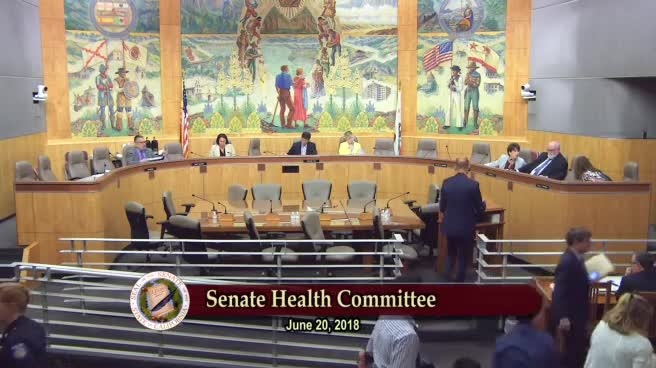 8MIN
Senate Standing Committee on Health
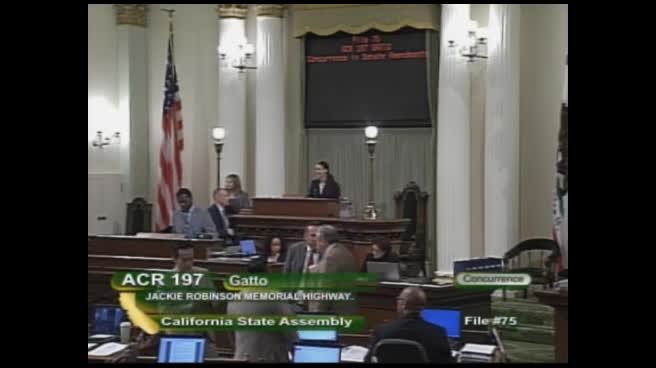 43SEC
Assembly Floor
 2MIN