AB 1751: Secondhand goods.
- Session Year: 2015-2016
- House: Assembly
- Latest Version Date: 2016-09-29
Existing law regulates secondhand dealers and coin dealers, and makes it unlawful for a person to engage in the business of a secondhand dealer without a license issued by the chief of police, the sheriff, or, where appropriate, the police commission. Existing law also regulates pawnbrokers. Existing law requires a local law enforcement agency to issue a license to engage in the business of a secondhand dealer or pawnbroker to an applicant who has not been convicted of an offense involving stolen property. Existing law requires a secondhand dealer to report, as specified, to the chief of police or sheriff all secondhand tangible personal property, as defined, purchased, taken in trade, taken in pawn, accepted for sale on consignment, or accepted for auctioning. Existing law requires the report to include, among other things, the identification of the intended seller or pledger of the property, verified by the person taking the information by specified methods. Existing law requires the reporting of this information to the Department of Justice through a single, statewide, uniform electronic reporting system. Existing law requires the Department of Justice to develop descriptive categories and secondhand dealers and coin dealers to use these categories in their reports.
This bill would define CAPSS as the California Pawn and SecondhandDealer System, which is the single, statewide, uniform electronic reporting system operated by the Department of Justice. The bill would eliminate the requirement that a secondhand dealer send reports on paper forms. The bill would eliminate the requirements that the Department of Justice develop, and secondhand dealers and coin dealers use, descriptive categories in their reports of acquired tangible personal property. Instead, the bill would require the Department of Justice to accept the properly spelled and non-abbreviated plain text property descriptions commonly recognized and utilized by the pawn and secondhand dealer industries. The bill would require a secondhand dealer to provide a property description in an article field descriptor, as specified. This bill would prohibit the Department of Justice, chiefs of police, and sheriffs from requiring secondhand dealers to report any additional information other than that which is required by these provisions. The bill would require that a future change to the reporting requirements of CAPSS that substantively alters the reporting standards be implemented and operated in compliance with the Administrative Procedure Act and prohibit the Department of Justice from taking any action with respect to the implementation, operation, or maintenance of CAPSS by adoption of an emergency regulation. The bill would also require the Department of Justice to convene a meeting with the Department of Technology to discuss issues pertaining to any proposed changes or upgrades, and authorize the Department of Technology to provide technological assistance for ongoing improvements, updates, or changes, to CAPSS.
Existing law provides an exception to the reporting requirement for the acquisition of the same property from the same customer within 12 months of a reported transfer, except when submission of the report is specifically requested in writing by the local authorities.
This bill would expand the reporting requirement exception to all acquisitions of the same property from the same customer within 12 months of a reported transfer.
This bill would declare that it is to take effect immediately as an urgency statute.
Existing law regulates secondhand dealers and coin dealers, and makes it unlawful for a person to engage in the business of a secondhand dealer without a license issued by the chief of police, the sheriff, or, where appropriate, the police commission. Existing law also regulates pawnbrokers. Existing law requires a local law enforcement agency to issue a license to engage in the business of a secondhand dealer or pawnbroker to an applicant who has not been convicted of an offense involving stolen property. Existing law requires a secondhand dealer to report, as specified, to the chief of police or sheriff all secondhand tangible personal property, as defined, purchased, taken in trade, taken in pawn, accepted for sale on consignment, or accepted for auctioning. Existing law requires the report to include, among other things, the identification of the intended seller or pledger of the property, verified by the person taking the information by specified methods. Existing law requires the reporting of this information to the Department of Justice through a single, statewide, uniform electronic reporting system. Existing law requires the Department of Justice to develop descriptive categories and secondhand dealers and coin dealers to use these categories in their reports.
This bill would define CAPSS as the California Pawnbroker Pawn and SecondhandDealer System, which is the single, statewide, uniform electronic reporting system operated by the Department of Justice. The bill would eliminate the requirement that a secondhand dealer send reports on paper forms. The bill would eliminate the requirements that the Department of Justice develop, and secondhand dealers and coin dealers use, descriptive categories in their reports of acquired tangible personal property. Instead, the bill would require the Department of Justice to accept the properly spelled and non-abbreviated plain text property descriptions commonly recognized and utilized by the pawn and secondhand dealer industries. The bill would authorize a secondhand dealer to utilize an article field descriptor provided by the Department of Justice, if using the article field descriptor would, in whole or in part, populate the property description. require a secondhand dealer to provide a property description in an article field descriptor, as specified. This bill would prohibit the Department of Justice, chiefs of police, and sheriffs from requiring secondhand dealers to report any additional information other than that which is required by these provisions. The bill would require that a future change to the reporting requirements of CAPSS that substantively alters the reporting standards be implemented and operated in compliance with the Administrative Procedure Act and prohibit the Department of Justice from taking any action with respect to the implementation, operation, or maintenance of CAPSS by adoption of an emergency regulation. The bill would also require the Department of Justice to convene a meeting with the Department of Technology to discuss issues pertaining to any proposed changes or upgrades, and authorize the Department of Technology to provide technological assistance for ongoing improvements, updates, or changes, to CAPSS.
Existing law provides an exception to the reporting requirement for the acquisition of the same property from the same customer within 12 months of a reported transfer, except when submission of the report is specifically requested in writing by the local authorities.
This bill would expand the reporting requirement exception to all acquisitions of the same property from the same customer within 12 months of a reported transfer.
This bill would declare that it is to take effect immediately as an urgency statute.
Existing law provides for the regulation of regulates secondhand dealers and coin dealers, as defined. Existing law and makes it unlawful for a person to engage in the business of a secondhand dealer without a license issued by the chief of police, the sheriff, or, where appropriate, the police commission. Existing law also regulates pawnbrokers. Existing law requires a local law enforcement agency to issue a license to engage in the business of a secondhand dealer or pawnbroker to an applicant who meets designated criteria. Existing law authorizes the local licensing authority and the Department of Justice to charge an initial licensure fee and a renewal fee, as specified. has not been convicted of an offense involving stolen property. Existing law requires a secondhand dealer to report, as specified, to the chief of police or sheriff all secondhand tangible personal property, as defined, purchased, taken in trade, taken in pawn, accepted for sale on consignment, or accepted for auctioning. Existing law requires the report to include, among other things, the identification of the intended seller or pledger of the property, verified by the person taking the information by specified methods. Existing law requires the reporting of this information to the Department of Justice through a single, statewide, and uniform electronic reporting system. Existing law requires the Department of Justice to develop descriptive categories and secondhand dealers and coin dealers to use these categories in their reports.
This bill would define CAPSS as the California Pawnbroker and SecondhandDealer System, which is the single, statewide, and uniform electronic reporting system operated by the Department of Justice. The bill would eliminate the requirement that a secondhand dealer send reports on paper forms. The bill would eliminate the requirements that the Department of Justice develop, and secondhand dealers and coin dealers use, descriptive categories in their reports of acquired tangible personal property. Instead, the bill would require the Department of Justice to accept the plain text property descriptions commonly recognized and utilized by the pawn and secondhand dealer industries. The bill would authorize a secondhand dealer to utilize an article field descriptor provided by the Department of Justice, if using the article field descriptor would, in whole or in part, populate the property description. This bill would prohibit the Department of Justice, chiefs of police, and sheriffs from requiring secondhand dealers to report any additional information other than that which is required by these provisions. The bill would require that a future change to the reporting requirements of CAPSS that substantively alters the reporting standards be implemented and operated in compliance with the Administrative Procedure Act and prohibit the Department of Justice from taking any action with respect to the implementation, operation, or maintenance of CAPSS by adoption of an emergency regulation. The bill would also require the Department of Justice to convene a meeting with the Department of Technology to discuss issues pertaining to any proposed changes or upgrades, and authorize the Department of Technology to provide technological assistance for ongoing improvements, updates, or changes, to CAPSS.
Existing law provides an exception to the reporting requirement for the acquisition of the same property from the same customer within 12 months of a reported transfer, except when submission of the report is specifically requested in writing by the local authorities.
This bill would expand the reporting requirement exception to all acquisitions of the same property from the same customer within 12 months of a reported transfer.
This bill would declare that it is to take effect immediately as an urgency statute.
Existing law provides for the regulation of secondhand dealers and coin dealers, as defined. Existing law makes it unlawful for a person to engage in the business of a secondhand dealer without a license issued by the chief of police, the sheriff, or, where appropriate, the police commission. Existing law requires a local law enforcement agency to issue a license to engage in the business of a secondhand dealer or pawnbroker to an applicant who meets designated criteria. Existing law authorizes the local licensing authority and the Department of Justice to charge an initial licensure fee and a renewal fee, as specified. Existing law requires a secondhand dealer to report, as specified, to the chief of police or sheriff all secondhand tangible personal property, as defined, purchased, taken in trade, taken in pawn, accepted for sale on consignment, or accepted for auctioning. Existing law requires the report to include, among other things, the identification of the intended seller or pledger of the property, verified by the person taking the information by specified methods. Existing law requires the reporting of this information to the Department of Justice through a single, statewide, and uniform electronic reporting system. Existing law requires the Department of Justice to develop descriptive categories and secondhand dealers and coin dealers to use these categories in their reports.
This bill would define CAPSS as the California Pawnbroker and SecondhandDealer System, which is the single, statewide, and uniform electronic reporting system operated by the Department of Justice. The bill would eliminate the requirement that a secondhand dealer send reports on paper forms. The bill would eliminate the requirements that the Department of Justice develop, and secondhand dealers and coin dealers use, descriptive categories in their reports of acquired tangible personal property. Instead, the bill would require the Department of Justice to accept the plain text property descriptions commonly recognized and utilized by the pawn and secondhand dealer industries. The bill would require the Department of Justice to encode the plain text property descriptions, as specified, and would require that necessary costs incurred by the department in mapping the plain text property descriptions received by pawnbrokers and secondhand dealers to any law enforcement database be funded by the Secondhand Dealer and Pawnbroker Fund, thereby making an appropriation. The bill would authorize a secondhand dealer to utilize an article field descriptor provided by the Department of Justice, if using the article field descriptor would, in whole or in part, populate the property description. This bill would prohibit the Department of Justice, chiefs of police, and sheriffs from requiring secondhand dealers to report any additional information other than that which is required by these provisions. The bill would require that the single, statewide, and uniform electronic reporting system a future change to the reporting requirements of CAPSS that substantively alters the reporting standards be implemented and operated in compliance with the Administrative Procedure Act and prohibit the Department of Justice from taking any action with respect to the implementation, operation, or maintenance of the electronic reporting system CAPSS by adoption of an emergency regulation. The bill would also require the Department of Justice to convene a meeting with the Department of Technology to discuss issues pertaining to any proposed changes or upgrades, and authorize the Department of Technology to provide technological assistance for ongoing improvements, updates, or changes, to the single, statewide, and uniform electronic reporting system. CAPSS.
Existing law provides an exception to the reporting requirement for the acquisition of the same property from the same customer within 12 months of a reported transfer, except when submission of the report is specifically requested in writing by the local authorities.
This bill would expand the reporting requirement exception to all acquisitions of the same property from the same customer within 12 months of a reported transfer.
This bill would declare that it is to take effect immediately as an urgency statute.
Existing law provides for the regulation of secondhand dealers and coin dealers, as defined. Existing law makes it unlawful for a person to engage in the business of a secondhand dealer without a license issued by the chief of police, the sheriff, or, where appropriate, the police commission. Existing law requires a local law enforcement agency to issue a license to engage in the business of a secondhand dealer or pawnbroker to an applicant who meets designated criteria. Existing law authorizes the local licensing authority and the Department of Justice to charge an initial licensure fee and a renewal fee, as specified. Existing law requires a secondhand dealer to report, as specified, to the chief of police or sheriff all secondhand tangible personal property, as defined, purchased, taken in trade, taken in pawn, accepted for sale on consignment, or accepted for auctioning. Existing law requires the report to include, among other things, the identification of the intended seller or pledger of the property, verified by the person taking the information by specified methods. Existing law requires the reporting of this information to the Department of Justice through a single, statewide, and uniform electronic reporting system. Existing law requires the Department of Justice to develop descriptive categories and secondhand dealers and coin dealers to use these categories in their reports.
This bill would eliminate the requirements that the Department of Justice develop, and secondhand dealers and coin dealers use, descriptive categories in their reports of acquired tangible personal property. Instead, the bill would require the Department of Justice to accept the plain text property descriptions commonly recognized and utilized by the pawn and secondhand dealer industries. The bill would require the Department of Justice to encode the plain text property descriptions, as specified, and would prohibit the Department of Justice from using funds collected from the initial licensing fee for these purposes. require that necessary costs incurred by the department in mapping the plain text property descriptions received by pawnbrokers and secondhand dealers to any law enforcement database be funded by the Secondhand Dealer and Pawnbroker Fund, thereby making an appropriation. This bill would prohibit the Department of Justice, chiefs of police, and sheriffs from requiring secondhand dealers to report any additional information other than that which is required by these provisions. The bill would require that the single, statewide, and uniform electronic reporting system be implemented and operated in compliance with the Administrative Procedure Act and prohibit the Department of Justice from taking any action with respect to the implementation, operation, or maintenance of the electronic reporting system by adoption of an emergency regulation. The bill would also require the Department of Justice to convene a meeting with the Department of Technology to discuss issues pertaining to any proposed changes or upgrades, and authorize the Department of Technology to provide technological assistance for ongoing improvements, updates, or changes, to the single, statewide, and uniform electronic reporting system.
Existing law provides an exception to the reporting requirement for the acquisition of the same property from the same customer within 12 months of a reported transfer, except when submission of the report is specifically requested in writing by the local authorities.
This bill would expand the reporting requirement exception to all acquisitions of the same property from the same customer within 12 months of a reported transfer.
This bill would declare that it is to take effect immediately as an urgency statute.
Existing law provides for the regulation of secondhand dealers and coin dealers, as defined. Existing law makes it unlawful for a person to engage in the business of a secondhand dealer without a license issued by the chief of police, the sheriff, or, where appropriate, the police commission. Existing law requires a local law enforcement agency to issue a license to engage in the business of a secondhand dealer or pawnbroker to an applicant who meets designated criteria. Existing law authorizes the local licensing authority and the Department of Justice to charge an initial licensure fee and a renewal fee, as specified. Existing law requires a secondhand dealer to report, as specified, to the chief of police or sheriff all secondhand tangible personal property, as defined, purchased, taken in trade, taken in pawn, accepted for sale on consignment, or accepted for auctioning. Existing law requires the report to include, among other things, the identification of the intended seller or pledger of the property, verified by the person taking the information by specified methods. Existing law requires the reporting of this information to the Department of Justice through a single, statewide, and uniform electronic reporting system. Existing law requires the Department of Justice to develop descriptive categories and secondhand dealers and coin dealers to use these categories in their reports.
This bill would eliminate the requirements that the Department of Justice develop, and secondhand dealers and coin dealers use, descriptive categories in their reports of acquired tangible personal property. Instead, the bill would require the Department of Justice to accept the plain text property descriptions commonly recognized and utilized by the pawn and secondhand dealer industries. The bill would require the Department of Justice to encode the plain text property descriptions, as specified, and would prohibit the Department of Justice from using funds collected from the initial licensing fee for these purposes. This bill would prohibit the Department of Justice, chiefs of police, and sheriffs from requiring secondhand dealers to report any additional information other than that which is required by these provisions. The bill would require that the single, statewide, and uniform electronic reporting system be implemented and operated in compliance with the Administrative Procedure Act and prohibit the Department of Justice from taking any action with respect to the implementation, operation, or maintenance of the electronic reporting system by adoption of an emergency regulation. The bill would also require the Department of Justice to convene a meeting with the Department of Technology to discuss issues pertaining to any proposed changes or upgrades, and authorize the Department of Technology to provide technological assistance for ongoing improvements, updates, or changes, to the single, statewide, and uniform electronic reporting system.
Existing law provides an exception to the reporting requirement for the acquisition of the same property from the same customer within 12 months of a reported transfer, except when submission of the report is specifically requested in writing by the local authorities.
This bill would expand the reporting requirement exception to all acquisitions of the same property from the same customer within 12 months of a reported transfer.
This bill would declare that it is to take effect immediately as an urgency statute.
Existing law provides for the regulation of secondhand dealers and coin dealers, as defined. Existing law makes it unlawful for a person to engage in the business of a secondhand dealer without a license issued by the chief of police, the sheriff, or, where appropriate, the police commission. Existing law requires a local law enforcement agency to issue a license to engage in the business of a secondhand dealer or pawnbroker to an applicant who meets designated criteria. Existing law authorizes the local licensing authority and the Department of Justice to charge an initial licensure fee and a renewal fee, as specified. Existing law requires a secondhand dealer to report, as specified, to the chief of police or sheriff all secondhand tangible personal property, as defined, purchased, taken in trade, taken in pawn, accepted for sale on consignment, or accepted for auctioning. Existing law requires the report to include, among other things, the identification of the intended seller or pledger of the property, verified by the person taking the information by specified methods. Existing law requires the reporting of this information to the Department of Justice through a single, statewide, and uniform electronic reporting system. Existing law requires the Department of Justice to develop descriptive categories and secondhand dealers and coin dealers to use these categories in their reports.
This bill would eliminate the requirements that the Department of Justice develop, and secondhand dealers and coin dealers use, descriptive categories in their reports of acquired tangible personal property. Instead, the bill would require the Department of Justice to accept the plain text property descriptions commonly recognized and utilized by the pawn and secondhand dealer industries. The bill would require the Department of Justice to encode the plain text property descriptions, as specified, and would prohibit the Department of Justice from using funds collected from the initial licensing fee for these purposes. This bill would prohibit the Department of Justice, chiefs of police, and sheriffs from requiring secondhand dealers to report any additional information other than that which Section 21628 of the Business and Professions Code specifies. is required by these provisions. The bill would require that the single, statewide, and uniform electronic reporting system be implemented and operated in compliance with the Administrative Procedure Act and prohibit the Department of Justice from taking any action with respect to the implementation, operation, or maintenance of the electronic reporting system by adoption of an emergency regulation.
Existing law provides an exception to the reporting requirement for the acquisition of the same property from the same customer within 12 months of a reported transfer, except when submission of the report is specifically requested in writing by the local authorities.
This bill would expand the reporting requirement exception to all acquisitions of the same property from the same customer within 12 months of a reported transfer.
This bill would declare that it is to take effect immediately as an urgency statute.
Existing law provides for the regulation of secondhand dealers and coin dealers, as defined. Existing law makes it unlawful for a person to engage in the business of a secondhand dealer without a license issued by the chief of police, the sheriff, or, where appropriate, the police commission. Existing law requires a local law enforcement agency to issue a license to engage in the business of a secondhand dealer or pawnbroker to an applicant who meets designated criteria. Existing law authorizes the local licensing authority and the Department of Justice to charge an initial licensure fee and a renewal fee, as specified. Existing law requires a secondhand dealer to report, as specified, to the chief of police or sheriff all secondhand tangible personal property, as defined, purchased, taken in trade, taken in pawn, accepted for sale on consignment, or accepted for auctioning. Existing law requires the report to include, among other things, the identification of the intended seller or pledger of the property, verified by the person taking the information by specified methods. Existing law requires the reporting of this information to the Department of Justice through a single, statewide, and uniform electronic reporting system. Existing law requires the Department of Justice to develop descriptive categories and secondhand dealers and coin dealers to use these categories in their reports.
This bill would eliminate the requirements that the Department of Justice develop, and secondhand dealers and coin dealers use, descriptive categories in their reports of acquired tangible personal property. Instead, the bill would require the Department of Justice to accept the plain text property descriptions commonly recognized and utilized by the pawn and secondhand dealer industries. The bill would require the Department of Justice to encode the plain text property descriptions, as specified, and would prohibit the Department of Justice from using funds collected from the initial licensing fee for these purposes. This bill would prohibit the Department of Justice, chiefs of police, and sheriffs from requiring secondhand dealers to report any information other than that which Section 21628 of the Business and Professions Code specifies.
Existing law provides an exception to the reporting requirement for the acquisition of the same property from the same customer within 12 months of a reported transfer, except when submission of the report is specifically requested in writing by the local authorities.
This bill would expand the reporting requirement exception to all acquisitions of the same property from the same customer within 12 months of a reported transfer.
This bill would declare that it is to take effect immediately as an urgency statute.
(a)It is the intent of the Legislature to clarify that pawnbrokers and other secondhand dealers are to report their acquisition of tangible personal property received in pledge, trade, consignment, or auction or by purchase using plain text, in descriptive language historically used in the pawn and secondhand industries when reporting to the single, statewide, and uniform electronic reporting system operated by the Department of Justice, or if not yet implemented in their respective jurisdictions, on paper forms sent to the local police chief or sheriff of the jurisdiction in which the secondhand dealer is physically located.
(b)It is further the intent of the Legislature that by specifying this manner of reporting, it will relieve all secondhand dealers and pawnbrokers of the inherent costs and burdens imposed under existing law that requires these businesses to report their daily acquisitions of secondhand tangible personal property on paper forms limited to a single transaction, or where the electronic reporting system is implemented, the cost associated with converting industry standard descriptions to specific law enforcement categories, the ongoing costs of training to that standard, and the costs of implementing software to maintain that standard.
(c)Further, it is the intent of the Legislature that the Department of Justice shall continue to accept the plain text descriptive language historically used in the pawn and secondhand industries and may provide article field descriptors to secondhand dealers in order to facilitate communication between the single, statewide, and uniform electronic reporting system and law enforcement databases. It is the intent of the Legislature that only properly trained law enforcement personnel of the Department of Justice or local law enforcement classify and encode for law enforcement databases property reported by pawnbrokers and secondhand dealers.
SEC. 2.Section 21627.5 is added to the Business and Professions Code, to read:21627.5.CAPSS means the California Pawn and SecondhandDealer System, which is a single, statewide, uniform electronic reporting system that receives secondhand dealer reports and is operated by the Department of Justice consistent with Resolution Chapter 16 of the Statutes of 2010. The maintenance and operation of CAPSS is funded by the Secondhand Dealer and Pawnbroker Fund established pursuant to Section 21642.5.
SEC. 3.Section 21628 of the Business and Professions Code, as amended by Section 1 of Chapter 169 of the Statutes of 2015, is amended to read:21628.(a)Every secondhand dealer or coin dealer described in Section 21626 shall report daily, or no later than the next business day excluding weekends and holidays after receipt or purchase of secondhand tangible personal property, to CAPSS, all secondhand tangible personal property, except for firearms, which he or she has purchased, taken in trade, taken in pawn, accepted for sale on consignment, or accepted for auctioning, in accordance with the provisions of Section 21630 and subdivision (d). The report shall be legible, prepared in English, completed where applicable, and include only the following information:
(1)The name and current address of the intended seller or pledger of the property.
(2)The identification of the intended seller or pledger. The identification of the seller or pledger of the property shall be verified by the person taking the information, who may use technology, including, but not limited to, cameras or software, or both, to obtain information and verify identity remotely. The verification shall be valid if the person taking the information reasonably relies on any one of the following documents, provided that the document is currently valid or has been issued within five years and contains a photograph or description, or both, of the person named on it, and, where applicable, is signed by the person, and bears a serial or other identifying number:
(A)A passport of the United States.
(B)A drivers license issued by any state or Canada.
(C)An identification card issued by any state.
(D)An identification card issued by the United States.
(E)A passport from any other country in addition to another item of identification bearing an address.
(F)A Matricula Consular in addition to another item of identification bearing an address.
(3)(A)A property description. The property description shall be a complete and reasonably accurate description of the property, including, but not limited to, the following: serial number, personalized inscriptions, and other identifying marks or symbols, owner-applied numbers, the size, color, material, and, if known by the secondhand dealer, the manufacturers pattern name. The property description shall include the brand and model name or number of the item if known to, or reasonably ascertainable by, the secondhand dealer. The property description shall include a plain text description of the item generally accepted by the secondhand industry. Watches need not be disassembled when special skill or special tools are required to obtain the required information, unless specifically requested to do so by a peace officer. A special tool does not include a penknife, caseknife, or similar instrument and disassembling a watch with a penknife, caseknife, or similar instrument does not constitute a special skill. In all instances where the required information may be obtained by removal of a watchband, then the watchband shall be removed. The cost associated with opening the watch shall be borne by the pawnbroker, secondhand dealer, or customer.
(B)A secondhand dealer shall utilize in the article field either an article field descriptor, the format of which shall be provided by the Department of Justice, or a properly spelled and non-abbreviated plain text descriptor commonly recognized and utilized by the pawn and secondhand dealer industry. The lack of an article field descriptor provided by the Department of Justice shall not be relevant to any determination as to whether the secondhand dealer has received evidence of authority to sell or pledge the property pursuant to paragraph (1) of subdivision (b) so long as the secondhand dealer reports an article field descriptor consistent with this subdivision.
(C)In the case of the receipt or purchase of a handheld electronic device by a secondhand dealer, the serial number reported pursuant to subparagraph (A) may be the International Mobile Station Equipment Identity (IMEI), the mobile equipment identifier (MEID), or other unique identifying number assigned to that device by the device manufacturer. If none of these identifying numbers are available by the time period required for reporting pursuant to this subdivision, the report shall be updated with the IMEI, MEID, or other unique identifying number assigned to that device by the device manufacturer as soon as reasonably possible but no later than 10 working days after receipt or purchase of the handheld electronic device.
(D)For the purpose of this paragraph, handheld electronic device means any portable device that is capable of creating, receiving, accessing, or storing electronic data or communications and includes, but is not limited to, a cellular phone, smartphone, or tablet.
(4)A certification by the intended seller or pledger that he or she is the owner of the property or has the authority of the owner to sell or pledge the property.
(5)A certification by the intended seller or pledger that to his or her knowledge and belief the information is true and complete.
(6)A legible fingerprint taken from the intended seller or pledger, as prescribed by the Department of Justice. This requirement does not apply to a coin dealer, unless required pursuant to local regulation.
(7)A report submitted by a pawnbroker or secondhand dealer shall be deemed to have been accepted by the Department of Justice if a good faith effort has been made to supply all of the required information. An error or omission on the report shall be noted, and the reporting pawnbroker or secondhand dealer shall be notified of the error or omission by the Department of Justice. A reporting pawnbroker or secondhand dealer shall have three business days from that notice to amend or correct the report before being subject to any enforcement violation.
(b)(1)When a secondhand dealer complies with all of the provisions of this section, he or she shall be deemed to have received from the seller or pledger adequate evidence of authority to sell or pledge the property for all purposes included in this article, and Division 8 (commencing with Section 21000) of the Financial Code.
(2)In enacting this subdivision, it is the intent of the Legislature that its provisions shall not adversely affect the implementation of, or prosecution under, any provision of the Penal Code.
(c)Any person who conducts business as a secondhand dealer at any gun show or event, as defined in Section 478.100 of Title 27 of the Code of Federal Regulations, or its successor, outside the jurisdiction that issued the secondhand dealer license in accordance with subdivision (d) of Section 21641, may be required to submit a duplicate of the transaction report prepared pursuant to this section to the local law enforcement agency where the gun show or event is conducted.
(d)(1)The Department of Justice shall recognize and accept the properly spelled and non-abbreviated plain text property descriptors generally accepted in the pawn and secondhand industries provided by pawnbrokers and secondhand dealers, as has been the longstanding practice of chiefs of police and sheriffs when they had received paper reports from pawnbrokers and secondhand dealers.
(2)A report required of a secondhand dealer pursuant to this section shall be transmitted by electronic means to CAPSS by the secondhand dealer.
(3)Unless specifically identified in this section, the Department of Justice, chiefs of police, and sheriffs shall not require a secondhand dealer to include any additional information concerning the seller, the pledger, or the property received by the secondhand dealer in the report required by this section.
(4)If there is a future change to the reporting requirements of CAPSS that substantively alters the reporting standards provided by this article, those changes shall be implemented and operated in compliance with the Administrative Procedure Act (Chapter 3.5 (commencing with Section 11340) of Part 1 of Division 3 of Title 2 of the Government Code). In implementing and operating a future change to CAPSS, the Department of Justice, chiefs of police, and sheriffs shall comply with Sections 21637 and 21638. Notwithstanding any other law, the Department of Justice shall not take any action with respect to the implementation, operation, or maintenance of CAPSS required by this chapter by adoption of an emergency regulation.
(5)On or before July 1, 2017, the Department of Justice shall convene a meeting with the Department of Technology to discuss issues pertaining to any proposed changes or upgrades to CAPSS required by this chapter. The Department of Technology may provide technological assistance for ongoing improvements, updates, or changes to CAPSS required by this chapter, as requested.
(6)A coin dealer shall report the information required by this section under the reporting standard described in paragraph (1) on a form developed by the Attorney General that the coin dealer shall transmit each day by facsimile transmission or by mail to the chief of police or sheriff. A transaction shall consist of not more than one item.
(7)For purposes of this subdivision, item shall mean any single physical article. However, with respect to a commonly accepted grouping of articles that are purchased as a set, including, but not limited to, a pair of earrings or place settings of china, silverware, or other tableware, item shall mean that commonly accepted grouping.
(8)Nothing in this subdivision shall be construed as excepting a secondhand dealer from the fingerprinting requirement of paragraph (6) of subdivision (a).
(e)Nothing in this section shall be construed to exempt a person licensed as a firearms dealer pursuant to Sections 26700 to 26915, inclusive, of the Penal Code from the reporting requirements for the delivery of firearms pursuant to Sections 26700 to 26915, inclusive, of the Penal Code.
SEC. 4.Section 21628.1 of the Business and Professions Code is repealed.SEC. 5.Section 21630 of the Business and Professions Code is repealed.SEC. 6.Section 21630 is added to the Business and Professions Code, to read:21630.(a)A secondhand dealer or coin dealer shall electronically transmit to CAPSS no later than the next business day after the date of transaction excluding weekends and holidays or, if not then possible due to an electrical, telecommunications, or other malfunction, as soon as reasonable thereafter, the report of acquisition of tangible personal property as required by Section 21628.
(b)Notwithstanding Section 21628, submission of a tangible property acquisition report is not required if the report of an acquisition of the same property from the same customer has been submitted within the preceding 12 months.
SEC. 7.Section 21633 of the Business and Professions Code is repealed.SEC. 8.Section 21642.5 of the Business and Professions Code is amended to read:21642.5.(a)The Department of Justice shall require each applicant for an initial license under Section 21641 of this code or Section 21300 of the Financial Code and each applicant for renewal of a license under Section 21642 of this code or Section 21301 of the Financial Code to pay a fee not to exceed three hundred dollars ($300), but in no event exceeding the costs described in subdivision (b), except that the fee may be increased at a rate not to exceed any increase in the California Consumer Price Index as compiled and reported by the Department of Industrial Relations.
(b)The fees assessed pursuant to subdivision (a) shall be no more than necessary to cover the reasonable regulatory costs to the department of doing all of the following:
(1)Processing initial license applications under Section 21641 of this code and Section 21300 of the Financial Code.
(2)Processing renewal applications under Section 21642 of this code and Section 21301 of the Financial Code.
(3)Implementing, operating, and maintaining CAPSS described in Section 21627.5.
(c)All licensees holding a license issued before the effective date of the act adding this section pursuant to Section 21641 or 21642 of this code or Section 21300 or 21301 of the Financial Code shall, within 120 days after enactment of the act adding this section in the 201112 Regular Session, in addition to any fee required under subdivision (a), pay a fee not to exceed two hundred eighty-eight dollars ($288) to the Department of Justice.
(d)The fees paid pursuant to subdivisions (a) and (c) shall be deposited in the Secondhand Dealer and Pawnbroker Fund, which is hereby established in the State Treasury. The revenue in the fund shall, upon appropriation by the Legislature, be used by the Department of Justice for the purpose of paying for the costs described in paragraphs (1) to (3), inclusive, of subdivision (b), except that the revenue received pursuant to subdivision (c) shall, upon appropriation by the Legislature, be used by the Department of Justice for the purpose of paying for the costs described in paragraph (3) of subdivision (b).
(e)Applicants described in subdivision (a) shall submit to the Department of Justice fingerprint images and related information required by the Department of Justice for the purposes of obtaining information as to the existence and contents of a record of state convictions and state arrests and information as to the existence and contents of a record of state arrests for which the Department of Justice establishes that the person is free on bail or on his or her own recognizance pending trial or appeal.
(1)The Department of Justice shall prepare a state-level response pursuant to paragraph (1) of subdivision (l) of Section 11105 of the Penal Code.
(2)The Department of Justice shall provide subsequent notification service pursuant to Section 11105.2 of the Penal Code for applicants described in this subdivision.
(3)The Department of Justice shall charge a fee sufficient to cover the cost of processing the request described in this subdivision. The fee revenues shall be deposited in the Fingerprint Fee Account and shall, upon appropriation by the Legislature, be used by the department for the purposes of paying the costs associated with this subdivision.
SEC. 9.This act is an urgency statute necessary for the immediate preservation of the public peace, health, or safety within the meaning of Article IV of the Constitution and shall go into immediate effect. The facts constituting the necessity are:
In order to protect the public from the dissemination of stolen property, make the single, statewide, uniform electronic system a cost savings for secondhand dealers and pawnbrokers, and to require the plain text property descriptions historically utilized by these industries to be accepted by the Department of Justice, just as these plain text descriptions have historically been accepted by chiefs of police and sheriffs, at the earliest possible time, it is necessary that this act take effect immediately.
(a)It is the intent of the Legislature to clarify that pawnbrokers and other secondhand dealers are to report their acquisition of tangible personal property received in pledge, trade, consignment, or auction or by purchase using plain text, in descriptive language historically used in the pawn and secondhand industries when reporting to the single, statewide, and uniform electronic reporting system operated by the Department of Justice, or if not yet implemented in their respective jurisdictions, on paper forms sent to the local police chief or sheriff of the jurisdiction in which the secondhand dealer is physically located.
(b)It is further the intent of the Legislature that by specifying this manner of reporting, it will relieve all secondhand dealers and pawnbrokers of the inherent costs and burdens imposed under existing law that requires these businesses to report their daily acquisitions of secondhand tangible personal property on paper forms limited to a single transaction, or where the electronic reporting system is implemented, the cost associated with converting industry standard descriptions to specific law enforcement categories, the ongoing costs of training to that standard, and the costs of implementing software to maintain that standard.
(c)Further, it is the intent of the Legislature that the Department of Justice shall continue to accept the plain text descriptive language historically used in the pawn and secondhand industries and may provide article field descriptors to secondhand dealers in order to facilitate communication between the single, statewide, and uniform electronic reporting system and law enforcement databases. It is the intent of the Legislature that only properly trained law enforcement personnel of the Department of Justice or local law enforcement classify and encode for law enforcement databases property reported by pawnbrokers and secondhand dealers.
SEC. 2.Section 21627.5 is added to the Business and Professions Code, to read:21627.5.CAPSS means the California Pawnbroker Pawn and SecondhandDealer System, which is a single, statewide, uniform electronic reporting system that receives secondhand dealer reports and is operated by the Department of Justice consistent with Resolution Chapter 16 of the Statutes of 2010. The maintenance and operation of CAPSS is funded by the Secondhand Dealer and Pawnbroker Fund established pursuant to Section 21642.5.
SEC. 3.Section 21628 of the Business and Professions Code, as amended by Section 1 of Chapter 169 of the Statutes of 2015, is amended to read:21628.(a)Every secondhand dealer or coin dealer described in Section 21626 shall report daily, or no later than the next business day excluding weekends and holidays after receipt or purchase of secondhand tangible personal property, to CAPSS, all secondhand tangible personal property, except for firearms, which he or she has purchased, taken in trade, taken in pawn, accepted for sale on consignment, or accepted for auctioning, in accordance with the provisions of Section 21630 and subdivision (d). The report shall be legible, prepared in English, completed where applicable, and include only the following information:
(1)The name and current address of the intended seller or pledger of the property.
(2)The identification of the intended seller or pledger. The identification of the seller or pledger of the property shall be verified by the person taking the information, who may use technology, including, but not limited to, cameras or software, or both, to obtain information and verify identity remotely. The verification shall be valid if the person taking the information reasonably relies on any one of the following documents, provided that the document is currently valid or has been issued within five years and contains a photograph or description, or both, of the person named on it, and, where applicable, is signed by the person, and bears a serial or other identifying number:
(A)A passport of the United States.
(B)A drivers license issued by any state or Canada.
(C)An identification card issued by any state.
(D)An identification card issued by the United States.
(E)A passport from any other country in addition to another item of identification bearing an address.
(F)A Matricula Consular in addition to another item of identification bearing an address.
(3)(A)A property description. The property description shall be a complete and reasonably accurate description of the property, including, but not limited to, the following: serial number, personalized inscriptions, and other identifying marks or symbols, owner-applied numbers, the size, color, material, and, if known by the secondhand dealer, the manufacturers pattern name. The property description shall include the brand and model name or number of the item if known to, or reasonably ascertainable by, the secondhand dealer. The property description may shall include a plain text description of the item generally accepted by the secondhand industry. Watches need not be disassembled when special skill or special tools are required to obtain the required information, unless specifically requested to do so by a peace officer. A special tool does not include a penknife, caseknife, or similar instrument and disassembling a watch with a penknife, caseknife, or similar instrument does not constitute a special skill. In all instances where the required information may be obtained by removal of a watchband, then the watchband shall be removed. The cost associated with opening the watch shall be borne by the pawnbroker, secondhand dealer, or customer.
(B)A secondhand dealer may shall utilize in the article field either an article field descriptor, the format of which shall be provided by the Department of Justice, if using the article field descriptor would, in whole or in part, accurately populate the property description with a plain text description generally accepted in the or a properly spelled and non-abbreviated plain text descriptor commonly recognized and utilized by the pawn and secondhand dealer industry. The lack of an article field descriptor by a secondhand dealer provided by the Department of Justice shall not be relevant to any determination as to whether the secondhand dealer has received evidence of authority to sell or pledge the property pursuant to paragraph (1) of subdivision (b). (b) so long as the secondhand dealer reports an article field descriptor consistent with this subdivision.
(C)In the case of the receipt or purchase of a handheld electronic device by a secondhand dealer, the serial number reported pursuant to subparagraph (A) may be the International Mobile Station Equipment Identity (IMEI), the mobile equipment identifier (MEID), or other unique identifying number assigned to that device by the device manufacturer. If none of these identifying numbers are available by the time period required for reporting pursuant to this subdivision, the report shall be updated with the IMEI, MEID, or other unique identifying number assigned to that device by the device manufacturer as soon as reasonably possible but no later than 10 working days after receipt or purchase of the handheld electronic device.
(D)For the purpose of this paragraph, handheld electronic device means any portable device that is capable of creating, receiving, accessing, or storing electronic data or communications and includes, but is not limited to, a cellular phone, smartphone, or tablet.
(4)A certification by the intended seller or pledger that he or she is the owner of the property or has the authority of the owner to sell or pledge the property.
(5)A certification by the intended seller or pledger that to his or her knowledge and belief the information is true and complete.
(6)A legible fingerprint taken from the intended seller or pledger, as prescribed by the Department of Justice. This requirement does not apply to a coin dealer, unless required pursuant to local regulation.
(7)A report submitted by a pawnbroker or secondhand dealer shall be deemed to have been accepted by the Department of Justice if a good faith effort has been made to supply all of the required information. An error or omission on the report shall be noted, and the reporting pawnbroker or secondhand dealer shall be notified of the error or omission by the Department of Justice. A reporting pawnbroker or secondhand dealer shall have three business days from that notice to amend or correct the report before being subject to any enforcement violation.
(b)(1)When a secondhand dealer complies with all of the provisions of this section, he or she shall be deemed to have received from the seller or pledger adequate evidence of authority to sell or pledge the property for all purposes included in this article, and Division 8 (commencing with Section 21000) of the Financial Code.
(2)In enacting this subdivision, it is the intent of the Legislature that its provisions shall not adversely affect the implementation of, or prosecution under, any provision of the Penal Code.
(c)Any person who conducts business as a secondhand dealer at any gun show or event, as defined in Section 478.100 of Title 27 of the Code of Federal Regulations, or its successor, outside the jurisdiction that issued the secondhand dealer license in accordance with subdivision (d) of Section 21641, may be required to submit a duplicate of the transaction report prepared pursuant to this section to the local law enforcement agency where the gun show or event is conducted.
(d)(1)The Department of Justice shall recognize and accept the properly spelled and non-abbreviated plain text property descriptions descriptors generally accepted in the pawn and secondhand industries provided by pawnbrokers and secondhand dealers, as has been the longstanding practice of chiefs of police and sheriffs when they had received paper reports from pawnbrokers and secondhand dealers.
(2)A report required of a secondhand dealer pursuant to this section shall be transmitted by electronic means to CAPSS by the secondhand dealer.
(3)Unless specifically identified in this section, the Department of Justice, chiefs of police, and sheriffs shall not require a secondhand dealer to include any additional information concerning the seller, the pledger, or the property received by the secondhand dealer in the report required by this section.
(4)If there is a future change to the reporting requirements of CAPSS that substantively alters the reporting standards provided by this article, those changes shall be implemented and operated in compliance with the Administrative Procedure Act (Chapter 3.5 (commencing with Section 11340) of Part 1 of Division 3 of Title 2 of the Government Code). In implementing and operating a future change to CAPSS, the Department of Justice, chiefs of police, and sheriffs shall comply with Sections 21637 and 21638. Notwithstanding any other law, the Department of Justice shall not take any action with respect to the implementation, operation, or maintenance of CAPSS required by this chapter by adoption of an emergency regulation.
(5)On or before July 1, 2017, the Department of Justice shall convene a meeting with the Department of Technology to discuss issues pertaining to any proposed changes or upgrades to CAPSS required by this chapter. The Department of Technology may provide technological assistance for ongoing improvements, updates, or changes to CAPSS required by this chapter, as requested.
(6)A coin dealer shall report the information required by this section under the reporting standard described in paragraph (1) on a form developed by the Attorney General that the coin dealer shall transmit each day by facsimile transmission or by mail to the chief of police or sheriff. A transaction shall consist of not more than one item.
(7)For purposes of this subdivision, item shall mean any single physical article. However, with respect to a commonly accepted grouping of articles that are purchased as a set, including, but not limited to, a pair of earrings or place settings of china, silverware, or other tableware, item shall mean that commonly accepted grouping.
(8)Nothing in this subdivision shall be construed as excepting a secondhand dealer from the fingerprinting requirement of paragraph (6) of subdivision (a).
(e)Nothing in this section shall be construed to exempt a person licensed as a firearms dealer pursuant to Sections 26700 to 26915, inclusive, of the Penal Code from the reporting requirements for the delivery of firearms pursuant to Sections 26700 to 26915, inclusive, of the Penal Code.
SEC. 4.Section 21628.1 of the Business and Professions Code is repealed.SEC. 5.Section 21630 of the Business and Professions Code is repealed.SEC. 6.Section 21630 is added to the Business and Professions Code, to read:21630.(a)A secondhand dealer or coin dealer shall electronically transmit to CAPSS no later than the next business day after the date of transaction excluding weekends and holidays or, if not then possible due to an electrical, telecommunications, or other malfunction, as soon as reasonable thereafter, the report of acquisition of tangible personal property as required by Section 21628.
(b)Notwithstanding Section 21628, submission of a tangible property acquisition report is not required if the report of an acquisition of the same property from the same customer has been submitted within the preceding 12 months.
SEC. 7.Section 21633 of the Business and Professions Code is repealed.SEC. 8.Section 21642.5 of the Business and Professions Code is amended to read:21642.5.(a)The Department of Justice shall require each applicant for an initial license under Section 21641 of this code or Section 21300 of the Financial Code and each applicant for renewal of a license under Section 21642 of this code or Section 21301 of the Financial Code to pay a fee not to exceed three hundred dollars ($300), but in no event exceeding the costs described in subdivision (b), except that the fee may be increased at a rate not to exceed any increase in the California Consumer Price Index as compiled and reported by the Department of Industrial Relations.
(b)The fees assessed pursuant to subdivision (a) shall be no more than necessary to cover the reasonable regulatory costs to the department of doing all of the following:
(1)Processing initial license applications under Section 21641 of this code and Section 21300 of the Financial Code.
(2)Processing renewal applications under Section 21642 of this code and Section 21301 of the Financial Code.
(3)Implementing, operating, and maintaining CAPSS described in Section 21627.5.
(c)All licensees holding a license issued before the effective date of the act adding this section pursuant to Section 21641 or 21642 of this code or Section 21300 or 21301 of the Financial Code shall, within 120 days after enactment of the act adding this section in the 201112 Regular Session, in addition to any fee required under subdivision (a), pay a fee not to exceed two hundred eighty-eight dollars ($288) to the Department of Justice.
(d)The fees paid pursuant to subdivisions (a) and (c) shall be deposited in the Secondhand Dealer and Pawnbroker Fund, which is hereby established in the State Treasury. The revenue in the fund shall, upon appropriation by the Legislature, be used by the Department of Justice for the purpose of paying for the costs described in paragraphs (1) to (3), inclusive, of subdivision (b), except that the revenue received pursuant to subdivision (c) shall, upon appropriation by the Legislature, be used by the Department of Justice for the purpose of paying for the costs described in paragraph (3) of subdivision (b).
(e)Applicants described in subdivision (a) shall submit to the Department of Justice fingerprint images and related information required by the Department of Justice for the purposes of obtaining information as to the existence and contents of a record of state convictions and state arrests and information as to the existence and contents of a record of state arrests for which the Department of Justice establishes that the person is free on bail or on his or her own recognizance pending trial or appeal.
(1)The Department of Justice shall prepare a state-level response pursuant to paragraph (1) of subdivision (l) of Section 11105 of the Penal Code.
(2)The Department of Justice shall provide subsequent notification service pursuant to Section 11105.2 of the Penal Code for applicants described in this subdivision.
(3)The Department of Justice shall charge a fee sufficient to cover the cost of processing the request described in this subdivision. The fee revenues shall be deposited in the Fingerprint Fee Account and shall, upon appropriation by the Legislature, be used by the department for the purposes of paying the costs associated with this subdivision.
SEC. 9.This act is an urgency statute necessary for the immediate preservation of the public peace, health, or safety within the meaning of Article IV of the Constitution and shall go into immediate effect. The facts constituting the necessity are:
In order to protect the public from the dissemination of stolen property, make the single, statewide, uniform electronic system a cost savings for secondhand dealers and pawnbrokers, and to require the plain text property descriptions historically utilized by these industries to be accepted by the Department of Justice, just as these plain text descriptions have historically been accepted by chiefs of police and sheriffs, at the earliest possible time, it is necessary that this act take effect immediately.
(a)It is the intent of the Legislature to clarify that pawnbrokers and other secondhand dealers are to report their acquisition of tangible personal property received in pledge, trade, consignment, or auction or by purchase using plain text, in descriptive language historically used in the pawn and secondhand industries when reporting to the single, statewide, and uniform electronic reporting system operated by the Department of Justice, or if not yet implemented in their respective jurisdictions, on paper forms sent to the local police chief or sheriff of the jurisdiction in which the secondhand dealer is physically located.
(b)It is further the intent of the Legislature that by specifying this manner of reporting, it will relieve all secondhand dealers and pawnbrokers of the inherent costs and burdens imposed under existing law that requires these businesses to report their daily acquisitions of secondhand tangible personal property on paper forms limited to a single transaction, or where the electronic reporting system is implemented, the cost associated with converting industry standard descriptions to specific law enforcement categories, the ongoing costs of training to that standard, and the costs of implementing software to maintain that standard.
(c)Further, it is the intent of the Legislature that the Department of Justice shall continue to accept the plain text descriptive language historically used in the pawn and secondhand industries and may provide article field descriptors to secondhand dealers in order to facilitate communication between the single, statewide, and uniform electronic reporting system and law enforcement databases. It is the intent of the Legislature that only properly trained law enforcement personnel of the Department of Justice or local law enforcement classify and encode for law enforcement databases property reported by pawnbrokers and secondhand dealers.
SEC. 2.Section 21627.5 is added to the Business and Professions Code, to read:21627.5.CAPSS means the California Pawnbroker and SecondhandDealer System, which is a single, statewide, uniform electronic reporting system that receives secondhand dealer reports and is operated by the Department of Justice consistent with Resolution Chapter 16 of the Statutes of 2010. The maintenance and operation of CAPSS is funded by the Secondhand Dealer and Pawnbroker Fund established pursuant to Section 21642.5.
SEC. 3.Section 21628 of the Business and Professions Code, as amended by Section 1 of Chapter 169 of the Statutes of 2015, is amended to read:21628.(a)Every secondhand dealer or coin dealer described in Section 21626 shall report daily, or no later than the next business day excluding weekends and holidays after receipt or purchase of secondhand tangible personal property, to CAPSS, all secondhand tangible personal property, except for firearms, which he or she has purchased, taken in trade, taken in pawn, accepted for sale on consignment, or accepted for auctioning, in accordance with the provisions of Section 21630 and subdivision (d). The report shall be legible, prepared in English, completed where applicable, and include only the following information:
(1)The name and current address of the intended seller or pledger of the property.
(2)The identification of the intended seller or pledger. The identification of the seller or pledger of the property shall be verified by the person taking the information, who may use technology, including, but not limited to, cameras or software, or both, to obtain information and verify identity remotely. The verification shall be valid if the person taking the information reasonably relies on any one of the following documents, provided that the document is currently valid or has been issued within five years and contains a photograph or description, or both, of the person named on it, and, where applicable, is signed by the person, and bears a serial or other identifying number:
(A)A passport of the United States.
(B)A drivers license issued by any state or Canada.
(C)An identification card issued by any state.
(D)An identification card issued by the United States.
(E)A passport from any other country in addition to another item of identification bearing an address.
(F)A Matricula Consular in addition to another item of identification bearing an address.
(3)(A)A property description. The property description shall be a complete and reasonably accurate description of the property, including, but not limited to, the following: serial number, personalized inscriptions, and other identifying marks or symbols, owner-applied numbers, the size size, color, material, and, if known by the secondhand dealer, the manufacturers pattern name. The property description shall include the brand and model name or number of the item if known to, or reasonably ascertainable by, the secondhand dealer. The property description may include a plain text description of the item generally accepted by the secondhand industry. Watches need not be disassembled when special skill or special tools are required to obtain the required information, unless specifically requested to do so by a peace officer. A special tool does not include a penknife, caseknife, or similar instrument and disassembling a watch with a penknife, caseknife, or similar instrument does not constitute a special skill. In all instances where the required information may be obtained by removal of a watchband, then the watchband shall be removed. The cost associated with opening the watch shall be borne by the pawnbroker, secondhand dealer, or customer.
(B)A secondhand dealer may utilize an article field descriptor, the format of which shall be provided by the Department of Justice, if using the article field descriptor would, in whole or in part, accurately populate the property description with a plain text description generally accepted in the secondhand industry. The lack of an article field descriptor by a secondhand dealer shall not be relevant to any determination as to whether the secondhand dealer has received evidence of authority to sell or pledge the property pursuant to paragraph (1) of subdivision (b).
(C)In the case of the receipt or purchase of a handheld electronic device by a secondhand dealer, the serial number reported pursuant to subparagraph (A) may be the International Mobile Station Equipment Identity (IMEI), the mobile equipment identifier (MEID), or other unique identifying number assigned to that device by the device manufacturer. If none of these identifying numbers are available by the time period required for reporting pursuant to this subdivision, the report shall be updated with the IMEI, MEID, or other unique identifying number assigned to that device by the device manufacturer as soon as reasonably possible but no later than 10 working days after receipt or purchase of the handheld electronic device.
(D)For the purpose of this paragraph, handheld electronic device means any portable device that is capable of creating, receiving, accessing, or storing electronic data or communications and includes, but is not limited to, a cellular phone, smartphone, or tablet.
(4)A certification by the intended seller or pledger that he or she is the owner of the property or has the authority of the owner to sell or pledge the property.
(5)A certification by the intended seller or pledger that to his or her knowledge and belief the information is true and complete.
(6)A legible fingerprint taken from the intended seller or pledger, as prescribed by the Department of Justice. This requirement does not apply to a coin dealer, unless required pursuant to local regulation.
(7)A report submitted by a pawnbroker or secondhand dealer shall be deemed to have been accepted by the Department of Justice if a good faith effort has been made to supply all of the required information. An error or omission on the report shall be noted, and the reporting pawnbroker or secondhand dealer shall be notified of the error or omission by the Department of Justice. A reporting pawnbroker or secondhand dealer shall have three business days from that notice to amend or correct the report before being subject to any enforcement violation.
(b)(1)When a secondhand dealer complies with all of the provisions of this section, he or she shall be deemed to have received from the seller or pledger adequate evidence of authority to sell or pledge the property for all purposes included in this article, and Division 8 (commencing with Section 21000) of the Financial Code.
(2)In enacting this subdivision, it is the intent of the Legislature that its provisions shall not adversely affect the implementation of, or prosecution under, any provision of the Penal Code.
(c)Upon request from a local law enforcement agency, the Department of Justice shall electronically provide to the requesting local law enforcement agency transaction data reported by a secondhand dealer who is not licensed by the requesting local law enforcement agency but who is conducting business as a secondhand dealer at a gun show or event, as defined in Section 478.100 of Title 27 of the Code of Federal Regulations, in the jurisdiction of the requesting local law enforcement agency.
(c)Any person who conducts business as a secondhand dealer at any gun show or event, as defined in Section 478.100 of Title 27 of the Code of Federal Regulations, or its successor, outside the jurisdiction that issued the secondhand dealer license in accordance with subdivision (d) of Section 21641, may be required to submit a duplicate of the transaction report prepared pursuant to this section to the local law enforcement agency where the gun show or event is conducted.
(d)(1)The Department of Justice shall recognize and accept the plain text property descriptions generally accepted in the pawn and secondhand industries provided by pawnbrokers and secondhand dealers, as has been the longstanding practice of chiefs of police and sheriffs when they had received paper reports from pawnbrokers and secondhand dealers.
(2)A report required of a secondhand dealer pursuant to this section shall be transmitted by electronic means to CAPSS by the secondhand dealer.
(3)Unless specifically identified in this section, the Department of Justice, chiefs of police, and sheriffs shall not require a secondhand dealer to include any additional information concerning the seller, the pledger, or the property received by the secondhand dealer in the report required by this section.
(4)If there is a future change to the reporting requirements of CAPSS that substantively alters the reporting standards provided by this article, those changes shall be implemented and operated in compliance with the Administrative Procedure Act (Chapter 3.5 (commencing with Section 11340) of Part 1 of Division 3 of Title 2 of the Government Code). In implementing and operating a future change to CAPSS, the Department of Justice, chiefs of police, and sheriffs shall comply with Sections 21637 and 21638. Notwithstanding any other law, the Department of Justice shall not take any action with respect to the implementation, operation, or maintenance of CAPSS required by this chapter by adoption of an emergency regulation.
(5)On or before July 1, 2017, the Department of Justice shall convene a meeting with the Department of Technology to discuss issues pertaining to any proposed changes or upgrades to CAPSS required by this chapter. The Department of Technology may provide technological assistance for ongoing improvements, updates, or changes to CAPSS required by this chapter, as requested.
(6)A coin dealer shall report the information required by this section under the reporting standard described in paragraph (1) on a form developed by the Attorney General that the coin dealer shall transmit each day by facsimile transmission or by mail to the chief of police or sheriff. A transaction shall consist of not more than one item.
(7)For purposes of this subdivision, item shall mean any single physical article. However, with respect to a commonly accepted grouping of articles that are purchased as a set, including, but not limited to, a pair of earrings or place settings of china, silverware, or other tableware, item shall mean that commonly accepted grouping.
(8)Nothing in this subdivision shall be construed as excepting a secondhand dealer from the fingerprinting requirement of paragraph (6) of subdivision (a).
(e)Nothing in this section shall be construed to exempt a person licensed as a firearms dealer pursuant to Sections 26700 to 26915, inclusive, of the Penal Code from the reporting requirements for the delivery of firearms pursuant to Sections 26700 to 26915, inclusive, of the Penal Code.
SEC. 4.Section 21628.1 of the Business and Professions Code is repealed.SEC. 5.Section 21630 of the Business and Professions Code is repealed.SEC. 6.Section 21630 is added to the Business and Professions Code, to read:21630.(a)A secondhand dealer or coin dealer shall electronically transmit to CAPSS no later than the next business day after the date of transaction excluding weekends and holidays or, if not then possible due to an electrical, telecommunications, or other malfunction, as soon as reasonable thereafter, the report of acquisition of tangible personal property as required by Section 21628.
(b)Notwithstanding Section 21628, submission of a tangible property acquisition report is not required if the report of an acquisition of the same property from the same customer has been submitted within the preceding 12 months.
SEC. 7.Section 21633 of the Business and Professions Code is repealed.SEC. 8.Section 21642.5 of the Business and Professions Code is amended to read:21642.5.(a)The Department of Justice shall require each applicant for an initial license under Section 21641 of this code or Section 21300 of the Financial Code and each applicant for renewal of a license under Section 21642 of this code or Section 21301 of the Financial Code to pay a fee not to exceed three hundred dollars ($300), but in no event exceeding the costs described in subdivision (b), except that the fee may be increased at a rate not to exceed any increase in the California Consumer Price Index as compiled and reported by the Department of Industrial Relations.
(b)The fees assessed pursuant to subdivision (a) shall be no more than necessary to cover the reasonable regulatory costs to the department of doing all of the following:
(1)Processing initial license applications under Section 21641 of this code and Section 21300 of the Financial Code.
(2)Processing renewal applications under Section 21642 of this code and Section 21301 of the Financial Code.
(3)Implementing, operating, and maintaining CAPSS described in Section 21627.5.
(c)All licensees holding a license issued before the effective date of the act adding this section pursuant to Section 21641 or 21642 of this code or Section 21300 or 21301 of the Financial Code shall, within 120 days after enactment of the act adding this section in the 201112 Regular Session, in addition to any fee required under subdivision (a), pay a fee not to exceed two hundred eighty-eight dollars ($288) to the Department of Justice.
(d)The fees paid pursuant to subdivisions (a) and (c) shall be deposited in the Secondhand Dealer and Pawnbroker Fund, which is hereby established in the State Treasury. The revenue in the fund shall, upon appropriation by the Legislature, be used by the Department of Justice for the purpose of paying for the costs described in paragraphs (1) to (3), inclusive, of subdivision (b), except that the revenue received pursuant to subdivision (c) shall, upon appropriation by the Legislature, be used by the Department of Justice for the purpose of paying for the costs described in paragraph (3) of subdivision (b).
(e)Applicants described in subdivision (a) shall submit to the Department of Justice fingerprint images and related information required by the Department of Justice for the purposes of obtaining information as to the existence and contents of a record of state convictions and state arrests and information as to the existence and contents of a record of state arrests for which the Department of Justice establishes that the person is free on bail or on his or her own recognizance pending trial or appeal.
(1)The Department of Justice shall prepare a state-level response pursuant to paragraph (1) of subdivision (l) of Section 11105 of the Penal Code.
(2)The Department of Justice shall provide subsequent notification service pursuant to Section 11105.2 of the Penal Code for applicants described in this subdivision.
(3)The Department of Justice shall charge a fee sufficient to cover the cost of processing the request described in this subdivision. The fee revenues shall be deposited in the Fingerprint Fee Account and shall, upon appropriation by the Legislature, be used by the department for the purposes of paying the costs associated with this subdivision.
SEC. 9.This act is an urgency statute necessary for the immediate preservation of the public peace, health, or safety within the meaning of Article IV of the Constitution and shall go into immediate effect. The facts constituting the necessity are:
In order to protect the public from the dissemination of stolen property, make the single, statewide, uniform electronic system a cost savings for secondhand dealers and pawnbrokers, pawnbrokers, and to require the plain text property descriptions historically utilized by these industries must to be accepted by the Department of Justice, just as these plain text descriptions have historically been accepted by chiefs of police and sheriffs. sheriffs, at the earliest possible time, it is necessary that this act take effect immediately.
Further, to protect the integrity of law enforcement databases, it is necessary to specify that only trained law enforcement personnel shall input classification codes of property reported by these businesses, not the businesses themselves.
(a)It is the intent of the Legislature to clarify that pawnbrokers and other secondhand dealers are to report their acquisition of tangible personal property received in pledge, trade, consignment, or auction or by purchase using plain text, in descriptive language historically used in the pawn and secondhand industries when reporting to the single, statewide, and uniform electronic reporting system operated by the Department of Justice, or if not yet implemented in their respective jurisdictions, on paper forms sent to the local police chief or sheriff of the jurisdiction in which the secondhand dealer is physically located.
(b)It is further the intent of the Legislature that by specifying this manner of reporting, it will relieve all secondhand dealers and pawnbrokers of the inherent costs and burdens imposed under existing law that requires these businesses to report their daily acquisitions of secondhand tangible personal property on paper forms limited to a single transaction, or where the electronic reporting system is implemented, the cost associated with converting industry standard descriptions to specific law enforcement categories, the ongoing costs of training to that standard, and the costs of implementing software to maintain that standard.
(c)Further, it is the intent of the Legislature that the Department of Justice shall continue to accept the plain text descriptive language historically used in the pawn and secondhand industries and may provide article field descriptors to secondhand dealers in order to facilitate communication between the single, statewide, and uniform electronic reporting system and law enforcement databases. It is the intent of the Legislature that only properly trained law enforcement personnel of the Department of Justice or local law enforcement classify and encode for law enforcement databases property reported by pawnbrokers and secondhand dealers.
SEC. 2.Section 21627.5 is added to the Business and Professions Code, to read:21627.5.CAPSS means the California Pawnbroker and SecondhandDealer System, which is a single, statewide, uniform electronic reporting system that receives secondhand dealer reports and is operated by the Department of Justice consistent with Resolution Chapter 16 of the Statutes of 2010. The maintenance and operation of CAPSS is funded by the Secondhand Dealer and Pawnbroker Fund established pursuant to Section 21642.5.
SEC. 3.Section 21628 of the Business and Professions Code, as amended by Section 1 of Chapter 169 of the Statutes of 2015, is amended to read:21628.(a)Every secondhand dealer or coin dealer described in Section 21626 shall report daily, or no later than the next business day excluding weekends and holidays after receipt or purchase of secondhand tangible personal property, to CAPSS, all secondhand tangible personal property, except for firearms, which he or she has purchased, taken in trade, taken in pawn, accepted for sale on consignment, or accepted for auctioning, in accordance with the provisions of Section 21630 and subdivision (d). The report shall be legible, prepared in English, completed where applicable, and include only the following information:
(1)The name and current address of the intended seller or pledger of the property.
(2)The identification of the intended seller or pledger. The identification of the seller or pledger of the property shall be verified by the person taking the information, who may use technology, including, but not limited to, cameras or software, or both, to obtain information and verify identity remotely. The verification shall be valid if the person taking the information reasonably relies on any one of the following documents, provided that the document is currently valid or has been issued within five years and contains a photograph or description, or both, of the person named on it, and, where applicable, is signed by the person, and bears a serial or other identifying number:
(A)A passport of the United States.
(B)A drivers license issued by any state or Canada.
(C)An identification card issued by any state.
(D)An identification card issued by the United States.
(E)A passport from any other country in addition to another item of identification bearing an address.
(F)A Matricula Consular in addition to another item of identification bearing an address.
(3)(A)A property description. The property description shall be a complete and reasonably accurate description of the property, including, but not limited to, the following: serial number, personalized inscriptions, and other identifying marks or symbols, owner-applied numbers, the size color, material, and, if known by the secondhand dealer, the manufacturers pattern name. The property description shall include the brand and model name or number of the item if known to, or reasonably ascertainable by, the secondhand dealer. The property description may include a plain text description of the item generally accepted by the secondhand industry. Watches need not be disassembled when special skill or special tools are required to obtain the required information, unless specifically requested to do so by a peace officer. A special tool does not include a penknife, caseknife, or similar instrument and disassembling a watch with a penknife, caseknife, or similar instrument does not constitute a special skill. In all instances where the required information may be obtained by removal of a watchband, then the watchband shall be removed. The cost associated with opening the watch shall be borne by the pawnbroker, secondhand dealer, or customer.
(B)A secondhand dealer may utilize an article field descriptor, the format of which shall be provided by the Department of Justice, if using the article field descriptor would, in whole or in part, accurately populate the property description with a plain text description generally accepted in the secondhand industry. The lack of an article field descriptor by a secondhand dealer shall not be relevant to any determination as to whether the secondhand dealer has received evidence of authority to sell or pledge the property pursuant to paragraph (1) of subdivision (b).
(C)In the case of the receipt or purchase of a handheld electronic device by a secondhand dealer, the serial number reported pursuant to subparagraph (A) may be the International Mobile Station Equipment Identity (IMEI), the mobile equipment identifier (MEID), or other unique identifying number assigned to that device by the device manufacturer. If none of these identifying numbers are available by the time period required for reporting pursuant to this subdivision, the report shall be updated with the IMEI, MEID, or other unique identifying number assigned to that device by the device manufacturer as soon as reasonably possible but no later than 10 working days after receipt or purchase of the handheld electronic device.
(D)For the purpose of this paragraph, handheld electronic device means any portable device that is capable of creating, receiving, accessing, or storing electronic data or communications and includes, but is not limited to, a cellular phone, smartphone, or tablet.
(4)A certification by the intended seller or pledger that he or she is the owner of the property or has the authority of the owner to sell or pledge the property.
(5)A certification by the intended seller or pledger that to his or her knowledge and belief the information is true and complete.
(6)A legible fingerprint taken from the intended seller or pledger, as prescribed by the Department of Justice. This requirement does not apply to a coin dealer, unless required pursuant to local regulation.
(7)A report submitted by a pawnbroker or secondhand dealer shall be deemed to have been accepted by the Department of Justice if a good faith effort has been made to supply all of the required information. An error or omission on the report shall be noted, and the reporting pawnbroker or secondhand dealer shall be notified of the error or omission by the Department of Justice. A reporting pawnbroker or secondhand dealer shall have three business days from that notice to amend or correct the report before being subject to any enforcement violation.
(b)(1)When a secondhand dealer complies with all of the provisions of this section, he or she shall be deemed to have received from the seller or pledger adequate evidence of authority to sell or pledge the property for all purposes included in this article, and Division 8 (commencing with Section 21000) of the Financial Code.
(2)In enacting this subdivision, it is the intent of the Legislature that its provisions shall not adversely affect the implementation of, or prosecution under, any provision of the Penal Code.
(c)Upon request from a local law enforcement agency, the Department of Justice shall electronically provide to the requesting local law enforcement agency transaction data reported by a secondhand dealer who is not licensed by the requesting local law enforcement agency but who is attending conducting business as a secondhand dealer at a gun show or event, as defined in Section 478.100 of Title 27 of the Code of Federal Regulations, in the jurisdiction of the requesting local law enforcement agency.
(d)(1)The Department of Justice shall recognize and accept the plain text property descriptions generally accepted in the pawn and secondhand industries provided by pawnbrokers and secondhand dealers, as has been the longstanding practice of chiefs of police and sheriffs when they had received paper reports from pawnbrokers and secondhand dealers.
(2)A report required of a secondhand dealer pursuant to this section shall be transmitted by electronic means to CAPSS by the secondhand dealer.
(3)Unless specifically identified in this section, the Department of Justice, chiefs of police, and sheriffs shall not require a secondhand dealer to include any additional information concerning the seller, the pledger, or the property received by the secondhand dealer in the report required by this section.
(4)If there is a future change to the reporting requirements of CAPSS that substantively alters the reporting standards provided by this article, those changes shall be implemented and operated in compliance with the Administrative Procedure Act (Chapter 3.5 (commencing with Section 11340) of Part 1 of Division 3 of Title 2 of the Government Code). In implementing and operating a future change to CAPSS, the Department of Justice, chiefs of police, and sheriffs shall comply with Sections 21637 and 21638. Notwithstanding any other law, the Department of Justice shall not take any action with respect to the implementation, operation, or maintenance of CAPSS required by this chapter by adoption of an emergency regulation.
(5)On or before July 1, 2017, the Department of Justice shall convene a meeting with the Department of Technology to discuss issues pertaining to any proposed changes or upgrades to CAPSS required by this chapter. The Department of Technology may provide technological assistance for ongoing improvements, updates, or changes to CAPSS required by this chapter, as requested.
(6)A coin dealer shall report the information required by this section under the reporting standard described in paragraph (1) on a form developed by the Attorney General that the coin dealer shall transmit each day by facsimile transmission or by mail to the chief of police or sheriff. A transaction shall consist of not more than one item.
(7)For purposes of this subdivision, item shall mean any single physical article. However, with respect to a commonly accepted grouping of articles that are purchased as a set, including, but not limited to, a pair of earrings or place settings of china, silverware, or other tableware, item shall mean that commonly accepted grouping.
(8)Nothing in this subdivision shall be construed as excepting a secondhand dealer from the fingerprinting requirement of paragraph (6) of subdivision (a).
(e)Nothing in this section shall be construed to exempt a person licensed as a firearms dealer pursuant to Sections 26700 to 26915, inclusive, of the Penal Code from the reporting requirements for the delivery of firearms pursuant to Sections 26700 to 26915, inclusive, of the Penal Code.
SEC. 4.Section 21628.1 of the Business and Professions Code is repealed.SEC. 5.Section 21630 of the Business and Professions Code is repealed.SEC. 6.Section 21630 is added to the Business and Professions Code, to read:21630.(a)A secondhand dealer or coin dealer shall electronically transmit to CAPSS no later than the next business day after the date of transaction excluding weekends and holidays or, if not then possible due to an electrical, telecommunications, or other malfunction, as soon as reasonable thereafter, the report of acquisition of tangible personal property as required by Section 21628.
(b)Notwithstanding Section 21628, submission of a tangible property acquisition report is not required if the report of an acquisition of the same property from the same customer has been submitted within the preceding 12 months.
SEC. 7.Section 21633 of the Business and Professions Code is repealed.SEC. 8.Section 21642.5 of the Business and Professions Code is amended to read:21642.5.(a)The Department of Justice shall require each applicant for an initial license under Section 21641 of this code or Section 21300 of the Financial Code and each applicant for renewal of a license under Section 21642 of this code or Section 21301 of the Financial Code to pay a fee not to exceed three hundred dollars ($300), but in no event exceeding the costs described in subdivision (b), except that the fee may be increased at a rate not to exceed any increase in the California Consumer Price Index as compiled and reported by the Department of Industrial Relations.
(b)The fees assessed pursuant to subdivision (a) shall be no more than necessary to cover the reasonable regulatory costs to the department of doing all of the following:
(1)Processing initial license applications under Section 21641 of this code and Section 21300 of the Financial Code.
(2)Processing renewal applications under Section 21642 of this code and Section 21301 of the Financial Code.
(3)Implementing, operating, and maintaining CAPSS described in Section 21627.5.
(c)All licensees holding a license issued before the effective date of the act adding this section pursuant to Section 21641 or 21642 of this code or Section 21300 or 21301 of the Financial Code shall, within 120 days after enactment of the act adding this section in the 201112 Regular Session, in addition to any fee required under subdivision (a), pay a fee not to exceed two hundred eighty-eight dollars ($288) to the Department of Justice.
(d)The fees paid pursuant to subdivisions (a) and (c) shall be deposited in the Secondhand Dealer and Pawnbroker Fund, which is hereby established in the State Treasury. The revenue in the fund shall, upon appropriation by the Legislature, be used by the Department of Justice for the purpose of paying for the costs described in paragraphs (1) to (3), inclusive, of subdivision (b), except that the revenue received pursuant to subdivision (c) shall, upon appropriation by the Legislature, be used by the Department of Justice for the purpose of paying for the costs described in paragraph (3) of subdivision (b).
(e)Applicants described in subdivision (a) shall submit to the Department of Justice fingerprint images and related information required by the Department of Justice for the purposes of obtaining information as to the existence and contents of a record of state convictions and state arrests and information as to the existence and contents of a record of state arrests for which the Department of Justice establishes that the person is free on bail or on his or her own recognizance pending trial or appeal.
(1)The Department of Justice shall prepare a state-level response pursuant to paragraph (1) of subdivision (l) of Section 11105 of the Penal Code.
(2)The Department of Justice shall provide subsequent notification service pursuant to Section 11105.2 of the Penal Code for applicants described in this subdivision.
(3)The Department of Justice shall charge a fee sufficient to cover the cost of processing the request described in this subdivision. The fee revenues shall be deposited in the Fingerprint Fee Account and shall, upon appropriation by the Legislature, be used by the department for the purposes of paying the costs associated with this subdivision.
SEC. 9.This act is an urgency statute necessary for the immediate preservation of the public peace, health, or safety within the meaning of Article IV of the Constitution and shall go into immediate effect. The facts constituting the necessity are:
In order to make the single, statewide, uniform electronic system a cost savings for secondhand dealers and pawnbrokers, the plain text property descriptions historically utilized by these industries must be accepted by the Department of Justice, just as these plain text descriptions have historically been accepted by chiefs of police and sheriffs.
Further, to protect the integrity of law enforcement databases, it is necessary to specify that only trained law enforcement personnel shall input classification codes of property reported by these businesses, not the businesses themselves.
(a)It is the intent of the Legislature to clarify that pawnbrokers and other secondhand dealers are to report their acquisition of tangible personal property received in pledge, trade, consignment, or auction or by purchase using plain text, in descriptive language historically used in the pawn and secondhand industries when reporting to the single, statewide, and uniform electronic reporting system operated by the Department of Justice, or if not yet implemented in their respective jurisdictions, on paper forms sent to the local police chief or sheriff of the jurisdiction in which the secondhand dealer is physically located.
(b)It is further the intent of the Legislature that by specifying this manner of reporting, it will relieve all secondhand dealers and pawnbrokers of the inherent costs and burdens imposed under existing law that requires these businesses to report their daily acquisitions of secondhand tangible personal property on paper forms limited to a single transaction, or where the electronic reporting system is implemented, the cost associated with converting industry standard descriptions to specific law enforcement categories, the ongoing costs of training to that standard, and the costs of implementing software to maintain that standard.
(c)Further, it is the intent of the Legislature that the Department of Justice shall continue to accept the plain text descriptive language historically used in the pawn and secondhand industries and shall have the continuing obligation to convert those descriptions as may be required by law enforcement databases in order to protect the integrity of law enforcement databases. may provide article field descriptors to secondhand dealers in order to facilitate communication between the single, statewide, and uniform electronic reporting system and law enforcement databases. It is the intent of the Legislature that only properly trained law enforcement personnel of the Department of Justice or local law enforcement classify and encode for law enforcement databases property reported by pawnbrokers and secondhand dealers and that all necessary costs required for the Department of Justice to map the industry plain text property descriptions to any law enforcement database be paid from the Secondhand Dealer and Pawnbroker Fund established by subdivision (d) of Section 21642.5 of the Business and Professions Code. dealers.
SEC. 2.Section 21627.5 is added to the Business and Professions Code, to read:21627.5.CAPSS means the California Pawnbroker and SecondhandDealer System, which is a single, statewide, uniform electronic reporting system that receives secondhand dealer reports and is operated by the Department of Justice consistent with Resolution Chapter 16 of the Statutes of 2010. The maintenance and operation of CAPSS is funded by the Secondhand Dealer and Pawnbroker Fund established pursuant to Section 21642.5.
SEC. 2.SEC. 3.Section 21628 of the Business and Professions Code, as amended by Section 1 of Chapter 169 of the Statutes of 2015, is amended to read:21628.(a)Every secondhand dealer or coin dealer described in Section 21626 shall report daily, or on the first working day no later than the next business day excluding weekends and holidays after receipt or purchase of secondhand tangible personal property, on forms or through an electronic reporting system approved by the Department of Justice, to CAPSS, all secondhand tangible personal property, except for firearms, which he or she has purchased, taken in trade, taken in pawn, accepted for sale on consignment, or accepted for auctioning, to the electronic reporting system operated by the Department of Justice, or until such time as this system is operational in the jurisdiction where the secondhand dealer is located, on paper forms sent to the chief of police or to the sheriff, in accordance with the provisions of Sections Section 21630 and 21633 and subdivision (d). The report shall be legible, prepared in English, completed where applicable, and include only the following information:
(1)The name and current address of the intended seller or pledger of the property.
(2)The identification of the intended seller or pledger. The identification of the seller or pledger of the property shall be verified by the person taking the information, who may use technology, including, but not limited to, cameras or software, or both, to obtain information and verify identity remotely. The verification shall be valid if the person taking the information reasonably relies on any one of the following documents, provided that the document is currently valid or has been issued within five years and contains a photograph or description, or both, of the person named on it, and, where applicable, is signed by the person, and bears a serial or other identifying number:
(A)A passport of the United States.
(B)A drivers license issued by any state or Canada.
(C)An identification card issued by any state.
(D)An identification card issued by the United States.
(E)A passport from any other country in addition to another item of identification bearing an address.
(F)A Matricula Consular in addition to another item of identification bearing an address.
(3)(A)A property description. The property description shall be a complete and reasonably accurate description of serialized the property, including, but not limited to, the following: serial number number, personalized inscriptions, and other identifying marks or symbols, owner-applied numbers, manufacturers name brand, and model name or number. the size color, material, and, if known by the secondhand dealer, the manufacturers pattern name. The property description shall include the brand and model name or number of the item if known to, or reasonably ascertainable by, the secondhand dealer. The property description may include a plain text description of the item generally accepted by the secondhand industry. Watches need not be disassembled when special skill or special tools are required to obtain the required information, unless specifically requested to do so by a peace officer. A special tool does not include a penknife, caseknife, or similar instrument and disassembling a watch with a penknife, caseknife, or similar instrument does not constitute a special skill. In all instances where the required information may be obtained by removal of a watchband, then the watchband shall be removed. The cost associated with opening the watch shall be borne by the pawnbroker, secondhand dealer, or customer.
(B)A secondhand dealer may utilize an article field descriptor, the format of which shall be provided by the Department of Justice, if using the article field descriptor would, in whole or in part, accurately populate the property description with a plain text description generally accepted in the secondhand industry. The lack of an article field descriptor by a secondhand dealer shall not be relevant to any determination as to whether the secondhand dealer has received evidence of authority to sell or pledge the property pursuant to paragraph (1) of subdivision (b).
(B)
(C)In the case of the receipt or purchase of a handheld electronic device by a secondhand dealer, the serial number reported pursuant to subparagraph (A) may be the International Mobile Station Equipment Identity (IMEI), the mobile equipment identifier (MEID), or other unique identifying number assigned to that device by the device manufacturer. If none of these identifying numbers are available by the time period required for reporting pursuant to this subdivision, the report shall be updated with the IMEI, MEID, or other unique identifying number assigned to that device by the device manufacturer as soon as reasonably possible but no later than 10 working days after receipt or purchase of the handheld electronic device.
(C)
(D)For the purpose of this paragraph, handheld electronic device means any portable device that is capable of creating, receiving, accessing, or storing electronic data or communications and includes, but is not limited to, a cellular phone, smartphone, or tablet.
(4)A complete and reasonably accurate description of nonserialized property, including, but not limited to, the following: size, color, material, manufacturers pattern name (when known), owner-applied numbers and personalized inscriptions, and other identifying marks or symbols. Watches need not be disassembled when special skill or special tools are required to obtain the required information, unless specifically requested to do so by a peace officer. A special tool does not include a penknife, caseknife, or similar instrument and disassembling a watch with a penknife, caseknife, or similar instrument does not constitute a special skill. In all instances where the required information may be obtained by removal of a watchband, then the watchband shall be removed. The cost associated with opening the watch shall be borne by the pawnbroker, secondhand dealer, or customer.
(5)
(4)A certification by the intended seller or pledger that he or she is the owner of the property or has the authority of the owner to sell or pledge the property.
(6)
(5)A certification by the intended seller or pledger that to his or her knowledge and belief the information is true and complete.
(7)
(6)A legible fingerprint taken from the intended seller or pledger, as prescribed by the Department of Justice. This requirement does not apply to a coin dealer, unless required pursuant to local regulation.
(7)A report submitted by a pawnbroker or secondhand dealer shall be deemed to have been accepted by the Department of Justice if a good faith effort has been made to supply all of the required information. An error or omission on the report shall be noted, and the reporting pawnbroker or secondhand dealer shall be notified of the error or omission by the Department of Justice. A reporting pawnbroker or secondhand dealer shall have three business days from that notice to amend or correct the report before being subject to any enforcement violation.
(b)(1)When a secondhand dealer complies with all of the provisions of this section, he or she shall be deemed to have received from the seller or pledger adequate evidence of authority to sell or pledge the property for all purposes included in this article, and Division 8 (commencing with Section 21000) of the Financial Code.
(2)In enacting this subdivision, it is the intent of the Legislature that its provisions shall not adversely affect the implementation of, or prosecution under, any provision of the Penal Code.
(c)Any person who conducts business as a secondhand dealer at any gun show or event, as defined in Section 478.100 of Title 27 of the Code of Federal Regulations, or its successor, outside the jurisdiction that issued the secondhand dealer license in accordance with subdivision (d) of Section 21641, may be required to submit a duplicate of the transaction report prepared pursuant to this section to the local law enforcement agency where the gun show or event is conducted.
(c)Upon request from a local law enforcement agency, the Department of Justice shall electronically provide to the requesting local law enforcement agency transaction data reported by a secondhand dealer who is not licensed by the requesting local law enforcement agency but who is attending a gun show or event, as defined in Section 478.100 of Title 27 of the Code of Federal Regulations, in the jurisdiction of the requesting local law enforcement agency.
(d)(1)The Department of Justice shall recognize and accept the plain text property descriptions generally accepted in the pawn and secondhand industries provided by pawnbrokers and secondhand dealers, as has been the longstanding practice of chiefs of police and sheriffs when they receive had received paper reports from pawnbrokers and secondhand dealers. The Department of Justice shall have the continuing duty to encode the plain text property descriptions received by pawnbrokers and secondhand dealers for law enforcement databases in order for those descriptions to be useful for law enforcement purposes. All necessary costs incurred by the Department of Justice in mapping the plain text property descriptions received by pawnbrokers and secondhand dealers to any law enforcement database shall be funded by the Secondhand Dealer and Pawnbroker Fund established in subdivision (d) of Section 21642.5.
(2)With the consultation by the Department of Justice with local law enforcement agencies and representatives from the secondhand dealer businesses, pursuant to Resolution Chapter 16 of the Statutes of 2010, and upon the availability of sufficient funds in the Secondhand Dealer and Pawnbroker Fund created pursuant to Section 21642.5, the department shall promptly develop a single, statewide, uniform electronic reporting system to be used to transmit these secondhand dealer reports.
(3)(A)Except as otherwise provided in this section, any
(2)A report required of a secondhand dealer pursuant to this section shall be transmitted by electronic means. means to CAPSS by the secondhand dealer.
(B)Until the date that the Department of Justice implements the single, statewide, uniform electronic reporting system described in paragraph (2), each secondhand dealer may continue to report the information required by this section under the reporting categories described in paragraph (1) in paper format on forms approved or provided by the Department of Justice. Chiefs of police and sheriffs continuing to receive paper forms shall also continue to recognize and accept the plain text property descriptions generally recognized in the pawn and secondhand industries.
(C)On and after the date that the Department of Justice implements the single, statewide, uniform electronic reporting system described in paragraph (2), each secondhand dealer shall electronically report using that system the information required by this section under the reporting standard described in paragraph (1), except that for the first 30 days following the implementation date, each secondhand dealer shall also report the information in paper format as described in subparagraph (B).
(D)
(3)Unless specifically identified in this section, the Department of Justice, chiefs of police, and sheriffs shall not require a secondhand dealer to include any additional information concerning the seller, the pledger, or the property received by the secondhand dealer in the report required by this section.
(E)The single, statewide, and uniform electronic reporting system required by this chapter
(4)If there is a future change to the reporting requirements of CAPSS that substantively alters the reporting standards provided by this article, those changes shall be implemented and operated in compliance with the Administrative Procedure Act (Chapter 3.5 (commencing with Section 11340) of Part 1 of Division 3 of Title 2 of the Government Code). In implementing and operating the single, statewide, and uniform electronic reporting system required by this chapter, a future change to CAPSS, the Department of Justice, chiefs of police, and sheriffs shall comply with Sections 21637 and 21638. Notwithstanding any other law, the Department of Justice shall not take any action with respect to the implementation, operation, or maintenance of the electronic reporting system CAPSS required by this chapter by adoption of an emergency regulation.
(F)
(5)On or before July 1, 2017, the Department of Justice shall convene a meeting with the Department of Technology to discuss issues pertaining to any proposed changes or upgrades to the single, statewide, and uniform electronic reporting system CAPSS required by this chapter. The Department of Technology may provide technological assistance for ongoing improvements, updates, or changes to the single, statewide, and uniform electronic reporting system CAPSS required by this chapter, as requested.
(4)
(6)A coin dealer shall report the information required by this section under the reporting standard described in paragraph (1) on a form developed by the Attorney General that the coin dealer shall transmit each day by facsimile transmission or by mail to the chief of police or sheriff. A transaction shall consist of not more than one item.
(5)
(7)For purposes of this subdivision, item shall mean any single physical article. However, with respect to a commonly accepted grouping of articles that are purchased as a set, including, but not limited to, a pair of earrings or place settings of china, silverware, or other tableware, item shall mean that commonly accepted grouping.
(6)
(8)Nothing in this subdivision shall be construed as excepting a secondhand dealer from the fingerprinting requirement of paragraph (7) (6) of subdivision (a).
(e)Nothing in this section shall be construed to exempt a person licensed as a firearms dealer pursuant to Sections 26700 to 26915, inclusive, of the Penal Code from the reporting requirements for the delivery of firearms pursuant to Sections 26700 to 26915, inclusive, of the Penal Code.
SEC. 3.SEC. 4.Section 21628.1 of the Business and Professions Code is repealed.SEC. 4.SEC. 5.Section 21630 of the Business and Professions Code is repealed.SEC. 5.SEC. 6.Section 21630 is added to the Business and Professions Code, to read:21630.(a)A secondhand dealer or coin dealer shall electronically transmit to the Department of Justices single, statewide, uniform electronic reporting system on CAPSS no later than the next business day after the date of transaction excluding weekends and holidays or, if not then possible due to an electrical, telecommunications, or other malfunction, as soon as reasonable thereafter, the report of acquisition of tangible personal property as required by Section 21628.
(b)Notwithstanding Section 21628, submission of a tangible property acquisition report is not required if the report of an acquisition of the same property from the same customer has been submitted within the preceding 12 months.
(c)If the electronic reporting system operated by the Department of Justice has not been implemented in the jurisdiction where the secondhand dealer is located, the report shall be submitted to the chief of police of the city or his or her designee within the territorial limits of the incorporated city in which the secondhand dealer is located. If the transaction takes place outside the territorial limits of an incorporated city in which the secondhand dealer is located, the report shall be submitted to the sheriff of the county or his or her designee.
SEC. 7.Section 21633 of the Business and Professions Code is repealed.21633.The report forms approved by the Department of Justice shall consist of not less than an original and two copies. The Department of Justice shall not require the report form to consist of more than an original and two copies when the forms are obtained from a source other than the department. A local law enforcement agency may request secondhand dealers within its jurisdiction to use a report form consisting of more than an original and two copies. However, each secondhand dealer or group of dealers shall be required only to use a form consisting of an original and two copies when the dealer does not use a form obtained from the Department of Justice.
The Department of Justice shall allow the use of forms which are compatible with computerization. The original and the duplicate copy shall be submitted by the secondhand dealer in accordance with the provisions of Sections 21628 and 21630. One copy shall be retained by the secondhand dealer in his place of business for a period of three years and shall be made available for inspection by any law enforcement officer.
SEC. 8.Section 21642.5 of the Business and Professions Code is amended to read:21642.5.(a)The Department of Justice shall require each applicant for an initial license under Section 21641 of this code or Section 21300 of the Financial Code and each applicant for renewal of a license under Section 21642 of this code or Section 21301 of the Financial Code to pay a fee not to exceed three hundred dollars ($300), but in no event exceeding the costs described in subdivision (b), except that the fee may be increased at a rate not to exceed any increase in the California Consumer Price Index as compiled and reported by the Department of Industrial Relations.
(b)The fees assessed pursuant to subdivision (a) shall be no more than necessary to cover the reasonable regulatory costs to the department of doing all of the following:
(1)Processing initial license applications under Section 21641 of this code and Section 21300 of the Financial Code.
(2)Processing renewal applications under Section 21642 of this code and Section 21301 of the Financial Code.
(3)Implementing, operating, and maintaining the single, statewide, uniform electronic reporting system CAPSS described in subdivision (j) of Section 21628. 21627.5.
(c)All licensees holding a license issued before the effective date of the act adding this section pursuant to Section 21641 or 21642 of this code or Section 21300 or 21301 of the Financial Code shall, within 120 days after enactment of the act adding this section in the 201112 Regular Session, in addition to any fee required under subdivision (a), pay a fee not to exceed two hundred eighty-eight dollars ($288) to the Department of Justice.
(d)The fees paid pursuant to subdivisions (a) and (c) shall be deposited in the Secondhand Dealer and Pawnbroker Fund, which is hereby established in the State Treasury. The revenue in the fund shall, upon appropriation by the Legislature, be used by the Department of Justice for the purpose of paying for the costs described in paragraphs (1) to (3), inclusive, of subdivision (b), except that the revenue received pursuant to subdivision (c) shall, upon appropriation by the Legislature, be used by the Department of Justice for the purpose of paying for the costs described in paragraph (3) of subdivision (b).
(e)Applicants described in subdivision (a) shall submit to the Department of Justice fingerprint images and related information required by the Department of Justice for the purposes of obtaining information as to the existence and contents of a record of state convictions and state arrests and information as to the existence and contents of a record of state arrests for which the Department of Justice establishes that the person is free on bail or on his or her own recognizance pending trial or appeal.
(1)The Department of Justice shall prepare a state-level response pursuant to paragraph (1) of subdivision (l) of Section 11105 of the Penal Code.
(2)The Department of Justice shall provide subsequent notification service pursuant to Section 11105.2 of the Penal Code for applicants described in this subdivision.
(3)The Department of Justice shall charge a fee sufficient to cover the cost of processing the request described in this subdivision. The fee revenues shall be deposited in the Fingerprint Fee Account and shall, upon appropriation by the Legislature, be used by the department for the purposes of paying the costs associated with this subdivision.
SEC. 6.SEC. 9.This act is an urgency statute necessary for the immediate preservation of the public peace, health, or safety within the meaning of Article IV of the Constitution and shall go into immediate effect. The facts constituting the necessity are:
In order to make the single, statewide, uniform electronic system a cost savings for secondhand dealers and pawnbrokers, the plain text property descriptions historically utilized by these industries must be accepted by the Department of Justice, just as these plain text descriptions have historically been accepted by chiefs of police and sheriffs.
Further, to protect the integrity of law enforcement databases, it is necessary to specify that only trained law enforcement personnel shall input classification codes of property reported by these businesses, not the businesses themselves.
(a)It is the intent of the Legislature to clarify that pawnbrokers and other secondhand dealers are to report their acquisition of tangible personal property received in pledge, trade, consignment, or auction or by purchase using plain text, in descriptive language historically used in the pawn and secondhand industries when reporting to the single, statewide, and uniform electronic reporting system operated by the Department of Justice, or if not yet implemented in their respective jurisdictions, on paper forms sent to the local police chief or sheriff of the jurisdiction in which the secondhand dealer is physically located.
(b)It is further the intent of the Legislature that by specifying this manner of reporting, it will relieve all secondhand dealers and pawnbrokers of the inherent costs and burdens imposed under existing law that requires these businesses to report their daily acquisitions of secondhand tangible personal property on paper forms limited to a single transaction, or where the electronic reporting system is implemented, the cost associated with converting industry standard descriptions to specific law enforcement categories, the ongoing costs of training to that standard, and the costs of implementing software to maintain that standard.
(c)Further, it is the intent of the Legislature that the Department of Justice shall continue to accept the plain text descriptive language historically used in the pawn and secondhand industries and shall have the continuing obligation to convert those descriptions as may be required by law enforcement databases in order to protect the integrity of law enforcement databases. It is the intent of the Legislature that only properly trained law enforcement personnel of the Department of Justice or local law enforcement classify and encode for law enforcement databases property reported by pawnbrokers and secondhand dealers and that the cost of the classification or the training of law enforcement personnel not be funded by pawnbrokers or secondhand dealers. all necessary costs required for the Department of Justice to map the industry plain text property descriptions to any law enforcement database be paid from the Secondhand Dealer and Pawnbroker Fund established by subdivision (d) of Section 21642.5 of the Business and Professions Code.
SEC. 2.Section 21628 of the Business and Professions Code, as amended by Section 1 of Chapter 169 of the Statutes of 2015, is amended to read:21628.(a)Every secondhand dealer or coin dealer described in Section 21626 shall report daily, or on the first working day after receipt or purchase of secondhand tangible personal property, on forms or through an electronic reporting system approved by the Department of Justice, all secondhand tangible personal property, except for firearms, which he or she has purchased, taken in trade, taken in pawn, accepted for sale on consignment, or accepted for auctioning, to the electronic reporting system operated by the Department of Justice, or until such time as this system is operational in the jurisdiction where the secondhand dealer is located, on paper forms sent to the chief of police or to the sheriff, in accordance with the provisions of Sections 21630 and 21633 and subdivision (d). The report shall be legible, prepared in English, completed where applicable, and include only the following information:
(1)The name and current address of the intended seller or pledger of the property.
(2)The identification of the intended seller or pledger. The identification of the seller or pledger of the property shall be verified by the person taking the information, who may use technology, including, but not limited to, cameras or software, or both, to obtain information and verify identity remotely. The verification shall be valid if the person taking the information reasonably relies on any one of the following documents, provided that the document is currently valid or has been issued within five years and contains a photograph or description, or both, of the person named on it, and, where applicable, is signed by the person, and bears a serial or other identifying number:
(A)A passport of the United States.
(B)A drivers license issued by any state or Canada.
(C)An identification card issued by any state.
(D)An identification card issued by the United States.
(E)A passport from any other country in addition to another item of identification bearing an address.
(F)A Matricula Consular in addition to another item of identification bearing an address.
(3)(A)A complete and reasonably accurate description of serialized property, including, but not limited to, the following: serial number and other identifying marks or symbols, owner-applied numbers, manufacturers name brand, and model name or number. Watches need not be disassembled when special skill or special tools are required to obtain the required information, unless specifically requested to do so by a peace officer. A special tool does not include a penknife, caseknife, or similar instrument and disassembling a watch with a penknife, caseknife, or similar instrument does not constitute a special skill. In all instances where the required information may be obtained by removal of a watchband, then the watchband shall be removed. The cost associated with opening the watch shall be borne by the pawnbroker, secondhand dealer, or customer.
(B)In the case of the receipt or purchase of a handheld electronic device by a secondhand dealer, the serial number reported pursuant to subparagraph (A) may be the International Mobile Station Equipment Identity (IMEI), the mobile equipment identifier (MEID), or other unique identifying number assigned to that device by the device manufacturer. If none of these identifying numbers are available by the time period required for reporting pursuant to this subdivision, the report shall be updated with the IMEI, MEID, or other unique identifying number assigned to that device by the device manufacturer as soon as reasonably possible but no later than 10 working days after receipt or purchase of the handheld electronic device.
(C)For the purpose of this paragraph, handheld electronic device means any portable device that is capable of creating, receiving, accessing, or storing electronic data or communications and includes, but is not limited to, a cellular phone, smartphone, or tablet.
(4)A complete and reasonably accurate description of nonserialized property, including, but not limited to, the following: size, color, material, manufacturers pattern name (when known), owner-applied numbers and personalized inscriptions, and other identifying marks or symbols. Watches need not be disassembled when special skill or special tools are required to obtain the required information, unless specifically requested to do so by a peace officer. A special tool does not include a penknife, caseknife, or similar instrument and disassembling a watch with a penknife, caseknife, or similar instrument does not constitute a special skill. In all instances where the required information may be obtained by removal of a watchband, then the watchband shall be removed. The cost associated with opening the watch shall be borne by the pawnbroker, secondhand dealer, or customer.
(5)A certification by the intended seller or pledger that he or she is the owner of the property or has the authority of the owner to sell or pledge the property.
(6)A certification by the intended seller or pledger that to his or her knowledge and belief the information is true and complete.
(7)A legible fingerprint taken from the intended seller or pledger, as prescribed by the Department of Justice. This requirement does not apply to a coin dealer, unless required pursuant to local regulation.
(b)(1)When a secondhand dealer complies with all of the provisions of this section, he or she shall be deemed to have received from the seller or pledger adequate evidence of authority to sell or pledge the property for all purposes included in this article, and Division 8 (commencing with Section 21000) of the Financial Code.
(2)In enacting this subdivision, it is the intent of the Legislature that its provisions shall not adversely affect the implementation of, or prosecution under, any provision of the Penal Code.
(c)Any person who conducts business as a secondhand dealer at any gun show or event, as defined in Section 478.100 of Title 27 of the Code of Federal Regulations, or its successor, outside the jurisdiction that issued the secondhand dealer license in accordance with subdivision (d) of Section 21641, may be required to submit a duplicate of the transaction report prepared pursuant to this section to the local law enforcement agency where the gun show or event is conducted.
(d)(1)The Department of Justice shall recognize and accept the plain text property descriptions generally accepted in the pawn and secondhand industries provided by secondhand dealers, as has been the longstanding practice of chiefs of police and sheriffs when they receive paper reports from secondhand dealers. The Department of Justice shall have the continuing duty to encode the plain text property descriptions received by pawnbrokers and secondhand dealers for law enforcement databases in order for those descriptions to be useful for law enforcement purposes. Funds collected pursuant to Section 21642.5 shall not be used by the Department of Justice for the encoding or to train personnel to encode these descriptions. All necessary costs incurred by the Department of Justice in mapping the plain text property descriptions received by pawnbrokers and secondhand dealers to any law enforcement database shall be funded by the Secondhand Dealer and Pawnbroker Fund established in subdivision (d) of Section 21642.5.
(2)With the consultation by the Department of Justice with local law enforcement agencies and representatives from the secondhand dealer businesses, pursuant to Resolution Chapter 16 of the Statutes of 2010, and upon the availability of sufficient funds in the Secondhand Dealer and Pawnbroker Fund created pursuant to Section 21642.5, the department shall promptly develop a single, statewide, uniform electronic reporting system to be used to transmit these secondhand dealer reports.
(3)(A)Except as otherwise provided in this section, any report required of a secondhand dealer shall be transmitted by electronic means.
(B)Until the date that the Department of Justice implements the single, statewide, uniform electronic reporting system described in paragraph (2), each secondhand dealer may continue to report the information required by this section under the reporting categories described in paragraph (1) in paper format on forms approved or provided by the Department of Justice. Chiefs of police and sheriffs continuing to receive paper forms shall also continue to recognize and accept the plain text property descriptions generally recognized in the pawn and secondhand industries.
(C)On and after the date that the Department of Justice implements the single, statewide, uniform electronic reporting system described in paragraph (2), each secondhand dealer shall electronically report using that system the information required by this section under the reporting standard described in paragraph (1), except that for the first 30 days following the implementation date, each secondhand dealer shall also report the information in paper format as described in subparagraph (B).
(D)Unless specifically identified in this section, the Department of Justice, chiefs of police, and sheriffs shall not require a secondhand dealer to include any additional information concerning the seller, the pledger, or the property received by the secondhand dealer in the report required by this section.
(E)The single, statewide, and uniform electronic reporting system required by this chapter shall be implemented and operated in compliance with the Administrative Procedure Act (Chapter 3.5 (commencing with Section 11340) of Part 1 of Division 3 of Title 2 of the Government Code). In implementing and operating the single, statewide, and uniform electronic reporting system required by this chapter, the Department of Justice, chiefs of police, and sheriffs shall comply with Sections 21637 and 21638. Notwithstanding any other law, the Department of Justice shall not take any action with respect to the implementation, operation, or maintenance of the electronic reporting system required by this chapter by adoption of an emergency regulation.
(F)On or before July 1, 2017, the Department of Justice shall convene a meeting with the Department of Technology to discuss issues pertaining to any proposed changes or upgrades to the single, statewide, and uniform electronic reporting system required by this chapter. The Department of Technology may provide technological assistance for ongoing improvements, updates, or changes to the single, statewide, and uniform electronic reporting system required by this chapter, as requested.
(4)A coin dealer shall report the information required by this section under the reporting standard described in paragraph (1) on a form developed by the Attorney General that the coin dealer shall transmit each day by facsimile transmission or by mail to the chief of police or sheriff. A transaction shall consist of not more than one item.
(5)For purposes of this subdivision, item shall mean any single physical article. However, with respect to a commonly accepted grouping of articles that are purchased as a set, including, but not limited to, a pair of earrings or place settings of china, silverware, or other tableware, item shall mean that commonly accepted grouping.
(6)Nothing in this subdivision shall be construed as excepting a secondhand dealer from the fingerprinting requirement of paragraph (7) of subdivision (a).
(e)Nothing in this section shall be construed to exempt a person licensed as a firearms dealer pursuant to Sections 26700 to 26915, inclusive, of the Penal Code from the reporting requirements for the delivery of firearms pursuant to Sections 26700 to 26915, inclusive, of the Penal Code.
SEC. 3.Section 21628.1 of the Business and Professions Code is repealed.SEC. 4.Section 21630 of the Business and Professions Code is repealed.SEC. 5.Section 21630 is added to the Business and Professions Code, to read:21630.(a)A secondhand dealer shall electronically transmit to the Department of Justices single, statewide, uniform electronic reporting system on the date of transaction or, if not then possible due to an electrical, telecommunications, or other malfunction, as soon as reasonable thereafter, the report of acquisition of tangible personal property as required by Section 21628.
(b)Notwithstanding Section 21628, submission of a tangible property acquisition report is not required if the report of an acquisition of the same property from the same customer has been submitted within the preceding 12 months.
(c)If the electronic reporting system operated by the Department of Justice has not been implemented in the jurisdiction where the secondhand dealer is located, the report shall be submitted to the chief of police of the city or his or her designee within the territorial limits of the incorporated city in which the secondhand dealer is located. If the transaction takes place outside the territorial limits of an incorporated city in which the secondhand dealer is located, the report shall be submitted to the sheriff of the county or his or her designee.
SEC. 6.This act is an urgency statute necessary for the immediate preservation of the public peace, health, or safety within the meaning of Article IV of the Constitution and shall go into immediate effect. The facts constituting the necessity are:
In order to make the single, statewide, uniform electronic system a cost savings for secondhand dealers and pawnbrokers, the plain text property descriptions historically utilized by these industries must be accepted by the Department of Justice, just as these plain text descriptions have historically been accepted by chiefs of police and sheriffs.
Further, to protect the integrity of law enforcement databases, it is necessary to specify that only trained law enforcement personnel shall input classification codes of property reported by these businesses, not the businesses themselves.
(a)It is the intent of the Legislature to clarify that pawnbrokers and other secondhand dealers are to report their acquisition of tangible personal property received in pledge, trade, consignment, or auction or by purchase using plain text, in descriptive language historically used in the pawn and secondhand industries when reporting to the single, statewide, and uniform electronic reporting system operated by the Department of Justice, or if not yet implemented in their respective jurisdictions, on paper forms sent to the local police chief or sheriff of the jurisdiction in which the secondhand dealer is physically located.
(b)It is further the intent of the Legislature that by specifying this manner of reporting, it will relieve all secondhand dealers and pawnbrokers of the inherent costs and burdens imposed under existing law that requires these businesses to report their daily acquisitions of secondhand tangible personal property on paper forms limited to a single transaction, or where the electronic reporting system is implemented, the cost associated with converting industry standard descriptions to specific law enforcement categories, the ongoing costs of training to that standard, and the costs of implementing software to maintain that standard.
(c)Further, it is the intent of the Legislature that the Department of Justice shall continue to accept the plain text descriptive language historically used in the pawn and secondhand industries and shall have the continuing obligation to convert those descriptions as may be required by law enforcement databases in order to protect the integrity of law enforcement databases. It is the intent of the Legislature that only properly trained law enforcement personnel of the Department of Justice or local law enforcement classify and encode for law enforcement databases property reported by pawnbrokers and secondhand dealers and that the cost of the classification or the training of law enforcement personnel not be funded by pawnbrokers or secondhand dealers.
SEC. 2.Section 21628 of the Business and Professions Code, as amended by Section 1 of Chapter 169 of the Statutes of 2015, is amended to read:21628.(a)Every secondhand dealer or coin dealer described in Section 21626 shall report daily, or on the first working day after receipt or purchase of secondhand tangible personal property, on forms or through an electronic reporting system approved by the Department of Justice, all secondhand tangible personal property, except for firearms, which he or she has purchased, taken in trade, taken in pawn, accepted for sale on consignment, or accepted for auctioning, to the electronic reporting system operated by the Department of Justice, or until such time as this system is operational in the jurisdiction where the secondhand dealer is located, on paper forms sent to the chief of police or to the sheriff, in accordance with the provisions of Sections 21630 and 21633 and subdivision (d). The report shall be legible, prepared in English, completed where applicable, and include only the following information:
(1)The name and current address of the intended seller or pledger of the property.
(2)The identification of the intended seller or pledger. The identification of the seller or pledger of the property shall be verified by the person taking the information, who may use technology, including, but not limited to, cameras or software, or both, to obtain information and verify identity remotely. The verification shall be valid if the person taking the information reasonably relies on any one of the following documents, provided that the document is currently valid or has been issued within five years and contains a photograph or description, or both, of the person named on it, and, where applicable, is signed by the person, and bears a serial or other identifying number:
(A)A passport of the United States.
(B)A drivers license issued by any state or Canada.
(C)An identification card issued by any state.
(D)An identification card issued by the United States.
(E)A passport from any other country in addition to another item of identification bearing an address.
(F)A Matricula Consular in addition to another item of identification bearing an address.
(3)(A)A complete and reasonably accurate description of serialized property, including, but not limited to, the following: serial number and other identifying marks or symbols, owner-applied numbers, manufacturers name brand, and model name or number. Watches need not be disassembled when special skill or special tools are required to obtain the required information, unless specifically requested to do so by a peace officer. A special tool does not include a penknife, caseknife, or similar instrument and disassembling a watch with a penknife, caseknife, or similar instrument does not constitute a special skill. In all instances where the required information may be obtained by removal of a watchband, then the watchband shall be removed. The cost associated with opening the watch shall be borne by the pawnbroker, secondhand dealer, or customer.
(B)In the case of the receipt or purchase of a handheld electronic device by a secondhand dealer, the serial number reported pursuant to subparagraph (A) may be the International Mobile Station Equipment Identity (IMEI), the mobile equipment identifier (MEID), or other unique identifying number assigned to that device by the device manufacturer. If none of these identifying numbers are available by the time period required for reporting pursuant to this subdivision, the report shall be updated with the IMEI, MEID, or other unique identifying number assigned to that device by the device manufacturer as soon as reasonably possible but no later than 10 working days after receipt or purchase of the handheld electronic device.
(C)For the purpose of this paragraph, handheld electronic device means any portable device that is capable of creating, receiving, accessing, or storing electronic data or communications and includes, but is not limited to, a cellular phone, smartphone, or tablet.
(4)A complete and reasonably accurate description of nonserialized property, including, but not limited to, the following: size, color, material, manufacturers pattern name (when known), owner-applied numbers and personalized inscriptions, and other identifying marks or symbols. Watches need not be disassembled when special skill or special tools are required to obtain the required information, unless specifically requested to do so by a peace officer. A special tool does not include a penknife, caseknife, or similar instrument and disassembling a watch with a penknife, caseknife, or similar instrument does not constitute a special skill. In all instances where the required information may be obtained by removal of a watchband, then the watchband shall be removed. The cost associated with opening the watch shall be borne by the pawnbroker, secondhand dealer, or customer.
(5)A certification by the intended seller or pledger that he or she is the owner of the property or has the authority of the owner to sell or pledge the property.
(6)A certification by the intended seller or pledger that to his or her knowledge and belief the information is true and complete.
(7)A legible fingerprint taken from the intended seller or pledger, as prescribed by the Department of Justice. This requirement does not apply to a coin dealer, unless required pursuant to local regulation.
(b)(1)When a secondhand dealer complies with all of the provisions of this section, he or she shall be deemed to have received from the seller or pledger adequate evidence of authority to sell or pledge the property for all purposes included in this article, and Division 8 (commencing with Section 21000) of the Financial Code.
(2)In enacting this subdivision, it is the intent of the Legislature that its provisions shall not adversely affect the implementation of, or prosecution under, any provision of the Penal Code.
(c)Any person who conducts business as a secondhand dealer at any gun show or event, as defined in Section 478.100 of Title 27 of the Code of Federal Regulations, or its successor, outside the jurisdiction that issued the secondhand dealer license in accordance with subdivision (d) of Section 21641, may be required to submit a duplicate of the transaction report prepared pursuant to this section to the local law enforcement agency where the gun show or event is conducted.
(d)(1)The Department of Justice shall recognize and accept the plain text property descriptions generally accepted in the pawn and secondhand industries provided by secondhand dealers, as has been the longstanding practice of chiefs of police and sheriffs when they receive paper reports from secondhand dealers. The Department of Justice shall have the continuing duty to encode the plain text property descriptions received by pawnbrokers and secondhand dealers for law enforcement databases in order for those descriptions to be useful for law enforcement purposes. Funds collected pursuant to Section 21642.5 shall not be used by the Department of Justice for the encoding or to train personnel to encode these descriptions.
(2)With the consultation by the Department of Justice with local law enforcement agencies and representatives from the secondhand dealer businesses, pursuant to Resolution Chapter 16 of the Statutes of 2010, and upon the availability of sufficient funds in the Secondhand Dealer and Pawnbroker Fund created pursuant to Section 21642.5, the department shall promptly develop a single, statewide, uniform electronic reporting system to be used to transmit these secondhand dealer reports.
(3)(A)Except as otherwise provided in this section, any report required of a secondhand dealer shall be transmitted by electronic means.
(B)Until the date that the Department of Justice implements the single, statewide, uniform electronic reporting system described in paragraph (2), each secondhand dealer may continue to report the information required by this section under the reporting categories described in paragraph (1) in paper format on forms approved or provided by the Department of Justice. Chiefs of police and sheriffs continuing to receive paper forms shall also continue to recognize and accept the plain text property descriptions generally recognized in the pawn and secondhand industries.
(C)On and after the date that the Department of Justice implements the single, statewide, uniform electronic reporting system described in paragraph (2), each secondhand dealer shall electronically report using that system the information required by this section under the reporting standard described in paragraph (1), except that for the first 30 days following the implementation date, each secondhand dealer shall also report the information in paper format as described in subparagraph (B).
(D)Unless specifically identified in this section, the Department of Justice, chiefs of police, and sheriffs shall not require a secondhand dealer to include any additional information concerning the seller, the pledger, or the property received by the secondhand dealer in the report required by this section.
(E)The single, statewide, and uniform electronic reporting system required by this chapter shall be implemented and operated in compliance with the Administrative Procedure Act (Chapter 3.5 (commencing with Section 11340) of Part 1 of Division 3 of Title 2 of the Government Code). In implementing and operating the single, statewide, and uniform electronic reporting system required by this chapter, the Department of Justice, chiefs of police, and sheriffs shall comply with Sections 21637 and 21638. Notwithstanding any other law, the Department of Justice shall not take any action with respect to the implementation, operation, or maintenance of the electronic reporting system required by this chapter by adoption of an emergency regulation.
(F)On or before July 1, 2017, the Department of Justice shall convene a meeting with the Department of Technology to discuss issues pertaining to any proposed changes or upgrades to the single, statewide, and uniform electronic reporting system required by this chapter. The Department of Technology may provide technological assistance for ongoing improvements, updates, or changes to the single, statewide, and uniform electronic reporting system required by this chapter, as requested.
(4)A coin dealer shall report the information required by this section under the reporting standard described in paragraph (1) on a form developed by the Attorney General that the coin dealer shall transmit each day by facsimile transmission or by mail to the chief of police or sheriff. A transaction shall consist of not more than one item.
(5)For purposes of this subdivision, item shall mean any single physical article. However, with respect to a commonly accepted grouping of articles that are purchased as a set, including, but not limited to, a pair of earrings or place settings of china, silverware, or other tableware, item shall mean that commonly accepted grouping.
(6)Nothing in this subdivision shall be construed as excepting a secondhand dealer from the fingerprinting requirement of paragraph (7) of subdivision (a).
(e)Nothing in this section shall be construed to exempt a person licensed as a firearms dealer pursuant to Sections 26700 to 26915, inclusive, of the Penal Code from the reporting requirements for the delivery of firearms pursuant to Sections 26700 to 26915, inclusive, of the Penal Code.
SEC. 3.Section 21628.1 of the Business and Professions Code is repealed.SEC. 4.Section 21630 of the Business and Professions Code is repealed.SEC. 5.Section 21630 is added to the Business and Professions Code, to read:21630.(a)A secondhand dealer shall electronically transmit to the Department of Justices single, statewide, uniform electronic reporting system on the date of transaction or, if not then possible due to an electrical, telecommunications, or other malfunction, as soon as reasonable thereafter, the report of acquisition of tangible personal property as required by Section 21628.
(b)Notwithstanding Section 21628, submission of a tangible property acquisition report is not required if the report of an acquisition of the same property from the same customer has been submitted within the preceding 12 months.
(c)If the electronic reporting system operated by the Department of Justice has not been implemented in the jurisdiction where the secondhand dealer is located, the report shall be submitted to the chief of police of the city or his or her designee within the territorial limits of the incorporated city in which the secondhand dealer is located. If the transaction takes place outside the territorial limits of an incorporated city in which the secondhand dealer is located, the report shall be submitted to the sheriff of the county or his or her designee.
SEC. 6.This act is an urgency statute necessary for the immediate preservation of the public peace, health, or safety within the meaning of Article IV of the Constitution and shall go into immediate effect. The facts constituting the necessity are:
In order to make the single, statewide, uniform electronic system a cost savings for secondhand dealers and pawnbrokers, the plain text property descriptions historically utilized by these industries must be accepted by the Department of Justice, just as these plain text descriptions have historically been accepted by chiefs of police and sheriffs.
Further, to protect the integrity of law enforcement databases, it is necessary to specify that only trained law enforcement personnel shall input classification codes of property reported by these businesses, not the businesses themselves.
(a)It is the intent of the Legislature to clarify that pawnbrokers and other secondhand dealers are to report their acquisition of tangible personal property received in pledge, trade, consignment, or auction or by purchase using plain text, in descriptive language historically used in the pawn and secondhand industries when reporting to the single, statewide, and uniform electronic reporting system operated by the Department of Justice, or if not yet implemented in their respective jurisdictions, on paper forms sent to the local police chief or sheriff of the jurisdiction in which the secondhand dealer is physically located.
(b)It is further the intent of the Legislature that by specifying this manner of reporting, it will relieve all secondhand dealers and pawnbrokers of the inherent costs and burdens imposed under existing law that requires these businesses to report their daily acquisitions of secondhand tangible personal property on paper forms limited to a single transaction, or where the electronic reporting system is implemented, the cost associated with converting industry standard descriptions to specific law enforcement categories, the ongoing costs of training to that standard, and the costs of implementing software to maintain that standard.
(c)Further, it is the intent of the Legislature that the Department of Justice shall continue to accept the plain text descriptive language historically used in the pawn and secondhand industries and shall have the continuing obligation to convert those descriptions as may be required by law enforcement databases in order to protect the integrity of law enforcement databases. It is the intent of the Legislature that only properly trained law enforcement personnel of the Department of Justice or local law enforcement classify and encode for law enforcement databases property reported by pawnbrokers and secondhand dealers and that the cost of the classification or the training of law enforcement personnel not be funded by pawnbrokers or secondhand dealers.
SEC. 2.Section 21628 of the Business and Professions Code, as amended by Section 1 of Chapter 169 of the Statutes of 2015, is amended to read:21628.(a)Every secondhand dealer or coin dealer described in Section 21626 shall report daily, or on the first working day after receipt or purchase of secondhand tangible personal property, on forms or through an electronic reporting system approved by the Department of Justice, all secondhand tangible personal property, except for firearms, which he or she has purchased, taken in trade, taken in pawn, accepted for sale on consignment, or accepted for auctioning, to the electronic reporting system operated by the Department of Justice, or until such time as this system is operational in the jurisdiction where the secondhand dealer is located, on paper forms sent to the chief of police or to the sheriff, in accordance with the provisions of Sections 21630 and 21633 and subdivision (d). The report shall be legible, prepared in English, completed where applicable, and include only the following information:
(1)The name and current address of the intended seller or pledger of the property.
(2)The identification of the intended seller or pledger. The identification of the seller or pledger of the property shall be verified by the person taking the information, who may use technology, including, but not limited to, cameras or software, or both, to obtain information and verify identity remotely. The verification shall be valid if the person taking the information reasonably relies on any one of the following documents, provided that the document is currently valid or has been issued within five years and contains a photograph or description, or both, of the person named on it, and, where applicable, is signed by the person, and bears a serial or other identifying number:
(A)A passport of the United States.
(B)A drivers license issued by any state or Canada.
(C)An identification card issued by any state.
(D)An identification card issued by the United States.
(E)A passport from any other country in addition to another item of identification bearing an address.
(F)A Matricula Consular in addition to another item of identification bearing an address.
(3)(A)A complete and reasonably accurate description of serialized property, including, but not limited to, the following: serial number and other identifying marks or symbols, owner-applied numbers, manufacturers named name brand, and model name or number. Watches need not be disassembled when special skill or special tools are required to obtain the required information, unless specifically requested to do so by a peace officer. A special tool does not include a penknife, caseknife, or similar instrument and disassembling a watch with a penknife, caseknife, or similar instrument does not constitute a special skill. In all instances where the required information may be obtained by removal of a watchband, then the watchband shall be removed. The cost associated with opening the watch shall be borne by the pawnbroker, secondhand dealer, or customer.
(B)In the case of the receipt or purchase of a handheld electronic device by a secondhand dealer, the serial number reported pursuant to subparagraph (A) may be the International Mobile Station Equipment Identity (IMEI), the mobile equipment identifier (MEID), or other unique identifying number assigned to that device by the device manufacturer. If none of these identifying numbers are available by the time period required for reporting pursuant to this subdivision, the report shall be updated with the IMEI, MEID, or other unique identifying number assigned to that device by the device manufacturer as soon as reasonably possible but no later than 10 working days after receipt or purchase of the handheld electronic device.
(C)For the purpose of this paragraph, handheld electronic device means any portable device that is capable of creating, receiving, accessing, or storing electronic data or communications and includes, but is not limited to, a cellular phone, smartphone, or tablet.
(4)A complete and reasonably accurate description of nonserialized property, including, but not limited to, the following: size, color, material, manufacturers pattern name (when known), owner-applied numbers and personalized inscriptions, and other identifying marks or symbols. Watches need not be disassembled when special skill or special tools are required to obtain the required information, unless specifically requested to do so by a peace officer. A special tool does not include a penknife, caseknife, or similar instrument and disassembling a watch with a penknife, caseknife, or similar instrument does not constitute a special skill. In all instances where the required information may be obtained by removal of a watchband, then the watchband shall be removed. The cost associated with opening the watch shall be borne by the pawnbroker, secondhand dealer, or customer.
(5)A certification by the intended seller or pledger that he or she is the owner of the property or has the authority of the owner to sell or pledge the property.
(6)A certification by the intended seller or pledger that to his or her knowledge and belief the information is true and complete.
(7)A legible fingerprint taken from the intended seller or pledger, as prescribed by the Department of Justice. This requirement does not apply to a coin dealer, unless required pursuant to local regulation.
(b)(1)When a secondhand dealer complies with all of the provisions of this section, he or she shall be deemed to have received from the seller or pledger adequate evidence of authority to sell or pledge the property for all purposes included in this article, and Division 8 (commencing with Section 21000) of the Financial Code.
(2)In enacting this subdivision, it is the intent of the Legislature that its provisions shall not adversely affect the implementation of, or prosecution under, any provision of the Penal Code.
(c)Any person who conducts business as a secondhand dealer at any gun show or event, as defined in Section 478.100 of Title 27 of the Code of Federal Regulations, or its successor, outside the jurisdiction that issued the secondhand dealer license in accordance with subdivision (d) of Section 21641, may be required to submit a duplicate of the transaction report prepared pursuant to this section to the local law enforcement agency where the gun show or event is conducted.
(d)(1)The Department of Justice shall recognize and accept the plain text property descriptions generally accepted in the pawn and secondhand industries provided by secondhand dealers, as has been the longstanding practice of chiefs of police and sheriffs when they receive paper reports from secondhand dealers. The Department of Justice shall have the continuing duty to encode the plain text property descriptions received by pawnbrokers and secondhand dealers for law enforcement databases in order for those descriptions to be useful for law enforcement purposes. Funds collected pursuant to Section 21642.5 shall not be used by the Department of Justice for the encoding or to train personnel to encode these descriptions.
(2)With the consultation by the Department of Justice with local law enforcement agencies and representatives from the secondhand dealer businesses, pursuant to Resolution Chapter 16 of the Statutes of 2010, and upon the availability of sufficient funds in the Secondhand Dealer and Pawnbroker Fund created pursuant to Section 21642.5, the department shall promptly develop a single, statewide, uniform electronic reporting system to be used to transmit these secondhand dealer reports.
(3)(A)Except as otherwise provided in this section, any report required of a secondhand dealer shall be transmitted by electronic means.
(B)Until the date that the Department of Justice implements the single, statewide, uniform electronic reporting system described in paragraph (2), each secondhand dealer may continue to report the information required by this section under the reporting categories described in paragraph (1) in paper format on forms approved of or provided by the Department of Justice. Chiefs of police and sheriffs continuing to receive paper forms shall also continue to recognize and accept the plain text property descriptions generally recognized in the pawn and secondhand industries.
(C)On and after the date that the Department of Justice implements the single, statewide, uniform electronic reporting system described in paragraph (2), each secondhand dealer shall electronically report using that system the information required by this section under the reporting standard described in paragraph (1), except that for the first 30 days following the implementation date, each secondhand dealer shall also report the information in paper format as described in subparagraph (B).
(D)Unless specifically identified in this section, the Department of Justice, chiefs of police, and sheriffs shall not require a secondhand dealer to include any additional information concerning the seller, the pledger, or the property received by the secondhand dealer in the report required by this section.
(E)The single, statewide, and uniform electronic reporting system required by this chapter shall be implemented and operated in compliance with the Administrative Procedure Act (Chapter 3.5 (commencing with Section 11340) of Part 1 of Division 3 of Title 2 of the Government Code). In implementing and operating the single, statewide, and uniform electronic reporting system required by this chapter, the Department of Justice, chiefs of police, and sheriffs shall comply with Sections 21637 and 21638. Notwithstanding any other law, the Department of Justice shall not take any action with respect to the implementation, operation, or maintenance of the electronic reporting system required by this chapter by adoption of an emergency regulation.
(4)A coin dealer shall report the information required by this section under the reporting standard described in paragraph (1) on a form developed by the Attorney General that the coin dealer shall transmit each day by facsimile transmission or by mail to the chief of police or sheriff. A transaction shall consist of not more than one item.
(5)For purposes of this subdivision, item shall mean any single physical article. However, with respect to a commonly accepted grouping of articles that are purchased as a set, including, but not limited to, a pair of earrings or place settings of china, silverware, or other tableware, item shall mean that commonly accepted grouping.
(6)Nothing in this subdivision shall be construed as excepting a secondhand dealer from the fingerprinting requirement of paragraph (7) of subdivision (a).
(e)Nothing in this section shall be construed to exempt a person licensed as a firearms dealer pursuant to Sections 26700 to 26915, inclusive, of the Penal Code from the reporting requirements for the delivery of firearms pursuant to Sections 26700 to 26915, inclusive, of the Penal Code.
SEC. 3.Section 21628.1 of the Business and Professions Code is repealed.SEC. 4.Section 21630 of the Business and Professions Code is repealed.SEC. 5.Section 21630 is added to the Business and Professions Code, to read:21630.(a)A secondhand dealer shall electronically transmit to the Department of Justices single, statewide, uniform electronic reporting system on the date of transaction or, if not then possible due to an electrical, telecommunications, or other malfunction, as soon as reasonable thereafter, the report of acquisition of tangible personal property as required by Section 21628.
(b)Notwithstanding Section 21628, submission of a tangible property acquisition report is not required if the report of an acquisition of the same property from the same customer has been submitted within the preceding 12 months.
(c)If the electronic reporting system operated by the Department of Justice has not been implemented in the jurisdiction where the secondhand dealer is located, the report shall be submitted to the chief of police of the city or his or her designee within the territorial limits of the incorporated city in which the secondhand dealer is located. If the transaction takes place outside the territorial limits of an incorporated city in which the secondhand dealer is located, the report shall be submitted to the sheriff of the county or his or her designee.
SEC. 6.This act is an urgency statute necessary for the immediate preservation of the public peace, health, or safety within the meaning of Article IV of the Constitution and shall go into immediate effect. The facts constituting the necessity are:
In order to make the single, statewide, uniform electronic system a cost savings for secondhand dealers and pawnbrokers, the plain text property descriptions historically utilized by these industries must be accepted by the Department of Justice, just as these plain text descriptions have historically been accepted by chiefs of police and sheriffs.
Further, to protect the integrity of law enforcement databases, it is necessary to specify that only trained law enforcement personnel shall input classification codes of property reported by these businesses, not the businesses themselves.
(a)It is the intent of the Legislature to clarify that pawnbrokers and other secondhand dealers are to report their acquisition of tangible personal property received in pledge, trade, consignment, or auction or by purchase using plain text, in descriptive language historically used in the pawn and secondhand industries when reporting to the single, statewide, and uniform electronic reporting system operated by the Department of Justice, or if not yet implemented in their respective jurisdictions, on paper forms sent to the local police chief or sheriff of the jurisdiction in which the secondhand dealer is physically located.
(b)It is further the intent of the Legislature that by specifying this manner of reporting, it will relieve all secondhand dealers and pawnbrokers of the inherent costs and burdens imposed under existing law that requires these businesses to report their daily acquisitions of secondhand tangible personal property on paper forms limited to a single transaction, or where the electronic reporting system is implemented, the cost associated with converting industry standard descriptions to specific law enforcement categories, the ongoing costs of training to that standard, and the costs of implementing software to maintain that standard.
(c)Further, it is the intent of the Legislature that the Department of Justice shall continue to accept the plain text descriptive language historically used in the pawn and secondhand industries and shall have the continuing obligation to convert those descriptions as may be required by law enforcement databases in order to protect the integrity of law enforcement databases. It the intent of the Legislature that only properly trained law enforcement personnel of the Department of Justice or local law enforcement classify and encode for law enforcement databases property reported by pawnbrokers and secondhand dealers and that the cost of the classification or the training of law enforcement personnel not be funded by pawnbrokers or secondhand dealers.
SEC. 2.Section 21628 of the Business and Professions Code, as amended by Section 1 of Chapter 169 of the Statutes of 2015, is amended to read:21628.(a)Every secondhand dealer or coin dealer described in Section 21626 shall report daily, or on the first working day after receipt or purchase of secondhand tangible personal property, on forms or through an electronic reporting system approved by the Department of Justice, all secondhand tangible personal property, except for firearms, which he or she has purchased, taken in trade, taken in pawn, accepted for sale on consignment, or accepted for auctioning, to the electronic reporting system operated by the Department of Justice, or until such time as this system is operational in the jurisdiction where the secondhand dealer is located, on paper forms sent to the chief of police or to the sheriff, in accordance with the provisions of Sections 21630 and 21633 and subdivision (d). The report shall be legible, prepared in English, completed where applicable, and include, but not be limited to, include only the following information:
(1)The name and current address of the intended seller or pledger of the property.
(2)The identification of the intended seller or pledger. The identification of the seller or pledger of the property shall be verified by the person taking the information, who may use technology, including, but not limited to, cameras or software, or both, to obtain information and verify identity remotely. The verification shall be valid if the person taking the information reasonably relies on any one of the following documents, provided that the document is currently valid or has been issued within five years and contains a photograph or description, or both, of the person named on it, and, where applicable, is signed by the person, and bears a serial or other identifying number:
(A)A passport of the United States.
(B)A drivers license issued by any state or Canada.
(C)An identification card issued by any state.
(D)An identification card issued by the United States.
(E)A passport from any other country in addition to another item of identification bearing an address.
(F)A Matricula Consular in addition to another item of identification bearing an address.
(3)(A)A complete and reasonably accurate description of serialized property, including, but not limited to, the following: serial number and other identifying marks or symbols, owner-applied numbers, manufacturers named brand, and model name or number. Watches need not be disassembled when special skill or special tools are required to obtain the required information, unless specifically requested to do so by a peace officer. A special tool does not include a penknife, caseknife, or similar instrument and disassembling a watch with a penknife, caseknife, or similar instrument does not constitute a special skill. In all instances where the required information may be obtained by removal of a watchband, then the watchband shall be removed. The cost associated with opening the watch shall be borne by the pawnbroker, secondhand dealer, or customer.
(B)In the case of the receipt or purchase of a handheld electronic device by a secondhand dealer, the serial number reported pursuant to subparagraph (A) may be the International Mobile Station Equipment Identity (IMEI), the mobile equipment identifier (MEID), or other unique identifying number assigned to that device by the device manufacturer. If none of these identifying numbers are available by the time period required for reporting pursuant to this subdivision, the report shall be updated with the IMEI, MEID, or other unique identifying number assigned to that device by the device manufacturer as soon as reasonably possible but no later than 10 working days after receipt or purchase of the handheld electronic device.
(C)For the purpose of this paragraph, handheld electronic device means any portable device that is capable of creating, receiving, accessing, or storing electronic data or communications and includes, but is not limited to, a cellular phone, smartphone, or tablet.
(4)A complete and reasonably accurate description of nonserialized property, including, but not limited to, the following: size, color, material, manufacturers pattern name (when known), owner-applied numbers and personalized inscriptions, and other identifying marks or symbols. Watches need not be disassembled when special skill or special tools are required to obtain the required information, unless specifically requested to do so by a peace officer. A special tool does not include a penknife, caseknife, or similar instrument and disassembling a watch with a penknife, caseknife, or similar instrument does not constitute a special skill. In all instances where the required information may be obtained by removal of a watchband, then the watchband shall be removed. The cost associated with opening the watch shall be borne by the pawnbroker, secondhand dealer, or customer.
(5)A certification by the intended seller or pledger that he or she is the owner of the property or has the authority of the owner to sell or pledge the property.
(6)A certification by the intended seller or pledger that to his or her knowledge and belief the information is true and complete.
(7)A legible fingerprint taken from the intended seller or pledger, as prescribed by the Department of Justice. This requirement does not apply to a coin dealer, unless required pursuant to local regulation.
(b)(1)When a secondhand dealer complies with all of the provisions of this section, he or she shall be deemed to have received from the seller or pledger adequate evidence of authority to sell or pledge the property for all purposes included in this article, and Division 8 (commencing with Section 21000) of the Financial Code.
(2)In enacting this subdivision, it is the intent of the Legislature that its provisions shall not adversely affect the implementation of, or prosecution under, any provision of the Penal Code.
(c)Any person who conducts business as a secondhand dealer at any gun show or event, as defined in Section 478.100 of Title 27 of the Code of Federal Regulations, or its successor, outside the jurisdiction that issued the secondhand dealer license in accordance with subdivision (d) of Section 21641, may be required to submit a duplicate of the transaction report prepared pursuant to this section to the local law enforcement agency where the gun show or event is conducted.
(d)(1)The Department of Justice shall, in consultation with appropriate local law enforcement agencies, develop clear and comprehensive descriptive categories denoting tangible personal property, as detailed in this section, subject to the reporting requirements of this section. These categories shall be incorporated by secondhand dealers and coin dealers described in Section 21626 for purposes of the reporting requirements set forth herein. shall recognize and accept the plain text property descriptions generally accepted in the pawn and secondhand industries provided by secondhand dealers, as has been the longstanding practice of chiefs of police and sheriffs when they receive paper reports from secondhand dealers. The Department of Justice shall have the continuing duty to encode the plain text property descriptions received by pawnbrokers and secondhand dealers for law enforcement databases in order for those descriptions to be useful for law enforcement purposes. Funds collected pursuant to Section 21642.5 shall not be used by the Department of Justice for the encoding or to train personnel to encode these descriptions.
(2)With the consultation by the Department of Justice with local law enforcement agencies and representatives from the secondhand dealer businesses, pursuant to Resolution Chapter 16 of the Statutes of 2010, and upon the availability of sufficient funds in the Secondhand Dealer and Pawnbroker Fund created pursuant to Section 21642.5, the department shall promptly develop a single, statewide, uniform electronic reporting system to be used to transmit these secondhand dealer reports.
(3)(A)Except as otherwise provided in this section, any report required of a secondhand dealer shall be transmitted by electronic means.
(B)Until the date that the Department of Justice implements the single, statewide, uniform electronic reporting system described in paragraph (2), each secondhand dealer may continue to report the information required by this section under the reporting categories described in paragraph (1) in paper format on forms approved of or provided by the Department of Justice. Chiefs of police and sheriffs continuing to receive paper forms shall also continue to recognize and accept the plain text property descriptions generally recognized in the pawn and secondhand industries.
(C)On and after the date that the Department of Justice implements the single, statewide, uniform electronic reporting system described in paragraph (2), each secondhand dealer shall electronically report using that system the information required by this section under the reporting categories standard described in paragraph (2), (1), except that for the first 30 days following the implementation date, each secondhand dealer shall also report the information in paper format as described in subparagraph (B).
(D)Unless specifically identified in this section, the Department of Justice, chiefs of police, and sheriffs shall not require a secondhand dealer to include any additional information concerning the seller, the pledger, or the property received by the secondhand dealer in the report required by this section.
(4)A coin dealer shall report the information required by this section under the reporting categories standard described in paragraph (1) on a form developed by the Attorney General that the coin dealer shall transmit each day by facsimile transmission or by mail to the chief of police or sheriff. A transaction shall consist of not more than one item.
(5)For purposes of this subdivision, item shall mean any single physical article. However, with respect to a commonly accepted grouping of articles that are purchased as a set, including, but not limited to, a pair of earrings or place settings of china, silverware, or other tableware, item shall mean that commonly accepted grouping.
(6)Nothing in this subdivision shall be construed as excepting a secondhand dealer from the fingerprinting requirement of paragraph (7) of subdivision (a).
(e)Nothing in this section shall be construed to exempt a person licensed as a firearms dealer pursuant to Sections 26700 to 26915, inclusive, of the Penal Code from the reporting requirements for the delivery of firearms pursuant to Sections 26700 to 26915, inclusive, of the Penal Code.
SEC. 3.Section 21628.1 of the Business and Professions Code is repealed.21628.1.(a)Notwithstanding Section 21628, submission of transaction reports are not required to be submitted to the local law enforcement agency if the report of an acquisition of the same property from the same customer has been submitted within the preceding 12 months, except when submission of the reports is specifically requested in writing by the local licensing authority.
(b)This section shall become operative on July 1, 2010.
SEC. 4.Section 21630 of the Business and Professions Code is repealed.21630.If the transaction takes place within the territorial limits of an incorporated city, the report shall be submitted to the police chief executive of the city or his or her designee. If the transaction takes place outside the territorial limits of an incorporated city, the report shall be submitted to the sheriff of the county or his or her designee.
SEC. 5.Section 21630 is added to the Business and Professions Code, to read:21630.(a)A secondhand dealer shall electronically transmit to the Department of Justices single, statewide, uniform electronic reporting system on the date of transaction or, if not then possible due to an electrical, telecommunications, or other malfunction, as soon as reasonable thereafter, the report of acquisition of tangible personal property as required by Section 21628.
(b)Notwithstanding Section 21628, submission of a tangible property acquisition report is not required if the report of an acquisition of the same property from the same customer has been submitted within the preceding 12 months.
(c)If the electronic reporting system operated by the Department of Justice has not been implemented in the jurisdiction where the secondhand dealer is located, the report shall be submitted to the chief of police of the city or his or her designee within the territorial limits of the incorporated city in which the secondhand dealer is located. If the transaction takes place outside the territorial limits of an incorporated city in which the secondhand dealer is located, the report shall be submitted to the sheriff of the county or his or her designee.
SEC. 6.This act is an urgency statute necessary for the immediate preservation of the public peace, health, or safety within the meaning of Article IV of the Constitution and shall go into immediate effect. The facts constituting the necessity are:
In order to make the single, statewide, uniform electronic system a cost savings for secondhand dealers and pawnbrokers, the plain text property descriptions historically utilized by these industries must be accepted by the Department of Justice, just as these plain text descriptions have historically been accepted by chiefs of police and sheriffs.
Further, to protect the integrity of law enforcement databases, it is necessary to specify that only trained law enforcement personnel shall input classification codes of property reported by these businesses, not the businesses themselves.
|
Date
|
Status
|
|---|---|
| Jun 2, 2016 | Read third time. Urgency clause adopted. Passed. Ordered to the Senate. (Ayes 77. Noes 0. Page 5169.). |
| Sep 9, 2016 | Enrolled and presented to the Governor at 2:30 p.m. |
| Aug 31, 2016 | Senate amendments concurred in. To Engrossing and Enrolling. |
| Aug 30, 2016 | In Assembly. Concurrence in Senate amendments pending. |
| Aug 23, 2016 | Read third time. Urgency clause adopted. Passed. Ordered to the Assembly. (Ayes 39. Noes 0. Page 5310.). |
| Aug 23, 2016 | Read third time. Urgency clause adopted. Passed. Ordered to the Assembly. |
| Aug 22, 2016 | Read second time. Ordered to third reading. |
| Aug 19, 2016 | Read third time and amended. Ordered to second reading. |
| Aug 15, 2016 | Read second time and amended. Ordered to third reading. |
| Aug 11, 2016 | From committee: Amend, and do pass as amended. (Ayes 6. Noes 1.) (August 11). |
| Aug 1, 2016 | In committee: Referred to APPR. suspense file. |
| Jun 28, 2016 | From committee: Do pass and re-refer to Com. on APPR. (Ayes 9. Noes 0.) (June 27). Re-referred to Com. on APPR. |
| Jun 20, 2016 | From committee chair, with author's amendments: Amend, and re-refer to committee. Read second time, amended, and re-referred to Com. on B., P. & E.D. |
| Jun 9, 2016 | Referred to Com. on B., P. & E.D. |
| Jun 6, 2016 | In Senate. Read first time. To Com. on RLS. for assignment. |
| Jun 2, 2016 | Read third time. Urgency clause adopted. Passed. Ordered to the Senate. (Ayes 77. Noes 0.). |
| Feb 2, 2016 | Read first time. To print. |
| Jun 2, 2016 | Read third time. Urgency clause adopted. Passed. Ordered to the Senate. |
| Jun 1, 2016 | Read second time. Ordered to third reading. |
| May 31, 2016 | Read second time and amended. Ordered returned to second reading. |
| May 27, 2016 | From committee: Amend, and do pass as amended. (Ayes 19. Noes 1.) (May 27). |
| May 11, 2016 | In committee: Set, first hearing. Referred to APPR. suspense file. |
| Apr 26, 2016 | Re-referred to Com. on APPR. |
| Apr 25, 2016 | From committee chair, with author's amendments: Amend, and re-refer to Com. on APPR. Read second time and amended. |
| Apr 19, 2016 | Re-referred to Com. on APPR. |
| Apr 18, 2016 | Read second time and amended. |
| Apr 14, 2016 | From committee: Amend, and do pass as amended and re-refer to Com. on APPR. (Ayes 15. Noes 0.) (April 12). |
| Mar 29, 2016 | Re-referred to Com. on B. & P. |
| Mar 28, 2016 | From committee chair, with author's amendments: Amend, and re-refer to Com. on B. & P. Read second time and amended. |
| Feb 18, 2016 | Referred to Com. on B. & P. |
| Feb 3, 2016 | From printer. May be heard in committee March 4. |
|
Date
|
Description
|
Location
|
Votes
|
|
|---|---|---|---|---|
| Aug 31, 2016 | AB 1751 LOW Concurrence in Senate Amendments | Assembly Floor |
Passed |
|
| Aug 23, 2016 | Assembly 3rd Reading AB1751 Low By Mendoza Urgency Clause | Senate Floor |
Passed |
|
| Aug 11, 2016 | Do pass as amended | Senate Standing Committee on Appropriations |
Passed |
|
| Aug 1, 2016 | Placed on suspense file | Senate Standing Committee on Appropriations |
Passed |
|
| Jun 27, 2016 | Do pass, but first be re-referred to the Committee on [Appropriations] | Senate Standing Committee on Business, Professions and Economic Development |
Passed |
|
| Jun 2, 2016 | AB 1751 LOW Third Reading Urgency | Assembly Floor |
Passed |
|
| May 27, 2016 | Do pass as amended. | Assembly Standing Committee on Appropriations |
Passed |
|
| Apr 12, 2016 | Do pass as amended and be re-referred to the Committee on [Appropriations] | Assembly Standing Committee on Business and Professions |
Passed |
This list shows positions taken on this bill by organizations on the date displayed, which is linked to the original source.
Positions by individuals are not included.
|
Organization
|
Position
|
Date
|
|---|---|---|
| California Pawnbrokers Association | ** Support | Aug 23, 2016 |
| California Police Chiefs Association | ** Against | Aug 23, 2016 |
| California State Sheriffs' Association | ** Against | Aug 23, 2016 |
| Capital City Loan & Jewelry, II | ** Support | Aug 23, 2016 |
| Empire Jewelry and Loan | ** Support | Aug 23, 2016 |
| Fraud and Cyber Crimes Bureau | * Support | Apr 12, 2016 |
| Granter Jewelry and Loan Company LLC | ** Support | Aug 23, 2016 |
| Jewelry-N-Loan | ** Support | Aug 23, 2016 |
| Precious Metal Investments | ** Support | Aug 23, 2016 |
| Royal Loan | ** Support | Aug 23, 2016 |
| San Francisco Gold Buyer | ** Support | Aug 23, 2016 |
CONCURRENCE IN SENATE AMENDMENTS
CSA1 Bill Id:AB 1751
Author:(Low)
As Amended Ver:August 19, 2016
2/3 vote. Urgency
ASSEMBLY: | 77-0 | (June 2, 2016) | SENATE: | 39-0 | (August 23, 2016) |
Original Committee Reference: B. & P.
SUMMARY: Revise and recasts the Department of Justice's (DOJ) requirements for the implementation, construction, and maintenance of the single, statewide and uniform electronic reporting system, defined as CAPSS, revises the reporting requirements for pawnbrokers and secondhand dealers and makes numerous other technical and clarifying changes, as specified. Specifically, this bill:
- Defines CAPSS to mean "the California Pawn and Secondhand Dealer System which is a single, statewide, uniform electronic reporting system that receives secondhand dealer reports and is operated by the DOJ consistent with Resolution Chapter 16 of the Statutes of 2010. The maintenance and operation of CAPSS is funded by the Secondhand Dealer and Pawnbroker Fund."
- Replaces "single, statewide and uniform electronic reporting system" with "CAPSS".
- Revises the reporting requirements to require every secondhand dealer or coin dealer, as specified, to report daily or no later than the next business day, excluding weekends and holidays, as specified.
- Revises the property description requirements, as specified.
- Requires a secondhand dealer to utilize in the article field either an article field descriptor, the format which must be provided by the DOJ, or a properly spelled and non-abbreviated plain text descriptor commonly recognized and utilized by the pawn and secondhand dealer industry.
- Specifies that the lack of an article field descriptor provided by the DOJ is not relevant to any determination as to whether the secondhand dealer has received evidence of authority to sell or pledge the property, as specified, so long as the secondhand dealer reports an article field descriptor consistent with the specified requirements.
- Specifies that a report submitted by a pawnbroker or secondhand dealer is deemed to have been accepted by the DOJ if a good faith effort has been made to supply all of the required information.
- Specifies that an error or omission on the report be noted, the pawnbroker or secondhand dealer be notified of the error by the DOJ, and the reporting pawnbroker or secondhand dealer has three business days from the notice by the DOJ to amend or correct the report before being subject to any enforcement violation.
- Deletes the requirement that the DOJ, in consultation with the appropriate law enforcement agencies, develop clear and comprehensive descriptive categories denoting tangible personal property and instead requires the DOJ to accept the plain text property descriptions generally accepted in the pawn and secondhand industries provided by secondhand dealers, as has been the longstanding practice of chiefs of police and sheriffs when they receive paper reports from pawnbrokers and secondhand dealers.
- States that unless specifically identified in Business and Professions Code (BPC) Section 21628, the DOJ, chiefs of police, and sheriffs cannot require a secondhand dealer to include any additional information concerning the seller, the pledger, or the property received by the secondhand dealer in the report, as specified.
- States that if there is a future change to the reporting requirement of CAPSS that substantively alters the reporting standards, as specified, those changes must be implemented and operated in compliance with the Administrative Procedure Act and in implementing and operating a future change to CAPSS, the DOJ chiefs of police and sheriffs must comply with current reporting and holding requirements as specified.
- Prohibits the DOJ from taking any action with respect to the implementation, operation, or maintenance of CAPSS by adoption of an emergency regulation.
- Requires on or before July 1, 2017, the DOJ to convene a meeting with the Department of Technology to discuss issues pertaining to any proposed changes or upgrades to CAPSS, as specified.
- Requires a secondhand dealer or coin dealer to electronically transmit to CAPSS, no later than the next business day, after the date of the transaction, excluding weekends or holidays or, if not possible due to an electrical, telecommunications, or other malfunction, as soon as reasonable thereafter, the report of acquisition of tangible personal property.
- Deletes the provisions related to reporting on paper forms, as specified.
- Deletes current requirements pertaining to the development and implementation of the CAPSS, as specified.
- States that this bill is an urgency statute necessary for the immediate preservation of the public peace, health or safety within the meaning of Article IV of the Constitution, and the facts constituting the necessity include:
- In order to protect the public from the dissemination of stolen property, make the single, statewide, uniform electronic system a cost savings for secondhand dealers and pawnbrokers, and to require the plain text property descriptions historically utilized by these industries to be accepted by the Department of Justice, just as these plain text descriptions have historically been accepted by chiefs of police and sheriffs, at the earliest possible time, it is necessary that this act take effect immediately.
- States that it is the intent of the Legislature to clarify that pawnbrokers and other secondhand dealers are to report their acquisition of tangible personal property in descriptive, plain text language commonly used in the pawn and secondhand industries; by specifying the manner or reporting, it relives all secondhand dealers and pawnbrokers of the inherent costs and burdens imposed under existing law that requires these businesses to report their daily acquisitions of secondhand tangible personal property; further states the intent that the DOJ continue to accept the plain text descriptive language historically used in the pawn and secondhand industries; and, only properly trained law enforcement personnel of the DOJ or local law enforcement classify and encode for law enforcement databases.
- Makes numerous technical and clarifying amendments to secondhand dealer reporting requirements.
The Senate amendments make technical and clarifying changes, delete the changes to persons conducting business at a gun show, and delete provisions from the urgency.
FISCAL EFFECT: According to the Senate Appropriations Committee, this bill will result in:
- Unknown potential information technology costs, to make changes to CAPSS to reflect the changes required in the bill (Secondhand Dealer and Pawnbroker Fund). This bill would require the Department of Justice to accept a plain text description of a reported item. Currently, the Department is requiring users of CAPSS to use specified classifications, rather than plain text descriptions. The Department may be required to make system changes to CAPSS to allow the system to accept plain text descriptions in addition to specified classifications or to develop the ability to accept field descriptors that would accurately reflect plain text descriptions used in the secondhand industry.
- Potential ongoing staff costs in the hundreds of thousands per year for the Department of Justice to classify items reported to CAPSS based on the plain text descriptions submitted by users (Secondhand Dealer and Pawnbroker Fund). The sponsors of the bill indicate that using the required classifications imposes a burden on CAPSS users and that most users would prefer to continue the historic practice of using plain text descriptions. If a significant number of users revert to using plain text descriptions and the Department of Justice wishes to continue classifying reported items, the Department could incur substantial staff costs to do so.
COMMENTS:
Purpose. This bill revises the DOJ's current requirements for the implementation and construction of CAPSS which was funded as a result of AB 391 (Pan), Chapter, 172, Statutes of 2012. This bill is sponsored by the California Pawnbrokers Association (CPA). According to the author, "the need for this legislation arises because in implementing the [California Automated Pawn and Secondhand Dealer System (CAPSS)] system, the DOJ is requiring that second hand dealers to input optional information beyond what is statutorily authorized by the Legislature. [This bill] will continue the requirement of existing law by specifying that the plain text property descriptions commonly recognized and utilized by the pawn and secondhand dealer industries shall be the sole method of describing property acquired by these businesses. [This bill] also makes it clear that [CAPSS] does not expand beyond current law the information that is required to be collected or reported by secondhand dealers and pawnbrokers."
Licensing Requirements for Secondhand Dealers. The regulation of secondhand dealers and pawnbrokers occurred as a result of AB 2967 (Young) Chapter 499, Statutes of 1980. The intent of regulation was to provide law enforcement agencies with a means to curtail the selling of stolen property and to facilitate its recovery by means of a uniform statewide, state administered secondhand dealer licensing and reporting program. Secondhand dealers include persons whose business includes buying, selling, trading, taking in pawn, accepting for sale on consignment, accepting for auctioning or auctioning secondhand tangible personal property.
Pursuant to BPC Section 21641, local entities such as police chiefs, the sheriff, or where appropriate the police commission, have the responsibility to incorporate the Secondhand Dealer and Pawnbroker licensing process into their local programs. It is the responsibility of the local licensing agency to administer, maintain, and enforce state law regarding the secondhand dealer and pawnbroker licenses. Persons, entities, or corporations wishing to conduct business as a secondhand dealer or pawnbroker, must first apply for a specific license to conduct the business with the local licensing agency (chief of police or sheriff) who then receives background check results and a license number issued by the DOJ's Secondhand Dealer and Pawnbroker Unit. An initial application for local licensure consists of fingerprints, a licensing fee and evidence of a surety bond. Secondhand dealers and pawnbrokers are required to renew their licenses biannually and submit a new application packet with each renewal.
Once secondhand dealers and pawnbrokers have received the appropriate license from the local agency, in addition to any other locally required business licenses or permits needed to operate, they are eligible to transact business with a wide variety of tangible personal property. Under current law, if someone is operating as a secondhand dealer without a license they are subject to punishment for unlawful conduct.
Pawnbroker Industry in California. According to information provided by the CPA, there are thousands of different "articles" that are pawned or bought daily in California by approximately 600 California pawnbrokers. Further, the daily transactions for pawnbrokers vary from shop to shop with a low of 10 to a high of 600, with the average around 50.
Reporting Requirements for Secondhand Dealers. To help curtail the dissemination of stolen property, BPC Section 21628 specifies that when secondhand dealers or pawnbrokers take in items, whether buying outright or loaning money and holding for collateral, they are required to report daily or on the first working day after they have taken possession of an item. Until January 1, 2016, that property report was completed on the "JUS 123" standardized paper form which was completed for each item purchased, taken in trade, taken in pawn or accepted for sale on consignment. The form required very specific information including, but not limited to, name and identification of the seller, a description of the property, (such as serial numbers or other identifying marks), certification of ownership, certification that the seller's knowledge of the item is correct, and a fingerprint. Once completed, a copy was provided to local law enforcement, and a copy retained by the dealer. This was to help ensure that items received by a secondhand dealer or pawnbroker were not stolen, and provided a mechanism for law enforcement to review, retrieve or hold as part of an investigation.
AB 391 (Pan), Chapter 172, Statutes of 2012, required secondhand dealers and coin dealers to help fund a new reporting system, which the DOJ was mandated to develop and implement. CAPSS was intended to eliminate the need for paper reports in favor of a uniform electronic database. With the advent of CAPSS, licensed secondhand dealers and pawnbrokers are able to submit the requisite tangible personal property transaction information to the DOJ online instead of on paper, saving time and providing a functional system for law enforcement purposes. CAPSS is funded through licensing fees from the secondhand dealers. As a result of implementing the funding mechanism, licensing fees for secondhand dealers rose from $12 to $300 biannually. CAPSS was intended to alleviate the need for the submission of multiple paper reports which were described as costly and time consuming, and resource intensive for local law enforcement.
CAPSS. According to information provided on the DOJ's Web site, CAPSS was implemented in December 2014. Since that time, the DOJ reports that its contractor has been working diligently on phase-in improvements.
Pursuant to BPC Section 21628(d)(1), in establishing CAPSS, the DOJ was required to consult with appropriate law enforcement agencies to develop clear and comprehensive descriptive categories denoting tangible personal property, where the categories are to be incorporated by secondhand dealers and coin dealers for purposes of reporting requirements. The sponsors of this bill, report concerns with the usability of the system.
CAPSS currently allows secondhand dealers to report two ways: 1) through an item-by-item manual transaction on the DOJ's Web site, via a secure log-in; and 2) through a "bulk upload" which permits a secondhand dealer to report multiple records of seller or pledger records as opposed to a single item by item. The bulk upload feature is necessary for those shops which deal in high volume transaction.
Issues with CAPSS and the Current Reporting Requirements. Prior to the implementation of CAPSS, secondhand dealers would utilize paper "JUS 123" forms, which required the use of plain text (handwritten) descriptions to describe the property acquired. Secondhand dealers would fill out the documents using terminology more common to the pawn and secondhand industry, as there was not specific descriptive language requirements or categories that secondhand dealers were required to use. These paper forms were submitted daily or on the next business day to local law enforcement who would in turn enter the data into a database system. Law enforcement would then transfer the property as described on the "JUS 123" into the appropriate law enforcement data base system.
CAPSS was intended to alleviate the burden of filling out paper "JUS 123" forms where, the report of daily acquisitions of secondhand tangible personal property was limited to a single transaction. However, the revised reporting process implemented through CAPSS has become an issue for the CPA. According to the CPA, "the DOJ is placing the obligation on secondhand dealers and their employees to categorize the property these businesses acquire utilizing law enforcement classifications rather than the historic plain text descriptions commonly utilized by and recognized in the secondhand and pawn industries. This requirement by the DOJ now obligates the businesses to transmit their property descriptions in the language of law enforcement rather than language recognized in their businesses. Property descriptions utilized by these industries are generally significantly more descriptive because dealing in the trade requires describing items for their customer to review and approve."
In addition, the CPA raised concerns about the request to disclose more information about a seller or pledger than what is required under current law. BPC Section 21628 specifies that information that is to be reported by secondhand dealers on the "JUS 123," which includes, a report written in English that is legible, contain specified information about the seller or pledger of the property, a complete and reasonable description of the property including serial numbers or other identifiers, a certification from the seller or pledger that he or she is he owner and can sell or pledge the property, a certification that the seller or pledger's knowledge of the item is correct, and a legible fingerprint. Pursuant to BPC Section 21628(b)(1), only upon successful completion of the reporting requirements described above, can the secondhand dealer have the adequate authority to take possession of the property.
BPC Section 21628(a)(2) specifies the identification that a secondhand dealer can accept from a seller or pledger which includes: 1) a passport of the United States; 2) a driver's license issued by any state or Canada; 3) any state identification card; 4) a passport from any other country in addition to another item of identification bearing an address; and, 5) a Matricula Consular card. The CPA notes that additional information beyond the identification regarding the seller or pledger has been requested to be reported, which the CPA contends is not explicitly authorized under 21628. This bill seeks to clarify that the DOJ, sheriffs and chiefs of police cannot require secondhand dealers to include any additional information about the seller or pledger, or the property received other than what is specified, under current law.
In order to address the multiple issues with CAPSS as raised by the CPA, this bill makes numerous revisions to existing law including: 1) revising plain text property description requirements; 2) require the information collected about the seller or pledger be only what is required under existing law; 3) revising reporting requirements; and, 4) require that any future changes to CAPSS follow the Administrative Procedures Act and not through emergency regulations, as specified, among others.
This bill will also require the DOJ to convene a meeting with the Department of Transportation pertaining to any proposed changes or upgrades to CAPSS. In addition, this bill deletes the requirement for the DOJ to consult with local law enforcement to create clear and comprehensive descriptive categories, and instead recognize and accept plain text property descriptions generally accepted in the pawn and secondhand dealer industries.
This bill contains an urgency clause to expedite the requirement for the DOJ to update CAPSS and allow for transaction reports to be accepted with plain text property descriptions.
Analysis Prepared by: Elissa Silva / B. & P. / (916) 319-3301 FN: 0004884
Office of Senate Floor Analyses (916) 651-1520 Fax: (916) 327-4478 | AB 1751 |
THIRD READING
Bill No: AB 1751
Amended: 8/19/16 in Senate
SENATE BUS., PROF. & ECON. DEV. COMMITTEE: 9-0, 6/27/16
AYES: Hill, Bates, Block, Gaines, Galgiani, Hernandez, Jackson, Mendoza, Wieckowski
SENATE APPROPRIATIONS COMMITTEE: 6-1, 8/11/16
AYES: Lara, Bates, Beall, Hill, McGuire, Mendoza
NOES: Nielsen
ASSEMBLY FLOOR: 77-0, 6/2/16 - See last page for vote
SOURCE: California Pawnbrokers Association
DIGEST: This bill makes several changes to the operation of the California Automated Pawn and Secondhand Dealer System (CAPSS) operated by the Department of Justice (DOJ).
Senate Floor Amendments of 8/19/16 make correcting and clarifying changes to a pawnbroker’s reporting requirements.
Existing law:
- Provides for the Secondhand Goods Law that regulates the sale or other disposition of secondhand goods. (Business and Professions Code (BPC) § 21500 et seq.)
- Defines a "secondhand dealer" to mean and include any person, co-partnership, firm or corporation whose business includes buying, selling, trading, taking in pawn, accepting for sale on consignment, accepting for auctioning, or auctioning secondhand tangible personal property, but does not include a coin dealer or participants at guns shows or events, as specified. (BPC § 21626(a))
- Defines “tangible personal property” as all secondhand tangible personal property which bears a serial number or personalized initials or inscription or which, at the time it is acquired by the secondhand dealer, bears evidence of having had a serial number or personalized initials or inscription.
(BPC § 21627(a)) - Defines “tangible personal property”, among other things, as all tangible personal property, new or used, received in pledge as a security for a loan by a pawnbroker. (BPC § 21627(b)(1))
- Defines “tangible personal property” to also mean all tangible personal property that the Attorney General (AG) statistically determines through the most recent DOJ “Crime in California” report to constitute a significant class of stolen goods and requires the DOJ to supply a list of such personal property to all local law enforcement agencies, post it on the AG’s Web site, and update it annually beginning January 1, 2016. (BPC § 21627(c)).
- Defines a "significant class of stolen goods" to mean those items determined through the DOJ's annual "Crime in California" report to constitute more than 10% of property reported stolen in the calendar year preceding the annual posting of the list of significant classes of stolen goods. (BPC § 21627(e))
- Requires every secondhand dealer or coin dealer, as specified, to report daily or on the first working day after receipt or purchase of secondhand tangible personal property, on forms or through an electronic reporting system approved by the DOJ, all secondhand tangible personal property, except for firearms, which he or she has taken in trade or pawn, accepted for sale on consignment, or accepted for auctioning to the chief of police or the sheriff as specified. (BPC § 21628)
- Requires the DOJ, in consultation with appropriate law enforcement agencies, to develop clear and comprehensive descriptive categories denoting tangible personal property, as specified, subject to reporting requirements. (BPC § 21628(d)(1))
- Defines an "item" to mean any single article; however, with respect to a commonly accepted grouping of articles that are purchased as a set, including, but not limited to, a pair of earrings, or place settings of china, silverware, or other table ware, "item" refers to the commonly accepted grouping. (BPC § 21628(d)(5))
This bill:
- States that it is the intent of the Legislature to clarify that pawnbrokers and other secondhand dealers are to report their acquisition of tangible personal property in descriptive, plain text language commonly used in the pawn and secondhand industries.
- Defines “CAPSS” to mean "the California Pawnbroker and Secondhand Dealer System, which is a single, statewide, uniform electronic reporting system that receives secondhand dealer reports and is operated by the DOJ consistent with SCR 63 (Yee, Resolution Chapter 16, Statutes of 2010). The maintenance and operation of CAPSS is funded by the Secondhand Dealer and Pawnbroker Fund." Replaces references to "single, statewide and uniform electronic reporting system" with "CAPSS".
- Revises the reporting requirements to require every secondhand dealer or coin dealer, as specified, to report daily or no later than the next business day, excluding weekends and holidays, after receipt or purchase of secondhand tangible personal property, to CAPSS, all secondhand tangible personal property, except for firearms, which he or she has purchased, taken in trade, taken in pawn, accepted for sale on consignment, or accepted for auctioning.
- Revises the property description requirement to be a complete and reasonably accurate description of the property.
- Specifies that a report submitted by a pawnbroker or secondhand dealer is deemed to have been accepted by the DOJ if a good faith effort has been made to supply all of the required information. Specifies that an error or omission on the report be noted, the pawnbroker or secondhand dealer be notified of the error by the DOJ, and the reporting pawnbroker or secondhand dealer has three business days from the notice by the DOJ to amend or correct the report before being subject to any enforcement violation.
- Requires a secondhand dealer to report any business conducted at a gun show to the CAPSS system, as specified.
- Prohibits the DOJ, chiefs of police, and sheriffs from collecting any additional information concerning the seller, the pledger, or the property received by the secondhand dealer in the report required by statute.
- States that if there is a future change to the reporting requirement of CAPSS that substantively alters the reporting standards, as specified, those changes must be implemented and operated in compliance with the Administrative Procedures Act and in implementing and operating a future change to CAPSS, the DOJ chiefs of police and sheriffs must comply with current reporting and holding requirements, as specified.
- Requires a secondhand dealer or coin dealer to electronically transmit to CAPSS, no later than the next business day, on the date of the transaction, excluding weekends or holidays or, if not possible due to an electrical, telecommunications, or other malfunction, as soon as reasonable thereafter, the report of acquisition of tangible personal property.
- Deletes the provisions related to reporting on paper forms, as specified.
- Deletes current requirements pertaining to the development and implementation of the CAPSS, as specified.
- States that this bill is an urgency statute necessary in order to protect the public from dissemination of stolen property, make the CAPPS system a cost savings for secondhand dealers and pawnbrokers, and to require DOJ to recognize and accept the properly spelled and non-abbreviated plain text property descriptors, just as these plain text descriptions have historically been accepted by chiefs of police and sheriffs, at the earliest possible time, it is necessary that this act take effect immediately.
- Makes correcting and clarifying changes to a pawnbroker’s reporting requirements.
Background
According to the author, "the need for this legislation arises because in implementing the [California Automated Pawn and Secondhand Dealer System (CAPSS)] system, the DOJ is requiring second hand dealers to input optional information beyond what is statutorily authorized by the Legislature. [This bill] will continue the requirement of existing law by specifying that the plain text property descriptions commonly recognized and utilized by the pawn and secondhand dealer industries shall be the sole method of describing property acquired by these businesses. [This bill] also makes it clear that the CAPSS system does not expand beyond current law the information that is required to be collected or reported by secondhand dealers and pawnbrokers."
According to information provided by the California Pawnbrokers Association, there are thousands of different items that are pawned or bought daily in California by approximately 600 California pawnbrokers. Further, the daily transactions for pawnbrokers vary from shop to shop with a low of 10 to a high of 600, with the average around 50.
FISCAL EFFECT: Appropriation: No Fiscal Com.: Yes Local: No
According to the Senate Appropriations Committee, this bill will incur unknown potential information technology costs and ongoing potential staff costs to classify items reported to CAPSS based on the plain text descriptions submitted by users.
California Pawnbrokers Association (source)
Capital City Loan & Jewelry, II
Empire Jewelry and Loan
Granter Jewelry and Loan Company LLC
Jewelry-N-Loan
Precious Metal Investments
Royal Loan
San Francisco Gold Buyer
The Pawnshop Inc.
OPPOSITION: (Verified 8/22/16)
California Peace Officers’ Association
California Police Chiefs Association
California State Sheriffs’ Association
ARGUMENTS IN SUPPORT: Supporters underscore that “this bill will help ensure that we are able to provide our electronic JUS123 form data directly to law enforcement via the DOJ’s database as mandated and agreed upon with AB 391. As you are aware, despite our efforts, the system currently in place is inadequate for law enforcement and unusable for pawnbrokers in many respects. AB 1751 addresses these points directly and will allow for an operable system to be put in place for the benefit of all.”
ARGUMENTS IN OPPOSITION: Opponents assert that “abandoning the requirement that the person who is in possession of the item (the pawnbroker) describe the item in favor of requiring DOJ to interpret a free-form, plain text description without the benefit of seeing or holding the item will lead to a database that contains less-than-accurate information and will severely limit the utility of this important crime-fighting tool.”
ASSEMBLY FLOOR: 77-0, 6/2/16
AYES: Achadjian, Alejo, Travis Allen, Arambula, Atkins, Baker, Bigelow, Bloom, Bonilla, Bonta, Brough, Brown, Burke, Calderon, Campos, Chang, Chau, Chávez, Chiu, Chu, Cooley, Cooper, Dababneh, Dahle, Daly, Dodd, Eggman, Gallagher, Cristina Garcia, Eduardo Garcia, Gatto, Gipson, Gomez, Gonzalez, Gordon, Gray, Grove, Hadley, Harper, Roger Hernández, Holden, Irwin, Jones, Jones-Sawyer, Kim, Lackey, Levine, Linder, Lopez, Low, Maienschein, Mathis, Mayes, McCarty, Medina, Melendez, Mullin, Nazarian, Obernolte, O'Donnell, Olsen, Patterson, Quirk, Ridley-Thomas, Rodriguez, Salas, Santiago, Steinorth, Mark Stone, Thurmond, Ting, Wagner, Waldron, Weber, Wilk, Wood, Rendon
NO VOTE RECORDED: Frazier, Beth Gaines, Williams
Prepared by: Mark Mendoza / B., P. & E.D. / (916) 651-4104
8/22/16 22:44:20
**** END ****
Office of Senate Floor Analyses (916) 651-1520 Fax: (916) 327-4478 | AB |
THIRD READING
Bill No: AB 1751
:
SENATE BUS., PROF. & ECON. DEV. COMMITTEE: 9-0, 6/27/16
AYES: Hill, Bates, Block, Gaines, Galgiani, Hernandez, Jackson, Mendoza, Wieckowski
SENATE APPROPRIATIONS COMMITTEE: 6-1, 8/11/16
AYES: Lara, Bates, Beall, Hill, McGuire, Mendoza
NOES: Nielsen
ASSEMBLY FLOOR: 77-0, 6/2/16 - See last page for vote
SOURCE: California Pawnbrokers Association
DIGEST: This bill makes several changes to the operation of the California Automated Pawn and Secondhand Dealer System (CAPSS) operated by the Department of Justice (DOJ).
Existing law:
- Provides for the Secondhand Goods Law that regulates the sale or other disposition of secondhand goods. (Business and Professions Code (BPC) § 21500 et seq.)
- Defines a "secondhand dealer" to mean and include any person, co-partnership, firm or corporation whose business includes buying, selling, trading, taking in pawn, accepting for sale on consignment, accepting for auctioning, or auctioning secondhand tangible personal property, but does not include a coin dealer or participants at guns shows or events, as specified. (BPC § 21626(a))
- Defines “tangible personal property” as all secondhand tangible personal property which bears a serial number or personalized initials or inscription or which, at the time it is acquired by the secondhand dealer, bears evidence of having had a serial number or personalized initials or inscription.
(BPC § 21627(a)) - Defines “tangible personal property”, among other things, as all tangible personal property, new or used, received in pledge as a security for a loan by a pawnbroker. (BPC § 21627(b)(1))
- Defines “tangible personal property” to also mean all tangible personal property that the Attorney General (AG) statistically determines through the most recent DOJ “Crime in California” report to constitute a significant class of stolen goods and requires the DOJ to supply a list of such personal property to all local law enforcement agencies, post it on the AG’s Web site, and update it annually beginning January 1, 2016. (BPC § 21627(c)).
- Defines a "significant class of stolen goods" to mean those items determined through the DOJ's annual "Crime in California" report to constitute more than 10% of property reported stolen in the calendar year preceding the annual posting of the list of significant classes of stolen goods. (BPC § 21627(e))
- Requires every secondhand dealer or coin dealer, as specified, to report daily or on the first working day after receipt or purchase of secondhand tangible personal property, on forms or through an electronic reporting system approved by the DOJ, all secondhand tangible personal property, except for firearms, which he or she has taken in trade or pawn, accepted for sale on consignment, or accepted for auctioning to the chief of police or the sheriff as specified. (BPC § 21628)
- Requires the DOJ, in consultation with appropriate law enforcement agencies, to develop clear and comprehensive descriptive categories denoting tangible personal property, as specified, subject to reporting requirements. (BPC § 21628(d)(1))
- Defines an "item" to mean any single article; however, with respect to a commonly accepted grouping of articles that are purchased as a set, including, but not limited to, a pair of earrings, or place settings of china, silverware, or other table ware, "item" refers to the commonly accepted grouping. (BPC § 21628(d)(5))
This bill:
- States that it is the intent of the Legislature to clarify that pawnbrokers and other secondhand dealers are to report their acquisition of tangible personal property in descriptive, plain text language commonly used in the pawn and secondhand industries.
- Defines “CAPSS” to mean "the California Pawnbroker and Secondhand Dealer System, which is a single, statewide, uniform electronic reporting system that receives secondhand dealer reports and is operated by the DOJ consistent with SCR 63 (Yee, Resolution Chapter 16, Statutes of 2010). The maintenance and operation of CAPSS is funded by the Secondhand Dealer and Pawnbroker Fund." Replaces references to "single, statewide and uniform electronic reporting system" with "CAPSS".
- Revises the reporting requirements to require every secondhand dealer or coin dealer, as specified, to report daily or no later than the next business day, excluding weekends and holidays, after receipt or purchase of secondhand tangible personal property, to CAPSS, all secondhand tangible personal property, except for firearms, which he or she has purchased, taken in trade, taken in pawn, accepted for sale on consignment, or accepted for auctioning.
- Revises the property description requirement to be a complete and reasonably accurate description of the property.
- Specifies that a report submitted by a pawnbroker or secondhand dealer is deemed to have been accepted by the DOJ if a good faith effort has been made to supply all of the required information. Specifies that an error or omission on the report be noted, the pawnbroker or secondhand dealer be notified of the error by the DOJ, and the reporting pawnbroker or secondhand dealer has three business days from the notice by the DOJ to amend or correct the report before being subject to any enforcement violation.
- Requires a secondhand dealer to report any business conducted at a gun show to the CAPSS system, as specified.
- Prohibits the DOJ, chiefs of police, and sheriffs from collecting any additional information concerning the seller, the pledger, or the property received by the secondhand dealer in the report required by statute.
- States that if there is a future change to the reporting requirement of CAPSS that substantively alters the reporting standards, as specified, those changes must be implemented and operated in compliance with the Administrative Procedures Act and in implementing and operating a future change to CAPSS, the DOJ chiefs of police and sheriffs must comply with current reporting and holding requirements, as specified.
- Requires a secondhand dealer or coin dealer to electronically transmit to CAPSS, no later than the next business day, on the date of the transaction, excluding weekends or holidays or, if not possible due to an electrical, telecommunications, or other malfunction, as soon as reasonable thereafter, the report of acquisition of tangible personal property.
- Deletes the provisions related to reporting on paper forms, as specified.
- Deletes current requirements pertaining to the development and implementation of the CAPSS, as specified.
- States that this bill is an urgency statute necessary in order to protect the public from dissemination of stolen property, make the CAPPS system a cost savings for secondhand dealers and pawnbrokers, and to require the plain text property descriptions historically utilized by these industries to be accepted by the DOJ, just as these plain text descriptions have historically been accepted by chiefs of police and sheriffs, at the earliest possible time, it is necessary that this act take effect immediately.
Background
According to the author, "the need for this legislation arises because in implementing the [California Automated Pawn and Secondhand Dealer System (CAPSS)] system, the DOJ is requiring second hand dealers to input optional information beyond what is statutorily authorized by the Legislature. [This bill] will continue the requirement of existing law by specifying that the plain text property descriptions commonly recognized and utilized by the pawn and secondhand dealer industries shall be the sole method of describing property acquired by these businesses. [This bill] also makes it clear that the CAPSS system does not expand beyond current law the information that is required to be collected or reported by secondhand dealers and pawnbrokers."
According to information provided by the California Pawnbrokers Association, there are thousands of different items that are pawned or bought daily in California by approximately 600 California pawnbrokers. Further, the daily transactions for pawnbrokers vary from shop to shop with a low of 10 to a high of 600, with the average around 50.
FISCAL EFFECT: Appropriation: Fiscal Com.: Local:
According to the Senate Appropriations Committee, this bill will incur unknown potential information technology costs and ongoing potential staff costs to classify items reported to CAPSS based on the plain text descriptions submitted by users.
California Pawnbrokers Association (source)
Capital City Loan & Jewelry, II
Empire Jewelry and Loan
Granter Jewelry and Loan Company LLC
Jewelry-N-Loan
Precious Metal Investments
Royal Loan
San Francisco Gold Buyer
The Pawnshop Inc.
OPPOSITION: (Verified 8/11/16)
California Peace Officers’ Association
California Police Chiefs Association
California State Sheriffs’ Association
ARGUMENTS IN SUPPORT: Supporters underscore that “this bill will help ensure that we are able to provide our electronic JUS123 form data directly to law enforcement via the DOJ’s database as mandated and agreed upon with AB 391. As you are aware, despite our efforts, the system currently in place is inadequate for law enforcement and unusable for pawnbrokers in many respects. AB 1751 addresses these points directly and will allow for an operable system to be put in place for the benefit of all.”
ARGUMENTS IN OPPOSITION: Opponents assert that “abandoning the requirement that the person who is in possession of the item (the pawnbroker) describe the item in favor of requiring DOJ to interpret a free-form, plain text description without the benefit of seeing or holding the item will lead to a database that contains less-than-accurate information and will severely limit the utility of this important crime-fighting tool.”
ASSEMBLY FLOOR: 77-0, 6/2/16
AYES: Achadjian, Alejo, Travis Allen, Arambula, Atkins, Baker, Bigelow, Bloom, Bonilla, Bonta, Brough, Brown, Burke, Calderon, Campos, Chang, Chau, Chávez, Chiu, Chu, Cooley, Cooper, Dababneh, Dahle, Daly, Dodd, Eggman, Gallagher, Cristina Garcia, Eduardo Garcia, Gatto, Gipson, Gomez, Gonzalez, Gordon, Gray, Grove, Hadley, Harper, Roger Hernández, Holden, Irwin, Jones, Jones-Sawyer, Kim, Lackey, Levine, Linder, Lopez, Low, Maienschein, Mathis, Mayes, McCarty, Medina, Melendez, Mullin, Nazarian, Obernolte, O'Donnell, Olsen, Patterson, Quirk, Ridley-Thomas, Rodriguez, Salas, Santiago, Steinorth, Mark Stone, Thurmond, Ting, Wagner, Waldron, Weber, Wilk, Wood, Rendon
NO VOTE RECORDED: Frazier, Beth Gaines, Williams
8/15/16 20:33:23
**** END ****
SENATE COMMITTEE ON
Senator Ricardo Lara, Chair
2015 - 2016 Regular Session
AB 1751 (Low) - Secondhand goods
Version: | Policy Vote: |
Urgency: | Mandate: |
Hearing Date: | Consultant: |
*********** ANALYSIS ADDENDUM – SUSPENSE FILE ***********
The following information is revised to reflect amendments
adopted by the committee on August 11, 2016
Bill Summary:
AB 1751 would make several changes to the operation of the California Automated Pawn and Secondhand Dealer System (CAPSS) operated by the Department of Justice.
Fiscal Impact:
- Unknown potential information technology costs, to make changes to CAPSS to reflect the changes required in the bill (Secondhand Dealer and Pawnbroker Fund). The bill would require the Department of Justice to accept a plain text description of a reported item. Currently, the Department is requiring users of CAPSS to use specified classifications, rather than plain text descriptions. The Department may be required to make system changes to CAPSS to allow the system to accept plain text descriptions in addition to specified classifications or to develop the ability to accept field descriptors that would accurately reflect plain text descriptions used in the secondhand industry.
- Potential ongoing staff costs in the hundreds of thousands per year for the Department of Justice to classify items reported to CAPSS based on the plain text descriptions submitted by users (Secondhand Dealer and Pawnbroker Fund). The sponsors of the bill indicate that using the required classifications imposes a burden on CAPSS users and that most users would prefer to continue the historic practice of using plain text descriptions. If a significant number of users revert to using plain text descriptions and the Department of Justice wishes to continue classifying reported items, the Department could incur substantial staff costs to do so.
Author Amendments:
Clarify the requirements for reporting relating to gun shows.
-- END --
SENATE COMMITTEE ON APPROPRIATIONS
Senator Ricardo Lara, Chair
2015 - 2016 Regular Session
AB 1751 (Low) - Secondhand goods
Version: June 20, 2016 | Policy Vote: B., P. & E.D. 9 - 0 |
Urgency: Yes | Mandate: No |
Hearing Date: August 1, 2016 | Consultant: Brendan McCarthy |
This bill meets the criteria for referral to the Suspense File.
Bill Summary:
AB 1751 would make several changes to the operation of the California Automated Pawn and Secondhand Dealer System (CAPSS) operated by the Department of Justice.
Fiscal Impact:
- Unknown potential information technology costs, to make changes to CAPSS to reflect the changes required in the bill (Secondhand Dealer and Pawnbroker Fund). The bill would require the Department of Justice to accept a plain text description of a reported item. Currently, the Department is requiring users of CAPSS to use specified classifications, rather than plain text descriptions. The Department may be required to make system changes to CAPSS to allow the system to accept plain text descriptions in addition to specified classifications or to develop the ability to accept field descriptors that would accurately reflect plain text descriptions used in the secondhand industry.
- Potential ongoing staff costs in the hundreds of thousands per year for the Department of Justice to classify items reported to CAPSS based on the plain text descriptions submitted by users (Secondhand Dealer and Pawnbroker Fund). The sponsors of the bill indicate that using the required classifications imposes a burden on CAPSS users and that most users would prefer to continue the historic practice of using plain text descriptions. If a significant number of users revert to using plain text descriptions and the Department of Justice wishes to continue classifying reported items, the Department could incur substantial staff costs to do so.
Background:
Under current law, secondhand dealers and pawnbrokers are licensed by local law enforcement agencies. Secondhand dealers and pawnbrokers are required to collect specified information about any item they purchase or take as collateral for a loan. Secondhand dealers and pawnbrokers are also required to collect information about the individual selling or pawning an item. The purpose of this requirement is to allow local law enforcement to search for stolen items. Historically, secondhand dealers and pawnbrokers used paper forms developed by the Department of Justice to record the required information and those forms were submitted to local law enforcement agencies.
More recently, current law requires secondhand dealers and pawnbrokers to use the California Automated Pawn and Secondhand Dealer System (CAPSS) developed by the Department of Justice. CAPPS allows for electronic reporting of information directly to the Department of Justice. The Department currently requires CAPSS users to characterize items submitted based on prescribed classifications, rather than using plain text descriptions. Secondhand dealers and pawnbrokers have indicated that using the prescribed classifications is time consuming, in part because they use terminology not commonly used in the secondhand dealers industry.
Current law requires secondhand dealers and pawnbrokers to include specified identifying information on the individual selling or pawning the item. Secondhand dealers and pawnbrokers have indicated that the Department is requiring them to include a photo or the seller and/or license plate information in the CAPSS report, even though this information is not specifically required in statute.
Proposed Law:
AB 1751 would make several changes to the operation of the California Automated Pawn and Secondhand Dealer System (CAPSS) by the Department of Justice.
Specific provisions of the bill would:
- State legislative intent in enacting the bill, including legislative intent that only properly trained law enforcement personnel of the Department of Justice or local law enforcement should classify and encode information on property reported by pawnbrokers and secondhand dealers;
- Limit the information that must be reported to CAPSS to the information specifically required in statute;
- Authorize the description of items reported to CAPSS to be provided in a plain text description;
- Authorize a CAPSS user to use an article field descriptor designated by the Department if the descriptor would accurately populate the description field with a plain text description generally accepted in the secondhand industry;
- Provide that a report to CAPSS shall be deemed to have been accepted if the user makes a good faith effort to supply all the required information;
- Require a secondhand dealer to report business conducted at a gun show to CAPSS and require the Department to report information on those transactions to local law enforcement, upon request;
- Delete the requirement that the Department develop descriptive categories of property for reporting to CAPPS;
- Require the Department to accept plain language descriptions commonly used in the secondhand industry;
- Prohibit the Department of Justice or local law enforcement from requiring any additional information on property or sellers beyond what is specifically required in law;
- Require any future changes to the CAPSS reporting requirements to be adopted as regulations under the Administrative Procedure Act;
- Require the Department of Justice to consult with the Department of Technology on changes to CAPSS required by the bill;
- Make other technical and clarifying changes.
This bill is an urgency measure.
Staff Comments:
Prior versions of this bill would have specifically required the Department of Justice to encode the plain text property descriptions received from secondhand dealers and pawnbrokers for use in law enforcement databases. That provision has been deleted from the bill. However, the bill still includes legislative intent language that only properly trained law enforcement personnel of the Department of Justice or local law enforcement agencies encode information provided in a plain text format to CAPSS.
-- END --
SENATE COMMITTEE ON
BUSINESS, PROFESSIONS AND ECONOMIC DEVELOPMENT
Senator Jerry Hill, Chair
2015 - 2016 Regular
Bill No: Hearing Date: June 27, 2016
Author: | |||
Version: | June 20, 2016 | ||
Urgency: | Yes | Fiscal: | Yes |
Consultant: | Mark Mendoza | ||
Subject:
SUMMARY:
Revises and recasts the Department of Justice's (DOJ) requirements for the implementation, construction, and maintenance of the single, statewide, and uniform electronic reporting system, defined as the California Automated Pawn and Secondhand Dealer System (CAPSS); revises and clarifies the reporting requirements for pawnbrokers and secondhand dealers; makes numerous other technical and clarifying changes, as specified.
Existing law:
- Provides for the Secondhand Goods Law that regulates the sale or other disposition of secondhand goods. (Business and Professions Code (BPC) § 21500 et seq.)
- Declares that it is the intent of the Legislature to curtail the dissemination of stolen property and to facilitate the recovery of stolen property by means of a uniform, statewide, state-administered program of regulation of persons whose principal business is the buying, selling, trading, auctioning, or taking in pawn of tangible personal property. (BPC § 21625)
- Defines a "secondhand dealer" to mean and include any person, co-partnership, firm or corporation whose business includes buying, selling, trading, taking in pawn, accepting for sale on consignment, accepting for auctioning, or auctioning secondhand tangible personal property, but does not include a coin dealer or participants at guns shows or events, as specified. (BPC § 21626(a))
- Defines "tangible personal property" as all secondhand tangible personal property which bears a serial number or personalized initials or inscription or which, at the time it is acquired by the secondhand dealer, bears evidence of having had a serial number or personalized initials or inscription. (BPC § 21627(a))
- Defines “tangible personal property”, among other things, as all tangible personal property, new or used, received in pledge as a security for a loan by a pawnbroker. (BPC § 21627(b)(1))
- Defines "tangible personal property" to also mean all tangible personal property that the Attorney General (AG) statistically determines through the most recent DOJ "Crime in California" report to constitute a significant class of stolen goods and requires the DOJ to supply a list of such personal property to all local law enforcement agencies, post it on the AG’s Web site, and update it annually beginning January 1, 2016. (BPC § 21627(c)).
- Defines a "significant class of stolen goods" to mean those items determined through the DOJ's annual "Crime in California" report to constitute more than 10% of property reported stolen in the calendar year preceding the annual posting of the list of significant classes of stolen goods. (BPC § 21627(e))
- Requires every secondhand dealer or coin dealer as specified to report daily or on the first working day after receipt or purchase of secondhand tangible personal property, on forms or through an electronic reporting system approved by the DOJ, all secondhand tangible personal property, except for firearms, which he or she has taken in trade or pawn, accepted for sale on consignment, or accepted for auctioning to the chief of police or the sheriff as specified. (BPC § 21628)
- Requires the form, among other things, to include specified information such as a complete and reasonably accurate description of serialized property, a complete and reasonably accurate description of non-serialized property, a certification by the intended seller or pledger that he or she is the owner of the property or has the authority to sell or pledge, a certification of the intended seller that to his or her knowledge and belief information is true and complete, and a legible fingerprint taken from the seller or pledger, as prescribed by the DOJ. (BPC § 21628(A))
- Requires the DOJ, in consultation with appropriate law enforcement agencies, to develop clear and comprehensive descriptive categories denoting tangible personal property, as specified, subject to reporting requirements. (BPC § 21628(d)(1))
- Defines an "item" to mean any single article; however, with respect to a commonly accepted grouping of articles that are purchased as a set, including, but not limited to, a pair of earrings, or place settings of china, silverware, or other table ware, "item" refers to the commonly accepted grouping. (BPC § 21628(d)(5))
This bill:
- States that it is the intent of the Legislature to clarify that pawnbrokers and other secondhand dealers are to report their acquisition of tangible personal property in descriptive, plain text language commonly used in the pawn and secondhand industries.
- Provides that, by specifying the manner or reporting, all secondhand dealers and pawnbrokers are relieved of the inherent costs and burdens imposed under existing law that requires these businesses to report their daily acquisitions of secondhand tangible personal property.
- Provides that the DOJ continue to accept the plain text descriptive language historically used in the pawn and secondhand industries; and, only properly trained law enforcement personnel of the DOJ or local law enforcement classify and encode for law enforcement databases.
- Defines “CAPSS” to mean "the California Pawnbroker and Secondhand Dealer System, which is a single, statewide, uniform electronic reporting system that receives secondhand dealer reports and is operated by the DOJ consistent with Resolution Chapter 16 of the Statutes of 2010. The maintenance and operation of CAPSS is funded by the Secondhand Dealer and Pawnbroker Fund."
- Replaces "single, statewide and uniform electronic reporting system" with "CAPSS".
- Revises the reporting requirements to require every secondhand dealer or coin dealer, as specified, to report daily or no later than the next business day, excluding weekends and holidays, after receipt or purchase of secondhand tangible personal property, to CAPSS, all secondhand tangible personal property, except for firearms, which he or she has purchased, taken in trade, taken in pawn, accepted for sale on consignment, or accepted for auctioning
- Revises the property description requirement to be a complete and reasonably accurate description of the property, including, but not limited to, the following: serial
- Authorizes a secondhand dealer to optionally utilize an article field descriptor, the format which must be provided by the DOJ, if using the article field descriptor would, in whole or in part, accurately populate the property description with a plain text description generally accepted in the secondhand industry.
- Specifies that the lack of an article field descriptor by a secondhand dealer is not relevant to any determination as to whether the secondhand dealer has received evidence of authority to sell or pledge the property, as specified.
- Specifies that a report submitted by a pawnbroker or secondhand dealer is deemed to have been accepted by the DOJ if a good faith effort has been made to supply all of the required information.
- Specifies that an error or omission on the report be noted, the pawnbroker or secondhand dealer be notified of the error by the DOJ, and the reporting pawnbroker or secondhand dealer has three business days from the notice by the DOJ to amend or correct the report before being subject to any enforcement violation.
- Requires a secondhand dealer to report any business conducted at a gun show to the CAPSS system, as specified.
- Deletes the requirement that the DOJ, in consultation with the appropriate law enforcement agencies, develop clear and comprehensive descriptive categories denoting tangible personal property and instead requires the DOJ to accept the plain text property descriptions generally accepted in the pawn and secondhand industries provided by secondhand dealers, as has been the longstanding practice of chiefs of police and sheriffs when they receive paper reports from secondhand dealers.
- Prohibits the DOJ, chiefs of police, and sheriffs from collecting any additional information concerning the seller, the pledger, or the property received by the secondhand dealer in the report required by statute.
- States that if there is a future change to the reporting requirement of CAPSS that substantively alters the reporting standards, as specified, those changes must be implemented and operated in compliance with the Administrative Procedures Act and in implementing and operating a future change to CAPSS, the DOJ chiefs of police and sheriffs must comply with current reporting and holding requirements as specified.
- Prohibits the DOJ from taking any action with respect to the implementation, operation, or maintenance of CAPSS by adoption of an emergency regulation.
- Requires on or before July 1, 2017, the DOJ to convene a meeting with the Department of Technology to discuss issues pertaining to any proposed changes or upgrades to CAPSS, as specified.
- Requires a secondhand dealer or coin dealer to electronically transmit to CAPSS, no later than the next business day, on the date of the transaction, excluding weekends or holidays or, if not possible due to an electrical, telecommunications, or other malfunction, as soon as reasonable thereafter, the report of acquisition of tangible personal property.
- Deletes the provisions related to reporting on paper forms, as specified.
- Deletes current requirements pertaining to the development and implementation of the CAPSS, as specified.
- States that this bill is an urgency statute necessary for the immediate preservation of the public peace, health, or safety within the meaning of California Constitution Article IV, and the facts constituting the necessity include:
- In order to make the CAPPS system a cost savings for secondhand dealers and pawnbrokers, the plain text property descriptions historically utilized by these industries must be accepted by the DOJ, just as these plain text descriptions have historically been accepted by chiefs of police and sheriffs; and,
- Further, to protect the integrity of law enforcement databases, it is necessary to specify that only trained law enforcement personnel are to input classification codes of property reported by these businesses, not the businesses themselves.
- Makes numerous technical and clarifying amendments to secondhand dealer reporting requirements.
FISCAL EFFECT: This bill has been keyed “fiscal” by Legislative Counsel. According to the Assembly Appropriations Committee analysis dated on May 11, 2016, this bill would impose significant costs to the DOJ for IT programming for backend mapping to CAPSS and ongoing costs to monitor and maintain the IT system.
COMMENTS:
- Purpose. The California Pawnbrokers Association (CPA) is the Sponsor of this bill. According to the Author, "the need for this legislation arises because in implementing the [California Automated Pawn and Secondhand Dealer System (CAPSS)] system, the DOJ is requiring second hand dealers to input optional information beyond what is statutorily authorized by the Legislature. [This bill] will continue the requirement of existing law by specifying that the plain text property descriptions commonly recognized and utilized by the pawn and secondhand dealer industries shall be the sole method of describing property acquired by these businesses. [This bill] also makes it clear that the CAPSS system does not expand beyond current law the information that is required to be collected or reported by secondhand dealers and pawnbrokers."
According to information provided by the CPA, there are thousands of different items that are pawned or bought daily in California by approximately 600 California pawnbrokers. Further, the daily transactions for pawnbrokers vary from shop to shop with a low of ten to a high of 600, with the average around 50.
- Licensing Requirements for Secondhand Dealers. The regulation of secondhand dealers and pawnbrokers occurred as a result of AB 2967 (Young Chapter 499, Statutes of 1980). The intent of regulation was to provide law enforcement agencies with a means to curtail the selling of stolen property and to facilitate its recovery by means of a uniform statewide, state administered secondhand dealer licensing and reporting program. Secondhand dealers include persons whose business includes buying, selling, trading, taking in pawn, accepting for sale on consignment, accepting for auctioning, or auctioning secondhand tangible personal property.
Pursuant to BPC § 21641, local entities such as police chiefs, the sheriff, or where appropriate, the police commission have the responsibility to incorporate the Secondhand Dealer and Pawnbroker licensing process into their local programs. It is the responsibility of the local licensing agency to administer, maintain, and enforce state law regarding the secondhand dealer and pawnbroker licenses. Persons, entities, or corporations wishing to conduct business as a secondhand dealer or pawnbroker, must first apply for a specific license to conduct such business with the local licensing agency (chief of police or sheriff) that is required to accept an application from any individual seeking a license within their jurisdiction.
Following the receipt of the requisite fees and results of the fingerprint-based criminal history background check, the DOJ Secondhand Dealer and Pawnbroker Unit provides the local licensing agency with the background check results and a license number. Upon receipt of any subsequent arrest and disposition information regarding a licensed secondhand dealer or pawnbroker, the Secondhand Dealer and Pawnbroker Unit will notify the respective local licensing agency.
Secondhand dealers and pawnbrokers are required to renew their licenses biannually and submit a new application packet with each renewal.
Once secondhand dealers and pawnbrokers have received the appropriate license from the local agency, in addition to any other locally required business licenses or permits needed to operate, they are eligible to transact business with a wide variety of tangible personal property. Under current law, if someone is operating as a secondhand dealer without a license, they are subject to punishment for unlawful conduct.
- Reporting Requirements for Secondhand Dealers. To help curtail the dissemination of stolen property, BPC § 21628 specifies that when secondhand dealers or pawnbrokers take in items, whether buying outright or loaning money and holding for collateral, they are required to report daily or on the first working day after they have taken possession of an item. Until January 1, 2016, that property report was completed on the "JUS 123" standardized paper form which was completed for each item purchased, taken in trade, taken in pawn, or accepted for sale on consignment. The form required very specific information including, but not limited to, name and identification of the seller, a description of the property (such as serial numbers or other identifying marks), certification of ownership, certification that the seller's knowledge of the item is correct, and a fingerprint. Once completed, a copy was provided to local law enforcement, and a copy was retained by the dealer. This was to help ensure that items received by a secondhand dealer or pawnbroker were not stolen and provided a mechanism for law enforcement to review, retrieve or hold as part of an investigation. As of now, however, many secondhand dealers continue to use the “JUS 123” form because of the CAPSS systems inability to accept only plain text descriptions.
AB 391 (Pan, Chapter 172, Statutes of 2012) required secondhand dealers and coin dealers to help fund a new reporting system, which the DOJ was mandated to develop and implement. The result was the CAPPS system. The CAPSS system was intended to eliminate the need for paper reports in favor of a uniform electronic database. Secondhand dealers and pawnbrokers are now required to enter information that was currently captured on the DOJ’s “JUS 123” form into the CAPSS through a web interface. With the advent of the CAPSS system, licensed secondhand dealers and pawnbrokers are able to submit the requisite tangible personal property transaction information to the DOJ online instead of on paper, saving time and providing a functional system for law enforcement purposes. The CAPSS system is funded through licensing fees from the secondhand dealers and made available free of charge to authorized law enforcement agencies. As a result of implementing the funding mechanism, licensing fees for secondhand dealers rose from $12 to $300 biannually. The single uniform database was intended to alleviate the need for the submission of multiple paper reports, which were described as costly and time consuming, as well as resource intensive for local law enforcement.
- The CAPPS System. According to information provided on the DOJ's website, the initial CAPSS system was implemented in December 2014. Since that time, the DOJ reports that its contractor has been working diligently on phase-in improvements.
Pursuant to BPC § 21628(d)(1), in establishing the CAPSS system, the DOJ was required to consult with appropriate law enforcement agencies to develop clear and comprehensive descriptive categories denoting tangible personal property, where the categories are to be incorporated by secondhand dealers and coin dealers for purposes of reporting requirements. The sponsors of this bill report concerns with the usability of the system since categories typically used by federal law enforcement may not be applicable to the items being reported.
The current CAPSS system allows secondhand dealers to report in two ways:
1) through an item-by-item manual transaction on the DOJ's website, via a secure log-in; and 2) through a "bulk upload" which permits a secondhand dealer to report multiple records of seller or pledger records as opposed to a single item by item. The bulk upload feature is necessary for those shops that deal in high volume transaction.
- Issues with the CAPSS System and the Current Reporting Requirements. Prior to the implementation of the CAPSS system, secondhand dealers would utilize paper "JUS 123" forms, which required the use of plain text (handwritten) descriptions to describe the property acquired. Secondhand dealers would fill out the documents using terminology more common to the pawn and secondhand industry, as there was not specific descriptive language requirements or categories that secondhand dealers were required to use. These paper forms were submitted daily or on the next business day to local law enforcement who would in turn enter the data into a database system. Law enforcement would then transfer the property as described on the "JUS 123" into the appropriate law enforcement data base system.
The CAPSS system was intended to alleviate the burden of filling out paper "JUS 123" forms where the report of daily acquisitions of secondhand tangible personal property was limited to a single transaction. However, the revised reporting process implemented through the DOJ's CAPSS system has become an issue for the CPA. According to the CPA, "the DOJ is placing the obligation on secondhand dealers and their employees to categorize the property these businesses acquire utilizing law enforcement classifications rather than the historic plain text descriptions commonly utilized by and recognized in the secondhand and pawn industries.
This requirement by the DOJ now obligates the businesses to transmit their property descriptions in the language of law enforcement rather than language recognized in their businesses. Property descriptions utilized by these industries are significantly more descriptive because dealing in the trade requires describing items for their customer to review and approve."
In addition, the CPA raised concerns about the request to disclose more information about a seller or pledger than what is required under current law (e.g. photograph and license plate number). BPC § 21628 specifies that information that is to be reported by secondhand dealers on the "JUS 123," which includes a report written in English that is legible, contain specified information about the seller or pledger of the property, a complete and reasonable description of the property including serial numbers or other identifiers, a certification from the seller or pledger that he or she is he owner and can sell or pledge the property, a certification that the seller or pledger's knowledge of the item is correct, and a legible fingerprint. Pursuant to BPC § 21628(b)(1), only upon successful completion of the reporting requirements described above, can the secondhand dealer have the adequate authority to take possession of the property.
BPC § 21628(a)(2) specifies the identification that a secondhand dealer can accept from a seller or pledger which includes: 1) a passport of the United States; 2) a driver's license issued by any state or Canada; 3) any state identification card; 4) a passport from any other country in addition to another item of identification bearing an address; and, 5) a Matricula Consular card. The CPA notes that additional information beyond the identification regarding the seller or pledger has been requested to be reported, which the CPA contends is not explicitly authorized under BPC § 21628. For example, CPA reports that secondhand dealers have been asked to report photographs of the person selling an item and their car’s license plate. This bill seeks to clarify that the DOJ, sheriffs, and chiefs of police cannot require secondhand dealers to include any additional information about the seller or pledger, or the property received other than what is specified, under current law.
In order to address the multiple issues with the CAPSS system as raised by the CPA, this bill does four things: 1) allows secondhand dealers to use plain text property descriptions when reporting daily; 2) requires the information collected about the seller or pledger be only what is required under existing law; 3) requires that DOJ's implementation of the CAPSS system follow the Administrative Procedures Act and not through emergency regulations; 4) authorizes secondhand dealers to optionally use an article field when describing an item.
If this bill were to pass, this measure would allow secondhand dealers to report as soon as possible in the event of a technological malfunction of the system and not be out of compliance for not reporting as specified in existing law. In addition, this bill deletes the requirement for the DOJ to consult with local law enforcement to create clear and comprehensive descriptive categories, and instead recognize and accept the plain text property.
This bill contains an urgency clause to expedite the requirement for the DOJ to update its current CAPSS system and allow for transaction reports to be accepted with plain text property descriptions.
- Prior Related Legislation. AB 1182 (Santiago, Chapter 749, Statutes of 2015) narrowed the definition of tangible personal property and required DOJ to annually update the list of items that represent a significant class of stolen goods beginning January 1, 2016 and post it on its Web site.
AB 632 (Eggman, Chapter 169, Statutes of 2015) authorized specified unique identifying numbers to be used as the serial number reported for handheld electronic devices, as specified.
ACR 101 (Jones-Sawyer, Resolution Chapter 154, Statues of 2014) requested DOJ to convene meetings with representatives from law enforcement, prosecutors, the secondhand dealer and pawnbroker industry, and interested members of the public to discuss potential changes in law regarding internet pawnbrokers.
SB 782 (Hill, Chapter 318, Statutes of 2013) clarified the interests of licensed pawnbrokers and secondhand dealers relating to the seizure and disposition of property during a criminal investigation or case.
AB 391 (Pan, Chapter 172, Statutes of 2012) required the DOJ to develop and implement a statewide, uniform electronic reporting system. Required the DOJ to charge a licensure fee and a renewal fee of no more than $300 to cover the costs of the reporting system. It also authorized the police chief, sheriff, or police commission to charge a fee not to exceed the actual costs incurred to process the renewal application of the license and to collect and transmit the feed charged by the DOJ.
AB 1796 (Galgiani), of 2012 would have included in the definition of criminal profiteering activity the unlicensed sale of tangible personal property or other secondhand goods, including gold and other precious metals, without a license. (Status: This bill failed passage in the Assembly Public Safety Committee.)
AB 704 (Ma) of 2011 would have required secondhand dealers to provide specified information to any peace officer upon demand and allowed for the storage of the item for up to 90 days, and would have required an impounding agency to satisfy specified requirements regarding impounded. (Status: This bill was held in the Assembly Judiciary Committee.)
- Arguments in Support. Supporters underscore that “this bill will help ensure that we are able to provide our electronic JUS123 form data directly to law enforcement via the DOJ’s database as mandated and agreed upon with AB 391. As you are aware, despite our efforts, the system currently in place is inadequate for law enforcement and unusable for pawnbrokers in many respects. AB 1751 addresses these points directly and will allow for an operable system to be put in place for the benefit of all.”
SUPPORT AND OPPOSITION:
Support:
Capital City Loan & Jewelry, II
Empire Jewelry and Loan
Granter Jewelry and Loan Company LLC
Jewelry-N-Loan
Precious Metal Investments
Royal Loan
San Francisco Gold Buyer
The Pawnshop Inc.
Opposition:
California Peace Officers’ Association
California Police Chiefs Association
California State Sheriffs’ Association
-- END --
ASSEMBLY THIRD READING
ATR Bill Id:AB 1751
Author:(Low)
As Amended Ver:May 31, 2016
2/3 vote. Urgency
Committee | Votes | Ayes | Noes |
Business & Professions | 15-0 | Salas, Brough, Bloom, Campos, Chávez, Dahle, Dodd, Eggman, Gatto, Gomez, Holden, Jones, Mullin, Ting, Wood | |
Appropriations | 19-1 | Gonzalez, Bigelow, Bloom, Bonilla, Bonta, Calderon, Chang, Daly, Eggman, Gallagher, Eduardo Garcia, Holden, Jones, Obernolte, Quirk, Santiago, Wagner, Weber, Wood | Roger Hernández |
SUMMARY: Revise and recasts the Department of Justice's (DOJ) requirements for the implementation, construction, and maintenance of the single, statewide and uniform electronic reporting system, defined as the California Automated Pawn and Secondhand Dealer System (CAPSS), revises the reporting requirements for pawnbrokers and secondhand dealers and makes numerous other technical and clarifying changes, as specified. Specifically, this bill:
- Defines CAPSS to mean "the California Pawnbroker and Secondhand Dealer System which is a single, statewide, uniform electronic reporting system that receives secondhand dealer reports and is operated by the DOJ consistent with Resolution Chapter 16 of the Statutes of 2010. The maintenance and operation of CAPSS is funded by the Secondhand Dealer and Pawnbroker Fund."
- Replaces "single, statewide and uniform electronic reporting system" with "CAPSS".
- Revises the reporting requirements to require every secondhand dealer or coin dealer, as specified, to report daily or no later than the next business day, excluding weekends and holidays, as specified.
- Revises the property description requirements, as specified.
- Authorizes a secondhand dealer to utilize an article field descriptor, the format which must be provided by the DOJ, if using the article field descriptor would, in whole or in part, accurately populate the property description with a plain text description generally accepted in the secondhand industry.
- Specifies that the lack of an article field descriptor by a secondhand dealer is not relevant to any determination as to whether the secondhand dealer has received evidence of authority to sell or pledge the property, as specified.
- Specifies that a report submitted by a pawnbroker or secondhand dealer is deemed to have been accepted by the DOJ if a good faith effort has been made to supply all of the required information.
- Specifies that an error or omission on the report be noted, the pawnbroker or secondhand dealer be notified of the error by the DOJ, and the reporting pawnbroker or secondhand dealer has three business days from the notice by the DOJ to amend or correct the report before being subject to any enforcement violation.
- Revises the reporting requirements for secondhand dealers conducting any business at a gun show, as specified.
- Deletes the requirement that the DOJ, in consultation with the appropriate law enforcement agencies, develop clear and comprehensive descriptive categories denoting tangible personal property and instead requires the DOJ to accept the plain text property descriptions generally accepted in the pawn and secondhand industries provided by secondhand dealers, as has been the longstanding practice of chiefs of police and sheriffs when they receive paper reports from secondhand dealers.
- Specifies that funds collected by DOJ for processing secondhand dealer applications and initial licenses, processing renewal licenses, and implementing, operating, and maintaining CAPSS cannot be used by the DOJ for encoding or to train personnel to encode the descriptions in 3) above.
- States that unless specifically identified in Business and Professions Code (BPC) Section 21628, the DOJ, chiefs of police, and sheriffs cannot require a secondhand dealer to include any additional information concerning the seller, the pledger, or the property received by the secondhand dealer in the report, as specified.
- States that if there is a future change to the reporting requirement of CAPSS that substantively alters the reporting standards, as specified, those changes must be implemented and operated in compliance with the Administrative Procedures Act and in implementing and operating a future change to CAPSS, the DOJ chiefs of police and sheriffs must comply with current reporting and holding requirements as specified.
- Prohibits the DOJ from taking any action with respect to the implementation, operation, or maintenance of CAPSS by adoption of an emergency regulation.
- Requires on or before July 1, 2017, the DOJ to convene a meeting with the Department of Technology to discuss issues pertaining to any proposed changes or upgrades to CAPSS, as specified.
- Requires a secondhand dealer or coin dealer to electronically transmit to CAPSS, no later than the next business day, on the date of the transaction, excluding weekends or holidays or, if not possible due to an electrical, telecommunications, or other malfunction, as soon as reasonable thereafter, the report of acquisition of tangible personal property.
- Deletes the provisions related to reporting on paper forms, as specified.
- Deletes current requirements pertaining to the development and implementation of the CAPSS, as specified.
- States that this bill is an urgency statute necessary for the immediate preservation of the public peace, health or safety within the meaning of California Constitution Article IV, and the facts constituting the necessity include:
- In order to make the single, statewide, uniform electronic reporting system a cost savings for secondhand dealers and pawnbrokers, the plain text property descriptions historically utilized by these industries must be accepted by the DOJ, just as these plain text descriptions have historically been accepted by chiefs of police and sheriffs; and,
- Further, to protect the integrity of law enforcement databases, it is necessary to specify that only trained law enforcement personnel are to input classification codes of property reported by these businesses, not the businesses themselves.
- States that it is the intent of the Legislature to clarify that pawnbrokers and other secondhand dealers are to report their acquisition of tangible personal property in descriptive, plain text language commonly used in the pawn and secondhand industries; by specifying the manner or reporting, it relives all secondhand dealers and pawnbrokers of the inherent costs and burdens imposed under existing law that requires these businesses to report their daily acquisitions of secondhand tangible personal property; further states the intent that the DOJ continue to accept the plain text descriptive language historically used in the pawn and secondhand industries; and, only properly trained law enforcement personnel of the DOJ or local law enforcement classify and encode for law enforcement databases.
- Makes numerous technical and clarifying amendments to secondhand dealer reporting requirements.
FISCAL EFFECT: According to the Assembly Appropriations Committee, minor and absorbable costs to DOJ.
COMMENTS:
Purpose. This bill revises the DOJ's current requirements for the implementation and construction of CAPSS which was funded as a result of AB 391 (Pan), Chapter, 172, Statutes of 2012. This bill is sponsored by the California Pawnbrokers Association (CPA). According to the author, "the need for this legislation arises because in implementing the [California Automated Pawn and Secondhand Dealer System (CAPSS)] system, the DOJ is requiring that second hand dealers to input optional information beyond what is statutorily authorized by the Legislature. [This bill] will continue the requirement of existing law by specifying that the plain text property descriptions commonly recognized and utilized by the pawn and secondhand dealer industries shall be the sole method of describing property acquired by these businesses. [This bill] also makes it clear that [CAPSS] does not expand beyond current law the information that is required to be collected or reported by secondhand dealers and pawnbrokers."
Licensing Requirements for Secondhand Dealers. The regulation of secondhand dealers and pawnbrokers occurred as a result of AB 2967 (Young) Chapter 499, Statutes of 1980. The intent of regulation was to provide law enforcement agencies with a means to curtail the selling of stolen property and to facilitate its recovery by means of a uniform statewide, state administered secondhand dealer licensing and reporting program. Secondhand dealers include persons whose business includes buying, selling, trading, taking in pawn, accepting for sale on consignment, accepting for auctioning or auctioning secondhand tangible personal property.
Pursuant to BPC Section 21641, local entities such as police chiefs, the sheriff, or where appropriate the police commission, have the responsibility to incorporate the Secondhand Dealer and Pawnbroker licensing process into their local programs. It is the responsibility of the local licensing agency to administer, maintain, and enforce state law regarding the secondhand dealer and pawnbroker licenses. Persons, entities, or corporations wishing to conduct business as a secondhand dealer or pawnbroker, must first apply for a specific license to conduct the business with the local licensing agency (chief of police or sheriff) who then receives background check results and a license number issued by the DOJ's Secondhand Dealer and Pawnbroker Unit. An initial application for local licensure consists of fingerprints, a licensing fee and evidence of a surety bond. Secondhand dealers and pawnbrokers are required to renew their licenses biannually and submit a new application packet with each renewal.
Once secondhand dealers and pawnbrokers have received the appropriate license from the local agency, in addition to any other locally required business licenses or permits needed to operate, they are eligible to transact business with a wide variety of tangible personal property. Under current law, if someone is operating as a secondhand dealer without a license they are subject to punishment for unlawful conduct.
Pawnbroker Industry in California. According to information provided by the CPA, there are thousands of different "articles" that are pawned or bought daily in California by approximately 600 California pawnbrokers. Further, the daily transactions for pawnbrokers vary from shop to shop with a low of 10 to a high of 600, with the average around 50.
Reporting Requirements for Secondhand Dealers. To help curtail the dissemination of stolen property, BPC Section 21628 specifies that when secondhand dealers or pawnbrokers take in items, whether buying outright or loaning money and holding for collateral, they are required to report daily or on the first working day after they have taken possession of an item. Until January 1, 2016, that property report was completed on the "JUS 123" standardized paper form which was completed for each item purchased, taken in trade, taken in pawn or accepted for sale on consignment. The form required very specific information including, but not limited to, name and identification of the seller, a description of the property, (such as serial numbers or other identifying marks), certification of ownership, certification that the seller's knowledge of the item is correct, and a fingerprint. Once completed, a copy was provided to local law enforcement, and a copy retained by the dealer. This was to help ensure that items received by a secondhand dealer or pawnbroker were not stolen, and provided a mechanism for law enforcement to review, retrieve or hold as part of an investigation.
AB 391 (Pan), Chapter 172, Statutes of 2012, required secondhand dealers and coin dealers to help fund a new reporting system, which the DOJ was mandated to develop and implement. CAPSS was intended to eliminate the need for paper reports in favor of a uniform electronic database. With the advent of CAPSS, licensed secondhand dealers and pawnbrokers are able to submit the requisite tangible personal property transaction information to the DOJ online instead of on paper, saving time and providing a functional system for law enforcement purposes. CAPSS is funded through licensing fees from the secondhand dealers. As a result of implementing the funding mechanism, licensing fees for secondhand dealers rose from $12 to $300 biannually. CAPSS was intended to alleviate the need for the submission of multiple paper reports which were described as costly and time consuming, and resource intensive for local law enforcement.
CAPSS. According to information provided on the DOJ's Web site, CAPSS was implemented in December 2014. Since that time, the DOJ reports that its contractor has been working diligently on phase-in improvements.
Pursuant to BPC Section 21628(d)(1), in establishing CAPSS, the DOJ was required to consult with appropriate law enforcement agencies to develop clear and comprehensive descriptive categories denoting tangible personal property, where the categories are to be incorporated by secondhand dealers and coin dealers for purposes of reporting requirements. The sponsors of this bill, report concerns with the usability of the system.
CAPSS currently allows secondhand dealers to report two ways: 1) through an item-by-item manual transaction on the DOJ's website, via a secure log-in; and 2) through a "bulk upload" which permits a secondhand dealer to report multiple records of seller or pledger records as opposed to a single item by item. The bulk upload feature is necessary for those shops which deal in high volume transaction.
Issues with CAPSS and the Current Reporting Requirements. Prior to the implementation of CAPSS, secondhand dealers would utilize paper "JUS 123" forms, which required the use of plain text (handwritten) descriptions to describe the property acquired. Secondhand dealers would fill out the documents using terminology more common to the pawn and secondhand industry, as there was not specific descriptive language requirements or categories that secondhand dealers were required to use. These paper forms were submitted daily or on the next business day to local law enforcement who would in turn enter the data into a database system. Law enforcement would then transfer the property as described on the "JUS 123" into the appropriate law enforcement data base system.
CAPSS was intended to alleviate the burden of filling out paper "JUS 123" forms where, the report of daily acquisitions of secondhand tangible personal property was limited to a single transaction. However, the revised reporting process implemented through CAPSS has become an issue for the CPA. According to the CPA, "the DOJ is placing the obligation on secondhand dealers and their employees to categorize the property these businesses acquire utilizing law enforcement classifications rather than the historic plain text descriptions commonly utilized by and recognized in the secondhand and pawn industries. This requirement by the DOJ now obligates the businesses to transmit their property descriptions in the language of law enforcement rather than language recognized in their businesses. Property descriptions utilized by these industries are generally significantly more descriptive because dealing in the trade requires describing items for their customer to review and approve."
In addition, the CPA raised concerns about the request to disclose more information about a seller or pledger than what is required under current law. BPC Section 21628 specifies that information that is to be reported by secondhand dealers on the "JUS 123," which includes, a report written in English that is legible, contain specified information about the seller or pledger of the property, a complete and reasonable description of the property including serial numbers or other identifiers, a certification from the seller or pledger that he or she is he owner and can sell or pledge the property, a certification that the seller or pledger's knowledge of the item is correct, and a legible fingerprint. Pursuant to BPC Section 21628(b)(1), only upon successful completion of the reporting requirements described above, can the secondhand dealer have the adequate authority to take possession of the property.
BPC Section 21628(a)(2) specifies the identification that a secondhand dealer can accept from a seller or pledger which includes: 1) a passport of the United States; 2) a driver's license issued by any state or Canada; 3) any state identification card; 4) a passport from any other country in addition to another item of identification bearing an address; and, 5) a Matricula Consular card. The CPA notes that additional information beyond the identification regarding the seller or pledger has been requested to be reported, which the CPA contends is not explicitly authorized under 21628. This bill seeks to clarify that the DOJ, sheriffs and chiefs of police cannot require secondhand dealers to include any additional information about the seller or pledger, or the property received other than what is specified, under current law.
In order to address the multiple issues with CAPSS as raised by the CPA, this bill makes numerous revisions to existing law including: 1) revising plain text property description requirements; 2) require the information collected about the seller or pledger be only what is required under existing law; 3) revising reporting requirements; and, 4) require that any future changes to CAPSS follow the Administrative Procedures Act and not through emergency regulations, as specified, among others.
This bill will also require the DOJ to convene a meeting with the Department of Transportation pertaining to any proposed changes or upgrades to CAPSS. In addition, this bill deletes the requirement for the DOJ to consult with local law enforcement to create clear and comprehensive descriptive categories, and instead recognize and accept plain text property descriptions generally accepted in the pawn and secondhand dealer industries.
This bill contains an urgency clause to expedite the requirement for the DOJ to update CAPSS and allow for transaction reports to be accepted with plain text property descriptions.
Analysis Prepared by: Elissa Silva / B. & P. / (916) 319-3301 FN: 0003346
Date of Hearing: May 11, 2016
ASSEMBLY COMMITTEE ON APPROPRIATIONS
Lorena Gonzalez, Chair
ABPCA Bill Id:AB 1751
Author:(Low) – As Amended Ver:April 25, 2016
Policy Committee: | Business and Professions | Vote: | 15 - 0 |
|
| ||
|
|
Urgency: Yes State Mandated Local Program: No Reimbursable: No
This bill revises the Department of Justice's (DOJ) current requirements for the implementation and construction of the single, statewide and uniform electronic reporting database which was funded as a result of AB 391 (Pan), Chapter, 172, Statutes of 2012. Specifically, this bill:
- Eliminates the requirements for DOJ to develop descriptive categories for the single, statewide, and uniform electronic reporting system for purposes of reporting requirements of tangible personal property for secondhand dealers, and instead requires the DOJ to accept the plain text property descriptions commonly recognized and utilized by the pawn and secondhand dealer industries.
- Requires the DOJ to encode those plain text property descriptions and requires that the necessary cost incurred by DOJ in mapping the plain text property descriptions to any law enforcement database be funded the Secondhand Dealer and Pawnbroker Fund.
- Requires the single, statewide, and uniform electronic reporting system to be implemented and operated in compliance with the Administrative Procedure Act and prohibits the DOJ from taking any action with respect to the implementation, operation, or maintenance of the electronic reporting system by adoption of an emergency regulation.
- Specifies that a secondhand dealer is not required to provide additional information about a seller or pledger, other than what is required in existing law.
FISCAL EFFECT:
- Significant costs to DOJ of approximately $800,000 for two years (Secondhand Dealer and Pawnbroker Fund/GF) for IT programing for backend mapping to the data reporting system.
- After two years, ongoing costs to DOJ of approximately $500,000 annually (Secondhand Dealer and Pawnbroker Fund/GF) to monitor and maintain the system. This includes permanent IT and program analysts as well as criminal ID specialists to accommodate increased workload.
COMMENTS:
- Purpose. According to the author, "the need for this legislation arises because in implementing the California Automated Pawn and Secondhand Dealer System (CAPSS) system, the DOJ is requiring that second hand dealers to input optional information beyond what is statutorily authorized by the Legislature. This bill is sponsored by the California Pawnbrokers Association (CPA).
- Background. When secondhand dealers or pawnbrokers take in items, whether buying outright or loaning money and holding for collateral, they are required to report to local law enforcement daily or on the first working day after they have taken possession of an item. Until January 1, 2016, that property report was completed on the "JUS 123" standardized paper form which was completed for each item purchased, taken in trade, taken in pawn or accepted for sale on consignment. This form required the use of plain text (handwritten) descriptions to describe the property acquired. Secondhand dealers would fill out the documents using terminology common to the pawn and secondhand industry, as there were not specific descriptive language requirements or categories that secondhand dealers were required to use. Law enforcement would then transfer the property as described on the "JUS 123" into the appropriate law enforcement data base system. This was to help ensure that items received by a secondhand dealer or pawnbroker were not stolen, and provided a mechanism for law enforcement to review, retrieve or hold items as part of an investigation.
AB 391 (Pan), Chapter 172, Statutes of 2012, required secondhand dealers and coin dealers to help fund a new reporting system, which the DOJ was mandated to develop and implement. The result was the "California Pawn and Secondhand Dealer System” (CAPSS). The CAPSS system is funded through licensing fees from the secondhand dealers. As a result, licensing fees for secondhand dealers rose from $12 to $300 biannually.
The CAPSS system was intended to eliminate the need for paper reports in favor of a uniform electronic database. However, issues have arisen about how items must be described and classified prior to submission, and about the amount and type of information pawnbrokers are being asked to disclose under the new system.
There are approximately 600 pawnbrokers in California. The daily transactions for pawnbrokers vary from shop to shop with a low of 10 to a high of 600, with the average around 50.
- Related Legislation. AB 2236 (Santiago and Bonta) defines “tangible personal property” to exclude these specified types of property that have a value of $950 or less. This bill was held in the Assembly Committee on Business and Professions.
- Prior Legislation:
- AB 1182 (Santiago), Chapter 749, Statutes of 2015, narrowed the definition of tangible personal property and required DOJ to annually update the list of items that represent a significant class of stolen goods, beginning January 1, 2016, and post it on its Web site.
- AB 632 (Eggman), Chapter 169, Statutes of 2015, authorizes specified unique identifying numbers to be used as the serial number reported for handheld electronic devices, as specified.
- ACR 101 (Jones-Sawyer), Resolution Chapter 154, Statues of 2014, requests DOJ to convene meetings with representatives from law enforcement, prosecutors, the secondhand dealer and pawnbroker industry, and interested members of the public to discuss potential changes in law regarding internet pawnbrokers.
- SB 782 (Hill), Chapter 318, Statutes of 2013, clarifies the interests of licensed pawnbrokers and secondhand dealers relating to the seizure and disposition of property during a criminal investigation or case.
- AB 391 (Pan), Chapter 172, Statutes of 2012, requires secondhand dealers and coin dealers to report certain information using the electronic reporting system developed by DOJ on and after the date that the system is implemented.
- AB 1796 (Galgiani), of 2012 would have included in the definition of criminal profiteering activity the unlicensed sale of tangible personal property or other secondhand goods, including gold and other precious metals, without a license. This bill failed passage in the Assembly Public Safety Committee.
- AB 704 (Ma) of 2011 would have required secondhand dealers to provide specified information to any peace officer upon demand and allowed for the storage of the item for up to 90 days, and would have required an impounding agency to satisfy specified requirements regarding impounded. This bill was held in the Assembly Judiciary Committee.
Analysis Prepared by: Jennifer Swenson / APPR. / (916) 319-2081
Date of Hearing: April 12, 2016
ASSEMBLY COMMITTEE ON BUSINESS AND PROFESSIONS
Rudy Salas, Chair
ABPCA Bill Id:AB 1751
Author:(Low) – As Amended Ver:March 28, 2016
NOTE: This bill contains an urgency clause.
SUBJECT: Secondhand goods.
SUMMARY: Eliminates the requirements for the Department of Justice (DOJ) to develop descriptive categories for the single, statewide, and uniform electronic reporting system for purposes of reporting requirements of tangible personal property for secondhand dealers, and instead requires the DOJ to accept the plain text property descriptions commonly recognized and utilized by the pawn and secondhand dealer industries; requires the DOJ to encode those plain text property descriptions and prohibits the DOJ from using initial licensing fees for that purpose, as specified; requires the single, statewide, and uniform electronic reporting system to be implemented and operated in compliance with the Administrative Procedure Act and prohibits the DOJ from taking any action with respect to the implementation, operation, or maintenance of the electronic reporting system by adoption of an emergency regulation; specifies that a secondhand dealer is not required to provide additional information about a seller or pledger, other than what is required in existing law; and, makes other technical and clarifying amendments.
EXISTING LAW:
- Defines a "secondhand dealer" to mean and include any person, copartnership, firm or corporation whose business includes buying, selling, trading, taking in pawn, accepting for sale on consignment; accepting for auctioning, or auctioning secondhand tangible personal property, but does not include a coin dealer or participants at guns shows or events, as specified. (Business and Professions Code (BPC) Section 21626(a))
- Defines "tangible personal property" all secondhand tangible personal property which bears a serial number or personalized initials or inscription, or which at the time it is acquired by the secondhand dealer, bears evidence of having had a serial number or personalized initials or inscription. (BPC Section 21627(a))
- Defines "tangible personal property" to also mean all tangible personal property that the Attorney General (AG) statistically determines through the most recent DOJ "Crime in California" report to constitute a significant class of stolen goods and requires the DOJ to supply a list of such personal property to all local law enforcement agencies, post it on the AG’s Web site, and update it annually beginning January 1, 2016. (BPC Section 21627(c)).
- Defines a "significant class of stolen goods" to mean those items determined through the DOJ's annual "Crime in California" report to constitute more than 10% of property reported stolen in the calendar year preceding the annual posting of the list of significant classes of stolen goods. (BPC Section 21627(e))
- Requires every secondhand dealer or coin dealer, as specified, to report daily, or on the first working day after receipt or purchase of secondhand tangible personal property, on forms or through an electronic reporting system approved by the DOJ, all secondhand tangible personal property, excluding firearms, which he or she has purchased, taken in trade, taken in pawn, accepted for sale on consignment, or accepted for auctioning to the chief of police or to the sheriff; provides that the report contain specified information including a complete and reasonably accurate description of serialized property, as specified, a complete and reasonably accurate description of nonserialized property, a certification by the intended seller or pledger that he or she is the owner of the property or has the authority to sell or pledge, a certification of the intended seller that to his or her knowledge and belief information is true and complete, and a legible fingerprint taken from the seller or pledger, as prescribed by the DOJ. (BPC Section 21628(A)(1-7))
- Requires every secondhand dealer or coin dealer as specified, to report daily, or on the first working day after receipt or purchase of secondhand tangible personal property, on forms or through an electronic reporting system approved by the DOJ, all secondhand tangible personal property, except for firearms, which he or she has taken in trade or pawn, accepted for sale on consignment, or accepted for auctioning to the chief of police or the sheriff as specified. (BPC 21628)
- Requires the DOJ, in consultation with appropriate law enforcement agencies, to develop clear and comprehensive descriptive categories denoting tangible personal property, as specified, subject to reporting requirements. (BPC Section 21628(d)(1))
- Defines an "item" to mean any single article; however, with respect to a commonly accepted grouping of articles that are purchased as a set, including, but not limited to, a pair of earrings, or place settings of china, silverware, or other table ware, "item" refers to the commonly accepted grouping.
THIS BILL:
- Authorizes a secondhand dealer or coin dealer, as specified, to submit daily transaction reports to the chief of police or to the sheriff on paper forms until the electronic reporting system operated by the DOJ is operational in the jurisdiction where the secondhand dealer is located, and specifies that the report may only include specified information.
- Deletes the requirement that the DOJ, in consultation with the appropriate law enforcement agencies, develop clear and comprehensive descriptive categories denoting tangible personal property and instead requires the DOJ to accept the plain text property descriptions generally accepted in the pawn and secondhand industries provided by secondhand dealers, as has been the longstanding practice of chiefs of police and sheriffs when they receive paper reports from secondhand dealers.
- Requires the DOJ to have the continuing duty to encode the plain text property descriptions received by pawnbrokers and secondhand dealers for law enforcement databases in order for those descriptions to be useful for law enforcement purposes.
- Specifies that funds collected by DOJ for processing secondhand dealer applications and initial licenses, processing renewal licenses, and implementing, operating, and maintaining the single statewide, uniform electronic reporting system cannot be used by the DOJ for encoding or to train personnel to encode the descriptions in 3 above.
- Specifies that until the uniform electronic reporting system is implemented, chiefs of police and sheriffs that continue to receive paper forms must also recognize and accept the plain text property descriptions generally recognized in the pawn and secondhand industries.
- States that unless specifically identified in BPC Section 21628, the DOJ, chiefs of police, and sheriffs cannot require a secondhand dealer to include any additional information concerning the seller, the pledger, or the property received by the secondhand dealer in the report, as specified.
- States that the single, statewide and uniform electronic reporting system, required as specified, must be implemented and operated in compliance with the Administrative Procedures Act and in implementing and operating the single, statewide and uniform electronic reporting system, the DOJ chiefs of police and sheriffs must comply with current reporting and holding requirements as specified.
- Prohibits the DOJ from taking any action with respect to the implementation, operation, or maintenance of the electronic reporting system by adoption of an emergency regulation.
- Requires a secondhand dealer to electronically transmit to the DOJ's single, statewide, uniform electronic reporting system on the date of the transaction or, if not possible due to an electrical, telecommunications, or other malfunction, as soon as reasonable thereafter, the report of acquisition of tangible personal property.
- States that this bill is an urgency statute necessary for the immediate preservation of the public peace, health or safety within the meaning of Article IV of the Constitution, and the facts constituting the necessity include:
- In order to make the single, statewide, uniform electronic reporting system a cost savings for secondhand dealers and pawnbrokers, the plain text property descriptions historically utilized by these industries must be accepted by the DOJ, just as these plain text descriptions have historically been accepted by chiefs of police and sheriffs; and,
- Further, to protect the integrity of law enforcement databases, it is necessary to specify that only trained law enforcement personnel are to input classification codes of property reported by these businesses, not the businesses themselves.
- In order to make the single, statewide, uniform electronic reporting system a cost savings for secondhand dealers and pawnbrokers, the plain text property descriptions historically utilized by these industries must be accepted by the DOJ, just as these plain text descriptions have historically been accepted by chiefs of police and sheriffs; and,
- States that it is the intent of the Legislature to clarify that pawnbrokers and other secondhand dealers are to report their acquisition of tangible personal property in descriptive, plain text language commonly used in the pawn and secondhand industries; by specifying the manner or reporting, it relives all secondhand dealers and pawnbrokers of the inherent costs and burdens imposed under existing law that requires these businesses to report their daily acquisitions of secondhand tangible personal property; further states the intent that the DOJ continue to accept the plain text descriptive language historically used in the pawn and secondhand industries; and, only properly trained law enforcement personnel of the DOJ or local law enforcement classify and encode for law enforcement databases.
FISCAL EFFECT: Unknown. This bill is keyed fiscal by the Legislative Counsel.
COMMENTS:
Purpose. This bill revises the DOJ's current requirements for the implementation and construction of the single, statewide and uniform electronic reporting database which was funded as a result of AB 391 (Pan), Chapter, 172, Statutes of 2012. This bill is sponsored by the California Pawnbrokers Association (CPA). According to the author, "the need for this legislation arises because in implementing the [California Automated Pawn and Secondhand Dealer System (CAPSS)] system, the DOJ is requiring that second hand dealers to input optional information beyond what is statutorily authorized by the Legislature. [This bill] will continue the requirement of existing law by specifying that the plain text property descriptions commonly recognized and utilized by the pawn and secondhand dealer industries shall be the sole method of describing property acquired by these businesses. [This bill] also makes it clear that the CAPSS system does not expand beyond current law the information that is required to be collected or reported by secondhand dealers and pawnbrokers."
Licensing Requirements for Secondhand Dealers. The regulation of secondhand dealers and pawnbrokers occurred as a result of AB 2967 (Young) Chapter 499, Statutes of 1980. The intent of regulation was to provide law enforcement agencies with a means to curtail the selling of stolen property and to facilitate its recovery by means of a uniform statewide, state administered secondhand dealer licensing and reporting program. Secondhand dealers include persons whose business includes buying, selling, trading, taking in pawn, accepting for sale on consignment, accepting for auctioning or auctioning secondhand tangible personal property.
Pursuant to BPC Section 21641, local entities such as police chiefs, the sheriff, or where appropriate the police commission, have the responsibility to incorporate the Secondhand Dealer and Pawnbroker licensing process into their local programs. It is the responsibility of the local licensing agency to administer, maintain, and enforce state law regarding the secondhand dealer and pawnbroker licenses. Persons, entities, or corporations wishing to conduct business as a secondhand dealer or pawnbroker, must first apply for a specific license to conduct the business with the local licensing agency (chief of police or sheriff) who then receives background check results and a license number issued by the DOJ's Secondhand Dealer and Pawnbroker Unit. An initial application for local licensure consists of fingerprints, a licensing fee and evidence of a surety bond. Secondhand dealers and pawnbrokers are required to renew their licenses biannually and submit a new application packet with each renewal.
Once secondhand dealers and pawnbrokers have received the appropriate license from the local agency, in addition to any other locally required business licenses or permits needed to operate, they are eligible to transact business with a wide variety of tangible personal property. Under current law, if someone is operating as a secondhand dealer without a license they are subject to punishment for unlawful conduct.
Pawnbroker Industry in California. According to information provided by the CPA, there are thousands of different “articles” that are pawned or bought daily in California by approximately 600 California pawnbrokers. Further, the daily transactions for pawnbrokers vary from shop to shop with a low of 10 to a high of 600, with the average around 50.
Reporting Requirements for Secondhand Dealers. To help curtail the dissemination of stolen property, BPC Section 21628 specifies that when secondhand dealers or pawnbrokers take in items, whether buying outright or loaning money and holding for collateral, they are required to report daily or on the first working day after they have taken possession of an item. Until January 1, 2016, that property report was completed on the "JUS 123" standardized paper form which was completed for each item purchased, taken in trade, taken in pawn or accepted for sale on consignment. The form required very specific information including, but not limited to, name and identification of the seller, a description of the property, (such as serial numbers or other identifying marks), certification of ownership, certification that the seller's knowledge of the item is correct, and a fingerprint. Once completed, a copy was provided to local law enforcement, and a copy retained by the dealer. This was to help ensure that items received by a secondhand dealer or pawnbroker were not stolen, and provided a mechanism for law enforcement to review, retrieve or hold as part of an investigation.
AB 391 (Pan), Chapter 172, Statutes of 2012, required secondhand dealers and coin dealers to help fund a new reporting system, which the DOJ was mandated to develop and implement. The result was the California Pawn and SecondhandDealer System(CAPSS). The CAPSS system was intended to eliminate the need for paper reports in favor of a uniform electronic database. With the advent of the CAPSS system, licensed secondhand dealers and pawnbrokers are able to submit the requisite tangible personal property transaction information to the DOJ online instead of on paper, saving time and providing a functional system for law enforcement purposes. The CAPSS system is funded through licensing fees from the secondhand dealers. As a result of implementing the funding mechanism, licensing fees for secondhand dealers rose from $12 to $300 biannually. The single uniform database was intended to alleviate the need for the submission of multiple paper reports which were described as costly and time consuming, and resource intensive for local law enforcement.
The CAPPS System. According to information provided on the DOJ's website, the initial CAPSS system was implemented in December 2014. Since that time, the DOJ reports that its contractor has been working diligently on phase-in improvements.
Pursuant to BPC Section 21628(d)(1), in establishing the CAPSS system, the DOJ was required to consult with appropriate law enforcement agencies to develop clear and comprehensive descriptive categories denoting tangible personal property, where the categories are to be incorporated by secondhand dealers and coin dealers for purposes of reporting requirements. The sponsors of this bill, report concerns with the usability of the system.
The current CAPSS system allows secondhand dealers to report two ways: 1) through an item-by-item manual transaction on the DOJ's website, via a secure log-in; and 2) through a "bulk upload" which permits a secondhand dealer to report multiple records of seller or pledger records as opposed to a single item by item. The bulk upload feature is necessary for those shops which deal in high volume transaction.
Issues with the CAPSS System and the Current Reporting Requirements. Prior to the implementation of the CAPSS system, secondhand dealers would utilize paper "JUS 123" forms, which required the use of plain text (handwritten) descriptions to describe the property acquired. Secondhand dealers would fill out the documents using terminology more common to the pawn and secondhand industry, as there was not specific descriptive language requirements or categories that secondhand dealers were required to use. These paper forms were submitted daily or on the next business day to local law enforcement who would in turn enter the data into a database system. Law enforcement would then transfer the property as described on the "JUS 123" into the appropriate law enforcement data base system.
The CAPSS system was intended to alleviate the burden of filling out paper "JUS 123" forms where, the report of daily acquisitions of secondhand tangible personal property was limited to a single transaction. However, the revised reporting process implemented through the DOJ's CAPSS system has become an issue for the CPA. According to the CPA, "the DOJ is placing the obligation on secondhand dealers and their employees to categorize the property these businesses acquire utilizing law enforcement classifications rather than the historic plain text descriptions commonly utilized by and recognized in the secondhand and pawn industries.
This requirement by the DOJ now obligates the businesses to transmit their property descriptions in the language of law enforcement rather than language recognized in their businesses. Property descriptions utilized by these industries are generally significantly more descriptive because dealing in the trade requires describing items for their customer to review and approve."
In addition, the CPA raised concerns about the request to disclose more information about a seller or pledger than what is required under current law. BPC Section 21628 specifies that information that is to be reported by secondhand dealers on the "JUS 123," which includes, a report written in English that is legible, contain specified information about the seller or pledger of the property, a complete and reasonable description of the property including serial numbers or other identifiers, a certification from the seller or pledger that he or she is he owner and can sell or pledge the property, a certification that the seller or pledger's knowledge of the item is correct, and a legible fingerprint. Pursuant to BPC Section 21628(b)(1), only upon successful completion of the reporting requirements described above, can the secondhand dealer have the adequate authority to take possession of the property.
BPC Section 21628(a)(2) specifies the identification that a secondhand dealer can accept from a seller or pledger which includes: 1) a passport of the United States; 2) a driver's license issued by any state or Canada; 3) any state identification card; 4) a passport from any other country in addition to another item of identification bearing an address; and, 5) a Matricula Consular card. The CPA notes that additional information beyond the identification regarding the seller or pledger has been requested to be reported, which the CPA contends is not explicitly authorized under 21628. This bill seeks to clarify that the DOJ, sheriffs and chiefs of police cannot require secondhand dealers to include any additional information about the seller or pledger, or the property received other than what is specified, under current law.
In order to address the multiple issues with the CAPSS system as raised by the CPA, this bill does four things: 1) allow secondhand dealers to use plain text property descriptions when reporting daily; 2) require the information collected about the seller or pledger be only what is required under existing law; 3) authorize the continuation of the paper "JUS 123" with the acceptance of plain text property descriptions; and, 4) require that DOJ's implementation of the CAPSS system follow the Administrative Procedures Act and not through emergency regulations.
This bill will allow for the continued use of the "JUS 123" until the CAPSS system is fully implemented (if this bill were to pass, the DOJ would need to revise the current database in order to accept electronic reports with the plain text property description), and would allow secondhand dealers to report as soon as possible in the event of a technological malfunction of the system and not be out of compliance for not reporting as specified in existing law. In addition, this bill deletes the requirement for the DOJ to consult with local law enforcement to create clear and comprehensive descriptive categories, and instead recognize and accept the plain text property
This bill contains an urgency clause to expedite the requirement for the DOJ to update its current CAPSS system and allow for transaction reports to be accepted with plain text property descriptions.
Current Related Legislation. AB 2236 (Santiago and Bonta) of the current legislative session, defines “tangible personal property” to exclude these specified types of property that have a value of $950 or less. Note: This bill is pending in the Assembly Committee on Business and Professions.
Prior Related Legislation: AB 1182 (Santiago), Chapter 749, Statutes of 2015 narrowed the definition of tangible personal property, as specified, and requires the DOJ to annually update the list of items which represent a significant class of stolen goods, beginning January 1, 2016, and post it on its Web site, and makes other technical and clarifying amendments.
AB 632 (Eggman), Chapter 169, Statutes of 2015, would authorize specified unique identifying numbers to be used as the serial number reported for handheld electronic devices, as specified.
SB 782 (Hill), Chapter 318, Statutes of 2013, clarifies the interests of licensed pawnbrokers and secondhand dealers relating to the seizure and disposition of property during a criminal investigation or case.
AB 391 (Pan), Chapter 172, Statutes of 2012, requires secondhand dealers and coin dealers to report certain information using the electronic reporting system developed by DOJ on and after the date that the system is implemented.
AB 1796 (Galgiani), of 2012 would have included in the definition of criminal profiteering activity the unlicensed sale of tangible personal property or other secondhand goods, including gold and other precious metals, without a license. Note: This bill failed passage in the Assembly Public Safety Committee.
AB 704 (Ma) of 2011 would have required that a person conducting business as a secondhand dealer provide specified information to any peace officer upon demand and allow for the storage of the item for up to 90 days, required an impounding agency to satisfy specified requirements regarding impounded property and further would have authorized a nonprofit association composed of 50 or more licensed secondhand dealers to bring an action to enjoin a person from conducting business as a secondhand dealer without being licensed. Note: This bill was held in the Assembly Judiciary Committee.
SB 1520 (Schiff), Chapter 994, Statutes of 2000, makes the reporting system for pawned and secondhand property more effective for law enforcement purposes through development of specified reporting categories and reporting in electronic form.
ARGUMENTS IN SUPPORT:
The California Pawnbrokers Association writes in support, "The California Pawnbrokers Association is proud to sponsor and support [this bill]. This important urgency measure when enacted may keep hundreds of small businesses operating in California.
ARGUMENTS IN OPPOSITION:
The California State Sheriffs' Association writes in opposition, "The proponents of this bill now argue that this reporting requirement is difficult or will require additional training and technology. The DOJ has made significant overtures to assist the affected industry with the new reporting methodology. Additionally, abandoning the requirement that person who is in possession of the item (the pawnbroker) describe the item in favor of requiring DOJ to interpret a free-form, plain text description without the benefit of seeing or holding the item will lead to a database that contains less-than-accurate information and will severely limit the utility of this important crime-fighting tool."
POLICY ISSUE(S) FOR CONSIDERATION:
- This bill will likely result in the DOJ modifying or revising the current CAPSS system and will also require, in the process, that the implementation and operation of the system be done in compliance with the Administrative Procedures Act, and not through emergency regulations. The timeframe necessary to complete a system update and navigate through the regulation process will take an unknown amount of time. Although, the current database will may be operational, many secondhand dealers will need to return to the "JUS 123" to report.
- To facilitate an exchange of information regarding the DOJ's single, statewide, and uniform electronic reporting system, the author should amend the bill as follows:
On or before July 1, 2017, the Department of Justice shall convene a meeting with the Department of Technology to discuss issues pertaining to any proposed changes or upgrades to the single, statewide, and uniform electronic reporting system and the Department of Technology may provide technological assistance for ongoing improvements, updates or changes to the single, statewide, and uniform electronic reporting system, as requested.
REGISTERED SUPPORT:
California Pawnbrokers Association (sponsor)
REGISTERED OPPOSITION:
California State Sheriffs' Association
California Police Chiefs Association
Analysis Prepared by: Elissa Silva / B. & P. / (916) 319-3301
Discussed in Hearing
 50SEC
Assembly Floor
 2MIN
Senate Floor
 3MIN
Senate Standing Committee on Business, Professions and Economic Development
 2MIN
Assembly Floor
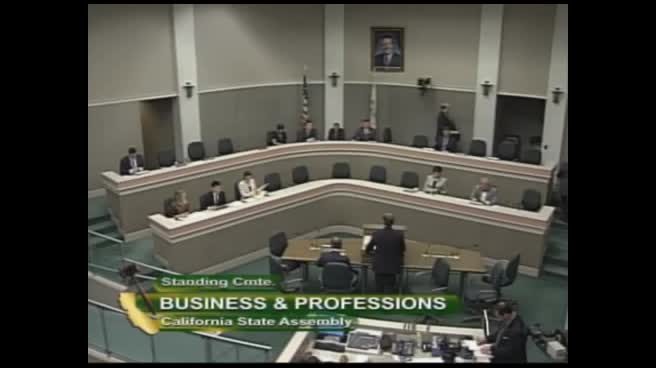 15MIN
Assembly Standing Committee on Business and Professions
Bill Author

Bill Co-Author(s):