AB 1778: Postsecondary education: sexual assault and sexual violence training.
- Session Year: 2015-2016
- House: Assembly
- Latest Version Date: 2016-08-18
Existing law requires the governing boards of each community college district, the Trustees of the California State University, the Regents of the University of California, and the governing boards of independent postsecondary institutions, in order to receive state funds for student financial assistance, to adopt detailed and victim-centered policies and protocols regarding sexual assault, domestic violence, dating violence, and stalking involving a student that comport with best practices and current professional standards, covering specified topics, including a comprehensive, trauma-informed training program for campus officials involved in investigating and adjudicating sexual assault, domestic violence, dating violence, and stalking cases.
This bill would, commencing January 1, 2018, require those institutions, in order to receive state funds for student financial assistance, to conduct annual training of their respective employees, in addition to the training described above, on the employees obligations in responding to and reporting incidents of sexual assault, domestic violence, dating violence, and stalking involving students. The bill would provide that an employee trained pursuant to these provisions is deemed to have satisfied the annual training requirement for each campus or community college district, as applicable, within each segment that the employee is employed at for that year.
Existing law requires the governing boards of each community college district, the Trustees of the California State University, the Regents of the University of California, and the governing boards of independent postsecondary institutions, in order to receive state funds for student financial assistance, to adopt detailed and victim-centered policies and protocols regarding sexual assault, domestic violence, dating violence, and stalking involving a student that comport with best practices and current professional standards, covering specified topics, including a comprehensive, trauma-informed training program for campus officials involved in investigating and adjudicating sexual assault, domestic violence, dating violence, and stalking cases.
This bill would would, commencing January 1, 2018, require those institutions, in order to receive state funds for student financial assistance, to conduct annual training of their respective employees, in addition to the training described above, on the employees obligations in responding to and reporting incidents of sexual assault, domestic violence, dating violence, and stalking involving students. The bill would provide that an employee trained pursuant to these provisions is deemed to have satisfied the annual training requirement for each campus or community college district, as applicable, within each segment that the employee is employed at for that year.
Existing law requires the governing boards of each community college district, the Trustees of the California State University, the Regents of the University of California, and the governing boards of independent postsecondary institutions, in order to receive state funds for student financial assistance, to adopt detailed and victim-centered policies and protocols regarding sexual assault, domestic violence, dating violence, and stalking involving a student that comport with best practices and current professional standards, covering specified topics, including a comprehensive, trauma-informed training program for campus officials involved in investigating and adjudicating sexual assault, domestic violence, dating violence, and stalking cases.
This bill would require those institutions, in order to receive state funds for student financial assistance, to conduct annual training of their respective employees, in addition to the training described above, on the employees obligations in responding to and reporting incidents of sexual assault, domestic violence, dating violence, and stalking involving students.
(a)In order to receive state funds for student financial assistance, the governing board of each community college district, the Trustees of the California State University, the Regents of the University of California, and the governing boards of independent postsecondary institutions shall adopt a policy concerning sexual assault, domestic violence, dating violence, and stalking, as defined in the federal Higher Education Act of 1965 (20 U.S.C. Sec. 1092(f)), involving a student, both on and off campus. The policy shall include all of the following:
(1)An affirmative consent standard in the determination of whether consent was given by both parties to sexual activity. Affirmative consent means affirmative, conscious, and voluntary agreement to engage in sexual activity. It is the responsibility of each person involved in the sexual activity to ensure that he or she has the affirmative consent of the other or others to engage in the sexual activity. Lack of protest or resistance does not mean consent, nor does silence mean consent. Affirmative consent must be ongoing throughout a sexual activity and can be revoked at any time. The existence of a dating relationship between the persons involved, or the fact of past sexual relations between them, should never by itself be assumed to be an indicator of consent.
(2)A policy that, in the evaluation of complaints in any disciplinary process, it shall not be a valid excuse to alleged lack of affirmative consent that the accused believed that the complainant consented to the sexual activity under either of the following circumstances:
(A)The accuseds belief in affirmative consent arose from the intoxication or recklessness of the accused.
(B)The accused did not take reasonable steps, in the circumstances known to the accused at the time, to ascertain whether the complainant affirmatively consented.
(3)A policy that the standard used in determining whether the elements of the complaint against the accused have been demonstrated is the preponderance of the evidence.
(4)A policy that, in the evaluation of complaints in the disciplinary process, it shall not be a valid excuse that the accused believed that the complainant affirmatively consented to the sexual activity if the accused knew or reasonably should have known that the complainant was unable to consent to the sexual activity under any of the following circumstances:
(A)The complainant was asleep or unconscious.
(B)The complainant was incapacitated due to the influence of drugs, alcohol, or medication, so that the complainant could not understand the fact, nature, or extent of the sexual activity.
(C)The complainant was unable to communicate due to a mental or physical condition.
(b)In order to receive state funds for student financial assistance, the governing board of each community college district, the Trustees of the California State University, the Regents of the University of California, and the governing boards of independent postsecondary institutions shall adopt detailed and victim-centered policies and protocols regarding sexual assault, domestic violence, dating violence, and stalking involving a student that comport with best practices and current professional standards. At a minimum, the policies and protocols shall cover all of the following:
(1)A policy statement on how the institution will provide appropriate protections for the privacy of individuals involved, including confidentiality.
(2)Initial response by the institutions personnel to a report of an incident, including requirements specific to assisting the victim, providing information in writing about the importance of preserving evidence, and the identification and location of witnesses.
(3)Response to stranger and nonstranger sexual assault.
(4)The preliminary victim interview, including the development of a victim interview protocol, and a comprehensive followup victim interview, as appropriate.
(5)Contacting and interviewing the accused.
(6)Seeking the identification and location of witnesses.
(7)Providing written notification to the victim about the availability of, and contact information for, on- and off-campus resources and services, and coordination with law enforcement, as appropriate.
(8)Participation of victim advocates and other supporting people.
(9)Investigating allegations that alcohol or drugs were involved in the incident.
(10)Providing that an individual who participates as a complainant or witness in an investigation of sexual assault, domestic violence, dating violence, or stalking will not be subject to disciplinary sanctions for a violation of the institutions student conduct policy at or near the time of the incident, unless the institution determines that the violation was egregious, including, but not limited to, an action that places the health or safety of any other person at risk or involves plagiarism, cheating, or academic dishonesty.
(11)The role of the institutional staff supervision.
(12)A comprehensive, trauma-informed training program for campus officials involved in investigating and adjudicating sexual assault, domestic violence, dating violence, and stalking cases.
(13)Procedures for confidential reporting by victims and third parties.
(c)In order to receive state funds for student financial assistance, the governing board of each community college district, the Trustees of the California State University, the Regents of the University of California, and the governing boards of independent postsecondary institutions shall, to the extent feasible, enter into memoranda of understanding, agreements, or collaborative partnerships with existing on-campus and community-based organizations, including rape crisis centers, to refer students for assistance or make services available to students, including counseling, health, mental health, victim advocacy, and legal assistance, and including resources for the accused.
(d)In order to receive state funds for student financial assistance, the governing board of each community college district, the Trustees of the California State University, the Regents of the University of California, and the governing boards of independent postsecondary institutions shall implement comprehensive prevention and outreach programs addressing sexual violence, domestic violence, dating violence, and stalking. A comprehensive prevention program shall include a range of prevention strategies, including, but not limited to, empowerment programming for victim prevention, awareness raising campaigns, primary prevention, bystander intervention, and risk reduction. Outreach programs shall be provided to make students aware of the institutions policy on sexual assault, domestic violence, dating violence, and stalking. At a minimum, an outreach program shall include a process for contacting and informing the student body, campus organizations, athletic programs, and student groups about the institutions overall sexual assault policy, the practical implications of an affirmative consent standard, and the rights and responsibilities of students under the policy.
(e)(1)Commencing January 1, 2018, in order to receive state funds for student financial assistance, the governing board of each community college district, the Trustees of the California State University, the Regents of the University of California, and the governing boards of independent postsecondary institutions shall conduct annual training of their respective employees, in addition to the training required by paragraph (12) of subdivision (b), on the employees obligations in responding to and reporting incidents of sexual assault, domestic violence, dating violence, and stalking involving students.
(2)An employee trained pursuant to this subdivision shall be deemed to have satisfied the annual training requirement for each campus or community college district, as applicable, within each segment that the employee is employed at for that year.
(f)Outreach programming shall be included as part of every incoming students orientation.
(a)In order to receive state funds for student financial assistance, the governing board of each community college district, the Trustees of the California State University, the Regents of the University of California, and the governing boards of independent postsecondary institutions shall adopt a policy concerning sexual assault, domestic violence, dating violence, and stalking, as defined in the federal Higher Education Act of 1965 (20 U.S.C. Sec. 1092(f)), involving a student, both on and off campus. The policy shall include all of the following:
(1)An affirmative consent standard in the determination of whether consent was given by both parties to sexual activity. Affirmative consent means affirmative, conscious, and voluntary agreement to engage in sexual activity. It is the responsibility of each person involved in the sexual activity to ensure that he or she has the affirmative consent of the other or others to engage in the sexual activity. Lack of protest or resistance does not mean consent, nor does silence mean consent. Affirmative consent must be ongoing throughout a sexual activity and can be revoked at any time. The existence of a dating relationship between the persons involved, or the fact of past sexual relations between them, should never by itself be assumed to be an indicator of consent.
(2)A policy that, in the evaluation of complaints in any disciplinary process, it shall not be a valid excuse to alleged lack of affirmative consent that the accused believed that the complainant consented to the sexual activity under either of the following circumstances:
(A)The accuseds belief in affirmative consent arose from the intoxication or recklessness of the accused.
(B)The accused did not take reasonable steps, in the circumstances known to the accused at the time, to ascertain whether the complainant affirmatively consented.
(3)A policy that the standard used in determining whether the elements of the complaint against the accused have been demonstrated is the preponderance of the evidence.
(4)A policy that, in the evaluation of complaints in the disciplinary process, it shall not be a valid excuse that the accused believed that the complainant affirmatively consented to the sexual activity if the accused knew or reasonably should have known that the complainant was unable to consent to the sexual activity under any of the following circumstances:
(A)The complainant was asleep or unconscious.
(B)The complainant was incapacitated due to the influence of drugs, alcohol, or medication, so that the complainant could not understand the fact, nature, or extent of the sexual activity.
(C)The complainant was unable to communicate due to a mental or physical condition.
(b)In order to receive state funds for student financial assistance, the governing board of each community college district, the Trustees of the California State University, the Regents of the University of California, and the governing boards of independent postsecondary institutions shall adopt detailed and victim-centered policies and protocols regarding sexual assault, domestic violence, dating violence, and stalking involving a student that comport with best practices and current professional standards. At a minimum, the policies and protocols shall cover all of the following:
(1)A policy statement on how the institution will provide appropriate protections for the privacy of individuals involved, including confidentiality.
(2)Initial response by the institutions personnel to a report of an incident, including requirements specific to assisting the victim, providing information in writing about the importance of preserving evidence, and the identification and location of witnesses.
(3)Response to stranger and nonstranger sexual assault.
(4)The preliminary victim interview, including the development of a victim interview protocol, and a comprehensive followup victim interview, as appropriate.
(5)Contacting and interviewing the accused.
(6)Seeking the identification and location of witnesses.
(7)Providing written notification to the victim about the availability of, and contact information for, on- and off-campus resources and services, and coordination with law enforcement, as appropriate.
(8)Participation of victim advocates and other supporting people.
(9)Investigating allegations that alcohol or drugs were involved in the incident.
(10)Providing that an individual who participates as a complainant or witness in an investigation of sexual assault, domestic violence, dating violence, or stalking will not be subject to disciplinary sanctions for a violation of the institutions student conduct policy at or near the time of the incident, unless the institution determines that the violation was egregious, including, but not limited to, an action that places the health or safety of any other person at risk or involves plagiarism, cheating, or academic dishonesty.
(11)The role of the institutional staff supervision.
(12)A comprehensive, trauma-informed training program for campus officials involved in investigating and adjudicating sexual assault, domestic violence, dating violence, and stalking cases.
(13)Procedures for confidential reporting by victims and third parties.
(c)In order to receive state funds for student financial assistance, the governing board of each community college district, the Trustees of the California State University, the Regents of the University of California, and the governing boards of independent postsecondary institutions shall, to the extent feasible, enter into memoranda of understanding, agreements, or collaborative partnerships with existing on-campus and community-based organizations, including rape crisis centers, to refer students for assistance or make services available to students, including counseling, health, mental health, victim advocacy, and legal assistance, and including resources for the accused.
(d)In order to receive state funds for student financial assistance, the governing board of each community college district, the Trustees of the California State University, the Regents of the University of California, and the governing boards of independent postsecondary institutions shall implement comprehensive prevention and outreach programs addressing sexual violence, domestic violence, dating violence, and stalking. A comprehensive prevention program shall include a range of prevention strategies, including, but not limited to, empowerment programming for victim prevention, awareness raising campaigns, primary prevention, bystander intervention, and risk reduction. Outreach programs shall be provided to make students aware of the institutions policy on sexual assault, domestic violence, dating violence, and stalking. At a minimum, an outreach program shall include a process for contacting and informing the student body, campus organizations, athletic programs, and student groups about the institutions overall sexual assault policy, the practical implications of an affirmative consent standard, and the rights and responsibilities of students under the policy.
(e)In (1)Commencing January 1, 2018, in order to receive state funds for student financial assistance, the governing board of each community college district, the Trustees of the California State University, the Regents of the University of California, and the governing boards of independent postsecondary institutions shall conduct annual training of their respective employees, in addition to the training required by paragraph (12) of subdivision (b), on the employees obligations in responding to and reporting incidents of sexual assault, domestic violence, dating violence, and stalking involving students.
(2)An employee trained pursuant to this subdivision shall be deemed to have satisfied the annual training requirement for each campus or community college district, as applicable, within each segment that the employee is employed at for that year.
(f)Outreach programming shall be included as part of every incoming students orientation.
(a)In order to receive state funds for student financial assistance, the governing board of each community college district, the Trustees of the California State University, the Regents of the University of California, and the governing boards of independent postsecondary institutions shall adopt a policy concerning sexual assault, domestic violence, dating violence, and stalking, as defined in the federal Higher Education Act of 1965 (20 U.S.C. Sec. 1092(f)), involving a student, both on and off campus. The policy shall include all of the following:
(1)An affirmative consent standard in the determination of whether consent was given by both parties to sexual activity. Affirmative consent means affirmative, conscious, and voluntary agreement to engage in sexual activity. It is the responsibility of each person involved in the sexual activity to ensure that he or she has the affirmative consent of the other or others to engage in the sexual activity. Lack of protest or resistance does not mean consent, nor does silence mean consent. Affirmative consent must be ongoing throughout a sexual activity and can be revoked at any time. The existence of a dating relationship between the persons involved, or the fact of past sexual relations between them, should never by itself be assumed to be an indicator of consent.
(2)A policy that, in the evaluation of complaints in any disciplinary process, it shall not be a valid excuse to alleged lack of affirmative consent that the accused believed that the complainant consented to the sexual activity under either of the following circumstances:
(A)The accuseds belief in affirmative consent arose from the intoxication or recklessness of the accused.
(B)The accused did not take reasonable steps, in the circumstances known to the accused at the time, to ascertain whether the complainant affirmatively consented.
(3)A policy that the standard used in determining whether the elements of the complaint against the accused have been demonstrated is the preponderance of the evidence.
(4)A policy that, in the evaluation of complaints in the disciplinary process, it shall not be a valid excuse that the accused believed that the complainant affirmatively consented to the sexual activity if the accused knew or reasonably should have known that the complainant was unable to consent to the sexual activity under any of the following circumstances:
(A)The complainant was asleep or unconscious.
(B)The complainant was incapacitated due to the influence of drugs, alcohol, or medication, so that the complainant could not understand the fact, nature, or extent of the sexual activity.
(C)The complainant was unable to communicate due to a mental or physical condition.
(b)In order to receive state funds for student financial assistance, the governing board of each community college district, the Trustees of the California State University, the Regents of the University of California, and the governing boards of independent postsecondary institutions shall adopt detailed and victim-centered policies and protocols regarding sexual assault, domestic violence, dating violence, and stalking involving a student that comport with best practices and current professional standards. At a minimum, the policies and protocols shall cover all of the following:
(1)A policy statement on how the institution will provide appropriate protections for the privacy of individuals involved, including confidentiality.
(2)Initial response by the institutions personnel to a report of an incident, including requirements specific to assisting the victim, providing information in writing about the importance of preserving evidence, and the identification and location of witnesses.
(3)Response to stranger and nonstranger sexual assault.
(4)The preliminary victim interview, including the development of a victim interview protocol, and a comprehensive followup victim interview, as appropriate.
(5)Contacting and interviewing the accused.
(6)Seeking the identification and location of witnesses.
(7)Providing written notification to the victim about the availability of, and contact information for, on- and off-campus resources and services, and coordination with law enforcement, as appropriate.
(8)Participation of victim advocates and other supporting people.
(9)Investigating allegations that alcohol or drugs were involved in the incident.
(10)Providing that an individual who participates as a complainant or witness in an investigation of sexual assault, domestic violence, dating violence, or stalking will not be subject to disciplinary sanctions for a violation of the institutions student conduct policy at or near the time of the incident, unless the institution determines that the violation was egregious, including, but not limited to, an action that places the health or safety of any other person at risk or involves plagiarism, cheating, or academic dishonesty.
(11)The role of the institutional staff supervision.
(12)A comprehensive, trauma-informed training program for campus officials involved in investigating and adjudicating sexual assault, domestic violence, dating violence, and stalking cases.
(13)Procedures for confidential reporting by victims and third parties.
(c)In order to receive state funds for student financial assistance, the governing board of each community college district, the Trustees of the California State University, the Regents of the University of California, and the governing boards of independent postsecondary institutions shall, to the extent feasible, enter into memoranda of understanding, agreements, or collaborative partnerships with existing on-campus and community-based organizations, including rape crisis centers, to refer students for assistance or make services available to students, including counseling, health, mental health, victim advocacy, and legal assistance, and including resources for the accused.
(d)In order to receive state funds for student financial assistance, the governing board of each community college district, the Trustees of the California State University, the Regents of the University of California, and the governing boards of independent postsecondary institutions shall implement comprehensive prevention and outreach programs addressing sexual violence, domestic violence, dating violence, and stalking. A comprehensive prevention program shall include a range of prevention strategies, including, but not limited to, empowerment programming for victim prevention, awareness raising campaigns, primary prevention, bystander intervention, and risk reduction. Outreach programs shall be provided to make students aware of the institutions policy on sexual assault, domestic violence, dating violence, and stalking. At a minimum, an outreach program shall include a process for contacting and informing the student body, campus organizations, athletic programs, and student groups about the institutions overall sexual assault policy, the practical implications of an affirmative consent standard, and the rights and responsibilities of students under the policy.
(e)In order to receive state funds for student financial assistance, the governing board of each community college district, the Trustees of the California State University, the Regents of the University of California, and the governing boards of independent postsecondary institutions shall conduct annual training of their respective employees, in addition to the training required by paragraph (12) of subdivision (b), on the employees obligations in responding to and reporting incidents of sexual assault, domestic violence, dating violence, and stalking involving students.
(e)
(f)Outreach programming shall be included as part of every incoming students orientation.
|
Date
|
Status
|
|---|---|
| Jun 6, 2016 | In Senate. Read first time. To Com. on RLS. for assignment. |
| Aug 23, 2016 | Enrolled and presented to the Governor at 2 p.m. |
| Aug 17, 2016 | Read third time. Passed. Ordered to the Assembly. (Ayes 39. Noes 0.). |
| Aug 17, 2016 | Read third time. Passed. Ordered to the Assembly. (Ayes 39. Noes 0. Page 5061.). |
| Aug 17, 2016 | Read third time. Passed. Ordered to the Assembly. |
| Aug 17, 2016 | In Assembly. Ordered to Engrossing and Enrolling. |
| Aug 15, 2016 | Read second time. Ordered to third reading. |
| Aug 11, 2016 | From committee: Do pass. (Ayes 7. Noes 0.) (August 11). |
| Aug 1, 2016 | In committee: Referred to APPR. suspense file. |
| Jun 22, 2016 | From committee: Do pass and re-refer to Com. on APPR. (Ayes 9. Noes 0.) (June 22). Re-referred to Com. on APPR. |
| Jun 9, 2016 | Referred to Com. on ED. |
| Feb 3, 2016 | Read first time. To print. |
| Jun 2, 2016 | Read third time. Passed. Ordered to the Senate. (Ayes 75. Noes 0.) |
| Jun 2, 2016 | Read third time. Passed. Ordered to the Senate. (Ayes 75. Noes 0. Page 5219.) |
| Jun 2, 2016 | Read third time. Passed. Ordered to the Senate. |
| Jun 1, 2016 | Read second time. Ordered to third reading. |
| May 31, 2016 | Read second time and amended. Ordered returned to second reading. |
| May 27, 2016 | From committee: Amend, and do pass as amended. (Ayes 19. Noes 1.) (May 27). |
| Apr 6, 2016 | In committee: Set, first hearing. Referred to APPR. suspense file. |
| Mar 16, 2016 | From committee: Do pass and re-refer to Com. on APPR. (Ayes 11. Noes 0.) (March 15). Re-referred to Com. on APPR. |
| Feb 18, 2016 | Referred to Com. on HIGHER ED. |
| Feb 4, 2016 | From printer. May be heard in committee March 5. |
|
Date
|
Description
|
Location
|
Votes
|
|
|---|---|---|---|---|
| Aug 17, 2016 | Assembly 3rd Reading AB1778 Quirk By Hancock | Senate Floor |
Passed |
|
| Aug 11, 2016 | Do pass | Senate Standing Committee on Appropriations |
Passed |
|
| Aug 1, 2016 | Placed on suspense file | Senate Standing Committee on Appropriations |
Passed |
|
| Jun 22, 2016 | Do pass, but first be re-referred to the Committee on [Appropriations] | Senate Standing Committee on Education |
Passed |
|
| Jun 2, 2016 | AB 1778 QUIRK Assembly Third Reading | Assembly Floor |
Passed |
|
| May 27, 2016 | Do pass as amended. | Assembly Standing Committee on Appropriations |
Passed |
|
| Mar 15, 2016 | Do pass and be re-referred to the Committee on [Appropriations] | Assembly Standing Committee on Higher Education |
Passed |
This list shows positions taken on this bill by organizations on the date displayed, which is linked to the original source.
Positions by individuals are not included.
|
Organization
|
Position
|
Date
|
|---|---|---|
| California Federation Of Teachers | * Indeterminate | Mar 15, 2016 |
| California State Student Association | ** Support | Aug 17, 2016 |
| Sacramento City College | * Support | Jun 22, 2016 |
| u None received. | ** Against | Jun 22, 2016 |
GOVERNOR'S VETO
GV Bill Id:AB 1778
Author:(Quirk)
As Enrolled Ver:August 23, 2016
2/3 vote
Committee | Votes | Ayes | Noes |
Higher Education | 11-0 | Medina, Baker, Bloom, Irwin, Jones-Sawyer, Levine, Linder, Low, Santiago, Weber, Williams | |
Appropriations | 19-1 | Gonzalez, Bigelow, Bloom, Bonilla, Bonta, Calderon, Chang, Daly, Eggman, Eduardo Garcia, Roger Hernández, Holden, Jones, Obernolte, Quirk, Santiago, Wagner, Weber, Wood | Gallagher |
ASSEMBLY: | 75-0 | (June 2, 2016) | SENATE: | 39-0 | (August 17, 2016) |
SUMMARY: Requires, commencing January 1, 2018, in order to receive state funds for student financial assistance, the governing boards of the community colleges, the California State University (CSU) Trustees, the University of California (UC) Regents, and the governing boards of independent postsecondary institutions to conduct annual training of their employees on the employee's obligations in responding to and reporting incidents of sexual assault, domestic violence, dating violence, and stalking involving students, and provides that this training shall satisfy the annual training requirement for the employee.
FISCAL EFFECT: According to the Assembly Appropriations Committee:
- No additional costs to CSU and UC, as their existing training practices appear to be consistent with the requirements in this bill.
- This bill conditions receipt of state funds for student financial aid on community college districts providing the required training. If a community college district submits a claim for reimbursement, the Commission on State Mandates could determine activities related the training requirement to be a reimbursable based on practical compulsion – that there is no reasonable alternative but to comply with bill's requirement or that failure to comply with this activity will result in certain and severe penalties.
Though several districts already provide the required training, the bill's mandate means that the state could be liable to reimburse all districts for training costs at each of their campuses. Assuming costs averaging $2,000 per campus, ongoing statewide costs for the 113 campuses would be $226,000 (General Fund-Prop 98).
- The California Student Aid Commission may require additional auditing resources to verify compliance with the training requirement as a condition on colleges' participation in the Cal Grant and other financial aid programs.
COMMENTS: Purpose of this bill. According to the author, "When students experience sexual violence they are likely to report the incident to a trusted coach or resident advisor at their campus, unaware that this person may not be adequately trained to appropriately report and support the victim. The unfortunate truth is that although certain staff is trained to respond to and report student incidents of sexual violence to the appropriate officials, not all college campuses suitably train every staff member who will interact with a student to do this. The lack of all-inclusive, annual training may lead to mismanagement of these incident reports, or worse, may inadvertently discourage students from reporting these incidents."
Background. In June 2014, the California State Auditor's 2013-124 report, entitled, Sexual Harassment and Sexual Violence: California Universities Must Better Protect Students by Doing More to Prevent, Respond to, and Resolve Incidents, concluded that California's educational institutions were not properly educating students and training faculty and staff sufficiently on response and reporting of incidents on campus as mandated by Title IX and the Clery Act. The auditor made a series of recommendations to include the expansion of staff training, the improvement of access and content for student education, the enhancement of communication with students, and the evaluation of summary data collected in order to better identify trends and inform strategies to address incidents on campus.
California's postsecondary education institutions report that they have taken steps to address the concerns raised in the audit reports and to respond to statutory changes and regulatory guidance by improving processes and outcomes on their campuses. Both the UC and CSU have updated their sexual harassment and assault policies, initiated mandatory prevention and response trainings for all students and employees, and established confidential victim advocate offices on every campus. The CSU and UC have appointed systemwide officers charged with ensuring Title IX compliance.
UC policy appears consistent with this bill. The UC Policy on Sexual Violence and Sexual Harassment issued on January 1, 2016, requires, among other provisions, for each campus to conduct "mandatory annual training and education, about Prohibited Conduct and how conduct can be reported, to all students, faculty, and other academic appointees, and staff in accordance with applicable State and federal law, and University policies."
CSU policy appears consistent with this bill. CSU Executive Order 1096, revised June 23, 2015, requires, among other provisions, mandatory annual training for all employees that includes the rights and responsibilities of each employee relating to the CSU policy and the employee's duty to report.
CCC and independent college policies may differ among campuses. Committee staff was unable to verify whether this bill is consistent with existing community college or independent university policies. The CCC Chancellor's Office convened a Task Force on sexual assault in the spring of 2014, and in May of 2015 the Task Force reported to the Board of Governors (BOG) regarding the findings of a survey of CCC policies and practices. According to the information presented at the CCC BOG meeting, of 46 responses from colleges and districts, 56% reported that they provide ongoing sexual assault prevention and awareness programs for employees.
In 2014, I signed Senate Bill 967, making California the first state in the country to define the terms of sexual consent for college students. The bill also required all public and independent postsecondary institutions to adopt "detailed and victim-centered policies and protocols for sexual assault, domestic violence, dating violence and stalking."
AB 1778 attempts to build on this law by requiring public and independent postsecondary institutions to conduct annual training for all employees on their obligations relative to student reports of sexual assault, domestic violence, dating violence and stalking.
College campuses are already required to have clear policies and procedures to deal with these reports. The state, in this case, should not have to additionally mandate an annual training schedule for all college employees.
Analysis Prepared by: Laura Metune / HIGHER ED. / (916) 319-3960 FN: 0005137
Office of Senate Floor Analyses (916) 651-1520 Fax: (916) 327-4478 | AB |
THIRD READING
Bill No: AB 1778
:
SENATE EDUCATION COMMITTEE: 9-0, 6/22/16
AYES: Liu, Block, Hancock, Huff, Leyva, Mendoza, Monning, Pan, Vidak
SENATE APPROPRIATIONS COMMITTEE: 7-0, 8/11/16
AYES: Lara, Bates, Beall, Hill, McGuire, Mendoza, Nielsen
ASSEMBLY FLOOR: 75-0, 6/2/16 - See last page for vote
DIGEST: This bill requires the governing board of each community college district (CCD), the Trustees of the California State University (CSU), the Regents of the University of California (UC), and the governing board of independent postsecondary institutions to conduct annual training of their employees on their obligations in responding to and reporting incidents of sexual assault, domestic violence, dating violence, and stalking involving students.
Existing law:
- Requires the governing board of each CCD, the Trustees of the CSU, the Board of Directors of the Hastings College of the Law, and the Regents of the UC to each adopt, and implement at each campus or other facilities, a written procedure or protocols to ensure, to the fullest extent possible, that students, faculty and staff who are victims of sexual assault committed on grounds maintained by the institution or affiliated student organizations, receive treatment and information. The written procedures or protocols must contain specified information, including the college policy regarding sexual assault on campus and personnel on campus who should be notified, and procedures for notification, with the consent of the victim.
- Provides that each victim of sexual assault should receive information about the existence of at least the following options: criminal prosecutions, civil prosecutions, the disciplinary process through the college, the availability of mediation, alternative housing assignments, and academic assistance alternatives. (Education Code § 67385)
- Requires the governing board of each CCD, the Trustees of the CSU, the Regents of the UC, and the governing boards of independent postsecondary institutions, as specified, to adopt a policy concerning campus sexual violence, domestic violence, dating violence, and stalking that includes specified components and standards in order to receive state funds for student financial assistance. (EC § 67386)
- Requires the governing board of each CCD and the Trustees of the CSU, and requests the Regents of the UC, in collaboration with campus- and community-based victim advocacy organizations, to provide as part of campus orientations, educational and preventive information about sexual violence.
- Requires each campus of the California Community Colleges (CCCs) and the CSU, and requests each campus of the UC, to post sexual violence prevention and education information on its campus Web site. The information must include specific components including how to file a complaint, and the availability and contact information for resources for victims.
- Requires each campus of the CCCs and the CSU, and requests each campus of the UC, to develop policies to encourage students to report any campus crimes involving sexual violence. (EC § 67385.7)
This bill requires, commencing January 1, 2018, in order to receive state funds for student financial assistance, the governing boards of the community colleges, the CSU Trustees, the UC Regents, and the governing boards of independent postsecondary institutions to conduct annual training of their employees on the employee's obligations in responding to and reporting incidents of sexual assault, domestic violence, dating violence, and stalking involving students, and provides that this training shall satisfy the annual training requirement for the employee.
Comments
Need for the bill. According to the author’s office, "when students experience sexual violence they are likely to report the incident to a trusted coach or resident advisor at their campus, unaware that this person may not be adequately trained to appropriately report and support the victim. The unfortunate truth is that although certain staff is trained to respond to and report student incidents of sexual violence to the appropriate officials, not all college campuses suitably train every staff member who will interact with a student to do this. The lack of all-inclusive, annual training may lead to mismanagement of these incident reports, or worse, may inadvertently discourage students from reporting these incidents."
California State Auditor report. The State Auditor released a report in June 2014, Sexual Harassment and Sexual Violence: California Universities Must Better Protect Students by Doing More to Prevent, Respond to, and Resolve Incidents, related to the handling of sexual harassment and sexual violence incidents at the state’s public postsecondary institutions. As part of this audit, the State Auditor reviewed UC Berkeley and UCLA’s sexual assault policies and procedures and concluded that California's educational institutions were not properly educating students and training faculty and staff sufficiently on response and reporting of incidents on campus as mandated by Title IX and the Clery Act. The State Auditor made a series of recommendations to include the expansion of staff training, the improvement of access and content for student education, the enhancement of communication with students, and the evaluation of summary data collected in order to better identify trends and inform strategies to address incidents on campus.
Campus policies consistent with this bill. California's postsecondary education institutions have taken steps to address the concerns raised in the audit reports and to respond to statutory changes and regulatory guidance by improving processes and outcomes on their campuses. Both the UC and CSU have updated their sexual harassment and assault policies, initiated mandatory prevention and response trainings for all students and employees, and established confidential victim advocate offices on every campus. The CSU and UC have appointed system wide officers charged with ensuring Title IX compliance.
The UC Policy on Sexual Violence and Sexual Harassment issued on January 1, 2016, requires, among other provisions, for each campus to conduct "mandatory annual training and education, about prohibited conduct and how conduct can be reported, to all students, faculty, and other academic appointees, and staff in accordance with applicable state and federal law, and University policies." Previously, the UC updated its policies relative to sexual harassment and violence effective February 25, 2014. These policies included a process for reporting incidents, identification of on- and off-campus resources for victims, and providing prompt and effective response to reports of incidents.
CSU Executive Order 1096, revised June 23, 2015, requires, among other provisions, mandatory annual training for all employees that includes the rights and responsibilities of each employee relating to the CSU policy and the employee's duty to report. Prior to that, the CSU updated its policies to reflect the changes to the federal Campus Sexual Violence Elimination Act and related guidance from the U.S. Department of Education, Office for Civil Rights.
Federal law. Federal statutes addressing sexual assault on or around institutions of higher education include Title IX and the Jeanne Clery Disclosure of Campus Security Policy and Campus Crime Statistics Act (Clery Act).
The Clery Act requires public and private postsecondary educational institutions that receive federal financial aid to disclose information about crimes on and around campuses as well as establish certain rights for victims of sexual assault. Those rights include notification to victims of the right to file criminal charges, available counseling services, the results of disciplinary proceedings, and the option for victims to change their academic schedule or living arrangements.
The federal Campus Sexual Violence Elimination Act amended the Clery Act to, among other things, require postsecondary institutions to offer prevention and awareness programs to new students and employees regarding rape, domestic and dating violence, sexual assault, and stalking. Programs must include a definition of those offenses and consent with reference to sexual offenses. Institutions are also required to compile statistics of incidents of sexual assault, domestic violence, dating violence and stalking. This Act also requires the Annual Security Report to contain additional information such as prevention programs, procedures once incidents are reported, and possible sanctions following an institutional disciplinary procedure.
FISCAL EFFECT: Appropriation: Fiscal Com.: Local:
According to the Senate Appropriations Committee:
- Costs to the CCDs are unknown as they would vary depending upon current policies, whether training is in place that complies with the requirements of this bill, or if not, how each district would deliver the required training. The CCC Chancellor’s Office indicates costs could range from $4,000 to $40,000 per district depending upon how the training is delivered. Therefore statewide costs could range from low hundreds of thousands to low millions to train its staff of roughly 89,000. Costs may be reduced somewhat to the extent a significant number of staff are employed at multiple districts and receive training from one campus only. Whether these costs would be required to be reimbursed by the state would be determined by the Commission on State Mandates. Otherwise, these costs would present a cost pressure to the state as community colleges would be required to comply with these requirements in which case less discretionary state funds would be available to meet the existing needs of the colleges. (Proposition 98)
- The UC and CSU indicate no additional costs to implement this bill as their current policies already comply with the requirements of this bill.
California State Student Association
OPPOSITION: (Verified 8/12/16)
None received
ASSEMBLY FLOOR: 75-0, 6/2/16
AYES: Achadjian, Alejo, Travis Allen, Arambula, Atkins, Baker, Bloom, Bonilla, Bonta, Brown, Burke, Calderon, Campos, Chang, Chau, Chávez, Chiu, Chu, Cooley, Cooper, Dababneh, Dahle, Daly, Dodd, Frazier, Cristina Garcia, Eduardo Garcia, Gatto, Gipson, Gomez, Gonzalez, Gordon, Gray, Grove, Hadley, Harper, Roger Hernández, Holden, Irwin, Jones, Jones-Sawyer, Kim, Lackey, Levine, Linder, Lopez, Low, Maienschein, Mathis, Mayes, McCarty, Medina, Melendez, Mullin, Nazarian, Obernolte, O'Donnell, Olsen, Patterson, Quirk, Ridley-Thomas, Rodriguez, Salas, Santiago, Steinorth, Mark Stone, Thurmond, Ting, Wagner, Waldron, Weber, Wilk, Williams, Wood, Rendon
NO VOTE RECORDED: Bigelow, Brough, Eggman, Beth Gaines, Gallagher
8/15/16 20:26:56
**** END ****
SENATE COMMITTEE ON APPROPRIATIONS
Senator Ricardo Lara, Chair
2015 - 2016 Regular Session
AB 1778 (Quirk) - Postsecondary education: sexual assault and sexual violence training
Version: May 31, 2016 | Policy Vote: ED. 9 - 0 |
Urgency: No | Mandate: No |
Hearing Date: August 1, 2016 | Consultant: Jillian Kissee |
This bill meets the criteria for referral to the Suspense File.
Bill Summary:
This bill requires beginning January 1, 2018, as a condition of receiving student financial assistance, postsecondary institutions to conduct annual training of their employees on their obligations in responding to and reporting incidents of sexual assault, domestic violence, dating violence, and stalking involving students.
Fiscal Impact:
- Costs to the California Community Colleges (CCC) districts are unknown as they would vary depending upon current policies, whether training is in place that complies with the requirements of this bill, or if not, how each district would deliver the required training. The CCC Chancellor’s Office indicates costs could range from $4,000 to $40,000 per district depending upon how the training is delivered. Therefore statewide costs could range from low hundreds of thousands to low millions to train its staff of roughly 89,000. Costs may be reduced somewhat to the extent a significant number of staff are employed at multiple districts and receive training from one campus only. Whether these costs would be required to be reimbursed by the state would be determined by the Commission on State Mandates. Otherwise, these costs would present a cost pressure to the state as community colleges would be required to comply with these requirements in which case less discretionary state funds would be available to meet the existing needs of the colleges. (Proposition 98)
- The University of California (UC) and the California State University (CSU) indicate no additional costs to implement this bill as their current policies already comply with the requirements of this bill.
Background:
Existing law requires postsecondary institutions to each adopt, and implement, a written procedure to ensure, to the fullest extent possible, that students, faculty, and staff who are victims of sexual assault committed on grounds maintained by the institution or affiliated student organizations, receive treatment and information. The written procedures must contain specified information, including the college policy regarding sexual assault on campus and personnel on campus who should be notified, and procedures for notification, with the consent of the victim.
Existing law also requires postsecondary institutions to adopt a policy concerning campus sexual violence, domestic violence, dating violence, and stalking that includes specified components and standards in order to receive state funds for student financial assistance. Institutions must also adopt detailed and victim-centered policies on these topics, including among others, a comprehensive, trauma-informed training program for campus officials involved in investigating and adjudicating sexual assault, domestic violence, dating violence, and stalking cases. Institutions must, to the extent feasible, enter into agreements with existing on-campus and community-based organizations to refer students for assistance and implement preventive outreach programs. Existing law also requires each campus of the CCCs and the CSU, and requests each campus of the UC, to develop policies to encourage students to report any campus crimes involving sexual violence.
The federal Clery Act requires postsecondary educational institutions that receive federal financial aid to disclose information about crimes on and around campuses as well as establish certain rights for victims of sexual assault. It also requires postsecondary institutions to offer prevention and awareness programs to new students and employees regarding rape, domestic and dating violence, sexual assault, and stalking.
Proposed Law:
This bill requires beginning January 1, 2018, as a condition of receiving student financial assistance, the governing board of each community college district, the CSU Trustees, the UC Regents, and the governing boards of independent postsecondary institution to conduct annual training of their respective employees on the employee’s obligations in responding to and reporting incidents of sexual assault, domestic violence, dating violence, and stalking involving students.
This bill also specifies that an employee trained must be deemed to have satisfied the annual training requirement for each campus or community college district within each segment that the employee is employed at for that year.
Related Legislation:
AB 1654 (Santiago, 2016) expands existing audit requirements regarding the reporting of crime statistics by California postsecondary education institutions by requiring the State Auditor to include an evaluation of institutions’ compliance with state law governing crime reporting and the development and implementation of student safety policies and procedures. AB 1654 is pending in this committee.
AB 2018 (Ridley-Thomas, 2016) requires annual training for each employee and administrator of a community college district who is a mandated reporter regarding the detection and reporting of child abuse. AB 2018 is pending in this committee.
Staff Comments: This bill conditions receipt of state financial aid to segments conducting required annual training. The Commission on State Mandates could determine the training requirement for the CCC to be a state reimbursable mandate based on practical compulsion – that there is no reasonable alternative but to comply. The UC and CSU are ineligible to submit a claim for reimbursement to the Commission on State Mandates.
-- END --
SENATE COMMITTEE ON EDUCATION
Senator Carol Liu, Chair
2015 - 2016 Regular
Bill No: AB 1778
Author: | |||
Version: | May 31, 2016 Hearing Date: June 22, 2016 | ||
Urgency: | No | Fiscal: | Yes |
Consultant: | Lenin DelCastillo | ||
Subject: Postsecondary education: sexual assault and sexual violence training
SUMMARY
This bill requires the governing board of each community college district (CCD), the Trustees of the California State University (CSU), the Regents of the University of California (UC), and the governing board of independent postsecondary institutions to conduct annual training of their employees on their obligations in responding to and reporting incidents of sexual assault, domestic violence, dating violence, and stalking involving students.
BACKGROUND
Existing law:
- Requires the governing board of each community college district, the Trustees of the CSU, the Board of Directors of the Hastings College of the Law, and the Regents of the UC to each adopt, and implement at each campus or other facilities, a written procedure or protocols to ensure, to the fullest extent possible, that students, faculty and staff who are victims of sexual assault committed on grounds maintained by the institution or affiliated student organizations, receive treatment and information. The written procedures or protocols must contain specified information, including the college policy regarding sexual assault on campus and personnel on campus who should be notified, and procedures for notification, with the consent of the victim.
- Provides that each victim of sexual assault should receive information about the existence of at least the following options: criminal prosecutions, civil prosecutions, the disciplinary process through the college, the availability of mediation, alternative housing assignments, and academic assistance alternatives. (Education Code § 67385)
- Requires the governing board of each CCD, the Trustees of the CSU, the Regents of the UC, and the governing boards of independent postsecondary institutions, as specified, to adopt a policy concerning campus sexual violence, domestic violence, dating violence, and stalking that includes specified components and standards in order to receive state funds for student financial assistance. (Education Code § 67386)
- Requires the governing board of each community college district and the Trustees of the California State University (CSU), and requests the Regents of the University of California (UC), in collaboration with campus- and community-based victim advocacy organizations, to provide as part of campus orientations, educational and preventive information about sexual violence.
- Requires each campus of the California Community Colleges (CCCs) and the CSU, and requests each campus of the UC, to post sexual violence prevention and education information on its campus Web site. The information must include specific components including how to file a complaint, and the availability and contact information for resources for victims.
- Requires each campus of the CCCs and the CSU, and requests each campus of the UC, to develop policies to encourage students to report any campus crimes involving sexual violence. (EC § 67385.7)
ANALYSIS
This bill requires, commencing January 1, 2018, in order to receive state funds for student financial assistance, the governing boards of the community colleges, the CSU Trustees, the UC Regents, and the governing boards of independent postsecondary institutions to conduct annual training of their employees on the employee's obligations in responding to and reporting incidents of sexual assault, domestic violence, dating violence, and stalking involving students, and provides that this training shall satisfy the annual training requirement for the employee.
STAFF COMMENTS
- Need for the bill. According to the author’s office, "when students experience sexual violence they are likely to report the incident to a trusted coach or resident advisor at their campus, unaware that this person may not be adequately trained to appropriately report and support the victim. The unfortunate truth is that although certain staff is trained to respond to and report student incidents of sexual violence to the appropriate officials, not all college campuses suitably train every staff member who will interact with a student to do this. The lack of all-inclusive, annual training may lead to mismanagement of these incident reports, or worse, may inadvertently discourage students from reporting these incidents."
- California State Auditor report. The State Auditor released a report in June 2014, Sexual Harassment and Sexual Violence: California Universities Must Better Protect Students by Doing More to Prevent, Respond to, and Resolve Incidents, related to the handling of sexual harassment and sexual violence incidents at the state’s public postsecondary institutions. As part of this audit, the State Auditor reviewed UC Berkeley and UCLA’s sexual assault policies and procedures and concluded that California's educational institutions were not properly educating students and training faculty and staff sufficiently on response and reporting of incidents on campus as mandated by Title IX and the Clery Act. The State Auditor made a series of recommendations to include the expansion of staff training, the improvement of access and content for student education, the
enhancement of communication with students, and the evaluation of summary data collected in order to better identify trends and inform strategies to address incidents on campus.
- Campus policies consistent with this bill. California's postsecondary education institutions have taken steps to address the concerns raised in the audit reports and to respond to statutory changes and regulatory guidance by improving processes and outcomes on their campuses. Both the University of California (UC) and California State University (CSU) have updated their sexual harassment and assault policies, initiated mandatory prevention and response trainings for all students and employees, and established confidential victim advocate offices on every campus. The CSU and UC have appointed system wide officers charged with ensuring Title IX compliance.
The UC Policy on Sexual Violence and Sexual Harassment issued on January 1, 2016, requires, among other provisions, for each campus to conduct "mandatory annual training and education, about prohibited conduct and how conduct can be reported, to all students, faculty, and other academic appointees, and staff in accordance with applicable state and federal law, and University policies." Previously, the UC updated its policies relative to sexual harassment and violence effective February 25, 2014. These policies included a process for reporting incidents, identification of on- and off-campus resources for victims, and providing prompt and effective response to reports of incidents.
CSU Executive Order 1096, revised June 23, 2015, requires, among other provisions, mandatory annual training for all employees that includes the rights and responsibilities of each employee relating to the CSU policy and the employee's duty to report. Prior to that, the CSU updated its policies to reflect the changes to the federal Campus Sexual Violence Elimination Act and related guidance from the U.S. Department of Education, Office for Civil Rights.
- Federal law. Federal statutes addressing sexual assault on or around institutions of higher education include Title IX and the Jeanne Clery Disclosure of Campus Security Policy and Campus Crime Statistics Act (Clery Act).
The Clery Act requires public and private postsecondary educational institutions that receive federal financial aid to disclose information about crimes on and around campuses as well as establish certain rights for victims of sexual assault. Those rights include notification to victims of the right to file criminal charges, available counseling services, the results of disciplinary proceedings, and the option for victims to change their academic schedule or living arrangements.
The federal Campus Sexual Violence Elimination Act amended the Clery Act to, among other things, require postsecondary institutions to offer prevention and awareness programs to new students and employees regarding rape, domestic and dating violence, sexual assault, and stalking. Programs must include a definition of those offenses and consent with reference to sexual offenses. Institutions are also required to compile statistics of incidents of sexual assault, domestic violence, dating violence and stalking. This Act also requires the Annual Security Report to contain additional information such as prevention programs, procedures once incidents are reported, and possible sanctions following an institutional disciplinary procedure.
- Fiscal impact. According to the Assembly Appropriations Committee on the previous version of the bill, there would be no additional costs to the California State University (CSU) and University of California (UC), as their existing training practices appear to be consistent with the requirements in this bill. Additionally, this bill conditions receipt of state funds for student financial aid on community college districts providing the required training. If a community college district submits a claim for reimbursement, the Commission on State Mandates could determine activities related the training requirement to be a reimbursable based on practical compulsion – that there is no reasonable alternative but to comply with bill's requirement or that failure to comply with this activity will result in certain and severe penalties. Though several districts already provide the required training, the bill's mandate means that the state could be liable to reimburse all districts for training costs at each of their campuses. Assuming costs averaging $2,000 per campus, ongoing statewide costs for the 113 campuses would be $226,000 (General Fund-Prop 98). The California Student Aid Commission may require additional auditing resources to verify compliance with the training requirement as a condition on colleges' participation in the Cal Grant and other financial aid programs.
- Related legislation.
AB 1654 (Santiago, 2016) expands existing audit requirements regarding the reporting of crime statistics by California postsecondary education institutions by requiring the State Auditor to include an evaluation of institutions’ compliance with state law governing crime reporting and the development and implementation of student safety policies and procedures. AB 1654 passed this committee on June 15, 2016 and is now pending in the Senate Appropriations Committee.
SB 967 (De Leon, Chapter 748, Statutes of 2014) requires the governing board of each community college district, the Trustees of the CSU, the Regents of the UC, and the governing boards of independent postsecondary institutions, as specified, to adopt a policy concerning campus sexual violence, domestic violence, dating violence, and stalking that includes specified components and standards in order to receive state funds for student financial assistance.
AB 1433 (Gatto, Chapter 798, Statutes of 2014) requires governing boards of each public and private postsecondary educational institution to adopt and implement policies and procedures governing the reporting of specified crimes to law enforcement agencies.
SUPPORT
California State Student Association
OPPOSITION
None received.
-- END --
ASSEMBLY THIRD READING
ATR Bill Id:
Author:(Quirk)
As Introduced Ver:May 31, 2016
Majority vote
Committee | Votes | Ayes | Noes |
Higher Education | 11-0 | Medina, Baker, Bloom, Irwin, Jones-Sawyer, Levine, Linder, Low, Santiago, Weber, Williams | |
Appropriations | 19-1 | Gonzalez, Bigelow, Bloom, Bonilla, Bonta, Calderon, Chang, Daly, Eggman, Eduardo Garcia, Roger Hernández, Holden, Jones, Obernolte, Quirk, Santiago, Wagner, Weber, Wood | Gallagher |
SUMMARY: Requires, commencing January 1, 2018, in order to receive state funds for student financial assistance, the governing boards of the community colleges, the California State University (CSU) Trustees, the University of California (UC) Regents, and the governing boards of independent postsecondary institutions to conduct annual training of their employees on the employee's obligations in responding to and reporting incidents of sexual assault, domestic violence, dating violence, and stalking involving students, and provides that this training shall satisfy the annual training requirement for the employee.
FISCAL EFFECT: According to the Assembly Appropriations Committee:
- No additional costs to CSU and UC, as their existing training practices appear to be consistent with the requirements in this bill.
- This bill conditions receipt of state funds for student financial aid on community college districts providing the required training. If a community college district submits a claim for reimbursement, the Commission on State Mandates could determine activities related the training requirement to be a reimbursable based on practical compulsion – that there is no reasonable alternative but to comply with bill's requirement or that failure to comply with this activity will result in certain and severe penalties.
Though several districts already provide the required training, the bill's mandate means that the state could be liable to reimburse all districts for training costs at each of their campuses. Assuming costs averaging $2,000 per campus, ongoing statewide costs for the 113 campuses would be $226,000 (General Fund-Prop 98).
- The California Student Aid Commission may require additional auditing resources to verify compliance with the training requirement as a condition on colleges' participation in the Cal Grant and other financial aid programs.
COMMENTS: Purpose of this bill. According to the author, "When students experience sexual violence they are likely to report the incident to a trusted coach or resident advisor at their campus, unaware that this person may not be adequately trained to appropriately report and support the victim. The unfortunate truth is that although certain staff is trained to respond to and report student incidents of sexual violence to the appropriate officials, not all college campuses suitably train every staff member who will interact with a student to do this. The lack of all-inclusive, annual training may lead to mismanagement of these incident reports, or worse, may inadvertently discourage students from reporting these incidents."
Background. In June 2014, the California State Auditor's 2013-124 report, entitled, Sexual Harassment and Sexual Violence: California Universities Must Better Protect Students by Doing More to Prevent, Respond to, and Resolve Incidents, concluded that California's educational institutions were not properly educating students and training faculty and staff sufficiently on response and reporting of incidents on campus as mandated by Title IX and the Clery Act. The auditor made a series of recommendations to include the expansion of staff training, the improvement of access and content for student education, the enhancement of communication with students, and the evaluation of summary data collected in order to better identify trends and inform strategies to address incidents on campus.
California's postsecondary education institutions report that they have taken steps to address the concerns raised in the audit reports and to respond to statutory changes and regulatory guidance by improving processes and outcomes on their campuses. Both the UC and CSU have updated their sexual harassment and assault policies, initiated mandatory prevention and response trainings for all students and employees, and established confidential victim advocate offices on every campus. The CSU and UC have appointed systemwide officers charged with ensuring Title IX compliance.
UC policy appears consistent with this bill. The UC Policy on Sexual Violence and Sexual Harassment issued on January 1, 2016, requires, among other provisions, for each campus to conduct "mandatory annual training and education, about Prohibited Conduct and how conduct can be reported, to all students, faculty, and other academic appointees, and staff in accordance with applicable State and federal law, and University policies."
CSU policy appears consistent with this bill. CSU Executive Order 1096, revised June 23, 2015, requires, among other provisions, mandatory annual training for all employees that includes the rights and responsibilities of each employee relating to the CSU policy and the employee's duty to report.
CCC and independent college policies may differ among campuses. Committee staff was unable to verify whether this bill is consistent with existing community college or independent university policies. The CCC Chancellor's Office convened a Task Force on sexual assault in the spring of 2014, and in May of 2015 the Task Force reported to the Board of Governors (BOG) regarding the findings of a survey of CCC policies and practices. According to the information presented at the CCC BOG meeting, of 46 responses from colleges and districts, 56% reported that they provide ongoing sexual assault prevention and awareness programs for employees.
Analysis Prepared by: Laura Metune / HIGHER ED. / (916) 319-3960 FN: 0003135
Date of Hearing: April 6, 2016
ASSEMBLY COMMITTEE ON APPROPRIATIONS
Lorena Gonzalez, Chair
ABPCA Bill Id:AB 1778
Author:(Quirk) – As Introduced Ver:February 3, 2016
Policy Committee: | Higher Education | Vote: | 11 - 0 |
|
|
Urgency: No State Mandated Local Program: No Reimbursable: Yes
SUMMARY:
This requires the governing boards of the community colleges, the California State University (CSU) Trustees, the University of California (UC) Regents, and the governing boards of independent postsecondary institutions, in order to receive state funds for student financial assistance, to conduct annual training of their employees on the employees' obligations in responding to and reporting incidents of sexual assault, domestic violence, dating violence, and stalking involving students.
FISCAL EFFECT:
- No additional costs to CSU and UC, as their existing training practices appear to be consistent with the requirements in this bill.
- This bill conditions receipt of state funds for student financial aid on community college districts providing the required training. If a community college district submits a claim for reimbursement, the Commission on State Mandates could determine activities related the training requirement to be a reimbursable based on practical compulsion – that there is no reasonable alternative but to comply with bill's requirement or that failure to comply with this activity will result in certain and severe penalties.
Though several districts already provide the required training, the bill's mandate means that the state could be liable to reimburse all districts for training costs at each of their campuses. Assuming costs averaging $2,000 per campus, ongoing statewide costs for the 113 campuses would be $226,000 (GF-Prop 98).
- The California Student Aid Commission may require additional auditing resources to verify compliance with the training requirement as a condition on colleges' participation in the Cal Grant and other financial aid programs.
COMMENTS:
- Purpose. SB 967 (De Leon), Chapter 748, Statutes of 2014, in part required the higher education segments to provide training for campus officials involved in investigating and adjudicating sexual assault, domestic violence, dating violence, and stalking cases. According to the author, "when students experience sexual violence they are likely to report the incident to a trusted coach or resident advisor at their campus, unaware that this person may not be adequately trained to appropriately report and support the victim. The unfortunate truth is that although certain staff is trained to respond to and report student incidents of sexual violence to the appropriate officials, not all college campuses suitably train every staff member who will interact with a student to do this. The lack of all-inclusive, annual training may lead to mismanagement of these incident reports, or worse, may inadvertently discourage students from reporting these incidents."
- Support, if Amended. The California Federation of Teachers requests amendments to: a) clarify that employees will be compensated for their time in the mandated training; and b) specify that training completed at one campus or district is transferable to another campus or district.
Analysis Prepared by: Chuck Nicol / APPR. / (916) 319-2081
Date of Hearing: March 15, 2016
ASSEMBLY COMMITTEE ON HIGHER EDUCATION
Jose Medina, Chair
ABPCA Bill Id:AB 1778 (
Author:Quirk) – As Introduced Ver:February 3, 2016
SUBJECT: Postsecondary education: sexual assault and sexual violence training
SUMMARY: Requires, in order to receive state funds for student financial assistance, the governing boards of the community colleges, the California State University (CSU) Trustees, the University of California (UC) Regents, and the governing boards of independent postsecondary institutions to conduct annual training of their employees on the employee's obligations in responding to and reporting incidents of sexual assault, domestic violence, dating violence, and stalking involving students.
EXISTING LAW:
- Requires the governing board of public, private, and independent postsecondary educational institution that receives public funds for student financial assistance to compile records of crimes on campus, make crime records available upon request, and to disclose a reported Part 1 violent crime, sexual assault, or hate crime, to the local law enforcement agency where the campus is located. (Education Code Section 67380, 67383)
- Requires, under the Kristen Smart Campus Safety Act, UC Regents, CSU Trustees, CCD governing boards, and independent colleges that meet specified conditions to enter into specific written agreements with local law enforcement agencies regarding the coordination and responsibilities for investigating Part 1 violent crimes which occur on campus. (EDC Section 67381)
- Requires public postsecondary educational institutions to each adopt, and implement at each campus or other facilities, a written procedure or protocols to ensure, to the fullest extent possible, that students, faculty and staff who are victims of sexual assault committed on grounds maintained by the institution or affiliated student organizations, receive treatment and information. The written procedures or protocols must contain specified information. (EDC Section 67385.)
- Requires public postsecondary educational institutions, and requests UC, in collaboration with campus- and community-based victim advocacy organizations, to provide as part of campus orientations, educational and preventive information about sexual violence and to develop policies to encourage students to report any campus crimes involving sexual violence. (EDC Section 67385.7.)
- Requires public and independent postsecondary institutions, as a condition of receipt of student aid funds, to adopt a policy concerning campus sexual violence, domestic violence, dating violence, and stalking that includes specified components and standards, including an "affirmative consent" standard for determining whether consent was given by both parties to sexual activity. Establishes a preponderance of evidence as the evidentiary standard for determining if sexual violence/harassment occurred. (EDC Section 67386)
- Requires, under the federal Jeanne Clery Disclosure of Campus Security Policy and Campus Crime Statistics Act (Clery Act), public and private postsecondary educational institutions that participate in the federal financial aid program to disclose information about crimes on and around campuses. (20 U.S.C. section 1092(f))
- Requires, under federal Title IX (20 U.S.C. sections 1681-1688), public and private postsecondary educational institutions that participate in the federal financial aid program to establish certain rights for victims of sexual assault, including:
- Institutions are responsible for immediately and effectively responding to any sexual harassment or violence that creates a hostile environment. The institution must eliminate the harassment or violence, prevent its recurrence, and address its effects. Regardless of whether a student chooses to file a complaint with the institution, the institution is responsible for investigating and taking appropriate steps to resolve the situation. A criminal investigation does not relieve the school of its duty under Title IX.
- Institutions must have and distribute policies against sex discrimination; the policy must state that inquiries concerning Title IX may be referred to the institution's Title IX coordinator or to the Office of Civil Rights (OCR).
- Institutions must have a designated Title IX coordinator and notify students and employees of the name and contact information for the Title IX coordinator. The coordinator is responsible for overseeing all complaints of sex discrimination, which include harassment and assault, and identifying and addressing patterns or systemic problems.
- Institutions are required to have and make known the procedures for students to file complaints of sex discrimination, and procedures must provide for prompt and equitable resolution of sex discrimination complaints. All complainants must have the right to present his or her case, including the right to a full investigation, to present witnesses and evidence, and to an appeal process (available to both parties).
- Establishes a preponderance of the evidence standard (more likely than not) when determining if sexual harassment or violence occurred.
- Provides complainants the right to be notified of the outcome of the complaint, including the sanction. Complainants cannot be required to abide by a nondisclosure agreement.
- Authorizes grievance procedures to include voluntary informal methods (such as mediation) for resolving some types of sexual harassment complaints. However, mediation is not appropriate in cases involving allegations of sexual assault.
FISCAL EFFECT: Unknown.
COMMENTS: Purpose of this bill. According to the author, "when students experience sexual violence they are likely to report the incident to a trusted coach or resident advisor at their campus, unaware that this person may not be adequately trained to appropriately report and support the victim. The unfortunate truth is that although certain staff is trained to respond to and report student incidents of sexual violence to the appropriate officials, not all college campuses suitably train every staff member who will interact with a student to do this. The lack of all-inclusive, annual training may lead to mismanagement of these incident reports, or worse, may inadvertently discourage students from reporting these incidents."
Background. In June 2014, the California State Auditor's 2013-124 report, entitled, Sexual Harassment and Sexual Violence: California Universities Must Better Protect Students by Doing More to Prevent, Respond to, and Resolve Incidents, concluded that California’s educational institutions were not properly educating students and training faculty and staff sufficiently on response and reporting of incidents on campus as mandated by Title IX and the Clery Act. The auditor made a series of recommendations to include the expansion of staff training, the improvement of access and content for student education, the enhancement of communication with students, and the evaluation of summary data collected in order to better identify trends and inform strategies to address incidents on campus.
California's postsecondary education institutions report that they have taken steps to address the concerns raised in the audit reports and to respond to statutory changes and regulatory guidance by improving processes and outcomes on their campuses. Both the UC and CSU have updated their sexual harassment and assault policies, initiated mandatory prevention and response trainings for all students and employees, and established confidential victim advocate offices on every campus. The CSU and UC have appointed systemwide officers charged with ensuring Title IX compliance. .
UC policy appears consistent with this bill. The UC Policy on Sexual Violence and Sexual Harassment issued on January 1, 2016, requires, among other provisions, for each campus to conduct "mandatory annual training and education, about Prohibited Conduct and how conduct can be reported, to all students, faculty, and other academic appointees, and staff in accordance with applicable State and federal law, and University policies."
CSU policy appears consistent with this bill. CSU Executive Order 1096, revised June 23, 2015, requires, among other provisions, mandatory annual training for all employees that includes the rights and responsibilities of each employee relating to the CSU policy and the employee's duty to report.
CCC and independent college policies may differ among campuses. Committee staff was unable to verify whether this bill is consistent with existing community college or independent university policies. The CCC Chancellor's Office convened a Task Force on sexual assault in the spring of 2014, and in May of 2015 the Task Force reported to the Board of Governors (BOG) regarding the findings of a survey of CCC policies and practices. According to the information presented at the CCC BOG meeting, of 46 responses from colleges and districts, 56% reported that they provide ongoing sexual assault prevention and awareness programs for employees.
REGISTERED SUPPORT / OPPOSITION:
Support
None on File
Opposition
None on File
Analysis Prepared by: Laura Metune / HIGHER ED. / (916) 319-3960
Discussed in Hearing
 2MIN
Senate Floor
 4MIN
Senate Standing Committee on Education
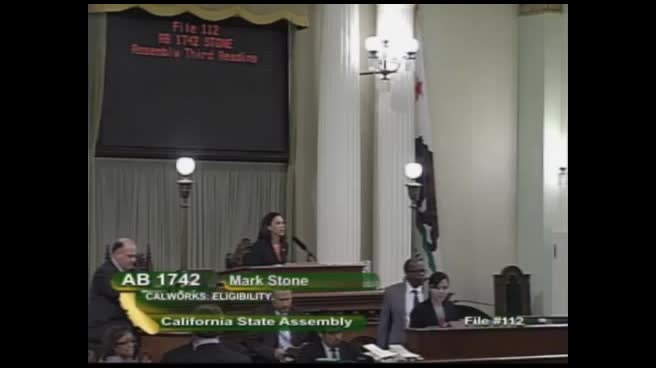 1MIN
Assembly Floor
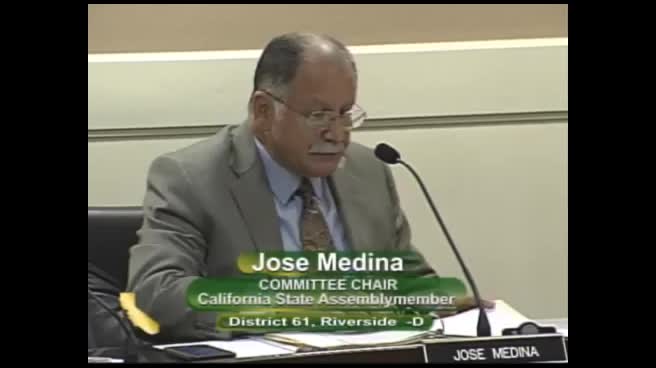 6MIN
Assembly Standing Committee on Higher Education
Bill Author

Bill Co-Author(s):