AB 1787: Open meetings: public comments: translation.
- Session Year: 2015-2016
- House: Assembly
- Latest Version Date: 2016-09-23
The Ralph M. Brown Act requires a local legislative body to provide an opportunity for members of the public to directly address the body concerning any item described in a notice of meeting. The act authorizes the legislative body to adopt reasonable regulations limiting the total amount of time allocated for public testimony for each individual speaker.
This bill, if a local legislative body limits the time for public comment, would require the legislative body to provide at least twice the allotted time to a member of the public who utilizes a translator to ensure that non-English speakers receive the same opportunity to directly address the legislative body, unless simultaneous translation equipment is used to allow the body to hear the translated public testimony simultaneously.
By imposing new requirements on cities, counties, cities and counties, and special districts, this bill would impose a state-mandated local program.
The California Constitution requires local agencies, for the purpose of ensuring public access to the meetings of public bodies and the writings of public officials and agencies, to comply with a statutory enactment that amends or enacts laws relating to public records or open meetings and contains findings demonstrating that the enactment furthers the constitutional requirements relating to this purpose.
This bill would make legislative findings to that effect.
The California Constitution requires the state to reimburse local agencies and school districts for certain costs mandated by the state. Statutory provisions establish procedures for making that reimbursement.
This bill would provide that no reimbursement is required by this act for a specified reason.
Existing law establishes the California Environmental Protection Agency (CalEPA) under the supervision of the Secretary for Environmental Protection, and requires CalEPA, among other things, to identify disadvantaged communities for certain investment opportunities based on geographic, socioeconomic, public health, and environmental hazard criteria, as specified. Existing law requires the secretarys deputy secretary for law enforcement and counsel to, in consultation with the Attorney General, establish a cross-media enforcement unit to assist boards, departments, offices, or other agencies that implement a law or regulation within the jurisdiction of CalEPA, as specified.
This bill would require the cross-media enforcement unit to prioritize the states most disadvantaged communities, as specified.
(a)Every agenda for regular meetings shall provide an opportunity for members of the public to directly address the legislative body on any item of interest to the public, before or during the legislative bodys consideration of the item, that is within the subject matter jurisdiction of the legislative body, provided that no action shall be taken on any item not appearing on the agenda unless the action is otherwise authorized by subdivision (b) of Section 54954.2. However, the agenda need not provide an opportunity for members of the public to address the legislative body on any item that has already been considered by a committee, composed exclusively of members of the legislative body, at a public meeting wherein all interested members of the public were afforded the opportunity to address the committee on the item, before or during the committees consideration of the item, unless the item has been substantially changed since the committee heard the item, as determined by the legislative body. Every notice for a special meeting shall provide an opportunity for members of the public to directly address the legislative body concerning any item that has been described in the notice for the meeting before or during consideration of that item.
(b)(1)The legislative body of a local agency may adopt reasonable regulations to ensure that the intent of subdivision (a) is carried out, including, but not limited to, regulations limiting the total amount of time allocated for public testimony on particular issues and for each individual speaker.
(2)Notwithstanding paragraph (1), when the legislative body of a local agency limits time for public comment, the legislative body of a local agency shall provide at least twice the allotted time to a member of the public who utilizes a translator to ensure that non-English speakers receive the same opportunity to directly address the legislative body of a local agency.
(3)Paragraph (2) shall not apply if the legislative body of a local agency utilizes simultaneous translation equipment in a manner that allows the legislative body of a local agency to hear the translated public testimony simultaneously.
(c)The legislative body of a local agency shall not prohibit public criticism of the policies, procedures, programs, or services of the agency, or of the acts or omissions of the legislative body. Nothing in this subdivision shall confer any privilege or protection for expression beyond that otherwise provided by law.
SEC. 2.The Legislature finds and declares that Section 1 of this act, which amends Section 54954.3 of the Government Code, furthers, within the meaning of paragraph (7) of subdivision (b) of Section 3 of Article I of the California Constitution, the purposes of that constitutional section as it relates to the right of public access to the meetings of local public bodies or the writings of local public officials and local agencies. Pursuant to paragraph (7) of subdivision (b) of Section 3 of Article I of the California Constitution, the Legislature makes the following findings:
Because this act restricts the authority of a legislative body of a local agency under the Ralph M. Brown Act to limit time for public comment by a speaker who uses a translator, the act furthers the purpose of Section 3 of Article I of the California Constitution.
SEC. 3.No reimbursement is required by this act pursuant to Section 6 of Article XIII B of the California Constitution because the only costs that may be incurred by a local agency or school district under this act would result from a legislative mandate that is within the scope of paragraph (7) of subdivision (b) of Section 3 of Article I of the California Constitution.
(a)Every agenda for regular meetings shall provide an opportunity for members of the public to directly address the legislative body on any item of interest to the public, before or during the legislative bodys consideration of the item, that is within the subject matter jurisdiction of the legislative body, provided that no action shall be taken on any item not appearing on the agenda unless the action is otherwise authorized by subdivision (b) of Section 54954.2. However, the agenda need not provide an opportunity for members of the public to address the legislative body on any item that has already been considered by a committee, composed exclusively of members of the legislative body, at a public meeting wherein all interested members of the public were afforded the opportunity to address the committee on the item, before or during the committees consideration of the item, unless the item has been substantially changed since the committee heard the item, as determined by the legislative body. Every notice for a special meeting shall provide an opportunity for members of the public to directly address the legislative body concerning any item that has been described in the notice for the meeting before or during consideration of that item.
(b)(1)The legislative body of a local agency may adopt reasonable regulations to ensure that the intent of subdivision (a) is carried out, including, but not limited to, regulations limiting the total amount of time allocated for public testimony on particular issues and for each individual speaker.
(2)Notwithstanding paragraph (1), when the legislative body of a local agency limits time for public comment, the legislative body of a local agency shall provide at least twice the allotted time to a member of the public who utilizes a translator to ensure that non-English speakers receive the same opportunity to directly address the legislative body of a local agency.
(3)Paragraph (2) shall not apply if the legislative body of a local agency utilizes simultaneous translation equipment in a manner that allows the legislative body of a local agency to hear the translated public testimony simultaneously.
(c)The legislative body of a local agency shall not prohibit public criticism of the policies, procedures, programs, or services of the agency, or of the acts or omissions of the legislative body. Nothing in this subdivision shall confer any privilege or protection for expression beyond that otherwise provided by law.
SEC. 2.The Legislature finds and declares that Section 1 of this act, which amends Section 54594.3 54954.3 of the Government Code, furthers, within the meaning of paragraph (7) of subdivision (b) of Section 3 of Article I of the California Constitution, the purposes of that constitutional section as it relates to the right of public access to the meetings of local public bodies or the writings of local public officials and local agencies. Pursuant to paragraph (7) of subdivision (b) of Section 3 of Article I of the California Constitution, the Legislature makes the following findings:
Because this act restricts the authority of a legislative body of a local agency under the Ralph M. Brown Act to limit time for public comment by a speaker who uses a translator, the act furthers the purpose of Section 3 of Article I of the California Constitution.
SEC. 3.No reimbursement is required by this act pursuant to Section 6 of Article XIII B of the California Constitution because the only costs that may be incurred by a local agency or school district under this act would result from a legislative mandate that is within the scope of paragraph (7) of subdivision (b) of Section 3 of Article I of the California Constitution.
(a)Every agenda for regular meetings shall provide an opportunity for members of the public to directly address the legislative body on any item of interest to the public, before or during the legislative bodys consideration of the item, that is within the subject matter jurisdiction of the legislative body, provided that no action shall be taken on any item not appearing on the agenda unless the action is otherwise authorized by subdivision (b) of Section 54954.2. However, the agenda need not provide an opportunity for members of the public to address the legislative body on any item that has already been considered by a committee, composed exclusively of members of the legislative body, at a public meeting wherein all interested members of the public were afforded the opportunity to address the committee on the item, before or during the committees consideration of the item, unless the item has been substantially changed since the committee heard the item, as determined by the legislative body. Every notice for a special meeting shall provide an opportunity for members of the public to directly address the legislative body concerning any item that has been described in the notice for the meeting before or during consideration of that item.
(b)(1)The legislative body of a local agency may adopt reasonable regulations to ensure that the intent of subdivision (a) is carried out, including, but not limited to, regulations limiting the total amount of time allocated for public testimony on particular issues and for each individual speaker.
(2)Notwithstanding paragraph (1), when the legislative body of a local agency limits time for public comment, the legislative body of a local agency shall provide at least twice the allotted time to a member of the public who utilizes a translator to ensure that non-English speakers receive the same opportunity to directly address the legislative body of a local agency.
(3)Paragraph (2) shall not apply if the legislative body of a local agency utilizes simultaneous translation equipment in a manner that allows the legislative body of a local agency to hear the translated public testimony simultaneously.
(c)The legislative body of a local agency shall not prohibit public criticism of the policies, procedures, programs, or services of the agency, or of the acts or omissions of the legislative body. Nothing in this subdivision shall confer any privilege or protection for expression beyond that otherwise provided by law.
SEC. 2.The Legislature finds and declares that Section 1 of this act, which amends Section 54594.3 of the Government Code, furthers, within the meaning of paragraph (7) of subdivision (b) of Section 3 of Article I of the California Constitution, the purposes of that constitutional section as it relates to the right of public access to the meetings of local public bodies or the writings of local public officials and local agencies. Pursuant to paragraph (7) of subdivision (b) of Section 3 of Article I of the California Constitution, the Legislature makes the following findings:
Because this act restricts the authority of a legislative body of a local agency under the Ralph M. Brown Act to limit time for public comment by a speaker who uses a translator, the act furthers the purpose of Section 3 of Article I of the California Constitution.
SEC. 3.No reimbursement is required by this act pursuant to Section 6 of Article XIII B of the California Constitution because the only costs that may be incurred by a local agency or school district under this act would result from a legislative mandate that is within the scope of paragraph (7) of subdivision (b) of Section 3 of Article I of the California Constitution.
SECTION 1.Section 12812.2 of the Government Code is amended to read:12812.2.(a)One of the deputies to the Secretary for Environmental Protection shall be a deputy secretary for law enforcement and counsel, who, subject to the direction and supervision of the secretary, shall have the responsibility and authority to do all of the following:
(1)Develop a program to ensure that the boards, departments, offices, and other agencies that implement laws or regulations within the jurisdiction of the California Environmental Protection Agency take consistent, effective, and coordinated compliance and enforcement actions to protect public health and the environment. The program shall include training and cross-training of inspection and enforcement personnel of those boards, departments, offices, or other agencies to ensure consistent, effective, and coordinated enforcement.
(2)(A)In consultation with the Attorney General, establish a cross-media enforcement unit to assist a board, department, office, or other agency that implements a law or regulation within the jurisdiction of the California Environmental Protection Agency, to investigate and prepare matters for enforcement action in order to protect public health and the environment. The unit may inspect and investigate a violation of a law or regulation within the jurisdiction of the board, department, office, or other agency, including a violation involving more than one environmental medium and a violation involving the jurisdiction of more than one board, department, office, or agency. The unit shall exercise its authority consistent with the authority granted to the head of a department pursuant to Article 2 (commencing with Section 11180) of Chapter 2 of Part 1. In exercising its authority pursuant to this section, the unit shall prioritize the states most disadvantaged communities.
(B)For purposes of this paragraph, states most disadvantaged communities means communities identified by the California Environmental Protection Agency, through the California Communities Environmental Health Screening Tool, also known as CalEnviroScreen, created pursuant to Section 39711 of the Health and Safety Code, as the disadvantaged communities most disproportionately burdened and vulnerable to multiple sources of pollution.
(3)Refer a violation of a law or regulation within the jurisdiction of a board, department, office, or other agency that implements a law or regulation within the jurisdiction of the California Environmental Protection Agency to the Attorney General, a district attorney, or city attorney for the filing of a civil or criminal action.
(4)Exercise the authority granted pursuant to paragraph (3) only after providing notice to the board, department, office, or other agency unless the secretary determines that notice would compromise an investigation or enforcement action.
(b)Nothing in this section shall authorize the deputy secretary for law enforcement and counsel to duplicate, overlap, compromise, or otherwise interfere with an investigation or enforcement action undertaken by a board, department, office, or other agency that implements a law or regulation subject to the jurisdiction of the California Environmental Protection Agency.
(c)The Environmental Protection Agency shall post on its Web site, updated no later than December 1 of each year, the status of the implementation of this section.
(a)One of the deputies to the Secretary for Environmental Protection shall be a deputy secretary for law enforcement and counsel, who, subject to the direction and supervision of the secretary, shall have the responsibility and authority to do all of the following:
(1)Develop a program to ensure that the boards, departments, offices, and other agencies that implement laws or regulations within the jurisdiction of the California Environmental Protection Agency take consistent, effective, and coordinated compliance and enforcement actions to protect public health and the environment. The program shall include training and cross-training of inspection and enforcement personnel of those boards, departments, offices, or other agencies to ensure consistent, effective, and coordinated enforcement.
(2)(A)In consultation with the Attorney General, establish a cross-media enforcement unit to assist a board, department, office, or other agency that implements a law or regulation within the jurisdiction of the California Environmental Protection Agency, to investigate and prepare matters for enforcement action in order to protect public health and the environment. The unit may inspect and investigate a violation of a law or regulation within the jurisdiction of the board, department, office, or other agency, including a violation involving more than one environmental medium and a violation involving the jurisdiction of more than one board, department, office, or agency. The unit shall exercise its authority consistent with the authority granted to the head of a department pursuant to Article 2 (commencing with Section 11180) of Chapter 2 of Part 1. In exercising its authority pursuant to this section, the unit shall prioritize the states most disadvantaged communities.
(B)For purposes of this paragraph, states most disadvantaged communities means communities identified by the California Environmental Protection Agency, through the California Communities Environmental Health Screening Tool, also known as CalEnviroScreen, created pursuant to Section 39711 of the Health and Safety Code, as the disadvantaged communities most disproportionately burdened and vulnerable to multiple sources of pollution.
(3)Refer a violation of a law or regulation within the jurisdiction of a board, department, office, or other agency that implements a law or regulation within the jurisdiction of the California Environmental Protection Agency to the Attorney General, a district attorney, or city attorney for the filing of a civil or criminal action.
(4)Exercise the authority granted pursuant to paragraph (3) only after providing notice to the board, department, office, or other agency unless the secretary determines that notice would compromise an investigation or enforcement action.
(b)Nothing in this section shall authorize the deputy secretary for law enforcement and counsel to duplicate, overlap, compromise, or otherwise interfere with an investigation or enforcement action undertaken by a board, department, office, or other agency that implements a law or regulation subject to the jurisdiction of the California Environmental Protection Agency.
(c)The Environmental Protection Agency shall post on its Web site, updated no later than December 1 of each year, the status of the implementation of this section.
|
Date
|
Status
|
|---|---|
| Jun 20, 2016 | Withdrawn from committee. |
| Sep 8, 2016 | Enrolled and presented to the Governor at 4 p.m. |
| Aug 30, 2016 | Senate amendments concurred in. To Engrossing and Enrolling. (Ayes 69. Noes 9. Page 6422.). |
| Aug 30, 2016 | Senate amendments concurred in. To Engrossing and Enrolling. |
| Aug 25, 2016 | From committee: That the Senate amendments be concurred in. (Ayes 9. Noes 0.) . |
| Aug 18, 2016 | Re-referred to Com. on L. GOV. pursuant to Assembly Rule 77.2. |
| Aug 16, 2016 | In Assembly. Concurrence in Senate amendments pending. May be considered on or after August 18 pursuant to Assembly Rule 77. |
| Aug 15, 2016 | Read third time. Passed. Ordered to the Assembly. (Ayes 32. Noes 5.). |
| Aug 15, 2016 | Read third time. Passed. Ordered to the Assembly. (Ayes 32. Noes 5. Page 4973.). |
| Aug 15, 2016 | Read third time. Passed. Ordered to the Assembly. |
| Aug 9, 2016 | Read second time. Ordered to third reading. |
| Aug 8, 2016 | From committee: Be placed on second reading file pursuant to Senate Rule 28.8. |
| Aug 2, 2016 | Read second time and amended. Re-referred to Com. on APPR. |
| Aug 1, 2016 | From committee: Amend, and do pass as amended and re-refer to Com. on APPR. (Ayes 6. Noes 0.) (June 29). |
| Jun 21, 2016 | Re-referred to Com. on GOV. & F. |
| Feb 4, 2016 | Read first time. To print. |
| Jun 20, 2016 | Re-referred to Com. on RLS. |
| Jun 16, 2016 | In committee: Set, first hearing. Hearing canceled at the request of author. |
| Jun 16, 2016 | From committee chair, with author's amendments: Amend, and re-refer to committee. Read second time, amended, and re-referred to Com. on APPR. |
| Jun 8, 2016 | From committee: Do pass and re-refer to Com. on APPR. (Ayes 4. Noes 0.) (June 8). Re-referred to Com. on APPR. |
| Apr 28, 2016 | Referred to Com. on E.Q. |
| Apr 11, 2016 | Read third time. Passed. Ordered to the Senate. (Ayes 73. Noes 0. Page 4263.) |
| Apr 11, 2016 | Read third time. Passed. Ordered to the Senate. |
| Apr 11, 2016 | In Senate. Read first time. To Com. on RLS. for assignment. |
| Apr 7, 2016 | Read second time. Ordered to third reading. |
| Apr 6, 2016 | From committee: Do pass. (Ayes 17. Noes 0.) (April 6). |
| Mar 15, 2016 | From committee: Do pass and re-refer to Com. on APPR. (Ayes 7. Noes 0.) (March 14). Re-referred to Com. on APPR. |
| Feb 18, 2016 | Referred to Com. on NAT. RES. |
| Feb 5, 2016 | From printer. May be heard in committee March 6. |
|
Date
|
Description
|
Location
|
Votes
|
|
|---|---|---|---|---|
| Aug 30, 2016 | AB 1787 GOMEZ Concurrence in Senate Amendments | Assembly Floor |
Passed |
|
| Aug 25, 2016 | With recommendation: That Senate amendments be concurred in. | Assembly Standing Committee on Local Government |
Passed |
|
| Aug 15, 2016 | Assembly 3rd Reading AB1787 Gomez By Nguyen | Senate Floor |
Passed |
|
| Jun 29, 2016 | Do pass as amended, but first amend, and re-refer to the Committee on [Appropriations] | Senate Standing Committee on Governance and Finance |
Passed |
|
| Jun 8, 2016 | Do pass, but first be re-referred to the Committee on [Appropriations] | Senate Standing Committee on Environmental Quality |
Passed |
|
| Apr 11, 2016 | AB 1787 GOMEZ Assembly Third Reading | Assembly Floor |
Passed |
|
| Apr 6, 2016 | Do pass. | Assembly Standing Committee on Appropriations |
Passed |
|
| Mar 14, 2016 | Do pass and be re-referred to the Committee on [Appropriations] | Assembly Standing Committee on Natural Resources |
Passed |
This list shows positions taken on this bill by organizations on the date displayed, which is linked to the original source.
Positions by individuals are not included.
|
Organization
|
Position
|
Date
|
|---|---|---|
| Asamblea de Gonzales | ** Support | Aug 30, 2016 |
| California Communities Against Toxics | ** Support | Aug 30, 2016 |
| California Environmental Justice Alliance | ** Support | Aug 15, 2016 |
| California Environmental Justice Coalition | ** Support | Aug 30, 2016 |
| California Safe Schools | ** Support | Aug 30, 2016 |
| California Special Districts Association | ** Support | Aug 30, 2016 |
| California State Association Of Counties | ** Support | Aug 30, 2016 |
| Center on Race, Poverty and the Environment | ** Support | Aug 30, 2016 |
| Central California Environmental Justice Network | ** Support | Aug 30, 2016 |
| Coalition For Clean Air | ** Support | Jun 29, 2016 |
| Comite Civico Del Valle | ** Support | Aug 30, 2016 |
| Community Food & Justice Coalition | ** Support | Aug 15, 2016 |
| Del Amo Action Committee | ** Support | Aug 15, 2016 |
| Desert Protection Society | ** Support | Aug 30, 2016 |
| El Pueblo Para el Aire y Agua Limpia | ** Support | Aug 30, 2016 |
| Environmental Justice Coalition for Water | ** Support | Aug 30, 2016 |
| Food Empowerment Project | ** Support | Aug 30, 2016 |
| Grayson Neighborhood Council | ** Support | Aug 30, 2016 |
| Greenaction for Health and Environmental Justice | ** Support | Aug 30, 2016 |
| Healthy 880 Communities | ** Support | Aug 30, 2016 |
| Idle No More SF Bay | ** Support | Aug 30, 2016 |
| IVAN Network | ** Support | Aug 30, 2016 |
| La Cuna de Aztlan Sacred Sites Protection Circle | ** Support | Aug 30, 2016 |
| Label GMOs California's Grassroots | ** Support | Aug 30, 2016 |
| League Of California Cities | ** Support | Aug 30, 2016 |
| Los Angeles Environmental Justice Network | ** Support | Aug 30, 2016 |
| People for Clean Air and | ** Support | Aug 30, 2016 |
| Regional Asthma Management and Prevention | ** Support | Aug 30, 2016 |
| Sierra Club California | ** Support | Jun 29, 2016 |
| Tri-Valley CARES | ** Support | Aug 30, 2016 |
| Valley Improvement Projects | ** Support | Aug 30, 2016 |
| Water of Kettleman City | ** Support | Aug 15, 2016 |
| Water of Kettleman City Environmental Health Coalition | ** Support | Aug 30, 2016 |
| West County Toxics Coalition | ** Support | Aug 30, 2016 |
| West Oakland Environmental Indicators Project | ** Support | Aug 30, 2016 |
CONCURRENCE IN SENATE AMENDMENTS
CSA2 Bill Id:AB 1787
Author:(Gomez)
As Amended Ver:August 2, 2016
Majority vote
ASSEMBLY: | 73-0 | (April 11, 2016) | SENATE: | 32-5 | (August 15, 2016) |
COMMITTEE VOTE: | 9-0 | (August 25, 2016) | RECOMMENDATION: | concur |
L. Gov.
Original Committee Reference: NAT. RES.
SUMMARY: Requires local agencies to provide at least twice the allotted time for public comment to speakers who require translation services.
The Senate amendments strike the Assembly version of this bill and instead:
- Require, when the legislative body of a local agency limits time for public comment, the legislative body to provide at least twice the allotted time to a member of the public who utilizes a translator to ensure that non-English speakers receive the same opportunity to directly address the legislative body of a local agency.
- Provide that the above requirement shall not apply if the legislative body utilizes simultaneous translation equipment in a manner that allows the legislative body of a local agency to hear the translated public testimony simultaneously.
- Find and declare that Section 1 of the bill furthers, within the meaning of California Constitution Article I Section 3 subdivision (b) paragraph (7), the purposes of that constitutional section as it relates to the right of public access to the meetings of local public bodies or the writings of local public officials and local agencies, and declare, pursuant to California Constitution Article I Section 3 subdivision (b) paragraph (7), the Legislature makes the following findings:
Because this bill restricts the authority of a legislative body of a local agency under the Ralph M. Brown Act (Brown Act) to limit time for public comment by a speaker who uses a translator, the bill furthers the purpose of Section 3 of Article I of the California Constitution.
- Provide that no reimbursement is required by this bill because the only costs that may be incurred by a local agency or school district under this bill would result from a legislative mandate that is within the scope of California Constitution Article I Section 3(b)(7).
EXISTING LAW:
- Requires, pursuant to the Brown Act, all meetings of a legislative body of a local agency to be open and public and all persons be permitted to attend, with specified exceptions.
- Requires every agenda for regular meetings and every notice for special meetings to provide an opportunity for members of the public to directly address the legislative body on any item of interest to the public, before or during the legislative body's consideration of the item, which is within the subject matter jurisdiction of the legislative body, as specified.
- Allows the legislative body of a local agency to adopt reasonable regulations to ensure that the intent of 2) above, is carried out, including, but not limited to, regulations limiting the total amount of time allocated for public testimony on particular issues and for each individual speaker.
- Prohibits the legislative body of a local agency from prohibiting public criticism of the policies, procedures, programs, or services of the agency, or of the acts or omissions of the local legislative body, and provides that nothing in this provision shall confer any privilege or protection for expression beyond that otherwise provided by law.
- Requires, pursuant to the Bagley-Keene Open Meeting Act (Bagley-Keene Act), state bodies to provide at least twice as much time to any individual using a translator when the body limits testimony, unless the body uses simultaneous translation technology that allows the body to hear the translation simultaneously.
FISCAL EFFECT: According to the Senate Appropriations Committee, pursuant to Senate Rule 28.8, negligible state costs.
COMMENTS:
- Bill Summary. This bill requires the legislative body of a local agency that limits time for public comment to provide at least twice the allotted time to a member of the public who utilizes a translator, to ensure that non-English speakers receive the same opportunity to directly address the legislative body of a local agency. The bill's provisions do not apply if the legislative body utilizes simultaneous translation equipment in a manner that allows the legislative body to hear the translated public testimony simultaneously.
This bill is sponsored by the author.
- Author's Statement. According to the author, "AB 1787 requires local public agencies that limit time for public comment to provide at least twice the allotted time to a member of the public who uses a translator to ensure that non-English speakers receive an equal opportunity to directly address their representatives. Our democracy and communities can only thrive when our diverse constituencies have the equal opportunity to participate in civic discourse and shape the decisions that affect their neighborhoods and lives."
- Background. The Brown Act and the Bagley-Keene Act generally require state and local agencies to hold open meetings, publicly notice their meetings, prepare agendas, accept public testimony, and conduct their meetings in public, with specific exceptions. State and local agencies must provide the public with the opportunity to comment on each agenda item and may adopt reasonable rules to ensure equal access.
In 2012, the Legislature amended the Bagley-Keene Act to require a state body to provide at least twice as much time to any individual using a translator when the body limits testimony, unless the body uses simultaneous translation technology that allows the body to hear the translation simultaneously. The Brown Act does not contain such a provision. This bill would amend the Brown Act to require local agencies to comply with this requirement.
This bill was prompted by public meetings held in 2009 in Kings County during the process of expanding a hazardous waste facility near Kettleman City. English speakers were allotted a maximum of five minutes to provide public comment. However, non-English speakers were allowed only two and a half minutes to comment, with the remaining time allotted for translation.
- Proposition 42. Proposition 42 was passed by voters on June 3, 2014, and requires all local governments to comply with the California Public Records Act and the Ralph M. Brown Act and with any subsequent changes to those Acts. Proposition 42 also eliminated reimbursement to local agencies for costs of complying with the California Public Records Act and the Ralph M. Brown Act.
This bill contains language that says that the Legislature finds and declares that Section 1 of the bill furthers the purpose of the California Constitution as it relates to the right of public access to the meetings of local public bodies or the writings of local public officials and local agencies. Pursuant to California Constitution Article I Section 3 subdivision (b) paragraph (7), the bill also includes a finding that says that "Because this act restricts the authority of a legislative body of a local agency under the Ralph M. Brown Act to limit time for public comment by a speaker who uses a translator, the act furthers the purpose of Section 3 of Article I of the California Constitution."
Section 3 of the bill specifies that no reimbursement is required by this bill because "the only costs that may be incurred by a local agency or school district…would result from a legislative mandate that is within the scope of paragraph (7) of subdivision (b) of Section 3 of Article I of the California Constitution."
- Support Arguments. The League of California Cities, the California State Association of Counties, and the California Special Districts Association, in support, state, "Under the Ralph M. Brown Act, local legislative bodies are required to provide an opportunity for members of the public to comment on any points mentioned in the meeting agenda. The act authorizes legislative bodies to reasonably limit the time for each individual public speaker. If not accommodated, individuals who need to utilize a translator may be disadvantaged by time restrictions.
"AB 1787 addresses this issue by requiring the legislative body to provide at least twice the allotted time to members of the public who need a translator to address legislative bodies. Providing the public with equal access to their government is a cornerstone of modern democracy. Not speaking English should not prevent some members of the public from having their voices equally heard by their legislative bodies."
- Opposition Arguments. None on file.
Analysis Prepared by: Angela Mapp / L. GOV. / (916) 319-3958 FN: 0004936
Date of Hearing: August 25, 2016
ASSEMBLY COMMITTEE ON LOCAL GOVERNMENT
Susan Talamantes Eggman, Chair
ABPCA Bill Id:AB 1787 (
Author:Gomez) – As Amended Ver:August 2, 2016
SUBJECT: Open meetings: public comments: translation.
SUMMARY: Requires local agencies to provide at least twice the allotted time for public comment to speakers who require translation services.
The Senate amendments strike the Assembly version of this bill and instead:
- Require, when the legislative body of a local agency limits time for public comment, the legislative body to provide at least twice the allotted time to a member of the public who utilizes a translator to ensure that non-English speakers receive the same opportunity to directly address the legislative body of a local agency.
- Provide that the above requirement shall not apply if the legislative body utilizes simultaneous translation equipment in a manner that allows the legislative body of a local agency to hear the translated public testimony simultaneously.
- Find and declare that Section 1 of the bill furthers, within the meaning of paragraph (7) of subdivision (b) of Section 3 of Article I of the California Constitution, the purposes of that constitutional section as it relates to the right of public access to the meetings of local public bodies or the writings of local public officials and local agencies, and declare, pursuant to paragraph (7) of subdivision (b) of Section 3 of Article I of the California Constitution, the Legislature makes the following findings:
Because this bill restricts the authority of a legislative body of a local agency under the Ralph M. Brown Act (Brown Act) to limit time for public comment by a speaker who uses a translator, the bill furthers the purpose of Section 3 of Article I of the California Constitution.
- Provide that no reimbursement is required by this bill because the only costs that may be incurred by a local agency or school district under this bill would result from a legislative mandate that is within the scope of paragraph (7) of subdivision (b) of Section 3 of Article I of the California Constitution.
EXISTING LAW:
- Requires, pursuant to the Brown Act, all meetings of a legislative body of a local agency to be open and public and all persons be permitted to attend, with specified exceptions.
- Requires every agenda for regular meetings and every notice for special meetings to provide an opportunity for members of the public to directly address the legislative body on any item of interest to the public, before or during the legislative body’s consideration of the item, which is within the subject matter jurisdiction of the legislative body, as specified.
- Allows the legislative body of a local agency to adopt reasonable regulations to ensure that the intent of 2), above, is carried out, including, but not limited to, regulations limiting the total amount of time allocated for public testimony on particular issues and for each individual speaker.
- Prohibits the legislative body of a local agency from prohibiting public criticism of the policies, procedures, programs, or services of the agency, or of the acts or omissions of the local legislative body, and provides that nothing in this provision shall confer any privilege or protection for expression beyond that otherwise provided by law.
- Requires, pursuant to the Bagley-Keene Open Meeting Act (Bagley-Keene Act), state bodies to provide at least twice as much time to any individual using a translator when the body limits testimony, unless the body uses simultaneous translation technology that allows the body to hear the translation simultaneously.
FISCAL EFFECT: According to the Senate Appropriations Committee, pursuant to Senate Rule 28.8, negligible state costs.
COMMENTS:
- Bill Summary. This bill requires the legislative body of a local agency that limits time for public comment to provide at least twice the allotted time to a member of the public who utilizes a translator, to ensure that non-English speakers receive the same opportunity to directly address the legislative body of a local agency. The bill's provisions do not apply if the legislative body utilizes simultaneous translation equipment in a manner that allows the legislative body to hear the translated public testimony simultaneously.
This bill is sponsored by the author.
- Author's Statement. According to the author, "AB 1787 requires local public agencies that limit time for public comment to provide at least twice the allotted time to a member of the public who uses a translator to ensure that non-English speakers receive an equal opportunity to directly address their representatives. Our democracy and communities can only thrive when our diverse constituencies have the equal opportunity to participate in civic discourse and shape the decisions that affect their neighborhoods and lives."
- Background. The Brown Act and the Bagley-Keene Act generally require state and local agencies to hold open meetings, publicly notice their meetings, prepare agendas, accept public testimony, and conduct their meetings in public, with specific exceptions. State and local agencies must provide the public with the opportunity to comment on each agenda item and may adopt reasonable rules to ensure equal access.
In 2012, the Legislature amended the Bagley-Keene Act to require a state body to provide at least twice as much time to any individual using a translator when the body limits testimony, unless the body uses simultaneous translation technology that allows the body to hear the translation simultaneously. The Brown Act does not contain such a provision. This bill would amend the Brown Act to require local agencies to comply with this requirement.
This bill was prompted by public meetings held in 2009 in Kings County during the process of expanding a hazardous waste facility near Kettleman City. English speakers were allotted a maximum of five minutes to provide public comment. However, non-English speakers were allowed only two and a half minutes to comment, with the remaining time allotted for translation.
- Proposition 42. Proposition 42 was passed by voters on June 3, 2014, and requires all local governments to comply with the California Public Records Act and the Ralph M. Brown Act and with any subsequent changes to those Acts. Proposition 42 also eliminated reimbursement to local agencies for costs of complying with the California Public Records Act and the Ralph M. Brown Act.
This bill contains language that says that the Legislature finds and declares that Section 1 of the bill furthers the purpose of the California Constitution as it relates to the right of public access to the meetings of local public bodies or the writings of local public officials and local agencies. Pursuant to paragraph (7) of subdivision (b) of Section 3 of Article I of the Constitution, the bill also includes a finding that says that "Because this act restricts the authority of a legislative body of a local agency under the Ralph M. Brown Act to limit time for public comment by a speaker who uses a translator, the act furthers the purpose of Section 3 of Article I of the California Constitution."
Section 3 of the bill specifies that no reimbursement is required by this bill because "the only costs that may be incurred by a local agency or school district…would result from a legislative mandate that is within the scope of paragraph (7) of subdivision (b) of Section 3 of Article I of the California Constitution."
- Support Arguments. The League of California Cities, the California State Association of Counties, and the California Special Districts Association, in support, state, "Under the Ralph M. Brown Act, local legislative bodies are required to provide an opportunity for members of the public to comment on any points mentioned in the meeting agenda. The act authorizes legislative bodies to reasonably limit the time for each individual public speaker. If not accommodated, individuals who need to utilize a translator may be disadvantaged by time restrictions.
"AB 1787 addresses this issue by requiring the legislative body to provide at least twice the allotted time to members of the public who need a translator to address legislative bodies. Providing the public with equal access to their government is a cornerstone of modern democracy. Not speaking English should not prevent some members of the public from having their voices equally heard by their legislative bodies."
- Opposition Arguments. None on file.
REGISTERED SUPPORT / OPPOSITION:
Support
Asamblea de Gonzales
California Communities Against Toxics
California Environmental Justice Coalition
California Safe Schools
California Special Districts Association
California State Association of Counties
Center on Race, Poverty and the Environment
Central California Environmental Justice Network
Comite Civico Del Valle
Community Food & Justice Coalition
Del Amo Action Committee
Desert Protection Society
El Pueblo Para el Aire y Agua Limpia/People for Clean Air and Water of Kettleman City
Environmental Health Coalition
Environmental Justice Coalition for Water
Food Empowerment Project
Grayson Neighborhood Council
Greenaction for Health and Environmental Justice
Healthy 880 Communities
Huntersview Mothers and Fathers Committee for Health and Environmental Justice
Idle No More SF Bay
IVAN Network
La Cuna de Aztlan Sacred Sites Protection Circle
Label GMOs California's Grassroots
League of California Cities
Los Angeles Environmental Justice Network
Regional Asthma Management and Prevention (RAMP)
Tri-Valley CAREs (Communities Against a Radioactive Environment)
Valley Improvement Projects
West Berkeley Alliance for Clean Air and Safe Jobs
West County Toxics Coalition
West Oakland Environmental Indicators Project
Opposition
None on file
Analysis Prepared by: Angela Mapp / L. GOV. / (916) 319-3958
CONCURRENCE IN SENATE AMENDMENTS
CSA1 Bill Id:AB 1787
Author:(Gomez)
As Amended Ver:August 2, 2016
Majority vote
ASSEMBLY: |
| (April 11, 2016) | SENATE: | 32-5 | (August 15, 2016) |
(vote not relevant)
Original Committee Reference: L. GOV.
SUMMARY: Requires local agencies to provide twice the allotted time for public comment to speakers who require translation services.
The Senate amendments delete the prior contents of the bill and add the current language.
EXISTING LAW:
- Requires, pursuant to the Ralph M. Brown Act (Brown Act), all meetings of a legislative body of a local agency to be open and public and all persons be permitted to attend, with specified exceptions.
- Requires every agenda for regular meetings and every notice for special meetings to provide an opportunity for members of the public to directly address the legislative body on any item of interest to the public, before or during the legislative body's consideration of the item, that is within the subject matter jurisdiction of the legislative body, as specified.
- Allows the legislative body of a local agency to adopt reasonable regulations to ensure that the intent of 2) above, is carried out, including, but not limited to, regulations limiting the total amount of time allocated for public testimony on particular issues and for each individual speaker.
- Prohibits the legislative body of a local agency from prohibiting public criticism of the policies, procedures, programs, or services of the agency, or of the acts or omissions of the local legislative body, and provides that nothing in this provision shall confer any privilege or protection for expression beyond that otherwise provided by law.
- Requires, pursuant to the Bagley-Keene Open Meeting Act (Bagley-Keene Act), state bodies to provide at least twice as much time to any individual using a translator when the body limits testimony, unless the body uses simultaneous translation technology that allows the body to hear the translation simultaneously.
FISCAL EFFECT: According to the Senate Appropriations Committee, pursuant to Senate Rule 28.8, negligible state costs.
COMMENTS:
- Bill Summary. This bill requires the legislative body of a local agency that limits time for public comment to provide at least twice the allotted time to a member of the public who utilizes a translator, to ensure that non-English speakers receive the same opportunity to directly address the legislative body of a local agency.
This bill's provisions do not apply if the legislative body utilizes simultaneous translation equipment in a manner that allows the legislative body to hear the translated public testimony simultaneously.
This bill is sponsored by the author.
- Author's Statement. According to the author, "AB 1787 requires local public agencies that limit time for public comment to provide at least twice the allotted time to a member of the public who uses a translator to ensure that non-English speakers receive an equal opportunity to directly address their representatives. Our democracy and communities can only thrive when our diverse constituencies have the equal opportunity to participate in civic discourse and shape the decisions that affect their neighborhoods and lives."
- Background. The Brown Act and the Bagley-Keene Act generally require state and local agencies to hold open meetings, publicly notice their meetings, prepare agendas, accept public testimony, and conduct their meetings in public, with specific exceptions. State and local agencies must provide the public with the opportunity to comment on each agenda item and may adopt reasonable rules to ensure equal access.
In 2012, the Legislature amended the Bagley-Keene Act to require a state body to provide at least twice as much time to any individual using a translator when the body limits testimony, unless the body uses simultaneous translation technology that allows the body to hear the translation simultaneously. The Brown Act does not contain such a provision. This bill would amend the Brown Act to require local agencies to comply with this requirement.
This bill was prompted by public meetings held in 2009 in Kings County during the process of expanding a hazardous waste facility near Kettleman City. English speakers were allotted a maximum of five minutes to provide public comment. However, non-English speakers were allowed only two and a half minutes to comment, with the remaining time allotted for translation.
- Proposition 42. Proposition 42 was passed by voters on June 3, 2014, and requires all local governments to comply with the California Public Records Act and the Ralph M. Brown Act and with any subsequent changes to those Acts. Proposition 42 also eliminated reimbursement to local agencies for costs of complying with the California Public Records Act and the Ralph M. Brown Act.
This bill contains language that says that the Legislature finds and declares that Section 1 of the bill furthers the purpose of the California Constitution as it relates to the right of public access to the meetings of local public bodies or the writings of local public officials and local agencies. Pursuant to Constitution Article 1 Section 3 subdivision (b) paragraph (7), this bill also includes a finding that says that "Because this act restricts the authority of a legislative body of a local agency under the Ralph M. Brown Act to limit time for public comment by a speaker who uses a translator, the act furthers the purpose of Section 3 of Article I of the California Constitution."
Section 3 of the bill specifies that no reimbursement is required by this bill because "the only costs that may be incurred by a local agency or school district…would result from a legislative mandate that is within the scope of paragraph (7) of subdivision (b) of Section 3 of Article I of the California Constitution."
- Previous Legislation. AB 194 (Campos) of 2014 would have revised and expanded the Brown Act's provisions that require local legislative bodies to allow public comment and public criticism at regular and special meetings, including a prohibition against counting time spent questioning or interrupting a speaker if a legislative body limits the amount of time allocated for public testimony. AB 194 was vetoed by the Governor, with the following veto message:
This bill amends the Ralph M. Brown Act to allow individuals who attend local agency meetings to speak before and during an agenda item, a common practice. The bill restates that local agencies shall not prohibit public criticism at meetings. Finally, the bill prescribes how time should be allotted to each speaker. California has robust policies and longstanding laws in place that promote an open and transparent government and guarantee public decision making. This bill adds certain procedures to the Brown Act, which at best will elongate but in no way enhance the quality of debate at the local level.
AB 1330 (Perez) of 2014 would have prohibited local agencies that limit testimony from counting the testimony of translators towards the allotted speaking time for non-English speakers, in addition to other requirements. AB 1330 was held in the Senate Rules Committee.
SB 965 (Wright), Chapter 551, Statutes of 2012, amended the Bagley-Keene Act to require a state body to provide at least twice as much time to any individual using a translator when the body limits testimony, unless the body uses simultaneous translation technology that allows the body to hear the translation simultaneously.
- Support Arguments. The League of California Cities, the California State Association of Counties, and the California Special Districts Association, in support, state, "Under the Ralph M. Brown Act, local legislative bodies are required to provide an opportunity for members of the public to comment on any points mentioned in the meeting agenda. The act authorizes legislative bodies to reasonably limit the time for each individual public speaker. If not accommodated, individuals who need to utilize a translator may be disadvantaged by time restrictions. AB 1787 addresses this issue by requiring the legislative body to provide at least twice the allotted time to members of the public who need a translator to address legislative bodies. Providing the public with equal access to their government is a cornerstone of modern democracy. Not speaking English should not prevent some members of the public from having their voices equally heard by their legislative bodies."
- Opposition Arguments. None on file.
- Gut and Amend. The subject matter of this bill has not been heard in any Assembly policy committee this legislative session.
Analysis Prepared by: Angela Mapp / L. GOV. / (916) 319-3958 FN: 0003917
Office of Senate Floor Analyses (916) 651-1520 Fax: (916) 327-4478 | AB |
THIRD READING
Bill No: AB 1787
:
SENATE ENVIRONMENTAL QUALITY COMMITTEE: 4-0, 6/8/16
AYES: Wieckowski, Hill, Leno, Pavley
NO VOTE RECORDED: Gaines, Bates, Jackson
SENATE GOVERNANCE & FIN. COMMITTEE: 6-0, 6/29/16
AYES: Hertzberg, Nguyen, Beall, Hernandez, Lara, Pavley
NO VOTE RECORDED: Moorlach
SENATE APPROPRIATIONS COMMITTEE: Senate Rule 28.8
ASSEMBLY FLOOR: 73-0, 4/11/16 - See last page for vote
DIGEST: This bill requires local agency legislative bodies to allow at least twice as much time to members of the public commenting through a translator.
Existing law:
- Establishes, pursuant to the Ralph M. Brown Act (Brown Act), procedures to ensure public access to information maintained by local agencies and that the decisions made by public agencies are done in an open and transparent fashion to retain public control over those agencies.
- Requires the legislative body of a local agency to provide the public with the opportunity to comment on each agenda item, subject to reasonable regulations (such as time limits on individual testimony) that further the intent of the Brown Act to allow public input.
- Requires state bodies—boards and commissions with multiple members—to hold open meetings.
- Requires a state body to provide at least twice as much time to any individual using a translator when the body limits testimony, unless the body uses simultaneous translation technology that allows the body to hear the translation simultaneously.
This bill:
- Requires the legislative body of a local agency that imposes time limits on public comment to provide at least twice the allotted time to a member of the public that speaks through a translator.
- Exempts a local agency from this requirement if it provides simultaneous translation equipment that allows the legislative body to hear the translation simultaneously.
Background
The Brown Act, first enacted by the Legislature in 1953, is the set of state laws which guarantees the public’s right to attend and participate in local legislative bodies’ meetings. Local agencies subject to the Brown Act include cities, charter cities, counties, school districts, special districts, and other political subdivisions of the state.
The Bagley-Keene Open Meeting Act (Bagley-Keene Act) requires state bodies—boards and commissions with multiple members—to hold open meetings. Like local agencies, state bodies must provide the public with the opportunity to comment on each agenda item and may similarly adopt reasonable rules to ensure equal access. In 2012, the Legislature amended the Bagley-Keene Act to require a state body to provide at least twice as much time to any individual using a translator when the body limits testimony, unless the body uses simultaneous translation technology that allows the body to hear the translation simultaneously (SB 965, Wright, Chapter 551, Statutes of 2012). Some legislators want to extend these requirements to local agencies.
Comments
Purpose of the bill. The right to comment on government decisions is fundamental to ensuring that the perspectives of everyday Californians are heard and considered by their representatives. California draws residents from all over the world, including individuals that speak a primary language other than English. Yet some local agencies, in a desire to expedite their decisions, limit the testimony of these residents by imposing time limits that do not consider the need for a translator to make their voices heard. These limitations violate the spirit of the Brown Act, if not the letter of the law. AB 1787 ensures that local agencies provide all Californians with equal opportunity to comment by doubling the time allotted for those that need translators. State boards and commissions already have to meet this requirement, and most local agencies conduct meetings this way as well. AB 1787 simply ensures that the requirements for those remaining agencies are clear.
FISCAL EFFECT: Appropriation: Fiscal Com.: Local:
Asamblea de Gonzales
California Communities Against Toxics
California Environmental Justice Alliance
California Environmental Justice Coalition
California Safe Schools
California Special Districts Association
California State Association of Counties
Center on Race, Poverty and the Environment
Comite Civico Del Valle
Community Food & Justice Coalition
Del Amo Action Committee
Desert Protection Society
El Pueblo Para el Aire y Agua Limpia/People for Clean Air and Water of Kettleman City
Environmental Justice Coalition for Water
Food Empowerment Project
Grayson Neighborhood Council
Greenaction for Health and Environmental Justice
Healthy 880 Communities
Huntersview Mothers and Fathers Committee for Health and Environmental Justice
Idle No More SF Bay
IVAN Network
Label GMOs California's Grassroots
La Cuna de Aztlan Sacred Sites Protection Circle
League of California Cities
Los Angeles Environmental Justice Network
Tri-Valley CAREs (Communities Against a Radioactive Environment)
Valley Improvement Projects
West Berkeley Alliance for Clean Air and Safe Jobs
West County Toxics Coalition
West Oakland Environmental Indicators Project
None received
ASSEMBLY FLOOR: 73-0, 4/11/16
AYES: Achadjian, Alejo, Travis Allen, Atkins, Baker, Bigelow, Bloom, Bonilla, Bonta, Brough, Brown, Burke, Calderon, Campos, Chang, Chau, Chávez, Chiu, Chu, Cooley, Cooper, Dababneh, Dahle, Daly, Dodd, Eggman, Frazier, Gallagher, Cristina Garcia, Eduardo Garcia, Gatto, Gipson, Gomez, Gordon, Gray, Grove, Harper, Roger Hernández, Holden, Irwin, Jones, Jones-Sawyer, Kim, Lackey, Levine, Linder, Lopez, Low, Maienschein, Mathis, Mayes, McCarty, Medina, Mullin, Nazarian, O'Donnell, Olsen, Patterson, Quirk, Ridley-Thomas, Rodriguez, Salas, Santiago, Steinorth, Mark Stone, Thurmond, Ting, Wagner, Waldron, Weber, Wilk, Williams, Wood
NO VOTE RECORDED: Beth Gaines, Gonzalez, Hadley, Melendez, Obernolte, Rendon
8/10/16 15:53:14
**** END ****
SENATE COMMITTEE ON GOVERNANCE AND FINANCE
Senator Robert M. Hertzberg, Chair
2015 - 2016 Regular
Bill No: | AB 1787 | Hearing Date: | 6/29/16 |
Author: | Gomez | Tax Levy: | No |
Version: | 6/16/16 | Fiscal: | Yes |
Consultant: | Favorini-Csorba | ||
Open meetings: public comments: translation
Requires local agency legislative bodies to allow at least twice as much time to members of the public commenting through a translator.
Background
The Brown Act. The Ralph M. Brown Act (Brown Act), first enacted by the Legislature in 1953, is the set of state laws which guarantees the public’s right to attend and participate in local legislative bodies’ meetings. The Brown Act establishes procedures to ensure public access to information maintained by local agencies and that the decisions made by public agencies are done in an open and transparent fashion to retain public control over those agencies. Local agencies subject to the Brown Act include cities, charter cities, counties, school districts, special districts, and other political subdivisions of the state.
The Brown Act establishes the presumption that business of local agencies’ legislative bodies must be conducted in open and public meetings. Among other things, the Brown Act requires the legislative body of a local agency to provide the public with the opportunity to comment on each agenda item, subject to reasonable regulations (such as time limits on individual testimony) that further the intent of the Brown Act to allow public input.
Kettleman City. Kettleman City is 3.5 miles northeast of a large hazardous waste treatment and storage facility that has raised environmental justice issues over the past 30 years. Driven by concerns over environmental violations and pollution exposure, Kettleman City residents have fought King County’s plans to expand the facility. Kettleman City residents are predominantly Latino and low-income. In 1991, residents blocked a plan to expand the waste management facility by successfully arguing that the failure to provide a summary of environmental documents in Spanish violated the California Environmental Quality Act. More recently, residents protested a subsequent expansion proposal at a Kings County board of supervisors meeting, but testimony was limited and no extension of allotted time was granted to speakers using a translator.
Bagley-Keene Open Meetings Act. The Bagley-Keene Open Meeting Act (Bagley-Keene Act) requires state bodies—boards and commissions with multiple members—to hold open meetings. State bodies must publicly notice their meetings, prepare agendas, accept public testimony, and conduct their meetings in public unless specifically authorized by the Act to meet in closed session. Like local agencies, state bodies must provide the public with the opportunity to comment on each agenda item and may similarly adopt reasonable rules to ensure equal access. In 2012, the Legislature amended the Bagley-Keene Act to require a state body to provide at least twice as much time to any individual using a translator when the body limits testimony, unless the body uses simultaneous translation technology that allows the body to hear the translation simultaneously (SB 965, Wright, 2012). Some legislators want to extend these requirements to local agencies.
Proposed Law
Assembly Bill 1787 requires the legislative body of a local agency that imposes time limits on public comment to provide at least twice the allotted time to a member of the public that speaks through a translator. A local agency does not need to meet this requirement if it provides simultaneous translation equipment that allows the legislative body to hear the translation simultaneously.
State Revenue Impact
No estimate.
Comments
1. Purpose of the bill. The right to comment on government decisions is fundamental to ensuring that the perspectives of everyday Californians are heard and considered by their representatives. California draws residents from all over the world, including individuals that speak a primary language other than English. Yet some local agencies, in a desire to expedite their decisions, limit the testimony of these residents by imposing time limits that do not consider the need for a translator to make their voices heard. These limitations violate the spirit of the Brown Act, if not the letter of the law. AB 1787 ensures that local agencies provide all Californians with equal opportunity to comment by doubling the time allotted for those that need translators. State boards and commissions already have to meet this requirement, and most local agencies conduct meetings this way as well. AB 1787 simply ensures that the requirements for those remaining agencies are clear.
2. Technical amendment. The Legislative Counsel digest for AB 1787 cites the incorrect code section that the bill is amending. The Committee may wish to consider amending AB 1787 to correct this reference.
3. Related legislation. AB 1330 (Perez, 2014) would have required local agencies that limit testimony to not count the testimony of translators towards the allotted speaking time for non-English speakers, in addition to requiring CALEPA to post on its website a searchable database of all permits and enforcement actions issued by state departments within CALEPA. AB 1330 died in the Senate Rules Committee. AB 194 (Campos, 2014) would have imposed an identical requirement to not count translator testimony, as well as imposed other restrictions on the ability of local agency legislative bodies to limit testimony, such as prohibiting the legislative body from cutting off comment by a member of the public based on his or her viewpoint where the comment is within the subject matter jurisdiction of the legislative body. AB 194 was vetoed by the Governor, with the following veto message:
“This bill amends the Ralph M. Brown Act to allow individuals who attend local agency meetings to speak before and during an agenda item, a common practice. The bill restates that local agencies shall not prohibit public criticism at meetings. Finally, the bill prescribes how time should be allotted to each speaker. California has robust policies and longstanding laws in place that promote an open and transparent government and guarantee public decision making. This bill adds certain procedures to the Brown Act, which at best will elongate but in no way enhance the quality of debate at the local level.”
4. Mandate. The California Constitution generally requires the state to reimburse local agencies for their costs when the state imposes new programs or additional duties on them. In 2014 California voters approved Proposition 42, which amended the California Constitution to eliminate the state’s responsibility to pay local governments for compliance with the Brown Act and its amendments. According to the Legislative Counsel’s Office, AB 1787 creates a new state-mandated local program. But this bill disclaims the state's responsibility for reimbursing local agencies by including findings and declarations that the bill amends the Brown Act and furthers its purposes.
5. New bill, prior votes not relevant. As passed by the Assembly, AB 1787 contained provisions relating to environmental protection. The Senate Governance & Finance Committee never heard that version of the bill. The June 16 amendments deleted AB 1787's contents and inserted the current language relating to open meetings.
Assembly Actions
Not relevant to the June 16, 2016 version of the bill.
Support and Opposition
(6/23/16)
Support: California Special Districts Association; California State Association of Counties; League of California Cities.
Opposition: Unknown.
-- END --
SENATE COMMITTEE ON ENVIRONMENTAL QUALITY
Senator Wieckowski, Chair
2015 - 2016 Regular
Bill No: AB 1787
Author: | Gomez | ||
Version: | 2/4/2016 | Hearing Date: | 6/8/2016 |
Urgency: | No | Fiscal: | Yes |
Consultant: | Rachel Machi Wagoner | ||
SUBJECT: California Environmental Protection Agency: cross-media enforcement unit.
ANALYSIS:
Existing law:
- Defines “environmental justice” to mean the fair treatment of people of all races, cultures, and incomes with respect to the development, adoption, implementation, and enforcement of environmental laws, regulations, and policies.
- Requires the California Environmental Protection Agency (CalEPA) to:
- Conduct its programs, policies, and activities, and enforce all health and environmental statutes within its jurisdiction in a manner that ensures the fair treatment of people of all races, cultures, and income levels, including minority and low-income populations.
- Convene a Working Group on Environmental Justice comprised of the Secretary for Environmental Protection, the Chairs of the Air Resources Board (ARB) and the State Water Resources Control Board, and the Directors of Toxic Substances Control, Pesticide Regulation, Environmental Health Hazard Assessment, Resources Recycling and Recovery, and Planning and Research, which has been tasked with examining existing data and studies on environmental justice and recommending policies for implementation by CalEPA.
- In consultation with the Attorney General, establish a cross-media enforcement unit to assist the boards, departments, and offices within CalEPA to investigate and prepare matters for enforcement action. The unit is authorized to inspect and investigate violations within the jurisdiction of a board, department, office, or other agency, as specified.
- No later than July 1, 2002, adopt an agency-wide strategy for identifying and addressing gaps in existing programs, policies, or activities of CalEPA’s boards, departments, and offices that may impede the achievement of environmental justice.
- No later than January 1, 2004, and every three years thereafter, prepare and submit a report to the Governor and the Legislature on the implementation of these requirements.
- Conduct its programs, policies, and activities, and enforce all health and environmental statutes within its jurisdiction in a manner that ensures the fair treatment of people of all races, cultures, and income levels, including minority and low-income populations.
- Establishes the Environmental Justice Small Grant Program, administered by CalEPA, to award funds to community-based, grassroots nonprofit organizations serving communities adversely impacted by environmental justice issues.
- Names the Office of Planning and Research (OPR) as the coordinating agency in state government for environmental justice programs.
- Requires CalEPA to identify disadvantaged communities based on geographic, socioeconomic, public health, and environmental hazard criteria for investment opportunities using the Greenhouse Gas Reduction Fund (i.e., cap-and-trade auction revenues).
- Requires CalEPA to identify disadvantaged communities based on geographic, socioeconomic, public health, and environmental hazard criteria for investment opportunities using the Greenhouse Gas Reduction Fund (i.e., cap-and-trade auction revenues).
This bill:
Requires the CalEPA cross-media enforcement unit to prioritize the state’s most disadvantaged communities. Specifically:
- Requires the cross-media enforcement unit to prioritize the state’s most disadvantaged communities when exercising its authority.
- Defines “state’s most disadvantaged communities” as communities identified by the California Communities Environmental Health Screening Tool (CalEnviroScreen) as the disadvantaged communities most disproportionately burdened and vulnerable to multiple sources of pollution.
Background
According to the Office of Environmental Health Hazard Assessment (OEHHA), approximately 8 million Californians (21%) live in zip codes that are considered “highly impacted” by environmental, public health, and socioeconomic stressors. Nearly half of all Californians live within six miles of a facility that is a significant greenhouse gas emitter (46%), but they are disproportionately people of color (62%). Throughout California, people of color face a 50% higher risk of cancer from ambient concentrations of air pollutants listed under the Clean Air Act. ARB estimates that air pollution exposure accounts for 19,000 premature deaths, 280,000 cases of asthma, and 1.9 million lost work days every year. Additionally, enforcement of environmental laws tends to be more rigorous in white and more affluent communities; whereas, lower income communities and communities of color tend to correlate with fewer inspections and enforcement actions.
In 2000, legislation SB 89 (Escutia, Chapter 728) required CalEPA to convene the Environmental Justice Working Group and develop an agency-wide environmental justice strategy. In 2001, follow up legislation (SB 828, Alarcon, Chapter 765) established a timeline for these requirements and required CalEPA to update its report to the Legislature every three years. In October of 2004, CalEPA released its Environmental Justice Action Plan; however, the agency has never completed the required updates.
In 2012, SB 535 (De León, Chapter 830) required CalEPA to identify disadvantaged communities for investment opportunities using the Greenhouse Gas Reduction Fund. Pursuant to this requirement, the Office of Environmental Health Hazard Assessment (OEHHA) has developed CalEnviroScreen that uses existing environmental, health, and socioeconomic data to determine the extent to which communities across the state are burdened by and vulnerable to pollution. OEHHA states that the results generated by CalEnviroScreen are not intended to assign responsibility for any issues identified. The intent is to provide information that enables the state to focus time, resources, and programs on areas that are in the greatest need of assistance.
In 2013, CalEPA established an Environmental Justice Compliance and Enforcement Working Group (working group) to improve multi-media enforcement and environmental justice efforts. The working group includes representatives from the CalEPA boards, departments, and offices, as well as local agencies that have enforcement authority. According to CalEPA, the primary objective of the working group is to coordinate compliance assistance and enforcement activities in the state’s most disadvantaged communities, where multiple sources of pollution exist and residents are disproportionately vulnerable. The working group’s first initiative was conducted in 2013 and 2014 in Fresno. It included community consultation, compliance assistance for regulated entities, and coordinated, multi-agency compliance sweeps. The initiative overall resulted in 46 citations for violations of air pollution regulations and three enforcement actions relating to improper management of hazardous waste. The working group is in the process of selecting the next community for an initiative.
This bill directs CalEPA’s cross-media enforcement unit to focus its activities on the communities that are most in need of assistance.
Comments
- Purpose of Bill. According to the author, studies have found that environmental penalties are higher and Superfund cleanup sites are treated faster in white communities. Such practices have exacerbated the effect of the disproportionate siting of facilities within disadvantaged communities and communities of color. Studies have also shown a correlation between less state enforcement in an area (in the form of fewer inspections and punitive actions taken) and lower incomes.
The author believes that the disproportionate impact of environmental pollution on poor and minority communities is a much wider phenomenon, well documented by researchers. A recent study showed that Latinos and African Americans are far more likely than whites to live in California communities burdened by hazardous waste sites, exposure to pesticides, and traffic density.
The author asserts that this discrepancy in the exposure to environmental hazards and response by authorities persists to this day. The natural gas leak in affluent, predominantly white Porter Ranch, received immediate attention from the media, state and federal elected officials, and regulators. Numerous residents have access to attorneys and resources to defend themselves. Conversely, the Exide Technologies battery recycling plant has been polluting the air and soil of working class, predominantly Latino residents in East Los Angeles with lead and other toxic chemicals for decades – and was allowed to continue operating for years on a temporary permit. This is a poignant example of environmental discrimination and unequal treatment of communities.
The author believes that it is critically important that state regulators make a concerted effort to enforce the law against polluters who have been building their facilities and operating with some level of impunity in disadvantaged, low-income, and minority communities lacking resources, support, and capacity to demand swift action.
- Budget trailer bill language put forth by the Administration in May contains similar language. However, because the budget trailer bill has not yet been signed into law and because this language is not necessary to implement the budget, it is appropriate for the Senate Environmental Quality Committee to consider this measure.
Related/Prior Legislation
SB 535 (De León, Chapter 830, Statutes of 2012) requires CalEPA to identify disadvantaged communities for investment opportunities using the Greenhouse Gas Reduction Fund.
SB 828 (Alarcon, Chapter 765, Statutes of 2001) establishes a timeline for the requirements of SB 89 and requires CalEPA to update its report to the Legislature every three years.
SB 89 (Escutia, Chapter 728, Statutes of 2000) requires CalEPA to convene the Environmental Justice Working Group and develop an agency-wide environmental justice strategy.
SOURCE:
Author
SUPPORT:
California Environmental Justice Alliance
Coalition for Clean Air
Sierra Club California
OPPOSITION:
None received
-- END --
ASSEMBLY THIRD READING
ATR Bill Id:AB 1787
Author:(Gomez)
As Introduced Ver:February 4, 2016
Majority vote
Committee | Votes | Ayes | Noes |
Natural Resources | 7-0 | Williams, Jones, Gomez, Harper, McCarty, Mark Stone, Wood | |
Appropriations | 17-0 | Gonzalez, Bigelow, Bloom, Bonilla, Bonta, Calderon, Chang, Daly, Gallagher, Eduardo Garcia, Roger Hernández, Holden, Jones, Quirk, Santiago, Wagner, Weber |
SUMMARY: Requires the California Environmental Protection Agency's (CalEPA) cross-media enforcement unit to prioritize the state's most disadvantaged communities. Specifically, this bill:
- Requires the cross-media enforcement unit to prioritize the state's most disadvantaged communities when exercising its authority.
- Defines "state's most disadvantaged communities" as communities identified by the California Communities Environmental Health Screening Tool (CalEnviroScreen) as the disadvantaged communities most disproportionately burdened and vulnerable to multiple sources of pollution.
FISCAL EFFECT: According to the Assembly Appropriations Committee, this bill has no additional state costs.
COMMENTS: According to the Office of Environmental Health Hazard Assessment (OEHHA), approximately 8 million Californians (21%) live in zip codes that are considered "highly impacted" by environmental, public health, and socioeconomic stressors. Nearly half of all Californians live within six miles of a facility that is a significant greenhouse gas emitter (46%), but they are disproportionately people of color (62%). Throughout California, people of color face a 50% higher risk of cancer from ambient concentrations of air pollutants listed under the Clean Air Act. Air Resources Board (ARB) estimates that air pollution exposure accounts for 19,000 premature deaths, 280,000 cases of asthma, and 1.9 million lost work days every year. Additionally, enforcement of environmental laws tends to be more rigorous in white and more affluent communities; whereas, lower income communities and communities of color tend to correlate with fewer inspections and enforcement actions.
In 2000, legislation [SB 89 (Escutia), Chapter 728] required CalEPA to convene the Environmental Justice Working Group and develop an agency-wide environmental justice strategy. In 2001, follow up legislation [SB 828 (Alarcon), Chapter 765] established a timeline for these requirements and required CalEPA to update its report to the Legislature every three years. In October of 2004, CalEPA released its Environmental Justice Action Plan; however, the agency has never completed the required updates.
In 2012, SB 535 (De León), Chapter 830, required CalEPA to identify disadvantaged communities for investment opportunities using the Greenhouse Gas Reduction Fund. Pursuant to this requirement, OEHHA has developed CalEnviroScreen that uses existing environmental, health, and socioeconomic data to determine the extent to which communities across the state are burdened by and vulnerable to pollution. OEHHA states that the results generated by CalEnviroScreen are not intended to assign responsibility for any issues identified. The intent is to provide information that enables the state to focus time, resources, and programs on areas that are in the greatest need of assistance.
In 2013, CalEPA established an Environmental Justice Compliance and Enforcement Working Group (working group) to improve multi-media enforcement and environmental justice efforts. The working group includes representatives from the CalEPA boards, departments, and offices, as well as local agencies that have enforcement authority. According to CalEPA, the primary objective of the working group is to coordinate compliance assistance and enforcement activities in the state's most disadvantaged communities, where multiple sources of pollution exist and residents are disproportionately vulnerable. The working group's first initiative was conducted in 2013 and 2014 in Fresno. It included community consultation, compliance assistance for regulated entities, and coordinated, multi-agency compliance sweeps. The initiative overall resulted in 46 citations for violations of air pollution regulations and three enforcement actions relating to improper management of hazardous waste. The working group is in the process of selecting the next community for an initiative.
This bill directs CalEPA's cross-media enforcement unit to focus its activities on the communities that are most in need of assistance.
Analysis Prepared by: Elizabeth MacMillan / NAT. RES. / (916) 319-2092 FN: 0002715
Date of Hearing: April 6, 2016
ASSEMBLY COMMITTEE ON APPROPRIATIONS
Lorena Gonzalez, Chair
ABPCA Bill Id:AB 1787
Author:(Gomez) – As Introduced Ver:February 4, 2016
Policy Committee: | Natural Resources | Vote: | 7 - 0 |
|
|
Urgency: No State Mandated Local Program: No Reimbursable: No
SUMMARY:
This bill requires the cross-media enforcement unit within the California Environmental Protection Agency (CalEPA) to prioritize the state's most disadvantaged communities. Specifically, this bill:
- Requires the cross-media enforcement unit to prioritize the state's most disadvantaged communities when exercising its authority.
- Defines "state's most disadvantaged communities" as communities identified by the California Communities Environmental Health Screening Tool (CalEnviroScreen) as the disadvantaged communities most disproportionately burdened and vulnerable to multiple sources of pollution.
FISCAL EFFECT
No additional state costs.
COMMENTS:
- Purpose. According to the author, it is critically important for state regulators to make concerted efforts to enforce the law against polluters who have, with impunity, been building and operating facilities in disadvantaged, low-income, and minority communities who lack the resources, support, and capacity to demand swift corrective action.
- Background. In 2013, CalEPA established an Environmental Justice Compliance and Enforcement Working Group (working group) to improve multi-media enforcement and environmental justice efforts. Cross or multi-media enforcement refers to the coordinated regulation and enforcement of multiple sources of pollution in the same area.
The working group includes representatives from the CalEPA boards, departments, and offices, as well as local agencies that have enforcement authority.
According to CalEPA, the primary objective of the working group is to coordinate compliance assistance and enforcement activities in the state's most disadvantaged communities, where multiple sources of pollution exist and residents are disproportionately vulnerable. The working group's first initiative was conducted in 2013 and 2014 in Fresno. It included community consultation, compliance assistance for regulated entities, and coordinated, multi-agency compliance sweeps. The initiative overall resulted in 46 citations for violations of air pollution regulations and 3 enforcement actions relating to improper management of hazardous waste. The working group is in the process of selecting the next community for an initiative. This bill codifies existing activities and requires CalEPA to continue this effort going forward.
- Environmental Justice. Environmental Justice refers to the fair treatment of people of all races, cultures, and incomes with respect to the development, adoption, implementation, and enforcement of environmental laws, regulations and policies.
According to the Office of Environmental Health Hazard Assessment (OEHHA), approximately 8 million Californians (21%) live in zip codes considered to be "highly impacted" by environmental, public health, and socioeconomic stressors.
Nearly half of all Californians live within six miles of a facility that is a significant greenhouse gas emitter (46%), but they are disproportionately people of color (62%).
Throughout California, people of color face a 50% higher risk of cancer from ambient concentrations of air pollutants listed under the Clean Air Act. ARB estimates that air pollution exposure accounts for 19,000 premature deaths, 280,000 cases of asthma, and 1.9 million lost work days every year. Additionally, enforcement of environmental laws tends to be more rigorous in white and more affluent communities; whereas, lower income communities and communities of color tend to correlate with fewer inspections and enforcement actions.
- Disadvantaged Communities. In 2012, SB 535 (De Leon), Chapter 830, required CalEPA to identify disadvantaged communities for investment opportunities using AB 32 cap-and-trade revenues. In response, OEHHA developed CalEnviroScreen to use existing environmental, health, and socioeconomic data to determine the extent to which communities across the state are burdened by and vulnerable to pollution. OEHHA states that the results generated by CalEnviroScreen are not intended to assign responsibility for any issues identified. The intent is to provide information that enables the state to focus time, resources, and programs on areas in the greatest need of assistance.
Analysis Prepared by: Jennifer Galehouse / APPR. / (916) 319-2081
Date of Hearing: March 14, 2016
ASSEMBLY COMMITTEE ON NATURAL RESOURCES
Das Williams, Chair
ABPCA Bill Id:AB 1787 (
Author:Gomez) – As Introduced Ver:February 4, 2016
SUBJECT: California Environmental Protection Agency: cross-media enforcement unit
SUMMARY: Requires the California Environmental Protection Agency's (CalEPA) cross-media enforcement unit to prioritize the state's most disadvantaged communities.
EXISTING LAW:
- Defines “environmental justice” to mean the fair treatment of people of all races, cultures, and incomes with respect to the development, adoption, implementation, and enforcement of environmental laws, regulations, and policies.
- Requires CalEPA to:
- Conduct its programs, policies, and activities, and enforce all health and environmental statutes within its jurisdiction in a manner that ensures the fair treatment of people of all races, cultures, and income levels, including minority and low-income populations.
- Convene a Working Group on Environmental Justice comprised of the Secretary for Environmental Protection, the Chairs of the Air Resources Board (ARB) and the State Water Resources Control Board, and the Directors of Toxic Substances Control, Pesticide Regulation, Environmental Health Hazard Assessment, Resources Recycling and Recovery, and Planning and Research, which has been tasked with examining existing data and studies on environmental justice and recommending policies for implementation by CalEPA.
- In consultation with the Attorney General, establish a cross-media enforcement unit to assist the boards, departments, and offices within CalEPA to investigate and prepare matters for enforcement action. The unit is authorized to inspect and investigate violations within the jurisdiction of a board, department, office, or other agency, as specified.
- No later than July 1, 2002, adopt an agency-wide strategy for identifying and addressing gaps in existing programs, policies, or activities of CalEPA's boards, departments, and offices that may impede the achievement of environmental justice.
- No later than January 1, 2004, and every three years thereafter, prepare and submit a report to the Governor and the Legislature on the implementation of these requirements.
- Conduct its programs, policies, and activities, and enforce all health and environmental statutes within its jurisdiction in a manner that ensures the fair treatment of people of all races, cultures, and income levels, including minority and low-income populations.
- Establishes the Environmental Justice Small Grant Program, administered by CalEPA, to award funds to community-based, grassroots nonprofit organizations serving communities adversely impacted by environmental justice issues.
- Names the Office of Planning and Research (OPR) as the coordinating agency in state government for environmental justice programs.
- Requires CalEPA to identify disadvantaged communities based on geographic, socioeconomic, public health, and environmental hazard criteria for investment opportunities using the Greenhouse Gas Reduction Fund (i.e., cap-and-trade auction revenues).
THIS BILL:
- Requires the cross-media enforcement unit to prioritize the state's most disadvantaged communities when exercising its authority.
- Defines "state's most disadvantaged communities" as communities identified by the California Communities Environmental Health Screening Tool (CalEnviroScreen) as the disadvantaged communities most disproportionately burdened and vulnerable to multiple sources of pollution.
FISCAL EFFECT: Unknown
COMMENTS:
- Background. According to the Office of Environmental Health Hazard Assessment (OEHHA), approximately 8 million Californians (21%) live in zip codes that are considered "highly impacted" by environmental, public health, and socioeconomic stressors. Nearly half of all Californians live within six miles of a facility that is a significant greenhouse gas emitter (46%), but they are disproportionately people of color (62%). Throughout California, people of color face a 50% higher risk of cancer from ambient concentrations of air pollutants listed under the Clean Air Act. Throughout California, ARB estimates that air pollution exposure accounts for 19,000 premature deaths, 280,000 cases of asthma, and 1.9 million lost work days every year. Additionally, enforcement of environmental laws tends to be more rigorous in white and more affluent communities; whereas, lower income communities and communities of color tend to correlate with fewer inspections and enforcement actions.
In 2000, legislation [SB 89 (Escutia), Chapter 728] required CalEPA to convene the Environmental Justice Working Group and develop an agency-wide environmental justice strategy. In 2001, follow up legislation [SB 828 (Alarcon), Chapter 765] established a timeline for these requirements and required CalEPA to update its report to the Legislature every three years. In October of 2004, CalEPA released its Environmental Justice Action Plan; however, the agency has never completed the required updates.
In 2012, SB 535 (De Leon), Chapter 830, required CalEPA to identify disadvantaged communities for investment opportunities using the Greenhouse Gas Reduction Fund. Pursuant to this requirement, OEHHA has developed CalEnviroScreen that uses existing environmental, health, and socioeconomic data to determine the extent to which communities across the state are burdened by and vulnerable to pollution. OEHHA states that the results generated by CalEnviroScreen are not intended to assign responsibility for any issues identified. The intent is to provide information that enables the state to focus time, resources, and programs on areas that are in the greatest need of assistance.
In 2013, CalEPA established an Environmental Justice Compliance and Enforcement Working Group (working group) to improve multi-media enforcement and environmental justice efforts. The working group includes representatives from the CalEPA boards, departments, and offices, as well as local agencies that have enforcement authority. According to CalEPA, the primary objective of the working group is to coordinate compliance assistance and enforcement activities in the state's most disadvantaged communities, where multiple sources of pollution exist and residents are disproportionately vulnerable. The working group's first initiative was conducted in 2013 and 2014 in Fresno. It included community consultation, compliance assistance for regulated entities, and coordinated, multi-agency compliance sweeps. The initiative overall resulted in 46 citations for violations of air pollution regulations and 3 enforcement actions relating to improper management of hazardous waste. The working group is in the process of selecting the next community for an initiative.
- This bill. This bill directs CalEPA's cross-media enforcement unit to focus its activities on the communities that are most in need of assistance. According to the author:
[The] discrepancy in the exposure to environmental hazards and response by authorities persists to this day. The natural gas leak in affluent, predominantly white Porter Ranch, received immediate attention from the media, state and federal elected officials, and regulators. Numerous residents have access to attorneys to defend themselves. Conversely, the Exide Technologies battery recycling plant has been polluting the air and soil of working class, predominantly Latino residents in East Los Angeles with lead and other toxic chemicals for decades – and was allowed to continue operating for years on a temporary permit. This is a poignant example of environmental discrimination and unequal treatment of communities.
It is critically important that state regulators make a concerted effort to enforce the law against polluters who have been building their facilities and operating with some level of impunity in disadvantaged, low-income, and minority communities lacking resources, support, and capacity to demand swift action.
- Previous legislation.
SB 535 (De León) Chapter 830, Statutes of 2012, requires CalEPA to identify disadvantaged communities for investment opportunities using the Greenhouse Gas Reduction Fund.
SB 828 (Alarcon), Chapter 765, Statutes of 2001, establishes a timeline for the requirements of SB 89 and requires CalEPA to update its report to the Legislature every three years.
SB 89 (Escutia), Chapter 728, Statutes of 2000, requires CalEPA to convene the Environmental Justice Working Group and develop an agency-wide environmental justice strategy.
REGISTERED SUPPORT / OPPOSITION:
Support
California Environmental Justice Alliance
Coalition for Clean Air
Sierra Club California
Opposition
None on file
Analysis Prepared by: Elizabeth MacMillan / NAT. RES. / (916) 319-2092
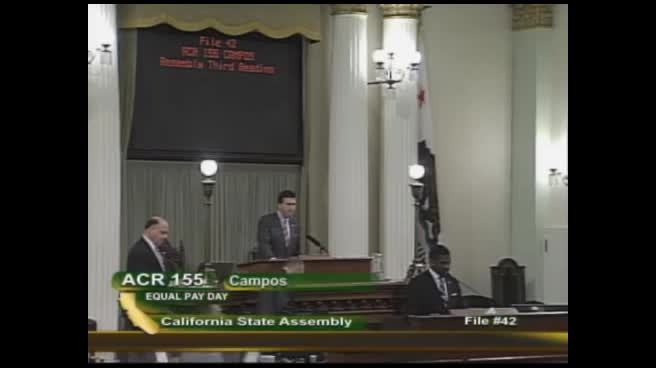
Bill Author

Bill Co-Author(s):