AB 1825: Vicious dogs: definition.
- Session Year: 2015-2016
- House: Assembly
- Latest Version Date: 2016-07-25
Existing law provides for the designation and disposition of certain categories of dogs as potentially dangerous or vicious dogs pursuant to a specified judicial process, and requires that designation to be included in the registration records of the dog. Existing law defines the term vicious dog to include, among others, dogs seized pursuant to specified animal cruelty laws.
This bill would delete this category of dog from the above-specified definition of vicious dog.
Vicious dog means any of the following:
(a)Any dog that, when unprovoked, in an aggressive manner, inflicts severe injury on or kills a human being.
(b)Any dog previously determined to be and currently listed as a potentially dangerous dog that, after its owner or keeper has been notified of this determination, continues the behavior described in Section 31602 or is maintained in violation of Section 31641, 31642, or 31643.
Vicious dog means any of the following:
(a)Any dog seized under Section 599aa of the Penal Code and upon the sustaining of a conviction of the owner or keeper under subdivision (a) of Section 597.5 of the Penal Code.
(b)
(a)Any dog which, that, when unprovoked, in an aggressive manner, inflicts severe injury on or kills a human being.
(c)
(b)Any dog previously determined to be and currently listed as a potentially dangerous dog which, that, after its owner or keeper has been notified of this determination, continues the behavior described in Section 31602 or is maintained in violation of Section 31641, 31642, or 31643.
|
Date
|
Status
|
|---|---|
| May 19, 2016 | Referred to Com. on JUD. |
| Jul 25, 2016 | Chaptered by Secretary of State - Chapter 97, Statutes of 2016. |
| Jul 25, 2016 | Approved by the Governor. |
| Jul 11, 2016 | Enrolled and presented to the Governor at 4:30 p.m. |
| Jun 30, 2016 | Read third time. Passed. Ordered to the Assembly. (Ayes 35. Noes 2. Page 4656.). |
| Jun 30, 2016 | Read third time. Passed. Ordered to the Assembly. |
| Jun 30, 2016 | In Assembly. Ordered to Engrossing and Enrolling. |
| Jun 23, 2016 | Read second time. Ordered to third reading. |
| Jun 22, 2016 | From committee: Do pass. (Ayes 7. Noes 0.) (June 21). |
| Feb 8, 2016 | Read first time. To print. |
| May 9, 2016 | Read third time. Passed. Ordered to the Senate. (Ayes 75. Noes 0. Page 4719.) |
| May 9, 2016 | Read third time. Passed. Ordered to the Senate. |
| May 9, 2016 | In Senate. Read first time. To Com. on RLS. for assignment. |
| Apr 28, 2016 | Read second time. Ordered to third reading. |
| Apr 27, 2016 | From committee: Do pass. (Ayes 9. Noes 0.) (April 27). |
| Feb 25, 2016 | Referred to Com. on L. GOV. |
| Feb 9, 2016 | From printer. May be heard in committee March 10. |
|
Date
|
Description
|
Location
|
Votes
|
|
|---|---|---|---|---|
| Jun 30, 2016 | Assembly 3rd Reading AB1825 Gordon By Leno | Senate Floor |
Passed |
|
| Jun 21, 2016 | Do pass | Senate Standing Committee on Judiciary |
Passed |
|
| May 9, 2016 | AB 1825 GORDON Assembly Third Reading | Assembly Floor |
Passed |
|
| Apr 27, 2016 | Do pass. | Assembly Standing Committee on Local Government |
Passed |
This list shows positions taken on this bill by organizations on the date displayed, which is linked to the original source.
Positions by individuals are not included.
|
Organization
|
Position
|
Date
|
|---|---|---|
| American Society For The Prevention Of Cruelty To Animals | ** Support | Jun 30, 2016 |
| Bay Area Alliance for Animals | ** Support | Jun 30, 2016 |
| Beagle Freedom Project | * Support | Jun 21, 2016 |
| Best Friends Animal Society | ** Support | Jun 30, 2016 |
| Best Friends Animal Society [SPONSOR] | ** Support | May 9, 2016 |
| California Animal Control Directors Association | ** Support | May 9, 2016 |
| California Police Chiefs Association | ** Support | Jun 30, 2016 |
| City and County of San Francisco | ** Support | Jun 30, 2016 |
| Dog Adoption and Welfare Group | ** Support | Jun 30, 2016 |
| Human Society of the United States | ** Support | May 9, 2016 |
| Humane Society Of The United States, The | ** Support | Jun 30, 2016 |
| Kitty Bungalow Charm School for Wayward Cats | ** Support | Jun 30, 2016 |
| Latino Alliance for Animal Care Coalition | ** Support | Jun 30, 2016 |
| LIUNA Locals 777 & 792 | ** Support | Jun 30, 2016 |
| Living Free Animal Sanctuary | ** Support | Jun 30, 2016 |
| Los Angeles Animal Services | ** Support | Jun 30, 2016 |
| Los Angeles County District Attorney'S Office | ** Support | Jun 30, 2016 |
| New Leash on Life | ** Support | Jun 30, 2016 |
| Old Yeller Ranch Rescue | ** Support | Jun 30, 2016 |
| Palm Springs Animal Shelter | ** Support | Jun 30, 2016 |
| Sacramento, County Of | * Support | Jun 21, 2016 |
| San Diego Humane Society | ** Support | Jun 30, 2016 |
| San Francisco Spca | ** Support | Jun 30, 2016 |
| Santa Barbara County Board of Supervisors | ** Support | Jun 30, 2016 |
| Santa Clara County Board of Supervisors | ** Support | Jun 30, 2016 |
| Sea World | ** Support | Jun 30, 2016 |
| Shadow's Fund | ** Support | Jun 30, 2016 |
| State Humane Association of California | * For If Amend | Jun 21, 2016 |
| Stockton Animal Services | ** Support | Jun 30, 2016 |
| The Pet Care Foundation | ** Support | Jun 30, 2016 |
| The Peter Zippi Fund for Animals | ** Support | Jun 30, 2016 |
| Ventura County Board of Supervisors | ** Support | Jun 30, 2016 |
| Woods Humane Society | ** Support | Jun 30, 2016 |
Office of Senate Floor Analyses (916) 651-1520 Fax: (916) 327-4478 | AB |
THIRD READING
Bill No: AB 1825
:
SENATE JUDICIARY COMMITTEE: 7-0, 6/21/16
AYES: Jackson, Moorlach, Anderson, Hertzberg, Leno, Monning, Wieckowski
ASSEMBLY FLOOR: 75-0, 5/9/16 - See last page for vote
SOURCE: Best Friends Animal Society
DIGEST: This bill deletes from the definition of vicious dog “a dog seized under criminal laws prohibiting dog-fighting whose owner has been convicted of a crime related to dog-fighting.”
Existing law:
- Provides legislative findings and declarations related to the statewide public health and safety problems of potentially dangerous and vicious dogs, which requires statewide regulation. (Food & Agr. Code sec. 31601.)
- Defines a “vicious dog” to mean any of the following:
- A dog seized under criminal laws prohibiting dog-fighting whose owner has been convicted of a crime related to dog-fighting;
- Any dog which, when unprovoked, inflicts severe injury on or kills a human being in an aggressive manner; and
- Any dog previously determined to be and currently listed as a potentially dangerous dog which, after its owner or keeper has been notified of this determination, continues the behavior. (Food & Agr. Code sec. 31601.)
- Provides that cities and counties are authorized to create their own programs for the control of potentially dangerous or vicious dogs, and they are not required to incorporate any of the relevant chapter (including the provisions above) in that local program. (Food & Agr. Code sec. 31683.)
This bill deletes from the definition of vicious dog “a dog seized under criminal laws prohibiting dog-fighting whose owner has been convicted of a crime related to dog-fighting.”
Background
In 1987, two-year old James Soto was fatally mauled by a neighbor’s dog. One of the paramedics who arrived on the scene said that James was “unrecognizable as a human being.” When police searched the home of Michael Berry, the dog’s owner, they found both dog-fighting magazines and a treadmill used for training dogs for combat. In addition, they found 200 marijuana plants, which they suspected the dog had been tasked with protecting from poachers. In response to James’ death and a rise in the number and severity of dog attacks, the Legislature enacted SB 428 (Torres, Chapter 761, Statutes of 1989) which regulates potentially dangerous and vicious dogs.
Animal fighting was again brought to the forefront of the nation’s attention by the highly publicized conviction of National Football League star quarterback Michael Vick. Vick and his associates operated “Bad Newz Kennels,” which housed and trained over 50 pit bull dogs, staged dog fights, killed dogs, and ran a high stakes gambling ring with purses up to $26,000. A team of animal behavior experts selected by the American Society for the Prevention of Cruelty to Animals analyzed the 49 seized dogs and recommended whether they were suitable to be adopted by families, trained as police dogs, placed in a sanctuary, or should be euthanized. Only one dog was recommended for euthanasia because of extreme aggression. The others were deemed suitable to go to sanctuaries or foster homes for socialization training.
This bill, seeking to ensure that dogs seized from dog-fighting operations are evaluated on a case-by-case basis, removes the provision of law that labels any dog seized from a fighting ring whose owner is convicted for felony dog fighting, as vicious.
FISCAL EFFECT: Appropriation: Fiscal Com.: Local:
Best Friends Animal Society (source)
American Society for the Prevention of Cruelty to Animals
Bay Area Alliance for Animals
Beagle Freedom Project; California Animal Control Directors Association
California Police Chiefs Association
City and County of San Francisco
City of Sacramento
Dog Adoption and Welfare Group
Humane Society of the United States
Kitty Bungalow Charm School for Wayward Cats
Latino Alliance for Animal Care Coalition
LIUNA Locals 777 & 792
Living Free Animal Sanctuary
Los Angeles Animal Services
Los Angeles County District Attorney’s Office
New Leash on Life
Old Yeller Ranch Rescue
Palm Springs Animal Shelter
San Diego Humane Society
San Francisco SPCA
San Luis Obispo County Health Agency, Animal Services Division
Santa Barbara County Board of Supervisors
Santa Clara County Board of Supervisors
Sea World
Shadow’s Fund
Stockton Animal Services
The Pet Care Foundation
The Peter Zippi Fund for Animals
Ventura County Board of Supervisors
Woods Humane Society
OPPOSITION: (Verified 6/23/16)
Six individuals
ARGUMENTS IN SUPPORT: Best Friends Animal Society, sponsor, writes:
California’s statute is inconsistent and outdated, and the mandate does not relate to the behavior of the individual dogs themselves. AB 1825 repeals this provision and restores local government shelter discretion for all victims of cruelty.
As it now stands, no dogs admitted into a California shelter under the conditions of Food and Ag Code 31603(a) can be spared the arbitrary and capricious “vicious” label, regardless of their behavior, age or the judgment of shelter professionals. It doesn’t matter if the dog was a breeding mother, a pup or a stolen pet.
Stray dogs arriving at shelters without any known history are not presumed to pose a risk. They are evaluated individually using techniques developed over years by animal sheltering professionals. Victims of cruelty should receive the same evaluations.
AYES: Achadjian, Alejo, Travis Allen, Arambula, Atkins, Baker, Bigelow, Bloom, Bonilla, Bonta, Brough, Brown, Burke, Calderon, Campos, Chang, Chau, Chávez, Chiu, Chu, Cooley, Cooper, Dababneh, Dahle, Daly, Dodd, Eggman, Frazier, Gallagher, Cristina Garcia, Gatto, Gipson, Gomez, Gonzalez, Gordon, Gray, Grove, Hadley, Harper, Roger Hernández, Holden, Irwin, Jones-Sawyer, Kim, Lackey, Levine, Linder, Lopez, Low, Maienschein, Mathis, Mayes, McCarty, Medina, Mullin, Nazarian, Obernolte, O'Donnell, Patterson, Quirk, Ridley-Thomas, Rodriguez, Salas, Santiago, Steinorth, Mark Stone, Thurmond, Ting, Wagner, Waldron, Weber, Wilk, Williams, Wood, Rendon
NO VOTE RECORDED: Beth Gaines, Eduardo Garcia, Jones, Melendez, Olsen
6/24/16 14:33:45
**** END ****
ASSEMBLY THIRD READING
ATR Bill Id:AB 1825
Author:(Gordon and Maienschein)
As Introduced Ver:February 8, 2016
Majority vote
Committee | Votes | Ayes | Noes |
Local Government | 9-0 | Eggman, Waldron, Alejo, Bonilla, Chiu, Cooley, Beth Gaines, Gordon, Linder |
SUMMARY: Removes from the definition of "vicious dog" any dog seized from a dog fighting operation.
EXISTING LAW:
- Provides for the designation and disposition of certain categories of dogs as "potentially dangerous" or "vicious" pursuant to a specified judicial process, requires these designations to be included in the registration records of the dog, and places certain restrictions on dogs deemed potentially dangerous or vicious.
- Defines "vicious dog" to mean a) any dog seized pursuant to existing laws governing dog fighting operations, as specified; b) any dog which, when unprovoked, in an aggressive manner, inflicts severe injury on or kills a human being; or, c) any dog previously determined to be and currently listed as a "potentially dangerous" dog which, after its owner or keeper has been notified of this determination, continues the behavior of a potentially dangerous dog or is maintained in violation of existing laws governing the requirements for keeping a potentially dangerous dog, as specified.
FISCAL EFFECT: None
COMMENTS:
- Bill Summary. This bill removes from the definition of "vicious dog" any dog seized from a dog fighting operation. This bill is sponsored by Best Friends Animal Society.
- Author's Statement. According to the author, "Under existing law (Food and Agricultural Code Section 31603), canines seized in connection with criminal dog fighting convictions are automatically deemed 'vicious' without any evaluation of the dog's health, age, behavior, or demeanor before the dog is labeled. These animals are thus considered legally vicious, regardless of whether there is any evidence of unprovoked attacks or infliction of severe injuries (the standards for a designation for all other dogs). This is often a death sentence for dogs…
"AB 1825 would remove the requirement in existing law that dogs seized in connection with animal fighting cases be automatically labeled vicious. This will allow all dogs to be judged by their own health and behavior, and provide humanitarians and sanctuaries the opportunity to give a dog or puppy seized as a victim of animal abuse an opportunity to live a safe and cruelty-free life."
- Background. Current laws governing potentially dangerous or vicious dogs, which were established in 1989 following a spate of dog attacks in California, outline the process for designating a dog as either potentially dangerous or vicious. These laws also set forth the requirements that owners must follow if their dog has been determined to be potentially dangerous or vicious, which cover matters such as licensure and vaccination, special licensing or registration fees, confinement, and notification of animal control departments if the dog changes location.
In the case of a dog that has been labeled "vicious," existing law authorizes animal control departments to destroy a vicious dog under specified conditions, requires a judicial authority to impose conditions upon ownership, and allows local jurisdictions to place restrictions on an owner of a vicious dog. Current law also allows cities or counties to impose more restrictive programs to control potentially dangerous or vicious dogs, provided they are not breed-specific (with an exception for mandatory spay and neuter programs). Violations of current law governing vicious dogs carry a penalty of up to $1,000.
Current law automatically designates any dog seized under penal code statutes related to dog fighting as a "vicious" dog, without regard to behavior, background, age or any kind of evaluation. Dogs seized in such operations often include dogs kept exclusively for breeding, puppies, and pets that have been stolen and used as "bait" dogs.
Proponents of this measure note that a stray dog that arrives at an animal shelter without any known history is not presumed to pose a risk. The animal would be evaluated by shelter staff members, who are trained in techniques developed by animal sheltering professionals. Proponents argue that victims of animal cruelty that are rescued from dog-fighting rings should receive these same evaluations, instead of being automatically labeled as vicious.
According to news reports about dog-fighting operations, many dogs that are recovered from these conditions are found to be suitable for adoption. According to proponents, the most well-known animal fighting victims are the dogs seized on the property of NFL player Michael Vick. After evaluation, only one of those 49 dogs was found to be "vicious" and euthanized. The remaining 48 dogs that were recovered were eventually adopted or have been managed in sanctuaries. Some have even become therapy or service dogs. In 2009, in a large-scale seizure of more than 500 fighting dogs, individual evaluations were performed and a majority of the dogs were found to be suitable for placement.
- Arguments in Support. Best Friends Animal Society, sponsor of this bill, writes, "Many dogs seized in connection with animal fighting do not pose any risk to other dogs or humans and go on to live healthy, happy lives… California's statute is inconsistent and outdated, and the mandate does not relate to the behavior of the individual dogs themselves. AB 1825 repeals this provision and restores local government shelter discretion for all victims of cruelty."
- Arguments in Opposition. None on file.
Analysis Prepared by: Angela Mapp / L. GOV. / (916) 319-3958 FN: 0002812
Date of Hearing: April 27, 2016
ASSEMBLY COMMITTEE ON LOCAL GOVERNMENT
Susan Talamantes Eggman, Chair
ABPCA Bill Id:AB 1825 (
Author:Gordon and Maienschein) – As Introduced Ver:February 8, 2016
SUBJECT: Vicious dogs: definition.
SUMMARY: Removes from the definition of "vicious dog" any dog seized from a dog fighting operation.
EXISTING LAW:
- Provides for the designation and disposition of certain categories of dogs as "potentially dangerous" or "vicious" pursuant to a specified judicial process, requires these designations to be included in the registration records of the dog, and places certain restrictions on dogs deemed potentially dangerous or vicious.
- Defines “vicious dog” to mean any of the following:
- Any dog seized pursuant to existing laws governing dog fighting operations, as specified;
- Any dog which, when unprovoked, in an aggressive manner, inflicts severe injury on or kills a human being; or,
- Any dog previously determined to be and currently listed as a "potentially dangerous" dog which, after its owner or keeper has been notified of this determination, continues the behavior of a potentially dangerous dog or is maintained in violation of existing laws governing the requirements for keeping a potentially dangerous dog, as specified.
FISCAL EFFECT: None
COMMENTS:
- Bill Summary. This bill removes from the definition of "vicious dog" any dog seized from a dog fighting operation. This bill is sponsored by Best Friends Animal Society.
- Author's Statement. According to the author, "Under existing law (Food and Agricultural Code Section 31603), canines seized in connection with criminal dog fighting convictions are automatically deemed 'vicious' without any evaluation of the dog’s health, age, behavior, or demeanor before the dog is labeled. These animals are thus considered legally vicious, regardless of whether there is any evidence of unprovoked attacks or infliction of severe injuries (the standards for a designation for all other dogs). This is often a death sentence for dogs…
"AB 1825 would remove the requirement in existing law that dogs seized in connection with animal fighting cases be automatically labeled vicious. This will allow all dogs to be judged by their own health and behavior, and provide humanitarians and sanctuaries the opportunity to give a dog or puppy seized as a victim of animal abuse an opportunity to live a safe and cruelty-free life."
- Background. Current laws governing potentially dangerous or vicious dogs, which were established in 1989 following a spate of dog attacks in California, outline the process for designating a dog as either potentially dangerous or vicious. These laws also set forth the requirements that owners must follow if their dog has been determined to be potentially dangerous or vicious, which cover matters such as licensure and vaccination, special licensing or registration fees, confinement, and notification of animal control departments
if the dog changes location.
In the case of a dog that has been labeled "vicious," existing law authorizes animal control departments to destroy a vicious dog under specified conditions, requires a judicial authority to impose conditions upon ownership, and allows local jurisdictions to place restrictions on an owner of a vicious dog. Current law also allows cities or counties to impose more restrictive programs to control potentially dangerous or vicious dogs, provided they are not breed-specific (with an exception for mandatory spay and neuter programs). Violations of current law governing vicious dogs carry a penalty of up to $1,000.
Current law automatically designates any dog seized under penal code statutes related to dog fighting as a "vicious" dog, without regard to behavior, background, age or any kind of evaluation. Dogs seized in such operations often include dogs kept exclusively for breeding, puppies, and pets that have been stolen and used as "bait" dogs.
Proponents of this measure note that a stray dog that arrives at an animal shelter without any known history is not presumed to pose a risk. The animal would be evaluated by shelter staff members, who are trained in techniques developed by animal sheltering professionals. Proponents argue that victims of animal cruelty that are rescued from dog-fighting rings should receive these same evaluations, instead of being automatically labeled as vicious.
According to news reports about dog-fighting operations, many dogs that are recovered from these conditions are found to be suitable for adoption. According to proponents, the most well-known animal fighting victims are the dogs seized on the property of NFL player Michael Vick. After evaluation, only one of those 49 dogs was found to be "vicious" and euthanized. The remaining 48 dogs that were recovered were eventually adopted or have been managed in sanctuaries. Some have even become therapy or service dogs. In 2009, in a large-scale seizure of more than 500 fighting dogs, individual evaluations were performed and a majority of the dogs were found to be suitable for placement.
- Arguments in Support. Best Friends Animal Society, sponsor of this bill, writes, "Many dogs seized in connection with animal fighting do not pose any risk to other dogs or humans and go on to live healthy, happy lives…California’s statute is inconsistent and outdated, and the mandate does not relate to the behavior of the individual dogs themselves. AB 1825 repeals this provision and restores local government shelter discretion for all victims of cruelty."
- Arguments in Opposition. None on file.
REGISTERED SUPPORT / OPPOSITION:
Support
Best Friends Animal Society [SPONSOR]
American Society for the Prevention of Cruelty to Animals
Bay Area Alliance for Animals
Beagle Freedom Project
California Animal Control Directors Association
California Police Chiefs Association
City and County of San Francisco
City of Sacramento
Human Society of the United States
Kitty Bungalow Charm School for Wayward Cats
Latino Alliance for Animal Care Coalition
LIUNA Locals 777 & 792
Living Free Animal Sanctuary
New Leash on Life
Old Yeller Ranch Rescue
Palm Springs Animal Shelter
San Diego Humane Society
San Francisco SPCA
San Luis Obispo County Health Agency, Animal Services Division
Santa Barbara County Board of Supervisors
Santa Clara County Board of Supervisors
Sea World
Shadow's Fund
Stockton Animal Services
The Pet Care Foundation
The Peter Zippi Fund for Animals
Ventura County Board of Supervisors
Woods Humane Society
Opposition
None on file
Analysis Prepared by: Angela Mapp / L. GOV. / (916) 319-3958
Discussed in Hearing
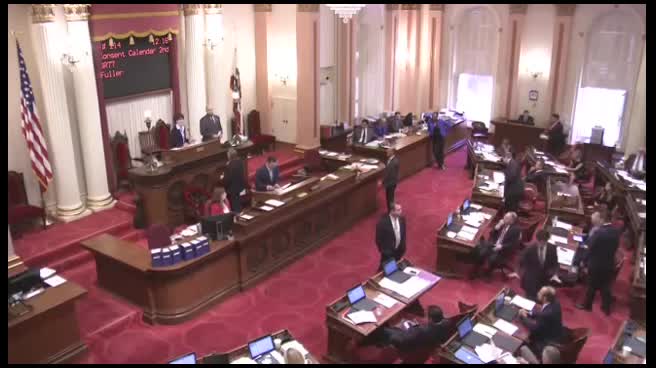 3MIN
Senate Floor
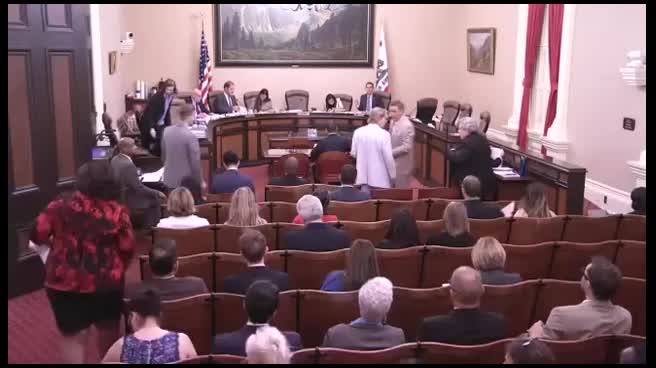 11MIN
Senate Standing Committee on Judiciary
 2MIN