AB 1891: School districts: special taxes: exemptions.
- Session Year: 2015-2016
- House: Assembly
- Latest Version Date: 2016-09-22
Existing law authorizes school districts to impose qualified special taxes, subject to specified constitutional and statutory provisions. Existing law defines qualified special taxes as taxes that apply uniformly to all taxpayers or all real property within a school district and may include taxes that provide for an exemption from those taxes for persons who are 65 years of age or older, for persons receiving Supplemental Security Income for a disability, or for persons receiving Social Security Disability Insurance benefits, as specified.
This bill would require any exemption granted to remain in effect until the taxpayer becomes ineligible, and would allow a new exemption to be granted in the same manner if the taxpayer becomes ineligible for the exemption for any reason.
Existing law authorizes school districts to impose qualified special taxes, subject to specified constitutional and statutory provisions. Existing law defines qualified special taxes as taxes that apply uniformly to all taxpayers or all real property within a school district and may include taxes that provide for an exemption from those taxes for persons who are 65 years of age or older, for persons receiving Supplemental Security Income for a disability, or for persons receiving Social Security Disability Insurance benefits, as specified.
This bill would require any exemption granted to remain in effect until the taxpayer becomes ineligible, and would allow a new exemption to be granted in the same manner if the taxpayer becomes ineligible for the exemption for any reason.
Existing law authorizes school districts to impose qualified special taxes, subject to specified constitutional and statutory provisions. Existing law defines qualified special taxes as taxes that apply uniformly to all taxpayers or all real property within a school district and may include taxes that provide for an exemption from those taxes for persons who are 65 years of age or older, for persons receiving Supplemental Security Income for a disability, or for persons receiving Social Security Disability Insurance benefits, as specified.
This bill would, if a school district imposes a qualified special tax that provides for an exemption for persons who are 65 years of age or older and requires that those persons opt out of the qualified special tax, require the school district to require those taxpayers to opt out of the qualified special tax only once and to grant the exemption to those taxpayers for each subsequent taxable period for which the taxpayer remains eligible for the exemption.
This bill would require any exemption granted to remain in effect until the taxpayer becomes ineligible, and would allow a new exemption to be granted in the same manner if the taxpayer becomes ineligible for the exemption for any reason.
Existing law authorizes school districts to impose qualified special taxes, subject to specified constitutional and statutory provisions. Existing law defines qualified special taxes as taxes that apply uniformly to all taxpayers or all real property within a school district and may include taxes that provide for an exemption from those taxes for persons who are 65 years of age or older, for persons receiving Supplemental Security Income for a disability, or for persons receiving Social Security Disability Insurance benefits, as specified.
This bill would, if a school district imposes a qualified special tax that provides for an exemption for persons who are 65 years of age or older and requires that those persons opt out of the qualified special tax, require the school district to require those taxpayers to opt out of the qualified special tax only once and to grant the exemption to those taxpayers for each subsequent taxable period. In the case of a qualified special tax on real property, the bill would provide that the exemption would be valid until a change in ownership occurs. period for which the taxpayer remains eligible for the exemption.
Existing law authorizes school districts to impose qualified special taxes, subject to specified constitutional and statutory provisions. Existing law defines qualified special taxes as taxes that apply uniformly to all taxpayers or all real property within a school district and may include taxes that provide for an exemption from those taxes for persons who are 65 years of age or older, for persons receiving Supplemental Security Income for a disability, or for persons receiving Social Security Disability Insurance benefits, as specified.
This bill would, if a school district imposes a qualified special tax that provides for an exemption for persons who are 65 years of age or older and requires that those persons opt out of the qualified special tax, require the school district to require those taxpayers to opt out of the qualified special tax only once and to grant the exemption to those taxpayers for each subsequent taxable period. In the case of a qualified special tax on real property, the bill would provide that the exemption would be valid until a change in ownership occurs.
(a)Subject to Section 4 of Article XIIIA of the California Constitution, any school district may impose qualified special taxes within the district pursuant to the procedures established in Article 3.5 (commencing with Section 50075) and any other applicable procedures provided by law.
(b)(1)As used in this section, qualified special taxes means special taxes that apply uniformly to all taxpayers or all real property within the school district, except that qualified special taxes may include taxes that provide for an exemption from those taxes for any or all of the following taxpayers:
(A)Persons who are 65 years of age or older.
(B)Persons receiving Supplemental Security Income for a disability, regardless of age.
(C)Persons receiving Social Security Disability Insurance benefits, regardless of age, whose yearly income does not exceed 250 percent of the 2012 federal poverty guidelines issued by the United States Department of Health and Human Services.
(2)Qualified special taxes do not include special taxes imposed on a particular class of property or taxpayers.
(c)The amendments made to this section by Chapter 371 of the Statutes of 2015 are declaratory of existing law.
(d)Any exemption granted pursuant to subdivision (b) shall remain in effect until the taxpayer becomes ineligible. If the taxpayer becomes ineligible for the exemption for any reason, a new exemption may be granted in the same manner.
(a)Subject to Section 4 of Article XIIIA of the California Constitution, any school district may impose qualified special taxes within the district pursuant to the procedures established in Article 3.5 (commencing with Section 50075) and any other applicable procedures provided by law.
(b)(1)As used in this section, qualified special taxes means special taxes that apply uniformly to all taxpayers or all real property within the school district, except that qualified special taxes may include taxes that provide for an exemption from those taxes for any or all of the following taxpayers:
(A)Persons who are 65 years of age or older.
(B)Persons receiving Supplemental Security Income for a disability, regardless of age.
(C)Persons receiving Social Security Disability Insurance benefits, regardless of age, whose yearly income does not exceed 250 percent of the 2012 federal poverty guidelines issued by the United States Department of Health and Human Services.
(2)Qualified special taxes do not include special taxes imposed on a particular class of property or taxpayers.
(c)The amendments made to this section by Chapter 371 of the Statutes of 2015 are declaratory of existing law.
(d)Any exemption granted pursuant to subdivision (b) shall remain in effect until the taxpayer becomes ineligible. If the taxpayer becomes ineligible for the exemption for any reason, a new exemption may be granted in the same manner.
(a)Subject to Section 4 of Article XIIIA of the California Constitution, any school district may impose qualified special taxes within the district pursuant to the procedures established in Article 3.5 (commencing with Section 50075) and any other applicable procedures provided by law.
(b)(1)As used in this section, qualified special taxes means special taxes that apply uniformly to all taxpayers or all real property within the school district, except that qualified special taxes may include taxes that provide for an exemption from those taxes for any or all of the following taxpayers:
(A)Persons who are 65 years of age or older.
(B)Persons receiving Supplemental Security Income for a disability, regardless of age.
(C)Persons receiving Social Security Disability Insurance benefits, regardless of age, whose yearly income does not exceed 250 percent of the 2012 federal poverty guidelines issued by the United States Department of Health and Human Services.
(2)Qualified special taxes do not include special taxes imposed on a particular class of property or taxpayers.
(c)The amendments made to this section by Chapter 371 of the Statutes of 2015 are declaratory of existing law.
(d)If a school district imposes a qualified special tax that provides for an exemption for persons who are 65 years of age or older, pursuant to subparagraph (A) of paragraph (1) of subdivision (b), and requires taxpayers claiming that exemption to opt out of the qualified special tax, the school district shall only require those taxpayers to opt out of the qualified special tax once and shall grant the exemption to those taxpayers for each subsequent taxable period for which the taxpayer remains eligible for the exemption.
(d)Any exemption granted pursuant to subdivision (b) shall remain in effect until the taxpayer becomes ineligible. If the taxpayer becomes ineligible for the exemption for any reason, a new exemption may be granted in the same manner.
(a)Subject to Section 4 of Article XIIIA of the California Constitution, any school district may impose qualified special taxes within the district pursuant to the procedures established in Article 3.5 (commencing with Section 50075) and any other applicable procedures provided by law.
(b)(1)As used in this section, qualified special taxes means special taxes that apply uniformly to all taxpayers or all real property within the school district, except that qualified special taxes may include taxes that provide for an exemption from those taxes for any or all of the following taxpayers:
(A)Persons who are 65 years of age or older.
(B)Persons receiving Supplemental Security Income for a disability, regardless of age.
(C)Persons receiving Social Security Disability Insurance benefits, regardless of age, whose yearly income does not exceed 250 percent of the 2012 federal poverty guidelines issued by the United States Department of Health and Human Services.
(2)Qualified special taxes do not include special taxes imposed on a particular class of property or taxpayers.
(c)The amendments made to this section by Chapter 371 of the Statutes of 2015 are declaratory of existing law.
(d)If a school district imposes a qualified special tax that provides for an exemption for persons who are 65 years of age or older, pursuant to subparagraph (A) of paragraph (1) of subdivision (b), and requires taxpayers claiming that exemption to opt out of the qualified special tax, the school district shall only require those taxpayers to opt out of the qualified special tax once and shall grant the exemption to those taxpayers for each subsequent taxable period. In the case of a qualified special tax on real property, the exemption shall be valid until a change in ownership occurs. period for which the taxpayer remains eligible for the exemption.
(a)Subject to Section 4 of Article XIIIA of the California Constitution, any school district may impose qualified special taxes within the district pursuant to the procedures established in Article 3.5 (commencing with Section 50075) and any other applicable procedures provided by law.
(b)(1)As used in this section, qualified special taxes means special taxes that apply uniformly to all taxpayers or all real property within the school district, except that qualified special taxes may include taxes that provide for an exemption from those taxes for any or all of the following taxpayers:
(A)Persons who are 65 years of age or older.
(B)Persons receiving Supplemental Security Income for a disability, regardless of age.
(C)Persons receiving Social Security Disability Insurance benefits, regardless of age, whose yearly income does not exceed 250 percent of the 2012 federal poverty guidelines issued by the United States Department of Health and Human Services.
(2)Qualified special taxes do not include special taxes imposed on a particular class of property or taxpayers.
(c)The amendments made to this section by the act adding this subdivision Chapter 371 of the Statutes of 2015 are declaratory of existing law.
(d)If a school district imposes a qualified special tax that provides for an exemption for persons who are 65 years of age or older, pursuant to subparagraph (A) of paragraph (1) of subdivision (b), and requires taxpayers claiming that exemption to opt out of the qualified special tax, the school district shall only require those taxpayers to opt out of the qualified special tax once and shall grant the exemption to those taxpayers for each subsequent taxable period. In the case of a qualified special tax on real property, the exemption shall be valid until a change in ownership occurs.
|
Date
|
Status
|
|---|---|
| May 5, 2016 | Referred to Com. on GOV. & F. |
| Aug 24, 2016 | Enrolled and presented to the Governor at 11:45 a.m. |
| Aug 18, 2016 | Senate amendments concurred in. To Engrossing and Enrolling. (Ayes 79. Noes 0. Page 5870.). |
| Aug 18, 2016 | Senate amendments concurred in. To Engrossing and Enrolling. |
| Aug 11, 2016 | Read third time. Passed. Ordered to the Assembly. (Ayes 37. Noes 0. Page 4878.). |
| Aug 11, 2016 | Read third time. Passed. Ordered to the Assembly. |
| Aug 11, 2016 | In Assembly. Concurrence in Senate amendments pending. May be considered on or after August 14 pursuant to Assembly Rule 77. |
| Aug 3, 2016 | Ordered to special consent calendar. |
| Jun 22, 2016 | Read second time and amended. Ordered to third reading. |
| Jun 21, 2016 | From committee: Amend, and do pass as amended. (Ayes 7. Noes 0.) (June 15). |
| Feb 11, 2016 | Read first time. To print. |
| Apr 21, 2016 | Read third time. Passed. Ordered to the Senate. (Ayes 79. Noes 0. Page 4459.) |
| Apr 21, 2016 | Read third time. Passed. Ordered to the Senate. |
| Apr 21, 2016 | In Senate. Read first time. To Com. on RLS. for assignment. |
| Apr 11, 2016 | Read second time. Ordered to third reading. |
| Apr 7, 2016 | Read second time and amended. Ordered returned to second reading. |
| Apr 6, 2016 | From committee: Amend, and do pass as amended. (Ayes 9. Noes 0.) (April 4). |
| Feb 25, 2016 | Referred to Com. on REV. & TAX. |
| Feb 12, 2016 | From printer. May be heard in committee March 13. |
|
Date
|
Description
|
Location
|
Votes
|
|
|---|---|---|---|---|
| Aug 18, 2016 | AB 1891 DABABNEH Concurrence in Senate Amendments | Assembly Floor |
Passed |
|
| Aug 11, 2016 | Special Consent AB1891 Dababneh By Nguyen | Senate Floor |
Passed |
|
| Jun 15, 2016 | Do pass as amended | Senate Standing Committee on Governance and Finance |
Passed |
|
| Apr 21, 2016 | AB 1891 DABABNEH Assembly Third Reading | Assembly Floor |
Passed |
|
| Apr 4, 2016 | Do pass as amended. | Assembly Standing Committee on Revenue and Taxation |
Passed |
This list shows positions taken on this bill by organizations on the date displayed, which is linked to the original source.
Positions by individuals are not included.
|
Organization
|
Position
|
Date
|
|---|---|---|
| Board of Equalization Member George Runner | ** Support | Aug 18, 2016 |
| California Association Of Realtors | ** Support | Aug 18, 2016 |
| California Taxpayers' Association | ** Support | Aug 18, 2016 |
| Howard Jarvis Taxpayers Association | ** Support | Aug 18, 2016 |
CONCURRENCE IN SENATE AMENDMENTS
CSA1 Bill Id:AB 1891
Author:(Dababneh)
As Amended Ver:June 22, 2016
Majority vote
ASSEMBLY: | 79-0 | (April 21, 2016) | SENATE: | 37-0 | (August 11, 2016) |
Original Committee Reference: REV. & TAX.
SUMMARY: Provides that any exemption from a qualified special tax granted to a taxpayer will remain in effect until the taxpayer becomes ineligible for the exemption.
The Senate amendments:
- Recast provisions of this bill to require any exemption granted to remain in effect until the taxpayer becomes ineligible for the exemption, and allow a new exemption to be granted to the taxpayer if he or she once again becomes eligible for the exemption.
- Expand the scope of this bill to apply to all taxpayers who may be exempt from a qualified special tax.
EXISTING LAW:
- Authorizes school districts to impose qualified special taxes, in accordance with specified procedures, including the approval of two-thirds of the voters in the district.
- Provides that "qualified special taxes" must apply uniformly to all taxpayers or all real property within the school district and do not include special taxes imposed on a particular class of property or taxpayers.
- Authorizes a school district to exempt from a "qualified special tax" any or all of the following persons:
- Persons 65 years of age or older;
- Persons receiving Supplemental Security Income (SSI) for a disability; or,
- Persons receiving Social Security Disability Insurance (SSDI) benefits whose annual income is less than 250% of 2012 federal poverty guidelines.
- Specifies in Revenue and Taxation Code (R&TC) Sections 60 through 69.5 what constitutes a "change in ownership," and provides an exclusion from reassessment for transfers of real property between parents and children, amongst others.
FISCAL EFFECT: None
AS PASSED BY THE ASSEMBLY, this bill:
- Specified that school districts, if imposing a qualified special tax that provides an exemption for persons 65 years of age or older and requires those persons to opt out of the qualified special tax, shall only require those persons to opt out of the qualified special tax once.
- Specified that once a taxpayer is granted the exemption, the school district shall grant the exemption to the taxpayer for each subsequent taxable period he or she remains eligible for the exemption.
COMMENTS:
- Qualified Special Taxes: Proposition 13 (1978) not only limited both the tax rates and assessments of property taxes, but also eliminated the ability of school districts to levy an incremental ad valorem tax on real property. However, school districts still have limited authority to generate local revenues from qualified special taxes as long as the special tax applies uniformly to all taxpayers (other than persons over the age of 65 or persons receiving SSI or SSDI) and real property within the district. While Proposition 13 did not define the term "special tax," over time the courts have opined that a tax is a "special tax" whenever expenditure of its revenues is limited to specific purposes, i.e., the proceeds of the tax are earmarked or dedicated in some manner to a specific project or projects. In contrast, a tax is a "general tax" only when its revenues are placed into the General Fund and are available for expenditure for any and all governmental purposes. [Bay Area Cellular Telephone Co. v. City of Union City (2008) 162 Cal. App.4th 686; Howard Jarvis Taxpayers Assn. v. City of Roseville (2003) 106 Cal.App.4th 1178.] Because Proposition 218 (1996) prohibits school districts and special districts from imposing general taxes, thus, by definition, any tax levied by a school district is considered to be a special tax subject to two-thirds voter approval. Thus far, school districts have only imposed "qualified special taxes" under Government Code Section 50079 in the form of a parcel tax.
- Parcel Taxes: A parcel tax is a flat fee imposed by a city, county, or special district on each parcel, residential as well as commercial, rather than on the assessed value of property located within the local entity's jurisdiction. Because the same dollar amount of tax is assessed on each parcel of property, whether the parcel is one acre or 100 acres, parcel taxes are generally regressive, which means owners of smaller parcels of land pay a larger percentage of tax as compared to owners of larger parcels of land. Some districts levy a rate at a fixed amount per square foot of taxable land, and many include an annual inflation adjustment. Although subject to certain requirements, parcel taxes are flexible ways of raising revenues at the local level. Existing law does not prescribe a maximum rate of tax nor does it limit the period within which the qualified special tax may be imposed and, therefore, the rate of tax varies significantly among different school districts. Existing law also does not limit how the special tax proceeds may be spent and, therefore, a local school board can specify in the ballot measure how the funds will be used. Generally, local parcel taxes provide secure funding for teacher salaries, books, materials and supplies, computers, and arts, music, and sports programs.
- Exemptions from Qualified Special Taxes: School districts are currently authorized to exempt from qualified special taxes persons over the age of 65, persons receiving SSI for a disability regardless of age, and persons receiving SSDI with a specified maximum annual income. The exemption is permissive rather than mandatory, which allows the school district to consider the need for, and impact of, an exemption from special taxes imposed. For example, a school district may choose to exempt all three classes of individuals from one qualified special tax, but may choose to exempt only seniors from another qualified special tax, while the neighboring school district chooses to provide no exemptions. Any exemption, if provided, would be stipulated in the text of the measure approved by voters. Most school parcel tax measures have included the senior exemption to help garner more widespread support, but only a small number of measures have included the disability exemption.
- Administrative Differences: There is significant variation in how school districts administer any granted exemption. Generally, school districts will require individuals who qualify for the exemption to "opt out" of paying the tax by completing an application demonstrating proof of age or disability benefits, ownership of the property, and residence at the property. While some school districts only require the taxpayer to apply for the exemption once, other districts require the taxpayer to fill out a new application every year to maintain the exemption. For example, Campbell Union High School District provides an exemption for both seniors and individuals receiving SSI for a disability. To renew their exemption, seniors must fill out an Exemption Renewal form every year and individuals with a disability must fill out the original application every year. In comparison, neighboring Fremont Union High School District only provides the exemption for seniors and automatically renews the exemption every year – although the school district sends a letter to all exempted seniors annually informing them that their exemption will continue, unless they choose to end the exemption by responding to the letter.
This bill provides that any exemption granted to a taxpayer will remain in effect until the taxpayer becomes ineligible for the exemption. It will either be the taxpayer's responsibility to notify the school district if he or she is no longer eligible for the exemption, or the school district's responsibility to implement a strategy for determining whether or not the taxpayer is eligible for the exemption.
Analysis Prepared by: Irene Ho / REV. & TAX. / (916) 319-2098 FN: 0003575
Office of Senate Floor Analyses (916) 651-1520 Fax: (916) 327-4478 | AB |
THIRD READING
Bill No: AB 1891
: 6/22/16 in Senate
SENATE GOVERNANCE & FIN. COMMITTEE: 7-0, 6/15/16
AYES: Hertzberg, Nguyen, Beall, Hernandez, Lara, Moorlach, Pavley
ASSEMBLY FLOOR: 79-0, 4/21/16 - See last page for vote
SOURCE: Howard Jarvis Taxpayers Association
DIGEST: This bill ensures that taxpayers granted an exemption from a qualified special tax based on age need not reestablish eligibility.
Existing law:
- Requires 2/3 voter approval when a local agency wants to impose or increase a special tax.
- Allows school and community college districts to impose qualified special taxes that applied uniformly to all taxpayers or real property within the district.
- Allows school districts to exempt from the tax persons over the age of 65, persons receiving Supplemental Security Income (SSI) regardless of age, and income-eligible persons receiving Social Security Disability Insurance (SSDI).
This bill:
- Provides that any exemption from a qualified special tax imposed by a school district remains in effect until the taxpayer becomes ineligible.
- States that if a taxpayer becomes ineligible for the exemption for any reason, a new exemption may be granted in the same manner.
Background
All qualified special taxes imposed by local agencies have been parcel taxes, which are not ad valorem, or assessed based on the value of a property like property taxes. Instead, parcel taxes are generally measured a flat rate assessed per parcel or per square foot, regardless of its size. Some include inflation adjustments. As such, they are basically a flat tax on property ownership. Districts can use revenues in almost any way that serves local needs, such as ongoing expenses, programs, or buildings. Between 1983 and November 2012, voters approved 322 parcel taxes in 584 elections. In 2014, the Legislature required entities imposing parcel taxes to report specified information to the State Controller, who must add this information in her local government financial transaction reports (AB 2109, Daly, Chapter 781, Statutes of 2014).
Property tax law generally guides parcel tax collection, where counties collect parcel taxes with property taxes, and then remit funds to the school district imposing the tax. However, school districts administer many aspects of the tax, including processing exemption claims. Many school districts have enacted the senior exemption; however, taxpayer groups want to ensure that once taxpayers are exempt, they need not do so again.
For many years, little aggregate information existed regarding parcel taxes, but a recent report from the Public Policy Institute of California (PPIC) collected a great deal of revealing data regarding the way in which local agencies use parcel taxes. Cities placed 124 parcel tax measures before voters between 2003 and 2012, with 54 receiving the required 2/3 vote, with almost all taxes imposed by cities in the San Francisco Bay Area and Los Angeles County. School districts placed 329 parcel tax measures before voters during the same period, with 60% passing, mostly concentrated in the Bay Area. The report argues that the higher frequency of parcel taxes in the Bay Area is partly explained by higher income levels. Special districts asked voters to enact parcel taxes 238 times from 2003 to 2012, with three out of four winning. PPIC argues that the use of the parcel tax is growing, and that it has many advantages over other taxes: it has no deadweight loss, and assigns taxes in line with benefits. However, PPIC cautions that the tax has a major shortcoming in that many large parcels have little value, and are limited in their capacity to support a parcel tax.
FISCAL EFFECT: Appropriation: Fiscal Com.: Local:
Howard Jarvis Taxpayers Association (source)
Board of Equalization Member George Runner
California Association of Realtors
California Taxpayers Association
OPPOSITION: (Verified 6/21/16)
None received
ARGUMENTS IN SUPPORT: According to the author, “AB 1891 is a common sense bill that simply states once an individual has turned 65 years old, and a school district has exempted them from a parcel tax, districts should honor that request and not have an overly burdensome system that can result in a surreptitious tax against those who often have difficulty affording it. This is a simple way to maintain the exemption as well as uphold current law and protect seniors.”
ASSEMBLY FLOOR: 79-0, 4/21/16
AYES: Achadjian, Alejo, Travis Allen, Arambula, Atkins, Baker, Bigelow, Bloom, Bonilla, Bonta, Brough, Brown, Burke, Calderon, Campos, Chang, Chau, Chávez, Chiu, Chu, Cooley, Cooper, Dababneh, Dahle, Daly, Dodd, Eggman, Frazier, Beth Gaines, Gallagher, Cristina Garcia, Eduardo Garcia, Gatto, Gipson, Gomez, Gonzalez, Gordon, Gray, Grove, Hadley, Harper, Roger Hernández, Holden, Irwin, Jones, Jones-Sawyer, Kim, Lackey, Levine, Linder, Lopez, Low, Maienschein, Mathis, Mayes, McCarty, Medina, Melendez, Mullin, Nazarian, Obernolte, O'Donnell, Olsen, Patterson, Quirk, Rodriguez, Salas, Santiago, Steinorth, Mark Stone, Thurmond, Ting, Wagner, Waldron, Weber, Wilk, Williams, Wood, Rendon
NO VOTE RECORDED: Ridley-Thomas
6/22/16 15:15:28
**** END ****
SENATE COMMITTEE ON GOVERNANCE AND FINANCE
Senator Robert M. Hertzberg, Chair
2015 - 2016 Regular
Bill No: | AB 1891 | Hearing Date: | 6/15/16 |
Author: | Dababneh | Tax Levy: | No |
Version: | 4/7/16 | Fiscal: | No |
Consultant: | Grinnell | ||
School districts: special taxes: exemptions
Ensures that taxpayers granted an exemption from a qualified special tax based on age need not reestablish eligibility.
Background
The California Constitution requires 2/3 voter approval when a local agency wants to impose or increase a special tax (Proposition 13, 1978). The Legislature allowed school and community college districts to impose qualified special taxes that applied uniformly to all taxpayers or real property within the district, and allowed districts to exempt persons over the age of 65 from the tax (AB 1440, Hannigan, 1988). Soon after, the Legislature also allowed 15 types of local agencies to impose similar taxes, but without a similar exemption (SB 158, Committee on Local Government, 1991). Subsequently, the Legislature allowed school districts to also exempt persons receiving Supplemental Security Income (SSI) regardless of age (AB 385, Lieber, 2006), and then income-eligible persons receiving Social Security Disability Insurance (SSDI) (SB 874, Hancock, 2012).
Thus far, all qualified special taxes imposed by local agencies have been parcel taxes, which are not ad valorem, or assessed based on the value of a property like property taxes. Instead, parcel taxes are generally measured a flat rate assessed per parcel or per square foot, regardless of its size. Some include inflation adjustments. As such, they are basically a flat tax on property ownership. Districts can use revenues in almost any way that serves local needs, such as ongoing expenses, programs, or buildings. Between 1983 and November 2012, voters approved 322 parcel taxes in 584 elections. In 2014, the Legislature required entities imposing parcel taxes to report specified information to the State Controller, who must add this information in her local government financial transaction reports (AB 2109, Daly, 2014).
Property tax law generally guides parcel tax collection, where counties collect parcel taxes with property taxes, and then remit funds to the school district imposing the tax. However, school districts administer many aspects of the tax, including processing exemption claims. Many school districts have enacted the senior exemption; however, taxpayer groups want to ensure that once taxpayers are exempt, they need not do so again.
Proposed Law
Assembly Bill 1891 states that if a school district imposes a qualified special tax that provides for an exemption for persons who are 65 years of age or older, and requires taxpayers claiming that exemption to opt out of the qualified special tax, the school district shall only require those taxpayers to opt out of the qualified special tax once and shall grant the exemption to those taxpayers for each subsequent taxable period for which the taxpayer remains eligible for the exemption.
State Revenue Impact
No estimate.
Comments
1. Purpose of the bill. According to the author, “AB 1891 is a common sense bill that simply states once an individual has turned 65 years old, and a school district has exempted them from a parcel tax, districts should honor that request and not have an overly burdensome system that can result in a surreptitious tax against those who often have difficulty affording it. This is a simple way to maintain the exemption as well as uphold current law and protect seniors.”
2. Wordsmithing. AB 1891 advances a clear goal: once a school district determines that a person is exempt from its lawfully-imposed, voter-approved qualified special tax, the taxpayer should remain exempt until they no longer meet its requirements. A taxpayer who reaches 65 years age especially should not have to reestablish his or her exemption when all taxpayers above that age are exempt based on the school district’s ordinance. However, the measure doesn’t apply to other groups who may also be exempt, such as SSI and income-eligible SSDI recipients. Additionally, the measure’s language isn’t clear, using several terms that are defined by either the Government or Revenue and Taxation Codes. The Committee may wish to consider amending AB 1891 to clarify exemption treatment and apply to all possible exempt groups.
3. Parcel taxes in California. For many years, little aggregate information existed regarding parcel taxes, but a recent report from the Public Policy Institute of California collected a great deal of revealing data regarding the way in which local agencies use parcel taxes. Cities placed 124 parcel tax measures before voters between 2003 and 2012, with 54 receiving the required 2/3 vote, with almost all taxes imposed by cities in the San Francisco Bay Area and Los Angeles County. School districts placed 329 parcel tax measures before voters during the same period, with 60% passing, mostly concentrated in the Bay Area. The report argues that the higher frequency of parcel taxes in the Bay Area is partly explained by higher income levels. Special districts asked voters to enact parcel taxes 238 times from 2003 to 2012, with 3 out of 4 winning. PPIC argues that the use of the parcel tax is growing, and that it has many advantages over other taxes: it has no deadweight loss, and assigns taxes in line with benefits. However, PPIC cautions that the tax has a major shortcoming in that many large parcels have little value, and are limited in their capacity to support a parcel tax.
Assembly Actions
Assembly Revenue and Taxation 9-0
Assembly Floor 79-0
Support and Opposition
(6/9/16)
Support: BOE Member George Runner, California Association of Realtors, California Taxpayers Association, Howard Jarvis Taxpayers Association
Opposition: None received.
-- END --
ASSEMBLY THIRD READING
ATR Bill Id:AB 1891
Author:(Dababneh)
As Amended Ver:April 7, 2016
Majority vote
Committee | Votes | Ayes | Noes |
Revenue & Taxation | 9-0 | Ridley-Thomas, Brough, Dababneh, Gipson, Mullin, O'Donnell, Patterson, Quirk, Wagner |
SUMMARY: Specifies requirements for a school district if it imposes a qualified special tax that: 1) provides an exemption for persons 65 years of age or older, and 2) requires those persons to opt out of the qualified special tax. Specifically, this bill:
- Specifies that school districts, if imposing a qualified special tax that provides an exemption for persons 65 years of age or older and requires those persons to opt out of the qualified special tax, shall only require those persons to opt out of the qualified special tax once.
- Specifies that once a taxpayer is granted the exemption, the school district shall grant the exemption to the taxpayer for each subsequent taxable period he or she remains eligible for the exemption.
EXISTING LAW:
- Authorizes school districts to impose qualified special taxes, in accordance with specified procedures, including the approval of two-thirds of the voters in the district.
- Provides that "qualified special taxes" must apply uniformly to all taxpayers or all real property within the school district and do not include special taxes imposed on a particular class of property or taxpayers.
- Authorizes a school district to exempt from a "qualified special tax" any or all of the following persons:
- Persons 65 or older;
- Persons receiving Supplemental Security Income (SSI) for a disability; or,
- Persons receiving Social Security Disability Insurance (SSDI) benefits whose annual income is less than 250% of 2012 federal poverty guidelines.
- Specifies in Revenue and Taxation Code (R&TC) Sections 60 through 69.5 what constitutes a "change in ownership," and provides an exclusion from reassessment for transfers of real property between parents and children, amongst others.
FISCAL EFFECT: None
COMMENTS:
- Author's Statement: The author provided the following statement in support of this bill:
- AB 1891 is a common sense piece of legislation that simply states once an individual has turned 65 years old, and a school district has exempted them from a parcel tax, districts should honor that request and not have an overly burdensome system that can result in a surreptitious tax against those who often have difficulty affording it. This is a simple way to maintain the exemption as well as uphold current law and protect seniors.
- Arguments in Support: The sponsor of this bill, the Howard Jarvis Taxpayers Association, states:
- The current system for opting out of parcel taxes is cumbersome. Some school districts already require the opt-out form to be filled out once, but for most taxpayers it is an annual requirement. We have received dozens of phone calls over the years from our members who lost or did not know that the form needed to be completed annually and it resulted in a property tax bill hundreds of dollars higher than it should have been.
- Arguments in Opposition: There is no opposition on file.
- Qualified Special Taxes: Proposition 13 (1978) not only limited both the tax rates and assessments of property taxes, but also eliminated the ability of school districts to levy an incremental ad valorem tax on real property. However, school districts still have limited authority to generate local revenues from qualified special taxes as long as the special tax applies uniformly to all taxpayers (other than persons over the age of 65 or persons receiving SSI or SSDI) and real property within the district. While Proposition 13 did not define the term "special tax," over time the courts have opined that a tax is a "special tax" whenever expenditure of its revenues is limited to specific purposes, i.e., the proceeds of the tax are earmarked or dedicated in some manner to a specific project or projects. In contrast, a tax is a "general tax" only when its revenues are placed into the General Fund and are available for expenditure for any and all governmental purposes. [Bay Area Cellular Telephone Co. v. City of Union City (2008) 162 Cal. App.4th 686; Howard Jarvis Taxpayers Assn. v. City of Roseville (2003) 106 Cal.App.4th 1178.] Because Proposition 218 (1996) prohibits school districts and special districts from imposing general taxes, thus, by definition, any tax levied by a school district is considered to be a special tax subject to two-thirds voter approval. Thus far, school districts have only imposed "qualified special taxes" under Government Code Section 50079 in the form of a parcel tax.
- Parcel Taxes: A parcel tax is a flat fee imposed by a city, county, or special district on each parcel, residential as well as commercial, rather than on the assessed value of property located within the local entity's jurisdiction. Because the same dollar amount of tax is assessed on each parcel of property, whether the parcel is one acre or 100 acres, parcel taxes are generally regressive, which means owners of smaller parcels of land pay a larger percentage of tax as compared to owners of larger parcels of land. Some districts levy a rate at a fixed amount per square foot of taxable land, and many include an annual inflation adjustment. Although subject to certain requirements, parcel taxes are flexible ways of raising revenues at the local level. Existing law does not prescribe a maximum rate of tax nor does it limit the period within which the qualified special tax may be imposed and, therefore, the rate of tax varies significantly among different school districts. Existing law also does not limit how the special tax proceeds may be spent and, therefore, a local school board can specify in the ballot measure how the funds will be used. Generally, local parcel taxes provide secure funding for teacher salaries, books, materials and supplies, computers, and arts, music, and sports programs.
- Exemptions from Qualified Special Taxes: School districts are currently authorized to exempt from qualified special taxes persons over the age of 65, persons receiving SSI for a disability regardless of age, and persons receiving SSDI with a specified maximum annual income. The exemption is permissive rather than mandatory, which allows the school district to consider the need for, and impact of, an exemption from special taxes imposed. For example, a school district may choose to exempt all three classes of individuals from one qualified special tax, but may choose to exempt only seniors from another qualified special tax, while the neighboring school district chooses to provide no exemptions. Any exemption, if provided, would be stipulated in the text of the measure approved by voters. Most school parcel tax measures have included the senior exemption to help garner more widespread support, but only a small number of measures have included the disability exemption.
- Administrative Differences: There is significant variation in how school districts administer any granted exemption. Generally, school districts will require individuals who qualify for the exemption to "opt out" of paying the tax by completing an application demonstrating proof of age or disability benefits, ownership of the property, and residence at the property. While some school districts only require the taxpayer to apply for the exemption once, other districts require the taxpayer to fill out a new application every year to maintain the exemption. For example, Campbell Union High School District provides an exemption for both seniors and individuals receiving SSI for a disability. To renew their exemption, seniors must fill out an Exemption Renewal form every year and individuals with a disability must fill out the original application every year. In comparison, neighboring Fremont Union High School District only provides the exemption for seniors and automatically renews the exemption every year – although the school district sends a letter to all exempted seniors annually informing them that their exemption will continue, unless they choose to end the exemption by responding to the letter.
- An Unnecessary Burden? The author states that the current variation in opt-out processes can be especially burdensome for seniors and has resulted in examples of taxpayers on fixed incomes who have faced hundreds of dollars of additional tax payments simply because they were not aware that the opt-out paperwork needed to be completed annually. The author has also limited this bill's application to seniors and would not require individuals who solely receive SSI or SSDI benefits to be granted a continuous exemption, if eligible for an exemption from a qualified special tax, as changes in one's health or income may occur that could disqualify the individual from the exemption. However, some voter-approved parcel tax measures not only require seniors to own the property to qualify for the exemption, but also require the property to be their primary residence. Thus, it is possible for a senior to qualify for the exemption one year but not the next despite continuous property ownership, just as it is possible for an individual receiving SSI or SSDI benefits to qualify for the exemption one year but not the next. This bill provides that once a taxpayer opts out of the tax, the exemption will be granted for each subsequent taxable period he or she remains eligible for the exemption. It will either be the taxpayer's responsibility to notify the school district if he or she is no longer eligible for the exemption, or the school district's responsibility to implement a strategy for determining whether or not the taxpayer is eligible for the exemption.
Analysis Prepared by: Irene Ho / REV. & TAX. / (916) 319-2098 FN: 0002726
Date of Hearing: April 4, 2016
ASSEMBLY COMMITTEE ON REVENUE AND TAXATION
Sebastian Ridley-Thomas, Chair
ABPCA Bill Id:AB 1891 (
Author:Dababneh) – As Introduced Ver:February 11, 2016
Majority vote. Non-fiscal.
SUBJECT: School districts: special taxes: exemptions
SUMMARY: Specifies requirements for a school district if it imposes a qualified special tax that: (1) provides an exemption for persons 65 years of age or older, and (2) requires those persons to opt out of the qualified special tax. Specifically, this bill:
- Specifies that school districts, if imposing a qualified special tax that provides an exemption for persons 65 years of age or older and requires those persons to opt out of the qualified special tax, shall only require those persons to opt out of the qualified special tax once.
- Specifies that once a taxpayer is granted the exemption, the school district shall grant the exemption to the taxpayer for each subsequent taxable period.
- Provides that in the case of a qualified special tax on real property, the granted exemption shall be valid until a change in ownership occurs.
EXISTING LAW:
- Authorizes school districts to impose qualified special taxes, in accordance with specified procedures, including the approval of two-thirds of the voters in the district.
- Provides that "qualified special taxes" must apply uniformly to all taxpayers or all real property within the school district and do not include special taxes imposed on a particular class of property or taxpayers.
- Authorizes a school district to exempt from a "qualified special tax" any or all of the following persons:
- Persons 65 or older;
- Persons receiving Supplemental Security Income (SSI) for a disability; or,
- Persons receiving Social Security Disability Insurance (SSDI) benefits whose annual income is less than 250% of 2012 federal poverty guidelines.
- Specifies in Revenue & Taxation Code (R&TC) Sections 60 through 69.5 what constitutes a "change in ownership," and provides an exclusion from reassessment for transfers of real property between parents and children, amongst others.
FISCAL EFFECT: Unknown
COMMENTS:
- Author's Statement: The author provided the following statement in support of this bill:
AB 1891 is a common sense piece of legislation that simply states once an individual has turned 65 years old, and a school district has exempted them from a parcel tax, districts should honor that request and not have an overly burdensome system that can result in a surreptitious tax against those who often have difficulty affording it. This is a simple way to maintain the exemption as well as uphold current law and protect seniors.
- Arguments in Support: The sponsor of this bill, the Howard Jarvis Taxpayers Association, states:
The current system for opting out of parcel taxes is cumbersome. Some school districts already require the opt-out form to be filled out once, but for most taxpayers it is an annual requirement. We have received dozens of phone calls over the years from our members who lost or did not know that the form needed to be completed annually and it resulted in a property tax bill hundreds of dollars higher than it should have been.
- Qualified Special Taxes: Proposition 13 (1978) not only limited both the tax rates and assessments of property taxes, but also eliminated the ability of school districts to levy an incremental ad valorem tax on real property. However, school districts still have limited authority to generate local revenues from qualified special taxes as long as the special tax applies uniformly to all taxpayers (other than persons over the age of 65 or persons receiving SSI or SSDI) and real property within the district. While Proposition 13 did not define the term "special tax," over time the courts have opined that a tax is a "special tax" whenever expenditure of its revenues is limited to specific purposes, i.e., the proceeds of the tax are earmarked or dedicated in some manner to a specific project or projects. In contrast, a tax is a "general tax" only when its revenues are placed into the General Fund and are available for expenditure for any and all governmental purposes. [Bay Area Cellular Telephone Co. v. City of Union City (2008) 162 Cal. App.4th 686; Howard Jarvis Taxpayers Assn. v. City of Roseville (2003) 106 Cal.App.4th 1178.] Because Proposition 218 (1996) prohibits school districts and special districts from imposing general taxes, thus, by definition, any tax levied by a school district is considered to be a special tax subject to two-thirds voter approval. Thus far, school districts have only imposed "qualified special taxes" under Government Code Section 50079 in the form of a parcel tax.
- Parcel Taxes: A parcel tax is a flat fee imposed by a city, county, or special district on each parcel, residential as well as commercial, rather than on the assessed value of property located within the local entity's jurisdiction. Because the same dollar amount of tax is assessed on each parcel of property, whether the parcel is one acre or 100 acres, parcel taxes are generally regressive, which means owners of smaller parcels of land pay a larger percentage of tax as compared to owners of larger parcels of land. Some districts levy a rate at a fixed amount per square foot of taxable land, and many include an annual inflation adjustment. Although subject to certain requirements, parcel taxes are flexible ways of raising revenues at the local level. Existing law does not prescribe a maximum rate of tax nor does it limit the period within which the qualified special tax may be imposed and, therefore, the rate of tax varies significantly among different school districts. Existing law also does not limit how the special tax proceeds may be spent and, therefore, a local school board can specify in the ballot measure how the funds will be used. Generally, local parcel taxes provide secure funding for teacher salaries, books, materials and supplies, computers, and arts, music, and sports programs.
- Exemptions from Qualified Special Taxes: School districts are currently authorized to exempt from qualified special taxes persons over the age of 65, persons receiving SSI for a disability regardless of age, and persons receiving SSDI with a specified maximum annual income. The exemption is permissive rather than mandatory, which allows the school district to consider the need for, and impact of, an exemption from special taxes imposed. For example, a school district may choose to exempt all three classes of individuals from one qualified special tax, but may choose to exempt only seniors from another qualified special tax, while the neighboring school district chooses to provide no exemptions. Any exemption, if provided, would be stipulated in the text of the measure approved by voters. Most school parcel tax measures have included the senior exemption to help garner more widespread support, but only a small number of measures have included the disability exemption.
- Administrative Differences: There is significant variation in how school districts administer any granted exemption. Generally, school districts will require individuals who qualify for the exemption to "opt out" of paying the tax by completing an application demonstrating proof of age or disability benefits, ownership of the property, and residence at the property. While some school districts only require the taxpayer to apply for the exemption once, other districts require the taxpayer to fill out a new application every year to maintain the exemption. For example, Campbell Union High School District provides an exemption for both seniors and individuals receiving SSI for a disability. To renew their exemption, seniors must fill out an Exemption Renewal form every year and individuals with a disability must fill out the original application every year. In comparison, neighboring Fremont Union High School District only provides the exemption for seniors and automatically renews the exemption every year – although the school district sends a letter to all exempted seniors annually informing them that their exemption will continue, unless they choose to end the exemption by responding to the letter.
- An Unnecessary Burden? The author states that the current variation in opt-out processes can be especially burdensome for seniors and has resulted in examples of taxpayers on fixed incomes who have faced hundreds of dollars of additional tax payments simply because they were not aware that the opt-out paperwork needed to be completed annually. The author has also limited this bill's application to seniors and would not require individuals who solely receive SSI or SSDI benefits to be granted a continuous exemption, if eligible for an exemption from a qualified special tax, as changes in one's health or income may occur that could disqualify the individual from the exemption.
This bill specifies that seniors who must opt-out of the qualified special tax to benefit from the exemption only need to do so once, thereby renewing automatically the exemption every year until a change in ownership occurs. However, some voter-approved parcel tax measures not only require seniors to own the property to qualify for the exemption, but also require the property to be their primary residence. Thus, it is possible for a senior to qualify for the exemption one year but not the next despite continuous property ownership, just as it is possible for an individual receiving SSI or SSDI benefits to qualify for the exemption one year but not the next. Furthermore, the phrase "change in ownership" has a specific meaning pursuant to Article XIII A of the Constitution and R&TC Sections 60 through 69.5, signifying when a property must be reassessed to its market value under Proposition 13. Under current law, an exclusion from reassessment is generally provided for transfers of real property from parents to children, meaning that an individual under age 65 could be the new owner and occupant of a property with triggering a "change in ownership."
If it is not the author’s intent to provide a continuous qualified special tax exemption to individuals who no longer qualify for the exemption, the author may wish to provide a more specific and limited definition for "change in ownership" or alternative criteria for determining when the exemption is no longer valid. Given the fact that the intent of the permissive exemption is to preserve local control and flexibility, the Committee may also wish to consider whether it is appropriate to prescribe a one-size-fits-all approach for administering these local voter-approved taxes.
- Prior Legislation: SB 371 (Hancock), Chapter 81, Statutes of 2015, clarified that a school district is authorized to exempt from qualified special taxes any or all statutory classes of potentially exempt taxpayers.
SB 874 (Hancock), Chapter 791, Statutes of 2012, authorized school districts to exempt from qualified special taxes persons receiving SSDI benefits under a specified income limit.
AB 385 (Lieber), Chapter 41, Statutes of 2006 authorized school districts to exempt from qualified special taxes persons receiving SSI for a disability.
REGISTERED SUPPORT / OPPOSITION:
Support
Howard Jarvis Taxpayers Association (Sponsor)
California Association of Realtors
California Taxpayers Association
Opposition
None on file
Analysis Prepared by: Irene Ho / REV. & TAX. / (916) 319-2098
Discussed in Hearing
View Older Hearings
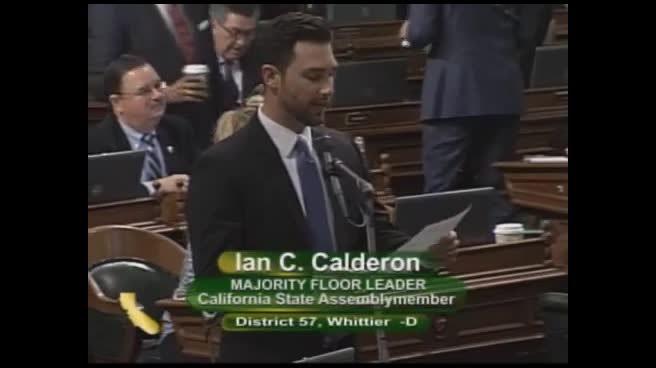
Bill Author