AB 1928: Water efficiency: landscape irrigation equipment.
- Session Year: 2015-2016
- House: Assembly
- Latest Version Date: 2016-09-13
Existing law requires, to the extent that funds are available, the State Energy Resources Conservation and Development Commission, in consultation with the Department of Water Resources, to adopt, by January 1, 2010, performance standards and labeling requirements for landscape irrigation equipment and, on or after January 1, 2012, prohibits that equipment from being sold unless it meets the performance standards and labeling requirements.
This bill would postpone the date by which the commission is to adopt the performance standards and labeling requirements to January 1, 2019, and would prohibit the sale or the offer for sale of that equipment manufactured on or after the effective date of the performance standards and labeling requirements unless the equipment meets the performance standards and labeling requirements and is certified by the manufacturer as meeting the performance standards. The bill would additionally require the commission, in adopting those standards and requirements, to consider developments in landscape irrigation efficiency occurring on or after January 1, 2010.
Existing law requires, to the extent that funds are available, the State Energy Resources Conservation and Development Commission, in consultation with the Department of Water Resources, to adopt, by January 1, 2010, performance standards and labeling requirements for landscape irrigation controllers and moisture sensors equipment and, on or after January 1, 2012, prohibits that equipment from being sold unless it meets the performance standards and labeling requirements.
This bill would postpone the date by which the commission is to adopt the performance standards and labeling requirements to January 1, 2018, 2019, and would prohibit, on and after January 1, 2020, prohibit the sale or the offer for sale of that equipment manufactured on or after the effective date of the performance standards and labeling requirements unless it the equipment meets the performance standards and labeling requirements. requirements and is certified by the manufacturer as meeting the performance standards. The bill would additionally require the commission, in adopting those standards and requirements, to consider developments in landscape irrigation efficiency occurring on or after January 1, 2010.
Existing law requires, to the extent that funds are available, the State Energy Resources Conservation and Development Commission, in consultation with the Department of Water Resources, to adopt, by January 1, 2010, performance standards and labeling requirements for landscape irrigation controllers and moisture sensors and, on or after January 1, 2012, prohibits that equipment from being sold unless it meets the performance standards and labeling requirements.
This bill would postpone the date by which the commission is to adopt the performance standards and labeling requirements to January 1, 2018, and would prohibit, on and after January 1, 2020, the sale of that equipment unless it meets the performance standards and labeling requirements. The bill would additionally require the commission, in adopting those standards and requirements, to consider developments in landscape irrigation efficiency occurring on or after January 1, 2010.
(a)Pursuant to subdivision (c) of Section 25402, to the extent that funds are available, the commission, in consultation with the Department of Water Resources and in consideration of developments in landscape irrigation efficiency occurring on or after January 1, 2010, shall adopt by regulation, performance standards and labeling requirements for landscape irrigation equipment, including, but not limited to, irrigation controllers, moisture sensors, emission devices, and valves.
(b)For the purposes of complying with subdivision (a), the commission shall do both of the following:
(1)Adopt performance standards and labeling requirements for landscape irrigation equipment on or before January 1, 2019.
(2)Consider the Irrigation Associations Smart Water Application Technology Program testing protocols when adopting performance standards for landscape irrigation equipment, including, but not limited to, irrigation controllers, moisture sensors, emission devices, and valves.
(c)No new irrigation equipment for landscape irrigation uses that is manufactured on or after the effective date of the regulations adopted pursuant to subdivision (a) shall be sold or offered for sale in the state unless the irrigation equipment meets the performance standards and labeling requirements established pursuant to this section and is certified by the manufacturer as in compliance with those standards.
(a)To Pursuant to subdivision (c) of Section 25402, to the extent that funds are available, the commission, in consultation with the Department of Water Resources and in consideration of developments in landscape irrigation efficiency occurring on and or after January 1, 2010, shall adopt by regulation, after holding one or more public hearings, performance standards and labeling requirements for landscape irrigation equipment, including, but not limited to, irrigation controllers, moisture sensors, emission devices, and valves, for the purpose of reducing the wasteful, uneconomic, inefficient, or unnecessary consumption of energy or water. valves.
(b)For the purposes of complying with subdivision (a), the commission shall do both of the following:
(1)Adopt performance standards and labeling requirements for landscape irrigation controllers and moisture sensors equipment on or before January 1, 2018. 2019.
(2)Consider the Irrigation Associations Smart Water Application Technology Program testing protocols when adopting performance standards for landscape irrigation equipment, including, but not limited to, irrigation controllers, moisture sensors, emission devices, and valves.
(c)On and after January 1, 2020, an irrigation controller or moisture sensor No new irrigation equipment for landscape irrigation uses may not that is manufactured on or after the effective date of the regulations adopted pursuant to subdivision (a) shall be sold or installed offered for sale in the state unless the controller or sensor irrigation equipment meets the performance standards and labeling requirements established pursuant to this section. section and is certified by the manufacturer as in compliance with those standards.
(a)To the extent that funds are available, the commission, in consultation with the Department of Water Resources, Resources and in consideration of developments in landscape irrigation efficiency occurring on and after January 1, 2010, shall adopt by regulation, after holding one or more public hearings, performance standards and labeling requirements for landscape irrigation equipment, including, but not limited to, irrigation controllers, moisture sensors, emission devices, and valves, for the purpose of reducing the wasteful, uneconomic, inefficient, or unnecessary consumption of energy or water.
(b)For the purposes of complying with subdivision (a), the commission shall do both of the following:
(1)Adopt performance standards and labeling requirements for landscape irrigation controllers and moisture sensors on or before January 1, 2010. 2018.
(2)Consider the Irrigation Associations Smart Water Application Technology Program testing protocols when adopting performance standards for landscape irrigation equipment, including, but not limited to, irrigation controllers, moisture sensors, emission devices, and valves.
(c)On and after January 1, 2012, 2020, an irrigation controller or moisture sensor for landscape irrigation uses may not be sold or installed in the state unless the controller or sensor meets the performance standards and labeling requirements established pursuant to this section.
|
Date
|
Status
|
|---|---|
| Jun 29, 2016 | From committee: Do pass and re-refer to Com. on APPR. (Ayes 6. Noes 2.) (June 28). Re-referred to Com. on APPR. |
| Sep 13, 2016 | Chaptered by Secretary of State - Chapter 326, Statutes of 2016. |
| Sep 13, 2016 | Approved by the Governor. |
| Aug 30, 2016 | Enrolled and presented to the Governor at 4 p.m. |
| Aug 23, 2016 | Senate amendments concurred in. To Engrossing and Enrolling. (Ayes 58. Noes 22. Page 6128.). |
| Aug 23, 2016 | Senate amendments concurred in. To Engrossing and Enrolling. |
| Aug 17, 2016 | Read third time. Passed. Ordered to the Assembly. (Ayes 27. Noes 12.). |
| Aug 17, 2016 | Read third time. Passed. Ordered to the Assembly. (Ayes 27. Noes 12. Page 5045.). |
| Aug 17, 2016 | Read third time. Passed. Ordered to the Assembly. |
| Aug 17, 2016 | In Assembly. Concurrence in Senate amendments pending. May be considered on or after August 19 pursuant to Assembly Rule 77. |
| Aug 15, 2016 | Read second time and amended. Ordered to third reading. |
| Aug 11, 2016 | From committee: Amend, and do pass as amended. (Ayes 5. Noes 2.) (August 11). |
| Aug 1, 2016 | In committee: Referred to APPR. suspense file. |
| Feb 12, 2016 | Read first time. To print. |
| Jun 15, 2016 | Referred to Com. on N.R. & W. |
| Jun 2, 2016 | In Senate. Read first time. To Com. on RLS. for assignment. |
| Jun 1, 2016 | Read third time. Passed. Ordered to the Senate. (Ayes 56. Noes 22.) |
| Jun 1, 2016 | Read third time. Passed. Ordered to the Senate. (Ayes 56. Noes 22. Page 5133.) |
| Jun 1, 2016 | Read third time. Passed. Ordered to the Senate. |
| May 31, 2016 | Read second time. Ordered to third reading. |
| May 27, 2016 | From committee: Do pass. (Ayes 14. Noes 5.) (May 27). |
| Apr 27, 2016 | In committee: Set, first hearing. Referred to APPR. suspense file. |
| Mar 29, 2016 | From committee: Do pass and re-refer to Com. on APPR. (Ayes 11. Noes 1.) (March 29). Re-referred to Com. on APPR. |
| Feb 25, 2016 | Referred to Com. on W., P., & W. |
| Feb 16, 2016 | From printer. May be heard in committee March 17. |
|
Date
|
Description
|
Location
|
Votes
|
|
|---|---|---|---|---|
| Aug 23, 2016 | AB 1928 CAMPOS Concurrence in Senate Amendments | Assembly Floor |
Passed |
|
| Aug 17, 2016 | Assembly 3rd Reading AB1928 Campos By Wieckowski | Senate Floor |
Passed |
|
| Aug 11, 2016 | Do pass as amended | Senate Standing Committee on Appropriations |
Passed |
|
| Aug 1, 2016 | Placed on suspense file | Senate Standing Committee on Appropriations |
Passed |
|
| Jun 28, 2016 | Do pass, but first be re-referred to the Committee on [Appropriations] | Senate Standing Committee on Natural Resources and Water |
Passed |
|
| Jun 1, 2016 | AB 1928 CAMPOS Assembly Third Reading | Assembly Floor |
Passed |
|
| May 27, 2016 | Do pass. | Assembly Standing Committee on Appropriations |
Passed |
|
| Mar 29, 2016 | Do pass and be re-referred to the Committee on [Appropriations] | Assembly Standing Committee on Water, Parks, and Wildlife |
Passed |
This list shows positions taken on this bill by organizations on the date displayed, which is linked to the original source.
Positions by individuals are not included.
|
Organization
|
Position
|
Date
|
|---|---|---|
| American Water Works Association, California-Nevada Section | ** Support | Aug 17, 2016 |
| Association Of California Water Agencies | ** Support | Aug 17, 2016 |
| California Landscape Contractor'S Association | ** Support | Aug 17, 2016 |
| California Municipal Utilities Association | ** Support | Aug 17, 2016 |
| California Special Districts Association | ** Support | Aug 17, 2016 |
| California Water Association | ** Support | Aug 17, 2016 |
| Campbell Chamber of Commerce | ** Support | Aug 17, 2016 |
| City of Campbell | ** Support | Aug 17, 2016 |
| City of Morgan Hill | ** Support | Aug 17, 2016 |
| City of Sunnyvale | ** Support | Aug 17, 2016 |
| Cupertino Chamber of Commerce | ** Support | Aug 17, 2016 |
| Cupertino City Council | ** Support | Aug 17, 2016 |
| East Bay Municipal Utility District | ** Support | Aug 17, 2016 |
| East Valley Water District | ** Support | Aug 17, 2016 |
| Gilroy Chamber of Commerce | ** Support | Aug 17, 2016 |
| Los Altos Hills City Council | ** Support | Aug 17, 2016 |
| Milpitas Chamber of Commerce | ** Support | Aug 17, 2016 |
| San Diego County Water Authority | ** Support | Aug 17, 2016 |
| San Jose Silicon Valley Chamber of Commerce | ** Support | Aug 17, 2016 |
| San Jose, City Of | ** Support | Aug 17, 2016 |
| Santa Clara County Board of Supervisors | ** Support | Aug 17, 2016 |
| Santa Clara County Farm Bureau | ** Support | Aug 17, 2016 |
| Santa Clara Valley Water District | ** Support | Aug 17, 2016 |
| Saratoga, City Of | ** Support | Aug 17, 2016 |
CONCURRENCE IN SENATE AMENDMENTS
CSA1 Bill Id:AB 1928
Author:(Campos)
As Introduced Ver:August 15, 2016
Majority vote
ASSEMBLY: | 56-22 | (June 1, 2016) | SENATE: | 27-12 | (August 17, 2016) |
Original Committee Reference: W., P., & W.
SUMMARY: Extends the date from January 1, 2010, to January 1, 2019, by which the California Energy Commission (CEC) is required to adopt landscape irrigation equipment performance standards and labeling requirements. Additionally, prohibits the sale of new irrigation equipment on or after an effective date established by the CEC. Requires the CEC to consider recent advancements in landscape irrigation efficiency when developing the standards and requirements.
The Senate amendments extend the date to adopt irrigation equipment standards by one year. Conform the adoption of irrigation equipment standard regulation with existing procedures for energy and water efficiency new building regulations. Prohibit the sale of noncompliant irrigation equipment on or after the effective date established by the CEC.
EXISITING LAW: Requires, to the extent funds are available, the CEC in consultation with the Department of Water Resources (DWR) to adopt regulations by January 1, 2010, on landscape irrigation performance standards and labeling. Prohibits the sale of a landscape irrigation controller or moisture sensor by January 1, 2012, unless performance standards and labeling requirements are met.
FISCAL EFFECT: According to the Assembly Appropriations Committee, this bill increases staff costs of $100,000 and contract costs of approximately $200,000 for the CEC to establish performance standards and labeling requirements. These funds could come from the General Fund or special funds.
As with the existing timelines, the provisions in this bill are required only to the extent funds are available.
COMMENTS: To date, the CEC has not adopted regulations on landscape irrigation performance standards or labeling requirements because funds have not been made available. The 2016-2017 budget contained $30 million for the CEC to implement the Water Energy Technology program. The Water Energy Technology program provides funding for innovative technologies that reduce greenhouse gas emissions. Funds in that program could be put toward adopting regulations on landscape irrigation performance standards and labeling.
According to the DWR, over 45% of residential water use takes place outdoors. More water efficient irrigation equipment will likely create significant water savings. According to the author, this bill will help California take the next and long overdue steps in recommitting ourselves to improving outdoor water efficiency.
Executive Order B-29-15 from April of 2015 directed the CEC to fund emerging water saving technologies, the State Water Resources Control Board to impose a 25% reduction in urban water use over 2013 levels, and the DWR to update the state model water efficient landscape ordinance to specifically increase water efficiency through more efficient irrigation standards.
Technology in landscape irrigation has advanced in recent years with numerous new efficient irrigation controls and moisture sensing devices coming to the market. The cost of water has increased significantly in the past decade and is projected to increase annually at a rate of 4% or higher. Consumers appear to be responding to these conditions as it has been reported that one of the largest areas of sales growth at home improvement stores has been efficient landscape irrigation equipment.
If funded, this bill will ensure efficiency standards and labeling requirements are established to help the consumer conserve water.
Analysis Prepared by: Ryan Ojakian / W., P., & W. / (916) 319-2096 FN: 0004229
Office of Senate Floor Analyses (916) 651-1520 Fax: (916) 327-4478 | AB |
THIRD READING
Bill No: AB 1928
: in Senate
SENATE NATURAL RES. & WATER COMMITTEE: 6-2, 6/28/16
AYES: Pavley, Allen, Hertzberg, Hueso, Jackson, Monning
NOES: Stone, Vidak
NO VOTE RECORDED: Wolk
SENATE APPROPRIATIONS COMMITTEE: 5-2, 8/11/16
AYES: Lara, Beall, Hill, McGuire, Mendoza
NOES: Bates, Nielsen
ASSEMBLY FLOOR: 56-22, 6/1/16 - See last page for vote
SOURCE: Santa Clara Valley Water District
DIGEST: This bill revises the due dates for the California Energy Commission to develop and adopt performance standards and labeling requirements for landscape irrigation equipment.
Existing law:
- Directs, in 2006, the California Energy Commission (CEC), in consultation with the Department of Water Resources (DWR) to adopt performance standards and labeling requirements for landscape irrigation equipment, including, but not limited to, irrigation controllers, moisture sensors, emission devices, and valves, for the purpose of reducing the wasteful, uneconomic, inefficient, or unnecessary consumption of energy or water.
- Requires the CEC to:
- Adopt the performance standards and labeling requirements by January 1, 2010.
- Consider the Irrigation Association’s Smart Water Application Technology Program testing protocols when adopting performance standards for landscape irrigation equipment.
- Establishes that on and after January 1, 2012, no irrigation controller or moisture sensor for landscape irrigation uses could be sold or installed in the state unless the controller or sensor meets the performance standards and labeling requirements established by the CEC.
- Conditions all these requirements upon funds availability. Funds were not made available for these purposes and so the CEC has not established performance standards for landscape irrigation equipment.
This bill:
- Requires the CEC to adopt performance standards and labeling requirements for landscape irrigation equipment on or before January 1, 2019.
- Requires the CEC, in adopting the performance standards and labeling requirements, to take in consideration of developments in landscape irrigation efficiency occurring on or after January 1, 2010.
- Bans, after the adoption of the standards and requirements, the sale or installation of irrigation equipment for landscape irrigation uses unless the controller or sensor meets the CEC’s adopted performance standards and labeling requirements.
Comments
Question of funding. It has been 10 years since enactment of AB 1881. With luck funding will be provided this time around.
Related Legislation
AB 2515 (Weber, 2016) requires DWR, by January 1, 2020, and at least every three years thereafter, to either update the model water-efficient landscape ordinance or make a finding that an update to the model water-efficient landscape ordinance at that time is not a useful or effective means to improve either the efficiency of landscape water use or the administration of the ordinance.
SB 1340 (Wolk, 2016) adds to the model water efficient landscape ordinance a permit requirement for the installation or replacement of specified automatic irrigation systems, or the expansion of the same specified automatic irrigation systems to increase the irrigated area by 25% or more, for a landscape project on or after July 1, 2018.
FISCAL EFFECT: Appropriation: Fiscal Com.: Local:
According to the Senate Appropriations Committee, increased staff costs of approximately $150,000 and contract costs of approximately $200,000 for the CEC to establish performance standards and labeling requirements (General Fund or special fund).
Santa Clara Valley Water District (source)
American Water Works Association, California-Nevada Section
Association of California Water Agencies
California Landscape Contractors Association
California Municipal Utilities Association
California Special Districts Association
California Water Association
Campbell Chamber of Commerce
City of Campbell
City of Morgan Hill
City of San Jose
City of Saratoga
City of Sunnyvale
Cupertino Chamber of Commerce
Cupertino City Council
East Bay Municipal Utility District
East Valley Water District
Gilroy Chamber of Commerce
Los Altos Hills City Council
Milpitas Chamber of Commerce
San Diego County Water Authority
San Jose Silicon Valley Chamber of Commerce
Santa Clara County Board of Supervisors
Santa Clara County Farm Bureau
OPPOSITION: (Verified 8/12/16)
None received
ARGUMENTS IN SUPPORT: According to the author, “As a state, we’ve become more water conscious and have made huge strides with indoor conservation efforts. However, fifty percent of residential water use takes place outdoors; having water efficient gardens and landscapes will translate into significant water savings. AB 1928 will help California take the next and long-overdue steps in recommitting ourselves to improving outdoor water efficiency.”
ASSEMBLY FLOOR: 56-22, 6/1/16
AYES: Alejo, Arambula, Atkins, Baker, Bloom, Bonilla, Bonta, Brown, Burke, Calderon, Campos, Chau, Chiu, Chu, Cooley, Dababneh, Daly, Dodd, Eggman, Frazier, Cristina Garcia, Eduardo Garcia, Gatto, Gipson, Gomez, Gonzalez, Gordon, Gray, Roger Hernández, Holden, Irwin, Jones-Sawyer, Lackey, Levine, Linder, Lopez, Low, McCarty, Medina, Mullin, Nazarian, O'Donnell, Olsen, Quirk, Ridley-Thomas, Rodriguez, Salas, Santiago, Mark Stone, Thurmond, Ting, Waldron, Weber, Williams, Wood, Rendon
NOES: Achadjian, Travis Allen, Bigelow, Brough, Chang, Chávez, Dahle, Beth Gaines, Gallagher, Grove, Harper, Jones, Kim, Maienschein, Mathis, Mayes, Melendez, Obernolte, Patterson, Steinorth, Wagner, Wilk
NO VOTE RECORDED: Cooper, Hadley
8/15/16 20:10:12
**** END ****
SENATE COMMITTEE ON APPROPRIATIONS
Senator Ricardo Lara, Chair
2015 - 2016 Regular Session
AB 1928 (Campos) - Water efficiency: landscape irrigation equipment
Version: February 12, 2016 | Policy Vote: N.R. & W. 6 - 2 |
Urgency: No | Mandate: No |
Hearing Date: August 11, 2016 | Consultant: Narisha Bonakdar |
*********** ANALYSIS ADDENDUM – SUSPENSE FILE ***********
The following information is revised to reflect amendments
adopted by the committee on August 11, 2016
Bill Summary:
AB 1928 revises the due dates for the California Energy Commission (CEC) to develop and adopt performance standards and labeling requirements for landscape irrigation equipment.
Fiscal Impact:
- Increased staff costs of approximately $150,000 and contract costs of approximately $200,000 for the CEC to establish performance standards and labeling requirements (General Fund or special fund).
Author amendments:
- Delay implementation until 2019.
- Remove public hearing requiementRemove public hearing requirement.
-- END --
SENATE COMMITTEE ON
Senator Ricardo Lara, Chair
2015 - 2016 Regular Session
AB 1928 (Campos) - Water efficiency: landscape irrigation equipment
Version: | Policy Vote: |
Urgency: | Mandate: |
Hearing Date: | Consultant: |
This bill meets the criteria for referral to the Suspense File.
Bill Summary:
AB 1928 revises the due dates for the California Energy Commission (CEC) to develop and adopt performance standards and labeling requirements for landscape irrigation equipment.
Fiscal Impact:
- Increased staff costs of approximately $150,000 and contract costs of approximately $200,000 for the CEC to establish performance standards and labeling requirements (General Fund or special fund). (See staff comments)
Background:
In 2006, AB 1881 (Laird), among other things, directed the CEC, in consultation with the Department of Water Resources (DWR) to adopt performance standards and labeling requirements for landscape irrigation equipment, including, but not limited to, irrigation controllers, moisture sensors, emission devices, and valves, for the purpose of reducing the wasteful, uneconomic, inefficient, or unnecessary consumption of energy or water.
The CEC was further required to:
- Adopt the performance standards and labeling requirements by January 1, 2010.
- Consider the Irrigation Association’s Smart Water Application Technology Program testing protocols when adopting performance standards for landscape irrigation equipment.
The bill further established that on and after January 1, 2012, no irrigation controller or moisture sensor for landscape irrigation uses could be sold or installed in the state unless the controller or sensor meets the performance standards and labeling requirements established by the CEC.
All these requirements were contingent upon the availability of funds. Funds were not made available for these purposes and so the CEC has not established performance standards for landscape irrigation equipment.
Proposed Law:
This bill:
- Requires the CEC to adopt performance standards and labeling requirements for landscape irrigation controllers and moisture sensors on or before January 1, 2018.
- Requires the CEC, in adopting the performance standards and labeling requirements, to consider developments in landscape irrigation efficiency occurring on and after January 1, 2010.
- Ban, on and after January 1, 2020, the sale or installation of an irrigation controller or moisture sensor for landscape irrigation uses unless the controller or sensor meets the CEC’s adopted performance standards and labeling requirements.
Staff Comments:
Similar to AB 1881, this bill is subject to available funding. The deadlines originally outlined in AB 1881 were not met because funding was never made available. This bill extends those deadlines, without providing a funding source.
-- END --
SENATE COMMITTEE ON NATURAL RESOURCES AND WATER
Senator Fran Pavley, Chair
2015 - 2016 Regular
Bill No: AB 1928 Hearing Date: June 28, 2016
Author: | |||
Version: |
| ||
Urgency: | Fiscal: | ||
Consultant: | |||
Subject: Water efficiency: landscape irrigation equipment
BACKGROUND AND EXISTING LAW
In 2006, the legislature passed and the governor signed AB 1881 (Laird). That bill, among other things, directed the California Energy Commission (CEC), in consultation with the Department of Water Resources (DWR) to adopt performance standards and labeling requirements for landscape irrigation equipment, including, but not limited to, irrigation controllers, moisture sensors, emission devices, and valves, for the purpose of reducing the wasteful, uneconomic, inefficient, or unnecessary consumption of energy or water.
The CEC was further required to:
- Adopt the performance standards and labeling requirements by January 1, 2010.
- Consider the Irrigation Association’s Smart Water Application Technology Program testing protocols when adopting performance standards for landscape irrigation equipment.
The bill further established that on and after January 1, 2012, no irrigation controller or moisture sensor for landscape irrigation uses could be sold or installed in the state unless the controller or sensor meets the performance standards and labeling requirements established by the CEC.
All these requirements were contingent upon funds availability. Funds were not made available for these purposes and so the CEC has not established performance standards for landscape irrigation equipment.
PROPOSED LAW
This bill would revise the due dates for the CEC to develop and adopt performance standards and labeling requirements for landscape irrigation equipment. Specifically, this bill would:
- Require the CEC to adopt performance standards and labeling requirements for landscape irrigation controllers and moisture sensors on or before January 1, 2018.
- Require the CEC, in adopting the performance standards and labeling requirements, to take in consideration of developments in landscape irrigation efficiency occurring on and after January 1, 2010.
- Ban, on and after January 1, 2020, the sale or installation of an irrigation controller or moisture sensor for landscape irrigation uses unless the controller or sensor meets the CEC’s adopted performance standards and labeling requirements.
ARGUMENTS IN SUPPORT
According to the author, “As a state, we’ve become more water conscious and have made huge strides with indoor conservation efforts. However, fifty percent of residential water use takes place outdoors; having water efficient gardens and landscapes will translate into significant water savings. AB 1928 will help California take the next and long-overdue steps in recommitting ourselves to improving outdoor water efficiency.”
ARGUMENTS IN OPPOSITION: None received
COMMENTS
Question of Funding. It has been 10 years since enactment of AB 1881. With luck funding will be provided this time around.
Related Bills.
AB 2515 (Webber) – would require DWR, by January 1, 2020, and at least every three years thereafter, to either update the model water-efficient landscape ordinance or make a finding that an update to the model water-efficient landscape ordinance at that time is not a useful or effective means to improve either the efficiency of landscape water use or the administration of the ordinance.
SB 1340 (Wolk) – would add to the model water efficient landscape ordinance a permit requirement for the installation or replacement of specified automatic irrigation systems, or the expansion of the same specified automatic irrigation systems to increase the irrigated area by 25% or more, for a landscape project on or after July 1, 2018.
SUGGESTED AMENDMENTS: None
SUPPORT
Santa Clara Valley Water District (sponsor)
American Water Works Association, California-Nevada Section
Association of California Water Agencies
California Landscape Contractors Association
California Municipal Utilities Association
California Special Districts Association
California Water Association
Campbell Chamber of Commerce
City of Campbell
City of Morgan Hill
City of San Jose
City of Saratoga
City of Sunnyvale
Cupertino Chamber of Commerce
Cupertino City Council
East Bay Municipal Utility District
Gilroy Chamber of Commerce
Los Altos Hills City Council
Milpitas Chamber of Commerce
San Diego County Water Authority
San Jose Silicon Valley Chamber of Commerce
Santa Clara County Board of Supervisors
Santa Clara County Farm Bureau
OPPOSITION
None Received
-- END --
ASSEMBLY THIRD READING
ATR Bill Id:AB 1928
Author:(Campos)
As Introduced Ver:February 12, 2016
Majority vote
Committee | Votes | Ayes | Noes |
Water | 11-1 | Levine, Dababneh, Dodd, Gordon, Cristina Garcia, Gomez, Lopez, Medina, Olsen, Salas, Williams | Harper |
Appropriations | 14-5 | Gonzalez, Bloom, Bonilla, Bonta, Calderon, Daly, Eggman, Eduardo Garcia, Roger Hernández, Holden, Quirk, Santiago, Weber, Wood | Bigelow, Gallagher, Jones, Obernolte, Wagner |
SUMMARY: Extends the date from January 1, 2010, to January 1, 2018, by which the California Energy Commission (CEC) is required to adopt landscape irrigation equipment performance standards and labeling requirements. Additionally, extends the date from January 1, 2012, to January 1, 2020, when the sale of landscape irrigation equipment that does not meet established performance standards and labeling requirements would be banned. Requires the CEC to consider recent advancements in landscape irrigation efficiency when developing the standards and requirements.
EXISITING LAW: Requires, to the extent funds are available, the CEC in consultation with the Department of Water Resources (DWR) to adopt regulations by January 1, 2010, on landscape irrigation performance standards and labeling. Prohibits the sale of a landscape irrigation controller or moisture sensor by January 1, 2012, unless performance standards and labeling requirements are met.
FISCAL EFFECT: According to the Assembly Appropriations Committee, this bill increases staff costs of $100,000 and contract costs of approximately $200,000 for the CEC to establish performance standards and labeling requirements. These funds could come from the General Fund or special funds.
As with the existing timelines of 2010 and 2012, the provisions in this bill are required only to the extent funds are available.
COMMENTS: To date, the CEC has not adopted regulations on landscape irrigation performance standards or labeling requirements because funds have not been made available. The Governor's May budget revision, and the Assembly budget maintain $30 million for the CEC to implement the Water and Energy Technology program. Funds in that program could be put toward adopting regulations on landscape irrigation performance standards and labeling.
According to the DWR, over 45% of residential water use takes place outdoors, so having water efficient irrigation equipment will translate into significant water savings. According to the author, this bill will help California take the next and long-overdue steps in recommitting ourselves to improving outdoor water efficiency.
Executive Order B-29-15 from April of 2015 directed the CEC to fund emerging water saving technologies, the State Water Resources Control Board to impose a 25% reduction in urban water use over 2013 levels, and the DWR to update the state model water efficient landscape ordinance to specifically increase water efficiency through more efficient irrigation standards.
Technology in landscape irrigation has advanced in recent years with numerous new efficient irrigation controls and moisture sensing devices coming to the market. The cost of water has increased significantly in the past decade and is projected to increase annually at a rate of 4% or higher. Consumers appear to be responding to these conditions as it has been reported that one of the largest areas of sales growth at home improvement stores has been efficient landscape irrigation equipment.
If funded, this bill will ensure efficiency standards and labeling requirements are established to help the consumer conserve water.
Analysis Prepared by: Ryan Ojakian / W., P., & W. / (916) 319-2096 FN: 0003210
Date of Hearing: April 27, 2016
ASSEMBLY COMMITTEE ON APPROPRIATIONS
Lorena Gonzalez, Chair
ABPCA Bill Id:AB 1928
Author:(Campos) – As Introduced Ver:February 12, 2016
Policy Committee: | Water, Parks and Wildlife | Vote: | 11 - 1 |
|
|
Urgency: No State Mandated Local Program: No Reimbursable: No
SUMMARY:
This bill extends the date the California Energy Commission (CEC) is required to adopt landscape irrigation equipment performance standards and labeling requirements from January 1, 2010 to January 1, 2018. Additionally, this bill extends the date after which noncompliant equipment may be sold from January 1, 2012 to January 1, 2020.
This bill also requires the CEC to take into consideration recent developments in landscape irrigation efficiency when developing the standards and requirements.
FISCAL EFFECT:
Increased staff costs of $100,000 and contract costs of approximately $200,000 for the CEC to establish performance standards and labeling requirements (GF or special fund).
As with the existing timelines of 2010 and 2012, the provisions in this bill are required only to the extent funds are available.
COMMENTS:
- Purpose. According to the Department of Water Resources (DWR), over 45% of residential water use takes place outdoors so having water efficient irrigation equipment will translate into significant water savings. According to the author, this bill will help California take the next and long-overdue steps in recommitting ourselves to improving outdoor water efficiency.
- Background. AB 1881 (Laird), Chapter 559, Statutes of 2006, required the CEC to adopt performance standards for landscape irrigation equipment and banned the sale of noncompliant irrigation equipment after January 1, 2012.
To date, the CEC has not adopted regulations on landscape irrigation performance standards or labeling requirements because funds have not been made available.
- Water Efficiency and the Drought. Executive Order B-29-15 from April of 2015 directed: 1) the CEC to fund emerging water saving technologies; 2) the State Water Resources Control Board (SWRCB) to impose a 25% reduction in urban water use over 2013 levels; and 3) DWR to update the state model water efficient landscape ordinance to specifically increase water efficiency through more efficient irrigation standards.
Technology in landscape irrigation has advanced in recent years with numerous new efficient irrigation controls and moisture sensing devices coming to the market. The cost of water has increased significantly in the past decade and is projected to increase annually at a rate of 4% or higher. Consumers appear to be responding to these conditions as it has been reported that one of the largest areas of sales growth at home improvement stores has been efficient landscape irrigation equipment.
Water efficiency programs hold the potential to produce similar significant benefits. With nearly half of all urban water use occurring outdoors there is a clear need and opportunity to explore ways to improve landscape irrigation. If funded, this bill will ensure efficiency standards and labeling requirements are established to help the consumer conserve water.
Analysis Prepared by: Jennifer Galehouse / APPR. / (916) 319-2081
Date of Hearing: March 29, 2016
ASSEMBLY COMMITTEE ON WATER, PARKS, AND WILDLIFE
Marc Levine, Chair
ABPCA Bill Id:AB 1928 (
Author:Campos) – As Introduced Ver:February 12, 2016
SUBJECT: Water efficiency: landscape irrigation equipment
SUMMARY: Extends the date from January 1, 2010 to January 1, 2018, by which the State Energy Resources Conservation and Development Commission (Energy Commission) is to adopt landscape irrigation equipment performance standards and labeling requirements. Additionally extends the date from January 1, 2012 to January 1, 2020 when the sale of landscape irrigation equipment that does not meet established performance standards and labeling requirements would be banned. Specifically, this bill:
- Requires the Energy Commission to take into consider efficiency improvements since January 1, 2010, when adopting regulations on landscape irrigation.
- Extends performance standards and labeling requirements from January 1, 2010, to January 1, 2018.
- Extends the implementation of a ban on the sale of irrigation equipment that does not meet performance standards and labeling requirements from January 1, 2012, to January 1, 2020.
EXISTING LAW:
Requires to the extent funds are available the Energy Commission in consultation with the Department of Water Resources to adopt regulations by January 1, 2010, on landscape irrigation performance standards and labeling. Bans the sale of a landscape irrigation controller or moisture sensor by January 1, 2012, unless performance standards and labeling requirements are met.
FISCAL EFFECT: Unknown.
COMMENTS:
- Author’s Statement: The author states that collectively, we have made huge strides with indoor conservation and have become more water conscious. However, according to the Department of Water Resources upwards of 45% of residential water use takes place outdoors; having water efficient irrigation equipment will translate into significant water savings. This bill will help California take the next and long-overdue steps in recommitting ourselves to improving outdoor water efficiency.
- Background: The Energy Commission has not yet adopted regulations on landscape irrigation performance standards or labeling requirements because funds have not been made available. Executive Order B-29-15 from April of 2015 focused in several ways on landscape irrigation. The order directed the Energy Commission to fund emerging water saving technologies, directed the State Water Resources Control Board to impose a 25 percent reduction in urban water use over 2013 levels, and directed the Department of Water Resources to update the state model water efficient landscape ordinance to specifically increase water efficiency through more efficient irrigation standards.
Technology in landscape irrigation has advanced in recent years with numerous new efficient irrigation controller and moisture sensing devices coming to the market. The cost of water has increased significantly in the past decade and is projected to increase annually at a rate of 4% or higher. Consumers appear to be responding to these conditions as it has been reported that one of the largest areas of sales growth during the drought at home improvement stores has been efficient landscape irrigation equipment.
The Energy Commission has operated very successful energy efficiency programs. It has been estimated that the multi-pronged approach of energy saving programs, building standards, and appliance standards has produced $90 billion of energy savings, created hundreds of thousands of efficiency jobs, and avoided the construction of 41 power plants.
Water efficiency programs hold the potential to produce similar significant benefits. With nearly half of all urban water use occurring outdoors there is a clear need and opportunity to explore ways to improve landscape irrigation.
- Prior and Related Legislation:
- AB 1881 (Laird), Chapter 559, Statutes of 2006, required the Energy Commission to adopt performance standards for landscape irrigation equipment and banned the sale of noncompliant irrigation equipment after January 1, 2012.
- AB 2525 (Holden) of 2016 requires the Department of Water Resources to establish the California Water Efficient Landscaping Program, to among other things, promote the efficient use of water in landscaping. AB 2525 is pending in this committee.
- Supporting Arguments: This bill would make strides in water efficiency measures in the fifth year of California’s ongoing drought. Currently, water efficiency labels are only required for indoor appliance despite half of residential water use occurring outside the home for landscape irrigation. This bill would make an extension of these requirements to encompass outdoor equipment. Given the significant technological innovation in this equipment in the last several years it is time to finally establish water efficiency standards and labeling requirements for this equipment.
REGISTERED SUPPORT / OPPOSITION:
Support
Association of California Water Agencies (ACWA)
California Municipal Utilities Association (CMUA)
City of Saratoga
Gilroy Chamber of Commerce
Santa Clara County Board of Supervisors
Santa Clara Valley Water District
Opposition
None on File
Analysis Prepared by: Ryan Ojakian / W., P., & W. / (916) 319-2096
Discussed in Hearing
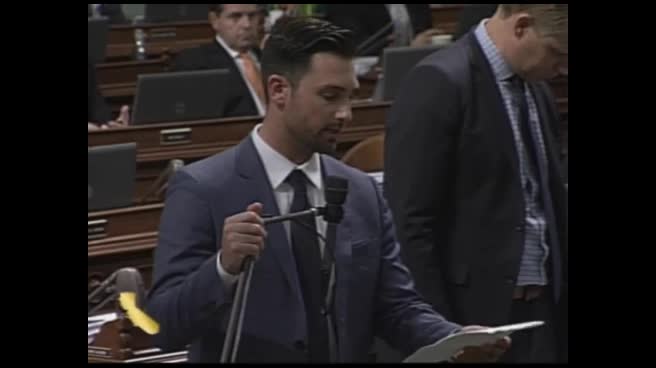 36SEC
Assembly Floor
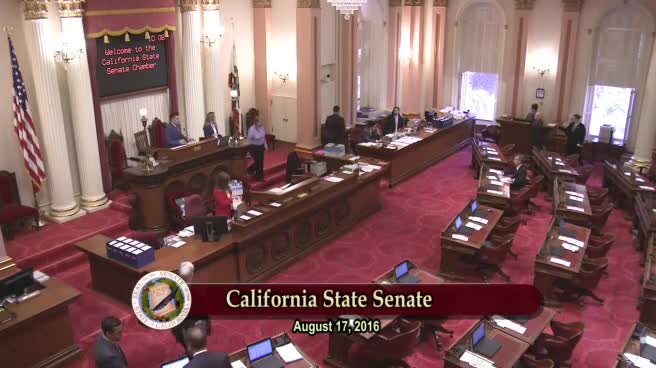 2MIN
Senate Floor
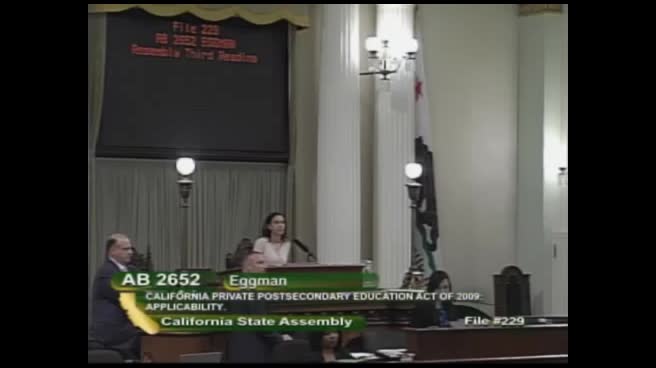 1MIN
Assembly Floor
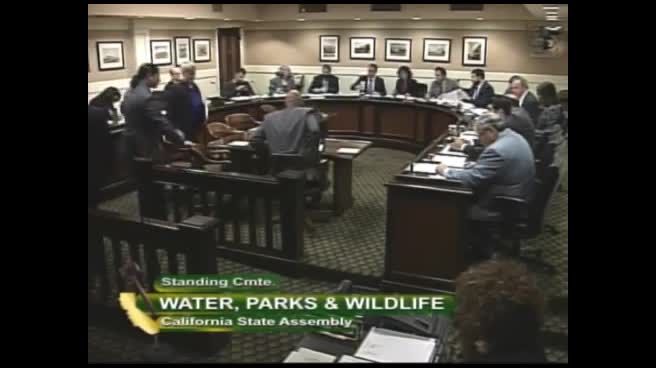 5MIN
Assembly Standing Committee on Water, Parks, and Wildlife
Bill Author

Bill Co-Author(s):