AB 1977: Tribal gaming: compact amendment ratification.
- Session Year: 2015-2016
- House: Assembly
- Latest Version Date: 2016-09-12
Existing federal law, the Indian Gaming Regulatory Act of 1988, provides for the negotiation and execution of tribal-state gaming compacts for the purpose of authorizing certain types of gaming on Indian lands within a state. The California Constitution authorizes the Governor to negotiate and conclude compacts, subject to ratification by the Legislature. Existing law expressly ratifies a number of tribal-state gaming compacts, and amendments to tribal-state gaming compacts, between the State of California and specified Indian tribes.
The California Environmental Quality Act (CEQA) requires a lead agency to prepare, or cause to be prepared, and certify the completion of, an environmental impact report on a project, as defined, that it proposes to carry out or approve that may have a significant effect on the environment, as defined, or to adopt a negative declaration if it finds that the project will not have that effect.
This bill would ratify amendments to the tribal-state gaming compact entered into between the State of California and the Yurok Tribe of the Yurok Reservation, executed on August 4, 2016. The bill would provide that, in deference to tribal sovereignty, certain actions are not projects for the purposes of CEQA.
This bill would declare that it is to take effect immediately as an urgency statute.
Existing law, the Knox-Keene Health Care Service Plan Act of 1975, provides for the licensure and regulation of health care service plans by the Department of Managed Health Care and makes a willful violation of that act a crime. Existing law also provides for the regulation of health insurers by the Department of Insurance. These provisions require specified services and drugs to be covered by the various health care service plans and health insurers.
This bill would require health care service plans and health insurers representatives, in collaboration with certain entities, to convene an Opioid Abuse Task Force on or before February 1, 2017, for the purpose of developing recommendations regarding the abuse and misuse of opioids, as specified. The bill would require the task force to submit a report detailing its findings and recommendations to specified government entities on or before December 31, 2017. The bill would require the task force to be dissolved on June 1, 2018. The bill would provide that a violation of these provisions by a health care service plan does not constitute a crime under the Knox-Keene Health Care Service Plan Act of 1975. The bill would make related legislative findings and declarations.
(1)Existing law, the Medical Practice Act, provides for the licensure and regulation of physicians and surgeons by the Medical Board of California. A violation of specified provisions of the Medical Practice Act is a crime.
This bill would prohibit a physician and surgeon from prescribing more than a 5-day supply of an opioid analgesic drug product to a patient the first time that physician and surgeon prescribes a patient such an opioid for acute pain due to surgery or injury. The bill would apply that 5-day supply limitation even if the patient has previously been prescribed such an opioid from a different physician and surgeon. Because the violation of those limitation requirements would be a crime under the Medical Practice Act, the bill would impose a state-mandated local program.
(2)Existing law, the Pharmacy Law, provides for the licensure and regulation of pharmacists by the California State Board of Pharmacy.
This bill would require a pharmacist to inform a patient receiving for the first time an opioid analgesic drug product on proper storage and disposal of the drug. The bill would also require the California State Board of Pharmacy to adopt regulations to implement that requirement.
Because a knowing violation of these provisions would be a crime, this bill would impose a state-mandated local program.
(3)Existing
Existing law, the Knox-Keene Health Care Service Plan Act of 1975, provides for the licensure and regulation of health care service plans by the Department of Managed Health Care and makes a willful violation of that act a crime. Existing law also provides for the regulation of health insurers by the Department of Insurance. These provisions require specified services and drugs to be covered by the various health care service plans and health insurers.
This bill would require an individual or group health care service plan or disability insurance policy issued, amended, or renewed after January 1, to provide coverage on its formulary, drug list, or other lists of similar construct for at least one abuse-deterrent opioid analgesic drug product per opioid analgesic active ingredient. The bill would require that the total amount of copayments and coinsurance an enrollee or insured is required to pay for brand name abuse-deterrent opioid analgesic drug products covered pursuant to the bill not exceed the lowest cost-sharing level applied to brand name or generic prescription drugs covered under the applicable health care service plan or insurer, as specified. The bill would prohibit a health care service plan or insurer from requiring an enrollee or an insured to first use a non-abuse-deterrent opioid analgesic drug product before providing coverage for an abuse-deterrent opioid analgesic drug product, subject to uniformly applied utilization review requirements described in the bill. require health care service plans and health insurers representatives, in collaboration with certain entities, to convene an Opioid Abuse Task Force on or before February 1, 2017, for the purpose of developing recommendations regarding the abuse and misuse of opioids, as specified. The bill would require the task force to submit a report detailing its findings and recommendations to specified government entities on or before December 31, 2017. The bill would require the task force to be dissolved on June 1, 2018. The bill would provide that a violation of these provisions by a health care service plan does not constitute a crime under the Knox-Keene Health Care Service Plan Act of 1975. The bill would make related legislative findings and declarations.
Because a willful violation of these requirements with respect to health care service plans would be a crime, this bill would impose a state-mandated local program.
(4)The California Constitution requires the state to reimburse local agencies and school districts for certain costs mandated by the state. Statutory provisions establish procedures for making that reimbursement.
This bill would provide that no reimbursement is required by this act for a specified reason.
(1)Existing law, the Medical Practice Act, provides for the licensure and regulation of physicians and surgeons by the Medical Board of California. A violation of specified provisions of the Medical Practice Act is a crime.
This bill would prohibit a physician and surgeon from prescribing more than a 5-day supply of an opioid analgesic drug product to a patient the first time that physician and surgeon prescribes a patient such an opioid for acute pain due to surgery or injury. The bill would apply that 5-day supply limitation even if the patient has previously been prescribed such an opioid from a different physician and surgeon. Because the violation of those limitation requirements would be a crime under the Medical Practice Act, the bill would impose a state-mandated local program.
(2)Existing law, the Pharmacy Law, provides for the licensure and regulation of pharmacists by the California State Board of Pharmacy.
This bill would require a pharmacist to inform a patient receiving for the first time an opioid analgesic drug product on proper storage and disposal of the drug. The bill would also require the California State Board of Pharmacy to adopt regulations to implement that requirement.
Because a knowing violation of these provisions would be a crime, this bill would impose a state-mandated local program.
(3)Existing law, the Knox-Keene Health Care Service Plan Act of 1975, provides for the licensure and regulation of health care service plans by the Department of Managed Health Care and makes a willful violation of that act a crime. Existing law also provides for the regulation of health insurers by the Department of Insurance. These provisions require specified services and drugs to be covered by the various health care service plans and health insurers.
This bill would require an individual or group health care service plan or disability insurance policy issued, amended, or renewed after January 1, to provide coverage on its formulary, drug list, or other lists of similar construct for at least one abuse-deterrent opioid analgesic drug product per opioid analgesic active ingredient. The bill would require that the total amount of copayments and coinsurance an enrollee or insured is required to pay for brand name abuse-deterrent opioid analgesic drug products covered pursuant to the bill not exceed the lowest cost-sharing level applied to brand name or generic prescription drugs covered under the applicable health care service plan or insurer, as specified. The bill would prohibit a health care service plan or insurer from requiring an enrollee or an insured to first use a non-abuse-deterrent opioid analgesic drug product before providing coverage for an abuse-deterrent opioid analgesic drug product, subject to uniformly applied utilization review requirements described in the bill.
Because a willful violation of these requirements with respect to health care service plans would be a crime, this bill would impose a state-mandated local program.
(4)The California Constitution requires the state to reimburse local agencies and school districts for certain costs mandated by the state. Statutory provisions establish procedures for making that reimbursement.
This bill would provide that no reimbursement is required by this act for a specified reason.
Existing law, the Knox-Keene Health Care Service Plan Act of 1975, provides for the licensure and regulation of health care service plans by the Department of Managed Health Care and makes a willful violation of that act a crime. Existing law also provides for the regulation of health insurers by the Department of Insurance. These provisions require specified services and drugs to be covered by the various health care service plans and health insurers.
This bill would require an individual or group health care service plan or disability insurance policy issued, amended, or renewed after January 1, to provide coverage on its formulary, drug list, or other lists of similar construct for at least one abuse-deterrent opioid analgesic drug product per opioid analgesic active ingredient. The bill would require that the total amount of copayments and coinsurance an enrollee or insured is required to pay for brand name abuse-deterrent opioid analgesic drug products covered pursuant to the bill not exceed the lowest cost-sharing level applied to brand name or generic prescription drugs covered under the applicable health care service plan or insurer, as specified. The bill would prohibit a health care service plan or insurer from requiring an enrollee or an insured to first use a non-abuse-deterrent opioid analgesic drug product before providing coverage for an abuse-deterrent opioid analgesic drug product, subject to uniformly applied utilization review requirements described in the bill.
Because a willful violation of these requirements with respect to health care service plans would be a crime, this bill would impose a state-mandated local program.
The California Constitution requires the state to reimburse local agencies and school districts for certain costs mandated by the state. Statutory provisions establish procedures for making that reimbursement.
This bill would provide that no reimbursement is required by this act for a specified reason.
(a)The amendment to the tribal-state gaming compact entered into in accordance with the federal Indian Gaming Regulatory Act of 1988 (18 U.S.C. Secs. 1166 to 1168, inclusive, and 25 U.S.C. Sec. 2701 et seq.) between the State of California and the Yurok Tribe of the Yurok Reservation, executed on August 4, 2016, is hereby ratified.
(b)(1) In deference to tribal sovereignty, none of the following shall be deemed a project for purposes of the California Environmental Quality Act (Division 13 (commencing with Section 21000) of the Public Resources Code):
(A)The execution of an amendment to the tribal-state gaming compact ratified by this section.
(B)The execution of the amended tribal-state gaming compact ratified by this section.
(C)The execution of an intergovernmental agreement between a tribe and a county or city government negotiated pursuant to the express authority of, or as expressly referenced in, the amended tribal-state gaming compact ratified by this section.
(D)The execution of an intergovernmental agreement between a tribe and the Department of Transportation negotiated pursuant to the express authority of, or as expressly referenced in, the amended tribal-state gaming compact ratified by this section.
(E)The on-reservation impacts of compliance with the terms of the amended tribal-state gaming compact ratified by this section.
(F)The sale of compact assets, as defined in subdivision (a) of Section 63048.6, or the creation of the special purpose trust established pursuant to Section 63048.65.
(2)Except as expressly provided in this section, this subdivision does not exempt a city, county, or city and county, or the Department of Transportation, from the requirements of the California Environmental Quality Act.
SEC. 2.This act is an urgency statute necessary for the immediate preservation of the public peace, health, or safety within the meaning of Article IV of the Constitution and shall go into immediate effect. The facts constituting the necessity are:
In order to enhance the economic development, stability, and self-sufficiency of the Yurok Tribe of the Yurok Reservation, and to protect the interests of the tribe and its members, the surrounding community, and the California public at the earliest possible time, it is necessary that this act take effect immediately.
SECTION 1.The Legislature finds and declares as follows:
(a)Abuse and misuse of opioids is a serious problem that affects the health, social, and economic welfare of the state.
(b)After alcohol, prescription drugs are the most commonly abused substances by Americans over 12 years of age.
(c)Almost 2,000,000 people in the United States suffer from substance use disorders related to prescription opioid pain relievers.
(d)Nonmedical use of prescription opioid pain relievers can be particularly dangerous when the products are manipulated for snorting, injection, or combination with other drugs.
(e)Deaths involving prescription opioid pain relievers represent the largest proportion of drug overdose deaths, greater than the number of overdose deaths involving heroin or cocaine.
(f)The number of unintentional overdose deaths involving prescription opioid pain relievers has more than quadrupled since 1999.
SEC. 2.Division 10.10 (commencing with Section 11999.30) is added to the Health and Safety Code, to read:10.10.Opioid Abuse Task Force11999.30.(a)On or before February 1, 2017, health care service plans and health insurer representatives, in collaboration with advocates, experts, health care professionals, and other entities and stakeholders that they deem appropriate, shall convene an Opioid Abuse Task Force. The task force shall develop recommendations regarding the abuse and misuse of opioids as a serious problem that affects the health, social welfare, and economic welfare of persons in the state. The task force shall address all of the following:
(1)Interventions that have been scientifically validated and have demonstrated clinical efficacy.
(2)Interventions that have measurable treatment outcomes.
(3)Collaborative, evidence-based approaches to resolving opioid abuse and misuse that incorporate both the provider and the patient into the solution.
(4)Education that engages and encourages providers to be prudent in prescribing opioids and to be proactive in defining care plans that include a plan to taper and stop opioid use.
(5)Review and consideration of medication coverage policies and formulary management and development of an interdisciplinary case management program that addresses quality, fraud, waste, and abuse.
(b)On or before December 31, 2017, the task force shall submit a report detailing its findings and recommendations to the Governor, the President pro Tempore of the Senate, the Speaker of the Assembly, the Senate Committee on Health, and the Assembly Committee on Health.
(c)The task force shall be dissolved and shall cease to exist on June 1, 2018.
(d)A violation of this section is not subject to Section 1390.
11999.31.This division shall remain in effect only until January 1, 2019, and as of that date is repealed, unless a later enacted statute, that is enacted before January 1, 2019, deletes or extends that date.
The Legislature finds and declares as follows:
(a)Abuse and misuse of opioids is a serious problem that affects the health, social, and economic welfare of the state.
(b)After alcohol, prescription drugs are the most commonly abused substances by Americans over 12 years of age.
(c)Almost 2,000,000 people in the United States suffer from substance use disorders related to prescription opioid pain relievers.
(d)Nonmedical use of prescription opioid pain relievers can be particularly dangerous when the products are manipulated for snorting, injection, or combination with other drugs.
(e)Deaths involving prescription opioid pain relievers represent the largest proportion of drug overdose deaths, greater than the number of overdose deaths involving heroin or cocaine.
(f)The number of unintentional overdose deaths involving prescription opioid pain relievers has more than quadrupled since 1999.
SEC. 2.Section 2241.8 is added to the Business and Professions Code, to read:2241.8.(a)(1)No physician and surgeon shall prescribe more than a five-day supply of an opioid analgesic drug product to a patient the first time that physician and surgeon prescribes a patient such an opioid for acute pain due to surgery or injury.
(2)The initial prescription in paragraph (1) may be for a non-abuse-deterrent opioid analgesic drug product and the five-day supply limitation shall still apply.
(3)This subdivision does not apply to an opioid prescription for a patient in chronic pain.
(b)Subdivision (a) shall apply even if the patient has previously been prescribed such an opioid from a different physician and surgeon.
(c)For the purposes of this section, opioid analgesic drug product has the same meaning as defined in Section 1367.217 of the Health and Safety Code.
SEC. 3.Section 4069 is added to the Business and Professions Code, to read:4069.(a)A pharmacist shall inform a patient receiving for the first time an opioid analgesic drug product on proper storage and disposal of the drug. The board shall adopt regulations to implement this section.
(b)For the purposes of this section, opioid analgesic drug product has the same meaning as defined in Section 1367.217 of the Health and Safety Code.
SEC. 4.Section 1367.217 is added to the Health and Safety Code, immediately following Section 1367.215, to read:1367.217.(a)Notwithstanding any other law, an individual or group health care service plan issued, amended, or renewed on or after January 1, that provides coverage for an opioid analgesic drug product shall comply with all of the following:
(1)The plan shall provide coverage on its formulary, drug list, or other lists of similar construct for at least one abuse-deterrent opioid analgesic drug product per opioid analgesic active ingredient.
(2)Notwithstanding any deductible, the total amount of copayments and coinsurance an enrollee is required to pay for brand name abuse-deterrent opioid analgesic drug products covered pursuant to this section shall not exceed the lowest cost-sharing level applied to brand name prescription drugs covered under the applicable health care service plan.
(3)Notwithstanding any deductible, the total amount of copayments and coinsurance an enrollee is required to pay for generic abuse-deterrent opioid analgesic drug products covered pursuant to this section shall not exceed the lowest cost-sharing level applied to generic prescription drugs covered under the applicable health care service plan.
(4)The plan shall not require an enrollee to first use a non-abuse-deterrent opioid analgesic drug product before providing coverage for an abuse-deterrent opioid analgesic drug product. This paragraph shall not be construed to prevent a health care service plan from applying utilization review requirements, including prior authorization, to abuse-deterrent opioid analgesic drug products, provided that those requirements are applied to all opioid analgesic drug products with the same type of drug release, immediate or extended. This paragraph shall not be construed to preclude the use of a non-abuse-deterrent opioid for the initial prescription for a five-day supply.
(b)The following definitions shall apply for purposes of this section:
(1)Abuse-deterrent opioid analgesic drug product means a brand or generic opioid analgesic drug product approved by the federal Food and Drug Administration (FDA) with abuse-deterrence labeling claims indicating its abuse-deterrent properties are expected to deter or reduce its abuse.
(2)Cost sharing means any coverage limit, copayment, coinsurance, deductible, or other out-of-pocket expense requirement.
(3)Opioid analgesic drug product means a drug product that contains an opioid agonist and that is indicated by the FDA for the treatment of pain, whether in an immediate release or extended release formulation and whether or not the drug product contains any other drug substance.
SEC. 5.Section 10123.203 is added to the Insurance Code, to read:10123.203.(a)Notwithstanding any other law, an insurer issuing, amending, or renewing a policy of individual or group disability insurance on or after January 1, that provides coverage for an opioid analgesic drug product shall comply with all of the following:
(1)The insurer shall provide coverage on its formulary, drug list, or other lists of similar construct for at least one abuse-deterrent opioid analgesic drug product per opioid analgesic active ingredient.
(2)Notwithstanding any deductible, the total amount of copayments and coinsurance an insured is required to pay for brand name abuse-deterrent opioid analgesic drug products covered pursuant to this section shall not exceed the lowest cost-sharing level applied to brand name prescription drugs covered under the applicable policy.
(3)Notwithstanding any deductible, the total amount of copayments and coinsurance an insured is required to pay for generic abuse-deterrent opioid analgesic drug products covered pursuant to this section shall not exceed the lowest cost-sharing level applied to generic prescription drugs covered under the applicable policy.
(4)The insurer shall not require an insured to first use a non-abuse-deterrent opioid analgesic drug product before providing coverage for an abuse-deterrent opioid analgesic drug product. This paragraph shall not be construed to prevent an insurer from applying utilization review requirements, including prior authorization, to abuse-deterrent opioid analgesic drug products, provided that those requirements are applied to all opioid analgesic drug products with the same type of drug release, immediate or extended. This paragraph shall not be construed to preclude the use of a non-abuse deterrent opioid for the initial prescription for a five-day supply.
(b)The following definitions shall apply for purposes of this section:
(1)Abuse-deterrent opioid analgesic drug product means a brand or generic opioid analgesic drug product approved by the federal Food and Drug Administration (FDA) with abuse-deterrence labeling claims indicating its abuse-deterrent properties are expected to deter or reduce its abuse.
(2)Cost sharing means any coverage limit, copayment, coinsurance, deductible, or other out-of-pocket expense requirement.
(3)Opioid analgesic drug product means a drug product that contains an opioid agonist and that is indicated by the FDA for the treatment of pain, whether in an immediate release or extended release formulation and whether or not the drug product contains any other drug substance.
SEC. 6.No reimbursement is required by this act pursuant to Section 6 of Article XIIIB of the California Constitution because the only costs that may be incurred by a local agency or school district will be incurred because this act creates a new crime or infraction, eliminates a crime or infraction, or changes the penalty for a crime or infraction, within the meaning of Section 17556 of the Government Code, or changes the definition of a crime within the meaning of Section 6 of Article XIIIB of the California Constitution.
SEC. 2.Division 10.10 (commencing with Section 11999.30) is added to the Health and Safety Code, to read:10.10.Opioid Abuse Task Force11999.30.(a)On or before February 1, 2017, health care service plans and health insurer representatives, in collaboration with advocates, experts, health care professionals, and other entities and stakeholders that they deem appropriate, shall convene an Opioid Abuse Task Force. The task force shall develop recommendations regarding the abuse and misuse of opioids as a serious problem that affects the health, social welfare, and economic welfare of persons in the state. The task force shall address all of the following:
(1)Interventions that have been scientifically validated and have demonstrated clinical efficacy.
(2)Interventions that have measurable treatment outcomes.
(3)Collaborative, evidence-based approaches to resolving opioid abuse and misuse that incorporate both the provider and the patient into the solution.
(4)Education that engages and encourages providers to be prudent in prescribing opioids and to be proactive in defining care plans that include a plan to taper and stop opioid use.
(5)Review and consideration of medication coverage policies and formulary management and development of an interdisciplinary case management program that addresses quality, fraud, waste, and abuse.
(b)On or before December 31, 2017, the task force shall submit a report detailing its findings and recommendations to the Governor, the President pro Tempore of the Senate, the Speaker of the Assembly, the Senate Committee on Health, and the Assembly Committee on Health.
(c)The task force shall be dissolved and shall cease to exist on June 1, 2018.
(d)A violation of this section is not subject to Section 1390.
11999.31.This division shall remain in effect only until January 1, 2019, and as of that date is repealed, unless a later enacted statute, that is enacted before January 1, 2019, deletes or extends that date.
The Legislature finds and declares as follows:
(a)Abuse and misuse of opioids is a serious problem that affects the health, social, and economic welfare of the state.
(b)After alcohol, prescription drugs are the most commonly abused substances by Americans over 12 years of age.
(c)Almost 2,000,000 people in the United States suffer from substance use disorders related to prescription opioid pain relievers.
(d)Nonmedical use of prescription opioid pain relievers can be particularly dangerous when the products are manipulated for snorting, injection, or combination with other drugs.
(e)Deaths involving prescription opioid pain relievers represent the largest proportion of drug overdose deaths, greater than the number of overdose deaths involving heroin or cocaine.
(f)The number of unintentional overdose deaths involving prescription opioid pain relievers has more than quadrupled since 1999.
SEC. 2.Section 2241.8 is added to the Business and Professions Code, to read:2241.8.(a)(1)No physician and surgeon shall prescribe more than a five-day supply of an opioid analgesic drug product to a patient the first time that physician and surgeon prescribes a patient such an opioid for acute pain due to surgery or injury.
(2)The initial prescription in paragraph (1) may be for a non-abuse-deterrent opioid analgesic drug product and the five-day supply limitation shall still apply.
(3)This subdivision does not apply to an opioid prescription for a patient in chronic pain.
(b)Subdivision (a) shall apply even if the patient has previously been prescribed such an opioid from a different physician and surgeon.
(c)For the purposes of this section, opioid analgesic drug product has the same meaning as defined in Section 1367.217 of the Health and Safety Code.
SEC. 3.Section 4069 is added to the Business and Professions Code, to read:4069.(a)A pharmacist shall inform a patient receiving for the first time an opioid analgesic drug product on proper storage and disposal of the drug. The board shall adopt regulations to implement this section.
(b)For the purposes of this section, opioid analgesic drug product has the same meaning as defined in Section 1367.217 of the Health and Safety Code.
SEC. 2.SEC. 4.Section 1367.217 is added to the Health and Safety Code, immediately following Section 1367.215, to read:1367.217.(a)Notwithstanding any other law, an individual or group health care service plan issued, amended, or renewed on or after January 1, that provides coverage for an opioid analgesic drug product shall comply with all of the following:
(1)The plan shall provide coverage on its formulary, drug list, or other lists of similar construct for at least one abuse-deterrent opioid analgesic drug product per opioid analgesic active ingredient.
(2)Notwithstanding any deductible, the total amount of copayments and coinsurance an enrollee is required to pay for brand name abuse-deterrent opioid analgesic drug products covered pursuant to this section shall not exceed the lowest cost-sharing level applied to brand name prescription drugs covered under the applicable health care service plan.
(3)Notwithstanding any deductible, the total amount of copayments and coinsurance an enrollee is required to pay for generic abuse-deterrent opioid analgesic drug products covered pursuant to this section shall not exceed the lowest cost-sharing level applied to generic prescription drugs covered under the applicable health care service plan.
(4)The plan shall not require an enrollee to first use a non-abuse-deterrent opioid analgesic drug product before providing coverage for an abuse-deterrent opioid analgesic drug product. This paragraph shall not be construed to prevent a health care service plan from applying utilization review requirements, including prior authorization, to abuse-deterrent opioid analgesic drug products, provided that those requirements are applied to all opioid analgesic drug products with the same type of drug release, immediate or extended. This paragraph shall not be construed to preclude the use of a non-abuse-deterrent opioid for the initial prescription for a five-day supply.
(b)The following definitions shall apply for purposes of this section:
(1)Abuse-deterrent opioid analgesic drug product means a brand or generic opioid analgesic drug product approved by the federal Food and Drug Administration (FDA) with abuse-deterrence labeling claims indicating its abuse-deterrent properties are expected to deter or reduce its abuse.
(2)Cost sharing means any coverage limit, copayment, coinsurance, deductible, or other out-of-pocket expense requirement.
(3)Opioid analgesic drug product means a drug product that contains an opioid agonist and that is indicated by the FDA for the treatment of pain, whether in an immediate release or extended release formulation and whether or not the drug product contains any other drug substance.
SEC. 3.SEC. 5.Section 10123.203 is added to the Insurance Code, to read:10123.203.(a)Notwithstanding any other law, an insurer issuing, amending, or renewing a policy of individual or group disability insurance on or after January 1, that provides coverage for an opioid analgesic drug product shall comply with all of the following:
(1)The insurer shall provide coverage on its formulary, drug list, or other lists of similar construct for at least one abuse-deterrent opioid analgesic drug product per opioid analgesic active ingredient.
(2)Notwithstanding any deductible, the total amount of copayments and coinsurance an insured is required to pay for brand name abuse-deterrent opioid analgesic drug products covered pursuant to this section shall not exceed the lowest cost-sharing level applied to brand name prescription drugs covered under the applicable policy.
(3)Notwithstanding any deductible, the total amount of copayments and coinsurance an insured is required to pay for generic abuse-deterrent opioid analgesic drug products covered pursuant to this section shall not exceed the lowest cost-sharing level applied to generic prescription drugs covered under the applicable policy.
(4)The insurer shall not require an insured to first use a non-abuse-deterrent opioid analgesic drug product before providing coverage for an abuse-deterrent opioid analgesic drug product. This paragraph shall not be construed to prevent an insurer from applying utilization review requirements, including prior authorization, to abuse-deterrent opioid analgesic drug products, provided that those requirements are applied to all opioid analgesic drug products with the same type of drug release, immediate or extended. This paragraph shall not be construed to preclude the use of a non-abuse deterrent opioid for the initial prescription for a five-day supply.
(b)The following definitions shall apply for purposes of this section:
(1)Abuse-deterrent opioid analgesic drug product means a brand or generic opioid analgesic drug product approved by the federal Food and Drug Administration (FDA) with abuse-deterrence labeling claims indicating its abuse-deterrent properties are expected to deter or reduce its abuse.
(2)Cost sharing means any coverage limit, copayment, coinsurance, deductible, or other out-of-pocket expense requirement.
(3)Opioid analgesic drug product means a drug product that contains an opioid agonist and that is indicated by the FDA for the treatment of pain, whether in an immediate release or extended release formulation and whether or not the drug product contains any other drug substance.
SEC. 4.SEC. 6.No reimbursement is required by this act pursuant to Section 6 of Article XIIIB of the California Constitution because the only costs that may be incurred by a local agency or school district will be incurred because this act creates a new crime or infraction, eliminates a crime or infraction, or changes the penalty for a crime or infraction, within the meaning of Section 17556 of the Government Code, or changes the definition of a crime within the meaning of Section 6 of Article XIIIB of the California Constitution.
The Legislature finds and declares as follows:
(a)Abuse and misuse of opioids is a serious problem that affects the health, social, and economic welfare of the state.
(b)After alcohol, prescription drugs are the most commonly abused substances by Americans over 12 years of age.
(c)Almost 2,000,000 people in the United States suffer from substance use disorders related to prescription opioid pain relievers.
(d)Nonmedical use of prescription opioid pain relievers can be particularly dangerous when the products are manipulated for snorting, injection, or combination with other drugs.
(e)Deaths involving prescription opioid pain relievers represent the largest proportion of drug overdose deaths, greater than the number of overdose deaths involving heroin or cocaine.
(f)The number of unintentional overdose deaths involving prescription opioid pain relievers has more than quadrupled since 1999.
SEC. 2.Section 1367.217 is added to the Health and Safety Code, to read:1367.217.(a)Notwithstanding any other law, an individual or group health care service plan issued, amended, or renewed on or after January 1, that provides coverage for an opioid analgesic drug product shall comply with all of the following:
(1)The plan shall provide coverage on its formulary, drug list, or other lists of similar construct for at least one abuse-deterrent opioid analgesic drug product per opioid analgesic active ingredient.
(2)Notwithstanding any deductible, the total amount of copayments and coinsurance an enrollee is required to pay for brand name abuse-deterrent opioid analgesic drug products covered pursuant to this section shall not exceed the lowest cost-sharing level applied to brand name prescription drugs covered under the applicable health care service plan.
(3)Notwithstanding any deductible, the total amount of copayments and coinsurance an enrollee is required to pay for generic abuse-deterrent opioid analgesic drug products covered pursuant to this section shall not exceed the lowest cost-sharing level applied to generic prescription drugs covered under the applicable health care service plan.
(4)The plan shall not require an enrollee to first use a non-abuse-deterrent opioid analgesic drug product before providing coverage for an abuse-deterrent opioid analgesic drug product. This paragraph shall not be construed to prevent a health care service plan from applying utilization review requirements, including prior authorization, to abuse-deterrent opioid analgesic drug products, provided that those requirements are applied to all opioid analgesic drug products with the same type of drug release, immediate or extended.
(b)The following definitions shall apply for purposes of this section:
(1)Abuse-deterrent opioid analgesic drug product means a brand or generic opioid analgesic drug product approved by the federal Food and Drug Administration (FDA) with abuse-deterrence labeling claims indicating its abuse-deterrent properties are expected to deter or reduce its abuse.
(2)Cost sharing means any coverage limit, copayment, coinsurance, deductible, or other out-of-pocket expense requirement.
(3)Opioid analgesic drug product means a drug product that contains an opioid agonist and that is indicated by the FDA for the treatment of pain, whether in an immediate release or extended release formulation and whether or not the drug product contains any other drug substance.
SEC. 3.Section 10123.203 is added to the Insurance Code, to read:10123.203.(a)Notwithstanding any other law, an insurer issuing, amending, or renewing a policy of individual or group disability insurance on or after January 1, that provides coverage for an opioid analgesic drug product shall comply with all of the following:
(1)The insurer shall provide coverage on its formulary, drug list, or other lists of similar construct for at least one abuse-deterrent opioid analgesic drug product per opioid analgesic active ingredient.
(2)Notwithstanding any deductible, the total amount of copayments and coinsurance an insured is required to pay for brand name abuse-deterrent opioid analgesic drug products covered pursuant to this section shall not exceed the lowest cost-sharing level applied to brand name prescription drugs covered under the applicable policy.
(3)Notwithstanding any deductible, the total amount of copayments and coinsurance an insured is required to pay for generic abuse-deterrent opioid analgesic drug products covered pursuant to this section shall not exceed the lowest cost-sharing level applied to generic prescription drugs covered under the applicable policy.
(4)The insurer shall not require an insured to first use a non-abuse-deterrent opioid analgesic drug product before providing coverage for an abuse-deterrent opioid analgesic drug product. This paragraph shall not be construed to prevent an insurer from applying utilization review requirements, including prior authorization, to abuse-deterrent opioid analgesic drug products, provided that those requirements are applied to all opioid analgesic drug products with the same type of drug release, immediate or extended.
(b)The following definitions shall apply for purposes of this section:
(1)Abuse-deterrent opioid analgesic drug product means a brand or generic opioid analgesic drug product approved by the federal Food and Drug Administration (FDA) with abuse-deterrence labeling claims indicating its abuse-deterrent properties are expected to deter or reduce its abuse.
(2)Cost sharing means any coverage limit, copayment, coinsurance, deductible, or other out-of-pocket expense requirement.
(3)Opioid analgesic drug product means a drug product that contains an opioid agonist and that is indicated by the FDA for the treatment of pain, whether in an immediate release or extended release formulation and whether or not the drug product contains any other drug substance.
SEC. 4.No reimbursement is required by this act pursuant to Section 6 of Article XIIIB of the California Constitution because the only costs that may be incurred by a local agency or school district will be incurred because this act creates a new crime or infraction, eliminates a crime or infraction, or changes the penalty for a crime or infraction, within the meaning of Section 17556 of the Government Code, or changes the definition of a crime within the meaning of Section 6 of Article XIIIB of the California Constitution.
|
Date
|
Status
|
|---|---|
| Jun 30, 2016 | From committee: Do pass. (Ayes 8. Noes 0.) (June 29). |
| Sep 12, 2016 | Chaptered by Secretary of State - Chapter 296, Statutes of 2016. |
| Sep 12, 2016 | Approved by the Governor. |
| Aug 30, 2016 | Enrolled and presented to the Governor at 4 p.m. |
| Aug 23, 2016 | Urgency clause adopted. Senate amendments concurred in. To Engrossing and Enrolling. (Ayes 80. Noes 0. Page 6147.). |
| Aug 23, 2016 | Urgency clause adopted. Senate amendments concurred in. To Engrossing and Enrolling. |
| Aug 17, 2016 | Read third time. Urgency clause adopted. Passed. Ordered to the Assembly. (Ayes 39. Noes 0.). |
| Aug 17, 2016 | Read third time. Urgency clause adopted. Passed. Ordered to the Assembly. (Ayes 39. Noes 0. Page 5060.). |
| Aug 17, 2016 | Read third time. Urgency clause adopted. Passed. Ordered to the Assembly. |
| Aug 17, 2016 | In Assembly. Concurrence in Senate amendments pending. May be considered on or after August 19 pursuant to Assembly Rule 77. |
| Aug 15, 2016 | Read second time. Ordered to third reading. |
| Aug 11, 2016 | Withdrawn from committee. |
| Aug 11, 2016 | Ordered to second reading. |
| Aug 9, 2016 | Re-referred to Com. on RLS. |
| Aug 9, 2016 | From committee chair, with author's amendments: Amend, and re-refer to committee. Read second time, amended, and re-referred to Com. on RLS. |
| Aug 1, 2016 | Read second time. Ordered to third reading. |
| Feb 16, 2016 | Read first time. To print. |
| Jun 14, 2016 | In committee: Set, first hearing. Hearing canceled at the request of author. |
| May 19, 2016 | Referred to Com. on HEALTH. |
| May 9, 2016 | Read third time. Passed. Ordered to the Senate. (Ayes 78. Noes 0. Page 4725.) |
| May 9, 2016 | Read third time. Passed. Ordered to the Senate. |
| May 9, 2016 | In Senate. Read first time. To Com. on RLS. for assignment. |
| May 4, 2016 | Read second time. Ordered to Consent Calendar. |
| May 3, 2016 | From committee: Do pass. To Consent Calendar. (Ayes 17. Noes 0.) (May 3). |
| Apr 19, 2016 | In committee: Hearing postponed by committee. |
| Apr 14, 2016 | Re-referred to Com. on HEALTH. |
| Apr 13, 2016 | From committee chair, with author's amendments: Amend, and re-refer to Com. on HEALTH. Read second time and amended. |
| Apr 12, 2016 | In committee: Set, first hearing. Hearing canceled at the request of author. |
| Mar 31, 2016 | Re-referred to Com. on HEALTH. |
| Mar 30, 2016 | From committee chair, with author's amendments: Amend, and re-refer to Com. on HEALTH. Read second time and amended. |
| Feb 25, 2016 | Referred to Com. on HEALTH. |
| Feb 17, 2016 | From printer. May be heard in committee March 18. |
|
Date
|
Description
|
Location
|
Votes
|
|
|---|---|---|---|---|
| Aug 23, 2016 | AB 1977 WOOD Concurrence - Urgency Added | Assembly Floor |
Passed |
|
| Aug 17, 2016 | Assembly 3rd Reading AB1977 Wood By McGuire Urgency Clause | Senate Floor |
Passed |
|
| Jun 29, 2016 | Do pass | Senate Standing Committee on Health |
Passed |
|
| May 9, 2016 | AB 1977 WOOD Consent Calendar Second Day Regular Session | Assembly Floor |
Passed |
|
| May 3, 2016 | Do pass. To Consent Calendar. | Assembly Standing Committee on Health |
Passed |
This list shows positions taken on this bill by organizations on the date displayed, which is linked to the original source.
Positions by individuals are not included.
|
Organization
|
Position
|
Date
|
|---|---|---|
| Agua Caliente Band Of Cahuilla Indians | ** Support | Aug 17, 2016 |
| Barona Band Of Mission Indians | ** Support | Aug 17, 2016 |
| Blue Shield Of California | ** Against | Jun 29, 2016 |
| California Association Of Health Plans | ** Against | Jun 29, 2016 |
| California Association Of Joint Powers Authorities | ** Against | Jun 29, 2016 |
| California Chamber Of Commerce | ** Against | Jun 29, 2016 |
| California Council Of Community Behavioral Health Agencies | ** Support | Aug 17, 2016 |
| California Dental Association | ** Support | Aug 17, 2016 |
| California Dental Hygienists Association | * Support | Jun 29, 2016 |
| California Department of Public Health | ** Against | Aug 17, 2016 |
| California District Attorneys Association | ** Support | Aug 17, 2016 |
| California Health Executives Association of California | ** Support | Jun 29, 2016 |
| California Health+Advocates | ** Support | Aug 17, 2016 |
| California Narcotic Officers' Association | ** Support | Jun 29, 2016 |
| California Primary Care Association | ** Support | Jun 29, 2016 |
| California State Sheriffs' Association | ** Support | Aug 17, 2016 |
| County Behavioral Health Directors Association of California | ** Support | Jun 29, 2016 |
| County Health Executives Association Of California | ** Support | Aug 17, 2016 |
| Jamul Indian Village | ** Support | Aug 17, 2016 |
| L.A. Care | ** Support | Jun 29, 2016 |
| L.A. Care Health Plan | ** Support | Aug 17, 2016 |
| Medical Board of California | ** Support | Aug 17, 2016 |
| Mental Health America of California | ** Support | Aug 17, 2016 |
| Pechanga Band of Luiseno Indians | ** Support | Aug 17, 2016 |
| Pharmaceutical Care Management Association | ** Support | Jun 29, 2016 |
| Teamsters | ** Support | Aug 17, 2016 |
| UNITE HERE, AFL-CIO | ** Support | Aug 17, 2016 |
| Viejas Band of Kumeyaay Indians | ** Support | Aug 17, 2016 |
| Yocha Dehe Wintun Nation | ** Support | Aug 17, 2016 |
| Yurok Tribe | ** Support | Aug 17, 2016 |
CONCURRENCE IN SENATE AMENDMENTS
CSA1 Bill Id:AB 1977
Author:(Wood)
As Amended Ver:August 9, 2016
2/3 vote. Urgency
ASSEMBLY: |
| (May 9, 2016) | SENATE: | 39-0 | (August 17, 2016) |
(vote not relevant)
Original Committee Reference: HEALTH
SUMMARY: Ratifies the amended tribal-state gaming compact (Amended Compact) entered into between the State of California (State) and the Yurok Tribe (Tribe) executed on August 4, 2016. Additionally, this bill provides that, in deference to tribal sovereignty, certain actions are not deemed projects for purposes of the California Environmental Quality Act (CEQA); and, stipulates, except as expressly provided, that none of the provisions shall be construed to exempt a city, county, or city and county, or the Department of Transportation from CEQA requirements.
The Senate amendments delete the Assembly version of this bill, and instead:
- Ratify the First Amendment to the Tribal-State Gaming Compact between the State of California and the Yurok Tribe (Tribe), executed on August 4, 2016.
- The Amended Compact conforms the workers' compensation provisions of the Tribe's 2006 compact to those of more recent compacts. All other provisions of the existing compact remain intact.
- Provide that, in deference to tribal sovereignty, certain actions are not deemed projects for purposes of the California Environmental Quality Act (CEQA); and, stipulate, except as expressly provided, that none of the provisions shall be construed to exempt a city, county, or city and county, or the Department of Transportation from CEQA requirements.
- Contain an urgency clause, allowing this bill to take effect immediately upon enactment.
EXISTING LAW:
- Provides, under the Indian Gaming Regulatory Act (IGRA), for the negotiation and conclusion of compacts between federally recognized Indian tribes and the State for the purpose of conducting Class III gaming activities on Indian lands within a State as a means of promoting tribal economic development, self-sufficiency, and strong tribal governments.
- Authorizes expressly a number of tribal-state gaming compacts between the State of California and specified Indian tribes.
- Authorizes the conduct of Class III gaming activities to the extent such activities are permitted by state law, a gaming compact has been concluded by a federally recognized tribe and the State, and the compact has been approved by the Secretary of the Interior.
- Limits the operation of Class III gaming activities to Indian lands acquired on or before October 17, 1988. Provides for certain exceptions to conduct gaming activities on Indian lands acquired after October 17, 1988.
- Defines Indian lands to mean all lands within the limits of any Indian reservation, and any lands title to which is either held in trust by the United States (U.S.) for the benefit of any Indian tribe, or individual, or held by any Indian tribe or individual subject to restriction by the U.S. against alienation and over which an Indian tribe exercises governmental power.
- Requires the State to negotiate to conclude a compact in good faith with an Indian tribe having jurisdiction over the Indian lands upon which the Class III gaming activity is to be conducted. Provides the U.S. district courts with jurisdiction over any cause of action initiated by a tribal government alleging that the State failed to negotiate in good faith to conclude a compact. Prescribes the remedy, mediation supervised by the courts, if it is found that the State failed to negotiate in good faith to conclude a compact.
- Authorizes the Governor, under the California Constitution, to negotiate and conclude compacts, subject to ratification by the Legislature.
FISCAL EFFECT: Unknown
COMMENTS:
The Amended Compact conforms the workers' compensation provisions of the Tribe's existing 2006 compact (SB 106 (Wiggins), Chapter 37, Statutes of 2007) to those of more recent compacts. All other provisions of the existing 2006 compact remain intact.
The 2006 compact allowed the Tribe to operate no more than 99 gaming devices (slot machines) and specified that no more than 20 may be operated at an ancillary gaming facility (Pem-Mey Fuel Mart). The Tribe agreed to pay into the State General Fund an annual fee, as specified, based on a percentage of its Net Win from its operation of gaming devices. As long as the Tribe's membership is at least 4,000 members, it may deduct from the amount to be paid to the State the payments made pursuant to its Intergovernmental Agreements with Del Norte County and Humboldt County. The 2006 compact contained other provisions relating to: exclusivity; licensing; off-reservation environmental impacts; intergovernmental agreements; public and workplace health safety and liability; and labor provisions. The 2006 compact will be in effect until December 31, 2025.
The 2006 compact required the Tribe to participate in the State's workers' compensation program with respect to employees employed at the gaming facility. The Governor's office states, Section 15.1 of the 2006 compact stated that it may be amended upon written agreement of both parties, This year, the parties agreed in writing to negotiate relating to amending the 2006 compact's provision regarding mandatory participation in the state workers' compensation program.
The Governor's office states, that the State and the Tribe share an interest in creating a framework within which the gaming facility can operate successfully to generate revenue for essential government programs for tribal members while also ensuring that other interests, including an efficient and effective system to address the appropriate costs arising from employees who are injured or become sick while performing work-related duties, are also furthered.
Brief Overview of the Tribe: The Yurok Tribe is a federally recognized Indian tribe listed in the Federal Register as the Yurok Tribe of the Yurok Reservation, California. The Tribe's reservation lands include parts of Humboldt and Del Norte Counties, two of the largest land based counties in the state. The Tribe's current reservation was established in 1988, when the United States Congress enacted the Hoopa-Yurok Settlement Act. The Tribe is the largest tribe in the state with over 6,100 tribal members encompassing a reservation of approximately 57,000 acres. The Tribe is a natural resource tribe with federally reserved rights to the water and fish of the Klamath River. The Yurok Reservation is located in the most isolated region of Northwest California, consisting of lands one mile on each side of the 44-miles of the Klamath River from just above the confluence of the Trinity River at Weitchpec to the mouth of the river as it flows into the Pacific Ocean.
The 2006 compact was intended to assist Yurok in addressing the problems it was facing with high unemployment and poverty rates, as well as provide for its infrastructure needs relating to electricity, water, sewage and transportation.
Following the ratification of its 2006 compact, the Tribe opened the Redwood Hotel Casino, located in Klamath, California in 2014 which consists of two separate entities, the Redwood Holiday Inn Express and Redwood Casino. The Redwood Holiday Inn Express is a 60-room hotel complete with exercise room and pool. Currently, the Redwood Casino currently maintains 96 Class III machines and includes the Abalone Bar and Grill, a 50-seat restaurant and sports bar. The development of the Redwood Hotel Casino is only one part of a broader Master Plan for the Tribe, which also includes the Yurok Justice Center, the Yurok Visitor Center, the Klamath Gateway Project, a new wastewater treatment center, and provisions for increased public safety presence by Del Norte County deputized Yurok police officers. In addition to its gaming operation, the Tribe receives $1.1 million annually from the Revenue Sharing Trust Fund (RSTF). Pursuant to existing law, any tribe operating under 350 gaming devices is considered a limited-gaming tribe and is eligible for revenue payments from the RSTF.
Provisions of the Amended Compact:
Workers' Compensation: Terms of the 2006 compact provide that: 1) the Tribe agrees to participate in the State's workers' compensation program with respect to employees at the casino and all disputes arising from the workers' compensation laws shall be heard by the State Workers' Compensation Appeals Board pursuant to the California Labor Code; 2) the Tribe acknowledges the jurisdiction of the Board and the courts of the State of California in such manners; 3) the Tribe agrees that it will participate in the State's unemployment compensation program for providing benefits and unemployment compensation disability benefits to employees at the casino; and, 4) the Tribe shall withhold all taxes due to the State, except for Tribal members living on the Tribe’s reservation, and forward such amounts to the State.
The Amended Compact repeals the above-referenced provisions, recasts them, as defined, and additionally, provides that in lieu of participation in the State's workers' compensation system, the Tribe may create and maintain a system through self-insurance that includes specified provisions, including hearings before an independent tribunal.
The amendments contained in this Compact conform to more recent compacts that have been negotiated by the Governor Brown relating to workers' compensation.
Additional Background Information:
Article IV, section 19, subdivision (e) of the California Constitution: Permits Indian tribes to conduct and operate slot machines, lottery games, and banked and percentage card games on Indian land if 1) the Governor and an Indian tribe reach agreement on a compact; 2) the Legislature approves the compact; and 3) the federal government approves the compact.
Related legislation: AB 629 (Gonzalez) of the current legislative session. Ratifies the tribal-state gaming compact entered into between the State and the Pala Band of Mission Indians, executed on May 6, 2016.
AB 2358 (Gonzalez) of the current legislative session. Ratifies the tribal-state gaming compact entered into between the State and the Pechanga Band of Luiseno Indians, executed August 4, 2016.
AB 2915 (Eduardo Garcia) of the current legislative session. Provides for the ratification of a new Tribal-State gaming compact between the State and Agua Caliente Band of Cahuilla Indians, executed on August 4, 2016.
SB 187 (Hall) of the current legislative session. Ratifies the tribal-state gaming compact entered into between the State and the Jamul Indian Village, executed August 8, 2016.
SB 1313 (Hall) of the current legislative session. Ratifies the tribal-state gaming compact entered into between the State and the Yocha Dehe Wintun Nation, executed on August 4, 2016.
AB 1282 (Gray) of the current legislative session. Ratifies the tribal-state gaming compact entered into between the State and the Buena Vista Rancheria of Me-Wuk Indians, executed on June 28, 2016.
AB 1767 (Bigelow) of the current legislative session. Ratifies the first amendment to the 2015 tribal-state gaming compact entered into between the State and the Jackson Rancheria Band of Miwuk Indians, executed on June 22, 2016.
SB 404 (De León) of the current legislative session. Ratifies the tribal-state gaming compact entered into between the State and the Viejas Band of Kumeyaay Indians, executed on June 22, 2016.
AB 291 (Atkins) of the current legislative session. Ratifies the tribal-state gaming compact entered into between the State and the Barona Band of Mission Indians, executed on June 22, 2016.
Prior legislation: AB 795 (Atkins), Chapter 520, Statutes of 2015. Ratified the tribal state gaming compact entered into between the State and the Sycuan Band of Kumeyaay Nation, executed on September 2, 2015.
AB 1540 (Gray), Chapter 531, Statutes of 2015. Ratified the tribal-state gaming compact entered into between the State and the Santa Ynez Band of Chumash Indians, executed on August 26, 2015.
AB 315 (Bigelow), Chapter 512, Statutes of 2015. Ratified the amended and restated tribal-state gaming compact entered into between the State and the United Auburn Indian Community, executed on August 14, 2015.
AB 475 (Bigelow), Chapter 8, Statutes of 2015. Ratified the tribal-state gaming compact entered into between the State and Jackson Rancheria Band of Miwuk Indians, executed on February 1, 2015.
SB 1356 (De León), Chapter 314, Statutes of 2014. Ratified the amendment to the tribal-state gaming compact entered into between the State and the Viejas Band of Kumeyaay Indians, executed on August 12, 2014.
SB 1224 (Correa), Chapter 300, Statutes of 2014. Ratified the tribal-state gaming compact entered into between the State and the Karuk Tribe, executed on December 4, 2013.
AB 1245 (V. Manuel Perez), Chapter 462, Statutes of 2013. Ratified the tribal-state gaming compact entered into between the State and the Ramona Band of Cahuilla Indians located in Riverside County, executed on June 10, 2013.
AB 277 (Hall), Chapter 51, Statutes of 2013. Ratified two new compacts entered into between the State and the following tribes: North Fork Rancheria, executed on August 31, 2012, and the Wiyot Tribe, executed on March 20, 2013.
AB 1267 (Hall), Chapter 6, Statutes of 2013. Ratified the amended tribal-state gaming compact entered into between the State and the Shingle Springs Band of Miwok Indians, executed on November 15, 2012.
SB 668 (Fuller), Chapter 67, Statutes of 2013. Ratified the tribal-state gaming compact entered into between the State and the Fort Independence Indian Community of Paiute Indians, executed on February 28, 2013.
AB 517 (Hall), Chapter 12, Statutes of 2012. Ratified the tribal-state gaming compact entered into between the State and the Federated Indians of Graton Rancheria of Sonoma County, executed on March 27, 2012.
AB 787 (Chesbro), Chapter 340, Statutes of 2012. Ratified the amendment to the tribal-state gaming compact entered into between the State and the Coyote Valley Band of Pomo Indians, executed on July 25, 2012.
AB 1418 (Hall), Chapter 412, Statutes of 2011. Repealed those provisions ratifying the tribal-state gaming compact entered into between the State and Pinoleville Pomo Nation, executed on March 9, 2009, and instead ratified the tribal-state gaming compact entered into between the State and the Pinoleville Pomo Nation, executed on August 8, 2011.
AB 1020 (Chesbro), Chapter 27, Statutes of 2011. Repealed the ratification of the tribal-state gaming compact entered into between the State and the Habematolel Pomo of Upper Lake, executed on September 2, 2009, and instead ratified a new tribal-state gaming compact entered into between the State and the Habematolel Pomo of Upper Lake, executed on March 17, 2011.
SB 89 (Budget and Fiscal Review Committee), Chapter 1, Statutes of 2010. Ratified the tribal-state gaming compact entered into between the State and the Habematolel Pomo of Upper Lake, executed on September 2, 2009.
AB 122 (Coto), Chapter 3, Statutes of 2010. Ratified the tribal-state gaming compact entered into between the State and the Pinoleville Pomo Nation, executed on March 10, 2009.
AB 3072 (Price), Chapter 334, Statutes of 2008. Ratified the first amendment to a tribal-state gaming compact entered into between the State and the Shingle Springs Band of Miwok Indians, executed on June 30, 2008.
SB 106 (Wiggins), Chapter 37, Statutes of 2007. Ratified a new compact between the State and the Yurok Tribe of the Yurok Reservation.
SB 174 (Ducheny), Chapter 38, Statutes of 2007. Ratified the first compact amendment to the compact between the State and Sycuan.
SB 175 (Ducheny), Chapter 39, Statutes of 2007. Ratified the first compact amendment to the compact between the State and Morongo.
SB 903 (Padilla), Chapter 40, Statutes of 2007. Ratified the first compact amendment to the compact between the State and Pechanga.
SB 941 (Padilla), Chapter 226, Statutes of 2007. Ratified the first compact amendment to the compact between the State and San Manuel.
SB 957 (Torlakson), Chapter 41, Statutes of 2007. Ratified the first compact amendment to the compact between the State and Agua Caliente.
SB 470 (Ducheny), Chapter 527, Statutes of 2006. Ratified the first amendment to the compact between the State and the Quechan Tribe of the Fort Yuma Reservation.
SB 1117 (Burton), Chapter 856, Statutes of 2004. Ratified two new and two amended compacts entered into between the State and the following tribes: Coyote Valley Band of Pomo Indians (new compact); Fort Mojave Indian Tribe (new compact); Buena Vista Rancheria of Me-Wuk Indians (amended compact); and, Ewiiaapaayp Band of Kumeyaay Indians (amended compact).
AB 687 (Núñez), Chapter 91, Statutes of 2004. Ratified amendments to five compacts entered into between the State and the following tribes: Pala Band of Mission Indians; Pauma Band of Luiseno Mission Indians of the Pauma and Yuima Reservation; Rumsey Band of Wintun Indians; United Auburn Indian Communities; and, Viejas Group of Kumeyaay Indians.
SB 930 (Burton), Chapter 802, Statutes of 2003. Ratified a compact between the State and the Torres-Martinez Desert Cahuilla Indians.
SB 411 (Ducheny), Chapter 790, Statutes of 2003. Ratified compacts between the State and the La Posta Band of Diegueno Mission Indians and the Santa Ysabel Band of Diegueno Mission Indians in San Diego County.
Proposition 1A, adopted by the people of California on March 7, 2000. Modified the prohibition against casinos and lotteries in the California Constitution to authorize the Governor to negotiate compacts, subject to legislative ratification, for the operation of slot machines, lottery games, and banking and percentage card games by federally recognized Indian tribes on Indian lands in California, in accordance with federal law. Authorized slot machines, lottery games, and banking and percentage card games to be conducted and operated on Indian lands subject to the compacts.
AB 1385 (Battin), Chapter 874, Statutes of 1999. Designated the Governor as the state officer responsible for negotiating and executing compacts between the State and federally recognized Indian tribes located in the State. Also, ratified 57 compacts and created two special funds in the State Treasury (SDF and RSTF), as specified.
SB 287 (Burton), Chapter 409, Statutes of 1998. Ratified 11 compacts negotiated between the State and Indian tribes that permitted class III video gaming devices on tribal lands and established a process for ratifying other compacts.
Analysis Prepared by: Eric Johnson / G.O. / (916) 319-2531 FN: 0004505
Office of Senate Floor Analyses (916) 651-1520 Fax: (916) 327-4478 | AB |
THIRD READING
Bill No: AB 1977
:
PRIOR VOTES NOT RELEVANT
NOTE: On August 9, 2016, the Senate Committee on Governmental Organization held an informational hearing on the amended tribal gaming compact entered into between the State of California and the Yurok Tribe.
DIGEST: This bill ratifies the amended tribal-state gaming compact (Amended Compact) entered into between the State of California and the Yurok Tribe (hereafter “Tribe”) executed on August 4, 2016. Additionally, this bill provides that, in deference to tribal sovereignty, certain actions are not deemed projects for purposes of the California Environmental Quality Act (CEQA); and, stipulates, except as expressly provided, that none of the provisions shall be construed to exempt a city, county, or city and county, or the Department of Transportation from CEQA requirements.
Existing law:
- Provides, under the Indian Gaming Regulatory Act (IGRA), for the negotiation and conclusion of compacts between federally recognized Indian tribes and the State for the purpose of conducting Class III gaming activities on Indian lands within a State as a means of promoting tribal economic development, self-sufficiency, and strong tribal governments.
- Authorizes expressly a number of tribal-state gaming compacts between the State of California and specified Indian tribes.
- Authorizes the conduct of Class III gaming activities to the extent such activities are permitted by state law, a gaming compact has been concluded by a federally recognized tribe and the State, and the compact has been approved by the Secretary of the Interior.
- Limits the operation of Class III gaming activities to Indian lands acquired on or before October 17, 1988. Provides for certain exceptions to conduct gaming activities on Indian lands acquired after October 17, 1988.
- Defines Indian lands to mean all lands within the limits of any Indian reservation, and any lands title to which is either held in trust by the United States for the benefit of any Indian tribe, or individual, or held by any Indian tribe or individual subject to restriction by the U.S. against alienation and over which an Indian tribe exercises governmental power.
- Requires the State to negotiate to conclude a compact in good faith with an Indian tribe having jurisdiction over the Indian lands upon which the Class III gaming activity is to be conducted. Provides the U.S. district courts with jurisdiction over any cause of action initiated by a tribal government alleging that the State failed to negotiate in good faith to conclude a compact. Prescribes the remedy, mediation supervised by the courts, if it is found that the State failed to negotiate in good faith to conclude a compact.
- Authorizes the Governor, under the California Constitution, to negotiate and conclude compacts, subject to ratification by the Legislature.
This bill ratifies the Amended Compact entered into between the State of California and the Yurok Tribe on August 4, 2016. The Amended Compact conforms the workers’ compensation provisions of the Tribe’s 2006 compact to those of more recent compacts. All other provisions of the existing compact remain intact.
In 2006, the Tribe entered into a tribal-state compact (SB 106, Wiggins, Chapter 37, Statutes of 2007) that authorized it to operate one gaming facility at a future site and an additional one at an ancillary facility (a fuel mart), both of which are located within its existing reservation in Del Norte County. The 2006 compact authorized the Tribe to operate no more than 99 gaming devices (slot machines) and specified that no more than 20 of the devices may be operated at the ancillary gaming facility.
Under terms of the 2006 compact, the Tribe agreed to pay into the State General Fund an annual fee, as specified, based on a percentage of its net win from its operation of gaming devices. Also, the 2006 compact provided that as long as the Tribe’s membership remained at least 4,000 members it could deduct from the amount to be paid to the State certain payments made pursuant to intergovernmental agreements with Del Norte County and Humboldt County.
Additionally, the 2006 compact contained other provisions relating to: exclusivity; licensing requirements and procedures for employees and gaming suppliers; testing and inspection of gaming devices; rules and regulations for the operation and management of the gaming facility; off-reservation environmental impacts; public and workplace health and safety; and labor provisions.
Furthermore, the 2006 compact required the Tribe to participate in the State’s workers’ compensation program with respect to employees employed at the gaming facility. The 2006 compact provides that its terms may be amended upon written agreement of both parties. The parties recently agreed in writing to negotiate regarding amending the 2006 compact’s provisions pertaining to mandatory participation in the State’s workers’ compensation program.
The Amended Compact’s preamble notes that the State and the Tribe share an interest in creating a framework within which the gaming facility can operate successfully to generate revenue for essential government programs for tribal members while also ensuring that other interests, including an efficient and effective system to address the appropriate costs arising from employees who are injured or become sick while performing work-related duties, are also furthered.
BRIEF HISTORY AND BACKGROUND OF THE YUROK TRIBE
According to information provided by the Tribe, the Yurok Tribe is the largest tribe in California with over 6,100 tribal members encompassing a reservation of approximately 57,000 acres. The Tribe is a natural resource tribe with federally reserved rights to the water and fish of the Klamath River. The Yurok Reservation is located in the most isolated region of Northwest California, consisting of lands one mile on each side of the lower 44 miles of the Klamath River from just above the confluence of the Trinity River at Weitchpec to the mouth of the river as it flows into the Pacific Ocean. Reservation lands include parts of Humboldt and Del Norte Counties, two of the largest land based counties in the state of California.
Following ratification of its 2006 tribal-state gaming compact, the Tribe opened the Redwood Hotel Casino in 2014 which consists of two separate entities, the Redwood Holiday Inn Express and the Redwood Casino. The Redwood Holiday Inn Express is a 60-room hotel complete with exercise room and pool. The Redwood Casino, located in Klamath, CA, currently hosts 96 Class III machines and includes the Abalone Bar and Grill – a 50-seat restaurant and sports bar. The development of the Redwood Hotel Casino is only a portion of a broader Master Plan for the down-river Yurok community, which also includes the Yurok Justice Center, the Yurok Visitor Center, the Klamath Gateway Project, a new wastewater treatment center, and provisions for increased public safety presence by Del Norte County deputized Yurok police officers.
PROVISIONS OF THIS AMENDED COMPACT
Workers’ Compensation. Terms of the 2006 compact provide that: (a) the Tribe agrees to participate in the State’s workers’ compensation program with respect to employees at the casino and all disputes arising from the workers’ compensation laws shall be heard by the State Workers’ Compensation Appeals Board pursuant to the California Labor Code; (b) the Tribe acknowledges the jurisdiction of the Board and the courts of the State of California in such manners; (c) the Tribe agrees that it will participate in the State’s unemployment compensation program for providing benefits and unemployment compensation disability benefits to employees at the casino; and, (d) the Tribe shall withhold all taxes due to the State, except for Tribal members living on the Tribe’s reservation, and forward such amounts to the State.
This Amended Compact repeals the above-referenced provisions, recasts them, as specified, and additionally, provides that in lieu of participation in the State’s workers’ compensation system, the Tribe may create and maintain a system through self-insurance, which includes specified provisions, including hearings before an independent tribunal. The changes reflect conformity with more recent compacts
ADDITIONAL BACKGROUND INFORMATION
Indian Gaming Regulatory Act (IGRA)
In 1988, Congress enacted the Indian Gaming Regulatory Act (IGRA) to provide a statutory basis for the operation and regulation of gaming on Indian lands. IGRA provides that an Indian tribe may conduct gaming activity on Indian lands if the activity “is not specifically prohibited by federal law and is conducted within a State which does not prohibit such gaming activity.”
IGRA distinguishes between three classes of gaming (Class I, Class II, and Class III) and provides for different forms of regulation for each class. Class I gaming includes “social games” for minor prizes or “traditional forms of Indian gaming.” Class II gaming is defined to include bingo and card games that are explicitly authorized by the laws of the state, or that are not explicitly prohibited by the laws of the state and are played at any location in the State, so long as the card games are played in conformity with those laws and regulations. Class III gaming includes such things as slot machines, casino games and banked card games such as black jack and baccarat. Class III gaming may only be conducted under terms of a compact negotiated between an Indian tribe and a State.
IGRA was enacted against a legal background in which Indian tribes and individuals generally are exempt from state taxation within their own territory. IGRA provides that with the exception of assessments permitted under the statute, to defray the State’s costs of regulating gaming activity, IGRA shall not be interpreted as conferring upon a State authority to impose any tax, fee, charge, or other assessment upon an Indian tribe to engage in Class III activity. Nor may a State refuse to enter into negotiations based on the lack of authority to impose such a tax, fee, charge, or other assessment.
When a tribe requests negotiations for a Class III compact, IGRA requires the State to negotiate with the Indian tribe in good faith. IGRA provides a comprehensive process to prevent an impasse in compact negotiations, which is triggered when a tribe files suit alleging that the State has refused to negotiate or has failed to negotiate in good faith.
Before 2000, the California Constitution prohibited Class III gaming. In 2000, California voters approved Proposition 1A which had been proposed by the Governor and passed by the Legislature. Proposition 1A amended the California Constitution to permit the State to negotiate compacts with federally recognized Indian tribes for certain Class III gaming activities. Because non-Indian parties were still forbidden from operating gaming facilities, Proposition 1A granted Indian tribes a “constitutionally protected monopoly on most types of Class III games in California.”
Prior Legislation
AB 795 (Atkins, Chapter 520, Statutes of 2015) ratified the tribal-state gaming compact entered into between the State of California and the Sycuan Band of Kumeyaay Nation, executed on September 2, 2015.
AB 1540 (Gray, Chapter 531, Statutes of 2015) ratified the tribal-state gaming compact entered into between the State of California and the Santa Ynez Band of Chumash Indians, executed on August 26, 2015.
AB 315 (Bigelow, Chapter 512, Statutes of 2015) ratified the amended and restated tribal-state gaming compact entered into between the State of California and the United Auburn Indian Community, executed on August 14, 2015.
AB 475 (Bigelow, Chapter 8, Statutes of 2015) ratified the tribal-state gaming compact entered into between the State of California and Jackson Rancheria Band of Miwuk Indians, executed on February 1, 2015.
SB 1356 (De León, Chapter 314, Statutes of 2014) ratified the amendment to the tribal-state gaming compact entered into between the State of California and the Viejas Band of Kumeyaay Indians, executed on August 12, 2014.
SB 1224 (Correa, Chapter 300, Statutes of 2014) ratified the tribal-state gaming compact entered into between the State of California and the Karuk Tribe, executed on December 4, 2013.
FISCAL EFFECT: Appropriation: Fiscal Com.: Local:
Agua Caliente Band of Cahuilla Indians
Barona Band of Mission Indians
California Labor Federation
Jamul Indian Village
Pechanga Band of Luiseno Indians
Teamsters
UNITE HERE, AFL-CIO
Viejas Band of Kumeyaay Indians
Yocha Dehe Wintun Nation
Yurok Tribe
OPPOSITION: (Verified 8/15/16)
None received
8/15/16 20:27:00
**** END ****
Office of Senate Floor Analyses (916) 651-1520 Fax: (916) 327-4478 | AB |
THIRD READING
Bill No: AB 1977
:
SENATE HEALTH COMMITTEE: 8-0, 6/29/16
AYES: Hernandez, Nguyen, Hall, Mitchell, Monning, Nielsen, Pan, Roth
NO VOTE RECORDED: Wolk
ASSEMBLY FLOOR: 78-0, 5/9/16 (Consent) - See last page for vote
DIGEST: This bill requires health plan and health insurer representatives, in collaboration with others, to convene an Opioid Abuse Task Force.
ANALYSIS: Existing law establishes the California Department of Public Health (CDPH), which among other activities and responsibilities convenes the Prescription Opioid Misuse and Overdose Prevention (POMOP) Workgroup.
This bill:
- Requires on or before February 1, 2017, health plan and health insurer representatives, in collaboration with advocates, experts, health care professionals, and other entities and stakeholders that they deem appropriate, to convene an Opioid Abuse Task Force (OATF).
- Requires OATF to develop recommendations regarding the abuse and misuse of opioids as a serious problem that affects the health, social welfare, and economic welfare of persons in the state, and requires OATF to address all of the following:
- Interventions that have been scientifically validated and have demonstrated clinical efficacy;
- Interventions that have measurable treatment outcomes;
- Collaborative, evidence-based approaches to resolving opioid abuse and misuse that incorporate both the provider and the patient into the solution;
- Education that engages and encourages providers to be prudent in prescribing opioids and to be proactive in defining care plans that include a plan to taper and stop opioid use; and,
- Review and consideration of medication coverage policies and formulary management and development of an interdisciplinary case management program that addresses quality, fraud, waste, and abuse.
- Requires on or before December 31, 2017, OATF to submit a report detailing its findings and recommendations to the Governor, the President pro Tempore of the Senate, the Speaker of the Assembly, the Senate Committee on Health, and the Assembly Committee on Health.
- Dissolves OATF on June 1, 2018.
- States that a violation of this bill is not subject to a fine or imprisonment, as specified.
- Finds and declares that abuse and misuse of opioids is a serious problem that affects the health, social, and economic welfare of this state, and after alcohol, prescription drugs are the most commonly abused substances by Americans over 12 years of age.
- Finds and declares that almost two million people in the Unites States suffer from substance use disorders related to opioid pain relievers and the number of unintentional overdose deaths has more than quadrupled since 1999.
Comments
- Author’s statement. According to the author, not enough is being done to curb the growth of opioid abuse, and health care providers and parents need tools to help guard against the abuse of opioid medication. The author cites increasing patient awareness on proper storage and disposal, limiting initial prescriptions for acute pain, as well as the development and availability of abuse-deterrent opioids, which are formulated to prevent manipulation of the drug for the purpose of misuse, as strategies that should be encouraged to combat opioid abuse. The CDPH is engaged in efforts to address this epidemic through the grant funded formation of the POMOP Workgroup. The author is concerned that CDPH efforts have not engaged external stakeholders who may have unique expertise or experience in combating this problem. Additionally, the OATF in this bill could focus on immediate, actionable strategies which complement the CDPH workgroup efforts, which are more comprehensive and appropriately focused on longitudinal changes in behavior.
- Opioid abuse. According to a March 2015 federal Department of Health and Human Services issue brief on Opioid Abuse in the U. S., mortality data show that there was a 6% increase in drug overdose deaths between 2012 and 2013. Approximately 37% (16,235) of overdose deaths involved prescription opioids, a number essentially unchanged from 2012. However, the mortality rate from heroin overdose increased each year from 2010 to 2013. Deaths from heroin overdoses increased by 39% from 2012 to 2013 alone and were approximately 19% (8,257) of all drug overdose deaths in 2013. According to CDPH in the past, prescription opioids (such as hydrocodone, oxycodone, morphine and codeine) were prescribed for relieving short-term (acute) pain. Today, they are increasingly being used for long-term (chronic) pain management. As a result, sales of opioid pain relievers quadrupled in the past 10 years. By 2010, enough opioid pain relievers were sold to medicate every American adult (about 240 million people) every four hours for an entire month. In California, deaths involving opioid prescription medications have increased 16.5% since 2006. In 2012, there were more than 1,800 deaths from all types of opioids – 72% involved prescription opioids. Prescription opioid misuse is a public health problem that can lead to long-term health consequences, including limitations in daily activity, impaired driving, mental health problems, trouble breathing, overdose and death.
- POMOP. CDPH and its state partners convened POMOP Workgroup in the spring of 2014. This workgroup is exploring opportunities to improve collaboration and expand joint efforts among state departments working to address this epidemic. It has identified two priorities: expansion and strengthening of prevention strategies and improvement of monitoring and surveillance. Initial workgroup discussions have focused on information sharing about existing efforts and roles, identification of challenges, and potential opportunities for partnership. Participants in the Workgroup include: CDPH, Department of Health Care Services, Department of Justice, Department of Consumer Affairs, California State Board of Pharmacy, Medical Board of Californian, Dental Board of California, Board of Nursing, Emergency Medical Services Authority, California Department of Education, Department of Corrections and Rehabilitation, and Division of Workers Compensation.
FISCAL EFFECT: Appropriation: Fiscal Com.: Local:
California Council of Community Behavioral Health Agencies
California Dental Association
California District Attorneys Association
California Health+Advocates
California State Sheriffs’ Association
County Health Executives Association of California
L.A. Care Health Plan
Medical Board of California
Mental Health America of California
California Department of Public Health
ARGUMENTS IN SUPPORT: L.A. Care Health Plan writes in support that creating OATF to address widespread opioid abuse is a logical and necessary first step for California. The California Council of Community Behavioral Health Agencies writes that the creation and operation of OATF could go a long way toward finding solutions to this increasing threat to public health. The County Health Executives Association of California believes this bill is a modest, but important, step in addressing a complicated and rising prescription drug abuse problem. The California Dental Association writes that this bill will begin to address this need for interventions to opioid abuse. The California State Sheriffs’ Association believes OATF’s work could prove central to future efforts to deal with this growing problem. The Medical Board of California indicates that this bill furthers the Board’s mission of consumer protection and is in line with the Board’s work on this important issue.
ARGUMENTS IN OPPOSITION: CDPH opposes this bill because CDPH currently convenes the POMOP Workgroup in collaboration with over 20 state agencies, and it is expanding this year to include representatives from federal and local entities, foundations and academic partners. Part of the current planning of the Workgroup is outreach to engage health system and health plan partners. CDPH believes OATF duplicates and significantly overlaps with the goals of the ongoing POMOP Workgroup, and it may dilute, divert, or otherwise reduce resources that have been allocated to the Workgroup, potentially limiting its efficacy, and result in policy inaction should recommendations from the groups be misaligned.
ASSEMBLY FLOOR: 78-0, 5/9/16
AYES: Achadjian, Alejo, Travis Allen, Arambula, Atkins, Baker, Bigelow, Bloom, Bonilla, Bonta, Brough, Brown, Burke, Calderon, Campos, Chang, Chau, Chávez, Chiu, Chu, Cooley, Cooper, Dababneh, Dahle, Daly, Dodd, Eggman, Frazier, Gallagher, Cristina Garcia, Gatto, Gipson, Gomez, Gonzalez, Gordon, Gray, Grove, Hadley, Harper, Roger Hernández, Holden, Irwin, Jones, Jones-Sawyer, Kim, Lackey, Levine, Linder, Lopez, Low, Maienschein, Mathis, Mayes, McCarty, Medina, Melendez, Mullin, Nazarian, Obernolte, O'Donnell, Olsen, Patterson, Quirk, Ridley-Thomas, Rodriguez, Salas, Santiago, Steinorth, Mark Stone, Thurmond, Ting, Wagner, Waldron, Weber, Wilk, Williams, Wood, Rendon
NO VOTE RECORDED: Beth Gaines, Eduardo Garcia
8/4/16 14:34:10
**** END ****
SENATE COMMITTEE ON HEALTH
Senator Ed Hernandez, O.D., Chair
BILL NO: AB 1977
AUTHOR: | Wood | ||
VERSION: | April 13, 2016 | ||
HEARING DATE: | June 29, 2016 | ||
CONSULTANT: | Teri Boughton | ||
SUBJECT: Opioid Abuse Task Force
SUMMARY:
Requires health plan and health insurer representatives, in collaboration with others, to convene an Opioid Abuse Task Force.
Existing law:
- Establishes the California Department of Public Health (CDPH), which among other activities and responsibilities convenes the Prescription Opioid Misuse and Overdose Prevention Workgroup (POMOP).
This bill:
- Requires on or before February 1, 2017, health plan and health insurer representatives, in collaboration with advocates, experts, health care professionals, and other entities and stakeholders that they deem appropriate, to convene an Opioid Abuse Task Force (OATF).
- Requires OATF to develop recommendations regarding the abuse and misuse of opioids as a serious problem that affects the health, social welfare, and economic welfare of persons in the state, and requires OATF to address all of the following:
- Interventions that have been scientifically validated and have demonstrated clinical efficacy;
- Interventions that have measurable treatment outcomes;
- Collaborative, evidence-based approaches to resolving opioid abuse and misuse that incorporate both the provider and the patient into the solution;
- Education that engages and encourages providers to be prudent in prescribing opioids and to be proactive in defining care plans that include a plan to taper and stop opioid use; and,
- Review and consideration of medication coverage policies and formulary management and development of an interdisciplinary case management program that addresses quality, fraud, waste, and abuse.
- Requires on or before December 31, 2017, OATF to submit a report detailing its findings and recommendations to the Governor, the President pro Tempore of the Senate, the Speaker of the Assembly, the Senate Committee on Health, and the Assembly Committee on Health.
- Dissolves OATF on June 1, 2018.
- States that a violation of this bill is not subject to a fine or imprisonment, as specified.
- Finds and declares that abuse and misuse of opioids is a serious problem that affects the health, social, and economic welfare of this state, and after alcohol, prescription drugs are the most commonly abused substances by Americans over 12 years of age.
- Finds and declares that almost 2 million people in the Unites States suffer from substance use disorders related to opioid pain relievers and the number of unintentional overdose deaths has more than quadrupled since 1999.
FISCAL EFFECT:
None
PRIOR VOTES:
Assembly Floor: | 78 - 0 |
Assembly Health Committee: | 17 - 0 |
COMMENTS:
- Author’s statement. According to the author, not enough is being done to curb the growth of opioid abuse, and health care providers and parents need tools to help guard against the abuse of opioid medication. The author cites increasing patient awareness on proper storage and disposal, limiting initial prescriptions for acute pain, as well as the development and availability of abuse-deterrent opioids, which are formulated to prevent manipulation of the drug for the purpose of misuse, as strategies that should be encouraged to combat opioid abuse. The CDPH is engaged in efforts to address this epidemic through the grant funded formation of the POMOP Workgroup. The author is concerned that CDPH efforts have not engaged external stakeholders who may have unique expertise or experience in combating this problem. Additionally, the OATF in this bill could focus on immediate, actionable strategies which complement the DPH workgroup efforts, which are more comprehensive and appropriately focused on longitudinal changes in behavior.
- Opioid abuse. According to a March 2015 federal Department of Health and Human Services issue brief on Opioid Abuse in the U. S., mortality data show that there was a 6% increase in drug overdose deaths between 2012 and 2013. Approximately 37% (16,235) of overdose deaths involved prescription opioids, a number essentially unchanged from 2012. However, the mortality rate from heroin overdose increased each year from 2010 to 2013. Deaths from heroin overdoses increased by 39% from 2012 to 2013 alone and were approximately 19% (8,257) of all drug overdose deaths in 2013. According to CDPH in the past, prescription opioids (such as hydrocodone, oxycodone, morphine and codeine) were prescribed for relieving short-term (acute) pain. Today, they are increasingly being used for long-term (chronic) pain management. As a result, sales of opioid pain relievers quadrupled in the past 10 years. By 2010, enough opioid pain relievers were sold to medicate every American adult (about 240 million people) every four hours for an entire month. In California, deaths involving opioid prescription medications have increased 16.5% since 2006. In 2012, there were more than 1,800 deaths from all types of opioids – 72% involved prescription opioids. Prescription opioid misuse is a public health problem that can lead to long-term health consequences, including limitations in daily activity, impaired driving, mental health problems, trouble breathing, overdose and death. In 2014, the Association of State and Territorial Health Officials (ASTHO) issued its “President’s Challenge” to decrease both the rate of non-medical use and the incidence of unintentional overdose deaths resulting from controlled prescription medications by 15% by the end of 2015.
- POMOP. CDPH and its state partners convened POMOP workgroup in the spring of 2014.
This workgroup is exploring opportunities to improve collaboration and expand joint efforts among state departments working to address this epidemic. It has identified two priorities: expansion and strengthening of prevention strategies and improvement of monitoring and surveillance. Initial workgroup discussions have focused on information sharing about existing efforts and roles, identification of challenges, and potential opportunities for partnership. Participants in the workgroup include: CDPH, the Department of Health Care Services, Department of Justice, Department of Consumer Affairs, including the California State Board of Pharmacy, the Medical Board of Californian, the Dental Board of California the Board of Nursing, the Emergency Medical Services Authority, The California Department of Education, Department of Corrections and Rehabilitation, and the Division of Workers Compensation.
POMOP will engage physicians and health care professionals, patients and consumers, and the general public to deliver the following messages: 1) Prescription drugs, including opioids, have an appropriate use. However, there are risks so it is important that doctors and patients discuss the options, benefits and risks when considering prescription drugs for pain management. Both medical use and non-medical use of prescription medications contribute to health complications and deaths; and, 2) Experiencing pain can be devastating and treating it can be complicated. All options need to be considered. Taking unnecessary pills, or taking too many, can kill. A major milestone occurred in October 2014, when the Medical Board of California revised its guidelines for prescribing controlled substances for pain.
- Related legislation. AB 2592 (Cooper), would have created within CDPH a pilot program that would award grants to eligible pharmacies for the purpose of supplying medicine locking closure packages to patients with prescriptions for opioids. AB 2592 was held in the Assembly Appropriations Committee.
- Prior legislation. AB 623 (Wood of 2015), would have prohibited a health plan or health insurer from requiring the use of opioid drug products that have no abuse-deterrent properties in order to access abuse-deterrent opioid drug products; required pharmacists to provide a patient receiving an opioid drug product information about proper storage and disposal of the drug; and, authorized a provider to prescribe a less than 30-day supply of opioids analgesic drugs. AB 623 was held in the Assembly Appropriations Committee.
AB 831 (Bloom of 2013), would have required, until January 1, 2016, the California Health and Human Services Agency (CHHSA) to convene a temporary working group to develop a state plan to reduce the rate of fatal drug overdoses and appropriates $500,000 from the General Fund to CHHSA to provide grants to local agencies to implement drug overdose prevention and response programs. This bill was held in the Assembly Appropriations Committee.
AB 369 (Huffman of 2012), would have prohibited health plans and health insurers that restrict medications for the treatment of pain from requiring a patient to try and fail on more than two pain medications before allowing the patient access to the pain medication, or its generic equivalent, prescribed by his or her physician. AB 369 was vetoed with the Governor's veto message stating that a doctor's judgment and a health plan's clinical protocols have a role in ensuring prudent prescribing of pain medications, and any limitations on the practice of step therapy should better reflect a health plan or insurer's legitimate role in determining the allowable steps.
AB 1826 (Huffman of 2010), would have required a health plan or health insurer that covers prescription drug benefits to provide coverage for a drug that has been prescribed for the treatment of pain without first requiring the enrollee or insured to use an alternative drug or product. AB 1826 was held in the Senate Appropriations Committee.
AB 1144 (Price of 2009), would have required health plans and health insurers to report to DMHC and CDI specified information related to chronic pain medication management, including when the health plan or health insurer requires an enrollee or insured to use more than two formulary alternative medications prior to providing access to a pain medication prescribed by a provider, or to use pain medication other than what was prescribed for more than seven days prior to providing access to the prescribed pain medication. This bill was held in the Assembly Appropriations Committee.
- Support. LA Care Health Plan writes in support that creating OATF to address widespread opioid abuse is a logical and necessary first step for California. The California Council of Community Behavioral Health Agencies writes that the creation and operation of OATF could go a long way toward finding solutions to this increasing threat to public health. The County Health Executives Association of California believes this bill is a modest, but important, step in addressing a complicated and rising prescription drug abuse problem. The California Dental Association writes that this bill will begin to address this need for interventions to opioid abuse. The California State Sheriffs’ Association believes OATF’s work could prove central to future efforts to deal with this growing problem. The Medical Board of California indicates that this bill furthers the Board’s mission of consumer protection and is in line with the Board’s work on this important issue.
- Opposition. CDPH opposes this bill because CDPH currently convenes POMOP Workgroup in collaboration with over twenty state agencies, and it is expanding this year to include representatives from federal and local entities, foundations and academic partners. Part of the current planning of the workgroup is outreach to engage health system and health plan partners. CDPH believes OATF duplicates and significantly overlaps with the goals of the ongoing POMOP Workgroup, and it may dilute, divert, or otherwise reduce resources that have been allocated to the Workgroup, potentially limiting its efficacy, and result in policy inaction should recommendations from the groups be misaligned.
- Suggested Amendments. The author and committee may wish to amend this bill to take advantage of the POMOP workgroup and apply the requirements of this bill to POMOP. Additionally, the bill could be amended to require an expansion of POMOP to include health care providers, health plans, insurers, and other relevant stakeholders who are not affiliated with existing state departments or state entities.
SUPPORT AND OPPOSITION:
Support: California Council of Community Behavioral Health Agencies
California Dental Association
California District Attorneys Association
California Health+Advocates
California State Sheriffs’ Association
County Health Executives Association of California
L.A. Care Health Plan
Medical Board of California
Mental Health America of California
Oppose: California Department of Public Health
-- END --
Date of Hearing: May 3, 2016
ASSEMBLY COMMITTEE ON HEALTH
Jim Wood, Chair
ABPCA Bill Id:AB 1977 (
Author:Wood) – As Amended Ver:April 13, 2016
SUBJECT: Opioid Abuse Task Force.
SUMMARY: Establishes the Opioid Abuse Task Force (Task Force) to develop recommendations to the Legislature regarding the abuse and misuse of opioids in California. Specifically, this bill:
- Requires health care service plans (health plan) and health insurer representatives, in collaboration with advocates, experts, health care professionals, and other entities and stakeholders that they deem appropriate, to convene a Task Force, on or before February 1, 2017, that will develop recommendations regarding the abuse and misuse of opioids, as specified.
- Requires the Task Force to address all of the following:
- Interventions that have been scientifically validated and have demonstrated clinical efficacy;
- Interventions that have measurable treatment outcomes;
- Collaborative, evidence-based approaches to resolving opioid abuse and misuse that incorporate both the provider and the patient into the solution;
- Education that engages and encourages providers to be prudent in prescribing opioids and to be proactive in defining care plans that include a plan to taper and stop opioid use; and,
- Review and consider medication coverage policies and formulary management and development of an interdisciplinary case management program that addresses quality, fraud, waste, and abuse.
- Requires the Task Force to submit a report detailing its findings and recommendations to the Governor, President pro Tempore of the Senate, Speaker of the Assembly, and the Senate and Assembly Committees on Health, on or before December 31, 2017.
- Terminates the Task Force on June 1, 2018.
- Repeals the provisions of this bill on January 1, 2019, unless a later enacted statute deletes or extends that date.
EXISTING LAW:
- Establishes the Knox-Keene Health Care Service Plan Act of 1975, which provides for the licensure and regulation of health plans by the Department of Managed Health Care (DMHC), and provides for the regulation of health insurers under the Insurance Code by the California Department of Insurance (CDI).
- Mandates 10 federally required essential health benefits (EHBs) in the individual and small group market and establishes the Kaiser Small Group health plan as California’s EHB benchmark plan, including prescription drug benefits, as specified, and incorporates by reference state law and regulations related to outpatient prescription drug coverage.
- Classifies controlled substances into five designated schedules, with the most restrictive limitations generally placed on controlled substances classified in Schedule I, and the least restrictive limitations generally placed on controlled substances classified in Schedule V.
- Provides for the licensure and regulation of pharmacists by the California Board of Pharmacy.
- Prohibits the delivery of Schedule II, III, or IV controlled substances to a pharmacy unless a receipt for the merchandise is signed by a pharmacist or authorized receiving personnel.
FISCAL EFFECT: None.
COMMENTS:
- PURPOSE OF THIS BILL. According to the author, not enough is being done to curb the growth of opioid abuse, and health care providers and parents need tools to help guard against the abuse of opioid medication. The author cites education for patients on the proper storage and disposal of opioids, as well as the development and availability of abuse-deterrent opioids, which are formulated to prevent manipulation of the drug for the purpose of misuse, as strategies that should be encouraged to combat opioid abuse. The Task Force will engage various stakeholders to discuss such strategies to specifically address the problems related to the abuse and misuse of opioids. The Task Force will then submit a report detailing its findings and recommendations to the Legislature for consideration of a hopefully more comprehensive approach to deal with this issue.
- BACKGROUND.
- Opioids and opioid abuse. Certain drugs are classified under the federal Controlled Substances Act of 1970 (CSA) into one of five schedules. Placement in a given schedule depends on whether a drug has a currently accepted medical use, its relative abuse potential, and its likelihood of causing either addiction or physical dependency when abused. The Attorney General, acting through the Drug Enforcement Administration, is responsible for scheduling controlled substances. Most opioid analgesics are schedule II drugs, in that they have a recognized medical use, but also have a high potential for abuse which may lead to severe psychological dependence or severe physical dependence. The CSA places a number of restrictions on prescribers and pharmacies that dispense controlled substances like opioids. Additionally, refills are not permitted and a new written prescription must be presented each time the drug is dispensed.
Opioids are a class of narcotic drugs that include medications such as hydrocodone, oxycodone, morphine, codeine, and other related drugs. Taken as prescribed, opioids can be used to manage pain safely and effectively. However, opioids may also produce other effects, and according to the National Institute on Drug Abuse (NIDA), some individuals experience a euphoric response to opioid medications since these drugs affect the regions of the brain involving reward response.
NIDA states that those who abuse opioids may seek to intensify their experience by taking the drug in ways other than those prescribed. For example, OxyContin is an oral medication used to treat moderate to severe pain through a slow, steady release of the opioid. However, NIDA states that people who abuse the drug may crush or dissolve the drug in order to snort or inject it, thereby increasing their risk for serious medical complications, including overdose. NIDA states that when abused, even a single large dose of opioids can cause severe respiratory depression and death.
According to the California Department of Public Health (DPH), in the past, prescription opioids were prescribed for relieving short-term, acute pain. However, today, they are increasingly being used for long-term (chronic) pain management. As a result, sales of opioid pain relievers quadrupled in the past 10 years. By 2010, enough opioid pain relievers were sold to medicate every American adult (about 240 million people) every four hours for an entire month. DPH states that in California, deaths involving opioid prescription medications have increased 16.5% since 2006. In 2012, there were more than 1,800 deaths from all types of opioids – 72% involved prescription opioids.
- Prescription Opioid Misuse and Overdose Prevention Workgroup. In response to the national epidemic of prescription medication misuse and overdose, DPH and its state partners, including the Board of Pharmacy and the Medical Board of California, convened a Prescription Opioid Misuse and Overdose Prevention Workgroup in Spring 2014. This workgroup is exploring opportunities to improve collaboration and expand joint efforts among state departments working to address this epidemic. It has identified two priorities: expansion and strengthening of prevention strategies and improvement of monitoring and surveillance.
- Opioid Safety Coalitions Network. The California HealthCare Foundation (CHCF) is currently providing technical assistance to 16 Opioid Safety Coalitions in 24 counties across California. Opioid Safety Coalitions throughout the state bring together a broad group of stakeholders committed to decreasing opioid overuse and overdose deaths. CHCF requested that the Opioid Safety Coalitions identify and implement collective actions to reduce the opioid overuse epidemic through at least one intervention in each of the following federal priority areas: supporting safe prescribing practices; expanding access to medication-assisted addiction treatment; and, increasing naloxone access.
- Federal Responses. Recently, President Obama introduced a number of policy changes and new grant opportunities to address the growing opioid abuse epidemic. Among the new steps announced, the Obama Administration is launching a new task force on mental health parity aimed at ensuring that 23 million people in Medicaid receive the same access to mental health and drug addiction benefits as people with private health plans. Additionally, President Obama announced $120 million worth of grants, $94 million of which had already been promised to community health centers under the Patient Protection and Affordable Care Act. Most substantially, President Obama unveiled that the Administration is aiming to expand access to medication-assisted treatment by releasing a proposed rule that changes restrictions on the amount of patients per practitioner that may be prescribed medications that treat opioid dependence. Specifically, the proposal would raise the existing limit of 100 patients per practitioner to 200 patients for a subset of practitioners, provided they fulfill several additional requirements.
The House Committee on Oversight and Government Reform recently convened a hearing to discuss ways to improve the federal response to the heroin and opioid abuse problem as the House considers a path forward on bipartisan legislation. This hearing follows Senate passage of a bill earlier this year, the Comprehensive Addiction and Recovery Act (S. 524) (CARA), which would authorize the Administration to offer grants to states to expand their treatment offerings and increase access to naloxone, an overdose prevention drug. CARA would also give the U.S. Department of Justice additional tools to combat drug trafficking.
Additionally, the Centers for Disease Control and Prevention (CDC) issued new prescribing guidelines for opioids, which may help doctors and patients better understand the risks associated with prescription painkiller use. In addition to the CDC guidelines, the Obama Administration requested more than $1 billion in new mandatory funding in next year’s budget to address opioid drug abuse. The Food and Drug Administration (FDA) announced changes to the safety warnings that are required on the labels of prescription painkillers – the labels must now include a boxed warning about risks of misuse, addiction, overdose, and death. FDA also revealed new steps to scrutinize applications for prescribing opioids.
- Legislation in other states. According to the National Conference of State Legislatures, there are approximately 32 bills introduced in 2016 having to do with opioid drug abuse. In 2015, Tennessee enacted legislation that requires the commissioner of mental health and substance abuse services to convene a working group to examine the problem of opioid abuse in the state and the potential impact of the use of FDA-approved abuse-deterrent opioids and the issue of prescription drugs.
Massachusetts became the first state to establish a seven–day limit on first–time opioid prescriptions. The new law, An Act Relative to Substance Use, Treatment, Education and Prevention, was passed unanimously by the Massachusetts state legislature, and requires a seven–day supply limit on initial opioid prescriptions for adults and all opioid prescriptions for minors.
- SUPPORT. The County Behavioral Health Directors Association of California states that this bill is consistent with federal initiatives, like the Mental Health and Substance Use Disorder Parity Task Force, and takes an important step toward addressing opioid abuse by establishing a statewide Task Force. The County Health Executives Association of California (CHEAC), the California State Sheriffs’ Association (CSSA), and the California Primary Care Association supported a previous version of this bill. CHEAC notes that with the inclusion of abuse-deterrent opioids, physicians in California would have the option to prescribe drugs that would effectively manage patient pain while also minimizing the risk of abuse and diversion. CHEAC also states that local health departments support efforts to reduce and prevent drug addiction and related problems. The California State Sheriffs’ Association (CSSA) notes that the abuse of prescription drugs continue to increase and particularly alarming is the frequency with which minors use medicine meant for therapeutic purposes and/or for other persons for non-medical reasons.
- NEUTRAL. The America’s Health Insurance Plans was previously opposed to this bill and is now neutral and appreciates the author’s leadership role in addressing the issue of opioid abuse and looks forward to continuing a constructive dialogue regarding how best to address this growing epidemic.
- OPPOSE UNLESS AMENDED. The California Medical Association (CMA) opposed a previous version of this bill and states that effective solutions require a sustained, cooperative effort on the part of all stakeholders, including physicians, patients, law enforcement, regulatory agencies, insurers, and the pharmaceutical industry.
- OPPOSITION. California Association of Health Plans (CAHP), the Association of California Life and Health Insurance Companies, and America’s Health Insurance Plans were opposed to a previous version of this bill and contend that health insurance mandates threaten the efforts of all health care stakeholders to provide consumers with meaningful health care choices and affordable coverage options. CAHP also states that more work also needs to be done in finding a pathway to lower-cost options in the opioid market. Kaiser Permanente (Kaiser) was also opposed to a previous version of this bill and states that abuse-deterrent drugs are fairly new, quite costly, and there is insufficient evidence about their efficacy in deterrence and prevention of abuse. Blue Shield of California (Blue Shield) was also opposed to a previous version of this bill and states that coverage of abuse-deterrent formulations on a health plan’s formulary at the lowest copayment or coinsurance does little to address the underlying causes of opioid overuse and abuse. It should be noted that all the provisions that were opposed have been deleted from this bill.
- RELATED LEGISLATION. AB 2592 (Cooper) creates within DPH a pilot program that would award grants to eligible pharmacies for the purpose of supplying medicine locking closure packages to patients with prescriptions for opioids. AB 2592 is currently pending in the Assembly Appropriations Committee.
- PREVIOUS LEGISLATION.
- AB 623 (Wood) from 2015 would have prohibited a health plan or health insurer from requiring the use of opioid drug products that have no abuse-deterrent properties in order to access abuse-deterrent opioid drug products; required pharmacists to provide a patient receiving an opioid drug product information about proper storage and disposal of the drug; and, authorized a provider to prescribe a less than 30-day supply of opioids analgesic drugs. AB 623 was held in the Assembly Appropriations Committee.
- AB 831 (Bloom) from 2013 would have required, until January 1, 2016, the California Health and Human Services Agency (CHHSA) to convene a temporary working group to develop a state plan to reduce the rate of fatal drug overdoses and appropriates $500,000 from the General Fund to CHHSA to provide grants to local agencies to implement drug overdose prevention and response programs. This bill was held in the Assembly Appropriations Committee.
- AB 369 (Huffman) of 2012 would have prohibited health plans and health insurers that restrict medications for the treatment of pain from requiring a patient to try and fail on more than two pain medications before allowing the patient access to the pain medication, or its generic equivalent, prescribed by his or her physician. This bill was vetoed with the Governor's veto message stating that a doctor's judgment and a health plan's clinical protocols have a role in ensuring prudent prescribing of pain medications, and any limitations on the practice of step therapy should better reflect a health plan or insurer's legitimate role in determining the allowable steps.
- AB 1826 (Huffman) of 2010 would have required a health plan or health insurer that covers prescription drug benefits to provide coverage for a drug that has been prescribed for the treatment of pain without first requiring the enrollee or insured to use an alternative drug or product. This bill was held in the Senate Appropriations Committee.
- AB 1144 (Price) of 2009 would have required health plans and health insurers to report to DMHC and CDI specified information related to chronic pain medication management, including when the health plan or health insurer requires an enrollee or insured to use of more than two formulary alternative medications prior to providing access to a pain medication prescribed by a provider, or to use pain medication other than what was prescribed for more than seven days prior to providing access to the prescribed pain medication. This bill was held in the Assembly Appropriations Committee.
REGISTERED SUPPORT / OPPOSITION:
Support
California District Attorneys Association
California Health Executives Association of California (previous version)
California Narcotic Officers’ Association (previous version)
California Primary Care Association (previous version)
California State Sheriffs’ Association (previous version)
County Behavioral Health Directors Association of California
L.A. Care
Pharmaceutical Care Management Association
Public Policy Advocates
Opposition
America’s Health Insurance Plans (previous version)
Association of California Life and Health Insurance Companies (previous version)
Blue Shield of California
California Association of Health Plans (previous version)
California Association of Joint Powers Authorities (previous version)
California Chamber of Commerce (previous version)
California Retailers Association (previous version)
California Medical Association (previous version)
CVS Health (previous version)
Express Scripts Holding Company (previous version)
Kaiser Permanente
Pharmaceutical Care Management Association (previous version)
Analysis Prepared by: Kristene Mapile / HEALTH / (916) 319-2097
Discussed in Hearing
 1MIN
Assembly Floor
 1MIN
Senate Floor
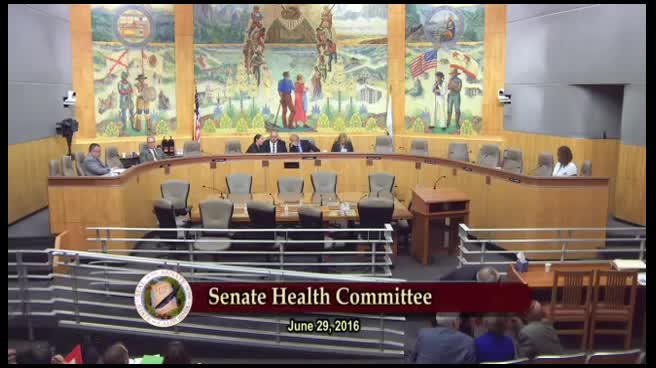 3MIN
Senate Standing Committee on Health


Bill Co-Author(s):