AB 1993: Law enforcement contact process: service providers.
- Session Year: 2015-2016
- House: Assembly
- Latest Version Date: 2016-09-23
Existing law authorizes a court or magistrate to issue a warrant for the search of a place and the seizure of property or things identified in the warrant if there is probable cause to believe that specified grounds exist.
This bill would require service providers to maintain a law enforcement contact process that meets specified criteria and, by July 1, 2017, file a statement with the Attorney General describing that process. The bill would require a service provider to file a statement with the Attorney General describing any material change to its process as soon as practicable after making that change. The bill would require the Attorney General to consolidate the statements received pursuant to these provisions in one discrete record and regularly make that record available to law enforcement agencies. The bill would make the statements confidential and prohibit their disclosure pursuant to any state law. By increasing the duties of local law enforcement agencies to maintain confidential records, the bill would impose a state-mandated local program.
Existing constitutional provisions require that a statute that limits the right of access to the meetings of public bodies or the writings of public officials and agencies be adopted with findings demonstrating the interest protected by the limitation and the need for protecting that interest.
This bill would make legislative findings to that effect.
The California Constitution requires local agencies, for the purpose of ensuring public access to the meetings of public bodies and the writings of public officials and agencies, to comply with a statutory enactment that amends or enacts laws relating to public records or open meetings and contains findings demonstrating that the enactment furthers the constitutional requirements relating to this purpose.
This bill would make legislative findings to that effect.
The California Constitution requires the state to reimburse local agencies and school districts for certain costs mandated by the state. Statutory provisions establish procedures for making that reimbursement.
This bill would provide that no reimbursement is required by this act for a specified reason.
Existing law authorizes a court or magistrate to issue a warrant for the search of a place and the seizure of property or things identified in the warrant if there is probable cause to believe that specified grounds exist.
This bill would require service providers, as defined, providers to maintain a law enforcement contact process that meets specified criteria and, by July 1, 2017, file a statement with the Attorney General describing that process. The bill would require a service provider to file a statement with the Attorney General describing any material change to its process as soon as practicable after making that change. The bill would require the Attorney General to consolidate the statements received pursuant to these provisions in one discrete record and regularly make that record available to law enforcement agencies. The bill would make the statements confidential and prohibit their disclosure pursuant to any state law. By increasing the duties of local law enforcement agencies to maintain confidential records, the bill would impose a state-mandated local program.
Existing constitutional provisions require that a statute that limits the right of access to the meetings of public bodies or the writings of public officials and agencies be adopted with findings demonstrating the interest protected by the limitation and the need for protecting that interest.
This bill would make legislative findings to that effect.
The California Constitution requires local agencies, for the purpose of ensuring public access to the meetings of public bodies and the writings of public officials and agencies, to comply with a statutory enactment that amends or enacts laws relating to public records or open meetings and contains findings demonstrating that the enactment furthers the constitutional requirements relating to this purpose.
This bill would make legislative findings to that effect.
The California Constitution requires the state to reimburse local agencies and school districts for certain costs mandated by the state. Statutory provisions establish procedures for making that reimbursement.
This bill would provide that no reimbursement is required by this act for a specified reason.
Existing law authorizes a court or magistrate to issue a warrant for the search of a place and the seizure of property or things identified in the warrant if there is probable cause to believe that specified grounds exist.
This bill would require service providers, as defined, to maintain a law enforcement contact process that meets specified criteria and, by July 1, 2017, file a statement with the Attorney General describing that process. The bill would require a service provider to file a statement with the Attorney General describing any material change to its process as soon as practicable after making that change. The bill would require the Attorney General to consolidate the statements received pursuant to these provisions in one discrete record and regularly make that record available to law enforcement agencies. The bill would make the statements confidential and prohibit their disclosure pursuant to any state law. By increasing the duties of local law enforcement agencies to maintain confidential records, the bill would impose a state-mandated local program.
Existing constitutional provisions require that a statute that limits the right of access to the meetings of public bodies or the writings of public officials and agencies be adopted with findings demonstrating the interest protected by the limitation and the need for protecting that interest.
This bill would make legislative findings to that effect.
The California Constitution requires local agencies, for the purpose of ensuring public access to the meetings of public bodies and the writings of public officials and agencies, to comply with a statutory enactment that amends or enacts laws relating to public records or open meetings and contains findings demonstrating that the enactment furthers the constitutional requirements relating to this purpose.
This bill would make legislative findings to that effect.
The California Constitution requires the state to reimburse local agencies and school districts for certain costs mandated by the state. Statutory provisions establish procedures for making that reimbursement.
This bill would provide that no reimbursement is required by this act for a specified reason.
Existing law authorizes a court or magistrate to issue a warrant for the search of a place and the seizure of property or things identified in the warrant if there is probable cause to believe that specified grounds exist. Existing law also establishes procedures for certain California corporations when served with a warrant issued by a court in another state.
This bill would require, by July 1, 2017, service providers to provide, among other things, an exclusive process for emergency disclosure requests. The bill would require those corporations to file a statement with the Attorney General identifying a corporate law enforcement contact or contacts, as specified. The bill would require the Attorney General to distribute to local law enforcement agencies information describing how to access each of the corporate law enforcement contacts created from the statements that he or she receives.
This bill would require service providers, as defined, to maintain a law enforcement contact process that meets specified criteria and, by July 1, 2017, file a statement with the Attorney General describing that process. The bill would require a service provider to file a statement with the Attorney General describing any material change to its process as soon as practicable after making that change. The bill would require the Attorney General to consolidate the statements received pursuant to these provisions in one discrete record and regularly make that record available to law enforcement agencies. The bill would make the statements confidential and prohibit their disclosure pursuant to any state law. By increasing the duties of local law enforcement agencies to maintain confidential records, the bill would impose a state-mandated local program.
Existing constitutional provisions require that a statute that limits the right of access to the meetings of public bodies or the writings of public officials and agencies be adopted with findings demonstrating the interest protected by the limitation and the need for protecting that interest.
This bill would make legislative findings to that effect.
The California Constitution requires local agencies, for the purpose of ensuring public access to the meetings of public bodies and the writings of public officials and agencies, to comply with a statutory enactment that amends or enacts laws relating to public records or open meetings and contains findings demonstrating that the enactment furthers the constitutional requirements relating to this purpose.
This bill would make legislative findings to that effect.
The California Constitution requires the state to reimburse local agencies and school districts for certain costs mandated by the state. Statutory provisions establish procedures for making that reimbursement.
This bill would provide that no reimbursement is required by this act for a specified reason.
Existing law authorizes a court or magistrate to issue a warrant for the search of a place and the seizure of property or things identified in the warrant where if there is probable cause to believe that specified grounds exist. Existing law also establishes procedures for certain California corporations when served with a warrant issued by a court in another state.
This bill would require, by July 1, 2017, service providers to provide, among other things, an exclusive process for emergency disclosure requests. The bill would require those corporations to file a statement with the Secretary of State Attorney General identifying a corporate law enforcement contact or contacts, as specified. The bill would require the Secretary of State, on or before October 1, 2017, and annually thereafter, to transmit to the Attorney General, in the manner prescribed by the Attorney General, a copy of the current statement for each corporation, and would require the Attorney General to distribute to local law enforcement agencies information describing how to access each of the corporate law enforcement contacts created from the statements that he or she receives from the Secretary of State. receives.
Existing law authorizes a court or magistrate to issue a warrant for the search of a place and the seizure of property or things identified in the warrant where there is probable cause to believe that specified grounds exist. Existing law also establishes procedures for certain California corporations when served with a warrant issued by a court in another state.
This bill would require, by July 1, 2017, service providers to provide, among other things, an exclusive process for emergency disclosure requests. The bill would require those corporations to file a statement with the Secretary of State identifying a corporate law enforcement contact, contact or contacts, as specified. The bill would require the Secretary of State, on or before October 1, 2017, and annually thereafter, to transmit to the Attorney General, in the manner prescribed by the Attorney General, a copy of the current statement for each corporation, and would require the Attorney General to distribute to local law enforcement agencies information describing how to access each of the corporate law enforcement contacts created from the statements that he or she receives from the Secretary of State. The bill would require a corporation subject to these provisions to respond to a properly served warrant.
(1)Existing
Existing law authorizes a court or magistrate to issue a warrant for the search of a place and the seizure of property or things identified in the warrant where there is probable cause to believe that specified grounds exist. Existing law also establishes procedures for certain California corporations when served with a warrant issued by a court in another state.
This bill would require the Attorney General to, require, by July 1, 2017, establish minimum qualifications for a corporate law enforcement contact and would require specified corporations to designate a corporate law enforcement contact that meets those minimum qualifications. service providers to provide, among other things, an exclusive process for emergency disclosure requests. The bill would require those corporations to file a statement with the Secretary of State identifying the a corporate law enforcement contact, as specified, and would prohibit the public disclosure of that statement. specified. The bill would require the Secretary of State, on or before October 1, 2017, and annually thereafter, to transmit to the Attorney General, in the manner prescribed by the Attorney General, a copy of the current statement for each corporation, and would require the Attorney General to distribute to local law enforcement agencies a list of information describing how to access each of the corporate law enforcement contacts created from the statements that he or she receives from the Secretary of State. The bill would require a corporation subject to these provisions to respond to a properly served warrant within 5 business days. warrant.
(2)Existing constitutional provisions require that a statute that limits the right of access to the meetings of public bodies or the writings of public officials and agencies be adopted with findings demonstrating the interest protected by the limitation and the need for protecting that interest.
This bill would make legislative findings to that effect.
(1)Existing law authorizes a court or magistrate to issue a warrant for the search of a place and the seizure of property or things identified in the warrant where there is probable cause to believe that specified grounds exist. Existing law also establishes procedures for certain California corporations when served with a warrant issued by a court in another state.
This bill would require the Attorney General to, by July 1, 2017, establish minimum qualifications for a corporate law enforcement contact and would require specified corporations to designate a corporate law enforcement contact that meets those minimum qualifications. The bill would require those corporations to file a statement with the Secretary of State identifying the corporate law enforcement contact, as specified, and would prohibit the public disclosure of that statement. The bill would require the Secretary of State, on or before October 1, 2017, and annually thereafter, to transmit to the Attorney General, in the manner prescribed by the Attorney General, a copy of the current statement for each corporation, and would require the Attorney General to distribute to local law enforcement agencies a list of corporate law enforcement contacts created from the statements that he or she receives from the Secretary of State. The bill would require a corporation subject to these provisions to respond to a properly served warrant within 5 business days.
(2)Existing constitutional provisions require that a statute that limits the right of access to the meetings of public bodies or the writings of public officials and agencies be adopted with findings demonstrating the interest protected by the limitation and the need for protecting that interest.
This bill would make legislative findings to that effect.
The Legislature finds and declares that Section 2 of this act, which adds Section 1524.4 to the Penal Code, is intended to reduce investigation time and facilitate efficient communication between law enforcement personnel and electronic communication service providers that provide service to the general public and that have received requests from law enforcement personnel for electronic communication and electronic communication information subject to the Electronic Communications Privacy Act (Chapter 3.6 (commencing with Section 1546) of Title 12 of Part 2 of the Penal Code). It shall not be construed to apply to a person or entity solely on the basis that the person or entity is a subscriber to an electronic communication service or a customer of an electronic communication service provider.
SEC. 2.Section 1524.4 is added to the Penal Code, to read:1524.4.(a)This section applies to a service provider that is subject to the Electronic Communications Privacy Act (Chapter 3.6 (commencing with Section 1546)) and that operates in California. This section does not apply to a service provider that does not offer services to the general public.
(b)(1)Every service provider described in subdivision (a) shall maintain a law enforcement contact process that meets the criteria set forth in paragraph (2).
(2)Every service provider described in subdivision (a) shall ensure, at a minimum, that its law enforcement contact process meets all of the following criteria:
(A)Provides a specific contact mechanism for law enforcement personnel.
(B)Provides continual availability of the law enforcement contact process.
(C)Provides a method to provide status updates to a requesting law enforcement agency on a request for assistance.
(3)Every service provider described in subdivision (a) shall, by July 1, 2017, file a statement with the Attorney General describing the law enforcement contact process maintained pursuant to paragraph (1). If a service provider makes a material change to its law enforcement contact process, the service provider shall, as soon as practicable, file a statement with the Attorney General describing its new law enforcement contact process.
(c)The Attorney General shall consolidate the statements received pursuant to this section into one discrete record and regularly make that record available to local law enforcement agencies.
(d)The exclusive remedy for a violation of this section shall be an action brought by the Attorney General for injunctive relief. Nothing in this section shall limit remedies available for a violation of any other state or federal law.
(e)A statement filed or distributed pursuant to this section is confidential and shall not be disclosed pursuant to any state law, including, but not limited to, the California Public Records Act (Chapter 3.5 (commencing with Section 6250) of Division 7 of Title 1 of the Government Code).
SEC. 3.The Legislature finds and declares that Section 2 of this act, which adds Section 1524.4 to the Penal Code, imposes a limitation on the publics right of access to the meetings of public bodies or the writings of public officials and agencies within the meaning of Section 3 of Article I of the California Constitution. Pursuant to that constitutional provision, the Legislature makes the following findings to demonstrate the interest protected by this limitation and the need for protecting that interest:
In order to protect the internal processes of private businesses from unnecessary intrusion and facilitate contact between law enforcement and private businesses regarding access to information that will protect public health and safety, it is necessary to limit access to statements filed by service providers that describe the service providers law enforcement contact processes.
SEC. 4.The Legislature finds and declares that Section 2 of this act, which adds Section 1524.4 to the Penal Code, furthers, within the meaning of paragraph (7) of subdivision (b) of Section 3 of Article I of the California Constitution, the purposes of that constitutional section as it relates to the right of public access to the meetings of local public bodies or the writings of local public officials and local agencies. Pursuant to paragraph (7) of subdivision (b) of Section 3 of Article I of the California Constitution, the Legislature makes the following findings:
By facilitating contact between law enforcement and service providers regarding access to information that will protect public health and safety and by appropriately limiting access to internal business processes, this bill furthers the purpose of paragraph (7) of subdivision (b) of Section 3 of Article I of the California Constitution.
SEC. 5.No reimbursement is required by this act pursuant to Section 6 of Article XIIIB of the California Constitution because the only costs that may be incurred by a local agency or school district under this act would result from a legislative mandate that is within the scope of paragraph (7) of subdivision (b) of Section 3 of Article I of the California Constitution.
The Legislature finds and declares that Section 2 of this act, which adds Section 1524.4 to the Penal Code, is intended to reduce investigation time and facilitate efficient communication between law enforcement personnel and electronic communication service providers that provide service to the general public and that have received requests from law enforcement personnel for electronic communication and electronic communication information subject to the Electronic Communications Privacy Act (Chapter 3.6 (commencing with Section 1546) of Title 12 of Part 2 of the Penal Code). It shall not be construed to apply to a person or entity solely on the basis that the person or entity is a subscriber to an electronic communication service or a customer of an electronic communication service provider.
SECTION 1.SEC. 2.Section 1524.4 is added to the Penal Code, to read:1524.4.(a)This section applies to a service provider, as defined in subdivision (j) of Section 1546, provider that is subject to the Electronic Communications Privacy Act (Chapter 3.6 (commencing with Section 1546)) and that operates in California. This section does not apply to a service provider that does not offer services to the general public.
(b)(1)Every service provider described in subdivision (a) shall maintain a law enforcement contact process that meets the criteria set forth in paragraph (2).
(2)Every service provider described in subdivision (a) shall ensure, at a minimum, that its law enforcement contact process meets all of the following criteria:
(A)Provides a specific contact mechanism for law enforcement personnel.
(B)Provides continual availability of the law enforcement contact process.
(C)Provides a method to provide status updates to a requesting law enforcement agency on a request for assistance.
(3)Every service provider described in subdivision (a) shall, by July 1, 2017, file a statement with the Attorney General describing the law enforcement contact process maintained pursuant to paragraph (1). If a service provider makes a material change to its law enforcement contact process, the service provider shall, as soon as practicable, file a statement with the Attorney General describing its new law enforcement contact process.
(c)The Attorney General shall consolidate the statements received pursuant to this section into one discrete record and regularly make that record available to local law enforcement agencies.
(d)The exclusive remedy for a violation of this section shall be an action brought by the Attorney General for injunctive relief. Nothing in this section shall limit remedies available for a violation of any other state or federal law.
(e)A statement filed or distributed pursuant to this section is confidential and shall not be disclosed pursuant to any state law, including, but not limited to, the California Public Records Act (Chapter 3.5 (commencing with Section 6250) of Division 7 of Title 1 of the Government Code).
SEC. 2.SEC. 3.The Legislature finds and declares that Section 1 2 of this act, which adds Section 1524.4 to the Penal Code, imposes a limitation on the publics right of access to the meetings of public bodies or the writings of public officials and agencies within the meaning of Section 3 of Article I of the California Constitution. Pursuant to that constitutional provision, the Legislature makes the following findings to demonstrate the interest protected by this limitation and the need for protecting that interest:
In order to protect the internal processes of private businesses from unnecessary intrusion and facilitate contact between law enforcement and private businesses regarding access to information that will protect public health and safety, it is necessary to limit access to statements filed by service providers that describe the service providers law enforcement contact processes.
SEC. 3.SEC. 4.The Legislature finds and declares that Section 1 2 of this act, which adds Section 1524.4 to the Penal Code, furthers, within the meaning of paragraph (7) of subdivision (b) of Section 3 of Article I of the California Constitution, the purposes of that constitutional section as it relates to the right of public access to the meetings of local public bodies or the writings of local public officials and local agencies. Pursuant to paragraph (7) of subdivision (b) of Section 3 of Article I of the California Constitution, the Legislature makes the following findings:
By facilitating contact between law enforcement and service providers regarding access to information that will protect public health and safety and by appropriately limiting access to internal business processes, this bill furthers the purpose of paragraph (7) of subdivision (b) of Section 3 of Article I of the California Constitution.
SEC. 4.SEC. 5.No reimbursement is required by this act pursuant to Section 6 of Article XIIIB of the California Constitution because the only costs that may be incurred by a local agency or school district under this act would result from a legislative mandate that is within the scope of paragraph (7) of subdivision (b) of Section 3 of Article I of the California Constitution.
(a)This section applies to a service provider, as defined in subdivision (j) of Section 1546, that operates in California. This section does not apply to a service provider that does not offer services to the general public.
(b)(1)Every service provider described in subdivision (a) shall maintain a law enforcement contact process that meets the criteria set forth in paragraph (2).
(2)Every service provider described in subdivision (a) shall ensure, at a minimum, that its law enforcement contact process meets all of the following criteria:
(A)Provides a specific contact mechanism for law enforcement personnel.
(B)Provides continual availability of the law enforcement contact process.
(C)Creates Provides a method to provide status updates to a requesting law enforcement agency on a request for assistance and a direct means of communicating with the individual or group of individuals responsible for processing the request. assistance.
(3)Every service provider described in subdivision (a) shall, by July 1, 2017, file a statement with the Attorney General describing the law enforcement contact process maintained pursuant to paragraph (1). If a service provider makes a material change to its law enforcement contact process, the service provider shall, as soon as practicable, file a statement with the Attorney General describing its new law enforcement contact process.
(c)The Attorney General shall consolidate the statements received pursuant to this section into one discrete record and regularly make that record available to local law enforcement agencies.
(d)The exclusive remedy for a violation of this section shall be an action brought by the Attorney General for injunctive relief. Nothing in this section shall limit remedies available for a violation of any other state or federal law.
(e)A statement filed or distributed pursuant to this section is confidential and shall not be disclosed pursuant to any state law, including, but not limited to, the California Public Records Act (Chapter 3.5 (commencing with Section 6250) of Division 7 of Title 1 of the Government Code).
SEC. 2.The Legislature finds and declares that Section 1 of this act, which adds Section 1524.4 to the Penal Code, imposes a limitation on the publics right of access to the meetings of public bodies or the writings of public officials and agencies within the meaning of Section 3 of Article I of the California Constitution. Pursuant to that constitutional provision, the Legislature makes the following findings to demonstrate the interest protected by this limitation and the need for protecting that interest:
In order to protect the internal processes of private businesses from unnecessary intrusion and facilitate contact between law enforcement and private businesses regarding access to information that will protect public health and safety, it is necessary to limit access to statements filed by service providers that describe the service providers law enforcement contact processes.
SEC. 3.The Legislature finds and declares that Section 1 of this act, which adds Section 1524.4 to the Penal Code, furthers, within the meaning of paragraph (7) of subdivision (b) of Section 3 of Article I of the California Constitution, the purposes of that constitutional section as it relates to the right of public access to the meetings of local public bodies or the writings of local public officials and local agencies. Pursuant to paragraph (7) of subdivision (b) of Section 3 of Article I of the California Constitution, the Legislature makes the following findings:
By facilitating contact between law enforcement and service providers regarding access to information that will protect public health and safety and by appropriately limiting access to internal business processes, this bill furthers the purpose of paragraph (7) of subdivision (b) of Section 3 of Article I of the California Constitution.
SEC. 4.No reimbursement is required by this act pursuant to Section 6 of Article XIIIB of the California Constitution because the only costs that may be incurred by a local agency or school district under this act would result from a legislative mandate that is within the scope of paragraph (7) of subdivision (b) of Section 3 of Article I of the California Constitution.
(a)This section applies to a service provider, as defined in subdivision (j) of Section 1546, that operates in California. This section does not apply to a service provider that does not offer services to the general public.
(b)(1)Every service provider described in subdivision (a) shall maintain a law enforcement contact process that meets the criteria set forth in paragraph (2).
(2)Every service provider described in subdivision (a) shall ensure, at a minimum, that its law enforcement contact process meets all of the following criteria:
(A)Provides a specific contact mechanism for law enforcement personnel.
(B)Provides continual availability of the law enforcement contact process.
(C)Creates a method to provide status updates to a requesting law enforcement agency on a request for assistance, and the name of, assistance and a direct means of communicating with, with the individual or group of individuals responsible for processing the request.
(3)Every service provider described in subdivision (a) shall, by July 1, 2017, file a statement with the Attorney General describing the law enforcement contact process maintained pursuant to paragraph (1). If a service provider makes a material change to its law enforcement contact process, the service provider shall, as soon as practicable, file a statement with the Attorney General describing its new law enforcement contact process.
(c)The Attorney General shall consolidate the statements received pursuant to this section into one discrete record and regularly make that record available to local law enforcement agencies.
(d)The exclusive remedy for a violation of this section shall be an action brought by the Attorney General for injunctive relief. Nothing in this section shall limit remedies available for a violation of any other state or federal law.
(e)A statement filed or distributed pursuant to this section is confidential and shall not be disclosed pursuant to any state law, including, but not limited to, the California Public Records Act (Chapter 3.5 (commencing with Section 6250) of Division 7 of Title 1 of the Government Code).
SEC. 2.The Legislature finds and declares that Section 1 of this act, which adds Section 1524.4 to the Penal Code, imposes a limitation on the publics right of access to the meetings of public bodies or the writings of public officials and agencies within the meaning of Section 3 of Article I of the California Constitution. Pursuant to that constitutional provision, the Legislature makes the following findings to demonstrate the interest protected by this limitation and the need for protecting that interest:
In order to protect the internal processes of private businesses from unnecessary intrusion and facilitate contact between law enforcement and private businesses regarding access to information that will protect public health and safety, it is necessary to limit access to statements filed by service providers that describe the service providers law enforcement contact processes.
SEC. 3.The Legislature finds and declares that Section 1 of this act, which adds Section 1524.4 to the Penal Code, furthers, within the meaning of paragraph (7) of subdivision (b) of Section 3 of Article I of the California Constitution, the purposes of that constitutional section as it relates to the right of public access to the meetings of local public bodies or the writings of local public officials and local agencies. Pursuant to paragraph (7) of subdivision (b) of Section 3 of Article I of the California Constitution, the Legislature makes the following findings:
By facilitating contact between law enforcement and service providers regarding access to information that will protect public health and safety, safety and by appropriately limiting access to internal business processes, this bill furthers the purpose of paragraph (7) of subdivision (b) of Section 3 of Article I of the California Constitution.
SEC. 4.No reimbursement is required by this act pursuant to Section 6 of Article XIIIB of the California Constitution because the only costs that may be incurred by a local agency or school district under this act would result from a legislative mandate that is within the scope of paragraph (7) of subdivision (b) of Section 3 of Article I of the California Constitution.
(a)This section applies to a service provider, as defined in subdivision (j) of Section 1546, that operates in California. This section does not apply to a service provider that does not offer services to the general public.
(b)(1)Every service provider described in subdivision (a) shall maintain a law enforcement contact process that meets the criteria set forth in paragraph (2).
(2)Every service provider described in subdivision (a) shall ensure, at a minimum, that its law enforcement contact process meets all of the following criteria:
(A)Provides a specific contact mechanism for law enforcement personnel.
(B)Provides continual availability of the law enforcement contact process.
(C)Creates a method to provide status updates to a requesting law enforcement agency on a request for assistance, and the name of, and a direct means of communicating with, the individual responsible for processing the request.
(3)Every service provider described in subdivision (a) shall, by July 1, 2017, file a statement with the Attorney General describing the law enforcement contact process maintained pursuant to paragraph (1). If a service provider makes a material change to its law enforcement contact process, the service provider shall, as soon as practicable, file a statement with the Attorney General describing its new law enforcement contact process.
(c)The Attorney General shall consolidate the statements received pursuant to this section into one discrete record and regularly make that record available to local law enforcement agencies.
(d)The exclusive remedy for a violation of this section shall be an action brought by the Attorney General for injunctive relief. Nothing in this section shall limit remedies available for a violation of any other state or federal law.
(e)A statement filed or distributed pursuant to this section is confidential and shall not be disclosed pursuant to any state law, including, but not limited to, the California Public Records Act (Chapter 3.5 (commencing with Section 6250) of Division 7 of Title 1 of the Government Code).
SEC. 2.The Legislature finds and declares that Section 1 of this act, which adds Section 1524.4 to the Penal Code, imposes a limitation on the publics right of access to the meetings of public bodies or the writings of public officials and agencies within the meaning of Section 3 of Article I of the California Constitution. Pursuant to that constitutional provision, the Legislature makes the following findings to demonstrate the interest protected by this limitation and the need for protecting that interest:
In order to protect the internal processes of private businesses from unnecessary intrusion and facilitate contact between law enforcement and private businesses regarding access to information that will protect public health and safety, it is necessary to limit access to statements filed by service providers that describe the service providers law enforcement contact processes.
SEC. 3.The Legislature finds and declares that Section 1 of this act, which adds Section 1524.4 to the Penal Code, furthers, within the meaning of paragraph (7) of subdivision (b) of Section 3 of Article I of the California Constitution, the purposes of that constitutional section as it relates to the right of public access to the meetings of local public bodies or the writings of local public officials and local agencies. Pursuant to paragraph (7) of subdivision (b) of Section 3 of Article I of the California Constitution, the Legislature makes the following findings:
By facilitating contact between law enforcement and service providers regarding access to information that will protect public health and safety, by appropriately limiting access to internal business processes, this bill furthers the purpose of paragraph (7) of subdivision (b) of Section 3 of Article I of the California Constitution.
SEC. 4.No reimbursement is required by this act pursuant to Section 6 of Article XIII B of the California Constitution because the only costs that may be incurred by a local agency or school district under this act would result from a legislative mandate that is within the scope of paragraph (7) of subdivision (b) of Section 3 of Article I of the California Constitution.
SECTION 1.Section 1524.4 is added to the Penal Code, to read:1524.4.(a)This section applies to a corporation operating in California that is a service provider, as defined in subdivision (j) of Section 1546, that generates customer data for 1,000,000 or more people annually. This section does not apply to a service provider that does not offer services to the general public.
(b)(1)A corporation described in subdivision (a) shall designate a corporate law enforcement contact that is, or contacts that are, responsible for the requirements established pursuant to paragraph (1) of subdivision (c). Those requirements may be fulfilled by means of an Internet Web portal, telecommunications, or any combination of those communication methods. If a corporate law enforcement contact is no longer employed by the corporation, the corporation shall forthwith designate any new corporate law enforcement contact or contacts.
(2)Every corporation described in subdivision (a) shall, at least annually, file a statement with the Attorney General identifying the corporate law enforcement contact or contacts designated pursuant to paragraph (1). If a corporation designates any new corporate law enforcement contact or contacts pursuant to paragraph (1), the corporation shall forthwith file a statement with the Attorney General identifying the new corporate law enforcement contact or contacts.
(c)(1)By July 1, 2017, service providers shall, at a minimum, provide the following through their law enforcement contact or contacts:
(A)An exclusive process for emergency disclosure requests.
(B)Exclusive access and service for law enforcement personnel.
(C)An ability to comply with a law enforcement request for information regardless of the location of the data.
(D)Continual availability of the law enforcement contact or contacts.
(E)The authority to make decisions regarding warrants and the disclosure of information and data.
(2)The Attorney General shall, annually, distribute information describing how to access each of the corporate law enforcement contacts created from the statements that he or she receives pursuant to paragraph (2) of subdivision (b) to local law enforcement agencies.
(a)Every corporation described in subdivision (a) of Section 1524.4 of the Penal Code shall file, within 90 days after the filing of its original articles and annually thereafter during the applicable filing period, a statement identifying the corporate law enforcement contact or contacts designated pursuant to Section 1524.4 of the Penal Code.
(b)For the purposes of this section, the applicable filing period for a corporation shall be the calendar month during which its original articles were filed and the immediately preceding five calendar months. The Secretary of State shall provide a notice to each corporation to comply with this section approximately three months prior to the close of the applicable filing period. The notice shall state the due date for compliance and shall be sent to the last address of the corporation according to the records of the Secretary of State or to the last electronic mail address according to the records of the Secretary of State if the corporation has elected to receive notices from the Secretary of State by electronic mail. The failure of the corporation to receive the notice is not an excuse for failure to comply with this section.
(c)The Secretary of State may destroy or otherwise dispose of any statement filed pursuant to this section after it has been superseded by the filing of a new statement.
(d)On or before October 1, 2017, and annually thereafter, the Secretary of State shall transmit to the Attorney General, in the manner prescribed by the Attorney General, a copy of the current statement made pursuant to this section for each corporation.
(e)If a corporate law enforcement contact is no longer employed by the corporation, the corporation shall forthwith file a statement identifying any new corporate law enforcement contact designated pursuant to Section 1524.4 of the Penal Code.
SEC. 2.SECTION 1.Section 1524.4 is added to the Penal Code, to read:1524.4.(a)This section applies to a corporation operating in California that is a service provider, as defined in subdivision (j) of Section 1546, that generates customer data for 1,000,000 or more people annually. This section does not apply to a service provider that does not offer services to the general public.
(b)(1)A corporation described in subdivision (a) shall designate a corporate law enforcement contact that is, or contacts that are, responsible for the requirements established pursuant to paragraph (1) of subdivision (c). Those requirements may be fulfilled by means of an Internet Web portal, telecommunications, or any combination of those communication methods. If a corporate law enforcement contact is no longer employed by the corporation, the corporation shall forthwith designate any new corporate law enforcement contact or contacts.
(2)Every corporation described in subdivision (a) shall, at least annually, file a statement with the Attorney General identifying the corporate law enforcement contact or contacts designated pursuant to paragraph (1). If a corporation designates any new corporate law enforcement contact or contacts pursuant to paragraph (1), the corporation shall forthwith file a statement with the Attorney General identifying the new corporate law enforcement contact or contacts.
(c)(1)By July 1, 2017, service providers shall, at a minimum, provide the following through their law enforcement contact or contacts:
(A)An exclusive process for emergency disclosure requests.
(B)Exclusive access and service for law enforcement personnel.
(C)An ability to comply with a law enforcement request for information regardless of the location of the data.
(D)Continual availability of the law enforcement contact or contacts.
(E)The authority to make decisions regarding warrants and the disclosure of information and data.
(2)The Attorney General shall, annually, distribute information describing how to access each of the corporate law enforcement contacts created from the statements that he or she receives from the Secretary of State pursuant to Section 1502.7 of the Corporations Code pursuant to paragraph (2) of subdivision (b) to local law enforcement agencies.
(a)Every corporation described in subdivision (a) of Section 1524.4 of the Penal Code shall file, within 90 days after the filing of its original articles and annually thereafter during the applicable filing period, a statement identifying the corporate law enforcement contact or contacts designated pursuant to Section 1524.4 of the Penal Code.
(b)For the purposes of this section, the applicable filing period for a corporation shall be the calendar month during which its original articles were filed and the immediately preceding five calendar months. The Secretary of State shall provide a notice to each corporation to comply with this section approximately three months prior to the close of the applicable filing period. The notice shall state the due date for compliance and shall be sent to the last address of the corporation according to the records of the Secretary of State or to the last electronic mail address according to the records of the Secretary of State if the corporation has elected to receive notices from the Secretary of State by electronic mail. The failure of the corporation to receive the notice is not an excuse for failure to comply with this section.
(c)The Secretary of State may destroy or otherwise dispose of any statement filed pursuant to this section after it has been superseded by the filing of a new statement.
(d)On or before October 1, 2017, and annually thereafter, the Secretary of State shall transmit to the Attorney General, in the manner prescribed by the Attorney General, a copy of the current statement made pursuant to this section for each corporation.
(e)If the a corporate law enforcement contact is no longer employed by the corporation, the corporation shall forthwith file a statement identifying the any new corporate law enforcement contact designated pursuant to Section 1524.4 of the Penal Code.
SEC. 2.Section 1524.4 is added to the Penal Code, to read:1524.4.(a)This section applies to a corporation operating in California that is a service provider, as defined in subdivision (j) of Section 1546, that generates customer data for 1,000,000 or more people annually. This section does not apply to a service provider that does not offer services to the general public.
(b)(1)A corporation described in subdivision (a) shall designate a corporate law enforcement contact that is is, or contacts that are, responsible for the requirements established pursuant to paragraph (1) of subdivision (c). Those requirements may be fulfilled by means of an Internet Web portal, telecommunications, or any combination of those communication methods. If the a corporate law enforcement contact is no longer employed by the corporation, the corporation shall forthwith designate a any new corporate law enforcement contact. contact or contacts.
(2)When properly served with a search warrant issued by a California court, a corporation described in subdivision (a) shall provide to the peace officer to whom the search warrant was issued pursuant to subdivision (a) of Section 1528, all records sought pursuant to that warrant, including those records maintained or located outside this state.
(c)(1)By July 1, 2017, service providers shall, at a minimum, provide the following through their law enforcement contact: contact or contacts:
(A)An exclusive process for emergency disclosure requests.
(B)Exclusive access and service for law enforcement personnel.
(C)An ability to comply with a law enforcement request for information regardless of the location of the data.
(D)Continual availability of the law enforcement contact. contact or contacts.
(E)The authority to make decisions regarding warrants and the disclosure of information and data.
(2)The Attorney General shall, annually, distribute information describing how to access each of the corporate law enforcement contacts created from the statements that he or she receives from the Secretary of State pursuant to Section 1502.7 of the Corporations Code to local law enforcement agencies.
(a)Every corporation described in subdivision (a) of Section 1524.4 of the Penal Code shall file, within 90 days after the filing of its original articles and annually thereafter during the applicable filing period, a statement identifying the corporate law enforcement contact designated pursuant to Section 1524.4 of the Penal Code.
(b)For the purposes of this section, the applicable filing period for a corporation shall be the calendar month during which its original articles were filed and the immediately preceding five calendar months. The Secretary of State shall provide a notice to each corporation to comply with this section approximately three months prior to the close of the applicable filing period. The notice shall state the due date for compliance and shall be sent to the last address of the corporation according to the records of the Secretary of State or to the last electronic mail address according to the records of the Secretary of State if the corporation has elected to receive notices from the Secretary of State by electronic mail. The failure of the corporation to receive the notice is not an excuse for failure to comply with this section.
(c)The Secretary of State may destroy or otherwise dispose of any statement filed pursuant to this section after it has been superseded by the filing of a new statement.
(d)On or before October 1, 2017, and annually thereafter, the Secretary of State shall transmit to the Attorney General, in the manner prescribed by the Attorney General, a copy of the current statement made pursuant to this section for each corporation.
(e)If the corporate law enforcement contact is no longer employed by the corporation, the corporation shall forthwith file a statement identifying the new corporate law enforcement contact designated pursuant to Section 1524.4 of the Penal Code.
(f)A statement filed pursuant to this section is confidential and shall not be disclosed pursuant to any state law, including, but not limited to, the California Public Records Act (Chapter 3.5 (commencing with Section 6250) of Division 7 of Title 1).
SEC. 2.Section 1524.4 is added to the Penal Code, to read:1524.4.(a)This section applies to a corporation operating in California that is a service provider, as defined in subdivision (j) of Section 1546, that generates customer data for 1,000,000 or more people annually. This section does not apply to a service provider that does not offer services to the general public.
(b)(1)A corporation described in subdivision (a) shall designate a corporate law enforcement contact that meets the qualifications is responsible for the requirements established pursuant to paragraph (1) of subdivision (c). Those requirements may be fulfilled by means of an Internet Web portal, telecommunications, or any combination of those communication methods. If the corporate law enforcement contact is no longer employed by the corporation, the corporation shall forthwith designate a new corporate law enforcement contact.
(2)When properly served with a search warrant issued by the a California court, a corporation described in subdivision (a) shall provide to the peace officer to whom the search warrant was issued pursuant to subdivision (a) of Section 1528, all records sought pursuant to that warrant within five business days of receipt, warrant, including those records maintained or located outside this state.
(c)(1)The Attorney General shall, by By July 1, 2017, establish minimum qualifications for a corporate law enforcement contact, including, but not limited to, the following: service providers shall, at a minimum, provide the following through their law enforcement contact:
(A)The ability to shorten the deadline for compliance.
(A)An exclusive process for emergency disclosure requests.
(B)Exclusive access and service for law enforcement personnel.
(C)An ability to comply with a law enforcement request for information regardless of the location of the data.
(D)A requirement that the contact have continual availability.
(D)Continual availability of the law enforcement contact.
(E)The authority to make decisions regarding warrants and the disclosure of information and data.
(2)The Attorney General shall, annually, distribute a list of information describing how to access each of the corporate law enforcement contacts created from the statements that he or she receives from the Secretary of State pursuant to Section 1502.7 of the Corporations Code to local law enforcement agencies.
SEC. 3.The Legislature finds and declares that Section 1 of this act, which adds Section 1502.7 of the Corporations Code, imposes a limitation on the publics right of access to the meetings of public bodies or the writings of public officials and agencies within the meaning of Section 3 of Article I of the California Constitution. Pursuant to that constitutional provision, the Legislature makes the following findings to demonstrate the interest protected by this limitation and the need for protecting that interest:
Prohibiting the disclosure of statements filed by corporations that designate a corporate law enforcement contact protects the internal business processes of private businesses from unnecessary intrusion and facilities communication between law enforcement and private businesses regarding necessary information that protects public health and safety.
(a)Every corporation described in subdivision (a) of Section 1524.4 of the Penal Code shall file, within 90 days after the filing of its original articles and annually thereafter during the applicable filing period, a statement identifying the corporate law enforcement contact designated pursuant to Section 1524.4 of the Penal Code.
(b)For the purposes of this section, the applicable filing period for a corporation shall be the calendar month during which its original articles were filed and the immediately preceding five calendar months. The Secretary of State shall provide a notice to each corporation to comply with this section approximately three months prior to the close of the applicable filing period. The notice shall state the due date for compliance and shall be sent to the last address of the corporation according to the records of the Secretary of State or to the last electronic mail address according to the records of the Secretary of State if the corporation has elected to receive notices from the Secretary of State by electronic mail. The failure of the corporation to receive the notice is not an excuse for failure to comply with this section.
(c)The Secretary of State may destroy or otherwise dispose of any statement filed pursuant to this section after it has been superseded by the filing of a new statement.
(d)On or before October 1, 2017, and annually thereafter, the Secretary of State shall transmit to the Attorney General, in the manner prescribed by the Attorney General, a copy of the current statement made pursuant to this section for each corporation.
(e)If the corporate law enforcement contact is no longer employed by the corporation, the corporation shall forthwith file a statement identifying the new corporate law enforcement contact designated pursuant to Section 1524.4 of the Penal Code.
(f)A statement filed pursuant to this section is confidential and shall not be disclosed pursuant to any state law, including, but not limited to, the California Public Records Act (Chapter 3.5 (commencing with Section 6250) of Division 7 of Title 1).
SEC. 2.Section 1524.4 is added to the Penal Code, to read:1524.4.(a)This section applies to a corporation operating in California that is a service provider, as defined in subdivision (j) of Section 1546, that generates customer data for 1,000,000 or more people annually from any of the following: annually. This section does not apply to a service provider that does not offer services to the general public.
(1)Data searches.
(2)Geolocation data.
(3)Social media, as defined in Section 980 of the Labor Code.
(b)(1)A corporation described in subdivision (a) shall designate a corporate law enforcement contact that meets the qualifications established pursuant to paragraph (1) of subdivision (c). If the corporate law enforcement contact is no longer employed by the corporation, the corporation shall forthwith designate a new corporate law enforcement contact.
(2)When properly served with a search warrant issued by the California court, a corporation described in subdivision (a) shall provide to the peace officer to whom the search warrant was issued pursuant to subdivision (a) of Section 1528, all records sought pursuant to that warrant within five business days of receipt, including those records maintained or located outside this state.
(c)(1)The Attorney General shall, by July 1, 2017, establish minimum qualifications for a corporate law enforcement contact, including, but not limited to, a requirement that the contact have continual availability and authority to make decisions regarding warrants and the disclosure of information and data. to, the following:
(A)The ability to shorten the deadline for compliance.
(B)Exclusive access and service for law enforcement personnel.
(C)An ability to comply with a law enforcement request for information regardless of the location of the data.
(D)A requirement that the contact have continual availability.
(E)The authority to make decisions regarding warrants and the disclosure of information and data.
(2)The Attorney General shall, annually, distribute a list of corporate law enforcement contacts created from the statements that he or she receives from the Secretary of State pursuant to Section 1502.7 of the Corporations Code to local law enforcement agencies.
SEC. 3.The Legislature finds and declares that Section 1 of this act, which adds Section 1502.7 of the Corporations Code, imposes a limitation on the publics right of access to the meetings of public bodies or the writings of public officials and agencies within the meaning of Section 3 of Article I of the California Constitution. Pursuant to that constitutional provision, the Legislature makes the following findings to demonstrate the interest protected by this limitation and the need for protecting that interest:
Prohibiting the disclosure of statements filed by corporations that designate a corporate law enforcement contact protects the internal business processes of private businesses from unnecessary intrusion and facilities communication between law enforcement and private businesses regarding necessary information that protects public health and safety.
(a)Every corporation described in subdivision (a) of Section 1524.4 of the Penal Code shall file, within 90 days after the filing of its original articles and annually thereafter during the applicable filing period, a statement identifying the corporate law enforcement contact designated pursuant to Section 1524.4 of the Penal Code.
(b)For the purposes of this section, the applicable filing period for a corporation shall be the calendar month during which its original articles were filed and the immediately preceding five calendar months. The Secretary of State shall provide a notice to each corporation to comply with this section approximately three months prior to the close of the applicable filing period. The notice shall state the due date for compliance and shall be sent to the last address of the corporation according to the records of the Secretary of State or to the last electronic mail address according to the records of the Secretary of State if the corporation has elected to receive notices from the Secretary of State by electronic mail. The failure of the corporation to receive the notice is not an excuse for failure to comply with this section.
(c)The Secretary of State may destroy or otherwise dispose of any statement filed pursuant to this section after it has been superseded by the filing of a new statement.
(d)On or before October 1, 2017, and annually thereafter, the Secretary of State shall transmit to the Attorney General, in the manner prescribed by the Attorney General, a copy of the current statement made pursuant to this section for each corporation.
(e)If the corporate law enforcement contact is no longer employed by the corporation, the corporation shall forthwith file a statement identifying the new corporate law enforcement contact designated pursuant to Section 1524.4 of the Penal Code.
(f)A statement filed pursuant to this section is confidential and shall not be disclosed pursuant to any state law, including, but not limited to, the California Public Records Act (Chapter 3.5 (commencing with Section 6250) of Division 7 of Title 1).
SEC. 2.Section 1524.4 is added to the Penal Code, to read:1524.4.(a)This section applies to a corporation that generates customer data for 1,000,000 or more people annually from any of the following:
(1)Data searches.
(2)Geolocation data.
(3)Social media, as defined in Section 980 of the Labor Code.
(b)(1)A corporation described in subdivision (a) shall designate a corporate law enforcement contact that meets the qualifications established pursuant to paragraph (1) of subdivision (c). If the corporate law enforcement contact is no longer employed by the corporation, the corporation shall forthwith designate a new corporate law enforcement contact.
(2)When properly served with a search warrant issued by the California court, a corporation described in subdivision (a) shall provide to the peace officer to whom the search warrant was issued pursuant to subdivision (a) of Section 1528, all records sought pursuant to that warrant within five business days of receipt, including those records maintained or located outside this state.
(c)(1)The Attorney General shall, by July 1, 2017, establish minimum qualifications for a corporate law enforcement contact, including, but not limited to, a requirement that the contact have continual availability and authority to make decisions regarding warrants and the disclosure of information and data.
(2)The Attorney General shall, annually, distribute a list of corporate law enforcement contacts created from the statements that he or she receives from the Secretary of State pursuant to Section 1502.7 of the Corporations Code to local law enforcement agencies.
SEC. 3.The Legislature finds and declares that Section 1 of this act, which adds Section 1502.7 of the Corporations Code, imposes a limitation on the publics right of access to the meetings of public bodies or the writings of public officials and agencies within the meaning of Section 3 of Article I of the California Constitution. Pursuant to that constitutional provision, the Legislature makes the following findings to demonstrate the interest protected by this limitation and the need for protecting that interest:
Prohibiting the disclosure of statements filed by corporations that designate a corporate law enforcement contact protects the internal business processes of private businesses from unnecessary intrusion and facilities communication between law enforcement and private businesses regarding necessary information that protects public health and safety.
|
Date
|
Status
|
|---|---|
| Aug 15, 2016 | Read second time. Ordered to third reading. |
| May 19, 2016 | Read third time. Passed. Ordered to the Senate. (Ayes 54. Noes 19. Page 4854.) |
| May 19, 2016 | Read third time. Passed. Ordered to the Senate. (Ayes 54. Noes 19.) |
| May 26, 2016 | Referred to Com. on PUB. S. |
| Jun 14, 2016 | From committee chair, with author's amendments: Amend, and re-refer to committee. Read second time, amended, and re-referred to Com. on PUB. S. |
| Jun 21, 2016 | In committee: Testimony taken. Hearing postponed by committee. |
| Aug 1, 2016 | From committee: Amend, and do pass as amended and re-refer to Com. on APPR. (Ayes 7. Noes 0.) (June 28). |
| Aug 2, 2016 | Read second time and amended. Re-referred to Com. on APPR. |
| Aug 8, 2016 | Referred to APPR. suspense file. |
| Aug 11, 2016 | From committee: Do pass. (Ayes 6. Noes 1.) (August 11). |
| May 19, 2016 | Read third time. Passed. Ordered to the Senate. |
| Aug 19, 2016 | Read third time and amended. Ordered to second reading. |
| Aug 22, 2016 | Read second time. Ordered to third reading. |
| Aug 25, 2016 | Read third time. Passed. Ordered to the Assembly. |
| Aug 25, 2016 | Read third time. Passed. Ordered to the Assembly. (Ayes 25. Noes 13. Page 5415.). |
| Aug 29, 2016 | In Assembly. Concurrence in Senate amendments pending. |
| Aug 30, 2016 | Senate amendments concurred in. To Engrossing and Enrolling. |
| Aug 30, 2016 | Senate amendments concurred in. To Engrossing and Enrolling. (Ayes 55. Noes 22. Page 6471.). |
| Sep 8, 2016 | Enrolled and presented to the Governor at 4 p.m. |
| Apr 13, 2016 | Re-referred to Com. on APPR. |
| Feb 17, 2016 | From printer. May be heard in committee March 18. |
| Feb 25, 2016 | Referred to Com. on PUB. S. |
| Mar 28, 2016 | From committee chair, with author's amendments: Amend, and re-refer to Com. on PUB. S. Read second time and amended. |
| Mar 29, 2016 | In committee: Set, first hearing. Hearing canceled at the request of author. |
| Mar 29, 2016 | Re-referred to Com. on PUB. S. |
| Mar 30, 2016 | From committee chair, with author's amendments: Amend, and re-refer to Com. on PUB. S. Read second time and amended. |
| Mar 31, 2016 | Re-referred to Com. on PUB. S. |
| Apr 11, 2016 | From committee: Amend, and do pass as amended and re-refer to Com. on APPR. (Ayes 5. Noes 1.) (April 5). |
| Apr 12, 2016 | Read second time and amended. |
| Feb 16, 2016 | Read first time. To print. |
| Apr 19, 2016 | From committee chair, with author's amendments: Amend, and re-refer to Com. on APPR. Read second time and amended. |
| Apr 20, 2016 | Re-referred to Com. on APPR. |
| Apr 27, 2016 | From committee: Do pass. (Ayes 13. Noes 5.) (April 27). |
| Apr 28, 2016 | Read second time. Ordered to third reading. |
| May 12, 2016 | Read third time and amended. Ordered to third reading. |
| May 12, 2016 | Read third time and amended. Ordered to third reading. (Ayes 50. Noes 25. Page 4768.) |
| May 12, 2016 | Read third time and amended. Ordered to third reading. (Ayes 50. Noes 25.) |
| May 19, 2016 | In Senate. Read first time. To Com. on RLS. for assignment. |
|
Date
|
Description
|
Location
|
Votes
|
|
|---|---|---|---|---|
| Aug 30, 2016 | AB 1993 IRWIN Concurrence in Senate Amendments | Assembly Floor |
Passed |
|
| Aug 25, 2016 | Assembly 3rd Reading AB1993 Irwin By Pavley | Senate Floor |
Passed |
|
| Aug 11, 2016 | Do pass | Senate Standing Committee on Appropriations |
Passed |
|
| Aug 8, 2016 | Placed on suspense file | Senate Standing Committee on Appropriations |
Passed |
|
| Jun 28, 2016 | Do pass as amended, but first amend, and re-refer to the Committee on [Appropriations] | Senate Standing Committee on Public Safety |
Passed |
|
| May 19, 2016 | AB 1993 IRWIN Assembly Third Reading | Assembly Floor |
Passed |
|
| May 12, 2016 | AB 1993 IRWIN Assembly Third Reading Amend By IRWIN Set #1 | Assembly Floor |
Passed |
|
| Apr 27, 2016 | Do pass. | Assembly Standing Committee on Appropriations |
Passed |
|
| Apr 5, 2016 | Do pass as amended and be re-referred to the Committee on [Appropriations] | Assembly Standing Committee on Public Safety |
Passed |
This list shows positions taken on this bill by organizations on the date displayed, which is linked to the original source.
Positions by individuals are not included.
|
Organization
|
Position
|
Date
|
|---|---|---|
| California Association Of Collectors | ** Against | Aug 25, 2016 |
| California Bankers Association | ** Against | Aug 25, 2016 |
| California Chamber Of Commerce | ** Against | Aug 25, 2016 |
| California District Attorneys Association | ** Support | Aug 25, 2016 |
| California Financial Services Association | ** Against | Aug 25, 2016 |
| California Hospital Association | ** Against | Aug 25, 2016 |
| California Police Chiefs Association | ** Support | Aug 25, 2016 |
| California State Sheriffs' Association | ** Support | Aug 25, 2016 |
| CompTIA | ** Against | Aug 25, 2016 |
| Computing Technology Industry Association | * Against | Jun 21, 2016 |
| Ctia - The Wireless Association | ** Against | Aug 25, 2016 |
| CTIA- The Wireless Association | ** Against | Aug 25, 2016 |
| LA County's CIRT team | * Support | Jun 21, 2016 |
| Los Angeles County District Attorney'S Office | ** Support | Aug 25, 2016 |
| National Association of Independent Businesses | ** Against | Aug 25, 2016 |
| Personal Insurance Federation Of California | ** Against | Aug 25, 2016 |
| PUB. S. | ** Against | Apr 27, 2016 |
| The Internet Association | * Against | Jun 28, 2016 |
CONCURRENCE IN SENATE AMENDMENTS
CSA1 Bill Id:AB 1993
Author:(Irwin)
As Amended Ver:August 19, 2016
Majority vote
ASSEMBLY: | 54-19 | (May 19, 2016) | SENATE: | 25-13 | (August 25, 2016) |
Original Committee Reference: PUB. S.
SUMMARY: Mandates that specified technology companies specify law enforcement contacts to coordinate with law enforcement agency investigations.
The Senate amendments:
- Make technical, non-substantive changes to the bill.
- Declares that provisions of this bill are intended to reduce investigation time and facilitate efficient communication between law enforcement personnel and electronic communication service providers that provide service to the general public and that have received requests from law enforcement personnel for electronic communication and electronic communication information. They shall not be construed to apply to a person or entity solely on the basis that the person or entity is a subscriber to an electronic communication service or a customer of an electronic communication service provider.
EXISTING FEDERAL LAW provides that the right of the people to be secure in their persons, houses, papers, and effects, against unreasonable searches and seizures, shall not be violated, and no warrants shall issue, but upon probable cause, supported by oath or affirmation, and particularly describing the place to be searched and the persons or things to be seized.
EXISTING STATE LAW:
- Establishes rules and regulations for corporations to appoint agents for service of process. Additionally, specifies rules for when agents for service of process resign and the designation of a new agent for service of process.
- Prohibits exclusion of relevant evidence in a criminal proceeding on the ground that the evidence was obtained unlawfully, unless the relevant evidence must be excluded because it was obtained in violation of the federal Constitution's Fourth Amendment.
- Defines a "search warrant" as a written order in the name of the people, signed by a magistrate and directed to a peace officer, commanding him or her to search for a person or persons, a thing or things, or personal property, and in the case of a thing or things or personal property, bring the same before the magistrate.
- Provides the specific grounds upon which a search warrant may be issued, including when the property or things to be seized consist of any item or constitute any evidence that tends to show a felony has been committed, or tends to show that a particular person has committed a felony.
- Provides that a search warrant cannot be issued but upon probable cause, supported by affidavit, naming or describing the person to be searched or searched for, and particularly describing the property, thing, or things and the place to be searched.
- Requires a magistrate to issue a search warrant if he or she is satisfied of the existence of the grounds of the application or that there is probable cause to believe their existence.
- Requires a provider of electronic communication service or remote computing service to disclose to a governmental prosecuting or investigating agency the name, address, local and long distance telephone toll billing records, telephone number or other subscriber number or identity, and length of service of a subscriber to or customer of that service, and the types of services the subscriber or customer utilized, when the governmental entity is granted a search warrant.
- States that a governmental entity receiving subscriber records or information is not required to provide notice to a subscriber or customer of the warrant.
- Authorizes a court issuing a search warrant, on a motion made promptly by the service provider, to quash or modify the warrant if the information or records requested are unusually voluminous in nature or compliance with the warrant otherwise would cause an undue burden on the provider.
- Requires a provider of wire or electronic communication services or a remote computing service, upon the request of a peace officer, to take all necessary steps to preserve records and other evidence in its possession pending the issuance of a search warrant or a request in writing and an affidavit declaring an intent to file a warrant to the provider. Records shall be retained for a period of 90 days, which shall be extended for an additional 90 day period upon a renewed request by the peace officer.
AS PASSED BY THE ASSEMBLY, this bill:
- Provided that every specified service provider corporation shall, at least annually, file a statement with the Attorney General identifying the corporate law enforcement contact or contacts. If a corporation designates any new corporate law enforcement contact or contacts, the corporation shall file a statement with the Attorney General identifying the new corporate law enforcement contact or contacts.
- Required by July 1, 2017, specified technology corporations shall, at minimum, provide the following through a specified law enforcement contact:
- An exclusive process for emergency disclosure requests;
- Exclusive access and service for law enforcement personnel;
- An ability to comply with a law enforcement request for information regardless of the location of the data;
- Continual availability of the law enforcement contact; and
- The authority to make decisions regarding warrants and the disclosure of information and data.
- Required a corporation subject to these provisions to respond to a properly served warrant within five business days.
- Provided that the specified corporations shall designate corporate law enforcement contacts which are responsible for the specified requirements. Those requirements may be fulfilled by means of an internet web portal, telecommunications, or any combination of those communication methods.
FISCAL EFFECT: According to the Senate Appropriations Committee, one-time costs potentially in excess of $250,000 and ongoing costs of less than $100,000 (General Fund) to the Department of Justice (DOJ) to receive, review, and consolidate the service provider statements to make a record available to law enforcement agencies, as well as to update the record for revised and new provider statements on a continual basis. Workload costs would be dependent on the volume of service provider statements filed, which is unknown but potentially significant given the broad definition of "service provider" potentially subject to the reporting requirements of this bill.
COMMENTS: According to the author, "Today most large tech companies, including telecommunications, internet search, and social media providers, receive hundreds of thousands of law enforcement requests for data each year nationally. These results can be broken down into these categories: subpoenas, orders, warrants, and emergency requests.
"These requests are intended to produce evidence or aid in investigations related to violent crimes, credible threats, organized crime, terrorist activities, search and rescue situations – or when law enforcement is trying to find a missing person, among others.
"Technology companies have begun publishing annual transparency reports about government data requests and the company's policies for providing notice when the government requests and accesses their data, and their process for screening warrants, orders, and emergency requests before handing over user content. The reports also provide statistics detailing how many total requests were received, how many resulted in data disclosure, and how many were rejected. While there appears to be some consensus regarding industry best practices balancing privacy and civil liberties with stewardship of public safety, the lack of standardization and guidelines for such requests is apparent.
"For example, both AT&T and Verizon reported receiving nearly 300,000 law enforcement requests each in 2015. According to Verizon's transparency report, 'We carefully review each demand we receive and, where appropriate, we require law enforcement agencies to narrow the scope of their demands or correct errors in those demands before we produce some or all of the information sought.' Each request goes through a screening process that can take varying amounts of time depending on the company's internal policies. Industry averages show that roughly 75% of requests result in some data being produced. Given the increasing volume of these requests, and varying company guidelines and internal policies, a level of standardization and expectation needs to be assured.
"AB 1993 addresses this issue by requiring companies that generate large amounts of consumer data to standardize their process for receiving and responding to law enforcement requests for data to meet industry best practices. AB 1993 will ensure a process for submitting emergency disclosure requests that is continually available, exclusive to law enforcement personnel for emergency purposes, that data can be produced regardless of where it is physically stored, and that the service provider staff has first-hand decision-making authority for disclosure of data. AB 1993 will ensure that in emergency situations the interface between law enforcement and companies with data relevant to the situation meets minimum standards of effectiveness."
Please see the policy committee analysis for a full discussion of this bill.
Analysis Prepared by: Gabriel Caswell / PUB. S. / (916) 319-3744 FN: 0004806
Office of Senate Floor Analyses (916) 651-1520 Fax: (916) 327-4478 | AB |
THIRD READING
Bill No: AB 1993
:
SENATE PUBLIC SAFETY COMMITTEE: 7-0, 6/28/16
AYES: Hancock, Anderson, Glazer, Leno, Liu, Monning, Stone
SENATE APPROPRIATIONS COMMITTEE: 6-1, 8/11/16
AYES: Lara, Beall, Hill, McGuire, Mendoza, Nielsen
NOES: Bates
ASSEMBLY FLOOR: 54-19, 5/19/16 - See last page for vote
DIGEST: This bill requires that certain technology companies specify a law enforcement contact process to coordinate with law enforcement agency investigations, as specified.
Senate Floor Amendments of 8/19/16 add findings and declarations stating that the intent of the bill is to “reduce investigation time and facilitate efficient communication between law enforcement personnel and electronic communication service providers that provide service to the general public that have received requests from law enforcement personnel for electronic communication.” The findings, additionally, state that this bill “shall not be construed to apply to a person or entity solely on the basis that the person or entity is a subscriber to an electronic communication service or a customer of an electronic communication service provider.” These amendments also make is clear that this bill applies to a service provider that is subject to the Electronic Communications Privacy Act.
Existing law:
- Provides that the right of the people to be secure in their persons, houses, papers, and effects, against unreasonable searches and seizures, shall not be violated, and no warrants shall issue, but upon probable cause, supported by oath or affirmation, and particularly describing the place to be searched and the persons or things to be seized. (U.S. Const., 4th Amend.; Cal. Const., art. I, § 13.)
- Establishes rules and regulations for corporations to appoint agents for service of process. Additionally, specifies rules for when agents for service of process resign and the designation of a new agent for service of process. (Corporations Code §§ 1502, 1503 & 1504.)
- Prohibits exclusion of relevant evidence in a criminal proceeding on the ground that the evidence was obtained unlawfully, unless the relevant evidence must be excluded because it was obtained in violation of the federal Constitution's Fourth Amendment. (Cal. Const., art. I, § 28(f)(2) (Right to Truth-in-Evidence provision).)
- Defines a "search warrant" as a written order in the name of the people, signed by a magistrate and directed to a peace officer, commanding him or her to search for a person or persons, a thing or things, or personal property, and in the case of a thing or things or personal property, bring the same before the magistrate. (Penal Code § 1523.)
- Provides the specific grounds upon which a search warrant may be issued, including when the property or things to be seized consist of any item or constitute any evidence that tends to show a felony has been committed, or tends to show that a particular person has committed a felony. (Penal Code § 1524.)
- Provides that a search warrant cannot be issued but upon probable cause, supported by affidavit, naming or describing the person to be searched or searched for, and particularly describing the property, thing, or things and the place to be searched. (Penal Code § 1525.)
- Requires a magistrate to issue a search warrant if he or she is satisfied of the existence of the grounds of the application or that there is probable cause to believe their existence. (Penal Code § 1528(a).)
- Requires a provider of electronic communication service or remote computing service to disclose to a governmental prosecuting or investigating agency the name, address, local and long distance telephone toll billing records, telephone number or other subscriber number or identity, and length of service of a subscriber to or customer of that service, and the types of services the subscriber or customer utilized, when the governmental entity is granted a search warrant. (Penal Code § 1524.3(a).)
- States that a governmental entity receiving subscriber records or information is not required to provide notice to a subscriber or customer of the warrant. (Penal Code § § 1524.3(b).)
- Authorizes a court issuing a search warrant, on a motion made promptly by the service provider, to quash or modify the warrant if the information or records requested are unusually voluminous in nature or compliance with the warrant otherwise would cause an undue burden on the provider. (Penal Code § 1524.3(c).)
- Requires a provider of wire or electronic communication services or a remote computing service, upon the request of a peace officer, to take all necessary steps to preserve records and other evidence in its possession pending the issuance of a search warrant or a request in writing and an affidavit declaring an intent to file a warrant to the provider. Records shall be retained for a period of 90 days, which shall be extended for an additional 90 day period upon a renewed request by the peace officer. (Penal Code § 1524.3(d).)
- Specifies that no cause of action shall be brought against any provider, its officers, employees, or agents for providing information, facilities, or assistance in good faith compliance with a search warrant. (Penal Code § 1524.3(e).)
- Provides for a process for a search warrant for records that are in the actual or constructive possession of a foreign corporation that provides electronic communication services or remote computing services to the general public, where the records would reveal the identity of the customers using those services, data stored by, or on behalf of, the customer, the customer’s usage of those services, the recipient or destination of communications sent or from those customers, or the content of those communications. (Penal Code § 1524.2.)
- Defines a “service provider” as “a person or entity offering an electronic communication service.” (Penal Code § 15469(j).)
This bill requires service providers, as defined, to maintain a law enforcement contact process that meets specified criteria, and by July 1, 2017, file a statement with the Attorney General describing that process.
Background
According to the background submitted by the author, “With the passage of SB 178 (Leno), also known as CalECPA (California Electronic Communications Privacy Act), privacy rights were extended to electronic data in a way that federal law does not: it bars any state law enforcement or investigative entity from compelling a business to turn over any data or digital communication—including emails, texts, documents stored in the cloud—without a warrant. It also requires a warrant to search or track the location of a business’ electronic devices like mobile phones. Also, no business (or its officers, employees and agents) may be subject to any cause of action for providing information or assistance pursuant to a warrant or court order. CalECPA also permits a service provider to voluntarily disclose electronic communication information when disclosure is not otherwise prohibited by law, such as in emergency situations.” This bill is intended to provide law enforcement with a process to get this information.
FISCAL EFFECT: Appropriation: Fiscal Com.: Local:
According to the Senate Appropriations Committee, one-time costs potentially in excess of $250,000 and ongoing costs of less than $100,000 (General Fund) to the Department of Justice to receive, review, and consolidate the service provider statements to make a record available to law enforcement agencies, as well as to update the record for revised and new provider statements on a continual basis. Workload costs would be dependent on the volume of service provider statements filed, which is unknown but potentially significant given the broad definition of “service provider” potentially subject to the reporting requirements of this bill.
California District Attorneys Association
California Police Chiefs Association
California State Sheriffs’ Association
Los Angeles County District Attorney’s Office
OPPOSITION: (Verified 8/25/16)
California Association of Collectors
California Bankers Association
California Chamber of Commerce
California Financial Services Association
California Hospital Association
CTIA - The Wireless Association
National Association of Independent Businesses
Personal Insurance Federation of California
ASSEMBLY FLOOR: 54-19, 5/19/16
AYES: Achadjian, Alejo, Arambula, Atkins, Baker, Bloom, Bonilla, Bonta, Brown, Burke, Calderon, Campos, Chau, Chávez, Chiu, Chu, Cooley, Cooper, Dababneh, Daly, Dodd, Eggman, Cristina Garcia, Eduardo Garcia, Gatto, Gipson, Gomez, Gonzalez, Gordon, Gray, Hadley, Roger Hernández, Holden, Irwin, Jones-Sawyer, Lackey, Levine, Lopez, Low, Medina, Mullin, Nazarian, O'Donnell, Quirk, Ridley-Thomas, Rodriguez, Salas, Santiago, Mark Stone, Thurmond, Waldron, Weber, Wood, Rendon
NOES: Travis Allen, Bigelow, Brough, Dahle, Beth Gaines, Gallagher, Grove, Harper, Jones, Kim, Linder, Maienschein, Mayes, Melendez, Obernolte, Olsen, Patterson, Steinorth, Wagner
NO VOTE RECORDED: Chang, Frazier, Mathis, McCarty, Ting, Wilk, Williams
8/25/16 9:26:48
**** END ****
Office of Senate Floor Analyses (916) 651-1520 Fax: (916) 327-4478 | AB |
THIRD READING
Bill No: AB 1993
:
SENATE PUBLIC SAFETY COMMITTEE: 7-0, 6/28/16
AYES: Hancock, Anderson, Glazer, Leno, Liu, Monning, Stone
SENATE APPROPRIATIONS COMMITTEE: 6-1, 8/11/16
AYES: Lara, Beall, Hill, McGuire, Mendoza, Nielsen
NOES: Bates
ASSEMBLY FLOOR: 54-19, 5/19/16 - See last page for vote
DIGEST: This bill requires that certain technology companies specify a law enforcement contact process to coordinate with law enforcement agency investigations, as specified.
Senate Floor Amendments of 8/19/16 add findings and declarations stating that the intent of the bill is to “reduce investigation time and facilitate efficient communication between law enforcement personnel and electronic communication service providers that provide service to the general public that have received requests from law enforcement personnel for electronic communication.” The findings, additionally, state that this bill “shall not be construed to apply to a person or entity solely on the basis that the person or entity is a subscriber to an electronic communication service or a customer of an electronic communication service provider.” These amendments also make is clear that this bill applies to a service provider that is subject to the Electronic Communications Privacy Act.
Existing law:
- Provides that the right of the people to be secure in their persons, houses, papers, and effects, against unreasonable searches and seizures, shall not be violated, and no warrants shall issue, but upon probable cause, supported by oath or affirmation, and particularly describing the place to be searched and the persons or things to be seized. (U.S. Const., 4th Amend.; Cal. Const., art. I, § 13.)
- Establishes rules and regulations for corporations to appoint agents for service of process. Additionally, specifies rules for when agents for service of process resign and the designation of a new agent for service of process. (Corporations Code §§ 1502, 1503 & 1504.)
- Prohibits exclusion of relevant evidence in a criminal proceeding on the ground that the evidence was obtained unlawfully, unless the relevant evidence must be excluded because it was obtained in violation of the federal Constitution's Fourth Amendment. (Cal. Const., art. I, § 28(f)(2) (Right to Truth-in-Evidence provision).)
- Defines a "search warrant" as a written order in the name of the people, signed by a magistrate and directed to a peace officer, commanding him or her to search for a person or persons, a thing or things, or personal property, and in the case of a thing or things or personal property, bring the same before the magistrate. (Penal Code § 1523.)
- Provides the specific grounds upon which a search warrant may be issued, including when the property or things to be seized consist of any item or constitute any evidence that tends to show a felony has been committed, or tends to show that a particular person has committed a felony. (Penal Code § 1524.)
- Provides that a search warrant cannot be issued but upon probable cause, supported by affidavit, naming or describing the person to be searched or searched for, and particularly describing the property, thing, or things and the place to be searched. (Penal Code § 1525.)
- Requires a magistrate to issue a search warrant if he or she is satisfied of the existence of the grounds of the application or that there is probable cause to believe their existence. (Penal Code § 1528(a).)
- Requires a provider of electronic communication service or remote computing service to disclose to a governmental prosecuting or investigating agency the name, address, local and long distance telephone toll billing records, telephone number or other subscriber number or identity, and length of service of a subscriber to or customer of that service, and the types of services the subscriber or customer utilized, when the governmental entity is granted a search warrant. (Penal Code § 1524.3(a).)
- States that a governmental entity receiving subscriber records or information is not required to provide notice to a subscriber or customer of the warrant. (Penal Code § § 1524.3(b).)
- Authorizes a court issuing a search warrant, on a motion made promptly by the service provider, to quash or modify the warrant if the information or records requested are unusually voluminous in nature or compliance with the warrant otherwise would cause an undue burden on the provider. (Penal Code § 1524.3(c).)
- Requires a provider of wire or electronic communication services or a remote computing service, upon the request of a peace officer, to take all necessary steps to preserve records and other evidence in its possession pending the issuance of a search warrant or a request in writing and an affidavit declaring an intent to file a warrant to the provider. Records shall be retained for a period of 90 days, which shall be extended for an additional 90 day period upon a renewed request by the peace officer. (Penal Code § 1524.3(d).)
- Specifies that no cause of action shall be brought against any provider, its officers, employees, or agents for providing information, facilities, or assistance in good faith compliance with a search warrant. (Penal Code § 1524.3(e).)
- Provides for a process for a search warrant for records that are in the actual or constructive possession of a foreign corporation that provides electronic communication services or remote computing services to the general public, where the records would reveal the identity of the customers using those services, data stored by, or on behalf of, the customer, the customer’s usage of those services, the recipient or destination of communications sent or from those customers, or the content of those communications. (Penal Code § 1524.2.)
- Defines a “service provider” as “a person or entity offering an electronic communication service.” (Penal Code § 15469(j).)
This bill requires service providers, as defined, to maintain a law enforcement contact process that meets specified criteria, and by July 1, 2017, file a statement with the Attorney General describing that process.
Background
According to the background submitted by the author, “With the passage of SB 178 (Leno), also known as CalECPA (California Electronic Communications Privacy Act), privacy rights were extended to electronic data in a way that federal law does not: it bars any state law enforcement or investigative entity from compelling a business to turn over any data or digital communication—including emails, texts, documents stored in the cloud—without a warrant. It also requires a warrant to search or track the location of a business’ electronic devices like mobile phones. Also, no business (or its officers, employees and agents) may be subject to any cause of action for providing information or assistance pursuant to a warrant or court order. CalECPA also permits a service provider to voluntarily disclose electronic communication information when disclosure is not otherwise prohibited by law, such as in emergency situations.” This bill is intended to provide law enforcement with a process to get this information.
FISCAL EFFECT: Appropriation: Fiscal Com.: Local:
According to the Senate Appropriations Committee, one-time costs potentially in excess of $250,000 and ongoing costs of less than $100,000 (General Fund) to the Department of Justice to receive, review, and consolidate the service provider statements to make a record available to law enforcement agencies, as well as to update the record for revised and new provider statements on a continual basis. Workload costs would be dependent on the volume of service provider statements filed, which is unknown but potentially significant given the broad definition of “service provider” potentially subject to the reporting requirements of this bill.
California District Attorneys Association
California Police Chiefs Association
California State Sheriffs’ Association
Los Angeles County District Attorney’s Office
OPPOSITION: (Verified 8/24/16)
California Association of Collectors
California Bankers Association
California Chamber of Commerce
California Financial Services Association
CTIA- The Wireless Association
Personal Insurance Federation of California
ASSEMBLY FLOOR: 54-19, 5/19/16
AYES: Achadjian, Alejo, Arambula, Atkins, Baker, Bloom, Bonilla, Bonta, Brown, Burke, Calderon, Campos, Chau, Chávez, Chiu, Chu, Cooley, Cooper, Dababneh, Daly, Dodd, Eggman, Cristina Garcia, Eduardo Garcia, Gatto, Gipson, Gomez, Gonzalez, Gordon, Gray, Hadley, Roger Hernández, Holden, Irwin, Jones-Sawyer, Lackey, Levine, Lopez, Low, Medina, Mullin, Nazarian, O'Donnell, Quirk, Ridley-Thomas, Rodriguez, Salas, Santiago, Mark Stone, Thurmond, Waldron, Weber, Wood, Rendon
NOES: Travis Allen, Bigelow, Brough, Dahle, Beth Gaines, Gallagher, Grove, Harper, Jones, Kim, Linder, Maienschein, Mayes, Melendez, Obernolte, Olsen, Patterson, Steinorth, Wagner
NO VOTE RECORDED: Chang, Frazier, Mathis, McCarty, Ting, Wilk, Williams
8/24/16 10:15:27
**** END ****
Office of Senate Floor Analyses (916) 651-1520 Fax: (916) 327-4478 | AB |
THIRD READING
Bill No: AB 1993
:
SENATE PUBLIC SAFETY COMMITTEE: 7-0, 6/28/16
AYES: Hancock, Anderson, Glazer, Leno, Liu, Monning, Stone
SENATE APPROPRIATIONS COMMITTEE: 6-1, 8/11/16
AYES: Lara, Beall, Hill, McGuire, Mendoza, Nielsen
NOES: Bates
ASSEMBLY FLOOR: 54-19, 5/19/16 - See last page for vote
DIGEST: This bill requires that certain technology companies specify a law enforcement contact process to coordinate with law enforcement agency investigations, as specified.
Senate Floor Amendments of 8/19/16 add findings and declarations stating that the intent of the bill is to “reduce investigation time and facilitate efficient communication between law enforcement personnel and electronic communication service providers that provide service to the general public that have received requests from law enforcement personnel for electronic communication.” The findings, additionally, state that this bill “shall not be construed to apply to a person or entity solely on the basis that the person or entity is a subscriber to an electronic communication service or a customer of an electronic communication service provider.” These amendments also make is clear that this bill applies to a service provider that is subject to the Electronic Communications Privacy Act.
Existing law:
- Provides that the right of the people to be secure in their persons, houses, papers, and effects, against unreasonable searches and seizures, shall not be violated, and no warrants shall issue, but upon probable cause, supported by oath or affirmation, and particularly describing the place to be searched and the persons or things to be seized. (U.S. Const., 4th Amend.; Cal. Const., art. I, § 13.)
- Establishes rules and regulations for corporations to appoint agents for service of process. Additionally, specifies rules for when agents for service of process resign and the designation of a new agent for service of process. (Corporations Code §§ 1502, 1503 & 1504.)
- Prohibits exclusion of relevant evidence in a criminal proceeding on the ground that the evidence was obtained unlawfully, unless the relevant evidence must be excluded because it was obtained in violation of the federal Constitution's Fourth Amendment. (Cal. Const., art. I, § 28(f)(2) (Right to Truth-in-Evidence provision).)
- Defines a "search warrant" as a written order in the name of the people, signed by a magistrate and directed to a peace officer, commanding him or her to search for a person or persons, a thing or things, or personal property, and in the case of a thing or things or personal property, bring the same before the magistrate. (Penal Code § 1523.)
- Provides the specific grounds upon which a search warrant may be issued, including when the property or things to be seized consist of any item or constitute any evidence that tends to show a felony has been committed, or tends to show that a particular person has committed a felony. (Penal Code § 1524.)
- Provides that a search warrant cannot be issued but upon probable cause, supported by affidavit, naming or describing the person to be searched or searched for, and particularly describing the property, thing, or things and the place to be searched. (Penal Code § 1525.)
- Requires a magistrate to issue a search warrant if he or she is satisfied of the existence of the grounds of the application or that there is probable cause to believe their existence. (Penal Code § 1528(a).)
- Requires a provider of electronic communication service or remote computing service to disclose to a governmental prosecuting or investigating agency the name, address, local and long distance telephone toll billing records, telephone number or other subscriber number or identity, and length of service of a subscriber to or customer of that service, and the types of services the subscriber or customer utilized, when the governmental entity is granted a search warrant. (Penal Code § 1524.3(a).)
- States that a governmental entity receiving subscriber records or information is not required to provide notice to a subscriber or customer of the warrant. (Penal Code § § 1524.3(b).)
- Authorizes a court issuing a search warrant, on a motion made promptly by the service provider, to quash or modify the warrant if the information or records requested are unusually voluminous in nature or compliance with the warrant otherwise would cause an undue burden on the provider. (Penal Code § 1524.3(c).)
- Requires a provider of wire or electronic communication services or a remote computing service, upon the request of a peace officer, to take all necessary steps to preserve records and other evidence in its possession pending the issuance of a search warrant or a request in writing and an affidavit declaring an intent to file a warrant to the provider. Records shall be retained for a period of 90 days, which shall be extended for an additional 90 day period upon a renewed request by the peace officer. (Penal Code § 1524.3(d).)
- Specifies that no cause of action shall be brought against any provider, its officers, employees, or agents for providing information, facilities, or assistance in good faith compliance with a search warrant. (Penal Code § 1524.3(e).)
- Provides for a process for a search warrant for records that are in the actual or constructive possession of a foreign corporation that provides electronic communication services or remote computing services to the general public, where the records would reveal the identity of the customers using those services, data stored by, or on behalf of, the customer, the customer’s usage of those services, the recipient or destination of communications sent or from those customers, or the content of those communications. (Penal Code § 1524.2.)
- Defines a “service provider” as “a person or entity offering an electronic communication service.” (Penal Code § 15469(j).)
This bill requires service providers, as defined, to maintain a law enforcement contact process that meets specified criteria, and by July 1, 2017, file a statement with the Attorney General describing that process.
Background
According to the background submitted by the author, “With the passage of SB 178 (Leno), also known as CalECPA (California Electronic Communications Privacy Act), privacy rights were extended to electronic data in a way that federal law does not: it bars any state law enforcement or investigative entity from compelling a business to turn over any data or digital communication—including emails, texts, documents stored in the cloud—without a warrant. It also requires a warrant to search or track the location of a business’ electronic devices like mobile phones. Also, no business (or its officers, employees and agents) may be subject to any cause of action for providing information or assistance pursuant to a warrant or court order. CalECPA also permits a service provider to voluntarily disclose electronic communication information when disclosure is not otherwise prohibited by law, such as in emergency situations.” This bill is intended to provide law enforcement with a process to get this information.
FISCAL EFFECT: Appropriation: Fiscal Com.: Local:
According to the Senate Appropriations Committee, one-time costs potentially in excess of $250,000 and ongoing costs of less than $100,000 (General Fund) to the Department of Justice to receive, review, and consolidate the service provider statements to make a record available to law enforcement agencies, as well as to update the record for revised and new provider statements on a continual basis. Workload costs would be dependent on the volume of service provider statements filed, which is unknown but potentially significant given the broad definition of “service provider” potentially subject to the reporting requirements of this bill.
California District Attorneys Association
California Police Chiefs Association
California State Sheriffs’ Association
Los Angeles County District Attorney’s Office
OPPOSITION: (Verified 8/19/16)
California Association of Collectors
California Bankers Association
California Chamber of Commerce
California Financial Services Association
CompTIA
CTIA- The Wireless Association
Personal Insurance Federation of California
ASSEMBLY FLOOR: 54-19, 5/19/16
AYES: Achadjian, Alejo, Arambula, Atkins, Baker, Bloom, Bonilla, Bonta, Brown, Burke, Calderon, Campos, Chau, Chávez, Chiu, Chu, Cooley, Cooper, Dababneh, Daly, Dodd, Eggman, Cristina Garcia, Eduardo Garcia, Gatto, Gipson, Gomez, Gonzalez, Gordon, Gray, Hadley, Roger Hernández, Holden, Irwin, Jones-Sawyer, Lackey, Levine, Lopez, Low, Medina, Mullin, Nazarian, O'Donnell, Quirk, Ridley-Thomas, Rodriguez, Salas, Santiago, Mark Stone, Thurmond, Waldron, Weber, Wood, Rendon
NOES: Travis Allen, Bigelow, Brough, Dahle, Beth Gaines, Gallagher, Grove, Harper, Jones, Kim, Linder, Maienschein, Mayes, Melendez, Obernolte, Olsen, Patterson, Steinorth, Wagner
NO VOTE RECORDED: Chang, Frazier, Mathis, McCarty, Ting, Wilk, Williams
Prepared by: Jessica Devencenzi / PUB. S. /
8/22/16 23:02:24
**** END ****
Office of Senate Floor Analyses (916) 651-1520 Fax: (916) 327-4478 | AB |
THIRD READING
Bill No: AB 1993
:
SENATE PUBLIC SAFETY COMMITTEE: 7-0, 6/28/16
AYES: Hancock, Anderson, Glazer, Leno, Liu, Monning, Stone
SENATE APPROPRIATIONS COMMITTEE: 6-1, 8/11/16
AYES: Lara, Beall, Hill, McGuire, Mendoza, Nielsen
NOES: Bates
ASSEMBLY FLOOR: 54-19, 5/19/16 - See last page for vote
DIGEST: This bill requires that certain technology companies specify a law enforcement contact process to coordinate with law enforcement agency investigations, as specified.
Existing law:
- Provides that the right of the people to be secure in their persons, houses, papers, and effects, against unreasonable searches and seizures, shall not be violated, and no warrants shall issue, but upon probable cause, supported by oath or affirmation, and particularly describing the place to be searched and the persons or things to be seized. (U.S. Const., 4th Amend.; Cal. Const., art. I, § 13.)
- Establishes rules and regulations for corporations to appoint agents for service of process. Additionally, specifies rules for when agents for service of process resign and the designation of a new agent for service of process. (Corporations Code §§ 1502, 1503 & 1504.)
- Prohibits exclusion of relevant evidence in a criminal proceeding on the ground that the evidence was obtained unlawfully, unless the relevant evidence must be excluded because it was obtained in violation of the federal Constitution's Fourth Amendment. (Cal. Const., art. I, § 28(f)(2) (Right to Truth-in-Evidence provision).)
- Defines a "search warrant" as a written order in the name of the people, signed by a magistrate and directed to a peace officer, commanding him or her to search for a person or persons, a thing or things, or personal property, and in the case of a thing or things or personal property, bring the same before the magistrate. (Penal Code § 1523.)
- Provides the specific grounds upon which a search warrant may be issued, including when the property or things to be seized consist of any item or constitute any evidence that tends to show a felony has been committed, or tends to show that a particular person has committed a felony. (Penal Code § 1524.)
- Provides that a search warrant cannot be issued but upon probable cause, supported by affidavit, naming or describing the person to be searched or searched for, and particularly describing the property, thing, or things and the place to be searched. (Penal Code § 1525.)
- Requires a magistrate to issue a search warrant if he or she is satisfied of the existence of the grounds of the application or that there is probable cause to believe their existence. (Penal Code § 1528(a).)
- Requires a provider of electronic communication service or remote computing service to disclose to a governmental prosecuting or investigating agency the name, address, local and long distance telephone toll billing records, telephone number or other subscriber number or identity, and length of service of a subscriber to or customer of that service, and the types of services the subscriber or customer utilized, when the governmental entity is granted a search warrant. (Penal Code § 1524.3(a).)
- States that a governmental entity receiving subscriber records or information is not required to provide notice to a subscriber or customer of the warrant. (Penal Code § § 1524.3(b).)
- Authorizes a court issuing a search warrant, on a motion made promptly by the service provider, to quash or modify the warrant if the information or records requested are unusually voluminous in nature or compliance with the warrant otherwise would cause an undue burden on the provider. (Penal Code § 1524.3(c).)
- Requires a provider of wire or electronic communication services or a remote computing service, upon the request of a peace officer, to take all necessary steps to preserve records and other evidence in its possession pending the issuance of a search warrant or a request in writing and an affidavit declaring an intent to file a warrant to the provider. Records shall be retained for a period of 90 days, which shall be extended for an additional 90 day period upon a renewed request by the peace officer. (Penal Code § 1524.3(d).)
- Specifies that no cause of action shall be brought against any provider, its officers, employees, or agents for providing information, facilities, or assistance in good faith compliance with a search warrant. (Penal Code § 1524.3(e).)
- Provides for a process for a search warrant for records that are in the actual or constructive possession of a foreign corporation that provides electronic communication services or remote computing services to the general public, where the records would reveal the identity of the customers using those services, data stored by, or on behalf of, the customer, the customer’s usage of those services, the recipient or destination of communications sent or from those customers, or the content of those communications. (Penal Code § 1524.2.)
- Defines a “service provider” as “a person or entity offering an electronic communication service.” (Penal Code § 15469(j).)
This bill requires service providers, as defined, to maintain a law enforcement contact process that meets specified criteria, and by July 1, 2017, file a statement with the Attorney General describing that process.
Background
According to the background submitted by the author, “With the passage of SB 178 (Leno), also known as CalECPA (California Electronic Communications Privacy Act), privacy rights were extended to electronic data in a way that federal law does not: it bars any state law enforcement or investigative entity from compelling a business to turn over any data or digital communication—including emails, texts, documents stored in the cloud—without a warrant. It also requires a warrant to search or track the location of a business’ electronic devices like mobile phones. Also, no business (or its officers, employees and agents) may be subject to any cause of action for providing information or assistance pursuant to a warrant or court order. CalECPA also permits a service provider to voluntarily disclose electronic communication information when disclosure is not otherwise prohibited by law, such as in emergency situations.” This bill is intended to provide law enforcement with a process to get this information.
FISCAL EFFECT: Appropriation: Fiscal Com.: Local:
According to the Senate Appropriations Committee, one-time costs potentially in excess of $250,000 and ongoing costs of less than $100,000 (General Fund) to the Department of Justice to receive, review, and consolidate the service provider statements to make a record available to law enforcement agencies, as well as to update the record for revised and new provider statements on a continual basis. Workload costs would be dependent on the volume of service provider statements filed, which is unknown but potentially significant given the broad definition of “service provider” potentially subject to the reporting requirements of this bill.
California District Attorneys Association
California Police Chiefs Association
California State Sheriffs’ Association
Los Angeles County District Attorney’s Office
OPPOSITION: (Verified 8/11/16)
California Association of Collectors
California Bankers Association
California Chamber of Commerce
California Financial Services Association
CompTIA
CTIA- The Wireless Association
Internet Association
Personal Insurance Federation of California
ASSEMBLY FLOOR: 54-19, 5/19/16
AYES: Achadjian, Alejo, Arambula, Atkins, Baker, Bloom, Bonilla, Bonta, Brown, Burke, Calderon, Campos, Chau, Chávez, Chiu, Chu, Cooley, Cooper, Dababneh, Daly, Dodd, Eggman, Cristina Garcia, Eduardo Garcia, Gatto, Gipson, Gomez, Gonzalez, Gordon, Gray, Hadley, Roger Hernández, Holden, Irwin, Jones-Sawyer, Lackey, Levine, Lopez, Low, Medina, Mullin, Nazarian, O'Donnell, Quirk, Ridley-Thomas, Rodriguez, Salas, Santiago, Mark Stone, Thurmond, Waldron, Weber, Wood, Rendon
NOES: Travis Allen, Bigelow, Brough, Dahle, Beth Gaines, Gallagher, Grove, Harper, Jones, Kim, Linder, Maienschein, Mayes, Melendez, Obernolte, Olsen, Patterson, Steinorth, Wagner
NO VOTE RECORDED: Chang, Frazier, Mathis, McCarty, Ting, Wilk, Williams
Prepared by: Jessica Devencenzi / PUB. S. /
8/15/16 20:27:02
**** END ****
SENATE COMMITTEE ON APPROPRIATIONS
Senator Ricardo Lara, Chair
2015 - 2016 Regular Session
AB 1993 (Irwin) - Corporate law enforcement contacts
Version: August 2, 2016 | Policy Vote: PUB. S. 7 - 0 |
Urgency: No | Mandate: Yes |
Hearing Date: August 8, 2016 | Consultant: Jolie Onodera |
This bill meets the criteria for referral to the Suspense File.
Bill Summary:
AB 1993 would require service providers, as defined, to maintain a law enforcement contact process that meets specified criteria, and by July 1, 2017, file a statement with the Attorney General describing that process.
Fiscal Impact:
One-time costs potentially in excess of $250,000 and ongoing costs of less than $100,000 (General Fund) to the Department of Justice (DOJ) to receive, review, and consolidate the service provider statements to make a record available to law enforcement agencies, as well as to update the record for revised and new provider statements on a continual basis. Workload costs would be dependent on the volume of service provider statements filed, which is unknown but potentially significant given the broad definition of “service provider” potentially subject to the reporting requirements of this bill.
Background:
Existing law requires a provider of electronic communication service or remote computing service to disclose to a governmental prosecuting or investigating agency, the name, address, telephone billing records, telephone number or other subscriber number or identity, and length of service of a subscriber to or customer of that service, and the types of services the subscriber or customer utilized, when the governmental entity is granted a search warrant. (Penal Code § 1524.3(a).)
Under existing law, a provider of wire or electronic communication services or remote computing services is required, upon the request of a peace officer, to take all necessary steps to preserve records and other evidence in its possession pending the issuance of a search warrant or a request in writing and an affidavit declaring an intent to file a warrant to the provider. (Penal Code § 1523.3(d).)
This bill seeks to require companies that generate significant amounts of data, including but not limited to technology and telecommunications companies, to standardize their processes for receiving and responding to law enforcement agency requests for data, which can number in the hundreds of thousands annually (as in the case of Verizon, which reported nearly 136,000 requests from law enforcement agencies for customer data in the first six months of 2016 (<http://www.verizon.com/about/portal/transparency-report/wp-content/uploads/2016/07/Transparency-Report-US-1H-2016.pdf>), to enable law enforcement agencies with a more efficient means to obtain the requested information.
Proposed Law:
This bill would require a service provider, as defined, to maintain a law enforcement contact process that meets the following criteria:
- Provides a specific contact mechanism for law enforcement personnel.
- Provides continual availability of the law enforcement contact process.
- Provides a method to provide status updates to a requesting law enforcement agency on a request for assistance.
This bill would specify its provisions apply to a “service provider,” as defined in Penal Code § 1546(j), meaning a person or entity offering an electronic communication service (a service that provides to its subscribers or users the ability to send or receive electronic communications, including any service that acts as an intermediary in the transmission of electronic communications, or stores electronic communication information), that operates in California.
This bill requires every service provider to, by July 1, 2017, file a statement with the Attorney General describing the law enforcement contact process. Additionally, this bill:
- Requires the Attorney General to consolidate the statements received into one discrete record and regularly make that record available to local law enforcement agencies.
- Provides that the exclusive remedy for a violation of this section shall be an action brought by the Attorney General for injunctive relief. Nothing in this section shall limit remedies available for a violation of any other state or federal law.
- Provides that a statement filed or distributed pursuant to this section is confidential and not disclosable pursuant to any state law, including, but not limited to, the California Public Records Act.
Related Legislation:
SB 178 (Leno) Chapter 651/2015 creates the California Electronic Communications Privacy Act (CalECPA), which generally requires law enforcement entities to obtain a search warrant before accessing data on an electronic device or from an online service provider.
Staff Comments:
The DOJ has indicated existing staffing could experience an increase in workload that is not absorbable to receive, review, and consolidate statements received from service providers regarding their law enforcement contact processes, and to make the information available to law enforcement agencies. The DOJ indicates one additional full-time position would be required to continually review, update, and publish the service provider law enforcement contact information. Additionally, the DOJ indicates new staff would potentially be required to perform analysis, development, testing, and implementation of the program.
Staff notes the level of workload to DOJ would be dependent on the volume of statements submitted by services providers, which is unknown but potentially significant given the broad definition of “service provider” specified in the bill. Initial workload to accept, compile, and consolidate the statements could result in one-time costs, potentially in excess of $250,000 to make a discrete record regularly available to law enforcement agencies. Ongoing workload to receive and update the record for revised and new provider statements is estimated to be less than $100,000 annually.
-- END --
SENATE COMMITTEE ON PUBLIC SAFETY
Senator Loni Hancock, Chair
2015 - 2016 Regular
Bill No: AB 1993 Hearing Date: June 28, 2016
Author: | Irwin | ||
Version: | June 14, 2016 | ||
Urgency: | No | Fiscal: | Yes |
Consultant: | JRD | ||
Subject: Corporate Law Enforcement Contacts
HISTORY
Source: Author
Prior Legislation: SB 178 (Leno) – Chapter 651, Statutes of 2015
SB 467 (Leno) – 2013-2014, vetoed
SB 1434 (Leno) – 2011-12, vetoed
SB 914 (Leno) – 2011-2012, vetoed
Support: California District Attorneys Association; California Police Chiefs Association; California State Sheriffs’ Association; Los Angeles County District Attorney’s Office
Opposition: California Association of Collectors; California Bankers Association; California Chamber of Commerce; California Financial Services Association; CTIA- The Wireless Association; CompTIA; Internet Association; Personal Insurance Federation of California
Assembly Floor Vote: 54 - 19
PURPOSE
The purpose of this bill is to mandate that certain technology companies specify a law enforcement contact process to coordinate with law enforcement agency investigations.
Existing federal law provides that the right of the people to be secure in their persons, houses, papers, and effects, against unreasonable searches and seizures, shall not be violated, and no warrants shall issue, but upon probable cause, supported by oath or affirmation, and particularly describing the place to be searched and the persons or things to be seized. (U.S. Const., 4th Amend.; Cal. Const., art. I, § 13.)
Existing law establishes rules and regulations for corporations to appoint agents for service of process. Additionally, specifies rules for when agents for service of process resign and the designation of a new agent for service of process. (Corporations Code §§ 1502, 1503 & 1504.)
Existing law prohibits exclusion of relevant evidence in a criminal proceeding on the ground that the evidence was obtained unlawfully, unless the relevant evidence must be excluded because it was obtained in violation of the federal Constitution's Fourth Amendment. (Cal. Const., art. I, § 28(f)(2) (Right to Truth-in-Evidence provision).)
Existing law defines a "search warrant" as a written order in the name of the people, signed by a magistrate and directed to a peace officer, commanding him or her to search for a person or persons, a thing or things, or personal property, and in the case of a thing or things or personal property, bring the same before the magistrate. (Penal Code § 1523.)
Existing law provides the specific grounds upon which a search warrant may be issued, including when the property or things to be seized consist of any item or constitute any evidence that tends to show a felony has been committed, or tends to show that a particular person has committed a felony. (Penal Code § 1524.)
Existing law provides that a search warrant cannot be issued but upon probable cause, supported by affidavit, naming or describing the person to be searched or searched for, and particularly describing the property, thing, or things and the place to be searched. (Penal Code § 1525.)
Existing law requires a magistrate to issue a search warrant if he or she is satisfied of the existence of the grounds of the application or that there is probable cause to believe their existence. (Penal Code § 1528(a).)
Existing law requires a provider of electronic communication service or remote computing service to disclose to a governmental prosecuting or investigating agency the name, address, local and long distance telephone toll billing records, telephone number or other subscriber number or identity, and length of service of a subscriber to or customer of that service, and the types of services the subscriber or customer utilized, when the governmental entity is granted a search warrant. (Penal Code § 1524.3(a).)
Existing law states that a governmental entity receiving subscriber records or information is not required to provide notice to a subscriber or customer of the warrant. (Penal Code § § 1524.3(b).)
Existing law authorizes a court issuing a search warrant, on a motion made promptly by the service provider, to quash or modify the warrant if the information or records requested are unusually voluminous in nature or compliance with the warrant otherwise would cause an undue burden on the provider. (Penal Code § 1524.3(c).)
Existing law requires a provider of wire or electronic communication services or a remote computing service, upon the request of a peace officer, to take all necessary steps to preserve records and other evidence in its possession pending the issuance of a search warrant or a request in writing and an affidavit declaring an intent to file a warrant to the provider. Records shall be retained for a period of 90 days, which shall be extended for an additional 90 day period upon a renewed request by the peace officer. (Penal Code § 1524.3(d).)
Existing law specifies that no cause of action shall be brought against any provider, its officers, employees, or agents for providing information, facilities, or assistance in good faith compliance with a search warrant. (Penal Code § 1524.3(e).)
Existing law provides for a process for a search warrant for records that are in the actual or constructive possession of a foreign corporation that provides electronic communication services or remote computing services to the general public, where the records would reveal the identity of the customers using those services, data stored by, or on behalf of, the customer, the customer’s usage of those services, the recipient or destination of communications sent or from those customers, or the content of those communications. (Penal Code § 1524.2.)
Existing law defines a “service provider” as “a person or entity offering an electronic communication service.” (Penal Code § 15469(j).)
This bill mandates that service providers specify a law enforcement contact process to coordinate with law enforcement agency investigations.
This bill provides that every specified service provider corporation shall file a statement with the Attorney General identifying the corporate law enforcement contact or contacts. If a corporation designates any new corporate law enforcement contact or contacts, the corporation shall file a statement with the Attorney General identifying the new corporate law enforcement contact or contacts.
The bill requires by July 1, 2017, specified technology corporations shall, at minimum, provide the following through a specified law enforcement contact:
- A specific contact mechanism for law enforcement personnel.
- A continual availability of the law enforcement contact process.
- A method to provide status updates to a requesting law enforcement agency on a request for assistance and a direct means of communicating with the individual or group of individuals responsible for processing the request.
RECEIVERSHIP/OVERCROWDING CRISIS AGGRAVATION
For the past several years this Committee has scrutinized legislation referred to its jurisdiction for any potential impact on prison overcrowding. Mindful of the United States Supreme Court ruling and federal court orders relating to the state’s ability to provide a constitutional level of health care to its inmate population and the related issue of prison overcrowding, this Committee has applied its “ROCA” policy as a content-neutral, provisional measure necessary to ensure that the Legislature does not erode progress in reducing prison overcrowding.
On February 10, 2014, the federal court ordered California to reduce its in-state adult institution population to 137.5% of design capacity by February 28, 2016, as follows:
- 143% of design bed capacity by June 30, 2014;
- 141.5% of design bed capacity by February 28, 2015; and,
- 137.5% of design bed capacity by February 28, 2016.
In December of 2015 the administration reported that as “of December 9, 2015, 112,510 inmates were housed in the State’s 34 adult institutions, which amounts to 136.0% of design bed capacity, and 5,264 inmates were housed in out-of-state facilities. The current population is 1,212 inmates below the final court-ordered population benchmark of 137.5% of design bed capacity, and has been under that benchmark since February 2015.” (Defendants’ December 2015 Status Report in Response to February 10, 2014 Order, 2:90-cv-00520 KJM DAD PC, 3-Judge Court, Coleman v. Brown, Plata v. Brown (fn. omitted).) One year ago, 115,826 inmates were housed in the State’s 34 adult institutions, which amounted to 140.0% of design bed capacity, and 8,864 inmates were housed in out-of-state facilities. (Defendants’ December 2014 Status Report in Response to February 10, 2014 Order, 2:90-cv-00520 KJM DAD PC, 3-Judge Court, Coleman v. Brown, Plata v. Brown (fn. omitted).)
While significant gains have been made in reducing the prison population, the state must stabilize these advances and demonstrate to the federal court that California has in place the “durable solution” to prison overcrowding “consistently demanded” by the court. (Opinion Re: Order Granting in Part and Denying in Part Defendants’ Request For Extension of December 31, 2013 Deadline, NO. 2:90-cv-0520 LKK DAD (PC), 3-Judge Court, Coleman v. Brown, Plata v. Brown (2-10-14). The Committee’s consideration of bills that may impact the prison population therefore will be informed by the following questions:
- Whether a proposal erodes a measure which has contributed to reducing the prison population;
- Whether a proposal addresses a major area of public safety or criminal activity for which there is no other reasonable, appropriate remedy;
- Whether a proposal addresses a crime which is directly dangerous to the physical safety of others for which there is no other reasonably appropriate sanction;
- Whether a proposal corrects a constitutional problem or legislative drafting error; and
- Whether a proposal proposes penalties which are proportionate, and cannot be achieved through any other reasonably appropriate remedy.
COMMENTS
1. Need for This Legislation
According to the author:
Today most large tech companies, including telecommunications, internet search, and social media providers, receive hundreds of thousands of law enforcement requests for data each year nationally. These results can be broken down into these categories: subpoenas, orders, warrants, and emergency requests.
These requests are intended to produce evidence or aid in investigations related to violent crimes, credible threats, organized crime, terrorist activities, search and rescue situations— or when law enforcement is trying to find a missing person, among others.
Technology companies have begun publishing annual transparency reports about government data requests and the company's policies for providing notice when the government requests and accesses their data, and their process for screening warrants, orders, and emergency requests before handing over user content. The reports also provide statistics detailing how many total requests were received, how many resulted in data disclosure, and how many were rejected. While there appears to be some consensus regarding industry best practices balancing privacy and civil liberties with stewardship of public safety, the lack of standardization and guidelines for such requests is apparent.
For example, both AT&T and Verizon reported receiving nearly 300,000 law enforcement requests each in 2015. According to Verizon's transparency report, 'We carefully review each demand we receive and, where appropriate, we require law enforcement agencies to narrow the scope of their demands or correct errors in those demands before we produce some or all of the information sought.' Each request goes through a screening process that can take varying amounts of time depending on the company's internal policies. Industry averages show that roughly 75% of requests result in some data being produced. Given the increasing volume of these requests, and varying company guidelines and internal policies, a level of standardization and expectation needs to be assured.
AB 1993 addresses this issue by requiring companies that generate large amounts of consumer data to standardize their process for receiving and responding to law enforcement requests for data to meet industry best practices. AB 1993 will ensure a process for submitting emergency disclosure requests that is continually available, exclusive to law enforcement personnel for emergency purposes, that data can be produced regardless of where it is physically stored, and that the service provider staff has first-hand decision-making authority for disclosure of data. AB 1993 will ensure that in emergency situations the interface between law enforcement and companies with data relevant to the situation meets minimum standards of effectiveness.
2. Effect of the Legislation
According to the background submitted by the author, “With the passage of SB 178 (Leno), also known as CalECPA, privacy rights were extended to electronic data in a way that federal law does not: it bars any state law enforcement or investigative entity from compelling a business to turn over any data or digital communication—including emails, texts, documents stored in the cloud—without a warrant. It also requires a warrant to search or track the location of a business’ electronic devices like mobile phones. Also, no business (or its officers, employees and agents) may be subject to any cause of action for providing information or assistance pursuant to a warrant or court order. CalECPA also permits a service provider to voluntarily disclose electronic communication information when disclosure is not otherwise prohibited by law, such as in emergency situations.” This legislation is intended to provide law enforcement with a process to get this information.
4. Argument in Opposition and Proposed Amendments
According to the Internet Association, who is opposed to this legislation, states:
Building in a requirement that companies must keep every single requestor directly in the loop with immediate access to our processing teams would dramatically slow down our turnaround times. As alluded to earlier, the volume of these requests has steadily grown and can number in the tens of thousands annually for a single company. If each of potentially thousands of requestors is given direct access to our teams who are working tirelessly to receive, analyze, prioritize, and appropriately resolve these myriad requests, the company will end up pending exorbitant amounts of time providing status updates rather than actually processing requests.
To address this concern members may wish to consider recommending the following amendment to Penal Code section 1524.4(b)(2)(C):
Creates Includes a method to provide status updates to a requesting law enforcement agency on a request for assistance and a direct means of communicating with the individual or group of individuals responsible for processing the request.
-- END –
SENATE COMMITTEE ON PUBLIC SAFETY
Senator Loni Hancock, Chair
2015 - 2016 Regular
Bill No: AB 1993 Hearing Date: June 21, 2016
Author: | Irwin | ||
Version: | June 14, 2016 | ||
Urgency: | No | Fiscal: | Yes |
Consultant: | JRD | ||
Subject: Corporate Law Enforcement Contacts
HISTORY
Source: Author
Prior Legislation: SB 178 (Leno) -- Chapter 651, Statutes of 2015
SB 467 (Leno) -- 2013-2014, vetoed
SB 1434 (Leno) -- 2011-12, vetoed
SB 914 (Leno) -- 2011-2012, vetoed
Support: California District Attorneys Association; California Police Chiefs Association; California State Sheriffs’ Association; Los Angeles County District Attorney’s Office
Opposition: California Association of Collectors; California Bankers Association; California Cable & Telecommunications Association; California Chamber of Commerce; California Financial Services Association; CTIA- The Wireless Association; CompTIA; Internet Association; Personal Insurance Federation of California
Assembly Floor Vote: 54 - 19
PURPOSE
The purpose of this bill is to mandate that certain technology companies specify a law enforcement contact process to coordinate with law enforcement agency investigations.
Existing federal law provides that the right of the people to be secure in their persons, houses, papers, and effects, against unreasonable searches and seizures, shall not be violated, and no warrants shall issue, but upon probable cause, supported by oath or affirmation, and particularly describing the place to be searched and the persons or things to be seized. (U.S. Const., 4th Amend.; Cal. Const., art. I, § 13.)
Existing law establishes rules and regulations for corporations to appoint agents for service of process. Additionally, specifies rules for when agents for service of process resign and the designation of a new agent for service of process. (Corporations Code §§ 1502, 1503 & 1504.)
Existing law prohibits exclusion of relevant evidence in a criminal proceeding on the ground that the evidence was obtained unlawfully, unless the relevant evidence must be excluded because it was obtained in violation of the federal Constitution's Fourth Amendment. (Cal. Const., art. I, § 28(f)(2) (Right to Truth-in-Evidence provision).)
Existing law defines a "search warrant" as a written order in the name of the people, signed by a magistrate and directed to a peace officer, commanding him or her to search for a person or persons, a thing or things, or personal property, and in the case of a thing or things or personal property, bring the same before the magistrate. (Penal Code § 1523.)
Existing law provides the specific grounds upon which a search warrant may be issued, including when the property or things to be seized consist of any item or constitute any evidence that tends to show a felony has been committed, or tends to show that a particular person has committed a felony. (Penal Code § 1524.)
Existing law provides that a search warrant cannot be issued but upon probable cause, supported by affidavit, naming or describing the person to be searched or searched for, and particularly describing the property, thing, or things and the place to be searched. (Penal Code § 1525.)
Existing law requires a magistrate to issue a search warrant if he or she is satisfied of the existence of the grounds of the application or that there is probable cause to believe their existence. (Penal Code § 1528(a).)
Existing law requires a provider of electronic communication service or remote computing service to disclose to a governmental prosecuting or investigating agency the name, address, local and long distance telephone toll billing records, telephone number or other subscriber number or identity, and length of service of a subscriber to or customer of that service, and the types of services the subscriber or customer utilized, when the governmental entity is granted a search warrant. (Penal Code § 1524.3(a).)
Existing law states that a governmental entity receiving subscriber records or information is not required to provide notice to a subscriber or customer of the warrant. (Penal Code § § 1524.3(b).)
Existing law authorizes a court issuing a search warrant, on a motion made promptly by the service provider, to quash or modify the warrant if the information or records requested are unusually voluminous in nature or compliance with the warrant otherwise would cause an undue burden on the provider. (Penal Code § 1524.3(c).)
Existing law requires a provider of wire or electronic communication services or a remote computing service, upon the request of a peace officer, to take all necessary steps to preserve records and other evidence in its possession pending the issuance of a search warrant or a request in writing and an affidavit declaring an intent to file a warrant to the provider. Records shall be retained for a period of 90 days, which shall be extended for an additional 90 day period upon a renewed request by the peace officer. (Penal Code § 1524.3(d).)
Existing law specifies that no cause of action shall be brought against any provider, its officers, employees, or agents for providing information, facilities, or assistance in good faith compliance with a search warrant. (Penal Code § 1524.3(e).)
Existing law provides for a process for a search warrant for records that are in the actual or constructive possession of a foreign corporation that provides electronic communication services or remote computing services to the general public, where the records would reveal the identity of the customers using those services, data stored by, or on behalf of, the customer, the customer’s usage of those services, the recipient or destination of communications sent or from those customers, or the content of those communications. (Penal Code § 1524.2.)
Existing law defines a “service provider” as “a person or entity offering an electronic communication service.” (Penal Code § 15469(j).)
This bill mandates that service providers specify a law enforcement contact process to coordinate with law enforcement agency investigations.
This bill provides that every specified service provider corporation shall file a statement with the Attorney General identifying the corporate law enforcement contact or contacts. If a corporation designates any new corporate law enforcement contact or contacts, the corporation shall file a statement with the Attorney General identifying the new corporate law enforcement contact or contacts.
The bill requires by July 1, 2017, specified technology corporations shall, at minimum, provide the following through a specified law enforcement contact:
- A specific contact mechanism for law enforcement personnel.
- A continual availability of the law enforcement contact process.
- A method to provide status updates to a requesting law enforcement agency on a request for assistance, and the name of, and a direct means of communicating with, the individual responsible for processing the request.
RECEIVERSHIP/OVERCROWDING CRISIS AGGRAVATION
For the past several years this Committee has scrutinized legislation referred to its jurisdiction for any potential impact on prison overcrowding. Mindful of the United States Supreme Court ruling and federal court orders relating to the state’s ability to provide a constitutional level of health care to its inmate population and the related issue of prison overcrowding, this Committee has applied its “ROCA” policy as a content-neutral, provisional measure necessary to ensure that the Legislature does not erode progress in reducing prison overcrowding.
On February 10, 2014, the federal court ordered California to reduce its in-state adult institution population to 137.5% of design capacity by February 28, 2016, as follows:
- 143% of design bed capacity by June 30, 2014;
- 141.5% of design bed capacity by February 28, 2015; and,
- 137.5% of design bed capacity by February 28, 2016.
In December of 2015 the administration reported that as “of December 9, 2015, 112,510 inmates were housed in the State’s 34 adult institutions, which amounts to 136.0% of design bed capacity, and 5,264 inmates were housed in out-of-state facilities. The current population is 1,212 inmates below the final court-ordered population benchmark of 137.5% of design bed capacity, and has been under that benchmark since February 2015.” (Defendants’ December 2015 Status Report in Response to February 10, 2014 Order, 2:90-cv-00520 KJM DAD PC, 3-Judge Court, Coleman v. Brown, Plata v. Brown (fn. omitted).) One year ago, 115,826 inmates were housed in the State’s 34 adult institutions, which amounted to 140.0% of design bed capacity, and 8,864 inmates were housed in out-of-state facilities. (Defendants’ December 2014 Status Report in Response to February 10, 2014 Order, 2:90-cv-00520 KJM DAD PC, 3-Judge Court, Coleman v. Brown, Plata v. Brown (fn. omitted).)
While significant gains have been made in reducing the prison population, the state must stabilize these advances and demonstrate to the federal court that California has in place the “durable solution” to prison overcrowding “consistently demanded” by the court. (Opinion Re: Order Granting in Part and Denying in Part Defendants’ Request For Extension of December 31, 2013 Deadline, NO. 2:90-cv-0520 LKK DAD (PC), 3-Judge Court, Coleman v. Brown, Plata v. Brown (2-10-14). The Committee’s consideration of bills that may impact the prison population therefore will be informed by the following questions:
- Whether a proposal erodes a measure which has contributed to reducing the prison population;
- Whether a proposal addresses a major area of public safety or criminal activity for which there is no other reasonable, appropriate remedy;
- Whether a proposal addresses a crime which is directly dangerous to the physical safety of others for which there is no other reasonably appropriate sanction;
- Whether a proposal corrects a constitutional problem or legislative drafting error; and
- Whether a proposal proposes penalties which are proportionate, and cannot be achieved through any other reasonably appropriate remedy.
COMMENTS
1. Need for This Legislation
According to the author:
Today most large tech companies, including telecommunications, internet search, and social media providers, receive hundreds of thousands of law enforcement requests for data each year nationally. These results can be broken down into these categories: subpoenas, orders, warrants, and emergency requests.
These requests are intended to produce evidence or aid in investigations related to violent crimes, credible threats, organized crime, terrorist activities, search and rescue situations— or when law enforcement is trying to find a missing person, among others.
Technology companies have begun publishing annual transparency reports about government data requests and the company's policies for providing notice when the government requests and accesses their data, and their process for screening warrants, orders, and emergency requests before handing over user content. The reports also provide statistics detailing how many total requests were received, how many resulted in data disclosure, and how many were rejected. While there appears to be some consensus regarding industry best practices balancing privacy and civil liberties with stewardship of public safety, the lack of standardization and guidelines for such requests is apparent.
For example, both AT&T and Verizon reported receiving nearly 300,000 law enforcement requests each in 2015. According to Verizon's transparency report, 'We carefully review each demand we receive and, where appropriate, we require law enforcement agencies to narrow the scope of their demands or correct errors in those demands before we produce some or all of the information sought.' Each request goes through a screening process that can take varying amounts of time depending on the company's internal policies. Industry averages show that roughly 75% of requests result in some data being produced. Given the increasing volume of these requests, and varying company guidelines and internal policies, a level of standardization and expectation needs to be assured.
AB 1993 addresses this issue by requiring companies that generate large amounts of consumer data to standardize their process for receiving and responding to law enforcement requests for data to meet industry best practices. AB 1993 will ensure a process for submitting emergency disclosure requests that is continually available, exclusive to law enforcement personnel for emergency purposes, that data can be produced regardless of where it is physically stored, and that the service provider staff has first-hand decision-making authority for disclosure of data. AB 1993 will ensure that in emergency situations the interface between law enforcement and companies with data relevant to the situation meets minimum standards of effectiveness.
2. Effect of the Legislation
According to the background submitted by the author, “With the passage of SB 178 (Leno), also known as CalECPA, privacy rights were extended to electronic data in a way that federal law does not: it bars any state law enforcement or investigative entity from compelling a business to turn over any data or digital communication—including emails, texts, documents stored in the cloud—without a warrant. It also requires a warrant to search or track the location of a business’ electronic devices like mobile phones. Also, no business (or its officers, employees and agents) may be subject to any cause of action for providing information or assistance pursuant to a warrant or court order. CalECPA also permits a service provider to voluntarily disclose electronic communication information when disclosure is not otherwise prohibited by law, such as in emergency situations.” This legislation is intended to provide law enforcement with a process to get this information.
3. Argument in Support
According to the California State Sheriffs' Association:
We are pleased to support Assembly Bill 1993, which would require large technology corporations to designate a corporate law enforcement contact.
Over the years, law enforcement has witnessed the increased use of technology to promote criminal activity. As a result, law enforcement has an interest in securing access to the resulting data.
Unfortunately, many law enforcement requests for data go unnoticed because the receiving entities do not have designated contacts. This can have adverse consequences for law enforcement and the justice system as a whole because it creates a missed opportunity to review potentially incriminating evidence. Consequently, these internal failures can provide the suspected criminal with an advantageous limitation on evidence.
AB 1993 solves the issue of overlooked requests by requiring technology companies to provide a designated contact person. This bill ensures that law enforcement will have a defined person receive and review their request. This will reduce the likelihood that a request for information via a search warrant goes unnoticed.
4. Argument in Opposition
According to the California Cable & Telecommunications Association (CCTA):
AB 1993 would requires the California Attorney General to establish minimum qualifications for a corporate law enforcement contract process, by July 1, 2017, for a service provider as defined in subdivision (j) of Penal Code Section 1546, that operates in California. The minimum qualifications would require ‘the contact process have continual availability and creates a method to provide status updates to a requesting law enforcement agency on a request for assistance, and the name of, and a direct means of communicating with, the individual responsible for processing the request.’
Corporations would have to file their corporate law enforcement contact process with the Attorney General which would be confidentially protected. The Attorney General will then distribute the process list to local enforcement agencies.
CCTA member companies are multistate businesses that operated 24 hours a day, utilizing shared services throughout the country, with tens of millions of customers. While our member companies do have law enforcement contacts, there is not just one “contact” but specialized units specifically trained to work with law enforcement agencies. Utilizing shared services, AB 1993 would empower the California Attorney General to dictate how CCTA member companies operate and work with law enforcement across the nation.
Given the sensitivity of the type of customer information on our networks and court issued subpoenas, CCTA member companies will only employ extremely knowledgeable employees to handle law enforcement requests. As such, AB 1993 would merely become an unnecessary government regulation with little added value.
-- END –
ASSEMBLY THIRD READING
ATR Bill Id:AB 1993
Author:(Irwin)
As Amended Ver:May 12, 2016
Majority vote
Committee | Votes | Ayes | Noes |
Public Safety | 5-1 | Jones-Sawyer, Lopez, Low, Quirk, Santiago | Lackey |
Appropriations | 13-5 | Gonzalez, Bloom, Bonilla, Bonta, Calderon, Daly, Eggman, Eduardo Garcia, Holden, Quirk, Santiago, Weber, Wood | Bigelow, Gallagher, Jones, Obernolte, Wagner |
SUMMARY: Mandates that specified technology companies specify law enforcement contacts to coordinate with law enforcement agency investigations. Specifically, this bill:
- Provides that every specified service provider corporation shall, at least annually, file a statement with the Attorney General identifying the corporate law enforcement contact or contacts. If a corporation designates any new corporate law enforcement contact or contacts, the corporation shall file a statement with the Attorney General identifying the new corporate law enforcement contact or contacts.
- Requires by July 1, 2017, specified technology corporations shall, at minimum, provide the following through a specified law enforcement contact:
- An exclusive process for emergency disclosure requests;
- Exclusive access and service for law enforcement personnel;
- An ability to comply with a law enforcement request for information regardless of the location of the data;
- Continual availability of the law enforcement contact; and
- The authority to make decisions regarding warrants and the disclosure of information and data.
- Requires a corporation subject to these provisions to respond to a properly served warrant within five business days.
- Provides that the specified corporations shall designate corporate law enforcement contacts which are responsible for the specified requirements. Those requirements may be fulfilled by means of an internet web portal, telecommunications, or any combination of those communication methods.
EXISTING FEDERAL LAW provides that the right of the people to be secure in their persons, houses, papers, and effects, against unreasonable searches and seizures, shall not be violated, and no warrants shall issue, but upon probable cause, supported by oath or affirmation, and particularly describing the place to be searched and the persons or things to be seized.
EXISTING STATE LAW:
- Establishes rules and regulations for corporations to appoint agents for service of process. Additionally, specifies rules for when agents for service of process resign and the designation of a new agent for service of process.
- Prohibits exclusion of relevant evidence in a criminal proceeding on the ground that the evidence was obtained unlawfully, unless the relevant evidence must be excluded because it was obtained in violation of the federal Constitution's Fourth Amendment.
- Defines a "search warrant" as a written order in the name of the people, signed by a magistrate and directed to a peace officer, commanding him or her to search for a person or persons, a thing or things, or personal property, and in the case of a thing or things or personal property, bring the same before the magistrate.
- Provides the specific grounds upon which a search warrant may be issued, including when the property or things to be seized consist of any item or constitute any evidence that tends to show a felony has been committed, or tends to show that a particular person has committed a felony.
- Provides that a search warrant cannot be issued but upon probable cause, supported by affidavit, naming or describing the person to be searched or searched for, and particularly describing the property, thing, or things and the place to be searched.
- Requires a magistrate to issue a search warrant if he or she is satisfied of the existence of the grounds of the application or that there is probable cause to believe their existence.
- Requires a provider of electronic communication service or remote computing service to disclose to a governmental prosecuting or investigating agency the name, address, local and long distance telephone toll billing records, telephone number or other subscriber number or identity, and length of service of a subscriber to or customer of that service, and the types of services the subscriber or customer utilized, when the governmental entity is granted a search warrant.
- States that a governmental entity receiving subscriber records or information is not required to provide notice to a subscriber or customer of the warrant.
- Authorizes a court issuing a search warrant, on a motion made promptly by the service provider, to quash or modify the warrant if the information or records requested are unusually voluminous in nature or compliance with the warrant otherwise would cause an undue burden on the provider.
- Requires a provider of wire or electronic communication services or a remote computing service, upon the request of a peace officer, to take all necessary steps to preserve records and other evidence in its possession pending the issuance of a search warrant or a request in writing and an affidavit declaring an intent to file a warrant to the provider. Records shall be retained for a period of 90 days, which shall be extended for an additional 90 day period upon a renewed request by the peace officer.
FISCAL EFFECT: According to the Assembly Appropriations Committee, unknown, but probably minor cost to DOJ. There is a small number of communication service providers that qualify under the provisions of this bill.
COMMENTS: According to the author,
Today most large tech companies, including telecommunications, internet search, and social media providers, receive hundreds of thousands of law enforcement requests for data each year nationally. These results can be broken down into these categories: subpoenas, orders, warrants, and emergency requests.
These requests are intended to produce evidence or aid in investigations related to violent crimes, credible threats, organized crime, terrorist activities, search and rescue situations— or when law enforcement is trying to find a missing person, among others.
Technology companies have begun publishing annual transparency reports about government data requests and the company's policies for providing notice when the government requests and accesses their data, and their process for screening warrants, orders, and emergency requests before handing over user content. The reports also provide statistics detailing how many total requests were received, how many resulted in data disclosure, and how many were rejected. While there appears to be some consensus regarding industry best practices balancing privacy and civil liberties with stewardship of public safety, the lack of standardization and guidelines for such requests is apparent.
For example, both AT&T and Verizon reported receiving nearly 300,000 law enforcement requests each in 2015. According to Verizon's transparency report, 'We carefully review each demand we receive and, where appropriate, we require law enforcement agencies to narrow the scope of their demands or correct errors in those demands before we produce some or all of the information sought.' Each request goes through a screening process that can take varying amounts of time depending on the company's internal policies. Industry averages show that roughly 75% of requests result in some data being produced. Given the increasing volume of these requests, and varying company guidelines and internal policies, a level of standardization and expectation needs to be assured.
AB 1993 addresses this issue by requiring companies that generate large amounts of consumer data to standardize their process for receiving and responding to law enforcement requests for data to meet industry best practices. AB 1993 will ensure a process for submitting emergency disclosure requests that is continually available, exclusive to law enforcement personnel for emergency purposes, that data can be produced regardless of where it is physically stored, and that the service provider staff has first-hand decision-making authority for disclosure of data. AB 1993 will ensure that in emergency situations the interface between law enforcement and companies with data relevant to the situation meets minimum standards of effectiveness.
Analysis Prepared by: Gabriel Caswell/ PUB. S. / (916) 319-3744 FN: 0002913
ASSEMBLY THIRD READING
ATR Bill Id:AB 1993
Author:(Irwin)
As Amended Ver:April 19, 2016
Majority vote
Committee | Votes | Ayes | Noes |
Public Safety | 5-1 | Jones-Sawyer, Lopez, Low, Quirk, Santiago | Lackey |
Appropriations | 13-5 | Gonzalez, Bloom, Bonilla, Bonta, Calderon, Daly, Eggman, Eduardo Garcia, Holden, Quirk, Santiago, Weber, Wood | Bigelow, Gallagher, Jones, Obernolte, Wagner |
SUMMARY: Mandates that specified technology companies specify law enforcement contacts to coordinate with law enforcement agency investigations. Specifically, this bill:
- Specifies that specified technology companies shall file with the Attorney General (AG), within 90 days after the filing of its original articles and annually thereafter during the applicable filing period, a statement identifying corporate "law enforcement contacts."
- Requires by July 1, 2017, specified technology corporations shall, at minimum, provide the following through a specified law enforcement contact:
- An exclusive process for emergency disclosure requests;
- Exclusive access and service for law enforcement personnel;
- An ability to comply with a law enforcement request for information regardless of the location of the data;
- Continual availability of the law enforcement contact; and
- The authority to make decisions regarding warrants and the disclosure of information and data.
- Requires a corporation subject to these provisions to respond to a properly served warrant within five business days.
EXISTING FEDERAL LAW: Provides that the right of the people to be secure in their persons, houses, papers, and effects, against unreasonable searches and seizures, shall not be violated, and no warrants shall issue, but upon probable cause, supported by oath or affirmation, and particularly describing the place to be searched and the persons or things to be seized.
EXISTING STATE LAW:
- Establishes rules and regulations for corporations to appoint agents for service of process. Additionally, specifies rules for when agents for service of process resign and the designation of a new agent for service of process.
- Prohibits exclusion of relevant evidence in a criminal proceeding on the ground that the evidence was obtained unlawfully, unless the relevant evidence must be excluded because it was obtained in violation of the federal Constitution's Fourth Amendment.
- Defines a "search warrant" as a written order in the name of the people, signed by a magistrate and directed to a peace officer, commanding him or her to search for a person or persons, a thing or things, or personal property, and in the case of a thing or things or personal property, bring the same before the magistrate.
- Provides the specific grounds upon which a search warrant may be issued, including when the property or things to be seized consist of any item or constitute any evidence that tends to show a felony has been committed, or tends to show that a particular person has committed a felony.
- Provides that a search warrant cannot be issued but upon probable cause, supported by affidavit, naming or describing the person to be searched or searched for, and particularly describing the property, thing, or things and the place to be searched.
- Requires a magistrate to issue a search warrant if he or she is satisfied of the existence of the grounds of the application or that there is probable cause to believe their existence.
- Requires a provider of electronic communication service or remote computing service to disclose to a governmental prosecuting or investigating agency the name, address, local and long distance telephone toll billing records, telephone number or other subscriber number or identity, and length of service of a subscriber to or customer of that service, and the types of services the subscriber or customer utilized, when the governmental entity is granted a search warrant.
- States that a governmental entity receiving subscriber records or information is not required to provide notice to a subscriber or customer of the warrant.
- Authorizes a court issuing a search warrant, on a motion made promptly by the service provider, to quash or modify the warrant if the information or records requested are unusually voluminous in nature or compliance with the warrant otherwise would cause an undue burden on the provider.
- Requires a provider of wire or electronic communication services or a remote computing service, upon the request of a peace officer, to take all necessary steps to preserve records and other evidence in its possession pending the issuance of a search warrant or a request in writing and an affidavit declaring an intent to file a warrant to the provider. Records shall be retained for a period of 90 days, which shall be extended for an additional 90 day period upon a renewed request by the peace officer.
FISCAL EFFECT: According to the Assembly Appropriations Committee, unknown, but probably minor cost to Department of Justice. There is a small number of communication service providers that qualify under the provisions of this bill.
COMMENTS: According to the author,
Today most large tech companies, including telecommunications, internet search, and social media providers, receive hundreds of thousands of law enforcement requests for data each year nationally. These results can be broken down into these categories: subpoenas, orders, warrants, and emergency requests.
These requests are intended to produce evidence or aid in investigations related to violent crimes, credible threats, organized crime, terrorist activities, search and rescue situations – or when law enforcement is trying to find a missing person, among others.
Technology companies have begun publishing annual transparency reports about government data requests and the company's policies for providing notice when the government requests and accesses their data, and their process for screening warrants, orders, and emergency requests before handing over user content. The reports also provide statistics detailing how many total requests were received, how many resulted in data disclosure, and how many were rejected. While there appears to be some consensus regarding industry best practices balancing privacy and civil liberties with stewardship of public safety, the lack of standardization and guidelines for such requests is apparent.
For example, both AT&T and Verizon reported receiving nearly 300,000 law enforcement requests each in 2015. According to Verizon's transparency report, 'We carefully review each demand we receive and, where appropriate, we require law enforcement agencies to narrow the scope of their demands or correct errors in those demands before we produce some or all of the information sought.' Each request goes through a screening process that can take varying amounts of time depending on the company's internal policies. Industry averages show that roughly 75% of requests result in some data being produced. Given the increasing volume of these requests, and varying company guidelines and internal policies, a level of standardization and expectation needs to be assured.
AB 1993 addresses this issue by requiring companies that generate large amounts of consumer data to standardize their process for receiving and responding to law enforcement requests for data to meet industry best practices. AB 1993 will ensure a process for submitting emergency disclosure requests that is continually available, exclusive to law enforcement personnel for emergency purposes, that data can be produced regardless of where it is physically stored, and that the service provider staff has first-hand decision-making authority for disclosure of data. AB 1993 will ensure that in emergency situations the interface between law enforcement and companies with data relevant to the situation meets minimum standards of effectiveness.
Analysis Prepared by: Gabriel Caswell/ PUB. S. / (916) 319-3744 FN: 0002806
Date of Hearing: April 27, 2016
ASSEMBLY COMMITTEE ON APPROPRIATIONS
Lorena Gonzalez, Chair
ABPCA Bill Id:AB 1993
Author:(Irwin) – As Amended Ver:April 19, 2016
Policy Committee: | Public Safety | Vote: | 5 - 1 |
|
|
Urgency: No State Mandated Local Program: No Reimbursable: No
SUMMARY:
This bill requires an electronic communication service provider that generates customer data for more than one million general public customers to provide, by July 1, 2017, a law enforcement contact, or contacts, for warrants, emergency disclosure requests, and exclusive access for law enforcement personnel. By October 1, 2017, and annually thereafter, these services providers will be required to report to the Department of Justice (DOJ) information on their law enforcement contact and information to aid in the use of this contact.
FISCAL EFFECT:
Unknown, but probably minor cost to DOJ. There is a small number of communication service providers that qualify under the provisions of this bill.
COMMENTS:
- Purpose/Background. According to the author, "Today most large tech companies, including telecommunications, internet search, and social media providers, receive hundreds of thousands of law enforcement requests for data each year nationally. These results can be broken down into these categories: subpoenas, orders, warrants, and emergency requests.
"These requests are intended to produce evidence or aid in investigations related to violent crimes, credible threats, organized crime, terrorist activities, search and rescue situations— or when law enforcement is trying to find a missing person, among others.
Industry averages show that roughly 75% of requests result in some data being produced. Given the increasing volume of these requests, and varying company guidelines and internal policies, a level of standardization and expectation needs to be assured.
"AB 1993 addresses this issue by requiring companies that generate large amounts of consumer data to standardize their process for receiving and responding to law enforcement requests for data to meet industry best practices. AB 1993 will ensure that in emergency situations the interface between law enforcement and companies with data relevant to the situation meets minimum standards of effectiveness."
- Support. According to the California State Sheriffs' Association, “Unfortunately, many law enforcement requests for data go unnoticed because the receiving entities do not have designated contacts. This can have adverse consequences for law enforcement and the justice system as a whole because it creates a missed opportunity to review potentially incriminating evidence. Consequently, these internal failures can provide the suspected criminal with an advantageous limitation on evidence.”
- Opposition. According to the California Cable & Telecommunications Association, “AB 1993 would empower the California Attorney General to dictate how CCTA member companies operate and work with law enforcement in California, creating a state specific mandate that can only complicate and impair work with local law enforcement agencies."
- Prior Legislation:
- SB 178 (Leno), Chapter 651, Statutes of 2015, prohibits a government entity from compelling the production of, or access to, electronic-communication information or electronic-device information without a search warrant or wiretap order, except under specified emergency situations.
- SB 467 (Leno) of the 2013-2014 Legislative Session, would have required a search warrant when a governmental agency seeks to obtain the contents of a wire or electronic communication that is stored, held or maintained by a provider of electronic communication services or remote computing services. SB 467 was vetoed, Governor Brown was concerned the bill imposed “new notice requirements that go beyond those required by federal law and could impede ongoing criminal investigations.”
- SB 1434 (Leno), of the 2011-12 Legislative Session, would have required a government entity to get a search warrant in order to obtain the location information of an electronic device. SB 1434 was vetoed, Governor Brown stated, “I am not convinced that this bill strikes the right balance between the operational needs of law enforcement and individual expectations of privacy.”
Analysis Prepared by: Pedro Reyes / APPR. / (916) 319-2081
Date of Hearing:
Counsel: Gabriel Caswell
ASSEMBLY COMMITTEE ON PUBLIC SAFETY
Reginald Byron Jones-Sawyer, Sr., Chair
ABPCA Bill Id:AB 1993
Author:(Irwin) – As Amended Ver:March 30, 2016
As Proposed to be Amended in Committee
REVISED
SUMMARY: Mandates that specified technology companies specify law enforcement contacts to coordinate with law enforcement agency investigations. Specifically, this bill:
- Specifies that specified technology companies shall file, within 90 days after the filing of its original articles and annually thereafter during the applicable filing period, a statement identifying the corporate "law enforcement contacts."
- Specifies notification requirements that the Secretary of State must follow to inform corporations of their duty to comply with these procedures; and
- Provides that annually the Secretary of State shall transmit to the Attorney General, in the manner prescribed by the Attorney General, a copy of the current statement made pursuant to this section for each corporation.
- Requires by July 1, 2017, specified technology corporations shall, at minimum, provide the following through specified law enforcement contacts:
- An exclusive process for emergency disclosure requests;
- Exclusive access and service for law enforcement personnel;
- An ability to comply with a law enforcement request for information regardless of the location of the data;
- Continual availability of the law enforcement contact; and
- The authority to make decisions regarding warrants and the disclosure of information and data.
EXISTING FEDERAL LAW: Provides that the right of the people to be secure in their persons, houses, papers, and effects, against unreasonable searches and seizures, shall not be violated, and no warrants shall issue, but upon probable cause, supported by oath or affirmation, and particularly describing the place to be searched and the persons or things to be seized. (U.S. Const., 4th Amend.; Cal. Const., art. I, § 13.)
EXISTING STATE LAW:
- Establishes rules and regulations for corporations to appoint agents for service of process. Additionally, specifies rules for when agents for service of process resign and the designation of a new agent for service of process. (Corporations Code §§ 1502, 1503 & 1504.)
- Prohibits exclusion of relevant evidence in a criminal proceeding on the ground that the evidence was obtained unlawfully, unless the relevant evidence must be excluded because it was obtained in violation of the federal Constitution's Fourth Amendment. (Cal. Const., art. I, § 28(f)(2) (Right to Truth-in-Evidence provision).)
- Defines a "search warrant" as a written order in the name of the people, signed by a magistrate and directed to a peace officer, commanding him or her to search for a person or persons, a thing or things, or personal property, and in the case of a thing or things or personal property, bring the same before the magistrate. (Pen. Code, § 1523.)
- Provides the specific grounds upon which a search warrant may be issued, including when the property or things to be seized consist of any item or constitute any evidence that tends to show a felony has been committed, or tends to show that a particular person has committed a felony. (Pen. Code, § 1524.)
- Provides that a search warrant cannot be issued but upon probable cause, supported by affidavit, naming or describing the person to be searched or searched for, and particularly describing the property, thing, or things and the place to be searched. (Pen. Code, § 1525.)
- Requires a magistrate to issue a search warrant if he or she is satisfied of the existence of the grounds of the application or that there is probable cause to believe their existence. (Pen. Code, § 1528, subd. (a).)
- Requires a provider of electronic communication service or remote computing service to disclose to a governmental prosecuting or investigating agency the name, address, local and long distance telephone toll billing records, telephone number or other subscriber number or identity, and length of service of a subscriber to or customer of that service, and the types of services the subscriber or customer utilized, when the governmental entity is granted a search warrant. (Pen. Code, § 1524.3, subd. (a).)
- States that a governmental entity receiving subscriber records or information is not required to provide notice to a subscriber or customer of the warrant. (Pen. Code, § 1524.3, subd. (b).)
- Authorizes a court issuing a search warrant, on a motion made promptly by the service provider, to quash or modify the warrant if the information or records requested are unusually voluminous in nature or compliance with the warrant otherwise would cause an undue burden on the provider. (Pen. Code, § 1524.3(c).)
- Requires a provider of wire or electronic communication services or a remote computing service, upon the request of a peace officer, to take all necessary steps to preserve records and other evidence in its possession pending the issuance of a search warrant or a request in writing and an affidavit declaring an intent to file a warrant to the provider. Records shall be retained for a period of 90 days, which shall be extended for an additional 90 day period upon a renewed request by the peace officer. (Pen. Code, § 1524.3, subd. (d).)
- Specifies that no cause of action shall be brought against any provider, its officers, employees, or agents for providing information, facilities, or assistance in good faith compliance with a search warrant. (Pen. Code, § 1524.3, subd. (e).)
- Provides for a process for a search warrant for records that are in the actual or constructive possession of a foreign corporation that provides electronic communication services or remote computing services to the general public, where the records would reveal the identity of the customers using those services, data stored by, or on behalf of, the customer, the customer’s usage of those services, the recipient or destination of communications sent or from those customers, or the content of those communications. (Pen. Code, § 1524.2.)
FISCAL EFFECT: Unknown.
COMMENTS:
- Author's Statement: According to the author, "Today most large tech companies, including telecommunications, internet search, and social media providers, receive hundreds of thousands of law enforcement requests for data each year nationally. These results can be broken down into these categories: subpoenas, orders, warrants, and emergency requests.
"These requests are intended to produce evidence or aid in investigations related to violent crimes, credible threats, organized crime, terrorist activities, search and rescue situations— or when law enforcement is trying to find a missing person, among others.
"Technology companies have begun publishing annual transparency reports about government data requests and the company’s policies for providing notice when the government requests and accesses their data, and their process for screening warrants, orders, and emergency requests before handing over user content. The reports also provide statistics detailing how many total requests were received, how many resulted in data disclosure, and how many were rejected. While there appears to be some consensus regarding industry best practices balancing privacy and civil liberties with stewardship of public safety, the lack of standardization and guidelines for such requests is apparent.
"For example, both AT&T and Verizon reported receiving nearly 300,000 law enforcement requests each in 2015. According to Verizon’s transparency report, 'We carefully review each demand we receive and, where appropriate, we require law enforcement agencies to narrow the scope of their demands or correct errors in those demands before we produce some or all of the information sought.' Each request goes through a screening process that can take varying amounts of time depending on the company’s internal policies. Industry averages show that roughly 75% of requests result in some data being produced. Given the increasing volume of these requests, and varying company guidelines and internal policies, a level of standardization and expectation needs to be assured.
"AB 1993 addresses this issue by requiring companies that generate large amounts of consumer data to standardize their process for receiving and responding to law enforcement requests for data to meet industry best practices. AB 1993 will ensure a process for submitting emergency disclosure requests that is continually available, exclusive to law enforcement personnel for emergency purposes, that data can be produced regardless of where it is physically stored, and that the service provider staff has first-hand decision-making authority for disclosure of data. AB 1993 will ensure that in emergency situations the interface between law enforcement and companies with data relevant to the situation meets minimum standards of effectiveness."
- Background: According to the background submitted by the author, "Existing law authorizes a court to issue a warrant for seizure of property, inclusive of electronic information, where probable cause exists. Existing law also provides that a government entity that obtains electronic information pursuant to an emergency shall, within three days after obtaining the information, file for a warrant or order authorizing obtaining the electronic information or a motion seeking approval of the emergency disclosures that shall set forth the facts giving rise to the emergency. Existing law also establishes procedures for certain California corporations when served with a warrant issued by a court in another state.
"With the passage of SB 178 (Leno), also known as CalECPA, privacy rights were extended to electronic data in a way that federal law does not: it bars any state law enforcement or investigative entity from compelling a business to turn over any data or digital communication—including emails, texts, documents stored in the cloud—without a warrant. It also requires a warrant to search or track the location of a business’ electronic devices like mobile phones. Also, no business (or its officers, employees and agents) may be subject to any cause of action for providing information or assistance pursuant to a warrant or court order. CalECPA also permits a service provider to voluntarily disclose electronic communication information when disclosure is not otherwise prohibited by law, such as in emergency situations."
- Amendments to be Taken in Committee: The amendments that are being taken today in committee will clarify that companies may have more than one law enforcement contact, and that existing law provisions related to responding to warrants will control procedure. Opponents to the bill have concerns that the bill would have specified one sole individual as a "law enforcement contact" and as a result that person would have to be made available 24 hours a day, every day of the year. Many of these corporations have entire teams of employees that work with law enforcement from around the world. By specifying that there can be multiple contacts, the amendments will hopefully resolve that concern. Additionally, the amendments allow existing case law and statutory framework for responding to warrants issued by law enforcement to control. A mountain of existing law exists in this area and it is best to let existing statutory law and case law stare decisis specify the rules corporations should follow in this area.
- Foreign Corporations Don't File Articles of Incorporation in California: Foreign corporations, or organizations which are headquartered outside of the State of California, do not file articles of incorporation in California. Many of these corporations do business in California. This bill only specifies that those corporations who file articles of corporation in California should specify law enforcement contacts. Therefore, this bill would seem to only apply to California corporations and not corporations who are headquartered out of the state as foreign corporations.
- Argument in Support: According to the California State Sheriffs' Association, "We are pleased to support Assembly Bill 1993, which would require large technology corporations to designate a corporate law enforcement contact.
"Over the years, law enforcement has witnessed the increased use of technology to promote criminal activity. As a result, law enforcement has an interest in securing access to the resulting data.
"Unfortunately, many law enforcement requests for data go unnoticed because the receiving entities do not have designated contacts. This can have adverse consequences for law enforcement and the justice system as a whole because it creates a missed opportunity to review potentially incriminating evidence. Consequently, these internal failures can provide the suspected criminal with an advantageous limitation on evidence.
"AB 1993 solves the issue of overlooked requests by requiring technology companies to provide a designated contact person. This bill ensures that law enforcement will have a defined person receive and review their request. This will reduce the likelihood that a request for information via a search warrant goes unnoticed."
- Argument in Opposition: According to the California Cable & Telecommunications
Association (CCTA), "AB 1993 would create an overly burdensome process for businesses to communicate with and respond to requests from law enforcement agencies. CCTA member companies' existing processes for working with law enforcement agencies in criminal cases or urgent situations are effective and efficient, and, at the same time, balance law enforcement needs and customer privacy. This bill would create a bureaucratic process ill-designed for multistate businesses with tens of millions of customers.
"AB 1993 would require the California Attorney General to establish minimum qualifications for a corporate law enforcement contact, by July 1, 2017, for any corporation that generates customer data for 1,000,000 or more persons annually from either (1) data searches, (2) geolocation data, or (3) social media. The minimum qualifications would require that 'the contact have continual availability and authority to make decisions regarding warrants and the disclosure of information and data.' Any information, whether it is located in or out of California, requested by law enforcement would have to be provided within five business days.
"CCTA member companies are multistate businesses that operate 24 hours a day, utilizing shared services throughout the country, with tens of millions of customers. While our member companies do have law enforcement contacts, there is not just one 'contact' who can be continually available and has the authority to make decisions regarding warrants and the disclosure of information. Instead, the companies employ specialized units specially trained to work with law enforcement agencies across the nation. AB 1993 would empower the California Attorney General to dictate how CCTA member companies operate and work with law enforcement in California, creating a state specific mandate that can only complicate and impair work with local law enforcement agencies."
- Prior Legislation:
- SB 178 (Leno), Chapter 651, Statutes of 2015, prohibited a government entity from compelling the production of, or access to, electronic-communication information or electronic-device information without a search warrant or wiretap order, except under specified emergency situations.
- SB 467 (Author:Leno) of the 2013-2014 Legislative Session, would have required a search warrant when a governmental agency seeks to obtain the contents of a wire or electronic communication that is stored, held or maintained by a provider of electronic communication services or remote computing services. SB 467 was vetoed.
- SB 1434 (Leno), of the 2011-12 Legislative Session, would have required a government entity to get a search warrant in order to obtain the location information of an electronic device. SB 1434 was vetoed.
- SB 914 (Author:Leno), of the 2011-2012 Legislative Session, would have restricted the authority of law enforcement to search portable electronic devices without obtaining a search warrant. SB 914 was vetoed.
REGISTERED SUPPORT / OPPOSITION:
Support
California District Attorneys Association
California Police Chiefs Association
California State Sheriffs' Association
Opposition
California Cable & Telecommunications Association
Analysis Prepared by:
Gabriel Caswell / PUB. S. / (916) 319-3744
Discussed in Hearing
 1MIN
Assembly Floor
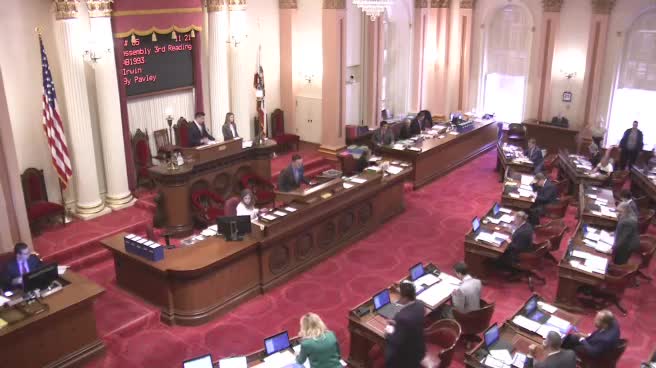 3MIN
Senate Floor
 15MIN
Senate Standing Committee on Public Safety
 45MIN
Senate Standing Committee on Public Safety
 5MIN
Assembly Floor
 1MIN
Assembly Floor
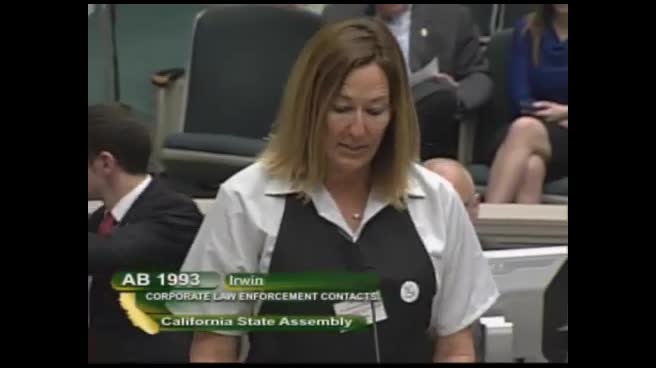 4MIN
Assembly Standing Committee on Appropriations
Bill Author

Bill Co-Author(s):