AB 1996: Private postsecondary education: exemptions.
- Session Year: 2015-2016
- House: Assembly
- Latest Version Date: 2016-09-02
Existing law, the California Private Postsecondary Education Act of 2009, provides, among other things, for student protections and regulatory oversight of private postsecondary institutions in the state. The act is enforced by the Bureau for Private Postsecondary Education within the Department of Consumer Affairs. The act exempts an institution from its provisions if any of a list of specific criteria are met.
This bill would exempt, until January 1, 2022, an institution from the act if it maintains its status as a nonprofit institution that is accredited by the Accrediting Commission for Schools, Western Association of Schools and Colleges, has operated continuously in California for at least 50 years as a nonprofit entity, as specified, does not award degrees or diplomas, is paid from state or federal student financial aid programs for fewer than 20% of its students who receive vocational training, and previously had an exemption from the bureau and did not utilize a specified pathway under the act.
Existing law requires the Employment Development Department within the Labor and Workforce Development Agency to administer various programs, including the state unemployment and disability compensation programs, and perform duties relating to income tax withholding, which require the furnishment of social security numbers of employees or other individuals. Existing law also deems the California Workforce Development Board responsible for assisting the Governor in the development, oversight, and continuous improvement of Californias workforce investment system and the alignment of the education and workforce investment systems to the needs of the 21st century economy and workforce.
Under existing law, the information obtained in the administration of the Unemployment Insurance Code is for the exclusive use and information of the Director of Employment Development in the discharge of his or her duties and is not open to the public. However, existing law permits the use of the information for specified purposes, and allows the director to require reimbursement for direct costs incurred.
This bill would require the Employment Development Department, in conjunction with the California Workforce Development Board, to annually collect specified information from an institution meeting specified requirements, and provide a report to the Bureau for Private Postsecondary Education. The bill would also require the Employment Development Department to make the report available on the searchable CalJOBS Web site, through the training and education providers link on the Internet Web site, for the institution about which the report was made. This bill would require the Director of Employment Development to permit the use of information collected, as specified.
Existing law, the California Private Postsecondary Education Act of 2009, provides, among other things, for student protections and regulatory oversight of private postsecondary institutions in the state. The act is enforced by the Bureau for Private Postsecondary Education within the Department of Consumer Affairs. The act exempts an institution from its provisions if any of a list of specific criteria are met.
This bill would exempt JobTrain, Inc. exempt, until January 1, 2022, an institution from the act if it maintains its status as a nonprofit institution that is accredited by the Accrediting Commission for Schools, Western Association of Schools and Colleges, has operated continuously in California for at least 50 years as a nonprofit entity, as specified, does not award degrees or diplomas, and is paid from state or federal student financial aid programs for fewer than 20% of its students who receive vocational training. The bill would also make nonsubstantive changes in the provision that relates to exemptions from the act. training, and previously had an exemption from the bureau and did not utilize a specified pathway under the act.
Existing law requires the Employment Development Department within the Labor and Workforce Development Agency to administer various programs, including the state unemployment and disability compensation programs, and perform duties relating to income tax withholding, which require the furnishment of social security numbers of employees or other individuals. Existing law also deems the California Workforce Development Board responsible for assisting the Governor in the development, oversight, and continuous improvement of Californias workforce investment system and the alignment of the education and workforce investment systems to the needs of the 21st century economy and workforce.
Under existing law, the information obtained in the administration of the Unemployment Insurance Code is for the exclusive use and information of the Director of Employment Development in the discharge of his or her duties and is not open to the public. However, existing law permits the use of the information for specified purposes, and allows the director to require reimbursement for direct costs incurred.
This bill would require the Employment Development Department, in conjunction with the California Workforce Development Board, to annually collect specified information from JobTrain, Inc., an institution meeting specified requirements, and provide a report to the Bureau for Private Postsecondary Education. The bill would also require the Employment Development Department to make the report available on the searchable CalJOBS Web site, through the training and education providers link on the Internet Web site, for JobTrain, Inc. the institution about which the report was made. This bill would require the Director of Employment Development to permit the use of information collected, as specified.
This bill would make legislative findings and declarations as to the necessity of a special statute for JobTrain, Inc.
Existing law, the California Private Postsecondary Education Act of 2009, provides, among other things, for student protections and regulatory oversight of private postsecondary institutions in the state. The act is enforced by the Bureau for Private Postsecondary Education within the Department of Consumer Affairs. The act exempts an institution from its provisions if any of a list of specific criteria are met.
This bill would exempt JobTrain, Inc. from the act if it maintains its status as a nonprofit institution that is accredited by the Accrediting Commission for Schools, Western Association of Schools and Colleges, does not award degrees or diplomas, and is paid from state or federal student financial aid programs for fewer than 20% of its students who receive vocational training. The bill would also make nonsubstantive changes in the provision that relates to exemptions from the act.
Existing law requires the Employment Development Department within the Labor and Workforce Development Agency to administer various programs, including the state unemployment and disability compensation programs, and perform duties relating to income tax withholding, which require the furnishment of social security numbers of employees or other individuals. Existing law also deems the California Workforce Development Board responsible for assisting the Governor in the development, oversight, and continuous improvement of Californias workforce investment system and the alignment of the education and workforce investment systems to the needs of the 21st century economy and workforce.
Under existing law, the information obtained in the administration of the Unemployment Insurance Code is for the exclusive use and information of the Director of Employment Development in the discharge of his or her duties and is not open to the public. However, existing law permits the use of the information for specified purposes, and allows the director to require reimbursement for direct costs incurred.
This bill would require the Employment Development Department, in conjunction with the California Workforce Development Board, to annually collect specified information from JobTrain, Inc., and provide a report to the Bureau for Private Postsecondary Education. The bill would also require the Employment Development Department to make the report available on the searchable CalJOBS Web site, through the training and education providers link on the Internet Web site, for JobTrain, Inc. This bill would require the Director of Employment Development to permit the use of information collected, as specified.
This bill would make legislative findings and declarations as to the necessity of a special statute for JobTrain, Inc.
Existing law, the California Private Postsecondary Education Act of 2009, provides, among other things, for student protections and regulatory oversight of private postsecondary institutions in the state. The act is enforced by the Bureau for Private Postsecondary Education within the Department of Consumer Affairs. The act exempts an institution from its provisions if any of a list of specific criteria are met.
This bill would specify that exempt JobTrain, Inc. from the act if it maintains its status as a nonprofit institution that is accredited by the Accrediting Commission for Schools, Western Association of Schools and Colleges, does not award degrees or diplomas, and is paid from state or federal student financial aid programs for fewer than 20 percent 20% of its students who receive vocational training is also exempted from the act. training. The bill would also make nonsubstantive changes in the provision that relates to exemptions from the act.
This bill would make legislative findings and declarations as to the necessity of a special statute for JobTrain, Inc.
Existing law, the California Private Postsecondary Education Act of 2009, provides, among other things, for student protections and regulatory oversight of private postsecondary institutions in the state. The act is enforced by the Bureau for Private Postsecondary Education within the Department of Consumer Affairs. The act exempts an institution from its provisions if any of a list of specific criteria are met.
This bill would specify that a nonprofit institution that is accredited by the Accrediting Commission for Schools, Western Association of Schools and Colleges, does not award degrees or diplomas, and is paid from state or federal student financial aid programs for fewer than 20 percent of its students who receive vocational training is also exempted from the act. The bill would also make nonsubstantive changes in the provision that relates to exemptions from the act.
Existing law, the California Private Postsecondary Education Act of 2009, provides, among other things, for student protections and regulatory oversight of private postsecondary institutions in the state. The act is enforced by the Bureau for Private Postsecondary Education within the Department of Consumer Affairs. The act exempts an institution from its provisions if any of a list of specific criteria are met.
This bill would make nonsubstantive changes in the provision that relates to exemptions from the act.
(a)(1)Except as provided in Sections 94874.2 and 94874.7, an institution that meets all of the requirements of paragraph (2) is exempt from this chapter.
(2)It maintains its status as a nonprofit institution that is accredited by the Accrediting Commission for Schools, Western Association of Schools and Colleges; as of January 1, 2016, it has operated continuously in California for at least 50 years as a nonprofit entity in accordance with Section 501(c)(3) of the federal Internal Revenue Code and not as a private foundation as defined in Section 509(a) of the federal Internal Revenue Code; it does not award degrees or diplomas; it is paid from state or federal student financial aid programs for fewer than 20 percent of its students who receive vocational training; and it previously had an exemption from the bureau and did not utilize the pathway provided in Section 94874.8.
(b)This section shall remain in effect only until January 1, 2022, and as of that date is repealed, unless a later enacted statute, that is enacted before January 1, 2022, deletes or extends that date.
SEC. 2.Section 1095 of the Unemployment Insurance Code, as amended by Section 277 of Chapter 31 of the Statutes of 2016, is amended to read:1095.The director shall permit the use of any information in his or her possession to the extent necessary for any of the following purposes and may require reimbursement for all direct costs incurred in providing any and all information specified in this section, except information specified in subdivisions (a) to (e), inclusive:
(a)To enable the director or his or her representative to carry out his or her responsibilities under this code.
(b)To properly present a claim for benefits.
(c)To acquaint a worker or his or her authorized agent with his or her existing or prospective right to benefits.
(d)To furnish an employer or his or her authorized agent with information to enable him or her to fully discharge his or her obligations or safeguard his or her rights under this division or Division 3 (commencing with Section 9000).
(e)To enable an employer to receive a reduction in contribution rate.
(f)To enable federal, state, or local governmental departments or agencies, subject to federal law, to verify or determine the eligibility or entitlement of an applicant for, or a recipient of, public social services provided pursuant to Division 9 (commencing with Section 10000) of the Welfare and Institutions Code, or Part A of Subchapter IV of the federal Social Security Act (42 U.S.C. Sec. 601 et seq.), when the verification or determination is directly connected with, and limited to, the administration of public social services.
(g)To enable county administrators of general relief or assistance, or their representatives, to determine entitlement to locally provided general relief or assistance, when the determination is directly connected with, and limited to, the administration of general relief or assistance.
(h)To enable state or local governmental departments or agencies to seek criminal, civil, or administrative remedies in connection with the unlawful application for, or receipt of, relief provided under Division 9 (commencing with Section 10000) of the Welfare and Institutions Code or to enable the collection of expenditures for medical assistance services pursuant to Part 5 (commencing with Section 17000) of Division 9 of the Welfare and Institutions Code.
(i)To provide any law enforcement agency with the name, address, telephone number, birth date, social security number, physical description, and names and addresses of present and past employers, of any victim, suspect, missing person, potential witness, or person for whom a felony arrest warrant has been issued, when a request for this information is made by any investigator or peace officer as defined by Sections 830.1 and 830.2 of the Penal Code, or by any federal law enforcement officer to whom the Attorney General has delegated authority to enforce federal search warrants, as defined under Sections 60.2 and 60.3 of Title 28 of the Code of Federal Regulations, as amended, and when the requesting officer has been designated by the head of the law enforcement agency and requests this information in the course of and as a part of an investigation into the commission of a crime when there is a reasonable suspicion that the crime is a felony and that the information would lead to relevant evidence. The information provided pursuant to this subdivision shall be provided to the extent permitted by federal law and regulations, and to the extent the information is available and accessible within the constraints and configurations of existing department records. Any person who receives any information under this subdivision shall make a written report of the information to the law enforcement agency that employs him or her, for filing under the normal procedures of that agency.
(1)This subdivision shall not be construed to authorize the release to any law enforcement agency of a general list identifying individuals applying for or receiving benefits.
(2)The department shall maintain records pursuant to this subdivision only for periods required under regulations or statutes enacted for the administration of its programs.
(3)This subdivision shall not be construed as limiting the information provided to law enforcement agencies to that pertaining only to applicants for, or recipients of, benefits.
(4)The department shall notify all applicants for benefits that release of confidential information from their records will not be protected should there be a felony arrest warrant issued against the applicant or in the event of an investigation by a law enforcement agency into the commission of a felony.
(j)To provide public employee retirement systems in California with information relating to the earnings of any person who has applied for or is receiving a disability income, disability allowance, or disability retirement allowance, from a public employee retirement system. The earnings information shall be released only upon written request from the governing board specifying that the person has applied for or is receiving a disability allowance or disability retirement allowance from its retirement system. The request may be made by the chief executive officer of the system or by an employee of the system so authorized and identified by name and title by the chief executive officer in writing.
(k)To enable the Division of Labor Standards Enforcement in the Department of Industrial Relations to seek criminal, civil, or administrative remedies in connection with the failure to pay, or the unlawful payment of, wages pursuant to Chapter 1 (commencing with Section 200) of Part 1 of Division 2 of, and Chapter 1 (commencing with Section 1720) of Part 7 of Division 2 of, the Labor Code.
(l)To enable federal, state, or local governmental departments or agencies to administer child support enforcement programs under Part D of Title IV of the federal Social Security Act (42 U.S.C. Sec. 651 et seq.).
(m)To provide federal, state, or local governmental departments or agencies with wage and claim information in its possession that will assist those departments and agencies in the administration of the Victims of Crime Program or in the location of victims of crime who, by state mandate or court order, are entitled to restitution that has been or can be recovered.
(n)To provide federal, state, or local governmental departments or agencies with information concerning any individuals who are or have been:
(1)Directed by state mandate or court order to pay restitution, fines, penalties, assessments, or fees as a result of a violation of law.
(2)Delinquent or in default on guaranteed student loans or who owe repayment of funds received through other financial assistance programs administered by those agencies. The information released by the director for the purposes of this paragraph shall not include unemployment insurance benefit information.
(o)To provide an authorized governmental agency with any or all relevant information that relates to any specific workers compensation insurance fraud investigation. The information shall be provided to the extent permitted by federal law and regulations. For the purposes of this subdivision, authorized governmental agency means the district attorney of any county, the office of the Attorney General, the Contractors State License Board, the Department of Industrial Relations, and the Department of Insurance. An authorized governmental agency may disclose this information to the State Bar, the Medical Board of California, or any other licensing board or department whose licensee is the subject of a workers compensation insurance fraud investigation. This subdivision shall not prevent any authorized governmental agency from reporting to any board or department the suspected misconduct of any licensee of that body.
(p)To enable the Director of Consumer Affairs, or his or her representatives, to access unemployment insurance quarterly wage data on a case-by-case basis to verify information on school administrators, school staff, and students provided by those schools who are being investigated for possible violations of Chapter 8 (commencing with Section 94800) of Part 59 of Division 10 of Title 3 of the Education Code.
(q)To provide employment tax information to the tax officials of Mexico, if a reciprocal agreement exists. For purposes of this subdivision, reciprocal agreement means a formal agreement to exchange information between national taxing officials of Mexico and taxing authorities of the State Board of Equalization, the Franchise Tax Board, and the Employment Development Department. Furthermore, the reciprocal agreement shall be limited to the exchange of information that is essential for tax administration purposes only. Taxing authorities of the State of California shall be granted tax information only on California residents. Taxing authorities of Mexico shall be granted tax information only on Mexican nationals.
(r)To enable city and county planning agencies to develop economic forecasts for planning purposes. The information shall be limited to businesses within the jurisdiction of the city or county whose planning agency is requesting the information, and shall not include information regarding individual employees.
(s)To provide the State Department of Developmental Services with wage and employer information that will assist in the collection of moneys owed by the recipient, parent, or any other legally liable individual for services and supports provided pursuant to Chapter 9 (commencing with Section 4775) of Division 4.5 of, and Chapter 2 (commencing with Section 7200) and Chapter 3 (commencing with Section 7500) of Division 7 of, the Welfare and Institutions Code.
(t)To provide the State Board of Equalization with employment tax information that will assist in the administration of tax programs. The information shall be limited to the exchange of employment tax information essential for tax administration purposes to the extent permitted by federal law and regulations.
(u)Nothing in this section shall be construed to authorize or permit the use of information obtained in the administration of this code by any private collection agency.
(v)The disclosure of the name and address of an individual or business entity that was issued an assessment that included penalties under Section 1128 or 1128.1 shall not be in violation of Section 1094 if the assessment is final. The disclosure may also include any of the following:
(1)The total amount of the assessment.
(2)The amount of the penalty imposed under Section 1128 or 1128.1 that is included in the assessment.
(3)The facts that resulted in the charging of the penalty under Section 1128 or 1128.1.
(w)To enable the Contractors State License Board to verify the employment history of an individual applying for licensure pursuant to Section 7068 of the Business and Professions Code.
(x)To provide any peace officer with the Division of Investigation in the Department of Consumer Affairs information pursuant to subdivision (i) when the requesting peace officer has been designated by the chief of the Division of Investigation and requests this information in the course of and as part of an investigation into the commission of a crime or other unlawful act when there is reasonable suspicion to believe that the crime or act may be connected to the information requested and would lead to relevant information regarding the crime or unlawful act.
(y)To enable the Labor Commissioner of the Division of Labor Standards Enforcement in the Department of Industrial Relations to identify, pursuant to Section 90.3 of the Labor Code, unlawfully uninsured employers. The information shall be provided to the extent permitted by federal law and regulations.
(z)To enable the Chancellor of the California Community Colleges, in accordance with the requirements of Section 84754.5 of the Education Code, to obtain quarterly wage data, commencing January 1, 1993, on students who have attended one or more community colleges, to assess the impact of education on the employment and earnings of students, to conduct the annual evaluation of district-level and individual college performance in achieving priority educational outcomes, and to submit the required reports to the Legislature and the Governor. The information shall be provided to the extent permitted by federal statutes and regulations.
(aa)To enable the Public Employees Retirement System to seek criminal, civil, or administrative remedies in connection with the unlawful application for, or receipt of, benefits provided under Part 3 (commencing with Section 20000) of Division 5 of Title 2 of the Government Code.
(ab)To enable the State Department of Education, the University of California, the California State University, and the Chancellor of the California Community Colleges, pursuant to the requirements prescribed by the federal American Recovery and Reinvestment Act of 2009 (Public Law 111-5), to obtain quarterly wage data, commencing July 1, 2010, on students who have attended their respective systems to assess the impact of education on the employment and earnings of those students, to conduct the annual analysis of district-level and individual district or postsecondary education system performance in achieving priority educational outcomes, and to submit the required reports to the Legislature and the Governor. The information shall be provided to the extent permitted by federal statutes and regulations.
(ac)To provide the Agricultural Labor Relations Board with employee, wage, and employer information, for use in the investigation or enforcement of the Alatorre-Zenovich-Dunlap-Berman Agricultural Labor Relations Act of 1975 (Part 3.5 (commencing with Section 1140) of Division 2 of the Labor Code). The information shall be provided to the extent permitted by federal statutes and regulations.
(ad)(1)To enable the State Department of Health Care Services, the California Health Benefit Exchange, the Managed Risk Medical Insurance Board, and county departments and agencies to obtain information regarding employee wages, California employer names and account numbers, employer reports of wages and number of employees, and disability insurance and unemployment insurance claim information, for the purpose of:
(A)Verifying or determining the eligibility of an applicant for, or a recipient of, state health subsidy programs, limited to the Medi-Cal program, provided pursuant to Chapter 7 (commencing with Section 14000) of Part 3 of Division 9 of the Welfare and Institutions Code, and the Access for Infants and Mothers Program, provided pursuant to Part 6.3 (commencing with Section 12695) of Division 2 of the Insurance Code, when the verification or determination is directly connected with, and limited to, the administration of the state health subsidy programs referenced in this subparagraph.
(B)Verifying or determining the eligibility of an applicant for, or a recipient of, federal subsidies offered through the California Health Benefit Exchange, provided pursuant to Title 22 (commencing with Section 100500) of the Government Code, including federal tax credits and cost-sharing assistance pursuant to the federal Patient Protection and Affordable Care Act (Public Law 111-148), as amended by the federal Health Care and Education Reconciliation Act of 2010 (Public Law 111-152), when the verification or determination is directly connected with, and limited to, the administration of the California Health Benefit Exchange.
(C)Verifying or determining the eligibility of employees and employers for health coverage through the Small Business Health Options Program, provided pursuant to Section 100502 of the Government Code, when the verification or determination is directly connected with, and limited to, the administration of the Small Business Health Options Program.
(2)The information provided under this subdivision shall be subject to the requirements of, and provided to the extent permitted by, federal law and regulations, including Part 603 of Title 20 of the Code of Federal Regulations.
(ae)To provide any peace officer with the Investigations Division of the Department of Motor Vehicles with information pursuant to subdivision (i), when the requesting peace officer has been designated by the Chief of the Investigations Division and requests this information in the course of, and as part of, an investigation into identity theft, counterfeiting, document fraud, or consumer fraud, and there is reasonable suspicion that the crime is a felony and that the information would lead to relevant evidence regarding the identity theft, counterfeiting, document fraud, or consumer fraud. The information provided pursuant to this subdivision shall be provided to the extent permitted by federal law and regulations, and to the extent the information is available and accessible within the constraints and configurations of existing department records. Any person who receives any information under this subdivision shall make a written report of the information to the Investigations Division of the Department of Motor Vehicles, for filing under the normal procedures of that division.
(af)Until January 1, 2020, to enable the Department of Finance to prepare and submit the report required by Section 13084 of the Government Code that identifies all employers in California that employ 100 or more employees who receive benefits from the Medi-Cal program (Chapter 7 (commencing with Section 14000) of Part 3 of Division 9 of the Welfare and Institutions Code). The information used for this purpose shall be limited to information obtained pursuant to Section 11026.5 of the Welfare and Institutions Code and from the administration of personal income tax wage withholding pursuant to Division 6 (commencing with Section 13000) and the disability insurance program and may be disclosed to the Department of Finance only for the purpose of preparing and submitting the report and only to the extent not prohibited by federal law.
(ag)To provide, to the extent permitted by federal law and regulations, the Student Aid Commission with wage information in order to verify the employment status of an individual applying for a Cal Grant C award pursuant to subdivision (c) of Section 69439 of the Education Code.
(ah)To enable the Department of Corrections and Rehabilitation to obtain quarterly wage data of former inmates who have been incarcerated within the prison system in order to assess the impact of rehabilitation services or the lack of these services on the employment and earnings of these former inmates. Quarterly data for a former inmates employment status and wage history shall be provided for a period of one year, three years, and five years following release. The data shall only be used for the purpose of tracking outcomes for former inmates in order to assess the effectiveness of rehabilitation strategies on the wages and employment histories of those formerly incarcerated. The information shall be provided to the department to the extent not prohibited by federal law.
(ai)To enable federal, state, or local government departments or agencies, or their contracted agencies, subject to federal law, including the confidentiality, disclosure, and other requirements set forth in Part 603 of Title 20 of the Code of Federal Regulations, to evaluate, research, or forecast the effectiveness of public social services programs administered pursuant to Division 9 (commencing with Section 10000) of the Welfare and Institutions Code, or Part A of Subchapter IV of Chapter 7 of the federal Social Security Act (42 U.S.C. Sec. 601 et seq.), when the evaluation, research, or forecast is directly connected with, and limited to, the administration of the public social services programs.
(aj)To enable the California Workforce Development Board, the Chancellor of the California Community Colleges, the Superintendent of Public Instruction, the Department of Rehabilitation, the State Department of Social Services, the Bureau for Private Postsecondary Education, the Department of Industrial Relations, the Division of Apprenticeship Standards, and the Employment Training Panel to access any relevant quarterly wage data necessary for the evaluation and reporting of their respective program performance outcomes as required and permitted by various state and federal laws pertaining to performance measurement and program evaluation under the federal Workforce Innovation and Opportunity Act (Public Law 113-128); the workforce performance metrics dashboard pursuant to paragraph (1) of subdivision (i) of Section 14013; the Adult Education Block Grant Program consortia performance metrics pursuant to Section 84920 of the Education Code; the economic and workforce development program performance measures pursuant to Section 88650 of the Education Code; and the California Community Colleges Economic and Workforce Development Program performance measures established in Part 52.5 (commencing with Section 88600) of Division 7 of Title 3 of the Education Code.
(ak)To enable the California Workforce Development Board to collect information from an institution that meets all of the requirements of paragraph (2) of subdivision (a) of Section 94874.4 of the Education Code and provide a report to the Bureau for Private Postsecondary Education on the information described in Section 14018, and to make the report available on the searchable CalJOBS Web site.
SEC. 3.Section 14018 is added to the Unemployment Insurance Code, to read:14018.(a)The Employment Development Department, in conjunction with the California Workforce Development Board, shall annually collect information from an institution that meets all of the requirements of paragraph (2) of subdivision (a) of Section 94874.4 of the Education Code, and provide a report to the Bureau for Private Postsecondary Education on the following:
(1)The number of students enrolled in an institution that meets all of the requirements of paragraph (2) of subdivision (a) of Section 94874.4 of the Education Code, and the number that have completed their respective training programs offered by that institution.
(2)The number of students attaining training from an institution that meets all of the requirements of paragraph (2) of subdivision (a) of Section 94874.4 of the Education Code, using funds made available pursuant to the federal Workforce Innovation and Opportunity Act of 2014.
(3)The skills or competency attained through their respective program offered by an institution that meets all of the requirements of paragraph (2) of subdivision (a) of Section 94874.4 of the Education Code, and subsequent employment placement and retention information, including income.
(b)To the extent permitted by federal law and to the extent that individually identifiable information is not made available, the Employment Development Department shall make the report available on the searchable CalJOBS web site, through the training and education providers link on the Internet Web site, for an institution that meets all of the requirements of paragraph (2) of subdivision (a) of Section 94874.4 of the Education Code.
(a)(1)Except as provided in Sections 94874.2 and 94874.7, an institution that meets all of the requirements of paragraph (2) is exempt from this chapter.
(2)It maintains its status as a nonprofit institution that is accredited by the Accrediting Commission for Schools, Western Association of Schools and Colleges; as of January 1, 2016, it has operated continuously in California for at least 50 years as a nonprofit entity in accordance with Section 501(c)(3) of the federal Internal Revenue Code and not as a private foundation as defined in Section 509(a) of the federal Internal Revenue Code; it does not award degrees or diplomas; it is paid from state or federal student financial aid programs for fewer than 20 percent of its students who receive vocational training; and it previously had an exemption from the bureau and did not utilize the pathway provided in Section 94874.8.
(b)This section shall remain in effect only until January 1, 2022, and as of that date is repealed, unless a later enacted statute, that is enacted before January 1, 2022, deletes or extends that date.
SEC. 2.Section 1095 of the Unemployment Insurance Code, as amended by Section 277 of Chapter 31 of the Statutes of 2016, is amended to read:1095.The director shall permit the use of any information in his or her possession to the extent necessary for any of the following purposes and may require reimbursement for all direct costs incurred in providing any and all information specified in this section, except information specified in subdivisions (a) to (e), inclusive:
(a)To enable the director or his or her representative to carry out his or her responsibilities under this code.
(b)To properly present a claim for benefits.
(c)To acquaint a worker or his or her authorized agent with his or her existing or prospective right to benefits.
(d)To furnish an employer or his or her authorized agent with information to enable him or her to fully discharge his or her obligations or safeguard his or her rights under this division or Division 3 (commencing with Section 9000).
(e)To enable an employer to receive a reduction in contribution rate.
(f)To enable federal, state, or local governmental departments or agencies, subject to federal law, to verify or determine the eligibility or entitlement of an applicant for, or a recipient of, public social services provided pursuant to Division 9 (commencing with Section 10000) of the Welfare and Institutions Code, or Part A of Subchapter IV of the federal Social Security Act (42 U.S.C. Sec. 601 et seq.), when the verification or determination is directly connected with, and limited to, the administration of public social services.
(g)To enable county administrators of general relief or assistance, or their representatives, to determine entitlement to locally provided general relief or assistance, when the determination is directly connected with, and limited to, the administration of general relief or assistance.
(h)To enable state or local governmental departments or agencies to seek criminal, civil, or administrative remedies in connection with the unlawful application for, or receipt of, relief provided under Division 9 (commencing with Section 10000) of the Welfare and Institutions Code or to enable the collection of expenditures for medical assistance services pursuant to Part 5 (commencing with Section 17000) of Division 9 of the Welfare and Institutions Code.
(i)To provide any law enforcement agency with the name, address, telephone number, birth date, social security number, physical description, and names and addresses of present and past employers, of any victim, suspect, missing person, potential witness, or person for whom a felony arrest warrant has been issued, when a request for this information is made by any investigator or peace officer as defined by Sections 830.1 and 830.2 of the Penal Code, or by any federal law enforcement officer to whom the Attorney General has delegated authority to enforce federal search warrants, as defined under Sections 60.2 and 60.3 of Title 28 of the Code of Federal Regulations, as amended, and when the requesting officer has been designated by the head of the law enforcement agency and requests this information in the course of and as a part of an investigation into the commission of a crime when there is a reasonable suspicion that the crime is a felony and that the information would lead to relevant evidence. The information provided pursuant to this subdivision shall be provided to the extent permitted by federal law and regulations, and to the extent the information is available and accessible within the constraints and configurations of existing department records. Any person who receives any information under this subdivision shall make a written report of the information to the law enforcement agency that employs him or her, for filing under the normal procedures of that agency.
(1)This subdivision shall not be construed to authorize the release to any law enforcement agency of a general list identifying individuals applying for or receiving benefits.
(2)The department shall maintain records pursuant to this subdivision only for periods required under regulations or statutes enacted for the administration of its programs.
(3)This subdivision shall not be construed as limiting the information provided to law enforcement agencies to that pertaining only to applicants for, or recipients of, benefits.
(4)The department shall notify all applicants for benefits that release of confidential information from their records will not be protected should there be a felony arrest warrant issued against the applicant or in the event of an investigation by a law enforcement agency into the commission of a felony.
(j)To provide public employee retirement systems in California with information relating to the earnings of any person who has applied for or is receiving a disability income, disability allowance, or disability retirement allowance, from a public employee retirement system. The earnings information shall be released only upon written request from the governing board specifying that the person has applied for or is receiving a disability allowance or disability retirement allowance from its retirement system. The request may be made by the chief executive officer of the system or by an employee of the system so authorized and identified by name and title by the chief executive officer in writing.
(k)To enable the Division of Labor Standards Enforcement in the Department of Industrial Relations to seek criminal, civil, or administrative remedies in connection with the failure to pay, or the unlawful payment of, wages pursuant to Chapter 1 (commencing with Section 200) of Part 1 of Division 2 of, and Chapter 1 (commencing with Section 1720) of Part 7 of Division 2 of, the Labor Code.
(l)To enable federal, state, or local governmental departments or agencies to administer child support enforcement programs under Part D of Title IV of the federal Social Security Act (42 U.S.C. Sec. 651 et seq.).
(m)To provide federal, state, or local governmental departments or agencies with wage and claim information in its possession that will assist those departments and agencies in the administration of the Victims of Crime Program or in the location of victims of crime who, by state mandate or court order, are entitled to restitution that has been or can be recovered.
(n)To provide federal, state, or local governmental departments or agencies with information concerning any individuals who are or have been:
(1)Directed by state mandate or court order to pay restitution, fines, penalties, assessments, or fees as a result of a violation of law.
(2)Delinquent or in default on guaranteed student loans or who owe repayment of funds received through other financial assistance programs administered by those agencies. The information released by the director for the purposes of this paragraph shall not include unemployment insurance benefit information.
(o)To provide an authorized governmental agency with any or all relevant information that relates to any specific workers compensation insurance fraud investigation. The information shall be provided to the extent permitted by federal law and regulations. For the purposes of this subdivision, authorized governmental agency means the district attorney of any county, the office of the Attorney General, the Contractors State License Board, the Department of Industrial Relations, and the Department of Insurance. An authorized governmental agency may disclose this information to the State Bar, the Medical Board of California, or any other licensing board or department whose licensee is the subject of a workers compensation insurance fraud investigation. This subdivision shall not prevent any authorized governmental agency from reporting to any board or department the suspected misconduct of any licensee of that body.
(p)To enable the Director of Consumer Affairs, or his or her representatives, to access unemployment insurance quarterly wage data on a case-by-case basis to verify information on school administrators, school staff, and students provided by those schools who are being investigated for possible violations of Chapter 8 (commencing with Section 94800) of Part 59 of Division 10 of Title 3 of the Education Code.
(q)To provide employment tax information to the tax officials of Mexico, if a reciprocal agreement exists. For purposes of this subdivision, reciprocal agreement means a formal agreement to exchange information between national taxing officials of Mexico and taxing authorities of the State Board of Equalization, the Franchise Tax Board, and the Employment Development Department. Furthermore, the reciprocal agreement shall be limited to the exchange of information that is essential for tax administration purposes only. Taxing authorities of the State of California shall be granted tax information only on California residents. Taxing authorities of Mexico shall be granted tax information only on Mexican nationals.
(r)To enable city and county planning agencies to develop economic forecasts for planning purposes. The information shall be limited to businesses within the jurisdiction of the city or county whose planning agency is requesting the information, and shall not include information regarding individual employees.
(s)To provide the State Department of Developmental Services with wage and employer information that will assist in the collection of moneys owed by the recipient, parent, or any other legally liable individual for services and supports provided pursuant to Chapter 9 (commencing with Section 4775) of Division 4.5 of, and Chapter 2 (commencing with Section 7200) and Chapter 3 (commencing with Section 7500) of Division 7 of, the Welfare and Institutions Code.
(t)To provide the State Board of Equalization with employment tax information that will assist in the administration of tax programs. The information shall be limited to the exchange of employment tax information essential for tax administration purposes to the extent permitted by federal law and regulations.
(u)Nothing in this section shall be construed to authorize or permit the use of information obtained in the administration of this code by any private collection agency.
(v)The disclosure of the name and address of an individual or business entity that was issued an assessment that included penalties under Section 1128 or 1128.1 shall not be in violation of Section 1094 if the assessment is final. The disclosure may also include any of the following:
(1)The total amount of the assessment.
(2)The amount of the penalty imposed under Section 1128 or 1128.1 that is included in the assessment.
(3)The facts that resulted in the charging of the penalty under Section 1128 or 1128.1.
(w)To enable the Contractors State License Board to verify the employment history of an individual applying for licensure pursuant to Section 7068 of the Business and Professions Code.
(x)To provide any peace officer with the Division of Investigation in the Department of Consumer Affairs information pursuant to subdivision (i) when the requesting peace officer has been designated by the chief of the Division of Investigation and requests this information in the course of and as part of an investigation into the commission of a crime or other unlawful act when there is reasonable suspicion to believe that the crime or act may be connected to the information requested and would lead to relevant information regarding the crime or unlawful act.
(y)To enable the Labor Commissioner of the Division of Labor Standards Enforcement in the Department of Industrial Relations to identify, pursuant to Section 90.3 of the Labor Code, unlawfully uninsured employers. The information shall be provided to the extent permitted by federal law and regulations.
(z)To enable the Chancellor of the California Community Colleges, in accordance with the requirements of Section 84754.5 of the Education Code, to obtain quarterly wage data, commencing January 1, 1993, on students who have attended one or more community colleges, to assess the impact of education on the employment and earnings of students, to conduct the annual evaluation of district-level and individual college performance in achieving priority educational outcomes, and to submit the required reports to the Legislature and the Governor. The information shall be provided to the extent permitted by federal statutes and regulations.
(aa)To enable the Public Employees Retirement System to seek criminal, civil, or administrative remedies in connection with the unlawful application for, or receipt of, benefits provided under Part 3 (commencing with Section 20000) of Division 5 of Title 2 of the Government Code.
(ab)To enable the State Department of Education, the University of California, the California State University, and the Chancellor of the California Community Colleges, pursuant to the requirements prescribed by the federal American Recovery and Reinvestment Act of 2009 (Public Law 111-5), to obtain quarterly wage data, commencing July 1, 2010, on students who have attended their respective systems to assess the impact of education on the employment and earnings of those students, to conduct the annual analysis of district-level and individual district or postsecondary education system performance in achieving priority educational outcomes, and to submit the required reports to the Legislature and the Governor. The information shall be provided to the extent permitted by federal statutes and regulations.
(ac)To provide the Agricultural Labor Relations Board with employee, wage, and employer information, for use in the investigation or enforcement of the Alatorre-Zenovich-Dunlap-Berman Agricultural Labor Relations Act of 1975 (Part 3.5 (commencing with Section 1140) of Division 2 of the Labor Code). The information shall be provided to the extent permitted by federal statutes and regulations.
(ad)(1)To enable the State Department of Health Care Services, the California Health Benefit Exchange, the Managed Risk Medical Insurance Board, and county departments and agencies to obtain information regarding employee wages, California employer names and account numbers, employer reports of wages and number of employees, and disability insurance and unemployment insurance claim information, for the purpose of:
(A)Verifying or determining the eligibility of an applicant for, or a recipient of, state health subsidy programs, limited to the Medi-Cal program, provided pursuant to Chapter 7 (commencing with Section 14000) of Part 3 of Division 9 of the Welfare and Institutions Code, and the Access for Infants and Mothers Program, provided pursuant to Part 6.3 (commencing with Section 12695) of Division 2 of the Insurance Code, when the verification or determination is directly connected with, and limited to, the administration of the state health subsidy programs referenced in this subparagraph.
(B)Verifying or determining the eligibility of an applicant for, or a recipient of, federal subsidies offered through the California Health Benefit Exchange, provided pursuant to Title 22 (commencing with Section 100500) of the Government Code, including federal tax credits and cost-sharing assistance pursuant to the federal Patient Protection and Affordable Care Act (Public Law 111-148), as amended by the federal Health Care and Education Reconciliation Act of 2010 (Public Law 111-152), when the verification or determination is directly connected with, and limited to, the administration of the California Health Benefit Exchange.
(C)Verifying or determining the eligibility of employees and employers for health coverage through the Small Business Health Options Program, provided pursuant to Section 100502 of the Government Code, when the verification or determination is directly connected with, and limited to, the administration of the Small Business Health Options Program.
(2)The information provided under this subdivision shall be subject to the requirements of, and provided to the extent permitted by, federal law and regulations, including Part 603 of Title 20 of the Code of Federal Regulations.
(ae)To provide any peace officer with the Investigations Division of the Department of Motor Vehicles with information pursuant to subdivision (i), when the requesting peace officer has been designated by the Chief of the Investigations Division and requests this information in the course of, and as part of, an investigation into identity theft, counterfeiting, document fraud, or consumer fraud, and there is reasonable suspicion that the crime is a felony and that the information would lead to relevant evidence regarding the identity theft, counterfeiting, document fraud, or consumer fraud. The information provided pursuant to this subdivision shall be provided to the extent permitted by federal law and regulations, and to the extent the information is available and accessible within the constraints and configurations of existing department records. Any person who receives any information under this subdivision shall make a written report of the information to the Investigations Division of the Department of Motor Vehicles, for filing under the normal procedures of that division.
(af)Until January 1, 2020, to enable the Department of Finance to prepare and submit the report required by Section 13084 of the Government Code that identifies all employers in California that employ 100 or more employees who receive benefits from the Medi-Cal program (Chapter 7 (commencing with Section 14000) of Part 3 of Division 9 of the Welfare and Institutions Code). The information used for this purpose shall be limited to information obtained pursuant to Section 11026.5 of the Welfare and Institutions Code and from the administration of personal income tax wage withholding pursuant to Division 6 (commencing with Section 13000) and the disability insurance program and may be disclosed to the Department of Finance only for the purpose of preparing and submitting the report and only to the extent not prohibited by federal law.
(ag)To provide, to the extent permitted by federal law and regulations, the Student Aid Commission with wage information in order to verify the employment status of an individual applying for a Cal Grant C award pursuant to subdivision (c) of Section 69439 of the Education Code.
(ah)To enable the Department of Corrections and Rehabilitation to obtain quarterly wage data of former inmates who have been incarcerated within the prison system in order to assess the impact of rehabilitation services or the lack of these services on the employment and earnings of these former inmates. Quarterly data for a former inmates employment status and wage history shall be provided for a period of one year, three years, and five years following release. The data shall only be used for the purpose of tracking outcomes for former inmates in order to assess the effectiveness of rehabilitation strategies on the wages and employment histories of those formerly incarcerated. The information shall be provided to the department to the extent not prohibited by federal law.
(ai)To enable federal, state, or local government departments or agencies, or their contracted agencies, subject to federal law, including the confidentiality, disclosure, and other requirements set forth in Part 603 of Title 20 of the Code of Federal Regulations, to evaluate, research, or forecast the effectiveness of public social services programs administered pursuant to Division 9 (commencing with Section 10000) of the Welfare and Institutions Code, or Part A of Subchapter IV of Chapter 7 of the federal Social Security Act (42 U.S.C. Sec. 601 et seq.), when the evaluation, research, or forecast is directly connected with, and limited to, the administration of the public social services programs.
(aj)To enable the California Workforce Development Board, the Chancellor of the California Community Colleges, the Superintendent of Public Instruction, the Department of Rehabilitation, the State Department of Social Services, the Bureau for Private Postsecondary Education, the Department of Industrial Relations, the Division of Apprenticeship Standards, and the Employment Training Panel to access any relevant quarterly wage data necessary for the evaluation and reporting of their respective program performance outcomes as required and permitted by various state and federal laws pertaining to performance measurement and program evaluation under the federal Workforce Innovation and Opportunity Act (Public Law 113-128); the workforce performance metrics dashboard pursuant to paragraph (1) of subdivision (i) of Section 14013; the Adult Education Block Grant Program consortia performance metrics pursuant to Section 84920 of the Education Code; the economic and workforce development program performance measures pursuant to Section 88650 of the Education Code; and the California Community Colleges Economic and Workforce Development Program performance measures established in Part 52.5 (commencing with Section 88600) of Division 7 of Title 3 of the Education Code.
(ak)To enable the California Workforce Development Board to collect information from an institution that meets all of the requirements of paragraph (2) of subdivision (a) of Section 94874.4 of the Education Code and provide a report to the Bureau for Private Postsecondary Education on the information described in Section 14018, and to make the report available on the searchable CalJOBS Web site.
SECTION 1.Section 94874 of the Education Code is amended to read:94874.Except as provided in Section 94874.2, all of the following are exempt from this chapter:
(a)An institution that offers solely avocational or recreational educational programs.
(b)(1)An institution offering educational programs sponsored by a bona fide trade, business, professional, or fraternal organization, solely for that organizations membership.
(2)(A)Except as provided in subparagraph (B), a bona fide organization, association, or council that offers preapprenticeship training programs, on behalf of one or more Division of Apprenticeship Standards-approved labor-management apprenticeship programs that satisfies one of the following conditions:
(i)It is not on the Eligible Training Provider List established and maintained by the California Workforce Development Board, but has met the requirements for placement on the list.
(ii)It is on the Eligible Training Provider List established and maintained by the California Workforce Development Board, and meets the requirements for continued listing.
(B)If an organization, association, or council has been removed from the Eligible Training Provider List established and maintained by the California Workforce Development Board for failure to meet performance standards, it is not exempt until it meets all applicable performance standards.
(c)A postsecondary educational institution established, operated, and governed by the federal government or by this state or its political subdivisions.
(d)An institution solely offering either of the following:
(1)Test preparation for examinations required for admission to a postsecondary educational institution.
(2)Continuing education or license examination preparation, if the institution or the program is approved, certified, or sponsored by any of the following:
(A)A government agency, other than the bureau, that licenses persons in a particular profession, occupation, trade, or career field.
(B)A state-recognized professional licensing body, such as the State Bar of California, that licenses persons in a particular profession, occupation, trade, or career field.
(C)A bona fide trade, business, or professional organization.
(e)(1)An institution owned, controlled, and operated and maintained by a religious organization lawfully operating as a nonprofit religious corporation pursuant to Part 4 (commencing with Section 9110) of Division 2 of Title 1 of the Corporations Code, that meets all of the following requirements:
(A)The instruction is limited to the principles of that religious organization, or to courses offered pursuant to Section 2789 of the Business and Professions Code.
(B)The diploma or degree is limited to evidence of completion of that education.
(2)An institution operating under this subdivision shall offer degrees and diplomas only in the beliefs and practices of the church, religious denomination, or religious organization.
(3)An institution operating under this subdivision shall not award degrees in any area of physical science.
(4)Any degree or diploma granted under this subdivision shall contain on its face, in the written description of the title of the degree being conferred, a reference to the theological or religious aspect of the degrees subject area.
(5)A degree awarded under this subdivision shall reflect the nature of the degree title, such as associate of religious studies, bachelor of religious studies, master of divinity, or doctor of divinity.
(f)An institution that does not award degrees and that solely provides educational programs for total charges of two thousand five hundred dollars ($2,500) or less when no part of the total charges is paid from state or federal student financial aid programs. The bureau may adjust this cost threshold based upon the California Consumer Price Index, and post notification of the adjusted cost threshold on its Internet Web site, as the bureau determines, through the promulgation of regulations, that the adjustment is consistent with the intent of this chapter.
(g)A law school that is accredited by the Council of the Section of Legal Education and Admissions to the Bar of the American Bar Association or a law school or law study program that is subject to the approval, regulation, and oversight of the Committee of Bar Examiners, pursuant to Sections 6046.7 and 6060.7 of the Business and Professions Code.
(h)A nonprofit public benefit corporation that satisfies all of the following criteria:
(1)Is qualified under Section 501(c)(3) of the United States Internal Revenue Code.
(2)Is organized specifically to provide workforce development or rehabilitation services.
(3)Is accredited by an accrediting organization for workforce development or rehabilitation services recognized by the Department of Rehabilitation.
(i)An institution that is accredited by the Accrediting Commission for Senior Colleges and Universities, Western Association of Schools and Colleges, or the Accrediting Commission for Community and Junior Colleges, Western Association of Schools and Colleges.
(j)JobTrain, Inc., if it maintains its status as a nonprofit institution that is accredited by the Accrediting Commission for Schools, Western Association of Schools and Colleges, and does not award degrees or diplomas, and is paid from state or federal student financial aid programs for fewer than 20 percent of its students who receive vocational training.
(k)An institution that satisfies all of the following criteria:
(1)The institution has been accredited, for at least 10 years, by an accrediting agency that is recognized by the United States Department of Education.
(2)The institution has operated continuously in this state for at least 25 years.
(3)During its existence, the institution has not filed for bankruptcy protection pursuant to Title 11 of the United States Code.
(4)The institutions cohort default rate on guaranteed student loans does not exceed 10 percent for the most recent three years, as published by the United States Department of Education.
(5)The institution maintains a composite score of 1.5 or greater on its equity, primary reserve, and net income ratios, as provided under Section 668.172 of Title 34 of the Code of Federal Regulations.
(6)The institution provides a pro rata refund of unearned institutional charges to students who complete 75 percent or less of the period of attendance.
(7)The institution provides to all students the right to cancel the enrollment agreement and obtain a refund of charges paid through attendance at the second class session, or the 14th day after enrollment, whichever is later.
(8)The institution submits to the bureau copies of its most recent IRS Form 990, the institutions Integrated Postsecondary Education Data System Report of the United States Department of Education, and its accumulated default rate.
(9)The institution is incorporated and lawfully operates as a nonprofit public benefit corporation pursuant to Part 2 (commencing with Section 5110) of Division 2 of Title 1 of the Corporations Code, and is not managed or administered by an entity for profit.
(l)Flight instruction providers or programs that provide flight instruction pursuant to Federal Aviation Administration regulations and meet both of the following criteria:
(1)The flight instruction provider or program does not require students to enter into written or oral contracts of indebtedness.
(2)The flight instruction provider or program does not require or accept prepayment of instruction-related costs in excess of two thousand five hundred dollars ($2,500).
SEC. 2.Section 1095 of the Unemployment Insurance Code is amended to read:1095.The director shall permit the use of any information in his or her possession to the extent necessary for any of the following purposes and may require reimbursement for all direct costs incurred in providing any and all information specified in this section, except information specified in subdivisions (a) to (e), inclusive:
(a)To enable the director or his or her representative to carry out his or her responsibilities under this code.
(b)To properly present a claim for benefits.
(c)To acquaint a worker or his or her authorized agent with his or her existing or prospective right to benefits.
(d)To furnish an employer or his or her authorized agent with information to enable him or her to fully discharge his or her obligations or safeguard his or her rights under this division or Division 3 (commencing with Section 9000).
(e)To enable an employer to receive a reduction in contribution rate.
(f)To enable federal, state, or local governmental departments or agencies, subject to federal law, to verify or determine the eligibility or entitlement of an applicant for, or a recipient of, public social services provided pursuant to Division 9 (commencing with Section 10000) of the Welfare and Institutions Code, or Part A of Title IV of the federal Social Security Act (42 U.S.C. Sec. 601 et seq.), when the verification or determination is directly connected with, and limited to, the administration of public social services.
(g)To enable county administrators of general relief or assistance, or their representatives, to determine entitlement to locally provided general relief or assistance, when the determination is directly connected with, and limited to, the administration of general relief or assistance.
(h)To enable state or local governmental departments or agencies to seek criminal, civil, or administrative remedies in connection with the unlawful application for, or receipt of, relief provided under Division 9 (commencing with Section 10000) of the Welfare and Institutions Code or to enable the collection of expenditures for medical assistance services pursuant to Part 5 (commencing with Section 17000) of Division 9 of the Welfare and Institutions Code.
(i)To provide any law enforcement agency with the name, address, telephone number, birth date, social security number, physical description, and names and addresses of present and past employers, of any victim, suspect, missing person, potential witness, or person for whom a felony arrest warrant has been issued, when a request for this information is made by any investigator or peace officer as defined by Sections 830.1 and 830.2 of the Penal Code, or by any federal law enforcement officer to whom the Attorney General has delegated authority to enforce federal search warrants, as defined under Sections 60.2 and 60.3 of Title 28 of the Code of Federal Regulations, as amended, and when the requesting officer has been designated by the head of the law enforcement agency and requests this information in the course of and as a part of an investigation into the commission of a crime when there is a reasonable suspicion that the crime is a felony and that the information would lead to relevant evidence. The information provided pursuant to this subdivision shall be provided to the extent permitted by federal law and regulations, and to the extent the information is available and accessible within the constraints and configurations of existing department records. Any person who receives any information under this subdivision shall make a written report of the information to the law enforcement agency that employs him or her, for filing under the normal procedures of that agency.
(1)This subdivision shall not be construed to authorize the release to any law enforcement agency of a general list identifying individuals applying for or receiving benefits.
(2)The department shall maintain records pursuant to this subdivision only for periods required under regulations or statutes enacted for the administration of its programs.
(3)This subdivision shall not be construed as limiting the information provided to law enforcement agencies to that pertaining only to applicants for, or recipients of, benefits.
(4)The department shall notify all applicants for benefits that release of confidential information from their records will not be protected should there be a felony arrest warrant issued against the applicant or in the event of an investigation by a law enforcement agency into the commission of a felony.
(j)To provide public employee retirement systems in California with information relating to the earnings of any person who has applied for or is receiving a disability income, disability allowance, or disability retirement allowance, from a public employee retirement system. The earnings information shall be released only upon written request from the governing board specifying that the person has applied for or is receiving a disability allowance or disability retirement allowance from its retirement system. The request may be made by the chief executive officer of the system or by an employee of the system so authorized and identified by name and title by the chief executive officer in writing.
(k)To enable the Division of Labor Standards Enforcement in the Department of Industrial Relations to seek criminal, civil, or administrative remedies in connection with the failure to pay, or the unlawful payment of, wages pursuant to Chapter 1 (commencing with Section 200) of Part 1 of Division 2 of, and Chapter 1 (commencing with Section 1720) of Part 7 of Division 2 of, the Labor Code.
(l)To enable federal, state, or local governmental departments or agencies to administer child support enforcement programs under Part D of Title IV of the federal Social Security Act (42 U.S.C. Sec. 651 et seq.).
(m)To provide federal, state, or local governmental departments or agencies with wage and claim information in its possession that will assist those departments and agencies in the administration of the Victims of Crime Program or in the location of victims of crime who, by state mandate or court order, are entitled to restitution that has been or can be recovered.
(n)To provide federal, state, or local governmental departments or agencies with information concerning any individuals who are or have been:
(1)Directed by state mandate or court order to pay restitution, fines, penalties, assessments, or fees as a result of a violation of law.
(2)Delinquent or in default on guaranteed student loans or who owe repayment of funds received through other financial assistance programs administered by those agencies. The information released by the director for the purposes of this paragraph shall not include unemployment insurance benefit information.
(o)To provide an authorized governmental agency with any or all relevant information that relates to any specific workers compensation insurance fraud investigation. The information shall be provided to the extent permitted by federal law and regulations. For the purposes of this subdivision, authorized governmental agency means the district attorney of any county, the office of the Attorney General, the Contractors State License Board, the Department of Industrial Relations, and the Department of Insurance. An authorized governmental agency may disclose this information to the State Bar, the Medical Board of California, or any other licensing board or department whose licensee is the subject of a workers compensation insurance fraud investigation. This subdivision shall not prevent any authorized governmental agency from reporting to any board or department the suspected misconduct of any licensee of that body.
(p)To enable the Director of Consumer Affairs, or his or her representatives, to access unemployment insurance quarterly wage data on a case-by-case basis to verify information on school administrators, school staff, and students provided by those schools who are being investigated for possible violations of Chapter 8 (commencing with Section 94800) of Part 59 of Division 10 of Title 3 of the Education Code.
(q)To provide employment tax information to the tax officials of Mexico, if a reciprocal agreement exists. For purposes of this subdivision, reciprocal agreement means a formal agreement to exchange information between national taxing officials of Mexico and taxing authorities of the State Board of Equalization, the Franchise Tax Board, and the Employment Development Department. Furthermore, the reciprocal agreement shall be limited to the exchange of information that is essential for tax administration purposes only. Taxing authorities of the State of California shall be granted tax information only on California residents. Taxing authorities of Mexico shall be granted tax information only on Mexican nationals.
(r)To enable city and county planning agencies to develop economic forecasts for planning purposes. The information shall be limited to businesses within the jurisdiction of the city or county whose planning agency is requesting the information, and shall not include information regarding individual employees.
(s)To provide the State Department of Developmental Services with wage and employer information that will assist in the collection of moneys owed by the recipient, parent, or any other legally liable individual for services and supports provided pursuant to Chapter 9 (commencing with Section 4775) of Division 4.5 of, and Chapter 2 (commencing with Section 7200) and Chapter 3 (commencing with Section 7500) of Division 7 of, the Welfare and Institutions Code.
(t)To provide the State Board of Equalization with employment tax information that will assist in the administration of tax programs. The information shall be limited to the exchange of employment tax information essential for tax administration purposes to the extent permitted by federal law and regulations.
(u)Nothing in this section shall be construed to authorize or permit the use of information obtained in the administration of this code by any private collection agency.
(v)The disclosure of the name and address of an individual or business entity that was issued an assessment that included penalties under Section 1128 or 1128.1 shall not be in violation of Section 1094 if the assessment is final. The disclosure may also include any of the following:
(1)The total amount of the assessment.
(2)The amount of the penalty imposed under Section 1128 or 1128.1 that is included in the assessment.
(3)The facts that resulted in the charging of the penalty under Section 1128 or 1128.1.
(w)To enable the Contractors State License Board to verify the employment history of an individual applying for licensure pursuant to Section 7068 of the Business and Professions Code.
(x)To provide any peace officer with the Division of Investigation in the Department of Consumer Affairs information pursuant to subdivision (i) when the requesting peace officer has been designated by the chief of the Division of Investigation and requests this information in the course of and as part of an investigation into the commission of a crime or other unlawful act when there is reasonable suspicion to believe that the crime or act may be connected to the information requested and would lead to relevant information regarding the crime or unlawful act.
(y)To enable the Labor Commissioner of the Division of Labor Standards Enforcement in the Department of Industrial Relations to identify, pursuant to Section 90.3 of the Labor Code, unlawfully uninsured employers. The information shall be provided to the extent permitted by federal law and regulations.
(z)To enable the Chancellor of the California Community Colleges, in accordance with the requirements of Section 84754.5 of the Education Code, to obtain quarterly wage data, commencing January 1, 1993, on students who have attended one or more community colleges, to assess the impact of education on the employment and earnings of students, to conduct the annual evaluation of district-level and individual college performance in achieving priority educational outcomes, and to submit the required reports to the Legislature and the Governor. The information shall be provided to the extent permitted by federal statutes and regulations.
(aa)To enable the Public Employees Retirement System to seek criminal, civil, or administrative remedies in connection with the unlawful application for, or receipt of, benefits provided under Part 3 (commencing with Section 20000) of Division 5 of Title 2 of the Government Code.
(ab)To enable the State Department of Education, the University of California, the California State University, and the Chancellor of the California Community Colleges, pursuant to the requirements prescribed by the federal American Recovery and Reinvestment Act of 2009 (Public Law 111-5), to obtain quarterly wage data, commencing July 1, 2010, on students who have attended their respective systems to assess the impact of education on the employment and earnings of those students, to conduct the annual analysis of district-level and individual district or postsecondary education system performance in achieving priority educational outcomes, and to submit the required reports to the Legislature and the Governor. The information shall be provided to the extent permitted by federal statutes and regulations.
(ac)To provide the Agricultural Labor Relations Board with employee, wage, and employer information, for use in the investigation or enforcement of the Alatorre-Zenovich-Dunlap-Berman Agricultural Labor Relations Act of 1975 (Part 3.5 (commencing with Section 1140) of Division 2 of the Labor Code). The information shall be provided to the extent permitted by federal statutes and regulations.
(ad)(1)To enable the State Department of Health Care Services, the California Health Benefit Exchange, the Managed Risk Medical Insurance Board, and county departments and agencies to obtain information regarding employee wages, California employer names and account numbers, employer reports of wages and number of employees, and disability insurance and unemployment insurance claim information, for the purpose of:
(A)Verifying or determining the eligibility of an applicant for, or a recipient of, state health subsidy programs, limited to the Medi-Cal program, provided pursuant to Chapter 7 (commencing with Section 14000) of Part 3 of Division 9 of the Welfare and Institutions Code, and the Access for Infants and Mothers Program, provided pursuant to Part 6.3 (commencing with Section 12695) of Division 2 of the Insurance Code, when the verification or determination is directly connected with, and limited to, the administration of the state health subsidy programs referenced in this subparagraph.
(B)Verifying or determining the eligibility of an applicant for, or a recipient of, federal subsidies offered through the California Health Benefit Exchange, provided pursuant to Title 22 (commencing with Section 100500) of the Government Code, including federal tax credits and cost-sharing assistance pursuant to the federal Patient Protection and Affordable Care Act (Public Law 111-148), as amended by the federal Health Care and Education Reconciliation Act of 2010 (Public Law 111-152), when the verification or determination is directly connected with, and limited to, the administration of the California Health Benefit Exchange.
(C)Verifying or determining the eligibility of employees and employers for health coverage through the Small Business Health Options Program, provided pursuant to Section 100502 of the Government Code, when the verification or determination is directly connected with, and limited to, the administration of the Small Business Health Options Program.
(2)The information provided under this subdivision shall be subject to the requirements of, and provided to the extent permitted by, federal law and regulations, including Part 603 of Title 20 of the Code of Federal Regulations.
(ae)To provide any peace officer with the Investigations Division of the Department of Motor Vehicles with information pursuant to subdivision (i), when the requesting peace officer has been designated by the Chief of the Investigations Division and requests this information in the course of, and as part of, an investigation into identity theft, counterfeiting, document fraud, or consumer fraud, and there is reasonable suspicion that the crime is a felony and that the information would lead to relevant evidence regarding the identity theft, counterfeiting, document fraud, or consumer fraud. The information provided pursuant to this subdivision shall be provided to the extent permitted by federal law and regulations, and to the extent the information is available and accessible within the constraints and configurations of existing department records. Any person who receives any information under this subdivision shall make a written report of the information to the Investigations Division of the Department of Motor Vehicles, for filing under the normal procedures of that division.
(af)Until January 1, 2020, to enable the Department of Finance to prepare and submit the report required by Section 13084 of the Government Code that identifies all employers in California that employ 100 or more employees who receive benefits from the Medi-Cal program (Chapter 7 (commencing with Section 14000) of Part 3 of Division 9 of the Welfare and Institutions Code). The information used for this purpose shall be limited to information obtained pursuant to Section 11026.5 of the Welfare and Institutions Code and from the administration of personal income tax wage withholding pursuant to Division 6 (commencing with Section 13000) and the disability insurance program and may be disclosed to the Department of Finance only for the purpose of preparing and submitting the report and only to the extent not prohibited by federal law.
(ag)To provide, to the extent permitted by federal law and regulations, the Student Aid Commission with wage information in order to verify the employment status of an individual applying for a Cal Grant C award pursuant to subdivision (c) of Section 69439 of the Education Code.
(ah)To enable the Department of Corrections and Rehabilitation to obtain quarterly wage data of former inmates who have been incarcerated within the prison system in order to assess the impact of rehabilitation services or the lack of these services on the employment and earnings of these former inmates. Quarterly data for a former inmates employment status and wage history shall be provided for a period of one year, three years, and five years following release. The data shall only be used for the purpose of tracking outcomes for former inmates in order to assess the effectiveness of rehabilitation strategies on the wages and employment histories of those formerly incarcerated. The information shall be provided to the department to the extent not prohibited by federal law.
(ai)To enable federal, state, or local government departments or agencies, or their contracted agencies, subject to federal law, including the confidentiality, disclosure, and other requirements set forth in Part 603 of Title 20 of the Code of Federal Regulations, to evaluate, research, or forecast the effectiveness of public social services programs administered pursuant to Division 9 (commencing with Section 10000) of the Welfare and Institutions Code, or Part A of Subchapter IV of Chapter 7 of the federal Social Security Act (42 U.S.C. Sec. 601 et seq.), when the evaluation, research, or forecast is directly connected with, and limited to, the administration of the public social services programs.
(aj)To enable the California Workforce Development Board to collect information from JobTrain, Inc., and provide a report to the Bureau for Private Postsecondary Education on the information described in Section 14018, and to make the report available on the searchable CalJOBS Web site.
SEC. 3.Section 14018 is added to the Unemployment Insurance Code, to read:14018.(a)The Employment Development Department, in conjunction with the California Workforce Development Board, shall annually collect information from JobTrain, Inc., an institution that meets all of the requirements of paragraph (2) of subdivision (a) of Section 94874.4 of the Education Code, and provide a report to the Bureau for Private Postsecondary Education on the following:
(1)The number of students enrolled in JobTrain, Inc., an institution that meets all of the requirements of paragraph (2) of subdivision (a) of Section 94874.4 of the Education Code, and the number that have completed their respective training program programs offered by JobTrain, Inc. that institution.
(2)The number of students attaining training from JobTrain, Inc., an institution that meets all of the requirements of paragraph (2) of subdivision (a) of Section 94874.4 of the Education Code, using funds made available pursuant to the federal Workforce Innovation and Opportunity Act of 2014.
(3)The skills or competency attained through their respective program offered by JobTrain, Inc., an institution that meets all of the requirements of paragraph (2) of subdivision (a) of Section 94874.4 of the Education Code, and subsequent employment placement and retention information, including income.
(b)To the extent permitted by federal law and to the extent that individually identifiable information is not made available, the Employment Development Department shall make the report available on the searchable CalJOBS web site, through the training and education providers link on the Internet Web site, for JobTrain, Inc. an institution that meets all of the requirements of paragraph (2) of subdivision (a) of Section 94874.4 of the Education Code.
SEC. 4.The Legislature finds and declares that a special law is necessary and that a general law cannot be made applicable within the meaning of Section 16 of Article IV of the California Constitution because of the unique circumstances surrounding JobTrain, Inc.
Except as provided in Section 94874.2, all of the following are exempt from this chapter:
(a)An institution that offers solely avocational or recreational educational programs.
(b)(1)An institution offering educational programs sponsored by a bona fide trade, business, professional, or fraternal organization, solely for that organizations membership.
(2)(A)Except as provided in subparagraph (B), a bona fide organization, association, or council that offers preapprenticeship training programs, on behalf of one or more Division of Apprenticeship Standards-approved labor-management apprenticeship programs that satisfies one of the following conditions:
(i)It is not on the Eligible Training Provider List established and maintained by the California Workforce Investment Development Board, but has met the requirements for placement on the list.
(ii)It is on the Eligible Training Provider List established and maintained by the California Workforce Investment Development Board, and meets the requirements for continued listing.
(B)If an organization, association, or council has been removed from the Eligible Training Provider List established and maintained by the California Workforce Investment Development Board for failure to meet performance standards, it is not exempt until it meets all applicable performance standards.
(c)A postsecondary educational institution established, operated, and governed by the federal government or by this state or its political subdivisions.
(d)An institution solely offering either of the following:
(1)Test preparation for examinations required for admission to a postsecondary educational institution.
(2)Continuing education or license examination preparation, if the institution or the program is approved, certified, or sponsored by any of the following:
(A)A government agency, other than the bureau, that licenses persons in a particular profession, occupation, trade, or career field.
(B)A state-recognized professional licensing body, such as the State Bar of California, that licenses persons in a particular profession, occupation, trade, or career field.
(C)A bona fide trade, business, or professional organization.
(e)(1)An institution owned, controlled, and operated and maintained by a religious organization lawfully operating as a nonprofit religious corporation pursuant to Part 4 (commencing with Section 9110) of Division 2 of Title 1 of the Corporations Code, that meets all of the following requirements:
(A)The instruction is limited to the principles of that religious organization, or to courses offered pursuant to Section 2789 of the Business and Professions Code.
(B)The diploma or degree is limited to evidence of completion of that education.
(2)An institution operating under this subdivision shall offer degrees and diplomas only in the beliefs and practices of the church, religious denomination, or religious organization.
(3)An institution operating under this subdivision shall not award degrees in any area of physical science.
(4)Any degree or diploma granted under this subdivision shall contain on its face, in the written description of the title of the degree being conferred, a reference to the theological or religious aspect of the degrees subject area.
(5)A degree awarded under this subdivision shall reflect the nature of the degree title, such as associate of religious studies, bachelor of religious studies, master of divinity, or doctor of divinity.
(f)An institution that does not award degrees and that solely provides educational programs for total charges of two thousand five hundred dollars ($2,500) or less when no part of the total charges is paid from state or federal student financial aid programs. The bureau may adjust this cost threshold based upon the California Consumer Price Index, and post notification of the adjusted cost threshold on its Internet Web site, as the bureau determines, through the promulgation of regulations, that the adjustment is consistent with the intent of this chapter.
(g)A law school that is accredited by the Council of the Section of Legal Education and Admissions to the Bar of the American Bar Association or a law school or law study program that is subject to the approval, regulation, and oversight of the Committee of Bar Examiners, pursuant to Sections 6046.7 and 6060.7 of the Business and Professions Code.
(h)A nonprofit public benefit corporation that satisfies all of the following criteria:
(1)Is qualified under Section 501(c)(3) of the United States Internal Revenue Code.
(2)Is organized specifically to provide workforce development or rehabilitation services.
(3)Is accredited by an accrediting organization for workforce development or rehabilitation services recognized by the Department of Rehabilitation.
(i)An institution that is accredited by the Accrediting Commission for Senior Colleges and Universities, Western Association of Schools and Colleges, or the Accrediting Commission for Community and Junior Colleges, Western Association of Schools and Colleges.
(j)JobTrain, Inc., if it maintains its status as a nonprofit institution that is accredited by the Accrediting Commission for Schools, Western Association of Schools and Colleges, and does not award degrees or diplomas, and is paid from state or federal student financial aid programs for fewer than 20 percent of its students who receive vocational training.
(k)An institution that satisfies all of the following criteria:
(1)The institution has been accredited, for at least 10 years, by an accrediting agency that is recognized by the United States Department of Education.
(2)The institution has operated continuously in this state for at least 25 years.
(3)During its existence, the institution has not filed for bankruptcy protection pursuant to Title 11 of the United States Code.
(4)The institutions cohort default rate on guaranteed student loans does not exceed 10 percent for the most recent three years, as published by the United States Department of Education.
(5)The institution maintains a composite score of 1.5 or greater on its equity, primary reserve, and net income ratios, as provided under Section 668.172 of Title 34 of the Code of Federal Regulations.
(6)The institution provides a pro rata refund of unearned institutional charges to students who complete 75 percent or less of the period of attendance.
(7)The institution provides to all students the right to cancel the enrollment agreement and obtain a refund of charges paid through attendance at the second class session, or the 14th day after enrollment, whichever is later.
(8)The institution submits to the bureau copies of its most recent IRS Form 990, the institutions Integrated Postsecondary Education Data System Report of the United States Department of Education, and its accumulated default rate.
(9)The institution is incorporated and lawfully operates as a nonprofit public benefit corporation pursuant to Part 2 (commencing with Section 5110) of Division 2 of Title 1 of the Corporations Code, and is not managed or administered by an entity for profit.
(l)Flight instruction providers or programs that provide flight instruction pursuant to Federal Aviation Administration regulations and meet both of the following criteria:
(1)The flight instruction provider or program does not require students to enter into written or oral contracts of indebtedness.
(2)The flight instruction provider or program does not require or accept prepayment of instruction-related costs in excess of two thousand five hundred dollars ($2,500).
SEC. 2.Section 1095 of the Unemployment Insurance Code is amended to read:1095.The director shall permit the use of any information in his or her possession to the extent necessary for any of the following purposes and may require reimbursement for all direct costs incurred in providing any and all information specified in this section, except information specified in subdivisions (a) to (e), inclusive:
(a)To enable the director or his or her representative to carry out his or her responsibilities under this code.
(b)To properly present a claim for benefits.
(c)To acquaint a worker or his or her authorized agent with his or her existing or prospective right to benefits.
(d)To furnish an employer or his or her authorized agent with information to enable him or her to fully discharge his or her obligations or safeguard his or her rights under this division or Division 3 (commencing with Section 9000).
(e)To enable an employer to receive a reduction in contribution rate.
(f)To enable federal, state, or local governmental departments or agencies, subject to federal law, to verify or determine the eligibility or entitlement of an applicant for, or a recipient of, public social services provided pursuant to Division 9 (commencing with Section 10000) of the Welfare and Institutions Code, or Part A of Title IV of the federal Social Security Act (42 U.S.C. Sec. 601 et seq.), when the verification or determination is directly connected with, and limited to, the administration of public social services.
(g)To enable county administrators of general relief or assistance, or their representatives, to determine entitlement to locally provided general relief or assistance, when the determination is directly connected with, and limited to, the administration of general relief or assistance.
(h)To enable state or local governmental departments or agencies to seek criminal, civil, or administrative remedies in connection with the unlawful application for, or receipt of, relief provided under Division 9 (commencing with Section 10000) of the Welfare and Institutions Code or to enable the collection of expenditures for medical assistance services pursuant to Part 5 (commencing with Section 17000) of Division 9 of the Welfare and Institutions Code.
(i)To provide any law enforcement agency with the name, address, telephone number, birth date, social security number, physical description, and names and addresses of present and past employers, of any victim, suspect, missing person, potential witness, or person for whom a felony arrest warrant has been issued, when a request for this information is made by any investigator or peace officer as defined by Sections 830.1 and 830.2 of the Penal Code, or by any federal law enforcement officer to whom the Attorney General has delegated authority to enforce federal search warrants, as defined under Sections 60.2 and 60.3 of Title 28 of the Code of Federal Regulations, as amended, and when the requesting officer has been designated by the head of the law enforcement agency and requests this information in the course of and as a part of an investigation into the commission of a crime when there is a reasonable suspicion that the crime is a felony and that the information would lead to relevant evidence. The information provided pursuant to this subdivision shall be provided to the extent permitted by federal law and regulations, and to the extent the information is available and accessible within the constraints and configurations of existing department records. Any person who receives any information under this subdivision shall make a written report of the information to the law enforcement agency that employs him or her, for filing under the normal procedures of that agency.
(1)This subdivision shall not be construed to authorize the release to any law enforcement agency of a general list identifying individuals applying for or receiving benefits.
(2)The department shall maintain records pursuant to this subdivision only for periods required under regulations or statutes enacted for the administration of its programs.
(3)This subdivision shall not be construed as limiting the information provided to law enforcement agencies to that pertaining only to applicants for, or recipients of, benefits.
(4)The department shall notify all applicants for benefits that release of confidential information from their records will not be protected should there be a felony arrest warrant issued against the applicant or in the event of an investigation by a law enforcement agency into the commission of a felony.
(j)To provide public employee retirement systems in California with information relating to the earnings of any person who has applied for or is receiving a disability income, disability allowance, or disability retirement allowance, from a public employee retirement system. The earnings information shall be released only upon written request from the governing board specifying that the person has applied for or is receiving a disability allowance or disability retirement allowance from its retirement system. The request may be made by the chief executive officer of the system or by an employee of the system so authorized and identified by name and title by the chief executive officer in writing.
(k)To enable the Division of Labor Standards Enforcement in the Department of Industrial Relations to seek criminal, civil, or administrative remedies in connection with the failure to pay, or the unlawful payment of, wages pursuant to Chapter 1 (commencing with Section 200) of Part 1 of Division 2 of, and Chapter 1 (commencing with Section 1720) of Part 7 of Division 2 of, the Labor Code.
(l)To enable federal, state, or local governmental departments or agencies to administer child support enforcement programs under Part D of Title IV of the federal Social Security Act (42 U.S.C. Sec. 651 et seq.).
(m)To provide federal, state, or local governmental departments or agencies with wage and claim information in its possession that will assist those departments and agencies in the administration of the Victims of Crime Program or in the location of victims of crime who, by state mandate or court order, are entitled to restitution that has been or can be recovered.
(n)To provide federal, state, or local governmental departments or agencies with information concerning any individuals who are or have been:
(1)Directed by state mandate or court order to pay restitution, fines, penalties, assessments, or fees as a result of a violation of law.
(2)Delinquent or in default on guaranteed student loans or who owe repayment of funds received through other financial assistance programs administered by those agencies. The information released by the director for the purposes of this paragraph shall not include unemployment insurance benefit information.
(o)To provide an authorized governmental agency with any or all relevant information that relates to any specific workers compensation insurance fraud investigation. The information shall be provided to the extent permitted by federal law and regulations. For the purposes of this subdivision, authorized governmental agency means the district attorney of any county, the office of the Attorney General, the Contractors State License Board, the Department of Industrial Relations, and the Department of Insurance. An authorized governmental agency may disclose this information to the State Bar, the Medical Board of California, or any other licensing board or department whose licensee is the subject of a workers compensation insurance fraud investigation. This subdivision shall not prevent any authorized governmental agency from reporting to any board or department the suspected misconduct of any licensee of that body.
(p)To enable the Director of Consumer Affairs, or his or her representatives, to access unemployment insurance quarterly wage data on a case-by-case basis to verify information on school administrators, school staff, and students provided by those schools who are being investigated for possible violations of Chapter 8 (commencing with Section 94800) of Part 59 of Division 10 of Title 3 of the Education Code.
(q)To provide employment tax information to the tax officials of Mexico, if a reciprocal agreement exists. For purposes of this subdivision, reciprocal agreement means a formal agreement to exchange information between national taxing officials of Mexico and taxing authorities of the State Board of Equalization, the Franchise Tax Board, and the Employment Development Department. Furthermore, the reciprocal agreement shall be limited to the exchange of information that is essential for tax administration purposes only. Taxing authorities of the State of California shall be granted tax information only on California residents. Taxing authorities of Mexico shall be granted tax information only on Mexican nationals.
(r)To enable city and county planning agencies to develop economic forecasts for planning purposes. The information shall be limited to businesses within the jurisdiction of the city or county whose planning agency is requesting the information, and shall not include information regarding individual employees.
(s)To provide the State Department of Developmental Services with wage and employer information that will assist in the collection of moneys owed by the recipient, parent, or any other legally liable individual for services and supports provided pursuant to Chapter 9 (commencing with Section 4775) of Division 4.5 of, and Chapter 2 (commencing with Section 7200) and Chapter 3 (commencing with Section 7500) of Division 7 of, the Welfare and Institutions Code.
(t)To provide the State Board of Equalization with employment tax information that will assist in the administration of tax programs. The information shall be limited to the exchange of employment tax information essential for tax administration purposes to the extent permitted by federal law and regulations.
(u)Nothing in this section shall be construed to authorize or permit the use of information obtained in the administration of this code by any private collection agency.
(v)The disclosure of the name and address of an individual or business entity that was issued an assessment that included penalties under Section 1128 or 1128.1 shall not be in violation of Section 1094 if the assessment is final. The disclosure may also include any of the following:
(1)The total amount of the assessment.
(2)The amount of the penalty imposed under Section 1128 or 1128.1 that is included in the assessment.
(3)The facts that resulted in the charging of the penalty under Section 1128 or 1128.1.
(w)To enable the Contractors State License Board to verify the employment history of an individual applying for licensure pursuant to Section 7068 of the Business and Professions Code.
(x)To provide any peace officer with the Division of Investigation in the Department of Consumer Affairs information pursuant to subdivision (i) when the requesting peace officer has been designated by the chief of the Division of Investigation and requests this information in the course of and as part of an investigation into the commission of a crime or other unlawful act when there is reasonable suspicion to believe that the crime or act may be connected to the information requested and would lead to relevant information regarding the crime or unlawful act.
(y)To enable the Labor Commissioner of the Division of Labor Standards Enforcement in the Department of Industrial Relations to identify, pursuant to Section 90.3 of the Labor Code, unlawfully uninsured employers. The information shall be provided to the extent permitted by federal law and regulations.
(z)To enable the Chancellor of the California Community Colleges, in accordance with the requirements of Section 84754.5 of the Education Code, to obtain quarterly wage data, commencing January 1, 1993, on students who have attended one or more community colleges, to assess the impact of education on the employment and earnings of students, to conduct the annual evaluation of district-level and individual college performance in achieving priority educational outcomes, and to submit the required reports to the Legislature and the Governor. The information shall be provided to the extent permitted by federal statutes and regulations.
(aa)To enable the Public Employees Retirement System to seek criminal, civil, or administrative remedies in connection with the unlawful application for, or receipt of, benefits provided under Part 3 (commencing with Section 20000) of Division 5 of Title 2 of the Government Code.
(ab)To enable the State Department of Education, the University of California, the California State University, and the Chancellor of the California Community Colleges, pursuant to the requirements prescribed by the federal American Recovery and Reinvestment Act of 2009 (Public Law 111-5), to obtain quarterly wage data, commencing July 1, 2010, on students who have attended their respective systems to assess the impact of education on the employment and earnings of those students, to conduct the annual analysis of district-level and individual district or postsecondary education system performance in achieving priority educational outcomes, and to submit the required reports to the Legislature and the Governor. The information shall be provided to the extent permitted by federal statutes and regulations.
(ac)To provide the Agricultural Labor Relations Board with employee, wage, and employer information, for use in the investigation or enforcement of the Alatorre-Zenovich-Dunlap-Berman Agricultural Labor Relations Act of 1975 (Part 3.5 (commencing with Section 1140) of Division 2 of the Labor Code). The information shall be provided to the extent permitted by federal statutes and regulations.
(ad)(1)To enable the State Department of Health Care Services, the California Health Benefit Exchange, the Managed Risk Medical Insurance Board, and county departments and agencies to obtain information regarding employee wages, California employer names and account numbers, employer reports of wages and number of employees, and disability insurance and unemployment insurance claim information, for the purpose of:
(A)Verifying or determining the eligibility of an applicant for, or a recipient of, state health subsidy programs, limited to the Medi-Cal program, provided pursuant to Chapter 7 (commencing with Section 14000) of Part 3 of Division 9 of the Welfare and Institutions Code, and the Access for Infants and Mothers Program, provided pursuant to Part 6.3 (commencing with Section 12695) of Division 2 of the Insurance Code, when the verification or determination is directly connected with, and limited to, the administration of the state health subsidy programs referenced in this subparagraph.
(B)Verifying or determining the eligibility of an applicant for, or a recipient of, federal subsidies offered through the California Health Benefit Exchange, provided pursuant to Title 22 (commencing with Section 100500) of the Government Code, including federal tax credits and cost-sharing assistance pursuant to the federal Patient Protection and Affordable Care Act (Public Law 111-148), as amended by the federal Health Care and Education Reconciliation Act of 2010 (Public Law 111-152), when the verification or determination is directly connected with, and limited to, the administration of the California Health Benefit Exchange.
(C)Verifying or determining the eligibility of employees and employers for health coverage through the Small Business Health Options Program, provided pursuant to Section 100502 of the Government Code, when the verification or determination is directly connected with, and limited to, the administration of the Small Business Health Options Program.
(2)The information provided under this subdivision shall be subject to the requirements of, and provided to the extent permitted by, federal law and regulations, including Part 603 of Title 20 of the Code of Federal Regulations.
(ae)To provide any peace officer with the Investigations Division of the Department of Motor Vehicles with information pursuant to subdivision (i), when the requesting peace officer has been designated by the Chief of the Investigations Division and requests this information in the course of, and as part of, an investigation into identity theft, counterfeiting, document fraud, or consumer fraud, and there is reasonable suspicion that the crime is a felony and that the information would lead to relevant evidence regarding the identity theft, counterfeiting, document fraud, or consumer fraud. The information provided pursuant to this subdivision shall be provided to the extent permitted by federal law and regulations, and to the extent the information is available and accessible within the constraints and configurations of existing department records. Any person who receives any information under this subdivision shall make a written report of the information to the Investigations Division of the Department of Motor Vehicles, for filing under the normal procedures of that division.
(af)Until January 1, 2020, to enable the Department of Finance to prepare and submit the report required by Section 13084 of the Government Code that identifies all employers in California that employ 100 or more employees who receive benefits from the Medi-Cal program (Chapter 7 (commencing with Section 14000) of Part 3 of Division 9 of the Welfare and Institutions Code). The information used for this purpose shall be limited to information obtained pursuant to Section 11026.5 of the Welfare and Institutions Code and from the administration of personal income tax wage withholding pursuant to Division 6 (commencing with Section 13000) and the disability insurance program and may be disclosed to the Department of Finance only for the purpose of preparing and submitting the report and only to the extent not prohibited by federal law.
(ag)To provide, to the extent permitted by federal law and regulations, the Student Aid Commission with wage information in order to verify the employment status of an individual applying for a Cal Grant C award pursuant to subdivision (c) of Section 69439 of the Education Code.
(ah)To enable the Department of Corrections and Rehabilitation to obtain quarterly wage data of former inmates who have been incarcerated within the prison system in order to assess the impact of rehabilitation services or the lack of these services on the employment and earnings of these former inmates. Quarterly data for a former inmates employment status and wage history shall be provided for a period of one year, three years, and five years following release. The data shall only be used for the purpose of tracking outcomes for former inmates in order to assess the effectiveness of rehabilitation strategies on the wages and employment histories of those formerly incarcerated. The information shall be provided to the department to the extent not prohibited by federal law.
(ai)To enable federal, state, or local government departments or agencies, or their contracted agencies, subject to federal law, including the confidentiality, disclosure, and other requirements set forth in Part 603 of Title 20 of the Code of Federal Regulations, to evaluate, research, or forecast the effectiveness of public social services programs administered pursuant to Division 9 (commencing with Section 10000) of the Welfare and Institutions Code, or Part A of Subchapter IV of Chapter 7 of the federal Social Security Act (42 U.S.C. Sec. 601 et seq.), when the evaluation, research, or forecast is directly connected with, and limited to, the administration of the public social services programs.
(aj)To enable the California Workforce Development Board to collect information from JobTrain, Inc., and provide a report to the Bureau for Private Postsecondary Education on the information described in Section 14018, and to make the report available on the searchable CalJOBS Web site.
SEC. 3.Section 14018 is added to the Unemployment Insurance Code, to read:14018.(a)The Employment Development Department, in conjunction with the California Workforce Development Board, shall annually collect information from JobTrain, Inc., and provide a report to the Bureau for Private Postsecondary Education on the following:
(1)The number of students enrolled in JobTrain, Inc., and the number that have completed their respective training program offered by JobTrain, Inc.
(2)The number of students attaining training from JobTrain, Inc., using funds made available pursuant to the federal Workforce Innovation and Opportunity Act of 2014.
(3)The skills or competency attained through their respective program offered by JobTrain, Inc., and subsequent employment placement and retention information, including income.
(b)To the extent permitted by federal law and to the extent that individually identifiable information is not made available, the Employment Development Department shall make the report available on the searchable CalJOBS web site, through the training and education providers link on the Internet Web site, for JobTrain, Inc.
SEC. 2.SEC. 4.The Legislature finds and declares that a special law is necessary and that a general law cannot be made applicable within the meaning of Section 16 of Article IV of the California Constitution because of the unique circumstances surrounding JobTrain, Inc.
Except as provided in Section 94874.2, all of the following are exempt from this chapter:
(a)An institution that offers solely avocational or recreational educational programs.
(b)(1)An institution offering educational programs sponsored by a bona fide trade, business, professional, or fraternal organization, solely for that organizations membership.
(2)(A)Except as provided in subparagraph (B), a bona fide organization, association, or council that offers preapprenticeship training programs, on behalf of one or more Division of Apprenticeship Standards-approved labor-management apprenticeship programs that satisfies one of the following conditions:
(i)It is not on the Eligible Training Provider List established and maintained by the California Workforce Investment Board, but has met the requirements for placement on the list.
(ii)It is on the Eligible Training Provider List established and maintained by the California Workforce Investment Board, and meets the requirements for continued listing.
(B)If an organization, association, or council has been removed from the Eligible Training Provider List established and maintained by the California Workforce Investment Board for failure to meet performance standards, it is not exempt until it meets all applicable performance standards.
(c)A postsecondary educational institution established, operated, and governed by the federal government or by this state or its political subdivisions.
(d)An institution solely offering either of the following:
(1)Test preparation for examinations required for admission to a postsecondary educational institution.
(2)Continuing education or license examination preparation, if the institution or the program is approved, certified, or sponsored by any of the following:
(A)A government agency, other than the bureau, that licenses persons in a particular profession, occupation, trade, or career field.
(B)A state-recognized professional licensing body, such as the State Bar of California, that licenses persons in a particular profession, occupation, trade, or career field.
(C)A bona fide trade, business, or professional organization.
(e)(1)An institution owned, controlled, and operated and maintained by a religious organization lawfully operating as a nonprofit religious corporation pursuant to Part 4 (commencing with Section 9110) of Division 2 of Title 1 of the Corporations Code, that meets all of the following requirements:
(A)The instruction is limited to the principles of that religious organization, or to courses offered pursuant to Section 2789 of the Business and Professions Code.
(B)The diploma or degree is limited to evidence of completion of that education.
(2)An institution operating under this subdivision shall offer degrees and diplomas only in the beliefs and practices of the church, religious denomination, or religious organization.
(3)An institution operating under this subdivision shall not award degrees in any area of physical science.
(4)Any degree or diploma granted under this subdivision shall contain on its face, in the written description of the title of the degree being conferred, a reference to the theological or religious aspect of the degrees subject area.
(5)A degree awarded under this subdivision shall reflect the nature of the degree title, such as associate of religious studies, bachelor of religious studies, master of divinity, or doctor of divinity.
(f)An institution that does not award degrees and that solely provides educational programs for total charges of two thousand five hundred dollars ($2,500) or less when no part of the total charges is paid from state or federal student financial aid programs. The bureau may adjust this cost threshold based upon the California Consumer Price Index, and post notification of the adjusted cost threshold on its Internet Web site, as the bureau determines, through the promulgation of regulations, that the adjustment is consistent with the intent of this chapter.
(g)A law school that is accredited by the Council of the Section of Legal Education and Admissions to the Bar of the American Bar Association or a law school or law study program that is subject to the approval, regulation, and oversight of the Committee of Bar Examiners, pursuant to Sections 6046.7 and 6060.7 of the Business and Professions Code.
(h)A nonprofit public benefit corporation that satisfies all of the following criteria:
(1)Is qualified under Section 501(c)(3) of the United States Internal Revenue Code.
(2)Is organized specifically to provide workforce development or rehabilitation services.
(3)Is accredited by an accrediting organization for workforce development or rehabilitation services recognized by the Department of Rehabilitation.
(i)An institution that is accredited by the Accrediting Commission for Senior Colleges and Universities, Western Association of Schools and Colleges, or the Accrediting Commission for Community and Junior Colleges, Western Association of Schools and Colleges.
(j)A JobTrain, Inc., if it maintains its status as a nonprofit institution that is accredited by the Accrediting Commission for Schools, Western Association of Schools and Colleges, and does not award degrees or diplomas, and is paid from state or federal student financial aid programs for fewer than 20 percent of its students who receive vocational training.
(k)An institution that satisfies all of the following criteria:
(1)The institution has been accredited, for at least 10 years, by an accrediting agency that is recognized by the United States Department of Education.
(2)The institution has operated continuously in this state for at least 25 years.
(3)During its existence, the institution has not filed for bankruptcy protection pursuant to Title 11 of the United States Code.
(4)The institutions cohort default rate on guaranteed student loans does not exceed 10 percent for the most recent three years, as published by the United States Department of Education.
(5)The institution maintains a composite score of 1.5 or greater on its equity, primary reserve, and net income ratios, as provided under Section 668.172 of Title 34 of the Code of Federal Regulations.
(6)The institution provides a pro rata refund of unearned institutional charges to students who complete 75 percent or less of the period of attendance.
(7)The institution provides to all students the right to cancel the enrollment agreement and obtain a refund of charges paid through attendance at the second class session, or the 14th day after enrollment, whichever is later.
(8)The institution submits to the bureau copies of its most recent IRS Form 990, the institutions Integrated Postsecondary Education Data System Report of the United States Department of Education, and its accumulated default rate.
(9)The institution is incorporated and lawfully operates as a nonprofit public benefit corporation pursuant to Part 2 (commencing with Section 5110) of Division 2 of Title 1 of the Corporations Code, and is not managed or administered by an entity for profit.
(l)Flight instruction providers or programs that provide flight instruction pursuant to Federal Aviation Administration regulations and meet both of the following criteria:
(1)The flight instruction provider or program does not require students to enter into written or oral contracts of indebtedness.
(2)The flight instruction provider or program does not require or accept prepayment of instruction-related costs in excess of two thousand five hundred dollars ($2,500).
SEC. 2.The Legislature finds and declares that a special law is necessary and that a general law cannot be made applicable within the meaning of Section 16 of Article IV of the California Constitution because of the unique circumstances surrounding JobTrain, Inc.
Except as provided in Section 94874.2, all of the following are exempt from this chapter:
(a)An institution that offers solely avocational or recreational educational programs.
(b)(1)An institution offering educational programs sponsored by a bona fide trade, business, professional, or fraternal organization, solely for that organizations membership.
(2)(A)Except as provided in subparagraph (B), a bona fide organization, association, or council that offers preapprenticeship training programs, on behalf of one or more Division of Apprenticeship Standards-approved labor-management apprenticeship programs that satisfies one of the following conditions:
(i)It is not on the Eligible Training Provider List established and maintained by the California Workforce Investment Board, but has met the requirements for placement on the list.
(ii)It is on the Eligible Training Provider List established and maintained by the California Workforce Investment Board, and meets the requirements for continued listing.
(B)If an organization, association, or council has been removed from the Eligible Training Provider List established and maintained by the California Workforce Investment Board for failure to meet performance standards, it is not exempt until it meets all applicable performance standards.
(c)A postsecondary educational institution established, operated, and governed by the federal government or by this state or its political subdivisions.
(d)An institution solely offering either of the following:
(1)Test preparation for examinations required for admission to a postsecondary educational institution.
(2)Continuing education or license examination preparation, if the institution or the program is approved, certified, or sponsored by any of the following:
(A)A government agency, other than the bureau, that licenses persons in a particular profession, occupation, trade, or career field.
(B)A state-recognized professional licensing body, such as the State Bar of California, that licenses persons in a particular profession, occupation, trade, or career field.
(C)A bona fide trade, business, or professional organization.
(e)(1)An institution owned, controlled, and operated and maintained by a religious organization lawfully operating as a nonprofit religious corporation pursuant to Part 4 (commencing with Section 9110) of Division 2 of Title 1 of the Corporations Code, that meets all of the following requirements:
(A)The instruction is limited to the principles of that religious organization, or to courses offered pursuant to Section 2789 of the Business and Professions Code.
(B)The diploma or degree is limited to evidence of completion of that education.
(2)An institution operating under this subdivision shall offer degrees and diplomas only in the beliefs and practices of the church, religious denomination, or religious organization.
(3)An institution operating under this subdivision shall not award degrees in any area of physical science.
(4)Any degree or diploma granted under this subdivision shall contain on its face, in the written description of the title of the degree being conferred, a reference to the theological or religious aspect of the degrees subject area.
(5)A degree awarded under this subdivision shall reflect the nature of the degree title, such as associate of religious studies, bachelor of religious studies, master of divinity, or doctor of divinity.
(f)An institution that does not award degrees and that solely provides educational programs for total charges of two thousand five hundred dollars ($2,500) or less when no part of the total charges is paid from state or federal student financial aid programs. The bureau may adjust this cost threshold based upon the California Consumer Price Index, and post notification of the adjusted cost threshold on its Internet Web site, as the bureau determines, through the promulgation of regulations, that the adjustment is consistent with the intent of this chapter.
(g)A law school that is accredited by the Council of the Section of Legal Education and Admissions to the Bar of the American Bar Association or a law school or law study program that is subject to the approval, regulation, and oversight of the Committee of Bar Examiners, pursuant to Sections 6046.7 and 6060.7 of the Business and Professions Code.
(h)A nonprofit public benefit corporation that satisfies all of the following criteria:
(1)Is qualified under Section 501(c)(3) of the United States Internal Revenue Code.
(2)Is organized specifically to provide workforce development or rehabilitation services.
(3)Is accredited by an accrediting organization for workforce development or rehabilitation services recognized by the Department of Rehabilitation.
(i)An institution that is accredited by the Accrediting Commission for Senior Colleges and Universities, Western Association of Schools and Colleges, or the Accrediting Commission for Community and Junior Colleges, Western Association of Schools and Colleges.
(j)
(j)A nonprofit institution that is accredited by the Accrediting Commission for Schools, Western Association of Schools and Colleges, and does not award degrees or diplomas, and is paid from state or federal student financial aid programs for fewer than 20 percent of its students who receive vocational training.
(k)An institution that satisfies all of the following criteria:
(1)The institution has been accredited, for at least 10 years, by an accrediting agency that is recognized by the United States Department of Education.
(2)The institution has operated continuously in this state for at least 25 years.
(3)During its existence, the institution has not filed for bankruptcy protection pursuant to Title 11 of the United States Code.
(4)The institutions cohort default rate on guaranteed student loans does not exceed 10 percent for the most recent three years, as published by the United States Department of Education.
(5)The institution maintains a composite score of 1.5 or greater on its equity, primary reserve, and net income ratios, as provided under Section 668.172 of Title 34 of the Code of Federal Regulations.
(6)The institution provides a pro rata refund of unearned institutional charges to students who complete 75 percent or less of the period of attendance.
(7)The institution provides to all students the right to cancel the enrollment agreement and obtain a refund of charges paid through attendance at the second class session, or the 14th day after enrollment, whichever is later.
(8)The institution submits to the bureau copies of its most recent IRS Form 990, the institutions Integrated Postsecondary Education Data System Report of the United States Department of Education, and its accumulated default rate.
(9)The institution is incorporated and lawfully operates as a nonprofit public benefit corporation pursuant to Part 2 (commencing with Section 5110) of Division 2 of Title 1 of the Corporations Code, and is not managed or administered by an entity for profit.
(k)
(l)Flight instruction providers or programs that provide flight instruction pursuant to Federal Aviation Administration regulations and meet both of the following criteria:
(1)The flight instruction provider or program does not require students to enter into written or oral contracts of indebtedness.
(2)The flight instruction provider or program does not require or accept prepayment of instruction-related costs in excess of two thousand five hundred dollars ($2,500).
Except as provided in Section 94874.2, all of the following are exempt from this chapter:
(a)An institution that offers solely avocational or recreational educational programs.
(b)(1)An institution offering educational programs sponsored by a bona fide trade, business, professional, or fraternal organization, solely for that organizations membership.
(2)(A)Except as provided in subparagraph (B), a bona fide organization, association, or council that offers preapprenticeship training programs, on behalf of one or more Division of Apprenticeship Standards-approved labor-management apprenticeship programs that satisfies one of the following conditions:
(i)It is not on the Eligible Training Provider List established and maintained by the California Workforce Investment Board Board, but has met the requirements for placement on the list.
(ii)It is on the Eligible Training Provider List established and maintained by the California Workforce Investment Board Board, and meets the requirements for continued listing.
(B)If an organization, association, or council has been removed from the Eligible Training Provider List established and maintained by the California Workforce Investment Board for failure to meet performance standards, it is not exempt until it meets all applicable performance standards.
(c)A postsecondary educational institution established, operated, and governed by the federal government or by this state or its political subdivisions.
(d)An institution solely offering either of the following:
(1)Test preparation for examinations required for admission to a postsecondary educational institution.
(2)Continuing education or license examination preparation, if the institution or the program is approved, certified, or sponsored by any of the following:
(A)A government agency, other than the bureau, that licenses persons in a particular profession, occupation, trade, or career field.
(B)A state-recognized professional licensing body, such as the State Bar of California, that licenses persons in a particular profession, occupation, trade, or career field.
(C)A bona fide trade, business, or professional organization.
(e)(1)An institution owned, controlled, and operated and maintained by a religious organization lawfully operating as a nonprofit religious corporation pursuant to Part 4 (commencing with Section 9110) of Division 2 of Title 1 of the Corporations Code, that meets all of the following requirements:
(A)The instruction is limited to the principles of that religious organization, or to courses offered pursuant to Section 2789 of Business and Professions Code.
(B)The diploma or degree is limited to evidence of completion of that education.
(2)An institution operating under this subdivision shall offer degrees and diplomas only in the beliefs and practices of the church, religious denomination, or religious organization.
(3)An institution operating under this subdivision shall not award degrees in any area of physical science.
(4)Any degree or diploma granted under this subdivision shall contain on its face, in the written description of the title of the degree being conferred, a reference to the theological or religious aspect of the degrees subject area.
(5)A degree awarded under this subdivision shall reflect the nature of the degree title, such as associate of religious studies, bachelor of religious studies, master of divinity, or doctor of divinity.
(f)An institution that does not award degrees and that solely provides educational programs for total charges of two thousand five hundred dollars ($2,500) or less when no part of the total charges is paid from state or federal student financial aid programs. The bureau may adjust this cost threshold based upon the California Consumer Price Index Index, and post notification of the adjusted cost threshold on its Internet Web site, as the bureau determines, through the promulgation of regulations, that the adjustment is consistent with the intent of this chapter.
(g)A law school that is accredited by the Council of the Section of Legal Education and Admissions to the Bar of the American Bar Association or a law school or law study program that is subject to the approval, regulation, and oversight of the Committee of Bar Examiners, pursuant to Sections 6046.7 and 6060.7 of the Business and Professions Code.
(h)A nonprofit public benefit corporation that satisfies all of the following criteria:
(1)Is qualified under Section 501(c)(3) of the United States Internal Revenue Code.
(2)Is organized specifically to provide workforce development or rehabilitation services.
(3)Is accredited by an accrediting organization for workforce development or rehabilitation services recognized by the Department of Rehabilitation.
(i)An institution that is accredited by the Accrediting Commission for Senior Colleges and Universities, Western Association of Schools and Colleges, or the Accrediting Commission for Community and Junior Colleges, Western Association of Schools and Colleges.
(j)An institution that satisfies all of the following criteria:
(1)The institution has been accredited, for at least 10 years, by an accrediting agency that is recognized by the United States Department of Education.
(2)The institution has operated continuously in this state for at least 25 years.
(3)During its existence, the institution has not filed for bankruptcy protection pursuant to Title 11 of the United States Code.
(4)The institutions cohort default rate on guaranteed student loans does not exceed 10 percent for the most recent three years, as published by the United States Department of Education.
(5)The institution maintains a composite score of 1.5 or greater on its equity, primary reserve, and net income ratios, as provided under Section 668.172 of Title 34 of the Code of Federal Regulations.
(6)The institution provides a pro rata refund of unearned institutional charges to students who complete 75 percent or less of the period of attendance.
(7)The institution provides to all students the right to cancel the enrollment agreement and obtain a refund of charges paid through attendance at the second class session, or the 14th day after enrollment, whichever is later.
(8)The institution submits to the bureau copies of its most recent IRS Form 990, the institutions Integrated Postsecondary Education Data System Report of the United States Department of Education, and its accumulated default rate.
(9)The institution is incorporated and lawfully operates as a nonprofit public benefit corporation pursuant to Part 2 (commencing with Section 5110) of Division 2 of Title 1 of the Corporations Code Code, and is not managed or administered by an entity for profit.
(k)Flight instruction providers or programs that provide flight instruction pursuant to Federal Aviation Administration regulations and meet both of the following criteria:
(1)The flight instruction provider or program does not require students to enter into written or oral contracts of indebtedness.
(2)The flight instruction provider or program does not require or accept prepayment of instruction-related costs in excess of two thousand five hundred dollars ($2,500).
|
Date
|
Status
|
|---|---|
| May 19, 2016 | Referred to Coms. on B., P. & E.D. and ED. |
| Sep 9, 2016 | Enrolled and presented to the Governor at 2:30 p.m. |
| Aug 31, 2016 | Senate amendments concurred in. To Engrossing and Enrolling. |
| Aug 24, 2016 | In Assembly. Concurrence in Senate amendments pending. May be considered on or after August 26 pursuant to Assembly Rule 77. |
| Aug 23, 2016 | Read third time. Passed. Ordered to the Assembly. (Ayes 39. Noes 0. Page 5274.). |
| Aug 23, 2016 | Read third time. Passed. Ordered to the Assembly. |
| Aug 22, 2016 | Read second time. Ordered to third reading. |
| Aug 19, 2016 | Read third time and amended. Ordered to second reading. |
| Aug 2, 2016 | Read second time. Ordered to third reading. |
| Aug 1, 2016 | From committee: Be placed on second reading file pursuant to Senate Rule 28.8. |
| Jun 16, 2016 | Withdrawn from committee. |
| Jun 16, 2016 | Re-referred to Com. on APPR. |
| Jun 15, 2016 | Read second time and amended. Re-referred to Com. on ED. |
| Jun 14, 2016 | From committee: Amend, and do pass as amended and re-refer to Com. on ED. (Ayes 8. Noes 0.) (June 13). |
| Feb 16, 2016 | Read first time. To print. |
| May 12, 2016 | Read third time. Passed. Ordered to the Senate. (Ayes 78. Noes 0.) |
| May 12, 2016 | Read third time. Passed. Ordered to the Senate. (Ayes 78. Noes 0. Page 4786.) |
| May 12, 2016 | Read third time. Passed. Ordered to the Senate. |
| May 12, 2016 | In Senate. Read first time. To Com. on RLS. for assignment. |
| May 5, 2016 | Read second time. Ordered to Consent Calendar. |
| May 4, 2016 | From committee: Do pass. To Consent Calendar. (Ayes 20. Noes 0.) (May 4). |
| Apr 18, 2016 | Re-referred to Com. on APPR. |
| Apr 14, 2016 | Read second time and amended. |
| Apr 13, 2016 | From committee: Amend, and do pass as amended and re-refer to Com. on APPR. (Ayes 13. Noes 0.) (April 12). |
| Mar 16, 2016 | Re-referred to Com. on HIGHER ED. |
| Mar 15, 2016 | From committee chair, with author's amendments: Amend, and re-refer to Com. on HIGHER ED. Read second time and amended. |
| Mar 14, 2016 | Referred to Com. on HIGHER ED. |
| Feb 17, 2016 | From printer. May be heard in committee March 18. |
|
Date
|
Description
|
Location
|
Votes
|
|
|---|---|---|---|---|
| Aug 31, 2016 | AB 1996 GORDON Concurrence in Senate Amendments | Assembly Floor |
Passed |
|
| Aug 23, 2016 | Assembly 3rd Reading AB1996 Gordon By Bates | Senate Floor |
Passed |
|
| Jun 13, 2016 | Do pass as amended, but first amend, and re-refer to the Committee on [Education] | Senate Standing Committee on Business, Professions and Economic Development |
Passed |
|
| May 12, 2016 | AB 1996 GORDON Consent Calendar Second Day Regular Session | Assembly Floor |
Passed |
|
| May 4, 2016 | Do pass. To Consent Calendar. | Assembly Standing Committee on Appropriations |
Passed |
|
| Apr 12, 2016 | Do pass as amended and be re-referred to the Committee on [Appropriations] | Assembly Standing Committee on Higher Education |
Passed |
This list shows positions taken on this bill by organizations on the date displayed, which is linked to the original source.
Positions by individuals are not included.
|
Organization
|
Position
|
Date
|
|---|---|---|
| Acrobat Outsourcing | ** Support | Aug 23, 2016 |
| California State Council Of Laborers | ** Support | Aug 23, 2016 |
| Canada College | ** Support | Aug 23, 2016 |
| Caxf1ada College | ** Support | Aug 23, 2016 |
| Community Legal Services in East Palo Alto | ** Support | Aug 23, 2016 |
| CONCERNS: | ** Support | Aug 23, 2016 |
| Department of Consumer Affairs | ** Against | Aug 23, 2016 |
| East Palo Alto City Councilmember Ruben Abrica | ** Support | Aug 23, 2016 |
| J&J Air Conditioning | ** Support | Aug 23, 2016 |
| JobTrain, Inc. | ** Support | Aug 23, 2016 |
| Laborers' International Union of North America | ** Support | Aug 23, 2016 |
| NOVA Workforce Board | ** Support | Aug 23, 2016 |
| Nova Workforce Development | ** Support | Aug 23, 2016 |
| San Mateo County Board of Supervisors | ** Support | Aug 23, 2016 |
| Sequoia Adult School | ** Support | Aug 23, 2016 |
| Sequoia District Adult School | ** Support | Aug 23, 2016 |
| u Public Advocates | ** Support | Aug 23, 2016 |
| University of San Diego Children's Advocacy Institute | ** Support | Aug 23, 2016 |
| University of San Diego Veterans Legal Clinic | ** Support | Aug 23, 2016 |
GOVERNOR'S VETO
GV Bill Id:AB 1996
Author:(Gordon)
As Enrolled Ver:September 9, 2016
2/3 vote
ASSEMBLY: | 78-0 | (May 12, 2016) | SENATE: | 39-0 | (August 23, 2016) |
ASSEMBLY: | 79-0 | (August 31, 2016) |
|
|
Original Committee Reference: HIGHER ED.
SUMMARY: Provides an exemption from the California Private Postsecondary Education Act (Act), including exemption from oversight and student protections provided by the Bureau for Private Postsecondary Education (Bureau), for an institution that meets specified requirements.
The Senate amendments:
- Strike language that would have provided an exemption solely to JobTrain, Inc. and instead expand the exemption to include any institution that meets all of the following requirements:
- The institution maintains its status as a nonprofit institution accredited by the Accrediting Commission for Schools, Western Association of Schools and Colleges;
- As of January 1, 2016, it has operated continuously in California for at least 50 years as a nonprofit entity, as defined.
- It does not award degrees or diplomas and it is paid from state or federal student financial aid programs for fewer than 20% of its students who receive vocational training; and,
- It did not previously seek approval from the Bureau through the pathway that exists in current law.
- Require the Employment Development Department (EDD), in conjunction with the California Workforce Development Board to annually collect and report to the Bureau on all of the following, for an institution that claims an exemption pursuant to the aforementioned requirements:
- The number of students enrolled in the institution., and the number that have completed their respective training program offered by the institution;
- The number of students attaining training from the institution, using funds made available pursuant to the federal Workforce Innovation and Opportunity Act of 2014; and,
- The skills or competency attained through their respective program offered by the institution, and subsequent employment placement and retention information, including income.
EXISTING LAW: Establishes the Bureau for Private Postsecondary Education (BPPE), under the California Private Postsecondary Education Act (Act), until January 1, 2017; and, provides for the oversight and regulation of private postsecondary educational institutions (institutions) to ensure protection of the public and students. (Education Code Section 94800 et seq.)
FISCAL EFFECT: Negligible fiscal impact determined by the Senate Appropriations Committee, pursuant to Senate Rule 28.8.
COMMENTS: Background. BPPE is responsible for oversight of private postsecondary educational institutions operating with a physical presence in California. Established by AB 48 (Portantino), Chapter 310, Statutes of 2009, after numerous legislative attempts to remedy the laws and structure governing regulation of private postsecondary institutions, the bill took effect January 1, 2010, to make many substantive changes that created a foundation for oversight and gave the BPPE enforcement tools to ensure schools comply with the law.
AB 48 contained numerous exemptions to state-level oversight, including for avocational or recreational programs, educational programs offered for members of a business or professional association, preapprenticeship programs offered by specific types of organizations, test preparation providers, religious institutions, low-cost programs that do not receive public funds, Western Association of Schools and Colleges (WASC)-accredited institutions, specified nationally accredited nonprofit institutions, and flight schools.
An exempt institution is not regulated by the BPPE. Students enrolled in exempt institutions are not protected by the Act, including the Student Tuition Recovery Fund (STRF) which provides reimbursement to students for BPPE-regulated institutions that violate the law or close abruptly. For example, Heald College, which was owned by Corinthian Colleges, Inc. (CCI), enjoyed an exemption from BPPE oversight due to its WASC-accreditation. When initially granted exemption, Heald College was a non-profit institution. It was subsequently purchased by CCI, and the accreditation-based exemption was not affected by the change in ownership. When Heald closed abruptly and filed bankruptcy in 2015, students enrolled in the institution were not eligible to make tuition recovery claims against the STRF.
Purpose of this bill. According to the author, JobTrain is a 50-year old nonprofit training and career development support center serving low income individuals in the Bay Area. JobTrain offers middle income job pathways for people who are often working two to three minimum wage jobs and who cannot afford to personally pay for college or other training. According to the author, JobTrain had been previously granted an exemption from oversight by BPPE based on its accreditation from the Accrediting Commission for Schools, (WASC). JobTrain was notified by BPPE that its exemption expired on December 31, 2015. According to the author, in order to remain eligible to receive public funding under the Workforce Investment and Opportunity Act (WIOA) the institution must remain on the Eligible Training Provider List (ETPL). To be placed on the ETPL, an institution must either have an exemption or approval from the BPPE.
I am returning Assembly Bill 1996 without my signature.
This bill exempts a nonprofit institution that meets specific, narrow criteria from the requirements of the California Private Postsecondary Education Act.
While I understand the desire to escape from the burdens of regulation, conferring this new, exclusive statutory exemption on a single qualifying nonprofit lacks fairness.
Hundreds of private postsecondary providers on the state's Eligible Provider Training List have gained the necessary approval from the state to operate. Many have revenues under $5 million and also have nonprofit status.
Rather than supporting this one-provider exemption, I will direct the relevant departments and agencies to work together to consider whether further exemption from portions of the Act or the Act itself are warranted for this class of private postsecondary providers.
Analysis Prepared by: Laura Metune / HIGHER ED. / (916) 319-3960 FN: 0005089
CONCURRENCE IN SENATE AMENDMENTS
CSA1 Bill Id:AB 1996
Author:(Gordon)
As Amended Ver:August 19, 2016
Majority vote
ASSEMBLY: | 78-0 | (May 12, 2016) | SENATE: | 39-0 | (August 23, 2016) |
Original Committee Reference: HIGHER ED.
SUMMARY: Provides an exemption from the California Private Postsecondary Education Act (Act), including exemption from oversight and student protections provided by the Bureau for Private Postsecondary Education (Bureau), for an institution that meets specified requirements.
The Senate amendments:
- Strike language that would have provided an exemption solely to JobTrain, Inc. and instead expand the exemption to include any institution that meets all of the following requirements:
- The institution maintains its status as a nonprofit institution accredited by the Accrediting Commission for Schools, Western Association of Schools and Colleges;
- As of January 1, 2016, it has operated continuously in California for at least 50 years as a nonprofit entity, as defined.
- It does not award degrees or diplomas and it is paid from state or federal student financial aid programs for fewer than 20% of its students who receive vocational training; and,
- It did not previously seek approval from the Bureau through the pathway that exists in current law.
- Require the Employment Development Department (EDD), in conjunction with the California Workforce Development Board to annually collect and report to the Bureau on all of the following, for an institution that claims an exemption pursuant to the aforementioned requirements:
- The number of students enrolled in the institution., and the number that have completed their respective training program offered by the institution;
- The number of students attaining training from the institution, using funds made available pursuant to the federal Workforce Innovation and Opportunity Act of 2014; and,
- The skills or competency attained through their respective program offered by the institution, and subsequent employment placement and retention information, including income.
EXISTING LAW: Establishes the Bureau for Private Postsecondary Education (BPPE), under the California Private Postsecondary Education Act (Act), until January 1, 2017; and, provides for the oversight and regulation of private postsecondary educational institutions (institutions) to ensure protection of the public and students. (Education Code Section 94800 et seq.)
FISCAL EFFECT: Negligible fiscal impact determined by the Senate Appropriations Committee, pursuant to Senate Rule 28.8.
COMMENTS: Background. BPPE is responsible for oversight of private postsecondary educational institutions operating with a physical presence in California. Established by AB 48 ((Portantino), Chapter 310, Statutes of 2009) after numerous legislative attempts to remedy the laws and structure governing regulation of private postsecondary institutions, the bill took effect January 1, 2010, to make many substantive changes that created a foundation for oversight and gave the BPPE enforcement tools to ensure schools comply with the law.
AB 48 contained numerous exemptions to state-level oversight, including for avocational or recreational programs, educational programs offered for members of a business or professional association, preapprenticeship programs offered by specific types of organizations, test preparation providers, religious institutions, low-cost programs that do not receive public funds, Western Association of Schools and Colleges (WASC)-accredited institutions, specified nationally accredited nonprofit institutions, and flight schools.
An exempt institution is not regulated by the BPPE. Students enrolled in exempt institutions are not protected by the Act, including the Student Tuition Recovery Fund (STRF) which provides reimbursement to students for BPPE-regulated institutions that violate the law or close abruptly. For example, Heald College, which was owned by Corinthian Colleges, Inc. (CCI), enjoyed an exemption from BPPE oversight due to its WASC-accreditation. When initially granted exemption, Heald College was a non-profit institution. It was subsequently purchased by CCI, and the accreditation-based exemption was not affected by the change in ownership. When Heald closed abruptly and filed bankruptcy in 2015, students enrolled in the institution were not eligible to make tuition recovery claims against the STRF.
Purpose of this bill. According to the author, JobTrain is a 50-year old nonprofit training and career development support center serving low income individuals in the Bay Area. JobTrain offers middle income job pathways for people who are often working two to three minimum wage jobs and who cannot afford to personally pay for college or other training. According to the author, JobTrain had been previously granted an exemption from oversight by BPPE based on its accreditation from the Accrediting Commission for Schools, (WASC). JobTrain was notified by BPPE that its exemption expired on December 31, 2015. According to the author, in order to remain eligible to receive public funding under the Workforce Investment and Opportunity Act (WIOA) the institution must remain on the Eligible Training Provider List (ETPL). To be placed on the ETPL, an institution must either have an exemption or approval from the BPPE.
Analysis Prepared by: Laura Metune / HIGHER ED. / (916) 319-3960 FN: 0004765
Office of Senate Floor Analyses (916) 651-1520 Fax: (916) 327-4478 | AB 1996 |
THIRD READING
Bill No: AB 1996
Amended: 8/19/16 in Senate
SENATE BUS., PROF. & ECON. DEV. COMMITTEE: 8-0, 6/13/16
AYES: Hill, Bates, Block, Gaines, Galgiani, Jackson, Mendoza, Wieckowski
NO VOTE RECORDED: Hernandez
SENATE APPROPRIATIONS COMMITTEE: Senate Rule 28.8
ASSEMBLY FLOOR: 78-0, 5/12/16 (Consent) - See last page for vote
SUBJECT: Private postsecondary education: exemptions
DIGEST: This bill provides an exemption from the California Private Postsecondary Education Act and oversight by the Bureau for Private Postsecondary Education (BPPE), until January 1, 2022, for an institution that meets specified criteria, including operating as a nonprofit for at least 50 years, maintaining its status as a nonprofit institution that is accredited by the Accrediting Commission for Schools, Western Association of Schools and Colleges (WASC-ACS), does not award degrees or diplomas, and only receives state or federal student financial aid programs for fewer than 20 percent of its students.
Senate Floor Amendments of 8/19/16 replace reference to JobTrain, the institution the author intends to create an exemption for, with a new exemption for an institution that meets specified criteria.
Existing law:
- Establishes the California Private Postsecondary Education Act (Act) and requires BPPE to, among other things, review, investigate and approve private postsecondary institutions, programs and courses of instruction and authorizes BPPE to take formal actions against an institution/school to ensure compliance with the Act, including seeking closure of an institution/school if determined necessary. The Act also provides for specified disclosures and enrollment agreements for students, requirements for cancellations, withdrawals and refunds, and that BPPE shall administer the Student Tuition Recovery Fund (STRF) to provide refunds to students affected by the possible closure of an institution/school. (Education Code § 94800 et seq.)
- Defines “Ability-to-benefit student” (ATB) as a student who does not have a certificate of graduation from a school providing secondary education, or a recognized equivalent of that certificate. Provides that before an ATB student may execute an enrollment agreement, the institution shall have the student take an independently administered examination from the list of examinations prescribed by the United States Department of Education (USDE). Specifies that the student may not enroll unless he or she achieves a score, as specified by USDE, demonstrating that the student may benefit from the education and training being offered. (EC § 94811 and EC § 94904)
- Exempts various institutions from the Act.
This bill:
- Exempts an institution from the Act and oversight by the BPPE until January 1, 2022, if it meets the following criteria:
- Maintains its status as a nonprofit institution that is accredited by WASC-ACS;
- As of January 1, 2016, has operated continuously in California for at least 50 years as a nonprofit entity in accordance with Section 501(c)(3) of the federal Internal Revenue Code and not as a private foundation as defined in Section 509(a) of the federal Internal Revenue Code;
- Does not award degrees or diplomas;
- Is paid from state or federal student financial aid programs for fewer than 20 percent of its students who receive vocational training; and
- Previously had an exemption and did not utilize the pathway for exempt institutions to be regulated by BPPE.
- Requires the Employment Development Department (EDD), in conjunction with the California Workforce Development Board (Board), to annually collect information from a school that qualifies for the exemption outlined in 1) above and provide a report to the BPPE on the following:
- The number of students enrolled and the number that have completed their respective training program.
- The number of students attaining training from JobTrain, Inc. using Workforce Innovation and Opportunity Act (WIOA) funds.
- Skills or competency attained through their respective program and subsequent employment placement and retention information, including income.
- Requires EDD to make the report available on the searchable CalJOBS Web site, through the training and education providers link to a school outlined in 1) above that is listed on the Eligible Training Providers List (ETPL).
Background
The Act and Exemptions. BPPE has oversight of all of the non-exempt, private postsecondary institutions located in California. AB 48 (Portantino, Chapter 310, Statutes of 2009) established the Act and contained numerous exemptions to state-level oversight, the most notable of which is an exemption from BPPE authority and regulation under the Act granted to for-profit and nonprofit regionally accredited institutions.
The exemptions in the Act, and attempts to create additional exemptions, have been an ongoing source of consideration for the Legislature. It was not until a hearing in the Senate that AB 48 was amended to include a “good schools” exemption in the Act to allow institutions that meet similar criteria to those proposed in this bill (including length of operation under one owner and nonprofit status) to avoid regulation under BPPE, as institutions pushing for this exemption argued that a similar recognition had been included in all legislation related to private postsecondary institution regulation since 1991 and should be continued.
During the discussion surrounding SB 1247 (Lieu, Chapter 840, Statutes of 2014) in 2014, legislation that reauthorized the Act and proposed a number of student focused reforms to BPPE operations, the author submitted a letter to the Senate Journal requesting that the Legislature strike a new exemption that was amended into the bill. That exemption is very similar to the one proposed in this bill in that it outlined criteria for an institution to qualify for an exemption, designed to capture one institution. At the time, the author asked that all exemptions provided for in the Act be thoroughly examined by the Legislature to determine the merits of their continuation. SB 1192 (Hill), 2016 legislation stemming from oversight sunset review of BPPE, proposes to eliminate the “good schools” exemption, as the exemption appears to have run its course, given that all but two schools that ever claimed this exemption are now regulated by BPPE as a means of maintaining eligibility for federal financial aid and public money.
Licensing requirements exist to protect the public from potentially harmful services rendered by unqualified businesses and individuals. The intent of licensure is not to punish good actors, nor to impose punitive requirements on businesses and individuals, but rather to establish a baseline measure of quality and competency and corresponding enforcement provisions for consequences of violating the regulatory framework. Exemptions in the Act may serve as an artificial measure of quality and in some cases, while the intention may have been to ensure that the BPPE’s workload is focused on those schools that require attention, may not benefit students or provide accountability for public monies utilized at these institutions.
WIOA and California’s Eligible Training Provider List (ETPL). The federal WIOA, formerly known as the federal Workforce Investment Act (WIA) of 1998, provides for workforce investment activities, including activities in which states may participate and also contains various programs for job and employment investment, including work incentive programs. The new federal WIOA aims to modernize our workforce development system by bringing together and enhancing several key employment, education and training programs.
Following passage of the federal WIA in 1998, the state established the California Workforce Investment Board, now the Board and charged the Board with the responsibility for developing a unified, strategic planning process to coordinate various education, training, and employment programs into an integrated workforce development system that supports economic development. Local chief elected officials in a local workforce development area were required to form, pursuant to specified guidelines, a Local Workforce Investment Board (Local WIB) to plan and oversee the workforce investment system at the local level. Under WIA, funds were distributed to the states based on formulas that consider unemployment rates and other economic and demographic factors. WIA required that 85 percent of federal funds go to the Local WIBs, with the remainder allocated for state discretionary purposes. Local WIBs created one or more One-Stop Career Centers (One-Stops) in the local workforce area, which provide access to career information, counseling, funding for education, training and supportive services. Job training programs include classroom training, customized training, and on-the-job training (also known as incumbent worker training). Training funds are often distributed through vouchers to job seekers to enroll in eligible training programs. Local WIBs determine which training programs are eligible to receive the vouchers.
California’s ETPL lists qualified employment training providers for purposes of public employment monies. Training providers who are eligible to receive Individual Training Accounts (ITAs) through WIOA are listed on the ETPL. EDD is responsible for accepting information on training providers from local boards, compiling a single statewide list of eligible training providers and disseminating the statewide ETPL to local boards for distribution to their One-Stops, effectively directing training resources into programs intended to lead to employment in high-demand, high-priority jobs and occupations that provide economic security, particularly those facing a shortage of skilled workers. The subsequent eligibility criteria is required to use performance and outcome measures to determine whether a provider is qualified to remain on the list.
The Local WIBs are responsible for reviewing and verifying applications submitted by training providers, determining if the applicant meets the criteria for initial eligibility and forwarding the information to EDD for training providers and programs that meet the criteria. The EDD also has the authority to remove training providers for nonperformance.
A private postsecondary education institution must either have approval from BPPE or be exempt from the Act in order to be placed on the ETPL. One school in the Author’s district, JobTrain had been listed on the ETPL since 2001 and had been granted an exemption by BPPE, thus not subject to BPPE oversight, until JobTrain was informed that their exemption expired on December 31, 2015.
According to the author, the loss of eligibility for an exemption from BPPE means that JobTrain cannot be on the ETPL. The author asserts that this, in effect, means that individuals who receive funding WIOA cannot be referred to JobTrain and cannot take advantage of their successful vocational training programs. According to the author, an exemption is necessary and required for JobTrain to again be on the ETPL and serve those most in need of vocational training.
The author believes that this bill would allow those most in need to access and take advantage of JobTrain’s “proven vocational training programs” and calls the exemption proposed in this bill justifiable, since appropriate oversight is being provided by other entities and there is minimal financial risk to public funds and to the students. The author believes that BPPE’s regulations would pose an undue constraint on JobTrain pursuing its mission of charitable education, particularly because dozens of ATB students, high school dropouts, would fail to qualify. The Author notes that JobTrain has found that most who fail the ATB test are still able to pass the school’s courses and become gainfully employed in their desired occupations.
Institutions on the ETPL receive public monies. As the Author asserts above, “JobTrain has served a range of individuals who had ITA funding, from 27 to 57 participants annually.” Many other training providers on the ETPL, also serving individuals with ITA funding, are approved by BPPE. Through the Legislative process, policy committees suggested that perhaps JobTrain could be exempt from the ATB requirement in the Act, rather than the Act in its entirety, a recommendation also outlined below in an opposition letter from the Department of Consumer Affairs.
Comments
Student advocates concerned about this bill state that any exemption from state oversight weakens the regulatory structure and risks harm to the students enrolled in the program. Loopholes such as the one in this bill, they argue, create opportunities for unscrupulous institutions to exploit loopholes and harm students. These organizations, Public Advocates, University of San Diego Center for Public Interest Law, University of San Diego Children’s Advocacy Institute and University of San Diego Veterans Legal Clinic argue that individual school exemptions place the Legislature in the position of a fact-finding regulator, judging which and how much each school should be regulated.
FISCAL EFFECT: Appropriation: No Fiscal Com.: Yes Local: No
Acrobat Outsourcing
California State Council of Laborers
Cañada College
Community Legal Services in East Palo Alto
East Palo Alto City Councilmember Ruben Abrica
J&J Air Conditioning
JobTrain, Inc.
NOVA Workforce Board
San Mateo County Board of Supervisors President Warren Slocum
Sequoia Adult School
11 Individuals
OPPOSITION: (Verified 8/22/16)
Department of Consumer Affairs
ARGUMENTS IN SUPPORT: Supporters of this bill cite the need for job training access for low income individuals. They argue that JobTrain is one of the few organizations in the area offering training programs for high demand careers accessible to people with barriers to employment. Supporters state that the bill is necessary so that JobTrain can remain on the ETPL for eligible courses offered. Students who receive ITA support under WIOA will then be referred to JobTrain. Without this, the options for low-income individuals to access vocational training will be even more limited.
ARGUMENTS IN OPPOSITION: The Department of Consumer Affairs (DCA) does not believe that JobTrain should be provided an exemption from the Act and writes that providing an exemption for a specified institution sets a precedent for future legislation to grant individual institutional exemptions. DCA notes that providing an exemption will leave a vulnerable group of students without any BPPE protections. DCA suggests an alternative to exempting JobTrain entirely by instead just exempting JobTrain from the ATB test requirements under the Act, so that consumers could continue to receive the protections provided by state oversight of JobTrain.
ASSEMBLY FLOOR: 78-0, 5/12/16
AYES: Achadjian, Alejo, Travis Allen, Arambula, Atkins, Baker, Bigelow, Bloom, Bonilla, Bonta, Brough, Brown, Calderon, Campos, Chang, Chau, Chávez, Chiu, Chu, Cooley, Cooper, Dababneh, Dahle, Daly, Dodd, Eggman, Frazier, Beth Gaines, Gallagher, Cristina Garcia, Eduardo Garcia, Gatto, Gipson, Gomez, Gonzalez, Gordon, Gray, Grove, Hadley, Harper, Roger Hernández, Holden, Irwin, Jones, Kim, Lackey, Levine, Linder, Lopez, Low, Maienschein, Mathis, Mayes, McCarty, Medina, Melendez, Mullin, Nazarian, Obernolte, O'Donnell, Olsen, Patterson, Quirk, Ridley-Thomas, Rodriguez, Salas, Santiago, Steinorth, Mark Stone, Thurmond, Ting, Wagner, Waldron, Weber, Wilk, Williams, Wood, Rendon
NO VOTE RECORDED: Burke, Jones-Sawyer
Prepared by: Sarah Mason / B., P. & E.D. / (916) 651-4104
8/22/16 22:41:12
**** END ****
Office of Senate Floor Analyses (916) 651-1520 Fax: (916) 327-4478 | AB |
THIRD READING
Bill No: AB 1996
:
SENATE BUS., PROF. & ECON. DEV. COMMITTEE: 8-0, 6/13/16
AYES: Hill, Bates, Block, Gaines, Galgiani, Jackson, Mendoza, Wieckowski
NO VOTE RECORDED: Hernandez
SENATE APPROPRIATIONS COMMITTEE: Senate Rule 28.8
ASSEMBLY FLOOR: 78-0, 5/12/16 (Consent) - See last page for vote
DIGEST: This bill provides an exemption for JobTrain, Inc., from the California Private Postsecondary Education Act and oversight by the Bureau for Private Postsecondary Education (BPPE), if it maintains its status as a nonprofit institution that is accredited by the Accrediting Commission for Schools, Western Association of Schools and Colleges (WASC-ACS) and does not award degrees or diplomas, and only receives state or federal student financial aid programs for fewer than 20 percent of its students who receive vocational training.
Existing law:
- Establishes the California Private Postsecondary Education Act (Act) and requires BPPE to, among other things, review, investigate and approve private postsecondary institutions, programs and courses of instruction pursuant to the Act and authorizes BPPE to take formal actions against an institution/school to ensure compliance with the Act and even seek closure of an institution/school if determined necessary. The Act also provides for specified disclosures and enrollment agreements for students, requirements for cancellations, withdrawals and refunds, and that BPPE shall administer the Student Tuition Recovery Fund (STRF) to provide refunds to students affected by the possible closure of an institution/school. (Education Code § 94800 et seq.)
- Exempts various institutions from the Act.
This bill:
- Exempts JobTrain, Inc., from the Act and oversight by the BPPE if it maintains its status as a nonprofit institution that is accredited by the WASC-ACS and does not award degrees or diplomas, and only receives state or federal student financial aid programs for fewer than 20 percent of its students who receive vocational training.
- Requires the Employment Development Department (EDD), in conjunction with the California Workforce Development Board (Board), to annually collect information from JobTrain,Inc. and provide a report to the BPPE on the following:
- The number of students enrolled and the number that have completed their respective training program.
- The number of students attaining training from JobTrain,Inc. using Workforce Innovation and Opportunity Act (WIOA) funds.
- Skills or competency attained through their respective program and subsequent employment placement and retention information, including income.
- Requires EDD to make the report available on the searchable CalJOBS Web site, through the training and education providers link to JobTrain,Inc.
Background
The Act and Exemptions. The BPPE has oversight of all of the non-exempt, private postsecondary institutions located in California. AB 48 (Portantino, Chapter 310, Statutes of 2009) established the Act and contained numerous exemptions to state-level oversight, the most notable of which is an exemption from BPPE authority and regulation under the Act granted to for-profit and nonprofit regionally accredited institutions.
WIOA and California’s Eligible Training Provider List (ETPL). The federal WIOA, formerly known as the federal Workforce Investment Act (WIA) of 1998, provides for workforce investment activities, including activities in which states may participate and also contains various programs for job and employment investment, including work incentive programs. The new federal WIOA aims to modernize our workforce development system by bringing together and enhancing several key employment, education and training programs. WIOA also seeks to make the workforce system more comprehensive in its approach to service delivery and more responsive to the demands of our economy.
Following passage of the federal WIA in 1998, the state established the California Workforce Investment Board, now the Board and charged the Board with the responsibility for developing a unified, strategic planning process to coordinate various education, training, and employment programs into an integrated workforce development system that supports economic development. Local chief elected officials in a local workforce development area were required to form, pursuant to specified guidelines, a Local Workforce Investment Board (Local WIB) to plan and oversee the workforce investment system at the local level. Under WIA, funds were distributed to the states based on formulas that consider unemployment rates and other economic and demographic factors. WIA required that 85 percent of federal funds go to the Local WIBs, with the remainder allocated for state discretionary purposes. Local WIBs created one or more One-Stop Centers in the local workforce area, which provide access to career information, counseling, funding for education, training and supportive services. Job training programs include classroom training, customized training, and on-the-job training (also known as incumbent worker training). Training funds are often distributed through vouchers to job seekers to enroll in eligible training programs. Local WIBs determine which training programs are eligible to receive the vouchers.
California's ETPL lists qualified employment training providers for purposes of public employment monies. Training providers who are eligible to receive Individual Training Accounts (ITAs) through WIOA are listed on the ETPL. EDD is responsible for accepting information on training providers from local boards, compiling a single statewide list of eligible training providers and disseminating the statewide ETPL to local boards for distribution to their One-Stop Career Centers, effectively directing training resources into programs intended to lead to employment in high-demand, high-priority jobs and occupations that provide economic security, particularly those facing a shortage of skilled workers. The subsequent eligibility criteria is required to use performance and outcome measures to determine whether a provider is qualified to remain on the list.
The Local WIBs are responsible for reviewing and verifying applications submitted by training providers, determining if the applicant meets the criteria for initial eligibility and forwarding the information to EDD for training providers and programs that meet the criteria. The EDD also has the authority to remove training providers for nonperformance.
A private postsecondary education institution must either have approval from BPPE or be exempt from the Act in order to be placed on the ETPL. JobTrain had been listed on the ETPL since 2001 and had been exempt from BPPE oversight until JobTrain was informed that their exemption expired on December 31, 2015.
According to the author, the loss of eligibility for an exemption from BPPE means that JobTrain cannot be on the ETPL. The author asserts that this, in effect, means that individuals who receive funding WIOA cannot be referred to JobTrain and cannot take advantage of their successful vocational training programs. According to the author, an exemption is necessary and required for JobTrain to again be on the ETPL and serve those most in need of vocational training.
The author believes that “AB 1996 would allow those most in need to access and take advantage of JobTrain's proven vocational training programs and calls the exemption justifiable since appropriate oversight is being provided by other entities and there is minimal financial risk to public funds and to the students, JobTrain does not offer degrees or diplomas and JobTrain's programs and operations are reviewed by WASC and JobTrain has been in good standing with for many years.” The author also asserts that financial aid is a small portion of JobTrain's revenues, further reducing the risk of misuse of public educational funds and that aside from WIOA ITAs, JobTrain student tuition is funded by donations, grants, and fee for service contracts, but not by student financial aid. The author believes that BPPE’s regulations would pose an undue constraint on JobTrain pursuing its mission of charitable education, particularly because dozens of ability-to-benefit students, high school dropouts, would fail to qualify. Current law requires that they must pass a standard test, but JobTrain has found that most who fail the test are still able to pass the school's courses and become gainfully employed in their desired occupations.
Comments
Student advocates concerned about this bill state that any exemption from state oversight weakens the regulatory structure and risks harm to the students enrolled in the program. Loopholes such as the one in this bill, they argue, create opportunities for unscrupulous institutions to exploit loopholes and harm students. These organizations, Public Advocates, University of San Diego Center for Public Interest Law, University of San Diego Children’s Advocacy Institute and University of San Diego Veterans Legal Clinic argue that individual school exemptions place the Legislature in the position of a fact-finding regulator, judging which and how much each school should be regulated.
FISCAL EFFECT: Appropriation: Fiscal Com.: Local:
Acrobat Outsourcing
California State Council of Laborers
Cañada College
Community Legal Services in East Palo Alto
East Palo Alto City Councilmember Ruben Abrica
J&J Air Conditioning
JobTrain, Inc.
NOVA Workforce Board
San Mateo County Board of Supervisors President Warren Slocum
Sequoia Adult School
11 Individuals
Department of Consumer Affairs
ARGUMENTS IN SUPPORT: Supporters of this bill cite the need for job training access for low income individuals. They argue that JobTrain is one of the few organizations in the area offering training programs for high demand careers accessible to people with barriers to employment. Supporters state that the bill is necessary so that JobTrain can remain on the ETPL for eligible courses offered. Students who receive ITA support under WIOA will then be referred to JobTrain. Without this, the options for low-income individuals to access vocational training will be even more limited.
ARGUMENTS IN OPPOSITION: The Department of Consumer Affairs (DCA) does not believe that JobTrain should be provided an exemption from the Act and that providing an exemption for a specified institution sets a precedent for future legislation to grant individual institutional exemptions. DCA notes that providing an exemption will leave a vulnerable group of students without any BPPE protections. BPPE suggests an alternative to exempting JobTrain by instead just exempting JobTrain from the ability-to-benefit test requirements under the Act so that consumers could continue to receive the protections provided by state oversight of JobTrain.
ASSEMBLY FLOOR: 78-0, 5/12/16
AYES: Achadjian, Alejo, Travis Allen, Arambula, Atkins, Baker, Bigelow, Bloom, Bonilla, Bonta, Brough, Brown, Calderon, Campos, Chang, Chau, Chávez, Chiu, Chu, Cooley, Cooper, Dababneh, Dahle, Daly, Dodd, Eggman, Frazier, Beth Gaines, Gallagher, Cristina Garcia, Eduardo Garcia, Gatto, Gipson, Gomez, Gonzalez, Gordon, Gray, Grove, Hadley, Harper, Roger Hernández, Holden, Irwin, Jones, Kim, Lackey, Levine, Linder, Lopez, Low, Maienschein, Mathis, Mayes, McCarty, Medina, Melendez, Mullin, Nazarian, Obernolte, O'Donnell, Olsen, Patterson, Quirk, Ridley-Thomas, Rodriguez, Salas, Santiago, Steinorth, Mark Stone, Thurmond, Ting, Wagner, Waldron, Weber, Wilk, Williams, Wood, Rendon
NO VOTE RECORDED: Burke, Jones-Sawyer
8/3/16 18:54:28
**** END ****
SENATE COMMITTEE ON
BUSINESS, PROFESSIONS AND ECONOMIC DEVELOPMENT
Senator Jerry Hill, Chair
2015 - 2016 Regular
Bill No: AB 1996 Hearing Date: June 13, 2016
Author: | Gordon | ||
Version: |
| ||
Urgency: | Fiscal: | ||
Consultant: | |||
Subject: Private postsecondary education: exemptions
SUMMARY:
Provides an exemption for JobTrain, Inc., from the California Private Postsecondary Education Act and oversight by the Bureau for Private Postsecondary Education (BPPE), if it maintains its status as a nonprofit institution that is accredited by the Accrediting Commission for Schools, Western Association of Schools and Colleges (WASC-ACS) and does not award degrees or diplomas, and only receives state or federal student financial aid programs for fewer than 20 percent of its students who receive vocational training.
Existing law:
- Establishes the California Private Postsecondary Education Act (Act) January 1, 2017, and requires BPPE within the Department of Consumer Affairs to, among other things, to review, investigate and approve private postsecondary institutions, programs and courses of instruction pursuant to the Act and authorizes BPPE to take formal actions against an institution/school to ensure compliance with the Act and even seek closure of an institution/school if determined necessary. The Act also provides for specified disclosures and enrollment agreements for students, requirements for cancellations, withdrawals and refunds, and that BPPE shall administer the Student Tuition Recovery Fund (STRF) to provide refunds to students affected by the possible closure of an institution/school. (Education Code (EC) § 94800 et seq.)
- Defines "Ability-to-benefit student" (ATB) as a student who does not have a certificate of graduation from a school providing secondary education, or a recognized equivalent of that certificate. Provides that before an ATB student may execute an enrollment agreement, the institution shall have the student take an independently administered examination from the list of examinations prescribed by the United States Department of Education (USDE). Specifies that the student may not enroll unless he or she achieves a score, as specified by USDE, demonstrating that the student may benefit from the education and training being offered. Authorizes the Bureau, if USDE does not have a list of relevant examinations that pertain to the intended occupational training, to publish its own list of acceptable examinations and required passing scores. (EC § 94811 and EC § 94904)
- Exempts the following from oversight by the Bureau: (EC § 94874)
- An institution that offers solely avocational or recreational educational programs.
- An institution offering educational programs sponsored by a bona fide trade, business, professional, or fraternal organization, solely for that organization's membership.
- A bona fide organization, association or council that offers preapprenticeship training programs on behalf of one or more Division of Apprenticeship Standards-approved labor-management or apprenticeship programs that is not on the Eligible Training Provider List (ETPL) currently but has met requirements for placement on the list, that is on the ETPL and that has not been removed from the ETPL for failure to meet performance standards.
- A postsecondary educational institution established, operated, and governed by the federal government or by this state or its political subdivisions.
- An institution offering either test preparation for examinations required for admission to a postsecondary educational institution or continuing education or license examination preparation, if the institution or the program is approved, certified, or sponsored by a government agency, other than BPPE, that licenses persons in a particular profession, occupation, trade, or career field, a state-recognized professional licensing body, such as the State Bar of California, that licenses persons in a particular profession, occupation, trade, or career field or a bona fide trade, business, or professional organization
- An institution owned, controlled, and operated and maintained by a religious organization lawfully operating as a nonprofit religious corporation whose instruction is limited to the principles of that religious organization and the diploma or degree granted is limited to evidence of completion of that education. The institution is only eligible to offer degrees and diplomas in the beliefs and practices of the church, religious denomination, or religious organization and shall not award degrees in any area of physical science. Any degree or diploma granted by an institution owned, controlled, and operated and maintained by a religious organization lawfully operating as a nonprofit religious corporation shall contain on its face, in the written description of the title of the degree being conferred, a reference to the theological or religious aspect of the degree's subject area. The degree must reflect the nature of the degree title, such as "associate of religious studies," "bachelor of religious studies," "master of divinity," or "doctor of divinity."
- An institution that does not award degrees and that solely provides educational programs for total charges of two thousand five hundred dollars ($2,500) or less when no part of the total charges is paid from state or federal student financial aid programs.
- A law school that is accredited by the Council of the Section of Legal Education and Admissions to the Bar of the American Bar Association or a law school or law study program that is subject to the approval, regulation, and oversight of the Committee of Bar Examiners.
- A nonprofit public benefit corporation that is qualified under Section 501(c)(3) of the United States Internal Revenue Code, is organized specifically to provide workforce development or rehabilitation services and is accredited by an accrediting organization for workforce development or rehabilitation services recognized by the Department of Rehabilitation.
- An institution that is accredited by the Accrediting Commission for Senior Colleges (ACSC) and Universities, WASC, or the Accrediting Commission for Community and Junior Colleges (ACCJC).
- An institution that has been accredited, for at least 10 years, by an accrediting agency that is: recognized by the USDE; has operated continuously in this state for at least 25 years and has not filed for bankruptcy protection pursuant to Title 11 of the United States Code during its existence; has a cohort default rate on guaranteed student loans does not exceed 10 percent for the most recent three years, as published by the USDE; maintains a composite score of 1.5 or greater on its equity, primary reserve, and net income ratios, as provided under Section 668.172 of Title 34 of the Code of Federal Regulations; provides a pro rata refund of unearned institutional charges to students who complete 75 percent or less of the period of attendance; provides to all students the right to cancel the enrollment agreement and obtain a refund of charges paid through attendance at the second class session, or the 14th day after enrollment, whichever is later; submits to the BPPE copies of its most recent IRS Form 990, the institution's Integrated Postsecondary Education Data System Report of the USDE, and its accumulated default rate; and is incorporated and lawfully operates as a nonprofit public benefit corporation and is not managed or administered by an entity for profit.
- Flight instruction providers or programs that provide flight instruction pursuant to Federal Aviation Administration (FAA) regulations and do not require students to enter into written or oral contracts of indebtedness and do not require or accept prepayment of instruction-related costs in excess of $2,500.
- Also provides an exemption from the Act and oversight by BPPE for an institution that is accredited by the ACSC and WASC, or ACCJC that has been accredited by a USDE recognized accrediting agency for at least 10 years and has not been placed on probation or on monitoring or sanctioned; is headquartered in California and has operated continuously for at least 25 years; is privately held and was previously granted an approval to operate by the BPPE or the former Bureau and has not changed ownership since its last approval; has not filed for bankruptcy protection; maintains an equity ratio composite score of at least 1.5; derives at least 12.5 percent of its revenues from sources other than state or federal student assistance like Title 38 and CalGrant monies; does not have a cohort default rate over 13 percent for the most recent 3 years; has a graduation rate that exceeds 60 percent; has not been subject to any legal or regulatory actions by a state AG that resulted in monetary settlement, fines or other documented violations; provides a pro rata refund of unearned institutional charges to students who complete 75 percent or less of the period of attendance; complies with other reasonable criteria established by the California State Approving Agency for Veterans Education (CSAAVE); and verifies its exemption with BPPE. (EC § 94947)
This bill provides an exemption for JobTrain, Inc., from the Act and oversight by BPPE if it maintains its status as a nonprofit institution that is WASC-ACS accredited and does not award degrees or diplomas, and only receives state or federal student financial aid programs for fewer than 20 percent of its students who receive vocational training.
FISCAL EFFECT:
This bill is keyed “fiscal” by Legislative Counsel. According to the Assembly Committee on Appropriations analysis dated May 4, 2016, the bill will have negligible fiscal impact.
COMMENTS:
- Purpose. The Author is the sponsor of this bill. According to the Author, JobTrain had been listed on the state’s Eligible Training Providers List (ETPL, which lists qualified employment training providers for purposes of public employment monies) since 2001 and had been exempt from BPPE oversight until JobTrain was informed that their exemption expired on December 31, 2015. JobTrain asserts that it lost its exemption due to the sunset date of that exemption, and not because of any issue BPPE or any other body has with JobTrain's vocational training program.
According to the Author, the loss of eligibility for an exemption from BPPE means that JobTrain cannot be on the ETPL. The Author asserts that this, in effect, means that individuals who receive funding WIOA cannot be referred to JobTrain and cannot take advantage of their successful vocational training programs. According to the Author, individuals who are eligible for Individual Training Accounts (ITAs) through WIOA are most in need and have barriers to employment. The Author states that over the past three years, JobTrain has served a range of individuals who had ITA funding, from 27 to 57 participants annually, “a significant population that would most benefit from job training.” According to the Author, an exemption is necessary and required for JobTrain to again be on the ETPL and serve those most in need of vocational training.
The Author believes that “AB 1996 would allow those most in need to access and take advantage of JobTrain's proven vocational training programs and calls the exemption justifiable since:
- appropriate oversight is being provided by other entities and there is minimal financial risk to public funds and to the students:
- JobTrain does not offer degrees or diplomas.
- JobTrain's programs and operations are reviewed by an established and reputable regional accrediting agency, Accrediting Commission for Schools, Western Association of Schools and Colleges (ACS WASC) and JobTrain has been in good standing with ACS WASC for many years.
- Financial aid is a small portion of JobTrain's revenues, further reducing the risk of misuse of public educational funds. Aside from WIOA ITAs, JobTrain student tuition is funded by donations, grants, and fee for service contracts, but not by student financial aid. These ITA funds can only be paid for training programs approved by the Local Workforce Development Board (NOVA) and meeting performance requirements set by EDD, which currently requires a 70 percent job placement rate.
- BPPE’s regulations would pose an undue constraint on JobTrain pursuing its mission of charitable education, particularly because dozens of ATB students, high school dropouts, would fail to qualify. Current law requires that they must pass a standard test, but JobTrain has found that most who fail the test are still able to pass the school's courses and become gainfully employed in their desired occupations. These are some of the students who are most important to serve.”
- Background.
- The Act and BPPE. The Bureau for Private Postsecondary Education (BPPE or Bureau) is responsible for oversight of private postsecondary educational institutions operating with a physical presence in California. Established by
AB 48 (Portantino, Chapter 310, Statutes of 2009) after numerous legislative attempts to remedy the laws and structure governing regulation of private postsecondary institutions, the bill took effect January 1, 2010, to make many substantive changes that created a foundation for oversight and gave the BPPE enforcement tools to ensure schools comply with the law.
AB 48 established BPPE’s authority to regulate private postsecondary institutions and enforce the provisions of the new California Private Postsecondary Education Act (Act) and to respond to the major problems with the former laws governing the industry in California. The Act provides for prohibitions on false advertising and inappropriate recruiting and requires disclosure of critical information to students such as program outlines, graduation and job placement rates, and license examination information, and ensures colleges justify those figures. The Act also provides BPPE with enforcement powers necessary to protect consumers. The Act directs BPPE to:
- Create a structure that provides an appropriate level of oversight, including approval of private postsecondary educational institutions and programs;
- Establish minimum operating standards for California private postsecondary educational institutions to ensure quality education for students;
- Provide students a meaningful opportunity to have their complaints resolved;
- Ensure that private postsecondary educational institutions offer accurate information to prospective students on school and student performance; and,
- Ensure that all stakeholders have a voice and are heard in the operations and rulemaking process of BPPE.
BPPE is also tasked with actively investigating and combatting unlicensed activity, administering STRF and conducting outreach and education activities for students and private postsecondary educational institutions within the state.
- ATB Tests. Under Federal law, students without a high school diploma or General Educational Development (GED) can qualify for federal Title IV loans, grants, and campus-based aid if they pass an independently administered test of their basic math and English skills, called an ATB test. The intent of the test is to measure whether students have the basic skills needed to benefit from higher education and succeed in the institution. Tests are approved by the USDE and administered by an independent party. Under Title IV, students must pass an ATB before receiving any federal funds.
The Act requires all institutions covered by the Act to administer ATB tests to students who have not obtained secondary education. Students must pass a USDE-approved ATB test before enrolling in the institution. BPPE is also authorized to publish a list of eligible examinations if the USDE does not have a relevant examination.
- Exemptions in the Act. The Bureau has oversight of all of the non-exempt, private postsecondary institutions located in California. AB 48 contained numerous exemptions to state-level oversight, the most notable of which is an exemption from BPPE authority and regulation under the Act granted to for-profit and nonprofit regionally accredited institutions.
The Act was amended through SB 1247 (Lieu, Chapter 840, Statutes of 2014) to prohibit an institution, beginning January 1, 2016, from claiming an exemption from the Act if the institution is approved to participate in Title 38 veterans financial aid programs. The Committees were concerned about multiple reports and hearings focused on the experience of veterans at private for-profit institutions, false and predatory advertising to veterans and the potential lack of accountability for the millions of dollars administered by the federal Veterans Administration (VA) and Department of Defense (DOD) spent at private postsecondary education institutions in California if schools are not regulated. Because neither DOD nor VA benefits originate through federal student financial aid, Title IV, money that institutions received through these programs was not counted as federal financial aid, thus not subject to a key federal regulatory requirement governing for-profit schools that no more than 90 percent of revenues come from federal financial aid.
The Bureau has verified exemptions for 617 institutions, denied exemptions for 363 institutions and is in the process of reviewing almost 90 more exemption requests. However, in order to remain eligible to continue receiving Title IV monies, a number of institutions previously verified as exempt under the Act have now sought voluntary approval by BPPE.
The Act, as created by AB 48, attempted to correct many of the prior laws’ structural problems, most especially the former acts’ different standards and requirements for different categories of institutions that created complexities. The Act has one single category of institution and establishes the same standards and requirements for all of the institutions under the Bureau’s oversight. Yet many of the institutions supportive of exemptions were exempt under the prior Bureau regulatory framework and seek to continue operating as they always have: subject to oversight by accreditors and state and federal oversight agencies responsible for approving the expenditure of public monies, but not the BPPE.
An exempt institution is not regulated by the BPPE. Students enrolled in exempt institutions are not protected by the Act, including STRF which provides reimbursement to students for BPPE-regulated institutions that violate the law or close abruptly. For example, Heald College, which was owned by Corinthian Colleges, Inc. (CCI), enjoyed an exemption from BPPE oversight due to its WASC-accreditation. When initially granted exemption, Heald College was a non-profit institution. It was subsequently purchased by CCI, and the accreditation-based exemption was not affected by the change in ownership. When Heald closed abruptly and filed bankruptcy in 2015, students enrolled in the institution were not eligible to make tuition recovery claims against the STRF.
- Workforce Innovation and Opportunity Act (WIOA) and California’s Eligible Training Provider List (ETPL). The federal Workforce Innovation and Opportunity Act (WIOA), formerly known as the federal Workforce Investment Act (WIA) of 1998, provides for workforce investment activities, including activities in which states may participate and also contains various programs for job and employment investment, including work incentive programs, as specified. WIOA was signed into law in 2014 and generally takes effect July of this year. WIOA supersedes WIA and also authorizes the Job Corps, YouthBuild, Indian and Native Americans, and Migrant Seasonal Farmworker programs, in addition to the core programs. The new federal WIOA aims to modernize our workforce development system bringing together and enhancing several key employment, education and training programs. WIOA also seeks to make the workforce system more comprehensive in its approach to service delivery and more responsive to the demands of our economy.
Following passage of the federal WIA in 1998, the state established the California Workforce Investment Board, now the California Workforce Development Board, (Board) and charged the Board with the responsibility for developing a unified, strategic planning process to coordinate various education, training, and employment programs into an integrated workforce development system that supports economic development. Local chief elected officials in a local workforce development area were required to form, pursuant to specified guidelines, a Local Workforce Investment Board (Local WIB) to plan and oversee the workforce investment system at the local level. Under WIA, funds were distributed to the states based on formulas that consider unemployment rates and other economic and demographic factors. WIA required that 85 percent of federal funds go to the Local WIBs, with the remainder allocated for state discretionary purposes. Local WIBs created one or more One-Stop Centers in the local workforce area, which provide access to career information, counseling, funding for education, training and supportive services. Job training programs include classroom training, customized training, and on-the-job training (also known as incumbent worker training). Training funds are often distributed through vouchers to job seekers to enroll in eligible training programs. Local WIBs determine which training programs are eligible to receive the vouchers.
California's ETPL was established in compliance with WIA for the purpose of providing customer-focused employment training for adults and dislocated workers. Training providers who are eligible to receive ITAs are listed on the ETPL. EDD is responsible for accepting information on training providers from local boards, compiling a single statewide list of eligible training providers and disseminating the statewide ETPL to local boards for distribution to their One-Stop Career Centers, effectively directing training resources into programs intended to lead to employment in high-demand, high-priority jobs and occupations that provide economic security, particularly those facing a shortage of skilled workers. The subsequent eligibility criteria is required to use performance and outcome measures to determine whether a provider is qualified to remain on the list.
Initial and subsequent eligibility criteria for placement on the ETPL shall consider:
- The relevance of the training program to the workforce needs of the state
- Needs to plug skills gasps and skills shortages at the state, local and regional levels
- The likelihood that the training program will lead to job placement in a job providing economic security or job placement in an entry-level job that has a well-articulated career pathway or career ladder to a job providing economic security
- The need for basic skills and bridge training programs that provides access to occupational skills training for individuals with barriers to employment and those who would otherwise be unable to enter occupational skills training
- To the extent feasible, utilize criteria that measure training and education provider performance, including, but not limited to measures of skills or competency attainment and program completion; measures of employment placement and retention; measures for continued training or education and for those that have entered the labor market, measures of income.
The Local WIBs are responsible for reviewing and verifying applications submitted by training providers, determining if the applicant meets the criteria for initial eligibility and forwarding the information to EDD for training providers and programs that meet the criteria. The EDD also has the authority to remove training providers for nonperformance.
A private postsecondary education institution must either have approval from BPPE or be exempt from the Act in order to be placed on the ETPL.
- Arguments in Support. Supporters of this measure cite the need for job training access for low income individuals. They argue that JobTrain is one of the few organizations in the area offering training programs for high demand careers accessible to people with barriers to employment. Supporters state that the bill is necessary so that JobTrain can remain on the ETPL for eligible courses offered. Students who receive ITA support under WIOA will then be referred to JobTrain. Without this, the options for low income individuals to access vocational training will be even more limited.
- Letters of Concern. Student advocates concerned about this bill state that any exemption from state oversight weakens the regulatory structure and risks harm to the students enrolled in the program. Loopholes such as the one in this bill, they argue, create opportunities for unscrupulous institutions to exploit loopholes and harm students. These organizations argue that individual school exemptions place the Legislature in the position of a fact-finding regulator, judging which and how much each school should be regulated.
- Related Legislation This Year. SB 1059 (Monning) exempts law schools accredited by the State Bar of California Committee on Bar Examiners from requirements that they be accredited by an accrediting agency recognized USDE in order to receive Title 38 veteran benefits if the institution complies with specified disclosure and compliance requirements. (Status: The bill is pending in the Assembly Committee on Higher Education.)
SB 1192 (Hill) is the sunset bill for BPPE and makes various changes to the Act intended to improve the effectiveness of BPPE and opportunities for student success. (Status: The bill is pending in the Assembly Committee on Higher Education.)
AB 1835 (Holden) provides an exemption for five years from minimum operating standards and accreditation requirements for approval by the Bureau for Private Postsecondary Education (BPPE), to institutions that grant doctoral degrees in psychoanalysis, if all of the institution’s students hold master’s or doctoral degrees before they enroll in the institution and if all of the institution’s students, other than research students regulated by the Medical Board of California, hold a valid professional license authorizing the individual to practice psychotherapy. (Status: The bill is also pending before this committee on June 13, 2016.)
- Prior Legislation. SB 410 (Beall, Chapter 258, Statutes of 2015) changed the definition of graduates for purposes of reporting student information as required under the Act.
AB 509 (Perea, Chapter 558, Statutes of 2015) provided an exemption from the Act and BPPE oversight for a bona fide organization, association, or council that offers pre-apprenticeship training programs on behalf of one or more Division of Apprenticeship Standards -approved labor-management apprenticeship programs, provided that the entity meets the requirements for the ETPL and has not been removed from the ETPL for failure to meet performance standards.
AB 752 (Salas, Chapter 560, Statutes of 2015) required BPPE by July 1, 2016, to review the list of examinations prescribed USDE and if BPPE determines there is no examination appropriate for ATB students with limited English proficiency, to approve an alternative examination for these students.
SB 1247 (Lieu, Chapter 840, Statutes of 2014) extended the operation of the Bureau until January 1, 2017; and, among other changes, set forth requirements for accreditation for institutions offering degrees.
SB 71 (Committee on Budget and Fiscal Review, Chapter 28, Statutes of 2013) enacted various budget-related items, including a provision allowing exempt institutions to voluntarily seek operating approval from the Bureau. The bill provided a temporary delay in those institutions reporting certain information on the Student Performance Fact Sheet.
SB 675 (Wright) of 2011 required private postsecondary institutions subject to the Act to administer a test of English language proficiency to a nonnative speaker of English, as defined, prior to enrolling the student. (Status: The bill failed passage in this Committee.)
SB 619 (Fuller, Chapter 309, Statutes of 2011) exempted flight instructors and flight schools that do not require students to enter into contracts of indebtedness and do not require prepayment of fees in excess of $2,500 from regulation by the Act and BPPE.
AB 1013 (Committee on Higher Education, Chapter 167, Statutes of 2011) authorized the Bureau to publish its own list of acceptable ability-to-benefit examinations if the USDE does not have a list of relevant examinations that pertain to the intended occupational training.
AB 1889 (Portantino) of 2010 contained similar provisions related to an ATB as AB 1013 above, as well as provisions regarding doctoral degrees offered by unaccredited institutions, the calculation of placement rates, and Bureau employment requirements. (Status: The bill was vetoed by Governor Schwarzenegger due to concerns over Bureau employment requirements).
- Policy Concerns and Suggested Amendments. The Author provided information about the difficulty for JobTrain,Inc. to comply with requirements in the Act related to the ATB-test as well as the high amount of the BPPE’s annual fees. Previous policy committees suggested that perhaps JobTrain,Inc. could be exempt from the ATB requirement in the Act, but it is not clear if that narrow exemption to one provision in the Act would assist JobTrain,Inc. in fulfilling
The exemptions in the Act, and attempts to create additional exemptions, have been an ongoing source of consideration for the Legislature. It was not until a hearing in the Senate that AB 48 was amended to include a “good schools” exemption, as institutions pushing for this exemption (based on criteria like length of operation under one owner and nonprofit status) argued that a similar recognition had been included in all legislation related to private postsecondary institution regulation since 1991 and should be continued.
During the discussion surrounding SB 1247 in 2014, the Author submitted a letter to the Senate Journal requesting that the Legislature strike the exemption outlined above for WASC accredited institutions to remain exempt and asked that all exemptions provided for in the Act be thoroughly examined by the Legislature to determine the merits of their continuation. Current pending legislation seeks to clarify that law schools approved by the Committee on Bar Examiners, which were exempt from the Act, but would now have to receive Bureau approval in order to receive Title 38 monies, can still receive these monies without BPPE approval. Law schools in particular have been the source of scrutiny based on high rates of student debt, misleading employment figures and low state bar passage rates.
Licensing requirements exist to protect the public from potentially harmful services rendered by unqualified businesses and individuals. The intent of licensure is not to punish good actors, nor to impose punitive requirements on businesses and individuals, but rather to establish a baseline measure of quality and competency and corresponding enforcement provisions for consequences of violating the regulatory framework. Exemptions in the Act may serve as an artificial measure of quality and in some cases, while the intention may have been to ensure that the BPPE’s workload is focused on those schools that require attention, it may not benefit the public and provide accountability for public monies utilized at these institutions.
Institutions on the ETPL receive public monies. As the Author asserts above, “JobTrain has served a range of individuals who had ITA funding, from 27 to 57 participants annually.” Many other training providers on the ETPL also serving individuals with ITA funding are approved by BPPE. This bill sets a precedent that may be followed by other training providers throughout the state to also seek an exemption from the minimum operating standards set forth in Act and enforced through BPPE oversight, with the unintended consequence of lower standards for student protections and a void of information about the performance of these institutions.
Given that students attending JobTrain would not be subject to the important protections contained within the Act and would not benefit from important information reported to the BPPE in an institution’s annual report (including specific data on programs, completion and job placement rates, as well as other important data aimed at helping potential students make informed decisions about enrollment in an institution), the bill should be amended to ensure accountability for a training provider receiving public monies, conforming to accountability inherent in the Act for other private postsecondary training institutions. Specifically, if JobTrain,Inc. remains on the ETPL as a result of being able to claim an exemption from the Act, EDD, as the agency responsible for maintaining the integrity of the ETPL, and the Board which oversees the criteria for placement and subsequent WIOA eligibility, should be included in evaluating the policy of exempting one particular school.
Language should be included in this measure to require EDD, in conjunction with the Board, to annually collect information from JobTrain,Inc. and provide a report to the BPPE on the following:
- The number of students enrolled and the number that have completed their respective training program;
- The number of students attaining training from JobTrain,Inc. using WIOA funds;
- Skills or competency attained through their respective program and subsequent employment placement and retention information, including income.
EDD should also make the report available on the searchable CalJOBS wesbite, through the training and education providers link to JobTrain,Inc.
NOTE:
Double-referral to Senate Committee on Education, second.
SUPPORT AND OPPOSITION:
Support:
Acrobat Outsourcing
California State Council of Laborers
Cañada College
Community Legal Services in East Palo Alto
East Palo Alto City Councilmember Ruben Abrica
J&J Air Conditioning
JobTrain, Inc.
NOVA Workforce Board
San Mateo County Board of Supervisors President Warren Slocum
Sequoia Adult School
11 Individuals
Concerns:
Public Advocates
University of San Diego Center for Public Interest Law
University of San Diego Children’s Advocacy Institute
University of San Diego Veterans Legal Clinic
Opposition:
None on file as of June 7, 2016.
-- END --
Date of Hearing: May 4, 2016
ASSEMBLY COMMITTEE ON APPROPRIATIONS
Lorena Gonzalez, Chair
ABPCA Bill Id:AB 1996
Author:(Gordon) – As Amended Ver:April 14, 2016
Policy Committee: | Higher Education | Vote: | 13 - 0 |
|
|
Urgency: No State Mandated Local Program: No Reimbursable: No
SUMMARY:
This bill provides an exemption from the California Private Postsecondary Education Act (Act) for JobTrain, Inc. to an institution, if it maintains its status as a nonprofit institution accredited by the Accrediting Commission for Schools, Western Association of Schools and Colleges (WASC-ACS), does not award degrees or diplomas, and is paid from state or federal student financial aid programs for fewer than 20% of its students who receive vocational training.
FISCAL EFFECT:
Negligible fiscal impact.
COMMENTS:
- Background. The Bureau for Private Postsecondary Education (BPPE), through the Act, established by AB 48 (Portantino), Chapter 310, Statutes of 2009, is responsible for oversight of private postsecondary educational institutions operating with a physical presence in California. AB 48 contained numerous exemptions to state-level oversight, including for avocational or recreational programs, preapprenticeship programs offered by specific types of organizations, religious institutions, low-cost programs that do not receive public funds, WASC-accredited institutions, and flight schools. An exempt institution is not regulated by the BPPE. Students enrolled in exempt institutions are not protected by the Act, including the Student Tuition Recovery Fund (STRF), which provides reimbursement to students for BPPE-regulated institutions that violate the law or close abruptly.
- Purpose . According to the author, JobTrain is a 50-year old nonprofit training and career development support center serving low income individuals in the Bay Area. JobTrain offers middle income job pathways for people who are often working two to three minimum wage jobs and who cannot afford to personally pay for college or other training. JobTrain had been previously granted an exemption from oversight by BPPE based on its accreditation from (WASC). JobTrain was notified by BPPE that its exemption expired on December 31, 2015.
According to the author, in order to remain eligible to receive public funding under the Workforce Investment and Opportunity Act (WIOA), the institution must remain on the Eligible Training Provider List (ETPL). To be placed on the ETPL, an institution must either have an exemption or approval from the BPPE.
The author is seeking to maintain JobTrain's exemption, noting that the school would otherwise need to stop serving a significant number of students who could not pass a required ability-to-benefit test, but "have been among the most successful in obtaining higher wage jobs through JobTrain's program." The author also notes that financial aid is a small portion of JobTrain's revenues, thus reducing the risk of misuse of public educational funds.
Analysis Prepared by: Chuck Nicol / APPR. / (916) 319-2081
Date of Hearing: April 12, 2016
ASSEMBLY COMMITTEE ON HIGHER EDUCATION
Jose Medina, Chair
ABPCA Bill Id:AB 1996 (
Author:Gordon) – As Amended Ver:March 15, 2016
SUBJECT: Private postsecondary education: exemptions
SUMMARY: Provides an exemption from the California Private Postsecondary Education Act (Act) for a nonprofit institution that is accredited by the Accrediting Commission for Schools, Western Association of Schools and Colleges, and does not award degrees or diplomas, and is paid from state or federal student financial aid programs for fewer than 20 percent of its students who receive vocational training.
EXISTING LAW: Establishes the Bureau for Private Postsecondary Education (BPPE), under the California Private Postsecondary Education Act (Act), until January 1, 2017; and, provides for the oversight and regulation of private postsecondary educational institutions (institutions) to ensure protection of the public and students. (Education Code Section 94800 et seq.)
FISCAL EFFECT: Unknown.
COMMENTS: Background. BPPE is responsible for oversight of private postsecondary educational institutions operating with a physical presence in California. Established by Assembly Bill 48 (Portantino, Chapter 310, Statutes of 2009) after numerous legislative attempts to remedy the laws and structure governing regulation of private postsecondary institutions, the bill took effect January 1, 2010, to make many substantive changes that created a foundation for oversight and gave the BPPE enforcement tools to ensure schools comply with the law.
AB 48 contained numerous exemptions to state-level oversight, including for avocational or recreational programs, educational programs offered for members of a business or professional association, preapprenticeship programs offered by specific types of organizations, test preparation providers, religious institutions, low-cost programs that do not receive public funds, WASC-accredited institutions, specified nationally accredited nonprofit institutions, and flight schools.
An exempt institution is not regulated by the BPPE. Students enrolled in exempt institutions are not protected by the Act, including the Student Tuition Recovery Fund (STRF) which provides reimbursement to students for BPPE-regulated institutions that violate the law or close abruptly. For example, Heald College, which was owned by Corinthian Colleges, Inc. (CCI), enjoyed an exemption from BPPE oversight due to its WASC-accreditation. When initially granted exemption, Heald College was a non-profit institution. It was subsequently purchased by CCI, and the accreditation-based exemption was not affected by the change in ownership. When Heald closed abruptly and filed bankruptcy in 2015, students enrolled in the institution were not eligible to make tuition recovery claims against the STRF.
Purpose of this bill. According to the author, JobTrain is a 50-year old nonprofit training and career development support center serving low income individuals in the Bay Area. JobTrain offers middle income job pathways for people who are often working two to three minimum wage jobs and who cannot afford to personally pay for college or other training. According to the author, JobTrain had been previously granted an exemption from oversight by BPPE based on its accreditation from the Accrediting Commission for Schools, Western Association of Schools and Colleges (WASC). JobTrain was notified by BPPE that its exemption expired on December 31, 2015. According to the author, in order to remain eligible to receive public funding under the Workforce Investment and Opportunity Act (WIOA) the institution must remain on the Eligible Training Provider List (ETPL). To be placed on the ETPL, an institution must either have an exemption or approval from the BPPE.
Exemption vs. approval. As previously noted, to remain on the ETPL and be eligible to receive public funds, JobTrain must be either exempt or approved by BPPE. The author has provided the following rationale for JobTrain's need for exemption, rather than regulation and approval, from BPPE:
- Ability-to-Benefit (ATB) Examination. The Act requires, prior to enrollment, students without a high school diploma or equivalent to take and pass an ATB examination. The intent of the test is to measure, before a student has agreed to payment, whether the student has the basic skills needed to benefit from higher education and succeed in the institution. According to the author, upon BPPE approval "JobTrain would need to stop serving a significant minority of the students they serve; these are individuals who cannot pass the ability-to-benefit test (grade 7 level reading and writing) yet have been among the most successful in obtaining higher wage jobs through JobTrain’s program."
In response to similar concerns, AB 752 (Salas, Chapter 560, Statutes of 2015) required BPPE to review, by July 1, 2016, the examinations for ATB students prescribed by USDE and, if appropriate, publish a list of alternative examinations for working adults that do not have high school diplomas and are seeking to enroll in job and skills training programs, but are having difficulty passing the USDE-approved ATB examinations.
- Accredited by WASC-ACS. The author notes that JobTrain has been accredited by the reputable WASC-ACS since 2001.
WASC-ACS is not recognized by the United States Department of Education for purposes of participation in federal financial aid programs. According to its website, WASC-ACS provides accreditation of 189 postsecondary institutions. Committee staff was unable to determine how many of these institutions would meet the other criteria of this bill (does not award degrees or diplomas, and receives state or financial aid funds for fewer than 20% of its students who receive vocational training). Committee staff was also unable to determine which of these institutions meet the same outcome and quality standards of JobTrain.
- Limited financial aid. According to the author, financial aid is a small portion of JobTrain’s revenues, further reducing the risk of misuse of public educational funds. Aside from WIOA, JobTrain student tuition is funded by donations, grants, and fee for service contracts, but not by student financial aid. WIOA funds can only be paid for training programs approved by the Local Workforce Development Board and meeting performance requirements set by Employment Development Department, which currently requires a 70% placement rate measured using the BPPE methods.
BPPE Sunset Review of exemptions. The BPPE is currently undergoing Sunset Review by the Legislature. Among the issues raised in the Sunset Report is the issue of exemptions from BPPE oversight. According to the Sunset Report, "Licensing laws exist to protect the public from potentially harmful services rendered by unqualified businesses and individuals. The intent of licensure is not to punish good actors or impose punitive requirements on businesses and individuals but rather to establish a baseline of licensee quality and competency and corresponding enforcement provisions for consequences of violating the regulatory framework. Professionals and businesses required to be licensed are not able to justify a lack of disciplinary action or sanctions to then skirt their licensure requirement. Exemptions in the Act may serve as an artificial measure of quality and in some cases, while the intention may have been to ensure that the Bureau’s workload is focused on those schools that require attention, may not benefit the public and provide accountability for public monies utilized at these institutions."
Rather than provide an exemption to JobTrain, the author and committee could instead, consistent with the action taken in AB 1835 (Holden), approved by this committee on April 5, 2016, provide a limited-term exemption to the ATB examination requirements while JobTrain works with BPPE to ensure that the ATB requirements do not negatively impact students.
Alternatively, if the author and committee desire to provide an exemption to Job Train, to avoid unintended consequences that may result from other institutions qualifying for the exemption outlined in this bill, the author has indicated willingness to accept an amendment to limit the scope of this exemption solely to JobTrain. In addition, JobTrain would be required to continue to meet the accreditation, funding, and certificate requirements, as outlined.
REGISTERED SUPPORT / OPPOSITION:
Support
Acrobat Outsourcing
California State Council of Laborers
Canada College
Community Legal Services in East Palo Alto
JobTrain
Laborers' International Union of North America
Nova Workforce Development
San Mateo County Board of Supervisors
Sequoia District Adult School
12 Individuals
Opposition
None on File
Analysis Prepared by: Laura Metune / HIGHER ED. / (916) 319-3960
Discussed in Hearing
View Older Hearings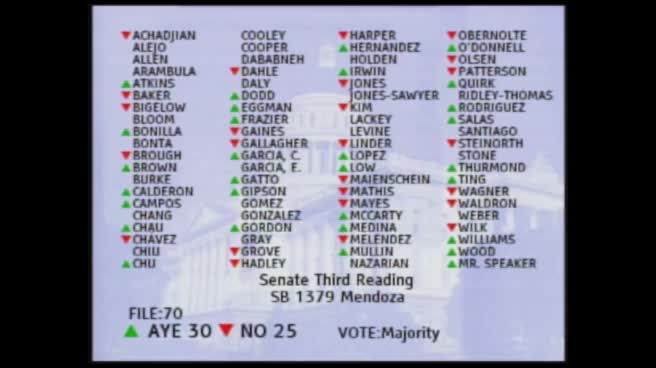
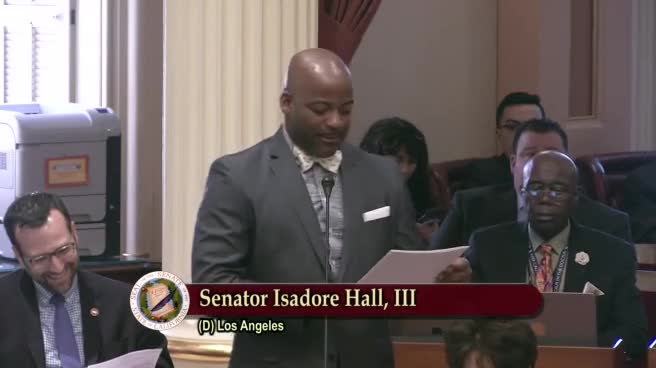
Bill Author
Bill Co-Author(s):