AB 1999: Prohibited Armed Persons File: initial review.
- Session Year: 2015-2016
- House: Assembly
- Latest Version Date: 2016-09-26
Existing law requires the Attorney General to establish and maintain an online database known as the Prohibited Armed Persons File, sometimes referred to as the Armed Prohibited Persons System, to cross-reference persons who have ownership or possession of a firearm on or after January 1, 1996, and who, subsequent to the date of that ownership or possession of a firearm, fall within a class of persons who are prohibited from owning or possessing a firearm.
Existing law appropriates $24,000,000 from the Dealers Record of Sale Special Account to the Department of Justice to address the backlog in the Armed Prohibited Persons System and the illegal possession of firearms by those prohibited persons. Existing law requires the department to report to the Joint Legislative Budget Committee specified information, including, among other things, the degree to which the backlog in the Armed Prohibited Persons System has been reduced or eliminated.
This bill would require the department to complete an initial review of a match, as defined, in the daily queue of the Armed Prohibited Persons System within 7 days of the match being placed in the queue and to periodically reassess whether the department can complete those reviews more efficiently.
Existing law requires the Attorney General to establish and maintain an online database known as the Prohibited Armed Persons File, sometimes referred to as the Armed Prohibited Persons System, to cross-reference persons who have ownership or possession of a firearm on or after January 1, 1996, and who, subsequent to the date of that ownership or possession of a firearm, fall within a class of persons who are prohibited from owning or possessing a firearm.
This bill would state the intent of the Legislature to enact legislation relating to the Prohibited Armed Persons File.
(a)The Department of Justice shall complete an initial review of a match in the daily queue of the Armed Prohibited Persons System within seven days of the match being placed in the queue and shall periodically reassess whether the department can complete those reviews more efficiently.
(b)(1)For the purpose of this section, Armed Prohibited Persons System means the Prohibited Armed Persons File, as described in Section 30000.
(2)For the purpose of this section, match means the entry into the Automated Criminal History System or into any department automated information system of the name and other information of an individual who may be prohibited from acquiring, owning, or possessing a firearm, and a corresponding record of ownership or possession of a firearm by that individual, as described in Section 30005.
SECTION 1.It is the intent of the Legislature to enact legislation relating to the Prohibited Armed Persons File.
It is the intent of the Legislature to enact legislation relating to the Prohibited Armed Persons File.
|
Date
|
Status
|
|---|---|
| May 12, 2016 | Read third time. Passed. Ordered to the Senate. (Ayes 78. Noes 0. Page 4787.) |
| Aug 30, 2016 | Enrolled and presented to the Governor at 4 p.m. |
| Aug 23, 2016 | In Assembly. Ordered to Engrossing and Enrolling. |
| Aug 22, 2016 | Read third time. Passed. Ordered to the Assembly. (Ayes 39. Noes 0. Page 5244.). |
| Aug 22, 2016 | Read third time. Passed. Ordered to the Assembly. |
| Aug 15, 2016 | Read second time. Ordered to third reading. |
| Aug 11, 2016 | From committee: Do pass. (Ayes 7. Noes 0.) (August 11). |
| Jun 27, 2016 | In committee: Referred to APPR. suspense file. |
| Jun 14, 2016 | From committee: Do pass and re-refer to Com. on APPR. with recommendation: To Consent Calendar. (Ayes 7. Noes 0.) (June 14). Re-referred to Com. on APPR. |
| May 19, 2016 | Referred to Com. on PUB. S. |
| May 12, 2016 | Read third time. Passed. Ordered to the Senate. (Ayes 78. Noes 0.) |
| Feb 16, 2016 | Read first time. To print. |
| May 12, 2016 | Read third time. Passed. Ordered to the Senate. |
| May 12, 2016 | In Senate. Read first time. To Com. on RLS. for assignment. |
| May 5, 2016 | Read second time. Ordered to Consent Calendar. |
| May 4, 2016 | From committee: Do pass. To Consent Calendar. (Ayes 20. Noes 0.) (May 4). |
| Apr 13, 2016 | From committee: Do pass and re-refer to Com. on APPR. with recommendation: To Consent Calendar. (Ayes 7. Noes 0.) (April 12). Re-referred to Com. on APPR. |
| Mar 16, 2016 | Re-referred to Com. on PUB. S. |
| Mar 15, 2016 | From committee chair, with author's amendments: Amend, and re-refer to Com. on PUB. S. Read second time and amended. |
| Mar 14, 2016 | Referred to Com. on PUB. S. |
| Feb 17, 2016 | From printer. May be heard in committee March 18. |
|
Date
|
Description
|
Location
|
Votes
|
|
|---|---|---|---|---|
| Aug 22, 2016 | Assembly 3rd Reading AB1999 Achadjian By Monning | Senate Floor |
Passed |
|
| Aug 11, 2016 | Do pass | Senate Standing Committee on Appropriations |
Passed |
|
| Jun 27, 2016 | Placed on suspense file | Senate Standing Committee on Appropriations |
Passed |
|
| Jun 14, 2016 | Do pass, but first be re-referred to the Committee on [Appropriations] with the recommendation: To Consent Calendar | Senate Standing Committee on Public Safety |
Passed |
|
| May 12, 2016 | AB 1999 ACHADJIAN Consent Calendar Second Day Regular Session | Assembly Floor |
Passed |
|
| May 4, 2016 | Do pass. To Consent Calendar. | Assembly Standing Committee on Appropriations |
Passed |
|
| Apr 12, 2016 | Do pass and be re-referred to the Committee on [Appropriations] with recommendation: To Consent Calendar | Assembly Standing Committee on Public Safety |
Passed |
This list shows positions taken on this bill by organizations on the date displayed, which is linked to the original source.
Positions by individuals are not included.
|
Organization
|
Position
|
Date
|
|---|---|---|
| California Special Districts Association | * Support | Jun 27, 2018 |
Office of Senate Floor Analyses (916) 651-1520 Fax: (916) 327-4478 | AB |
THIRD READING
Bill No: AB 1999
:
SENATE PUBLIC SAFETY COMMITTEE: 7-0, 6/14/16
AYES: Hancock, Anderson, Glazer, Leno, Liu, Monning, Stone
SENATE APPROPRIATIONS COMMITTEE: 7-0, 8/11/16
AYES: Lara, Bates, Beall, Hill, McGuire, Mendoza, Nielsen
ASSEMBLY FLOOR: 78-0, 5/12/16 (Consent) - See last page for vote
DIGEST: This bill requires the Department of Justice (DOJ) to both complete an initial review of a match in the Armed Prohibited Persons System (APPS) within seven days of the match being placed in the queue, and periodically reassess whether the department can complete reviews of APPS matches more efficiently, as specified.
Existing law:
- Provides for an automated system for tracking firearms and assault weapon owners who might fall into a prohibited status. The online database, which is currently known as the APPS, cross-references all handgun and assault weapon owners across the state against criminal history records to determine persons who have been, or will become, prohibited from possessing a firearm subsequent to the legal acquisition or registration of a firearm or assault weapon. (Penal Code § 30000, et seq.)
- Prohibits persons who know or have reasonable cause to believe that the recipient is prohibited from having firearms and ammunition to supply or provide the same with firearms or ammunition. (Penal Code §§ 27500 and 30306; Welfare and Institutions Code § 8101.)
- Provides that various categories of persons are prohibited from owning or possessing a firearm, including persons convicted of certain violent offenses, and persons who have been adjudicated as having a mental disorder, among others. (Penal Code §§ 29800 to 29825, inclusive, 29900, 29905, 30305; Welfare and Institutions Code §§ 8100 and 8103.)
- Establishes the Dealer’s Record of Sale (DROS) Account, a special fund, which receives various firearm registration fees, and which may be used by the DOJ for firearms related regulatory activities, including enforcement activities related to possession. (Penal Code §§ 28225 and 28235.)
- Establishes, in penal code section 28300, the Firearms Safety and Enforcement Special Fund (FSESF), a continuously appropriated fund, for use by the DOJ for specified purposes related to weapons and firearms regulation. Monies in the fund may be used for the following purposes:
- Implementing and enforcing the provisions of the Firearm Safety Certificate program;
- Implementing and enforcing various gun law enforcement programs; and,
- Establishment, maintenance, and upgrading of equipment and services necessary for firearms dealers to comply with the DROS system.
- Requires the DOJ, upon submission of firearm purchaser information, to examine its records to determine if the purchaser is prohibited from possessing, receiving, owning, or purchasing a firearm. Existing law prohibits the delivery of a firearm within 10 days of the application to purchase, or, after notice by the DOJ, within 10 days of the submission to the DOJ of any corrections to the application to purchase, or within 10 days of the submission to the DOJ of a specified fee. (Penal Code §§ 28200 to 28250.)
- Mandates those dealers notify DOJ that persons in applications actually took possession of their firearms. (Penal Code § 28255.)
- Requires that in connection with any sale, loan or transfer of a firearm, a licensed dealer must provide the DOJ with specified personal information about the seller and purchaser as well as the name and address of the dealer. This personal information of buyer and seller required to be provided includes the name; address; phone number; date of birth; place of birth; occupation; eye color; hair color; height; weight; race; sex; citizenship status; and a driver's license number; California identification card number; or, military identification number. A copy of the DROS, containing the buyer and seller's personal information, must be provided to the buyer or seller upon request. (Penal Code §§ 28160, 28210, and 28215.)
- Requires, in penal code section 30015(b) and (c), DOJ to report, until March 1, 2019, on the following APPS statistics:
- The degree to which the backlog in APPS has been reduced or eliminated;
- The number of agents hired for enforcement of APPS;
- The number of people cleared from APPS;
- The number of people added to APPS;
- The number of people in APPS before and after the relevant reporting period, including a breakdown of why each person in APPS is prohibited from possessing a firearm;
- The number of firearms recovered due to enforcement of APPS;
- The number of contacts made during the APPS enforcement efforts; and
- Information regarding task forces or collaboration with local law enforcement on reducing the APPS backlog.
This bill:
- Requires DOJ to complete an initial review of a match in the daily queue of APPS within seven days of the match being placed in the queue.
- Requires DOJ to periodically reassess whether the department can complete reviews of APPS matches within the daily queue more efficiently.
- Defines “match” as “an entry into the Automated Criminal History System, or into any department automated information system, of the name and other information of an individual who may be prohibited from acquiring, owning, or possessing a firearm, matched with a corresponding record of ownership or possession of a firearm by that individual, as specified.”
Background
On March 13, 2013, the Joint Legislative Audit Committee approved a request for an audit of the DOJ’s Armed Prohibited Persons Program. (http://legaudit. assembly. ca.gov/sites/legaudit.assembly.ca.gov/files/ March%2013%20Vote%20Tally.pdf.) The focus of the audit was on “the reporting and identification of persons with mental illness who are prohibited from owning or possessing a firearm.” (Armed Persons with Mental Illness, California State Auditor (2013) Report 2013-103.) This audit revealed:
Justice has faced obstacles throughout the three‑year period we reviewed—2010 through 2012—in meeting its workload demands for both the daily and the historical review queues of prohibited persons in the APPS database. During this time, Justice focused staff efforts on addressing a rise in background checks that state law requires when someone attempts to purchase a firearm, which resulted in the APPS unit experiencing a daily backlog that at times exceeded its internal goal of having no more than 1,200 matches pending for initial review at any one time. Although, on average, the APPS unit reviewed its daily APPS database workload within a time frame of five days, a few potential armed prohibited person cases waited more than three years before the APPS unit made a final determination about the person’s prohibited status. Further, the APPS unit has also experienced delays in processing a historical backlog of firearms owners—nearly 380,000 as of July 2013—who remain to be reviewed from more than six years ago when it implemented the APPS database. (http://www.auditor.ca.gov/pdfs/reports/ 2013-103.pdf.)
On July 9, 2015, the State Auditor issued a follow-up report that found:
. . . [I]n our previous report we noted that Justice had backlogs in its two processing queues: a daily queue and a historical queue. During late 2012 and early 2013, Justice had a backlog of more than 1,200 matches pending initial review in its daily queue—the queue that contains the daily events from courts and mental health facilities that indicate a match and may trigger a prohibition for an individual to own a firearm. Because a backlog in this queue means that Justice is not reviewing these daily events promptly, we recommended that Justice establish a goal of no more than 400 to 600 cases in the daily queue. However, during this follow‑up audit, we found that Justice’s daily queue during the first quarter of 2015 was over 3,600 cases; this is six times higher than its revised goal of no more than 600 cases. Just as it did during the previous audit, Justice continues to cite its need to redirect staff to another Bureau of Firearms (bureau) priority, which has a statutory deadline, as the reason for this backlog. We believe that, if Justice had a statutory deadline on the initial processing of the matches in the APPS database, it would encourage Justice to avoid redirecting APPS unit staff. The chief of the bureau believes that seven days would be a reasonable time frame to complete an initial review of matches. (http://www.auditor.ca.gov/reports/2015-504/summary.html.)
The report recommended that the legislature require DOJ to complete an initial review of cases in the daily queue within seven days. (Id.) This legislation would simply implement this recommendation.
FISCAL EFFECT: Appropriation: Fiscal Com.: Local:
According to the Senate Appropriations Committee analysis the fiscal impact includes:
- Initial reviews: Ongoing staffing costs (Special Fund*) to the DOJ of $110,000 in FY 2016-17, and $175,000 in FY 2017-18 and annually thereafter to ensure completion of all initial reviews of APPS matches within seven days.
- Periodic reassessments: Minor, absorbable workload impact (Special Fund*) to the DOJ.
None received
OPPOSITION: (Verified 8/11/16)
None received
ASSEMBLY FLOOR: 78-0, 5/12/16
AYES: Achadjian, Alejo, Travis Allen, Arambula, Atkins, Baker, Bigelow, Bloom, Bonilla, Bonta, Brough, Brown, Calderon, Campos, Chang, Chau, Chávez, Chiu, Chu, Cooley, Cooper, Dababneh, Dahle, Daly, Dodd, Eggman, Frazier, Beth Gaines, Gallagher, Cristina Garcia, Eduardo Garcia, Gatto, Gipson, Gomez, Gonzalez, Gordon, Gray, Grove, Hadley, Harper, Roger Hernández, Holden, Irwin, Jones, Kim, Lackey, Levine, Linder, Lopez, Low, Maienschein, Mathis, Mayes, McCarty, Medina, Melendez, Mullin, Nazarian, Obernolte, O'Donnell, Olsen, Patterson, Quirk, Ridley-Thomas, Rodriguez, Salas, Santiago, Steinorth, Mark Stone, Thurmond, Ting, Wagner, Waldron, Weber, Wilk, Williams, Wood, Rendon
NO VOTE RECORDED: Burke, Jones-Sawyer
8/15/16 19:36:16
**** END ****
SENATE COMMITTEE ON
Senator Ricardo Lara, Chair
2015 - 2016 Regular Session
AB 1999 (Achadjian) - Prohibited Armed Persons File: initial review
Version: | Policy Vote: |
Urgency: | Mandate: |
Hearing Date: | Consultant: |
This bill meets the criteria for referral to the Suspense File.
Bill Summary:
AB 1999 would require the Department of Justice (DOJ) to complete an initial review of a match in the daily queue of the Armed Prohibited Persons System (APPS) within seven days, as specified, and to periodically reassess whether the reviews of APPS matches can be completed more efficiently.
Fiscal Impact:
- Initial reviews: Ongoing staffing costs (Special Fund*) to the DOJ of $110,000 in FY 2016-17, and $175,000 in FY 2017-18 and annually thereafter to ensure completion of all initial reviews of APPS matches within seven days.
- Periodic reassessments: Minor, absorbable workload impact (Special Fund*) to the DOJ.
*Dealers’ Record of Sale (DROS) Account. Staff notes the DROS Account is structurally imbalanced, with an estimated reserve balance of less than $1 million by year-end FY 2016-17. Current revenues to the DROS Account may be insufficient to cover the costs of this bill in conjunction with the numerous other legislative measures requiring funding from the DROS Account, should they be enacted. As this bill specifies a program requirement rather than an enforcement requirement for APPS, the funding approved by the 2016-17 Budget Conference Committee action from the Firearms Safety and Enforcement Special Fund does not appear to be authorized for use for the activities specified in this bill.
Background:
Existing law provides for an automated system for tracking firearms and assault weapon owners who might fall into a prohibited status. The online database commonly referred to as the Armed Prohibited Persons System (APPS), cross-references all handgun and assault weapon owners across the state against criminal history records to determine persons who have been, or will become, prohibited from possessing a firearm subsequent to the legal acquisition or registration of a firearm or assault weapon. (Penal Code § 3000, et seq.)
SB 140, (Leno) Chapter 2/2013 appropriated $24 million from the DROS Account to the DOJ in order to increase regulatory and enforcement capacity within DOJ’s Bureau of Firearms. The resources financed in SB 140 were provided on a three-year limited-term basis which was estimated to provide adequate time to significantly reduce or eliminate the overall number of armed and prohibited persons in the backlog. Additionally, SB 140 included reporting requirements due annually to the Joint Legislative Budget Committee. During the 2015 budget hearing process, the Legislature expressed concern that at the mid-point of the funding period, the DOJ had spent 40 percent of funds but the APPS backlog had only been reduced by approximately 3,770 cases. In addition, the Bureau of Firearms had hired 45 agents, as of the date of their update, but had only retained 18 agents. Of the agents that left the Bureau, the vast majority went to other agent positions in DOJ. As a result, some SB 140 funding that was intended to directly address the APPS backlog was instead used to conduct background checks, provide training and to equip newly hired who agents subsequently left the Bureau.
The 2016-17 Budget Conference Committee took the following actions with respect to APPS enforcement:
- Provided an ongoing increase of $4.7 million in Firearms Safety and Enforcement Special Fund (FSEF) to provide permanent funding for 22 positions for APPS investigations. Currently, all APPS-related activities are funded through the DROS Account, which is structurally imbalanced.
- Adopted trailer bill language to remove the continuous appropriation authority from the FSEF and provide the Attorney General’s office with the authority to increase FSEF fee authority at a rate not to exceed the Consumer Price Index.
- Provided a $5 million (FSEF) one-time augmentation and budget bill language (SB 826) establishing a program within the DOJ that reimburses local law enforcement agencies through contracts with DOJ that retrieve firearms from prohibited individuals in APPS.
Proposed Law:
This bill would require the DOJ to complete an initial review of a match in the daily queue of the Armed Prohibited Persons System within seven days of the match being placed in the queue. This bill additionally requires the DOJ to periodically reassess whether the DOJ can complete those reviews more efficiently.
This bill provides that for the purpose of this measure, “Armed Prohibited Persons System” means the Prohibited Armed Persons File as described in PC § 30000.
This bill provides that for the purpose of this measure, “match” means the entry into the Automated Criminal History System or into any DOJ automated information system of the name and other information of an individual who may be prohibited from acquiring, owning, or possessing a firearm, and a corresponding record of ownership or possession of a firearm by that individual, as described in PC § 30005.
Related Legislation:
See Background section.
-- END --
SENATE COMMITTEE ON PUBLIC SAFETY
Senator Loni Hancock, Chair
2015 - 2016 Regular
Bill No: AB 1999 Hearing Date: June 14, 2016
Author: | Achadjian | ||
Version: | March 15, 2016 | ||
Urgency: | No | Fiscal: | Yes |
Consultant: | JRD | ||
Subject: Prohibited Armed Persons File: Initial Review
HISTORY
Source: Author
Prior Legislation: None known
Support: Unknown
Opposition: None known
Assembly Floor Vote: 78 - 0
PURPOSE
The purpose of this bill is to require the Department of Justice (DOJ) to both complete an initial review of a match in the Armed Prohibited Persons System (APPS) within seven days of the match being placed in the queue, and periodically reassess whether the department can complete reviews of APPS matches more efficiently.
Existing law provides for an automated system for tracking firearms and assault weapon owners who might fall into a prohibited status. The online database, which is currently known as the APPS, cross-references all handgun and assault weapon owners across the state against criminal history records to determine persons who have been, or will become, prohibited from possessing a firearm subsequent to the legal acquisition or registration of a firearm or assault weapon. (Penal Code § 30000, et seq.)
Existing law prohibits persons who know or have reasonable cause to believe that the recipient is prohibited from having firearms and ammunition to supply or provide the same with firearms or ammunition. (Penal Code §§ 27500 and 30306; Welfare and Institutions Code § 8101.)
Existing law provides that various categories of persons are prohibited from owning or possessing a firearm, including persons convicted of certain violent offenses, and persons who have been adjudicated as having a mental disorder, among others. (Penal Code §§ 29800 to 29825, inclusive, 29900, 29905, 30305; Welfare and Institutions Code §§ 8100 and 8103.)
Existing law establishes the Dealer’s Record of Sale (DROS) Account, a special fund, which receives various firearm registration fees, and which may be used by the DOJ for firearms related regulatory activities, including enforcement activities related to possession. (Penal Code §§ 28225 and 28235.)
Existing law establishes the Firearms Safety and Enforcement Special Fund (FSESF), a continuously appropriated fund, for use by the DOJ for specified purposes related to weapons and firearms regulation. Monies in the fund may be used for the following purposes:
- Implementing and enforcing the provisions of the Firearm Safety Certificate program;
- Implementing and enforcing various gun law enforcement programs; and,
- Establishment, maintenance, and upgrading of equipment and services necessary for firearms dealers to comply with the DROS system.
(Penal Code §28300.)
Existing law requires the DOJ, upon submission of firearm purchaser information, to examine its records to determine if the purchaser is prohibited from possessing, receiving, owning, or purchasing a firearm. Existing law prohibits the delivery of a firearm within 10 days of the application to purchase, or, after notice by the department, within 10 days of the submission to the department of any corrections to the application to purchase, or within 10 days of the submission to the department of a specified fee. (Penal Code §§ 28200 to 28250.)
Existing law mandates those dealers notify DOJ that persons in applications actually took possession of their firearms. (Penal Code § 28255.)
Existing law requires that in connection with any sale, loan or transfer of a firearm, a licensed dealer must provide the DOJ with specified personal information about the seller and purchaser as well as the name and address of the dealer. This personal information of buyer and seller required to be provided includes the name; address; phone number; date of birth; place of birth; occupation; eye color; hair color; height; weight; race; sex; citizenship status; and a driver's license number; California identification card number; or, military identification number. A copy of the DROS, containing the buyer and seller's personal information, must be provided to the buyer or seller upon request. (Penal Code §§ 28160, 28210, and 28215.)
Existing law requires DOJ to report, until March 1, 2019, on the following APPS statistics:
- The degree to which the backlog in APPS has been reduced or eliminated;
- The number of agents hired for enforcement of APPS;
- The number of people cleared from APPS;
- The number of people added to APPS;
- The number of people in APPS before and after the relevant reporting period, including a breakdown of why each person in APPS is prohibited from possessing a firearm;
- The number of firearms recovered due to enforcement of APPS;
- The number of contacts made during the APPS enforcement efforts; and
- Information regarding task forces or collaboration with local law enforcement on reducing the APPS backlog.
(Penal Code § 30015(b) and (c).)
This bill requires DOJ to complete an initial review of a match in the daily queue of APPS within seven days of the match being placed in the queue.
This bill requires DOJ to periodically reassess whether the department can complete reviews of APPS matches within the daily queue more efficiently.
This bill defines “match” as “an entry into the Automated Criminal History System, or into any department automated information system, of the name and other information of an individual who may be prohibited from acquiring, owning, or possessing a firearm, matched with a corresponding record of ownership or possession of a firearm by that individual, as specified.”
RECEIVERSHIP/OVERCROWDING CRISIS AGGRAVATION
For the past several years this Committee has scrutinized legislation referred to its jurisdiction for any potential impact on prison overcrowding. Mindful of the United States Supreme Court ruling and federal court orders relating to the state’s ability to provide a constitutional level of health care to its inmate population and the related issue of prison overcrowding, this Committee has applied its “ROCA” policy as a content-neutral, provisional measure necessary to ensure that the Legislature does not erode progress in reducing prison overcrowding.
On February 10, 2014, the federal court ordered California to reduce its in-state adult institution population to 137.5% of design capacity by February 28, 2016, as follows:
- 143% of design bed capacity by June 30, 2014;
- 141.5% of design bed capacity by February 28, 2015; and,
- 137.5% of design bed capacity by February 28, 2016.
In December of 2015 the administration reported that as “of December 9, 2015, 112,510 inmates were housed in the State’s 34 adult institutions, which amounts to 136.0% of design bed capacity, and 5,264 inmates were housed in out-of-state facilities. The current population is 1,212 inmates below the final court-ordered population benchmark of 137.5% of design bed capacity, and has been under that benchmark since February 2015.” (Defendants’ December 2015 Status Report in Response to February 10, 2014 Order, 2:90-cv-00520 KJM DAD PC, 3-Judge Court, Coleman v. Brown, Plata v. Brown (fn. omitted).) One year ago, 115,826 inmates were housed in the State’s 34 adult institutions, which amounted to 140.0% of design bed capacity, and 8,864 inmates were housed in out-of-state facilities. (Defendants’ December 2014 Status Report in Response to February 10, 2014 Order, 2:90-cv-00520 KJM DAD PC, 3-Judge Court, Coleman v. Brown, Plata v. Brown (fn. omitted).)
While significant gains have been made in reducing the prison population, the state must stabilize these advances and demonstrate to the federal court that California has in place the “durable solution” to prison overcrowding “consistently demanded” by the court. (Opinion Re: Order Granting in Part and Denying in Part Defendants’ Request For Extension of December 31, 2013 Deadline, NO. 2:90-cv-0520 LKK DAD (PC), 3-Judge Court, Coleman v. Brown, Plata v. Brown (2-10-14). The Committee’s consideration of bills that may impact the prison population therefore will be informed by the following questions:
- Whether a proposal erodes a measure which has contributed to reducing the prison population;
- Whether a proposal addresses a major area of public safety or criminal activity for which there is no other reasonable, appropriate remedy;
- Whether a proposal addresses a crime which is directly dangerous to the physical safety of others for which there is no other reasonably appropriate sanction;
- Whether a proposal corrects a constitutional problem or legislative drafting error; and
- Whether a proposal proposes penalties which are proportionate, and cannot be achieved through any other reasonably appropriate remedy.
COMMENTS
1. Need for This Legislation
According to the author:
In 2013, the State Auditor (State Audit Report 2013-103) uncovered that the Department of Justice had a backlog of more than 1,200 matches in their daily queue which contains the daily events from courts and mental health facilities that may trigger a prohibition for an individual to own a firearm.
As part of their findings, the State Auditor’s office recommended that the Department establish a goal of no more than 400 to 600 cases in the daily queue. However, since the initial audit, the Justice’s daily queue has grown to over 3,600 cases. The Department of Justice has cited new reporting laws and the need to redirect staff to another Bureau of Firearms priority, which has a statutory deadline, as the reason for this backlog.
The State Auditor has recommended a statutory deadline of seven days on the initial processing of matches in the APPS database to encourage the Department to avoid redirecting APPS unit staff (SAR 2015-504). The longer it takes to review an individual’s records, the longer a potentially armed prohibited person keeps their firearms, which increase the risk to public safety.
AB 1999 fulfills the recommendations of the State Auditor in requiring the Department of Justice to review an initial match in the Armed Prohibited Persons daily queue within 7 days and periodically reassess whether the Department can complete those reviews more efficiently.
2. Armed Prohibited Persons List
On March 13, 2013, the Joint Legislative Audit Committee approved a request for an audit of the California Department of Justice’s Armed Prohibited Persons Program. (http://legaudit. assembly. ca.gov/sites/legaudit.assembly.ca.gov/files/March%2013%20Vote%20Tally.pdf.) The focus of the audit was on “the reporting and identification of persons with mental illness who are prohibited from owning or possessing a firearm.” (Armed Persons with Mental Illness, California State Auditor (2013) Report 2013-103.) This audit revealed:
Justice has faced obstacles throughout the three‑year period we reviewed—2010 through 2012—in meeting its workload demands for both the daily and the historical review queues of prohibited persons in the APPS database. During this time, Justice focused staff efforts on addressing a rise in background checks that state law requires when someone attempts to purchase a firearm, which resulted in the APPS unit experiencing a daily backlog that at times exceeded its internal goal of having no more than 1,200 matches pending for initial review at any one time. Although, on average, the APPS unit reviewed its daily APPS database workload within a time frame of five days, a few potential armed prohibited person cases waited more than three years before the APPS unit made a final determination about the person’s prohibited status. Further, the APPS unit has also experienced delays in processing a historical backlog of firearms owners—nearly 380,000 as of July 2013—who remain to be reviewed from more than six years ago when it implemented the APPS database. (http://www.auditor.ca.gov/pdfs/reports/ 2013-103.pdf.)
On July 9, 2015, the State Auditor issued a follow-up report that found:
. . . [I]n our previous report we noted that Justice had backlogs in its two processing queues: a daily queue and a historical queue. During late 2012 and early 2013, Justice had a backlog of more than 1,200 matches pending initial review in its daily queue—the queue that contains the daily events from courts and mental health facilities that indicate a match and may trigger a prohibition for an individual to own a firearm. Because a backlog in this queue means that Justice is not reviewing these daily events promptly, we recommended that Justice establish a goal of no more than 400 to 600 cases in the daily queue. However, during this follow‑up audit, we found that Justice’s daily queue during the first quarter of 2015 was over 3,600 cases; this is six times higher than its revised goal of no more than 600 cases. Just as it did during the previous audit, Justice continues to cite its need to redirect staff to another Bureau of Firearms (bureau) priority, which has a statutory deadline, as the reason for this backlog. We believe that, if Justice had a statutory deadline on the initial processing of the matches in the APPS database, it would encourage Justice to avoid redirecting APPS unit staff. The chief of the bureau believes that seven days would be a reasonable time frame to complete an initial review of matches. (http://www.auditor.ca.gov/reports/2015-504/summary.html.)
The report recommended that the legislature require DOJ to complete an initial review of cases in the daily queue within seven days. (Id.) This legislation would simply implement this recommendation.
-- END –
Date of Hearing: May 4, 2016
ASSEMBLY COMMITTEE ON APPROPRIATIONS
Lorena Gonzalez, Chair
ABPCA Bill Id:AB 1999
Author:(Achadjian) – As Amended Ver:March 15, 2016
Policy Committee: | Public Safety | Vote: | 7 - 0 |
|
|
Urgency: No State Mandated Local Program: No Reimbursable: No
SUMMARY:
This bill requires the Department of Justice (DOJ) to both complete an initial review of a match in the Armed Prohibited Persons System (APPS) within seven days of the match being placed in the queue, and periodically reassess whether the department can complete reviews of APPS matches more efficiently.
FISCAL EFFECT:
Moderate cost to DOJ of $110,000 the first year, and in the $140,000 range every year thereafter for staff to ensure reviews of the match take place within 7 days. (Dealer’s Record of Sale Account) (DROS).
COMMENTS:
- Background. Current law provides for an automated system for tracking firearms and assault weapon owners who might fall into a prohibited status. The online database, which is currently known as the APPS, cross-references all handgun and assault weapon owners across the state against criminal history records to determine persons who have been, or will become, prohibited from possessing a firearm subsequent to the legal acquisition or registration of a firearm or assault weapon.
DOJ has two queues through which it processes matches between any potentially prohibited person and any registered firearm owner or applicant. Although steady progress has been made to reduce the backlog in APPS’s two queues, currently there is an average backlog of 3,600 matches of potentially prohibited persons to firearm owners in the daily queue of APPS and a backlog of approximately 257,000 potentially prohibited person matches in the historical queue.
To avoid instances of incorrect identification, DOJ conducts a manual review of any person who has been automatically matched in APPS. This avoids denying access or ownership of firearms to improperly matched individuals, i.e. makes sure that no one is mistakenly prohibited from owning or purchasing a firearm due to any clerical error or other incorrect identifier. This manual review is the initial review referred to in this bill.
In 2013, the Legislature appropriated $24 million DROS to DOJ to help clear the APPS backlogs. However, DOJ assigned APPS unit staff to handle firearm background checks, which have a statutory maximum time period during which background checks must be completed. APPS, on the other hand, has no such statutory deadline. In order to further reduce the backlog, the State Auditor has recommended DOJ be mandated to complete the aforementioned initial review of prohibited person matches in APPS daily queue within seven days. This bill would mandate the State Auditor’s recommendation. Approximately $6 million will revert back to DROS at the end of this fiscal year.
- Purpose. According to the author, AB 1999 is consistent with the auditor’s above recommendation.
- Related Legislation: SB 1332 (Mendoza), requires the Department of Justice to modify its registration form so that both spouses or both domestic partners may register as the owners of the firearm, and requires the department to maintain both names on the firearm’s registry. This bill is awaiting a hearing in Senate Appropriations.
- Prior Legislation:
- SB 580 (Jackson), of the 2013-2014 Legislative Session, would have appropriated the sum of $5 million from the FSESF to the DOJ to contract with local law enforcement agencies to reduce the backlog of individuals who are identified by APPS as illegally possessing firearms. This bill died in this committee.
- SB 140 (Leno), Chapter 2, Statutes of 2013, appropriated $24 million from the DROS Special Account to the DOJ for costs associated with regulatory and enforcement of illegal possession of firearms by prohibited persons.
- SB 580 (Jackson), of the 2013-2014 Legislative Session, would have appropriated the sum of $5 million from the FSESF to the DOJ to contract with local law enforcement agencies to reduce the backlog of individuals who are identified by APPS as illegally possessing firearms. This bill died in this committee.
Analysis Prepared by: Pedro Reyes / APPR. / (916) 319-2081
Date of Hearing: April 12, 2016
Consultant: Matt Dean
ASSEMBLY COMMITTEE ON
Reginald Byron Jones-Sawyer, Sr., Chair
ABPCA Bill Id:
Author:() – As Ver:March 15, 2016
SUMMARY:
Requires the Department of Justice (DOJ) to both complete an initial review of a match in the Armed Prohibited Persons System (APPS) within seven days of the match being placed in the queue, and periodically reassess whether the department can complete reviews of APPS matches more efficiently. Specifically, this bill:
- Requires DOJ to complete an initial review of a match in the daily queue of APPS within seven days of the match being placed in the queue.
- Requires DOJ to periodically reassess whether the department can complete reviews of APPS matches within the daily queue more efficiently.
- Defines the “Armed Prohibited Persons System” (APPS) as "an online database with the purpose of cross-referencing persons who have ownership or possession of a firearm as indicated by the Consolidated Firearms Information System and who, subsequent to the date of that ownership or possession of a firearm, fall within a class of persons who are prohibited from owning or possessing a firearm."
- Defines “match” as "an entry into the Automated Criminal History System, or into any department automated information system, of the name and other information of an individual who may be prohibited from acquiring, owning, or possessing a firearm, matched with a corresponding record of ownership or possession of a firearm by that individual, as specified."
EXISTING LAW:
- Provides for an automated system for tracking firearms and assault weapon owners who might fall into a prohibited status. The online database, which is currently known as the APPS, cross-references all handgun and assault weapon owners across the state against criminal history records to determine persons who have been, or will become, prohibited from possessing a firearm subsequent to the legal acquisition or registration of a firearm or assault weapon. (Pen. Code, § 30000, et seq.)
- Prohibits persons who know or have reasonable cause to believe that the recipient is prohibited from having firearms and ammunition to supply or provide the same with firearms or ammunition. (Pen. Code, §§ 27500 and 30306; and Welf. & Inst. Code, § 8101.)
- Provides that various categories of persons are prohibited from owning or possessing a firearm, including persons convicted of certain violent offenses, and persons who have been adjudicated as having a mental disorder, among others. (Pen. Code, §§ 29800 to 29825, inclusive, 29900, 29905, 30305; and Welf. & Inst. Code, §§ 8100 and 8103.)
- Establishes the Dealer’s Record of Sale (DROS) Account, a special fund, which receives various firearm registration fees, and which may be used by the DOJ for firearms related regulatory activities, including enforcement activities related to possession. (Pen. Code, §§ 28225 and 28235.)
- Establishes the Firearms Safety and Enforcement Special Fund (FSESF), a continuously appropriated fund, for use by the DOJ for specified purposes related to weapons and firearms regulation. Monies in the fund may be used for the following purposes:
- Implementing and enforcing the provisions of the Firearm Safety Certificate program;
- Implementing and enforcing various gun law enforcement programs; and,
- Establishment, maintenance, and upgrading of equipment and services necessary for firearms dealers to comply with the DROS system. (Pen. Code, §28300.)
- Implementing and enforcing the provisions of the Firearm Safety Certificate program;
- Requires the DOJ, upon submission of firearm purchaser information, to examine its records to determine if the purchaser is prohibited from possessing, receiving, owning, or purchasing a firearm. Existing law prohibits the delivery of a firearm within 10 days of the application to purchase, or, after notice by the department, within 10 days of the submission to the department of any corrections to the application to purchase, or within 10 days of the submission to the department of a specified fee. (Pen. Code, §§ 28200 to 28250.)
- Mandates those dealers notify DOJ that persons in applications actually took possession of their firearms. (Pen. Code, § 28255.)
- Requires if a dealer cannot legally deliver a firearm to return the firearm to the transferor, seller, or person loaning the firearm. (Pen. Code, § 28050, subd. (d).)
- Requires that in connection with any sale, loan or transfer of a firearm, a licensed dealer must provide the DOJ with specified personal information about the seller and purchaser as well as the name and address of the dealer. This personal information of buyer and seller required to be provided includes the name; address; phone number; date of birth; place of birth; occupation; eye color; hair color; height; weight; race; sex; citizenship status; and a driver's license number; California identification card number; or, military identification number. A copy of the DROS, containing the buyer and seller's personal information, must be provided to the buyer or seller upon request. (Pen. Code, §§ 28160, 28210, and 28215.)
- Appropriates $24,000,000 from the DROS Special Account to DOJ to address the backlog in APPS and the illegal possession of firearms by individuals in APPS. (Pen. Code, § 30015.)
- Requires DOJ to report, until March 1, 2019, on the following APPS statistics:
- The degree to which the backlog in APPS has been reduced or eliminated;
- The number of agents hired for enforcement of APPS;
- The number of people cleared from APPS;
- The number of people added to APPS;
- The number of people in APPS before and after the relevant reporting period, including a breakdown of why each person in APPS is prohibited from possessing a firearm;
- The number of firearms recovered due to enforcement of APPS;
- The number of contacts made during the APPS enforcement efforts; and
- Information regarding task forces or collaboration with local law enforcement on reducing the APPS backlog. (Pen. Code, § 30015, subds. (b) and (c).)
- The degree to which the backlog in APPS has been reduced or eliminated;
FISCAL EFFECT:
Unknown
COMMENTS:
- Author's Statement: According to the author, "AB 1999 fulfills the recommendations of the State Auditor in requiring the Department of Justice to review an initial match in the Armed Prohibited Persons daily queue within 7 days and periodically reassess whether the Department can complete those reviews more efficiently.
“This bill ensures the Department of Justice manages its priorities and reviews potentially armed prohibited persons accurately and promptly.”
- Prohibited Persons: California has several laws that prohibit certain persons from purchasing firearms. All felony convictions lead to a lifetime prohibition, while specified misdemeanors will result in a 10-year prohibition. A person may be prohibited due to a protective order or as a condition of probation. Another prohibition is based on the mental health of the individual. If a person communicates to his or her psychotherapist a serious threat of physical violence against a reasonably-identifiable victim or victims, the person is prohibited from owning or purchasing a firearm for five years, starting from the date the psychotherapist reports to local law enforcement the identity of the person making the threat. (Welf. & Inst. Code, § 8100, subd. (b)(1).) If a person is admitted into a facility because that person is a danger to himself, herself, or to others, the person is prohibited from owning or purchasing a firearm for five years. (Welf. & Inst. Code, § 8103, subd. (f).) For the provisions prohibiting a person from owning or possessing a firearm based on a serious threat of violence or based on admittance into a facility as a threat to self or others, the person has the right to request a hearing whereby the person could restore his or her right to own or possess a firearm if a court determines that the person is likely to use firearms or other deadly weapons in a safe and lawful manner. (Welf. & Inst. Code, §§ 8100, subd. (b)(1) and 8103, subd. (f).)
DOJ developed APPS for tracking handgun and assault weapon owners in California who may pose a threat to public safety. (Pen. Code, § 30000 et seq.) APPS collects information about persons who have been, or will become, prohibited from possessing a firearm subsequent to the legal acquisition or registration of a firearm or assault weapon. DOJ receives automatic notifications from state and federal criminal history systems to determine if there is a match in the APPS for a current California gun owner. DOJ also receives information from courts, local law enforcement and state hospitals as well as public and private mental hospitals to determine whether someone is in a prohibited status. When a match is found, DOJ has the authority to investigate the person’s status and confiscate any firearms or weapons in the person's possession. Local law enforcement also may request from DOJ the status of an individual, or may request a list of prohibited persons within their jurisdiction, and conduct an investigation of those persons. (Pen. Code, § 30010.) Since the development of APPS, California has added long-gun transactions to the list of registered firearms and has added restraining orders to the list of prohibiting events. (< http://oag.ca.gov/sites/all/files/agweb/pdfs/publications/sb-140-supp-budget-report.pdf >) These additional requirements have contributed to a backlog in processing APPS matches. - Backlog of Match Review in APPS: DOJ has two queues through which it processes matches between any potentially prohibited person and any registered firearm owner or applicant. Although steady progress has been made to reduce the backlog in APPS’s two queues, currently there is an average backlog of 3,600 matches of potentially prohibited persons to firearm owners in the daily queue of APPS and a backlog of approximately 257,000 potentially prohibited person matches in the historical queue. The historical queue includes all matched prohibited persons not in the daily queue, which includes all potentially prohibited persons whose reviews were pending before DOJ implemented APPS in 2006. The daily queue receives information daily from courts and mental health providers regarding individuals who should be prohibited from owning a firearm, as specified, and automatically creates matches of anyone who is currently a firearm owner or who has applied to own a firearm. (< https://www.bsa.ca.gov/pdfs/factsheets/2015-504.pdf >)
To avoid instances of incorrect identification, DOJ conducts a manual review of any person who has been automatically matched in APPS. This avoids denying access or ownership of firearms to improperly matched individuals, i.e. makes sure that no one is mistakenly prohibited from owning or purchasing a firearm due to any clerical error or other incorrect identifier. This manual review is the initial review referred to in this bill. This bill would require this initial review to be completed by DOJ seven days after the automated match is generated in APPS, as recommended by the State Auditor after DOJ received an appropriation for this purpose.
In 2013, the Legislature appropriated $24 million to DOJ to help clear the APPS backlogs. However, DOJ assigned APPS unit staff to handle firearm background checks, which have a statutory maximum time period during which background checks must be completed. APPS, on the other hand, has no such statutory deadline. In order to further reduce the backlog, the State Auditor has recommended DOJ be mandated to complete the aforementioned initial review of prohibited person matches in APPS daily queue within seven days. This bill would mandate the State Auditor’s recommendation. - Related Legislation: SB 1332 (Mendoza), would require the Department of Justice to modify its registration form so that both spouses or both domestic partners may register as the owners of the firearm and would require the department to maintain both names on the firearm’s registry. This bill passed as amended from the Senate Committee on Public Safety and was re-referred to the Committee on Appropriations on April 5, 2016.
- Prior Legislation:
- SB 580 (Jackson), of the 2013-2014 Legislative Session, would have would appropriated the sum of $5,000,000 from the FSESF to the DOJ to contract with local law enforcement agencies to reduce the backlog of individuals who are identified by APPS as illegally possessing firearms. This bill died in the Assembly Committee on Appropriations.
- SB 140 (Leno), Chapter 2, Statutes of 2013, appropriated $24 million from the DROS Special Account to the DOJ for costs associated with regulatory and enforcement of illegal possession of firearms by prohibited persons.
- SB 580 (Jackson), of the 2013-2014 Legislative Session, would have would appropriated the sum of $5,000,000 from the FSESF to the DOJ to contract with local law enforcement agencies to reduce the backlog of individuals who are identified by APPS as illegally possessing firearms. This bill died in the Assembly Committee on Appropriations.
REGISTERED SUPPORT / OPPOSITION:
Support
None
Opposition
None
Analysis Prepared by:
Discussed in Hearing
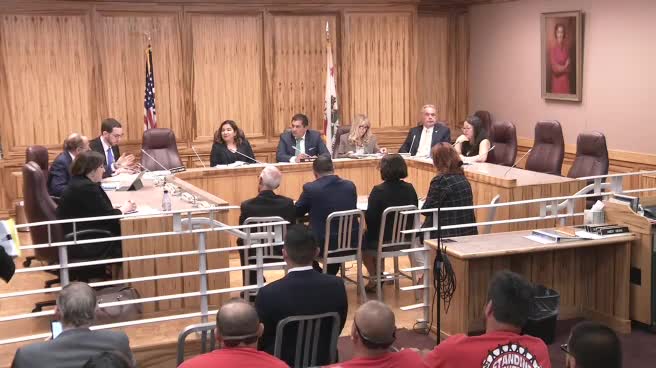 2MIN
Senate Standing Committee on Energy, Utilities and Communications
 5MIN
Senate Standing Committee on Governance and Finance
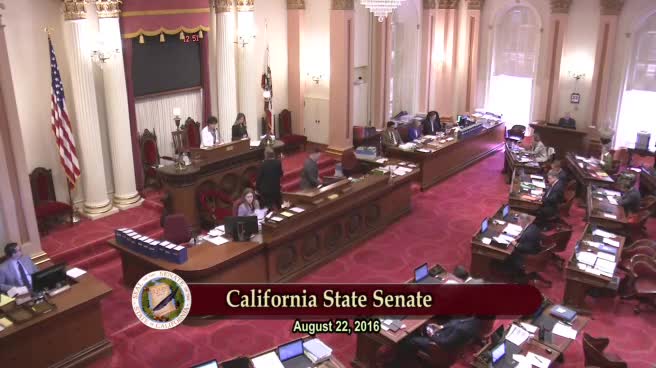 3MIN
Senate Floor
Bill Author

Bill Co-Author(s):