AB 2001: Fully protected fish: Owens pupfish: California State Safe Harbor Agreement Program Act.
- Session Year: 2015-2016
- House: Assembly
- Latest Version Date: 2016-09-23
Existing law prohibits the taking or possession of a fully protected fish, except as provided, and designates the Owens pupfish as a fully protected fish. Under existing law, the Department of Fish and Wildlife is authorized to permit the taking of a fully protected fish for necessary scientific research, including efforts to recover fully protected, threatened, or endangered species.
Existing law, the California State Safe Harbor Agreement Program Act, establishes a program to encourage landowners to manage their lands voluntarily, by means of state safe harbor agreements approved by the Department of Fish and Wildlife, to benefit endangered, threatened, or candidate species without being subject to additional regulatory restrictions as a result of their conservation efforts. The act authorizes the department to authorize specified acts that are otherwise prohibited pursuant to the California Endangered Species Act by entering into a safe harbor agreement. Under existing law, the act remains in effect until January 1, 2020.
This bill would authorize the department to permit the taking of the Owens pupfish in the Owens River watershed if the take is authorized under a safe harbor agreement.
This bill would incorporate additional changes to Section 5515 of the Fish and Game Code, proposed by AB 1845 and AB 2488, that would become operative only if this bill and either or both of those bills are chaptered and become effective on or before January 1, 2017, and this bill is chaptered last.
Existing law prohibits the taking or possession of a fully protected fish, except as provided, and designates the Owens pupfish as a fully protected fish. Under existing law, the Department of Fish and Wildlife is authorized to permit the taking of a fully protected fish for necessary scientific research, including efforts to recover fully protected, threatened, or endangered species.
Existing law, the California State Safe Harbor Agreement Program Act, establishes a program to encourage landowners to manage their lands voluntarily, by means of state safe harbor agreements approved by the Department of Fish and Wildlife, to benefit endangered, threatened, or candidate species without being subject to additional regulatory restrictions as a result of their conservation efforts. The act authorizes the department to authorize specified acts that are otherwise prohibited pursuant to the California Endangered Species Act by entering into a safe harbor agreement. Under existing law, the act remains in effect until January 1, 2020.
This bill would authorize the department to permit the taking of the Owens pupfish in the Owens River and Mojave River watersheds watershed if the take is authorized under a safe harbor agreement.
This bill would incorporate additional changes to Section 5515 of the Fish and Game Code, proposed by AB 1845 and AB 2488, that would become operative only if this bill and either or both of those bills are chaptered and become effective on or before January 1, 2017, and this bill is chaptered last.
Existing law prohibits the taking or possession of a fully protected fish, except as provided, and designates the Owens River pupfish as a fully protected fish. Under existing law, the Department of Fish and Wildlife is authorized to permit the taking of a fully protected fish for necessary scientific research, including efforts to recover fully protected, threatened, or endangered species.
Existing law, the California State Safe Harbor Agreement Program Act, establishes a program to encourage landowners to manage their lands voluntarily, by means of state safe harbor agreements approved by the Department of Fish and Wildlife, to benefit endangered, threatened, or candidate species without being subject to additional regulatory restrictions as a result of their conservation efforts. The act authorizes the department to authorize specified acts that are otherwise prohibited pursuant to the California Endangered Species Act by entering into a safe harbor agreement. Under existing law, the act remains in effect until January 1, 2020.
This bill would authorize the department to permit the taking of the Owens River pupfish in the Owens River and Mojave River watersheds if the take is authorized under a safe harbor agreement.
Existing law prohibits the taking or possession of a fully protected fish, except as provided. provided, and designates the Owens River pupfish as a fully protected fish. Under existing law, the Department of Fish and Wildlife is authorized to permit the taking of a fully protected fish for necessary scientific research, including efforts to recover fully protected, threatened, or endangered species.
Existing law, the California State Safe Harbor Agreement Program Act, establishes a program to encourage landowners to manage their lands voluntarily, by means of state safe harbor agreements approved by the Department of Fish and Wildlife, to benefit endangered, threatened, or candidate species without being subject to additional regulatory restrictions as a result of their conservation efforts. The act authorizes the department to authorize specified acts that are otherwise prohibited pursuant to the California Endangered Species Act by entering into a safe harbor agreement. Under existing law, the act remains in effect until January 1, 2020.
This bill would authorize the department to permit the taking of fully protected fish the Owens River pupfish in the Owens River and Mojave River watersheds if the take is authorized under a safe harbor agreement.
Existing law prohibits the taking or possession of a fully protected fish, except as provided. Under existing law, the Department of Fish and Wildlife is authorized to permit the taking of a fully protected fish for necessary scientific research, including efforts to recover fully protected, threatened, or endangered species. For these purposes, scientific research does not include an action taken as part of specified mitigation for a project, as defined.
Existing law, the California State Safe Harbor Agreement Program Act, establishes a program to encourage landowners to manage their lands voluntarily, by means of state safe harbor agreements approved by the Department of Fish and Wildlife, to benefit endangered, threatened, or candidate species without being subject to additional regulatory restrictions as a result of their conservation efforts. The act authorizes the department to authorize specified acts that are otherwise prohibited pursuant to the California Endangered Species Act by entering into a safe harbor agreement. Under existing law, the act remains in effect until January 1, 2020.
This bill would instead authorize the department to permit the taking of those species for necessary scientific research or for efforts to recover fully protected, threatened, or endangered species, not including an action taken as part of specified mitigation for a project. fully protected fish in the Owens River and Mojave River watersheds if the take is authorized under a safe harbor agreement.
Existing law prohibits the taking or possession of a fully protected fish, except as provided. Under existing law, the Department of Fish and Wildlife is authorized to permit the taking of a fully protected fish for necessary scientific research, including efforts to recover fully protected, threatened, or endangered species. For these purposes, scientific research does not include an action taken as part of specified mitigation for a project, as defined.
This bill would instead authorize the department to permit the taking of those species for necessary scientific research or for efforts to recover fully protected, threatened, or endangered species. species, not including an action taken as part of specified mitigation for a project.
Existing law prohibits the taking or possession of a fully protected fish, except as provided. Under existing law, the Department of Fish and Wildlife is authorized to permit the taking of a fully protected fish for necessary scientific research, including efforts to recover fully protected, threatened, or endangered species. For these purposes, scientific research does not include an action taken as part of specified mitigation for a project, as defined.
This bill would instead authorize the department to permit the taking of those species for necessary scientific research or for efforts to recover fully protected, threatened, or endangered species.
The department may authorize the taking of the Owens pupfish in the Owens River watershed if the take is authorized under an agreement pursuant to this article.
SEC. 2.Section 5515 of the Fish and Game Code is amended to read:5515.(a)(1)Except as provided in this section or Section 2081.6, 2081.7, 2089.7, or 2835, a fully protected fish shall not be taken or possessed at any time. No provision of this code or any other law shall be construed to authorize the issuance of a permit or license to take a fully protected fish, and no permit or license previously issued shall have force or effect for that purpose. However, the department may authorize the taking of a fully protected fish for necessary scientific research, including efforts to recover fully protected, threatened, or endangered species. Before authorizing the take of a fully protected fish, the department shall make an effort to notify all affected and interested parties to solicit information and comments on the proposed authorization. The notification shall be published in the California Regulatory Notice Register and be made available to each person who has notified the department, in writing, of his or her interest in fully protected species and who has provided an email address, if available, or postal address to the department. Affected and interested parties shall have 30 days after notification is published in the California Regulatory Notice Register to provide relevant information and comments on the proposed authorization.
(2)As used in this subdivision, scientific research does not include an action taken as part of specified mitigation for a project, as defined in Section 21065 of the Public Resources Code.
(3)A legally imported fully protected fish may be possessed under a permit issued by the department.
(b)The following are fully protected fish:
(1)Colorado River squawfish (Ptychocheilus lucius).
(2)Thicktail chub (Gila crassicauda).
(3)Mohave chub (Gila mohavensis).
(4)Lost River sucker (Catostomus luxatus).
(5)Modoc sucker (Catostomus microps).
(6)Shortnose sucker (Chasmistes brevirostris).
(7)Humpback sucker (Xyrauchen texanus).
(8)Owens pupfish (Cyprinoden radiosus).
(9)Unarmored threespine stickleback (Gasterosteus aculeatus williamsoni).
(10)Rough sculpin (Cottus asperrimus).
SEC. 2.1.Section 5515 of the Fish and Game Code is amended to read:5515.(a)(1)Except as provided in this section or Section 2081.4, 2081.6, 2081.7, 2089.7, or 2835, a fully protected fish shall not be taken or possessed at any time. No provision of this code or any other law shall be construed to authorize the issuance of a permit or license to take a fully protected fish, and no permit or license previously issued shall have force or effect for that purpose. However, the department may authorize the taking of a fully protected fish for necessary scientific research, including efforts to recover fully protected, threatened, or endangered species. Before authorizing the take of a fully protected fish, the department shall make an effort to notify all affected and interested parties to solicit information and comments on the proposed authorization. The notification shall be published in the California Regulatory Notice Register and be made available to each person who has notified the department, in writing, of his or her interest in fully protected species and who has provided an email address, if available, or postal address to the department. Affected and interested parties shall have 30 days after notification is published in the California Regulatory Notice Register to provide relevant information and comments on the proposed authorization.
(2)As used in this subdivision, scientific research does not include an action taken as part of specified mitigation for a project, as defined in Section 21065 of the Public Resources Code.
(3)A legally imported fully protected fish may be possessed under a permit issued by the department.
(b)The following are fully protected fish:
(1)Colorado River squawfish (Ptychocheilus lucius).
(2)Thicktail chub (Gila crassicauda).
(3)Mohave chub (Gila mohavensis).
(4)Lost River sucker (Catostomus luxatus).
(5)Modoc sucker (Catostomus microps).
(6)Shortnose sucker (Chasmistes brevirostris).
(7)Humpback sucker (Xyrauchen texanus).
(8)Owens pupfish (Cyprinoden radiosus).
(9)Unarmored threespine stickleback (Gasterosteus aculeatus williamsoni).
(10)Rough sculpin (Cottus asperrimus).
SEC. 2.2.Section 5515 of the Fish and Game Code is amended to read:5515.(a)(1)Except as provided in this section or Section 2081.6, 2081.7, 2081.10, 2089.7, or 2835, a fully protected fish shall not be taken or possessed at any time. No provision of this code or any other law shall be construed to authorize the issuance of a permit or license to take a fully protected fish, and no permit or license previously issued shall have force or effect for that purpose. However, the department may authorize the taking of a fully protected fish for necessary scientific research, including efforts to recover fully protected, threatened, or endangered species. Before authorizing the take of a fully protected fish, the department shall make an effort to notify all affected and interested parties to solicit information and comments on the proposed authorization. The notification shall be published in the California Regulatory Notice Register and be made available to each person who has notified the department, in writing, of his or her interest in fully protected species and who has provided an email address, if available, or postal address to the department. Affected and interested parties shall have 30 days after notification is published in the California Regulatory Notice Register to provide relevant information and comments on the proposed authorization.
(2)As used in this subdivision, scientific research does not include an action taken as part of specified mitigation for a project, as defined in Section 21065 of the Public Resources Code.
(3)A legally imported fully protected fish may be possessed under a permit issued by the department.
(b)The following are fully protected fish:
(1)Colorado River squawfish (Ptychocheilus lucius).
(2)Thicktail chub (Gila crassicauda).
(3)Mohave chub (Gila mohavensis).
(4)Lost River sucker (Catostomus luxatus).
(5)Modoc sucker (Catostomus microps).
(6)Shortnose sucker (Chasmistes brevirostris).
(7)Humpback sucker (Xyrauchen texanus).
(8)Owens pupfish (Cyprinoden radiosus).
(9)Unarmored threespine stickleback (Gasterosteus aculeatus williamsoni).
(10)Rough sculpin (Cottus asperrimus).
SEC. 2.3.Section 5515 of the Fish and Game Code is amended to read:5515.(a)(1)Except as provided in this section or Section 2081.4, 2081.6, 2081.7, 2081.10, 2089.7, or 2835, a fully protected fish shall not be taken or possessed at any time. No provision of this code or any other law shall be construed to authorize the issuance of a permit or license to take a fully protected fish, and no permit or license previously issued shall have force or effect for that purpose. However, the department may authorize the taking of a fully protected fish for necessary scientific research, including efforts to recover fully protected, threatened, or endangered species. Before authorizing the take of a fully protected fish, the department shall make an effort to notify all affected and interested parties to solicit information and comments on the proposed authorization. The notification shall be published in the California Regulatory Notice Register and be made available to each person who has notified the department, in writing, of his or her interest in fully protected species and who has provided an email address, if available, or postal address to the department. Affected and interested parties shall have 30 days after notification is published in the California Regulatory Notice Register to provide relevant information and comments on the proposed authorization.
(2)As used in this subdivision, scientific research does not include an action taken as part of specified mitigation for a project, as defined in Section 21065 of the Public Resources Code.
(3)A legally imported fully protected fish may be possessed under a permit issued by the department.
(b)The following are fully protected fish:
(1)Colorado River squawfish (Ptychocheilus lucius).
(2)Thicktail chub (Gila crassicauda).
(3)Mohave chub (Gila mohavensis).
(4)Lost River sucker (Catostomus luxatus).
(5)Modoc sucker (Catostomus microps).
(6)Shortnose sucker (Chasmistes brevirostris).
(7)Humpback sucker (Xyrauchen texanus).
(8)Owens pupfish (Cyprinoden radiosus).
(9)Unarmored threespine stickleback (Gasterosteus aculeatus williamsoni).
(10)Rough sculpin (Cottus asperrimus).
SEC. 3.(a)Section 2.1 of this bill incorporates amendments to Section 5515 of the Fish and Game Code proposed by both this bill and Assembly Bill 1845. It shall only become operative if (1) both bills are enacted and become effective on or before January 1, 2017, (2) each bill amends Section 5515 of the Fish and Game Code, (3) Assembly Bill 2488 is not enacted or as enacted does not amend that section, and (4) this bill is enacted after Assembly Bill 1845, in which case Sections 2, 2.2, and 2.3 of this bill shall not become operative.
(b)Section 2.2 of this bill incorporates amendments to Section 5515 of the Fish and Game Code proposed by both this bill and Assembly Bill 2488. It shall only become operative if (1) both bills are enacted and become effective on or before January 1, 2017, (2) each bill amends Section 5515 of the Fish and Game Code, (3) Assembly Bill 1845 is not enacted or as enacted does not amend that section, and (4) this bill is enacted after Assembly Bill 2488 in which case Sections 2, 2.1, and 2.3 of this bill shall not become operative.
(c)Section 2.3 of this bill incorporates amendments to Section 5515 of the Fish and Game Code proposed by this bill, Assembly Bill 1845, and Assembly Bill 2488. It shall only become operative if (1) all three bills are enacted and become effective on or before January 1, 2017, (2) all three bills amend Section 5515 of the Fish and Game Code, and (3) this bill is enacted after Assembly Bill 1845 and Assembly Bill 2488, in which case Sections 2, 2.1, and 2.2 of this bill shall not become operative.
The department may authorize the taking of the Owens pupfish in the Owens River and Mojave River watersheds watershed if the take is authorized under an agreement pursuant to this article.
SEC. 2.Section 5515 of the Fish and Game Code is amended to read:5515.(a)(1)Except as provided in this section, section or Section 2081.6, 2081.7, 2089.7, or 2835, a fully protected fish may shall not be taken or possessed at any time. No provision of this code or any other law shall be construed to authorize the issuance of a permit or license to take a fully protected fish, and no permit or license previously issued shall have force or effect for that purpose. However, the department may authorize the taking of a fully protected fish for necessary scientific research, including efforts to recover fully protected, threatened, or endangered species. Before authorizing the take of a fully protected fish, the department shall make an effort to notify all affected and interested parties to solicit information and comments on the proposed authorization. The notification shall be published in the California Regulatory Notice Register and be made available to each person who has notified the department, in writing, of his or her interest in fully protected species and who has provided an email address, if available, or postal address to the department. Affected and interested parties shall have 30 days after notification is published in the California Regulatory Notice Register to provide relevant information and comments on the proposed authorization.
(2)As used in this subdivision, scientific research does not include an action taken as part of specified mitigation for a project, as defined in Section 21065 of the Public Resources Code.
(3)A legally imported fully protected fish may be possessed under a permit issued by the department.
(b)The following are fully protected fish:
(1)Colorado River squawfish (Ptychocheilus lucius).
(2)Thicktail chub (Gila crassicauda).
(3)Mohave chub (Gila mohavensis).
(4)Lost River sucker (Catostomus luxatus).
(5)Modoc sucker (Catostomus microps).
(6)Shortnose sucker (Chasmistes brevirostris).
(7)Humpback sucker (Xyrauchen texanus).
(8)Owens pupfish (Cyprinoden radiosus).
(9)Unarmored threespine stickleback (Gasterosteus aculeatus williamsoni).
(10)Rough sculpin (Cottus asperrimus).
SEC. 2.1.Section 5515 of the Fish and Game Code is amended to read:5515.(a)(1)Except as provided in this section, section or Section 2081.4, 2081.6, Section 2081.7, 2089.7, or Section 2835, a fully protected fish may shall not be taken or possessed at any time. No provision of this code or any other law shall be construed to authorize the issuance of a permit or license to take a fully protected fish, and no permit or license previously issued shall have force or effect for that purpose. However, the department may authorize the taking of a fully protected fish for necessary scientific research, including efforts to recover fully protected, threatened, or endangered species. Before authorizing the take of a fully protected fish, the department shall make an effort to notify all affected and interested parties to solicit information and comments on the proposed authorization. The notification shall be published in the California Regulatory Notice Register and be made available to each person who has notified the department, in writing, of his or her interest in fully protected species and who has provided an email address, if available, or postal address to the department. Affected and interested parties shall have 30 days after notification is published in the California Regulatory Notice Register to provide relevant information and comments on the proposed authorization.
(2)As used in this subdivision, scientific research does not include an action taken as part of specified mitigation for a project, as defined in Section 21065 of the Public Resources Code.
(3)A legally imported fully protected fish may be possessed under a permit issued by the department.
(b)The following are fully protected fish:
(1)Colorado River squawfish (Ptychocheilus lucius).
(2)Thicktail chub (Gila crassicauda).
(3)Mohave chub (Gila mohavensis).
(4)Lost River sucker (Catostomus luxatus).
(5)Modoc sucker (Catostomus microps).
(6)Shortnose sucker (Chasmistes brevirostris).
(7)Humpback sucker (Xyrauchen texanus).
(8)Owens River pupfish (Cyprinoden radiosus).
(9)Unarmored threespine stickleback (Gasterosteus aculeatus williamsoni).
(10)Rough sculpin (Cottus asperrimus).
SEC. 2.2.Section 5515 of the Fish and Game Code is amended to read:5515.(a)(1)Except as provided in this section, section or Section 2081.6, Section 2081.7, 2081.10, 2089.7, or Section 2835, a fully protected fish may shall not be taken or possessed at any time. No provision of this code or any other law shall be construed to authorize the issuance of a permit or license to take a fully protected fish, and no permit or license previously issued shall have force or effect for that purpose. However, the department may authorize the taking of a fully protected fish for necessary scientific research, including efforts to recover fully protected, threatened, or endangered species. Before authorizing the take of a fully protected fish, the department shall make an effort to notify all affected and interested parties to solicit information and comments on the proposed authorization. The notification shall be published in the California Regulatory Notice Register and be made available to each person who has notified the department, in writing, of his or her interest in fully protected species and who has provided an email address, if available, or postal address to the department. Affected and interested parties shall have 30 days after notification is published in the California Regulatory Notice Register to provide relevant information and comments on the proposed authorization.
(2)As used in this subdivision, scientific research does not include an action taken as part of specified mitigation for a project, as defined in Section 21065 of the Public Resources Code.
(3)A legally imported fully protected fish may be possessed under a permit issued by the department.
(b)The following are fully protected fish:
(1)Colorado River squawfish (Ptychocheilus lucius).
(2)Thicktail chub (Gila crassicauda).
(3)Mohave chub (Gila mohavensis).
(4)Lost River sucker (Catostomus luxatus).
(5)Modoc sucker (Catostomus microps).
(6)Shortnose sucker (Chasmistes brevirostris).
(7)Humpback sucker (Xyrauchen texanus).
(8)Owens River pupfish (Cyprinoden radiosus).
(9)Unarmored threespine stickleback (Gasterosteus aculeatus williamsoni).
(10)Rough sculpin (Cottus asperrimus).
SEC. 2.3.Section 5515 of the Fish and Game Code is amended to read:5515.(a)(1)Except as provided in this section, section or Section 2081.4, 2081.6, Section 2081.7, 2081.10, 2089.7, or Section 2835, a fully protected fish may shall not be taken or possessed at any time. No provision of this code or any other law shall be construed to authorize the issuance of a permit or license to take a fully protected fish, and no permit or license previously issued shall have force or effect for that purpose. However, the department may authorize the taking of a fully protected fish for necessary scientific research, including efforts to recover fully protected, threatened, or endangered species. Before authorizing the take of a fully protected fish, the department shall make an effort to notify all affected and interested parties to solicit information and comments on the proposed authorization. The notification shall be published in the California Regulatory Notice Register and be made available to each person who has notified the department, in writing, of his or her interest in fully protected species and who has provided an email address, if available, or postal address to the department. Affected and interested parties shall have 30 days after notification is published in the California Regulatory Notice Register to provide relevant information and comments on the proposed authorization.
(2)As used in this subdivision, scientific research does not include an action taken as part of specified mitigation for a project, as defined in Section 21065 of the Public Resources Code.
(3)A legally imported fully protected fish may be possessed under a permit issued by the department.
(b)The following are fully protected fish:
(1)Colorado River squawfish (Ptychocheilus lucius).
(2)Thicktail chub (Gila crassicauda).
(3)Mohave chub (Gila mohavensis).
(4)Lost River sucker (Catostomus luxatus).
(5)Modoc sucker (Catostomus microps).
(6)Shortnose sucker (Chasmistes brevirostris).
(7)Humpback sucker (Xyrauchen texanus).
(8)Owens River pupfish (Cyprinoden radiosus).
(9)Unarmored threespine stickleback (Gasterosteus aculeatus williamsoni).
(10)Rough sculpin (Cottus asperrimus).
SEC. 3.(a)Section 2.1 of this bill incorporates amendments to Section 5515 of the Fish and Game Code proposed by both this bill and Assembly Bill 1845. It shall only become operative if (1) both bills are enacted and become effective on or before January 1, 2017, (2) each bill amends Section 5515 of the Fish and Game Code, (3) Assembly Bill 2488 is not enacted or as enacted does not amend that section, and (4) this bill is enacted after Assembly Bill 1845, in which case Sections 2, 2.2, and 2.3 of this bill shall not become operative.
(b)Section 2.2 of this bill incorporates amendments to Section 5515 of the Fish and Game Code proposed by both this bill and Assembly Bill 2488. It shall only become operative if (1) both bills are enacted and become effective on or before January 1, 2017, (2) each bill amends Section 5515 of the Fish and Game Code, (3) Assembly Bill 1845 is not enacted or as enacted does not amend that section, and (4) this bill is enacted after Assembly Bill 2488 in which case Sections 2, 2.1, and 2.3 of this bill shall not become operative.
(c)Section 2.3 of this bill incorporates amendments to Section 5515 of the Fish and Game Code proposed by this bill, Assembly Bill 1845, and Assembly Bill 2488. It shall only become operative if (1) all three bills are enacted and become effective on or before January 1, 2017, (2) all three bills amend Section 5515 of the Fish and Game Code, and (3) this bill is enacted after Assembly Bill 1845 and Assembly Bill 2488, in which case Sections 2, 2.1, and 2.2 of this bill shall not become operative.
The department may authorize the taking of the Owens River pupfish in the Owens River and Mojave River watersheds if the take is authorized under an agreement pursuant to this article.
SEC. 2.Section 5515 of the Fish and Game Code is amended to read:5515.(a)(1)Except as provided in this section, or Section 2081.6, 2081.7, 2089.7, or 2835, a fully protected fish may not be taken or possessed at any time. No provision of this code or any other law shall be construed to authorize the issuance of a permit or license to take a fully protected fish, and no permit or license previously issued shall have force or effect for that purpose. However, the department may authorize the taking of a fully protected fish for necessary scientific research, including efforts to recover fully protected, threatened, or endangered species. Before authorizing the take of a fully protected fish, the department shall make an effort to notify all affected and interested parties to solicit information and comments on the proposed authorization. The notification shall be published in the California Regulatory Notice Register and be made available to each person who has notified the department, in writing, of his or her interest in fully protected species and who has provided an email address, if available, or postal address to the department. Affected and interested parties shall have 30 days after notification is published in the California Regulatory Notice Register to provide relevant information and comments on the proposed authorization.
(2)As used in this subdivision, scientific research does not include an action taken as part of specified mitigation for a project, as defined in Section 21065 of the Public Resources Code.
(3)A legally imported fully protected fish may be possessed under a permit issued by the department.
(b)The following are fully protected fish:
(1)Colorado River squawfish (Ptychocheilus lucius).
(2)Thicktail chub (Gila crassicauda).
(3)Mohave chub (Gila mohavensis).
(4)Lost River sucker (Catostomus luxatus).
(5)Modoc sucker (Catostomus microps).
(6)Shortnose sucker (Chasmistes brevirostris).
(7)Humpback sucker (Xyrauchen texanus).
(8)Owens River pupfish (Cyprinoden radiosus).
(9)Unarmored threespine stickleback (Gasterosteus aculeatus williamsoni).
(10)Rough sculpin (Cottus asperrimus).
The department may authorize the taking of fully protected fish the Owens River pupfish in the Owens River and Mojave River watersheds if the take is authorized under an agreement pursuant to this article.
SEC. 2.Section 5515 of the Fish and Game Code is amended to read:5515.(a)(1)Except as provided in this section, or Section 2081.6, 2081.7, 2089.7, or 2835, a fully protected fish may not be taken or possessed at any time. No provision of this code or any other law shall be construed to authorize the issuance of a permit or license to take a fully protected fish, and no permit or license previously issued shall have force or effect for that purpose. However, the department may authorize the taking of a fully protected fish for necessary scientific research, including efforts to recover fully protected, threatened, or endangered species. Before authorizing the take of a fully protected fish, the department shall make an effort to notify all affected and interested parties to solicit information and comments on the proposed authorization. The notification shall be published in the California Regulatory Notice Register and be made available to each person who has notified the department, in writing, of his or her interest in fully protected species and who has provided an email address, if available, or postal address to the department. Affected and interested parties shall have 30 days after notification is published in the California Regulatory Notice Register to provide relevant information and comments on the proposed authorization.
(2)As used in this subdivision, scientific research does not include an action taken as part of specified mitigation for a project, as defined in Section 21065 of the Public Resources Code.
(3)A legally imported fully protected fish may be possessed under a permit issued by the department.
(b)The following are fully protected fish:
(1)Colorado River squawfish (Ptychocheilus lucius).
(2)Thicktail chub (Gila crassicauda).
(3)Mohave chub (Gila mohavensis).
(4)Lost River sucker (Catostomus luxatus).
(5)Modoc sucker (Catostomus microps).
(6)Shortnose sucker (Chasmistes brevirostris).
(7)Humpback sucker (Xyrauchen texanus).
(8)Owens River pupfish (Cyprinoden radiosus).
(9)Unarmored threespine stickleback (Gasterosteus aculeatus williamsoni).
(10)Rough sculpin (Cottus asperrimus).
The department may authorize the taking of fully protected fish in the Owens River and Mojave River watersheds if the take is authorized under an agreement pursuant to this article.
SECTION 1.SEC. 2.Section 5515 of the Fish and Game Code is amended to read:5515.(a)(1)Except as provided in this section, or Section 2081.6, Section 2081.7, 2089.7, or Section 2835, a fully protected fish may not be taken or possessed at any time. No provision of this code or any other law shall be construed to authorize the issuance of a permit or license to take a fully protected fish, and no permit or license previously issued shall have force or effect for that purpose. However, the department may authorize the taking of a fully protected fish for necessary scientific research or for research, including efforts to recover fully protected, threatened, or endangered species. Before authorizing the take of a fully protected fish, the department shall make an effort to notify all affected and interested parties to solicit information and comments on the proposed authorization. The notification shall be published in the California Regulatory Notice Register and be made available to each person who has notified the department, in writing, of his or her interest in fully protected species and who has provided an email address, if available, or postal address to the department. Affected and interested parties shall have 30 days after notification is published in the California Regulatory Notice Register to provide relevant information and comments on the proposed authorization.
(2)As used in this subdivision, scientific research and efforts to recover do does not include an action taken as part of specified mitigation for a project, as defined in Section 21065 of the Public Resources Code.
(3)A legally imported fully protected fish may be possessed under a permit issued by the department.
(b)The following are fully protected fish:
(1)Colorado River squawfish (Ptychocheilus lucius).
(2)Thicktail chub (Gila crassicauda).
(3)Mohave chub (Gila mohavensis).
(4)Lost River sucker (Catostomus luxatus).
(5)Modoc sucker (Catostomus microps).
(6)Shortnose sucker (Chasmistes brevirostris).
(7)Humpback sucker (Xyrauchen texanus).
(8)Owens River pupfish (Cyprinoden radiosus).
(9)Unarmored threespine stickleback (Gasterosteus aculeatus williamsoni).
(10)Rough sculpin (Cottus asperrimus).
(a)(1)Except as provided in this section, Section 2081.6, Section 2081.7, or Section 2835, a fully protected fish may not be taken or possessed at any time. No provision of this code or any other law shall be construed to authorize the issuance of a permit or license to take a fully protected fish, and no permit or license previously issued shall have force or effect for that purpose. However, the department may authorize the taking of a fully protected fish for necessary scientific research or for efforts to recover fully protected, threatened, or endangered species. Before authorizing the take of a fully protected fish, the department shall make an effort to notify all affected and interested parties to solicit information and comments on the proposed authorization. The notification shall be published in the California Regulatory Notice Register and be made available to each person who has notified the department, in writing, of his or her interest in fully protected species and who has provided an email address, if available, or postal address to the department. Affected and interested parties shall have 30 days after notification is published in the California Regulatory Notice Register to provide relevant information and comments on the proposed authorization.
(2)As used in this subdivision, scientific research does and efforts to recover do not include an action taken as part of specified mitigation for a project, as defined in Section 21065 of the Public Resources Code.
(3)A legally imported fully protected fish may be possessed under a permit issued by the department.
(b)The following are fully protected fish:
(1)Colorado River squawfish (Ptychocheilus lucius).
(2)Thicktail chub (Gila crassicauda).
(3)Mohave chub (Gila mohavensis).
(4)Lost River sucker (Catostomus luxatus).
(5)Modoc sucker (Catostomus microps).
(6)Shortnose sucker (Chasmistes brevirostris).
(7)Humpback sucker (Xyrauchen texanus).
(8)Owens River pupfish (Cyprinoden radiosus).
(9)Unarmored threespine stickleback (Gasterosteus aculeatus williamsoni).
(10)Rough sculpin (Cottus asperrimus).
(a)(1)Except as provided in this section, Section 2081.6, Section 2081.7, or Section 2835, a fully protected fish may not be taken or possessed at any time. No provision of this code or any other law shall be construed to authorize the issuance of a permit or license to take a fully protected fish, and no permit or license previously issued shall have force or effect for that purpose. However, the department may authorize the taking of a fully protected fish for necessary scientific research, including research or for efforts to recover fully protected, threatened, or endangered species. Before authorizing the take of a fully protected fish, the department shall make an effort to notify all affected and interested parties to solicit information and comments on the proposed authorization. The notification shall be published in the California Regulatory Notice Register and be made available to each person who has notified the department, in writing, of his or her interest in fully protected species and who has provided an email address, if available, or postal address to the department. Affected and interested parties shall have 30 days after notification is published in the California Regulatory Notice Register to provide relevant information and comments on the proposed authorization.
(2)As used in this subdivision, scientific research does not include an action taken as part of specified mitigation for a project, as defined in Section 21065 of the Public Resources Code.
(3)A legally imported fully protected fish may be possessed under a permit issued by the department.
(b)The following are fully protected fish:
(1)Colorado River squawfish (Ptychocheilus lucius).
(2)Thicktail chub (Gila crassicauda).
(3)Mohave chub (Gila mohavensis).
(4)Lost River sucker (Catostomus luxatus).
(5)Modoc sucker (Catostomus microps).
(6)Shortnose sucker (Chasmistes brevirostris).
(7)Humpback sucker (Xyrauchen texanus).
(8)Owens River pupfish (Cyprinoden radiosus).
(9)Unarmored threespine stickleback (Gasterosteus aculeatus williamsoni).
(10)Rough sculpin (Cottus asperrimus).
|
Date
|
Status
|
|---|---|
| Jun 16, 2016 | Read second time and amended. Re-referred to Com. on APPR. |
| Aug 30, 2016 | Enrolled and presented to the Governor at 4 p.m. |
| Aug 23, 2016 | Senate amendments concurred in. To Engrossing and Enrolling. (Ayes 79. Noes 0. Page 6111.). |
| Aug 23, 2016 | Senate amendments concurred in. To Engrossing and Enrolling. |
| Aug 16, 2016 | Read third time. Passed. Ordered to the Assembly. (Ayes 38. Noes 0.). |
| Aug 16, 2016 | Read third time. Passed. Ordered to the Assembly. (Ayes 38. Noes 0. Page 5015.). |
| Aug 16, 2016 | Read third time. Passed. Ordered to the Assembly. |
| Aug 16, 2016 | In Assembly. Concurrence in Senate amendments pending. May be considered on or after August 18 pursuant to Assembly Rule 77. |
| Aug 3, 2016 | Read second time. Ordered to third reading. |
| Aug 2, 2016 | Read third time and amended. Ordered to second reading. |
| Aug 2, 2016 | Read second time. Ordered to Consent Calendar. |
| Aug 2, 2016 | Ordered to third reading. |
| Aug 2, 2016 | From Consent Calendar. |
| Aug 1, 2016 | From committee: Be placed on second reading file pursuant to Senate Rule 28.8 and ordered to consent calendar. |
| Jun 27, 2016 | From committee chair, with author's amendments: Amend, and re-refer to committee. Read second time, amended, and re-referred to Com. on APPR. |
| Feb 16, 2016 | Read first time. To print. |
| Jun 15, 2016 | From committee: Amend, and do pass as amended and re-refer to Com. on APPR. with recommendation: To Consent Calendar. (Ayes 9. Noes 0.) (June 14). |
| May 16, 2016 | From committee chair, with author's amendments: Amend, and re-refer to committee. Read second time, amended, and re-referred to Com. on N.R. & W. |
| May 5, 2016 | Referred to Com. on N.R. & W. |
| Apr 28, 2016 | Read third time. Passed. Ordered to the Senate. (Ayes 76. Noes 0.) |
| Apr 28, 2016 | Read third time. Passed. Ordered to the Senate. (Ayes 76. Noes 0. Page 4594.) |
| Apr 28, 2016 | Read third time. Passed. Ordered to the Senate. |
| Apr 28, 2016 | In Senate. Read first time. To Com. on RLS. for assignment. |
| Apr 21, 2016 | Read second time. Ordered to Consent Calendar. |
| Apr 20, 2016 | From committee: Do pass. To Consent Calendar. (Ayes 16. Noes 0.) (April 20). |
| Mar 29, 2016 | From committee: Do pass and re-refer to Com. on APPR. with recommendation: To Consent Calendar. (Ayes 13. Noes 0.) (March 29). Re-referred to Com. on APPR. |
| Mar 14, 2016 | Re-referred to Com. on W., P., & W. |
| Mar 10, 2016 | From committee chair, with author's amendments: Amend, and re-refer to Com. on W., P., & W. Read second time and amended. |
| Feb 29, 2016 | Referred to Com. on W., P., & W. |
| Feb 17, 2016 | From printer. May be heard in committee March 18. |
|
Date
|
Description
|
Location
|
Votes
|
|
|---|---|---|---|---|
| Aug 23, 2016 | AB 2001 MATHIS Concurrence in Senate Amendments | Assembly Floor |
Passed |
|
| Aug 16, 2016 | Assembly 3rd Reading AB2001 Mathis By Berryhill | Senate Floor |
Passed |
|
| Jun 14, 2016 | Do pass as amended, but first amend, and re-refer to the Committee on [Appropriations] with the recommendation: To Consent Calendar | Senate Standing Committee on Natural Resources and Water |
Passed |
|
| Apr 28, 2016 | AB 2001 MATHIS Consent Calendar Second Day Regular Session | Assembly Floor |
Passed |
|
| Apr 20, 2016 | Do pass. To Consent Calendar. | Assembly Standing Committee on Appropriations |
Passed |
|
| Mar 29, 2016 | Do pass and be re-referred to the Committee on [Appropriations] with recommendation: To Consent Calendar | Assembly Standing Committee on Water, Parks, and Wildlife |
Passed |
This list shows positions taken on this bill by organizations on the date displayed, which is linked to the original source.
Positions by individuals are not included.
|
Organization
|
Position
|
Date
|
|---|---|---|
| Audubon California | ** Support | Aug 16, 2016 |
| Big Pine Paiute Tribe of the Owens Valley | ** Support | Aug 16, 2016 |
| Bishop Paiute Tribe | ** Support | Aug 16, 2016 |
| Bishop Tribal Council | ** Support | Aug 16, 2016 |
| Bridgeport Indian Colony | ** Support | Aug 16, 2016 |
| Desert Fishes Council | ** Support | Aug 16, 2016 |
| Kern Valley Indian Community | ** Support | Aug 16, 2016 |
| Lone Pine Paiute-Shoshone Reservation | ** Support | Aug 16, 2016 |
| Owens Valley Indian Water Commission | ** Support | Aug 16, 2016 |
| Timbusha Shoshone Tribe | ** Support | Aug 16, 2016 |
| Utu Utu Gwaitu Paiute Tribe | ** Support | Aug 16, 2016 |
CONCURRENCE IN SENATE AMENDMENTS
CSA1 Bill Id:AB 2001
Author:(Mathis)
As Amended Ver:August 2, 2016
Majority vote
ASSEMBLY: | 76-0 | (April 28, 2016) | SENATE: | 38-0 | (August 16, 2016) |
Original Committee Reference: W., P., & W.
SUMMARY: Authorizes the Department of Fish and Wildlife (DFW) to permit the taking of the Owens pupfish, a fully protected fish, in the Owens River and Mojave River watersheds if the take is authorized under a safe harbor agreement.
The Senate amendments:
- Delete provisions in the Assembly version which would have amended the statute governing fully protected fish species to clarify that the DFW may authorize the taking of a fully protected fish for purpose of efforts to recover the species, whether or not those efforts are part of a scientific research project.
- Add a new section authorizing the DFW to authorize the taking of the Owens pupfish in the Owens River and Mojave River watersheds if the take is authorized under a safe harbor agreement.
- Add technical amendments to avoid chaptering out problems with AB 1845 (Dahle) and AB 2488 (Dababneh) of the current legislative session.
- Make other technical corrections.
EXISTING LAW:
- Prohibits the taking or possession of a fully protected fish except as specified. The species that are classified as fully protected fish include but are not limited to the Owens River pupfish.
- Permits the DFW to authorize the taking of a fully protected fish for scientific research, including efforts to recover fully protected, threatened, or endangered species. Requires the DFW before authorizing the take of a fully protected fish to make an effort to notify all affected and interested parties, to publish the notice in the California Regulatory Notice Register, and to provide 30 days after publication for submittal of comments.
- Authorizes the DFW to authorize the taking of a fully protected fish species whose conservation and management is provided for in a natural community conservation plan (NCCP) approved by the DFW.
- Authorizes the DFW to authorize incidental take of the fully protected unarmored threespine stickleback fish, and the fully protected limestone salamander, under certain limited circumstances, provided specified criteria and standards are met for minimization, mitigation and conservation.
- Provides for the listing of species as threatened or endangered under federal and state endangered species acts. The DFW may issue permits for incidental take of listed species, if specified conditions are met, including mitigation, minimization, and adaptive management requirements.
FISCAL EFFECT: According to the Senate Appropriations Committee, pursuant to Senate Rule 28.8, negligible if any state costs.
COMMENTS: This bill as amended in the Senate accomplishes the author's stated purpose of allowing the take of Owens pupfish for purposes of assisting in recovery of the species, but through a narrower means than proposed in the Assembly version.
The Bishop Paiute Tribe has been working for several years to obtain permits to relocate some of the endangered Owens pupfish to conservation ponds built on the reservation's Native Fish Refuge. In 2014 the United States (U.S.) Fish and Wildlife Service proposed to grant the tribe a permit under a safe harbor agreement to relocate fish from Fish Slough to the ponds as part of the tribe's efforts to contribute toward recovery of the species. A safe harbor agreement is a voluntary agreement whereby the U.S. Fish and Wildlife Service, in exchange for actions that contribute to the recovery of a listed species on non-federal lands, provides assurances that if the parties to the agreement fulfill the conditions of the agreement, additional management activities will not be required. At the end of the agreement period, participants may also return the property to baseline conditions. The safe harbor agreement, however, was put on hold due to concerns raised by neighboring landowners that they might face liability under California's fully protected species statute.
California also has a safe harbor statute (Fish and Game Code Section 2089.2). However, while the DFW under current law may enter into safe harbor agreements and issue incidental take permits for species protected under the California Endangered Species Act (CESA), subject to the mitigation and other requirements of CESA, the Fully Protected Species statutes do not allow for issuance of incidental take permits, except for scientific purposes. The Assembly version of this bill would have amended the fully protected species statute to allow for take permits to be issued for take of fully protected fish species for a project, the purpose of which is to recover the species. While the author introduced this bill to assist Owens pupfish recovery efforts of the Bishop Piaute Tribe, the Assembly version of this bill was not limited to tribal activities, or to the Owens pupfish. It was, however, limited to recovery projects and did not include actions taken as part of mitigation for a project.
This bill as amended by the Senate now provides a more narrow exception allowing for authorization of take of the Owens pupfish in the Owens River and Mohave River watersheds if the take is authorized under a safe harbor agreement.
Analysis Prepared by: Diane Colborn / W., P., & W. / (916) 319-2096 FN: 0003754
Office of Senate Floor Analyses (916) 651-1520 Fax: (916) 327-4478 | AB |
THIRD READING
Bill No: AB 2001
:
SENATE NATURAL RES. & WATER COMMITTEE: 9-0, 6/14/16
AYES: Pavley, Stone, Allen, Hertzberg, Hueso, Jackson, Monning, Vidak, Wolk
SENATE APPROPRIATIONS COMMITTEE: Senate Rule 28.8
ASSEMBLY FLOOR: 76-0, 4/28/16 (Consent) - See last page for vote
SOURCE: Big Pine Paiute Tribe of the Owens Valley
DIGEST: This bill establishes criteria that would authorize the incidental take of Owens pupfish, a fully protected species, in the Owens and Mojave River watersheds in the context of a safe harbor agreement entered into pursuant to the California Endangered Species Act.
Senate Floor Amendments of 8/2/16 avoid chaptering out so that this bill and other bills dealing with fully protected species that amend the same section of law would be effective if any combination of them are signed by the Governor. The other two bills are AB 1845 (Dahle) and AB 2488 (Dababneh). The technical amendment limits incidental take of the Owens pupfish to only the Owens River watershed.
Existing law:
- Prohibits the taking or possession of a fully protected fish except as specified. The species that are classified as fully protected fish include but are not limited to the Owens pupfish.
- Permits Department of Fish and Wildlife (DFW) to authorize the taking of a fully protected fish for scientific research, including efforts to recover fully protected, threatened, or endangered species and requires DFW before authorizing the take of a fully protected fish to make an effort to notify all affected and interested parties, to publish the notice in the California Regulatory Notice Register, and to provide 30 days after publication for submittal of comments.
- Authorizes DFW to authorize the taking of a fully protected fish species whose conservation and management is provided for in a natural community conservation plan approved by DFW.
- Authorizes DFW to authorize incidental take of the fully protected unarmored threespine stickleback fish, and the fully protected limestone salamander, under certain limited circumstances, provided specified criteria and standards are met regarding location as well as take minimization, mitigation and conservation.
- Provides for the listing of species as threatened or endangered under federal and state endangered species acts. The DFW may issue permits for incidental take of listed species, if specified conditions are met, including mitigation, minimization, and adaptive management requirements.
- Establishes procedures for “safe harbor” agreements that allow landowners to take endangered or threatened species under specified conditions including a requirement that the species is at least as numerous as it was prior to the management activities undertaken pursuant to the safe harbor agreement.
This bill establishes criteria that would authorize the incidental take of Owens pupfish, a fully protected species, in the Owens and Mojave River watersheds in the context of a safe harbor agreement entered into pursuant to the California Endangered Species Act.
Background
The region’s Native Americans have a long history with the Owens pupfish. Historically, the fish was a staple food item for the local tribes who caught the fish in the hundreds and dried and stored them. They have been working for several years to obtain permits to relocate some of the endangered pupfish to conservation ponds in order to assist in recovery efforts for this species.
FISCAL EFFECT: Appropriation: Fiscal Com.: Local:
Big Pine Paiute Tribe of the Owens Valley (source)
Audubon California
Bishop Tribal Council
Bridgeport Indian Colony
Desert Fishes Council
Kern Valley Indian Community
Lone Pine Paiute-Shoshone Reservation
Owens Valley Indian Water Commission
Timbusha Shoshone Tribe
Utu Utu Gwaitu Paiute Tribe
None received
ARGUMENTS IN SUPPORT: The Bishop Paiute Tribe is the sponsor of this bill and it states that this bill will clearly convey the authority for the state to issue permits for take incidental to efforts to recover endangered fish by reversing the decline of populations through the removal of barriers for cooperative restoration projects.
Audubon California states that the Owens Pupfish could be recovered by expanding its range beyond the few isolated areas where they currently exist to sites with appropriate habitat in multiple locations throughout the valley.
The Bridgeport Indian Colony states that the Owens pupfish once occupied many areas within the Owens Valley and was an important food source for the Paiute.
The Desert Fishes Council, a professional association of scientists, states that the Owens pupfish now lives only in five ponds which cumulative cover less than one-third of an acre. The fish may be successfully managed as proposed by the Bishop Paiute.
AYES: Achadjian, Alejo, Travis Allen, Arambula, Atkins, Baker, Bigelow, Bloom, Bonilla, Bonta, Brough, Brown, Burke, Calderon, Campos, Chang, Chau, Chiu, Chu, Cooley, Cooper, Dababneh, Dahle, Dodd, Eggman, Frazier, Beth Gaines, Gallagher, Cristina Garcia, Eduardo Garcia, Gatto, Gipson, Gomez, Gonzalez, Gordon, Gray, Grove, Hadley, Harper, Roger Hernández, Holden, Irwin, Jones, Jones-Sawyer, Kim, Lackey, Levine, Linder, Lopez, Low, Maienschein, Mayes, McCarty, Medina, Melendez, Mullin, Nazarian, Obernolte, O'Donnell, Patterson, Quirk, Ridley-Thomas, Rodriguez, Salas, Santiago, Steinorth, Mark Stone, Thurmond, Ting, Wagner, Waldron, Weber, Wilk, Williams, Wood, Rendon
NO VOTE RECORDED: Chávez, Daly, Mathis, Olsen
8/3/16 19:26:03
**** END ****
SENATE COMMITTEE ON NATURAL RESOURCES AND WATER
Senator Fran Pavley, Chair
2015 - 2016 Regular
Bill No: AB 2001 Hearing Date: June 14, 2016
Author: | |||
Version: |
| ||
Urgency: | Fiscal: | ||
Consultant: | |||
Subject: Fish: fully protected species: California State Safe Harbor Agreement Program Act
BACKGROUND AND EXISTING LAW
Provisions of the California Endangered Species Act contain prohibitions on the take of wildlife that are classified as “fully protected species.” There are fully protected species statutes for birds, mammals, reptiles and amphibians. Take of these species is authorized in very limited circumstances such as for scientific research or pursuant to a Natural Communities Conservation Plan. Specifically, existing law:
- Prohibits the taking or possession of a fully protected fish except as specified. The species that are classified as fully protected fish include but are not limited to the Owens River pupfish.
- Permits Department of Fish and Wildlife (DFW) to authorize the taking of a fully protected fish for scientific research, including efforts to recover fully protected, threatened, or endangered species. Requires DFW before authorizing the take of a fully protected fish to make an effort to notify all affected and interested parties, to publish the notice in the California Regulatory Notice Register, and to provide 30 days after publication for submittal of comments.
- Authorizes DFW to authorize the taking of a fully protected fish species whose conservation and management is provided for in a natural community conservation plan (NCCP) approved by DFW.
- Authorizes DFW to authorize incidental take of the fully protected unarmored threespine stickleback fish, and the fully protected limestone salamander, under certain limited circumstances, provided specified criteria and standards are met regarding location as well as take minimization, mitigation and conservation.
- Provides for the listing of species as threatened or endangered under federal and state endangered species acts. The DFW may issue permits for incidental take of listed species, if specified conditions are met, including mitigation, minimization, and adaptive management requirements.
- Establishes procedures for “safe harbor” agreements that allow landowners to take endangered or threatened species under specified conditions.
- The Bishop Paiute Tribe has a long history with the Owens pupfish. Historically, the fish was a staple food item for the local Paiute who caught the fish in the hundreds and dried and stored them. The tribe has been working for several years to obtain permits to relocate some of the endangered pupfish to conservation ponds built on the reservation's Native Fish Refuge in order to assist in recovery efforts for this species.
FISCAL EFFECT: Unknown
PROPOSED LAW
This bill would authorize the take of fully protected fish when necessary for scientific research or in efforts to fully recover listed species. Listed refers to species designated as fully protected, endangered, threatened, or species of special concern, all of which are terms used in the California Endangered Species Act.
The bill would also authorize the take of fully protected fish in the Owens River and Mojave River watersheds in the context of safe harbor agreements between landowners and DFW.
The author has introduced this bill to allow the DFW to permit the removal and relocation of endangered Owens River pupfish for the purpose of population recovery of the species.
ARGUMENTS IN SUPPORT
The Bishop Paiute Tribe is the sponsor of the bill and it states that the bill will clearly convey the authority for the state to issue permits for take incidental to efforts to recover endangered fish by reversing the decline of populations through the removal of barriers for cooperative restoration projects.
Audubon California states that the Owens Pupfish could be recovered by expanding its range beyond the few isolated areas where they currently exist to sites with appropriate habitat in multiple locations throughout the valley.
The Bridgeport Indian Colony states that the Owens pupfish once occupied many areas within the Owens Valley and was an important food source for the Paiute.
The Desert Fishes Council, a professional association of scientists, states that the Owens pupfish now lives only in five ponds which cumulative cover less than one-third of an acre. The fish may be successfully managed as proposed by the Bishop Paiute.
ARGUMENTS IN OPPOSITION
None received.
COMMENTS
- The Owens River pupfish, Cyrpinoden radiosus, also known as the Owens pupfish, is a rare species of pupfish endemic to California and found only in the Owens Valley portion of the Owens River, in Mono and Inyo counties. A comprehensive history written by the Assembly Water Parks and Wildlife Committee points out that, historically, Owens pupfish were widespread along the Owens River, occurring in clear waters of springs, sloughs, irrigation ditches, swamps, and flooded pastures from Fish Slough in Mono County south to Lone Pine in Inyo County. As of 2009 the U.S Fish and Wildlife Service reported that there were only four surviving populations of Owens pupfish. The species is listed as endangered under both the federal Endangered Species Act and the California Endangered Species Act (CESA), and is also protected under California law as a fully protected fish species.
In the early 1900s, the Los Angeles Department of Water and Power (LADWP) constructed an aqueduct to carry water from the Owens River to Los Angeles. A second aqueduct was completed in 1970 which diverted more water from the Owens Valley. Both surface and ground water were diverted to the aqueducts. Over time water diversion projects eliminated almost all the habitat of the Owens pupfish. Owens pupfish were believed to be extinct from 1942 until 1964 when a single population of approximately 200 individuals was rediscovered in Fish Slough. When federally listed in 1967, the Owens pupfish was still limited to this single population. The DFW has established 6 populations since 1969; however, only four populations of Owens pupfish exist today. Currently, all four populations of Owens pupfish are threatened by loss of habitat due to cattail encroachment. DFW personnel regularly control cattail encroachment at all Owens pupfish population sites, to maintain open water. Non-native predators such as bullfrogs, bass, trout, bluegill and crayfish are also a serious threat to the Owens pupfish.
In 2014 the U.S. Fish and Wildlife Service proposed to grant the Bishop Paiute Tribe a permit under a safe harbor agreement to relocate fish from Fish Slough to the ponds as part of the tribe's efforts to contribute toward recovery of the species. A safe harbor agreement is a voluntary agreement whereby the U.S. Fish and Wildlife Service, in exchange for actions that contribute to the recovery of a listed species on non-federal lands, provides assurances that if the parties to the agreement fulfill the conditions of the agreement, additional management activities will not be required. At the end of the agreement period, participants may also return the property to baseline conditions. The safe harbor agreement, however, was put on hold due to concerns raised by neighboring landowners that they might face liability under California's fully protected species statute.
California also has a safe harbor statute (Fish and Game Code Section 2089.2). However, while DFW under current law may enter into safe harbor agreements and issue incidental take permits for species protected under CESA, subject to the mitigation and other requirements of CESA, the Fully Protected Species statutes do not allow for issuance of incidental take permits, except for scientific purposes.
The status of the Owens pupfish as a fully protected species has also come up in other contexts. The U.S. Fish and Wildlife Service recently released a draft Habitat Conservation Plan (HCP) for the LADWP that would provide incidental take coverage for 10 years, allowing take under federal law for 7 species, including the Owens pupfish. Activities covered by the HCP include water gathering and distribution, power production and transmission, livestock grazing, and fire management. The project area includes about 314,000 acres of land in Inyo and Mono Counties. Public comments on the draft HCP were extended through January 5, 2016.
The draft HCP indicates, in relevant part (page 38) that LADWP could greatly reduce the threat of extinction for fish species covered by the HCP by allowing establishment of additional populations and maintaining habitat for these populations at various locations on city-owned lands. The HCP indicates that establishing additional populations and maintenance of habitat are essential for the long term persistence of the Owens pupfish and other species covered by the HCP. Before establishing new populations (including releases into historically occupied habitats) of covered fish species on city lands, LADWP requires regulatory assurances that they will be able to manage waterways for continued water gathering and distribution activities and, if necessary, can return sites to baseline conditions. The U.S. Fish and Wildlife Service can offer this type of assurance for recovery projects for covered fish species through Safe Harbor Agreements and issuance of Enhancement for Survival Permits which will be developed alongside the HCP. Currently, at the state level, DFW can offer this type of assurance to LADWP through a safe harbor agreement for some covered species, but for Owens pupfish and other fully protected species, DFW can only provide assurances through the NCCP process, which LADWP is not electing to pursue at this time because of regulatory constraints. However, the Owens pupfish are included in the draft HCP with the intent that should conditions change in the future that allow DFW to offer regulatory assurances for these species, the information in the HCP may meet or facilitate these regulatory needs, and be used to speed up the adoption process.
SUGGESTED AMENDMENTS
While the author has introduced this bill to assist Owens pupfish recovery efforts of the Bishop Paiute Tribe, this bill is not limited to tribal activities, or to the Owens pupfish. The Committee may want to specify which species the bill applies to. The range of another fully protected fish species, the Mohave Chub, includes this watershed.
AMENDMENT 1
Page 2, line 3. Delete “fully protected fish” and replace with “Owens River pupfish.”
SUPPORT
Bishop Paiute Tribe
Audubon California
Bridgeport Indian Colony
Desert Fishes Council
Bishop Tribal Council
Owens Valley Indian Water Commission
OPPOSITION
None Received
-- END --
Date of Hearing: April 20, 2016
ASSEMBLY COMMITTEE ON APPROPRIATIONS
Lorena Gonzalez, Chair
ABPCA Bill Id:AB 2001
Author:(Mathis) – As Amended Ver:March 10, 2016
Policy Committee: | Water, Parks and Wildlife | Vote: | 13 - 0 |
|
|
Urgency: No State Mandated Local Program: No Reimbursable: No
SUMMARY:
This bill provides a technical clarification to ensure the Department of Fish and Wildlife (DFW) may authorize the take of a fully protected fish for efforts to recover the species, but not as part of a specified mitigation project.
FISCAL EFFECT:
Minor, absorbable costs.
COMMENTS:
- Purpose. According to the author, this bill will authorize actions necessary to help ensure the survival of endangered species, such as the pupfish, by authorizing their relocation when existing habitats do not support the species.
- Background. The Owens River pupfish, also known as the Owens pupfish, is a rare species of pupfish endemic to California and found only in the Owens Valley portion of the Owens River, in Mono and Inyo counties. The species is listed as endangered under both the federal Endangered Species Act and the California Endangered Species Act (CESA), and is also protected under California law as a fully protected fish species.
As of 2009, the U.S Fish and Wildlife Service reported that there were only four surviving populations of Owens pupfish. Currently, all four populations of Owens pupfish are threatened by loss of habitat due to cattail encroachment and non-native predators, such as bullfrogs, bass, trout, bluegill and crayfish.
The Bishop Paiute Tribe has a long history with the Owens pupfish. Historically, the fish was a staple food item for the local Paiute who caught the fish in the hundreds and dried and stored them. The tribe has been working for several years to obtain permits to relocate some of the endangered pupfish to conservation ponds built on the reservation's Native Fish Refuge. However, the Fully Protected Species statutes do not allow for issuance of incidental take permits, except for scientific research on recovery efforts, not the recovery efforts themselves.
This bill allows DFW to authorize recovery actions for the following fully protected fish listed in statute:
(1) Colorado River squawfish (Ptychocheilus lucius).
(2) Thicktail chub (Gila crassicauda).
(3) Mohave chub (Gila mohavensis).
(4) Lost River sucker (Catostomus luxatus).
(5) Modoc sucker (Catostomus microps).
(6) Shortnose sucker (Chasmistes brevirostris).
(7) Humpback sucker (Xyrauchen texanus).
(8) Owens River pupfish (Cyprinoden radiosus).
(9) Unarmored threespine stickleback (Gasterosteus aculeatus williamsoni).
(10) Rough sculpin (Cottus asperrimus).
- Prior and related legislation: AB 353 (Lackey), Chapter 620, Statutes of 2015, authorized DFW to allow the take of a fully protected fish species known as the unarmored threespine stickleback for a habitat restoration project on Bouquet Creek.
AB 1973 (Olsen), Chapter 121, Statutes of 2012, authorized DFW to allow incidental take of the limestone salamander, a fully protected amphibian species for a highway restoration project in Mariposa County.
AB 1845 (Dahle) of this year, allows DFW to authorize the take of the rough sculpin resulting from the repair of the Spring Creek Bridge in Shasta County. This bill is pending in the Assembly.
Also, this year, AB 2488 (Dababneh), allows DFW to authorize incidental take of the unarmored threespine stickleback to continue operations of the Foothill Feeder water supply facility in Southern California. This bill is pending in the Assembly Water, Parks and Wildlife Committee.
Analysis Prepared by: Jennifer Galehouse / APPR. / (916) 319-2081
Date of Hearing: March 29, 2016
ASSEMBLY COMMITTEE ON WATER, PARKS, AND WILDLIFE
Marc Levine, Chair
ABPCA Bill Id:AB 2001 (
Author:Mathis) – As Amended Ver:March 10, 2016
SUBJECT: Fish: fully protected species: taking or possession
SUMMARY: Authorizes the take of a fully protected fish for efforts to recover the species. Specifically, this bill:
- Amends the statute governing fully protected fish species to clarify that the Department of Fish and Wildlife (DFW) may authorize the taking of a fully protected fish for purpose of efforts to recover the species.
- Clarifies that efforts to recover a species for which take could be authorized do not include an action taken as part of specified mitigation for a project.
EXISTING LAW:
- Prohibits the taking or possession of a fully protected fish except as specified. The species that are classified as fully protected fish include but are not limited to the Owens River pupfish.
- Permits DFW to authorize the taking of a fully protected fish for scientific research, including efforts to recover fully protected, threatened, or endangered species. Requires DFW before authorizing the take of a fully protected fish to make an effort to notify all affected and interested parties, to publish the notice in the California Regulatory Notice Register, and to provide 30 days after publication for submittal of comments.
- Authorizes DFW to authorize the taking of a fully protected fish species whose conservation and management is provided for in a natural community conservation plan (NCCP) approved by DFW.
- Authorizes DFW to authorize incidental take of the fully protected unarmored threespine stickleback fish, and the fully protected limestone salamander, under certain limited circumstances, provided specified criteria and standards are met for minimization, mitigation and conservation.
- Provides for the listing of species as threatened or endangered under federal and state endangered species acts. The DFW may issue permits for incidental take of listed species, if specified conditions are met, including mitigation, minimization, and adaptive management requirements.
FISCAL EFFECT: Unknown
COMMENTS: The author has introduced this bill to allow the DFW to permit the removal and relocation of endangered Owens River pupfish for the purpose of population recovery of the species.
- Author's Statement: The author indicates this bill will authorize actions necessary to help ensure the survival of endangered species, such as the pupfish, by authorizing their relocation when existing habitats do not support the species. The author asserts that California law should promote species revitalization rather than continuing to allow excessive red tape to force their demise.
- Background: The Owens River pupfish, Cyrpinoden radiosus, also known as the Owens pupfish, is a rare species of pupfish endemic to California and found only in the Owens Valley portion of the Owens River, in Mono and Inyo counties. Historically, Owens pupfish were widespread along the Owens River, occurring in clear waters of springs, sloughs, irrigation ditches, swamps, and flooded pastures from Fish Slough in Mono County south to Lone Pine in Inyo County. As of 2009 the U.S Fish and Wildlife Service reported that there were only four surviving populations of Owens pupfish. The species is listed as endangered under both the federal Endangered Species Act and the California Endangered Species Act (CESA), and is also protected under California law as a fully protected fish species.
In the early 1900s, the Los Angeles Department of Water and Power (LADWP) constructed an aqueduct to carry water from the Owens River to Los Angeles. A second aqueduct was completed in 1970 which diverted more water from the Owens Valley. Both surface and ground water were diverted to the aqueducts. Over time water diversion projects eliminated almost all the habitat of the Owens pupfish. Owens pupfish were believed to be extinct from 1942 until 1964 when a single population of approximately 200 individuals was rediscovered in Fish Slough. When federally listed in 1967, the Owens pupfish was still limited to this single population. The DFW has established 6 populations since 1969; however, only four populations of Owens pupfish exist today. Currently, all four populations of Owens pupfish are threatened by loss of habitat due to cattail encroachment. DFW personnel regularly control cattail encroachment at all Owens pupfish population sites, to maintain open water. Non-native predators such as bullfrogs, bass, trout, bluegill and crayfish are also a serious threat to the Owens pupfish.
The Bishop Paiute Tribe has a long history with the Owens pupfish. Historically, the fish was a staple food item for the local Paiute who caught the fish in the hundreds and dried and stored them. The tribe has been working for several years to obtain permits to relocate some of the endangered pupfish to conservation ponds built on the reservation's Native Fish Refuge. In 2014 the U.S. Fish and Wildlife Service proposed to grant the tribe a permit under a safe harbor agreement to relocate fish from Fish Slough to the ponds as part of the tribe's efforts to contribute toward recovery of the species. A safe harbor agreement is a voluntary agreement whereby the U.S. Fish and Wildlife Service, in exchange for actions that contribute to the recovery of a listed species on non-federal lands, provides assurances that if the parties to the agreement fulfill the conditions of the agreement, additional management activities will not be required. At the end of the agreement period, participants may also return the property to baseline conditions. The safe harbor agreement, however, was put on hold due to concerns raised by neighboring landowners that they might face liability under California's fully protected species statute.
California also has a safe harbor statute (Fish and Game Code Section 2089.2). However, while DFW under current law may enter into safe harbor agreements and issue incidental take permits for species protected under CESA, subject to the mitigation and other requirements of CESA, the Fully Protected Species statutes do not allow for issuance of incidental take permits, except for scientific purposes.
The status of the Owens pupfish as a fully protected species has also come up in other contexts. The U.S. Fish and Wildlife Service recently released a draft Habitat Conservation Plan (HCP) for the LADWP that would provide incidental take coverage for 10 years, allowing take under federal law for 7 species, including the Owens pupfish. Activities covered by the HCP include water gathering and distribution, power production and transmission, livestock grazing, and fire management. The project area includes about 314,000 acres of land in Inyo and Mono Counties. Public comments on the draft HCP were extended through January 5, 2016.
The draft HCP indicates, in relevant part (page 38) that LADWP could greatly reduce the threat of extinction for fish species covered by the HCP by allowing establishment of additional populations and maintaining habitat for these populations at various locations on city-owned lands. The HCP indicates that establishing additional populations and maintenance of habitat are essential for the long term persistence of the Owens pupfish and other species covered by the HCP. Before establishing new populations (including releases into historically occupied habitats) of covered fish species on city lands, LADWP requires regulatory assurances that they will be able to manage waterways for continued water gathering and distribution activities and, if necessary, can return sites to baseline conditions. The U.S. Fish and Wildlife Service can offer this type of assurance for recovery projects for covered fish species through Safe Harbor Agreements and issuance of Enhancement for Survival Permits which will be developed alongside the HCP. Currently, at the state level, DFW can offer this type of assurance to LADWP through a safe harbor agreement for some covered species, but for Owens pupfish and other fully protected species, DFW can only provide assurances through the NCCP process, which LADWP is not electing to pursue at this time because of regulatory constraints. However, the Owens pupfish are included in the draft HCP with the intent that should conditions change in the future that allow DFW to offer regulatory assurances for these species, the information in the HCP may meet or facilitate these regulatory needs, and be used to speed up the adoption process.
While the author has introduced this bill to assist Owens pupfish recovery efforts of the Bishop Piaute Tribe, this bill is not limited to tribal activities, or to the Owens pupfish. It is, however, limited to recovery projects and does not include actions taken as part of mitigation for a project.
- Prior and related legislation: AB 353 (Lackey), Chapter 620, Statutes of 2015, authorized DFW to authorize take of a fully protected fish species known as the unarmored threespine stickleback resulting from a habitat restoration project on Bouquet Creek if specified conditions are met, including CESA requirements for minimization and mitigation, necessary measures to satisfy a conservation standard for recovery, and an adaptive management process that substantially contributes to the long-term conservation of the species.
AB 1973 (Olsen), Chapter 121, Statutes of 2012, authorized DFW to authorize incidental take of the limestone salamander, a fully protected amphibian species, resulting from impacts attributable to a highway restoration project in Mariposa County known as the Ferguson Slide Permanent Restoration Project, provided specified conditions are met, including but not limited to, adoption of specific avoidance and mitigation measures, CESA requirements for minimization and mitigation, necessary measures to satisfy a conservation standard for recovery, and an adaptive management process.
AB 1845 (Dahle) of this Session proposes to authorize DFW to authorize take of Rough Sculpin, another fully protected fish species, resulting from impacts attributable to repairing the Spring Creek Bridge in Shasta County if certain conditions are met.
AB 2488 (Dababneh) of this Session would authorize the DFW to authorize incidental take of the unarmored threespine stickleback, a fully protected fish species, under CESA, attributable to operations of the Metropolitan Water District of Southern California's Foothill Feeder water supply facility, as specified. AB 2488 is also pending in this committee.
- Support Arguments: None received.
- Opposition Arguments: None received.
REGISTERED SUPPORT / OPPOSITION:
Support
None on file.
Opposition
None on file.
Analysis Prepared by: Diane Colborn / W., P., & W. / (916) 319-2096
Discussed in Hearing
View Older Hearings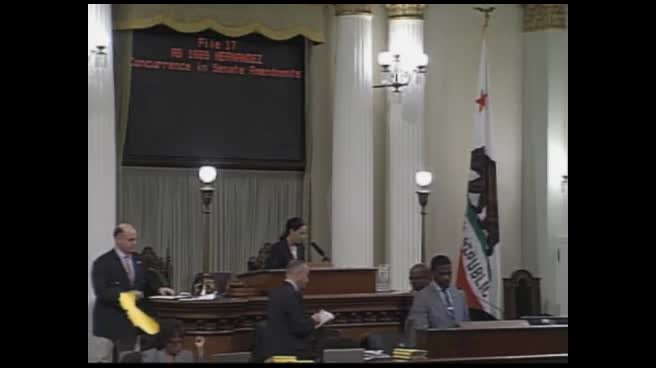
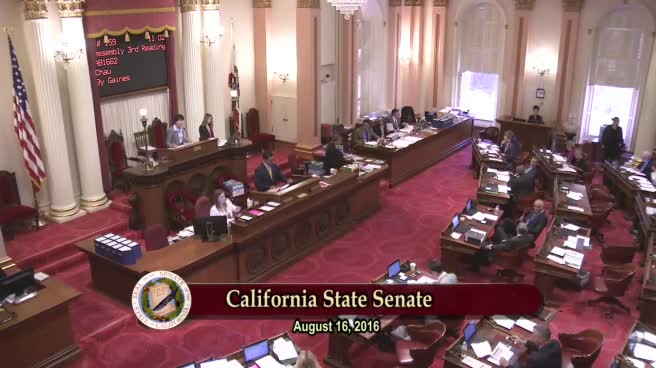
Bill Author

Bill Co-Author(s):