AB 2002: Political Reform Act of 1974: California Coastal Commission: communications.
- Session Year: 2015-2016
- House: Assembly
- Latest Version Date: 2016-04-12
Existing law establishes the California Coastal Commission in the Natural Resources Agency and designates the commission as the state coastal zone planning and management agency for all purposes. Existing law prohibits a commission member or an interested person, as defined, from conducting an ex parte communication unless the commission member fully discloses and makes public that communication within 7 days after the communication or, if the communication occurs within 7 days of the next commission hearing, to the commission on the record of the proceeding at that hearing.
This bill would require a commission member to fully disclose in writing 24 hours before a commission hearing any ex parte communication conducted within 7 days of the commission hearing relating to a matter that will be discussed at the hearing, and would prohibit a commission member or an interested person from conducting such an ex parte communication within 24 hours before the commission hearing.
The Political Reform Act of 1974 provides for the regulation of the lobbying industry, including defining the term lobbyist and regulating the conduct of lobbyists. Among its provisions, the act prohibits lobbyists from engaging in certain activities, including accepting or agreeing to accept any payment in any way contingent upon the defeat, enactment, or outcome of any proposed legislative or administrative action. Under the act, a lobbyist is, among others, an individual whose principal duties as an employee are to communicate with, among others, any agency official for the purpose of influencing legislative or administrative action. For these purposes, administrative action is defined as the proposal, drafting, development, consideration, amendment, enactment, or defeat by a state agency of any rule, regulation, or other action in any ratemaking or quasi-legislative proceeding and agency official is defined as any member, officer, employee, or consultant of any state agency who participates in any administrative action in other than a ministerial capacity.
This bill would revise the definition of administrative action to include, with regard to proceedings before the California Coastal Commission, specified actions relating to the review, approval, and appeal of certain permit actions and coastal plans and programs. The bill would, however, exclude from these provisions relating to lobbyists an employee of a local government agency seeking, within the scope of his or her employment, to influence quasi-judicial decisions of the commission. The bill would also, for purposes of a quasi-judicial matter those matters before the California Coastal Commission, limit the definition of agency official to a member of the commission.
Existing law makes a knowing and willful violation of the Political Reform Act of 1974 a misdemeanor and subjects offenders to criminal penalties.
This bill would impose a state-mandated local program by expanding those crimes.
The Political Reform Act of 1974, an initiative measure, provides that the Legislature may amend the act to further the acts purposes with a 2/3 vote of each house and compliance with specified procedural requirements.
This bill would declare that it furthers the purposes of the act.
The California Constitution requires the state to reimburse local agencies and school districts for certain costs mandated by the state. Statutory provisions establish procedures for making that reimbursement.
This bill would provide that no reimbursement is required by this act for a specified reason.
Existing law establishes the California Coastal Commission in the Natural Resources Agency and designates the commission as the state coastal zone planning and management agency for all purposes. Existing law prohibits a commission member or an interested person, as defined, from conducting an ex parte communication unless the commission member fully discloses and makes public that communication within 7 days after the communication or, if the communication occurs within 7 days of the next commission hearing, to the commission on the record of the proceeding at that hearing.
This bill would require a commission member to fully disclose in writing 24 hours before a commission hearing any ex parte communication conducted within 7 days of the commission hearing relating to a matter that will be discussed at the hearing, and would prohibit a commission member or an interested person from conducting such an ex parte communication within 24 hours before the commission hearing.
The Political Reform Act of 1974 provides for the regulation of the lobbying industry, including defining the term lobbyist and regulating the conduct of lobbyists. Among its provisions, the act prohibits lobbyists from engaging in certain activities, including accepting or agreeing to accept any payment in any way contingent upon the defeat, enactment, or outcome of any proposed legislative or administrative action. Under the act, a lobbyist is, among others, an individual whose principal duties as an employee are to communicate with, among others, any agency official for the purpose of influencing legislative or administrative action. For these purposes, administrative action is defined as the proposal, drafting, development, consideration, amendment, enactment, or defeat by a state agency of any rule, regulation, or other action in any ratemaking or quasi-legislative proceeding and agency official is defined as any member, officer, employee, or consultant of any state agency who participates in any administrative action in other than a ministerial capacity.
This bill would revise the definition of administrative action to include, with regard to proceedings before the California Coastal Commission, specified actions, plans, and orders, and any other quasi-judicial or quasi-legislative matter requiring commission action. actions relating to the review, approval, and appeal of certain permit actions and coastal plans and programs. The bill would, however, exclude from these provisions relating to lobbyists an individual who communicates with a member of the California Coastal Commission for compensation to advocate for an outcome in relation to no more than one administrative action during a calendar year and an employee of a local government agency seeking, within the scope of his or her employment, to influence quasi-judicial decisions of the commission. The bill would also, for purposes of a quasi-judicial matter before the California Coastal Commission, limit the definition of agency official to a member of the commission.
Existing law makes a knowing and willful violation of the Political Reform Act of 1974 a misdemeanor and subjects offenders to criminal penalties.
This bill would impose a state-mandated local program by expanding those crimes.
The Political Reform Act of 1974, an initiative measure, provides that the Legislature may amend the act to further the acts purposes with a 2/3 vote of each house and compliance with specified procedural requirements.
This bill would declare that it furthers the purposes of the act.
The California Constitution requires the state to reimburse local agencies and school districts for certain costs mandated by the state. Statutory provisions establish procedures for making that reimbursement.
This bill would provide that no reimbursement is required by this act for a specified reason.
Existing law establishes the California Coastal Commission in the Natural Resources Agency and designates the commission as the state coastal zone planning and management agency for all purposes.
The Political Reform Act of 1974 provides for the regulation of the lobbying industry, including defining the term lobbyist and regulating the conduct of lobbyists. Among its provisions, the act prohibits lobbyists from engaging in certain activities, including accepting or agreeing to accept any payment in any way contingent upon the defeat, enactment, or outcome of any proposed legislative or administrative action. Under the act, a lobbyist is, among others, an individual whose principal duties as an employee are to communicate with, among others, any agency official for the purpose of influencing legislative or administrative action. For these purposes, administrative action is defined as the proposal, drafting, development, consideration, amendment, enactment, or defeat by a state agency of any rule, regulation, or other action in any ratemaking or quasi-legislative proceeding and agency official is defined as any member, officer, employee, or consultant of any state agency who participates in any administrative action in other than a ministerial capacity.
This bill would revise the definition of administrative action to include, with regard to proceedings before the California Coastal Commission, specified actions, plans, and orders, and any other quasi-judicial or quasi-legislative matter requiring commission action. The bill would, however, exclude from these provisions relating to lobbyists an individual who communicates with a member of the California Coastal Commission for compensation to advocate for an outcome in relation to no more than one administrative action during a calendar year and an employee of a local government agency seeking, within the scope of his or her employment, to influence quasi-judicial decisions of the commission. The bill would also, for purposes of a quasi-judicial matter before the California Coastal Commission, limit the definition of agency official to a member of the commission.
Existing law makes a knowing and willful violation of the Political Reform Act of 1974 a misdemeanor and subjects offenders to criminal penalties.
This bill would impose a state-mandated local program by expanding those crimes.
The Political Reform Act of 1974, an initiative measure, provides that the Legislature may amend the act to further the acts purposes with a 2/3 vote of each house and compliance with specified procedural requirements.
This bill would declare that it furthers the purposes of the act.
The California Constitution requires the state to reimburse local agencies and school districts for certain costs mandated by the state. Statutory provisions establish procedures for making that reimbursement.
This bill would provide that no reimbursement is required by this act for a specified reason.
(a)Administrative action means any of the following:
(1)The proposal, drafting, development, consideration, amendment, enactment, or defeat by any state agency of any rule, regulation, or other action in any ratemaking proceeding or any quasi-legislative proceeding, which shall include any proceeding governed by Chapter 3.5 (commencing with Section 11340) of Part 1 of Division 3 of Title 2.
(2)With regard only to placement agents, the decision by any state agency to enter into a contract to invest state public retirement system assets on behalf of a state public retirement system.
(3)For purposes of proceedings before the California Coastal Commission, the proposal, drafting, development, consideration, amendment, enactment, or defeat of any rule, regulation, permit action, federal consistency review, appeal, local coastal program, port master plan, public works plan, long-range development plan, or categorical or other exclusion from coastal development permit requirements.
(b)Ratemaking proceeding means, for the purposes of a proceeding before the Public Utilities Commission, any proceeding in which it is reasonably foreseeable that a rate will be established, including, but not limited to, general rate cases, performance-based ratemaking, and other ratesetting mechanisms.
(c)Quasi-legislative proceeding means, for purposes of a proceeding before the Public Utilities Commission, any proceeding that involves consideration of the establishment of a policy that will apply generally to a group or class of persons, including, but not limited to, rulemakings and investigations that may establish rules affecting an entire industry.
SEC. 2.Section 82039 of the Government Code is amended to read:82039.(a)Lobbyist means either of the following:
(1)Any individual who receives two thousand dollars ($2,000) or more in economic consideration in a calendar month, other than reimbursement for reasonable travel expenses, or whose principal duties as an employee are, to communicate directly or through his or her agents with any elective state official, agency official, or legislative official for the purpose of influencing legislative or administrative action.
(2)A placement agent, as defined in Section 82047.3.
(b)An individual is not a lobbyist by reason of activities described in Section 86300.
(c)For the purposes of subdivision (a), a proceeding before the Public Utilities Commission constitutes administrative action if it meets any of the definitions set forth in subdivision (b) or (c) of Section 82002. However, a communication made for the purpose of influencing this type of Public Utilities Commission proceeding is not within subdivision (a) if the communication is made at a public hearing, public workshop, or other public forum that is part of the proceeding, or if the communication is included in the official record of the proceeding.
(d)Notwithstanding Section 82004, for purposes of a quasi-judicial matter before the California Coastal Commission, as described in paragraph (3) of subdivision (a) of Section 82002, agency official, as used in subdivision (a) of this section, shall only mean a member of the California Coastal Commission. Commission and does not include staff of the commission.
SEC. 3.Section 86300 of the Government Code is amended to read:86300.The provisions of this chapter are not applicable to any of the following:
(a)An elected public official acting in his or her official capacity or an employee of the state acting within the scope of his or her employment. However, an employee of the state, other than a legislative official, who attempts to influence legislative action and who would be required to register as a lobbyist, except for the provisions of this subdivision, shall not make gifts of more than ten dollars ($10) in a calendar month to an elected state officer or legislative official.
(b)A newspaper or other periodical of general circulation, book publisher, radio or television station, any individual who owns, publishes, or is employed by any such newspaper or periodical, or radio or television station, which in the ordinary course of business publishes news items, editorials, or other comments, or advertisements that directly or indirectly urge legislative or administrative action, if that newspaper, periodical, book publisher, radio or television station, or individual, engages in no further or other activities in connection with urging legislative or administrative action other than to appear before a committee of the Legislature or before a state agency in support of or in opposition to such action.
(c)A person when representing a bona fide church or religious society solely for the purpose of protecting the public right to practice the doctrines of such church.
(d)An employee of a local government agency seeking, within the scope of his or her employment, to influence quasi-judicial decisions of the California Coastal Commission.
SEC. 4.Section 30324 of the Public Resources Code is amended to read:30324.(a)(1)No commission member, nor any interested person, shall conduct an ex parte communication unless the commission member fully discloses and makes public the ex parte communication by providing a full report of the communication as follows:
(A)If the communication occurs more than seven days before the next commission hearing, to the executive director within seven days after the communication.
(B)Except as provided in subparagraph (C), if the communication occurs within seven days of the next commission hearing, to the commission on the record of the proceeding at that hearing.
(C)If the communication occurs within seven days of the next commission hearing and relates to a matter that the commission will discuss at the hearing, to the commission in writing at least 24 hours before that hearing.
(2)Notwithstanding paragraph (1), no commission member, nor any interested person, shall conduct an ex parte communication within 24 hours before a commission hearing regarding a matter that the commission will discuss at the hearing.
(b)(1)The commission shall adopt standard disclosure forms for reporting ex parte communications which shall include, but not be limited to, all of the following information:
(A)The date, time, and location of the communication.
(B)(i)The identity of the person or persons initiating and the person or persons receiving the communication.
(ii)The identity of the person on whose behalf the communication was made.
(iii)The identity of all persons present during the communication.
(C)A complete, comprehensive description of the content of the ex parte communication, including a complete set of all text and graphic material that was part of the communication.
(2)The executive director shall place in the public record any report of an ex parte communication.
(c)Communications shall cease to be ex parte communications when fully disclosed and placed in the commissions official record.
SEC. 5.Section 30325 of the Public Resources Code is amended to read:30325.(a)Nothing in this article prohibits any person or any interested person from testifying at a commission hearing, workshop, or other official proceeding, or from submitting written comments for the record on a matter before the commission. Written comments shall be submitted by mail or delivered to a commission office, or may be delivered to the commission at the time and place of a scheduled hearing.
(b)Any person who communicates with the members of the commission regarding an administrative action of the commission, as defined in paragraph (3) of subdivision (a) of Section 82002 of the Government Code, and who qualifies as a lobbyist, as defined in subdivision (a) of Section 82039 of the Government Code, shall comply with the requirements of Chapter 6 (commencing with Section 86100) of Title 9 of the Government Code.
SEC. 6.The Legislature finds and declares that the provisions of this act further the purposes of the Political Reform Act of 1974 within the meaning of subdivision (a) of Section 81012 of the Government Code.
SEC. 7.No reimbursement is required by this act pursuant to Section 6 of Article XIIIB of the California Constitution because the only costs that may be incurred by a local agency or school district will be incurred because this act creates a new crime or infraction, eliminates a crime or infraction, or changes the penalty for a crime or infraction, within the meaning of Section 17556 of the Government Code, or changes the definition of a crime within the meaning of Section 6 of Article XIIIB of the California Constitution.
(a)Administrative action means any of the following:
(1)The proposal, drafting, development, consideration, amendment, enactment, or defeat by any state agency of any rule, regulation, or other action in any ratemaking proceeding or any quasi-legislative proceeding, which shall include any proceeding governed by Chapter 3.5 (commencing with Section 11340) of Part 1 of Division 3 of Title 2.
(2)With regard only to placement agents, the decision by any state agency to enter into a contract to invest state public retirement system assets on behalf of a state public retirement system.
(3)For purposes of proceedings before the California Coastal Commission, the proposal, drafting, development, consideration, amendment, enactment, or defeat of any rule, regulation, permit action, federal consistency review, appeal, local coastal program, port master plan, public works plan, long-range development plan, or categorical or other exclusion from coastal development permit requirements, cease and desist order, restoration order, or any other quasi-judicial or quasi-legislative matter requiring commission action. requirements.
(b)Ratemaking proceeding means, for the purposes of a proceeding before the Public Utilities Commission, any proceeding in which it is reasonably foreseeable that a rate will be established, including, but not limited to, general rate cases, performance-based ratemaking, and other ratesetting mechanisms.
(c)Quasi-legislative proceeding means, for purposes of a proceeding before the Public Utilities Commission, any proceeding that involves consideration of the establishment of a policy that will apply generally to a group or class of persons, including, but not limited to, rulemakings and investigations that may establish rules affecting an entire industry.
SEC. 2.Section 82039 of the Government Code is amended to read:82039.(a)Lobbyist means either of the following:
(1)Any individual who receives two thousand dollars ($2,000) or more in economic consideration in a calendar month, other than reimbursement for reasonable travel expenses, or whose principal duties as an employee are, to communicate directly or through his or her agents with any elective state official, agency official, or legislative official for the purpose of influencing legislative or administrative action.
(2)A placement agent, as defined in Section 82047.3.
(b)An individual is not a lobbyist by reason of activities described in Section 86300.
(c)For the purposes of subdivision (a), a proceeding before the Public Utilities Commission constitutes administrative action if it meets any of the definitions set forth in subdivision (b) or (c) of Section 82002. However, a communication made for the purpose of influencing this type of Public Utilities Commission proceeding is not within subdivision (a) if the communication is made at a public hearing, public workshop, or other public forum that is part of the proceeding, or if the communication is included in the official record of the proceeding.
(d)Notwithstanding Section 82004, for purposes of a quasi-judicial matter before the California Coastal Commission, as described in paragraph (3) of subdivision (a) of Section 82002, agency official, as used in subdivision (a) of this section, shall only mean a member of the California Coastal Commission.
(e)Notwithstanding subdivision (a), lobbyist shall not include an individual who communicates with a member of the California Coastal Commission for compensation to advocate for an outcome in relation to no more than one administrative action during a calendar year.
SEC. 3.Section 86300 of the Government Code is amended to read:86300.The provisions of this chapter are not applicable to any of the following:
(a)An elected public official acting in his or her official capacity or an employee of the state acting within the scope of his or her employment. However, an employee of the state, other than a legislative official, who attempts to influence legislative action and who would be required to register as a lobbyist, except for the provisions of this subdivision, shall not make gifts of more than ten dollars ($10) in a calendar month to an elected state officer or legislative official.
(b)A newspaper or other periodical of general circulation, book publisher, radio or television station, any individual who owns, publishes, or is employed by any such newspaper or periodical, or radio or television station, which in the ordinary course of business publishes news items, editorials, or other comments, or advertisements that directly or indirectly urge legislative or administrative action, if that newspaper, periodical, book publisher, radio or television station, or individual, engages in no further or other activities in connection with urging legislative or administrative action other than to appear before a committee of the Legislature or before a state agency in support of or in opposition to such action.
(c)A person when representing a bona fide church or religious society solely for the purpose of protecting the public right to practice the doctrines of such church.
(d)An employee of a local government agency seeking, within the scope of his or her employment, to influence quasi-judicial decisions of the California Coastal Commission.
SEC. 4.Section 30324 of the Public Resources Code is amended to read:30324.(a)(1)No commission member, nor any interested person, shall conduct an ex parte communication unless the commission member fully discloses and makes public the ex parte communication by providing a full report of the communication to as follows:
(A)If the communication occurs more than seven days before the next commission hearing, to the executive director within seven days after the communication or, if communication.
(B)Except as provided in subparagraph (C), if the communication occurs within seven days of the next commission hearing, to the commission on the record of the proceeding at that hearing.
(C)If the communication occurs within seven days of the next commission hearing and relates to a matter that the commission will discuss at the hearing, to the commission in writing at least 24 hours before that hearing.
(2)Notwithstanding paragraph (1), no commission member, nor any interested person, shall conduct an ex parte communication within 24 hours before a commission hearing regarding a matter that the commission will discuss at the hearing.
(b)(1)The commission shall adopt standard disclosure forms for reporting ex parte communications which shall include, but not be limited to, all of the following information:
(A)The date, time, and location of the communication.
(B)(i)The identity of the person or persons initiating and the person or persons receiving the communication.
(ii)The identity of the person on whose behalf the communication was made.
(iii)The identity of all persons present during the communication.
(C)A complete, comprehensive description of the content of the ex parte communication, including a complete set of all text and graphic material that was part of the communication.
(2)The executive director shall place in the public record any report of an ex parte communication.
(c)Communications shall cease to be ex parte communications when fully disclosed and placed in the commissions official record.
SEC. 4.SEC. 5.Section 30325 of the Public Resources Code is amended to read:30325.(a)Nothing in this article prohibits any person or any interested person from testifying at a commission hearing, workshop, or other official proceeding, or from submitting written comments for the record on a matter before the commission. Written comments shall be submitted by mail or delivered to a commission office, or may be delivered to the commission at the time and place of a scheduled hearing.
(b)Any person who communicates with the members of the commission regarding an administrative action of the commission, as defined in paragraph (3) of subdivision (a) of Section 82002 of the Government Code, and who qualifies as a lobbyist, as defined in subdivisions subdivision (a) and (d) of Section 82039 of the Government Code, shall comply with the requirements of Chapter 6 (commencing with Section 86100) of Title 9 of the Government Code.
SEC. 5.SEC. 6.The Legislature finds and declares that the provisions of this act further the purposes of the Political Reform Act of 1974 within the meaning of subdivision (a) of Section 81012 of the Government Code.
SEC. 6.SEC. 7.No reimbursement is required by this act pursuant to Section 6 of Article XIIIB of the California Constitution because the only costs that may be incurred by a local agency or school district will be incurred because this act creates a new crime or infraction, eliminates a crime or infraction, or changes the penalty for a crime or infraction, within the meaning of Section 17556 of the Government Code, or changes the definition of a crime within the meaning of Section 6 of Article XIIIB of the California Constitution.
(a)Administrative action means either any of the following:
(1)The proposal, drafting, development, consideration, amendment, enactment, or defeat by any state agency of any rule, regulation, or other action in any ratemaking proceeding or any quasi-legislative proceeding, which shall include any proceeding governed by Chapter 3.5 (commencing with Section 11340) of Part 1 of Division 3 of Title 2.
(2)With regard only to placement agents, the decision by any state agency to enter into a contract to invest state public retirement system assets on behalf of a state public retirement system.
(3)For purposes of proceedings before the California Coastal Commission, the proposal, drafting, development, consideration, amendment, enactment, or defeat of any rule, regulation, permit action, federal consistency review, appeal, local coastal program, port master plan, public works plan, long-range development plan, categorical or other exclusion from coastal development permit requirements, cease and desist order, restoration order, or any other quasi-judicial or quasi-legislative matter requiring commission action.
(b)Ratemaking proceeding means, for the purposes of a proceeding before the Public Utilities Commission, any proceeding in which it is reasonably foreseeable that a rate will be established, including, but not limited to, general rate cases, performance-based ratemaking, and other ratesetting mechanisms.
(c)Quasi-legislative proceeding means, for purposes of a proceeding before the Public Utilities Commission, any proceeding that involves consideration of the establishment of a policy that will apply generally to a group or class of persons, including, but not limited to, rulemakings and investigations that may establish rules affecting an entire industry.
SEC. 2.Section 82039 of the Government Code is amended to read:82039.(a)Lobbyist means either of the following:
(1)Any individual who receives two thousand dollars ($2,000) or more in economic consideration in a calendar month, other than reimbursement for reasonable travel expenses, or whose principal duties as an employee are, to communicate directly or through his or her agents with any elective state official, agency official, or legislative official for the purpose of influencing legislative or administrative action.
(2)A placement agent, as defined in Section 82047.3.
(b)An individual is not a lobbyist by reason of activities described in Section 86300.
(c)For the purposes of subdivision (a), a proceeding before the Public Utilities Commission constitutes administrative action if it meets any of the definitions set forth in subdivision (b) or (c) of Section 82002. However, a communication made for the purpose of influencing this type of Public Utilities Commission proceeding is not within subdivision (a) if the communication is made at a public hearing, public workshop, or other public forum that is part of the proceeding, or if the communication is included in the official record of the proceeding.
(d)Notwithstanding Section 82004, for purposes of a quasi-judicial matter before the California Coastal Commission, as described in paragraph (3) of subdivision (a) of Section 82002, agency official, as used in subdivision (a) of this section, shall only mean a member of the California Coastal Commission.
(e)Notwithstanding subdivision (a), lobbyist shall not include an individual who communicates with a member of the California Coastal Commission for compensation to advocate for an outcome in relation to no more than one administrative action during a calendar year.
SEC. 3.Section 86300 of the Government Code is amended to read:86300.The provisions of this chapter are not applicable to: to any of the following:
(a)Any An elected public official acting in his or her official capacity, capacity or any an employee of the State of California state acting within the scope of his employment; provided that, or her employment. However, an employee of the State of California, state, other than a legislative official, who attempts to influence legislative action and who would be required to register as a lobbyist lobbyist, except for the provisions of this subdivision subdivision, shall not make gifts of more than ten dollars ($10) in a calendar month to an elected state officer or legislative official.
(b)Any A newspaper or other periodical of general circulation, book publisher, radio or television station (including station, any individual who owns, publishes, or is employed by any such newspaper or periodical, or radio or television station) station, which in the ordinary course of business publishes news items, editorials, or other comments, or paid advertisement, which advertisements that directly or indirectly urge legislative or administrative action action, if such that newspaper, periodical, book publisher, radio or television station station, or individual, engages in no further or other activities in connection with urging legislative or administrative action other than to appear before a committee of the Legislature or before a state agency in support of or in opposition to such action; or action.
(c)A person when representing a bona fide church or religious society solely for the purpose of protecting the public right to practice the doctrines of such church.
(d)An employee of a local government agency seeking, within the scope of his or her employment, to influence quasi-judicial decisions of the California Coastal Commission.
SEC. 4.Section 30325 of the Public Resources Code is amended to read:30325.(a)Nothing in this article prohibits any person or any interested person from testifying at a commission hearing, workshop, or other official proceeding, or from submitting written comments for the record on a matter before the commission. Written comments shall be submitted by mail or delivered to a commission office, or may be delivered to the commission at the time and place of a scheduled hearing.
(b)Any person who communicates with the members of the commission regarding an administrative action of the commission, as defined in paragraph (3) of subdivision (a) of Section 82002 of the Government Code, and who qualifies as a lobbyist, as defined in subdivisions (a) and (d) of Section 82039 of the Government Code, shall comply with the requirements of Chapter 6 (commencing with Section 86100) of Title 9 of the Government Code.
SEC. 5.The Legislature finds and declares that the provisions of this act further the purposes of the Political Reform Act of 1974 within the meaning of subdivision (a) of Section 81012 of the Government Code.
SEC. 6.No reimbursement is required by this act pursuant to Section 6 of Article XIIIB of the California Constitution because the only costs that may be incurred by a local agency or school district will be incurred because this act creates a new crime or infraction, eliminates a crime or infraction, or changes the penalty for a crime or infraction, within the meaning of Section 17556 of the Government Code, or changes the definition of a crime within the meaning of Section 6 of Article XIIIB of the California Constitution.
|
Date
|
Status
|
|---|---|
| Jun 9, 2016 | Referred to Coms. on E. & C.A. and N.R. & W. |
| Aug 31, 2016 | Reconsideration granted. (Ayes 39. Noes 0.) |
| Aug 31, 2016 | Reconsideration granted. (Ayes 39. Noes 0. Page 5575.) |
| Aug 31, 2016 | Read third time. Refused passage. (Ayes 22. Noes 13. Page 5575.). |
| Aug 31, 2016 | Read third time. Refused passage. |
| Aug 31, 2016 | Ordered to inactive file at the request of Senator Allen. |
| Aug 31, 2016 | Motion to reconsider made by Senator Allen. |
| Aug 30, 2016 | Withdrawn from committee. |
| Aug 30, 2016 | Ordered to third reading. |
| Aug 30, 2016 | (Ayes 26. Noes 13. Page 5510.) |
| Aug 15, 2016 | Read second time. Ordered to third reading. |
| Aug 15, 2016 | Re-referred to Com. on RLS. |
| Aug 11, 2016 | From committee: Do pass. (Ayes 5. Noes 2.) (August 11). |
| Aug 1, 2016 | In committee: Referred to APPR. suspense file. |
| Jun 29, 2016 | From committee: Do pass and re-refer to Com. on APPR. (Ayes 6. Noes 2.) (June 28). Re-referred to Com. on APPR. |
| Jun 22, 2016 | From committee: Do pass and re-refer to Com. on N.R. & W. (Ayes 4. Noes 1.) (June 21). Re-referred to Com. on N.R. & W. |
| Feb 16, 2016 | Read first time. To print. |
| Jun 6, 2016 | In Senate. Read first time. To Com. on RLS. for assignment. |
| Jun 2, 2016 | Read third time. Passed. Ordered to the Senate. (Ayes 54. Noes 23.) |
| Jun 2, 2016 | Read third time. Passed. Ordered to the Senate. (Ayes 54. Noes 23. Page 5247.) |
| Jun 2, 2016 | Read third time. Passed. Ordered to the Senate. |
| May 31, 2016 | Read second time. Ordered to third reading. |
| May 27, 2016 | From committee: Do pass. (Ayes 14. Noes 6.) (May 27). |
| May 4, 2016 | In committee: Set, first hearing. Referred to APPR. suspense file. |
| Apr 19, 2016 | From committee: Do pass and re-refer to Com. on APPR. (Ayes 7. Noes 2.) (April 18). Re-referred to Com. on APPR. |
| Apr 13, 2016 | Re-referred to Com. on NAT. RES. |
| Apr 12, 2016 | From committee chair, with author's amendments: Amend, and re-refer to Com. on NAT. RES. Read second time and amended. |
| Mar 30, 2016 | From committee: Do pass and re-refer to Com. on NAT. RES. (Ayes 6. Noes 1.) (March 30). Re-referred to Com. on NAT. RES. |
| Mar 29, 2016 | Re-referred to Com. on E. & R. |
| Mar 28, 2016 | From committee chair, with author's amendments: Amend, and re-refer to Com. on E. & R. Read second time and amended. |
| Feb 29, 2016 | Referred to Coms. on E. & R. and NAT. RES. |
| Feb 17, 2016 | From printer. May be heard in committee March 18. |
|
Date
|
Description
|
Location
|
Votes
|
|
|---|---|---|---|---|
| Aug 31, 2016 | Assembly 3rd Reading AB2002 Mark Stone By Allen Reconsider | Senate Floor |
Passed |
|
| Aug 31, 2016 | Assembly 3rd Reading AB2002 Mark Stone By Allen | Senate Floor |
Failed |
|
| Aug 11, 2016 | Do pass | Senate Standing Committee on Appropriations |
Passed |
|
| Aug 1, 2016 | Placed on suspense file | Senate Standing Committee on Appropriations |
Passed |
|
| Jun 28, 2016 | Do pass, but first be re-referred to the Committee on [Appropriations] | Senate Standing Committee on Natural Resources and Water |
Passed |
|
| Jun 21, 2016 | Do pass, but first be re-referred to the Committee on [Natural Resources and Water] | Senate Standing Committee on Elections and Constitutional Amendments |
Passed |
|
| Jun 2, 2016 | AB 2002 STONE Assembly Third Reading | Assembly Floor |
Passed |
|
| May 27, 2016 | Do pass. | Assembly Standing Committee on Appropriations |
Passed |
|
| Apr 18, 2016 | Do pass and be re-referred to the Committee on [Appropriations] | Assembly Standing Committee on Natural Resources |
Passed |
|
| Mar 30, 2016 | Do pass and be re-referred to the Committee on [Natural Resources] | Assembly Standing Committee on Elections and Redistricting |
Passed |
This list shows positions taken on this bill by organizations on the date displayed, which is linked to the original source.
Positions by individuals are not included.
|
Organization
|
Position
|
Date
|
|---|---|---|
| American Planning Association, California Chapter | ** Against | Apr 18, 2016 |
| Asian Pacific Policy & Planning Council | ** Support | Aug 31, 2016 |
| Audubon California | ** Support | Aug 31, 2016 |
| Azul | ** Support | Aug 31, 2016 |
| AzulBlack Surfers Collective | ** Support | Aug 31, 2016 |
| AzulHispanic Access Foundation | ** Support | Aug 31, 2016 |
| Berkeley, City Of | ** Support | Aug 31, 2016 |
| Betty Yee, California State Controller | ** Support | Aug 31, 2016 |
| Black Surfers Collective | ** Support | Aug 31, 2016 |
| Blue Frontier | ** Support | Aug 31, 2016 |
| CA Native Plant Society | ** Support | Aug 31, 2016 |
| California Apartment Association | ** Against | Aug 31, 2016 |
| California Association Of Realtors | ** Against | Apr 18, 2016 |
| California Building Industry Association | ** Against | Aug 31, 2016 |
| California Business Properties Association | ** Against | Aug 31, 2016 |
| California Cattlemen'S Association | ** Against | Aug 31, 2016 |
| California Chamber Of Commerce | ** Against | Aug 31, 2016 |
| California Coastal Commission | ** Support | Aug 31, 2016 |
| California Coastal Protection Network | ** Support | Aug 31, 2016 |
| California Coastkeeper Alliance | ** Support | Aug 31, 2016 |
| California Construction And Industrial Materials Association | ** Against | Aug 31, 2016 |
| California Farm Bureau Federation | ** Against | Aug 31, 2016 |
| California Independent Petroleum Association | ** Against | Aug 31, 2016 |
| California League Of Conservation Voters | ** Support | Aug 31, 2016 |
| California Native Plant Society | ** Support | Aug 31, 2016 |
| California State Controller Betty Yee | ** Support | Aug 31, 2016 |
| California State Controller, Betty Yee | ** Support | Aug 31, 2016 |
| California Watershed Network | ** Support | Aug 31, 2016 |
| CALPRIG | ** Support | Aug 31, 2016 |
| City of West Hollywood | ** Support | Aug 31, 2016 |
| Climate Parents | ** Support | Aug 31, 2016 |
| Coastal Environmental Rights Foundation | ** Support | Aug 31, 2016 |
| Controller Betty Yee | ** Support | Apr 18, 2016 |
| Courage Campaign | ** Support | Aug 31, 2016 |
| Department of the Navy | ** Against | Aug 31, 2016 |
| Environment California | ** Support | Aug 31, 2016 |
| Environmental Defense Center | ** Support | Aug 31, 2016 |
| Environmental Justice Coalition for Water | ** Support | Aug 31, 2016 |
| Fair Political Practices Commission | ** Against | Aug 31, 2016 |
| Friends of Harbors, Beaches and Parks | ** Support | Aug 31, 2016 |
| Hispanic Access Foundation | ** Support | Aug 31, 2016 |
| Humboldt Baykeeper | ** Support | Aug 31, 2016 |
| Humboldt Baykeeper IDARE Sustainable Leadership | ** Support | Apr 18, 2016 |
| IDARE Sustainable Leadership | ** Support | Aug 31, 2016 |
| Inland Empire Waterkeeper | ** Support | Aug 31, 2016 |
| Klamath Riverkeeper | ** Support | Aug 31, 2016 |
| Los Angeles Waterkeeper | ** Support | Aug 31, 2016 |
| Los Cerritos Wetlands Land Trust | ** Support | Aug 31, 2016 |
| Monterey Coastkeeper & Otter Project | ** Support | Aug 31, 2016 |
| Monterey Coastkeeper & Otter Projects | ** Support | Aug 31, 2016 |
| National Federation Of Independent Business | ** Against | Aug 31, 2016 |
| National Parks Conservation Association | ** Support | Aug 31, 2016 |
| One individual | ** Support | Aug 31, 2016 |
| Orange County Coastkeeper | ** Support | Aug 31, 2016 |
| Petaluma River Council | ** Support | Aug 31, 2016 |
| Planning And Conservation League | ** Support | Aug 31, 2016 |
| Preserve Rural Sonoma County | ** Support | Aug 31, 2016 |
| Russian Riverkeeper | ** Support | Aug 31, 2016 |
| San Diego Coastkeeper | ** Support | Aug 31, 2016 |
| San Francisco Baykeeper | ** Support | Aug 31, 2016 |
| San Luis Obispo Channelkeeper | ** Support | Aug 31, 2016 |
| Santa Barbara Channelkeeper | ** Support | Aug 31, 2016 |
| Sierra Club California | ** Support | Aug 31, 2016 |
| Smith River Alliance | ** Support | Aug 31, 2016 |
| Sonoma County Conservation Action | ** Support | Aug 31, 2016 |
| Surfrider Foundation | ** Support | Aug 31, 2016 |
| The City Project | ** Support | Aug 31, 2016 |
| The Loftin Firm, P.C. | ** Against | Aug 31, 2016 |
| The Nature Conservancy | ** Support | Aug 31, 2016 |
| Turtle Island Restoration Network | ** Support | Aug 31, 2016 |
| Ventura Coastkeeper | ** Support | Aug 31, 2016 |
| Wallace J. Nicholas, Ph.D., Author, Blue Mind | ** Support | Aug 31, 2016 |
| Western States Petroleum Association | ** Against | Aug 31, 2016 |
| Wildcoast | ** Support | Aug 31, 2016 |
| Wishotyo Chumash Foundation | ** Support | Aug 31, 2016 |
| Wishtoyo Chumash Foundation | ** Support | Aug 31, 2016 |
Office of Senate Floor Analyses (916) 651-1520 Fax: (916) 327-4478 | AB |
THIRD READING
Bill No: AB 2002
:
SENATE ELECTIONS & C.A. COMMITTEE: 4-1, 6/21/16
AYES: Allen, Hancock, Hertzberg, Liu
NOES: Anderson
SENATE NATURAL RES. & WATER COMMITTEE: 6-2, 6/28/16
AYES: Pavley, Allen, Hertzberg, Hueso, Jackson, Monning
NOES: Stone, Vidak
NO VOTE RECORDED: Wolk
SENATE APPROPRIATIONS COMMITTEE: 5-2, 8/11/16
AYES: Lara, Beall, Hill, McGuire, Mendoza
NOES: Bates, Nielsen
ASSEMBLY FLOOR: 54-23, 6/2/16 - See last page for vote
DIGEST: This bill provides that communicating with the Coastal Commission (Commission) in order to influence specified actions can result in a person being considered a “lobbyist” under the Political Reform Act (PRA) and prohibits an ex parte communication with a member of the Commission regarding a matter during the 24 hours before that matter will be discussed at a Commission hearing.
Existing law:
- Creates the Fair Political Practices Commission (FPPC) and makes it responsible for the impartial, effective administration and implementation of the PRA.
- Defines a "lobbyist," for the purposes of the PRA, as an individual who receives $2,000 or more in a calendar month, or whose principal duties as an employee are, to communicate with an agency official, elected state official, or legislative official for the purpose of influencing legislative or administrative action. This definition does not apply to any elected public official acting in her official capacity, or any state employee acting within the scope of his or her employment.
- Defines "administrative action," for the purposes of the PRA, as either of the following:
- The proposal, drafting, development, consideration, amendment, enactment, or defeat by any state agency of any rule, regulation, or other action in any ratemaking proceeding or a quasi-legislative proceeding, as specified; or,
- With regard only to placement agents, as defined, the decision by any state agency to enter into a contract to invest state public retirement system assets on behalf of a state public retirement system.
- Defines “agency official,” for the purposes of the PRA, as any member, officer, employee, or consultant of any state agency who as part of her official responsibilities participates in any administrative action in other than a purely clerical, secretarial, or ministerial capacity.
- Requires a lobbyist to register as a lobbyist and to comply with various ethics and reporting rules.
- Requires lobbying firms and lobbyist employers to register with the Secretary of State and to file periodic disclosure reports that contain information about the firms' and employers' lobbying interests and agencies lobbied.
- Permits any person to testify at a Commission hearing, workshop, or other official proceeding, or submit written comments for the record on a matter before the Commission.
- Requires any person who applies to the Commission for approval of a development permit to provide the Commission with the names and addresses of all persons who, for compensation, will be communicating with the Commission or its staff on the applicant’s behalf or on behalf of the applicant’s business partners. Requires that disclosure to be provided to the Commission prior to any such communication.
- Requires Commissioners to disclose and make public any ex parte communication by providing a full report of the communication to the executive director within seven days of the communication or, if the communication occurs within seven days of the next Commission hearing, to the Commission on the record of the proceeding at that hearing.
- Defines an "ex parte communication," for the purposes of communications related to actions of the Commission, as any oral or written communication between a member of the Commission and an interested person about a matter within the Commission's jurisdiction, which does not occur in a public hearing, workshop, or other official proceeding, or that is not on the record at such a proceeding.
- Defines an "interested person" as (a) any applicant, applicant's agent or representative, or participant in a Commission proceeding, (b) any person with a financial interest in a matter before the Commission, or her agent or employee, or (c) a representative acting on behalf of any civic, environmental, neighborhood, business, labor, trade, or similar organization who intends to influence the decision of a Commissioner.
- Defines a "matter within the commission's jurisdiction" as any permit action, federal consistency review, appeal, local coastal program, port master plan, public works plan, or any other quasi-judicial matter requiring Commission action, for which an application has been submitted to the Commission.
- Prohibits a Commissioner who has knowingly had an ex parte communication that has not been reported as required from voting on the matter or influencing the Commission in any way. Provides that knowing violations of the disclosure or recusal requirements can result in fines of up to $7,500, and a court order for the Commission to revoke its action and rehear the matter.
This bill:
- Provides that communications with Commissioners regarding specified business before the Commission can result in a person being considered a lobbyist under the PRA, pursuant to the following:
- Expands the definition of “administrative action” to also mean the proposal, drafting, development, consideration, amendment, enactment, or defeat of any rule, regulation, permit action, federal consistency review, appeal, local coastal program, port master plan, public works plan, long-range development plan, or categorical or other exclusion from coastal development permit requirements.
- Provides, for the purposes of a quasi-judicial matter before the Commission, that the term "agency official" only means Commissioners, thereby generally excluding communications with staff or consultants of the Commission regarding matter before the Commission from the types of communications that may result in a person being classified as a lobbyist under this bill.
- Exempts from the definition of "lobbyist," for the purposes of this bill, an employee of a local government agency seeking, within the scope of his or her employment, to influence quasi-judicial decisions of the Commission.
- Requires Commissioners to disclose any ex parte communication in writing as follows:
- If the communication occurs more than seven days before the next commission hearing, to the executive director within seven days after the communication.
- If the communication occurs within seven days of the next commission hearing, to the commission on the record of the proceeding at that hearing.
- If the communication occurs within seven days of the next commission hearing and relates to a matter that the commission will discuss at the hearing, to the commission in writing at least 24 hours before that hearing.
- No commission member, nor any interested person, shall conduct an ex parte communication within 24 hours before a commission hearing regarding a matter that the commission will discuss at the hearing.
Background
Coastal Commission. The Commission was established by voter initiative in 1972 (Proposition 20) and later made permanent by the Legislature through adoption of the California Coastal Act of 1976 (Coastal Act). In partnership with coastal cities and counties, the Commission plans and regulates the use of land and water in the coastal zone. Development activities, which are broadly defined by the Coastal Act to include construction of buildings, divisions of land, and activities that change the intensity of use of land or public access to coastal waters, generally require a Coastal Development Permit from either the Commission or the local government with a certified Local Coastal Program.
The Commission is an independent, quasi-judicial state agency, and is composed of 12 voting members, appointed equally (four each) by the Governor, the Senate Rules Committee, and the Speaker of the Assembly. Six of the voting commissioners are locally elected officials and six are appointed from the public at large. Three ex officio (non-voting) members represent the Natural Resources Agency, the Transportation Agency, and the State Lands Commission.
According to the Commission’s mission statement, the Commission is committed to protecting and enhancing California’s coast and ocean for present and future generations through careful planning and regulation of environmentally-sustainable development, rigorous use of science, strong public participation, education, and effective intergovernmental coordination.
Ex parte communications. Ex parte communications refer to any communication made in private (i.e., off the record and without notice and opportunity for all parties to participate) between an interested party in a decision-making process and any state official in a decision-making position. Ex parte communication disclosure requirements for state policy makers are intended to provide the public with information regarding a decision and to prevent bias in decision makers.
Prior to 1992, there was no mention of ex parte communications in the Coastal Act. In 1992, basic ex parte communications reporting was added to the Coastal Act. In 2014, AB 474 (Stone, Chapter 125, Statutes of 2014) improved ex parte communications reporting requirements. The additions to the reporting requirements included the identity of the person on whose behalf the communication was made, the identity of all persons present during the communication, and a complete, comprehensive description of the content of the ex parte communication, including a complete set of all text and graphic material that was part of the communication. This bill requires written reports for all ex parte communications. This bill also prohibits ex parte communications within 24 hours of a Commission hearing.
Comments
According to the author, currently members of the Commission are lobbied without the same level of transparency that is met when other state officials are lobbied. AB 2002 will amend the California Coastal Act and the PRA to require that those lobbying the Commission must register with the FPPC as a lobbyist; they must disclose activities they are pursuing on behalf of a client.
The decisions made by the Commission can have broad and lasting impacts on coastal conservation and coastal access. The Commission works with cities and counties in the coastal zone to approve land use policy that reflects the values put forth by the voters in 1972. Due to the gravity of these decisions, transparency of the process is critical.
Related/Prior Legislation
SB 1190 (Jackson), which is pending in the Assembly Natural Resources Committee, prohibits all ex parte communications at the Commission.
AB 2658 (Maienschein), which was never voted on in the Assembly Natural Resources Committee, would have required Commission staff to disclose certain communications as specified and imposed time limits for posting specified recordings and materials on the Commission Web site.
FISCAL EFFECT: Appropriation: Fiscal Com.: Local:
According to the Senate Appropriations Committee:
- The FPPC indicates that it would incur first-year costs of $215,000, and ongoing annual costs of $201,000 to implement the provisions of this bill (General Fund).
California State Controller Betty Yee
Asian Pacific Policy & Planning Council
Audubon California
AzulBlack Surfers Collective
Blue Frontier
California Coastal Commission
California Coastal Protection Network
California Coastkeeper Alliance
California League of Conservation Voters
California Native Plant Society
California Public Interest Research Group
California Watershed Network
City of West Hollywood
Climate Parents
Coastal Environmental Rights Foundation
Courage Campaign
Environment California
Environmental Defense Center
Environmental Justice Coalition for Water
Friends of Harbors, Beaches and Parks
Hispanic Access Foundation
Humboldt Baykeeper
IDARE Sustainable Leadership
Inland Empire Waterkeeper
Klamath Riverkeeper
Los Angeles Waterkeeper
Los Cerritos Wetlands Land Trust
Monterey Coastkeeper & Otter Projects
National Parks Conservation Association
Orange County Coastkeeper
Petaluma River Council
Preserve Rural Sonoma County
Russian Riverkeeper
San Diego Coastkeeper
San Francisco Baykeeper
San Luis Obispo Channelkeeper
Santa Barbara Channelkeeper
Sierra Club California
Smith River Alliance
Sonoma County Conservation Action
Surfrider Foundation
The City Project
The Nature Conservancy
Turtle Island Restoration Network
Ventura Coastkeeper
WildCoast
Wishotyo Chumash Foundation
One individual
OPPOSITION: (Verified 8/11/16)
California Apartment Association
California Building Industry Association
California Business Properties Association
California Cattlemen’s Association
California Chamber of Commerce
California Construction and Industrial Materials Association
California Farm Bureau Federation
California Independent Petroleum Association
Department of the Navy
Fair Political Practices Commission
Loftin Firm, P.C.
National Federation of Independent Business
Western States Petroleum Association
ASSEMBLY FLOOR: 54-23, 6/2/16
AYES: Alejo, Arambula, Atkins, Baker, Bloom, Bonilla, Bonta, Brown, Burke, Calderon, Campos, Chau, Chiu, Chu, Cooley, Cooper, Dababneh, Daly, Dodd, Eggman, Frazier, Cristina Garcia, Eduardo Garcia, Gatto, Gipson, Gomez, Gonzalez, Gordon, Hadley, Roger Hernández, Holden, Irwin, Jones-Sawyer, Levine, Lopez, Low, Maienschein, McCarty, Medina, Mullin, Nazarian, O'Donnell, Quirk, Ridley-Thomas, Rodriguez, Salas, Santiago, Mark Stone, Thurmond, Ting, Weber, Williams, Wood, Rendon
NOES: Achadjian, Travis Allen, Brough, Chang, Chávez, Dahle, Gray, Grove, Harper, Jones, Kim, Lackey, Linder, Mathis, Mayes, Melendez, Obernolte, Olsen, Patterson, Steinorth, Wagner, Waldron, Wilk
NO VOTE RECORDED: Bigelow, Beth Gaines, Gallagher
8/15/16 20:17:25
SENATE COMMITTEE ON
Senator Ricardo Lara, Chair
2015 - 2016 Regular Session
AB 2002 (Mark Stone) - Political Reform Act of 1974: California Coastal Commission: communications
Version: | Policy Vote: |
Urgency: | Mandate: |
Hearing Date: | Consultant: |
This bill meets the criteria for referral to the Suspense File.
Bill Summary:
AB 2002 would (1) provide that communicating with the California Coastal Commission in order to influence specified actions can result in a person being considered a “lobbyist” under the Political Reform Act (PRA), and (2) prohibit an ex parte communication with a member of the Commission regarding a matter during the 24 hours before that matter will be discussed at a Commission hearing.
Fiscal Impact:
- The Fair Political Practices Commission (FPPC) indicates that it would incur first-year costs of $215,000, and ongoing annual costs of $201,000 to implement the provisions of the bill (General Fund).
- The California Coastal Commission would incur costs of up to $240,000 annually related to conducting site visits under the provisions of the bill.
Background:
The Coastal Commission (Commission) was established by voter initiative in 1972 (Proposition 20) and later made permanent by the Legislature through adoption of the California Coastal Act of 1976 (Coastal Act). In partnership with coastal cities and counties, the Commission plans and regulates the use of land and water in the coastal zone. Development activities, which are broadly defined by the Coastal Act to include construction of buildings, divisions of land, and activities that change the intensity of use of land or public access to coastal waters, generally require a Coastal Development Permit (CDP) from either the Commission or the local government with a certified Local Coastal Program (LCP).
The Commission is an independent, quasi-judicial state agency, and is composed of 12 voting members, appointed equally (four each) by the Governor, the Senate Rules Committee, and the Speaker of the Assembly. Six of the voting commissioners are locally elected officials and six are appointed from the public at large. Three ex officio (non-voting) members represent the Natural Resources Agency, the Transportation Agency, and the State Lands Commission.
Ex parte communications refer to any communication made in private (i.e., off the record and without notice and opportunity for all parties to participate) between an interested party in a decision-making process and any state official in a decision-making position. Ex parte communication disclosure requirements for state policy makers are intended to provide the public with information regarding a decision and to prevent bias in decision makers.
Prior to 1992, there was no mention of ex parte communications in the Coastal Act. In 2014, AB 474 (Stone, Chapter 125, Statutes of 2014), expanded ex parte communications reporting requirements. The additions to the reporting requirements included the identity of the person on whose behalf the communication was made, the identity of all persons present during the communication, and a complete, comprehensive description of the content of the ex parte communication, including a complete set of all text and graphic material that was part of the communication.
Proposed Law:
This bill would do the following:
- Provide that communicating with the Commission in order to influence specified actions can result in a person being considered a “lobbyist” under the Political Reform Act (PRA).
- Require Commissioners to disclose any ex parte communication in writing at least 24 hours before a hearing if the communication occurs within seven days of the next hearing and relates to a matter that the Commission will discuss at the hearing.
- Prohibit Commissioners or an interested person in a Commission action from conducting an ex parte communication within 24 hours before a hearing regarding a matter that the Commission will discuss at that hearing.
Related Legislation:
SB 1190 (Jackson) would prohibit all ex parte communications at the Commission. The bill is currently pending in the Assembly Appropriations Committee.
Staff Comments:
Due to the bill's expanding the regulation of lobbying into matters before the Commission, FPPC would require two positions, at an annual General Fund cost of around $200,000 to amend regulations and manuals, respond to additional advice requests, and for additional enforcement.
The work of Coastal Commissioners involves, among other duties, voting monthly on several dozen permits, appeals, and agreements of settlements of enforcement. It is common that Commissioners will participate in site visits prior to a meeting to see first-hand issues that may be considered in a meeting. By creating a 24 hour blackout period on ex parte communication, the Commission indicates that the bill would require that any site visits conducted in that time period be done as formal commission meetings with public participation. Costs resulting from the bill would range from $3,000 to $10,000 per site visit, depending on public interest. Assuming two site visits per meeting, total annual costs could range from $72,000 to $240,000. This estimate excludes live streaming, translation services, and other access costs that typical commission meetings incur.
-- END --
SENATE COMMITTEE ON NATURAL RESOURCES AND WATER
Senator Fran Pavley, Chair
2015 - 2016 Regular
Bill No: AB 2002 Hearing Date: June 28, 2016
Author: | |||
Version: |
| ||
Urgency: | Fiscal: | ||
Consultant: | |||
Subject: Political Reform Act of 1974: California Coastal Commission: communications
BACKGROUND AND EXISTING LAW
- Creates the Fair Political Practices Commission (FPPC) and makes it responsible for the impartial, effective administration and implementation of the Political Reform Act (PRA).
- Defines a "lobbyist," for the purposes of the PRA, as an individual who receives $2,000 or more in a calendar month, or whose principal duties as an employee are, to communicate with an agency official, elected state official, or legislative official for the purpose of influencing legislative or administrative action. This definition does not apply to any elected public official acting in her official capacity, or any state employee acting within the scope of his or her employment.
- Defines "administrative action," for the purposes of the PRA, as either of the following:
- The proposal, drafting, development, consideration, amendment, enactment, or defeat by any state agency of any rule, regulation, or other action in any ratemaking proceeding or a quasi-legislative proceeding, as specified; or
- With regard only to placement agents, as defined, the decision by any state agency to enter into a contract to invest state public retirement system assets on behalf of a state public retirement system.
- Defines "agency official," for the purposes of the PRA, as any member, officer, employee, or consultant of any state agency who as part of her official responsibilities participates in any administrative action in other than a purely clerical, secretarial, or ministerial capacity.
- Requires a lobbyist to register as a lobbyist and to comply with various ethics and reporting rules.
- Requires lobbying firms and lobbyist employers to register with the Secretary of State (SOS) and to file periodic disclosure reports that contain information about the firms' and employers' lobbying interests and agencies lobbied.
- Permits any person to testify at a California Coastal Commission (Commission) hearing, workshop, or other official proceeding, or submit written comments for the record on a matter before the Commission.
- Requires any person who applies to the Commission for approval of a development permit to provide the Commission with the names and addresses of all persons who, for compensation, will be communicating with the Commission or its staff on the applicant's behalf or on behalf of the applicant's business partners and further requires that disclosure to be provided to the Commission prior to any such communication.
- Requires Commissioners to disclose and make public any ex parte communication by providing a full report of the communication to the executive director of the commission within seven days of the communication or, if the communication occurs within seven days of the next Commission hearing, to the Commission on the record of the proceeding at that hearing.
- Defines an "ex parte communication," for the purposes of communications related to actions of the Commission, as any oral or written communication between a member of the Commission and an interested person about a matter within the Commission's jurisdiction, which does not occur in a public hearing, workshop, or other official proceeding, or that is not on the record at such a proceeding.
- Defines an "interested person" as (a) any applicant, applicant's agent or representative, or participant in a Commission proceeding, (b) any person with a financial interest in a matter before the Commission, or his or her agent or employee, or (c) a representative acting on behalf of any civic, environmental, neighborhood, business, labor, trade, or similar organization who intends to influence the decision of a Commissioner.
- Defines a "matter within the Commission's jurisdiction" as any permit action, federal consistency review, appeal, local coastal program, port master plan, public works plan, or any other quasi-judicial matter requiring Commission action, for which an application has been submitted to the Commission.
- Prohibits a Commissioner who has knowingly had an ex parte communication that has not been reported as required from voting on the matter or influencing the Commission in any way and further provides that knowing violations of the disclosure or recusal requirements can result in fines of up to $7,500, and a court order for the Commission to revoke its action and rehear the matter.
PROPOSED LAW
This bill provides that communicating with the Coastal Commission in order to influence specified actions can result in a person being considered a "lobbyist" under the Political Reform Act (PRA) and prohibits an ex parte communication with a member of the Commission regarding a matter during the 24 hours before that matter will be discussed at a Commission hearing. Specifically, this bill:
- Provides that communications with Commissioners regarding specified business before the Commission can result in a person being considered a lobbyist under the PRA, pursuant to the following:
- Expands the definition of "administrative action" to also mean the proposal, drafting, development, consideration, amendment, enactment, or defeat of any rule, regulation, permit action, federal consistency review, appeal, local coastal program, port master plan, public works plan, long-range development plan, or categorical or other exclusion from coastal development permit requirements.
- Provides, for the purposes of a quasi-judicial matter before the Commission, that the term "agency official" only means Commissioners, thereby generally excluding communications with staff or consultants of the Commission regarding matter before the Commission from the types of communications that may result in a person being classified as a lobbyist under this bill.
- Exempts from the definition of "lobbyist," for the purposes of this bill, an employee of a local government agency seeking, within the scope of his or her employment, to influence quasi-judicial decisions of the Commission.
- Requires Commissioners to disclose any ex parte communication in writing as follows:
- If the communication occurs more than seven days before the next Commission hearing, to the executive director within seven days after the communication.
- If the communication occurs within seven days of the next Commission hearing, to the Commission on the record of the proceeding at that hearing.
- If the communication occurs within seven days of the next Commission hearing and relates to a matter that the Commission will discuss at the hearing, to the Commission in writing at least 24 hours before that hearing.
- No Commission member nor any interested party shall conduct an ex parte communication within 24 hours before a Commission hearing regarding a matter that the Commission will discuss at the hearing.
ARGUMENTS IN SUPPORT
According to the author, currently members of the California Coastal Commission are lobbied without the same level of transparency that is met when other state officials are lobbied. AB 2002 will amend the California Coastal Act and the California Political Reform Act to require that those lobbying the Commission must register with the Fair Political Practices Commission as a lobbyist; they must disclose activities they are
pursuing on behalf of a client.
The decisions made by the Commission can have broad and lasting impacts on coastal conservation and coastal access. The Commission works with cities and counties in the coastal zone to approve land use policy that reflects the values put forth by the voters in 1972. Due to the gravity of these decisions, transparency of the process is critical.
Other supporters, and they are numerous, make one fundamental point: The bill adds much-needed transparency and accountability so the public obtains more information about the conduct of Commission business.
ARGUMENTS IN OPPOSITION
The coalition in opposition raises issues regarding the penalties for non-compliance, and the scope of the bill is too broad as it includes those who only provide technical information. However, the main opposition argument seems to be that the bill would reduce the information flow to commissioners and diminish interactions between the public and commissioners.
The U.S. Department of Navy is opposed because it wants an exemption from the bill for specified senior members of the military.
A private law firm has requested numerous amendments including restoration of language exempting attorneys who handle administrative actions before the commission no more than once a year, elimination of the registration exemption for local governments, expanding the ex parte ban to Commission staff, and others.
COMMENTS
- Coastal Commission. The Commission was established by voter initiative in 1972 (Proposition 20) and later made permanent by the Legislature through adoption of the California Coastal Act of 1976 (Coastal Act). In partnership with coastal cities and counties, the Commission plans and regulates the use of land and water in the coastal zone. Development activities, which are broadly defined by the Coastal Act to include construction of buildings, divisions of land, and activities that change the intensity of use of land or public access to coastal waters, generally require a Coastal Development Permit (CDP) from either the Commission or the local government with a certified Local Coastal Program (LCP).
- Ex parte communications. Ex parte communications refer to any communication made in private (i.e., off the record and without notice and opportunity for all parties to participate) between an interested party in a decision-making process and any state official in a decision-making position. Ex parte communication disclosure requirements for state policy makers are intended to provide the public with information regarding a decision and to prevent bias in decision makers. Prior to 1992, there was no mention of ex parte communications in the Coastal Act. There were claims of frequent unreported ex parte communications at the Commission. In 1992, basic ex parte communications reporting was added to the Coastal Act.
- In 2014, AB 474 (Stone), Chapter 125, Statutes of 2014, improved ex parte communications reporting requirements. The additions to the reporting requirements included the identity of the person on whose behalf the communication was made, the identity of all persons present during the communication, and a complete, comprehensive description of the content of the ex parte communication, including a complete set of all text and graphic material that was part of the communication.
- However, concerns remain about ex parte communications at the Commission. Those concerns include the quality of the oral reports that are required within a week of a meeting and the ability of the public to find specific ex parte communication reports. This bill requires written reports for all ex parte communications. This bill also prohibits ex parte communications within 24 hours of a Commission hearing.
- Political Reform Act of 1974. California voters passed an initiative, Proposition 9, in 1974 that created the FPPC and codified significant restrictions and prohibitions on candidates, officeholders, and lobbyists. That initiative is commonly known as the PRA. Amendments to the PRA that are not submitted to the voters, such as the lobbying provisions of this bill, must further the purposes of the initiative and require a two-thirds vote of both houses of the Legislature.
SUPPORT
Asian Pacific Policy & Planning Council
Audubon California
Azul
Black Surfers Collective
Blue Frontier
California League of Conservation Voters
California Coastal Protection Network
California Coastkeeper Alliance
California Native Plant Society
California State Controller, Betty Yee
California Watershed Network
CALPRIG
City of Berkeley
City of West Hollywood
Climate Parents
Coastal Environmental Rights Foundation
Courage Campaign
Environment California
Environmental Defense Center
Environmental Justice Coalition for Water
Friends of Harbors, Beaches and Parks
Hispanic Access Foundation
Humboldt Baykeeper
IDARE Sustainable Leadership
Inland Empire Waterkeeper
Klamath Riverkeeper
Los Angeles Waterkeeper
Los Cerritos Wetlands Land Trust
Monterey Coastkeeper & Otter Project
National Parks Conservation Association
Orange County Coastkeeper
Petaluma River Council
Planning and Conservation League
Preserve Rural Sonoma County
Russian Riverkeeper
San Diego Coastkeeper
San Francisco Baykeeper
San Luis Obispo Channelkeeper
Santa Barbara Channelkeeper
Sierra Club California
Smith River Alliance
Sonoma County Conservation Action
Surfrider Foundation
The City Project
The Nature Conservancy
Turtle Island Restoration Network
Ventura Coastkeeper
WildCoast
Wishtoyo Chumash Foundation
One Individual
OPPOSITION
California Apartment Association
California Building Industry Association
California Business Properties Association
California Cattlemen’s Association
California Chamber of Commerce
California Construction and Industrial Materials Association
California Farm Bureau Federation
California Independent Petroleum Association
Department of the Navy
National Federation of Independent Business
The Loftin Firm, P.C.
Western States Petroleum Association
-- END --
SENATE COMMITTEE ON
ELECTIONS AND CONSTITUTIONAL AMENDMENTS
Senator Ben Allen, Chair
2015 - 2016 Regular
Bill No: 2002 Hearing Date: 6/21/16
Author: | Mark Stone | ||
Version: |
| ||
Urgency: | Fiscal: | ||
Consultant: | |||
Subject:
DIGEST
This bill provides that communicating with the Coastal Commission (Commission) in order to influence specified actions can result in a person being considered a “lobbyist” under the Political Reform Act (PRA) and prohibits an ex parte communication with a member of the Commission regarding a matter during the 24 hours before that matter will be discussed at a Commission hearing.
ANALYSIS
Existing law:
- Creates the Fair Political Practices Commission (FPPC) and makes it responsible for the impartial, effective administration and implementation of the PRA.
- Defines a "lobbyist," for the purposes of the PRA, as an individual who receives $2,000 or more in a calendar month, or whose principal duties as an employee are, to communicate with an agency official, elected state official, or legislative official for the purpose of influencing legislative or administrative action. This definition does not apply to any elected public official acting in her official capacity, or any state employee acting within the scope of his or her employment.
- Defines "administrative action," for the purposes of the PRA, as either of the following:
- The proposal, drafting, development, consideration, amendment, enactment, or defeat by any state agency of any rule, regulation, or other action in any ratemaking proceeding or a quasi-legislative proceeding, as specified; or,
- With regard only to placement agents, as defined, the decision by any state agency to enter into a contract to invest state public retirement system assets on behalf of a state public retirement system.
- Defines “agency official,” for the purposes of the PRA, as any member, officer, employee, or consultant of any state agency who as part of her official responsibilities participates in any administrative action in other than a purely clerical, secretarial, or ministerial capacity.
- Requires a lobbyist to register as a lobbyist and to comply with various ethics and reporting rules.
- Requires lobbying firms and lobbyist employers to register with the Secretary of State (SOS) and to file periodic disclosure reports that contain information about the firms' and employers' lobbying interests and agencies lobbied.
- Permits any person to testify at a Commission hearing, workshop, or other official proceeding, or submit written comments for the record on a matter before the Commission.
- Requires any person who applies to the Commission for approval of a development permit to provide the Commission with the names and addresses of all persons who, for compensation, will be communicating with the Commission or its staff on the applicant’s behalf or on behalf of the applicant’s business partners. Requires that disclosure to be provided to the Commission prior to any such communication.
- Requires Commissioners to disclose and make public any ex parte communication by providing a full report of the communication to the executive director within seven days of the communication or, if the communication occurs within seven days of the next Commission hearing, to the Commission on the record of the proceeding at that hearing.
- Defines an "ex parte communication," for the purposes of communications related to actions of the Commission, as any oral or written communication between a member of the Commission and an interested person about a matter within the Commission's jurisdiction, which does not occur in a public hearing, workshop, or other official proceeding, or that is not on the record at such a proceeding.
- Defines an "interested person" as (a) any applicant, applicant's agent or representative, or participant in a Commission proceeding, (b) any person with a financial interest in a matter before the Commission, or her agent or employee, or (c) a representative acting on behalf of any civic, environmental, neighborhood, business, labor, trade, or similar organization who intends to influence the decision of a Commissioner.
- Defines a "matter within the commission's jurisdiction" as any permit action, federal consistency review, appeal, local coastal program, port master plan, public works plan, or any other quasi-judicial matter requiring Commission action, for which an application has been submitted to the Commission.
- Prohibits a Commissioner who has knowingly had an ex parte communication that has not been reported as required from voting on the matter or influencing the Commission in any way. Provides that knowing violations of the disclosure or recusal requirements can result in fines of up to $7,500, and a court order for the Commission to revoke its action and rehear the matter.
This bill:
- Provides that communications with Commissioners regarding specified business before the Commission can result in a person being considered a lobbyist under the PRA, pursuant to the following:
- Expands the definition of “administrative action” to also mean the proposal, drafting, development, consideration, amendment, enactment, or defeat of any rule, regulation, permit action, federal consistency review, appeal, local coastal program, port master plan, public works plan, long-range development plan, or categorical or other exclusion from coastal development permit requirements.
- Provides, for the purposes of a quasi-judicial matter before the Commission, that the term "agency official" only means Commissioners, thereby generally excluding communications with staff or consultants of the Commission regarding matter before the Commission from the types of communications that may result in a person being classified as a lobbyist under this bill.
- Exempts from the definition of "lobbyist," for the purposes of this bill, an employee of a local government agency seeking, within the scope of his or her employment, to influence quasi-judicial decisions of the Commission.
- Requires Commissioners to disclose any ex parte communication in writing as follows:
- If the communication occurs more than seven days before the next commission hearing, to the executive director within seven days after the communication.
- If the communication occurs within seven days of the next commission hearing, to the commission on the record of the proceeding at that hearing.
- If the communication occurs within seven days of the next commission hearing and relates to a matter that the commission will discuss at the hearing, to the commission in writing at least 24 hours before that hearing.
- No commission member, nor any interested person, shall conduct an ex parte communication within 24 hours before a commission hearing regarding a matter that the commission will discuss at the hearing.
BACKGROUND
Coastal Commission. The Commission was established by voter initiative in 1972 (Proposition 20) and later made permanent by the Legislature through adoption of the California Coastal Act of 1976 (Coastal Act). In partnership with coastal cities and counties, the Commission plans and regulates the use of land and water in the coastal zone. Development activities, which are broadly defined by the Coastal Act to include construction of buildings, divisions of land, and activities that change the intensity of use of land or public access to coastal waters, generally require a Coastal Development Permit (CDP) from either the Commission or the local government with a certified Local Coastal Program (LCP).
The Commission is an independent, quasi-judicial state agency, and is composed of 12 voting members, appointed equally (4 each) by the Governor, the Senate Rules Committee, and the Speaker of the Assembly. Six of the voting commissioners are locally elected officials and six are appointed from the public at large. Three ex officio (non-voting) members represent the Natural Resources Agency, the Transportation Agency, and the State Lands Commission.
According to the Commission’s mission statement, the Commission is committed to protecting and enhancing California’s coast and ocean for present and future generations through careful planning and regulation of environmentally-sustainable development, rigorous use of science, strong public participation, education, and effective intergovernmental coordination.
Ex parte communications. Ex parte communications refer to any communication made in private (i.e., off the record and without notice and opportunity for all parties to participate) between an interested party in a decision-making process and any state official in a decision-making position. Ex parte communication disclosure requirements for state policy makers are intended to provide the public with information regarding a decision and to prevent bias in decision makers.
Prior to 1992, there was no mention of ex parte communications in the Coastal Act. In 1992, basic ex parte communications reporting was added to the Coastal Act. In 2014, AB 474 (Stone, Chapter 125, Statutes of 2014), improved ex parte communications reporting requirements. The additions to the reporting requirements included the identity of the person on whose behalf the communication was made, the identity of all persons present during the communication, and a complete, comprehensive description of the content of the ex parte communication, including a complete set of all text and graphic material that was part of the communication. This bill requires written reports for all ex parte communications. This bill also prohibits ex parte communications within 24 hours of a Commission hearing.
COMMENTS
According to the author: Currently members of the California Coastal Commission are lobbied without the same level of transparency that is met when other state officials are lobbied. AB 2002 will amend the California Coastal Act and the California Political Reform Act to require that those lobbying the Commission must register with the Fair Political Practices Commission as a lobbyist; they must disclose activities they are pursuing on behalf of a client.
The decisions made by the Commission can have broad and lasting impacts on coastal conservation and coastal access. The Commission works with cities and counties in the coastal zone to approve land use policy that reflects the values put forth by the voters in 1972. Due to the gravity of these decisions, transparency of the process is critical.
RELATED/PRIOR LEGISLATION
SB 1190 (Jackson), which is pending in the Assembly Natural Resources Committee, prohibits all ex parte communications at the Commission.
AB 2658 (Maienschein), which was never voted on in the Assembly Natural Resources Committee, would have required Commission staff to disclose certain communications as specified and imposed time limits for posting specified recordings and materials on the Commission website.
PRIOR ACTION
Assembly Floor: | 54 - 23 |
Assembly Appropriations Committee: | 14 - 6 |
Assembly Resouces Committee: | 7 - 2 |
Assembly Elections and Redistricting Committee: | 6 - 1 |
POSITIONS
Sponsor: Author
Support: Betty Yee, California State Controller
Asian Pacific Policy & Planning Council
Audubon California
Azul\Hispanic Access Foundation
Black Surfers Collective
Blue Frontier
CA Native Plant Society
California Coastal Protection Network
California Coastkeeper Alliance
California League of Conservation Voters
California Public Interest Research Group
California Watershed Network
City of West Hollywood
Climate Parents
Coastal Environmental Rights Foundation
Courage Campaign
Environment California
Environmental Defense Center
Environmental Justice Coalition for Water
Friends of Harbors, Beaches and Parks
Hispanic Access Foundation
Humboldt Baykeeper
IDARE Sustainable Leadership
Inland Empire Waterkeeper
Klamath Riverkeeper
Los Angeles Waterkeeper
Los Cerritos Wetlands Land Trust
Monterey Coastkeeper & Otter Projects
National Parks Conservation Association
Orange County Coastkeeper
Petaluma River Council
Preserve Rural Sonoma County
Russian Riverkeeper
San Francisco Baykeeper
San Diego Coastkeeper
San Luis Obispo Channelkeeper
Santa Barbara Channelkeeper
Sierra Club California
Smith River Alliance
Sonoma County Conservation Action
Surfrider Foundation
The City Project
The Nature Conservancy
Turtle Island Restoration Network
Ventura Coastkeeper
Wallace J. Nicholas, Ph.D., Author, Blue Mind
WildCoast
Wishotyo Chumash Foundation
Oppose: California Apartment Association
California Building Industry Association
California Business Properties Association
California Cattlemen’s Association
California Chamber of Commerce
California Construction and Industrial Materials Association
California Farm Bureau Federation
California Independent Petroleum Association
Loftin Firm, P.C.
National Federation of Independent Business
Western States Petroleum Association
-- END --
ASSEMBLY THIRD READING
ATR Bill Id:AB 2002
Author:(Mark Stone, et al.)
As Amended Ver:April 12, 2016
2/3 vote
Committee | Votes | Ayes | Noes |
Elections | 6-1 | Weber, Harper, Gordon, Low, Mullin, Nazarian | Travis Allen |
Natural Resources | 7-2 | Williams, Cristina Garcia, Gomez, Hadley, McCarty, Mark Stone, Wood | Jones, Harper |
Appropriations | 14-6 | Gonzalez, Bloom, Bonilla, Bonta, Calderon, Daly, Eggman, Eduardo Garcia, Roger Hernández, Holden, Quirk, Santiago, Weber, Wood | Bigelow, Chang, Gallagher, Jones, Obernolte, Wagner |
SUMMARY: Provides that communicating with the California Coastal Commission (Commission) in order to influence specified actions can result in a person being considered a "lobbyist" under the Political Reform Act (PRA). Prohibits an ex parte communication with a member of the Commission regarding a matter during the 24 hours before that matter will be discussed at a Commission hearing. Specifically, this bill:
- Provides that communications with members of the Commission regarding specified business before the Commission can result in a person being considered a lobbyist under the PRA:
- Provides that the proposal, drafting, development, consideration, amendment, enactment, or defeat of any rule, regulation, permit action, federal consistency review, appeal, local coastal program, port master plan, public works plan, long-range development plan, or categorical or other exclusion from coastal development permit requirements, with respect to proceedings before the Commission, is considered to be an "administrative action," for the purposes of the PRA, thereby making attempts to influence these actions subject to the lobbying rules found in the PRA.
- Provides, for the purposes of a matter before the Commission, that the term "agency official" only means a member of the Commission, thereby generally excluding communications with staff or consultants from the types of communications that may result in a person being classified as a lobbyist under this bill.
- Provides that an employee of a local government agency seeking, within the scope of his or her employment, to influence quasi-judicial decisions of the Commission, does not subject that employee to the lobbying requirements in the PRA.
- Requires a member of the Commission to disclose any ex parte communication in writing at least 24 hours before a hearing if the communication occurs within seven days of the next hearing and relates to a matter that the Commission will discuss at the hearing. Prohibits a member of the Commission, or an interested person in a Commission action, from conducting an ex parte communication within 24 hours before a hearing regarding a matter that the Commission will discuss at that hearing.
- Makes corresponding and technical changes.
FISCAL EFFECT: According to the Assembly Appropriations Committee analysis:
- Due to the bill's expanding the regulation of lobbying into matters before the Commission, the Fair Political Practices Commission (FPPC) will require two positions, at an annual General Fund cost of around $200,000 to amend regulations and manuals, respond to additional advice requests, and for additional enforcement.
- Minor absorbable costs to the Commission associated with an increase in public disclosures for ex parte communications occurring within seven days before the hearing on any matter.
COMMENTS: According to the author, "AB 2002 will amend the California Coastal Act and the [PRA] to require that those lobbying the Commission must register with the [FPPC] as a lobbyist; they must… disclose activities they are pursuing on behalf of a client. The decisions made by the Commission can have broad and lasting impacts on coastal conservation and coastal access. The Commission works with cities and counties in the coastal zone to approve land use policy that reflects the values put forth by the voters in 1972. Due to the gravity of these decisions, transparency of the process… is critical."
The Commission is an independent, quasi-judicial state agency generally charged with the management and regulation of California's coastal resources. The Commission is empowered to act as a policy-maker and a regulator with regard to coastal resources, and is heavily lobbied by the many interests affected by its policies and decisions.
Under existing law, individuals and entities that make or receive specified levels of payments for the purpose of influencing legislative or administrative actions may be required to comply with the state's lobbying rules, including requirements to register and file periodic reports. The term "legislative action," for these purposes, is limited to matters before the Legislature and the action of the Governor in approving or vetoing bills. The term "administrative action" is defined primarily to include rule- and rate-making, the adoption of regulations, and quasi-legislative proceedings. Most of the Commission's proceedings are quasi-judicial. Because quasi-judicial proceedings are not legislative or administrative actions, payments for the purpose of influencing quasi-judicial proceedings do not currently trigger the lobbying rules found in the PRA.
Most boards and commissions that conduct quasi-judicial hearings prohibit members from having ex parte communications with interested parties. This ban does not apply to members of the Commission. Instead, members of the Commission are required to publicly disclose any ex parte communication.
California voters passed an initiative, Proposition 9, in 1974 that created the FPPC and codified significant restrictions and prohibitions on candidates, officeholders and lobbyists. That initiative is commonly known as the PRA. Amendments to the PRA that are not submitted to the voters, such as those contained in this bill, must further the purposes of the initiative and require a two-thirds vote of both houses of the Legislature.
Please see the policy committee analysis for a full discussion of this bill.
Analysis Prepared by: Ethan Jones / E. & R. / (916) 319-2094 FN: 0003123
Date of Hearing: May 4, 2016
ASSEMBLY COMMITTEE ON APPROPRIATIONS
Lorena Gonzalez, Chair
ABPCA Bill Id:AB 2002
Author:(Mark Stone) – As Amended Ver:April 12, 2016
Policy Committee: | Elections and Redistricting | Vote: | 6 - 1 |
Natural Resources | 7 - 2 |
Urgency: No State Mandated Local Program: Yes Reimbursable: No
SUMMARY:
This bill:
- Provides that communicating with the Coastal Commission in order to influence specified actions can result in a person being considered a “lobbyist” under the Political Reform Act (PRA).
- Requires Commissioners to disclose any ex parte communication in writing at least 24 hours before a hearing if the communication occurs within seven days of the next hearing and relates to a matter that the Commission will discuss at the hearing.
- Prohibits Commissioners or an interested person in a Commission action from conducting an ex parte communication within 24 hours before a hearing regarding a matter that the Commission will discuss at that hearing.
FISCAL EFFECT:
- Due to the bill's expanding the regulation of lobbying into matters before the Coastal Commission, the Fair Political Practices Commission (FPPC) will require two positions, at an annual General Fund cost of around $200,000 to amend regulations and manuals, respond to additional advice requests, and for additional enforcement.
- Minor absorbable costs to the Coastal Commission associated with an increased in public disclosures for ex parte communications occurring within seven days before the hearing on any matter.
COMMENTS:
- Background. The Commission is an independent, quasi-judicial state agency generally charged with the management and regulation of California's coastal resources. The Commission is empowered to act as a policy-maker and a regulator with regard to coastal resources, and is heavily lobbied by the many interests affected by its policies and decisions.
Under existing law, individuals and entities that make or receive specified levels of payments for the purpose of influencing legislative or administrative actions may be required to comply with the state's lobbying rules, including requirements to register with the SOS and to file periodic reports. The term "legislative action," for these purposes, is limited to matters before the Legislature and the action of the Governor in approving or vetoing bills. The term "administrative action" is defined primarily to include rule- and rate-making, the adoption of regulations, and quasi-legislative proceedings. Most of the Commission's proceedings are quasi-judicial. Because quasi-judicial proceedings are not legislative or administrative actions, payments for the purpose of influencing quasi-judicial proceedings do not currently trigger the lobbying rules found in the PRA.
Most boards and commissions that conduct quasi-judicial hearings prohibit members from having ex parte communications with interested parties. This ban does not apply to members of the Commission. Instead, members of the Commission are required to publicly disclose any ex parte communication.
- Purpose. According to the author, "Currently, members of the California Coastal Commission are lobbied without the same level of transparency that is met when other state officials are lobbied…The decisions made by the Commission can have broad and lasting impacts on coastal conservation and coastal access. The Commission works with cities and counties in the coastal zone to approve land use policy that reflects the values put forth by the voters in 1972. Due to the gravity of these decisions, transparency of the process is critical."
Analysis Prepared by: Chuck Nicol / APPR. / (916) 319-2081
Date of Hearing: April 18, 2016
ASSEMBLY COMMITTEE ON NATURAL RESOURCES
Das Williams, Chair
ABPCA Bill Id:AB 2002 (
Author:Mark Stone) – As Amended Ver:April 12, 2016
SUBJECT: Political Reform Act of 1974: California Coastal Commission: communications
SUMMARY: Provides that communicating with the Coastal Commission (Commission) in order to influence specified actions can result in a person being considered a “lobbyist” under the Political Reform Act (PRA). Prohibits an ex parte communication with a member of the Commission regarding a matter during the 24 hours before that matter will be discussed at a Commission hearing.
EXISTING LAW:
- Creates the Fair Political Practices Commission (FPPC) and makes it responsible for the impartial, effective administration and implementation of the PRA.
- Defines a "lobbyist," for the purposes of the PRA, as an individual who receives $2,000 or more in a calendar month, or whose principal duties as an employee are, to communicate with an agency official, elected state official, or legislative official for the purpose of influencing legislative or administrative action. This definition does not apply to any elected public official acting in her official capacity, or any state employee acting within the scope of his or her employment.
- Defines "administrative action," for the purposes of the PRA, as either of the following:
- The proposal, drafting, development, consideration, amendment, enactment, or defeat by any state agency of any rule, regulation, or other action in any ratemaking proceeding or a quasi-legislative proceeding, as specified; or,
- With regard only to placement agents, as defined, the decision by any state agency to enter into a contract to invest state public retirement system assets on behalf of a state public retirement system.
- Defines “agency official,” for the purposes of the PRA, as any member, officer, employee, or consultant of any state agency who as part of her official responsibilities participates in any administrative action in other than a purely clerical, secretarial, or ministerial capacity. Excludes Commissioners from the agency official definition.
- Requires a lobbyist to register as a lobbyist and to comply with various ethics and reporting rules.
- Requires lobbying firms and lobbyist employers to register with the Secretary of State (SOS) and to file periodic disclosure reports that contain information about the firms' and employers' lobbying interests and agencies lobbied.
- Permits any person to testify at a Commission hearing, workshop, or other official proceeding, or submit written comments for the record on a matter before the Commission.
- Requires any person who applies to the Commission for approval of a development permit to provide the Commission with the names and addresses of all persons who, for compensation, will be communicating with the Commission or its staff on the applicant’s behalf or on behalf of the applicant’s business partners. Requires that disclosure to be provided to the Commission prior to any such communication.
- Requires Commissioners to disclose and make public any ex parte communication by providing a full report of the communication to the executive director within seven days of the communication or, if the communication occurs within seven days of the next Commission hearing, to the Commission on the record of the proceeding at that hearing.
- Defines an "ex parte communication," for the purposes of communications related to actions of the Commission, as any oral or written communication between a member of the Commission and an interested person about a matter within the Commission's jurisdiction, which does not occur in a public hearing, workshop, or other official proceeding, or that is not on the record at such a proceeding.
- Defines an "interested person" as (a) any applicant, applicant's agent or representative, or participant in a Commission proceeding, (b) any person with a financial interest in a matter before the Commission, or her agent or employee, or (c) a representative acting on behalf of any civic, environmental, neighborhood, business, labor, trade, or similar organization who intends to influence the decision of a Commissioner.
- Defines a "matter within the commission's jurisdiction" as any permit action, federal consistency review, appeal, local coastal program, port master plan, public works plan, or any other quasi-judicial matter requiring Commission action, for which an application has been submitted to the Commission.
- Defines an "ex parte communication," for the purposes of communications related to actions of the Commission, as any oral or written communication between a member of the Commission and an interested person about a matter within the Commission's jurisdiction, which does not occur in a public hearing, workshop, or other official proceeding, or that is not on the record at such a proceeding.
- Prohibits a Commissioner who has knowingly had an ex parte communication that has not been reported as required from voting on the matter or influencing the Commission in any way. Provides that knowing violations of the disclosure or recusal requirements can result in fines of up to $7,500, and a court order for the Commission to revoke its action and rehear the matter.
THIS BILL:
- Provides that communications with Commissioners regarding specified business before the Commission can result in a person being considered a lobbyist under the PRA, pursuant to the following:
- Expands the definition of “administrative action” to also mean various actions intending to influence decisions in proceedings before the Commission.
- Provides, for the purposes of a quasi-judicial matter before the Commission, that the term "agency official" only means Commissioners, thereby generally excluding communications with staff or consultants of the Commission regarding matter before the Commission from the types of communications that may result in a person being classified as a lobbyist under this bill.
- Exempts from the definition of "lobbyist," for the purposes of this bill, an employee of a local government agency seeking, within the scope of his or her employment, to influence quasi-judicial decisions of the Commission.
- Requires Commissioners to disclose any ex parte communication in writing at least 24 hours before a hearing if the communication occurs within seven days of the next hearing and relates to a matter that the Commission will discuss at the hearing. Prohibits Commissioners or an interested person in a Commission action from conducting an ex parte communication within 24 hours before a hearing regarding a matter that the Commission will discuss at that hearing.
FISCAL EFFECT: Unknown
COMMENTS:
- Author’s statement.
Currently members of the California Coastal Commission are lobbied without the same level of transparency that is met when other state officials are lobbied. AB 2002 will amend the California Coastal Act and the California Political Reform Act to require that those lobbying the Commission must register with the Fair Political Practices Commission as a lobbyist; they must disclose activities they are pursuing on behalf of a client.
The decisions made by the Commission can have broad and lasting impacts on coastal conservation and coastal access. The Commission works with cities and counties in the coastal zone to approve land use policy that reflects the values put forth by the voters in 1972. Due to the gravity of these decisions, transparency of the process is critical.
- Coastal Commission. The Commission was established by voter initiative in 1972 (Proposition 20) and later made permanent by the Legislature through adoption of the California Coastal Act of 1976 (Coastal Act). In partnership with coastal cities and counties, the Commission plans and regulates the use of land and water in the coastal zone. Development activities, which are broadly defined by the Coastal Act to include construction of buildings, divisions of land, and activities that change the intensity of use of land or public access to coastal waters, generally require a Coastal Development Permit (CDP) from either the Commission or the local government with a certified Local Coastal Program (LCP).
The Commission is an independent, quasi-judicial state agency, and is composed of 12 voting members, appointed equally (4 each) by the Governor, the Senate Rules Committee, and the Speaker of the Assembly. Six of the voting commissioners are locally elected officials and six are appointed from the public at large. Three ex officio (non-voting) members represent the Natural Resources Agency, the Transportation Agency, and the State Lands Commission.
According to the Commission’s mission statement:
The Commission is committed to protecting and enhancing California’s coast and ocean for present and future generations. It does so through careful planning and regulation of environmentally-sustainable development, rigorous use of science, strong public participation, education, and effective intergovernmental coordination.
- Ex parte communications. Ex parte communications refer to any communication made in private (i.e., off the record and without notice and opportunity for all parties to participate) between an interested party in a decision-making process and any state official in a decision-making position. Ex parte communication disclosure requirements for state policy makers are intended to provide the public with information regarding a decision and to prevent bias in decision makers. Prior to 1992, there was no mention of ex parte communications in the Coastal Act. There were claims of frequent unreported ex parte communications at the Commission. In 1992, basic ex parte communications reporting was added to the Coastal Act. In 2014, AB 474 (Stone), Chapter 125, Statutes of 2014, improved ex parte communications reporting requirements. The additions to the reporting requirements included the identity of the person on whose behalf the communication was made, the identity of all persons present during the communication, and a complete, comprehensive description of the content of the ex parte communication, including a complete set of all text and graphic material that was part of the communication. However, concerns remain about ex parte communications at the Commission. Those concerns include the quality of the oral reports that are required within a week of a meeting and the ability of the public to find specific ex parte communication reports. This bill requires written reports for all ex parte communications. This bill also prohibits ex parte communications within 24 hours of a Commission hearing.
- Political Reform Act of 1974. California voters passed an initiative, Proposition 9, in 1974 that created the FPPC and codified significant restrictions and prohibitions on candidates, officeholders, and lobbyists. That initiative is commonly known as the PRA. Amendments to the PRA that are not submitted to the voters, such as the lobbying provisions of this bill, must further the purposes of the initiative and require a two-thirds vote of both houses of the Legislature.
- Double-Referral. This bill was double-referred to the Elections and Redistricting Committee and on March 30, 2016 passed out of that Committee 6-1.
- Related legislation.
SB 1190 (Jackson) prohibits all ex parte communications at the Commission. This bill is awaiting hearing in the Senate Appropriations Committee.
AB 2658 (Maienschein) imposes ex parte communications reporting requirements on Commission staff. Specifies when videos and other related material must be posted on the Commission’s website. This bill is scheduled to be heard in this Committee on April 18.
REGISTERED SUPPORT / OPPOSITION:
Support
Asian Pacific Policy & Planning Council
Audubon California
Azul
Black Surfers Collective
Blue Frontier
California Coastal Protection Network
California Coastkeeper Alliance
California League of Conservation Voters
California Native Plant Society
California Watershed Network
CALPIRG
The City Project
Climate Parents
Coastal Environmental Rights Foundation
Controller Betty Yee
Courage Campaign
Environment California
Environmental Defense Center
Environmental Justice Coalition for Water
Friends of Harbors, Beaches, and Parks
Hispanic Access Foundation
Humboldt Baykeeper
IDARE Sustainable Leadership
Inland Empire Waterkeeper
Klamath Riverkeeper
Los Angeles Waterkeeper
Los Cerritos Wetlands Land Trust
Monterey Coastkeeper & Otter Project
National Parks Conservation Association
The Nature Conservancy
Orange County Coastkeeper
Petaluma River Council
Preserve Rural Sonoma County
Russian Riverkeeper
San Diego Coastkeeper
San Francisco Baykeeper
San Luis Obispo Channelkeeper
Santa Barbara Channelkeeper
Sierra Club California
Smith River Alliance
Sonoma County Conservation Action
Surfrider Foundation
Turtle Island Restoration Network
Ventura Coastkeeper
WILDCOAST
Wishtoyo Chumash Foundation
One individual
Opposition
California Apartment Association
California Building Industry Association
California Business Properties Association
California Cattlemen’s Association
California Chamber of Commerce
California Construction and Industrial Materials Association
California Farm Bureau Federation
California Independent Petroleum Association
Western States Petroleum Association
Analysis Prepared by: Michael Jarred / NAT. RES. / (916) 319-2092
Date of Hearing: March 30, 2016
ASSEMBLY COMMITTEE ON ELECTIONS AND REDISTRICTING
Shirley Weber, Chair
ABPCA Bill Id:AB 2002 (
Author:Mark Stone, et al.) – As Amended Ver:March 28, 2016
SUBJECT: Political Reform Act of 1974: California Coastal Commission: communications.
SUMMARY: Provides that communicating with the California Coastal Commission (Commission) in order to influence specified actions can result in a person being considered a “lobbyist” under the Political Reform Act (PRA). Prohibits an ex parte communication with a member of the Commission regarding a matter during the 24 hours before that matter will be discussed at a Commission hearing. Specifically, this bill:
- Provides that communications with members of the Commission regarding specified business before the Commission can result in a person being considered a lobbyist under the PRA, pursuant to the following:
- Provides that the proposal, drafting, development, consideration, amendment, enactment, or defeat of any rule, regulation, permit action, federal consistency review, appeal, local coastal program, port master plan, public works plan, long-range development plan, or categorical or other exclusion from coastal development permit requirements, with respect to proceedings before the Commission, is considered to be an “administrative action,” for the purposes of the PRA, thereby making attempts to influence these actions subject to the lobbying rules found in the PRA.
- Provides, for the purposes of a quasi-judicial matter before the Commission, that the term "agency official" only means a member of the Commission, thereby generally excluding communications with staff or consultants of the Commission regarding quasi-judicial matters from the types of communications that may result in a person being classified as a lobbyist under this bill.
- Exempts from the definition of "lobbyist," for the purposes of this bill, an employee of a local government agency seeking, within the scope of his or her employment, to influence quasi-judicial decisions of the Commission.
- Requires a member of the Commission to disclose any ex parte communication in writing at least 24 hours before a hearing if the communication occurs within seven days of the next hearing and relates to a matter that the Commission will discuss at the hearing. Prohibits a member of the Commission or an interested person in a Commission action from conducting an ex parte communication within 24 hours before a hearing regarding a matter that the Commission will discuss at that hearing.
- Makes corresponding and technical changes.
EXISTING LAW:
- Creates the Fair Political Practices Commission (FPPC), and makes it responsible for the impartial, effective administration and implementation of the PRA.
- Defines a "lobbyist," for the purposes of the PRA, as an individual who receives $2,000 or more in a calendar month, or whose principal duties as an employee are, to communicate with an elective state official, agency official, or legislative official for the purpose of influencing legislative or administrative action. This definition does not apply to any elected public official acting in his or her official capacity, or any state employee acting within the scope of his or her employment.
- Defines "administrative action," for the purposes of the PRA, as either of the following:
- The proposal, drafting, development, consideration, amendment, enactment, or defeat by any state agency of any rule, regulation, or other action in any ratemaking proceeding or a quasi-legislative proceeding, as specified; or,
- With regard only to placement agents, as defined, the decision by any state agency to enter into a contract to invest state public retirement system assets on behalf of a state public retirement system.
- Defines “agency official,” for the purposes of the PRA, as any member, officer, employee or consultant of any state agency who as part of his official responsibilities participates in any administrative action in other than a purely clerical, secretarial or ministerial capacity.
- Requires an individual who is considered a lobbyist, as defined, to register as a lobbyist and to comply with various ethics and reporting rules.
- Requires lobbyists to complete a biennial orientation course on the relevant ethical issues and laws relating to lobbying.
- Requires lobbying firms and lobbyist employers to register with the Secretary of State (SOS) and to file periodic disclosure reports that contain information about the firms' and employers' lobbying interests and agencies lobbied.
- Permits any person to testify at a Commission hearing, workshop, or other official proceeding, or submit written comments for the record on a matter before the Commission.
- Requires any person who applies to the Commission for approval of a development permit to provide the Commission with the names and addresses of all persons who, for compensation, will be communicating with the Commission or its staff on the applicant’s behalf or on behalf of the applicant’s business partners. Requires that disclosure to be provided to the Commission prior to any such communication.
- Requires a member of the Commission to disclose and make public any ex parte communication by providing a full report of the communication to the executive director within seven days of the communication or, if the communication occurs within seven days of the next Commission hearing, to the Commission on the record of the proceeding at that hearing.
- Defines an "ex parte communication," for the purposes of communications related to actions of the Commission, as any oral or written communication between a member of the Commission and an interested person about a matter within the Commission's jurisdiction, which does not occur in a public hearing, workshop, or other official proceeding or that is not on the record at such a proceeding.
- Defines an "interested person" as (a) any applicant, applicant's agent or representative, or participant in a Commission proceeding, (b) any person with a financial interest in a matter before the Commission, or his/her agent or employee, or (c) a representative acting on behalf of any civic, environmental, neighborhood, business, labor, trade, or similar organization who intends to influence the decision of a Commissioner.
- Defines a "matter within the commission's jurisdiction" as any permit action, federal consistency review, appeal, local coastal program, port master plan, public works plan, or any other quasi-judicial matter requiring Commission action, for which an application has been submitted to the Commission.
- Defines an "ex parte communication," for the purposes of communications related to actions of the Commission, as any oral or written communication between a member of the Commission and an interested person about a matter within the Commission's jurisdiction, which does not occur in a public hearing, workshop, or other official proceeding or that is not on the record at such a proceeding.
- Prohibits a member of the Commission who has knowingly had an ex parte communication that has not been reported, as required, from voting on the matter or influencing the Commission in any way. Provides that knowing violations of the disclosure or recusal requirements can result in fines of up to $7,500, and a court order for the Commission to revoke its action and rehear the matter.
FISCAL EFFECT: Unknown. State-mandated local program; contains a crimes and infractions disclaimer.
COMMENTS:
- Purpose of the Bill: According to the author:
AB 2002 will amend the California Coastal Act and the [PRA] to require that those lobbying the Commission must register with the [FPPC] as a lobbyist; they must…disclose activities they are pursuing on behalf of a client.
The decisions made by the Commission can have broad and lasting impacts on coastal conservation and coastal access. The Commission works with cities and counties in the coastal zone to approve land use policy that reflects the values put forth by the voters in 1972. Due to the gravity of these decisions, transparency of the process…is critical.
- Coastal Commission Background & Lobbying Regulation: The Commission is an independent, quasi-judicial state agency generally charged with the management and regulation of California's coastal resources. The Commission is empowered to act as a policy-maker and a regulator with regard to coastal resources, and is heavily lobbied by the many interests affected by its policies and decisions.
The Commission has 12 voting members and three ex officio (non-voting) members. Of the voting members, six are "public members," and six are local elected officials who come from specific coastal districts. The Governor, the Senate Rules Committee, and the Speaker of the Assembly each appoints four Commissioners—two public members and two elected officials. The Secretaries of the Resources Agency and the California State Transportation Agency, and the Chair of the State Lands Commission, are the three ex officio members of the Commission.
The Commission, in partnership with coastal cities and counties, plans and regulates the use of land and water in the coastal zone. Development activities, which are broadly defined by the Coastal Act to include, among others, construction of buildings, divisions of land, and activities that change the intensity of use of land or public access to coastal waters, generally require a coastal permit from either the Commission or the local government.
Under existing law, individuals and entities that make or receive specified levels of payments for the purpose of influencing legislative or administrative actions may be required to comply with the state's lobbying rules, including requirements to register with the SOS and to file periodic reports. The term "legislative action," for these purposes, is limited to matters before the Legislature and the action of the Governor in approving or vetoing bills. The term "administrative action" is defined primarily to include rule- and rate-making, the adoption of regulations, and quasi-legislative proceedings. Most of the Commission's proceedings are quasi-judicial. Because quasi-judicial proceedings are not legislative or administrative actions, payments for the purpose of influencing quasi-judicial proceedings do not currently trigger the lobbying rules found in the PRA.
Most boards and commissions that conduct quasi-judicial hearings prohibit members from having ex parte communications with interested parties. This ban does not apply to members of the Commission. Instead, members of the Commission are required to publicly disclose any ex parte communication.
- Transparency of Coastal Commission Proceedings: The author and supporters of this bill argue that it will help ensure greater transparency of the actions of the Commission, and thereby will help ensure the integrity of the Commission’s decisions. While it is true that existing law does not require individuals who receive compensation for attempting to influence Commission decisions to register as lobbyists and to comply with the lobbying rules found in the PRA, state law nonetheless includes provisions that are designed to ensure transparency of the Commission’s decisions. As noted above, state law requires ex parte communications between members of the Commission and interested parties to be publicly disclosed, and includes significant penalties for violations of the ex parte rules. Additionally, state law prohibits an interested person, as defined, from making gifts aggregating more than $10 in a calendar month to a member or staff of the Commission. Requiring certain people to register as lobbyists if they receive compensation to communicate with members of the Commission may provide some additional information about who those individuals’ clients are and how much they are being paid to influence Commission decisions. Much of the information that would be required to be disclosed on lobbyist disclosure reports, however, may already be disclosed under existing law.
- Arguments in Support: In a letter submitted on behalf of itself and 40 other organizations in support of the prior version of this bill (which did not contain the provisions related to ex parte communications), the California Coastal Protection Network writes:
Many of the projects that come before the Commission are valued in the range of tens of millions of dollar[s], with one current project estimated at over one billion dollars, and yet disclosure of the dollars spent lobbying Commissioners for their approval is unreported….
Numerous other state agencies are subject to lobbying and public disclosure rules, and we believe that it is in the best interest of all Californians to have those paid to lobby the [Commission] to provide the same level of transparency.
The [Commission] plays a critically important role in protecting and enhancing equal access to the coast for all, stewarding our coastal resources and ensuring that new development upholds these core tenets of the Coastal Act. Our coast is our democratic commons, thus it is imperative that those paid to lobby the [Commission] are subject to the same lobbying reporting and public disclosure laws to ensure integrity, transparency and accountability in all its actions.
- Arguments in Opposition: In a letter submitted on behalf of itself and four other organizations in opposition to the prior version of this bill (which did not contain the provisions related to ex parte communications), the California Chamber of Commerce writes:
Prior to the early 1990s the law was silent on ex parte communications at the Coastal Commission. The Coastal Act was then amended to explicitly allow commissioners to engage in ex parte communications as long as they disclose it and give written materials provided to them to commission staff. Commissioners are free to speak with anyone on any side of an issue and they often do. Additionally, applicants are required to provide written disclosures to the Commission of anyone who receives compensation to communicate with commissioners or staff. The disclosure process has been working well for a number of years. There is no reason to add cumbersome new reporting requirements for applicants, their employees, and their consultants to disclosures they currently provide….
The public should be encouraged to communicate directly with public agency representatives, provided this communication is properly disclosed. There is no reason to change the current practice. To limit the free exchange of information by imposing burdensome and costly requirements…serves no public purpose and can limit mutually acceptable outcomes.
Additionally, the American Planning Association, California Chapter (APA California) has an "oppose unless amended" position on the prior version of this bill (which did not contain the provisions related to ex parte communications). APA California is seeking an amendment to exempt planning consultants and design professionals who are hired by local agencies from the requirement to register as lobbyists.
- Related Legislation: AB 2658 (Maienschein), which is pending in the Assembly Natural Resources Committee, would make provisions of law that require reporting of ex parte communications between Commission members and interested parties applicable to ex parte communications between Commission staff and interested parties.
- Previous Legislation: The provisions of this bill that would make certain communications with the Commission subject to the PRA's rules governing lobbying are similar to provisions from SB 929 (Kehoe) of 2005. SB 929 failed passage on the Senate Floor, and was never heard in the Assembly.
- Political Reform Act of 1974: California voters passed an initiative, Proposition 9, in 1974 that created the FPPC and codified significant restrictions and prohibitions on candidates, officeholders and lobbyists. That initiative is commonly known as the PRA. Amendments to the PRA that are not submitted to the voters, such as those contained in this bill, must further the purposes of the initiative and require a two-thirds vote of both houses of the Legislature.
- Double-Referral: This bill has been double-referred to the Assembly Natural Resources Committee.
REGISTERED SUPPORT / OPPOSITION:
Support
Asian Pacific Policy & Planning Council (prior version)
Audubon California (prior version)
Azul (prior version)
Black Surfers Collective (prior version)
Blue Frontier (prior version)
California Coastal Protection Network (prior version)
California Coastkeeper Alliance (prior version)
California League of Conservation Voters (prior version)
California Native Plant Society (prior version)
California Watershed Network (prior version)
CALPIRG (prior version)
The City Project (prior version)
Climate Parents (prior version)
Coastal Environmental Rights Foundation (prior version)
Courage Campaign (prior version)
Environment California (prior version)
Environmental Defense Center (prior version)
Environmental Justice Coalition for Water (prior version)
Friends of Harbors, Beaches, and Parks (prior version)
Hispanic Access Foundation (prior version)
Humboldt Baykeeper (prior version)
IDARE Sustainable Leadership (prior version)
Inland Empire Waterkeeper (prior version)
Klamath Riverkeeper (prior version)
Los Angeles Waterkeeper (prior version)
Los Cerritos Wetlands Land Trust (prior version)
Monterey Coastkeeper & Otter Project (prior version)
National Parks Conservation Association (prior version)
The Nature Conservancy (prior version)
Orange County Coastkeeper (prior version)
Petaluma River Council (prior version)
Preserve Rural Sonoma County (prior version)
Russian Riverkeeper (prior version)
San Diego Coastkeeper (prior version)
San Francisco Baykeeper (prior version)
San Luis Obispo Channelkeeper (prior version)
Santa Barbara Channelkeeper (prior version)
Sierra Club California (prior version)
Smith River Alliance (prior version)
Sonoma County Conservation Action (prior version)
Surfrider Foundation (prior version)
Turtle Island Restoration Network (prior version)
Ventura Coastkeeper (prior version)
WILDCOAST (prior version)
Wishtoyo Chumash Foundation (prior version)
One individual (prior version)
Opposition
American Planning Association, California Chapter (unless amended; prior version)
California Apartment Association (prior version)
California Association of Realtors (prior version)
California Business Properties Association (prior version)
California Chamber of Commerce (prior version)
California Independent Petroleum Association (prior version)
Analysis Prepared by: Ethan Jones / E. & R. / (916) 319-2094
Discussed in Hearing
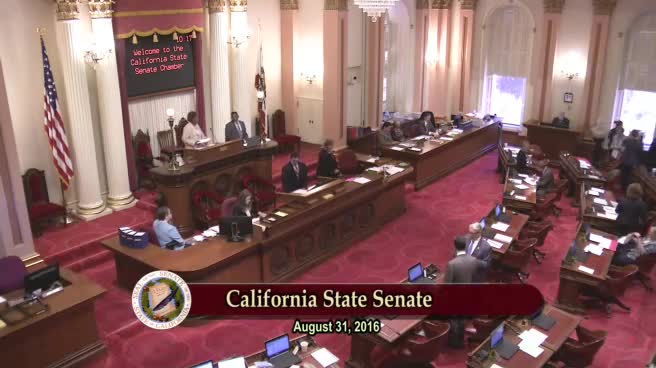 3MIN
Senate Floor
 9MIN
Assembly Floor
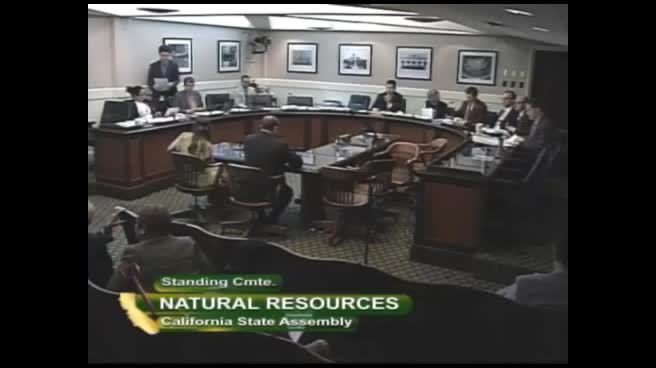 13MIN
Assembly Standing Committee on Natural Resources



Bill Co-Author(s):