AB 202: Professional sports teams: cheerleaders: employee status.
- Session Year: 2015-2016
- House: Assembly
- Latest Version Date: 2015-07-15
Existing law prescribes comprehensive requirements relating to minimum wages, overtime compensation, and standards for working conditions for the protection of employees applicable to an employment relationship.
Existing law requires employers to make specified payments and withholdings from wages paid to employment to, and to file reports of wages and make contributions for unemployment insurances and the employment administering the states payroll taxes.
Existing law, the California Fair Employment and Housing Act, makes it an unlawful employment practice for an employer, unless based upon a bona fide occupational qualification or, except where based upon applicable security regulations to refuse to hire or employ a person or to refuse to select a person for a training program leading to employment, or to bar or discharge a person from employment or from a training program leading to employment, or to discriminate against a person in compensation or in terms, conditions, or privileges of employment because of the race, religious creed, color, national origin, ancestry, physical disability, mental disability, medical condition, genetic information, marital status, sex, gender, gender identity, gender expression, age, sexual orientation, or military and veteran status of the person.
This bill, for purposes of all of the provisions of state law that govern employment, including the Labor Code, the Unemployment Insurance Code, and the California Fair Employment and Housing Act, would require a cheerleader who is utilized by a California-based professional sports team during its exhibitions, events, or games to be deemed an employee. The bill would also require the professional sports team to ensure that the cheerleader is classified as an employee.
Because a violation of specified employment laws, including wage and hour laws, that would apply to California-based professional sports teams utilizing cheerleaders would be a crime, this bill would impose a state-mandated local program.
The California Constitution requires the state to reimburse local agencies and school districts for certain costs mandated by the state. Statutory provisions establish procedures for making that reimbursement.
This bill would provide that no reimbursement is required by this act for a specified reason.
Existing law prescribes comprehensive requirements relating to minimum wages, overtime compensation, and standards for working conditions for the protection of employees applicable to an employment relationship.
Existing law requires every employer who pays wages to a resident employee for services performed either within or without this state to deduct and withhold from those wages, except as provided, specified income taxes.
Existing law, the California Fair Employment and Housing Act, makes it an unlawful employment practice for an employer, unless based upon a bona fide occupational qualification or, except where based upon applicable security regulations to refuse to hire or employ a person or to refuse to select a person for a training program leading to employment, or to bar or discharge a person from employment or from a training program leading to employment, or to discriminate against a person in compensation or in terms, conditions, or privileges of employment because of the race, religious creed, color, national origin, ancestry, physical disability, mental disability, medical condition, genetic information, marital status, sex, gender, gender identity, gender expression, age, sexual orientation, or military and veteran status of the person.
This bill would, bill, for purposes of all of the provisions of state law that govern employment, including the Labor Code, the Unemployment Insurance Code, and the California Fair Employment and Housing Act, would require a cheerleader who is utilized by a California-based professional sports team during its exhibitions exhibitions, events, or games to be deemed an employee. The bill would also require the professional sports team to ensure that the cheerleader is classified and treated as an employee.
Because a violation of specified employment laws, including wage and hour laws, that would apply to California-based professional sports teams utilizing cheerleaders would be a crime, this bill would impose a state-mandated local program.
The California Constitution requires the state to reimburse local agencies and school districts for certain costs mandated by the state. Statutory provisions establish procedures for making that reimbursement.
This bill would provide that no reimbursement is required by this act for a specified reason.
Existing law prescribes comprehensive requirements relating to minimum wages, overtime compensation, and standards for working conditions for the protection of employees applicable to an employment relationship.
Existing law requires every employer who pays wages to a resident employee for services performed either within or without this state to deduct and withhold from those wages, except as provided, specified income taxes.
Existing law, the California Fair Employment and Housing Act, makes it an unlawful employment practice for an employer, unless based upon a bona fide occupational qualification or, except where based upon applicable security regulations to refuse to hire or employ a person or to refuse to select a person for a training program leading to employment, or to bar or discharge a person from employment or from a training program leading to employment, or to discriminate against a person in compensation or in terms, conditions, or privileges of employment because of the race, religious creed, color, national origin, ancestry, physical disability, mental disability, medical condition, genetic information, marital status, sex, gender, gender identity, gender expression, age, sexual orientation, or military and veteran status of the person.
This bill would require that a California-based professional sports team that utilizes the services of cheerleaders, as defined, to provide those cheerleaders with specified rights and benefits afforded to its employees under existing employment laws, regardless of the terms and conditions under which the cheerleader performs. would, for purposes of all of the provisions of state law that govern employment, including the Labor Code, the Unemployment Insurance Code, and the California Fair Employment and Housing Act, require a cheerleader who is utilized by a California-based professional sports team during its exhibitions or games to be deemed an employee. The bill would also require the professional sports team to ensure that the cheerleader is classified and treated as an employee.
Because a violation of specified employment laws, including wage and hour laws, that would apply to California-based professional sports teams using the services of utilizing cheerleaders would be a crime, this bill would impose a state-mandated local program.
The California Constitution requires the state to reimburse local agencies and school districts for certain costs mandated by the state. Statutory provisions establish procedures for making that reimbursement.
This bill would provide that no reimbursement is required by this act for a specified reason.
Existing law prescribes comprehensive requirements relating to minimum wages, overtime compensation, and standards for working conditions for the protection of employees applicable to an employment relationship.
This bill would require that a California-based professional sports team that utilizes the services of cheerleaders, as defined, to provide those cheerleaders with specified rights and benefits afforded to its employees under existing employment laws, regardless of the terms and conditions under which the cheerleader performs.
Because a violation of specified employment laws, including wage and hour laws, that would apply to California-based professional sports teams using the services of cheerleaders would be a crime, this bill would impose a state-mandated local program.
The California Constitution requires the state to reimburse local agencies and school districts for certain costs mandated by the state. Statutory provisions establish procedures for making that reimbursement.
This bill would provide that no reimbursement is required by this act for a specified reason.
(a)For the purposes of this section, the following definitions shall apply:
(1)California-based team means a team that plays a majority of its home games in California.
(2)Cheerleader means an individual who performs acrobatics, dance, or gymnastics exercises on a recurring basis. This term shall not include an individual who is not otherwise affiliated with a California-based professional sports team and is utilized during its exhibitions, events, or games no more than one time in a calendar year.
(3)Professional sports team means a team at either a minor or major league level in the sport of baseball, basketball, football, ice hockey, or soccer.
(b)Notwithstanding any other law, for purposes of all of the provisions of state law that govern employment, including this code, the Unemployment Insurance Code, and the California Fair Employment and Housing Act (Part 2.8 (commencing with Section 12900) of Division 3 of Title 2 of the Government Code), a cheerleader who is utilized by a California-based professional sports team directly or through a labor contractor during its exhibitions, events, or games, shall be deemed to be an employee.
(c)The professional sports team shall ensure that the cheerleader is classified as an employee.
SEC. 2.No reimbursement is required by this act pursuant to Section 6 of Article XIIIB of the California Constitution because the only costs that may be incurred by a local agency or school district will be incurred because this act creates a new crime or infraction, eliminates a crime or infraction, or changes the penalty for a crime or infraction, within the meaning of Section 17556 of the Government Code, or changes the definition of a crime within the meaning of Section 6 of Article XIIIB of the California Constitution.
(a)For the purposes of this section, the following definitions shall apply:
(1)California-based team means a team that plays a majority of its home games in California.
(2)Cheerleader means an individual who performs acrobatics, dance, or gymnastics exercises on a recurring basis. This term shall not include an individual who is not otherwise affiliated with a California-based professional sports team and is utilized during its exhibitions exhibitions, events, or games no more than one time in a calendar year.
(3)Professional sports team means a team at either a minor or major league level in the sport of baseball, basketball, football, ice hockey, or soccer.
(b)Notwithstanding any other law, for purposes of all of the provisions of state law that govern employment, including this code, the Unemployment Insurance Code, and the California Fair Employment and Housing Act (Part 2.8 (commencing with Section 12900) of Division 3 of Title 2 of the Government Code), a cheerleader who is utilized by a California-based professional sports team directly or through a labor contractor during its exhibitions exhibitions, events, or games, shall be deemed to be an employee.
(c)The professional sports team shall ensure that the cheerleader is classified and treated as an employee.
SEC. 2.No reimbursement is required by this act pursuant to Section 6 of Article XIIIB of the California Constitution because the only costs that may be incurred by a local agency or school district will be incurred because this act creates a new crime or infraction, eliminates a crime or infraction, or changes the penalty for a crime or infraction, within the meaning of Section 17556 of the Government Code, or changes the definition of a crime within the meaning of Section 6 of Article XIIIB of the California Constitution.
(a)A professional sports team that is a California-based team that employs professional athletes, as those terms are defined in subdivision (g) of Section 3600.5, and that utilizes the services of cheerleaders during its exhibitions or games, shall provide those cheerleaders with all of the rights and benefits afforded to its employees under this code, regardless of the terms and conditions under which the cheerleader performs.
(b)For purposes of this section, cheerleader is defined to mean an individual who performs acrobatics, dance, or gymnastic exercises in promotion of a professional sports franchise identified in subdivision (a).
2754.(a)For the purposes of this section, the following definitions shall apply:
(1)California-based team means a team that plays a majority of its home games in California.
(2)Cheerleader means an individual who performs acrobatics, dance, or gymnastics exercises on a recurring basis. This term shall not include an individual who is not otherwise affiliated with a California-based professional sports team and is utilized during its exhibitions or games no more than one time in a calendar year.
(3)Professional sports team means a team at either a minor or major league level in the sport of baseball, basketball, football, ice hockey, or soccer.
(b)Notwithstanding any other law, for purposes of all of the provisions of state law that govern employment, including this code, the Unemployment Insurance Code, and the California Fair Employment and Housing Act (Part 2.8 (commencing with Section 12900) of Division 3 of Title 2 of the Government Code), a cheerleader who is utilized by a California-based professional sports team during its exhibitions or games, shall be deemed to be an employee.
(c)The professional sports team shall ensure that the cheerleader is classified and treated as an employee.
SEC. 2.No reimbursement is required by this act pursuant to Section 6 of Article XIIIB of the California Constitution because the only costs that may be incurred by a local agency or school district will be incurred because this act creates a new crime or infraction, eliminates a crime or infraction, or changes the penalty for a crime or infraction, within the meaning of Section 17556 of the Government Code, or changes the definition of a crime within the meaning of Section 6 of Article XIIIB of the California Constitution.
(a)A professional sports team that is a California-based team that employs professional athletes, as those terms are defined in subdivision (g) of Section 3600.5, and that utilizes the services of cheerleaders during its exhibitions or games, shall provide those cheerleaders with all of the rights and benefits afforded to its employees under this code, regardless of the terms and conditions under which the cheerleader performs.
(b)For purposes of this section, cheerleader is defined to mean an individual who performs acrobatics, dance, or gymnastic exercises in promotion of a professional sports franchise identified in subdivision (a).
SEC. 2.No reimbursement is required by this act pursuant to Section 6 of Article XIIIB of the California Constitution because the only costs that may be incurred by a local agency or school district will be incurred because this act creates a new crime or infraction, eliminates a crime or infraction, or changes the penalty for a crime or infraction, within the meaning of Section 17556 of the Government Code, or changes the definition of a crime within the meaning of Section 6 of Article XIIIB of the California Constitution.
|
Date
|
Status
|
|---|---|
| May 11, 2015 | In Senate. Read first time. To Com. on RLS. for assignment. |
| Jul 15, 2015 | Chaptered by Secretary of State - Chapter 102, Statutes of 2015. |
| Jul 15, 2015 | Approved by the Governor. |
| Jul 9, 2015 | Enrolled and presented to the Governor at 2 p.m. |
| Jun 29, 2015 | Read third time. Passed. Ordered to the Assembly. (Ayes 26. Noes 6. Page 1662.). |
| Jun 29, 2015 | In Assembly. Ordered to Engrossing and Enrolling. |
| Jun 23, 2015 | Read second time. Ordered to third reading. |
| Jun 22, 2015 | From committee: Be placed on second reading file pursuant to Senate Rule 28.8. |
| Jun 10, 2015 | From committee: Do pass and re-refer to Com. on APPR. (Ayes 3. Noes 1.) (June 10). Re-referred to Com. on APPR. |
| May 21, 2015 | Referred to Com. on L. & I.R. |
| May 11, 2015 | Read third time. Passed. Ordered to the Senate. (Ayes 56. Noes 23. Page 1383.) |
| May 11, 2015 | Read third time. Passed. Ordered to the Senate. |
| Jan 29, 2015 | Read first time. To print. |
| May 7, 2015 | Read second time. Ordered to third reading. |
| May 6, 2015 | From committee: Do pass. (Ayes 12. Noes 5.) (May 6). |
| Apr 21, 2015 | From committee: Do pass and re-refer to Com. on APPR. (Ayes 5. Noes 2.) (April 21). Re-referred to Com. on APPR. |
| Apr 16, 2015 | Re-referred to Com. on A.,E.,S.,T., & I.M. |
| Apr 15, 2015 | From committee chair, with author's amendments: Amend, and re-refer to Com. on A.,E.,S.,T., & I.M. Read second time and amended. |
| Apr 9, 2015 | From committee: Do pass and re-refer to Com. on A.,E.,S.,T., & I.M. (Ayes 5. Noes 2.) (April 8). Re-referred to Com. on A.,E.,S.,T., & I.M. |
| Apr 7, 2015 | Re-referred to Com. on L. & E. |
| Apr 6, 2015 | From committee chair, with author's amendments: Amend, and re-refer to Com. on L. & E. Read second time and amended. |
| Feb 9, 2015 | Referred to Coms. on L. & E. and A.,E.,S.,T., & I.M. |
| Jan 30, 2015 | From printer. May be heard in committee March 1. |
|
Date
|
Description
|
Location
|
Votes
|
|
|---|---|---|---|---|
| Jun 29, 2015 | Assembly 3rd Reading AB202 Gonzalez By Leyva | Senate Floor |
Passed |
|
| Jun 10, 2015 | Do pass, but first be re-referred to the Committee on [Appropriations] | Senate Standing Committee on Labor and Industrial Relations |
Passed |
|
| May 11, 2015 | AB 202 GONZALEZ Assembly Third Reading | Assembly Floor |
Passed |
|
| May 6, 2015 | Do pass. | Assembly Standing Committee on Appropriations |
Passed |
|
| Apr 21, 2015 | Do pass and be re-referred to the Committee on [Appropriations] | Assembly Standing Committee on Arts, Entertainment, Sports, Tourism, and Internet Media |
Passed |
|
| Apr 8, 2015 | Do pass and be re-referred to the Committee on [Arts, Entertainment, Sports, Tourism, and Internet Media] | Assembly Standing Committee on Labor and Employment |
Passed |
This list shows positions taken on this bill by organizations on the date displayed, which is linked to the original source.
Positions by individuals are not included.
|
Organization
|
Position
|
Date
|
|---|---|---|
| California Conference Board Of The Amalgamated Transit Union | ** Support | Jun 29, 2015 |
| California Conference Of Machinists | ** Support | Jun 29, 2015 |
| California Employment Lawyers Association | ** Support | May 6, 2015 |
| California Labor Federation, Afl-Cio | ** Support | Jun 29, 2015 |
| California School Employees Association, AFL-CIO | ** Support | Jun 29, 2015 |
| California State Association Of Electrical Workers | ** Support | Jun 29, 2015 |
| California State Pipe Trades Council | ** Support | Jun 29, 2015 |
| California Teamsters Public Affairs Council | ** Support | Jun 29, 2015 |
| Consumer Attorneys Of California | ** Support | Jun 29, 2015 |
| Engineers & Scientists of California | ** Support | Jun 29, 2015 |
| Golden State Warriors | * Indeterminate | Jun 10, 2015 |
| International Longshore & Warehouse Union | ** Support | Jun 29, 2015 |
| Levy, Vinick, Burrell, Hyams, LLC | * Indeterminate | Apr 8, 2015 |
| Oakland Raiders | * Indeterminate | Apr 8, 2015 |
| Professional & Technical Engineers | ** Support | Jun 29, 2015 |
| State Building & Construction Trades Council Of California | * Indeterminate | Apr 8, 2015 |
| The South Bay AFL-CIO Labor Council | ** Support | Jun 29, 2015 |
| UNITE-HERE, AFL-CIO | ** Support | Jun 29, 2015 |
| Utility Workers Union of America | ** Support | Jun 29, 2015 |
| Western States Council Of Sheet Metal Workers | ** Support | Jun 29, 2015 |
AB 202
Page 5
|
Office of Senate Floor Analyses (916) 651-1520 Fax: (916) 327-4478 |
THIRD READING
Bill No: AB 202
Amended: 4/15/15 in Assembly
SENATE LABOR & IND. REL. COMMITTEE: 3-1, 6/10/15
AYES: Mendoza, Leno, Mitchell
NOES: Stone
NO VOTE RECORDED: Jackson
SENATE APPROPRIATIONS COMMITTEE: Senate Rule 28.8
ASSEMBLY FLOOR: 56-23, 5/11/15 - See last page for vote
SUBJECT: Professional sports teams: cheerleaders: employee status
DIGEST: This bill defines a professional cheerleader as an employee for the purposes of California law.
Existing law:
Provides specified timelines for final payment by an employer to an employee due to discharge, quitting employment, end of temporary employment assignment, or other industry-specific pay timelines. (Labor Code §§ 201, 201.3, 201.5, 202, & 205.5)
Sets a minimum wage for all employees in California, with limited exceptions, and prohibits employers, unless specified, from paying less than the state minimum wage. The current minimum wage is $9.00 per hour and will rise to $10.00 per hour on January 1, 2016. (Labor Code §1182.12)
Permits an individual to seek recovery through a civil suit of the unpaid balance of the minimum wage, including interest, attorney fees, and costs of the suit. (Labor Code §1194)
Requires that if an employee is found to have been paid less than the minimum wage, that employee must be paid liquidated damages in an amount that is equal to the wages unlawfully unpaid, plus interest. Existing Civil Code sets the interest rate at 10 percent. (Labor Code §1194.2 and Civil Code § 3289)
Provides that if an employer demonstrates to the satisfaction of the court that the failure to pay the minimum wage was in good faith and that the employer had reasonable grounds for believing that the act or omission was not a violation of minimum wage law or regulations, the court may, in its discretion, refuse to award liquidated damages or award a lesser amount of liquidated damages to the employee. (Labor Code §1194.2)
Provides that it is a violation of the law for any employer or employing unit to willfully fail or refuse to make any contributions which are due under the Unemployment Insurance or Disability Insurance programs. (Unemployment Insurance Code §2108)
Provides that any person or employer who, with or without intent to evade, fails to withhold or fails to pay over any personal income tax withheld, is guilty of a misdemeanor and, upon conviction, shall be fined an amount not to exceed one thousand dollars ($1,000), or imprisoned for not more than one year, or both the fine and imprisonment, at the discretion of the court. (Unemployment Insurance Code §2118)
Creates the Department of Fair Employment and Housing (DFEH) and declares its mission to protect and safeguard the right and opportunity of all persons to seek, obtain, and hold employment without discrimination or abridgment on account of race, religious creed, color, national origin, ancestry, physical disability, mental disability, medical condition, genetic information, marital status, sex, gender, gender identity, gender expression, age, sexual orientation, or military and veteran status. (Government Code §§ 12900 and 12920)
This bill:
Provides that, notwithstanding any other law, for purposes of the provisions of state law that govern employment, a cheerleader that is utilized by a California-based professional sports team during its exhibitions or games shall be deemed to be an employee.
Defines "cheerleader" to mean an individual who performs acrobatics, dance or gymnastics exercises on a recurring basis. However, the term does not include an individual who is not otherwise affiliated with the sports team and is utilized no more than one time in a calendar year.
Defines "professional sports team" to mean a team at either a minor or major league level in the sport of baseball, basketball, football, ice hockey, or soccer.
Defines "California-based team" to mean a team that plays a majority of its home games in California.
Provides that the professional sports team shall ensure that the cheerleader is classified and treated as an employee.
Background
1) A General Discussion on Employee Misclassification in California:
Employee misclassification occurs when employers illegally classify employees as independent contractors, rather employees. This allows employers to dodge tax payments, workers’ compensation premiums, and workplace protections. Misclassification is a significant problem in California: in the Employment Development Department’s (EDD) 2013 annual report, EDD reported $36,348,078 in payroll assessments and $9,131,000 in tax fraud assessments in 2012 alone.
For most employees, the deciding factor on if a worker is either an employee or an independent contractor comes down to the level of control the employer has over the worker, a standard which dates back to English Common Law. While this is determined by a multi-factor test, key determinants include control over hours, equipment, and supervision. However, there are also a small number of employees which are statutorily classified as employees, irrespective of common law.
AB 202 defines professional cheerleaders as employees for the purposes of employment law, making a common law test for employment unnecessary.
2) The National Football League (NFL) and Cheerleader Misclassification:
In 2014, the Oakland Raiders were sued by a group of current and former cheerleaders who alleged that the Raiders refused to pay minimum wage or overtime, made unlawful deductions, and also refused to provide meal and rest breaks. According to the filing, Raiderettes (the name of the cheerleading squad) were paid a flat rate of $125 per game, irrespective of hours worked. The filing also noted mandatory charity appearances for the Raiderettes, for which no payment at all was received by the cheerleaders.
Similar lawsuits were filed against the Tampa Bay Buccaneers, the New York Jets, the Buffalo Bills, and the Cincinnati Bengals. During the Buffalo Bills lawsuit, a well-regarded sports website known as Deadspin published the Buffalo Bills cheerleader handbook. Reporting that the handbook was similar to other cheer handbooks around the league, Deadspin detailed the level of control the Buffalo Bills exerted over their cheerleading squad. Examples included:
Feminine hygiene;
Appropriate use of tampons;
Nail and hair grooming;
Eating etiquette; and
Stringent rules of what jewelry can and cannot be worn.
Despite this level of control, the Buffalo Bills argued their cheerleaders were not employees, as did the other teams listed above.
FISCAL EFFECT: Appropriation: No Fiscal Com.: Yes Local: Yes
California Conference Board of the Amalgamated Transit Union
California Conference of Machinists
California Labor Federation, AFL-CIO
California School Employees Association, AFL-CIO
California State Association of Electrical Workers
California State Pipe Trades Council
California Teamsters Public Affairs Council
Consumer Attorneys of California
Engineers & Scientists of California
International Longshore & Warehouse Union
Jockey’s Guild
Professional & Technical Engineers
The South Bay AFL-CIO Labor Council
UNITE-HERE, AFL-CIO
Utility Workers Union of America
Western States Council of Sheet Metal Workers
OPPOSITION: (Verified 6/10/15)
None received
ARGUMENTS IN SUPPORT: Proponents argue that this bill will would clarify that a professional cheerleader is provided the same rights and benefits of an employee under state law and is not improperly misclassified as an independent contractor. As a result, professional sport cheerleaders would be guaranteed a legal wage for attending and participating in team practices, rehearsals, preparations, meetings and required workouts. In addition, they would also be covered for all required appearances at corporate, community and charity events.
ASSEMBLY FLOOR: 56-23, 5/11/15
AYES: Achadjian, Alejo, Baker, Bloom, Bonilla, Bonta, Brown, Burke, Calderon, Campos, Chau, Chiu, Chu, Cooley, Cooper, Dababneh, Daly, Dodd, Eggman, Frazier, Cristina Garcia, Eduardo Garcia, Gatto, Gipson, Gomez, Gonzalez, Gordon, Gray, Roger Hernández, Holden, Irwin, Jones-Sawyer, Levine, Linder, Lopez, Low, Maienschein, McCarty, Medina, Mullin, Nazarian, O'Donnell, Perea, Quirk, Rendon, Ridley-Thomas, Rodriguez, Salas, Santiago, Mark Stone, Thurmond, Ting, Waldron, Weber, Williams, Wood
NOES: Travis Allen, Bigelow, Brough, Chang, Chávez, Dahle, Beth Gaines, Gallagher, Grove, Hadley, Harper, Jones, Kim, Lackey, Mathis, Mayes, Melendez, Obernolte, Olsen, Patterson, Steinorth, Wagner, Wilk
NO VOTE RECORDED: Atkins
Prepared by: Gideon Baum / L. & I.R. / (916) 651-1556
6/29/15 10:34:11
**** END ****
AB 202
Page 5
|
Office of Senate Floor Analyses (916) 651-1520 Fax: (916) 327-4478 |
THIRD READING
Bill No: AB 202
Amended: 4/15/15 in Assembly
SENATE LABOR & IND. REL. COMMITTEE: 3-1, 6/10/15
AYES: Mendoza, Leno, Mitchell
NOES: Stone
NO VOTE RECORDED: Jackson
SENATE APPROPRIATIONS COMMITTEE: Senate Rule 28.8
ASSEMBLY FLOOR: 56-23, 5/11/15 - See last page for vote
SUBJECT: Professional sports teams: cheerleaders: employee status
DIGEST: This bill defines a professional cheerleader as an employee for the purposes of California law.
Existing law:
Provides specified timelines for final payment by an employer to an employee due to discharge, quitting employment, end of temporary employment assignment, or other industry-specific pay timelines. (Labor Code §§ 201, 201.3, 201.5, 202, & 205.5)
Sets a minimum wage for all employees in California, with limited exceptions, and prohibits employers, unless specified, from paying less than the state minimum wage. The current minimum wage is $9.00 per hour and will rise to $10.00 per hour on January 1, 2016. (Labor Code §1182.12)
Permits an individual to seek recovery through a civil suit of the unpaid balance of the minimum wage, including interest, attorney fees, and costs of the suit. (Labor Code §1194)
Requires that if an employee is found to have been paid less than the minimum wage, that employee must be paid liquidated damages in an amount that is equal to the wages unlawfully unpaid, plus interest. Existing Civil Code sets the interest rate at 10 percent. (Labor Code §1194.2 and Civil Code § 3289)
Provides that if an employer demonstrates to the satisfaction of the court that the failure to pay the minimum wage was in good faith and that the employer had reasonable grounds for believing that the act or omission was not a violation of minimum wage law or regulations, the court may, in its discretion, refuse to award liquidated damages or award a lesser amount of liquidated damages to the employee. (Labor Code §1194.2)
Provides that it is a violation of the law for any employer or employing unit to willfully fail or refuse to make any contributions which are due under the Unemployment Insurance or Disability Insurance programs. (Unemployment Insurance Code §2108)
Provides that any person or employer who, with or without intent to evade, fails to withhold or fails to pay over any personal income tax withheld, is guilty of a misdemeanor and, upon conviction, shall be fined an amount not to exceed one thousand dollars ($1,000), or imprisoned for not more than one year, or both the fine and imprisonment, at the discretion of the court. (Unemployment Insurance Code §2118)
Creates the Department of Fair Employment and Housing (DFEH) and declares its mission to protect and safeguard the right and opportunity of all persons to seek, obtain, and hold employment without discrimination or abridgment on account of race, religious creed, color, national origin, ancestry, physical disability, mental disability, medical condition, genetic information, marital status, sex, gender, gender identity, gender expression, age, sexual orientation, or military and veteran status. (Government Code §§ 12900 and 12920)
This bill:
Provides that, notwithstanding any other law, for purposes of the provisions of state law that govern employment, a cheerleader that is utilized by a California-based professional sports team during its exhibitions or games shall be deemed to be an employee.
Defines "cheerleader" to mean an individual who performs acrobatics, dance or gymnastics exercises on a recurring basis. However, the term does not include an individual who is not otherwise affiliated with the sports team and is utilized no more than one time in a calendar year.
Defines "professional sports team" to mean a team at either a minor or major league level in the sport of baseball, basketball, football, ice hockey, or soccer.
Defines "California-based team" to mean a team that plays a majority of its home games in California.
Provides that the professional sports team shall ensure that the cheerleader is classified and treated as an employee.
Background
1) A General Discussion on Employee Misclassification in California:
Employee misclassification occurs when employers illegally classify employees as independent contractors, rather employees. This allows employers to dodge tax payments, workers’ compensation premiums, and workplace protections. Misclassification is a significant problem in California: in the Employment Development Department’s (EDD) 2013 annual report, EDD reported $36,348,078 in payroll assessments and $9,131,000 in tax fraud assessments in 2012 alone.
For most employees, the deciding factor on if a worker is either an employee or an independent contractor comes down to the level of control the employer has over the worker, a standard which dates back to English Common Law. While this is determined by a multi-factor test, key determinants include control over hours, equipment, and supervision. However, there are also a small number of employees which are statutorily classified as employees, irrespective of common law.
AB 202 defines professional cheerleaders as employees for the purposes of employment law, making a common law test for employment unnecessary.
2) The National Football League (NFL) and Cheerleader Misclassification:
In 2014, the Oakland Raiders were sued by a group of current and former cheerleaders who alleged that the Raiders refused to pay minimum wage or overtime, made unlawful deductions, and also refused to provide meal and rest breaks. According to the filing, Raiderettes (the name of the cheerleading squad) were paid a flat rate of $125 per game, irrespective of hours worked. The filing also noted mandatory charity appearances for the Raiderettes, for which no payment at all was received by the cheerleaders.
Similar lawsuits were filed against the Tampa Bay Buccaneers, the New York Jets, the Buffalo Bills, and the Cincinnati Bengals. During the Buffalo Bills lawsuit, a well-regarded sports website known as Deadspin published the Buffalo Bills cheerleader handbook. Reporting that the handbook was similar to other cheer handbooks around the league, Deadspin detailed the level of control the Buffalo Bills exerted over their cheerleading squad. Examples included:
Feminine hygiene;
Appropriate use of tampons;
Nail and hair grooming;
Eating etiquette; and
Stringent rules of what jewelry can and cannot be worn.
Despite this level of control, the Buffalo Bills argued their cheerleaders were not employees, as did the other teams listed above.
FISCAL EFFECT: Appropriation: No Fiscal Com.: Yes Local: Yes
California Conference Board of the Amalgamated Transit Union
California Conference of Machinists
California Labor Federation, AFL-CIO
California School Employees Association, AFL-CIO
California Teamsters Public Affairs Council
Consumer Attorneys of California
Engineers & Scientists of California
International Longshore & Warehouse Union
Jockey’s Guild
Professional & Technical Engineers
The South Bay AFL-CIO Labor Council
UNITE-HERE, AFL-CIO
Utility Workers Union of America
OPPOSITION: (Verified 6/10/15)
None received
ARGUMENTS IN SUPPORT: Proponents argue that this bill will would clarify that a professional cheerleader is provided the same rights and benefits of an employee under state law and is not improperly misclassified as an independent contractor. As a result, professional sport cheerleaders would be guaranteed a legal wage for attending and participating in team practices, rehearsals, preparations, meetings and required workouts. In addition, they would also be covered for all required appearances at corporate, community and charity events.
ASSEMBLY FLOOR: 56-23, 5/11/15
AYES: Achadjian, Alejo, Baker, Bloom, Bonilla, Bonta, Brown, Burke, Calderon, Campos, Chau, Chiu, Chu, Cooley, Cooper, Dababneh, Daly, Dodd, Eggman, Frazier, Cristina Garcia, Eduardo Garcia, Gatto, Gipson, Gomez, Gonzalez, Gordon, Gray, Roger Hernández, Holden, Irwin, Jones-Sawyer, Levine, Linder, Lopez, Low, Maienschein, McCarty, Medina, Mullin, Nazarian, O'Donnell, Perea, Quirk, Rendon, Ridley-Thomas, Rodriguez, Salas, Santiago, Mark Stone, Thurmond, Ting, Waldron, Weber, Williams, Wood
NOES: Travis Allen, Bigelow, Brough, Chang, Chávez, Dahle, Beth Gaines, Gallagher, Grove, Hadley, Harper, Jones, Kim, Lackey, Mathis, Mayes, Melendez, Obernolte, Olsen, Patterson, Steinorth, Wagner, Wilk
NO VOTE RECORDED: Atkins
Prepared by: Gideon Baum / L. & I.R. / (916) 651-1556
6/24/15 16:25:19
**** END ****
AB 202 (Gonzalez) Page 4 of 4
SENATE COMMITTEE ON LABOR AND INDUSTRIAL RELATIONS
Senator Tony Mendoza, Chair
2015 - 2016 Regular
Bill No: AB 202 Hearing Date: June 10, 2015
Author: |
Gonzalez |
||
Version: |
April 15, 2015 |
||
Urgency: |
No |
Fiscal: |
Yes |
Consultant: |
Gideon Baum |
||
Subject: Professional sports teams: cheerleaders: employee status.
KEY ISSUE
Should the Legislature define professional cheerleaders as an employee for the purposes of California law?
ANALYSIS
Existing law provides specified timelines for final payment by an employer to an employee due to discharge, quitting employment, end of temporary employment assignment, or other industry-specific pay timelines. (Labor Code §§ 201, 201.3, 201.5, 202, & 205.5)
Existing law sets a minimum wage for all employees in California, with limited exceptions, and prohibits employers, unless specified, from paying less than the state minimum wage. The current minimum wage is $9.00 per hour and will rise to $10.00 per hour on January 1, 2016. (Labor Code §1182.12)
Existing law permits an individual to seek recovery through a civil suit of the unpaid balance of the minimum wage, including interest, attorney fees, and costs of the suit.
(Labor Code §1194)
Existing law also requires that if an employee is found to have been paid less than the minimum wage, that employee must be paid liquidated damages in an amount that is equal to the wages unlawfully unpaid, plus interest. Existing Civil Code sets the interest rate at 10 percent.
(Labor Code §1194.2 and Civil Code § 3289)
Existing law provides that if an employer demonstrates to the satisfaction of the court that the failure to pay the minimum wage was in good faith and that the employer had reasonable grounds for believing that the act or omission was not a violation of minimum wage law or regulations, the court may, in its discretion, refuse to award liquidated damages or award a lesser amount of liquidated damages to the employee. (Labor Code §1194.2)
Existing law provides that it is a violation of the law for any employer or employing unit to willfully fail or refuse to make any contributions which are due under the Unemployment Insurance or Disability Insurance programs. (Unemployment Insurance Code §2108)
Existing law provides that any person or employer who, with or without intent to evade,
fails to withhold or fails to pay over any personal income tax withheld, is guilty of a misdemeanor and, upon conviction, shall be fined an amount not to exceed one thousand dollars ($1,000), or imprisoned for not more than one year, or both the fine and imprisonment, at the discretion of the court. (Unemployment Insurance Code §2118)
Existing law creates the Department of Fair Employment and Housing (DFEH) and declares its mission to protect and safeguard the right and opportunity of all persons to seek, obtain, and hold employment without discrimination or abridgment on account of race, religious creed, color, national origin, ancestry, physical disability, mental disability, medical condition, genetic information, marital status, sex, gender, gender identity, gender expression, age, sexual orientation, or military and veteran status. (Government Code §§ 12900 and 12920)
This bill would:
Provide that, notwithstanding any other law, for purposes of the provisions of state law that govern employment, a cheerleader that is utilized by a California-based professional sports team during its exhibitions or games shall be deemed to be an employee.
Define "cheerleader" to mean an individual who performs acrobatics, dance or gymnastics exercises on a recurring basis. However, the term does not include an individual who is not otherwise affiliated with the sports team and is utilized no more than one time in a calendar year.
Define "professional sports team" to mean a team at either a minor or major league level in the sport of baseball, basketball, football, ice hockey, or soccer.
Define "California-based team" to mean a team that plays a majority of its home games in California.
Provide that the professional sports team shall ensure that the cheerleader is classified and treated as an employee.
COMMENTS
1. A General Discussion on Employee Misclassification in California:
Employee misclassification occurs when employers illegally classify employees as independent contractors, rather employees. This allows employers to dodge tax payments, workers’ compensation premiums, and workplace protections. Misclassification is a significant problem in California: in the Employment Development Department’s (EDD) 2013 annual report, EDD reported $36,348,078 in payroll assessments and $9,131,000 in tax fraud assessments in 2012 alone.
For most employees, the deciding factor on if a worker is either an employee or an independent contractor comes down to the level of control the employer has over the worker, a standard which dates back to English Common Law. While this is determined by a multi-factor test, key determinants include control over hours, equipment, and supervision. However, there are also a small number of employees which are statutorily classified as employees, irrespective of common law.
AB 202 would define professional cheerleaders as employees for the purposes of employment law, making a common law test for employment unnecessary.
2. The National Football League (NFL) and Cheerleader Misclassification:
In 2014, the Oakland Raiders were sued by a group of current and former cheerleaders who alleged that the Raiders refused to pay minimum wage or overtime, made unlawful deductions, and also refused to provide meal and rest breaks. According to the filing, Raiderettes (the name of the cheerleading squad) were paid a flat rate of $125 per game, irrespective of hours worked. The filing also noted mandatory charity appearances for the Raiderettes, for which no payment at all was received by the cheerleaders.
Similar lawsuits were filed against the Tampa Bay Buccaneers, the New York Jets, the Buffalo Bills, and the Cincinnati Bengals. During the Buffalo Bills lawsuit, a well-regarded sports website known as Deadspin published the Buffalo Bills cheerleader handbook. Reporting that the handbook was similar to other cheer handbooks around the league, Deadspin detailed the level of control the Buffalo Bills exerted over their cheerleading squad. Examples included:
Feminine hygiene;
Appropriate use of tampons;
Nail and hair grooming;
Eating etiquette; and
Stringent rules of what jewelry can and cannot be worn.
Despite this level of control, the Buffalo Bills argued their cheerleaders were not employees, as did the other teams listed above.
3. Proponent Arguments:
Supporters argue that this bill will would clarify that a professional cheerleader is provided the same rights and benefits of an employee under state law and is not improperly misclassified as an independent contractor. As a result, professional sport cheerleaders would be guaranteed a legal wage for attending and participating in team practices, rehearsals, preparations, meetings and required workouts. In addition, they would also be covered for all required appearances at corporate, community and charity events.
3. Opponent Arguments:
None on file.
4. Prior Legislation:
AB 1309 (Perea), Chapter 653, Statutes of 2013, limited the right of out-of-state athletes to file workers’ compensation claims in California.
SUPPORT
California Conference Board of the Amalgamated Transit Union
California Conference of Machinists
California Labor Federation, AFL-CIO
California School Employees Association, AFL-CIO
California Teamsters Public Affairs Council
Consumer Attorneys of California
Engineers & Scientists of California
International Longshore & Warehouse Union
Jockey’s Guild
Professional & Technical Engineers
The South Bay AFL-CIO Labor Council
UNITE-HERE, AFL-CIO
Utility Workers Union of America
OPPOSITION
None on file.
-- END --
AB 202
Page 2
ASSEMBLY THIRD READING
AB 202
(Gonzalez)
As Amended April 15, 2015
Majority vote
Committee |
Votes |
Ayes |
Noes |
Labor |
5-2 |
Roger Hernández, Chu, Low, McCarty, Thurmond |
Harper, Patterson |
Arts |
5-2 |
Calderon, Chu, Levine, Medina, Nazarian |
Obernolte, Hadley |
Appropriations |
12-5 |
Gomez, Bloom, Bonta, Calderon, Daly, Eggman, Eduardo Garcia, Holden, Quirk, Rendon, Weber, Wood |
Bigelow, Chang, Gallagher, Jones, Wagner |
SUMMARY: Provides that specified professional sports "cheerleaders" shall be deemed to be employees for state employment law purposes. Specifically, this bill:
Provides that, notwithstanding any other law, for purposes of the provisions of state law that govern employment, a cheerleader that is utilized by a California-based professional sports team directly or through a labor contractor during its exhibitions, events or games shall be deemed to be an employee.
Defines "cheerleader" to mean an individual who performs acrobatics, dance or gymnastics exercises on a recurring basis. However, the term does not include an individual who is not otherwise affiliated with the sports team and is utilized no more than one time in a calendar year.
Defines "professional sports team" to mean a team at either a minor or major league level in the sport of baseball, basketball, football, ice hockey, or soccer.
Defines "California-based team" to mean a team that plays a majority of its home games in California.
Provides that the professional sports team shall ensure that the cheerleader is classified as an employee.
FISCAL EFFECT: According to the Assembly Appropriations Committee, this bill will result in minor and absorbable costs to the Employment Development Department, the Department of Fair Employment and Housing, and the Department of Industrial Relations.
COMMENTS: This bill addresses an issue that has garnered significant media attention over the last year – the treatment of professional sports cheerleaders. A number of lawsuits (including one against the Oakland Raiders) have been filed recently alleging violations of employment laws – including minimum wage, overtime, meal and rest periods, and illegal deductions – regarding professional sports cheerleaders. Other claims have been made that such cheerleaders have been misclassified as independent contractors rather than employees, thereby depriving them of important employment law protections.
According to the author, the widespread practice of worker misclassification has resulted in a failure to justly compensate cheerleaders. This bill will ensure that professional cheerleaders will no longer be misrepresented as independent contractors by statutorily defining them as "employees" entitled to the same legal rights and benefits as employees.
This bill would establish statutory employment status for covered cheerleaders. This would not impact the application of protections that apply to cheerleaders prior to the passage of this bill nor impact prior claims or settlements under existing law or existing theories of liability.
Supporters argue that this bill will would clarify that a professional cheerleader is provided the same rights and benefits of an employee under state law and is not improperly misclassified as an independent contractor. As a result, professional sport cheerleaders would be guaranteed a legal wage for attending and participating in team practices, rehearsals, preparations, meetings and required workouts. In addition, they would also be covered for all required appearances at corporate, community and charity events.
There is no opposition on file.
Analysis Prepared by: Ben Ebbink / L. & E. / (916) 319-2091 FN: 0000268
AB 202
Page 2
Date of Hearing: May 6, 2015
ASSEMBLY COMMITTEE ON APPROPRIATIONS
Jimmy Gomez, Chair
AB 202
(Gonzalez) – As Amended April 15, 2015
Policy Committee: |
Labor and Employment |
Vote: |
5 - 2 |
|
Arts, Entertainment, Sports, Tourism, and Internet Media |
|
5 - 2 |
|
|
|
|
Urgency: No State Mandated Local Program: Yes Reimbursable: No
SUMMARY:
This bill, for purposes of all of the provisions of state law that govern employment, deems a cheerleader utilized by a California-based professional sports team directly or through a labor contractor during exhibitions, events or games as an employee. Specifically, this bill:
Further provides that the professional sports team shall ensure that the cheerleader is classified as an employee.
Defines "California-based team” as a team that plays a majority of its home games in California.
Defines “Cheerleader” as an individual who performs acrobatics, dance, or gymnastics exercises on a recurring basis. This term shall not include an individual who is not otherwise affiliated with a California-based professional sports team and is utilized during its exhibitions, events or games no more than one time in a calendar year.
Defines “Professional sports team” as a team at either a minor or major league level in the sport of baseball, basketball, football, ice hockey, or soccer.
FISCAL EFFECT:
Minor/absorbable costs to the Employment Development Department (EDD), the Department of Fair Employment and Housing and the Department of Industrial relations to address additional inquiries from employers and workers. In addition, any necessary changes to EDD forms or publications would be performed during standard revision cycles. The Department of Industrial Relations and the Department of Fair Employment and Housing also indicate minor/absorbable costs.
COMMENTS:
Purpose. This bill addresses the issue of professional sports cheerleaders for purposes of employment. A number of lawsuits (including one against the Oakland Raiders) have been filed recently alleging violations of employment laws – including minimum wage, overtime, meal and rest periods, and illegal deductions – regarding professional sports cheerleaders. Other claims have been made that such cheerleaders have been misclassified as independent contractors rather than employees, thereby depriving them of important employment law protections. In addition to the Oakland Raiders lawsuit, suits have been filed against the Tampa Bay Buccaneers, the New York Jets, the Buffalo Bills, the Cincinnati Bengals, and the National Football League itself.
According to the author, there are 53 teams that appear to meet the definition of "professional sports team" as defined in the bill. The author notes the majority of these teams do not have cheerleaders. The definition of "cheerleader" in the bill also appears to apply to mascots.
Analysis Prepared by: Misty Feusahrens / APPR. / (916) 319-2081
AB 202
Page 5
Date of Hearing: April 21, 2015
ASSEMBLY COMMITTEE ON ARTS, ENTERTAINMENT, SPORTS, TOURISM, AND INTERNET MEDIA
Ian Charles Calderon, Chair
AB 202
(Gonzalez) – As Amended April 15, 2015
SUBJECT: Professional sports teams: cheerleaders: employee status.
SUMMARY: Would, for purposes of all of the provisions of state law that govern employment, deem a cheerleader utilized by a California-based professional sports team during its exhibitions or games as an employee. The bill would also require the professional sports team to ensure that the cheerleader is classified and treated as an employee. Specifically, this bill:
Provides, notwithstanding any other law, for purposes of all of the provisions of state law that govern employment, including this code, the Unemployment Insurance Code, and the California Fair Employment and Housing Act (Part 2.8 (commencing with Section 12900) of Division 3 of Title 2 of the Government Code), a cheerleader who is utilized by a California-based professional sports team during its exhibitions or games, shall be deemed to be an employee.
Further provides that the professional sports team shall ensure that the cheerleader is classified and treated as an employee.
Contains the following definitions:
“California-based team” means a team that plays a majority of its home games in California.
“Cheerleader” means an individual who performs acrobatics, dance, or gymnastics exercises on a recurring basis. This term shall not include an individual who is not otherwise affiliated with a California-based professional sports team and is utilized during its exhibitions or games no more than one time in a calendar year.
“Professional sports team” means a team at either a minor or major league level in the sport of baseball, basketball, football, ice hockey, or soccer.
FISCAL EFFECT: Unknown
COMMENTS:
Author and supporter's statement of need for legislation.
According to the author, "It takes a lot of time and hard work to be a cheerleader, including an initial financial investment along with a commitment to practice just in order to have an opportunity to professionally dance and cheer for a sports team.
"Cheerleaders are required to attend and participate in practices, mandatory rehearsals, fittings, preparations, drills, photo sessions, meetings, and workouts. Cheerleaders are required to finance their business expenditures, including travel and investment in their physical appearance by purchasing required cosmetics, in the normal course of their cheerleading duties.
"During a sporting event, professional cheerleaders are performing and cheering. It is a product of hours upon hours of rehearsing dance routines, gymnastics and stunts. Cheer athletes practice their routines at least 2 to 5 times a week. They must get physically fit in order to carry out intense dance routines and stunts in cheerleading. On game days, a cheerleader’s performance can consist of motivating players along with a combination of dance and music, gymnastics and acrobatics. As frontline team ambassadors, they’re valuable contributors that add significant value to the entertainment product and fan experience.
"Cheerleaders are featured prominently in advertising and game-day coverage, especially leading in and out of every commercial break on the nationally broadcasted television programs. Prior to each sports season, selected cheerleaders have training camps and practice, photo shoots and swimsuit calendars obligations. Throughout the year, they have non-game day annual responsibilities, such as guest appearances at schools, charity events, or conferences. These are all employee obligations imposed by an employer…
"…After examining numerous factors, it’s clear that a cheerleader’s position constitutes an employee status. For instance, once cheerleaders are selected to work for a sports franchise, the control over their work time ends. The organization’s management directs the set work hours, payment schedules, dress codes and standards for behavior, among other work conditions."
Recent amendments.
Last week AB 202 was heard in the Committee on Labor & Employment, where issues arose as to the meaning of certain provisions. The author agreed to make the following amendments in order to provide greater clarity and specificity:
(b) Notwithstanding any other law, for purposes of all of the provisions of state law that govern employment, including this code, the Unemployment Insurance Code, and the California Fair Employment and Housing Act (Part 2.8 (commencing with Section 12900) of Division 3 of Title 2 of the Government Code), a cheerleader who is utilized by a California-based professional sports team directly or through a labor contractor during its exhibitions, events or games, shall be deemed to be an employee.
(c) The professional sports team shall ensure that the cheerleader is
classified and treated as an employee.
Origin of legislation: lawsuits filed by NFL cheerleaders.
ESPN reports that the Oakland Raiders are being sued by current and former cheerleaders claiming wage theft and other unfair employment practices. According to the filing, Raiders cheerleaders are paid $1,250 per season, which amounts to less than $5 per hour for the time they spend rehearsing, performing and appearing at events for which they are not compensated. In the article, Lacy T., identified only by her first name, in accordance with Raiderettes policy for security reasons, was quoted as saying, "The club controls our hairstyle and makeup, and we have to foot the bill," she said. "We also have to pay the costs for traveling to all kinds of events, including photo shoots...I love the Raiders and I love being a Raiderette, but someone has to stand up for all of the women of the NFL who work so hard for the fans and the teams." An attorney representing the cheerleaders claims, "the Raiders owe thousands of dollars in unpaid wages to women who worked as Raiderettes in previous seasons, while owing thousands of dollars in penalties to the women who worked this season." Perhaps adding insult to injury, the cheerleader's lawyer says NFL teams' male mascots are treated as paid employees with benefits.
(http://espn.go.com/nfl/story/_/id/10334429/cheerleaders-file-suit-oakland-raiders-wage-theft-unfair-employment-practices, accessed April 8, 2015)
Similar lawsuits have reportedly been filed against the Tampa Bay Buccaneers, the New York Jets, the Buffalo Bills, the Cincinnati Bengals, and the National Football League itself.
Background:
Misclassified employees. Employee misclassification has become a serious problem in the United States, and particularly in California. When companies misclassify workers as independent contractors instead of as employees, these workers do not receive worker protections, including minimum wages, overtime pay, and health and vacation benefits, to which they would otherwise be entitled. Standard employee protections such as anti-discrimination laws and safety regulations also do not apply to independent contractors. Additionally, businesses do not deduct taxes, 401(k), Social Security, or Medicare payments from the paychecks of independent contractors, which results in a loss of state tax income from the businesses as well as a potential loss of income from the individual worker who may not properly report income. Because employers do not pay unemployment taxes for independent contractors, workers who are misclassified cannot obtain unemployment benefits if they lose their jobs.
A number of reports in the last several years have chronicled the societal consequences of and impacts upon American workers of misclassification of workers as independent contractors versus employees. The United States Government Accountability Office conducted a study of misclassification of workers as independent contractors and found that employee misclassification cost the United States government $2.72 billion in revenue from Social Security, unemployment and income taxes in 2006 alone. (GAO, Employee Misclassifications: Improved Outreach Could Help Ensure Proper Worker Classification, GAO-07-859T (May 8, 2007), pg. 1.)
Similarly, the California Employment Development Department (EDD) reported that the number of misclassified employees increased 54% from 2005 to 2007, reaching 15,751 workers in 2007. During this 3-year period, the EDD recovered a total of $111,956,556 in payroll tax assessments, $18,537,894 in labor code citations, and $40,348,667 in assessments on employment tax fraud cases. (See California Employment Development Department, Annual Report: Fraud Deterrence and Detection Activities, report to the California Legislature (June 2008)) A Daily Journal article reported on the recent increase in worker misclassification and one person interviewed for the article noted that worker misclassification is attractive to employers because they can cut their labor costs by up to 30% by moving to an independent contractor model. (Ho, Independent Contractor Status Raises IRS Eyebrows: Contractor Status is Cheaper for Employers; Some Workers are Crying Foul, Daily Journal (May 17, 2010).)
b) Statutory employees. In general, most individuals are determined to be employees under common law, which involves evaluating a number of specific factors. However, a "statutory employee" is defined as an employee by law under a specific statute. For example, Unemployment Insurance Code Section 621 deems certain groups of workers to be employees for purposes of certain employment tax purposes. These "statutory employees" include corporate officers, specified agent/commission drivers, traveling salespersons, certain home workers, and certain artists and authors.
Prior related legislation
SB 459 (Corbett) Chapter 706, Statutes of 2011, which established a scheme of regulatory enforcement and significant civil penalties for the intentional misclassification of employees.
AB 950 (John A. Pérez) of 2011, would have deemed port drayage drivers to be employees for employment law purposes, similar to the approach taken by the instant measure, AB 202. Held on the Assembly Inactive File.
SB 1583 (Corbett) of 2008, would have provided employment consultant liability for advising unlawful conduct through employee misclassification. Vetoed
SB 1490 (Padilla) of 2008, would have required the Employment Development Department to create a form, including factors used by EDD in determining independent contractor status, to be distributed by employers to workers. SB 1490 was held in the Senate Committee on Appropriations.
SB 622 (Padilla) of 2007, would have made it unlawful for employers to willfully misclassify an employee as an independent contractor. Vetoed
REGISTERED SUPPORT / OPPOSITION:
Support
CA Conference Board of the Amalgamated Transit Union
CA Conference of Machinists
California Labor Federation, AFL-CIO
California School Employees Association
California Teamsters Public Affairs Council
Consumer Attorneys of California
Engineers & Scientists of California
International Longshore & Warehouse Union
Jockeys' Guild
Professional & Technical Engineers
South Bay Labor Council
UNITE-HERE, AFL-CIO
Utility Workers Union of America
Opposition
There is no opposition on file.
Analysis Prepared by: Dana Mitchell / A.,E.,S.,T., & I.M. / (916) 319-3450
AB 202
Page 4
Date of Hearing: April 8, 2015
ASSEMBLY COMMITTEE ON LABOR AND EMPLOYMENT
Roger Hernández, Chair
AB 202
(Gonzalez) – As Amended April 6, 2015
SUBJECT: Professional sports teams: cheerleaders: employee status
SUMMARY: Provides that specified professional sports "cheerleaders" shall be deemed to be employees for state employment law purposes. Specifically, this bill:
Provides that, notwithstanding any other law, for purposes of the provisions of state law that govern employment, a cheerleader that is utilized by a California-based professional sports team during its exhibitions or games shall be deemed to be an employee.
Defines "cheerleader" to mean an individual who performs acrobatics, dance or gymnastics exercises on a recurring basis. However, the term does not include an individual who is not otherwise affiliated with the sports team and is utilized no more than one time in a calendar year.
Defines "professional sports team" to mean a team at either a minor or major league level in the sport of baseball, basketball, football, ice hockey, or soccer.
Defines "California-based team" to mean a team that plays a majority of its home games in California.
Provides that the professional sports team shall ensure that the cheerleader is classified and treated as an employee.
FISCAL EFFECT: Unknown
COMMENTS: This bill addresses an issue that has garnered significant media attention over the last year – the treatment of professional sports cheerleaders. A number of lawsuits (including one against the Oakland Raiders) have been filed recently alleging violations of employment laws – including minimum wage, overtime, meal and rest periods, and illegal deductions – regarding professional sports cheerleaders. Other claims have been made that such cheerleaders have been misclassified as independent contractors rather than employees, thereby depriving them of important employment law protections.
As mentioned above, a lawsuit was filed in January of last year alleging a number of employment law violations against the Oakland Raiders. Similar lawsuits have reportedly been filed against the Tampa Bay Buccaneers, the New York Jets, the Buffalo Bills, the Cincinnati Bengals, and the National Football League itself.
Brief Background on Employment Misclassification
Employee misclassification has become a serious problem in the United States, and particularly in California. When companies misclassify workers as independent contractors instead of as employees, these workers do not receive worker protections, including minimum wages, overtime pay, and health and vacation benefits, to which they would otherwise be entitled. Standard employee protections such as anti-discrimination laws and safety regulations also do not apply to independent contractors. Additionally, businesses do not deduct taxes, 401(k), Social Security, or Medicare payments from the paychecks of independent contractors, which results in a loss of state tax income from the businesses as well as a potential loss of income from the individual worker who may not properly report income. Because employers do not pay unemployment taxes for independent contractors, workers who are misclassified cannot obtain unemployment benefits if they lose their jobs.
A number of reports in the last several years have chronicled the societal consequences of and impacts upon American workers of misclassification of workers as independent contractors versus employees. The United States Government Accountability Office conducted a study of misclassification of workers as independent contractors and found that employee misclassification cost the United States government $2.72 billion in revenue from Social Security, unemployment and income taxes in 2006 alone. (GAO, Employee Misclassifications: Improved Outreach Could Help Ensure Proper Worker Classification, GAO-07-859T (May 8, 2007), pg. 1.)
Similarly, in California EDD reported that the number of misclassified employees increased 54 percent from 2005 to 2007, reaching 15,751 workers in 2007. During this 3-year period, the EDD recovered a total of $111,956,556 in payroll tax assessments, $18,537,894 in labor code citations, and $40,348,667 in assessments on employment tax fraud cases. (See California Employment Development Department, Annual Report: Fraud Deterrence and Detection Activities, report to the California Legislature (June 2008)) A Daily Journal article reported on the recent increase in worker misclassification and one person interviewed for the article noted that worker misclassification is attractive to employers because they can cut their labor costs by up to 30 percent by moving to an independent contractor model. (Ho, Independent Contractor Status Raises IRS Eyebrows: Contractor Status is Cheaper for Employers; Some Workers are Crying Foul, Daily Journal (May 17, 2010).)
These concerns led to the passage of SB 459 (Corbett) from 2011, which established significant civil penalties for the intentional misclassification
"Statutory Employees" and Previous Legislation
As discussed above, in general, most individuals are determined to be employees under common law, which involves evaluating a number of specific factors. However, a "statutory employee" is defined as an employee by law under a specific statute.
For example, Unemployment Insurance Code Section 621 deems certain groups of workers to be employees for purposes of certain employment tax purposes. These "statutory employees" include corporate officers, specified agent/commission drivers, traveling salespersons, certain home workers, and certain artists and authors.
AB 950 (John A. Pérez) of 2011 would have deemed port drayage drivers to be employees for employment law purposes, similar to the approach taken by this bill. AB 950 was moved to the Inactive File on the Assembly floor.
Stated Need For The Bill
According to the author, the widespread practice of worker misclassification has resulted in a failure to justly compensate cheerleaders. This bill will ensure that professional cheerleaders will no longer be misrepresented as independent contractors by statutorily defining them as "employees" entitled to the same legal rights and benefits as employees.
The author states:
"It takes a lot of time and hard work to be a cheerleader, including an initial financial investment along with a commitment to practice just in order to have an opportunity to professionally dance and cheer for a sports team.
Cheerleaders are required to attend and participate in practices, mandatory rehearsals, fittings, preparations, drills, photo sessions, meetings, and workouts. Cheerleaders are required to finance their business expenditures, including travel and investment in their physical appearance by purchasing required cosmetics, in the normal course of their cheerleading duties.
During a sporting event, professional cheerleaders are performing and cheering. It is a product of hours upon hours of rehearsing dance routines, gymnastics and stunts. Cheer athletes practice their routines at least 2 to 5 times a week. They must get physically fit in order to carry out intense dance routines and stunts in cheerleading. On game days, a cheerleader’s performance can consist of motivating players along with a combination of dance and music, gymnastics and acrobatics. As frontline team ambassadors, they’re valuable contributors that add significant value to the entertainment product and fan experience.
Cheerleaders are featured prominently in advertising and game-day coverage, especially leading in and out of every commercial break on the nationally broadcasted television programs. Prior to each sports season, selected cheerleaders have training camps and practice, photo shoots and swimsuit calendars obligations. Throughout the year, they have non-game day annual responsibilities, such as guest appearances at schools, charity events, or conferences. These are all employee obligations imposed by an employer…
…After examining numerous factors, it’s clear that a cheerleader’s position constitutes an employee status. For instance, once cheerleaders are selected to work for a sports franchise, the control over their work time ends. The organization’s management directs the set work hours, payment schedules, dress codes and standards for behavior, among other work conditions."
This bill would establish statutory employment status for covered cheerleaders. This would not impact the application of protections that apply to cheerleaders prior to the passage of the bill nor impact prior claims or settlements under existing law or existing theories of liability.
ARGUMENTS IN SUPPORT
Supporters argue that this bill will would clarify that a professional cheerleader is provided the same rights and benefits of an employee under state law and is not improperly misclassified as an independent contractor. As a result, professional sport cheerleaders would be guaranteed a legal wage for attending and participating in team practices, rehearsals, preparations, meetings and required workouts. In addition, they would also be covered for all required appearances at corporate, community and charity events.
REGISTERED SUPPORT / OPPOSITION:
Support
CA Conference Board of the Amalgamated Transit Union
CA Conference of Machinists
California Employment Lawyers Association
California Labor Federation, AFL-CIO
California School Employees Association
California Teamsters Public Affairs Council
Consumer Attorneys of California
Engineers & Scientists of California
International Longshore & Warehouse Union
Jockeys' Guild
Professional & Technical Engineers
UNITE-HERE
Opposition
None on file.
Analysis Prepared by: Ben Ebbink / L. & E. / (916) 319-2091
Discussed in Hearing
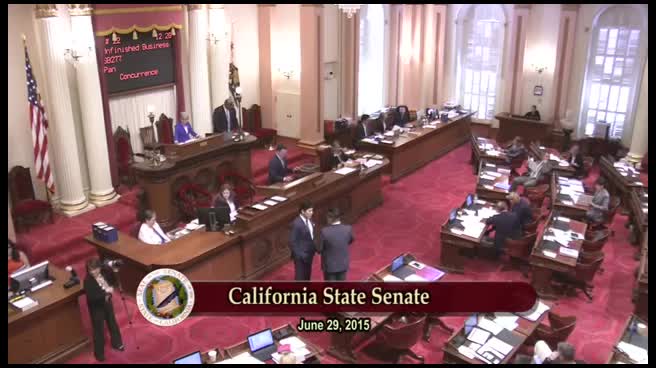 5MIN
Senate Floor
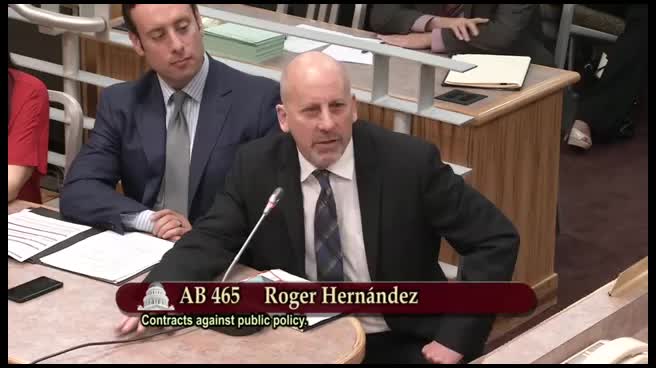 15MIN
Senate Standing Committee on Labor and Industrial Relations
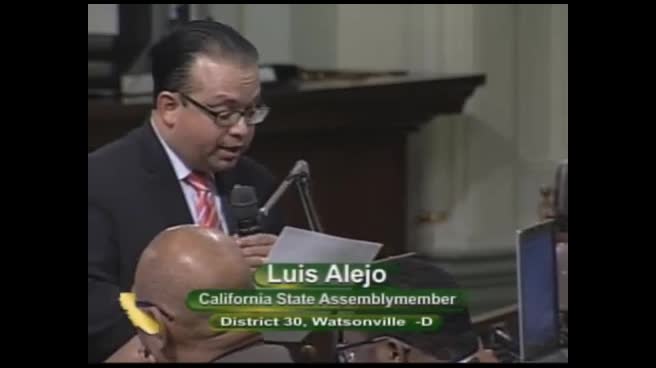 1MIN
Assembly Floor
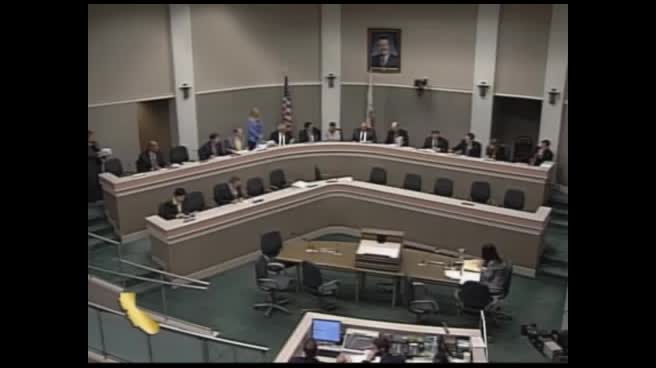 1MIN
Assembly Standing Committee on Appropriations
 16MIN
Assembly Standing Committee on Labor and Employment
Bill Author

Bill Co-Author(s):