AB 2025: Barbering and cosmetology: labor law education requirements.
- Session Year: 2015-2016
- House: Assembly
- Latest Version Date: 2016-09-21
Existing law, the Barbering and Cosmetology Act, establishes the State Board of Barbering and Cosmetology for the licensure and regulation of barbers, cosmetologists, estheticians, manicurists, electrologists, and apprentices. Existing law requires the board to carry out a list of duties, including making rules and regulations, conducting and administering license examinations, issuing licenses to qualified applicants, and disciplining persons who violate the act.
This bill would require that the board offer and make available all written materials provided to licensees and applicants in English, Korean, Spanish, and Vietnamese.
Existing law requires the board to establish a Health and Safety Advisory Committee to provide the board with advice and recommendations on health and safety issues before the board.
This bill would specify that the health and safety issues are those that impact licensees, including how to ensure licensees are aware of basic labor laws, as specified.
Existing law requires every application for admission to examination and licensure to be verified by the oath of the applicant.
This bill would additionally require every application for admission to examination and licensure and every electronic application to renew a license to include a signed acknowledgment that the applicant understands his or her rights as a licensee as outlined in informational materials on basic labor laws that the applicant is provided by the board with the application or renewal application.
Existing law requires the licensure of any person, firm, or corporation operating an establishment engaged in a practice regulated by the board. Existing law requires a separate license for each location where the establishment operates. Existing law requires applicants to submit an application, accompanied by a prescribed fee. Existing law prohibits the board from issuing a license to any applicant who has committed specified acts or crimes which are grounds for denial of licensure in effect at the time the new application is submitted.
This bill would require, as part of a complete application for a license to operate an establishment, and an electronic application to renew a license to operate an establishment, a signed acknowledgment that the applicant understands the informational materials on basic labor laws the applicant is provided by the board with the application or renewal application and that establishments are responsible for compliance with any applicable labor laws of the state.
Existing law requires the board to keep a registration record of each licensee containing the name, address, license number, date issued, and any facts that the applicant may have stated in the application for examination for licensure.
This bill would require the board to collect, through optional questions on a written application for a license and in an electronic application to renew a license, the language preference of the applicant.
Existing law requires the board to admit to a licensing examination an applicant who meets certain qualifications, including having completed one or more courses, as specified, offered by a school approved by the board. Existing law requires the board to develop or adopt a health and safety course on hazardous substances that is required to be taught in schools approved by the board. Existing law requires course development to include pilot testing of the course and training classes to prepare instructors to effectively use the course.
This bill would require the health and safety course that the board is required to develop or adopt to additionally cover basic labor laws, as specified.
This bills provisions would become operative on July 1, 2017.
Existing law, the Barbering and Cosmetology Act, establishes the State Board of Barbering and Cosmetology for the licensure and regulation of barbers, cosmetologists, estheticians, manicurists, electrologists, and apprentices. Existing law requires the board to carry out a list of duties duties, including making rules and regulations, conducting and administering license examinations, issuing licenses to qualified applicants, and disciplining persons who violate the act.
This bill would require that the board offer and make available all written materials provided to licensees and applicants in English, Korean, Spanish, and Vietnamese.
Existing law requires the board to establish a Health and Safety Advisory Committee to provide the board with advice and recommendations on health and safety issues before the board.
This bill would specify that the health and safety issues are those that impact licensees, including how to ensure licensees are aware of basic labor laws, as specified.
Existing law requires every application for admission to examination and licensure to be verified by the oath of the applicant.
This bill would additionally require every application for admission to examination and licensure and every electronic application to renew a license to include a signed acknowledgment that the applicant understands his or her rights as a licensee as outlined in informational materials on basic labor laws that the applicant is provided by the board with the application or renewal application.
Existing law requires the licensure of any person, firm, or corporation operating an establishment engaged in a practice regulated by the board. Existing law requires a separate license for each location where the establishment operates. Existing law requires applicants to submit an application, accompanied by a prescribed fee. Existing law prohibits the board from issuing a license to any applicant who has committed specified acts or crimes which are grounds for denial of licensure in effect at the time the new application is submitted.
This bill would require, as part of a complete application for a license to operate an establishment, and an electronic application to renew a license to operate an establishment, a signed acknowledgment that the applicant understands the informational materials on basic labor laws the applicant is provided by the board with the application or renewal application and that establishments are responsible for compliance with any applicable labor laws of the state.
Existing law requires the board to keep a registration record of each licensee containing the name, address, license number, date issued, and any facts that the applicant may have stated in the application for examination for licensure.
This bill would require the board to collect, through optional questions on a written application for a license and in an electronic application to renew a license, the language preference of the applicant.
Existing law requires the board to admit to a licensing examination an applicant who meets certain qualifications, including having completed one or more courses, as specified, offered by a school approved by the board. Existing law requires the board to develop or adopt a health and safety course on hazardous substances that is required to be taught in schools approved by the board. Existing law requires course development to include pilot testing of the course and training classes to prepare instructors to effectively use the course.
This bill would require the health and safety course that the board is required to develop or adopt to additionally cover basic labor laws, as specified.
This bills provisions would become operative on July 1, 2017.
Existing law, the Barbering and Cosmetology Act, establishes the State Board of Barbering and Cosmetology for the licensure and regulation of barbers, cosmetologists, estheticians, manicurists, electrologists, and apprentices. Existing law requires the board to carry out a list of duties including making rules and regulations, conducting and administering license examinations, issuing licenses to qualified applicants, and disciplining persons who violate the act.
This bill would require that the board offer and make available all written materials provided to licensees and applicants in English, Korean, Spanish, and Vietnamese.
Existing law requires the board to establish a Health and Safety Advisory Committee to provide the board with advice and recommendations on health and safety issues before the board.
This bill would specify that the health and safety issues are those that impact licensees, including how to ensure licensees are aware of basic labor laws, as specified.
Existing law requires every application for admission to examination and licensure to be verified by the oath of the applicant.
This bill would additionally require every application for admission to examination and licensure and every electronic application to renew a license to include a signed acknowledgment that the applicant understands his or her rights as a licensee as outlined in informational materials on basic labor laws that the applicant is provided by the board with the application or renewal application.
Existing law requires the licensure of any person, firm, or corporation operating an establishment engaged in a practice regulated by the board. Existing law requires a separate license for each location where the establishment operates. Existing law requires applicants to submit an application, accompanied by a prescribed fee. Existing law prohibits the board from issuing a license to any applicant who has committed specified acts or crimes which are grounds for denial of licensure in effect at the time the new application is submitted.
This bill would require, as part of a complete application for a license to operate an establishment, and an electronic application to renew a license to operate an establishment, a signed acknowledgment that the applicant understands the informational materials on basic labor laws the applicant is provided by the board with the application or renewal application and that establishments are responsible for compliance with any applicable labor laws of the state.
Existing law requires the board to keep a registration record of each licensee containing the name, address, license number, date issued, and any facts that the applicant may have stated in the application for examination for licensure.
This bill would require the board, beginning January 1, 2018, board to collect, through optional questions on the a written application to operate an establishment, demographic information of each applicant, including her or his preferred for a license and in an electronic application to renew a license, the language preference. preference of the applicant.
Existing law requires the board to admit to a licensing examination an applicant who meets certain qualifications, including having completed one or more courses, as specified, offered by a school approved by the board. Existing law requires the board to develop or adopt a health and safety course on hazardous substances that is required to be taught in schools approved by the board. Existing law requires course development to include pilot testing of the course and training classes to prepare instructors to effectively use the course.
This bill would require the health and safety course that the board is required to develop or adopt to additionally cover basic labor laws, as specified.
This bills provisions would become operative on July 1, 2017.
Existing law, the Barbering and Cosmetology Act, establishes the State Board of Barbering and Cosmetology for the licensure and regulation of barbers, cosmetologists, estheticians, manicurists, electrologists, and apprentices. Existing law requires the board to carry out a list of duties including making rules and regulations, conducting and administering license examinations, issuing licenses to qualified applicants, and disciplining persons who violate the act.
This bill would require that the board offer and make available all written materials provided to licensees and applicants in English, Spanish, and Vietnamese.
Existing law requires the board to establish a Health and Safety Advisory Committee to provide the board with advice and recommendations on health and safety issues before the board.
This bill would specify that the health and safety issues are those that impact licensees, including how to ensure licensees are aware of basic labor laws, as specified.
Existing law requires every application for admission to examination and licensure to be verified by the oath of the applicant.
This bill would additionally require every application for admission to examination and licensure to include a signed acknowledgment that the applicant understands his or her rights as a licensee as outlined in informational materials on basic labor laws that the applicant is provided by the board with the application.
Existing law requires the licensure of any person, firm, or corporation operating an establishment engaged in a practice regulated by the board. Existing law requires a separate license for each location where the establishment operates. Existing law requires applicants to submit an application, accompanied by a prescribed fee. Existing law prohibits the board from issuing a license to any applicant who has committed specified acts or crimes which are grounds for denial of licensure in effect at the time the new application is submitted.
This bill would require that, on or before January 1, 2018, the board require as a condition of licensure to operate an establishment that the applicant has the knowledge of basic labor laws, as defined, that pertain to the types of licensees who may work in the establishment. The bill would require the board, in consultation with the Department of Industrial Relations, to develop and add questions on basic labor law to the application for a license to operate an establishment. The bill would require the board, in consultation with the Department of Industrial Relations and stakeholders, to select or create informational materials on basic labor law that the board determines to be practical and accessible to applicants. The bill would require the board to require, as part of a complete application to operate an establishment, a signed acknowledgment that the applicant understands the informational materials on basic labor laws the applicant is provided by the board with the application and that establishments are responsible for obeying the compliance with any applicable labor laws of the State of California. state.
Existing law requires the board to keep a registration record of each licensee containing the name, address, license number, date issued, and any facts that the applicant may have stated in the application for examination for licensure.
This bill would require the board, beginning January 1, 2018, to collect, through optional questions on the application to operate an establishment, demographic information of each applicant, including her or his preferred language preference.
Existing law requires the board to admit to a licensing examination an applicant who meets certain qualifications, including having completed one or more courses, as specified, offered by a school approved by the board. Existing law requires the board to determine by regulation the required subjects of instruction to be completed in all approved courses. develop or adopt a health and safety course on hazardous substances that is required to be taught in schools approved by the board. Existing law requires course development to include pilot testing of the course and training classes to prepare instructors to effectively use the course.
This bill would require the labor laws that pertain to the types of licensees who may work in establishments to be among these required subjects. health and safety course that the board is required to develop or adopt to additionally cover basic labor laws, as specified.
Existing law, the Barbering and Cosmetology Act, establishes the State Board of Barbering and Cosmetology for the licensure and regulation of barbers, cosmetologists, estheticians, manicurists, electrologists, and apprentices. Existing law requires the board to carry out a list of duties including making rules and regulations, conducting and administering license examinations, issuing licenses to qualified applicants, and disciplining persons who violate the act.
This bill would require that the board offer and make available all written materials provided to licensees and applicants in English, Spanish, and Vietnamese.
Existing law requires the licensure of any person, firm, or corporation operating an establishment engaged in a practice regulated by the board. Existing law requires a separate license for each location where the establishment operates. Existing law requires applicants to submit an application, accompanied by a prescribed fee. Existing law prohibits the board from issuing a license to any applicant who has committed specified acts or crimes which are grounds for denial of licensure in effect at the time the new application is submitted.
This bill would require that, on or before January 1, 2018, the board to require as a condition of licensure to operate an establishment that the applicant has the knowledge of basic labor laws, as defined, that pertain to the types of licensees who may work in the establishment. The bill would require the board, in consultation with the Department of Industrial Relations, to develop and add questions on basic labor law to the application for a license to operate an establishment. The bill would require the board, in consultation with the Department of Industrial Relations and stakeholders, to select or create informational materials on basic labor law that the board determines to be practical and accessible to applicants. The bill would require the board to require, as part of a complete application, a signed acknowledgment that the applicant understands the informational materials on basic labor laws and that establishments are responsible for obeying the labor laws of the State of California.
Existing law requires the board to keep a registration record of each licensee containing the name, address, license number, date issued, and any facts that the applicant may have stated in the application for examination for licensure.
This bill would require the board, beginning January 1, 2018, to collect, through optional questions on the application to operate an establishment, demographic information of each applicant, including her or his preferred language preference.
Existing law requires the board to admit to a licensing examination an applicant who meets certain qualifications, including having completed one or more courses, as specified, offered by a school approved by the board. Existing law requires the board to determine by regulation the required subjects of instruction to be completed in all approved courses.
This bill would require the labor laws that pertain to the types of licensees who may work in establishments to be among these required subjects.
Existing law, the Barbering and Cosmetology Act, establishes the State Board of Barbering and Cosmetology for the licensure and regulation of barbers, cosmetologists, estheticians, manicurists, electrologists, and apprentices. Existing law requires the board to carry out a list of duties including making rules and regulations, conducting and administering license examinations, issuing licenses to qualified applicants, and disciplining persons who violate the act.
This bill would require that the board offer and make available all written materials provided to licensees and applicants in English, Spanish, and Vietnamese.
Existing law requires the licensure of any person, firm, or corporation operating an establishment engaged in a practice regulated by the board. Existing law requires a separate license for each location where the establishment operates. Existing law requires applicants to submit an application, accompanied by a prescribed fee. Existing law prohibits the board from issuing a license to any applicant who has committed specified acts or crimes which are grounds for denial of licensure in effect at the time the new application is submitted.
This bill would require the board to require as a condition of licensure to operate an establishment that the applicant has the knowledge of basic labor laws, as defined, that pertain to the types of licensees who may work in the establishment. The bill would require the board, in consultation with the Department of Industrial Relations, to develop and add questions on basic labor law to the application for a license to operate an establishment. The bill would require the board, in consultation with the Department of Industrial Relations and stakeholders, to select or create informational materials on basic labor law that the board determines to be practical and accessible to applicants. The bill would require the board to require, as part of a complete application, a signed acknowledgment that the applicant understands the informational materials on basic labor laws and that establishments are responsible for obeying the labor laws of the State of California.
Existing law requires the board to keep a registration record of each licensee containing the name, address, license number, date issued, and any facts that the applicant may have stated in the application for examination for licensure.
This bill would require the board, beginning January 1, 2018, to collect, through optional questions on the application to operate an establishment, demographic information of each applicant, including her or his preferred language preference.
Existing law requires the board to admit to a licensing examination an applicant who meets certain qualifications, including having completed one or more courses, as specified, offered by a school approved by the board. Existing law requires the board to determine by regulation the required subjects of instruction to be completed in all approved courses.
This bill would require the labor laws that pertain to the types of licensees who may work in establishments to be among these required subjects.
The Barbering and Cosmetology Act establishes the State Board of Barbering and Cosmetology and requires, among other duties, that the board issue licenses to qualified applicants, as specified, who submit an application, accompanied by a prescribed fee, to operate an establishment engaged in the practice of barbering, cosmetology, natural hairstyling for compensation, or electrolysis, as those terms are defined. The act authorizes the board to reduce the amount of the fee for an applicant obtaining ownership of an existing establishment. The act requires a separate license for each location where the establishment operates.
This bill would make a nonsubstantive change to this provision.
(a)The board shall do all of the following:
(1)Make rules and regulations in aid or furtherance of this chapter in accordance with the Administrative Procedure Act.
(2)Conduct and administer examinations of applicants for licensure.
(3)Issue licenses to those applicants that may be entitled thereto.
(4)Discipline persons who have been determined to be in violation of this chapter or the regulations adopted pursuant to this chapter.
(5)Adopt rules governing sanitary conditions and precautions to be employed as are reasonably necessary to protect the public health and safety in establishments, schools approved by the board, and in the practice of any profession provided for in this chapter. The rules shall be adopted in accordance with the Administrative Procedure Act, Chapter 3.5 (commencing with Section 11340) of Title 2 of the Government Code, and shall be submitted to the State Department of Public Health and approved by that department prior to filing with the Secretary of State. A written copy of all those rules shall be furnished to each licensee.
(6)Offer and make available all written materials provided to licensees and applicants in English, Korean, Spanish, and Vietnamese.
(b)The amendments made to this section by the act adding this subdivision shall become operative on July 1, 2017.
SEC. 2.Section 7314 of the Business and Professions Code is amended to read:7314.(a)The board shall keep a record of its proceedings relating to its public meetings, meetings of committees, and records relating to the issuance, refusal, renewal, suspension, and revocation of licenses.
(b)The board shall keep a registration record of each licensee containing the name, address, license number, and date issued. This record shall also contain any facts that the applicants may have stated in their application for examination for licensure. The board shall collect, through optional questions on a written application for a license and in an electronic application to renew a license issued pursuant to this chapter, the spoken and written language preference of each applicant.
(c)The amendments made to this section by the act adding this subdivision shall become operative on July 1, 2017.
SEC. 3.Section 7314.3 of the Business and Professions Code is amended to read:7314.3.(a)The board shall establish a Health and Safety Advisory Committee to provide the board with advice and recommendations on health and safety issues before the board that impact licensees, including how to ensure licensees are aware of basic labor laws. Basic labor laws include, but are not limited to, all of the following:
(1)Key differences between the legal rights, benefits, and obligations of an employee and an independent contractor.
(2)Wage and hour rights for hourly employees.
(3)Antidiscrimination laws relating to the use of a particular language in the workplace.
(4)Antiretaliation laws relating to a workers right to file complaints with the Department of Industrial Relations.
(5)How to obtain more information about state and federal labor laws.
(b)The amendments made to this section by the act adding this subdivision shall become operative on July 1, 2017.
SEC. 4.Section 7337 of the Business and Professions Code is amended to read:7337.(a)Every application for admission to examination and licensure shall be in writing, on forms prepared and furnished by the board.
(b)Each application shall be accompanied by the required fee, and shall contain proof of the qualifications of the applicant for examination and licensure. It shall be verified by the oath of the applicant and shall include a signed acknowledgment that the applicant understands his or her rights as a licensee as outlined in informational materials on basic labor laws, as specified in Section 7314.3, that the applicant is provided by the board with the application. Every applicant shall, as a condition of admittance to the examination facility, present satisfactory proof of identification. Satisfactory proof of identification shall be in the form of a valid, unexpired drivers license or identification card, containing the photograph of the person to whom it was issued, issued by any state, federal, or other government entity.
(c)Every electronic application to renew a license shall include a signed acknowledgment that the renewal applicant understands his or her rights as a licensee as outlined in informational materials on basic labor laws, as specified in Section 7314.3, that the renewal applicant is provided by the board with the renewal application.
(d)The amendments made to this section by the act adding this subdivision shall become operative on July 1, 2017.
SEC. 5.Section 7347 of the Business and Professions Code is amended to read:7347.(a)Any person, firm, or corporation desiring to operate an establishment shall make an application to the bureau for a license accompanied by the fee prescribed by this chapter. The application shall be required whether the person, firm, or corporation is operating a new establishment or obtaining ownership of an existing establishment. The application shall include a signed acknowledgment that the applicant understands that establishments are responsible for compliance with any applicable labor laws of the state and that the applicant understands the informational materials on basic labor laws, as specified in Section 7314.3, the applicant is provided by the board with the application. Every electronic application to renew a license shall include a signed acknowledgment that the renewal applicant understands that establishments are responsible for compliance with any applicable labor laws of the state and that the applicant understands the informational materials on basic labor laws, as specified in Section 7314.3, that the renewal applicant is provided by the board with the renewal application. If the applicant is obtaining ownership of an existing establishment, the board may establish the fee in an amount less than the fee prescribed by this chapter. The applicant, if an individual, or each officer, director, and partner, if the applicant is other than an individual, shall not have committed acts or crimes which are grounds for denial of licensure in effect at the time the new application is submitted pursuant to Section 480. A license issued pursuant to this section shall authorize the operation of the establishment only at the location for which the license is issued. Operation of the establishment at any other location shall be unlawful unless a license for the new location has been obtained upon compliance with this section, applicable to the issuance of a license in the first instance.
(b)The amendments made to this section by the act adding this subdivision shall become operative on July 1, 2017.
SEC. 6.Section 7389 of the Business and Professions Code is amended to read:7389.(a)The board shall develop or adopt a health and safety course on hazardous substances and basic labor laws, as specified in Section 7314.3, which shall be taught in schools approved by the board. Course development shall include pilot testing of the course and training classes to prepare instructors to effectively use the course.
(b)The amendments made to this section by the act adding this subdivision shall become operative on July 1, 2017.
(a)The board shall do all of the following:
(1)Make rules and regulations in aid or furtherance of this chapter in accordance with the Administrative Procedure Act.
(2)Conduct and administer examinations of applicants for licensure.
(3)Issue licenses to those applicants that may be entitled thereto.
(4)Discipline persons who have been determined to be in violation of this chapter or the regulations adopted pursuant to this chapter.
(5)Adopt rules governing sanitary conditions and precautions to be employed as are reasonably necessary to protect the public health and safety in establishments, schools approved by the board, and in the practice of any profession provided for in this chapter. The rules shall be adopted in accordance with the Administrative Procedure Act, Chapter 3.5 (commencing with Section 11340) of Title 2 of the Government Code, and shall be submitted to the State Department of Public Health Care Services and approved by that department prior to filing with the Secretary of State. A written copy of all those rules shall be furnished to each licensee.
(6)Offer and make available all written materials provided to licensees and applicants in English, Korean, Spanish, and Vietnamese.
(b)The amendments made to this section by the act adding this subdivision shall become operative on July 1, 2017.
SEC. 2.Section 7314 of the Business and Professions Code is amended to read:7314.(a)The board shall keep a record of its proceedings relating to its public meetings, meetings of committees, and records relating to the issuance, refusal, renewal, suspension, and revocation of licenses.
(b)The board shall keep a registration record of each licensee containing the name, address, license number, and date issued. This record shall also contain any facts that the applicants may have stated in their application for examination for licensure. The board shall collect, through optional questions on a written application for a license and in an electronic application to renew a license issued pursuant to this chapter, the spoken and written language preference of each applicant.
(c)The amendments made to this section by the act adding this subdivision shall become operative on July 1, 2017.
SEC. 3.Section 7314.3 of the Business and Professions Code is amended to read:7314.3.(a)The board shall establish a Health and Safety Advisory Committee to provide the board with advice and recommendations on health and safety issues before the board that impact licensees, including how to ensure licensees are aware of basic labor laws. Basic labor laws include, but are not limited to, all of the following:
(1)Key differences between the legal rights, benefits, and obligations of an employee and an independent contractor.
(2)Wage and hour rights for hourly employees.
(3)Antidiscrimination laws relating to the use of a particular language in the workplace.
(4)Antiretaliation laws relating to a workers right to file complaints with the Department of Industrial Relations.
(5)How to obtain more information about state and federal labor laws.
(b)The amendments made to this section by the act adding this subdivision shall become operative on July 1, 2017.
SEC. 4.Section 7337 of the Business and Professions Code is amended to read:7337.(a)Every application for admission to examination and licensure shall be in writing, on forms prepared and furnished by the board.
(b)Each application shall be accompanied by the required fee, and shall contain proof of the qualifications of the applicant for examination and licensure. It shall be verified by the oath of the applicant and shall include a signed acknowledgment that the applicant understands his or her rights as a licensee as outlined in informational materials on basic labor laws, as specified in Section 7314.3, that the applicant is provided by the board with the application. Every applicant shall, as a condition of admittance to the examination facility, present satisfactory proof of identification. Satisfactory proof of identification shall be in the form of a valid, unexpired drivers license or identification card, containing the photograph of the person to whom it was issued, issued by any state, federal, or other government entity.
(c)Every electronic application to renew a license shall include a signed acknowledgment that the renewal applicant understands his or her rights as a licensee as outlined in informational materials on basic labor laws, as specified in Section 7314.3, that the renewal applicant is provided by the board with the renewal application.
(d)The amendments made to this section by the act adding this subdivision shall become operative on July 1, 2017.
SEC. 5.Section 7347 of the Business and Professions Code is amended to read:7347.(a)Any person, firm, or corporation desiring to operate an establishment shall make an application to the bureau for a license accompanied by the fee prescribed by this chapter. The application shall be required whether the person, firm, or corporation is operating a new establishment or obtaining ownership of an existing establishment. The application shall include a signed acknowledgment that the applicant understands that establishments are responsible for compliance with any applicable labor laws of the state and that the applicant understands the informational materials on basic labor laws, as specified in Section 7314.3, the applicant is provided by the board with the application. Every electronic application to renew a license shall include a signed acknowledgment that the renewal applicant understands that establishments are responsible for compliance with any applicable labor laws of the state and that the applicant understands the informational materials on basic labor laws, as specified in Section 7314.3, that the renewal applicant is provided by the board with the renewal application. If the applicant is obtaining ownership of an existing establishment, the board may establish the fee in an amount less than the fee prescribed by this chapter. The applicant, if an individual, or each officer, director, and partner, if the applicant is other than an individual, shall not have committed acts or crimes which are grounds for denial of licensure in effect at the time the new application is submitted pursuant to Section 480. A license issued pursuant to this section shall authorize the operation of the establishment only at the location for which the license is issued. Operation of the establishment at any other location shall be unlawful unless a license for the new location has been obtained upon compliance with this section, applicable to the issuance of a license in the first instance.
(b)The amendments made to this section by the act adding this subdivision shall become operative on July 1, 2017.
SEC. 6.Section 7389 of the Business and Professions Code is amended to read:7389.(a)The board shall develop or adopt a health and safety course on hazardous substances and basic labor laws, as specified in Section 7314.3, which shall be taught in schools approved by the board. Course development shall include pilot testing of the course and training classes to prepare instructors to effectively use the course.
(b)The amendments made to this section by the act adding this subdivision shall become operative on July 1, 2017.
(a)The board shall do all of the following:
(a)
(1)Make rules and regulations in aid or furtherance of this chapter in accordance with the Administrative Procedure Act.
(b)
(2)Conduct and administer examinations of applicants for licensure.
(c)
(3)Issue licenses to those applicants that may be entitled thereto.
(d)
(4)Discipline persons who have been determined to be in violation of this chapter or the regulations adopted pursuant to this chapter.
(e)
(5)Adopt rules governing sanitary conditions and precautions to be employed as are reasonably necessary to protect the public health and safety in establishments, schools approved by the board, and in the practice of any profession provided for in this chapter. The rules shall be adopted in accordance with the Administrative Procedure Act, Chapter 3.5 (commencing with Section 11340) of Title 2 of the Government Code, and shall be submitted to the State Department of Health Care Services and approved by that department prior to filing with the Secretary of State. A written copy of all those rules shall be furnished to each licensee.
(f)
(6)Offer and make available all written materials provided to licensees and applicants in English, Korean, Spanish, and Vietnamese.
(b)The amendments made to this section by the act adding this subdivision shall become operative on July 1, 2017.
SEC. 2.Section 7314 of the Business and Professions Code is amended to read:7314.(a)The board shall keep a record of its proceedings relating to its public meetings, meetings of committees, and records relating to the issuance, refusal, renewal, suspension, and revocation of licenses.
The
(b)The board shall keep a registration record of each licensee containing the name, address, license number number, and date issued. This record shall also contain any facts that the applicants may have stated in their application for examination for licensure. Beginning January 1, 2018, the The board shall collect, through optional questions on the a written application for a license and in an electronic application to renew a license issued pursuant to Section 7347, the demographic information of each applicant, including, but not limited to, her or his this chapter, the spoken and written language preference. preference of each applicant.
(c)The amendments made to this section by the act adding this subdivision shall become operative on July 1, 2017.
SEC. 3.Section 7314.3 of the Business and Professions Code is amended to read:7314.3.(a)The board shall establish a Health and Safety Advisory Committee to provide the board with advice and recommendations on health and safety issues before the board that impact licensees, including how to ensure licensees are aware of basic labor laws. Basic labor laws include, but are not limited to, all of the following:
(a)
(1)Key differences between the legal rights, benefits, and obligations of an employee and an independent contractor.
(b)
(2)Wage and hour rights for hourly employees.
(c)
(3)Antidiscrimination laws relating to the use of a particular language in the workplace.
(d)
(4)Antiretaliation laws relating to a workers right to file complaints with the Department of Industrial Relations.
(e)
(5)How to obtain more information about state and federal labor laws.
(b)The amendments made to this section by the act adding this subdivision shall become operative on July 1, 2017.
SEC. 4.Section 7337 of the Business and Professions Code is amended to read:7337.(a)Every application for admission to examination and licensure shall be in writing, on forms prepared and furnished by the board.
Each
(b)Each application shall be accompanied by the required fee, and shall contain proof of the qualifications of the applicant for examination and licensure. It shall be verified by the oath of the applicant and shall include a signed acknowledgment that the applicant understands his or her rights as a licensee as outlined in informational materials on basic labor laws laws, as specified in Section 7314.3 7314.3, that the applicant is provided by the board with the application. Every applicant shall, as a condition of admittance to the examination facility, present satisfactory proof of identification. Satisfactory proof of identification shall be in the form of a valid, unexpired drivers license or identification card, containing the photograph of the person to whom it was issued, issued by any state, federal, or other government entity.
(c)Every electronic application to renew a license shall include a signed acknowledgment that the renewal applicant understands his or her rights as a licensee as outlined in informational materials on basic labor laws, as specified in Section 7314.3, that the renewal applicant is provided by the board with the renewal application.
(d)The amendments made to this section by the act adding this subdivision shall become operative on July 1, 2017.
SEC. 5.Section 7347 of the Business and Professions Code is amended to read:7347.(a)Any person, firm, or corporation desiring to operate an establishment shall make an application to the bureau for a license accompanied by the fee prescribed by this chapter. The application shall be required whether the person, firm, or corporation is operating a new establishment or obtaining ownership of an existing establishment. The application shall include a signed acknowledgment that the applicant understands that establishments are responsible for compliance with any applicable labor laws of the state and that the applicant understands the informational materials on basic labor laws laws, as specified in Section 7314.3 7314.3, the applicant is provided by the board with the application. Every electronic application to renew a license shall include a signed acknowledgment that the renewal applicant understands that establishments are responsible for compliance with any applicable labor laws of the state and that the applicant understands the informational materials on basic labor laws, as specified in Section 7314.3, that the renewal applicant is provided by the board with the renewal application. If the applicant is obtaining ownership of an existing establishment, the board may establish the fee in an amount less than the fee prescribed by this chapter. The applicant, if an individual, or each officer, director, and partner, if the applicant is other than an individual, shall not have committed acts or crimes which are grounds for denial of licensure in effect at the time the new application is submitted pursuant to Section 480. A license issued pursuant to this section shall authorize the operation of the establishment only at the location for which the license is issued. Operation of the establishment at any other location shall be unlawful unless a license for the new location has been obtained upon compliance with this section, applicable to the issuance of a license in the first instance.
(b)The amendments made to this section by the act adding this subdivision shall become operative on July 1, 2017.
SEC. 6.Section 7389 of the Business and Professions Code is amended to read:7389.(a)The board shall develop or adopt a health and safety course on hazardous substances and basic labor laws laws, as specified in Section 7314.3 7314.3, which shall be taught in schools approved by the board. Course development shall include pilot testing of the course and training classes to prepare instructors to effectively use the course.
(b)The amendments made to this section by the act adding this subdivision shall become operative on July 1, 2017.
The board shall do all of the following:
(a)Make rules and regulations in aid or furtherance of this chapter in accordance with the Administrative Procedure Act.
(b)Conduct and administer examinations of applicants for licensure.
(c)Issue licenses to those applicants that may be entitled thereto.
(d)Discipline persons who have been determined to be in violation of this chapter or the regulations adopted pursuant to this chapter.
(e)Adopt rules governing sanitary conditions and precautions to be employed as are reasonably necessary to protect the public health and safety in establishments, schools approved by the board, and in the practice of any profession provided for in this chapter. The rules shall be adopted in accordance with the Administrative Procedure Act, Chapter 3.5 (commencing with Section 11340) of Title 2 of the Government Code, and shall be submitted to the State Department of Health Care Services and approved by that department prior to filing with the Secretary of State. A written copy of all those rules shall be furnished to each licensee.
(f)Offer and make available all written materials provided to licensees and applicants in English, Spanish, and Vietnamese.
SEC. 2.Section 7314 of the Business and Professions Code is amended to read:7314.The board shall keep a record of its proceedings relating to its public meetings, meetings of committees, and records relating to the issuance, refusal, renewal, suspension, and revocation of licenses.
The board shall keep a registration record of each licensee containing the name, address, license number and date issued. This record shall also contain any facts that the applicants may have stated in their application for examination for licensure. Beginning January 1, 2018, the board shall collect, through optional questions on the applications application for a license issued pursuant to Section 7396.1, 7347, the demographic information of each applicant applicant, including, but not limited to, her or his spoken and written language preference.
SEC. 3.Section 7314.3 of the Business and Professions Code is amended to read:7314.3.The board shall establish a Health and Safety Advisory Committee to provide the board with advice and recommendations on health and safety issues before the board. board that impact licensees, including how to ensure licensees are aware of basic labor laws. Basic labor laws include, but are not limited to, all of the following:
(a)Key differences between the legal rights, benefits, and obligations of an employee and an independent contractor.
(b)Wage and hour rights for hourly employees.
(c)Antidiscrimination laws relating to the use of a particular language in the workplace.
(d)Antiretaliation laws relating to a workers right to file complaints with the Department of Industrial Relations.
(e)How to obtain more information about state and federal labor laws.
SEC. 4.Section 7337 of the Business and Professions Code is amended to read:7337.Every application for admission to examination and licensure shall be in writing, on forms prepared and furnished by the board.
Each application shall be accompanied by the required fee, and shall contain proof of the qualifications of the applicant for examination and licensure. It shall be verified by the oath of the applicant. applicant and shall include a signed acknowledgment that the applicant understands his or her rights as a licensee as outlined in informational materials on basic labor laws as specified in Section 7314.3 that the applicant is provided by the board with the application. Every applicant shall, as a condition of admittance to the examination facility, present satisfactory proof of identification. Satisfactory proof of identification shall be in the form of a valid, unexpired drivers license or identification card, containing the photograph of the person to whom it was issued, issued by any state, federal, or other government entity.
SEC. 5.Section 7347 of the Business and Professions Code is amended to read:7347.Any person, firm, or corporation desiring to operate an establishment shall make an application to the bureau for a license accompanied by the fee prescribed by this chapter. The application shall be required whether the person, firm, or corporation is operating a new establishment or obtaining ownership of an existing establishment. The application shall include a signed acknowledgment that the applicant understands that establishments are responsible for compliance with any applicable labor laws of the state and that the applicant understands the informational materials on basic labor laws as specified in Section 7314.3 the applicant is provided by the board with the application. If the applicant is obtaining ownership of an existing establishment, the bureau board may establish the fee in an amount less than the fee prescribed by this chapter. The applicant, if an individual, or each officer, director, and partner, if the applicant is other than an individual, shall not have committed acts or crimes which are grounds for denial of licensure in effect at the time the new application is submitted pursuant to Section 480. A license issued pursuant to this section shall authorize the operation of the establishment only at the location for which the license is issued. Operation of the establishment at any other location shall be unlawful unless a license for the new location has been obtained upon compliance with this section, applicable to the issuance of a license in the first instance.
SEC. 6.Section 7389 of the Business and Professions Code is amended to read:7389.The board shall develop or adopt a health and safety course on hazardous substances and basic labor laws as specified in Section 7314.3 which shall be taught in schools approved by the board. Course development shall include pilot testing of the course and training classes to prepare instructors to effectively use the course.
SEC. 3.Section 7347 of the Business and Professions Code is repealed.SEC. 4.Section 7362 of the Business and Professions Code is amended to read:7362.(a)A school approved by the board is one that is first approved by the board and subsequently approved by the Bureau for Private Postsecondary Education or is a public school in this state, and provides a course of instruction approved by the board. However, notwithstanding any other law, both the board and the Bureau for Private Postsecondary Education may simultaneously process a schools application for approval.
(b)The board shall determine by regulation the required subjects of instruction to be completed in all approved courses, including the minimum hours of technical instruction and minimum number of practical operations for each subject, and shall determine how much training is required before a student may begin performing services on paying patrons. The labor laws that pertain to the types of licensees who may work in establishments shall be among the required subjects to be completed.
(c)Notwithstanding any other law, the board may revoke, suspend, or deny approval of a school, in a proceeding that shall be conducted in accordance with Chapter 5 (commencing with Section 11500) of Part 1 of Division 3 of Title 2 of the Government Code, when an owner or employee of the school has engaged in any of the acts specified in paragraphs (1) to (8), inclusive.
(1)Unprofessional conduct which includes, but is not limited to, any of the following:
(A)Incompetence or gross negligence, including repeated failure to comply with generally accepted standards for the practice of barbering, cosmetology, or electrology, or disregard for the health and safety of patrons.
(B)Repeated similar negligent acts.
(C)Conviction of any crime substantially related to the qualifications, functions, or duties of the owner of an approved school, in which case, the records of conviction or a certified copy thereof shall be conclusive evidence of the conviction.
(2)Repeated failure to comply with the rules governing health and safety adopted by the board and approved by the State Department of Public Health, for the regulation of board-approved schools.
(3)Repeated failure to comply with the rules adopted by the board for the regulation of board-approved schools.
(4)Continued practice by a person knowingly having an infectious or contagious disease.
(5)Habitual drunkenness, or habitual use of, or addiction to the use of, any controlled substance.
(6)Obtaining or attempting to obtain practice in any occupation licensed and regulated under this chapter, or money, or compensation in any form, by fraudulent misrepresentation.
(7)Refusal to permit or interference with an inspection authorized under this chapter.
(8)Any action or conduct that would have warranted the denial of a school approval.
SEC. 5.Section 7396.1 is added to the Business and Professions Code, to read:7396.1.(a)Any person, firm, or corporation desiring to operate an establishment shall make an application to the board for an establishment license accompanied by the fee prescribed by this chapter. The application shall be required whether the person, firm, or corporation is operating a new establishment or obtaining ownership of an existing establishment. If the applicant is obtaining ownership of an existing establishment, the board may establish the fee in an amount less than the fee prescribed by this chapter. A license issued pursuant to this section shall authorize the operation of the establishment only at the location for which the license is issued. Operation of the establishment at any other location shall be unlawful unless a license for the new location has been obtained upon compliance with this section, applicable to the issuance of a license in the first instance.
(b)On or before January 1, 2018, the board shall require as a condition of licensure pursuant to subdivision (a) that the applicant meets the following requirements:
(1)The applicant, if an individual, or each officer, director, and partner, if the applicant is other than an individual, shall not have committed acts or crimes that are grounds for denial of licensure in effect at the time the new application is submitted pursuant to Section 480.
(2)The applicant has knowledge of basic labor laws that pertain to the types of licensees who may work in the establishment. For purposes of this section, the definition of the term basic labor laws shall include, but not be limited to:
(A)Key differences between the legal rights, benefits, and obligations of an employee and an independent contractor.
(B)Wage and hour rights for hourly employees.
(C)Antidiscrimination laws relating to the use of a particular language in the workplace.
(D)Antiretaliation laws relating to a workers right to file complaints with the Department of Industrial Relations.
(E)How to obtain more information about labor law from the Department of Industrial Relations.
(c)To ensure that applicants for an establishment license have the knowledge of basic labor laws pursuant to paragraph (2) of subdivision (b) the board shall do all of the following:
(1)In consultation with the Department of Industrial Relations, the board shall develop and add questions on basic labor laws to the application.
(2)In consultation with the Department of Industrial Relations and stakeholders, the board shall select or create informational materials on basic labor laws that the board determines to be practical and accessible to applicants.
(3)As part of a complete application, the board shall require a signed acknowledgment that the applicant understands both of the following:
(A)Establishments are responsible for obeying the labor laws of the State of California.
(B)The informational materials on basic labor laws selected or created by the board pursuant to paragraph (2) of subdivision (c).
SEC. 6.Section 7401 of the Business and Professions Code is amended to read:7401.(a)An individual licensed pursuant to Section 7396 shall report to the board at the time of license renewal, his or her practice status, designated as one of the following:
(1)Full-time practice in California.
(2)Full-time practice outside of California.
(3)Part-time practice in California.
(4)Not working in the industry.
(5)Retired.
(6)Other practice status, as may be further defined by the board.
(b)An individual licensed pursuant to Section 7396 shall, at the time of license renewal, identify himself or herself on the application as one of the following:
(1)Employee.
(2)Independent contractor or booth renter.
(3)Salon owner.
(c)An individual licensed pursuant to Section 7396.1 shall report to the board at the time of license renewal, whether either of the following is applicable to him or her:
(1)He or she has a booth renter operating in the establishment.
(2)He or she has an independent contractor operating in the establishment.
The board shall do all of the following:
(a)Make rules and regulations in aid or furtherance of this chapter in accordance with the Administrative Procedure Act.
(b)Conduct and administer examinations of applicants for licensure.
(c)Issue licenses to those applicants that may be entitled thereto.
(d)Discipline persons who have been determined to be in violation of this chapter or the regulations adopted pursuant to this chapter.
(e)Adopt rules governing sanitary conditions and precautions to be employed as are reasonably necessary to protect the public health and safety in establishments, schools approved by the board, and in the practice of any profession provided for in this chapter. The rules shall be adopted in accordance with the Administrative Procedure Act, Chapter 3.5 (commencing with Section 11340) of Title 2 of the Government Code, and shall be submitted to the State Department of Health Care Services and approved by that department prior to filing with the Secretary of State. A written copy of all those rules shall be furnished to each licensee.
(f)Offer and make available all written materials provided to licensees and applicants in English, Spanish, and Vietnamese.
SEC. 2.Section 7314 of the Business and Professions Code is amended to read:7314.The board shall keep a record of its proceedings relating to its public meetings, meetings of committees, and records relating to the issuance, refusal, renewal, suspension suspension, and revocation of licenses.
The board shall keep a registration record of each licensee containing the name, address, license number and date issued. This record shall also contain any facts that the applicants may have stated in their application for examination for licensure. Beginning January 1, 2018, the board shall collect, through optional questions on the applications for a license issued pursuant to Section 7396.1, the demographic information of each applicant including, but not limited to, her or his spoken and written language preference.
SEC. 3.Section 7347 of the Business and Professions Code is repealed.SEC. 4.Section 7362 of the Business and Professions Code is amended to read:7362.(a)A school approved by the board is one that is first approved by the board and subsequently approved by the Bureau for Private Postsecondary Education or is a public school in this state, and provides a course of instruction approved by the board. However, notwithstanding any other law, both the board and the Bureau for Private Postsecondary Education may simultaneously process a schools application for approval.
(b)The board shall determine by regulation the required subjects of instruction to be completed in all approved courses, including the minimum hours of technical instruction and minimum number of practical operations for each subject, and shall determine how much training is required before a student may begin performing services on paying patrons. The labor laws that pertain to the types of licensees who may work in establishments shall be among the required subjects to be completed.
(c)Notwithstanding any other law, the board may revoke, suspend, or deny approval of a school, in a proceeding that shall be conducted in accordance with Chapter 5 (commencing with Section 11500) of Part 1 of Division 3 of Title 2 of the Government Code, when an owner or employee of the school has engaged in any of the acts specified in paragraphs (1) to (8), inclusive.
(1)Unprofessional conduct which includes, but is not limited to, any of the following:
(A)Incompetence or gross negligence, including repeated failure to comply with generally accepted standards for the practice of barbering, cosmetology, or electrology, or disregard for the health and safety of patrons.
(B)Repeated similar negligent acts.
(C)Conviction of any crime substantially related to the qualifications, functions, or duties of the owner of an approved school, in which case, the records of conviction or a certified copy thereof shall be conclusive evidence of the conviction.
(2)Repeated failure to comply with the rules governing health and safety adopted by the board and approved by the State Department of Public Health, for the regulation of board-approved schools.
(3)Repeated failure to comply with the rules adopted by the board for the regulation of board-approved schools.
(4)Continued practice by a person knowingly having an infectious or contagious disease.
(5)Habitual drunkenness, or habitual use of, or addiction to the use of, any controlled substance.
(6)Obtaining or attempting to obtain practice in any occupation licensed and regulated under this chapter, or money, or compensation in any form, by fraudulent misrepresentation.
(7)Refusal to permit or interference with an inspection authorized under this chapter.
(8)Any action or conduct that would have warranted the denial of a school approval.
SEC. 5.Section 7396.1 is added to the Business and Professions Code, to read:7396.1.(a)Any person, firm, or corporation desiring to operate an establishment shall make an application to the board for an establishment license accompanied by the fee prescribed by this chapter. The application shall be required whether the person, firm, or corporation is operating a new establishment or obtaining ownership of an existing establishment. If the applicant is obtaining ownership of an existing establishment, the board may establish the fee in an amount less than the fee prescribed by this chapter. A license issued pursuant to this section shall authorize the operation of the establishment only at the location for which the license is issued. Operation of the establishment at any other location shall be unlawful unless a license for the new location has been obtained upon compliance with this section, applicable to the issuance of a license in the first instance.
(b)The On or before January 1, 2018, the board shall require as a condition of licensure pursuant to subdivision (a) that the applicant meets the following requirements:
(1)The applicant, if an individual, or each officer, director, and partner, if the applicant is other than an individual, shall not have committed acts or crimes that are grounds for denial of licensure in effect at the time the new application is submitted pursuant to Section 480.
(2)The applicant has knowledge of basic labor laws that pertain to the types of licensees who may work in the establishment. For purposes of this section, the definition of the term basic labor laws shall include, but not be limited to:
(A)Key differences between the legal rights, benefits, and obligations of an employee and an independent contractor.
(B)Wage and hour rights for hourly employees.
(C)Antidiscrimination laws relating to the use of a particular language in the workplace.
(D)Antiretaliation laws relating to a workers right to file complaints with the Department of Industrial Relations.
(E)How to obtain more information about labor law from the Department of Industrial Relations.
(c)To ensure that applicants for an establishment license have the knowledge of basic labor laws pursuant to paragraph (2) of subdivision (b) the board shall do all of the following:
(1)In consultation with the Department of Industrial Relations, the board shall develop and add questions on basic labor laws to the application.
(2)In consultation with the Department of Industrial Relations and stakeholders, the board shall select or create informational materials on basic labor laws that the board determines to be practical and accessible to applicants.
(3)As part of a complete application, the board shall require a signed acknowledgment that the applicant understands both of the following:
(A)Establishments are responsible for obeying the labor laws of the State of California.
(B)The informational materials on basic labor laws selected or created by the board pursuant to paragraph (2) of subdivision (c).
SEC. 6.Section 7401 of the Business and Professions Code is amended to read:7401.(a)An individual licensed pursuant to Section 7396 shall report to the board at the time of license renewal, his or her practice status, designated as one of the following:
(1)Full-time practice in California.
(2)Full-time practice outside of California.
(3)Part-time practice in California.
(4)Not working in the industry.
(5)Retired.
(6)Other practice status, as may be further defined by the board.
(b)An individual licensed pursuant to Section 7396 shall, at the time of license renewal, identify himself or herself on the application as one of the following:
(1)Employee.
(2)Independent contractor or booth renter.
(3)Salon owner.
(c)An individual licensed pursuant to Section 7396.1 shall report to the board at the time of license renewal, whether either of the following is applicable to him or her:
(1)He or she has a booth renter operating in the establishment.
(2)He or she has an independent contractor operating in the establishment.
The board shall do all of the following:
(a)Make rules and regulations in aid or furtherance of this chapter in accordance with the Administrative Procedure Act.
(b)Conduct and administer examinations of applicants for licensure.
(c)Issue licenses to those applicants that may be entitled thereto.
(d)Discipline persons who have been determined to be in violation of this chapter or the regulations adopted pursuant to this chapter.
(e)Adopt rules governing sanitary conditions and precautions to be employed as are reasonably necessary to protect the public health and safety in establishments, schools approved by the board, and in the practice of any profession provided for in this chapter. The rules shall be adopted in accordance with the Administrative Procedure Act, Chapter 3.5 (commencing with Section 11340) of Title 2 of the Government Code, and shall be submitted to the State Department of Health Services and approved by that department prior to filing with the Secretary of State. A written copy of all those rules shall be furnished to each licensee.
(f)Offer and make available all written materials provided to licensees and applicants in English, Spanish, and Vietnamese.
SEC. 2.Section 7314 of the Business and Professions Code is amended to read:7314.The board shall keep a record of its proceedings relating to its public meetings, meetings of committees, and records relating to the issuance, refusal, renewal, suspension and revocation of licenses.
The board shall keep a registration record of each licensee containing the name, address, license number and date issued. This record shall also contain any facts that the applicants may have stated in their application for examination for licensure. Beginning January 1, 2018, the board shall collect, through optional questions on the applications for a license issued pursuant to Section 7396.1, the demographic information of each applicant including, but not limited to, her or his spoken and written language preference.
SEC. 3.Section 7347 of the Business and Professions Code is repealed.7347.Any person, firm, or corporation desiring to operate an establishment shall make an application to the bureau for a license accompanied by the fee prescribed by this chapter. The application shall be required whether the person, firm, or corporation is operating a new establishment or obtaining ownership of an existing establishment. If the applicant is obtaining ownership of an existing establishment, the bureau may establish the fee in an amount less than the fee prescribed by this chapter. The applicant, if an individual, or each officer, director, and partner, if the applicant is other than an individual, shall not have committed acts or crimes which are grounds for denial of licensure in effect at the time the new application is submitted pursuant to Section 480. A license issued pursuant to this section shall authorize the operation of the establishment only at the location for which the license is issued. Operation of the establishment at any other location shall be unlawful unless a license for the new location has been obtained upon compliance with this section, applicable to the issuance of a license in the first instance.
SEC. 4.Section 7362 of the Business and Professions Code is amended to read:7362.(a)A school approved by the board is one that is first approved by the board and subsequently approved by the Bureau for Private Postsecondary Education or is a public school in this state, and provides a course of instruction approved by the board. However, notwithstanding any other law, both the board and the Bureau for Private Postsecondary Education may simultaneously process a schools application for approval.
(b)The board shall determine by regulation the required subjects of instruction to be completed in all approved courses, including the minimum hours of technical minimum number of practical operations for each subject, and shall determine how much training is required before a student may begin performing services on paying patrons. The labor laws that pertain to the types of licensees who may work in establishments shall be among the required subjects to be completed.
(c)Notwithstanding any other law, the board may revoke, suspend, or deny approval of a school, in a proceeding that shall be conducted in accordance with Chapter 5 (commencing with Section 11500) of Part 1 of Division 3 of Title 2 of the Government Code, when an owner or employee of the school has engaged in any of the acts specified in paragraphs (1) to (8), inclusive.
(1)Unprofessional conduct which includes, but is not limited to, any of the following:
(A)Incompetence or gross negligence, including repeated failure to comply with generally accepted standards for the practice of barbering, cosmetology, or electrology, or disregard for the health and safety of patrons.
(B)Repeated similar negligent acts.
(C)Conviction of any crime substantially related to the qualifications, functions, or duties of the owner of an approved school, in which case, the records of conviction or a certified copy thereof shall be conclusive evidence of the conviction.
(2)Repeated failure to comply with the rules governing health and safety adopted by the board and approved by the State Department of Public Health, for the regulation of board-approved schools.
(3)Repeated failure to comply with the rules adopted by the board for the regulation of board-approved schools.
(4)Continued practice by a person knowingly having an infectious or contagious disease.
(5)Habitual drunkenness, or habitual use of, or addiction to the use of, any controlled substance.
(6)Obtaining or attempting to obtain practice in any occupation licensed and regulated under this chapter, or money, or compensation in any form, by fraudulent misrepresentation.
(7)Refusal to permit or interference with an inspection authorized under this chapter.
(8)Any action or conduct that would have warranted the denial of a school approval.
SEC. 5.Section 7396.1 is added to the Business and Professions Code, to read:7396.1.(a)Any person, firm, or corporation desiring to operate an establishment shall make an application to the board for an establishment license accompanied by the fee prescribed by this chapter. The application shall be required whether the person, firm, or corporation is operating a new establishment or obtaining ownership of an existing establishment. If the applicant is obtaining ownership of an existing establishment, the board may establish the fee in an amount less than the fee prescribed by this chapter. A license issued pursuant to this section shall authorize the operation of the establishment only at the location for which the license is issued. Operation of the establishment at any other location shall be unlawful unless a license for the new location has been obtained upon compliance with this section, applicable to the issuance of a license in the first instance.
(b)The board shall require as a condition of licensure pursuant to subdivision (a) that the applicant meets the following requirements:
(1)The applicant, if an individual, or each officer, director, and partner, if the applicant is other than an individual, shall not have committed acts or crimes that are grounds for denial of licensure in effect at the time the new application is submitted pursuant to Section 480.
(2)The applicant has knowledge of basic labor laws that pertain to the types of licensees who may work in the establishment. For purposes of this section, the definition of the term basic labor laws shall include, but not be limited to:
(A)Key differences between the legal rights, benefits, and obligations of an employee and an independent contractor.
(B)Wage and hour rights for hourly employees.
(C)Antidiscrimination laws relating to the use of a particular language in the workplace.
(D)Antiretaliation laws relating to a workers right to file complaints with the Department of Industrial Relations.
(E)How to obtain more information about labor law from the Department of Industrial Relations.
(c)To ensure that applicants for an establishment license have the knowledge of basic labor laws pursuant to paragraph (2) of subdivision (b) the board shall do all of the following:
(1)In consultation with the Department of Industrial Relations, the board shall develop and add questions on basic labor laws to the application.
(2)In consultation with the Department of Industrial Relations and stakeholders, the board shall select or create informational materials on basic labor laws that the board determines to be practical and accessible to applicants.
(3)As part of a complete application, the board shall require a signed acknowledgment that the applicant understands both of the following:
(A)Establishments are responsible for obeying the labor laws of the State of California.
(B)The informational materials on basic labor laws selected or created by the board pursuant to paragraph (2) of subdivision (c).
SEC. 6.Section 7401 of the Business and Professions Code is amended to read:7401.(a)An individual licensed pursuant to Section 7396 shall report to the board at the time of license renewal, his or her practice status, designated as one of the following:
(1)Full-time practice in California.
(2)Full-time practice outside of California.
(3)Part-time practice in California.
(4)Not working in the industry.
(5)Retired.
(6)Other practice status, as may be further defined by the board.
(b)An individual licensed pursuant to Section 7396 shall, at the time of license renewal, identify himself or herself on the application as one of the following:
(1)Employee.
(2)Independent contractor or booth renter.
(3)Salon owner.
(c)An individual licensed pursuant to Section 7347 7396.1 shall report to the board at the time of license renewal, whether either of the following is applicable to him or her:
(1)He or she has a booth renter operating in the establishment.
(2)He or she has an independent contractor operating in the establishment.
SECTION 1.Section 7347 of the Business and Professions Code is amended to read:7347.Any person, firm, or corporation desiring to operate an establishment shall make an application to the board for a license accompanied by the fee prescribed by this chapter. The application shall be required whether the person, firm, or corporation is operating a new establishment or obtaining ownership of an existing establishment. If the applicant is obtaining ownership of an existing establishment, the board may establish the fee in an amount less than the fee prescribed by this chapter. The applicant, if an individual, or each officer, director, and partner, if the applicant is other than an individual, shall not have committed acts or crimes that are grounds for denial of licensure in effect at the time the new application is submitted pursuant to Section 480. A license issued pursuant to this section shall authorize the operation of the establishment only at the location for which the license is issued. Operation of the establishment at any other location shall be unlawful unless a license for the new location has been obtained upon compliance with this section, applicable to the issuance of a license in the first instance.
Any person, firm, or corporation desiring to operate an establishment shall make an application to the bureau board for a license accompanied by the fee prescribed by this chapter. The application shall be required whether the person, firm, or corporation is operating a new establishment or obtaining ownership of an existing establishment. If the applicant is obtaining ownership of an existing establishment, the bureau board may establish the fee in an amount less than the fee prescribed by this chapter. The applicant, if an individual, or each officer, director, and partner, if the applicant is other than an individual, shall not have committed acts or crimes which that are grounds for denial of licensure in effect at the time the new application is submitted pursuant to Section 480. A license issued pursuant to this section shall authorize the operation of the establishment only at the location for which the license is issued. Operation of the establishment at any other location shall be unlawful unless a license for the new location has been obtained upon compliance with this section, applicable to the issuance of a license in the first instance.
|
Date
|
Status
|
|---|---|
| Jun 9, 2016 | From committee chair, with author's amendments: Amend, and re-refer to committee. Read second time, amended, and re-referred to Com. on B., P. & E.D. |
| Sep 8, 2016 | Enrolled and presented to the Governor at 4 p.m. |
| Aug 30, 2016 | Senate amendments concurred in. To Engrossing and Enrolling. (Ayes 78. Noes 0. Page 6432.). |
| Aug 30, 2016 | Senate amendments concurred in. To Engrossing and Enrolling. |
| Aug 25, 2016 | In Assembly. Concurrence in Senate amendments pending. May be considered on or after August 28 pursuant to Assembly Rule 77. |
| Aug 23, 2016 | Read third time. Passed. Ordered to the Assembly. (Ayes 39. Noes 0. Page 5288.). |
| Aug 23, 2016 | Read third time. Passed. Ordered to the Assembly. |
| Aug 22, 2016 | Read second time. Ordered to third reading. |
| Aug 19, 2016 | Read third time and amended. Ordered to second reading. |
| Aug 17, 2016 | Read second time. Ordered to third reading. |
| Aug 16, 2016 | Read third time and amended. Ordered to second reading. |
| Aug 15, 2016 | Read second time. Ordered to third reading. |
| Aug 11, 2016 | From committee: Do pass. (Ayes 7. Noes 0.) (August 11). |
| Aug 1, 2016 | In committee: Referred to APPR. suspense file. |
| Jun 29, 2016 | From committee: Do pass and re-refer to Com. on APPR. (Ayes 5. Noes 0.) (June 29). Re-referred to Com. on APPR. |
| Jun 14, 2016 | From committee: Do pass and re-refer to Com. on L. & I.R. (Ayes 8. Noes 0.) (June 13). Re-referred to Com. on L. & I.R. |
| Feb 16, 2016 | Read first time. To print. |
| Jun 1, 2016 | In committee: Set, first hearing. Hearing canceled at the request of author. |
| May 26, 2016 | Referred to Coms. on B., P. & E.D. and L. & I.R. |
| May 19, 2016 | Read third time. Passed. Ordered to the Senate. (Ayes 69. Noes 3.) |
| May 19, 2016 | Read third time. Passed. Ordered to the Senate. (Ayes 69. Noes 3. Page 4862.) |
| May 19, 2016 | Read third time. Passed. Ordered to the Senate. |
| May 19, 2016 | In Senate. Read first time. To Com. on RLS. for assignment. |
| May 12, 2016 | Read second time. Ordered to third reading. |
| May 11, 2016 | From committee: Do pass. (Ayes 20. Noes 0.) (May 11). |
| Apr 19, 2016 | Re-referred to Com. on APPR. |
| Apr 18, 2016 | Read second time and amended. |
| Apr 14, 2016 | From committee: Amend, and do pass as amended and re-refer to Com. on APPR. (Ayes 13. Noes 0.) (April 12). |
| Mar 28, 2016 | Re-referred to Com. on B. & P. |
| Mar 18, 2016 | From committee chair, with author's amendments: Amend, and re-refer to Com. on B. & P. Read second time and amended. |
| Mar 17, 2016 | Referred to Com. on B. & P. |
| Feb 17, 2016 | From printer. May be heard in committee March 18. |
|
Date
|
Description
|
Location
|
Votes
|
|
|---|---|---|---|---|
| Aug 30, 2016 | AB 2025 GONZALEZ Concurrence in Senate Amendments | Assembly Floor |
Passed |
|
| Aug 23, 2016 | Assembly 3rd Reading AB2025 Gonzalez By Nguyen | Senate Floor |
Passed |
|
| Aug 11, 2016 | Do pass | Senate Standing Committee on Appropriations |
Passed |
|
| Aug 1, 2016 | Placed on suspense file | Senate Standing Committee on Appropriations |
Passed |
|
| Jun 29, 2016 | Do pass, but first be re-referred to the Committee on [Appropriations] | Senate Standing Committee on Labor and Industrial Relations |
Passed |
|
| Jun 13, 2016 | Do pass, but first be re-referred to the Committee on [Labor and Industrial Relations] | Senate Standing Committee on Business, Professions and Economic Development |
Passed |
|
| May 19, 2016 | AB 2025 GONZALEZ Assembly Third Reading | Assembly Floor |
Passed |
|
| May 11, 2016 | Do pass. | Assembly Standing Committee on Appropriations |
Passed |
|
| Apr 12, 2016 | Do pass as amended and be re-referred to the Committee on [Appropriations] | Assembly Standing Committee on Business and Professions |
Passed |
This list shows positions taken on this bill by organizations on the date displayed, which is linked to the original source.
Positions by individuals are not included.
|
Organization
|
Position
|
Date
|
|---|---|---|
| Asian & Pacific Islander American Health Forum | ** Support | Aug 23, 2016 |
| Asian and pacific islander american health forum | ** Support | Aug 23, 2016 |
| Asian Health Services | ** Support | Aug 23, 2016 |
| black women for wellness | ** Support | Aug 23, 2016 |
| Board of Barbering and Cosmetology | ** Support | Aug 23, 2016 |
| California Employment Lawyers Association | ** Support | Aug 23, 2016 |
| California Healthy Nail Salon Collaborative | ** Support | Aug 23, 2016 |
| California Immigrant Policy Center | ** Support | Aug 23, 2016 |
| California Labor Federation, Afl-Cio | * Support | Apr 12, 2016 |
| California Pan-Ethnic Health Network | ** Support | Aug 23, 2016 |
| Center For Environmental Health | ** Support | Aug 23, 2016 |
| Communications Workers of America, District 9 | ** Support | Aug 23, 2016 |
| Community Action Marin | ** Support | Aug 23, 2016 |
| National Employment Law Center | ** Support | Aug 23, 2016 |
| National Employment Law Project | ** Support | Aug 23, 2016 |
| New York Nail Salon | * Support | Apr 12, 2016 |
| Orange County Asian and Pacific Islander Community Alliance | ** Support | Aug 23, 2016 |
| Professional Beauty Federation of California | ** Support | Aug 23, 2016 |
| The Greenlining Institute | ** Support | Aug 23, 2016 |
| Worksafe | ** Support | Aug 23, 2016 |
CONCURRENCE IN SENATE AMENDMENTS
CSA1 Bill Id:AB 2025
Author:(Gonzalez)
As Amended Ver:August 19, 2016
Majority vote
ASSEMBLY: | 69-3 | (May 19, 2016) | SENATE: | 39-0 | (August 23, 2016) |
Original Committee Reference: B. & P.
SUMMARY: Requires the Board of Barbering and Cosmetology (BBC), to provide practitioner and establishment applicants with information about basic labor laws, as specified; requires the BBC to translate all of its written materials in English, Korean, Spanish, and Vietnamese; and, authorizes the BBC to collect voluntary demographic information of its applicants for licensure and renewal. Specifically, this bill:
- Requires the BBC to offer and make available all written materials provided to licensees and applicants in English, Korean, Spanish, and Vietnamese.
- Requires, commencing July 1, 2017, the BBC's Health and Safety Advisory Committee to additionally advise the BBC on the issue of how to ensure licensees are aware of basic labor laws, including, but not limited to the following:
- Key differences between the legal rights, benefits, and obligations of an employee and an independent contractor;
- Wage and hour rights for hourly employees;
- Antidiscrimination laws relating to the use of a particular language in the workplace;
- Anti-retaliation laws relating to a worker's right to file complaints with the Department of Industrial Relations; and,
- How to obtain more information about state and federal labor laws.
- Requires basic labor laws to be included in the BBC's health and safety course on hazardous substances, commencing July 1, 2017.
- Requires, as part of a complete establishment application and electronic renewal application, a signed acknowledgement that the applicant understands that establishments are responsible for obeying labor laws of the state and the informational materials on basic labor laws as provided by the BBC.
- Requires, commencing July 1, 2017, every electronic renewal application to include a signed acknowledgement that the renewal applicant understands his or her rights as a licensee, as specified.
- Requires, commencing July 1, 2017, each applicant to include a signed acknowledgment the he or she understands his or her rights as a licensee as outlined in the information provided by the BBC.
- Requires the BBC, commencing July 1, 2017, to collect through optional questions on an application for licensure, and in an electronic renewal application, the spoken and written language preference of each applicant.
The Senate amendments revise the requirements for applicants for an establishment and practitioner license to obtain information about specified labor laws and make a technical and conforming change.
FISCAL EFFECT: According to the Senate Appropriations Committee, this bill will result in:
- No significant costs are anticipated from the requirement to provide information to licensees in Spanish, and Vietnamese or to collect applicant demographic data. The Board has already translated its informational materials into those languages or is in the process of doing so. Similarly, the Board indicates that cost to update the BreEze license application system to collect optional demographic data from applicants can be accommodated within the existing maintenance budget, given the delayed implementation date of this requirement of January 1, 2018.
- Additional information technology costs, likely over $150,000 to make changes to the BreEze online application system, to record a license applicant's acknowledgement of his or her responsibility to comply with state labor laws (Barbering and Cosmetology Contingent Fund). This requirement of this bill would go into effect on January 1, 2017 and could not be absorbed within the current year maintenance budget.
COMMENTS:
Purpose. This bill aims to increase education and information for licensees and establishment owners in basic labor laws and also requires the BBC to translate informational material for licensees into English, Spanish and Vietnamese. This bill is sponsored by the California Healthy Nail Salon Collaborative. According to the author, "California has many strong labor standards, but part of enforcing those laws is making sure workers know their rights, and that business owners are aware of obligations to the workers in those businesses. [This bill] takes the opportunity to educate workers and salon owners using existing license application processes and training requirements. The Legislature also knows that language barriers are a problem for establishments regulated by the Board of Barbering and Cosmetology, especially nail salons, which is why [this bill] includes provisions to improve language access for both workers and businesses."
Board of Barbering and Cosmetology. The BBC is responsible for licensing and regulating barbers, cosmetologists, estheticians, electrologists, manicurists, apprentices and approximately 41,000 establishments. Establishment licensees do not need to hold a separate professional license. In order to obtain an establishment license, an individual must submit an application to the BBC and pay the appropriate fee.
The BBC is required to maintain a program of random and targeted inspections of establishments to ensure compliance with applicable laws relating to health and safety. While the BBC inspects establishments for compliance with applicable health and safety requirements, it does not have jurisdiction over the enforcement of labor laws. This bill does not provide the BBC with enforcement authority for labor code violations; however, it will require the BBC to provide information to licensees on basic labor laws. This bill will specifically require applicants for an establishment and practitioner license and licensure renewals to acknowledge, through the application process, that they understand the informational materials on basic labor laws. The materials on basic labor laws must include at a minimum, information about key differences between the legal rights, benefits, and obligations of an employee and independent contractor, wage and hour rights for employees, antidiscrimination and, anti-retaliation laws.
Joint Hearing on Labor Practices, Health, and Safety in California Nail Salons. Labor concerns for nail technicians were raised in a May 7, 2015, article from the New York Times, "The Price of Nice Nails," in which it was reported: "The New York Times interviewed more than 150 nail salon workers and owners, in four languages, and found that a vast majority of workers are paid below minimum wage; sometimes they are not even paid. Workers endure all manner of humiliation, including having their tips docked as punishment for minor transgressions, constant video monitoring by owners, even physical abuse. Employers are rarely punished for labor and other violations."
In August of 2015, the Assembly Select Committee on Women in the Workplace, Assembly Select Committee on Girls and Women of Color, Assembly Committee on Health, Assembly Committee on Business and Professions, and the Assembly Committee on Labor and Employment held a joint informational hearing which focused on both the health and safety of licensees regarding exposure to chemicals and other ingredients, and concerns about labor practices in nail salons, where according to the Healthy Nail Salon Collaborative, "there are approximately 97,100 manicurists and 241,700 cosmetologists in California. Up to 80% are estimated to be Vietnamese immigrants, and more than 50% are of childbearing age."
Health and Safety Curriculum. The BBC is required to design the curriculum of a health and safety course that must be covered by schools as part of the hours of required instruction. Business and Professions Code Section 7389 specifies that the BBC is to develop or adopt a health and safety course on hazardous substances, which must be taught in schools approved by the BBC. This curriculum needs to be taught as a stand-alone course, separate from other curricula, in order to fulfill the Health and Safety Hazardous Substances requirement. This bill will require the health and safety course to include instruction on basic labor laws, commencing July 1, 2017.
Language Access Issues. During the BBC's 2015 Sunset Review, the issue of language access and the BBC's ability to enhance language-access services to consumers and licensees was raised. As noted in the Assembly Committee on Business and Professions 2015 background paper, because the BBC's licensing population is over 550,000 licensees, in order to meet the needs of its diverse licensing population, with respect to regulatory oversight, it is critical that the BBC is able to communicate effectively with its licensees throughout the lifecycle of the licensing process. The BBC noted in its 2014 Sunset Review Report that it made language access one of its priorities over the last two years. To that end, the BBC reported that it has translated all of its documents into Vietnamese, Spanish, and Korean. This bill would require the BBC to offer and make available all written materials provided to licensees and applicants in English, Spanish, and Vietnamese. Another issue that was raised during the BBC's 2015 sunset review hearing pertained to the collection of demographic data of BBC-licensees. Without statutory authority, the BBC reports that it is not able to collect specified data about its applicants or licensees, including language preferences. Beginning July 1, 2017, this bill will authorize the BBC, to collect language preference, if an applicant chooses to provide the information. This bill will not require applicants for licensure to provide such information.
Analysis Prepared by: Elissa Silva / B. & P. / (916) 319-3301 FN: 0004857
Office of Senate Floor Analyses (916) 651-1520 Fax: (916) 327-4478 | AB |
THIRD READING
Bill No: AB 2025
:
SENATE BUS., PROF. & ECON. DEV. COMMITTEE: 8-0, 6/13/16
AYES: Hill, Bates, Block, Gaines, Galgiani, Jackson, Mendoza, Wieckowski
NO VOTE RECORDED: Hernandez
SENATE LABOR & IND. REL. COMMITTEE: 5-0, 6/29/16
AYES: Mendoza, Stone, Jackson, Leno, Mitchell
SENATE APPROPRIATIONS COMMITTEE: 7-0, 8/11/16
AYES: Lara, Bates, Beall, Hill, McGuire, Mendoza, Nielsen
ASSEMBLY FLOOR: 69-3, 5/19/16 - See last page for vote
SOURCE: California Healthy Nail Salon Collaborative
DIGEST: This bill updates the Barbering and Cosmetology Act (Act) to ensure that the Board of Barbering and Cosmetology (BBC) offers all written materials provided to licensees and applicants in English, Spanish and Vietnamese; that the BBC provides practitioner and establishment applicants with information about basic labor laws and; that the BBC includes basic labor law information in health and safety curriculum taught in BBC-approved schools.
Senate Floor Amendments of 8/19/16 replace an inaccurate code reference in current law to Department of Health Care Services with Department of Public Health, the intended agency for the BBC Health and Safety Advisory Committee to report its sanitary conditions regulations.
Senate Floor Amendments of 8/16/16 delay implementation of the measure until July 2017, add Korean to the list of languages BBC must make written materials available in and make other technical and conforming changes.
Existing law:
- Defines “establishment” as any premises, building or part of a building where any activity licensed under the Act is practiced and sets forth requirements for licensure as an establishment by BBC. (Business and Professions Code (BPC) §§ 7346-7352)
- Establishes the Dymally-Alatorre Bilingual Services Act (Dymally-Alatorre) which requires each state agency to conduct a survey, related to its bilingual services, of each of its statewide offices which render services to the public every two years to determine specified information. (Government Code Section 7290 et seq.)
- Establishes the Division of Labor Standards Enforcement (DLSE) and grants the Chief of DLSE (Labor Commissioner) and his or her employee’s free access to all places of labor. (Labor (LAB) Code §§ 83 and 90)
- States the policy of this state to vigorously enforce minimum labor standards in order to ensure employees are not required or permitted to work under substandard unlawful conditions or for employers that have not secured the payment of compensation, and to protect employers who comply with the law from those who attempt to gain a competitive advantage at the expense of their workers by failing to comply with minimum labor standards. Requires the Labor Commissioner to adopt an enforcement plan for the field enforcement unit which shall identify priorities for investigations to be undertaken by the unit that ensure the available resources will be concentrated in industries, occupations, and areas in which employees are relatively low paid and unskilled, and those in which there has been a history of violations and those with high rates of noncompliance with the law. (LAB § 90.5)
- Requires, at the time of hiring, an employer to provide each employee a written notice, in the language the employer normally uses to communicate employment-related information to the employee, containing information about the rate or rates of pay. (LAB § 2810.5)
This bill:
- Requires, beginning July 1, 2017, BBC to offer and make available all written materials provided to licensees and applicants in English, Spanish, Vietnamese and Korean.
- Expands the role of the BBC Health and Safety Advisory Committee to require recommendations be provided on issues impacting board licensees, including how to ensure licensees are aware of basic labor laws (BLLs) including, but not limited to key differences between the legal rights, benefits, and obligations of an employee and an independent contractor; wage and hour rights for hourly employees; antidiscrimination laws relating to the use of a particular language in the workplace; anti-retaliation laws relating to a worker’s right to file complaints with the Department of Industrial Relations and; how to obtain more information about state and federal labor law.
- Requires every electronic application to renew a license to include a signed acknowledgment that the renewal applicant understands that establishments are responsible for compliance with any applicable labor laws of the state and that the applicant understands the informational materials BLLs.
Background
Concerns about nail salons and experiences of nail salon employees. Nail salons have been the focus of studies and media reports in recent years stemming from health, safety and labor concerns in these settings. In May 2015, the New York Times (NYT) published two articles stemming from interviews with more than 150 nail salon workers and owners that found that a cast majority of workers are paid below minimum wage and are sometimes not even paid. The articles found that workers “endure all manner of humiliation, including having their tips docked as punishment for minor transgressions, constant video monitoring by owners, even physical abuse.” The NYT also found that employers are rarely punished for labor and other violations and that in 2014, when the New York State Labor Department conducted its first nail salon sweep, investigators inspected 29 salons and found 116 wage violations. While only about a quarter of the more than 100 workers said they were paid an amount equivalent to that state’s minimum hourly wage, all but three said they had wages withheld in ways considered illegal, such as never getting overtime and many were unaware that working unpaid was against the law and their alarmingly low wages are also illegal.
A February 2016 follow up report in the NYT articles found that 40 percent of the salons inspected, as part of the Labor Department’s increased efforts to inspect following the original May articles, had underpaid employees, including one worker at a Manhattan salon who was paid $30 a day for 10-hour shifts, a manicurist in Queens who was paid only $200 for a 50-hour workweek, had manicurists at seven salons who were forced to work for no pay or had to pay salon owners a fee, ostensibly to learn the trade and several owners admitted to submitting fake payroll records in an effort to fool investigators. The article highlighted that employers are often unfamiliar with the intricacies of state labor laws.
On August 26, 2015, the Assembly Select Committee on Women in the Workplace, the Assembly Select Committee on Girls and Women of Color, and the Assembly Committees on Health, Business and Professions, and Labor held a joint informational hearing titled "Labor Practices, Health, and Safety in California Nail Salons." The purpose of the hearing was to obtain information, address concerns, and discuss policy recommendations regarding nail salon practices from state agencies, advocates, and industry.
The Author notes that the most widely agreed-upon problem discussed at the hearing was lack of information about worker rights. According to the Author, this lack of information, combined with cultural and language barriers, has led to some nail salon owners using illegal practices to manage workers. These practices include employee/contractor misclassification, daily pay totaling less than minimum wage, unpaid overtime, withholding tips or deducting pay as retaliation, denying meal breaks, and language discrimination. The Author states that it is clear to many stakeholders that the use of such illegal labor practices is not always malicious, so one commonsense step is to ensure that owners are informed of existing laws, which this bill intends to do by utilizing the current establishment application process to increase awareness of basic labor laws relevant to establishments without onerous requirements on businesses. The measure would set forth requirements for all BBC establishments, including nail salons.
FISCAL EFFECT: Appropriation: Fiscal Com.: Local:
According to the Senate Appropriations Committee, this bill will not result in significant costs related to the requirement to provide information to licensees in languages other than English, or to collect applicant demographic data, as BBC has already translated its informational materials into the languages specified in this bill or is in the process of doing so. The analysis notes that there will be additional information technology costs, likely over $150,000 to make changes to the BreEze online application system to record a license applicant’s acknowledgement of his or her responsibility to comply with BLLs.
California Healthy Nail Salon Collaborative (source)
Asian Health Services
Asian and Pacific Islander American Health Forum
Black Women for Wellness
Board of Barbering and Cosmetology
California Employment Lawyers Association
California Immigrant Policy Center
California Labor Federation
California Pan-Ethnic Health Network
Center for Environmental Health
Community Action Marin
Immigrant Resettlement & Cultural Center, Inc.
Orange County Asian and Pacific Islander Community Alliance
Professional Beauty Federation of California
National Employment Law Project
The Greenlining Institute
WorkSafe
OPPOSITION: (Verified 8/22/16)
None received
ARGUMENTS IN SUPPORT: A number of nonprofit organizations focused on improving the health of Asian Americans, serving the Asian American community in California and groups that work closely with nail salon workers and their families, as well as those with experience advocating for employment and labor rights, are in support of this bill. Supporters believe the bill strikes the right balance in its focus on education and removal of language barriers while requiring owners to have a basic understanding of their obligations under California labor law.
ASSEMBLY FLOOR: 69-3, 5/19/16
AYES: Achadjian, Alejo, Arambula, Atkins, Baker, Bigelow, Bloom, Bonilla, Bonta, Brown, Burke, Calderon, Campos, Chau, Chávez, Chiu, Chu, Cooley, Cooper, Dababneh, Dahle, Daly, Dodd, Eggman, Frazier, Gallagher, Cristina Garcia, Eduardo Garcia, Gatto, Gipson, Gomez, Gonzalez, Gordon, Gray, Grove, Roger Hernández, Holden, Irwin, Jones, Jones-Sawyer, Kim, Lackey, Levine, Linder, Lopez, Low, Maienschein, Medina, Melendez, Mullin, Nazarian, Obernolte, O'Donnell, Olsen, Patterson, Quirk, Ridley-Thomas, Rodriguez, Salas, Santiago, Mark Stone, Thurmond, Ting, Wagner, Waldron, Weber, Wilk, Wood, Rendon
NOES: Travis Allen, Harper, Mayes
NO VOTE RECORDED: Brough, Chang, Beth Gaines, Hadley, Mathis, McCarty, Steinorth, Williams
8/23/16 9:54:19
**** END ****
Office of Senate Floor Analyses (916) 651-1520 Fax: (916) 327-4478 | AB |
THIRD READING
Bill No: AB 2025
:
SENATE BUS., PROF. & ECON. DEV. COMMITTEE: 8-0, 6/13/16
AYES: Hill, Bates, Block, Gaines, Galgiani, Jackson, Mendoza, Wieckowski
NO VOTE RECORDED: Hernandez
SENATE LABOR & IND. REL. COMMITTEE: 5-0, 6/29/16
AYES: Mendoza, Stone, Jackson, Leno, Mitchell
SENATE APPROPRIATIONS COMMITTEE: 7-0, 8/11/16
AYES: Lara, Bates, Beall, Hill, McGuire, Mendoza, Nielsen
ASSEMBLY FLOOR: 69-3, 5/19/16 - See last page for vote
SOURCE: California Healthy Nail Salon Collaborative
DIGEST: This bill updates the Barbering and Cosmetology Act (Act) to ensure that the Board of Barbering and Cosmetology (BBC) offers all written materials provided to licensees and applicants in English, Spanish and Vietnamese; that the BBC provides practitioner and establishment applicants with information about basic labor laws and; that the BBC includes basic labor law information in health and safety curriculum taught in BBC-approved schools.
Senate Floor Amendments of 8/16/16 delay implementation of the measure until July 2017, add Korean to the list of languages BBC must make written materials available in and make other technical and conforming changes.
Existing law:
- Defines “establishment” as any premises, building or part of a building where any activity licensed under the Act is practiced and sets forth requirements for licensure as an establishment by BBC. (Business and Professions Code (BPC) §§ 7346-7352)
- Establishes the Dymally-Alatorre Bilingual Services Act (Dymally-Alatorre) which requires each state agency to conduct a survey, related to its bilingual services, of each of its statewide offices which render services to the public every two years to determine specified information. (Government Code Section 7290 et seq.)
- Establishes the Division of Labor Standards Enforcement (DLSE) and grants the Chief of DLSE (Labor Commissioner) and his or her employee’s free access to all places of labor. (Labor (LAB) Code §§ 83 and 90)
- States the policy of this state to vigorously enforce minimum labor standards in order to ensure employees are not required or permitted to work under substandard unlawful conditions or for employers that have not secured the payment of compensation, and to protect employers who comply with the law from those who attempt to gain a competitive advantage at the expense of their workers by failing to comply with minimum labor standards. Requires the Labor Commissioner to adopt an enforcement plan for the field enforcement unit which shall identify priorities for investigations to be undertaken by the unit that ensure the available resources will be concentrated in industries, occupations, and areas in which employees are relatively low paid and unskilled, and those in which there has been a history of violations and those with high rates of noncompliance with the law. (LAB § 90.5)
- Requires, at the time of hiring, an employer to provide each employee a written notice, in the language the employer normally uses to communicate employment-related information to the employee, containing information about the rate or rates of pay. (LAB § 2810.5)
This bill:
- Requires, beginning July 1, 2017, BBC to offer and make available all written materials provided to licensees and applicants in English, Spanish, Vietnamese and Korean.
- Expands the role of the BBC Health and Safety Advisory Committee to require recommendations be provided on issues impacting board licensees, including how to ensure licensees are aware of basic labor laws (BLLs) including, but not limited to key differences between the legal rights, benefits, and obligations of an employee and an independent contractor; wage and hour rights for hourly employees; antidiscrimination laws relating to the use of a particular language in the workplace; anti-retaliation laws relating to a worker’s right to file complaints with the Department of Industrial Relations and; how to obtain more information about state and federal labor law.
- Requires every electronic application to renew a license to include a signed acknowledgment that the renewal applicant understands that establishments are responsible for compliance with any applicable labor laws of the state and that the applicant understands the informational materials BLLs.
Background
Concerns about nail salons and experiences of nail salon employees. Nail salons have been the focus of studies and media reports in recent years stemming from health, safety and labor concerns in these settings. In May 2015, the New York Times (NYT) published two articles stemming from interviews with more than 150 nail salon workers and owners that found that a cast majority of workers are paid below minimum wage and are sometimes not even paid. The articles found that workers “endure all manner of humiliation, including having their tips docked as punishment for minor transgressions, constant video monitoring by owners, even physical abuse.” The NYT also found that employers are rarely punished for labor and other violations and that in 2014, when the New York State Labor Department conducted its first nail salon sweep, investigators inspected 29 salons and found 116 wage violations. While only about a quarter of the more than 100 workers said they were paid an amount equivalent to that state’s minimum hourly wage, all but three said they had wages withheld in ways considered illegal, such as never getting overtime and many were unaware that working unpaid was against the law and their alarmingly low wages are also illegal.
A February 2016 follow up report in the NYT articles found that 40 percent of the salons inspected, as part of the Labor Department’s increased efforts to inspect following the original May articles, had underpaid employees, including one worker at a Manhattan salon who was paid $30 a day for 10-hour shifts, a manicurist in Queens who was paid only $200 for a 50-hour workweek, had manicurists at seven salons who were forced to work for no pay or had to pay salon owners a fee, ostensibly to learn the trade and several owners admitted to submitting fake payroll records in an effort to fool investigators. The article highlighted that employers are often unfamiliar with the intricacies of state labor laws.
On August 26, 2015, the Assembly Select Committee on Women in the Workplace, the Assembly Select Committee on Girls and Women of Color, and the Assembly Committees on Health, Business and Professions, and Labor held a joint informational hearing titled "Labor Practices, Health, and Safety in California Nail Salons." The purpose of the hearing was to obtain information, address concerns, and discuss policy recommendations regarding nail salon practices from state agencies, advocates, and industry.
The Author notes that the most widely agreed-upon problem discussed at the hearing was lack of information about worker rights. According to the Author, this lack of information, combined with cultural and language barriers, has led to some nail salon owners using illegal practices to manage workers. These practices include employee/contractor misclassification, daily pay totaling less than minimum wage, unpaid overtime, withholding tips or deducting pay as retaliation, denying meal breaks, and language discrimination. The Author states that it is clear to many stakeholders that the use of such illegal labor practices is not always malicious, so one commonsense step is to ensure that owners are informed of existing laws, which this bill intends to do by utilizing the current establishment application process to increase awareness of basic labor laws relevant to establishments without onerous requirements on businesses. The measure would set forth requirements for all BBC establishments, including nail salons.
FISCAL EFFECT: Appropriation: Fiscal Com.: Local:
According to the Senate Appropriations Committee, this bill will not result in significant costs related to the requirement to provide information to licensees in languages other than English, or to collect applicant demographic data, as BBC has already translated its informational materials into the languages specified in this bill or is in the process of doing so. The analysis notes that there will be additional information technology costs, likely over $150,000 to make changes to the BreEze online application system to record a license applicant’s acknowledgement of his or her responsibility to comply with BLLs.
California Healthy Nail Salon Collaborative (source)
Asian Health Services
Asian and Pacific Islander American Health Forum
Black Women for Wellness
Board of Barbering and Cosmetology
California Employment Lawyers Association
California Immigrant Policy Center
California Labor Federation
California Pan-Ethnic Health Network
Center for Environmental Health
Community Action Marin
Immigrant Resettlement & Cultural Center, Inc.
Orange County Asian and Pacific Islander Community Alliance
Professional Beauty Federation of California
National Employment Law Project
The Greenlining Institute
WorkSafe
OPPOSITION: (Verified 8/17/16)
None received
ARGUMENTS IN SUPPORT: A number of nonprofit organizations focused on improving the health of Asian Americans, serving the Asian American community in California and groups that work closely with nail salon workers and their families, as well as those with experience advocating for employment and labor rights, are in support of this bill. Supporters believe the bill strikes the right balance in its focus on education and removal of language barriers while requiring owners to have a basic understanding of their obligations under California labor law.
ASSEMBLY FLOOR: 69-3, 5/19/16
AYES: Achadjian, Alejo, Arambula, Atkins, Baker, Bigelow, Bloom, Bonilla, Bonta, Brown, Burke, Calderon, Campos, Chau, Chávez, Chiu, Chu, Cooley, Cooper, Dababneh, Dahle, Daly, Dodd, Eggman, Frazier, Gallagher, Cristina Garcia, Eduardo Garcia, Gatto, Gipson, Gomez, Gonzalez, Gordon, Gray, Grove, Roger Hernández, Holden, Irwin, Jones, Jones-Sawyer, Kim, Lackey, Levine, Linder, Lopez, Low, Maienschein, Medina, Melendez, Mullin, Nazarian, Obernolte, O'Donnell, Olsen, Patterson, Quirk, Ridley-Thomas, Rodriguez, Salas, Santiago, Mark Stone, Thurmond, Ting, Wagner, Waldron, Weber, Wilk, Wood, Rendon
NOES: Travis Allen, Harper, Mayes
NO VOTE RECORDED: Brough, Chang, Beth Gaines, Hadley, Mathis, McCarty, Steinorth, Williams
8/17/16 14:57:39
**** END ****
Office of Senate Floor Analyses (916) 651-1520 Fax: (916) 327-4478 | AB |
THIRD READING
Bill No: AB 2025
:
SENATE BUS., PROF. & ECON. DEV. COMMITTEE: 8-0, 6/13/16
AYES: Hill, Bates, Block, Gaines, Galgiani, Jackson, Mendoza, Wieckowski
NO VOTE RECORDED: Hernandez
SENATE LABOR & IND. REL. COMMITTEE: 5-0, 6/29/16
AYES: Mendoza, Stone, Jackson, Leno, Mitchell
SENATE APPROPRIATIONS COMMITTEE: 7-0, 8/11/16
AYES: Lara, Bates, Beall, Hill, McGuire, Mendoza, Nielsen
ASSEMBLY FLOOR: 69-3, 5/19/16 - See last page for vote
SOURCE: California Healthy Nail Salon Collaborative
DIGEST: This bill updates the Barbering and Cosmetology Act (Act) to ensure that the Board of Barbering and Cosmetology (BBC) offers all written materials provided to licensees and applicants in English, Spanish and Vietnamese; that the BBC provides practitioner and establishment applicants with information about basic labor laws and; that the BBC includes basic labor law information in health and safety curriculum taught in BBC-approved schools.
Existing law:
- Defines “establishment” as any premises, building or part of a building where any activity licensed under the Act is practiced and sets forth requirements for licensure as an establishment by BBC. (Business and Professions Code (BPC) §§ 7346-7352)
- Establishes the Dymally-Alatorre Bilingual Services Act (Dymally-Alatorre) which requires each state agency to conduct a survey, related to its bilingual services, of each of its statewide offices which render services to the public every two years to determine specified information. (Government Code Section 7290 et seq.)
- Establishes the Division of Labor Standards Enforcement (DLSE) and grants the Chief of DLSE (Labor Commissioner) and his or her employee’s free access to all places of labor. (Labor (LAB) Code §§ 83 and 90)
- States the policy of this state to vigorously enforce minimum labor standards in order to ensure employees are not required or permitted to work under substandard unlawful conditions or for employers that have not secured the payment of compensation, and to protect employers who comply with the law from those who attempt to gain a competitive advantage at the expense of their workers by failing to comply with minimum labor standards. Requires the Labor Commissioner to adopt an enforcement plan for the field enforcement unit which shall identify priorities for investigations to be undertaken by the unit that ensure the available resources will be concentrated in industries, occupations, and areas in which employees are relatively low paid and unskilled, and those in which there has been a history of violations and those with high rates of noncompliance with the law. (LAB § 90.5)
- Requires, at the time of hiring, an employer to provide each employee a written notice, in the language the employer normally uses to communicate employment-related information to the employee, containing information about the rate or rates of pay. (LAB § 2810.5)
This bill:
- Requires BBC to offer and make available all written materials provided to licensees and applicants in English, Spanish, and Vietnamese.
- Expands the role of the BBC Health and Safety Advisory Committee to require recommendations be provided on issues impacting board licensees, including how to ensure licensees are aware of basic labor laws (BLLs) including, but not limited to key differences between the legal rights, benefits, and obligations of an employee and an independent contractor; wage and hour rights for hourly employees; antidiscrimination laws relating to the use of a particular language in the workplace; anti-retaliation laws relating to a worker’s right to file complaints with the Department of Industrial Relations and; how to obtain more information about state and federal labor law.
Background
Concerns about nail salons and experiences of nail salon employees. Nail salons have been the focus of studies and media reports in recent years stemming from health, safety and labor concerns in these settings. In May 2015, the New York Times (NYT) published two articles stemming from interviews with more than 150 nail salon workers and owners that found that a cast majority of workers are paid below minimum wage and are sometimes not even paid. The articles found that workers “endure all manner of humiliation, including having their tips docked as punishment for minor transgressions, constant video monitoring by owners, even physical abuse.” The NYT also found that employers are rarely punished for labor and other violations and that in 2014, when the New York State Labor Department conducted its first nail salon sweep, investigators inspected 29 salons and found 116 wage violations. While only about a quarter of the more than 100 workers said they were paid an amount equivalent to that state’s minimum hourly wage, all but three said they had wages withheld in ways considered illegal, such as never getting overtime and many were unaware that working unpaid was against the law and their alarmingly low wages are also illegal.
A February 2016 follow up report in the NYT articles found that 40 percent of the salons inspected, as part of the Labor Department’s increased efforts to inspect following the original May articles, had underpaid employees, including one worker at a Manhattan salon who was paid $30 a day for 10-hour shifts, a manicurist in Queens who was paid only $200 for a 50-hour workweek, had manicurists at seven salons who were forced to work for no pay or had to pay salon owners a fee, ostensibly to learn the trade and several owners admitted to submitting fake payroll records in an effort to fool investigators. The article highlighted that employers are often unfamiliar with the intricacies of state labor laws.
On August 26, 2015, the Assembly Select Committee on Women in the Workplace, the Assembly Select Committee on Girls and Women of Color, and the Assembly Committees on Health, Business and Professions, and Labor held a joint informational hearing titled "Labor Practices, Health, and Safety in California Nail Salons." The purpose of the hearing was to obtain information, address concerns, and discuss policy recommendations regarding nail salon practices from state agencies, advocates, and industry.
The Author notes that the most widely agreed-upon problem discussed at the hearing was lack of information about worker rights. According to the Author, this lack of information, combined with cultural and language barriers, has led to some nail salon owners using illegal practices to manage workers. These practices include employee/contractor misclassification, daily pay totaling less than minimum wage, unpaid overtime, withholding tips or deducting pay as retaliation, denying meal breaks, and language discrimination. The Author states that it is clear to many stakeholders that the use of such illegal labor practices is not always malicious, so one commonsense step is to ensure that owners are informed of existing laws, which this bill intends to do by utilizing the current establishment application process to increase awareness of basic labor laws relevant to establishments without onerous requirements on businesses. The measure would set forth requirements for all BBC establishments, including nail salons.
FISCAL EFFECT: Appropriation: Fiscal Com.: Local:
According to the Senate Committee on Appropriations analysis dated August 1, 2016, this bill will not result in significant costs related to the requirement to provide information to licensees in languages other than English, or to collect applicant demographic data, as BBC has already translated its informational materials into the languages specified in this bill or is in the process of doing so. The analysis notes that there will be additional information technology costs, likely over $150,000 to make changes to the BreEze online application system to record a license applicant’s acknowledgement of his or her responsibility to comply with BLLs.
California Healthy Nail Salon Collaborative (source)
Asian Health Services
Asian and Pacific Islander American Health Forum
Black Women for Wellness
Board of Barbering and Cosmetology
California Employment Lawyers Association
California Immigrant Policy Center
California Labor Federation
California Pan-Ethnic Health Network
Center for Environmental Health
Community Action Marin
Immigrant Resettlement & Cultural Center, Inc.
Orange County Asian and Pacific Islander Community Alliance
Professional Beauty Federation of California
National Employment Law Project
The Greenlining Institute
WorkSafe
OPPOSITION: (Verified 8/11/16)
None received
ARGUMENTS IN SUPPORT: A number of nonprofit organizations focused on improving the health of Asian Americans, serving the Asian American community in California and groups that work closely with nail salon workers and their families, as well as those with experience advocating for employment and labor rights, are in support of this bill. Supporters believe the bill strikes the right balance in its focus on education and removal of language barriers while requiring owners to have a basic understanding of their obligations under California labor law.
AYES: Achadjian, Alejo, Arambula, Atkins, Baker, Bigelow, Bloom, Bonilla, Bonta, Brown, Burke, Calderon, Campos, Chau, Chávez, Chiu, Chu, Cooley, Cooper, Dababneh, Dahle, Daly, Dodd, Eggman, Frazier, Gallagher, Cristina Garcia, Eduardo Garcia, Gatto, Gipson, Gomez, Gonzalez, Gordon, Gray, Grove, Roger Hernández, Holden, Irwin, Jones, Jones-Sawyer, Kim, Lackey, Levine, Linder, Lopez, Low, Maienschein, Medina, Melendez, Mullin, Nazarian, Obernolte, O'Donnell, Olsen, Patterson, Quirk, Ridley-Thomas, Rodriguez, Salas, Santiago, Mark Stone, Thurmond, Ting, Wagner, Waldron, Weber, Wilk, Wood, Rendon
NOES: Travis Allen, Harper, Mayes
NO VOTE RECORDED: Brough, Chang, Beth Gaines, Hadley, Mathis, McCarty, Steinorth, Williams
8/15/16 19:39:42
**** END ****
SENATE COMMITTEE ON
Senator Ricardo Lara, Chair
2015 - 2016 Regular Session
AB 2025 (Gonzalez) - Barbering and cosmetology: labor law education requirements
Version: | Policy Vote: |
Urgency: | Mandate: |
Hearing Date: | Consultant: |
This bill meets the criteria for referral to the Suspense File.
Bill Summary:
AB 2025 would require the Board of Barbering and Cosmetology to ensure that all written materials provided to licensees are provided in English, Spanish, and Vietnamese, to collect optional demographic data from license applicants, and to require a license applicant to acknowledge his or her responsibilities with regard to state labor laws.
Fiscal Impact:
- No significant costs are anticipated from the requirement to provide information to licensees in Spanish, and Vietnamese or to collect applicant demographic data. The Board has already translated its informational materials into those languages or is in the process of doing so. Similarly, the Board indicates that cost to update the BreEze license application system to collect optional demographic data from applicants can be accommodated within the existing maintenance budget, given the delayed implementation date of this requirement of January 1, 2018.
- Additional information technology costs, likely over $150,000 to make changes to the BreEze online application system, to record a license applicant’s acknowledgement of his or her responsibility to comply with state labor laws (Barbering and Cosmetology Contingent Fund). This requirement of the bill would go into effect on January 1, 2017 and could not be absorbed within the current year maintenance budget.
Background:
Under current law, the Board of Barbering and Cosmetology licenses and regulates the practice of barbering, cosmetology, and electrolysis. The Board licenses individual practitioners of those professions as well as establishments in which those services are provided.
The Board of Barbering and Cosmetology is one of the Department of Consumer Affairs licensing boards and bureaus that is currently using the BreEze online application system.
Proposed Law:
AB 2025 would require the Board of Barbering and Cosmetology to ensure that all written materials provided to licensees are provided in English, Spanish, and Vietnamese, to collect optional demographic data from license applicants, and to require a license applicant to acknowledge his or her responsibilities with regard to state labor laws.
Specific provisions of the bill would:
- Require the Board to make all written materials provided to licensees and applicants available in English, Spanish, and Vietnamese;
- Beginning on January 1, 2018, require the Board to collect demographic information from applicants, through optional questions on the application for licensure;
- Require an existing advisory committee to consider issues relating to state labor laws when advising the Board on health and safety issues;
- Require an applicant for licensure to include a signed acknowledgement that the applicant understands his or her rights under basic labor laws;
- Require an applicant for licensure as an establishment to include a signed acknowledgement that the applicant understands that establishments are responsible for compliance with basic labor laws;
- Require basic labor laws to be covered in the health and safety course license applicants are required to take.
Related Legislation:
- AB 2125 (Chiu) would require the Department of Public Health to develop guidelines for local governments to implement health nail salon recognition programs. That bill will be heard in this committee.
- AB 2437 (Ting) would require establishments licensed by the Board of Barbering and Cosmetology to post information on labor law requirements. That bill will be heard in this committee.
- SB 1125 (Nguyen) would require an applicant for an establishment license to acknowledge the applicant’s responsibility to comply with labor laws. That bill is pending in the Assembly.
-- END --
SENATE COMMITTEE ON LABOR AND INDUSTRIAL RELATIONS
Senator Tony Mendoza, Chair
2015 - 2016 Regular
Bill No: AB 2025 Hearing Date: June 29, 2016
Author: | Gonzalez | ||
Version: | June 9, 2016 | ||
Urgency: | No | Fiscal: | Yes |
Consultant: | Alma Perez-Schwab | ||
Subject: Barbering and cosmetology: labor law education requirements
KEY ISSUES
Should the Legislature require that the Board of Barbering and Cosmetology (BBC) offer all written materials provided to licensees and applicants in English, Spanish and Vietnamese?
Should the BBC be required to provide practitioner and establishment applicants with information about basic labor laws when they apply for a license?
Should the BBC include basic labor law information in health and safety curriculum taught in BBC-approved schools?
ANALYSIS
Existing law:
- Provides for the licensure regulation of the practice of barbering, cosmetology and electrolysis under the Barbering and Cosmetology Act by the Board of Barbering and Cosmetology (BBC). (Business and Professions Code (BPC) §7300 et. seq.)
- Requires the BBC to establish a Health and Safety Advisory Committee to provide advice and recommendations on health and safety issues. (BPC §7314.3)
- Details requirements for applicants for licensure as a cosmetologist, barber, esthetician, manicurist and electrologist (collectively beautification service providers) to complete in order to take BBC required examinations, including proof of the applicant’s qualifications verified by the oath of the applicant. (BPC §7337)
- Requires the BBC to maintain a program of random and targeted inspections of establishments to ensure compliance with applicable laws relating to the public health and safety and the conduct and operation of establishments. (BPC §7353)
- Requires licensees to report to BBC upon renewal, including: (BPC §7401)
- License status, as defined.
- Identification as an employee, independent contractor, booth renter or salon owner.
- For establishments, whether a booth renter is operating in the establishment or whether an independent contractor is operating in the establishment.
- Establishes the Dymally-Alatorre Bilingual Services Act which, among other things, mandates that every State agency that serves a substantial number of non-English-speaking people and provides materials in English explaining services, shall also provide the same type of materials in any non-English language spoken by a substantial number of the public served by the agency. (Government Code Section 7290 et seq.)
- Establishes the Division of Labor Standards Enforcement (DLSE) and grants the Chief of DLSE (Labor Commissioner) and his or her employees’ access to all places of labor for purposes of labor law enforcement.
- States the policy of this state to vigorously enforce minimum labor standards in order to ensure employees are not required or permitted to work under substandard unlawful conditions or for employers that have not secured the payment of compensation, and to protect lawful employers from those who attempt to gain a competitive advantage at the expense of their workers by failing to comply with minimum labor standards.
- Requires the Labor Commissioner to adopt an enforcement plan for the field enforcement unit which shall identify priorities for investigations that ensure the available resources will be concentrated in industries, occupations, and areas in which employees are relatively low paid and unskilled, and those in which there has been a history of violations and those with high rates of noncompliance with the law. (Labor Code §90.5)
- Requires employers, at the time of hiring, to provide each employee a written notice, in the language normally used to communicate employment-related information to the employee, containing information about the rate or rates of pay. (Labor Code §2810.5)
This Bill would require the Board of Barbering and Cosmetology (BBC) to provide practitioner and establishment applicants with information about basic labor laws, as specified, in addition to requiring that the information be provided in various specified languages.
Specifically, this bill:
- Requires BBC to offer and make available all written materials provided to licensees and applicants in English, Spanish, and Vietnamese.
- Requires BBC, beginning January 1, 2018, to collect demographic information for establishment license applicants, through optional questions on the applications for a license issued pursuant to Section 7396.1, including but not limited to the applicant’s spoken and written language preference.
- Expands the role of the BBC Health and Safety Advisory Committee to require recommendations be provided on issues impacting board licensees, including how to ensure licensees are aware of basic labor laws. States that basic labor laws (BLLs) includes, but is not limited to all of the following:
- Key differences between the legal rights, benefits, and obligations of an employee and an independent contractor;
- Wage and hour rights for hourly employees;
- Antidiscrimination laws relating to the use of a particular language in the workplace;
- Anti-retaliation laws relating to a worker’s right to file complaints with the Department of Industrial Relations and;
- How to obtain more information about state and federal labor law.
- Requires applications for licensure as a beautification service provider to include a signed acknowledgment that the applicant understands his or her rights as a licensee as outlined in informational materials on BLLs that is provided by the BBC with the application.
- Requires applications for licensure as an establishment to include a signed acknowledgment that the applicant understands that establishments are responsible for compliance with any applicable labor laws of the state and that the applicant understands the informational materials on BLLs that is provided by BBC with the application.
- Requires the BCC to add the specified basic labor laws to the health and safety course developed or adopted to be taught in BBC-approved schools.
COMMENTS
1. Concerns about Nail Salons and Experiences on Nail Salon Employees:
According to the Senate Business, Professions & Economic Development Committee:
“Nail salons have been the focus of studies and media reports in recent years stemming from health, safety and labor concerns in these settings. In May 2015, the New York Times (NYT) published two articles stemming from interviews with more than 150 nail salon workers and owners that found that a cast majority of workers are paid below minimum wage and are sometimes not even paid. The articles found that workers “endure all manner of humiliation, including having their tips docked as punishment for minor transgressions, constant video monitoring by owners, even physical abuse.” The NYT also found that employers are rarely punished for labor and other violations and that in 2014, when the New York State Labor Department conducted its first nail salon sweep, investigators inspected 29 salons and found 116 wage violations. While only about a quarter of the more than 100 workers said they were paid an amount equivalent to that state’s minimum hourly wage, all but three said they had wages withheld in ways considered illegal, such as never getting overtime and many were unaware that working unpaid was against the law and their alarmingly low wages are also illegal.
A February 2016 follow up report in the NYT articles found that 40 percent of the salons inspected, as part of the Labor Department’s increased efforts to inspect following the original May articles, underpaid employees, including one worker at a Manhattan salon who was paid $30 a day for 10-hour shifts, a manicurist in Queens who was paid only $200 for a 50-hour workweek, manicurists at seven salons who were forced to work for no pay or had to pay salon owners a fee, ostensibly to learn the trade and several owners admitted to submitting fake payroll records in an effort to fool investigators. The article highlighted that employers are often unfamiliar with the intricacies of state labor laws.”
2. Need for this bill?
On August 26, 2015, the California Assembly Select Committee on Women in the Workplace, the Assembly Select Committee on Girls and Women of Color, and the Assembly Committees on Health, Business and Professions, and Labor held a joint informational hearing titled "Labor Practices, Health, and Safety in California Nail Salons." The purpose of the hearing was to obtain information, address concerns, and discuss policy recommendations regarding nail salon practices from state agencies, advocates, and industry.
According to the hearing briefing paper, California is home to more than 8,500 nail salons and over 95,000 nail technicians, accounting for a quarter of the country’s nail salon workers. In 2014, roughly 75% of these California nail salons were owned or operated by Vietnamese Americans. The briefing paper also cites a 2006 study by Cornell University, which found that within California’s nail technician work force, Vietnamese workers increased from 10 percent in 1987 to 59 percent in 2002, and percentages continue to grow.
The author notes that the most widely agreed-upon problem discussed at the hearing was lack of information about worker rights. According to the author, this lack of information, combined with cultural and language barriers, has led to some nail salon owners using illegal practices to manage workers. These practices include employee/contractor misclassification, daily pay totaling less than minimum wage, unpaid overtime, withholding tips or deducting pay as retaliation, denying meal breaks, and language discrimination. The author states that it is clear to many stakeholders that the use of such illegal labor practices is not always malicious, so one commonsense step is to ensure that owners are informed of existing laws. This bill utilizes the current establishment application process to increase awareness of basic labor laws relevant by requiring the Board of Barbering and Cosmetology to provide practitioner and establishment applicants with this information at the time of application.
3. Proponent Arguments:
According to the author, California has many strong labor standards, but part of enforcing those laws is making sure workers know their rights, and that business owners are aware of obligations to the workers in those businesses. The author notes that “AB 2025 takes the opportunity to educate workers and salon owners using existing license application processes and training requirements. The Legislature also knows that language barriers are a problem for establishments regulated by the Board of Barbering and Cosmetology, especially nail salons, which is why AB 2025 includes provisions to improve language access for both workers and businesses.” Proponents believe this measure strikes the right balance in its focus on education and removal of language barriers, while requiring owners to have a basic understanding of their obligations under California labor law.
4. Opponent Arguments:
None received.
5. Double Referral:
This bill has been double referred, and before coming to this Committee for a hearing, it was heard and passed by the Senate Business, Professions & Economic Development Committee.
6. Related Legislation:
AB 2125 (Chiu) of 2016, requires the California Department of Public Health (DPH) to develop and publish guidelines for local governments to implement local healthy nail salon recognition programs with specified criteria, including the use of less toxic nail polishes and polish removers and improved ventilation. Requires DPH to develop awareness campaigns and post specified information on its Internet Web site. AB 2125 is pending before the Senate Business, Professions & Economic Development Committee.
AB 2437(Ting) of 2016, requires on and after July 1, 2017, an establishment licensed by BBC to post a model notice pertaining to workplace rights and wage and hour laws, developed by the Labor Commissioner and requires the BBC to inspect for compliance of the posting requirement. AB 2437 is pending before the Senate Appropriations Committee.
SB 1125(Nguyen) of 2016, requires BBC, for an establishment license, if the establishment will offer nail care services, to include a signed acknowledgement that an applicant understands their responsibility to comply with any applicable state labor laws and comply with the informational materials BBC selects or develops related to basic labor laws. SB 1125 is pending before the Assembly Business and Professions Committee.
SUPPORT
California Healthy Nail Salon Collaborative (Sponsor)
Asian Health Services
Asian & Pacific Islander American Health Forum
Black Women for Wellness
California Employment Lawyers Association
California Immigrant Policy Center
California Labor Federation
California Pan-Ethnic Health Network
Communications Workers of America, District 9
Community Action Marin
Immigrant Resettlement & Cultural Center, Inc.
National Employment Law Project
Orange County Asian and Pacific Islander Community Alliance
Worksafe
1 Individual
OPPOSITION
None received
-- END --
SENATE COMMITTEE ON
BUSINESS, PROFESSIONS AND ECONOMIC DEVELOPMENT
Senator Jerry Hill, Chair
2015 - 2016 Regular
Bill No: Hearing Date: June 13, 2016
Author: | |||
Version: | June 9, 2016 | ||
Urgency: | No | Fiscal: | Yes |
Consultant: | Sarah Mason | ||
Subject:
SUMMARY:
Updates the Barbering and Cosmetology Act (Act) to ensure that the Board of Barbering and Cosmetology (BBC) offers all written materials provided to licensees and applicants in English, Spanish and Vietnamese; that the BBC provides practitioner and establishment applicants with information about basic labor laws and; that the BBC includes basic labor law information in health and safety curriculum taught in BBC-approved schools.
Existing law:
- Provides for the licensure regulation of the practice of barbering, cosmetology and electrolysis under Act by the BBC. (Business and Professions Code (BPC) § 7300 et. seq.)
- Requires BBC to establish a Health and Safety Advisory Committee to provide advice and recommendations on health and safety issues. (BPC § 7314.3)
- Details requirements for applicants for licensure as a cosmetologist, barber, esthetician, manicurist and electrologist (collectively beautification service providers) to complete in order to take BBC required examinations, including proof of the applicant’s qualifications verified by the oath of the applicant. (BPC § 7337)
- Defines “establishment” as any premises, building or part of a building where any activity licensed under the Act is practiced and sets forth requirements for licensure as an establishment by BBC. (BPC §§ 7346-7352)
- Requires BBC to maintain a program of random and targeted inspections of establishments to ensure compliance with applicable laws relating to the public health and safety and the conduct and operation of establishments. (BPC § 7353)
- Requires licensees to report to BBC upon renewal, including: (BPC § 7401)
- License status, defined as either practicing full time in the state, practicing full time in another state, practicing part-time in the state, not working in the industry, retired or other practice that BBC defines.
- Identification as either an employee, independent contractor, booth renter or salon owner.
- For establishments, whether a booth renter is operating in the establishment or whether an independent contractor is operating in the establishment.
- Establishes the Dymally-Alatorre Bilingual Services Act (Dymally-Alatorre) which requires each state agency to conduct a survey, related to its bilingual services, of each of its statewide offices which render services to the public every two years to determine specified information, and to report results and any additional information requested to the California Department of Human Resources (CalHR). Requires the survey to contain a detailed description of complaints regarding language access received by the agency. Dymally-Alatorre also requires each agency that serves a substantial number of non-English-speaking people who comprise 5% or more of the people served to develop an implementation plan, as specified, in every odd-numbered year, and to submit the implementation plan to the department for its review. Additionally, Dymally-Alatorre requires CalHR, if it determines that a state agency has not made reasonable progress toward complying with the Act, to issue orders that it deems appropriate to effectuate the purposes of Dymally-Alatorre. (Government Code Section 7290 et seq.)
- Establishes the Division of Labor Standards Enforcement (DLSE) and grants the Chief of DLSE (Labor Commissioner) and his or her employees free access to all places of labor. States that any person, or agent or officer thereof, who refuses admission to the Labor Commissioner or deputy or agent or who, upon request, willfully neglects or refuses to furnish them any statistics or information, pertaining to their lawful duties is guilty of a misdemeanor, punishable by a fine of not more than one thousand dollars ($1,000). (Labor (LAB) Code §§ 83 and 90)
- States the policy of this state to vigorously enforce minimum labor standards in order to ensure employees are not required or permitted to work under substandard unlawful conditions or for employers that have not secured the payment of compensation, and to protect employers who comply with the law from those who attempt to gain a competitive advantage at the expense of their workers by failing to comply with minimum labor standards. Requires the Labor Commissioner to adopt an enforcement plan for the field enforcement unit which shall identify priorities for investigations to be undertaken by the unit that ensure the available resources will be concentrated in industries, occupations, and areas in which employees are relatively low paid and unskilled, and those in which there has been a history of violations and those with high rates of noncompliance with the law. (LAB § 90.5)
- Authorizes the Labor Commissioner, after investigation and upon determination that wages or monetary benefits are due and unpaid to any worker in the State of California, to collect such wages or benefits on behalf of the worker without assignment of such wages or benefits to the Commissioner. (LAB § 96.7)
- Authorizes the Labor Commissioner to investigate employee complaints and provide for a hearing in any action to recover wages, penalties, and other demands for compensation. (LAB § 98)
- Prohibits an employer or agent from collecting, taking, or receiving any gratuity or a part thereof that is paid, given to, or left for an employee by a patron, or deduct any amount from wages due an employee on account of a gratuity, or require an employee to credit the amount, or any part thereof, of a gratuity against and as a part of the wages due the employee from the employer. Provides that every gratuity is hereby declared to be the sole property of the employee or employees to whom it was paid, given, or left for. Requires an employer that permits patrons to pay gratuities by credit card to pay the employees the full amount of the gratuity that the patron indicated on the credit card slip, without any deductions for any credit card payment processing fees or costs that may be charged to the employer by the credit card company. Provides that payment of gratuities made by patrons using credit cards shall be made to the employees not later than the next regular payday following the date the patron authorized the credit card payment. (LAB § 351)
- Requires, at the time of hiring, an employer to provide each employee a written notice, in the language the employer normally uses to communicate employment-related information to the employee, containing information about the rate or rates of pay. (LAB § 2810.5)
This bill:
- Requires BBC to offer and make available all written materials provided to licensees and applicants in English, Spanish, and Vietnamese.
- Requires BBC, beginning January 1, 2018, to collect demographic information for establishment license applicants, through optional questions on the applications for a license issued pursuant to Section 7396.1, including but not limited to the applicant’s spoken and written language preference.
- Expands the role of the BBC Health and Safety Advisory Committee to require recommendations be provided on issues impacting board licensees, including how to ensure licensees are aware of basic labor laws. States that basic labor laws (BLLs) includes, but is not limited to all of the following:
- Key differences between the legal rights, benefits, and obligations of an employee and an independent contractor;
- Wage and hour rights for hourly employees;
- Antidiscrimination laws relating to the use of a particular language in the workplace;
- Anti-retaliation laws relating to a worker’s right to file complaints with the Department of Industrial Relations and;
- How to obtain more information about state and federal labor law.
- Requires applications for licensure as a beautification service provider to include a signed acknowledgment that the applicant understands his or her rights as a licensee as outlined in informational materials BLLs that the applicant is provided by BBC with the application.
- Requires applications for licensure as an establishment to include a signed acknowledgment that the applicant understands that establishments are responsible for compliance with any applicable labor laws of the state and that the applicant understands informational materials on BLLs the applicant is provided by BBC with the application.
- Adds BLLs to the health and safety course BBC develops or adopts taught in BBC-approved schools.
FISCAL EFFECT:
This bill is keyed “fiscal” by Legislative Counsel. According to the Assembly Committee on Appropriations analysis dated May 11, 2016, this bill will result in minor and absorbable costs to BBC to develop and add general check mark questions regarding the applicant's understanding of BLLs to the application for licensure, however the analysis noted that if the questions instead require exam-like answers and correct answers are a condition of licensure, the fiscal impact would be substantially higher. The analysis also estimates minor and absorbable costs to BBC to create and make available information and to translate written materials, as BBC indicates they have the necessary information and are in the process of translating materials currently. According to the analysis, the bill will result in minor and absorbable costs for any IT workload required.
COMMENTS:
- Purpose. The California Healthy Nail Salon Collaborative is the sponsor of this bill. According to the Author, California has many strong labor standards, but part of enforcing those laws is making sure workers know their rights, and that business owners are aware of obligations to the workers in those businesses. The Author notes that “AB 2025 takes the opportunity to educate workers and salon owners using existing license application processes and training requirements. The Legislature also knows that language barriers are a problem for establishments regulated by the Board of Barbering and Cosmetology, especially nail salons, which is why AB 2025 includes provisions to improve language access for both workers and businesses.”
According to the Author, due to concern over labor practices in the nail salon industry, AB 2025 will amend the Act to improve knowledge of workers’ rights among both business (establishment) owners and workers. The Author states that AB 2025 will also improve language access for owners and workers and help BBC obtain demographic information to better serve establishments. According to the Author, the nail salon industry in California is predominately Vietnamese immigrants, a significant number of whom have limited English proficiency. The most widely agreed-upon problem discussed was lack of information about worker rights. This lack of information, combined with cultural and language barriers, has led to some nail salon owners using illegal practices to manage workers. These practices include employee/contractor misclassification, daily pay totaling less than minimum wage, unpaid overtime, withholding tips or deducting pay as retaliation, denying meal breaks, and language discrimination. It is clear to many stakeholders that the use of such illegal labor practices is not always malicious, so one commonsense step is to ensure that owners are informed of existing laws. AB 2025 utilizes the current establishment application process to increase awareness of basic labor laws relevant to establishments without onerous requirements on businesses.
- BBC Establishment Inspections. BBC is responsible for licensing and regulating barbers, cosmetologists, estheticians, electrologists, manicurists, apprentices, and establishments. The BBC licenses and regulates over 550,000 licensees, including over 52,000 establishments. To ensure compliance with the BBC's health and safety and licensing regulations, random and targeted inspections of establishments are conducted. BBC does not consider labor standards or labor practices during its inspections.
BBC reported the following inspection and citation/fine information to this Committee during the sunset review oversight of BBC in 2014-15. According to BBC, the most common violations that result in a citation are related to health and safety.
FY 2011-12 | FY 2012-13 | FY 2013-14 | ||||
Establishments Inspected | 14,012 | 11,580 | 11,979 | |||
Citations Issued to Establishments | 10,543 | 8,977 | 8,257 | |||
Citations Issued to Individuals | 7,683 | 6,291 | 6,452 | |||
Total Citations Issued | 18,234 | 15,268 | 14,709 | |||
Establishments with No Violations Cited | 2,863 | 2,051 | 3,046 | |||
- Concerns About Nail Salons and Experiences of Nail Salon Employees. Nail salons have been the focus of studies and media reports in recent years stemming from health, safety and labor concerns in these settings. In May 2015, the New York Times (NYT) published two articles stemming from interviews with more than 150 nail salon workers and owners that found that a cast majority of workers are paid below minimum wage and are sometimes not even paid. The articles found that workers “endure all manner of humiliation, including having their tips docked as punishment for minor transgressions, constant video monitoring by owners, even physical abuse.” The NYT also found that employers are rarely punished for labor and other violations and that in 2014, when the New York State Labor Department conducted its first nail salon sweep, investigators inspected 29 salons and found 116 wage violations. While only about a quarter of the more than 100 workers said they were paid an amount equivalent to that state’s minimum hourly wage, all but three said they had wages withheld in ways considered illegal, such as never getting overtime and many were unaware that working unpaid was against the law and their alarmingly low wages are also illegal.
A February 2016 follow up report in the NYT articles found that 40 percent of the salons inspected, as part of the Labor Department’s increased efforts to inspect following the original May articles, underpaid employees, including one worker at a Manhattan salon who was paid $30 a day for 10-hour shifts, a manicurist in Queens who was paid only $200 for a 50-hour workweek, manicurists at seven salons who were forced to work for no pay or had to pay salon owners a fee, ostensibly to learn the trade and several owners admitted to submitting fake payroll records in an effort to fool investigators. The article highlighted that employers are often unfamiliar with the intricacies of state labor laws.
On August 26, 2015, the Assembly Select Committee on Women in the Workplace, the Assembly Select Committee on Girls and Women of Color, and the Assembly Committees on Health, Business and Professions, and Labor held a joint informational hearing titled "Labor Practices, Health, and Safety in California Nail Salons." The purpose of the hearing was to obtain information, address concerns, and discuss policy recommendations regarding nail salon practices from state agencies, advocates, and industry.
The Author notes that the most widely agreed-upon problem discussed at the hearing was lack of information about worker rights. According to the Author, this lack of information, combined with cultural and language barriers, has led to some nail salon owners using illegal practices to manage workers. These practices include employee/contractor misclassification, daily pay totaling less than minimum wage, unpaid overtime, withholding tips or deducting pay as retaliation, denying meal breaks, and language discrimination. The Author states that it is clear to many stakeholders that the use of such illegal labor practices is not always malicious, so one commonsense step is to ensure that owners are informed of existing laws, which this bill intends to do by utilizing the current establishment application process to increase awareness of basic labor laws relevant to establishments without onerous requirements on businesses. The measure would set forth requirements for all BBC establishments, including nail salons.
- Wages and Tips. In 2008, the Ford Foundation sponsored a survey of 4,387 workers in low-wage industries in the three largest U.S. cities: Chicago, Los Angeles and New York City. The report of that survey, titled Broken Laws, Unprotected Workers: Violations of Employment and Labor Laws in America's Cities, revealed that 26 percent of workers in the sample were paid less than the legally required minimum wage the prior work week, and 60 percent of these workers were underpaid by more than $1 per hour. In addition, 76 percent of the respondents who worked overtime in the previous week were not paid the legally required overtime rate by their employers.
The study also notes that minimum wage violation rates vary significantly by industry, and occupation. For example, some industries, such as apparel and textile manufacturing and personal and repair services have minimum wage violation rates that exceed 40 percent, while others, including restaurants, and retail and grocery stores, have rates of 20 to 25 percent. However, the study found that undocumented immigrant women were at the greatest risk of minimum wage violations. The study estimated that the workers in low-wage industries Chicago, Los Angeles, and New York City lose more than $56.4 million per week due to labor law violations.
A follow-up study by the UCLA Institute for Research and Labor and Employment was published in 2015, and that study utilized the data from the 2008 survey, but focused specifically on Los Angeles County. This study, titled Wage Theft and Workplace Violations in Los Angeles: The Failure of Employment and Labor Law for Low-Wage Workers focused on a survey results of 1,815 workers in Los Angeles County.
This study found similar results to the national survey: almost 30 percent of the workers sampled were paid less than the minimum wage in the prior work week, and 63.3 percent of these workers were underpaid by more than $1 per hour. Assuming a full-year work schedule, Los Angeles County survey respondents lost an average of $2,070.00 annually out of total earnings of $16,536.00. The study estimated that workers in low-wage industries in Los Angeles County lose more than $26.2 million per week as a result of employment and labor law violations.
Both of the studies make the same public policy recommendations to address these issues, which included strengthening government enforcement of existing employment and labor laws and stiffening the penalties.
The low rate of collections of wages has also been evaluated. According to a 2013 report published by the National Employment Law Project (NELP) and the UCLA Labor Center, only 17 percent of workers who prevailed in their wage claims before the DLSE and won a judgment were able to receive any payment between 2008 and 2011. Of those who did receive payment between 2008 and 2011, workers were able to collect 15 percent of what was owed. In short, the vast majority of wage theft victims received nothing, and those that received anything received little of what they were legally due.
Tips withheld by nail salon employers was highlighted in the New York Times series. According to the Internal Revenue Service, tips are discretionary (optional or extra) payments determined by a customer that employees receive from customers. Tips include cash tips received directly from customers, tips from customers who leave a tip through electronic settlement or payment (including a credit card, debit card, gift card, or any other electronic payment method), the value of any noncash tips, such as tickets, or other items of value and tip amounts received from other employees paid out through tip pools or tip splitting, or other formal or informal tip sharing arrangement. All cash and non-cash tips an employee receives are income and are subject to Federal income taxes. All cash tips received by an employee in any calendar month are subject to social security and Medicare taxes and must be reported to the employer, unless the tips received by the employee during a single calendar month while working for the employer total less than $20. Cash tips include tips received from customers, charged tips (e.g., credit and debit card charges) distributed to the employee by his or her employer, and tips received from other employees under any tip-sharing arrangement.
According to the United States Department of Labor (USDL), tipped employees are those who customarily and regularly receive more than $30 per month in tips. Tips are the property of the employee. The employer is prohibited from using an employee’s tips for any reason other than as a credit against its minimum wage obligation to the employee (“tip credit”) or in furtherance of a valid tip pool. Employers electing to use the tip credit provision must be able to show that tipped employees receive at least the minimum wage when direct (or cash) wages and the tip credit amount are combined. If an employee's tips combined with the employer's direct (or cash) wages of at least $2.13 per hour do not equal the minimum hourly wage of $7.25 per hour, the employer must make up the difference. USDL notes that a tip is the sole property of the tipped employee regardless of whether the employer takes a tip credit and that the Fair Labor Standards Act (FLSA) prohibits any arrangement between the employer and the tipped employee whereby any part of the tip received becomes the property of the employer. For example, even where a tipped employee receives at least $7.25 per hour in wages directly from the employer, the employee may not be required to turn over his or her tips to the employer.
- Government Agency Efforts to Serve California's LEP Population and Challenges Faced by BBC. The 2010 U.S. Census found that more than 6.5 million residents of California, one out of every five, speak English “less than very well.” Over 44 percent of Californians speak a language other than English at home.
Dymally-Alatorre ensures that all California residents, including those who are limited English proficient (LEP), have equal access to public services. Dymally-Alatorre requires every state and local agency to have a sufficient number of qualified bilingual staff and translated written materials so that the LEP population they serve are able to effectively access and communicate with government. Dymally-Alatorre became law in 1973 with the Legislative intent of ensuring people are not precluded from accessing public services because of language barriers. It requires agencies to provide the same information that is available in English in other languages if the agency services a "substantial number" of non-English speakers. To determine which languages must be included under the defined threshold, agencies are required to conduct surveys every other year to assess their contact with non-English speakers. Then, they must create or update implementation plans to ensure compliance and submit them to CalHR. BBC, as a state agency, is currently subject to requirements under Dymally-Alatorre.
Stakeholders like those in support of this bill have weighed in at BBC meetings and to the Legislature during the sunset review oversight of BBC highlighting concerns with the BBC inspection process, especially as it pertains to language barriers. BBC regulates a very diverse population, which includes many LEP individuals who cannot always understand English-language inspection forms or are met with communication problems during an inspection. BBC has not historically had a standardized protocol or systematic process for inspectors when they encounter potential language barriers, which has been a factor in complications during the inspection process as well as dissatisfactory outcomes for licensees.
During its last sunset review oversight in 2014-15, BBC noted that it made language access one of its priorities. To that end, BBC has translated all of its documents into Vietnamese, Spanish, and Korean, including complaint forms. In April 2014, the BBC reported that it established a separate link on its website for the Vietnamese-speaking community which includes 42 fact sheets that have been translated into Vietnamese. In June 2014, links were created for the Spanish-speaking community and the Korean-speaking community. The fact sheet topics range from “what to expect during an inspection” to “industry advisory notices.” In addition, the inspection report was translated into Vietnamese so that inspectors can provide a handout of the report that indicates the violations found so that the licensee has the option to read these violations in his or her first language.
BBC has held Town Hall meetings for Vietnamese-speaking licensees with the intention of providing licensees opportunities to learn about the most common violations found in establishments, the inspection process, and the citation appeal process. In August 2014, the BBC added an insert to all citations that states if the recipient of the citation needs assistance in understanding the citation, to call the Cite and Fine Unit and he or she will be connected with an interpreter. BBC reported that it is also working with the Department of Consumer Affairs to provide training to inspectors; inspectors have been trained in cultural diversity and procedures for handling hostile situations and in October 2014, they were slated to receive tactical verbal training. In its responses to sunset review, BBC indicated that effective May 1, 2015, BBC would issue all citations to all manicurists and establishments cited for manicuring violations in English and Vietnamese and would be developing a protocol for inspectors as means of assisting in the process of inspecting establishments with LEP licensees.
- Booth Renters. A BBC licensee who performs beautification services may own his or her own business or work for someone else at their shop. Licensees may be directly employed by an establishment or may be an independent contractor. The industry designation for independent contractors in BBC licensed establishments is “booth renter”.
“Booth renters” are licensed professionals who may not own an establishment but rent space from an owner. A booth renter, or independent contractor, is a practitioner who qualifies as an independent contractor under California tax law and who is not under the control and direction of a licensed establishment. Booth renters or independent contractors pay their own worker’s compensation insurance and taxes, maintain their own business license, establish their own work schedules and have access to the establishment at any time. The booth renter is considered a separate business entity operating within the establishment.
- Related Legislation This Year. AB 2125 (Chiu) requires the California Department of Public Health (DPH) to develop and publish guidelines for local governments to implement local healthy nail salon recognition programs with specified criteria, including the use of less toxic nail polishes and polish removers and improved ventilation. Requires DPH to develop awareness campaigns and post specified information on its Internet Web site. Permits DPH to prioritize its outreach to counties with the greatest number of nail salons. (Status: The bill is pending in the Senate.)
AB 2437 (Ting) requires on and after July 1, 2017, an establishment licensed by BBC to post a model notice pertaining to workplace rights and wage and hour laws, developed by the Commissioner and requires the BBC to inspect for compliance of the posting requirement. (Status: The bill is pending in the Senate.)
SB 1125 (Nguyen) requires BBC, for an establishment license, if the establishment will offer nail care services, to include a signed acknowledgement that an applicant understands their responsibility to comply with any applicable state labor laws and comply with the informational materials BBC selects or develops related to basic labor laws. (Status: The bill is pending in the Assembly Committee on Business and Professions.)
- Prior Related Legislation. SB 549 (Correa) would have authorized BBC to collect gender, language and ethnicity data from new licensure applicants and renewal licenses and posted certain information on the BBC’s website. (Status: The bill was vetoed by Governor Schwarzenegger who wrote that “The stated intent of this bill is based on the belief that the collection of statistics on the gender, ethnicity, and language preference of the Board of Barbering and Cosmetology (Board) licensees will lead to improved working conditions. Since that connection is specious at best, I do not believe this is an area that requires micromanagement of the Board”.)
AB 2689 (Tran) of 2008 would have established the Vietnamese Nail Worker Information Act which would require manufacturers and certain other persons that sell or use professional use-only nail care products to prepare, translate and provide material safety data sheets (MSDS) in the Vietnamese language to purchasers of the products as well as licensed professional nail care employees upon request. (Status: The bill was held under submission in the Assembly Committee on Appropriations.)
AB 2449 (Correa, Chapter 316, Statutes of 2002) required BBC licensees to provide certain, specified information to when they renew their license and requires the Bureau to report back to the Legislature on the information they collect pursuant to this measure, including the provisions outlined in BPC § 7401 above related to booth renters.
SB 1134 (Karnette) of 1999 would have established certain contractual provisions to be entered into between establishment owners and independent contractors (booth renters) who were licensed by the then-Barbering and Cosmetology Program and would have required the Program to register all independent contractors and issue a certificate of registration to be displayed where they work. (Status: The bill was never heard in a policy committee of the Assembly.)
AB 1358 (Karnette) of 1993 would have specified that a booth renter in the cosmetology industry is an employee and not an independent contractor for purposes of unemployment insurance, state disability insurance, employment training and personal income tax purposes according to certain conditions. (Status: The bill was vetoed by Governor Wilson who indicated in his veto message that given the complexity in the possible arrangements between salon owners and cosmetologists, a case-by-case determination would seem to make more sense. These are small businesses that should have the right to determine what arrangements would make their business most economically feasible.)
- Arguments in Support. A number of nonprofit organizations focused on improving the health of Asian Americans, serving the Asian American community in California and groups that work closely with nail salon workers and their families, as well as those with experience advocating for employment and labor rights, are in support of this bill. Supporters believe the bill strikes the right balance in its focus on education and removal of language barriers while requiring owners to have a basic understanding of their obligations under California labor law.
The Board of Barbering and Cosmetology and Professional Beauty Federation of California had as a support if amended position on the previous version of this measure, expressing concerns about requirements that would have placed questions about BLLs on an application rather than requiring that applicant acknowledge understanding of BLLs on the application.
NOTE:
Double-referral to Senate Committee on Labor, second.
SUPPORT AND OPPOSITION:
Support:
Asian Health Services
Asian and Pacific Islander American Health Forum
Black Women for Wellness
Board of Barbering and Cosmetology
California Employment Lawyers Association
California Healthy Nail Salon Collaborative (Sponsor)
California Immigrant Policy Center
California Labor Federation
California Pan-Ethnic Health Network
Community Action Marin
Immigrant Resettlement & Cultural Center, Inc.
Orange County Asian and Pacific Islander Community Alliance
Professional Beauty Federation of California
National Employment Law Center
WorkSafe
Opposition:
None on file as of June 7, 2016.
-- END --
ASSEMBLY THIRD READING
ATR Bill Id:AB 2025
Author:(Gonzalez)
As Amended Ver:April 18, 2016
Majority vote
Committee | Votes | Ayes | Noes |
Business & Professions | 13-0 | Salas, Baker, Bloom, Campos, Chávez, Dahle, Dodd, Gatto, Gomez, Holden, Mullin, Ting, Wood | |
Appropriations | 20-0 | Gonzalez, Bigelow, Bloom, Bonilla, Bonta, Calderon, Chang, McCarty, Eggman, Gallagher, Eduardo Garcia, Chau, Holden, Jones, Obernolte, Quirk, Santiago, Wagner, Weber, Wood |
|
SUMMARY: Requires, beginning January 1, 2018, the Board of Barbering and Cosmetology (BBC), as a condition of issuing an establishment license, to ensure that the applicant has knowledge of basic labor laws pertaining to the individuals who work in establishments, as specified; requires the BBC to consult with the Department of Industrial Relations (DIR) in developing and adding questions on the application for licensure; requires the BBC to consult with stakeholders and the DIR to create informational materials on basic labor laws; requires the BBC to translate all of its written materials in English, Spanish, and Vietnamese; and, authorizes the BBC to collect voluntary demographic information of its applicants for licensure. Specifically, this bill:
- Requires the BBC to offer and make available all written materials provided to licensees and applicants in English, Spanish, and Vietnamese.
- Requires the inclusion of instruction and coursework in labor laws that pertain to the types of licensees who may work in establishments for applicants for licensure.
- Requires applicants for an establishment license to have knowledge of basic labor laws that pertain to the types of licensees who may work in the establishment.
- Defines "basic labor laws," to include, but not be limited to the following:
- A key difference between the legal rights, benefits, and obligations of an employee and an independent contractor;
- Wage and hour rights for hourly employees;
- Antidiscrimination laws relating to the use of a particular language in the workplace; and,
- How to obtain more information about labor law from the DIR.
- Requires the BBC to ensure that applicants for an establishment license have the knowledge of basic labor law by consulting with the DIR to develop and add questions on basic labor laws to the application; in consultation with DIR and stakeholders select and create informational materials on basic labor laws that the BBC determines to be practical and accessible to all applicants.
- Requires, as part of a complete application, a signed acknowledgement that the applicant understands that establishments are responsible for obeying labor laws of the state and the informational materials on basic labor laws established by the BBC.
- Requires the BBC, commencing January 1, 2018, to collect through optional questions on an application for licensure, the demographic information of each applicant, including, but not limited to, his or her spoken and written language preference.
FISCAL EFFECT: According to the Assembly Appropriations Committee,
- Minor and absorbable costs to the BBC (special funds) to develop and add general check mark questions regarding the applicant's understanding of basic labor law to the application for licensure. Staff notes that if the questions instead require exam-like answers and correct answers are a condition of licensure, the fiscal impact would be substantially higher.
- Minor and absorbable costs to the BBC (special funds) to create and make available information and to translate written materials. The BBC indicates they have the necessary information and are in the process of translating materials currently.
- Minor and absorbable costs for any information technology workload required.
COMMENTS:
Purpose. This bill aims to increase education and information for licensees and establishment owners in basic labor laws and also requires the BBC to translate informational material for licensees into English, Spanish and Vietnamese. This bill is sponsored by the California Healthy Nail Salon Collaborative. According to the author, "California has many strong labor standards, but part of enforcing those laws is making sure workers know their rights, and that business owners are aware of obligations to the workers in those businesses. [This bill] takes the opportunity to educate workers and salon owners using existing license application processes and training requirements. The Legislature also knows that language barriers are a problem for establishments regulated by the Board of Barbering and Cosmetology, especially nail salons, which is why [this bill] includes provisions to improve language access for both workers and businesses."
Board of Barbering and Cosmetology. The BBC is responsible for licensing and regulating barbers, cosmetologists, estheticians, electrologists, manicurists, apprentices and approximately 41,000 establishments. Establishment licensees do not need to hold a separate professional license. In order to obtain an establishment license, an individual must submit an application to the BBC and pay the appropriate fee. The application must contain information about the applicant, whether it is a person, firm, or corporation that will be operating the establishment, and specifically prohibits issuing an establishment license if the individual, or each officer, director, or partner has committed any acts or crimes, as specified, which are grounds for denial.
The BBC is required to maintain a program of random and targeted inspections of establishments to ensure compliance with applicable laws relating to health and safety. While the BBC inspects establishments for compliance with applicable health and safety requirements, it does not have jurisdiction over the enforcement of labor laws.
This bill does not provide the BBC with enforcement authority for labor code violations; however, it will require the BBC to create, in consultation with the DIR and stakeholders, informational materials on basic labor laws which be accessible to all licensees. This bill will specifically require applicants for an establishment license to acknowledge, through the application process, that they understand the informational materials on basic labor laws. The materials on basic labor laws developed by the BBC in consultation with the DIR must include at a minimum, information about key differences between the legal rights, benefits, and obligations of an employee and independent contractor, wage and hour rights for employees, antidiscrimination and, anti-retaliation laws.
Joint Hearing on Labor Practices, Health, and Safety in California Nail Salons. Labor concerns for nail technicians were raised in a May 7, 2015, article from the New York Times, "The Price of Nice Nails”, in which it was reported: "The New York Times interviewed more than 150 nail salon workers and owners, in four languages, and found that a vast majority of workers are paid below minimum wage; sometimes they are not even paid. Workers endure all manner of humiliation, including having their tips docked as punishment for minor transgressions, constant video monitoring by owners, even physical abuse. Employers are rarely punished for labor and other violations."
In August of 2015, the Assembly Select Committee on Women in the Workplace, Assembly Select Committee on Girls and Women of Color, Assembly Committee on Health, Assembly Committee on Business and Professions, and the Assembly Committee on Labor and Employment held a joint informational hearing which focused on both the health and safety of licensees regarding exposure to chemicals and other ingredients, and concerns about labor practices in nail salons, where according to the Healthy Nail Salon Collaborative, "there are approximately 97,100 manicurists and 241,700 cosmetologists in California. Up to 80% are estimated to be Vietnamese immigrants, and more than 50% are of childbearing age."
Health and Safety Curriculum. The BBC is required to design the curriculum of a health and safety course that must be covered by schools as part of the hours of required instruction. Business and Professions Code Section 7389 specifies that the BBC is to develop or adopt a health and safety course on hazardous substances, which must be taught in schools approved by the BBC. This curriculum needs to be taught as a stand-alone course, separate from other curricula, in order to fulfill the Health and Safety Hazardous Substances requirement.
Language Access Issues. During the BBC's 2015 Sunset Review, the issue of language access and the BBC's ability to enhance language-access services to consumers and licensees was raised. As noted in the Assembly Committee on Business and Professions 2015 background paper, because the BBC's licensing population is over 550,000 licensees, in order to meet the needs of its diverse licensing population, with respect to regulatory oversight, it is critical that the BBC is able to communicate effectively with its licensees throughout the lifecycle of the licensing process. The BBC noted in its 2014 Sunset Review Report that it made language access one of its priorities over the last two years. To that end, the BBC reported that it has translated all of its documents into Vietnamese, Spanish, and Korean. This bill would require the BBC to offer and make available all written materials provided to licensees and applicants in English, Spanish, and Vietnamese. Another issue that was raised during the BBC's 2015 sunset review hearing pertained to the collection of demographic data of BBC-licensees. Without statutory authority, the BBC reports that it is not able to collect specified data about its applicants or licensees, including language preferences. This bill will authorize the BBC to collect specified demographic information of its licensees, including language preference, if an applicant chooses to provide the information. This bill will not require applicants for licensure to provide such information.
Analysis Prepared by: Elissa Silva / B. & P. / (916) 319-3301 FN: 0002959
Date of Hearing: May 11, 2016
ASSEMBLY COMMITTEE ON APPROPRIATIONS
Lorena Gonzalez, Chair
ABPCA Bill Id:AB 2025
Author:(Gonzalez) – As Amended Ver:April 18, 2016
Policy Committee: | Business and Professions | Vote: | 13 - 0 |
|
| ||
|
|
Urgency: No State Mandated Local Program: No Reimbursable: No
SUMMARY:
This bill requires the Board of Barbering and Cosmetology (Board), as a condition of issuing an establishment a license, to ensure that the applicant has knowledge of basic labor laws pertaining to the individuals who work in establishments, as specified; requires the BBC to consult with the Department of Industrial Relations (DIR) in developing and adding questions on the application for licensure; requires the Board to consult with stakeholders and the DIR to create informational materials on basic labor laws; requires the BBC to translate all of its written materials in English, Spanish, and Vietnamese; and, beginning January 1, 2018, authorizes the Board to collect voluntary demographic information of its applicants for licensure,.
FISCAL EFFECT:
- Minor and absorbable costs to the Board (special funds) to develop and add general check mark questions regarding the applicant's understanding of basic labor law to the application for licensure. Staff notes that if the questions instead require exam-like answers and correct answers are a condition of licensure, the fiscal impact would be substantially higher.
- Minor and absorbable costs to the Board (special funds) to create and make available information and to translate written materials. The Board indicates they have the necessary information and are in the process of translating materials currently.
- Minor and absorbable costs for any IT workload required.
COMMENTS:
- Purpose. According to the author, "California has many strong labor standards, but part of enforcing those laws is making sure workers know their rights, and that business owners are aware of obligations to the workers in those businesses. This bill takes the opportunity to educate workers and salon owners using existing license application processes and training requirements. The Legislature also knows that language barriers are a problem for establishments regulated by the Board, especially nail salons, which is why this bill includes provisions to improve language access for both workers and businesses."
This bill aims to increase education and information for licensees and establishment owners in basic labor laws and also requires the Board to translate informational material for licensees into English, Spanish and Vietnamese.
- Board of Barbering and Cosmetology. The Board is responsible for licensing and regulating barbers, cosmetologists, estheticians, electrologists, manicurists, apprentices, and approximately 41,000 establishments, including nail salons, barbershops and hair salons. There are almost 600,000 total workers, including 312,000 cosmetologists and approximately 129,000 nail technicians, currently licensed through the Board.
Establishment licensees do not need to hold a separate professional license. In order to obtain an establishment license, an individual must submit an application to the Board and pay the appropriate fee. The application must contain information about the applicant, whether it is a person, firm, or corporation that will be operating the establishment, and specifically prohibits issuing an establishment license if the individual, or each officer, director, or partner has committed any acts or crimes, as specified, which are grounds for denial.
- Joint Legislative Informational Hearing. In August of 2015, the Assembly held a joint informational hearing which focused on the health and safety of licensees regarding exposure to chemicals and other ingredients, and concerns about labor practices in nail salons. The hearing produced testimony regarding the lack of information about workers' rights as well as cultural and language barriers resulting in illegal labor practices – often not intentional.
- Related Legislation.
- AB 2437 (Ting), also before this Committee today, establishes a workplace notice requirement for barbering and cosmetology establishments regarding workplace rights, as specified.
- AB 2125 (Chiu) requires the California Department of Public Health (CDPH) to publish guidelines and model ordinances to assist local jurisdictions to voluntarily adopt local "Healthy Nail Salon" recognition programs. This bill is pending on this Committee's Suspense File.
Analysis Prepared by: Jennifer Swenson / APPR. / (916) 319-2081
Date of Hearing: April 12, 2016
ASSEMBLY COMMITTEE ON BUSINESS AND PROFESSIONS
Rudy Salas, Chair
ABPCA Bill Id:AB 2025
Author:(Gonzalez) – As Amended Ver:March 18, 2016
SUBJECT: Barbering and cosmetology: labor law education requirements.
SUMMARY: Requires the Board of Barbering and Cosmetology (BBC), as a condition of issuing an establishment license, to ensure that the applicant has knowledge of basic labor laws pertaining to the individuals who work in establishments, as specified; requires the BBC to consult with the Department of Industrial Relations (DIR) in developing and adding questions on the application for licensure; requires the BBC to consult with stakeholders and the DIR to create informational materials on basic labor laws; requires the BBC to translate all of its written materials in English, Spanish, and Vietnamese; and, beginning January 1, 2018, authorizes the BBC to collect voluntary demographic information of its applicants for licensure,.
EXISTING LAW:
- Establishes the BBC which provides for the licensure and regulation of Barbers; Barber Apprentices; Cosmetology Apprentices; Cosmetologists; Electrologists; Estheticians; Manicurists; Establishments; and, Mobile Units, within the Department of Consumer Affairs (DCA) to administer and enforce the Barbering and Cosmetology Act (Act). (Business and Professions Code (BPC) Section 7301 et seq.)
- Defines an "establishment" as any premises, building, or part of a building where any BBC-licensed activity is practiced. (BPC Section 7346(a))
- Specifies that an establishment also includes any premises, building, or part of a building where natural hair styling is practiced for compensation. (BPC Section 7346(b))
- Requires any person, firm, or corporation desiring to operate an establishment to make an application to the BBC, which must include whether the person, firm, or corporation is operating a new establishment or obtaining ownership of an existing establishment, as specified. (BPC Section 7347)
- States that an applicant, whether an individual, or each officer, director, partner, if the applicant is not an individual, may not have committed acts or crimes which are grounds for denial of licensure in effect at the time the new application is submitted, as specified. (BPC Section 7374)
- Prohibits operation of the establishment at any other location unless a license for the new location has been obtained, as specified. (BPC Section 7347)
- Requires the BBC's EO and authorized representatives, as specified, to have access to, for the purpose of required inspections, any establishment or mobile unit during business hours or at any time in which barbering and cosmetology are being performed. (BPC Section 7313)
- Requires, within 90 days after issuance of the establishment license, an inspection of the establishment for compliance with the applicable rules and regulations of the BBC. (BPC Section 7353 (a)(1))
- Requires the BBC to maintain a program of random and targeted inspections of establishments, as specified, and prohibits the BBC from reducing the number of employees assigned to perform random inspections, targeted inspections, and investigations related to field operations below the level funded, as specified. (BPC Section 7353(b)(d))
- Prohibits the practice of barbering, cosmetology, or electrolysis for compensation without a valid, unexpired provider license or in an establishment or mobile unit unless licensed by the BBC. (BPC Section 7317)
- Permits the practice of barbering and cosmetology outside of a licensed establishment when necessary due to illness or other physical or mental incapacitation of the recipient of the service when performed by an individual licensed by the BBC. (BPC Section 7318)
THIS BILL:
- Requires the BBC to offer and make available all written materials provided to licensees and applicants in English, Spanish, and Vietnamese.
- Requires the inclusion of instruction and coursework in labor laws that pertain to the types of licensees who may work in establishments for applicants for licensure.
- Requires applicants for an establishment license to have knowledge of basic labor laws that pertain to the types of licensees who may work in the establishment.
- Defines “basic labor laws,” for the purpose of 4 above, to include, but not be limited to the following:
- A key difference between the legal rights, benefits, and obligations of an employee and an independent contractor;
- Wage and hour rights for hourly employees;
- Antidiscrimination laws relating to the use of a particular language in the workplace; and,
- How to obtain more information about labor law from the DIR.
- Requires the BBC to ensure that applicants for an establishment license have the knowledge of basic labor law by consulting with the DIR to develop and add questions on basic labor laws to the application; in consultation with DIR and stakeholders select and create informational materials on basic labor laws that the BBC determines to be practical and accessible to all applicants.
- Requires, as part of a complete application, a signed acknowledgement that the applicant understands that establishments are responsible for obeying labor laws of the state and the informational materials on basic labor laws established by the BBC.
- Requires the BBC, commencing January 1, 2018, to collect through optional questions on an application for licensure, the demographic information of each applicant, including, but not limited to, his or her spoken and written language preference.
FISCAL EFFECT: Unknown. This bill is keyed fiscal by the Legislative Counsel.
COMMENTS:
Purpose. This bill aims to increase education and information for licensees and establishment owners in basic labor laws and also requires the BBC to translate informational material for licensees into English, Spanish and Vietnamese. This bill is sponsored by the California Healthy Nail Salon Collaborative. According to the author, "California has many strong labor standards, but part of enforcing those laws is making sure workers know their rights, and that business owners are aware of obligations to the workers in those businesses. [This bill] takes the opportunity to educate workers and salon owners using existing license application processes and training requirements. The Legislature also knows that language barriers are a problem for establishments regulated by the Board of Barbering and Cosmetology, especially nail salons, which is why [this bill] includes provisions to improve language access for both workers and businesses."
Board of Barbering and Cosmetology. The BBC is responsible for licensing and regulating barbers, cosmetologists, estheticians, electrologists, manicurists, apprentices and approximately 41,000 establishments. Establishment licensees do not need to hold a separate professional license. In order to obtain an establishment license, an individual must submit an application to the BBC and pay the appropriate fee. The application must contain information about the applicant, whether it is a person, firm, or corporation that will be operating the establishment, and specifically prohibits issuing an establishment license if the individual, or each officer, director, or partner has committed any acts or crimes, as specified, which are grounds for denial. The types of establishments that the BBC regulates, includes, but is not limited to, nail salons, barbers, and hair salons.
An establishment license is only valid for the address listed on the license. If a licensed establishment owner moves to a new location, he or she is required to apply for a new establishment license. The BBC is required to maintain a program of random and targeted inspections of establishments to ensure compliance with applicable laws relating to health and safety. While the BBC inspects establishments for compliance with applicable health and safety requirements, it does not have jurisdiction over the enforcement of labor laws.
This bill does not provide the BBC with enforcement authority for labor code violations; however, it will require the BBC to create, in consultation with the DIR and stakeholders, informational materials on basic labor laws which be accessible to all licensees. This bill will specifically require applicants for an establishment license to acknowledge, through the application process, that they understand the informational materials on basic labor laws. The materials on basic labor laws developed by the BBC in consultation with the DIR must include at a minimum, information about key differences between the legal rights, benefits, and obligations of an employee and independent contractor, wage and hour rights for employees, antidiscrimination and, anti-retaliation laws.
Joint Hearing on Labor Practices, Health, and Safety in California Nail Salons. Labor concerns for nail technicians were raised in a May 7, 2015, article from the New York Times, “The Price of Nice Nails”, in which it was reported: "The New York Times interviewed more than 150 nail salon workers and owners, in four languages, and found that a vast majority of workers are paid below minimum wage; sometimes they are not even paid. Workers endure all manner of humiliation, including having their tips docked as punishment for minor transgressions, constant video monitoring by owners, even physical abuse. Employers are rarely punished for labor and other violations."
In August of 2015, the Assembly Select Committee on Women in the Workplace, Assembly Select Committee on Girls and Women of Color, Assembly Committee on Health, Assembly Committee on Business and Professions, and the Assembly Committee on Labor and Employment held a joint informational hearing which focused on both the health and safety of licensees regarding exposure to chemicals and other ingredients, and concerns about labor practices in nail salons, where according to the Healthy Nail Salon Collaborative, "there are approximately 97,100 manicurists and 241,700 cosmetologists in California. Up to 80% are estimated to be Vietnamese immigrants, and more than 50% are of childbearing age."
Health and Safety Curriculum. The BBC is required to design the curriculum of a health and safety course that must be covered by schools as part of the hours of required instruction. BPC Section 7389 specifies that the BBC is to develop or adopt a health and safety course on hazardous substances, which must be taught in schools approved by the BBC. This curriculum needs to be taught as a stand-alone course, separate from other curricula, in order to fulfill the Health and Safety Hazardous Substances requirement. In order to develop the content for this course, the BBC worked with the health professionals from the Labor Occupational Health Program (LHOP) based at the School of Public Health, University of California, Berkeley (UCB). The LHOP curriculum program is titled, Health and Safety for Hair Care and Beauty Professionals.
Language Access Issues. During the BBC’s 2015 Sunset Review, the issue of language access and the BBC’s ability to enhance language-access services to consumers and licensees was raised. As noted in the Assembly Committee on Business and Professions 2015 background paper, because the BBC's licensing population is over 550,000 licensees, in order to meet the needs of its diverse licensing population, with respect to regulatory oversight, it is critical that the BBC is able to communicate effectively with its licensees throughout the lifecycle of the licensing process. The BBC noted in its 2014 Sunset Review Report that it made language access one of its priorities over the last two years. To that end, the BBC reported that it has translated all of its documents into Vietnamese, Spanish, and Korean. This bill would require the BBC to offer and make available all written materials provided to licensees and applicants in English, Spanish, and Vietnamese. Another issue that was raised during the BBC’s 2015 sunset review hearing pertained to the collection of demographic data of BBC-licensees. Without statutory authority, the BBC reports that it is not able to collect specified data about its applicants or licensees, including language preferences. This bill will authorize the BBC to collect specified demographic information of its licensees, including language preference, if an applicant chooses to provide the information. This bill will not require applicants for licensure to provide such information.
Related Legislation. AB 2437 (Ting) of 2016, requires a nail care services establishment to register with the DIR and receive specified training regarding workplace rights and wage and hour laws, as specified, and make that training available to its employees, authorizes the DIR to charge a fee for the training costs; in addition, this bill requires the BBC to deny the renewal of a license to an establishment that provides nail care services if that establishment is conducting business in violation of specified labor laws and requires the Labor Commissioner to notify the BBC if an establishment is conducting business in violation, and authorizes an establishment to provide evidence to the BBC that it is not conducting business in violation, as specified. Note: This bill is pending in the Assembly Committee on Business and Professions.
ARGUMENTS IN SUPPORT:
The California Healthy Nail Collaborative writes in support, "[this bill] acknowledges that current labor laws may not necessarily need fixing in order to ensure labor law compliance in nail salons. Education for workers and owners on wage and hour and other labor laws will go a long way toward improving the working conditions for the immigrant women worker community. [This bill] will also result in dismantling significant language barriers; the nail salon community of owners and workers are predominately native speakers of Vietnamese, many with limited English skills. All materials developed and disseminated in any way by the BBC will be available not only in English but also in Vietnamese and Spanish, benefiting Spanish-Speaking licensees as well as Vietnamese."
ARGUMENTS IN OPPOSITION:
None on file.
IMPLEMENTATION ISSUES:
- In order to provide the BBC with sufficient time to complete the translation services, the author may wish to provide the BBC with additional 6-months to complete and make all written materials available to licensees.
- This bill requires the BBC to consult with the DIR to develop the questions for the establishment application related to basic labor laws, and requires the BBC to consult with the DIR and stakeholders in developing materials accessible to all applicants and licensees. As currently drafted, this bill does not provide any timeframe for the BBC and DIR to complete the development process. In order to provide the BBC, DIR and stakeholders with the appropriate amount of time to participate in the development process, the author may wish to require the revised application and labor law materials to be completed by January 1, 2018.
AMENDMENTS:
To address issue number two above, the bill should be amended as follows:
On page 6, in line 3, after (a), insert, on or before January 1, 2018,
REGISTERED SUPPORT:
California Healthy Nail Salon Collaborative (sponsor)
Asian and Pacifica Islander American Health Forum
Asian Health Services
California Employment Lawyers Association
California Pan-Ethnic Health Network
Immigrant Resettlement and Cultural Center, Inc.
Orange County Asian and Pacific Islander Community Alliance
One individual
REGISTERED OPPOSITION:
None on file.
Analysis Prepared by: Elissa Silva / B. & P. / (916) 319-3301
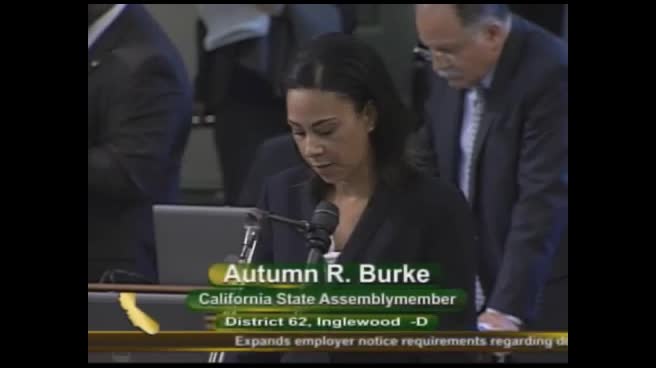
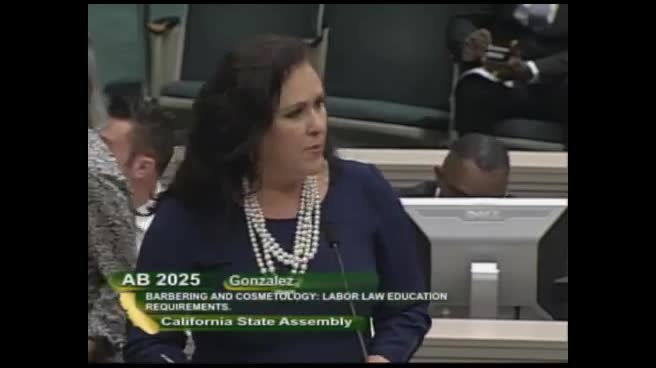
Bill Author