AB 2061: Supervised Population Workforce Training Grant Program.
- Session Year: 2015-2016
- House: Assembly
- Latest Version Date: 2016-07-25
Existing law, until January 1, 2021, establishes the Supervised Population Workforce Training Grant Program to be administered, as provided, by the California Workforce Investment Board. Existing law establishes grant program eligibility criteria for counties and provides that eligible uses for grant funds include, but are not limited to, vocational training, stipends for trainees, and apprenticeship opportunities for the supervised population, which include individuals on probation, mandatory supervision, and postrelease community supervision. Existing law requires the board to develop criteria for the selection of grant recipients, but requires the board to give preference to certain grant applications, including an application that proposes participation by one or more nonprofit community-based organizations that serve the supervised population. Existing law requires the board, by January 1, 2018, to submit a report to the Legislature containing specified information, including an evaluation of the effectiveness of the grant program.
This bill would also require the board to give preference to a grant application that proposes participation by one or more employers who have demonstrated interest in employing individuals in the supervised population. The bill would require the board to include in its report to the Legislature whether the program provided training opportunities in areas related to work skills learned while incarcerated. The bill would update references to the California Workforce Investment Board to reflect its new name, the California Workforce Development Board.
Existing law, until January 1, 2021, establishes the Supervised Population Workforce Training Grant Program to be administered, as provided, by the California Workforce Investment Board. Existing law establishes grant program eligibility criteria for counties and provides that eligible uses for grant funds include, but are not limited to, vocational training, stipends for trainees, and apprenticeship opportunities for the supervised population, which include individuals on probation, mandatory supervision, and postrelease community supervision. Existing law requires the board to develop criteria for the selection of grant recipients, but requires the board to give preference to certain grant applications, including an application that proposes participation by one or more nonprofit community-based organizations that serve the supervised population. Existing law requires the board, by January 1, 2018, to submit a report to the Legislature containing specified information, including an evaluation of the effectiveness of the grant program.
This bill would also require the board to give preference to a grant application that proposes participation by one or more employers who have demonstrated interest in employing individuals in the supervised population, including earn and learn opportunities. population. The bill would require the board to include in its report to the Legislature whether the program provided training opportunities in areas related to work skills learned while incarcerated. The bill would update references to the California Workforce Investment Board to reflect its new name, the California Workforce Development Board.
Existing law, until January 1, 2021, establishes the Supervised Population Workforce Training Grant Program to be administered, as provided, by the California Workforce Investment Board. Existing law establishes grant program eligibility criteria for counties and provides that eligible uses for grant funds include, but are not limited to, vocational training, stipends for trainees, and apprenticeship opportunities for the supervised population, which include individuals on probation, mandatory supervision, and postrelease community supervision. Existing law requires the board to develop criteria for the selection of grant recipients, but requires the board to give preference to certain grant applications, including an application that proposes participation by one or more nonprofit community-based organizations that serve the supervised population. Existing law requires the board, by January 1, 2018, to submit a report to the Legislature containing specified information, including an evaluation of the effectiveness of the grant program.
This bill would also require the board to give preference to a grant application that proposes participation by one or more employers who have demonstrated interest in employing individuals in the supervised population, including earn and learn opportunities. The bill would require the board to include in its report to the Legislature whether the program provided training opportunities in areas related to work skills learned while incarcerated. The bill would update references to the California Workforce Investment Board to reflect its new name, the California Workforce Development Board.
The Legislature finds and declares all of the following:
(a)In recent decades, the number of Americans who have had contact with the criminal justice system has increased exponentially. It is estimated that about one in three adults in the U.S. has a criminal history record, which often consists of an arrest that did not lead to conviction, a conviction for which the person was not sentenced to a term of incarceration, or a conviction for a nonviolent crime.
(b)On any given day, about 2.3 million people are incarcerated in the U.S. and, each year, 700,000 people are released from prison and almost 13 million people are admitted to and released from local jails.
(c)Californias long-term economic growth is dependent on identifying ways in which those who face barriers to employment, such as being formerly incarcerated, can become contributing members of society and achieve financial independence.
SEC. 2.Section 1234 of the Penal Code is amended to read:1234.For purposes of this chapter, the following terms have the following meanings:
(a)California Workforce Development Board means the California Workforce Development Board established pursuant to Article 1 (commencing with Section 14010) of Chapter 3 of Division 7 of the Unemployment Insurance Code.
(b)Earn and learn has the same meaning as in Section 14005 of the Unemployment Insurance Code.
(c)Grant program means the Supervised Population Workforce Training Grant Program.
(d)Supervised population means those persons who are on probation, mandatory supervision, or postrelease community supervision and are supervised by, or are under the jurisdiction of, a county.
SEC. 3.Section 1234.1 of the Penal Code is amended to read:1234.1.(a)This chapter establishes the Supervised Population Workforce Training Grant Program to be administered by the California Workforce Development Board.
(b)The grant program shall be developed and implemented in accordance with the criteria set forth in Section 1234.3. In developing the program, the California Workforce Development Board shall consult with public and private stakeholders, including local workforce development boards, local governments, and nonprofit community-based organizations that serve the supervised population.
(c)The grant program shall be funded, upon appropriation by the Legislature. Implementation of this program is contingent upon the director of the California Workforce Development Board notifying the Department of Finance that sufficient moneys have been appropriated for this specific grant program.
(d)The outcomes from the grant program shall be reported pursuant to Section 1234.4.
SEC. 4.Section 1234.2 of the Penal Code is amended to read:1234.2.The California Workforce Development Board shall administer the grant program as follows:
(a)Develop criteria for the selection of grant recipients through a public application process, including, but not limited to, the rating and ranking of applications that meet the threshold criteria set forth in this section.
(b)Design the grant program application process to ensure all of the following occurs:
(1)Outreach and technical assistance is made available to eligible applicants, especially to small population and rural counties.
(2)Grants are awarded on a competitive basis.
(3)Small and rural counties are competitive in applying for funds.
(4)Applicants are encouraged to develop evidence-based, best practices for serving the workforce training and education needs of the supervised population.
(5)The education and training needs of one or both of the following are addressed:
(A)Individuals with some postsecondary education who can enter into programs and benefit from services that result in certifications, and placement on a middle skill career ladder.
(B)Individuals who require basic education as well as training in order to obtain entry level jobs where there are opportunities for career advancement.
SEC. 5.Section 1234.3 of the Penal Code is amended to read:1234.3.(a)The grant program shall be competitively awarded through at least two rounds of funding, with the first phase of funding being awarded on or before May 1, 2015.
(b)Each county is eligible to apply, and a single application may include multiple counties applying jointly. Each application shall include a partnership agreement between the county or counties and one or more local workforce development boards that outline the actions each party agrees to undertake as part of the project proposed in the application.
(c)At a minimum, each project proposed in the application shall include a provision for an education and training assessment for each individual of the supervised population who participates in the project. The assessment may be undertaken by the applicant or by another entity. A prior assessment of an individual may be used if, in the determination of the California Workforce Development Board, its results are accurate. The California Workforce Development Board may delegate the responsibility for determining the sufficiency of a prior assessment to one or more local workforce development boards.
(d)Eligible uses of grant funds include, but are not limited to, vocational training, stipends for trainees, and earn and learn opportunities for the supervised population. Supportive services and job readiness activities shall serve as bridge activities that lead to enrollment in long-term training programs.
(e)Preference shall be awarded to applications for the following:
(1)An application that proposes matching funds, including, but not limited to, moneys committed by local workforce development boards, local governments, and private foundation funds.
(2)An application submitted by a county that currently administers or participates in a workforce training program for the supervised population.
(3)An application that proposes participation by one or more nonprofit community-based organizations that serve the supervised population.
(4)An application that proposes participation by one or more employers who have demonstrated interest in employing individuals in the supervised population, including, but not limited to, earn and learn opportunities and intent to hire letters for successfully completing the program.
(f)An application shall meet the following requirements:
(1)Set a specific purpose for the use of the grant funds, as well as provide the baseline criteria and metrics by which the overall success of the grant project can be evaluated.
(2)Define the specific subset of the supervised population, among the eligible supervised population that the grant money will serve.
(3)Define the industry sector or sectors in which the targeted supervised population will be trained, including the current and projected workforce within the region for those jobs, the range of wage rates, and the training and education requirements within those industry sectors.
(4)Define the general methodology and training methods proposed to be used and explain the manner in which the progress of the targeted supervised population will be monitored during the grant period.
(g)As a condition of receiving funds, a grant recipient shall agree to provide information to the California Workforce Development Board in sufficient detail to allow the California Workforce Development Board to meet the reporting requirements in Section 1234.4.
SEC. 6.Section 1234.4 of the Penal Code is amended to read:1234.4.(a)On at least an annual basis, and upon completion of the grant period, grant recipients shall report to the California Workforce Development Board regarding their use of the funds and workforce training program outcomes.
(b)By January 1, 2018, the California Workforce Development Board shall submit a report to the Legislature using the reports from the grant recipients. The report shall contain all the following information:
(1)The overall success of the grant program, based on the goals and metrics set in the awarded grants.
(2)An evaluation of the effectiveness of the grant program based on the goals and metrics set in the awarded grants.
(3)A recommendation on the long-term viability of local workforce development boards and county collaborations on workforce training programs for the supervised population.
(4)A recommendation on the long-term viability of county workforce training programs for the supervised population.
(5)In considering the overall success and effectiveness of the grant program, the report shall include a discussion of all of the following:
(A)The education and workforce readiness of the supervised population at the time individual participants entered the program and how this impacted the types of services needed and offered.
(B)Whether the programs aligned with the workforce needs of high-demand sectors of the state and regional economies.
(C)Whether there was an active job market for the skills being developed where the member of the supervised population was likely to be released.
(D)Whether the program increased the number of members of the supervised population that obtained a marketable and industry or apprenticeship board-recognized certification, credential, or degree.
(E)Whether the program increased the numbers of the supervised population that successfully complete a job readiness basic skill bridge program and enroll in a long-term training program.
(F)Whether there were formal or informal networks in the field that support finding employment upon release from custody.
(G)Whether the program led to employment in occupations with a livable wage.
(H)Whether the program provided training opportunities in areas related to work skills learned while incarcerated, including, but not limited to, while working with the Prison Industry Authority.
(I)Whether the metrics used to evaluate the individual grants were sufficiently aligned with the objectives of the program.
(c)(1)The requirement for submitting a report imposed under subdivision (b) is inoperative on January 1, 2021, pursuant to Section 10231.5 of the Government Code.
(2)A report to be submitted pursuant to subdivision (b) shall be submitted in compliance with Section 9795 of the Government Code.
The Legislature finds and declares all of the following:
(a)In recent decades, the number of Americans who have had contact with the criminal justice system has increased exponentially. It is estimated that about one in three adults in the U.S. has a criminal history record, which often consists of an arrest that did not lead to conviction, a conviction for which the person was not sentenced to a term of incarceration, or a conviction for a nonviolent crime.
(b)On any given day, about 2.3 million people are incarcerated in the U.S. and, each year, 700,000 people are released from prison and almost 13 million people are admitted to and released from local jails.
(c)Californias long-term economic growth is dependent on identifying ways in which those who face barriers to employment, such as being formerly incarcerated, can become contributing members of society and achieve financial independence.
SEC. 2.Section 1234 of the Penal Code is amended to read:1234.For purposes of this chapter, the following terms have the following meanings:
(a)California Workforce Development Board means the California Workforce Development Board established pursuant to Article 1 (commencing with Section 14010) of Chapter 3 of Division 7 of the Unemployment Insurance Code.
(b)Earn and learn has the same meaning as in Section 14005 of the Unemployment Insurance Code.
(c)Grant program means the Supervised Population Workforce Training Grant Program.
(d)Supervised population means those persons who are on probation, mandatory supervision, or postrelease community supervision and are supervised by, or are under the jurisdiction of, a county.
SEC. 3.Section 1234.1 of the Penal Code is amended to read:1234.1.(a)This chapter establishes the Supervised Population Workforce Training Grant Program to be administered by the California Workforce Development Board.
(b)The grant program shall be developed and implemented in accordance with the criteria set forth in Section 1234.3. In developing the program, the California Workforce Development Board shall consult with public and private stakeholders, including local workforce development boards, local governments, and nonprofit community-based organizations that serve the supervised population.
(c)The grant program shall be funded, upon appropriation by the Legislature. Implementation of this program is contingent upon the director of the California Workforce Development Board notifying the Department of Finance that sufficient moneys have been appropriated for this specific grant program.
(d)The outcomes from the grant program shall be reported pursuant to Section 1234.4.
SEC. 4.Section 1234.2 of the Penal Code is amended to read:1234.2.The California Workforce Development Board shall administer the grant program as follows:
(a)Develop criteria for the selection of grant recipients through a public application process, including, but not limited to, the rating and ranking of applications that meet the threshold criteria set forth in this section.
(b)Design the grant program application process to ensure all of the following occurs:
(1)Outreach and technical assistance is made available to eligible applicants, especially to small population and rural counties.
(2)Grants are awarded on a competitive basis.
(3)Small and rural counties are competitive in applying for funds.
(4)Applicants are encouraged to develop evidence-based, best practices for serving the workforce training and education needs of the supervised population.
(5)The education and training needs of one or both of the following are addressed:
(A)Individuals with some postsecondary education who can enter into programs and benefit from services that result in certifications, and placement on a middle skill career ladder.
(B)Individuals who require basic education as well as training in order to obtain entry level jobs where there are opportunities for career advancement.
SEC. 5.Section 1234.3 of the Penal Code is amended to read:1234.3.(a)The grant program shall be competitively awarded through at least two rounds of funding, with the first phase of funding being awarded on or before May 1, 2015.
(b)Each county is eligible to apply, and a single application may include multiple counties applying jointly. Each application shall include a partnership agreement between the county or counties and one or more local workforce development boards that outline the actions each party agrees to undertake as part of the project proposed in the application.
(c)At a minimum, each project proposed in the application shall include a provision for an education and training assessment for each individual of the supervised population who participates in the project. The assessment may be undertaken by the applicant or by another entity. A prior assessment of an individual may be used if, in the determination of the California Workforce Development Board, its results are accurate. The California Workforce Development Board may delegate the responsibility for determining the sufficiency of a prior assessment to one or more local workforce development boards.
(d)Eligible uses of grant funds include, but are not limited to, vocational training, stipends for trainees, and earn and learn opportunities for the supervised population. Supportive services and job readiness activities shall serve as bridge activities that lead to enrollment in long-term training programs.
(e)Preference shall be awarded to applications for the following:
(1)An application that proposes matching funds, including, but not limited to, moneys committed by local workforce development boards, local governments, and private foundation funds.
(2)An application submitted by a county that currently administers or participates in a workforce training program for the supervised population.
(3)An application that proposes participation by one or more nonprofit community-based organizations that serve the supervised population.
(4)An application that proposes participation by one or more employers who have demonstrated interest in employing individuals in the supervised population, including including, but not limited to, earn and learn opportunities. opportunities and intent to hire letters for successfully completing the program.
(f)An application shall meet the following requirements:
(1)Set a specific purpose for the use of the grant funds, as well as provide the baseline criteria and metrics by which the overall success of the grant project can be evaluated.
(2)Define the specific subset of the supervised population, among the eligible supervised population that the grant money will serve.
(3)Define the industry sector or sectors in which the targeted supervised population will be trained, including the current and projected workforce within the region for those jobs, the range of wage rates, and the training and education requirements within those industry sectors.
(4)Define the general methodology and training methods proposed to be used and explain the manner in which the progress of the targeted supervised population will be monitored during the grant period.
(g)As a condition of receiving funds, a grant recipient shall agree to provide information to the California Workforce Development Board in sufficient detail to allow the California Workforce Development Board to meet the reporting requirements in Section 1234.4.
SEC. 6.Section 1234.4 of the Penal Code is amended to read:1234.4.(a)On at least an annual basis, and upon completion of the grant period, grant recipients shall report to the California Workforce Development Board regarding their use of the funds and workforce training program outcomes.
(b)By January 1, 2018, the California Workforce Development Board shall submit a report to the Legislature using the reports from the grant recipients. The report shall contain all the following information:
(1)The overall success of the grant program, based on the goals and metrics set in the awarded grants.
(2)An evaluation of the effectiveness of the grant program based on the goals and metrics set in the awarded grants.
(3)A recommendation on the long-term viability of local workforce development boards and county collaborations on workforce training programs for the supervised population.
(4)A recommendation on the long-term viability of county workforce training programs for the supervised population.
(5)In considering the overall success and effectiveness of the grant program, the report shall include a discussion of all of the following:
(A)The education and workforce readiness of the supervised population at the time individual participants entered the program and how this impacted the types of services needed and offered.
(B)Whether the programs aligned with the workforce needs of high-demand sectors of the state and regional economies.
(C)Whether there was an active job market for the skills being developed where the member of the supervised population was likely to be released.
(D)Whether the program increased the number of members of the supervised population that obtained a marketable and industry or apprenticeship board-recognized certification, credential, or degree.
(E)Whether the program increased the numbers of the supervised population that successfully complete a job readiness basic skill bridge program and enroll in a long-term training program.
(F)Whether there were formal or informal networks in the field that support finding employment upon release from custody.
(G)Whether the program led to employment in occupations with a livable wage.
(H)Whether the program provided training opportunities in areas related to work skills learned while incarcerated, including, but not limited to, while working with the Prison Industry Authority.
(I)Whether the metrics used to evaluate the individual grants were sufficiently aligned with the objectives of the program.
(c)(1)The requirement for submitting a report imposed under subdivision (b) is inoperative on January 1, 2021, pursuant to Section 10231.5 of the Government Code.
(2)A report to be submitted pursuant to subdivision (b) shall be submitted in compliance with Section 9795 of the Government Code.
The Legislature finds and declares all of the following:
(a)In recent decades, the number of Americans who have had contact with the criminal justice system has increased exponentially. It is estimated that about one in three adults in the U.S. has a criminal history record, which often consists of an arrest that did not lead to conviction, a conviction for which the person was not sentenced to a term of incarceration, or a conviction for a nonviolent crime.
(b)On any given day, about 2.3 million people are incarcerated in the U.S. and, each year, 700,000 people are released from prison and almost 13 million people are admitted to and released from local jails.
(c)Californias long-term economic growth is dependent on identifying ways in which those who face barriers to employment, such as being formerly incarcerated, can become contributing members of society and achieve financial independence.
SEC. 2.Section 1234 of the Penal Code is amended to read:1234.For purposes of this chapter, the following terms have the following meanings:
(a)California Workforce Investment Development Board or State WIB means the California Workforce Investment Development Board established pursuant to Article 1 (commencing with Section 14010) of Chapter 3 of Division 7 of the Unemployment Insurance Code.
(b)Earn and learn has the same meaning as in Section 14005 of the Unemployment Insurance Code.
(b)
(c)Grant program means the Supervised Population Workforce Training Grant Program.
(c)
(d)Supervised population means those persons who are on probation, mandatory supervision, or postrelease community supervision and are supervised by, or are under the jurisdiction of, a county.
SEC. 3.Section 1234.1 of the Penal Code is amended to read:1234.1.(a)This chapter establishes the Supervised Population Workforce Training Grant Program to be administered by the California Workforce Investment Development Board.
(b)The grant program shall be developed and implemented in accordance with the criteria set forth in Section 1234.3. In developing the program, the State WIB California Workforce Development Board shall consult with public and private stakeholders, including local workforce investment development boards, local governments, and nonprofit community-based organizations that serve the supervised population.
(c)The grant program shall be funded, upon appropriation by the Legislature. Implementation of this program is contingent upon the director of the State WIB California Workforce Development Board notifying the Department of Finance that sufficient moneys have been appropriated for this specific grant program.
(d)The outcomes from the grant program shall be reported pursuant to Section 1234.4.
SEC. 4.Section 1234.2 of the Penal Code is amended to read:1234.2.The State WIB California Workforce Development Board shall administer the grant program as follows:
(a)Develop criteria for the selection of grant recipients through a public application process, including, but not limited to, the rating and ranking of applications that meet the threshold criteria set forth in this section.
(b)Design the grant program application process to ensure all of the following occurs:
(1)Outreach and technical assistance is made available to eligible applicants, especially to small population and rural counties.
(2)Grants are awarded on a competitive basis.
(3)Small and rural counties are competitive in applying for funds.
(4)Applicants are encouraged to develop evidence-based, best practices for serving the workforce training and education needs of the supervised population.
(5)The education and training needs of one or both of the following are addressed:
(A)Individuals with some postsecondary education who can enter into programs and benefit from services that result in certifications, and placement on a middle skill career ladder.
(B)Individuals who require basic education as well as training in order to obtain entry level jobs where there are opportunities for career advancement.
SEC. 5.Section 1234.3 of the Penal Code is amended to read:1234.3.(a)The grant program shall be competitively awarded through at least two rounds of funding, with the first phase of funding being awarded on or before May 1, 2015.
(b)Each county is eligible to apply, and a single application may include multiple counties applying jointly. Each application shall include a partnership agreement between the county or counties and one or more local workforce investment development boards that outline the actions each party agrees to undertake as part of the project proposed in the application.
(c)At a minimum, each project proposed in the application shall include a provision for an education and training assessment for each individual of the supervised population who participates in the project. The assessment may be undertaken by the applicant or by another entity. A prior assessment of an individual may be used if, in the determination of the State WIB, California Workforce Development Board, its results are accurate. The State WIB California Workforce Development Board may delegate the responsibility for determining the sufficiency of a prior assessment to one or more local workforce investment development boards.
(d)Eligible uses of grant funds include, but are not limited to, vocational training, stipends for trainees, and apprenticeship earn and learn opportunities for the supervised population. Supportive services and job readiness activities shall serve as bridge activities that lead to enrollment in long-term training programs.
(e)Preference shall be awarded to applications for the following:
(1)An application that proposes matching funds, including, but not limited to, moneys committed by local workforce investment development boards, local governments, and private foundation funds.
(2)An application submitted by a county that currently administers or participates in a workforce training program for the supervised population.
(3)An application that proposes participation by one or more nonprofit community-based organizations that serve the supervised population.
(4)An application that proposes participation by one or more employers who have demonstrated interest in employing individuals in the supervised population, including earn and learn opportunities.
(f)An application shall meet the following requirements:
(1)Set a specific purpose for the use of the grant funds, as well as provide the baseline criteria and metrics by which the overall success of the grant project can be evaluated.
(2)Define the specific subset of the supervised population, among the eligible supervised population that the grant money will serve.
(3)Define the industry sector or sectors in which the targeted supervised population will be trained, including the current and projected workforce within the region for those jobs, the range of wage rates, and the training and education requirements within those industry sectors.
(4)Define the general methodology and training methods proposed to be used and explain the manner in which the progress of the targeted supervised population will be monitored during the grant period.
(g)As a condition of receiving funds, a grant recipient shall agree to provide information to the State WIB California Workforce Development Board in sufficient detail to allow the State WIB California Workforce Development Board to meet the reporting requirements in Section 1234.4.
SEC. 6.Section 1234.4 of the Penal Code is amended to read:1234.4.(a)On at least an annual basis, and upon completion of the grant period, grant recipients shall report to the State WIB California Workforce Development Board regarding their use of the funds and workforce training program outcomes.
(b)By January 1, 2018, the State WIB California Workforce Development Board shall submit a report to the Legislature using the reports from the grant recipients. The report shall contain all the following information:
(1)The overall success of the grant program, based on the goals and metrics set in the awarded grants.
(2)An evaluation of the effectiveness of the grant program based on the goals and metrics set in the awarded grants.
(3)A recommendation on the long-term viability of local workforce investment board development boards and county collaborations on workforce training programs for the supervised population.
(4)A recommendation on the long-term viability of county workforce training programs for the supervised population.
(5)In considering the overall success and effectiveness of the grant program, the report shall include a discussion of all of the following:
(A)The education and workforce readiness of the supervised population at the time individual participants entered the program and how this impacted the types of services needed and offered.
(B)Whether the programs aligned with the workforce needs of high-demand sectors of the state and regional economies.
(C)Whether there was an active job market for the skills being developed where the member of the supervised population was likely to be released.
(D)Whether the program increased the number of members of the supervised population that obtained a marketable and industry or apprenticeship board-recognized certification, credential, or degree.
(E)Whether the program increased the numbers of the supervised population that successfully complete a job readiness basic skill bridge program and enroll in a long-term training program.
(F)Whether there were formal or informal networks in the field that support finding employment upon release from custody.
(G)Whether the program led to employment in occupations with a livable wage.
(H)Whether the program provided training opportunities in areas related to work skills learned while incarcerated, including, but not limited to, while working with the Prison Industry Authority.
(H)
(I)Whether the metrics used to evaluate the individual grants were sufficiently aligned with the objectives of the program.
(c)(1)The requirement for submitting a report imposed under subdivision (b) is inoperative on January 1, 2021, pursuant to Section 10231.5 of the Government Code.
(2)A report to be submitted pursuant to subdivision (b) shall be submitted in compliance with Section 9795 of the Government Code.
|
Date
|
Status
|
|---|---|
| May 19, 2016 | Read third time. Passed. Ordered to the Senate. (Ayes 76. Noes 0. Page 4870.) |
| Jul 25, 2016 | Chaptered by Secretary of State - Chapter 100, Statutes of 2016. |
| Jul 25, 2016 | Approved by the Governor. |
| Jul 11, 2016 | Enrolled and presented to the Governor at 4:30 p.m. |
| Jun 30, 2016 | Read third time. Passed. Ordered to the Assembly. (Ayes 37. Noes 0. Page 4651.). |
| Jun 30, 2016 | Read third time. Passed. Ordered to the Assembly. |
| Jun 30, 2016 | In Assembly. Ordered to Engrossing and Enrolling. |
| Jun 28, 2016 | Read second time. Ordered to Consent Calendar. |
| Jun 27, 2016 | From committee: Be placed on second reading file pursuant to Senate Rule 28.8 and ordered to consent calendar. |
| Jun 14, 2016 | From committee: Do pass and re-refer to Com. on APPR. with recommendation: To Consent Calendar. (Ayes 7. Noes 0.) (June 14). Re-referred to Com. on APPR. |
| May 26, 2016 | Referred to Com. on PUB. S. |
| May 19, 2016 | Read third time. Passed. Ordered to the Senate. (Ayes 76. Noes 0.) |
| Feb 17, 2016 | Read first time. To print. |
| May 19, 2016 | Read third time. Passed. Ordered to the Senate. |
| May 19, 2016 | In Senate. Read first time. To Com. on RLS. for assignment. |
| May 12, 2016 | Read second time. Ordered to Consent Calendar. |
| May 11, 2016 | From committee: Do pass. To Consent Calendar. (Ayes 20. Noes 0.) (May 11). |
| Apr 26, 2016 | Re-referred to Com. on APPR. |
| Apr 25, 2016 | Read second time and amended. |
| Apr 21, 2016 | From committee: Amend, and do pass as amended and re-refer to Com. on APPR. (Ayes 9. Noes 0.) (April 19). |
| Mar 30, 2016 | From committee: Do pass and re-refer to Com. on J., E.D., & E. with recommendation: To Consent Calendar. (Ayes 7. Noes 0.) (March 29). Re-referred to Com. on J., E.D., & E. |
| Feb 29, 2016 | Referred to Coms. on PUB. S. and J., E.D., & E. |
| Feb 18, 2016 | From printer. May be heard in committee March 19. |
|
Date
|
Description
|
Location
|
Votes
|
|
|---|---|---|---|---|
| Jun 30, 2016 | Consent Calendar 2nd AB2061 Waldron | Senate Floor |
Passed |
|
| Jun 14, 2016 | Do pass, but first be re-referred to the Committee on [Appropriations] with the recommendation: To Consent Calendar | Senate Standing Committee on Public Safety |
Passed |
|
| May 19, 2016 | AB 2061 WALDRON Consent Calendar Second Day Regular Session | Assembly Floor |
Passed |
|
| May 11, 2016 | Do pass. To Consent Calendar. | Assembly Standing Committee on Appropriations |
Passed |
|
| Apr 19, 2016 | Do pass as amended and be re-referred to the Committee on [Appropriations] | Assembly Standing Committee on Jobs, Economic Development, and the Economy |
Passed |
|
| Mar 29, 2016 | Do pass and be re-referred to the Committee on [Jobs, Economic Development, and the Economy] with recommendation: To Consent Calendar | Assembly Standing Committee on Public Safety |
Passed |
This list shows positions taken on this bill by organizations on the date displayed, which is linked to the original source.
Positions by individuals are not included.
Office of Senate Floor Analyses (916) 651-1520 Fax: (916) 327-4478 | AB |
CONSENT
Bill No: AB 2061
:
SENATE PUBLIC SAFETY COMMITTEE: 7-0, 6/14/16
AYES: Hancock, Anderson, Glazer, Leno, Liu, Monning, Stone
SENATE APPROPRIATIONS COMMITTEE: Senate Rule 28.8
ASSEMBLY FLOOR: 76-0, 5/19/16 (Consent) - See last page for vote
DIGEST: This bill 1) establishes an additional Supervised Population Workforce Training Grant Program (SPWTGP) priority for applications that include one or more employers who have demonstrated interest in employing individuals in the supervised population, including “earn and learn” opportunities, and intent to hire; 2) expands the areas of the final program assessment to include whether the SPWTGP provided training opportunities in areas related to work skills learned while incarcerated, including, but not limited to, while working with the Prison Industry Authority; and 3) makes additional technical changes.
Existing law:
- Establishes the California Workforce Investment Board (CWIB). (Unemp. Ins. Code, § 14010 et seq.)
- Establishes the SPWTGP, to be administered by the California Workforce Investment Board (now known as the California Workforce Development Board (CWDB)). (Pen. Code, §1234.1.)
- Requires the CWDB to administer the SPWTGP by doing certain things relating to grant development and selection, as specified. (Pen. Code, § 1234.2.)
- Provides that preference shall be awarded to applications for the following:
- Propose matching funds, as specified;
- Is proposed by a county that currently administers or participates in a workforce training program for the supervised population; and
- Proposes participation by one or more nonprofit community-based organizations that serve the supervised population. (Pen. Code, § 1243.3, subd. (e).)
- Requires, on at least an annual basis, and upon completion of the grant period, grant recipients to report to the CWDB regarding their use of the funds and workforce training program outcomes. (Penal Code § 1234.4 (a).) Existing law further requires that, by January 1, 2018, the CWIB CWDB shall submit a report to the Legislature using the reports from the grant recipients. The report is required to contain certain specified information. (Pen. Code § 1234.4.)
This bill:
- Updates references to the CWIB to reflect its new name, the California Workforce Development Board.
- Gives preference to an application that proposes participation by one or more employers who have demonstrated interest in employing individuals in the supervised population, including, but not limited to, earn and learn opportunities and intent to hire letters for successfully completing the program.
- Defines “earn and learn” to have the same meaning as in Section 14005 of the Unemployment Insurance Code.
- Adds to existing reporting language, whether SPWTGP provided training opportunities in areas related to work skills learned while incarcerated, including, but not limited to, while working with the Prison Industry Authority.
Background
This bill refines provisions enacted into law in 2015 by AB 2060 (V. Manuel Pérez, Chapter 384). That bill created the SPWTGP, administered by the CWIB, to provide grant funding for vocational training and apprenticeship opportunities for offenders under county jurisdiction who are on probation, mandatory community supervision, or post-release community supervision. CWIB is required to administer the SPWTGP through a public process, as specified. SB 852 (Leno, Chapter 25), the 2014-2015 Budget Bill, contained an appropriation of $1 million for “support of Employment Development Department, for a recidivism reduction workforce training and development grant program, payable from the Recidivism Reduction Fund . . . .”
FISCAL EFFECT: Appropriation: Fiscal Com.: Local:
A New Way of Life Re-entry Project
California Catholic Conference
California Correctional Peace Officers Association
California Public Defenders Association
California Workforce Association
Chief Probation Officers of California
Legal Services for Prisoners with Children
Rock Church Prison Ministry
Second Chance
One individual
OPPOSITION: (Verified 6/27/16)
None received
ASSEMBLY FLOOR: 76-0, 5/19/16
AYES: Achadjian, Alejo, Travis Allen, Arambula, Atkins, Baker, Bigelow, Bloom, Bonilla, Bonta, Brough, Brown, Burke, Calderon, Campos, Chau, Chávez, Chiu, Chu, Cooley, Cooper, Dababneh, Dahle, Daly, Dodd, Eggman, Frazier, Beth Gaines, Gallagher, Cristina Garcia, Eduardo Garcia, Gatto, Gipson, Gomez, Gonzalez, Gordon, Gray, Grove, Hadley, Harper, Roger Hernández, Holden, Irwin, Jones, Jones-Sawyer, Kim, Lackey, Levine, Linder, Lopez, Low, Maienschein, Mayes, Medina, Melendez, Mullin, Nazarian, Obernolte, O'Donnell, Olsen, Patterson, Quirk, Ridley-Thomas, Rodriguez, Salas, Santiago, Steinorth, Mark Stone, Thurmond, Ting, Wagner, Waldron, Weber, Wilk, Wood, Rendon
NO VOTE RECORDED: Chang, Mathis, McCarty, Williams
Prepared by: Alison Anderson / PUB. S. /
6/29/16 15:50:44
**** END ****
SENATE COMMITTEE ON PUBLIC SAFETY
Senator Loni Hancock, Chair
2015 - 2016 Regular
Bill No: AB 2061 Hearing Date: June 14, 2016
Author: | Waldron | ||
Version: | April 25, 2016 | ||
Urgency: | No | Fiscal: | Yes |
Consultant: | AA | ||
Subject: Supervised Population Workforce Training Grant Program
HISTORY
Source: Author
Prior Legislation: AB 2060 (V. Manuel Pérez) – Chapter 383, Statutes of 2014
Support: A New Way of Life Re-entry Project; California Catholic Conference; California Correctional Peace Officers Association; California Public Defenders Association; California Workforce Association; Legal Services for Prisoners with Children; Rock Church Prison Ministry; Second Chance; one individual
Opposition: None known
Assembly Floor Vote: 76 - 0
PURPOSE
The purpose of this bill is to 1) establish an additional Supervised Population Workforce Training Grant (SPWTG) Program priority for applications that include one or more employers who have demonstrated interest in employing individuals in the supervised population, including “earn and learn” opportunities, and intent to hire; 2) expand the areas of the final program assessment to include whether the SPWTG Program provided training opportunities in areas related to work skills learned while incarcerated, including, but not limited to, while working with the Prison Industry Authority; and 3) make additional technical changes.
Current law establishes the California Workforce Investment Board. (Unemp. Ins. Code, § 14010 et seq.)
This bill updates references to the California Workforce Investment Board to reflect its new name, the California Workforce Development Board (CWDB).
Current law establishes the Supervised Population Workforce Training Grant Program (SPWTGP), to be administered by the California Workforce Investment Board (now known as the CWDB). (Pen. Code, §1234.1.)
Current law requires the CWDB to administer the SPWTGP by doing the following:
- Developing criteria for the selection of grant recipients, as provided;
- Design the grant program application process to ensure outreach and technical assistance is available to applicants;
- Ensure grants are awarded on a competitive basis; ensure small and rural counties are competitive in applying for funds;
- Encourages applicants to develop evidence-based best practices for serving the workforce training and education needs of the supervised population; and
- The education and training needs of individuals with some postsecondary education and those who need basic education are addressed. (Pen. Code, § 1234.2.)
Current law provides that preference shall be awarded to applications for the following:
- Propose matching funds, as specified;
- Is proposed by a county that currently administers or participates in a workforce training program for the supervised population; and
- Proposes participation by one or more nonprofit community-based organizations that serve the supervised population. (Pen. Code, § 1243.3, subd. (e).)
This bill would also give preference to an application that proposes participation by one or more employers who have demonstrated interest in employing individuals in the supervised population, including, but not limited to, earn and learn opportunities and intent to hire letters for successfully completing the program.
This bill defines “earn and learn” to have the same meaning as in Section 14005 of the Unemployment Insurance Code.[1]
Current law requires, on at least an annual basis, and upon completion of the grant period, grant recipients to report to the California Workforce Development Board regarding their use of the funds and workforce training program outcomes. (Penal Code § 1234.4 (a).) Current law further requires that, by January 1, 2018, the State WIB California Workforce Development Board shall submit a report to the Legislature using the reports from the grant recipients. The report is required to contain all the following information:
- The education and workforce readiness of the supervised population at the time individual participants entered the program and how this impacted the types of services needed and offered;
- Whether the programs aligned with the workforce needs of high-demand sectors of the state and regional economies;
- Whether there was an active job market for the skills being developed where the member of the supervised population was likely to be released;
- Whether the program increased the number of members of the supervised population that obtained a marketable and industry or apprenticeship board-recognized certification, credential, or degree;
- Whether the program increased the numbers of the supervised population that successfully complete a job readiness basic skill bridge program and enroll in a long-term training program;
- Whether there were formal or informal networks in the field that support finding employment upon release from custody;
- Whether the program led to employment in occupations with a livable wage; and
- Whether the metrics used to evaluate the individual grants were sufficiently aligned with the objectives of the program. (Pen. Code, § 1234.4.)
This bill would add whether the program provided training opportunities in areas related to work skills learned while incarcerated, including, but not limited to, while working with the Prison Industry Authority.
RECEIVERSHIP/OVERCROWDING CRISIS AGGRAVATION
For the past several years this Committee has scrutinized legislation referred to its jurisdiction for any potential impact on prison overcrowding. Mindful of the United States Supreme Court ruling and federal court orders relating to the state’s ability to provide a constitutional level of health care to its inmate population and the related issue of prison overcrowding, this Committee has applied its “ROCA” policy as a content-neutral, provisional measure necessary to ensure that the Legislature does not erode progress in reducing prison overcrowding.
On February 10, 2014, the federal court ordered California to reduce its in-state adult institution population to 137.5% of design capacity by February 28, 2016, as follows:
- 143% of design bed capacity by June 30, 2014;
- 141.5% of design bed capacity by February 28, 2015; and,
- 137.5% of design bed capacity by February 28, 2016.
In December of 2015 the administration reported that as “of December 9, 2015, 112,510 inmates were housed in the State’s 34 adult institutions, which amounts to 136.0% of design bed capacity, and 5,264 inmates were housed in out-of-state facilities. The current population is 1,212 inmates below the final court-ordered population benchmark of 137.5% of design bed capacity, and has been under that benchmark since February 2015.” (Defendants’ December 2015 Status Report in Response to February 10, 2014 Order, 2:90-cv-00520 KJM DAD PC, 3-Judge Court, Coleman v. Brown, Plata v. Brown (fn. omitted).) One year ago, 115,826 inmates were housed in the State’s 34 adult institutions, which amounted to 140.0% of design bed capacity, and 8,864 inmates were housed in out-of-state facilities. (Defendants’ December 2014 Status Report in Response to February 10, 2014 Order, 2:90-cv-00520 KJM DAD PC, 3-Judge Court, Coleman v. Brown, Plata v. Brown (fn. omitted).)
While significant gains have been made in reducing the prison population, the state must stabilize these advances and demonstrate to the federal court that California has in place the “durable solution” to prison overcrowding “consistently demanded” by the court. (Opinion Re: Order Granting in Part and Denying in Part Defendants’ Request For Extension of December 31, 2013 Deadline, NO. 2:90-cv-0520 LKK DAD (PC), 3-Judge Court, Coleman v. Brown, Plata v. Brown (2-10-14). The Committee’s consideration of bills that may impact the prison population therefore will be informed by the following questions:
- Whether a proposal erodes a measure which has contributed to reducing the prison population;
- Whether a proposal addresses a major area of public safety or criminal activity for which there is no other reasonable, appropriate remedy;
- Whether a proposal addresses a crime which is directly dangerous to the physical safety of others for which there is no other reasonably appropriate sanction;
- Whether a proposal corrects a constitutional problem or legislative drafting error; and
- Whether a proposal proposes penalties which are proportionate, and cannot be achieved through any other reasonably appropriate remedy.
COMMENTS
- Stated Need for This Bill
The author states:
Returning to responsible working life after incarceration or drug/alcohol intervention is a critical and often a difficult process. Finding employment for rehabilitated persons is a major contribution to reducing recidivism rates. Business and non-profits that hire former convicts significantly help them, their families, and communities they will live in.
In reality, it is difficult, if not daunting, for a previously convicted person to attain employment due to lack of training, social skills, bias or fear. AB 2061 will bridge the gap in making it easier for a business or non-profit to hire those rehabilitated persons, allowing them to learn much needed job skills and experience in order to fully return to life in society.
- Background
This bill refines provisions enacted into law in 2013 by AB 2060 (V. Manuel Pérez). That measure created the Supervised Population Workforce Training Grant Program, administered by the CWIB, to provide grant funding for vocational training and apprenticeship opportunities for offenders under county jurisdiction who are on probation, mandatory community supervision, or post-release community supervision. CWIB is required to administer the grant program through a public process, as specified. SB 852 (Leno), the 2014-2015 budget bill, contained an appropriation of $1 million for “support of Employment Development Department, for a recidivism reduction workforce training and development grant program, payable from the Recidivism Reduction Fund . . . .”
-- END –
That provision states, “(q) (1) “Earn and learn” includes, but is not limited to, a program that does either of the following: (A) Combines applied learning in a workplace setting with compensation allowing workers or students to gain work experience and secure a wage as they develop skills and competencies directly relevant to the occupation or career for which they are preparing. (B) Brings together classroom instruction with on-the-job training to combine both formal instruction and actual paid work experience. (2) “Earn and learn” programs include, but are not limited to, all of the following: (A) Apprenticeships. (B) Preapprenticeships. (C) Incumbent worker training. (D) Transitional and subsidized employment, particularly for individuals with barriers to employment. (E) Paid internships and externships. (F) Project-based compensated learning.” ↑
Date of Hearing: May 11, 2016
ASSEMBLY COMMITTEE ON APPROPRIATIONS
Lorena Gonzalez, Chair
ABPCA Bill Id:AB 2061
Author:(Waldron) – As Amended Ver:April 25, 2016
Policy Committee: | Public Safety | Vote: | 7 - 0 |
Jobs, Economic Development, and the Economy | 9 - 0 |
Urgency: No State Mandated Local Program: No Reimbursable: No
SUMMARY:
This bill establishes an additional Supervised Population Workforce Training Grant (SPWTG) Program priority for applications that include one or more employers who have demonstrated interest in employing individuals in the supervised population, including “earn and learn” opportunities, and intent to hire. It also expands the areas of the final program assessment to include whether the SPWTG Program provided training opportunities in areas related to work skills learned while incarcerated, including, but not limited to, while working with the Prison Industry Authority.
FISCAL EFFECT:
No cost to SPWTG.
COMMENTS:
- Background/Purpose. In 2013, the SPWTG Program was established to provide grant funds to innovative and targeted workforce training programs for the formerly incarcerated, supervised population, AB 2060 (V. Manuel Pérez) Chapter 383, Statutes of 2013. AB 2061 expands on that program by encouraging a closer alignment between the trainers and the prospective businesses who will ultimately hire the individuals.
According to the author, "Returning to responsible working life after incarceration or drug/alcohol intervention is a critical and often a difficult process. Finding employment for rehabilitated persons is a major contribution to reducing recidivism rates. Business and non-profits that hire former convicts significantly help them, their families, and communities they will live in.
“In reality, it is difficult, if not daunting, for a previously convicted person to attain employment due to lack of training, social skills, bias or fear. AB 2061 will bridge the gap in making it easier for a business or non-profit to hire those rehabilitated persons, allowing them to learn much needed job skills and experience in order to fully return to life in society.”
- Support. According to Legal Services for Prisoners with Children, “The purpose of these [SPWTG] grants is to provide a path for formerly incarcerated people to find employment. By giving preference to employers who hire formerly incarcerated people, this bill asks these grant recipients to put their money where their mouths are; to hire the people they are training for employment.”
Analysis Prepared by: Pedro Reyes / APPR. / (916) 319-2081
Date of Hearing: April 19, 2016
ASSEMBLY COMMITTEE ON JOBS, ECONOMIC DEVELOPMENT, AND THE ECONOMY
Eduardo Garcia, Chair
ABPCA Bill Id:AB 2061 (
Author:Waldron) – As Introduced Ver:February 17, 2016
Committee | Votes | Ayes | Noes |
Public Safety | 7-0 | Jones-Sawyer, Melendez, Lackey, Lopez, Low, Quirk, Santiago |
SUBJECT: Supervised Population Workforce Training Grant Program
SUMMARY: Makes program enhancements to the Supervised Population Workforce Training Grant (SPWTG) Program, including the addition of program priorities for applications that document employer participation, as specified. Specifically, this bill:
- Establishes an additional program priority for applications that include one or more employers who have demonstrated interest in employing individuals in the supervised population, including “earn and learn” opportunities.
- Defines "earn and learn" strategies to have the same meaning as in the state Unemployment Insurance Code and the federal Workforce Innovation and Opportunity Act, which is described under Existing Law in the analysis.
- Expanded the areas of the final program assessment to include whether the SPWTG Program provided training opportunities in areas related to work skills learned while incarcerated, including, but not limited to, while working with the Prison Industry Authority.
- Makes other technical corrections, including updating the name of the state and local workforce boards to reflect 2015 legislative changes.
EXISTING LAW:
- Establishes the California Workforce Development Board (CWD), comprised of members appointed by the Governor and the appropriate presiding officer(s) of each house of the Legislature, and specifies that the executive director of the CWD report to the Secretary of the California Labor and Workforce Development Agency.
- Assigns the CWD the responsibility for assisting the state in meeting the requirements of the federal Workforce Innovation and Opportunity Act of 2014 (WIOA), as well as assisting the Governor in the development, oversight, and continuous improvement of California’s workforce investment system.
- Creates the SPWTG Program, administered by the CWD, to award grant funding for vocational training and apprenticeship opportunities for offenders under county jurisdiction who are on probation, mandatory community supervision, or post-release community supervision.
- Requires CWD to administer the SPWTG Program through a public process, as specified, with preference for counties that: (a) have a demonstrated collaborative working relationship with local workforce investment boards; (b) have an existing workforce training program for the supervised population; or (c) offer a funding match.
- Requires SPWTG recipients to report to the CWD regarding their use of the funds and workforce training program outcomes upon completion of the grant period and requires CWD to assess and report on the outcomes of the program, as specified, to the Legislature by January 1, 2018.
- Defines “earn and learn” to include, but not be limited to, a program that does either of the following:
- Combines applied learning in a workplace setting with compensation allowing workers or students to gain work experience and secure a wage as they develop skills and competencies directly relevant to the occupation or career for which they are preparing; or
- Brings together classroom instruction with on-the-job training to combine both formal instruction and actual paid work experience.
- Defines “earn and learn” programs to include, but not be limited to, all of the following:
- Apprenticeships;
- Pre-apprenticeships;
- Incumbent worker training;
- Transitional and subsidized employment, particularly for individuals with barriers to employment;
- Paid internships and externships; and
- Project-based compensated learning.
- Creates in the State Treasury the Recidivism Reduction Fund for moneys to be available, upon appropriation by the Legislature, for activities designed to reduce the state’s prison population, including, but not limited to, reducing recidivism. Funds in the Recidivism Reduction Fund are available to be transferred to the State Community Corrections Performance Incentives Fund.
FISCAL EFFECT: Unknown
POLICY ISSUE FRAME
In recent decades, the number of Americans who have had contact with the criminal justice system has increased exponentially. It is estimated one in three adults in the U.S. has a criminal history record. On any given day, about 2.3 million people are incarcerated in the U.S. and, each year, 700,000 people are released from prison and almost 13 million people are admitted to and released from local jails.
It is important for individuals that were previously incarcerated and employers to work together to increase job skills and support local economic growth. Without assistance, it is difficult for California's supervised population to remediate education deficiencies and gain the skills necessary to obtain gainful employment.
In 2013, the SPWTG Program was established to provide grant funds to innovative and targeted workforce training programs for the formerly incarcerated, supervised population, AB 2060 (V. Manuel Pérez) Chapter 383, Statutes of 2013. This bill expands on that program by encouraging a closer alignment between the trainers and the prospective businesses who will ultimately hire the individuals. The analysis includes background on the SPWTG Program, California's prison system, and the challenges formerly incarcerated individuals face in obtaining employment. Amendments are discussed in comment #6.
COMMENTS:
- Solicitation for Proposals: The CWD and the Employment Development Department issued its second Solicitation for Proposal (SFP) in March 2016 for the SPWTG Program. The $4.3 million SFP called for applications that expand existing, mature collaborative relationships between county-based community partnerships and local workforce development boards. County-based community partnerships include county Probation Development, Community Corrections Partnerships, including probation, courts, mental health services, and community colleges.
Each application is required to demonstrate innovative strategies that accelerate educational attainment and re-employment for the supervised population. Funding is being provided through the Recidivism Reduction Fund. California's supervised population includes all persons who are on probation, mandatory supervision, or post release community supervision, or are under the jurisdiction of a county.
First round funding included $1 million in awards to five projects. In this second round, the CWD is estimating seven awards of up to $400,000 each, with projects having a program delivery period of up to 18-months (June 30, 2016 through December 31, 2017). The CWD has identified the following over-arching program goals for the SPWTG:
- Provide training in priority occupations to supervised population participants;
- Improve labor market and skills outcomes for the supervised population through the development of strategies that fill gaps, accelerate processes, or customize services to ensure greater access to workforce services and employment opportunities;
- Create new modes for service delivery and funding alignment that can be replicated across the state and tailored to regional needs; and
- Leverage the state’s investment with commitments from industry, labor, public, and community-based partners.
Outcomes from these two SFP rounds will be used by CWD to help identify key innovations that can be used as prototypes which could be "scaled and replicated across the state, infusing new ideas into the ‘bloodstream’ of workforce development and county collaborations focused on recidivism reduction."
- Court Actions related to Prison Overcrowding: For decades, California's prison system has faced significant challenges in meeting both its basic security and rehabilitation responsibilities. Designed to house an inmate population of 80,000, the state prison population has remained well above that mark. In 2006, the California prison population hit its peak with over 170,000 men and women being housed within the state prison system.
The resulting conditions were the subject of two federal class actions. In the first case, Coleman v. Brown (filed 1990), the District Court found that prisoners with serious mental illness did not receive minimal, adequate care. Even after more than a decade of mandated remediation, the Special Master assigned to the case reported that the system's mental health care continued to seriously and negatively be impacted by overcrowding. In the second case, Plata v. Brown (filed 2001), the state conceded deficiencies in prison medical care violated prisoners’ Eighth Amendment rights and stipulated to remedial injunction. When the state failed to comply with the injunction, the plaintiffs in both cases moved to convene a federal three-judge court panel, as empowered under the federal Prison Litigation Reform Act of 1995, in order to command the state to reduce the prison population.
The cases were ultimately consolidated and, in August 2009, the three–judge panel found that prison overcrowding was the primary reason that the state was unable to provide inmates with constitutionally adequate health care. The court ordered the state reduce its inmate population to no more than 137.5% of the design capacity in the prisons operated by the CDCR by June 2013 [Plata/Coleman v. Brown].
In 2011, the U.S. Supreme Court upheld the three-judge panel's order for the state to reduce its prison population to 137.5% of the prison design capacity or approximately 46,000 inmates at the time of the decision. Should the state fail to meet its final reduction target or any of the interim milestones, a court-ordered Compliance Officer was given the authority to order the early release of inmates.
Over the ensuing years, the deadlines for reaching the mandated prison population reduction shifted, generally at the request of the state. In early 2015, California's inmate population reached the target of 113,700 (based on current capacity). Given the state's difficulty in addressing these issues, it is worth noting that the state did reach its final reduction target nearly one-year ahead of schedule.
- Programs to Address Prison Recidivism: The state has taken a variety of actions in attempting to meet its prison population reduction target including infill bed expansion, contract beds, prison re-entry hubs, county probation incentive grants, and workforce development programs focused on the formerly incarcerated individuals. Most significantly were the 2009 parole reforms and the 2011 realignment of certain criminal justice responsibilities from the state to the counties.
In 2013, the Recidivism Reduction Fund was established for the purpose of funding new programs and services designed to reduce recidivism of inmates and parolees. Since its inception, various programs have been funded through the Recidivism Reduction Fund, including $5 million for performance-based workforce training contracts for formerly incarcerated individuals, AB 1837(Atkins), Chapter 838, Statues of 2014. The SPWTG Program received money from the Recidivism Reduction Fund in both 2014-15 and 2015-16.
Other state actions included: $125 million being allocated to the Community Corrections Performance Incentive Grant in 2015-16. Under this program, funding was provided to county probation departments based on the ratio of felony probation returns to prison and jail. Expenditures from the Recidivism Reduction Fund in 2015-16 also included $12.6 million to community-based facilities that emphasize co-occurring mental health and substance use disorders, and $15.6 million to non-reentry hub institutions that treat substance use.
For the 2016-17 Budget, the Governor proposes $15.2 million be appropriated in order to continue the substance use disorder treatment programs to the remaining 11 institutions without a program and $32.1 million to the Community Reentry Program, which links offenders with a range of community-based, rehabilitation services related to mental health, employment, education, housing, and family reunification, among other services. The Governor also proposes to continue the operation of the 13 prison-based re-entry hubs, where inmates with less than four years remaining before release can access services to help smooth their transition to life outside of prison.
In addition to realignment and state programs implemented to address prison recidivism rates, there were two other significant factors in meeting the court ordered mandate to reduce the prison inmate population, including the impact of Proposition 36, which passed in November 2012 and revised the state's three strikes laws, and Proposition 47, which passed in November 2014 and required misdemeanor sentencing instead of felony for specified property and drug charges.
- State Strategy on Employment of Former Offenders: The federal Workforce Investment Act required the Governor, through the CWD, to submit to the U.S. Department of Labor a State Strategic Workforce Development Plan for programming in 2013 through 2017. This plan outlines a five-year strategy for the investment of federal workforce training and employment services funds. With respect to services to former offenders, the plan includes the following:
"The State Board has leveraged the [California Department of Corrections and Rehabilitation (CDCR)] expertise to help Local Boards obtain additional funding from 'realignment' funds allocated to counties. A workshop was conducted [in 2014] by the California Workforce Association, which included CDCR and Local Board staff sharing knowledge about realignment and funding so that Local Boards might be in a better position to engage their counties in seeking funding to serve this new 'realigned' population.
The State Board will continue to work closely with CDCR and LWIBs to encourage and develop innovative services for the ex-offender population. Policy Link and the National Employment Law Project (NELP), the State Board is helping convene LWIBs, to ensure formerly incarcerated individuals have access to quality employment services. The State Board also worked with the Employment Development Department and NELP to develop a directive to ensure that LWIBs comply with nondiscrimination obligations when serving individuals with criminal records." http://edd.ca.gov/Jobs_and_Training/pubs/wsd12-9.pdf
- Workforce Innovation Opportunity Act and California Workforce Board: Enacted in 2014, WIOA provides states with federal funding for job training and employment investment activities and programs, including work incentive and employment training outreach programs. Distribution of the funds is based on a set formula which includes specified economic and demographic data and flows to the state through three primary programs: Adult, Youth, and Dislocated Worker.
California's workforce development funding from the U.S. Department of Labor has declined over the years from a high of $630 million in 2000-01 to $397 million in 2016-17. Federal law dictates that 85% of Adult and Youth formula funds, and 60% of Dislocated Worker formula funds, are distributed to local workforce development boards. Funding for the state's discretionary activities is derived from the 15% discretionary funds.
California received approximately $401 million for program year 2015-16, with $321.5 million being allocated to local workforce development boards to provide services for adults, laid-off workers, and youth, and $80.5 million remaining at the state-level for program oversight and discretionary programs. As noted earlier, $4.3 million was directed toward the SPWTG Program from the Recidivism Reduction Fund.
California's WIOA dollars are overseen by the 51-member CWD, of which 51% of the members represent the private sector, as required by federal law. The CWD has a staff of 18 authorized positions and is currently led by Executive Director Tim Rainey. In 2008, a Green Collar Jobs Council was established to address the workforce development needs of the emerging clean and green economy.
Among its primary duties, the CWD provides guidance to local workforce boards and is responsible for the development of a unified, strategic plan to coordinate various education, training, and employment programs that result in an integrated workforce development system that supports economic development. The plan is required to be updated at least every 2 years in order to address the state’s changing economic, demographic, and workplace needs. The CWD has submitted its first plan under WIOA to the U.S. Labor Department and is expected to receive final word on its acceptance in July 2016.
There are 48 local workforce development boards that plan for and oversee the workforce system at the local and regional levels. Local workforce boards are comprised of a range of workforce stakeholders, a majority of which are required to be representatives from business. Each local workforce development board has one or more One-Stop Centers, called American Career Centers under WIOA, which provide access to career information, counseling, and funding for education, training, and supportive services.
- Amendments: Staff understands the author will request the Committee adopt amendments that add “intent to hire” letters as an example of how a business could demonstrate his or her participation in the grant proposal.
- Related Legislation: Legislation related to this measure includes the following:
- AB 80 (Campos) Interagency Task Force on the Status of Boys and Men of Color: This bill would have established a 20-member Interagency Task Force on the Status of Boys and Men of Color. Issues to be addressed by the Task Force would include, but not be limited to, employment and wealth creation, health and safety, education, and juvenile justice. Status: Vetoed by the Governor, 2015. Governor’s Veto Message: How state policy can be tailored to promote the well-being of boys and men of color is profoundly important. These issues, however, are best addressed through concrete actions, not another non-binding commission. The Legislature and the Administration are working on the critical issues raised by this bill, such as the Local Control Funding Formula, healthcare expansion and criminal justice reform. Much more can be done, and I am committed to advancing this work.
- AB 1019 (Ammiano) Prison Workforce Training: This bill requires goals for career technical education to be set by the Superintendent of Correctional Education, and establishes factors that are required to be considered when establishing a career technical education program, as specified. Status: Signed by the Governor, Chapter 789, Statutes of 2013.
- AB 1837 (Atkins) Social Innovation Financing to Address Recidivism: This bill established the Social Innovation Financing Program, administered by the Board of State and Community Corrections, which provided grants to three counties for the purpose of utilizing pay-for-success contracts to reduce recidivism. Status: Signed by the Governor, Chapter 802, Statutes of 2014.
- AB 1093 (E. Garcia) Supervised Population Workforce Training Grant Program: This bill expedites the allocation of funding under the existing Supervised Population Workforce Training Grant Program, which is administered through the California Workforce Development Board. Status: Signed by the Governor, Chapter 220, Statutes of 2015. In addition, $1.5 million was authorized in 2015-16 Budget for additional funding rounds.
- AB 2060 (V. Manuel Pérez) Supervised Population Workforce Training Grant Program: This bill establishes the Supervised Population Workforce Training Grant Program. The program is comprised of two distinct funding streams: one stream for post-secondary training that may lead to certifications and placement on a middle-skill career ladder and a second stream for individuals that are starting with low educational attainment and need help with basic academic skills. Status: Signed by the Governor, Chapter 383, Statutes of 2014.
- AB 2288 (Burke) Apprenticeship in the Construction Trades: This bill requires the CCWD and each local board to ensure that pre-apprenticeship training in the construction trades follows the Multi-Craft Core Curriculum, and that programs funded by the federal Workforce Innovation and Opportunity Act of 2014 and directed to apprentice-able occupations in the construction trades include plans to increase the percentage of women in those trades. Status: Pending in the Assembly Committee on Appropriations.
- AB 2526 (Gonzalez) Community Corrections Program: This bill would require a rank-and-file deputy sheriff or a rank-and-file police officer and a rank-and-file probation officer or a deputy probation officer, to be appointed by a local labor organization, to the membership of a Community Corrections Partnership. The bill would require the vote of the rank-and-file deputy sheriff or rank-and-file police officer and a rank-and-file probation officer or deputy probation officer on the local plan. Status: Held in the Senate Committee on Public Safety, 2014.
- SB 105 (Steinberg) Recidivism Reduction Fund: This bill, among other things, created the Recidivism Reduction Fund in the State Treasury to be available for appropriation by the Legislature for activities aimed at reducing the state’s prison population, including, but not limited to, reducing recidivism. Status: Signed by the Governor, Chapter 310, Statutes of 2013.
- Double Referral: This measure was double referred to the Assembly Committee on Public Safety (PS) and Assembly Committee on Jobs, Economic Development, and the Economy. AB 2357 passed PS on a vote of 7 to 0.
REGISTERED SUPPORT / OPPOSITION:
Support
California Catholic Conference
California Correctional Peace Officers Association
Legal Services for Prisoners with Children
Opposition
None Received
Analysis Prepared by: Toni Symonds / J., E.D., & E. / (916) 319-2090
Date of Hearing: March 29, 2016
Consultant: Matt Dean
ASSEMBLY COMMITTEE ON
, Sr., Chair
ABPCA Bill Id:
Author:() – As Ver:February 17, 2016
SUMMARY:
Expands programs eligible for grants funds from the California Workforce Development Board (CWDB) to include “earn and learn” opportunities, and to give “earn and learn” programs preference. Specifically, this bill:
- Adds and defines “earn and learn” as a program to do either of the following:
- A program that combines applied learning in a workplace setting with compensation so workers and students can gain work experience and skills; or
- Bring together classroom instructions with on-the-job training. Such programs include but are not limited to:
- apprenticeships;
- pre-apprenticeships;
- incumbent worker training
- transitional and subsidized employment (particularly for persons with barriers to employment);
- paid internships and externships; and
- project-based compensated learning.
- apprenticeships;
- A program that combines applied learning in a workplace setting with compensation so workers and students can gain work experience and skills; or
- Replaces apprenticeships with “earn and learn” opportunities, as defined, for programs which are eligible to receive grant funds distributed by the CWDB.
- Adds to the list of preferences for grant proposals applications that propose participation by one or more employers who have demonstrated interest in employing individuals in the supervised population, including earn and learn opportunities.
- Adds to CWDB’s reporting requirements on grant recipients that the report include whether the grant program recipients provided training opportunities in areas related to work skills learned while incarcerated, including, but not limited to, while working with the Prison Industry Authority.
EXISTING LAW:
- Establishes the California Workforce Investment Board (now known as the CWDB). (Unemp. Ins. Code, § 14010 et seq.)
- Defines “supervised population” as those persons who are on probation, mandatory supervision, or post-release community supervision and are supervised by, or are under the jurisdiction of, a county. (Pen. Code, §1234, subd. (c).)
- Establishes the Supervised Population Workforce Training Grant Program (SPWTGP), to be administered by the California Workforce Investment Board (now known as the CWDB). (Pen. Code, §1234.1.)
- Requires the CWDB to administer the SPWTGP by doing the following:
- Developing criteria for the selection of grant recipients, as provided;
- Design the grant program application process to ensure outreach and technical assistance is available to applicants;
- Ensure grants are awarded on a competitive basis; ensure small and rural counties are competitive in applying for funds;
- Encourages applicants to develop evidence-based best practices for serving the workforce training and education needs of the supervised population; and
- The education and training needs of individuals with some postsecondary education and those who need basic education are addressed. (Pen. Code, § 1234.2.)
- Developing criteria for the selection of grant recipients, as provided;
- States that grants shall be awarded competitively. (Pen. Code, § 1243.3, subd. (a).)
- Requires, at a minimum, that each proposed project include a provision for an education and training assessment for each supervised population participant. (Pen. Code, § 1243.3, subd. (c).)
- States that eligible uses of SPWTGP funds include vocational training, stipends for trainees and apprenticeship opportunities. (Pen. Code, § 1243.3, subd. (d).)
- Gives preference to SPWTGP applications which:
- Propose matching funds;
- Is proposed by a county that currently administers a workforce training program for the supervised population; and
- Proposes participation by one or more nonprofit community-based organizations that serve the supervised population. (Pen. Code, § 1243.3, subd. (e).)
- Propose matching funds;
- Requires SPWTGP applications to set specific purposes and criteria by which the program can be evaluated, defines the subset of the supervised population the grant will serve, defines the industry sector in which the targeted supervised population will be trained and the estimated pay and demand for workers in that industry, defines the general methodology and training methods to be used, and explains how progress among the supervised population trained will be measured. (Pen. Code, § 1243.3, subd. (f).)
- Conditions receipt of SPWTGP grant funds on recipients agreeing to provide information related to CWDB’s reporting requirements. (Pen. Code, § 1243.3, subd. (g).)
- Requires the CWDB to annually report on the outcomes achieved by grant recipients, including the overall success of the SPWTGP based on the metrics set in awarded grants, and to make a recommendation on the long-term viability of local workforce investment boards for the supervised populations. Criteria for evaluation of the SPWTGP’s success shall include:
- The education and workforce readiness of the supervised population at the time individual participants entered the program and how this impacted the types of services needed and offered;
- Whether the programs aligned with the workforce needs of high-demand sectors of the state and regional economies;
- Whether there was an active job market for the skills being developed where the member of the supervised population was likely to be released;
- Whether the program increased the number of members of the supervised population that obtained a marketable and industry or apprenticeship board-recognized certification, credential, or degree;
- Whether the program increased the numbers of the supervised population that successfully complete a job readiness basic skill bridge program and enroll in a long-term training program;
- Whether there were formal or informal networks in the field that support finding employment upon release from custody;
- Whether the program led to employment in occupations with a livable wage; and
- Whether the metrics used to evaluate the individual grants were sufficiently aligned with the objectives of the program. (Pen. Code, § 1234.4.)
- The education and workforce readiness of the supervised population at the time individual participants entered the program and how this impacted the types of services needed and offered;
- Sunsets the CWDB’s reporting requirements on January 1, 2021. (Pen. Code, § 1234.4, subd. (c).)
FISCAL EFFECT:
Unknown
COMMENTS:
- Author's Statement: According to the author, "Returning to responsible working life after incarceration or drug/alcohol intervention is a critical and often a difficult process. Finding employment for rehabilitated persons is a major contribution to reducing recidivism rates. Business and non-profits that hire former convicts significantly help them, their families, and communities they will live in.
“In reality, it is difficult, if not daunting, for a previously convicted person to attain employment due to lack of training, social skills, bias or fear. AB 2061 will bridge the gap in making it easier for a business or non-profit to hire those rehabilitated persons, allowing them to learn much needed job skills and experience in order to fully return to life in society.”
- State Strategy on Employment of Former Offenders: The federal Workforce Investment Act requires the Governor, through CWIB, to submit a State Strategic Workforce Development Plan (State Plan) to the U.S. Department of Labor. This plan outlines a five-year strategy for the investment of federal workforce training and employment services funds. With respect to services to former offenders, CWIB states the following:
"The State Board has leveraged the [California Department of Corrections and Rehabilitation (CDCR)] expertise to help Local Boards obtain additional funding from “realignment” funds allocated to counties. A workshop was conducted by the California Workforce Association, which included CDCR and Local Board staff sharing knowledge about realignment and funding so that Local Boards might be in a better position to engage their counties in seeking funding to serve this new “realigned” population.
"The State Board will continue to work closely with CDCR and Local Boards to encourage and develop innovative services for the ex-offender population.
"With Policy Link and the National Employment Law Project (NELP), the State Board is helping convene Local Boards, to ensure formally incarcerated individuals have access to quality employment services. The State Board also worked with EDD and NELP to develop a directive to ensure that Local Boards comply with nondiscrimination obligations when serving individuals with criminal records. http://edd.ca.gov/Jobs_and_Training/pubs/wsd12-9.pdf.
"Consistent with Adults Goal Objective 1, Action 2; the State Board will work with the Local Boards to identify in their Local Plan strategies they will utilize to identify and remove barriers hampering their investment of WIA Adult and Dislocated Worker funds in [career technical education] programs to the ex-offender population in their areas. (Shared Strategy for a Shared Prosperity: California’s Strategic Workforce Development Plan 2013 – 2017, California Workforce Investment Board. (2013) Services to State Target Populations, p. 10-7, 8 <http://www.cwib.ca.gov/res/docs/state_plans/Final%20Approved%20State%20Plan/12%20Chapter%20X%20Services%20to%20State%20Target%20Populations.pdf> [as of Apr. 2, 2014].)
- Recidivism Reduction Fund: Pursuant to an order from the federal Three-Judge Court presiding over the Plata/Coleman v. Brown cases, California was required to reduce its prison population to 137.5% of system-wide design capacity by December 31, 2013. In response, the Governor proposed an immediate plan to expand inmate housing to comply with the court order and avoid the early release of prison inmates. In the days following the release of the Governor's original plan, the Governor and the Legislature agreed to a different proposal that would take effect should the Three-Judge Court grant the state's request to modify the order to allow the state additional time to comply. The new plan, laid out in SB 105 (Steinberg), Chapter 310, Statutes 2013, stipulated that if the amount of funding necessary to comply with a revised court order extending the time to comply is less than the $315 million appropriated to facilitate immediate inmate housing without any early release, the Director of Finance is to direct the Controller to transfer the first $75 million of such savings to the Recidivism Reduction Fund. Any additional savings is to be allocated as follows: 50% reverted to the General Fund and 50% transferred to the Recidivism Reduction Fund. The purpose of the Recidivism Reduction Fund is to fund activities aimed at reducing the state's prison population, including, but not limited to, reducing recidivism. (Pen. Code, § 1233.9.)
- Argument in Support: According to Legal Services for Prisoners with Children, “We believe that the escalation of tough-on-crime policies over the past three decades has not made us safer. We believe that in order to build truly safe and healthy communities we must ensure that all people have access to adequate housing, quality health care and education, healthy food, meaningful work and the ability to fully participate in the democratic process, regardless of their involvement with the criminal justice system.
“Often, formerly incarcerated people are denied jobs for which they are qualified on the basis of a past conviction. The purpose of these grants is to provide a path for formerly incarcerated people to find employment. By giving preference to employers who hire formerly incarcerated people, this bill asks these grant recipients to put their money where their mouths are; to hire the people they are training for employment. This will increase the incentive to hire formerly incarcerated people and hopefully decrease bias against hiring them.
“This bill may result in a greater diversity within the recipients of the grant money, as well as improving the quality and responsiveness of these organizations to the people they serve.
“Passing this bill is a step towards full restoration of people’s rights upon release from custody. For these reasons, we urge your ‘aye’ vote on this bill.” - Related Legislation:
- AB 2288 (Burke) would require the CWDB and each local board to ensure that pre-apprenticeship training in the construction trades follows the Multi-Craft Core Curriculum, and that programs funded by the federal Workforce Innovation and Opportunity Act of 2014 and directed to apprentice-able occupations in the construction trades include plans to increase the percentage of women in those trades.
- AB 2105 (Rodriguez) would set the sunset date for the CWDB’s requirement to report to the Legislature a report on the board’s findings and recommendations regarding “earn and learn” job training opportunities to January 1, 2020.
- AB 2288 (Burke) would require the CWDB and each local board to ensure that pre-apprenticeship training in the construction trades follows the Multi-Craft Core Curriculum, and that programs funded by the federal Workforce Innovation and Opportunity Act of 2014 and directed to apprentice-able occupations in the construction trades include plans to increase the percentage of women in those trades.
- Prior Legislation: AB 2060 (V. Manuel Pérez), Chapter 383, Statutes of 2014, established the Supervised Population Workforce Training Grant Program.
REGISTERED SUPPORT / OPPOSITION:
Support
Legal Services for Prisoners with Children
Opposition
None
Analysis Prepared by:
Discussed in Hearing
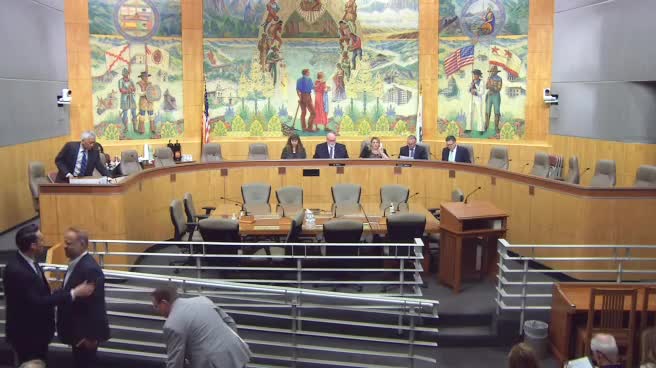 11MIN
Senate Standing Committee on Transportation and Housing
Bill Author



