AB 2093: Disability access.
- Session Year: 2015-2016
- House: Assembly
- Latest Version Date: 2016-09-16
Existing law requires the State Architect to establish and publicize a program for the voluntary certification by the state of any person who meets specified criteria as a Certified Access Specialist (CASp)..
Existing law requires a commercial property owner or lessor to state on every lease form or rental agreement executed on or after July 1, 2013, whether the property has been determined by a CASp to meet all applicable construction-related accessibility standards.
This bill would require the commercial property owner or lessor to state on every lease form or rental agreement executed on or after January 1, 2017, whether or not the premises have been inspected by a CASp specialist. The bill would require a commercial property owner or lessor to provide the lessee or tenant with a current disability access inspection certificate and inspection report or a copy of a CASp inspection report, as specified, if the premises have been issued an inspection report indicating that they meet applicable standards. If the premises have not been issued a disability access inspection certificate, the bill would require a statement on the lease form or rental agreement stating that, upon request of the lessee or tenant, the property owner may not prohibit a CASp inspection of the subject premises and that the parties must mutually agree on the arrangements for the time and manner of the inspection, the payment of the associated fee, and the cost of making repairs, as specified.
The bill would require a property owner or lessor of premises that have been subject to CASp inspection, and that remain unmodified or altered, as specified, since the date of the inspection and the lease or rental agreement with regard to construction-related accessibility standards, to provide a copy of the report that is to remain confidential except as necessary to make repairs and corrections, as specified.
The bill would establish a presumption that making repairs or modifications necessary to correct violations of construction-related accessibility standards that are noted in a CASp report is the responsibility of the commercial property owner or lessor unless otherwise agreed upon by the parties to the lease or rental agreement. The bill would grant a prospective lessee or tenant the opportunity to review any CASp report prior to execution of the lease or rental agreement, and if the report is not provided at least 48 hours prior to execution of a lease or rental agreement, the bill would grant a prospective lessee or tenant the right to rescind the lease or agreement, based upon information in the report, for 72 hours after execution.
This bill would declare that it is to take effect immediately as an urgency statute.
(1)Existing
Existing law requires the State Architect to establish and publicize a program for the voluntary certification by the state of any person who meets specified criteria as a Certified Access Specialist (CASp). Existing law requires each applicant for CASp certification or renewal to pay certain fees, and requires the State Architect to periodically review those fees, as specified. Existing law provides for the deposit of those fees into the Certified Access Specialist Fund, which is continuously appropriated for use by the State Architect to implement the CASp program.
This bill would require applicants for CASp certification or renewal to additionally provide to the State Architect the name of the city, county, or city and county in which the applicant intends to provide or has provided services, and would require the State Architect to post that information on his or her Internet Web site.
(2)Existing
Existing law requires a commercial property owner or lessor to state on every lease form or rental agreement executed on or after July 1, 2013, whether the property has been determined by a CASp to meet all applicable construction-related accessibility standards.
This bill would require the commercial property owner or lessor to state on every lease form or rental agreement executed on or after January 1, 2017, whether or not the premises have been inspected by a CASp specialist. The bill would require a commercial property owner or lessor to provide the lessee or tenant with a current disability access inspection certificate and inspection report or a copy of a CASp inspection report, as specified, if the premises have been issued an inspection report indicating that they meet applicable standards. If the premises have not been issued a disability access inspection certificate, the bill would require a statement on the lease form or rental agreement stating that, upon request of the lessee or tenant, the property owner may not prohibit a CASp inspection of the subject premises and that the parties must mutually agree on the arrangements for the time and manner of the inspection, the payment of the associated fee, and the cost of making repairs, as specified. The
The bill would require a property owner or lessor of premises that have been subject to CASp inspection, and that remain unmodified or altered, as specified, since the date of the inspection and the lease or rental agreement with regard to construction-related accessibility standards, to provide a copy of the report that is to remain confidential except as necessary to make repairs and corrections, as specified. The
The bill would establish a presumption that making repairs or modifications necessary to correct violations of construction-related accessibility standards that are noted in a CASp report is the responsibility of the commercial property owner or lessor unless otherwise agreed upon by the parties to the lease or rental agreement. The bill would grant a prospective lessee or tenant the opportunity to review any CASp report prior to execution of the lease or rental agreement, and if the report is not provided at least 48 hours prior to execution of a lease or rental agreement, the bill would grant a prospective lessee or tenant the right to rescind the lease or agreement, based upon information in the report, for 72 hours after execution.
(3)Existing law establishes the California Commission on Disability Access for purposes of developing recommendations to enable persons with disabilities to exercise their right to full and equal access to public facilities and facilitating business compliance with applicable state and federal laws and regulations. Existing law sets forth the powers and duties of the commission, including, but not limited to, developing educational materials and information for businesses, building owners, tenants, and building officials, posting that information on the commissions Internet Web site, and coordinating with other state agencies and local building departments to ensure that information provided to the public on disability access requirements is uniform and complete.
This bill would additionally require the commission to provide a link on its Internet Web site to the Internet Web site of the Division of the State Architects CASp certification program and to make the commissions educational materials and information available to other state agencies and local building departments.
This bill would declare that it is to take effect immediately as an urgency statute.
(1)Existing law requires the State Architect to establish and publicize a program for the voluntary certification by the state of any person who meets specified criteria as a Certified Access Specialist (CASp). Existing law requires each applicant for CASp certification or renewal to pay certain fees, and requires the State Architect to periodically review those fees, as specified. Existing law provides for the deposit of those fees into the Certified Access Specialist Fund, which is continuously appropriated for use by the State Architect to implement the CASp program.
This bill would require applicants for CASp certification or renewal to additionally provide to the State Architect the name of the city, county, or city and county in which the applicant intends to provide or has provided services, and would require the State Architect to post that information on his or her Internet Web site.
(2)Existing law requires a commercial property owner or lessor to state on every lease form or rental agreement executed on or after July 1, 2013, whether the property has been determined by a CASp to meet all applicable construction-related accessibility standards.
This bill, for every lease form or rental agreement executed on or after January 1, 2017, bill would require the commercial property owner or lessor to state on every lease form or rental agreement executed on or after January 1, 2017, whether or not the premises have been inspected by a CASp specialist. The bill would require a commercial property owner or lessor to provide the lessee or tenant with a current disability access inspection certificate and inspection report or a copy of a CASp inspection report, as specified, or if the premises have been issued an inspection report indicating that they meet applicable standards. If the premises have not been issued a disability access inspection certificate, the bill would require a statement on the lease form or rental agreement stating that, upon request of the lessee or tenant, the property owner may not prohibit a CASp inspection of the subject premises at the lessees or tenants expense and that the parties must mutually agree on the arrangements for the time and manner of the inspection. inspection, the payment of the associated fee, and the cost of making repairs, as specified. The bill would require a property owner or lessor of premises that have been subject to CASp inspection, and that remain unmodified or altered, as specified, since the date of the inspection and the lease or rental agreement with regard to construction-related accessibility standards, to provide a copy of the report that is to remain confidential except as necessary to make repairs and corrections, as specified. The bill would establish a presumption that making repairs or modifications necessary to correct violations of construction-related accessibility standards that are noted in a CASp report is the responsibility of the commercial property owner or lessor unless otherwise agreed upon by the parties to the lease or rental agreement. The bill would grant a prospective lessee or tenant the opportunity to review any CASp report prior to execution of the lease or rental agreement, and if the report is not provided at least 48 hours prior to execution of a lease or rental agreement, the bill would grant a prospective lessee or tenant the right to rescind the lease or agreement, based upon information in the report, for 72 hours after execution.
(3)Existing law establishes the California Commission on Disability Access for purposes of developing recommendations to enable persons with disabilities to exercise their right to full and equal access to public facilities and facilitating business compliance with applicable state and federal laws and regulations. Existing law sets forth the powers and duties of the commission, including, but not limited to, developing educational materials and information for businesses, building owners, tenants, and building officials, posting that information on the commissions Internet Web site, and coordinating with other state agencies and local building departments to ensure that information provided to the public on disability access requirements is uniform and complete.
This bill would additionally require the commission to provide a link on its Internet Web site to the Internet Web site of the Division of the State Architects CASp certification program and to make the commissions educational materials and information available to other state agencies and local building departments.
(1)Existing law requires the State Architect to establish and publicize a program for the voluntary certification by the state of any person who meets specified criteria as a Certified Access Specialist (CASp). Existing law requires each applicant for CASp certification or renewal to pay certain fees, and requires the State Architect to periodically review those fees, as specified. Existing law provides for the deposit of those fees into the Certified Access Specialist Fund, which is continuously appropriated for use by the State Architect to implement the CASp program.
This bill would require applicants for CASp certification or renewal to additionally provide to the State Architect the name of the city, county, or city and county in which the applicant intends to provide or has provided services, and would require the State Architect to post that information on his or her Internet Web site.
(2)Existing law requires a commercial property owner or lessor to state on every lease form or rental agreement executed on or after July 1, 2013, whether the property has been determined by a CASp to meet all applicable construction-related accessibility standards.
This bill, for every lease form or rental agreement executed on or after January 1, 2017, would require the commercial property owner or lessor to provide the lessee or tenant with a current disability access inspection certificate and inspection report or a copy of a CASp inspection report, as specified, or would require a statement on the form or agreement that, upon request of the lessee or tenant, the property owner may not prohibit a CASp inspection of the subject premises at the lessees or tenants expense and that the parties must mutually agree on the arrangements for the time and manner of the inspection.
(3)Existing law establishes the California Commission on Disability Access for purposes of developing recommendations to enable persons with disabilities to exercise their right to full and equal access to public facilities and facilitating business compliance with applicable state and federal laws and regulations. Existing law sets forth the powers and duties of the commission, including, but not limited to, developing educational materials and information for businesses, building owners, tenants, and building officials, posting that information on the commissions Internet Web site, and coordinating with other state agencies and local building departments to ensure that information provided to the public on disability access requirements is uniform and complete.
This bill would additionally require the commission to provide a link on its Internet Web site to the Internet Web site of the Division of the State Architects CASp certification program and to make the commissions educational materials and information available to other state agencies and local building departments.
(a)A commercial property owner or lessor shall state on every lease form or rental agreement executed on or after January 1, 2017, whether or not the subject premises have undergone inspection by a Certified Access Specialist (CASp).
(b)If the subject premises have undergone inspection by a CASp and, to the best of the commercial property owners or lessors knowledge, there have been no modifications or alterations completed or commenced between the date of the inspection and the date of the lease or rental agreement which have impacted the subject premises compliance with construction-related accessibility standards, the commercial property owner or lessor shall provide, prior to execution of the lease or rental agreement, a copy of any report prepared by the CASp with an agreement from the prospective lessee or tenant that information in the report shall remain confidential, except as necessary for the tenant to complete repairs and corrections of violations of construction-related accessibility standards that the lessee or tenant agrees to make.
(c)Making any repairs or modifications necessary to correct violations of construction-related accessibility standards that are noted in a CASp report is presumed to be the responsibility of the commercial property owner or lessor, unless otherwise mutually agreed upon by the commercial property owner or lessor and the lessee or tenant. The prospective lessee or tenant shall have the opportunity to review any CASp report prior to execution of the lease or rental agreement. If the report is not provided to the prospective lessee or tenant at least 48 hours prior to execution of the lease or rental agreement, the prospective lessee or tenant shall have the right to rescind the lease or rental agreement, based upon the information contained in the report, for 72 hours after execution of the agreement.
(d)If the subject premises have been issued an inspection report by a CASp, as described in paragraph (1) of subdivision (a) of Section 55.53, indicating that it meets applicable standards, as defined in paragraph (4) of subdivision (a) of Section 55.52, the commercial property owner or lessor shall provide a copy of the current disability access inspection certificate and any inspection report to the lessee or tenant not already provided pursuant to subdivision (b) within seven days of the date of the execution of the lease form or rental agreement.
(e)If the subject premises have not been issued a disability access inspection certificate, as described in subdivision (e) of Section 55.53, the commercial property owner or lessor shall state the following on the lease form or rental agreement:
A Certified Access Specialist (CASp) can inspect the subject premises and determine whether the subject premises comply with all of the applicable construction-related accessibility standards under state law. Although state law does not require a CASp inspection of the subject premises, the commercial property owner or lessor may not prohibit the lessee or tenant from obtaining a CASp inspection of the subject premises for the occupancy or potential occupancy of the lessee or tenant, if requested by the lessee or tenant. The parties shall mutually agree on the arrangements for the time and manner of the CASp inspection, the payment of the fee for the CASp inspection, and the cost of making any repairs necessary to correct violations of construction-related accessibility standards within the premises.
SEC. 2.This act is an urgency statute necessary for the immediate preservation of the public peace, health, or safety within the meaning of Article IV of the Constitution and shall go into immediate effect. The facts constituting the necessity are:
In order to increase compliance with accessibility standards for the benefit of the public, especially disabled consumers who may experience unjust discomfort, difficulty, or embarrassment when public places or businesses are not compliant with accessibility standards required by law and to improve the ability of businesses to correct accessibility violations, provide clarity to property owners and tenants regarding responsibility for correcting accessibility violations and increase awareness of state programs to inspect properties for accessibility violations, it is necessary that this act go into effect immediately.
(a)A commercial property owner or lessor shall state on every lease form or rental agreement executed on or after January 1, 2017, whether or not the subject premises have undergone inspection by a Certified Access Specialist (CASp).
(b)If the subject premises have undergone inspection by a CASp and, to the best of the commercial property owners or lessors knowledge, there have been no modifications or alterations completed or commenced between the date of the inspection and the date of the lease or rental agreement which have impacted the subject premises compliance with construction-related accessibility standards, the commercial property owner or lessor shall provide, prior to execution of the lease or rental agreement, a copy of any report prepared by the CASp with an agreement from the prospective lessee or tenant that information in the report shall remain confidential, except as necessary for the tenant to complete repairs and corrections of violations of construction-related accessibility standards that the lessee or tenant agrees to make.
(c)Making any repairs or modifications necessary to correct violations of construction-related accessibility standards that are noted in a CASp report is presumed to be the responsibility of the commercial property owner or lessor, unless otherwise mutually agreed upon by the commercial property owner or lessor and the lessee or tenant. The prospective lessee or tenant shall have the opportunity to review any CASp report prior to execution of the lease or rental agreement. If the report is not provided to the prospective lessee or tenant at least 48 hours prior to execution of the lease or rental agreement, the prospective lessee or tenant shall have the right to rescind the lease or rental agreement, based upon the information contained in the report, for 72 hours after execution of the agreement.
(d)If the subject premises have been issued an inspection report by a CASp, as described in paragraph (1) of subdivision (a) of Section 55.53, indicating that it meets applicable standards, as defined in paragraph (4) of subdivision (a) of Section 55.52, the commercial property owner or lessor shall provide a copy of the current disability access inspection certificate and any inspection report to the lessee or tenant not already provided pursuant to subdivision (b) within seven days of the date of the execution of the lease form or rental agreement.
(e)If the subject premises have not been issued a disability access inspection certificate, as described in subdivision (e) of Section 55.53, the commercial property owner or lessor shall state the following on the lease form or rental agreement:
A Certified Access Specialist (CASp) can inspect the subject premises and determine whether the subject premises comply with all of the applicable construction-related accessibility standards under state law. Although state law does not require a CASp inspection of the subject premises, the commercial property owner or lessor may not prohibit the lessee or tenant from obtaining a CASp inspection of the subject premises for the occupancy or potential occupancy of the lessee or tenant, if requested by the lessee or tenant. The parties shall mutually agree on the arrangements for the time and manner of the CASp inspection, the payment of the fee for the CASp inspection, and the cost of making any repairs necessary to correct violations of construction-related accessibility standards within the premises.
SEC. 2.Section 4459.8 of the Government Code is amended to read:4459.8.(a)The certification authorized by Section 4459.5 is effective for three years from the date of initial certification and expires if not renewed. The State Architect, upon consideration of any factual complaints regarding the work of a certified access specialist or of other relevant information, may suspend certification or deny renewal of certification.
(b)(1)The State Architect shall require each applicant for certification as a certified access specialist to do both of the following:
(A)Pay fees, including an application and course fee and an examination fee, at a level sufficient to meet the costs of application processing, registration, publishing a list, and other activities that are reasonably necessary to implement and administer the certified access specialist program.
(B)Provide to the State Architect the name of the city, county, or city and county in which the applicant intends to provide services.
(2)The State Architect shall require each applicant for renewal of certification to do both of the following:
(A)Pay a fee sufficient to cover the reasonable costs of reassessing qualifications of renewal applicants.
(B)Provide to the State Architect the name of the city, county, or city and county in which the applicant has provided services since the last day of certification by the State Architect.
(3)The State Architect shall periodically review his or her schedule of fees to ensure that the fees for certification are not excessive while covering the costs to administer the certified access specialist program. The application fee for a California licensed architect, landscape architect, civil engineer, or structural engineer shall not exceed two hundred fifty dollars ($250).
(c)All fees collected pursuant to this section shall be deposited into the Certified Access Specialist Fund, which is hereby created in the State Treasury. Notwithstanding Section 13340, this fund is continuously appropriated without regard to fiscal years for use by the State Architect to implement Sections 4459.5 to 4459.8, inclusive.
(d)The State Architect shall post on his or her Internet Web site the name of the city, county, or city and county in which each certified access specialist provides or intends to provide services.
SEC. 3.Section 8299.06 of the Government Code is amended to read:8299.06.(a)A priority of the commission shall be the development and dissemination of educational materials and information to promote and facilitate disability access compliance.
(b)The commission shall work with other state agencies, including the Division of the State Architect and the Department of Rehabilitation, to develop educational materials and information for use by businesses to understand their obligations to provide disability access and to facilitate compliance with construction-related accessibility standards.
(c)The commission shall develop and make available on its Internet Web site, or make available on its Internet Web site if developed by another governmental agency, including Americans with Disabilities Act centers, toolkits or educational modules to assist a California business to understand its obligations under the law and to facilitate compliance with respect to the top 10 alleged construction-related violations, by type, as specified in subdivision (a) of Section 8299.08. Upon completion of this requirement, the commission shall develop and make available on its Internet Web site, or work with another agency to develop, other toolkits or educational modules that would educate businesses on the accessibility requirements and to facilitate compliance with that requirement.
(d)The commission shall post the following on its Internet Web site:
(1)Educational materials and information that will assist building owners, tenants, building officials, and building inspectors to understand the disability accessibility requirements and to facilitate compliance with disability access laws. The commission shall at least annually review the educational materials and information on disability access requirements and compliance available on the Internet Web sites of other local, state, or federal agencies, including Americans with Disabilities Act centers, to augment the educational materials and information developed by the commission.
(2)A link to the Internet Web site of the Division of the State Architects Certified Access Specialist (CASp) Program to assist building owners and tenants in locating or hiring a CASp.
(e)The commission shall, to the extent feasible, coordinate with other state agencies and local building departments to ensure that information provided to the public on disability access requirements is uniform and complete, and make its educational materials and information available to those agencies and departments.
SEC. 2.This act is an urgency statute necessary for the immediate preservation of the public peace, health, or safety within the meaning of Article IV of the Constitution and shall go into immediate effect. The facts constituting the necessity are:
In order to increase compliance with accessibility standards for the benefit of the public, especially disabled consumers who may experience unjust discomfort, difficulty, or embarrassment when public places or businesses are not compliant with accessibility standards required by law and to improve the ability of businesses to correct accessibility violations, provide clarity to property owners and tenants regarding responsibility for correcting accessibility violations and increase awareness of state programs to inspect properties for accessibility violations, it is necessary that this act go into effect immediately.
(a)A commercial property owner or lessor shall state on every lease form or rental agreement executed on or after January 1, 2017, whether or not the subject premises have undergone inspection by a Certified Access Specialist (CASp).
(b)If the subject premises have undergone inspection by a CASp and, to the best of the commercial property owners or lessors knowledge, there have been no modifications or alterations completed or commenced between the date of the inspection and the date of the lease or rental agreement which have impacted the subject premises compliance with construction-related accessibility standards, the commercial property owner or lessor shall provide, prior to execution of the lease or rental agreement, a copy of any report prepared by the CASp with an agreement from the prospective lessee or tenant that information in the report shall remain confidential, except as necessary for the tenant to complete repairs and corrections of violations of construction-related accessibility standards that the lessee or tenant agrees to make.
(c)Making any repairs or modifications necessary to correct violations of construction-related accessibility standards that are noted in a CASp report is presumed to be the responsibility of the commercial property owner or lessor, unless otherwise mutually agreed upon by the commercial property owner or lessor and the lessee or tenant. The prospective lessee or tenant shall have the opportunity to review any CASp report prior to execution of the lease or rental agreement. If the report is not provided to the prospective lessee or tenant at least 48 hours prior to execution of the lease or rental agreement, the prospective lessee or tenant shall have the right to rescind the lease or rental agreement, based upon the information contained in the report, for 72 hours after execution of the agreement.
(c)
(d)If the subject premises have been issued an inspection report by a CASp, as described in paragraph (1) of subdivision (a) of Section 55.53, indicating that it meets applicable standards, as defined in paragraph (4) of subdivision (a) of Section 55.52, the commercial property owner or lessor shall provide a copy of the current disability access inspection certificate and any inspection report to the lessee or tenant not already provided pursuant to subdivision (b) within seven days of the date of the execution of the lease form or rental agreement.
(d)
(e)If the subject premises have not been issued a disability access inspection certificate, as described in subdivision (e) of Section 55.53, the commercial property owner or lessor shall state the following on the lease form or rental agreement:
A Certified Access Specialist (CASp) can inspect the subject premises and determine whether the subject premises comply with all of the applicable construction-related accessibility standards under state law. Although state law does not require a CASp inspection of the subject premises, the commercial property owner or lessor may not prohibit the lessee or tenant from obtaining a CASp inspection of the subject premises for the occupancy or potential occupancy of the lessee or tenant, at the lessees or tenants expense, if requested by the lessee or tenant. The parties shall mutually agree on the arrangements for the time and manner of the CASp inspection. inspection, the payment of the fee for the CASp inspection, and the cost of making any repairs necessary to correct violations of construction-related accessibility standards within the premises.
SEC. 2.Section 4459.8 of the Government Code is amended to read:4459.8.(a)The certification authorized by Section 4459.5 is effective for three years from the date of initial certification and expires if not renewed. The State Architect, upon consideration of any factual complaints regarding the work of a certified access specialist or of other relevant information, may suspend certification or deny renewal of certification.
(b)(1)The State Architect shall require each applicant for certification as a certified access specialist to do both of the following:
(A)Pay fees, including an application and course fee and an examination fee, at a level sufficient to meet the costs of application processing, registration, publishing a list, and other activities that are reasonably necessary to implement and administer the certified access specialist program.
(B)Provide to the State Architect the name of the city, county, or city and county in which the applicant intends to provide services.
(2)The State Architect shall require each applicant for renewal of certification to do both of the following:
(A)Pay a fee sufficient to cover the reasonable costs of reassessing qualifications of renewal applicants.
(B)Provide to the State Architect the name of the city, county, or city and county in which the applicant has provided services since the last day of certification by the State Architect.
(3)The State Architect shall periodically review his or her schedule of fees to ensure that the fees for certification are not excessive while covering the costs to administer the certified access specialist program. The application fee for a California licensed architect, landscape architect, civil engineer, or structural engineer shall not exceed two hundred fifty dollars ($250).
(c)All fees collected pursuant to this section shall be deposited into the Certified Access Specialist Fund, which is hereby created in the State Treasury. Notwithstanding Section 13340, this fund is continuously appropriated without regard to fiscal years for use by the State Architect to implement Sections 4459.5 to 4459.8, inclusive.
(d)The State Architect shall post on his or her Internet Web site the name of the city, county, or city and county in which each certified access specialist provides or intends to provide services.
SEC. 3.Section 8299.06 of the Government Code is amended to read:8299.06.(a)A priority of the commission shall be the development and dissemination of educational materials and information to promote and facilitate disability access compliance.
(b)The commission shall work with other state agencies, including the Division of the State Architect and the Department of Rehabilitation, to develop educational materials and information for use by businesses to understand their obligations to provide disability access and to facilitate compliance with construction-related accessibility standards.
(c)The commission shall develop and make available on its Internet Web site, or make available on its Internet Web site if developed by another governmental agency, including Americans with Disabilities Act centers, toolkits or educational modules to assist a California business to understand its obligations under the law and to facilitate compliance with respect to the top 10 alleged construction-related violations, by type, as specified in subdivision (a) of Section 8299.08. Upon completion of this requirement, the commission shall develop and make available on its Internet Web site, or work with another agency to develop, other toolkits or educational modules that would educate businesses of on the accessibility requirements and to facilitate compliance with that requirement.
(d)The commission shall post the following on its Internet Web site:
(1)Educational materials and information that will assist building owners, tenants, building officials, and building inspectors to understand the disability accessibility requirements and to facilitate compliance with disability access laws. The commission shall at least annually review the educational materials and information on disability access requirements and compliance available on the Internet Web site sites of other local, state, or federal agencies, including Americans with Disabilities Act centers, to augment the educational materials and information developed by the commission.
(2)A link to the Internet Web site of the Division of the State Architects Certified Access Specialist (CASp) Program to assist building owners and tenants in locating or hiring a CASp.
(e)The commission shall, to the extent feasible, coordinate with other state agencies and local building departments to ensure that information provided to the public on disability access requirements is uniform and complete, and make its educational materials and information available to those agencies and departments.
(a) A commercial property owner or lessor shall state on every lease form or rental agreement executed on or after July January 1, 2013, 2017, whether or not the property being leased or rented has subject premises have undergone inspection by a Certified Access Specialist (CASp), and, if so, whether the property has or has not been determined to meet all applicable construction-related accessibility standards pursuant to Section 55.53. (CASp).
(b)If the subject premises have undergone inspection by a CASp and, to the best of the commercial property owners or lessors knowledge, there have been no modifications or alterations completed or commenced between the date of the inspection and the date of the lease or rental agreement which have impacted the subject premises compliance with construction-related accessibility standards, the commercial property owner or lessor shall provide, prior to execution of the lease or rental agreement, a copy of any report prepared by the CASp with an agreement from the prospective lessee or tenant that information in the report shall remain confidential, except as necessary for the tenant to complete repairs and corrections of violations of construction-related accessibility standards that the lessee or tenant agrees to make.
(c)If the subject premises have been issued an inspection report by a CASp, as described in paragraph (1) of subdivision (a) of Section 55.53, indicating that it meets applicable standards, as defined in paragraph (4) of subdivision (a) of 55.52, the commercial property owner or lessor shall provide a copy of the current disability access inspection certificate and any inspection report to the lessee or tenant not already provided pursuant to subdivision (b) within seven days of the date of the execution of the lease form or rental agreement.
(d)If the subject premises have not been issued a disability access inspection certificate, as described in subdivision (e) of Section 55.53, the commercial property owner or lessor shall state the following on the lease form or rental agreement:
A Certified Access Specialist (CASp) can inspect the subject premises and determine whether the subject premises comply with all of the applicable construction-related accessibility standards under state law. Although state law does not require a CASp inspection of the subject premises, the commercial property owner or lessor may not prohibit the lessee or tenant from obtaining a CASp inspection of the subject premises for the occupancy or potential occupancy of the lessee or tenant, at the lessees or tenants expense, if requested by the lessee or tenant. The parties shall mutually agree on the arrangements for the time and manner of the CASp inspection.
SEC. 2.Section 4459.8 of the Government Code is amended to read:4459.8.(a)The certification authorized by Section 4459.5 is effective for three years from the date of initial certification and expires if not renewed. The State Architect, upon consideration of any factual complaints regarding the work of a certified access specialist or of other relevant information, may suspend certification or deny renewal of certification.
(b)(1)The State Architect shall require each applicant for certification as a certified access specialist to pay do both of the following:
(A)Pay fees, including an application and course fee and an examination fee, at a level sufficient to meet the costs of application processing, registration, publishing a list, and other activities that are reasonably necessary to implement and administer the certified access specialist program. The
(B)Provide to the State Architect the name of the city, county, or city and county in which the applicant intends to provide services.
(2)The State Architect shall require each applicant for renewal of certification to pay do both of the following:
(A)Pay a fee sufficient to cover the reasonable costs of reassessing qualifications of renewal applicants.
(B)Provide to the State Architect the name of the city, county, or city and county in which the applicant has provided services since the last day of certification by the State Architect.
(2)
(3)The State Architect shall periodically review its his or her schedule of fees to ensure that its the fees for certification are not excessive while covering the costs to administer the certified access specialist program. The application fee for a California licensed architect, landscape architect, civil engineer, or structural engineer shall not exceed two hundred fifty dollars ($250).
(c)All fees collected pursuant to this section shall be deposited into the Certified Access Specialist Fund, which is hereby created in the State Treasury. Notwithstanding Section 13340, this fund is continuously appropriated without regard to fiscal years for use by the State Architect to implement Sections 4459.5 to 4459.8, inclusive.
(d)The State Architect shall post on his or her Internet Web site the name of the city, county, or city and county in which each certified access specialist provides or intends to provide services.
SEC. 3.Section 8299.06 of the Government Code is amended to read:8299.06.(a)A priority of the commission shall be the development and dissemination of educational materials and information to promote and facilitate disability access compliance.
(b)The commission shall work with other state agencies, including the Division of the State Architect and the Department of Rehabilitation, to develop educational materials and information for use by businesses to understand its their obligations to provide disability access and to facilitate compliance with construction-related accessibility standards.
(c)The commission shall develop and make available on its Internet Web site, or make available on its Internet Web site if developed by another governmental agency, including Americans with Disabilities Act centers, toolkits or educational modules to assist a California business to understand its obligations under the law and to facilitate compliance with respect to the top 10 alleged construction-related violations, by type, as specified in subdivision (a) of Section 8299.08. Upon completion of this requirement, the commission shall develop and make available on its Internet Web site, or work with another agency to develop, other toolkits or educational modules that would educate businesses of the accessibility requirements and to facilitate compliance with that requirement.
(d)The commission shall post the following on its Internet Web site educational site:
(1)Educational materials and information that will assist building owners, tenants, building officials, and building inspectors to understand the disability accessibility requirements and to facilitate compliance with disability access laws. The commission shall at least annually review the educational materials and information on disability access requirements and compliance available on the Internet Web site of other local, state, or federal agencies, including Americans with Disabilities Act centers, to augment the educational materials and information developed by the commission.
(2)A link to the Internet Web site of the Division of the State Architects Certified Access Specialist (CASp) Program to assist building owners and tenants in locating or hiring a CASp.
(e)The commission shall, to the extent feasible, coordinate with other state agencies and local building departments to ensure that information provided to the public on disability access requirements is uniform and complete. complete, and make its educational materials and information available to those agencies and departments.
|
Date
|
Status
|
|---|---|
| May 25, 2016 | From committee chair, with author's amendments: Amend, and re-refer to committee. Read second time, amended, and re-referred to Com. on JUD. |
| Sep 16, 2016 | Chaptered by Secretary of State - Chapter 379, Statutes of 2016. |
| Sep 16, 2016 | Approved by the Governor. |
| Aug 26, 2016 | Enrolled and presented to the Governor at 4:30 p.m. |
| Aug 22, 2016 | Urgency clause adopted. Senate amendments concurred in. To Engrossing and Enrolling. (Ayes 79. Noes 0. Page 6034.). |
| Aug 22, 2016 | Urgency clause adopted. Senate amendments concurred in. To Engrossing and Enrolling. |
| Aug 16, 2016 | In Assembly. Concurrence in Senate amendments pending. May be considered on or after August 18 pursuant to Assembly Rule 77. |
| Aug 15, 2016 | Read third time. Urgency clause adopted. Passed. Ordered to the Assembly. (Ayes 38. Noes 0.). |
| Aug 15, 2016 | Read third time. Urgency clause adopted. Passed. Ordered to the Assembly. (Ayes 38. Noes 0. Page 4950.). |
| Aug 15, 2016 | Read third time. Urgency clause adopted. Passed. Ordered to the Assembly. |
| Jun 16, 2016 | Read second time. Ordered to third reading. |
| Jun 15, 2016 | From committee: Do pass. (Ayes 7. Noes 0.) (June 14). |
| Feb 17, 2016 | Read first time. To print. |
| May 5, 2016 | Referred to Com. on JUD. |
| Apr 21, 2016 | Read third time. Passed. Ordered to the Senate. (Ayes 79. Noes 0. Page 4463.) |
| Apr 21, 2016 | Read third time. Passed. Ordered to the Senate. |
| Apr 21, 2016 | In Senate. Read first time. To Com. on RLS. for assignment. |
| Apr 14, 2016 | Read second time. Ordered to Consent Calendar. |
| Apr 13, 2016 | From committee: Do pass. To Consent Calendar. (Ayes 20. Noes 0.) (April 13). |
| Apr 4, 2016 | Re-referred to Com. on APPR. |
| Mar 31, 2016 | Read second time and amended. |
| Mar 30, 2016 | From committee: Amend, and do pass as amended and re-refer to Com. on APPR. (Ayes 10. Noes 0.) (March 29). |
| Feb 29, 2016 | Referred to Com. on JUD. |
| Feb 18, 2016 | From printer. May be heard in committee March 19. |
|
Date
|
Description
|
Location
|
Votes
|
|
|---|---|---|---|---|
| Aug 22, 2016 | AB 2093 STEINORTH Concurrence - Urgency Added | Assembly Floor |
Passed |
|
| Aug 15, 2016 | Assembly 3rd Reading AB2093 Steinorth By Roth Urgency Clause | Senate Floor |
Passed |
|
| Jun 14, 2016 | Do pass | Senate Standing Committee on Judiciary |
Passed |
|
| Apr 21, 2016 | AB 2093 STEINORTH Consent Calendar Second Day Regular Session | Assembly Floor |
Passed |
|
| Apr 13, 2016 | Do pass. To Consent Calendar. | Assembly Standing Committee on Appropriations |
Passed |
|
| Mar 29, 2016 | Do pass as amended and be re-referred to the Committee on [Appropriations] | Assembly Standing Committee on Judiciary |
Passed |
This list shows positions taken on this bill by organizations on the date displayed, which is linked to the original source.
Positions by individuals are not included.
|
Organization
|
Position
|
Date
|
|---|---|---|
| Building Owners and Managers Association of California | ** Support | Aug 15, 2016 |
| California Building Industry Association | ** Support | Aug 15, 2016 |
| California Business Properties Association | ** Support | Aug 15, 2016 |
| California Chamber Of Commerce | ** Support | Aug 15, 2016 |
| Certified Access Specialist Institute | * Support | Jun 14, 2016 |
| Civil Justice Association Of California | ** Support | Aug 15, 2016 |
| Commercial Real Estate Development Association, NAIOP of California | ** Support | Jun 14, 2016 |
| Consumer Attorneys Of California | ** Support | Jun 14, 2016 |
| Disability Rights California | ** Support | Jun 14, 2016 |
| International Council of Shopping Centers | ** Support | Aug 15, 2016 |
| National Federation of Independent Businesses | ** Support | Aug 15, 2016 |
CONCURRENCE IN SENATE AMENDMENTS
CSA1 Bill Id:AB 2093
Author:(Steinorth)
As Amended Ver:May 25, 2016
2/3 vote. Urgency
ASSEMBLY: | 79-0 | (April 21, 2016) | SENATE: | 38-0 | (August 15, 2016) |
Original Committee Reference: JUD.
SUMMARY: Increases the information available to the public, and to prospective tenants of commercial property, about the Americans with Disabilities Act (ADA) and a commercial property's compliance with construction-related accessibility standards. Specifically, this bill:
- Requires a commercial property owner to state on every lease form or rental agreement executed after January 1, 2017, whether or not the property being leased has undergone inspection by a construction access specialist (CASp).
- Requires a commercial property owner to provide additional information to the tenant or lessor about the condition of the rented or leased property.
- If the property has undergone an inspection (and to the best of the commercial property owner's knowledge, there have been no modifications or alterations completed or commenced between the date of the inspection and the date of the lease or rental agreement which have impacted the property's compliance), the commercial property owner shall provide a copy of any report prepared by the CASp to the lessee or tenant. If the property has been issued a current disability access inspection certificate, the commercial property owner shall provide a copy of the certificate or any inspection report to the lessee or tenant within seven days of the date of the execution of the lease form or rental agreement.
- If the property has not undergone an inspection or been issued a current disability access inspection certificate, the commercial property owner shall state on the lease form or rental agreement that the property may not necessarily meet all of the applicable construction-related accessibility standards under State law.
- Creates a presumption that the responsibility for making any repairs or modifications necessary to correct violations of construction-related accessibility standards that are noted in a CASp report is the responsibility of the commercial property owner or lessor, unless otherwise mutually agreed upon by the commercial property owner or lessor and the lessee or tenant.
- Requires that the prospective lessee or tenant shall have the opportunity to review any CASp report prior to execution of the lease or rental agreement and would specify that if the report is not provided to the prospective lessee or tenant at least 48 hours prior to execution of the lease or rental agreement, the prospective lessee or tenant would have the right to rescind the lease or rental agreement, based upon the information contained in the report, for 72 hours after execution of the agreement.
The Senate amendments:
- Delete requirements for the California Commission on Disability Access (Commission) to post a link to the Internet Web site of the Division of the State Architect's CASp Program to assist building owners and tenants in locating or hiring a CASp and to make its educational materials and information available to other state agencies and local building departments.
- Add an urgency clause so the bill takes effect immediately.
EXISTING LAW:
- Requires a commercial property owner to state on a lease form or rental agreement executed on or after July 1, 2013, if the property being leased or rented has undergone inspection by a certified access specialist.
- Requires, if the property has undergone an inspection, the commercial property owner to state whether the property has or has not been determined to meet all applicable construction-related accessibility standards.
FISCAL EFFECT: None
COMMENTS: Under the 25 year old federal Americans with Disabilities Act (ADA), a business that constitutes a place of public accommodation (e.g., many places of lodging, entertainment, recreation, restaurants, bars, theaters, stores, health clubs, etc.) is prohibited from discriminating on the basis of disability if its operations affect interstate commerce. Prohibited discrimination can take a number of forms – e.g., denial of participation in the facility, or a service, benefit, or good of the business; denial of equal participation in a good, service, or facility; or provision of a different or separate facility, service or good (unless necessary to provide services and are as effective as that provided to others). Government facilities are also covered by the access obligations of the ADA.
A Commercial Property Owner's Responsibilities to a Prospective Tenant Relative to Disability Access Laws. Under current law, a commercial property owner is required to state on every lease form or rental agreement whether the property has been inspected by a CASp. If the property has undergone a CASP inspection, the lease or rental agreement must state whether the property meets all applicable construction-related accessibility standards. However, because the property owner may not know whether the property has met all applicable-related accessibility standards, the current law may unintentionally create a disincentive for a business property owner to obtain CASp services.
This bill seeks to increase the amount of information that tenants get about commercial property that they may rent or lease, ultimately promoting compliance of commercial property with the ADA and state construction-related accessibility standards. Specifically, this bill would require owners and lessors of commercial property to do the following: 1) State on every lease form or rental agreement executed after January 1, 2017, whether or not the property being leased has undergone inspection by a CASp; and 2) Provide additional information to the tenant or lessor about the condition of the rented or leased property, specifically the following, depending on whether the property has been inspected by a CASp, been certified to comply with current law, and been altered since the inspection: a) If the property has undergone an inspection (and to the best of the commercial property owner's knowledge, there have been no modifications or alterations completed or commenced between the date of the inspection and the date of the lease or rental agreement which have impacted the property's compliance), the commercial property owner shall provide a copy of any report prepared by the CASp to the lessee or tenant; b) If the property has been issued a current disability access inspection certificate, the commercial property owner shall provide a copy of the certificate or any inspection report to the lessee or tenant within seven days of the date of the execution of the lease form or rental agreement; c) If the property has not undergone an inspection or been issued a current disability access inspection certificate, the commercial property owner shall state on the lease form or rental agreement that the property may not necessarily meet all of the applicable construction-related accessibility standards under state law.
This additional information allows commercial tenants to better understand the state of the leased property, and allows the commercial property owner or tenant to take proactive steps in reaching compliance with disability access laws by promoting communication between the commercial parties.
Analysis Prepared by: Alison Merrilees / JUD. / (916) 319-2334 FN: 0003670
Office of Senate Floor Analyses (916) 651-1520 Fax: (916) 327-4478 | AB |
THIRD READING
Bill No: AB 2093
:
SENATE JUDICIARY COMMITTEE: 7-0, 6/14/16
AYES: Jackson, Moorlach, Anderson, Hertzberg, Leno, Monning, Wieckowski
ASSEMBLY FLOOR: 79-0, 4/21/16 (Consent) - See last page for vote
DIGEST: This bill makes various changes to the law as it pertains to commercial rental agreements and construction-related access violations.
ANALYSIS: Existing federal law provides, under the federal Americans with Disabilities Act (ADA), that no individual shall be discriminated against on the basis of disability in the full and equal enjoyment of the goods, services, facilities, privileges, advantages, or accommodations of any place of public accommodation by any person who owns, leases, or leases to, or operates a place of public accommodation. (42 U.S.C. Sec. 12182.)
Existing state law:
- Declares, under the Unruh Civil Rights Act, that all persons, regardless of sex, race, color, religion, ancestry, national origin, disability, medical condition, genetic information, marital status, sexual orientation, citizenship, primary language, or immigration status are entitled to the full and equal accommodations, advantages, facilities, privileges, or services in all business establishments of every kind whatsoever. (Civ. Code Sec. 51 et seq.)
- Provides that individuals with disabilities or medical conditions have the same right as the general public to the full and free use of the streets, highways, sidewalks, walkways, public buildings, medical facilities, including hospitals, clinics and physicians’ offices, public facilities, and other public places. It also provides that a violation of an individual’s rights under the ADA constitutes a violation of state law. (Civ. Code Secs. 54, 54.1.)
- Provides that a violation of the ADA also constitutes a violation of Sections 54 or 54.1, and entitles a prevailing party to recover reasonable attorney’s fees. (Civ. Code Sec. 55.)
- Establishes the California Commission on Disability Access (CCDA), an independent state agency composed of 17 members, to monitor disability access compliance in California, and make recommendations to the Legislature for necessary changes in order to facilitate implementation of state and federal laws on disability access. (Gov. Code Sec. 8299 et seq.)
- Requires a commercial property owner to state on a lease form or rental agreement executed on or after July 1, 2013, if the property being leased or rented has undergone inspection by a Certified Access Specialist (CASp). (Civ. Code Sec. 1938.)
- Requires the State Architect to establish the CASp Program and develop the specified criteria to have a person qualify as a CASp. (Gov. Code Sec. 4459.5; Civ. Code Sec. 55.52.)
- Requires, commencing January 1, 2010, a local agency to employ or retain at least one building inspector who is a CASp, and, commencing on January 1, 2014, to employ or retain a sufficient number of building inspectors who are CASp to conduct inspections with respect to new construction. (Civ. Code Sec. 55.53(d).)
This bill:
- Requires the CCDA to provide a link on its Internet Web site to the Internet Web site of the Division of the State Architect’s CASp certification program and to make the CCDA’s educational materials and information available to other state agencies and local building departments.
- Requires a commercial property owner, for every lease or rental agreement executed on or after January 1, 2017, to state on the lease or rental agreement whether the subject premises have undergone a CASp inspection.
- Requires, for properties that have undergone a CASp inspection and there have been no subsequent modifications or alterations, the commercial property owner to provide the lessee or tenant with a copy of the CASp inspection report. This report shall remain confidential, except as necessary for the tenant to complete repairs, as specified.
- Creates a presumption that repairs necessary to correct violations noted in a CASp report are the responsibility of the commercial property owner unless otherwise mutually agreed to by the owner and prospective tenant, and requires the following:
- That the prospective tenant have an opportunity to review any CASp report prior to the execution of the lease or rental agreement;
- That if the CASp report is not provided to the prospective tenant at least 48 hours prior to the execution of the lease or rental agreement, he or she shall have the right to rescind the lease or rental agreement, based on information contained in the report, for up to 72 hours after the execution of the agreement;
- That the property owner provide any available disability access certificate (indicating that the premises passed a CASp inspection) to the tenant within seven days of the execution of the lease or rental agreement; and
- A notice on the lease or rental agreement, for a building that has not had a CASp inspection, providing that a property owner may not prohibit a tenant from obtaining a CASp inspection, and that the parties shall mutually agree on the arrangements for the CASp inspection, including the payment of the fee, and the cost of making any repairs necessary to correct violations noted in the report.
- Requires applicants for CASp certification or renewal to additionally provide to the State Architect information about the city, county, or city and county in which the applicant intends to provide or has provided services, and requires the State Architect to post that information on his or her Internet Web site.
Background
Since 1969, persons with disabilities have enjoyed protection under Civil Code Sections 54 and 54.1, which entitle individuals with disabilities and medical conditions to full and free access to, and use of, roadways, sidewalks, buildings, and facilities open to the public, hospitals and medical facilities, and housing. After Congress enacted the ADA in 1990, California made a violation of the ADA also a violation of Section 54 or 54.1. The protections provided to disabled persons under California law are comparatively higher than those provided under the ADA and are independent of the ADA.
Additionally, under the Unruh Civil Rights Act, all persons, regardless of sex, race, color, religion, ancestry, national origin, disability or medical condition, are entitled to the full and equal accommodations, advantages, facilities, privileges, or services in all business establishments of every kind whatsoever. (Civ. Code Sec. 51.) A violation of the ADA also constitutes a violation of Section 51. A violation of that section subjects a person to actual damages incurred by an injured party, plus treble actual damages, but in no event less than $4,000, and any attorney’s fees as the court may determine to be proper. (Civ. Code Sec. 52.)
The CCDA, established in 2008, is charged with promoting disability access in California through dialogue and collaboration with stakeholders including, but not limited to, the disability and business community, and all levels of government. Accordingly, the CCDA is authorized to act as an information resource; to research and prepare advisory reports of findings to the Legislature on issues related to disability access, compliance inspections and continuing education; to increase coordination between stakeholders; to make recommendations to promote compliance with federal and state laws and regulations; and to provide uniform information about programmatic and architectural disability access requirements to the stakeholders.
Seeking to better achieve compliance with disability access requirements in California, this bill requires specific disclosures to commercial tenants with regard to the compliance status of a rental property, allows a tenant to rescind the lease based on information in a CASp report, and requires certain information to be made publicly available by the CCDA.
FISCAL EFFECT: Appropriation: Fiscal Com.: Local:
American Institute of Architects California Council
Building Owners and Managers Association of California
California Building Industry Association
California Business Properties Association
California Chamber of Commerce
Civil Justice Association of California
Commercial Real Estate Development Association, NAIOP of California Consumer Attorneys of California
International Council of Shopping Centers
National Federation of Independent Businesses
OPPOSITION: (Verified 6/17/16)
None received
ARGUMENTS IN SUPPORT: In support, the Civil Justice Association of California writes:
Prospective commercial tenants may be unaware of existing construction-related accessibility standards or compliance issues. Property owners and tenants alike may be unaware of the local availability of CASp services.
AB 2093 will improve the ability of property owners to arrange for CASp inspections, and promote awareness by both owners and tenants of accessibility requirements and any access issues with leased property. This bill will promote compliance with construction-related accessibility standards, improving access and discouraging abusive lawsuits. For these reasons we support AB 2093.
ASSEMBLY FLOOR: 79-0, 4/21/16
AYES: Achadjian, Alejo, Travis Allen, Arambula, Atkins, Baker, Bigelow, Bloom, Bonilla, Bonta, Brough, Brown, Burke, Calderon, Campos, Chang, Chau, Chávez, Chiu, Chu, Cooley, Cooper, Dababneh, Dahle, Daly, Dodd, Eggman, Frazier, Beth Gaines, Gallagher, Cristina Garcia, Eduardo Garcia, Gatto, Gipson, Gomez, Gonzalez, Gordon, Gray, Grove, Hadley, Harper, Roger Hernández, Holden, Irwin, Jones, Jones-Sawyer, Kim, Lackey, Levine, Linder, Lopez, Low, Maienschein, Mathis, Mayes, McCarty, Medina, Melendez, Mullin, Nazarian, Obernolte, O'Donnell, Olsen, Patterson, Quirk, Rodriguez, Salas, Santiago, Steinorth, Mark Stone, Thurmond, Ting, Wagner, Waldron, Weber, Wilk, Williams, Wood, Rendon
NO VOTE RECORDED: Ridley-Thomas
Prepared by: Nichole Rapier / JUD. / (916) 651-4113
6/17/16 15:03:44
Senator Hannah-Beth Jackson, Chair
2015-2016 Regular Session
Bill No: AB 2093 (Author:Steinorth)
Version: May 25, 2016
Hearing Date: June 14, 2016
Fiscal: Yes
Urgency: No
Consultant: NR
SUBJECT
Disability access
DESCRIPTION
This bill, for every commercial rental agreement or lease executed on or after January 1, 2017, would require the property owner to state whether the premises have been inspected by a CASp specialist, to provide the tenant with a current disability access inspection certificate and inspection report, or would require a statement on the agreement that the property owner not prohibit a CASp inspection, as specified.
This bill would provide that any repairs necessary to correct violations noted in a CASp report are presumed to be the responsibility of the property owner, unless otherwise mutually agreed upon by the property owner and tenant. This bill would also provide that a tenant shall have an opportunity to view any CASp report prior to the execution of the lease and, if denied that opportunity, shall have the right to rescind the lease based on information in the report, as specified.
This bill would additionally require the Commission on Disability Access to provide a link on its Internet Web site to the Internet Web site of the Division of the State Architect’s CASp certification program, and to make the Commission’s educational materials and information available to other state agencies and local building departments, and would make other related changes.
BACKGROUND
Since 1969, persons with disabilities have enjoyed protection under Civil Code
Sections 54 and 54.1, which entitle individuals with disabilities and medical conditions to full and free access to, and use of, roadways, sidewalks, buildings, and facilities open to the public, hospitals and medical facilities, and housing. After Congress enacted the Americans with Disabilities Act (ADA) in 1990, California made a violation of the ADA also a violation of Section 54 or 54.1. The protections provided to disabled persons under California law are comparatively higher than those provided under the ADA and are independent of the ADA.
Additionally, under the Unruh Civil Rights Act, all persons, regardless of sex, race, color, religion, ancestry, national origin, disability or medical condition, are entitled to the full and equal accommodations, advantages, facilities, privileges, or services in all business establishments of every kind whatsoever. (Civ. Code Sec. 51.) A violation of the ADA also constitutes a violation of Section 51. A violation of that section subjects a person to actual damages incurred by an injured party, plus treble actual damages, but in no event less than $4,000, and any attorney’s fees as the court may determine to be proper. (Civil Code Sec. 52.)
The California Commission on Disability Access (CCDA), established in 2008, is charged with promoting disability access in California through dialogue and collaboration with stakeholders including, but not limited to, the disability and business community, and all levels of government. Accordingly, the CCDA is authorized to act as an information resource; to research and prepare advisory reports of findings to the Legislature on issues related to disability access, compliance inspections and continuing education; to increase coordination between stakeholders; to make recommendations to promote compliance with federal and state laws and regulations; and to provide uniform information about programmatic and architectural disability access requirements to the stakeholders.
Seeking to better achieve compliance with disability access requirements in California, this bill would require specific disclosures to commercial tenants with regard to the compliance status of a rental property, would allow a tenant to rescind the lease based on information in a CASp report, and would require certain information to be made publicly available by the CCDA.
CHANGES TO EXISTING LAW
- Existing federal law, the Americans with Disabilities Act (ADA), provides that no individual shall be discriminated against on the basis of disability in the full and equal enjoyment of the goods, services, facilities, privileges, advantages, or accommodations of any place of public accommodation by any person who owns, leases, or leases to, or operates a place of public accommodation. (42 U.S.C. Sec. 12182.)
Existing law, the Unruh Civil Rights Act, declares that all persons, regardless of sex, race, color, religion, ancestry, national origin, disability, medical condition, genetic information, marital status, sexual orientation, citizenship, primary language, or immigration status are entitled to the full and equal accommodations, advantages, facilities, privileges, or services in all business establishments of every kind whatsoever. (Civ. Code Sec. 51 et seq.)
Existing law provides that individuals with disabilities or medical conditions have the same right as the general public to the full and free use of the streets, highways, sidewalks, walkways, public buildings, medical facilities, including hospitals, clinics and physicians’ offices, public facilities, and other public places. It also provides that a violation of an individual’s rights under the ADA constitutes a violation of state law. (Civ. Code Secs. 54, 54.1.)
Existing law provides that a violation of the ADA also constitutes a violation of Sections 54 or 54.1, and entitles a prevailing party to recover reasonable attorney’s fees. (Civ. Code Sec. 55.)
Existing law establishes the California Commission on Disability Access (CCDA), an independent state agency composed of 17 members, to monitor disability access compliance in California, and make recommendations to the Legislature for necessary changes in order to facilitate implementation of state and federal laws on disability access. (Gov. Code Sec. 8299 et seq.)
This bill would require the CCDA to provide a link on its Internet Web site to the Internet Web site of the Division of the State Architect’s CASp certification program and to make the CCDA’s educational materials and information available to other state agencies and local building departments.
- Existing law requires a commercial property owner to state on a lease form or rental agreement executed on or after July 1, 2013, if the property being leased or rented has undergone inspection by a certified access specialist. (Civ. Code Sec. 1938.)
This bill would require a commercial property owner, for every lease or rental agreement executed on or after January 1, 2017, to state on the lease or rental agreement whether the subject premises have undergone a CASp inspection.
This bill, for properties that have undergone a CASp inspection and there have been no subsequent modifications or alterations, would require the commercial property owner to provide the lessee or tenant with a copy of the CASp inspection report. This report shall remain confidential, except as necessary for the tenant to complete repairs, as specified.
This bill would create a presumption that repairs necessary to correct violations noted in a CASp report are the responsibility of the commercial property owner unless otherwise mutually agreed to by the owner and prospective tenant, and would require the following:
- that the prospective tenant have an opportunity to review any CASp report prior to the execution of the lease or rental agreement;
- that if the CASp report is not provided to the prospective tenant at least 48 hours prior to the execution of the lease or rental agreement, he or she shall have the right to rescind the lease or rental agreement, based on information contained in the report, for up to 72 hours after the execution of the agreement;
- that the property owner provide any available disability access certificate (indicating that the premises passed a CASp inspection) to the tenant within seven days of the execution of the lease or rental agreement; and
- a notice on the lease or rental agreement, for a building that has not had a CASp inspection, providing that a property owner may not prohibit a tenant from obtaining a CASp inspection, and that the parties shall mutually agree on the arrangements for the CASp inspection, including the payment of the fee, and the cost of making any repairs necessary to correct violations noted in the report.
- Existing law requires the State Architect to establish the Certified Access Specialist Program (CASp) and develop the specified criteria to have a person qualify as a certified access specialist. (Gov. Code Sec. 4459.5; Civ. Code Sec. 55.52.)
Existing law, commencing January 1, 2010, requires a local agency to employ or retain at least one building inspector who is a CASp, and, commencing on January 1, 2014, to employ or retain a sufficient number of building inspectors who are CASp to conduct inspections with respect to new construction. (Civ. Code Sec. 55.53(d).)
This bill would require applicants for CASp certification or renewal to additionally provide to the State Architect information about the city, county, or city and county in which the applicant intends to provide or has provided services, and would require the State Architect to post that information on his or her Internet Web site.
COMMENT
- Stated need for the bill
According to the author:
Unfortunately, many business and property owners are fully unaware of the CASp program, which could be useful to proactively ensure that properties are compliant, thus avoiding the abusive litigation that has run rampant throughout the state in recent years. This bill, by requiring information about the CASp program to be included in rental or lease agreements, aims to increase awareness of the program and hopefully encourage tenants to voluntarily obtain a CASp inspection.
The bill also seeks to clarify whether property owners or tenants are responsible for making repairs to correct violations of construction-related accessibility standards. This can be a point of contention among property owners and tenants if/when violations are identified; AB 2093 provides guidance in this area.
AB 2093’s requirement for CASp inspectors to list the counties they intend to serve on their application so that the information may be arranged better on the DSA website, so that business owners may more easily locate and contact an inspector to arrange an inspection if they so choose.
- Aiding commercial tenants in determining whether a property is in compliance with accessibility laws
In response to concerns that many commercial tenants do not know the compliance status of the property they rent or lease, SB 1186 required commercial property owners to state on a lease form or rental agreement if the property had undergone inspection by a CASp. (Civ. Code Sec. 1938.) Further ensuring that commercial tenants are informed as to the status of leased properties, this bill would additionally require that the prospective tenant have an opportunity to review any CASp report prior to the execution of the lease or rental agreement. As an enforcement mechanism, this bill would provide that if the CASp report is not provided to the prospective tenant at least 48 hours prior to the execution of the lease or rental agreement, he or she has the right to rescind, based on information contained in the report, for up to 72 hours after the execution of the agreement. This bill would also require, that within seven days of signing a rental agreement, that the property owner provide any available disability access certificate to the tenant. This certificate, when posted in the window of a business, informs the public that the building is in compliance with access laws, thereby indicating to disabled persons that the premises is truly accessible, and indicating to would-be “predatory attorneys” that the business’s liability is somewhat limited.
For businesses that do not have a current CASp inspection certificate, this bill would require the property owner to include the following disclosure on the lease or rental agreement:
A Certified Access Specialist (CASp) can inspect the subject premises and determine whether the subject premises comply with all of the applicable construction-related accessibility standards under state law. Although state law does not require a CASp inspection of the subject premises, the commercial property owner or lessor may not prohibit the lessee or tenant from obtaining a CASp inspection of the subject premises for the occupancy or potential occupancy of the lessee or tenant, if requested by the lessee or tenant. The parties shall mutually agree on the arrangements for the time and manner of the CASp inspection, the payment of the fee for the CASp inspection, and the cost of making any repairs necessary to correct violations of construction-related accessibility standards within the premises.
Accordingly, the requirements of this bill would ensure that property owners have a duty to communicate the status of a property to tenants prior to the execution of a lease or rental agreement, and that commercial tenants have up-to-date information about whether a property is actually in compliance with access laws. The bill would also ensure that tenants have a meaningful opportunity to review any CASp reports and would provide them with a right to rescind the agreement in the event that the property owner has not been forthcoming.
Additionally, attempting to ensure that the person in the best position to remedy access violations takes responsibility for those repairs, this bill would create a presumption that the property owner is responsible for fixing violations noted in a CASp report, unless otherwise mutually agreed upon by the property owner and prospective tenant. Staff notes that while this assignment of responsibility is helpful in that it creates clarity and appears to shift the burden of fixing violations onto the property owner, in practice, property owners will easily be able to place responsibility on the tenant by including boilerplate language in rental agreements that holds the tenant liable for construction-related access violations.
- Continued education, community outreach, and data collection
This bill contains a number of provisions to increase compliance with accessibility laws in the state through education and strengthening of existing programs. Specifically, this bill would require applicants for CASp certification or renewal to provide the State Architect with information about where that person plans to practice, and would require the State Architect to post that information on its Internet Web site. This bill would also require the California Commission on Disability Access (CCDA) to link its Internet Web site to the State Architect’s CASp certification program, and make the CCDA’s educational materials and information available to other state agencies and local building departments.
These requirements are a natural extension of many of the data collection and education requirements under SB 1186 which have proven to be helpful in educating the community about access laws. In support, the Civil Justice Association of California writes:
Prospective commercial tenants may be unaware of existing construction-related accessibility standards or compliance issues. Property owners and tenants alike may be unaware of the local availability of CASp services.
AB 2093 will improve the ability of property owners to arrange for CASp inspections, and promote awareness by both owners and tenants of accessibility requirements and any access issues with leased property. This bill will promote compliance with construction-related accessibility standards, improving access and discouraging abusive lawsuits. For these reasons we support AB 2093.
Support: American Institute of Architects California Council; Building Owners and Managers Association of California; California Building Industry Association; California Business Properties Association; California Chamber of Commerce; Civil Justice Association of California; Commercial Real Estate Development Association, NAIOP of California; Consumer Attorneys of California; International Council of Shopping Centers; National Federation of Independent Businesses
Opposition: None Known
HISTORY
Source: Author
Related Pending Legislation:
SB 1142 (Moorlach) would have established notice requirements for an aggrieved party to follow before he or she can bring a disability access suit and would have given the business owner a 120-day time period to remedy the violation. The bill would have also provided that in the event of any difference between the ADA and state law, that the ADA controls. This bill failed passage in the Senate Judiciary Committee.
SB 1406 (Mendoza) would require an attorney who sends or serves a complaint alleging a construction-related accessibility violation against a public entity to send a copy of the complaint and submit the notification of judgment, settlement, or dismissal to the California Commission on Disability Access, as specified.
Prior Legislation:
SB 269 (Roth, Ch. 13, Stats. 2016) is substantially similar to SB 251 (see below), with the exception of the tax credit, which the author removed to address the Governor’s concerns.
AB 52 (Gray, 2015) would have provided that the defendant’s maximum liability for statutory damages in a construction-related accessibility claim against a place of public accommodation is $1,000 for each offense if the defendant has corrected all construction-related violations within 180 days of being served with the complaint. This bill was never heard in the Assembly Judiciary Committee.
AB 1230 (Gomez, Ch. 787, Stats. 2015) establishes the California Americans with Disabilities Act Small Business Compliance Finance Act to provide loans to assist small businesses to finance the costs of projects that alter or retrofit existing small business facilities to comply with the federal Americans with Disabilities Act.
AB 1342 (Steinorth, 2015) would have provided additional revenue to the California Commission on Disability Access. This bill was vetoed by Governor Brown who stated that it was “something more appropriately addressed in the annual budget process.”
AB 1468 (Baker, 2015) would have provided that a public entity’s possession of a close out letter from the State Architect certifying that the buildings, facilities, and other places meet the applicable construction-related accessibility standards of the federal Americans with Disabilities Act, serves as presumptive evidence of compliance with the federal Americans with Disabilities Act. This bill was never heard in the Assembly Judiciary Committee.
AB 1521 (Committee on Judiciary, Ch. 755, Stats. 2015) created a new class of plaintiff, a “high frequency litigant,” upon which it imposed additional costs and procedural burdens.
SB 67 (Galgiani, 2015) would have limited recovery against a small business for construction-related accessibility claims to injunctive relief and reasonable attorney’s fees, and would allow businesses who have undergone a CASp inspection 120 days to correct violations in order to qualify for reduced statutory minimum damages. This bill was never heard in the Senate Judiciary Committee.
SB 251 (Roth, 2015) would have made various changes to access laws, including: exempting a defendant from liability for minimum statutory damages if corrections were made within 120 days of receiving a CASp report; requiring the State Architect to publish a list of CASp inspected businesses; and providing a tax credit for eligible access expenditures, as specified. This bill was vetoed by Governor Brown who argued that tax credits are more appropriately addressed in the annual budget process.
SB 1186 (Steinberg and Dutton, Ch. 383, Stats. 2012) reduced statutory damages and provided litigation protections for specified defendants who timely correct construction-related accessibility violations of the Unruh Civil Rights Act. That bill also banned prelitigation “demands for money” and created rules for demand letters and complaints in claims involving construction-related accessibility violations.
AB 2282 (Berryhill, 2012) would have authorized an aggrieved person to bring a disability access suit only if: (1) the person has suffered an injury in fact; (2) the injury in fact was caused by the violation; and (3) the violation is redressable, was held under submission in the Senate Appropriations Committee.
AB 1878 (Gaines, 2011) which is substantially similar to SB 1163 but applies to “microbusinesses,” defined by the bill, failed passage in the Assembly Judiciary Committee.
SB 1163 (Walters, 2012) would have established notice requirements for an aggrieved party to follow before he or she can bring a disability access suit and would have given the business owner a 120-day time period to remedy the violation. If the property owner cured the violation, this bill would have prohibited the plaintiff from receiving any damages or attorney’s fees, except for special damages. This bill failed passage in this Committee.
SB 783 (Dutton, 2011), which was identical to SB 1163, failed passage in this Committee.
SB 384 (Evans, Ch. 419, Stats. 2011) clarified that attorneys who file complaints or send demand letters related to disability access violations must provide a written notice of legal rights and obligations whether or not the attorney intends to file an action in state or federal court.
SB 209 (Corbett & Harman, Ch. 569, Stats. 2009) required a CASp inspection report to remain confidential rather than be under seal and subject to protective order.
SB 1608 (Corbett et al., Ch. 549, Stats. 2008) enacted the CCDA and various other reforms intended to increase voluntary compliance with longstanding state and federal laws requiring access to the disabled in any place of public accommodation.
SB 1766 (McClintock, 2008) would have required a person with a disability, prior to filing a complaint to first notify the owner or manager of a housing or public accommodation of the violations and to wait 6 months before commencing a lawsuit. This bill failed passage in the Senate Judiciary Committee.
AB 2533 (Keene, 2008) would have required pre-litigation procedures for a plaintiff to undertake prior to the filing of a complaint, including notice to the owner of the property or business of the alleged violations and a specified time period for the owner or business to cure the violations. This bill failed passage in the Assembly Judiciary Committee.
SB 855 (Poochigian, 2005) would have required pre-litigation procedures for a plaintiff to undertake prior to the filing of a complaint, including notice to the owner of the property or business of the alleged violations and a specified time period for the owner or business to cure the violations. This bill failed passage in the Senate Judiciary Committee.
Prior Vote:
Assembly Floor (Ayes 79, Noes 0)
Assembly Appropriations Committee (Ayes 20, Noes 0)
Assembly Judiciary Committee (Ayes 10, Noes 0)
**************
Date of Hearing: April 13, 2016
ASSEMBLY COMMITTEE ON APPROPRIATIONS
Lorena Gonzalez, Chair
ABPCA Bill Id:AB 2093
Author:(Steinorth) – As Amended Ver:March 31, 2016
Policy Committee: | Judiciary | Vote: | 10 - 0 |
|
| ||
|
|
Urgency: No State Mandated Local Program: No Reimbursable: No
SUMMARY:
This bill seeks to promote compliance with disability access requirements in commercial property. Specifically, this bill:
- Requires the Division of the State Architect (DSA) to require each applicant for certification as a certified access specialist (CASp), and for CASp recertification, to provide the DSA with information about location (city, county) where they intend to, or have provided services, and requires the DSA to post this information on its website. The California Commission on Disability Access (CCDA) must also post a link on its website to the DSA's CASp program.
- Requires a commercial property owner to state on every lease form or rental agreement executed after July 1, 2017, whether or not the property being leased has undergone inspection by a CASp.
- Requires, if the property has undergone a CASp inspection, and there have been no modifications since the inspection to impact access compliance, the property owner to provide a copy of the CASp's inspection report prior to execution of the lease.
- Stipulates that any modifications necessary to correct accessibility deficiencies as noted in a CASp report are presumed to be the responsibility of the property owner, unless otherwise mutually agreed to by the owner and the lessee.
- Requires the property owner, if the property has been provided a current disability access inspection certificate, to furnish the certificate to the lessee within seven days of execution of the lease.
- Requires the property owner, if the property has not been provided a current disability access inspection certificate, to state in the lease agreement that a CASp can inspect the property, and although an inspection is not required by state law, the owner cannot prohibit a lessee from arranging and inspection.
FISCAL EFFECT:
DSA's costs will be minor and absorbable to obtain and publish information regarding where each CASp provides their services.
COMMENTS:
- Purpose. Under current law, a commercial property owner is required to state on every lease form or rental agreement whether the property has been inspected by a CASp. If the property has undergone a CASP inspection, the lease or rental agreement must state whether the property meets all applicable construction-related accessibility standards. Since the property owner may not know whether the property has met all applicable-related accessibility standards, current law may unintentionally create a disincentive for a business property owner to obtain CASp services.
This bill seeks to increase the amount of information that tenants get about commercial property that they may rent or lease, ultimately promoting compliance of commercial property with the ADA and state construction-related accessibility standards.
- Finding a CASp. The State Architect publishes a list of all the CASps in the State on its website. Currently, there are over 575 CASps, however, it may be difficult to find a CASp who is available in a given area. Currently, the State Architect’s website does not consistently provide the location in which a CASp provides his or her services. This bill requires an applicant for CASp certification or renewal to provide the State Architect the location where the applicant will provide CASp services, specifically, the city, county, or city and county. Additionally, the proposed amendments require the State Architect to publish this locational information.
- Prior Legislation. This bill is similar to AB 1342 (Steinorth) of 2015, which the Governor vetoed due to provisions, not included in AB 2093, which established two staff positions within the CCDA.
AB 1521 (Assembly Judiciary Committee), Chapter 755, Statutes of 2015, addressed the problem of high-frequency ADA litigation by establishing new pre-filing procedures for "high-frequency litigants" and providing new tools for businesses to use when they are served with complaints alleging violations of construction-related accessibility claims
- Related Legislation. SB 269 (Roth), also on today's committee agenda, establishes a list of "technical violations" that are presumed to not cause a person difficulty, discomfort or embarrassment for the purpose of awarding the plaintiff minimum statutory damages, and protects a business with 50 employees or less from liability for minimum statutory damages for violations of construction-related accessibility standards during the 120 day period after the business obtained a CASp inspection of the business and corrected violations noted in the inspection.
Analysis Prepared by: Chuck Nicol / APPR. / (916) 319-2081
Date of Hearing: March 29, 2016
ASSEMBLY COMMITTEE ON JUDICIARY
Mark Stone, Chair
ABPCA Bill Id:AB 2093
Author:(Steinorth) – As Introduced Ver:February 17, 2016
SUBJECT: DISABILITY ACCESS
KEY ISSUES:
- SHOULD COMMERCIAL LANDLORDS BE REQUIRED TO PROVIDE CERTAIN INFORMATION AND DOCUMENTS TO PROSPECTIVE TENANTS, PRIOR TO EXECUTION OF A LEASE OR RENTAL AGREEMENT, ADDRESSING THE COMPLIANCE OF THE PROPERTY WITH CONSTRUCTION-RELATED ACCESSIBILITY STANDARDS?
- SHOULD STATE LAW CREATE A PRESUMPTION THAT THE RESPONSIBILITY FOR MAKING REPAIRS OR MODIFICATIONS TO COMMERCIAL PROPERTY THAT ARE NECESSARY TO CORRECT VIOLATIONS OF CONSTRUCTION-RELATED ACCESSIBILITY STANDARDS THAT ARE NOTED IN A REPORT BY A CONSTRUCTION ACCESS SPECIALIST (CASp) ABOUT THE PROPERTY ARE THE RESPONSIBILITY OF THE COMMERCIAL PROPERTY OWNER OR LESSOR, UNLESS A DIFFERENT AGREEMENT IS MUTUALLY AGREED UPON BY THE OWNER OR LESSOR AND THE TENANT?
- SHOULD THE STATE ARCHITECT AND THE COMMISSION ON DISABILITY ACCESS PROVIDE ADDITIONAL INFORMATION TO THE PUBLIC ABOUT HOW TO LOCATE A CASp WHO PROVIDES SERVICES IN A SPECIFIC GEOGRAPHIC AREA?
SYNOPSIS
This bill deals with a difficult issue that has become quite controversial in recent years: the compliance of places of public accommodation (e.g., many places of lodging, entertainment, recreation, restaurants, bars, theaters, stores, health clubs, etc.) with the twenty-five year old federal Americans with Disabilities Act (ADA), which prohibits such accommodations from discriminating on the basis of disability if their operations affect interstate commerce. Unlike many prior measures that have sought to reduce the rights of the disabled to enforce their civil rights, however, this bill sensibly attempts to facilitate compliance by public accommodations with the law. Existing law requires owners or lessors of a commercial property to notify a prospective tenant whether the property has been inspected by a Certified Access Specialist (CASp) and whether the property has been determined to meet all applicable construction-related accessibility standards. Current law does not require that the report be provided to the prospective tenant, however. Nor does current law include any guidance for commercial property owners, lessors, or prospective tenants who should be responsible for the repairs which are necessary to bring the property into compliance with the law. These issues are crucial because both owners and tenants are potentially liable for violations of construction-related accessibility standards, depending on where those substandard conditions are located and who created the condition. Therefore, both commercial landlords and tenants have an incentive to make sure the property is brought into compliance and to ensure that information is shared. In order to facilitate bringing properties into compliance, the State Architect includes on his or her website information about the CASp program, including the names and contact information for individual CASps. The State Architect’s website does not include information about where those CASps offer their services, however.
This bill enacts a number of measures that are intended to provide additional information to the public and prospective tenants of commercial property and ultimately to promote compliance with disability access laws. Specifically, this bill would require owners and lessors of commercial property to do the following: 1) State on every lease form or rental agreement executed after January 1, 2017, whether or not the property being leased has undergone inspection by a CASp; and 2) Provide additional information to the tenant or lessor about the condition of the rented or leased property, specifically the following, depending on whether the property has been inspected by a CASp, been certified to comply with current law, and been altered since the inspection: (a) If the property has undergone an inspection (and to the best of the commercial property owner’s knowledge, there have been no modifications or alterations completed or commenced between the date of the inspection and the date of the lease or rental agreement which have impacted the property’s compliance), the commercial property owner shall provide a copy of any report prepared by the CASp to the lessee or tenant; (b) If the property has been issued a current disability access inspection certificate, the commercial property owner shall provide a copy of the certificate or any inspection report to the lessee or tenant within seven days of the date of the execution of the lease form or rental agreement; (c) If the property has not undergone an inspection or been issued a current disability access inspection certificate, the commercial property owner shall state on the lease form or rental agreement that the property may not necessarily meet all of the applicable construction-related accessibility standards under state law. The bill also requires the State Architect to list CASps according to the areas in the state where they offer their services and requires the CCDA to post a link to that information (on the State Architect's website) on its own website.
This author-sponsored bill is supported by a number of business and commercial property owner groups, as well as the Consumer Attorneys of California. Disability Rights California supports the bill, but has concerns with the bill, as currently in print. In response to those concerns, the Committee has proposed a number of amendments to the author. These amendments would also do the following in order to promote fairness and ensure that parties are informed about not only the condition of the property, but also their responsibilities: 1) Create a presumption that the responsibility for making any repairs or modifications necessary to correct violations of construction-related accessibility standards that are noted in a CASp report is the responsibility of the commercial property owner or lessor, unless otherwise mutually agreed upon by the commercial property owner or lessor and the lessee or tenant; and 2) Require that the prospective lessee or tenant shall have the opportunity to review any CASp report prior to execution of the lease or rental agreement and would specify that if the report is not provided to the prospective lessee or tenant at least 48 hours prior to execution of the lease or rental agreement, the prospective lessee or tenant would have the right to rescind the lease or rental agreement, based upon the information contained in the report, for 72 hours after execution of the agreement. It is unknown at the time of the writing of this analysis, whether the author will accept the Committee’s amendments. This bill has no known opposition.
SUMMARY: Increases the information available to the public, and to prospective tenants of commercial property, about the ADA and compliance with construction-related accessibility standards. Specifically, this bill:
- Requires a commercial property owner to state on every lease form or rental agreement executed after January 1, 2017, whether or not the property being leased has undergone inspection by a CASp.
- Requires a commercial property owner to provide additional information to the tenant or lessor about the condition of the rented or leased property.
- If the property has undergone an inspection (and to the best of the commercial property owner’s knowledge, there have been no modifications or alterations completed or commenced between the date of the inspection and the date of the lease or rental agreement which have impacted the property’s compliance), the commercial property owner shall provide a copy of any report prepared by the CASp to the lessee or tenant. If the property has been issued a current disability access inspection certificate, the commercial property owner shall provide a copy of the certificate or any inspection report to the lessee or tenant within seven days of the date of the execution of the lease form or rental agreement.
- If the property has not undergone an inspection or been issued a current disability access inspection certificate, the commercial property owner shall state on the lease form or rental agreement that the property may not necessarily meet all of the applicable construction-related accessibility standards under State law.
- Requires the commission to post a link to the Internet Web site of the Division of the State Architect’s CASp Program to assist building owners and tenants in locating or hiring a CASp.
- Requires the commission to make its educational materials and information available to other state agencies and local building departments.
- As proposed to be amended by the Committee, would create a presumption that the responsibility for making any repairs or modifications necessary to correct violations of construction-related accessibility standards that are noted in a CASp report is the responsibility of the commercial property owner or lessor, unless otherwise mutually agreed upon by the commercial property owner or lessor and the lessee or tenant.
- As proposed to be amended by the Committee, would require that the prospective lessee or tenant shall have the opportunity to review any CASp report prior to execution of the lease or rental agreement and would specify that if the report is not provided to the prospective lessee or tenant at least 48 hours prior to execution of the lease or rental agreement, the prospective lessee or tenant would have the right to rescind the lease or rental agreement, based upon the information contained in the report, for 72 hours after execution of the agreement.
EXISTING LAW:
- Provides for a California Commission on Disability Access, an independent state agency composed of 17 members, with the general responsibility for monitoring disability access compliance in California, and the authority to hold hearings and make recommendations to the Legislature for necessary changes to existing state law in order to facilitate implementation of state and federal laws on disability access. (Gov. Code Sec. 8299 et seq. All further statutory references are to the Government Code, unless otherwise indicated.)
- Requires the Commission to use its funding, as appropriate, to provide information about preventing or minimizing compliance problems among California businesses, and recommending programs to enable persons with disabilities to obtain full and equal access to public facilities. (Section 8299.05.)
- Makes it a priority for the Commission to provide educational resources to promote and facilitate disability access compliance. (Section 8299.06.)
- Provides for the certification process in which an applicant may become a certified-access specialist. Further provides that the Division of the State Architect shall require each applicant to pay fees that are reasonably necessary to implement the certified access specialist program, including processing, registration, and publishing a list of certified access specialists. (Section 4459.8.)
- Requires a commercial property owner to state on a lease form or rental agreement executed on or after July 1, 2013, if the property being leased or rented has undergone inspection by a certified access specialist. If the property has undergone an inspection, the commercial property owner shall state whether the property has or has not been determined to meet all applicable construction-related accessibility standards. (Civil Code Section 1938.)
FISCAL EFFECT: As currently in print this bill is keyed fiscal.
COMMENTS: Under the twenty-five year old federal Americans with Disabilities Act (ADA), a business that constitutes a place of public accommodation (e.g., many places of lodging, entertainment, recreation, restaurants, bars, theaters, stores, health clubs, etc.) is prohibited from discriminating on the basis of disability if its operations affect interstate commerce. Prohibited discrimination can take a number of forms – e.g., denial of participation in the facility, or a service, benefit, or good of the business; denial of equal participation in a good, service, or facility; or provision of a different or separate facility, service or good (unless necessary to provide services and are as effective as that provided to others). Government facilities are also covered by the access obligations of the ADA.
According to the California Supreme Court, “In 1992, shortly after passage of the ADA, the Legislature amended the state's disability protections ‘to strengthen California law in areas where it is weaker than the [ADA] and to retain California law when it provides more protection for individuals with disabilities than the [ADA].’ Two overlapping laws, the Unruh Civil Rights Act (§ 51) and the Disabled Persons Act (§§ 54–55.3), are the principal sources of state disability access protection.” (Jankey v. Lee (2012) 55 Cal.4th 1038, 1044 [Citation to internal quotation deleted].) As a result of incorporating the ADA into the state’s Unruh Civil Rights Act, a plaintiff who prevails in a construction-related accessibility claim, like all plaintiffs in other civil rights cases, is entitled to minimum statutory damages of $4,000 per violation (although later amendments to Unruh, affecting only disabled plaintiffs in only construction-related disability claims, reduced the minimum statutory damages to only $1,000 in some cases, such as when a small business previously obtained a CASp inspection).
Therefore, since 1992, public accommodations in California have been required to comply with not only the ADA, but also with the state’s Unruh Act, which incorporates the ADA into its provisions and makes a violation of the ADA punishable as a violation of Unruh. (Section 51.) All violations of Unruh are subject to statutory damages of at least $4,000 per violation, except some cases where the violation is based on a construction-related accessibility claim, in which case lower damages (a minimum of $1,000, or $2,000, depending on the circumstances of the case) apply.
ADA Litigation Affecting Public Accommodations, Specifically Small Businesses, in California. There has been widespread media coverage about the problem of what has been described as "serial ADA litigation." For example, last summer, the Modesto Bee and the Merced Sun-Star reported a series of articles, describing “how the Americans with Disabilities Act has been misused to create profit centers for opportunistic lawyers. These attorneys recruit people – some with minor disabilities, some with criminal records, some here illegally – to visit small businesses in hopes of spotting the most minute ADA violations. The lawyers then demand $4,000 for each violation.”
It is certainly true that a handful of highly litigious plaintiffs have targeted small businesses, especially those without the financial resources and sophistication to challenge such lawsuits on their merits. According to data compiled by the California Commission on Disability Access, more than half (54 percent) of the construction-related accessibility complaints filed between 2012 and 2014 were filed by two law firms; and 46 percent of all complaints were filed by just 14 parties. These figures indicate that the vast majority of all construction-related accessibility claims filed in this state are initiated by a very small number of plaintiffs (and their attorneys). As a result, small businesses are justifiably fearful and angry about being sued, while disabled consumers are viewed with blame or suspicion, even though they have a right to full and equal access and should be able to expect all public accommodations to comply with the 25-year old requirements of the Americans with Disability Act. Disabled consumers just want to go about their daily lives without difficulty, discomfort, or embarrassment, and with the basic dignity that comes from being able to go to the same places and have the same access to services as non-disabled persons. The vast majority would only resort to the extreme measure of filing a lawsuit in response to the most egregious, humiliating, and pervasive violations of their rights. It is unfair for business owners or policymakers to assume that disabled persons are somehow trying to “game the system” or take advantage of small businesses when they expect compliance with the ADA. Compliance should be something they can count on as they go about their daily lives.
But it is also important to put these figures into perspective. According to data compiled by the Commission, from January 2014 until January 2015, there were 3,468 demand letters and complaints sent or filed in the state. In contrast, according to the Judicial Council of California, a total of 800,091 lawsuits were filed in the state in 2013 (the most recent year available). Meanwhile, California has approximately 3.3 million small businesses. These figures mean that less than one percent of small businesses (and a far smaller percentage of all businesses) were sued in 2014 for access violations; and the 3,468 demand letters or complaints regarding accessibility violations represent less than one-half of one percent (.43%) of the total number of lawsuits filed in the state. And the actual percentage is even smaller, because the Commission figure includes demand letters that are not complaints.
In response to this problem – both real and perceived – the Legislature has considered a number of proposals that have attempted to reduce litigation and increase compliance with the ADA and state construction-related accessibility standards. For example, last year, despite the objections of many advocates for the disabled community that it applied to too many businesses that were large enough (100 or fewer employees) to have the resources to ensure that they were in compliance with the law, this Committee passed SB 251 (Roth), which among other things, would have established a list of "technical violations" that are presumed to not cause a person difficulty, discomfort or embarrassment for the purpose of awarding the plaintiff minimum statutory damages, and protected a business from liability for minimum statutory damages for violations of construction-related accessibility standards during the 120 day period after the business obtained a CASp inspection of the business and corrected violations noted in the inspection. This Committee also authored AB 1521, which addressed the problem of high-frequency ADA litigation by establishing new pre-filing procedures for "high-frequency litigants" and providing new tools for businesses to use when they are served with complaints alleging violations of construction-related accessibility claims, which was signed into law (Chapter 755, Statutes of 2015.) Significantly, this Committee also approved a number of measures (including AB 54 (Olsen), SB 251 (Roth), AB 1342 (Steinorth), AB 1230 (Gomez)) that provided financial resources to bring their premises into compliance with the law. All of those latter measures, except for AB 1230 (Chapter 787, Statutes of 2015), which established the California Americans With Disabilities Act Small Business Capital Access Loan Program within the California Capital Access Loan Program, were either amended to remove those provisions, or vetoed by the governor. Disabled advocates rightfully feel that they have cooperated with the authors of many of these measures and begrudgingly gone along with incremental erosion of their rights with the hope of seeing greater compliance with the ADA, partially facilitated by tax credits and other financial incentives to small businesses. So far, no significant financial resources have been provided to small businesses. It is hoped that this measure, though it does not include a tax credit or other specific financial benefit to business owners, will nevertheless improve compliance by commercial establishments with the law for the benefit of both the businesses, as well as their disabled customers.
Similarity to Last Year’s AB 1342 by the Same Author. Last year’s AB 1342, by the same author, was very similar to this current bill in that it would have required a commercial property owner to state on every lease form or rental agreement executed after July 1, 2016, whether or not the property being leased has undergone inspection by a CASp, and would have required a commercial property owner to provide additional information to the tenant or lessor about the condition of the rented or leased property. One significant difference, however, is that whereas AB 1342 would have provided additional revenue to the California Commission on Disability Access, this bill does not. AB 1342 was vetoed by the Governor with the following message:
This bill would require a commercial property owner to include in lease forms or rental agreements a statement disclosing if the premises had been inspected by a certified access specialist.
I support the idea of providing owners and tenants the opportunity to address accessibility problems. This bill, however, also establishes two permanent positions funded from the General Fund, something more appropriately addressed in the annual budget process.
Additional Responsibilities of the Commission and State Architect. The California Commission on Disability Access is an independent state agency composed of 17 members. It has the general responsibility for monitoring disability access compliance in California, and the authority to hold hearings and make recommendations to the Legislature for necessary changes to existing state law in order to facilitate implementation of state and federal laws on disability access. (Section 8299 et seq.) The Commission is required to use its funding, as appropriate, to provide information about preventing or minimizing compliance problems among California businesses, and recommending programs to enable persons with disabilities to obtain full and equal access to public facilities. (Section 8299.05.) It is a priority for the Commission to provide educational resources to promote and facilitate disability access compliance. (Section 8299.06.)
Under this bill, the Commission will be required to undertake new duties to improve the availability of information to the public about disability access compliance. Specifically, the Commission would be required to do the following: (1) To the extent feasible, coordinate with state agencies and local building departments to make educational materials and information available to those agencies; and (2) Post on its website a link to the website of the Division of the State Architect’s CASp program to assist building owners and tenants in locating or hiring a CASp.
Under current law, the Division of the State Architect (State Architect) certifies applicants to become CASps. The State Architect publishes a list of all the CASps in the State on its website. Currently, there are over 575 CASps throughout the state. However, despite the large number of CASps, it may be difficult to find a CASp who is available in a given area. Currently, the State Architect’s website does not consistently provide the location in which a CASp provides his or her services. This lack of information makes it difficult for a business property owner or tenant to locate or hire a CASp in a specific region.
Under this bill, an applicant for CASp certification or renewal will be required to provide the State Architect the location where the applicant will provide CASp services; specifically, the city, county, or city and county. Additionally, the bill requires the State Architect to publish this locational information.
A Commercial Property Owner’s Responsibilities to a Prospective Tenant Relative to Disability Access Laws. Under current law, a commercial property owner is required to state on every lease form or rental agreement whether the property has been inspected by a CASp. If the property has undergone a CASP inspection, the lease or rental agreement must state whether the property meets all applicable construction-related accessibility standards. However, because the property owner may not know whether the property has met all applicable-related accessibility standards, the current law may unintentionally create a disincentive for a business property owner to obtain CASp services.
This bill seeks to increase the amount of information that tenants get about commercial property that they may rent or lease, ultimately promoting compliance of commercial property with the ADA and state construction-related accessibility standards. Specifically, this bill would require owners and lessors of commercial property to do the following: 1) State on every lease form or rental agreement executed after January 1, 2017, whether or not the property being leased has undergone inspection by a CASp; and 2) Provide additional information to the tenant or lessor about the condition of the rented or leased property, specifically the following, depending on whether the property has been inspected by a CASp, been certified to comply with current law, and been altered since the inspection: (a) If the property has undergone an inspection (and to the best of the commercial property owner’s knowledge, there have been no modifications or alterations completed or commenced between the date of the inspection and the date of the lease or rental agreement which have impacted the property’s compliance), the commercial property owner shall provide a copy of any report prepared by the CASp to the lessee or tenant; (b) If the property has been issued a current disability access inspection certificate, the commercial property owner shall provide a copy of the certificate or any inspection report to the lessee or tenant within seven days of the date of the execution of the lease form or rental agreement; (c) If the property has not undergone an inspection or been issued a current disability access inspection certificate, the commercial property owner shall state on the lease form or rental agreement that the property may not necessarily meet all of the applicable construction-related accessibility standards under state law.
This additional information allows commercial tenants to better understand the state of the leased property, and allows the commercial property owner or tenant to take proactive steps in reaching compliance with disability access laws by promoting communication between the commercial parties.
Concerns Expressed by Disability Rights California. Disability Rights California, explaining its position on this bill, writes as follows:
While DRC agrees that steps should be taken to ensure access and that educational resources be made available, we disagree with the provisions in the bill that shift responsibility for inspection and repair onto the tenant. The commercial property owner/landlord should be responsible to make sure that the business is CASp inspected and that necessary repairs are made, unless the tenant is responsible for the lack of access. Commercial owners and landlords have more resources than tenants and are in a better position to ensure access compliance.
Amendments Proposed by the Committee. In response to the concerns expressed by Disability Rights California, the Committee has proposed a number of amendments to the author. These amendments would also do the following in order to promote fairness and ensure that parties are informed about not only the condition of the property, but also their responsibilities: 1) Create a presumption that the responsibility for making any repairs or modifications necessary to correct violations of construction-related accessibility standards that are noted in a CASp report is the responsibility of the commercial property owner or lessor, unless otherwise mutually agreed upon by the commercial property owner or lessor and the lessee or tenant; and 2) Require that the prospective lessee or tenant shall have the opportunity to review any CASp report prior to execution of the lease or rental agreement and would specify that if the report is not provided to the prospective lessee or tenant at least 48 hours prior to execution of the lease or rental agreement, the prospective lessee or tenant would have the right to rescind the lease or rental agreement, based upon the information contained in the report, for 72 hours after execution of the agreement.
ARGUMENTS IN SUPPORT: Consumer Attorneys of California write the following in support of the bill:
CAOC has grappled to find a solution that both enhances disability access compliance, yet stops the abusive practices of some attorneys who are suing small businesses for fees, not compliance. We think the practices of these few attorneys who seek fees and not correction are wrong and are an affront to people with disabilities and the laws this state has enacted to protect the civil rights of those with disabilities. We also believe that there is a serious problem with buildings being non-compliant. It is unacceptable for a building to be open to the public and not be in compliance with basic structural access issues such as bathrooms, doorways, etc. We agree that an important part of any solution includes providing businesses with information regarding Certified Access Specialists in their area.
Similar Pending or Recent Legislation. AB 52 (Gray) - provides, among other things, that the defendant’s maximum liability for statutory damages in a construction-related accessibility claim against a place of public accommodation is $1,000 for each offense if the defendant has corrected all construction-related violations within 180 days of being served with the complaint. This bill died without a hearing in this Committee.
AB 54 (Olsen) – requires, in the latest of its many versions, that a copy of the demand letter and the complaint sent to the California Commission on Disability Access be submitted to the commission in a standard format specified by the commission. This bill is currently in the Senate Judiciary Committee.
AB 1230 (Gomez), Chapter 787, Statutes of 2015, establishes the California Americans With Disabilities Act Small Business Capital Access Loan Program within the California Capital Access Loan Program in order to create a self-sustaining program to provide loans to assist small businesses in financing the costs of projects that alter or retrofit existing small business facilities according to certain criteria, to comply with the ADA.
AB 1342 (Steinorth) would have provided additional revenue to the California Commission on Disability Access. In addition, the bill would have required a commercial property owner to state on every lease form or rental agreement executed after July 1, 2016, whether or not the property being leased has undergone inspection by a CASp, and would have required a commercial property owner to provide additional information to the tenant or lessor about the condition of the rented or leased property. AB 1342 was vetoed by the Governor.
AB 1468 (Baker) would have, among other things, provided that a public entity’s possession of a close out letter from the State Architect certifying that the buildings, facilities, and other places meet the applicable construction-related accessibility standards of the ADA, serves as presumptive evidence of compliance with the ADA. This bill died without a hearing in this Committee.
AB 1521 (Assembly Committee on the Judiciary), Chapter 755, Statutes of 2015, establishes new pre-filing procedures for "high-frequency litigants" and provides new tools for businesses to use when they are served with complaints alleging violations of construction-related accessibility claims.
SB 67 (Galgiani) - among other things, exempts a small business from statutory damage liability in connection with a construction-related accessibility claim and extends the period for correcting construction-related violations that are the basis of a claim from 60 days to 120 days of being served with the complaint, for purposes of reducing a defendant’s minimum statutory damage liability to $1,000. This bill died without a hearing in the Senate Judiciary Committee.
SB 251 (Roth), among other things, would have established a list of "technical violations" that are presumed to not cause a person difficulty, discomfort or embarrassment for the purpose of awarding the plaintiff minimum statutory damages, where certain conditions are satisfied. This would have protected a business from liability for minimum statutory damages for violations of construction-related accessibility standards during the 120 day period after the business obtains a CASp inspection of the interior, the exterior, or the entirety of the premises, provided that all violations were corrected within the 120 period and other conditions were satisfied. The bill also would have provided a tax credit for eligible expenditures to increase accessibility. SB 251 was vetoed by the Governor.
SB 269 (Roth) is virtually identical to SB 251, above, except for the following: (1) The protection of a business from liability for minimum statutory damages for violations of construction-related accessibility standards during the 120 day period after the business obtains a CASp inspection of the property applies to businesses with 50 or fewer employees, rather than 100 or fewer employees, as provided by SB 251; (2) The bill does not provide a tax credit for eligible expenditures to increase accessibility; and (3) The bill has an urgency clause so that it takes effect immediately upon being signed. This bill is currently in the Assembly Appropriations Committee.
REGISTERED SUPPORT / OPPOSITION:
Support
American Institute of Architects California Council
Building Owners and Managers Association of California
California Building Industry Association
California Business Properties Association
California Chamber of Commerce
Commercial Real Estate Development Association, NAIOP of California
Consumer Attorneys of California
Disability Rights California (if amended)
International Council of Shopping Centers
National Federation of Independent Businesses
Opposition
None on file
Analysis Prepared by: Alison Merrilees / JUD. / (916) 319-2334
Discussed in Hearing
 50SEC
Assembly Floor
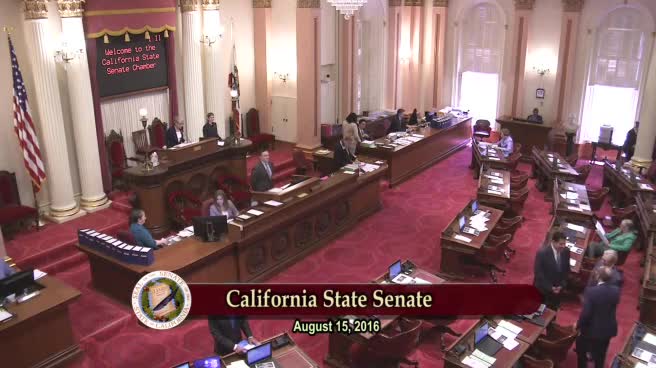 2MIN
Senate Floor
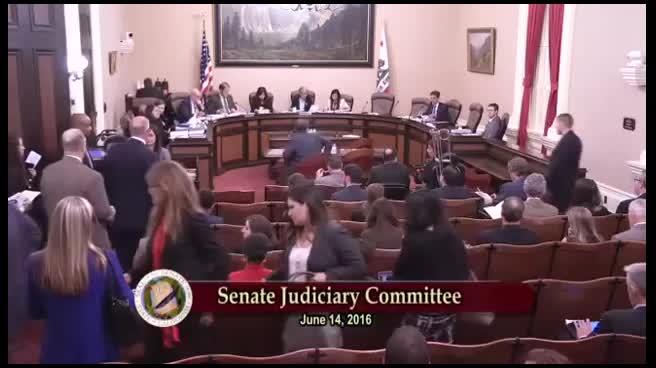 5MIN
Senate Standing Committee on Judiciary
Bill Author

Bill Co-Author(s):
