AB 2121: Alcoholic beverage control: Responsible Beverage Service Training Program Act of 2016.
- Session Year: 2015-2016
- House: Assembly
- Latest Version Date: 2016-09-02
The Alcoholic Beverage Control Act, administered by the Department of Alcoholic Beverage Control, regulates the granting of licenses for the manufacture, distribution, and sale of alcoholic beverages within the state. Under existing law, any on-sale license authorizes the sale of the alcoholic beverage specified in the license for consumption on the premises where sold. Currently, the Licensee Education on Alcohol and Drugs (LEAD) program is a voluntary prevention and education program for retail licensees, their employees, and applicants, regarding alcohol responsibility and the law.
This bill would, in addition to the LEAD program, establish the Responsible Beverage Service (RBS) Training Program Act of 2016, beginning July 1, 2020, that would require an alcohol server, as defined, to successfully complete an RBS training course offered by an accredited training provider within 3 months of employment and every 3 years thereafter. The bill would require a nonprofit organization that obtained a temporary daily on-sale or off-sale license to designate a person or persons to receive RBS training before the event and would require that person or those persons to remain on site for the duration of the event. The bill would provide that an RBS training course include information on, among other things, state laws and regulations relating to alcoholic beverage control and the impact of alcohol on the body. The bill would require the Department of Alcoholic Beverage Control, on or before January 1, 2020, to establish a list published on the departments Internet Web site of RBS training courses and would authorize the department to collect fees to cover the reasonable costs of review and approval of accreditation agencies. The bill, beginning January 1, 2019, would require the department to provide information on RBS training requirements on applications for, and renewals of, authorized licenses. The bill, beginning July 1, 2020, would require all authorized licensees to maintain, and provide upon request by the department, all records necessary to establish compliance with these provisions. The bill, beginning July 1, 2020, would provide that an authorized licensee, the licensees agent or employee, or an alcohol server who knowingly and intentionally violates any of these provisions is subject only to civil and administrative penalties, as specified.
The Alcoholic Beverage Control Act, administered by the Department of Alcoholic Beverage Control, regulates the granting of licenses for the manufacture, distribution, and sale of alcoholic beverages within the state. Under existing law, any on-sale license authorizes the sale of the alcoholic beverage specified in the license for consumption on the premises where sold and applications for the issuance or renewal of that license are signed under the penalty of perjury. sold. Currently, the Licensee Education on Alcohol and Drugs (LEAD) program is a voluntary prevention and education program for retail licensees, their employees, and applicants, regarding alcohol responsibility and the law.
This bill would, in addition to the LEAD program, establish the Responsible Beverage Service (RBS) Training Program Act of 2016, beginning July 1, 2020, that would require an alcohol server, as defined, to successfully complete an RBS training course offered by an accredited training provider within 3 months of employment and every 3 years thereafter. The bill would require a nonprofit organization that obtained a temporary daily on-sale or off-sale license to designate a person or persons to receive RBS training before the event and would require that person or those persons to remain on site for the duration of the event. The bill would provide that an RBS training course include information on, among other things, state laws and regulations relating to alcoholic beverage control and the impact of alcohol on the body. The bill would require the Department of Alcoholic Beverage Control, on or before January 1, 2020, to establish a list published on the departments Internet Web site of RBS training courses and would authorize the department to collect fees to cover the reasonable costs of review and approval of accreditation agencies. The bill, beginning January 1, 2019, would require the department to provide information on RBS training requirements on applications for, and renewals of, authorized licenses. The bill, beginning July 1, 2020, would require all authorized licensees to maintain, and provide upon request by the department, all records necessary to establish compliance with these provisions and would provide that alcohol servers are subject to specified criminal and civil penalties. By expanding the scope of an existing crime, this bill would impose a state-mandated local program. provisions. The bill, beginning July 1, 2020, would provide that an authorized licensee, the licensees agent or employee, or an alcohol server who knowingly and intentionally violates any of these provisions is subject only to civil and administrative penalties, as specified.
The California Constitution requires the state to reimburse local agencies and school districts for certain costs mandated by the state. Statutory provisions establish procedures for making that reimbursement.
This bill would provide that no reimbursement is required by this act for a specified reason.
The Alcoholic Beverage Control Act, administered by the Department of Alcoholic Beverage Control, regulates the granting of licenses for the manufacture, distribution, and sale of alcoholic beverages within the state. Under existing law, any on-sale license authorizes the sale of the alcoholic beverage specified in the license for consumption on the premises where sold and applications for the issuance or renewal of that license are signed under the penalty of perjury. Currently, the Licensee Education on Alcohol and Drugs (LEAD) program is a voluntary prevention and education program for retail licensees, their employees, and applicants, regarding alcohol responsibility and the law.
This bill would, in addition to the LEAD program, establish the Responsible Beverage Service (RBS) Training Program Act of 2016, beginning July 1, 2020, that would require an alcohol server, as defined, to successfully complete a certified an RBS training course offered by an accredited training provider within 3 months of employment and every 3 years thereafter. The bill would require a nonprofit organization that obtained a temporary daily on-sale or off-sale license to designate a person or persons to receive RBS training before the event and would require that person or those persons to remain on site for the duration of the event. The bill would provide that a certified an RBS training course include information on, among other things, state laws and regulations relating to alcoholic beverage control and the impact of alcohol on the body. The bill would require the Department of Alcoholic Beverage Control, on or before January 1, 2020, to establish a list published on the departments Internet Web site of certified RBS training courses and would authorize the department to collect fees to cover the reasonable costs of certification and recertification of RBS training courses. review and approval of accreditation agencies. The bill, beginning January 1, 2019, would require the department to provide information on RBS training requirements on applications for, and renewals of, authorized licenses. The bill, beginning July 1, 2020, would require all authorized licensees to maintain, and provide upon request by the department, all records necessary to establish compliance with these provisions and would make it a misdemeanor for an authorized licensee, or that licensees agent or employee, to permit any alcoholic beverage to be consumed on the premises without possessing a valid training certificate or card. By creating a new provide that alcohol servers are subject to specified criminal and civil penalties. By expanding the scope of an existing crime, this bill would impose a state-mandated local program.
The California Constitution requires the state to reimburse local agencies and school districts for certain costs mandated by the state. Statutory provisions establish procedures for making that reimbursement.
This bill would provide that no reimbursement is required by this act for a specified reason.
The Alcoholic Beverage Control Act, administered by the Department of Alcoholic Beverage Control, regulates the granting of licenses for the manufacture, distribution, and sale of alcoholic beverages within the state. Under existing law, any on-sale license authorizes the sale of the alcoholic beverage specified in the license for consumption on the premises where sold and applications for the issuance or renewal of that license are signed under the penalty of perjury. Currently, the Licensee Education on Alcohol and Drugs (LEAD) program is a voluntary prevention and education program for retail licensees, their employees, and applicants, regarding alcohol responsibility and the law.
This bill would, in addition to the LEAD program, establish the Responsible Beverage Service (RBS) Training Program Act of 2016, beginning July 1, 2020, that would require an alcohol server, as defined, to successfully complete a certified RBS training course within 3 months of employment and every 3 years thereafter. The bill would require a nonprofit organization that obtained a temporary daily on-sale or off-sale license to designate a person or persons to receive RBS training before the event and would require that person or those persons to remain on site for the duration of the event. The bill would provide that a certified RBS training course include information on, among other things, state laws and regulations relating to alcoholic beverage control and the impact of alcohol on the body. The bill would require the Department of Alcoholic Beverage Control, on or before January 1, 2020, to establish a list published on the departments Internet Web site of certified RBS training courses and, beginning January 1, 2019, courses and would authorize the department to collect fees to cover the reasonable costs of certification and recertification of RBS training courses. The bill, beginning January 1, 2019, would require the department to provide information on RBS training requirements on applications for, and renewals of, authorized licenses. The bill, beginning July 1, 2020, would require all authorized licensees to maintain, and provide upon request by the department, all records necessary to establish compliance with these provisions and would make it a misdemeanor for an authorized licensee, or that licensees agent or employee, to permit any alcoholic beverage to be consumed on the premises without possessing a valid training certificate or card. By creating a new crime, this bill would impose a state-mandated local program.
The California Constitution requires the state to reimburse local agencies and school districts for certain costs mandated by the state. Statutory provisions establish procedures for making that reimbursement.
This bill would provide that no reimbursement is required by this act for a specified reason.
The Alcoholic Beverage Control Act, administered by the Department of Alcoholic Beverage Control, regulates the granting of licenses for the manufacture, distribution, and sale of alcoholic beverages within the state. Under existing law, any on-sale license authorizes the sale of the alcoholic beverage specified in the license for consumption on the premises where sold and applications for the issuance or renewal of that license are signed under the penalty of perjury. Currently, the Licensee Education on Alcohol and Drugs (LEAD) program is a voluntary prevention and education program for retail licensees, their employees, and applicants, regarding alcohol responsibility and the law.
This bill would, in addition to the LEAD program, establish the Responsible Interventions for Beverage Servers (RIBS) Training Responsible Beverage Service (RBS) Training Program Act of 2016, beginning July 1, 2020, that would require an alcohol server, as defined, to successfully complete an approved RIBS a certified RBS training course within 3 months of employment and every 3 years thereafter. The bill would provide that an approved RIBS a certified RBS training course include information on, among other things, state laws and regulations relating to alcoholic beverage control and the impact of alcohol on the body. The bill would require the Department of Alcoholic Beverage Control, on or before January 1, 2019, 2020, to establish a list published on the departments Internet Web site of approved RIBS certified RBS training courses and and, beginning January 1, 2019, to provide information on RIBS RBS training requirements on applications for, and renewals of, authorized licenses. The bill would also require new applicants and renewal applicants for specified licenses to certify, and provide the department with documentation, that its employees have successfully completed a RIBS training course. The bill, beginning July 1, 2020, would require all authorized licensees to maintain, and provide upon request by the department, all records necessary to establish compliance with these provisions and would make it a misdemeanor for an authorized licensee, or that licensees agent or employee, to permit any alcoholic beverage to be consumed on the premises without possessing a valid training certificate or card. By expanding the definition of a creating a new crime, this bill would impose a state-mandated local program.
The California Constitution requires the state to reimburse local agencies and school districts for certain costs mandated by the state. Statutory provisions establish procedures for making that reimbursement.
This bill would provide that no reimbursement is required by this act for a specified reason.
The Alcoholic Beverage Control Act, administered by the Department of Alcoholic Beverage Control, regulates the granting of licenses for the manufacture, distribution, and sale of alcoholic beverages within the state. Under existing law, any on-sale license authorizes the sale of the alcoholic beverage specified in the license for consumption on the premises where sold and applications for the issuance or renewal of that license are signed under the penalty of perjury. Currently, the Licensee Education on Alcohol and Drugs (LEAD) program is a voluntary prevention and education program for retail licensees, their employees, and applicants, regarding alcohol responsibility and the law.
This bill would, in addition to the LEAD program, establish the Responsible Interventions for Beverage Servers (RIBS) Training Act of 2016, beginning July 1, 2020, that would require a person who sells or serves alcoholic beverages, or who manages persons who sell or serve, in an on-sale retail licensed premises an alcohol server, as defined, to successfully complete an approved RIBS training course within 3 months of employment and every 3 years thereafter. The bill would provide that an approved RIBS training course include information on, among other things, state laws and regulations relating to alcoholic beverage control and the impact of alcohol on the body. The bill would require the Department of Alcoholic Beverage Control, on or before January 1, 2020, 2019, to establish a list published on the departments Internet Web site of approved RIBS training courses and to provide information on RIBS training requirements on applications for, and renewals of, on-sale licenses. The bill would also require new applicants and renewal applicants for specified licenses to certify, and provide the department with documentation, that its employees have successfully completed a RIBS training course. By expanding the definition of a crime, this bill would impose a state-mandated local program.
The California Constitution requires the state to reimburse local agencies and school districts for certain costs mandated by the state. Statutory provisions establish procedures for making that reimbursement.
This bill would provide that no reimbursement is required by this act for a specified reason.
The Alcoholic Beverage Control Act, administered by the Department of Alcoholic Beverage Control, regulates the granting of licenses for the manufacture, distribution, and sale of alcoholic beverages within the state. Under existing law, any on-sale license authorizes the sale of the alcoholic beverage specified in the license for consumption on the premises where sold and applications for the issuance or renewal of that license are signed under the penalty of perjury. Currently, the Licensee Education on Alcohol and Drugs (LEAD) program is a voluntary prevention and education program for retail licensees, their employees, and applicants, regarding alcohol responsibility and the law.
This bill would, in addition to the LEAD program, establish the Responsible Interventions for Beverage Servers (RIBS) Training Act of 2016, beginning July 1, 2020, that would require a person who sells or serves alcoholic beverages, or who manages persons who sell or serve, in an on-sale retail licensed premises to successfully complete an approved RIBS training course within 3 months of employment and every 3 years thereafter. The bill would provide that an approved RIBS training course include information on, among other things, state laws and regulations relating to alcoholic beverage control and the impact of alcohol on the body. The bill would require the Department of Alcoholic Beverage Control, on or before January 1, 2020, to establish a list published on the departments Internet Web site of approved RIBS training courses and to provide information on RIBS training requirements on applications for, and renewals of, on-sale licenses. The bill would also require new applicants and renewal applicants to certify, and provide the department with documentation, that its employees have successfully completed a RIBS training course. By expanding the definition of a crime, this bill would impose a state-mandated local program.
The California Constitution requires the state to reimburse local agencies and school districts for certain costs mandated by the state. Statutory provisions establish procedures for making that reimbursement.
This bill would provide that no reimbursement is required by this act for a specified reason.
This act shall be known, and may be cited, as the Responsible Beverage Service Training Program Act of 2016.
SEC. 2.Article 4 (commencing with Section 25680) is added to Chapter 16 of Division 9 of the Business and Professions Code, to read:4.Responsible Beverage Service (RBS) Training Program Act of 201625680.For purposes of this article:
(a)Accredited training provider means either of the following:
(1)A training provider accredited by the American National Standards Institute (ANSI) that meets ASTM International E2659-15 Standard Practice for Certificate Programs.
(2)A training provider accredited by an accreditation agency other than ANSI, provided the accreditation agency is authorized by the department to accredit training providers offering RBS training courses.
(b)Alcohol server means a person who sells or serves alcoholic beverages directly to consumers, or a person who manages or supervises a person who sells or serves alcoholic beverages directly to consumers, including the onsite establishment owner of a licensed facility, for consumption on the premises of a licensed facility that includes, but is not limited to, one-day events, fairs, festivals, sporting events, and other special events.
(c)RBS training course means a Responsible Beverage Service training course that meets the requirements of subdivision (b) of Section 25682.
(d)Self-training and assessment means a process where the individual trains, and takes an assessment, without the presence or intervention of a trainer or instructor and includes, but is not limited to, training and assessment through the use of a computer program or the Internet.
25681.(a)Notwithstanding any laws to the contrary, beginning July 1, 2020, an alcohol server shall successfully complete an RBS training course from an accredited training provider within three months of employment and every three years thereafter.
(b)The licensee shall ensure that those persons required to successfully complete an RBS training course do so. A current certificate or card provided by any accredited training provider shall be sufficient documentation of successful completion and shall be accepted throughout the state.
(c)A nonprofit organization that has obtained a temporary daily on-sale license or a temporary daily off-sale license from the department shall designate a person or persons to receive RBS training prior to the event and that designated person or those designated persons shall remain on site for the duration of the event.
25682.(a)On or before January 1, 2020, the department shall establish a list, published on the departments Internet Web site, of RBS training courses offered by accredited training providers that may be used to fulfill the requirements of Section 25681.
(b)(1)An RBS training course shall consist of at least four hours of instruction and include, but shall not be limited to, the following information:
(A)The social impact of alcohol.
(B)The impact of alcohol on the body.
(C)State laws and regulations relating to alcoholic beverage control, including laws and regulations related to driving under the influence.
(D)Intervention techniques to prevent the service or sale of alcoholic beverages to underage persons or intoxicated patrons.
(E)The development of management policies that support the prevention of service or sale of alcoholic beverages to underage persons or intoxicated patrons.
(F)The course shall provide basic, introductory instruction on the elements described in subparagraphs (A) to (E), inclusive.
(2)An RBS training course may be offered through a trainer-led class and assessment or self-training and assessment.
(3)An RBS certificate or card shall be issued only upon successful completion of an RBS training course and assessment. A minimum score of 70 percent on the assessment shall be required to successfully complete the course.
(4)An RBS training course shall issue a certificate or card to individuals who successfully complete a course. The certificate or card shall be valid for three years from the original date of issuance, regardless of whether the alcohol server changes employers during that period.
(5)The department may, by regulation, establish additional training standards and curricula to be included in an RBS training course.
(c)At least one RBS training course shall cost a participant no more than fifteen dollars ($15), inclusive of the certificate or card provided upon successful completion of the training course. At least one RBS training course shall be offered in Spanish. If no RBS training courses meet these requirements, Section 25681 shall not apply.
(d)The department may authorize an accreditation agency, in addition to ANSI, to accredit training providers to offer RBS training courses and may collect fees to cover the reasonable costs associated with the review and approval of that accreditation agency.
25683.(a)Beginning January 1, 2019, the department shall include information on the RBS training course requirement pursuant to Section 25681, including information on documentation requirements, on the application for an authorized license and with the license renewal notices sent to authorized licensees.
(b)Beginning July 1, 2020, all authorized licensees shall maintain, and provide upon request by the department, all records necessary to establish compliance with this section.
25684.(a)Beginning July 1, 2020, an authorized licensee, the agent or employee of that licensee, or an alcohol server who knowingly and intentionally violates any provision of this article shall be subject only to the civil and administrative penalties authorized by this division.
(b)An alcohol server shall be subject to the provisions of subdivisions (b) and (c) of Section 25602.
This act shall be known, and may be cited, as the Responsible Beverage Service Training Program Act of 2016.
SEC. 2.Article 4 (commencing with Section 25680) is added to Chapter 16 of Division 9 of the Business and Professions Code, to read:4.Responsible Beverage Service (RBS) Training Program Act of 201625680.For purposes of this article:
(a)Accredited training provider means either of the following:
(1)A training provider accredited by the American National Standards Institute (ANSI) that meets ASTM International E2659-15 Standard Practice for Certificate Programs.
(2)A training provider accredited by an accreditation agency other than ANSI, provided the accreditation agency is authorized by the department to accredit training providers offering RBS training courses.
(b)Alcohol server means a person who sells or serves alcoholic beverages directly to consumers, or a person who manages or supervises a person who sells or serves alcoholic beverages directly to consumers, including the onsite establishment owner of a licensed facility, for consumption on the premises of a licensed facility that includes, but is not limited to, one-day events, fairs, festivals, sporting events, and other special events.
(c)RBS training course means a Responsible Beverage Service training course that meets the requirements of subdivision (b) of Section 25682.
(d)Self-training and assessment means a process where the individual trains, and takes an assessment, without the presence or intervention of a trainer or instructor and includes, but is not limited to, training and assessment through the use of a computer program or the Internet.
25681.(a)Notwithstanding any laws to the contrary, beginning July 1, 2020, an alcohol server shall successfully complete an RBS training course from an accredited training provider within three months of employment and every three years thereafter.
(b)The licensee shall ensure that those persons required to successfully complete an RBS training course do so. A current certificate or card provided by any accredited training provider shall be sufficient documentation of successful completion and shall be accepted throughout the state.
(c)A nonprofit organization that has obtained a temporary daily on-sale license or a temporary daily off-sale license from the department shall designate a person or persons to receive RBS training prior to the event and that designated person or those designated persons shall remain on site for the duration of the event.
(d)An alcohol server shall be subject to the provisions of subdivisions (b) and (c) of Section 25602.
25682.(a)On or before January 1, 2020, the department shall establish a list, published on the departments Internet Web site, of RBS training courses offered by accredited training providers that may be used to fulfill the requirements of Section 25681.
(b)(1)An RBS training course shall consist of at least four hours of instruction and include, but shall not be limited to, the following information:
(A)The social impact of alcohol.
(B)The impact of alcohol on the body.
(C)State laws and regulations relating to alcoholic beverage control, including laws and regulations related to driving under the influence.
(D)Intervention techniques to prevent the service or sale of alcoholic beverages to underage persons or intoxicated patrons.
(E)The development of management policies that support the prevention of service or sale of alcoholic beverages to underage persons or intoxicated patrons.
(F)The course shall provide basic, introductory instruction on the elements described in subparagraphs (A) to (E), inclusive.
(2)An RBS training course may be offered through a trainer-led class and assessment or self-training and assessment.
(3)An RBS certificate or card shall be issued only upon successful completion of an RBS training course and assessment. A minimum score of 70 percent on the assessment shall be required to successfully complete the course.
(4)An RBS training course shall issue a certificate or card to individuals who successfully complete a course. The certificate or card shall be valid for three years from the original date of issuance, regardless of whether the alcohol server changes employers during that period.
(5)The department may, by regulation, establish additional training standards and curricula to be included in an RBS training course.
(c)At least one RBS training course shall cost a participant no more than fifteen dollars ($15), inclusive of the certificate or card provided upon successful completion of the training course. At least one RBS training course shall be offered in Spanish. If no RBS training courses meet these requirements, Section 25681 shall not apply.
(d)The department may authorize an accreditation agency, in addition to ANSI, to accredit training providers to offer RBS training courses and may collect fees to cover the reasonable costs associated with the review and approval of that accreditation agency.
25683.(a)Beginning January 1, 2019, the department shall include information on the RBS training course requirement pursuant to Section 25681, including information on documentation requirements, on the application for an authorized license and with the license renewal notices sent to authorized licensees.
(b)Beginning July 1, 2020, all authorized licensees shall maintain, and provide upon request by the department, all records necessary to establish compliance with this section.
(c)Beginning July 1, 2020, an authorized licensee, or agent or employee of that licensee, who knowingly and intentionally employs an alcohol server that has not completed an RBS training course shall only be subject to the civil and administrative penalties authorized by this division.
25684.(a)Beginning July 1, 2020, an authorized licensee, the agent or employee of that licensee, or an alcohol server who knowingly and intentionally violates any provision of this article shall be subject only to the civil and administrative penalties authorized by this division.
(b)An alcohol server shall be subject to the provisions of subdivisions (b) and (c) of Section 25602.
SEC. 3.No reimbursement is required by this act pursuant to Section 6 of Article XIIIB of the California Constitution because the only costs that may be incurred by a local agency or school district will be incurred because this act creates a new crime or infraction, eliminates a crime or infraction, or changes the penalty for a crime or infraction, within the meaning of Section 17556 of the Government Code, or changes the definition of a crime within the meaning of Section 6 of Article XIIIB of the California Constitution.
This act shall be known, and may be cited, as the Responsible Beverage Service Training Program Act of 2016.
SEC. 2.Article 4 (commencing with Section 25680) is added to Chapter 16 of Division 9 of the Business and Professions Code, to read:4.Responsible Beverage Service (RBS) Training Program Act of 201625680.For purposes of this article:
(a)Accredited training provider means either of the following:
(1)A training provider accredited by the American National Standards Institute (ANSI) that meets ASTM International E2659-15 Standard Practice for Certificate Programs.
(2)A training provider accredited by an accreditation agency other than ANSI, provided the accreditation agency is authorized by the department to accredit training providers offering RBS training courses.
(a)
(b)Alcohol server means a person who sells or serves alcoholic beverages, beverages directly to consumers, or a person who manages or supervises a person who sells or serves alcoholic beverages, beverages directly to consumers, including the onsite establishment owner of a licensed facility, for consumption on the premises of a licensed facility that includes, but is not limited to, one-day events, fairs, festivals, sporting events, and other special events.
(b)
(c)RBS training course means a Responsible Beverage Service training course certified by the department pursuant to that meets the requirements of subdivision (b) of Section 25682.
(c)
(d)Self-training and assessment means a process where the individual trains, and takes an assessment, without the presence or intervention of a trainer or instructor, instructor and includes, but is not limited to, training and assessment through the use of a computer program or the Internet.
25681.(a)Notwithstanding any laws to the contrary, beginning July 1, 2020, an alcohol server shall successfully complete a certified an RBS training course from an accredited training provider within three months of employment and every three years thereafter.
(b)The licensee shall ensure that those persons required to successfully complete a certified an RBS training course do so. A current certificate or card provided by any approved training course accredited training provider shall be sufficient documentation of successful completion and shall be accepted throughout the state.
(c)A nonprofit organization that has obtained a temporary daily on-sale license or a temporary daily off-sale license from the department shall designate a person or persons to receive RBS training prior to the event and that designated person or those designated persons shall remain on site for the duration of the event.
(d)An alcohol server shall be subject to the provisions of subdivisions (b) and (c) of Section 25602.
25682.(a)On or before January 1, 2020, the department shall establish a list, published on the departments Internet Web site, of certified RBS training courses offered by accredited training providers that may be used to fulfill the requirements of Section 25681.
(b)(1)A certified An RBS training course shall consist of at least four hours of instruction and include, but shall not be limited to, the following information:
(A)The social impact of alcohol.
(B)The impact of alcohol on the body.
(C)State laws and regulations relating to alcoholic beverage control, including laws and regulations related to driving under the influence.
(D)Intervention techniques to prevent the service or sale of alcoholic beverages to underage persons or intoxicated patrons.
(E)The development of management policies that support the prevention of service or sale of alcoholic beverages to underage persons or intoxicated patrons.
(F)The course shall provide basic, introductory instruction on the elements described in subparagraphs (A) to (E), inclusive.
(2)An RBS training course may be offered through a trainer-led class and assessment or self-training and assessment.
(3)An RBS certificate or card shall be issued only upon successful completion of a certified an RBS training course and assessment. A minimum score of 70 percent on the assessment shall be required to successfully complete the course.
(4)A certified An RBS training course shall issue a certificate or card to individuals who successfully complete a course. The certificate or card shall be valid for three years from the original date of issuance, regardless of whether the alcohol server changes employers during that period.
(5)The department may, by regulation, establish additional training standards and curricula to be included in a certified an RBS training course.
(c)The department shall establish minimum standards and promulgate regulations for the training and scope of practice by January 1, 2018, for a person who sells or serves alcoholic beverages.
(d)
(c)At least one certified RBS training course shall cost a participant no more than fifteen dollars ($15), inclusive of the certificate or card provided upon successful completion of the training course. At least one certified RBS training course shall be offered in Spanish. If no RBS training courses meet these requirements, Section 25681 shall not apply.
(e)The department shall review a certified RBS training course at least once every three years after the course is approved.
(f)The department may collect fees as part of the certification or recertification process to cover the reasonable costs associated with the certification and recertification of RBS training courses.
(d)The department may authorize an accreditation agency, in addition to ANSI, to accredit training providers to offer RBS training courses and may collect fees to cover the reasonable costs associated with the review and approval of that accreditation agency.
25683.(a)Beginning January 1, 2019, the department shall include information on the RBS training course requirement pursuant to Section 25681, including information on documentation requirements, on the application for an authorized license and with the license renewal notices sent to authorized licensees.
(b)Beginning July 1, 2020, all authorized licensees shall maintain, and provide upon request by the department, all records necessary to establish compliance with this section.
(c)Beginning July 1, 2020, an authorized licensee, or agent or employee of such that licensee, who permits any alcoholic beverage to be consumed by any person on the premises without possessing a valid training certificate or card is guilty of a misdemeanor. knowingly and intentionally employs an alcohol server that has not completed an RBS training course shall only be subject to the civil and administrative penalties authorized by this division.
SEC. 3.No reimbursement is required by this act pursuant to Section 6 of Article XIIIB of the California Constitution because the only costs that may be incurred by a local agency or school district will be incurred because this act creates a new crime or infraction, eliminates a crime or infraction, or changes the penalty for a crime or infraction, within the meaning of Section 17556 of the Government Code, or changes the definition of a crime within the meaning of Section 6 of Article XIIIB of the California Constitution.
This act shall be known, and may be cited, as the Responsible Beverage Service Training Program Act of 2016.
SEC. 2.Article 4 (commencing with Section 25680) is added to Chapter 16 of Division 9 of the Business and Professions Code, to read:4.Responsible Beverage Service (RBS) Training Program Act of 201625680.For purposes of this article:
(a)Alcohol server means a person who sells or serves alcoholic beverages, or a person who manages or supervises a person who sells or serves alcoholic beverages, including the onsite establishment owner of a licensed facility, for consumption on the premises of a licensed facility. licensed facility that includes, but is not limited to, one-day events, fairs, festivals, sporting events, and other special events.
(b)RBS training course means a Responsible Beverage Service training course certified by the department pursuant to Section 25682.
(c)Self-training and assessment means a process where the individual trains, and takes an assessment, without the presence or intervention of a trainer or instructor, and includes, but is not limited to, training and assessment through the use of a computer program or the Internet.
25681.(a)Notwithstanding any laws to the contrary, beginning July 1, 2020, an alcohol server shall successfully complete a certified RBS training course within three months of employment and every three years thereafter.
(b)The licensee shall ensure that those persons required to successfully complete a certified RBS training course do so. A current certificate or card provided by any approved training course provider shall be sufficient documentation of successful completion and shall be accepted throughout the state.
(c)A nonprofit organization that has obtained a temporary daily on-sale license or a temporary daily off-sale license from the department shall designate a person or persons to receive RBS training prior to the event and that designated person or those designated persons shall remain on site for the duration of the event.
(c)
(d)An alcohol server shall be subject to the provisions of subdivisions (b) and (c) of Section 25602.
25682.(a)On or before January 1, 2020, the department shall establish a list, published on the departments Internet Web site, of certified RBS training courses that may be used to fulfill the requirements of Section 25681.
(b)(1)A certified RBS training course shall consist of at least four hours of instruction and include, but shall not be limited to, the following information:
(A)The social impact of alcohol.
(B)The impact of alcohol on the body.
(C)State laws and regulations relating to alcoholic beverage control, including laws and regulations related to driving under the influence.
(D)Intervention techniques to prevent the service or sale of alcoholic beverages to underage persons or intoxicated patrons.
(E)The development of management policies that support the prevention of service or sale of alcoholic beverages to underage persons or intoxicated patrons.
(F)The course shall provide basic, introductory instruction on the elements described in subparagraphs (A) to (E), inclusive.
(2)An RBS training course may be offered through a trainer-led class and assessment or self-training and assessment.
(3)An RBS certificate or card shall be issued only upon successful completion of a certified RBS training course and assessment. A minimum score of 70 percent on the assessment shall be required to successfully complete the course.
(4)A certified RBS training course shall issue a certificate or card to individuals who successfully complete a course. The certificate or card shall be valid for three years from the original date of issuance, regardless of whether the alcohol server changes employers during that period.
(5)The department may, by regulation, establish additional training standards and curricula to be included in a certified RBS training course.
(c)The department shall establish minimum standards and promulgate regulations for the training and scope of practice by January 1, 2018, for a person who sells or serves alcoholic beverages.
(d)At least one certified RBS training course shall cost a participant no more than fifteen dollars ($15), inclusive of the certificate or card provided upon successful completion of the training course. At least one certified RBS training course shall be offered in Spanish. If no RBS training courses meet these requirements, Section 25681 shall not apply.
(e)The department shall review a certified RBS training course at least once every three years after the course is approved.
(f)The department may collect fees as part of the certification or recertification process to cover the reasonable costs associated with the certification and recertification of RBS training courses.
25683.(a)Beginning January 1, 2019, the department shall include information on the RBS training course requirement pursuant to Section 25681, including information on documentation requirements, on the application for an authorized license and with the license renewal notices sent to authorized licensees.
(b)Beginning July 1, 2020, all authorized licensees shall maintain, and provide upon request by the department, all records necessary to establish compliance with this section.
(c)Beginning July 1, 2020, an authorized licensee, or agent or employee of such licensee, who permits any alcoholic beverage to be consumed by any person on the premises without possessing a valid training certificate or card is guilty of a misdemeanor.
SEC. 3.No reimbursement is required by this act pursuant to Section 6 of Article XIIIB of the California Constitution because the only costs that may be incurred by a local agency or school district will be incurred because this act creates a new crime or infraction, eliminates a crime or infraction, or changes the penalty for a crime or infraction, within the meaning of Section 17556 of the Government Code, or changes the definition of a crime within the meaning of Section 6 of Article XIIIB of the California Constitution.
This act shall be known, and may be cited, as the Responsible Interventions for Beverage Servers Training Responsible Beverage Service Training Program Act of 2016.
SEC. 2.Article 4 (commencing with Section 25680) is added to Chapter 16 of Division 9 of the Business and Professions Code, to read:4.Responsible Interventions for Beverage Servers (RIBS) Training Responsible Beverage Service (RBS) Training Program Act of 201625680.For purposes of this article:
(a)Alcohol server means a person who sells or serves alcoholic beverages, or a person who manages or supervises a person who sells or serves alcoholic beverages, including the onsite establishment owner of a licensed facility, for consumption on the premises of a licensed facility.
(b)RIBS RBS training course means a Responsible Interventions for Beverage Servers Responsible Beverage Service training course approved certified by the department pursuant to Section 25682.
(c)Self-training and assessment means a process where the individual trains, and takes an assessment, without the presence or intervention of a trainer or instructor, and includes, but is not limited to, training and assessment through the use of a computer program or the Internet.
25681.(a)Beginning Notwithstanding any laws to the contrary, beginning July 1, 2020, an alcohol server shall successfully complete an approved RIBS a certified RBS training course within three months of employment and every three years thereafter.
(b)The licensee shall ensure that those persons required to successfully complete an approved RIBS a certified RBS training course do so. A current certificate or card provided by any approved training course provider shall be sufficient documentation of successful completion and shall be accepted throughout the state.
(c)An alcohol server shall be subject to the provisions of subdivisions (b) and (c) of Section 25602.
25682.(a)On or before January 1, 2019, 2020, the department shall establish a list, published on the departments Internet Web site, of approved RIBS certified RBS training courses that may be used to fulfill the requirements of Section 25681.
(b)(1)An approved RIBS A certified RBS training course shall consist of at least four hours of instruction and include, but shall not be limited to, the following information:
(A)The social impact of alcohol.
(B)The impact of alcohol on the body.
(C)State laws and regulations relating to alcoholic beverage control, including laws and regulations related to driving under the influence.
(D)Intervention techniques to prevent the service or sale of alcoholic beverages to underage persons or intoxicated patrons.
(E)The development of management policies that support the prevention of service or sale of alcoholic beverages to underage persons or intoxicated patrons.
(F)The course shall provide basic, introductory instruction on the elements described in subparagraphs (A) to (E), inclusive.
(2)A RIBS An RBS training course may be offered through a trainer-led class and assessment or self-training and assessment.
(3)A RIBS An RBS certificate or card shall be issued only upon successful completion of an approved RIBS a certified RBS training course and assessment. A minimum score of 70 percent on the assessment shall be required to successfully complete the course.
(4)An approved RIBS A certified RBS training course shall issue a certificate or card to individuals who successfully complete a course. The certificate or card shall be valid for three years from the original date of issuance, regardless of whether the alcohol server changes employers during that period.
(5)The department may, by regulation, establish additional training standards and curricula to be included in an approved RIBS a certified RBS training course.
(c)The department shall establish minimum standards and promulgate regulations for the training and scope of practice by January 1, 2018, for a person who sells or serves alcoholic beverages.
(d)At least one approved RIBS certified RBS training course shall cost a participant no more than fifteen dollars ($15), inclusive of the certificate or card provided upon successful completion of the training course. At least one approved RIBS certified RBS training course shall be offered in Spanish. If no RIBS RBS training courses meet these requirements, Section 25681 shall not apply.
(e)The department shall review an approved RIBS a certified RBS training course at least once every three years after the course is approved.
25683.(a)Beginning January 1, 2019, the department shall include information on the RIBS RBS training course requirement pursuant to Section 25681, including information on documentation requirements, on the application for a an authorized license and with the license renewal notices sent to authorized licensees.
(b)Beginning January 1, 2020, a licensee applying for a new license that authorizes alcohol to be served on the licensed premises shall certify on the application that all employees of the licensee subject to Section 25681 either have successfully completed a RIBS training course or, within the first calendar year of the issuance of the license, will have successfully completed a RIBS training course. The licensee shall provide the department with documentation of successful completion.
(c)Beginning January 1, 2020, a licensee applying for the renewal of the license that authorizes alcohol to be served on the licensed premises shall certify on the application, and provide the department with documentation, that all employees of the licensee subject to Section 25681 have successfully completed a RIBS training course.
(b)Beginning July 1, 2020, all authorized licensees shall maintain, and provide upon request by the department, all records necessary to establish compliance with this section.
(c)Beginning July 1, 2020, an authorized licensee, or agent or employee of such licensee, who permits any alcoholic beverage to be consumed by any person on the premises without possessing a valid training certificate or card is guilty of a misdemeanor.
SEC. 3.No reimbursement is required by this act pursuant to Section 6 of Article XIIIB of the California Constitution because the only costs that may be incurred by a local agency or school district will be incurred because this act creates a new crime or infraction, eliminates a crime or infraction, or changes the penalty for a crime or infraction, within the meaning of Section 17556 of the Government Code, or changes the definition of a crime within the meaning of Section 6 of Article XIIIB of the California Constitution.
This act shall be known, and may be cited, as the Responsible Interventions for Beverage Servers Training Act of 2016.
SEC. 2.Article 4 (commencing with Section 25680) is added to Chapter 16 of Division 9 of the Business and Professions Code, to read:4.Responsible Interventions for Beverage Servers (RIBS) Training Act of 201625680.For purposes of this article, RIBS training course means a Responsible Interventions for Beverage Servers training course approved by the department pursuant to Section 25682. article:
(a)Alcohol server means a person who sells or serves alcoholic beverages, or a person who manages a person who sells or serves alcoholic beverages, for consumption on the premises of a licensed facility.
(b)RIBS training course means a Responsible Interventions for Beverage Servers training course approved by the department pursuant to Section 25682.
(c)Self-training and assessment means a process where the individual trains, and takes an assessment, without the presence or intervention of a trainer or instructor, and includes, but is not limited to, training and assessment through the use of a computer program or the Internet.
25681.(a)Beginning July 1, 2020, a person who sells or serves alcoholic beverages, or a person who manages a person who sells or serves alcoholic beverages, for consumption on the premises of an on-sale retail licensee an alcohol server shall successfully complete an approved RIBS training course within three months of employment and every three years thereafter.
(b)The on-sale retail licensee shall ensure that those persons required to successfully complete an approved RIBS training course do so. A certificate provided by the current certificate or card provided by any approved training course provider shall be sufficient documentation of successful completion. completion and shall be accepted throughout the state.
25682.(a)On or before January 1, 2020, 2019, the department shall establish a list, published on the departments Internet Web site, of approved RIBS training courses that may be used to fulfill the requirements of Section 25681.
(b)(1)An approved RIBS training course shall consist of at least four hours of instruction and include, but shall not be limited to, the following information:
(A)The social impact of alcohol.
(B)The impact of alcohol on the body.
(C)State laws and regulations relating to alcoholic beverage control, including laws and regulations related to driving under the influence.
(D)Intervention techniques to prevent the service or sale of alcoholic beverages to underage persons or intoxicated patrons.
(E)The development of management policies that support the prevention of service or sale of alcoholic beverages to underage persons or intoxicated patrons.
(F)The course shall provide basic, introductory instruction on the elements described in subparagraphs (A) to (E), inclusive.
(2)A RIBS training course may be offered through a trainer-led class and assessment or self-training and assessment.
(3)A RIBS certificate or card shall be issued only upon successful completion of an approved RIBS training course and assessment. A minimum score of 70 percent on the assessment shall be required to successfully complete the course.
(4)An approved RIBS training course shall issue a certificate or card to individuals who successfully complete a course. The certificate or card shall be valid for three years from the original date of issuance, regardless of whether the alcohol server changes employers during that period.
(2)
(5)The department may, by regulation, establish additional training standards and curricula to be included in an approved RIBS training course.
(c)The department shall establish minimum standards and promulgate regulations for the training and scope of practice for a person who sells or serves alcoholic beverages.
(d)At least one approved RIBS training course shall cost a participant no more than fifteen dollars ($15), inclusive of the certificate or card provided upon successful completion of the training course. At least one approved RIBS training course shall be offered in Spanish. If no RIBS training courses meet these requirements, Section 25681 shall not apply.
(c)
(e)The department shall review an approved RIBS training course at least once every three years after the course is approved.
25683.(a)Beginning January 1, 2020, 2019, the department shall include information on the RIBS training course requirement pursuant to Section 25681, including information on documentation requirements, on the application for an on-sale retail a license and with the license renewal notices sent to on-sale retail licensees.
(b)Beginning January 1, 2020, an on-sale retail a licensee applying for a new license that authorizes alcohol to be served on the licensed premises shall certify on the application that all employees of the licensee subject to Section 25681 either have successfully completed a RIBS training course or, within the first calendar year of the issuance of the license, will have successfully completed a RIBS training course. The licensee shall provide the department with documentation of successful completion.
(c)Beginning January 1, 2020, an on-sale retail a licensee applying for the renewal of the license that authorizes alcohol to be served on the licensed premises shall certify on the application, and provide the department with documentation, that all employees of the licensee subject to Section 25681 have successfully completed a RIBS training course.
SEC. 3.No reimbursement is required by this act pursuant to Section 6 of Article XIIIB of the California Constitution because the only costs that may be incurred by a local agency or school district will be incurred because this act creates a new crime or infraction, eliminates a crime or infraction, or changes the penalty for a crime or infraction, within the meaning of Section 17556 of the Government Code, or changes the definition of a crime within the meaning of Section 6 of Article XIIIB of the California Constitution.
This act shall be known, and may be cited, as the Responsible Interventions for Beverage Servers Training Act of 2016.
SEC. 2.Article 4 (commencing with Section 25680) is added to Chapter 16 of Division 9 of the Business and Professions Code, to read:4.Responsible Interventions for Beverage Servers (RIBS) Training Act of 201625680.For purposes of this article, RIBS training course means a Responsible Interventions for Beverage Servers training course approved by the department pursuant to Section 25682.
25681.(a)Beginning July 1, 2020, a person who sells or serves alcoholic beverages, or a person who manages a person who sells or serves alcoholic beverages, for consumption on the premises of an on-sale retail licensee shall successfully complete an approved RIBS training course within three months of employment and every three years thereafter.
(b)The on-sale retail licensee shall ensure that those persons required to successfully complete an approved RIBS training course do so. A certificate provided by the training course provider shall be sufficient documentation of successful completion.
25682.(a)On or before January 1, 2020, the department shall establish a list, published on the departments Internet Web site, of approved RIBS training courses that may be used to fulfill the requirements of Section 25681.
(b)(1)An approved RIBS training course shall consist of at least four hours of instruction and include, but shall not be limited to, the following information:
(A)The social impact of alcohol.
(B)The impact of alcohol on the body.
(C)State laws and regulations relating to alcoholic beverage control, including laws and regulations related to driving under the influence.
(D)Intervention techniques to prevent the service or sale of alcoholic beverages to underage persons or intoxicated patrons.
(E)The development of management policies that support the prevention of service or sale of alcoholic beverages to underage persons or intoxicated patrons.
(2)The department may, by regulation, establish additional training standards and curricula to be included in an approved RIBS training course.
(c)The department shall review an approved RIBS training course at least once every three years after the course is approved.
25683.(a)Beginning January 1, 2020, the department shall include information on the RIBS training course requirement pursuant to Section 25681, including information on documentation requirements, on the application for an on-sale retail license and with the license renewal notices sent to on-sale retail licensees.
(b)Beginning January 1, 2020, an on-sale retail licensee applying for a new license shall certify on the application that all employees of the licensee subject to Section 25681 either have successfully completed a RIBS training course or, within the first calendar year of the issuance of the license, will have successfully completed a RIBS training course. The licensee shall provide the department with documentation of successful completion.
(c)Beginning January 1, 2020, an on-sale retail licensee applying for the renewal of the license shall certify on the application, and provide the department with documentation, that all employees of the licensee subject to Section 25681 have successfully completed a RIBS training course.
SEC. 3.No reimbursement is required by this act pursuant to Section 6 of Article XIIIB of the California Constitution because the only costs that may be incurred by a local agency or school district will be incurred because this act creates a new crime or infraction, eliminates a crime or infraction, or changes the penalty for a crime or infraction, within the meaning of Section 17556 of the Government Code, or changes the definition of a crime within the meaning of Section 6 of Article XIIIB of the California Constitution.
|
Date
|
Status
|
|---|---|
| Aug 24, 2016 | In Assembly. Concurrence in Senate amendments pending. May be considered on or after August 26 pursuant to Assembly Rule 77. |
| Jun 21, 2016 | From committee chair, with author's amendments: Amend, and re-refer to committee. Read second time, amended, and re-referred to Com. on G.O. |
| Jun 28, 2016 | From committee: Do pass and re-refer to Com. on APPR. (Ayes 13. Noes 0.) (June 28). Re-referred to Com. on APPR. |
| Aug 1, 2016 | In committee: Referred to APPR. suspense file. |
| Aug 11, 2016 | From committee: Amend, and do pass as amended. (Ayes 5. Noes 0.) (August 11). |
| Aug 15, 2016 | Read second time and amended. Ordered to third reading. |
| Aug 17, 2016 | Read third time. Passed. Ordered to the Assembly. |
| Aug 17, 2016 | Read third time. Passed. Ordered to the Assembly. (Ayes 37. Noes 2. Page 5046.). |
| Aug 17, 2016 | Read third time. Passed. Ordered to the Assembly. (Ayes 37. Noes 2.). |
| Jun 9, 2016 | Referred to Com. on G.O. |
| Aug 29, 2016 | Re-referred to Com. on G.O. pursuant to Assembly Rule 77.2. |
| Aug 30, 2016 | Joint Rule 62(a), file notice suspended. |
| Aug 30, 2016 | Joint Rule 62(a), file notice suspended. (Page 6474.) |
| Aug 31, 2016 | Assembly Rule 63 suspended. |
| Aug 31, 2016 | From committee: That the Senate amendments be concurred in. (Ayes 17. Noes 0.) (August 30). |
| Aug 31, 2016 | Senate amendments concurred in. To Engrossing and Enrolling. |
| Sep 9, 2016 | Enrolled and presented to the Governor at 2:30 p.m. |
| Feb 17, 2016 | Read first time. To print. |
| Jun 6, 2016 | In Senate. Read first time. To Com. on RLS. for assignment. |
| Jun 2, 2016 | Read third time. Passed. Ordered to the Senate. (Ayes 64. Noes 11.) |
| Jun 2, 2016 | Read third time. Passed. Ordered to the Senate. (Ayes 64. Noes 11. Page 5244.) |
| Jun 2, 2016 | Read third time. Passed. Ordered to the Senate. |
| Jun 1, 2016 | Read second time. Ordered to third reading. |
| May 31, 2016 | Read second time and amended. Ordered returned to second reading. |
| May 27, 2016 | From committee: Amend, and do pass as amended. (Ayes 14. Noes 4.) (May 27). |
| May 18, 2016 | In committee: Set, first hearing. Referred to APPR. suspense file. |
| May 12, 2016 | Re-referred to Com. on APPR. |
| May 11, 2016 | From committee chair, with author's amendments: Amend, and re-refer to Com. on APPR. Read second time and amended. |
| Apr 21, 2016 | From committee: Do pass and re-refer to Com. on APPR. (Ayes 18. Noes 0.) (April 20). Re-referred to Com. on APPR. |
| Apr 13, 2016 | Re-referred to Com. on G.O. |
| Apr 12, 2016 | From committee chair, with author's amendments: Amend, and re-refer to Com. on G.O. Read second time and amended. |
| Feb 29, 2016 | Referred to Com. on G.O. |
| Feb 18, 2016 | From printer. May be heard in committee March 19. |
|
Date
|
Description
|
Location
|
Votes
|
|
|---|---|---|---|---|
| Aug 31, 2016 | AB 2121 GONZALEZ Concurrence in Senate Amendments | Assembly Floor |
Passed |
|
| Aug 30, 2016 | With recommendation: That Senate amendments be concurred in. | Assembly Standing Committee on Governmental Organization |
Passed |
|
| Aug 17, 2016 | Assembly 3rd Reading AB2121 Gonzalez By Hill | Senate Floor |
Passed |
|
| Aug 11, 2016 | Do pass as amended | Senate Standing Committee on Appropriations |
Passed |
|
| Aug 1, 2016 | Placed on suspense file | Senate Standing Committee on Appropriations |
Passed |
|
| Jun 28, 2016 | Do pass, but first be re-referred to the Committee on [Appropriations] | Senate Standing Committee on Governmental Organization |
Passed |
|
| Jun 2, 2016 | AB 2121 GONZALEZ Assembly Third Reading | Assembly Floor |
Passed |
|
| May 27, 2016 | Do pass as amended. | Assembly Standing Committee on Appropriations |
Passed |
|
| Apr 20, 2016 | Do pass and be re-referred to the Committee on [Appropriations] | Assembly Standing Committee on Governmental Organization |
Passed |
This list shows positions taken on this bill by organizations on the date displayed, which is linked to the original source.
Positions by individuals are not included.
|
Organization
|
Position
|
Date
|
|---|---|---|
| Alcohol Justice | ** Support | Aug 17, 2016 |
| California Alcohol Policy Alliance | ** Support | Aug 17, 2016 |
| California Craft Brewers Association | ** Support | Aug 17, 2016 |
| California Medical Association, Inc. | ** Support | Aug 17, 2016 |
| California Police Chiefs Association | ** Support | Aug 17, 2016 |
| California Society Of Addiction Medicine | ** Support | Aug 17, 2016 |
| Civil Justice Association Of California | ** Against | Jun 2, 2016 |
| County Health Executives Association Of California | ** Support | Aug 17, 2016 |
| G.O. | ** Against | Jun 2, 2016 |
| Liquor License Advisor, Inc. | ** Support | Jun 2, 2016 |
| Los Angeles Drug and Alcohol Policy Alliance | ** Support | Aug 17, 2016 |
| Mothers Against Drunk Driving | ** Support | Aug 17, 2016 |
| Partnership for a Positive Pomona | ** Support | Aug 17, 2016 |
| SPIRITT Family Services | ** Support | Aug 17, 2016 |
GOVERNOR'S VETO
GV Bill Id:AB 2121
Author:(Gonzalez)
As Enrolled Ver:September 9, 2016
2/3 vote
ASSEMBLY: | 64-11 | (June 2, 2016) | SENATE: | 37-2 | (August 17, 2016) |
COMMITTEE VOTE: | 17-0 | (August 30, 2016) | RECOMMENDATION: | concur |
(G.O.)
ASSEMBLY: | 63-12 | (August 31, 2016) |
SUMMARY: Establishes the Responsible Beverage Service (RBS) Training Program Act of 2016, beginning July 1, 2020, that requires an alcohol server, as defined, to successfully complete an RBS training course from an accredited training provider within three months of employment and every three years thereafter.
The Senate amendments:
- Define "accredited training provider" to mean either of the following:
- A training provider accredited by the American National Standards Institute (ANSI) that meets ASTM International E2659-15 Standard Practice for Certificate Programs or
- A training provider accredited by an accreditation agency other than ANSI, provided the accreditation agency is authorized by the department of Alcoholic Beverage Control (ABC) to accredit training providers offering RBS training courses.
- Permit ABC to authorize an accreditation agency, in addition to ANSI, to accredit training providers to offer RBS training courses and to collect fees to cover reasonable costs associated with the review and approval of that accreditation agency.
- Stipulate that, beginning July 1, 2020, an authorized licensee, the agent or employee of that licensee, or an alcohol server who knowingly and intentionally violates any provision of this bill, shall only be subject to certain ABC Act civil and administrative penalties.
4) Make technical and clarifying changes.
EXISTING LAW:
- The Alcoholic Beverage Control Act, administered by ABC, regulates the granting of licenses for the manufacture, distribution, and sale of alcoholic beverages within the state.
- Defines an "On-sale" license as authorizing the sale of all types of alcoholic beverages namely, beer, wine and distilled spirits, for consumption on the premises (such as at a restaurant or bar).
- Provides that every person who sells, furnishes, gives, or causes to be sold, furnished, or given away, any alcoholic beverage to any habitual or common drunkard or to any obviously intoxicated person is guilty of a misdemeanor.
- States no person who sells, furnishes, gives, or causes to be sold, furnished, or given away, any alcoholic beverage shall be civilly liable to any injured person or the estate of such person for injuries inflicted on that person as a result of intoxication by the consumer of such alcoholic beverage.
- Allows ABC to issue licenses and authorizations for the retail sale of beer, wine and distilled spirits on a temporary basis for special events (Special Daily Beer and/or Wine License, Daily On-Sale General License).
- States a cause of action may be brought by or on behalf of any person who has suffered injury or death against any person licensed, or required to be licensed, as specified, or any person authorized by the federal government to sell alcoholic beverages on a military base or other federal enclave, who sells, furnishes, gives or causes to be sold, furnished or given away any alcoholic beverage, and any other person who sells, or causes to be sold, any alcoholic beverage, to any obviously intoxicated minor where the furnishing, sale or giving of that beverage to the minor is the proximate cause of the personal injury or death sustained by that person.
AS PASSED BY THE ASSEMBLY, this bill established the Responsible Beverage Service Training Program, beginning July 1, 2020.
FISCAL EFFECT: According to Senate Appropriations Committee, ongoing costs of approximately $250,000 per year for initial development, evaluation, testing, and implementation of the RBS Training Program and two analyst positions for establishing the rulemaking process, establishing the credentialing process, establishing the auditing program, preparation of outreach information and Web design for information. In addition, unknown costs for development of information technology, administrative, and educational structures to support the program. Costs are expected to decrease over time. Additionally, unknown costs to approve accreditation agencies other than the ANSI. There is a potential source of revenue for a fee for the review and approval of accreditation agencies; however, it is currently unknown whether any such accreditation agencies other than ANSI exist. All of the above referenced costs would be to the ABC Fund.
COMMENTS:
Purpose of the bill: According to the author, this bill will establish an RBS Training Program that will require alcohol servers, beginning July 1, 2020, to obtain certification that they have successfully completed an RBS training course from an accredited training provider within three months of employment and every three years thereafter. The Department of ABC will be required to develop a list, published on its Web site, of accredited RBS training courses. Also, both new and renewal applicants for on-sale licenses will be required to provide ABC with documentation that its employees have successfully completed an RBS accredited training course. Additionally, this bill requires nonprofit organizations that have obtained temporary daily off-sale or on-sale licenses to designate at least one person to receive RBS training prior to the event and that person must stay on site for the duration of the event. Furthermore, this bill provides that a licensee, the agent or employee of that licensee, or an alcohol server who knowingly and intentionally violates any provision of this bill shall only be subject to civil and administrative penalties.
According to the author's office, "The National Highway Traffic Safety Administration claims that more than 10,000 people die on our streets every year – the equivalent of one fatality every 51 minutes due to drunk driving. While we cannot entirely stop every individual from making bad decisions that put innocent people at risk, we do have a responsibility to intervene when we can. Unlike 18 other states and the District of Columbia, California does not require responsible beverage server training for those bartenders and restaurant servers who are serving alcohol to customers and are in a unique position to assess and intervene if customers pose a potential threat. While law enforcement does its best with checkpoints and other enforcement, these approaches only help after someone has already made the choice to get behind the wheel when they should not. That is not good enough. This bill seeks to help individuals who serve alcohol meet their statutory requirement not to serve obviously intoxicated patrons and minors by requiring participation in an RBS training course from an accredited training provider within three months of employment and every three years thereafter. The ancillary benefit is a reduction in drunk driving."
Background:
Dram Shop Law: A dram shop law is a type of statute that holds any business establishment strictly liable for selling alcoholic beverages to a person who is obviously intoxicated. The purpose of dram shop laws is to increase the responsibility of those who make profits by tendering alcoholic beverages to guests. The word "dram" refers to a British unit of measurement for serving alcohol. Dram shop laws usually deal with prohibiting alcohol sales to intoxicated persons, but sometimes they may also cover the sale of alcohol to minors, as well as issues with licenses and identification. Most states have some form of these types of laws, but they vary widely between jurisdictions.
California's Dram Shop Law specifies that a vendor who provides alcohol to a person 21 years of age or older cannot be held liable for damages if the person then injures someone else, even if the person was obviously intoxicated at the time. The law states that the consumption of alcohol, not the furnishing of the beverages, is the proximate cause of injuries that an intoxicated person inflicts on another individual, a position that largely eliminates dram shop liability. Thus, the sale of alcohol by bars, liquor stores and restaurants in California is not considered to be the cause of an automobile accident.
RBS Training Programs: RBS training is not mandatory in California although some cities and counties do require RBS training in order to sell or serve alcoholic beverages at licensed establishments within their jurisdictions.
Currently, ABC oversees the Licensee Education on Alcohol and Drugs Program (LEAD) – a free, voluntary prevention and education program for retail licensees, their employees and applicants. The mission of the LEAD program is to provide high quality, effective and educationally sound training on alcohol responsibility and the law to California retail licensees and their employees. The Program was initiated in 1991 with a grant from the California Office of Traffic Safety. The training classes are offered at a variety of locations throughout the state and include instruction on checking various forms of identification, detecting and preventing illegal activity, reducing liability and much more. Each training class lasts four hours. At the conclusion of the class, there is an exam on the material that was covered and each person that fulfills all of the training requirements receives a certificate, via email, certifying that they successfully completed a LEAD training course.
In support: Proponents state that "this legislation establishes a reasonable training requirement. Eighteen other states and the District of Columbia already require this training. RBS training provides bartenders and servers with tools to effectively identify when a patron has had too much to drink and how to safely intervene if the patron attempts to get into their car. Responsible beverage training has been found to increase appropriate server practices, increase refusal to serve obviously intoxicated patrons, and decrease the percentage of intoxicated patrons leaving an establishment. Three years after Oregon mandated responsible beverage service training, fatal single vehicle nighttime crashes decreased by an estimated 23%."
I am returning Assembly Bill 2121 without my signature.
This bill requires alcohol servers, beginning July 1, 2020, to complete a training program intended to reduce excessive alcohol consumption among consumers and to repeat the program every three years thereafter.
The goal of the program is to teach alcohol servers how to recognize who has consumed too much alcohol by using courses approved by the American National Standards Institute, a for-profit accrediting body. I would prefer to have the Department of Alcohol Beverage Control determine the steps needed to beef up our training programs where necessary.
Analysis Prepared by: Eric Johnson / G.O. / (916) 319-2531 FN: 0005136
(Without Reference to File)
CONCURRENCE IN SENATE AMENDMENTS
CSA2 Bill Id:AB 2121
Author:(Gonzalez)
As Amended Ver:August 15, 2016
Majority vote
ASSEMBLY: | 64-11 | (June 2, 2016) | SENATE: | 37-2 | (August 17, 2016) |
COMMITTEE VOTE: | 17-0 | (August 30, 2016) | RECOMMENDATION: | concur |
(G.O.)
Original Committee Reference: G.O.
SUMMARY: Establishes the Responsible Beverage Service (RBS) Training Program Act of 2016, beginning July 1, 2020, that requires an alcohol server, as defined, to successfully complete an RBS training course from an accredited training provider within three months of employment and every three years thereafter.
The Senate amendments:
- Define "accredited training provider" to mean either of the following:
- A training provider accredited by the American National Standards Institute (ANSI) that meets ASTM International E2659-15 Standard Practice for Certificate Programs or
- A training provider accredited by an accreditation agency other than ANSI, provided the accreditation agency is authorized by the department of Alcoholic Beverage Control (ABC) to accredit training providers offering RBS training courses.
- Permit ABC to authorize an accreditation agency, in addition to ANSI, to accredit training providers to offer RBS training courses and to collect fees to cover reasonable costs associated with the review and approval of that accreditation agency.
- Stipulate that, beginning July 1, 2020, an authorized licensee, the agent or employee of that licensee, or an alcohol server who knowingly and intentionally violates any provision of this bill, shall only be subject to certain ABC Act civil and administrative penalties.
- Make technical and clarifying changes.
EXISTING LAW:
- The Alcoholic Beverage Control Act, administered by ABC, regulates the granting of licenses for the manufacture, distribution, and sale of alcoholic beverages within the state.
- Defines an "On-sale" license as authorizing the sale of all types of alcoholic beverages namely, beer, wine and distilled spirits, for consumption on the premises (such as at a restaurant or bar).
- Provides that every person who sells, furnishes, gives, or causes to be sold, furnished, or given away, any alcoholic beverage to any habitual or common drunkard or to any obviously intoxicated person is guilty of a misdemeanor.
- States no person who sells, furnishes, gives, or causes to be sold, furnished, or given away, any alcoholic beverage shall be civilly liable to any injured person or the estate of such person for injuries inflicted on that person as a result of intoxication by the consumer of such alcoholic beverage.
- Allows ABC to issue licenses and authorizations for the retail sale of beer, wine and distilled spirits on a temporary basis for special events (Special Daily Beer and/or Wine License, Daily On-Sale General License).
- States a cause of action may be brought by or on behalf of any person who has suffered injury or death against any person licensed, or required to be licensed, as specified, or any person authorized by the federal government to sell alcoholic beverages on a military base or other federal enclave, who sells, furnishes, gives or causes to be sold, furnished or given away any alcoholic beverage, and any other person who sells, or causes to be sold, any alcoholic beverage, to any obviously intoxicated minor where the furnishing, sale or giving of that beverage to the minor is the proximate cause of the personal injury or death sustained by that person.
AS PASSED BY THE ASSEMBLY, this bill established the Responsible Beverage Service Training Program, beginning July 1, 2020.
FISCAL EFFECT: According to Senate Appropriations Committee, ongoing costs of approximately $250,000 per year for initial development, evaluation, testing, and implementation of the RBS Training Program and two analyst positions for establishing the rulemaking process, establishing the credentialing process, establishing the auditing program, preparation of outreach information and Web design for information. In addition, unknown costs for development of information technology, administrative, and educational structures to support the program. Costs are expected to decrease over time. Additionally, unknown costs to approve accreditation agencies other than the ANSI. There is a potential source of revenue for a fee for the review and approval of accreditation agencies; however, it is currently unknown whether any such accreditation agencies other than ANSI exist. All of the above referenced costs would be to the ABC Fund.
COMMENTS:
Purpose of the bill: According to the author, this bill will establish an RBS Training Program that will require alcohol servers, beginning July 1, 2020, to obtain certification that they have successfully completed an RBS training course from an accredited training provider within three months of employment and every three years thereafter. The Department of ABC will be required to develop a list, published on its Web site, of accredited RBS training courses. Also, both new and renewal applicants for on-sale licenses will be required to provide ABC with documentation that its employees have successfully completed an RBS accredited training course. Additionally, this bill requires nonprofit organizations that have obtained temporary daily off-sale or on-sale licenses to designate at least one person to receive RBS training prior to the event and that person must stay on site for the duration of the event. Furthermore, this bill provides that a licensee, the agent or employee of that licensee, or an alcohol server who knowingly and intentionally violates any provision of this bill shall only be subject to civil and administrative penalties.
According to the author's office, "The National Highway Traffic Safety Administration claims that more than 10,000 people die on our streets every year – the equivalent of one fatality every 51 minutes due to drunk driving. While we cannot entirely stop every individual from making bad decisions that put innocent people at risk, we do have a responsibility to intervene when we can. Unlike 18 other states and the District of Columbia, California does not require responsible beverage server training for those bartenders and restaurant servers who are serving alcohol to customers and are in a unique position to assess and intervene if customers pose a potential threat. While law enforcement does its best with checkpoints and other enforcement, these approaches only help after someone has already made the choice to get behind the wheel when they should not. That is not good enough. This bill seeks to help individuals who serve alcohol meet their statutory requirement not to serve obviously intoxicated patrons and minors by requiring participation in an RBS training course from an accredited training provider within three months of employment and every three years thereafter. The ancillary benefit is a reduction in drunk driving."
Background:
Dram Shop Law: A dram shop law is a type of statute that holds any business establishment strictly liable for selling alcoholic beverages to a person who is obviously intoxicated. The purpose of dram shop laws is to increase the responsibility of those who make profits by tendering alcoholic beverages to guests. The word "dram" refers to a British unit of measurement for serving alcohol. Dram shop laws usually deal with prohibiting alcohol sales to intoxicated persons, but sometimes they may also cover the sale of alcohol to minors, as well as issues with licenses and identification. Most states have some form of these types of laws, but they vary widely between jurisdictions.
California's Dram Shop Law specifies that a vendor who provides alcohol to a person 21 years of age or older cannot be held liable for damages if the person then injures someone else, even if the person was obviously intoxicated at the time. The law states that the consumption of alcohol, not the furnishing of the beverages, is the proximate cause of injuries that an intoxicated person inflicts on another individual, a position that largely eliminates dram shop liability. Thus, the sale of alcohol by bars, liquor stores and restaurants in California is not considered to be the cause of an automobile accident.
RBS Training Programs: RBS training is not mandatory in California although some cities and counties do require RBS training in order to sell or serve alcoholic beverages at licensed establishments within their jurisdictions.
Currently, ABC oversees the Licensee Education on Alcohol and Drugs Program (LEAD) – a free, voluntary prevention and education program for retail licensees, their employees and applicants. The mission of the LEAD program is to provide high quality, effective and educationally sound training on alcohol responsibility and the law to California retail licensees and their employees. The Program was initiated in 1991 with a grant from the California Office of Traffic Safety. The training classes are offered at a variety of locations throughout the state and include instruction on checking various forms of identification, detecting and preventing illegal activity, reducing liability and much more. Each training class lasts four hours. At the conclusion of the class, there is an exam on the material that was covered and each person that fulfills all of the training requirements receives a certificate, via email, certifying that they successfully completed a LEAD training course.
In support: Proponents state that "this legislation establishes a reasonable training requirement. Eighteen other states and the District of Columbia already require this training. RBS training provides bartenders and servers with tools to effectively identify when a patron has had too much to drink and how to safely intervene if the patron attempts to get into their car. Responsible beverage training has been found to increase appropriate server practices, increase refusal to serve obviously intoxicated patrons, and decrease the percentage of intoxicated patrons leaving an establishment. Three years after Oregon mandated responsible beverage service training, fatal single vehicle nighttime crashes decreased by an estimated 23%."
Analysis Prepared by: Eric Johnson / G.O. / (916) 319-2531 FN: 0005010
CONCURRENCE IN SENATE AMENDMENTS
CSA1 Bill Id:AB 2121
Author:(Gonzalez)
As Amended Ver:August 15, 2016
Majority vote
ASSEMBLY: | 64-11 | (June 2, 2016) | SENATE: | 37-2 | (August 17, 2016) |
Original Committee Reference: G.O.
SUMMARY: Establishes the Responsible Beverage Service (RBS) Training Program Act of 2016, beginning July 1, 2020, that requires an alcohol server, as defined, to successfully complete an RBS training course from an accredited training provider within three months of employment and every three years thereafter.
The Senate amendments:
- Define "accredited training provider" to mean either of the following:
- A training provider accredited by the American National Standards Institute (ANSI) that meets ASTM International E2659-15 Standard Practice for Certificate Programs or
- A training provider accredited by an accreditation agency other than ANSI, provided the accreditation agency is authorized by the department of Alcoholic Beverage Control (ABC) to accredit training providers offering RBS training courses.
- Permit ABC to authorize an accreditation agency, in addition to ANSI, to accredit training providers to offer RBS training courses and to collect fees to cover reasonable costs associated with the review and approval of that accreditation agency.
- Stipulate that, beginning July 1, 2020, an authorized licensee, the agent or employee of that licensee, or an alcohol server who knowingly and intentionally violates any provision of this bill, shall only be subject to certain ABC Act civil and administrative penalties.
- Make technical and clarifying changes.
EXISTING LAW:
- The Alcoholic Beverage Control Act, administered by ABC, regulates the granting of licenses for the manufacture, distribution, and sale of alcoholic beverages within the state.
- Defines an "On-sale" license as authorizing the sale of all types of alcoholic beverages namely, beer, wine and distilled spirits, for consumption on the premises (such as at a restaurant or bar).
- Provides that every person who sells, furnishes, gives, or causes to be sold, furnished, or given away, any alcoholic beverage to any habitual or common drunkard or to any obviously intoxicated person is guilty of a misdemeanor.
- States no person who sells, furnishes, gives, or causes to be sold, furnished, or given away, any alcoholic beverage shall be civilly liable to any injured person or the estate of such person for injuries inflicted on that person as a result of intoxication by the consumer of such alcoholic beverage.
- Allows ABC to issue licenses and authorizations for the retail sale of beer, wine and distilled spirits on a temporary basis for special events (Special Daily Beer and/or Wine License, Daily On-Sale General License).
- States a cause of action may be brought by or on behalf of any person who has suffered injury or death against any person licensed, or required to be licensed, as specified, or any person authorized by the federal government to sell alcoholic beverages on a military base or other federal enclave, who sells, furnishes, gives or causes to be sold, furnished or given away any alcoholic beverage, and any other person who sells, or causes to be sold, any alcoholic beverage, to any obviously intoxicated minor where the furnishing, sale or giving of that beverage to the minor is the proximate cause of the personal injury or death sustained by that person.
AS PASSED BY THE ASSEMBLY, this bill established the Responsible Beverage Service Training Program, beginning July 1, 2020.
FISCAL EFFECT: According to Senate Appropriations Committee, ongoing costs of approximately $250,000 per year for initial development, evaluation, testing, and implementation of the RBS Training Program and two analyst positions for establishing the rulemaking process, establishing the credentialing process, establishing the auditing program, preparation of outreach information and Web design for information. In addition, unknown costs for development of information technology, administrative, and educational structures to support the program. Costs are expected to decrease over time. Additionally, unknown costs to approve accreditation agencies other than the ANSI. There is a potential source of revenue for a fee for the review and approval of accreditation agencies; however, it is currently unknown whether any such accreditation agencies other than ANSI exist. All of the above referenced costs would be to the ABC Fund.
COMMENTS:
Purpose of the bill: According to the author, this bill will establish an RBS Training Program that will require alcohol servers, beginning July 1, 2020, to obtain certification that they have successfully completed an RBS training course from an accredited training provider within three months of employment and every three years thereafter. The Department of ABC will be required to develop a list, published on its Web site, of accredited RBS training courses. Also, both new and renewal applicants for on-sale licenses will be required to provide ABC with documentation that its employees have successfully completed an RBS accredited training course. Additionally, this bill requires nonprofit organizations that have obtained temporary daily off-sale or on-sale licenses to designate at least one person to receive RBS training prior to the event and that person must stay on site for the duration of the event. Furthermore, this bill provides that a licensee, the agent or employee of that licensee, or an alcohol server who knowingly and intentionally violates any provision of this bill shall only be subject to civil and administrative penalties.
According to the author's office, "The National Highway Traffic Safety Administration claims that more than 10,000 people die on our streets every year – the equivalent of one fatality every 51 minutes due to drunk driving. While we cannot entirely stop every individual from making bad decisions that put innocent people at risk, we do have a responsibility to intervene when we can. Unlike 18 other states and the District of Columbia, California does not require responsible beverage server training for those bartenders and restaurant servers who are serving alcohol to customers and are in a unique position to assess and intervene if customers pose a potential threat. While law enforcement does its best with checkpoints and other enforcement, these approaches only help after someone has already made the choice to get behind the wheel when they should not. That is not good enough. This bill seeks to help individuals who serve alcohol meet their statutory requirement not to serve obviously intoxicated patrons and minors by requiring participation in an RBS training course from an accredited training provider within three months of employment and every three years thereafter. The ancillary benefit is a reduction in drunk driving."
Background:
Dram Shop Law: A dram shop law is a type of statute that holds any business establishment strictly liable for selling alcoholic beverages to a person who is obviously intoxicated. The purpose of dram shop laws is to increase the responsibility of those who make profits by tendering alcoholic beverages to guests. The word "dram" refers to a British unit of measurement for serving alcohol. Dram shop laws usually deal with prohibiting alcohol sales to intoxicated persons, but sometimes they may also cover the sale of alcohol to minors, as well as issues with licenses and identification. Most states have some form of these types of laws, but they vary widely between jurisdictions.
California's Dram Shop Law specifies that a vendor who provides alcohol to a person 21 years of age or older cannot be held liable for damages if the person then injures someone else, even if the person was obviously intoxicated at the time. The law states that the consumption of alcohol, not the furnishing of the beverages, is the proximate cause of injuries that an intoxicated person inflicts on another individual, a position that largely eliminates dram shop liability. Thus, the sale of alcohol by bars, liquor stores and restaurants in California is not considered to be the cause of an automobile accident.
RBS Training Programs: RBS training is not mandatory in California although some cities and counties do require RBS training in order to sell or serve alcoholic beverages at licensed establishments within their jurisdictions.
Currently, ABC oversees the Licensee Education on Alcohol and Drugs Program (LEAD) – a free, voluntary prevention and education program for retail licensees, their employees and applicants. The mission of the LEAD program is to provide high quality, effective and educationally sound training on alcohol responsibility and the law to California retail licensees and their employees. The Program was initiated in 1991 with a grant from the California Office of Traffic Safety. The training classes are offered at a variety of locations throughout the state and include instruction on checking various forms of identification, detecting and preventing illegal activity, reducing liability and much more. Each training class lasts four hours. At the conclusion of the class, there is an exam on the material that was covered and each person that fulfills all of the training requirements receives a certificate, via email, certifying that they successfully completed a LEAD training course.
In support: Proponents state that "this legislation establishes a reasonable training requirement. Eighteen other states and the District of Columbia already require this training. RBS training provides bartenders and servers with tools to effectively identify when a patron has had too much to drink and how to safely intervene if the patron attempts to get into their car. Responsible beverage training has been found to increase appropriate server practices, increase refusal to serve obviously intoxicated patrons, and decrease the percentage of intoxicated patrons leaving an establishment. Three years after Oregon mandated responsible beverage service training, fatal single vehicle nighttime crashes decreased by an estimated 23%."
Analysis Prepared by: Eric Johnson / G.O. / (916) 319-2531 FN: 0004366
Office of Senate Floor Analyses (916) 651-1520 Fax: (916) 327-4478 | AB |
THIRD READING
Bill No: AB 2121
: 8/15/16
SENATE GOVERNMENTAL ORG. COMMITTEE: 13-0, 6/28/16
AYES: Hall, Berryhill, Bates, Block, Gaines, Galgiani, Glazer, Hernandez, Hill, Hueso, Lara, McGuire, Vidak
SENATE APPROPRIATIONS COMMITTEE: 5-0, 8/11/16
AYES: Lara, Beall, Hill, McGuire, Mendoza
NO VOTE RECORDED: Bates, Nielsen
ASSEMBLY FLOOR: 64-11, 6/2/16 - See last page for vote
SOURCE: California Medical Association
DIGEST: This bill establishes the Responsible Beverage Service (RBS) Training Program Act of 2016, beginning July 1, 2020, that requires an alcohol server, as defined, to successfully complete an RBS training course from an accredited training provider within three months of employment and every three years thereafter.
ANALYSIS:
Existing law:
- Establishes the Department of Alcoholic Beverage Control (ABC) and grants it exclusive authority to administer the provisions of the ABC Act in accordance with laws enacted by the Legislature. This involves licensing individuals and businesses associated with the manufacture, importation and sale of alcoholic beverages in this state and the collection of license fees for this purpose.
- Stipulates that no person who sells, furnishes, gives, or causes to be sold, furnished, or given away, any alcoholic beverage shall be civilly liable to any injured person or the estate of such person for injuries inflicted on that person as a result of intoxication by the consumer of such alcoholic beverage.
- Provides that every person who sells, furnishes, gives, or causes to be sold, furnished, or given away, any alcoholic beverage to any habitual or common drunkard or to any obviously intoxicated person is guilty of a misdemeanor.
- States a cause of action may be brought by or on behalf of any person who has suffered injury or death against any person licensed, or required to be licensed, as specified, or any person authorized by the federal government to sell alcoholic beverages on a military base or other federal enclave, who sells, furnishes, gives or causes to be sold, furnished or given away any alcoholic beverage, and any other person who sells, or causes to be sold, any alcoholic beverage, to any obviously intoxicated minor where the furnishing, sale or giving of that beverage to the minor is the proximate cause of the personal injury or death sustained by that person.
- Defines an “on-sale” license as authorizing the sale of all types of alcoholic beverages: namely, beer, wine and distilled spirits, for consumption on the premises (such as at a restaurant or bar). An “off-sale” license authorizes the sale of all types of alcoholic beverages for consumption off the premises in original, sealed containers.
- Permits the Department of ABC to issue licenses and authorizations for the retail sale of beer, wine and distilled spirits on a temporary basis for special events. The most common are as follows:
- Special Daily Beer and/or Wine License – Authorizes the sale of beer and/or wine for consumption on the premises where sold. (No off-sale privileges)
- Daily On-Sale General License – Authorizes the sale of beer, wine and distilled spirits for consumption on the premises where sold. (No off-sale privileges)
- Catering Authorization – Authorizes certain types of licensees (and catering businesses that qualify) to sell beer, wine and distilled spirits for consumption at conventions, sporting events, trade exhibits, picnics, social gatherings, or similar events.
- Event Authorization – Authorizes certain types of licensees to sell beer, wine and spirits for consumption on property adjacent to the licensed premises and owned or under the control of the licensee.
- Wine Sales Event Permit – Authorizes wineries to sell bottled wine produced by the winegrower for consumption off the premises where sold and only at fairs, festivals or cultural events sponsored by designated nonprofit organizations.
- Special Daily Beer and/or Wine License – Authorizes the sale of beer and/or wine for consumption on the premises where sold. (No off-sale privileges)
This bill:
- Establishes the RBS Training Program and beginning July 1, 2020, requires alcohol servers, as defined, to complete an RBS training course from an accredited training provider within three months of employment and every three years thereafter.
- Defines “alcohol server” to mean a person who sells or serves alcoholic beverages directly to consumers, or a person who manages or supervises a person who sells or serves alcoholic beverages directly to consumers, including the onsite establishment owner of a licensed facility, for consumption on the premises of a licensed facility that includes, but is not limited to, one-day events, fairs, festivals, sporting events, and other special events.
- Stipulates that the licensee must ensure that those persons required to successfully complete an RBS training course do so and that a current certificate or card provided by any accredited training provider shall be sufficient documentation of successful completion and be accepted statewide.
- Defines “accredited training provider” to mean either of the following: (a) a training provider accredited by the American National Standards Institute (ANSI) that meets ASTM International E2659-15 Standard Practice for Certificate Programs or (b) a training provider accredited by an accreditation agency other than ANSI, provided the accreditation agency is authorized by the department of ABC to accredit training providers offering RBS training courses.
- Provides that a nonprofit organization that has obtained a temporary daily on-sale license or temporary daily off-sale license from the Department of ABC must designate a person or persons to receive RBS training before the event and that designated person or those designated persons must remain on site for the duration of the event.
- Requires the Department of ABC, on or before January 1, 2020, to establish a list, published on its Internet Web site, of RBS training courses offered by accredited training providers that may be used to fulfill the requirements of this program.
- Provides that an RBS training course shall consist of at least four hours of instruction and include certain information (e.g., social impact of alcohol; impact of alcohol on the body; state laws and regulations relating to alcoholic beverage control and driving under the influence; and, intervention techniques). Also, permits the Department of ABC to establish additional training standards and curricula to be included in an RBS training course.
- Allows RBS training courses to be offered through a trainer-led class and assessment or self-training and assessment and specifies that participants must score 70% to successfully complete the course. Also, provides that the certificate or card shall be valid for three years from the date of issuance, regardless of whether the alcohol server changes employers during that period.
- Provides that at least one RBS training course shall cost a participant no more than $15, inclusive of the certificate or card provided upon successful completion of the training course. At least one RBS training course must be offered in Spanish. If no RBS training courses meet these requirements the RBS course requirements shall not apply.
- Permits the Department of ABC to authorize an accreditation agency, in addition to ANSI, to accredit training providers to offer RBS training courses and to collect fees to cover reasonable costs associated with the review and approval of that accreditation agency.
- Requires the Department of ABC, beginning January 1, 2019, to include information on the RBS training course requirement, including information on documentation requirements, on license applications and license renewal notices. Also, requires all licensees, beginning July 1, 2020, to maintain and provide upon request all records necessary to establish compliance with this bill.
- Stipulates that, beginning July 1, 2020, an authorized licensee, the agent or employee of that licensee, or an alcohol server who knowingly and intentionally violates any provision of this bill, shall only be subject to certain ABC Act civil and administrative penalties.
Background
Dram Shop Law. A dram shop law is a type of statute which holds any business establishment strictly liable for selling alcoholic beverages to a person who is obviously intoxicated. The purpose of dram shop laws is to increase the responsibility of those who make profits by tendering alcoholic beverages to guests. The word “dram” refers to a British unit of measurement for serving alcohol. Dram shop laws usually deal with prohibiting alcohol sales to intoxicated persons, but sometimes they may also cover the sale of alcohol to minors, as well as issues with licenses and identification. Most states have some form of these types of laws, but they vary widely between jurisdictions.
California's Dram Shop Law specifies that a vendor who provides alcohol to a person 21 years of age or older cannot be held liable for damages if the person then injures someone else, even if the person was obviously intoxicated at the time. The law states that the consumption of alcohol, not the furnishing of the beverages, is the proximate cause of injuries that an intoxicated person inflicts on another individual, a position that largely eliminates dram shop liability. Thus, the sale of alcohol by bars, liquor stores and restaurants in California is not considered to be the cause of an automobile accident.
RBS Training Programs. RBS training is not mandatory in California although some cities and counties do require RBS training in order to sell or serve alcoholic beverages at licensed establishments within their jurisdictions.
Currently, the Department of ABC oversees the Licensee Education on Alcohol and Drugs Program (LEAD) – a free, voluntary prevention and education program for retail licensees, their employees and applicants. The mission of the LEAD program is to provide high quality, effective and educationally sound training on alcohol responsibility and the law to California retail licensees and their employees. The Program was initiated in 1991 with a grant from the California Office of Traffic Safety. The training classes are offered at a variety of locations throughout the state and include instruction on checking various forms of identification, detecting and preventing illegal activity, reducing liability and much more. Each training class lasts four hours. At the conclusion of the class, there is an exam on the material that was covered and each person that fulfills all of the training requirements receives a certificate, via email, certifying that they successfully completed a LEAD training course.
Purpose of AB 2121. This bill will establish an RBS Training Program that will require alcohol servers, beginning July 1, 2020, to obtain certification that they have successfully completed an RBS training course from an accredited training provider within three months of employment and every three years thereafter. The Department of ABC will be required to develop a list, published on its Web site, of accredited RBS training courses. Also, both new and renewal applicants for on-sale licenses will be required to provide ABC with documentation that its employees have successfully completed an RBS accredited training course. Additionally, this bill requires nonprofit organizations that have obtained temporary daily off-sale or on-sale licenses to designate at least one person to receive RBS training prior to the event and that person must stay on site for the duration of the event. Furthermore, this bill provides that a licensee, the agent or employee of that licensee, or an alcohol server who knowingly and intentionally violates any provision of this bill shall only be subject to civil and administrative penalties.
According to the author's office, "The National Highway Traffic Safety Administration claims that more than 10,000 people die on our streets every year – the equivalent of one fatality every 51 minutes due to drunk driving. While we can’t entirely stop every individual from making bad decisions that put innocent people at risk, we do have a responsibility to intervene when we can. Unlike 18 other states and the District of Columbia, California does not require responsible beverage server training for those bartenders and restaurant servers who are serving alcohol to customers and are in a unique position to assess and intervene if customers pose a potential threat. While law enforcement does its best with checkpoints and other enforcement, these approaches only help after someone has already made the choice to get behind the wheel when they shouldn’t. That isn’t good enough. This bill seeks to help individuals who serve alcohol meet their statutory requirement not to serve obviously intoxicated patrons and minors by requiring participation in an RBS training course from an accredited training provider within three months of employment and every three years thereafter. The ancillary benefit is a reduction in drunk driving.”
FISCAL EFFECT: Appropriation: No Fiscal Com.: Yes Local: No
According to Senate Appropriations Committee, ongoing costs of approximately $250,000 per year for initial development, evaluation, testing, and implementation of the RBS Training Program and two analyst positions for establishing the rulemaking process, establishing the credentialing process, establishing the auditing program, preparation of outreach information and web design for information. Also, unknown costs for development of information technology, administrative, and educational structures to support the program. Costs are expected to decrease over time. Additionally, unknown costs to approve accreditation agencies other than the ANSI. There is a potential source of revenue for a fee for the review and approval of accreditation agencies; however, it is currently unknown whether any such accreditation agencies other than ANSI exist. All of the above referenced costs would be to the ABC Fund.
SUPPORT: (Verified 8/12/16)
California Medical Association (source)
Alcohol Justice
California Alcohol Policy Alliance
California Craft Brewers Association
California Police Chiefs Association
California Society of Addiction Medicine
County Health Executives Association of California
Los Angeles Drug and Alcohol Policy Alliance
Mothers Against Drunk Driving
Partnership for a Positive Pomona
SPIRITT Family Services
OPPOSITION: (Verified 8/12/16)
None received
ARGUMENTS IN SUPPORT: Proponents state that “this legislation establishes a reasonable training requirement. Eighteen other states and the District of Columbia already require this training. RBS training provides bartenders and servers with tools to effectively identify when a patron has had too much to drink and how to safely intervene if the patron attempts to get into their car. Responsible beverage training has been found to increase appropriate server practices, increase refusal to serve obviously intoxicated patrons, and decrease the percentage of intoxicated patrons leaving an establishment. Three years after Oregon mandated responsible beverage service training, fatal single vehicle nighttime crashes decreased by an estimated 23%.”
ASSEMBLY FLOOR: 64-11, 6/2/16
AYES: Achadjian, Alejo, Arambula, Atkins, Bloom, Bonilla, Bonta, Brown, Burke, Calderon, Campos, Chang, Chau, Chávez, Chiu, Chu, Cooley, Cooper, Dababneh, Dodd, Eggman, Frazier, Gallagher, Cristina Garcia, Eduardo Garcia, Gatto, Gipson, Gomez, Gonzalez, Gordon, Gray, Grove, Roger Hernández, Holden, Irwin, Jones-Sawyer, Lackey, Levine, Linder, Lopez, Low, Maienschein, Mayes, McCarty, Medina, Mullin, Nazarian, O'Donnell, Olsen, Patterson, Quirk, Ridley-Thomas, Rodriguez, Salas, Santiago, Mark Stone, Thurmond, Ting, Waldron, Weber, Wilk, Williams, Wood, Rendon
NOES: Travis Allen, Baker, Brough, Dahle, Harper, Jones, Mathis, Melendez, Obernolte, Steinorth, Wagner
NO VOTE RECORDED: Bigelow, Daly, Beth Gaines, Hadley, Kim
8/15/16 20:10:14
**** END ****
SENATE COMMITTEE ON APPROPRIATIONS
Senator Ricardo Lara, Chair
2015 - 2016 Regular Session
AB 2121 (Gonzalez) - Alcoholic beverage control: Responsible Beverage Service Training Program Act of 2016
Version: June 21, 2016 | Policy Vote: G.O. 13 - 0 |
Urgency: No | Mandate: Yes |
Hearing Date: August 11, 2016 | Consultant: Debra Cooper |
*********** ANALYSIS ADDENDUM – SUSPENSE FILE ***********
The following information is revised to reflect amendments
adopted by the committee on August 11, 2016
Bill Summary:
AB 2121 would establish the Responsible Beverage Service (RBS) Training Program Act of 2016, beginning July 1, 2020, that will require an alcohol server, as defined, to successfully complete an RBS training course from an accredited training provider within three months of employment and every three years thereafter.
Fiscal Impact:
- Ongoing costs of approximately $250,000 per year for the initial development, evaluation, testing, and implementation of the RBS Training Program and two analyst positions for establishing the rulemaking process, establishing the credentialing process, establishing the auditing program, preparation of outreach information and web design for information. (Alcohol Beverage Control Fund (ABCF))
- Unknown costs for development of IT, administrative, and educational structures to support the program. Costs are expected to decrease over time. (ABCF)
- Unknown additional costs to approve accreditation agencies other than the American National Standards Institute (ANSI). There is a potential source of revenue for a fee for the review and approval of accreditation agencies; however, it is currently unknown whether any such accreditation agencies other than ANSI exist. (ABCF)
- Minor and absorbable costs for enforcement. (ABCF)
Author Amendments:
- Strikes language that prohibits an alcohol server from being civilly liable subject to the provisions of Welfare Institutions Code Section 25602, subdivisions (b) and (c).
- Clarifies that an authorized licensee, the agent or employee of that licensee who violates the provisions of this bill shall be subject to civil and administrative penalties.
- Strikes language that states that no reimbursement is required due to creation of a new crime or infraction, eliminating a crime or infraction, or changing the penalty for a crime or infraction.
-- END --
SENATE COMMITTEE ON APPROPRIATIONS
Senator Ricardo Lara, Chair
2015 - 2016 Regular Session
AB 2121 (Gonzalez) - Alcoholic beverage control: Responsible Beverage Service Training Program Act of 2016
Version: June 21, 2016 | Policy Vote: G.O. 13 - 0 |
Urgency: No | Mandate: Yes |
Hearing Date: August 1, 2016 | Consultant: Debra Cooper |
This bill meets the criteria for referral to the Suspense File.
Bill Summary:
AB 2121 would establish the Responsible Beverage Service (RBS) Training Program Act of 2016, beginning July 1, 2020, that will require an alcohol server, as defined, to successfully complete an RBS training course from an accredited training provider within three months of employment and every three years thereafter.
Fiscal Impact:
- Ongoing costs of approximately $250,000 per year for the initial development, evaluation, testing, and implementation of the RBS Training Program and two analyst positions for establishing the rulemaking process, establishing the credentialing process, establishing the auditing program, preparation of outreach information and web design for information. (Alcohol Beverage Control Fund (ABCF))
- Unknown costs for development of IT, administrative, and educational structures to support the program. Costs are expected to decrease over time. (ABCF)
- Unknown additional costs to approve accreditation agencies other than the American National Standards Institute (ANSI). There is a potential source of revenue for a fee for the review and approval of accreditation agencies; however, it is currently unknown whether any such accreditation agencies other than ANSI exist. (ABCF)
- Minor and absorbable costs for enforcement. (ABCF)
Background:
RBS training is not required in California although some cities and counties do require RBS training to sell or serve alcoholic beverages at licensed establishments within their jurisdiction.
The Department of Alcoholic Beverage Control (ABC) currently oversees the Licensee Education on Alcohol and Drugs (LEAD) Program, which is a free, voluntary, prevention and education class offered for retail licensees, their employees, and applicants. The LEAD Program provides practical information on serving alcoholic beverages safely, responsibly, and legally, preventing illicit drug activity, and more. At the conclusion of the class, an exam is given and each person that fulfills all of the training requirements receives a certificate certifying that they successfully completed a LEAD training course.
Proposed Law:
This bill would establish the RBS Training Program and, beginning July, 1, 2020, would require alcohol servers, as defined, to complete an RBS training course from an accredited training provider, as defined, within three months of employment and every three years thereafter.
Specifically, this bill would:
- Define “alcohol server” and “accredited training provider”
- Stipulates that a licensee must ensure that those required to successfully complete an RBS training course do so.
- Stipulate that a current certificate or card provided by an accredited training provider shall be accepted throughout the state.
- Provide that a nonprofit organization that has obtained a temporary daily on-sale license or a temporary daily off-sale license from the department shall designate a person or persons to receive RBS training prior to the event who must also remain on site for the duration of the event.
- Require ABC, by January 1, 2020, to publish a list on its Internet Web site of RBS training courses provided by accredited RBS training providers.
- Provide that an RBS training course must consist of at least four hours of instruction and include certain information, and authorize ABC to establish additional training standards and curricula.
- Require at least one RBS training course to cost a participant no more than $15 and at least one RBS training course to be offered in Spanish.
- Allow ABC to authorize an accreditation agency, in addition to ANSI, to accredit training providers to offer RBS training courses and to collect fees to cover the reasonable costs associated with the review and approval of that accreditation agency
- Require that ABC, beginning January 1, 2019, include information on RBS training course requirements on the application for an authorized license and with the license renewal notices sent to authorized licensees, and requires licensees to maintain records necessary to establish compliance with this bill.
- Stipulate that, beginning July 1, 2020, an authorized licensee who knowingly and intentionally employs someone who has not completed an RBS training course shall only be subject to certain ABC Act civil and administrative penalties.
Staff Comments:
The primary revenue source for the Alcohol Beverage Control Fund is derived from original license fees, annual renewal fees, and special service fees. Excise taxes, fees, and penalties are collected into this fund and transferred to the General Fund. However, ABC receives no funding from the General Fund to cover expenditures associated with its public mandates.
-- END --
SENATE COMMITTEE ON GOVERNMENTAL ORGANIZATION
Senator Isadore Hall, III
Chair
2015 - 2016 Regular
Bill No: AB Hearing Date: 6/28/2016
Author: | Gonzalez | ||
Version: | 6/21/2016 Amended | ||
Urgency: | Fiscal: | ||
Consultant: | |||
SUBJECT:
DIGEST: This bill establishes the Responsible Beverage Service (RBS) Training Program Act of 2016, beginning July 1, 2020, that requires an alcohol server, as defined, to successfully complete an RBS training course from an accredited training provider within three months of employment and every three years thereafter.
ANALYSIS:
Existing law:
- Establishes the Department of ABC and grants it exclusive authority to administer the provisions of the ABC Act in accordance with laws enacted by the Legislature. This involves licensing individuals and businesses associated with the manufacture, importation and sale of alcoholic beverages in this state and the collection of license fees for this purpose.
- Stipulates that no person who sells, furnishes, gives, or causes to be sold, furnished, or given away, any alcoholic beverage shall be civilly liable to any injured person or the estate of such person for injuries inflicted on that person as a result of intoxication by the consumer of such alcoholic beverage.
- Provides that every person who sells, furnishes, gives, or causes to be sold, furnished, or given away, any alcoholic beverage to any habitual or common drunkard or to any obviously intoxicated person is guilty of a misdemeanor.
- States a cause of action may be brought by or on behalf of any person who has suffered injury or death against any person licensed, or required to be licensed, as specified, or any person authorized by the federal government to sell alcoholic beverages on a military base or other federal enclave, who sells, furnishes, gives or causes to be sold, furnished or given away any alcoholic beverage, and any other person who sells, or causes to be sold, any alcoholic beverage, to any obviously intoxicated minor where the furnishing, sale or giving of that beverage to the minor is the proximate cause of the personal injury or death sustained by that person.
- Defines an “on-sale” license as authorizing the sale of all types of alcoholic beverages: namely, beer, wine and distilled spirits, for consumption on the premises (such as at a restaurant or bar). An “off-sale” license authorizes the sale of all types of alcoholic beverages for consumption off the premises in original, sealed containers.
- Permits the Department of ABC to issue licenses and authorizations for the retail sale of beer, wine and distilled spirits on a temporary basis for special events. The most common are as follows:
- Special Daily Beer and/or Wine License – Authorizes the sale of beer and/or wine for consumption on the premises where sold. (No off-sale privileges)
- Daily On-Sale General License – Authorizes the sale of beer, wine and distilled spirits for consumption on the premises where sold. (No off-sale privileges)
- Catering Authorization – Authorizes certain types of licensees (and catering businesses that qualify) to sell beer, wine and distilled spirits for consumption at conventions, sporting events, trade exhibits, picnics, social gatherings, or similar events.
- Event Authorization – Authorizes certain types of licensees to sell beer, wine and spirits for consumption on property adjacent to the licensed premises and owned or under the control of the licensee.
- Wine Sales Event Permit – Authorizes wineries to sell bottled wine produced by the winegrower for consumption off the premises where sold and only at fairs, festivals or cultural events sponsored by designated nonprofit organizations.
- Special Daily Beer and/or Wine License – Authorizes the sale of beer and/or wine for consumption on the premises where sold. (No off-sale privileges)
This bill:
- Establishes the Responsible Beverage Service (RBS) Training Program and beginning July 1, 2020, requires alcohol servers, as defined, to complete an RBS training course from an accredited training provider within three months of employment and every three years thereafter.
- Defines “alcohol server” to mean a person who sells or serves alcoholic beverages directly to consumers, or a person who manages or supervises a person who sells or serves alcoholic beverages directly to consumers, including the onsite establishment owner of a licensed facility, for consumption on the premises of a licensed facility that includes, but is not limited to, one-day events, fairs, festivals, sporting events, and other special events.
- Stipulates that the licensee must ensure that those persons required to successfully complete an RBS training course do so and that a current certificate or card provided by any accredited training provider shall be sufficient documentation of successful completion and be accepted statewide.
- Defines “accredited training provider” to mean either of the following: (a) A training provider accredited by the American National Standards Institute (ANSI) that meets ASTM International E2659-15 Standard Practice for Certificate Programs or (b) A training provider accredited by an accreditation agency other than ANSI, provided the accreditation agency is authorized by the department of ABC to accredit training providers offering RBS training courses.
- Provides that a nonprofit organization that has obtained a temporary daily on-sale license or temporary daily off-sale license from the Department of ABC must designate a person or persons to receive RBS training before the event and that designated person or those designated persons must remain on site for the duration of the event.
- Requires the Department of ABC, on or before January 1, 2020, to establish a list, published on its Internet Web site, of RBS training courses offered by accredited training providers that may be used to fulfill the requirements of this program.
- Provides that an RBS training course shall consist of at least four hours of instruction and include certain information (e.g., social impact of alcohol; impact of alcohol on the body; state laws and regulations relating to alcoholic beverage control and driving under the influence; and, intervention techniques). Also, permits the Department of ABC to establish additional training standards and curricula to be included in an RBS training course.
- Allows RBS training courses to be offered through a trainer-led class and assessment or self-training and assessment and specifies that participants must score 70% to successfully complete the course. Also, provides that the certificate or card shall be valid for three years from the date of issuance, regardless of whether the alcohol server changes employers during that period.
- Provides that at least one RBS training course shall cost a participant no more than $15, inclusive of the certificate or card provided upon successful completion of the training course. At least one RBS training course must be offered in Spanish. If no RBS training courses meet these requirements the RBS course requirements shall not apply.
- Permits the Department of ABC to authorize an accreditation agency, in addition to ANSI, to accredit training providers to offer RBS training courses and to collect fees to cover reasonable costs associated with the review and approval of that accreditation agency.
- Requires the Department of ABC, beginning January 1, 2019, to include information on the RBS training course requirement, including information on documentation requirements, on license applications and license renewal notices. Also, requires all licensees, beginning July 1, 2020, to maintain and provide upon request all records necessary to establish compliance with this bill.
- Stipulates that, beginning July 1, 2020, an authorized licensee, or agent or employee of that licensee, who knowingly and intentionally employs an alcohol server that has not completed an RBS training course, shall only be subject to certain ABC Act civil and administrative penalties.
Background
Dram Shop Law. A dram shop law is a type of statute which holds any business establishment strictly liable for selling alcoholic beverages to a person who is obviously intoxicated. The purpose of dram shop laws is to increase the responsibility of those who make profits by tendering alcoholic beverages to guests. The word “dram” refers to a British unit of measurement for serving alcohol. Dram shop laws usually deal with prohibiting alcohol sales to intoxicated persons, but sometimes they may also cover the sale of alcohol to minors, as well as issues with licenses and identification. Most states have some form of these types of laws, but they vary widely between jurisdictions.
California's Dram Shop Law specifies that a vendor who provides alcohol to a person 21 years of age or older cannot be held liable for damages if the person then injures someone else, even if the person was obviously intoxicated at the time. The law states that the consumption of alcohol, not the furnishing of the beverages, is the proximate cause of injuries that an intoxicated person inflicts on another individual, a position that largely eliminates dram shop liability. Thus, the sale of alcohol by bars, liquor stores and restaurants in California is not considered to be the cause of an automobile accident.
RBS training programs. RBS training is not mandatory in California although some cities and counties do require RBS training in order to sell or serve alcoholic beverages at licensed establishments within their jurisdictions.
Currently, the Department of ABC oversees the Licensee Education on Alcohol and Drugs Program (LEAD) – a free, voluntary prevention and education program for retail licensees, their employees and applicants. The mission of the LEAD program is to provide high quality, effective and educationally sound training on alcohol responsibility and the law to California retail licensees and their employees. The program was initiated in 1991 with a grant from the California Office of Traffic Safety. The training classes are offered at a variety of locations throughout the state and include instruction on checking various forms of identification, detecting and preventing illegal activity, reducing liability and much more. Each training class lasts four hours. At the conclusion of the class, there is an exam on the material that was covered and each person that fulfills all of the training requirements receives a certificate, via email, certifying that they successfully completed a LEAD training course.
Purpose of AB 2121. This bill will establish an RBS training program that will require alcohol servers, beginning July 1, 2020, to obtain certification that they have successfully completed an RBS training course from an accredited training provider within three months of employment and every three years thereafter. The Department of ABC will be required to develop a list, published on its Web site, of accredited RBS training courses. Also, both new and renewal applicants for on-sale licenses will be required to provide ABC with documentation that its employees have successfully completed an RBS accredited training course. Additionally, this bill requires nonprofit organizations that have obtained temporary daily off-sale or on-sale licenses to designate at least one person to receive RBS training prior to the event and that person must stay on site for the duration of the event. Furthermore, this bill provides that a licensee, or agent or employee of that licensee, who knowingly and intentionally employs an alcohol server that has not completed an RBS training course, shall only be subject to civil and administrative penalties.
According to the author's office, "The "National Highway Traffic Safety Administration claims that more than 10,000 people die on our streets every year – the equivalent of one fatality every 51 minutes due to drunk driving. While we can’t entirely stop every individual from making bad decisions that put innocent people at risk, we do have a responsibility to intervene when we can. Unlike 18 other states and the District of Columbia, California does not require responsible beverage server training for those bartenders and restaurant servers who are serving alcohol to customers and are in a unique position to assess and intervene if customers pose a potential threat. While law enforcement does its best with checkpoints and other enforcement, these approaches only help after someone has already made the choice to get behind the wheel when they shouldn’t. That isn’t good enough. This bill seeks to help individuals who serve alcohol meet their statutory requirement not to serve obviously intoxicated patrons and minors by requiring participation in an RBS training course from an accredited training provider within three months of employment and every three years thereafter. The ancillary benefit is a reduction in drunk driving.”
FISCAL EFFECT: Appropriation: No Fiscal Com.: Yes Local: Yes
SUPPORT:
Alcohol Justice
California Alcohol Policy Alliance
California Craft Brewers Association
California Medical Association (sponsor)
California Police Chiefs Association
California Society of Addiction Medicine
County Health Executives Association of California
Los Angeles Drug and Alcohol Policy Alliance
Mothers Against Drunk Driving (MADD)
Partnership for a Positive Pomona
SPIRITT Family Services
OPPOSITION:
None received
ARGUMENTS IN SUPPORT: Proponents state that “this legislation establishes a reasonable training requirement. Eighteen other states and the District of Columbia already require this training. RBS training provides bartenders and servers with tools to effectively identify when a patron has had too much to drink and how to safely intervene if the patron attempts to get into their car. Responsible beverage training has been found to increase appropriate server practices, increase refusal to serve obviously intoxicated patrons, and decrease the percentage of intoxicated patrons leaving an establishment. Three years after Oregon mandated responsible beverage service training, fatal single vehicle nighttime crashes decreased by an estimated 23%.”
ASSEMBLY THIRD READING
ATR Bill Id:AB 2121
Author:(Gonzalez)
As Amended Ver:May 31, 2016
Majority vote
Committee | Votes | Ayes | Noes |
Governmental Organization | 18-0 | Gray, Alejo, Bonta, Campos, Cooley, Cooper, Daly, Gallagher, Cristina Garcia, Eduardo Garcia, Gipson, Roger Hernández, Jones-Sawyer, Levine, Maienschein, Salas, Waldron, Wilk | |
Appropriations | 14-4 | Gonzalez, Bloom, Bonilla, Bonta, Calderon, Daly, Eggman, Eduardo Garcia, Roger Hernández, Holden, Quirk, Santiago, Weber, Wood | Gallagher, Jones, Obernolte, Wagner |
SUMMARY: This bill establishes the Responsible Beverage Service (RBS) Training Program, beginning July 1, 2020. Specifically, this bill:
- Provides beginning July 1, 2020, an alcohol server shall successfully complete a certified RBS training course within three months of employment and every three years thereafter.
- Provides a nonprofit organization that has obtained a temporary daily on-sale license or a temporary daily on-sale license from ABC shall designate a person or persons to receive RBS training prior to the event and that designated person or those designated persons shall remain on site for the duration of the event.
- Provides the licensee shall ensure that those persons required to successfully complete a certified RBS training course do so. A current certificate or card provided by any approved training course provider shall be sufficient documentation of successful completion and shall be accepted throughout the state.
- Specifies on or before January 1, 2020, Alcoholic Beverage Control (ABC) shall establish a list, published on the department’s Internet Web site, of certified RBS training courses that may be used to fulfill the requirements, as defined.
- Provides a certified RBS training course shall consist of at least four hours of instruction and cover certain information, including the impact of alcohol on the body and state laws and regulations related to alcoholic beverage control. The RBS training course may be offered through a trainer-led class and assessment or self-training and assessment.
- Provides an RBS certificate or card shall be issued only upon successful completion of a certified RBS training course and assessment. A minimum score of 70% on the assessment shall be required to successfully complete the course. A certified RBS training course shall issue a certificate or card to individuals who successfully complete a course. The certificate or card shall be valid for three years from the original date of issuance, regardless of whether the alcohol server changes employers during that period.
- Provides ABC may, by regulation, establish additional training standards and curricula to be included in a certified RBS training course.
- Provides ABC shall establish minimum standards and promulgate regulations for the training and scope of practice by January 1, 2018, for a person who sells or serves alcoholic beverages.
- Requires at least one RBS course to be offered for less than $15 and at least one RBS course to be offered in Spanish. Provides ABC shall review a certified RBS training course at least once every three years after the course is approved. ABC may collect fees as part of the certification or recertification process to cover the reasonable costs associated with the certification and recertification of RBS training courses.
- Specifies beginning January 1, 2019, ABC shall include information on the RBS training course requirement, as defined, including information on documentation requirements, on the application for an authorized license and with the license renewal notices sent to authorized licensees.
- Provides beginning July 1, 2020, all authorized licensees shall maintain, and provide upon request by ABC, all records necessary to establish compliance, as specified.
- Specifies beginning July 1, 2020, an authorized licensee, or agent or employee of such licensee, who permits any alcoholic beverage to be consumed by any person on the premises without possessing a valid training certificate or card is guilty of a misdemeanor.
- Defines "Alcohol server" means a person who sells or serves alcoholic beverages, or a person who manages or supervises a person who sells or serves alcoholic beverages, including the onsite establishment owner of a licensed facility, for consumption on the premises of a licensed facility that includes, but is not limited to, one-day events, fairs, festivals, sporting events, and other special events.
EXISTING LAW:
- The Alcoholic Beverage Control Act, administered by ABC, regulates the granting of licenses for the manufacture, distribution, and sale of alcoholic beverages within the state.
- Defines an "On-sale" license as authorizing the sale of all types of alcoholic beverages namely, beer, wine and distilled spirits, for consumption on the premises (such as at a restaurant or bar).
- Provides that every person who sells, furnishes, gives, or causes to be sold, furnished, or given away, any alcoholic beverage to any habitual or common drunkard or to any obviously intoxicated person is guilty of a misdemeanor.
- States no person who sells, furnishes, gives, or causes to be sold, furnished, or given away, any alcoholic beverage shall be civilly liable to any injured person or the estate of such person for injuries inflicted on that person as a result of intoxication by the consumer of such alcoholic beverage.
- Allows ABC to issue licenses and authorizations for the retail sale of beer, wine and distilled spirits on a temporary basis for special events (Special Daily Beer and/or Wine License, Daily On Sale General License).
- States a cause of action may be brought by or on behalf of any person who has suffered injury or death against any person licensed, or required to be licensed, as specified, or any person authorized by the federal government to sell alcoholic beverages on a military base or other federal enclave, who sells, furnishes, gives or causes to be sold, furnished or given away any alcoholic beverage, and any other person who sells, or causes to be sold, any alcoholic beverage, to any obviously intoxicated minor where the furnishing, sale or giving of that beverage to the minor is the proximate cause of the personal injury or death sustained by that person.
FISCAL EFFECT: According to the Assembly Appropriations Committee: 1) Moderate costs to ABC in the range of $250,000 annually in the first three years of the program to develop, evaluate, and implement this program. This includes two additional positions to assist with the rulemaking process as well as the additional overhead required to accommodate additional certification processes (Alcohol Beverage Control Fund); and 2) ABC will continue to incur additional costs to maintain the program and review courses, but those costs are expected to decrease over time. Moreover, ABC may require a fee for certification and recertification, helping offset costs.
Purpose of the bill: According to the information provided by the author, the Licensee Education on Alcohol and Drugs (LEAD) program and RBS are not required in California, meaning many bartenders and servers are not prepared to recognize patrons who have been over-served and to safely intervene to prevent tragedy. Excessive alcohol consumption can impair an individual's mental and physical abilities, which creates a public safety risk when an individual operates a motor vehicle while intoxicated. When individuals drive under the influence, it not only puts the driver at risk -- it threatens the lives of passengers and all others who share the road. The social cost is clear, as drunk driving causes the deaths of 10,000 of our loved ones every year.
The author states by requiring a beverage server be trained to intervene before patrons become over-served alcohol can play an important role in ensuring that the public is protected. This bill can follow the lead of 18 other states and the District of Columbia by making this training a requirement of those serving alcoholic beverages to patrons.
The author additionally notes according to "the National Highway Traffic Safety Administration, more than 10,000 people die on our streets every year – the equivalent of one fatality every 51 minutes due to drunk driving. While we cannot entirely stop every individual from making bad decisions that put innocent people at risk, we do have a responsibility to intervene when we can."
The author notes, "While law enforcement does its best with checkpoints and other enforcement, these approaches only help after someone has already made the choice to get behind the wheel when they should not. Bottom line, this is not good enough. By establishing a uniform, standard education requirement for all servers, California can improve the likelihood that a server will intervene upfront before a patron become a danger or commit a crime. And that saves lives."
The author contends this bill "will ensure that all servers learn the necessary skills to protect the patron, public, server and business. We know drunk driving ruins lives and kills too many innocent people. That is why we need to make sure those on the front line are equipped to help."
Background: RBS is not mandatory in California. However, some cities and counties do require RBS training to sell or serve alcoholic beverages at establishments within those jurisdictions. For instance, the City of Solana Beach requires training within 30 days of being hired - certification is valid for three years. The City of Berkeley requires training within 90 days of being hired - certification is valid for two years. The City of Rohnert Park mandates training within 60 days of being hired. The City of Petaluma requires training within 90 days of being hired - certification is valid for three years.
ABC offers a free and voluntary four-hour class, called Licensee Education on Alcohol and Drugs, or LEAD, for retail licensees, their employees and applicants. In 1991, the program began due to a grant from the California Office of Traffic Safety. The LEAD Program provides the licensee and applicant with practical information on serving alcoholic beverages safely, responsibly, and legally, and preventing illicit drug activity at the licensed establishment. At the conclusion of the class, an exam is given on the material that was covered. Each person that fulfills all of the training requirements receives a certificate, via email, certifying that they successfully completed a LEAD training course.
The LEAD Program is one of several training programs that offer responsible beverage service training. ABC provides a list of other RBS training providers on its web site. ABC encourages its licensees to participate in these classes as a means to minimize the risk of liability for criminal, civil and ABC regulatory actions, to potentially lower liability insurance premiums, and to develop strategies for addressing challenging situations associated with the sale of alcohol. ABC does not offer the LEAD Program in languages other than English.
California Dram Shop Law: Under current state law, owners of bars, restaurants and liquor stores can face criminal misdemeanor charges (which carry penalties of six to 12 months in county jail, a minimum $1,000 fine, or both) and be held liable for civil damages to an injured third party where such owners serve a minor who is visibly intoxicated. A vendor who provides alcohol to a person 21 years of age or older cannot be held liable for damages if the person then injures someone else, even if the person was obviously intoxicated at the time. The law states that the consumption of alcohol, not the furnishing of the beverages, is the proximate cause of injuries that an intoxicated person inflicts on another individual, a position that largely eliminates dram shop liability.
In Support: According to the Federal Centers for Disease Prevention and Control, representing local health departments throughout our state, "Excessive alcohol use can lead to increased risk of health problems including injuries, violence, liver disease, and cancer. AB 2121 seeks to mitigate these risks by requiring responsible beverage service training programs. These training programs would educate servers on the impact of alcohol, current laws and regulations, and intervention techniques to prevent sales to underage and intoxicated persons. Local health departments support efforts that promote public health of our communities and reduce the risks associated with alcoholic beverage consumption."
According to the California Medical Association, binge drinking, defined as consuming five or more drinks for men and four or more drinks for women, is strongly associated with alcohol-impaired driving. An analysis of the Behavioral Risk Factors Surveillance System survey found that over 10% of binge drinkers drove during or within two hours of binge drinking. Of those, over 50% reported that they had been drinking at a licensed establishment. RBS training provides bartenders and servers with tools to effectively identify when a patron has had too much to drink, and how to safely intervene if the patron attempts to get into their car. RBS has been found to increase appropriate server practices, increase refusal to serve obviously intoxicated patrons, and decrease the percentage of intoxicated patrons leaving an establishment. Three years after Oregon mandated responsible beverage service training, fatal single vehicle nighttime crashes decreased by an estimated 23%.
Analysis Prepared by: Eric Johnson / G.O. / (916) 319-2531 FN: 0003386
Date of Hearing: May 18, 2016
ASSEMBLY COMMITTEE ON APPROPRIATIONS
Lorena Gonzalez, Chair
ABPCA Bill Id:AB 2121
Author:(Gonzalez) – As Amended May 11Ver:, 2016
Policy Committee: | Governmental Organization | Vote: | 18 - 0 |
Urgency: No State Mandated Local Program: Yes Reimbursable: No
SUMMARY:
This bill establishes the Responsible Beverage Service (RBS) Training Program, beginning July 1, 2020. Specifically, this bill:
- Requires alcohol servers, as defined, to complete an approved RBS training course within three months of employment and every three years thereafter.
- Requires RBS courses to cover certain information, including the impact of alcohol on the body and state laws and regulations related to alcoholic beverage control.
- Requires at least one RBS course to be offered for less than $15 and at least one RBS course to be offered in Spanish.
- Allows RBS courses to be offered through a trainer-led class and assessment or self-training and assessment, and specifies that participants must get a score of 70 percent to successfully complete the course.
- Requires the Department of Alcoholic Beverage Control (ABC) to publish a list of approved RBS training courses and to include information on the RBS training course requirements and documentation requirements on license applications and license renewal notices.
- Requires ABC to review an approved RBS training course at least once every three years after the course is approved.
- Allows ABC to establish additional training standards and curricula to be included in an approved RBS training course. ABC must establish minimum standards and promulgate regulations for the training and scope of practice for a person who sells or serves alcoholic beverages.
- Requires all authorized licensees to maintain appropriate records and to provide those records upon request of ABC.
FISCAL EFFECT:
- Moderate costs to ABC in the range of $250,000 annually in the first three years of the program to develop, evaluate, and implement this program. This includes two additional positions to assist with the rulemaking process as well as the additional overhead required to accommodate additional certification processes. (Alcohol Beverage Control Fund)
- ABC will continue to incur additional costs to maintain the program and review courses, but those costs are expected to decrease over time. Moreover, ABC may require a fee for certification and recertification, helping offset costs.
COMMENTS:
- Purpose. According to the author, this bill will help ensure those who serve alcohol to patrons learn the necessary skills to protect customers, the public, the server, and businesses. Under AB 2121, California would follow the lead of 18 other states and the District of Columbia by making intervention training a requirement for employees who serve alcohol. The author notes that a beverage server should be trained to intervene before patrons become over-served alcohol, which can play an important role in ensuring that the public is protected.
- Background on current training programs. Responsible Beverage Service Training (RBS) is not mandatory in California. Some cities and counties do require RBS training to sell or serve alcoholic beverages at establishments within those jurisdictions. For instance, the City of Solana Beach requires training within 30 days of being hired and certification is valid for 3 years.
ABC also offers a free and voluntary 4-hour class, called Licensee Education on Alcohol and Drugs (LEAD for retail licensees, their employees and applicants. In 1991, the program began due to a grant from the California Office of Traffic Safety. The LEAD Program provides the licensee and applicant with practical information on serving alcoholic beverages safely, responsibly, and legally, and preventing illicit drug activity at the licensed establishment. At the conclusion of the class, an exam is given on the material that was covered. Each person that fulfills all of the training requirements receives a certificate, via email, certifying that they successfully completed a LEAD training course.
Analysis Prepared by: Luke Reidenbach / APPR. / (916) 319-2081
Date of Hearing: April 20, 2016
ASSEMBLY COMMITTEE ON GOVERNMENTAL ORGANIZATION
Adam Gray, Chair
ABPCA Bill Id:AB 2121 (
Author:Gonzalez) – As Amended Ver:April 12, 2016
SUBJECT: Alcoholic beverage control: Responsible Interventions for Beverage Servers Training Act of 2016
SUMMARY: Establishes the Responsible Interventions for Beverage Servers (RIBS) Training Act of 2016, beginning July 1, 2020, that would require an alcohol server, as defined, to successfully complete an approved RIBS training course within 3 months of employment and every 3 years thereafter. The bill would provide that an approved RIBS training course include information on, among other things, state laws and regulations relating to alcoholic beverage control and the impact of alcohol on the body. Specifically, this bill:
1) Provides that beginning July 1, 2020, an alcohol server shall successfully complete an approved RIBS training course within three months of employment and every three years thereafter. The licensee shall ensure that those persons required to successfully complete an approved RIBS training course do so. A current certificate or card provided by any approved training course provider shall be sufficient documentation of successful completion and shall be accepted throughout the state.
2) Provides that on or before January 1, 2019, the Department of Alcoholic Beverage Control (ABC) shall establish a list, published on its Internet Web site, of approved RIBS training courses that may be used to fulfill the requirements, as specified.
3) States that an approved RIBS training course shall consist of at least four hours of instruction and include, but shall not be limited to, the following information:
(a) The social impact of alcohol.
(b) The impact of alcohol on the body.
(c) State laws and regulations relating to alcoholic beverage control, including laws and regulations related to driving under the influence.
(d) Intervention techniques to prevent the service or sale of alcoholic beverages to underage persons or intoxicated patrons.
(e) The development of management policies that support the prevention of service or sale of alcoholic beverages to underage persons or intoxicated patrons.
(f) The course shall provide basic, introductory instruction on the elements, as described.
4) Provides that a RIBS training course may be offered through a trainer-led class and assessment or self-training and assessment. A RIBS certificate or card shall be issued only upon successful completion of an approved RIBS training course and assessment. A minimum score of 70 percent on the assessment shall be required to successfully complete the course. An approved RIBS training course shall issue a certificate or card to individuals who successfully complete a course. The certificate or card shall be valid for three years from the original date of issuance, regardless of whether the alcohol server changes employers during that period.
5) Provides ABC may, by regulation, establish additional training standards and curricula to be included in an approved RIBS training course. ABC shall establish minimum standards and promulgate regulations for the training and scope of practice for a person who sells or serves alcoholic beverages.
6) Provides at least one approved RIBS training course shall cost a participant no more than fifteen dollars ($15), inclusive of the certificate or card provided upon successful completion of the training course.
7) States that at least one approved RIBS training course shall be offered in Spanish. If no RIBS training courses meet these requirements, then the requirement in this bill shall not apply.
8) Provides ABC shall review an approved RIBS training course at least once every three years after the course is approved.
9) Maintains that beginning January 1, 2019, ABC shall include information on the RIBS training course requirement, as specified, including information on documentation requirements, on the application for a license and with the license renewal notices sent to licensees.
10) States that beginning January 1, 2020, a licensee applying for a new license that authorizes alcohol to be served on the licensed premises shall certify on the application that all employees of the licensee have either successfully completed a RIBS training course or, within the first calendar year of the issuance of the license, will have successfully completed a RIBS training course. The licensee shall provide ABC with documentation of successful completion.
11) Provides that beginning January 1, 2020, a licensee applying for the renewal of the license that authorizes alcohol to be served on the licensed premises shall certify on the application, and provide ABC with documentation, that all employees of the licensee have successfully completed a RIBS training course.
12) Defines “Alcohol server” as a person who sells or serves alcoholic beverages, or a person who manages a person who sells or serves alcoholic beverages, for consumption on the premises of a licensed facility.
13) Defines “RIBS training course” as a Responsible Interventions for Beverage Servers training course approved by the ABC.
14) Defines “Self-training and assessment” as a process where the individual trains, and takes an assessment, without the presence or intervention of a trainer or instructor, and includes, but is not limited to, training and assessment by a computer program or the Internet.
EXISTING LAW:
1) The Alcoholic Beverage Control Act, administered by ABC, regulates the granting of licenses for the manufacture, distribution, and sale of alcoholic beverages within the state.
2) Defines an "On-sale" license as authorizing the sale of all types of alcoholic beverages namely, beer, wine and distilled spirits, for consumption on the premises (such as at a restaurant or bar).
3) Provides that every person who sells, furnishes, gives, or causes to be sold, furnished, or given away, any alcoholic beverage to any habitual or common drunkard or to any obviously intoxicated person is guilty of a misdemeanor.
4) States no person who sells, furnishes, gives, or causes to be sold, furnished, or given away, any alcoholic beverage shall be civilly liable to any injured person or the estate of such person for injuries inflicted on that person as a result of intoxication by the consumer of such alcoholic beverage.
5) Allows ABC to issue licenses and authorizations for the retail sale of beer, wine and distilled spirits on a temporary basis for special events (Special Daily Beer and/or Wine License, Daily On Sale General License).
6) States a cause of action may be brought by or on behalf of any person who has suffered injury or death against any person licensed, or required to be licensed, as specified, or any person authorized by the federal government to sell alcoholic beverages on a military base or other federal enclave, who sells, furnishes, gives or causes to be sold, furnished or given away any alcoholic beverage, and any other person who sells, or causes to be sold, any alcoholic beverage, to any obviously intoxicated minor where the furnishing, sale or giving of that beverage to the minor is the proximate cause of the personal injury or death sustained by that person.
FISCAL EFFECT: Unknown
COMMENTS:
Purpose of the bill: According to the information provided by the author, the Licensee Education on Alcohol and Drugs (LEAD) program and Responsible Beverage Service Training (RBS) are not required in California, meaning many bartenders and servers are not prepared to recognize patrons who have been over-served and to safely intervene to prevent tragedy. Excessive alcohol consumption can impair an individual’s mental and physical abilities, which creates a public safety risk when an individual operates a motor vehicle while intoxicated. When individuals drive under the influence, it not only puts the driver at risk -- it threatens the lives of passengers and all others who share the road. The social cost is clear, as drunk driving causes the deaths of 10,000 of our loved ones every year.
The author states by requiring a beverage server be trained to intervene before patrons become over-served alcohol can play an important role in ensuring that the public is protected. AB 2121 can follow the lead of 18 other states and the District of Columbia by making this training a requirement of those serving alcoholic beverages to patrons.
The author additionally notes according to "the National Highway Traffic Safety Administration, more than 10,000 people die on our streets every year – the equivalent of one fatality every 51 minutes due to drunk driving. While we cannot entirely stop every individual from making bad decisions that put innocent people at risk, we do have a responsibility to intervene when we can."
The author notes, "While law enforcement does its best with checkpoints and other enforcement, these approaches only help after someone has already made the choice to get behind the wheel when they should not. Bottom line, this is not good enough. By establishing a uniform, standard education requirement for all servers, California can improve the likelihood that a server will intervene upfront before a patron become a danger or commit a crime. And that saves lives."
The author contends this bill "will ensure that all servers learn the necessary skills to protect the patron, public, server and business. We know drunk driving ruins lives and kills too many innocent people. That is why we need to make sure those on the front line are equipped to help."
Background: Responsible Beverage Service Training (RBS) is not mandatory in California. However, some cities and counties do require RBS training to sell or serve alcoholic beverages at establishments within those jurisdictions. For instance, the City of Solana Beach requires training within 30 days of being hired - certification is valid for 3 years. The City of Berkeley requires training within 90 days of being hired - certification is valid for 2 years. The City of Rohnert Park mandates training within 60 days of being hired. The City of Petaluma requires training within 90 days of being hired - certification is valid for 3 years.
ABC offers a free and voluntary 4-hour class, called Licensee Education on Alcohol and Drugs, or LEAD, for retail licensees, their employees and applicants. In 1991, the program began due to a grant from the California Office of Traffic Safety. The LEAD Program provides the licensee and applicant with practical information on serving alcoholic beverages safely, responsibly, and legally, and preventing illicit drug activity at the licensed establishment. At the conclusion of the class, an exam is given on the material that was covered. Each person that fulfills all of the training requirements receives a certificate, via email, certifying that they successfully completed a LEAD training course.
The LEAD Program is one of several training programs that offer responsible beverage service training. ABC provides a list of other RBS training providers on its web site. ABC encourages its licensees to participate in these classes as a means to minimize the risk of liability for criminal, civil and ABC regulatory actions, to potentially lower liability insurance premiums, and to develop strategies for addressing challenging situations associated with the sale of alcohol. ABC does not offer the LEAD Program in languages other than English.
California Dram Shop Law: Under current state law, owners of bars, restaurants and liquor stores can face criminal misdemeanor charges (which carry penalties of six to 12 months in county jail, a minimum $1,000 fine, or both) and be held liable for civil damages to an injured third party where such owners serve a minor who is visibly intoxicated. A vendor who provides alcohol to a person 21 years of age or older cannot be held liable for damages if the person then injures someone else, even if the person was obviously intoxicated at the time. The law states that the consumption of alcohol, not the furnishing of the beverages, is the proximate cause of injuries that an intoxicated person inflicts on another individual, a position that largely eliminates dram shop liability.
In Support: According to the Federal Centers for Disease Prevention and Control, representing local health departments throughout our state, "Excessive alcohol use can lead to increased risk of health problems including injuries, violence, liver disease, and cancer. AB 2121 seeks to mitigate these risks by requiring responsible beverage service training programs. These training programs would educate servers on the impact of alcohol, current laws and regulations, and intervention techniques to prevent sales to underage and intoxicated persons. Local health departments support efforts that promote public health of our communities and reduce the risks associated with alcoholic beverage consumption."
According to the California Medical Association, binge drinking, defined as consuming five or more drinks for men and four or more drinks for women, is strongly associated with alcohol-impaired driving. An analysis of the Behavioral Risk Factors Surveillance System survey found that over 10% of binge drinkers drove during or within two hours of binge drinking. Of those, over 50% reported that they had been drinking at a licensed establishment. RBS training provides bartenders and servers with tools to effectively identify when a patron has had too much to drink, and how to safely intervene if the patron attempts to get into their car. RBS has been found to increase appropriate server practices, increase refusal to serve obviously intoxicated patrons, and decrease the percentage of intoxicated patrons leaving an establishment. Three years after Oregon mandated responsible beverage service training, fatal single vehicle nighttime crashes decreased by an estimated 23%.
In Opposition: The Civil Justice Association of California (CJAC) opposes this measure "unless it is amended to add liability protection for servers, bartenders, and restaurant and bar owners. As introduced, AB 2121 will lead to the establishment of dram shop liability. If every server or manager has to complete uniform training, and every licensee has to make sure every manager and server completes the training, then the training materials may become the de facto template for the duty owed by the licensee, manager, server or establishment to its patrons and to anyone injured by them. AB 2121 should be amended to indicate that neither the required training nor any failure by a licensee, manager or server to meet the requirements of the new Section 2, Article 4 is a basis for civil liability. CJAC suggests the addition of a new B & P Section 25681 (c): No person required to complete an approved RIBS training course or ensure completion by another person pursuant to (a) or (b) of this section shall be civilly liable to any injured person or the estate of such person for injuries inflicted on that person as a result of intoxication by the consumer of an alcoholic beverage."
Policy considerations: The bill as currently written applies only to on-sale premises (bars, restaurants, wineries, distilleries, etc.) which means that an "alcohol server," as defined, at off-sale retail establishments would not be required to receive server training. Should the bill be amended to include a person who sells alcoholic beverages for consumption off the premises of a licensed establishment? Is there a difference between training an on-sale server to intervene before a patron becomes over-served alcohol and an off-sale employee selling alcohol to an individual who is clearly intoxicated and poses a public safety risk, if the transaction is completed?
AB 2121 is unclear whether it mandates training for alcohol servers at special events. Non-profits often obtain Special Daily Wine/Beer Licenses or Special Daily On-Sale General Licenses for fairs, festivals and the like. Is it the intent of the author to require server training for these types of special ABC licenses?
The bill only addresses seller/servers and presumably, floor managers/supervisors. Should training for on-site owners and managers be mandatory too?
AB 2121 introduces a new term, "RIBS," for what is commonly known throughout the state as "RBS" (responsible beverage service). Currently, ABC, as well as cities in counties (in local ordinances) use the term, RBS not RIBS. Should the bill be amended to reflect RBS to maintain consistency and to prevent local cities and counties from having to amend their local ordinances to read RIBS rather than RBS?
REGISTERED SUPPORT / OPPOSITION:
Support
County Health Executives Association of California
California Medical Association
California Police Chiefs Association
Liquor License Advisor, Inc.
Opposition
Civil Justice Association of California
Analysis Prepared by: Eric Johnson / G.O. / (916) 319-2531
Discussed in Hearing
View Older Hearings
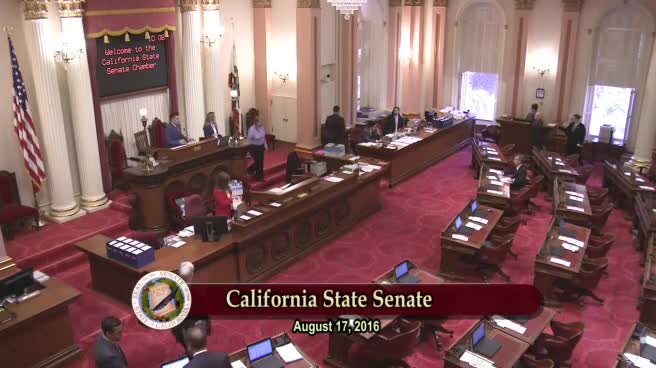
Bill Author


