AB 2148: Unmanned aircraft systems: operation or use within or over state-managed lands or waters.
- Session Year: 2015-2016
- House: Assembly
- Latest Version Date: 2016-08-31
Existing federal law, the Federal Aviation Administration Modernization and Reform Act of 2012, provides for the integration of civil and public unmanned aircraft systems, commonly known as drones, into the national airspace system. Existing law establishes both the Department of Fish and Wildlife and the Department of Parks and Recreation in the Natural Resources Agency. A violation of any rule or regulation made or adopted by the Department of Fish and Wildlife pursuant to the Fish and Game Code is a misdemeanor. A violation of the rules and regulations established by the Department of Parks and Recreation to protect the state park system is punishable as either a misdemeanor or an infraction.
This bill would make it unlawful for any person to operate an unmanned aircraft system in, or fly an unmanned aircraft system over, lands or waters managed by the Department of Fish and Wildlife and Department of Parks and Recreation, except as authorized or unless exempted from this prohibition. The bill would authorize the consideration of certain factors when reviewing a request for authorization for the use of an unmanned aircraft system.
The bill would also make it unlawful to use an unmanned aircraft system to take, or assist in the take of, fish or wildlife for sport purposes, including, but not limited to, the use of unmanned aircraft systems for scouting purposes. The bill would provide that an unmanned aircraft system is a motorized air vehicle within the meaning of a certain existing prohibition and, thus, under that prohibition may not be used to pursue, drive, or herd any bird or mammal, except as specified, including, among other things, specified permits and notices.
Because violations of the provisions of the bill would be crimes, the bill would impose a state-mandated local program.
The bill would provide that certain of its provisions are severable and do not apply to the operation of an unmanned aircraft system by a state agency within or over these managed lands or waters, or to any person whom the Federal Aviation Administration authorizes to operate an unmanned aircraft system for a commercial purpose and who operates it in a manner that complies with that authorization.
The California Constitution requires the state to reimburse local agencies and school districts for certain costs mandated by the state. Statutory provisions establish procedures for making that reimbursement.
This bill would provide that no reimbursement is required by this act for a specified reason.
Existing federal law, the Federal Aviation Administration Modernization and Reform Act of 2012, provides for the integration of civil and public unmanned aircraft systems, commonly known as drones, into the national airspace system. Existing law establishes both the Department of Fish and Wildlife and the Department of Parks and Recreation in the Natural Resources Agency. A violation of any rule or regulation made or adopted by the Department of Fish and Wildlife pursuant to the Fish and Game Code is a misdemeanor. A violation of the rules and regulations established by the Department of Parks and Recreation to protect the state park system is punishable as either a misdemeanor or an infraction.
This bill would make it unlawful for any person to launch, land, or operate an unmanned aircraft system from or within lands, waters, or airspace in, or fly an unmanned aircraft system over, lands or waters managed by the Department of Fish and Wildlife and Department of Parks and Recreation, except as authorized by these departments, or unless exempted from this prohibition. The bill would authorize the departments to consider consideration of certain factors when reviewing a request for the departments authorization for the use of an unmanned aircraft system.
The bill would also make it unlawful to use an unmanned aircraft system to take, or assist in the taking take of, fish or wildlife, wildlife for sport purposes, including, but not limited to, the use of unmanned aircraft systems for scouting purposes. The bill would provide that an unmanned aircraft system is a motorized air vehicle within the meaning of a certain existing prohibition and, thus, under that prohibition may not be used to pursue, drive, or herd any bird or mammal, except as specified, including, among other things, specified permits and notices.
Because violations of the provisions of the bill would be crimes, the bill would impose a state-mandated local program.
The bill would provide that certain of its provisions are severable and do not apply to the operation of an unmanned aircraft system by any person who a state agency within or over these managed lands or waters, or to any person whom the Federal Aviation Administration authorizes to operate a remote piloted an unmanned aircraft system for a commercial purpose and who operates it in a manner that complies with that authorization.
The California Constitution requires the state to reimburse local agencies and school districts for certain costs mandated by the state. Statutory provisions establish procedures for making that reimbursement.
This bill would provide that no reimbursement is required by this act for a specified reason.
Existing federal law, the Federal Aviation Administration Modernization and Reform Act of 2012, provides for the integration of civil and public unmanned aircraft systems, commonly known as drones, into the national airspace system. Existing law establishes both the Department of Fish and Wildlife and the Department of Parks and Recreation in the Natural Resources Agency. A violation of any rule or regulation made or adopted by the Department of Fish and Wildlife pursuant to the Fish and Game Code is a misdemeanor. A violation of the rules and regulations established by the Department of Parks and Recreation to protect the state park system is punishable as either a misdemeanor or an infraction.
This bill would make it unlawful for any person to launch, land, or operate an unmanned aircraft system from or within lands, waters, or airspace managed by the Department of Fish and Wildlife and Department of Parks and Recreation managed lands or waters, Recreation, except as authorized by these departments, or unless exempted from this prohibition. The bill would authorize the departments to consider certain factors when reviewing a request for the departments authorization for the use of an unmanned aircraft system.
The bill would also make it unlawful to use an unmanned aircraft system to take, or assist in the take taking of, fish or wildlife, including, but not limited to, the use of unmanned aircraft systems for scouting purposes. The bill would provide that an unmanned aircraft system is a motorized air vehicle within the meaning of a certain existing prohibition and thus and, thus, under that prohibition may not be used to pursue, drive, or herd any bird or mammal, except as specified. specified, including, among other things, specified permits and notices.
Because violations of the provisions of the bill would be crimes, the bill would impose a state-mandated local program.
The bill would provide that certain of its provisions are severable and do not apply to the operation of an unmanned aircraft system by any person who the Federal Aviation Administration authorizes to operate a remote piloted aircraft for a commercial purpose and who operates it in a manner that complies with that authorization.
The California Constitution requires the state to reimburse local agencies and school districts for certain costs mandated by the state. Statutory provisions establish procedures for making that reimbursement.
This bill would provide that no reimbursement is required by this act for a specified reason.
Existing federal law, the Federal Aviation Administration Modernization and Reform Act of 2012, provides for the integration of civil and public unmanned aircraft systems, commonly known as drones, into the national airspace system. Existing law establishes both the Department of Fish and Wildlife and the Department of Parks and Recreation in the Natural Resources Agency. A violation of any rule or regulation made or adopted by the Department of Fish and Wildlife pursuant to the Fish and Game Code is a misdemeanor. A violation of the rules and regulations established by the Department of Parks and Recreation to protect the state park system is punishable as either a misdemeanor or an infraction.
This bill would require, on or before January 1, 2018, the Department of Fish and Wildlife and the Department of Parks and Recreation to develop regulations governing the launching, landing, or ground-based operation of unmanned aircraft systems, commonly known as drones, from or on the public lands and waters managed by each department. In developing the regulations, the bill would require these state departments to address, among other things, protecting wildlife from unnecessary harassment or disturbance and protecting the natural, cultural, and historic values of state lands. Because violations of these regulations could be crimes, the bill would impose a state-mandated local program.
This bill would make it unlawful for any person to launch, land, or operate an unmanned aircraft system from Department of Fish and Wildlife and Department of Parks and Recreation managed lands or waters, except as authorized by these departments, or unless exempted from this prohibition. The bill would authorize the departments to consider certain factors when reviewing a request for the departments authorization for the use of an unmanned aircraft system.
The bill would also make it unlawful to use an unmanned aircraft system to take, or assist in the take of, fish or wildlife, including, but not limited to, the use of unmanned aircraft systems for scouting purposes. The bill would provide that an unmanned aircraft system is a motorized air vehicle within the meaning of a certain existing prohibition and thus under that prohibition may not be used to pursue, drive, or herd any bird or mammal, except as specified.
Because violations of the provisions of the bill would be crimes, the bill would impose a state-mandated local program.
The bill would provide that certain of its provisions are severable and do not apply to the operation of an unmanned aircraft system by any person who the Federal Aviation Administration authorizes to operate a remote piloted aircraft for a commercial purpose and who operates it in a manner that complies with that authorization.
The California Constitution requires the state to reimburse local agencies and school districts for certain costs mandated by the state. Statutory provisions establish procedures for making that reimbursement.
This bill would provide that no reimbursement is required by this act for a specified reason.
Existing federal law, the Federal Aviation Administration Modernization and Reform Act of 2012, provides for the integration of civil and public unmanned aircraft systems, commonly known as drones, into the national airspace system. Existing law establishes both the Department of Fish and Wildlife and the Department of Parks and Recreation in the Natural Resources Agency. A violation of any rule or regulation made or adopted by the Department of Fish and Wildlife pursuant to the Fish and Game Code is a misdemeanor. A violation of the rules and regulations established by the Department of Parks and Recreation to protect the state park system is punishable as either a misdemeanor or an infraction.
This bill would require, on or before January 1, 2018, the Department of Fish and Wildlife and the Department of Parks and Recreation to develop regulations for governing the use launching, landing, or ground-based operation of unmanned aircraft systems, commonly known as drones, over from or on the public lands and waters managed by each department. In developing the regulations, the bill would require these state departments to consider, address, among other things, protecting wildlife from unnecessary harassment or disturbance and protecting the natural, cultural, and historic values of state lands. Because violations of these regulations could be crimes, the bill would impose a state-mandated local program.
The bill would provide that its provisions are severable and do not apply to the operation of an unmanned aircraft system by any person who the Federal Aviation Administration authorizes to operate a remote piloted aircraft for a commercial purpose and who operates it in a manner that complies with that authorization.
The California Constitution requires the state to reimburse local agencies and school districts for certain costs mandated by the state. Statutory provisions establish procedures for making that reimbursement.
This bill would provide that no reimbursement is required by this act for a specified reason.
Existing federal law, the Federal Aviation Administration Modernization and Reform Act of 2012, provides for the integration of civil and public unmanned aircraft systems, commonly known as drones, into the national airspace system. Existing law establishes both the Department of Fish and Wildlife and the Department of Parks and Recreation in the Natural Resources Agency. A violation of any rule or regulation made or adopted by the Department of Fish and Wildlife pursuant to the Fish and Game Code is a misdemeanor. A violation of the rules and regulations established by the Department of Parks and Recreation to protect the state park system is punishable as either a misdemeanor or an infraction.
This bill would require, on or before January 1, 2018, the Department of Fish and Wildlife and the Department of Parks and Recreation to develop regulations for the use of unmanned aircraft systems, commonly known as drones, over the public lands managed by each department. In developing the regulations, the bill would require these state departments to consider, among other things, protecting wildlife from unnecessary harassment or disturbance and protecting the natural, cultural, and historic values of state lands. Because violations of these regulations could be crimes, the bill would impose a state-mandated local program.
The California Constitution requires the state to reimburse local agencies and school districts for certain costs mandated by the state. Statutory provisions establish procedures for making that reimbursement.
This bill would provide that no reimbursement is required by this act for a specified reason.
Existing federal law, the Federal Aviation Administration Modernization and Reform Act of 2012, provides for the integration of civil and public unmanned aircraft systems, commonly known as drones, into the national airspace system. Existing law establishes both the Department of Fish and Wildlife and the Department of Parks and Recreation in the Natural Resources Agency. A violation of any rule or regulation made or adopted by the Department of Fish and Wildlife pursuant to the Fish and Game Code is a misdemeanor. A violation of the rules and regulations established by the Department of Parks and Recreation to protect the state park system is punishable as either a misdemeanor or an infraction.
This bill would require require, on or before January 1, 2018, the Department of Fish and Wildlife and the Department of Parks and Recreation to develop guidelines regulations for the use of unmanned aircraft systems, commonly known as drones, over the public lands managed by each department. In developing the regulations, the bill would require these state departments to consider, among other things, protecting wildlife from unnecessary harassment or disturbance and protecting the natural, cultural, and historic values of state lands. Because violations of these regulations could be crimes, the bill would impose a state-mandated local program.
The California Constitution requires the state to reimburse local agencies and school districts for certain costs mandated by the state. Statutory provisions establish procedures for making that reimbursement.
This bill would provide that no reimbursement is required by this act for a specified reason.
Existing federal law, the Federal Aviation Administration Modernization and Reform Act of 2012, provides for the integration of civil and public unmanned aircraft systems, commonly known as drones, into the national airspace system. Existing law establishes both the Department of Fish and Wildlife and the Department of Parks and Recreation in the Natural Resources Agency.
This bill would require the department Department of Fish and Wildlife and the Department of Parks and Recreation to develop guidelines for the use of unmanned aircraft systems, commonly known as drones, over the public lands managed by the each department.
Existing federal law, the Federal Aviation Administration Modernization and Reform Act of 2012, provides for the integration of civil and public unmanned aircraft systems, commonly known as drones, into the national airspace system. Existing law establishes the Department of Fish and Wildlife in the Natural Resources Agency.
This bill would require the department to develop guidelines for the use of unmanned aircraft systems, commonly known as drones, over the public lands managed by the department.
It is the intent of the Legislature that the state fully cooperate with the Federal Aviation Administration regarding the appropriate division of responsibility for the regulation of unmanned aircraft systems between the federal and state governments so that the state may reserve and fully exercise any and all appropriate authority pursuant to federal laws as they exist in their current form and as they may be further amended hereafter.
SEC. 2.Section 1746 is added to the Fish and Game Code, to read:1746.(a)It shall be unlawful for any person to operate an unmanned aircraft system in, or fly an unmanned aircraft system over, the departments managed lands or waters, except as authorized by the department, or unless otherwise exempted from this section.
(b)The prohibition in subdivision (a) does not apply to the operation of an unmanned aircraft system by a state agency within or over department-managed lands or waters, or to any person whom the Federal Aviation Administration, whether by permit, license, rule, or regulation, authorizes to operate an unmanned aircraft system for a commercial purpose and that is operated in a manner that complies with that authorization and the applicable regulations of the commission.
(c)The prohibition in subdivision (a) does not apply to legitimate news-gathering activity by a person described in Section 1070 of the Evidence Code.
(d)The commission may draft regulations consistent with this section and the Administrative Procedure Act (Chapter 3.5 (commencing with Section 11340) of Part 1 of Division 3 of Title 2 of the Government Code). In drafting the regulations, the commission shall maintain the authority to limit or revoke approved requests for the use of an unmanned aircraft system due to changing natural conditions or land management requirements.
(e)In reviewing a request to authorize the use of an unmanned aircraft system the department may, and in drafting the regulations authorized pursuant to subdivision (d), the commission may, consider any of the following:
(1)Protection of wildlife and visitors from harassment or disturbance.
(2)Harm to sensitive species, including those listed as threatened or endangered or that have other protected status.
(3)Disruption to wildlife at times of the year when incidents may have adverse effects, including, but not limited to, nesting, breeding, gestation, and migration seasons.
(4)The natural, cultural, and historic value of the department-managed lands.
(5)The purpose of the department-managed lands.
(6)Operation of an unmanned aircraft system in a careless or reckless manner, including an operators failure to adhere to visual line-of-sight practices.
(7)De minimis access by adjacent landowners for bona fide agricultural purposes.
(8)The appropriate use of unmanned aircraft systems for conservation and scientific research purposes.
(9)Authorization for pursuit and take for depredation purposes pursuant to Sections 3003.5 and 4181.
(10)Other special purposes as approved by the department.
(f)The provisions of this section are severable. If any provision of this section or its application is held invalid, that invalidity shall not affect other provisions or applications that can be given effect without the invalid provision or application.
SEC. 3.Section 2001.5 is added to the Fish and Game Code, to read:2001.5.It shall be unlawful to use an unmanned aircraft system to take, or assist in the take of, fish or wildlife for sport purposes, including, but not limited to, the use of unmanned aircraft systems for scouting purposes.
SEC. 4.Section 3003.5 of the Fish and Game Code is amended to read:3003.5.It is unlawful to pursue, drive, or herd any bird or mammal with any motorized water, land, or air vehicle, including, but not limited to, a motor vehicle, airplane, unmanned aircraft system, powerboat, or snowmobile, except in any of the following circumstances:
(a)On private property by the landowner or tenant thereof to haze birds or mammals for the purpose of preventing damage by that wildlife to private property.
(b)Pursuant to a permit from the department issued under regulations as the commission may prescribe. With respect to unmanned aircraft systems, this subdivision shall include a lawful depredation permit issued by the department, notice to the department of the intended use of an unmanned aircraft system, approval from the department, and notice to the landowner.
(c)In the pursuit of agriculture.
SEC. 5.Article 4 (commencing with Section 5085) is added to Chapter 1.2 of Division 5 of the Public Resources Code, to read:4.Unmanned Aircraft Systems5085.(a)It shall be unlawful for any person to operate an unmanned aircraft system in, or fly an unmanned aircraft system over, Department of Parks and Recreation managed lands or waters, except as authorized by the department, or unless otherwise exempted from this article.
(b)The prohibition in subdivision (a) does not apply to the operation of an unmanned aircraft system by a state agency within or over department-managed lands or waters, or to any person whom the Federal Aviation Administration, whether by permit, license, rule, or regulation, authorizes to operate an unmanned aircraft system for a commercial purpose and that is operated in a manner that complies with that authorization and the applicable regulations of the department.
(c)The prohibition in subdivision (a) does not apply to legitimate news-gathering activity by a person described in Section 1070 of the Evidence Code.
(d)The department may draft regulations consistent with this section and the Administrative Procedure Act (Chapter 3.5 (commencing with Section 11340) of Part 1 of Division 3 of Title 2 of the Government Code). In drafting the regulations, the department shall maintain the authority to limit or revoke approved requests for the use of an unmanned aircraft system due to changing natural conditions or land management requirements.
(e)In reviewing a request to use an unmanned aircraft system or in drafting the regulations authorized pursuant to subdivision (d), the department may consider any of the following:
(1)Protection of wildlife and visitors from harassment or disturbance.
(2)Harm to sensitive species, including those listed as threatened or endangered or that have other protected status.
(3)Disruption to wildlife at times of the year when incidents may have adverse effects, including, but not limited to, nesting, breeding, gestation, and migration seasons.
(4)The natural, cultural, and historic value of the department-managed lands.
(5)The purpose of the department-managed lands.
(6)Operation of an unmanned aircraft system in a careless or reckless manner, including an operators failure to adhere to visual line-of-sight practices.
(7)De minimis access by adjacent landowners for bona fide agricultural purposes.
(8)The appropriate use of unmanned aircraft systems for conservation and scientific research purposes.
(9)Other special purposes as approved by the department.
(f)The provisions of this section are severable. If any provision of this section or its application is held invalid, that invalidity shall not affect other provisions or applications that can be given effect without the invalid provision or application.
SEC. 6.No reimbursement is required by this act pursuant to Section 6 of Article XIIIB of the California Constitution because the only costs that may be incurred by a local agency or school district will be incurred because this act creates a new crime or infraction, eliminates a crime or infraction, or changes the penalty for a crime or infraction, within the meaning of Section 17556 of the Government Code, or changes the definition of a crime within the meaning of Section 6 of Article XIIIB of the California Constitution.
It is the intent of the Legislature that the state fully cooperate with the Federal Aviation Administration regarding the appropriate division of responsibility for the regulation of unmanned aircraft systems between the federal and state governments so that the state may reserve and fully exercise any and all appropriate authority pursuant to federal laws as they exist in their current form and as they may be further amended hereafter.
SEC. 2.Section 1746 is added to the Fish and Game Code, to read:1746.(a)It shall be unlawful for any person to launch, land, or operate an unmanned aircraft system from department-managed lands, as defined in Section 1745, or within department-managed airspace, in, or fly an unmanned aircraft system over, the departments managed lands or waters, except as authorized by the department, or unless otherwise exempted from this section.
(b)The prohibition in subdivision (a) pertaining does not apply to the operation of an unmanned aircraft systems within department-managed airspace does not apply to the operation of an unmanned aircraft system by a person whom the Federal Aviation Administration, system by a state agency within or over department-managed lands or waters, or to any person whom the Federal Aviation Administration, whether by permit, license, rule, or regulation, authorizes to operate a remotely piloted an unmanned aircraft system for a commercial purpose and that is operated in a manner that complies with that authorization and the applicable regulations of the department. commission.
(c)The prohibition in subdivision (a) does not apply to any of the following: legitimate news-gathering activity by a person described in Section 1070 of the Evidence Code.
(1)The appropriate use of unmanned aircraft systems for conservation and scientific research purposes.
(2)Legitimate news-gathering activity by a person described in Section 1070 of the Evidence Code.
(d)The department commission may draft regulations consistent with this section and the Administrative Procedure Act (Chapter 3.5 (commencing with Section 11340) of Part 1 of Division 3 of Title 2 of the Government Code). In drafting the regulations, the commission shall maintain the authority to limit or revoke approved requests for the use of an unmanned aircraft system due to changing natural conditions or land management requirements.
(e)In reviewing a request to authorize the use of an unmanned aircraft system the department may, and in drafting the regulations authorized pursuant to subdivision (d), the department may commission may, consider any of the following:
(1)Protection of wildlife and visitors from harassment or disturbance.
(2)Harm to sensitive species, including those listed as threatened or endangered or that have other protected status.
(3)Disruption to wildlife at times of the year when incidents may have adverse effects, including, but not limited to, nesting, breeding, gestation, and migration seasons.
(4)The natural, cultural, and historic value of the department-managed lands.
(5)The purpose of the department-managed lands.
(6)Operation of an unmanned aircraft system in a careless or reckless manner, including an operators failure to adhere to visual line-of-sight practices.
(7)De minimis access by adjacent landowners for bona fide agricultural purposes.
(8)The appropriate use of unmanned aircraft systems for conservation and scientific research purposes.
(9)Authorization for pursuit and take for depredation purposes pursuant to Sections 3003.5 and 4181.
(7)
(10)Other special purposes as approved by the department.
(f)The provisions of this section are severable. If any provision of this section or its application is held invalid, that invalidity shall not affect other provisions or applications that can be given effect without the invalid provision or application.
SEC. 3.Section 2001.5 is added to the Fish and Game Code, to read:2001.5.It shall be unlawful to use an unmanned aircraft system to take, or assist in the taking take of, fish or wildlife, wildlife for sport purposes, including, but not limited to, the use of unmanned aircraft systems for scouting purposes.
SEC. 4.Section 3003.5 of the Fish and Game Code is amended to read:3003.5.It is unlawful to pursue, drive, or herd any bird or mammal with any motorized water, land, or air vehicle, including, but not limited to, a motor vehicle, airplane, unmanned aircraft system, powerboat, or snowmobile, except in any of the following circumstances:
(a)On private property by the landowner or tenant thereof to haze birds or mammals for the purpose of preventing damage by that wildlife to private property.
(b)Pursuant to a permit from the department issued under regulations as the commission may prescribe. With respect to unmanned aircraft systems, this subdivision shall include a lawful predation depredation permit issued by the department, notice to the department of the intended use of an unmanned aircraft system, approval from the department, and notice to the landowner.
(c)In the pursuit of agriculture.
SEC. 5.Article 4 (commencing with Section 5085) is added to Chapter 1.2 of Division 5 of the Public Resources Code, to read:4.Unmanned Aircraft Systems5085.(a)It shall be unlawful for any person to launch, land, or operate an unmanned aircraft system from department-managed lands or waters or within department-managed airspace, in, or fly an unmanned aircraft system over, Department of Parks and Recreation managed lands or waters, except as authorized by the department, or unless otherwise exempted from this article.
(b)The prohibition in subdivision (a) pertaining to the operation of unmanned aircraft systems within department-managed airspace does not apply to the operation of an unmanned aircraft system by a person whom the Federal Aviation Administration, does not apply to the operation of an unmanned aircraft system by a state agency within or over department-managed lands or waters, or to any person whom the Federal Aviation Administration, whether by permit, license, rule, or regulation, authorizes to operate a remotely piloted an unmanned aircraft system for a commercial purpose and that is operated in a manner that complies with that authorization and the applicable regulations of the department.
(c)The prohibition in subdivision (a) does not apply to any of the following: legitimate news-gathering activity by a person described in Section 1070 of the Evidence Code.
(1)The appropriate use of unmanned aircraft systems for conservation and scientific research purposes.
(2)Legitimate news-gathering activity by a person described in Section 1070 of the Evidence Code.
(d)The department may draft regulations consistent with this section and the Administrative Procedure Act (Chapter 3.5 (commencing with Section 11340) of Part 1 of Division 3 of Title 2 of the Government Code). In drafting the regulations, the department shall maintain the authority to limit or revoke approved requests for the use of an unmanned aircraft system due to changing natural conditions or land management requirements.
(e)In reviewing a request to use an unmanned aircraft system and or in drafting the regulations authorized pursuant to subdivision (d), the department may consider any of the following:
(1)Protection of wildlife and visitors from harassment or disturbance.
(2)Harm to sensitive species, including those listed as threatened or endangered or that have other protected status.
(3)Disruption to wildlife at times of the year when incidents may have adverse effects, including, but not limited to, nesting, breeding, gestation, and migration seasons.
(4)The natural, cultural, and historic value of the department-managed lands.
(5)The purpose of the department-managed lands.
(6)Operation of an unmanned aircraft system in a careless or reckless manner, including an operators failure to adhere to visual line-of-sight practices.
(7)De minimis access by adjacent landowners for bona fide agricultural purposes.
(8)The appropriate use of unmanned aircraft systems for conservation and scientific research purposes.
(7)
(9)Other special purposes as approved by the department.
(f)The provisions of this section are severable. If any provision of this section or its application is held invalid, that invalidity shall not affect other provisions or applications that can be given effect without the invalid provision or application.
SEC. 6.No reimbursement is required by this act pursuant to Section 6 of Article XIIIB of the California Constitution because the only costs that may be incurred by a local agency or school district will be incurred because this act creates a new crime or infraction, eliminates a crime or infraction, or changes the penalty for a crime or infraction, within the meaning of Section 17556 of the Government Code, or changes the definition of a crime within the meaning of Section 6 of Article XIIIB of the California Constitution.
It is the intent of the Legislature that the state fully cooperate with the Federal Aviation Administration regarding the appropriate division of responsibility for the regulation of unmanned aircraft systems between the federal and state governments so that the state may reserve and fully exercise any and all appropriate authority pursuant to federal laws as they exist in their current form and as they may be further amended hereafter.
SECTION 1.SEC. 2.Section 1746 is added to the Fish and Game Code, to read:1746.(a)It shall be unlawful for any person to launch, land, or operate an unmanned aircraft system from department managed department-managed lands, as defined in Section 1745, or within department-managed airspace, except as authorized by the department, or unless otherwise exempted from this section.
(b)In reviewing a request for department authorization for the use of an unmanned aircraft system, the department may consider any of the following:
(1)Protecting wildlife and visitors from unnecessary harassment or disturbance.
(2)Harm to sensitive species, including those listed as threatened or endangered, or that have other protected status.
(3)Disruption to wildlife at times of the year where incidents may have disproportionate effects, including, but not limited to, during nesting, breeding, gestation, and migration seasons.
(4)The natural, cultural, and historic value of the department-managed land.
(5)The purpose of the department-managed land.
(6)Operation of an unmanned aircraft system in a careless or reckless manner, including an operators failure to adhere to visual line-of-sight practices.
(7)Other special purposes as approved by the department.
(b)The prohibition in subdivision (a) pertaining to the operation of unmanned aircraft systems within department-managed airspace does not apply to the operation of an unmanned aircraft system by a person whom the Federal Aviation Administration, whether by permit, license, rule, or regulation, authorizes to operate a remotely piloted aircraft for a commercial purpose and that is operated in a manner that complies with that authorization and the applicable regulations of the department.
(c)The prohibition in subdivision (a) does not apply to any of the following:
(1)The appropriate use of unmanned aircraft systems for conservation and scientific research purposes.
(2)De minimis access by adjacent landowners for agricultural purposes.
(3)
(2)Legitimate news gathering news-gathering activity by a person described in Section 1070 of the Evidence Code.
(d)This section does not apply to the operation of an unmanned aircraft system by any person who the Federal Aviation Administration, whether by permit, license, rule, or regulation, authorizes to operate a remote piloted aircraft for a commercial purpose and who operates it in a manner that complies with that authorization.
(d)The department may draft regulations consistent with this section and the Administrative Procedure Act (Chapter 3.5 (commencing with Section 11340) of Part 1 of Division 3 of Title 2 of the Government Code).
(e)In reviewing a request to use an unmanned aircraft system and in drafting the regulations authorized pursuant to subdivision (d), the department may consider any of the following:
(1)Protection of wildlife and visitors from harassment or disturbance.
(2)Harm to sensitive species, including those listed as threatened or endangered or that have other protected status.
(3)Disruption to wildlife at times of the year when incidents may have adverse effects, including, but not limited to, nesting, breeding, gestation, and migration seasons.
(4)The natural, cultural, and historic value of the department-managed lands.
(5)The purpose of the department-managed lands.
(6)Operation of an unmanned aircraft system in a careless or reckless manner, including an operators failure to adhere to visual line-of-sight practices.
(7)Other special purposes as approved by the department.
(e)
(f)The provisions of this section are severable. If any provision of this section or its application is held invalid, that invalidity shall not affect other provisions or applications that can be given effect without the invalid provision or application.
SEC. 2.SEC. 3.Section 2001.5 is added to the Fish and Game Code, to read:2001.5.It shall be unlawful to use an unmanned aircraft system to take, or assist in the take taking of, fish or wildlife, including, but not limited to, the use of unmanned aircraft systems for scouting purposes.
SEC. 3.SEC. 4.Section 3003.5 of the Fish and Game Code is amended to read:3003.5.It is unlawful to pursue, drive, or herd any bird or mammal with any motorized water, land, or air vehicle, including, but not limited to, a motor vehicle, airplane, unmanned aircraft system, powerboat, or snowmobile, except in any of the following circumstances:
(a)On private property by the landowner or tenant thereof to haze birds or mammals for the purpose of preventing damage by that wildlife to private property.
(b)Pursuant to a permit from the department issued under regulations as the commission may prescribe. With respect to unmanned aircraft systems, this subdivision shall include a lawful predation permit issued by the department, notice to the department of the intended use of an unmanned aircraft system, approval from the department, and notice to the landowner.
(c)In the pursuit of agriculture.
SEC. 4.SEC. 5.Article 4 (commencing with Section 5085) is added to Chapter 1.2 of Division 5 of the Public Resources Code, to read:4.Unmanned Aircraft Systems5085.(a)It shall be unlawful for any person to launch, land, or operate an unmanned aircraft system from Department of Parks and Recreation managed lands or waters, department-managed lands or waters or within department-managed airspace, except as authorized by the department, or unless otherwise exempted from this article.
(b)In reviewing a request for department authorization for the use of an unmanned aircraft system, the department may consider any of the following:
(1)Protecting wildlife and visitors from unnecessary harassment or disturbance.
(2)Harm to sensitive species, including those listed as threatened or endangered, or that have other protected status.
(3)Disruption to wildlife at times of the year where incidents may have disproportionate effects, including, but not limited to, during nesting, breeding, gestation, and migration seasons.
(4)The natural, cultural, and historic value of the managed land or water.
(5)The purpose of the department managed land or water.
(6)Operation of an unmanned aircraft system in a careless or reckless manner, including an operators failure to adhere to visual line-of-sight practices.
(7)Other special purposes as approved by the department.
(b)The prohibition in subdivision (a) pertaining to the operation of unmanned aircraft systems within department-managed airspace does not apply to the operation of an unmanned aircraft system by a person whom the Federal Aviation Administration, whether by permit, license, rule, or regulation, authorizes to operate a remotely piloted aircraft for a commercial purpose and that is operated in a manner that complies with that authorization and the applicable regulations of the department.
(c)The prohibition in subdivision (a) does not apply to any of the following:
(1)The appropriate use of unmanned aircraft systems for conservation and scientific research purposes.
(2)De minimis access by adjacent landowners for agricultural purposes.
(3)
(2)Legitimate news gathering news-gathering activity by a person described in Section 1070 of the Evidence Code.
(d)This section does not apply to the operation of an unmanned aircraft system by any person who the Federal Aviation Administration, whether by permit, license, rule, or regulation, authorizes to operate a remote piloted aircraft for a commercial purpose and who operates it in a manner that complies with that authorization.
(d)The department may draft regulations consistent with this section and the Administrative Procedure Act (Chapter 3.5 (commencing with Section 11340) of Part 1 of Division 3 of Title 2 of the Government Code).
(e)In reviewing a request to use an unmanned aircraft system and in drafting the regulations authorized pursuant to subdivision (d), the department may consider any of the following:
(1)Protection of wildlife and visitors from harassment or disturbance.
(2)Harm to sensitive species, including those listed as threatened or endangered or that have other protected status.
(3)Disruption to wildlife at times of the year when incidents may have adverse effects, including, but not limited to, nesting, breeding, gestation, and migration seasons.
(4)The natural, cultural, and historic value of the department-managed lands.
(5)The purpose of the department-managed lands.
(6)Operation of an unmanned aircraft system in a careless or reckless manner, including an operators failure to adhere to visual line-of-sight practices.
(7)Other special purposes as approved by the department.
(e)
(f)The provisions of this section are severable. If any provision of this section or its application is held invalid, that invalidity shall not affect other provisions or applications that can be given effect without the invalid provision or application.
SEC. 5.SEC. 6.No reimbursement is required by this act pursuant to Section 6 of Article XIIIB of the California Constitution because the only costs that may be incurred by a local agency or school district will be incurred because this act creates a new crime or infraction, eliminates a crime or infraction, or changes the penalty for a crime or infraction, within the meaning of Section 17556 of the Government Code, or changes the definition of a crime within the meaning of Section 6 of Article XIIIB of the California Constitution.
(a)On or before January 1, 2018, the Department of Fish and Wildlife shall develop regulations governing the launching, landing, or ground-based operation of unmanned aircraft systems, commonly known as drones, from or on the public lands and waters managed by the department.
(b)In developing regulations pursuant to subdivision (a), the department shall address all of the following:
(1)Protecting wildlife from unnecessary harassment or disturbance.
(2)Protecting sensitive species, including those listed as threatened or endangered, or that have other protected status.
(3)Protecting wildlife at times of the year where incidents may have disproportionate effects, including, but not limited to, during nesting, breeding, gestation, and migration seasons.
(4)Protecting the natural, cultural, and historic values of state lands.
(5)Permitting the appropriate use of unmanned aircraft systems for conservation and scientific research purposes.
(6)Ensuring that unmanned aircraft systems are not operated in a careless or reckless manner, including ensuring that operators adhere to visual line-of-sight practices.
(c)In developing the regulations, the department shall allow de minimis access by adjacent landowners for agricultural purposes.
(d)This section does not apply to the operation of an unmanned aircraft system by any person who the Federal Aviation Administration authorizes to operate a remote piloted aircraft for a commercial purpose and who operates it in a manner that complies with that authorization.
(e)The provisions of this section are severable. If any provision of this section or its application is held invalid, that invalidity shall not affect other provisions or applications that can be given effect without the invalid provision or application.
SECTION 1.Section 1746 is added to the Fish and Game Code, to read:1746.(a)It shall be unlawful for any person to launch, land, or operate an unmanned aircraft system from department managed lands, as defined in Section 1745, except as authorized by the department, or unless otherwise exempted from this section.
(b)In reviewing a request for department authorization for the use of an unmanned aircraft system, the department may consider any of the following:
(1)Protecting wildlife and visitors from unnecessary harassment or disturbance.
(2)Harm to sensitive species, including those listed as threatened or endangered, or that have other protected status.
(3)Disruption to wildlife at times of the year where incidents may have disproportionate effects, including, but not limited to, during nesting, breeding, gestation, and migration seasons.
(4)The natural, cultural, and historic value of the department-managed land.
(5)The purpose of the department-managed land.
(6)Operation of an unmanned aircraft system in a careless or reckless manner, including an operators failure to adhere to visual line-of-sight practices.
(7)Other special purposes as approved by the department.
(c)The prohibition in subdivision (a) does not apply to any of the following:
(1)The appropriate use of unmanned aircraft systems for conservation and scientific research purposes.
(2)De minimis access by adjacent landowners for agricultural purposes.
(3)Legitimate news gathering activity by a person described in Section 1070 of the Evidence Code.
(d)This section does not apply to the operation of an unmanned aircraft system by any person who the Federal Aviation Administration, whether by permit, license, rule, or regulation, authorizes to operate a remote piloted aircraft for a commercial purpose and who operates it in a manner that complies with that authorization.
(e)The provisions of this section are severable. If any provision of this section or its application is held invalid, that invalidity shall not affect other provisions or applications that can be given effect without the invalid provision or application.
SEC. 2.Section 2001.5 is added to the Fish and Game Code, to read:2001.5.It shall be unlawful to use an unmanned aircraft system to take, or assist in the take of, fish or wildlife, including, but not limited to, the use of unmanned aircraft systems for scouting purposes.
SEC. 3.Section 3003.5 of the Fish and Game Code is amended to read:3003.5.It is unlawful to pursue, drive, or herd any bird or mammal with any motorized water, land, or air vehicle, including, but not limited to, a motor vehicle, airplane, unmanned aircraft system, powerboat, or snowmobile, except in any of the following circumstances:
(a)On private property by the landowner or tenant thereof to haze birds or mammals for the purpose of preventing damage by that wildlife to private property.
(b)Pursuant to a permit from the department issued under regulations as the commission may prescribe.
(c)In the pursuit of agriculture.
SEC. 2.SEC. 4.Article 4 (commencing with Section 5085) is added to Chapter 1.2 of Division 5 of the Public Resources Code, to read:4.Unmanned Aircraft Systems5085.(a)On or before January 1, 2018, the Department of Parks and Recreation shall develop regulations governing the launching, landing, or ground-based operation of unmanned aircraft systems, commonly known as drones, from or on the public lands and waters managed by the department.
(b)In developing regulations pursuant to subdivision (a), the department shall address all of the following:
(1)Protecting wildlife from unnecessary harassment or disturbance.
(2)Protecting sensitive species, including those listed as threatened or endangered, or that have other protected status.
(3)Protecting wildlife at times of the year where incidents may have disproportionate effects, including, but not limited to, during nesting, breeding, gestation, and migration seasons.
(4)Protecting the natural, cultural, and historic values of state lands.
(5)Permitting the appropriate use of unmanned aircraft systems for conservation and scientific research purposes.
(6)Ensuring that unmanned aircraft systems are not operated in a careless or reckless manner, including ensuring that operators adhere to visual line-of-sight practices.
(c)In developing the regulations, the department shall allow de minimis access by adjacent landowners for agricultural purposes.
(d)This section does not apply to the operation of an unmanned aircraft system by any person who the Federal Aviation Administration authorizes to operate a remote piloted aircraft for a commercial purpose and who operates it in a manner that complies with that authorization.
(e)The provisions of this section are severable. If any provision of this section or its application is held invalid, that invalidity shall not affect other provisions or applications that can be given effect without the invalid provision or application.
5085.(a)It shall be unlawful for any person to launch, land, or operate an unmanned aircraft system from Department of Parks and Recreation managed lands or waters, except as authorized by the department, or unless otherwise exempted from this article.
(b)In reviewing a request for department authorization for the use of an unmanned aircraft system, the department may consider any of the following:
(1)Protecting wildlife and visitors from unnecessary harassment or disturbance.
(2)Harm to sensitive species, including those listed as threatened or endangered, or that have other protected status.
(3)Disruption to wildlife at times of the year where incidents may have disproportionate effects, including, but not limited to, during nesting, breeding, gestation, and migration seasons.
(4)The natural, cultural, and historic value of the managed land or water.
(5)The purpose of the department managed land or water.
(6)Operation of an unmanned aircraft system in a careless or reckless manner, including an operators failure to adhere to visual line-of-sight practices.
(7)Other special purposes as approved by the department.
(c)The prohibition in subdivision (a) does not apply to any of the following:
(1)The appropriate use of unmanned aircraft systems for conservation and scientific research purposes.
(2)De minimis access by adjacent landowners for agricultural purposes.
(3)Legitimate news gathering activity by a person described in Section 1070 of the Evidence Code.
(d)This section does not apply to the operation of an unmanned aircraft system by any person who the Federal Aviation Administration, whether by permit, license, rule, or regulation, authorizes to operate a remote piloted aircraft for a commercial purpose and who operates it in a manner that complies with that authorization.
(e)The provisions of this section are severable. If any provision of this section or its application is held invalid, that invalidity shall not affect other provisions or applications that can be given effect without the invalid provision or application.
SEC. 3.SEC. 5.No reimbursement is required by this act pursuant to Section 6 of Article XIIIB of the California Constitution because the only costs that may be incurred by a local agency or school district will be incurred because this act creates a new crime or infraction, eliminates a crime or infraction, or changes the penalty for a crime or infraction, within the meaning of Section 17556 of the Government Code, or changes the definition of a crime within the meaning of Section 6 of Article XIIIB of the California Constitution.
(a)On or before January 1, 2018, the Department of Fish and Wildlife shall develop regulations for governing the use launching, landing, or ground-based operation of unmanned aircraft systems, commonly known as drones, over from or on the public lands and waters managed by the department.
(b)In developing regulations pursuant to subdivision (a), the department shall consider address all of the following:
(1)Protecting wildlife from unnecessary harassment or disturbance.
(2)Protecting sensitive species, including those listed as threatened or endangered, or that have other protected status.
(3)Protecting wildlife at times of the year where incidents may have disproportionate effects, including, but not limited to, during nesting, breeding, gestation, and migration seasons.
(4)Protecting the natural, cultural, and historic values of state lands.
(5)Permitting the appropriate use of unmanned aircraft systems for conservation and scientific research purposes.
(6)Ensuring that unmanned aircraft systems are not operated in a careless or reckless manner, including ensuring that operators adhere to visual line-of-sight practices.
(c)In developing the regulations, the department shall allow de minimis access by adjacent landowners for agricultural purposes.
(d)This section does not apply to the operation of an unmanned aircraft system by any person who the Federal Aviation Administration authorizes to operate a remote piloted aircraft for a commercial purpose and who operates it in a manner that complies with that authorization.
(e)The provisions of this section are severable. If any provision of this section or its application is held invalid, that invalidity shall not affect other provisions or applications that can be given effect without the invalid provision or application.
SEC. 2.Article 4 (commencing with Section 5085) is added to Chapter 1.2 of Division 5 of the Public Resources Code, to read:4.Unmanned Aircraft Systems5085.(a)On or before January 1, 2018, the Department of Parks and Recreation shall develop regulations for governing the use launching, landing, or ground-based operation of unmanned aircraft systems, commonly known as drones, over from or on the public lands and waters managed by the department.
(b)In developing regulations pursuant to subdivision (a), the department shall consider address all of the following:
(1)Protecting wildlife from unnecessary harassment or disturbance.
(2)Protecting sensitive species, including those listed as threatened or endangered, or that have other protected status.
(3)Protecting wildlife at times of the year where incidents may have disproportionate effects, including, but not limited to, during nesting, breeding, gestation, and migration seasons.
(4)Protecting the natural, cultural, and historic values of state lands.
(5)Permitting the appropriate use of unmanned aircraft systems for conservation and scientific research purposes.
(6)Ensuring that unmanned aircraft systems are not operated in a careless or reckless manner, including ensuring that operators adhere to visual line-of-sight practices.
(c)In developing the regulations, the department shall allow de minimis access by adjacent landowners for agricultural purposes.
(d)This section does not apply to the operation of an unmanned aircraft system by any person who the Federal Aviation Administration authorizes to operate a remote piloted aircraft for a commercial purpose and who operates it in a manner that complies with that authorization.
(e)The provisions of this section are severable. If any provision of this section or its application is held invalid, that invalidity shall not affect other provisions or applications that can be given effect without the invalid provision or application.
SEC. 3.No reimbursement is required by this act pursuant to Section 6 of Article XIIIB of the California Constitution because the only costs that may be incurred by a local agency or school district will be incurred because this act creates a new crime or infraction, eliminates a crime or infraction, or changes the penalty for a crime or infraction, within the meaning of Section 17556 of the Government Code, or changes the definition of a crime within the meaning of Section 6 of Article XIIIB of the California Constitution.
(a)On or before January 1, 2018, the Department of Fish and Wildlife shall develop regulations for the use of unmanned aircraft systems, commonly known as drones, over the public lands managed by the department.
(b)In developing regulations pursuant to subdivision (a), the department shall consider all of the following:
(1)Protecting wildlife from unnecessary harassment or disturbance.
(2)Protecting sensitive species, including those listed as threatened or endangered, or that have other protected status.
(3)Protecting wildlife at times of the year where incidents may have disproportionate effects, including, but not limited to, during nesting, breeding, gestation, and migration seasons.
(4)Protecting the natural, cultural, and historic values of state lands.
(5)Permitting the appropriate use of unmanned aircraft systems for conservation and scientific research purposes.
(c)In developing the regulations, the department shall consider allow de minimis access by adjacent landowners for agricultural purposes.
SEC. 2.Article 4 (commencing with Section 5085) is added to Chapter 1.2 of Division 5 of the Public Resources Code, to read:4.Unmanned Aircraft Systems5085.(a)On or before January 1, 2018, the Department of Parks and Recreation shall develop regulations for the use of unmanned aircraft systems, commonly known as drones, over the public lands managed by the department.
(b)In developing regulations pursuant to subdivision (a), the department shall consider all of the following:
(1)Protecting wildlife from unnecessary harassment or disturbance.
(2)Protecting sensitive species, including those listed as threatened or endangered, or that have other protected status.
(3)Protecting wildlife at times of the year where incidents may have disproportionate effects, including, but not limited to, during nesting, breeding, gestation, and migration seasons.
(4)Protecting the natural, cultural, and historic values of state lands.
(5)Permitting the appropriate use of unmanned aircraft systems for conservation and scientific research purposes.
(c)In developing the regulations, the department shall consider allow de minimis access by adjacent landowners for agricultural purposes.
SEC. 3.No reimbursement is required by this act pursuant to Section 6 of Article XIIIB of the California Constitution because the only costs that may be incurred by a local agency or school district will be incurred because this act creates a new crime or infraction, eliminates a crime or infraction, or changes the penalty for a crime or infraction, within the meaning of Section 17556 of the Government Code, or changes the definition of a crime within the meaning of Section 6 of Article XIIIB of the California Constitution.
The (a)On or before January 1, 2018, the Department of Fish and Wildlife shall develop guidelines regulations for the use of unmanned aircraft systems, commonly known as drones, over the public lands managed by the department.
(b)In developing regulations pursuant to subdivision (a), the department shall consider all of the following:
(1)Protecting wildlife from unnecessary harassment or disturbance.
(2)Protecting sensitive species, including those listed as threatened or endangered, or that have other protected status.
(3)Protecting wildlife at times of the year where incidents may have disproportionate effects, including, but not limited to, during nesting, breeding, gestation, and migration seasons.
(4)Protecting the natural, cultural, and historic values of state lands.
(5)Permitting the appropriate use of unmanned aircraft systems for conservation and scientific research purposes.
(c)In developing the regulations, the department shall consider de minimis access by adjacent landowners for agricultural purposes.
SEC. 2.Article 4 (commencing with Section 5085) is added to Chapter 1.2 of Division 5 of the Public Resources Code, to read:4.Unmanned Aircraft Systems5085.The (a)On or before January 1, 2018, the Department of Parks and Recreation shall develop guidelines regulations for the use of unmanned aircraft systems, commonly known as drones, over the public lands managed by the department.
(b)In developing regulations pursuant to subdivision (a), the department shall consider all of the following:
(1)Protecting wildlife from unnecessary harassment or disturbance.
(2)Protecting sensitive species, including those listed as threatened or endangered, or that have other protected status.
(3)Protecting wildlife at times of the year where incidents may have disproportionate effects, including, but not limited to, during nesting, breeding, gestation, and migration seasons.
(4)Protecting the natural, cultural, and historic values of state lands.
(5)Permitting the appropriate use of unmanned aircraft systems for conservation and scientific research purposes.
(c)In developing the regulations, the department shall consider de minimis access by adjacent landowners for agricultural purposes.
SEC. 3.No reimbursement is required by this act pursuant to Section 6 of Article XIIIB of the California Constitution because the only costs that may be incurred by a local agency or school district will be incurred because this act creates a new crime or infraction, eliminates a crime or infraction, or changes the penalty for a crime or infraction, within the meaning of Section 17556 of the Government Code, or changes the definition of a crime within the meaning of Section 6 of Article XIIIB of the California Constitution.
The Department of Fish and Wildlife shall develop guidelines for the use of unmanned aircraft systems, commonly known as drones, over the public lands managed by the department.
SEC. 2.Article 4 (commencing with Section 5085) is added to Chapter 1.2 of Division 5 of the Public Resources Code, to read:4.Unmanned Aircraft Systems5085.The Department of Parks and Recreation shall develop guidelines for the use of unmanned aircraft systems, commonly known as drones, over the public lands managed by the department.
The Department of Fish and Wildlife shall develop guidelines for the use of unmanned aircraft systems, commonly known as drones, over the public lands managed by the department.
|
Date
|
Status
|
|---|---|
| Aug 19, 2016 | Read third time and amended. Ordered to second reading. |
| May 19, 2016 | Read third time. Passed. Ordered to the Senate. (Ayes 57. Noes 18.) |
| Jun 9, 2016 | Referred to Com. on N.R. & W. |
| Jun 22, 2016 | From committee chair, with author's amendments: Amend, and re-refer to committee. Read second time, amended, and re-referred to Com. on N.R. & W. |
| Aug 1, 2016 | From committee: Amend, and do pass as amended and re-refer to Com. on APPR. (Ayes 6. Noes 2.) (June 28). |
| Aug 2, 2016 | Read second time and amended. Re-referred to Com. on APPR. |
| Aug 8, 2016 | Referred to APPR. suspense file. |
| Aug 11, 2016 | From committee: Do pass. (Ayes 5. Noes 2.) (August 11). |
| Aug 15, 2016 | Read second time. Ordered to third reading. |
| May 19, 2016 | Read third time. Passed. Ordered to the Senate. (Ayes 57. Noes 18. Page 4866.) |
| Aug 22, 2016 | Read second time. Ordered to third reading. |
| Aug 23, 2016 | Read third time. Passed. Ordered to the Assembly. |
| Aug 23, 2016 | Read third time. Passed. Ordered to the Assembly. (Ayes 26. Noes 13. Page 5314.). |
| Aug 25, 2016 | In Assembly. Concurrence in Senate amendments pending. May be considered on or after August 28 pursuant to Assembly Rule 77. |
| Aug 30, 2016 | Senate amendments concurred in. To Engrossing and Enrolling. |
| Aug 30, 2016 | Senate amendments concurred in. To Engrossing and Enrolling. (Ayes 58. Noes 22. Page 6438.). |
| Sep 8, 2016 | Enrolled and presented to the Governor at 4 p.m. |
| Feb 17, 2016 | Read first time. To print. |
| May 19, 2016 | Read third time. Passed. Ordered to the Senate. |
| May 19, 2016 | In Senate. Read first time. To Com. on RLS. for assignment. |
| May 16, 2016 | Read second time. Ordered to third reading. |
| May 12, 2016 | Read second time and amended. Ordered returned to second reading. |
| May 11, 2016 | From committee: Amend, and do pass as amended. (Ayes 15. Noes 5.) (May 11). |
| Apr 26, 2016 | Re-referred to Com. on APPR. |
| Apr 25, 2016 | Read second time and amended. |
| Apr 21, 2016 | From committee: Amend, and do pass as amended and re-refer to Com. on APPR. (Ayes 10. Noes 3.) (April 19). |
| Apr 13, 2016 | Re-referred to Com. on W., P., & W. |
| Apr 12, 2016 | From committee chair, with author's amendments: Amend, and re-refer to Com. on W., P., & W. Read second time and amended. |
| Apr 6, 2016 | From committee: Do pass and re-refer to Com. on W., P., & W. (Ayes 10. Noes 0.) (April 5). Re-referred to Com. on W., P., & W. |
| Mar 17, 2016 | Re-referred to Com. on P. & C.P. |
| Mar 16, 2016 | From committee chair, with author's amendments: Amend, and re-refer to Com. on P. & C.P. Read second time and amended. |
| Feb 29, 2016 | Referred to Coms. on P. & C.P. and W., P., & W. |
| Feb 18, 2016 | From printer. May be heard in committee March 19. |
|
Date
|
Description
|
Location
|
Votes
|
|
|---|---|---|---|---|
| Aug 30, 2016 | AB 2148 HOLDEN Concurrence in Senate Amendments | Assembly Floor |
Passed |
|
| Aug 23, 2016 | Assembly 3rd Reading AB2148 Holden By Jackson | Senate Floor |
Passed |
|
| Aug 11, 2016 | Do pass | Senate Standing Committee on Appropriations |
Passed |
|
| Aug 8, 2016 | Placed on suspense file | Senate Standing Committee on Appropriations |
Passed |
|
| Jun 28, 2016 | Do pass as amended, but first amend, and re-refer to the Committee on [Appropriations] | Senate Standing Committee on Natural Resources and Water |
Passed |
|
| May 19, 2016 | AB 2148 HOLDEN Assembly Third Reading | Assembly Floor |
Passed |
|
| May 11, 2016 | Do pass as amended. | Assembly Standing Committee on Appropriations |
Passed |
|
| Apr 19, 2016 | Do pass as amended and be re-referred to the Committee on [Appropriations] | Assembly Standing Committee on Water, Parks, and Wildlife |
Passed |
|
| Apr 5, 2016 | Do pass and be re-referred to the Committee on [Water, Parks, and Wildlife] | Assembly Standing Committee on Privacy and Consumer Protection |
Passed |
This list shows positions taken on this bill by organizations on the date displayed, which is linked to the original source.
Positions by individuals are not included.
|
Organization
|
Position
|
Date
|
|---|---|---|
| American Insurance Association | ** Against | Apr 19, 2016 |
| Audubon California | ** Support | Aug 23, 2016 |
| California League Of Conservation Voters | ** Support | Aug 23, 2016 |
| Central Coast Forest Association | ** Support | Aug 23, 2016 |
| Central Valley Joint Venture | ** Support | Aug 23, 2016 |
GOVERNOR'S VETO
GV Bill Id:AB 2148
Author:(Holden)
As Enrolled Ver:September 8, 2016
2/3 vote
ASSEMBLY: | 57-18 | (May 19, 2016) | SENATE: | 26-13 | (August 23, 2016) |
ASSEMBLY: | 58-22 | (August 30, 2016) |
Original Committee Reference: P. & C.P.
SUMMARY: Prohibits the launching, landing, or operation of unmanned aircraft systems (UAS) from lands, waters and airspace managed by the California Department of Fish and Wildlife (CDFW) or the Department of Parks and Recreation (DPR), except as authorized by DPR or CDFW by regulation or permit.
The Senate amendments:
- Remove the requirement for CDFW and DPR (the Departments) to develop regulations governing the operation of UAS.
- Prohibit any person from operating a UAS in, or fly a UAS over, the Departments' managed lands or waters, except as authorized by the Departments or otherwise exempted from the bill.
- Prohibit using a UAS to take, or assist in the taking of, fish or wildlife for sport purposes, including, but not limited to, using a UAS for scouting purposes.
- Prohibit using a UAS to pursue, drive, or herd any bird or mammal, with the following exceptions:
- On private property by the landowner or tenant thereof to haze birds or mammals for the purpose of preventing damage by that wildlife to private property;
- Under a lawful depredation permit issued by the Department of Fish and Wildlife (CDFW), which includes notice to CDFW of the intended UAS use, approval by CDFW, and notice to the landowner; or
- In the pursuit of agriculture.
- Exempt from the operational prohibitions of this bill:
- State agencies;
- Federal Aviation Administration (FAA) authorized commercial UAS operations; and
- Legitimate news-gathering activity, as defined.
- Authorize the Departments to draft regulations consistent with this bill.
- Specify that in drafting regulations, the Departments will maintain the authority to limit or revoke approval requests for the use of UAS due to changing natural conditions or land management requirements.
- Specify that in reviewing a request to authorize UAS use and in drafting regulations, the Departments may consider specified purposes or priorities.
- Express that it is the intent of the Legislature that the state fully cooperates with the FAA regarding the regulation of UAS.
- Make other technical and nonsubstantive changes.
EXISTING LAW: Federal law authorizes the FAA to regulate airspace use, including air traffic control, air safety, and aircraft noise. FAA is required to integrate UAS into the national airspace system. Under federal regulations, UAS use in national parks is banned without a permit.
Under existing state regulations, the use of aircraft (or parachutes, hang gliders, parasails, and balloons) is prohibited below 500 feet over a state park unless specifically authorized by DPR. A person is prohibited from engaging in recreational activities in state parks that endanger the safety of persons, property or resources, or interfere with visitor activities, except as permitted by DPR. Existing law also makes it unlawful to pursue, drive or herd any bird or animal with any motorized water, land, or air vehicle, including an airplane, with specified exceptions and also makes it unlawful to shoot or shoot at a bird or mammal with a gun or other device accessed via an Internet connection.
FISCAL EFFECT: According to the Senate Appropriations Committee:
- No additional cost to [DPR], which is currently developing a regulation consistent with the requirements of this bill.
- Unknown, likely significant, costs for CDFW to modify an existing regulation that generally encompasses use of aircraft over department lands.
- Potential, likely minor, additional enforcement costs to both departments, which may be offset to some extent by additional penalty revenue resulting from the new crime created in this bill. Note that the bill does not specify a penalty.
COMMENTS: This bill makes it unlawful to operate a UAS in or over lands or waters managed by the DPR and CDFW, unless specifically authorized by regulation or permit. The bill lists several considerations for DPR and CDFW to consider in drafting regulations and permitting UAS use. This bill provides exemptions for state agencies, FAA-authorized UAS operations, and legitimate news-gathering.
This bill also makes it unlawful to use UAS to take fish and wildlife or use UAS to scout for fish and wildlife, unless specifically permitted by CDFW. This bill makes it unlawful to pursue, drive or herd any bird or mammal with a UAS, except to scare away wildlife that may cause damage to private property, in pursuit of agriculture, or as permitted by CDFW.
I am returning Assembly Bill 2148 without my signature.
This bill prohibits the operation of a drone over lands managed by the Department of Parks and Recreation or the Department of Fish and Wildlife.
These departments have authority to promulgate regulations regarding drone use within their respective jurisdictions. In fact, the Department of Parks and Recreation is in the process of developing a regulatory approach to this issue.
I am directing both departments to explore how best to address the concerns raised by this bill.
Analysis Prepared by: Jennie Bretschneider / P. & C.P. / (916) 319-2200 FN: 0005124
CONCURRENCE IN SENATE AMENDMENTS
CSA1 Bill Id:AB 2148
Author:(Holden)
As Amended Ver:August 19, 2016
Majority vote
ASSEMBLY: | 57-18 | (May 19, 2016) | SENATE: | 26-13 | (August 23, 2016) |
Original Committee Reference: P. & C.P.
SUMMARY: Prohibits the launching, landing, or operation of unmanned aircraft systems (UAS) from lands, waters and airspace managed by the California Department of Fish and Wildlife (CDFW) or the Department of Parks and Recreation (DPR), except as authorized by DPR or CDFW by regulation or permit.
The Senate amendments:
- Remove the requirement for CDFW and DPR (the Departments) to develop regulations governing the operation of UAS.
- Prohibit any person from operating a UAS in, or fly a UAS over, the Departments' managed lands or waters, except as authorized by the Departments or otherwise exempted from the bill.
- Prohibit using a UAS to take, or assist in the taking of, fish or wildlife for sport purposes, including, but not limited to, using a UAS for scouting purposes.
- Prohibit using a UAS to pursue, drive, or herd any bird or mammal, with the following exceptions:
- On private property by the landowner or tenant thereof to haze birds or mammals for the purpose of preventing damage by that wildlife to private property;
- Under a lawful depredation permit issued by the Department of Fish and Wildlife (CDFW), which includes notice to CDFW of the intended UAS use, approval by CDFW, and notice to the landowner; or
- In the pursuit of agriculture.
- Exempt from the operational prohibitions of this bill:
- State agencies;
- Federal Aviation Administration (FAA) authorized commercial UAS operations; and
- Legitimate news-gathering activity, as defined.
- Authorize the Departments to draft regulations consistent with this bill.
- Specify that in drafting regulations, the Departments will maintain the authority to limit or revoke approval requests for the use of UAS due to changing natural conditions or land management requirements.
- Specify that in reviewing a request to authorize UAS use and in drafting regulations, the Departments may consider specified purposes or priorities.
- Express that it is the intent of the Legislature that the state fully cooperates with the FAA regarding the regulation of UAS.
- Make other technical and nonsubstantive changes.
EXISTING LAW: Federal law authorizes the FAA to regulate airspace use, including air traffic control, air safety, and aircraft noise. FAA is required to integrate UAS into the national airspace system. Under federal regulations, UAS use in national parks is banned without a permit.
Under existing state regulations, the use of aircraft (or parachutes, hang gliders, parasails, and balloons) is prohibited below 500 feet over a state park unless specifically authorized by DPR. A person is prohibited from engaging in recreational activities in state parks that endanger the safety of persons, property or resources, or interfere with visitor activities, except as permitted by DPR. Existing law also makes it unlawful to pursue, drive or herd any bird or animal with any motorized water, land, or air vehicle, including an airplane, with specified exceptions and also makes it unlawful to shoot or shoot at a bird or mammal with a gun or other device accessed via an Internet connection.
FISCAL EFFECT: According to the Senate Appropriations Committee:
- No additional cost to [DPR], which is currently developing a regulation consistent with the requirements of this bill.
- Unknown, likely significant, costs for CDFW to modify an existing regulation that generally encompasses use of aircraft over department lands.
- Potential, likely minor, additional enforcement costs to both departments, which may be offset to some extent by additional penalty revenue resulting from the new crime created in this bill. Note that the bill does not specify a penalty.
COMMENTS: This bill makes it unlawful to operate a UAS in or over lands or waters managed by the DPR and CDFW, unless specifically authorized by regulation or permit. The bill lists several considerations for DPR and CDFW to consider in drafting regulations and permitting UAS use. This bill provides exemptions for state agencies, FAA-authorized UAS operations, and legitimate news-gathering.
This bill also makes it unlawful to use UAS to take fish and wildlife or use UAS to scout for fish and wildlife, unless specifically permitted by CDFW. This bill makes it unlawful to pursue, drive or herd any bird or mammal with a UAS, except to scare away wildlife that may cause damage to private property, in pursuit of agriculture, or as permitted by CDFW.
Analysis Prepared by: Jennie Bretschneider / P. & C.P. / (916) 319-2200 FN: 0004902
Office of Senate Floor Analyses (916) 651-1520 Fax: (916) 327-4478 | AB |
THIRD READING
Bill No: AB 2148
:
SENATE NATURAL RES. & WATER COMMITTEE: 6-2, 6/28/16
AYES: Pavley, Allen, Hertzberg, Hueso, Jackson, Monning
NOES: Stone, Vidak
NO VOTE RECORDED: Wolk
SENATE APPROPRIATIONS COMMITTEE: 5-2, 8/11/16
AYES: Lara, Beall, Hill, McGuire, Mendoza
NOES: Bates, Nielsen
ASSEMBLY FLOOR: 57-18, 5/19/16 - See last page for vote
DIGEST: This bill makes it unlawful to operate an unmanned aircraft system (UAS) in or over lands managed by the California Department of Parks and Recreation (CDPR) and the California Department of Fish and Wildlife (CDFW). This bill also prohibits the use of drones to take, or assist in the take, of fish and wildlife, and specifies exemptions.
Senate Floor Amendments of 8/19/16 clarify that it is prohibited to fly an unmanned aircraft system (UAS) in or over lands managed by CDPR or CDFW, clarify the considerations the departments can include when drafting regulations on UAS use, and state that a UAS cannot be used to take or assist in the take of fish and wildlife for sport purposes.
Existing law:
- Authorizes, under federal law, the Federal Aviation Administration (FAA) to regulate airspace use, including air traffic control, air safety, and aircraft noise. FAA is required to integrate UAS operations into the national airspace system and to develop certification requirements for operation of UAS. Federal regulations require federal registration of UAS weighing over 0.55 pounds and less than 55 pounds before it can be flown outdoors. Federal regulations also require UAS owners who register a UAS to be at least 13 years old. Federal regulations also require an identification number issued with the certification of registration and ownership to be affixed to the UAS.
- Bans UASs in national parks without a permit, under federal regulations.
- Makes it unlawful to take or disturb the nest of a migrating bird protected under the federal Migratory Bird Treaty Act. It is also unlawful to take, harass, injure or disturb marine mammals under the federal Marine Mammal Protection Act.
- Authorizes the CDPR to manage California’s state park system in a manner that conserves the scenery, natural and historic resources, and wildlife in state parks for the enjoyment of future generations, and to administer, protect, develop, and interpret state parks for the use and enjoyment of the public.
- Prohibits the use of aircraft (or parachutes, hang gliders, parasails, and balloons) below 500 feet over a state park unless specifically authorized by CDPR. A person is prohibited from engaging in recreational activities in state parks that endanger the safety of persons, property or resources, or interfere with visitor activities, except as permitted by CDPR. Existing law authorizes a state park district superintendent to issue a permit for special events, which are defined to include, among other things, activities or events that will pose a greater potential hazard or liability to the state, or interfere significantly with the public’s use.
- Requires CDFW to hold fish and wildlife in trust for the people of the state. Establishes numerous restrictions by statute and regulation on the methods that may be used for hunting and fishing in California.
- Makes it unlawful to pursue, drive or herd any bird or animal with any motorized water, land, or air vehicle, including an airplane, with specified exceptions. One of the exceptions allows hazing of animals on private property for purposes of preventing damage to the private property.
- Makes it unlawful to shoot or shoot at a bird or mammal with a gun or other device accessed via an Internet connection, or to create, maintain, or utilize an Internet Web site for purposes of online shooting of a bird or mammal. Online shooting is defined as use of a computer or other device to remotely control the aiming and discharge of a weapon.
- Makes it unlawful to take or disturb the nest of a migrating bird protected under the federal Migratory Bird Treaty Act. It is also unlawful to take, harass, injure or disturb marine mammals under the federal Marine Mammal Protection Act.
This bill:
- Makes it unlawful to fly a UAS in or over lands managed by CDPR or CDFW, except as authorized by the departments.
- Exempts UAS use by a state agency within or over department-managed lands or waters.
- Exempts any person whom the FAA authorizes to operate a UAS for commercial purposes. Requires the UAS to be operated in a manner that complies with any applicable regulations of the commission or department.
- Exempts UAS use for legitimate news-gathering activities.
- Authorizes CDPR and the commission to develop regulations that are revocable and limited, and specifies that, in drafting the regulations, these departments may consider the following:
- protecting wildlife and visitors from unnecessary harassment or disturbance;
- harm to endangered, threatened, or other sensitive species;
- disruption to wildlife during sensitive times of the year;
- the natural, cultural, and historic value of department-managed lands;
- the purpose of the department-managed lands;
- the careless or reckless operation of an unmanned aircraft system;
- de minimis access by adjacent landowners for bona fide agricultural purposes;
- UAS use for conservation or scientific research purposes;
- authorization for pursuit and take for depredation purposes, as specified; and
- other special purposes as approved by the department.
4) Prohibits the use of UASs to take, or assist in the take, of fish or wildlife for sport purposes.
Background
What are unmanned aircraft systems? Unmanned aircraft systems (UAS) are aircraft that lack a human on board and are controlled remotely. Some of the most popular UAS are equipped with cameras for photography and/or surveillance. Individual entrepreneurs, businesses, governments, research institutions, and other organizations are exploring a wide range of non-military uses for UAS, including law enforcement efforts, surveillance, search and rescue operations, scientific research, environmental monitoring, mail and package delivery, inspections of hard-to-reach structures or objects (e.g., gas pipelines and wind turbines), precision agriculture, journalism, and recreation. Some of these uses are actively being pursued today while others – e.g. mail or package delivery – may be possible in the near future. For outdoor enthusiasts, UAS offer a way to view wildlife and gain new perspectives on remote habitats. The Consumer Electronics Association estimated that drone sales would increase by 63% in 2015. The FAA estimates 1 million drones were sold in the 2015 holiday season alone.
Clearly, UAS are here and likely to become more ubiquitous in the near future. While there can be many beneficial purposes served by UAS, the significant increase in use poses a number of issues and potential conflicts, including concerns over public safety, privacy and nuisance concerns. In the wildlife arena, there are concerns regarding potential stress to or disturbance of wildlife, and potential interference with the public’s peaceful use and enjoyment of public spaces.
Stress impacts on wildlife: There is evidence that under some circumstances that drones may cause physiological stress to wildlife and other adverse impacts. In 2014 a drone was determined to be the cause of a big horn sheep stampede in Zion National Park that separated mothers from calves, and prompted the National Park Service to adopt emergency regulations banning drone use in national parks. A 2015 University of Minnesota study examined the effects of UAS on free-roaming black bear movements and heart rates. (Ditmer, et al. “Bears Show a Physiological but Limited Behavioral Response to Unmanned Aerial Vehicles.” Current Biology. Volume 25 Issue 17, August 2015.) The study observed consistently strong physiological responses but infrequent behavior changes. All of the bears responded with elevated heart rates, rising as much as 123 beats per minute above the pre-flight baseline. One bear even increased her heart rate by 400%. While the bears seemed to recover quickly after the drones left, assessing longer term effects was deemed to require further study. The authors noted the importance of considering additional stress on wildlife from UAS flights when developing regulations and best scientific practices. The lead researcher in the study also noted in a related article that while UAS “hold tremendous potential for scientific research and as tools for conservation…until we know which species are tolerant of [UAS], at what distance animals react to the presence of [UAS], and whether or not individuals can habituate to their presence, we need to exercise caution when using them around wildlife.” (http://discover.umn.edu/news/science-technology/bears-appear-unfazed-by-drones-but-their-heart-rates-soar)
Drones in Parks: UAS are currently banned by regulation in all national parks. In addition to the big horn sheep stampede in Zion National Park, in late 2014 a tourist was fined for crashing a UAS into Yellowstone National Park’s Grand Prismatic Spring. The National Park Service reported at least 10 UAS incidents in National Park Service areas of Washington, D.C. in 2015, including a December 16 citation of a man operating a UAS near the Washington Monument. There is no system-wide UAS policy in California for state parks. However, restrictions on UAS use have been put in place in some state parks by DPR district superintendents. A recent article by the National Recreation & Park Association noted that park agencies that have not anticipated the boon in UAS flying will be caught unprepared on both a policy and a management level (2015-03-01, Feature, “The Drones are Coming”, by Richard Dolesh).
Drone use in Fishing and Hunting: Several states have enacted or are considering laws prohibiting the use of UAS in hunting and fishing, as well as the use of UAS to interfere with hunters and fishers. A 2014 Field and Stream article described “predator drones” with thermal imaging cameras that can spot and radio wildlife locations to hunters, who then find and engage the animals with rifles equipped with night vision cameras. (“The Drone Report: Do Unmanned Aerial Systems Have a Place in Hunting and Fishing?” Field and Stream, March 2014). California law currently prohibits the use of night vision equipment for hunting. California law also prohibits online shooting, defined as the use of a computer or other device to remotely control the aiming or discharge of a weapon.
Comments
Changes to the bill during the legislative process: In earlier versions of the bill, the emphasis was on requiring DPR and CDFW to develop regulations governing the use of UAS over public lands and waters. In developing the regulations, it would have required the two departments to address several concerns about impacts on wildlife and visitors to those public lands and waters.
In its current form, this bill establishes a default position of “no drones” on DPR- and CDFW-managed land unless DPR or CDFW authorizes their use or their use meets several narrow exemptions.
Related/Prior Legislation
SB 868 (Jackson, 2016) establishes the State Remote Piloted Aircraft Act, which governs where and UAS may operate, and establishes state-level regulatory and enforcement authority over UAS for the California Department of Transportation, the California Office of Emergency Services, CDFW, DPR, and the California Highway Patrol. SB 868 was held in Assembly Privacy and Consumer Protection Committee.
SB 142 (Jackson, 2015) would have made the operation of a drone below the navigable airspace overlying the property of another without permission, a trespass. SB 142 was vetoed by the Governor.
SB 70 (Gaines, 2015) would have prohibited the operation of a drone over a jail. SB 70 was vetoed by the Governor.
SB 271 (Gaines, 2015) would have prohibited operation of a drone over a school. SB 271 was vetoed by the Governor.
AB 14 (Waldron, 2015) would have established a drone task force to recommend policies regulating drone use. AB 14 failed passage in the Assembly Transportation Committee.
AB 1327 (Gorell, 2014) would have regulated the use of unmanned aircraft systems by public agencies and the dissemination and use of any images, data and footage obtained by those systems. AB 1327 was vetoed by the Governor.
FISCAL EFFECT: Appropriation: Fiscal Com.: Local:
Audubon California (source)
California League of Conservation Voters
Central Coast Forest Association
Central Valley Joint Venture
OPPOSITION: (Verified 8/22/16)
None received
ARGUMENTS IN SUPPORT: According to the author, “Existing law fails to provide clear guidelines for the use of unmanned aerial systems on state lands. Lacking clear rules wildlife is at risk from irresponsible users as well as well-intentioned operators that fail to realize the risks. AB 2148 seeks to provide clear rules for the use of unmanned aerial systems on state lands to protect visitors and wildlife while providing consistency to unmanned aerial vehicle users.”
ASSEMBLY FLOOR: 57-18, 5/19/16
AYES: Achadjian, Alejo, Arambula, Atkins, Baker, Bloom, Bonilla, Bonta, Brown, Burke, Calderon, Campos, Chau, Chiu, Chu, Cooley, Cooper, Dababneh, Daly, Dodd, Eggman, Frazier, Cristina Garcia, Eduardo Garcia, Gatto, Gipson, Gomez, Gonzalez, Gordon, Roger Hernández, Holden, Irwin, Jones-Sawyer, Levine, Linder, Lopez, Low, Maienschein, Medina, Melendez, Mullin, Nazarian, O'Donnell, Quirk, Ridley-Thomas, Rodriguez, Salas, Santiago, Steinorth, Mark Stone, Thurmond, Ting, Waldron, Weber, Wilk, Wood, Rendon
NOES: Travis Allen, Bigelow, Brough, Chávez, Dahle, Beth Gaines, Gallagher, Gray, Grove, Hadley, Harper, Jones, Lackey, Mayes, Obernolte, Olsen, Patterson, Wagner
NO VOTE RECORDED: Chang, Kim, Mathis, McCarty, Williams
8/22/16 22:10:24
**** END ****
Office of Senate Floor Analyses (916) 651-1520 Fax: (916) 327-4478 | AB |
THIRD READING
Bill No: AB 2148
:
SENATE NATURAL RES. & WATER COMMITTEE: 6-2, 6/28/16
AYES: Pavley, Allen, Hertzberg, Hueso, Jackson, Monning
NOES: Stone, Vidak
NO VOTE RECORDED: Wolk
SENATE APPROPRIATIONS COMMITTEE: 5-2, 8/11/16
AYES: Lara, Beall, Hill, McGuire, Mendoza
NOES: Bates, Nielsen
ASSEMBLY FLOOR: 57-18, 5/19/16 - See last page for vote
DIGEST: This bill makes it unlawful to launch, land, or operate an unmanned aircraft system (UAS) from or on lands managed by the California Department of Parks and Recreation (CDPR) and the California Department of Fish and Wildlife (CDFW). This bill also prohibits the use of drones to assist in the taking of fish and wildlife, and specifies exemptions.
Existing law:
- Authorizes, under federal law, the Federal Aviation Administration (FAA) to regulate airspace use, including air traffic control, air safety, and aircraft noise. FAA is required to integrate UAS operations into the national airspace system and to develop certification requirements for operation of UAS. Federal regulations require federal registration of UAS weighing over 0.55 pounds and less than 55 pounds before it can be flown outdoors. Federal regulations also require UAS owners who register a UAS to be at least 13 years old. Federal regulations also require an identification number issued with the certification of registration and ownership to be affixed to the UAS.
- Bans UAS in national parks without a permit, under federal regulations.
- Makes it unlawful to take or disturb the nest of a migrating bird protected under the federal Migratory Bird Treaty Act. It is also unlawful to take, harass, injure or disturb marine mammals under the federal Marine Mammal Protection Act.
- Authorizes the CDPR to manage California’s state park system in a manner that conserves the scenery, natural and historic resources, and wildlife in state parks for the enjoyment of future generations, and to administer, protect, develop, and interpret state parks for the use and enjoyment of the public.
- Prohibits, under existing state law, the use of aircraft (or parachutes, hang gliders, parasails, and balloons) below 500 feet over a state park unless specifically authorized by CDPR. A person is prohibited from engaging in recreational activities in state parks that endanger the safety of persons, property or resources, or interfere with visitor activities, except as permitted by CDPR. Existing law authorizes a state park district superintendent to issue a permit for special events, which are defined to include, among other things, activities or events that will pose a greater potential hazard or liability to the state, or interfere significantly with the public’s use.
- Requires CDFW to hold fish and wildlife in trust for the people of the state. Establishes numerous restrictions by statute and regulation on the methods that may be used for hunting and fishing in California.
- Makes it unlawful to pursue, drive or herd any bird or animal with any motorized water, land, or air vehicle, including an airplane, with specified exceptions. One of the exceptions allows hazing of animals on private property for purposes of preventing damage to the private property.
- Makes it unlawful to shoot or shoot at a bird or mammal with a gun or other device accessed via an Internet connection, or to create, maintain, or utilize an Internet Web site for purposes of online shooting of a bird or mammal. Online shooting is defined as use of a computer or other device to remotely control the aiming and discharge of a weapon.
- Makes it unlawful to take or disturb the nest of a migrating bird protected under the federal Migratory Bird Treaty Act. It is also unlawful to take, harass, injure or disturb marine mammals under the federal Marine Mammal Protection Act.
This bill:
- Makes it unlawful to launch, land, or operate an UAS from or on lands or waters managed by the CDPR and CDFW, except as authorized by the departments.
- Prohibits the use of UAS to assist in the taking of fish or wildlife.
- Exempts the following from the prohibition:
- A person licensed by the FAA to operate a drone for commercial purposes if the operation is in compliance with relevant laws and regulations.
- Drone use for conservation or scientific research purposes.
- Drone use for legitimate news-gathering activities.
- Authorizes CDPR and CDFW to develop regulations and specifies that, in drafting the regulations, these departments may consider the following:
- protecting wildlife and visitors from unnecessary harassment or disturbance;
- harm to endangered, threatened, or other sensitive species;
- disruption to wildlife during sensitive times of the year;
- the natural, cultural, and historic value of department-managed lands;
- the purpose of the department-managed lands;
- the careless or reckless operation of an unmanned aircraft system; and
- other special purposes as approved by the department.
Background
What are unmanned aircraft systems? Unmanned aircraft systems (UAS) are aircraft that lack a human on board and are controlled remotely. Some of the most popular UAS are equipped with cameras for photography and/or surveillance. Individual entrepreneurs, businesses, governments, research institutions, and other organizations are exploring a wide range of non-military uses for UAS, including law enforcement efforts, surveillance, search and rescue operations, scientific research, environmental monitoring, mail and package delivery, inspections of hard-to-reach structures or objects (e.g., gas pipelines and wind turbines), precision agriculture, journalism, and recreation. Some of these uses are actively being pursued today while others – e.g. mail or package delivery – may be possible in the near future. For outdoor enthusiasts, UAS offer a way to view wildlife and gain new perspectives on remote habitats. The Consumer Electronics Association estimated that drone sales would increase by 63% in 2015. The FAA estimates 1 million drones were sold in the 2015 holiday season alone.
Clearly, UAS are here and likely to become more ubiquitous in the near future. While there can be many beneficial purposes served by UAS, the significant increase in use poses a number of issues and potential conflicts, including concerns over public safety, privacy and nuisance concerns. In the wildlife arena, there are concerns regarding potential stress to or disturbance of wildlife, and potential interference with the public’s peaceful use and enjoyment of public spaces.
Stress impacts on wildlife: There is evidence that under some circumstances that drones may cause physiological stress to wildlife and other adverse impacts. In 2014 a drone was determined to be the cause of a big horn sheep stampede in Zion National Park that separated mothers from calves, and prompted the National Park Service to adopt emergency regulations banning drone use in national parks. A 2015 University of Minnesota study examined the effects of UAS on free-roaming black bear movements and heart rates. (Ditmer, et al. “Bears Show a Physiological but Limited Behavioral Response to Unmanned Aerial Vehicles.” Current Biology. Volume 25 Issue 17, August 2015.) The study observed consistently strong physiological responses but infrequent behavior changes. All of the bears responded with elevated heart rates, rising as much as 123 beats per minute above the pre-flight baseline. One bear even increased her heart rate by 400%. While the bears seemed to recover quickly after the drones left, assessing longer term effects was deemed to require further study. The authors noted the importance of considering additional stress on wildlife from UAS flights when developing regulations and best scientific practices. The lead researcher in the study also noted in a related article that while UAS “hold tremendous potential for scientific research and as tools for conservation…until we know which species are tolerant of [UAS], at what distance animals react to the presence of [UAS], and whether or not individuals can habituate to their presence, we need to exercise caution when using them around wildlife.” (http://discover.umn.edu/news/science-technology/bears-appear-unfazed-by-drones-but-their-heart-rates-soar)
Drones in Parks: UAS are currently banned by regulation in all national parks. In addition to the big horn sheep stampede in Zion National Park, in late 2014 a tourist was fined for crashing a UAS into Yellowstone National Park’s Grand Prismatic Spring. The National Park Service reported at least 10 UAS incidents in National Park Service areas of Washington, D.C. in 2015, including a December 16 citation of a man operating a UAS near the Washington Monument. There is no system-wide UAS policy in California for state parks. However, restrictions on UAS use have been put in place in some state parks by DPR district superintendents. A recent article by the National Recreation & Park Association noted that park agencies that have not anticipated the boon in UAS flying will be caught unprepared on both a policy and a management level (2015-03-01, Feature, “The Drones are Coming”, by Richard Dolesh).
Drone use in Fishing and Hunting: Several states have enacted or are considering laws prohibiting the use of UAS in hunting and fishing, as well as the use of UAS to interfere with hunters and fishers. A 2014 Field and Stream article described “predator drones” with thermal imaging cameras that can spot and radio wildlife locations to hunters, who then find and engage the animals with rifles equipped with night vision cameras. (“The Drone Report: Do Unmanned Aerial Systems Have a Place in Hunting and Fishing?” Field and Stream, March 2014). California law currently prohibits the use of night vision equipment for hunting. California law also prohibits online shooting, defined as the use of a computer or other device to remotely control the aiming or discharge of a weapon.
Comments
Changes to the bill during the legislative process: In earlier versions of the bill, the emphasis was on requiring DPR and CDFW to develop regulations governing the use of UAS over public lands and waters. In developing the regulations, it would have required the two departments to address several concerns about impacts on wildlife and visitors to those public lands and waters.
In its current form, this bill establishes a default position of “no drones” on DPR- and CDFW-managed land unless DPR or CDFW authorizes their use or their use meets several narrow exemptions.
Related/Prior Legislation
SB 868 (Jackson, 2016) establishes the State Remote Piloted Aircraft Act, which governs where and UAS may operate, and establishes state-level regulatory and enforcement authority over UAS for the California Department of Transportation, the California Office of Emergency Services, CDFW, DPR, and the California Highway Patrol. SB 868 was held in Assembly Privacy and Consumer Protection Committee.
SB 142 (Jackson, 2015) would have made the operation of a drone below the navigable airspace overlying the property of another without permission, a trespass. SB 142 was vetoed by the Governor.
SB 70 (Gaines, 2015) would have prohibited the operation of a drone over a jail. SB 70 was vetoed by the Governor.
SB 271 (Gaines, 2015) would have prohibited operation of a drone over a school. SB 271 was vetoed by the Governor.
AB 14 (Waldron, 2015) would have established a drone task force to recommend policies regulating drone use. AB 14 failed passage in the Assembly Transportation Committee.
AB 1327 (Gorell, 2014) would have regulated the use of unmanned aircraft systems by public agencies and the dissemination and use of any images, data and footage obtained by those systems. AB 1327 was vetoed by the Governor.
FISCAL EFFECT: Appropriation: Fiscal Com.: Local:
Audubon California (source)
California League of Conservation Voters
Central Coast Forest Association
Central Valley Joint Venture
OPPOSITION: (Verified 8/12/16)
None received
ARGUMENTS IN SUPPORT: According to the author, “Existing law fails to provide clear guidelines for the use of unmanned aerial systems on state lands. Lacking clear rules wildlife is at risk from irresponsible users as well as well-intentioned operators that fail to realize the risks. AB 2148 seeks to provide clear rules for the use of unmanned aerial systems on state lands to protect visitors and wildlife while providing consistency to unmanned aerial vehicle users.”
ASSEMBLY FLOOR: 57-18, 5/19/16
AYES: Achadjian, Alejo, Arambula, Atkins, Baker, Bloom, Bonilla, Bonta, Brown, Burke, Calderon, Campos, Chau, Chiu, Chu, Cooley, Cooper, Dababneh, Daly, Dodd, Eggman, Frazier, Cristina Garcia, Eduardo Garcia, Gatto, Gipson, Gomez, Gonzalez, Gordon, Roger Hernández, Holden, Irwin, Jones-Sawyer, Levine, Linder, Lopez, Low, Maienschein, Medina, Melendez, Mullin, Nazarian, O'Donnell, Quirk, Ridley-Thomas, Rodriguez, Salas, Santiago, Steinorth, Mark Stone, Thurmond, Ting, Waldron, Weber, Wilk, Wood, Rendon
NOES: Travis Allen, Bigelow, Brough, Chávez, Dahle, Beth Gaines, Gallagher, Gray, Grove, Hadley, Harper, Jones, Lackey, Mayes, Obernolte, Olsen, Patterson, Wagner
NO VOTE RECORDED: Chang, Kim, Mathis, McCarty, Williams
8/15/16 19:39:44
**** END ****
SENATE COMMITTEE ON APPROPRIATIONS
Senator Ricardo Lara, Chair
2015 - 2016 Regular Session
AB 2148 (Holden) - Unmanned aircraft systems: managed lands or waters: take of fish and wildlife
Version: June 22, 2016 | Policy Vote: N.R. & W. 6 - 2 |
Urgency: No | Mandate: Yes |
Hearing Date: August 8, 2016 | Consultant: Narisha Bonakdar |
This bill meets the criteria for referral to the Suspense File.
Bill Summary:
- AB 2148 makes it unlawful to launch, land, or operate an unmanned aircraft system (drone) from or on lands managed by the California Department of Parks and Recreation (CDPR) and the California Department of Fish and Wildlife (CDFW), collectively departments. The bill also prohibits the use of drones to assist in the taking of fish or wildlife, and specifies exemptions.
Fiscal Impact:
- No additional cost to CDPR, which is currently developing a regulation consistent with the requirements of this bill.
- Unknown, likely significant, costs for CDFW to modify an existing regulation that generally encompasses use of aircraft over department lands.
- Potential, likely minor, additional enforcement costs to both departments, which may be offset to some extent by additional penalty revenue resulting from the new crime created in this bill. Note that the bill does not specify a penalty.
Background:
Federal Aviation Administration. Federal law authorizes the Federal Aviation Administration (FAA) to regulate airspace use, including air traffic control, air safety, and aircraft noise. FAA is required to integrate drone operations into the national airspace system and to develop certification requirements for operation of drone.
Federal regulations require federal registration of a drone weighing more than 0.55 pounds and less than 55 pounds before it can be flown outdoors, and require that the identification number issued with the registration is affixed to the drone. Persons under 13 years of age are prohibited from registering a drone.
Under federal regulations, drone use in national parks is banned without a permit.
California Department of Parks and Recreation. CDPR manages California's state park system, comprised of 280 State Parks, State Natural Reserves, State Historic Parks, State Historic Monuments, State beaches, State Recreation Areas, State Vehicular Recreation Areas, State Seashores and State Marine Parks that are visited by over 67 million visitors each year. Together, State Park System lands protect and preserve culturally and environmentally sensitive structures and habitats, threatened plant and animal species, ancient Native American sites, historic structures and artifacts.
CDPR is authorized to establish rules and regulations for the administration of state park properties. Under existing state law, the use of aircraft (or parachutes, hang gliders, parasails, and balloons) is prohibited, by regulation, below 500 feet over a state park unless specifically authorized by CDPR. A person is also prohibited from engaging in recreational activities in state parks that endanger the safety of persons, property, or resources, or that interfere with visitor activities, except as permitted by CDPR.
Drones in federal Parks. Drones are currently banned by regulation in all national parks. In addition to the big horn sheep stampede in Zion National Park, in late 2014 a tourist was fined for crashing a drone into Yellowstone National Park’s Grand Prismatic Spring. The National Park Service reported at least 10 drone incidents in National Park Service areas of Washington, D.C. in 2015, including a December 16 citation of a man operating a drone near the Washington Monument. There is no system-wide drone policy in California for state parks. However, restrictions on drone use have been put in place in some state parks by CDPR district superintendents.
California Department of Fish and Wildlife. As the trustee of California's fish, wildlife, and plant resources, CDFW manages more than 1 million acres of fish and wildlife habitat on 711 properties throughout the state. It also regulates hunting and sport fishing within the state, and implements various other statutes and regulations developed by the Legislature and the Fish and Game Commission.
Existing law establishes numerous restrictions on methods of take that may be used for hunting and fishing in California, and defines take as to “hunt, pursue, catch, capture, or kill, or attempt to hunt, pursue, catch, capture, or kill”. Existing law also prohibits the willful interference with participation of any individual in lawful hunting or fishing activities; interference is defined as any action that physically impedes, hinders or obstructs these lawful pursuits, including but not limited to frightening away animals.
Drone use in Fishing and Hunting. Several states have enacted or are considering laws prohibiting the use of drone in hunting and fishing, as well as the use of drone to interfere with hunters and fishers. A 2014 Field and Stream article described “predator drones” with thermal imaging cameras that can spot and radio wildlife locations to hunters, who then find and engage the animals with rifles equipped with night vision cameras. California law currently prohibits the use of night vision equipment for hunting, and prohibits online shooting, defined as the use of a computer or other device to remotely control the aiming or discharge of a weapon.
Proposed Law:
This bill:
- Makes it unlawful to launch, land, or operate a drone from or on lands managed by CDPR and CDFW, except as authorized by CDPR and CDFW.
- Prohibits the use of drones to assist in the taking of fish or wildlife.
- Exempts the following from the prohibition:
- A person licensed by the FAA to operate a drone for commercial purposes if the operation is in compliance with relevant laws and regulations.
- Drone use for conservation or scientific research purposes.
- Drone use for legitimate newsgathering.
- Authorizes the departments to develop regulations, and specifies that, in drafting the regulations, the departments may consider the following:
- Protection of wildlife and visitors from harassment.
- Harm to sensitive species.
- Disruption of wildlife at times when incidents have an adverse effect.
- The natural, historical, or cultural value of the land.
- The purpose of the department-managed land.
- Careless operation of drones.
- Other special purposes as approved by the departments.
- Specifies that the provisions of the bill are severable if any provision is found invalid.
Related Legislation:
SB 868 (Jackson) of 2016 would establish the State Remote Piloted Aircraft Act, which governs where and drone may operate, and establishes state-level regulatory and enforcement authority over drone for the California Department of Transportation, the California Office of Emergency Services, CDFW, Department of Water Resources, and the California Highway Patrol. SB 868 failed passage in Assembly Privacy and Consumer Protection Committee.
SB 142 (Jackson) of 2015 would have made the operation of a drone below the navigable airspace overlying the property of another without permission, a trespass. SB 142 was vetoed by the Governor.
SB 70 (Gaines) of 2015 would have prohibited the operation of a drone over a jail. SB 70 was vetoed by the Governor.
SB 271 (Gaines) of 2015 would have prohibited operation of a drone over a school. SB 271 was vetoed by the Governor.
AB 14 (Waldron) of 2015 proposed to establish a drone task force to recommend policies regulating drone use. AB 14 failed passage in the Assembly Transportation Committee.
AB 1327 (Gorell) of 2014 would have regulated the use of unmanned aircraft systems by public agencies and the dissemination and use of any images, data and footage obtained by those systems. AB 1327 was vetoed by the Governor.
Staff Comments:
Purpose. According to the author, "Current California law provides little guidance regarding the use of drone on state owned and managed open spaces, wildland preserves and parks. A growing body of evidence suggests drones impact wildlife in ways that are not readily apparent to humans. A drone was determined to be the cause of a big horn sheep stampede in Zion National Park. Studies and articles also suggest that drones cause distress to bears, sea lions and gulls. To ensure that wildlife on public lands are safe from inadvertent harm from drones, this bill directs the agencies responsible for protecting California's wildlife and bird populations to develop a coherent set of regulations to protect animals and Californians enjoying the outdoors in a manner that maintains drone users' basic rights to use their devices in the outdoors."
-- END --
SENATE COMMITTEE ON NATURAL RESOURCES AND WATER
Senator Fran Pavley, Chair
2015 - 2016 Regular
Bill No: AB 2148 Hearing Date: June 28, 2016
Author: | |||
Version: | Amended | ||
Urgency: | Fiscal: | ||
Consultant: | |||
Subject: Unmanned aircraft systems: managed lands or waters: take of fish and wildlife
BACKGROUND AND EXISTING LAW
Federal law authorizes the Federal Aviation Administration (FAA) to regulate airspace use, including air traffic control, air safety, and aircraft noise. FAA is required to integrate unmanned aircraft system (UAS) operations into the national airspace system and to develop certification requirements for operation of UAS.
Federal regulations require federal registration of UAS weighing over 0.55 pounds and less than 55 pounds before it can be flown outdoors. Federal regulations also require UAS owners who register a UAS to be at least 13 years old. Federal regulations also require an identification number issued with the certification of registration and ownership to be affixed to the UAS.
Under federal regulations, UAS use in national parks is banned without a permit.
In California, the Department of Parks and Recreation (DPR) manages California's state park system. DPR is required to promote and regulate use of the state park system in a manner that conserves the scenery, natural and historic resources, and wildlife in state parks for the enjoyment of future generations, and to administer, protect, develop, and interpret state parks for the use and enjoyment of the public. DPR is authorized to establish rules and regulations not inconsistent with law for the administration of state park properties.
Under existing state law, the use of aircraft (or parachutes, hang gliders, parasails, and balloons) is prohibited, by regulation, below 500 feet over a state park unless specifically authorized by DPR. A person is prohibited from engaging in recreational activities in state parks that endanger the safety of persons, property or resources, or interfere with visitor activities, except as permitted by DPR. Existing law authorizes a state park district superintendent to issue a permit for special events, which are defined to include, among other things, activities or events that will pose a greater potential hazard or liability to the state, or interfere significantly with the public’s use.
Existing law requires CDFW to hold fish and wildlife in trust for the people of the state. Existing law also establishes numerous restrictions by statute and regulation on the methods that may be used for hunting and fishing in California. Existing law also prohibits the willful interference with participation of any individual in lawful hunting or fishing activities. Interference is defined as any action that physically impedes, hinders or obstructs these lawful pursuits, including but not limited to frightening away animals.
Existing law makes it unlawful to pursue, drive or herd any bird or animal with any motorized water, land, or air vehicle, including an airplane, with specified exceptions. One of the exceptions allows hazing of animals on private property for purposes of preventing damage to the private property.
Existing law also makes it unlawful to shoot or shoot at a bird or mammal with a gun or other device accessed via an Internet connection, or to create, maintain, or utilize an Internet Web site for purposes of online shooting of a bird or mammal. Online shooting is defined as use of a computer or other device to remotely control the aiming and discharge of a weapon.
Under existing law, it is unlawful to take or disturb the nest of a migrating bird protected under the federal Migratory Bird Treaty Act. It is also unlawful to take, harass, injure or disturb marine mammals under the federal Marine Mammal Protection Act.
PROPOSED LAW
This bill would make it unlawful to launch, land, or operate a UAS (commonly referred to as a drone) from lands managed by DPR and CDFW, except as authorized by DPR and CDFW.
This bill also states several considerations DPR and CDFW should make when reviewing a request to use a UAS, including
- protecting wildlife and visitors from unnecessary harassment or disturbance;
- harm to endangered, threatened, or other sensitive species;
- disruption to wildlife during sensitive times of the year;
- the natural, cultural, and historic value of department-managed lands;
- the purpose of the department-managed lands;
- the careless or reckless operation of an unmanned aircraft system; and
- other special purposes as approved by the department.
This bill provides exemptions for the use of UAS for conservation and scientific research purposes; de minimis access by adjacent landowners for agricultural purposes; and legitimate news gathering activity by a person, as defined.
This bill also makes it unlawful to use UAS to take, or assist in the take of, fish and wildlife, including the use of UAS for scouting purposes.
This bill makes it unlawful to pursue, drive or herd any bird or mammal with a UAS, except to scare away wildlife that may cause damage to private property, in pursuit of agriculture, or pursuant to a permit from CDFW.
ARGUMENTS IN SUPPORT
According to the author, “Existing law fails to provide clear guidelines for the use of unmanned aerial systems on state lands. Lacking clear rules wildlife is at risk from irresponsible users as well as well-intentioned operators that fail to realize the risks. AB 2148 seeks to provide clear rules for the use of unmanned aerial systems on state lands to protect visitors and wildlife while providing consistency to unmanned aerial vehicle users.”
ARGUMENTS IN OPPOSITION
None received.
COMMENTS
What are unmanned aircraft systems?
Unmanned aircraft systems (UAS), commonly referred to as drones, are aircraft that lack a human on board and are controlled remotely. Some of the most popular UAS are equipped with cameras for photography and/or surveillance. Individual entrepreneurs, businesses, governments, research institutions, and other organizations are exploring a wide range of non military uses for UAS, including law enforcement efforts, surveillance, search and rescue operations, scientific research, environmental monitoring, mail and package delivery, inspections of hard-to-reach structures or objects (e.g., gas pipelines and wind turbines), precision agriculture, journalism, and recreation. Some of these uses are actively being pursued today while others – e.g. mail or package delivery – may be possible in the near future. For outdoor enthusiasts, UAS offer a way to view wildlife and gain new perspectives on remote habitats. The Consumer Electronics Association estimated that drone sales would increase by 63% in 2015. The FAA estimates 1 million drones were sold in the 2015 holiday season alone.
Clearly, UAS are here and likely to become more ubiquitous in the near future. While there can be many beneficial purposes served by UAS, the significant increase in use poses a number of issues and potential conflicts, including concerns over public safety, privacy and nuisance concerns. In the wildlife arena, there are concerns regarding potential stress to or disturbance of wildlife, and potential interference with the public’s peaceful use and enjoyment of public spaces.
Stress impacts on wildlife:
There is evidence that under some circumstances that drones may cause physiological stress to wildlife and other adverse impacts. In 2014 a drone was determined to be the cause of a big horn sheep stampede in Zion National Park that separated mothers from calves, and prompted the National Park Service to adopt emergency regulations banning drone use in national parks. A 2015 University of Minnesota study examined the effects of UAS on free-roaming black bear movements and heart rates. (Ditmer, et al. “Bears Show a Physiological but Limited Behavioral Response to Unmanned Aerial Vehicles.” Current Biology. Volume 25 Issue 17, August 2015.) The study observed consistently strong physiological responses but infrequent behavior changes. All of the bears responded with elevated heart rates, rising as much as 123 beats per minute above the pre-flight baseline. One bear even increased her heart rate by 400%. While the bears seemed to recover quickly after the drones left, assessing longer term effects was deemed to require further study. The authors noted the importance of considering additional stress on wildlife from UAS flights when developing regulations and best scientific practices. The lead researcher in the study also noted in a related article that while UAS “hold tremendous potential for scientific research and as tools for conservation…until we know which species are tolerant of [UAS], at what distance animals react to the presence of [UAS], and whether or not individuals can habituate to their presence, we need to exercise caution when using them around wildlife.” (http://discover.umn.edu/news/science-technology/bears-appear-unfazed-by-drones-but-their-heart-rates-soar)
Drones in Parks:
UAS are currently banned by regulation in all national parks. In addition to the big horn sheep stampede in Zion National Park, in late 2014 a tourist was fined for crashing a UAS into Yellowstone National Park’s Grand Prismatic Spring. The National Park Service reported at least 10 UAS incidents in National Park Service areas of Washington, D.C. in 2015, including a December 16 citation of a man operating a UAS near the Washington Monument. There is no system-wide UAS policy in California for state parks. However, restrictions on UAS use have been put in place in some state parks by DPR district superintendents. A recent article by the National Recreation & Park Association noted that park agencies that have not anticipated the boon in UAS flying will be caught unprepared on both a policy and a management level (2015-03-01, Feature, “The Drones are Coming”, by Richard Dolesh).
Drone use in Fishing and Hunting:
Several states have enacted or are considering laws prohibiting the use of UAS in hunting and fishing, as well as the use of UAS to interfere with hunters and fishers. A 2014 Field and Stream article described “predator drones” with thermal imaging cameras that can spot and radio wildlife locations to hunters, who then find and engage the animals with rifles equipped with night vision cameras. (“The Drone Report: Do Unmanned Aerial Systems Have a Place in Hunting and Fishing?” Field and Stream, March 2014). California law currently prohibits the use of night vision equipment for hunting. California law also prohibits online shooting, defined as the use of a computer or other device to remotely control the aiming or discharge of a weapon.
Changes to the bill during the legislative process:
In earlier versions of the bill, the emphasis was on requiring DPR and CDFW to develop regulations governing the use of UAS over public lands and waters. In developing the regulations, it would have required the two departments to address several concerns about impacts on wildlife and visitors to those public lands and waters.
In its current form, this bill establishes a default position of “no drones” on DPR- and CDFW-managed land unless DPR or CDFW authorizes their use or their use meets several narrow exemptions.
Related legislation:
SB 868 (Jackson) of 2016 would establish the State Remote Piloted Aircraft Act, which governs where and UAS may operate, and establishes state-level regulatory and enforcement authority over UAS for the California Department of Transportation, the California Office of Emergency Services, CDFW, DPR, and the California Highway Patrol.
SB 142 (Jackson) of 2015 would have made the operation of a drone below the navigable airspace overlying the property of another without permission, a trespass. SB 142 was vetoed by the Governor.
SB 70 (Gaines) of 2015 would have prohibited the operation of a drone over a jail. SB 70 was vetoed by the Governor.
SB 271 (Gaines) of 2015 would have prohibited operation of a drone over a school. SB 271 was vetoed by the Governor.
AB 14 (Waldron) of 2015 proposed to establish a drone task force to recommend policies regulating drone use. AB 14 failed passage in the Assembly Transportation Committee.
AB 1327 (Gorell) of 2014 would have regulated the use of unmanned aircraft systems by public agencies and the dissemination and use of any images, data and footage obtained by those systems. AB 1327 was vetoed by the Governor.
SUGGESTED AMENDMENTS
Amendment 1
Clarify the definition of “scouting”
In Section 2, the bill states that it would “be unlawful to use unmanned aircraft systems to take, or assist in the take of, fish or wildlife, including, but not limited to, the use of unmanned aircraft systems for scouting purposes.” The author may wish to clarify what is meant by “scouting purposes.” Does that only apply when hunters are actively pursuing an animal during the appropriate hunting season? Or, does it also apply to more general reconnaissance activities that a hunter may engage in during the off season? For example, hunters may want to use unmanned aircraft systems to study the topography, vegetation, or other features in the landscape to better predict where certain animals will be once the hunting season opens.
SUPPORT
Audubon California
California League of Conservation Voters
Central Coast Forest Association
Central Valley Joint Venture
OPPOSITION
None received.
-- END --
ASSEMBLY THIRD READING
ATR Bill Id:AB 2148
Author:(Holden)
As Amended Ver:May 12, 2016
Majority vote
Committee | Votes | Ayes | Noes |
Privacy | 10-0 | Chau, Wilk, Baker, Calderon, Chang, Cooper, Dababneh, Gatto, Gordon, Low | |
Water | 10-3 | Levine, Dodd, Eggman, Cristina Garcia, Eduardo Garcia, Gomez, Lopez, Medina, Salas, Williams | Gallagher, Harper, Mathis |
Appropriations | 15-5 | Gonzalez, Bloom, Bonilla, Bonta, Calderon, Chang, McCarty, Eggman, Eduardo Garcia, Chau, Holden, Quirk, Santiago, Weber, Wood | Bigelow, Gallagher, Jones, Obernolte, Wagner |
SUMMARY: Requires the Department of Fish and Wildlife and the Department of Parks and Recreation to develop regulations governing the operation of unmanned aircraft systems (UAS) from or on the public lands and waters managed by the Departments. Specifically, this bill:
- Requires the Department of Fish and Wildlife and the Department of Parks and Recreation (Departments) to develop regulations governing the launching, landing or ground-based operation of UAS from or on the public lands and waters managed by the Departments.
- Requires the Departments to address the following in developing regulations:
- Protecting wildlife from unnecessary harassment or disturbance;
- Protecting sensitive species, including those listed as threatened or endangered, or that have other protected status;
- Protecting wildlife at times of the year where incidents may have disproportionate effects, including, but not limited to, during nesting, breeding, gestation, and migration seasons;
- Protecting the natural, cultural, and historic values of state lands;
- Permitting the appropriate use of UAS for conservation and scientific research purposes; and
- Ensuring UAS are not operated in a careless or reckless manner, including ensuring operators adhere to visual line-of-sight practices.
- Requires the Departments to allow de minimis access by adjacent landowners for agricultural purposes.
- Specifies that this bill does not apply to commercial UAS operations authorized by the Federal Aviation Administration (FAA), as long as the operation is in compliance with FAA authorization.
- Specifies that the provisions of the bill are severable, so that if a single provision is held invalid, the invalidity does not affect the other provisions of the bill.
FISCAL EFFECT: According to the Assembly Appropriations Committee, no additional cost to Department of Parks and Recreation, which is currently developing a regulation consistent with the requirements of this bill. Department of Fish and Wildlife may incur minor costs (under $50,000) to modify an existing regulation that generally encompasses use of aircraft over department lands.
COMMENTS:
- Purpose of this bill. This bill is intended to protect the ecosystem and promote clear rules for the use of drones by instructing the Department of Fish and Wildlife and the Department of Parks and Recreation to develop guidelines governing the operation of UAS on public lands and in state parks. This bill is sponsored by Audubon California.
- Hunting, Fishing and…Droning? A 2014 Field & Stream article described predator drones outfitted with thermal-imaging cameras that run missions over 1,000 to 3,000 acres at a time and can spot and radio the position of wildlife to hunters on the ground. Even if UAS are simply used to observe wildlife, scientific studies suggest UAS can negatively impact animals. A University of Minnesota study found that bears' heart rates increase dramatically in the presence of UAS, even if the bears appear to be unfazed. Earlier this year, the Los Angeles Times reported state park visitors had observed drones agitating pregnant seals.
- State and national parks and UAS. Current law prohibits planes, parachutes, hang gliders, parasails and hot air balloons below 500 feet over a state park. In 2014, the National Park System (NPS) banned, by regulation, the use of UAS within all national parks, including Yosemite National Park. Yosemite advises visitors that the use of UAS is prohibited within park boundaries. The NPS's action is based on negative experiences with recreational UAS users approaching climbers ascending mountains, hovering over hiking paths, disturbing sensitive wildlife preserves, and generally interfering with park visitors' quiet enjoyment of nature. While current law authorizes state park district superintendents to limit certain games and recreational activities (including UAS activity), the author contends this has resulted in an inconsistent patchwork of UAS rules in California.
- The federal preemption issue. Because the FAA has jurisdiction over United States airspace, a court may find that federal regulations preempt certain state laws – such as this one, if passed – but this remains uncertain. According to a December 2015 FAA white paper, state law related to state and local police power, including land use, zoning, privacy, trespass, and law enforcement operations, generally are not subject to federal regulation. The FAA cited restrictions on UAS in hunting and fishing as a good example of state laws that would likely not be preempted.
Analysis Prepared by: Jennie Bretschneider / P. & C.P. / (916) 319-2200 FN: 0002990
Date of Hearing: May 11, 2016
ASSEMBLY COMMITTEE ON APPROPRIATIONS
Lorena Gonzalez, Chair
ABPCA Bill Id:AB 2148
Author:(Holden) – As Amended Ver:April 25, 2016
Policy Committee: | Privacy and Consumer Protection | Vote: | 10 - 0 |
Water, Parks and Wildlife | 10 - 3 | ||
|
|
Urgency: No State Mandated Local Program: Yes Reimbursable: No
SUMMARY:
This bill requires the Department of Fish and Wildlife (DFW) and the Department of Parks and Recreation (DPR) to develop guidelines for the use of unmanned aircraft systems (UAS), also known as drones, over the public lands they manage. The regulations are to consider the impact of drones on wildlife and natural resources, allow appropriate use for conservation and scientific research purposes, and allow de minimis access by adjacent landowners for agricultural purposes.
FISCAL EFFECT:
No additional cost to DPR, which is currently developing a regulation consistent with the requirements of this bill. DFW may incur minor costs (under $50,000) to modify an existing regulation that generally encompasses use of aircraft over department lands.
COMMENTS:
Purpose. According to the author, "Current California law provides little guidance regarding the use of UAS on state owned and managed open spaces, wildland preserves and parks. A growing body of evidence suggests drones impact wildlife in ways that are not readily apparent to humans. A drone was determined to be the cause of a big horn sheep stampede in Zion National Park. Studies and articles also suggest that drones cause distress to bears, sea lions and gulls. To ensure that wildlife on public lands are safe from inadvertent harm from drones, this bill directs the agencies responsible for protecting California's wildlife and bird populations to develop a coherent set of regulations to protect animals and Californians enjoying the outdoors in a manner that maintains drone users' basic rights to use their devices in the outdoors."
Analysis Prepared by: Chuck Nicol / APPR. / (916) 319-2081
Date of Hearing: April 19, 2016
ASSEMBLY COMMITTEE ON WATER, PARKS, AND WILDLIFE
Marc Levine, Chair
ABPCA Bill Id:AB 2148 (
Author:Holden) – As Amended Ver:April 12, 2016
SUBJECT: Unmanned aircraft systems: regulation
SUMMARY: Requires the Department of Fish and Wildlife (DFW) and the Department of Parks & Recreation (DPR) to develop regulations for the use of unmanned aircraft systems (UAS), commonly known as drones, over public lands managed by the departments. Specifically, this bill:
- Requires DFW and DPR, on or before January 1, 2018, to develop regulations for the use of UAS, commonly known as drones, over public lands managed by the departments.
- Requires DFW and DPR in developing their respective regulations to consider specified factors, including:
- Protecting wildlife from unnecessary harassment or disturbance;
- Protecting sensitive species, as specified;
- Protecting wildlife during times of the year, such as nesting, gestation, or migration;
- Protecting natural, cultural and historic values of state lands;
- Allowing for appropriate use of drones for conservation and scientific research purposes.
- Requires DFW and DPR in developing the regulations to consider de minimis access by adjacent landowners for agricultural purposes.
EXISTING LAW:
- Under federal law, authorizes the Federal Aviation Administration (FAA) to regulate airspace use, including air traffic control, air safety, and aircraft noise. Requires the FAA to integrate UAS operations into the national airspace system and to develop certification requirements for operation of UAS.
- Under federal regulations, requires federal registration of UAS before a UAS is flown outdoors, for UAS weighing over .55 pounds and less than 55 pounds. Requires UAS owners who register a UAS to be at least 13 years old. Requires the identification number issued with the certification of registration and ownership to be affixed to the UAS.
- Under federal regulations, bans the use of UAS in national parks without a permit.
- Vests the DPR with responsibility for management of California's state park system. Requires DPR to promote and regulate use of the state park system in a manner that conserves the scenery, natural and historic resources, and wildlife in state parks for the enjoyment of future generations, and to administer, protect, develop, and interpret state parks for the use and enjoyment of the public. Authorizes DPR to establish rules and regulations not inconsistent with law for the administration of state park properties.
- Prohibits, by regulation, the use of aircraft (or parachutes, hang gliders, parasails, and balloons) below 500 feet over a state park unless specifically authorized by DPR. Prohibits a person from engaging in recreational activities in state parks that endanger the safety of persons, property or resources, or interfere with visitor activities, except as permitted by DPR. Authorizes a state park district superintendent to issue a permit for special events, which are defined to include, among other things, activities or events that will pose a greater potential hazard or liability to the state, or interfere significantly with the public’s use.
- Requires DFW to hold fish and wildlife in trust for the people of the state. Establishes numerous restrictions by statute and regulation on the methods that may be used for hunting and fishing in California.
- Prohibits the willful interference with participation of any individual in lawful hunting or fishing activities. Defines interference as any action that physically impedes, hinders or obstructs these lawful pursuits, including but not limited to frightening away animals.
- Makes it unlawful to pursue, drive or herd any bird or animal with any motorized water, land, or air vehicle, including an airplane, with specified exceptions. One of the exceptions allows hazing of animals on private property for purposes of preventing damage to the private property.
- Makes it unlawful to shoot or shoot at a bird or mammal with a gun or other device accessed via an Internet connection, or to create, maintain, or utilize an Internet Web site for purposes of online shooting of a bird or mammal. Defines online shooting as use of a computer or other device to remotely control the aiming and discharge of a weapon.
- Makes it unlawful to take or disturb the nest of a migrating bird protected under the federal Migratory Bird Treaty Act. Prohibits the take, harassment, injury or disturbance of marine mammals under the federal Marine Mammal Protection Act.
FISCAL EFFECT: Unknown
COMMENTS: This bill directs DFW and DPR to adopt guidelines for the use of UAS, or drones, over state parks and other public lands managed by the departments.
- Author's Statement: Current California law provides little guidance regarding the use of UAS on state owned and managed open spaces, wildland preserves and parks. A growing body of evidence suggests drones impact wildlife in ways that are not readily apparent to humans. A drone was determined to be the cause of a big horn sheep stampede in Zion National Park. Studies and articles also suggest that drones cause distress to bears, sea lions and gulls. To ensure that wildlife on public lands are safe from inadvertent harm from drones, this bill directs the agencies responsible for protecting California's wildlife and bird populations to develop a coherent set of regulations to protect animals and Californians enjoying the outdoors in a manner that maintains drone users' basic rights to use their devices in the outdoors.
Background information provided by the author notes that California’s wildland management agencies have seen an increase in the use of drones over state lands, including state parks and wildlife preserves. There is growing evidence this increase poses risks to animals and visitors. For example, wildlife organizations have reported waterfowl and migratory birds being struck by drones within the territory of DFW managed lands, and studies indicate drones significantly raise the heart rates of bears when bears are approached by drones. News reports have also included incidents of drones disturbing pregnant seals on state beaches managed by DPR. While drones can encourage enjoyment and appreciation of California’s open spaces and natural habitats by allowing access to view or photograph these areas, these uses need to be permitted in a responsible and sustainable manner. This bill, by directing DFW and DPR to adopt regulations governing drones, will protect wildlife and visitors to state lands and also provide regulatory clarity to drone users. - Background: Use of drones for recreational and commercial activities is increasing significantly nationwide. The Consumer Electronics Association estimated that drone sales would increase by 63% in 2015. The FAA estimates 1 million drones were sold in the 2015 holiday season alone. While there can be many beneficial purposes served by drones, the significant increase in drone use poses a number of issues and potential conflicts, including concerns over public safety, privacy and nuisance concerns. In the wildlife arena, there are concerns regarding potential stress to or disturbance of wildlife, and potential interference with the public’s peaceful use and enjoyment of public lands.
Drone Use as a Tool for Scientific Research and Wildlife Management: UAS hold significant potential for scientific research and as a tool for wildlife management. Because these devices can be used to observe animals from long distances and over difficult or remote terrain, UAS may offer considerable promise for addressing logistical, cost and safety limitations on use of manned aerial survey flights for wildlife research and management. Experimental use of drones for such purposes produced promising results that were documented in a 2006 Florida study (Jones, Pearlstine & Percival. “An Assessment of Small Unmanned Aerial Vehicles for Wildlife Research.” Wildlife Society Bulletin, Vol. 34, No. 3, Oct. 1, 2006.) The authors concluded UAS could become a useful field tool for many wildlife research and management applications, such as collecting low-altitude aerial imagery. Drones are increasingly being used today for a variety of research purposes, including to monitor threats to biodiversity, estimate population abundance, and deter poaching. Drones could also be useful to aid in search and rescue and for wildfire patrols.
Stress Impacts on Wildlife: There is evidence under some circumstances that drones may cause physiological stress to wildlife and other adverse impacts. In 2014 a drone was determined to be the cause of a big horn sheep stampede in Zion National Park that separated mothers from calves, and prompted the National Park Service to adopt emergency regulations banning drone use in national parks. A 2015 University of Minnesota study examined the effects of UAS on free-roaming black bear movements and heart rates. (Ditmer, et al. “Bears Show a Physiological but Limited Behavioral Response to Unmanned Aerial Vehicles.” Current Biology. Volume 25 Issue 17, August 2015.) The study observed consistently strong physiological responses but infrequent behavior changes. All of the bears responded with elevated heart rates, rising as much as 123 beats per minute above the pre-flight baseline. One bear even increased her heart rate by 400%. While the bears seemed to recover quickly after the drones left, assessing longer term effects was deemed to require further study. The authors noted the importance of considering additional stress on wildlife from UAS flights when developing regulations and best scientific practices. The lead researcher in the study also noted in a related article that while UAS “hold tremendous potential for scientific research and as tools for conservation…until we know which species are tolerant of [UAS], at what distance animals react to the presence of [UAS], and whether or not individuals can habituate to their presence, we need to exercise caution when using them around wildlife.” (http://discover.umn.edu/news/science-technology/bears-appear-unfazed-by-drones-but-their-heart-rates-soar)
Drones in Parks: As noted above, drones are currently banned by regulation in all national parks. In addition to the big horn sheep stampede in Zion National Park, in late 2014 a tourist was fined for crashing a drone into Yellowstone National Park’s Grand Prismatic Spring. The National Park Service reported at least 10 drone incidents in the National Park Service areas of Washington, D.C. in 2015, including a December 16 citation of a man operating a drone near the Washington Monument. There is no system-wide drone policy in California for state parks. However, restrictions on drones have been put in place in some state parks by DPR district superintendents. A recent article by the National Recreation & Park Association noted that park agencies that have not anticipated the boom in drone flying will be caught unprepared on both a policy and a management level. (2015-03-01, Feature, “The Drones are Coming”, by Richard Dolesh.)
Drone Use in Fishing and Hunting: Several states have enacted or are considering laws prohibiting the use of drones in hunting and fishing, as well as the use of drones to interfere with hunters and fishers. A 2014 Field and Stream article described “predator drones” with thermal imaging cameras that can spot and radio wildlife locations to hunters, who then find and engage the animals with rifles equipped with night vision cameras. (“The Drone Report: Do Unmanned Aerial Systems Have a Place in Hunting and Fishing?” Field and Stream, March 2014). California law currently prohibits the use of night vision equipment for hunting. California law also prohibits online shooting, defined as the use of a computer or other device to remotely control the aiming or discharge of a weapon.
Federal Preemption Question: In December 2015 the FAA began requiring registration of all recreational and commercial drones before they are flown. The FAA reported 300,000 drones were registered in the first 30 days. Additional FAA draft regulations are being considered but have not been finalized.
A number of states have adopted or are considering adoption of legislation regulating drone use. Several local governments in California have also enacted local drone ordinances. For example, the City of Los Angeles has a local ordinance and has issued citations for violations. The Golden Gate Bridge, Highway & Transportation District also banned drones near the Golden Gate Bridge after a drone crashed on the highway.
The FAA on December 17, 2015, issued a guidance document regarding the types of state laws or regulations which might be preempted or for which states should seek FAA consultation. The guidance document also gave examples of state laws that should be permissible. The FAA noted laws traditionally related to state and local police powers, including land use, zoning, privacy, trespass, and law enforcement are generally not subject to federal regulation. Specific examples cited of state laws that should be permissible included prohibiting use of drones for voyeurism, hunting or fishing, or weaponizing of a drone. - Double-Referral: This bill was double-referred to the Assembly Committee on Privacy and Consumer Protection which heard and passed this bill on April 5, 2016, on a vote of 10-0.
- Prior and Related Legislation: SB 868 (Jackson) of 2016 proposes to enact the State Remote Piloted Aircraft Act which, among other things, would prohibit the operation of a remote piloted aircraft within the airspace overlying a state park or land or waters managed by DFW without a permit, or regulations authorizing the use. SB 868 also authorizes the Department of Transportation to enforce the provisions of the Act and prohibits any weaponization of remote piloted aircraft. SB 868 passed the Senate Transportation and Housing Committee on April 7, 2016, on a vote of 7 to 2, and is pending in the Senate Public Safety Committee which is scheduled to hear the bill on April 19, 2016.
SB 142 (Jackson) of 2015 would have made the operation of a drone below the navigable airspace overlying the property of another without permission, a trespass. SB 142 was vetoed by the Governor.
SB 70 (Gaines) of 2015 prohibited the operation of a drone over a jail. SB 70 was vetoed by the Governor.
SB 271 (Gaines) of 2015 prohibited operation of a drone over a school. SB 271 was vetoed by the Governor.
AB 14 (Waldron) of 2015 proposed to establish a drone task force to recommend policies regulating drone use. AB 14 failed passage in the Assembly Transportation Committee.
- Support Arguments: According to the bill’s sponsor, Audubon California, “While drones are a typically safe and entertaining means of experiencing the outdoors, existing law provides little oversight of drone use, especially in and surrounding sensitive wildlife areas. Even an experienced, well-intentioned drone operator may inadvertently cause harm to sensitive animal populations because the operator is unaware of the risk to wildlife. AB 2148 empowers the wildlife management experts at the Department of Fish and Wildlife and Department of Parks and Recreation to develop a comprehensive regulatory scheme for the use of drones on state lands to ensure that sensitive wildlife populations are protected and that drone users can safely operate their devices under clear and consistent guidelines.”
- Opposition Arguments: Opponents of this bill are concerned this bill could create inconsistencies with federal law, and create a patchwork of regulations over state public lands. They also assert that any guidelines adopted by state departments are premature until federal regulations governing use of UAS are finalized. Opponents also emphasize the number of jobs and economic impact increased UAS use is anticipated to generate.
- Suggested Amendment: To address potential concerns of adjoining landowners regarding de minimis access for agricultural purposes, the committee and author may wish to consider the following technical amendment:
On page 3, line 23, delete the word "consider" and insert "allow."
REGISTERED SUPPORT / OPPOSITION:
Support
Audubon California (sponsor)
California League of Conservation Voters
Central Coast Forest Association
Opposition
American Insurance Association
Association of Unmanned Vehicle Systems International
California Chamber of Commerce
Personal Insurance Federation of California
Analysis Prepared by: Diane Colborn / W., P., & W. / (916) 319-2096
Date of Hearing: April 5, 2016
ASSEMBLY COMMITTEE ON PRIVACY AND CONSUMER PROTECTION
Ed Chau, Chair
ABPCA Bill Id:AB 2148 (
Author:Holden) – As Amended Ver:March 16, 2016
SUBJECT: Unmanned aircraft systems: regulation
SUMMARY: Requires both the Department of Fish and Wildlife and the Department of Parks and Recreation to develop guidelines for the use of unmanned aircraft systems (UAS) over the public lands they manage. Specifically, this bill:
- Requires the Department of Fish and Wildlife to develop guidelines for the use of UAS over the public lands managed by the department.
- Requires the Department of Parks and Recreation to develop guidelines for the use of UAS over the public lands managed by the department.
EXISTING LAW:
- Vests the Federal Aviation Administration (FAA) with the authority to regulate airspace use, management and efficiency, air traffic control, safety, navigational facilities, and aircraft noise. (49 U.S.C. Sec. 40103, 44502, and 44701-44735)
- Requires, under the FAA Modernization and Reform Act of 2012, the FAA to integrate safely UAS operation into the national airspace system by September 30, 2015, and to develop and implement certification requirements for the operation of UAS in the national airspace system. (Public Law Number 112-095)
- Requires, under FAA rules, as of February 19, 2016, federal registration of UAS before first flight outdoors, for UAS weighing more than 0.55 pounds (250 grams) and less than 55 pounds (approx. 25 kilos), including payloads such as on-board cameras, and requires UAS owners to be at least 13 years old to register and to provide name, home address, and email address. Upon registration, UAS owners receive a Certificate of Aircraft Registration/Proof of Ownership along with a unique identification number, which must be marked or affixed to the UAS. (14 CFR Parts 1, 45, 47, 48, 91, and 375)
- Bans UAS in the national park system. (36 Code of Federal Regulations Section 2.17(a)(3))
- Requires the Department of Parks and Recreation to promote and regulate the use of the state park system in a manner that conserves the scenery, natural and historic resources, and wildlife in the individual units of the system for the enjoyment of future generations. (Public Resources (PRC) Code Section 5001.2)
- Authorizes the Department of Parks and Recreation to establish rules and regulations not inconsistent with law for the administration of the state park system. (PRC 5003)
- Prohibits, by regulation, aircraft (or parachute, hang glide, parasail, or balloon) below 500 feet over a state park unless specifically authorized by the Department of Parks and Recreation (14 CCR 4304)
- Authorizes Parks and Recreation Department District Superintendents, who oversee state parks in a specific region of the state, to restrict or prohibit the use of unmanned aircraft on or over California State Parks lands. (14 California Code of Regulations (CCR) Sections 4301(i), 4319, and 4326)
- Requires the Department of Fish and Wildlife to hold fish and wildlife resources in trust for the people of the state. (Fish and Game Code (FGC) Section 711.7)
- Authorizes the Department of Fish and Wildlife to issue lifetime “sportsman’s licenses” authorizing the taking of birds, mammals, fish, reptiles, or amphibians anywhere in this state in accordance with law for sport, not profit. (FGC 714)
- Establishes numerous restrictions by statute and regulation on the methods that may be used for hunting and fishing in California. (FGC 2000 et seq.)
FISCAL EFFECT: Unknown
COMMENTS:
- Purpose of this bill. This bill is intended to protect the ecosystem and promote clear rules for the use of UAS (or drones) by instructing the Department of Fish and Wildlife and the Department of Parks and Recreation to develop guidelines governing the use of UAS on public lands and in state parks. This bill is sponsored by Audubon California.
- Author’s statement. According to the author, “A growing body of evidence suggests that drone use poses risks to wildlife. By requiring the development of a unified regulatory system, AB 2148 ensures a cohesive, statewide system of rules governing the use of unmanned drones on public lands, providing protection to animals as well as visitors to state lands in addition to providing regulatory clarity to drone users."
“As recreational drone use has become more popular, California’s wildland management agencies have seen an increase of use on state lands, particularly wildlife preserves and within state parks. The increase poses risks to animals and visitors. The risk was severe enough to prompt the National Park Service to temporarily ban all drone use, pending final regulations, after a drone provoked a stampede of bighorn sheep in 2014. This bill provides wide latitude to the departments to develop the best set of regulations necessary to protect wildlife, habitats and visitors.”
- What is a UAS? The FAA defines a UAS as an unmanned aircraft system and all of the associated support equipment, control stations, data links, telemetry, and communications and navigation equipment necessary to operate the unmanned aircraft. Often more commonly referred to as "drones," a UAS is flown either by a pilot via a ground control system or autonomously through use of an on-board computer.
- Hunting, Fishing and…Droning? In recent years, state fish and game officials throughout the United States have begun to see UAS used as a hunting tool. A 2014 Field & Stream article described “predator drones” outfitted with thermal-imaging cameras that run missions over 1,000 to 3,000 acres at a time and can spot and radio the position of wildlife to hunters on the ground who then find and engage the animals with rifles equipped with night vision cameras. (“The Drone Report: Do Unmanned Aerial Systems Have a Place in Hunting and Fishing?” Field and Stream, March 2014)
There is a growing body of evidence that suggests UAS can negatively impact wildlife. A University of Minnesota study found that bears' heart rates increase dramatically in the presence of UAS, even if the bears appear to be unfazed. (Current Biology, Ditmer et al.: "Bears Show a Physiological but Limited Behavioral Response to Unmanned Aerial Vehicles") The Los Angeles Times reported state park visitors had observed drones agitating pregnant seals. ("The latest buzz on flying drones in state and national parks: Rules can still be vague,” Los Angeles Times, January 11, 2016.)
Since then, a number of states have passed laws restricting the use of UAS in hunting and fishing. For example, in 2015 Michigan banned the use of UAS to hunt or to harass someone who is hunting; New Hampshire banned using UAS for hunting, fishing, or trapping; and Oregon and West Virginia followed suit and established new laws prohibiting using UAS for hunting as well. California currently has no restrictions on the use of UAS in hunting or fishing.
- State parks and UAS. Current law prohibits planes, parachutes, hang gliders, parasails and hot air balloons below 500 feet over a state park, and authorizes state park district superintendents to limit certain games and recreational activities (presumably including recreational drone activity). However, California has no statewide guidelines or restrictions on the use of UAS in state parks.
In 2014, the National Park System (NPS) banned, by regulation, the use of UAS within all national parks, including Yosemite. Yosemite National Park advises visitors that the use of UAS is prohibited within park boundaries and that the rule applies to drones of all shapes and sizes. The NPS’s action is based on negative experiences with recreational UAS users approaching climbers ascending mountains, hovering over hiking paths, disturbing sensitive wildlife preserves, and generally interfering with park visitors’ quiet enjoyment of nature.
The author argues that while current law vests authority in District Superintendents of the state Department of Parks and Recreation to restrict UAS use, this has resulted in an inconsistent patchwork of rules in California regarding UAS use in state parks. The author contends this bill will assist UAS operators by ensuring a consistent and clear set of rules for drone use throughout the state park system.
- Proliferation of recreational UAS and new FAA registration rules. UAS are widely available to the public. Retail UAS devices outfitted with cameras now range from roughly $300 to $1,500. The FAA estimates that nearly one million UAS were sold during the December 2015 holiday season.
In anticipation of the influx of UAS in the skies, the FAA issued new rules in 2015 requiring UAS weighing between half a pound and 55 pounds to be registered with the FAA by February 19, 2016. The new FAA registration rules apply specifically to “model aircraft,” i.e., recreational UAS. According to FAA Commissioner Michael Huerta, who led a March 2016 panel on the future of UAS at the SXSW “South by Southwest” event in Austin, Texas, the FAA now has more than 400,000 UAS registrants, which surpasses the 320,000 piloted airplanes currently registered with the FAA. At the panel, Huerta presented the FAA’s mobile app, B4UFLY, which lets drone operators know whether they can safely and legally operate their UAS at a given location. - Arguments in support. According to the bill’s sponsor, Audubon California, “While drones are a typically safe and entertaining means of experiencing the outdoors, existing law provides little oversight of drone use, especially in and surrounding sensitive wildlife areas. Even an experienced, well-intentioned drone operator may inadvertently cause harm to sensitive animal populations because the operator is unaware of the risk to wildlife. AB 2148 empowers the wildlife management experts at the Department of Fish and Wildlife and Department of Parks and Recreation to develop a comprehensive regulatory scheme for the use of drones on state lands to ensure that sensitive wildlife populations are protected and that drone users can safely operate their devices under clear and consistent guidelines.”
- The federal preemption issue. Because the FAA has jurisdiction over United States airspace, a court may find that federal regulations preempt certain state laws – such as this one, if passed - but this remains uncertain.
According to a December 17, 2015 FAA white paper entitled, “State and Local Regulation of Unmanned Aircraft Systems (UAS),” the FAA stated that “[l]aws traditionally related to state and local police power – including land use, zoning, privacy, trespass, and law enforcement operations – generally are not subject to federal regulation.” The FAA cited restrictions on UAS in hunting and fishing as a good example of a state law that would likely not be preempted. - The 'underground regulation' issue. This bill would require the Departments of Fish and Wildlife, and Parks and Recreation, to create guidelines that would govern the use of UAS in hunting and fishing statewide. However, while the author’s stated goal is to create a statewide system of UAS rules to protect wildlife and public lands, it is important to note that any guidelines developed by a state agency – as opposed to regulations – would not be enforceable.
Under current law, the Administrative Procedure Act (APA) requires a formal, public rulemaking process that integrates public comment periods from beginning to end in order to create binding administrative regulations. Any "guidelines" published by a department that do not comply with the APA would be unenforceable by that state agency as “underground regulations.” - Questions for the Committee. AB 2148 requires both the Department of Fish and Wildlife and the Department of Parks and Recreation to develop guidelines for UAS use over public lands and state parks. However, as noted above, the bill would not lead to a binding set of guidelines, nor does it provide any additional guidance to the departments in the development of the guidelines (such as a deadline for completion or elements that must be included.)
The Committee may wish to inquire of the author as to whether or not it would be more effective to require the formal promulgation of regulations. The Committee may also wish to inquire as to whether or not the bill should be amended to require the guidelines to include a deadline for completion and also address certain issues of interest to this Committee's jurisdiction, such as the protection of personal privacy of users of public lands in relation to UAS and restrictions on commercial use of images and data collected over public lands. - Related legislation. SB 868 (Jackson) proposes the State Remote Piloted Aircraft Act, which, among other things, would restrict operating a UAS in state parks or for hunting or fishing. SB 868 is pending before the Senate Transportation and Housing Committee (and thereafter the Senate Public Safety Committee.
- Double-referral. This bill has been double-referred to the Assembly Water Parks and Wildlife Committee, where it will be heard if it passes this Committee.
REGISTERED SUPPORT / OPPOSITION:
Support
Audubon California
Opposition
None on file
Analysis Prepared by: Jennie Bretschneider / P. & C.P. / (916) 319-2200
Discussed in Hearing
 3MIN
Senate Floor
 1MIN
Assembly Floor
 4MIN
Senate Floor
 1MIN
Assembly Floor
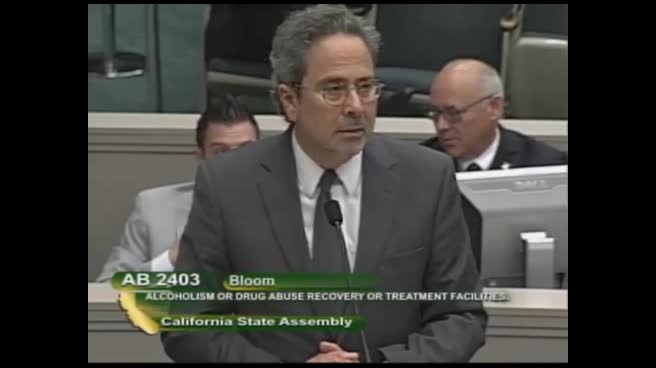 1MIN
Assembly Standing Committee on Appropriations
 9MIN
Assembly Standing Committee on Water, Parks, and Wildlife
 7MIN
Assembly Standing Committee on Privacy and Consumer Protection
Bill Author

Bill Co-Author(s):