AB 2155: Teachers: retirement: full time.
- Session Year: 2015-2016
- House: Assembly
- Latest Version Date: 2016-08-22
The Teachers Retirement Law creates the State Teachers Retirement System and State Teachers Retirement Plan for the purpose of providing teachers and other specified employees with financially sound retirement plans, and vests administration of the system and the plan with the Teachers Retirement Board. That law defines the term full time as the days or hours of creditable service an employer requires a class of employees to perform in a school year in order to earn the compensation earnable, as defined, and provides that one measure of the minimum standard for full time in community colleges is 875 instructional hours per school year for all instructors employed in adult education programs. That law requires each collective bargaining agreement or employment agreement that applies to specified members of the system to, among other things, specify the number of hours of creditable service that equals full time for those members.
This bill would additionally require each collective bargaining agreement or employment agreement to specify the courses for which instructors are subject to the 875-hour requirement for any agreement entered into, extended, renewed, or amended on or after January 1, 2017. The bill would also provide that an instructor not subject to the 875-hour requirement is subject to one of two other specified hour requirements.
The Teachers Retirement Law creates the State Teachers Retirement System and State Teachers Retirement Plan for the purpose of providing teachers and other specified employees with financially sound retirement plans, and vests administration of the system and the plan with the Teachers Retirement Board. That law defines the term full time as the days or hours of creditable service an employer requires a class of employees to perform in a school year in order to earn the compensation earnable, as defined, and provides that one measure of the minimum standard for full time in community colleges is 875 instructional hours per school year for all instructors employed in adult education programs. That law requires each collective bargaining agreement or employment agreement that applies to specified members of the system to, among other things, specify the number of hours of creditable service that equals full time for those members.
This bill would provide that instructors employed in certain adult education programs, as specified, are not subject to the 875-hour requirement. additionally require each collective bargaining agreement or employment agreement to specify the courses for which instructors are subject to the 875-hour requirement for any agreement entered into, extended, renewed, or amended on or after January 1, 2017. The bill would also provide that an instructor not subject to the 875-hour requirement is subject to one of two other specified hour requirements.
The Teachers Retirement Law creates the State Teachers Retirement System and State Teachers Retirement Plan for the purpose of providing teachers and other specified employees with financially sound retirement plans, and vests administration of the system and the plan with the Teachers Retirement Board. That law defines the term full time as the days or hours of creditable service an employer requires a class of employees to perform in a school year in order to earn the compensation earnable, as defined, and provides that one measure of the minimum standard for full time in community colleges is 875 instructional hours per school year for all instructors employed in adult education programs.
This bill would provide that instructors employed in certain adult education programs, as specified, are not subject to the 875-hour requirement.
(a)(1)Full time means the days or hours of creditable service the employer requires to be performed by a class of employees in a school year in order to earn the compensation earnable as defined in Section 22115 and specified under the terms of a collective bargaining agreement or employment agreement. For the purpose of crediting service under this part, full time may not be less than the minimum standard specified in this section.
(2)(A)Each collective bargaining agreement or employment agreement that applies to a member subject to the minimum standard specified in either paragraph (5) or (6) of subdivision (c) shall do all of the following:
(i)Specify the number of hours of creditable service that equals full time pursuant to this section for each class of employee subject to either paragraph (5) or (6) of subdivision (c).
(ii)Specify the courses for which an instructor is subject to paragraph (6) of subdivision (c), if applicable, for an agreement entered into, extended, renewed, or amended on or after January 1, 2017.
(iii)Make specific reference to this section.
(B)The employer shall submit a copy of the agreement to the system.
(C)The copies of each agreement shall be submitted electronically in a format determined by the system that ensures the security of the transmitted member data.
(D)The copies shall be electronically submitted annually to the system on or before July 1, or on or before the effective date of the agreement, whichever is later.
(b)The minimum standard for full time in prekindergarten through grade 12 is as follows:
(1)One hundred seventy-five days per year or 1,050 hours per year, except as provided in paragraphs (2) and (3).
(2)(A) One hundred ninety days per year or 1,520 hours per year for all principals and program managers, including advisers, coordinators, consultants, and developers or planners of curricula, instructional materials, or programs, and for administrators, except as provided in subparagraph (B).
(B)Two hundred fifteen days per year or 1,720 hours per year including school and legal holidays pursuant to the policy adopted by the employers governing board for administrators at a county office of education.
(3)One thousand fifty hours per year for teachers in adult education programs.
(c)The minimum standard for full time in community colleges is as follows:
(1)One hundred seventy-five days per year or 1,050 hours per year, except as provided in paragraphs (2), (3), (4), (5), and (6). Full time includes time for duties the employer requires to be performed as part of the full-time assignment for a particular class of employees.
(2)One hundred ninety days per year or 1,520 hours per year for all program managers and for administrators, except as provided in paragraph (3).
(3)Two hundred fifteen days per year or 1,720 hours per year including school and legal holidays pursuant to the policy adopted by the employers governing board for administrators at a district office.
(4)One hundred seventy-five days per year or 1,050 hours per year for all counselors and librarians.
(5)Five hundred twenty-five instructional hours per school year for all instructors employed on a part-time basis, except instructors specified in paragraph (6). If an instructor receives compensation for office hours pursuant to Article 10 (commencing with Section 87880) of Chapter 3 of Part 51 of Division 7 of Title 3, the minimum standard shall be increased appropriately by the number of office hours required annually for the class of employees.
(6)Eight hundred seventy-five instructional hours per school year for all instructors employed in adult education programs. If an instructor receives compensation for office hours pursuant to Article 10 (commencing with Section 87880) of Chapter 3 of Part 51 of Division 7 of Title 3, the minimum standard shall be increased appropriately by the number of office hours required annually for the class of employees.
(d)The board has final authority to determine full time for purposes of crediting service under this part if full time is not otherwise specified in this section.
(e)This section shall become operative on July 1, 2013.
(a)(1)Full time means the days or hours of creditable service the employer requires to be performed by a class of employees in a school year in order to earn the compensation earnable as defined in Section 22115 and specified under the terms of a collective bargaining agreement or employment agreement. For the purpose of crediting service under this part, full time may not be less than the minimum standard specified in this section. Each
(2)(A)Each collective bargaining agreement or employment agreement that applies to a member subject to the minimum standard specified in either paragraph (5) or (6) of subdivision (c) shall specify do all of the following:
(i)Specify the number of hours of creditable service that equals full time pursuant to this section for each class of employee subject to either paragraph and make (5) or (6) of subdivision (c).
(ii)Specify the courses for which an instructor is subject to paragraph (6) of subdivision (c), if applicable, for an agreement entered into, extended, renewed, or amended on or after January 1, 2017.
(iii)Make specific reference to this section, and the district shall section.
(B)The employer shall submit a copy of the agreement to the system.
(2)
(C)The copies of each agreement shall be submitted electronically in a format determined by the system that ensures the security of the transmitted member data.
(3)
(D)The copies shall be electronically submitted annually to the system on or before July 1, or on or before the effective date of the agreement, whichever is later.
(b)The minimum standard for full time in prekindergarten through grade 12 is as follows:
(1)One hundred seventy-five days per year or 1,050 hours per year, except as provided in paragraphs (2) and (3).
(2)(A) One hundred ninety days per year or 1,520 hours per year for all principals and program managers, including advisers, coordinators, consultants, and developers or planners of curricula, instructional materials, or programs, and for administrators, except as provided in subparagraph (B).
(B)Two hundred fifteen days per year or 1,720 hours per year including school and legal holidays pursuant to the policy adopted by the employers governing board for administrators at a county office of education.
(3)One thousand fifty hours per year for teachers in adult education programs.
(c)The minimum standard for full time in community colleges is as follows:
(1)One hundred seventy-five days per year or 1,050 hours per year, except as provided in paragraphs (2), (3), (4), (5), and (6). Full time includes time for duties the employer requires to be performed as part of the full-time assignment for a particular class of employees.
(2)One hundred ninety days per year or 1,520 hours per year for all program managers and for administrators, except as provided in paragraph (3).
(3)Two hundred fifteen days per year or 1,720 hours per year including school and legal holidays pursuant to the policy adopted by the employers governing board for administrators at a district office.
(4)One hundred seventy-five days per year or 1,050 hours per year for all counselors and librarians.
(5)Five hundred twenty-five instructional hours per school year for all instructors employed on a part-time basis, except instructors specified in paragraph (6). If an instructor receives compensation for office hours pursuant to Article 10 (commencing with Section 87880) of Chapter 3 of Part 51 of Division 7 of Title 3, the minimum standard shall be increased appropriately by the number of office hours required annually for the class of employees.
(6)Eight hundred seventy-five instructional hours per school year for all instructors employed in adult education programs, except for programs offered pursuant to Section 84760.5. programs. If an instructor receives compensation for office hours pursuant to Article 10 (commencing with Section 87880) of Chapter 3 of Part 51 of Division 7 of Title 3, the minimum standard shall be increased appropriately by the number of office hours required annually for the class of employees.
(d)The board has final authority to determine full time for purposes of crediting service under this part if full time is not otherwise specified in this section.
(e)This section shall become operative on July 1, 2013.
(a)(1)Full time means the days or hours of creditable service the employer requires to be performed by a class of employees in a school year in order to earn the compensation earnable as defined in Section 22115 and specified under the terms of a collective bargaining agreement or employment agreement. For the purpose of crediting service under this part, full time may not be less than the minimum standard specified in this section. Each collective bargaining agreement or employment agreement that applies to a member subject to the minimum standard specified in either paragraph (5) or (6) of subdivision (c) shall specify the number of hours of creditable service that equals full time pursuant to this section for each class of employee subject to either paragraph and make specific reference to this section, and the district shall submit a copy of the agreement to the system.
(2)The copies of each agreement shall be submitted electronically in a format determined by the system that ensures the security of the transmitted member data.
(3)The copies shall be electronically submitted annually to the system on or before July 1, or on or before the effective date of the agreement, whichever is later.
(b)The minimum standard for full time in prekindergarten through grade 12 is as follows:
(1)One hundred seventy-five days per year or 1,050 hours per year, except as provided in paragraphs (2) and (3).
(2)(A) One hundred ninety days per year or 1,520 hours per year for all principals and program managers, including advisers, coordinators, consultants, and developers or planners of curricula, instructional materials, or programs, and for administrators, except as provided in subparagraph (B).
(B)Two hundred fifteen days per year or 1,720 hours per year including school and legal holidays pursuant to the policy adopted by the employers governing board for administrators at a county office of education.
(3)One thousand fifty hours per year for teachers in adult education programs.
(c)The minimum standard for full time in community colleges is as follows:
(1)One hundred seventy-five days per year or 1,050 hours per year, except as provided in paragraphs (2), (3), (4), (5), and (6). Full time includes time for duties the employer requires to be performed as part of the full-time assignment for a particular class of employees.
(2)One hundred ninety days per year or 1,520 hours per year for all program managers and for administrators, except as provided in paragraph (3).
(3)Two hundred fifteen days per year or 1,720 hours per year including school and legal holidays pursuant to the policy adopted by the employers governing board for administrators at a district office.
(4)One hundred seventy-five days per year or 1,050 hours per year for all counselors and librarians.
(5)Five hundred twenty-five instructional hours per school year for all instructors employed on a part-time basis, except instructors specified in paragraph (6). If an instructor receives compensation for office hours pursuant to Article 10 (commencing with Section 87880) of Chapter 3 of Part 51 of Division 7 of Title 3, the minimum standard shall be increased appropriately by the number of office hours required annually for the class of employees.
(6)Eight hundred seventy-five instructional hours per school year for all instructors employed in adult education programs. programs, except for programs offered pursuant to Section 84760.5. If an instructor receives compensation for office hours pursuant to Article 10 (commencing with Section 87880) of Chapter 3 of Part 51 of Division 7 of Title 3, the minimum standard shall be increased appropriately by the number of office hours required annually for the class of employees.
(d)The board has final authority to determine full time for purposes of crediting service under this part if full time is not otherwise specified in this section.
(e)This section shall become operative on July 1, 2013.
|
Date
|
Status
|
|---|---|
| Apr 28, 2016 | Read third time. Passed. Ordered to the Senate. (Ayes 76. Noes 0.) |
| Aug 25, 2016 | Enrolled and presented to the Governor at 5 p.m. |
| Aug 19, 2016 | Read third time. Passed. Ordered to the Assembly. (Ayes 23. Noes 13.). |
| Aug 19, 2016 | Read third time. Passed. Ordered to the Assembly. (Ayes 23. Noes 13. Page 5160.). |
| Aug 19, 2016 | In Assembly. Ordered to Engrossing and Enrolling. |
| Aug 15, 2016 | Read second time. Ordered to third reading. |
| Aug 11, 2016 | From committee: Do pass. (Ayes 5. Noes 2.) (August 11). |
| Aug 1, 2016 | In committee: Referred to APPR. suspense file. |
| Jun 22, 2016 | In committee: Hearing postponed by committee. |
| Jun 13, 2016 | From committee: Do pass and re-refer to Com. on APPR. (Ayes 3. Noes 0.) (June 13). Re-referred to Com. on APPR. |
| May 5, 2016 | Referred to Com. on P.E. & R. |
| Feb 17, 2016 | Read first time. To print. |
| Apr 28, 2016 | Read third time. Passed. Ordered to the Senate. (Ayes 76. Noes 0. Page 4594.) |
| Apr 28, 2016 | Read third time. Passed. Ordered to the Senate. |
| Apr 28, 2016 | In Senate. Read first time. To Com. on RLS. for assignment. |
| Apr 21, 2016 | Read second time. Ordered to Consent Calendar. |
| Apr 20, 2016 | From committee: Do pass. To Consent Calendar. (Ayes 16. Noes 0.) (April 20). |
| Apr 6, 2016 | From committee: Do pass and re-refer to Com. on APPR. (Ayes 6. Noes 0.) (April 6). Re-referred to Com. on APPR. |
| Mar 29, 2016 | Re-referred to Com. on P.E., R., & S.S. |
| Mar 28, 2016 | From committee chair, with author's amendments: Amend, and re-refer to Com. on P.E., R., & S.S. Read second time and amended. |
| Feb 29, 2016 | Referred to Com. on P.E., R., & S.S. |
| Feb 18, 2016 | From printer. May be heard in committee March 19. |
|
Date
|
Description
|
Location
|
Votes
|
|
|---|---|---|---|---|
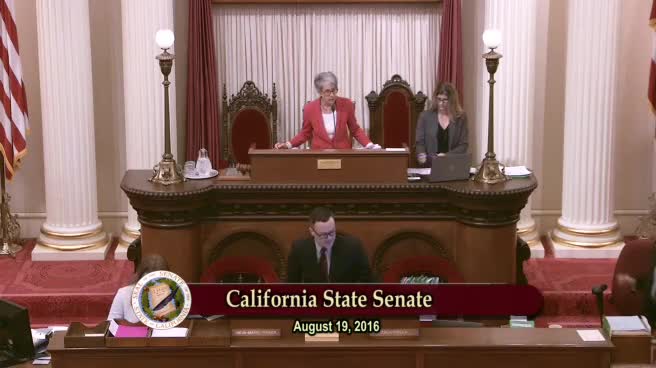
| Aug 19, 2016 | Assembly 3rd Reading AB2155 Ridley-Thomas By Pan | Senate Floor |
Passed |
|
| Aug 11, 2016 | Do pass | Senate Standing Committee on Appropriations |
Passed |
|
| Aug 1, 2016 | Placed on suspense file | Senate Standing Committee on Appropriations |
Passed |
|
| Jun 13, 2016 | Do pass, but first be re-referred to the Committee on [Appropriations] | Senate Standing Committee on Public Employment and Retirement |
Passed |
|
| Apr 28, 2016 | AB 2155 RIDLEY-THOMAS Consent Calendar Second Day Regular Session | Assembly Floor |
Passed |
|
| Apr 20, 2016 | Do pass. To Consent Calendar. | Assembly Standing Committee on Appropriations |
Passed |
|
| Apr 6, 2016 | Do pass and be re-referred to the Committee on [Appropriations] | Assembly Standing Committee on Public Employees, Retirement, and Social Security |
Passed |
This list shows positions taken on this bill by organizations on the date displayed, which is linked to the original source.
Positions by individuals are not included.
|
Organization
|
Position
|
Date
|
|---|---|---|
| California Federation Of Teachers | ** Support | Aug 19, 2016 |
| California Teachers Association | ** Support | Aug 19, 2016 |
| Faculty Association Of California Community Colleges | ** Support | Aug 19, 2016 |
| Los Angeles College Faculty Guild | ** Support | Aug 19, 2016 |
| Los Rios Community College District | ** Support | Aug 19, 2016 |
| Mt. San Antonio College Community College District | ** Against | Aug 19, 2016 |
| North Orange County Community College District | ** Against | Aug 19, 2016 |
| San Bernardino Community College District | ** Support | Aug 19, 2016 |
| South Orange County Community College District | ** Support | Aug 19, 2016 |
GOVERNOR'S VETO
GV Bill Id:AB 2155
Author:(Ridley-Thomas)
As Enrolled Ver:August 25, 2016
2/3 vote
Committee | Votes | Ayes | Noes |
Public Employees, Retirement, and Social Security | 6-0 | Bonta, Cooley, Cooper, Cristina Garcia, O'Donnell, Wagner |
|
Appropriations | 16-0 | Gonzalez, Bigelow, Bloom, Bonilla, Bonta, Calderon, Chang, Daly, Eggman, Gallagher, Roger Hernández, Obernolte, Quirk, Santiago, Wagner, Wood |
|
ASSEMBLY: | 76-0 | (April 28, 2016) | SENATE: | 23-13 | (August 19, 2016) |
SUMMARY: Requires that collective bargaining agreements or employment agreements that apply to adult education instructors specify the courses for which those members are adult education instructors thereby allowing Career Development and College Preparation (CPCP) courses to be subject to a lower instructional hour requirement for purposes of determining service credit under the California State Teachers' Retirement System (CalSTRS). This bill affects agreements that are entered into, extended, renewed or amended on or after January 1, 2017.
EXISTING LAW:
- Establishes minimum standards for full-time employment for the purpose of crediting service under the California State Teachers' Retirement System (CalSTRS).
- Specifies that the minimum standard, generally, for full time instructors in community colleges is 175 days per year or 1,050 hours per year.
- Specifies that for community college instructors employed on a part-time basis, the minimum standard for full time is 525 instructional hours.
- Specifies that for community college instructors employed in adult education programs the minimum standard for full time is 875 instructional hours.
FISCAL EFFECT: Unknown.
COMMENTS: According to the author, SB 361 (Scott), Chapter 514, Statutes of 2008, "…established three levels of funding for community colleges. Credit courses were funded at the highest level and noncredit (adult education) courses were funded at the lowest level. In between those two levels was a third level for Career Development and College Preparation (CDCP) courses, which are also considered noncredit courses. CDCP courses, however, are different from traditional noncredit courses in that they are a series of courses that lead to a certificate of completion that is designed to improve employment prospects and increase transfer opportunities to four-year institutions."
"Many community colleges offer what could be CDCP curriculum in the credit format because the funding level for CDCP courses was lower than courses offered for credit. Last year's budget created funding parity between CDCP courses and courses offered for credit. Many community colleges find that offering CDCP courses in the noncredit format is better for students because there are no student fees for noncredit courses and it allows faculty to accelerate coursework to better fit the needs of students."
"A barrier that community colleges must overcome to take advantage of offering CDCP courses in the noncredit format is the requirement that faculty teaching noncredit courses are required to provide at least 25 instructional hours per week while faculty teaching courses for credit are required to provide 15 instructional hours per week. Because of the instructional hour requirement for CDCP courses, the state could miss out on an opportunity to increase student readiness for employment and college-level work."
According to the sponsor, "This measure would authorize, not require, community college districts to equalize the minimum instructional hour requirements for credit courses and CDCP courses. Districts would be authorized to establish, through bargaining, a lower instructional hour requirement, specifically, 15 instructional hours per week, for CDCP courses. Under the legislation, districts would specifically identify which courses are adult education courses for the purposes of service credit allowing CDCP courses to be identified as courses that are not adult education."
This bill functionally allows a community college district and its employees to lower the minimum instructional hours that certain part-time community college district instructors would be required to work to earn creditable service under the State Teachers' Retirement System.
I am concerned this bill, by authorizing districts to bargain for a lower instructional hour requirement that would qualify as pensionable service credit, will only increase state pension costs. This is not prudent, especially in light of STRS' massive unfunded liabilities.
Analysis Prepared by: Karon Green / P.E.,R., & S.S. / (916) 319-3957 FN: 0005148
Office of Senate Floor Analyses (916) 651-1520 Fax: (916) 327-4478 | AB |
THIRD READING
Bill No: AB 2155
:
SENATE PUBLIC EMP. & RET. COMMITTEE: 3-0, 6/13/16
AYES: Pan, Beall, Hall
NO VOTE RECORDED: Morrell, Moorlach
SENATE APPROPRIATIONS COMMITTEE: 5-2, 8/11/16
AYES: Lara, Beall, Hill, McGuire, Mendoza
NOES: Bates, Nielsen
ASSEMBLY FLOOR: 76-0, 4/28/16 (Consent) - See last page for vote
SOURCE: Los Angeles College Faculty Guild
DIGEST: This bill requires that collective bargaining agreements or employment agreements applying to part-time instructors and to adult education instructors specify the number of hours required to earn “full-time” creditable service for purposes of retirement benefits and also specify which courses are subject to the minimum standard for adult education courses.
ANALYSIS:
Existing law:
- Provides, for purposes of determining creditable service in the California State Teachers Retirement System (CalSTRS), that “full time” means the days or hours of creditable service the employer requires to be performed by a class of employees in a school year in order to earn specified compensation earnable.
- Requires that the number of hours necessary to meet the definition of full-time employment in a school year be specified in a collective bargaining agreement or employment agreement.
- Prevents full-time employment from being less than the specified minimum standard and specifies that the minimum standard, generally, for full time instructors in community colleges is 175 days per year or 1,050 hours per year. Typically, full time consists of a minimum of 525 instructional or classroom hours with the balance consisting of non-instructional hours for time for duties the employer requires to be performed as part of the full-time assignment for a particular class of employees (This is also referred to as the full time credit course time base of 15 hours/week for 35 weeks). Other categories do not include non-instructional hours in their minimum standards.
- Specifies that for community college instructors employed on a part-time basis, the minimum standard to earn creditable service for full time is 525 instructional hours (i.e., 15 hours/week for 35 weeks).
- Specifies that for community college instructors employed in adult education programs (also referred to as noncredit courses) the minimum standard for full time is 875 instructional hours (i.e., 25 hours/week for 35 weeks).
This bill requires collective bargaining agreements or employment agreements applying to any part-time instructors and to adult education instructors to do all of the following:
- Specify the number of hours of creditable service that equal full time for part-time and adult education instructors.
- For an agreement entered into, extended, renewed, or amended on or after January 1, 2017, specify the courses for which an instructor is subject to the 875 instructional hour minimum standard for adult education courses, if applicable. Thus, creditable service for instructors of courses not specified in the agreement would be based on the 175 day or 1050 hour minimum standard for full time and the 525 instruction hour minimum standard for part time (i.e., if the agreement specifies the course is adult education, the instructor will have to perform a minimum of 25 instructional hours/week but if the agreement does not specify the course is adult education, the instructor will have to perform a minimum of 15 instructional hours/week).
- Make specific reference to the section Education Code Section 22138.5, defining the minimum standard for full time for creditable service.
Background
Districts and their faculty employees generally bargain to define full-time employment and identify a specified number of days or hours required to work per school year as full time. However, for purposes of earning creditable service for CalSTRS retirement benefits, there are minimum hours that employees must work to earn a year of creditable service in the retirement system. These minimum standards vary depending on whether the employee teaches full time or part time, and by which courses the employee teaches. Community college employers and employees refer to credit and noncredit courses. However, provisions governing CalSTRS do not make references to credit or noncredit courses, instead referring to instruction in courses (i.e., credit) or in adult education courses (i.e., noncredit). Generally, the minimum standard for full-time instructors in community colleges is 175 days per year or 1,050 hours per year. However, this includes non-instructional hours. Of these 1,050 hours, a minimum of 525 must be instructional (i.e., classroom) hours.
According to CalSTRS, “Existing law sets minimum standards for instructional hours for all instructors at community colleges. Community college instructors employed to teach courses in adult education are subject to current minimum full-time requirements of 875 instructional hours of creditable service, although each community college district may have actual requirements that are higher than this minimum. CalSTRS is not involved in setting the actual instructional hour requirements by community college districts. However, current law requires community college districts to submit a copy of the agreements that include adult education instructors.”
Under AB 2155, a community college district and its employees would have to bargain to decide which courses should be specified as adult education courses and thus, the minimum instructional hours a full-time instructor would have to work to earn creditable service—either 525 instructional hours (15 hours per week for 35 weeks) or 875 instructional hours (25 hours per week for 35 weeks).
According to the author, SB 361 (Scott, Chapter 631, Statutes of 2006), "…established three levels of funding for community colleges. Credit courses were funded at the highest level and noncredit (adult education) courses were funded at the lowest level. In between those two levels was a third level for Career Development and College Preparation (CDCP) courses, which are also considered noncredit courses. CDCP courses, however, are different from traditional noncredit courses in that they are a series of courses that lead to a certificate of completion that is designed to improve employment prospects and increase transfer opportunities to four-year institutions."
"Many community colleges offer what could be CDCP curriculum in the credit format because the funding level for CDCP courses was lower than courses offered for credit. Last year’s budget created funding parity between CDCP courses and courses offered for credit. Many community colleges find that offering CDCP courses in the noncredit format is better for students because there are no student fees for noncredit courses and it allows faculty to accelerate coursework to better fit the needs of students."
"A barrier that community colleges must overcome to take advantage of offering CDCP courses in the noncredit format is the requirement that faculty teaching noncredit courses are required to provide at least 25 instructional hours per week while faculty teaching courses for credit are required to provide 15 instructional hours per week. Because of the instructional hour requirement for CDCP courses, the state could miss out on an opportunity to increase student readiness for employment and college-level work."
According to the sponsor, "This measure would authorize, not require, community college districts to equalize the minimum instructional hour requirements for credit courses and CDCP courses. Districts would be authorized to establish, through bargaining, a lower instructional hour requirement, specifically, 15 instructional hours per week, for CDCP courses. Under the legislation, districts would specifically identify which courses are adult education courses for the purposes of service credit allowing CDCP courses to be identified as courses that are not adult education."
Related/Prior Legislation
AB 1713 (Furutani, Chapter 236, Statutes of 2010) authorized the community college board of governors (BOG) to adopt criteria and standards for the identification of CDCP courses and their eligibility for funding, including the definition of courses eligible for specified supplemental funding.
SB 361 (Scott, Chapter 631, Statutes of 2006) replaced the prior system of program-based funding for community colleges with new methodologies for allocating general apportionments and for determining BOG budget requests; established a new category of non-credit courses as eligible for enhanced funding; and implemented 2006-07 Budget Act appropriations for equalization and non-credit instruction.
FISCAL EFFECT: Appropriation: Fiscal Com.: Local:
According to Senate Appropriations Committee this bill would result in annual state costs, potentially in excess of $150,000 annually, related to (1) increased state pension costs, and (2) a potential increase in labor costs within the state’s community college system.
Los Angeles College Faculty Guild (source)
California Federation of Teachers
California Teachers Association
Faculty Association of California Community Colleges
Los Rios Community College District
San Bernardino Community College District
South Orange County Community College District
OPPOSITION: (Verified 8/11/16)
Mt. San Antonio College Community College District
North Orange County Community College District
ARGUMENTS IN SUPPORT: According to the sponsor, “the measure would authorize a community college district to locally bargain to reduce the required instructional hours for faculty to receive a full year of service credit for certain noncredit courses.” Additionally, “this bill would recognize the equalized funding for the two types of courses by also allowing districts to equalize service credit requirements for faculty.”
According to the California Teachers’ Association, “AB 2155 provides parity for community college educators by allowing the parties to negotiate the same instructional hour requirements for both non-credit and credit classes.”
The California Federation of Teachers, commenting on the disparity between the 15 instructional hour per week minimum standard for credit course instructors and the 25 instructional hour per week minimum standard for noncredit course instructors states, “This bill seeks to remedy this inequity and allow the community colleges to use CDCP courses to increase student readiness for employment and college-level work.”
ARGUMENTS IN OPPOSITION: The opposition believes that AB 2155 requires collective bargaining agreements or employments agreements that apply to CDCP courses to be subject to a lower instructional hour requirement for purposes of determining service credit under CalSTRS. According to the North Orange County Community College District, “While the bill provides an option, rather than a mandate, to bargain a reduction in workload, we know that trend will be pressured during bargaining negotiations. Deeming the bill as an option may be factually accurate, but in reality, we believe AB 2155 will pressure districts to lower the workload.”
If the bill results in lower faculty workload, the opposition believes that it would “make CDCP courses much more expensive and, as a result, discourage colleges from hiring full-time noncredit faculty”; require colleges to supplement noncredit “with part-time faculty teaching hours to reach the 25 hours per week”; and hire additional part-time faculty because of a ripple effect of a reduction on part-time faculty workload since “the maximum permitted amount of workload for part-time faculty is 67% of the full-time faculty.”
The opposition raises additional concerns that the equalization FTE reimbursement for noncredit courses will generate lower revenue than credit course FTE reimbursements while requiring districts to pay the same salaries or wages to instructor of noncredit courses as to those of credit courses since the former is based on positive attendance and the latter is based on a census model.
ASSEMBLY FLOOR: 76-0, 4/28/16
AYES: Achadjian, Alejo, Travis Allen, Arambula, Atkins, Baker, Bigelow, Bloom, Bonilla, Bonta, Brough, Brown, Burke, Calderon, Campos, Chang, Chau, Chiu, Chu, Cooley, Cooper, Dababneh, Dahle, Dodd, Eggman, Frazier, Beth Gaines, Gallagher, Cristina Garcia, Eduardo Garcia, Gatto, Gipson, Gomez, Gonzalez, Gordon, Gray, Grove, Hadley, Harper, Roger Hernández, Holden, Irwin, Jones, Jones-Sawyer, Kim, Lackey, Levine, Linder, Lopez, Low, Maienschein, Mayes, McCarty, Medina, Melendez, Mullin, Nazarian, Obernolte, O'Donnell, Patterson, Quirk, Ridley-Thomas, Rodriguez, Salas, Santiago, Steinorth, Mark Stone, Thurmond, Ting, Wagner, Waldron, Weber, Wilk, Williams, Wood, Rendon
NO VOTE RECORDED: Chávez, Daly, Mathis, Olsen
8/15/16 19:39:45
**** END ****
SENATE COMMITTEE ON APPROPRIATIONS
Senator Ricardo Lara, Chair
2015 - 2016 Regular Session
AB 2155 (Ridley-Thomas) - Teachers: retirement: full time
Version: March 28, 2016 | Policy Vote: P.E. & R. 3 - 0 |
Urgency: No | Mandate: No |
Hearing Date: August 1, 2016 | Consultant: Robert Ingenito |
This bill meets the criteria for referral to the Suspense File.
Bill Summary:
AB 2155 would require that collective bargaining agreements or employment agreements that apply to adult education instructors specify the courses for which those members are adult education instructors.
Fiscal Impact:
This bill would result in annual state costs, potentially in excess of $150,000 annually, related to (1) increased state pension costs, and (2) a potential increase in labor costs within the state’s community college system.
Background:
Districts and their faculty employees generally bargain to define full-time employment and identify a specified number of days or hours required to work full-time per school year. However, for purposes of earning creditable service for CalSTRS retirement benefits, there are minimum hours that employees must work to earn a year of creditable service. These minimum standards vary depending on (1) whether the employee teaches full-time or part-time, and (2) which courses the employee teaches. Community college employers and employees refer to credit and noncredit courses. However, provisions governing CalSTRS do not make these two references, instead referring to instruction in courses (i.e., credit) or in adult education courses (i.e., noncredit).
Current law establishes three levels of funding for community colleges. Credit courses are funded at the highest level and noncredit (adult education) courses were funded at the lowest level. In between sits a third level for Career Development and College Preparation (CDCP) courses, which are also considered noncredit courses. CDCP courses, however, are different from traditional noncredit courses in that they are a series of courses that lead to a certificate of completion that is designed to improve employment prospects and increase transfer opportunities to four-year institutions.
The 2015-16 state budget created funding parity between CDCP courses and courses offered for credit. Offering CDCP courses in the noncredit format possesses certain advantages; however, a barrier to doing so is the requirement that faculty teaching noncredit courses are required to provide at least 25 instructional hours per week while faculty teaching courses for credit are required to provide 15 instructional hours per week.
Under this bill, a community college district and its employees would have to bargain to decide which courses should be specified as adult education courses and thus, the minimum instructional hours a full-time instructor would have to work to earn creditable service—either 525 instructional hours (15 hours per week for 35 weeks) or 875 instructional hours (25 hours per week for 35 weeks).
Proposed Law:
This bill would do the following:
- Require collective bargaining agreements or employment agreements applying to any part-time instructors and to adult education instructors to do all of the following:
- Specify the number of hours of creditable service that equal full time for part-time and adult education instructors.
- For an agreement entered into, extended, renewed, or amended on or after January 1, 2017, specify the courses for which an instructor is subject to the 875 instructional hour minimum standard for adult education courses, if applicable. Thus, creditable service for instructors of courses not specified in the agreement would be based on the 175 day or 1050 hour minimum standard for full time and the 525 instruction hour minimum standard for part time (i.e., if the agreement specifies the course is adult education, the instructor will have to perform a minimum of 25 instructional hours/week but if the agreement does not specify the course is adult education, the instructor will have to perform a minimum of 15 instructional hours/week).
- Make specific reference to the section Education Code Section 22138.5, defining the minimum standard for full time for creditable service.
Staff Comments:
This bill would link the instructional hour requirement of CDCP non-credit courses to standard “for credit” courses. This action would lower the requirement for instructors teaching specific non-credit courses on a part-time basis from 875 hours to 525 hours. Thus, the bill would make modifications to the number of instructional hours required to earn pensionable service credit for certain adult education courses; consequently, it could potentially enhance teacher pension benefits.
Additionally, the bill could impact hiring with respect to full-time faculty teaching noncredit courses. If current full-time faculty teaching 25 hours per week respond to the bill by teaching 15 hours per week (in other words, respond to the bill by worker fewer hours such that they still receive a full year of pension credit), a community college would incur costs to hire additional instructors to backfill for 10 hours of each position. The total cost of this impact is unknown, but could be significant.
-- END --
SENATE COMMITTEE ON
PUBLIC EMPLOYMENT AND RETIREMENT
Dr. Richard Pan, Chair
2015 - 2016 Regular
Bill No: AB 2155 Hearing Date: 6/13/16
Author: | Ridley-Thomas | ||
Version: | 3/28/16 As amended | ||
Urgency: | No | Fiscal: | Yes |
Consultant: | Glenn Miles | ||
Subject: Teachers: retirement: full time creditable service
SOURCE: Los Angeles College Faculty Guild
ASSEMBLY VOTES:
Assembly Floor: | 76 - 0 |
Assembly Appropriations Committee: | 16 - 0 |
Assembly Public Employees, Retirement/Soc Sec Committee: | 6 - 0 |
DIGEST: This bill requires that collective bargaining agreements or employment agreements applying to part-time instructors and to adult education instructors specify the number of hours required to earn “full-time” creditable service for purposes of retirement benefits and also specify which courses are subject to the minimum standard for adult education courses.
ANALYSIS:
Existing law:
- For purposes of determining creditable service in CalSTRS, provides that “full time” means the days or hours of creditable service the employer requires to be performed by a class of employees in a school year in order to earn specified compensation earnable.
- Requires that the number of hours necessary to meet the definition of full- time employment in a school year be specified in a collective bargaining agreement or employment agreement.
- Prevents full-time employment from being less than the specified minimum standard and specifies that the minimum standard, generally, for full time instructors in community colleges is 175 days per year or 1,050 hours per year. Typically, full time consists of a minimum of 525 instructional or classroom hours with the balance consisting of non-instructional hours for time for duties the employer requires to be performed as part of the full-time assignment for a particular class of employees (This is also referred to as the full time credit course time base of 15 hours/week for 35 weeks). Other categories do not include non-instructional hours in their minimum standards.
- Specifies that for community college instructors employed on a part-time basis, the minimum standard to earn creditable service for full time is 525 instructional hours (i.e., 15 hours/week for 35 weeks).
- Specifies that for community college instructors employed in adult education programs (also referred to as noncredit courses) the minimum standard for full time is 875 instructional hours (i.e., 25 hours/week for 35 weeks).
This bill:
- Requires collective bargaining agreements or employment agreements applying to any part-time instructors and to adult education instructors to do all of the following:
- Specify the number of hours of creditable service that equal full time for part-time and adult education instructors.
- For an agreement entered into, extended, renewed, or amended on or after January 1, 2017, specify the courses for which an instructor is subject to the 875 instructional hour minimum standard for adult education courses, if applicable. Thus, creditable service for instructors of courses not specified in the agreement would be based on the 175 day or 1050 hour minimum standard for full time and the 525 instruction hour minimum standard for part time (i.e., if the agreement specifies the course is adult education, the instructor will have to perform a minimum of 25 instructional hours/week but if the agreement does not specify the course is adult education, the instructor will have to perform a minimum of 15 instructional hours/week).
- Make specific reference to the section Education Code Section 22138.5, defining the minimum standard for full time for creditable service.
Background
Districts and their faculty employees generally bargain to define full-time employment and identify a specified number of days or hours required to work per school year as full time. However, for purposes of earning creditable service for CalSTRS retirement benefits, there are minimum hours that employees must work to earn a year of creditable service in the retirement system. These minimum standards vary depending on whether the employee teaches full time or part time, and by which courses the employee teaches. Community college employers and employees refer to credit and noncredit courses. However, provisions governing CalSTRS do not make references to credit or noncredit courses, instead referring to instruction in courses (i.e., credit) or in adult education courses (i.e., noncredit). Generally, the minimum standard for full-time instructors in community colleges is 175 days per year or 1,050 hours per year. However, this includes non-instructional hours. Of these 1,050 hours, a minimum of 525 must be instructional (i.e., classroom) hours.
According to CalSTRS, “Existing law sets minimum standards for instructional hours for all instructors at community colleges. Community college instructors employed to teach courses in adult education are subject to current minimum full-time requirements of 875 instructional hours of creditable service, although each community college district may have actual requirements that are higher than this minimum. CalSTRS is not involved in setting the actual instructional hour requirements by community college districts. However, current law requires community college districts to submit a copy of the agreements that include adult education instructors.”
Under AB 2155, a community college district and its employees would have to bargain to decide which courses should be specified as adult education courses and thus, the minimum instructional hours a full-time instructor would have to work to earn creditable service—either 525 instructional hours (15 hours per week for 35 weeks) or 875 instructional hours (25 hours per week for 35 weeks).
According to the author, SB 361 (Scott), Chapter 631, Statutes of 2006, "…established three levels of funding for community colleges. Credit courses were funded at the highest level and noncredit (adult education) courses were funded at the lowest level. In between those two levels was a third level for Career Development and College Preparation (CDCP) courses, which are also considered noncredit courses. CDCP courses, however, are different from traditional noncredit courses in that they are a series of courses that lead to a certificate of completion that is designed to improve employment prospects and increase transfer opportunities to four-year institutions."
"Many community colleges offer what could be CDCP curriculum in the credit format because the funding level for CDCP courses was lower than courses offered for credit. Last year’s budget created funding parity between CDCP courses and courses offered for credit. Many community colleges find that offering CDCP courses in the noncredit format is better for students because there are no student fees for noncredit courses and it allows faculty to accelerate coursework to better fit the needs of students."
"A barrier that community colleges must overcome to take advantage of offering CDCP courses in the noncredit format is the requirement that faculty teaching noncredit courses are required to provide at least 25 instructional hours per week while faculty teaching courses for credit are required to provide 15 instructional hours per week. Because of the instructional hour requirement for CDCP courses, the state could miss out on an opportunity to increase student readiness for employment and college-level work."
According to the sponsor, "This measure would authorize, not require, community college districts to equalize the minimum instructional hour requirements for credit courses and CDCP courses. Districts would be authorized to establish, through bargaining, a lower instructional hour requirement, specifically, 15 instructional hours per week, for CDCP courses. Under the legislation, districts would specifically identify which courses are adult education courses for the purposes of service credit allowing CDCP courses to be identified as courses that are not adult education."
Related/Prior Legislation
AB 1713 (Furutani, Chapter 236, Statutes of 2010) authorized the community college board of governors (BOG) to adopt criteria and standards for the identification of CDCP courses and their eligibility for funding, including the definition of courses eligible for specified supplemental funding.
SB 361 (Scott, Chapter 631, Statutes of 2006) replaced the prior system of program-based funding for community colleges with new methodologies for allocating general apportionments and for determining BOG budget requests; established a new category of non-credit courses as eligible for enhanced funding; and implemented 2006-07 Budget Act appropriations for equalization and non-credit instruction.
FISCAL EFFECT: Appropriation: No Fiscal Com.: Yes Local: No
SUPPORT:
Los Angeles College Faculty Guild (source)
California Federation of Teachers
California Teachers Association
Los Rios Community College District
San Bernardino Community College District
South Orange County Community College District
OPPOSITION:
Mt. San Antonio College Community College District
North Orange County Community College District
ARGUMENTS IN SUPPORT: According to the sponsor, “the measure would authorize a community college district to locally bargain to reduce the required instructional hours for faculty to receive a full year of service credit for certain noncredit courses.” Additionally, “this bill would recognize the equalized funding for the two types of courses by also allowing districts to equalize service credit requirements for faculty.”
According to the California Teachers’ Association, “AB 2155 provides parity for community college educators by allowing the parties to negotiate the same instructional hour requirements for both non-credit and credit classes.”
The California Federation of Teachers, commenting on the disparity between the 15 instructional hour per week minimum standard for credit course instructors and the 25 instructional hour per week minimum standard for noncredit course instructors states, “This bill seeks to remedy this inequity and allow the community colleges to use CDCP courses to increase student readiness for employment and college-level work.”
ARGUMENTS IN OPPOSITION: The opposition believes that AB 2155 requires collective bargaining agreements or employments agreements that apply to CDCP courses to be subject to a lower instructional hour requirement for purposes of determining service credit under CalSTRS. According to the North Orange County Community College District, “While the bill provides an option, rather than a mandate, to bargain a reduction in workload, we know that trend will be pressured during bargaining negotiations. Deeming the bill as an option may be factually accurate, but in reality, we believe AB 2155 will pressure districts to lower the workload.”
If the bill results in lower faculty workload, the opposition believes that it would “make CDCP courses much more expensive and, as a result, discourage colleges from hiring full-time noncredit faculty”; require colleges to supplement noncredit “with part-time faculty teaching hours to reach the 25 hours per week”; and hire additional part-time faculty because of a ripple effect of a reduction on part-time faculty workload since “the maximum permitted amount of workload for part-time faculty is 67% of the full-time faculty.”
The opposition raises additional concerns that the equalization FTE reimbursement for noncredit courses will generate lower revenue than credit course FTE reimbursements while requiring districts to pay the same salaries or wages to instructor of noncredit courses as to those of credit courses since the former is based on positive attendance and the latter is based on a census model.
Date of Hearing: April 20, 2016
ASSEMBLY COMMITTEE ON APPROPRIATIONS
Lorena Gonzalez, Chair
ABPCA Bill Id:AB 2155
Author:(Ridley-Thomas) – As Amended Ver:March 28, 2016
Policy Committee: | Public Employees, Retirement/Soc Sec | Vote: | 6 - 0 |
|
|
Urgency: No State Mandated Local Program: No Reimbursable: No
SUMMARY:
This bill requires that collective bargaining agreements or employment agreements that apply to adult education instructors specify the courses for which they are adult education. This requirement applies to agreements entered into, extended, renewed, or amended on or after January 1, 2017.
FISCAL EFFECT:
Negligible state costs.
COMMENTS:
- Purpose and background. According to the author, this bill will help support Career Development and College Preparation (CDCP) courses and help enhance students' education and employment skills. This bill authorizes community colleges to establish, through bargaining, a lower instructional hour requirement for CDCP courses for the purposes of determining California State Teachers' Retirement System (CalSTRS) service credit. Supporters argue that this will help community colleges offer these courses and take advantage of opportunity to increase student readiness for employment and college-level work.
Under current law, community college instructors employed to teach courses in adult education are subject to the current minimum full-time requirement of 875 instructional hours of creditable service, regardless of full-time or part-time status. Otherwise, community college instructors working full-time must work a minimum of 1,050 hours to earn a full year of service credit, while part-time instructors must work at least 525 hours in a year. According to the author, this bill would allow districts to equalize the minimum instructional hour requirement for credit for adult education courses and CDCP courses by allowing CDCP course to be identified as courses that are not adult education courses.
Analysis Prepared by: Luke Reidenbach / APPR. / (916) 319-2081
Bill Author

Bill Co-Author(s):