AB 216: Product sales to minors: vapor products.
- Session Year: 2015-2016
- House: Assembly
- Latest Version Date: 2015-10-11
Existing law prohibits the sale of electronic cigarettes to people under 18 years of age. Existing law defines electronic cigarette as a device that can provide an inhalable dose of nicotine by delivering a vaporized solution.
This bill would prohibit the sale of any device intended to deliver a nonnicotine product in a vapor state, to be directly inhaled by the user, to a person under 18 years of age, or to a person under 21 years of age if SB 151 of the 201516 Regular Session is enacted and takes effect. The bill would exempt from its prohibition the sale of a drug or medical device that has been approved by the federal Food and Drug Administration. Because this bill would create a new crime or infraction, the bill would impose a state-mandated local program.
The California Constitution requires the state to reimburse local agencies and school districts for certain costs mandated by the state. Statutory provisions establish procedures for making that reimbursement.
This bill would provide that no reimbursement is required by this act for a specified reason.
Existing law prohibits the sale of electronic cigarettes to people under 18 years of age. Existing law defines electronic cigarette as a device that can provide an inhalable dose of nicotine by delivering a vaporized solution.
This bill would prohibit the sale of any device intended to deliver a nonnicotine product in a vapor state, to be directly inhaled by the user, to a person under 18 years of age. age, or to a person under 21 years of age if SB 151 of the 201516 Regular Session is enacted and takes effect. The bill would exempt from its prohibition the sale of a drug or medical device that has been approved by the federal Food and Drug Administration. Because this bill would create a new crime or infraction, the bill would impose a state-mandated local program.
The California Constitution requires the state to reimburse local agencies and school districts for certain costs mandated by the state. Statutory provisions establish procedures for making that reimbursement.
This bill would provide that no reimbursement is required by this act for a specified reason.
Existing law prohibits the sale of electronic cigarettes to people under 18 years of age. Existing law defines electronic cigarette as a device that can provide an inhalable dose of nicotine by delivering a vaporized solution.
This bill would prohibit the sale of any device intended to deliver a nonnicotine product in a vapor state, to be directly inhaled by the user, to a person under 18 years of age. The bill would exempt from its prohibition the sale of a drug or medical device that has been approved by the federal Food and Drug Administration. Because this bill would create a new crime or infraction, the bill would impose a state-mandated local program.
The California Constitution requires the state to reimburse local agencies and school districts for certain costs mandated by the state. Statutory provisions establish procedures for making that reimbursement.
This bill would provide that no reimbursement is required by this act for a specified reason.
Existing law prohibits the sale of electronic cigarettes to people under 18 years of age. Existing law defines electronic cigarette as a device that can provide an inhalable dose of nicotine by delivering a vaporized solution.
This bill would prohibit the sale of any device intended to deliver a nonnicotine product in a vapor state, to be directly inhaled by the user, to a person under 18 years of age. Because this bill would create a new crime or infraction, the bill would impose a state-mandated local program.
The California Constitution requires the state to reimburse local agencies and school districts for certain costs mandated by the state. Statutory provisions establish procedures for making that reimbursement.
This bill would provide that no reimbursement is required by this act for a specified reason.
(a)It is unlawful for a person to sell or otherwise furnish any device intended to deliver a nonnicotine product in a vapor state, to be directly inhaled by the user, to a person under 18 years of age.
(b)Subdivision (a) does not prohibit the sale or furnishing of a drug or medical device that has been approved by the federal Food and Drug Administration pursuant to the federal Food, Drug, and Cosmetic Act (21 U.S.C. Sec. 301 et seq.).
(c)A violation of this section is an infraction punishable by a fine not exceeding five hundred dollars ($500) for the first violation, by a fine not exceeding one thousand dollars ($1,000) for the second violation, or by a fine not exceeding one thousand five hundred dollars ($1,500) for a third or subsequent violation.
SEC. 2.Chapter 5 (commencing with Section 24600) is added to Division 20 of the Health and Safety Code, to read:5.Product Sales to Minors24600.(a)It is unlawful for a person to sell or otherwise furnish any device intended to deliver a nonnicotine product in a vapor state, to be directly inhaled by the user, to a person under 21 years of age.
(b)Subdivision (a) does not prohibit the sale or furnishing of a drug or medical device that has been approved by the federal Food and Drug Administration pursuant to the federal Food, Drug, and Cosmetic Act (21 U.S.C. Sec. 301 et seq.).
(c)A violation of this section is an infraction punishable by a fine not exceeding five hundred dollars ($500) for the first violation, by a fine not exceeding one thousand dollars ($1,000) for the second violation, or by a fine not exceeding one thousand five hundred dollars ($1,500) for a third or subsequent violation.
SEC. 3.No reimbursement is required by this act pursuant to Section 6 of Article XIIIB of the California Constitution because the only costs that may be incurred by a local agency or school district will be incurred because this act creates a new crime or infraction, eliminates a crime or infraction, or changes the penalty for a crime or infraction, within the meaning of Section 17556 of the Government Code, or changes the definition of a crime within the meaning of Section 6 of Article XIIIB of the California Constitution.
SEC. 4.(a)Section 1 of this act shall become operative only if Senate Bill 151 of the 201516 Regular Session is not enacted or does not become effective.
(b)Section 2 of this act shall become operative only if Senate Bill 151 of the 201516 Regular Session is enacted and becomes effective.
(a)It shall be is unlawful for a person to sell or otherwise furnish any device intended to deliver a nonnicotine product in a vapor state, to be directly inhaled by the user, to a person under 18 years of age.
(b)Subdivision (a) does not prohibit the sale or furnishing of a drug or medical device that has been approved by the federal Food and Drug Administration pursuant to the federal Food, Drug, and Cosmetic Act (21 U.S.C. Sec. 301, et. seq). 301 et seq.).
(c)A violation of this section shall be is an infraction punishable by a fine not exceeding five hundred dollars ($500) for the first violation, by a fine not exceeding one thousand dollars ($1,000) for the second violation, or by a fine not exceeding one thousand five hundred dollars ($1,500) for a third or subsequent violation.
SEC. 2.Chapter 5 (commencing with Section 24600) is added to Division 20 of the Health and Safety Code, to read:5.Product Sales to Minors24600.(a)It is unlawful for a person to sell or otherwise furnish any device intended to deliver a nonnicotine product in a vapor state, to be directly inhaled by the user, to a person under 21 years of age.
(b)Subdivision (a) does not prohibit the sale or furnishing of a drug or medical device that has been approved by the federal Food and Drug Administration pursuant to the federal Food, Drug, and Cosmetic Act (21 U.S.C. Sec. 301 et seq.).
(c)A violation of this section is an infraction punishable by a fine not exceeding five hundred dollars ($500) for the first violation, by a fine not exceeding one thousand dollars ($1,000) for the second violation, or by a fine not exceeding one thousand five hundred dollars ($1,500) for a third or subsequent violation.
SEC. 2.SEC. 3.No reimbursement is required by this act pursuant to Section 6 of Article XIIIB of the California Constitution because the only costs that may be incurred by a local agency or school district will be incurred because this act creates a new crime or infraction, eliminates a crime or infraction, or changes the penalty for a crime or infraction, within the meaning of Section 17556 of the Government Code, or changes the definition of a crime within the meaning of Section 6 of Article XIIIB of the California Constitution.
SEC. 4.(a)Section 1 of this act shall become operative only if Senate Bill 151 of the 201516 Regular Session is not enacted or does not become effective.
(b)Section 2 of this act shall become operative only if Senate Bill 151 of the 201516 Regular Session is enacted and becomes effective.
(a)It shall be unlawful for a person to sell or otherwise furnish any device intended to deliver a nonnicotine product in a vapor state, to be directly inhaled by the user, to a person under 18 years of age.
(b)Subdivision (a) does not prohibit the sale or furnishing of a drug or medical device that has been approved by the federal Food and Drug Administration pursuant to the federal Food, Drug, and Cosmetic Act (21 U.S.C. Sec. 301, et. seq).
(b)
(c)A violation of this section shall be an infraction punishable by a fine not exceeding five hundred dollars ($500) for the first violation, by a fine not exceeding one thousand dollars ($1,000) for the second violation, or by a fine not exceeding one thousand five hundred dollars ($1,500) for a third or subsequent violation.
SEC. 2.No reimbursement is required by this act pursuant to Section 6 of Article XIIIB of the California Constitution because the only costs that may be incurred by a local agency or school district will be incurred because this act creates a new crime or infraction, eliminates a crime or infraction, or changes the penalty for a crime or infraction, within the meaning of Section 17556 of the Government Code, or changes the definition of a crime within the meaning of Section 6 of Article XIIIB of the California Constitution.
(a)It shall be unlawful for a person to sell or otherwise furnish any device intended to deliver a nonnicotine product in a vapor state, to be directly inhaled by the user, to a person under 18 years of age.
(b)A violation of this section shall be an infraction punishable by a fine not exceeding five hundred dollars ($500) for the first violation, by a fine not exceeding one thousand dollars ($1,000) for the second violation, or by a fine not exceeding one thousand five hundred dollars ($1,500) for a third or subsequent violation.
SEC. 2.No reimbursement is required by this act pursuant to Section 6 of Article XIIIB of the California Constitution because the only costs that may be incurred by a local agency or school district will be incurred because this act creates a new crime or infraction, eliminates a crime or infraction, or changes the penalty for a crime or infraction, within the meaning of Section 17556 of the Government Code, or changes the definition of a crime within the meaning of Section 6 of Article XIIIB of the California Constitution.
|
Date
|
Status
|
|---|---|
| Jun 9, 2015 | In committee: Hearing postponed by committee. |
| Oct 11, 2015 | Chaptered by Secretary of State - Chapter 769, Statutes of 2015. |
| Oct 11, 2015 | Approved by the Governor. |
| Sep 9, 2015 | Enrolled and presented to the Governor at 4 p.m. |
| Aug 31, 2015 | Senate amendments concurred in. To Engrossing and Enrolling. (Ayes 77. Noes 1.). |
| Aug 31, 2015 | Senate amendments concurred in. To Engrossing and Enrolling. (Ayes 77. Noes 1. Page 2667.). |
| Aug 25, 2015 | In Assembly. Concurrence in Senate amendments pending. May be considered on or after August 27 pursuant to Assembly Rule 77. |
| Aug 24, 2015 | Read third time. Passed. Ordered to the Assembly. (Ayes 35. Noes 2. Page 2145.). |
| Aug 24, 2015 | Read third time. Passed. Ordered to the Assembly. |
| Jul 14, 2015 | Read second time. Ordered to third reading. |
| Jul 13, 2015 | From committee: Be placed on second reading file pursuant to Senate Rule 28.8. |
| Jun 29, 2015 | Read second time and amended. Re-referred to Com. on APPR. |
| Jun 25, 2015 | From committee: Amend, and do pass as amended and re-refer to Com. on APPR. (Ayes 8. Noes 0.) (June 24). |
| Feb 2, 2015 | Read first time. To print. |
| May 14, 2015 | Referred to Com. on HEALTH. |
| May 4, 2015 | Read third time. Passed. Ordered to the Senate. (Ayes 77. Noes 0. Page 1259.) |
| May 4, 2015 | Read third time. Passed. Ordered to the Senate. |
| May 4, 2015 | In Senate. Read first time. To Com. on RLS. for assignment. |
| Apr 30, 2015 | Read second time. Ordered to third reading. |
| Apr 29, 2015 | From committee: Do pass. (Ayes 17. Noes 0.) (April 29). |
| Apr 23, 2015 | From committee: Do pass and re-refer to Com. on APPR. (Ayes 20. Noes 0.) (April 22). Re-referred to Com. on APPR. |
| Apr 14, 2015 | Re-referred to Com. on G.O. |
| Apr 13, 2015 | From committee chair, with author's amendments: Amend, and re-refer to Com. on G.O. Read second time and amended. |
| Feb 9, 2015 | Referred to Com. on G.O. |
| Feb 3, 2015 | From printer. May be heard in committee March 5. |
|
Date
|
Description
|
Location
|
Votes
|
|
|---|---|---|---|---|
| Aug 31, 2015 | AB 216 GARCIA, C. Concurrence in Senate Amendments | Assembly Floor |
Passed |
|
| Aug 24, 2015 | Assembly 3rd Reading AB216 Cristina Garcia By Hernandez | Senate Floor |
Passed |
|
| Jun 24, 2015 | Do pass as amended, but first amend, and re-refer to the Committee on [Appropriations] | Senate Standing Committee on Health |
Passed |
|
| May 4, 2015 | AB 216 GARCIA, C. Assembly Third Reading | Assembly Floor |
Passed |
|
| Apr 29, 2015 | Do pass. | Assembly Standing Committee on Appropriations |
Passed |
|
| Apr 22, 2015 | Do pass and be re-referred to the Committee on [Appropriations] | Assembly Standing Committee on Governmental Organization |
Passed |
This list shows positions taken on this bill by organizations on the date displayed, which is linked to the original source.
Positions by individuals are not included.
|
Organization
|
Position
|
Date
|
|---|---|---|
| Alcohol and Narcotics Education Foundation | * Indeterminate | Jun 24, 2015 |
| Alcohol-Narcotic Education Foundation | * Indeterminate | Apr 22, 2015 |
| Breast Cancer Fund, The | ** Support | Aug 24, 2015 |
| California Narcotic Officers' Association | ** Support | Aug 24, 2015 |
| California School Employees Association | ** Support | Aug 24, 2015 |
| California Society Of Addiction Medicine | * Indeterminate | Jun 24, 2015 |
| California State PTA | ** Support | Aug 24, 2015 |
| Consumer Federation Of California | ** Support | Aug 24, 2015 |
| Saint Rose Parish South Sacramento | * Support | Jun 24, 2015 |
| San Marcos, City Of | ** Support | Aug 24, 2015 |
AB 216
Page 3
CONCURRENCE IN SENATE AMENDMENTS
AB 216
(Cristina Garcia)
As Amended June 29, 2015
Majority vote
ASSEMBLY: |
77-0 |
(May 4, 2015) |
SENATE: |
35-2 |
(August 24, 2015) |
Original Committee Reference: G.O.
SUMMARY: Makes it unlawful for a person to sell or otherwise furnish any device intended to deliver a nonnicotine product in a vapor state, to be directly inhaled by the user, to a person under 18 years of age or under 21 years of age, as specified. Specifically, this bill:
Makes it unlawful for a person to sell or otherwise furnish any device intended to deliver a nonnicotine product in a vapor state, to be directly inhaled by the user, to a person under 18 years of age. Raises the minimum age requirement to 21, contingent upon the passage and enactment of SB 151 (Hernandez) of the current legislative session.
Exempts the sale or furnishing of a drug or medical device that has been approved by the federal Food and Drug Administration (FDA) pursuant to the federal Food, Drug, and Cosmetic Act.
Specifies that a violation of the provisions in this bill is an infraction punishable by a fine not to exceed $500, $1,000, or $1,500 for a first, second, and third or subsequent violation, respectively.
The Senate amendments changed the legal age in this bill to sell a device intended to deliver a nonnicotine product in a vapor state, to be directly inhaled by the user, from 18 to 21, if SB 151 is enacted.
EXISTING LAW:
Prohibits the sale or furnishing of electronic cigarettes (e-cigs) to a person under 18 years of age. Defines e-cigs as a device that can provide an inhalable dose of nicotine by delivering a vaporized solution.
Authorizes the Department of Public Health (DPH), under the Stop Tobacco Access to Kids Enforcement (STAKE) Act, to assess civil penalties ranging from $400 to $6,000, depending on the number of infractions, against any person, firm, or corporation that sells, gives, or in any way furnishes tobacco products to a person who is under the age of 18.
Defines "tobacco product" as any product containing tobacco leaf, including, but not limited to, cigarettes, cigars, pipe tobacco, snuff, chewing tobacco, dipping tobacco, bidis, or any other preparation of tobacco.
AS PASSED BY THE ASSEMBLY, this bill prohibited the sale of any device intended to deliver a nonnicotine product in a vapor state, to be directly inhaled by the user, to a person under 18 years of age.
FISCAL EFFECT: According to the Senate Appropriations Committee, pursuant to Senate Rule 28.8, negligible state costs.
COMMENTS:
Purpose of this bill. According to the author, this bill will make it illegal for retail stores to sell non-nicotine vaping devices/e-cigs to anyone under the age of 18. Current law only prevents minors from purchasing e-cigs with nicotine cartridges. Even though these devices may come without nicotine, they are still a filtration device that can be used for smoking cannabis, nicotine, or other herbal substances.
E-cigs and vaping devices often target a younger audience using sweet flavored compounds that carry the names of popular kids' treats, such as gummy bears and Fruit Loops. Although they may not have nicotine, these compounds have been shown to contain other harmful chemicals, masked by the candy-flavored vapor. Those under the age of 18 are now free to purchase and use these products. Retailers have taken the opportunity to market and sell them to minors. While some individuals may use e-cigs and vaping devices as a way to quit smoking, studies suggest that adolescents who use e‐cigs are more likely to progress from experimenting with these products to becoming established smokers. In fact, the number of children using e-cigs or vaping devices has doubled every year since 2009.
What is vaping? Vaping is defined as the act of inhaling water vapor through a personal vaporizer or electronic cigarette. When users draw on the device, the battery heats the liquid, which is then atomized into an inhalable vapor. Vaping products are available in specialty stores and convenience stores around the United States with varying restrictions on purchase by youth under 18.
What are electronic cigarettes? Electronic cigarettes are battery-operated inhalers that consist of a rechargeable, battery-operated heating element, a replaceable cartridge that may contain nicotine or other chemicals, and an atomizer that, when heated, converts the contents of the cartridge into a vapor. The user can then inhale this vapor. The product is often made to look like such products as cigarettes, cigars, and pipes. Electronic cigarettes are sometimes made to look like everyday items such as pens and Universal Serial Bus (USB) memory sticks.
Electronic cigarettes have been sold in the United States since 2007. The biggest markets are Europe and North America. Sales are banned in 13 of the 59 countries that regulate the devices, the World Health Organization reported, but most of those 13 countries say they are still available because of illicit trade and cross-border Internet sales.
Reports have stated that adolescents might be influenced to try electronic cigarettes because of how they are priced and promoted. They can be cheaper than traditional cigarettes and may be perceived as safer. Other features, like flavors can also support use in this age group.
DPH Report: Although they do not contain nicotine, vaping compounds have been shown to contain other harmful, potentially carcinogenic chemicals. The DPH's January 2015 report on electronic cigarettes, A Community Health Threat, stated the aerosol compounds used in vaping products were found to contain at least 10 ingredients known to cause cancer, and that aerosols contained higher concentrations of certain harmful heavy metals and silicate particles than are present in traditional cigarettes.
FDA Regulation: On April 24, 2014, the federal Food and Drug Administration released proposed regulations on electronic cigarettes, including a ban on sales to minors. It remains unclear whether those rules will include nonnicotine vaping products; they have yet to be finalized.
Related legislation: SB 151 raises the minimum age to purchase tobacco products to 21. SB 151 is pending in the Assembly Governmental Organization Committee.
Analysis Prepared by: Eric Johnson / G.O. / (916) 319-2531 FN: 0001474
AB 216
Page 7
|
Office of Senate Floor Analyses (916) 651-1520 Fax: (916) 327-4478 |
THIRD READING
Bill No: AB 216
Amended: 6/29/15 in Senate
SENATE HEALTH COMMITTEE: 8-0, 6/24/15
AYES: Hernandez, Nguyen, Mitchell, Monning, Nielsen, Pan, Roth, Wolk
NO VOTE RECORDED: Hall
SENATE APPROPRIATIONS COMMITTEE: Senate Rule 28.8
ASSEMBLY FLOOR: 77-0, 5/4/15 - See last page for vote
SUBJECT: Product sales to minors: vapor products
DIGEST: This bill prohibits the sale or furnishing of any vapor products, as specified, to a person under 18 years of age, or under 21 years of age, as specified; exempts drugs or medical devices, as specified; and makes the violation of the provisions in this bill an infraction punishable by specified fines.
Existing law:
Prohibits the sale or furnishing of electronic cigarettes (e-cigs) to a person under 18 years of age. Defines e-cigs as a device that can provide an inhalable dose of nicotine by delivering a vaporized solution.
Authorizes the Department of Public Health (DPH), under the Stop Tobacco Access to Kids Enforcement (STAKE) Act, to assess civil penalties ranging from $400 to $6,000, depending on the number of infractions, against any person, firm, or corporation that sells, gives, or in any way furnishes tobacco products to a person who is under the age of 18.
Defines “tobacco product” as any product containing tobacco leaf, including, but not limited to, cigarettes, cigars, pipe tobacco, snuff, chewing tobacco, dipping tobacco, bidis, or any other preparation of tobacco.
This bill:
Prohibits the sale or furnishing of any device intended to deliver a non-nicotine product in a vapor state, to be directly inhaled by the user, to a person under 18 years of age. Raises the minimum age requirement to 21, contingent upon the passage and enactment of SB 151 (Hernandez).
Exempts the sale or furnishing of a drug or medical device that has been approved by the federal Food and Drug Administration (FDA) pursuant to the federal Food, Drug, and Cosmetic Act.
Specifies that a violation of the provisions in this bill is an infraction punishable by a fine not to exceed $500, $1,000, or $1,500 for a first, second, and third or subsequent violation, respectively.
Comments
Author’s statement. According to the author, this bill will make it illegal for retail stores to sell non-nicotine vaping devices/e-cigs to anyone under the age of 18. Current law only prevents minors from purchasing e-cigs with nicotine cartridges. Even though these devices may come without nicotine, they are still a filtration device that can be used for smoking cannabis, nicotine, or other herbal substances. E-cigs and vaping devices often target a younger audience using sweet flavored compounds that carry the names of popular kids’ treats, such as gummy bears and Fruit Loops. Although they may not have nicotine, these compounds have been shown to contain other harmful chemicals, masked by the candy-flavored vapor. Those under the age of 18 are now free to purchase and use these products. Retailers have taken the opportunity to market and sell them to minors. While some individuals may use e-cigs and vaping devices as a way to quit smoking, studies suggest that adolescents who use e‐cigs are more likely to progress from experimenting with these products to becoming established smokers. In fact, the number of children using e-cigs or vaping devices has doubled every year since 2009.
What is “vaping?” Vaping is generally believed to be the act of inhaling water vapor through a personal vaporizer, or e-cig. When users draw on the e-cig, the battery heats the liquid, which is then atomized into an inhalable water vapor. Vaping products/e-cigs, which can deliver nicotine, flavor, and other chemicals, are available in specialty stores and convenience stores around the U.S. with varying restrictions on purchase by those under 18 years of age. The term “vaping” is used to distinguish e-cigs from traditional cigarettes. Available information supports that vaping is done with e-cigs, and, therefore, vaping products and e-cigs are one in the same.
E-cigs. According to the FDA, e-cigs are battery-operated products designed to deliver nicotine, flavor (with and without nicotine), and other chemicals. They turn chemicals, including highly addictive nicotine, into an aerosol that is inhaled by the user. Most e-cigs are manufactured to look like conventional cigarettes, cigars, or pipes. Some resemble everyday items, such as pens and USB memory sticks.
Are e-cigs safe? The FDA states that the safety and efficacy of e-cigs has not been fully studied. Some of the uncertainty stems from the wide variety of devices and liquids available, and therefore separate components need to be studied, including the e-cig device, the e-liquid, the inhaled aerosol, and the exhaled aerosol that may be inhaled secondhand. E-cig devices vary in their engineering, battery voltage, and ability to heat the e-liquid, meaning e-liquids can deliver a different aerosol or nicotine dose depending on the device. E-liquids currently have no requirements for labeling, and the National Institutes of Health states that there is poor correlation between label statements and actual nicotine content.
According to a 2013 study entitled “Does electronic cigarette consumption cause passive vaping?,” aerosol exhaled by e-cig smokers often contains nicotine, formaldehyde, and other chemicals, although at much lower levels than emissions from conventional cigarettes, and nicotine metabolites were found in non-smokers exposed to the exhaled aerosol. A 2012 publication from Reproductive Toxicology showed a wide variety of toxicity on human cells, and that toxicity did not correlate with nicotine concentration but did correlate with the amount of flavor additives that were used. Since California passed legislation prohibiting the sale of e-cigs to minors, the Attorney General’s office has been investigating a number of e-cig companies that sell products on the Internet to ensure compliance with the statute, as well as other consumer protection provisions. Many companies are coming into compliance voluntarily.
Health risks and increase in use of e-cigs. DPH’s State Health Officer released a report in January 2015, “A Community Health Threat,” about e-cigs that cites, among other things, the concern about the health risks of e-cigs and the growing number of e-cig users. E-cig poisonings increased from seven in 2012 to 154 in 2014. By the end of 2014, e-cig poisonings to young children tripled in one year, making up more than 60 percent of all e-cig poisoning calls, according to the report. The State Health Officer also noted that in California, use of e-cigs among those between the ages of 18 and 29 tripled in one year, from 2.3 percent to 7.6 percent. Nearly 20 percent of these young adult e-cig users had never smoked traditional cigarettes. The State Health Officer concludes that there is a high need to educate the public about e-cig safety concerns and that existing laws currently in place to protect minors and the general public from traditional tobacco products should be extended to cover e-cigs.
Marketing of e-cigs as cessation devices. The DPH report also cites the unrestricted marketing tactics for e-cigs. E-cig marketing continues to claim they are a safer alternative to traditional cigarettes. To date, the effectiveness of e-cigs as cessation aids has not been proven by e-cig companies or approved by the FDA as such. The report states that a number of studies actually show that e-cig users are no more likely to quit than smokers of traditional cigarettes, and in one study, 89 percent of e-cig users were still using them one year later. Dual use of e-cigs and traditional cigarettes continues to rise, which, according to the report, may be attributed to the unrestricted marketing of e-cigs. E-cig companies are using tactics previously used by tobacco companies that have since been banned. These include running unrestricted ads and promotions on TV, radio, and social media, and in magazines, newspapers, and retail stores, as well as sponsoring sport and music events and giving out free samples, according to the report.
Policy comment. According to the Senate Health Committee analysis, this bill is substantially similar to SB 882 (Corbett, 2010) and is in line with current bills that seek to regulate e-cigs by fixing existing statute. Created by SB 882, current statute defines e-cig as a device that can provide an inhalable dose of nicotine by delivering a vaporized solution. Therefore, one can surmise that the current e-cig definition also means a device that delivers a non-nicotine product, which this bill seeks to clarify. In the opinion of staff, the author may wish to amend this bill to change the existing e-cig statute to ensure continuity and cohesion in e-cig law, rather than creating a new definition.
Related Legislation
SB 151 (Hernandez) raises the minimum age to purchase tobacco products to 21. SB 151 is pending in the Assembly Governmental Organization Committee.
SB 140 (Leno) recasts and broadens the definition of “tobacco product” in current law to include e-cigs as specified; extends current restrictions and prohibitions against the use of tobacco products to e-cigs; and extends current licensing requirements for manufacturers, importers, distributors, wholesalers, and retailers of tobacco products to e-cigs. SB 140 is pending in the Assembly Governmental Organization Committee.
SB 24 (Hill) extends STAKE Act requirements to the sale of e-cigs, distinct from the definition of tobacco products; extends current smoke-free laws and penalties to e-cigs; requires e-cig cartridges to be in childproof packaging, as defined; broadens the current definition of e-cigs; requires all retailers of e-cigs to apply for licensure to sell e-cigs; and raises the minimum age requirement to purchase and use e-cigs to 21, as specified. SB 24 failed passage on the Senate Floor, but was granted reconsideration.
Prior Legislation
SB 648 (Corbett, 2014) would have made the provision of the STAKE Act restricting the sale of cigarette and tobacco products from vending machines applicable to e-cigs, as defined. SB 648 died in the Assembly Appropriations Committee.
SB 882 (Corbett, Chapter 310, Statutes of 2010) made it unlawful, to the extent not preempted by federal law, for a person to sell or otherwise furnish an e-cig to a person under the age of 18.
SB 400 (Corbett, 2009) would have defined e-cigs as drugs under state law, made them subject to the Sherman Food, Drug, and Cosmetic Law, and allowed DPH to halt the sale, distribution, or offering of e-cigs as part of its enforcement of the STAKE Act. SB 400 was vetoed by Governor Schwarzenegger who stated that while he supported restricting access of e-cigs to children under the age of 18, he could not sign a measure that also declared them a federally regulated drug when the matter is being decided through pending litigation. He noted that items defined as “tobacco products” are legal for anyone over the age of 18, and if adults want to purchase and consume these products with an understanding of the associated health risks, they should be able to do so unless and until federal law changes the legal status of these tobacco products.
SB 1927 (Hayden, Chapter 1009, Statutes of 1994) enacted the STAKE Act to address the increase in tobacco sales to minors in California and fulfill the federal mandate that prohibited the sale of cigarettes and tobacco products to minors.
FISCAL EFFECT: Appropriation: No Fiscal Com.: Yes Local: Yes
Breast Cancer Fund
California Narcotic Officers’ Association
California School Employees Association
California State PTA
City of San Marcos
Consumer Federation of California
OPPOSITION: (Verified 7/14/15)
None received
ARGUMENTS IN SUPPORT: Supporters of this bill, health and labor organizations, argue that refill solutions for e-cigs/vaping devices, even if they claim not to contain nicotine, contain a wide range of toxic chemicals found in California’s Proposition 65, which could cause serious health consequences. Supporters further state that these devices are increasingly becoming the preferred delivery system for illegal substances.
ASSEMBLY FLOOR: 77-0, 5/4/15
AYES: Achadjian, Alejo, Travis Allen, Baker, Bigelow, Bloom, Bonilla, Bonta, Brough, Brown, Burke, Calderon, Chang, Chau, Chávez, Chiu, Chu, Cooley, Cooper, Dababneh, Daly, Dodd, Eggman, Frazier, Beth Gaines, Gallagher, Cristina Garcia, Eduardo Garcia, Gatto, Gipson, Gomez, Gonzalez, Gordon, Gray, Grove, Hadley, Roger Hernández, Holden, Irwin, Jones, Jones-Sawyer, Kim, Lackey, Levine, Linder, Lopez, Low, Maienschein, Mathis, Mayes, McCarty, Medina, Melendez, Mullin, Nazarian, Obernolte, O'Donnell, Olsen, Patterson, Perea, Quirk, Rendon, Ridley-Thomas, Rodriguez, Salas, Santiago, Steinorth, Mark Stone, Thurmond, Ting, Wagner, Waldron, Weber, Wilk, Williams, Wood, Atkins
NO VOTE RECORDED: Campos, Dahle, Harper
Prepared by: Reyes Diaz / HEALTH /
7/15/15 15:05:43
**** END ****
AB 216 (Cristina Garcia) Page 5 of 5
SENATE COMMITTEE ON HEALTH
Senator Ed Hernandez, O.D., Chair
BILL NO: AB 216
AUTHOR: |
Cristina Garcia |
||
VERSION: |
April 13, 2015 |
||
HEARING DATE: |
June 24, 2015 |
|
|
CONSULTANT: |
Reyes Diaz |
||
SUBJECT: Product sales to minors: vapor products
SUMMARY:
Prohibits the sale or furnishing of any vapor products, as specified, to a person under 18 years of age. Exempts drugs or medical devices, as specified. Makes the violation of the provisions in this bill an infraction punishable by specified fines.
Existing law:
Prohibits the sale or furnishing of electronic cigarettes (e-cigs) to a person under 18 years of age. Defines e-cigs as a device that can provide an inhalable dose of nicotine by delivering a vaporized solution.
Authorizes the Department of Public Health (DPH), under the Stop Tobacco Access to Kids Enforcement (STAKE) Act, to assess civil penalties ranging from $400 to $6,000, depending on the number of infractions, against any person, firm, or corporation that sells, gives, or in any way furnishes tobacco products to a person who is under the age of 18.
Defines “tobacco product” as any product containing tobacco leaf, including, but not limited to, cigarettes, cigars, pipe tobacco, snuff, chewing tobacco, dipping tobacco, bidis, or any other preparation of tobacco.
This bill:
Prohibits the sale or furnishing of any device intended to deliver a non-nicotine product in a vapor state, to be directly inhaled by the user, to a person under 18 years of age.
Exempts the sale or furnishing of a drug or medical device that has been approved by the federal Food and Drug Administration (FDA) pursuant to the federal Food, Drug, and Cosmetic Act.
Specifies that a violation of the provisions in this bill is an infraction punishable by a fine not to exceed $500, $1,000, or $1,500 for a first, second, and third or subsequent violation, respectively.
FISCAL EFFECT:
According to the Assembly Appropriations Committee, this bill has minor reimbursable local law enforcement costs, offset to a limited degree by fine revenue.
PRIOR VOTES:
Assembly Floor: |
77 - 0 |
Assembly Appropriations Committee: |
17 - 0 |
Assembly Governmental Organization Committee: |
20 - 0 |
COMMENTS:
Author’s statement. According to the author, this bill will make it illegal for retail stores to sell non-nicotine vaping devices/e-cigs to anyone under the age of 18. Current law only prevents minors from purchasing e-cigs with nicotine cartridges. Even though these devices may come without nicotine, they are still a filtration device that can be used for smoking cannabis, nicotine, or other herbal substances. E-cigs and vaping devices often target a younger audience using sweet flavored compounds that carry the names of popular kids’ treats, such as gummy bears and Fruit Loops. Although they may not have nicotine, these compounds have been shown to contain other harmful chemicals, masked by the candy-flavored vapor. Those under the age of 18 are now free to purchase and use these products. Retailers have taken the opportunity to market and sell them to minors. While some individuals may use e-cigs and vaping devices as a way to quit smoking, studies suggest that adolescents who use e‐cigs are more likely to progress from experimenting with these products to becoming established smokers. In fact, the number of children using e-cigs or vaping devices has doubled every year since 2009.
What is “vaping?” Vaping is generally believed to be the act of inhaling water vapor through a personal vaporizer, or e-cig. When users draw on the e-cig, the battery heats the liquid, which is then atomized into an inhalable water vapor. Vaping products/e-cigs, which can deliver nicotine, flavor, and other chemicals, are available in specialty stores and convenience stores around the U.S. with varying restrictions on purchase by those under 18 years of age. The term “vaping” is used to distinguish e-cigs from traditional cigarettes. Available information supports that vaping is done with e-cigs, and, therefore, vaping products and e-cigs are one in the same.
E-cigs. According to the FDA, e-cigs are battery-operated products designed to deliver nicotine, flavor (with and without nicotine), and other chemicals. They turn chemicals, including highly addictive nicotine, into an aerosol that is inhaled by the user. Most e-cigs are manufactured to look like conventional cigarettes, cigars, or pipes. Some resemble everyday items, such as pens and USB memory sticks.
Are e-cigs safe? The FDA states that the safety and efficacy of e-cigs has not been fully studied. Some of the uncertainty stems from the wide variety of devices and liquids available, and therefore separate components need to be studied, including the e-cig device, the e-liquid, the inhaled aerosol, and the exhaled aerosol that may be inhaled secondhand. E-cig devices vary in their engineering, battery voltage, and ability to heat the e-liquid, meaning e-liquids can deliver a different aerosol or nicotine dose depending on the device. E-liquids currently have no requirements for labeling, and The National Institute of Health states that there is poor correlation between label statements and actual nicotine content.
According to a 2013 study entitled “Does electronic cigarette consumption cause passive vaping?,” aerosol exhaled by e-cig smokers often contains nicotine, formaldehyde, and other chemicals, although at much lower levels than emissions from conventional cigarettes, and nicotine metabolites were found in non-smokers exposed to the exhaled aerosol. A 2012 publication from Reproductive Toxicology showed a wide variety of toxicity on human cells, and that toxicity did not correlate with nicotine concentration but did correlate with the amount of flavor additives that were used. Since California passed legislation prohibiting the sale of e-cigs to minors, the Attorney General’s office has been investigating a number of e-cig companies that sell products on the Internet to ensure compliance with the statute, as well as other consumer protection provisions. Many companies are coming into compliance voluntarily.
Health risks and increase in use of e-cigs. DPH’s State Health Officer released a report in January 2015, “A Community Health Threat,” about e-cigs that cites, among other things, the concern about the health risks of e-cigs and the growing number of e-cig users. E-cig poisonings increased from seven in 2012 to 154 in 2014. By the end of 2014, e-cig poisonings to young children tripled in one year, making up more than 60 percent of all e-cig poisoning calls, according to the report. The State Health Officer also noted that in California, use of e-cigs among those between the ages of 18 and 29 tripled in one year, from 2.3 percent to 7.6 percent. Nearly 20 percent of these young adult e-cig users had never smoked traditional cigarettes. The State Health Officer concludes that there is a high need to educate the public about e-cig safety concerns and that existing laws currently in place to protect minors and the general public from traditional tobacco products should be extended to cover e-cigs.
Marketing of e-cigs as cessation devices. The DPH report also cites the unrestricted marketing tactics for e-cigs. E-cig marketing continues to claim they are a safer alternative to traditional cigarettes. To date, the effectiveness of e-cigs as cessation aids has not been proven by e-cig companies or approved by the FDA as such. The report states that a number of studies actually show that e-cig users are no more likely to quit than smokers of traditional cigarettes, and in one study, 89 percent of e-cig users were still using them one year later. Dual use of e-cigs and traditional cigarettes continues to rise, which, according to the report, may be attributed to the unrestricted marketing of e-cigs. E-cig companies are using tactics previously used by tobacco companies that have since been banned. These include running unrestricted ads and promotions on TV, radio, and social media, and in magazines, newspapers, and retail stores, as well as sponsoring sport and music events and giving out free samples, according to the report.
Related legislation. SB 151 (Hernandez), raises the minimum age to purchase tobacco products to 21. SB 151 is pending in the Assembly.
SB 140 (Leno), recasts and broadens the definition of “tobacco product” in current law to include e-cigs as specified; extends current restrictions and prohibitions against the use of tobacco products to e-cigs; and extends current licensing requirements for manufacturers, importers, distributors, wholesalers, and retailers of tobacco products to e-cigs. SB 140 is pending in the Assembly.
SB 24 (Hill), extends STAKE Act requirements to the sale of e-cigs, distinct from the definition of tobacco products; extends current smoke-free laws and penalties to e-cigs; requires e-cig cartridges to be in childproof packaging, as defined; broadens the current definition of e-cigs; requires all retailers of e-cigs to apply for licensure to sell e-cigs; and raises the minimum age requirement to purchase and use e-cigs to 21, as specified. SB 24 is failed passage on the Senate Floor and reconsideration was granted.
Prior legislation. SB 648 (Corbett, 2014), would have made the provision of the STAKE Act restricting the sale of cigarette and tobacco products from vending machines applicable to e-cigs, as defined. SB 648 died in the Assembly Appropriations Committee.
SB 882 (Corbett, Chapter 310, Statutes of 2010), made it unlawful, to the extent not preempted by federal law, for a person to sell or otherwise furnish an e-cig to a person under the age of 18.
SB 400 (Corbett, 2009), would have defined e-cigs as drugs under state law, made them subject to the Sherman Food, Drug, and Cosmetic Law, and allowed DPH to halt the sale, distribution, or offering of e-cigs as part of its enforcement of the STAKE Act. SB 400 was vetoed by Governor Schwarzenegger who stated that while he supported restricting access of e-cigs to children under the age of 18, he could not sign a measure that also declared them a federally regulated drug when the matter is being decided through pending litigation. He noted that items defined as “tobacco products” are legal for anyone over the age of 18, and if adults want to purchase and consume these products with an understanding of the associated health risks, they should be able to do so unless and until federal law changes the legal status of these tobacco products.
SB 1927 (Hayden, Chapter 1009, Statutes of 1994), enacted the STAKE Act to address the increase in tobacco sales to minors in California and fulfill the federal mandate that prohibited the sale of cigarettes and tobacco products to minors.
Support. Supporters of this bill, health and labor organizations, argue that refill solutions for e-cigs/vaping devices, even if they claim not to contain nicotine, contain a wide range of toxic chemicals found in California’s Prop 65, which could cause serious health consequences. Supporters further state that these devices are increasingly becoming the preferred delivery system for illegal substances.
Policy comments.
This bill is substantially similar to SB 882 and is in line with current bills that seek to regulate e-cigs by fixing existing statute. Created by SB 882, current statute defines e-cig as a device that can provide an inhalable dose of nicotine by delivering a vaporized solution. Therefore, one can surmise that the current e-cig definition also means a device that delivers a non-nicotine product, which this bill seeks to clarify. In the opinion of staff, the author may wish to amend this bill to change the existing e-cig statute to ensure continuity and cohesion in e-cig law, rather than creating a new definition.
Current legislative bills seek to raise the minimum age requirement to purchase traditional tobacco products and e-cigs to 21. In the opinion of staff, the author may wish to raise the minimum age requirement in this bill to 21 contingent upon the enactment of SB 151 (Hernandez), in order to avoid bifurcation in regulation of all similar products.
SUPPORT AND OPPOSITION:
Support: Breast Cancer Fund
California Narcotic Officers’ Association
California School Employees Association
California State PTA
City of San Marcos
Consumer Federation of California
Oppose: None received.
-- END --
AB 216 (Cristina Garcia) Page 5 of 5
SENATE COMMITTEE ON HEALTH
Senator Ed Hernandez, O.D., Chair
BILL NO: AB 216
AUTHOR: |
Cristina Garcia |
||
VERSION: |
April 13, 2015 |
||
HEARING DATE: |
June 10, 2015 |
|
|
CONSULTANT: |
Reyes Diaz |
||
SUBJECT: Product sales to minors: vapor products
SUMMARY:
Prohibits the sale or furnishing of any vapor products, as specified, to a person under 18 years of age. Exempts drugs or medical devices, as specified. Makes the violation of the provisions in this bill an infraction punishable by specified fines.
Existing law:
Prohibits the sale or furnishing of electronic cigarettes (e-cigs) to a person under 18 years of age. Defines e-cigs as a device that can provide an inhalable dose of nicotine by delivering a vaporized solution.
Authorizes the Department of Public Health (DPH), under the Stop Tobacco Access to Kids Enforcement (STAKE) Act, to assess civil penalties ranging from $400 to $6,000, depending on the number of infractions, against any person, firm, or corporation that sells, gives, or in any way furnishes tobacco products to a person who is under the age of 18.
Defines “tobacco product” as any product containing tobacco leaf, including, but not limited to, cigarettes, cigars, pipe tobacco, snuff, chewing tobacco, dipping tobacco, bidis, or any other preparation of tobacco.
This bill:
Prohibits the sale or furnishing of any device intended to deliver a non-nicotine product in a vapor state, to be directly inhaled by the user, to a person under 18 years of age.
Exempts the sale or furnishing of a drug or medical device that has been approved by the federal Food and Drug Administration (FDA) pursuant to the federal Food, Drug, and Cosmetic Act.
Specifies that a violation of the provisions in this bill is an infraction punishable by a fine not to exceed $500, $1,000, or $1,500 for a first, second, and third or subsequent violation, respectively.
FISCAL EFFECT:
According to the Assembly Appropriations Committee, this bill has minor reimbursable local law enforcement costs, offset to a limited degree by fine revenue.
PRIOR VOTES:
Assembly Floor: |
77 - 0 |
Assembly Appropriations Committee: |
17 - 0 |
Assembly Governmental Organization Committee: |
20 - 0 |
COMMENTS:
Author’s statement. According to the author, this bill will make it illegal for retail stores to sell non-nicotine vaping devices/e-cigs to anyone under the age of 18. Current law only prevents minors from purchasing e-cigs with nicotine cartridges. Even though these devices may come without nicotine, they are still a filtration device that can be used for smoking cannabis, nicotine, or other herbal substances. E-cigs and vaping devices often target a younger audience using sweet flavored compounds that carry the names of popular kids’ treats, such as gummy bears and Fruit Loops. Although they may not have nicotine, these compounds have been shown to contain other harmful chemicals, masked by the candy-flavored vapor. Those under the age of 18 are now free to purchase and use these products. Retailers have taken the opportunity to market and sell them to minors. While some individuals may use e-cigs and vaping devices as a way to quit smoking, studies suggest that adolescents who use e‐cigs are more likely to progress from experimenting with these products to becoming established smokers. In fact, the number of children using e-cigs or vaping devices has doubled every year since 2009.
What is “vaping?” Vaping is generally believed to be the act of inhaling water vapor through a personal vaporizer, or e-cig. When users draw on the e-cig, the battery heats the liquid, which is then atomized into an inhalable water vapor. Vaping products/e-cigs, which can deliver nicotine, flavor, and other chemicals, are available in specialty stores and convenience stores around the U.S. with varying restrictions on purchase by those under 18 years of age. The term “vaping” is used to distinguish e-cigs from traditional cigarettes. Available information supports that vaping is done with e-cigs, and, therefore, vaping products and e-cigs are one in the same.
E-cigs. According to the FDA, e-cigs are battery-operated products designed to deliver nicotine, flavor (with and without nicotine), and other chemicals. They turn chemicals, including highly addictive nicotine, into an aerosol that is inhaled by the user. Most e-cigs are manufactured to look like conventional cigarettes, cigars, or pipes. Some resemble everyday items, such as pens and USB memory sticks.
Are e-cigs safe? The FDA states that the safety and efficacy of e-cigs has not been fully studied. Some of the uncertainty stems from the wide variety of devices and liquids available, and therefore separate components need to be studied, including the e-cig device, the e-liquid, the inhaled aerosol, and the exhaled aerosol that may be inhaled secondhand. E-cig devices vary in their engineering, battery voltage, and ability to heat the e-liquid, meaning e-liquids can deliver a different aerosol or nicotine dose depending on the device. E-liquids currently have no requirements for labeling, and The National Institute of Health states that there is poor correlation between label statements and actual nicotine content.
According to a 2013 study entitled “Does electronic cigarette consumption cause passive vaping?,” aerosol exhaled by e-cig smokers often contains nicotine, formaldehyde, and other chemicals, although at much lower levels than emissions from conventional cigarettes, and nicotine metabolites were found in non-smokers exposed to the exhaled aerosol. A 2012 publication from Reproductive Toxicology showed a wide variety of toxicity on human cells, and that toxicity did not correlate with nicotine concentration but did correlate with the amount of flavor additives that were used. Since California passed legislation prohibiting the sale of e-cigs to minors, the Attorney General’s office has been investigating a number of e-cig companies that sell products on the Internet to ensure compliance with the statute, as well as other consumer protection provisions. Many companies are coming into compliance voluntarily.
Health risks and increase in use of e-cigs. DPH’s State Health Officer released a report in January 2015, “A Community Health Threat,” about e-cigs that cites, among other things, the concern about the health risks of e-cigs and the growing number of e-cig users. E-cig poisonings increased from seven in 2012 to 154 in 2014. By the end of 2014, e-cig poisonings to young children tripled in one year, making up more than 60 percent of all e-cig poisoning calls, according to the report. The State Health Officer also noted that in California, use of e-cigs among those between the ages of 18 and 29 tripled in one year, from 2.3 percent to 7.6 percent. Nearly 20 percent of these young adult e-cig users had never smoked traditional cigarettes. The State Health Officer concludes that there is a high need to educate the public about e-cig safety concerns and that existing laws currently in place to protect minors and the general public from traditional tobacco products should be extended to cover e-cigs.
Marketing of e-cigs as cessation devices. The DPH report also cites the unrestricted marketing tactics for e-cigs. E-cig marketing continues to claim they are a safer alternative to traditional cigarettes. To date, the effectiveness of e-cigs as cessation aids has not been proven by e-cig companies or approved by the FDA as such. The report states that a number of studies actually show that e-cig users are no more likely to quit than smokers of traditional cigarettes, and in one study, 89 percent of e-cig users were still using them one year later. Dual use of e-cigs and traditional cigarettes continues to rise, which, according to the report, may be attributed to the unrestricted marketing of e-cigs. E-cig companies are using tactics previously used by tobacco companies that have since been banned. These include running unrestricted ads and promotions on TV, radio, and social media, and in magazines, newspapers, and retail stores, as well as sponsoring sport and music events and giving out free samples, according to the report.
Related legislation. SB 151 (Hernandez), raises the minimum age to purchase tobacco products to 21. SB 151 is pending in the Assembly.
SB 140 (Leno), recasts and broadens the definition of “tobacco product” in current law to include e-cigs as specified; extends current restrictions and prohibitions against the use of tobacco products to e-cigs; and extends current licensing requirements for manufacturers, importers, distributors, wholesalers, and retailers of tobacco products to e-cigs. SB 140 is pending in the Assembly.
SB 24 (Hill), extends STAKE Act requirements to the sale of e-cigs, distinct from the definition of tobacco products; extends current smoke-free laws and penalties to e-cigs; requires e-cig cartridges to be in childproof packaging, as defined; broadens the current definition of e-cigs; requires all retailers of e-cigs to apply for licensure to sell e-cigs; and raises the minimum age requirement to purchase and use e-cigs to 21, as specified. SB 24 is failed passage on the Senate Floor and reconsideration was granted.
Prior legislation. SB 648 (Corbett, 2014), would have made the provision of the STAKE Act restricting the sale of cigarette and tobacco products from vending machines applicable to e-cigs, as defined. SB 648 died in the Assembly Appropriations Committee.
SB 882 (Corbett, Chapter 310, Statutes of 2010), made it unlawful, to the extent not preempted by federal law, for a person to sell or otherwise furnish an e-cig to a person under the age of 18.
SB 400 (Corbett, 2009), would have defined e-cigs as drugs under state law, made them subject to the Sherman Food, Drug, and Cosmetic Law, and allowed DPH to halt the sale, distribution, or offering of e-cigs as part of its enforcement of the STAKE Act. SB 400 was vetoed by Governor Schwarzenegger who stated that while he supported restricting access of e-cigs to children under the age of 18, he could not sign a measure that also declared them a federally regulated drug when the matter is being decided through pending litigation. He noted that items defined as “tobacco products” are legal for anyone over the age of 18, and if adults want to purchase and consume these products with an understanding of the associated health risks, they should be able to do so unless and until federal law changes the legal status of these tobacco products.
SB 1927 (Hayden, Chapter 1009, Statutes of 1994), enacted the STAKE Act to address the increase in tobacco sales to minors in California and fulfill the federal mandate that prohibited the sale of cigarettes and tobacco products to minors.
Support. Supporters of this bill, health and labor organizations, argue that refill solutions for e-cigs/vaping devices, even if they claim not to contain nicotine, contain a wide range of toxic chemicals found in California’s Prop 65, which could cause serious health consequences. Supporters further state that these devices are increasingly becoming the preferred delivery system for illegal substances.
Policy comments.
This bill is substantially similar to SB 882 and is in line with current bills that seek to regulate e-cigs by fixing existing statute. Created by SB 882, current statute defines e-cig as a device that can provide an inhalable dose of nicotine by delivering a vaporized solution. Therefore, one can surmise that the current e-cig definition also means a device that delivers a non-nicotine product, which this bill seeks to clarify. In the opinion of staff, the author may wish to amend this bill to change the existing e-cig statute to ensure continuity and cohesion in e-cig law, rather than creating a new definition.
Current legislative bills seek to raise the minimum age requirement to purchase traditional tobacco products and e-cigs to 21. In the opinion of staff, the author may wish to raise the minimum age requirement in this bill to 21 contingent upon the enactment of SB 151 (Hernandez), in order to avoid bifurcation in regulation of all similar products.
SUPPORT AND OPPOSITION:
Support: Breast Cancer Fund
California Narcotic Officers’ Association
California School Employees Association
California State PTA
Consumer Federation of California
Oppose: None received.
-- END --
AB 216
Page 4
ASSEMBLY THIRD READING
AB 216
(Cristina Garcia)
As Amended April 13, 2015
Majority vote
Committee |
Votes |
Ayes |
Noes |
Governmental Organizations |
20-0 |
Gray, Linder, Achadjian, Alejo, Bigelow, Cooley, Cooper, Daly, Cristina Garcia, Eduardo Garcia, Gipson, Roger Hernández, Jones-Sawyer, Levine, Mayes, Perea, Salas, Steinorth, Waldron, Wilk |
|
Appropriations |
17-0 |
Gomez, Bigelow, Bloom, Bonta, Calderon, Chang, Daly, Eggman, Gallagher, Eduardo Garcia, Holden, Jones, Quirk, Rendon, Wagner, Weber, Wood |
|
SUMMARY: Prohibits the sale of any device intended to deliver a nonnicotine product in a vapor state, to be directly inhaled by the user, to a person under 18 years of age. Specifically, this bill:
Provides it shall be unlawful for a person to sell or otherwise furnish any device intended to deliver a nonnicotine product in a vapor state, to be directly inhaled by the user, to a person under 18 years of age.
Specifies that a violation of provision shall be an infraction punishable by a fine not exceeding $500 for the first violation, by a fine not exceeding $1,000 for the second violation, or by a fine not exceeding $1,500 for a third or subsequent violation.
Exempts from the prohibition the sale of a drug or medical device that has been approved by the federal Food and Drug Administration.
EXISTING LAW:
Prohibits a person from selling or otherwise furnishing an electronic cigarette to a person under the age of 18.
Defines "electronic cigarette" as a device that can provide an inhalable dose of nicotine by delivering a vaporized solution.
Defines "tobacco product" as any product containing tobacco leaf, including, but not limited to, cigarettes, cigars, pipe tobacco, snuff, chewing tobacco, dipping tobacco, bidis, or any other preparation of tobacco.
Requires, under the Stop Tobacco Access to Kids Enforcement Act (STAKE Act), the California Department of Public Health (DPH) to establish and develop a program to reduce the availability of tobacco products to minors and to enforce those provisions.
Authorizes DPH, under the STAKE Act, to assess civil penalties ranging from $400 to $6,000, depending on the number of infractions, against any person, firm, or corporation that sells, gives, or in any way furnishes tobacco products to a person who is under the age of 18.
Establishes "smoke-free laws," which prohibit the smoking of tobacco products in various places, including, but not limited to, school campuses, public buildings, places of employment, apartment buildings, day care facilities, retail food facilities, health facilities, and vehicles when minors are present, and makes a violation of some of the prohibitions punishable as an infraction.
Requires the Board of Equalization (BOE), under the Cigarette and Tobacco Products Licensing Act (CTPLA), to administer a statewide program to license cigarette and tobacco products manufacturers, importers, distributors, wholesalers, and retailers. Requires a retailer to obtain a separate license for each retail location that sells cigarettes and tobacco products. Requires BOE to suspend or revoke a retailer’s license upon notification by DPH of certain STAKE Act violations. Permits BOE to assess various civil penalties for violations of the CTPLA.
FISCAL EFFECT: According to the Assembly Appropriations Committee, minor nonreimbursable local law enforcement costs, offset to a limited degree by fine revenue.
COMMENTS:
Purpose of the bill: According to the author, the intent of this bill is to make it illegal for retail stores to sell nonnicotine vaping/electronic cigarette devices to anyone under the age of 18. Current law only prevents minors from purchasing vaping/electronic cigarette devices with nicotine cartridges. Even though these devices come without nicotine, it is still a filtration device that can be used for smoking cannabis, nicotine, or other herbal substances.
The author declares that electronic cigarettes and vape pens often target a younger audience using sweet flavored compounds that carry the names of popular kid’s treats such as gummy bears and fruit loops. Although they do not have nicotine, these compounds have been shown to contain other harmful chemicals, masked by the candy-flavored vapor. Minors under the age of 18 years old are now free to purchase and use these products. Retailers have taken the opportunity to market and sell them to minors by promoting flavored cartridges such as caramel, cherry limeade, strawberry, banana bread, papaya, and others.
The author maintains, "While some are using e-cigarettes and vape pens as a way to quit smoking, studies suggest that adolescents who use e‐cigarettes are more likely to progress from experimenting with the product to becoming established smokers. In fact, the number of children using e-cigarettes or vape pens has doubled every year since 2009."
The author states, the goal of this bill is "to protect our children who have become prey to vendors with strategically named, non-nicotine products, with fun flavors like 'Kool-Aid' and 'Skittles.' Unlike candy cigarettes, that became socially unacceptable, these products are dangerous for children and act as a gateway to future tobacco use."
Background:
What is vaping? Vaping is defined as the act of inhaling water vapor through a personal vaporizer or electronic cigarette. When users draw on the device, the battery heats the liquid, which is then atomized into an inhalable vapor. Vaping products are available in specialty stores and convenience stores around the United States with varying restrictions on purchase by youth under 18.
What are electronic cigarettes? Electronic cigarettes are battery-operated inhalers that consist of a rechargeable, battery-operated heating element, a replaceable cartridge that may contain nicotine or other chemicals, and an atomizer that, when heated, converts the contents of the cartridge into a vapor. The user can then inhale this vapor. The product is often made to look like such products as cigarettes, cigars, and pipes. Electronic cigarettes are sometimes made to look like everyday items such as pens and Universal Serial Bus (USB) memory sticks.
Electronic cigarettes have been sold in the United States since 2007. The biggest markets are Europe and North America. Sales are banned in 13 of the 59 countries that regulate the devices, the World Health Organization reported, but most of those 13 countries say they are still available because of illicit trade and cross-border Internet sales.
Reports have stated that adolescents might be influenced to try electronic cigarettes because of how they are priced and promoted. They can be cheaper than traditional cigarettes and may be perceived as safer. Other features, like flavors can also support use in this age group.
DPH Report: Although they do not contain nicotine, vaping compounds have been shown to contain other harmful, potentially carcinogenic chemicals. The DPH’s January 2015 report on electronic cigarettes, A Community Health Threat, stated the aerosol compounds used in vaping products were found to contain at least 10 ingredients known to cause cancer, and that aerosols contained higher concentrations of certain harmful heavy metals and silicate particles than are present in traditional cigarettes.
FDA Regulation: On April 24, 2014, the federal Food and Drug Administration released proposed regulations on electronic cigarettes, including a ban on sales to minors. It remains unclear whether those rules will include nonnicotine vaping products; they have yet to be finalized.
Policy consideration: This bill is similar to SB 882 (Corbett), Chapter 310, Statutes of 2010, in that it is attempting to make unlawful, for a person to sell or otherwise furnish a "non-tobacco product" to a person under 18 years of age.
Prior Legislation: SB 648 (Corbett) of the 2014 Regular Session, would have prohibited the offer, sale, or distribution of electronic cigarettes from a vending machine or other coin or token operated mechanical device or appliance, unless that machine or appliance is located on a premises issued an on-sale public license to sell alcoholic beverages and is at least 15 feet from the entrance to that premises. (Failed Passage in Assembly Appropriations Committee).
AB 1500 (Dickinson) of the 2014 Regular Session, would have prohibited a seller that delivers products via shipping or mailing from selling or delivering an electronic cigarette to a person under 18 years of age. (Failed Passage in Assembly Appropriations Committee)
SB568 (Steinberg), Chapter 336, Statues of 2013, prohibited an operator of an Internet Web site, online service, online application, or mobile application, as specified, from marketing or advertising electronic cigarettes to a minor.
SB 882 (Corbett), Chapter 310, Statutes of 2010, made it unlawful, to the extent not preempted by federal law, for a person to sell or otherwise furnish an electronic cigarette to a person under 18 years of age.
SB 400 (Corbett) of the 2010 Regular Session, would have defined electronic cigarettes as drugs under state law, making them subject to the Sherman Food, Drug, and Cosmetic Law, and would have allowed the Department of Public Health to halt the sale, distribution, or offering of electronic cigarettes as part of its enforcement of the STAKE Act. (Vetoed by the Governor)
SB 1766 (Ortiz), Chapter 686, Statutes of 2002, required that all sales of cigarettes in the state be vendor-assisted, face-to-face sales unless the seller receives valid identification, that the purchaser is over 18, the product is shipped to the address provided on the identification, the sales is at least for two cartons, and the seller either provides the BOE with all taxes due on the sale or includes with the shipment a notice that the purchaser is responsible for state taxes.
AB 1830 (Frommer), Chapter 685, Statutes of 2002, prohibited the sales of tobacco products to minors through the United States Postal Service or through any other public or private postal or package delivery service, and imposes specified age-verification requirements on tobacco product sellers or distributors.
SB 1927 (Hayden), Chapter 1009, Statutes of 1994, enacted the STAKE Act to address the increase in tobacco sales to minors in California and fulfill the federal mandate that prohibited the sale of cigarettes and tobacco products to minors.
Analysis Prepared by: Eric Johnson / G.O. / (916) 319-2531 FN: 0000248
AB 216
Page 2
Date of Hearing: April 29, 2015
ASSEMBLY COMMITTEE ON APPROPRIATIONS
Jimmy Gomez, Chair
AB 216
(Cristina Garcia) – As Amended April 13, 2015
Policy Committee: |
Governmental Organization |
Vote: |
20 - 0 |
Urgency: No State Mandated Local Program: Yes Reimbursable: No
SUMMARY:
This bill prohibits the sale of any device intended to deliver a nonnicotine vapor product to a person less than 18 years of age. The bill specifies fines for violations of $500, $1,000, and $1,500 for the first, second, and third and subsequent violations, respectively, and exempts the sale of drugs and medical devices that have been approved by the federal Food and Drug Administration.
FISCAL EFFECT:
Minor nonreimbursable local law enforcement costs, offset to a limited degree by fine revenue.
COMMENTS:
1) Purpose. According to the author, current law only prevents minors from purchasing vaping and electronic cigarette devices with nicotine cartridges. This bill prohibits the sale of nonnicotine vaping products to anyone under the age of 18. Nonnicotine vaping products can include cannabis and other herbal substances, and the vaporizers can later be used with nicotine cartridges. The author asserts these nonnicotine vaping products are often targeted towards kids with sweet flavored compounds, and as a result, the number of children using vaping products has grown considerably since 2009.
2) Candy Cancer? Although they do not contain nicotine, vaping compounds have been shown to contain other harmful, potentially carcinogenic chemicals. The Department of Public Health's (DPH) January 2015 report on electronic cigarettes, A Community Health Threat, stated the aerosol compounds used in vaping products were found to contain at least ten ingredients known to cause cancer, and that aerosols contained higher concentrations of certain harmful heavy metals and silicate particles than are present in traditional cigarettes.
Minors are currently free to purchase and use nonnicotine vaping products, and retailers have created a wide range of flavors to appeal to kids, such as gummy bears, kool-aid, and skittles. In 2014, DPH found that among 8th, 10th, and 12th graders, electronic cigarette use was 8.7%, 16.2%, and 17.1%, respectively, while traditional cigarette use was 4.0%, 7.2%, and 13.6%, respectively. The author claims total vaping by children has doubled every year since 2009, and vaping products can be gateways to future nicotine and tobacco use.
On April 24, 2014, the federal Food and Drug Administration released proposed regulations on electronic cigarettes, including a ban on sales to minors. It remains unclear whether those rules will include nonnicotine vaping products, they have yet to be finalized.
Analysis Prepared by: Joel Tashjian / APPR. / (916) 319-2081
AB 216
Page 6
Date of Hearing: April 22, 2015
ASSEMBLY COMMITTEE ON GOVERNMENTAL ORGANIZATION
Adam Gray, Chair
AB 216
Cristina Garcia – As Amended April 13, 2015
SUBJECT: Product sales to minors: vapor products
SUMMARY: Prohibits the sale of any device intended to deliver a nonnicotine product in a vapor state, to be directly inhaled by the user, to a person under 18 years of age. Specifically, this bill:
1) Provides it shall be unlawful for a person to sell or otherwise furnish any device intended to deliver a nonnicotine product in a vapor state, to be directly inhaled by the user, to a person under 18 years of age.
2) Specifies that a violation of provision shall be an infraction punishable by a fine not exceeding five hundred dollars ($500) for the first violation, by a fine not exceeding one thousand dollars ($1,000) for the second violation, or by a fine not exceeding one thousand five hundred dollars ($1,500) for a third or subsequent violation.
3) Exempts from the prohibition the sale of a drug or medical device that has been approved by the federal Food and Drug Administration.
EXISTING LAW:
1) Prohibits a person from selling or otherwise furnishing an electronic cigarette to a person under the age of 18.
2) Defines “electronic cigarette” as a device that can provide an inhalable dose of nicotine by delivering a vaporized solution.
3) Defines “tobacco product” as any product containing tobacco leaf, including, but not limited to, cigarettes, cigars, pipe tobacco, snuff, chewing tobacco, dipping tobacco, bidis, or any other preparation of tobacco.
4) Requires, under the Stop Tobacco Access to Kids Enforcement Act (STAKE Act), the State Department of Public Health to establish and develop a program to reduce the availability of tobacco products to minors and to enforce those provisions.
5) Authorizes, under the STAKE Act, the adoption of more restrictive local standards that further restrict access to and reduce the availability of cigarette or tobacco products from vending machines or devices or ban the sale entirely.
6) Authorizes the California Department of Public Health (DPH), under the STAKE Act, to assess civil penalties ranging from $400 to $6,000, depending on the number of infractions, against any person, firm, or corporation that sells, gives, or in any way furnishes tobacco products to a person who is under the age of 18.
7) Establishes “smoke-free laws,” which prohibit the smoking of tobacco products in various places, including, but not limited to, school campuses, public buildings, places of employment, apartment buildings, day care facilities, retail food facilities, health facilities, and vehicles when minors are present, and makes a violation of some of the prohibitions punishable as an infraction.
8) Requires the Board of Equalization (BOE), under the Cigarette and Tobacco Products Licensing Act (CTPLA), to administer a statewide program to license cigarette and tobacco products manufacturers, importers, distributors, wholesalers, and retailers. Requires a retailer to obtain a separate license for each retail location that sells cigarettes and tobacco products. Requires BOE to suspend or revoke a retailer’s license upon notification by DPH of certain STAKE Act violations. Permits BOE to assess various civil penalties for violations of the CTPLA.
FISCAL EFFECT: Unknown
COMMENTS:
Purpose of the bill: According to the author, the intent of this bill is to make it illegal for retail stores to sell non-nicotine vaping/electronic cigarette devices to anyone under the age of 18. Current law only prevents minors from purchasing vaping/electronic cigarette devices with nicotine cartridges. Even though these devices come without nicotine, it is still a filtration device that can be used for smoking cannabis, nicotine, or other herbal substances.
The author declares that e-cigarettes and vape pens often target a younger audience using sweet flavored compounds that carry the names of popular kid’s treats such as gummy bears and fruit loops. Although they do not have nicotine, these compounds have been shown to contain other harmful chemicals, masked by the candy-flavored vapor. Minors under the age of 18 years old are now free to purchase and use these products. Retailers have taken the opportunity to market and sell them to minors by promoting flavored cartridges such as caramel, cherry limeade, strawberry, banana bread, papaya, and others.
The author maintains, "While some are using e-cigarettes and vape pens as a way to quit smoking, studies suggest that adolescents who use e‐cigarettes are more likely to progress from experimenting with the product to becoming established smokers. In fact, the number of children using e-cigarettes or vape pens has doubled every year since 2009."
The author states, the goal of this bill is "to protect our children who have become prey to vendors with strategically named, non-nicotine products, with fun flavors like 'Kool-Aid' and 'Skittles.' Unlike candy cigarettes, that became socially unacceptable, these products are dangerous for children and act as a gateway to future tobacco use.”
Background:
What is vaping? Vaping is defined as the act of inhaling water vapor through a personal vaporizer or electronic cigarette. When users draw on the device, the battery heats the liquid, which is then atomized into an inhalable vapor. Vaping products are available in specialty stores and convenience stores around the US with varying restrictions on purchase by youth under 18.
What are electronic cigarettes? Electronic cigarettes are battery-operated inhalers that consist of a rechargeable, battery-operated heating element, a replaceable cartridge that may contain nicotine or other chemicals, and an atomizer that, when heated, converts the contents of the cartridge into a vapor. The user can then inhale this vapor. The product is often made to look like such products as cigarettes, cigars, and pipes. Electronic cigarettes are sometimes made to look like everyday items such as pens and USB memory sticks.
According to the World Health Organization (WHO), electronic nicotine delivery systems, of which electronic cigarettes are the most common prototype, are devices that do not burn or use tobacco leaves but instead vaporize. The main components of the solution, in addition to nicotine when nicotine is present, are propylene glycol, with or without glycerol and flavoring agents. ENDS solutions and emissions contain other chemicals, some of them considered to be toxicants. There are more than 450 brands and more than 7,500 flavors on the market, according to the policy report. There have been an average of 10 new brands entering the market every month for the last two years, a recent Internet survey found.
Electronic cigarettes have been sold in the USA since 2007. The biggest markets are Europe and North America. Sales are banned in 13 of the 59 countries that regulate the devices, the WHO reported, but most of those 13 countries say they are still available because of illicit trade and cross-border Internet sales.
Reports have stated that adolescents might be influenced to try e-cigarettes because of how they are priced and promoted. They can be cheaper than traditional cigarettes and may be perceived as safer. Other features, like flavors can also support use in this age group.
California Department of Public Health (DPH) Report: DPH's State Health Officer released a report in January 2015, "A Community Health Threat," about e-cigarettes that cites, among other things, the concern about the health risks of e-cigarettes and the growing number of e-cigarettes.
Electronic cigarettes poisonings increased from seven in 2012 to 154 in 2014. The State Health Officer stated that there is a high need to educate the public about electronic cigarettes safety concerns and that existing laws currently in place to protect minors and the general public from traditional tobacco products should be extended to cover electronic cigarettes.
Are Electronic Cigarettes Safe? The Food and Drug Administration (FDA) states that the safety and efficacy of electronic cigarettes has not been fully studied. Some of the uncertainty stems from the wide variety of devices and liquids available, and therefore separate components need to be studied, including the electronic cigarettes device, the e-liquid, the inhaled aerosol, and the exhaled aerosol that may be inhaled secondhand. Electronic cigarettes devices vary in their engineering, battery voltage, and ability to heat the e-liquid, meaning e-liquids can deliver a different aerosol and nicotine dose depending on the device. E-liquids currently have no requirements for labeling.
FDA Regulation: In 2008, the FDA sought to regulate e-cigarettes as drug delivery devices by blocking new e-cigarette shipments into the United States. In response, an e-cigarette manufacturer sued the FDA in federal court, claiming that the agency did not have the authority over e-cigarettes as drug delivery devices and therefore could not stop the shipments.
In 2010, the federal court ruled in favor of the manufacturer stating that the FDA may not regulate e-cigarettes as drug delivery devices if they are not marketed as tobacco cessation products. However, the court also found that the FDA does have the authority to regulate e-cigarettes as tobacco products.
On April 24, 2014, the FDA released proposed regulations. As part of those proposed rules, the FDA would ban the sale of e-cigarettes to minors. In addition, the proposed regulations would prohibit companies from distributing free e-cigarette samples and prohibit the sale of e-cigarettes through vending machines, unless the vending machine is in a facility that never admits anyone under the age of 18. It has been reported that the FDA is in the process of finalizing these regulations.
Policy consideration: The bill is similar to SB 882 (Corbett), Chapter 310, Statutes of 2010 in that it is attempting to make unlawful, for a person to sell or otherwise furnish a "non-tobacco product" to a person under 18 years of age.
Related legislation: SB 69 of 2015 (Leno), would recast and broaden the definition of “tobacco product” in current law to include electronic cigarettes as specified; extends current restrictions and prohibitions against the use of tobacco products to electronic cigarettes; and, extends current licensing requirements for manufacturers, importers, distributors, wholesalers, and retailers of tobacco products to electronic cigarettes. SB 69 passed the Senate Health Committee on April 8, 2015.
SB 24 (Hill) of 2015, would extend Stop Tobacco Access to Kids Enforcement Act requirements to the sale of electronic cigarettes (e-cigs), distinct from the definition of tobacco products, and requires enforcement, as specified, to begin July 1, 2016; extends current smoke-free laws and penalties to e-cigs; requires e-cig cartridges to be in childproof packaging, as defined; broadens the current definition of e-cigs, as specified; and requires all retailers of e-cigs to apply for licensure to sell e-cigs, as specified. SB 24 passed the Senate Health Committee on April 15, 2015.
SB 151 (Hernandez) of 2015, would raise the legal age to purchase tobacco products to 21. SB 151 passed the Senate Health Committee on April 8, 2015.
AB 768 (Thurmond) of 2015, would prohibit the use of electronic cigarettes in any baseball stadium, including the dugout and locker rooms. AB 768 passed the Assembly Committee on Arts, Entertainment, Sports, Tourism, and Internet Media on April 7, 2015.
AB 48 (Stone) of 2015, would prohibit a person or entity from selling, giving, or in any way furnishing to another person of any age in this state a cigarette utilizing a single-use filter made of any material, including cellulose acetate. SB 48 is pending in the Assembly G.O. Committee.
Prior Legislation: SB 648 (Corbett), 2013-2014 Legislative Session. Would have prohibited the offer, sale, or distribution of electronic cigarettes (e-cigarettes) from a vending machine or other coin or token operated mechanical device or appliance, unless that machine or appliance is located on a premises issued an on-sale public license to sell alcoholic beverages and is at least 15 feet from the entrance to that premises. (Failed Passage in Assembly Appropriations Committee).
AB 1500 (Dickinson), 2013-2014 Legislative Session. Would have prohibited a seller that delivers products via shipping or mailing from selling or delivering an electronic cigarette (e-cigarette) to a person under 18 years of age. (Failed Passage in Assembly Appropriations Committee)
AB 320 (Nazarian), 2013-2014 Legislative Session. Would have prohibited the use of tobacco and nicotine products at any time in a county office of education, charter school, or school district-owned or leased buildings, on school or district property, and in school or district vehicles. The measure also clarifies that charter schools are eligible participants in the Tobacco Use Prevention and Education program. (The bill was held on suspense by the Assembly Appropriations Committee)
SB568 (Steinberg) Chapter 336, Statues of 2013. Prohibited an operator of an Internet Web site, online service, online application, or mobile application, as specified, from marketing or advertising electronic cigarettes to a minor.
SB 882 (Corbett), Chapter 310, Statutes of 2010. Made it unlawful, to the extent not preempted by federal law, for a person to sell or otherwise furnish an e-cigarette to a person under 18 years of age.
SB 400 (Corbett), 2009-2010 Legislative Session. Would have defined e-cigarettes as drugs under state law, making them subject to the Sherman Food, Drug, and Cosmetic Law, and would have allowed the Department of Public Health to halt the sale, distribution, or offering of e-cigarettes as part of its enforcement of the STAKE Act. (Vetoed by the Governor)
SB 1766 (Ortiz), Chapter 686, Statutes of 2002. Required that all sales of cigarettes in the State be vendor-assisted, face-to-face sales unless the seller receives valid identification, that the purchaser is over 18, the product is shipped to the address provided on the identification, the sales is at least for two cartons, and the seller either provides the State Board of Equalization with all taxes due on the sale or includes with the shipment a notice that the purchaser is
responsible for state taxes.
AB 1830 (Frommer), Chapter 685, Statutes of 2002. Prohibited the sales of tobacco products to minors through the United States Postal Service or through any other public or private postal or package delivery service, and imposes specified age-verification requirements on tobacco product sellers or distributors.
SB 1927 (Hayden), Chapter 1009, Statutes of 1994. Enacted the STAKE Act to address the increase in tobacco sales to minors in California and fulfill the federal mandate that prohibited the sale of cigarettes and tobacco products to minors.
REGISTERED SUPPORT / OPPOSITION:
Support
Breast Cancer Fund
California Narcotic Officers Association
California School Employees Association
Opposition
None on file
Analysis Prepared by: Eric Johnson / G.O. / (916) 319-2531
Discussed in Hearing
 57SEC
Assembly Floor
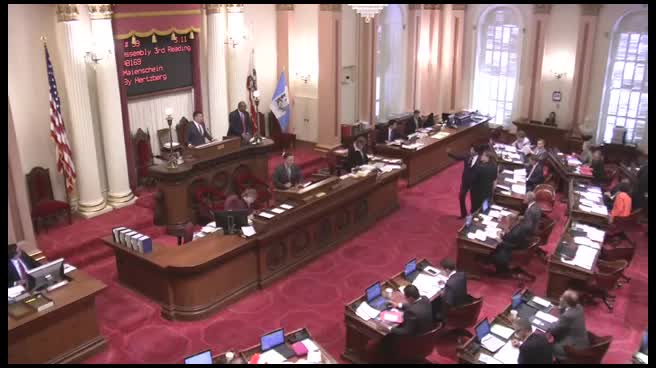 3MIN
Senate Floor
 3MIN
Senate Standing Committee on Health
 1MIN
Assembly Floor
 5MIN
Assembly Standing Committee on Appropriations
 5MIN
Assembly Standing Committee on Governmental Organization
Bill Author

Bill Co-Author(s):