AB 2197: Unemployment insurance: classified employees.
- Session Year: 2015-2016
- House: Assembly
- Latest Version Date: 2016-08-24
Existing law provides for the payment of unemployment compensation benefits and extended duration benefits to eligible persons who meet specified requirements. Existing law prohibits the payment of unemployment benefits to educational institution employees of a public entity, as defined, including teachers, researchers, and administrators for the period between 2 academic years when there is a reasonable assurance that the employee will perform his or her regular services in the subsequent academic year, except as specified. Existing law similarly prohibits the payment of unemployment benefits to specified educational institution employees of a public entity other than teachers, researchers, or administrators between 2 academic years, except as specified, but provides a procedure for this 2nd category of educational employees, under certain conditions, to seek payment of retroactive unemployment benefits for the period between 2 academic years. Existing law requires specified notice regarding reasonable assurance of employment in the following academic term be sent to employees before the end of the current academic term.
This bill would delete the prohibition on the payment of unemployment benefits to education employees of a public school, other than teachers, researchers, and administrators, as specified, between 2 academic years. The bill would phase in up to 8 weeks of benefits available to those specified employees over a 4-year timeframe contingent on funds being appropriated for that purpose in the annual Budget Act.
Because this bill would expand the categories of people who could receive benefits from the Unemployment Fund, a continuously appropriated fund, it would make an appropriation.
Existing law provides for the payment of unemployment compensation benefits and extended duration benefits to eligible persons who meet specified requirements. Existing law prohibits the payment of unemployment benefits to educational institution employees of a public entity, as defined, including teachers, researchers, and administrators for the period between 2 academic years when there is a reasonable assurance that the employee will perform his or her regular services in the subsequent academic year, except as specified. Existing law similarly prohibits the payment of unemployment benefits to specified educational institution employees of a public entity other than teachers, researchers, or administrators, administrators between 2 academic years, except as specified, but provides a procedure for this 2nd category of educational employees, under certain conditions, to seek payment of retroactive unemployment benefits for the period between 2 academic years. Existing law requires specified notice regarding reasonable assurance of employment in the following academic term be sent to employees before the end of the current academic term. Existing law also authorizes payment of unemployment insurance benefits, using funds from the State Department of Education, to the 2nd category of educational employees at specified schools between academic terms in circumstances where benefits would otherwise be denied.
This bill would delete the prohibition on the payment of unemployment benefits to education employees of a public school, other than teachers, researchers, and administrators, as specified, between 2 academic years. The bill would phase in up to 8 weeks of benefits available to those specified employees over a 4-year timeframe and would make conforming changes, including eliminating the provisions for payment of unemployment benefits to these employees at specified schools. contingent on funds being appropriated for that purpose in the annual Budget Act.
Because this bill would expand the categories of people who could receive benefits from the Unemployment Fund, a continuously appropriated fund, it would make an appropriation.
Existing law provides for the payment of unemployment compensation benefits and extended duration benefits to eligible persons who meet specified requirements. Existing law prohibits the payment of unemployment benefits to educational institution employees of a public entity, as defined, including teachers, researchers, and administrators for the period between 2 academic years when there is a reasonable assurance that the employee will perform his or her regular services in the subsequent academic year, except as specified. Existing law similarly prohibits the payment of unemployment benefits to specified educational institution employees of a public entity other than teachers, researchers, or administrators, between 2 academic years, except as specified, but provides a procedure for this 2nd category of educational employees, under certain conditions, to seek payment of retroactive unemployment benefits for the period between 2 academic years. Existing law requires specified notice regarding reasonable assurance of employment in the following academic term be sent to employees before the end of the current academic term. Existing law also authorizes payment of unemployment insurance benefits, using funds from the State Department of Education, to the 2nd category of educational employees at specified schools between academic terms in circumstances where benefits would otherwise be denied.
This bill would delete the prohibition on the payment of unemployment benefits to education employees of a public school, other than teachers, researchers, and administrators, as specified, between 2 academic years. The bill would phase in up to 8 weeks of benefits available to those specified employees over a 4-year timeframe and would make conforming changes, including eliminating the provisions for payment of unemployment benefits to these employees at specified schools.
Because this bill would expand the categories of people who could receive benefits from the Unemployment Fund, a continuously appropriated fund, it would make an appropriation.
Existing law establishes within the state disability insurance program, a family temporary disability insurance program, also known as the paid family leave program, for the provision of wage replacement benefits to workers who take time off work to care for a seriously ill family member or to bond with a minor child within one year of birth or placement, as specified. Existing law conditions eligibility for these benefits upon the individuals inability to perform his or her regular or customary work for a 7-day waiting period during each disability benefit period.
Existing law authorizes an employer to require an employee to take up to 2 weeks of earned but unused vacation before, and as a condition of, the employees initial receipt of these benefits during any 12-month period in which the employee is eligible for them. Existing law requires that portion of the vacation leave that does not exceed one week to be applied to the 7-day waiting period.
This bill would delete the requirement that vacation leave be applied to the 7-day waiting period.
(a)Notwithstanding any other provision of this division, unemployment compensation benefits, extended duration benefits, and federal-state extended benefits are payable on the basis of service to which Section 3309(a)(1) of the Internal Revenue Code applies, in the same amount, on the same terms, and subject to the same conditions as benefits payable on the basis of other service subject to this division, except as provided by this section.
(b)Benefits specified by subdivision (a) based on service performed in the employ of a nonprofit organization, or of a public entity, as defined by Section 605, with respect to service in an instructional, research, or principal administrative capacity for an educational institution are not payable to any individual with respect to any week which begins during the period between two successive academic years or terms or, when an agreement provides instead for a similar period between two regular but not successive terms, during that period, or during a period of paid sabbatical leave provided for in the individuals contract, if the individual performs services in the first of the academic years or terms and if there is a contract or a reasonable assurance that the individual will perform services for any educational institution in the second of the academic years or terms.
(c)(1)Except as provided in paragraph (2), benefits specified by subdivision (a) based on service performed in the employ of a nonprofit organization, or of a public entity, as defined by Section 605, with respect to service in any other capacity than specified in subdivision (b) for an educational institution shall not be payable to any individual with respect to any week which commences during a period between two successive academic years or terms if the individual performs the service in the first of the academic years or terms and there is a reasonable assurance that the individual will perform the service in the second of the academic years or terms. However, if the individual was not offered an opportunity to perform the services for an educational institution for the second of the academic years or terms, the individual shall be entitled to a retroactive payment of benefits for each week for which the individual filed a timely claim for benefits and for which benefits were denied solely by reason of this subdivision. Retroactive benefits shall be claimed in accordance with the departments procedures which shall specify that except where the individual was entitled to benefits based on services performed for other than an educational institution, an individual who has a reasonable assurance of reemployment may satisfy the search for work requirement of subdivision (e) of Section 1253, by registering for work pursuant to subdivision (b) of Section 1253 during the period between the first and second academic terms or years. A claim for retroactive benefits may be made no later than 30 days following the commencement of the second academic year or term.
(2)Benefits specified by subdivision (a) are authorized for an employee of a public school, as defined in Section 22161 of the Education Code, for the period between two successive academic years or terms, as described in paragraph (1), as follows:
(A)Two weeks of benefits during 2017, beginning July 1, provided that funds are appropriated for that purpose in the annual Budget Act.
(B)Four weeks of benefits during 2018, beginning July 1, provided that funds are appropriated for that purpose in the annual Budget Act.
(C)Six weeks of benefits during 2019, beginning July 1, provided that funds are appropriated for that purpose in the annual Budget Act.
(D)Eight weeks of benefits during 2020, and each year thereafter, beginning July 1, provided that funds are appropriated for that purpose in the annual Budget Act.
(d)Benefits specified by subdivision (a) based on service performed in the employ of a nonprofit organization, or of any entity as defined by Section 605, with respect to services specified by subdivision (b) or (c), are not payable to any individual with respect to any week that commences during an established and customary vacation period or holiday recess if the individual performs the specified services in the period immediately before the vacation period or holiday recess, and there is a reasonable assurance that the individual will perform the services in the period immediately following the vacation period or holiday recess.
(e)With respect to any services specified by subdivision (b) or (c), compensation payable on the basis of services in that capacity may be denied as specified in subdivision (b), (c), or (d) to any individual who performed the services in an educational institution while in the employ of an educational service agency, and for this purpose the term educational service agency is defined as a governmental agency or governmental entity that is established and operated exclusively for the purpose of providing the services to one or more educational institutions.
(f)Benefits specified by subdivision (a) based on service performed in the employ of a nonprofit organization, or of any entity as defined by Section 605, are not payable during the periods of time, and subject to the same conditions, contained in subdivisions (b), (c), (d), and (h), if the services are provided to, or on behalf of, an educational institution.
(g)For purposes of this section, reasonable assurance includes, but is not limited to, an offer of employment or assignment made by the educational institution, provided that the offer or assignment is not contingent on enrollment, funding, or program changes. An individual who has been notified that he or she will be replaced and does not have an offer of employment or assignment to perform services for an educational institution is not considered to have reasonable assurance.
(h)For purposes of this section, if the time for service performed during the period of and pursuant to any contract for any academic year or term by an individual for any employing unit as specified in subdivision (b) or (c) constitutes one-half or more of the time in total service performed for the employing unit by the individual during that same period for remuneration, all the services of the individual for the employing unit for that period shall be deemed subject to the benefit payment restriction provisions of this section.
(i)Any entity as defined by Section 605, with respect to any individual performing a service in any other capacity other than specified in subdivision (b) for an educational institution, shall provide a written statement indicating the following to the individual no later than 30 days before the end of the first of the academic years or terms:
(1)Whether or not there is a reasonable assurance of reemployment.
(2)Whether or not it is stated that the individual has no reasonable assurance of reemployment, that the individual should file a claim for benefits at the close of the academic year or term.
(3)If it is stated that the individual has reasonable assurance of reemployment, the written statement shall also inform the employee that he or she may file a claim for benefits and that the determination for eligibility for benefits is made by the Employment Development Department and not by the employer.
(4)If it is stated that the individual has reasonable assurance of reemployment, that the individual shall be entitled to a retroactive payment of benefits if the individual is not offered an opportunity to perform the services for the educational institution for the second of the academic years or terms, if the individual is otherwise eligible and he or she filed a claim for each week benefits are claimed, and if a claim for retroactive benefits is made no later than 30 days following the commencement of the second academic year or term.
(a)Notwithstanding any other provision of this division, unemployment compensation benefits, extended duration benefits, and federal-state extended benefits are payable on the basis of service to which Section 3309(a)(1) of the Internal Revenue Code applies, in the same amount, on the same terms, and subject to the same conditions as benefits payable on the basis of other service subject to this division, except as provided by this section.
(b)Benefits specified by subdivision (a) based on service performed in the employ of a nonprofit organization, or of a public entity, as defined by Section 605, with respect to service in an instructional, research, or principal administrative capacity for an educational institution are not payable to any individual with respect to any week which begins during the period between two successive academic years or terms or, when an agreement provides instead for a similar period between two regular but not successive terms, during that period, or during a period of paid sabbatical leave provided for in the individuals contract, if the individual performs services in the first of the academic years or terms and if there is a contract or a reasonable assurance that the individual will perform services for any educational institution in the second of the academic years or terms.
(c)(1)Except as provided in paragraph (2), benefits specified by subdivision (a) based on service performed in the employ of a nonprofit organization, or of a public entity, as defined by Section 605, with respect to service in any other capacity than specified in subdivision (b) for an educational institution shall not be payable to any individual with respect to any week which commences during a period between two successive academic years or terms if the individual performs the service in the first of the academic years or terms and there is a reasonable assurance that the individual will perform the service in the second of the academic years or terms. However, if the individual was not offered an opportunity to perform the services for an educational institution for the second of the academic years or terms, the individual shall be entitled to a retroactive payment of benefits for each week for which the individual filed a timely claim for benefits and for which benefits were denied solely by reason of this subdivision. Retroactive benefits shall be claimed in accordance with the departments procedures which shall specify that except where the individual was entitled to benefits based on services performed for other than an educational institution, an individual who has a reasonable assurance of reemployment may satisfy the search for work requirement of subdivision (e) of Section 1253, by registering for work pursuant to subdivision (b) of Section 1253 during the period between the first and second academic terms or years. A claim for retroactive benefits may be made no later than 30 days following the commencement of the second academic year or term.
(2)Benefits specified by subdivision (a) are authorized for an employee of a public school, as defined in Section 22161 of the Education Code, for the period between two successive academic years or terms, as described in paragraph (1), as follows:
(A)Two weeks of benefits during 2017, beginning July 1. 1, provided that funds are appropriated for that purpose in the annual Budget Act.
(B)Four weeks of benefits during 2018, beginning July 1. 1, provided that funds are appropriated for that purpose in the annual Budget Act.
(C)Six weeks of benefits during 2019, beginning July 1. 1, provided that funds are appropriated for that purpose in the annual Budget Act.
(D)Eight weeks of benefits during 2020, and each year thereafter, beginning July 1. 1, provided that funds are appropriated for that purpose in the annual Budget Act.
(d)Benefits specified by subdivision (a) based on service performed in the employ of a nonprofit organization, or of any entity as defined by Section 605, with respect to services specified by subdivision (b) or (c), are not payable to any individual with respect to any week that commences during an established and customary vacation period or holiday recess if the individual performs the specified services in the period immediately before the vacation period or holiday recess, and there is a reasonable assurance that the individual will perform the services in the period immediately following the vacation period or holiday recess.
(e)With respect to any services specified by subdivision (b) or (c), compensation payable on the basis of services in that capacity may be denied as specified in subdivision (b), (c), or (d) to any individual who performed the services in an educational institution while in the employ of an educational service agency, and for this purpose the term educational service agency is defined as a governmental agency or governmental entity that is established and operated exclusively for the purpose of providing the services to one or more educational institutions.
(f)Benefits specified by subdivision (a) based on service performed in the employ of a nonprofit organization, or of any entity as defined by Section 605, are not payable during the periods of time, and subject to the same conditions, contained in subdivisions (b), (c), (d), and (h), if the services are provided to, or on behalf of, an educational institution.
(g)For purposes of this section, reasonable assurance includes, but is not limited to, an offer of employment or assignment made by the educational institution, provided that the offer or assignment is not contingent on enrollment, funding, or program changes. An individual who has been notified that he or she will be replaced and does not have an offer of employment or assignment to perform services for an educational institution is not considered to have reasonable assurance.
(h)For purposes of this section, if the time for service performed during the period of and pursuant to any contract for any academic year or term by an individual for any employing unit as specified in subdivision (b) or (c) constitutes one-half or more of the time in total service performed for the employing unit by the individual during that same period for remuneration, all the services of the individual for the employing unit for that period shall be deemed subject to the benefit payment restriction provisions of this section.
(i)Any entity as defined by Section 605, with respect to any individual performing a service in any other capacity other than specified in subdivision (b) for an educational institution, shall provide a written statement indicating the following to the individual no later than 30 days before the end of the first of the academic years or terms:
(1)Whether or not there is a reasonable assurance of reemployment.
(2)Whether or not it is stated that the individual has no reasonable assurance of reemployment, that the individual should file a claim for benefits at the close of the academic year or term.
(3)If it is stated that the individual has reasonable assurance of reemployment, the written statement shall also inform the employee that he or she may file a claim for benefits and that the determination for eligibility for benefits is made by the Employment Development Department and not by the employer.
(4)If it is stated that the individual has reasonable assurance of reemployment, that the individual shall be entitled to a retroactive payment of benefits if the individual is not offered an opportunity to perform the services for the educational institution for the second of the academic years or terms, if the individual is otherwise eligible and he or she filed a claim for each week benefits are claimed, and if a claim for retroactive benefits is made no later than 30 days following the commencement of the second academic year or term.
SEC. 2.Section 1451 of the Unemployment Insurance Code is amended to read:1451.(a)Nonprofessional employees of the Fremont and Riverside campuses of the California School for the Deaf, the Fremont campus of the California School for the Blind, and the diagnostic schools for individuals with neurological disabilities located in Los Angeles, San Francisco, and Fresno, shall be eligible for benefits provided by this chapter, on the same terms and conditions as are specified by this part, Part 3 (commencing with Section 3501), and Part 4 (commencing with Section 4001), for all other individuals, except where inconsistent with this chapter. Except where inconsistent with this chapter, this division and authorized regulations shall apply to any matter arising pursuant to this chapter.
(b)This section shall become inoperative on July 1, 2017, and, as of January 1, 2018, is repealed.
SEC. 3.Section 1452 of the Unemployment Insurance Code is amended to read:1452.(a)Notwithstanding Section 1253.3, between terms unemployment compensation benefits are payable by the Controller, from funds appropriated for support of the State Department of Education and allocated to the state special schools, upon authorization by the Employment Development Department to individuals who are eligible to receive these benefits under this chapter. These benefits shall only be paid for weeks of unemployment occurring between school terms and during an established and customary vacation period or holiday recess when other benefits are denied solely by reason of Section 1253.3.
(b)This section shall become inoperative on July 1, 2017, and, as of January 1, 2018, is repealed.
SEC. 4.Section 1453 of the Unemployment Insurance Code is amended to read:1453.(a)There shall be transferred to the Employment Development Department from funds appropriated for support of the State Department of Education and allocated to the state special schools, at the times and in the manner provided in subdivision (b), an amount equal to the additional cost to the Employment Development Department for added administrative work arising out of this chapter.
(b)The director shall determine the sums he or she estimates the department will be entitled to receive from the State Department of Education under this section for each fiscal year, reduced or increased by any sum by which he or she finds that his or her estimates for any prior fiscal year were greater or less than the amounts which were actually required. The sum of the amounts transferred or expended pursuant to Section 1452, subdivision (a), and this subdivision in any one fiscal year shall not exceed the amount appropriated in the then current fiscal year to the State Department of Education for the purposes of this chapter.
(c)The director may require from the State Department of Education the employment, wage, financial, statistical, or other information and reports, properly verified, as may be deemed necessary by the director to carry out his or her duties under this division, which shall be filed with the director at the time and in the manner prescribed by him or her.
(d)The director may tabulate and publish information obtained pursuant to this chapter in statistical form and may divulge the name of the employing unit.
(e)The State Department of Education shall provide each employee subject to this chapter, at the end of each school term, with written information advising the employee of benefit rights pursuant to this chapter.
(f)This section shall become inoperative on July 1, 2017, and, as of January 1, 2018, is repealed.
(a)Notwithstanding any other provision of this division, unemployment compensation benefits, extended duration benefits, and federal-state extended benefits are payable on the basis of service to which Section 3309(a)(1) of the Internal Revenue Code applies, in the same amount, on the same terms, and subject to the same conditions as benefits payable on the basis of other service subject to this division, except as provided by this section.
(b)Benefits specified by subdivision (a) based on service performed in the employ of a nonprofit organization, or of a public entity, as defined by Section 605, with respect to service in an instructional, research, or principal administrative capacity for an educational institution are not payable to any individual with respect to any week which begins during the period between two successive academic years or terms or, when an agreement provides instead for a similar period between two regular but not successive terms, during that period, or during a period of paid sabbatical leave provided for in the individuals contract, if the individual performs services in the first of the academic years or terms and if there is a contract or a reasonable assurance that the individual will perform services for any educational institution in the second of the academic years or terms.
(c)(1)Except as provided in paragraph (2), benefits specified by subdivision (a) based on service performed in the employ of a nonprofit organization, or of a public entity, as defined by Section 605, with respect to service in any other capacity than specified in subdivision (b) for an educational institution shall not be payable to any individual with respect to any week which commences during a period between two successive academic years or terms if the individual performs the service in the first of the academic years or terms and there is a reasonable assurance that the individual will perform the service in the second of the academic years or terms. However, if the individual was not offered an opportunity to perform the services for an educational institution for the second of the academic years or terms, the individual shall be entitled to a retroactive payment of benefits for each week for which the individual filed a timely claim for benefits and for which benefits were denied solely by reason of this subdivision. Retroactive benefits shall be claimed in accordance with the departments procedures which shall specify that except where the individual was entitled to benefits based on services performed for other than an educational institution, an individual who has a reasonable assurance of reemployment may satisfy the search for work requirement of subdivision (e) of Section 1253, by registering for work pursuant to subdivision (b) of Section 1253 during the period between the first and second academic terms or years. A claim for retroactive benefits may be made no later than 30 days following the commencement of the second academic year or term.
(2)Benefits specified by subdivision (a) are authorized for an employee of a public school, as defined in Section 22161 of the Education Code, for the period between two successive academic years or terms, as described in paragraph (1), as follows:
(A)Two weeks of benefits during 2016 2017, beginning July 1.
(B)Four weeks of benefits during 2017 2018, beginning July 1.
(C)Six weeks of benefits during 2018 2019, beginning July 1.
(D)Eight weeks of benefits during 2019 2020, and each year thereafter thereafter, beginning July 1.
(d)Benefits specified by subdivision (a) based on service performed in the employ of a nonprofit organization, or of any entity as defined by Section 605, with respect to services specified by subdivision (b) or (c), are not payable to any individual with respect to any week that commences during an established and customary vacation period or holiday recess if the individual performs the specified services in the period immediately before the vacation period or holiday recess, and there is a reasonable assurance that the individual will perform the services in the period immediately following the vacation period or holiday recess.
(e)With respect to any services specified by subdivision (b) or (c), compensation payable on the basis of services in that capacity may be denied as specified in subdivision (b), (c), or (d) to any individual who performed the services in an educational institution while in the employ of an educational service agency, and for this purpose the term educational service agency is defined as a governmental agency or governmental entity that is established and operated exclusively for the purpose of providing the services to one or more educational institutions.
(f)Benefits specified by subdivision (a) based on service performed in the employ of a nonprofit organization, or of any entity as defined by Section 605, are not payable during the periods of time, and subject to the same conditions, contained in subdivisions (b), (c), (d), and (h), if the services are provided to, or on behalf of, an educational institution.
(g)For purposes of this section, reasonable assurance includes, but is not limited to, an offer of employment or assignment made by the educational institution, provided that the offer or assignment is not contingent on enrollment, funding, or program changes. An individual who has been notified that he or she will be replaced and does not have an offer of employment or assignment to perform services for an educational institution is not considered to have reasonable assurance.
(h)For purposes of this section, if the time for service performed during the period of and pursuant to any contract for any academic year or term by an individual for any employing unit as specified in subdivision (b) or (c) constitutes one-half or more of the time in total service performed for the employing unit by the individual during that same period for remuneration, all the services of the individual for the employing unit for that period shall be deemed subject to the benefit payment restriction provisions of this section.
(i)Any entity as defined by Section 605, with respect to any individual performing a service in any other capacity other than specified in subdivision (b) for an educational institution, shall provide a written statement indicating the following to the individual no later than 30 days before the end of the first of the academic years or terms:
(1)Whether or not there is a reasonable assurance of reemployment.
(2)Whether or not it is stated that the individual has no reasonable assurance of reemployment, that the individual should file a claim for benefits at the close of the academic year or term.
(3)If it is stated that the individual has reasonable assurance of reemployment, the written statement shall also inform the employee that he or she may file a claim for benefits and that the determination for eligibility for benefits is made by the Employment Development Department and not by the employer.
(4)If it is stated that the individual has reasonable assurance of reemployment, that the individual shall be entitled to a retroactive payment of benefits if the individual is not offered an opportunity to perform the services for the educational institution for the second of the academic years or terms, if the individual is otherwise eligible and he or she filed a claim for each week benefits are claimed, and if a claim for retroactive benefits is made no later than 30 days following the commencement of the second academic year or term.
SEC. 2.Section 1451 of the Unemployment Insurance Code is amended to read:1451.(a)Nonprofessional employees of the Fremont and Riverside campuses of the California School for the Deaf, the Fremont campus of the California School for the Blind, and the diagnostic schools for individuals with neurological disabilities located in Los Angeles, San Francisco, and Fresno, shall be eligible for benefits provided by this chapter, on the same terms and conditions as are specified by this part, Part 3 (commencing with Section 3501), and Part 4 (commencing with Section 4001), for all other individuals, except where inconsistent with the provisions of this chapter. Except where inconsistent with the provisions of this chapter, the provisions of this division and authorized regulations shall apply to any matter arising pursuant to this chapter.
(b)This section shall become inoperative on July 1, 2017, and, as of January 1, 2018, is repealed.
SEC. 3.Section 1452 of the Unemployment Insurance Code is amended to read:1452.(a)Notwithstanding Section 1253.3, between terms unemployment compensation benefits are payable by the Controller, from funds appropriated for support of the State Department of Education and allocated to the state special schools, upon authorization by the Employment Development Department to individuals who are eligible to receive these benefits under this chapter. These benefits shall only be paid for weeks of unemployment occurring between school terms and during an established and customary vacation period or holiday recess when other benefits are denied solely by reason of Section 1253.3.
(b)This section shall become inoperative on July 1, 2017, and, as of January 1, 2018, is repealed.
SEC. 4.Section 1453 of the Unemployment Insurance Code is amended to read:1453.(a)There shall be transferred to the Employment Development Department from funds appropriated for support of the State Department of Education and allocated to the state special schools, at the times and in the manner provided in subdivision (b), an amount equal to the additional cost to the Employment Development Department for added administrative work arising out of this chapter.
(b)The director shall determine the sums he or she estimates the department will be entitled to receive from the State Department of Education under this section for each fiscal year, reduced or increased by any sum by which he or she finds that his or her estimates for any prior fiscal year were greater or less than the amounts which were actually required. The sum of the amounts transferred or expended pursuant to Section 1452, subdivision (a), and this subdivision in any one fiscal year shall not exceed the amount appropriated in the then current fiscal year to the State Department of Education for the purposes of this chapter.
(c)The director may require from the State Department of Education such the employment, wage, financial, statistical, or other information and reports, properly verified, as may be deemed necessary by the director to carry out his or her duties under this division, which shall be filed with the director at the time and in the manner prescribed by him or her.
(d)The director may tabulate and publish information obtained pursuant to this chapter in statistical form and may divulge the name of the employing unit.
(e)The State Department of Education shall provide each employee subject to this chapter, at the end of each school term, with written information advising the employee of benefit rights pursuant to this chapter.
(f)This section shall become inoperative on July 1, 2017, and, as of January 1, 2018, is repealed.
SEC. 2.Section 1451 of the Unemployment Insurance Code is repealed.SEC. 3.Section 1452 of the Unemployment Insurance Code is repealed.SEC. 4.Section 1453 of the Unemployment Insurance Code is repealed.(a)Notwithstanding any other provision of this division, unemployment compensation benefits, extended duration benefits, and federal-state extended benefits are payable on the basis of service to which Section 3309(a)(1) of the Internal Revenue Code of 1954 applies, in the same amount, on the same terms, and subject to the same conditions as benefits payable on the basis of other service subject to this division, except as provided by this section.
(b)Benefits specified by subdivision (a) based on service performed in the employ of a nonprofit organization, or of any entity a public entity, as defined by Section 605, with respect to service in an instructional, research, or principal administrative capacity for an educational institution are not payable to any individual with respect to any week which begins during the period between two successive academic years or terms or, when an agreement provides instead for a similar period between two regular but not successive terms, during that period, or during a period of paid sabbatical leave provided for in the individuals contract, if the individual performs services in the first of the academic years or terms and if there is a contract or a reasonable assurance that the individual will perform services for any educational institution in the second of the academic years or terms.
(c)Benefits (1)Except as provided in paragraph (2), benefits specified by subdivision (a) based on service performed in the employ of a nonprofit organization, or of any entity a public entity, as defined by Section 605, with respect to service in any other capacity than specified in subdivision (b) for an educational institution shall not be payable to any individual with respect to any week which commences during a period between two successive academic years or terms if the individual performs the service in the first of the academic years or terms and there is a reasonable assurance that the individual will perform the service in the second of the academic years or terms. However, if the individual was not offered an opportunity to perform the services for an educational institution for the second of the academic years or terms, the individual shall be entitled to a retroactive payment of benefits for each week for which the individual filed a timely claim for benefits and for which benefits were denied solely by reason of this subdivision. Retroactive benefits shall be claimed in accordance with the departments procedures which shall specify that except where the individual was entitled to benefits based on services performed for other than an educational institution, an individual who has a reasonable assurance of reemployment may satisfy the search for work requirement of subdivision (e) of Section 1253, by registering for work pursuant to subdivision (b) of Section 1253 during the period between the first and second academic terms or years. A claim for retroactive benefits may be made no later than 30 days following the commencement of the second academic year or term.
(2)Benefits specified by subdivision (a) are authorized for an employee of a public school, as defined in Section 22161 of the Education Code, for the period between two successive academic years or terms, as described in paragraph (1), as follows:
(A)Two weeks of benefits during 2016 beginning July 1.
(B)Four weeks of benefits during 2017 beginning July 1.
(C)Six weeks of benefits during 2018 beginning July 1.
(D)Eight weeks of benefits during 2019 and each year thereafter beginning July 1.
(d)Benefits specified by subdivision (a) based on service performed in the employ of a nonprofit organization, or of any entity as defined by Section 605, with respect to services specified by subdivision (b) or (c), are not payable to any individual with respect to any week that commences during an established and customary vacation period or holiday recess if the individual performs the specified services in the period immediately before the vacation period or holiday recess, and there is a reasonable assurance that the individual will perform the services in the period immediately following the vacation period or holiday recess.
(e)With respect to any services specified by subdivision (b) or (c), compensation payable on the basis of services in that capacity may be denied as specified in subdivision (b), (c), or (d) to any individual who performed the services in an educational institution while in the employ of an educational service agency, and for this purpose the term educational service agency means is defined as a governmental agency or governmental entity that is established and operated exclusively for the purpose of providing the services to one or more educational institutions.
(f)Benefits specified by subdivision (a) based on service performed in the employ of a nonprofit organization, or of any entity as defined by Section 605, are not payable during the periods of time, and subject to the same conditions, contained in subdivisions (b), (c), (d), and (h), if the services are provided to, or on behalf of, an educational institution.
(g)For purposes of this section, reasonable assurance includes, but is not limited to, an offer of employment or assignment made by the educational institution, provided that the offer or assignment is not contingent on enrollment, funding, or program changes. An individual who has been notified that he or she will be replaced and does not have an offer of employment or assignment to perform services for an educational institution is not considered to have reasonable assurance.
(h)For purposes of this section, if the time for service performed during the period of and pursuant to any contract for any academic year or term by an individual for any employing unit as specified in subdivision (b) or (c) constitutes one-half or more of the time in total service performed for the employing unit by the individual during that same period for remuneration, all the services of the individual for the employing unit for that period shall be deemed subject to the benefit payment restriction provisions of this section.
(i)Any entity as defined by Section 605, with respect to any individual performing a service in any other capacity other than specified in subdivision (b) for an educational institution, shall provide a written statement indicating the following to the individual no later than 30 days before the end of the first of the academic years or terms:
(1)Whether or not there is a reasonable assurance of reemployment.
(2)Whether or not it is stated that the individual has no reasonable assurance of reemployment, that the individual should file a claim for benefits at the close of the academic year or term.
(3)If it is stated that the individual has reasonable assurance of reemployment, the written statement shall also inform the employee that he or she may file a claim for benefits and that the determination for eligibility for benefits is made by the Employment Development Department and not by the employer.
(4)If it is stated that the individual has reasonable assurance of reemployment, that the individual shall be entitled to a retroactive payment of benefits if the individual is not offered an opportunity to perform the services for the educational institution for the second of the academic years or terms, if the individual is otherwise eligible and he or she filed a claim for each week benefits are claimed, and if a claim for retroactive benefits is made no later than 30 days following the commencement of the second academic year or term.
SEC. 2.Section 1451 of the Unemployment Insurance Code is repealed.1451.Nonprofessional employees of the Fremont and Riverside campuses of the California School for the Deaf, the Fremont campus of the California School for the Blind, and the diagnostic schools for individuals with neurological disabilities located in Los Angeles, San Francisco, and Fresno, shall be eligible for benefits provided by this chapter, on the same terms and conditions as are specified by this part, Part 3 (commencing with Section 3501), and Part 4 (commencing with Section 4001), for all other individuals, except where inconsistent with the provisions of this chapter. Except where inconsistent with the provisions of this chapter, the provisions of this division and authorized regulations shall apply to any matter arising pursuant to this chapter.
SEC. 3.Section 1452 of the Unemployment Insurance Code is repealed.1452.Notwithstanding Section 1253.3, between terms unemployment compensation benefits are payable by the Controller, from funds appropriated for support of the State Department of Education and allocated to the state special schools, upon authorization by the Employment Development Department to individuals who are eligible to receive these benefits under this chapter. These benefits shall only be paid for weeks of unemployment occurring between school terms and during an established and customary vacation period or holiday recess when other benefits are denied solely by reason of Section 1253.3.
SEC. 4.Section 1453 of the Unemployment Insurance Code is repealed.1453.(a)There shall be transferred to the Employment Development Department from funds appropriated for support of the State Department of Education and allocated to the state special schools, at the times and in the manner provided in subdivision (b), an amount equal to the additional cost to the Employment Development Department for added administrative work arising out of this chapter.
(b)The director shall determine the sums he or she estimates the department will be entitled to receive from the State Department of Education under this section for each fiscal year, reduced or increased by any sum by which he or she finds that his or her estimates for any prior fiscal year were greater or less than the amounts which were actually required. The sum of the amounts transferred or expended pursuant to Section 1452, subdivision (a), and this subdivision in any one fiscal year shall not exceed the amount appropriated in the then current fiscal year to the State Department of Education for the purposes of this chapter.
(c)The director may require from the State Department of Education such employment, wage, financial, statistical, or other information and reports, properly verified, as may be deemed necessary by the director to carry out his or her duties under this division, which shall be filed with the director at the time and in the manner prescribed by him or her.
(d)The director may tabulate and publish information obtained pursuant to this chapter in statistical form and may divulge the name of the employing unit.
(e)The State Department of Education shall provide each employee subject to this chapter, at the end of each school term, with written information advising the employee of benefit rights pursuant to this chapter.
SECTION 1.Section 3303.1 of the Unemployment Insurance Code is amended to read:3303.1.(a)An individual is not eligible for family temporary disability insurance benefits with respect to any day that any of the following apply:
(1)The individual has received, or is entitled to receive, unemployment compensation benefits under Part 1 (commencing with Section 100) or under an unemployment compensation act of any other state or of the federal government.
(2)The individual has received, or is entitled to receive, other benefits in the form of cash benefits as defined in Section 2629.
(3)The individual has received, or is entitled to receive, state disability insurance benefits under Part 2 (commencing with Section 2601) or under a disability insurance act of any other state.
(4)Another family member, as defined in Section 3302, is ready, willing, and able and available for the same period of time in a day that the individual is providing the required care.
(b)An individual who is entitled to leave under the FMLA and the CFRA must take Family Temporary Disability Insurance (FTDI) leave concurrent with leave taken under the FMLA and the CFRA.
(c)As a condition of an employees initial receipt of family temporary disability insurance benefits during any 12-month period in which an employee is eligible for these benefits, an employer may require an employee to take up to two weeks of earned but unused vacation leave prior to the employees initial receipt of these benefits. This subdivision may not be construed in a manner that relieves an employer of any duty of collective bargaining the employer may have with respect to the subject matter of this subdivision.
(a)An individual is not eligible for family temporary disability insurance benefits with respect to any day that any of the following apply:
(1)The individual has received, or is entitled to receive, unemployment compensation benefits under Part 1 (commencing with Section 100) or under an unemployment compensation act of any other state or of the federal government.
(2)The individual has received, or is entitled to receive, other benefits in the form of cash benefits as defined in Section 2629.
(3)The individual has received, or is entitled to receive, state disability insurance benefits under Part 2 (commencing with Section 2601) or under a disability insurance act of any other state.
(4)Another family member, as defined in Section 3302, is ready, willing, and able and available for the same period of time in a day that the individual is providing the required care.
(b)An individual who is entitled to leave under the FMLA and the CFRA must take Family Temporary Disability Insurance (FTDI) leave concurrent with leave taken under the FMLA and the CFRA.
(c)As a condition of an employees initial receipt of family temporary disability insurance benefits during any 12-month period in which an employee is eligible for these benefits, an employer may require an employee to take up to two weeks of earned but unused vacation leave prior to the employees initial receipt of these benefits. If an employer so requires an employee to take vacation leave, that portion of the vacation leave that does not exceed one week shall be applied to the waiting period required under subdivision (b) of Section 3303. This subdivision may not be construed in a manner that relieves an employer of any duty of collective bargaining the employer may have with respect to the subject matter of this subdivision.
|
Date
|
Status
|
|---|---|
| Jun 2, 2016 | Read third time. Passed. Ordered to the Senate. |
| Aug 30, 2016 | Enrolled and presented to the Governor at 4 p.m. |
| Aug 23, 2016 | In Assembly. Ordered to Engrossing and Enrolling. |
| Aug 22, 2016 | Read third time. Passed. Ordered to the Assembly. (Ayes 25. Noes 13. Page 5219.). |
| Aug 22, 2016 | Read third time. Passed. Ordered to the Assembly. |
| Aug 15, 2016 | Read second time. Ordered to third reading. |
| Aug 11, 2016 | From committee: Do pass. (Ayes 5. Noes 2.) (August 11). |
| Aug 1, 2016 | In committee: Referred to APPR. suspense file. |
| Jun 22, 2016 | From committee: Do pass and re-refer to Com. on APPR. (Ayes 4. Noes 1.) (June 22). Re-referred to Com. on APPR. |
| Jun 9, 2016 | Referred to Com. on L. & I.R. |
| Jun 6, 2016 | In Senate. Read first time. To Com. on RLS. for assignment. |
| Jun 2, 2016 | Read third time. Passed. Ordered to the Senate. (Ayes 51. Noes 27.) |
| Jun 2, 2016 | Read third time. Passed. Ordered to the Senate. (Ayes 51. Noes 27. Page 5187.) |
| Feb 18, 2016 | Read first time. To print. |
| Jun 1, 2016 | Read second time. Ordered to third reading. |
| May 31, 2016 | Read second time and amended. Ordered returned to second reading. |
| May 27, 2016 | From committee: Amend, and do pass as amended. (Ayes 14. Noes 6.) (May 27). |
| May 11, 2016 | In committee: Set, first hearing. Referred to APPR. suspense file. |
| Apr 25, 2016 | Re-referred to Com. on APPR. |
| Apr 21, 2016 | Read second time and amended. |
| Apr 20, 2016 | From committee: Amend, and do pass as amended and re-refer to Com. on APPR. (Ayes 9. Noes 4.) (April 20). |
| Mar 29, 2016 | Re-referred to Com. on INS. |
| Mar 28, 2016 | From committee chair, with author's amendments: Amend, and re-refer to Com. on INS. Read second time and amended. |
| Mar 3, 2016 | Referred to Com. on INS. |
| Feb 19, 2016 | From printer. May be heard in committee March 20. |
|
Date
|
Description
|
Location
|
Votes
|
|
|---|---|---|---|---|
| Aug 22, 2016 | Assembly 3rd Reading AB2197 Cristina Garcia By Mitchell | Senate Floor |
Passed |
|
| Aug 11, 2016 | Do pass | Senate Standing Committee on Appropriations |
Passed |
|
| Aug 1, 2016 | Placed on suspense file | Senate Standing Committee on Appropriations |
Passed |
|
| Jun 22, 2016 | Do pass, but first be re-referred to the Committee on [Appropriations] | Senate Standing Committee on Labor and Industrial Relations |
Passed |
|
| Jun 2, 2016 | AB 2197 GARCIA, C. Assembly Third Reading | Assembly Floor |
Passed |
|
| May 27, 2016 | Do pass as amended. | Assembly Standing Committee on Appropriations |
Passed |
|
| Apr 20, 2016 | Do pass as amended and be re-referred to the Committee on [Appropriations] | Assembly Standing Committee on Insurance |
Passed |
This list shows positions taken on this bill by organizations on the date displayed, which is linked to the original source.
Positions by individuals are not included.
|
Organization
|
Position
|
Date
|
|---|---|---|
| American Federation Of State, County And Municipal Employees, Afl-Cio | ** Support | Jun 22, 2016 |
| Association Of California School Administrators | ** Against | Jun 2, 2016 |
| California Association Of School Business Officials | ** Against | Jun 22, 2016 |
| California Federation Of Teachers | * Support | Jun 22, 2016 |
| California School Boards Association | ** Against | Jun 2, 2016 |
| California School Employees Association | ** Support | Jun 22, 2016 |
| California Teachers Association | * Support | Jun 22, 2016 |
| Orange County Department Of Education | ** Against | Jun 22, 2016 |
| Riverside County Superintendent of Schools | ** Against | Jun 22, 2016 |
| SEIU California State Council | * Support | Jun 22, 2016 |
GOVERNOR'S VETO
GV Bill Id:AB 2197
Author:(Cristina Garcia)
As Enrolled Ver:August 30, 2016
2/3 vote
Committee | Votes | Ayes | Noes |
Insurance | 9-4 | Daly, Calderon, Chu, Cooley, Cooper, Dababneh, Frazier, Gatto, Rodriguez | Melendez, Travis Allen, Bigelow, Dahle |
Appropriations | 14-6 | Gonzalez, Bloom, Bonilla, Bonta, Calderon, Daly, Eggman, Eduardo Garcia, Roger Hernández, Holden, Quirk, Santiago, Weber, Wood | Bigelow, Chang, Gallagher, Jones, Obernolte, Wagner |
ASSEMBLY: | 51-27 | (June 2, 2016) | SENATE: | 25-13 | (August 22, 2016) |
SUMMARY: Allows classified school employees to collect unemployment insurance (UI) benefits between school years. Specifically, this bill:
- Exempts classified public school employees from the prohibition on educational employees collecting UI benefits.
- Increases the maximum duration of UI benefits for classified public school employees as follows:
- Two weeks effective July 1, 2017
- Four weeks effective July 1, 2018
- Six weeks effective July 1, 2019
- Seven weeks effective July 1, 2020
- Provides that UI benefits for classified public school employees will only be provided if funds are appropriated for that purpose in the annual budget act.
EXISTING LAW:
- Provides UI benefits to employees who lose their job through no fault of their own.
- Requires employers to pay state and federal taxes to pay the costs of administering and providing UI benefits.
- Permits public employers to provide UI benefits to their employees on a reimbursement basis in lieu of paying payroll taxes.
- Prohibits employees of public and private non-profit educational institutions from collecting UI benefits between academic years if they have been given reasonable assurance by the employer of being employed in the next academic term.
- Permits non-professional employees of public and non-profit educational institutions to collect UI benefits retroactively should they not be employed in the next academic term after receiving reasonable assurance of future employment.
- Requires employers to provide documentation of the reasonable assurance when that notice is given.
- Prohibits, as a matter of federal law, providing UI benefits to professional employees between academic years.
FISCAL EFFECT: According to the Assembly Appropriations Committee:
- This bill is contingent on a budget appropriation for the purpose of implementation. A 2015 report by the Economic Roundtable projects extending UI to classified employees over summer months would result in $153.1 million of benefit payments annually, representing an increase in UI expenditures of 76% for schools, at full implementation in year 2020-21 (School Employees Fund). To the extent a budget appropriation was made for this purpose, it would have to augment the SEF commensurate with the increase. Schools are responsible for funding their own UI costs through the SEF.
- There could also be a direct cost impact to the UI Trust Fund, if some charter school employees receive benefits through this fund instead of the School Employees Fund (SEF). Employment Development Department (EDD) does not track which charters rely on UI Trust Fund versus those that use a different reimbursement method, but reports that only a quarter of charters participate in SEF, meaning benefits paid to employees of the remaining three-quarters would potentially impact the UI Trust Fund (though it is unclear how many schools participate in the tax-rated methodology that impacts the UI Trust Fund. The remainder of charters reimburse the UI Trust Fund directly for costs incurred to provide benefits to their employees.)
COMMENTS:
- Purpose. According to the sponsor, classified school employees do the essential work that keeps our public schools up and running. These workers keep our campuses safe, clean, and efficient. Most importantly, they strive to improve the daily lives of our students. Despite the important and hard work of classified school employees, many struggle to support their families with incomes that are often inadequate to pay for food, housing, and health care. And while certified school employees, such as administrators, teachers, librarians, and nurses, earn middle class incomes and benefits that can last through the summer breaks, classified school employees do not. Unlike other employees who receive UI benefits during their regular seasonal breaks, classified school employees are ineligible to receive those same benefits. The only option for classified school employees to support their families during the summer is to find another job. Yet classified school employees are often unable to find work during the summer because employers are reluctant to hire and invest in a short-term employee. Thus, a classified school employee's only real option for summer employment is a job with a summer school program, but those jobs are scarce. Being excluded from UI benefits creates a serious financial hardship for a classified school employee that does not exist for their fellow education workers.
- Federal Law. Federal law generally requires equal treatment for the payment of UI benefits on the basis of service to certain nonprofit organizations, Indian tribes, and state and local government workers in the same amount, on the same terms, and subject to the same conditions, as other service subject to state law. An exception to the equal treatment requirement pertains to the denial of UI for "professional" and "nonprofessional" employees of educational institutions during a period between or within academic years or terms when there is a contract or reasonable assurance that the employee will go back to work in the same or similar capacity in the ensuing academic year/term. State law must deny UI benefits to professional school employees between and within the academic years or terms when a contract or reasonable assurance exists. State law may deny UI benefits to nonprofessional school employees between and within the academic years or terms when a contract or reasonable assurance exists.
- Public Agency Costs. This bill would likely have relatively minor impact to the Unemployment Insurance Trust Fund (trust fund) that pays for most UI benefits because public K-12 school districts and community colleges commonly elect to participate in the School Employees Fund (SEF) in lieu of paying payroll taxes. The SEF is a special reimbursable financing method administered by the Employment Development Department which collects contributions based upon a percentage of total wages paid by public schools and community college districts. Money deposited in the SEF is used to reimburse the trust fund for the cost of benefits paid to former employees. All 72 community college districts and 1,298 county offices of education, public school districts, and charter schools participate in the SEF. The SEF had fund balance of over $582 million at the end of the 2014-15 fiscal year. The costs of paying for these additional benefits from this bill will be borne by the SEF, and the SEF costs will have to be passed on to the participating schools.
Opponents note that the bill would result in significant cost increases for K-12 school districts and other local educational agencies. Last year the Assembly Appropriations Committee provided the following estimate for AB 399 (Ridley-Thomas) of 2015, which was substantially similar to this bill:
There are approximately 250,000 classified, non-certificated employees throughout the state. If 60% of those employees received the maximum allotment of weeks of UI during summer vacation each year, it would cost an additional $90 million per year, each year for four years, until the cost reached approximately $360 million in fiscal year in 2019-20 (School Employees Fund). Costs to the School Employees Fund are funded by school districts, county offices of education, community college districts, and some charter schools, whose employees receive UI benefits through this fund instead of through the UI Trust Fund.
- Retroactive Benefits. School employees expect to not work at school (and generally not be paid) during the break between academic years. In recognition of this reality, current law provides a mechanism for classified employees to receive unemployment benefits retroactively should they not be employed at the next school year. This ensures that a classified employee who expected to be employed in the next school year, but was not, can collect UI benefits from the end of the prior school year.
- Previous Legislation.
In 2015, this committee passed AB 399 (Ridley-Thomas) which is identical to this bill. AB 399 was held on the Assembly Appropriations Committee Suspense File.
In 2014, this committee passed AB 1638 (Bocanegra) which was nearly identical to AB 615. The bill was held on the Assembly Appropriations Committee Suspense File.
In 2013, this committee passed AB 615 (Bocanegra) which proposed to extend UI benefits to classified school employees. The bill was held on the Assembly Appropriations Committee Suspense File.
This bill allows classified school employees to collect unemployment insurance benefits between school years.
This bill creates several conformity issues with the federal Unemployment Insurance laws, which could result in sanctions from the federal government, including the loss of significant tax credits for California's employers.
Analysis Prepared by: Paul Riches / INS. / (916) 319-2086 FN: 0005121
Office of Senate Floor Analyses (916) 651-1520 Fax: (916) 327-4478 | AB |
THIRD READING
Bill No: AB 2197
:
SENATE LABOR & IND. REL. COMMITTEE: 4-1, 6/22/16
AYES: Mendoza, Jackson, Leno, Mitchell
NOES: Stone
SENATE APPROPRIATIONS COMMITTEE: 5-2, 8/11/16
AYES: Lara, Beall, Hill, McGuire, Mendoza
NOES: Bates, Nielsen
ASSEMBLY FLOOR: 51-27, 6/2/16 - See last page for vote
SOURCE: Service Employees International Union
DIGEST: This bill permits classified school employees to be eligible to collect unemployment insurance (UI) benefits between school years with or without a reasonable assurance of being employed in the next academic year.
Existing law:
- Vests the Employment Development Department (EDD) with the responsibility of ensuring employers remit appropriate UI contributions and to collect the employee wage deductions to the Disability Fund. EDD uses these funds to finance the Unemployment Insurance and Disability Insurance (DI) Programs. (Unemployment Insurance Code §§ 301, 976, 984, 1025-1037, 1555-1562, and 3001-3015)
- Prohibits employees of public and private non-profit educational institutions from collecting UI benefits between academic years if they have been given reasonable assurance by the employer of being employed in the next academic term. (Unemployment Insurance Code §1253.3)
- Permits non-professional employees of public and non-profit educational institutions to collect UI benefits retroactively should they not be employed in the next academic term after receiving reasonable assurance of future employment. (Unemployment Insurance Code §1253.3)
- Requires employers to provide documentation of the reasonable assurance when that notice is given. (Unemployment Insurance Code §1253.3)
This bill allows employees of a public school who are not teachers, researchers, or administrators to be eligible for UI benefits in the period between two academic years on the following schedule:
- Two weeks of benefits during 2017, beginning July 1, provided that funds are appropriated for that purpose in the annual Budget Act.
- Four weeks of benefits during 2018, beginning July 1, provided that funds are appropriated for that purpose in the annual Budget Act.
- Six weeks of benefits during 2019, beginning July 1, provided that funds are appropriated for that purpose in the annual Budget Act.
- Eight weeks of benefits during 2020, and each year thereafter, beginning July 1, provided that funds are appropriated for that purpose in the annual Budget Act.
Comments
1) Need for this bill?
The sponsor notes that, while classified employees do the essential work our public schools up and running, classified employees are not permitted to collect UI benefits during the summer recess. This places significant hardship on the classified employee and his or her family, and it requires the classified employee finds short-term employment for the summer recess. However, the sponsor argues that classified school employees are often unable to find work during the summer because employers are reluctant to hire and invest in a short-term employee. Additionally, the sponsor argues that a classified school employee’s only real option for summer employment is a job with a summer school program, but those jobs are scarce.
AB 2197 addresses this by allowing classified employees to collect UI benefits through a stepped schedule that would begin in 2017 and top out in 2020.
2) “Reasonable Assurance” and UI
In Ross v. CUIAB (1981), 178 Cal. Rptr. 421, the Court of Appeals defined “reasonable assurance” as “an agreement which contemplated the re-employment of the affected school employee but which he or she could not enforce.” This concept has been concretized in statute and regulation, and statute also requires that a notice of reasonable assurance be in writing. Once an educational district gives a worker a notice of reasonable assurance, that worker cannot request UI unless they are not employed in the following year as the notice of reasonable assurance assured.
In the case of a tenured teacher, he or she would likely have an option through the governing collective bargaining agreement to have his or her wages extended through the summer recess. In the case of classified employees, however, this is not the case, as many are paid hourly, rather than on a salary. Additionally, in some cases such an extension of wages through the summer recess could push wages below the minimum wage, violating existing wage and hour law.
3) School Employees Fund (SEF)
From the Assembly Insurance Committee analysis:
“This bill would likely have relatively minor impact to the Unemployment Insurance Trust Fund (trust fund) that pays for most UI benefits because public K-12 school districts and community colleges commonly elect to participate in the School Employees Fund (SEF) in lieu of paying payroll taxes. The SEF is a special reimbursable financing method administered by the Employment Development Department which collects contributions based upon a percentage of total wages paid by public schools and community college districts. Money deposited in the SEF is used to reimburse the trust fund for the cost of benefits paid to former employees. All 72 community college districts and 1,298 county offices of education, public school districts, and charter schools participate in the SEF. The SEF had fund balance of over $582 million at the end of the 2014-15 fiscal year. The costs of paying for these additional benefits from this bill will be borne by the SEF, and the SEF costs will have to be passed on to the participating schools.”
FISCAL EFFECT: Appropriation: Fiscal Com.: Local:
According to the Senate Appropriations Committee, the EDD indicates that their information technology systems would need to be reprogrammed to allow an administrative function to trigger benefit payments on or off depending on the Budget Act appropriation, manage multiple floating claim awards to track disbursement of benefits across multiple claims and fiscal years, and collect new eligibility information when new or additional claims are filed. EDD estimates related one-time costs to be approximately $3.9 million.
Service Employees International Union (source)
American Federation of State, County and Municipal Employees, AFL-CIO
California School Employees Association
California School Teachers Association
California Teachers Association
LIUNA Local, 777
OPPOSITION: (Verified 8/12/16)
California Association of School Business Officials
Orange County Department of Education
Riverside County Superintendent of Schools
Small School Districts’ Association
ARGUMENTS IN SUPPORT: The proponents argue that classified employees keep our campuses safe, clean, and efficient. Most importantly, they strive to improve the daily lives of our students. Despite the important and hard work of classified school employees, many struggle to support their families with incomes that are often inadequate to pay for food, housing, and health care. And while certified school employees, such as administrators, teachers, librarians, and nurses, earn middle class incomes and benefits that can last through the summer breaks, classified school employees do not. Yet classified school employees are often unable to find work during the summer because employers are reluctant to hire and invest in a short-term employee. AB 2197 removes this serious financial hardship by making classified employees eligible for UI benefits during the summer recess.
ARGUMENTS IN OPPOSITION: Opponents argue that, despite its phased-in approach, AB 2197 will result in a significant fiscal impact on school districts. Specifically, opponents note that district unemployment accounts are funded through a combination of payroll taxes and quarterly local experience charges. By expanding UI benefit eligibility, AB 2197 will result in decreased School Employers Fund balances, increased local experience charges, and increases in the unemployment insurance payroll tax rate. Opponents also note that districts are not reimbursed for UI expenses as they had been in the past, leaving them to absorb the increased costs associated with the requirements of AB 2197. Opponents therefore argue that, noting there is no budget appropriation in this year’s budget, they must oppose AB 2197.
ASSEMBLY FLOOR: 51-27, 6/2/16
AYES: Alejo, Arambula, Atkins, Bloom, Bonilla, Bonta, Brown, Burke, Calderon, Campos, Chau, Chiu, Chu, Cooley, Cooper, Dababneh, Daly, Dodd, Eggman, Frazier, Cristina Garcia, Eduardo Garcia, Gatto, Gipson, Gomez, Gonzalez, Gordon, Gray, Roger Hernández, Holden, Irwin, Jones-Sawyer, Levine, Lopez, Low, McCarty, Medina, Mullin, Nazarian, O'Donnell, Quirk, Ridley-Thomas, Rodriguez, Salas, Santiago, Mark Stone, Thurmond, Weber, Williams, Wood, Rendon
NOES: Achadjian, Travis Allen, Baker, Bigelow, Brough, Chang, Chávez, Dahle, Beth Gaines, Gallagher, Grove, Hadley, Harper, Jones, Kim, Lackey, Maienschein, Mathis, Mayes, Melendez, Obernolte, Olsen, Patterson, Steinorth, Wagner, Waldron, Wilk
NO VOTE RECORDED: Linder, Ting
8/23/16 9:40:22
**** END ****
SENATE COMMITTEE ON
Senator Ricardo Lara, Chair
2015 - 2016 Regular Session
AB 2197 (Cristina Garcia) - Unemployment insurance: classified employees
Version: | Policy Vote: |
Urgency: | Mandate: |
Hearing Date: | Consultant: |
This bill meets the criteria for referral to the Suspense File.
Bill Summary:
AB 2197 would permit classified school employees to be eligible to collect unemployment insurance (UI) benefits between school years with or without a reasonable assurance of being employed in the subsequent academic year.
Fiscal Impact:
The Employment Development Department (EDD) indicates that this bill would result in increased UI costs for all school employers. Because of insufficient data related to the split between classified and non-classified workers, the magnitude of the increase is unknown. However, EDD expects that any increase in the amount of UI benefits paid as a result of this bill would likely be nominal.
Additionally, the bill would also require EED’s IT systems to be reprogrammed to allow an administrative function to trigger benefit payments on or off depending on the Budget Act appropriation, manage multiple floating claim awards to track disbursement of benefits across multiple claims and fiscal years, and collect new eligibility information when new or additional claims are filed. EDD estimates related one-time costs to be approximately $3.9 million.
Background:
Current law provides unemployment insurance benefits to employees who lose their job through no fault of their own. However, employees of public and private non-profit schools are precluded from collecting benefits when school is out of session if they have reasonable assurance that they will be employed in the subsequent school year.
Classified education workers comprise dozens of different occupational titles and job descriptions that help our schools function, including paraprofessional teaching assistants, nurses’ aides, office secretaries, clerical staff, custodians, bus drivers, and cafeteria workers. Most are lower-wage workers.
Proposed Law:
This bill would allow employees of a public school who are not teachers, researchers, or administrators to be eligible for unemployment insurance benefits in the period between two academic years on the following schedule: (1) two weeks of benefits during 2017, beginning July 1, provided that funds are appropriated for that purpose in the annual Budget Act, (2) four weeks of benefits during 2018, beginning July 1, provided that funds are appropriated for that purpose in the annual Budget Act, (3) six weeks of benefits during 2019, beginning July 1, provided that funds are appropriated for that purpose in the annual Budget Act, and (4) eight weeks of benefits during 2020, and each year thereafter, beginning July 1, provided that funds are appropriated for that purpose in the annual Budget Act.
Related Legislation:
AB 399 (Ridley-Thomas) (2015) was nearly identical to this bill, and was held under submission on the Suspense File of the Assembly Appropriations Committee.
Staff Comments:
The US Department of Labor has notified EDD that there are three federal conformity issues with this bill, which may have implications for employers’ Federal Unemployment Tax Act (FUTA) credits. Employers are generally given a FUTA credit of up to 5.4 percent; however, if this bill is enacted as written and the federal government sanctions the State for nonconformity, California employers could be liable for the full 6 percent FUTA rate and the state could lose its federal UI administrative grant.
-- END --
SENATE COMMITTEE ON LABOR AND INDUSTRIAL RELATIONS
Senator Tony Mendoza, Chair
2015 - 2016 Regular
Bill No: AB 2197 Hearing Date: June 22, 2016
Author: | Cristina Garcia | ||
Version: | May 31, 2016 | ||
Urgency: | No | Fiscal: | Yes |
Consultant: | Gideon L. Baum | ||
Subject: Unemployment insurance: classified employees
KEY ISSUE
Should the Legislature permit classified school employees to be eligible to collect unemployment insurance (UI) benefits between school years with or without a reasonable assurance of being employed in the next academic year?
ANALYSIS
Existing law:
- Vests the Employment Development Department (EDD) with the responsibility of ensuring employers remit appropriate Unemployment Insurance (UI) contributions and to collect the employee wage deductions to the Disability Fund. EDD uses these funds to finance the Unemployment Insurance and Disability Insurance (DI) Programs.
(Unemployment Insurance Code §§ 301, 976, 984, 1025-1037, 1555-1562, & 3001-3015) - Prohibits employees of public and private non-profit educational institutions from collecting UI benefits between academic years if they have been given reasonable assurance by the employer of being employed in the next academic term. (Unemployment Insurance Code §1253.3)
- Permits non-professional employees of public and non-profit educational institutions to collect UI benefits retroactively should they not be employed in the next academic term after receiving reasonable assurance of future employment.
(Unemployment Insurance Code §1253.3) - Requires employers to provide documentation of the reasonable assurance when that notice is given. (Unemployment Insurance Code §1253.3)
This bill would allow employees of a public school who are not teachers, researchers, or administrators to be eligible for unemployment insurance benefits in the period between two academic years on the following schedule:
- Two weeks of benefits during 2017, beginning July 1, provided that funds are appropriated for that purpose in the annual Budget Act.
- Four weeks of benefits during 2018, beginning July 1, provided that funds are appropriated for that purpose in the annual Budget Act.
- Six weeks of benefits during 2019, beginning July 1, provided that funds are appropriated for that purpose in the annual Budget Act.
- Eight weeks of benefits during 2020, and each year thereafter, beginning July 1, provided that funds are appropriated for that purpose in the annual Budget Act.
COMMENTS
1. Need for this bill?
The sponsor notes that, while classified employees do the essential work our public schools up and running, classified employees are not permitted to collect UI benefits during the summer recess. This places significant hardship on the classified employee and his or her family, and it requires the classified employee finds short-term employment for the summer recess. However, the sponsor argues that classified school employees are often unable to find work during the summer because employers are reluctant to hire and invest in a short-term employee. Additionally, the sponsor argues that a classified school employee’s only real option for summer employment is a job with a summer school program, but those jobs are scarce.
AB 2197 would address this by allowing classified employees to collect UI benefits through a stepped schedule that would begin in 2017 and top out in 2020.
2. “Reasonable Assurance” and Unemployment Insurance:
In Ross v. CUIAB (1981), 178 Cal. Rptr. 421, the Court of Appeals defined “reasonable assurance” as “an agreement which contemplated the re-employment of the affected school employee but which he or she could not enforce.” This concept has been concretized in statute and regulation, and statute also requires that a notice of reasonable assurance be in writing. Once an educational district gives a worker a notice of reasonable assurance, that worker cannot request unemployment insurance unless they are not employed in the following year as the notice of reasonable assurance assured.
In the case of a tenured teacher, he or she would likely have an option through the governing collective bargaining agreement (CBA) to have his or her wages extended through the summer recess. In the case of classified employees, however, this is not the case, as many are paid hourly, rather than on a salary. Additionally, in some cases such an extension of wages through the summer recess could push wages below the minimum wage, violating existing wage and hour law.
3. School Employees Fund (SEF):
From the Assembly Insurance Analysis:
“This bill would likely have relatively minor impact to the Unemployment Insurance Trust Fund (trust fund) that pays for most UI benefits because public K-12 school districts and community colleges commonly elect to participate in the School Employees Fund (SEF) in lieu of paying payroll taxes. The SEF is a special reimbursable financing method administered by the Employment Development Department which collects contributions based upon a percentage of total wages paid by public schools and community college districts. Money deposited in the SEF is used to reimburse the trust fund for the cost of benefits paid to former employees. All 72 community college districts and 1,298 county offices of education, public school districts, and charter schools participate in the SEF. The SEF had fund balance of over $582 million at the end of the 2014-15 fiscal year. The costs of paying for these additional benefits from this bill will be borne by the SEF, and the SEF costs will have to be passed on to the participating schools.”
3. Proponent Arguments:
The proponents argue that classified employees keep our campuses safe, clean, and efficient. Most importantly, they strive to improve the daily lives of our students. Despite the important and hard work of classified school employees, many struggle to support their families with incomes that are often inadequate to pay for food, housing, and health care. And while certified school employees, such as administrators, teachers, librarians, and nurses, earn middle class incomes and benefits that can last through the summer breaks, classified school employees do not. Yet classified school employees are often unable to find work during the summer because employers are reluctant to hire and invest in a short-term employee. AB 2197 removes this serious financial hardship by making classified employees eligible for unemployment insurance benefits during the summer recess.
4. Opponent Arguments:
Opponents argue that, despite its phased-in approach, AB 2197 would result in a significant fiscal impact on school districts. Specifically, opponents note that district unemployment accounts are funded through a combination of payroll taxes and quarterly local experience charges. By expanding unemployment insurance (UI) benefit eligibility, AB 2197 would result in decreased School Employers Fund balances, increased local experience charges, and increases in the unemployment insurance payroll tax rate. Opponents also note that districts are not reimbursed for unemployment insurance expenses as they had been in the past, leaving them to absorb the increased costs associated with the requirements of AB 2197. Opponents therefore argue that, noting there is no budget appropriation in this year’s budget, they must oppose AB 2197.
5. Prior Legislation:
AB 399 (Ridley-Thomas) (2015) was nearly identical to this bill. AB 399 was held on the Assembly Appropriations Committee Suspense File.
SUPPORT
American Federation of State, County and Municipal Employees, AFL-CIO
California School Employees Association
OPPOSITION
California Association of School Business Officials
Orange County Department of Education
Riverside County Superintendent of Schools
Small School Districts’ Association
-- END --
ASSEMBLY THIRD READING
ATR Bill Id:AB 2197
Author:(Cristina Garcia)
As Amended Ver:
Majority vote
Committee | Votes | Ayes | Noes |
Insurance | 9-4 | Daly, Calderon, Chu, Cooley, Cooper, Dababneh, Frazier, Gatto, Rodriguez | Melendez, Travis Allen, Bigelow, Dahle |
Appropriations | 14-6 | Gonzalez, Bloom, Bonilla, Bonta, Calderon, Daly, Eggman, Eduardo Garcia, Roger Hernández, Holden, Quirk, Santiago, Weber, Wood | Bigelow, Chang, Gallagher, Jones, Obernolte, Wagner |
SUMMARY: Allows classified school employees to collect unemployment insurance (UI) benefits between school years. Specifically, this bill:
- Exempts classified public school employees from the prohibition on educational employees collecting UI benefits.
- Increases the maximum duration of UI benefits for classified public school employees as follows:
- 2 weeks effective July 1, 2017
- 4 weeks effective July 1, 2018
- 6 weeks effective July 1, 2019
- 8 weeks effective July 1, 2020
- Provides that UI benefits for classified public school employees will only be provided if funds are appropriated for that purpose in the annual budget act.
EXISTING LAW:
- Provides UI benefits to employees who lose their job through no fault of their own.
- Requires employers to pay state and federal taxes to pay the costs of administering and providing UI benefits.
- Permits public employers to provide UI benefits to their employees on a reimbursement basis in lieu of paying payroll taxes.
- Prohibits employees of public and private non-profit educational institutions from collecting UI benefits between academic years if they have been given reasonable assurance by the employer of being employed in the next academic term.
- Permits non-professional employees of public and non-profit educational institutions to collect UI benefits retroactively should they not be employed in the next academic term after receiving reasonable assurance of future employment.
- Requires employers to provide documentation of the reasonable assurance when that notice is given.
- Prohibits, as a matter of federal law, providing UI benefits to professional employees between academic years.
FISCAL EFFECT: According to the Assembly Appropriations Committee:
- This bill is contingent on a budget appropriation for the purpose of implementation. A 2015 report by the Economic Roundtable projects extending UI to classified employees over summer months would result in $153.1 million of benefit payments annually, representing an increase in UI expenditures of 76% for schools, at full implementation in year 2020-21 (School Employees Fund (SEF)). To the extent a budget appropriation was made for this purpose, it would have to augment the SEF commensurate with the increase. Schools are responsible for funding their own UI costs through the SEF.
- There could also be a direct cost impact to the UI Trust Fund, if some charter school employees receive benefits through this fund instead of the SEF. EDD does not track which charters rely on UI Trust Fund versus those that use a different reimbursement method, but reports that only a quarter of charters participate in SEF, meaning benefits paid to employees of the remaining three-quarters would potentially impact the UI Trust Fund (though it is unclear how many schools participate in the tax-rated methodology that impacts the UI Trust Fund. The remainder of charters reimburse the UI Trust Fund directly for costs incurred to provide benefits to their employees.)
COMMENTS:
- Purpose. According to the sponsor, classified school employees do the essential work that keeps our public schools up and running. These workers keep our campuses safe, clean, and efficient. Most importantly, they strive to improve the daily lives of our students. Despite the important and hard work of classified school employees, many struggle to support their families with incomes that are often inadequate to pay for food, housing, and health care. And while certified school employees, such as administrators, teachers, librarians, and nurses, earn middle class incomes and benefits that can last through the summer breaks, classified school employees do not. Unlike other employees who receive UI benefits during their regular seasonal breaks, classified school employees are ineligible to receive those same benefits. The only option for classified school employees to support their families during the summer is to find another job. Yet classified school employees are often unable to find work during the summer because employers are reluctant to hire and invest in a short-term employee. Thus, a classified school employee's only real option for summer employment is a job with a summer school program, but those jobs are scarce. Being excluded from UI benefits creates a serious financial hardship for a classified school employee that does not exist for their fellow education workers.
- Federal Law. Federal law generally requires equal treatment for the payment of UI benefits on the basis of service to certain nonprofit organizations, Indian tribes, and state and local government workers in the same amount, on the same terms, and subject to the same conditions, as other service subject to state law. An exception to the equal treatment requirement pertains to the denial of UI for "professional" and "nonprofessional" employees of educational institutions during a period between or within academic years or terms when there is a contract or reasonable assurance that the employee will go back to work in the same or similar capacity in the ensuing academic year/term. State law must deny UI benefits to professional school employees between and within the academic years or terms when a contract or reasonable assurance exists. State law may deny UI benefits to nonprofessional school employees between and within the academic years or terms when a contract or reasonable assurance exists.
- Public Agency Costs. This bill would likely have relatively minor impact to the Unemployment Insurance Trust Fund (trust fund) that pays for most UI benefits because public K-12 school districts and community colleges commonly elect to participate in the School Employees Fund (SEF) in lieu of paying payroll taxes. The SEF is a special reimbursable financing method administered by the Employment Development Department which collects contributions based upon a percentage of total wages paid by public schools and community college districts. Money deposited in the SEF is used to reimburse the trust fund for the cost of benefits paid to former employees. All 72 community college districts and 1,298 county offices of education, public school districts, and charter schools participate in the SEF. The SEF had fund balance of over $582 million at the end of the 2014-15 fiscal year. The costs of paying for these additional benefits from this bill will be borne by the SEF, and the SEF costs will have to be passed on to the participating schools.
Opponents note that the bill would result in significant cost increases for K-12 school districts and other local educational agencies. Last year the Assembly Appropriations Committee provided the following estimate for AB 399 (Ridley-Thomas) of 2015, which was substantially similar to this bill:
There are approximately 250,000 classified, non-certificated employees throughout the state. If 60% of those employees received the maximum allotment of weeks of UI during summer vacation each year, it would cost an additional $90 million per year, each year for four years, until the cost reached approximately $360 million in fiscal year in 2019-20 (School Employees Fund). Costs to the School Employees Fund are funded by school districts, county offices of education, community college districts, and some charter schools, whose employees receive UI benefits through this fund instead of through the UI Trust Fund.
- Retroactive Benefits. School employees expect to not work at school (and generally not be paid) during the break between academic years. In recognition of this reality, current law provides a mechanism for classified employees to receive unemployment benefits retroactively should they not be employed at the next school year. This ensures that a classified employee who expected to be employed in the next school year, but was not, can collect UI benefits from the end of the prior school year.
- Previous Legislation.
In 2015, this committee passed AB 399 (Ridley-Thomas) of the current legislative session, which is identical to this bill. AB 399 was held on the Assembly Appropriations Committee Suspense File.
In 2014, this committee passed AB 1638 (Bocanegra) which was nearly identical to AB 615. The bill was held on the Assembly Appropriations Committee Suspense File.
In 2013, this committee passed AB 615 (Bocanegra) which proposed to extend UI benefits to classified school employees. The bill was held on the Assembly Appropriations Committee Suspense File.
Analysis Prepared by: Paul Riches / INS. / (916) 319-2086 FN: 0003394
Date of Hearing: May 11, 2016
ASSEMBLY COMMITTEE ON APPROPRIATIONS
Lorena Gonzalez, Chair
ABPCA Bill Id:AB 2197
Author:(Cristina Garcia) – As Amended Ver:April 21, 2016
Policy Committee: | Insurance | Vote: | 9 - 4 |
Urgency: No State Mandated Local Program: No Reimbursable: No
SUMMARY:
This bill allows classified school employees to collect unemployment insurance (UI) benefits between school years. Specifically, this bill:
- Exempts classified public school employees from the prohibition on educational employees collecting UI benefits.
- Increases the maximum duration of UI benefits for classified public school employees as follows:
- 2 weeks effective July 1, 2017.
- 4 weeks effective July 1, 2018.
- 6 weeks effective July 1, 2019.
- 8 weeks effective July 1, 2020.
FISCAL EFFECT:
- If 150,000 classified, non-certificated employees received the maximum allotment of weeks of UI during summer vacation each year, it would cost an additional $90 million per year, each year for four years, until the cost reached approximately $360 million in fiscal year in 2020-21 (School Employees Fund).
The SEF would have to be augmented commensurate with the increase. Since schools are responsible for funding their own UI costs through the SEF, this either results in cost pressure on the GF to backfill the budget hole created by the increased costs to schools, or a reduction in school resources for other activities, or a combination.
- There could also be a direct cost impact to the UI Trust Fund, if some charter school employees receive benefits through this fund instead of the SEF. The Employment Development Department (EDD) does not track which charters rely on UI Trust Fund versus those that use a different reimbursement method, but it reports that only a quarter of charters participate in SEF, meaning benefits paid to employees of the remaining three-quarters would potentially impact the UI Trust Fund (though it is unclear how many schools participate in the tax-rated methodology that impacts the UI Trust Fund. The remainder of charters reimburse the UI Trust Fund directly for costs incurred to provide benefits to their employees.)
Furthermore, EDD has previously noted increased expenditures from the UI Trust Fund could potentially trigger an increase in federal UI taxes due to temporary conditions placed on the state as a result of the insolvency of the UI Trust Fund. If that were to occur as a result of this legislation now, however, the increase would be marginal due to the improving condition of the UI Trust Fund will be greater.
- Since this bill will result in such a large overall increase in UI benefits being paid out to school employees, there may be an indirect effect on UI Trust Fund solvency. Schools that currently do not use a tax-rated UI Trust Fund methodology may be financially better off to move to such a methodology, as the maximum tax rates for UI are capped at 6.2% of the first $7,000 of wages, a total of $434 per employee. That rate could be less than what they would end up paying through the SEF. If more schools choose to move to a tax-rated methodology under this level of benefit expenditure, the impact on the UI Trust Fund will be greater.
- EDD also warns this bill may not conform to federal law, as it treats public school employees different than employees of nonprofits. Sanctions for non-conformity include withholding of a state’s grant for administration of the UI program, and the loss of a federal tax credit for a state’s employers.
COMMENTS:
- Purpose. According to the author, thousands of classified school employees find the months between academic years to be a stressful period financially. Existing law prohibits certain education employees from receiving benefits during months in which school is not in session, unless they meet very specific criteria. The only option for classified school employees to support their families during the summer is to find another job. Yet classified school employees are often unable to find work during the summer because employers are reluctant to hire and invest in a short-term employee. Thus, the employee’s only real option for summer employment is a job with a summer school program, but those jobs are scarce. This bill would relieve financial stress for workers.
- Federal Law. Federal law generally requires equal treatment for the payment of UI benefits to certain nonprofit organizations, Indian tribes, and state and local government workers in the same amount, on the same terms, and subject to the same conditions, as other workers subject to state law. An exception to the equal treatment requirement pertains to the denial of UI for professional and nonprofessional employees of educational institutions during a period between or within academic years or terms when there is a contract or reasonable assurance that the employee will go back to work in the same or similar capacity in the ensuing academic year or term.
States must deny UI benefits to professional school employees between and within the academic years or terms when a contract or reasonable assurance exists. However, states have the option of providing UI benefits to nonprofessional school employees between and within the academic years or terms when a contract or reasonable assurance exists.
- Retroactive Benefits. School employees expect to not work at school (and generally not be paid) during the break between academic years. In recognition of this reality, current law provides a mechanism for classified employees to receive unemployment benefits retroactively should they not be employed at the next school year. This ensures that a classified employee who expected to be employed in the next school year, but was not, can collect UI benefits from the end of the prior school year.
- School Employees Fund (SEF). Public school employers, K-12 and community colleges may elect to participate in the SEF, which is a pooled-risk fund administered by EDD that collects quarterly contributions based upon a percentage of total wages paid by public schools and community college districts. Employers who participate in the SEF may also have to pay an additional quarterly Local Experience charge if they have higher UI costs charged to their individual accounts. Contributions deposited in the SEF are used to reimburse the UI Trust Fund for the cost of UI benefits paid to former employees.
- Support. This bill is sponsored by the Service Employees International Union, California and supported by the California Federation of Teachers.
- Opposition. This bill is opposed by the Association of California School Administrators and the California School Boards Association.
- Prior Legislation. AB 399 (Ridley-Thomas) of 2015, AB 1638 (Bocanegra) of 2014, and AB 615 (Bocanegra) of 2013 were similar to this bill, and were all held on the Suspense File of this committee.
Analysis Prepared by: Lisa Murawski / APPR. / (916) 319-2081
Date of Hearing: April 20, 2016
ASSEMBLY COMMITTEE ON INSURANCE
Tom Daly, Chair
ABPCA Bill Id:AB 2197 (
Author:Cristina Garcia) – As Amended Ver:March 28, 2016
SUBJECT: Unemployment insurance: classified employees
SUMMARY: Allows classified school employees to collect unemployment insurance (UI) benefits between school years. Specifically, this bill:
- Exempts classified public school employees from the prohibition on educational employees collecting UI benefits.
- Increases the maximum duration of UI benefits for classified public school employees as follows:
- 2 weeks effective July 1, 2016
- 4 weeks effective July 1, 2017
- 6 weeks effective July 1, 2018
- 8 weeks effective July 1, 2019
EXISTING LAW:
- Provides UI benefits to employees who lose their job through no fault of their own.
- Requires employers to pay state and federal taxes to pay the costs of administering and providing UI benefits.
- Permits public employers to provide UI benefits to their employees on a reimbursement basis in lieu of paying payroll taxes.
- Prohibits employees of public and private non-profit educational institutions from collecting UI benefits between academic years if they have been given reasonable assurance by the employer of being employed in the next academic term.
- Permits non-professional employees of public and non-profit educational institutions to collect UI benefits retroactively should they not be employed in the next academic term after receiving reasonable assurance of future employment.
- Requires employers to provide documentation of the reasonable assurance when that notice is given.
- Prohibits, as a matter of federal law, providing UI benefits to professional employees between academic years.
FISCAL EFFECT: Undetermined
COMMENTS:
- Purpose. According to the sponsor, classified school employees do the essential work that keeps our public schools up and running. These workers keep our campuses safe, clean, and efficient. Most importantly, they strive to improve the daily lives of our students. Despite the important and hard work of classified school employees, many struggle to support their families with incomes that are often inadequate to pay for food, housing, and health care. And while certified school employees, such as administrators, teachers, librarians, and nurses, earn middle class incomes and benefits that can last through the summer breaks, classified school employees do not. Unlike other employees who receive UI benefits during their regular seasonal breaks, classified school employees are ineligible to receive those same benefits. The only option for classified school employees to support their families during the summer is to find another job. Yet classified school employees are often unable to find work during the summer because employers are reluctant to hire and invest in a short-term employee. Thus, a classified school employee’s only real option for summer employment is a job with a summer school program, but those jobs are scarce. Being excluded from UI benefits creates a serious financial hardship for a classified school employee that does not exist for their fellow education workers.
- Federal Law. Federal law generally requires equal treatment for the payment of UI benefits on the basis of service to certain nonprofit organizations, Indian tribes, and state and local government workers in the same amount, on the same terms, and subject to the same conditions, as other service subject to state law. An exception to the equal treatment requirement pertains to the denial of UI for “professional” and “nonprofessional” employees of educational institutions during a period between or within academic years or terms when there is a contract or reasonable assurance that the employee will go back to work in the same or similar capacity in the ensuing academic year/term. State law must deny UI benefits to professional school employees between and within the academic years or terms when a contract or reasonable assurance exists. State law may deny UI benefits to nonprofessional school employees between and within the academic years or terms when a contract or reasonable assurance exists.
- Public Agency Costs. This bill would likely have relatively minor impact to the Unemployment Insurance Trust Fund (trust fund) that pays for most UI benefits because public K-12 school districts and community colleges commonly elect to participate in the School Employees Fund (SEF) in lieu of paying payroll taxes. The SEF is a special reimbursable financing method administered by the Employment Development Department which collects contributions based upon a percentage of total wages paid by public schools and community college districts. Money deposited in the SEF is used to reimburse the trust fund for the cost of benefits paid to former employees. All 72 community college districts and 1,298 county offices of education, public school districts, and charter schools participate in the SEF. The SEF had fund balance of over $582 million at the end of the 2014-15 fiscal year. The costs of paying for these additional benefits from this bill will be borne by the SEF, and the SEF costs will have to be passed on to the participating schools.
Opponents note that the bill would result in significant cost increases for K-12 school districts and other local educational agencies. Last year the Assembly Appropriations Committee provided the following estimate for AB 399 (Ridley-Thomas), which was substantially similar to this bill:
"There are approximately 250,000 classified, non-certificated employees throughout the state. If 60% of those employees received the maximum allotment of weeks of UI during summer vacation each year, it would cost an additional $90 million per year, each year for four years, until the cost reached approximately $360 million in fiscal year in 2019-20 (School Employees Fund). Costs to the School Employees Fund are funded by school districts, county offices of education, community college districts, and some charter schools, whose employees receive UI benefits through this fund instead of through the UI Trust Fund."
- Retroactive Benefits. School employees expect to not work at school (and generally not be paid) during the break between academic years. In recognition of this reality, current law provides a mechanism for classified employees to receive unemployment benefits retroactively should they not be employed at the next school year. This ensures that a classified employee who expected to be employed in the next school year, but was not, can collect UI benefits from the end of the prior school year.
- Suggested Amendment. The bill provides that UI benefits be provided beginning July 1, 2016. The bill should be amended to begin implementation on July 1, 2017. The amendments should also defer the repeals of Sections 1451, 1452, and 1453 of Unemployment Insurance Code until July 1, 2017 to conform with the later implementation date.
- Previous Legislation.
In 2015, this committee passed AB 399 (Ridley-Thomas) which is identical to this bill. AB 399 was held on the Assembly Appropriations Committee Suspense File.
In 2014, this committee passed AB 1638 (Bocanegra) which was nearly identical to AB 615. The bill was held on the Assembly Appropriations Committee Suspense File.
In 2013, this committee passed AB 615 (Bocanegra) which proposed to extend UI benefits to classified school employees. The bill was held on the Assembly Appropriations Committee Suspense File.
REGISTERED SUPPORT / OPPOSITION:
Support
Service Employees International Union, California (sponsor)
California Federation of Teachers (CFT)
Opposition
Association of California School Administrators
California School Boards Association
Riverside County Superintendent of Schools
Analysis Prepared by: Paul Riches / INS. / (916) 319-2086
Discussed in Hearing
 5MIN
Senate Floor
 9MIN
Senate Standing Committee on Labor and Industrial Relations
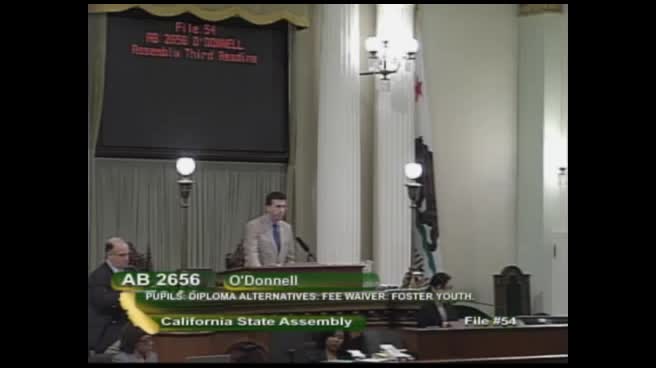 3MIN
Assembly Floor
Bill Author

Bill Co-Author(s):