AB 220: Pupil instruction: mathematics: algebra.
- Session Year: 2015-2016
- House: Assembly
- Latest Version Date: 2015-08-11
Existing law requires the adopted course of study for grades 7 to 12, inclusive, to include courses in mathematics, including algebra. Existing law requires a pupil to complete 2 courses in mathematics in grades 9 to 12, inclusive, in order to receive a diploma of graduation from high school, and provides that at least one of these courses, or a combination of the 2 courses, shall meet or exceed the rigor of the content standards for Algebra I, as adopted by the State Board of Education. Existing law exempts a pupil in grades 9 to 12, inclusive, from the requirement that he or she complete a course that meets or exceeds the rigor of the content standards for Algebra I, as adopted by the state board, if that pupil, before enrolling in grade 9, completes coursework in algebra that meets or exceeds the rigor of the content standards for Algebra I, as adopted by the state board.
This bill would instead require, before a pupil receives a diploma of graduation from high school, that a pupil complete at least one course, or a combination of the 2 courses required for graduation, that meets or exceeds the rigor of Algebra I or Mathematics I, that is aligned to the content standards adopted by the state board. The bill would provide that a pupil who completes coursework that meets or exceeds the content standards for Algebra I adopted by the state board shall be deemed to have satisfied the graduation requirement. The bill would also exempt from the Algebra I or Mathematics I graduation requirement those pupils who, before enrollment in grade 9, completed a course in Algebra I or Mathematics I, or mathematics courses of equal rigor, that are aligned to the content standards adopted by the state board.
To the extent that the bill would impose new duties on school districts, it would constitute a state-mandated local program.
The California Constitution requires the state to reimburse local agencies and school districts for certain costs mandated by the state. Statutory provisions establish procedures for making that reimbursement.
This bill would provide that, if the Commission on State Mandates determines that the bill contains costs mandated by the state, reimbursement for those costs shall be made pursuant to these statutory provisions.
Existing law requires the adopted course of study for grades 7 to 12, inclusive, to include courses in mathematics, including algebra. Existing law requires a pupil to complete 2 courses in mathematics in grades 9 to 12, inclusive, in order to receive a diploma of graduation from high school, and provides that at least one of these courses, or a combination of the 2 courses, shall meet or exceed the rigor of the content standards for Algebra I, as adopted by the State Board of Education. Existing law exempts a pupil in grades 9 to 12, inclusive, from the requirement that he or she complete a course that meets or exceeds the rigor of the content standards for Algebra I, as adopted by the state board, if that pupil, before enrolling in grade 9, completes coursework in algebra that meets or exceeds the rigor of the content standards for Algebra I, as adopted by the state board.
This bill would delete the requirement that at least one of the mathematics courses, or a combination of 2 of the mathematics courses, required for graduation shall meet or exceed the rigor of the content standards for Algebra I. The bill would instead require, before a pupil receives a diploma of graduation from high school, that a pupil complete a course in at least one course, or a combination of the 2 courses required for graduation, that meets or exceeds the rigor of Algebra I or Mathematics I, or a course of equal rigor, that is aligned to the mathematics content standards adopted by the state board. The bill would provide that a pupil who completes coursework in algebra before the 201718 school year that meets or exceeds the content standards for Algebra I adopted by the state board shall be deemed to have satisfied the Algebra I or Mathematics I graduation requirement. The bill would also exempt from the Algebra I or Mathematics I graduation requirement those pupils who completed a course in Algebra I or Mathematics I, or a course mathematics courses of equal rigor, that is are aligned to content standards adopted by the state board, before enrollment in grade 9.
To the extent that the bill would impose new duties on school districts, it would constitute a state-mandated local program.
The California Constitution requires the state to reimburse local agencies and school districts for certain costs mandated by the state. Statutory provisions establish procedures for making that reimbursement.
This bill would provide that, if the Commission on State Mandates determines that the bill contains costs mandated by the state, reimbursement for those costs shall be made pursuant to these statutory provisions.
Existing law requires the adopted course of study for grades 7 to 12, inclusive, to include courses in mathematics, including algebra. Existing law requires a pupil to complete 2 courses in mathematics in grades 9 to 12, inclusive, in order to receive a diploma of graduation from high school, and provides that at least one of these courses, or a combination of the 2 courses, shall meet or exceed the rigor of the content standards for Algebra I, as adopted by the State Board of Education. Existing law exempts a pupil in grades 9 to 12, inclusive, from the requirement that he or she complete a course that meets or exceeds the rigor of the content standards for Algebra I, as adopted by the state board, if that pupil, before enrolling in grade 9, completes coursework in algebra that meets or exceeds the rigor of the content standards for Algebra I, as adopted by the state board.
This bill would delete the requirement that at least one of the mathematics courses, or a combination of 2 of the mathematics courses, required for graduation shall meet or exceed the rigor of the content standards for Algebra I. The bill would instead require, before a pupil receives a diploma of graduation from high school, that a pupil complete a course in Algebra I or Mathematics I, or a course of equal rigor, that is aligned to the content standards adopted by the state board. The bill would provide that a pupil who completes coursework in algebra before the 201718 school year that meets or exceeds the content standards for Algebra I adopted by the state board shall be deemed to have satisfied the Algebra I or Mathematics I graduation requirement. The bill would also exempt from the Algebra I or Mathematics I graduation requirement those pupils who completed a course in Algebra I or Mathematics I, or a course of equal rigor, that is aligned to content standards adopted by the state board, before enrollment in grade 9.
To the extent that the bill would impose new duties on school districts, it would constitute a state-mandated local program.
The California Constitution requires the state to reimburse local agencies and school districts for certain costs mandated by the state. Statutory provisions establish procedures for making that reimbursement.
This bill would provide that, if the Commission on State Mandates determines that the bill contains costs mandated by the state, reimbursement for those costs shall be made pursuant to these statutory provisions.
(a)The adopted course of study for grades 7 to 12, inclusive, shall include algebra as part of the mathematics area of study pursuant to subdivision (f) of Section 51220.
(b)Before receiving a diploma of graduation from high school, a pupil shall complete at least one course, or a combination of the two courses required for graduation pursuant to subparagraph (B) of paragraph (1) of subdivision (a) of Section 51225.3, that meets or exceeds the rigor of Algebra I or Mathematics I, that is aligned to the content standards adopted by the state board pursuant to Sections 60605.8 and 60605.11.
(c)A pupil who, before enrollment in grade 9, completes a course in Algebra I or Mathematics I, or mathematics courses of equal rigor, that is aligned to the content standards adopted by the state board, is exempt from subdivision (b), but is not exempt from the requirement that the pupil complete two courses in mathematics while enrolled in grades 9 to 12, inclusive, as specified in subparagraph (B) of paragraph (1) of subdivision (a) of Section 51225.3.
(d)A pupil who has completed a course or courses that meet or exceed the content standards for Algebra I adopted by the state board pursuant to Section 60605, as that section read on June 30, 2011, shall be deemed to have satisfied the graduation requirement specified in subdivision (b).
SEC. 2.If the Commission on State Mandates determines that this act contains costs mandated by the state, reimbursement to local agencies and school districts for those costs shall be made pursuant to Part 7 (commencing with Section 17500) of Division 4 of Title 2 of the Government Code.
(a)The adopted course of study for grades 7 to 12, inclusive, shall include algebra as part of the mathematics area of study pursuant to subdivision (f) of Section 51220.
(b)Before receiving a diploma of graduation from high school, a pupil shall complete a course in at least one course, or a combination of the two courses required for graduation pursuant to subparagraph (B) of paragraph (1) of subdivision (a) of Section 51225.3, that meets or exceeds the rigor of Algebra I or Mathematics I, or a course of equal rigor, that is aligned to the content standards adopted by the state board. board pursuant to Sections 60605.8 and 60605.11.
(c)A pupil who, before enrollment in grade 9, completes a course in Algebra I or Mathematics I, or a course mathematics courses of equal rigor, that is aligned to the content standards adopted by the state board, is exempt from subdivision (b), but is not exempt from the requirement that the pupil complete two courses in mathematics while enrolled in grades 9 to 12, inclusive, as specified in subparagraph (B) of paragraph (1) of subdivision (a) of Section 51225.3.
(d)A pupil who completes coursework in algebra before the 201718 school year has completed a course or courses that meets meet or exceeds exceed the content standards for Algebra I adopted by the state board pursuant to Section 60605, as that section read on June 30, 2011, shall be deemed to have satisfied the graduation requirement specified in subdivision (b).
SEC. 2.If the Commission on State Mandates determines that this act contains costs mandated by the state, reimbursement to local agencies and school districts for those costs shall be made pursuant to Part 7 (commencing with Section 17500) of Division 4 of Title 2 of the Government Code.
(a)The adopted course of study for grades 7 to 12, inclusive, shall include algebra as part of the mathematics area of study pursuant to subdivision (f) of Section 51220.
(b)Commencing with the 200304 school year and each year thereafter, at least one course, or a combination of the two courses, in mathematics required to be completed pursuant to subparagraph (B) of paragraph (1) of subdivision (a) of Section 51225.3 by pupils while in grades 9 to 12, inclusive, prior to receiving a diploma of graduation from high school, shall meet or exceed the rigor of the content standards for Algebra I, as adopted by the State Board of Education pursuant to Section 60605.
(b)Before receiving a diploma of graduation from high school, a pupil shall complete a course in Algebra I or Mathematics I, or a course of equal rigor, that is aligned to the content standards adopted by the state board.
(c)A pupil who, prior to before enrollment in grade 9, completes coursework in algebra that meets or exceeds the rigor of the content standards for Algebra I, as a course in Algebra I or Mathematics I, or a course of equal rigor, that is aligned to the content standards adopted by the State Board of Education, state board, is exempt from subdivision (b), but is not exempt from the requirement that the pupil complete two courses in mathematics while enrolled in grades 9 to 12, inclusive, as specified in subparagraph (B) of paragraph (1) of subdivision (a) of Section 51225.3.
(d)A pupil who completes coursework in algebra before the 201718 school year that meets or exceeds the content standards for Algebra I adopted by the state board pursuant to Section 60605, as that section read on June 30, 2011, shall be deemed to have satisfied the graduation requirement specified in subdivision (b).
SEC. 2.If the Commission on State Mandates determines that this act contains costs mandated by the state, reimbursement to local agencies and school districts for those costs shall be made pursuant to Part 7 (commencing with Section 17500) of Division 4 of Title 2 of the Government Code.
|
Date
|
Status
|
|---|---|
| Apr 23, 2015 | Read third time. Passed. Ordered to the Senate. (Ayes 78. Noes 0.) |
| Aug 11, 2015 | Chaptered by Secretary of State - Chapter 165, Statutes of 2015. |
| Aug 11, 2015 | Approved by the Governor. |
| Aug 3, 2015 | Enrolled and presented to the Governor at 3 p.m. |
| Jul 6, 2015 | Read third time. Passed. Ordered to the Assembly. (Ayes 39. Noes 0. Page 1793.). |
| Jul 6, 2015 | Read third time. Passed. Ordered to the Assembly. |
| Jul 6, 2015 | In Assembly. Ordered to Engrossing and Enrolling. |
| Jul 1, 2015 | Ordered to special consent calendar. |
| Jun 23, 2015 | Read second time. Ordered to third reading. |
| Jun 22, 2015 | From committee: Do pass. (Ayes 6. Noes 0.) (June 22). |
| Jun 10, 2015 | From committee: Do pass and re-refer to Com. on APPR. with recommendation: To Consent Calendar. (Ayes 8. Noes 0.) (June 10). Re-referred to Com. on APPR. |
| May 7, 2015 | Referred to Com. on ED. |
| Feb 3, 2015 | Read first time. To print. |
| Apr 23, 2015 | Read third time. Passed. Ordered to the Senate. (Ayes 78. Noes 0. Page 1108.) |
| Apr 23, 2015 | In Senate. Read first time. To Com. on RLS. for assignment. |
| Apr 16, 2015 | Read second time. Ordered to consent calendar. |
| Apr 15, 2015 | From committee: Do pass. To Consent Calendar. (Ayes 16. Noes 0.) (April 15). |
| Apr 15, 2015 | From committee: Do pass. Ordered to Consent Calendar. (Ayes 16. Noes 0.) (April 15). |
| Apr 8, 2015 | Re-referred to Com. on APPR. |
| Apr 7, 2015 | Read second time and amended. |
| Apr 6, 2015 | From committee: Amend, and do pass as amended and re-refer to Com. on APPR. with recommendation: To Consent Calendar. (Ayes 6. Noes 0.) (March 25). |
| Feb 17, 2015 | Referred to Com. on ED. |
| Feb 4, 2015 | From printer. May be heard in committee March 6. |
|
Date
|
Description
|
Location
|
Votes
|
|
|---|---|---|---|---|
| Jul 6, 2015 | Special Consent #4 AB220 Holden | Senate Floor |
Passed |
|
| Jun 22, 2015 | Do pass | Senate Standing Committee on Appropriations |
Passed |
|
| Jun 10, 2015 | Do pass, but first be re-referred to the Committee on [Appropriations] with the recommendation: To Consent Calendar | Senate Standing Committee on Education |
Passed |
|
| Apr 23, 2015 | AB 220 HOLDEN Consent Calendar Second Day Regular Session | Assembly Floor |
Passed |
|
| Apr 15, 2015 | Do pass. To Consent Calendar. | Assembly Standing Committee on Appropriations |
Passed |
|
| Mar 25, 2015 | Do pass as amended, and be re-referred to the Committee on [Appropriations] with recommendation: To Consent Calendar | Assembly Standing Committee on Education |
Passed |
This list shows positions taken on this bill by organizations on the date displayed, which is linked to the original source.
Positions by individuals are not included.
|
Organization
|
Position
|
Date
|
|---|---|---|
| American Federation Of State, County And Municipal Employees, Afl-Cio | ** Support | Jun 22, 2015 |
| Association Of California School Administrators | ** Support | Jun 22, 2015 |
| California Catholic Conference | ** Support | Jun 22, 2015 |
| California School Boards Association | ** Support | Jun 22, 2015 |
| California State PTA | ** Support | Jun 22, 2015 |
| California Teachers Association | ** Support | Jun 22, 2015 |
| Ed Voice | * Support | Jun 22, 2015 |
| Edvoice | * Support | Jun 22, 2015 |
| Silicon Valley Community Foundation | ** Support | Jun 22, 2015 |
| Superintendent of Public Instruction Tom Torlakson | ** Support | Jun 22, 2015 |
| Superintendent of Public Instruction, Tom Torlakson | ** Support | Jun 22, 2015 |
| u None received. | ** Against | Jun 22, 2015 |
AB 220
Page 4
|
Office of Senate Floor Analyses (916) 651-1520 Fax: (916) 327-4478 |
THIRD READING
Bill No: AB 220
Amended: 4/7/15 in Assembly
SENATE EDUCATION COMMITTEE: 8-0, 6/10/15
AYES: Liu, Runner, Block, Leyva, Mendoza, Monning, Pan, Vidak
NO VOTE RECORDED: Hancock
SENATE APPROPRIATIONS COMMITTEE: 6-0, 6/22/15
AYES: Lara, Bates, Beall, Hill, Leyva, Mendoza
NO VOTE RECORDED: Nielsen
ASSEMBLY FLOOR: 78-0, 4/23/15 (Consent) - See last page for vote
SUBJECT: Pupil instruction: mathematics: algebra
SOURCE: Superintendent of Public Instruction Tom Torlakson
DIGEST: This bill modifies high school graduation requirements to authorize the completion of a course in integrated mathematics that includes Algebra I, rather than requiring completion of a traditional stand-alone Algebra I course.
Existing law:
Requires completion of two courses in mathematics as a condition of graduation from high school. (Education Code § 51225.3)
Requires that at least one course, or a combination of the two courses, in mathematics required for graduation meet or exceed the rigor of the content standards for Algebra I that was adopted by the State Board of Education (SBE) in 1997. (EC § 51224.5)
Establishes the Academic Content Standards Commission for the purpose of developing the California Common Core Standards in English language arts and mathematics, and required the SBE to reject or adopt those standards by August 2, 2010. (EC § 60605.8)
Authorizes the Superintendent of Public Instruction to recommend modifications to the common core standards in mathematics, and authorizes the SBE to adopt modifications to the standards. (EC § 60605.11)
This bill:
Allows students to meet the graduation requirement by completing at least one course, or a combination of the two courses required for graduation that meets or exceeds the rigor of Algebra I or Mathematics I that is aligned to the California common core standards.
Provides that a student who completes a course in Algebra I or Mathematics I, or mathematics courses of equal rigor, before 9th grade is exempt from the Algebra requirement but not from the requirement to take two math courses in grades 9-12.
Deems a student who has completed a course or courses that meet or exceed the prior standards for Algebra I (adopted by the SBE in 1997) as having met the revised requirement (above) for one course in mathematics.
Comments
Course
sequencing. The California common core standards organize
standards for higher math in two ways: as model courses and in
conceptual categories. The model courses include three courses in
the traditional pathway (Algebra I, Geometry, and Algebra II), three
courses in the integrated pathway (Mathematics I, II, and III), and
two advanced courses (Advanced Placement Probability and Statistics
and Calculus). There are six conceptual categories, which include
number and quantity, Algebra, functions, modeling, geometry, and
statistics and probability. Conceptual categories cross traditional
course boundaries, thereby allowing an integrated pathway that
provides a series of courses with each course containing standards
from the six conceptual categories.
[http://www.cde.ca.gov/be/st/ss/documents/ccssmathstandardaug2013.pdf]
Discipline |
Grade 7 |
Grade 8 |
Grade 9 |
Grade 10 |
Grade 11 |
Grade 12 |
Algebra I Mathematics I |
Possible |
Possible |
Possible |
Possible |
Possible |
Possible |
Geometry Mathematics II |
|
Possible |
Possible |
Possible |
Possible |
Possible |
Algebra II Mathematics II |
|
|
Possible |
Possible |
Possible |
Possible |
Advance Placement Probability and Statistics |
|
|
|
Possible |
Possible |
Possible |
Calculus |
|
|
|
Possible |
Possible |
Possible |
Prior academic content standards in mathematics. This bill deems a student who has completed a course or courses that meet or exceed the prior standards for Algebra I (adopted by the SBE in 1997) as having met the revised requirement (above) for one course in mathematics. This provision is necessary to ensure that any student who completed Algebra I pursuant to the prior SBE-adopted standards (prior to the implementation of the California common core standards).
FISCAL EFFECT: Appropriation: No Fiscal Com.: Yes Local: Yes
According to the Senate Appropriations Committee, no fiscal impact is expected to result from this bill. To the extent local educational agencies modify algebra course offerings as a result of this bill costs would likely not be reimbursable as a state mandate.
Superintendent of Public Instruction Tom Torlakson (source)
Association of California School Administrators
Business for Math, Science and Related Technologies Education
California Catholic Conference
California School Boards Association
California State PTA
California Teachers Association
EdVoice
Silicon Valley Community Foundation
OPPOSITION: (Verified 6/22/15)
None received
ARGUMENTS IN SUPPORT: According to the Superintendent of Public Instruction, the new mathematics content standards adopted by the SBE in 2010 supersede the 1997 standards. In particular, the new standards give school districts local control to decide between Mathematics I or Algebra I to fulfill the mathematics high school graduation requirement. By specifying that Mathematics I in addition to Algebra I meet the high school graduation requirement, school districts can continue to implement the new mathematics content standards and better prepare students for college and careers.
ASSEMBLY FLOOR: 78-0, 4/23/15
AYES: Achadjian, Alejo, Travis Allen, Baker, Bigelow, Bloom, Bonilla, Bonta, Brough, Brown, Burke, Calderon, Chang, Chau, Chávez, Chiu, Chu, Cooley, Cooper, Dababneh, Dahle, Daly, Dodd, Eggman, Frazier, Beth Gaines, Gallagher, Cristina Garcia, Eduardo Garcia, Gatto, Gipson, Gomez, Gonzalez, Gordon, Gray, Grove, Hadley, Harper, Roger Hernández, Holden, Irwin, Jones, Jones-Sawyer, Kim, Lackey, Levine, Linder, Lopez, Low, Maienschein, Mathis, Mayes, McCarty, Medina, Melendez, Mullin, Nazarian, Obernolte, O'Donnell, Olsen, Patterson, Perea, Quirk, Rendon, Ridley-Thomas, Rodriguez, Santiago, Steinorth, Mark Stone, Thurmond, Ting, Wagner, Waldron, Weber, Wilk, Williams, Wood, Atkins
NO VOTE RECORDED: Campos, Salas
Prepared by: Lynn Lorber / ED. / (916) 651-4105
6/23/15 11:12:33
**** END ****
AB 220 (Holden) Page 2 of 2
SENATE COMMITTEE ON APPROPRIATIONS
Senator Ricardo Lara, Chair
2015 - 2016 Regular Session
AB 220 (Holden) - Pupil instruction: mathematics: algebra.
|
|
Version: April 7, 2015 |
Policy Vote: ED. 8 - 0 |
Urgency: No |
Mandate: Yes |
Hearing Date: June 22, 2015 |
Consultant: Jillian Kissee |
This bill does not meet the criteria for referral to the Suspense File.
Bill Summary:
This bill amends the existing high school mathematics graduation requirement by authorizing the completion of a course in Algebra I or integrated mathematics that is aligned to the most recently adopted academic content standards by the State Board of Education (Board).
Fiscal Impact:
No fiscal impact is expected to result from this bill. To the extent local educational agencies modify algebra course offerings as a result of this bill costs would likely not be reimbursable as a state mandate.
Background:
Existing law requires students to take two courses in mathematics before graduating from high school.
Current law also requires that at least one course, or a combination of the two courses, in mathematics required for graduation meet or exceed the rigor of the content standards for Algebra I adopted by the Board in 1997. Content standards describe what students should know and be able to do in each subject in each grade.
Current law established the Academic Content Standards Commission for the purpose of developing the California common core standards in English language arts and mathematics. In August 2010, the Board adopted the standards as proposed, which include the common core standards as well as additional standards that the commission deemed necessary. These new standards, and the modifications made in 2013, supersede the standards adopted by the Board in 1997. Since 2010, a number of states have adopted the same standards for English and mathematics.
The California common core standards for higher mathematics are organized in two ways: as model courses and in conceptual categories. The model courses provide guidance for developing curriculum and instruction. Model courses for higher mathematics have two pathways: traditional and integrated. The traditional pathway consists of the higher mathematics standards organized along more traditional lines into Algebra I, Geometry, and Algebra II courses. The integrated pathway consists of the courses Mathematics I, II, and III. This pathway presents higher mathematics as a connected subject, in that each course contains standards from all six of the conceptual categories. The six conceptual categories include: number and quantity, algebra, functions, modeling, geometry, and statistics and probability.
Proposed Law:
This bill amends the existing high school mathematics graduation requirement. Specifically this bill:
Authorizes students to fulfill the mathematics graduation requirement by completing at least one course, or a combination of the two mathematics courses required for graduation, that meets or exceeds the rigor of Algebra I or Mathematics I aligned to the common core standards.
Requires that students who complete a course or courses that meet or exceed the previous content standards adopted by the Board are deemed to have satisfied the revised graduation requirement (above). This provision is consistent with existing law.
Provides that a student who, before entering ninth grade, completed a course in Algebra I or Mathematics I, or mathematics courses of equal rigor, is exempt from the requirement to take an algebra course prior to graduating from high school. This does not exempt the student from taking two mathematics courses while enrolled in grades 9 to 12.
Related Legislation:
AB 1599 (Education Committee, Ch. 327, Statutes of 2014), until July 2, 2014 amendments, included a provision that was very similar to this bill.
Staff Comments:
Currently, the algebra graduation requirement in existing law is inconsistent with the state’s adoption and implementation of the common core standards. According to guidance provided by the State Department of Education, local educational agencies determine what course or courses satisfy the requirement that algebra courses meet or exceed the rigor of the previous standards.
This bill modifies the Algebra I high school graduation requirement to be consistent with the common core standards for mathematics while also allowing algebra courses that meet or exceed the previous content standards to satisfy the graduation requirement. Therefore, this bill does not require local educational agencies to change the courses currently being offered. Instead, it provides clarification that courses that meet or exceed Algebra I or Mathematics I aligned to the current content standards meet the mathematics graduation requirement.
To the extent local educational agencies modify algebra course offerings as a result of this bill costs would likely not be reimbursable as a state mandate.
-- END --
AB 220 (Holden) Page 3 of 3
SENATE COMMITTEE ON EDUCATION
Senator Carol Liu, Chair
2015 - 2016 Regular
Bill No: AB 220
Author: |
Holden |
||
Version: |
April 7, 2015 Hearing Date June 10, 2015 |
||
Urgency: |
No |
Fiscal: |
Yes |
Consultant: |
Lynn Lorber |
||
Subject: Pupil instruction: mathematics: Algebra
SUMMARY
This bill modifies high school graduation requirements to authorize the completion of a course in integrated mathematics that includes Algebra I, rather than requiring completion of a traditional stand-alone Algebra I course.
BACKGROUND
Existing law:
Requires completion of two courses in mathematics as a condition of graduation from high school. (Education Code § 51225.3)
Requires that at least one course, or a combination of the two courses, in mathematics required for graduation meet or exceed the rigor of the content standards for Algebra I that was adopted by the State Board of Education in 1997. (EC § 51224.5)
Established the Academic Content Standards Commission for the purpose of developing the California Common Core Standards in English language arts and mathematics, and required the State Board of Education to reject or adopt those standards by August 2, 2010. (EC § 60605.8)
Authorizes the Superintendent of Public Instruction to recommend modifications to the common core standards in mathematics, and authorizes the State Board of Education to adopt modifications to the standards. (EC § 60605.11)
ANALYSIS
This bill modifies high school graduation requirements to authorize the completion of a course in integrated mathematics that includes Algebra I, rather than requiring completion of a traditional stand-alone Algebra I course. Specifically, this bill:
Allows students to meet the graduation requirement by completing at least one course, or a combination of the two courses required for graduation that meets or exceeds the rigor of Algebra I or Mathematics I that is aligned to the California common core standards.
Provides that a student who completes a course in Algebra I or Mathematics I, or mathematics courses of equal rigor, before 9th grade is exempt from the Algebra requirement but not from the requirement to take two math courses in grades 9-12.
Deems a student who has completed a course or courses that meet or exceed the prior standards for Algebra I (adopted by the State Board of Education (SBE) in 1997) as having met the revised requirement (above) for one course in mathematics.
STAFF
COMMENTS
Need for the bill. According to the author, “current law requires students to complete at least one course, or a combination of two courses, in Algebra I prior to receiving a high school diploma. As part of California’s efforts to better prepare our students for college and careers after high school graduation, bills were enacted in the last four years to revise and adopt new academic content standards. In August of 2010, the SBE adopted new academic content standards for mathematics. The new standards supersede the 1997 mathematics content standards and as a result, make current law inconsistent with the current SBE-adopted mathematics content standards.”
Course sequencing. The California common core standards organize standards for higher math in two ways: as model courses and in conceptual categories. The model courses include three courses in the traditional pathway (Algebra I, Geometry, and Algebra II), three courses in the integrated pathway (Mathematics I, II, and III), and two advanced courses (Advanced Placement Probability and Statistics and Calculus). There are six conceptual categories, which include number and quantity, Algebra, functions, modeling, geometry, and statistics and probability. Conceptual categories cross traditional course boundaries, thereby allowing an integrated pathway that provides a series of courses with each course containing standards from the six conceptual categories. http://www.cde.ca.gov/be/st/ss/documents/ccssmathstandardaug2013.pdf
Discipline |
Grade 7 |
Grade 8 |
Grade 9 |
Grade 10 |
Grade 11 |
Grade 12 |
Algebra I Mathematics I |
Possible |
Possible |
Possible |
Possible |
Possible |
Possible |
Geometry Mathematics II |
|
Possible |
Possible |
Possible |
Possible |
Possible |
Algebra II Mathematics II |
|
|
Possible |
Possible |
Possible |
Possible |
Advance Placement Probability and Statistics |
|
|
|
Possible |
Possible |
Possible |
Calculus |
|
|
|
Possible |
Possible |
Possible |
Prior academic content standards in mathematics. This bill deems a student who has completed a course or courses that meet or exceed the prior standards for Algebra I (adopted by the SBE in 1997) as having met the revised requirement (above) for one course in mathematics. This provision is necessary to ensure that any student who completed Algebra I pursuant to the prior SBE-adopted standards (prior to the implementation of the California common core standards).
Fiscal impact. According to the Assembly Appropriations Committee analysis, this bill would impose “minor, absorbable, Proposition 98 costs to school districts to modify procedures to comply with the revised graduation requirement. The State has already begun implementation of the California Common Core Standards for mathematics and provided funds to school districts for this purpose. Any costs associated with this bill should be absorbed within existing resources.”
Related and prior legislation. AB 1599 (Education Committee, Ch. 327, Statutes of 2014), until the July 2, 2014 amendments, included a provision that was very similar to this bill.
SUPPORT
Association of California School Administrators
California Catholic Conference
California School Boards Association
California State PTA
California Teachers Association
EdVoice
Silicon Valley Community Foundation
Superintendent of Public Instruction Tom Torlakson (source)
OPPOSITION
None received.
-- END --
AB 220
Page 2
Date of Hearing: April 15, 2015
ASSEMBLY COMMITTEE ON APPROPRIATIONS
Jimmy Gomez, Chair
AB 220
(Holden) – As Amended April 7, 2015
Policy Committee: |
Education |
Vote: |
6 - 0 |
|
|
|
|
|
|
|
|
Urgency: No State Mandated Local Program: Yes Reimbursable: Yes
SUMMARY: This bill allows the course in Mathematics I to satisfy a mathematics graduation requirement. Specifically, this bill:
Aligns the mathematics high school graduation requirements with the Common Core State Standards (CCSS) for Mathematics to allow students to take at least one course, or a combination of two courses, that meet or exceed the rigor of Algebra I or Mathematics I (Integrated Math).
Exempts students who complete a course in Algebra I or Mathematics I before 9th grade from this requirement but not from the requirement to take two math courses in grades 9-12.
Deems completion of coursework in Algebra I aligned to the prior state mathematics content standards as having satisfied the graduation requirement.
FISCAL EFFECT:
Minor, absorbable, Proposition 98/GF costs to LEAs to modify procedures to comply with the revised graduation requirement. The state has already begun implementation of the CCSS for mathematics and provided funds to LEAs for this purpose. Any costs associated with this bill should be absorbed within existing resources.
COMMENTS:
Purpose. This bill aligns the mathematics course requirements for high school graduation with the new CCSS.
Existing law requires completion of two courses in mathematics before graduation from high school and requires that one of those courses, or “a combination of the two courses” required for graduation meet or exceed the rigor of the 1997 content standards for Algebra 1.
The California Common Core State Standards (CCSS), adopted by the State Board of Education in 2010 (and modified in 2013), allow school districts to provide the traditional sequence of secondary math courses (Algebra 1, Geometry, and Algebra II) or an integrated math sequence, known as Mathematics I, Mathematics II and Mathematics III. Integrated math teaches the six conceptual categories of math content (number and quantity, algebra, functions, modeling, geometry, and statistics and probability) in all courses rather than one individual class. This bill clarifies that Integrated Math classes satisfy the high school graduation requirement.
Funding for CCSS. The 2013-14 Budget Act provided $1.25 billion in one-time funds to support the implementation of Common Core State Standards. Allowable expenditures include instructional materials, professional development, and technology. In 2014, the Budget Act provided $400.5 million in one-time funds, allocated on a per ADA basis to LEAs. The funds would first satisfy any outstanding K–12 education mandate claims. Language in the budget expresses legislative intent for LEAs to prioritize the use of the funds for activities related to the implementation of Common Core State Standards including professional development, instructional materials, and technology infrastructure.
Analysis Prepared by: Misty Feusahrens / APPR. / (916) 319-2081
AB 220
Page 4
Date of Hearing: March 25, 2015
ASSEMBLY COMMITTEE ON EDUCATION
O'Donnell, Chair
AB 220
(Holden) – As Introduced February 3, 2015
SUBJECT:
Pupil instruction: mathematics: algebra
SUMMARY:
This bill allows the course Mathematics 1 to satisfy a mathematics graduation requirement. Specifically, this bill:
Allows students to meet the graduation requirement that one of the two mathematics courses required for graduation be Algebra 1, or a course of equal rigor, that is aligned to the state content standards, by completing the course Mathematics 1.
Removes the option to complete the above requirement through “a combination of the two courses” required for graduation.
States that a student who completes a course in Algebra 1 or Mathematics 1 before 9th grade is exempt from the above requirement but not from the requirement to take two math courses in grades 9 to 12.
Deems completion of coursework in algebra which is aligned to the prior state mathematics content standards before the 2017-18 school year as having met the revised requirement (above) for one course in mathematics.
EXISTING LAW:
Requires completion of two courses in mathematics before graduation from high school.
Requires that one of those courses, or “a combination of the two courses” required for graduation meet or exceed the rigor of the 1997 content standards for Algebra 1.
Establishes the Academic Content Standards Commission and requires it to develop standards in language arts and mathematics, at least 85% of which must be those developed by the Common Core State Standards (CCSS) Initiative. Requires the State Board of Education to accept or reject these standards by August 2, 2010.
Authorizes the Superintendent of Public Instruction to recommend modifications to the adopted CCSS in mathematics to the State Board of Education, and authorizes the State Board to adopt modifications to the standards.
FISCAL EFFECT:
Unknown
COMMENTS:
Need for the bill. The author states, “In August of 2010, the State Board of Education (SBE) adopted new academic content standards for mathematics. The new standards supersede the 1997 mathematics content standards and as a result, make Education Code Section 51224.5 inconsistent with the current SBE-adopted mathematics content standards.
The California Department of Education (CDE) and the SBE has complied with current law and local school districts are implementing the new mathematics content standards. School districts can offer course models for the traditional pathway (Algebra I, Geometry, and Algebra II) and the integrated pathway (Mathematics I, Mathematics II, and Mathematics III). In order to continue the implementation of the new mathematics content standards, the mathematics course requirement for high school graduation must be updated to align with the current SBE-adopted mathematics content standards. “
Integrated Mathematics vs. traditional sequence. The California Common Core State Standards adopted by the State Board of Education in 2010 (and modified in 2013) offer school districts a choice: the traditional sequence of secondary math courses, or an integrated math sequence. The standards provide model courses for each sequence
In the U.S. the high school sequence of mathematics courses has traditionally been Algebra 1, Geometry, and Algebra II (with advanced topics in the fourth year. Taken as a whole, this sequence of courses covers the six conceptual categories of math content (number and quantity, algebra, functions, modeling, geometry, statistics and probability).
A different approach, common internationally, is known as Integrated Math. Integrated Math consists of a sequence of three courses known as Mathematics 1, Mathematics 2, and Mathematics 3 (with advanced topics in the fourth year). The integrated pathway presents secondary mathematics as a connected subject, with each course containing standards from the six conceptual categories of math content.
Many districts already transitioning to Integrated Mathematics. Districts may choose which sequence of math courses they will offer, the traditional or integrated sequence. A November, 2013 survey published by the Consortium for the Implementation of the Common Core State Standards found that more school districts had chosen to go with an integrated sequence (32%) than continue with the more traditional mathematics sequence (26%), but that over 40% of school districts had not selected a mathematics sequence.
School districts have been making this transition to Integrated Math in spite of the conflict in the law. Until recently (the page has been removed pending review), the California Department of Education website stated the following about the conflict in the law in response to the question “If a student is in an integrated pathway, what course fulfils the Algebra 1 requirement?”
The requirement is that the course ‘meet or exceed the rigor of the content standards for Algebra 1, as adopted by the SBE pursuant to Section 60605.’ Section 60605 refers to the Mathematics content standards of 1997. The LEA determines what course(s) fulfill the requirement based on the above language. The intent of the law is for students to complete a full course of Algebra 1, whether it spans over one or more courses.
Protecting students in the transition to Integrated Math. In an effort to ensure that no student is denied credit toward graduation because, after she takes Algebra 1, a school district begins to require Mathematics 1 instead, this bill deems completion of coursework in algebra which is aligned to the prior state mathematics content standards before the 2017-18 school year as having met the graduation requirement.
The 2017-18 date was chosen in order to account for current students who take Algebra 1 in the next few years during this transition. But it may be difficult to account for all circumstances, when the transition to Integrated Mathematics could take place any year, and some students stay enrolled longer than four years.
To avoid such problems, staff recommends that the bill instead state: “A pupil who has completed a course or courses that meets or exceeds the content standards for Algebra 1 adopted by the State Board pursuant to section 60605, as that section read on June 30, 2011, shall be deemed to have satisfied the graduation requirement specified in subdivision (b).”
Maintain the option to fulfill this requirement through a combination of courses required for graduation. Current law allows students to meet the Algebra 1 requirement through a “combination of the [two] courses” required for graduation. This bill removes the reference to completion of the two courses required for graduation. Since the intent of this bill is to align the statute with the curricular changes instituted through the adoption of the CCSS, staff recommends that the bill be amended to retain the option to complete Algebra 1 or Mathematics 1 through “a combination of the courses” required for graduation.
Include reference to Common Core State Standards. This bill refers to state standards in mathematics without specific reference to current standards. Staff recommends that the bill be amended to reference the sections requiring the adoption of the CCSS in mathematics.
Further amendments shown in mock-up form. Staff recommends further amendments of a non-substantive nature as shown in the mockup provided.
REGISTERED SUPPORT / OPPOSITION:
Support
Superintendent of Public Instruction, Tom Torlakson (sponsor)
American Federation of State, County and Municipal Employees, AFL-CIO
California Catholic Conference, Inc.
California School Boards Association
EdVoice (as proposed to be amended)
Opposition
None received
Analysis Prepared by:
Tanya Lieberman/ED./(916) 319-2087
Discussed in Hearing
 2MIN
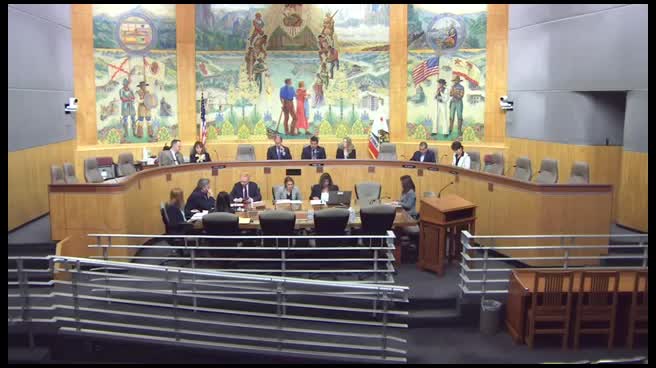
Senate Standing Committee on Appropriations
Bill Author

Bill Co-Author(s):